Digital Archives
- Home /
- Categories /
- Digital Archives

Athletic Archive Write-Blocker Workflow for Safe Legacy Media Ingest
Athletic departments accumulate decades of irreplaceable history on removable media — floppy disks from the early 1990s holding team rosters, CD-Rs containing championship game highlights, USB drives stuffed with coaching photos, and external hard drives that last spun up during a different administration. When it comes time to pull that content into a modern digital archive, the single biggest risk is accidental modification: a careless copy job, an auto-indexing system writing metadata to the source disk, or a malware scan that tags files on the original media.
Read More
Athletic Archive Bit Rot Detection: A Fixity and Recovery Checklist
Bit rot is the slow, silent corruption of digital files — and it is one of the least visible threats to a school’s athletic archive. A high-resolution scan of a 1987 state championship game program, a folder of athlete headshots from a decade-old hall-of-fame induction, a video of a 50th-anniversary reunion ceremony: any of these files can degrade at the bit level over months or years without producing a single error message. Staff simply assume the files are intact until someone tries to open them for a recognition event and discovers an image that will not render or a video that plays as noise.
Read More
Athletic Archive Metadata Sidecar Workflow for Photos and Game Video
When a school’s game footage or team photo is processed, cropped, or published, the descriptive information attached to it—athlete names, sport, season, event, photographer credit, usage rights—is at risk of being stripped, overwritten, or lost entirely. Embedding metadata directly inside image or video files protects it through ordinary editing and distribution workflows, but altering a master file every time metadata changes is an archival risk many schools rightly want to avoid. A metadata sidecar workflow solves both problems: descriptive and rights metadata travels alongside master files in a separate companion document that can be updated, versioned, and shared without ever touching the original.
Read MoreSchool Sports Photo Scan Resolution Checklist for Digital Archives
The right scan resolution for school sports photos depends on intended use: 600 DPI for archival masters and hall-of-fame displays, 300 DPI for standard print reproduction, and 150–200 DPI for web-only or digital display output. Scanning at the wrong resolution wastes storage on files you can’t use, or produces pixelated images that embarrass a program when displayed on a trophy-case touchscreen or a banquet slideshow.
Read MoreAthletic Archive Character Encoding Normalization Guide: Preserve Names, Rosters, and Results
Character encoding normalization is the process of converting all text in your athletic archive to a single, consistent standard — typically UTF-8 — so that names, diacritical marks, punctuation, and special symbols display correctly across every system that reads your data. When an athletic department imports a roster from a 1998 spreadsheet into a modern search platform and sees “José Gutiérrez” appear as “Joséé GutièŔrrez” or a column of question marks, it has an encoding mismatch. The data is there; the software is misreading which characters those bytes represent.
Read More
Athletic Archive OCR Accuracy Quality Control: Sampling Yearbooks, Programs, and Rosters
Athletic archive OCR accuracy quality control is the structured process of verifying that optical character recognition output from scanned yearbooks, game programs, and rosters is complete enough — and correct enough — to trust. Without it, athlete names get misspelled, jersey numbers get transposed, and achievement dates get scrambled inside the very database that’s supposed to celebrate them.
Read MoreSchool Sports Slide Scanning Workflow: Resolution, File Naming, and Athlete Identification
A school sports slide scanning workflow is a sequential process — assess, configure, scan, name, identify, verify, and archive — that converts 35mm athletic slides into high-resolution digital files with consistent filenames, complete athlete metadata, and clear rights documentation, so that recovered images can power hall-of-fame displays, alumni profiles, and touchscreen exhibits rather than remaining inaccessible in a storage box.
Read MoreAthletic Archive Optical Media Storage Checklist for CDs and DVDs
An athletic archive optical media storage checklist gives school administrators, athletic directors, and facilities teams a structured process for inventorying, inspecting, labeling, and storing CDs and DVDs that contain game video, team photos, athletic programs, and recognition records — before disc failure, delamination, or dye degradation permanently destroys content that cannot be rescanned. Optical discs pressed or burned between the mid-1980s and mid-2000s hold decades of athletic history that exists nowhere else, and they are now at the age where failure rates accelerate sharply.
Read More
Athletic Archive Video Digitization Standards: File Formats, Quality Checks, and Access Copies
Athletic archive video digitization standards give school programs a documented, repeatable workflow for converting game tapes, ceremony recordings, and oral-history interviews into files that survive format obsolescence, remain searchable decades from now, and feed directly into recognition displays, digital yearbooks, and hall-of-fame platforms. Without that structure, a collection of VHS tapes, MiniDV cassettes, and Hi8 camcorder footage degrades on a shelf while the playback hardware that could still read those tapes disappears from the market.
Read More
Athletic Archive Digitization Equipment Preventive Maintenance Checklist for Scanners and Capture Stations
An athletic archive digitization equipment preventive maintenance checklist is a scheduled, task-by-task record of the cleaning, inspection, calibration, and software verification steps that keep your school’s scanners, capture stations, and related hardware producing reliable, archival-quality output—session after session, season after season. Without a documented maintenance routine, small problems accumulate invisibly: scanner glass develops fine scratches that produce streak artifacts across every scan, document feeder rollers wear and start skewing pages, capture station fans clog with dust and trigger thermal shutdowns mid-session, and software driver versions fall out of sync after operating system updates. The result is not a single dramatic failure—it is a slow, undetected decline in output quality that only becomes visible when a recognition display reveals mismatched colors, a hall-of-fame platform rejects blurry uploads, or a decade of scanned programs turns out to need remediation before any downstream system can use them.
Read MoreAthletic Archive PREMIS Metadata Guide: Document Preservation Events for School History
When a digitized championship photo disappears or a scanned game program opens as a corrupted file, your school needs more than a backup—it needs a record of every action that was ever taken on that file. Knowing that a file was ingested in July 2021, passed a fixity check in September 2023, migrated from TIFF to JPEG in December 2024, and had its usage rights recorded in March 2025 tells you exactly where to look when something goes wrong. Without that event history, you are left guessing whether corruption occurred before or after the last backup, whether a format conversion introduced the problem, or whether the file was ever valid in the first place.
Read MoreAthletic Archive Quality Assurance Report Template: Document Defects, Samples, and Acceptance
An athletic archive quality assurance report template is the structured document a school completes at the end of a digitization project to record which files were sampled, what defects were found, how severe each defect is, and whether the delivery is formally accepted, conditionally accepted, or rejected — before any scanned yearbooks, team photos, programs, or athletic-history records are loaded into a recognition display, hall-of-fame platform, or permanent archive.
Read MoreAthletic Archive Digitization Sampling Plan: How to QA Files Before Full Acceptance
An athletic archive digitization sampling plan is a documented QA protocol that lets your school verify a statistically representative portion of newly scanned files—yearbooks, game programs, team photos, and record books—before accepting an entire digitization batch from a vendor or internal scanning team.
Read MoreAthletic Archive Scanner Calibration Log: Consistent Color and Detail for School History
An athletic archive scanner calibration log is a session-by-session record of the scanner settings, target values, and measured outcomes that your team uses to keep every scan—regardless of which volunteer ran the equipment or which decade of materials was in the tray—color-accurate, correctly exposed, and sharp enough for lobby displays and searchable online archives.
Read MoreAthletic Archive Source Reliability Rubric: Rank Records, Programs, Photos, and Oral Histories
An athletic archive source reliability rubric is a scoring framework that ranks every information source contributing to a school’s athletic history—official scorebooks, printed programs, photographs, game-day rosters, and oral history interviews—so that conflicting dates, names, scores, and achievements can be resolved with documented rationale rather than individual judgment. Without a rubric, archive decisions rely on whoever is in the room: the registrar who remembers the game differently, the booster president who insists the championship year was 1987 not 1988, the retired coach whose recollection is compelling but unsupported by paper. A rubric converts those competing claims into a structured comparison with a documented outcome.
Read MoreAthletic Archive Digitization Acceptance Criteria Checklist: Verify Images, Metadata, and Deliverables
An athletic archive digitization acceptance criteria checklist is the pass-fail inspection a school runs when a digitization vendor delivers scanned photos, programs, rosters, award records, and other historical athletic materials — confirming that every deliverable meets documented standards before the project is approved and payment is released. Without a formal checklist, approval decisions rely on a brief visual scan that misses critical failures: images saved at screen resolution instead of archival resolution, metadata fields that are blank or inconsistently formatted, filenames that contain spaces or characters that break downstream systems, rights documentation that is absent or ambiguous, and a delivered file count that does not match the original source count.
Read More
Athletic Archive Metadata Remediation Plan: Fix Inconsistent Legacy Records
An athletic archive metadata remediation plan is a structured workflow for auditing, scoring, and repairing the inconsistent field values that accumulate in school athletic records over years of staff turnover, platform migrations, and ad-hoc data entry. The plan works through your archive systematically — athlete names, season labels, team names, event dates, award text, and media file references — identifying every field that contains variants, blanks, or errors, then correcting each one against a verified primary source before the archive is connected to a searchable display, a digital yearbook, or a hall-of-fame nomination system.
Read More
Athletic Archive Transfer Manifest Template: Document Files, Carriers, and Custody
An athletic archive transfer manifest is a document that records every file, physical carrier, and custody handoff made when an athletic department moves records to an archive—before a single file is ingested, stored, or displayed. It answers the questions any future records audit, legal inquiry, or recognition project will ask: What was transferred? Where did it come from? Who handed it over, and to whom? What media carried the content? Are there access restrictions that apply?
Read MoreAthletic Archive File Format Validation Checklist for Photos, Video, and Records
A file with the wrong extension, a video container that refuses to open, or a photo saved at screen resolution instead of print resolution can quietly corrupt years of athletic archive work long before anyone notices. School athletic archives collect content from dozens of sources—booster photographers, student journalists, streaming platforms, vendor exports, and donated scrapbooks—each with its own format assumptions. Without a systematic validation step, mislabeled files, unsupported codecs, and format mismatches enter the archive undetected and surface at the worst possible moment: a hall-of-fame induction, a donor recognition event, or a digital yearbook publication deadline.
Read MoreAthletic Archive Storage Capacity Forecast: Plan for Photos, Video, and Records
A school that runs out of storage does not lose old files immediately—it stops collecting new ones. Photos from this season go unarchived. Championship video sits on a coach’s phone. Season statistics never get deposited. The result is a gap in the historical record that becomes permanent once the equipment changes hands or the staff member moves on.
Read MoreAthletic Archive Removable Media Intake Checklist: Safely Preserve Drives, Discs, and Cards
Every athletic department eventually inherits a box of removable media. USB drives from a retired coach, a stack of CD-Rs from the early 2000s, SD cards from a former team photographer, a handful of external hard drives from a booster who stored championship footage. Each piece of media potentially holds irreplaceable photos, game video, yearbook files, records, and athlete histories that exist nowhere else. The challenge is getting to that content without damaging the originals, importing malware, corrupting files, or losing track of what came from where.
Read More
Athletic Archive Database Export Checklist: Preserve Records Beyond One Software Platform
Athletic records stored inside a single software platform are only as permanent as your subscription. When a vendor is acquired, a contract lapses, or a district procurement policy shifts to a different approved platform, schools that haven’t exported their own data in a portable format can find themselves locked out of years of athlete profiles, award histories, statistics, and hall-of-fame records. The recovery process — piecing together program history from printed programs, old spreadsheets, and staff memory — takes months and never fully reconstructs what was lost.
Read MoreAthletic Archive Duplicate Detection Checklist: Find Repeated Photos, Files, and Records
Duplicate files are the silent clutter problem in every school athletic archive. The same championship photo gets uploaded by three different contributors. An athlete appears twice in the hall-of-fame nomination database with slightly different name spellings. A statistics export from 2019 exists in four folders under four different filenames. By the time a recognition committee sits down to build a display or a nomination packet, staff are sifting through hundreds of redundant files trying to figure out which version is authoritative, which one is highest resolution, and which duplicate record caused the award certificate to be printed with the wrong graduation year.
Read MoreAthletic Archive Born-Digital Records Policy: Preserve Photos, Video, Stats, and Design Files
Modern athletic history often begins—and ends—on a device. A photographer uploads game photos to a shared cloud folder, a student journalist posts a season-recap video to the school YouTube channel, the statistician exports final standings to a spreadsheet on a personal laptop, and the graphic designer sends jersey mockups from a home computer. When staff members leave, accounts expire, or hardware is replaced, those files disappear with them—and the institutional record of an entire season becomes unrecoverable.
Read MoreAthletic Archive Checksum Verification: Protecting Digital School Records
A corrupted photo discovered the week before a hall-of-fame induction is not just an inconvenience—it is a gap in your athletic program’s permanent record that may never be filled. When digitized game programs, scanned championship rosters, athlete profile photos, and video highlights sit on school servers or cloud drives without a systematic integrity check, file corruption can go undetected for months or years. By the time a staff member notices that a file opens incorrectly—or does not open at all—the original may be gone and the backup equally damaged.
Read MoreAthletic Archive Scanning Resolution Guidelines: DPI Settings for Team Photos, Programs, and Yearbook Pages
When an athletic director hands you a box of team photos from 1987, championship certificates from the early 1990s, and game programs spanning four decades, the first practical question is always the same: what settings do you actually use on the scanner?
Read MoreYearbook OCR: How Schools Turn Scanned Yearbooks Into a Searchable Digital Archive
Yearbook OCR — optical character recognition applied to scanned yearbook pages — is the technology that converts printed names, captions, and text into machine-readable, searchable data. When a school scans its physical yearbooks and runs OCR, a collection that once required someone to flip through every page by hand becomes a digital archive where any name, activity, or year can be found in seconds.
Read MoreOld School Newspaper Preservation: Digitizing Vintage Student Publications for School Archives
Somewhere in your school’s storage closet, administrative wing, or library back room, there are stacks of old school newspapers quietly deteriorating. Issues from decades past — student journalists who covered championship seasons, profiled legendary teachers, or broke campus stories that became part of school lore — are turning yellow and brittle, their paper growing more fragile with every season that passes. Once newsprint reaches a certain stage of deterioration, the content is simply gone.
Read More
Comparing School Yearbook Scanning Services: Quality, Turnaround, and Preservation Standards
Schools across the country face a common preservation challenge: decades of yearbooks documenting institutional history sit vulnerable in storage rooms while administrators seek reliable digitization partners who can transform these fragile archives into accessible digital collections. With dozens of scanning service providers claiming expertise in yearbook preservation, choosing the right partner requires understanding how quality standards, turnaround capabilities, and preservation protocols differ across providers—and what those differences mean for protecting irreplaceable institutional memories.
Read More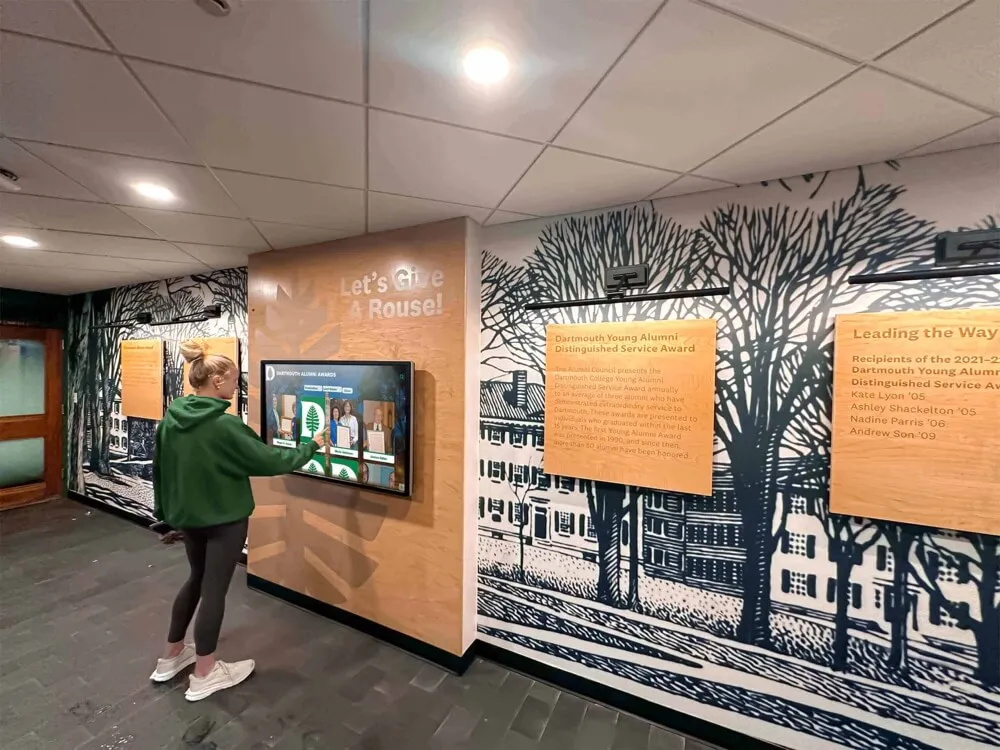
Yearbook Digitization Services: How Schools Preserve Their Visual History
Thousands of yearbooks documenting generations of students, teachers, and school milestones sit vulnerable in storage closets and basement archives across educational institutions. These bound collections represent the visual history of entire communities—capturing faces, fashions, achievements, and cultural moments that define each era. Yet paper deteriorates, bindings fail, and irreplaceable photographs fade with each passing year, threatening the permanent loss of institutional memory that connects current students to those who came before.
Read MoreThe Complete Guide to School Yearbook Digitization and Scanning Services
Stacks of aging yearbooks sit in school basements and storage rooms across the country—decades of student memories, athletic achievements, and institutional history slowly deteriorating on fragile paper. These irreplaceable records document generations of students, teachers, and community moments that shaped school identities. Yet many educational institutions lack the resources, expertise, or time to properly preserve this vanishing heritage before it’s permanently lost.
Read MoreDigital History Archive: Complete Guide for Schools, Museums & Cultural Institutions
Every institution holds priceless historical materials—photographs documenting decades of student life, yearbooks preserving graduating classes, documents chronicling organizational evolution, artifacts representing cultural heritage, and oral histories capturing first-person perspectives. These materials collectively tell your institution’s unique story, providing tangible connections between past and present while building foundations for future identity.
Read More