Great yearbook pages don’t happen by accident. Behind every spread that makes students stop mid-flip—the one with the photo that nails exactly how the season felt, or the senior section that somehow managed to make everyone look like themselves—is an editor who made deliberate design decisions before a single image was placed or a headline was typed. The challenge isn’t finding things to document. Your school year produces more compelling material than any publication could contain. The challenge is knowing which page types serve which stories, and how to execute each one with enough craft that the result feels inevitable rather than assembled.
This guide gives high school yearbook editors 30+ concrete yearbook page ideas organized by section, from opening spreads that announce your theme to contemporary digital-ready designs that bridge print and interactive experiences. Each idea comes with execution specifics your staff can act on immediately, not vague inspiration. You’ll also find guidance on extending your best page designs into digital archives and campus displays that keep school memories visible long after the physical books have aged.
The ideas here work as frameworks you can adapt, combine, and reshape to fit your school’s specific personality, the stories only your graduating class can tell, and the design constraints of your particular production process.
Building strong yearbook pages requires more than good templates—it requires editors who understand their school community well enough to make creative choices that resonate. What follows provides that foundation across every major section type.

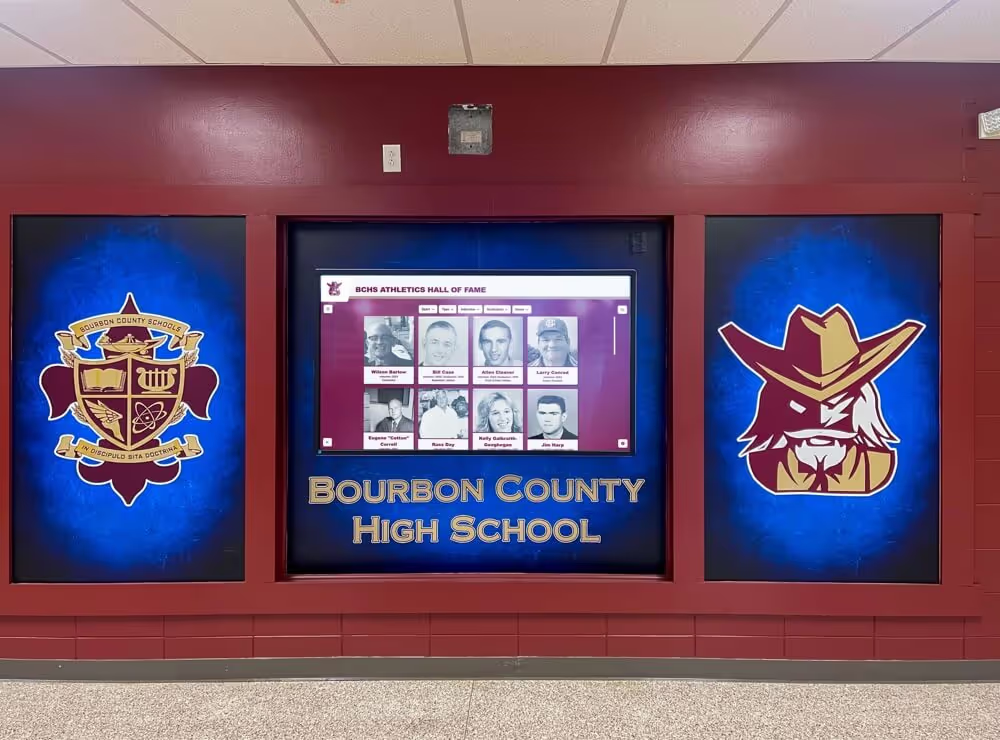
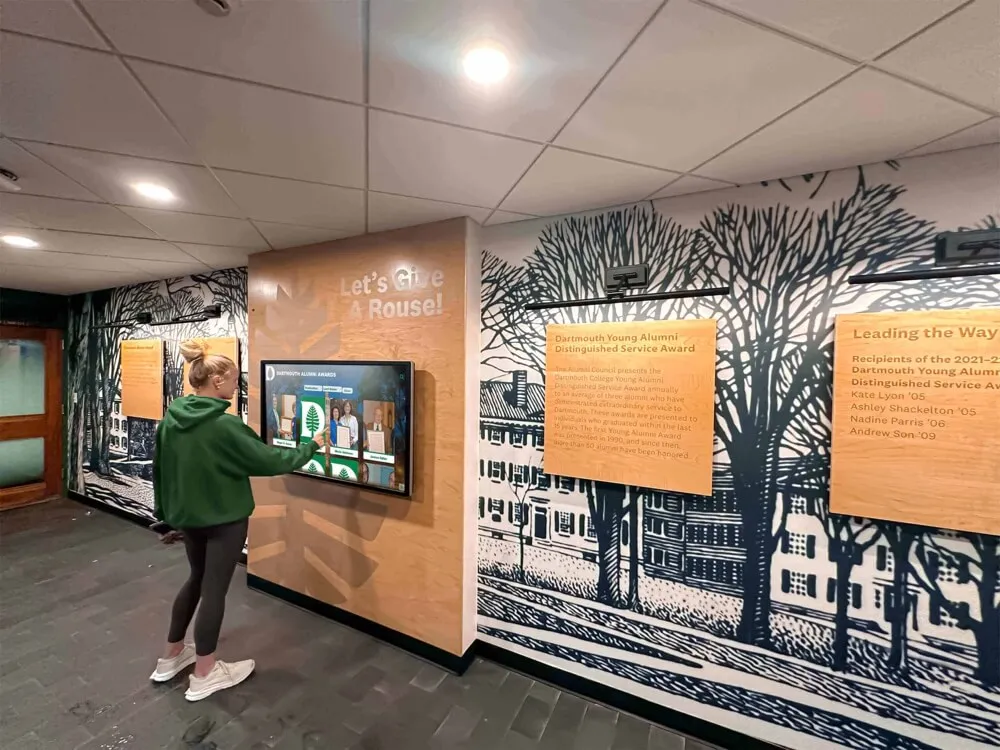
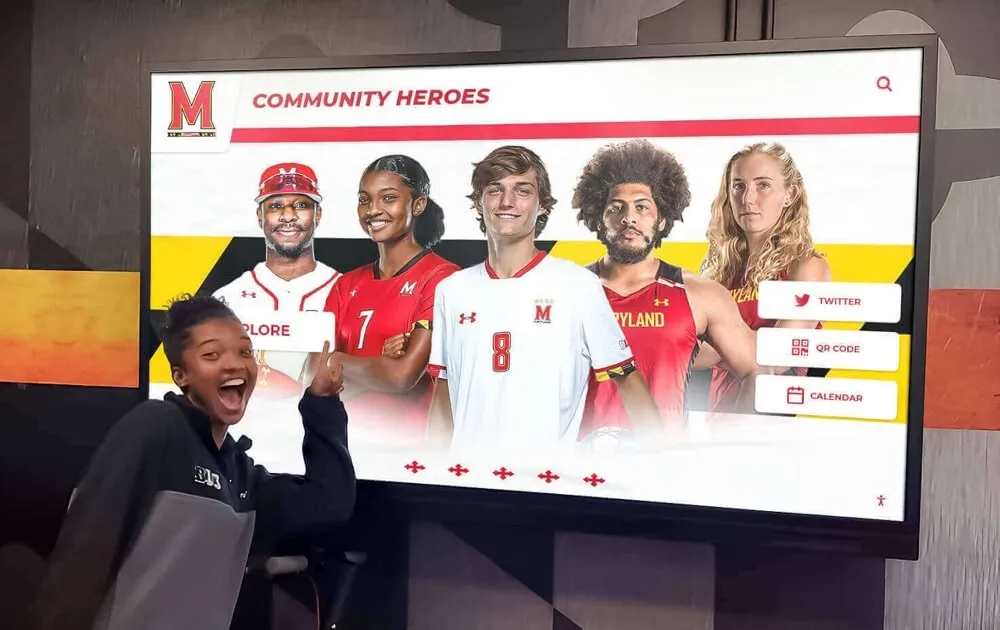
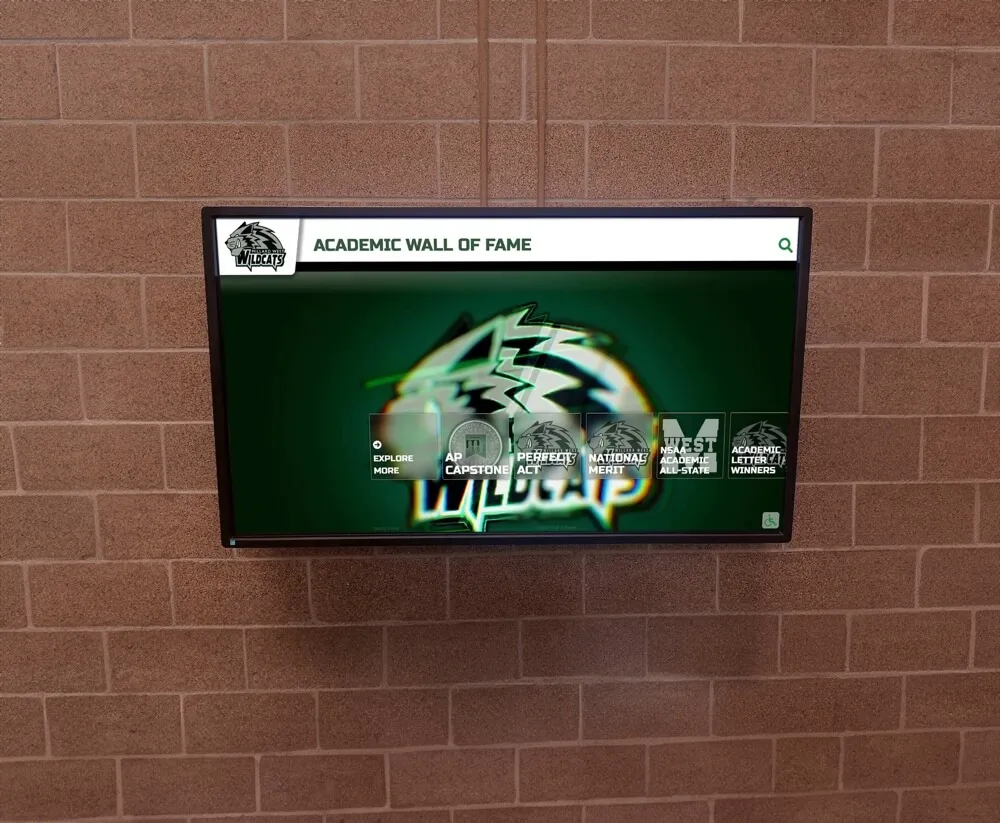
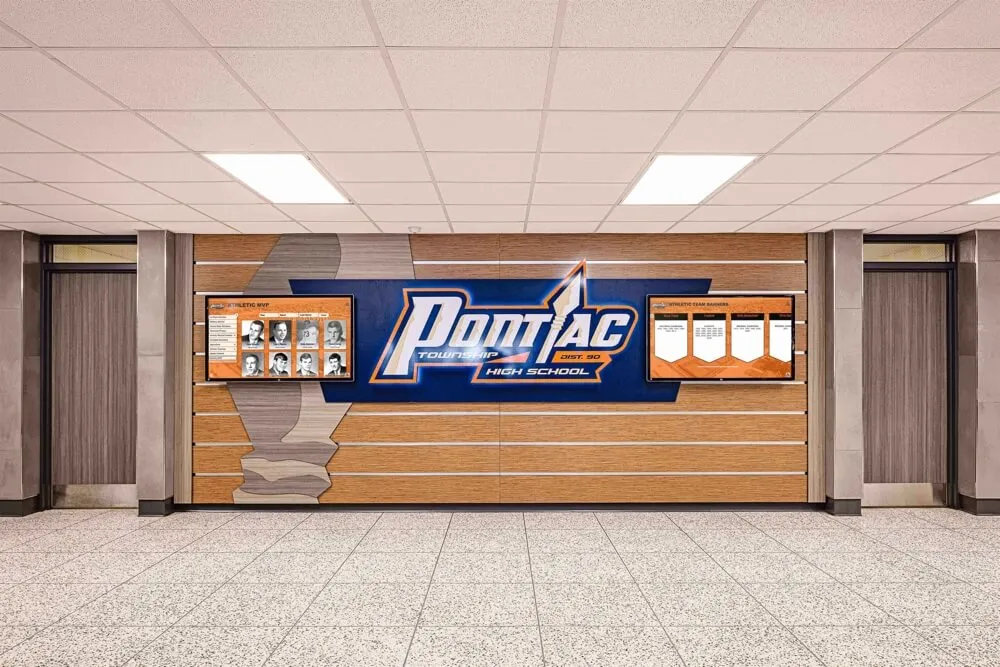
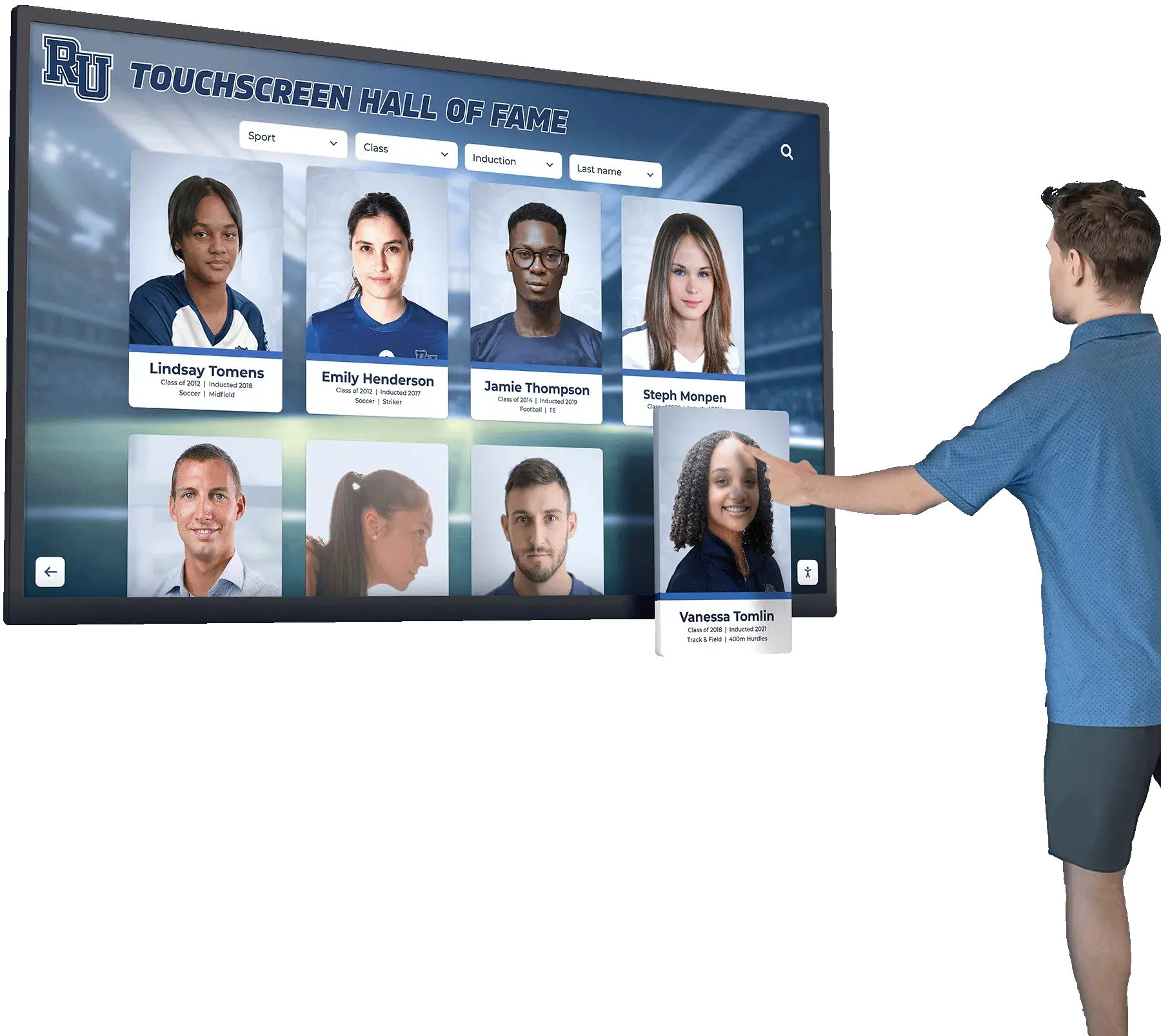
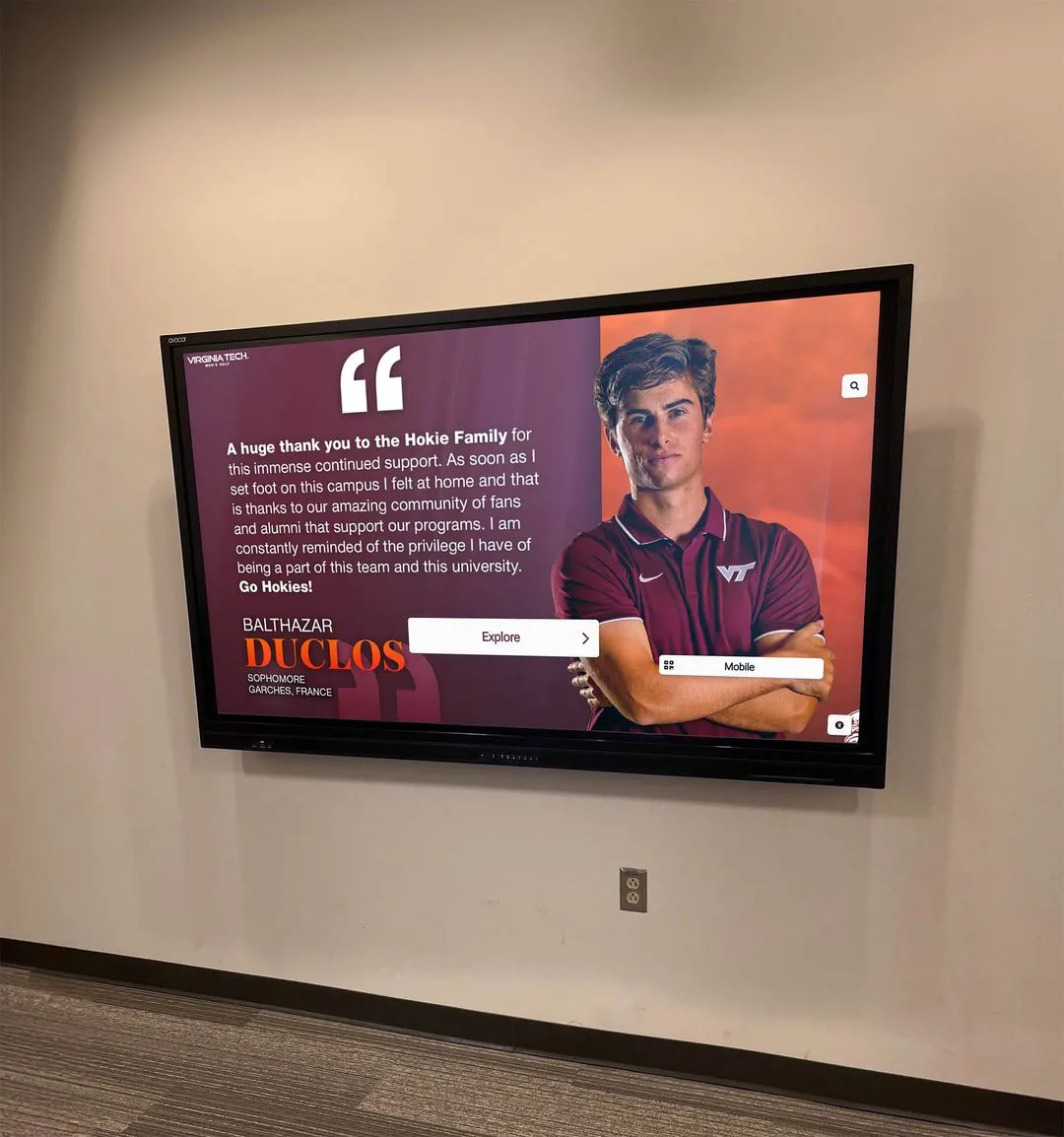
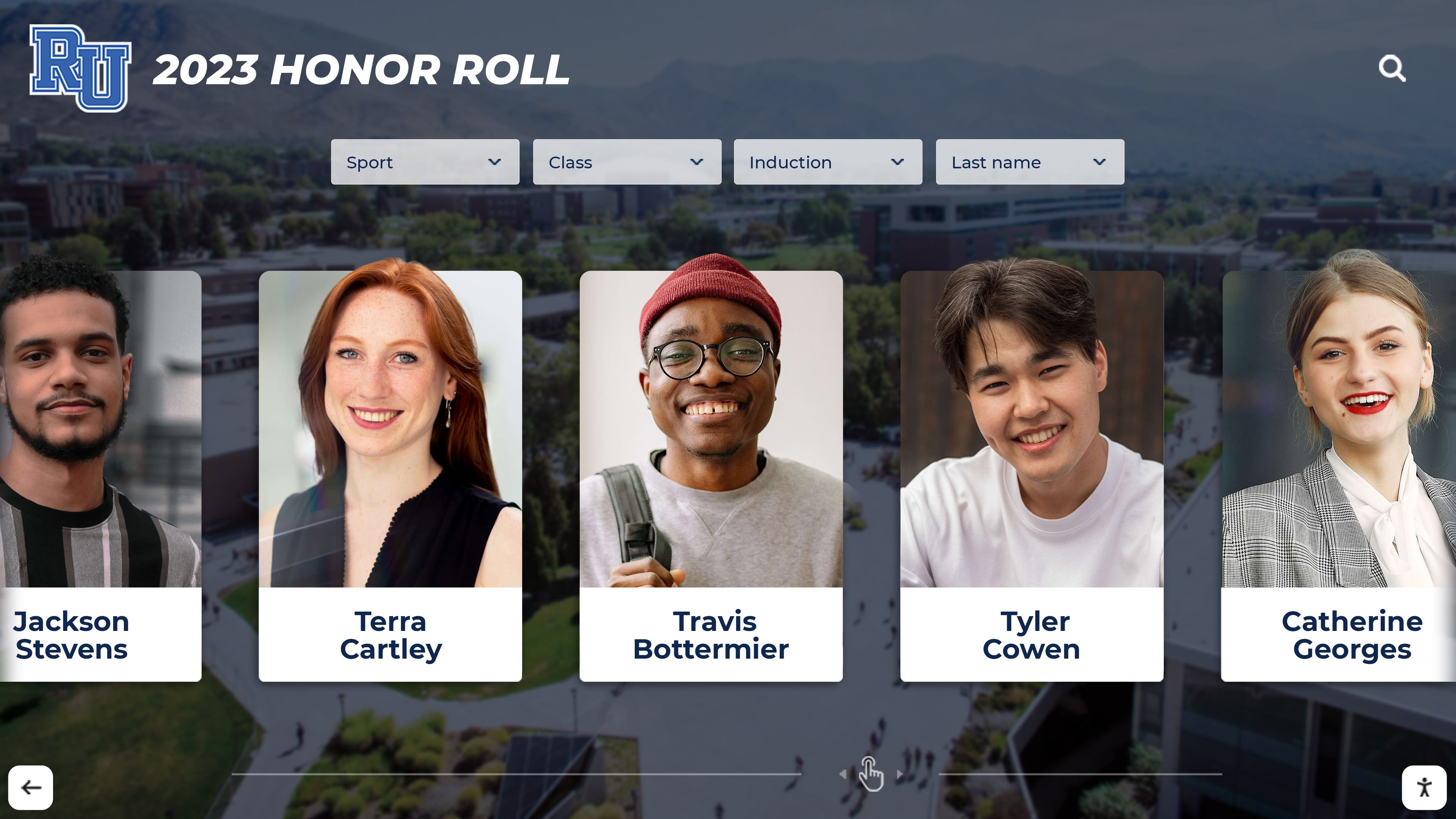
Portrait-based layouts appear throughout yearbooks and campus recognition programs alike—the design principles governing readability, hierarchy, and visual identity apply equally to both
Design Principles That Elevate Any Yearbook Page
Before diving into specific section ideas, a short grounding in the principles that distinguish memorable pages from forgettable ones helps every subsequent decision.
Visual Hierarchy Drives Reader Experience
Every effective yearbook page has a clear entry point—an element that captures attention first and anchors everything around it. Without deliberate hierarchy, eyes wander without purpose and strong photography gets lost.
Build hierarchy through size contrast (a dominant photo that reads obviously larger than supporting images), typographic scale (headlines that feel dramatically different from captions), and placement (upper-left corners capture attention first in western reading patterns). Establish your entry point first, then design supporting elements to guide eyes through the spread in the order you choose.
Design Energy Should Match Content Energy
A championship celebration spread should feel kinetic and triumphant. A memorial tribute page calls for restraint, careful whitespace, and composed photography. When design tone contradicts content tone—when a somber tribute uses bold color and chaotic layouts, or when a spirit week spread uses rigid corporate-feeling grids—readers notice the disconnect even if they can’t name it.
Matching design energy to content energy is one of the most immediately perceptible skills in yearbook design, and one of the least explicitly taught.
Consistency Creates Cohesion; Variety Maintains Engagement
A yearbook needs enough visual consistency to feel unified but enough variety to keep readers turning pages. Solve this by establishing design constants that persist across all sections—color palette, typefaces, column structure, caption style—while varying layouts, photo treatments, and graphic elements within those constants.
For a deeper look at how these decisions interconnect, the guide on balancing design consistency with creative freedom covers the principles that prevent fragmented visuals across a multi-section publication.
Category 1: Opening Spreads and Title Pages
Opening spreads set the visual tone for every page that follows. These pages carry outsized design importance relative to their content load—they exist primarily to create impact and communicate theme, not to document specific events.
1. Full-Bleed Theme Statement Spread
Concept: A single dominant photo bleeding edge-to-edge across the opening two-page spread, with your yearbook theme stated as large typographic element.
Execution Tips:
- Select the photo that most honestly captures the emotional core of your school year—not necessarily the most dramatic event, but the image that most accurately represents how this year felt
- Run the photo to all four edges, allowing it to bleed off all margins on both pages
- Overlay your theme statement in large, high-contrast type positioned away from the image’s most compositionally complex areas
- Keep additional text minimal; this page exists for impact, not information density
- Choose photography with natural visual breathing room where text will land
2. Mosaic Collage Opening
Concept: An energetic photo mosaic of 12–18 images from across the school year, arranged to create visual momentum with a brief narrative introduction.
Execution Tips:
- Curate images representing diverse aspects of school life—guard against athletics dominating at the expense of academics, arts, and everyday life
- Vary photo sizes dramatically and deliberately; create clear large, medium, and small categories rather than letting all images occupy similar-sized slots
- Maintain consistent gutters between all photos to provide visual organization beneath apparent variety
- Add a 150–200 word introductory paragraph framing the year’s narrative arc
3. Visual Section Dividers
Concept: Bold, visually distinct pages separating major yearbook sections that signal a fresh chapter while maintaining thematic continuity.
Execution Tips:
- Use your school’s primary colors as section backgrounds, varying shade or treatment across different dividers
- Feature one strong representative photo for each section
- Write large, confident section titles—divider pages are not places for timid typography
- Design all dividers from a consistent template so readers recognize them instantly across the book
4. Editor’s Letter Spread
Concept: A personality-driven spread featuring the editor-in-chief’s message with design choices reflecting the publication’s character.
Execution Tips:
- Use a candid portrait of the editor rather than a formal headshot
- Apply pull-quote treatment to the most compelling line from the letter
- Keep the letter itself to 250–350 words; editors who overwrite lose readers immediately
- Add small candid photos of the yearbook staff at work—readers appreciate seeing the people behind the publication
5. Staff Recognition and Credits Page
Concept: Recognition pages honoring contributors with visual sophistication rather than plain lists.
Execution Tips:
- Group staff by role with clear visual separations rather than formatting all names as undifferentiated columns
- Include small headshots where possible—it transforms a functional page into a genuine recognition spread
- For dedication pages, balance tribute text with a photograph that represents the person or cause being honored
Category 2: Student Life and Candid Coverage
Student life sections are often the most-read and longest-remembered yearbook pages. They capture informal, authentic moments that structured portrait sessions and formal coverage miss entirely.
6. Day-in-the-Life Feature
Concept: Follow two or three students through a complete school day, documenting the rhythms and textures of everyday experience.
Execution Tips:
- Select students with genuinely different schedules and social contexts
- Capture transitions—lockers between periods, cafeteria lines, walkways, parking lots—not just classroom moments
- Use time stamps in captions to create chronological narrative momentum
- Include brief student commentary on what each part of their day actually feels like from the inside
- Show variety: a focused academic moment, a social interaction, a creative period, a physical activity
7. Friendship Photo Essay
Concept: Photojournalistic spread documenting genuine peer relationships across different social contexts and environments.
Execution Tips:
- Prioritize candid moments over posed group photos; genuine connection reads completely differently than arranged smiles
- Write captions that identify relationships, not just names—“lab partners turned best friends since sophomore year” reveals more than a list of names
- Capture diverse friend groups across different backgrounds, interests, and grade levels
- Vary environments: classroom, athletic field, parking lot, cafeteria, hallway
8. School Traditions Documentation
Concept: In-depth visual coverage of a unique school tradition that students experience but rarely see documented with depth.
Execution Tips:
- Include historical context—when the tradition started, why it persists, and what it means to the school community
- Show preparation, participation, and aftermath phases rather than just the central event moment
- Feature students from multiple grade levels experiencing the tradition for the first time versus the last time
- Add quotes explaining what the tradition means personally to specific students at different points in their school careers
9. Spirit Week Spread
Concept: High-energy event coverage showing the full spectrum of spirit week participation, themes, and genuine engagement moments.
Schools planning comprehensive spirit week coverage alongside yearbook documentation will find the school spirit week ideas and planning guide useful for ensuring your photography coverage captures the right moments across each theme day.
Execution Tips:
- Organize coverage by theme day with clear visual separations between each day’s content
- Select photos emphasizing creative costume choices and genuine participation energy over posed crowd shots
- Include wide establishing shots alongside close-up details and authentic expression photography
- Add student quotes about their favorite spirit week moments and what participation means to them
10. Cultural Celebration Pages
Concept: Visual documentation of cultural heritage events, multicultural celebrations, and the diversity of backgrounds within your school community.
Execution Tips:
- Approach coverage with genuine curiosity and respect, centering student voices and perspectives
- Feature the visual richness of cultural celebrations—traditional dress, food, music, dance, and visual arts
- Include student explanations of what these traditions mean within their families and communities
- Show how cultural events bring together students who don’t share the same backgrounds
11. Social and Pop Culture Snapshot
Concept: A page capturing how students actually communicate, what they were watching and listening to, and the cultural references that defined this specific school year.
Execution Tips:
- Survey students for genuine data: most-used app, most-watched show, biggest cultural moment of the year
- Avoid generic pop culture references; keep everything specific to your actual student community’s experience
- Design survey results as infographic elements rather than plain prose
- Include a “what we were listening to” element—actual playlist data or genre breakdown from student survey
Category 3: Academic Achievement Pages
Academic coverage faces a consistent design challenge: making learning moments visually compelling in a medium dominated by athletic action shots. These ideas address that challenge directly.
12. Project Showcase Spread
Concept: Multi-photo spread following a major academic project from research phase through final presentation.
Execution Tips:
- Document process rather than just product—show authentic working moments including messy drafts, collaborative sessions, and prototype failures alongside finished work
- Feature student reflection on what they learned, not just what they created
- Vary photography between close-up detail shots and wider environmental images showing the full workspace
13. Academic Awards Recognition Page
Concept: Celebration spread highlighting academic excellence, scholarship recipients, honor roll achievers, and academic competition results.
Execution Tips:
- Balance individual recognition with visual appeal—long lists of names without design treatment become pages no one actually reads
- Group recognitions by category with visual separations and brief descriptions of what each award represents
- Feature portrait photos alongside names for scholarship recipients and major award winners
- Add student quotes about academic goals, not just achievements
14. Classroom Culture Documentation
Concept: Visual documentation of what learning actually looks like across different departments, subjects, and teaching styles.
Execution Tips:
- Photograph active learning moments: labs in progress, group discussions, student presentations, maker space projects, creative studios
- Capture teacher-student interactions that reveal educational philosophy in action
- Document the physical environments that shape academic experience—how spaces feel matters as much as what happens in them
- Feature student work prominently alongside the students who created it
15. Academic Competition Coverage
Concept: Treat academic competition coverage with the same visual energy and design sophistication as athletic coverage.
Execution Tips:
- Feature competition moments—debates in progress, science olympiad events, academic decathlon rounds—not just trophies and team photos
- Include stats: competition standings, scores, improvement over previous seasons
- Show preparation: practice rounds, coaching moments, late-night study sessions
- Add quotes from both students and coaches or advisers about what competing academically means
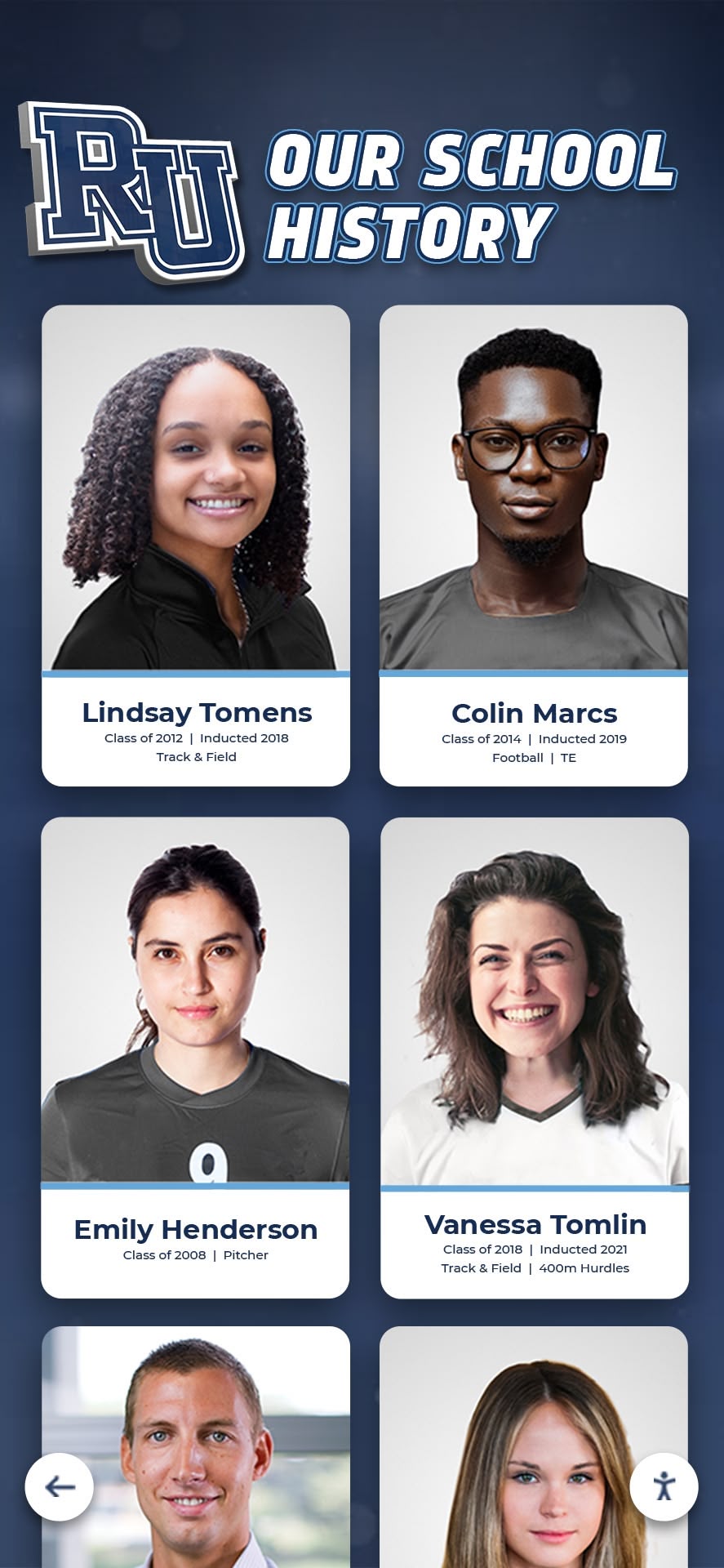
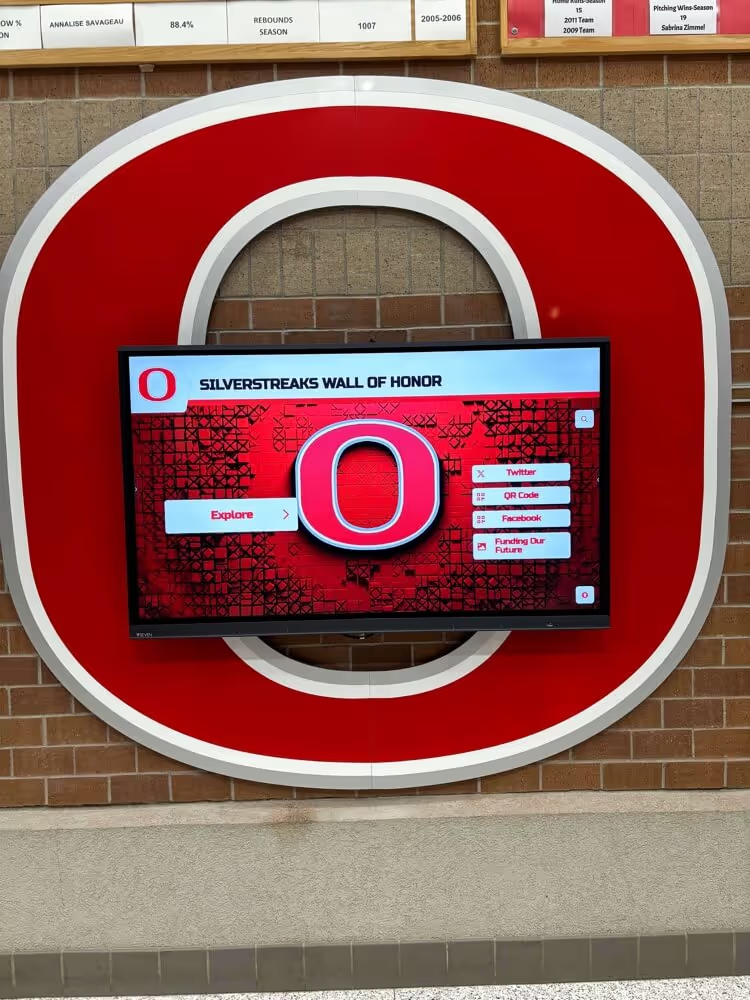
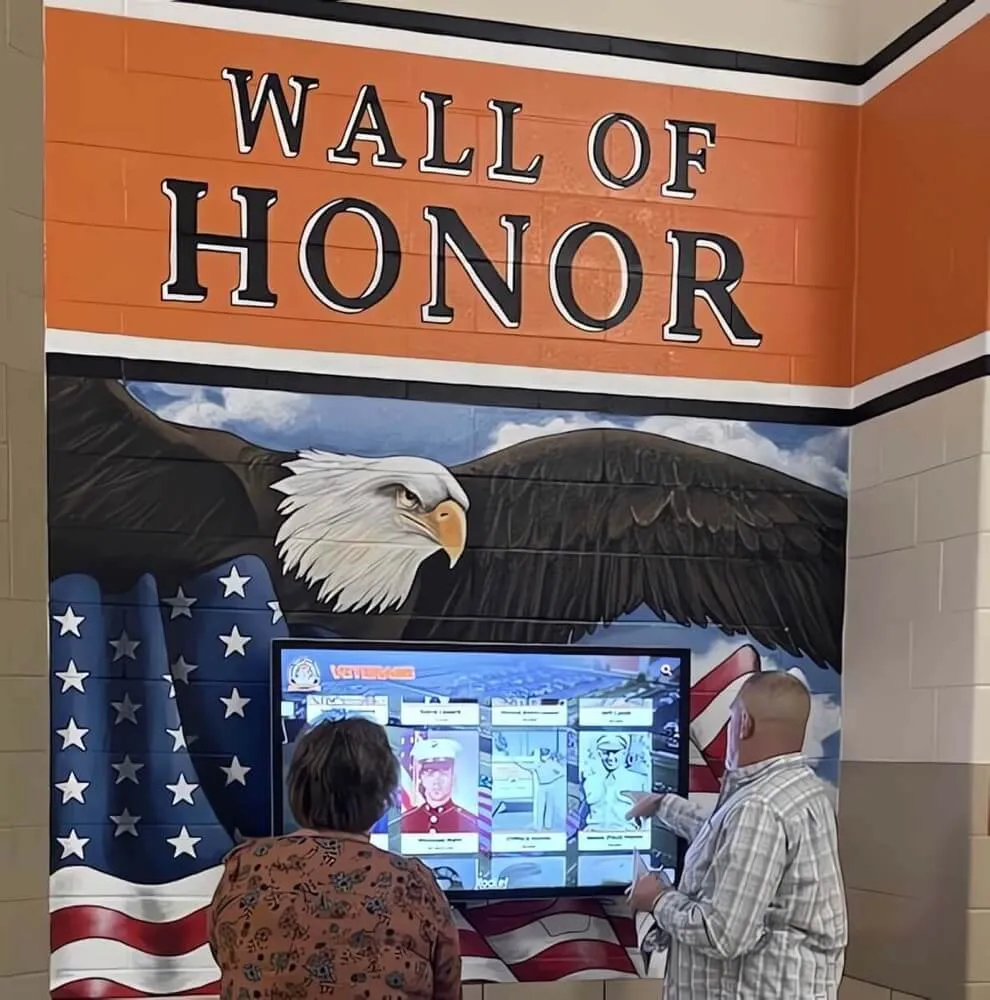
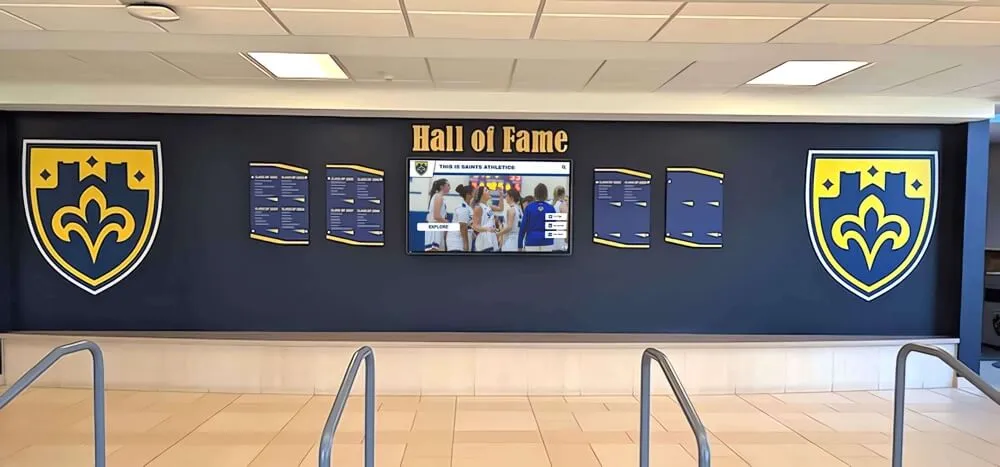
Academic achievement pages in yearbooks serve the same institutional memory function as campus recognition displays—both connect present students to the school's ongoing story
Category 4: Sports and Athletics Spreads
Athletic coverage benefits from the inherent visual drama of competition, but the best sports pages go well beyond action photography to capture the complete experience of being part of a team.
16. Championship Moment Full-Bleed Spread
Concept: A single defining athletic achievement given the full visual treatment it deserves—the page every athlete who contributed will keep for decades.
Execution Tips:
- Lead with your most powerful action or celebration photo, running it edge-to-edge across both pages
- Add score, opponent, and season context in overlay type positioned away from the image’s focal point
- Include a secondary sidebar with season statistics and key contributors
- Feature a player or coach quote capturing the emotional weight of the moment
- Resist adding too many supporting photos; let the dominant image carry the story’s weight
17. Season Narrative Spread
Concept: Comprehensive team coverage structured as a genuine narrative—early promise, adversity, development, and finish—rather than a highlights reel.
Execution Tips:
- Include the hard moments alongside the victories: close losses, injury setbacks, and internal challenges make final achievements meaningful
- Feature different team members across coverage, not just leading scorers or headline players
- Add season record, notable wins, and statistical leaders
- Document team culture: practice rituals, locker room moments, travel, sideline interactions that reveal what this team was actually like
18. Individual Athlete Profile
Concept: Profile page celebrating exceptional athletic achievement with visual and contextual depth.
Execution Tips:
- Combine an action photo, a portrait, and a candid moment for visual completeness—three photographs tell a more complete story than one
- Include meaningful statistics that actually tell the story of achievement, not just raw counting stats
- Feature genuine quotes revealing athletic philosophy and what the sport means to this person
- Consider design elements using team colors that connect the profile to team identity
For creating lasting recognition beyond the yearbook page, sports memorabilia and athletic history display ideas show how schools translate yearbook athlete content into permanent campus installations.
19. Behind-the-Scenes Sports Page
Concept: Coverage of the athletic experience that competition photography misses—training, preparation, team culture, and the human side of school sports.
Execution Tips:
- Document early-morning practices and film sessions
- Capture coach-athlete relationships in genuine, unposed moments
- Feature manager, trainer, and support staff contributions—these pages honor everyone who made the season possible
- Include quotes about what being part of this team means beyond wins and losses
20. Multi-Sport Season Overview
Concept: A dynamic spread celebrating the breadth of your school’s athletic program across multiple sports in a single organized visual presentation.
Execution Tips:
- Maintain consistent visual treatment across different sports for cohesion despite covering different activities
- Select action photos emphasizing athletic skill and effort across all featured sports
- Organize by season or sport category with clear visual separations
- Include brief performance highlights for each featured sport
- Use visual weight distribution that gives equal prominence to all sports shown, avoiding athletics hierarchies
Category 5: Clubs, Arts, and Activities Pages
Activity section coverage frequently suffers from formulaic execution—group photo, names listed below, repeated for every organization. These ideas bring genuine visual storytelling to pages representing years of student involvement.
21. In-Depth Club Feature
Concept: A spread documenting what a specific club actually does—its meetings, projects, service activities, and culture—not just who belongs to it.
Execution Tips:
- Show the work product: the newspaper edition, the charity drive results, the debate performance, the finished mural
- Feature the range of involvement levels—officers and first-year members alike
- Add context about the club’s history and notable achievements within the school
- Include a leader quote articulating what this organization means to the broader school community
22. Performing Arts Multi-Page Feature
Concept: Comprehensive coverage of a major performance program—theater, band, orchestra, choir, dance—documenting both performance and the preparation process.
Execution Tips:
- Photograph rehearsals and backstage preparations alongside performance moments; the work that produces the performance is as photogenic as the performance itself
- Capture technical aspects: set construction, costume fitting, sound and lighting setup
- Feature a dramatic full-bleed production photo as the centerpiece of the spread
Schools that invest in comprehensive performing arts documentation in yearbooks often find value in extending that recognition to year-round campus displays—the digital arts and music showcase recognition guide covers how schools honor performing arts achievements with the same permanence typically reserved for athletics.
23. Student Service and Community Impact Page
Concept: Spread celebrating student community service, volunteer work, and civic engagement with genuine visual documentation rather than posed photos at service sites.
Execution Tips:
- Quantify impact where possible: hours volunteered, dollars raised, meals served, families served
- Include authentic action photos from service projects
- Show the connection between service activities and student personal growth
- Feature diverse participation across grade levels
24. Student Government and Leadership Spread
Concept: Coverage showing student leaders in action—running meetings, organizing events, implementing initiatives—rather than in formal portraits.
Execution Tips:
- Include a summary of what student government actually accomplished this year
- Feature quotes about leadership philosophy and specific goals for the school community
- Document the democratic process: elections, campaign materials, visible participation in decision-making
25. Visual Arts Gallery Spread
Concept: A yearbook spread designed as a curated gallery exhibition, presenting student visual artwork with the presentation quality it deserves.
Execution Tips:
- Photograph artwork with even lighting and proper color reproduction—technical quality matters here
- Include brief artist statements alongside each featured work
- Show artists in their creative environments alongside finished pieces
- Feature both two-dimensional and three-dimensional work across media
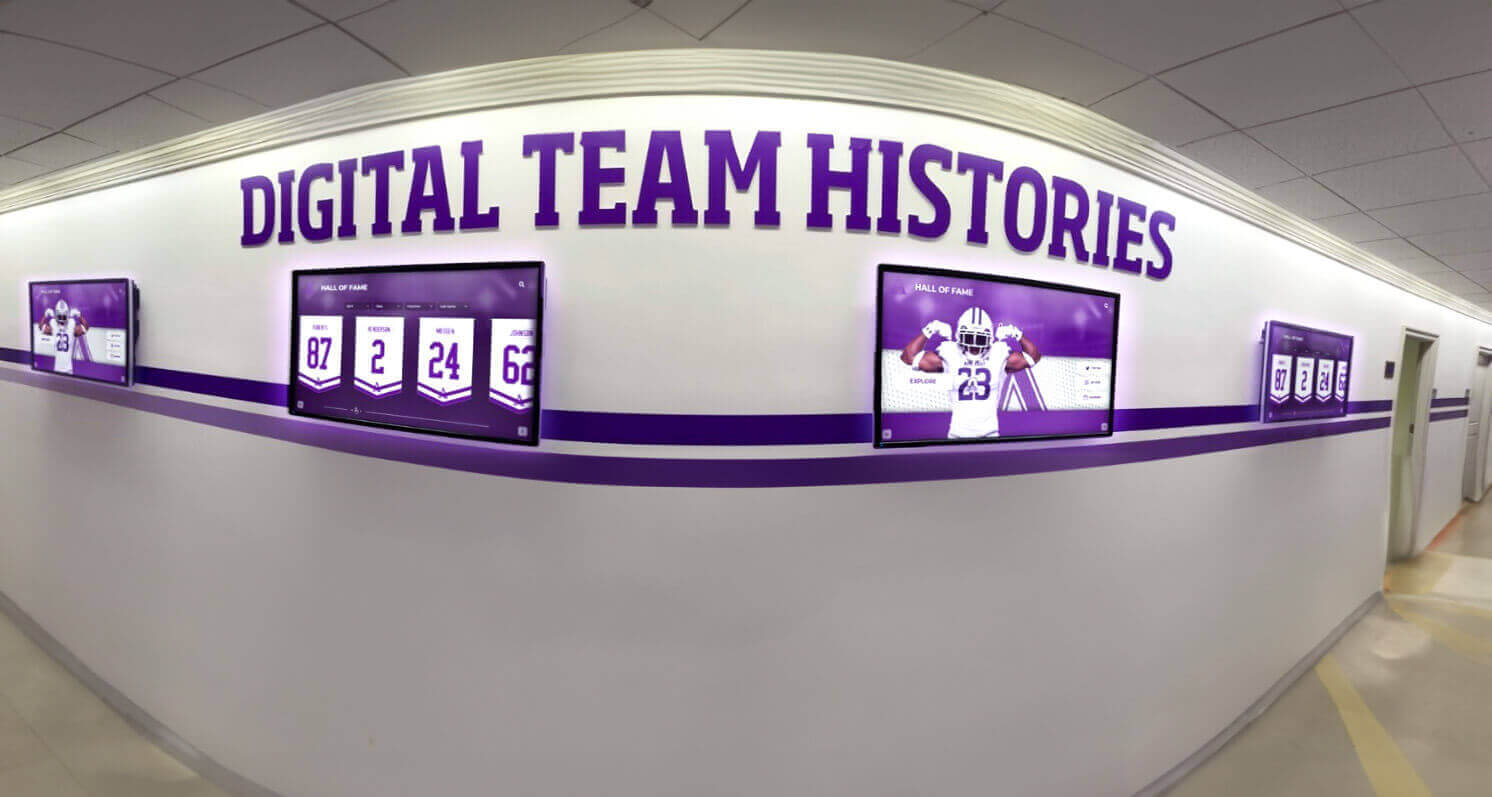
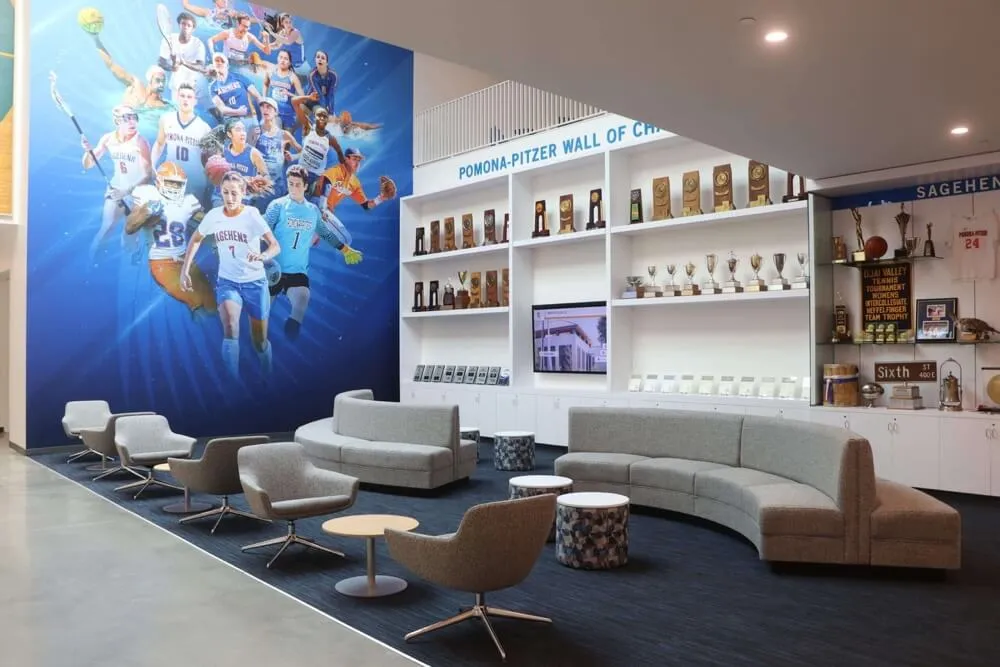
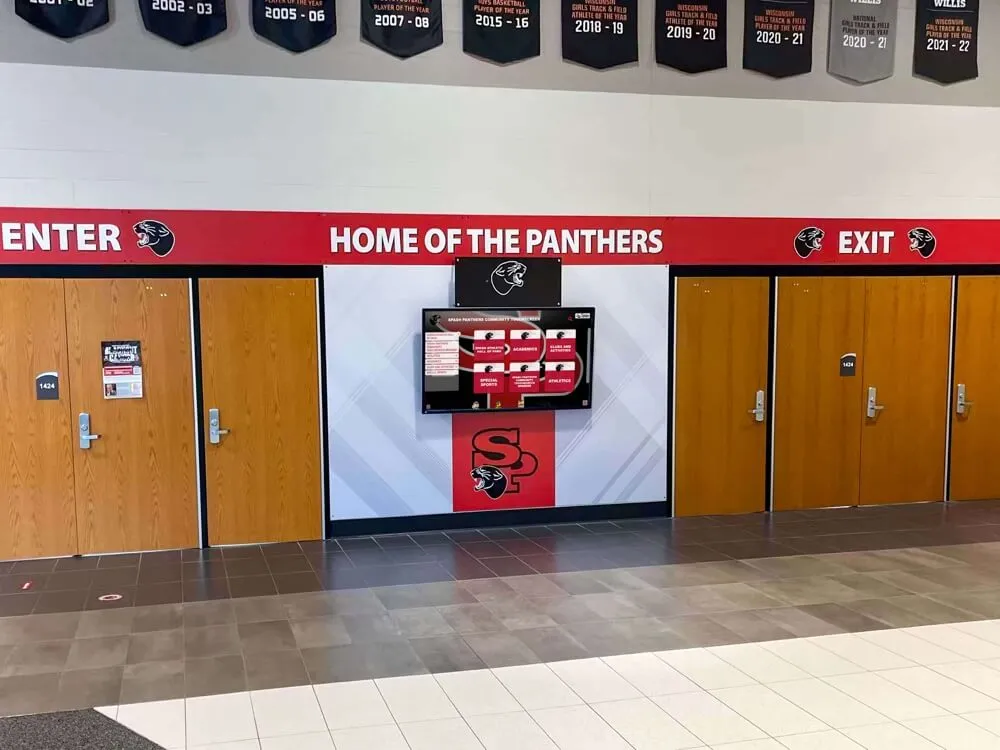
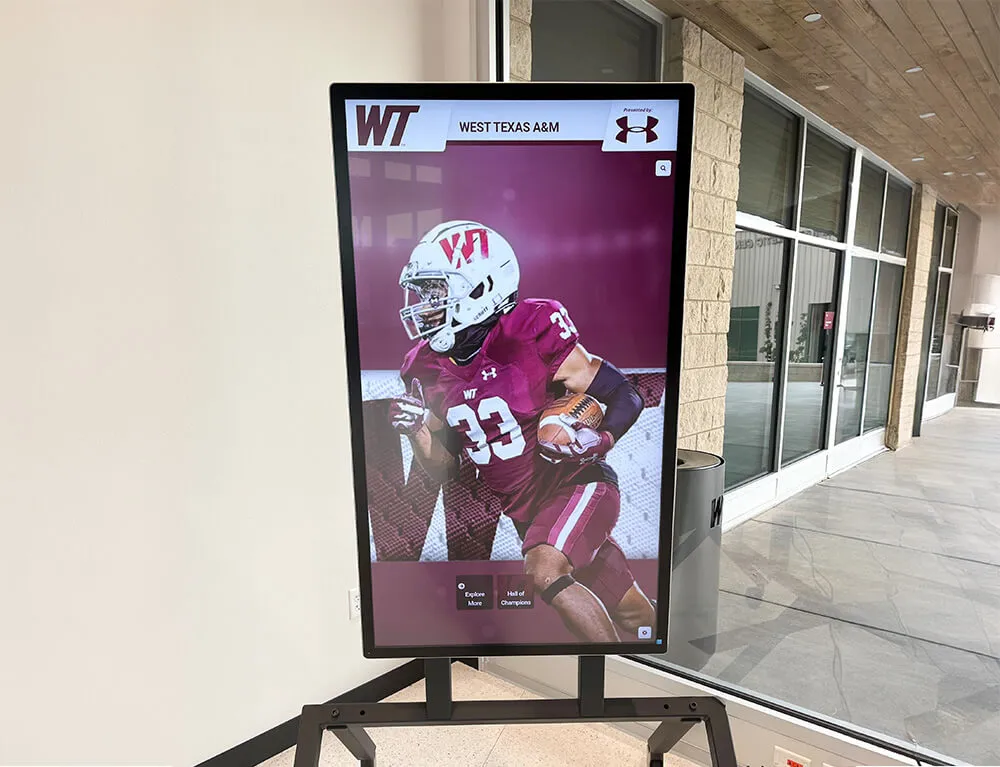
Athletic and program coverage in yearbooks translates naturally to campus recognition displays—well-designed spreads become source material for permanent institutional memory
Category 6: Senior Section Pages
The senior section carries more emotional weight than any other yearbook section—for many students, it’s the primary artifact they’ll use to remember their high school years for the rest of their lives. These ideas honor that responsibility.
26. Senior Portrait Variations
Concept: Portrait formats that reveal personality and individual character rather than defaulting to standard pose-and-background uniformity.
Execution Tips:
- Consider environmental portrait options where seniors are photographed in meaningful campus locations alongside or instead of studio-style portraits
- Include at least one candid photo alongside formal portraits
- Standardize enough for visual consistency while building in flexibility for personality to emerge
- Frame captions to include meaningful context—where students are heading, what they were known for—not just names and statistics
27. Senior Quote Collection
Concept: Visual presentation of the most memorable, authentic, and representative senior quotes from the yearbook submission process.
Execution Tips:
- Seek quotes that reveal actual personality and perspective; quotes that could apply to anyone at any school carry less weight than ones that feel genuinely individual
- Design quotes as visual elements—vary size and placement based on length and visual impact
- Include photo thumbnails alongside quotes for immediate visual identification
- Edit for readability while carefully preserving each student’s authentic voice
28. Senior Superlatives Spread
Concept: A fun, personality-forward spread celebrating class superlatives with design choices that match the playful energy of the category titles.
Execution Tips:
- Choose superlative categories that reflect genuine class culture rather than generic templates copied from yearbooks past
- Photograph winners in contexts that illustrate their award—creative photography elevates superlatives from lists to genuine mini-features
- Balance humor with genuine celebration; superlatives should feel like honors, not jokes at someone’s expense
29. Class Statistics and Survey Spread
Concept: Data visualization page turning senior class surveys into compelling infographic content that documents the class’s collective profile.
Execution Tips:
- Survey your senior class on genuine questions: career aspirations, favorite school memories, what they’ll miss most, where they’re heading
- Design results as clear, attractive infographics—charts, percentages, and visual comparisons communicate data far more effectively than prose summaries
- Include unexpected or surprising data points as featured pull statistics
- Balance serious questions (future plans) with lighter ones that reveal personality
For seniors interested in how their achievements might be recognized beyond the yearbook year, graduation cap design ideas and customization traditions offer a complementary angle on how graduating classes document their identities at the moment of transition.
30. College and Future Plans Showcase
Concept: Celebration spread documenting where seniors are heading—college, military, workforce, gap year, trade programs—with design matching the milestone’s significance.
Execution Tips:
- Feature destination logos or visual representations of where seniors are heading
- Balance the range of post-graduation paths; college is one valid path among many
- Consider a visual geographic map showing where classmates are dispersing after graduation
- Pair with senior statistics showing aggregate data on class destinations
The documentation of senior milestones connects naturally to longer-term school history. Schools building institutional archives should know that digitizing old yearbooks for hall of fame and preservation displays provides a roadmap for turning today’s yearbook pages into tomorrow’s permanent recognition infrastructure.
Category 7: Creative and Contemporary Designs
These ideas push beyond conventional yearbook formats toward designs that reflect how today’s students actually engage with visual media.
31. Social Platform-Inspired Grid Layout
Concept: Page layouts that draw on familiar social platform visual language—grid formats, story-style verticals, caption conventions—while maintaining yearbook permanence and print quality.
Execution Tips:
- Use grid proportions familiar from Instagram for photo arrangements on appropriate pages
- Adapt caption styles to feel authentic to how students actually write about moments when they matter to them
- Maintain print quality standards throughout while acknowledging digital visual literacy
- Use this approach selectively; overused platform references date quickly
32. Vintage and Throwback Design Spread
Concept: Spreads using design elements from a specific past decade, contrasting historical aesthetic with contemporary content.
Execution Tips:
- Choose a specific decade and commit to its visual language—mixing elements from different eras creates confusion rather than nostalgia
- Use era-appropriate color palettes, typography styles, and graphic treatments
- Consider pairing vintage-styled current photos with actual archival images from that era if your school’s archives permit
- Add “then and now” elements connecting past and present school culture with genuine content
33. Typography-Led Design Spread
Concept: A spread where oversized, expressive typography functions as the primary visual element, with photography integrated around or within the letterforms.
Execution Tips:
- Select a single word or short phrase (three words maximum) as the typographic centerpiece
- Scale type to fill significant spread territory—this approach only works at genuine scale
- Integrate photos within letter cutouts, alongside letterforms, or as backgrounds for type
- Reserve this treatment for content where the headline phrase carries genuine meaning, not just visual impact
34. Infographic Year-in-Numbers Spread
Concept: Data visualization page turning the school year’s key statistics into compelling visual content—athletic wins, fundraising totals, service hours, enrollment figures, event attendance.
Execution Tips:
- Gather real data from athletic directors, student government, service coordinators, and administrators before designing
- Design numbers as visual elements using scale, color, and iconography to make data feel concrete and surprising
- Mix serious statistics with lighter ones for tonal variety
- Verify all numbers before publication; statistical errors damage credibility permanently
35. Panoramic Photography Spread
Concept: Wide-format photography capturing school environments and event atmospheres impossible to convey in standard portrait or landscape frames.
Execution Tips:
- Shoot specifically for panoramic use—plan compositions knowing the final crop and gutter placement
- Panoramic formats excel for packed stadiums, full auditoriums, and complete team or class group shots
- Ensure critical content isn’t lost in the gutter between facing pages
- Consider that panoramic shots translate beautifully to widescreen digital displays when the yearbook content is eventually digitized
36. Interactive Bridge Pages with QR Integration
Concept: Pages designed with QR codes or AR triggers connecting printed yearbook content to video, extended photo galleries, or interactive experiences.
Execution Tips:
- Design QR codes as intentional graphic elements—positioned thoughtfully and sized for easy scanning
- Ensure linked content is hosted reliably on platforms that will remain accessible for years, not just until graduation
- Include brief text explaining what each digital bridge adds beyond what the printed page can contain
- Test all digital integrations thoroughly before print submission
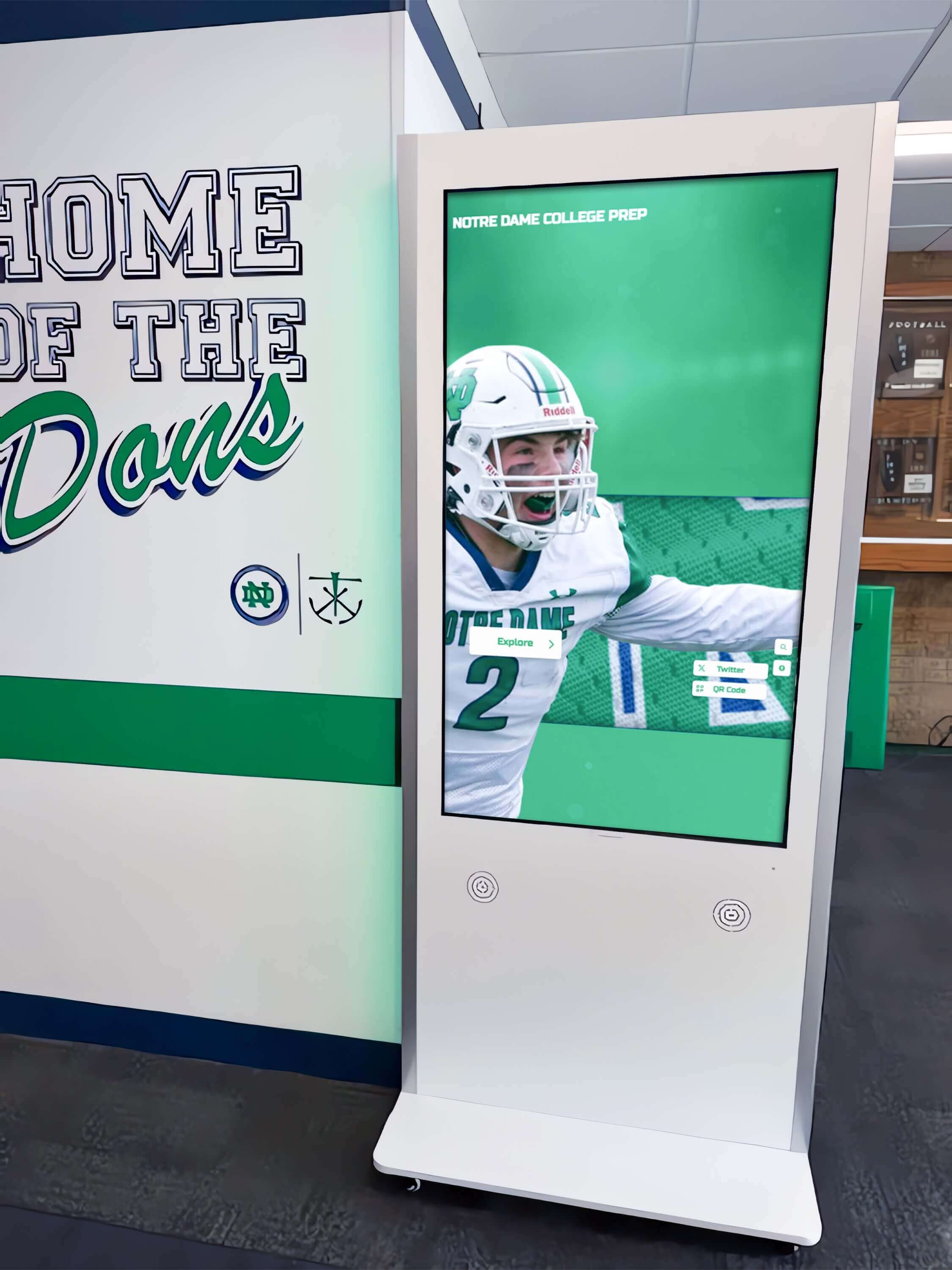
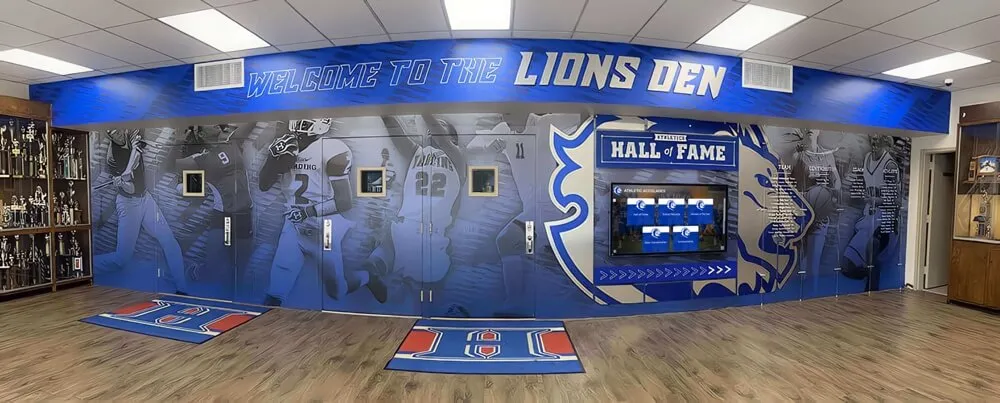
Yearbook content that begins on the printed page can extend to interactive campus displays that serve school communities for decades after the original publication
Taking Yearbook Pages Into the Digital Dimension
The 36 ideas above create compelling printed pages. But for schools committed to long-term memory preservation, the printed yearbook is increasingly the beginning of a broader content strategy, not its endpoint.
Why Digital Preservation Extends Page Value
Well-designed yearbook pages deserve audiences that grow over time, not shrink as physical books age. When alumni return for reunions, when families want to share memories with distant relatives, when students want to find a specific year in school history—printed books face real practical limitations.
Name searchability, zoom capabilities, cross-yearbook browsing, and sharing tools all become possible once yearbook pages exist in well-structured digital archives. Students and alumni who couldn’t attend a physical location can access memories that would otherwise be inaccessible.
Design Decisions That Age Well Digitally
Several yearbook page design choices translate more effectively to digital platforms than others:
Designs that transfer well:
- Grid and modular layouts with clear content zones that hold up at any screen size
- Consistent caption systems with complete name identification (critical for digital search)
- Individual profile pages with structured information that maps to database fields
- Infographic-style pages with discrete, clearly labeled data points
- Photos with descriptive metadata built into the design process
Digital enhancements that printed pages can’t offer:
- Name searchability across all photos and text mentions
- Cross-yearbook connections linking students across multiple graduating years
- Zoom capabilities revealing design details impossible to appreciate at normal reading distance
- Sharing tools enabling alumni to send specific pages directly to classmates
Campus Displays as Yearbook Extensions
Beyond digital archives, exceptional yearbook page content can inspire physical campus installations:
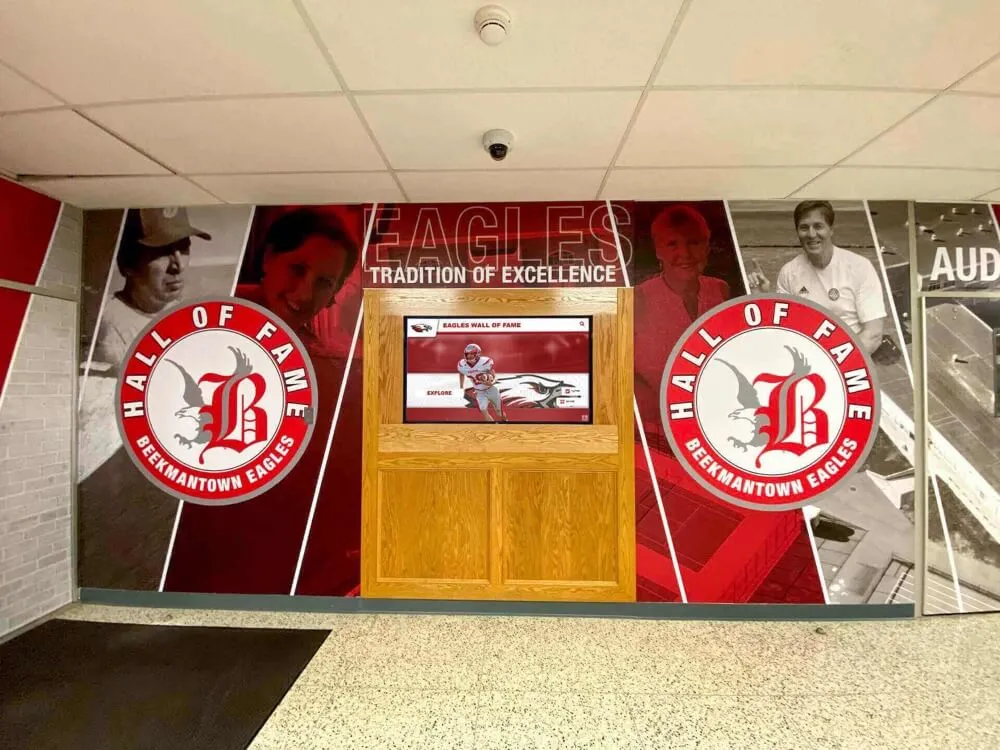
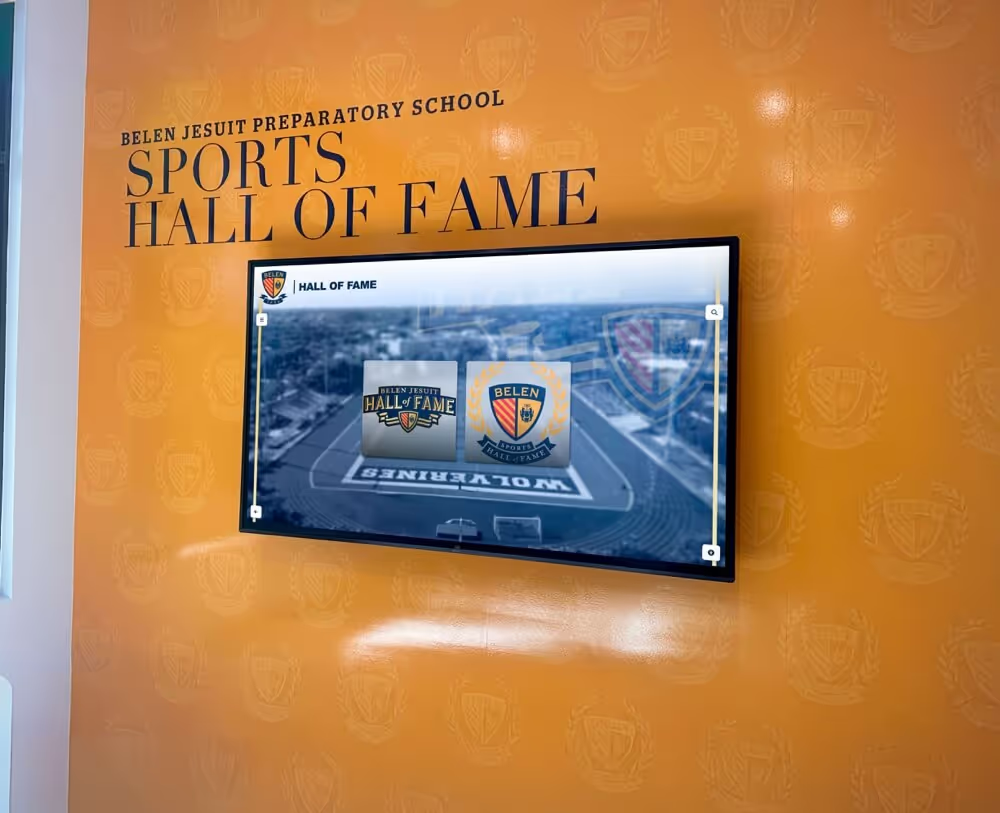
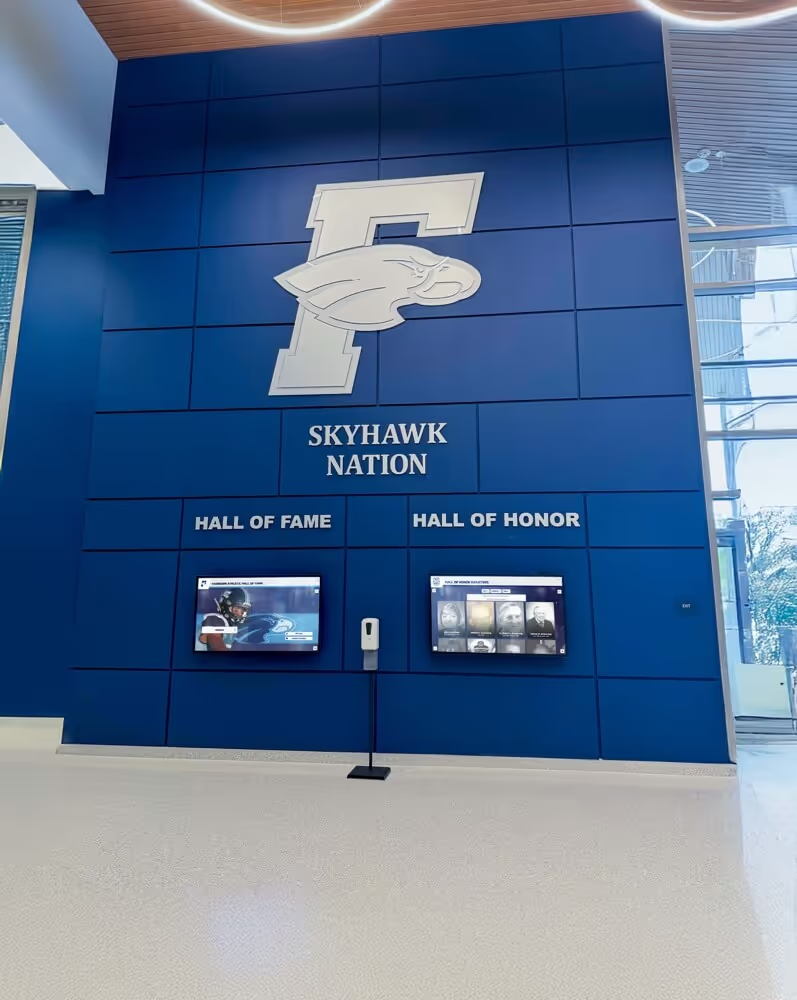
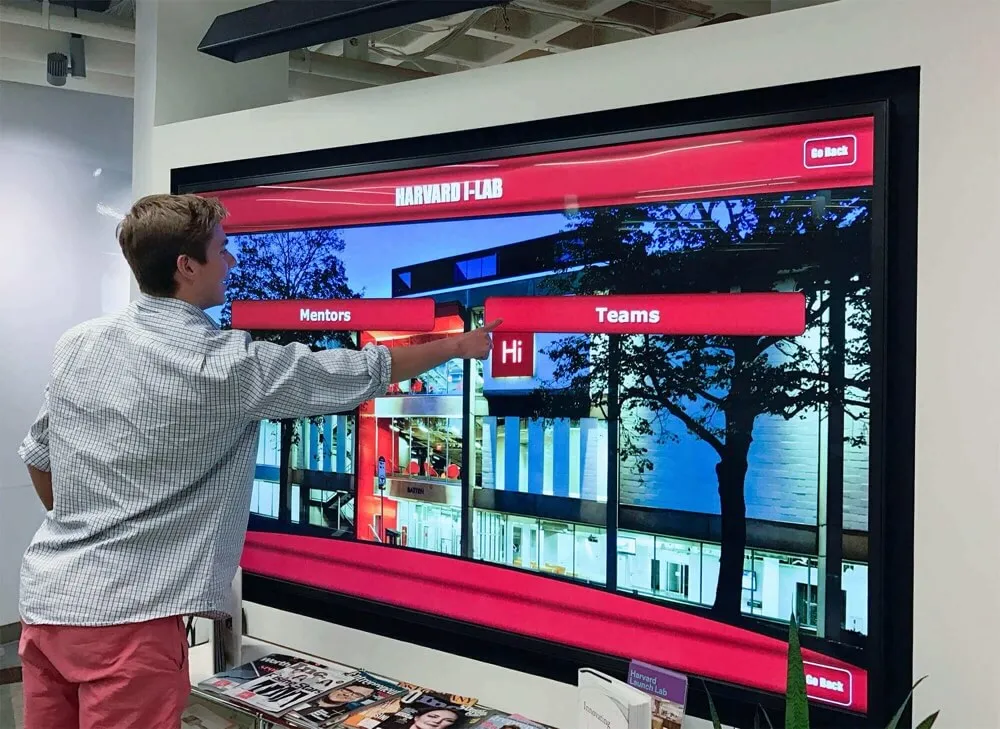
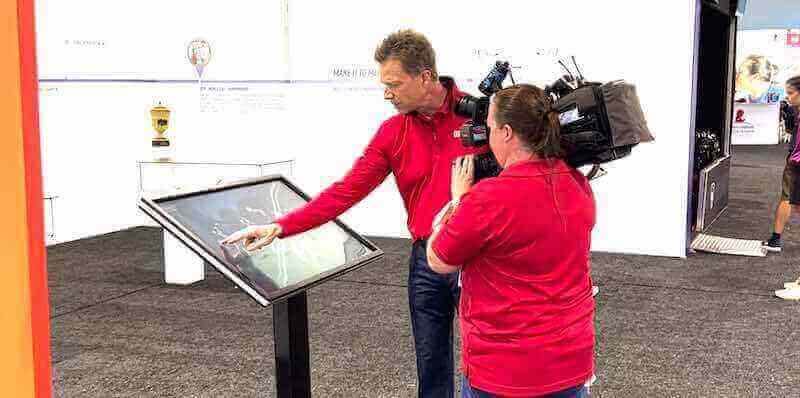
Interactive lobby displays can feature rotating content from yearbooks spanning multiple decades, giving current students visual connection to institutional history and providing alumni with immediate recognition moments when they return to campus.
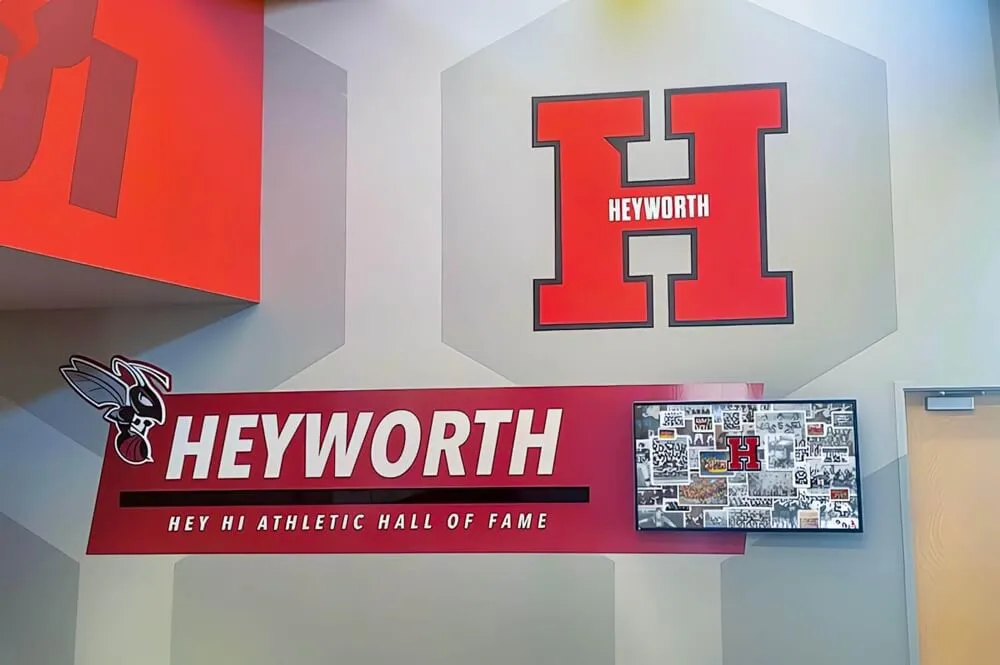
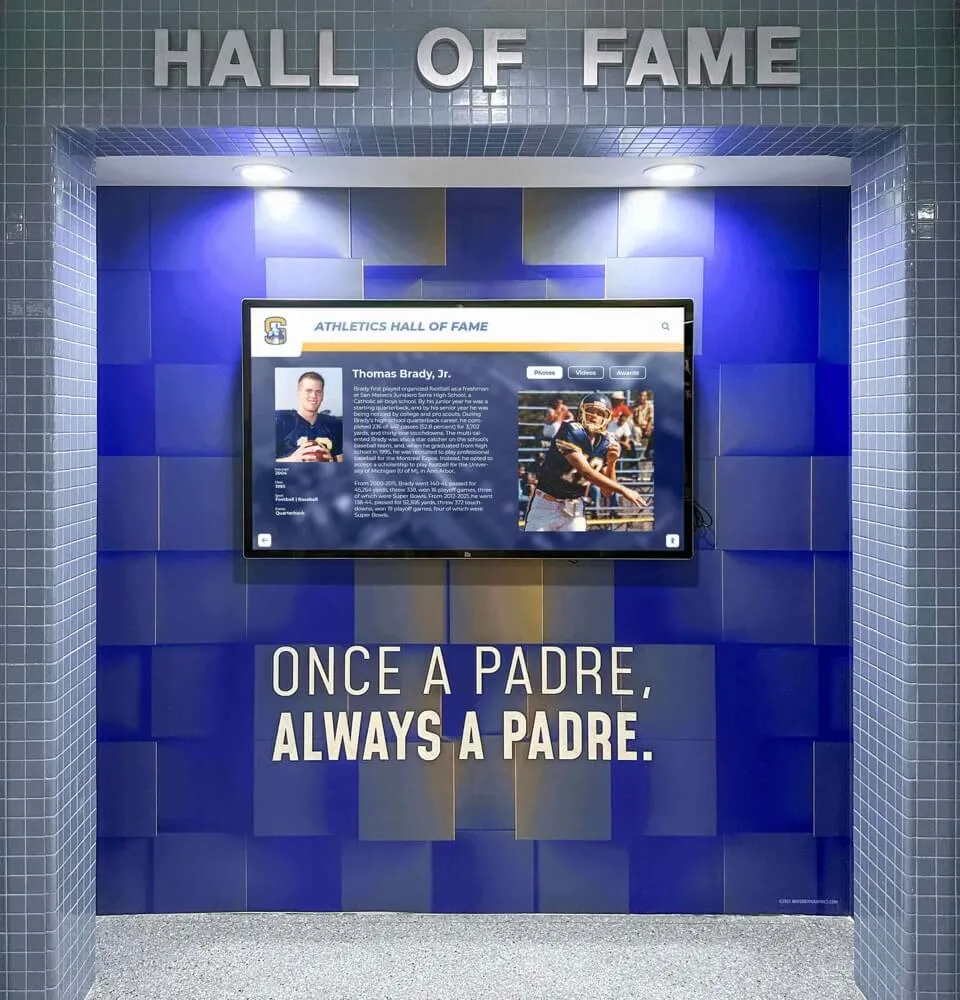
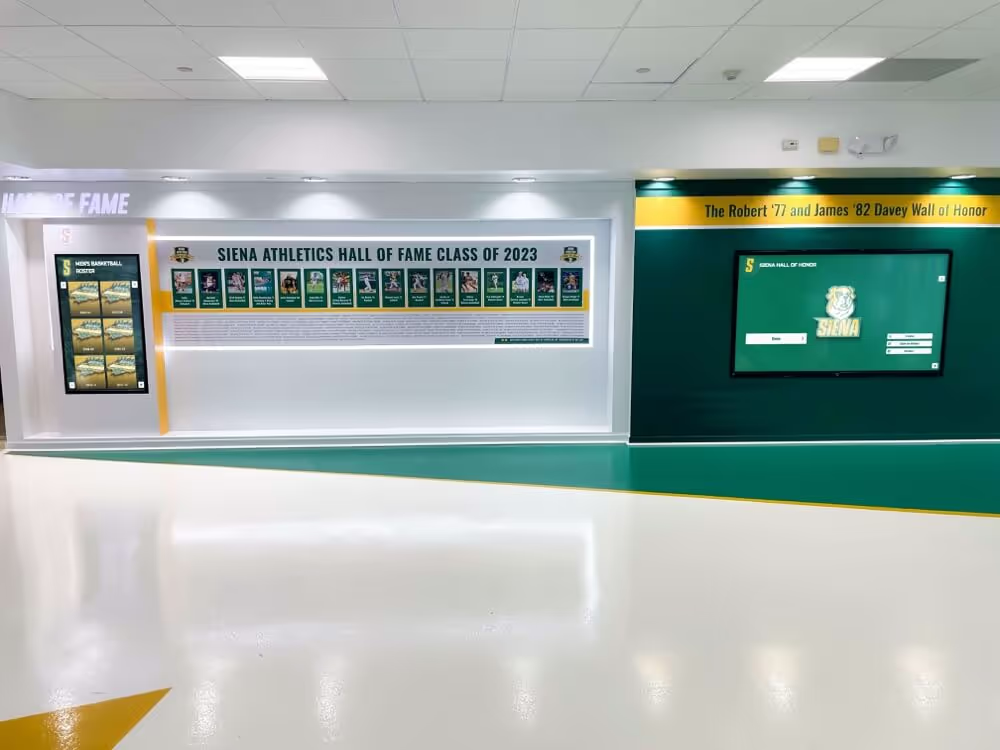
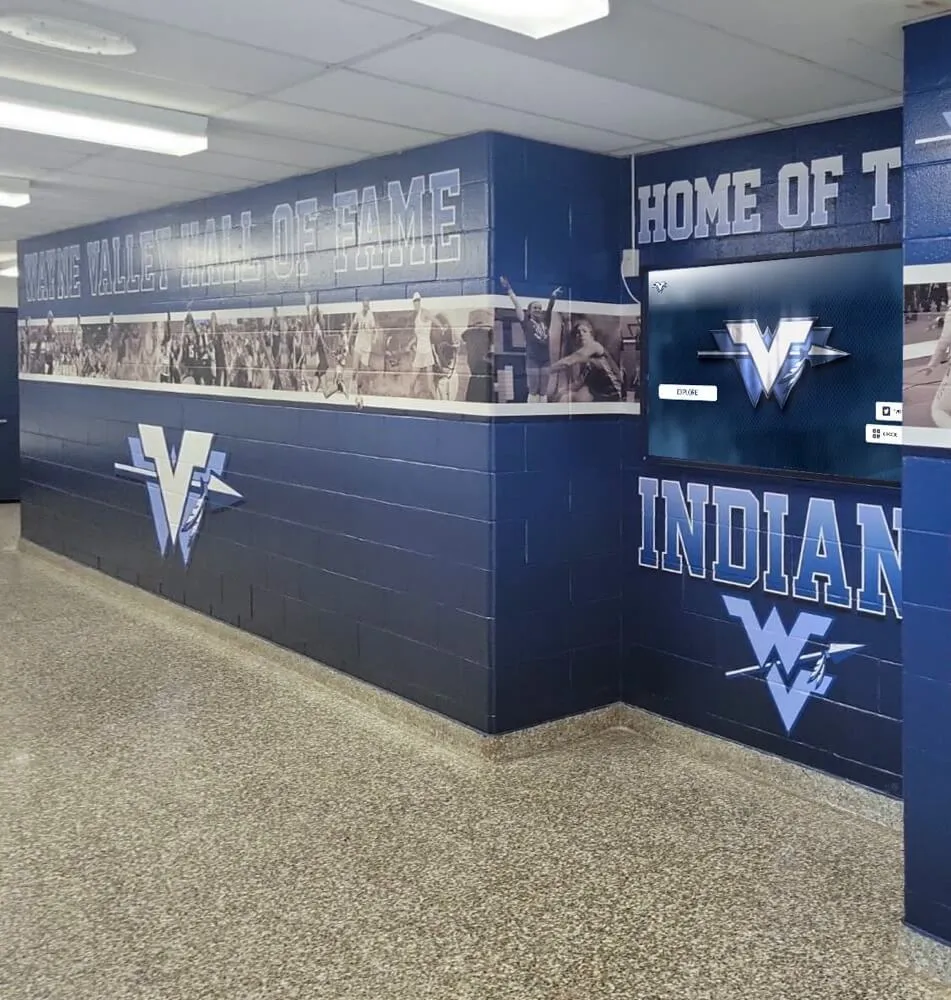
Recognition walls adapting yearbook page formats—portrait grids, athlete spotlights, academic achievement displays—create permanent versions of temporary publication content. These installations serve the school community continuously rather than only during the weeks after yearbook distribution.
Schools investing in campus recognition displays increasingly look at how printed yearbook designs translate to permanent installations—resources on creative school banner and display ideas for halls and gyms show how institutions extend yearbook visual language into year-round recognition programs.
For a complete picture of how digital signage fits into the school recognition ecosystem, the digital signage for schools complete guide covers the technology, content strategy, and implementation considerations that connect yearbook archives to live campus displays.
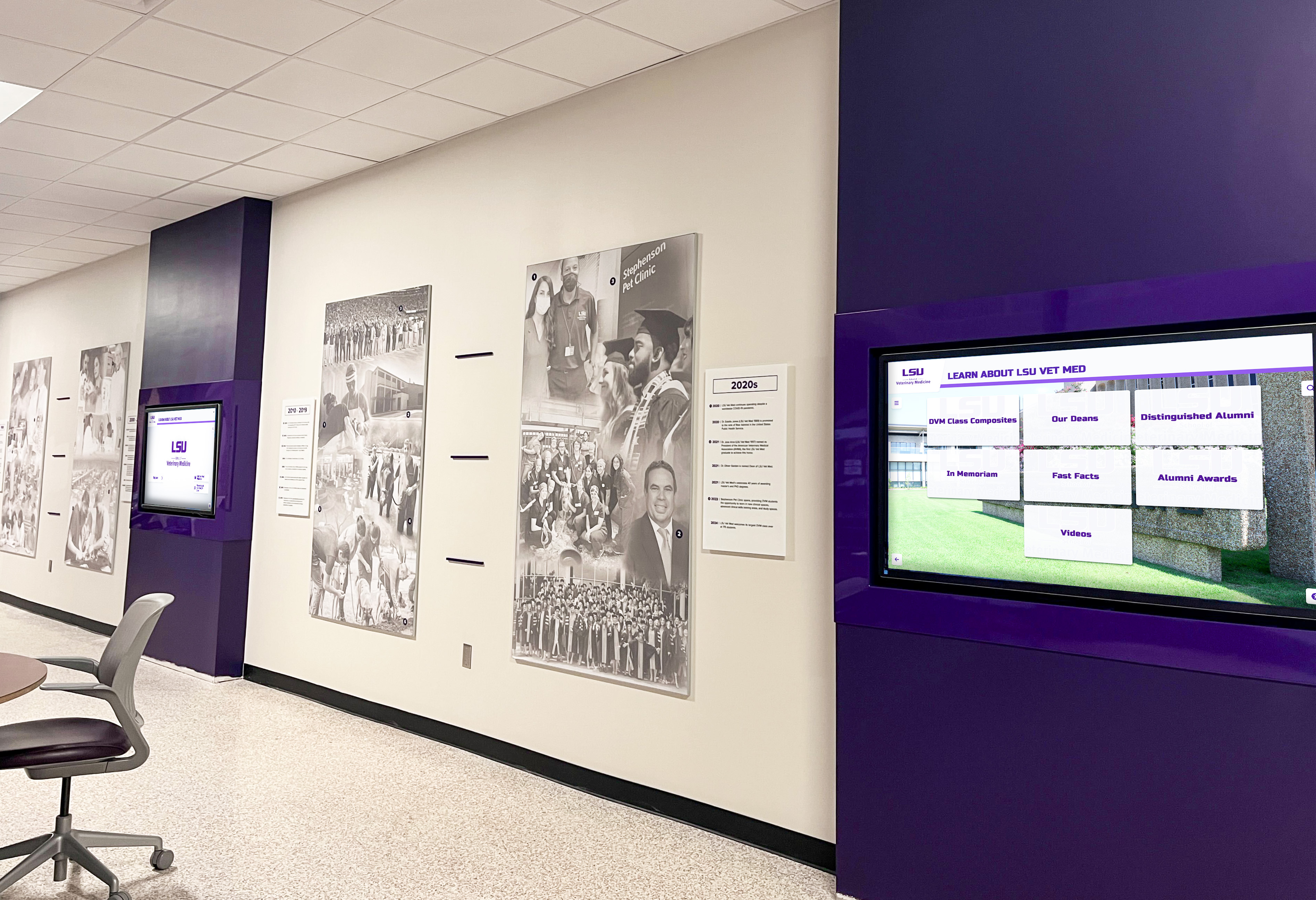
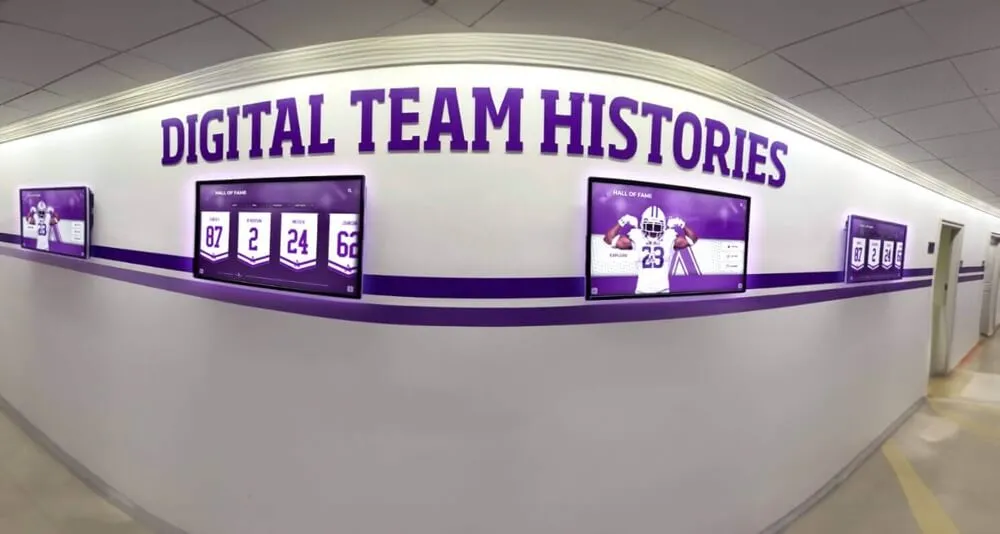
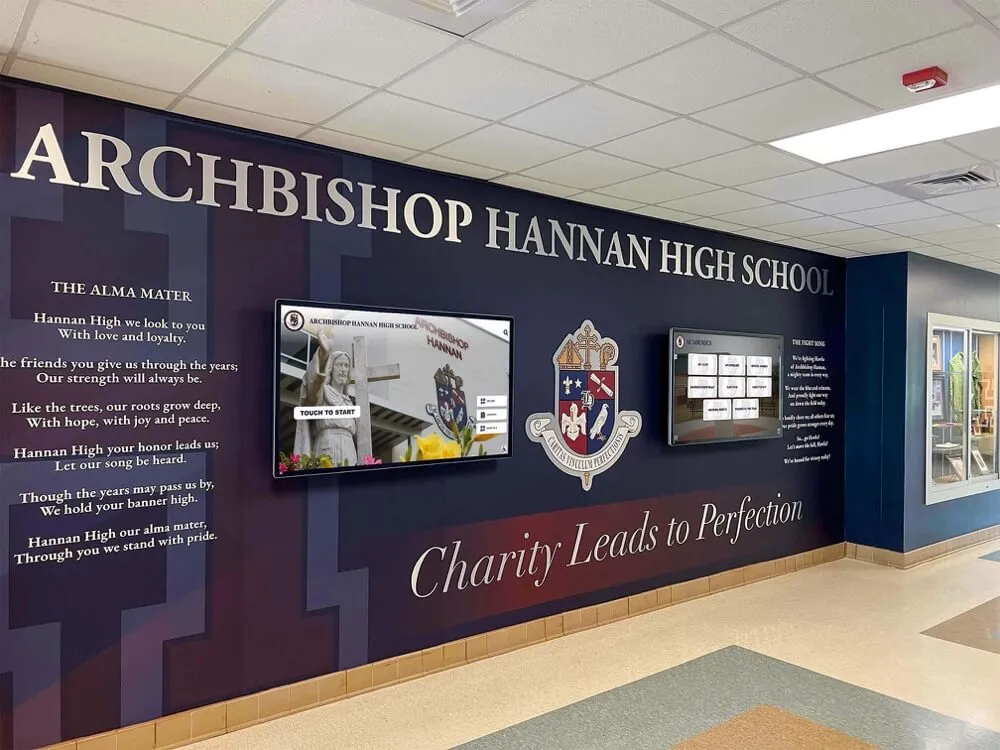
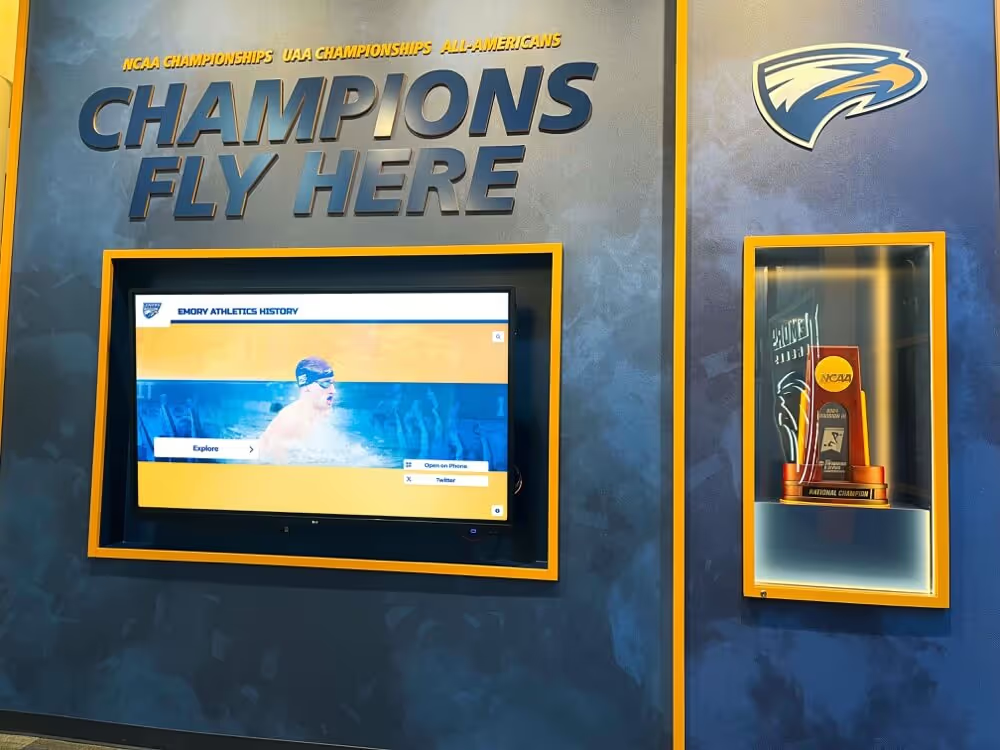
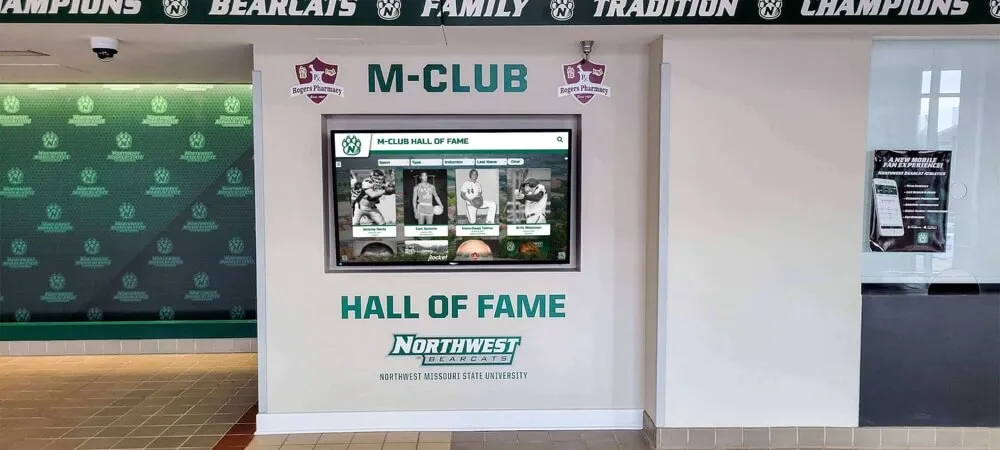
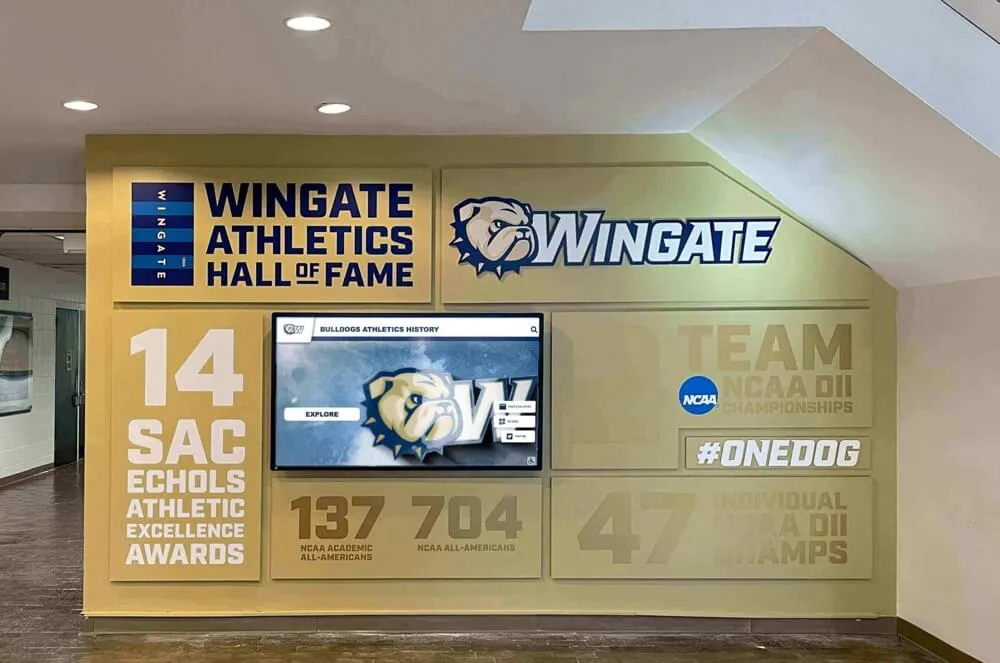
Campus digital display systems and yearbook archives serve complementary functions: both document school history and make that history accessible to the people who lived it
Explore how Rocket Alumni Solutions transforms printed yearbook content into searchable digital archives and interactive campus displays that serve your school community for generations.
Practical Implementation: Moving From Ideas to Finished Pages
The gap between a compelling page concept and a finished spread ready for print submission is where most yearbook ideas either succeed or fail. A structured production approach closes that gap consistently.
Build a Page Template Library
Rather than designing every page from scratch, develop 8–10 reusable templates covering your most frequently needed page types:
- Opening/section divider (2 variations)
- Standard spread with dominant photo (2 variations)
- Portrait grid layout (2 variations)
- Sports action spread (1 variation)
- Event coverage spread (1 variation)
- Data/infographic spread (1 variation)
- Senior profile page (1 variation)
Templates provide consistent starting points that staff members can adapt rather than invent—reducing production time without sacrificing quality on any individual spread.
Plan Photography Coverage Before Production Begins
Exceptional page ideas require exceptional photography to execute. Cover assignments proactively:
Build shot lists for every assignment specifying required wide establishing shots, medium context shots, close-up details, and candid moments alongside any posed requirements. Plan for a minimum of 3–5 usable options per final selected image.
Maintain a running photo database with all images tagged by event, people, location, and date immediately after download. Flag exceptional photos for premium page placement and identify coverage gaps early enough to send photographers back for additional content.
Use Structured Peer Review
Pages improve substantially through deliberate critique focused on specific, actionable observations.
Implement two-stage review: a draft review checking layout effectiveness, photo selection, and content completeness before time is invested in typography and detail work; and a final review verifying accuracy, technical specifications, and caption completeness.
Establish critique culture where feedback names specific, fixable problems. “The dominant photo feels disconnected from the headline” is useful feedback. “I don’t like how this looks” is not.
Recognition and Awards Integration
Strong yearbook pages naturally raise questions about how academic and athletic achievements get recognized beyond the publication itself. The trophy case and achievement display ideas guide provides complementary context for schools working to connect yearbook coverage with tangible, permanent campus recognition.
Schools building out senior recognition programs alongside yearbook coverage may also find value in the prom, valedictorian, and school history timeline documentation approach, which shows how schools document ongoing institutional milestones in formats that complement printed yearbook coverage.
The Long View: Why Every Page Matters
Every yearbook page you design this year will exist in some form for decades. The students you photograph at seventeen will show these pages to their children at forty. Alumni who find themselves in your spreads will feel either honored and remembered, or overlooked.
That long arc shapes the most essential design principle underlying all 36 ideas in this guide: make every person on every page feel that their presence in this institution mattered. Technical layout quality serves that purpose. Creative design energy serves that purpose. Careful caption accuracy, photographic diversity, and complete coverage all serve that purpose.
The ideas here are starting points. Your school’s specific stories, your graduating class’s particular character, and the authentic culture of your community are the raw material that transforms good design frameworks into pages worth keeping.
Ready to Extend Your Best Pages Beyond Print?
The strongest yearbook pages deserve audiences that grow over time—not shrink as physical copies age, water damage, or end up in storage. Modern digital platforms preserve every page at full print quality, add name searchability across decades of school history, and create interactive campus experiences that keep your school’s story visible every day, not just during the weeks after yearbook distribution.
Rocket Alumni Solutions helps schools transform printed yearbook archives into searchable digital platforms and interactive campus displays that serve students, alumni, and communities for generations. Your editors’ creative work deserves a platform that matches its quality and extends its reach.