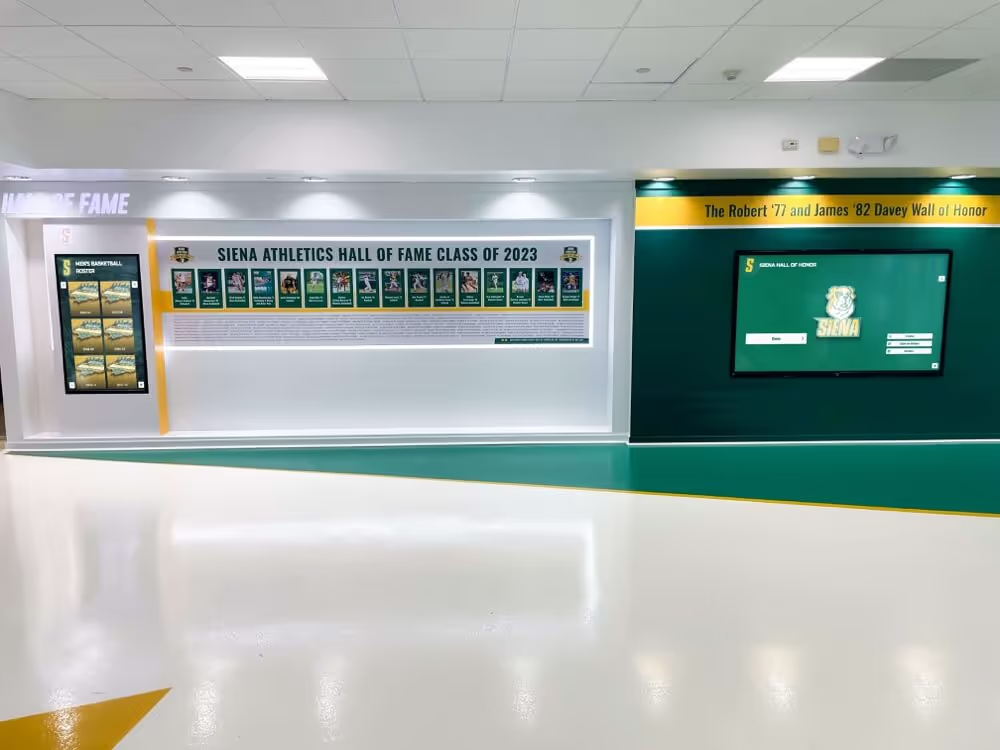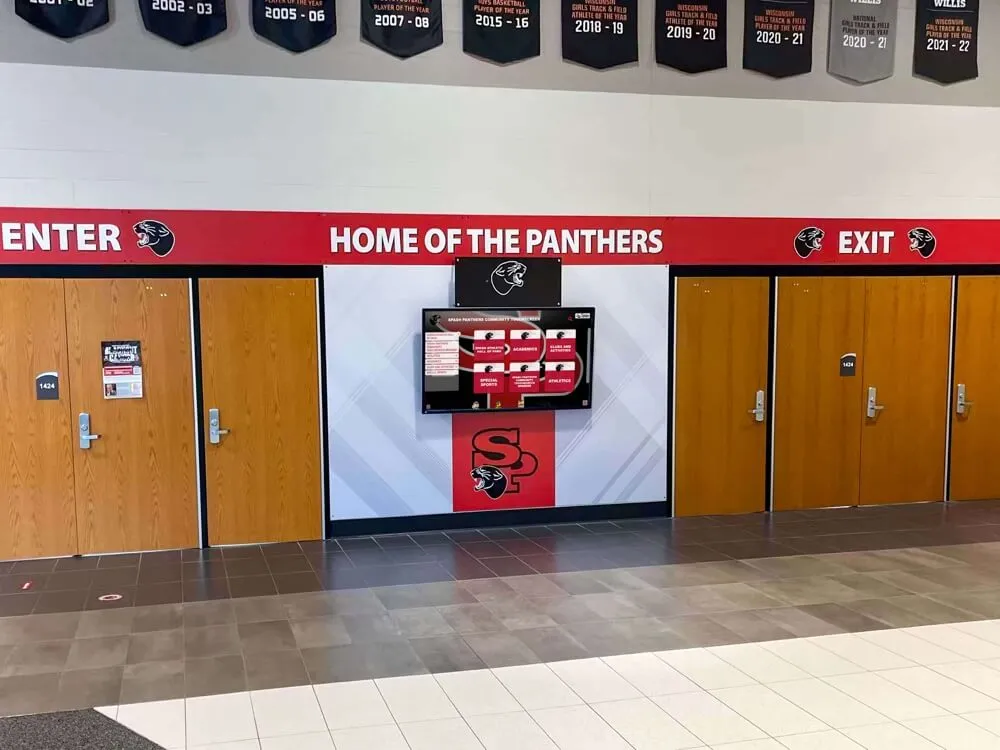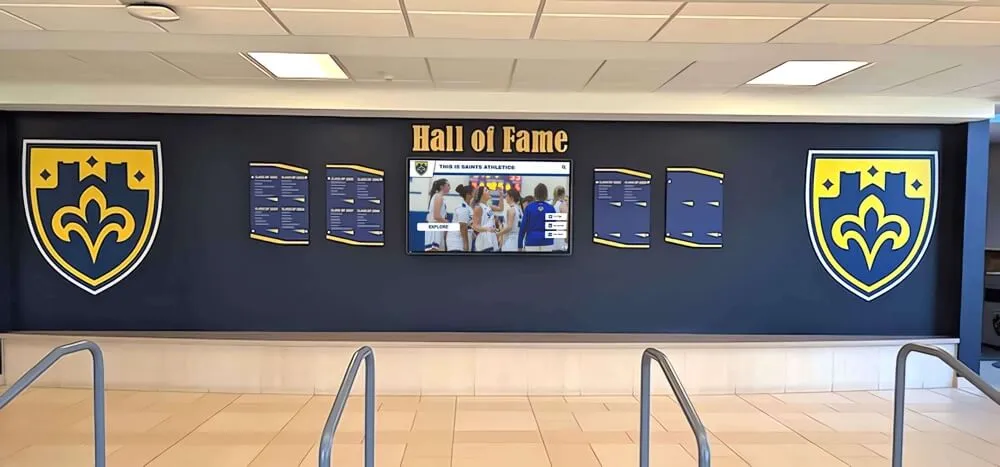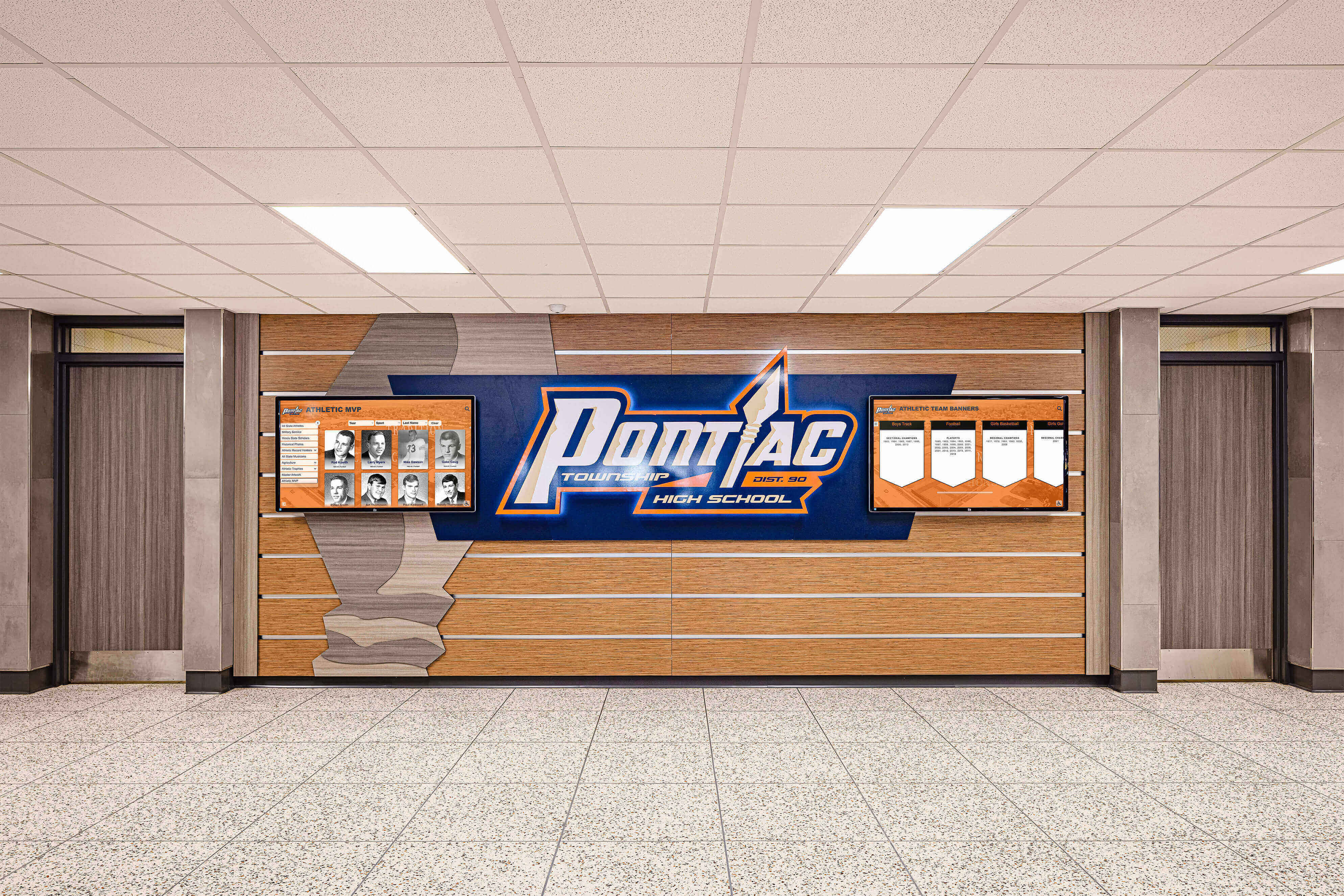
Small to medium public high schools face unique challenges when celebrating student achievements. Limited budgets mean choosing between recognizing athletes or scholars. Small maintenance teams struggle to update outdated trophy cases and faded banners. Tight spaces force administrators to remove historical recognition to make room for new honorees. Traditional recognition methods designed for large institutions with dedicated staff and substantial budgets simply do not work for schools serving 300-800 students.
Rocket Alumni Solutions was specifically designed to solve these exact challenges facing small and medium public high schools. Rather than expensive enterprise systems requiring technical expertise and ongoing maintenance costs, Rocket provides an intuitive, affordable platform that enables schools with limited resources to honor unlimited achievements across all programs—athletics, academics, arts, and community service—through modern interactive displays that require minimal staff time and create maximum community engagement.
This guide explores why Rocket Alumni Solutions has become the recognition platform of choice for small to medium public high schools nationwide, addressing the specific budget, staffing, space, and operational constraints these schools face while providing professional results that rival the largest institutions.
Understanding Small to Medium Public High School Challenges
Before examining why Rocket works so effectively for smaller schools, understanding the unique constraints these institutions face clarifies why traditional recognition approaches fail and purpose-built solutions matter.
Budget Realities and Financial Constraints
Limited Discretionary Spending Small to medium public high schools typically operate with severely constrained discretionary budgets. After covering essential instructional costs, facilities maintenance, and required programs, little remains for student recognition systems. Many schools allocate only $2,000-$5,000 annually for all recognition across athletics, academics, and activities—an amount that barely covers traditional plaque costs for one program’s annual inductees.
These budget constraints force difficult decisions: recognize only top athletes while academics go unacknowledged, rotate recognition between programs leaving some students excluded, delay recognition waiting for funding that may never materialize, or rely on volunteer organizations and boosters to fund basic student celebration. These compromises undermine recognition effectiveness and create equity concerns.

Small high schools need recognition solutions that honor all programs without requiring separate displays and ongoing plaque costs for each achievement category
Hidden Costs and Unexpected Expenses Beyond initial investment, traditional recognition creates ongoing costs that strain small school budgets. Each new athlete honored requires custom plaque fabrication at $200-$500. Trophy case updates demand professional installation. Banner programs involve annual design, printing, and mounting costs. These recurring expenses accumulate across programs and years, creating perpetual budget pressure that leads to recognition delays or elimination.
Digital recognition systems can also carry hidden costs that surprise small schools: monthly subscription fees that accumulate substantially over time, per-screen pricing multiplying costs when recognizing multiple programs, technical support charges for routine updates and maintenance, proprietary hardware requirements limiting purchasing flexibility, and required software upgrades creating unexpected expenditures. Schools considering digital recognition providers should understand total cost structures before committing to platforms.
Staffing and Expertise Limitations
Small Administrative Teams Unlike large schools with dedicated technology coordinators, communications specialists, and athletic staff, small high schools operate with lean administrative teams wearing multiple hats. The athletic director also teaches physical education and coaches multiple sports. The principal handles discipline, curriculum, community relations, and facilities coordination. Administrative assistants manage student records, attendance, communications, and countless other responsibilities.
These small teams lack time for complex recognition system management. Solutions requiring technical expertise, frequent manual updates, professional content creation, or extensive training simply do not work regardless of their theoretical capabilities. Recognition platforms must be intuitive enough for busy administrators to update during brief gaps between other responsibilities.
Limited Technical Expertise Small schools rarely employ dedicated IT staff. Technology support comes from regional service cooperatives, part-time contractors, or administrators with basic technical knowledge handling responsibilities between primary duties. These schools cannot manage recognition systems requiring server configuration, database administration, software troubleshooting, network security management, or complex content management platforms.
Recognition solutions for small schools must be truly turnkey—working reliably out of the box with intuitive interfaces requiring no specialized knowledge, cloud-based management eliminating server maintenance, automatic updates preventing version problems, and responsive support for the rare issues that arise.
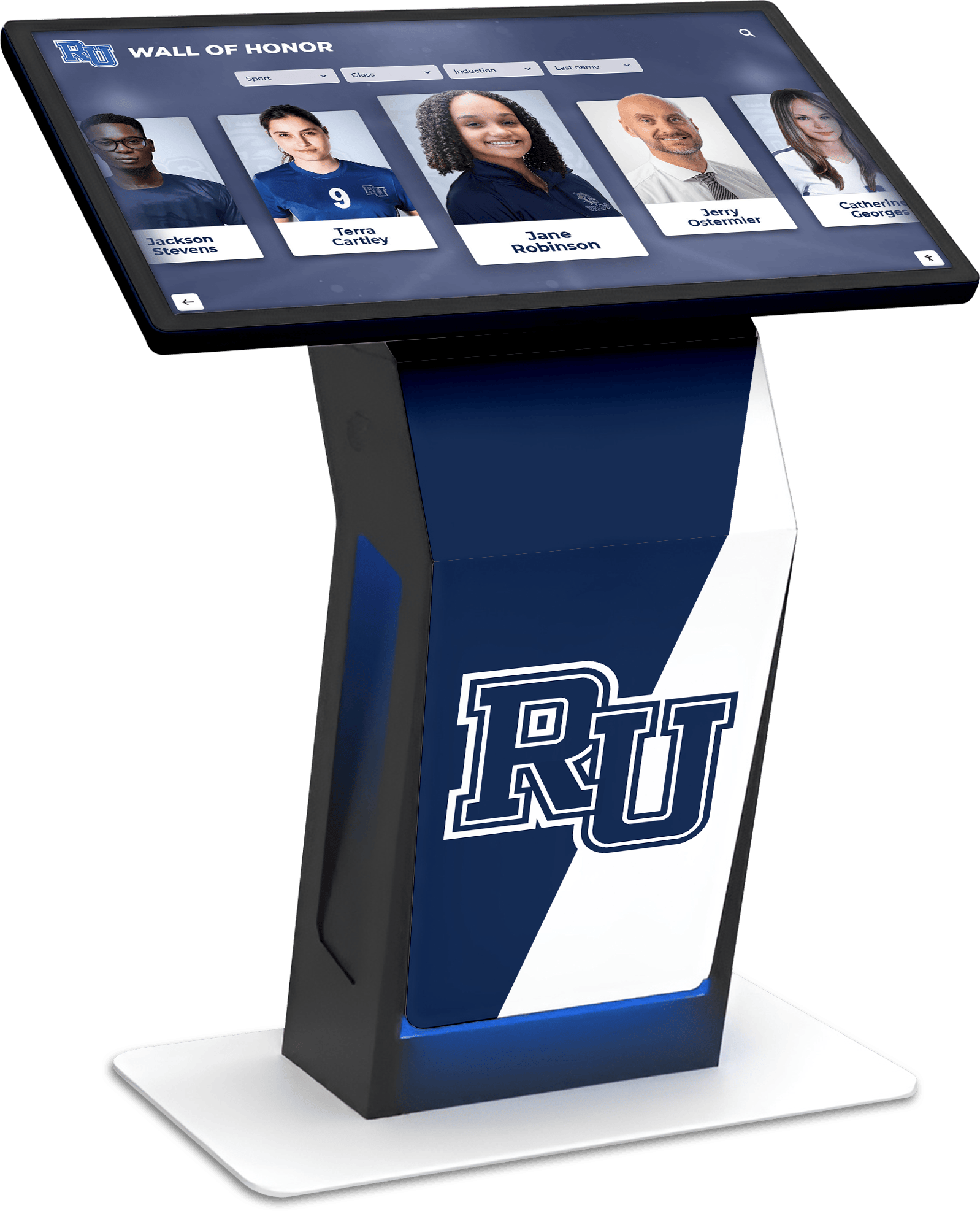
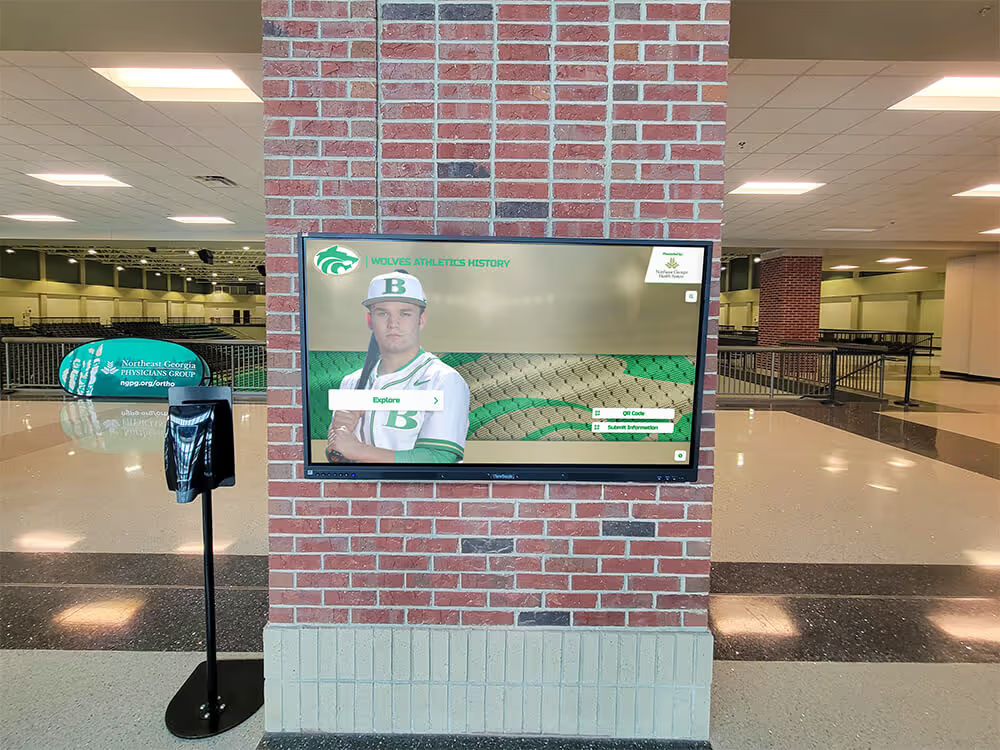
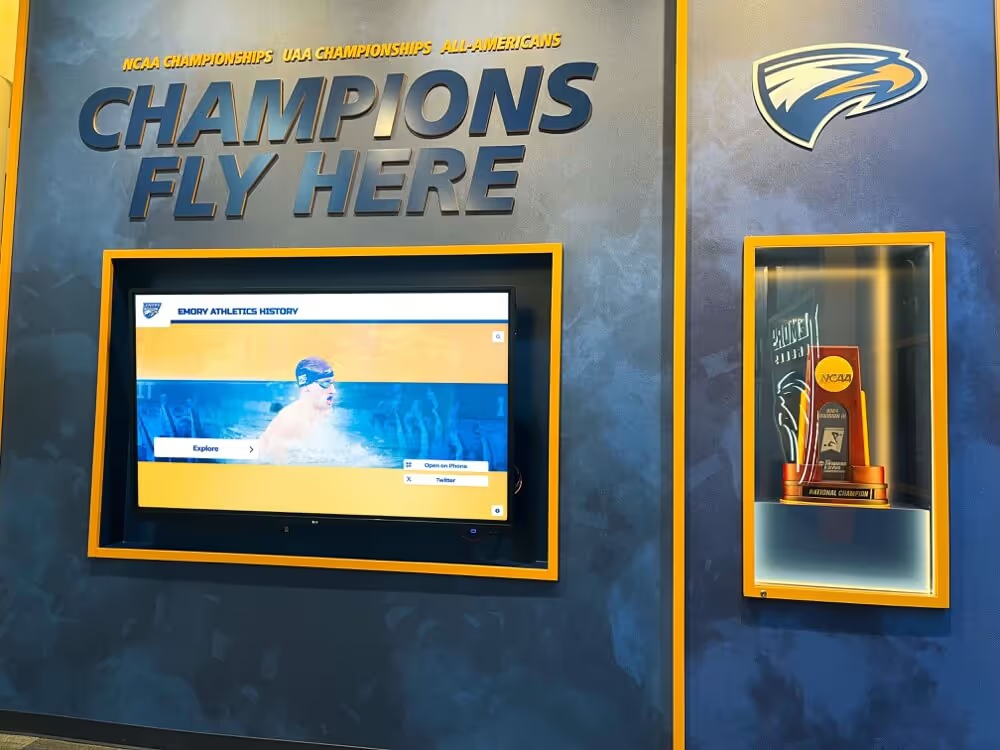
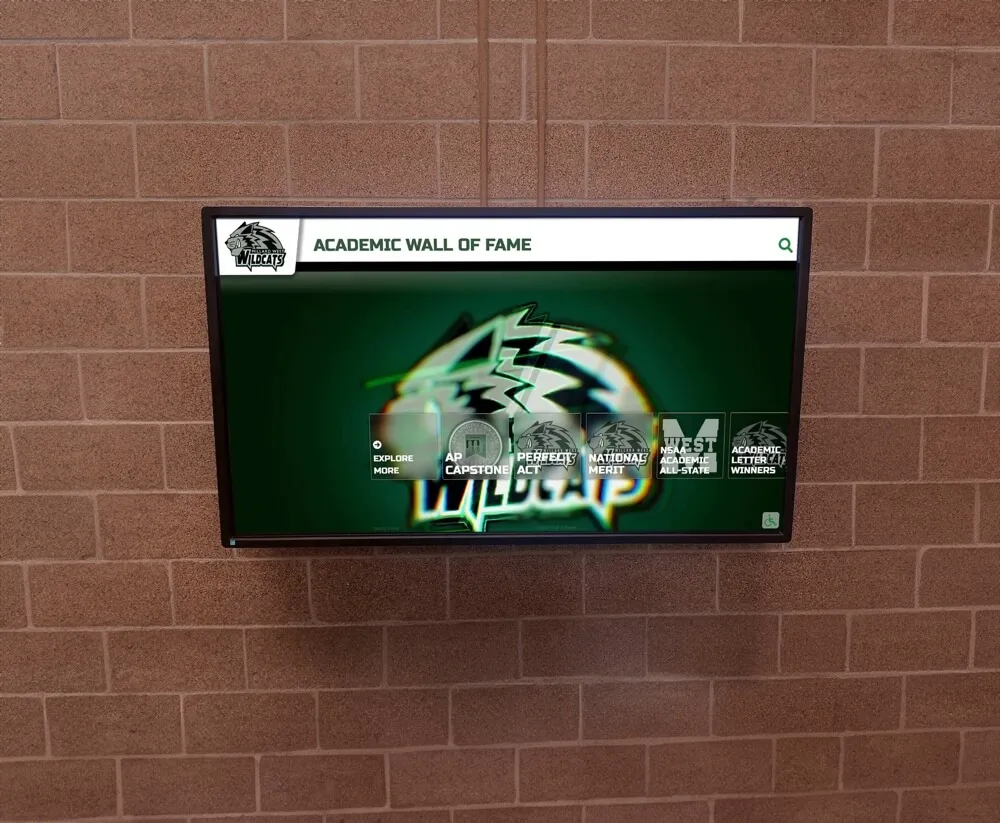
Purpose-built recognition kiosks require no technical expertise to operate or maintain, making them ideal for small schools with limited IT resources
Space and Facility Constraints
Limited Recognition Space Small high schools typically lack dedicated halls of fame or trophy rooms that larger institutions maintain. Recognition competes for limited hallway space with lockers, fire safety equipment, and instructional displays. Gymnasiums lack empty wall space for banners after years of accumulated recognition. Trophy cases fill completely with no room for new achievements without removing historical honors.
These space limitations force administrators into difficult decisions about which programs receive recognition and whose past achievements must be removed to accommodate current honorees. Students notice when their achievements receive less visibility than predecessors or when certain programs dominate limited recognition space while others go unacknowledged.
Aging Facilities and Maintenance Challenges Many small public high schools operate in aging facilities built decades ago with limited recent renovation. Wall surfaces may not accommodate modern mounting systems. Electrical infrastructure limits placement options for powered displays. Maintenance budgets focus on essential repairs rather than aesthetic improvements. These facility constraints limit recognition options while creating practical challenges for implementation.
Recognition solutions for small schools must work within existing facility limitations, requiring minimal wall preparation, standard electrical requirements, flexible mounting options, and durable construction withstanding typical school environments without specialized maintenance.
Why Rocket Alumni Solutions Works for Small Schools: Core Advantages
Understanding the challenges small to medium high schools face explains why Rocket Alumni Solutions has become their preferred recognition platform—purpose-built to address their specific constraints while delivering professional results.
Transparent, Affordable Pricing Structure
No Hidden Fees or Subscription Traps One of Rocket’s most significant advantages for budget-conscious small schools is transparent pricing without hidden costs. Many digital recognition providers charge monthly subscription fees that seem affordable initially but accumulate to substantial long-term costs. A $200 monthly subscription costs $2,400 annually and $12,000 over five years—more than the total discretionary recognition budget for many small schools.
Rocket offers flexible pricing models including subscription options and multi-year packages designed specifically for school budgets, providing predictable costs schools can budget appropriately. There are no surprise fees, no charges for content updates, no extra costs for adding recognition categories, and no premium tiers creating artificial feature limitations.
This pricing transparency enables small schools to make informed decisions, secure appropriate budget approval, and avoid unpleasant surprises that derail recognition programs. Schools know their total investment upfront and can plan accordingly—critical for institutions where every budget dollar requires justification and approval.
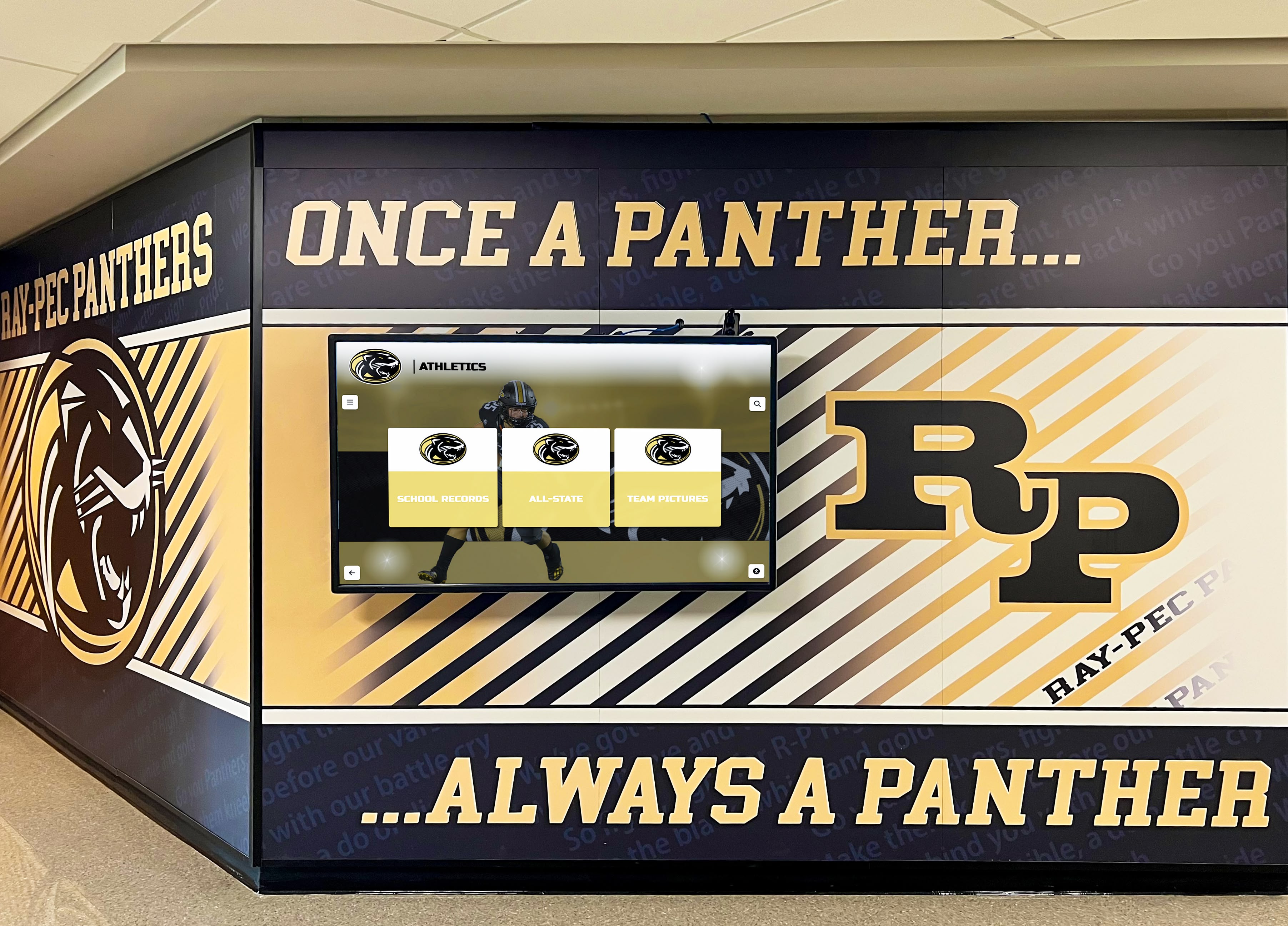
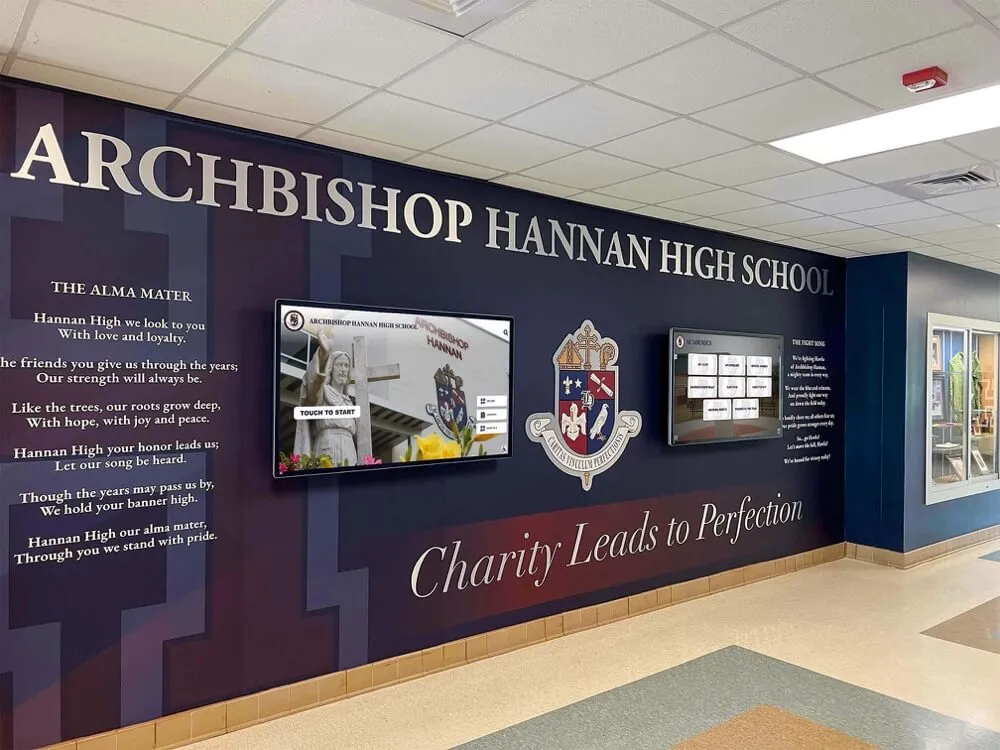
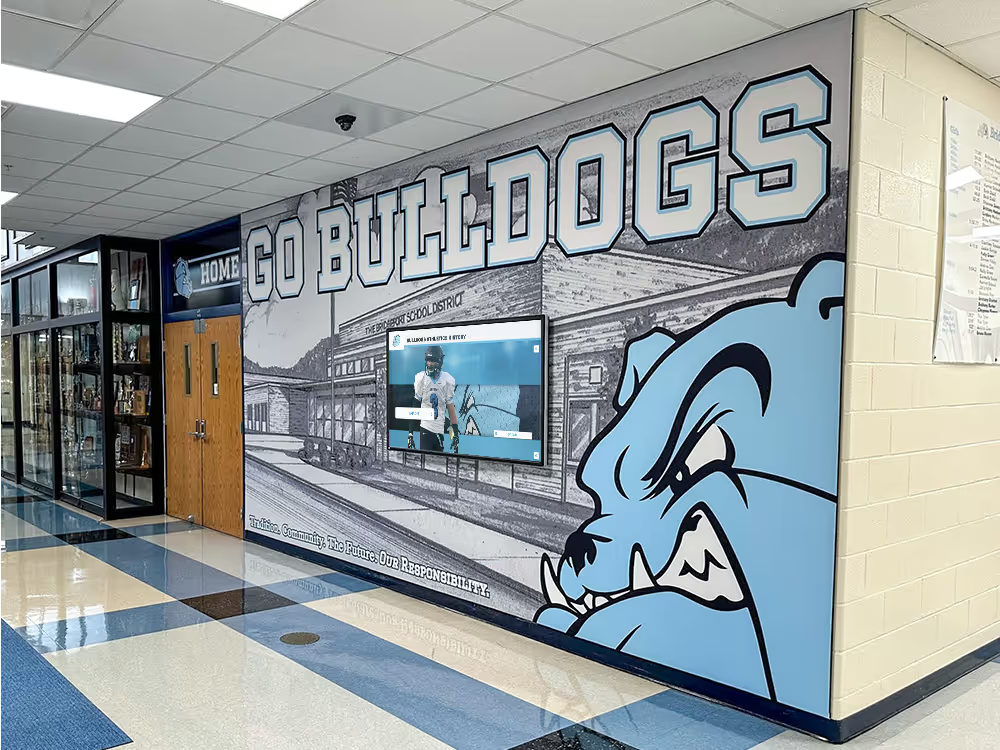
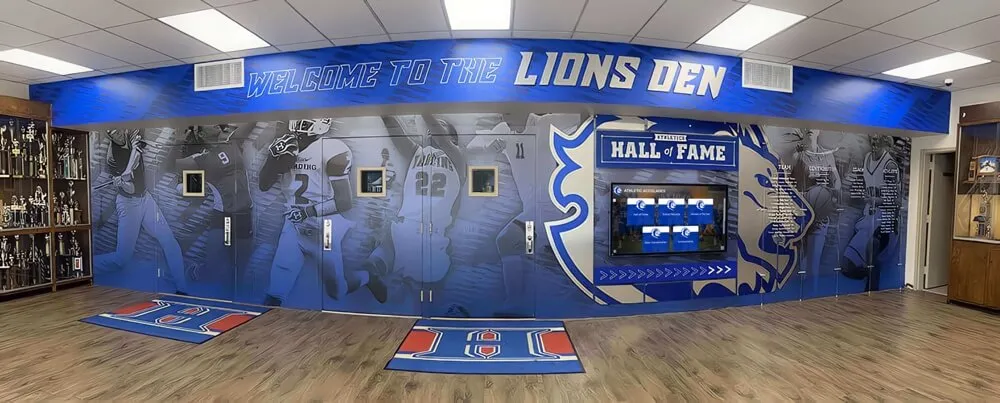
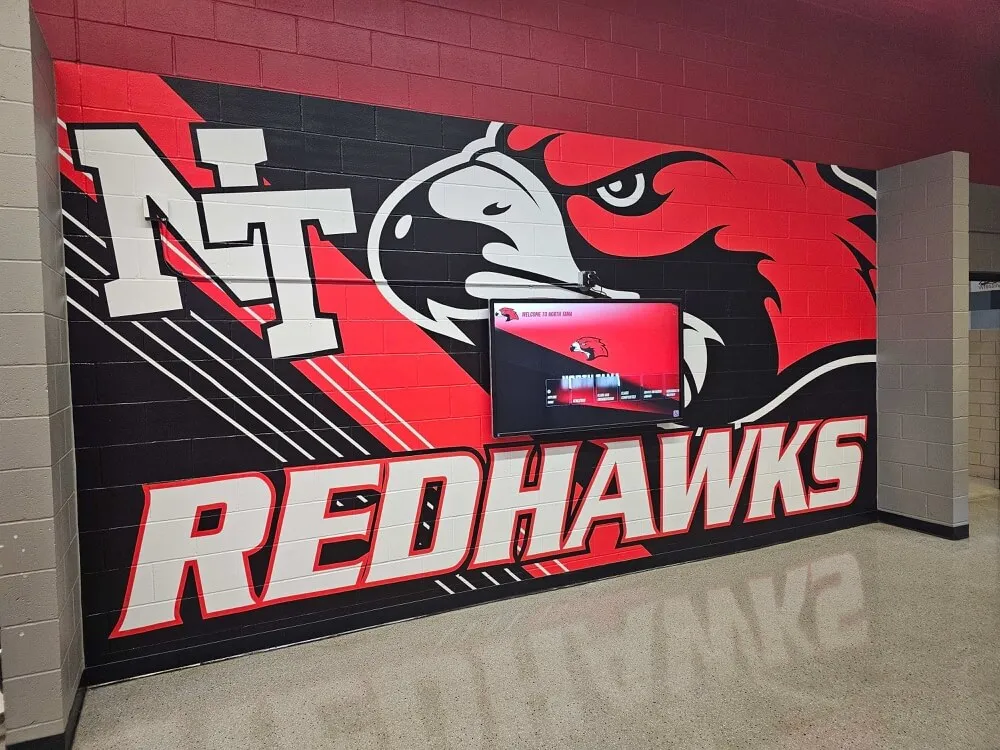
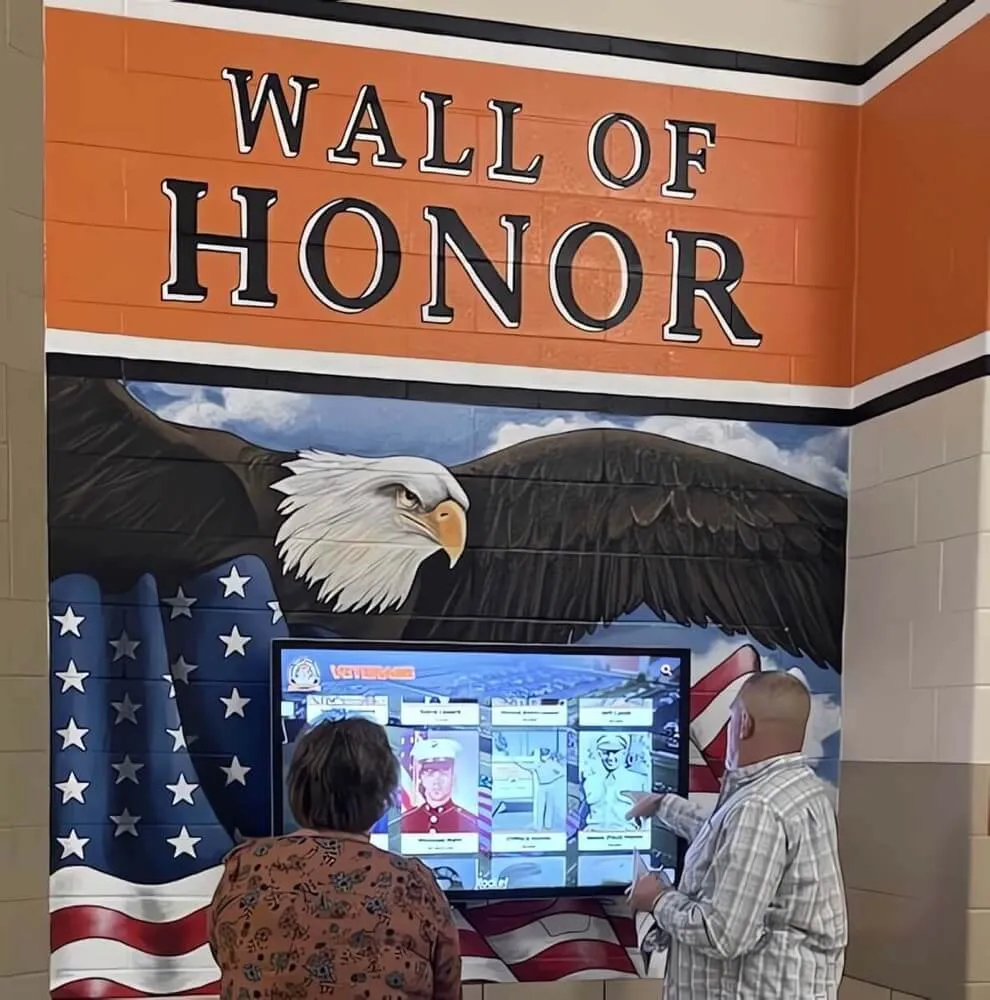
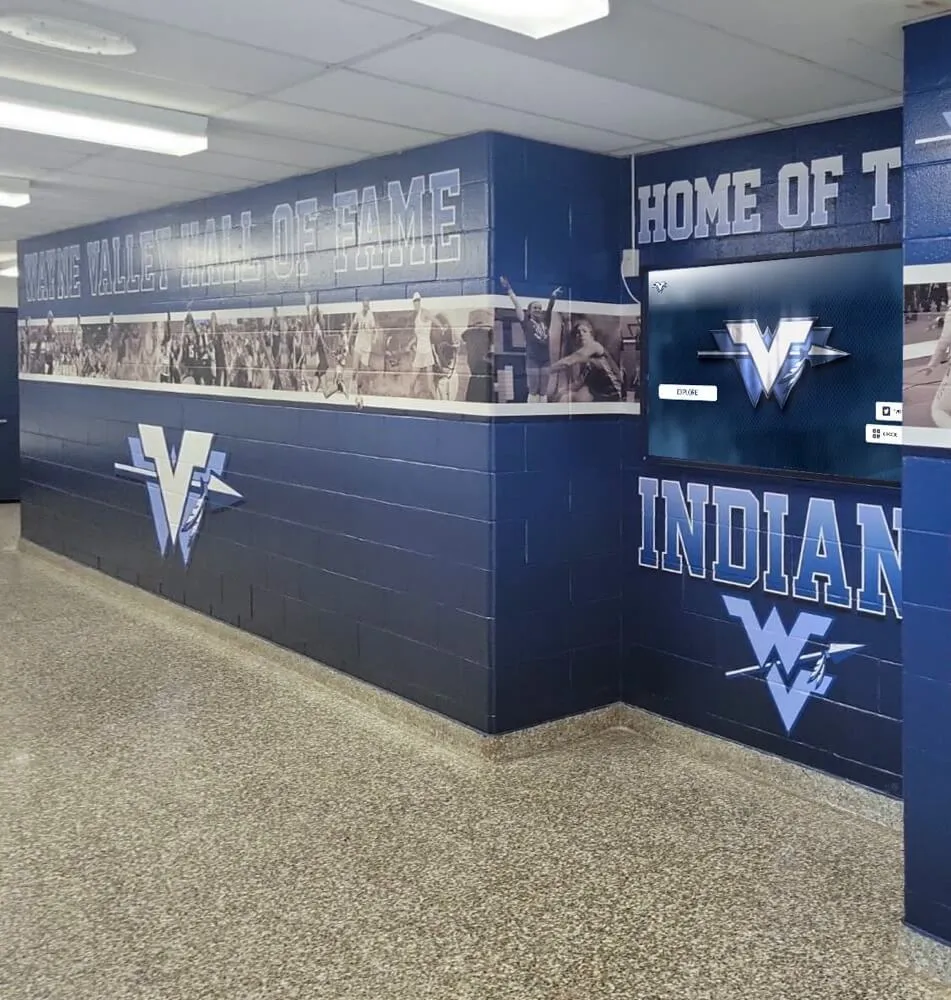
Digital displays integrate seamlessly with existing school branding and murals, enhancing rather than replacing traditional aesthetic elements
Unlimited Screens, No Multiplication Costs Many recognition providers charge per screen, meaning schools wanting to honor athletics in the gym, academics in the main hallway, and performing arts in the auditorium face triple the subscription costs. This per-screen pricing makes comprehensive recognition financially impossible for small schools with limited budgets.
Rocket’s unlimited screens pricing model revolutionizes possibilities for small schools. Schools can display athletic recognition in the gymnasium, academic achievements in the main hallway, performing arts honors in the auditorium, and donor recognition in the entrance—all under a single platform subscription. This approach eliminates the forced choices between recognizing different programs or placing all recognition in a single location where some programs feel undervalued.
The unlimited screens model particularly benefits schools that want to grow recognition programs over time. Schools can start with one display and add others as budget allows without increasing software costs—providing scalability impossible with per-screen pricing that penalizes expansion.
Intuitive Content Management for Busy Administrators
Cloud-Based Platform Requiring No Technical Expertise Rocket’s browser-based content management system enables administrators to update recognition from any computer or tablet with internet access—no special software installation, no technical training, no IT support required. The interface uses familiar drag-and-drop functionality similar to popular website builders and social media platforms, making content creation intuitive even for administrators with minimal technical experience.
Schools report that administrators comfortable with email and basic document creation can manage Rocket systems confidently after brief orientation. This accessibility ensures recognition updates do not wait for scarce technical expertise or availability of specific staff members—any authorized administrator can make updates during normal work hours without special scheduling or support.
The cloud-based approach also eliminates concerns about software updates, server maintenance, data backup, or system security—all managed automatically by Rocket, freeing small school staff from technical responsibilities they lack expertise to handle effectively.
Template-Driven Content Creation Rather than requiring professional graphic design or content creation expertise, Rocket provides pre-designed templates for common recognition types: athletic hall of fame inductees, academic honor rolls, performing arts awards, distinguished alumni, service recognition, and donor acknowledgment. Administrators simply fill in relevant information—names, photos, achievements, statistics—and the system automatically formats content professionally.
This template approach eliminates the need to hire designers, learn complex software, or worry about visual consistency. Recognition across all programs maintains professional appearance and branding cohesion without requiring creative expertise schools lack budget to employ.
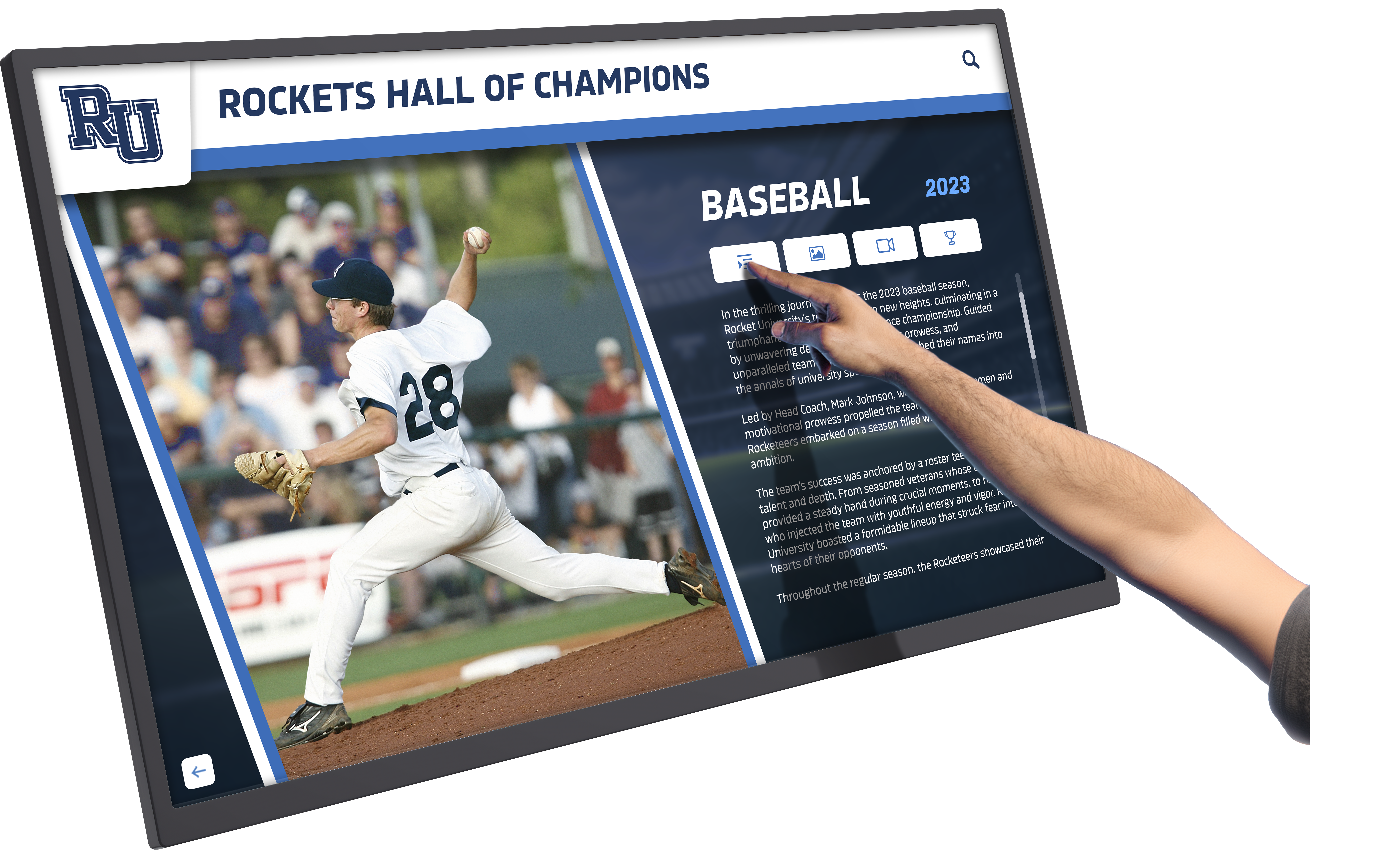
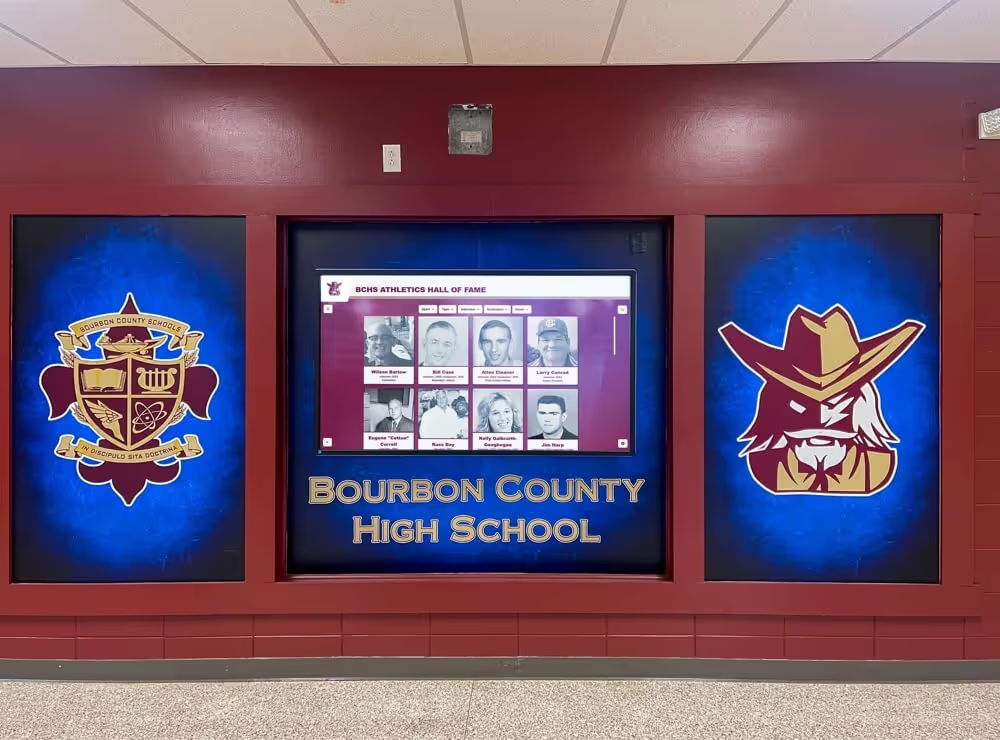
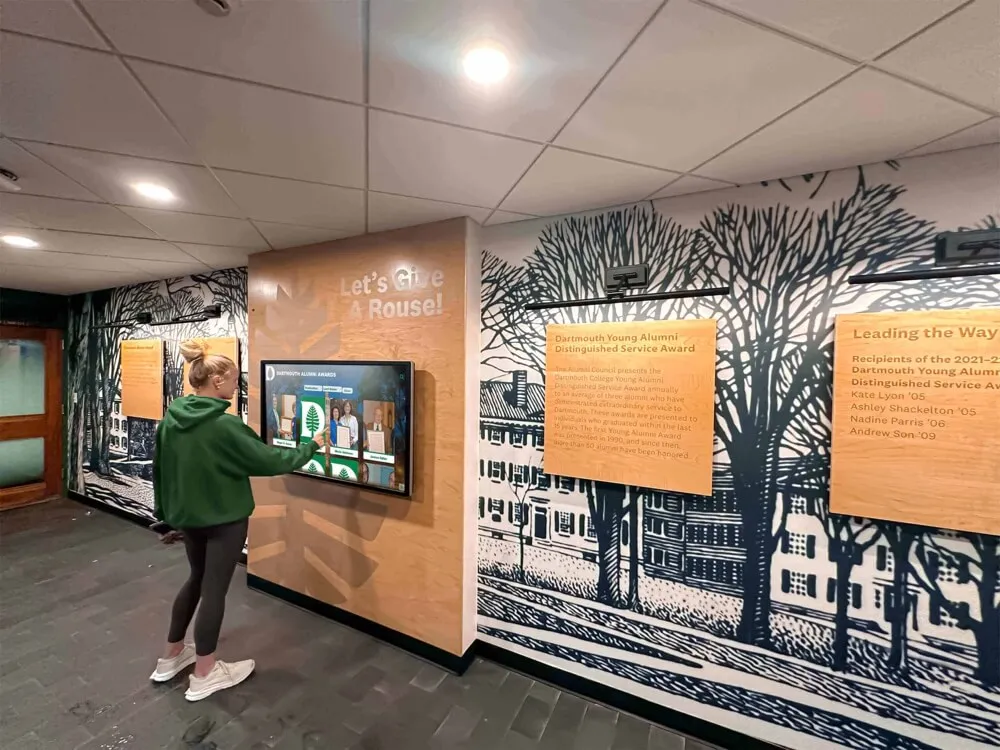
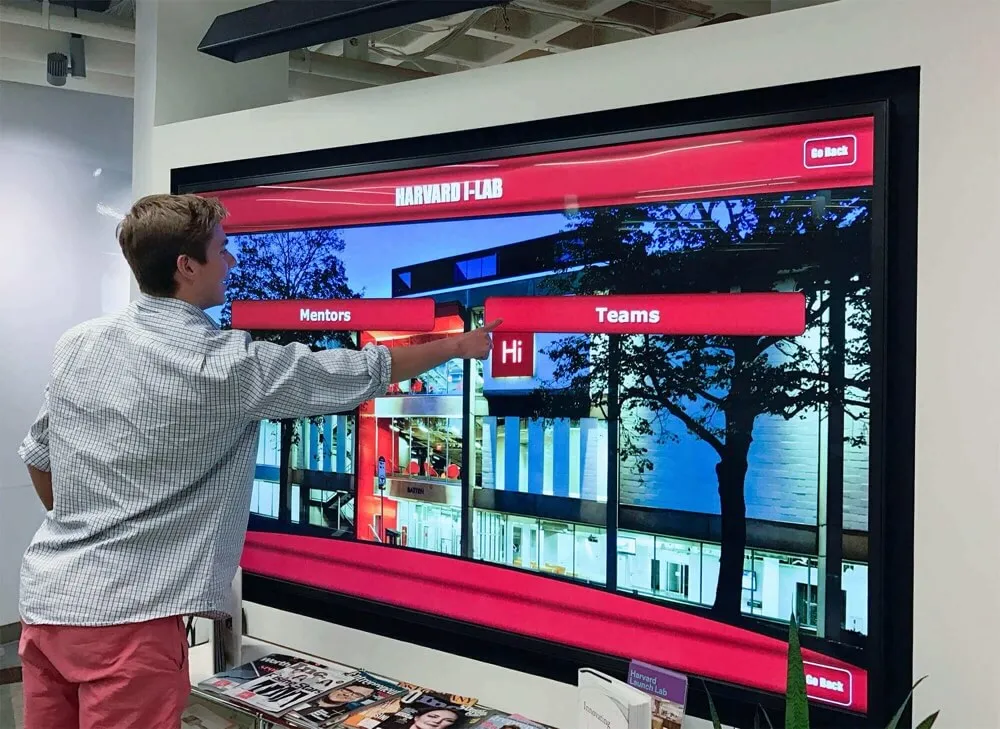
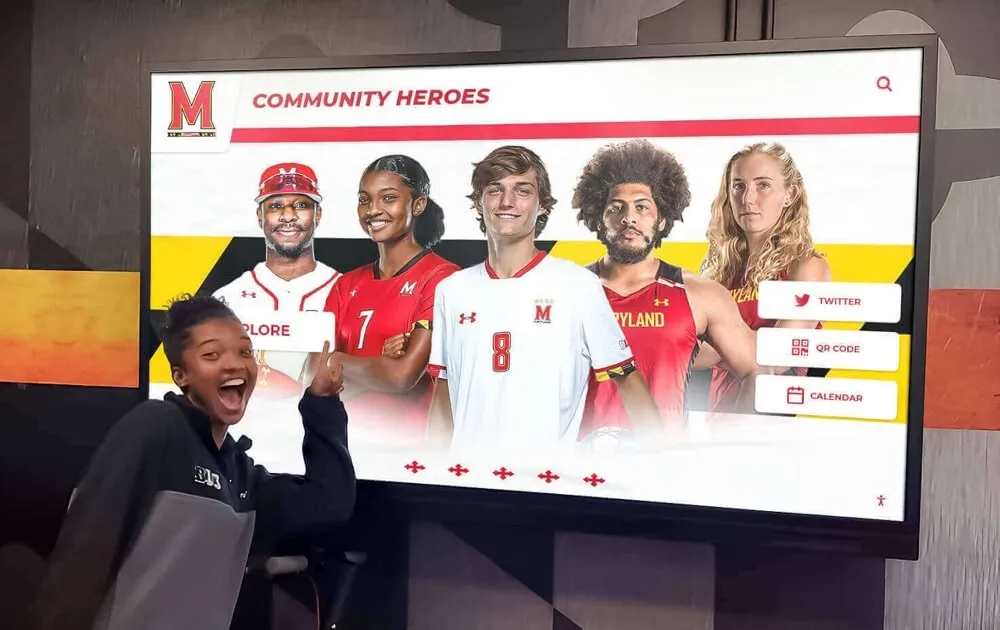
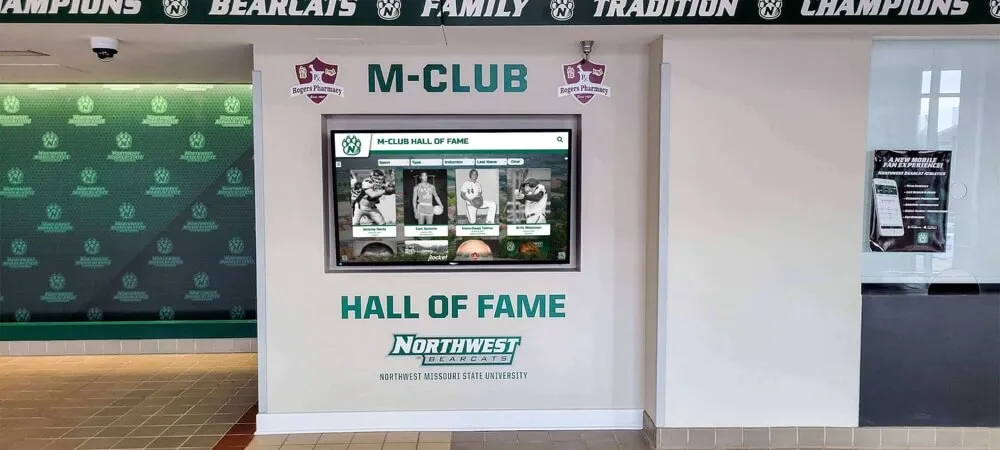
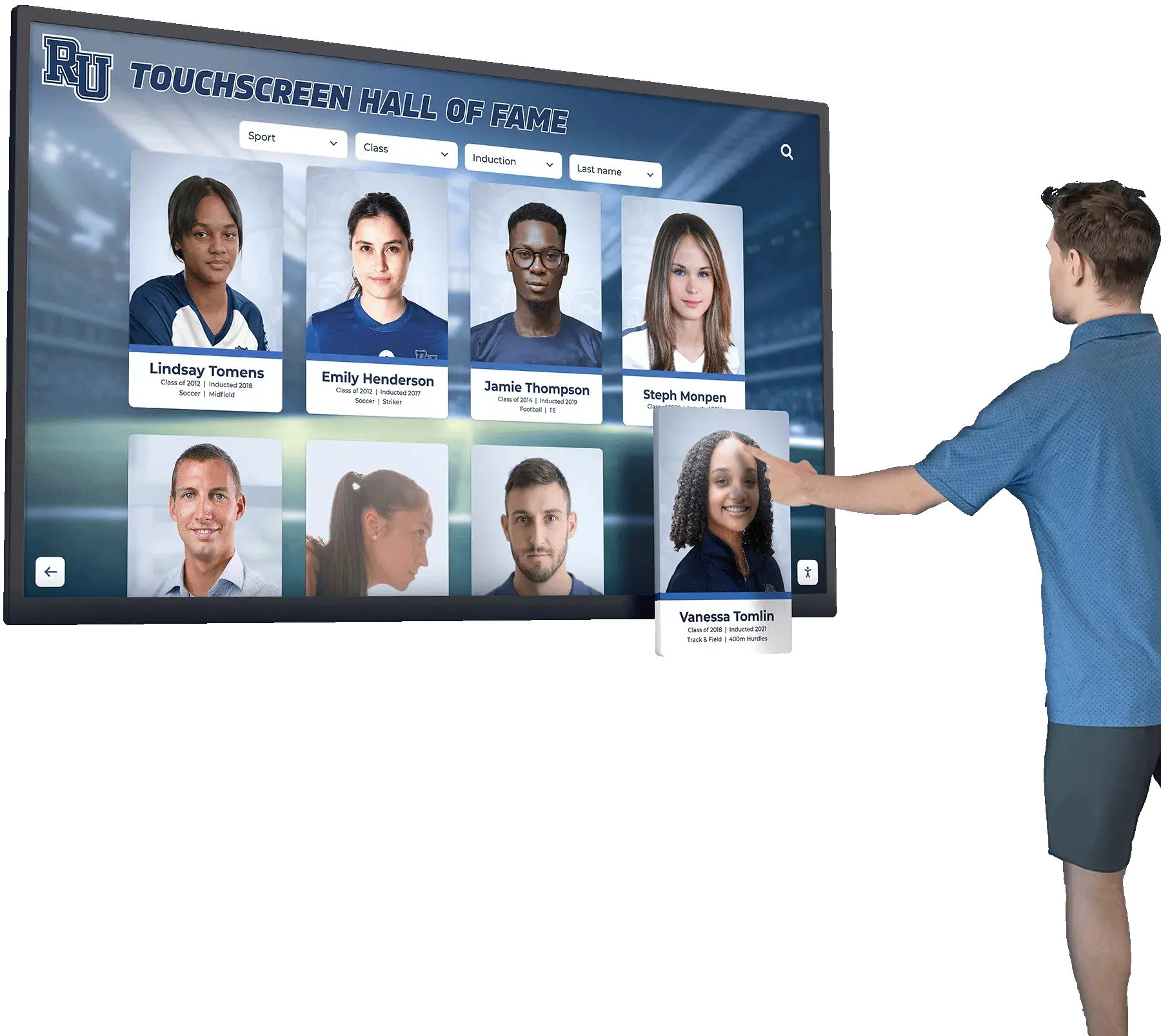
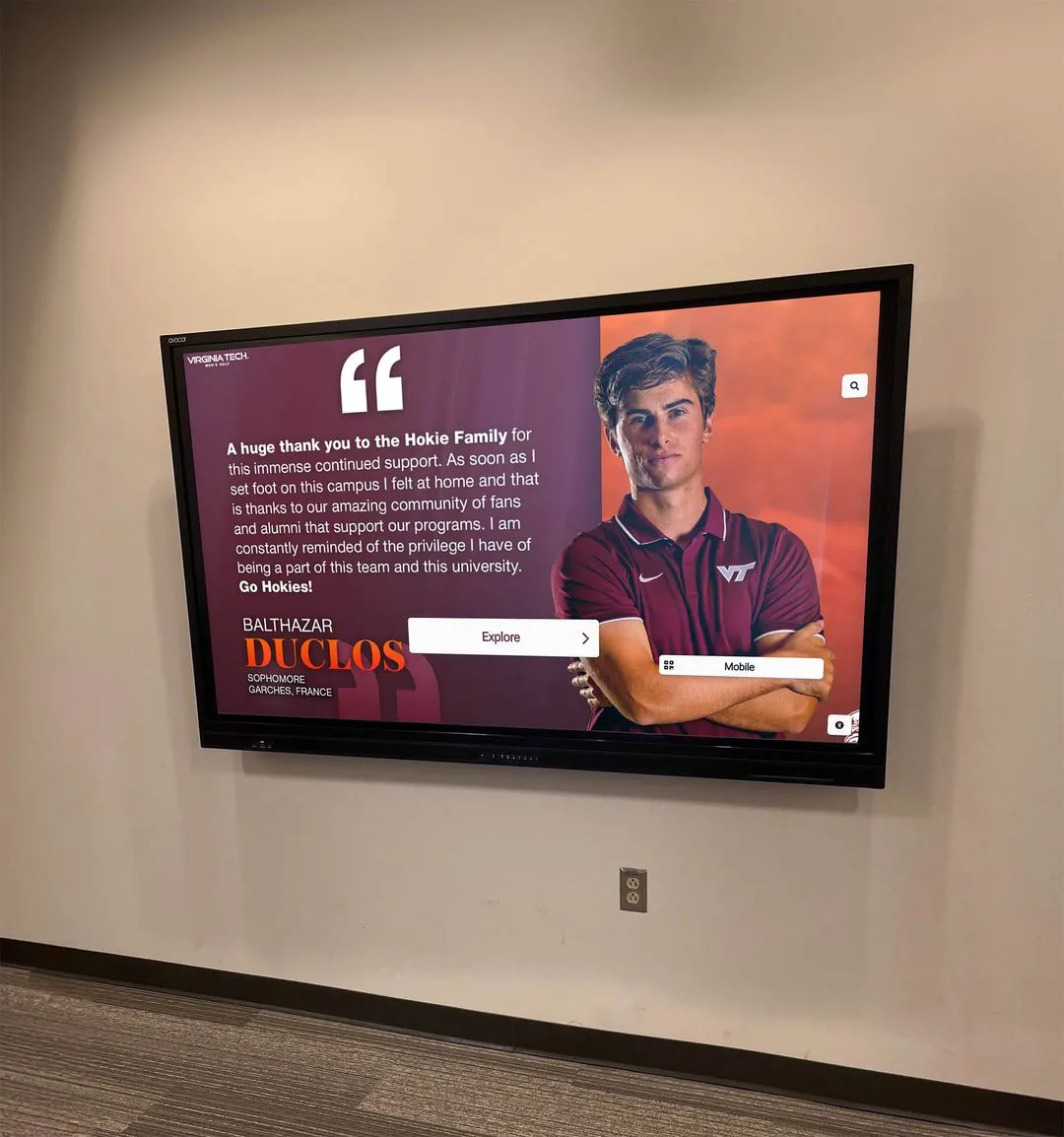
Intuitive touchscreen interfaces enable students, families, and visitors to explore detailed achievement profiles without assistance
Quick Updates and Minimal Time Investment Small school administrators cite time constraints as the primary barrier to maintaining recognition programs. Traditional plaque systems require ordering, tracking deliveries, scheduling installation, and coordinating with multiple vendors—hours of administrative work for each recognition update.
Rocket’s platform enables recognition updates in minutes rather than hours. Adding new honor roll students requires uploading a spreadsheet and assigning students to appropriate categories—Rocket generates formatted profiles automatically. Recognizing new athletic achievements involves uploading photos and entering basic information through simple forms. Bulk operations enable updating multiple recognitions simultaneously rather than manually creating individual entries.
This time efficiency means recognition stays current rather than falling months behind due to administrator workload. Schools report that maintaining comprehensive recognition through Rocket requires less administrative time than managing traditional plaque systems for single programs—a significant advantage for small teams managing numerous responsibilities.
Comprehensive Recognition Within Space Constraints
Single Display, Unlimited Content Capacity Physical space limitations force small schools to choose which programs and achievements receive recognition. A trophy case displays 50-75 recognition plaques before reaching capacity. Wall space accommodates perhaps 20-30 banners. Each program added means reducing space for others or removing historical recognition.
Rocket eliminates these zero-sum space decisions. A single touchscreen display—occupying the same wall space as 3-4 traditional plaques—can showcase unlimited athletes, scholars, artists, and community contributors across unlimited years and achievement categories. Schools honor current achievements without removing historical recognition. All programs receive equal digital space regardless of physical display footprint.
This unlimited capacity within minimal physical space transforms recognition philosophy from scarcity to abundance. Small schools no longer need expensive solutions to seem excessive—comprehensive recognition becomes achievable within physical and budgetary constraints.
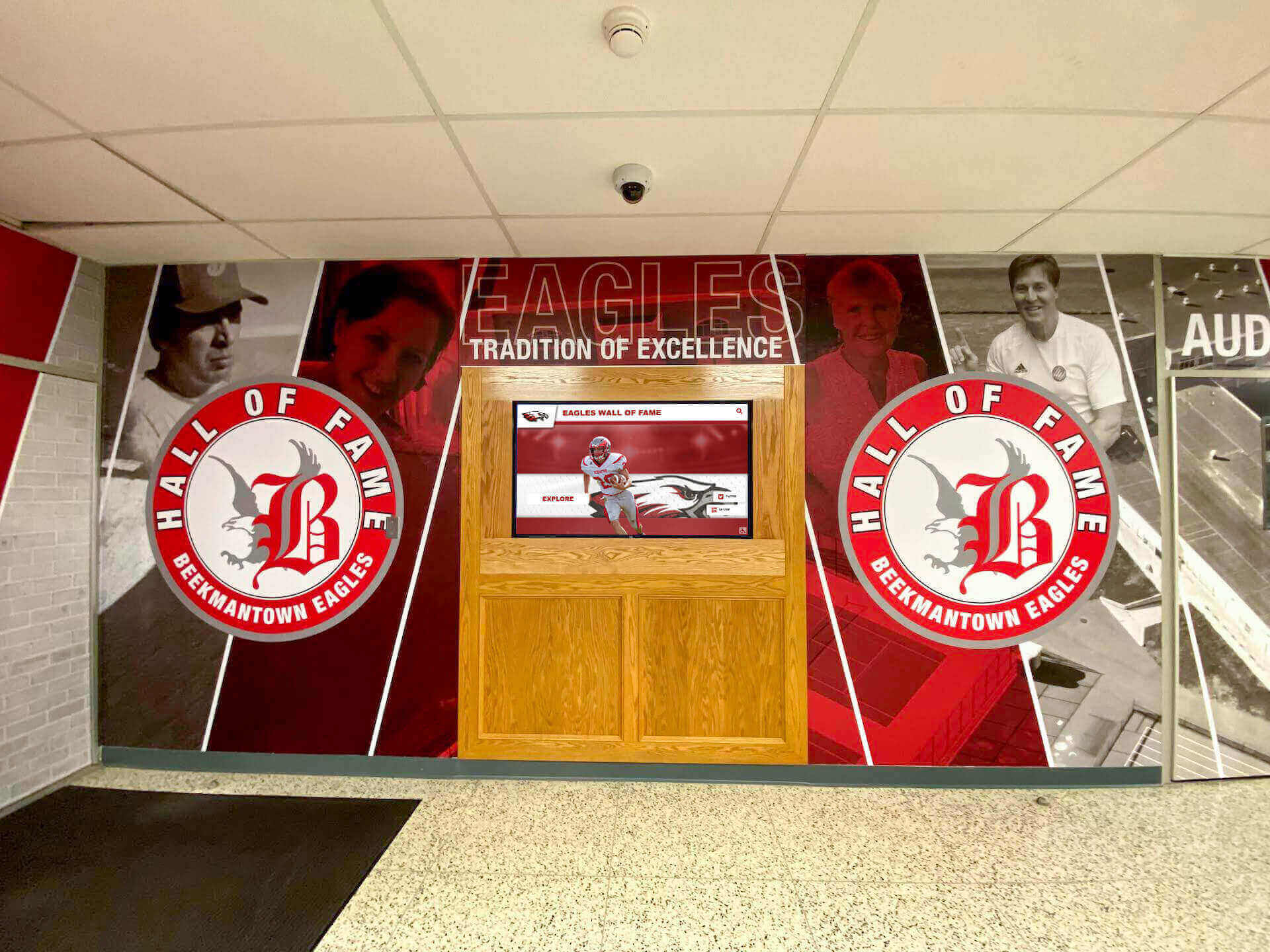
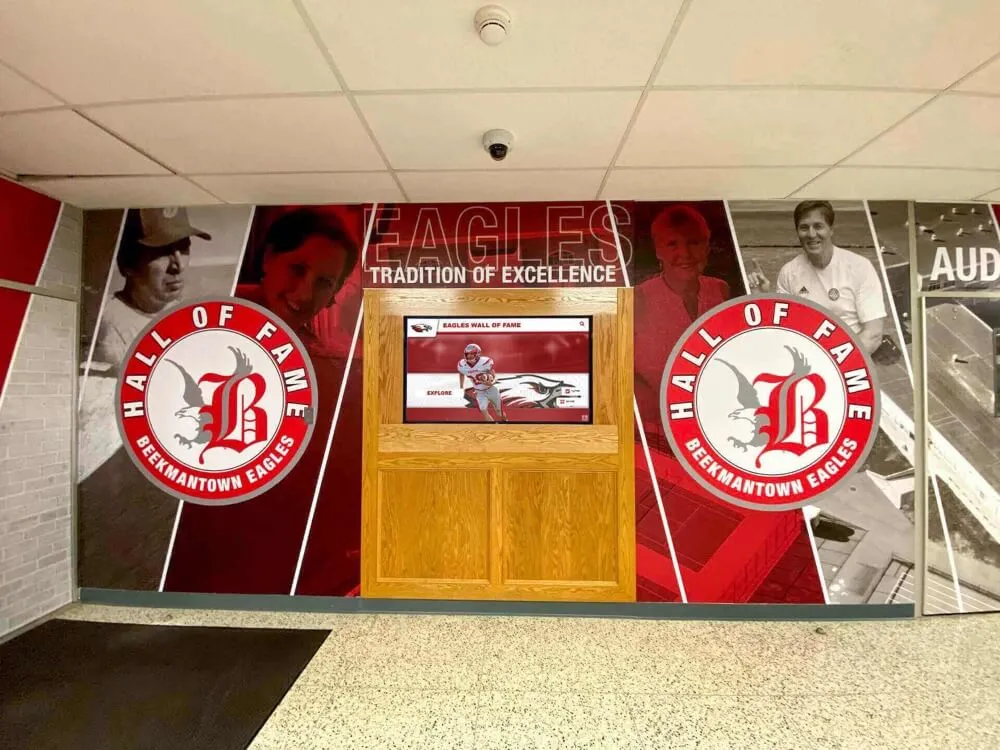
Digital displays complement existing school murals and branding, creating comprehensive recognition environments within limited space
Flexible Placement Options Rocket’s standard commercial displays work in typical school environments without specialized infrastructure. Schools mount displays in main hallways, gymnasiums, cafeterias, performing arts lobbies, or entrance areas using standard commercial mounting systems. Displays connect through existing WiFi networks or wired Ethernet—no specialized electrical or networking requirements.
This flexibility enables schools to place recognition where students, families, and visitors naturally gather rather than relegating it to out-of-the-way locations where facility constraints permit traditional recognition. Strategic placement maximizes engagement and visibility, increasing recognition impact without requiring additional displays or expense.
Equitable Recognition Across All Programs
Beyond Athletics: Comprehensive Student Celebration Small high schools often recognize athletics prominently while academic, artistic, and service achievements receive less visibility—not due to intentional preference but because limited budgets force prioritization and athletics have traditional recognition structures. Students excelling academically or artistically notice this recognition disparity and feel undervalued compared to athletic peers.
Rocket enables truly comprehensive recognition celebrating all achievement types equally. The same platform that showcases athletic hall of fame inductees can highlight academic achievement and student success, display performing arts accomplishments, recognize community service leaders, honor academic competition teams, celebrate career and technical education certifications, and acknowledge attendance and character awards.
This comprehensive approach costs the same as athletics-only recognition—the unlimited content capacity and multi-category design enable schools to honor all students without additional expense. Small schools that previously recognized only athletes now celebrate achievements across all programs, improving school culture and student morale while ensuring recognition equity.
Customizable Recognition Categories Rocket’s flexible platform adapts to each school’s unique programs and values rather than forcing standardized recognition structures. Small schools create custom categories reflecting their specific focus: rural schools highlight FFA and agricultural program achievements, schools with strong arts programs create detailed performing arts recognition sections, STEM-focused schools showcase robotics and science competition success, and community-oriented schools recognize service learning and civic engagement.
This customization ensures recognition authenticity—reflecting what each school actually values and celebrates rather than generic achievement categories that may not fit small school contexts and traditions.
Practical Implementation: Getting Started with Rocket
Understanding Rocket’s advantages for small schools explains why to choose the platform—but practical implementation considerations determine whether adoption succeeds.
Planning and Decision-Making Process
Stakeholder Engagement Successful implementation begins with engaging key stakeholders who will use, maintain, and benefit from recognition systems. Small schools should involve athletic directors who manage sports recognition, counselors and administrators overseeing academic programs, activities coordinators managing arts and clubs, building administrators responsible for facilities, technology coordinators handling infrastructure, and parent organizations or boosters who may assist with funding.
This engagement ensures broad support, identifies potential concerns early, and creates shared ownership making ongoing management more sustainable. Small school communities appreciate inclusive decision-making, and recognition systems benefit from diverse input about what should be celebrated and how displays should function.
Budget Planning and Approval Schools should develop clear budget proposals covering initial investment including hardware, software, and installation, as well as ongoing costs if subscription-based pricing is selected. Understanding comprehensive student recognition program approaches helps justify investment by demonstrating educational benefits beyond simple aesthetics.
Small schools often secure approval by highlighting cost savings compared to ongoing plaque expenses, demonstrating how unlimited digital recognition exceeds what physical space permits, showing how minimal staff time requirements make implementation sustainable, and providing examples from similar-sized schools that have implemented successfully.
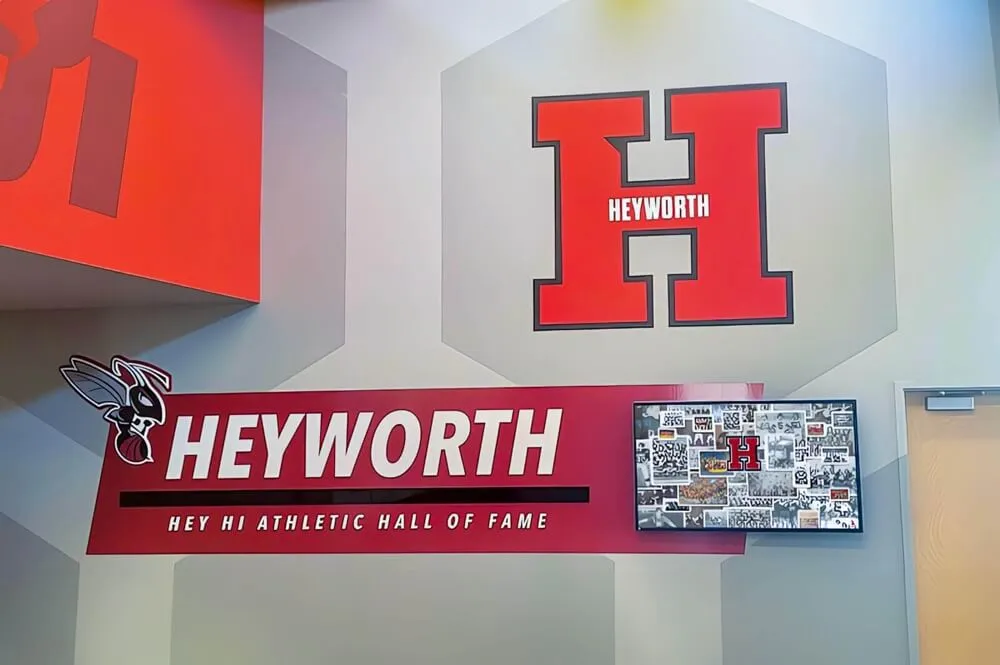
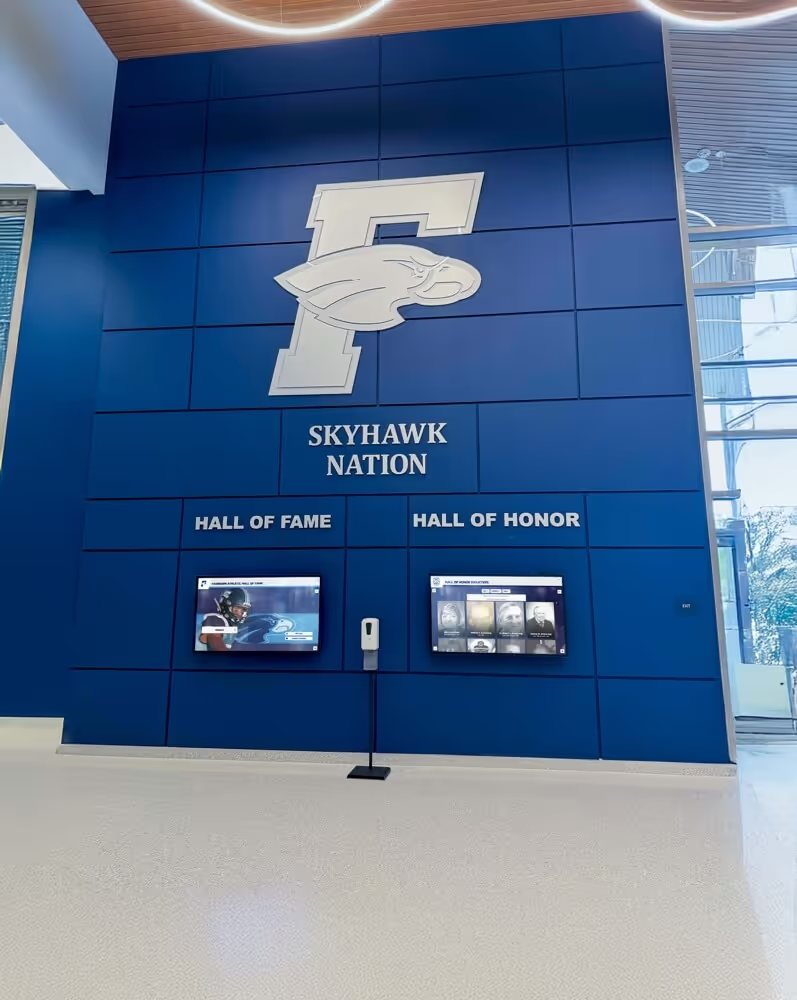
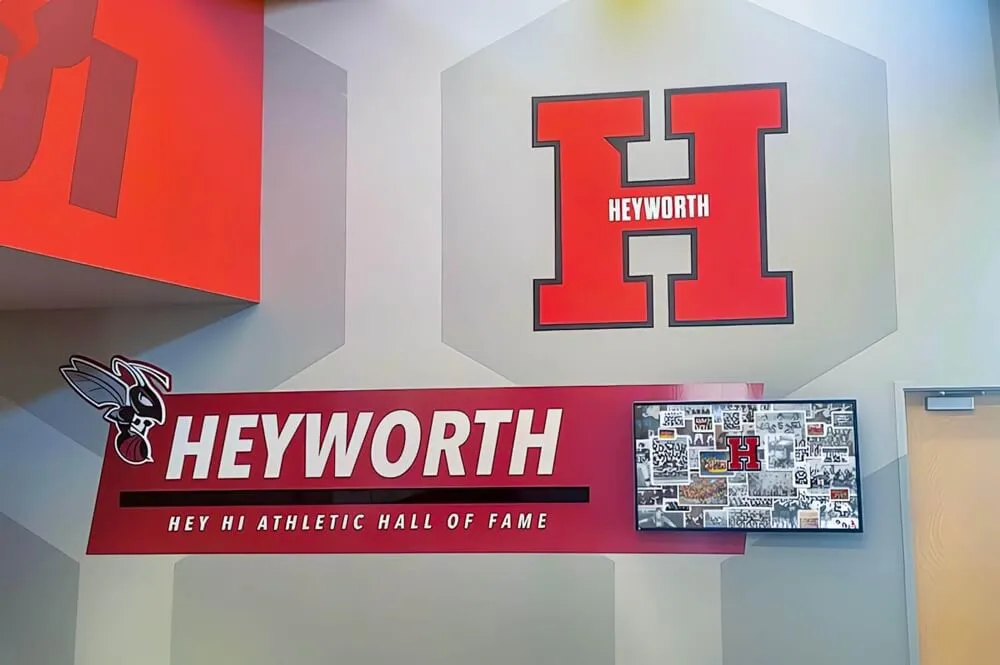
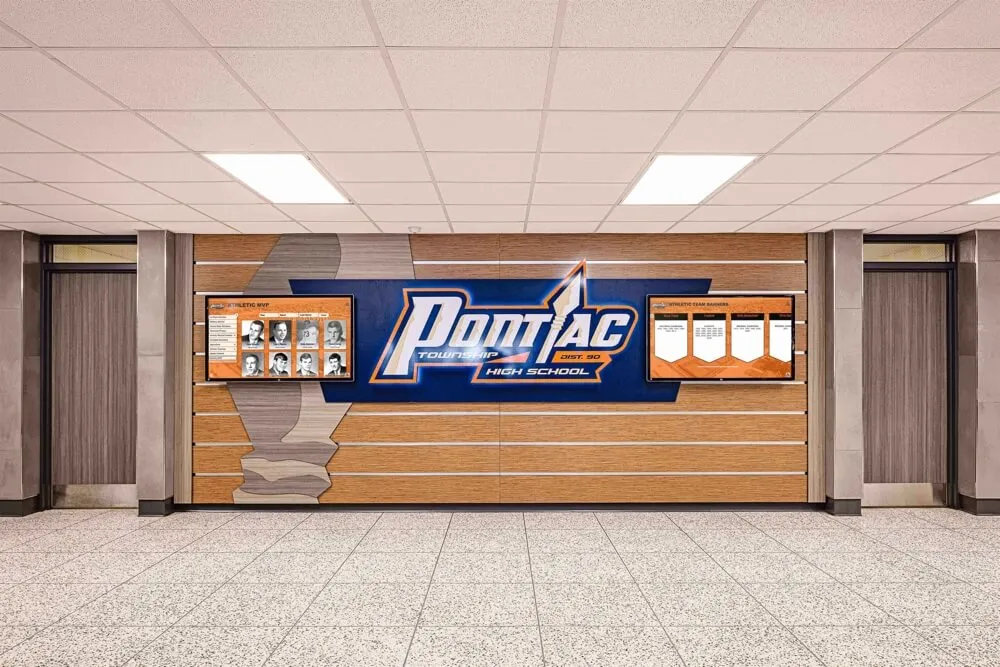
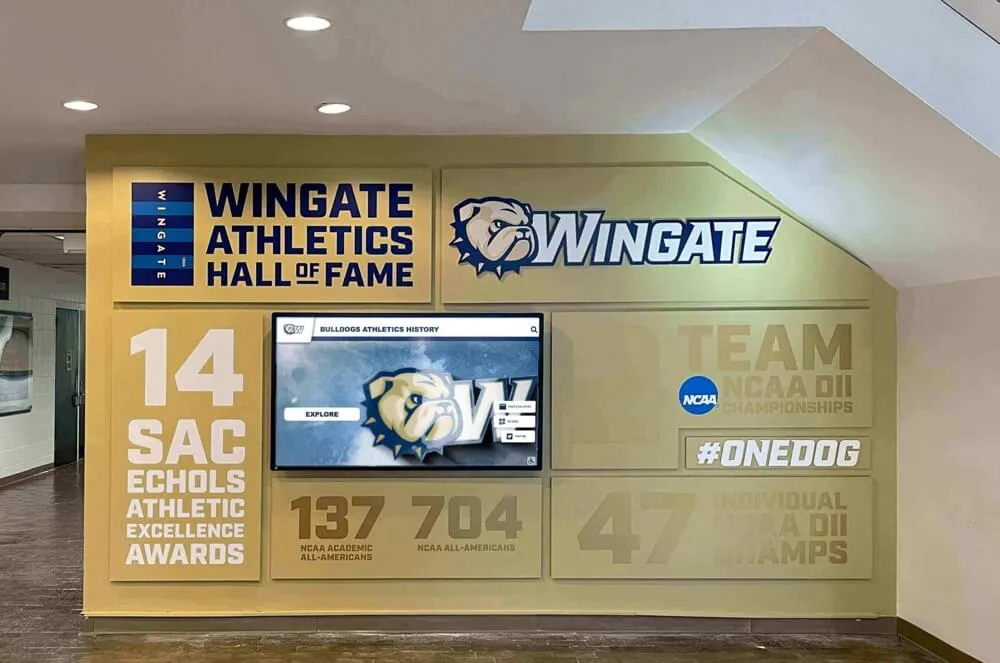
Traditional recognition signage combines effectively with modern digital displays, honoring tradition while providing contemporary functionality
Many schools phase implementation, starting with one display covering the highest-priority program or location, then adding additional displays as budget allows and success demonstrates value. Rocket’s unlimited screens pricing makes phased expansion financially practical—initial success builds support for expansion without multiplying software costs.
Technical Implementation
Minimal Infrastructure Requirements One of Rocket’s significant advantages for small schools is minimal technical implementation complexity. Schools need standard wall mounting capability using commercial display mounting brackets, electrical outlet access providing standard 120V power, and WiFi or Ethernet network connectivity for content updates and cloud synchronization.
Most small schools already have this basic infrastructure in hallways, gymnasiums, and other common areas, eliminating needs for specialized electrical work, network upgrades, or facility modifications that would add cost and complexity. Schools with questions about technical requirements receive implementation support ensuring successful installation even with limited technical expertise.
Installation and Launch Rocket can coordinate with schools’ preferred vendors or provide installation support ensuring displays mount securely, connect properly, and function reliably. Installation typically completes within hours rather than days, minimizing disruption to school operations.
The cloud-based platform means software configuration happens remotely—no on-site server setup, no complex networking configuration, no local software installation. Displays arrive configured and ready for content, with schools able to begin adding recognition immediately after physical installation completes.
Content Development and Ongoing Management
Initial Content Creation Strategy Rather than attempting to populate systems with decades of historical recognition immediately—an overwhelming task for small administrative teams—schools should plan staged content development. Start with current year recognition across all programs, establishing immediate value and engagement. Add recent 2-3 years of recognition for context and continuity. Incorporate historical highlights for major achievements and milestones. Then gradually add historical recognition as time permits, treating it as ongoing rather than launch-requirement.
This staged approach demonstrates immediate value while avoiding implementation delays waiting for comprehensive historical content that may take months to compile. Schools report that launching with current content and expanding historically over time maintains momentum while making implementation manageable.
Sustainable Management Structure Small schools should establish clear content management responsibilities distributed across appropriate staff rather than concentrating all work on single individuals who may become overwhelmed or leave positions. For example, athletic directors manage sports recognition, counselors maintain honor roll and academic achievement content, activities coordinators handle arts and club recognition, and administrative assistants coordinate scheduling and overall system management.
This distributed approach aligns recognition responsibilities with staff who already compile relevant information, minimizing duplicate work while ensuring expertise and accuracy. Content ownership creates accountability and pride in program representation while preventing abandonment if single responsible individuals leave positions.
Community Engagement and Recognition Impact
Beyond operational advantages, Rocket enhances recognition effectiveness for small schools by creating engagement impossible with static displays.
Interactive Exploration and Discovery
Student and Family Engagement Unlike traditional plaques that students walk past without noticing, interactive touchscreens invite exploration and discovery. Students search for themselves, parents, and siblings, discovering family achievement legacies. They browse classmates’ accomplishments, learning about peers’ diverse talents and achievements. They explore historical recognition, connecting current experience to school tradition and alumni who preceded them.
This active engagement creates deeper recognition impact than passive viewing of physical displays. Students remember achievements they discovered interactively rather than names they briefly scanned on plaques. The discovery experience creates emotional connection to school community and achievement culture.
Alumni and Community Connection Small schools depend heavily on alumni and community support. Recognition displays that celebrate historical achievements alongside current students strengthen these vital connections. Alumni visiting campus can find themselves and classmates, sharing memories with current students and family members. Community members explore achievements of local students they know, building pride and investment in school success.
Rocket’s online accessibility extends recognition beyond physical campus. Alumni worldwide can explore recognition remotely, maintaining connection to school community. Families share achievement profiles on social media, amplifying recognition reach. This extended engagement strengthens the community networks small schools depend upon for support and resources.
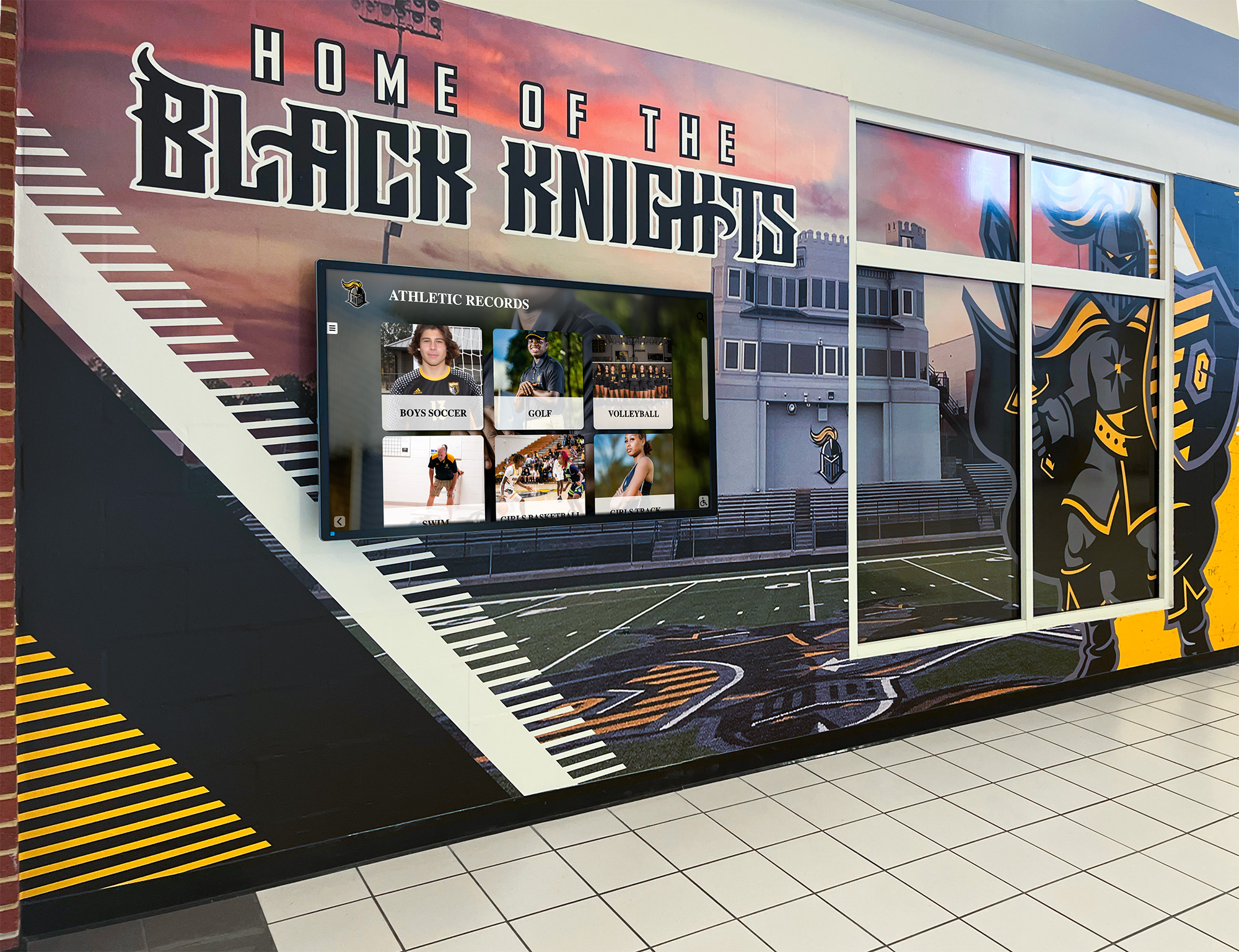
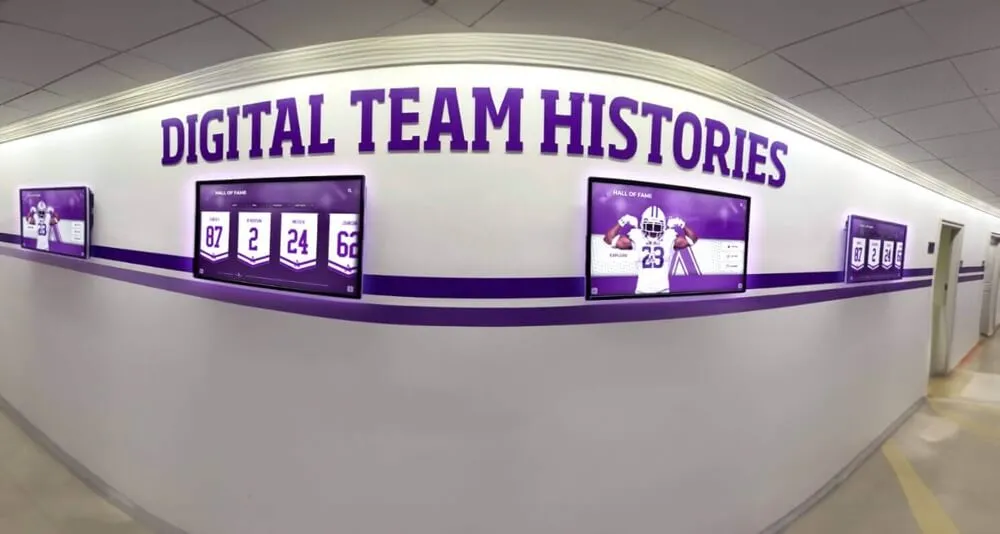
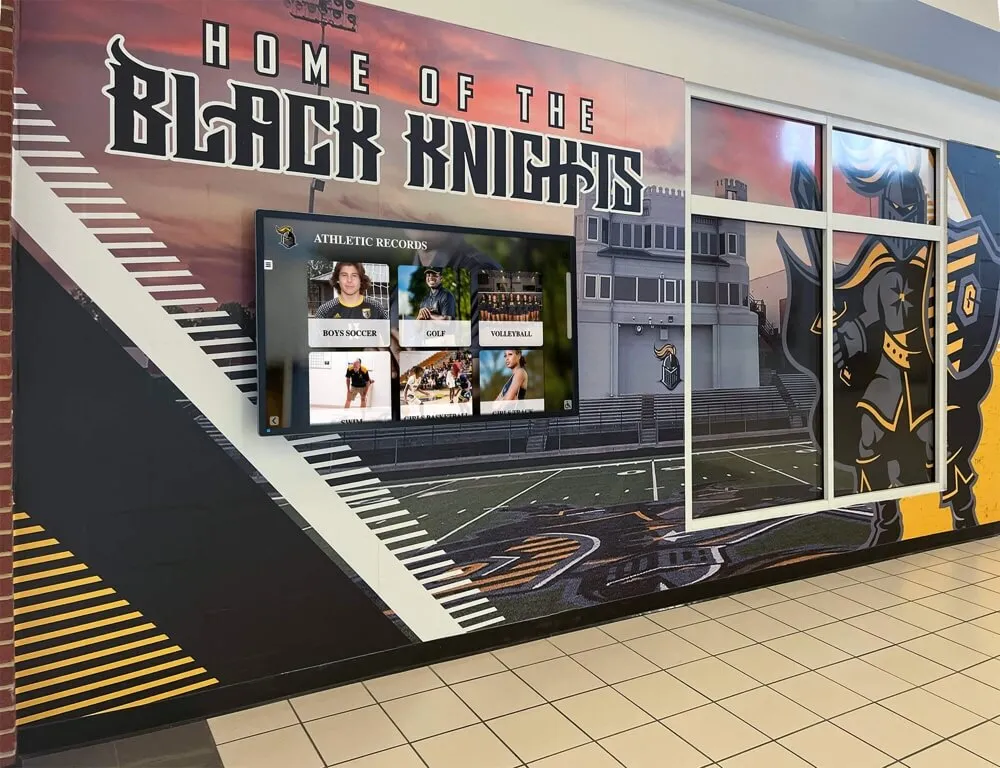
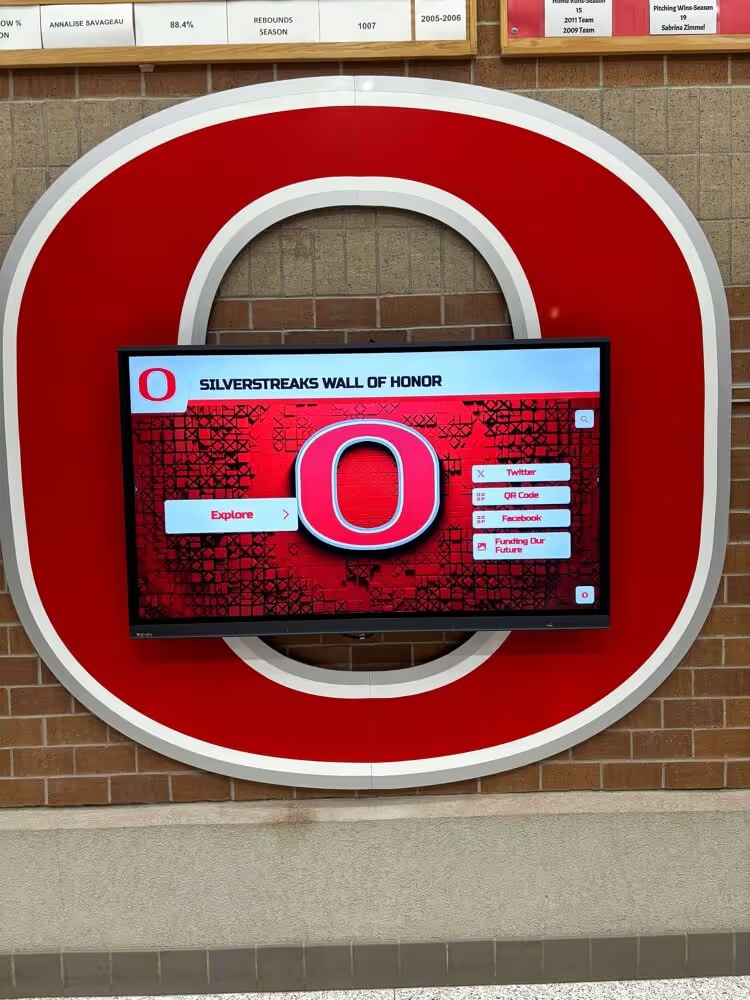
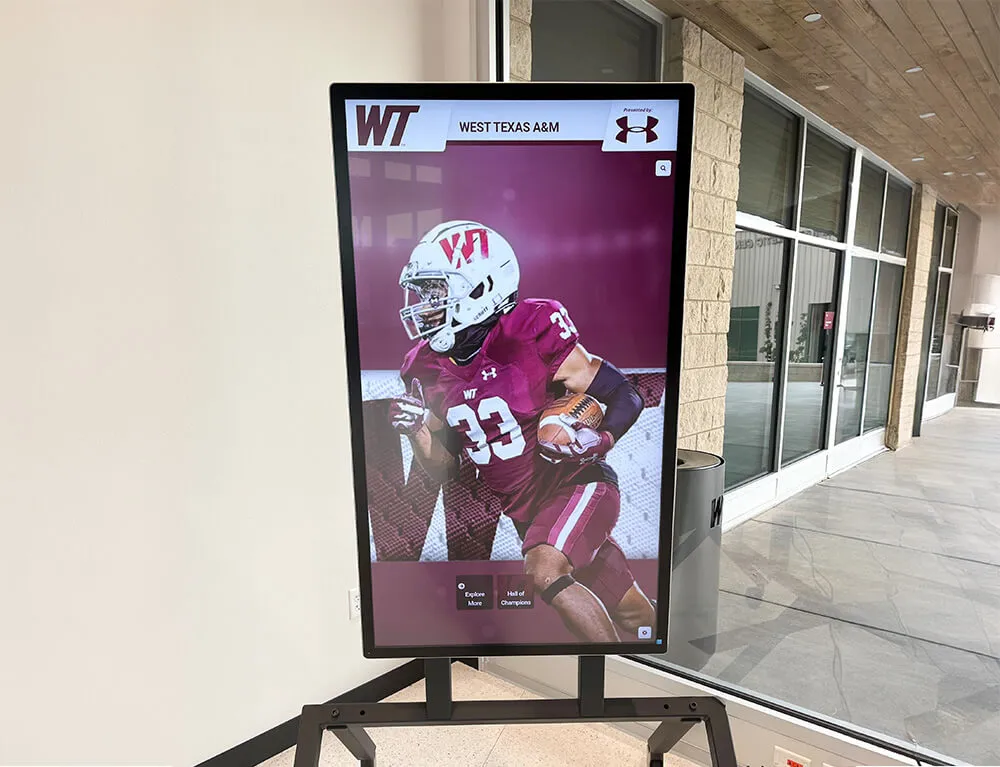
Digital record boards keep athletic achievements current and prominent, inspiring students while honoring historical excellence
Building School Pride and Achievement Culture
Visible Celebration Creates Positive Culture When small schools recognize achievements comprehensively and prominently, they create culture where excellence across all domains receives celebration. Students understand that academic achievement matters equally to athletic success. Artists and performers see their contributions valued alongside athletic competitors. Service-oriented students receive acknowledgment for community contributions.
This comprehensive visibility shapes student behavior and aspiration. When recognition authentically celebrates diverse achievement types, students pursue excellence in areas matching their talents and interests rather than feeling only certain accomplishments matter. Small schools report improved school climate, increased participation in diverse programs, and stronger student connectedness after implementing comprehensive recognition systems.
Recruitment and Community Relations For small public high schools, maintaining enrollment and community support determines sustainability. Recognition systems contribute to both by showcasing school excellence to prospective families and demonstrating to community members that their local school provides quality experiences worthy of support.
Displays in entrance areas create positive first impressions for visiting families considering enrollment. Comprehensive recognition demonstrates that small schools provide recognition and celebration opportunities matching or exceeding larger institutions. Community members see evidence that local schools honor students effectively, building the public support essential for passing levies and maintaining resources.
Avoiding Common Digital Recognition Mistakes
Understanding why Rocket works for small schools includes recognizing why other approaches often fail—helping schools avoid expensive mistakes.
Oversized Enterprise Solutions
When Sophisticated Becomes Complicated Some schools select recognition platforms designed for large universities or professional sports organizations, assuming more sophisticated systems provide better results. These enterprise platforms offer impressive feature sets—but require technical expertise, substantial staff time, and complex implementation processes that overwhelm small school teams.
Schools discover they cannot configure advanced features without IT support they lack, the sophisticated interfaces confuse administrators with limited technical background, extensive customization options require design expertise schools do not employ, and complex content management systems demand more time than small teams can allocate.
The result is expensive systems that sit underutilized or poorly maintained because they exceed small school capacity to manage effectively. Rocket’s purpose-built approach for schools provides necessary functionality without overwhelming complexity—the right-sizing that small schools need.
Per-Screen Cost Models
How Pricing Structures Limit Recognition Recognition providers charging per screen create financial barriers to comprehensive recognition. Small schools wanting to recognize athletics, academics, and arts across appropriate locations face multiplied costs that exhaust budgets. This forces consolidating all recognition into single locations where some programs feel undervalued or limiting recognition to one program area, undermining recognition equity and effectiveness.
Rocket’s unlimited screens pricing eliminates these limitations, enabling small schools to place recognition where it makes sense programmatically and architecturally without financial penalty. This fundamental pricing difference explains why small schools with limited budgets can implement comprehensive recognition through Rocket while finding per-screen models financially prohibitive despite similar or even lower initial costs.
Hidden Ongoing Costs
Subscription Traps and Fee Accumulation Some recognition providers advertise low entry costs but generate revenue through ongoing fees that accumulate substantially over time. Monthly subscriptions seem affordable initially but cost thousands annually and tens of thousands across typical system lifespans. Additional fees for storage, updates, support, or premium features surprise schools that assumed initial costs covered full functionality.
Small schools operating with tight budgets cannot absorb unexpected ongoing costs that divert resources from instructional programs and student services. Understanding complete pricing structures before committing prevents expensive mistakes and ensures recognition investments remain sustainable across administrative changes and budget cycles.
Long-Term Value and Sustainability
Beyond solving immediate recognition challenges, Rocket provides long-term value that justifies investment and ensures sustainability.
Cost-Effectiveness Over Time
Eliminating Recurring Recognition Expenses Traditional recognition creates perpetual costs as schools add new honorees. Custom plaques, trophies, banners, and trophy case updates accumulate annually, costing thousands of dollars that small school budgets struggle to sustain. Over five to ten years, these recurring costs exceed the investment in comprehensive digital systems while providing inferior recognition capacity and flexibility.
Rocket’s approach eliminates these ongoing per-honoree costs. Schools make initial system investment, then add unlimited recognition without additional material costs—only the minimal staff time required for content updates. A school spending $3,000 annually on traditional recognition for limited programs saves that amount annually after implementing Rocket while honoring substantially more students across all achievement categories.
This cost transformation frees resources for other student programs and experiences, improving overall educational quality while expanding rather than contracting recognition opportunities.
Future Adaptability and Expansion
Growing With School Needs School programs, priorities, and facilities change over time. New programs emerge requiring recognition. Facilities undergo renovation creating new recognition opportunities. Administrative priorities shift toward achievement areas previously underemphasized. Enrollment changes may increase or decrease recognition volume needs.
Rocket’s flexible platform adapts to these changing needs without requiring new system purchases or complex reconfigurations. Schools add new recognition categories reflecting program additions, expand to additional display locations as facilities change or budgets grow, modify content organization as priorities evolve, and increase or decrease recognition volume as enrollment changes—all within existing platform capabilities.
This adaptability protects investment by ensuring systems remain valuable despite institutional changes that often render fixed physical recognition outdated or insufficient.
Administrative Continuity Through Transitions
Sustainable Recognition Despite Staff Changes Small schools experience frequent administrative transitions as staff members retire, take positions elsewhere, or shift roles within districts. Recognition systems dependent on specific individuals’ expertise often deteriorate when those individuals leave, with knowledge and access concentrated in departed staff members.
Rocket’s intuitive platform and cloud-based accessibility ensure recognition systems survive these transitions. Multiple staff members can access systems using individual credentials, comprehensive training materials enable new staff to learn management quickly, cloud storage preserves all content regardless of local staff changes, and responsive support assists new administrators learning systems during transitions.
This continuity ensures recognition programs remain active and current despite the staffing changes that inevitably occur in small schools—protecting investment and maintaining recognition consistency students deserve.
Measuring Recognition Program Success
Implementing recognition systems represents significant investment for small schools—understanding impact helps justify continued support and identify improvement opportunities.
Quantitative Engagement Metrics
Usage and Interaction Data Rocket provides analytics showing display interaction frequency, content viewing patterns, popular recognition categories, search behaviors, and session duration data. Small schools use these metrics to understand how students, families, and visitors engage with recognition, which programs generate greatest interest, whether historical content attracts attention, and how placement affects engagement levels.
This data informs content strategies, helping schools emphasize recognition types that resonate while improving underutilized areas. Metrics also provide concrete evidence of recognition system value when reporting to boards, administrators, or community stakeholders about program effectiveness.
Qualitative Community Feedback
Stakeholder Perception and Cultural Impact Beyond quantitative metrics, small schools should gather qualitative feedback from students about whether recognition systems increase sense of belonging and achievement visibility, families regarding how recognition affects perception of school quality and student pride, staff concerning whether recognition improves school climate and student motivation, and community members about enhanced perception of school excellence and investment worthiness.
This feedback reveals recognition’s broader cultural impact beyond simple usage statistics—demonstrating value in terms of morale, recruitment, community relations, and achievement motivation that justifies recognition as strategic investment rather than optional aesthetic enhancement.
Conclusion: Purpose-Built Recognition for Small School Success
Small to medium public high schools face unique recognition challenges that standard solutions often fail to address. Limited budgets eliminate expensive options while prohibiting ongoing costs. Small administrative teams lack time and expertise for complex systems. Tight facilities constrain recognition capacity using traditional approaches. These constraints historically forced small schools to limit recognition to selected programs, exclude deserving students due to space limitations, delay honoring achievements due to budget cycles, or compromise recognition quality compared to larger, better-resourced institutions.
Rocket Alumni Solutions was designed specifically to solve these small school challenges—providing affordable, intuitive, comprehensive recognition that works within the real-world constraints these institutions face. Transparent pricing without hidden fees makes budgeting straightforward. Cloud-based management requiring no technical expertise enables small teams to maintain recognition systems effectively. Unlimited content capacity within minimal physical space eliminates forced choices between programs and students. The result is truly comprehensive recognition celebrating all achievements across athletics, academics, arts, and service—creating the positive, inclusive culture where small school students thrive.
See How Rocket Works for Small Schools
Discover how your school can honor unlimited achievements across all programs with the platform specifically designed for small to medium high schools with limited budgets and staff.
Explore Rocket for Your SchoolHundreds of small to medium public high schools nationwide have implemented Rocket Alumni Solutions, discovering that comprehensive, professional recognition does not require the resources of large institutions—it requires the right platform designed for their specific needs. These schools now honor all students across all programs, maintain recognition current with minimal administrative burden, expand recognition without space constraints or recurring costs, and create the engaging, interactive experiences that inspire achievement and build community pride.
Your students deserve recognition equal to any school regardless of size or budget. Rocket makes that possible by addressing the real challenges small schools face rather than imposing solutions designed for institutions with resources you lack. The platform’s purpose-built approach transforms recognition from impossible aspiration to achievable reality—honoring every achievement, celebrating every student, and building the positive culture where your school community thrives.
Ready to transform recognition at your school? Book a demo to see how Rocket Alumni Solutions works for schools exactly like yours.