School hallways present valuable opportunities to celebrate student achievement, reinforce institutional identity, and create inspiring environments where learners spend significant portions of their days. Wall wraps—large-format vinyl graphics applied directly to hallway surfaces—have become popular solutions for schools looking to transform bare walls into vibrant displays showcasing athletic accomplishments, academic excellence, school values, and institutional pride.
Whether you’re an athletic director seeking to honor decades of championship teams, a principal wanting to strengthen school culture through visual storytelling, or a facilities coordinator exploring recognition options that maximize limited display space, understanding wall wrap capabilities, implementation considerations, and alternatives helps you make informed decisions that serve your school community effectively.
This comprehensive guide explores everything you need to know about wall wraps for schools—from understanding different material types and design best practices through installation processes, maintenance requirements, cost considerations, and how modern digital alternatives provide flexible solutions overcoming traditional wall wrap limitations.
Understanding Wall Wraps: What They Are and How They Work
Wall wraps are large-format printed graphics printed on adhesive vinyl material and applied directly to interior or exterior wall surfaces. Unlike traditional painted murals requiring artistic expertise and significant time investment, wall wraps utilize digital printing technology to reproduce high-resolution photos, graphics, text, and complex designs on durable materials installed relatively quickly.
In educational environments, schools use wall wraps to display team photos and rosters, showcase championship banners and accomplishment timelines, feature inspirational quotes and school values, highlight notable alumni and hall of fame inductees, reinforce school branding and mascot identity, create wayfinding and directional graphics, and celebrate academic programs and student work.

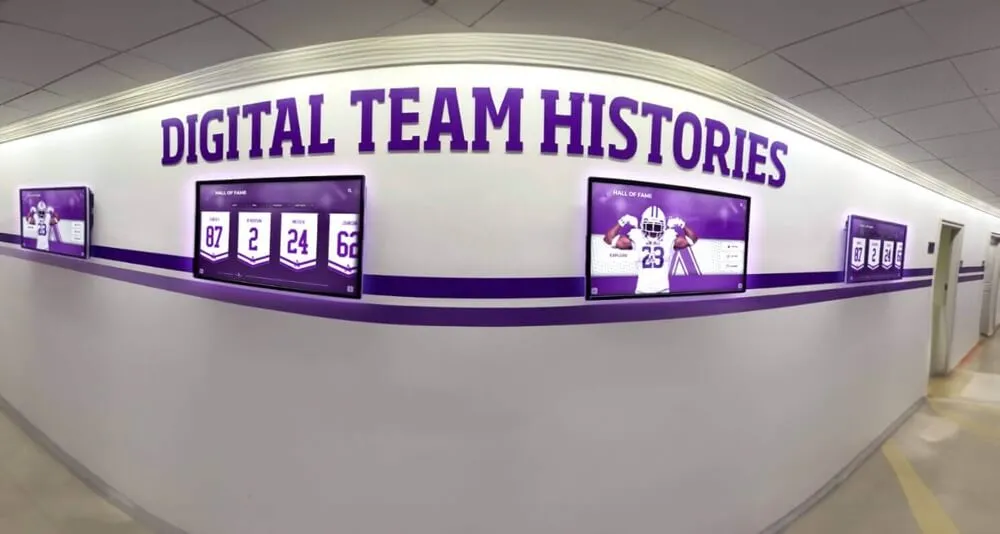
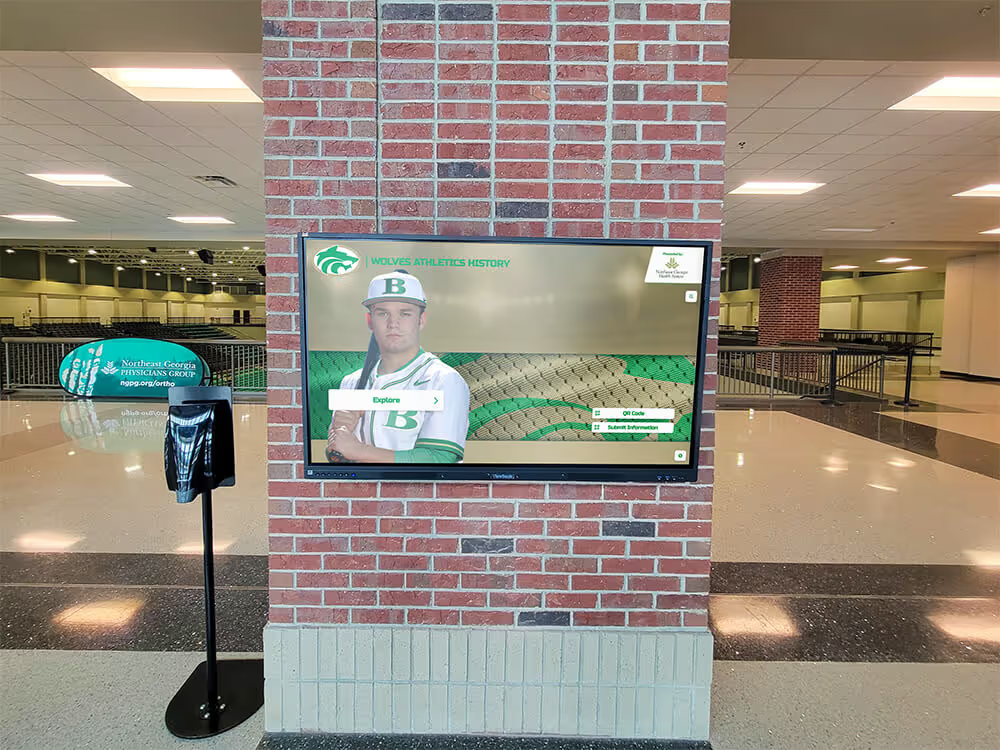
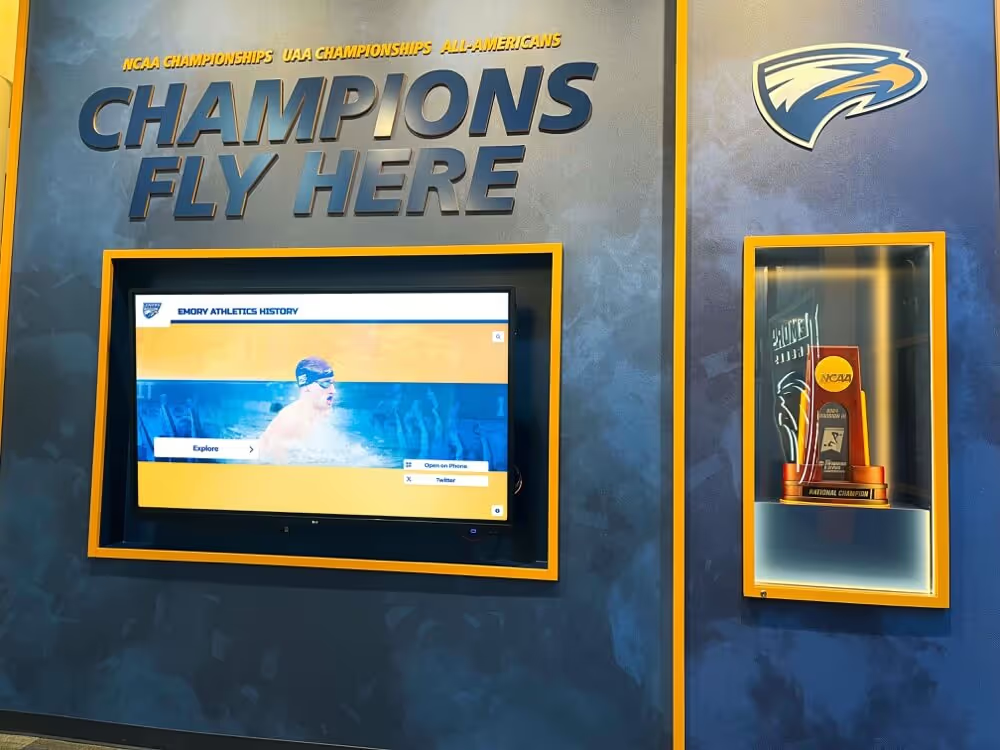
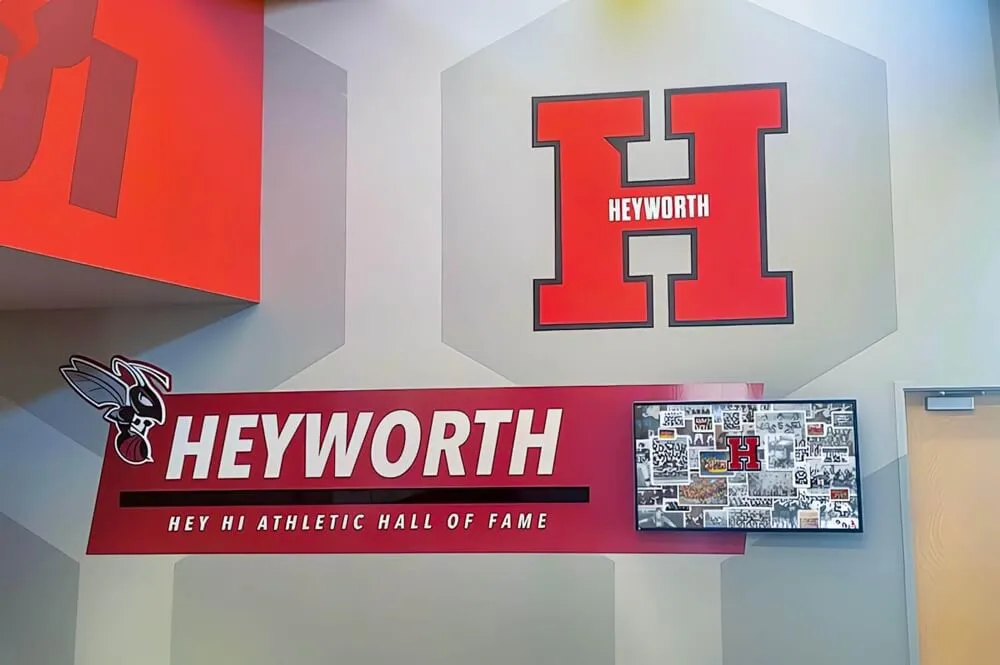
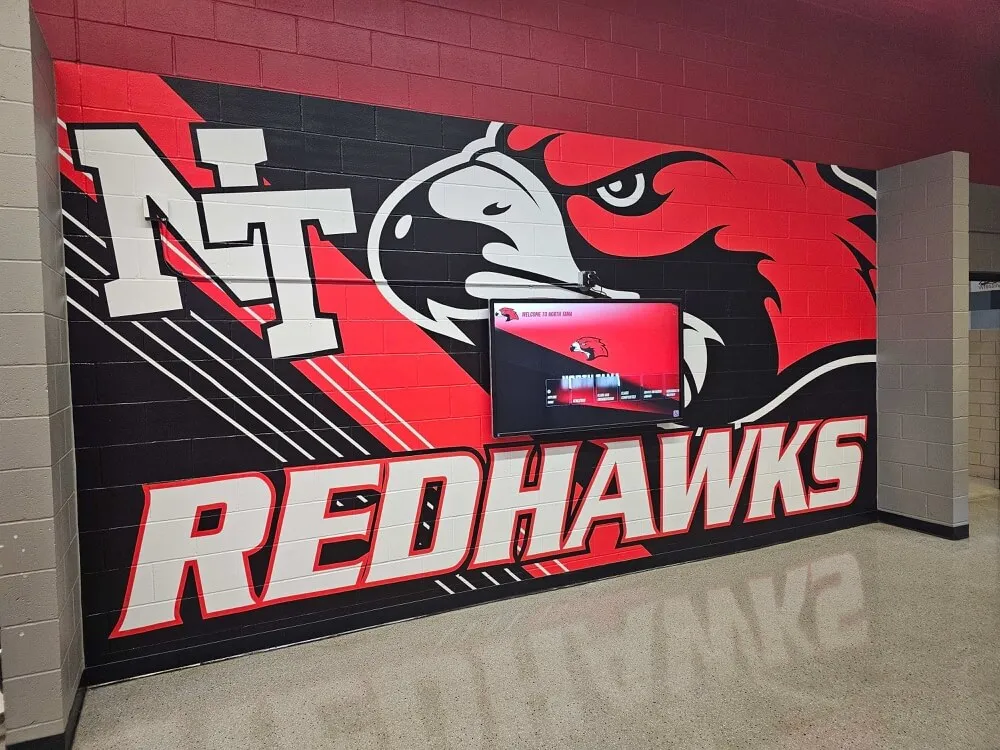
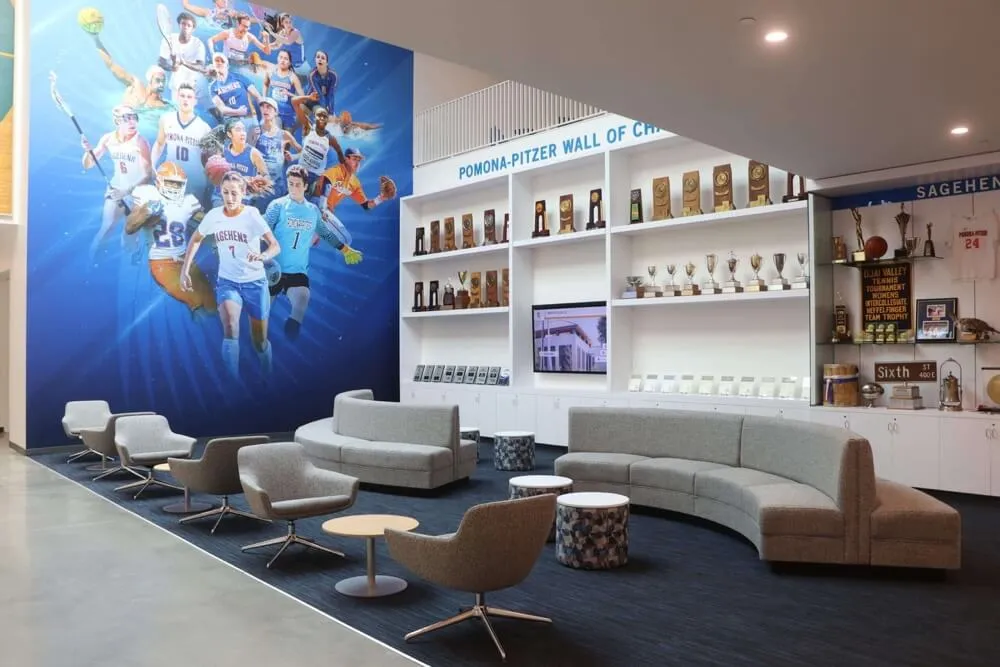
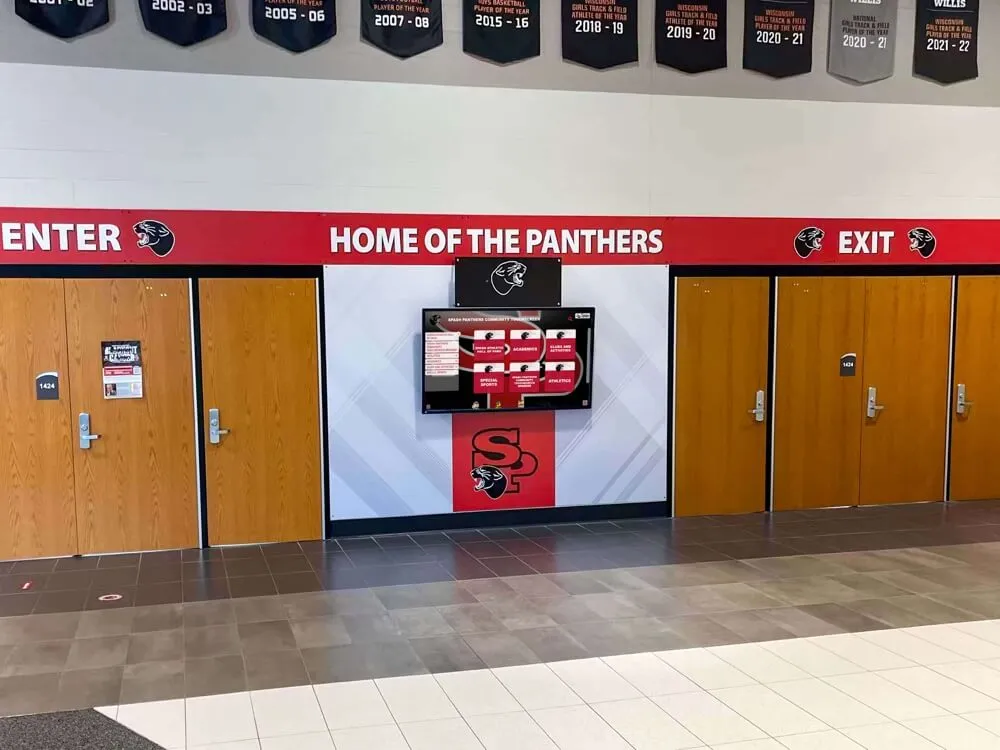
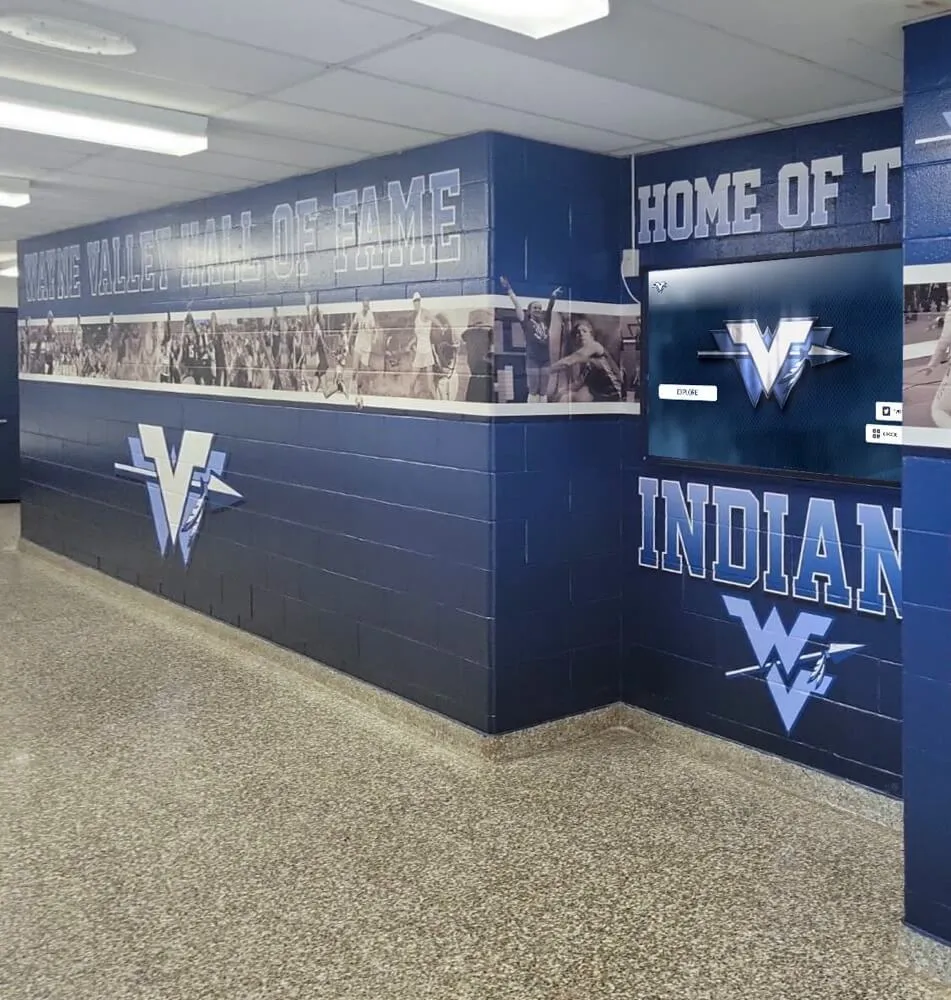
Well-designed wall graphics combined with digital displays create compelling recognition environments in school entrances and gathering spaces
The technology behind wall wraps involves several key components: large-format digital printers producing graphics up to 10 feet wide in unlimited lengths, specialized vinyl materials designed for wall application with appropriate adhesive properties, protective laminates preventing scratches and UV fading, and professional installation techniques ensuring smooth application without bubbles or wrinkles.
Types of Wall Wrap Materials
Different material specifications serve various applications and environments:
Standard Vinyl Wall Graphics
The most common wall wrap option features calendared vinyl with low-tack adhesive suitable for smooth painted walls. These graphics typically last 3-5 years with proper care, cost $8-15 per square foot installed, work well for temporary recognition displays, and remove relatively cleanly when ready for updates.
Standard vinyl serves well for seasonal recognition that changes every few years, such as rotating team photos, temporary campaign graphics, or recognition displays expected to be updated regularly.
Premium Cast Vinyl Graphics
Higher-grade materials offer extended durability through cast vinyl construction providing enhanced conformability, stronger adhesive for textured surfaces, UV-resistant inks preventing fading, and 5-7 year expected lifespan. Costs typically range from $12-20 per square foot installed.
Premium materials make sense for permanent installations in high-visibility locations, graphics in areas receiving direct sunlight, recognition displays expected to remain unchanged for multiple years, and applications on challenging surfaces like textured walls or concrete blocks.
Fabric Wall Graphics
Textile-based materials provide unique characteristics including matte finish reducing glare, breathable material allowing walls to release moisture, fire-resistant properties meeting safety codes, removable and repositionable application, and typically cost $15-25 per square foot.
Fabric graphics work particularly well in auditoriums and performance spaces, areas with specific fire safety requirements, historic buildings where wall preservation matters, and installations requiring frequent seasonal changes.
Perforated Window Graphics
While technically not wall wraps, perforated vinyl applied to windows creates similar visual impact from outside while maintaining visibility from inside. These one-way vision materials showcase team photos or school branding on exterior-facing windows, allow natural light through while providing privacy, resist weather exposure, and typically cost $10-18 per square foot.
Schools implementing building school pride strategies often use window graphics on athletic facilities visible from parking areas or main roads, creating external visibility for internal excellence.
Benefits of Wall Wraps for Educational Environments
Schools choose wall wraps for specific advantages addressing common recognition and branding challenges.
Maximum Space Utilization
Traditional trophy cases and mounted plaques consume limited wall space quickly. Wall wraps maximize vertical surfaces by covering entire walls from floor to ceiling, utilizing hallway lengths for timeline displays, transforming blank institutional walls into celebration spaces, and incorporating high walls beyond reach of traditional displays.
This space efficiency matters particularly in older schools where trophy cases filled years ago and adding more physical recognition becomes challenging without expensive renovations.
Cost-Effective Visual Impact
Compared to alternatives, wall wraps provide significant visual presence at manageable costs. A full hallway wall wrap costing $3,000-8,000 creates dramatic impact that would cost $15,000-40,000 for comparable custom tile work or permanent architectural features.
Wall wraps also avoid ongoing costs associated with maintaining painted murals or replacing individual plaques when information changes.
Flexible Design Capabilities
Digital printing enables designs impossible with traditional methods: full-color photography reproduction at life-size scale, complex graphics combining multiple images and design elements, precise color matching to school brand guidelines, incorporation of detailed statistics and biographical text, and integration of QR codes linking to additional digital content.
This design flexibility allows schools to tell rich achievement stories through visual displays rather than limiting recognition to names and dates on plaques.
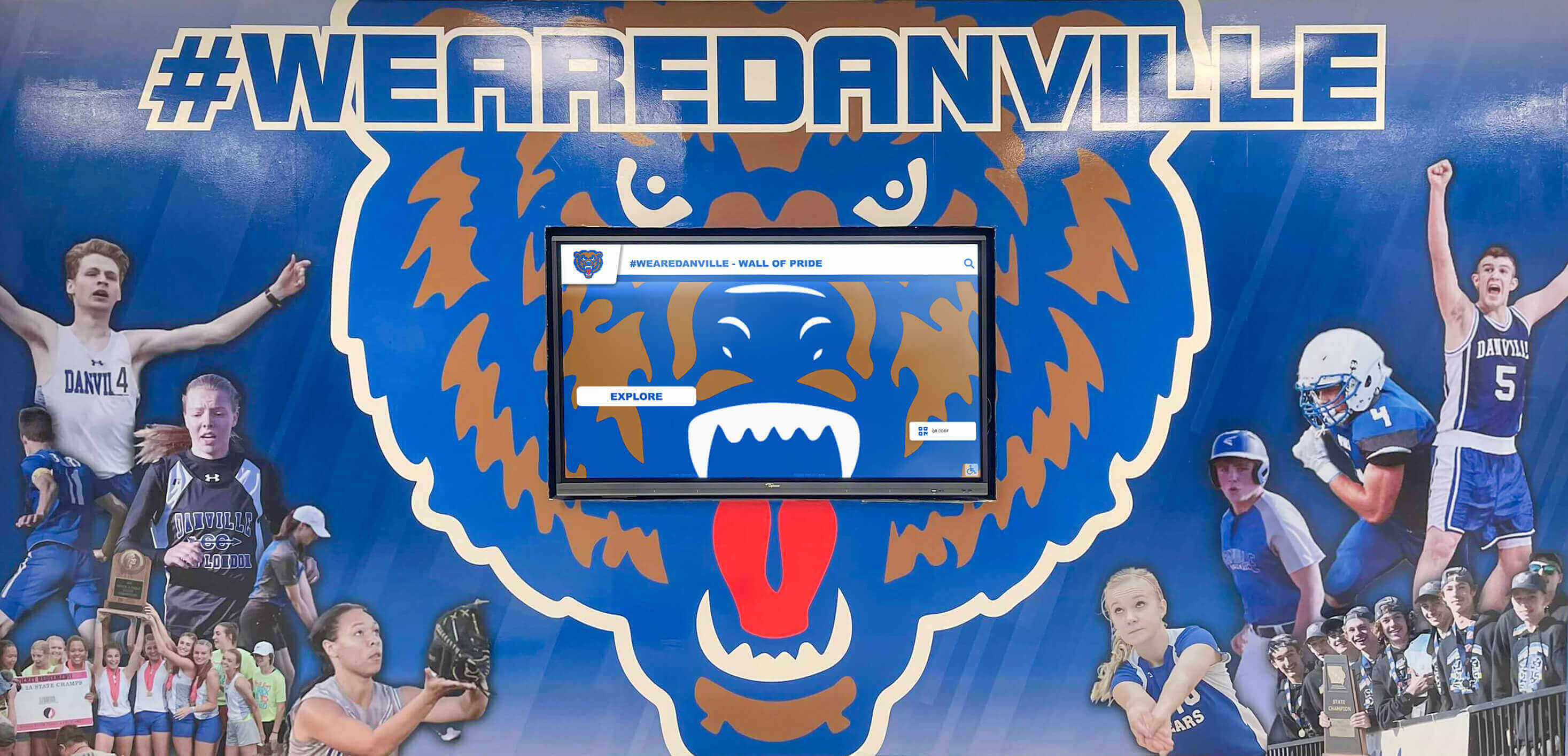
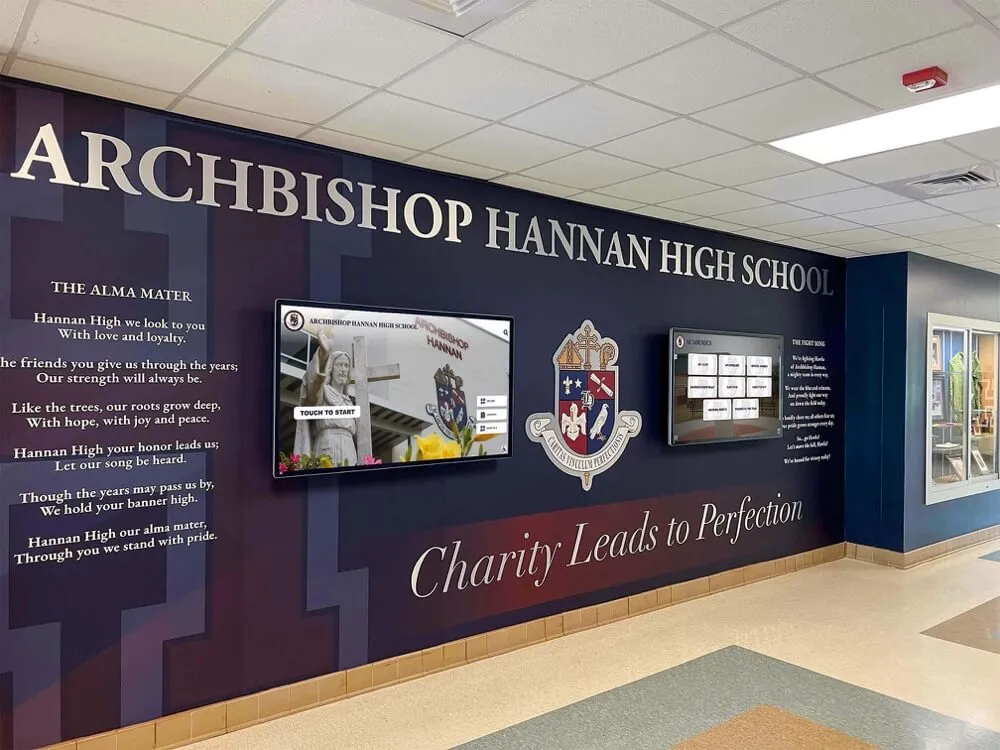
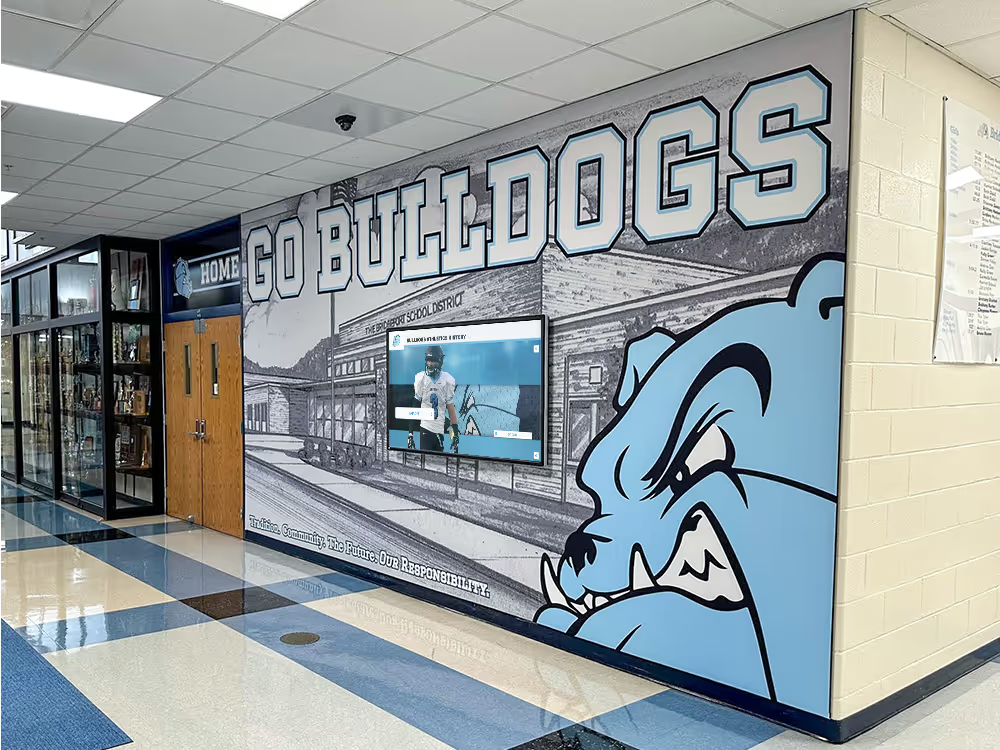
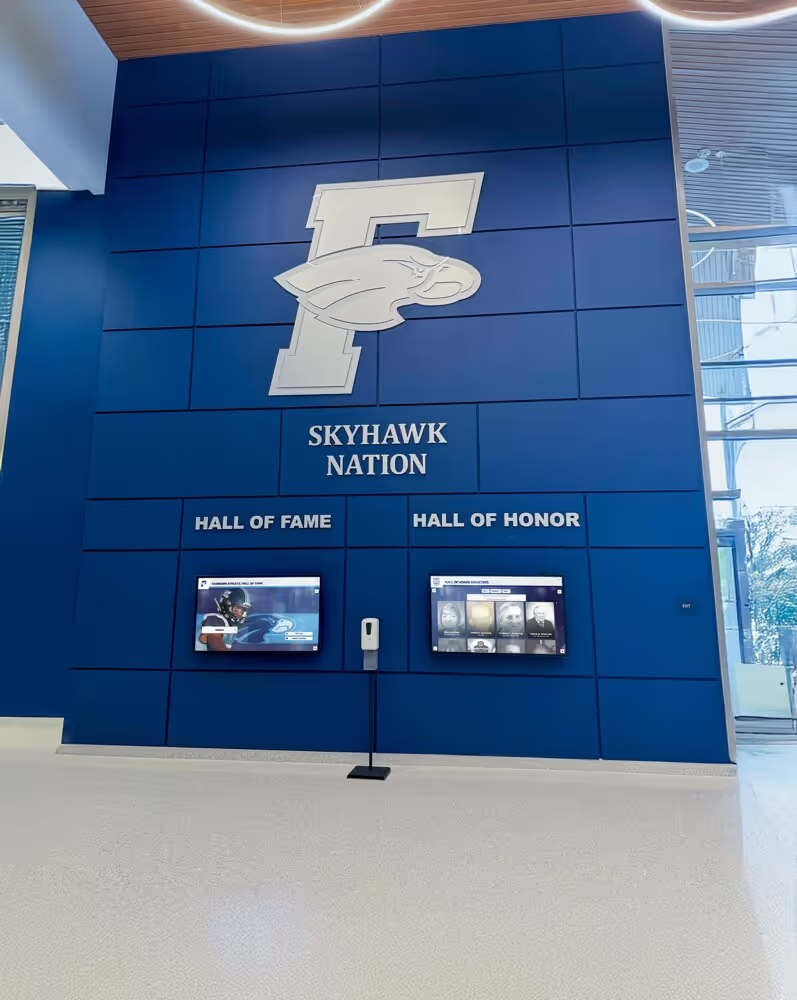
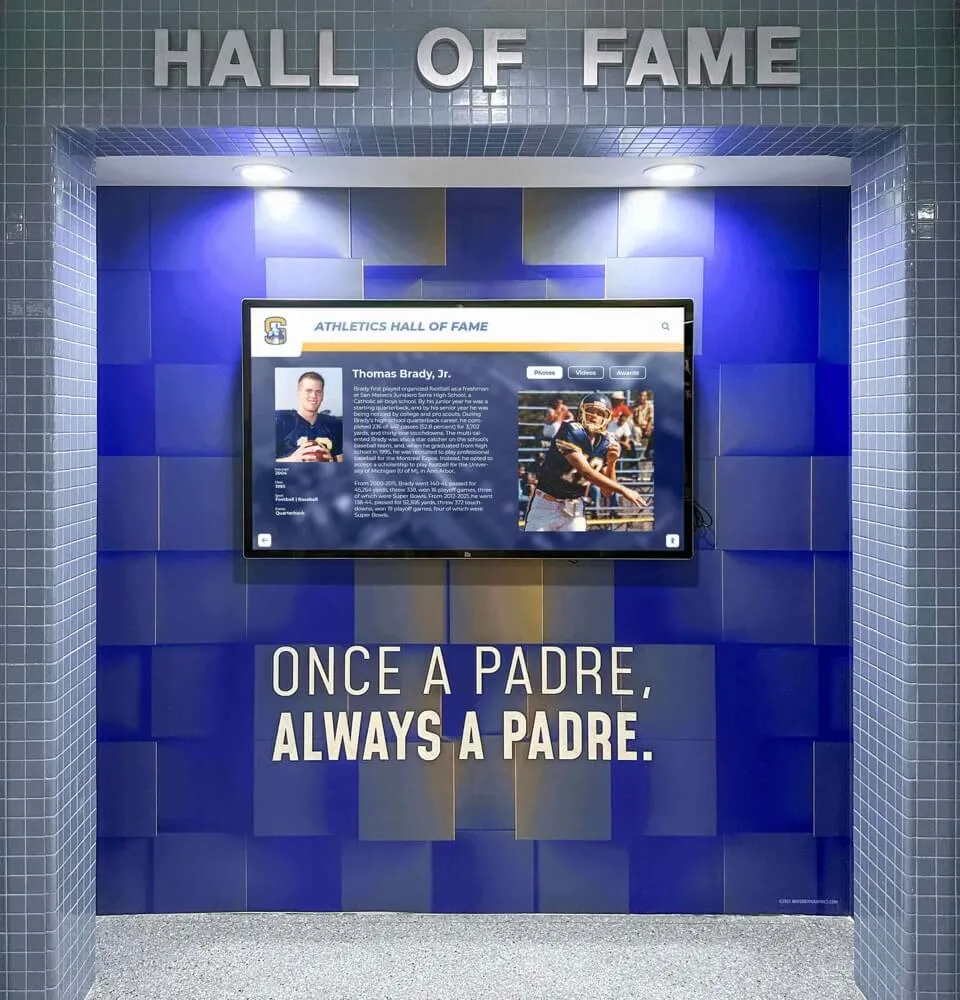
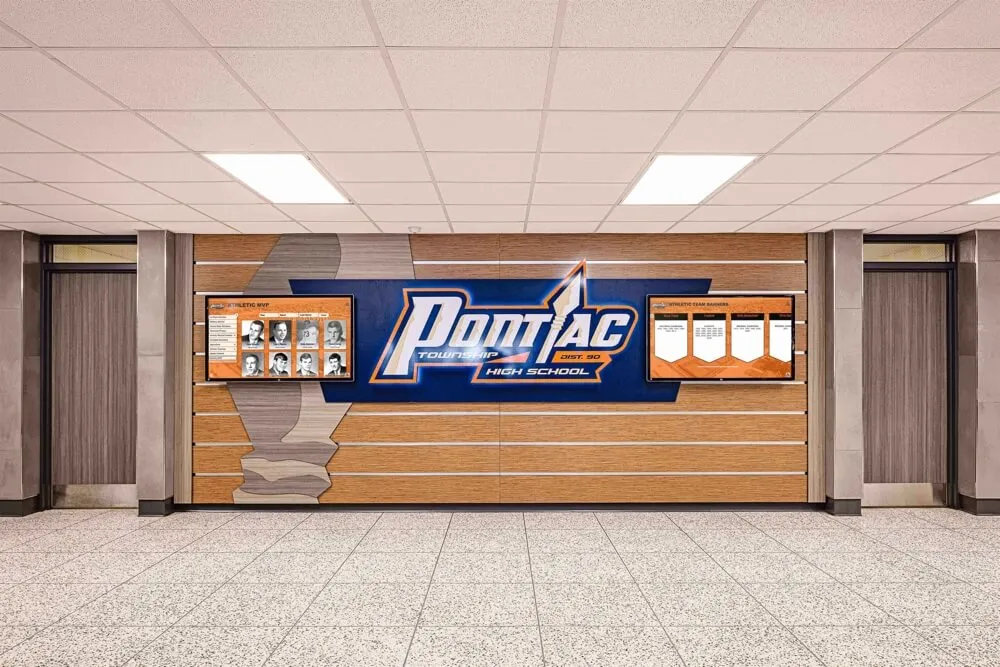
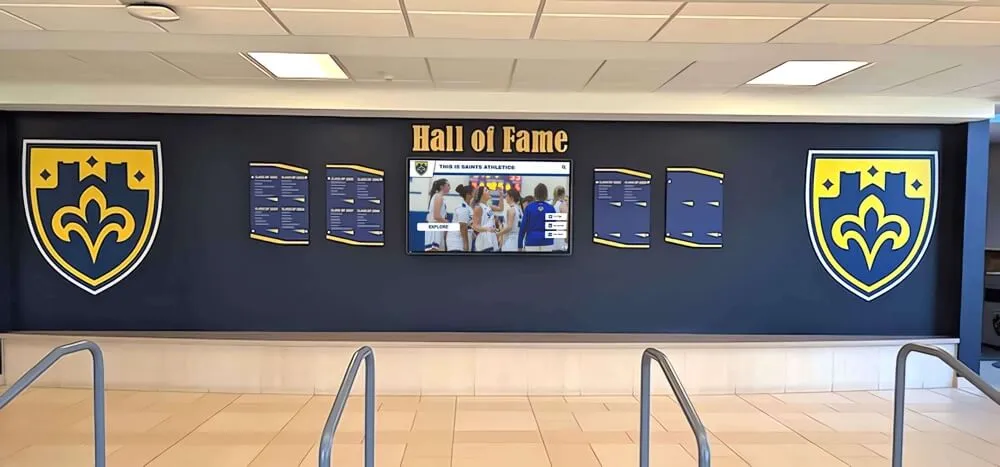
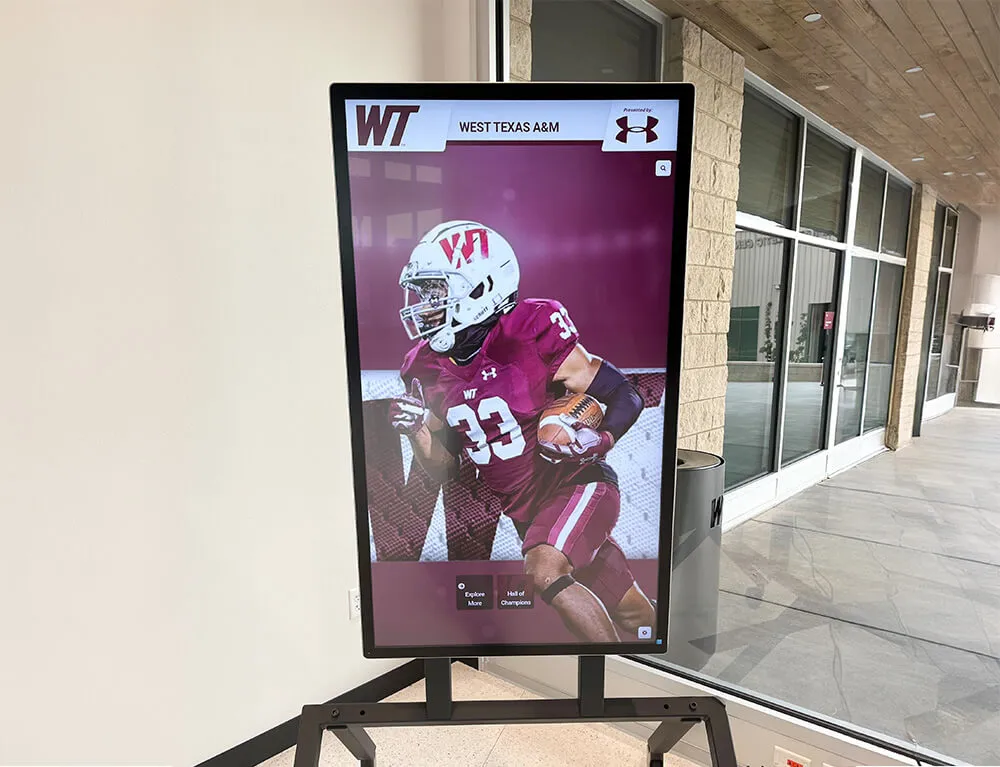
Wall graphics reinforce athletic program identity while creating branded environments celebrating team tradition
Quick Installation and Minimal Disruption
Professional wall wrap installation typically completes in 1-3 days depending on size and complexity. This speed minimizes disruption to school operations compared to painting projects taking weeks or permanent architectural modifications requiring extended construction.
Schools can often install wall wraps during spring break, summer months, or long weekends when buildings experience reduced traffic.
Temporary and Removable Nature
Unlike permanent architectural features, wall wraps remove when schools want to update recognition, change branding, or refresh displays. This changeability allows periodic updates keeping displays current, seasonal recognition rotations, flexibility as program priorities shift, and correction of any design decisions that don’t work as intended.
The removable nature reduces risk compared to permanent installations—if a design doesn’t resonate or needs updating, replacement is straightforward.
Design Considerations for School Wall Wraps
Effective wall wrap designs balance visual impact with practical readability and long-term satisfaction.
Content Strategy and Storytelling
Before designing graphics, clarify what stories you want your walls to tell:
Athletic Achievement Recognition
Common athletic wall wrap themes include championship timeline showing progression from founding through current seasons, team photo walls featuring roster grids from multiple years, record holder highlights celebrating statistical achievements, retired number recognition honoring exceptional careers, and coaching legacy displays acknowledging program builders.
Schools implementing athletic hall of fame recognition often use wall wraps to create physical presence for inducted athletes while digital systems provide comprehensive biographical detail.
School Identity and Values
Non-athletic wall wrap applications include mission statement and core values displays, mascot imagery reinforcing school identity, notable alumni showcases celebrating distinguished graduates, academic program highlights featuring different departments, and inspirational quotes creating motivating environments.
Historical Storytelling
Timeline designs work particularly well for showing institutional evolution: decade-by-decade photo progression, facility development and campus growth, tradition establishment and milestone moments, community connections and partnerships, and demographic changes reflecting evolving communities.
Visual Design Best Practices
Professional-looking wall wraps follow established design principles:
High-Resolution Imagery
Wall graphics printed at large scale require high-quality source images. Use photos at minimum 150 DPI at final print size, shoot new photography specifically for wall wrap reproduction when possible, avoid heavily compressed digital images showing pixelation, consider hiring professional photographers for key images, and test critical images at actual size before committing to full production.
Low-resolution images that look fine on websites or in yearbooks often appear blurry or pixelated when printed at wall scale—this quality issue undermines professional appearance and diminishes recognition impact.
Readable Typography
Text legibility varies dramatically based on viewing distance. Follow these guidelines: use minimum 3-inch letter height for text read from 20 feet away, increase to 6-inch minimum for 40-foot viewing distances, limit text quantity avoiding wall-sized paragraphs that won’t be read, choose clean sans-serif fonts for maximum legibility, and ensure strong contrast between text and backgrounds.
Test text readability by viewing designs at scale before production. What looks perfect on a computer monitor may become unreadable at actual size and viewing distance.
Color Selection and Branding
Maintain consistency with established school colors: match PMS color specifications precisely for brand consistency, consider how colors appear under hallway lighting conditions, test color reproduction on actual vinyl samples before large production, avoid color combinations creating readability problems, and incorporate sufficient neutral space preventing overwhelming busy designs.
Schools with comprehensive recognition programs maintain consistent branding across wall wraps, trophy cases, digital displays, and other visual elements creating cohesive environmental identity.
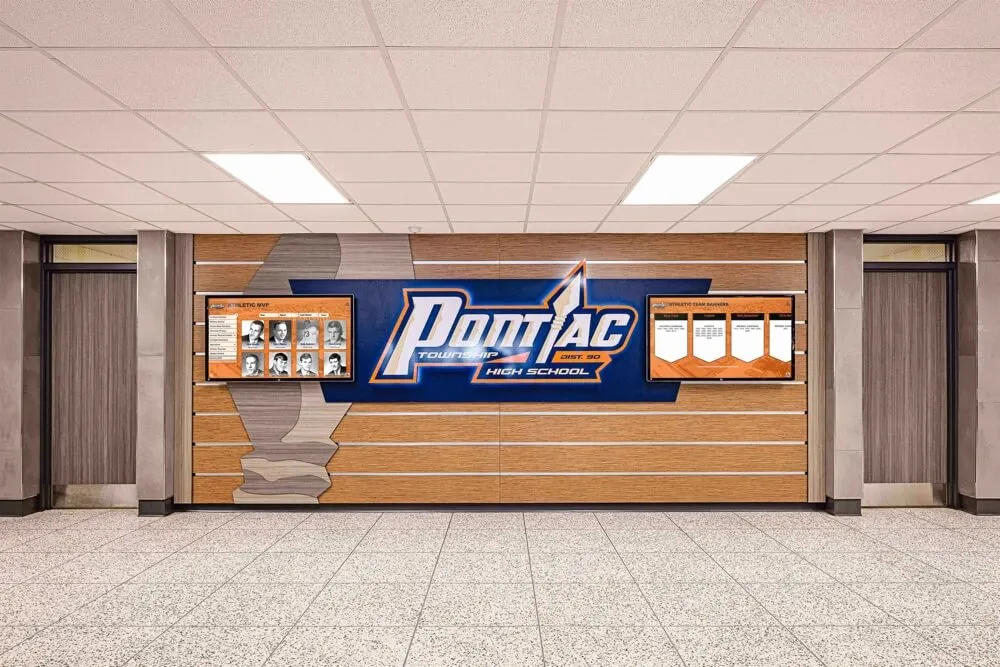
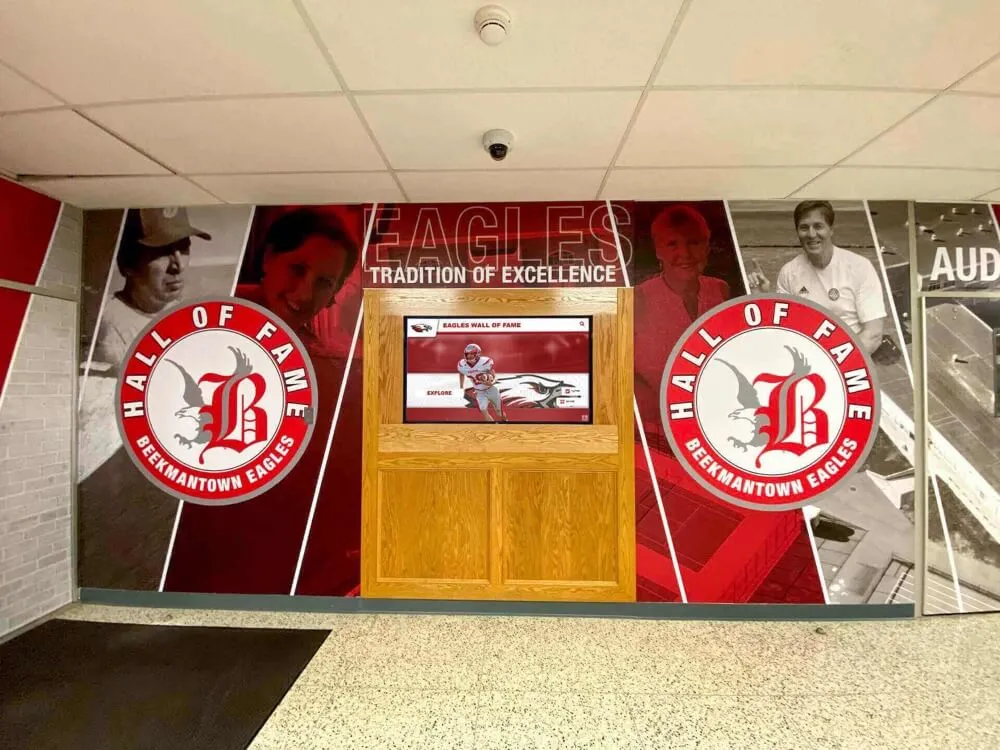
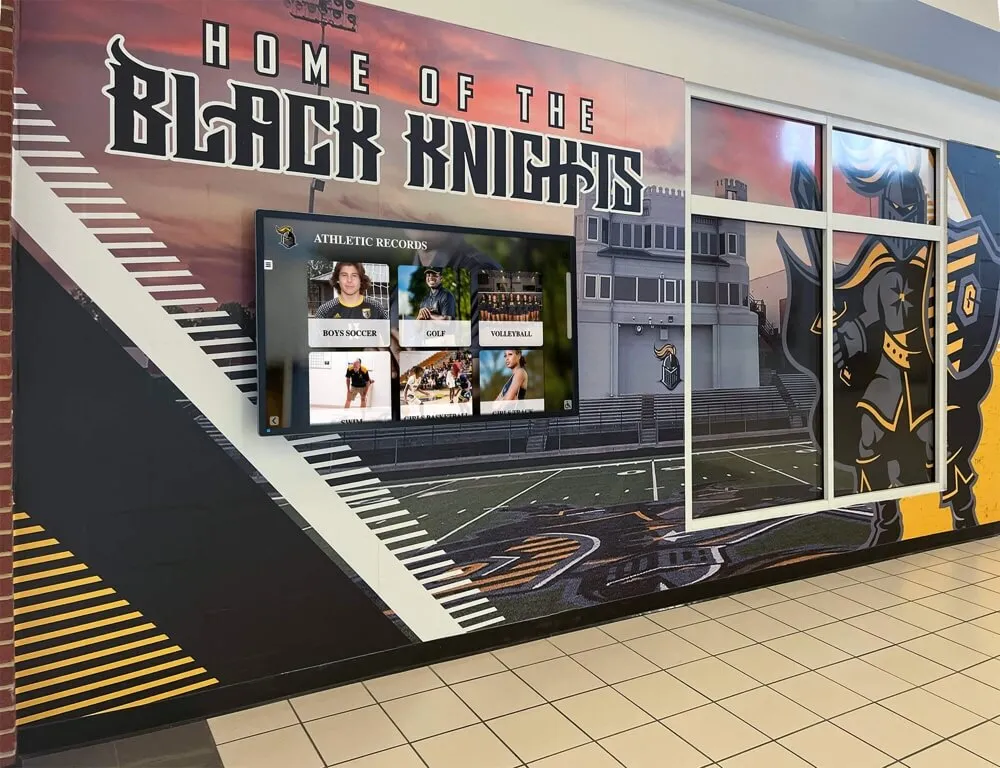
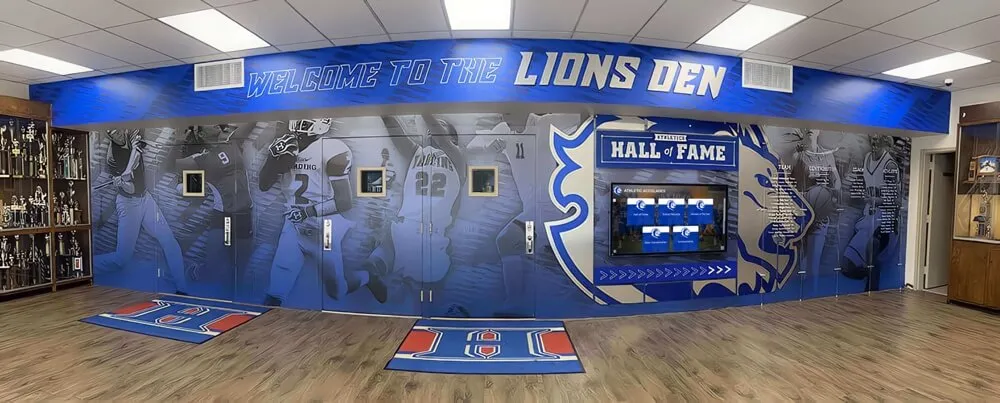
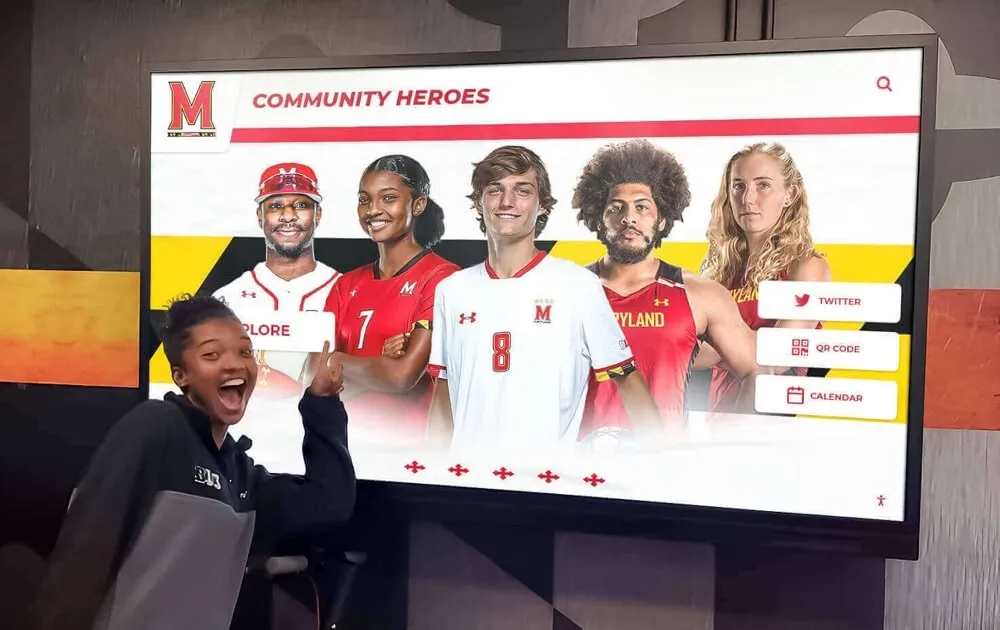
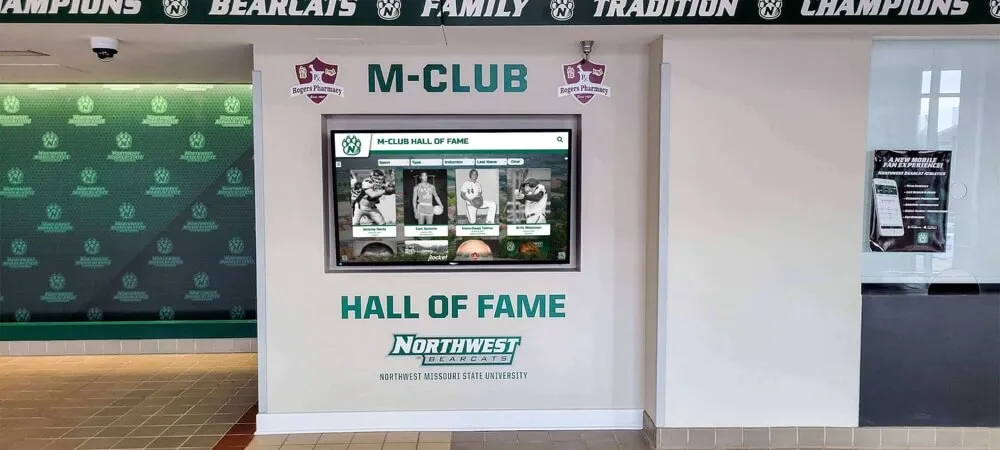
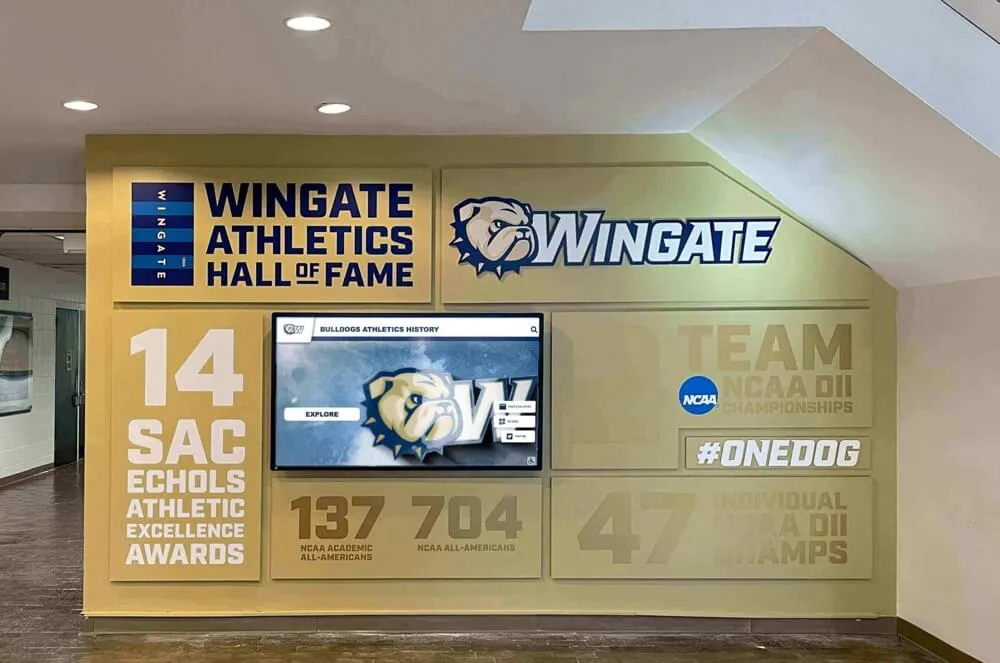
Coordinated wall graphics and displays create cohesive recognition environments throughout school facilities
Layout and Composition
Organize content for intuitive viewing: establish clear visual hierarchy directing attention to primary content, use grid systems organizing multiple photos or information blocks, maintain consistent spacing and alignment throughout designs, incorporate breathing room with adequate negative space, and design for hallway flow considering how people move through spaces.
Hallway wall wraps differ from posters or yearbook spreads because viewers experience them while walking—designs should communicate clearly even during brief passing periods rather than requiring extended study.
Compliance and Safety Considerations
Educational facility graphics must address specific requirements:
Fire Safety and Building Codes
Wall coverings in schools must meet safety standards: flame-spread ratings appropriate for educational occupancy, compliance with state and local fire marshal requirements, proper material certifications and documentation, consideration of egress path regulations, and potential restrictions in certain building areas.
Consult your facilities director and local fire marshal early in planning to understand applicable requirements and ensure selected materials comply fully.
Accessibility Standards
Consider Americans with Disabilities Act (ADA) guidelines: adequate color contrast for vision-impaired visitors, text size and readability considerations, avoid creating visual barriers to wayfinding, consider tactile elements when appropriate, and ensure displays don’t create physical obstructions in hallways.
Student Privacy and Consent
Using student photos in permanent displays requires careful attention to privacy: obtain appropriate photo release permissions, follow FERPA guidelines for educational records, consider opt-out provisions for families with privacy concerns, review policies regarding student likenesses, and establish clear processes for updating or removing graduates.
Some schools limit wall wraps to historical content beyond current enrollment or use only team photos where individuals are difficult to identify to minimize privacy complexities.
Installation Process and Timeline Considerations
Understanding installation requirements helps schools plan effectively and avoid surprises.
Pre-Installation Requirements
Successful installations begin with proper preparation:
Wall Surface Assessment
Not all walls accept vinyl graphics equally well. Professional installers evaluate surface texture and smoothness, paint condition and adhesion quality, presence of moisture or humidity issues, wall material composition, and any existing coatings or sealants.
Newly painted walls require 30-60 days curing before accepting vinyl graphics. Textured walls may need surface preparation or may require fabric materials rather than standard vinyl.
Environmental Conditions
Installation requires controlled environments: temperature between 65-75°F for optimal adhesive performance, humidity levels below 60% preventing moisture issues, adequate lighting enabling precision work, ventilation without direct drafts on application surfaces, and space for staging materials and work equipment.
Winter installations in buildings with inconsistent heating may require temporary climate control to ensure proper adhesive bonding.
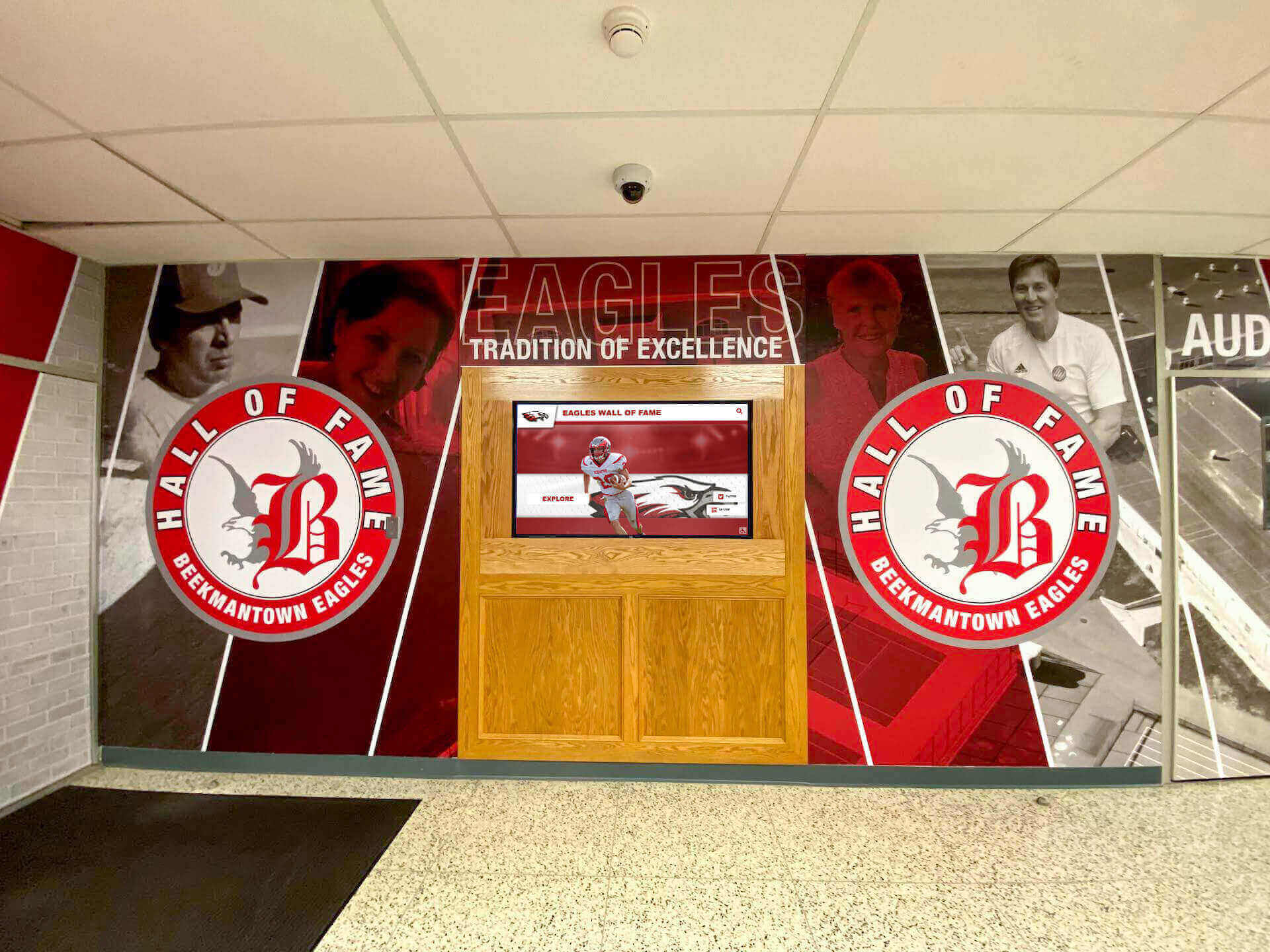
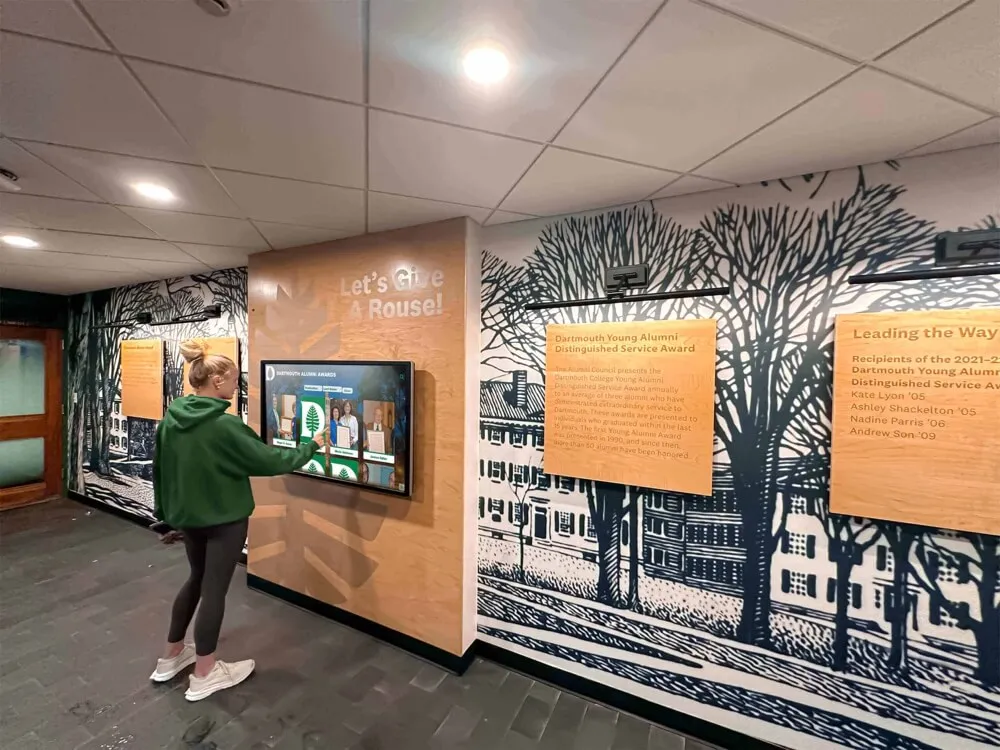
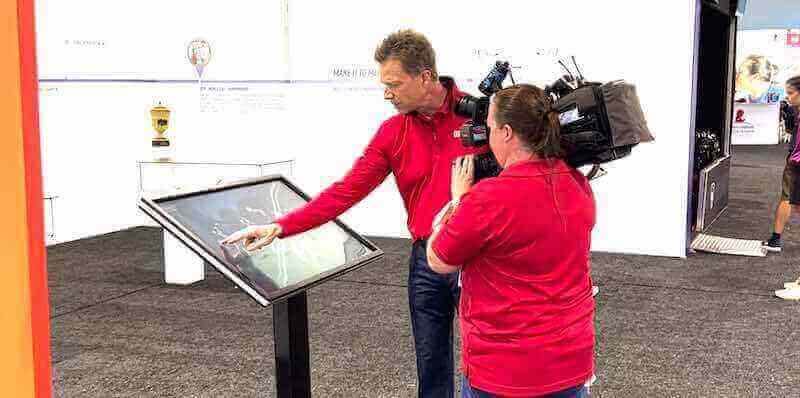
Professional installation creates seamless visual displays integrating with facility architecture and existing recognition elements
Access and Logistics
Installation teams need appropriate facility access: after-hours or weekend access minimizing student disruption, adequate electrical outlets for equipment, parking or loading access for large material rolls, scaffolding or lift equipment for high walls, and protected workspace preventing interference with school operations.
Coordinate installation timing with custodial staff, security personnel, and building administrators ensuring smooth execution.
Installation Timeline
Typical wall wrap projects follow this progression:
Design and Approval Phase (2-4 weeks)
- Initial design concepts and mockups
- Stakeholder review and feedback
- Revision rounds incorporating input
- Final design approval and sign-off
- Material selection and specifications
Production Phase (1-2 weeks)
- Digital printing on selected materials
- Quality control review of printed graphics
- Lamination application for protection
- Trimming and preparation for installation
- Packaging and transportation to site
Installation Phase (1-3 days)
- Wall surface preparation and cleaning
- Measurement and layout marking
- Vinyl application using professional techniques
- Trimming and edge finishing
- Final inspection and touch-up
Total Project Duration: 4-8 weeks from initial design through completed installation. Rush timelines are possible but often compromise design quality or limit revision opportunities.
Professional vs. DIY Installation
Wall wraps require professional expertise for quality results:
Professional Installation Advantages
- Specialized tools and equipment for proper application
- Experience preventing bubbles, wrinkles, and alignment issues
- Insurance coverage protecting schools against damage
- Warranty on installation workmanship
- Speed and efficiency minimizing disruption
DIY Installation Challenges
- Steep learning curve with expensive mistakes likely
- Lack of specialized tools creating suboptimal results
- Significant time investment taking staff from other duties
- No warranty coverage if problems develop
- Risk of wall damage during application or removal
Given typical wall wrap scale and costs, professional installation proves worthwhile investment ensuring quality results without risk of costly mistakes.
Maintenance, Durability and Long-Term Considerations
Wall wraps require ongoing attention maintaining appearance and maximizing lifespan.
Cleaning and Maintenance
Proper care extends wall wrap life and preserves appearance:
Regular Cleaning
- Wipe with soft, damp cloth for routine cleaning
- Use mild soap solution for stubborn marks
- Avoid abrasive cleaners or scrubbing that damages laminates
- Clean spills promptly preventing staining
- Schedule quarterly deep cleaning for high-traffic areas
Damage Prevention
- Install in areas away from high-impact activities
- Add protective barriers in locations with equipment or furniture contact
- Post signage reminding students to avoid touching displays
- Address edge lifting promptly preventing further peeling
- Inspect regularly identifying issues before they worsen
Environment Management
- Maintain consistent temperature and humidity
- Ensure adequate ventilation preventing moisture buildup
- Control direct sunlight exposure causing premature fading
- Address any building envelope issues allowing water infiltration
Expected Lifespan and Replacement Planning
Wall wrap longevity varies based on materials, environment, and maintenance:
Typical Lifespans
- Standard vinyl in protected indoor locations: 3-5 years
- Premium vinyl with proper maintenance: 5-7 years
- Fabric materials: 3-5 years depending on traffic
- Graphics in direct sunlight: Reduced to 2-4 years even with UV protection
Plan for eventual replacement by budgeting for future graphics in capital planning cycles, maintaining design files and source images for reprinting, documenting installation details facilitating future updates, considering modular designs allowing section replacement rather than complete renewal, and evaluating whether permanent alternatives better serve long-term needs.
Removal and Wall Restoration
Eventually, wall wraps require removal to update recognition or change designs:
Removal Process
- Professional removal taking 4-8 hours for typical hallway installation
- Heat application softening adhesive for easier release
- Careful peeling preventing wall damage
- Adhesive residue removal using appropriate solvents
- Surface cleaning and minor paint touch-up
Wall Condition After Removal
Properly installed and removed wall wraps typically leave walls in good condition requiring minor paint touch-up in some cases, full repainting if wall color has faded around graphics, textured wall repair if aggressive installation damaged surfaces, and adhesive residue removal if low-quality materials used.
Budget $300-800 for wall restoration after removal depending on surface condition and required repairs.
Cost Analysis: Understanding Wall Wrap Investment
Wall wrap costs vary significantly based on size, materials, design complexity, and installation requirements.
Itemized Cost Breakdown
Design Services ($500-2,500)
- Initial concept development
- Photo editing and graphic creation
- Multiple revision rounds
- File preparation for production
- Project management
Some schools handle design internally using staff or volunteer expertise, while others engage professional designers ensuring polished results. Complex designs incorporating many photos and detailed layouts typically justify professional design investment.
Materials and Printing ($8-25 per square foot)
- Vinyl material costs
- Digital printing charges
- Protective lamination
- Finishing and trimming
- Quality control
Material costs scale with square footage—a 10x30 foot hallway wall wrap covers 300 square feet, representing $2,400-7,500 just in materials and printing depending on chosen specifications.
Installation Services ($3-8 per square foot)
- Professional labor
- Equipment and tools
- Surface preparation
- Travel and logistics
- Warranty coverage
Installation represents significant cost component, but professional expertise proves essential for quality results.
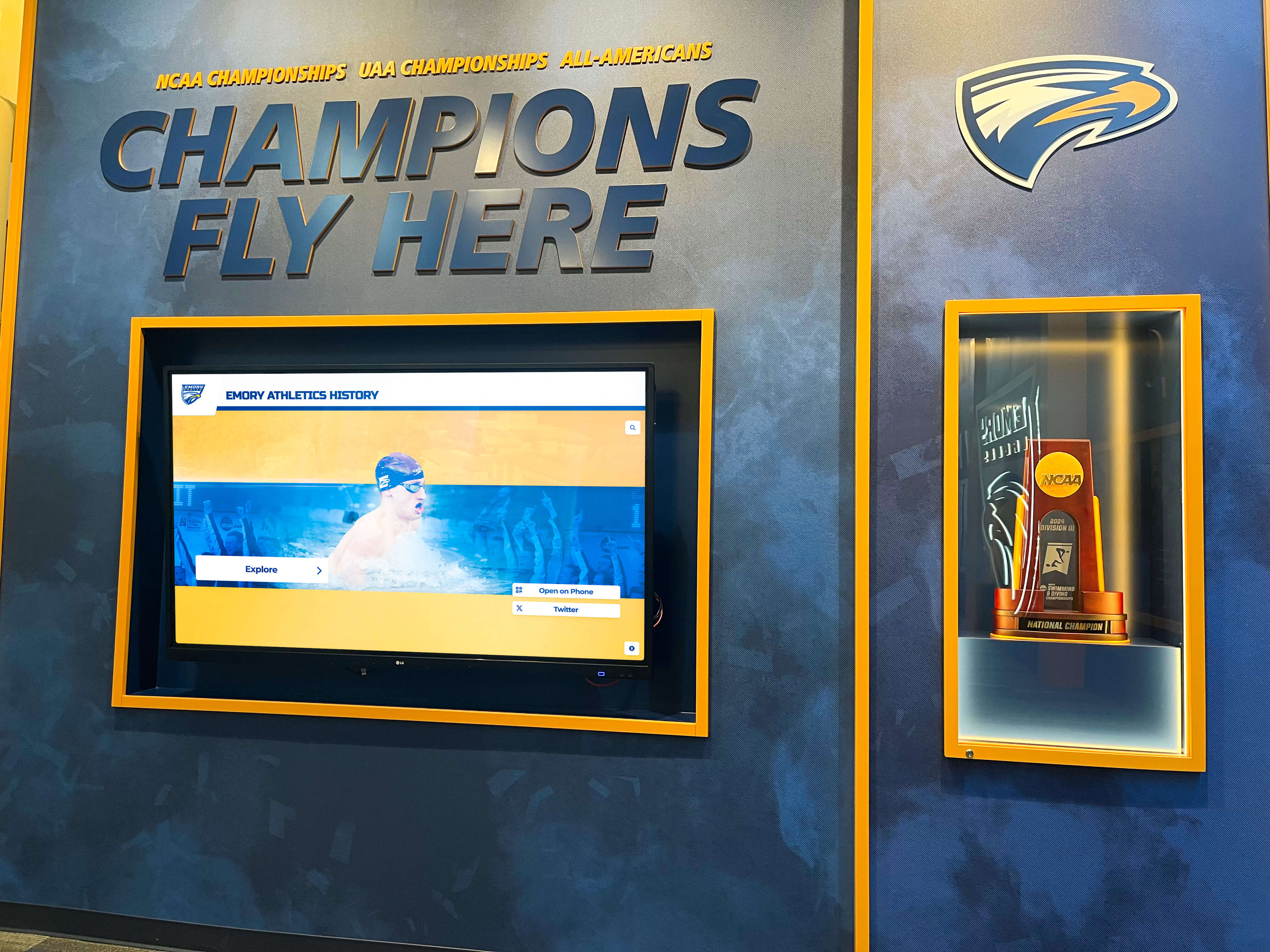
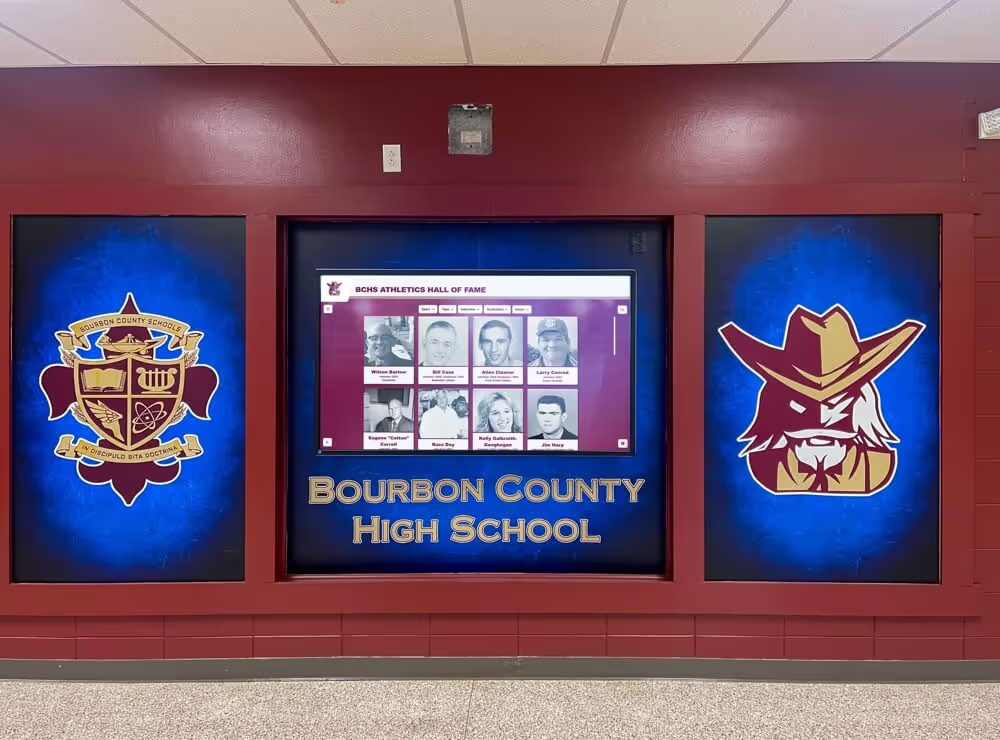
Comprehensive recognition installations combine physical displays with environmental graphics creating compelling celebration spaces
Total Project Costs
Typical school wall wrap projects range:
- Small single-wall installations (100-150 sq ft): $2,000-5,000
- Medium hallway projects (250-400 sq ft): $5,000-12,000
- Large-scale installations (500+ sq ft): $12,000-30,000+
Comparing Costs to Alternatives
Wall Wraps vs. Traditional Plaques
Individual bronze plaques cost $100-300 each installed. A wall wrap displaying 50 athletes costs $8,000-15,000 total, while 50 individual plaques cost $5,000-15,000 plus trophy case or wall mounting systems adding $2,000-5,000. While individual plaques may cost less initially, they consume valuable space and limit future growth.
Wall Wraps vs. Painted Murals
Custom painted murals by professional artists typically cost $25-75 per square foot—significantly more than printed wall wraps while offering less design flexibility, longer installation timelines, and more difficult updates or changes.
Wall Wraps vs. Digital Recognition Systems
Digital touchscreen displays paired with cloud-based recognition platforms cost $8,000-15,000 for comprehensive implementations including hardware, software, and initial content creation. Annual software fees of $1,000-3,000 support unlimited recognition capacity, instant updates, interactive exploration, and web accessibility extending reach beyond physical locations.
Organizations comparing traditional trophy cases with digital alternatives find digital systems offering compelling advantages for schools wanting flexible, growing recognition programs.
Funding Sources for Wall Wrap Projects
Schools fund wall wraps through various sources:
Booster Clubs and Athletics Foundations
Athletic boosters often fund recognition projects celebrating team achievements. Frame wall wraps as permanent tributes honoring athletes, coaches, and championship tradition while building program pride and recruitment appeal.
Capital Improvement Budgets
Facility renovation projects incorporating wall wraps as part of broader athletic facility improvements, classroom building updates, or main entrance enhancements often find funding through capital budgets rather than operating expenses.
Donor Recognition and Naming Opportunities
Wall wrap projects can include donor recognition components, with naming rights for specific walls or recognition sections, sponsorship acknowledgment on displays, memorial dedications honoring individuals, and planned giving campaign integration.
Schools implementing donor recognition displays often combine athletic achievement recognition with donor acknowledgment creating dual-purpose installations.
Grants and Community Partnerships
Some schools secure funding through educational facility improvement grants, corporate community partnership programs, alumni fundraising campaigns, parent organization contributions, and local business sponsorships.
Common Challenges and How to Overcome Them
Schools implementing wall wraps encounter predictable challenges with known solutions.
Challenge: Limited Content and Photo Quality
Many schools lack high-resolution photos of historical achievements suitable for large-format reproduction.
Solutions:
- Start with recent content where quality photos exist
- Engage alumni to source historical photos from personal collections
- Visit local newspaper archives purchasing high-resolution scans
- Incorporate yearbook digitization projects building image libraries
- Design layouts working with available image quality through artistic treatments
- Consider timeline designs where smaller images work appropriately
Schools implementing comprehensive school history preservation programs systematically digitize historical materials creating resources for recognition projects.
Challenge: Content Becomes Outdated Quickly
Wall wraps installed this year become incomplete next year when new championships are won or athletes achieve recognition.
Solutions:
- Design with intentional end dates (e.g., “Champions 2000-2025”)
- Use modular sections allowing partial updates
- Combine permanent historical content with updatable modern sections
- Include QR codes linking to comprehensive digital recognition updated regularly
- Budget for periodic replacement every 3-5 years
- Consider digital alternatives providing unlimited capacity and instant updates
Challenge: Wall Surface Issues
Existing wall conditions may not accept vinyl graphics well without extensive preparation.
Solutions:
- Conduct professional surface assessment early in planning
- Budget for wall repair or resurfacing if needed
- Choose fabric materials accommodating textured walls
- Consider mounted panel systems creating smooth surfaces
- Explore alternative locations with better wall conditions
- Evaluate whether digital displays on wall mounts avoid surface dependency
Challenge: Budget Constraints
Comprehensive wall wrap projects exceed available funding, requiring scaled approaches.
Solutions:
- Phase implementation starting with highest-visibility areas
- Choose standard materials over premium specifications
- Simplify designs reducing artwork costs
- Handle design work internally if expertise available
- Combine multiple recognition types sharing costs
- Explore corporate sponsorships offsetting project costs
- Consider digital alternatives offering different cost structures and long-term value
Digital Alternatives: Modern Solutions to Traditional Wall Wrap Limitations
While wall wraps offer visual impact and space efficiency, digital recognition systems address fundamental limitations inherent to static printed graphics.
Understanding Digital Recognition Systems
Modern recognition platforms combine interactive touchscreen displays installed on walls, cloud-based content management enabling remote updates, and web-accessible platforms extending reach beyond physical locations. These integrated systems transform recognition from static displays to dynamic, growing resources serving school communities.
Solutions like Rocket Alumni Solutions provide purpose-built platforms specifically designed for educational recognition needs, offering comprehensive features traditional wall wraps cannot match.
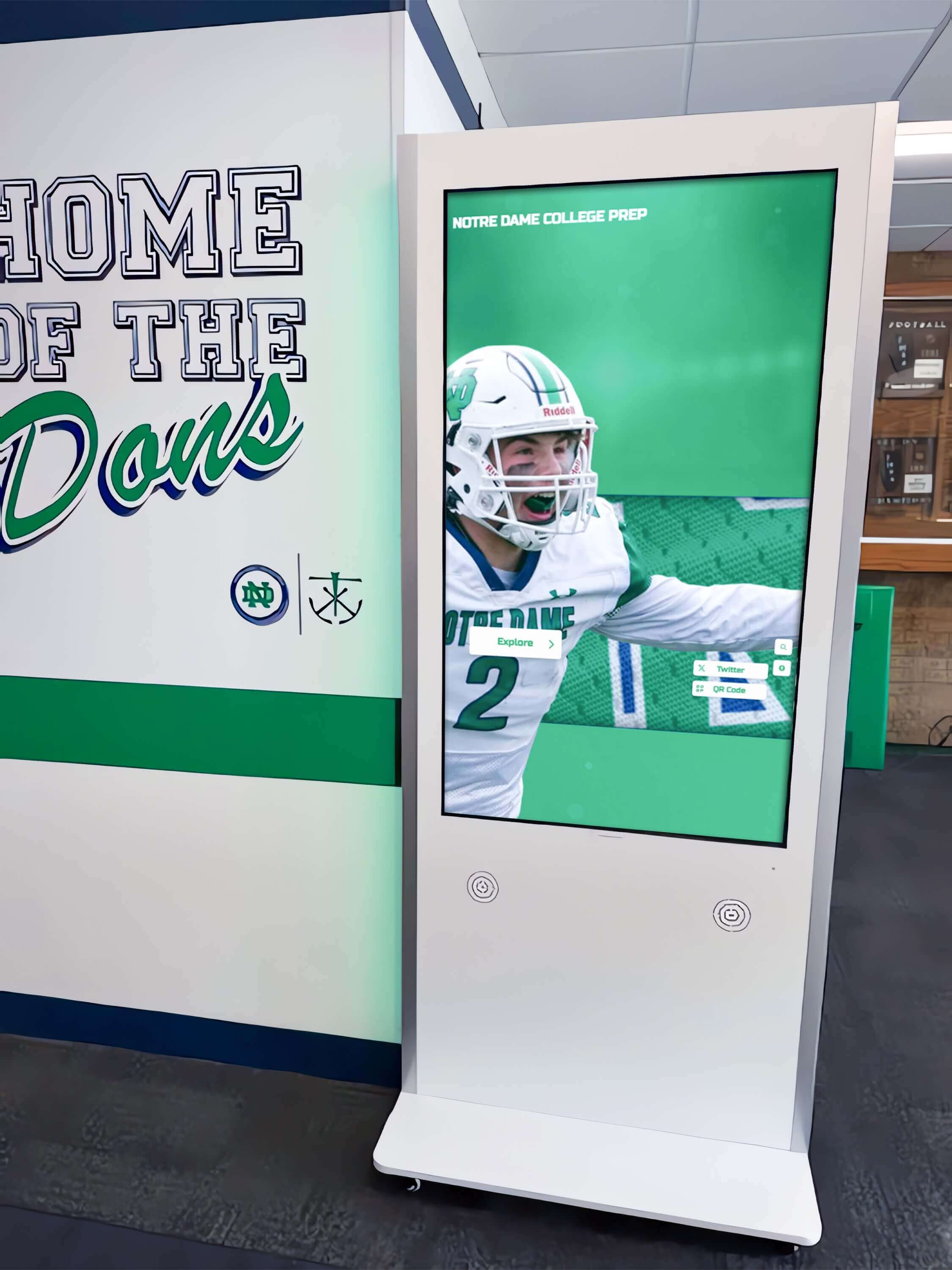
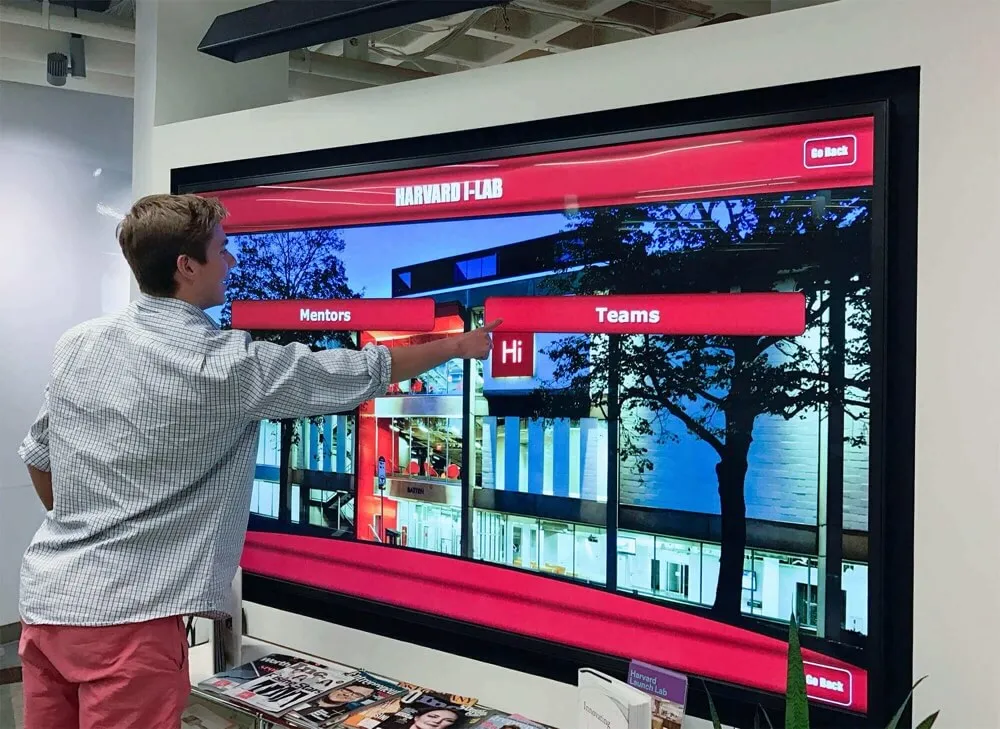
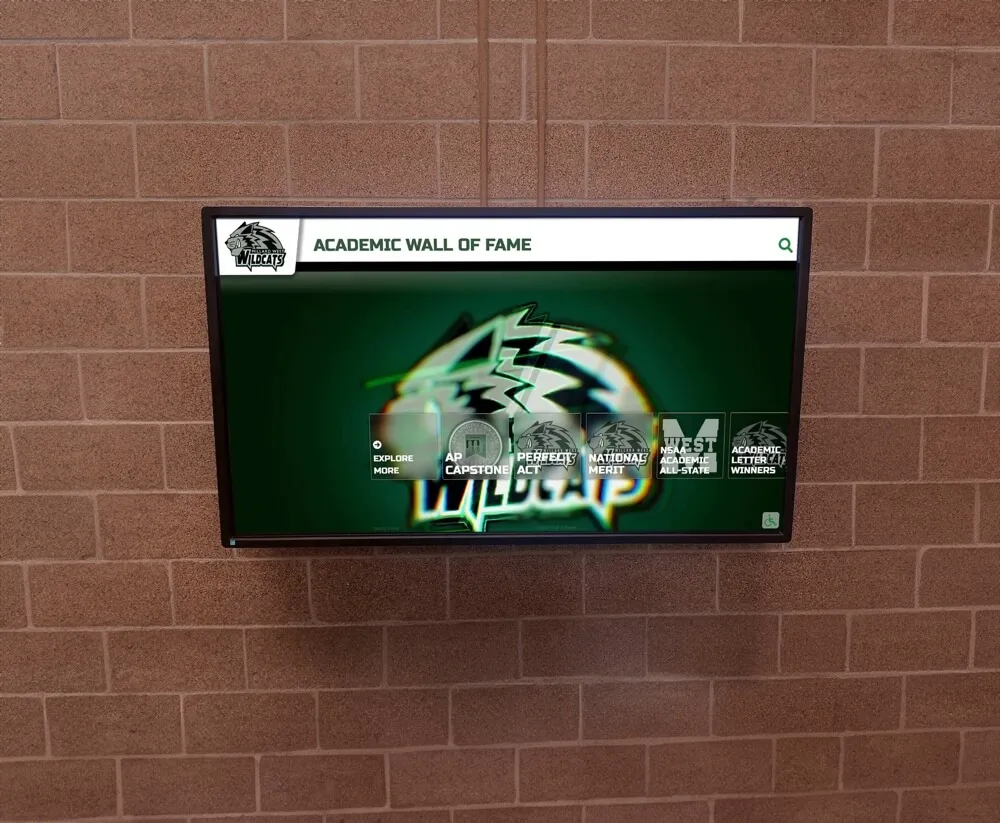
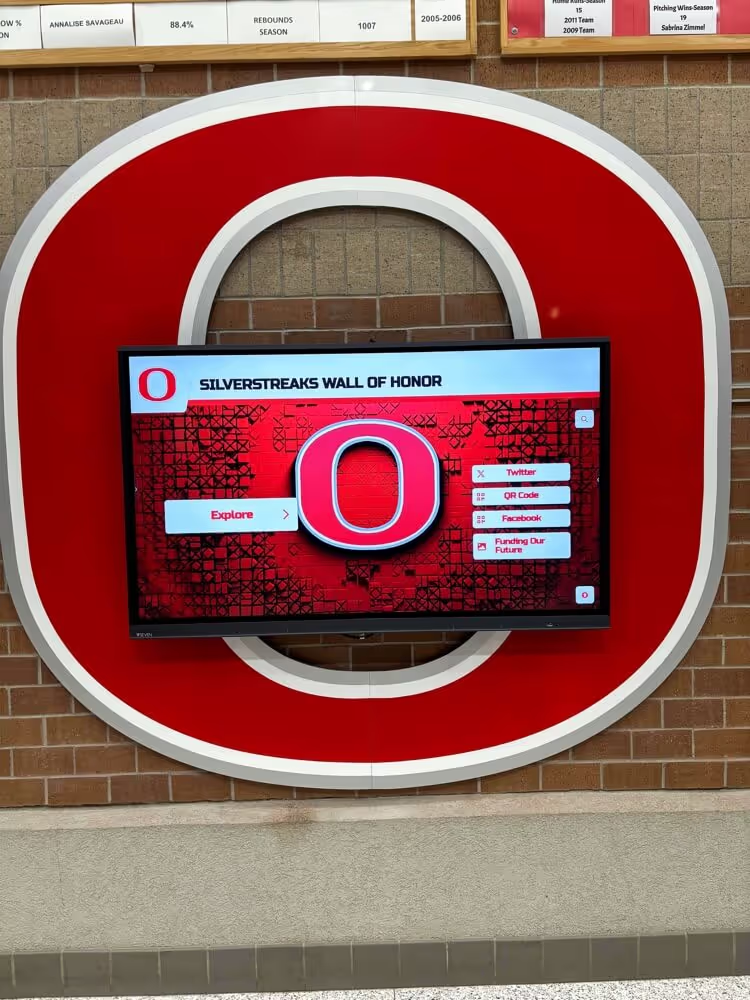
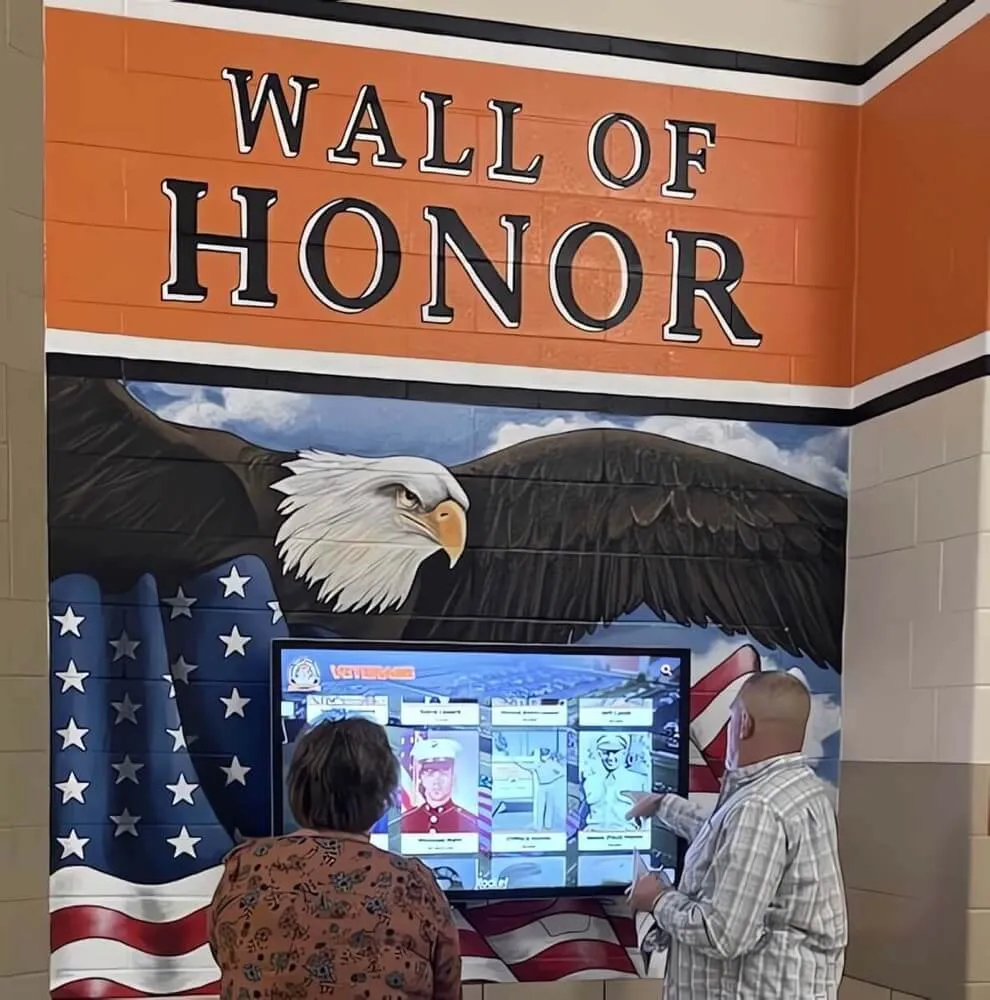
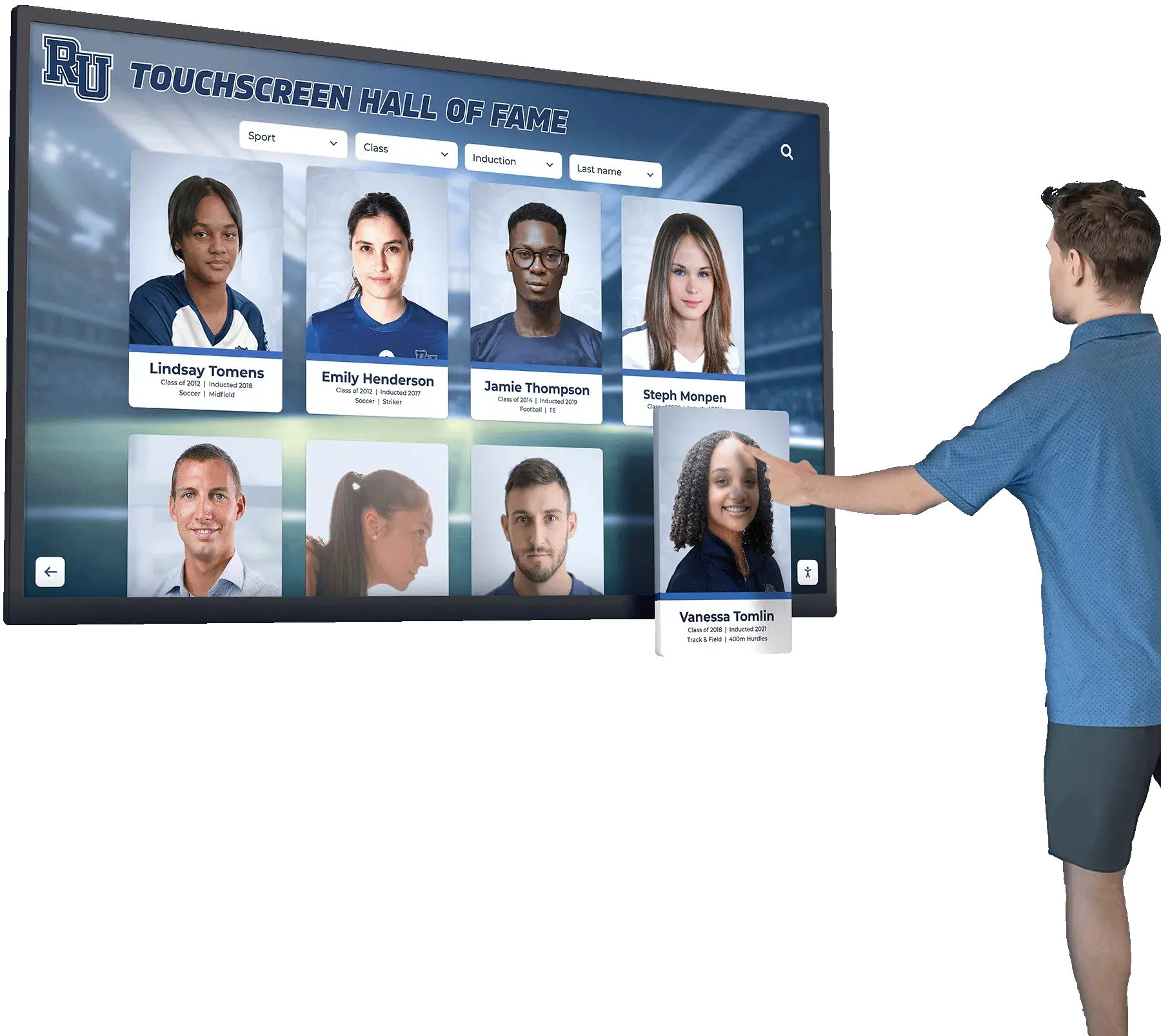
Interactive digital displays provide engaging exploration impossible with static graphics while maintaining prominent visual presence
Key Advantages Over Static Wall Wraps
Unlimited Recognition Capacity
While wall wraps display fixed content limited by physical dimensions, digital systems accommodate unlimited inductees, achievements, teams, and categories without space constraints. Schools never face difficult decisions about who receives recognition due to wall space limitations.
Instant Content Updates
Wall wraps require reprinting and reinstallation for updates—weeks of lead time and thousands of dollars. Digital systems update instantly through simple content management dashboards. When championships are won, add recognition the same day while excitement remains high.
Rich Multimedia Storytelling
Wall wraps display static images and limited text. Digital platforms enable multiple photo galleries, video highlights, biographical narratives, statistics and data, news articles and media coverage, and interactive timelines showing career progression.
This comprehensive storytelling creates emotional connections impossible with static graphics, allowing visitors to watch highlight reels, learn detailed athlete biographies, explore statistical achievements, and understand context behind recognition.
Interactive Exploration
Wall wraps offer passive viewing—visitors see displayed content without interaction. Digital systems enable searchable databases finding specific individuals instantly, filtering by sport, year, or achievement type, related content suggestions connecting similar achievements, social sharing extending recognition reach, and mobile access from anywhere via web platforms.
Cost-Effectiveness Over Time
While initial digital system investments align with comprehensive wall wrap costs ($8,000-15,000), digital platforms require no reprinting or reinstallation for updates. Annual software subscriptions ($1,000-3,000) support unlimited additions without per-recognition costs that accumulate with traditional approaches.
Schools tracking total cost of ownership report that digital systems achieve cost parity with traditional recognition within 5-7 years while providing dramatically superior capabilities.
Analytics and Engagement Data
Wall wraps provide no usage data. Digital platforms generate insights showing most-viewed profiles, peak usage times, search patterns revealing what visitors seek, geographic distribution of web access, and engagement metrics demonstrating recognition impact.
These analytics inform content strategy and demonstrate value to stakeholders, boards, and donors.
Complementary Approach: Combining Wall Wraps with Digital Systems
Many schools implement both wall wraps and digital recognition in complementary ways:
Environmental Branding Through Wall Wraps
Use printed graphics for permanent branding elements, team mascot imagery, inspirational quotes and values, directional wayfinding, and historical timeline context setting.
Detailed Recognition Through Digital Systems
Reserve digital platforms for comprehensive athlete profiles, searchable achievement databases, regularly updated content, interactive exploration features, and statistics and biographical details.
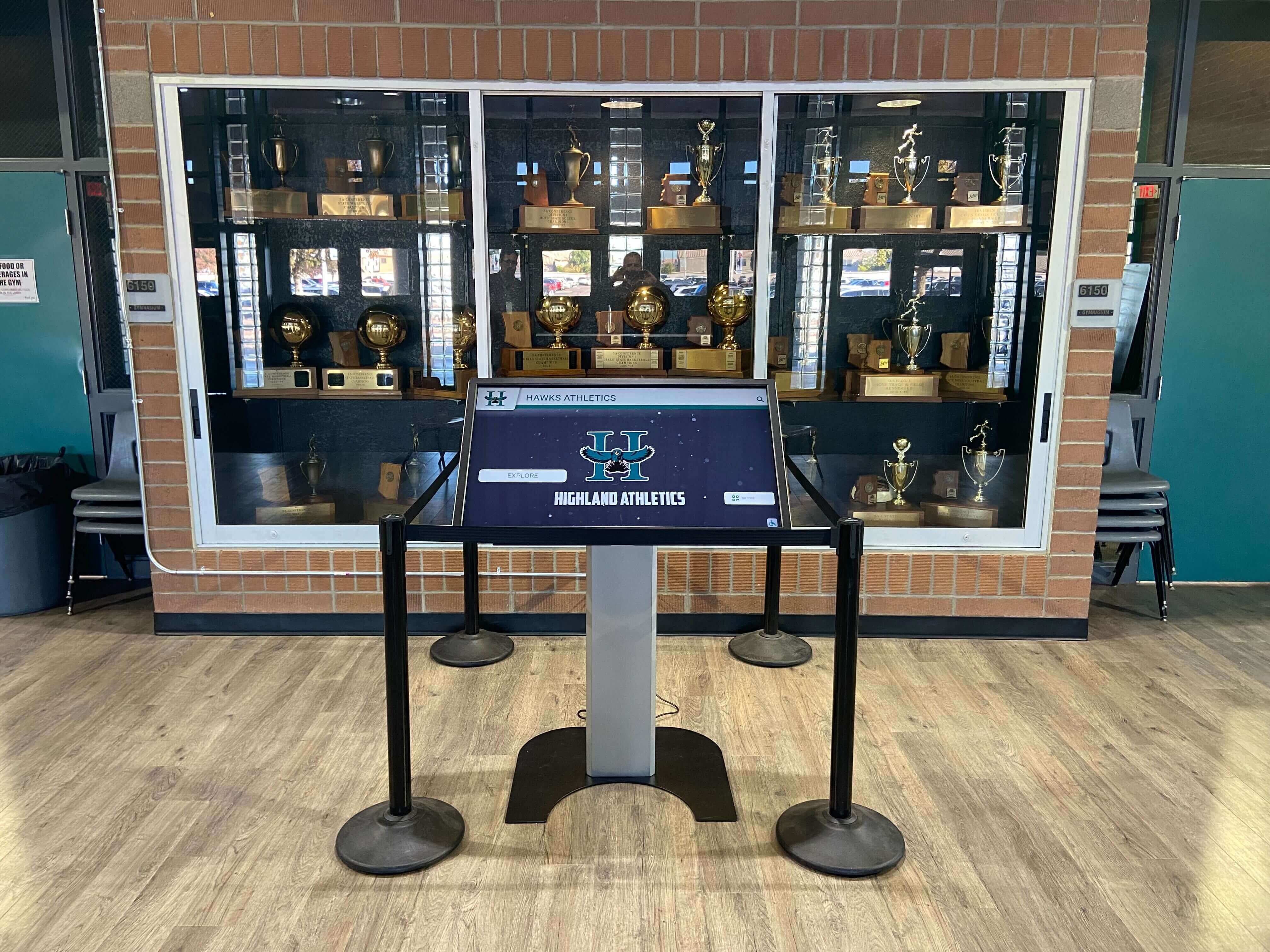
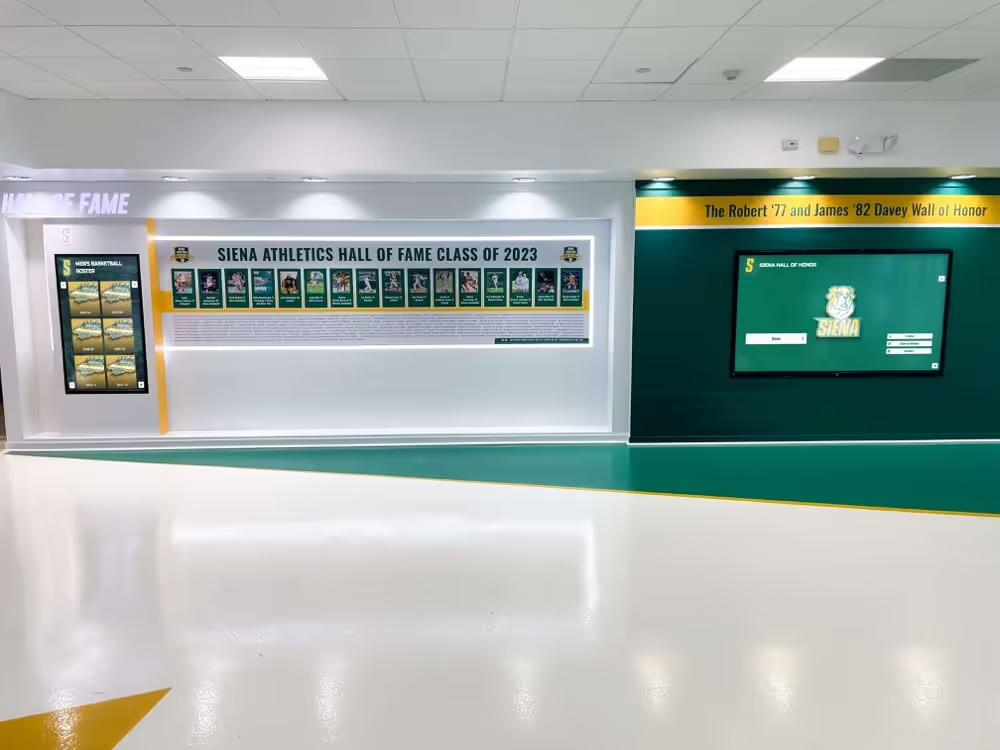
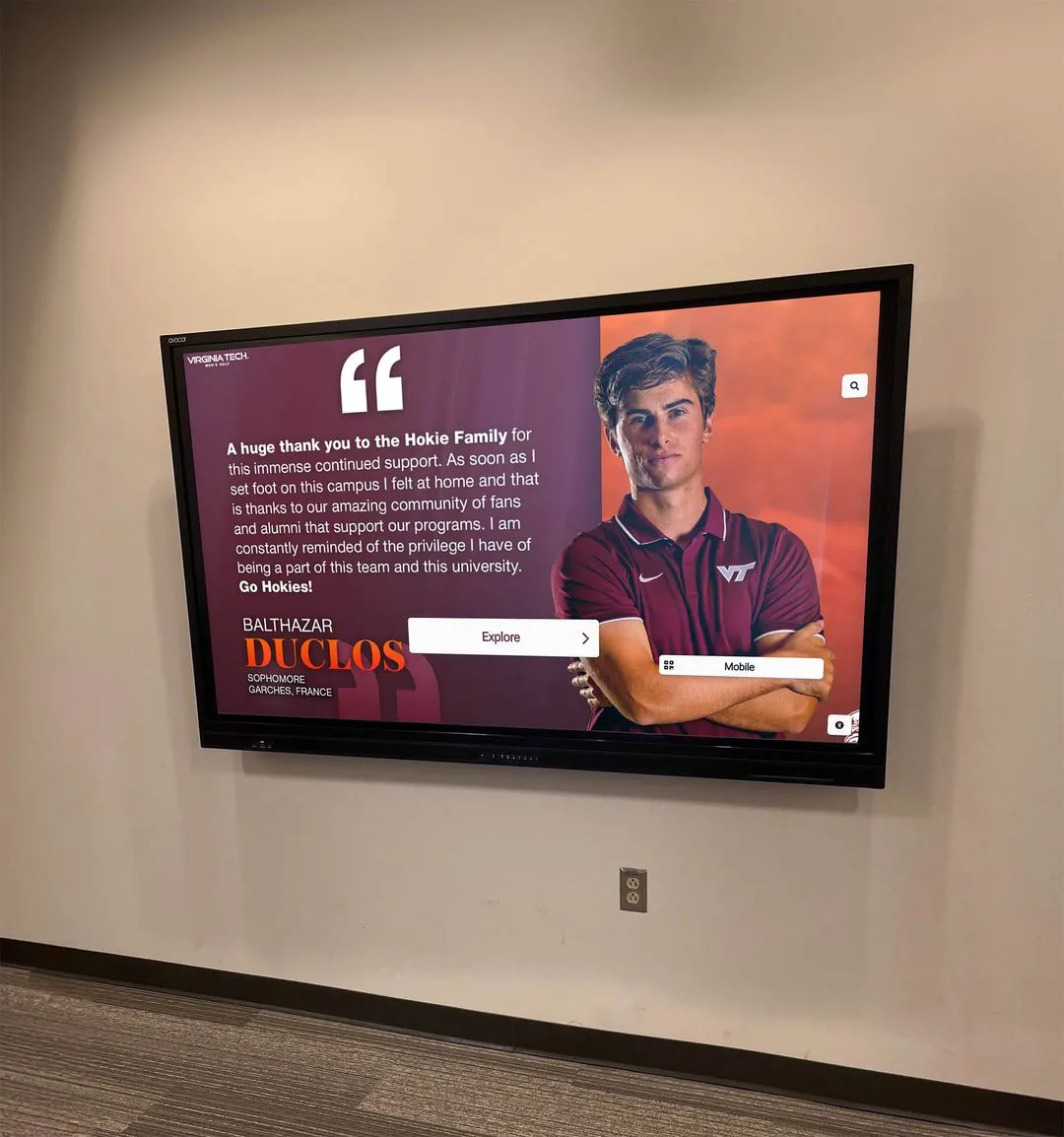
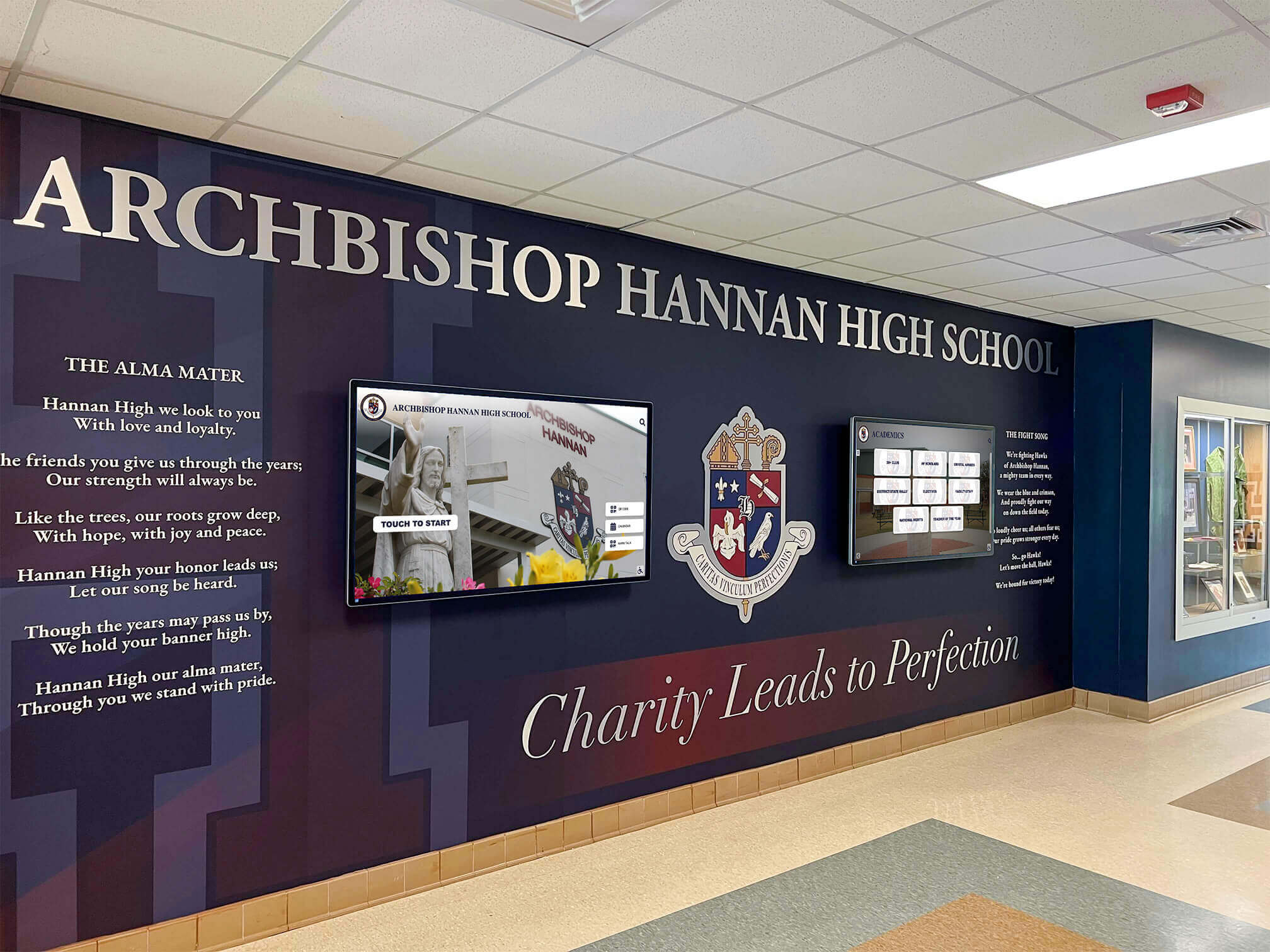
Digital recognition systems integrate naturally alongside traditional displays, providing interactive exploration complementing physical recognition
This hybrid approach leverages strengths of each medium—wall wraps create visual impact and branded environments while digital systems provide depth, flexibility, and unlimited capacity for comprehensive recognition.
Schools implementing touchscreen kiosk solutions often position displays in locations where wall wraps provide contextual branding while touchscreens deliver interactive content.
Implementation Planning: Getting Started with School Wall Wraps
Successfully executing wall wrap projects requires systematic planning and coordination.
Step 1: Define Goals and Scope
Clarify what you want to accomplish:
- What achievements or content will the wall wrap showcase?
- Which locations provide high visibility and appropriate surfaces?
- What timeline drives your implementation?
- Who are key stakeholders needing input?
- What budget constraints guide your scope?
Clear goal definition prevents scope creep and ensures alignment across planning teams.
Step 2: Assemble Planning Team
Wall wrap projects benefit from diverse perspectives:
- Athletic director or recognition program lead (project ownership)
- Facilities director (wall condition assessment and installation coordination)
- Communications or marketing staff (design direction and brand consistency)
- Booster club or foundation representatives (funding and stakeholder input)
- Coach or teacher representatives (content expertise and selection criteria)
- IT staff if incorporating QR codes or digital integration
Step 3: Content Collection and Organization
Gather materials before design work begins:
- Historical photos from yearbooks, archives, and personal collections
- Current team photos and individual headshots
- Championship documentation and achievement records
- Biographical information for featured individuals
- Statistics and performance data
- Existing design assets and brand guidelines
Organize content systematically enabling designers to work efficiently without repeated requests for additional materials.
Step 4: Vendor Selection and Partnership
Evaluate potential vendors on design portfolio and style alignment, material options and quality specifications, installation expertise and references, project timeline and capacity, pricing transparency and total costs, warranty coverage and problem resolution, and communication responsiveness throughout process.
Request references from similar schools and visit completed installations assessing quality before committing to vendors.
Step 5: Design Review and Approval
Establish clear approval processes:
- Define who has decision authority for final approvals
- Set realistic timelines for review and feedback
- Limit revision rounds preventing endless design iterations
- Test designs at actual scale before production approval
- Verify all content accuracy before printing authorization
Design mistakes become expensive after printing—thorough review before production prevents costly errors.
Step 6: Installation Scheduling and Coordination
Plan installation carefully minimizing disruption:
- Schedule during breaks or low-activity periods
- Coordinate with custodial, security, and facilities teams
- Communicate timelines to affected staff and students
- Ensure installer access to power, equipment, and workspace
- Plan for temporary disruption of hallway traffic if needed
Step 7: Launch Promotion and Celebration
Celebrate completed installations building community engagement:
- Host dedication ceremonies with stakeholders and inductees
- Create social media content showcasing new recognition
- Invite local media covering community education news
- Conduct alumni communications highlighting recognition
- Gather feedback from students, staff, and visitors
Promotion extends recognition impact beyond physical installation, strengthening school pride and community connections.
Making the Right Choice for Your School
Wall wraps provide schools with effective tools for transforming bare hallways into celebration spaces honoring achievement and reinforcing institutional identity. When implemented thoughtfully with quality materials, professional design, and proper installation, wall wraps create visual impact that strengthens school culture and builds community pride.
However, understanding limitations helps schools make informed decisions:
Wall wraps work best when:
- You want permanent or semi-permanent environmental branding
- Recognition content remains relatively static for 3-5+ years
- Wall surfaces are smooth and in good condition
- Budget supports eventual replacement for updates
- Visual impact matters more than detailed information or interactivity
Consider alternatives when:
- Recognition needs frequent updates as new achievements occur
- You want unlimited capacity without space constraints
- Interactive exploration and searchability provide value
- Detailed multimedia storytelling matters to your community
- Long-term cost-effectiveness drives decisions
- Web accessibility extending reach beyond campus is important
Many schools find that combining environmental graphics with digital recognition systems leverages advantages of both approaches—creating branded spaces through wall wraps while providing comprehensive, flexible recognition through interactive digital platforms.
Transform Your School Recognition Strategy
Discover how modern digital recognition systems overcome traditional wall wrap limitations while providing unlimited capacity, instant updates, rich multimedia storytelling, and interactive exploration engaging your entire community.
With intuitive content management, professional design templates, comprehensive analytics, and white-glove implementation support, purpose-built platforms enable schools to celebrate every achievement without space constraints or expensive reprinting for updates.
Whether you’re evaluating wall wraps, planning recognition improvements, or seeking alternatives to outdated trophy cases, exploring comprehensive solutions helps you make informed decisions serving your school community effectively.
Explore Modern Recognition Solutions to see how digital platforms transform recognition from static displays to engaging, growing celebrations of institutional excellence.
The recognition approach you choose shapes how students, alumni, and communities experience school achievement and identity. Wall wraps offer valuable capabilities for many applications, while digital alternatives provide different strengths addressing common limitations. Understanding both options enables informed decisions creating recognition experiences that honor the past, celebrate the present, and inspire future excellence.
Your school’s achievements—athletic championships, academic excellence, leadership development, and community contributions—deserve recognition systems providing lasting celebration rather than temporary acknowledgment that becomes outdated. Through careful evaluation of goals, constraints, and available solutions, you can create recognition experiences that truly serve your school community.
Ready to begin planning your school recognition project? Explore comprehensive digital recognition approaches that complement or replace traditional wall wraps, or discover interactive display solutions creating engaging recognition experiences throughout educational facilities.