Volunteers keep schools running. They staff concession stands at Friday night games, shelve books in the library, chaperone overnight trips, and give up Saturday mornings to set up science fairs. Yet for all that generosity, the thank-you letter—one of the most powerful and inexpensive tools a school has—often goes unwritten, or gets dashed off with generic phrasing that misses the mark.
A well-crafted volunteer thank you letter does far more than acknowledge attendance. It names the specific contribution, conveys genuine impact, and makes the recipient feel seen in a way that motivates them to keep showing up year after year. Schools that prioritize volunteer appreciation letter practices consistently report stronger volunteerism the following year and deeper community trust.
This guide delivers a library of ready-to-adapt volunteer thank you letter templates for schools—covering PTA and parent volunteers, event helpers, classroom aides, long-term contributors, and end-of-year recognition. Each template includes flexible wording you can personalize in minutes. You’ll also find guidance on the elements that separate a meaningful letter from a form letter—and ideas for pairing written recognition with lasting visibility.
Every school community depends on a network of committed volunteers who give time, expertise, and energy without expectation of financial compensation. Acknowledging these contributions with thoughtful volunteer thank you letter appreciation isn’t a formality—it’s one of the highest-return investments a school can make in its own culture.

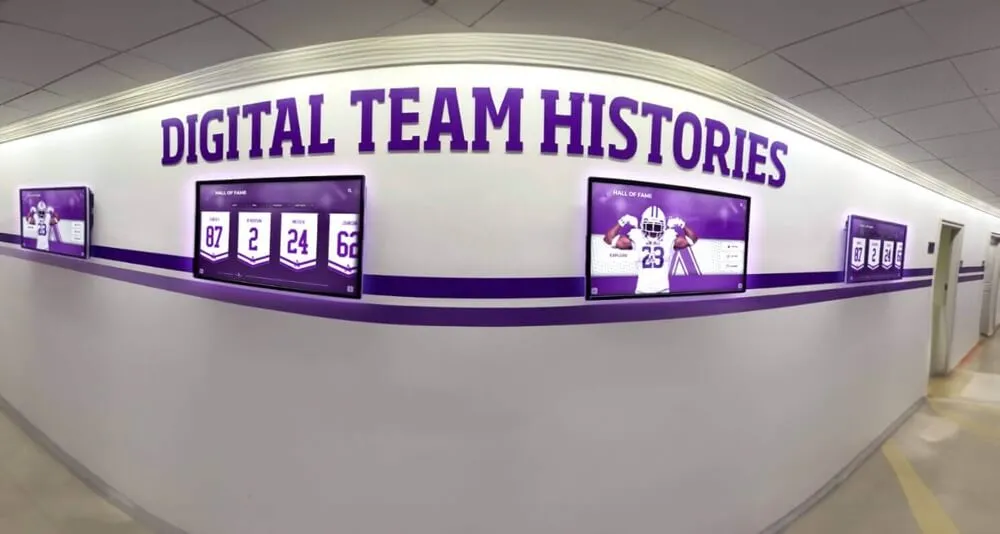
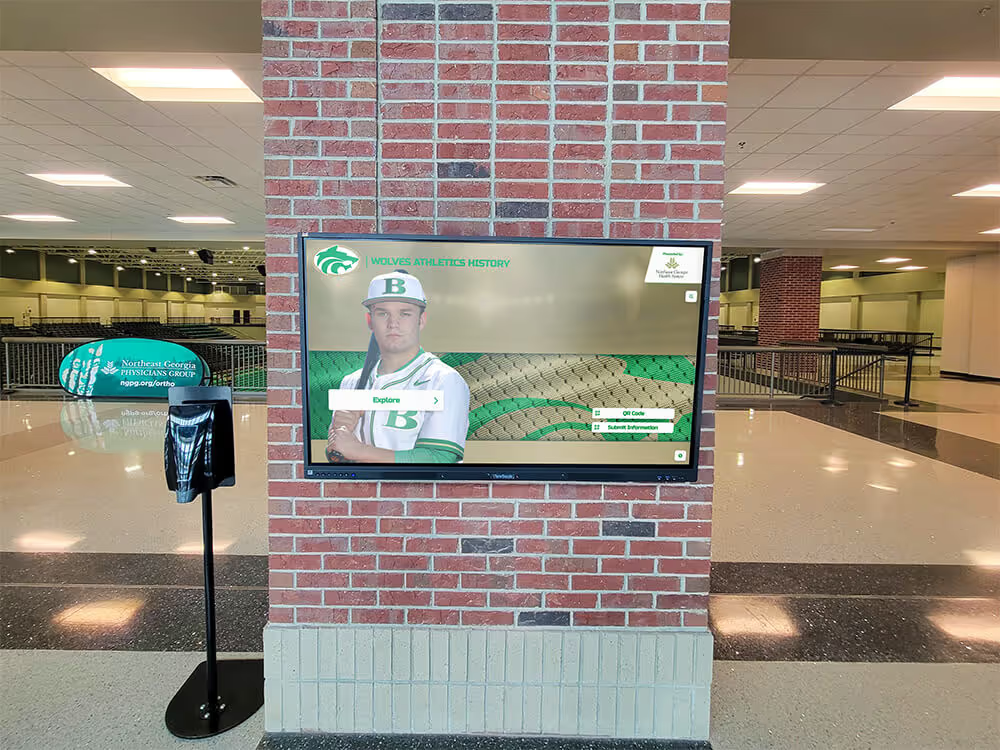
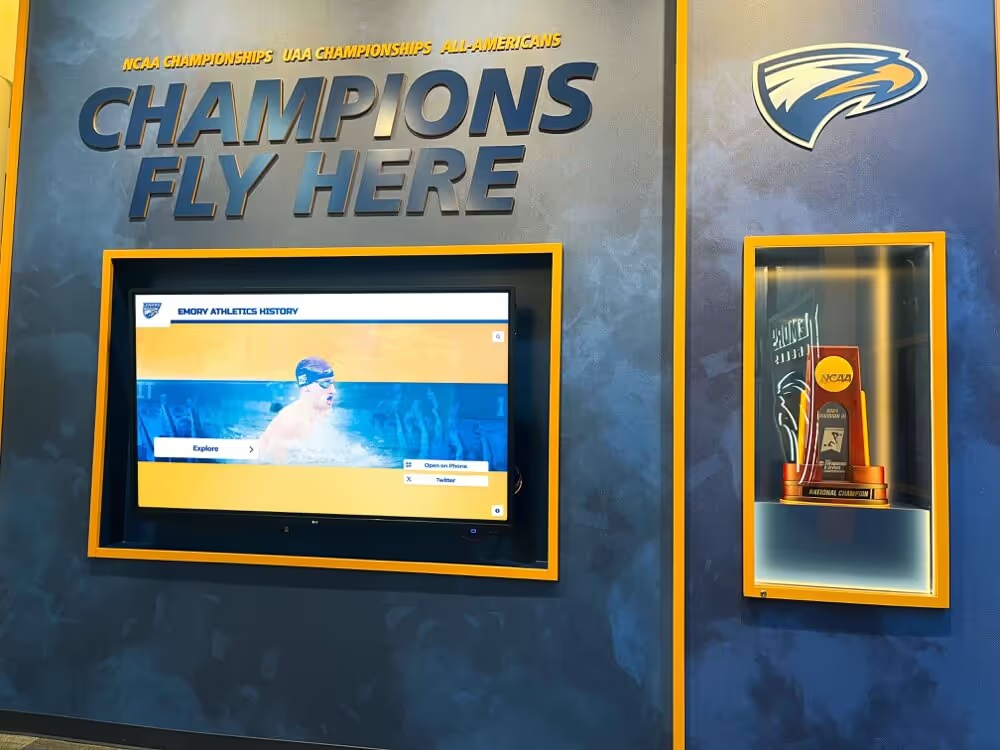
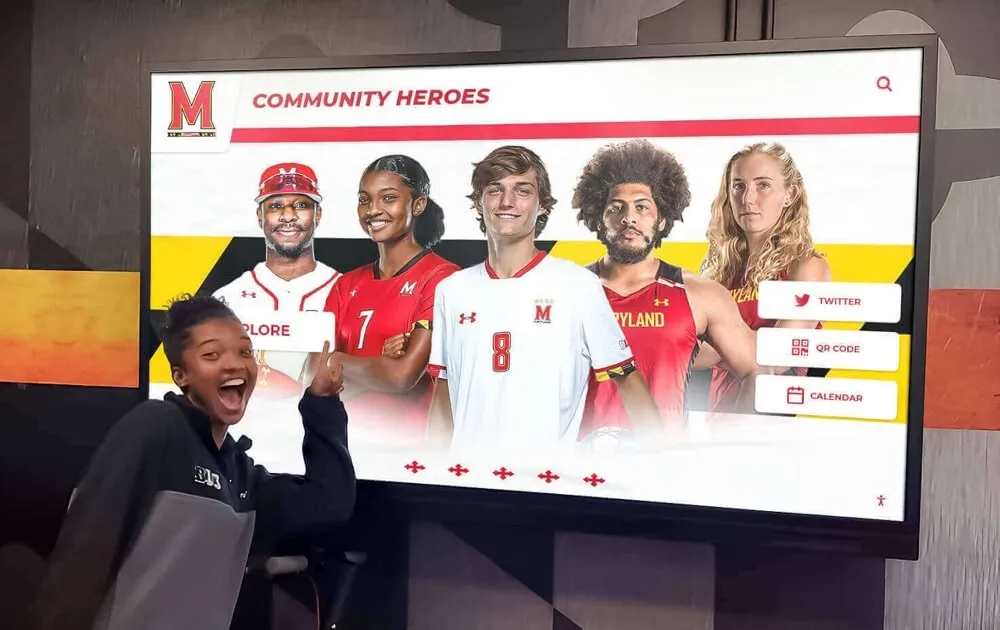
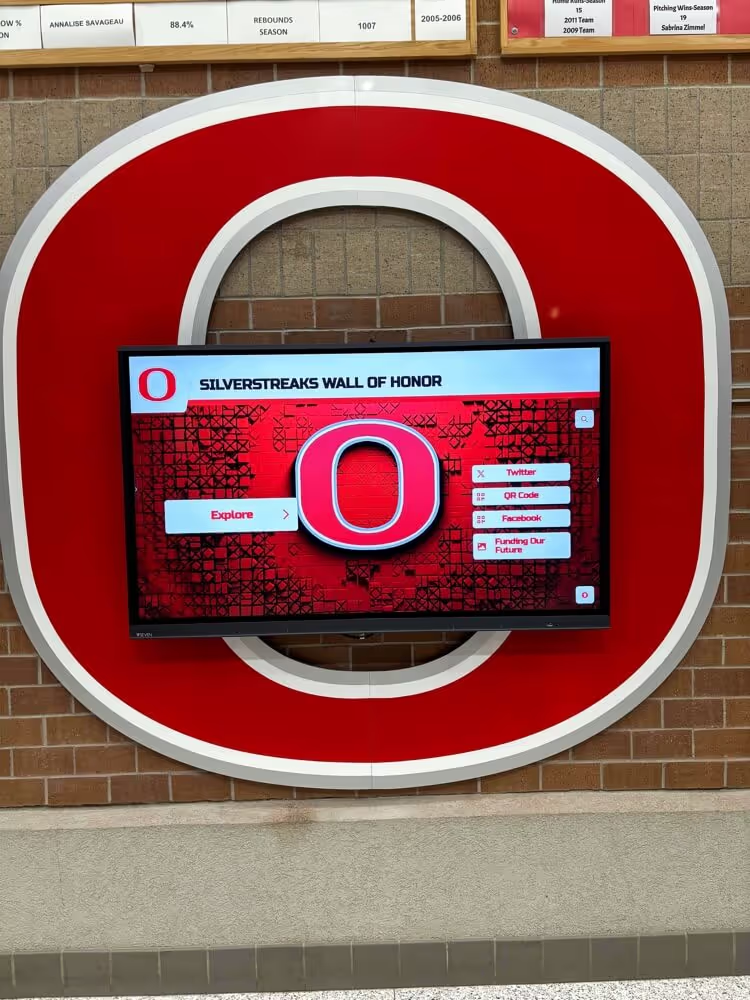
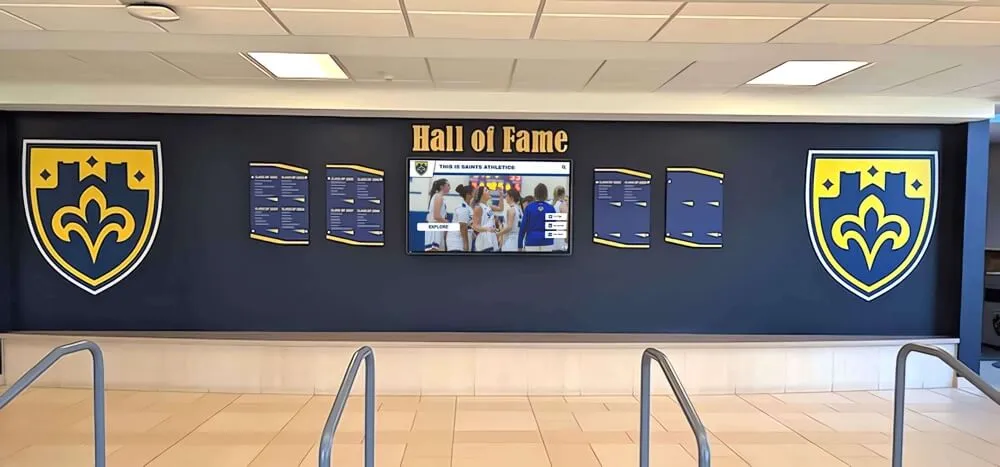
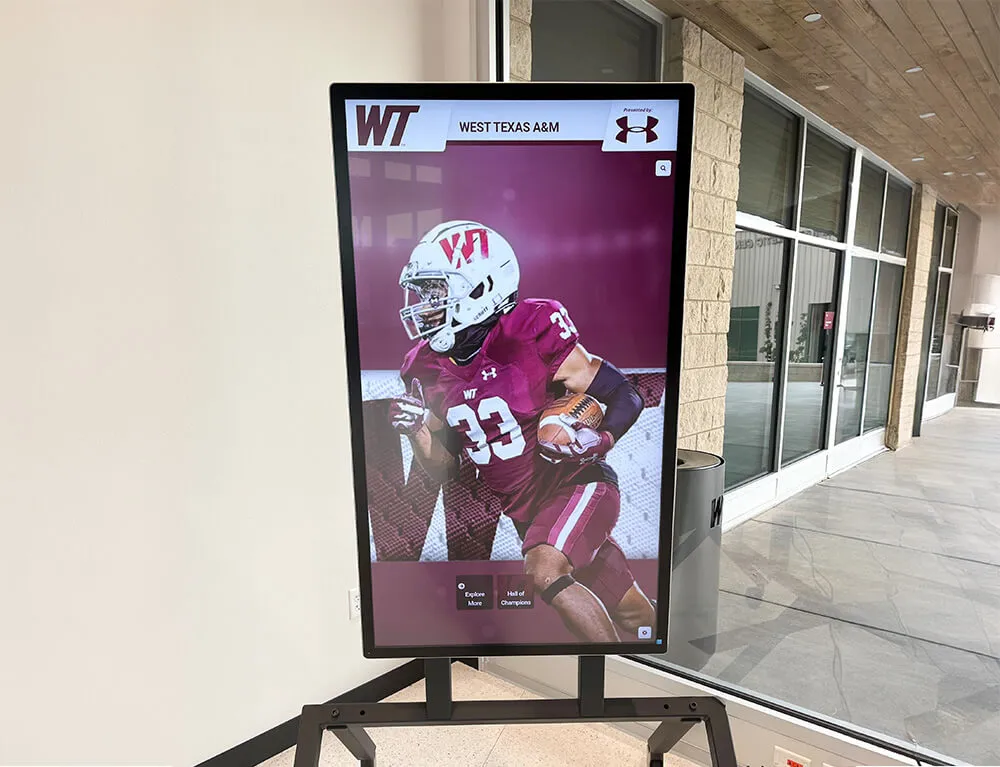
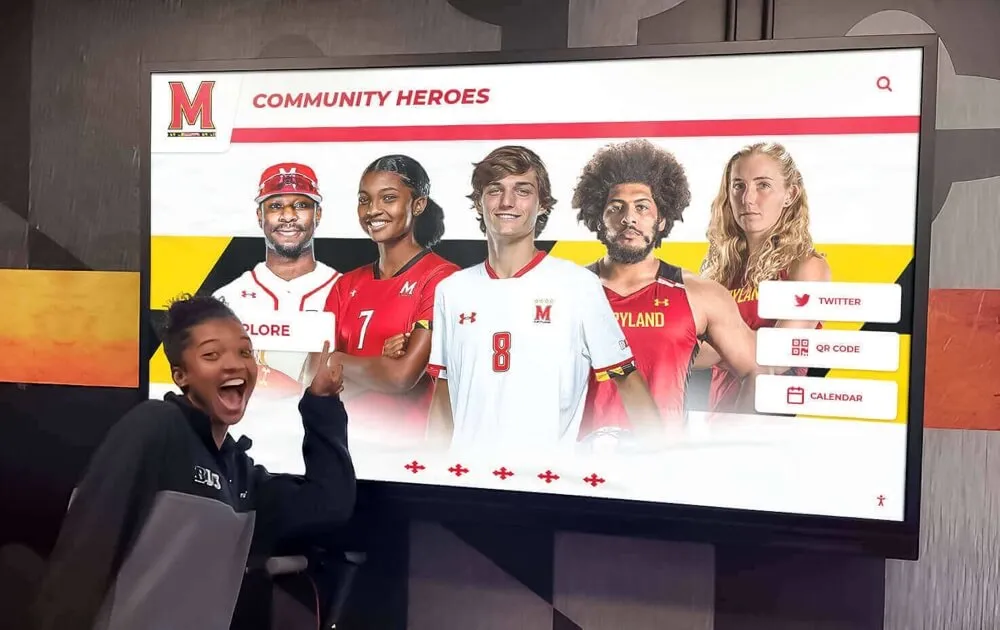
Schools that celebrate volunteers visibly—through hallway displays, digital walls, and personalized letters—build communities where people return season after season
Why Volunteer Appreciation Letters Matter
Before diving into templates, it’s worth understanding what a volunteer thank you letter actually accomplishes—and why the difference between a good letter and a great one can determine whether that person volunteers again next year.
The Psychology of Recognition
Research on volunteer motivation consistently identifies recognition as one of the primary drivers of continued engagement. Unlike paid employees, volunteers choose to contribute. When that choice goes unacknowledged—or is acknowledged only with a generic “thanks for your help”—volunteers naturally question whether their contribution made a difference.
A specific, sincere letter answers that question definitively. It tells the volunteer:
- Their time had measurable impact: Students benefited, an event succeeded, a program continued
- Someone noticed the specifics: Not just that they showed up, but what they actually did
- The institution values community partnership: The school sees volunteers as partners, not free labor
- Their contribution is remembered: Recognition creates a record that outlasts the event
Schools building strong volunteer recognition programs—whether through formal recognition programs that celebrate community contributors or consistent personal outreach—report higher year-over-year volunteer retention and stronger family engagement scores.
What Separates Good Letters from Forgettable Ones
Most thank you letters fail for the same reason: they’re written about the writer’s gratitude rather than the volunteer’s contribution. Compare these two openings:
Forgettable: “Thank you so much for all your help this year. We really appreciate everything you do for our school.”
Memorable: “Thank you for spending every Tuesday morning in Room 14 with Mrs. Reyes’s reading group. The three students who finished their first chapter books last month did so in large part because of the one-on-one attention you provided.”
The second letter takes approximately thirty seconds longer to write and leaves a completely different impression.
When to Send Volunteer Thank You Letters
Timing matters for volunteer appreciation. The most effective recognition follows a pattern:
- Immediately after events: Within 48–72 hours while the experience is fresh
- At program milestones: Midpoint of a semester-long commitment
- At year’s end: Comprehensive recognition covering the full year of contribution
- Upon completion of a major project: When a volunteer finishes a significant initiative
Schools with the strongest volunteer cultures treat thank-you letters as part of standard operating procedure—not as something to draft “when there’s time.” Principals and program coordinators who understand effective school leadership practices build volunteer recognition into the calendar alongside report cards and staff evaluations.
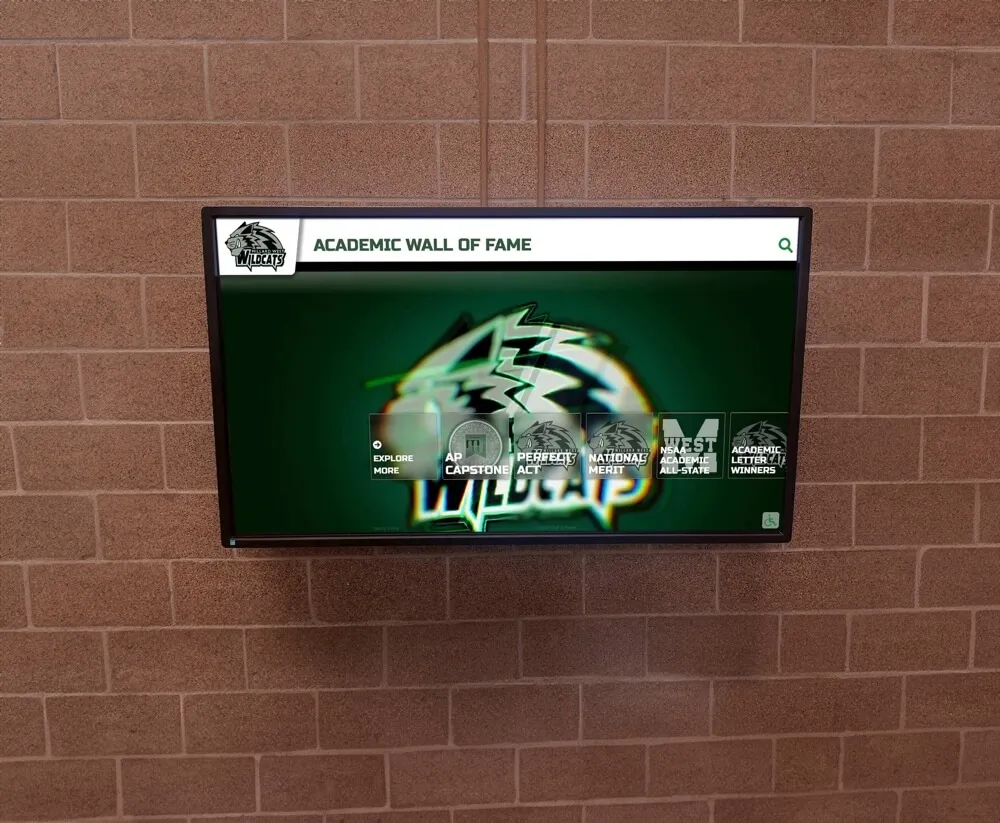
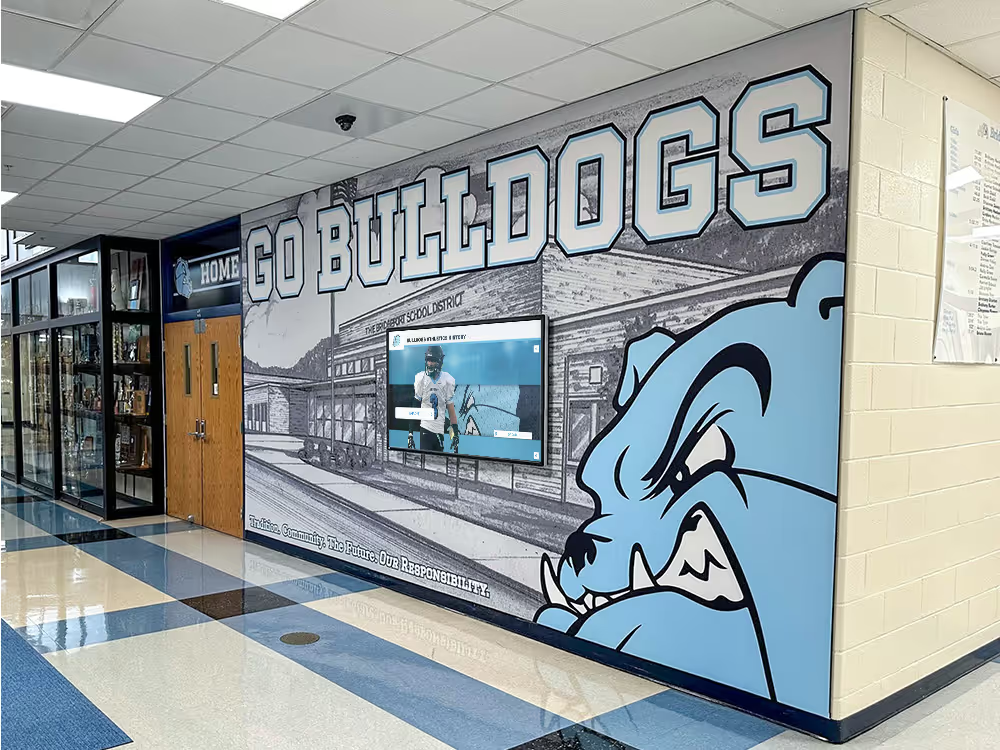
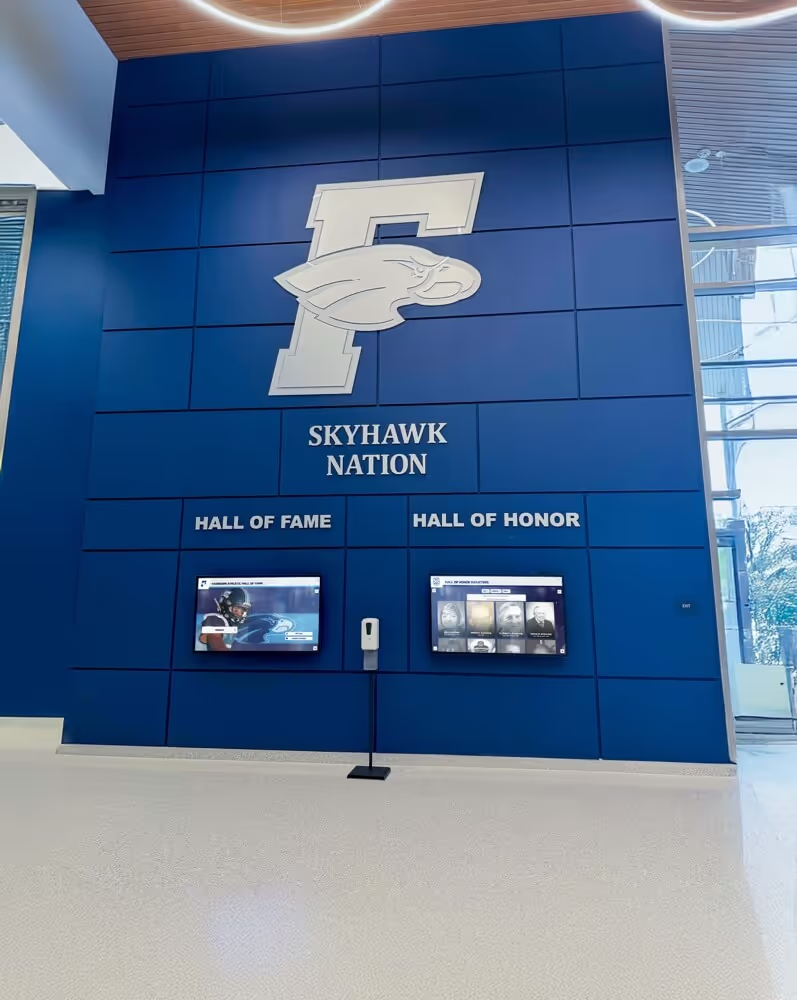
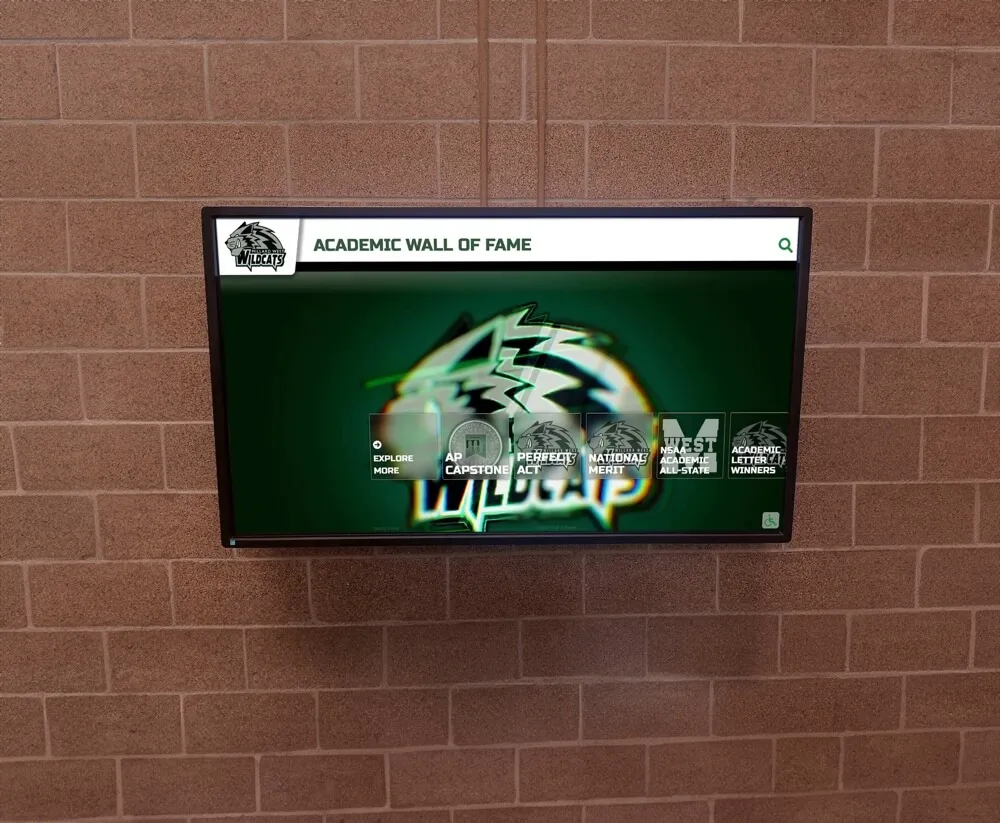
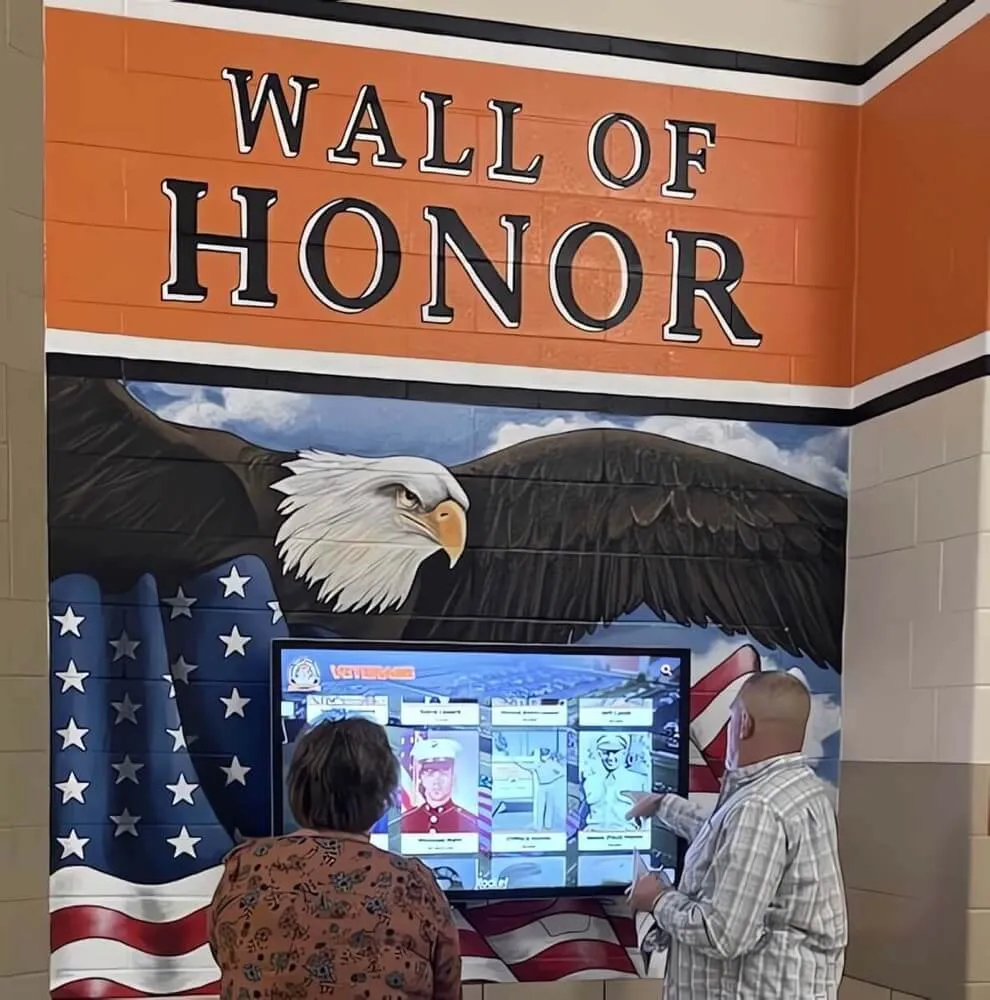
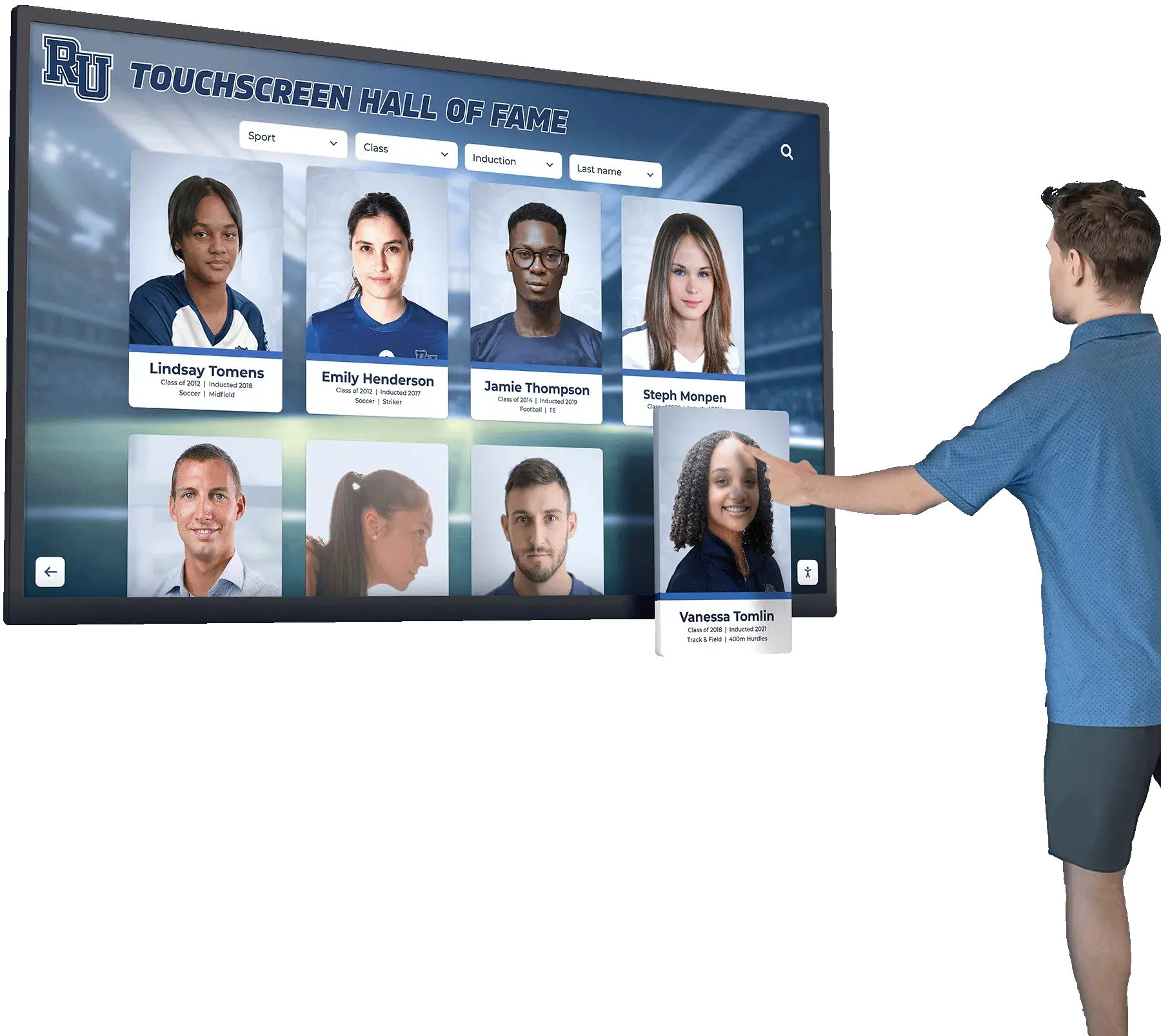
Digital recognition walls complement personal letters by giving volunteers a visible, lasting presence in the school community
The Anatomy of an Effective Volunteer Thank You Letter
Every template in this guide follows a proven structure. Understanding the components helps you personalize them effectively.
Core Elements
1. Specific Identification of the Contribution Name what the volunteer actually did—the event, the program, the role. Avoid generic language like “your help.”
2. Concrete Impact Statement Connect the volunteer’s work to a tangible outcome: students served, funds raised, event capacity, hours covered. Numbers are powerful when you have them.
3. Personal Acknowledgment Reference something specific to this volunteer—a skill they brought, a particular moment, their consistency over time. This element transforms a form letter into a personal communication.
4. Forward-Looking Appreciation Express genuine hope for continued involvement without pressure. This plants the seed for future engagement.
5. Personal Signature A letter signed by a specific individual—principal, athletic director, department head, coach—carries more weight than one signed “The Staff of [School Name].”
Volunteer Thank You Letter Templates
The following templates are organized by volunteer type and situation. Each includes placeholder brackets [like this] for easy customization.
Template 1: General Volunteer Thank You Letter (Formal)
Use for: Parent volunteers, community members, or any volunteer role when you want a professional, versatile format
[School Letterhead or Logo]
[Date]
Dear [Volunteer’s Full Name],
On behalf of [School Name] and our entire school community, I want to express my sincere gratitude for your volunteer service [this school year / during our recent event / throughout the past semester].
Your contribution—[describe specific activity: tutoring students on Wednesday afternoons / coordinating the spring carnival / staffing the welcome table at orientation]—made a real difference to [students, families, our athletic program, etc.]. [Optional specific detail: The 47 families who attended our literacy night were greeted by your warm welcome and left knowing our school values their presence.]
Volunteers like you are the reason [School Name] is able to [offer expanded programming / maintain strong family-school partnerships / deliver memorable events] for our students. The time and energy you invest here is noticed, valued, and genuinely appreciated.
We hope to see you [at our upcoming events / back again next year / continuing your work with us in the fall]. Please don’t hesitate to reach out to me directly at [email or phone] if you ever have questions or ideas about how you’d like to continue contributing.
With appreciation,
[Signature]
[Principal’s/Director’s Name] [Title] [School Name] [Contact Information]
Template 2: PTA and Parent Organization Volunteer Thank You
Use for: Parents who serve on PTA committees, organize fundraisers, or coordinate school events
[PTA/Organization Logo]
[Date]
Dear [Name],
The [School Name PTA / Parent Organization] could not accomplish what it does without parents like you at its core. Your [hours / dedication / leadership / creativity] during [specific project: our annual auction, the teacher appreciation week, the holiday store] helped us [outcome: raise $8,200 for classroom supplies / give 62 teachers a week they’ll remember / serve 400 students and families].
Organizing a volunteer effort while managing your own family, work, and personal commitments takes real sacrifice. We see that, and we’re grateful for it.
This year, with your help, our organization was able to [list one or two tangible accomplishments]. These outcomes reflect directly on the generosity you brought to this community.
Thank you for being part of what makes [School Name] extraordinary. We hope you’ll continue being a voice and a presence in our parent community—you make a difference every time you show up.
Warmly,
[PTA President’s Name] [School Name PTA]
Template 3: Athletic Event and Sports Program Volunteer Thank You
Use for: Volunteers who help with game-day operations, team banquets, athletic fundraisers, or booster club activities
[Date]
Dear [Name],
Thank you for volunteering with [School Name] [sport/program/event: athletics, the boys’ basketball program, our swim invitational] [this season / during last weekend’s tournament / throughout the fall semester].
Whether you were [running the clock at varsity games, managing the concession stand, photographing team events, coordinating transportation], your contribution kept our program running smoothly and gave our student-athletes the support they deserve.
Athletic programs at the high school and middle school level rely on community members who care—and you demonstrated that care in a very tangible way. Our [coaches / athletic director / student-athletes] noticed, and they asked me to make sure you knew it.
[Optional personal detail: Coach [Name] specifically mentioned how your work at the gate allowed the coaching staff to focus entirely on the athletes during the invitational—that’s not a small thing.]
Thank you for investing in our young athletes. We hope to see you back at [next season’s events / our year-end banquet / the fall schedule]. Please keep an eye out for our volunteer sign-ups—we’d be honored to have you again.
With gratitude,
[Athletic Director / Head Coach / Booster Club President] [School Name]
Template 4: Classroom Volunteer Thank You
Use for: Parent readers, tutors, field trip chaperones, or in-classroom helpers
[Date]
Dear [Name],
I wanted to write to thank you personally for your time in my classroom this [year / semester / month]. Your presence made a real difference—not just for the logistics of our program, but for the students who worked directly with you.
[Personalized detail: The Tuesday reading group you led gave me the capacity to pull small groups I otherwise wouldn’t have been able to reach. The three students who moved up a reading level before winter break did so with your encouragement alongside them.]
Elementary and secondary classrooms ask a great deal of volunteers—patience, flexibility, genuine interest in students who aren’t your own. You brought all of that, and I’m grateful. Please know that your contribution shows up in student outcomes in ways that don’t always make it onto report cards.
I look forward to the possibility of having you in our classroom [again next semester / in the fall / as often as your schedule allows].
Thank you,
[Teacher’s Name] [Grade/Subject] [School Name]

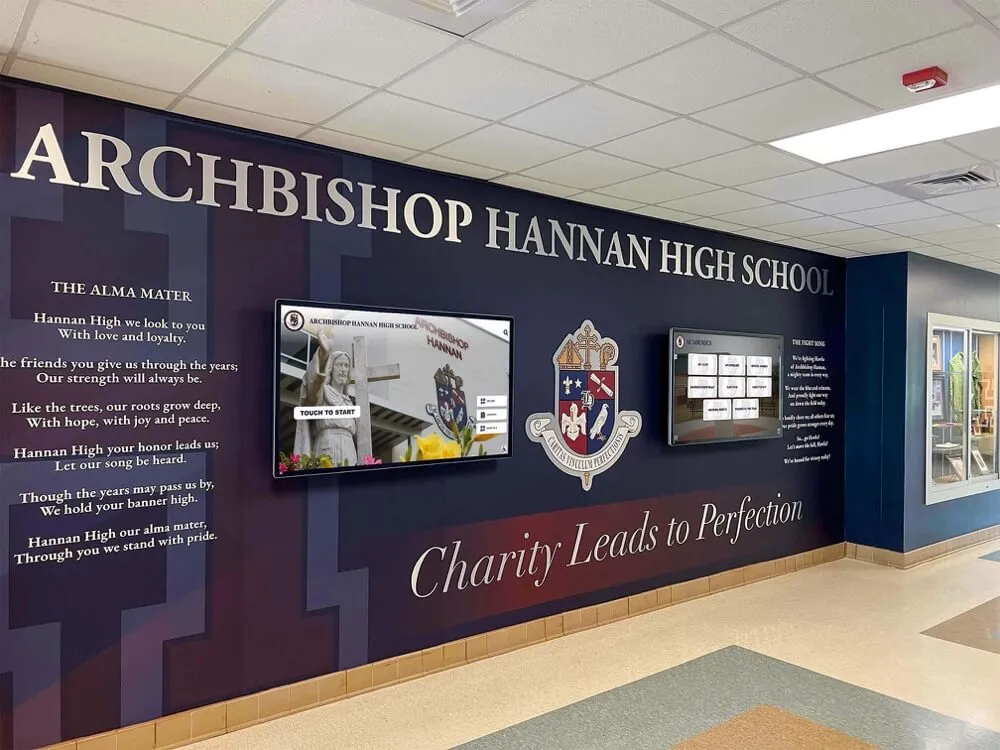
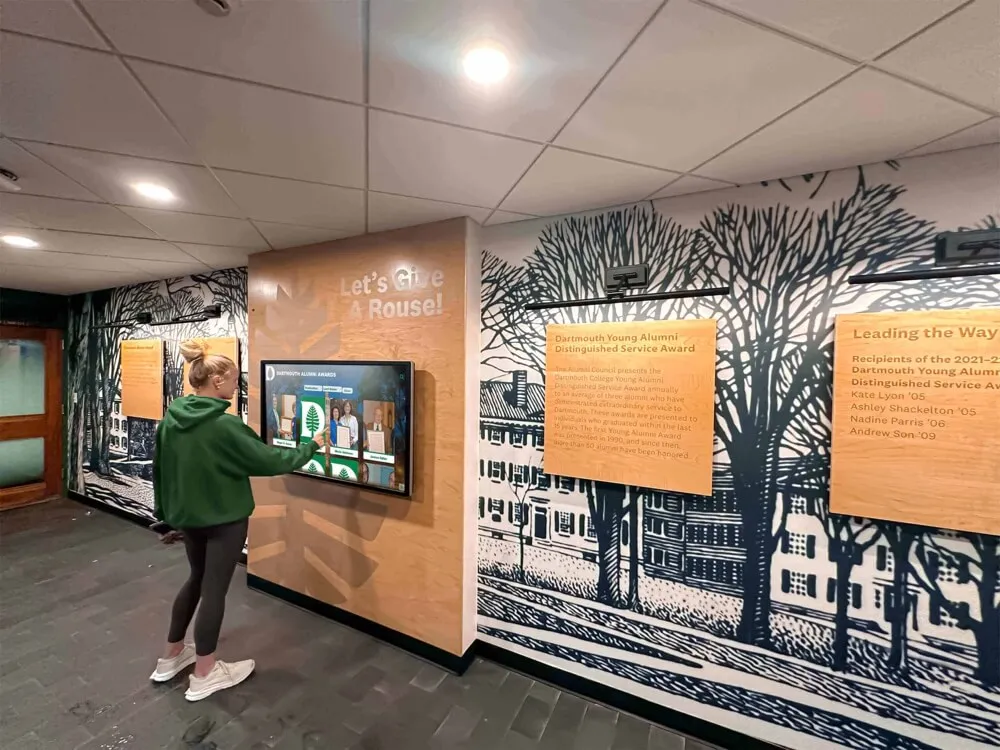
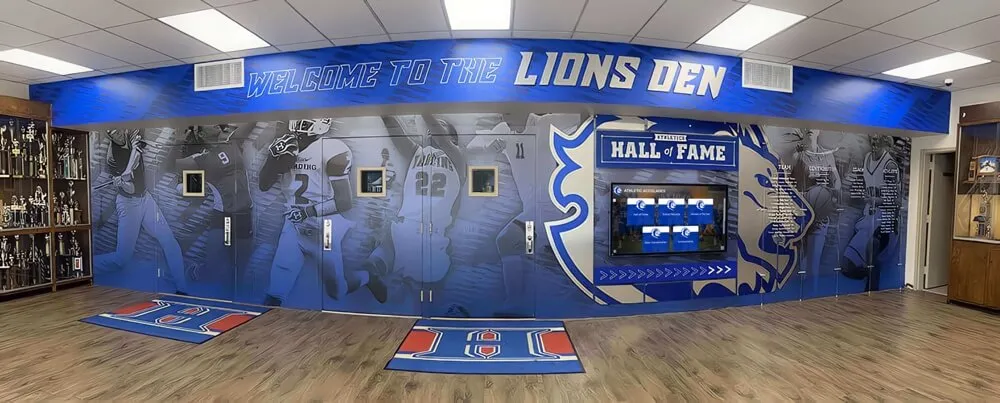
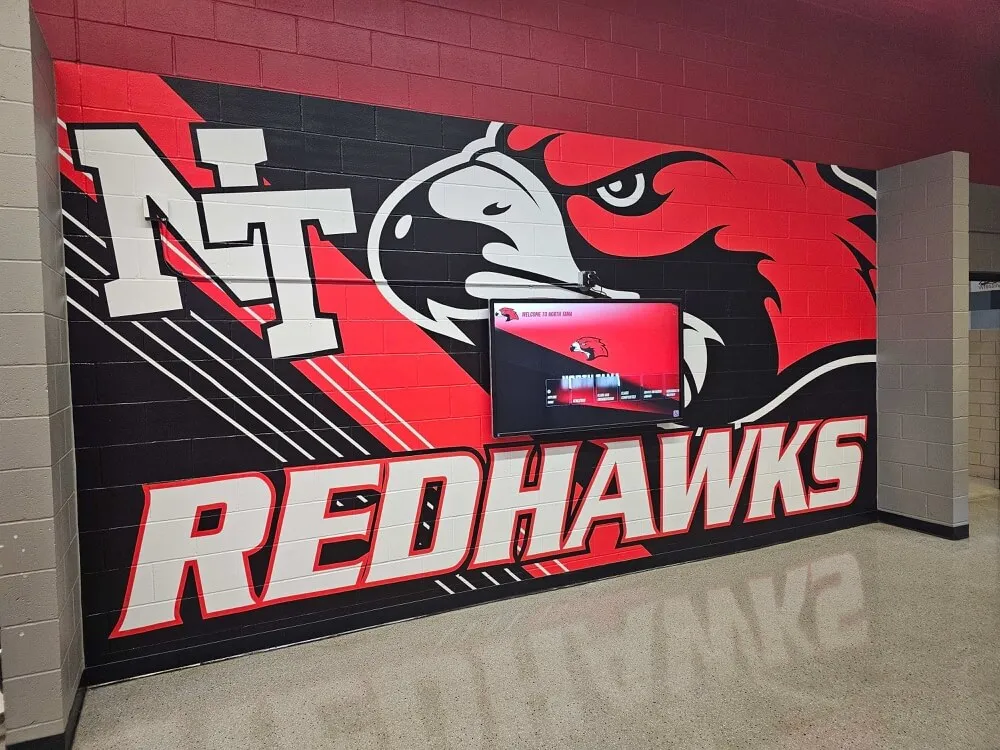
Pairing personal thank you letters with permanent recognition—like a digital volunteer wall—creates layered appreciation that volunteers remember
Template 5: End-of-Year Comprehensive Volunteer Thank You
Use for: Annual recognition letters covering the full school year—ideal for your most committed volunteers
[School Letterhead]
[Date]
Dear [Name],
As [School Name] closes out another school year, I want to make certain you hear directly from me: your volunteer contributions this year were extraordinary, and this school community is better because of them.
Over the course of [the 2025–2026 school year], you [summary of contributions: joined us for the fall carnival, served on the curriculum night planning committee, chaperoned two overnight trips, and consistently showed up for morning drop-off support]. By our count, you contributed more than [X] hours to [School Name]—time that went directly toward [student experiences / program development / family engagement].
Volunteer work is easy to take for granted because it operates quietly, often behind the scenes, without the visibility that staff roles receive. That’s precisely why I want to say clearly: what you did this year was seen, it mattered, and it had a direct impact on the students and families of [School Name].
Thank you for your consistency, your patience, and your genuine investment in this community. We hope you’ll continue to be part of [School Name] next year—and we look forward to honoring your contributions at our [Volunteer Appreciation Event / Fall Kickoff / upcoming recognition ceremony].
With deep appreciation,
[Principal’s Name] [School Name]
Template 6: Long-Term Volunteer Recognition Letter
Use for: Multi-year volunteers celebrating a milestone anniversary or transitioning out of their role
[Date]
Dear [Name],
There are moments in a school’s life that only happen because certain people decide, year after year, to show up. You are one of those people.
For [X years], you have been a constant presence at [School Name]—[description of their long-term role: coaching junior varsity volleyball, organizing the library book drives, staffing the homework help center every Thursday]. In that time, you have worked alongside [multiple teachers / three different principals / hundreds of graduating classes], and you have given this institution something it cannot purchase: continuity of care.
Students who attended [School Name] during your tenure have benefited from your contribution in ways they may not fully appreciate until years from now. Faculty and staff who worked alongside you know the standard you set. And the families whose children you served carry a memory of a school that had community at its heart—in part because of you.
[Optional milestone language: As you [conclude this chapter / celebrate your 10th year with us], we want to be intentional about marking this moment. Contributions like yours deserve recognition that lasts.]
Thank you for everything you’ve given to [School Name]. You have our lasting gratitude.
With admiration and appreciation,
[Principal / Superintendent / Board Chair] [School Name]
How to Personalize These Templates Effectively
Templates save time, but personalization saves relationships. Here are the highest-impact customization moves for any volunteer thank you letter.
Replace All Bracket Placeholders—Every One
The quickest way to turn a meaningful letter into a form letter is to leave a generic phrase where a specific one should go. Before sending, do a final pass to ensure no brackets remain and no placeholder language survived the edit.
Add One Concrete Number
If you tracked volunteer hours, fundraising totals, students served, or event attendance, include one number. Numbers communicate precision and demonstrate that someone actually measured the impact. “Your contribution helped us serve 340 students” is categorically stronger than “your contribution helped so many students.”
Reference Something Only This Volunteer Would Know
The difference between appreciation and recognition is specificity. A sentence like “Your calm approach during the setup confusion at the gym made a difference that day” tells the volunteer you were paying attention. It transforms a letter into a personal communication.
Match the Tone to the Relationship
The formal template works for community volunteers you know less personally. For parents who’ve been in your building every week, a warmer, more conversational tone may feel more authentic. Adjust the register accordingly.
Use Real Stationery or Thoughtful Formatting
A letter printed on school letterhead or a well-designed email template signals intentionality. The physical or visual presentation communicates care before the recipient reads a word.
Frequently Asked Questions About Volunteer Thank You Letters
What should I say in a volunteer thank you letter?
Start by naming the specific contribution—what the volunteer actually did, not just that they helped. Then connect their work to a concrete outcome or impact. Add one personal detail that shows you noticed them specifically, and close with a genuine hope for continued involvement. Avoid starting with “I” and avoid generic phrases like “thank you for your time” without any specifics attached.
How long should a volunteer thank you letter be?
One to three paragraphs is ideal for most situations. The goal is genuine appreciation, not length. A focused, specific two-paragraph letter outperforms a sprawling five-paragraph one every time. Save the longer format (Template 5 or 6 above) for end-of-year recognition or milestone acknowledgments where the scope of contribution genuinely warrants it.
Should thank you letters be handwritten or typed?
Both work—context determines which is better. Handwritten notes carry warmth and feel more personal, making them ideal for one-on-one volunteers like classroom readers or individual mentors. Typed letters on school letterhead communicate institutional weight, which is appropriate for formal recognition or when the letter will go on record. Digital formats work well for event volunteers when speed matters. Many schools use a combination: typed letter on letterhead with a handwritten note at the bottom.
How do you write a thank you letter to a school volunteer you don’t know well?
Focus on observable impact rather than personal relationship. Even if you didn’t interact directly with the volunteer, you can describe what their role made possible: “Because you staffed the registration table, our team was free to focus entirely on the families arriving.” Ask teachers, coaches, or program coordinators for specific details if you weren’t present. A letter demonstrating informed awareness of their contribution is far more meaningful than one that reflects you don’t know the specifics.
What is a good thank you message for volunteers?
The best thank you messages are specific, genuine, and forward-facing. They name what the volunteer did, acknowledge the impact, and express authentic hope for continued involvement. Avoid phrases like “we couldn’t have done it without you” unless you can back it up with specifics—overused superlatives lose meaning quickly. A grounded, honest acknowledgment of a real contribution will always land better than inflated praise.
Can one thank you letter work for multiple volunteers?
A single template can, but the letter sent to each person needs personalized edits. Group letters—“Dear Volunteers”—are acceptable for very large events when individual letters aren’t feasible, but they should be accompanied by individual notes wherever possible. For your most committed volunteers, group letters should never replace a personal one.
Beyond the Letter: Building a Culture of Lasting Volunteer Recognition
Written appreciation is powerful. But schools that build the strongest volunteer cultures pair personal letters with systems that create ongoing visibility—making sure contribution doesn’t just get acknowledged once and forgotten.
Volunteer Recognition Programs That Complement Letters
The most effective schools layer their appreciation across multiple formats:
Ceremony and event recognition: Annual volunteer appreciation breakfasts or year-end ceremonies give public acknowledgment that letters provide privately. Recognizing volunteers in front of their peers—and in front of the students they served—adds a dimension that written communication can’t replicate.
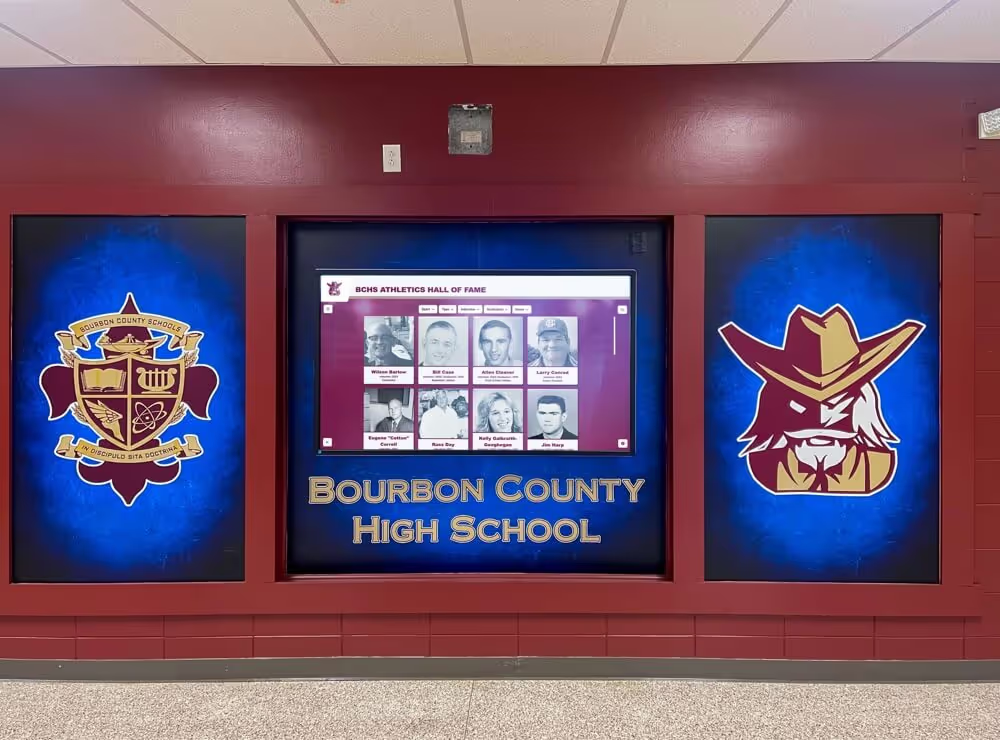
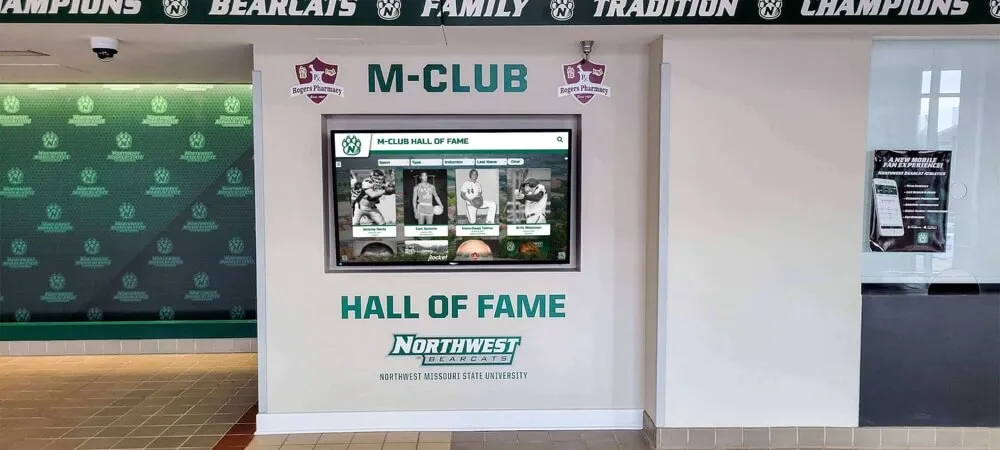
Hall of fame and recognition walls: Schools are increasingly modernizing their recognition wall systems to feature community contributors alongside athletes and alumni. A digital recognition wall that displays volunteer photos, names, and contributions gives lasting visibility to people who often work behind the scenes.
Social media and newsletter features: Monthly volunteer spotlights in school newsletters or on social media extend appreciation to the broader community and give volunteers the recognition that comes with public acknowledgment.
Student-written appreciation: Letters from the students themselves—especially from students directly served by the volunteer—carry emotional weight that administrator letters simply can’t match. Organizing student thank you writing as a classroom activity produces genuine, heartfelt messages while giving students practice in expressing gratitude.
Connecting Volunteer Recognition to Broader School Culture
Volunteer appreciation doesn’t exist in isolation—it’s part of how schools build cultures where community participation is valued and visible. Schools that take student and community recognition programs seriously tend to have stronger volunteer pipelines, higher family engagement, and more resilient community relationships.
The same principles that drive effective employee recognition programs apply to volunteer appreciation: specificity beats generality, timely recognition beats delayed recognition, and public acknowledgment amplifies private appreciation.
Schools planning athletic banquets and year-end celebrations often overlook the opportunity to formally recognize booster club volunteers, event coordinators, and parent helpers alongside student athletes. Adding a dedicated volunteer recognition moment to these events costs nothing and builds enormous goodwill.
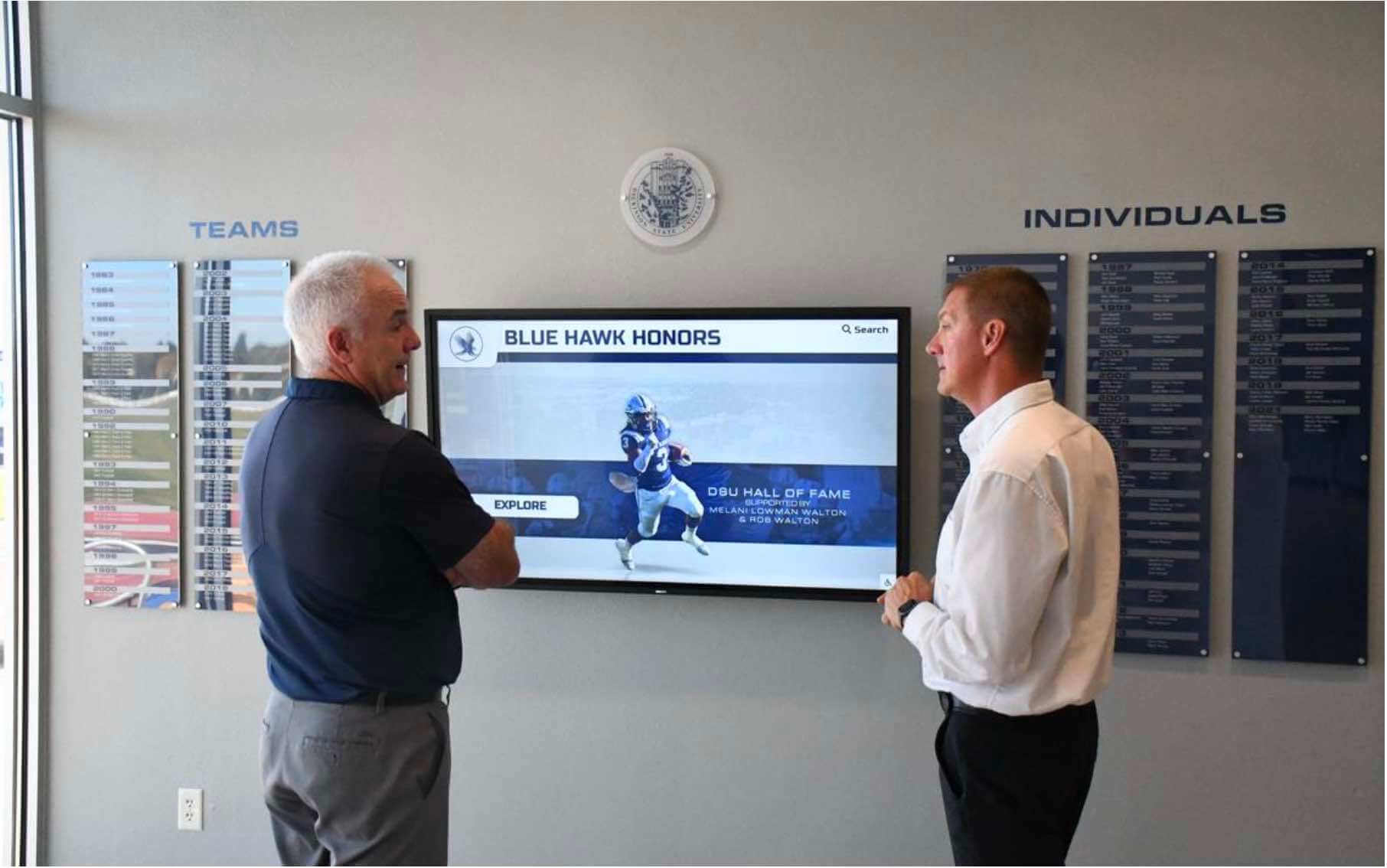
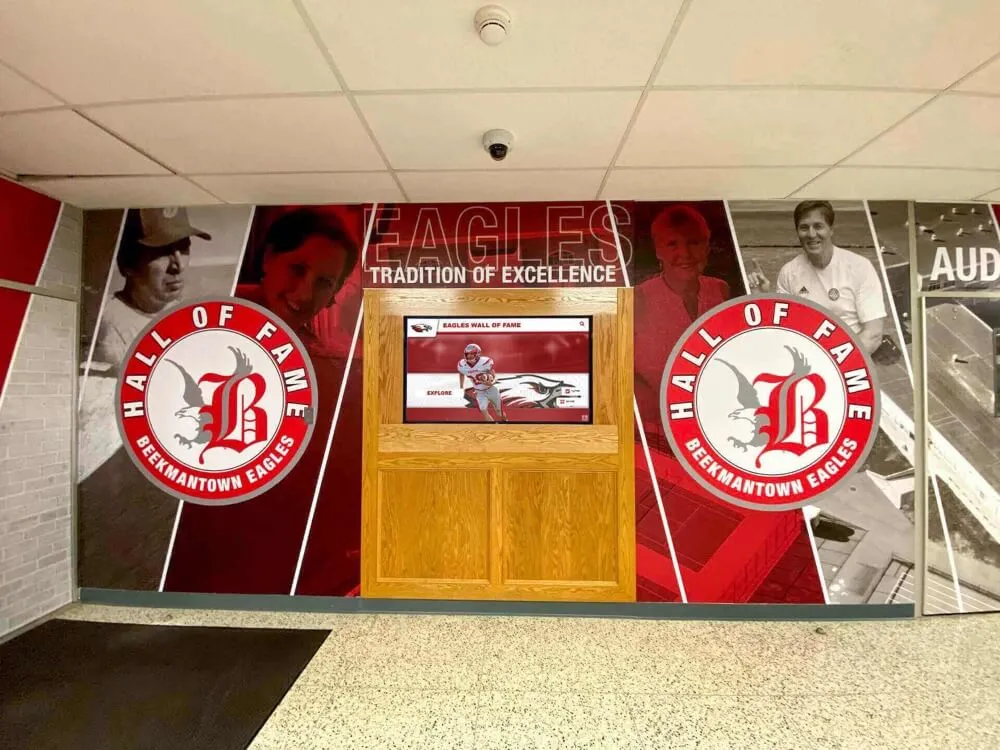
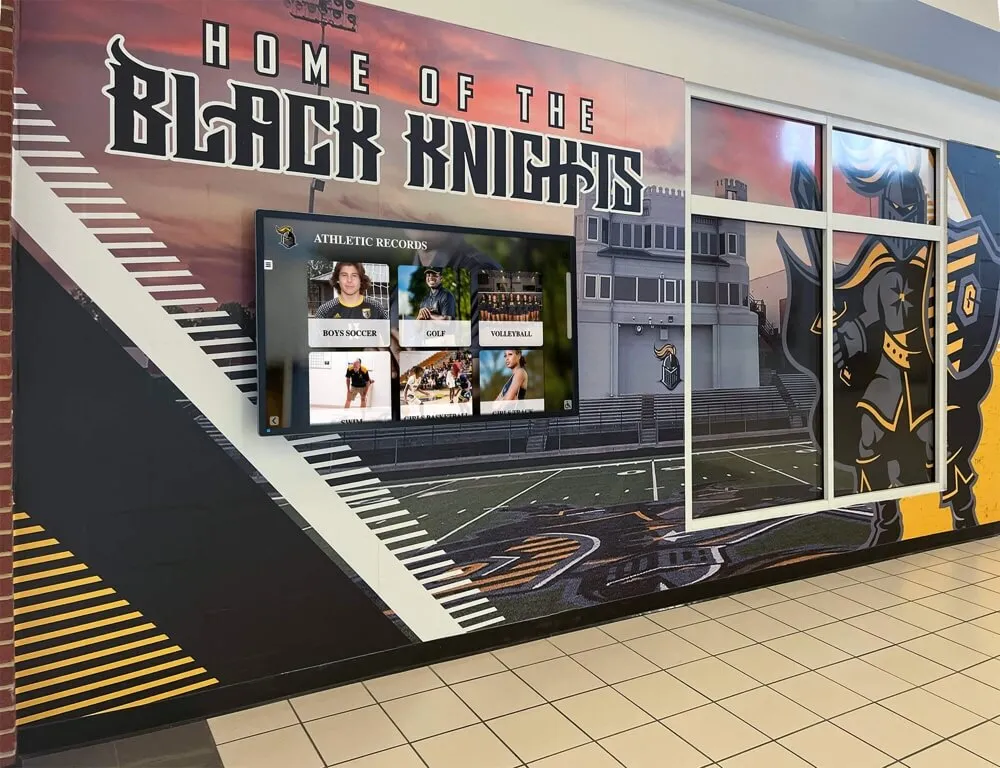
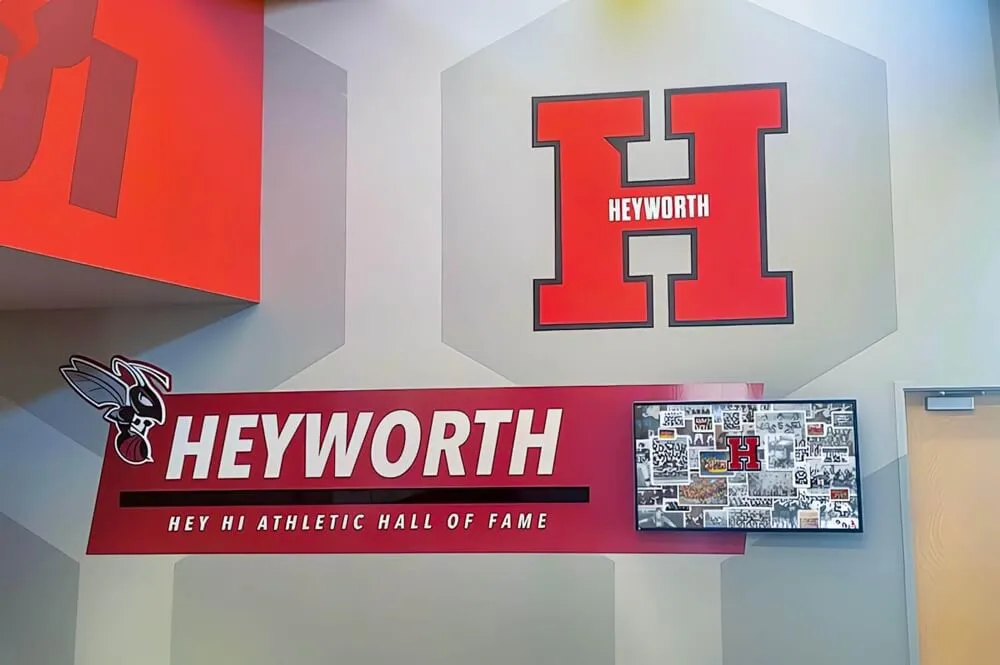
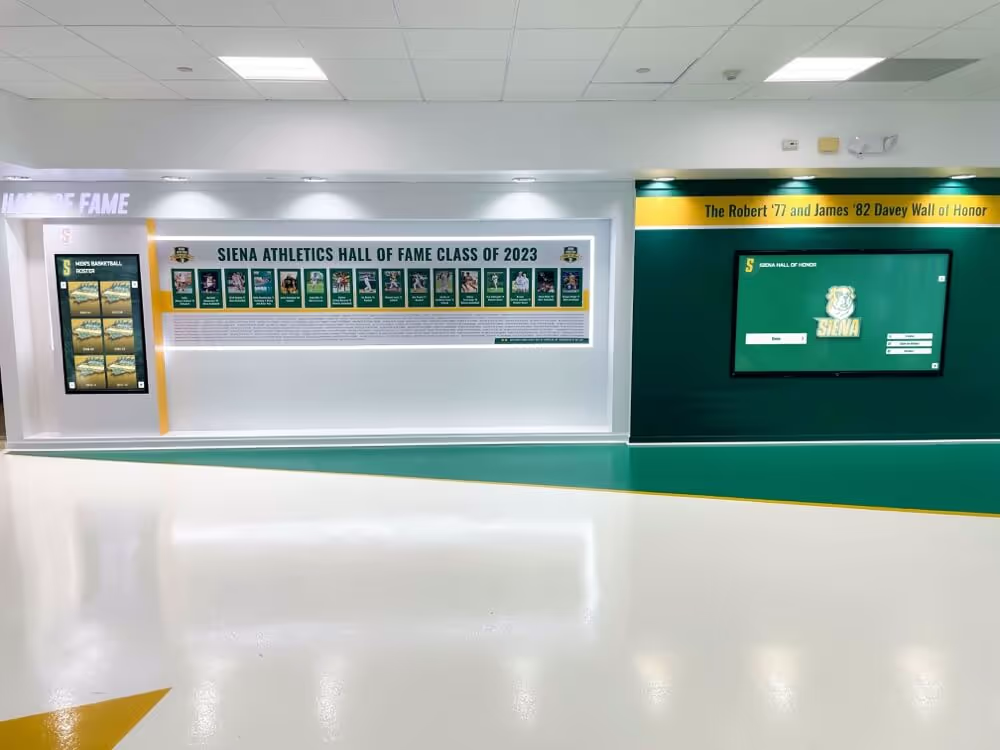
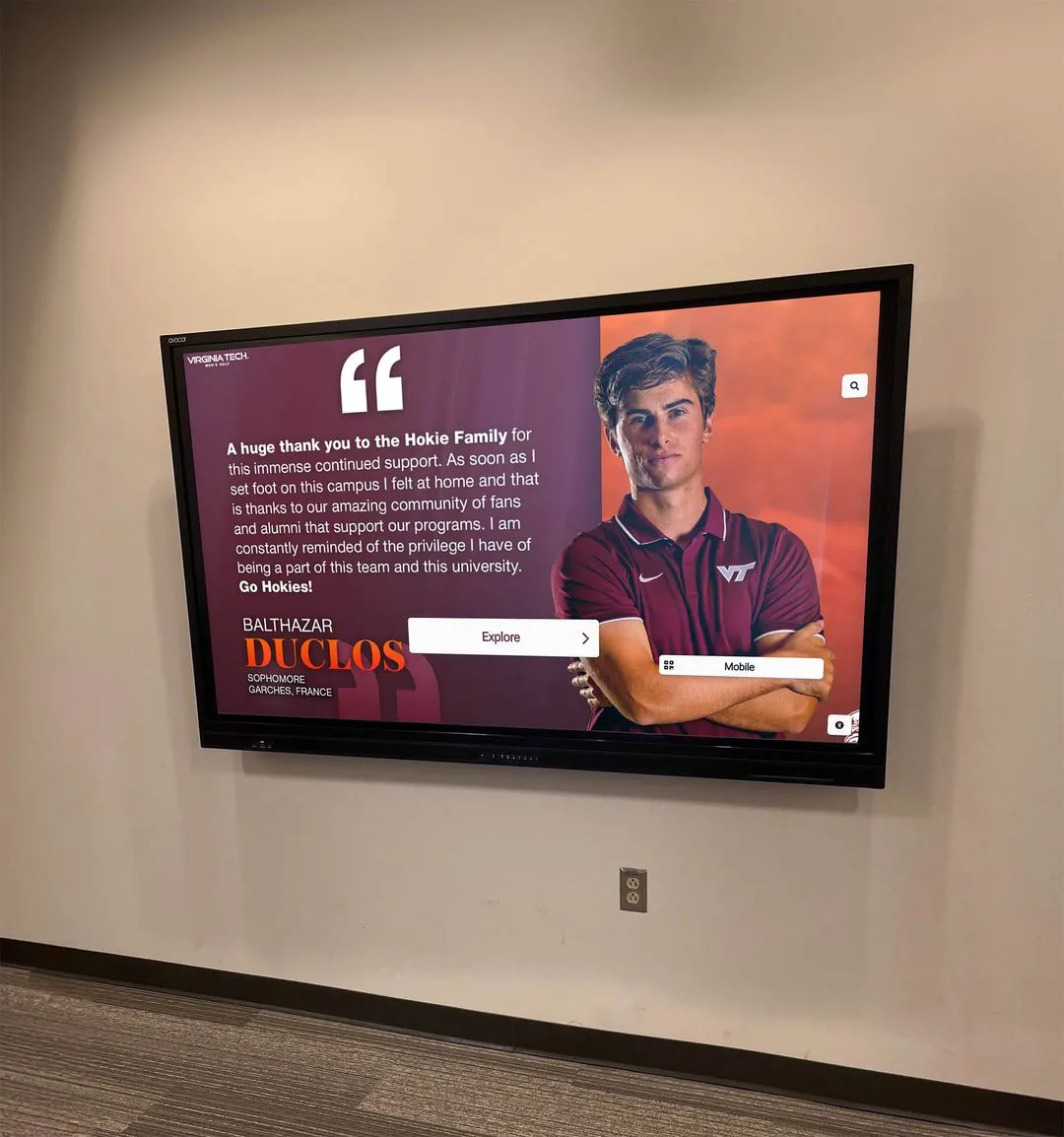
Interactive digital displays provide a permanent home for community and volunteer recognition that letters alone cannot create
Digital Recognition Walls for Volunteer Visibility
One of the most effective long-term investments schools make in volunteer appreciation is a dedicated digital recognition display—a wall or kiosk that maintains an ongoing, visual record of community contributors.
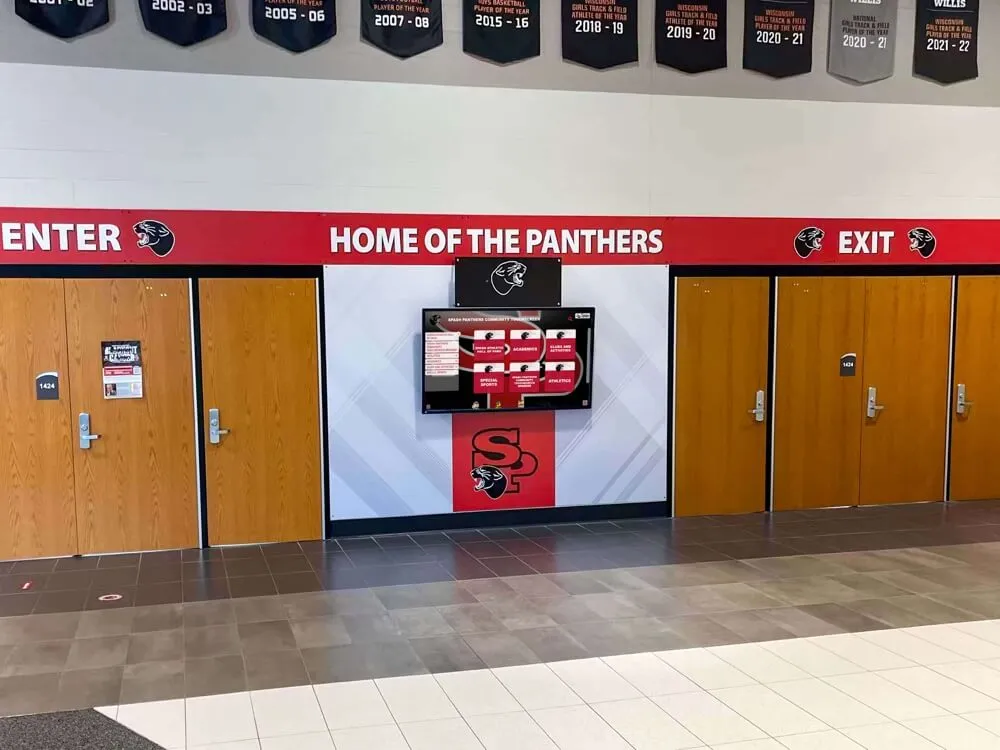
Unlike a bulletin board that gets outdated or a trophy case that fills up, digital hall of fame and recognition wall systems can be updated continuously, feature photos and names alongside contribution details, and remain prominent in high-traffic areas like lobbies, gymnasiums, and cafeterias. Volunteers whose contributions are displayed in the school building they served experience a level of recognition that a letter alone cannot match.
Schools building comprehensive recognition ecosystems often create separate categories for different types of contributors—academic mentors, athletic event volunteers, fundraising champions, library supporters—giving each community group a dedicated recognition channel. These systems also serve alumni engagement goals, since former students who later become volunteers can be celebrated through the same systems that honored them as students.
For schools exploring academic and honor roll digital recognition solutions, integrating volunteer recognition into the same platform creates a unified culture of appreciation across all community contributions.
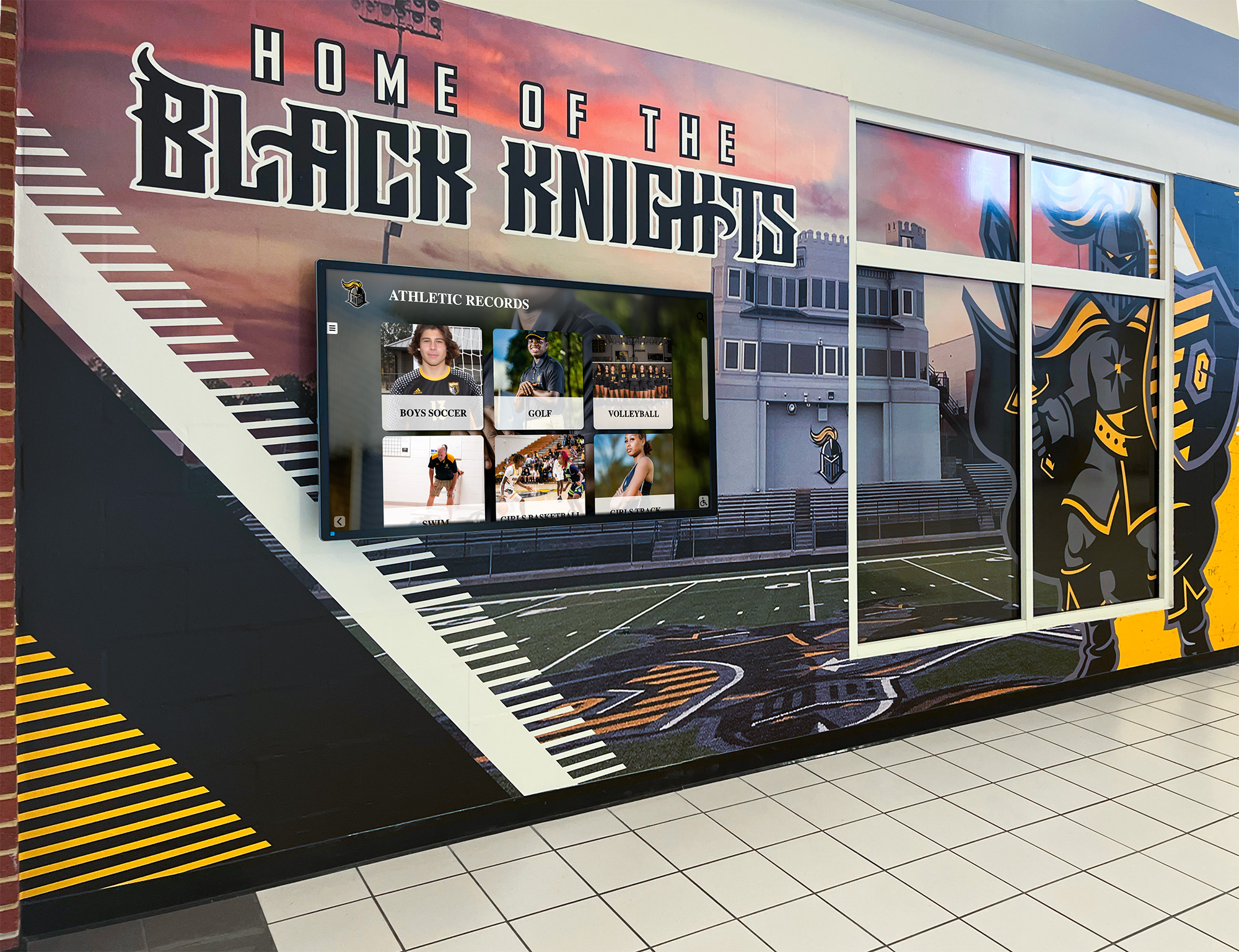
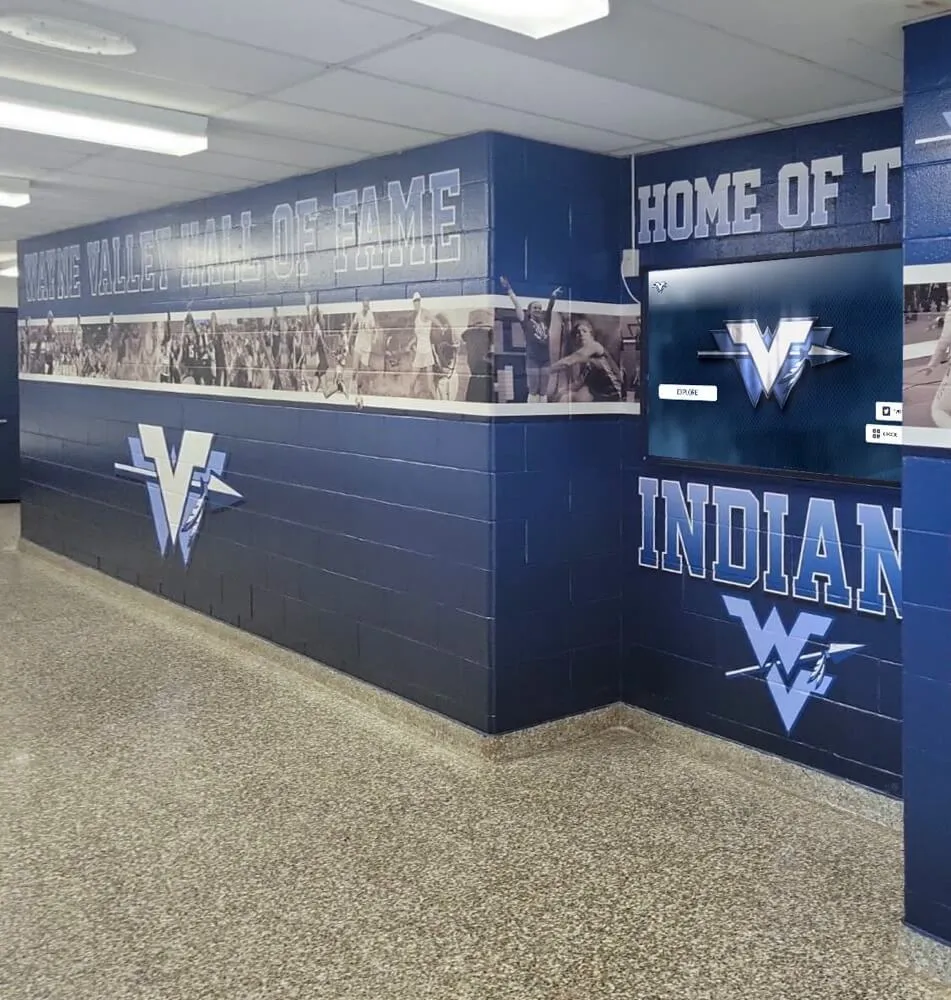
Recognition-forward school environments—featuring community contributors alongside athletes and academic honorees—attract and retain stronger volunteer engagement year over year
Volunteer Appreciation Letter Checklist
Before sending any volunteer thank you letter, use this quick audit:
- Does the letter name the specific contribution (not just “your help”)?
- Does it include at least one concrete detail or outcome?
- Is every bracket placeholder replaced with personalized language?
- Is the tone appropriate for the relationship (formal vs. warm)?
- Does the letter include a genuine, pressure-free forward-looking statement?
- Is it signed by a specific individual rather than “The School”?
- Has it been sent within 72 hours of the event or within a reasonable timeframe for year-end recognition?
A letter that passes all seven checks will make a lasting impression.
Building a Sustainable Volunteer Thank You System
The biggest obstacle to effective volunteer appreciation isn’t motivation—it’s systems. Schools that consistently send meaningful thank you letters build simple processes that make it happen automatically rather than relying on memory or available time.
Designate a recognition coordinator: One person in each program area—athletic director, PTA president, principal’s office—owns volunteer tracking and recognition outreach. Single ownership prevents the “someone else will do it” failure mode.
Maintain a volunteer log: A simple spreadsheet tracking volunteer name, contribution date, role, and hours makes personalized letter writing dramatically easier. You can’t reference specifics you didn’t record.
Set calendar reminders: Block time 48 hours after major events specifically for sending recognition letters. Add an end-of-year reminder in early May for comprehensive annual letters.
Create a template library: The templates in this guide give you a starting point. Adapt them to your school’s voice and save them in a shared folder so anyone in your organization can access and personalize them.
Integrate with your digital recognition system: If your school uses a digital recognition wall or display, connect your volunteer tracking log to the nomination process. Every volunteer who merits a letter should also be considered for public display recognition.
Recognize Volunteers the Way They Deserve
Volunteer appreciation letters are one part of a complete recognition culture. Rocket Alumni Solutions helps schools build digital recognition systems that celebrate volunteers, athletes, academic honorees, and community contributors through interactive displays that make appreciation visible every day—not just on paper.
Explore what a digital recognition wall could look like for your school →