Few high school traditions carry as much weight and pride as earning a varsity letter. For generations of student-athletes, this achievement has represented dedication, skill, athletic excellence, and the honor of representing one’s school at the highest competitive level. But what exactly does a varsity letter mean, and why does this tradition continue to hold such significance in schools across America?
The varsity letter meaning extends far beyond a simple patch sewn onto a jacket. It represents countless hours of practice, personal sacrifice, competitive achievement, team commitment, and the culmination of meeting rigorous standards set by coaches and athletic programs. For many students, earning their first varsity letter ranks among their proudest high school accomplishments—a visible symbol of athletic achievement they’ll remember long after graduation.
This comprehensive guide explores everything students, parents, and school administrators need to know about varsity letters—from their historical origins and what they represent, to the criteria for earning them across different sports, and how modern schools honor letter recipients through recognition systems that preserve these achievements for generations.
Understanding the full meaning behind varsity letters helps schools create recognition programs that properly celebrate these achievements while motivating current students to pursue athletic excellence. Whether you’re a student-athlete working toward your first letter, a parent supporting your athlete’s journey, or a school administrator designing recognition systems, understanding this tradition’s depth ensures these milestones receive the celebration they deserve.

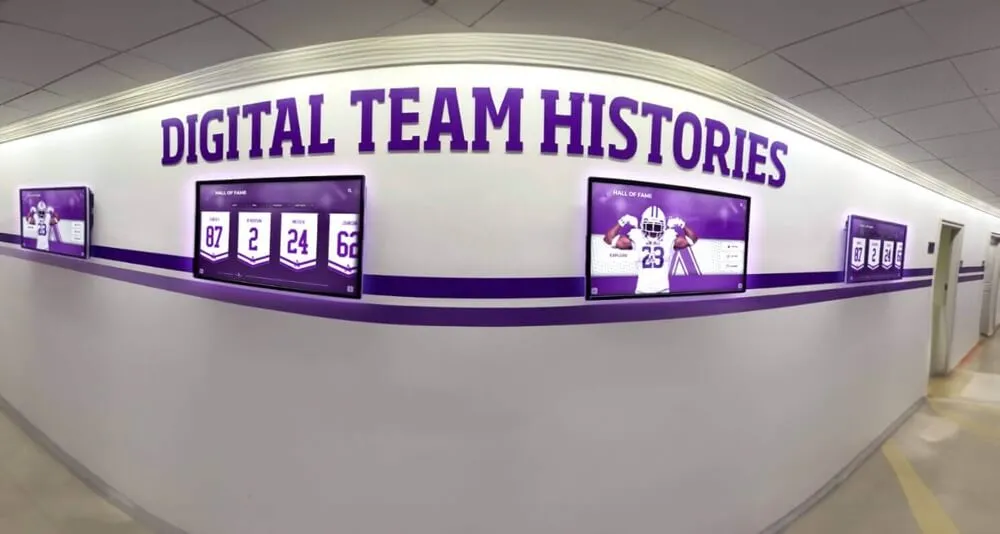
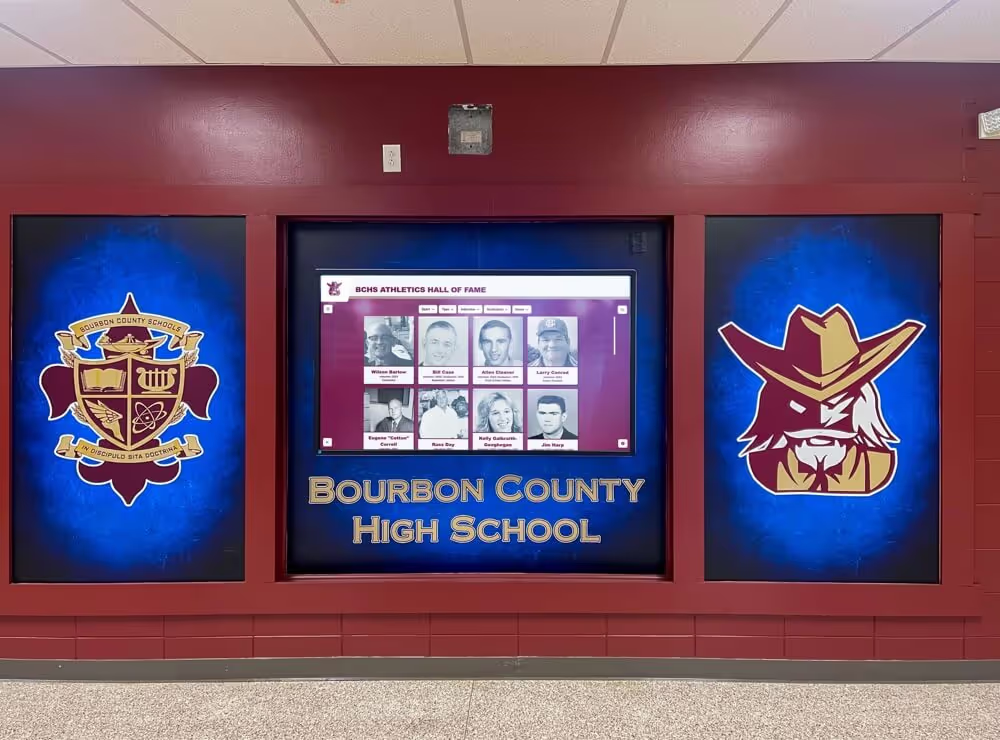
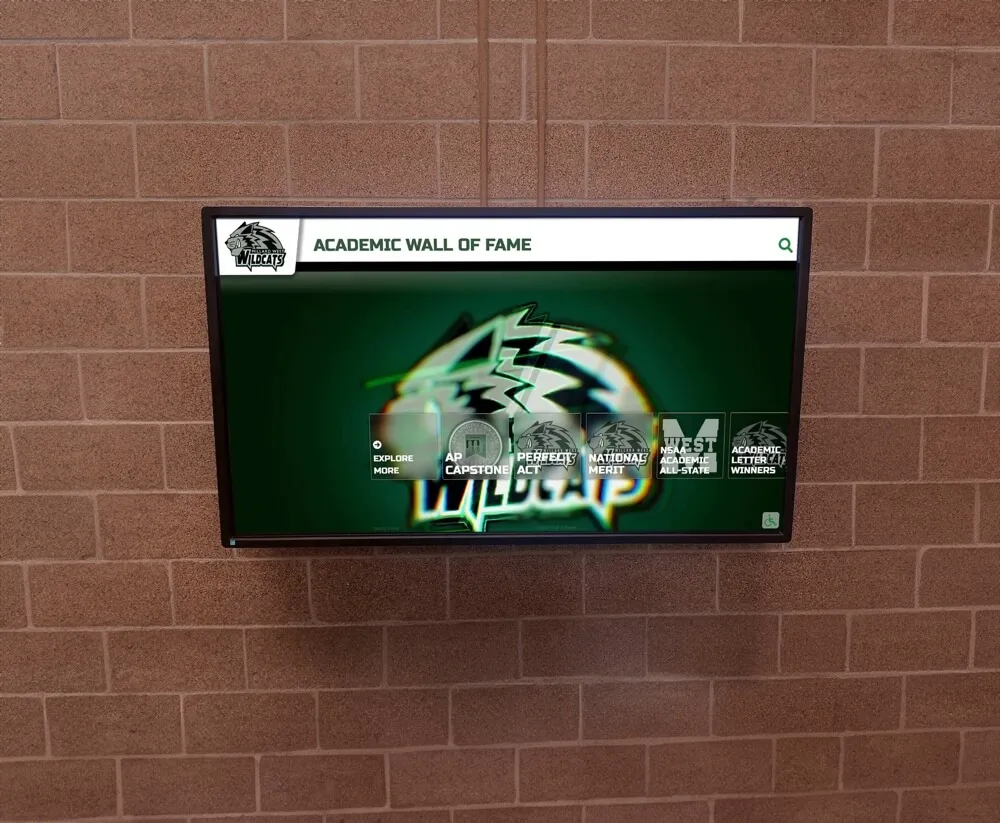
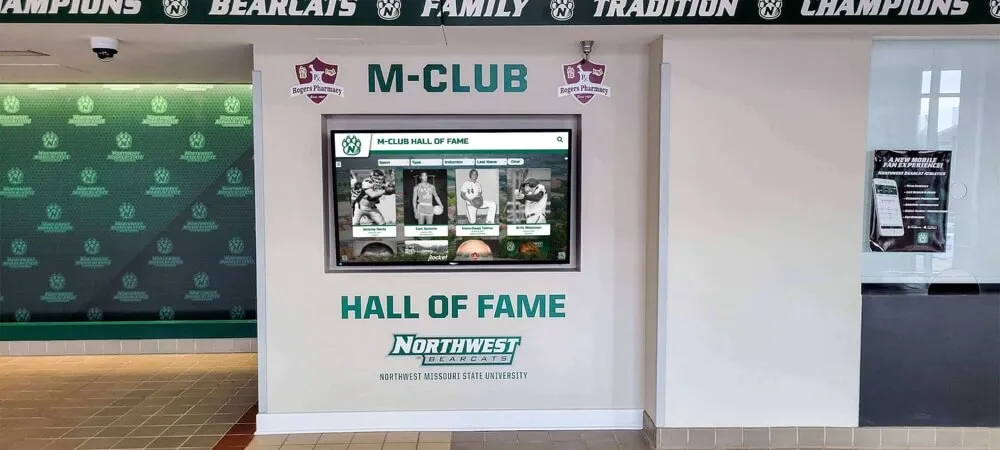
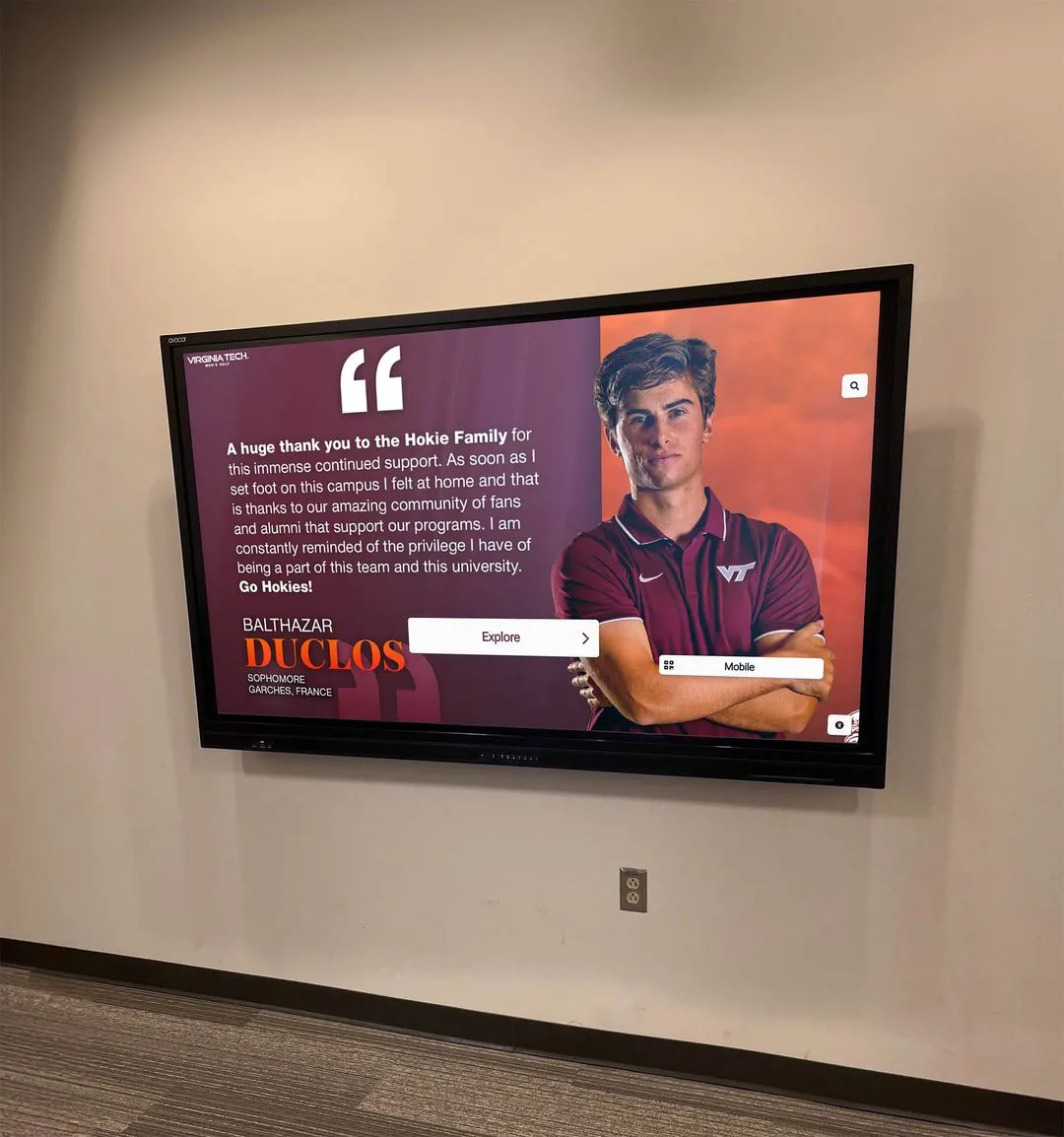
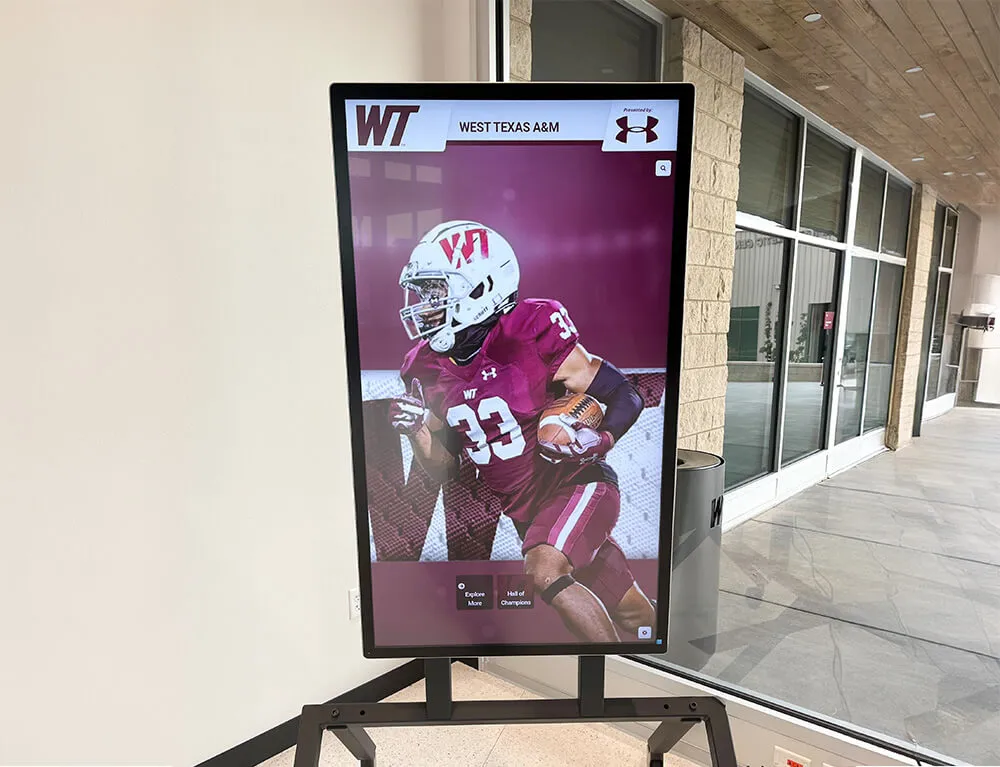
Modern recognition displays celebrate varsity letter recipients through engaging formats that honor athletic traditions while making achievements accessible to the entire school community
What Is a Varsity Letter? Understanding the Basic Meaning
A varsity letter is an award earned by student-athletes who meet specific performance, participation, and commitment standards established by their school’s athletic program. The term “varsity” refers to the principal athletic team representing a school in competitive sports, distinguishing it from junior varsity (JV), freshman teams, or club sports.
The Traditional Varsity Letter
The classic varsity letter typically consists of:
Physical Components
- A chenille fabric letter (usually the school’s initial) measuring 5-7 inches tall
- School colors incorporated into the letter design
- High-quality felt or chenille material with a textured finish
- Backing designed for attachment to letterman jackets or blankets
- Metal or embroidered pins indicating sport, year, or achievement level
Symbolic Meaning The varsity letter represents:
- Athletic achievement: Meeting or exceeding performance standards in competitive sports
- Team representation: Competing for the school’s principal athletic team
- Commitment: Demonstrating sustained dedication throughout a season
- Character: Upholding standards of sportsmanship, conduct, and academic eligibility
- Belonging: Membership in an elite group of athletes who’ve earned this recognition
Unlike participation awards given simply for joining a team, varsity letters recognize athletes who contribute meaningfully to varsity-level competition and meet rigorous standards that vary by sport and school.

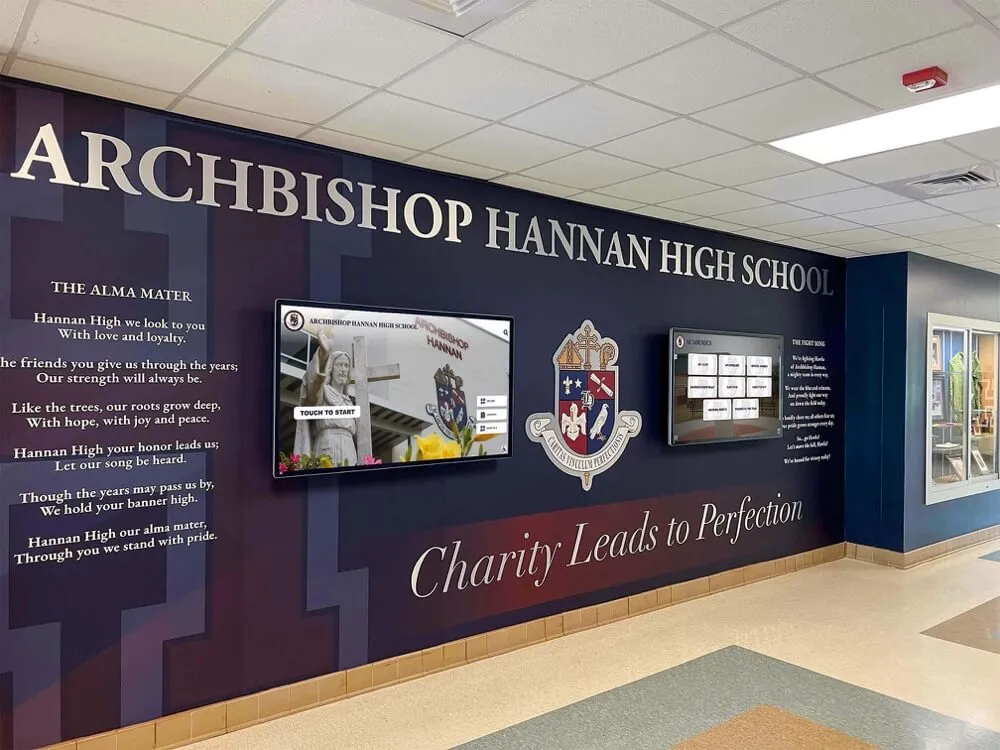
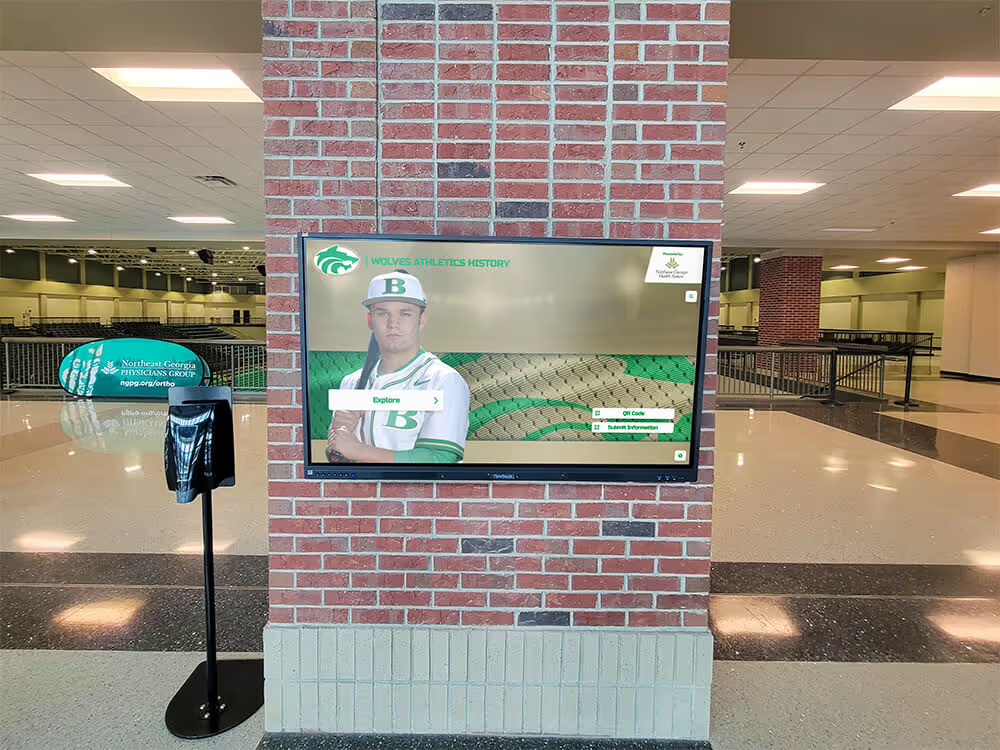
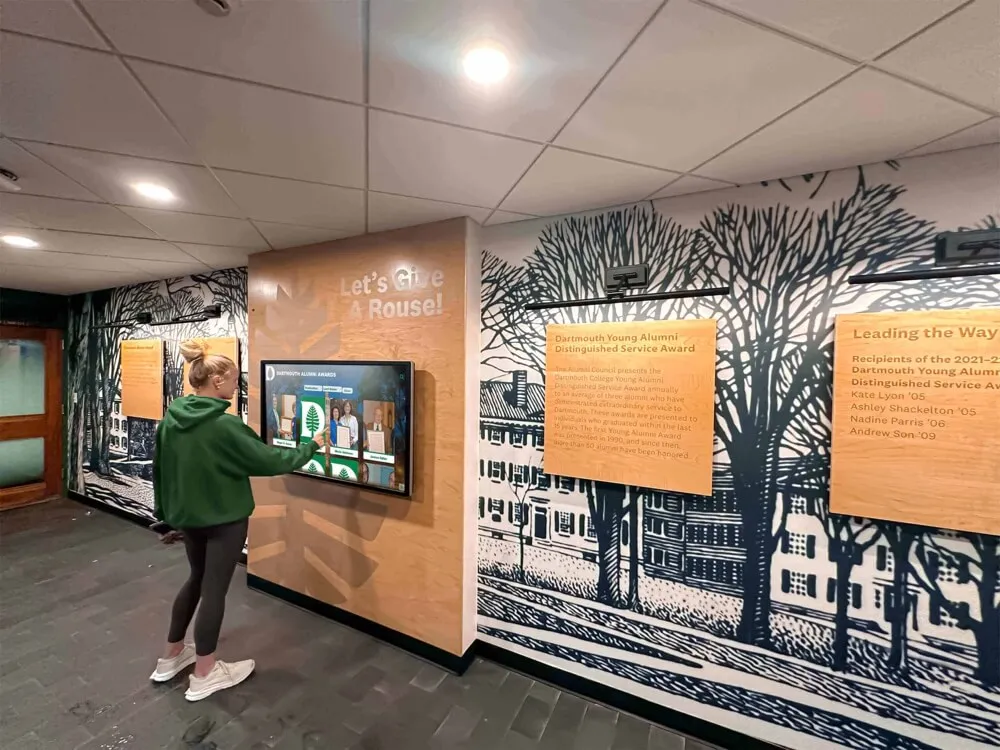
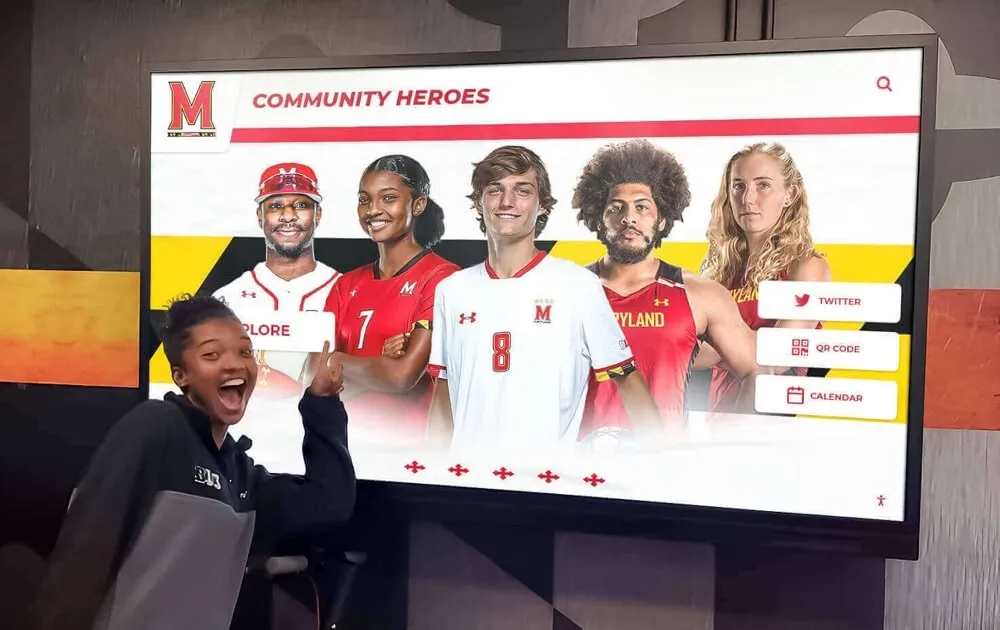
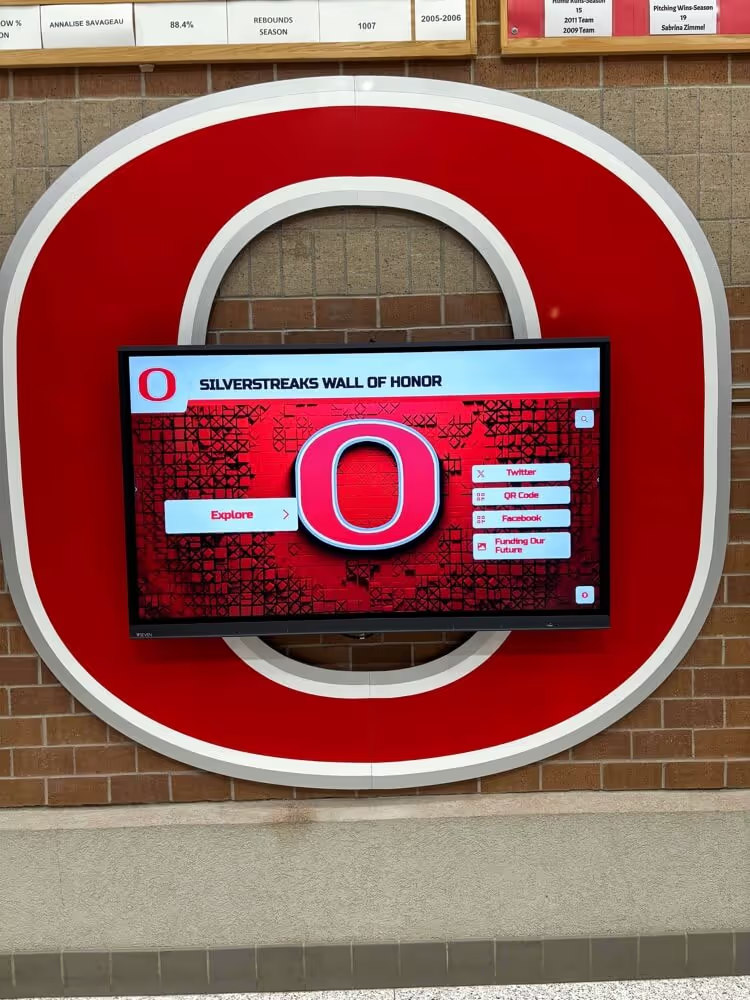
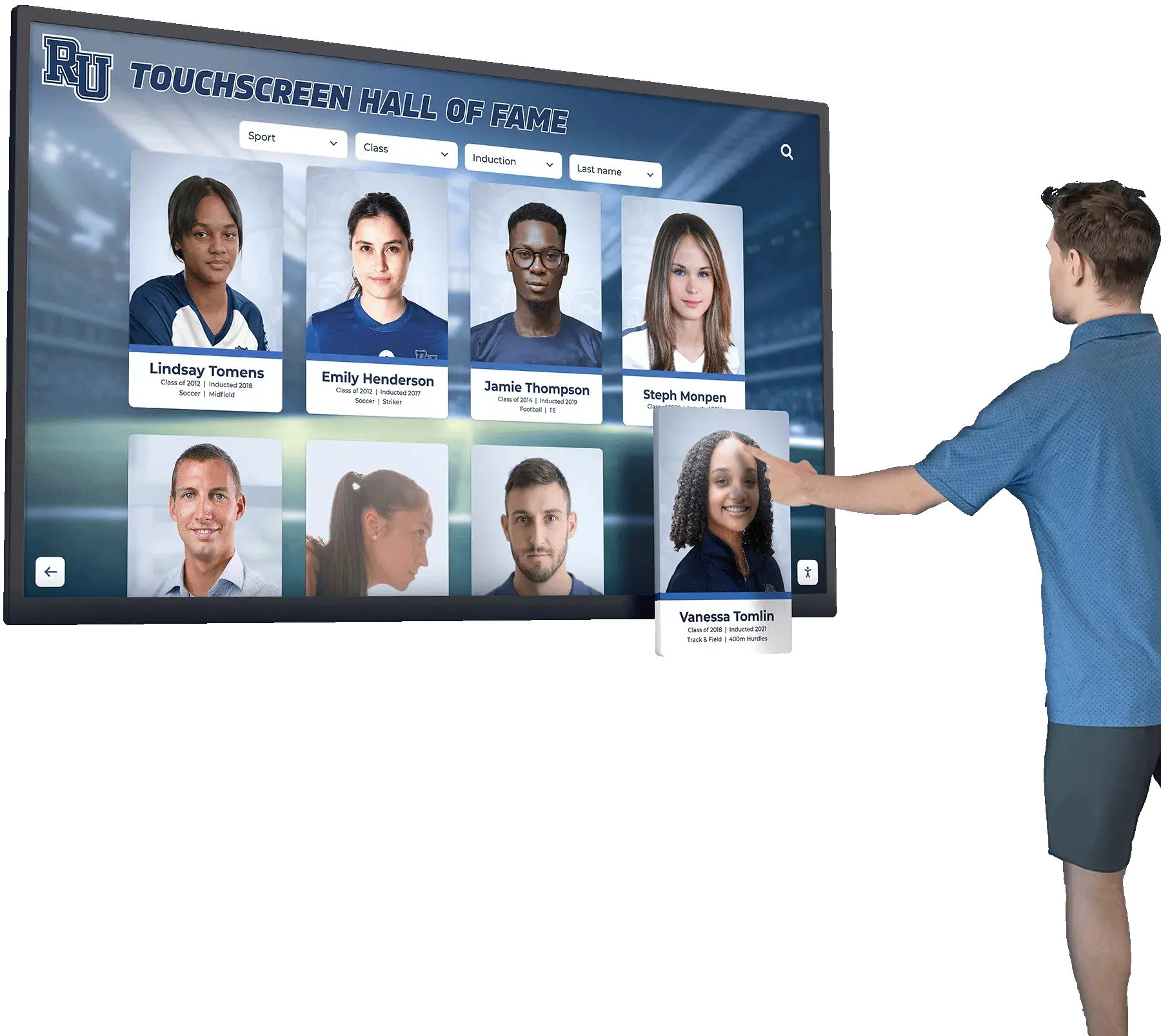
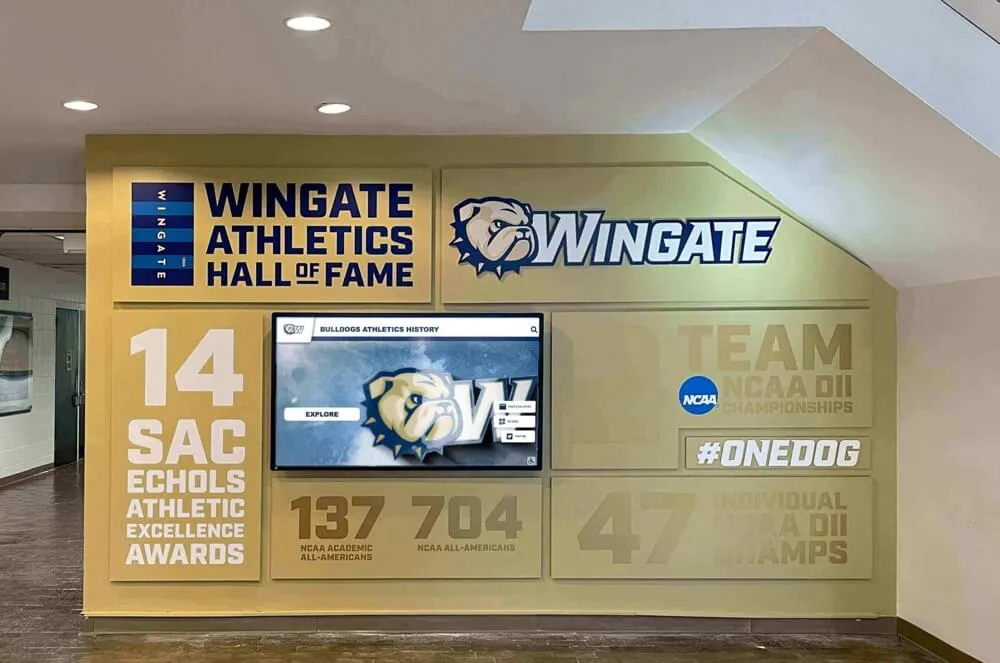
Interactive displays allow students to explore varsity letter recipients and athletic achievements, connecting current athletes with their school's competitive traditions
The History and Evolution of Varsity Letters
Understanding the varsity letter meaning requires examining how this tradition emerged and evolved throughout American athletic history.
Origins in College Athletics (1860s-1900s)
The varsity letter tradition originated in collegiate athletics during the late 19th century:
Harvard Baseball (1865) The first known varsity letter was awarded by Harvard University to baseball players in 1865. The school gave players an Old English “H” to recognize their participation on the baseball nine. This simple recognition system established a model that would spread throughout American education.
Football Adopts the Practice (1870s-1880s) As American football developed in the 1870s and 1880s, universities adopted the letter award system for football players. The prestige associated with earning a letter grew as football became the premier college sport, attracting large crowds and intense school spirit.
Expansion Across College Sports (1890s-1900s) By the turn of the 20th century, most major universities awarded varsity letters across multiple sports. The tradition became deeply embedded in college athletic culture, with letter-winners forming exclusive clubs and wearing their awards with pride.
Adoption by High Schools (1900s-1930s)
As high school athletics developed in the early 20th century, schools adapted the varsity letter tradition from colleges:
Modeling College Traditions High schools sought to replicate the competitive spirit and recognition systems of college athletics. Varsity letters provided a tangible way to honor student-athletes while building school spirit and athletic traditions.
The Letterman Jacket Era (1930s-1950s) The introduction of letterman jackets in the 1930s transformed varsity letters from simple awards into highly visible symbols of athletic achievement. These wool jackets with leather sleeves, prominently displaying the school letter, became status symbols that made athletic accomplishment immediately recognizable throughout school hallways.
Golden Age of School Spirit (1950s-1960s) During the mid-20th century, varsity letters reached peak cultural significance. Letterman jackets represented athletic elite status, and earning a letter became a defining high school goal for student-athletes. Schools developed elaborate letter ceremonies, and athletes proudly wore their jackets as symbols of achievement.
Modern Evolution and Expanded Recognition
Today’s varsity letter programs reflect broader participation and diverse achievement:
Expanded Sport Coverage Modern programs award letters across:
- Traditional sports (football, basketball, baseball, track)
- Emerging sports (lacrosse, soccer, volleyball)
- Individual sports (tennis, golf, swimming, wrestling)
- Non-traditional athletics (competitive cheerleading, dance team)
- Some schools extend lettering to fine arts, academics, and activities
Evolving Criteria Contemporary letter requirements often include:
- Playing time or competition participation minimums
- Performance standards specific to each sport
- Attendance and practice commitment expectations
- Academic eligibility maintenance
- Sportsmanship and conduct standards

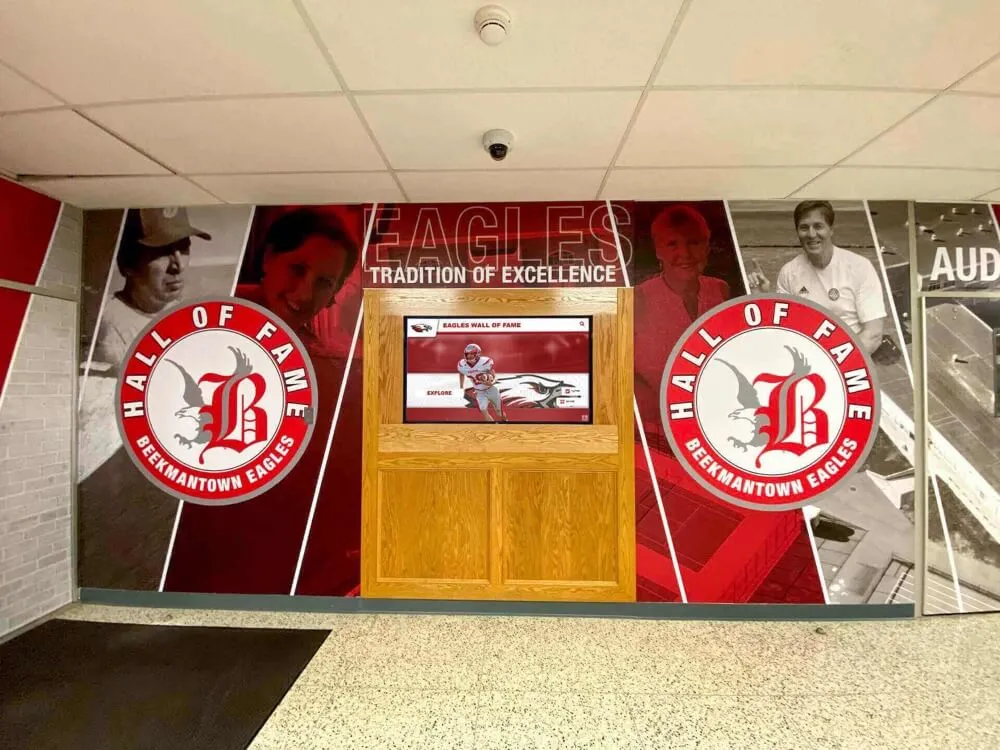
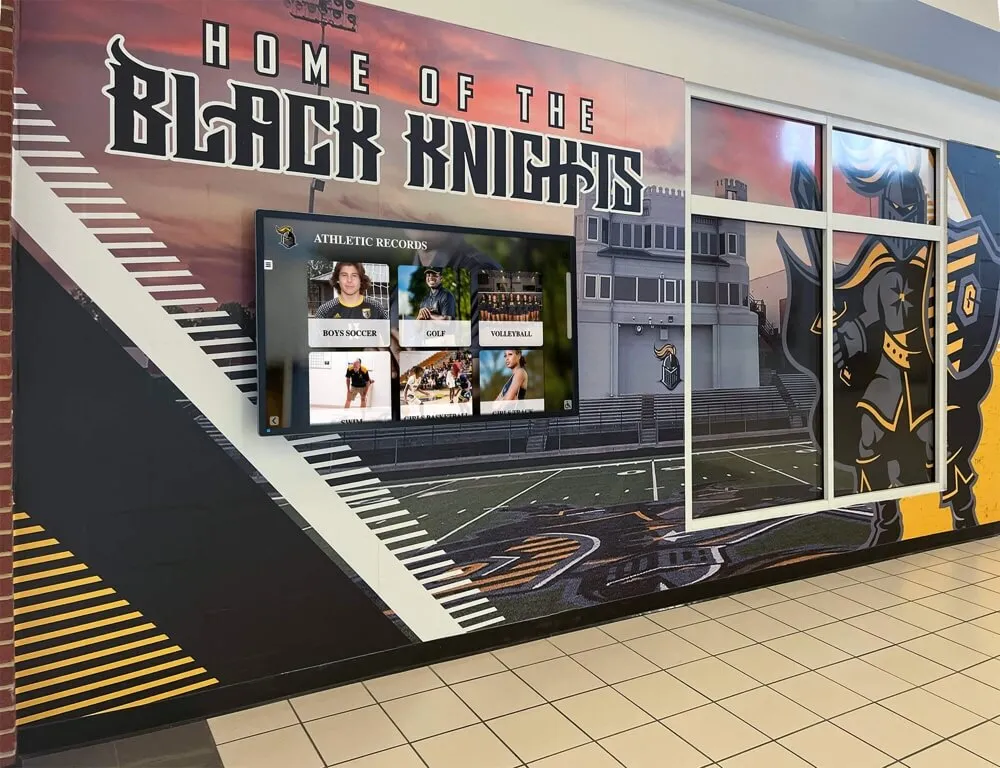
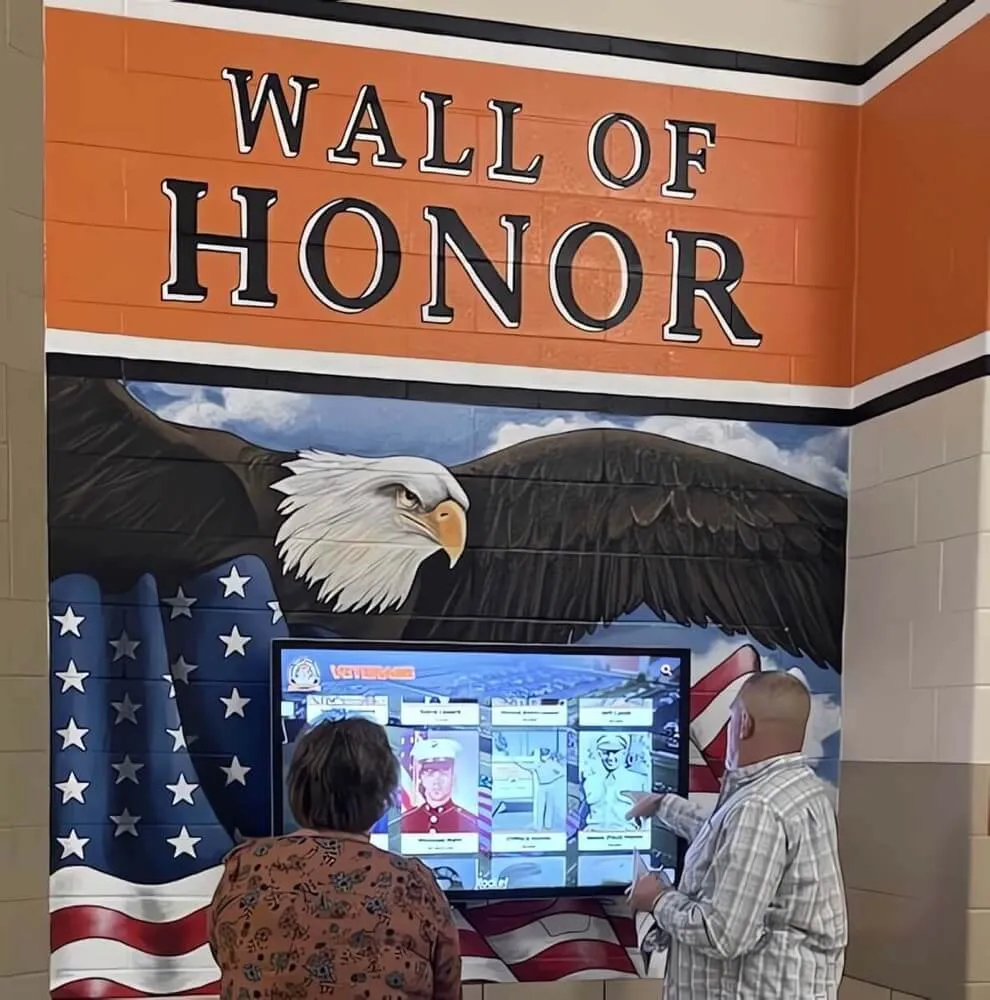
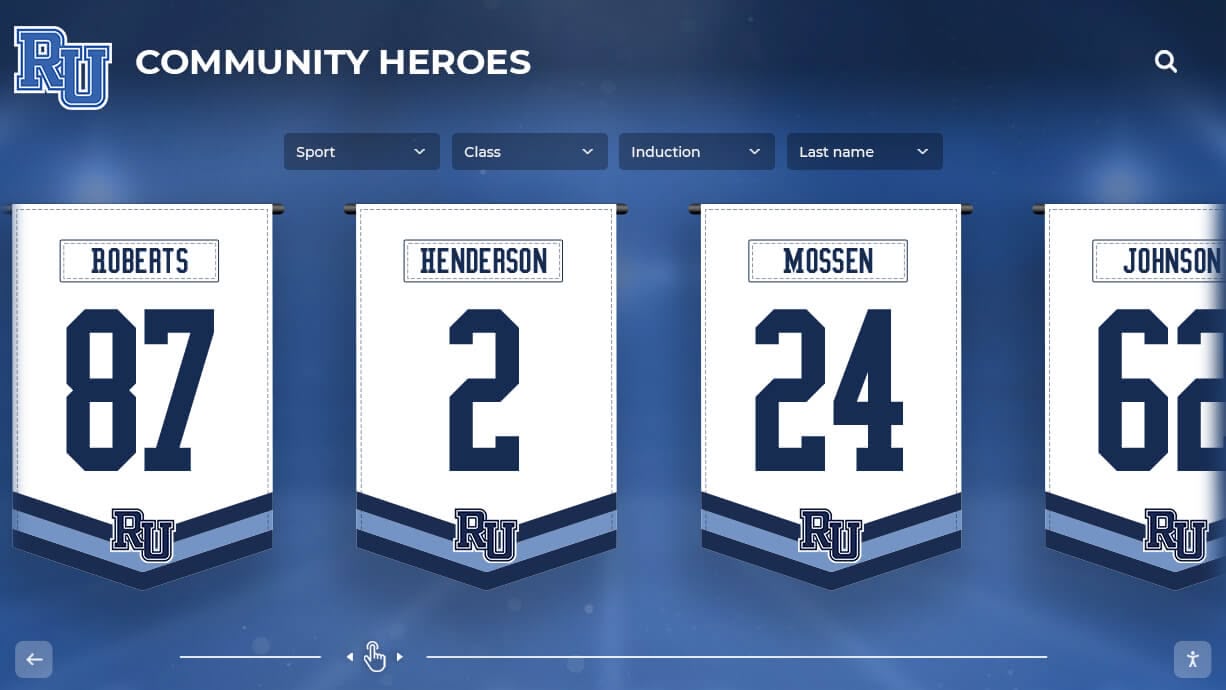
Schools preserve varsity letter traditions through modern displays that showcase letter recipients and athletic achievements in prominent locations
Many schools now supplement or replace physical letters with alternative recognition, including digital recognition displays that preserve achievements permanently while making them accessible to wider audiences.
What Does Earning a Varsity Letter Mean? Criteria and Standards
While the specific requirements vary significantly between schools and sports, understanding common criteria helps clarify what earning a varsity letter represents.
Common Varsity Letter Requirements
Most high school athletic programs establish letter requirements based on multiple factors:
Participation and Playing Time Typical standards include:
- Competing in a minimum percentage of varsity contests (often 50-75%)
- Accumulating specified playing time throughout the season
- Being on the active roster for postseason/playoff competition
- Participating in required practices and team activities
- Completing the entire season in good standing
Performance Benchmarks Some sports include achievement standards:
- Meeting individual performance thresholds (times, distances, scores)
- Contributing to team success through statistics or results
- Demonstrating improvement throughout the season
- Qualifying for championship or all-conference recognition
- Meeting position-specific requirements set by coaches
Academic and Conduct Standards Nearly all programs require:
- Maintaining minimum grade point average (typically 2.0-2.5 GPA)
- Meeting academic eligibility standards throughout the season
- Demonstrating sportsmanship in competition and practice
- Adhering to athletic code of conduct policies
- Representing the school appropriately at all times
Season Completion Most programs mandate:
- Finishing the season in good standing
- Not quitting or being dismissed from the team
- Participating through championships if the team qualifies
- Attending all required team functions and meetings
- Completing any post-season obligations
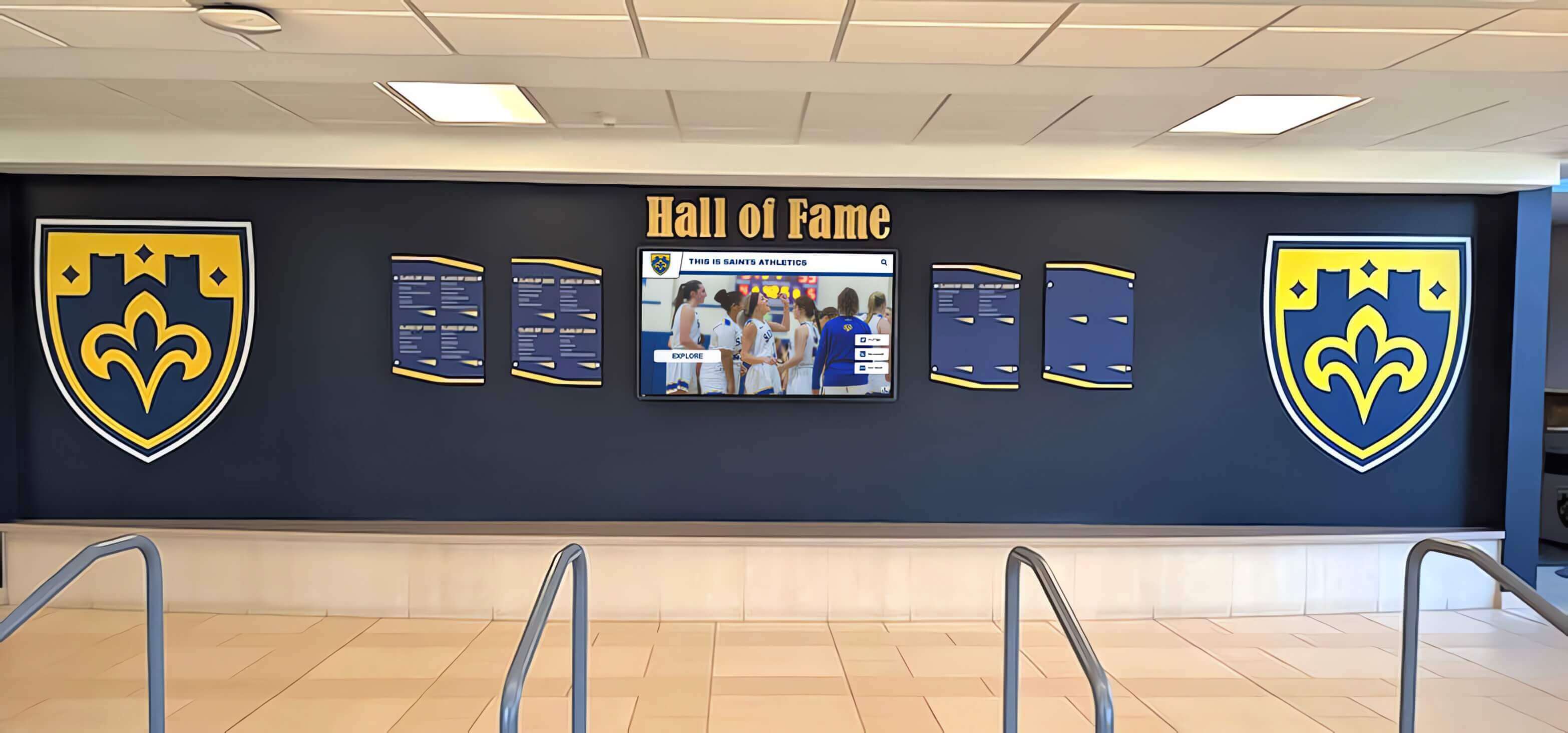
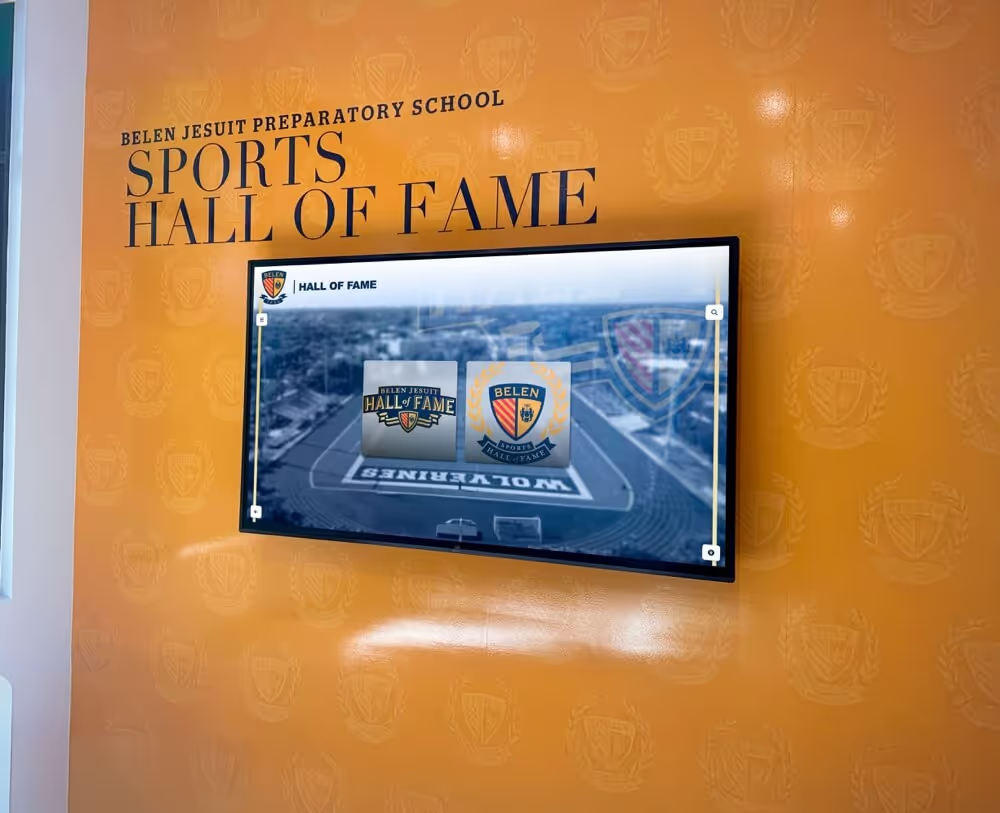
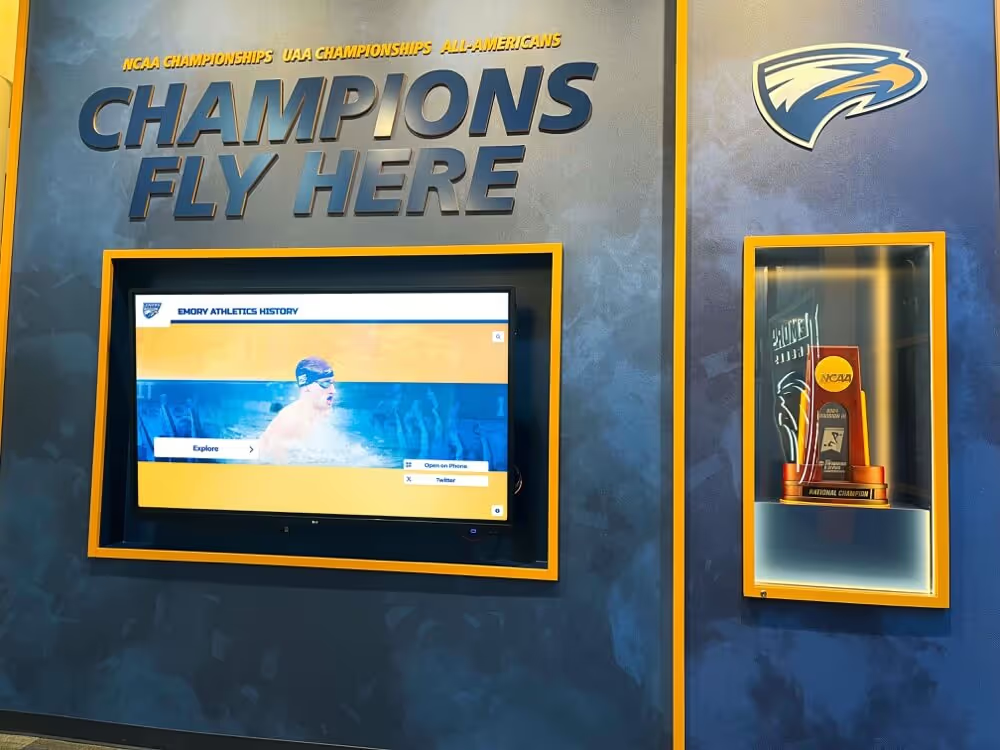
Modern trophy cases integrate traditional displays with digital recognition, creating comprehensive celebrations of varsity letter recipients and athletic milestones
Sport-Specific Letter Requirements
Different sports often have unique criteria reflecting their competitive structure and participation patterns:
Team Sports (Football, Basketball, Soccer, Volleyball)
- Minimum number of quarters or halves played across the season
- Participation in playoff games if the team advances
- Being on varsity roster for championship contests
- Sometimes separate standards for starters versus reserves
- Special provisions for injured players who complete rehabilitation
Individual/Dual Sports (Track, Swimming, Tennis, Golf, Wrestling)
- Qualifying for and competing in specific meets or tournaments
- Achieving qualifying standards or times
- Earning points for the team in varsity competitions
- Participating in conference championships
- Meeting event-specific performance benchmarks
Year-Long Sports (Cross Country, Track and Field)
- Some programs require lettering in only one season
- Others mandate participation in both fall (cross country) and spring (track)
- Criteria may differ between seasons for the same athlete
Multi-Level Sport Programs At schools with freshman, JV, and varsity teams:
- Athletes must compete at the varsity level to earn varsity letters
- Moving up from JV mid-season may require partial season participation
- Some schools award JV letters separately for lower-level achievement
Understanding these varied criteria helps clarify that the varsity letter meaning encompasses both athletic accomplishment and meeting comprehensive standards that extend beyond simple participation.
Schools implementing comprehensive athletic recognition programs ensure all letter recipients receive appropriate celebration regardless of sport or achievement level.
Beyond Athletics: Academic and Activity Letters
While traditionally associated with athletics, many schools have expanded varsity letter programs to recognize excellence in other areas.
Academic Letters and Scholars
Numerous schools award academic varsity letters to recognize sustained scholarly achievement:
Common Academic Letter Criteria
- Maintaining high GPA (typically 3.5-4.0) for one or more years
- Making honor roll or achieving academic distinction consistently
- Demonstrating excellence in specific subject areas
- Participating in academic competitions or honor societies
- Contributing to school’s academic reputation
These academic letters carry similar prestige to athletic letters and may be displayed on letterman jackets or academic honor displays. Schools often recognize these achievements through honor roll recognition systems that complement athletic recognition.
Fine Arts and Performance Letters
Many comprehensive recognition programs include fine arts categories:
Music Programs
- Participation in select choirs, bands, or orchestras
- All-state or honor ensemble selection
- Solo and ensemble competition success
- Leadership roles in musical organizations
Theatre and Drama
- Performing in school productions
- Technical theatre and production work
- Participation in drama competitions
- Leadership in theatre programs
Debate and Forensics
- Competition participation and success
- Tournament qualification and advancement
- Individual event recognition
- Team contribution over multiple seasons
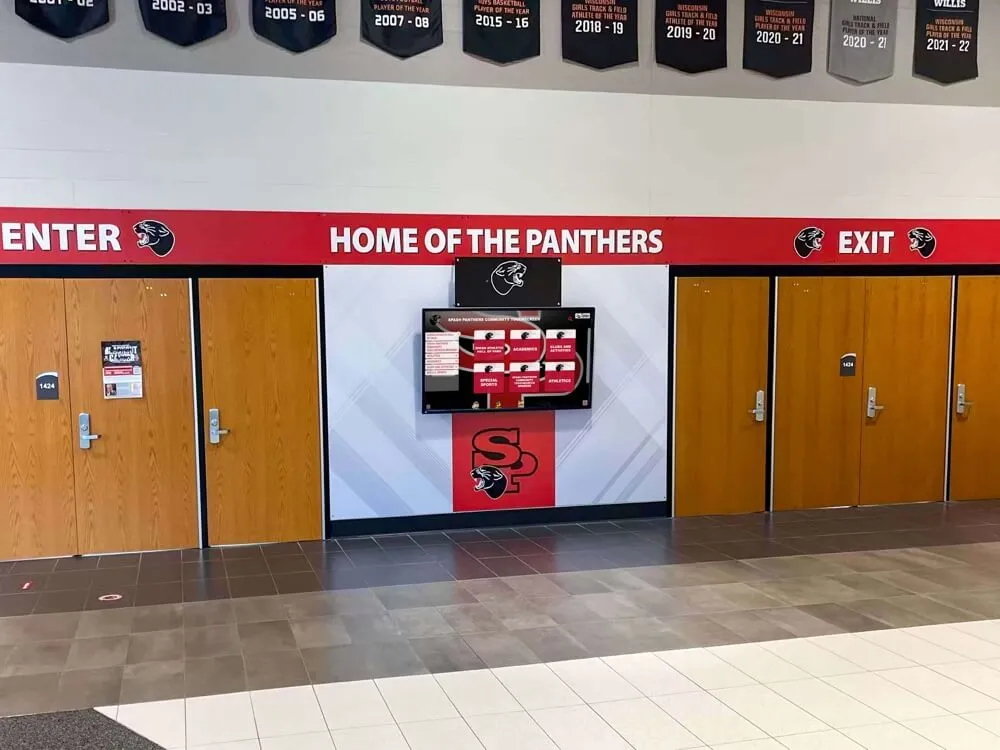
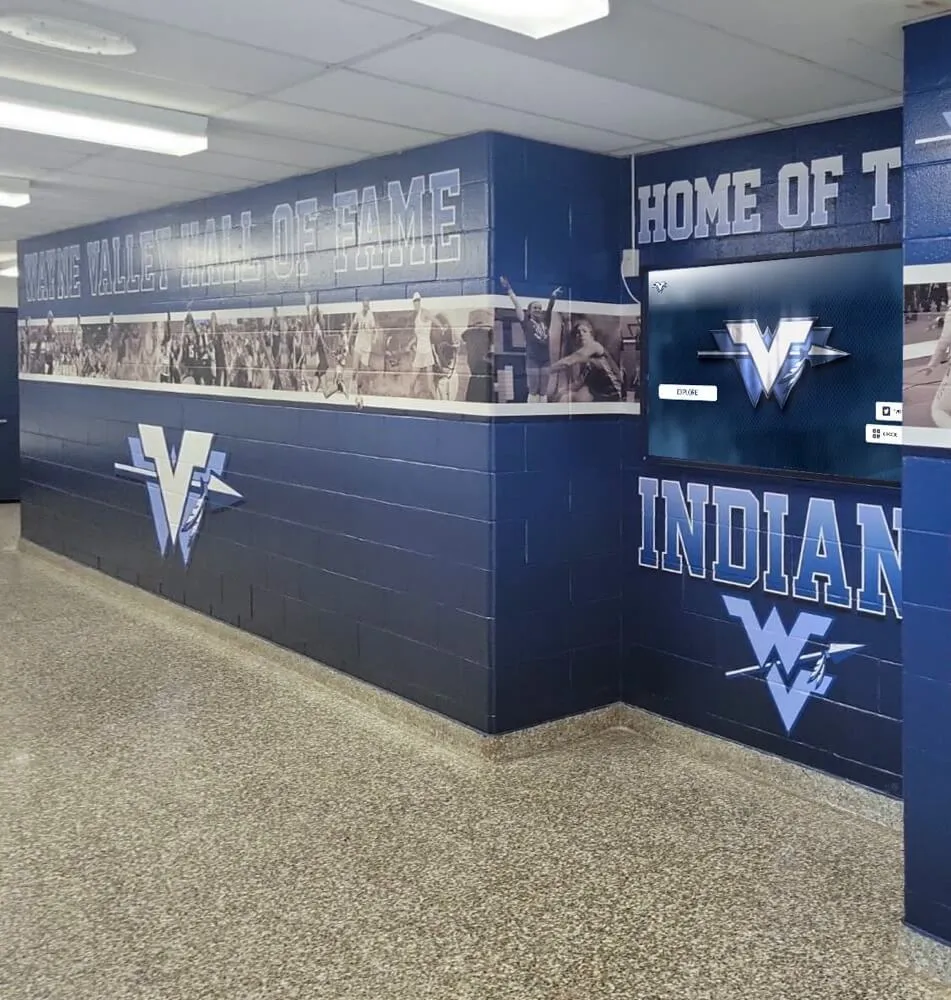
Prominent hallway displays ensure varsity letter achievements remain visible throughout the school year, inspiring current students pursuing similar recognition
Activity and Leadership Letters
Some schools extend lettering to recognize leadership and service:
Student Government and Leadership
- Serving in elected positions
- Demonstrating sustained leadership contributions
- Organizing school events and initiatives
- Representing the school in leadership capacities
Service and Community Engagement
- Completing significant service hour requirements
- Leading service projects and initiatives
- Sustained commitment to community organizations
- Representing school values through action
While these expanded letter programs broaden recognition opportunities, athletic varsity letters typically maintain distinctive significance due to their deep historical roots and the visible competitive achievement they represent.
The Letterman Jacket Tradition
For many students, earning a varsity letter means gaining the right to wear a letterman jacket—one of high school’s most visible and cherished traditions.
Components of the Traditional Letterman Jacket
The classic letterman jacket includes:
Basic Structure
- Wool body in school colors (typically the primary color)
- Leather or vinyl sleeves in contrasting school color
- Snap-front closure with ribbed cuffs and waistband
- Interior pockets and sometimes additional external pockets
- Quilted or satin lining
The Letter Itself
- Large chenille letter (school initial) on left chest
- Letter size typically 5-7 inches tall
- School colors woven into the chenille material
- Professionally sewn or heat-applied to jacket
Additional Decorations Athletes often personalize jackets with:
- Sport-specific patches on sleeves
- Year patches indicating graduation class
- Achievement pins (conference champions, state qualifiers, MVP awards)
- Captain’s bars or leadership indicators
- Multiple sport patches for multi-sport athletes
- Academic achievement pins
- Additional letters for subsequent years earned
The Cost and Commitment
Letterman jackets represent significant investments:
Financial Investment
- Base jacket costs typically range from $200-500
- Quality varies based on materials and customization
- Additional patches and personalization add to costs
- Some programs provide jackets; others require athlete purchase
- Booster clubs sometimes subsidize costs for recipients
Emotional Investment Beyond financial cost, letterman jackets carry emotional weight:
- Symbol of achievement visible throughout the school
- Physical representation of athletic dedication
- Connection to school traditions spanning generations
- Item many alumni keep for life as cherished memorabilia
- Pride in wearing something earned through commitment
Modern Alternatives and Adaptations
Today’s students have more recognition options:
Alternative Recognition Items Schools and athletes increasingly choose:
- Varsity letter patches for backpacks or other clothing
- Letter blankets or throws displaying achievements
- Personalized hoodies or athletic wear
- Letter frames for displaying awards
- Digital recognition through school displays and social media
Changing Fashion Trends While letterman jackets remain popular in many regions, changing fashion preferences mean some letter-winners choose alternative display options. This shift has increased schools’ focus on permanent recognition displays that celebrate letter recipients regardless of whether they choose traditional jackets.
Schools implementing modern trophy case displays ensure varsity letter achievements receive lasting recognition even as individual display preferences evolve.
How Schools Honor Varsity Letter Recipients
Beyond the letter and jacket themselves, schools employ various methods to celebrate and preserve the achievements of letter-winners.
Traditional Recognition Methods
Classic approaches to honoring letter recipients include:
Letter Award Ceremonies Many schools host formal letter ceremonies:
- End-of-season or end-of-year athletic banquets
- Public presentation of letters by coaches
- Recognition of first-time letter-winners
- Special acknowledgment for senior letter-winners
- Family attendance and celebration
- Combination with other athletic awards
Learn more about planning these events through guides on athletic banquet organization.
Trophy Cases and Recognition Walls Physical displays showcase letter-winners:
- Lists of annual letter recipients by sport
- Photographs of letter-winners
- Historic letterman jackets on display
- Plaques recognizing multi-sport letter-winners
- Special recognition for athletes lettering all four years
School Publications and Media Recognition through communications:
- Announcements in school newsletters or bulletins
- Social media posts celebrating new letter-winners
- Yearbook sections dedicated to letter recipients
- Local newspaper coverage of awards
- School website athletic achievement pages
Letter-Winner Organizations Some schools create exclusive groups:
- Varsity letter club memberships
- Special privileges for letter-winners
- Leadership opportunities in athletic programs
- Alumni letter-winner networks
- Mentorship programs connecting past and current letter-winners
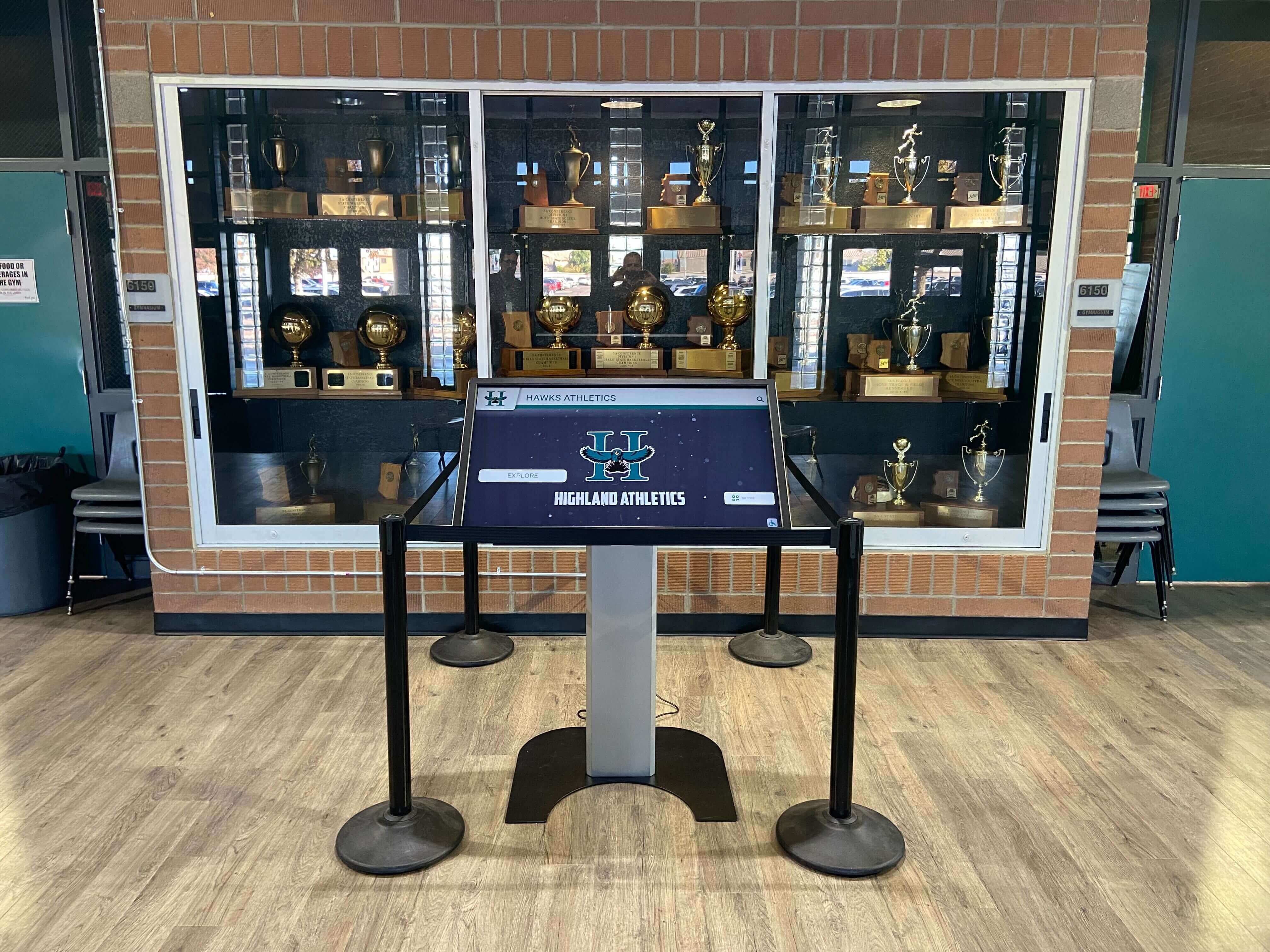
Integrating digital displays with traditional trophy cases creates comprehensive recognition that honors varsity letter traditions while adding interactive engagement
Modern Digital Recognition Systems
Contemporary schools increasingly employ digital solutions for permanent, accessible recognition:
Interactive Touchscreen Displays Digital recognition platforms offer:
- Searchable databases of all letter-winners throughout school history
- Individual athlete profiles with photos, sports, and achievements
- Sport-specific pages showing all letter recipients
- Year-by-year recognition with graduating class connections
- Permanent preservation accessible to current students and returning alumni
Key Advantages of Digital Recognition Modern displays provide benefits traditional methods cannot:
- Unlimited space: Every letter-winner receives equal recognition without physical constraints
- Easy updates: Adding new letter recipients requires simple content updates rather than physical renovations
- Rich content: Include photos, statistics, biographical information, and achievement details
- Accessibility: 24/7 access for students, families, and visitors in prominent school locations
- Preservation: Digital archives protect recognition from physical deterioration
- Engagement: Interactive exploration encourages students to connect with athletic traditions
- Cost efficiency: One-time installation serves decades of recognition needs
Integration with School Traditions Effective digital recognition complements rather than replaces traditional elements:
- Displaying historic letterman jackets alongside digital profiles
- Featuring letter ceremony photos in digital slideshows
- Creating virtual “letter-winner walls” accessible both in-building and online
- Connecting digital displays to comprehensive athletic hall of fame systems
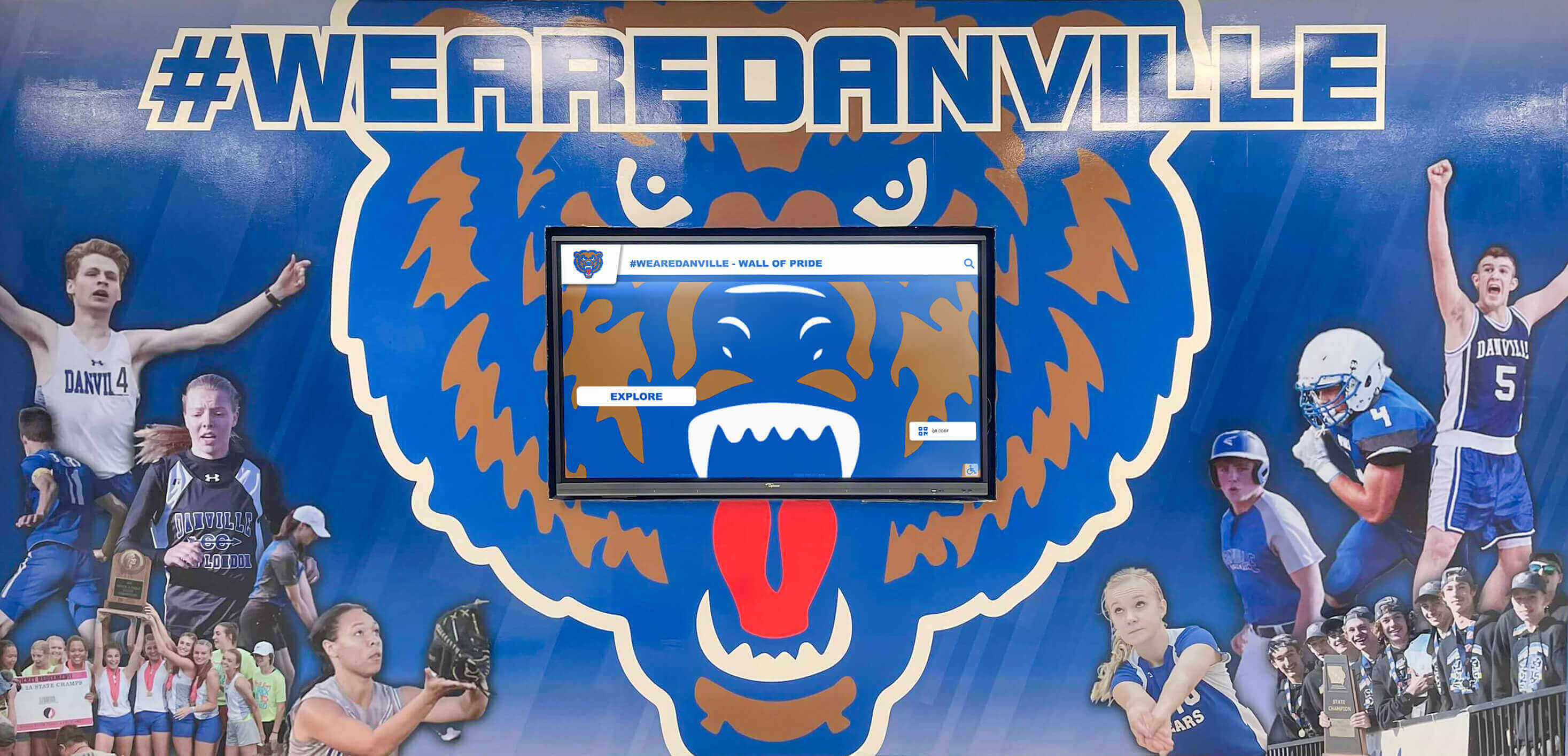
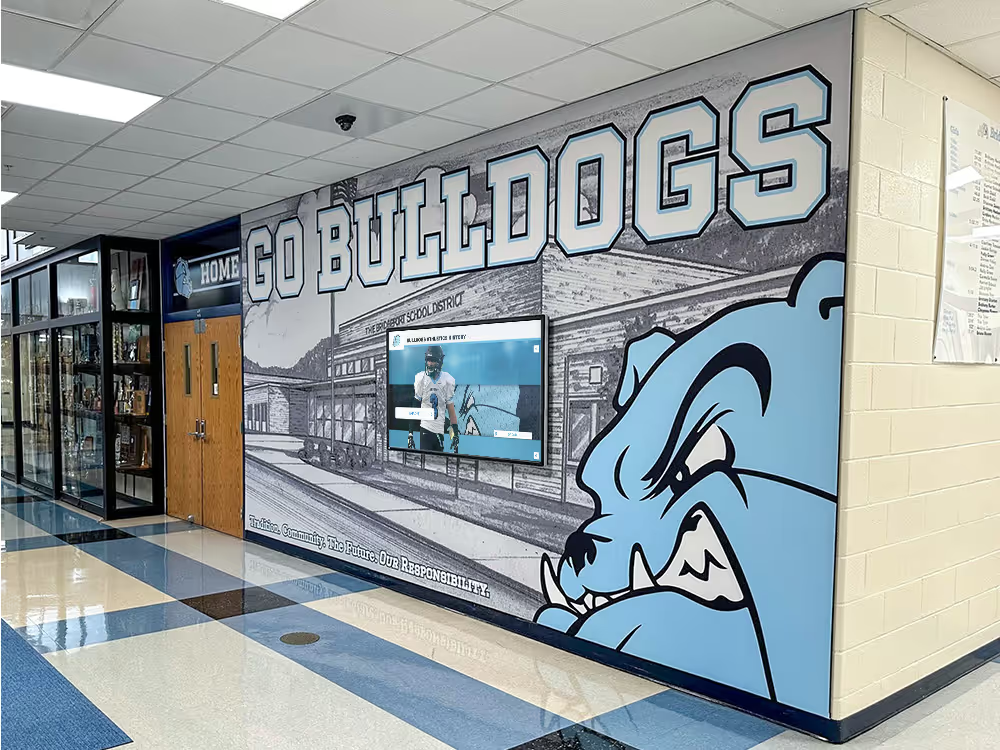
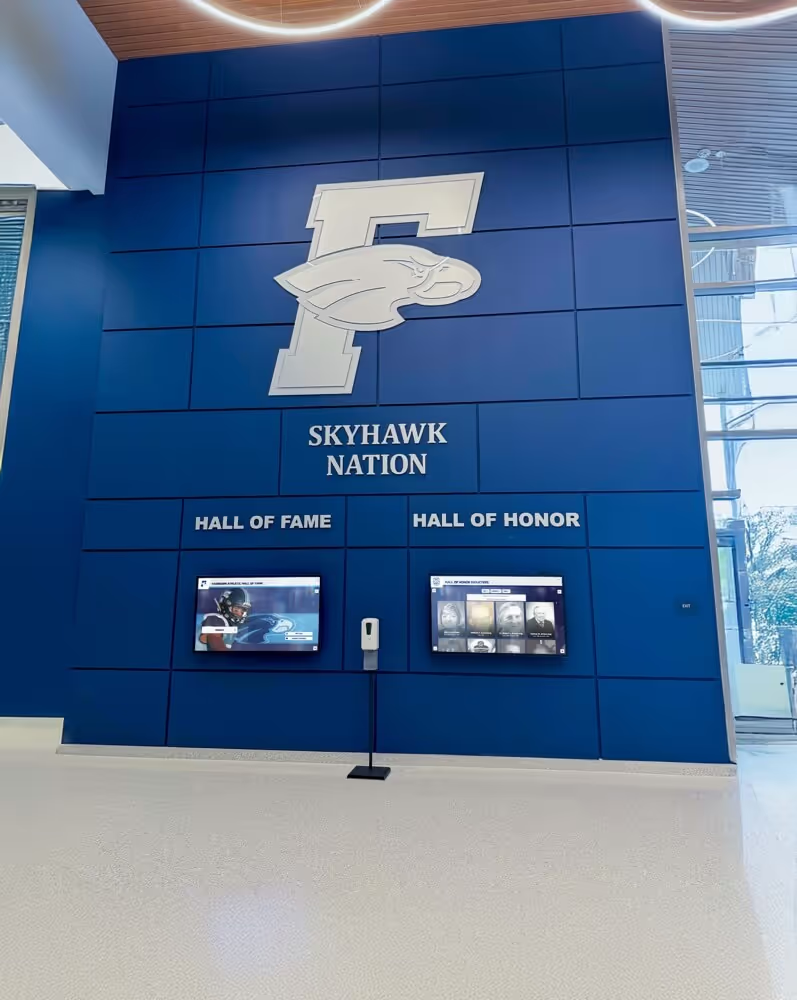
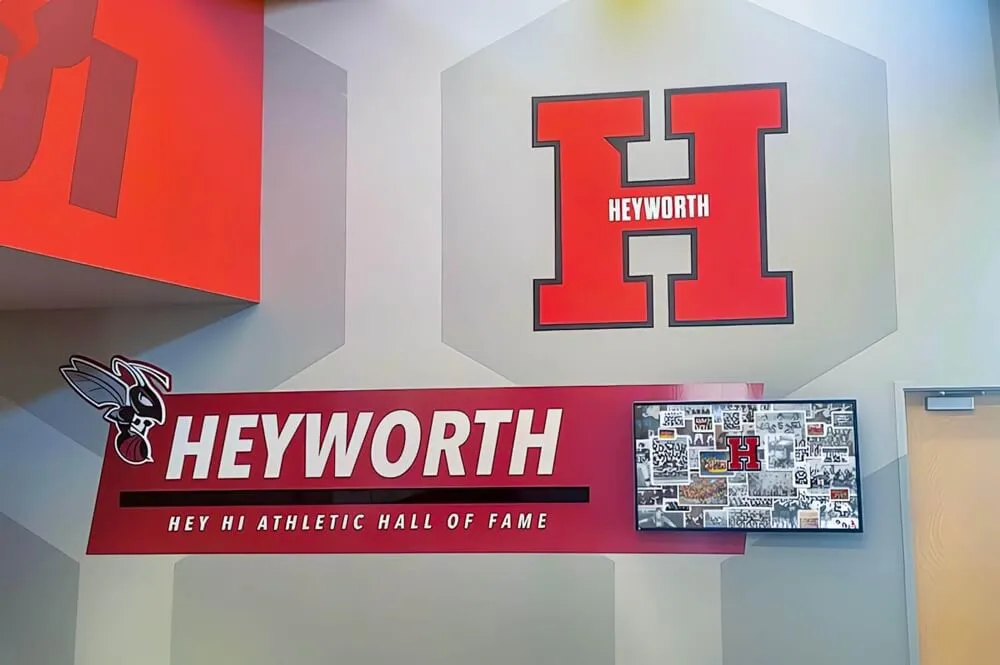
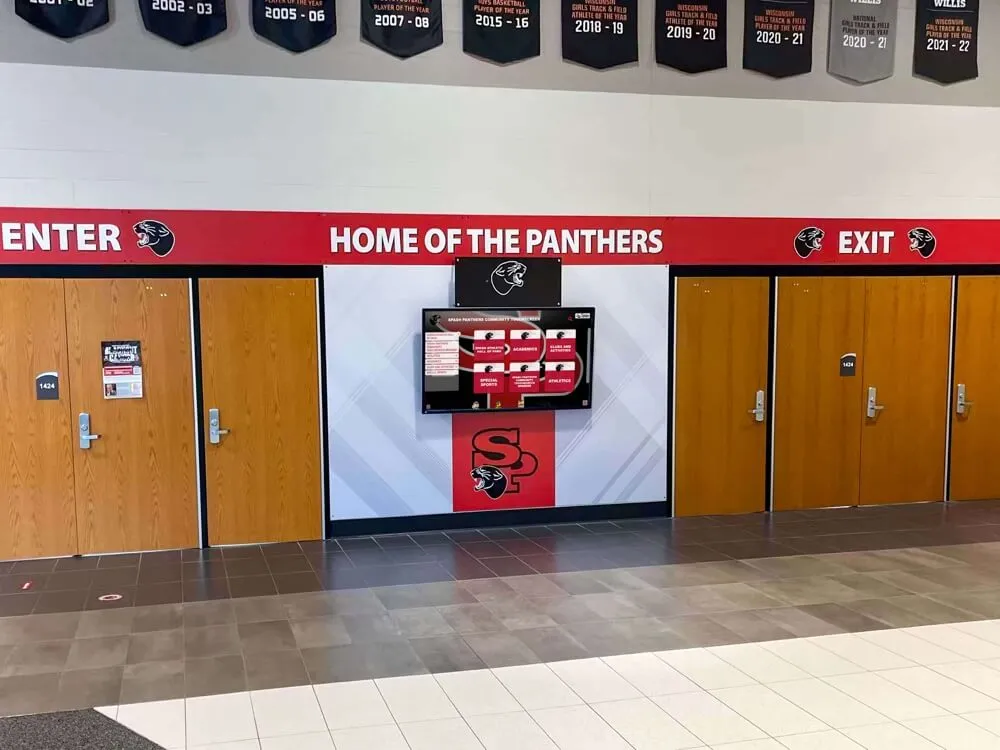
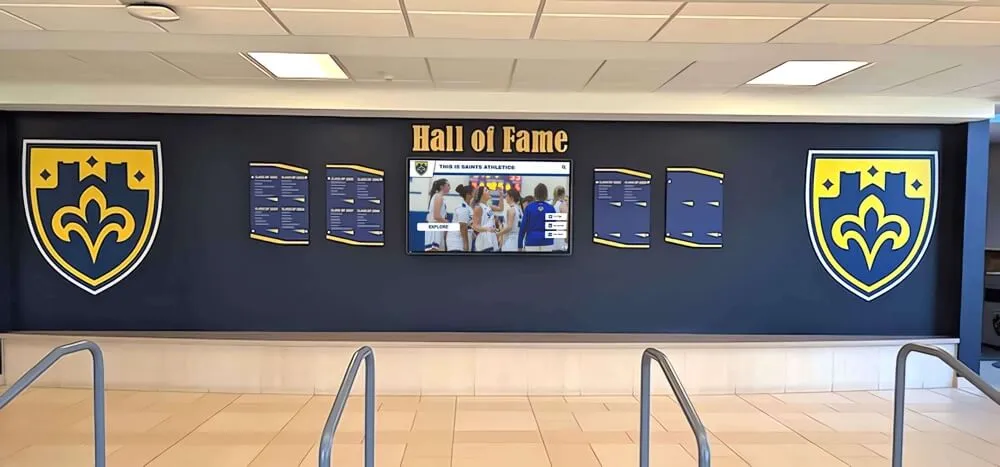
Successful recognition programs blend traditional athletic branding with digital displays, creating engaging spaces that celebrate letter-winners while reinforcing school identity
Creating Comprehensive Letter Recognition Programs
Schools developing or enhancing letter recognition should consider:
Recognition Timeline
- When to present letters (end of season vs. end of year)
- Announcement methods for new letter-winners
- Ceremony planning and family involvement
- Update schedule for permanent recognition displays
- Senior letter-winner special recognition
Inclusion and Equity Effective programs ensure:
- Clear, published criteria for earning letters in each sport
- Consistent application of standards across all teams
- Recognition opportunities across revenue and non-revenue sports
- Celebration of both male and female letter-winners
- Accessibility of recognition to all school community members
Historical Preservation Maintaining traditions while serving current students:
- Digitizing historic letter-winner records and photos
- Creating archives connecting past and present athletes
- Building databases tracking multi-generational letter-winners
- Preserving team photos and achievement documentation
- Connecting alumni letter-winners with current programs
Schools can explore these concepts further through resources on school history preservation and maintaining athletic traditions across generations.
The Lasting Impact of Varsity Letters
Understanding varsity letter meaning extends beyond the immediate high school experience—these achievements create lasting impacts on students and school communities.
Personal Development and Character Building
Pursuing and earning varsity letters contributes to student development:
Work Ethic and Dedication The process teaches:
- Setting and working toward long-term goals
- Committing to daily practice and improvement
- Persisting through challenges and setbacks
- Balancing athletics with academics and other responsibilities
- Understanding that significant achievements require sustained effort
Leadership and Teamwork Letter-winners develop:
- Collaboration skills through team participation
- Leadership capabilities as experienced team members
- Communication abilities across diverse groups
- Ability to support teammates while pursuing individual goals
- Understanding of collective achievement and shared success
Resilience and Mental Toughness Working toward letters builds:
- Ability to handle competitive pressure
- Recovery from losses or disappointing performances
- Confidence through overcoming challenges
- Self-discipline in training and preparation
- Growth mindset focused on continuous improvement
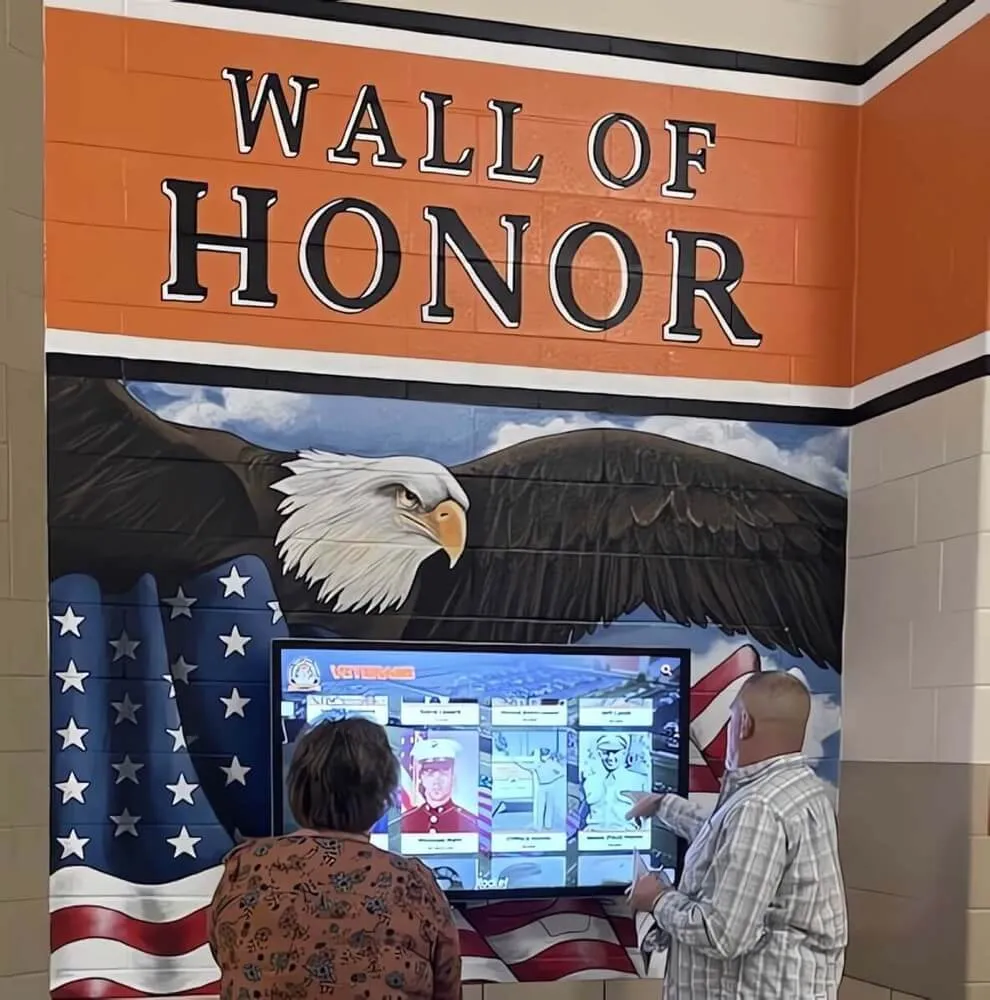
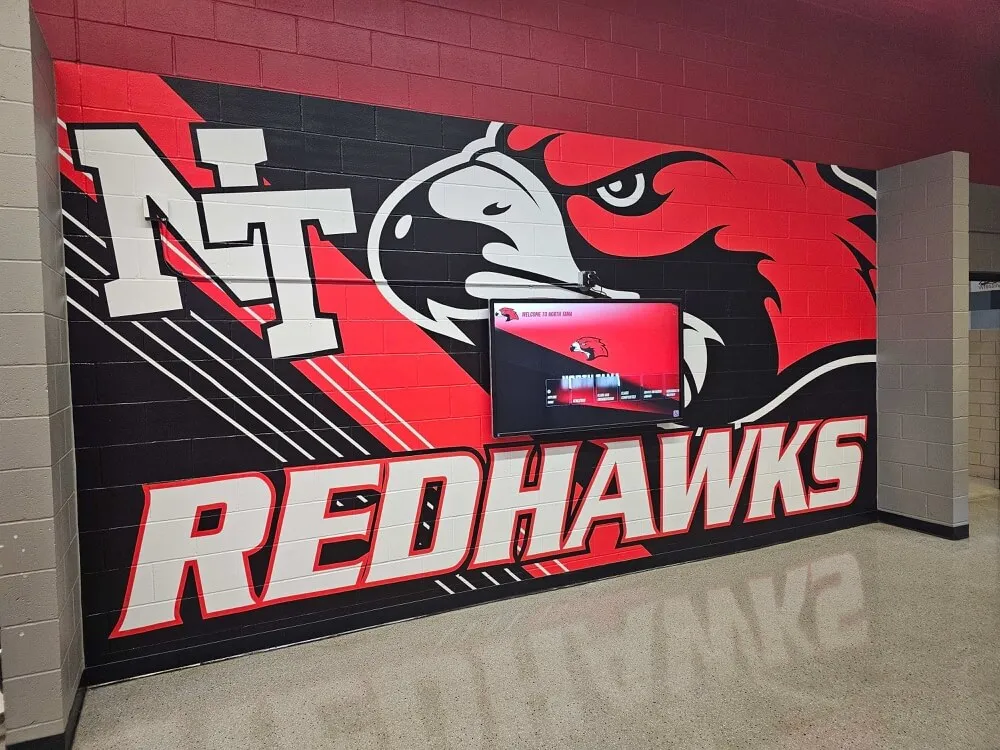
Varsity letter recognition walls create spaces where achievement, tradition, and school pride converge, inspiring current students while honoring past letter-winners
College Applications and Future Opportunities
Varsity letters carry weight beyond high school:
College Admissions Impact Letter recognition demonstrates:
- Sustained commitment to extracurricular activities
- Time management balancing athletics and academics
- Leadership and teamwork capabilities
- Discipline and goal-oriented behavior
- Well-rounded high school experience
Athletic Recruitment For students pursuing college athletics:
- Varsity letters validate competitive participation
- Multi-year letter-winning shows sustained achievement
- Letter criteria completion demonstrates meeting standards
- Recognition provides talking points for recruitment conversations
- Connects high school achievement to collegiate opportunities
Scholarship Opportunities Beyond athletic scholarships:
- Some community organizations offer scholarships for letter-winners
- Multi-sport letter-winners may receive special recognition
- Academic and athletic excellence combinations attract scholarship attention
- Leadership demonstrated through letter achievement supports applications
Schools can support letter-winners pursuing college athletics through signing day celebrations and recognition systems connecting high school achievements to collegiate futures.
Lifelong Connections and Pride
Many letter-winners report lasting impact from their achievements:
Alumni Connections Varsity letters create bonds that endure:
- Shared experience connecting graduates across different eras
- Foundation for alumni networking and mentorship
- Common ground at reunions and alumni events
- Pride in school traditions spanning generations
- Motivation to support current athletic programs
Personal Identity and Confidence Letter achievements shape self-perception:
- Tangible evidence of overcoming challenges
- Source of pride during difficult adult experiences
- Example of goal achievement for teaching children
- Conversation topic connecting with others throughout life
- Concrete accomplishment from formative years
School Connection and Support Letter-winners often maintain stronger school connections:
- More likely to attend athletic events as alumni
- Higher participation in alumni organizations
- Greater financial support for athletic programs
- Willingness to mentor current student-athletes
- Pride in school accomplishments and traditions
Preserving Varsity Letter Traditions for Future Generations
As schools evolve, maintaining meaningful varsity letter programs requires intentional effort and modern thinking.
Balancing Tradition with Contemporary Values
Successful programs honor history while adapting to change:
Maintaining Core Meaning Preserving what makes letters meaningful:
- Upholding rigorous standards that make achievement significant
- Requiring sustained commitment and performance
- Creating clear criteria that students understand and pursue
- Celebrating letter-winners through meaningful recognition
- Connecting current programs to historical traditions
Adapting to Modern Contexts Evolving programs to serve contemporary students:
- Expanding recognition beyond traditional major sports
- Creating pathways for diverse achievement styles
- Recognizing academic and fine arts excellence
- Using technology to make recognition more accessible and permanent
- Ensuring equity across different programs and demographics
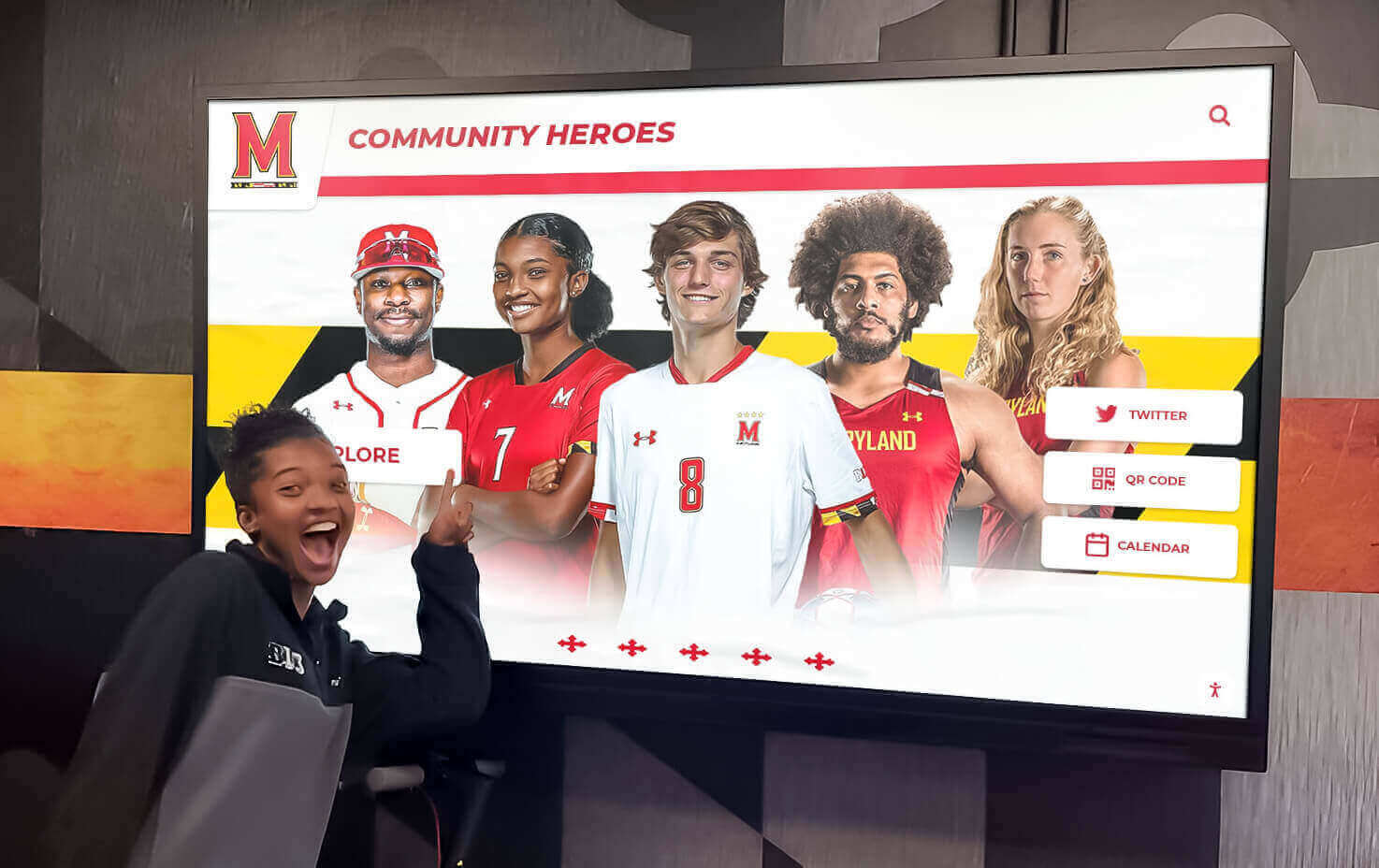
Interactive recognition displays help current students understand varsity letter meaning through exploring past recipients and connecting with ongoing athletic traditions
Creating Sustainable Recognition Infrastructure
Long-term letter recognition requires sustainable systems:
Physical Recognition Maintaining traditional elements:
- Budget allocation for letter purchases and awards
- Facility space dedicated to displaying achievements
- Regular ceremony scheduling and planning
- Communication systems announcing new letter-winners
- Preservation of historic recognition materials
Digital Recognition Modern complement to traditional methods:
- Interactive touchscreen displays showcasing all letter-winners
- Digital archives preserving photos and achievement details
- Searchable databases accessible to students and alumni
- Regular content updates as new letters are awarded
- Integration with school communications and social media
Administrative Systems Supporting effective programs:
- Clear documentation of letter criteria for each sport
- Tracking systems monitoring student progress toward letters
- Communication between coaches and athletic directors
- Record-keeping preserving letter-winner information
- Family communication explaining letter significance and criteria
Engaging Current Students with Letter Traditions
Making letter achievement relevant to contemporary students:
Clear Communication Helping students understand what letters represent:
- Publishing letter criteria early in each season
- Explaining varsity letter meaning during orientation
- Sharing stories of past letter-winners and their achievements
- Highlighting connection between current effort and letter achievement
- Celebrating letter-winners prominently throughout the school
Accessible Role Models Connecting students with letter tradition:
- Featuring recent letter-winners in school communications
- Creating mentorship programs pairing current athletes with alumni letter-winners
- Displaying all-state and elite achievement recognition alongside standard letters
- Sharing letter-winner success stories beyond athletics
- Maintaining visible recognition that students encounter daily
Meaningful Celebration Making letter achievement feel significant:
- Hosting ceremonies that honor letter-winners appropriately
- Involving families in recognition
- Providing quality letters and recognition materials
- Creating permanent displays that preserve achievements
- Connecting letter achievement to broader school honors and recognition
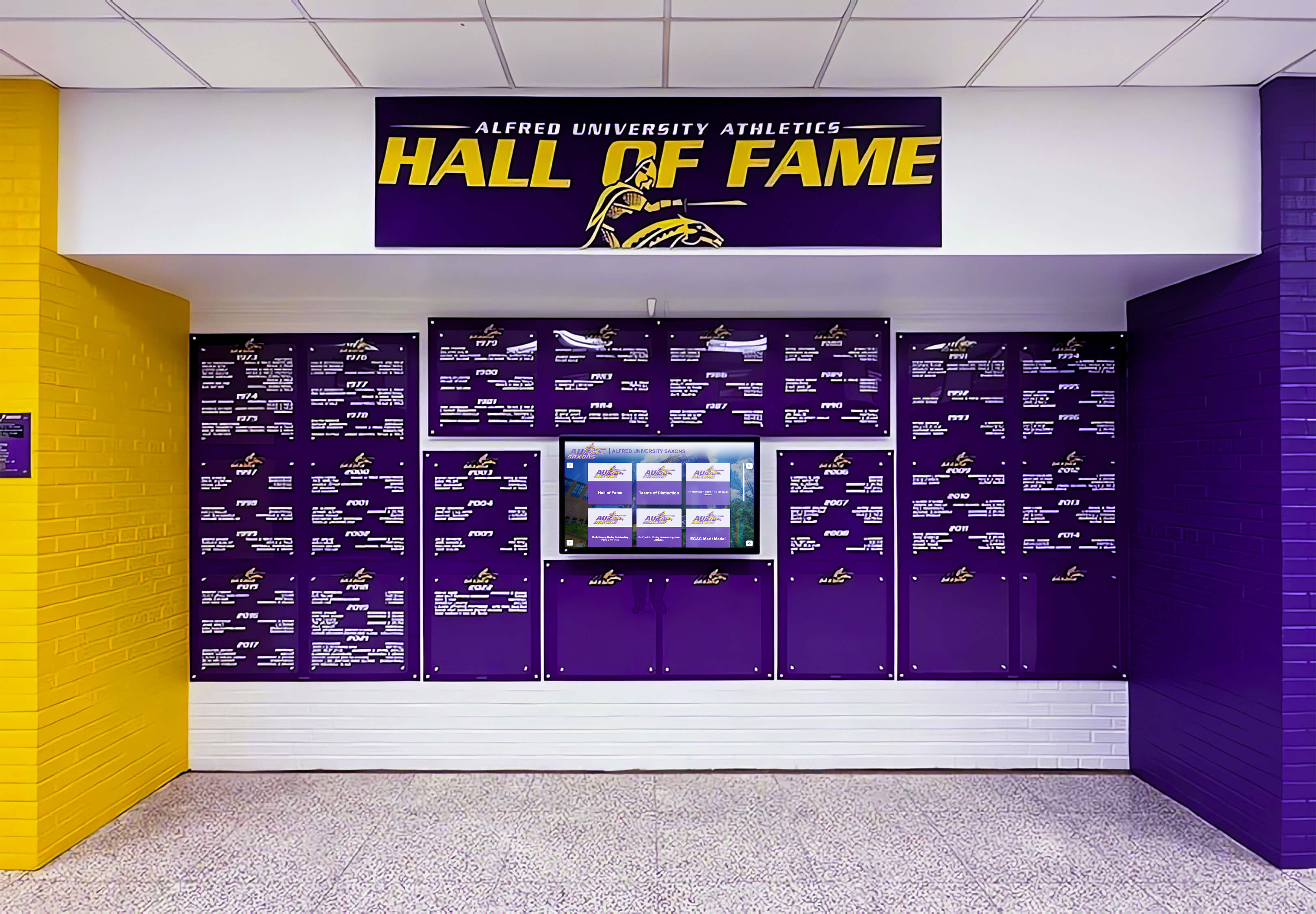
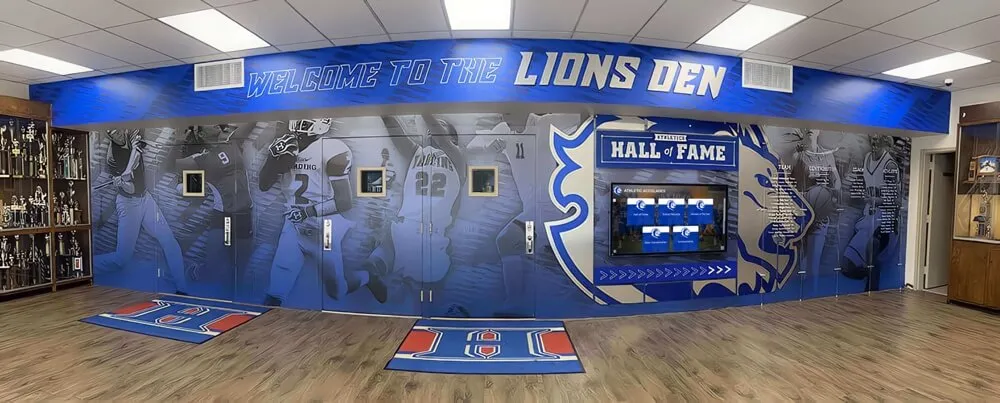
Comprehensive athletic recognition systems honor varsity letter recipients as part of broader hall of fame displays that celebrate excellence across all achievement levels
Implementing Modern Varsity Letter Recognition at Your School
For schools looking to enhance how they celebrate varsity letter recipients, several practical steps can strengthen programs:
Assessing Current Recognition
Start by evaluating existing approaches:
What’s Working
- Survey letter-winners about meaningful aspects of current recognition
- Identify traditions that resonate with students and alumni
- Review participation in letter ceremonies and events
- Assess visible recognition elements (trophy cases, displays)
- Gather feedback from families about recognition experiences
Improvement Opportunities
- Identify letter-winners who lack adequate recognition
- Find gaps in historical record-keeping and preservation
- Assess whether current displays effectively celebrate achievements
- Review whether all sports receive equitable recognition
- Determine if criteria are clearly communicated and consistently applied
Developing Comprehensive Recognition Plans
Create multi-faceted approaches that honor traditions while embracing modern capabilities:
Short-Term Improvements (Implement within current academic year)
- Standardize letter criteria documentation across all sports
- Enhance letter ceremony planning and family communication
- Improve social media recognition of new letter-winners
- Create bulletin board or hallway displays for current-year recipients
- Update website to feature letter-winners prominently
Medium-Term Enhancements (1-2 year implementation)
- Develop digital archives of historic letter-winners
- Create interactive displays in high-traffic areas
- Establish letter-winner alumni networks
- Implement consistent photography and documentation systems
- Expand recognition to include biographical information and achievements
Long-Term Infrastructure (2-5 year vision)
- Install permanent digital recognition systems
- Create comprehensive databases tracking letter-winners across decades
- Develop integrated athletic recognition spaces
- Establish endowments supporting recognition program sustainability
- Build connections between letter recognition and broader school honors
Schools pursuing comprehensive approaches can explore end-of-year recognition strategies that integrate athletic letters with other student achievements.
Budget and Resource Considerations
Implementing sustainable letter recognition requires appropriate resource allocation:
Ongoing Operational Costs
- Letter purchases (typically $15-50 per letter)
- Ceremony expenses (venue, refreshments, programs)
- Framing and display materials for permanent recognition
- Photography and documentation
- Communication and marketing materials
Capital Investments For enhanced recognition infrastructure:
- Trophy case renovation or construction
- Digital display hardware installation
- Software and content management systems
- Design and branding for recognition spaces
- Archive digitization and database creation
Funding Sources Many schools use combinations of:
- Athletic department budgets
- Booster club fundraising and support
- Alumni donations designated for recognition
- Capital campaign inclusion for facility projects
- Sponsorship opportunities for digital displays
The investment in comprehensive letter recognition pays dividends through enhanced school spirit, stronger alumni connections, and increased student motivation to pursue athletic excellence.
Conclusion: The Enduring Meaning of Varsity Letters
More than a century after the first varsity letter was awarded, this tradition continues to hold deep significance for student-athletes, schools, and communities. The varsity letter meaning encompasses athletic achievement, personal dedication, character development, and connection to traditions spanning generations.
For students, earning a varsity letter represents one of high school’s most memorable accomplishments—tangible evidence of meeting rigorous standards through commitment and performance. The process of working toward letter achievement builds work ethic, resilience, and goal-setting abilities that serve athletes throughout life.
For schools, varsity letter programs create opportunities to celebrate student achievement, build spirited athletic cultures, and maintain traditions connecting current students with decades of predecessors who wore the same school colors in competition. When properly implemented, letter recognition motivates current athletes while honoring past letter-winners through permanent, accessible celebration.
As schools balance honoring historic traditions with meeting contemporary students’ needs, the most effective recognition programs combine time-tested elements—meaningful letter criteria, quality awards, celebratory ceremonies—with modern enhancements that ensure every letter-winner receives lasting recognition. Digital displays, interactive archives, and comprehensive documentation preserve achievements while making them accessible to broader audiences than ever before.
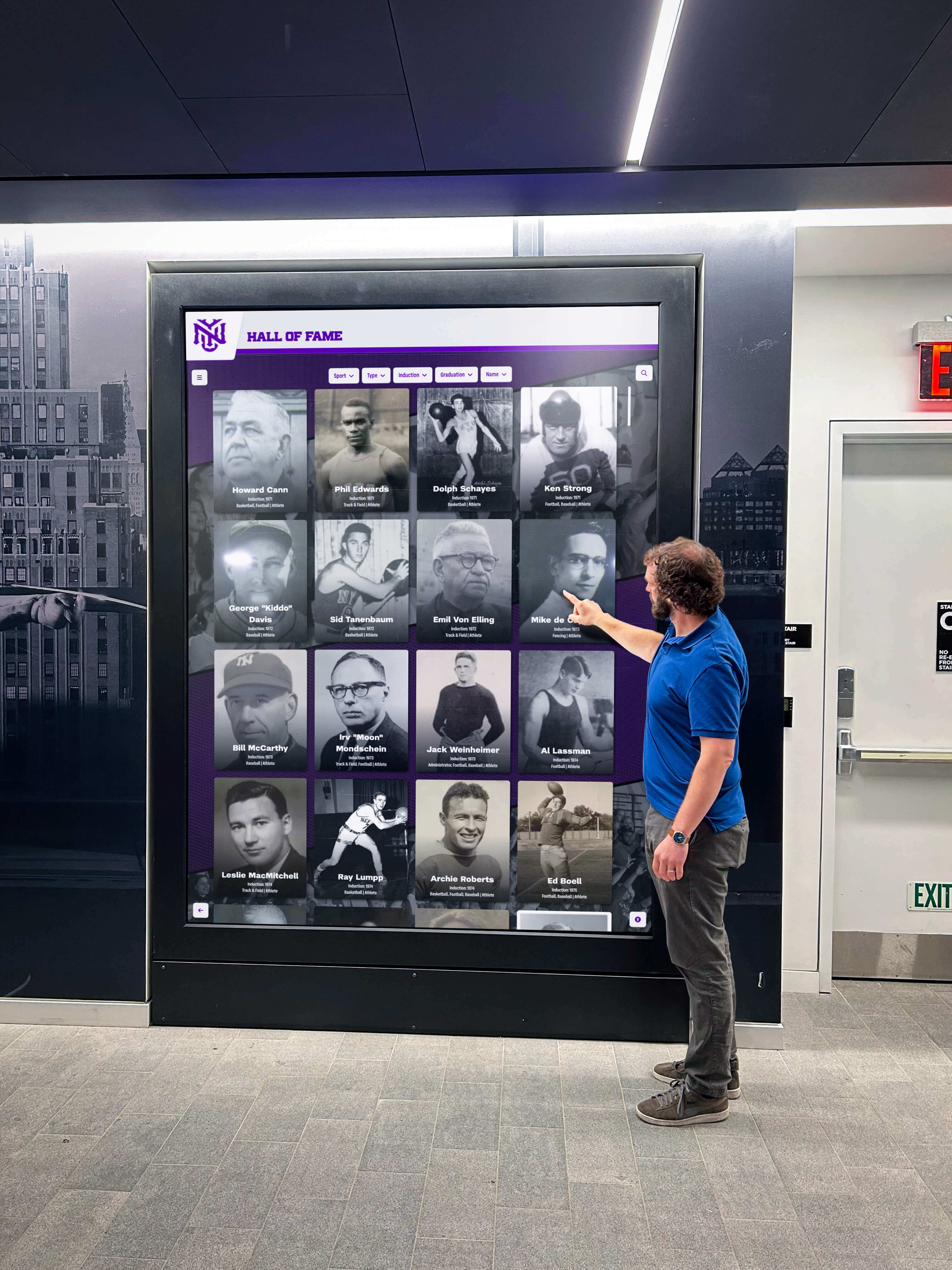
Modern recognition systems ensure varsity letter achievements receive the lasting celebration they deserve while remaining accessible to students, families, and returning alumni
Whether you’re a student-athlete pursuing your first varsity letter, a parent supporting your athlete’s journey, or a school administrator designing recognition programs, understanding the full meaning behind this tradition ensures these significant achievements receive appropriate celebration. By maintaining rigorous standards while creating accessible, permanent recognition, schools preserve varsity letter traditions for generations to come while inspiring current students to pursue their own athletic excellence.
Ready to Honor Your Varsity Letter Recipients?
If your school is ready to implement or enhance recognition for varsity letter recipients, Rocket Alumni Solutions provides comprehensive digital recognition systems that celebrate athletic achievement through engaging, interactive displays.
Our platform helps schools create permanent recognition for all letter-winners—from historic recipients to current athletes—through touchscreen displays that preserve achievements while making them accessible throughout your facility. Unlike traditional trophy cases limited by physical space, our digital solutions ensure every varsity letter recipient receives equal recognition while supporting the traditions that make these achievements meaningful.
Discover how digital recognition can strengthen your school’s letter program while honoring the athletes who’ve earned this significant achievement.