Many school administrators face the same challenge when considering digital hall of fame displays: the technology looks impressive, but who will set everything up? Who creates the initial content? How will staff learn to update it? These questions often delay or derail projects that could transform how schools celebrate student achievements.
The concept of “turnkey” solutions addresses these concerns directly. Rather than purchasing hardware and figuring out everything yourself, turnkey providers handle the complete implementation—from initial design through hardware installation, content creation, and staff training. You receive a fully operational system ready to showcase student athletes, academic achievers, and school history from day one.
This guide examines pricing for turnkey digital hall of fame displays specifically designed for schools. We’ll compare full-service providers, break down what’s included in all-inclusive packages, explore realistic cost ranges from budget to premium options, and help you evaluate which level of service matches your school’s needs and budget constraints.
Whether you’re a high school athletic director researching recognition options, a principal planning a facility renovation, or a technology coordinator evaluating digital signage proposals, understanding turnkey pricing helps you budget appropriately and select providers capable of delivering complete solutions rather than just selling equipment.

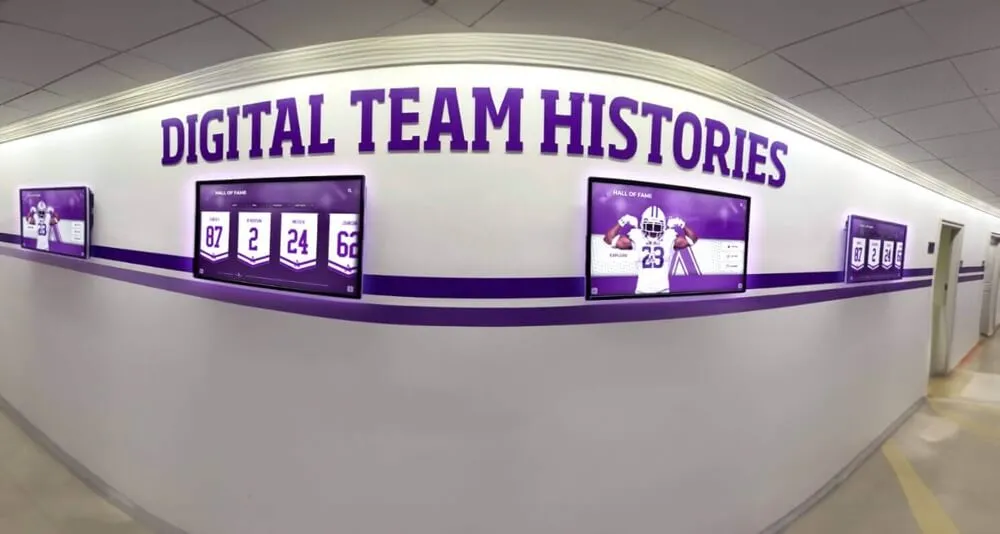
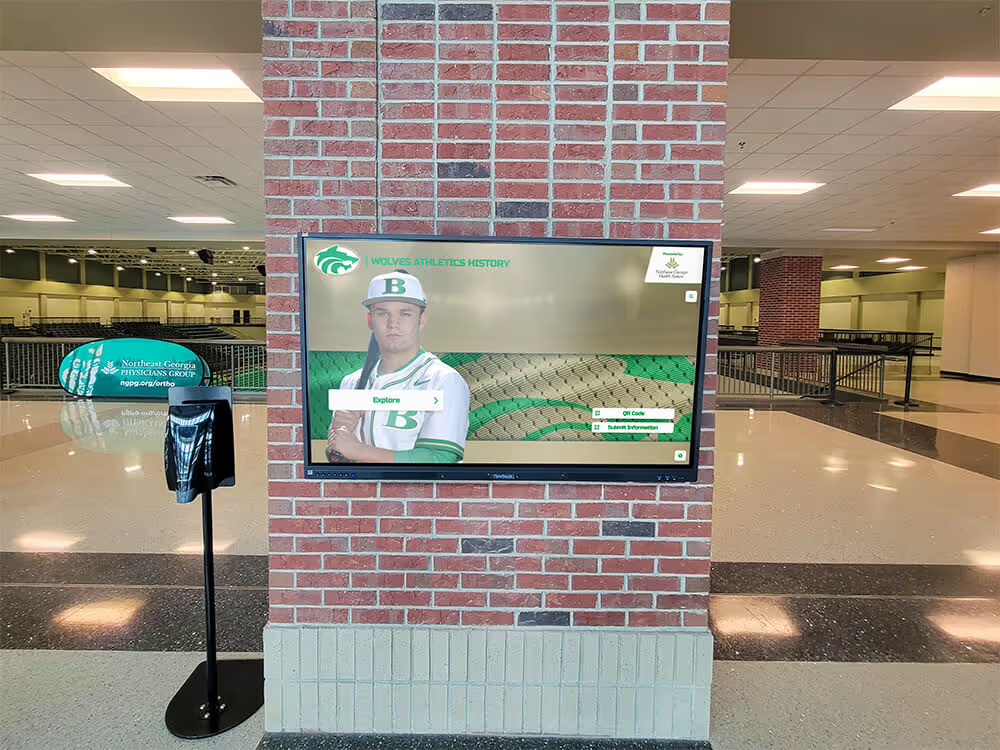
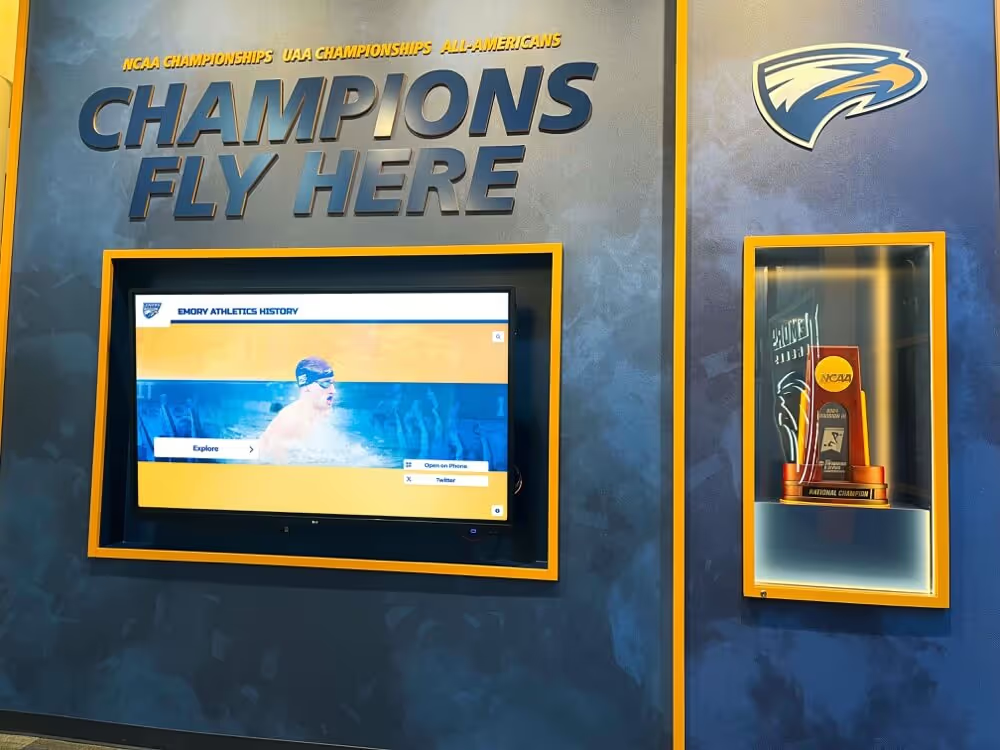
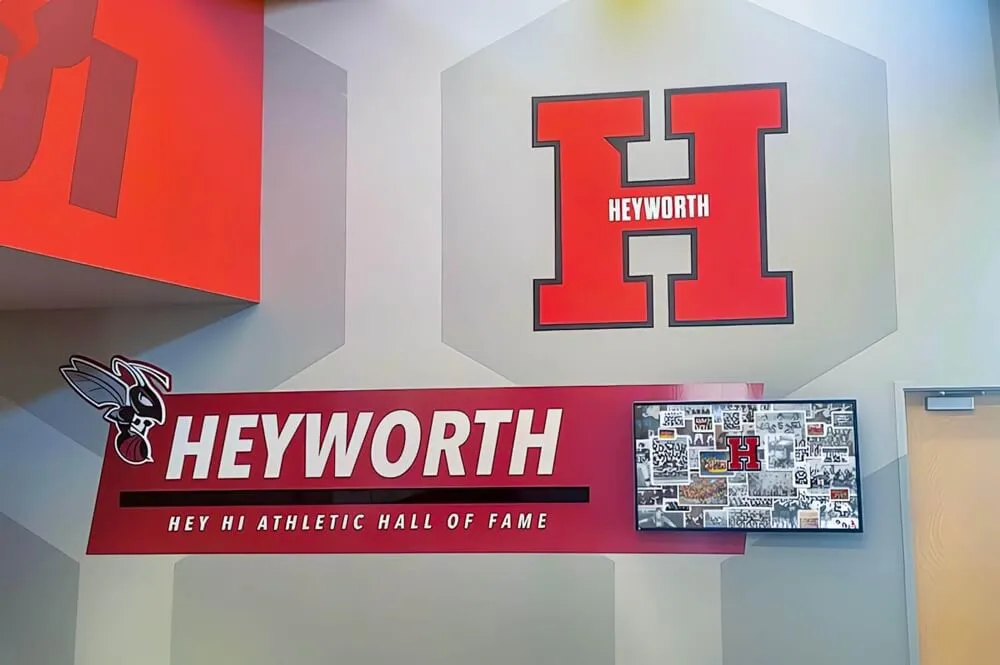
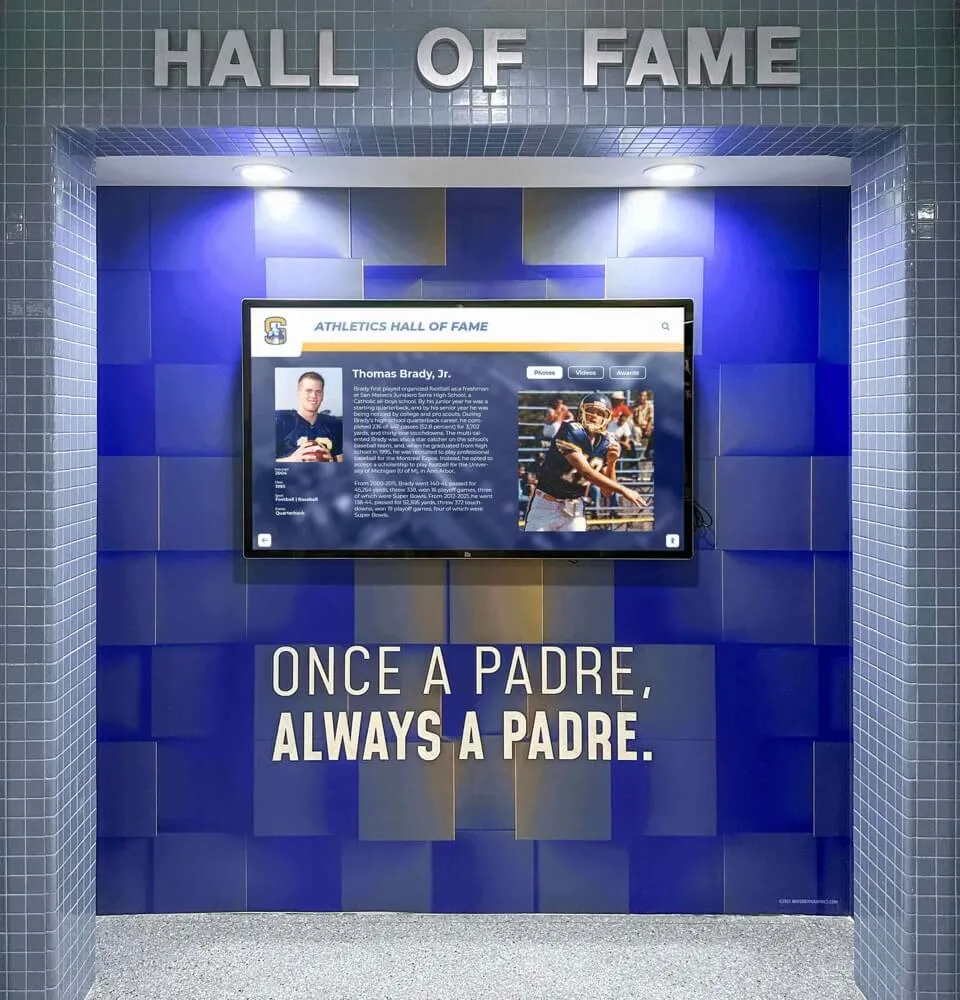
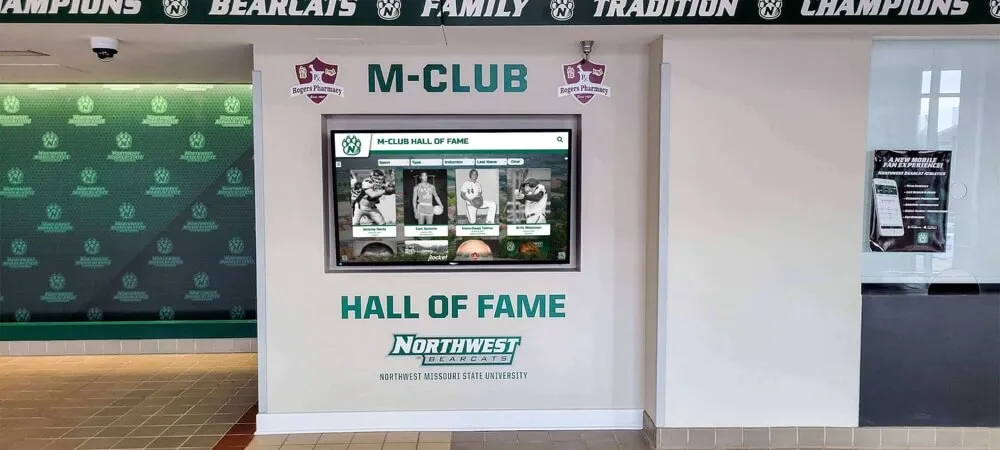
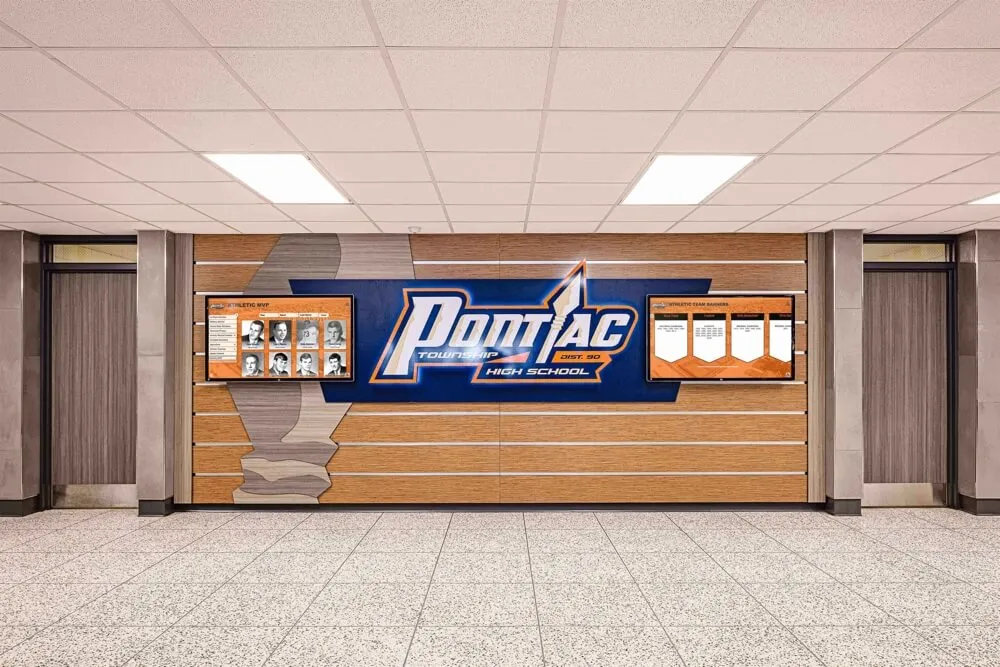
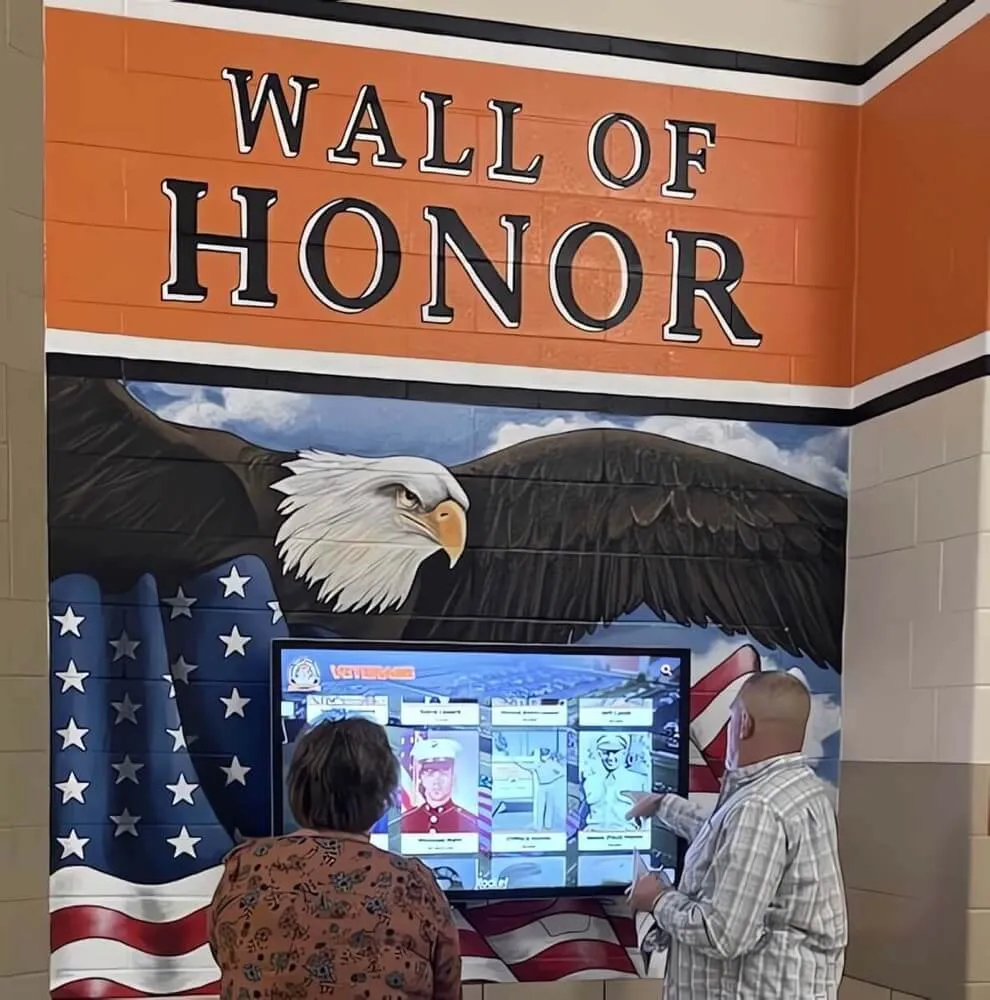
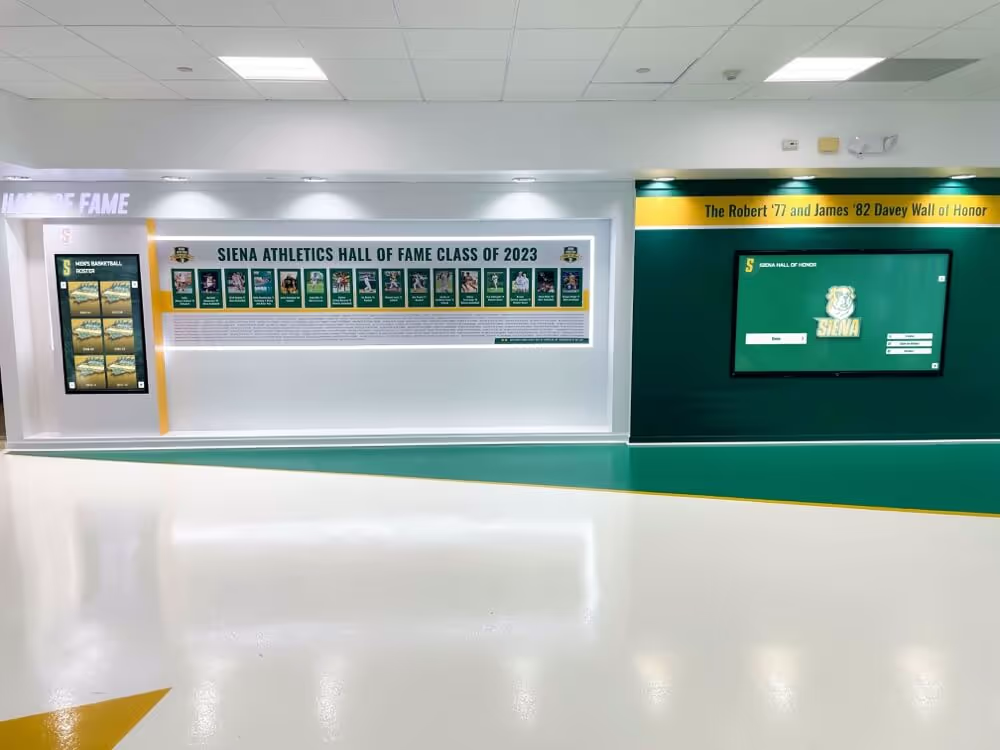
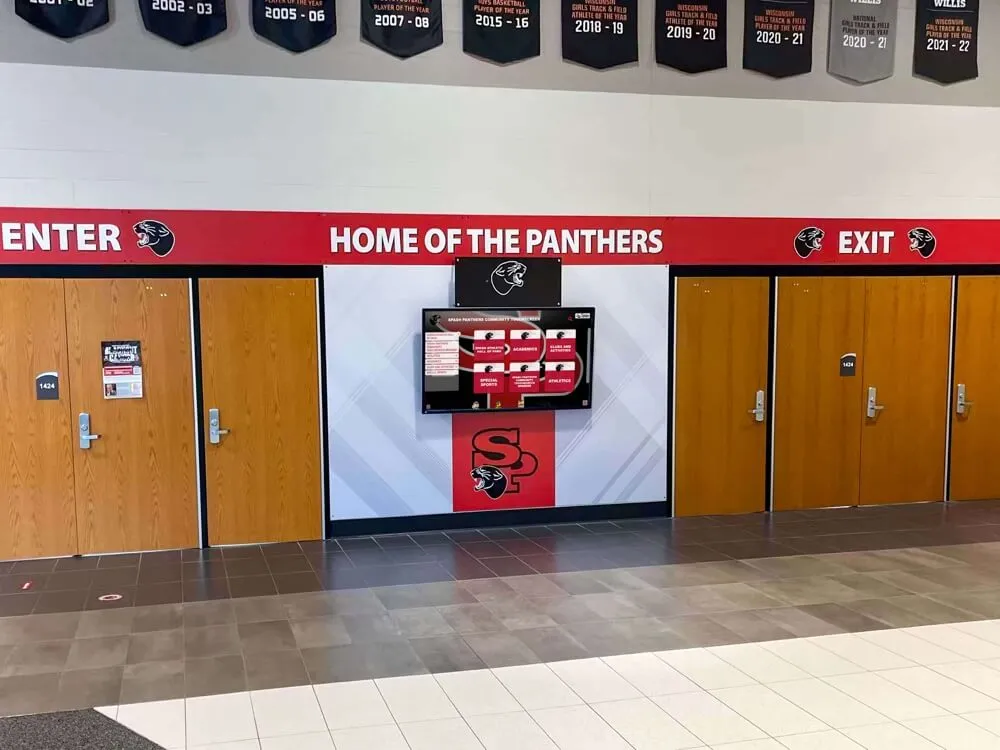
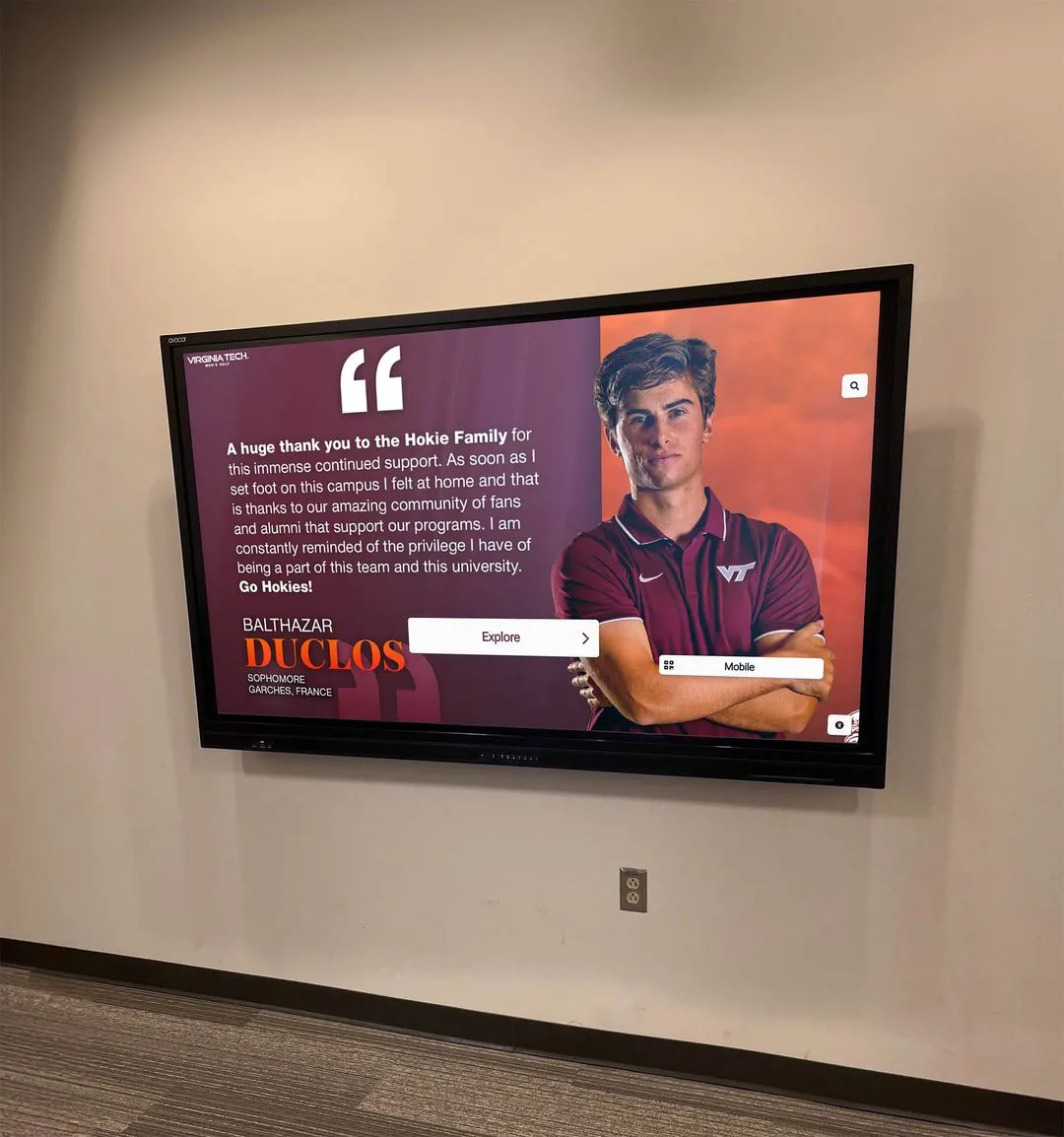
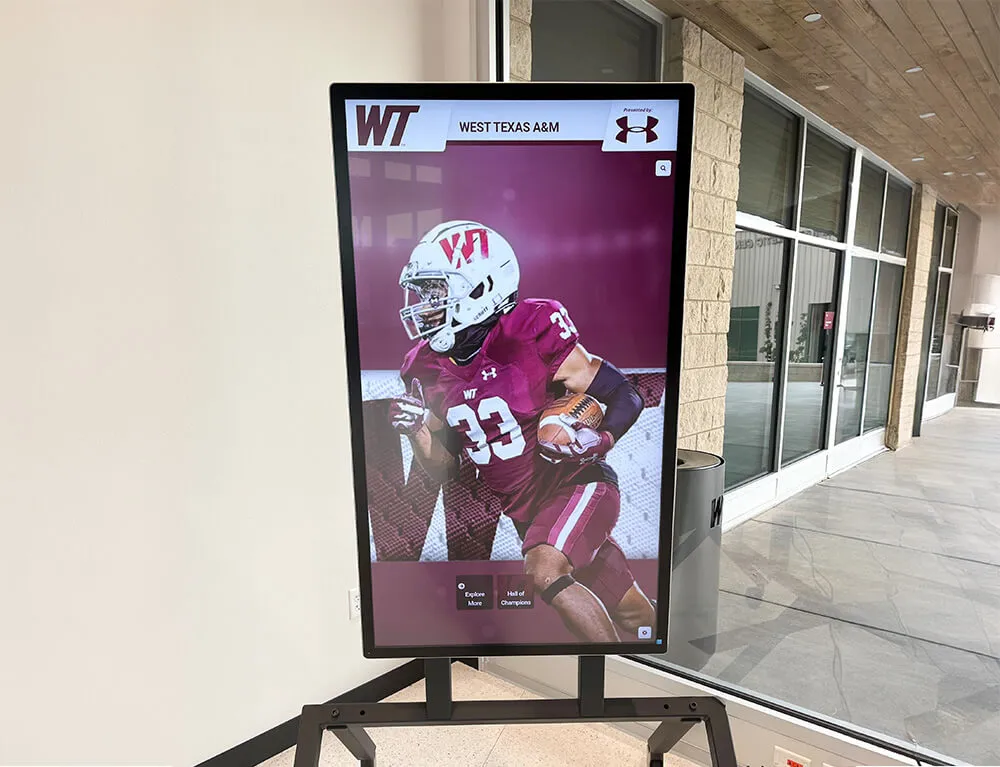
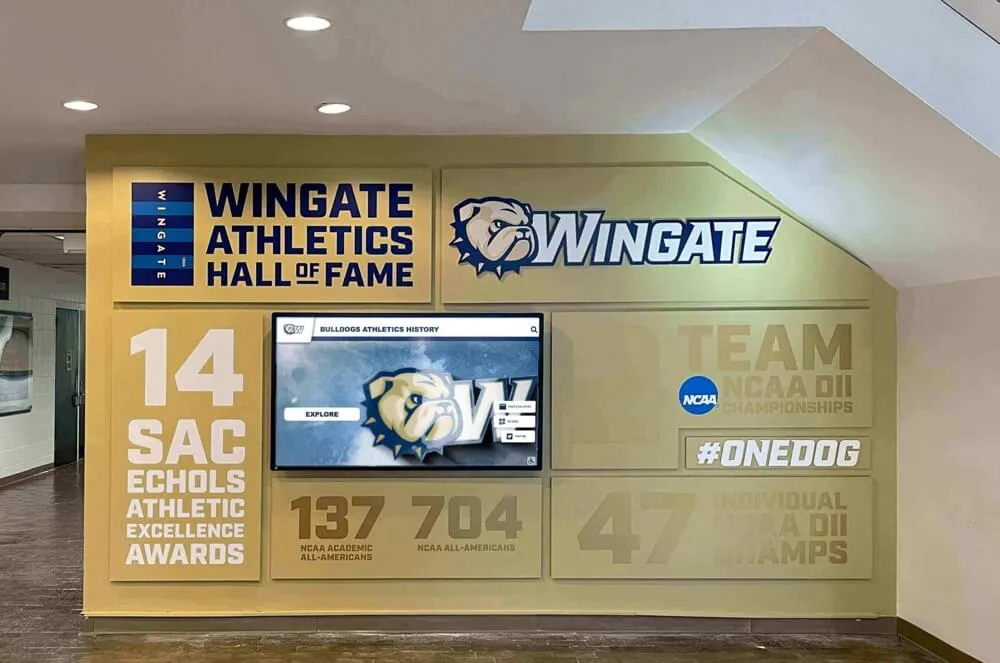
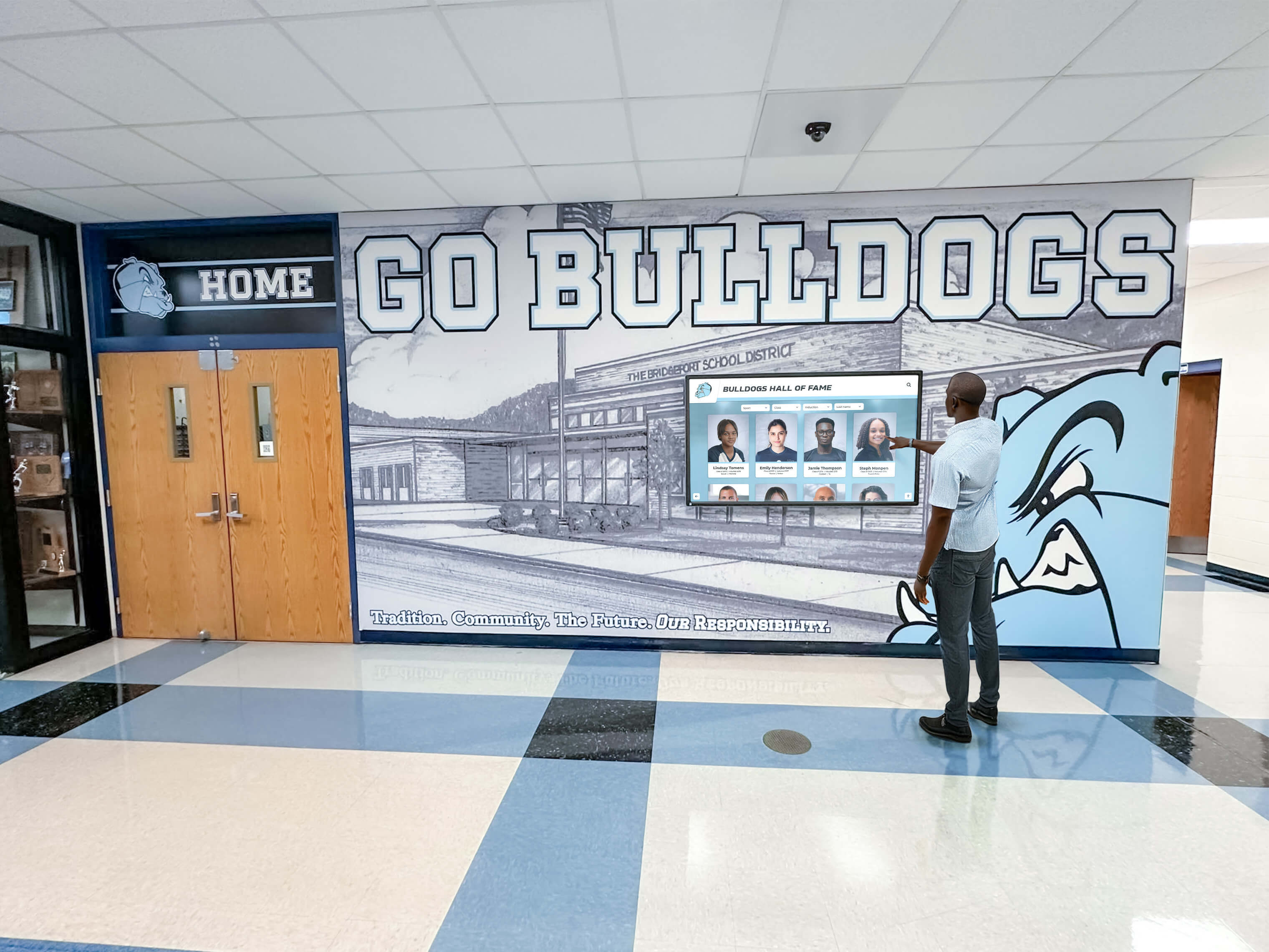
Turnkey digital hall of fame displays come fully configured with content and training, ready for immediate use
What “Turnkey” Means for Digital Hall of Fame Displays
The term “turnkey” in this context refers to comprehensive solutions where providers handle every implementation aspect. You provide the wall space and confirm who should be recognized—the provider handles everything else needed to create a functioning digital hall of fame display.
Components of True Turnkey Solutions
Complete turnkey packages typically include these elements:
Hardware Selection and Procurement
Providers specify appropriate display hardware based on your space, viewing distances, and budget. This includes the touchscreen display itself (typically 43-75 inches), mounting equipment (wall mounts or floor kiosks), media player or integrated computer, cables and power management, and any custom enclosures or branding elements.
Rather than researching display specifications yourself, turnkey providers apply their expertise selecting commercial-grade equipment designed for continuous operation in school environments.
Professional Installation
Installation services include mounting displays securely to walls or installing floor kiosks, running power and network connections, concealing cables for professional appearance, configuring network settings and remote access, and testing all hardware functionality before handoff.
Schools implementing digital recognition displays benefit from professional installation ensuring displays integrate smoothly with existing facilities.
Initial Content Creation
Content setup represents the most time-intensive aspect of launching digital displays. Turnkey providers handle data collection from your existing records, photo processing and formatting, profile creation for athletes or students, design templates matching school branding, biographical information compilation, and complete initial content population.
Some schools have decades of athletic records, hundreds of photos, and extensive historical information. Turnkey providers transform these raw materials into polished, organized digital content ready for display.
Software Platform and Hosting
Providers supply the content management system for ongoing updates including cloud-based platforms accessible from any device, mobile apps enabling smartphone updates, template libraries for consistent presentation, searchable databases for large content collections, and technical support for platform questions.
Rather than purchasing and managing software separately, turnkey solutions include platform access as part of the package.
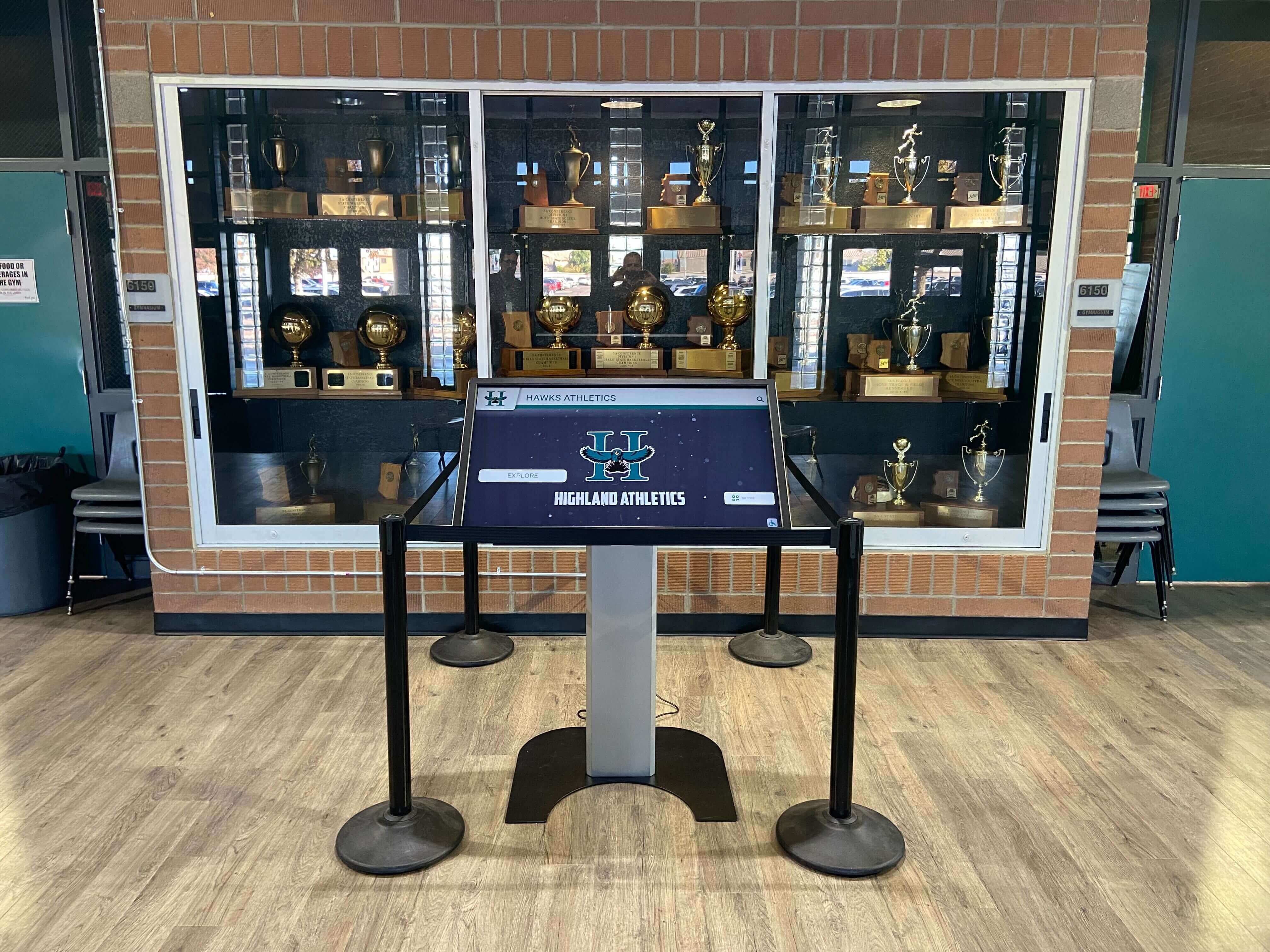
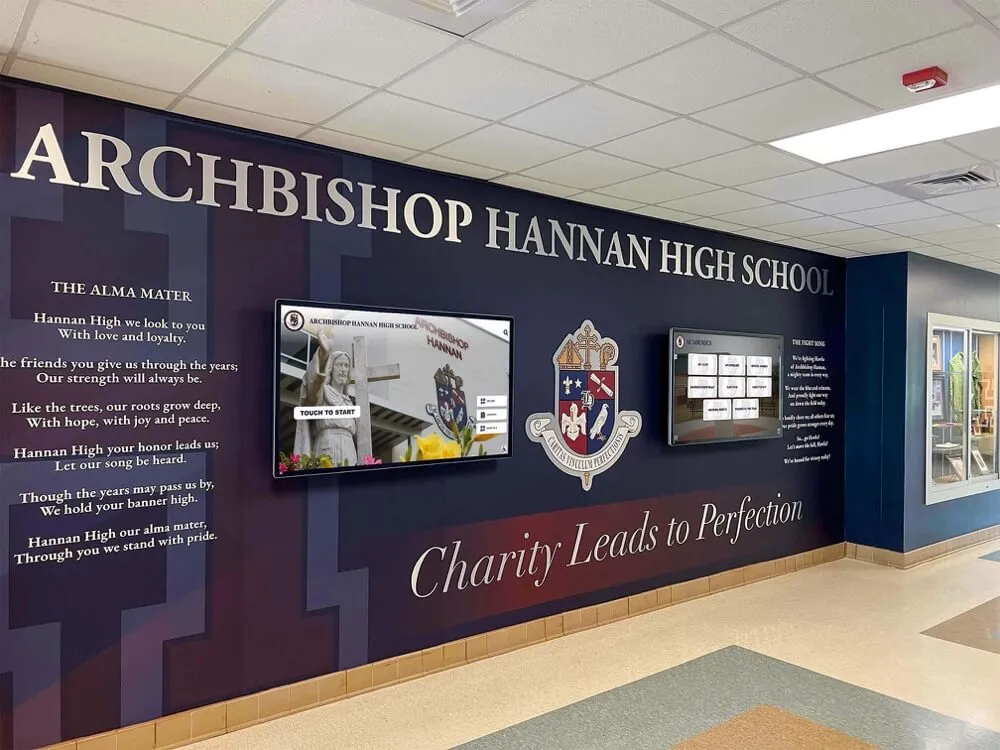
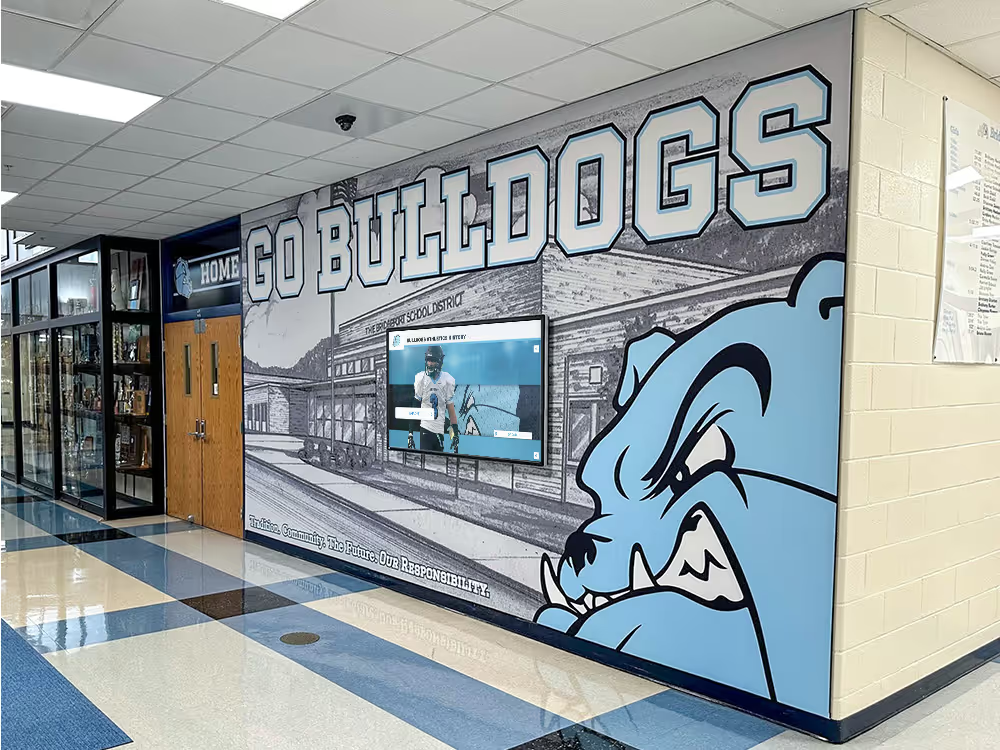
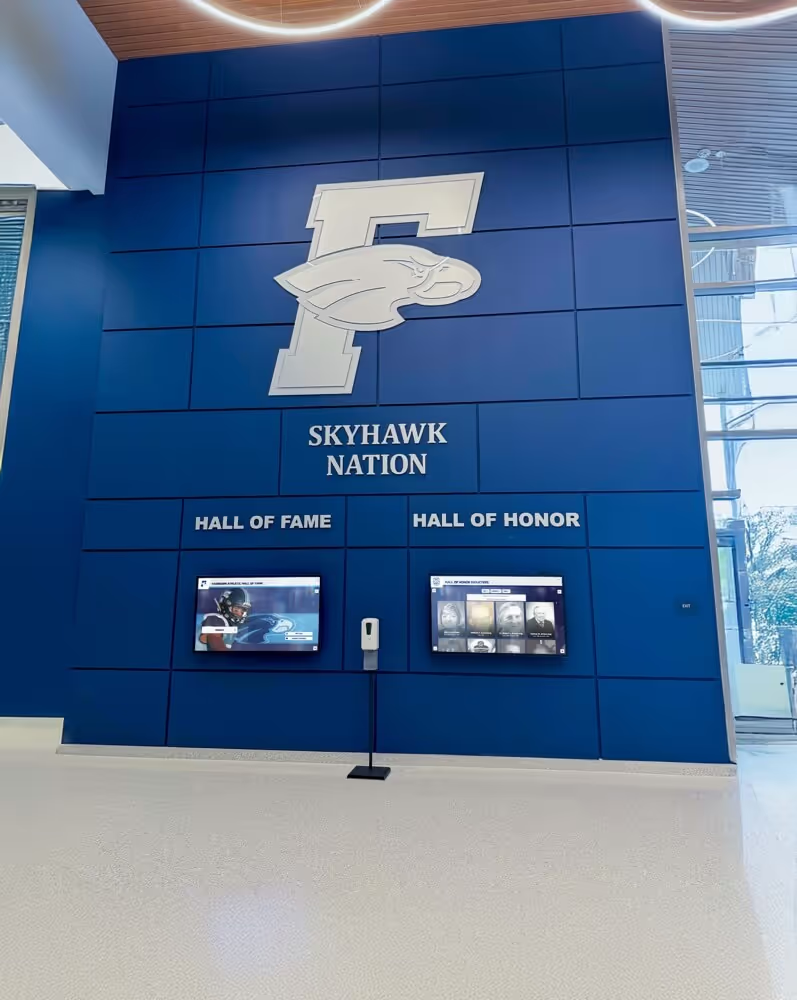
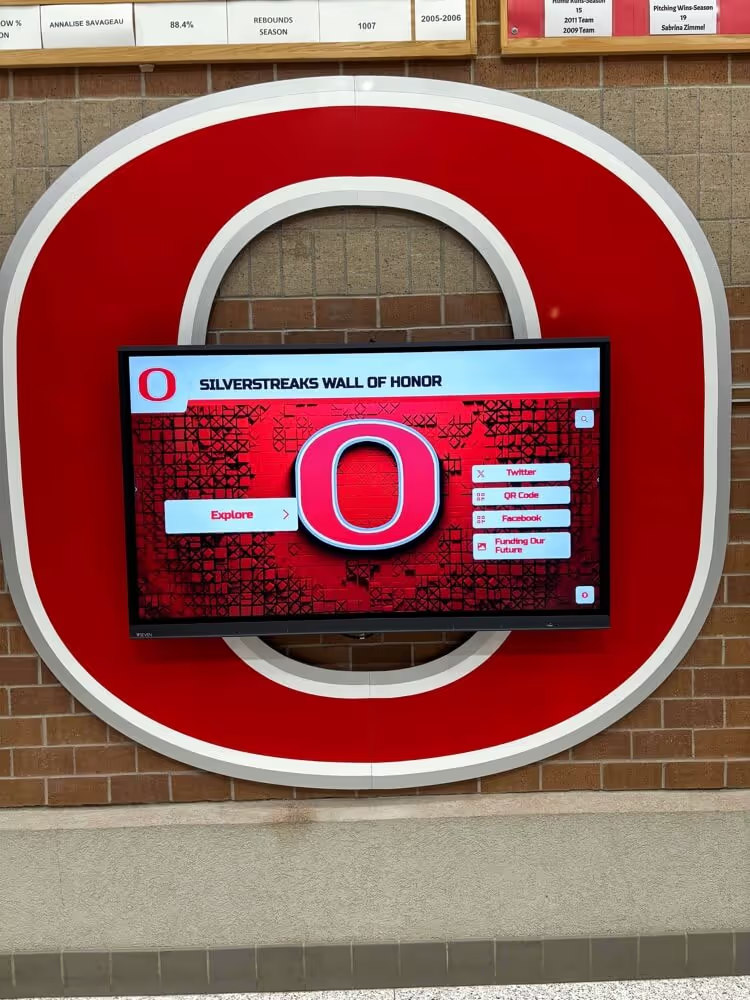
Turnkey installations integrate displays with existing trophy cases and school branding
Staff Training
Comprehensive training ensures your team can manage content independently through on-site training sessions (typically 1-3 hours), documentation and video tutorials, practice exercises with sample content, ongoing technical support access, and refresher training when staff changes occur.
Training focuses on common tasks like adding new inductees, updating photos, managing announcements, and troubleshooting basic issues.
Ongoing Support and Maintenance
Most turnkey packages include continuing support through technical assistance for software questions, content management help when needed, software updates and security patches, hardware warranty coverage (typically 1-3 years), and remote troubleshooting for connectivity issues.
This ongoing relationship differentiates turnkey providers from equipment-only vendors who disappear after installation.
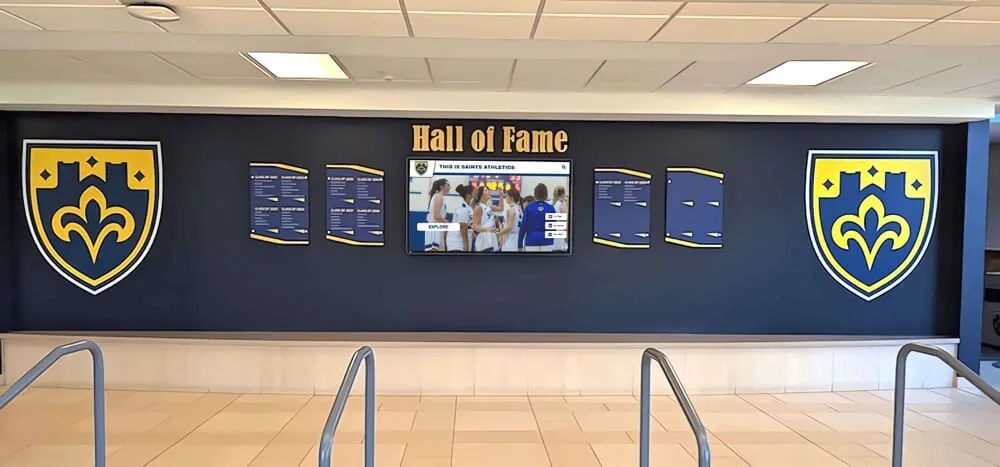
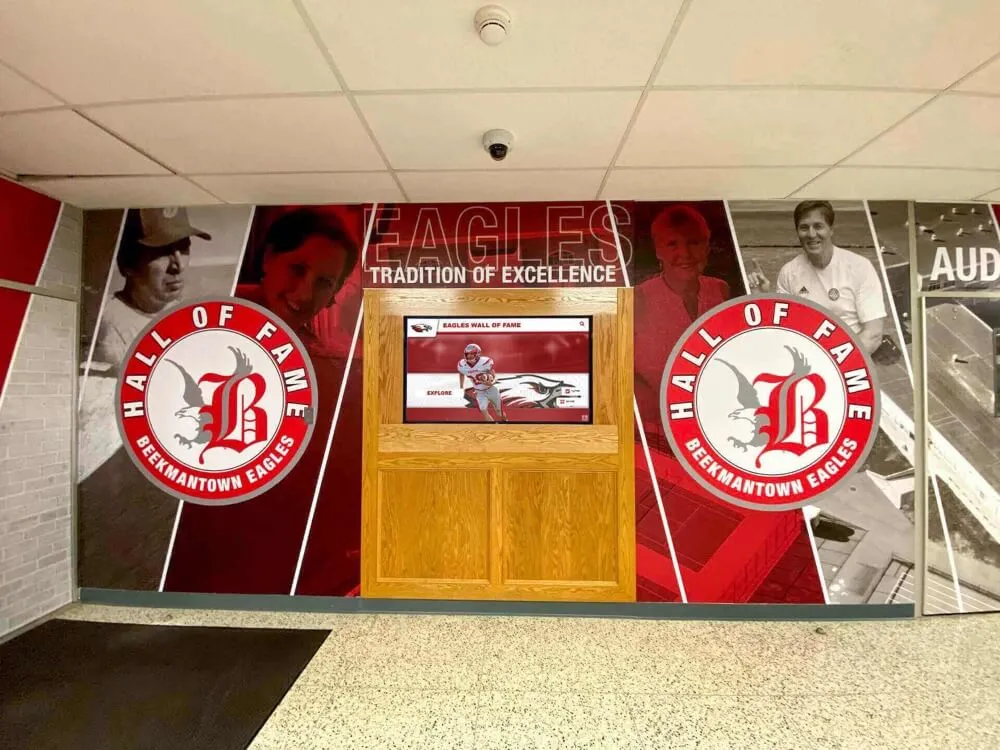
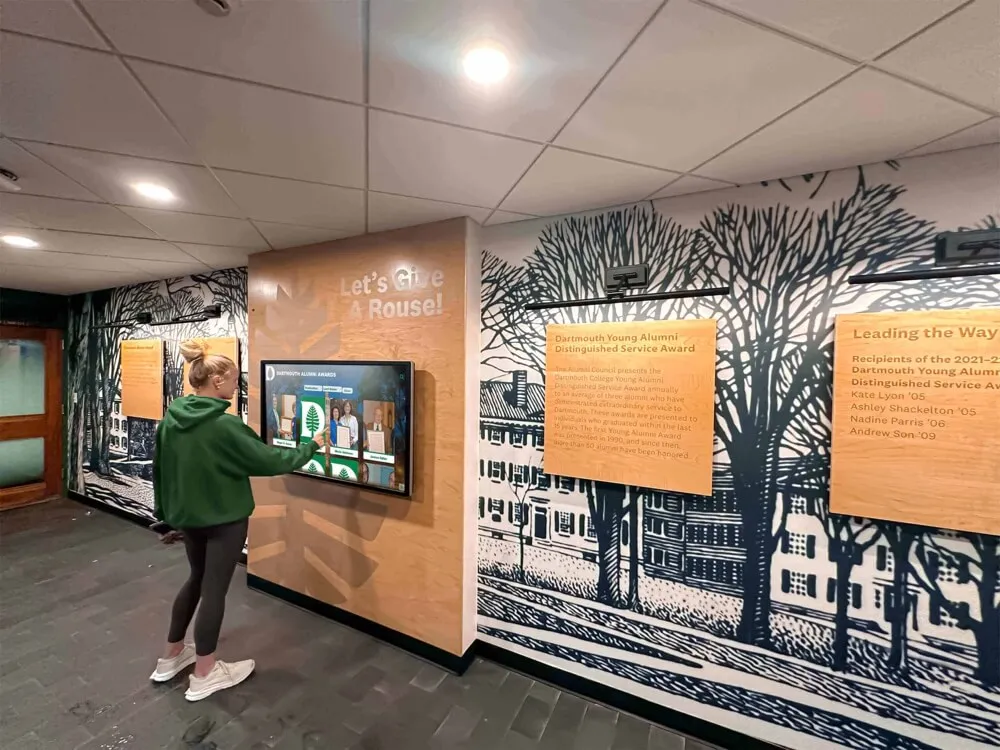
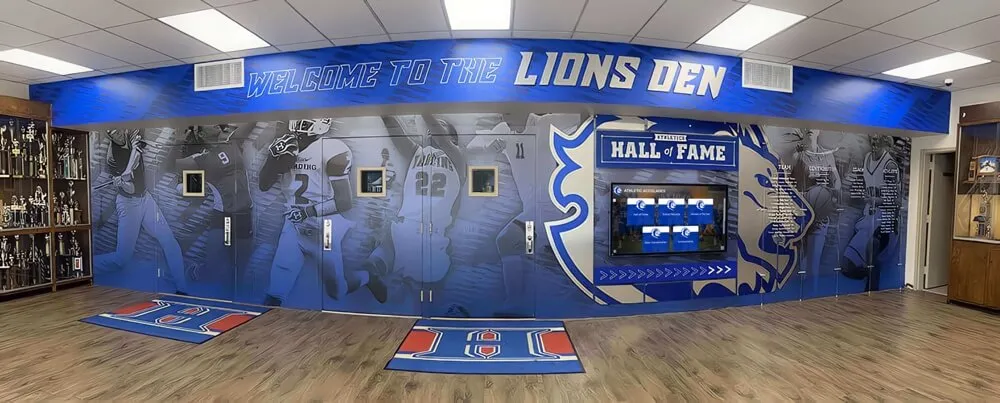
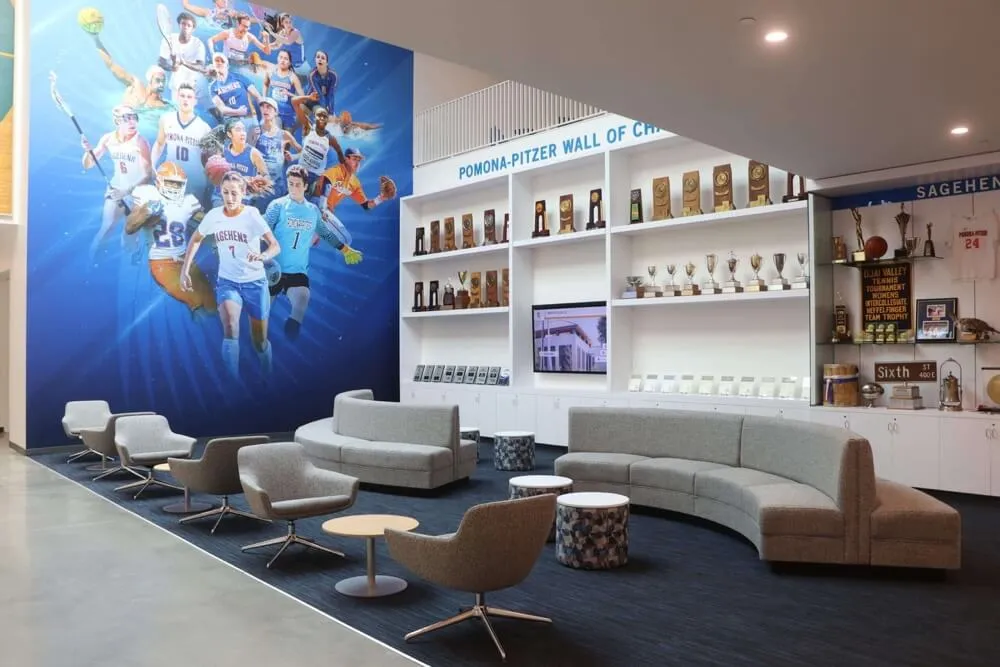
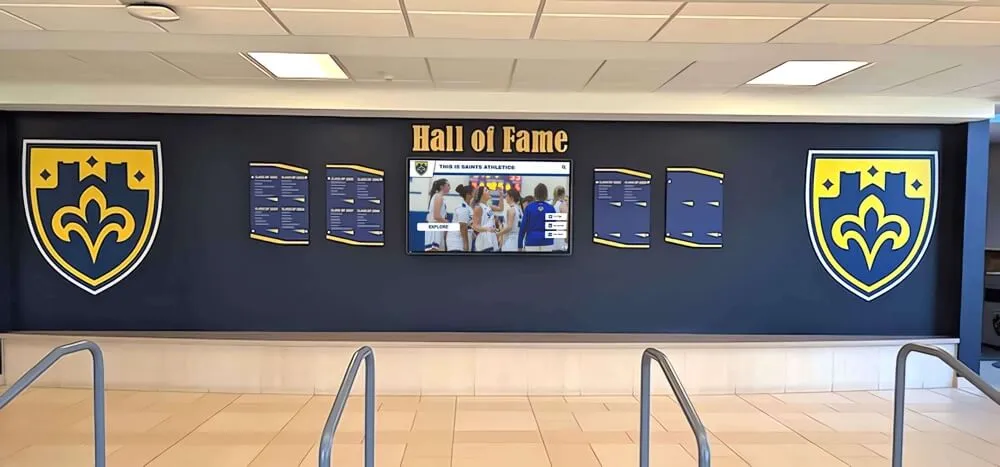
Turnkey solutions often combine digital displays with traditional recognition elements for comprehensive hall of fame installations
Turnkey Pricing: What Schools Can Expect to Pay
Turnkey pricing typically ranges from $8,000 to $25,000+ depending on hardware specifications, content complexity, customization requirements, and included services. Understanding price ranges helps schools budget appropriately and evaluate proposals accurately.
Budget Turnkey Option: $8,000-$12,000
Entry-level turnkey solutions provide complete implementations at accessible price points:
What’s Included:
- 43-55 inch commercial-grade touchscreen display
- Wall mount with professional installation
- Basic content management platform (1-year subscription)
- Initial content setup for 50-100 profiles
- Template-based design using standard layouts
- 2-hour on-site training session
- 90 days of technical support
- Basic photo editing and formatting
Hardware subtotal: $4,000-$5,000 Installation and setup: $1,500-$2,000 Content creation services: $1,500-$3,000 Training and support: $500-$1,000 Software (first year): $500-$1,000
Total Initial Investment: $8,000-$12,000 Year 2+ Annual Cost: $500-$1,500 (software subscription and support)
This budget option works for schools needing straightforward hall of fame displays for current athlete recognition, limited historical content (recent years only), standard templates without extensive customization, single-display installations, and teams comfortable with technology after initial training.
Small high schools often start at this level, adding content and features over time as budgets allow.
Mid-Range Turnkey Solution: $12,000-$18,000
Most schools implement at this level, balancing features with cost:
What’s Included:
- 55-65 inch commercial-grade touchscreen display
- Floor kiosk or premium wall mount installation
- Comprehensive content management platform
- Initial content setup for 100-300 profiles
- Custom design templates matching school branding
- Integration with school colors, logos, mascots
- Half-day on-site training for multiple staff
- 12 months of priority technical support
- Professional photo editing and restoration
- Historical content research assistance
- Web-based access extending recognition online
Hardware subtotal: $6,000-$8,000 Installation and customization: $2,000-$3,000 Content creation services: $2,500-$4,500 Training and documentation: $1,000-$1,500 Software (first year): $1,000-$2,000
Total Initial Investment: $12,500-$19,000 Year 2+ Annual Cost: $1,000-$2,500 (software, hosting, and support)
Mid-range solutions provide commercial-grade reliability for daily operation, extensive content libraries covering multiple decades, custom branding maintaining school identity, comprehensive training for multiple staff members, and priority support reducing downtime.
Schools creating comprehensive athletic recognition systems typically invest at this level.
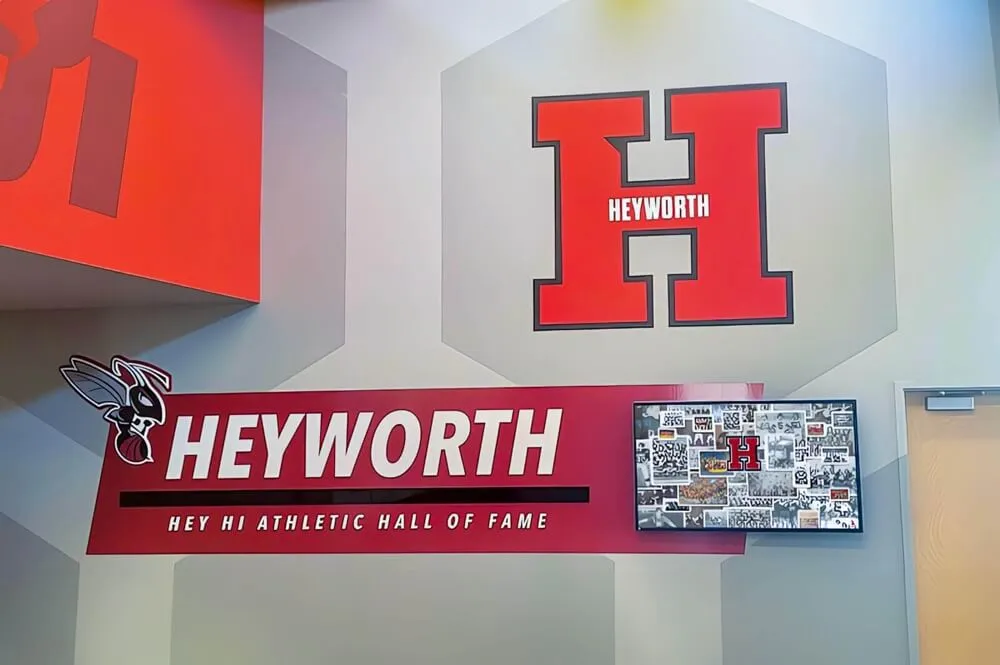
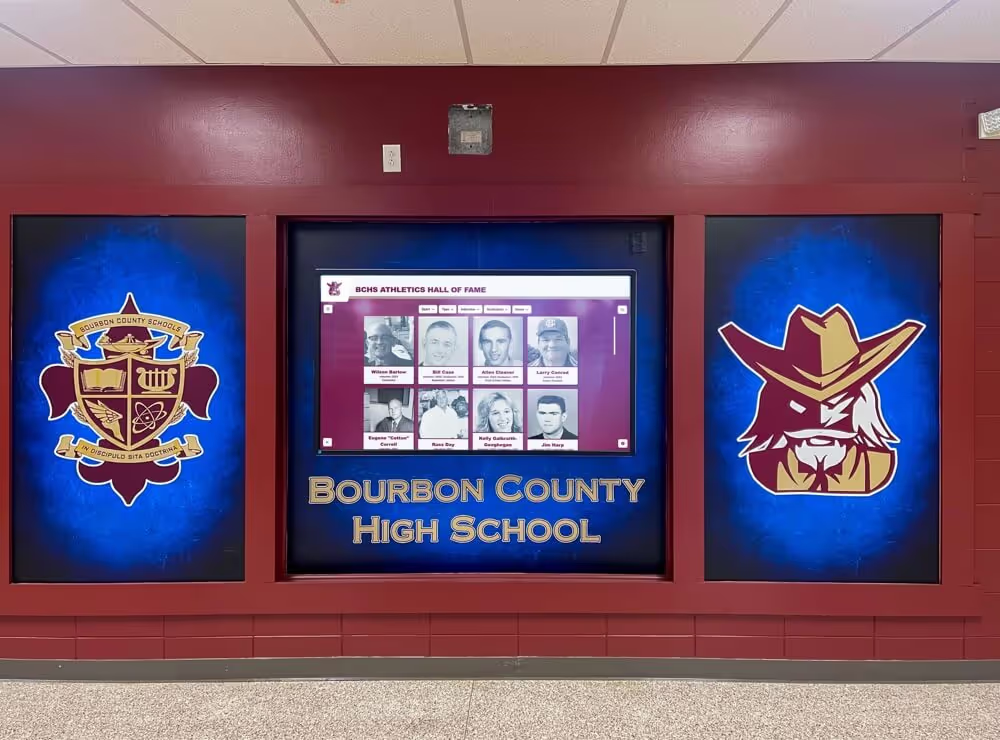
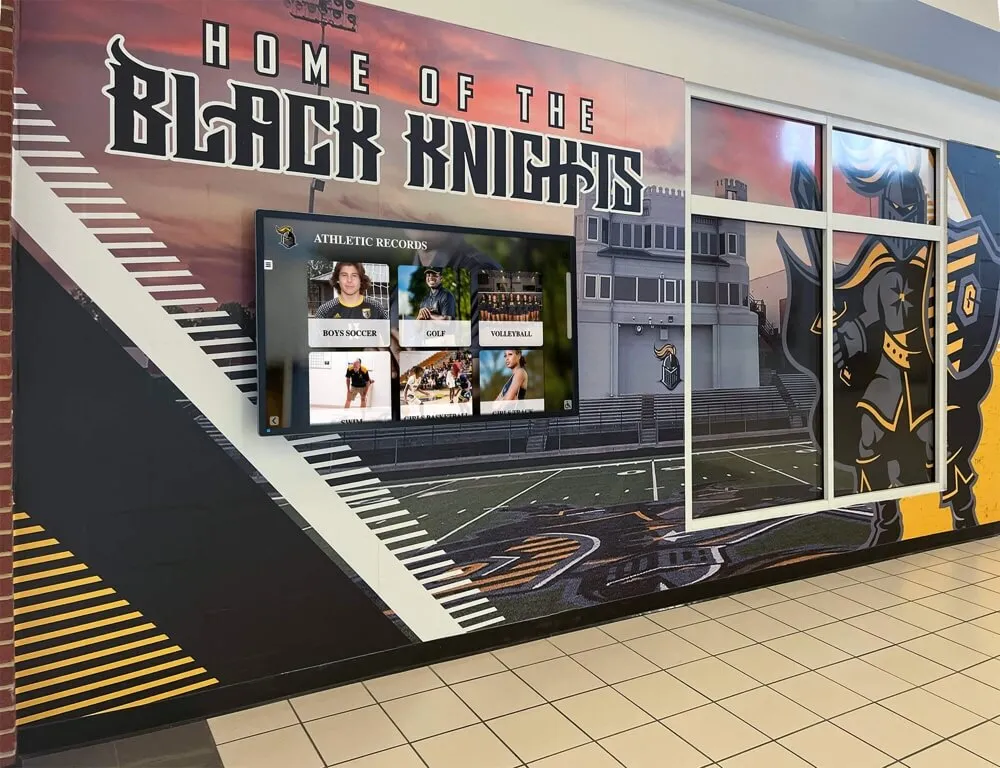
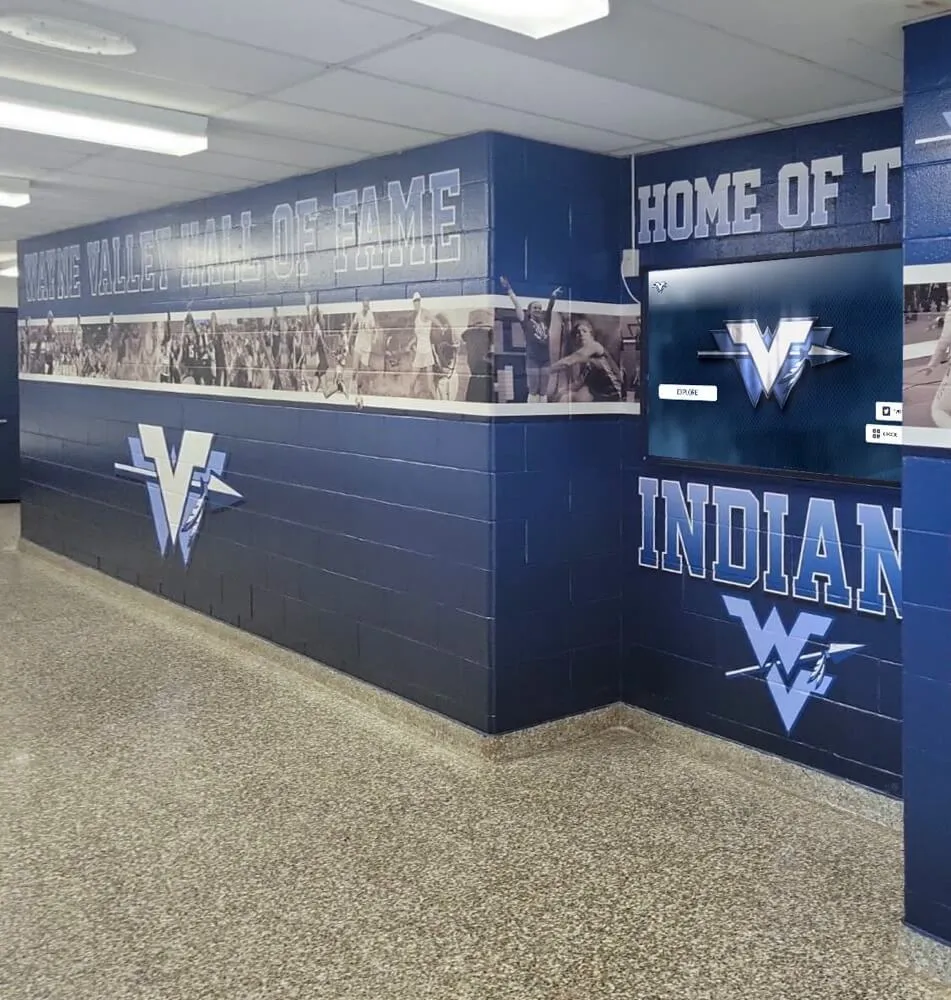
Mid-range turnkey installations often include custom murals and branding alongside digital displays
Premium Turnkey Package: $18,000-$30,000+
Comprehensive solutions for schools wanting exceptional installations:
What’s Included:
- 65-75 inch commercial-grade touchscreen (or multiple displays)
- Custom kiosk enclosures with school branding
- Enterprise content management platform
- Initial content setup for 300-1,000+ profiles
- Fully custom design and user interface
- Historical research and yearbook digitization
- Multiple display coordination
- Full-day training with ongoing sessions
- 24/7 technical support
- Dedicated account manager
- Integration with school databases
- Custom features and functionality
- Professional photography services
- Marketing materials and launch support
Hardware subtotal: $10,000-$15,000 Installation and customization: $3,000-$5,000 Content creation services: $4,000-$8,000 Training and support: $2,000-$3,000 Software and hosting (first year): $2,000-$4,000
Total Initial Investment: $21,000-$35,000 Year 2+ Annual Cost: $2,000-$4,000 (comprehensive support and hosting)
Premium packages justify investment when schools want showcase installations visible to all visitors, comprehensive content covering full school history, multiple coordinated displays across facilities, custom features beyond standard templates, and white-glove service with dedicated support.
Large high schools, colleges, and schools with significant alumni engagement often implement premium solutions creating destination experiences rather than simple recognition displays.
Factors That Affect Turnkey Pricing
Several variables influence final project costs:
Content Volume
Pricing scales with the number of profiles requiring creation. Setting up 50 current athletes differs significantly from digitizing 50 years of hall of fame inductees with historical research and photo restoration.
Historical Research Requirements
If your school lacks organized records, providers may need to research yearbooks, newspaper archives, and historical documents to compile accurate information—adding substantial time and cost.
Photo Quality and Quantity
Professional photo scanning, restoration, and editing for hundreds of historical photos increases costs beyond simple digital photo uploads from recent years.

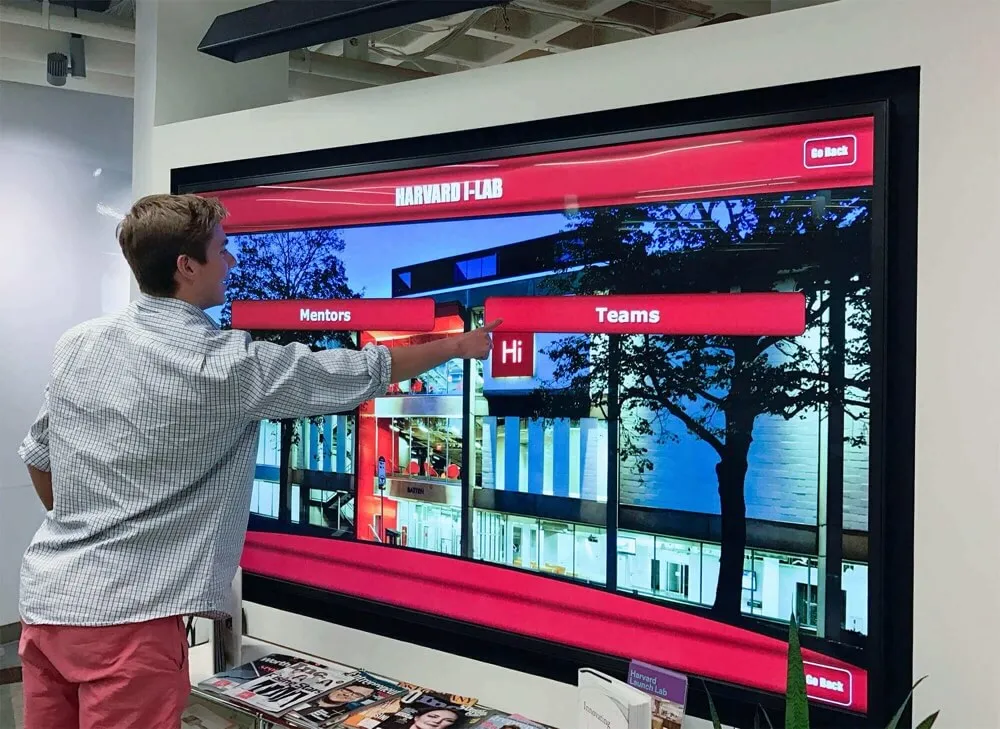
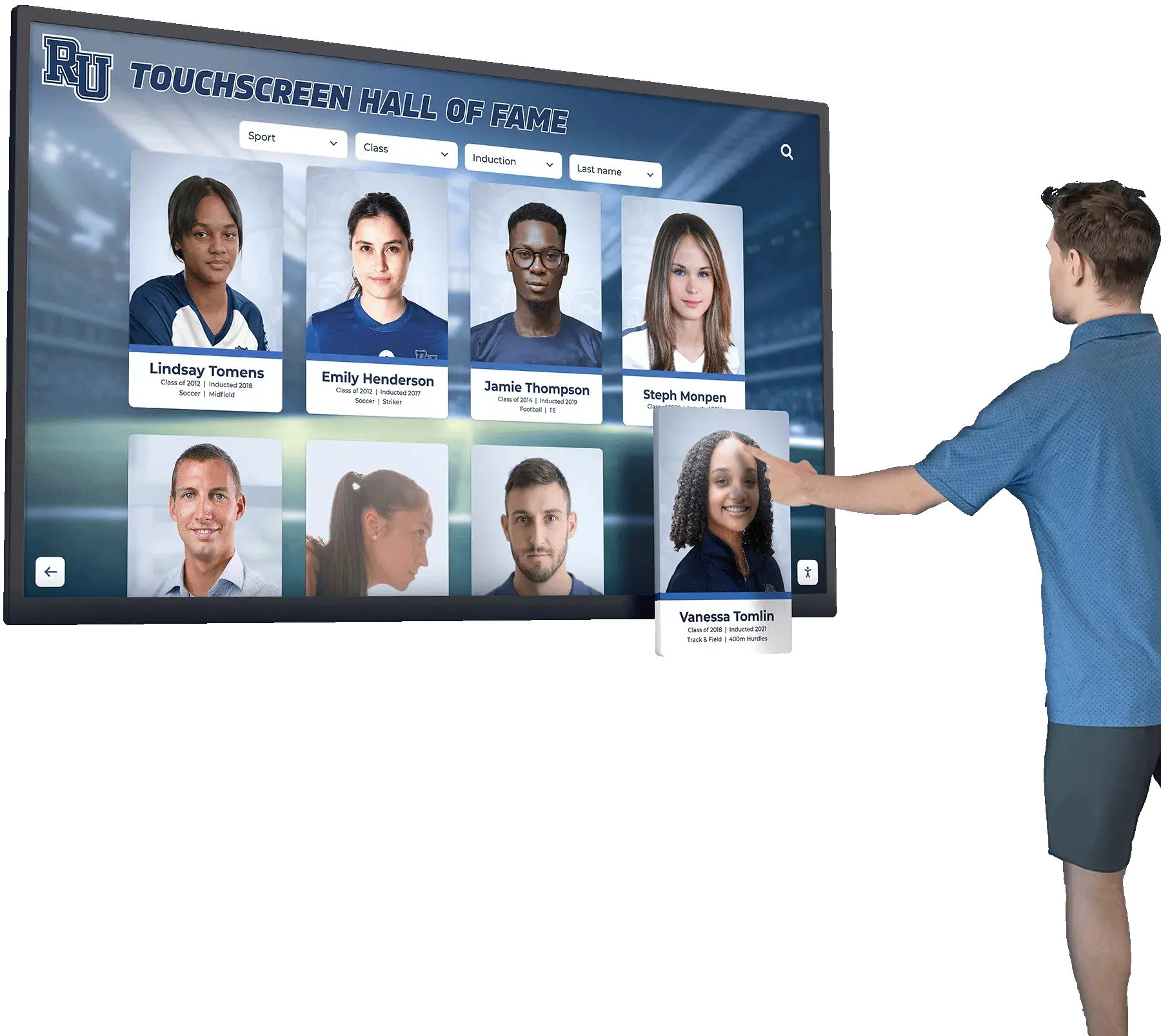
Premium systems enable detailed profile exploration with extensive biographical content
Customization Level
Standard templates using provider designs cost less than fully custom interfaces designed specifically for your school with unique navigation, branding, and features.
Display Quantity and Complexity
Single displays cost less than coordinated multi-display installations requiring content synchronization and unified management.
Installation Complexity
Standard wall mounting in accessible locations costs less than installations requiring specialized equipment, extensive cable runs, or integration with existing architectural features.
Training Requirements
Basic training for one or two staff members costs less than comprehensive training programs for larger teams or ongoing training as staff changes.
Comparing Turnkey Digital Hall of Fame Providers
Several providers specialize in complete turnkey solutions for schools. Understanding their approaches, pricing structures, and included services helps you evaluate proposals effectively.
Rocket Alumni Solutions
Rocket Alumni Solutions specializes in turnkey digital recognition displays specifically designed for schools, universities, and athletic programs. Their approach emphasizes comprehensive service from initial consultation through ongoing support.
Service Model:
Rocket provides complete implementations including hardware selection and procurement, professional installation by experienced technicians, initial content creation from your existing records, custom design matching school branding, comprehensive staff training, and ongoing technical support with dedicated account managers.
Their content management platform enables easy updates through web-based interfaces or mobile apps, with unlimited content storage supporting comprehensive historical archives.
Typical Pricing:
Mid-range complete installations typically range $12,000-$18,000 for single-display implementations with comprehensive content setup. Premium multi-display installations with extensive historical content range $20,000-$35,000.
Pricing includes first-year software subscription. Ongoing annual costs typically range $1,000-$3,000 depending on display quantity and support level.
Key Differentiators:
Rocket focuses exclusively on recognition applications rather than general digital signage, providing specialized expertise in hall of fame implementations. Their platform enables web-based access extending recognition beyond physical displays, allowing alumni to explore hall of fame content remotely.
Schools particularly appreciate their comprehensive content creation services, handling everything from photo processing to historical research for schools with limited organized records.
Learn more about comprehensive solutions at Rocket Alumni Solutions.
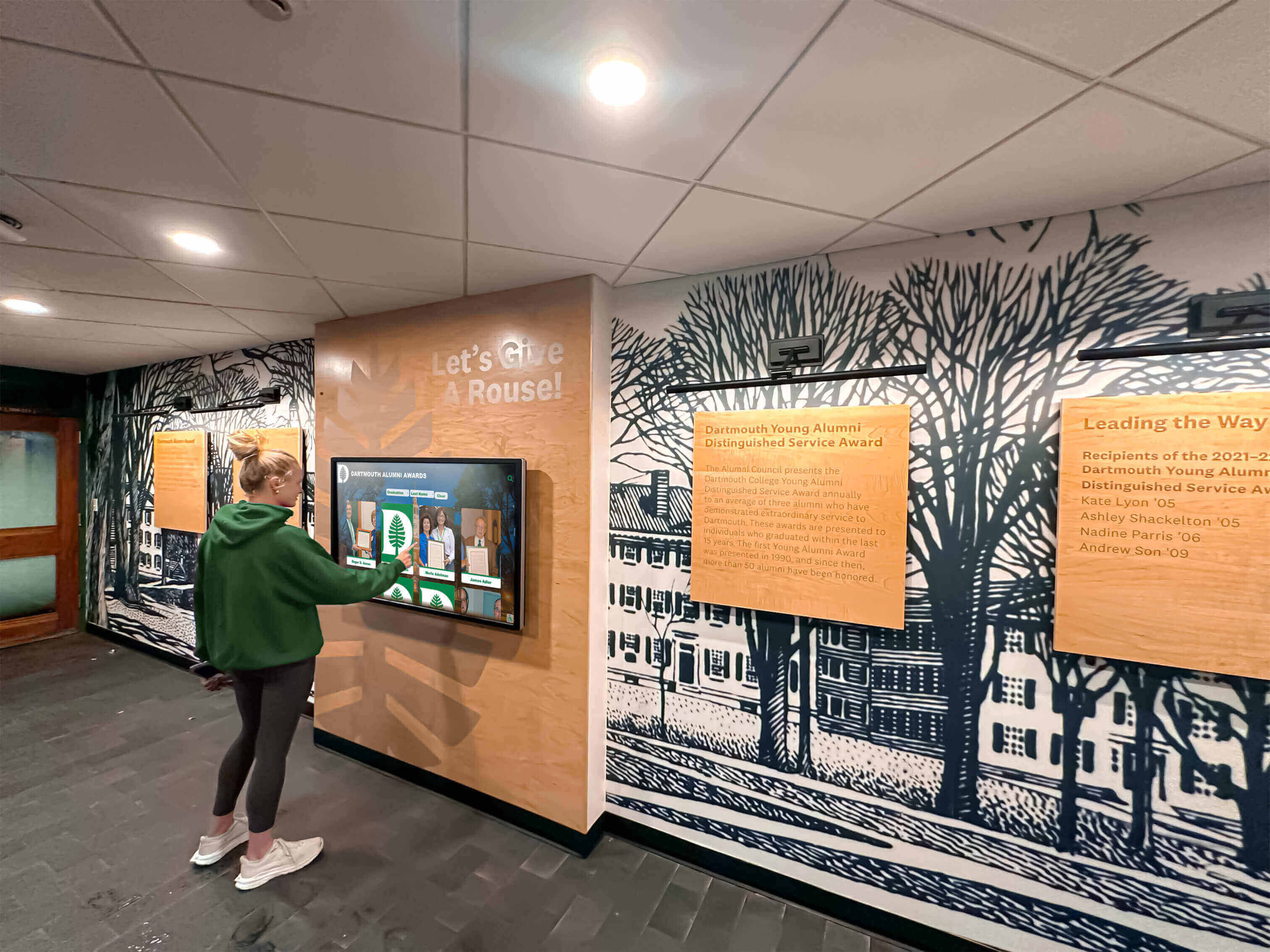
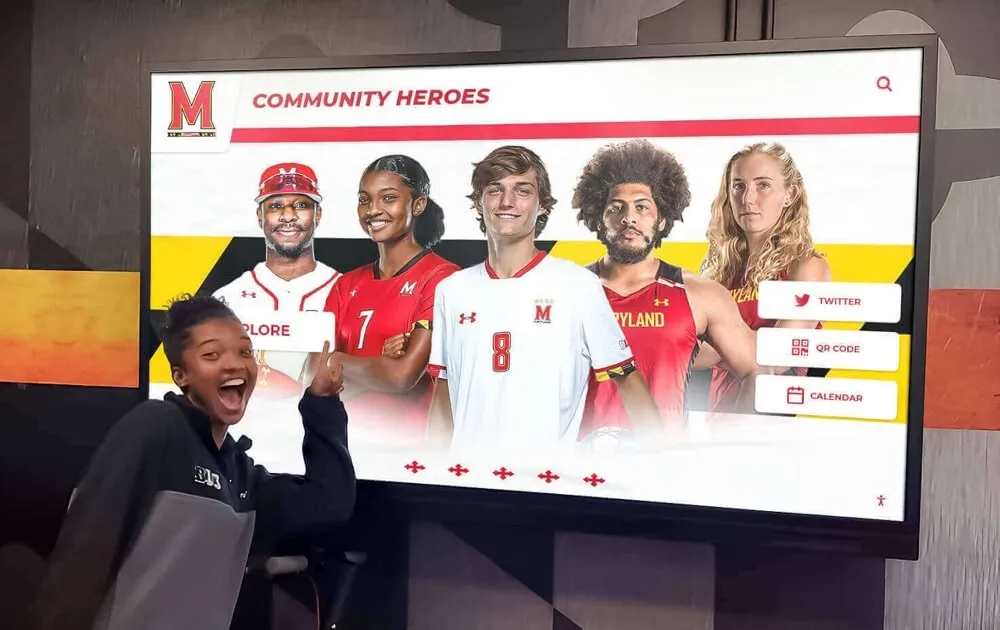
User-friendly interfaces enable students to explore decades of school history independently
TouchHallofFame.us
TouchHallofFame.us offers turnkey digital hall of fame solutions with emphasis on athletic recognition and sports achievement displays. They provide complete packages including hardware, installation, and content setup tailored to high school athletic programs.
Service Approach:
Their implementations typically include commercial touchscreen displays, professional mounting and installation, sports-focused content templates, initial athlete profile creation, and training for athletic department staff.
Typical Investment:
Complete turnkey installations generally range $10,000-$20,000 depending on display size and content volume. Their solutions focus on athletic achievements with templates specifically designed for sports recognition.
They work particularly well for schools prioritizing athletic hall of fame displays with strong sports traditions and extensive athlete recognition needs.
For schools implementing touchscreen hall of fame systems, TouchHallofFame.us provides specialized athletic-focused solutions.
HallofFameWall.com
HallofFameWall.com provides turnkey solutions combining digital displays with traditional recognition elements. Their approach often integrates digital screens with custom murals, trophy cases, and physical plaques creating comprehensive hall of fame environments.
Implementation Style:
Projects typically include both digital and physical components—custom wall murals featuring school branding, integrated digital displays, coordinated design elements, professional installation of all components, and comprehensive content creation.
Investment Range:
Complete installations combining digital and traditional elements typically range $15,000-$40,000+ depending on scope. They excel at creating impressive destination installations transforming hallways or lobbies into comprehensive recognition environments.
Schools planning facility renovations or new construction often work with HallofFameWall.com for coordinated installations integrating multiple recognition approaches.
Their expertise in complete hall of fame environments makes them ideal for comprehensive facility projects.
TouchWall.us
TouchWall.us focuses on interactive touchscreen displays with comprehensive content management platforms. Their turnkey solutions emphasize user-friendly content updates enabling schools to maintain current information easily.
Service Focus:
Implementations include commercial touchscreen hardware, cloud-based content management, mobile app access for updates, template libraries, professional installation, initial content population, and ongoing technical support.
Pricing Structure:
Complete turnkey packages typically range $10,000-$22,000 for single-display installations with moderate content volumes. They emphasize ease of ongoing content management through intuitive platforms.
Schools particularly value their mobile app functionality enabling content updates from smartphones—ideal for athletic directors who want to add new achievements immediately after competitions.
For schools prioritizing ease of content management, TouchWall.us provides user-friendly platforms with comprehensive digital display solutions.
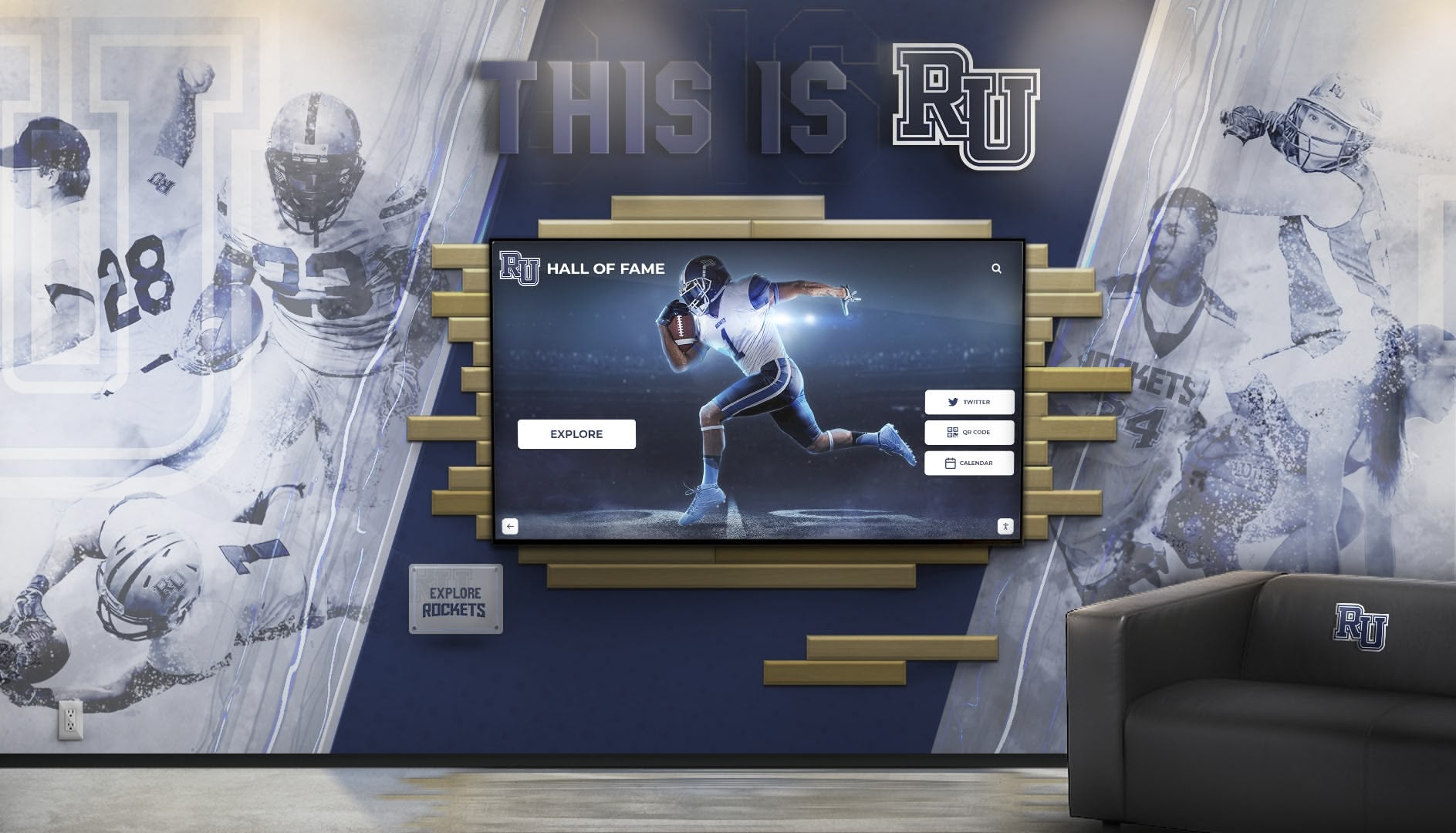
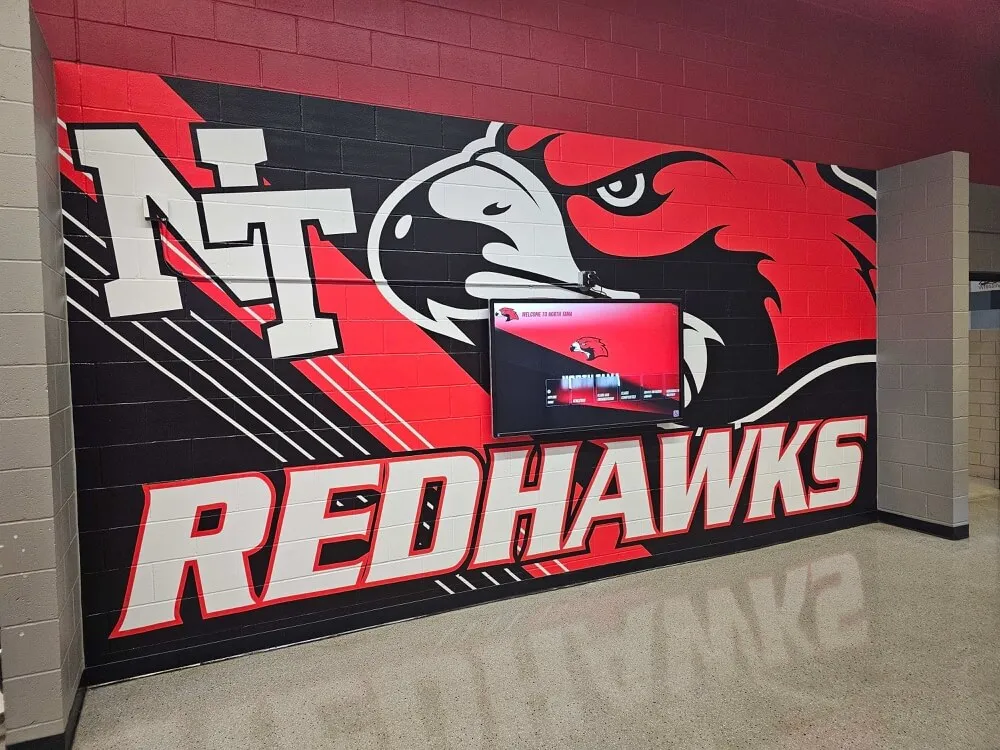
Complete turnkey installations often integrate digital displays with custom murals and branding
ChaseMcKee.com
ChaseMcKee.com provides custom digital display solutions including hall of fame implementations. Their approach emphasizes tailored solutions designed specifically for each school’s unique needs and existing facilities.
Implementation Approach:
Projects begin with comprehensive consultation to understand your specific requirements, followed by custom design proposals, hardware recommendations based on your space, installation coordination, content creation assistance, and training tailored to your staff.
Investment Considerations:
As custom solution providers, pricing varies significantly based on project scope. Schools should expect initial consultations to define requirements before receiving detailed proposals.
Their custom approach works well for schools with unique architectural constraints, specific design visions, or complex integration requirements beyond standard turnkey packages.
What to Look for in Turnkey Providers
When evaluating providers, assess these critical factors ensuring successful implementations:
Experience with School Environments
Providers specializing in educational institutions understand school-specific challenges including budget constraints common in K-12 environments, academic calendar considerations for installation timing, working with school procurement processes, ADA compliance requirements for public facilities, and durability needs for high-traffic hallways with student interaction.
Ask providers for references from similar schools and request to visit existing installations evaluating quality and functionality firsthand.
Content Creation Capabilities
Since initial content setup represents the most time-intensive aspect, evaluate provider capabilities through data collection processes from existing records, photo scanning and restoration services, biographical research for historical content, content organization and categorization systems, quality control ensuring accuracy, and realistic timelines for content volume.
Request sample profiles seeing content quality before committing to providers.
Training and Support Quality
Successful implementations require adequate training and ongoing support:
Training Evaluation:
Quality training programs include hands-on practice with actual content, documentation and video tutorials for future reference, training for multiple staff members, refresher sessions as needed, and focus on common tasks rather than every feature.
Ask providers about typical training duration, whether training is on-site or remote, and whether additional training incurs extra costs.
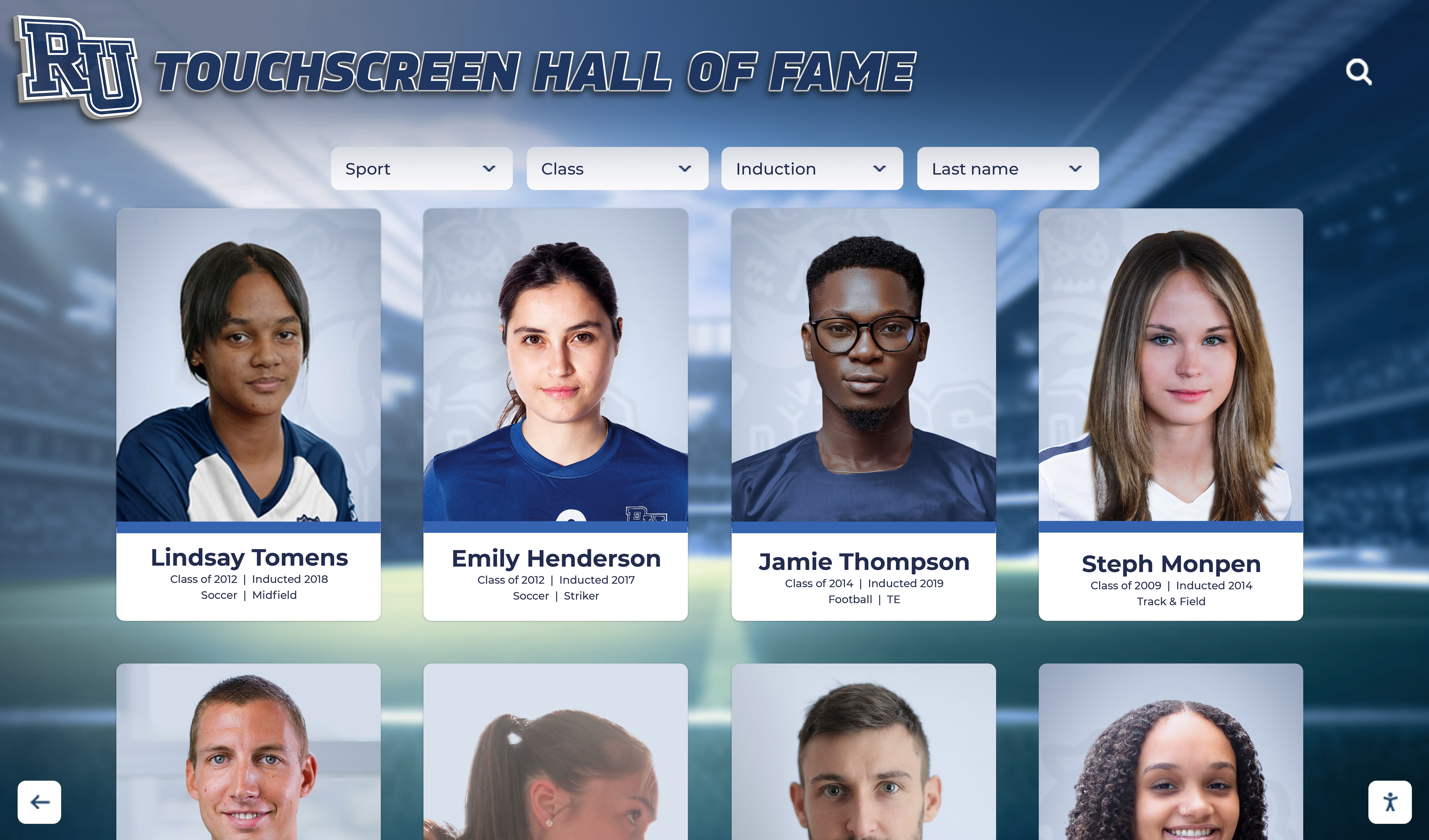
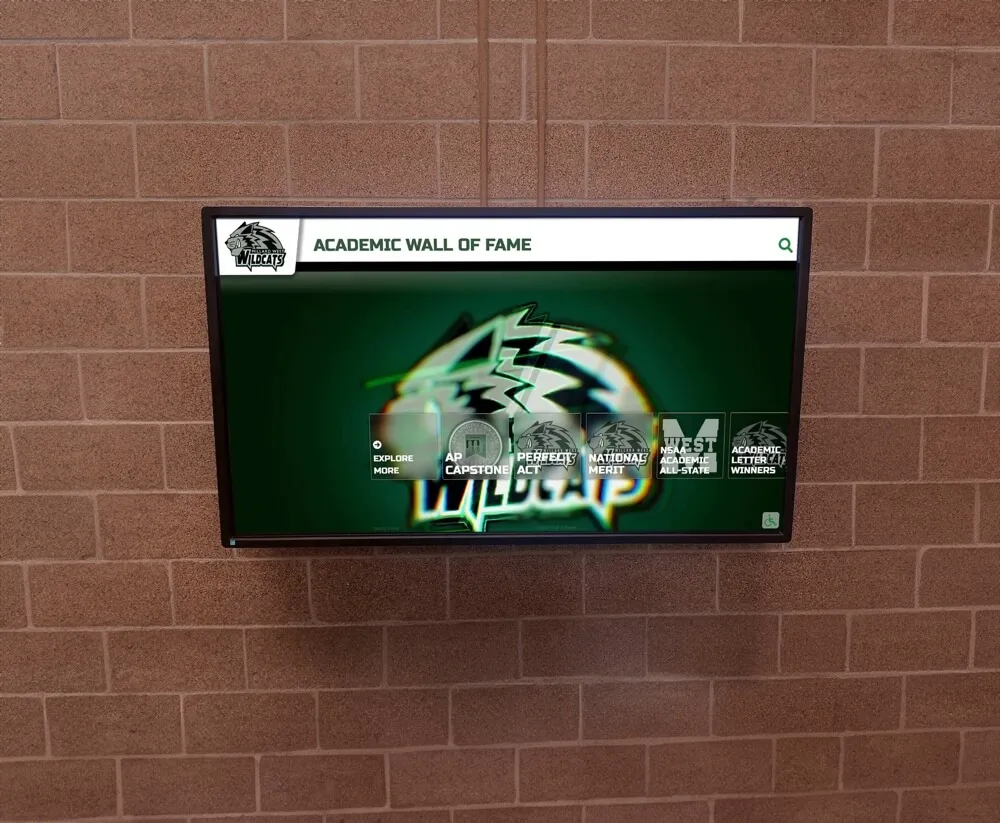
Well-designed interfaces make content updates intuitive for school staff
Support Assessment:
Evaluate ongoing support through response time commitments (24 hours? 48 hours?), available support channels (phone, email, chat?), support hours (business hours only or extended?), remote troubleshooting capabilities, and escalation processes for urgent issues.
Schools implementing digital recognition systems report that responsive support makes the difference between frustration and success during the first year of operation.
Contract and Pricing Transparency
Understand exactly what’s included and possible additional costs:
Contract Clarity:
Review contracts carefully noting what’s included in initial pricing versus additional charges, ongoing annual costs for software and support, content volume limits or restrictions, training session quantity and duration, warranty coverage for hardware, support response time commitments, and contract terms and renewal conditions.
Reputable providers specify everything clearly upfront rather than surprising you with additional costs later.
Hidden Cost Awareness:
Ask specifically about possible additional expenses like extra training sessions, content creation beyond initial agreement, custom features or modifications, additional displays, extended warranties, premium support tiers, and platform upgrades or migrations.
Implementation Timeline: What to Expect
Understanding realistic timelines helps schools plan implementations around academic calendars and events:
Planning Phase: 2-4 Weeks
Initial project planning includes consultation meetings defining requirements, site evaluation for display placement, proposal development and pricing, contract review and approval, and hardware specification and ordering.
Schedule initial consultations early since hardware lead times can extend timelines, especially during peak ordering seasons.
Hardware Delivery and Installation: 3-6 Weeks
Hardware phase includes equipment ordering and shipping, installation scheduling, professional mounting and setup, network configuration, and final hardware testing.
Installation typically requires 4-8 hours depending on complexity. Schedule during school breaks or non-peak times minimizing disruption.
Content Creation: 4-12 Weeks
Content development timeline varies dramatically based on volume and complexity:
Basic Content (50-100 recent profiles): 4-6 weeks Moderate Content (100-300 profiles with some historical): 6-10 weeks Extensive Content (300+ profiles with significant historical research): 10-16 weeks
Content creation often represents the critical path determining overall timeline. Providing organized records, digital photos, and clear information accelerates this phase significantly.
Schools planning historical content digitization should budget extra time for photo scanning and biographical research.
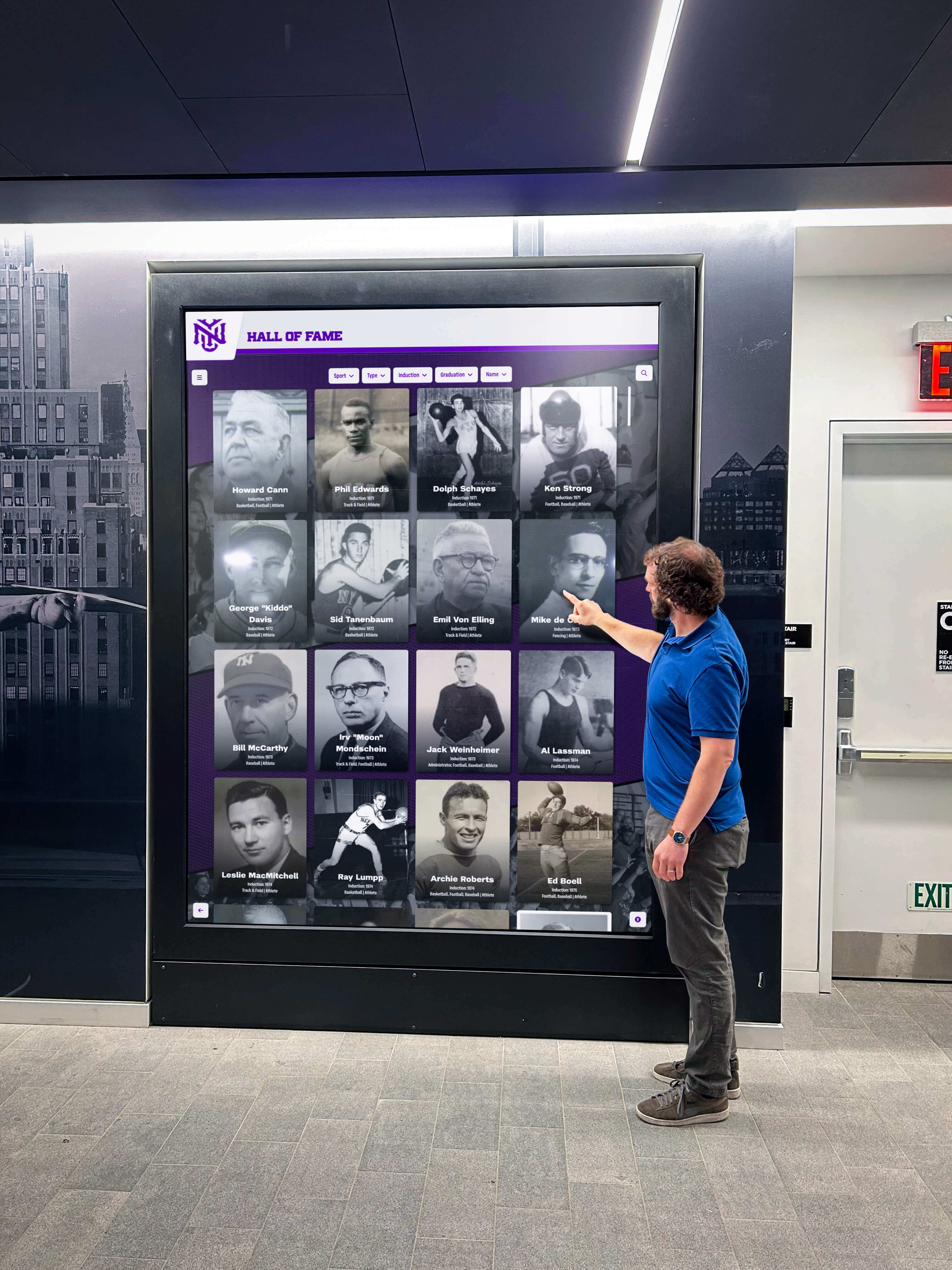
Professional installations create impressive first impressions for campus visitors
Training and Launch: 1-2 Weeks
Final implementation phase includes staff training sessions, practice exercises and documentation review, soft launch testing with limited audience, final adjustments and refinements, and official launch event or announcement.
Training typically occurs just before launch ensuring knowledge remains fresh when staff begins managing content independently.
Total Implementation Timeline: 2-4 Months
From initial consultation to fully operational display, expect 8-16 weeks for complete implementations. Schools planning unveilings for specific events like homecoming should begin planning at least 4-6 months in advance providing buffer for unexpected delays.
Preparing Your School for Turnkey Implementation
While turnkey providers handle heavy lifting, schools can facilitate smooth implementations through advance preparation:
Organize Existing Records
Gather materials providers need for content creation:
Athletic Records and Archives
Compile hall of fame inductee lists with years inducted, athlete names and graduation years, sports and positions played, achievements and records, team championships, individual awards, post-high school athletic careers, and current contact information when available.
Even incomplete information helps. Providers can research gaps, but starting with organized data accelerates content creation significantly.
Photo Collections
Locate photographs from yearbooks (digital or physical), team photos from archives, action shots from competitions, newspaper clippings with photos, and personal photos from athletes or families.
Digital photos in high resolution work best. For physical photos, providers typically offer scanning services, but organizing collections beforehand speeds processing.
Historical Information
Document school history including facility construction dates, coaching histories, mascot origins and evolution, notable team seasons and records, and significant school milestones.
This contextual information enriches hall of fame content beyond individual athlete profiles.
Identify Clear Points of Contact
Designate specific staff members responsible for different aspects:
Project Coordinator: Primary liaison with provider, decision-maker for questions, approval authority for designs and content
Content Subject Matter Expert: Athletic director or historian knowledgeable about school history, able to verify biographical information, can locate additional photos or records
Technical Contact: Technology coordinator or IT staff who handles network access, assists with installation logistics, troubleshoots technical issues
Administrative Support: Handles purchasing, contract processing, and payment coordination
Clear roles prevent delays from communication confusion or approval bottlenecks.
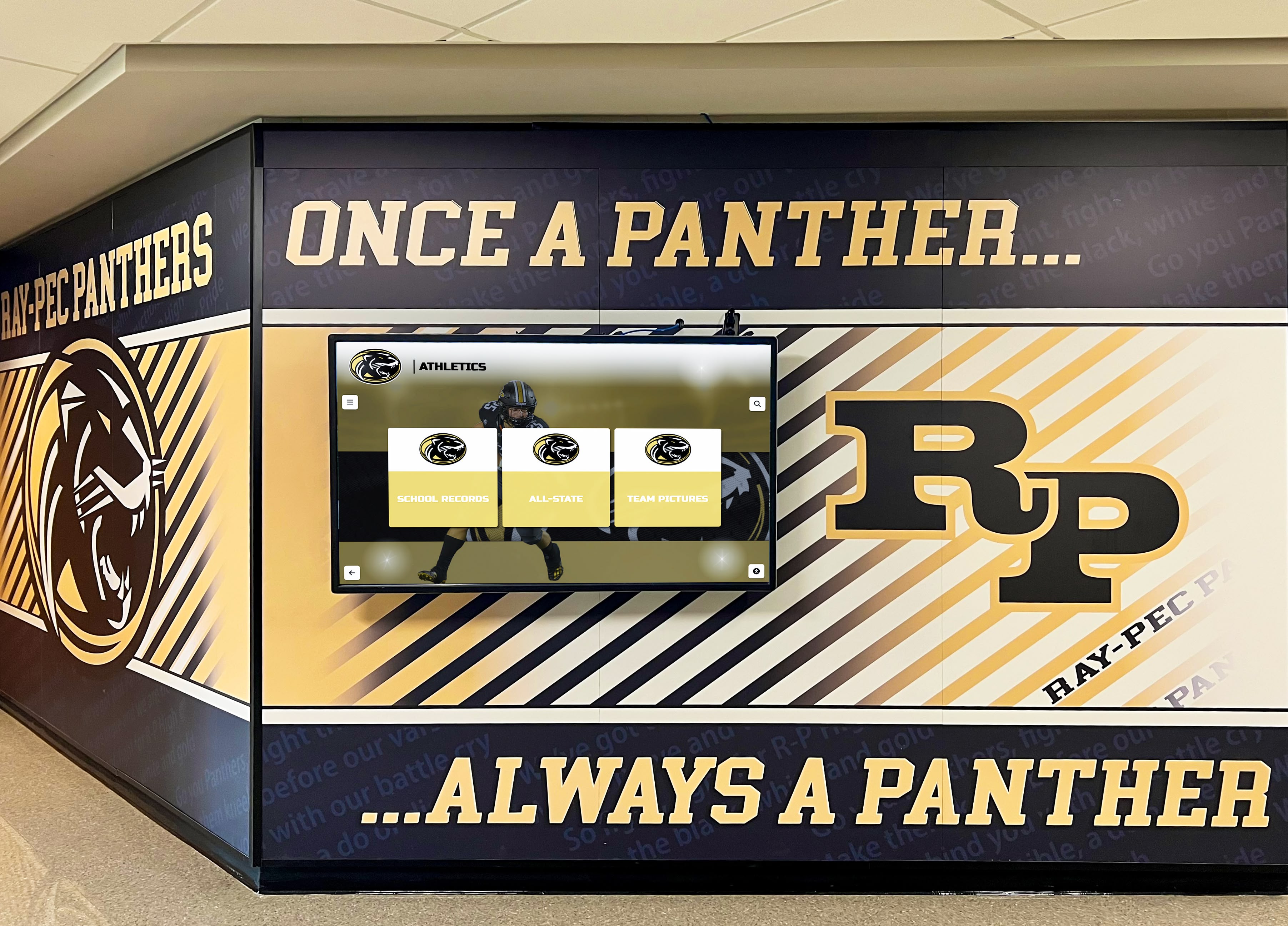
Advance planning ensures digital displays integrate smoothly with school facilities and branding
Plan Display Location Carefully
Work with providers to identify optimal placement:
Location Criteria:
Evaluate potential locations based on high foot traffic (main hallways, gym lobbies, athletic entrances), electrical outlet proximity, network connectivity availability (wired ethernet preferred), mounting surface suitability (solid walls capable of supporting display weight), viewing angles and distances, lighting conditions avoiding screen glare, ADA accessibility compliance, and security considerations preventing vandalism or damage.
Site visits with providers help identify optimal locations balancing visibility with practical installation requirements.
Schools creating athletic recognition environments often place displays near trophy cases or in dedicated athletic wings maximizing impact.
Budget for Complete Investment
Ensure funding covers entire project scope:
Initial Budget: Full turnkey implementation including all hardware, installation, content creation, and training
Contingency: 10-15% buffer for unexpected expenses or scope adjustments
Annual Operating Costs: Software subscriptions, ongoing support, content updates, and minor maintenance
Future Expansion: Reserve funding for additional content, extra displays, or feature enhancements
Complete budgeting prevents mid-project funding gaps that delay implementations or force compromise on quality.
Common Questions About Turnkey Pricing
“Can we save money by doing some work ourselves?”
Many providers offer “semi-turnkey” options where schools handle certain aspects:
Possible Cost Savings:
Self-installation using school maintenance staff can save $1,000-$2,000. Providing pre-organized digital content can reduce content creation costs by $500-$2,000. Using existing photos without restoration saves scanning fees.
Trade-offs to Consider:
DIY installation assumes proper expertise and tools avoiding mounting mistakes. Self-managed content requires significant staff time schools may not have. Reduced provider involvement may limit support quality since they didn’t control all implementation aspects.
Most schools find that small savings don’t justify the risk and effort compared to complete turnkey peace of mind.
“How much does content expansion cost after initial setup?”
Adding content to existing displays typically costs less than initial setup:
Ongoing Content Additions:
Most providers charge $20-$50 per new profile for straightforward additions with provided photos and information. Bulk additions (like adding entire new class years) may receive discounted per-profile pricing. Schools with active software subscriptions often receive specific quantities of profile additions included annually.
Major Content Expansions:
Adding entirely new content sections (expanding from athletics to academics) or historical research projects may cost $1,000-$5,000+ depending on scope.
Many schools start with recent content, then gradually expand historical coverage over several years as budget allows.
“What if we change athletic directors or staff?”
Staff turnover concerns many administrators:
Provider Support:
Quality providers offer refresher training for new staff at no cost or minimal fees. Comprehensive documentation and video tutorials enable self-training. Platform intuitive design reduces training needs. Ongoing technical support answers questions as new staff learn systems.
Most schools report that well-designed platforms require minimal training for new staff when combined with provider documentation and support.
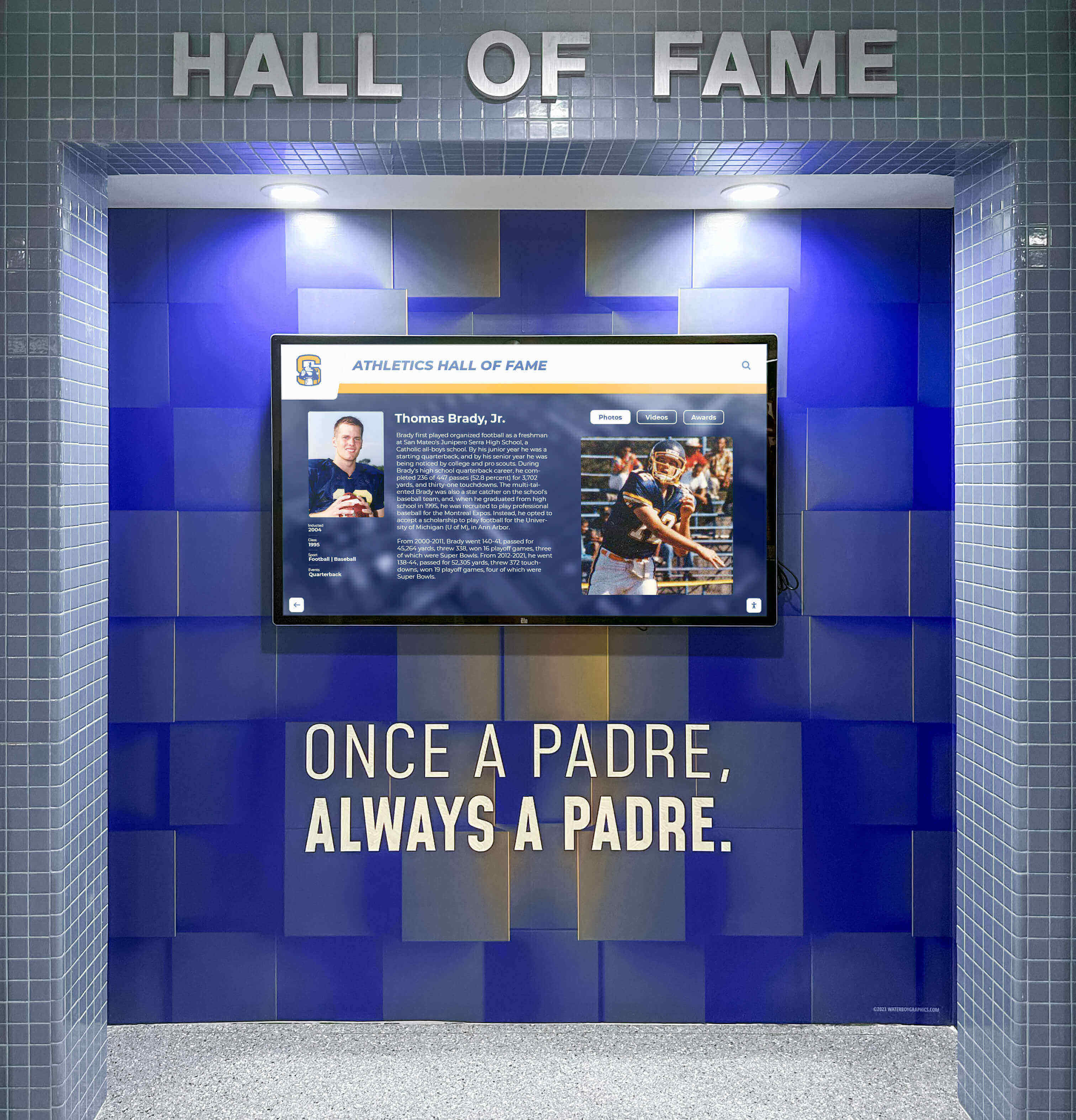
User-friendly platforms enable smooth transitions as school staff changes over time
“Are there financing options for turnkey packages?”
Since turnkey costs represent significant investments, financing helps spread expenses:
Common Financing Approaches:
Some providers offer payment plans breaking costs across 12-36 months. Many schools use equipment leasing through technology budgets. Others split costs across fiscal years with phased implementations. Fundraising through booster clubs or alumni associations can offset portions of costs.
Schools implementing athletic recognition projects often combine multiple funding sources including technology budgets, athletic department funds, and donor contributions.
Making the Decision: Evaluating Proposals
When comparing turnkey proposals from different providers, use systematic evaluation:
Create Comparison Matrix
Document proposals systematically comparing total initial investment, annual ongoing costs (years 2+), included content volume (number of profiles), training hours and format, support quality and availability, warranty coverage and duration, platform features and capabilities, customization level, and implementation timeline.
Standardized comparison reveals true cost differences accounting for what each proposal actually includes rather than just headline prices.
Request References and Site Visits
Contact existing customers asking about implementation experience and timeline accuracy, content creation quality, training adequacy, ongoing support responsiveness, platform ease of use, and whether they’d choose the same provider again.
Visit nearby installations seeing systems in actual school environments evaluating user experience, content quality, integration with facilities, and overall impression.
Assess Long-term Relationship
Choose providers you trust for ongoing partnership:
Relationship Factors:
Communication quality during sales process often predicts support quality later. Company stability and longevity matter for systems you’ll use for years. Responsiveness to questions and concerns. Flexibility accommodating your school’s specific needs. Genuine understanding of educational environments.
The lowest price matters less if the provider doesn’t deliver quality implementation and ongoing support.

Successful implementations reflect school identity through cohesive branding and design
Conclusion: Investing in Turnkey Solutions
Turnkey digital hall of fame displays represent significant investments, but they solve the primary challenge preventing many schools from implementing digital recognition: complexity. Rather than managing hardware selection, installation coordination, content creation, and staff training separately, turnkey solutions provide complete implementations through single providers responsible for successful outcomes.
For schools lacking technical expertise, time for project management, or desire to coordinate multiple vendors, turnkey pricing makes sense despite premium costs. You pay for expertise, comprehensive service, and peace of mind knowing professionals handle every detail from initial design through ongoing support.
The key lies in understanding what’s included, comparing providers systematically, and selecting partners aligned with your school’s specific needs, budget constraints, and long-term vision. Whether you invest $10,000 for basic implementations or $30,000+ for premium installations with extensive historical content, turnkey solutions ensure you receive fully operational systems ready to celebrate student achievements from day one.
Ready to Explore Turnkey Digital Hall of Fame Solutions?
Discover how comprehensive turnkey packages can transform your school’s recognition capabilities without the complexity of managing implementation yourself. Learn about hardware options, content creation services, training programs, and support designed specifically for schools.
Talk to our team to discuss your school’s specific requirements and receive detailed proposals outlining complete turnkey solutions tailored to your needs and budget.
Start by defining your priorities: What matters most—comprehensive historical content, ease of ongoing updates, impressive visual impact, or budget optimization? Understanding your key criteria helps you evaluate providers and select solutions delivering maximum value for your specific situation.
The schools most satisfied with turnkey implementations are those who researched thoroughly, compared multiple providers, checked references, and chose partners committed to long-term success rather than just equipment sales. Your students’ achievements deserve professional recognition celebrating their hard work for years to come. Turnkey solutions provide the complete service making that vision achievable even for schools without technical expertise or extensive project management capacity.