Track and field programs face unique recognition challenges—celebrating excellence across dozens of distinct events spanning sprints, distance races, hurdles, jumps, throws, and relays, honoring individual achievement in a sport where athletes compete simultaneously in multiple events, acknowledging personal records that matter as much as team points, and building program culture that unites sprinters and distance runners, jumpers and throwers into cohesive team identity despite competing in vastly different athletic disciplines.
Yet coaches, athletic directors, and booster club leaders frequently approach track and field recognition with uncertainty about how to balance recognition across event groups, celebrate varsity letter qualifiers while honoring developmental athletes improving toward standards, design meaningful categories for programs where rosters exceed 100 athletes, and preserve achievements permanently beyond single banquet evenings when physical trophies disappear into storage.
This comprehensive guide explores creative track and field awards ideas that honor athletes across all competitive dimensions—from event-specific excellence and record-breaking performances to most improved recognition and character-based awards. Whether planning your end-of-season banquet or building sustainable recognition traditions, these strategies help you celebrate every athlete meaningfully while strengthening program identity across indoor and outdoor seasons.
Well-planned track and field awards accomplish multiple objectives simultaneously—providing meaningful recognition for individual dedication and seasonal effort, creating balanced celebration that honors diverse contributions from sprint champions to field event specialists, establishing tradition through consistent annual categories athletes aspire to earn, and building permanent documentation ensuring accomplishments remain visible long after graduation.

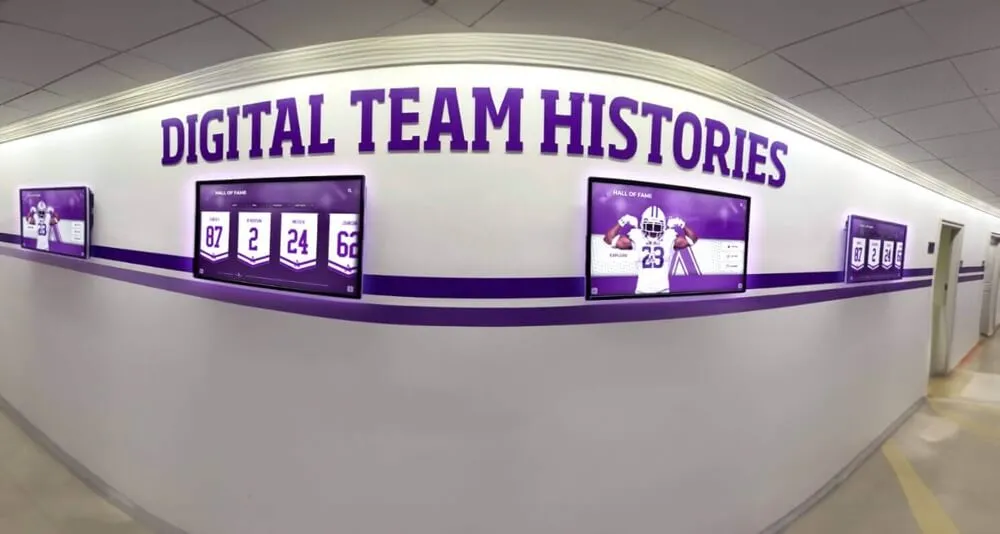
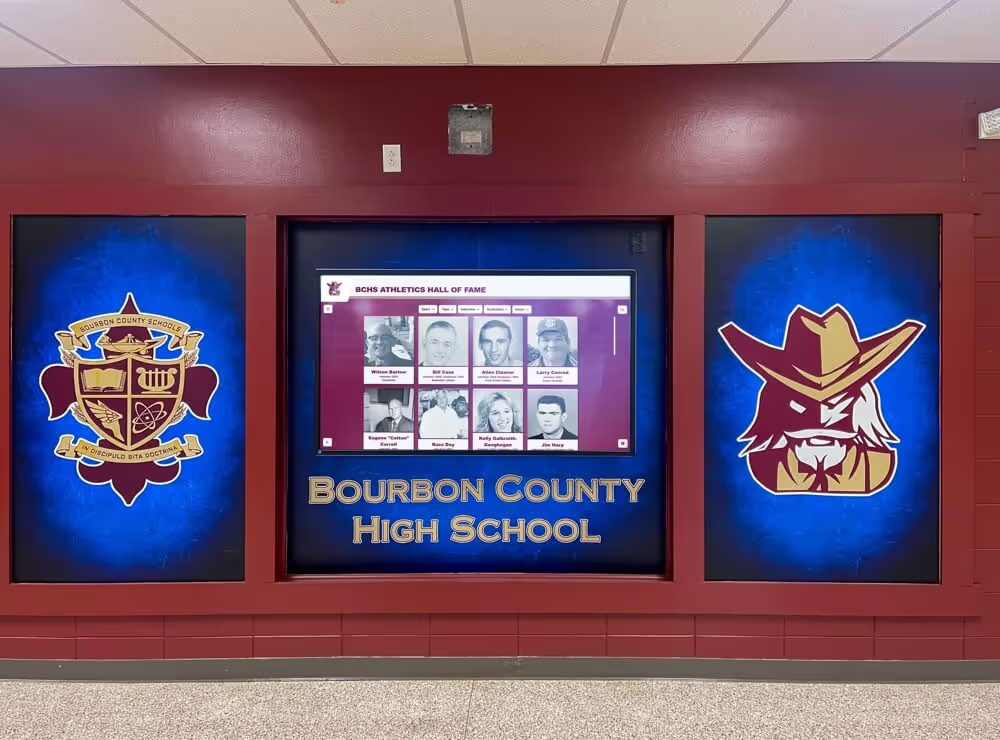
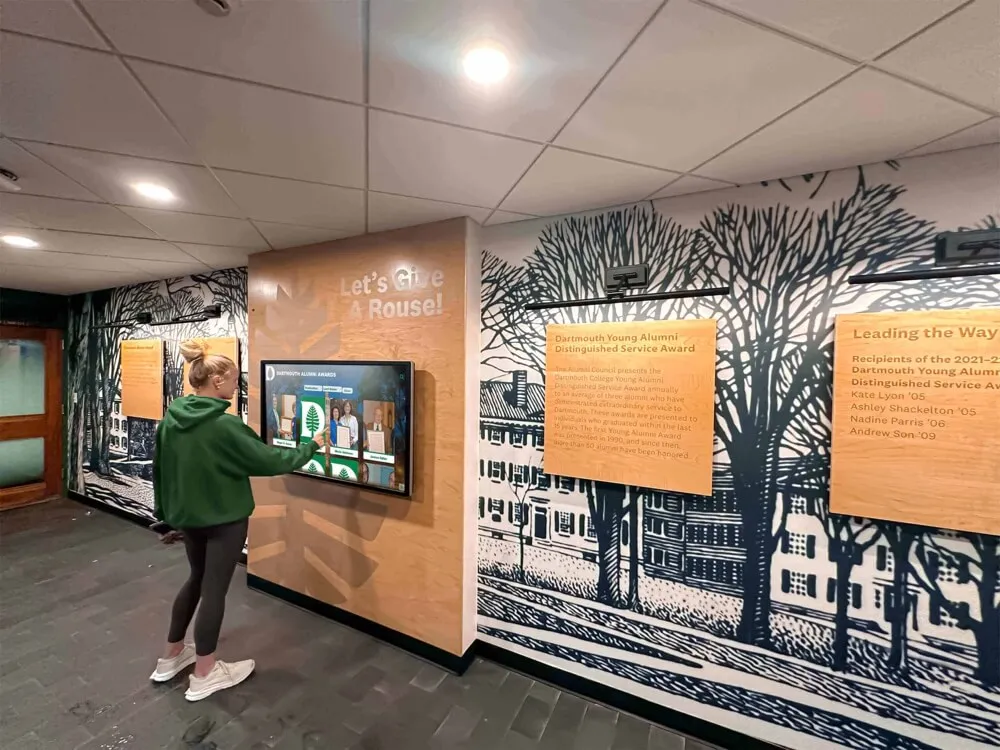
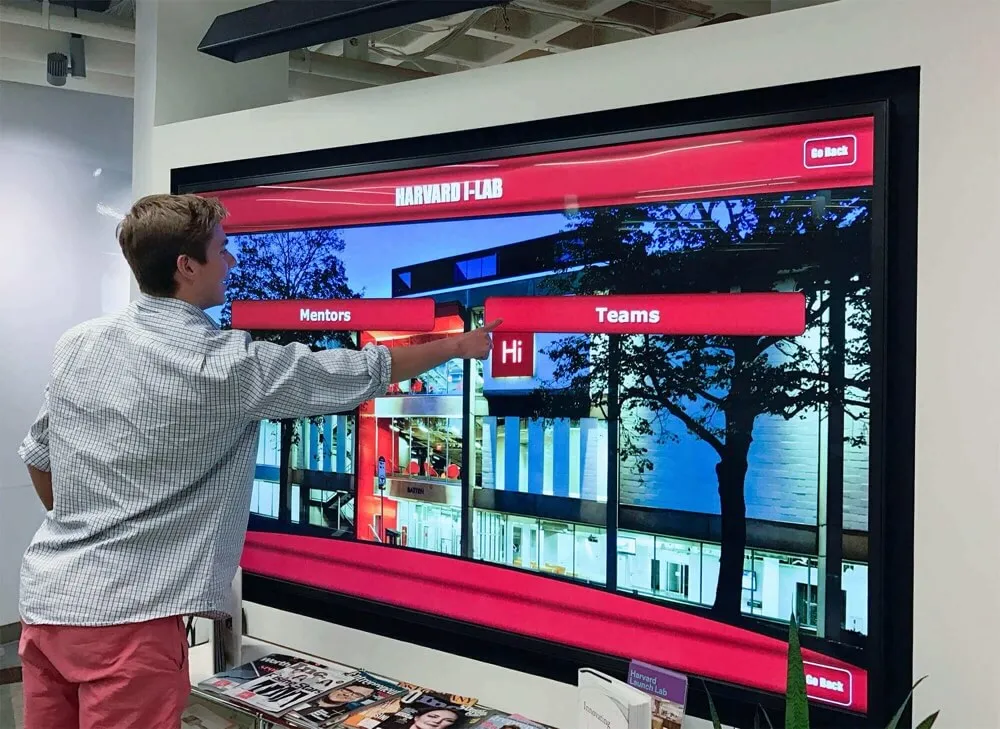
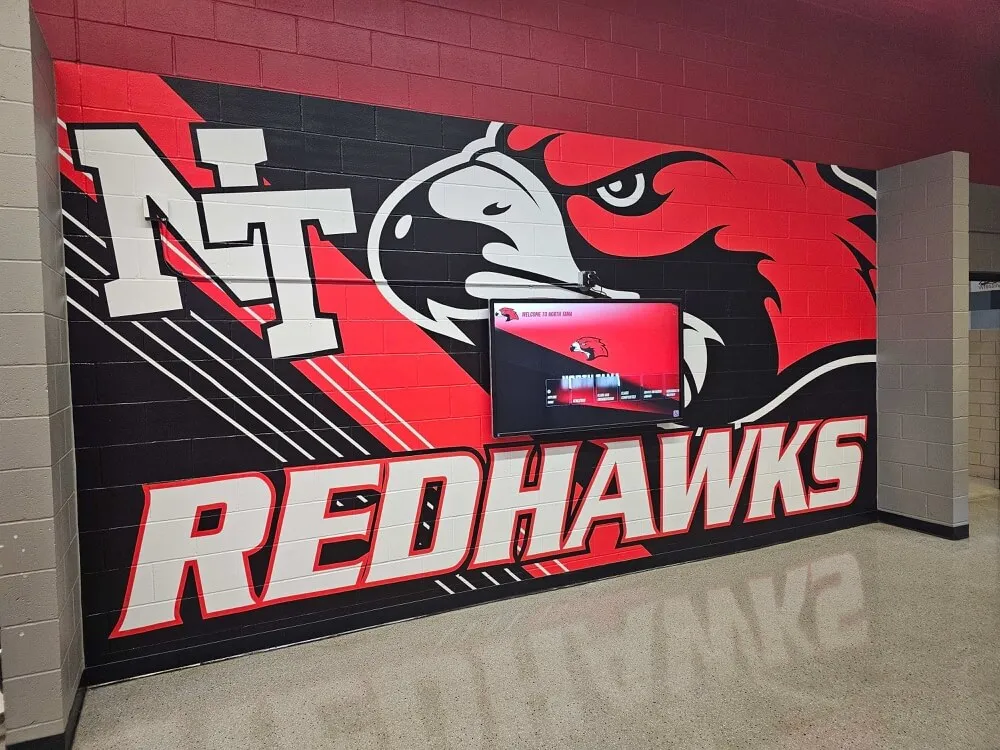
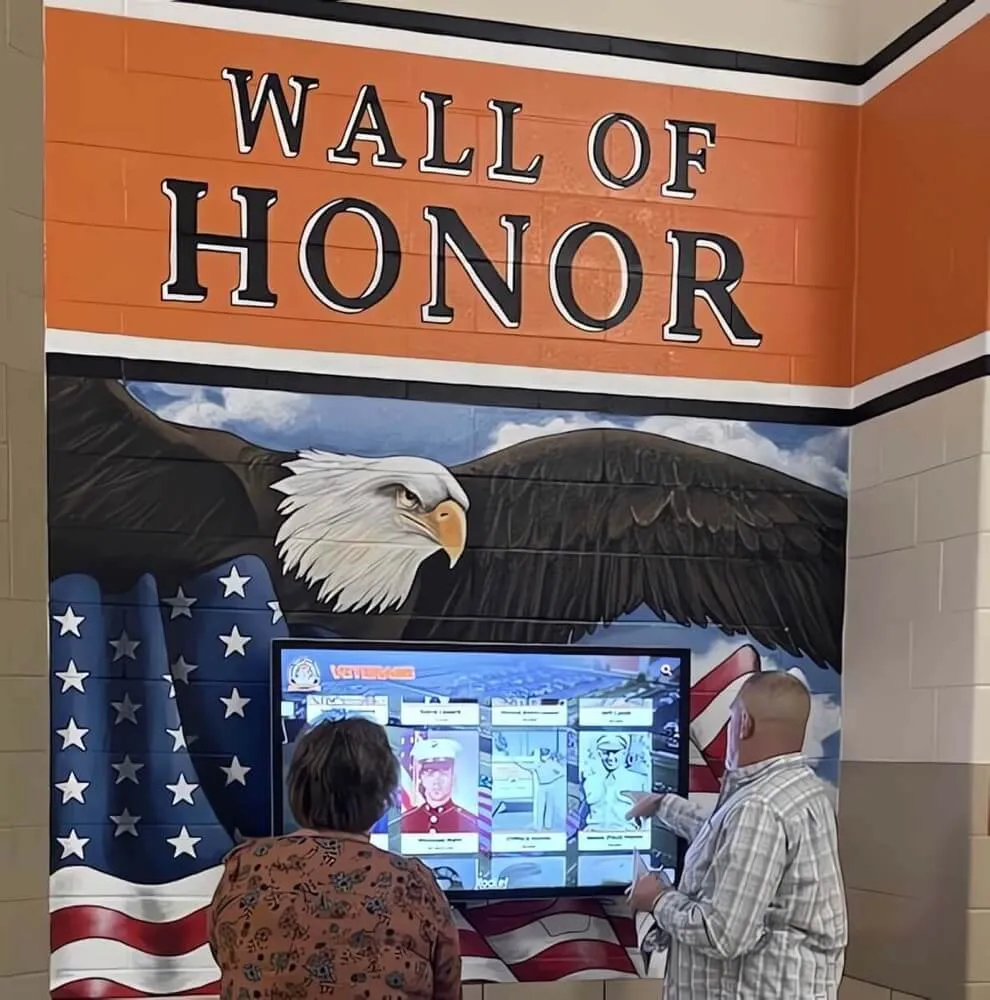
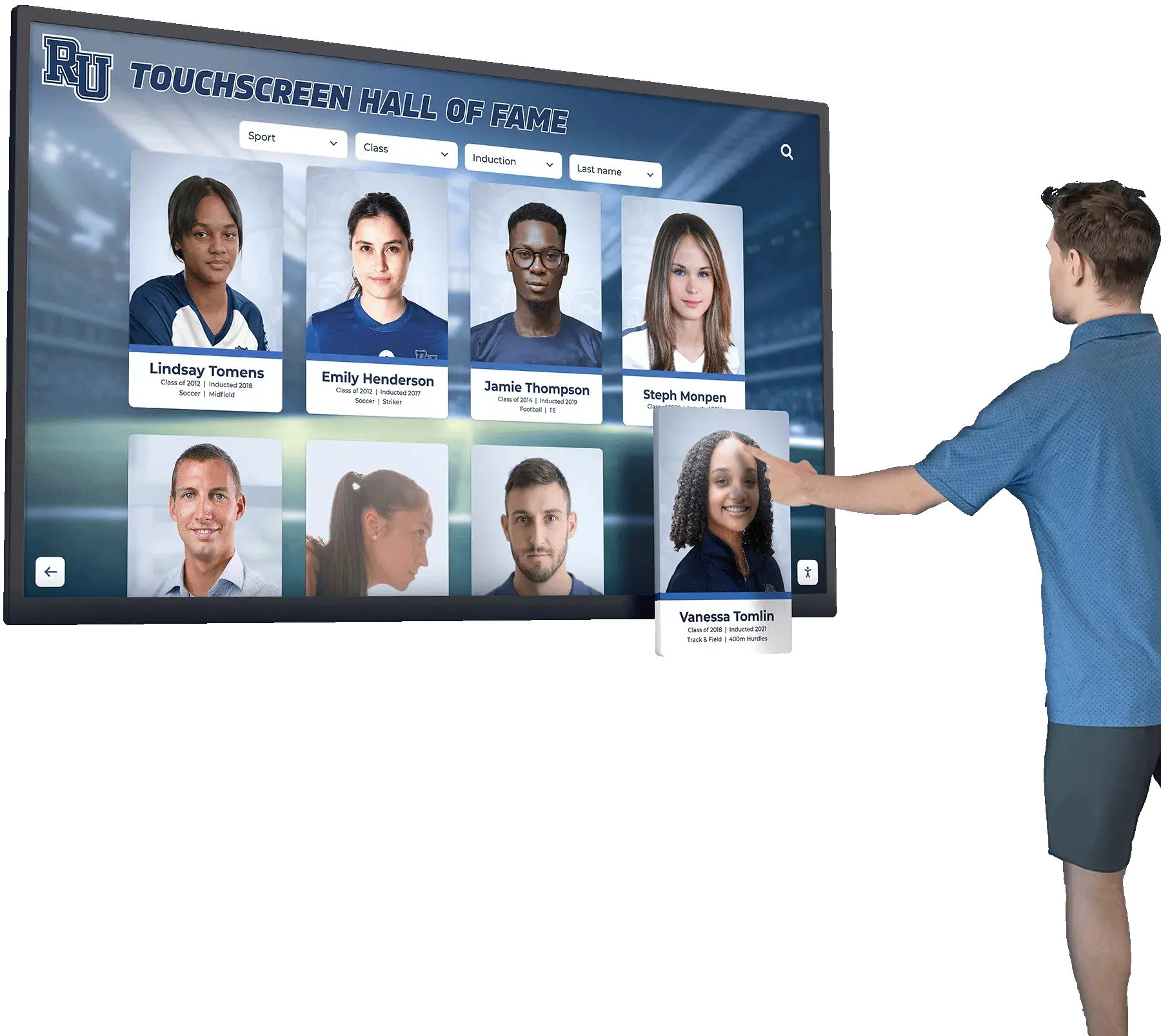
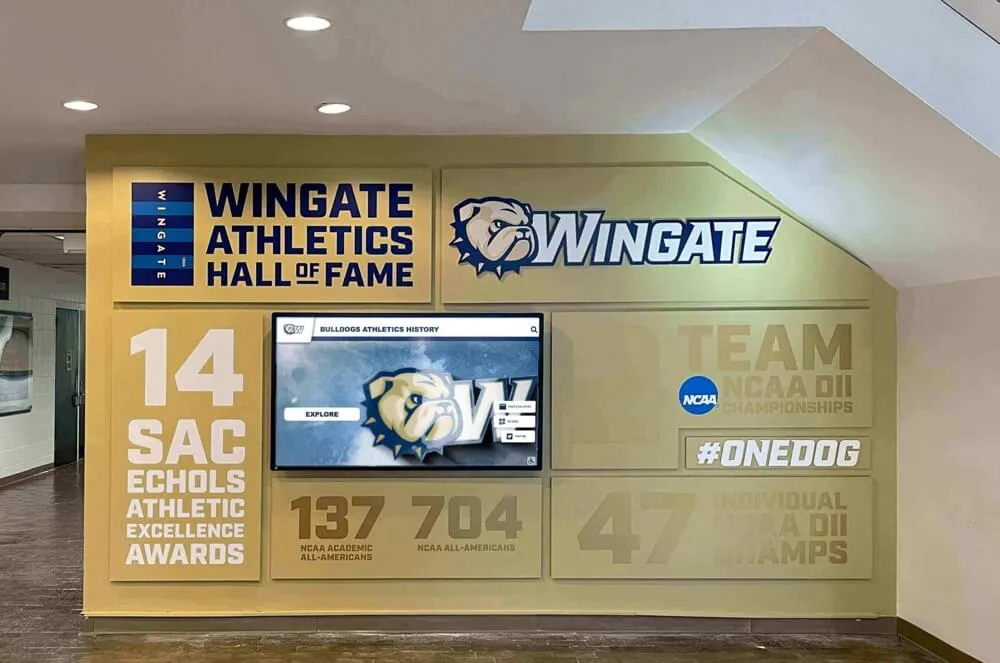
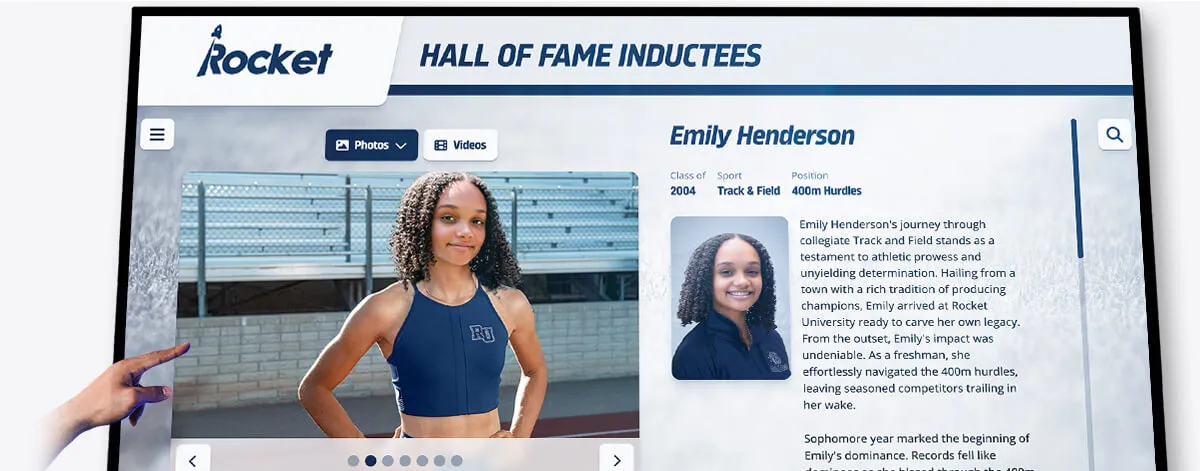
Modern recognition systems preserve track and field awards and athlete achievements permanently, extending celebration beyond single banquet events while building program tradition
Understanding Track and Field’s Unique Recognition Landscape
Before diving into specific award categories, understanding what makes track and field recognition distinct from other sports ensures your program addresses the unique dynamics of this multi-event sport.
The Multi-Event Challenge
Track and field occupies unusual territory in high school and collegiate athletics:
Dozens of Distinct Events Under One Program Unlike sports with single scoring systems, track and field encompasses fundamentally different athletic skills:
- Sprint events (100m, 200m, 400m) celebrating pure speed and explosive power
- Middle distance races (800m, 1600m) requiring speed endurance and tactical racing
- Distance events (3200m, 5000m) emphasizing aerobic capacity and mental toughness
- Hurdles combining speed, technique, and rhythm across barriers
- Relays emphasizing teamwork, handoffs, and strategic race planning
- Horizontal jumps (long jump, triple jump) demanding speed and technical precision
- Vertical jumps (high jump, pole vault) requiring technique, courage, and explosive power
- Throws (shot put, discus, javelin, hammer) celebrating strength, technique, and coordination
Award structures must acknowledge all event categories without marginalizing any single discipline or concentrating recognition exclusively on high-profile sprint and distance events.
Individual Excellence Within Team Scoring Track and field athletes simultaneously pursue personal achievement and team contribution:
- Individual event placements determining personal success and pride
- Top finishers earning points contributing to team scoring totals
- Personal records (PRs) mattering as much as competitive placement for many athletes
- State qualifying standards creating objective achievement targets
- Athletes competing in multiple events contributing points across disciplines
- Relay teams requiring collaborative performance for success
Traditional team sports awards translate imperfectly to track and field—MVP recognition feels incomplete when programs include sprint stars, distance champions, and field event legends all contributing differently to team success.
Wide Performance Disparity Across Events Track and field rosters often include dramatically different athlete profiles:
- Elite specialists competing for individual championships and college recruitment
- Solid contributors consistently scoring team points across multiple meets
- Developmental athletes improving throughout seasons but rarely placing
- Multi-event athletes contributing across several disciplines
- Underclassmen building foundations for future excellence
- Athletes choosing track and field for fitness and team experience
Award structures must acknowledge all these athlete categories without diminishing excellence or marginalizing participation.
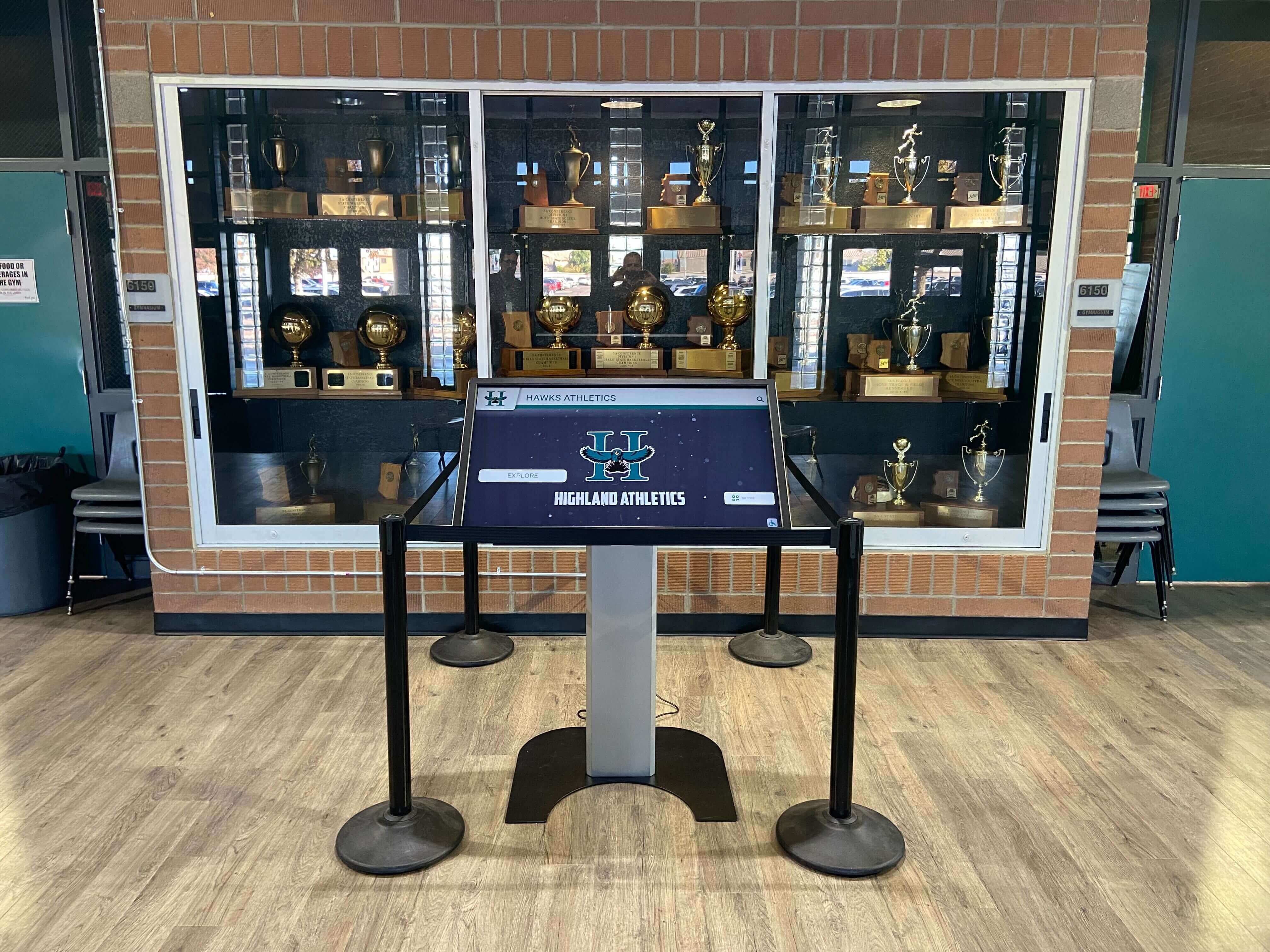
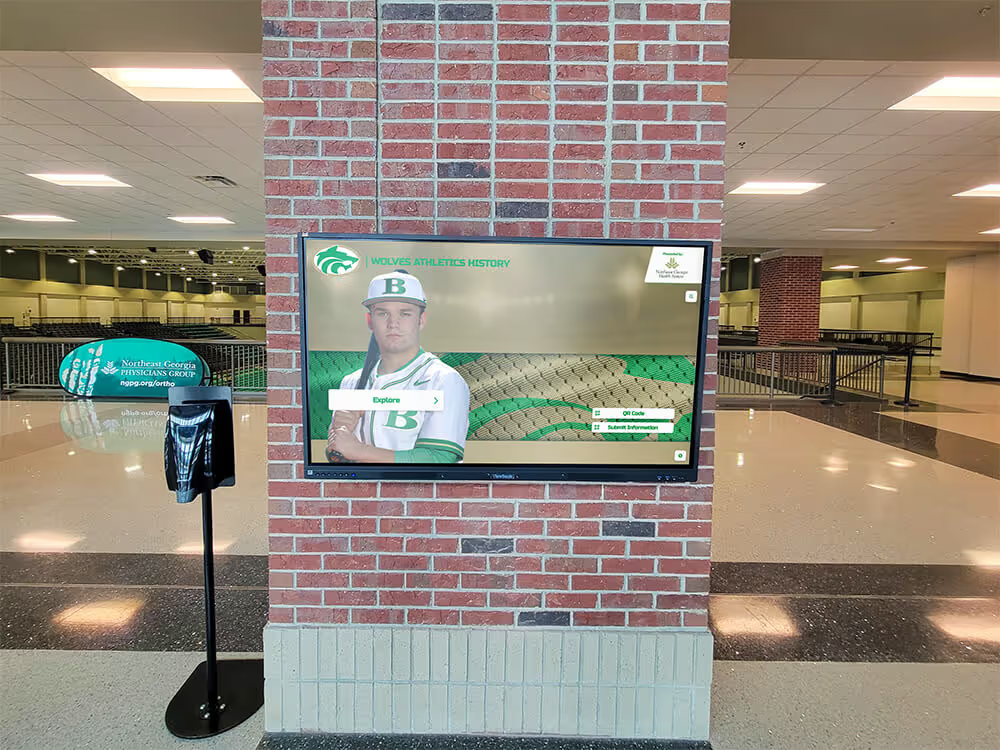
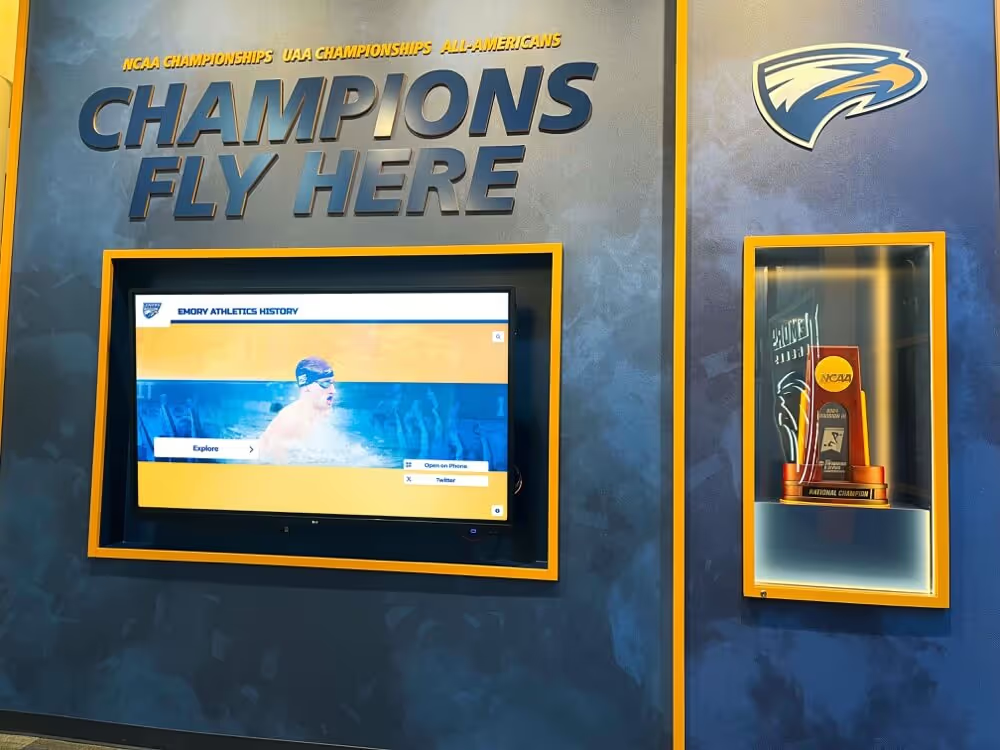
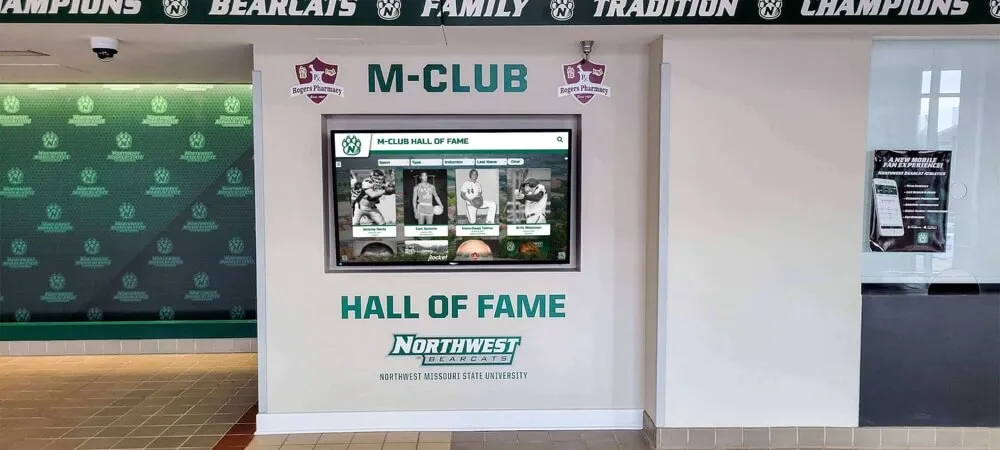
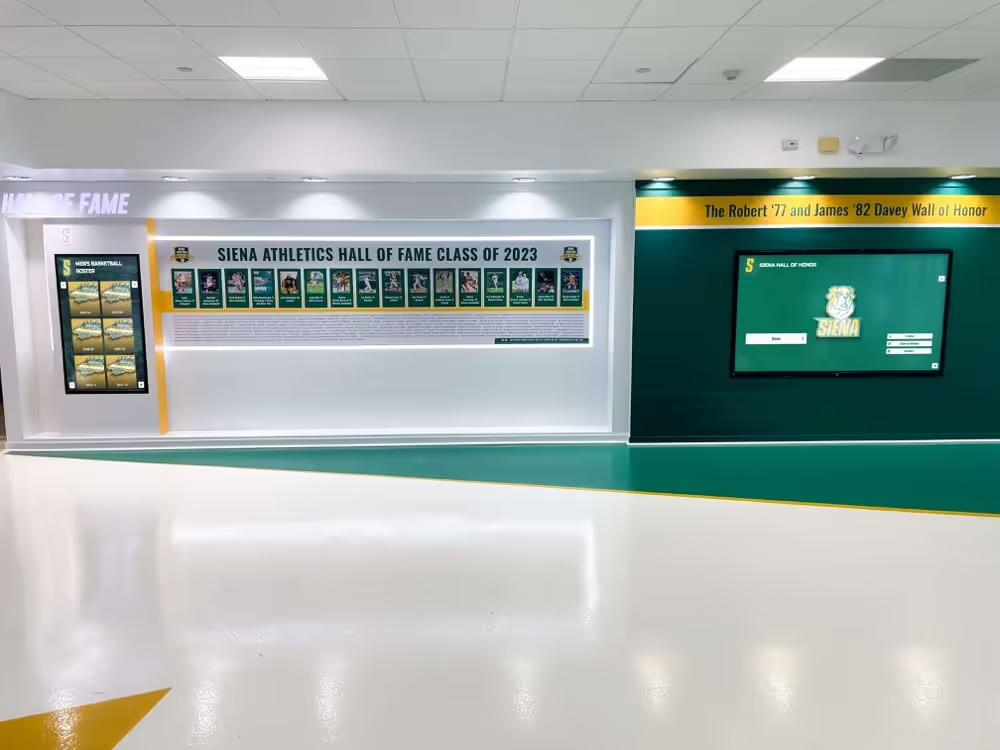
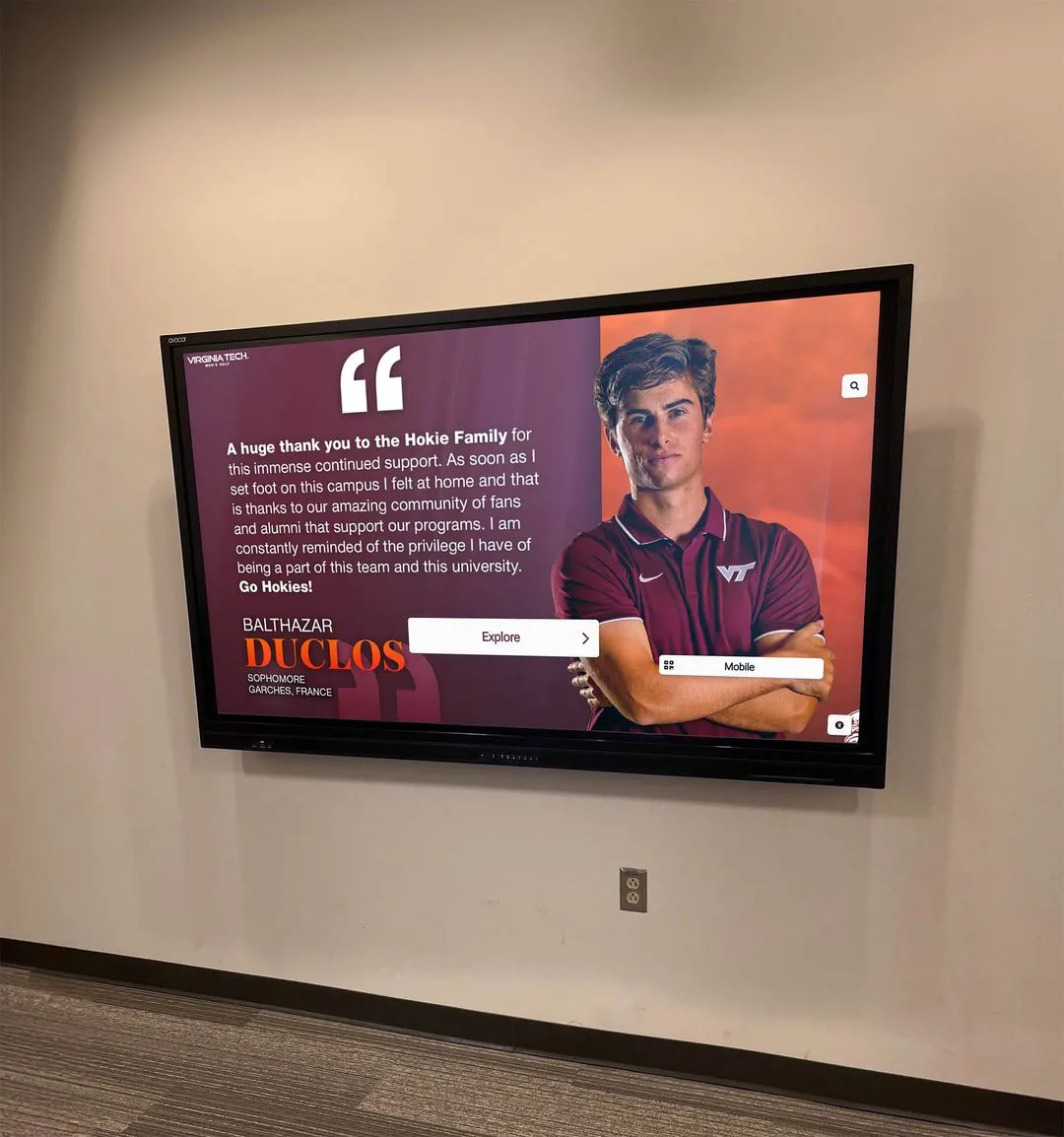
Digital recognition systems integrate naturally with traditional trophy displays, providing unlimited capacity for comprehensive track and field awards documentation
Objective Performance Measurement Unlike subjective sports requiring judgment calls:
- Times provide indisputable performance metrics for running events
- Distances and heights offer objective measurements for field events
- Personal record (PR) improvement quantifies individual growth precisely
- Historical program records establish achievement standards
- Season progression charts document development trajectories clearly
- Comparison across meets and seasons enables contextual analysis
This objectivity creates opportunities for data-driven recognition while requiring thoughtful interpretation—a 12.5-second 100m represents elite performance at some programs and solid contribution at others.
Balancing Event Groups and Recognition Equity
Every track and field program faces fundamental questions about recognition distribution:
Sprint vs. Distance vs. Field Event Balance Should awards concentrate on high-profile sprint and distance races or ensure field events receive proportional recognition? Comprehensive frameworks ensure all event groups—sprints, middle distance, distance, hurdles, jumps, and throws—receive appropriate acknowledgment preventing any discipline from feeling undervalued.
Individual Excellence vs. Team Contribution How do you balance celebrating the individual state champion with honoring the fifth-place finisher whose consistent point scoring secured team conference championships? Award structures need both approaches—excellence-based recognition honoring absolute achievement while contribution categories acknowledge sustained team scoring regardless of event placement.
Varsity Standards vs. Developmental Recognition Programs using varsity letter qualifying standards face recognition challenges—acknowledging athletes who meet demanding performance thresholds while celebrating developmental athletes working toward standards but making meaningful improvement. Multi-tiered recognition ensures both achievement and effort receive validation.
Explore comprehensive approaches to athletic recognition in FBLA and FFA award displays that complement track and field-specific categories.
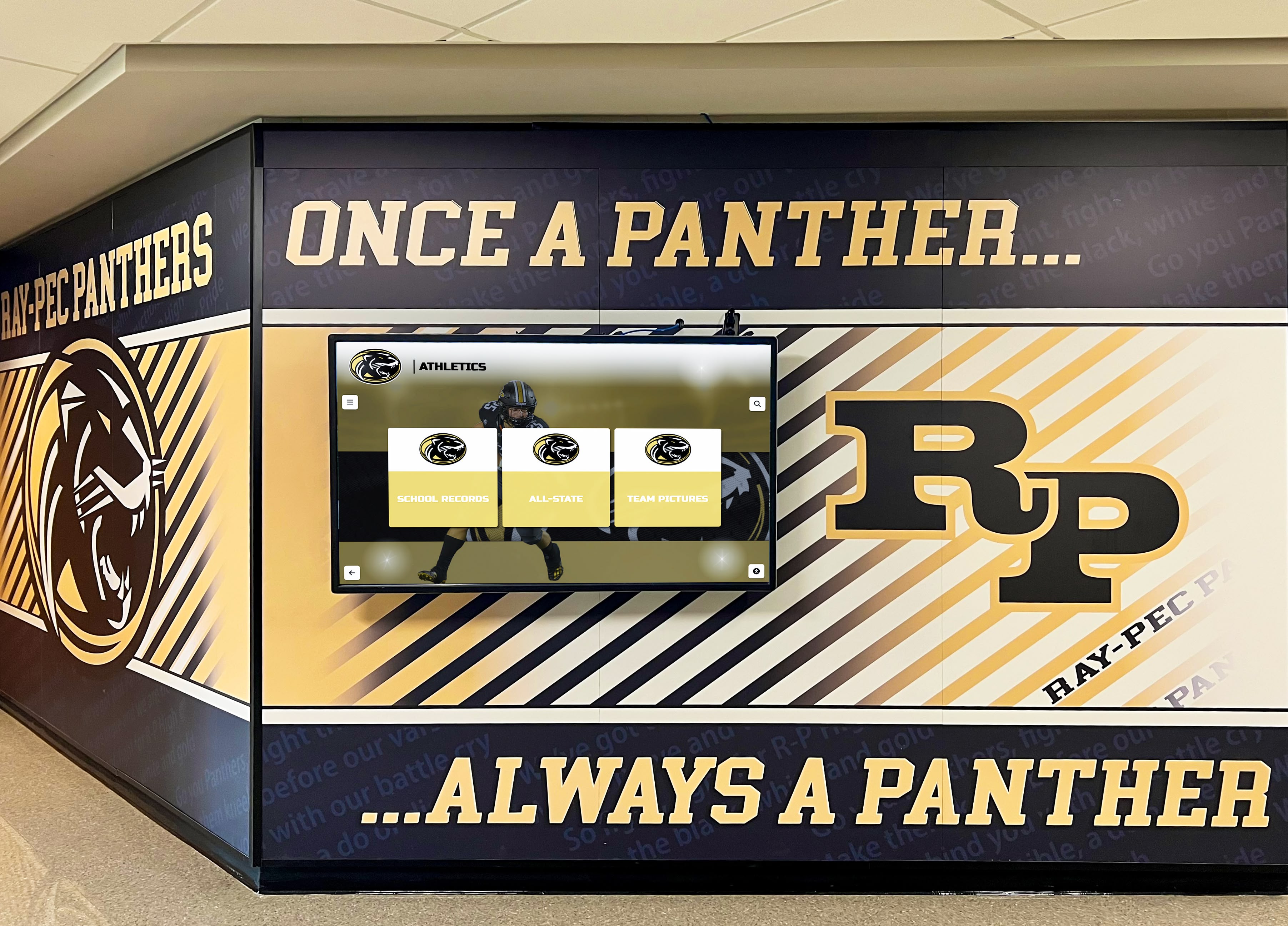
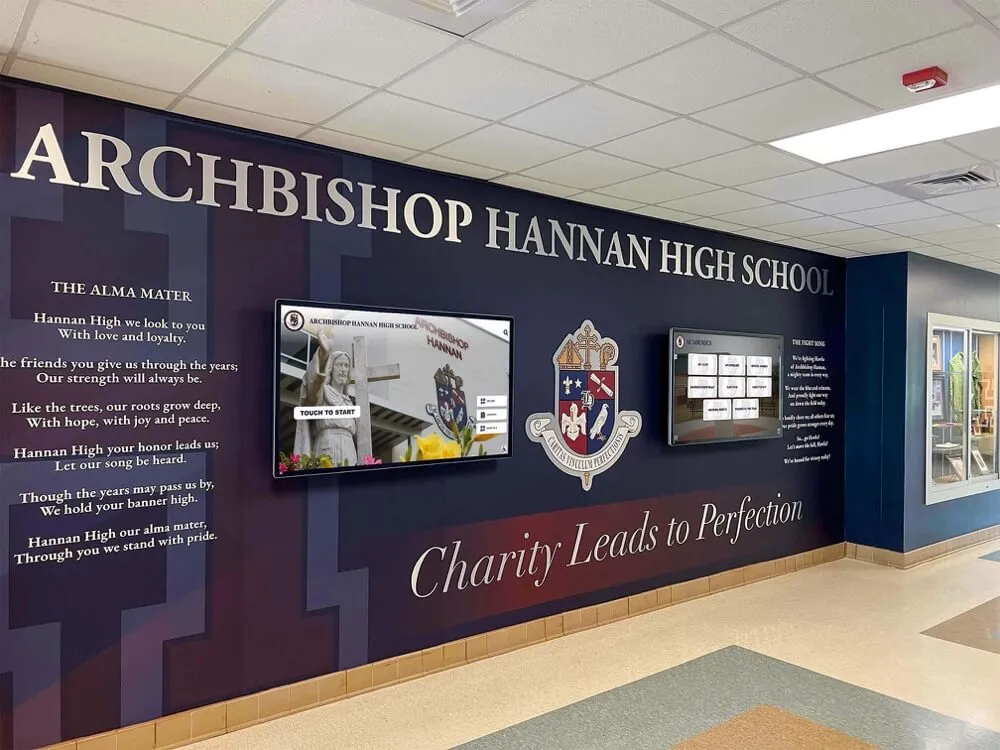
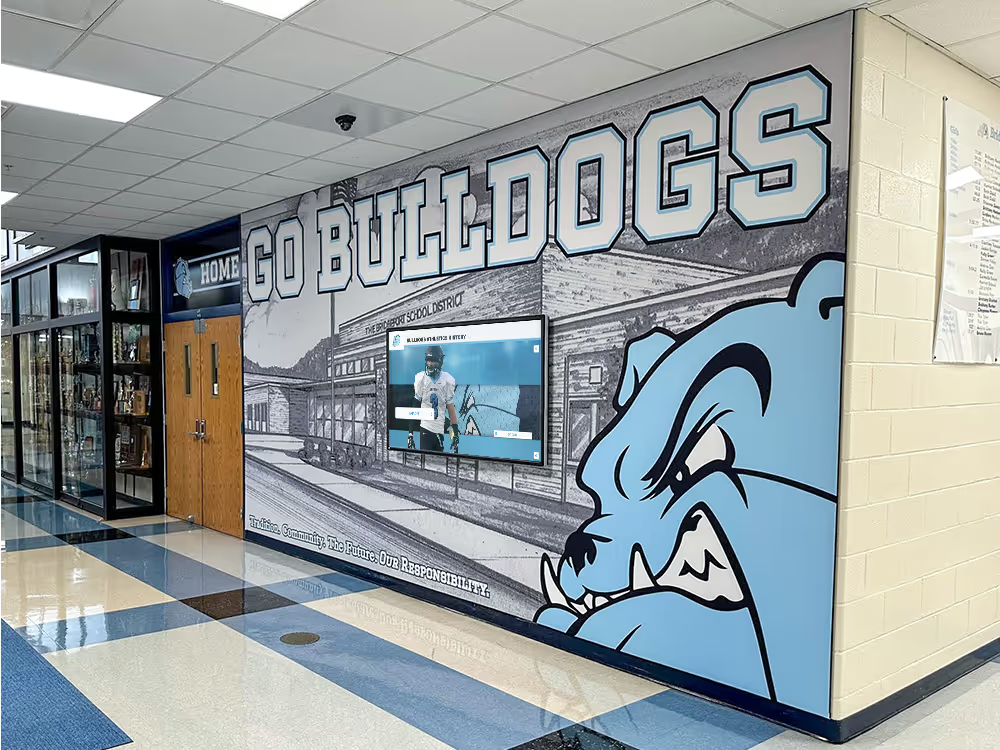
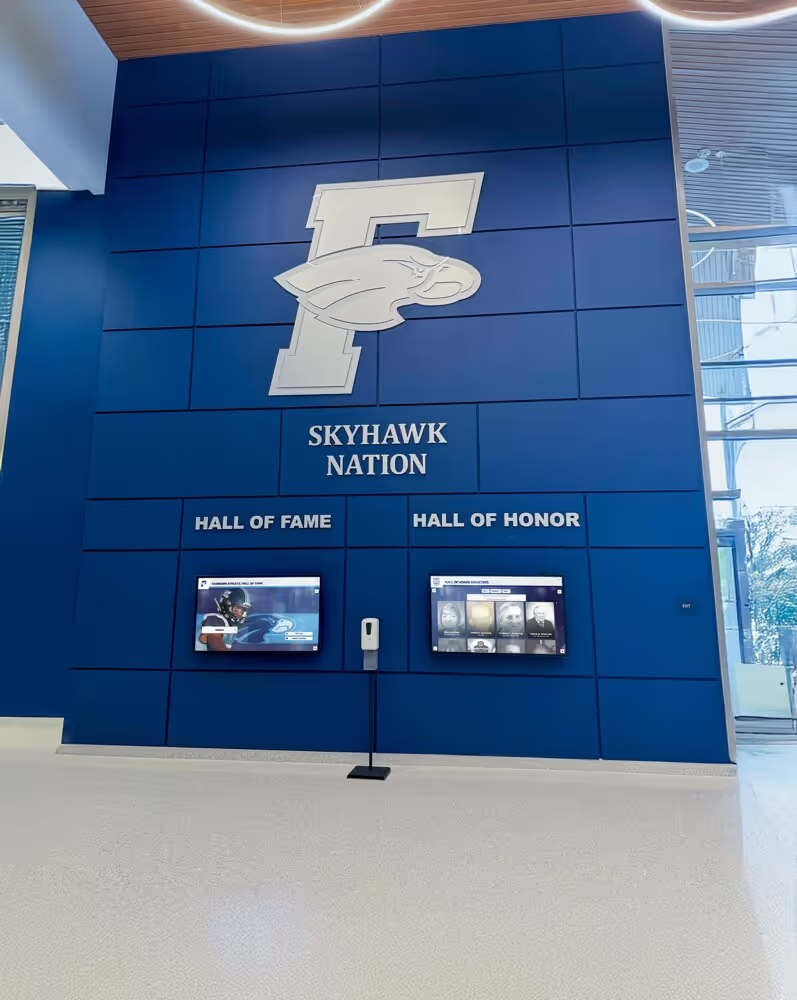
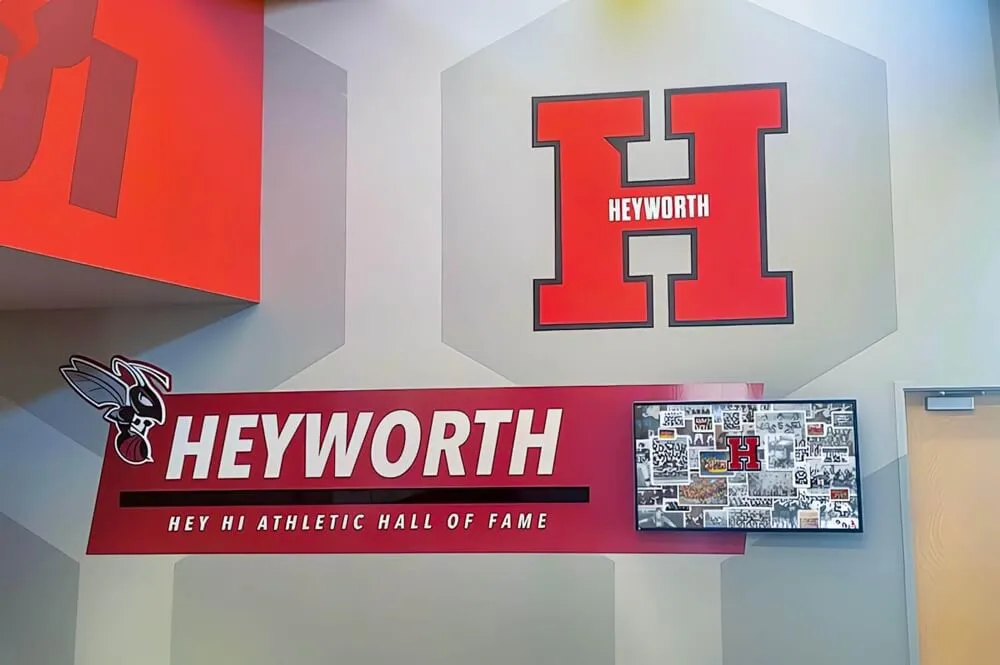
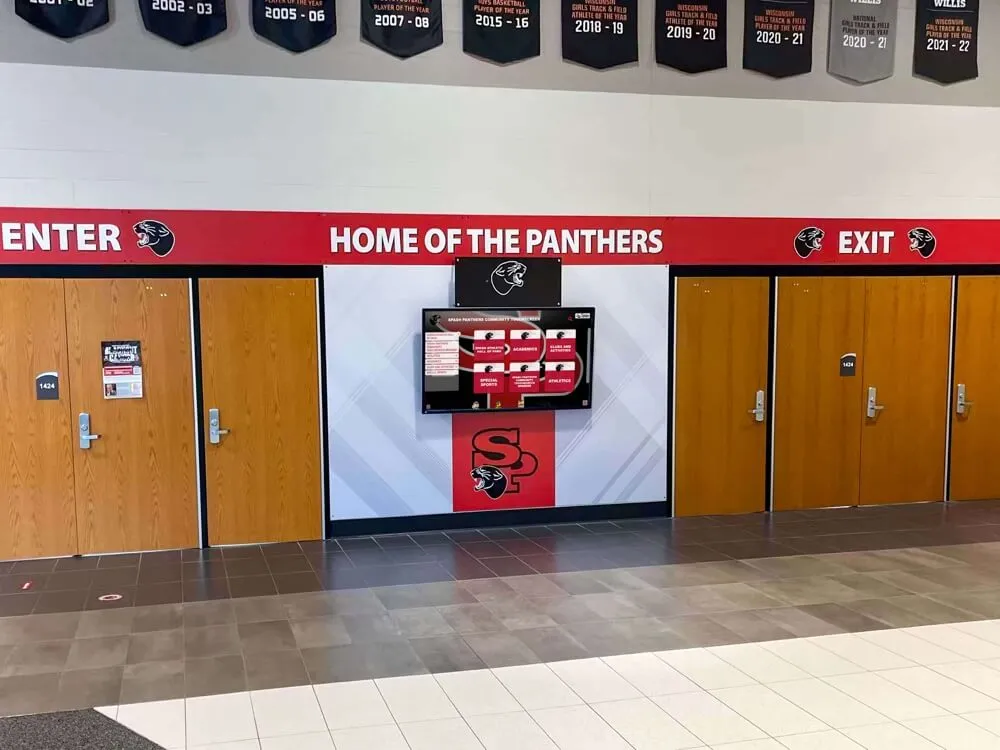
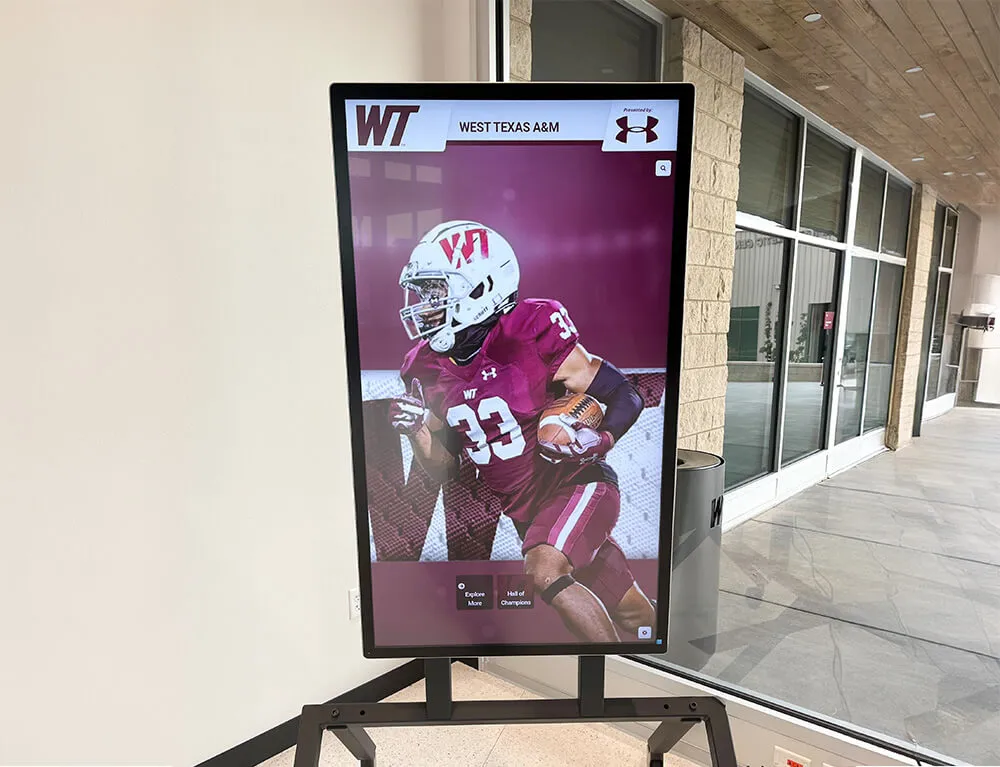
Strategic recognition placement in athletic facilities ensures track and field achievements receive daily visibility while inspiring current and future athletes
Performance-Based Track and Field Awards
Traditional recognition celebrating competitive excellence and measurable achievement across event disciplines.
Sprint Event Awards
Speed-based categories honoring explosive power:
Sprint Champion / Fastest Sprinter Recognizing seasonal sprint excellence:
- Fastest times across 100m, 200m, and 400m events
- Separate male and female recognition in co-ed programs
- Best single race performance at championship meets
- Consistent excellence across entire season rather than single breakthrough
- Consider separate awards for short sprints (100m, 200m) and 400m
- Historical comparison connecting current athletes to program legends
Some programs present sprint awards separately by distance while others recognize overall sprint excellence across all three events—choice depends on roster depth and program tradition.
Hurdles Excellence Award Celebrating technical sprint racing:
- Outstanding performance in 100m/110m hurdles and 400m hurdles
- Technical proficiency combined with speed over barriers
- Improvement in hurdle clearance technique throughout season
- Three-step rhythm mastery and race strategy execution
- Courage pushing through hurdle contact and maintaining speed
- Versatility competing in both high hurdles and intermediate hurdles
Hurdles represent unique athletic discipline requiring sprint speed combined with technical precision and mental toughness—specialized recognition acknowledges this distinctive skill set.
400m Warrior Award Quarter-mile excellence recognition:
- Best 400m performances acknowledging sport’s toughest race
- Speed endurance combining sprint speed with sustained effort
- Championship meet performances when fatigue accumulates
- Willingness to compete in demanding event multiple times per meet
- Pain tolerance and mental toughness racing through oxygen debt
- Relay anchor leg performances under pressure
The 400m occupies special status as track and field’s most challenging distance—too long to sprint, too short to pace conservatively—deserving specialized recognition beyond general sprint awards.
Middle Distance and Distance Awards
Endurance-based recognition categories:
Distance Champion Celebrating aerobic excellence:
- Outstanding performances across 800m, 1600m, 3200m events
- Separate recognition for middle distance (800m, 1600m) and true distance (3200m, 5000m)
- Consistent excellence throughout indoor and outdoor seasons
- Championship meet performances demonstrating peak fitness timing
- Tactical racing intelligence and kick development
- Volume training dedication building aerobic capacity
800m Excellence Award Middle distance specialist recognition:
- Best 800m performances throughout season
- Speed endurance balancing sprint speed and distance capacity
- Tactical racing navigating positioning and surges
- Two-lap strategy execution under championship pressure
- Breakthrough performances indicating development
- Relay contributions on 4x800m teams
The 800m represents track and field’s most strategic race—requiring both speed and endurance with significant tactical elements—justifying specialized recognition separate from pure distance or sprint categories.
Cross Country Transfer Award Acknowledging autumn-to-spring progression:
- Distance runners successfully translating cross country fitness to track
- PR progression from fall cross country to spring track distances
- Mental transition from longer XC distances to faster track pacing
- Building speed to complement aerobic base from fall training
- Dual-season commitment across fall and spring seasons
- Year-round distance running dedication
Learn about comprehensive distance running recognition in cross country awards ideas applicable to track distance events.
Field Event Awards
Technical event recognition categories:
Jumps Excellence Award Horizontal and vertical jump achievement:
- Outstanding performance across long jump, triple jump, high jump, pole vault
- Technical proficiency and consistent execution under pressure
- Height or distance progression throughout season
- Championship meet performances demonstrating peak preparation
- Versatility competing in multiple jump events
- Courage attempting challenging heights or distances
Throws Excellence Award Strength event specialist recognition:
- Best performances across shot put, discus, javelin, hammer throw
- Technical development and consistent ring/runway execution
- Distance progression and seasonal improvement trajectories
- Strength training dedication complementing technical work
- Versatility competing in multiple throw events
- Safety consciousness and mature approach to weight events
High Point Field Event Athlete Overall field event contribution:
- Most team points scored across all field events throughout season
- Versatile athletes excelling in multiple disciplines
- Consistent scoring preventing opponent field event dominance
- Strategic event selection maximizing team scoring opportunities
- Reliability across entire season rather than single breakthrough
- Championship meet point production when stakes highest
Event-Specific Specialist Awards Individual discipline excellence:
- Long Jump Champion for horizontal jump excellence
- High Jump Champion celebrating vertical jump mastery
- Pole Vault Excellence recognizing technical courage
- Shot Put Champion for explosive power
- Discus Champion acknowledging rotational technique
- Javelin Excellence for throwing coordination
Event-specific awards ensure specialized excellence receives focused celebration rather than being diluted within broader field event categories.
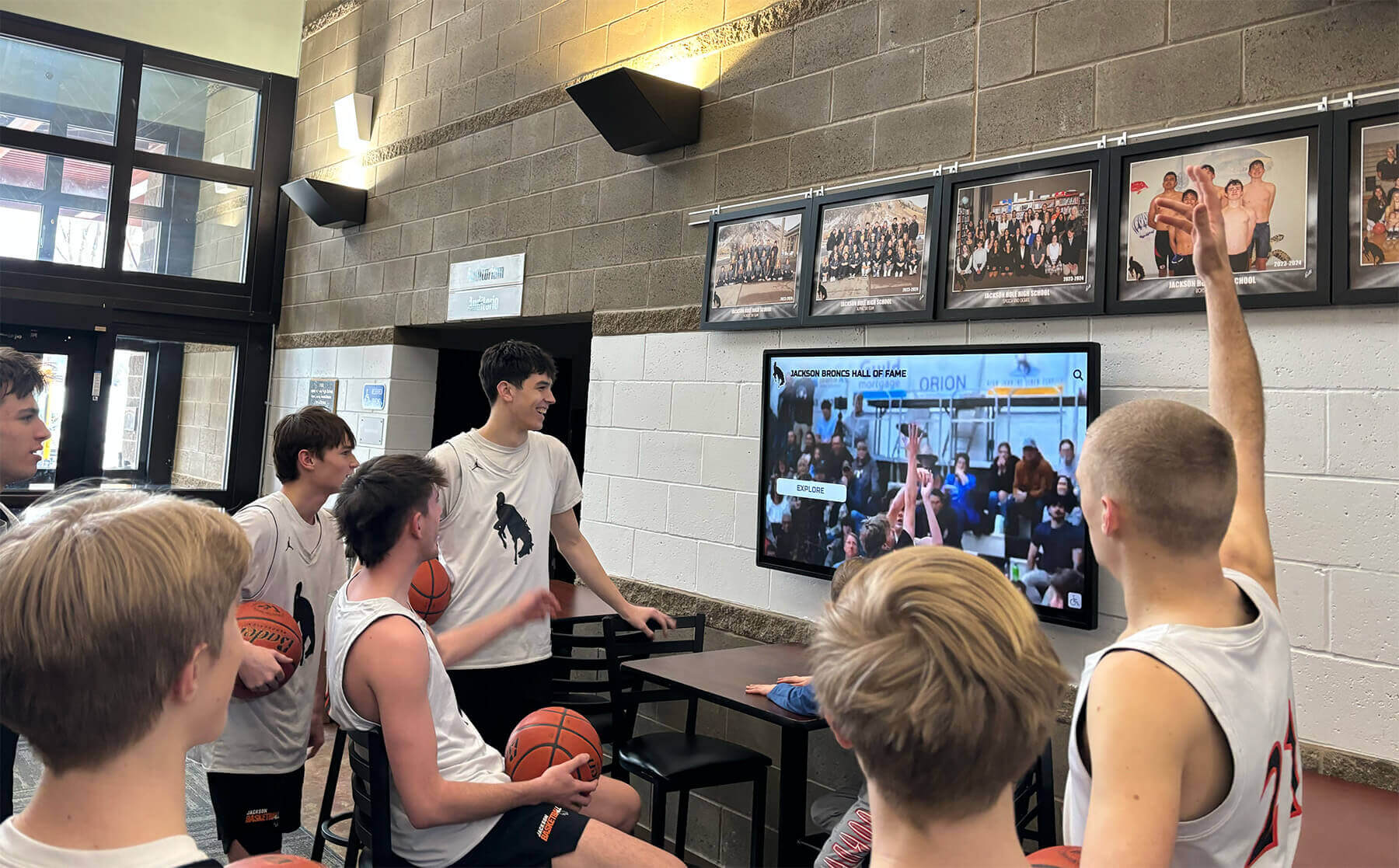
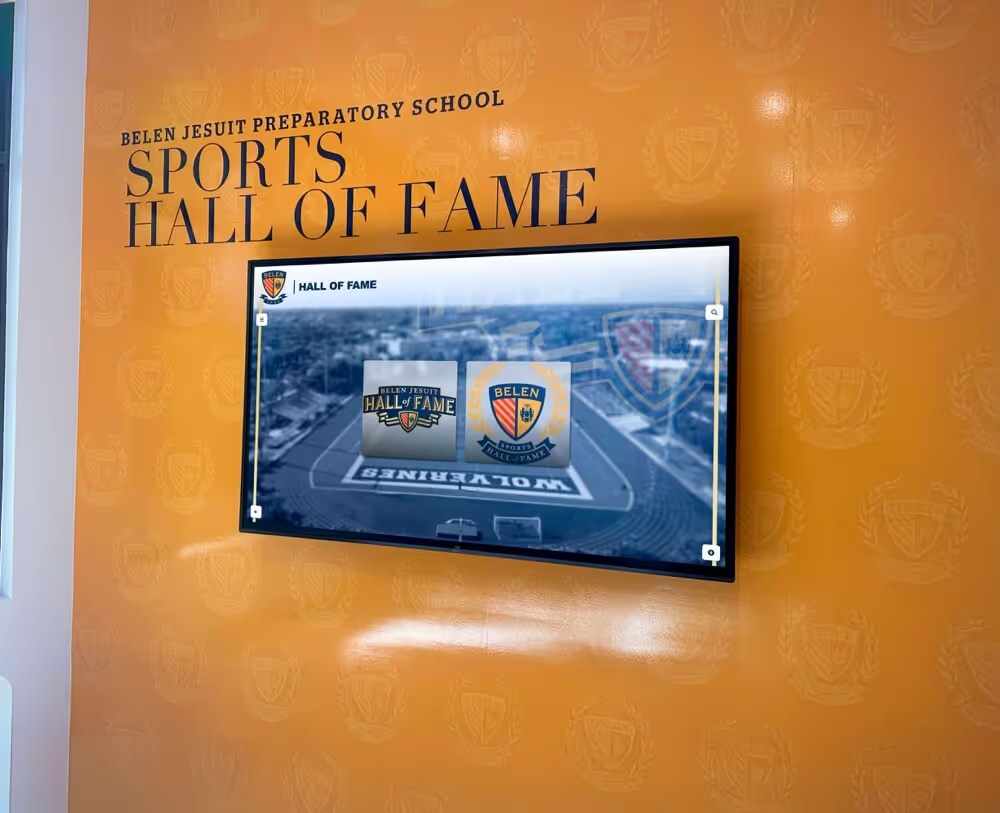
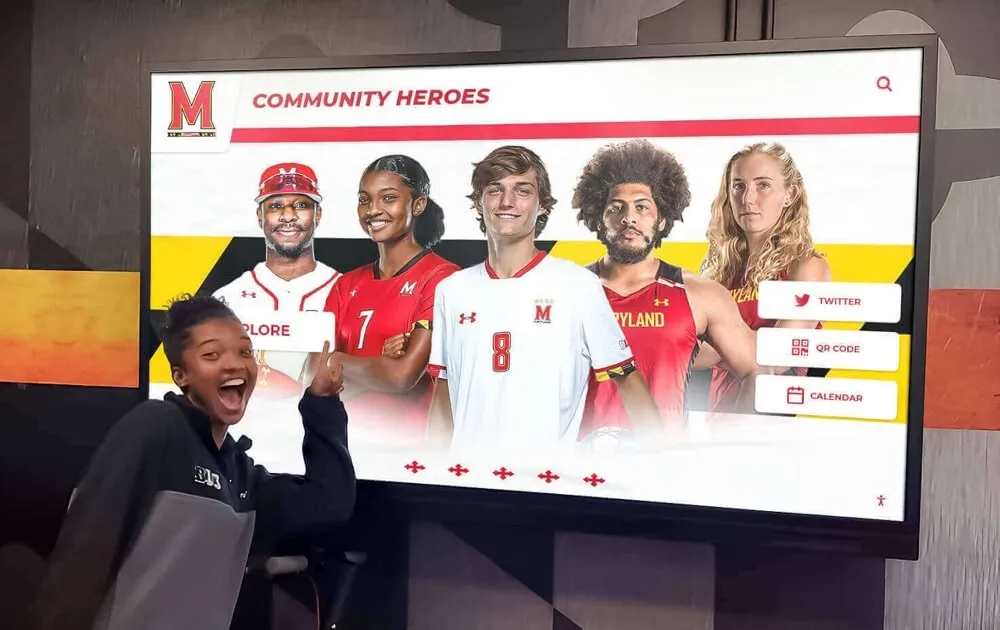
Interactive displays enable year-round engagement with track and field awards and achievements, extending recognition beyond annual banquet ceremonies
Relay Team Awards
Collaborative racing recognition:
Outstanding Relay Team Team speed and execution excellence:
- Best relay team across 4x100m, 4x200m, 4x400m, 4x800m, sprint medley
- Handoff execution and zone mastery
- Team chemistry and strategic leg assignments
- Championship qualifying and competitive success
- Season-long consistency and reliability
- Record-breaking performances or program-best times
Relay MVP / Anchor Leg Excellence Individual relay contribution:
- Outstanding individual performances within relay context
- Anchor leg heroics making up deficits or extending leads
- Versatility running multiple relay events successfully
- Handoff consistency reducing exchange mistakes
- Leadership within relay squads supporting teammates
- Clutch performances in championship relay finals
Relay awards acknowledge that team events require collaboration, trust, and selfless running—qualities deserving specific recognition beyond individual event achievement.
Discover basketball scoring records tracking approaches that apply to track and field records management.
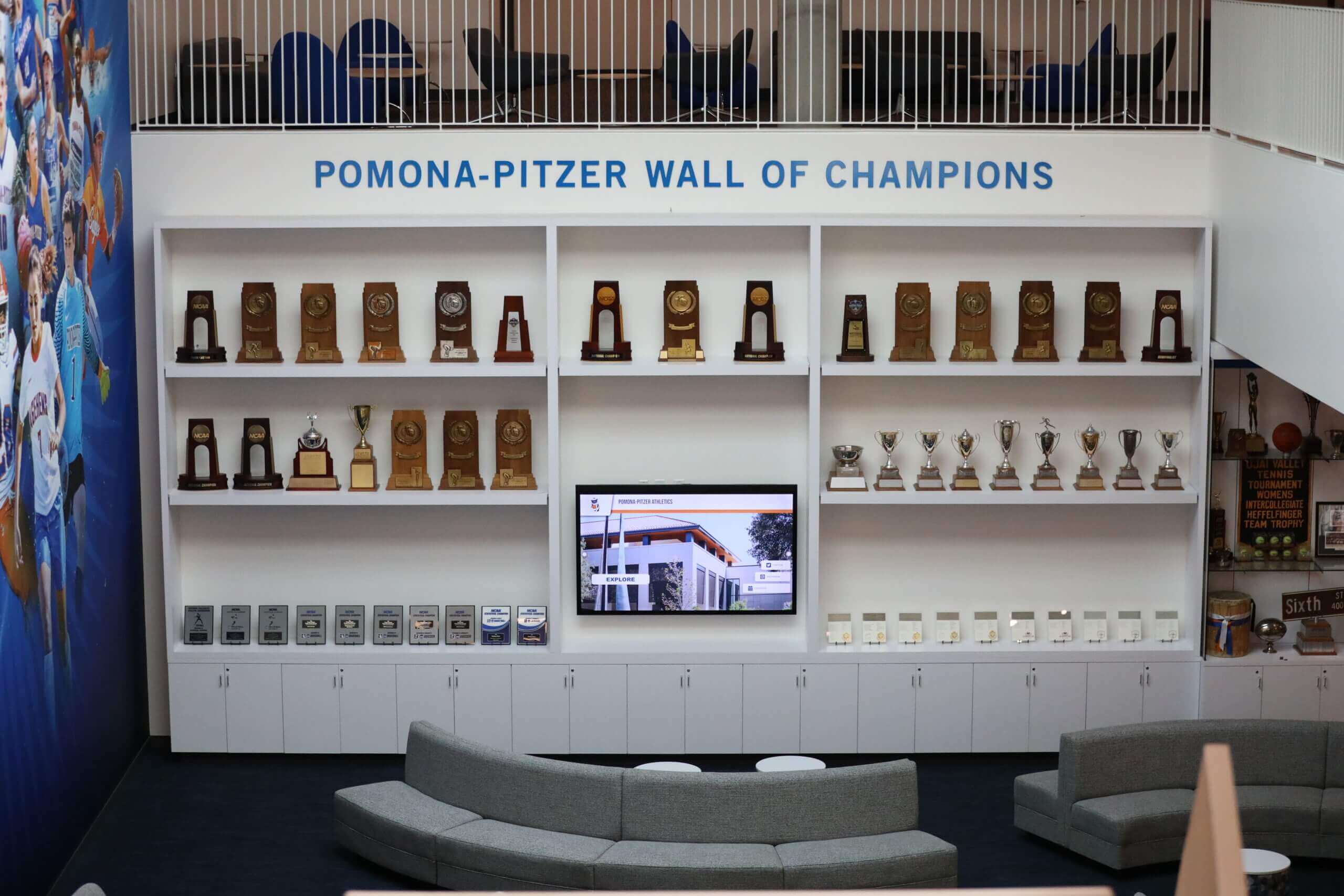
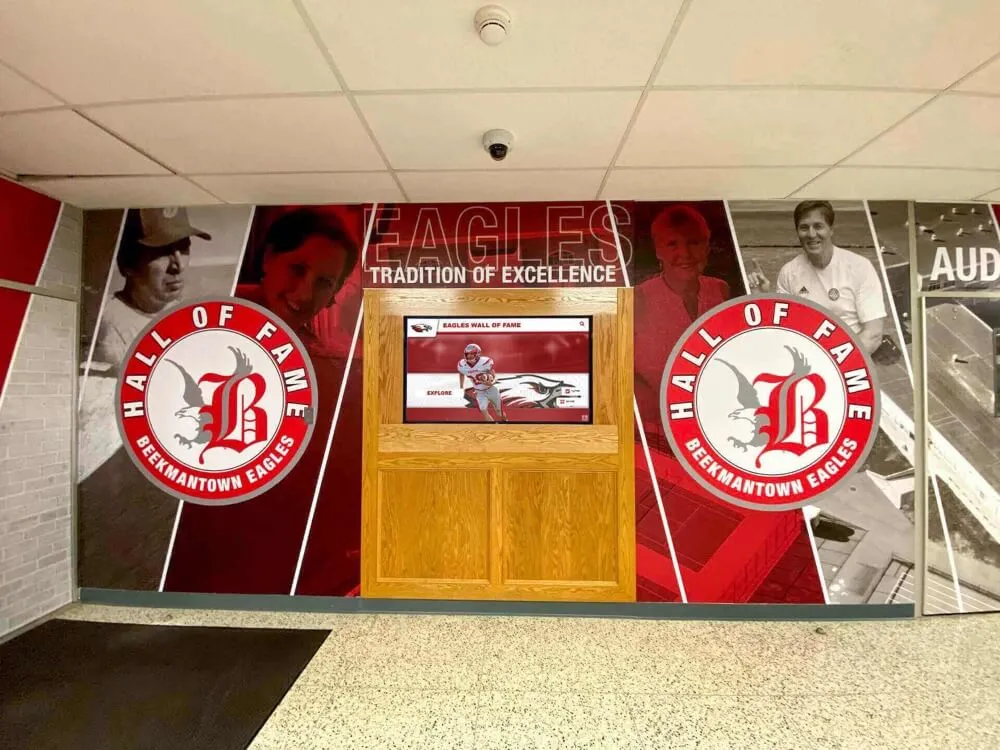
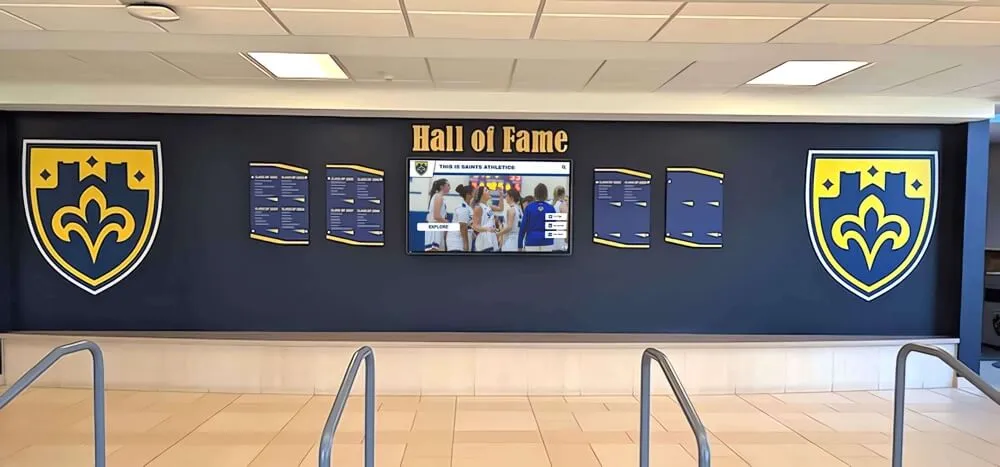
Recognition spaces create compelling contexts for track and field banquet programming while preserving achievements across program history
Improvement and Development Awards
Recognition celebrating growth, dedication, and progression regardless of absolute performance levels.
Most Improved Recognition
Honoring developmental achievement:
Most Improved Track Athlete Greatest seasonal progression in running events:
- Largest time improvement from season opening to championships
- Percentage-based improvement calculation ensuring fairness across ability levels
- Separate male/female and event group (sprint/distance) recognition
- PR progression demonstrating consistent development
- Breakthrough performances exceeding previous limitations
- Training dedication manifesting in measurable results
Calculate improvement as percentage: [(Opening Time - Final Time) / Opening Time] × 100. This ensures a sprinter dropping from 12.5 to 11.8 seconds in the 100m receives proportionally similar recognition as a distance runner improving from 11:30 to 10:45 in the 3200m.
Most Improved Field Event Athlete Field event development recognition:
- Greatest distance/height improvement throughout season
- Technical refinement demonstrating coaching effectiveness
- Overcoming technical barriers or performance plateaus
- Event-specific improvements (jumps vs. throws)
- Separate recognition for horizontal jumps, vertical jumps, and throws
- Multi-event improvement for versatile athletes
Breakthrough Performance Award Quantum leap achievement recognition:
- Single competition where athlete dramatically exceeded previous performance
- Unexpected PR indicating training adaptation breakthrough
- Qualifying for championship competition after missing standard
- Massive improvement suggesting ceiling-raising moment
- Inspirational performance motivating teammates
- Overcoming mental barriers or confidence limitations
Freshman Development Award First-year excellence and growth:
- Most impressive freshman athlete based on performance and improvement
- Rapid adaptation to high school or collegiate competition intensity
- Foundation building for four-year athletic career
- Coachability and responsiveness to technical instruction
- Future program leadership potential
- Setting trajectory toward varsity letter standards
Training Dedication Recognition
Effort-based awards acknowledging commitment:
Iron Athlete Award Durability and availability:
- Consistent meet participation throughout entire season
- Multi-event contribution earning team points across disciplines
- Injury-free season demonstrating training intelligence
- Reliable scoring preventing lineup gaps
- Willingness to compete in assigned events supporting team needs
- Physical and mental toughness handling demanding competition schedules
Practice Excellence Award Training commitment recognition:
- Perfect or near-perfect practice attendance
- Consistent effort in daily training regardless of competitive results
- Quality workout execution demonstrating focus and discipline
- Positive practice attitude and enthusiasm
- Leadership through training example
- Summer and winter off-season preparation dedication
Versatility Award Multi-event excellence:
- Outstanding performance across multiple event disciplines
- Decathlon/heptathlon competitors combining diverse skills
- Athletes scoring points in sprints, distances, jumps, and throws
- Flexibility competing in strategic event assignments
- Jack-of-all-trades reliability filling roster gaps
- Demonstrating comprehensive athletic ability
Off-Season Training Award Pre-season foundation building:
- Dedicated winter training during indoor season or preparation phase
- Consistent summer conditioning and technical work
- Weight room dedication building strength and power
- Self-directed training demonstrating maturity
- Arriving at outdoor season start in excellent condition
- Foundation laying that enables in-season competitive success
Learn about most improved player recognition that translates to track and field improvement awards.
Character and Leadership Track and Field Awards
Recognition extending beyond physical performance to acknowledge intangibles defining athletic excellence.
Mental Toughness and Competitive Spirit
Psychological strength awards:
Competitor of the Year Relentless competitive spirit:
- Consistent maximum effort regardless of winning or losing
- Rising to challenges when competing against superior competition
- Refusing to concede races or events despite disadvantages
- Fighting through pain and discomfort without quitting
- Clutch performances in pressure situations
- Championship meet intensity and focus
Grit Award / Mental Toughness Psychological resilience recognition:
- Pushing through discomfort in demanding events like 400m or 800m
- Handling multiple events in single meet without complaint
- Racing through minor injuries or physical challenges
- Overcoming disappointing performances without losing confidence
- Training through difficult weather conditions
- Never-surrender mentality inspiring teammates
Comeback Athlete Award Adversity resilience:
- Returning from injury to competitive form
- Overcoming setbacks or disappointing early-season results
- Pushing through illness or personal challenges affecting training
- Maintaining commitment during difficult stretches
- Long-term perspective and persistence through obstacles
- Demonstrating courage returning from significant injuries
Warrior Spirit Award Embracing challenge and adversity:
- Volunteering for demanding events serving team needs
- Competing in adverse weather conditions without hesitation
- Multiple-event-same-day performances without complaint
- Willingness to compete hurt when team needs points
- Aggressive racing not settling for comfortable performances
- Championship-level intensity throughout season
Leadership and Program Culture
Character-based recognition:
Team Captain / Leadership Award Program leadership recognition:
- Seasonal captains selected by coaches or athletes
- Vocal leadership during practices and meets
- Mentoring younger athletes through challenging transitions
- Positive influence on team culture and training environment
- Setting work ethic standards through personal example
- Bridging gaps between event groups creating team unity
Best Teammate Award Peer-selected recognition:
- Voted by team members acknowledging best teammate qualities
- Selfless support of others’ success
- Encouraging presence during training and competition
- Reliable friendship and camaraderie building
- Team-first mentality over individual achievement
- Celebrating teammates’ accomplishments authentically
This peer-selected award often proves most meaningful to recipients—validation from teammates who train together daily carries special significance in sport combining individual and team elements.
Sportsmanship Award Competitive character recognition:
- Gracious winner and resilient loser
- Respect for competitors, officials, and opponents
- Helping teammates and even competitors during struggles
- Representing program positively at all meets
- Understanding that character matters as much as results
- Ethical competition and rules adherence
Program Ambassador Award Community representation:
- Positive representation at competitions and travel meets
- Academic excellence alongside athletic achievement
- Community engagement and service participation
- Social media presence reflecting program values
- Recruiting assistant through positive advocacy
- School pride and program promotion
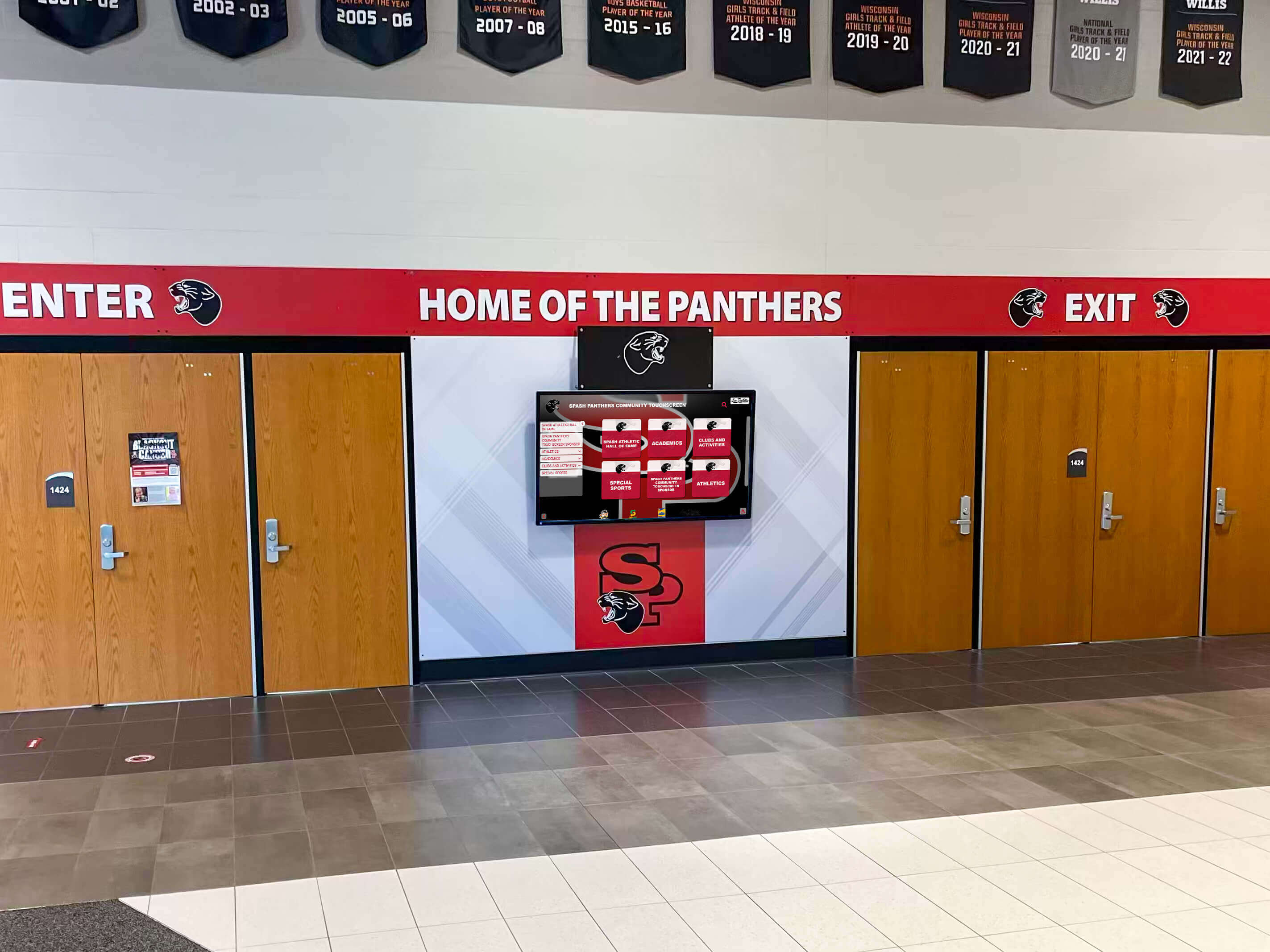
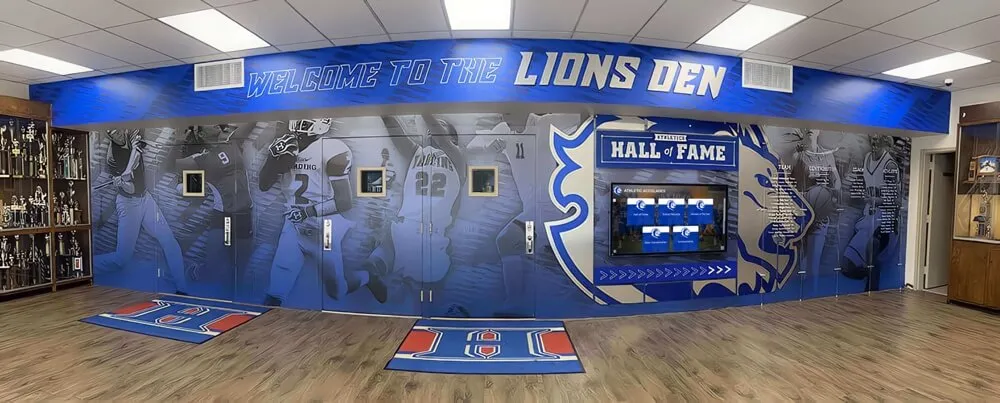
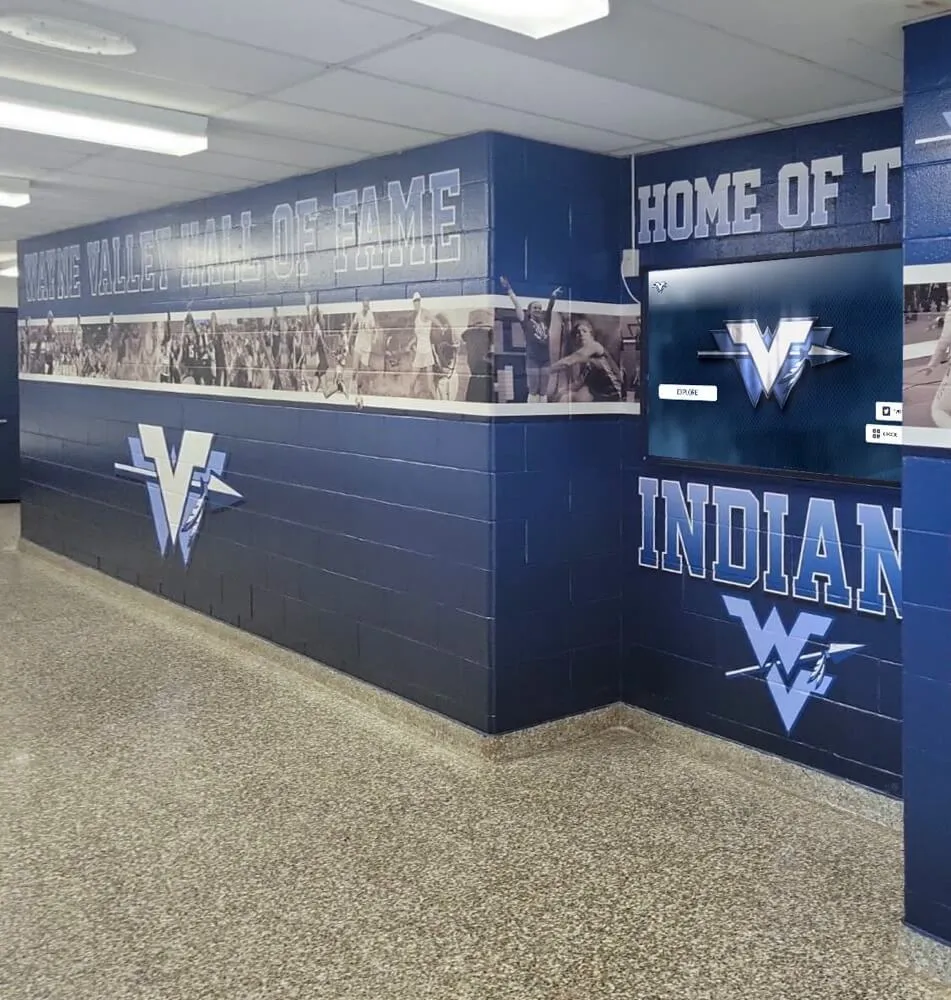
Entrance placement ensures track and field recognition welcomes visitors while demonstrating program excellence to prospective athletes and families
Unsung Hero Award Behind-the-scenes contribution:
- Athletes who rarely win but provide essential team scoring
- Consistent effort without fanfare or recognition-seeking
- Accepting unglamorous event assignments without complaint
- Supporting role players enabling stars to shine
- Dedication matching or exceeding highly-recognized athletes
- Embodying program values without requiring spotlight
Discover comprehensive team culture development in spirit week themes that build program pride and tradition.
Creative and Specialized Track and Field Awards
Unique categories reflecting program personality and celebrating distinctive contributions.
Event Group-Specific Recognition
Specialized acknowledgment categories:
Distance Runner of the Year Overall distance excellence:
- Combined performance across 1600m, 3200m, and possibly 5000m
- Indoor and outdoor season consistency
- Cross country performance if applicable
- Mileage accumulation and training dedication
- Championship meet performances peaking at season’s end
- Mental toughness embracing distance running demands
Sprint Squad MVP Sprint group leadership and excellence:
- Outstanding contribution to sprint events and sprint relays
- Technical proficiency across 100m, 200m, 400m
- Leadership within sprint training group
- Explosive power and raw speed development
- Championship performances in sprint finals
- Relay versatility and handoff excellence
Field Event Leader Field event group recognition:
- Outstanding performance across jump or throw disciplines
- Leadership within field event training groups
- Technical development and coaching receptiveness
- Consistent scoring across entire season
- Championship meet point production
- Embodying field event culture and work ethic
Hurdles Specialist Award Technical event mastery:
- Excellence in hurdle events requiring speed and technique
- Three-step rhythm consistency and barrier clearance
- Fearless approach to high-speed technical racing
- Injury prevention through sound hurdling mechanics
- Championship performances under pressure
- Improvement in technical proficiency throughout season
Milestone and Achievement Awards
Performance threshold recognition:
Sub-[Time] Club Recognition Breaking significant time barriers:
- Sub-11.0 seconds in 100m
- Sub-50.0 seconds in 400m
- Sub-2:00 in 800m
- Sub-4:30 in 1600m
- Sub-10:00 in 3200m
- Program-specific standards based on competitive level and tradition
Milestone clubs create objective achievement targets motivating athletes toward specific goals while acknowledging significant performance levels deserving recognition.
Varsity Letter Qualifiers Meeting demanding performance standards:
- Achieving varsity letter qualifying times or distances
- Demonstrating sustained performance worthy of varsity status
- Multiple event qualifications for versatile athletes
- Improvement from sub-varsity to varsity standards
- First-time varsity letter earners
- Four-year varsity participants
School Record Breakers Historical achievement recognition:
- Breaking longstanding program records
- Multiple record-breaking performances in single season
- Indoor and outdoor record achievements
- Relay record participation
- Establishing new program standards inspiring future athletes
- Legacy achievement affecting program history
Championship Qualifiers Postseason advancement:
- State meet qualifiers in individual events
- Regional championship participants
- State placing and medal recognition
- Relay team championship advancement
- Individual awards earned at championship competitions
- Representing program at highest competitive levels
All-Conference and All-State Recognition External validation acknowledgment:
- Conference championship medalists and all-conference selections
- All-league first team, second team, and honorable mention
- All-state selections based on state meet performances
- League and conference record performances
- District and regional honors
- Academic all-conference and all-state recognition
Learn about track and field records display solutions for preserving championship achievements.
Fun and Personality-Based Awards
Lighthearted recognition categories:
Best Pre-Race Routine Entertainment value recognition:
- Most elaborate or entertaining warm-up rituals
- Unique visualization or psychological preparation
- Music selection and motivation approaches
- Superstitious routines providing comfort
- Personality expression through competition preparation
- Lighthearted award adding fun to banquet
Best Race Face Photographic entertainment:
- Most intense or entertaining facial expression in race photos
- Displaying competitive suffering dramatically
- Memorable race photo capturing personality
- Fan-favorite image from season
- Adding humor to formal celebration
- Social media-worthy moments
Most Versatile Athlete Jack-of-all-trades recognition:
- Competing successfully in four or more different events
- Scoring points across multiple event disciplines
- Filling roster gaps wherever coaches need
- Demonstrating comprehensive athletic ability
- Willingness to try new events mid-season
- Renaissance athlete embodying complete track and field skill
Iron Will Award Toughness beyond physical ability:
- Competing through minor injuries without complaint
- Racing multiple demanding events same day repeatedly
- Training through adverse conditions
- Never missing practice or competition
- Pain tolerance and mental toughness
- Durability throughout grueling championship season
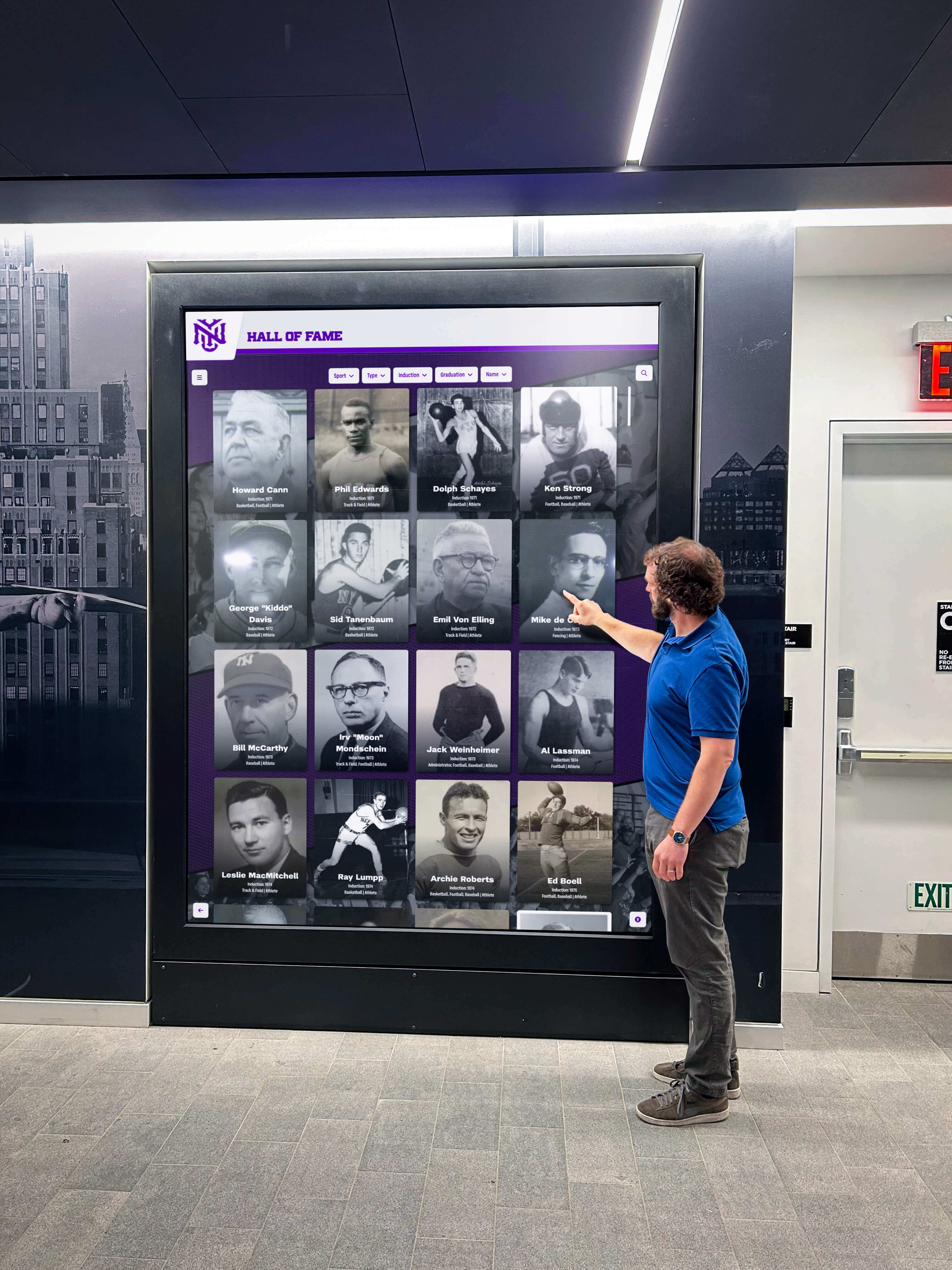
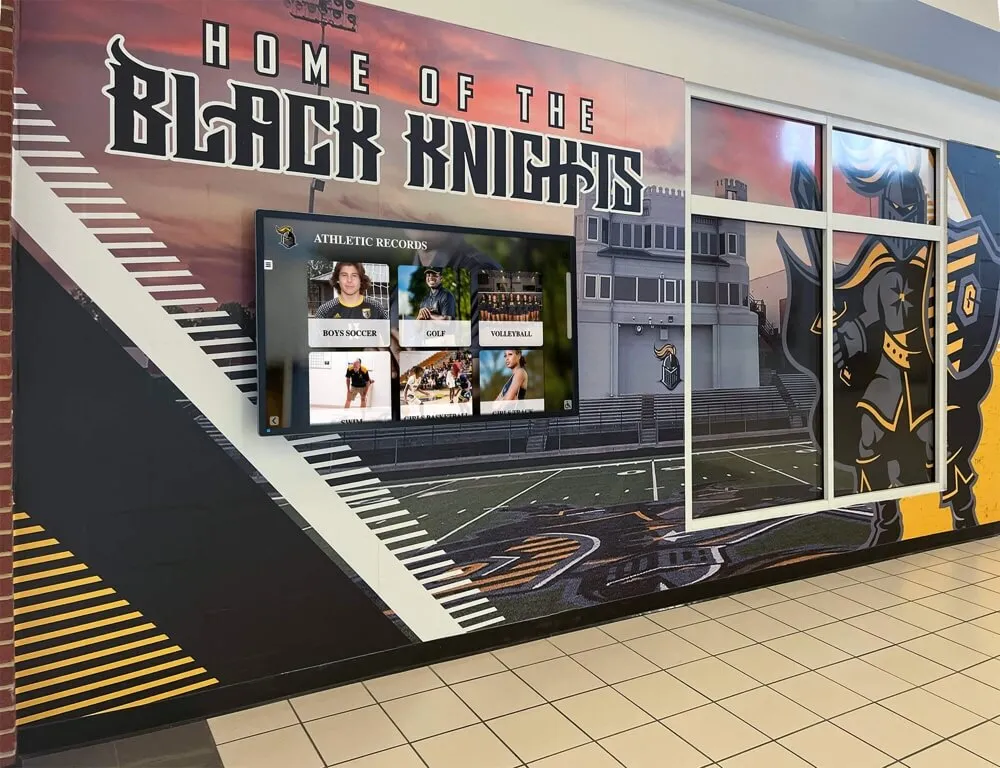
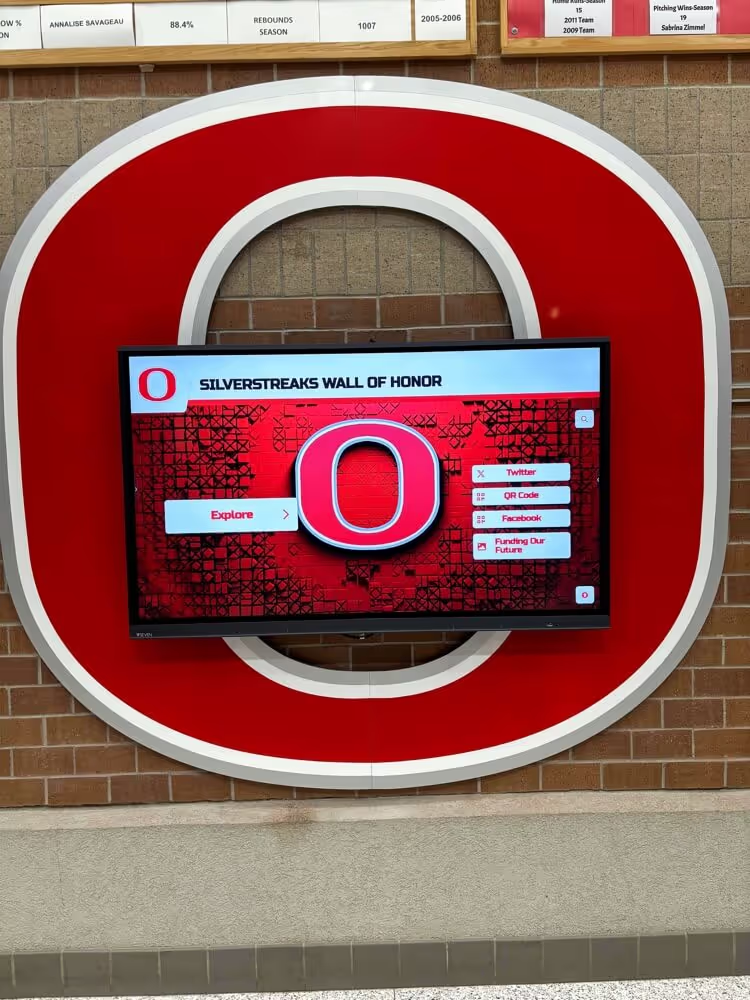
Touchscreen systems enable interactive exploration of track and field awards and athlete achievements impossible with static trophy displays
Academic Recognition in Track and Field
Balancing athletic and academic excellence acknowledging complete student-athletes.
Scholar-Athlete Awards
Academic achievement categories:
Scholar-Athlete of the Year Academic excellence recognition:
- GPA thresholds defining academic honor (typically 3.5+ or 3.75+)
- Academic All-Conference selections when available
- Balancing rigorous coursework with demanding training
- Classroom effort mirroring athletic dedication
- Role model for younger athletes
- College preparation alongside athletic development
Academic All-State Recognition External academic validation:
- State-level academic honors for student-athletes
- Meeting combined GPA and athletic performance standards
- Recognition systems honoring complete student-athletes
- College application enhancement through documented achievement
- Program pride in academic-athletic balance
- Demonstrating athletics supports rather than hinders academics
Academic Improvement Award Educational growth recognition:
- Greatest GPA increase from previous season or year
- Overcoming academic challenges through improved habits
- Study hall dedication and academic support utilization
- Time management development balancing training and academics
- Growth mindset demonstration in classroom
- Parallel improvement in athletic and academic performance
Team GPA Recognition Collective academic achievement:
- Highest team GPA among boys’ or girls’ squads
- Academic excellence across entire roster
- Supporting culture valuing education equally with athletics
- Team academic standards and expectations
- Academic peer accountability and support
- Demonstrating comprehensive program excellence beyond track
Learn about academic recognition programs that complement athletic honors.
Gender-Specific Considerations in Track and Field Recognition
Addressing unique dynamics of boys’ and girls’ track and field programs.
Girls’ Track and Field Recognition
Female athlete-specific acknowledgment:
Breaking Barriers for Young Women Track and field provides unique opportunities for female athletes:
- Individual sport empowerment without position limitations
- Objective performance metrics eliminating subjective evaluation
- Diverse event options matching different body types and strengths
- Leadership development in female-dominated team environment
- College recruitment pathways through running and field event excellence
- Body-positive culture celebrating athletic performance over appearance
Recognition should celebrate these dimensions—awards honoring leadership development, resilience through challenges unique to female athletes, empowerment through achievement, and role modeling for younger team members.
Addressing Female Athlete Challenges Girls face specific obstacles in track and field:
- RED-S (Relative Energy Deficiency in Sport) awareness and prevention
- Balancing training intensity with nutritional health
- Managing menstrual cycle impacts on training and performance
- Body image pressures in uniform-based individual sport
- Multi-sport demands and scheduling conflicts
- Recruitment navigation and athletic scholarship processes
Character awards acknowledging healthy approaches to training, balanced perspectives on performance, resilience through female-specific challenges, and supportive teammate relationships provide valuable recognition beyond pure performance metrics.
Boys’ Track and Field Recognition
Male athlete-specific dynamics:
Competitive Culture Management Boys’ programs often emphasize:
- Competitive training environment pushing personal limits
- Physical toughness and high pain tolerance
- Volume-based training approaches building capacity
- Aggressive racing tactics and competitive intensity
- Championship meet focus and peak performance targeting
- Team scoring priorities over individual preference
Awards celebrating team-first racing, tactical discipline, supportive competition that pushes teammates toward excellence while celebrating their success, and leadership that builds positive rather than toxic competitive culture reinforce healthy program dynamics.
Multi-Sport Balance Male track and field athletes frequently participate in multiple sports:
- Spring track competing with baseball, lacrosse, tennis commitments
- Football players using track for speed development
- Basketball athletes continuing winter season conditioning
- Soccer players bridging fall and spring seasons with track
- Balancing training demands across competing activities
- Specialization versus diversification decisions
Recognition honoring multi-sport contributions while acknowledging track and field dedication validates athletes navigating competing athletic interests and balancing multiple coaching relationships.
Co-Ed Program Recognition
Combined program considerations:
Parallel Award Structures Most co-ed programs maintain separate but equivalent recognition:
- Identical award categories for male and female teams
- Gender-specific fastest athlete and improvement awards
- Separate team scoring and conference championship recognition
- Parallel leadership and character awards
- Ensuring equal attention and celebration during combined banquets
- Proportional budget allocation for awards and recognition
Combined Team Awards Some categories work effectively across genders:
- Combined team scoring at co-ed meets
- Unified program culture and spirit awards
- Cross-gender mentorship recognition
- Program ambassadors representing both teams
- Shared training group excellence
- Family atmosphere and mutual support acknowledgment
Avoiding Gender Bias in Recognition Ensure equitable celebration across programs:
- Equal speaking time and program length for both teams at banquets
- Balanced award prestige and trophy quality
- Equivalent coach emphasis and enthusiasm
- Fair resource allocation for recognition materials and documentation
- Identical permanent documentation for male and female achievements
- Avoiding cultural assumptions about which events or achievements matter most
Senior Recognition: Honoring Program Leadership
Graduating track and field athletes deserve special acknowledgment of their multi-year contributions.
Senior Tribute Programming
Thoughtful senior recognition creates meaningful transition moments:
Senior Spotlight Presentations Detailed acknowledgment of each graduating athlete:
- Individual introductions with years in program and events competed
- Athletic journey summaries from freshman through senior year
- Coach remarks highlighting unique contributions and character
- Photo montages tracking development across four years
- Future plans including college attendance or continued athletic pursuit
- Personal records and achievement highlights
- Family recognition acknowledging support throughout careers
Consider time management with large senior classes—2-3 minutes per senior maintains engagement while providing meaningful individual recognition.
Senior Performance Highlights Video tributes showcasing athletic careers:
- Competition footage from meets across four years
- Personal record performances and breakthrough moments
- Championship meet appearances and successful races
- Relay contributions and team scoring moments
- Behind-the-scenes practice footage showing dedication
- Teammate and coach testimonials about senior impact
Well-produced tribute videos become cherished keepsakes families treasure while providing emotional banquet moments connecting audiences to senior achievements.
Senior Legacy Projects Tradition transmission opportunities:
- Graduating seniors selecting awards for returning athletes
- Senior speeches offering advice to younger teammates
- Captains passing symbolic items to future leaders
- Alumni mentorship connections facilitating ongoing relationships
- Continuous program culture transmission across generations
- Recognition of multi-year program building and leadership
Senior Academic and Athletic Achievement Complete student-athlete acknowledgment:
- College commitments and scholarship announcements
- Academic honors alongside athletic accomplishments
- Four-year participation and contribution recognition
- Leadership roles and program impact
- Character development throughout high school careers
- Post-graduation goals and aspirations
Banquet Planning and Award Presentation
Creating memorable celebration experiences for athletes and families.
Track and Field Banquet Structure
Effective ceremony design and programming flow:
Opening and Season Recap (15-20 minutes) Setting context:
- Head coach welcome and season overview
- Team achievements including conference and championship results
- Individual highlights and record-breaking performances
- Special recognition of managers, volunteers, and support staff
- Video montage of season moments across events
- Introduction of coaching staff and assistant coaches
Team Awards and General Recognition (20-30 minutes) Collective celebration:
- Conference championship and team placement recognition
- Varsity letter presentation for qualifying athletes
- All-conference and all-state announcements
- Team photo and roster acknowledgment
- JV and developmental team recognition
- Manager and support staff appreciation
Individual Award Presentations (30-45 minutes) Personal recognition organized by category:
- Performance awards by event group (sprints, distance, field events)
- Improvement and development awards
- Character and leadership recognition
- Creative and specialized awards providing variety
- Multiple presenters maintaining energy and interest
- Brief achievement descriptions explaining significance
Senior Recognition (15-25 minutes) Graduating athlete honor:
- Individual senior acknowledgment and career highlights
- Senior speeches or reflections (2-3 minutes each)
- Tribute video celebrating senior class
- Family appreciation and parent recognition
- Symbolic leadership transition to returning athletes
- College commitment announcements
Total ceremony typically runs 90-120 minutes maintaining engagement while providing comprehensive recognition across large rosters.
Learn comprehensive planning strategies in end-of-year awards assembly guides applicable to track and field programs.
Physical Awards and Recognition Materials
Tangible recognition items and documentation:
Trophies and Plaques Traditional recognition formats:
- Individual trophies for major awards with track and field imagery
- Plaques with personalized engraving identifying achievements
- Event-specific designs featuring runners, jumpers, or throwers
- Quality materials reflecting award significance
- Perpetual plaques adding annual recipient names
- Varying sizes based on award hierarchy and importance
Typical costs range from $15-75 depending on size and quality—programs often invest more in pinnacle awards while using certificates for broader recognition.
Medals and Ribbons Competition-style recognition:
- Custom medals for award winners reminiscent of race medals
- Ribbon or fabric medals connecting to meet awards
- Championship replica medals for state qualifiers
- Inexpensive but meaningful tangible recognition
- Easy storage and display for athletes
- Collecting multiple medals across career
Certificates Cost-effective acknowledgment:
- Professional printed certificates with program branding
- Individual achievement descriptions and coach signatures
- Frameable quality paper stock for display
- Digital versions for college applications and portfolios
- Consistent design templates across award categories
- Event-specific certificates noting performances
Digital Recognition Integration Modern documentation approaches:
- Digital badges for social media and online profiles
- QR codes linking physical awards to detailed online profiles
- Web-accessible recognition pages athletes can share
- Video highlight reels attached to student profiles
- Mobile app integration enabling anytime award viewing
- Performance data and career statistics documentation
Preserving Track and Field Recognition Permanently
Traditional trophy case limitations and modern solutions ensuring lasting visibility.
The Challenge with Traditional Physical Displays
Track and field programs accumulate extensive recognition requiring management:
Space Constraints Trophy cases fill rapidly with track and field’s multi-event scope:
- Dozens of events generating individual and team awards annually
- Limited shelf space accommodating only select recognition
- Difficult decisions about removing historical awards
- Hidden trophies stacked behind front-row displays
- Storage eliminating visibility and recognition purpose
- Field event implements and relay batons consuming additional space
Static Information Limitations Physical displays provide minimal context:
- Name, year, and award title only
- No event times, distances, or performance details
- Missing biographical information about athletes
- No connection to race footage or performance videos
- Passive viewing without exploration capability
- Inability to search for specific athletes or events
Accessibility Constraints Geographic limitations restrict engagement:
- Physical campus location only accessible during facility hours
- No access for alumni living away from school
- Limited visibility during facility closures and off-seasons
- Zero sharing capability with extended networks and family
- Missed engagement with dispersed track and field community
- Inability for athletes to access their own achievement records
Digital Recognition Systems: Comprehensive Solutions
Modern platforms solve traditional recognition challenges:
Unlimited Archive Capacity Digital systems eliminate space constraints:
- Single touchscreen displays hundreds of athlete profiles
- Comprehensive documentation across all events and seasons
- No removal of historical recognition required as new awards added
- Equal visibility for all achievement levels and event groups
- Scalable system growing effortlessly with annual additions
- Complete program recognition including indoor and outdoor seasons
Rich Multimedia Storytelling Enhanced profiles impossible with physical displays:
- Individual athlete pages with photos and biographical information
- Detailed achievement descriptions including times and distances
- Multiple year documentation showing athletic career progression
- Performance videos and race footage integration
- Event information and personal record tracking
- College continuation and scholarship information
Interactive Exploration Capabilities Touchscreen systems enable engagement:
- Search functionality finding specific athletes across graduation years
- Filter by event, award category, or season
- Browse features enabling casual discovery and exploration
- Social sharing extending recognition reach beyond facilities
- Mobile-responsive web access from any device worldwide
- Alumni access enabling former athletes to revisit achievements
Sustainable Content Management Cloud-based platforms simplify administration:
- Remote updates from any internet-connected device
- Intuitive interfaces requiring no technical expertise
- Bulk import tools for historical data and annual additions
- Automated backup ensuring preservation
- Role-based permissions for coaches and administrators
- Version history tracking all changes and updates
Solutions like Rocket Alumni Solutions provide purpose-built platforms designed specifically for track and field recognition needs—offering functionality generic digital signage cannot match while remaining accessible for coaches without technical backgrounds.
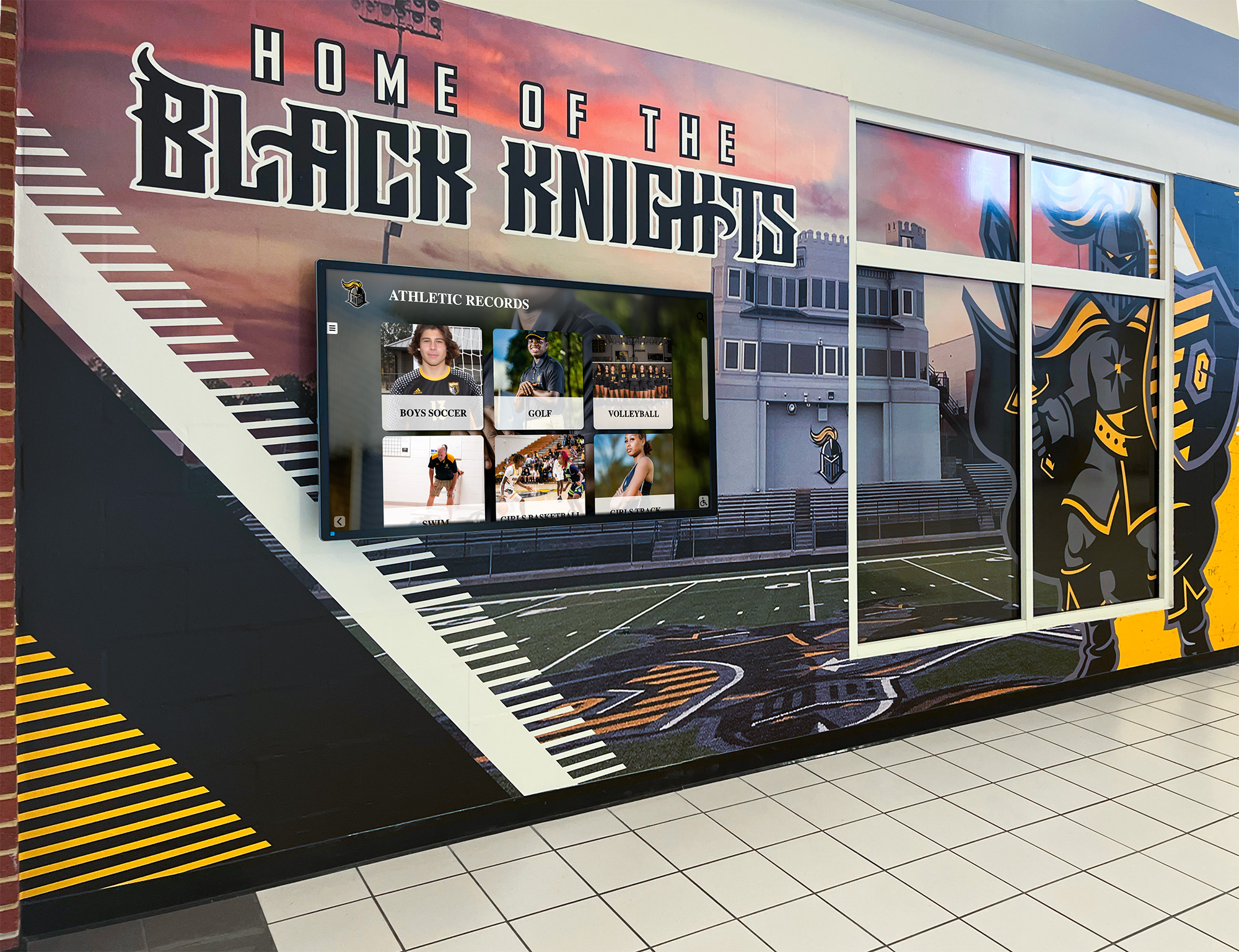
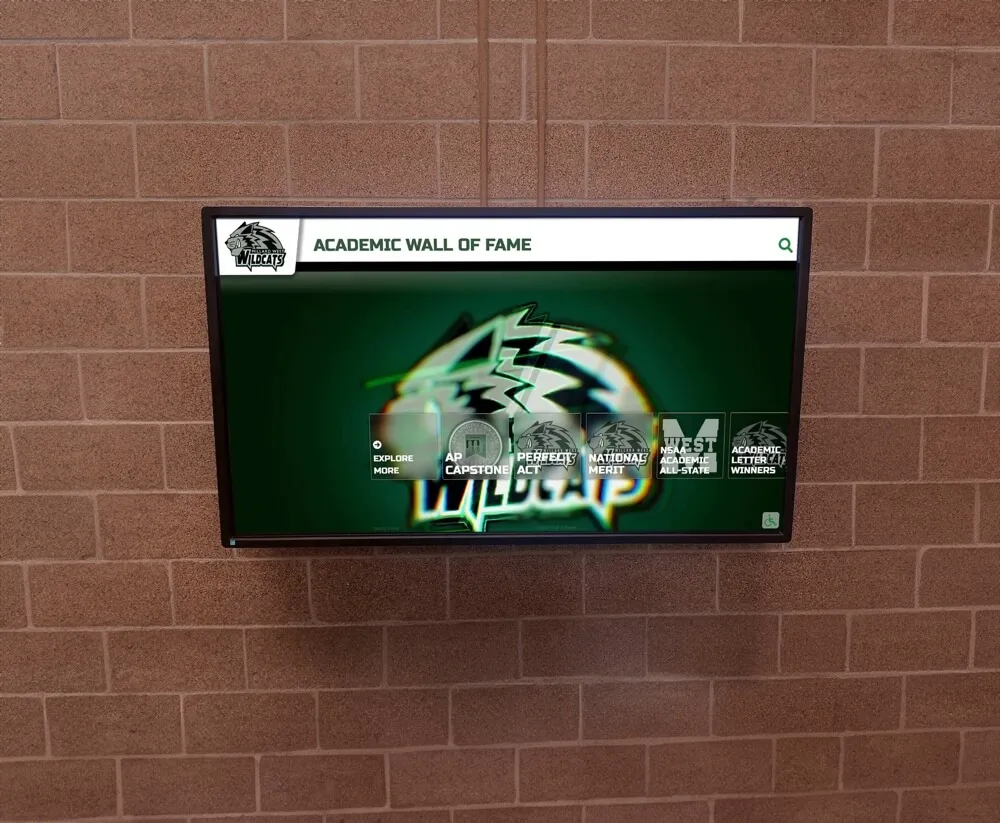
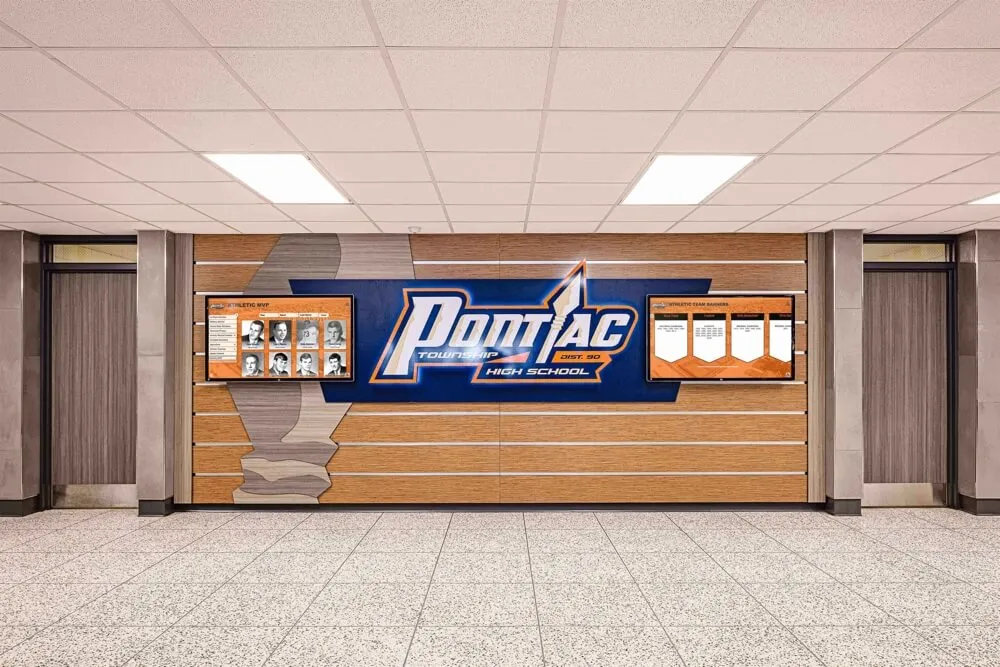
Permanent recognition installations provide year-round celebration of track and field achievements first honored at seasonal banquets
Building Track and Field Program Culture Through Recognition
Creating traditions that strengthen identity and inspire excellence.
Establishing Award Traditions
Consistent annual recognition building program identity:
Named Awards After Program Legends Historical connections inspiring current athletes:
- MVP award honoring legendary athlete or coach
- Event-specific awards named after school record holders
- Character awards commemorating program builders
- Creating continuity across generations
- Inspiring current athletes through historical legacy
- Connecting present excellence to program tradition
Program Record Board Historical achievement tracking:
- All-time best performances by gender and event
- Year-by-year award recipient lists
- State qualifiers and championship performers
- Conference champions and all-league selections
- Relay records with team member names
- Indoor and outdoor season records separately tracked
Senior Legacy Recognition Tradition transmission systems:
- Graduating seniors selecting awards for returning athletes
- Senior wisdom sharing and advice to younger competitors
- Captains passing symbolic items to future leaders
- Alumni mentorship connections
- Continuous program culture development
- Multi-generational program building
Connecting Awards to Program Values
Alignment with core principles:
Emphasizing Process Over Results Developmental focus:
- Improvement recognition alongside performance awards
- Training dedication valued equally with competitive outcomes
- Character emphasis beyond championship success
- Long-term athletic development over single-season results
- Growth mindset celebration
- Personal record pursuit valued as highly as placement
Celebrating Team Before Individuals Collective achievement emphasis:
- Team championships and conference titles presented first
- Relay recognition emphasizing team collaboration
- Point scoring contribution acknowledgment regardless of placement
- Supporting cast validation alongside individual champions
- Program identity transcending individual glory
- Unity across event groups preventing division
Inspiring Future Excellence Motivation and aspiration building:
- Award criteria clearly communicated early in seasons
- Recognition pathways for diverse event groups and contributions
- Accessible achievement standards motivating pursuit
- Historical context showing program tradition
- Current athletes seeing themselves in alumni achievements
- Creating desire to join program recognition legacy
Discover comprehensive school culture development in building school pride strategies applicable to track and field programs.
Conclusion: Honoring Track and Field Excellence Comprehensively
Track and field awards represent critical opportunities to celebrate individual achievement across diverse events, recognize team success built through collective scoring, honor leadership development and character growth, and build program culture that inspires future athletes toward excellence. Yet traditional recognition approaches often fail to deliver lasting impact—awards concentrate on high-profile sprint and distance events while field event specialists feel marginalized, physical trophies disappear into storage as space runs out, and recognition becomes inaccessible years after athletes graduate from programs.
The strategies explored in this guide provide frameworks for track and field recognition that overcomes historical limitations while celebrating excellence comprehensively. From event-specific performance awards honoring sprinters, distance runners, and field event athletes equally to improvement recognition celebrating development regardless of absolute performance, from mental toughness awards acknowledging unique psychological demands to creative categories reflecting program culture, from thoughtful banquet ceremony design to permanent digital documentation solving visibility challenges, these approaches transform track and field awards from routine end-of-season formality to meaningful celebration woven throughout program identity.
Preserve Your Track and Field Excellence Permanently
Discover how digital recognition solutions help track and field programs celebrate every athlete, award, and achievement through comprehensive platforms providing unlimited capacity, engaging interactive exploration, and permanent documentation ensuring no accomplishment disappears from program memory.
With intuitive content management enabling coaches without technical backgrounds, multimedia capabilities bringing performances to life through race videos and achievement photos, and web integration extending recognition beyond physical facilities, modern platforms solve the fundamental challenges limiting traditional trophy case recognition approaches.
Explore Track and Field Recognition Solutions to see how permanent documentation preserves your complete awards history while creating engaging experiences traditional physical recognition cannot deliver.
Implementation begins with thoughtful planning—defining award categories aligned with program values and ensuring all event groups receive appropriate recognition, establishing clear selection criteria ensuring fairness and transparency, designing engaging ceremonies maintaining family interest while honoring achievements comprehensively across large rosters, and creating systematic documentation preserving accomplishments permanently through digital platforms eliminating space and visibility constraints plaguing traditional physical displays.
Modern recognition platforms eliminate the fundamental challenges facing track and field programs attempting to honor student achievement appropriately. Rather than removing historical awards to accommodate current season recognition or limiting documentation to trophy case capacity, digital systems document comprehensive achievement across unlimited athletes, events, and seasons—ensuring every recognized competitor receives permanent acknowledgment extending throughout their lives while building program tradition visible to current teams, prospective athletes, and broader communities.
Your athletes’ achievements—sprint excellence, distance mastery, field event technical proficiency, relay collaboration, improvement trajectories, leadership development, character growth, and sustained dedication—deserve recognition systems providing lasting celebration rather than temporary acknowledgment disappearing after brief banquet evenings. Through balanced award selection, engaging ceremony programming, meaningful selection processes ensuring all event groups feel valued, and permanent digital documentation, you can create track and field recognition that honors every contribution while building the positive, motivating program culture where athletes thrive and traditions flourish.
Start today by reviewing your upcoming season timeline and banquet planning needs, gathering input from coaches, athletes, and families about recognition priorities, exploring award categories appropriate for your program and competitive level ensuring all events receive acknowledgment, and investigating recognition platforms enabling permanent documentation traditional approaches cannot provide. Every track and field athlete deserves recognition enduring beyond their competitive days—modern solutions make that achievable reality for programs of all sizes celebrating excellence across dozens of distinct events.
Ready to enhance your track and field awards program? Explore comprehensive athletic recognition record boards that document achievement permanently, or discover wrestling awards ideas and field day games recognition applicable across athletic programs building comprehensive recognition traditions.