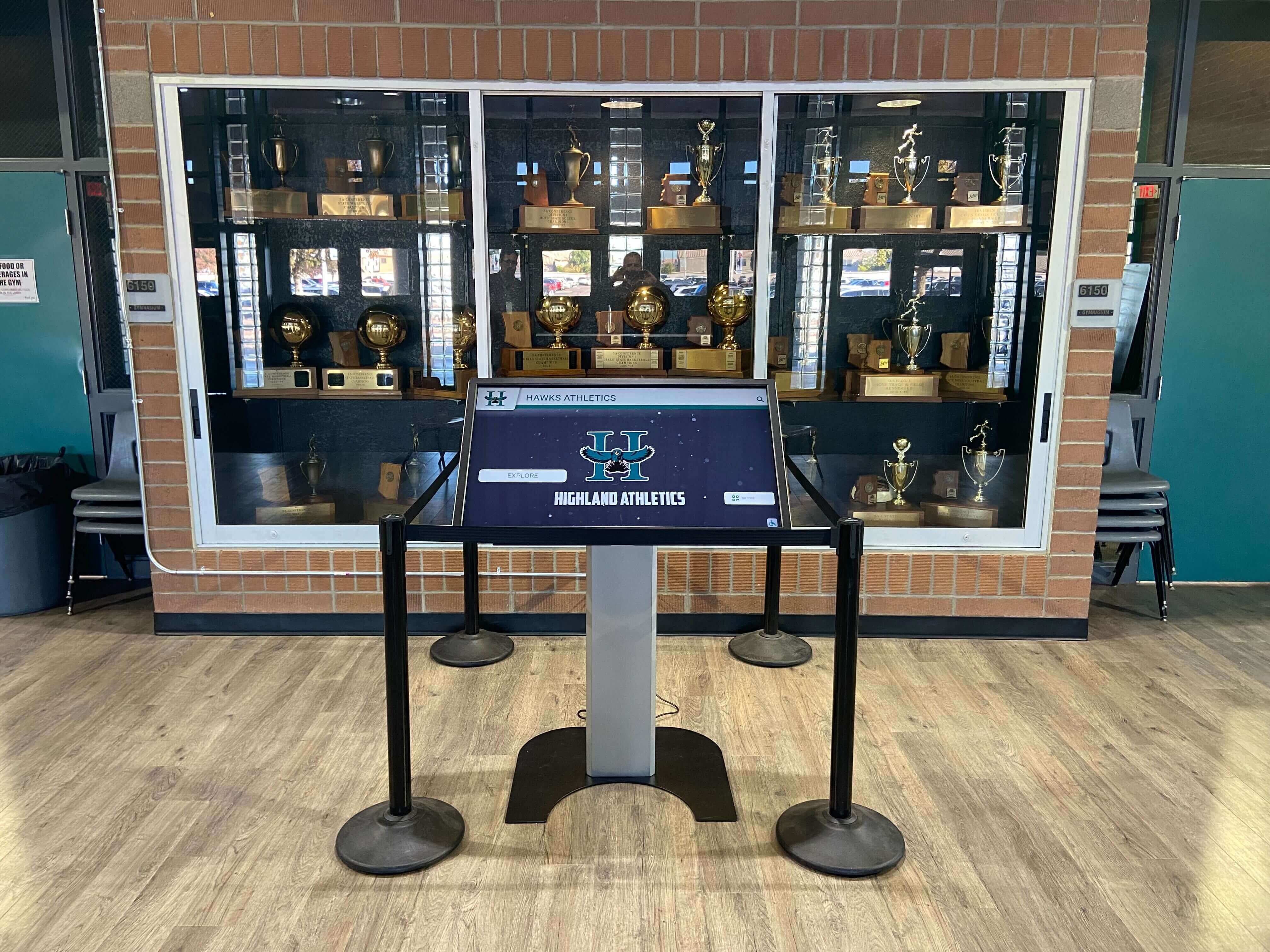
High school gym lobbies face a persistent challenge: trophy cases that overflow with decades of athletic achievements, plaques covering every available wall, and recognition displays that have simply run out of room. When championships pile up year after year, schools must make difficult decisions about which accomplishments deserve visibility and which get relegated to storage rooms or forgotten altogether.
This frustration drives many athletic directors and school administrators to explore modern solutions that can showcase their complete athletic legacy without physical space limitations. Touchscreen displays and digital trophy cases offer exactly that—unlimited recognition capacity combined with interactive features that engage students, alumni, and visitors far more effectively than static displays ever could.
Whether your trophy case is bursting at the seams or you’re planning a gym renovation, modern touchscreen recognition systems provide practical alternatives that solve space constraints while creating more compelling presentations of your athletic achievements. This guide examines how schools successfully implement digital trophy displays in gym lobbies, what features matter most, implementation considerations, and how to transition from overcrowded physical cases to streamlined digital recognition.
Why High School Gym Lobbies Need Better Trophy Solutions
The traditional trophy case served schools well for decades, but most facilities now face fundamental limitations that compromise recognition effectiveness.
The Space Constraint Problem
Physical trophy cases impose hard limits on how many achievements receive visibility. A standard six-foot trophy case might accommodate 30-40 trophies comfortably. After that, schools must choose between overcrowding (creating cluttered, unimpressive displays), removing older trophies to make room for new ones (literally erasing history), or ordering additional cases (expensive and often impossible due to wall space limitations).
Schools with strong athletic traditions accumulate trophies faster than they can reasonably display them. A competitive program might win 5-10 championships annually across multiple sports. Within just a few years, even large trophy case installations fill completely, forcing difficult decisions that no athletic director wants to make.
Maintenance and Update Challenges
Trophy cases require ongoing maintenance that creates work for already-stretched facilities staff. Glass doors need cleaning, locks break, interior lighting fails, and the process of opening cases to add new trophies becomes tedious and time-consuming. Security concerns mean only a few people have keys, creating bottlenecks when championships need to be added promptly.
Updating static displays also requires physical installation work. Adding a new conference championship plaque means ordering the plaque (2-3 week lead time), waiting for delivery, coordinating with someone who has keys, and physically mounting new recognition—all while achievement celebrations fade as weeks pass between victory and visible recognition.

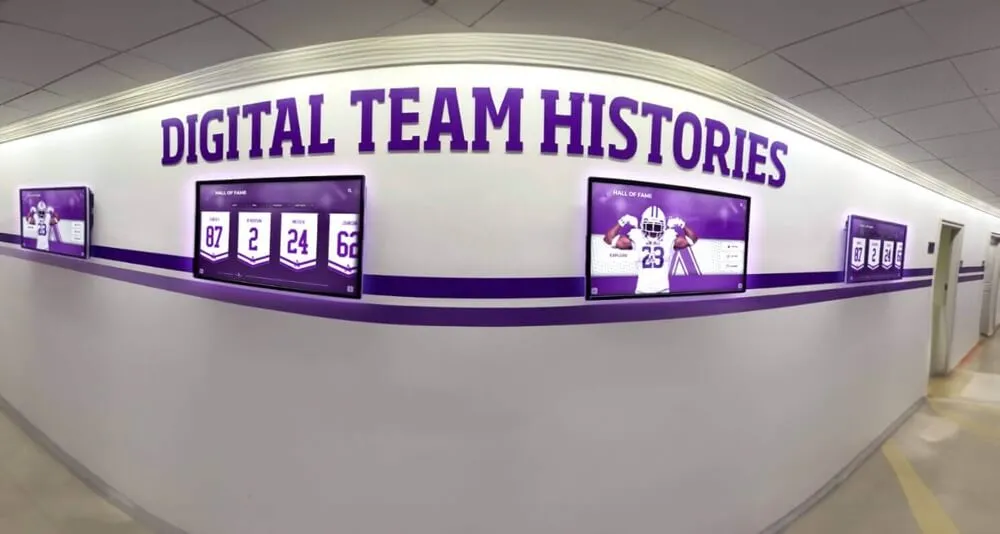
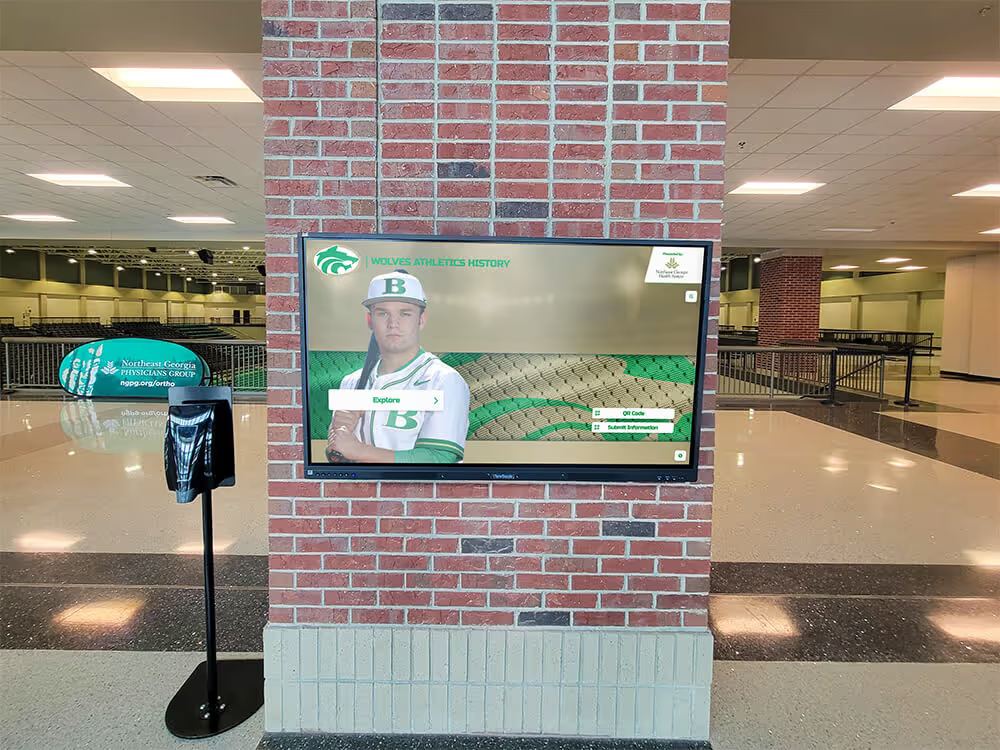
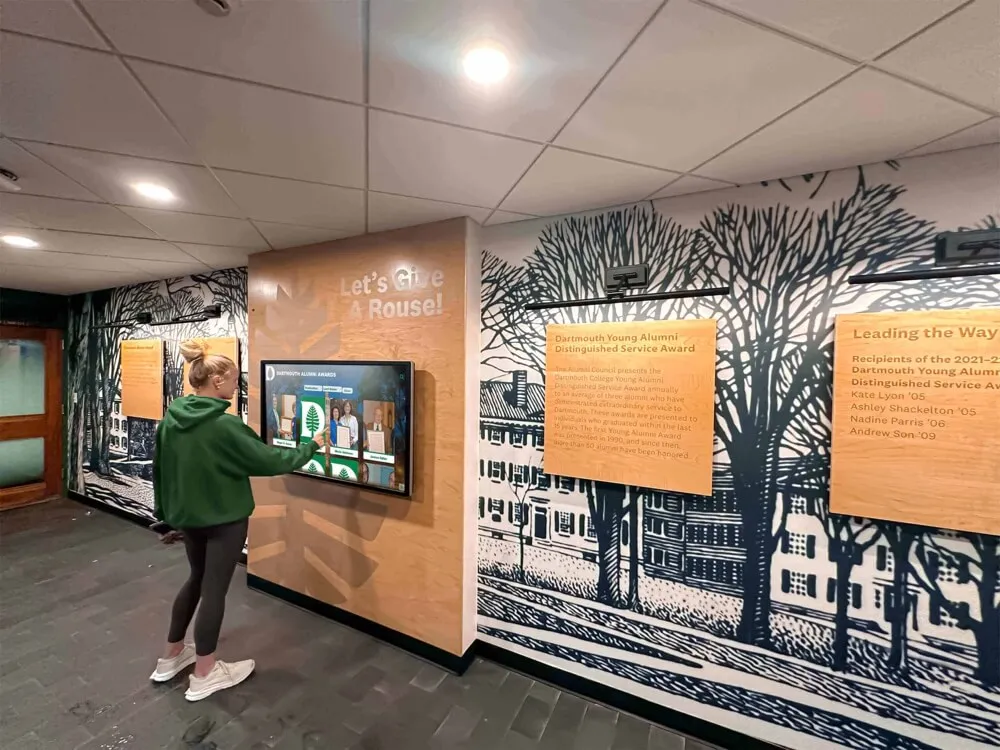
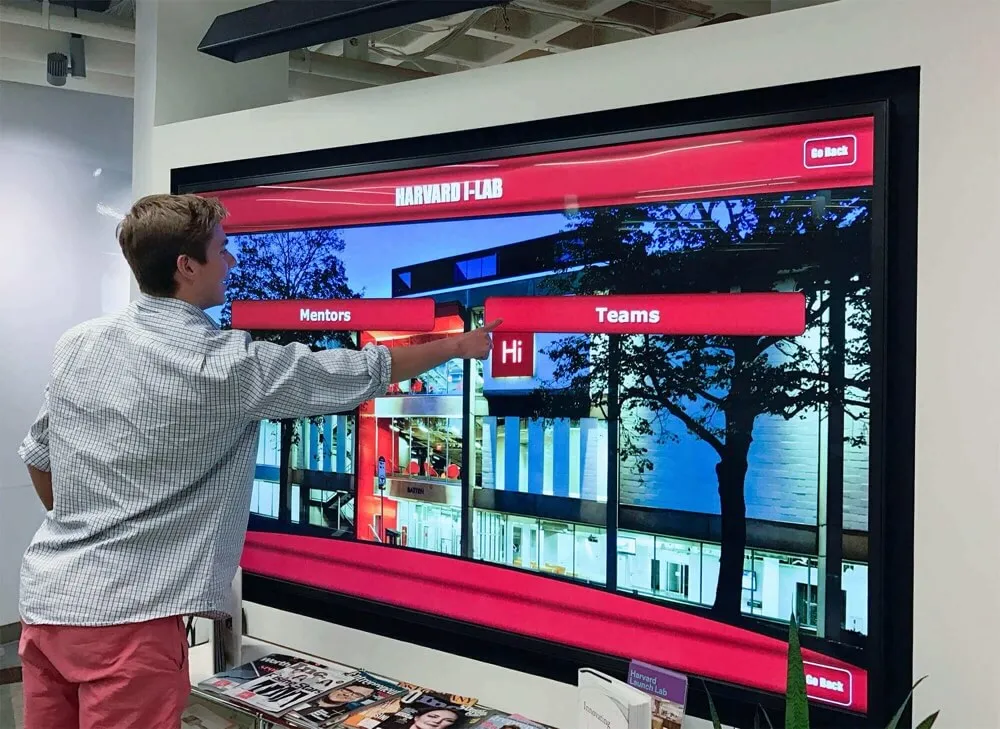
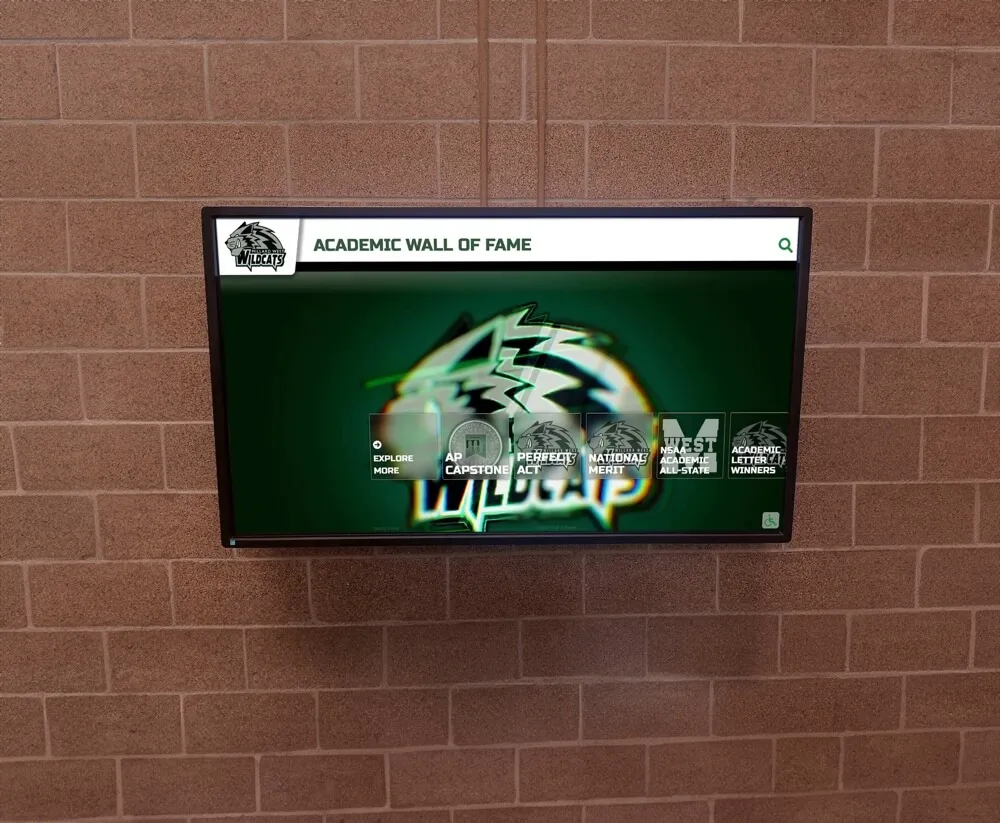
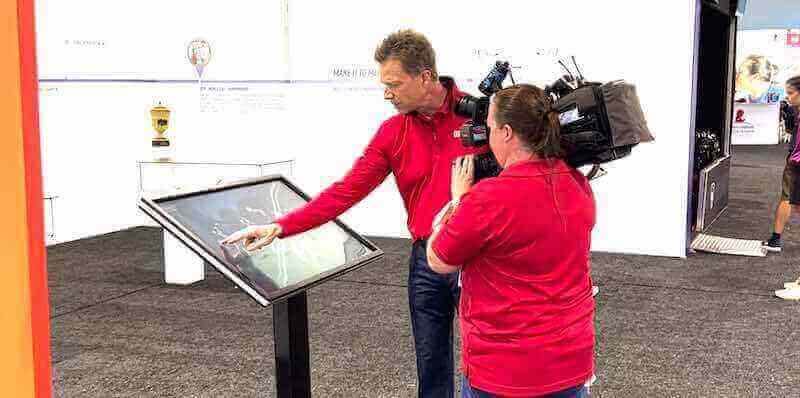
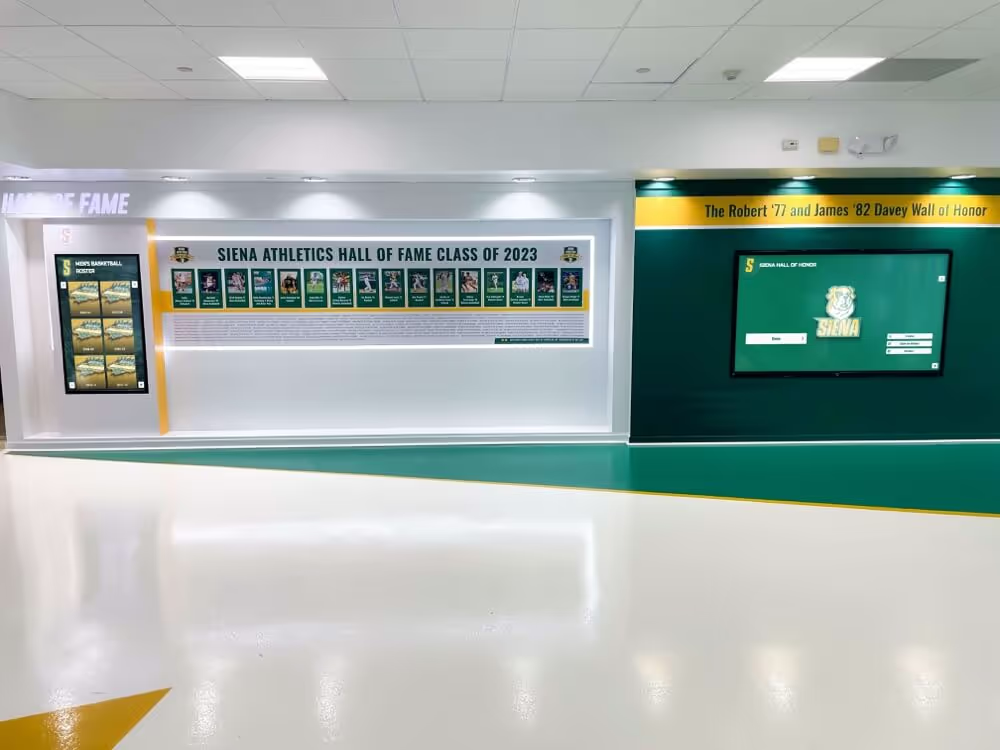
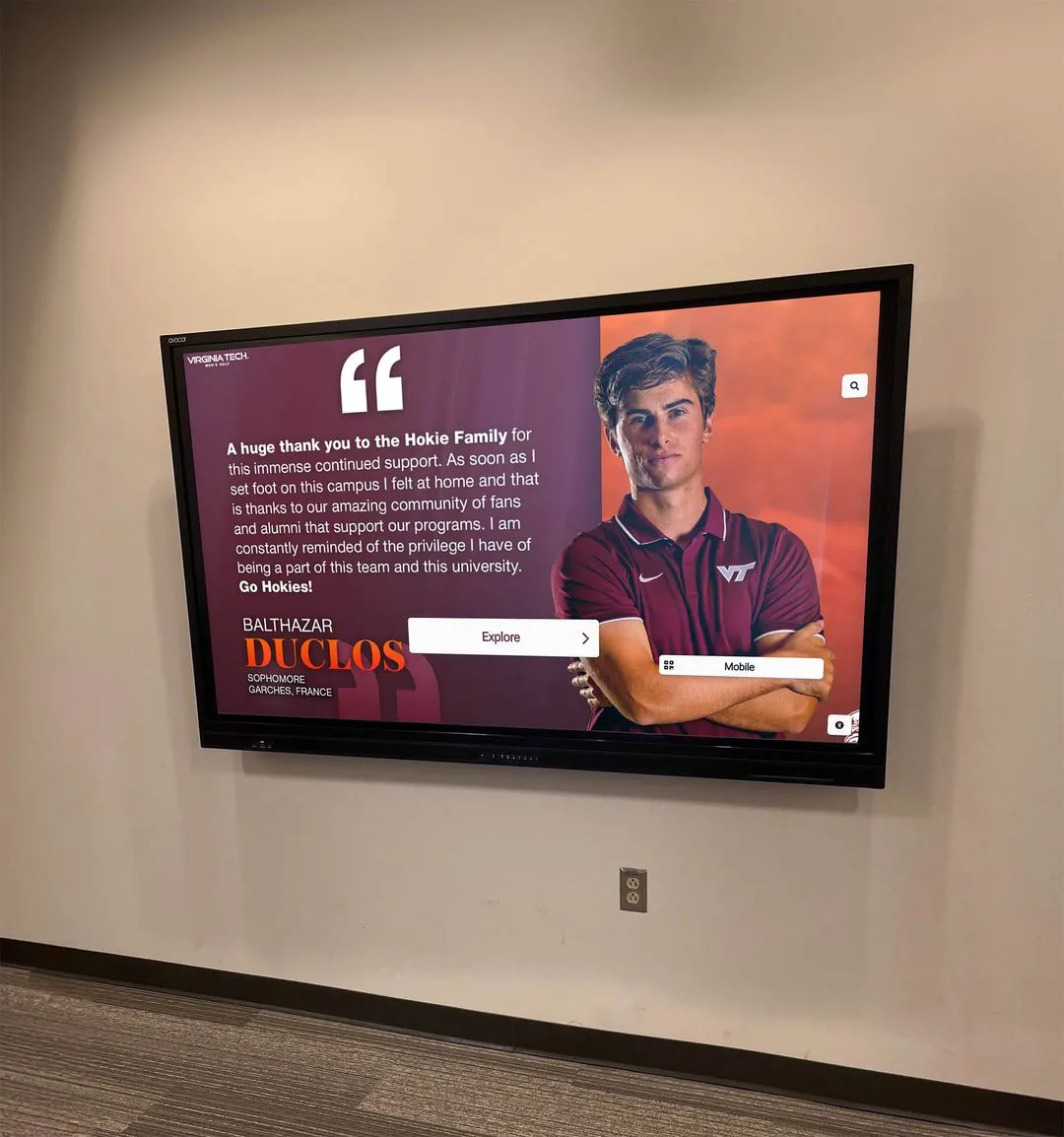
Interactive touchscreen displays integrate naturally with existing gym lobby areas, providing unlimited recognition capacity
Limited Context and Engagement
Traditional trophy displays provide minimal context. A championship trophy includes the sport, year, and perhaps level of competition, but offers no information about team members, coaches, memorable moments, statistics, or game details. Visitors see objects behind glass but miss the stories that make achievements meaningful.
This lack of context particularly affects younger students who have no memory of championships won before they arrived at school. A 2019 conference championship trophy means nothing to a freshman who enrolled in 2025—they see an object but miss entirely the dramatic overtime victory, individual performances, or season journey that made the achievement significant to the school community.
Static displays also fail to engage modern audiences accustomed to interactive digital experiences. Students walk past trophy cases daily with barely a glance because there’s nothing dynamic to capture attention or invite exploration. The same trophies sit in the same positions year after year, becoming invisible through familiarity.
Accessibility and Reach Limitations
Physical trophy cases serve only people physically present in gym lobbies. Alumni who’ve moved away, parents unable to attend events, and community members with mobility challenges cannot access recognition confined to specific physical locations. This geographic limitation prevents schools from leveraging athletic achievements for alumni engagement, fundraising cultivation, or community building beyond campus boundaries.
Schools investing in comprehensive athletic recognition approaches recognize that modern recognition must extend beyond physical displays to reach distributed communities.
How Touchscreen Displays Transform Gym Lobby Recognition
Modern touchscreen systems address every limitation of traditional trophy cases while adding capabilities that enhance recognition effectiveness.
Unlimited Recognition Capacity
Digital displays eliminate physical space constraints entirely. A single 55-inch touchscreen can showcase unlimited trophies, championships, athlete profiles, team photos, and achievement documentation without ever running out of room. Schools can add every conference championship, state tournament appearance, individual record, and athletic milestone without making space-related compromises.
This unlimited capacity changes recognition philosophy. Instead of selective displays featuring only top achievements, schools can comprehensively celebrate all athletic accomplishments: junior varsity championships alongside varsity titles, individual season records, all-conference athlete selections, academic all-state honorees, sportsmanship awards, and milestone achievements that wouldn’t qualify for limited trophy case space.
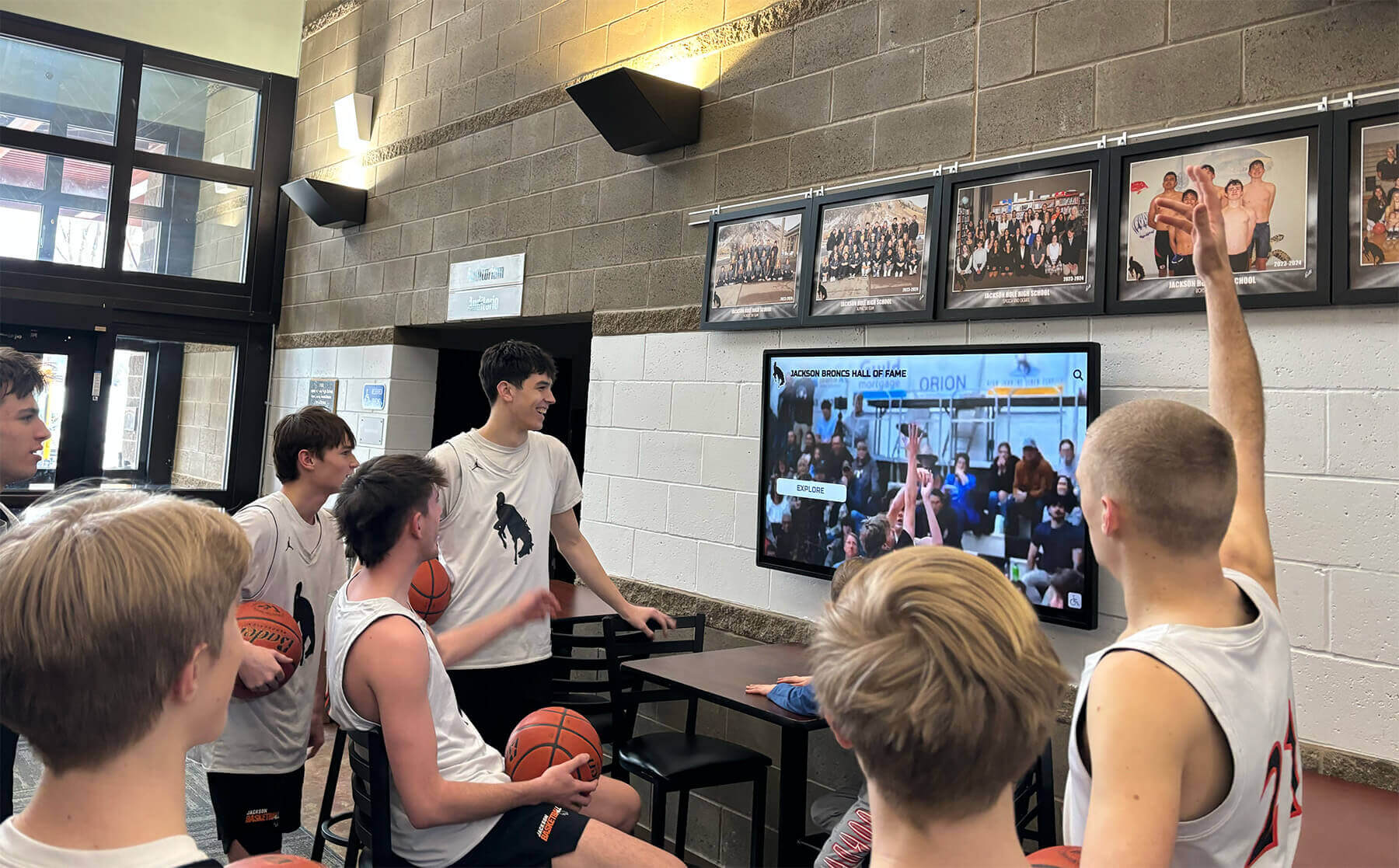
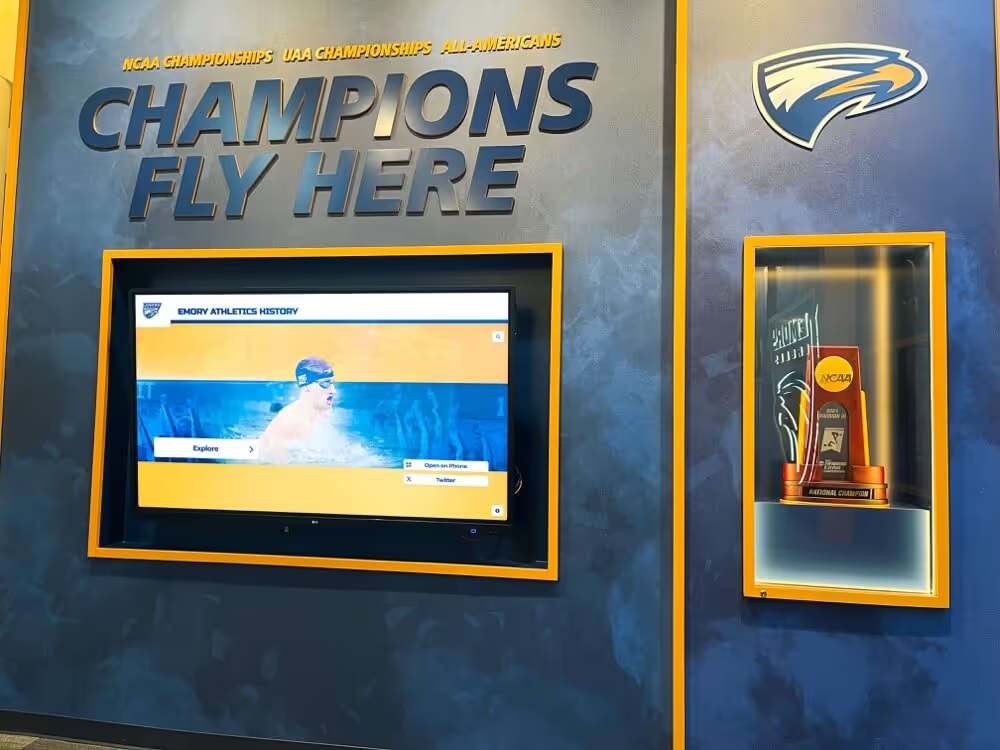
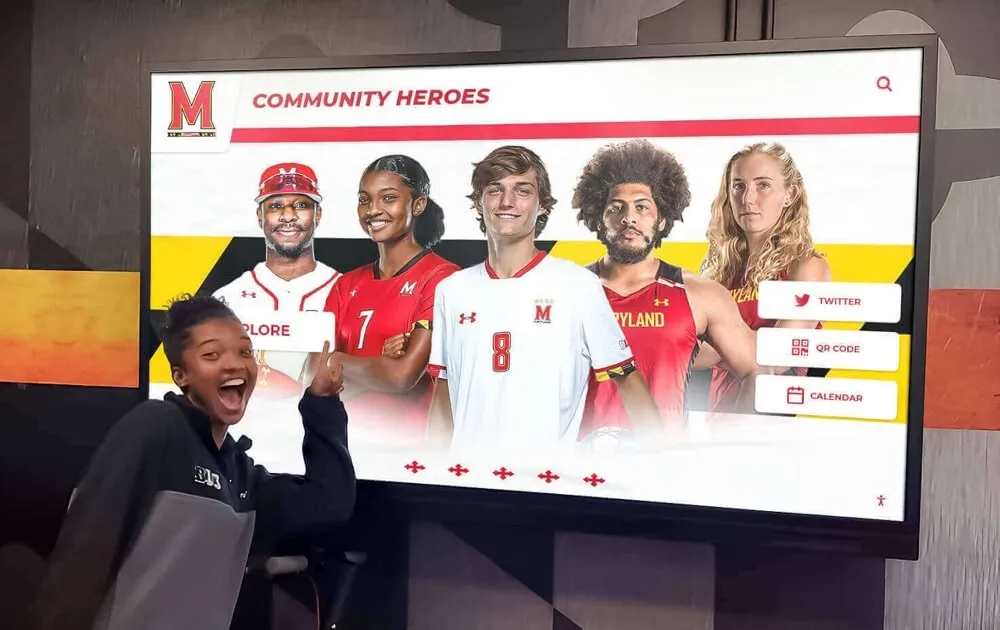
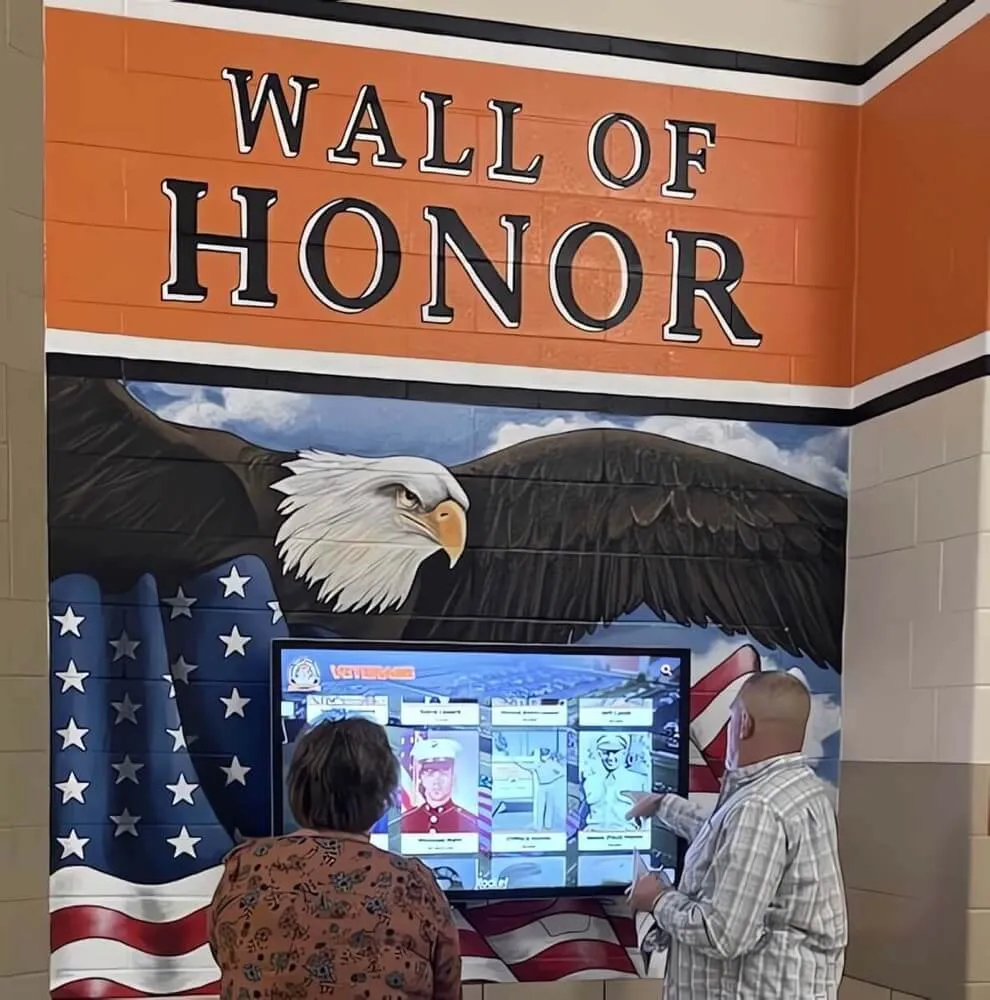
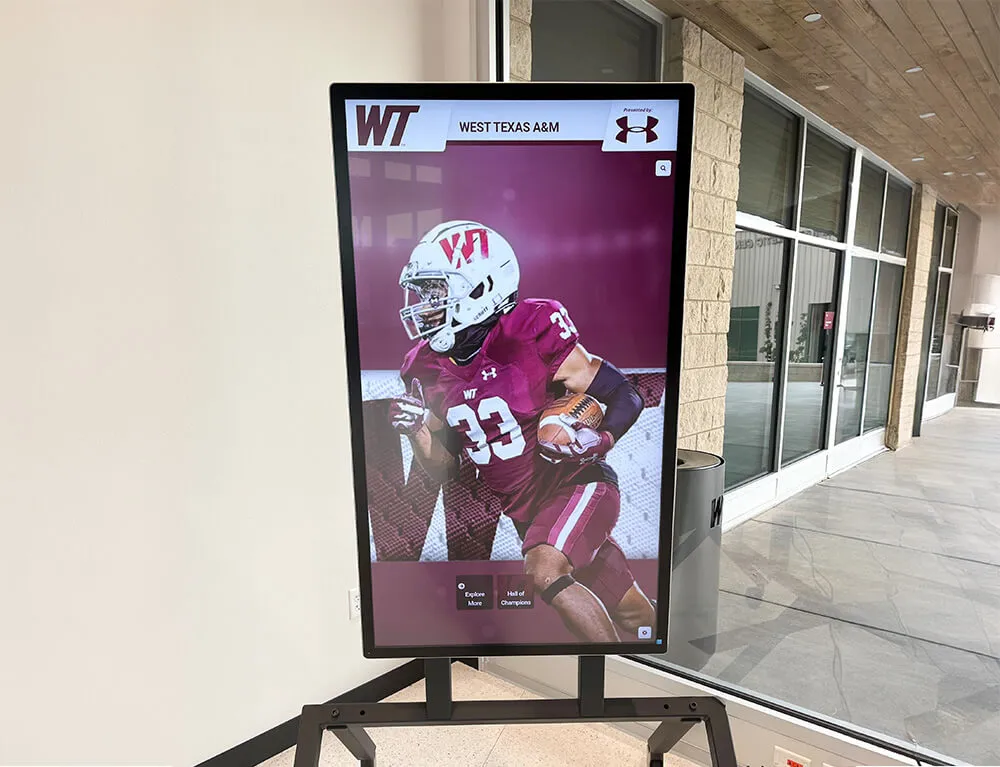
Interactive displays engage students by showcasing current highlights alongside historical achievements
Schools implementing digital recognition systems for trophies and awards discover that removing space limitations fundamentally improves recognition completeness and fairness across all sports programs.
Rich Multimedia Storytelling
Touchscreen platforms enable comprehensive achievement storytelling impossible with physical trophies:
Team Championship Profiles
- Complete team rosters with photos of every athlete
- Season statistics and game-by-game results
- Championship game highlights and key moments
- Coach reflections and player testimonials
- News coverage and community celebration documentation
- Season journey narrative from preseason through championship
Individual Achievement Recognition
- Career statistics and performance data
- Action photos from competitions
- Post-high school athletic career information
- Academic achievements and scholarships
- Personal reflections and interview content
- Related achievements and team connections
Historical Context and Archives
- Program history timelines showing evolution over decades
- Comparison of achievements across different eras
- Coaching milestone documentation
- Facility development and improvement history
- Community impact and tradition stories
- Multi-generational family athletic participation
This depth transforms recognition from simple trophy display into engaging storytelling that builds emotional connections and preserves institutional memory. Students don’t just see that the basketball team won conference in 2018—they watch game highlights, read about the double-overtime championship game, see photos of the celebrating team, and understand the achievement’s significance within program history.
Interactive Exploration and Search
Unlike static cases where viewers passively observe whatever happens to be displayed, touchscreen systems invite active exploration:
Search Functionality
- Find specific athletes, teams, or coaches instantly
- Search by sport, year, achievement type, or keyword
- Locate family members or personal connections
- Discover achievements across different eras systematically
Filtering and Organization
- View championships by specific sport
- Filter by conference, regional, or state level
- Organize chronologically or by achievement type
- Focus on current season or explore historical periods

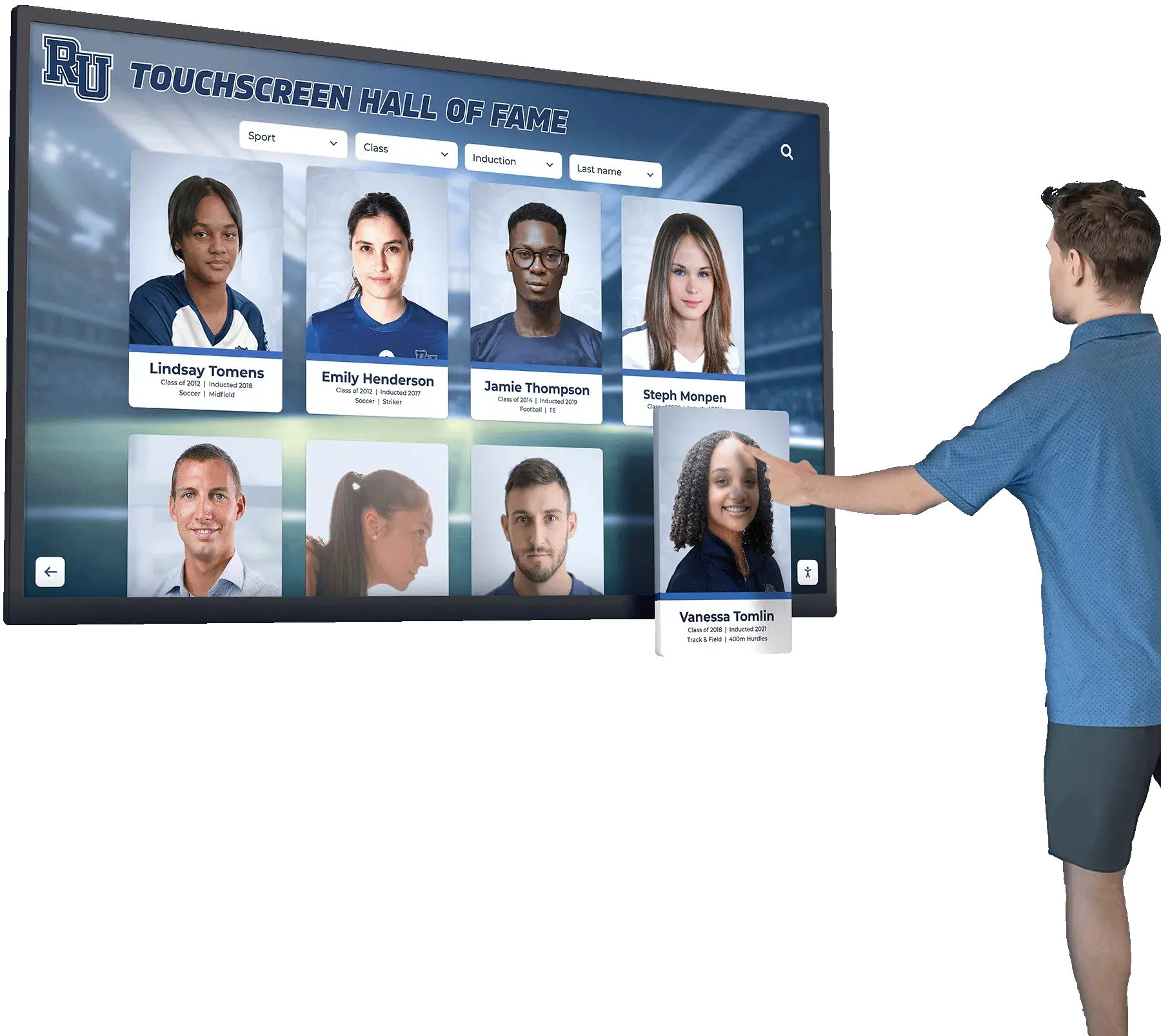
Intuitive touch interfaces enable visitors to explore achievements through natural gestures and clear navigation
Related Content Discovery
- Automatic connections between team and individual achievements
- Related teams or athletes from similar eras
- Coach career achievements across multiple teams
- Championship progression and tournament brackets
This interactivity dramatically increases engagement duration. Schools report that visitors spend 8-15 minutes exploring touchscreen trophy displays compared to 30-60 seconds glancing at traditional trophy cases. The difference between passive viewing and active exploration creates substantially greater recognition impact.
Instant Updates and Dynamic Content
Digital systems eliminate the lag between achievement and recognition. When teams win championships, athletic directors can add recognition to touchscreen displays within minutes through simple web-based content management systems. Updates appear instantly across all displays and platforms, celebrating achievements while excitement remains high rather than weeks later when physical plaques finally arrive.
This update speed extends beyond adding new championships. Schools can correct information errors immediately, update athlete profiles as post-high school careers progress, add newly discovered historical photos or documents, create special featured content for milestone anniversaries, and adjust content organization as collections grow—all through simple administrative interfaces requiring no technical expertise.
The ability to feature rotating content also keeps displays fresh and engaging. Athletic departments can highlight different sports seasonally, feature anniversary championships, showcase current season progress, or create special content for alumni weekends and community events. This dynamic content prevents displays from becoming stale or ignored through over-familiarity.
Extended Accessibility Through Web Platforms
Modern touchscreen recognition systems include web-accessible versions extending recognition beyond gym lobby boundaries. Alumni, parents, college recruiters, and community members can explore athletic achievements from anywhere through responsive web platforms optimized for smartphones, tablets, and computers.
This geographic reach transforms recognition from campus-only displays into tools supporting multiple institutional goals:
Alumni Engagement Graduated athletes can revisit their achievements and memories whenever nostalgia strikes, search for teammates and opponents from their era, follow current program developments and championships, share their athletic heritage with family and friends, and maintain emotional connections with their athletic identity.
Schools implementing digital yearbook and recognition systems find that web accessibility generates 300-500% more engagement than physical-only displays, creating substantially more opportunities for alumni relations and development activities.
Recruiting Advantages Prospective student-athletes and families research programs remotely before making visit decisions. Web-accessible trophy displays and achievement archives demonstrate program quality and tradition to recruits who may never physically visit campus, showcase player development pathways through college placement documentation, provide evidence of coaching excellence and program stability, and create aspirational goals that attract competitive athletes to strong programs.
Community Building Parents share championship content through social media, local media references achievements when covering current seasons, booster organizations promote tradition when soliciting support, and community members maintain connections with school athletics regardless of physical access limitations.
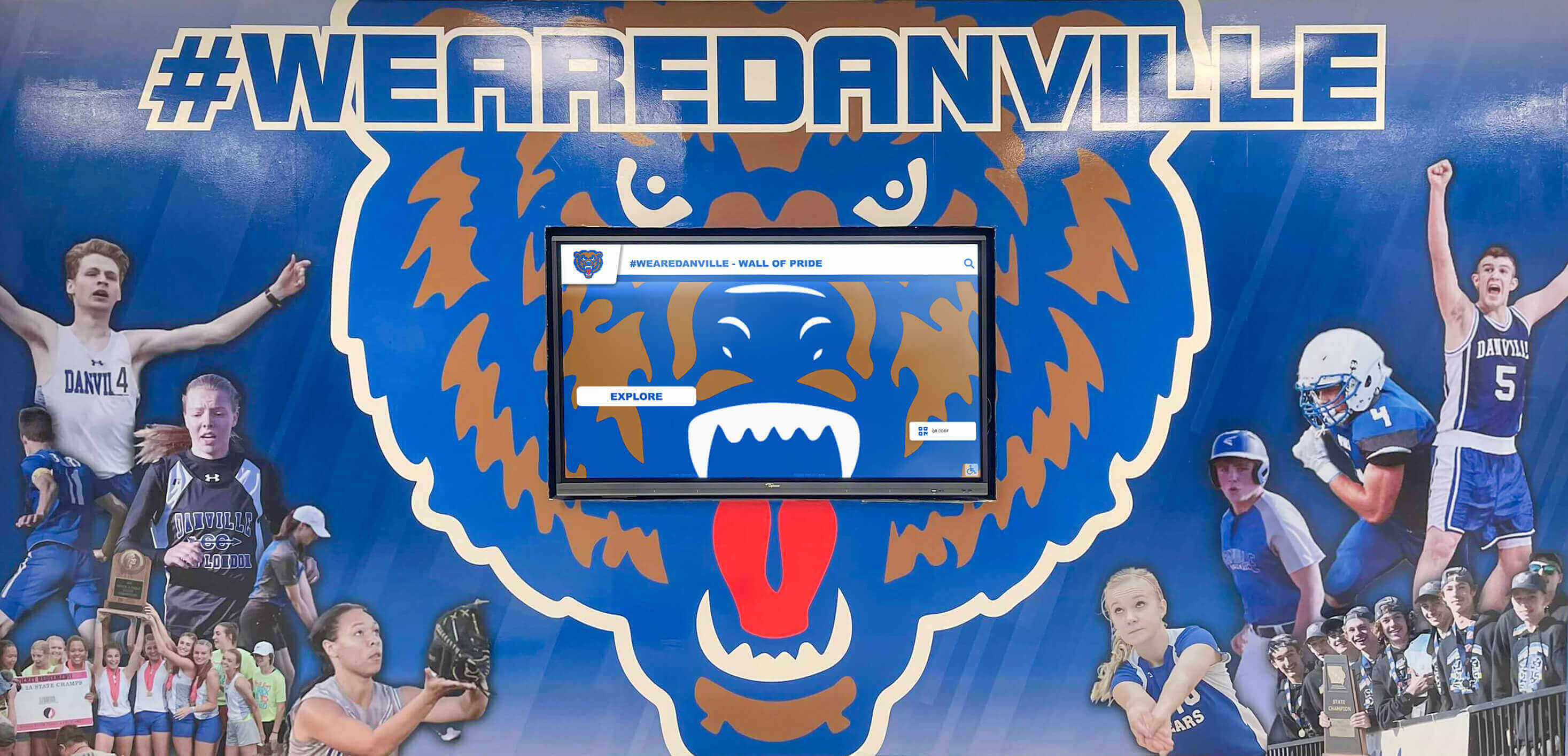
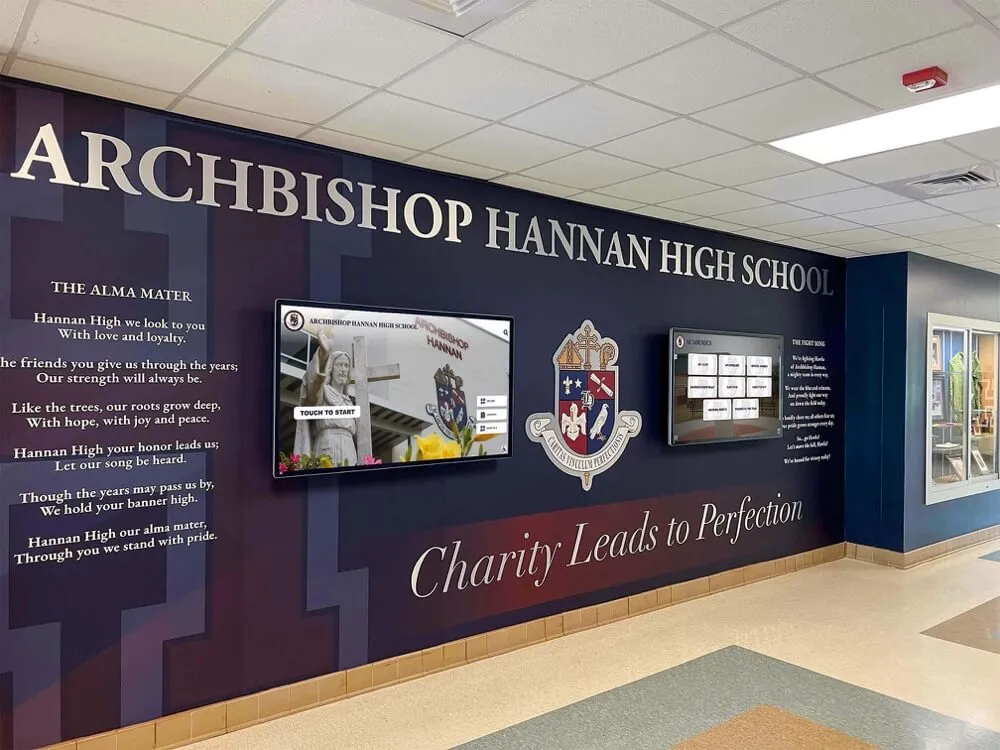
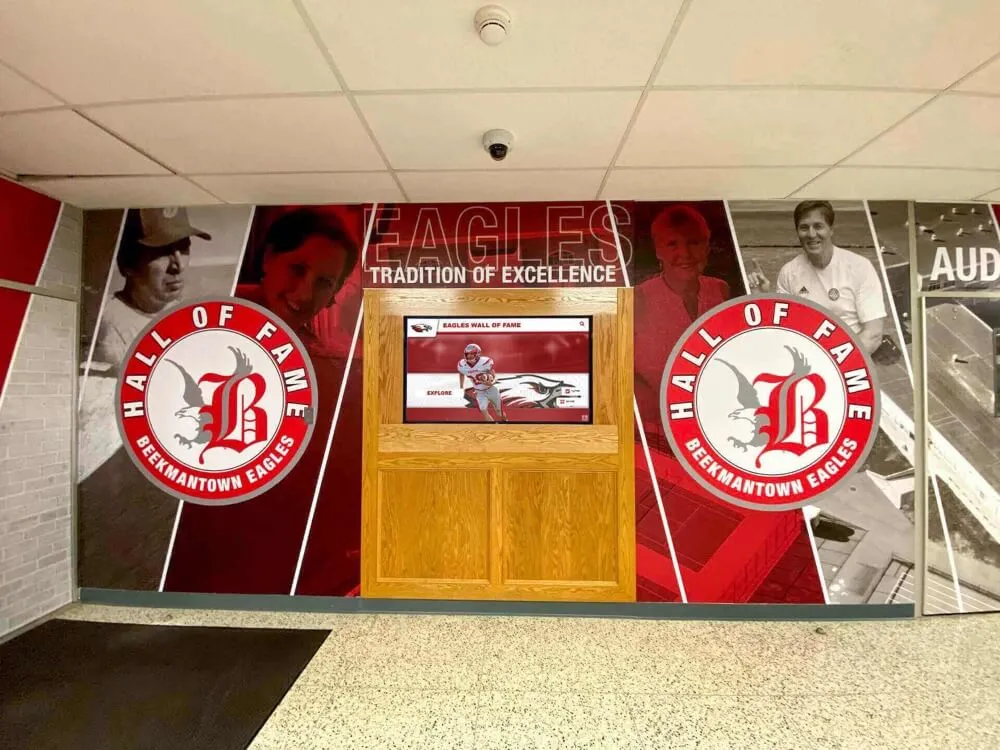
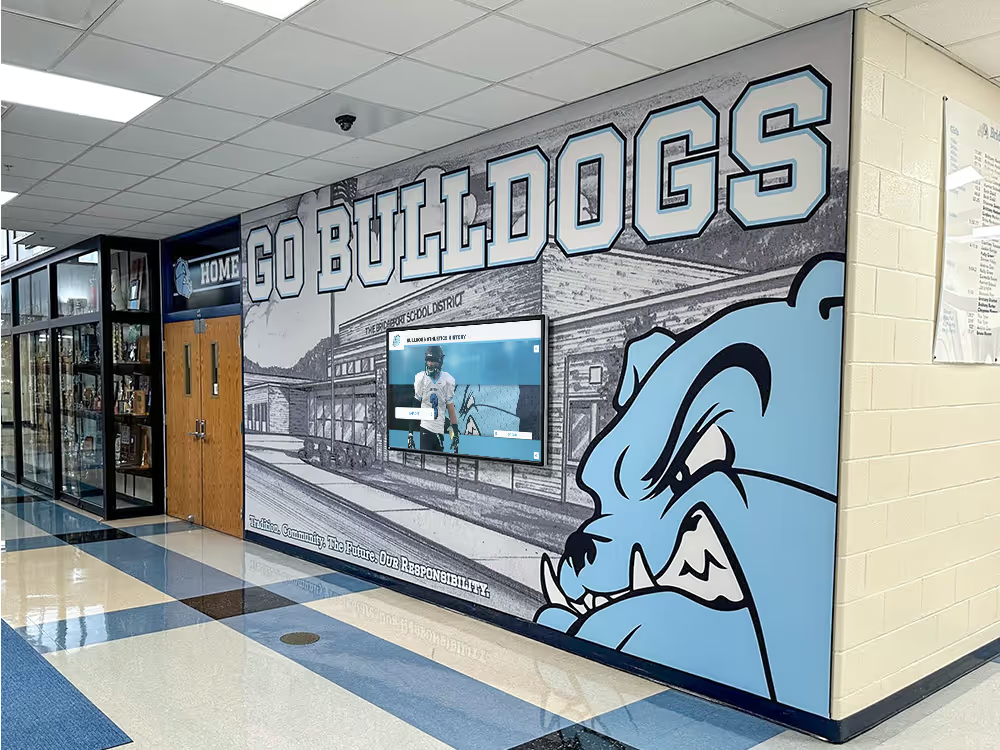
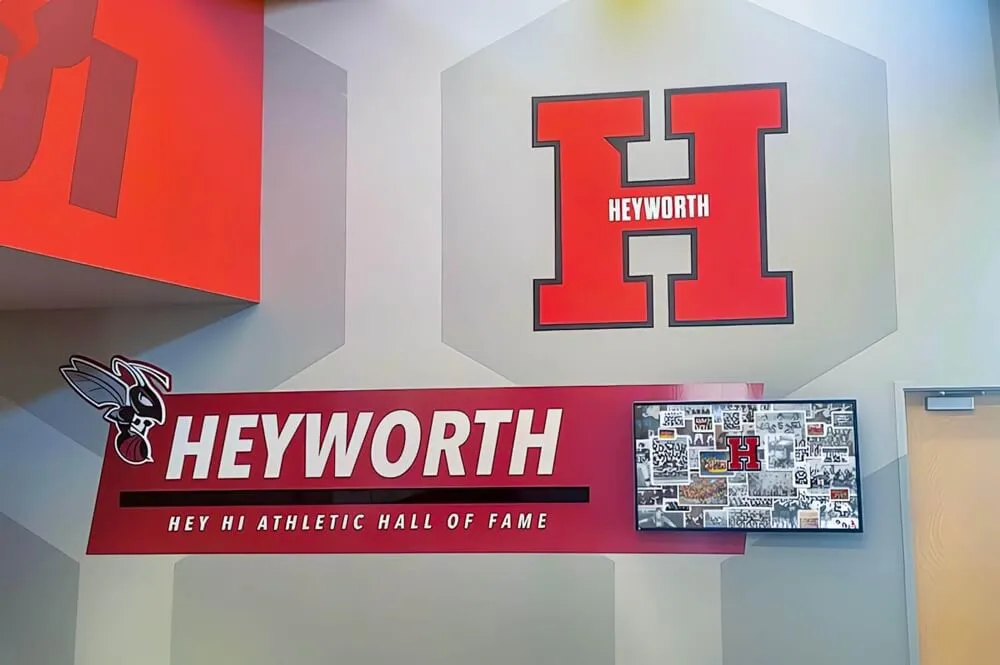
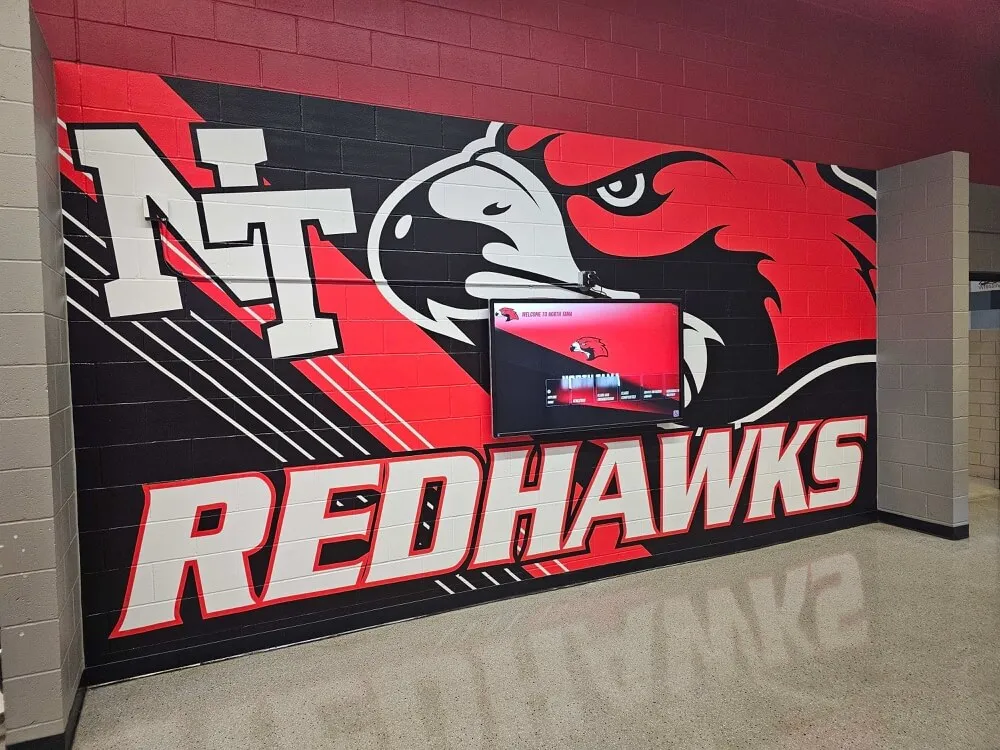
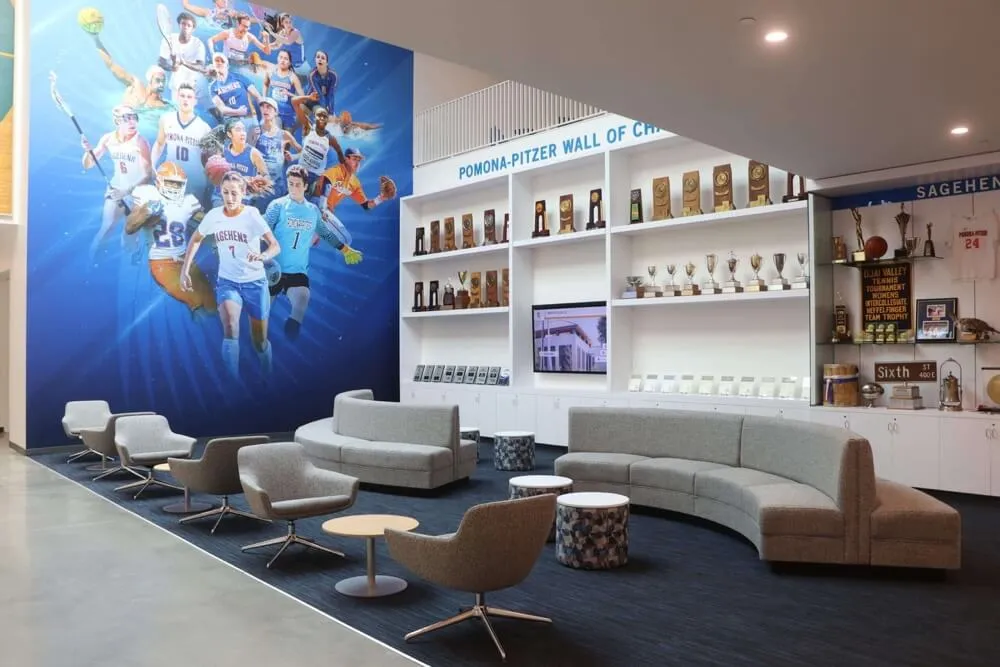
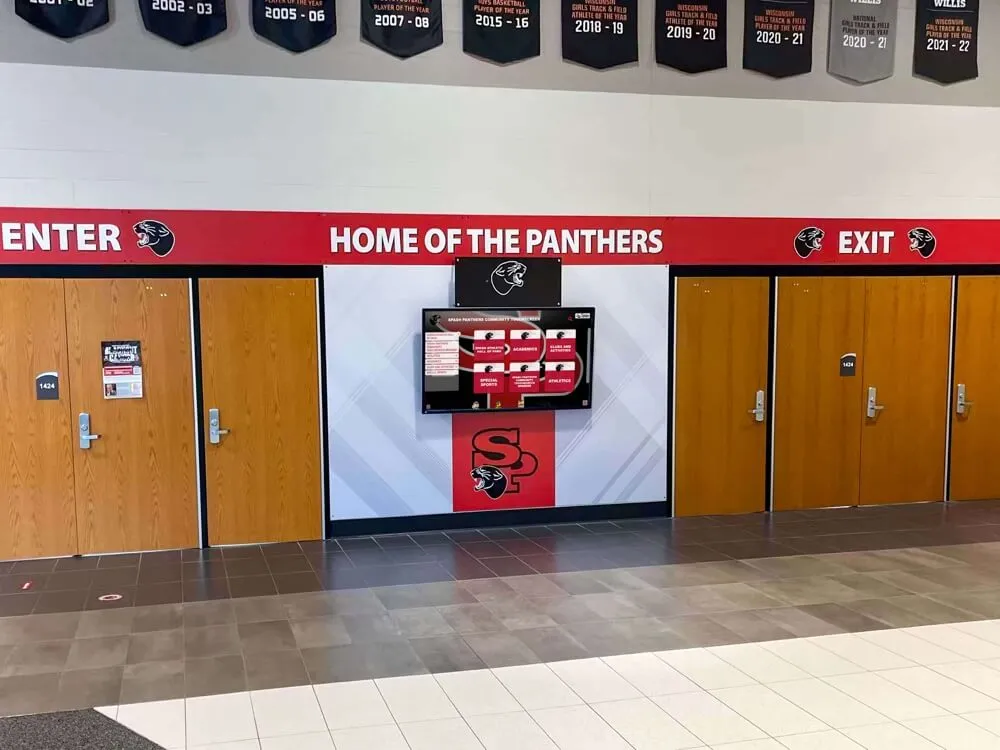
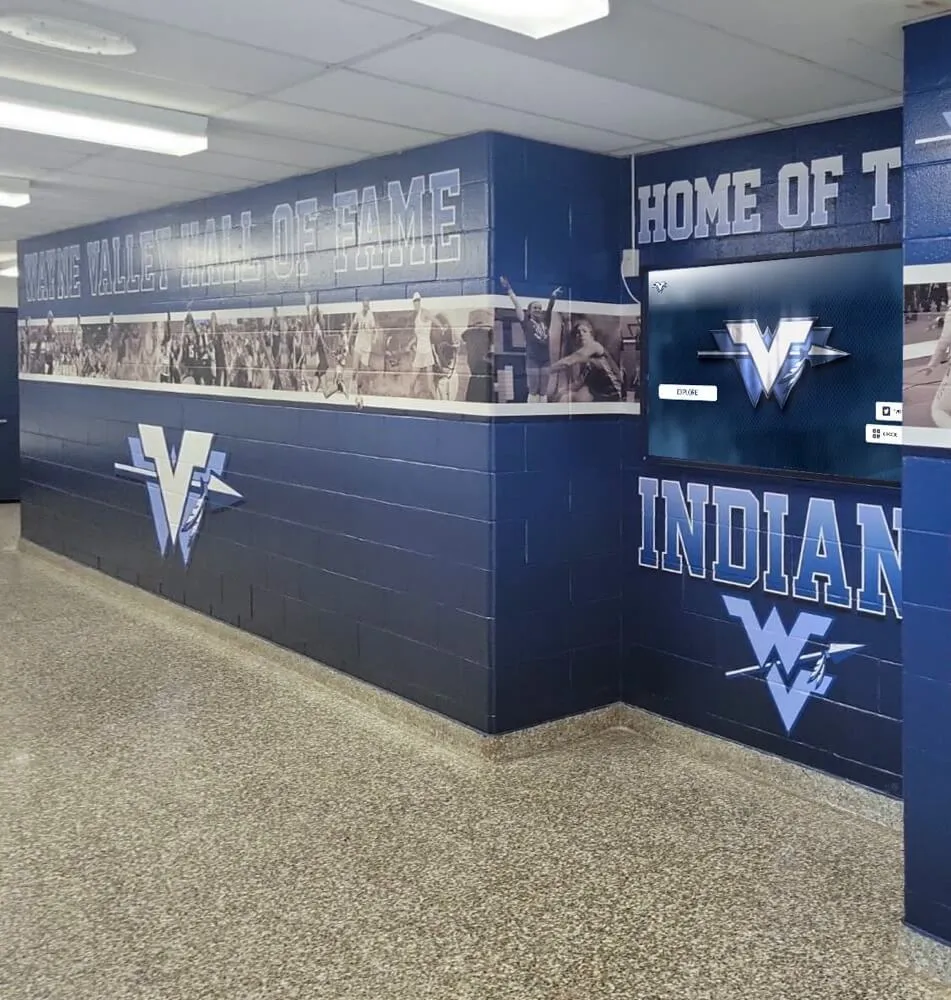
Digital displays integrate with existing athletic branding and murals, creating cohesive recognition environments
Key Features for Effective Gym Lobby Touchscreen Systems
Not all touchscreen recognition systems offer equivalent capabilities. Schools evaluating solutions should prioritize specific features ensuring long-term satisfaction.
Commercial-Grade Touchscreen Hardware
Gym lobbies present demanding environmental conditions—high traffic, potential impacts, temperature fluctuations, and continuous operation requirements. Consumer-grade displays fail quickly in these conditions, creating frustration and premature replacement costs.
Quality installations require:
Professional Display Specifications
- Commercial-grade screens rated for continuous 24/7 operation
- Impact-resistant glass protecting against accidental contact
- Capacitive touch technology providing responsive, accurate input
- Anti-glare coatings maintaining visibility in bright lobby environments
- Professional-grade internal components ensuring reliability
- Extended warranties covering commercial installation conditions
Appropriate Sizing and Placement
- 43-55 inch displays for hallway locations with closer viewing distances
- 55-75 inch screens for large lobby installations or auditorium-style settings
- ADA-compliant mounting heights ensuring accessibility for all visitors
- Angled mounting when wall positions create glare challenges
- Strategic placement in high-traffic areas where visitors naturally pause
Protection and Security
- Tamper-resistant mounting preventing theft or vandalism
- Protective enclosures when necessary for high-risk environments
- Secure cable management preventing damage or disconnection
- Lockable media players when components remain accessible
- Remote monitoring capabilities detecting issues before failures occur
Schools planning interactive display technology for lobbies should specify commercial equipment despite higher costs—the difference in reliability and longevity makes consumer displays false economy.
Intuitive Content Management Systems
Athletic directors and administrative staff managing recognition content need simple, web-based interfaces requiring no technical expertise. Quality platforms provide:
User-Friendly Editing
- Drag-and-drop photo uploads and organization
- Visual editors showing real-time content previews
- Template-based layouts eliminating design decisions
- Automatic image optimization and formatting
- Simple text editing with formatting options
- Video upload and embedding capabilities
Efficient Workflow Features
- Bulk upload capabilities for adding multiple items simultaneously
- Content duplication for similar profiles saving time
- Category and tag organization keeping large collections manageable
- Draft mode allowing content preparation before publication
- Scheduled publishing for timed releases
- User permissions controlling editing access appropriately
No Technical Barriers
- Web browser access from any internet-connected device
- Mobile-friendly administration enabling updates from phones or tablets
- Cloud-based systems requiring no local software installation
- Automatic updates eliminating manual upgrade processes
- Built-in help documentation and support resources
- Training materials requiring minimal learning investment
Administrative complexity directly predicts whether recognition systems remain current or become outdated. If content management requires technical expertise or creates workflow friction, busy athletic directors will defer updates indefinitely, undermining the entire investment.
Flexible Recognition Organization
Athletic programs need diverse recognition categories beyond simple championship displays:
Championship Recognition
- Conference championships by sport and level
- Regional and state tournament qualifications
- State championship victories and finalist finishes
- National tournament appearances
- Invitational tournament championships
- Tournament brackets and progression documentation
Individual Achievement Recognition
- Career statistical milestone achievers
- All-conference, all-state, and all-American selections
- Individual state champions or place finishers
- School record holders across all measurable categories
- Academic all-state and scholar-athlete honorees
- Sportsmanship and leadership award recipients
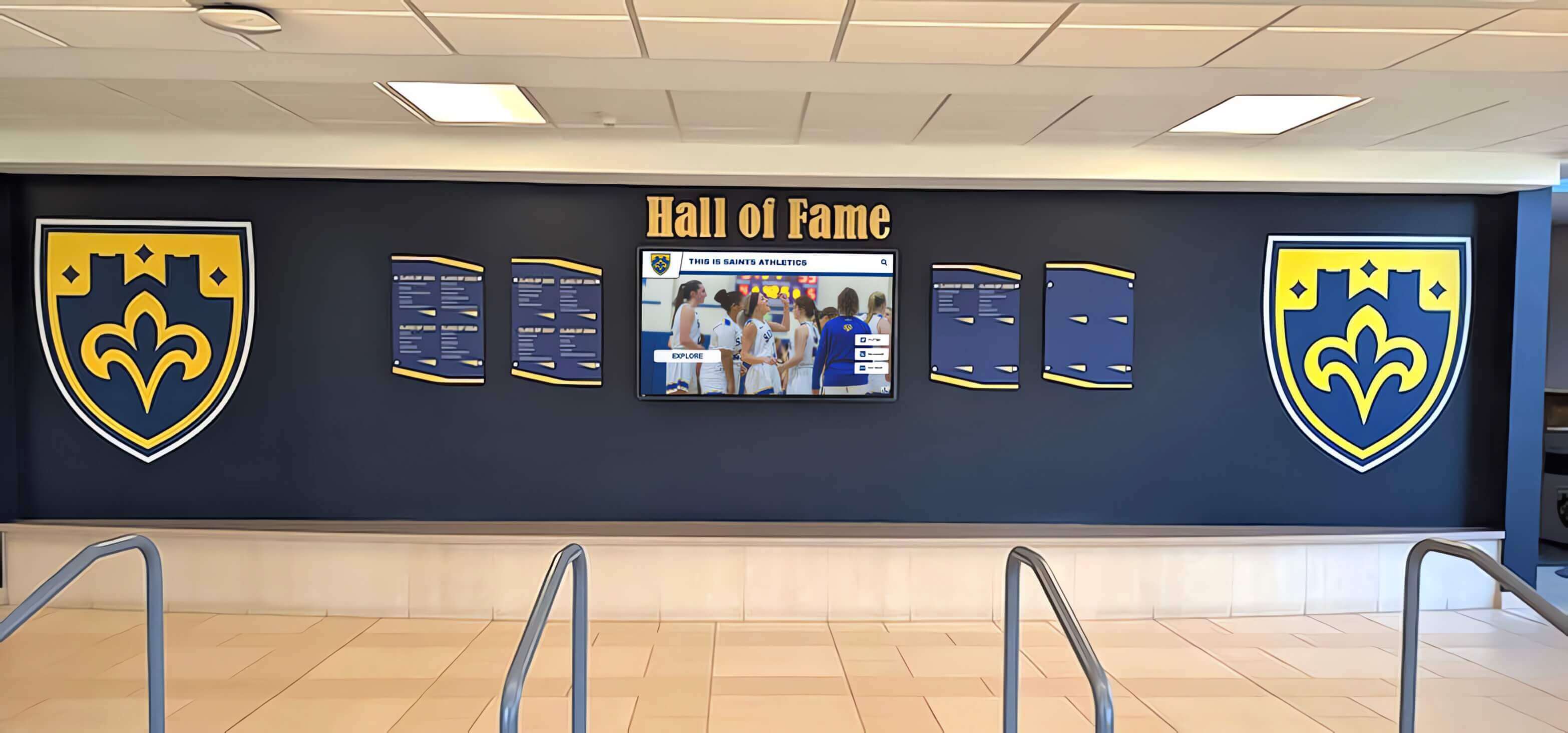
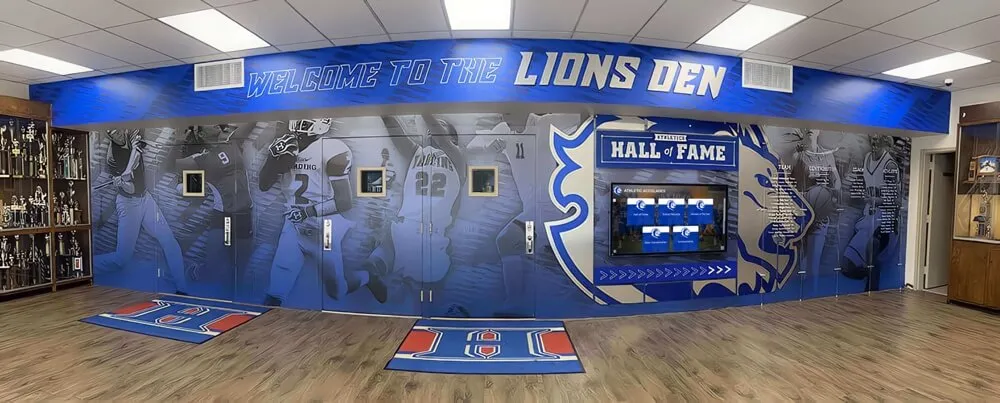
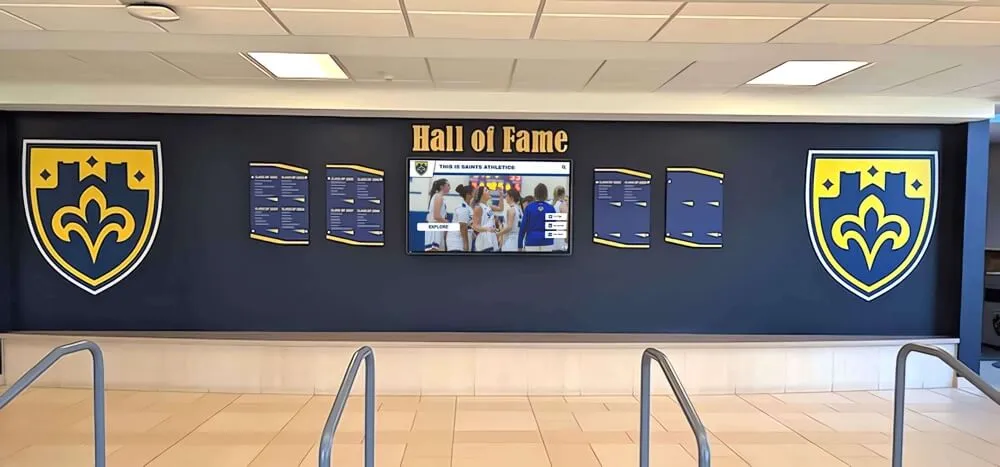
Hybrid approaches combine respected traditional displays with modern digital capabilities
Coaching and Contributor Recognition
- Career win milestones and coaching longevity
- Coach of the year honors received
- Championship coaching achievements
- Program builder recognition
- Athletic director and administrator acknowledgment
- Booster and volunteer contributor appreciation
Historical Documentation
- Facility development and improvement history
- Program evolution over decades
- Team photos from different eras
- Retired numbers and special honors
- Notable alumni career achievements
- Community impact and relationships
Quality systems support unlimited custom categories with independent organization, customizable templates for different recognition types, flexible navigation structures helping visitors discover content, and consistent data fields ensuring information completeness across all profiles.
Analytics and Engagement Tracking
Understanding how visitors interact with touchscreen displays helps optimize content and demonstrate value to stakeholders. Effective platforms track:
Usage Metrics
- Total interactions and unique sessions
- Average engagement duration per session
- Most-viewed profiles and popular content
- Search queries revealing what visitors seek
- Time-of-day and seasonal usage patterns
- Navigation paths through content structure
Content Performance
- Which sports or achievements generate most interest
- Profile completeness correlation with engagement
- Multimedia content impact on session duration
- Feature usage data guiding development priorities
- Comparative performance across different recognition types
Reporting Capabilities
- Automated report generation with key metrics
- Customizable date ranges for analysis periods
- Exportable data for presentations to administrators
- Visualization dashboards showing trends clearly
- Benchmark comparisons across time periods
These insights demonstrate ROI to administrators and booster organizations, identify content gaps where additional information would increase engagement, guide future recognition program development, optimize content strategies based on actual usage patterns, and help athletic directors communicate program value quantitatively.
Implementation Planning for Gym Lobby Touchscreen Displays
Successful installations require systematic planning addressing budget, logistics, content development, and stakeholder engagement.
Budget Development and Funding Sources
Comprehensive budgets account for all implementation and ongoing costs:
Initial Investment Components
- Touchscreen display hardware: $3,000-8,000 depending on size and specifications
- Commercial mounting system: $300-800
- Media player or integrated computer: $400-1,200
- Software platform licensing: $1,500-3,500 initial setup
- Professional installation: $500-2,000 depending on complexity
- Network connectivity infrastructure if needed: $200-1,000
- Initial content development: $1,000-5,000 depending on depth
- Total typical range: $7,000-15,000 for comprehensive single-display system
Ongoing Annual Costs
- Software subscription and support: $1,200-3,600/year
- Content management time: internal staff allocation
- Minor maintenance and cleaning: minimal
- Periodic hardware service: $200-500/year
- Content updates and expansion: internal staff allocation
- Total annual range: $1,500-4,500 depending on system
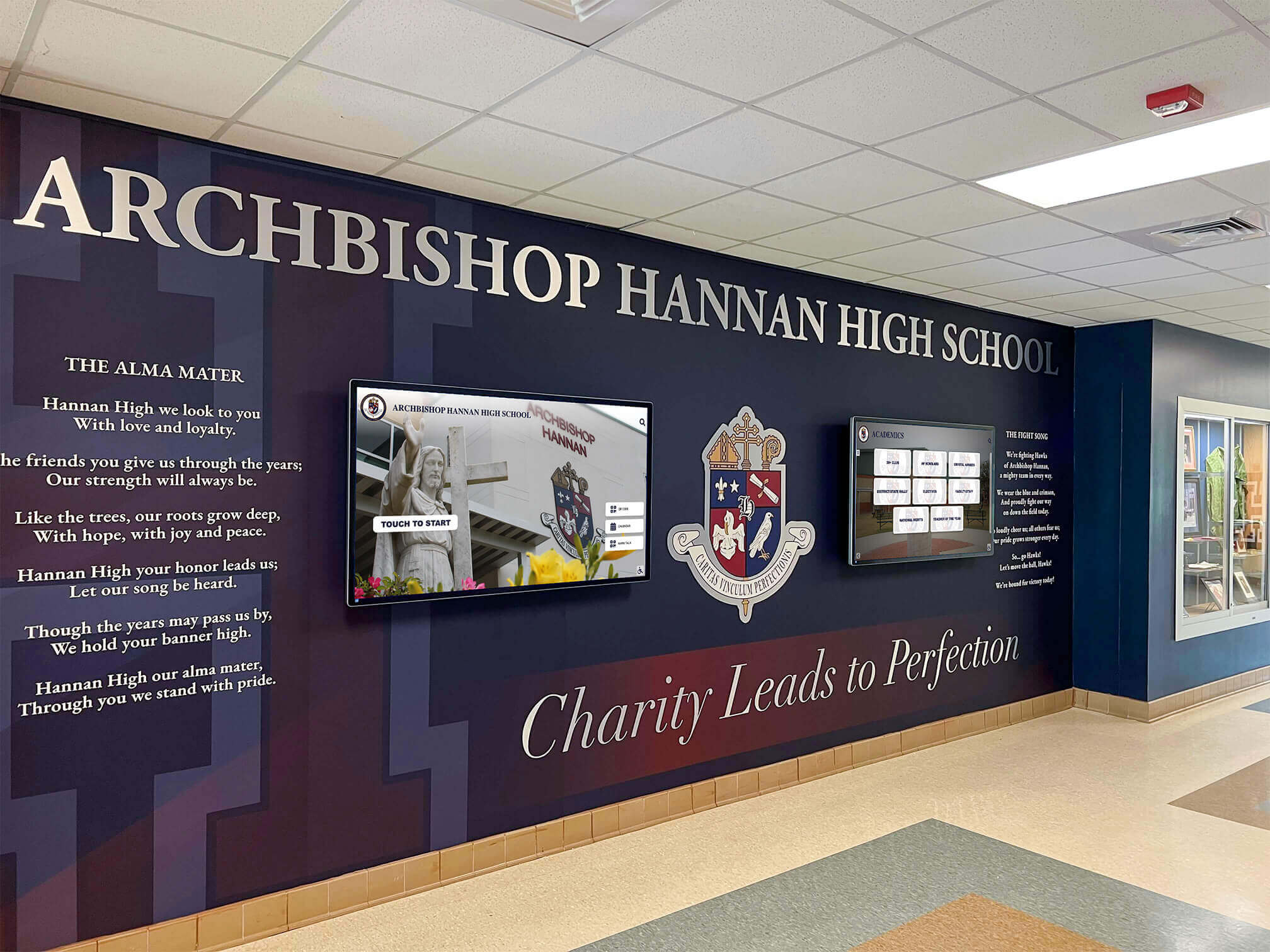
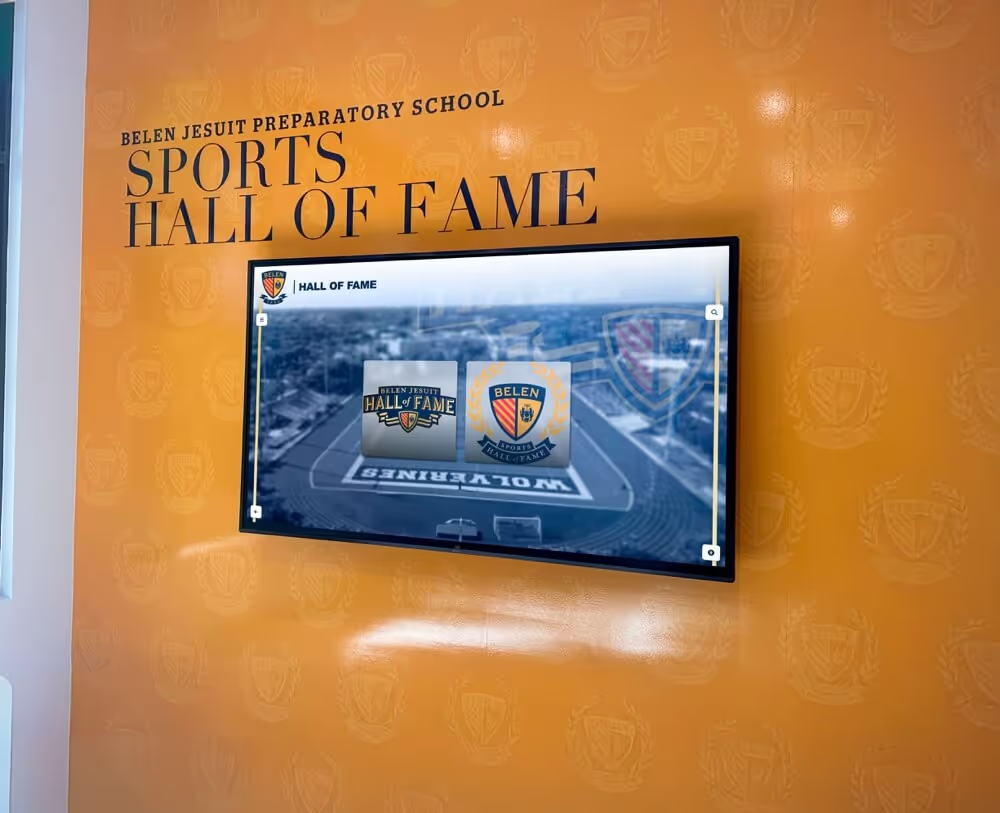
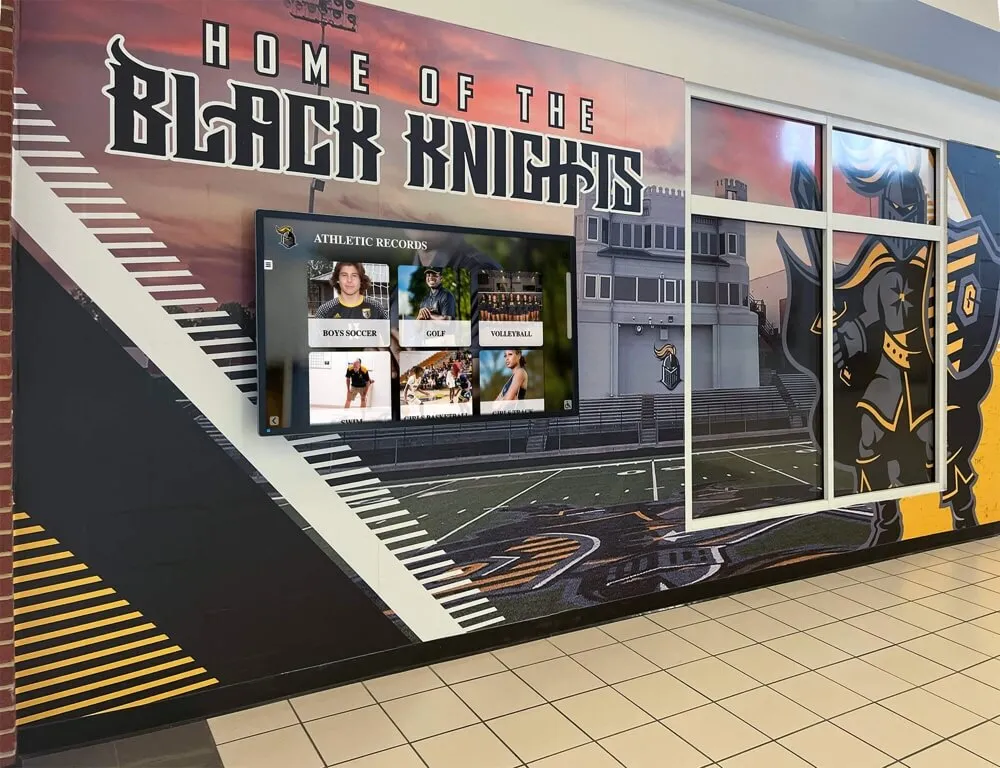
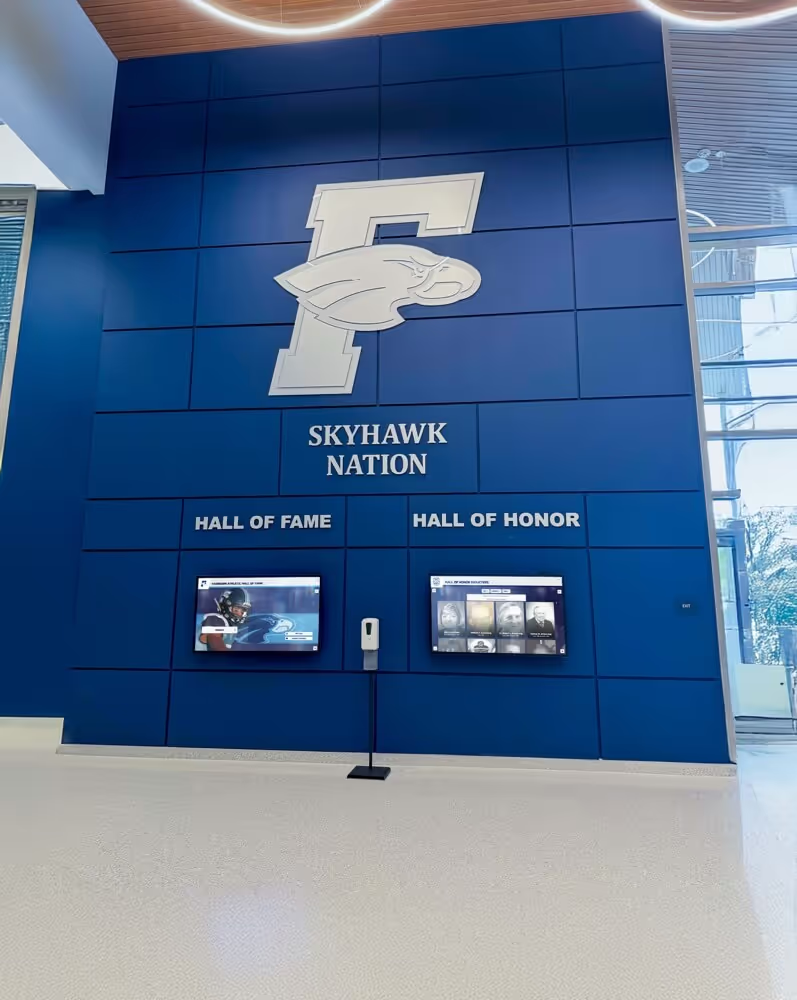
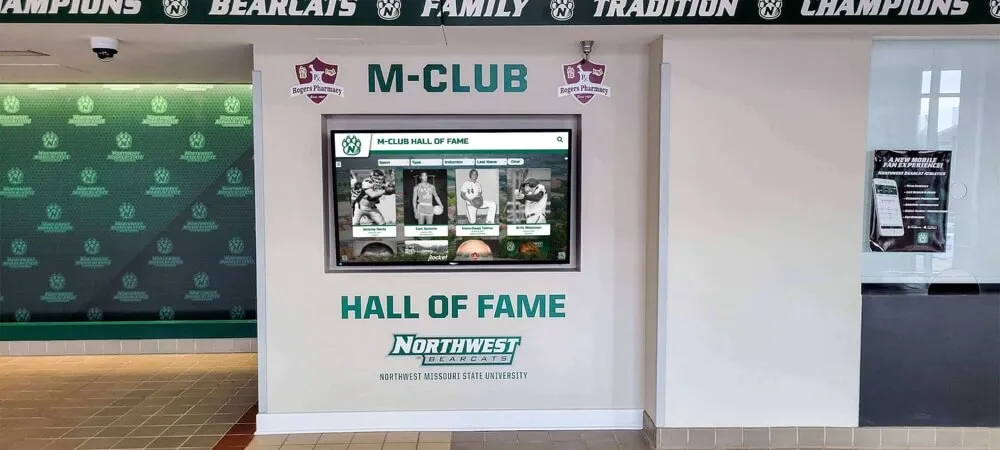
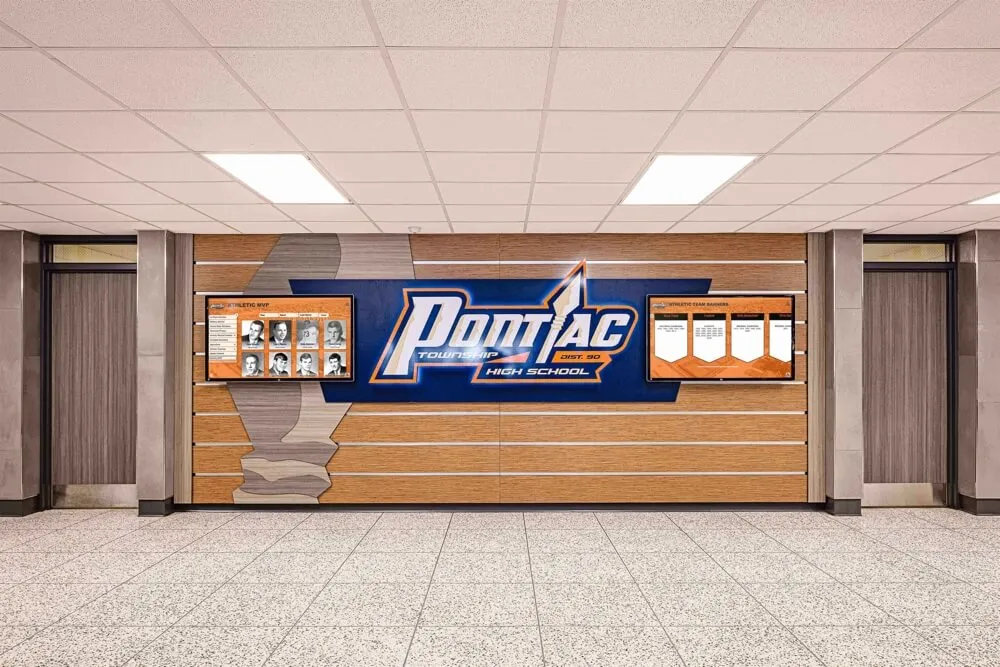
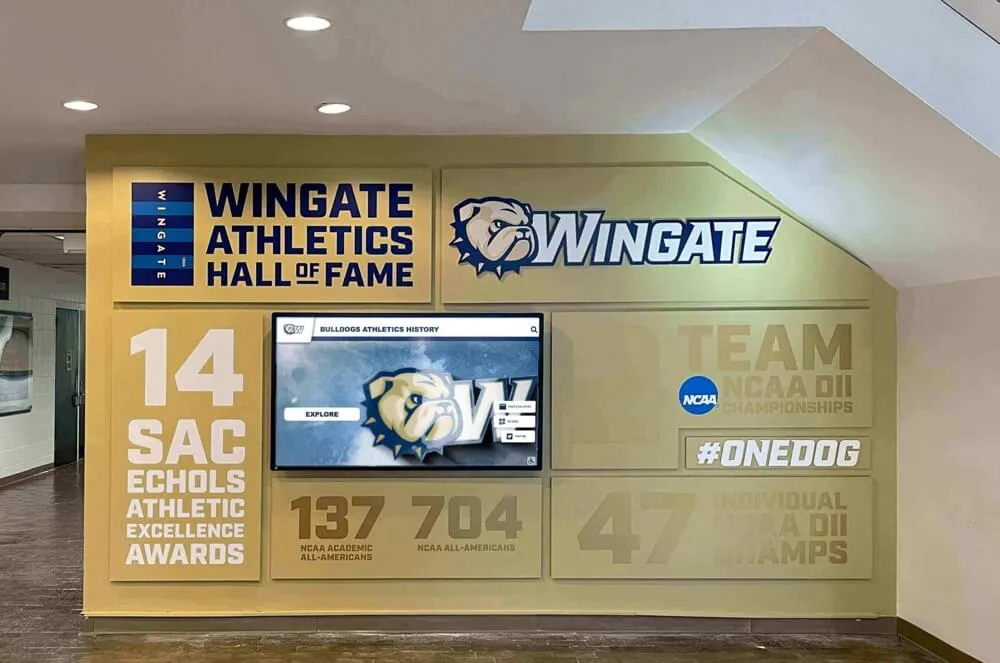
Professional installations integrate digital recognition with existing athletic branding and lobby architecture
These investments exceed single trophy case costs but provide dramatically greater capacity and capability. Schools should evaluate cost per recognition opportunity—digital systems supporting hundreds or thousands of profiles cost substantially less per achievement than physical trophies and plaques accumulating at $150-300 each over time.
Funding Strategy Options
Athletic departments successfully fund touchscreen recognition through:
- Booster organization contributions as tangible projects demonstrating member support value
- Corporate sponsorships receiving logo placement on welcome screens or system naming rights
- Capital campaign inclusion during major facility renovation fundraising
- Alumni giving campaigns tied to reunions or milestone anniversaries
- Athletic program fundraising as multi-year budget priorities
- District technology budget allocation when systems support multiple programs
- Grant funding through educational technology or community development programs
Many schools discover that recognition system investments become self-funding through enhanced alumni engagement driving increased booster membership and contribution levels that exceed annual system costs.
Physical Installation and Technical Requirements
Gym lobby installations require specific infrastructure considerations:
Location Selection Criteria
- High-traffic areas where visitors naturally gather or pause
- Visible positioning from main lobby entrances
- Adequate wall space for comfortable viewing distances
- Proximity to existing network and power infrastructure
- Protection from direct sunlight causing glare or overheating
- Distance from athletic activity preventing accidental damage
- ADA-compliant placement ensuring universal accessibility
Technical Infrastructure Needs
- Reliable electrical service on dedicated circuits
- Wired network connectivity strongly preferred over WiFi
- Adequate bandwidth for content updates and remote management
- Surge protection for valuable electronic equipment
- Climate control maintaining appropriate operating temperatures
- Adequate ambient lighting without excessive glare
- Physical security appropriate to location risk level
Professional Installation Services
While some schools attempt DIY installations, professional service ensures proper mounting that meets commercial standards and safety requirements, network configuration and connectivity troubleshooting, software installation and system configuration, user training and administrative onboarding, documentation for future reference and support, and warranty compliance protecting equipment investments.
The $500-2,000 professional installation investment typically prevents much more expensive mistakes, failures, or safety issues that compromise projects or require expensive remediation.
Schools planning school lobby design incorporating digital elements benefit from professional guidance ensuring installations integrate effectively with existing architectural elements.
Content Development Strategy
Recognition system success depends heavily on content quality and completeness:
Initial Content Collection
Schools implementing touchscreen trophy displays need systematic approaches gathering:
- Trophy and award inventory documenting all championships, tournament results, and team achievements
- Team roster information identifying athletes, coaches, and contributors for all recognized teams
- Historical photographs from yearbooks, newspaper archives, personal collections, and athletic department files
- Statistical documentation from record books, media guides, and historical archives
- Achievement context through coach interviews, athlete reflections, and contemporary accounts
- Digital media including video highlights, news coverage, and ceremony documentation
This content development represents the most time-intensive implementation phase, typically requiring 40-80 hours depending on historical depth and organizational state of existing records. Schools should realistically plan for this investment, often engaging student workers, parent volunteers, history enthusiasts, or professional services to manage workload.
Ongoing Content Addition Processes
After launch, sustainable systems need clear workflows for:
- Championship documentation immediately following victories
- Season-end recognition systematically adding annual achievements
- Individual milestone tracking identifying and celebrating statistical achievements as they occur
- Historical additions gradually expanding coverage of earlier eras
- Profile updates maintaining accuracy as athlete careers progress
- Photo collection systematically capturing current season images
- Multimedia integration adding video content and supplementary materials
Assigning specific staff responsibilities prevents content management from becoming an afterthought that undermines system value. Many schools designate athletic directors or administrative assistants as content managers, allocating 2-4 hours monthly for updates and additions during seasons and minimal time during summer months.
Launch Planning and Promotion
Effective launches maximize visibility and demonstrate value:
Announcement Strategy
- Student assembly introduction showcasing features
- Parent communication explaining new recognition approach
- Alumni newsletter feature with web platform links
- Social media campaign demonstrating system capabilities
- Local media coverage highlighting innovation
- Booster organization presentation if they funded project
- School board recognition of supporters and contributors
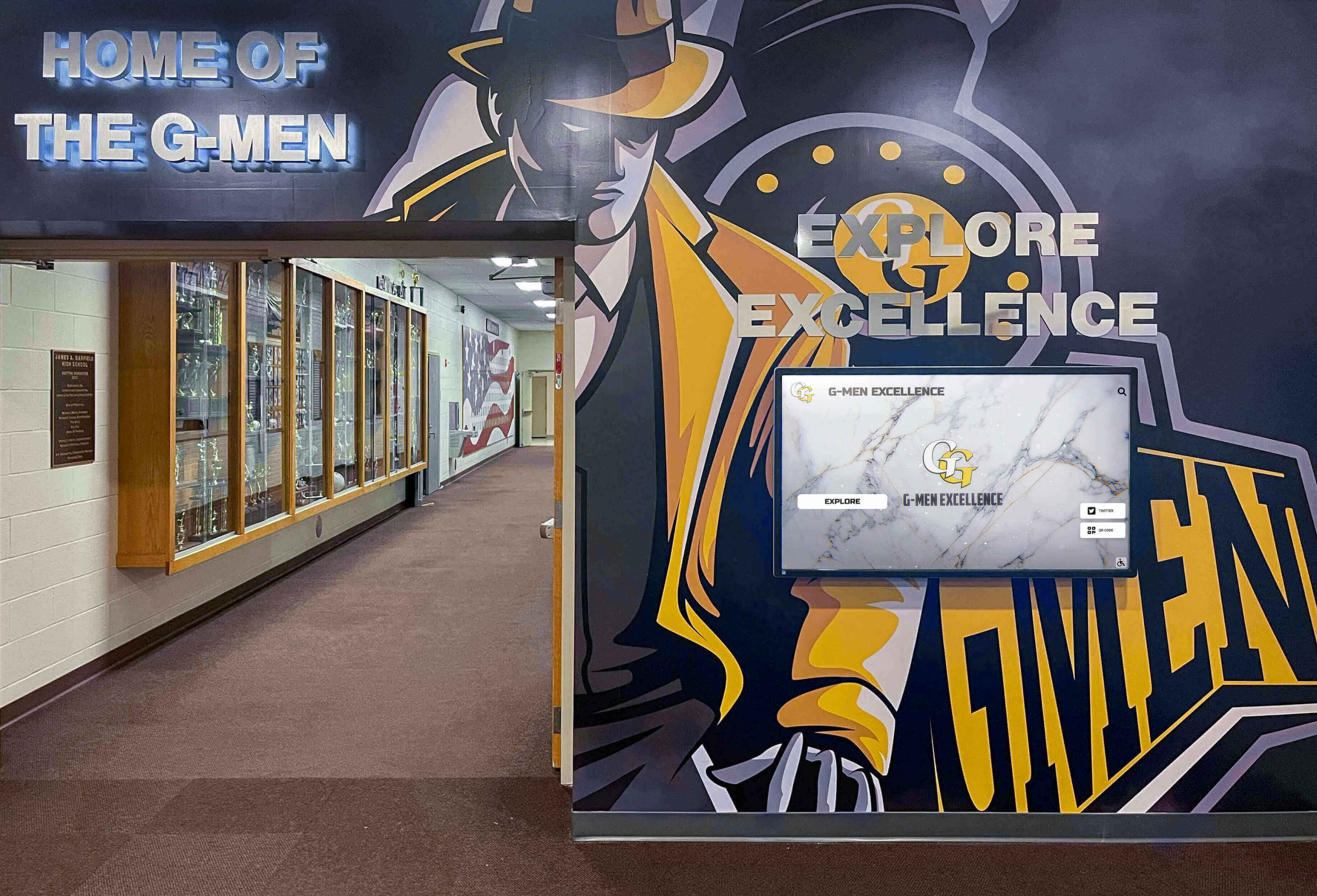
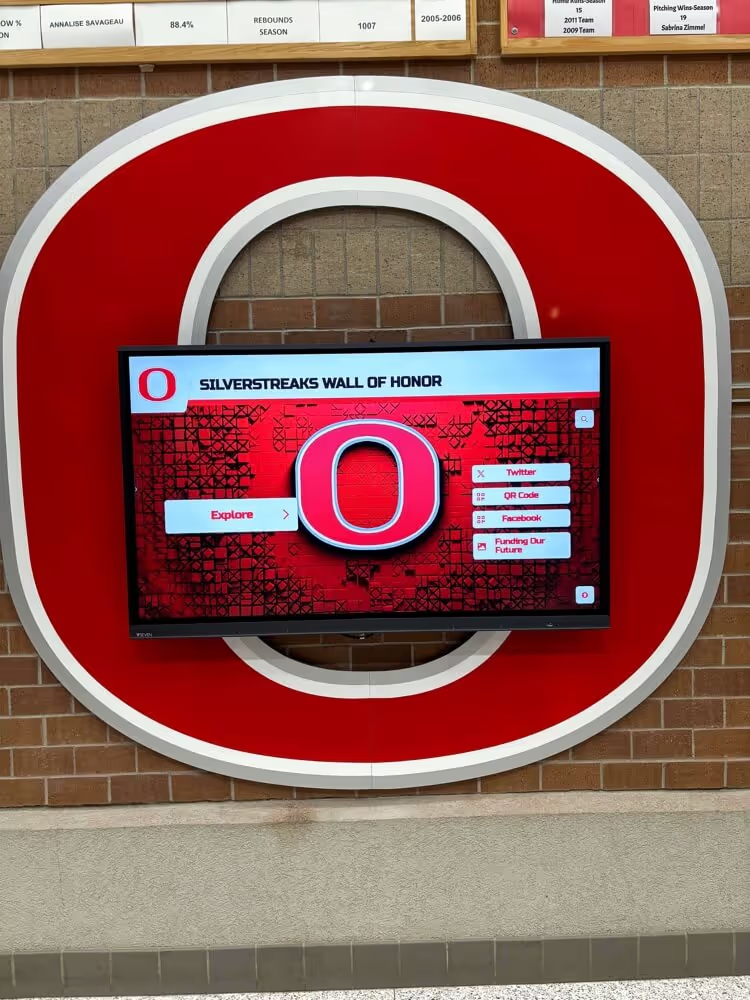
Strategic placement in high-traffic hallways ensures recognition reaches broad audiences throughout each school day
Launch Event Opportunities
- Dedication ceremony during homecoming or major athletic event
- Alumni weekend feature encouraging exploration
- Athletic banquet demonstration to teams and families
- Open house for community members and supporters
- Student demonstration teaching peers to explore content
Ongoing Promotion
- Seasonal content features highlighting different sports
- Anniversary recognition showcasing historical achievements
- Student of the week or athlete spotlight features
- Tournament bracket displays during state championship seasons
- Featured alumni profiles during reunion weekends
Regular promotion prevents touchscreen displays from becoming familiar background elements that visitors stop noticing. Fresh content and active communication maintain engagement and demonstrate ongoing value to stakeholders.
Addressing Common Implementation Concerns
Schools considering touchscreen displays frequently raise predictable concerns that planning addresses effectively.
Concern: “Will students break expensive touchscreen equipment?”
Modern commercial touchscreens designed for public installation withstand substantial use and abuse. Commercial-grade displays include impact-resistant glass, solid-state components without moving parts vulnerable to damage, tamper-resistant enclosures protecting internal components, secure mounting preventing removal or tipping, and remote monitoring detecting issues before catastrophic failure.
Thousands of schools operate touchscreen recognition displays in high-traffic areas with minimal damage or vandalism. When properly specified and professionally installed, equipment durability matches or exceeds other lobby technology like security systems, public announcement displays, or automated doors that schools routinely install in similar environments.
Many schools report that touchscreen displays receive more respectful treatment than traditional trophy cases—interactive technology commands attention and respect that passive glass cases do not, and students feel pride in modern installations representing institutional investment in recognition.
Concern: “We want to keep our existing trophies—they have sentimental value”
Most schools implement hybrid approaches combining cherished physical trophies with expanded digital recognition rather than completely replacing traditional cases. Common strategies include:
Selective Physical Display
- Feature most prestigious championships (state titles, major milestones) in maintained trophy cases
- Display recent championships from current students’ memory
- Showcase special historical items (first championships, significant artifacts)
- Maintain retired jersey displays and other unique recognition
Comprehensive Digital Recognition
- Document all physical trophies digitally with detailed photos and context
- Expand recognition to include achievements that never received physical trophies
- Add individual athlete recognition impossible in trophy case format
- Provide comprehensive searchable archives of all accomplishments
This hybrid model respects tradition while solving space limitations and adding modern capabilities. Schools can gradually transition emphasis toward digital platforms as physical cases age or facilities undergo renovation without immediately discarding cherished trophies that connect community members to institutional history.
Learn about approaches for digitizing existing plaques and trophies as part of comprehensive recognition strategies.
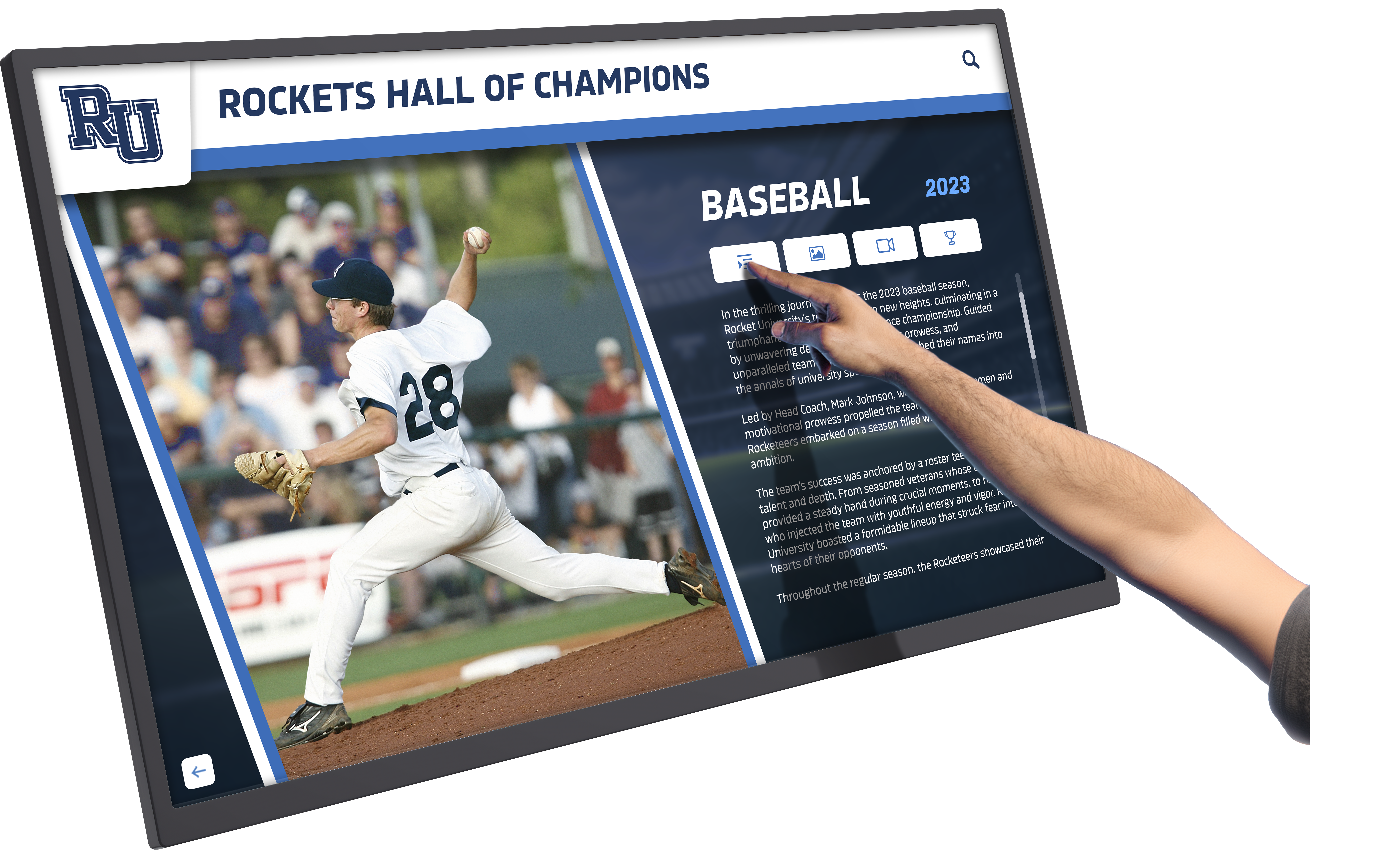
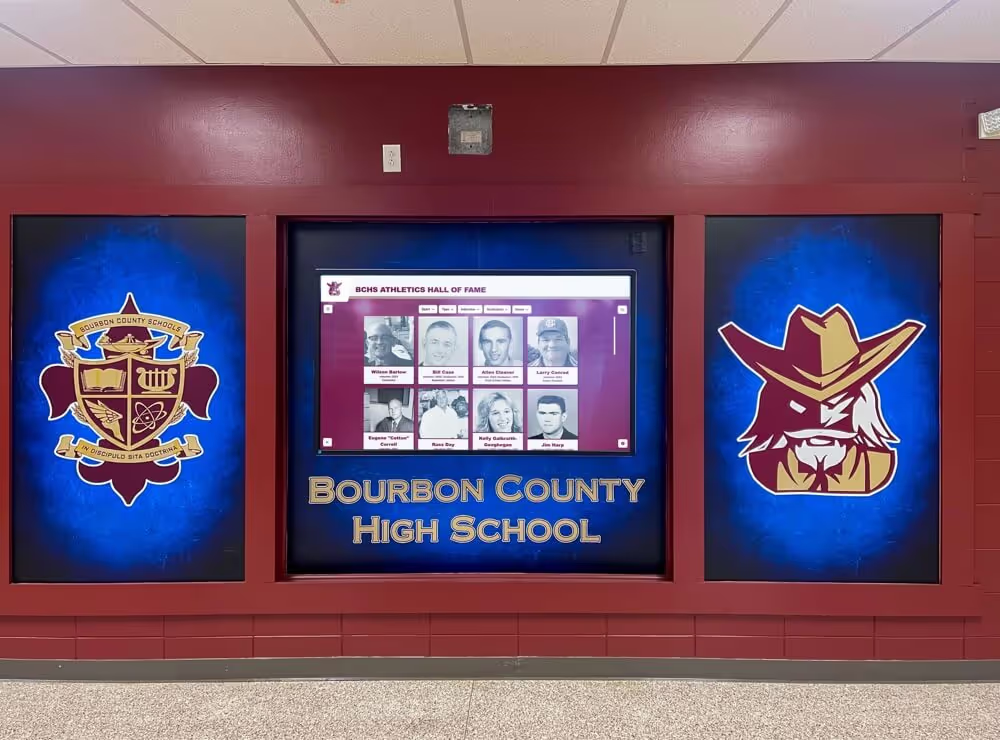
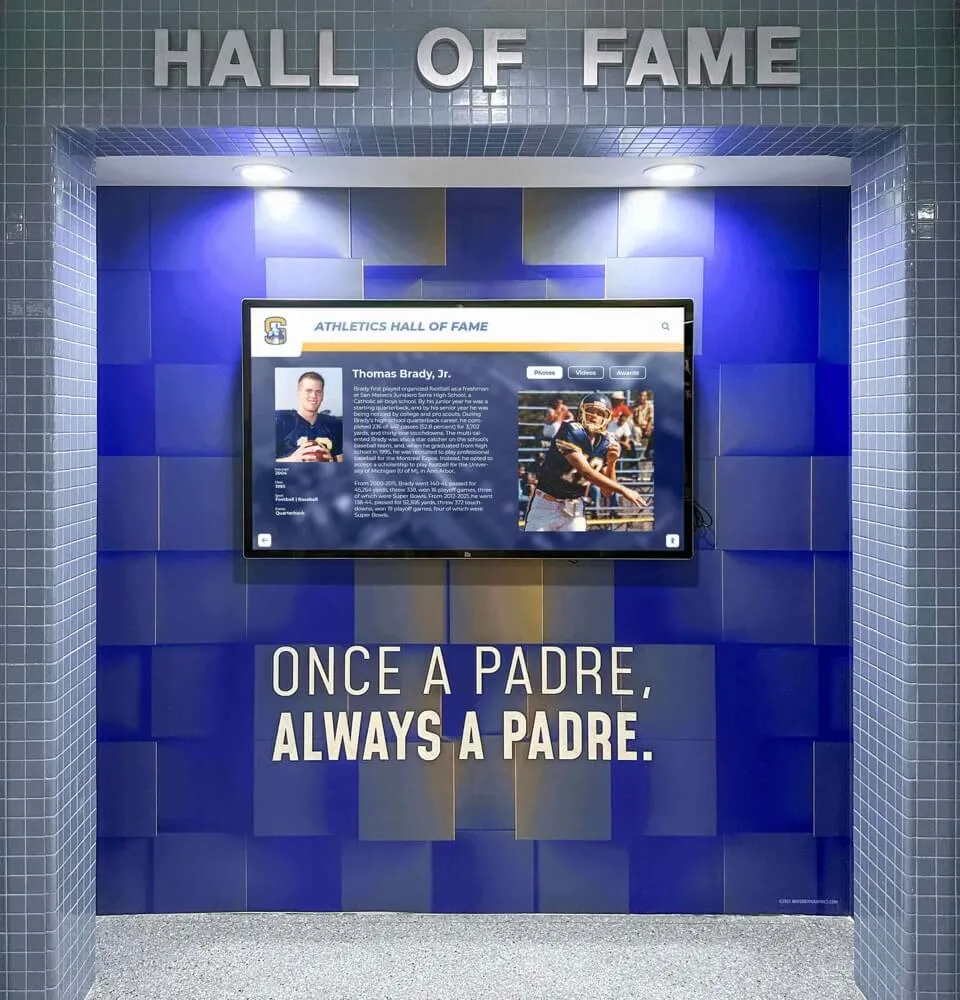
Detailed athlete profiles include photos, statistics, achievements, and biographical information impossible to present in physical trophy cases
Concern: “We don’t have technical expertise to manage digital systems”
Modern touchscreen recognition platforms specifically target non-technical administrators and athletic directors. Quality systems require only basic computer skills—if you can use email and browse websites, you can manage content effectively through web-based administration interfaces designed for non-technical users.
Cloud-based platforms eliminate technical infrastructure management, automatic updates prevent software maintenance requirements, visual editors show exactly how content appears before publishing, template-based systems eliminate design complexity, technical support handles troubleshooting and rare issues, and training resources provide clear guidance for common tasks.
Most athletic directors learn basic content management in 1-2 hours and become proficient within days. The technical barrier that existed with early digital signage systems has essentially disappeared with modern purpose-built recognition platforms.
Concern: “What happens when technology changes or the vendor goes out of business?”
This vendor dependency concern reflects legitimate caution about technology investments. Schools can mitigate risks through:
Vendor Selection Due Diligence
- Choose established providers with multi-year track records
- Review customer references from similar schools
- Assess financial stability and long-term viability
- Evaluate user community size and activity
- Examine product development roadmaps and investment
- Understand data export and content ownership policies
Content Protection Strategies
- Maintain backup copies of all photos, videos, and content
- Use systems allowing content export in standard formats
- Avoid platforms creating proprietary media formats
- Document content organization and categorization
- Retain source materials in accessible archives
Hardware Independence
- Select software platforms supporting standard display hardware
- Avoid systems requiring proprietary equipment only available from single vendors
- Choose solutions supporting hardware upgrades independently of software
- Verify systems work with multiple media player options
Quality recognition platforms provide content portability ensuring that even if vendors discontinue service, schools retain complete content archives that can migrate to alternative systems without starting over. Hardware flexibility ensures that even if specific displays eventually fail, replacements work with existing software investments.
Maximizing Engagement and Recognition Impact
Technology enables recognition, but thoughtful strategies maximize community impact:
Create Compelling Visual Content
Recognition profiles become memorable through high-quality visual elements:
Photography Best Practices
- Action shots showing athletes competing capture energy and emotion
- Team photos establish context and identify all contributors
- Celebratory moments communicate achievement significance
- Post-graduation photos show continued success and development
- Historical photos connect eras and build tradition narratives
- Consistent quality standards maintain professional appearance
Video Content Strategy
- Championship game highlights (60-90 second clips)
- Athlete interview segments sharing personal perspectives
- Coach reflections providing achievement context
- Season montages documenting journeys to championships
- Historical footage comparing eras and evolution
- Keep videos concise—engagement drops significantly beyond 2-3 minutes
Information Architecture
- Clear headlines summarizing achievements immediately
- Scannable formats with bold subheadings and short paragraphs
- Statistics and data presented in tables or visual formats
- Chronological organization helping visitors follow career progression
- Consistent formatting across similar profile types
- Comprehensive tagging enabling multiple discovery paths
Schools implementing digital recognition best practices find that content quality determines engagement duration as much as technology capabilities.
Strategic Seasonal Content Features
Keep displays dynamic through rotating featured content:
Current Season Integration
- Tournament brackets during championship seasons
- Updated standings and playoff scenarios
- Recent game highlights and performances
- Milestone watch lists for athletes approaching records
- Upcoming schedule and event information
- Team roster profiles for current seasons
Historical Anniversary Features
- 25th, 50th anniversary championship recognition
- “On this day in school history” rotating content
- Decade retrospectives comparing eras
- Coaching milestone celebrations
- Alumni career update spotlights
- Facility development history during renovation periods
Thematic Content Rotations
- Senior athlete spotlights during graduation season
- State championship throwbacks during tournament time
- Alumni professional athlete features when seasons begin
- Academic all-state recognition during award season
- Coaching career retrospectives during retirements
- Multi-generational family athlete showcases
This rotating content strategy prevents displays from becoming static backgrounds that visitors stop noticing. Fresh content creates reasons to engage repeatedly rather than one-time exploration followed by disinterest.
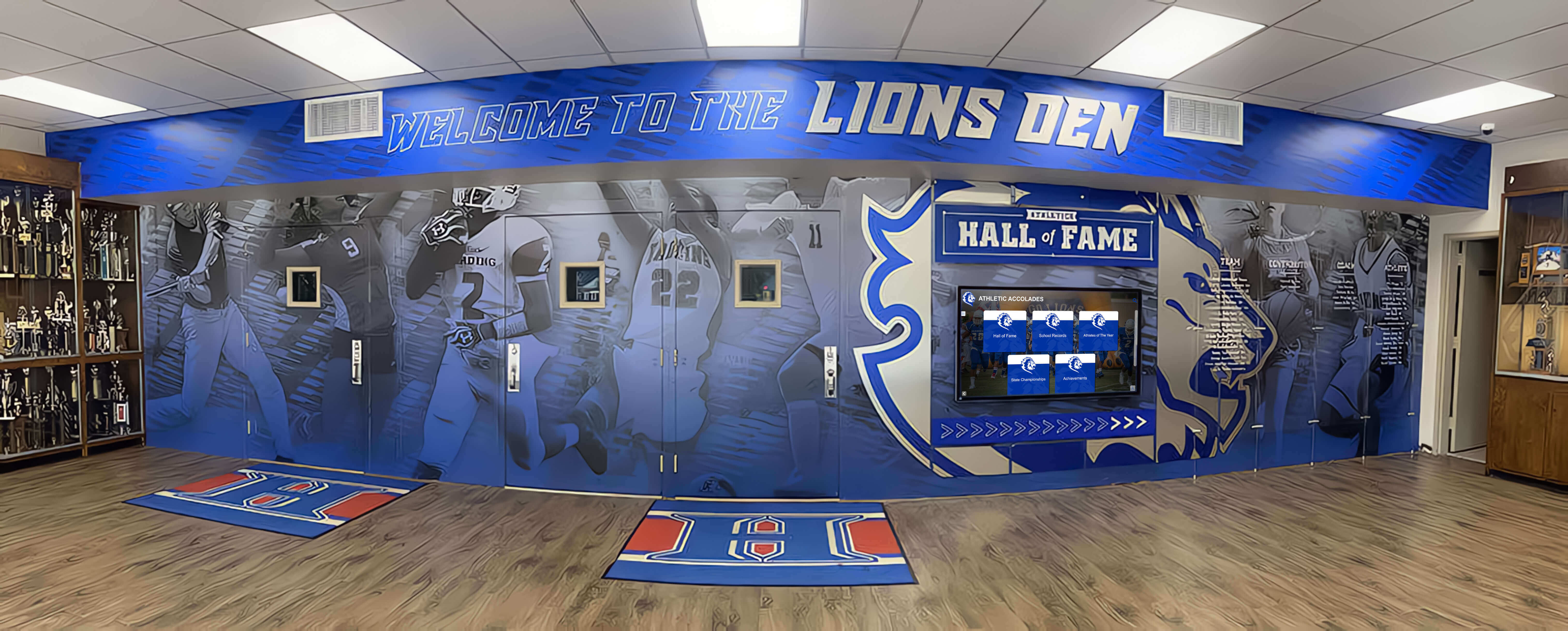
Comprehensive recognition environments combine physical trophies, murals, and digital displays into cohesive presentations
Integrate Recognition Throughout School Culture
Maximum impact requires extending beyond standalone displays:
Curriculum Integration
- History classes studying community development through athletics
- Math classes analyzing statistics and achievement patterns
- Writing assignments interviewing inductees about experiences
- Physical education highlighting local excellence and tradition
- Research projects documenting program evolution
Event Integration
- Profile features in game day programs
- Recognition ceremonies during athletic competitions
- Homecoming and alumni weekend focal points
- Athletic banquet multimedia presentations
- College signing day historical context
Communication Integration
- Website homepage features and links
- Social media content sharing achievements
- Alumni newsletter recognition spotlights
- Booster organization communications
- Recruiting materials showcasing tradition
- Admission tour talking points
Schools implementing comprehensive school recognition strategies discover that integrated approaches multiply recognition impact compared to isolated display installations.
Measuring Success and Demonstrating Value
Regular assessment justifies investments and identifies improvement opportunities:
Key Performance Indicators
Track specific metrics demonstrating recognition impact:
Usage Metrics
- Daily/weekly touchscreen interactions
- Average session duration per interaction
- Most-viewed profiles and content
- Search queries revealing visitor interests
- Peak usage times and patterns
- Web platform sessions and visitors
Engagement Quality Indicators
- Percentage of sessions exceeding 2 minutes
- Content depth explored per session
- Return visitor rates
- Social media shares and engagement
- Alumni platform usage rates
- Mobile versus in-person access patterns
Community Impact Evidence
- Stakeholder feedback and testimonials
- Alumni communication engagement rates
- Booster organization membership and giving trends
- Recruiting conversation references to tradition
- Media coverage mentioning recognition
- Student pride and culture indicators
Operational Benefits
- Time savings versus physical trophy management
- Content update speed compared to previous processes
- Recognition completeness and equity improvements
- Cost per achievement recognized
- Staff satisfaction with management processes
These metrics provide quantitative evidence supporting continued investment, identify content gaps and improvement opportunities, guide future development priorities, and communicate value to administrators, boards, and supporters.
Gather Qualitative Feedback
Complement data with stakeholder perspectives:
Student Feedback
- Do current students explore recognition content?
- Does recognition increase pride in athletic programs?
- Do students share content with family and friends?
- Does digital format appeal to their media preferences?
- What improvements or additions would increase engagement?
Alumni Perspectives
- How frequently do alumni access web platforms?
- Does recognition strengthen alumni connections?
- Do alumni share content through social networks?
- Does recognition influence giving and engagement?
- What historical content would add value?
Parent and Community Views
- Do parents explore athlete profiles and achievements?
- Does recognition enhance perception of program quality?
- Do community members follow achievements digitally?
- Does modern recognition approach enhance school image?
- What additional content would serve community interests?
Regular feedback through surveys, focus groups, and informal conversations ensures recognition systems evolve to meet community needs and preferences rather than remaining static implementations.
Taking the Next Step Toward Modern Trophy Recognition
Overcrowded trophy cases and space-constrained recognition represent solvable challenges rather than permanent limitations. Modern touchscreen display technology provides practical alternatives that not only solve space problems but fundamentally improve recognition quality, engagement, and accessibility.
Schools implementing digital trophy recognition discover benefits extending well beyond additional capacity—interactive exploration, comprehensive storytelling, instant updates, extended reach, and analytics capabilities that traditional physical displays cannot provide. These advantages strengthen athletic programs through improved alumni engagement, recruiting benefits, community building, and institutional pride.
The transition from physical-only trophy recognition to digital or hybrid approaches requires initial investment and planning, but schools consistently report that benefits justify costs within months as engagement metrics, stakeholder feedback, and operational improvements demonstrate value. The most common regret expressed by schools implementing touchscreen recognition is not making the transition sooner.
Your decades of athletic achievement deserve recognition equal to the dedication, persistence, and excellence those accomplishments represent. When trophy cases overflow and recognition space runs out, modern technology offers sustainable solutions that honor every achievement while creating engaging experiences that inspire current students and strengthen lifelong connections with your athletic tradition.
Ready to explore how touchscreen displays and digital trophy recognition can solve your gym lobby space challenges while creating more compelling presentations of your athletic legacy? Book a demo to see how schools successfully implement interactive recognition systems that celebrate unlimited achievements without physical space constraints.