



Modern recognition programs face a fundamental challenge: how do you celebrate decades of achievements, championships, and distinguished individuals when physical trophy cases overflow and wall space runs out? Traditional plaques and static displays can only accommodate so many names before difficult decisions arise about who deserves limited recognition space. This constraint forces institutions to either stop honoring new achievements, remove older recognition to make room, or undertake expensive renovations that only temporarily solve the problem.
Touchscreen digital hall of fame walls and interactive awards displays solve this space constraint permanently while transforming how institutions celebrate excellence. These systems combine large-format touchscreen displays with cloud-based content management platforms, enabling unlimited recognition capacity, rich multimedia storytelling, instant updates, and accessibility from anywhere through web platforms. Whether you’re an athletic director managing decades of sports achievements, an alumni relations professional building institutional connections, or an administrator seeking modern recognition solutions, understanding how touchscreen hall of fame systems work—and how to implement them successfully—determines whether your recognition program engages stakeholders or becomes another underutilized display.
This comprehensive guide explores every aspect of touchscreen digital hall of fame walls and interactive awards displays specifically for schools, universities, athletic programs, and educational organizations. You’ll learn what these systems offer beyond traditional recognition, how to evaluate providers and select appropriate solutions, best practices for implementation and content creation, strategies for engagement and ROI measurement, and decision frameworks helping you determine whether digital recognition justifies investment for your institution’s goals and constraints.
What Are Touchscreen Digital Hall of Fame Walls?
A touchscreen digital hall of fame wall is an interactive recognition system combining large-format displays with touch-enabled interfaces, allowing visitors to explore achievements, browse inductee profiles, watch videos, and discover institutional history through straightforward navigation. Unlike static plaques limited to names and dates, digital systems present comprehensive profiles with photos, videos, statistics, biographical narratives, and multimedia content that brings achievements to life.
The core technology consists of three integrated components working together:
Interactive Touchscreen Display Hardware
Wall-mounted or freestanding touchscreen displays ranging from 43 inches for hallway installations to 75 inches or larger for lobby centerpieces. These commercial-grade displays feature industrial touchscreen technology built for thousands of daily interactions, anti-glare glass enabling viewing in varied lighting conditions, slim profiles mounting flush against walls, and commercial reliability specifications ensuring 50,000+ hour operational lifespans—far exceeding consumer televisions unsuitable for continuous public use.
Display placement matters significantly for engagement. Institutions achieve highest usage by positioning displays in high-traffic areas where people naturally gather or wait: building entrance lobbies where visitors congregate, athletic facility areas where parents watch practices, cafeterias and student centers during lunch periods, and hallway locations near trophy cases connecting physical and digital recognition.

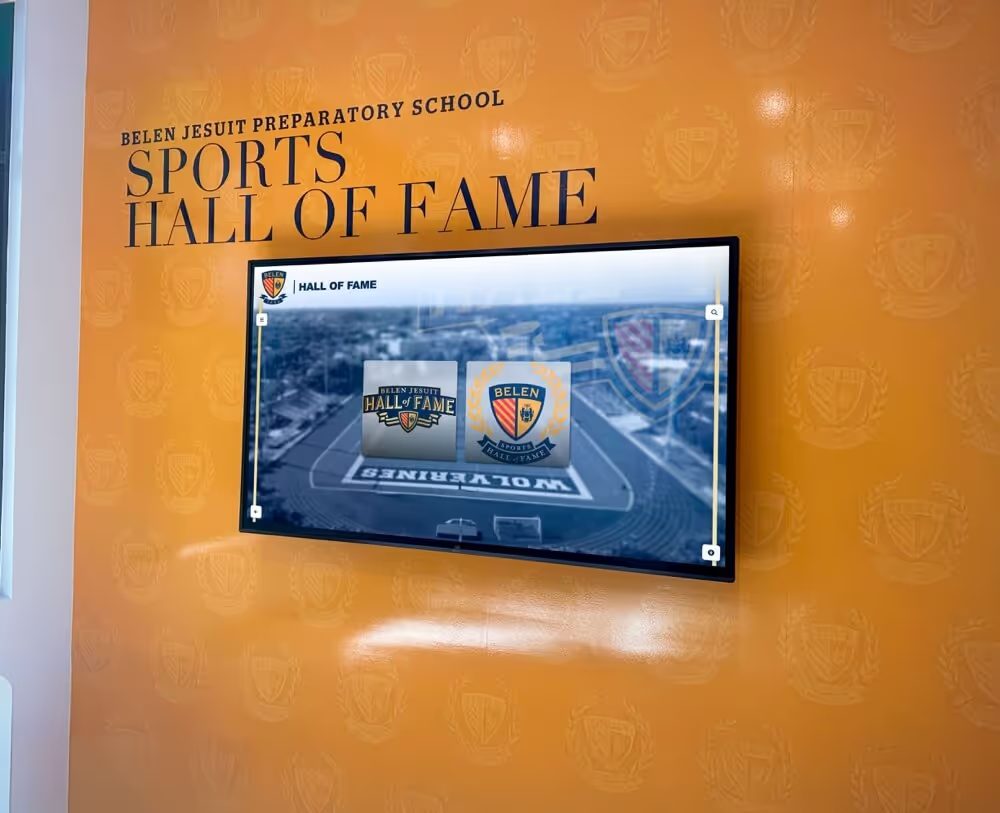
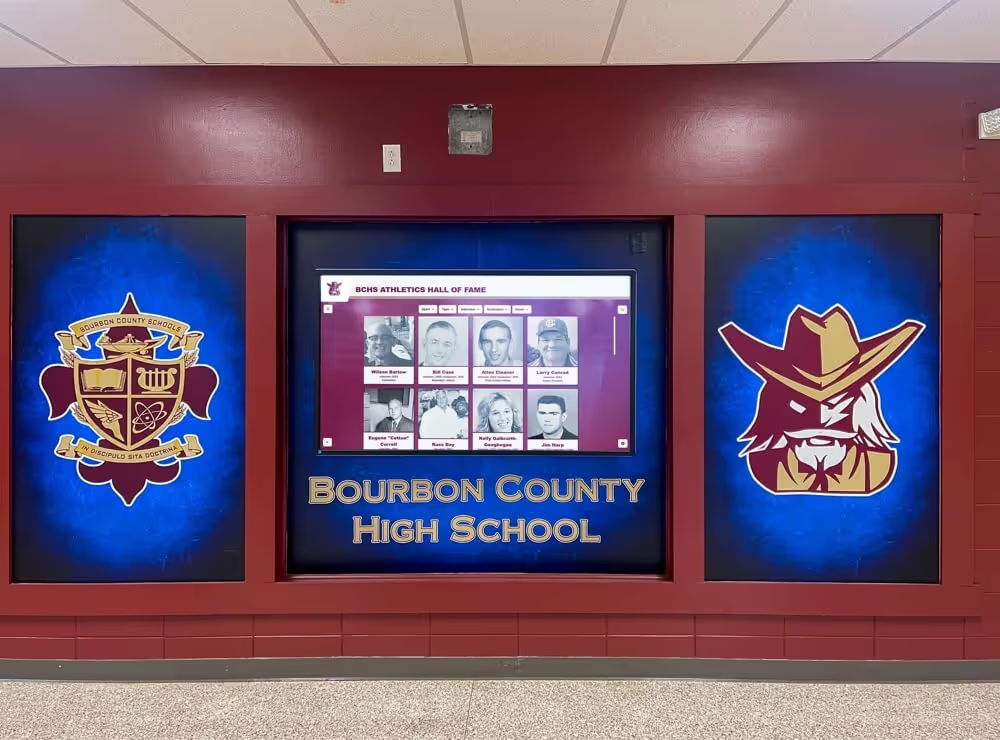
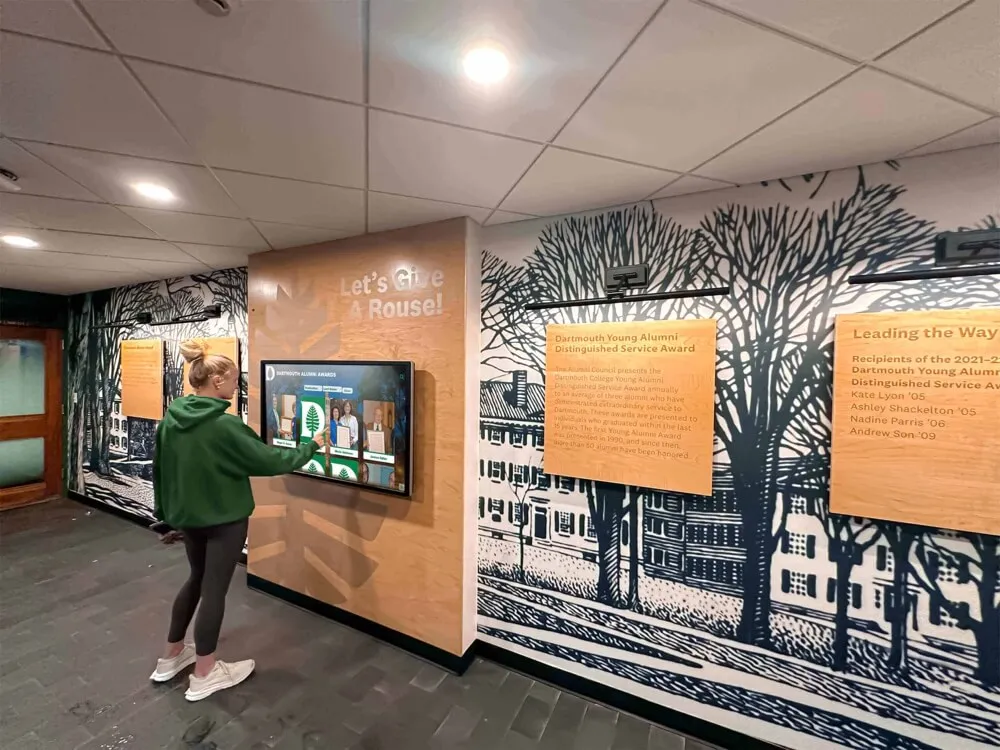
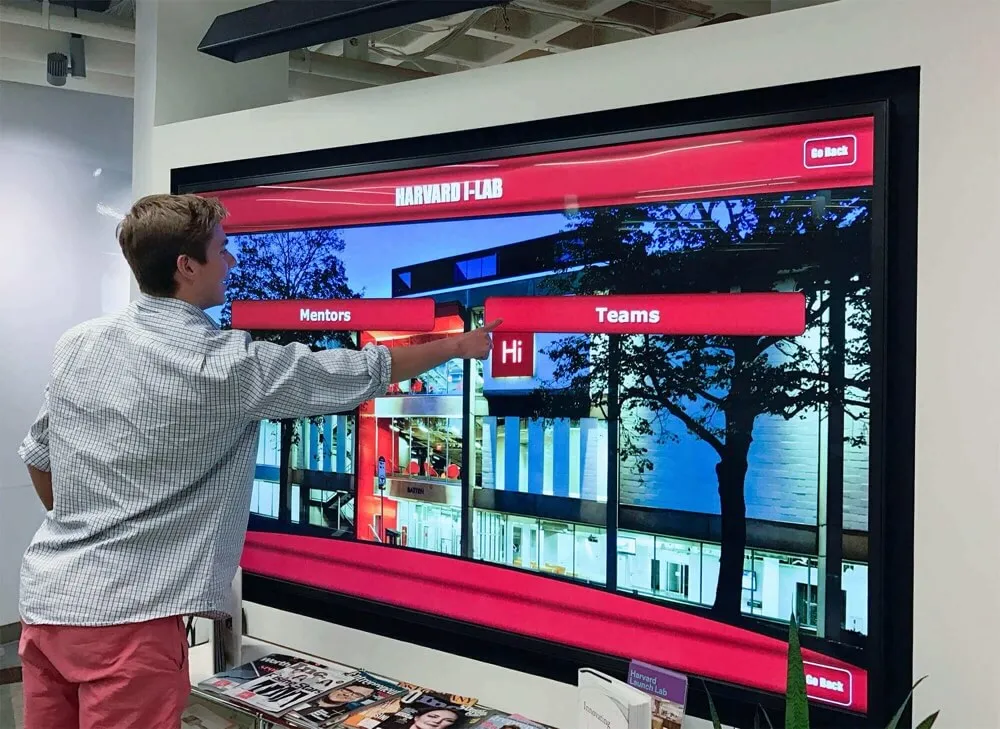
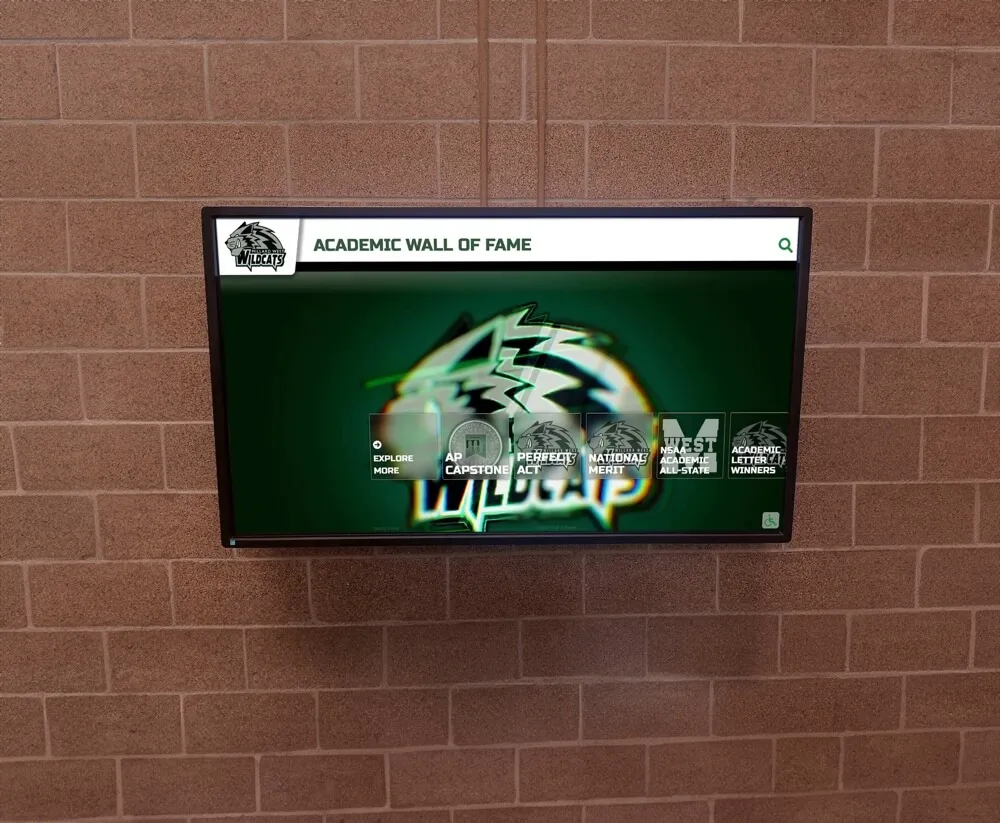
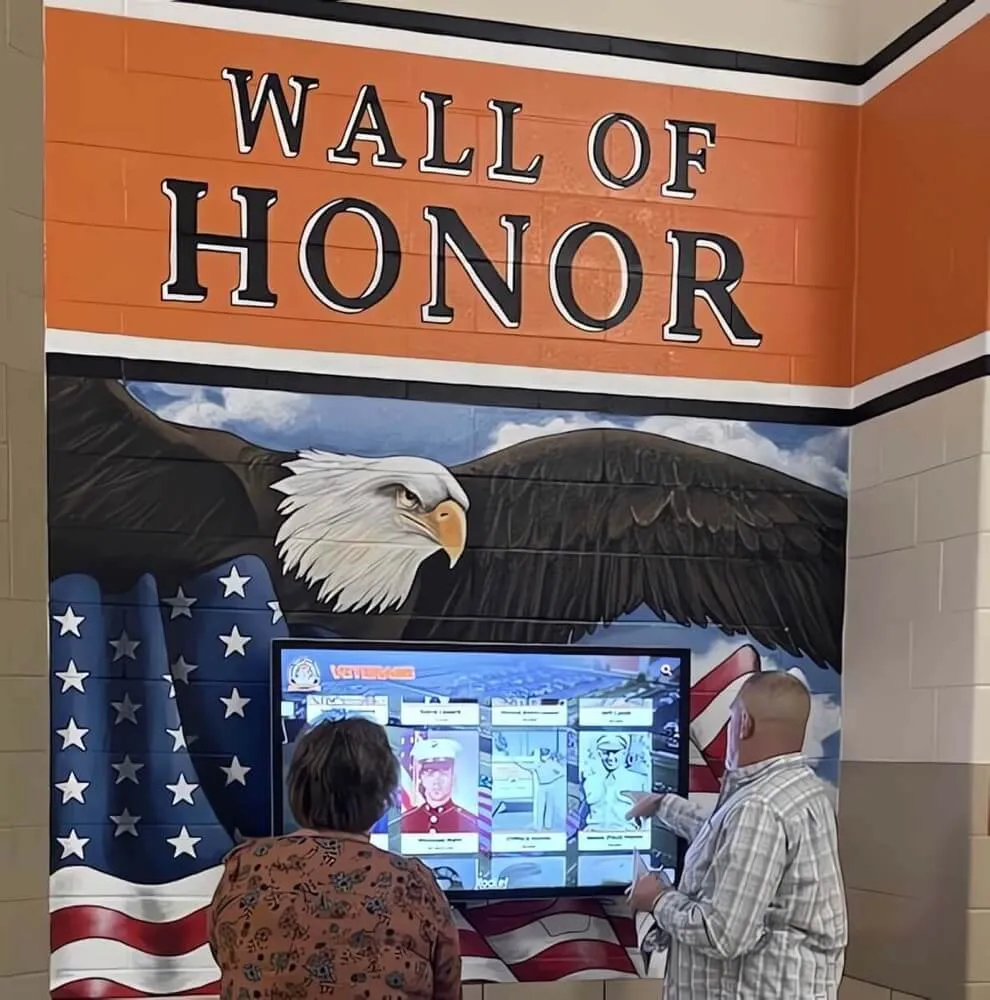
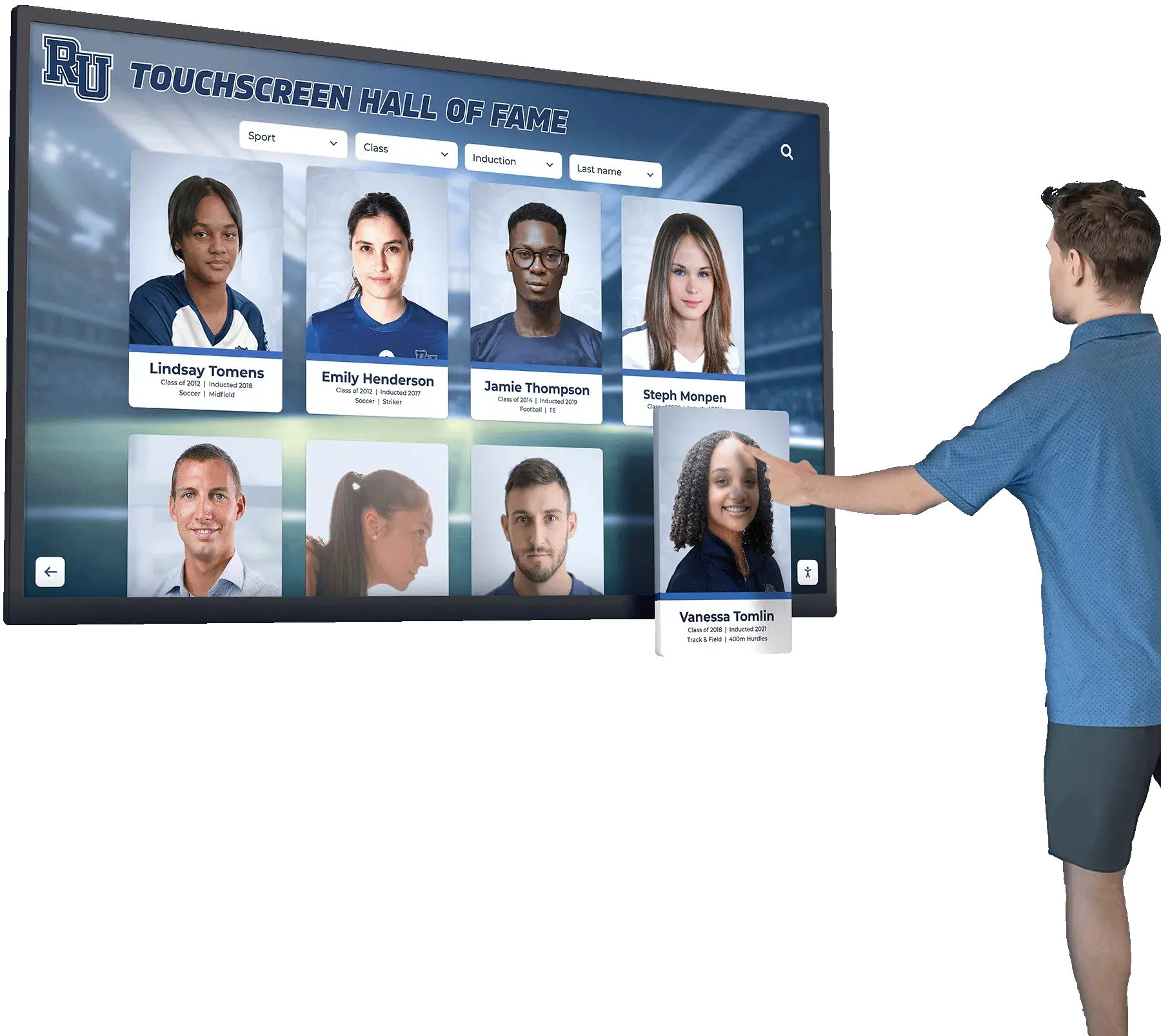
Modern touchscreen displays transform recognition from passive viewing into active exploration, allowing visitors to discover achievement stories through simple touch navigation
Cloud-Based Content Management Platform
Web-based administrative dashboards enabling authorized staff to add inductees, upload photos and videos, update biographical information, create recognition categories, and manage all displayed content from any internet-connected device without requiring technical expertise. Quality platforms feature drag-and-drop media uploads, visual editors showing real-time previews, template-based profile creation, and bulk upload capabilities for efficiently adding multiple profiles simultaneously.
Cloud-based architecture means updates made anywhere appear instantly across all displays and web platforms—eliminating complex on-site software updates or technical service calls when adding new content. Organizations implementing comprehensive digital recognition systems prioritize platforms with straightforward administrative interfaces ensuring non-technical staff can maintain current, accurate recognition.
Web-Accessible Recognition Portals
Online versions of hall of fame content providing worldwide access through smartphones, tablets, and computers. Web platforms extend recognition beyond campus boundaries, allowing alumni to explore achievements from anywhere, prospective students to research program traditions before campus visits, and community members to maintain connections with institutional heritage regardless of geographic distance.
Mobile-responsive design ensures excellent experiences across devices, while social sharing features enable alumni to share their profiles with networks—significantly multiplying recognition reach beyond visitors physically encountering campus displays.
Solutions like Rocket Alumni Solutions integrate all three components into unified platforms ensuring consistent experiences whether visitors explore achievements through campus touchscreens or personal mobile devices.
Key Benefits of Interactive Awards Displays
Educational institutions transitioning from traditional plaques to touchscreen hall of fame walls report specific benefits that justify investment and drive stakeholder satisfaction.
Unlimited Recognition Capacity
The most immediate advantage addresses the constraint that prompts most digital transitions: space limitations. Physical trophy cases and walls impose hard limits—when full, recognition stops or costly renovations become necessary. Digital systems eliminate capacity constraints entirely, supporting unlimited inductees regardless of era, recognizing achievements across multiple sports and categories simultaneously, preserving every accomplishment without physical limitations, and continuously growing collections without renovation costs or display modifications.
Schools implementing digital recognition commonly report celebrating 3-5x more individuals compared to space-constrained physical displays. This expanded capacity fundamentally changes recognition philosophy—instead of selective halls of fame reserved for rare exceptional achievements, institutions celebrate broader accomplishments including all-conference athletes, academic honor students, notable alumni across diverse fields, and community contributors who would never qualify for limited physical space.
Organizations implementing academic recognition programs alongside athletic honors benefit from platforms supporting diverse achievement types without competing for the same limited physical display space.
Rich Multimedia Storytelling
Traditional plaques display names, dates, and minimal text—rarely sufficient for meaningful context or emotional connection. Touchscreen systems enable comprehensive storytelling through multiple action photos showing athletes competing or students achieving, biographical narratives explaining achievements and personal journeys, video highlights and interviews providing context, detailed statistics and performance data, news articles and historical documents, and connections to related achievements or team pages.
This multimedia capability creates emotional resonance impossible with static engravings. Visitors don’t just read that someone scored 1,000 career points—they watch highlight reels, learn about the athlete’s background, see complete statistics, and understand the achievement’s significance within program history.
Schools implementing interactive storytelling for athletic programs report dramatically higher engagement and longer session durations compared to traditional static displays.
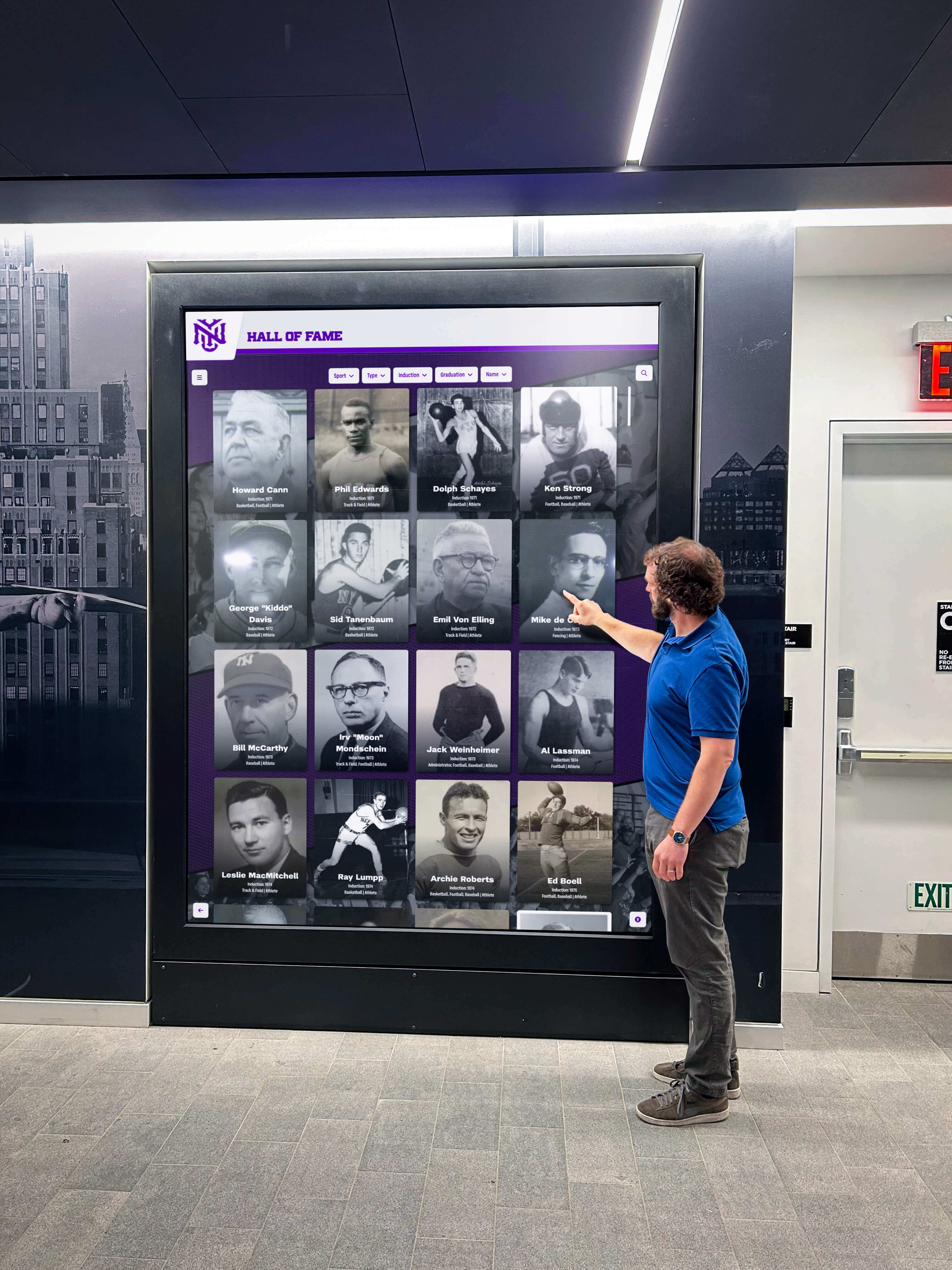
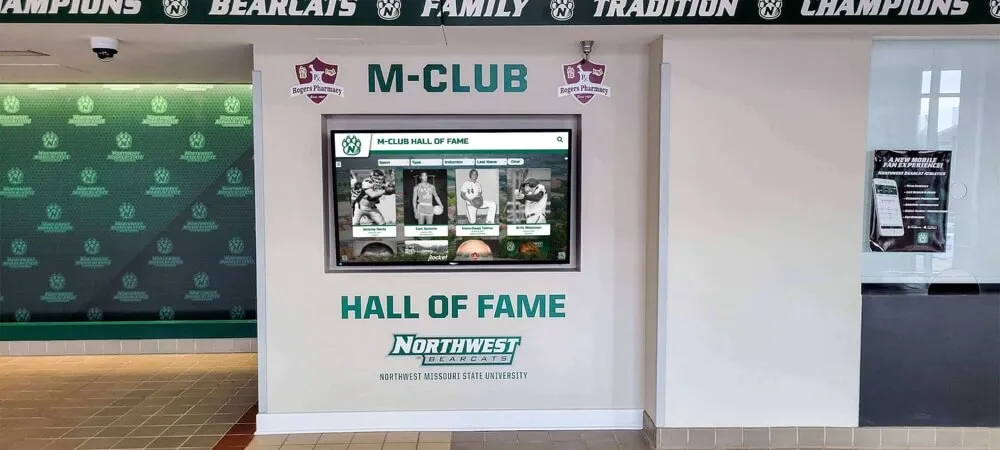
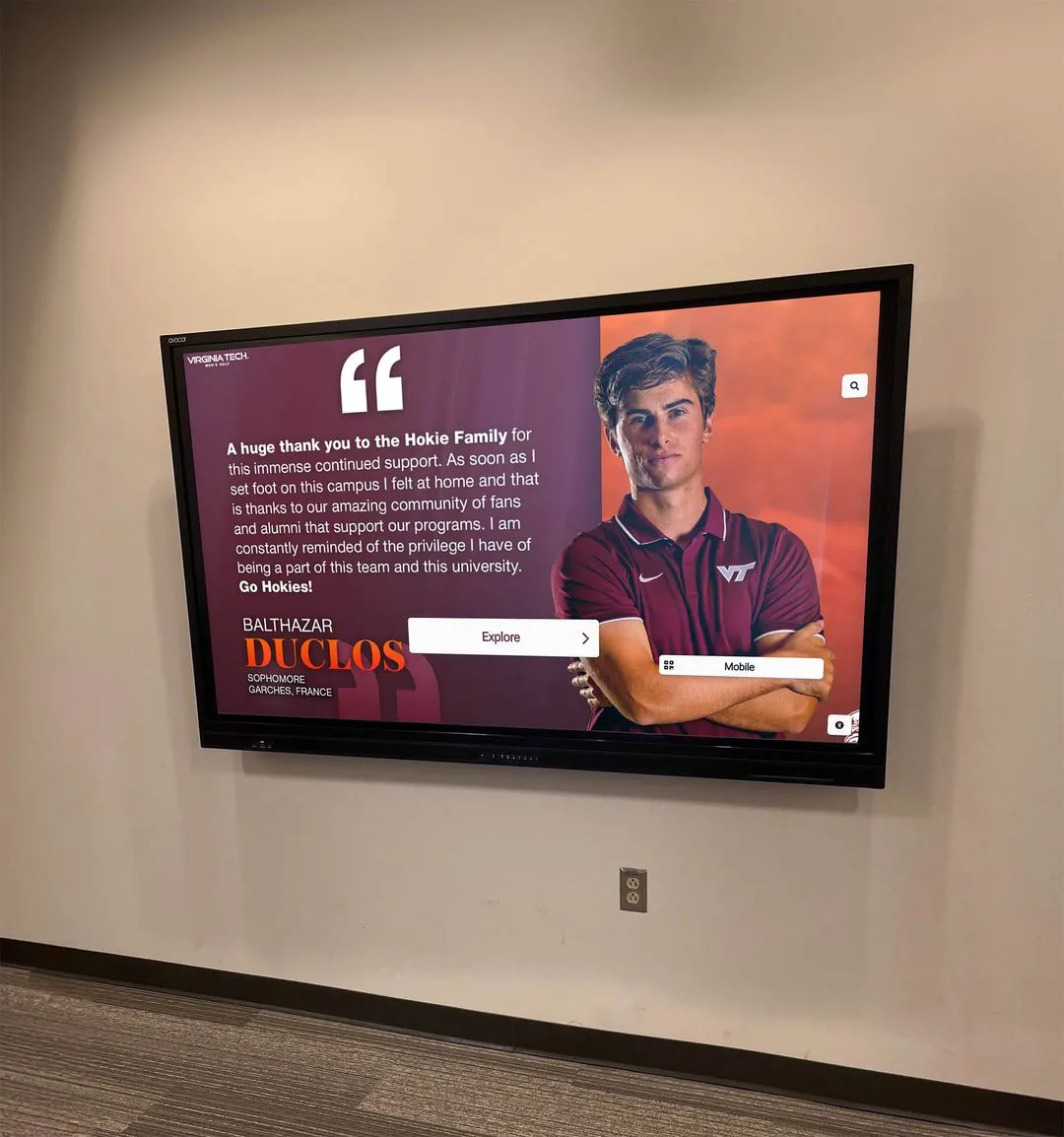
Interactive exploration encourages visitors to discover full achievement stories rather than reading basic information on static plaques
Instant Updates and Current Content
Physical recognition requires weeks of lead time: ordering engraved plaques, scheduling installation, or coordinating with trophy manufacturers. By the time physical recognition appears, celebration moments have passed and achievements feel historical rather than immediate. Digital platforms enable real-time recognition through instant profile publishing when achievements occur, immediate corrections if errors appear, ongoing updates as alumni careers progress, seasonal content highlighting relevant achievements, and responsive updates addressing stakeholder feedback.
This immediacy maintains recognition relevance and celebrates achievements while excitement remains high—particularly important for engaging current students who expect immediate digital experiences rather than waiting weeks for physical plaques.
Organizations implementing end-of-semester honor roll displays benefit from instant publication capabilities ensuring recognition appears immediately after grade finalization rather than weeks later.
Enhanced Accessibility and Reach
Physical displays serve only visitors physically present in specific locations. Digital systems multiply accessibility through web platforms enabling worldwide exploration, mobile optimization allowing smartphone access anywhere, searchable databases helping visitors find specific individuals instantly, social sharing features enabling profile distribution across networks, and QR codes on printed materials directing people to digital profiles.
This expanded reach particularly strengthens alumni engagement by making institutional heritage available whenever nostalgia strikes—not just during infrequent campus visits. Schools report that web-accessible hall of fame platforms generate alumni sessions averaging 8-12 minutes as users search for themselves, browse classmates, and explore achievements across different eras.
Professional Branding and Modern Presentation
Physical displays accumulated over decades often appear dated and inconsistent—different plaque styles, varying materials, and irregular layouts creating fragmented impressions. Digital platforms ensure consistent branding across all recognition with unified design templates incorporating institutional colors and logos, professional layouts making all content appear polished, modern interfaces demonstrating institutional investment, customizable themes maintaining visual coherence, and flexible designs adapting to different achievement types while maintaining consistency.
This professional presentation matters particularly during admissions tours, athletic recruiting visits, and donor cultivation events when institutional image significantly influences perceptions and decisions.
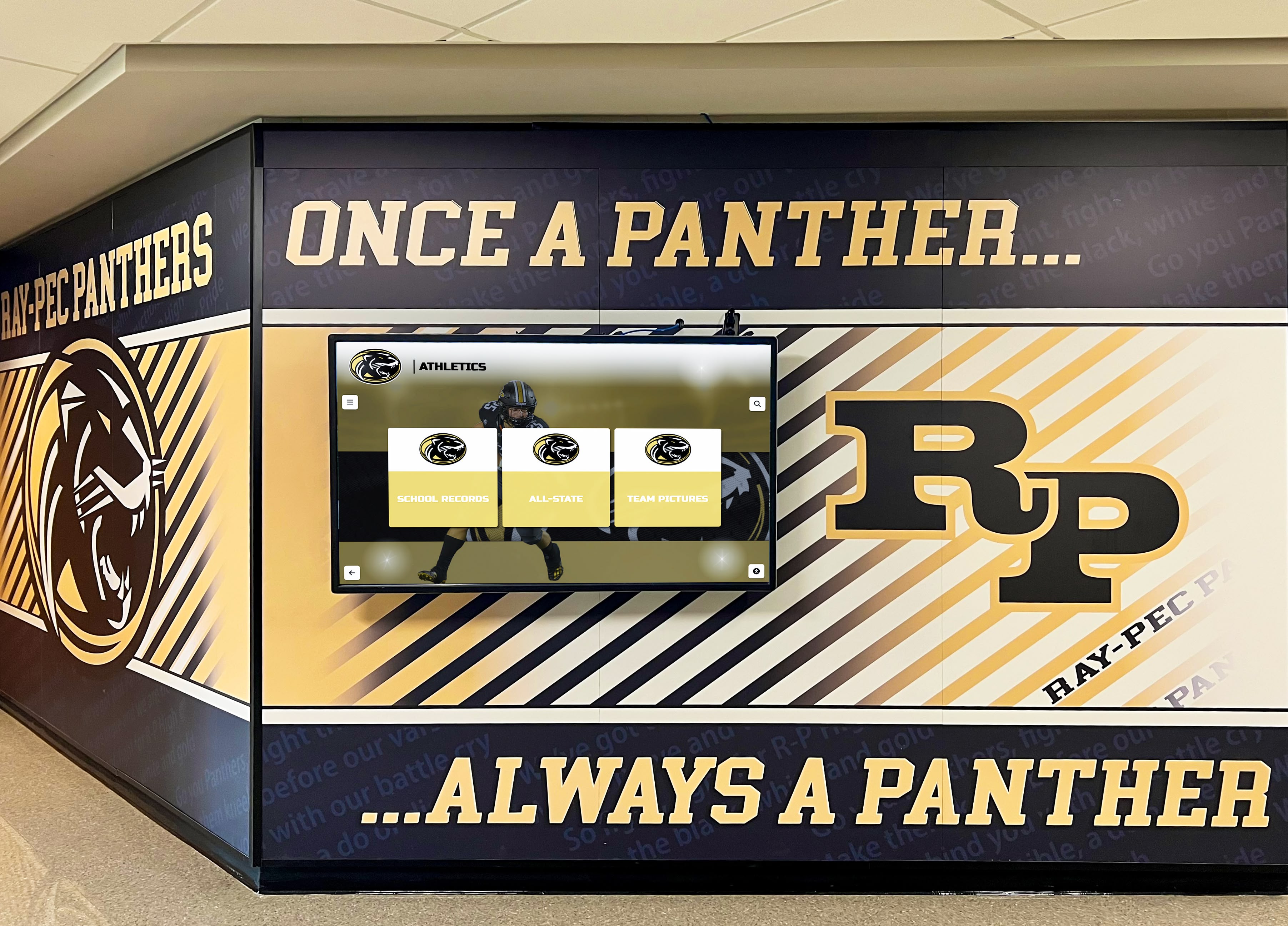
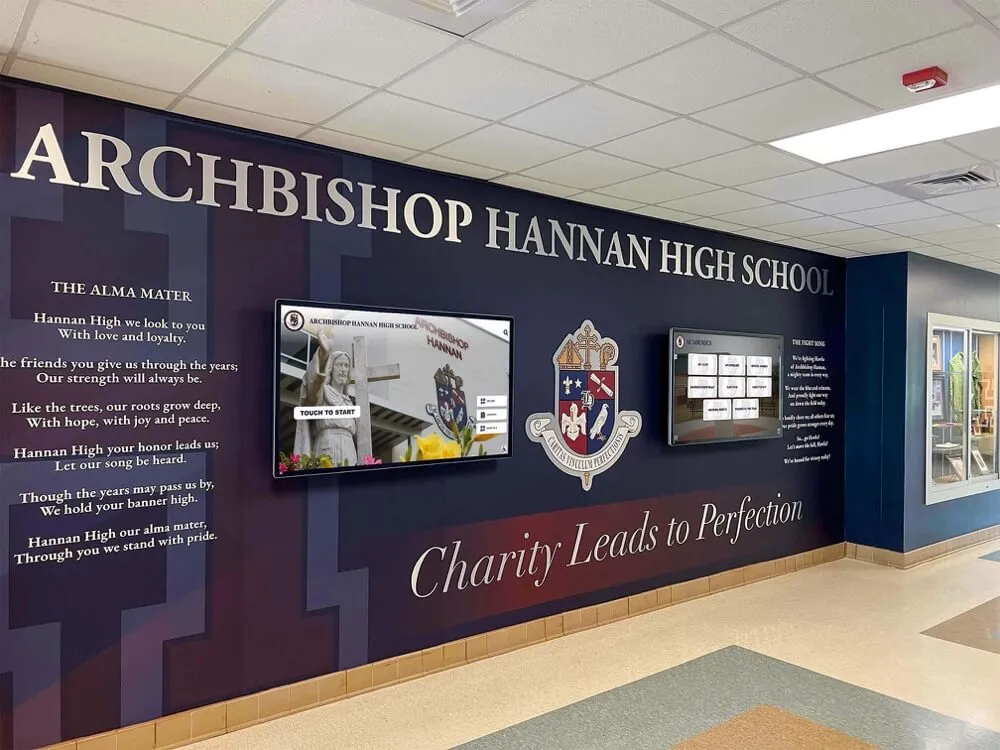
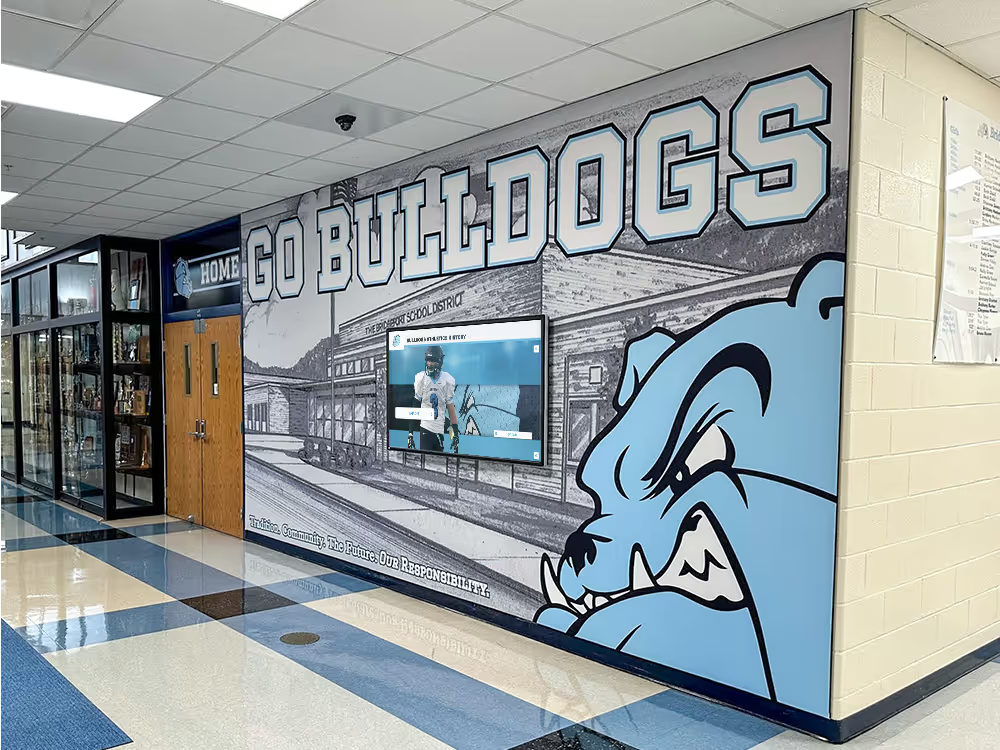
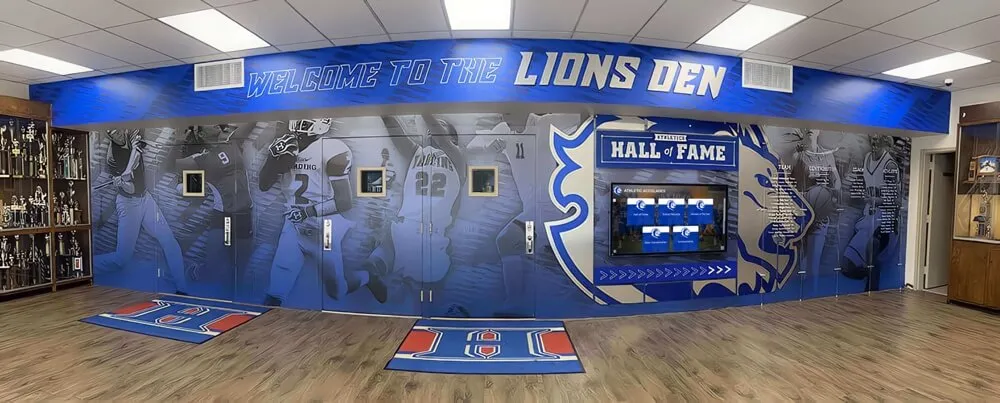
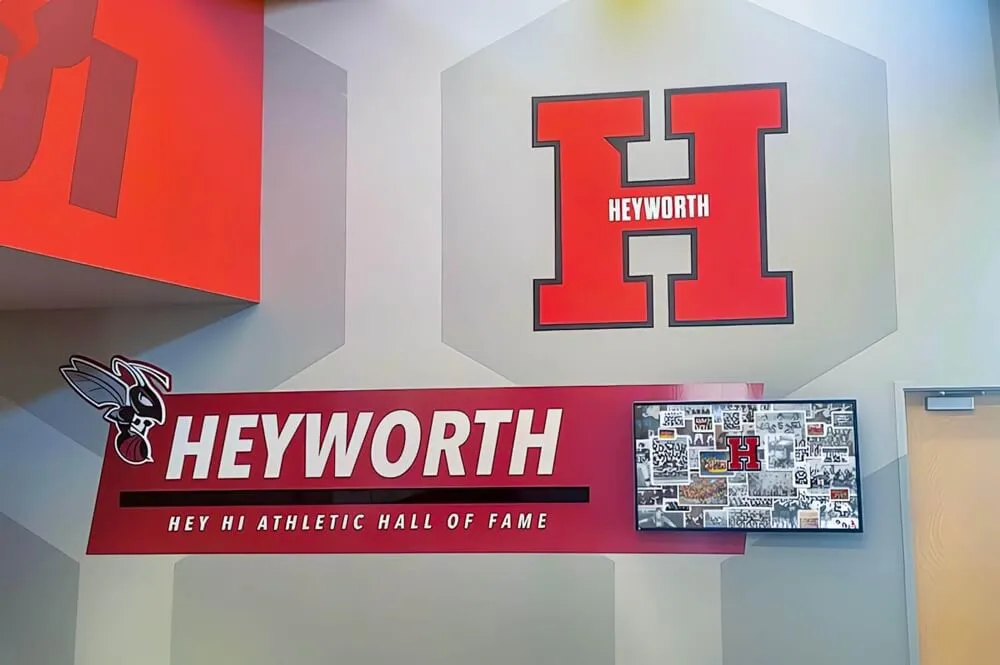
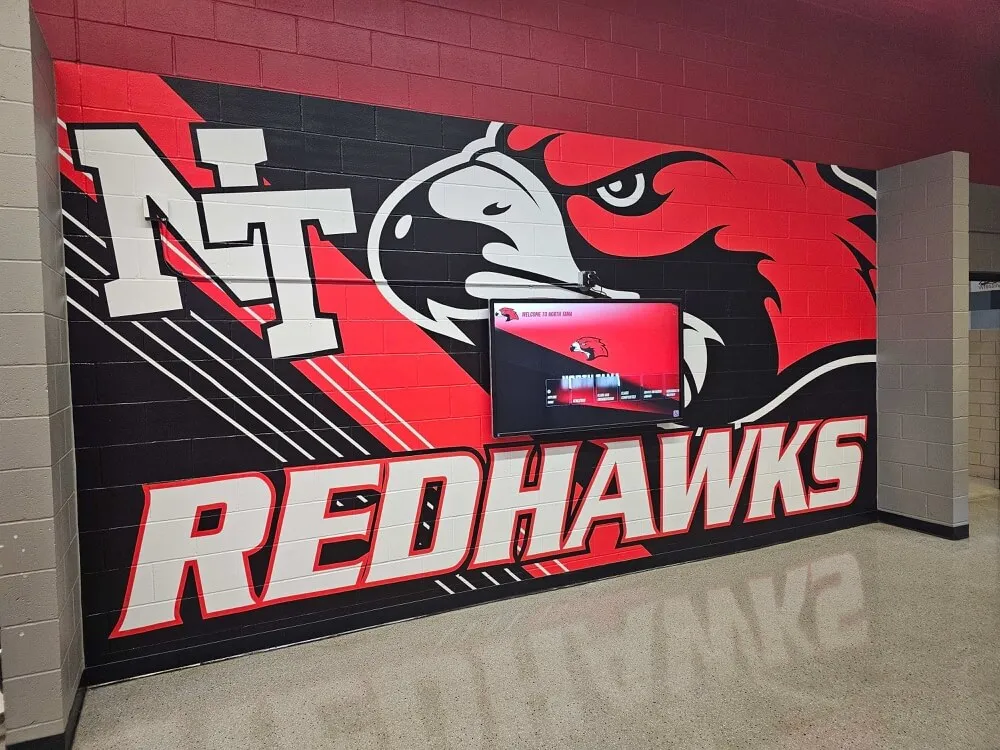
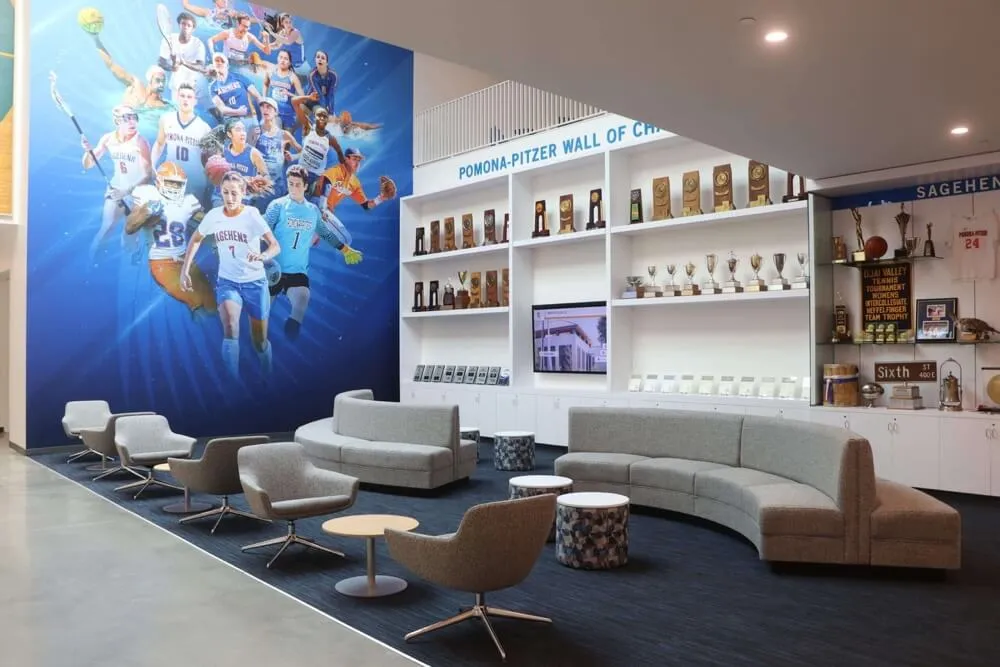
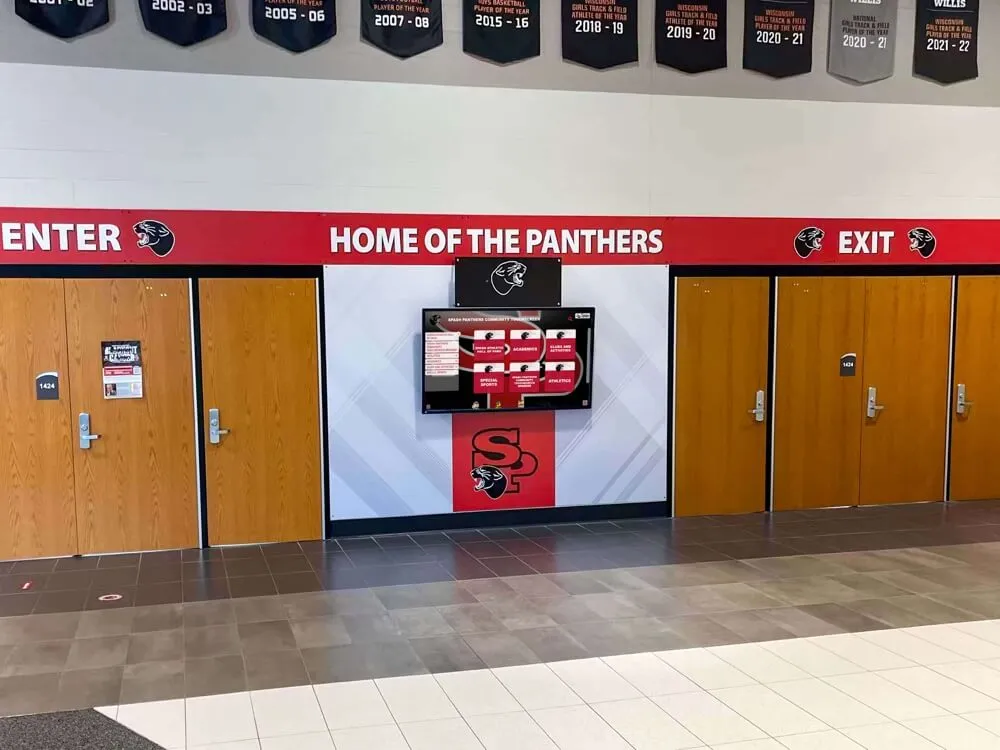
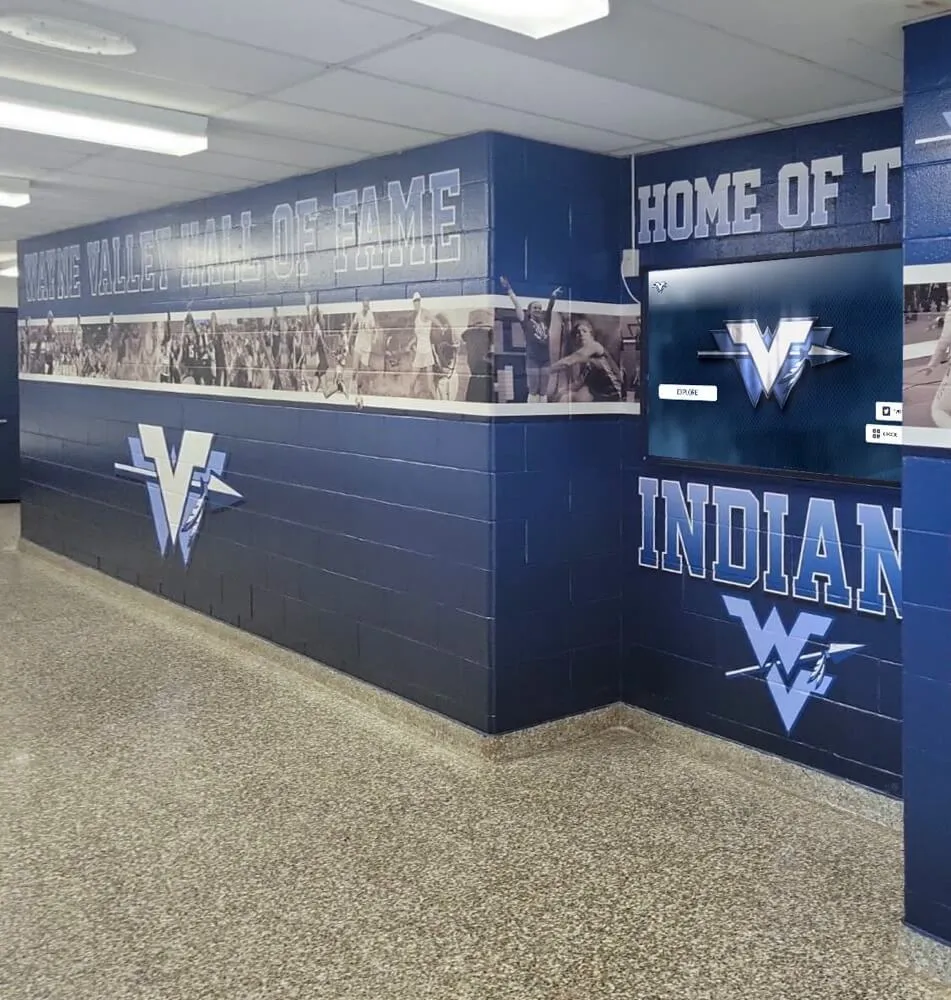
Digital displays integrate seamlessly with school branding and murals, creating cohesive recognition experiences that reinforce institutional identity
Analytics and Engagement Insights
Traditional displays provide no information about visitor engagement or popular content. Digital platforms generate valuable analytics showing most-viewed profiles and achievement categories, peak usage times and seasonal engagement patterns, search terms revealing what visitors seek, geographic distribution of web platform access, average session duration and interaction depth, and demographic information when integrated with authentication systems.
These insights inform content strategy, identify recognition gaps, demonstrate ROI to stakeholders, guide future recognition investments, and help institutions understand how different constituencies engage with heritage.
Organizations implementing comprehensive digital archives use engagement data to prioritize which historical periods or achievement types warrant additional content development investment.
Essential Features of Quality Hall of Fame Systems
Evaluating touchscreen hall of fame platforms requires assessing specific features that determine long-term satisfaction, ongoing usability, and stakeholder engagement.
Simple Content Management Interface
Content management ease determines whether staff will maintain active, current recognition or whether systems stagnate with outdated information. Quality platforms provide visual WYSIWYG editors showing real-time layout previews, drag-and-drop media uploads requiring no technical knowledge, template-based profile creation with guided workflows, bulk upload capabilities for efficiently adding multiple inductees, revision history tracking changes and enabling rollback, and multi-user support with role-based permissions.
During provider evaluation, actually create test profiles using administrative interfaces. If the process feels complicated or requires technical expertise, staff won’t maintain content consistently after implementation—resulting in systems that become digital museums rather than living recognition platforms.
Flexible Category and Customization Options
Educational institutions need diverse recognition types beyond traditional athletic halls of fame. Quality systems support unlimited custom categories with independent designs, flexible profile templates accommodating different information requirements, customizable data fields capturing category-specific information, configurable navigation structures helping visitors explore different recognition types, and template inheritance simplifying consistent category creation.
Schools implementing recognition across academics, athletics, alumni achievement, and institutional history need platforms that accommodate diverse content types without forcing everything into identical formats.
Comprehensive Media Support and Storage
Effective storytelling requires combining multiple media types. Evaluate platforms on unlimited photo galleries per profile, built-in video hosting and streaming (not requiring YouTube or Vimeo), PDF document embedding for news articles and programs, audio integration for oral histories and interviews, 360-degree photo support for engaging experiences, and sufficient storage capacity (ideally unlimited or measured in terabytes rather than gigabytes).
Consider whether storage is included in subscriptions or requires separate cloud services adding complexity and cost. Quality solutions include comprehensive media hosting eliminating dependencies on external platforms that may change policies, pricing, or availability.
Organizations creating comprehensive historical timelines across institutional history benefit from unlimited media capacity supporting extensive visual documentation.
Advanced Search and Discovery Features
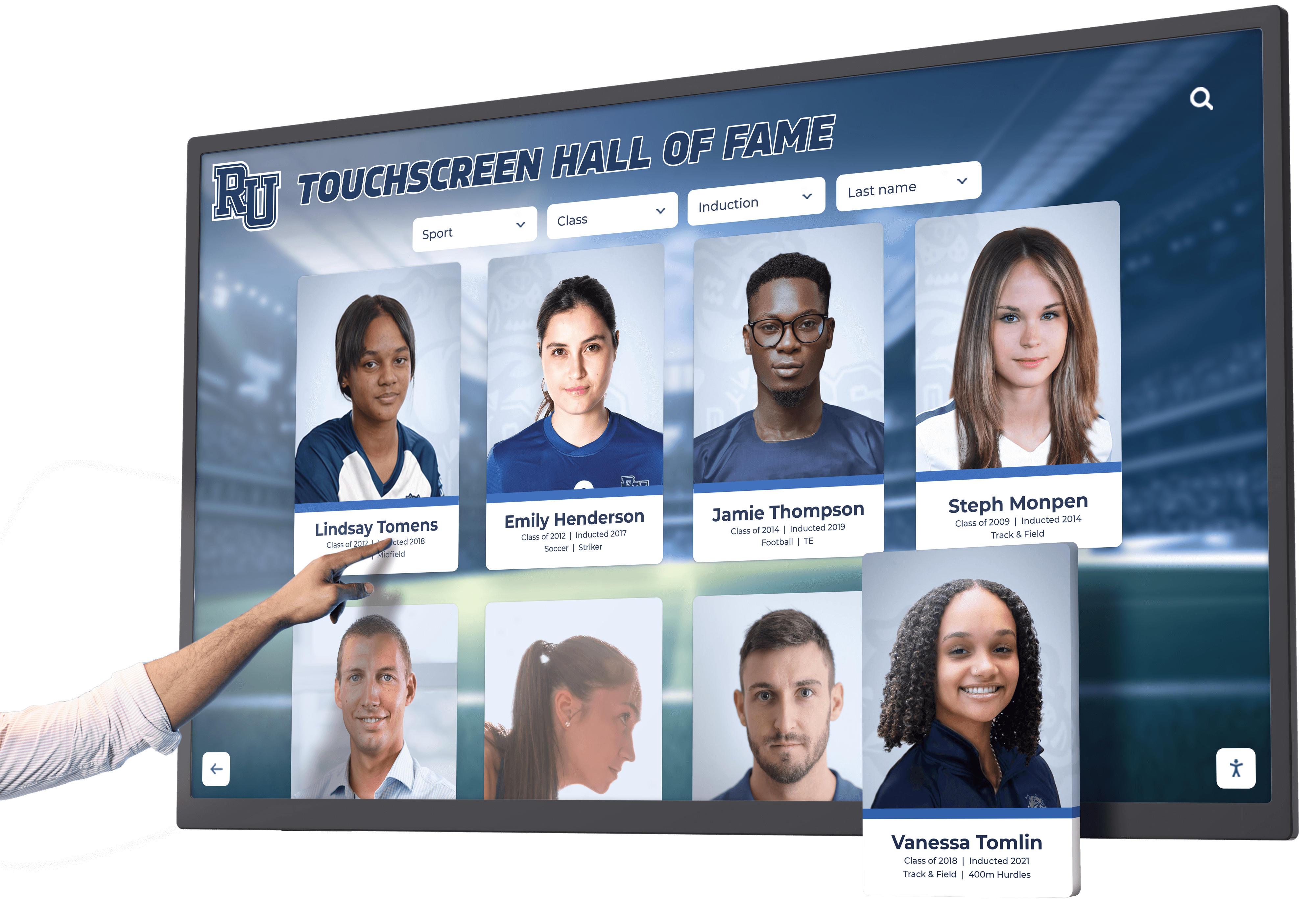
Visitors approach hall of fame systems with diverse goals: finding themselves, searching for classmates, exploring specific sports or eras, or browsing achievements chronologically. Support these varied needs through full-text search across all profile content, multi-criteria filtering by sport, year, achievement type, or custom attributes, alphabetical browsing for systematic exploration, chronological timeline views showing historical progression, featured content rotation highlighting diverse achievements, and smart related content suggestions connecting similar individuals.
Poor search functionality frustrates users and limits engagement. The difference between finding yourself in three seconds versus three minutes dramatically impacts satisfaction and likelihood of sharing experiences with others.
Mobile-Responsive Web Platform
Most web traffic now comes from smartphones, making mobile experience critical for alumni engagement. Quality platforms provide responsive layouts adapting to any screen size, touch-optimized interfaces for smartphone navigation, fast loading on cellular networks, mobile-friendly search and filtering, vertical scrolling optimized for phone screens, and social sharing functionality integrated with major platforms.
Test web platforms extensively on multiple devices during evaluation. If navigation feels awkward or content displays poorly on smartphones, alumni engagement will suffer regardless of excellent campus touchscreen experiences.
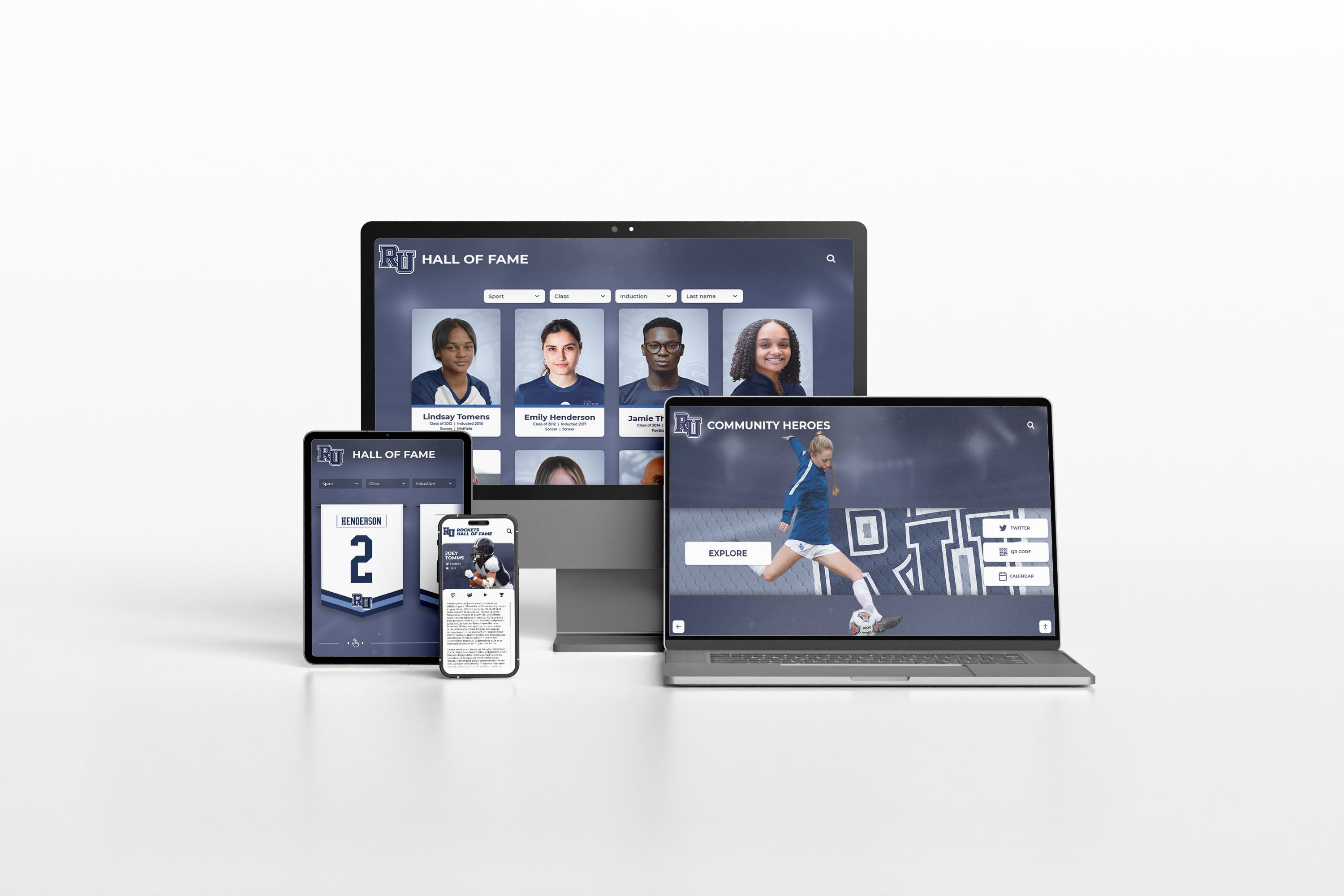
Responsive design ensures excellent experiences across all devices, enabling alumni to explore achievements anywhere through smartphones, tablets, or desktop computers
Hardware Flexibility and Compatibility
Some providers mandate specific proprietary hardware creating vendor lock-in and limiting upgrade options. Others support flexible hardware choices enabling using existing displays, purchasing from preferred vendors, or upgrading hardware independently of software. Evaluate whether platforms work with standard commercial displays or require specialized equipment, support various screen sizes and orientations (portrait and landscape), accommodate both touchscreen and non-touch displays, allow hardware upgrades without software licensing changes, and provide clear hardware specifications and compatibility lists.
Hardware flexibility becomes particularly valuable as display technology evolves—institutions shouldn’t need to replace entire systems because discontinued display models no longer work with proprietary software.
Analytics and Reporting Capabilities
Understanding engagement patterns informs content strategy and demonstrates value to stakeholders. Look for platforms tracking individual profile views and popular content, search queries revealing visitor interests, session duration and interaction depth, touchscreen versus web platform usage patterns, geographic access data for web visitors, device types and browser usage, time-of-day and seasonal engagement patterns, and exportable reports for presentations and decision-making.
Schools implementing digital recognition for state championship achievements use analytics to understand which sports and eras generate highest engagement, informing which historical achievements warrant additional content development.
Integration Capabilities
Digital hall of fame systems shouldn’t exist in isolation. Consider how platforms integrate with school websites and navigation, social media for automated sharing and promotion, student information systems for achievement data, digital signage networks campus-wide, yearbook digitization projects creating comprehensive archives, and donor management systems for development teams.
Strong integration capabilities reduce redundant data entry and create seamless experiences across institutional digital ecosystems.
Planning Your Implementation
Successful touchscreen hall of fame launches require systematic planning addressing content strategy, technical requirements, stakeholder engagement, and realistic timelines.
Define Recognition Scope and Categories
Begin by determining what achievements and individuals your digital hall of fame will recognize. Most schools start with athletic recognition since sports generate abundant photos, videos, and natural engagement, then expand to academic honors, alumni achievements, and institutional history as comfort and capacity grow.
Athletic Recognition Categories
Traditional hall of fame inductees selected by formal committees, championship teams and memorable seasons, individual records and milestone achievements, all-conference and all-state selections, coaching accomplishments and tenure milestones, and retired numbers with achievement context.
Academic Recognition
Honor roll students and academic achievement, National Merit Scholars and standardized test recognition, scholarship recipients with donor connections, valedictorians and salutatorians across decades, and academic competition successes (debate, robotics, science olympiad).
Alumni and Institutional Recognition
Notable alumni career achievements across diverse fields, distinguished service awards and community impact, donor recognition connecting philanthropy to outcomes, historical milestones and institutional evolution, and faculty and staff recognition for exceptional contributions.
Organizations implementing FBLA and FFA award recognition benefit from systems supporting diverse achievement categories beyond traditional athletic halls of fame.
Develop Content Collection Strategy
Digital hall of fame systems are only as compelling as their content. Plan systematic approaches for gathering historical materials and establishing ongoing content collection processes.
Historical Content Sources
Yearbook archives providing photos and biographical context, athletic department records and championship documentation, alumni office files and career information, school newspaper archives and historical coverage, video footage from games and events, and personal collections from alumni, coaches, and long-time staff.
Ongoing Content Collection Processes
Systematic photography at athletic events and academic ceremonies, student-athlete biographical questionnaires completed during seasons, coach interviews providing achievement context and stories, alumni outreach soliciting career updates and recent photos, media relations tracking press coverage and accomplishments, and formal nomination processes for recognition categories requiring committee review.
Schools establishing content collection as routine operations rather than one-time projects ensure recognition remains current and comprehensive over time.
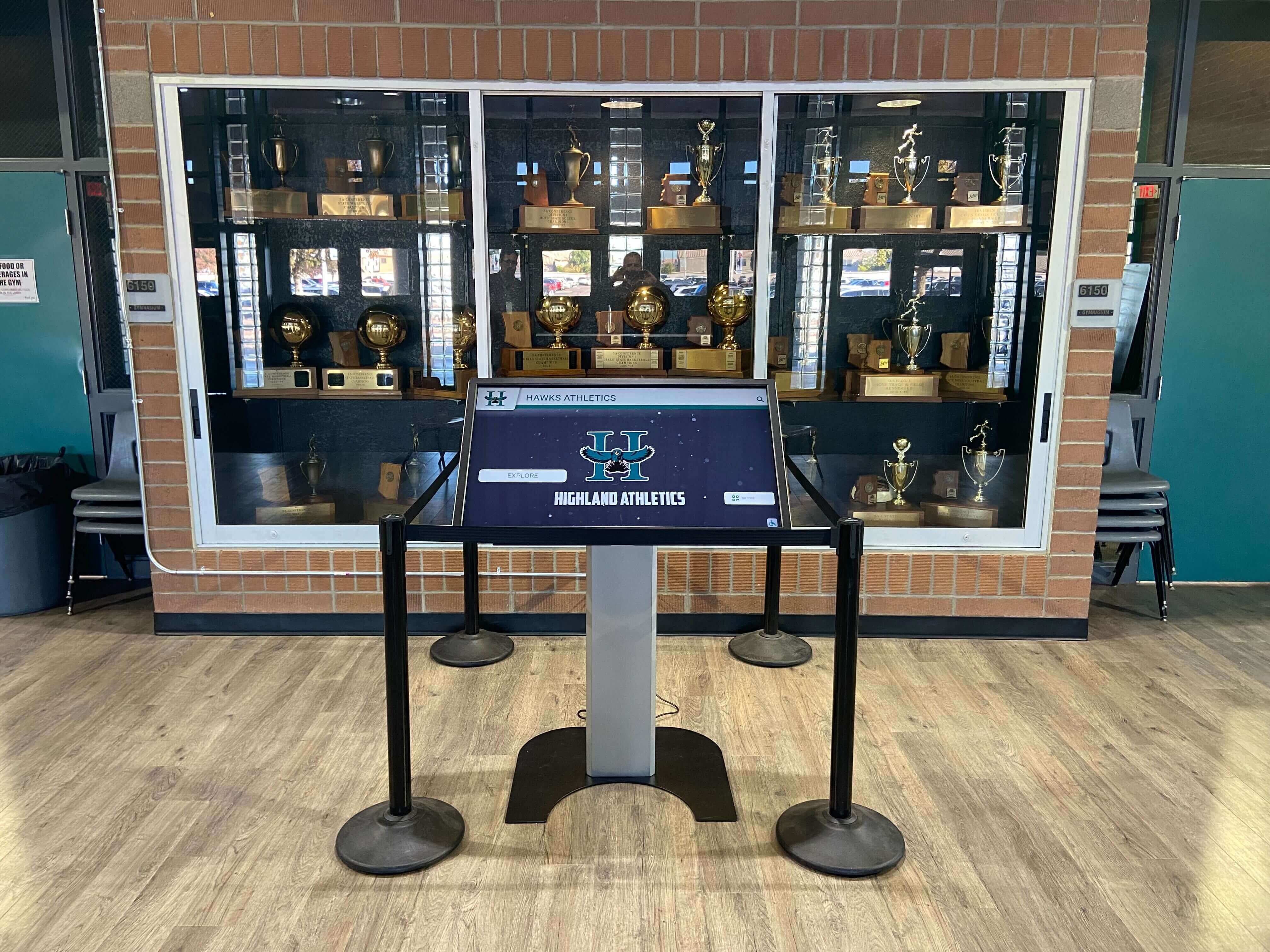
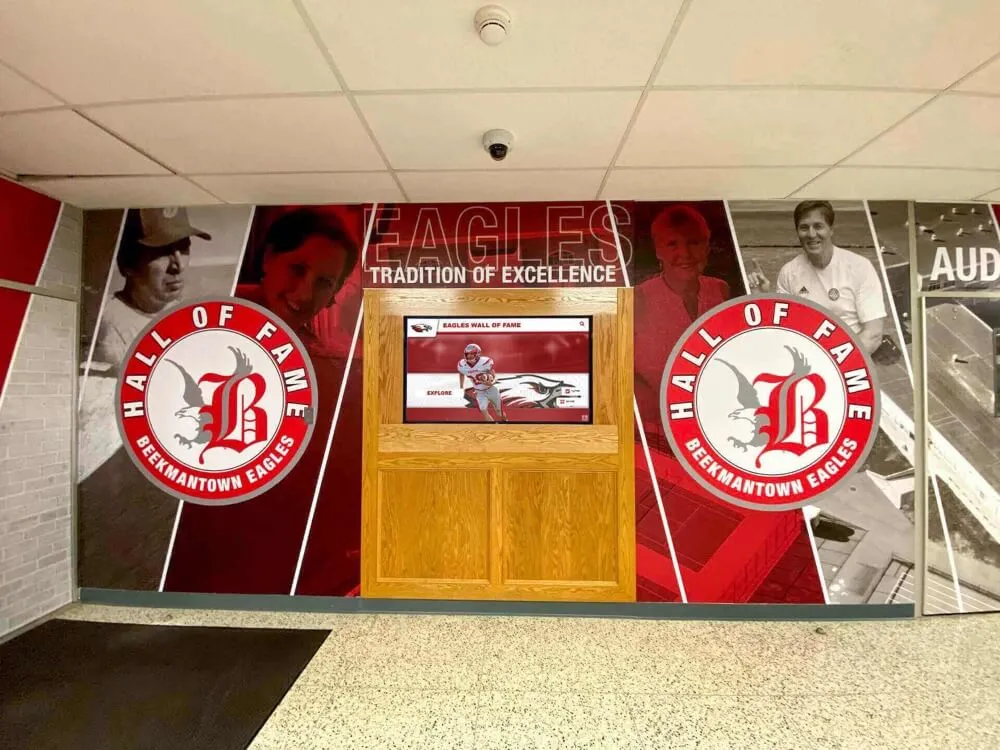
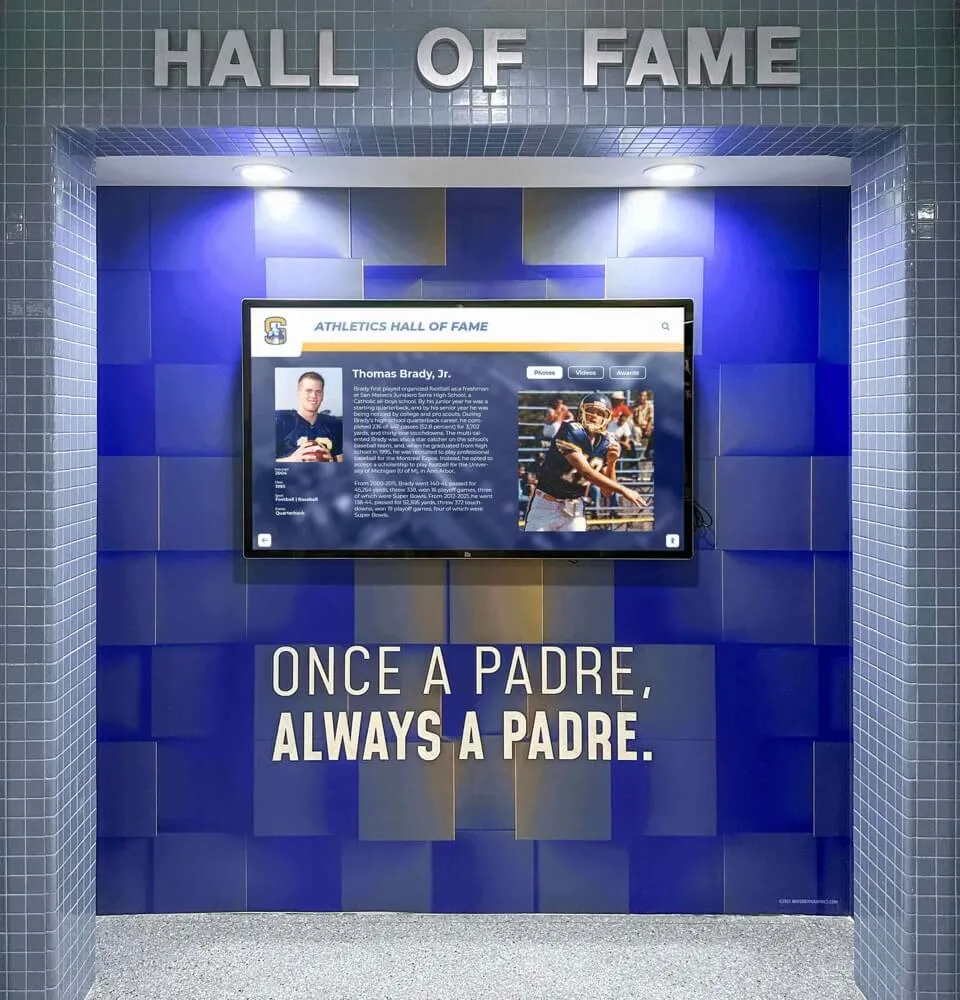
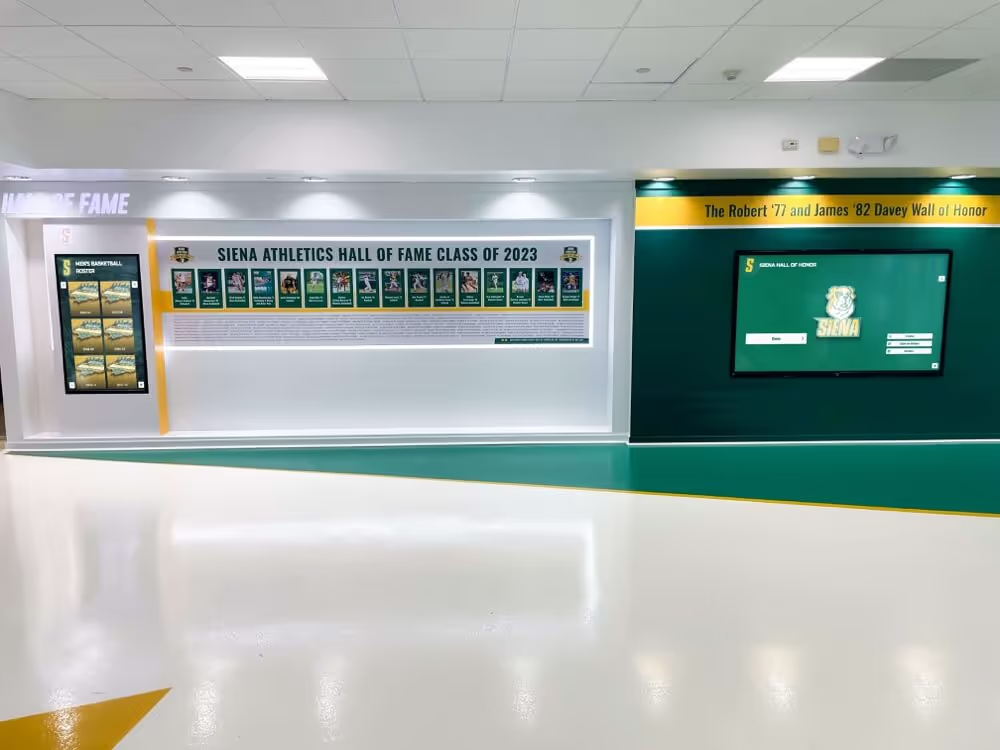
Strategic placement near existing trophy cases creates natural connections between physical artifacts and comprehensive digital recognition
Determine Budget and Explore Funding Sources
Comprehensive touchscreen hall of fame budgets include hardware costs for displays, mounting systems, and cables ($2,000-8,000 depending on size and installation), software licensing typically structured as annual subscriptions ($1,000-3,000), initial content creation requiring staff time or external services, ongoing content management allocating staff capacity, technical support and maintenance, and periodic hardware upgrades as displays age (typically 7-10 year replacement cycles).
Initial implementation investments commonly range from $8,000-15,000 for complete systems including hardware, software, installation, and setup support.
Explore diverse funding sources beyond general operating budgets:
Booster Clubs and Foundations
Athletic boosters and educational foundations often fund recognition projects as tangible ways to support programs and honor achievements. Frame digital halls of fame as permanent tributes to athletic and academic excellence that will celebrate achievements for decades.
Corporate and Local Business Sponsorships
Digital displays offer valuable sponsorship opportunities through logo placement on home screens, category sponsorships, or profile sponsorships enabling businesses to connect with school communities. Organizations implementing donor recognition programs often bundle hall of fame sponsorships with other development initiatives.
Alumni Campaigns and Reunion Classes
Anniversary reunions and milestone celebrations provide natural opportunities for recognition funding campaigns. Alumni respond positively to initiatives ensuring their achievements receive modern, accessible recognition.
Capital Campaigns and Facility Projects
Major facility renovations or capital campaigns commonly include recognition components. Digital halls of fame integrate naturally with athletic building improvements, student center renovations, or anniversary celebrations.
Assemble Implementation Team
Successful launches require diverse expertise and perspectives:
Project Lead (Athletic Director, Alumni Director, or Communications Director)—overall coordination, budget management, stakeholder communication, and timeline oversight.
Content Manager (Communications or Records Staff)—historical research, content collection and organization, profile creation, quality control, and ongoing content updates.
Technical Coordinator (IT or Facilities Staff)—hardware specification, network connectivity, installation coordination, troubleshooting, and system maintenance.
Design Advisor (Marketing or Communications)—brand consistency, template selection, photo editing, and visual quality assurance.
Alumni Engagement Representative—outreach for historical content, launch promotion, social sharing, and feedback collection.
Small schools may combine multiple roles, while larger institutions can assign dedicated staff to each responsibility.
Create Realistic Implementation Timeline
Typical implementation follows this progression:
Months 1-2: Planning and Provider Selection
Define scope and goals, evaluate providers and request demonstrations, make vendor selection and finalize contracts, assemble implementation team, and create detailed content collection plan.
Months 2-3: Content Collection and Hardware Preparation
Gather historical photos and biographical data, conduct alumni outreach for missing information, organize content by category and individual, specify and purchase hardware, and prepare installation locations for power, networking, and mounting.
Months 3-4: Content Creation and System Configuration
Create profiles and upload content using platform templates, configure branding and customize designs, establish navigation structures and categories, install and test hardware, and conduct staff training on content management.
Month 4: Testing and Launch Preparation
Comprehensive content review and quality control, test interactive features and navigation across devices, develop launch communication strategy, create promotional materials and social media content, and plan launch event or ceremony.
Month 5: Launch and Promotion
Public launch event showcasing system, alumni communication with web platform links, social media promotion and engagement campaigns, press releases and local media outreach, and initial feedback and usage data collection.
Ongoing: Maintenance and Expansion
Regular content additions for new achievements, periodic historical content additions filling gaps, analytics review and content optimization, hardware maintenance and cleaning, and category expansion as needs evolve.
Organizations implementing systems during summer breaks minimize disruptions and allow thorough testing before students and visitors return in fall.
Creating Compelling Recognition Content
Technology platforms enable recognition, but content quality determines engagement and emotional impact.
Writing Effective Biographical Profiles
Strong profiles go beyond statistics to tell achievement stories that connect emotionally with visitors.
Profile Structure
Compelling headline summarizing primary achievement, participation years or career timeframe, achievement summary paragraph providing context, detailed accomplishments and statistics (quantitative), personal background and journey (qualitative), post-graduation or career highlights, quotes from inductees, coaches, or teammates, and interesting details humanizing individuals beyond achievements.
Vary profile length based on available information—some historical figures may warrant shorter profiles due to limited records, while recent achievers allow comprehensive storytelling with abundant photos and videos.
Sourcing and Optimizing Visual Content
Visual content drives engagement more powerfully than text alone.
Photo Priorities
Action shots showing athletes competing or students engaged in activities, team photos establishing context and era, candid images capturing personality beyond formal portraits, historical photos connecting past achievements to current programs, post-career photos showing life after graduation, and consistent photo quality within profiles maintaining professional appearance.
Technical Optimization
Use minimum 1920x1080 resolution for primary photos, compress images balancing quality and file size for fast loading, standardize aspect ratios within categories creating visual consistency, edit photos for consistent brightness and contrast, and remove distracting backgrounds when appropriate.
Schools implementing recognition programs commonly discover that photo quality matters more than abundance—three excellent action shots generate more engagement than ten mediocre images.
Incorporating Video Content Strategically
Video dramatically increases session duration and emotional impact when used appropriately.
Effective Video Types
Highlight reels showing achievements in context (2-3 minutes maximum), championship game clips and pivotal moments, personal interviews and reflections from inductees, historical footage showing facility or program evolution, celebration moments capturing community joy, and coach or teammate testimonials providing perspective.
Keep videos concise—engagement drops significantly beyond 2-3 minutes. Many platforms work best with videos under 100MB file size, requiring compression without excessive quality loss.
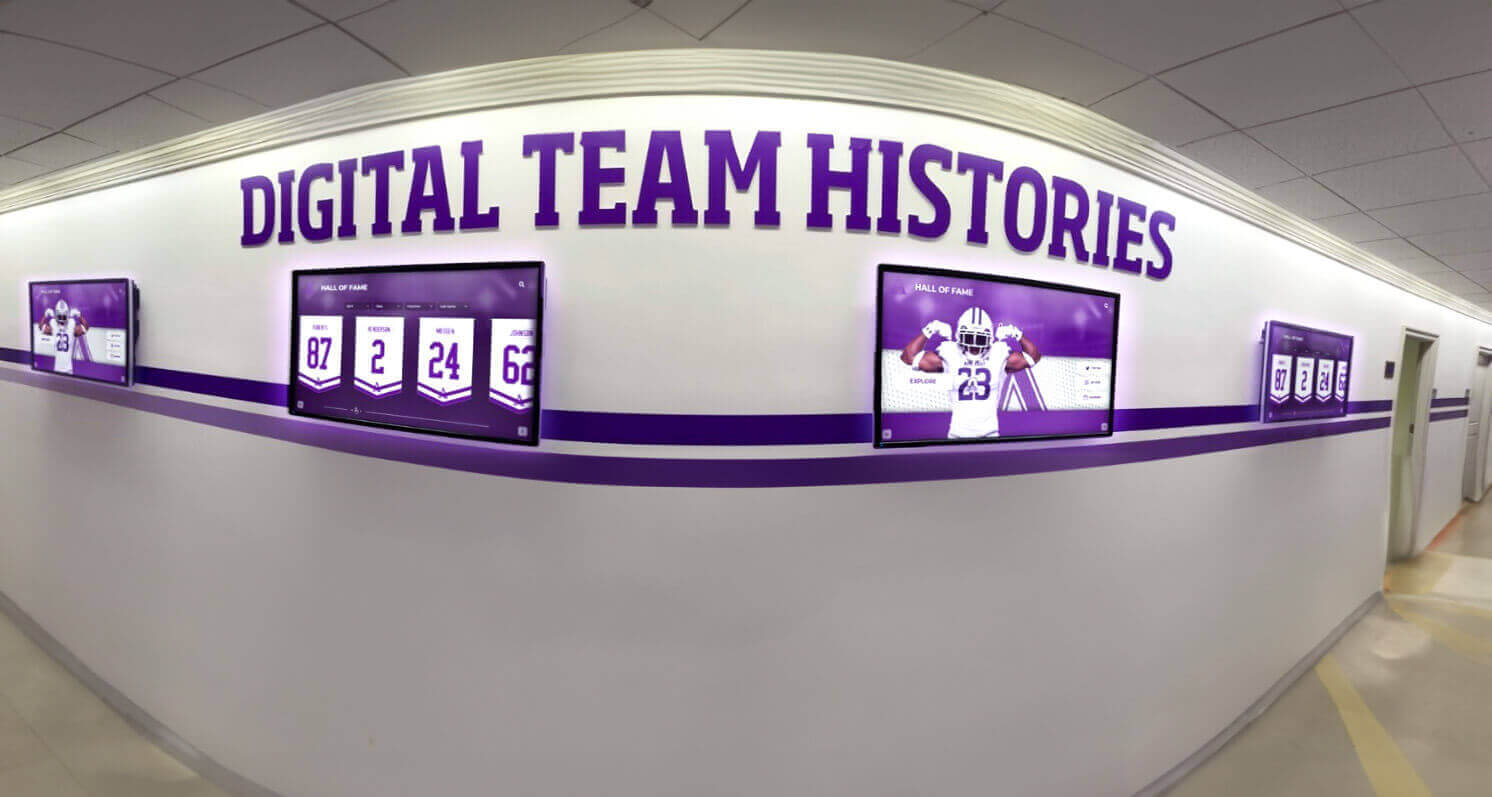
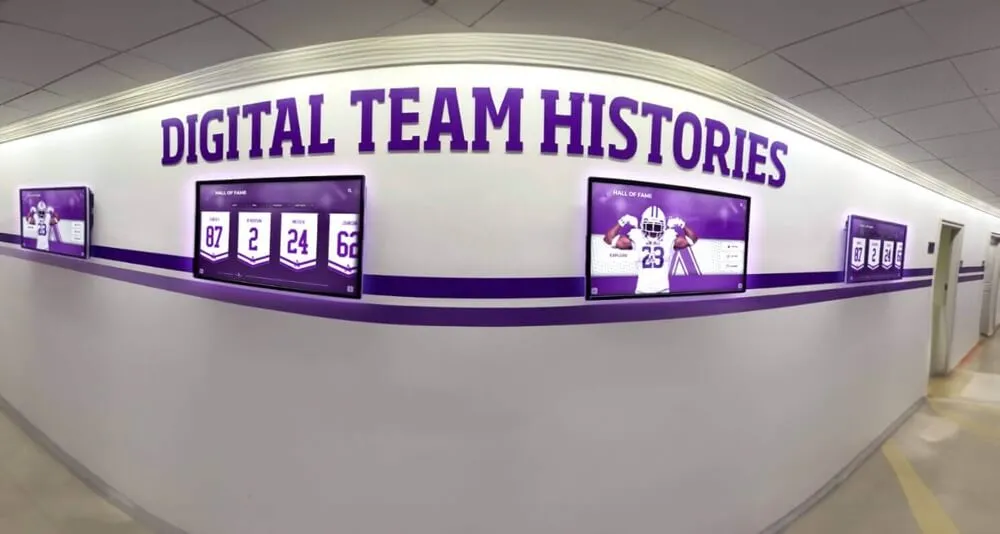
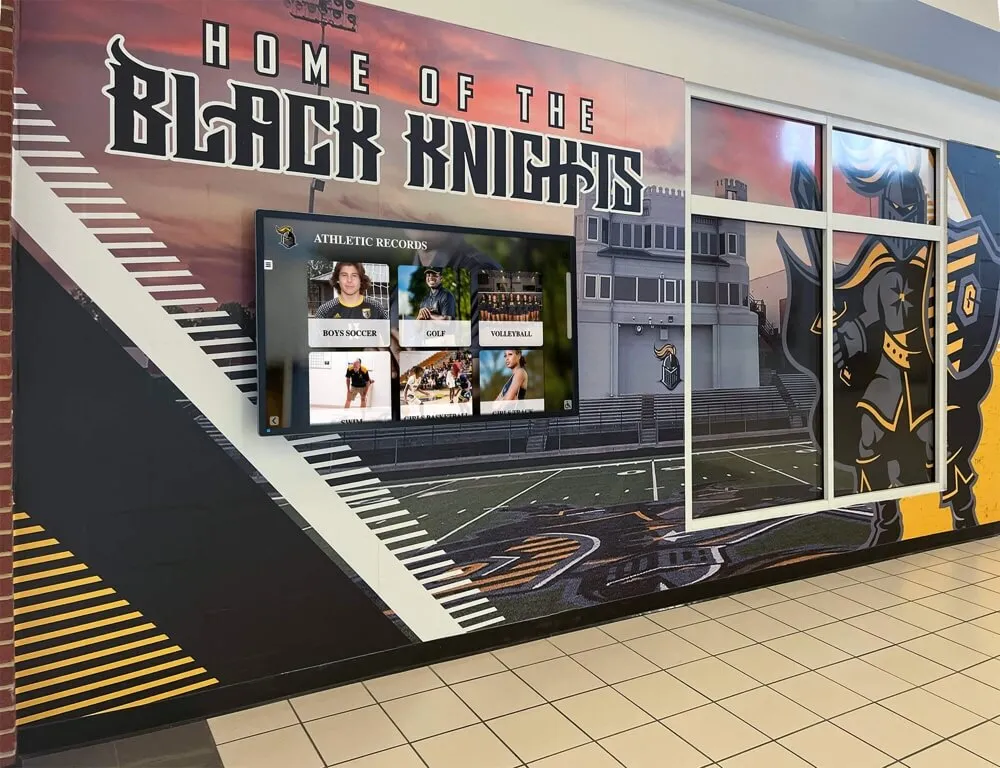
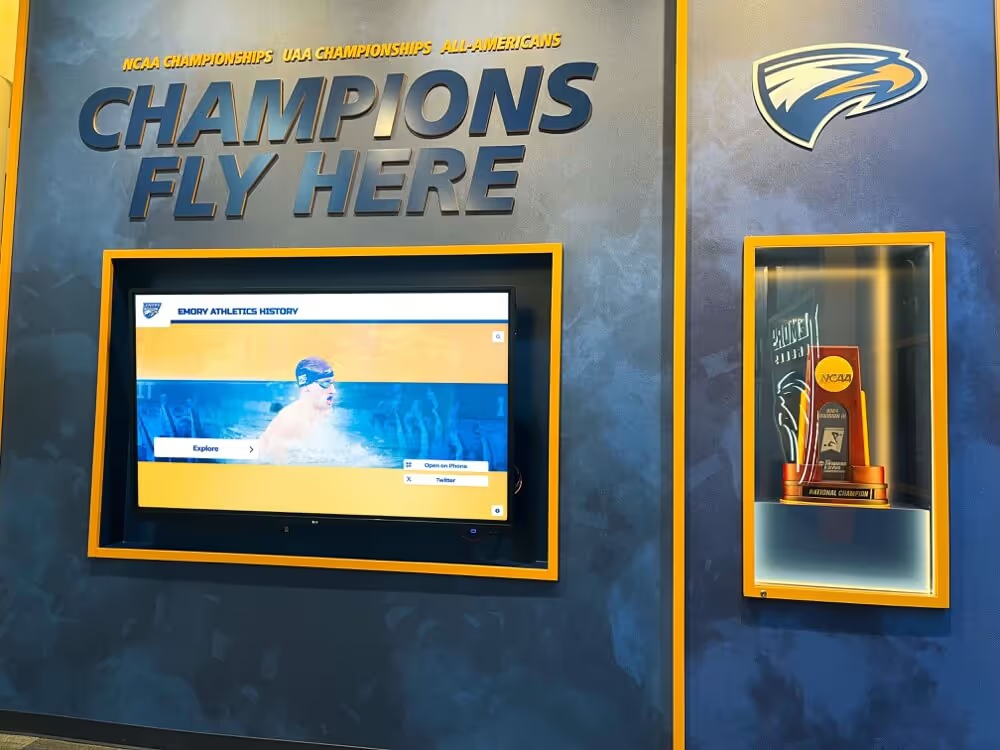
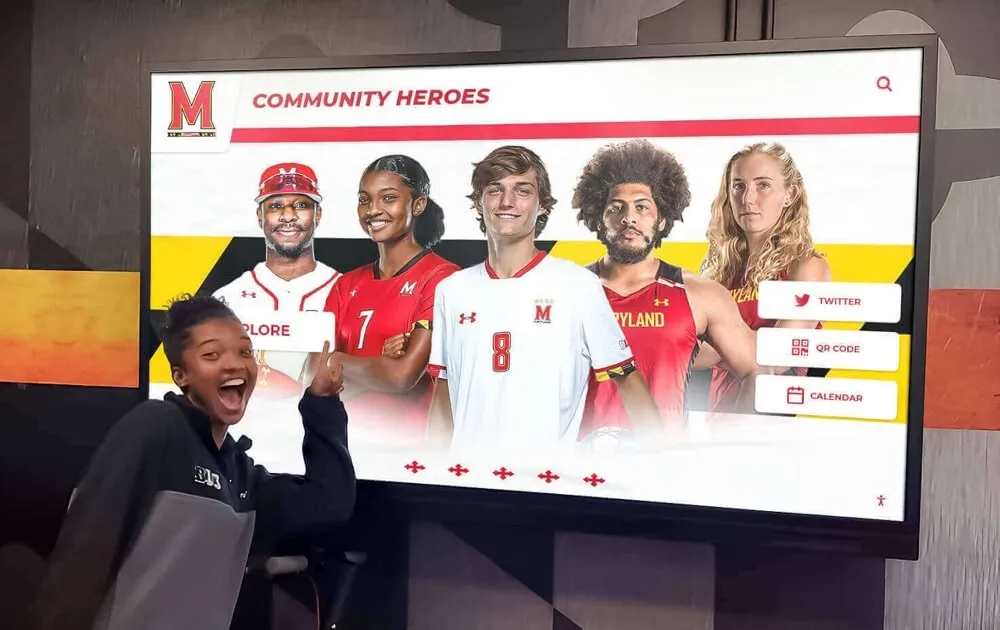
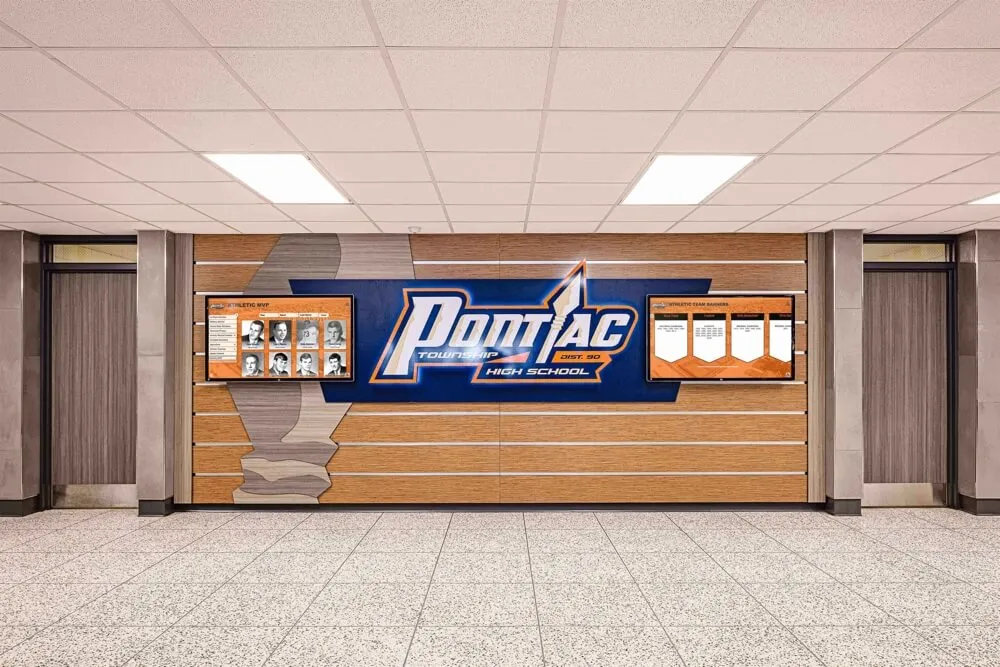
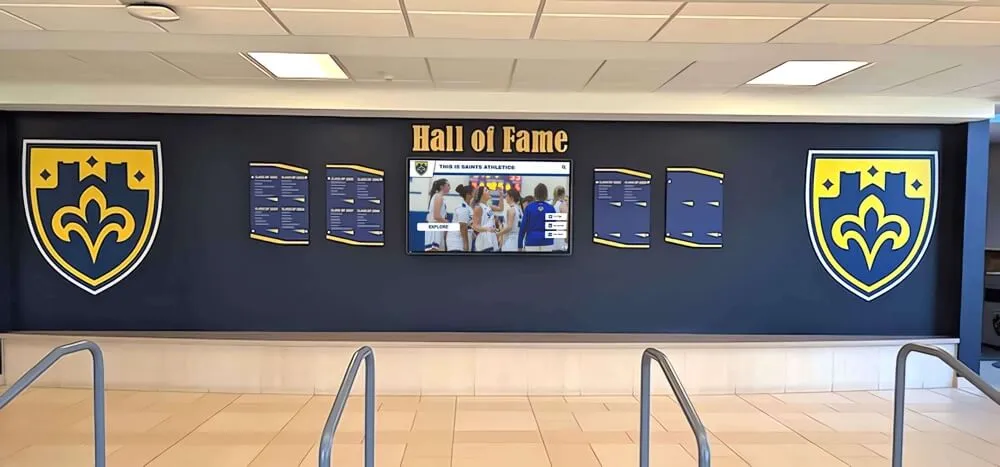
Multi-display installations enable comprehensive recognition across multiple sports and achievement categories simultaneously
Organizing Content for Easy Discovery
Navigation structure significantly impacts whether visitors find content or abandon frustrated. Provide multiple discovery paths including full-text search by name or keyword, multi-criteria filtering by sport, era, achievement type, alphabetical browsing for systematic exploration, chronological timelines showing program evolution, featured content rotation highlighting diverse achievements, and smart related content suggestions connecting similar individuals or teams.
Test navigation with users unfamiliar with the system. If people can’t find themselves or browse intuitively within 30 seconds, reorganize structures before launch.
Establishing Content Standards
Visual and editorial consistency creates professional impressions across hundreds or thousands of profiles.
Standard Elements
Photo specifications and cropping conventions, biographical profile length guidelines, capitalization and formatting rules, achievement description terminology, date and year format consistency, and procedures for handling incomplete information.
Document standards in style guides ensuring multiple content contributors maintain consistency over time—particularly important as staff transitions occur and new people assume content management responsibilities.
Measuring Success and Return on Investment
Demonstrating value justifies initial investments and supports requests for expansion or enhancements.
Key Performance Indicators
Track specific metrics showing engagement and impact:
Usage and Engagement Metrics
Touchscreen interactions per day, week, and month, web platform sessions and unique visitors, average session duration and pages viewed, search queries indicating visitor interests, most-viewed profiles and popular content categories, and geographic distribution of web visitors showing reach.
Community Impact Indicators
Alumni feedback and testimonials, social media shares and engagement, media coverage mentioning recognition, donor cultivation conversations referencing displays, prospective student feedback during admissions tours, and athletic recruiting impact during campus visits.
Operational Efficiency Measures
Time required for content updates versus previous processes, cost per addition compared to physical plaques, staff satisfaction with content management, and frequency of content updates versus previous patterns.
Financial Impact
Sponsorship revenue from digital display opportunities, alumni giving increases correlated with recognition initiatives, booster membership changes, and capital campaign contributions attributed to recognition engagement.
Organizations implementing interactive recognition technology use comprehensive metrics demonstrating value to stakeholders and justifying continued investment.
Collecting Qualitative Feedback
Systematic feedback collection provides insights complementing quantitative analytics through QR codes on displays linking to quick surveys, email campaigns to alumni asking about web platform experiences, in-person interviews during campus visits and events, social media monitoring for organic mentions and reactions, staff observations of visitor behaviors and common questions, and focus groups with students, alumni, and parents.
Document compelling stories and quotes for presentations to administrators, board reports, fundraising campaigns, and future project justifications.
Creating Executive Summary Reports
Translate data and feedback into concise reports for decision-makers:
Report Components
Implementation overview and investment summary, usage statistics with compelling visualizations, community feedback highlights and testimonials, engagement comparisons to previous recognition approaches, operational benefits and efficiency gains, sponsorship or fundraising impacts, recommendations for expansion or enhancement, and ROI analysis comparing costs to tangible benefits.
Present reports annually or at strategic milestones, maintaining visibility of recognition program value and impact with institutional leadership.
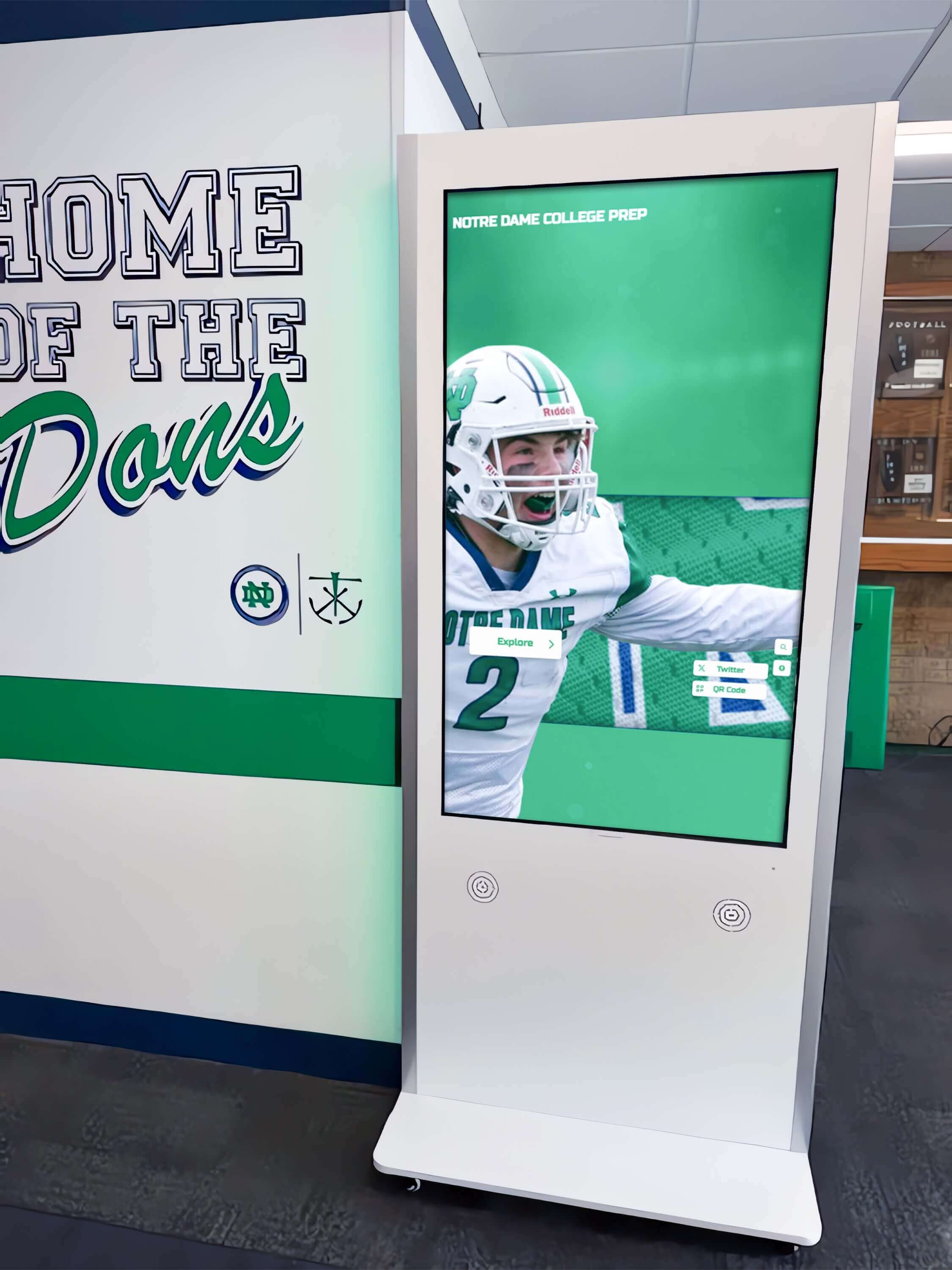
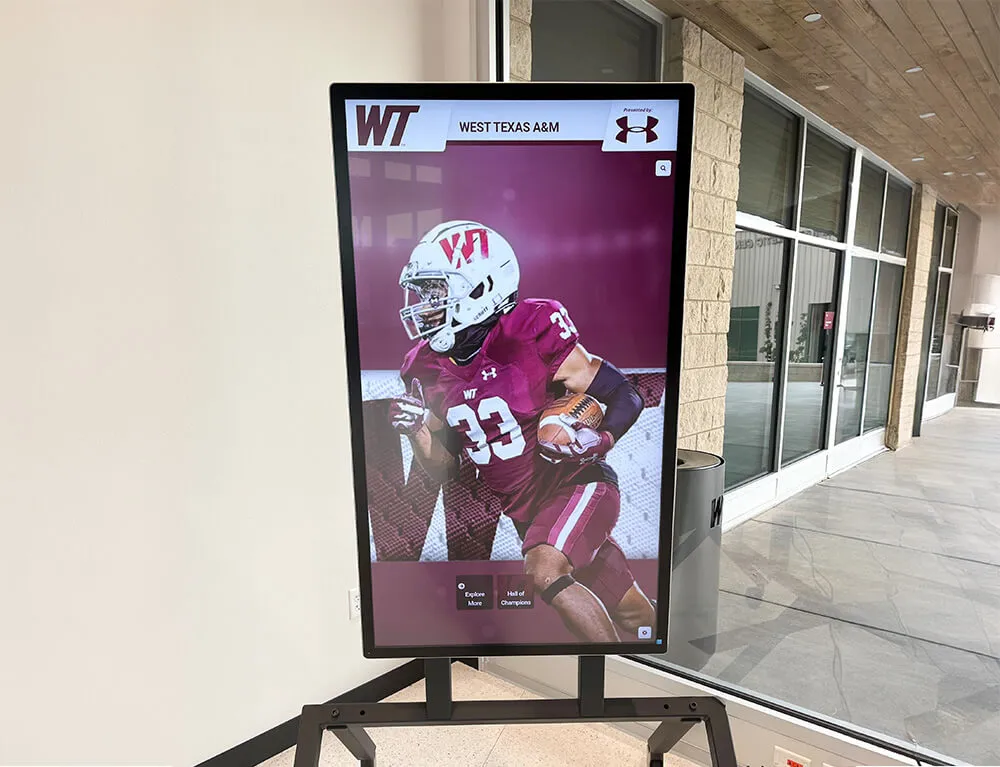
Professional kiosk installations create impressive recognition centerpieces while providing accessibility for visitors of all heights
Choosing the Right Provider
Multiple vendors offer touchscreen hall of fame solutions with varying features, pricing models, support levels, and implementation approaches.
Key Provider Evaluation Criteria
Ease of Use and Learning Curve
How quickly can non-technical staff learn content management? Does the system require extensive training or function intuitively for occasional users?
Design Quality and Flexibility
Do provided templates look modern and professional? Can you customize designs matching institutional branding, or are you locked into generic appearances? Do different recognition categories allow different layouts?
Content Capacity and Limitations
Are there limits on number of profiles, photos per profile, video length, or total storage? Do limitations require purchasing more expensive tiers as collections grow?
Hardware Requirements and Costs
Can you use existing displays or must you purchase specific hardware? Are hardware and software bundled or separate purchases? What are total implementation costs?
Pricing Structure and Long-Term Costs
One-time purchases versus annual subscriptions each offer advantages. Subscriptions often include ongoing support and updates but accumulate costs over time. One-time purchases save money long-term but may not include support or require additional fees for updates.
Support Quality and Availability
What support channels exist (phone, email, chat)? What are response times for technical issues? Is setup assistance included or extra cost?
Track Record and References
How long has the provider offered this solution? Can they provide references from similar institutions? What do reviews say about customer satisfaction?
Leading Solution Providers
Rocket Alumni Solutions
Comprehensive platform offering touchscreen displays, cloud-based content management, and web accessibility in integrated systems. Strengths include extensive customization options, robust analytics, unlimited content capacity, professional design templates, and strong technical support. Well-suited for schools prioritizing flexibility, analytics, and long-term scalability.
Specialized Recognition Vendors
Several companies focus specifically on athletic and institutional recognition, often offering all-in-one hardware packages with mounting and installation. These solutions work well for schools wanting complete implementations with less complexity, though typically with less customization flexibility.
General Digital Signage Platforms
Some schools adapt general digital signage software for hall of fame purposes. While these platforms provide basic content display capabilities, they typically lack features specific to recognition like profile templates, search functionality, and biographical organization—requiring significant customization to function as true halls of fame.
Organizations can review comprehensive comparisons of digital hall of fame providers understanding options from simple to sophisticated implementations.
Common Implementation Challenges and Solutions
Understanding typical challenges helps institutions plan appropriately and avoid preventable problems.
Challenge: Insufficient Historical Content
Many schools discover limited historical photos, biographical information, or achievement documentation when planning digital recognition.
Solutions
Start with recent achievements where content is abundant, then gradually expand historical coverage as materials surface. Conduct systematic alumni outreach campaigns soliciting photos and information. Partner with local historical societies or libraries that may have archived school materials. Accept that some historical periods will have more limited content than recent years—shorter profiles are acceptable when information genuinely isn’t available.
Challenge: Staff Capacity for Ongoing Content Management
Digital systems require ongoing attention maintaining currency and relevance—a commitment many schools underestimate during planning.
Solutions
Build content management into existing staff responsibilities rather than treating it as additional duties. Assign specific individuals clear responsibilities for different content types. Establish routine content review schedules rather than sporadic updates. Consider student assistants or yearbook staff for routine data entry and photo processing. Use alumni volunteers for historical research and content gathering.
Challenge: Hardware Installation and Technical Infrastructure
Some schools lack adequate network connectivity, power availability, or suitable mounting locations for displays.
Solutions
Conduct site surveys early in planning identifying infrastructure requirements. Budget for necessary infrastructure improvements including additional power outlets, network drops, or wall reinforcement. Consider wireless connectivity options if hardwired network drops aren’t feasible. Work with facilities staff early ensuring installation plans are practical and code-compliant.
Challenge: Stakeholder Resistance to Digital Transition
Some alumni, boosters, or staff prefer traditional plaques and resist digital alternatives.
Solutions
Frame digital as enhancement rather than replacement—physical trophies and artifacts remain while digital extends recognition beyond space constraints. Demonstrate systems through pilot implementations building support before full-scale rollout. Emphasize increased recognition capacity benefiting more people rather than replacing existing honorees. Provide data showing alumni engagement and positive feedback from other schools. Create hybrid approaches maintaining select physical displays while expanding digital recognition.
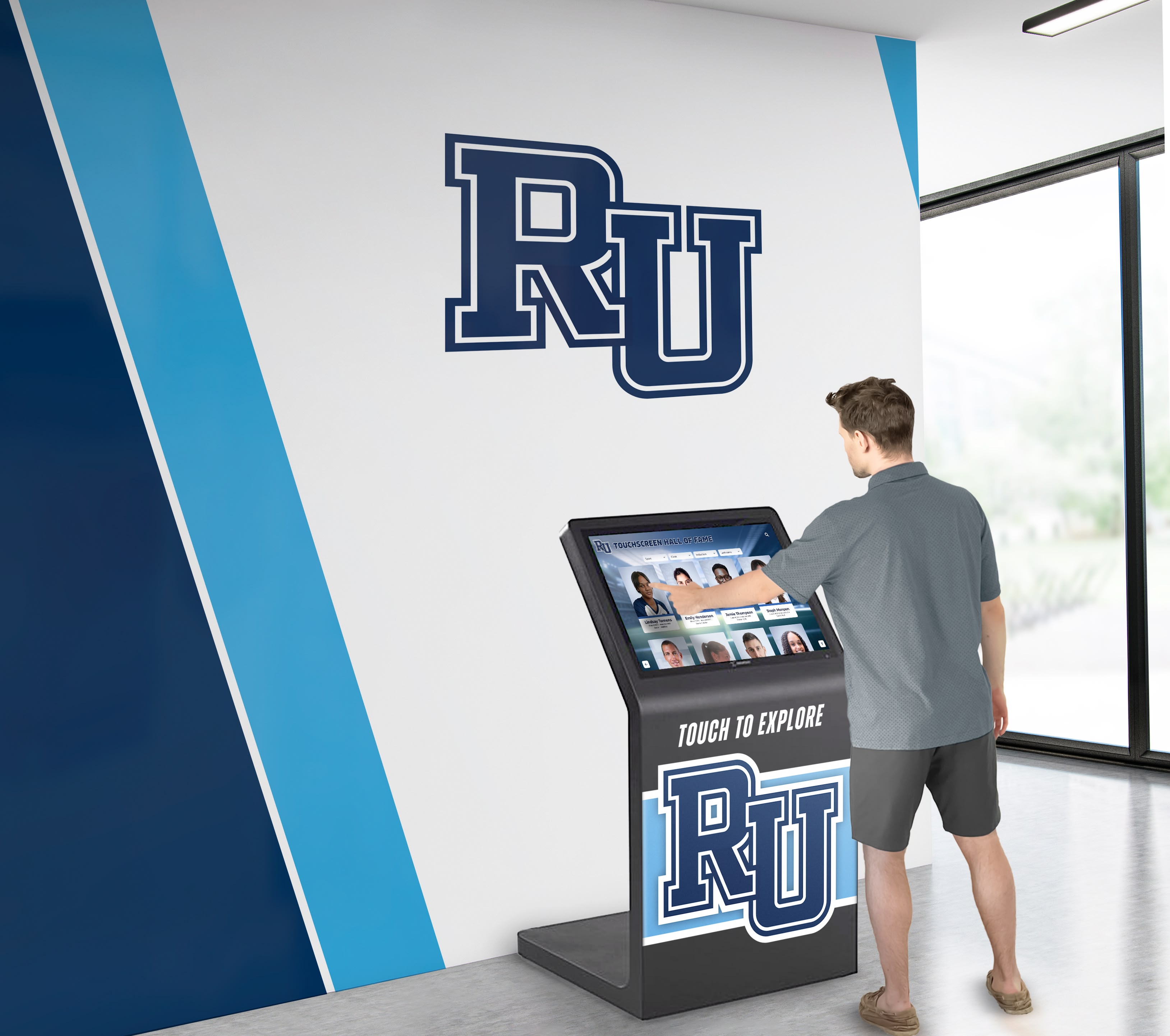
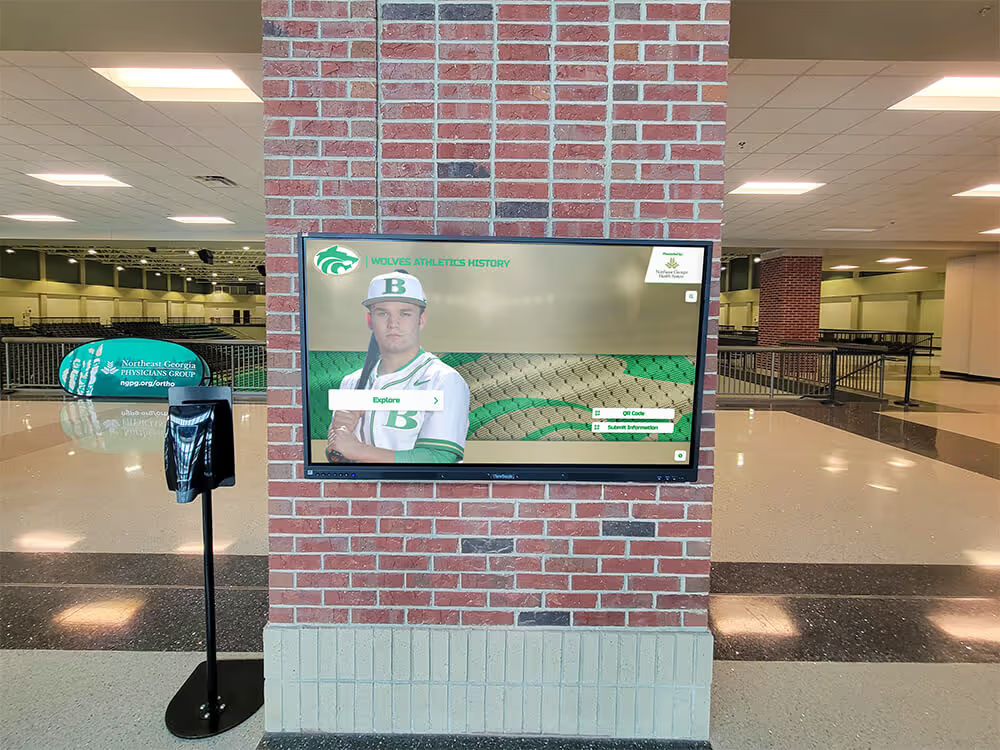
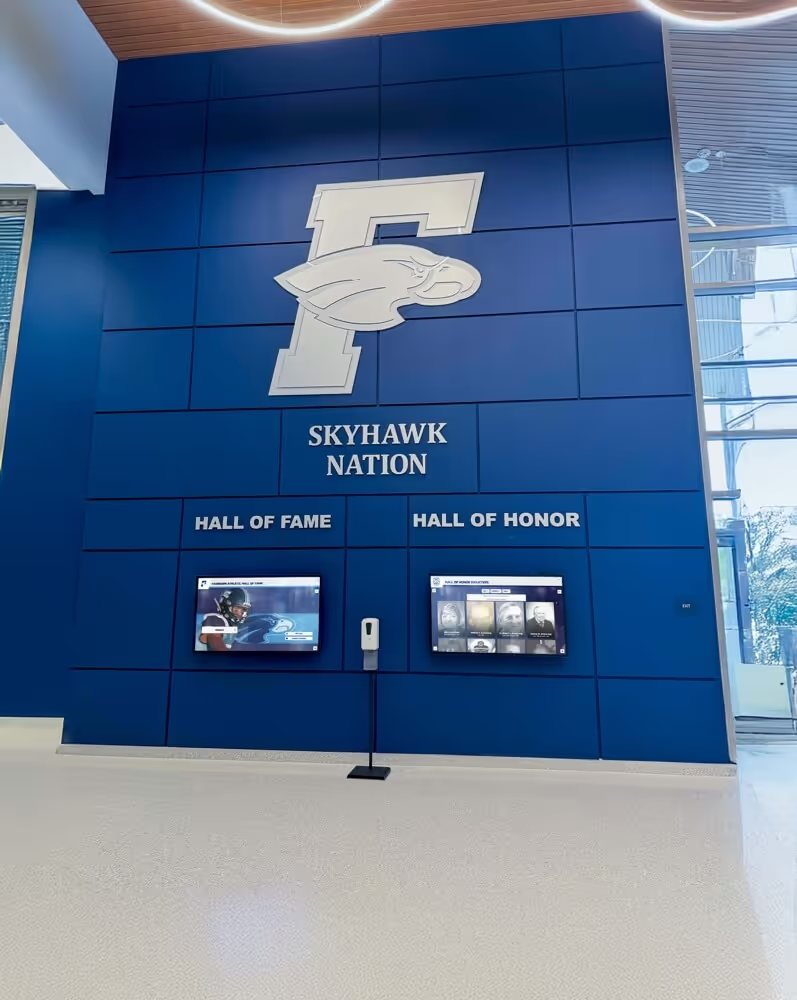
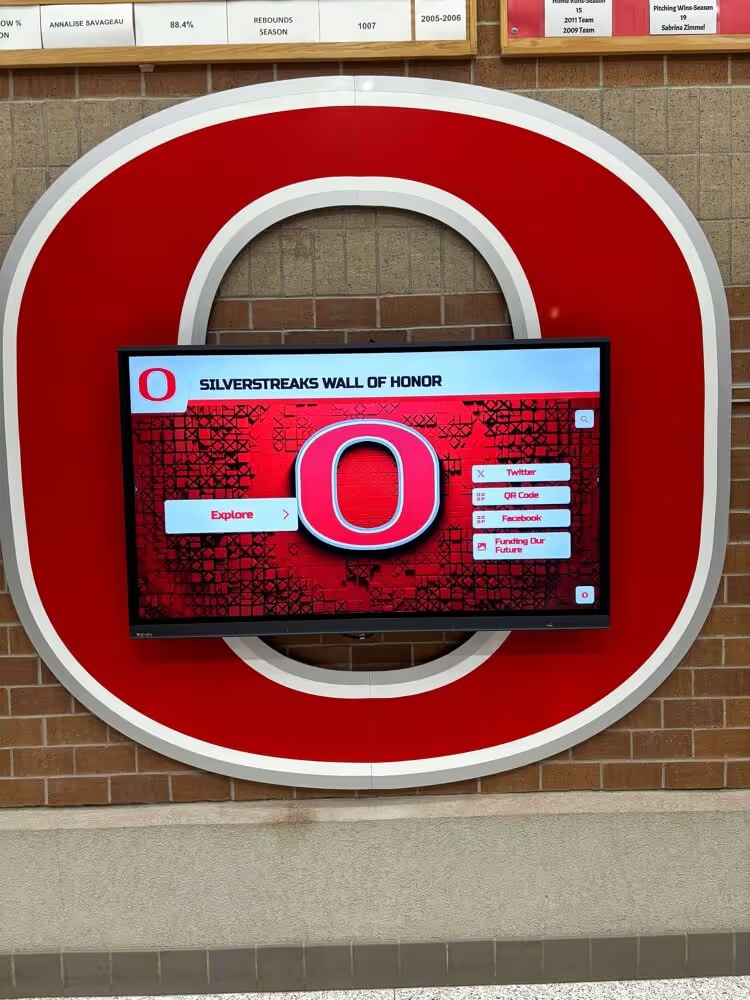
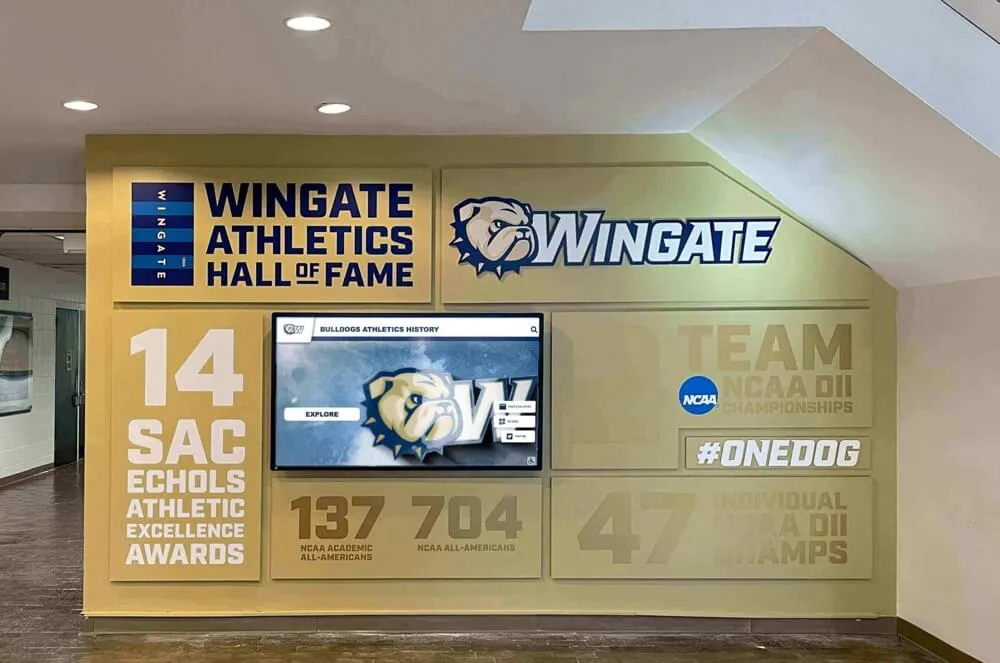
Strategic placement in high-traffic lobbies ensures maximum visibility and engagement from students, visitors, and community members
Future Trends in Digital Recognition
Digital recognition technology continues evolving, creating new possibilities for educational institutions.
Artificial Intelligence Integration
AI capabilities will increasingly enhance digital halls of fame through automatic photo enhancement and optimization, facial recognition helping organize and tag historical photos, content recommendation engines suggesting related profiles, voice search and natural language interfaces, and automated highlight generation from video footage.
Personalization and Custom Content
Systems will increasingly deliver personalized experiences based on visitor interests through detecting visitor demographics and adjusting content complexity, recognizing alumni affiliations and highlighting relevant eras, analyzing engagement patterns and prioritizing similar content, and generating customized achievement paths connecting interests to history.
Social Features and Community Contributions
Platforms will enable alumni and community members to contribute memories, photos, and stories expanding institutional memory beyond official records. Moderated crowdsourcing can dramatically enrich content while strengthening community connections.
Integration with Broader Digital Ecosystems
Digital halls of fame will connect more seamlessly with yearbook digitization creating comprehensive archives, donor recognition acknowledging philanthropy, alumni directories maintaining current connections, social media automatically sharing achievements, and student information systems populating data automatically.
Schools planning implementations should select providers with development roadmaps incorporating emerging capabilities rather than static systems frozen at current feature sets.
Taking the Next Step Toward Digital Recognition
Touchscreen digital hall of fame walls and interactive awards displays represent significant evolution in how educational institutions recognize achievements and preserve heritage. While technology enables powerful capabilities, successful implementations require thoughtful planning, committed resources, quality content, and ongoing engagement.
Institutions ready to transform recognition should start by clearly defining recognition goals and priorities, assembling implementation teams with diverse expertise, evaluating multiple providers understanding options and tradeoffs, developing realistic budgets and exploring funding sources, creating detailed content collection strategies, and establishing timelines balancing thoroughness with momentum.
The transition from static physical displays to dynamic digital recognition doesn’t happen instantly. But organizations investing in proper planning, quality content, and systems positioned for long-term growth create recognition experiences that celebrate the past, honor the present, and inspire the future—ensuring achievements receive the visibility, context, and accessibility they deserve.
Digital hall of fame walls transform recognition from space-constrained retrospectives into living, growing celebrations of institutional excellence accessible to entire communities regardless of location. By honoring heritage through modern technology, schools and organizations create powerful connections between past achievements and future aspirations, strengthening the institutional pride and community engagement that define thriving educational institutions.
Ready to explore how touchscreen digital recognition can transform your institution’s approach to celebrating achievements and preserving heritage? Book a demo to see comprehensive digital hall of fame solutions that integrate interactive displays, cloud-based management, and web accessibility into unified platforms designed specifically for schools, universities, and educational organizations.