Walking across the graduation stage draped in honor cords transforms commencement from a standard ceremony into a visible celebration of years of academic excellence. Among the most prestigious distinctions students can earn, summa cum laude recognition marks the absolute pinnacle of undergraduate achievement—yet confusion surrounds nearly every aspect of this honor, from the specific cord colors that represent it to the exact GPA thresholds required to earn it.
Families watching their graduates receive Latin honors diplomas often wonder: What exactly do these distinctions mean? Why does one student wear gold cords while another wears white and gold? How did their student qualify for summa cum laude versus magna cum laude? What doors might this recognition open for graduate school, employment, and professional advancement? Meanwhile, schools and universities grapple with establishing fair qualification criteria, selecting appropriate regalia that honors tradition while reflecting institutional identity, and creating lasting recognition beyond the single moment when cords are worn.
This comprehensive guide explores everything you need to know about summa cum laude cord colors, Latin honors distinctions, qualification requirements, and how modern schools celebrate top academic achievers through both traditional graduation regalia and innovative digital recognition that preserves these accomplishments for generations.
Latin honors represent centuries-old academic traditions dating back to medieval universities, recognizing exceptional student achievement through cumulative grade point performance. Today, these designations serve critical functions: signaling academic excellence to graduate schools and employers, motivating students throughout their undergraduate careers, and creating visible achievement tiers that celebrate diverse levels of academic success.

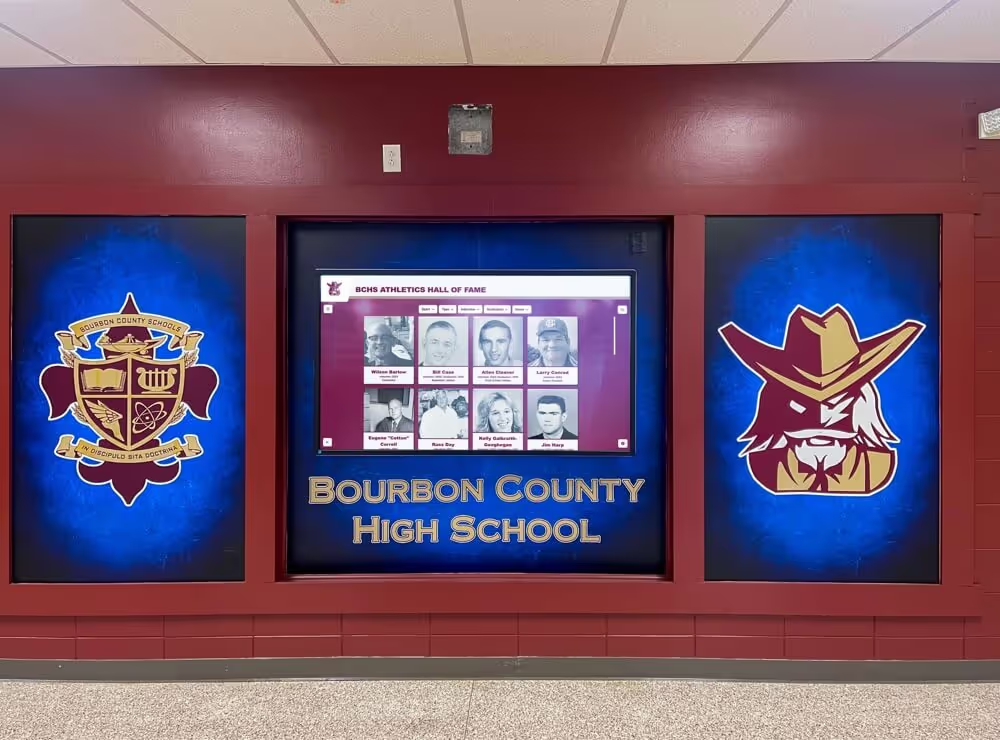
Modern digital displays create permanent recognition for Latin honors recipients, celebrating academic excellence beyond graduation day
Understanding Latin Honors: The Three Levels of Academic Distinction
Before exploring specific cord colors and requirements, it’s essential to understand the three-tiered system of Latin honors that most American colleges and universities employ.
Cum Laude: “With Honors”
The entry level of Latin honors recognition, cum laude translates literally to “with honors” or “with praise.” Students graduating cum laude have demonstrated consistently strong academic performance throughout their undergraduate careers, typically placing within the top 20-30% of their graduating class depending on institutional standards.
Typical Cum Laude Requirements:
- GPA of 3.5-3.7 on a 4.0 scale (varies by institution)
- Completion of minimum credit hours at the institution
- No academic integrity violations or disciplinary issues
- Sometimes requires minimum number of graded credits (excluding pass/fail courses)
Cum laude recognition represents solid academic achievement worthy of acknowledgment while remaining accessible to a significant portion of high-performing students.
Magna Cum Laude: “With Great Honors”
The middle tier of Latin honors, magna cum laude translates to “with great honors” or “with great praise.” This distinction recognizes students who have achieved exceptional academic performance placing them significantly above their peers—typically within the top 10-15% of their graduating class.
Typical Magna Cum Laude Requirements:
- GPA of 3.7-3.85 on a 4.0 scale (varies by institution)
- Same credit and conduct requirements as cum laude
- Often requires sustained high performance across all semesters
- May include departmental honors or thesis requirements at some schools
Magna cum laude signals to graduate programs and employers that the student maintained consistently outstanding academic performance throughout their undergraduate experience.
Summa Cum Laude: “With Highest Honors”
The pinnacle of undergraduate academic achievement, summa cum laude translates to “with highest honors” or “with highest praise.” This elite distinction typically recognizes only the top 1-5% of graduating students—those who have demonstrated exceptional intellectual capability and sustained academic excellence throughout their entire college career.
Typical Summa Cum Laude Requirements:
- GPA of 3.85-4.0 on a 4.0 scale (many schools require 3.9+)
- Often requires near-perfect or perfect GPA
- May include additional requirements like honors thesis, research projects, or comprehensive examinations
- Some institutions use class ranking rather than absolute GPA
- Usually requires completion of majority of credits at the degree-granting institution
Summa cum laude represents the absolute highest academic achievement available to undergraduate students, comparable in prestige to other major academic recognitions like Phi Beta Kappa membership or valedictorian status.

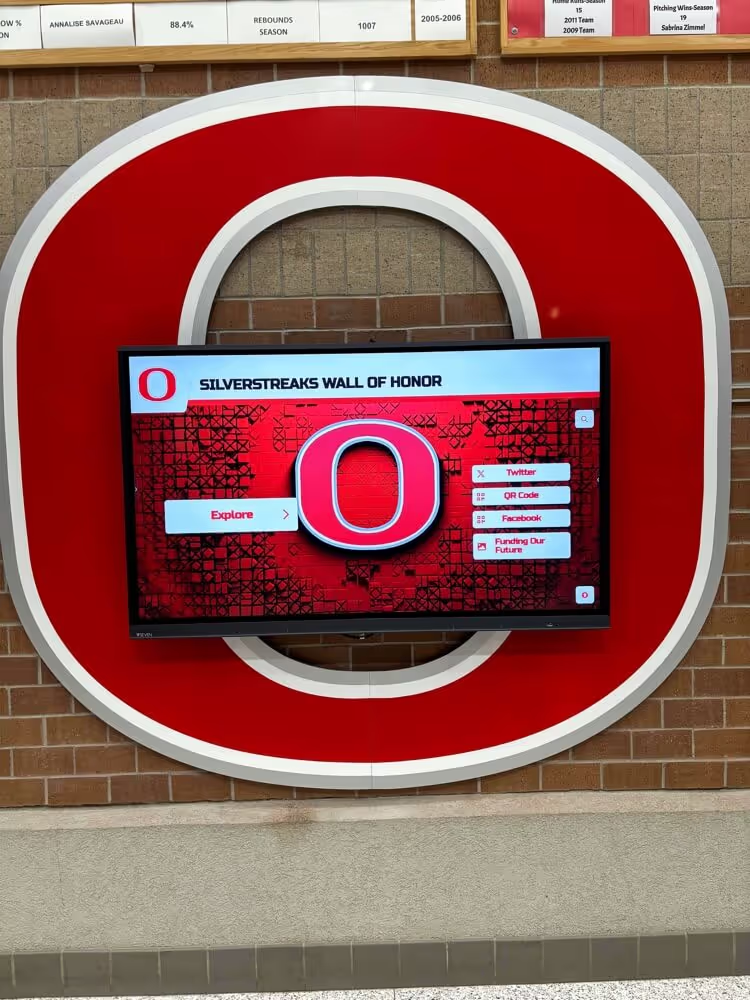
Comprehensive recognition systems showcase individual academic achievers with detailed profiles celebrating their excellence
Summa Cum Laude Cord Color: Decoding Graduation Regalia
While Latin honors themselves follow standardized naming conventions, the specific cord colors representing these achievements vary significantly across institutions. Understanding these variations helps explain why different schools use different color schemes for identical honors.
Common Summa Cum Laude Cord Colors
Gold Cords (Most Common) The vast majority of American colleges and universities use solid gold cords to designate summa cum laude graduates. Gold symbolizes the highest achievement and excellence, making it the natural choice for the top academic honor. Students wearing solid gold cords immediately signal to ceremony attendees that they represent the academic elite of their graduating class.
White and Gold Cords Many institutions use white and gold braided or twisted cords for summa cum laude recognition. The white symbolizes purity and scholarly pursuit, while gold represents achievement and excellence. This combination creates visual distinction from other honors while maintaining the gold element signifying top performance.
Red and Gold Cords Some schools, particularly those with red as a primary institutional color, use red and gold combinations for their highest honors. The red typically represents the school’s identity while gold indicates the supreme achievement level.
School-Specific Color Combinations Individual institutions may select cord colors reflecting their unique traditions, colors, or preferences. Always verify specific cord colors with your institution’s registrar or graduation office, as conventions vary.
The Complete Latin Honors Cord Color System
Understanding how cord colors differentiate between the three honor levels helps decode graduation ceremony regalia:
Standard Color Progression:
- Cum Laude: Silver cords, white cords, or silver/white combinations
- Magna Cum Laude: Gold and white braided cords, or white cords with gold trim
- Summa Cum Laude: Solid gold cords, or gold and white with gold predominant
This progression from silver (good) to mixed gold/white (better) to pure gold (best) creates visual hierarchy making honors easily identifiable during graduation ceremonies.
Alternative Systems: Some institutions use entirely different approaches:
- Single honor cord color with different stole or medallion additions
- Colored tassels instead of or in addition to cords
- Varied cord thickness or braiding patterns
- Combination of cords and honor stoles
- Institutional medals worn with standard cords
Schools developing graduation ceremony recognition should balance tradition with clear visual communication.
Other Common Graduation Cords and Their Meanings
Latin honors represent just one category of graduation cords. Understanding the complete spectrum helps distinguish different achievements:
Academic Honor Society Cords:
- Phi Beta Kappa: Blue and gold
- National Honor Society: Gold, blue, or blue and gold
- Golden Key International Honour Society: Gold
- Phi Kappa Phi: Blue and gold
Departmental and Major-Specific Cords:
- Education majors: Light blue
- Engineering: Orange
- Nursing: White
- Business: Drab (tan/beige)
- Sciences: Gold or yellow
Special Achievement Cords:
- Perfect GPA (4.0): Often double gold cords or special designation
- Valedictorian/Salutatorian: Special cords or medallions
- Student leadership: Varies by institution
- Service organizations: Organization-specific colors

Institutional entrances integrate recognition displays celebrating academic excellence and Latin honors achievements
GPA Requirements for Latin Honors: What You Need to Know
While cord colors provide visual recognition at graduation, earning the underlying Latin honors requires meeting specific academic standards that vary considerably across institutions.
Institutional Variation in Requirements
Unlike standardized tests or uniform degree requirements, Latin honors criteria differ significantly between colleges and universities. This variation stems from several factors:
GPA-Based Systems Most schools set fixed GPA thresholds for each honor level:
- These may use unweighted 4.0 scale GPAs
- Some institutions use weighted GPAs accounting for course difficulty
- Thresholds vary from school to school based on academic culture and student competitiveness
- Clear numerical cutoffs provide transparency and predictability
Percentage-Based Systems Other institutions award Latin honors to fixed percentages of each graduating class:
- Top 5% receive summa cum laude
- Next 10% receive magna cum laude
- Next 15% receive cum laude
- This approach maintains consistent honor rates regardless of overall class performance
- Creates competition among students rather than absolute standards
Hybrid Approaches Many schools combine both methods:
- Minimum GPA requirements ensure baseline excellence
- Percentage caps prevent grade inflation from making honors too common
- Provides both predictability and selectivity
Typical GPA Thresholds by Institution Type
While individual school policies vary, general patterns emerge across different types of institutions:
Highly Selective Universities Elite institutions often set higher thresholds reflecting their competitive student bodies:
- Summa cum laude: 3.90-4.0
- Magna cum laude: 3.75-3.89
- Cum laude: 3.60-3.74
State Universities and Public Institutions Large public universities typically use moderate thresholds:
- Summa cum laude: 3.85-3.95
- Magna cum laude: 3.70-3.84
- Cum laude: 3.50-3.69
Liberal Arts Colleges Smaller institutions may adjust based on their specific cultures:
- Variable standards reflecting institutional philosophy
- Sometimes incorporate comprehensive exams or thesis requirements
- May require departmental honors in addition to GPA
Schools implementing comprehensive academic recognition programs should align Latin honors criteria with their broader celebration of excellence.
Beyond GPA: Additional Requirements
Many institutions require more than just high grades for Latin honors recognition:
Credit Requirements
- Minimum credit hours completed at the degree-granting institution (often 60+ credits)
- Prevents transfer students from qualifying based primarily on coursework elsewhere
- Ensures honors reflect sustained performance in the institutional environment
Course Restrictions
- Minimum number of graded courses (excluding pass/fail)
- Some schools exclude certain credits from honors GPA calculations
- May require specific distribution across academic areas
Conduct and Integrity Standards
- No academic integrity violations during enrollment
- Clean disciplinary record
- Some institutions exclude students with any conduct sanctions
Departmental or Honors College Requirements
- Completion of honors thesis or capstone project
- Participation in honors college programs
- Research or creative work demonstrating exceptional scholarship

Dedicated touchscreen systems provide comprehensive platforms for celebrating Latin honors recipients alongside other academic achievements
How Schools Celebrate Latin Honors at Graduation
Beyond the cords worn during commencement, schools employ numerous methods to recognize Latin honors recipients during graduation season and throughout the academic year.
Graduation Ceremony Recognition
Verbal Acknowledgment During Commencement
- Individual announcement as students cross the stage: “Graduating summa cum laude…”
- Group recognition before diploma distribution
- Special seating sections for honors graduates
- Separate processional order based on honors level
Diploma Distinctions
- Latin honors printed on official diplomas
- Special diploma covers or folders
- Gold seals or embossed honors designation
- Transcript notation of honors achieved
Visual Regalia
- Honor cords in appropriate colors
- Medallions or honor stoles
- Special tassels or tassel attachments
- Honor society regalia worn simultaneously
Pre-Graduation Honors Recognition Events
Many institutions host dedicated ceremonies celebrating academic achievement before the main commencement:
Honors Convocations
- Separate ceremonies exclusively for Latin honors graduates and their families
- Often include keynote speakers addressing high-achieving students
- More intimate setting allowing individual recognition
- Opportunity for photos and personal celebration
Academic Awards Ceremonies
- Department-specific recognition of top students
- Presentation of honors certificates or awards
- Faculty acknowledgment of outstanding scholarship
- Reception allowing networking and celebration
Honor Society Inductions
- Phi Beta Kappa and other prestigious society ceremonies
- Formal recognition programs with ritual and tradition
- Networking with alumni members
- Additional regalia or pins for graduation day
Schools planning comprehensive graduation recognition can coordinate Latin honors celebration with broader ceremony planning.
Year-Round Academic Recognition
The most effective schools don’t limit Latin honors recognition to graduation day alone:
Dean’s List and Semester Honors
- Semester-by-semester recognition of high achievement
- Dean’s List for students meeting GPA thresholds each term
- Creates pathway and momentum toward graduation Latin honors
- Regular acknowledgment maintains motivation throughout degree
Academic Recognition Displays Physical and digital displays throughout campus celebrating top students:
- Dean’s List bulletin boards updated each semester
- Digital screens showcasing current honors students
- Historical displays of past Latin honors graduates
- Departmental recognition of top majors
Transcript and Resume Recognition
- Notation on official transcripts from first qualifying semester
- Resume-building support emphasizing honors achievement
- Career services highlighting honors in placement materials
- LinkedIn and professional network guidance
Modern Digital Recognition Solutions
Traditional bulletin boards and static displays struggle to comprehensively celebrate all Latin honors recipients, especially at larger institutions. Digital recognition systems solve this challenge by providing:
Unlimited Recognition Capacity
- Single display showcases unlimited honor students across all years
- Comprehensive archives preserving institutional tradition
- All honor levels receive equal display opportunity
- Expandable systems growing with enrollment
Engaging Interactive Features
- Searchable directories by name, year, major, or honor level
- Detailed profiles with photos and achievement narratives
- Progress tracking showing path to honors achievement
- Social sharing enabling broader celebration

Card-based interfaces showcase Latin honors recipients with comprehensive profiles inspiring future students
Simple Content Management
- Remote updates from any device
- Template-based designs ensuring consistency
- Bulk import tools adding entire honor roll lists
- Real-time updates immediately visible
Solutions like Rocket Alumni Solutions provide comprehensive platforms managing both physical touchscreen displays and web-based recognition through unified interfaces, ensuring Latin honors recipients receive lasting visibility beyond graduation day regalia.
The History and Meaning Behind Latin Honors
Understanding the historical context of Latin honors adds depth to these contemporary recognitions.
Medieval University Origins
Latin honors trace their roots to medieval European universities where Latin served as the universal language of scholarship. The earliest universities—Bologna, Paris, Oxford—conducted all academic business in Latin, from lectures through examinations to degree conferrals.
Original Degree Classifications: In medieval times, degrees themselves were awarded in Latin with various distinctions:
- Standard degrees for competent scholars
- Enhanced recognition for exceptional demonstration of knowledge
- Highest honors for those displaying superior mastery
These distinctions evolved into modern Latin honors as universities formalized graduation recognition systems.
American Adoption and Evolution
American colleges began systematically using Latin honors in the 19th century, adapting European traditions to the developing U.S. higher education system:
Harvard’s Leadership Harvard College played a pivotal role in standardizing Latin honors in American higher education, establishing clear criteria and three-tiered systems that many institutions subsequently adopted.
Democratization of Honors Unlike European systems that often reserved top honors for nobility or wealth, American institutions embraced meritocratic principles—students of any background could achieve summa cum laude through academic performance alone.
Standardization Across Institutions By the mid-20th century, the cum laude/magna cum laude/summa cum laude system became standard across American higher education, though specific requirements remained locally determined.

Integrated systems combine traditional plaques with digital displays creating comprehensive Latin honors recognition
Contemporary Significance
Today, Latin honors serve multiple important functions in higher education:
Quality Signaling to Graduate Schools Graduate and professional school admissions committees use Latin honors as quick indicators of undergraduate academic excellence. Summa cum laude designation immediately signals top-tier performance requiring no additional interpretation.
Employment Differentiation Employers, particularly for recent graduates without extensive work experience, rely on academic honors to differentiate candidates. Many employers specifically seek cum laude or higher graduates for competitive positions.
Student Motivation Published Latin honors criteria create clear targets motivating students throughout their undergraduate careers. The visible goal of graduating with honors encourages sustained academic effort.
Institutional Prestige Schools with rigorous honors standards enhance their academic reputations. The percentage of students achieving Latin honors signals overall academic quality and rigor.
Organizations implementing valedictorian recognition can coordinate these highest individual honors with comprehensive Latin honors systems.
Latin Honors Across Different Countries
While this guide focuses primarily on American conventions, Latin honors traditions vary significantly across global higher education systems.
British Commonwealth Systems
UK, Canadian, Australian, and other Commonwealth universities typically use different classification systems:
UK Honours Classifications:
- First-Class Honours (equivalent to summa cum laude)
- Upper Second-Class Honours (2:1)
- Lower Second-Class Honours (2:2)
- Third-Class Honours
- Pass (ordinary degree)
These classifications serve similar functions to American Latin honors but use different terminology and percentage-based rather than GPA-based thresholds.
European Continental Systems
Many European universities continue using Latin terminology but with different structures reflecting their specific educational traditions. Some employ numerical grading scales with verbal distinctions only for exceptional achievement.
Latin American Adaptations
Universities in Latin America and Spain often use “mención honorífica” (honorable mention) or similar Spanish/Portuguese equivalents rather than Latin terms, though the underlying concept of recognizing exceptional scholarship remains constant.
Asian and Global Variations
Universities worldwide have developed diverse recognition systems reflecting their cultural contexts and educational philosophies. International students should research specific institutional practices rather than assuming uniform standards.
Understanding global variations matters increasingly as graduate education and employment become international, requiring clear communication about achievement levels across different recognition systems.

Intuitive interfaces enable students and visitors to explore comprehensive Latin honors recognition across graduating classes
Frequently Asked Questions About Latin Honors and Graduation Cords
Can you graduate summa cum laude with one B?
This depends entirely on your specific institution’s credit hours, grading scale, and exact GPA requirements. At most schools, a single B grade will prevent achieving a perfect 4.0 GPA—but summa cum laude doesn’t always require absolute perfection.
Many institutions set summa cum laude thresholds at 3.90 or 3.95, meaning students can earn several B grades while still qualifying. Calculate your specific GPA and compare it to your school’s published thresholds, which are typically available through the registrar’s office or academic catalog.
What if my school doesn’t offer Latin honors?
Some institutions—particularly those with alternative grading systems, pass/fail curricula, or specific educational philosophies—don’t use Latin honors. If your school doesn’t offer these recognitions:
- Focus on other achievement indicators (research awards, department honors, fellowship selection)
- Emphasize your actual GPA on resumes and applications
- Highlight specific academic accomplishments and projects
- Seek departmental recognition and faculty recommendations
- Pursue external honors like competitive scholarships
Graduate schools and employers familiar with your institution will understand its grading and recognition context.
Do Latin honors appear on transcripts or just diplomas?
Most institutions include Latin honors on both official transcripts and printed diplomas. Transcript notation typically appears:
- As a final notation upon degree conferral
- Sometimes on each semester transcript once students qualify for Dean’s List or semester honors
- In the degree conferral line showing “Bachelor of Arts, Summa Cum Laude”
Always verify with your registrar’s office, as practices vary between institutions.
Can graduate students earn Latin honors?
Latin honors typically apply only to undergraduate (bachelor’s) degrees. Graduate programs use different recognition systems:
Master’s Degrees:
- Usually don’t include Latin honors
- May offer honors through thesis distinction
- Some programs designate “with distinction” for top performers
Doctoral Degrees:
- The PhD itself represents the highest academic achievement
- Dissertation defenses may include distinction levels
- Some programs note exceptional performance
Graduate recognition focuses more on research quality, publications, and scholarly contributions than cumulative GPA.
How do I know what cord color my school uses?
Contact your institution’s:
- Registrar’s office
- Graduation/Commencement office
- Academic affairs office
- Check the official academic catalog or student handbook
- Review commencement ceremony guidelines
- Visit the campus bookstore where regalia is sold
Verification prevents purchasing incorrect regalia for your graduation ceremony.
Schools coordinating comprehensive academic celebration should clearly communicate regalia expectations to qualifying students.

Strategic placement throughout campus ensures Latin honors recognition receives consistent visibility beyond graduation
Preserving Latin Honors Recognition Beyond Graduation
While graduation cords provide momentary visual recognition, creating lasting celebration of academic excellence requires thoughtful approaches extending beyond commencement day.
Traditional Recognition Methods
Physical Displays Many schools maintain permanent recognition of Latin honors graduates:
- Engraved plaques listing summa cum laude graduates by year
- Honor society boards showing member names and years
- Trophy cases featuring academic achievement alongside athletic success
- Departmental hallways recognizing top students by major
These traditional approaches face limitations: space constraints restricting how many names can be displayed, outdated information when displays aren’t regularly maintained, and static presentations lacking engagement or interactivity.
Modern Digital Recognition Approaches
Digital recognition systems address traditional limitations while enhancing celebration:
Comprehensive Historical Archives
- Unlimited capacity showcasing every Latin honors graduate
- Searchable databases spanning decades of achievement
- No need to remove historical recognition when adding current graduates
- Preservation of institutional academic tradition
Rich Multimedia Storytelling
- Detailed profiles with photos and academic journeys
- Video content featuring advice from summa cum laude graduates
- Achievement narratives inspiring current students
- Connection between honors achievement and post-graduation success
Web-Based Access
- Campus displays complemented by web-accessible databases
- Alumni ability to find themselves and classmates
- Family sharing of recognition with extended networks
- Prospective student visibility into achievement culture
Institutions implementing donor recognition strategies can apply similar principles to academic honors celebration.
Creating Alumni Connections Through Honors Recognition
Latin honors recipients often maintain strong connections to their alma mater. Schools can leverage these relationships:
Honors Graduate Networks
- Alumni directories connecting Latin honors graduates
- Mentorship programs pairing current honors students with successful alumni
- Networking events specifically for high academic achievers
- Career connections and professional opportunities
Ongoing Engagement
- Regular communications celebrating honors graduate accomplishments
- Spotlight features on distinguished alumni who graduated with honors
- Reunion events organized by graduation year and honors level
- Fundraising appeals emphasizing academic excellence traditions
Prospective Student Recruitment
- Campus tour integration showcasing honors recognition displays
- Admissions materials featuring Latin honors program rigor
- Virtual displays accessible to prospective families researching schools
- Student ambassador programs utilizing honors graduates
Schools developing alumni engagement platforms should incorporate Latin honors recognition as core components.

Professional touchscreen installations create compelling exploration experiences celebrating decades of academic excellence
Implementing Comprehensive Academic Honors Recognition
Schools seeking to enhance their celebration of Latin honors graduates can implement systematic improvements:
Assess Current Recognition Practices
Audit Existing Systems:
- How are Latin honors currently communicated and celebrated?
- What recognition occurs beyond graduation ceremony cords?
- Are historical honors graduates preserved and showcased?
- Do current students understand honors criteria and pathways?
- How do families and alumni perceive academic recognition culture?
Identify Gaps and Opportunities:
- Recognition categories receiving insufficient visibility
- Physical space limitations preventing comprehensive display
- Outdated systems requiring excessive manual maintenance
- Missed connections between honors achievement and alumni engagement
- Inconsistent messaging about academic excellence expectations
Establish Clear Honors Criteria
Publish Transparent Standards:
- Exact GPA thresholds for each honors level
- Credit requirements and residency minimums
- Additional requirements beyond GPA
- How weighted courses or transfer credits are handled
- Appeals process for borderline cases
Communicate Expectations Early:
- Orientation programs explaining honors pathways
- Academic advising incorporating honors planning
- Regular GPA updates showing progress toward honors
- Celebration of semester honors as stepping stones
Organizations implementing comprehensive recognition programs should align Latin honors with broader academic celebration.
Invest in Recognition Infrastructure
Digital Display Systems: Modern touchscreen installations provide:
- Central lobby locations celebrating all academic honors
- Departmental displays recognizing major-specific excellence
- Library or academic building placements
- Mobile-responsive web platforms extending reach
Integration with Existing Systems:
- Student information system connections automating honors lists
- Registrar database integration ensuring accuracy
- Alumni database connections maintaining historical records
- Communication platforms announcing new honors recipients
Professional Installation and Support:
- Commercial-grade displays designed for continuous operation
- Intuitive content management requiring minimal training
- Technical support ensuring system reliability
- Regular updates maintaining contemporary appearance
Create Systematic Recognition Workflows
Semester Recognition Cycles:
- Automated identification of qualifying students each term
- Timely communication to recipients and families
- Coordinated updates across all recognition platforms
- Consistent celebration maintaining program visibility
Graduation Season Coordination:
- Early notification of Latin honors qualification
- Regalia ordering information and deadlines
- Ceremony participation details and expectations
- Post-graduation database updates and permanent record notation
Ongoing Engagement:
- Alumni outreach celebrating honors graduate accomplishments
- Current student inspiration through honors graduate examples
- Prospective family exposure to academic excellence culture
- Community communication highlighting institutional quality
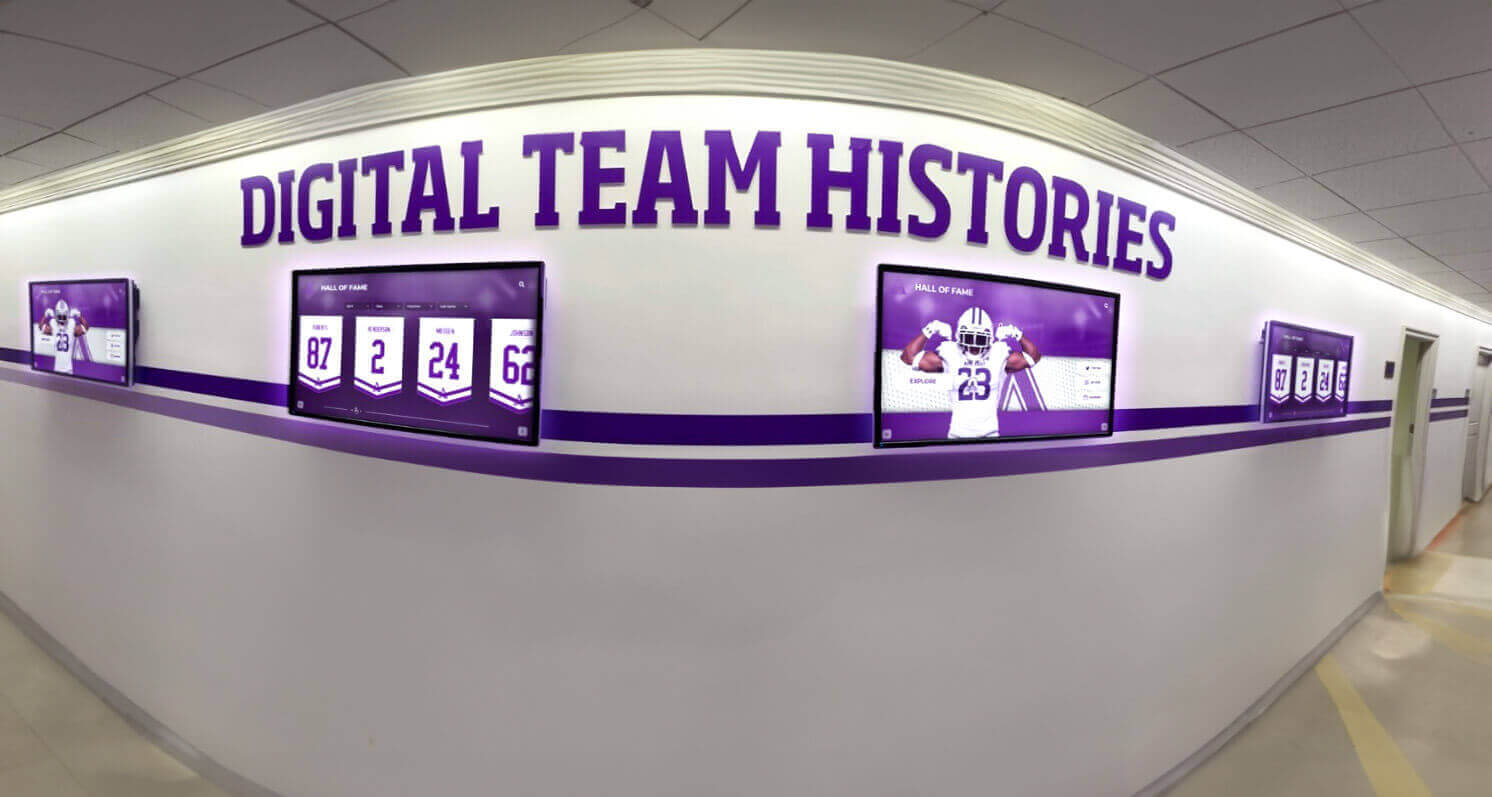
Multiple coordinated displays throughout facilities create comprehensive recognition environments celebrating excellence
Conclusion: Honoring Excellence Through Meaningful Recognition
Summa cum laude cord colors and Latin honors distinctions represent far more than ceremonial regalia worn for a few hours during commencement—they symbolize years of sustained intellectual effort, academic dedication, and scholarly achievement worthy of lasting celebration. When schools systematically recognize these accomplishments through both traditional graduation ceremony elements and modern digital recognition providing permanent visibility, they create powerful cultures of academic excellence that inspire current students while honoring the achievements of those who came before.
The Latin honors traditions explored throughout this guide—from the specific gold cords designating summa cum laude through the varied GPA thresholds across institutions—demonstrate how higher education balances standardized recognition with institutional autonomy. Whether your school awards Latin honors to fixed percentage of graduates or uses absolute GPA standards, the fundamental purpose remains constant: celebrating exceptional academic achievement while motivating future students toward similar excellence.
Transform Your Academic Recognition Program
Discover how modern digital recognition displays can help your institution celebrate Latin honors graduates, preserve academic traditions, and inspire future scholars through comprehensive, engaging displays.
Explore Recognition SolutionsUnderstanding summa cum laude cord colors and Latin honors requirements helps students plan their academic paths, enables families to appreciate their graduates’ accomplishments, and assists schools in developing comprehensive recognition programs that celebrate excellence effectively. From the medieval universities where these traditions originated through contemporary American higher education, Latin honors have consistently served the essential function of distinguishing exceptional scholarship worthy of special acknowledgment.
For students pursuing Latin honors: focus on consistent excellence throughout your academic career rather than last-minute GPA improvement. Understand your specific institution’s requirements early in your undergraduate journey. Seek academic advising to ensure you’re meeting all criteria beyond GPA. Remember that the knowledge and skills you develop matter far more than the cord color you wear—though the recognition itself opens doors and creates opportunities throughout your career.
For schools and universities: invest in comprehensive recognition systems that celebrate Latin honors graduates beyond graduation day alone. Create clear, transparent criteria published prominently in academic catalogs and student handbooks. Implement digital recognition providing unlimited capacity and lasting visibility. Coordinate honors celebration across multiple touchpoints from semester Dean’s Lists through graduation ceremonies to alumni engagement. Use modern platforms that make recognition accessible, engaging, and inspiring to current and future students.
Every summa cum laude graduate represents countless hours of study, academic sacrifice, intellectual curiosity, and sustained commitment to excellence. These students deserve recognition that matches their achievement—celebration extending beyond a single ceremony to create lasting honor inspiring future generations of scholars. With thoughtful cord selection, clear qualification criteria, and comprehensive recognition infrastructure, your institution can build traditions of academic excellence that define institutional identity while motivating students toward their highest potential.
Ready to enhance your Latin honors recognition? Explore comprehensive approaches in academic awards ceremony planning, discover strategies for showcasing perfect academic achievement, or learn about digital recognition technologies that celebrate academic excellence across all levels, building institutional cultures where intellectual achievement receives the prominence, visibility, and lasting honor it deserves.