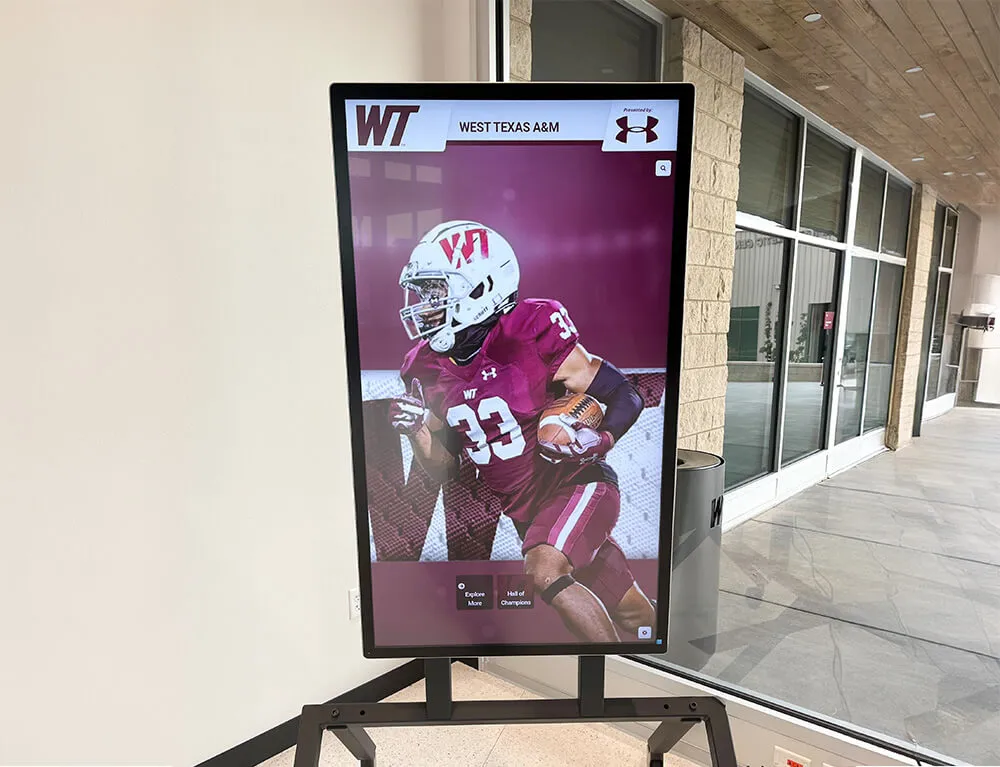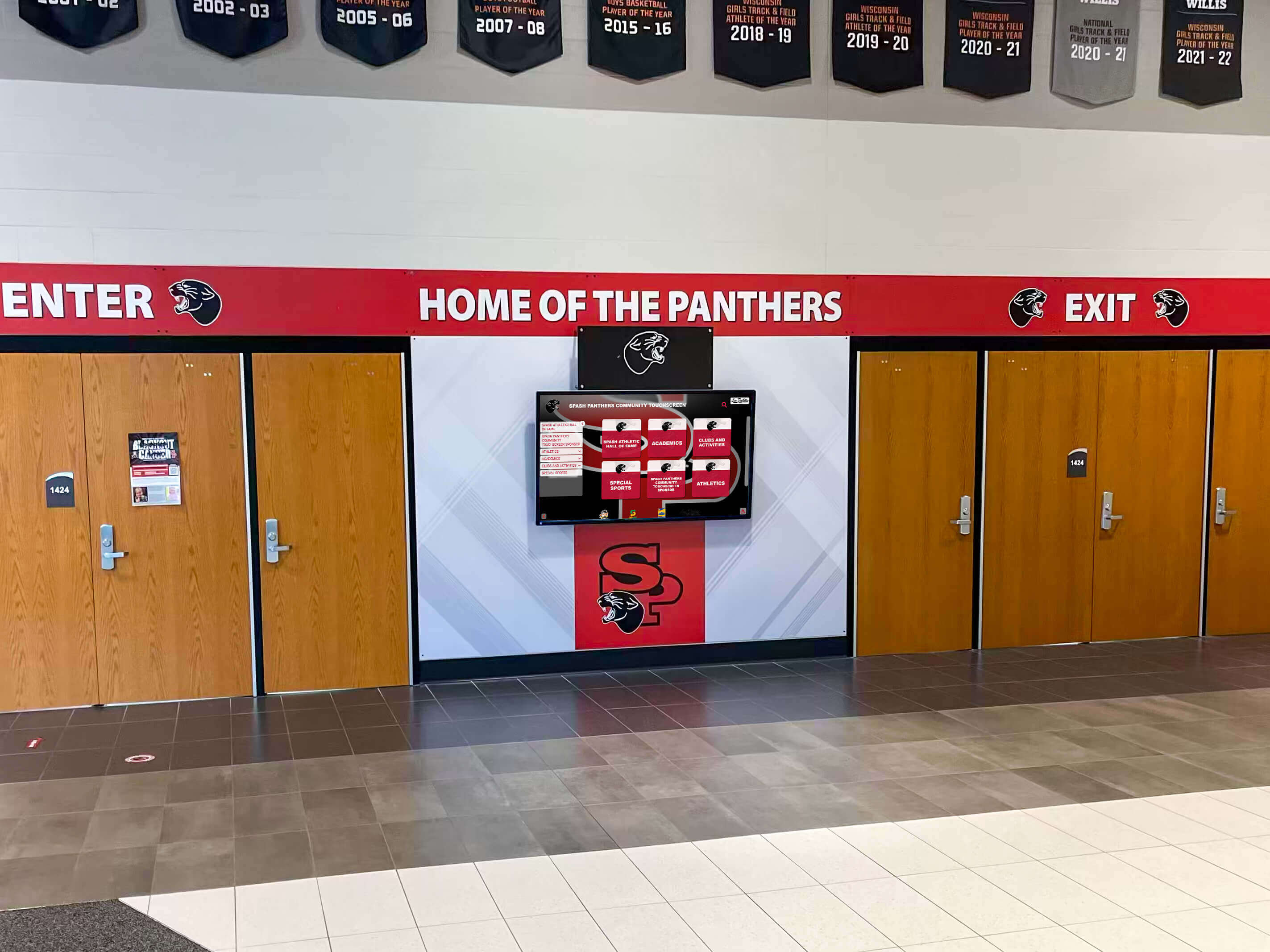
There’s nothing quite like the roar of a packed student section—the coordinated call-and-response, the spontaneous chants that spread row by row, the moment when the entire crowd becomes one voice. Student section chants are more than noise. They’re the living pulse of school spirit, the sound of a community rallying behind its teams, and one of the most authentic expressions of what it means to belong to a school. Years after graduation, alumni can still hear those chants in their heads as clearly as any fight song.
Yet surprisingly few schools take a deliberate approach to building a chant repertoire, training section leaders, or—critically—preserving these oral traditions before they fade between graduating classes. This guide gives you a comprehensive catalog of classic and modern student section chants organized by use case and sport, along with practical strategies for introducing new chants, energizing a section that has gone quiet, and capturing the full spirit of your student section in yearbook spreads and digital archives that future generations will treasure.
Whether you’re a student section leader searching for fresh material, a yearbook adviser planning a spirit spread, or an activities director building school culture from the ground up, these ideas will help you transform a passive crowd into a legendary student section.

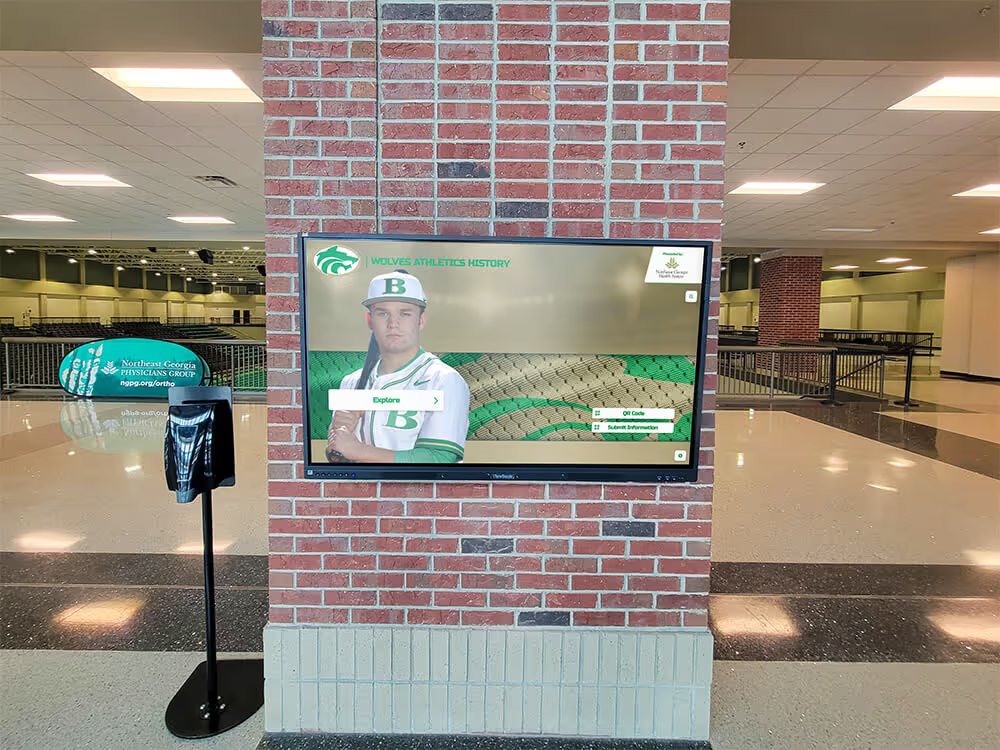
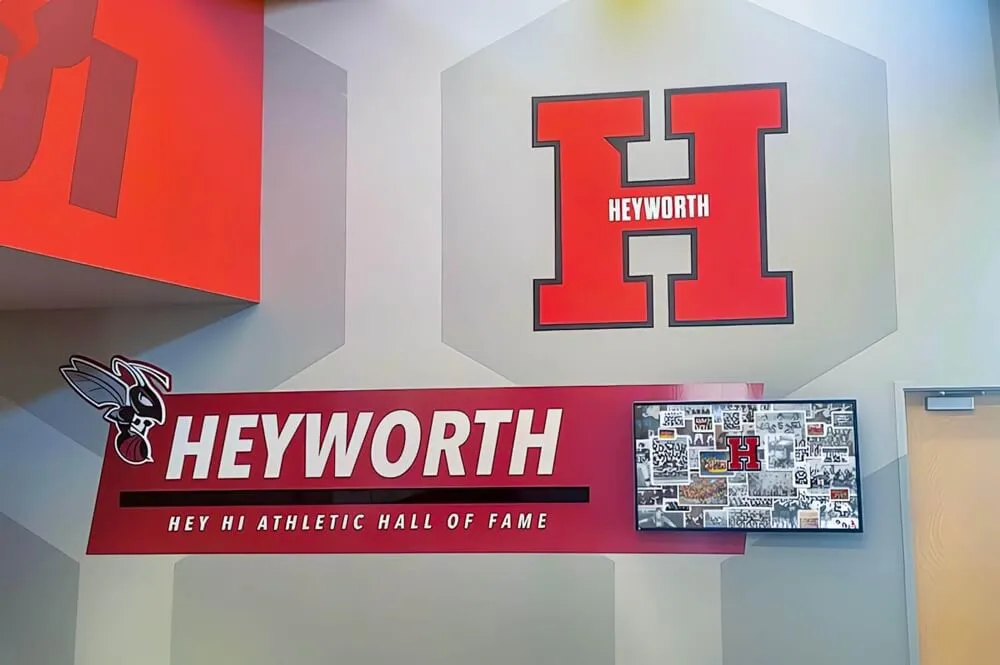
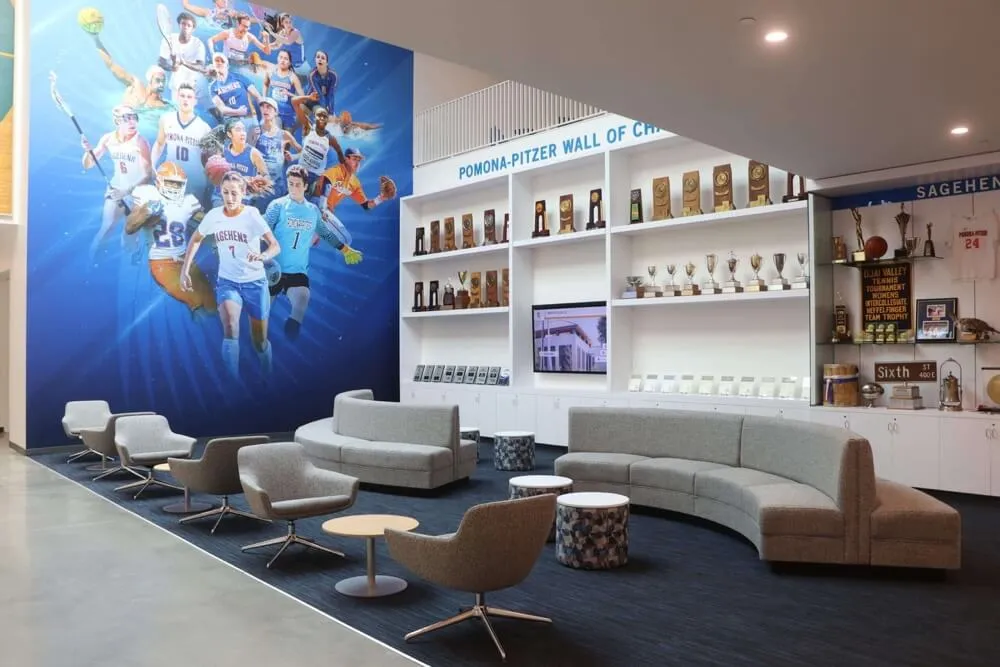
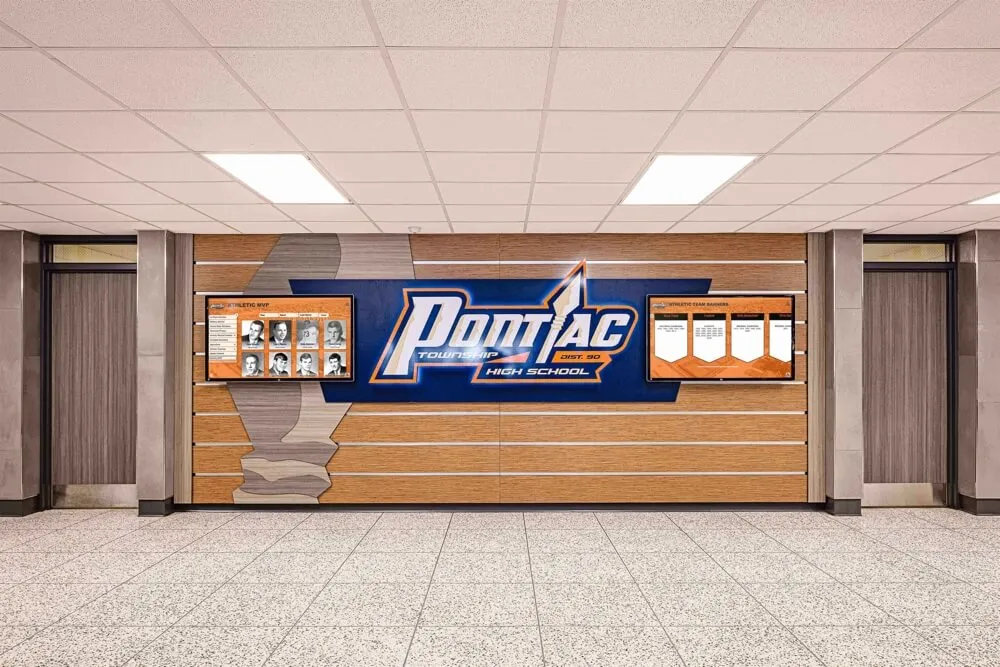
A strong student section identity starts at the front door—visible school pride creates the atmosphere where great chants are born and passed down
Why Student Section Chants Matter for School Culture
The Psychological Power of Collective Voice
When students chant together, something remarkable happens neurologically. Synchronized vocalization triggers dopamine release, reduces individual inhibition, and creates a sense of shared identity that psychologists call “social cohesion.” This is why chants feel different from simply cheering—they bind participants into a collective unit rather than a crowd of individuals.
For athletic teams, the effect is measurable. Home-crowd advantage in sports correlates heavily with vocal crowd support, particularly in enclosed arenas where chants echo and amplify. Basketball teams, wrestlers, and volleyball squads performing in front of a coordinated student section consistently report elevated energy and confidence compared to road environments.
For students themselves, participation in a coordinated student section builds a sense of belonging that extends far beyond the bleachers. Students who feel part of school spirit activities report higher satisfaction with their school experience, stronger peer connections, and greater pride in their institution—factors that directly influence academic engagement.
Chants as Living School Tradition
Unlike trophies in a case or banners on a wall, chants are oral traditions that live or die with each graduating class. A chant popular in 2015 may be completely forgotten by 2026 unless someone intentionally preserves it. This fragility makes student section chants one of the most underrated elements in school memory preservation.
Great school spirit week ideas always include structured time for introducing and practicing chants—but the best schools go further by archiving their chant traditions so they can be revived by future classes who want to reclaim the culture.
Classic Student Section Chants: The Timeless Catalog
These chants have proven themselves across decades and sports. They work because they’re simple enough to learn in seconds, rhythmically satisfying, and flexible enough to adapt to any team name or mascot.
The Spelling Chant
Structure: “Give me a [letter]! — [response] — Give me a [letter]! — [response] — What does it spell? — [TEAM NAME]! — What does it spell? — [TEAM NAME]! — What does that mean? — WE’RE GONNA WIN TONIGHT!”
The spelling chant is the foundational student section chant in American scholastic sports. Every class learns it on their first game day, and it never loses power when delivered with full commitment. The critical element is the leader’s energy on the call—if the crowd hears genuine excitement in the prompt, they’ll match it in the response.
Yearbook tip: The spelling chant photographs beautifully. Assign a photographer to capture the section mid-chant with arms raised, mouths open, and faces lit with energy. The resulting image—a sea of expressive faces unified in the same moment—makes an iconic yearbook spread opener.
Defense Chants
Classic version: “DEE — fense! [clap clap] DEE — fense! [clap clap]”
Extended version: “Hold that line! Hold that line! Hold that line for [SCHOOL NAME]! Hold that line!”
Defense chants serve a different purpose than celebratory chants—they arise in moments of genuine tension, when the game is on the line and every student in the section is emotionally invested in the outcome. This authenticity is what makes them so powerful. A student section that maintains its voice in difficult moments, rallying the team during a fourth-quarter deficit or a late-game defensive stand, creates the kind of atmosphere that athletes remember years after they’ve graduated.
The Airhorn Build
Structure: Section leader mimes an airhorn: “TSSSS” — Section responds: “Ohhhh!” — Leader escalates: “TSSSS-TSSSS” — Section: “OHHHH!” — Leader: “TSSSS-TSSSS-TSSSS” — Section: Full crowd noise, stomping, clapping
This call-and-response escalation is one of the most effective energy-building tools in the student section toolkit. It requires no words, crosses language barriers, and works equally well for football, basketball, or any crowd sport. It’s particularly effective at the start of games when sections need to find their collective voice.
“Let’s Go [Team Name]”
Structure: “Let’s go [TEAM]! [clap-clap-clap-clap-clap] Let’s go [TEAM]!”
Simple, universal, and instantly recognizable. The five-clap rhythm is hardwired into American sports culture, and even first-time students join in immediately. This chant works as a default between more elaborate sequences and as an emergency energy tool when the crowd has gone quiet.
Scoreboard Chant
Structure: After an opponent scores or takes a lead, student section checks the scoreboard and calls: “That’s alright! That’s okay! We’re gonna beat you anyway! That’s alright! That’s okay! We’re gonna beat you anyway!”
The scoreboard chant is memorable not just for its words but its timing—it should come precisely in the moment when the opposing team and crowd expect silence or dejection. Delivered with energy at the right moment, it completely reframes the psychological narrative of the game.
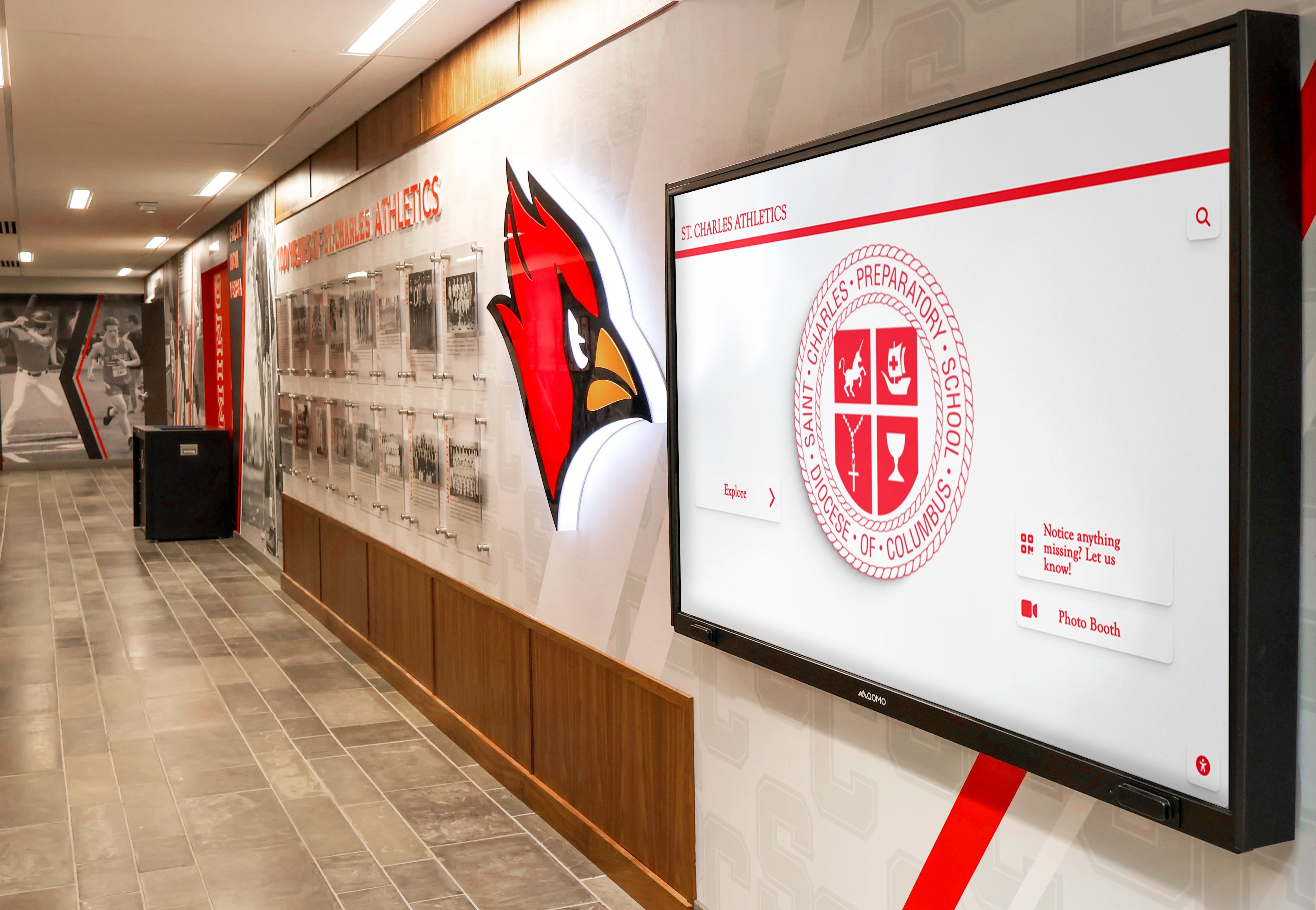
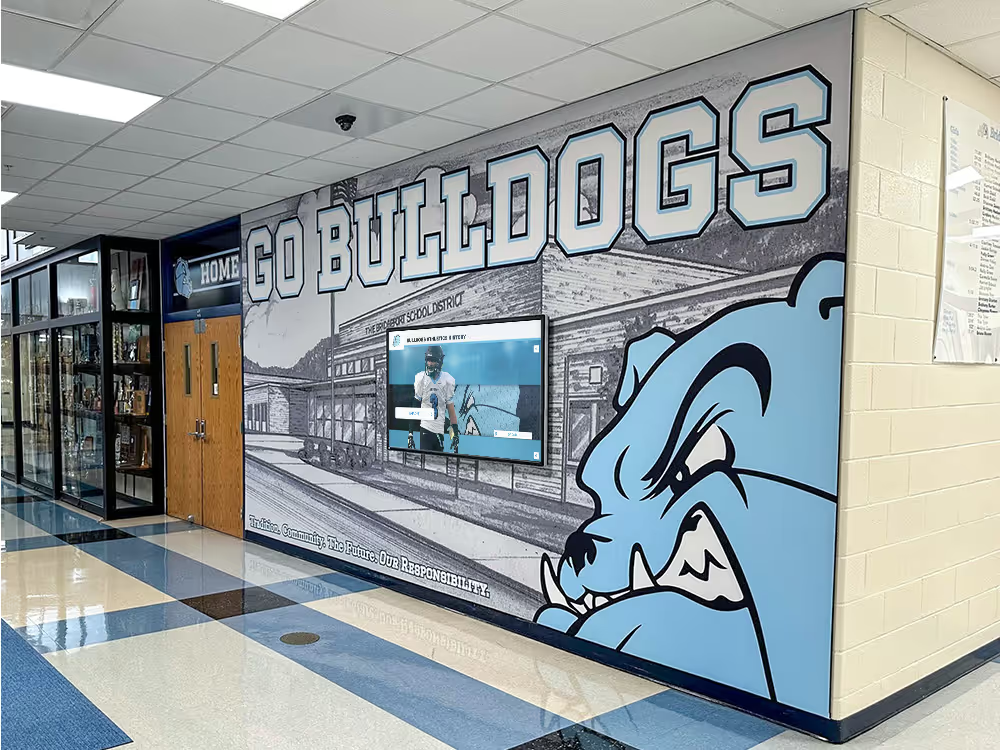
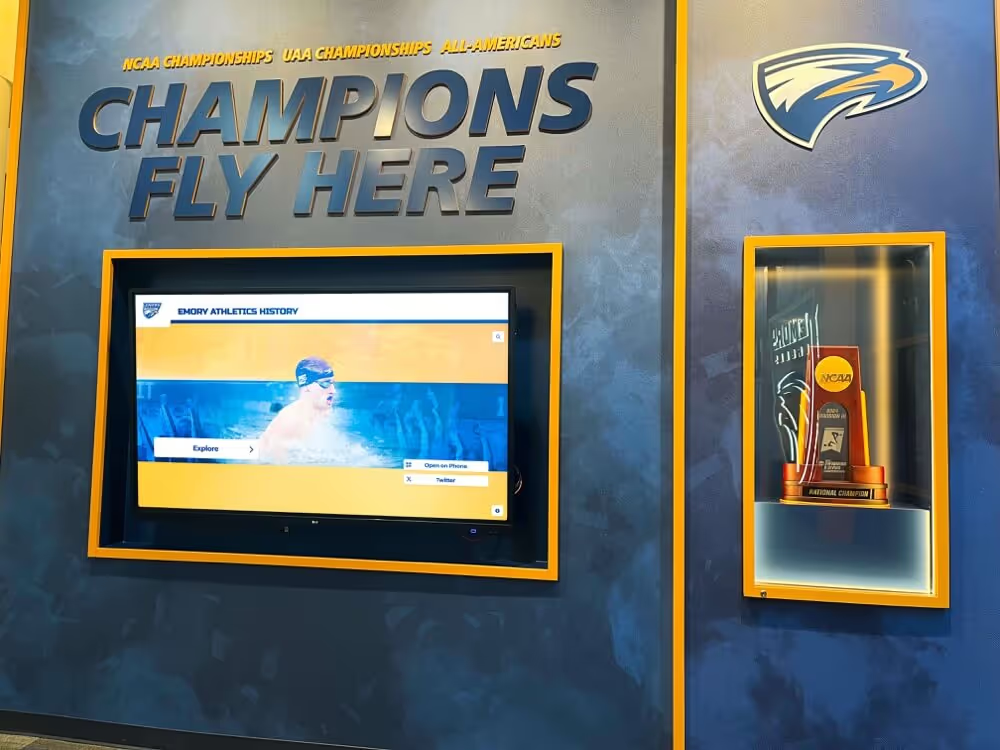
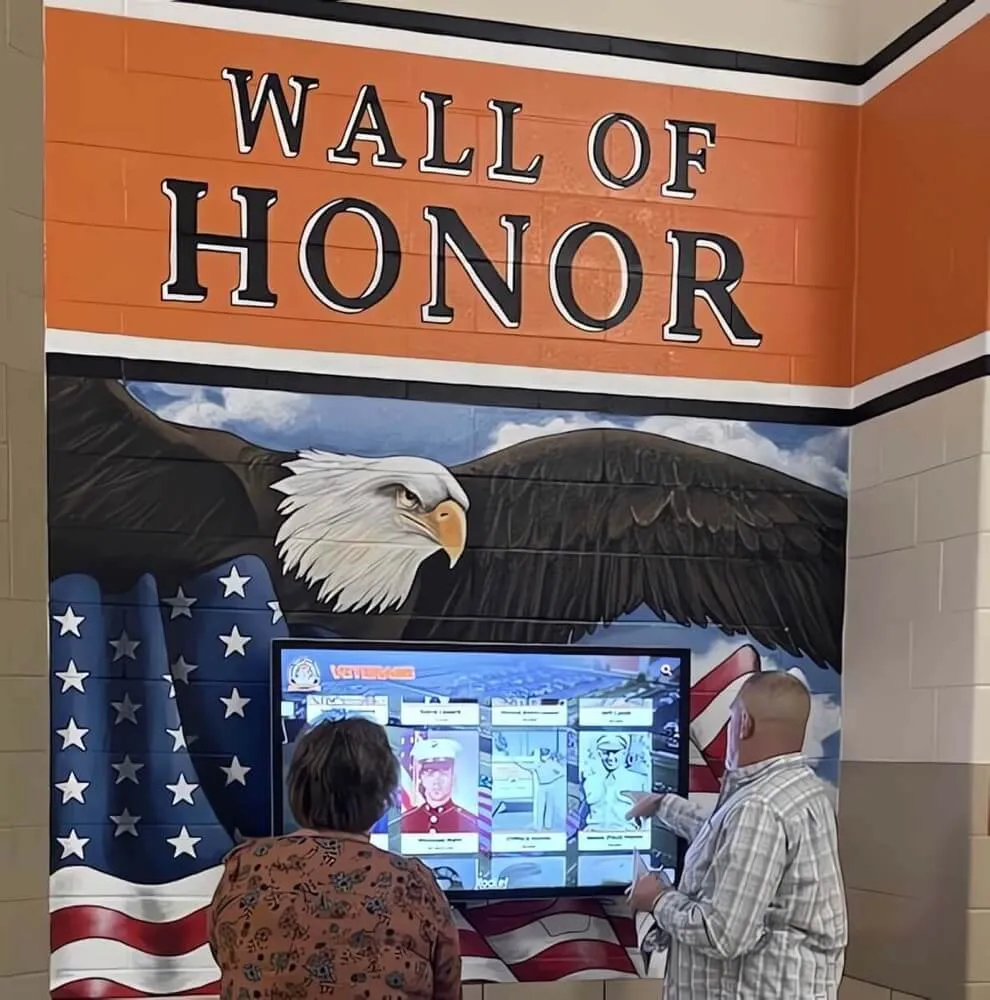
School mascot identity anchors chant culture—the best student section chants are the ones that feel uniquely tied to your school's specific character and traditions
Modern Student Section Chants: Fresh Energy for Today’s Crowds
Classic chants provide a foundation, but great student sections evolve. Modern chants tend to borrow from popular music, social media trends, and culture-specific references that resonate with current students—then get adapted to fit school spirit contexts.
Song-Adapted Chants
“Thunderstruck” Opener AC/DC’s “Thunderstruck” has become a near-universal game opener. The student section adaptation: when the “thunder” lyric hits, the entire section stomps once in unison. When “lightning” hits, everyone raises both arms. The result is a perfectly synchronized visual display that’s extremely photogenic and genuinely thrilling.
“Seven Nation Army” Chant The White Stripes riff (“Duh duh duh-duh-duh duh duh”) has become arguably the most recognized chant in contemporary sports. It requires no words—just synchronized humming or stomping of the rhythm—and it builds crowd energy instantly because almost everyone recognizes it.
“Don’t Stop Believin’” Closer Used increasingly in high school contexts, this works well as a rallying chant in the fourth quarter. The student section leader sings the opening verse and the crowd joins on the chorus—the “Don’t stop believin’” lyric becomes a genuine emotional anchor when the game is close.
Modern Call-and-Response Formats
“Whose house? Our house!” A contemporary classic that’s replaced older territorial chants. Works especially well for basketball because it directly addresses the home-court dynamic.
“I believe that we will win! I believe that we will win!” Borrowed from US Soccer’s World Cup crowd culture, this chant has spread into high school athletics. It works because the statement is a declaration, not a request—it assumes victory rather than begging for it, creating a fundamentally different psychological posture.
“Ole, Ole Ole Ole / Ole! Ole!” Another international football adaptation that’s become ubiquitous in American student sections. Three-quarter-time signature, easy to learn, and naturally escalates in volume.
“When I say [SCHOOL COLOR], you say [MASCOT]!” A highly customizable call-and-response that student section leaders can adapt endlessly: “When I say [TEACHER’S NAME], you say [SCHOOL NAME]!” The format can be used to introduce any new chant or revive a crowd that’s gone flat.
Opponent-Specific Chants
“Overrated!” [clap-clap, clap-clap-clap] Used after an opponent scores or when the opposing team is perceived as favorited. The rhythm (matching the famous “Let’s go” cadence) makes it immediately accessible.
“You Can’t Do That!” A response chant used when referees make calls against the home team. Delivered with exaggerated disappointment rather than genuine anger, it channels crowd emotion into shared humor.
“Airball! Airball!” Specifically for basketball: when an opponent misses a shot completely. One of the few chants where the call begins with the opponent’s action and the crowd’s response is immediate and instinctive.
Effective homecoming week traditions always incorporate chant practice sessions—giving students time before the homecoming game to rehearse new material so the section can deliver it smoothly during the biggest crowd moment of the year.
Sport-Specific Student Section Chants
Football Chants
Football’s outdoor stadium environment favors louder, simpler chants that carry over crowd noise and distance. The best football student section chants are brief, high-energy, and physically involved—stomping, clapping, and arm movements that make the section visible as well as audible.
First Down Chant After a first-down conversion: “FIRST DOWN! [point downfield] FIRST DOWN! [point downfield]”
Sack Celebration After the defense sacks the quarterback: “Hit the quarterback! Hit the quarterback! He went down! Down! Down!”
Fourth Quarter Push “We want MORE! [clap] We want MORE! [clap] MORE! [clap-clap] MORE! [clap-clap]”
Offense Timeout Pressure When the opposing offense breaks the huddle with the crowd still noisy: “LOUDER! LOUDER! LOUDER!” (escalating with each repetition)
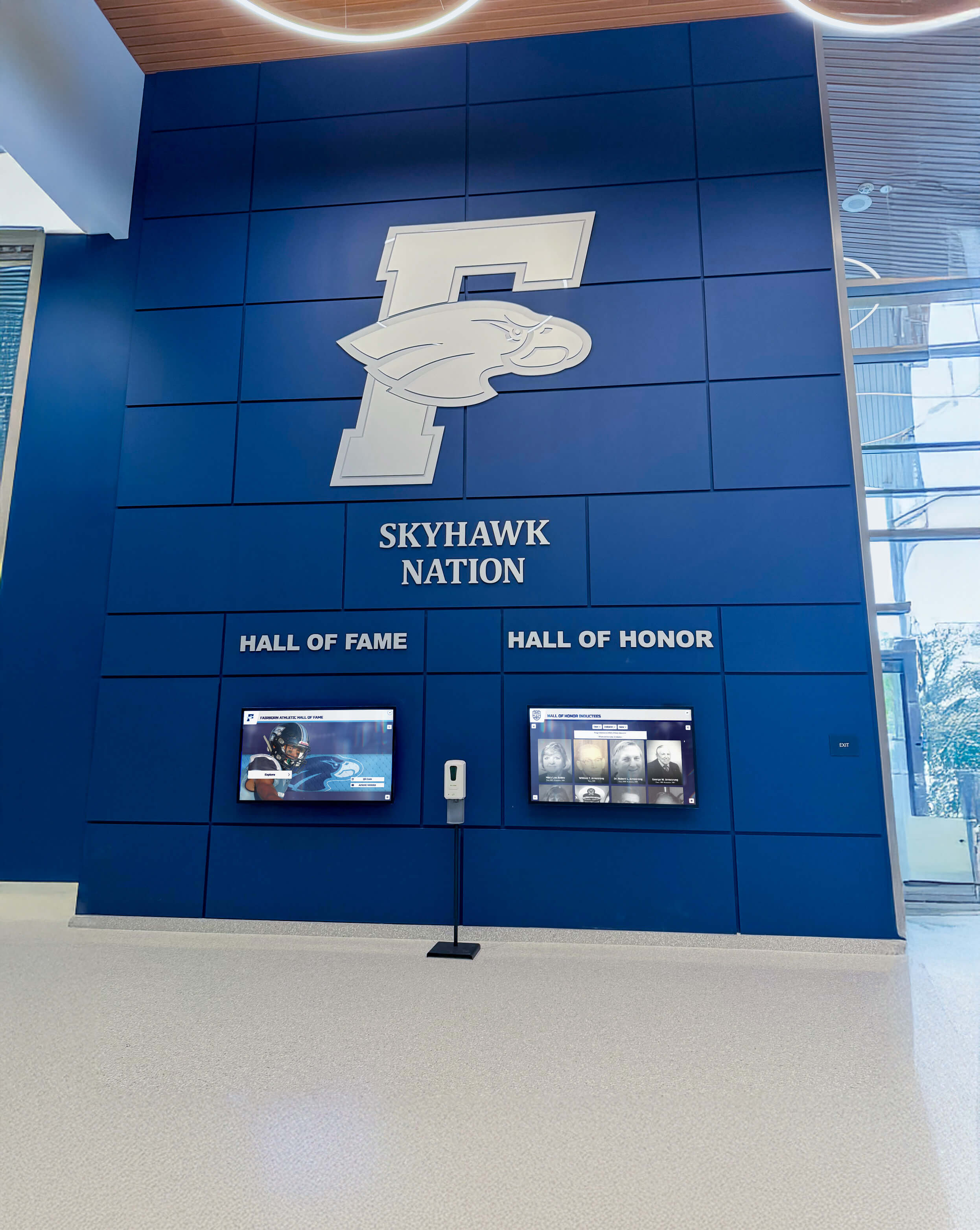
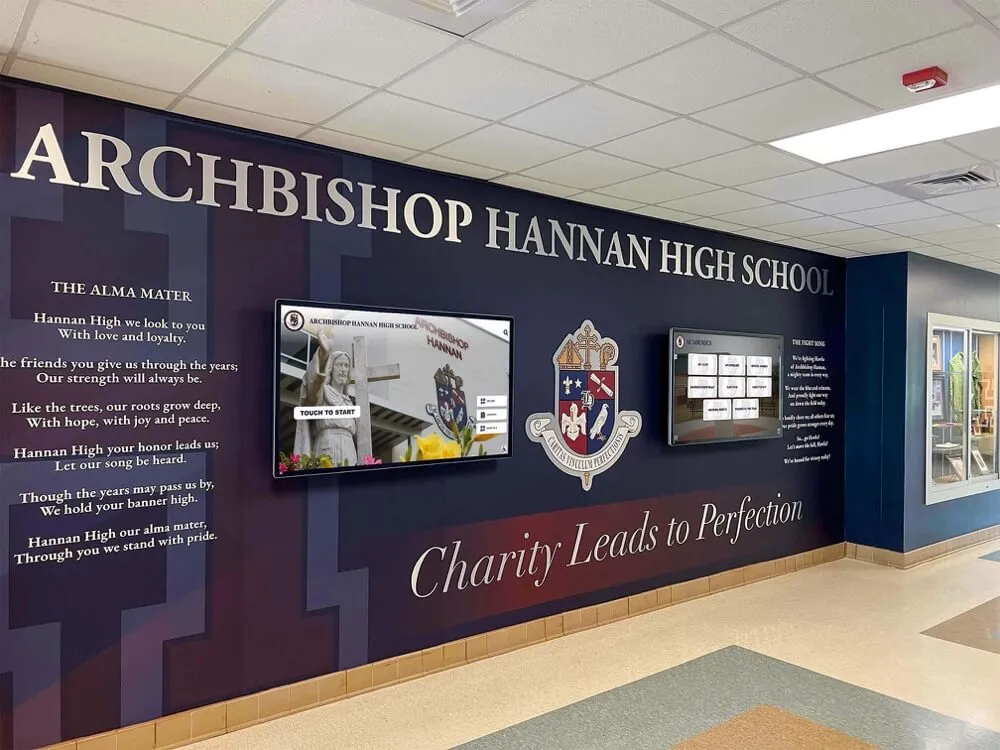
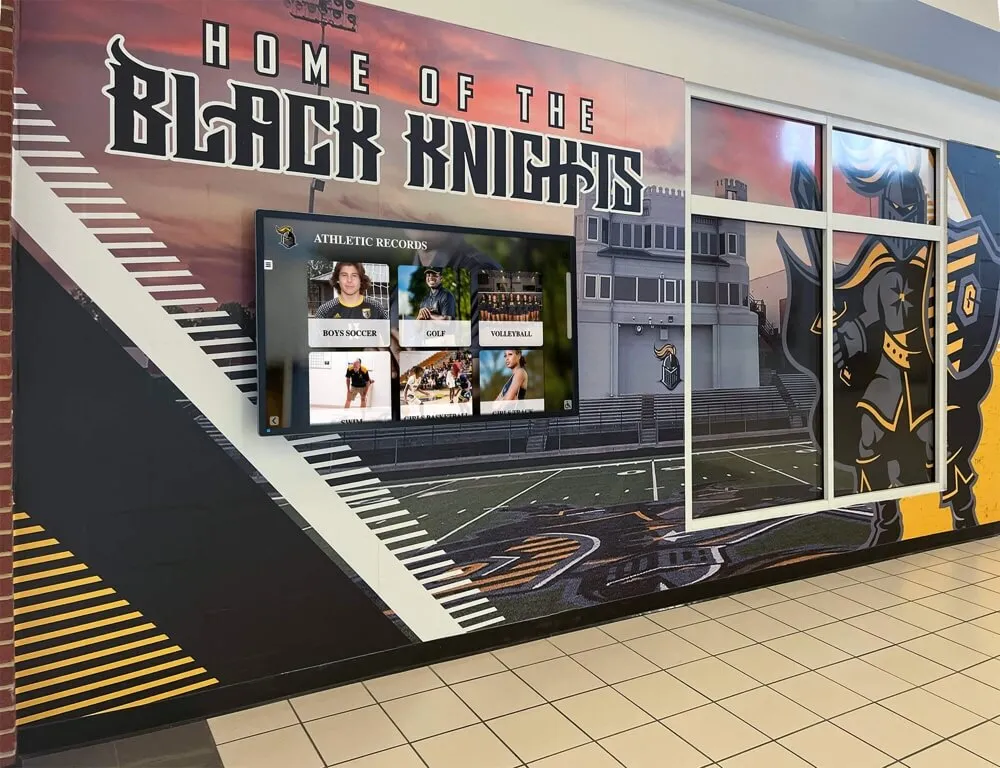
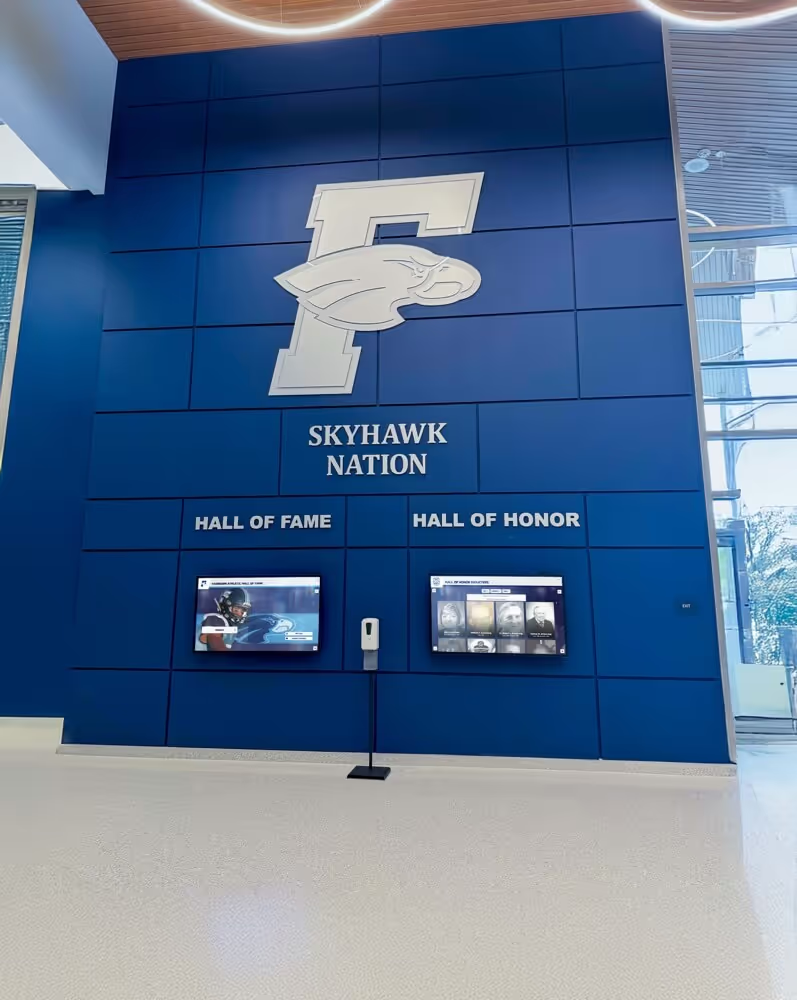
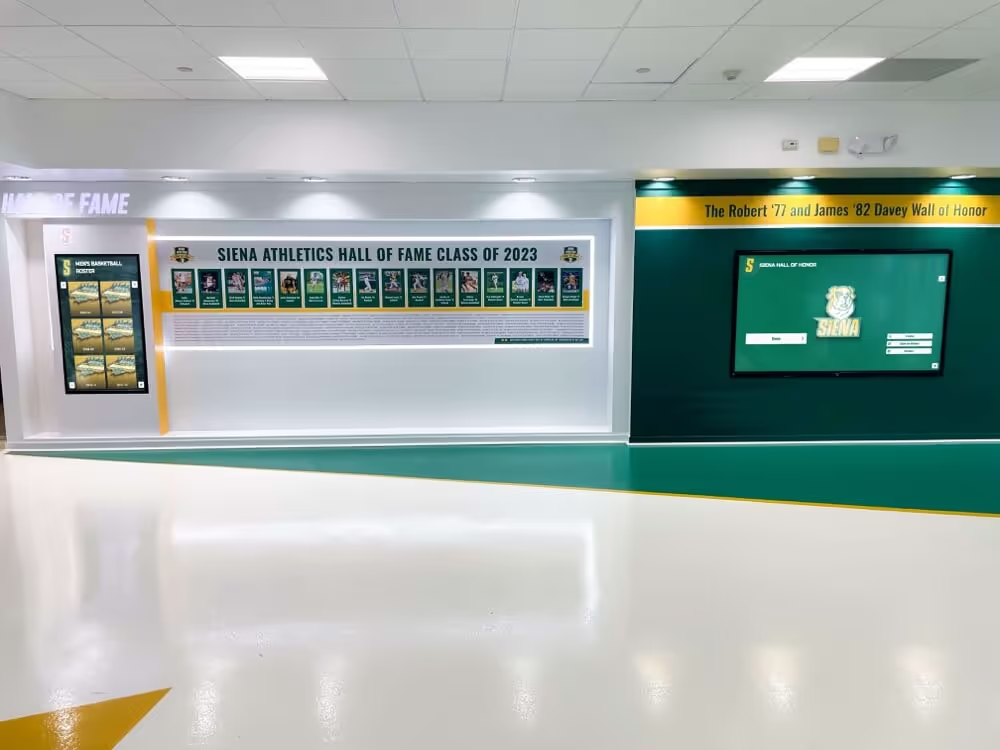
School identity displays set the tone for student section culture—when a school's spirit is visible throughout the building, it extends naturally into the stands
Kickoff Countdown As the kicker prepares: section counts down together “TEN! NINE! EIGHT! SEVEN! SIX! FIVE! FOUR! THREE! TWO! ONE! [explosion of noise on kickoff]”
Basketball Chants
Basketball’s indoor arena creates an acoustic environment where chants are dramatically more effective. Coordinated student sections in gymnasiums can generate noise levels comparable to college venues, creating genuine home-court advantage.
During Free Throws (Opposing Team) The classic “You missed it! You missed it!” after a missed free throw—but the anticipation build is equally important. While the opposing shooter lines up: total silence, sometimes exaggerated and theatrical. Then the section leader counts down from three, and on the shot, the section either erupts in noise or delivers the “You missed it” chant with maximum energy.
“Air it out!” — “No!” When the opposing ball-handler dribbles up the court, the section alternates call-and-response as a countdown of indecision: “Air it out! — No! — Air it out! — No! — AIRBALL!” (Said preemptively, daring the shot.)
Buzzer Beater Build End of quarter or half: “FIVE! FOUR! THREE! TWO! ONE! [Horn] YEAH!” Participates the crowd in the official timekeeping in a way that makes every end-of-quarter feel significant.
The Numbers Game Whenever a single player is scoring prolifically: “It’s all [PLAYER’S LAST NAME]! It’s all [PLAYER’S LAST NAME]!” Personalizing chants to specific players in the moment creates instant legends and memorable yearbook moments.
Baseball and Softball Chants
Baseball and softball games have a different rhythm—long stretches of anticipation punctuated by bursts of action. The best baseball student section chants work with this pace rather than against it.
Two Strikes Chant When the opposing batter gets to two strikes: “Stee-rike THREE! [pause] Stee-rike THREE!” Said in advance of the pitch as a declaration, building genuine tension.
Full Count Pressure “Three and two! Three and two! What are ya gonna do?”
Rally Starter When your team is down in late innings: “Rally time! [clap-clap] Rally time! [clap-clap] Get a hit! Get a run! Win this game! And have some fun!”
Volleyball Chants
Volleyball chants benefit from the sport’s point-by-point scoring—every rally ends in a score, which means opportunities for chant sequences are constant.
Serve Pressure Chant As your team prepares to serve match point: section counts down with the server’s motion: “ONE MORE! ONE MORE! ONE MORE!”
Ace Celebration “Ace! Ace! Ace! Ace! Beautiful!” (Increasingly drawn out with each repetition for maximum comic timing)
Kill Celebration After a spike kill: “BOOM! That’s a kill! BOOM! That’s a kill!”
Wrestling Chants
Wrestling is one of the most intimate spectator sports in high school—small venues, close contact with athletes, and individual match formats. The most effective wrestling chants are direct and personal.
During a Close Match “PIN! PIN! PIN! PIN!” (escalating in urgency as the near-fall continues)
Weight Class Introduction When your team’s wrestler is announced: “Let’s go [WRESTLER’S NAME]! [clap-clap clap-clap-clap]” — this personalizes the support and is enormously motivating for individual athletes.
After a Win “Shake his hand! [pause] Good match! [pause] Next!”
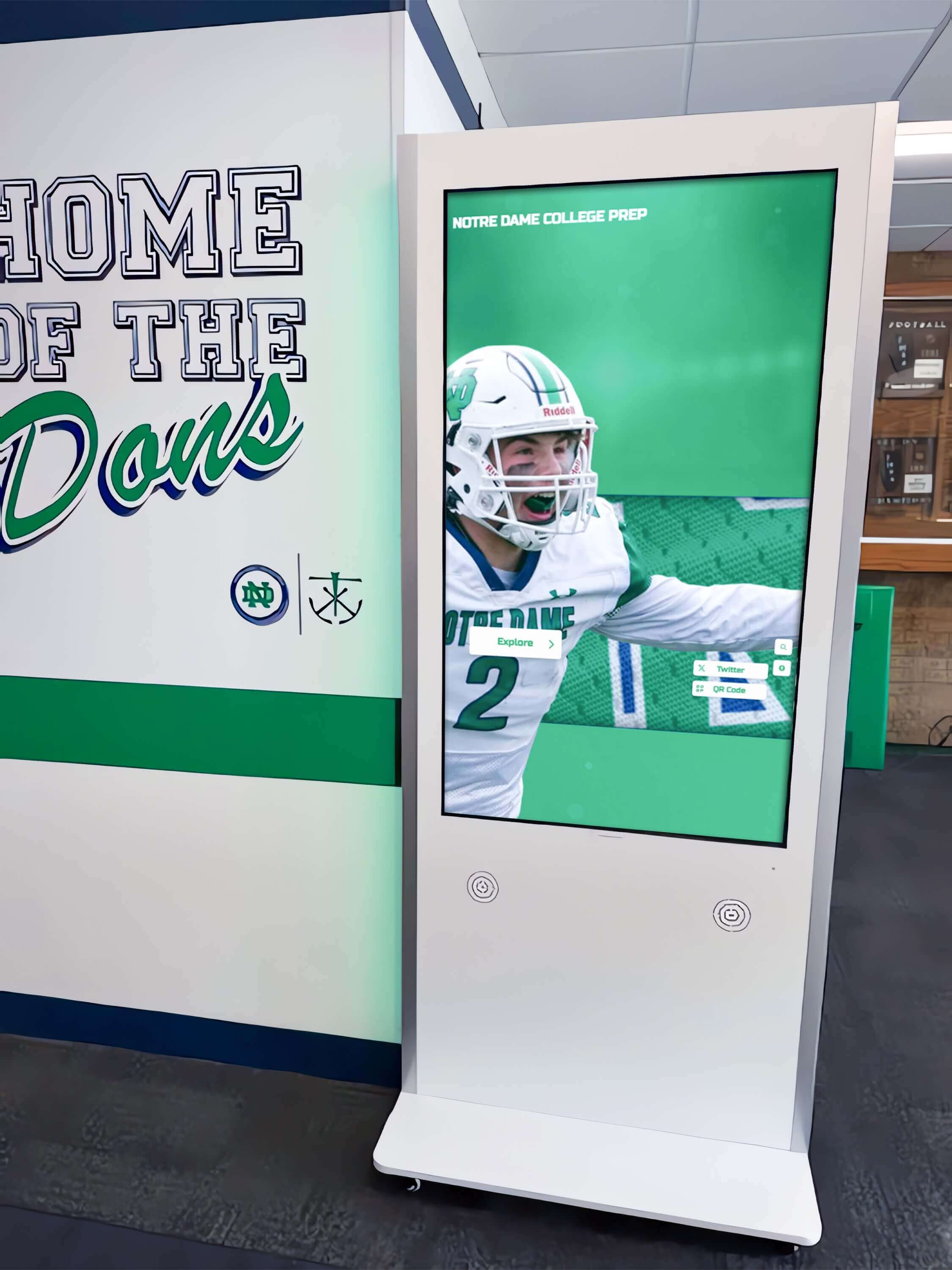
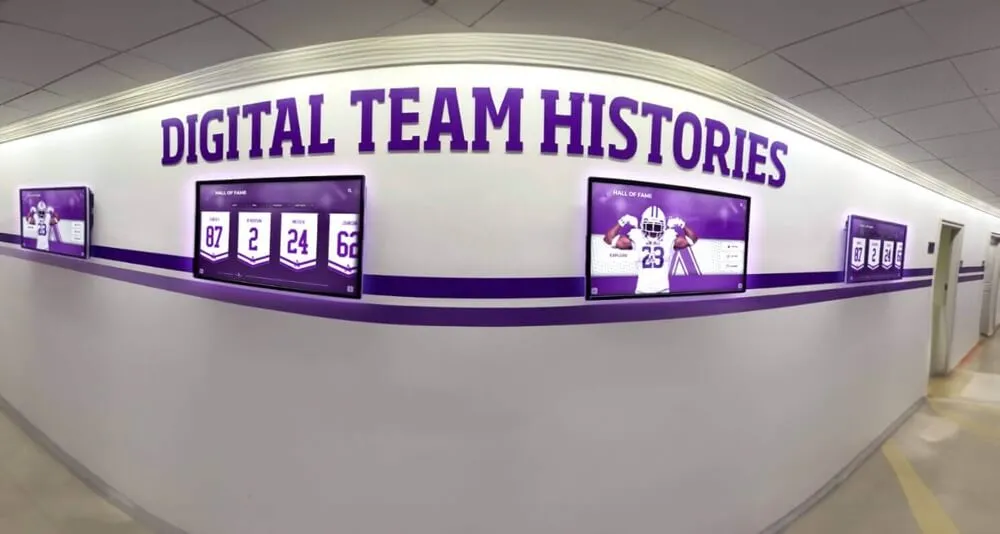
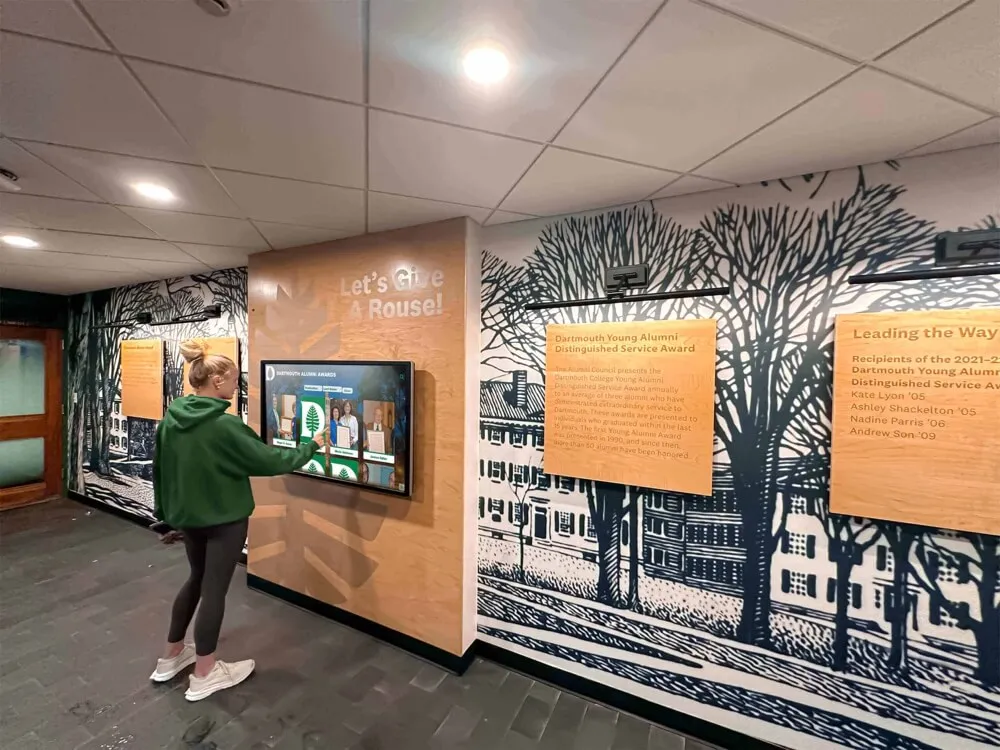
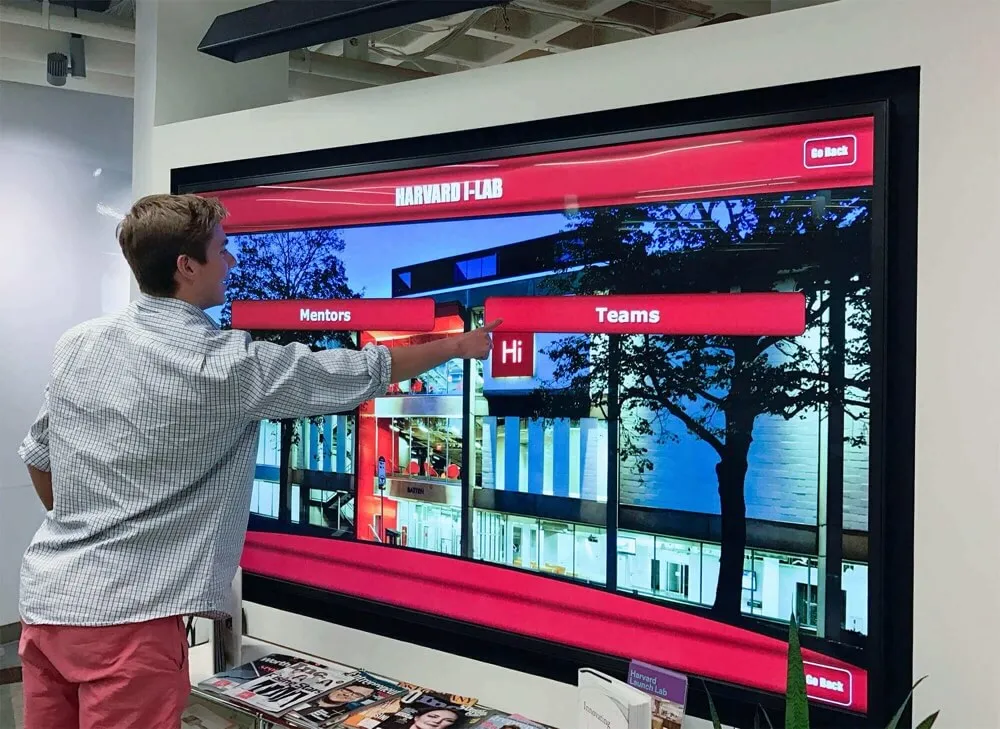
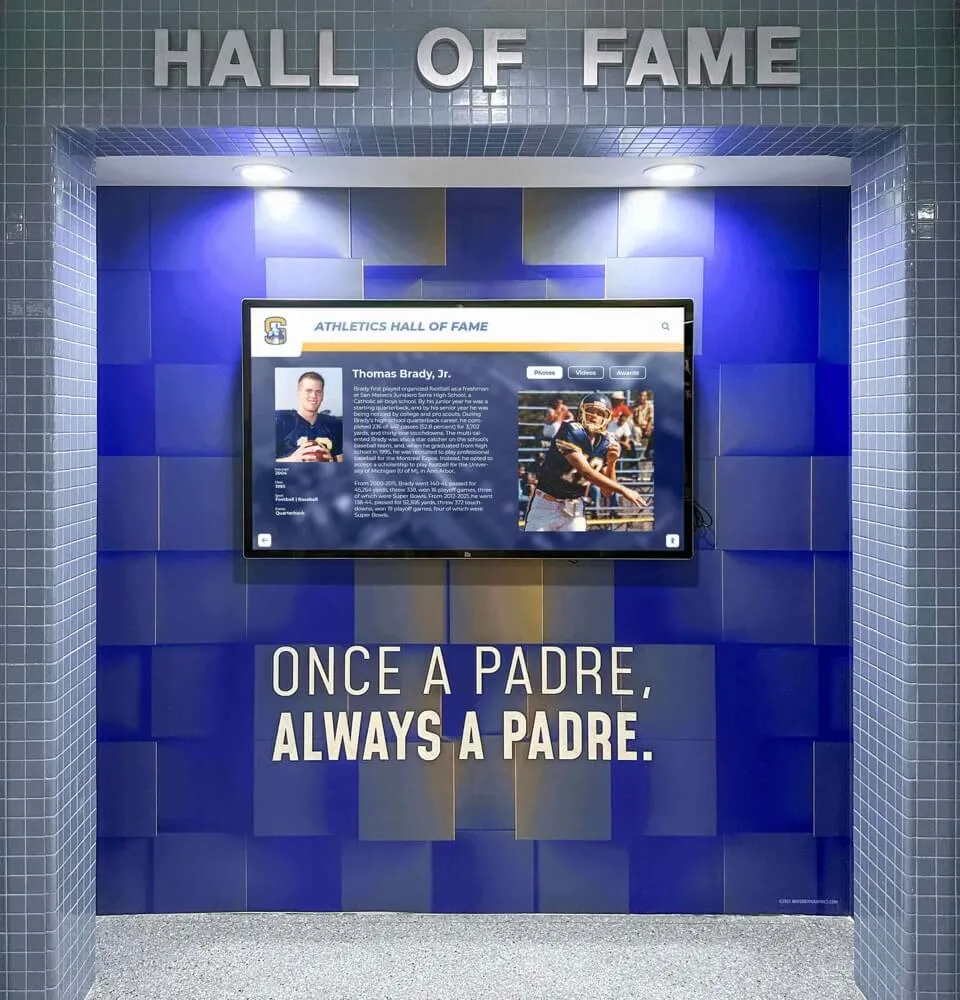
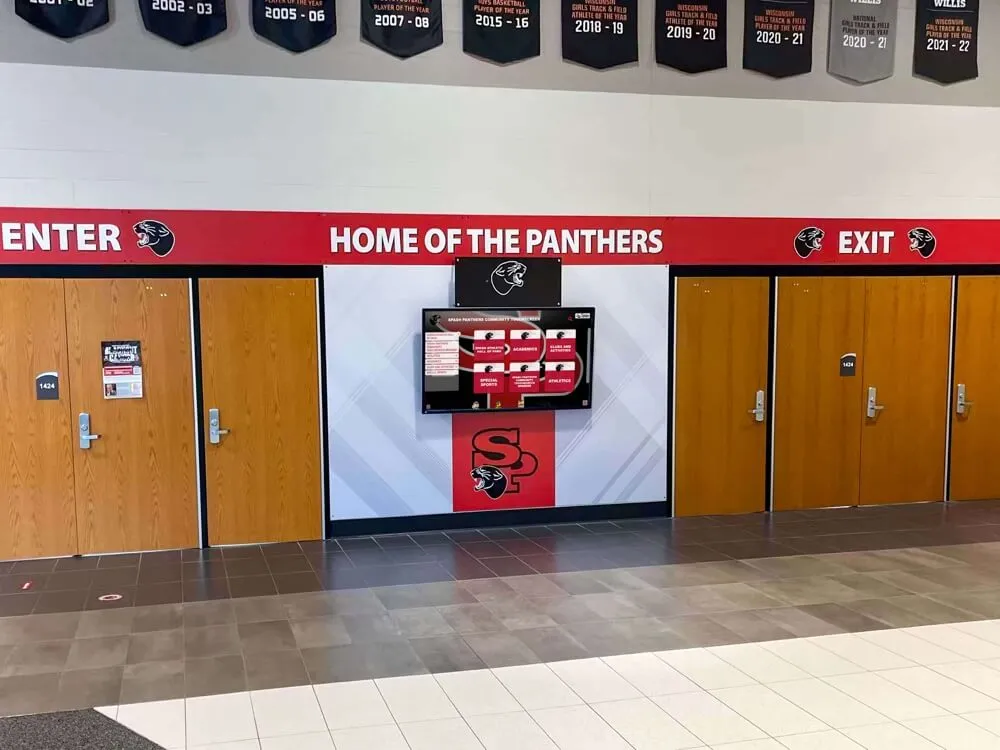
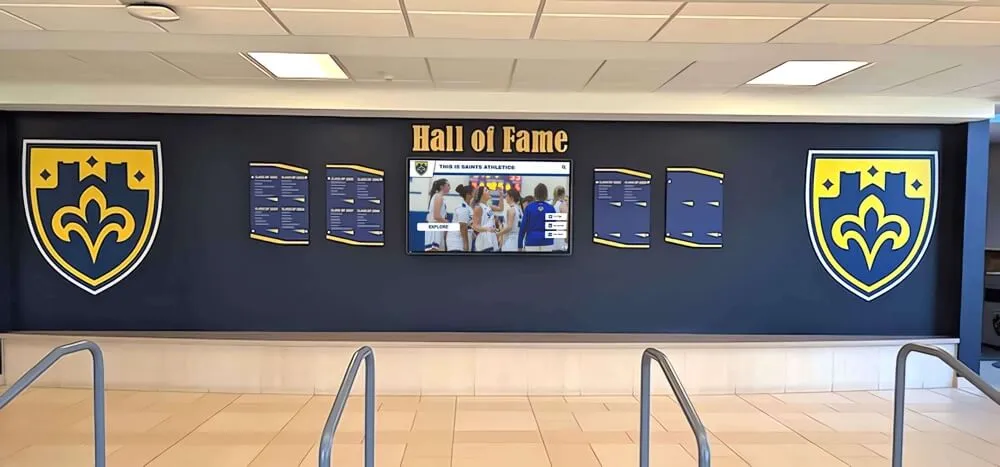
Interactive displays in athletic hallways build the visual context for student section culture—students who walk past team history every day cheer differently in the stands
How to Start a New Chant at Your School
The Leader-Launch Method
New chants succeed or fail based on how they’re introduced. The most reliable method:
Teach it before the game. A student section leader with a megaphone runs through the new chant once or twice during the pregame warmup period, when students are still taking their seats and the atmosphere is casual enough to rehearse.
Use a signal. Designate a specific visual signal (two arms raised, a jump, a colored flag) that means “new chant incoming.” Students learn to watch for the signal and prepare to follow.
Start with the leaders, not the crowd. A core group of five to ten enthusiastic students positioned throughout the section launch the chant confidently. Once neighbors join, it spreads naturally.
Choose the right moment. The best time to introduce a new chant is immediately after a score or a big play, when crowd energy is already elevated and people are looking for a way to express their emotion.
Repeat it three times before moving on. The chant needs to be performed enough times in a single sitting for students to internalize the rhythm and feel comfortable enough to sustain it.
What Makes a Chant Stick
Rhythmic simplicity. The best chants have a natural rhythmic groove that feels good to repeat. If you have to explain the timing, the chant will struggle.
Call-and-response structure. Giving half the crowd a specific role (responding to the leader’s call) ensures sustained participation. Pure unison chants require more coordination and leadership to maintain.
Brevity. Chants longer than four or five seconds require too much mental effort from casual participants. The best ones are two to eight words.
School specificity. Chants that reference your mascot, colors, school name, or a specific player create an ownership feeling that generic chants can’t replicate. These are the chants that become institutionalized.
Well-designed pep rally posters can include new chant lyrics in a format students read before the rally, dramatically improving the uptake of new material. Visual primer plus live practice is more effective than either alone.
Tips for Student Section Leaders and Cheer Captains
Building and Sustaining Section Energy
Stagger the chants. Student sections that run the same three chants on rotation throughout a game feel predictable and eventually tune out. Great section leaders maintain an inventory of 12 to 20 chants and deploy them strategically—specific chants for specific game situations, energy-building sequences for slow moments, and celebration chants for after big plays.
Control the silence. The moments of silence before an anticipated chant are as powerful as the chant itself. Training your section to go momentarily quiet on signal—then explode—creates the contrast that makes the volume feel genuinely impressive.
Use the opponent’s momentum against them. When the opposing team scores, the instinct is to go quiet. Train your section to do the opposite: respond immediately with the scoreboard chant or a defiant call-and-response. This visual and audible defiance has a measurable psychological effect on both teams.
Physical coordination multiplies impact. Synchronized movements—everyone jumping on the same beat, everyone raising their arms at the same moment, card stunts in larger venues—create a visual spectacle that amplifies the chant’s impact beyond pure volume. Your school’s mascot and colors give you a natural visual palette to work with. Exploring school mascot ideas can help you build chant and display concepts that feel cohesive with your school’s overall identity.
Managing a Mixed Crowd
Not everyone in your section is equally committed to participation. Here’s how to bring up the passive majority:
- Create a “chant zone.” Reserve the most central and visible bleacher rows for students who want to be actively involved. This concentrates energy and makes the section look more unified in photos and video.
- Acknowledge first-timers. Especially for freshmen at their first varsity game, a brief “welcome to the section” moment and simple chant tutorial during pregame transforms anxious observers into engaged participants.
- Use humor. Chants that have a comedic element—the drawn-out “airball” chant with theatrical timing, or exaggerated groaning when a call goes against the home team—lower the barrier to participation for students who feel self-conscious about shouting.
Connecting Student Sections to Broader Spirit Activities
The best student sections don’t operate in isolation—they’re integrated with the full ecosystem of school spirit. Spirit week dress-up days create the visual identity that the student section carries into games. Pep rallies build familiarity with chants before the pressure of a game environment. Back-to-school community events can introduce incoming freshmen to chant culture before their first game, dramatically reducing the “new student” inertia that weakens sections at the start of every school year.
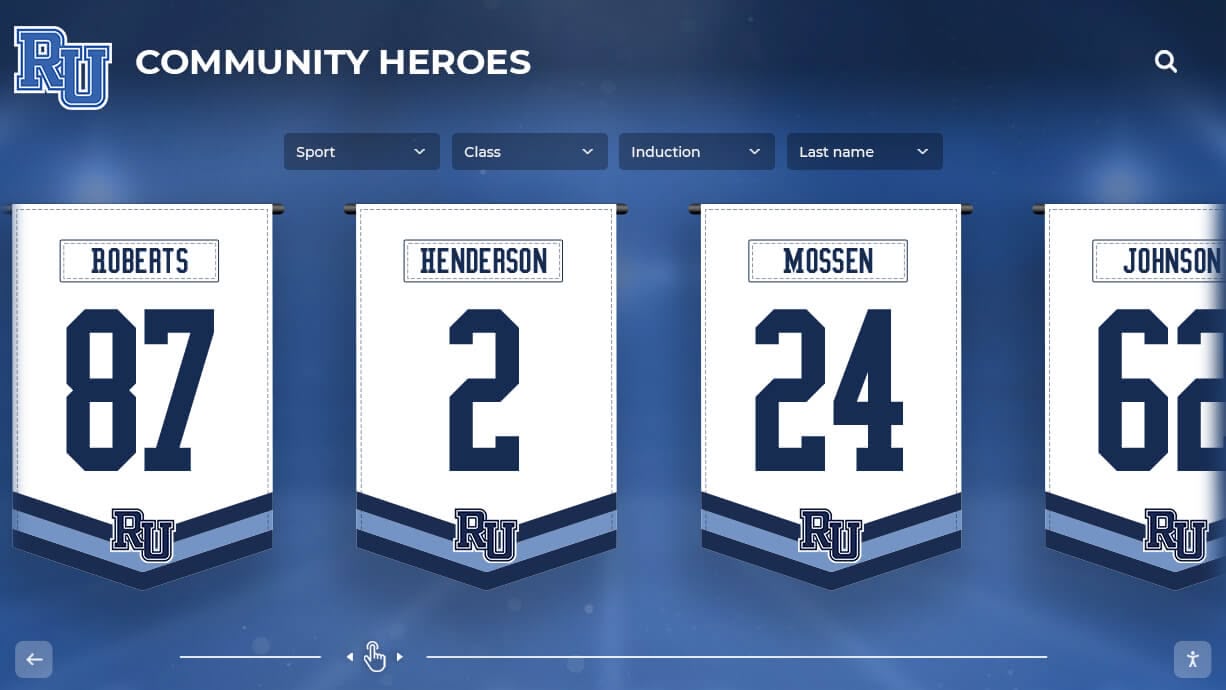
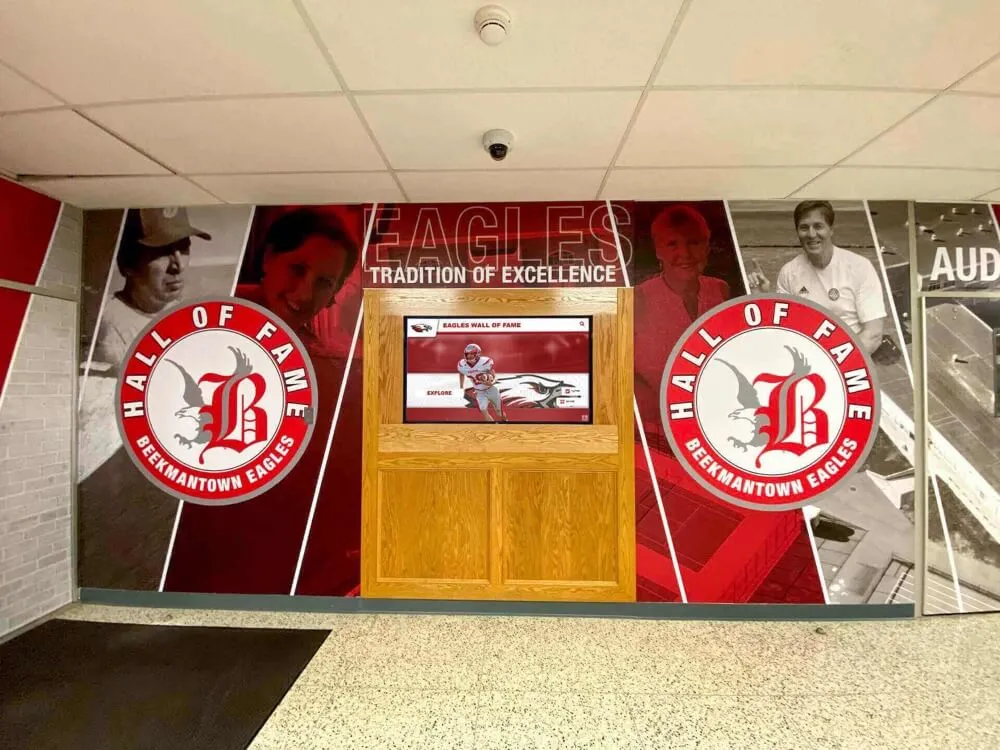
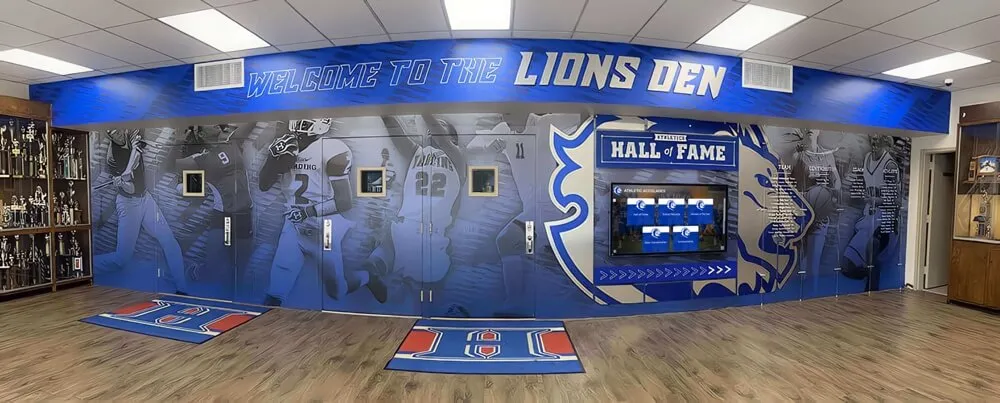
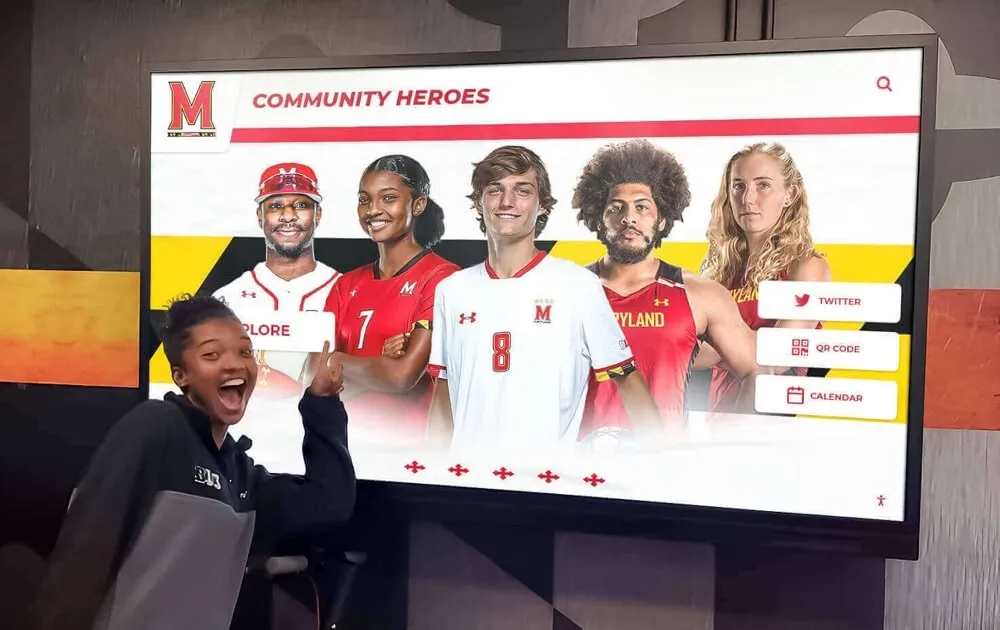
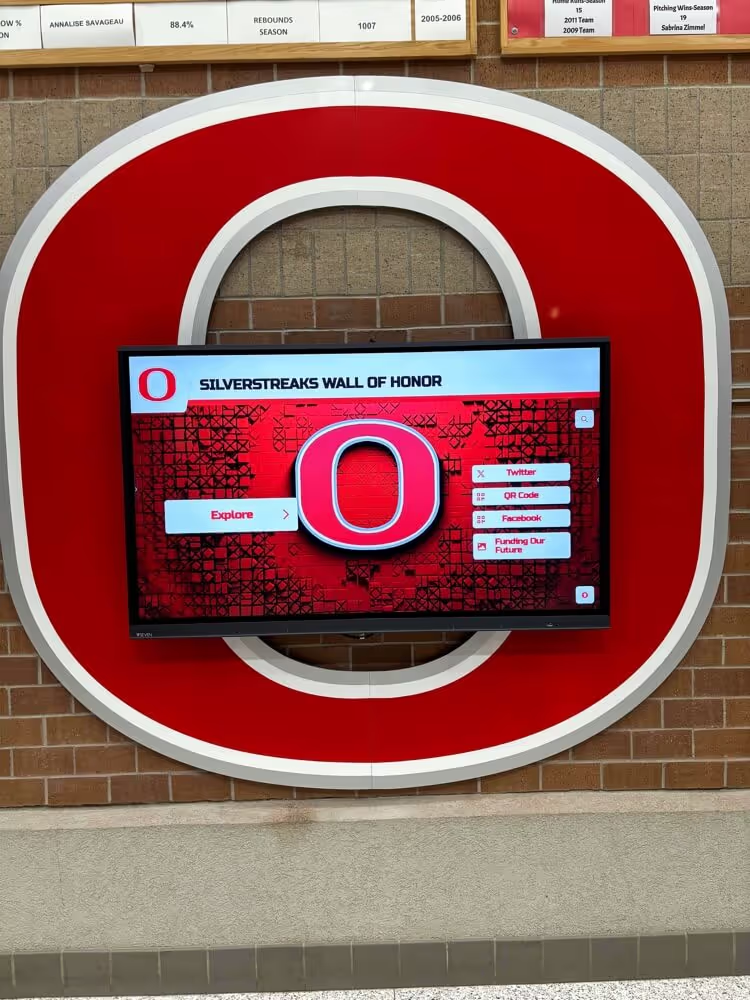
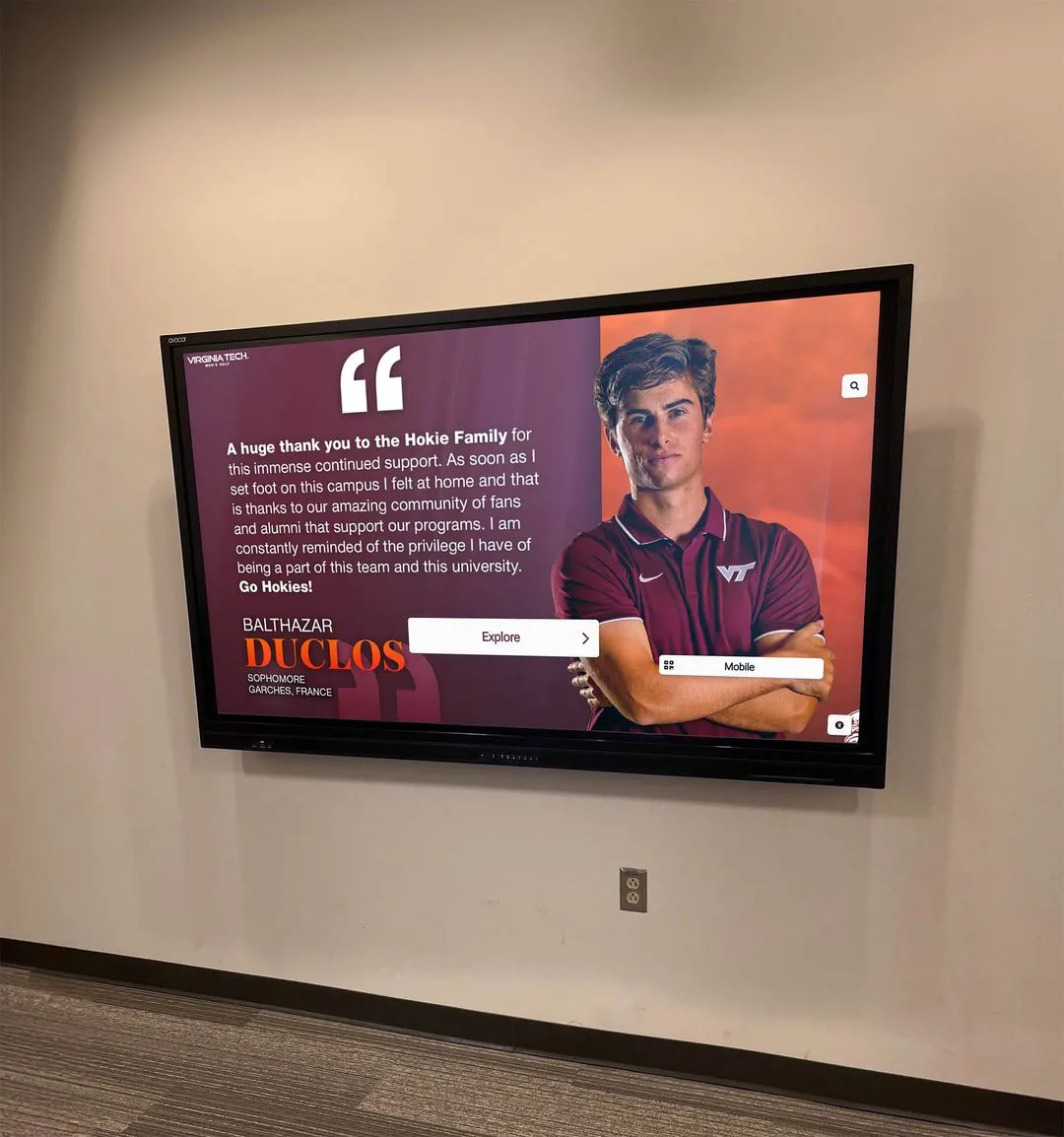
Hallway recognition displays that celebrate athletes by name make student sections more personal—students cheer louder for people they know are honored on their walls
Capturing Student Section Chants in Yearbook Spreads
Why Chant Culture Belongs in Your Yearbook
A yearbook that shows only the final score misses most of what actually happened. The moment when five hundred students spontaneously rose to their feet to deliver the scoreboard chant. The freshmen who had never chanted before finding their voice at the district championship. The senior who has led the student section for four years conducting the crowd one last time. These are the stories that matter to the students who lived them—and they deserve documentation.
Yearbook spreads dedicated to student section culture consistently rank among the most emotionally resonant pages in any annual. They capture the sense of belonging and collective identity that makes school feel meaningful, not just academically but as a lived community experience.
Photography Approaches for Chant Spreads
Wide crowd shots during peak chant moments. These images—a section mid-chant, arms raised, faces lit with emotion—communicate the scale and energy of collective voice. They work best as full-page bleeds or dominant spread photos.
Leader portraits. The student section leader with a megaphone, mouth open in a call, crowd visible behind—this is an iconic image type that personalizes the spread while showing the social architecture of how chanting actually works.
Reaction close-ups. Tight frames on individual faces during moments of collective celebration or rallying intensity convey emotion in a way that wide shots can’t. A student section spread needs both scales to tell the complete story.
Sequence photography. Shooting a burst during a synchronized chant—arms going up, arms at full extension, arms coming down—gives yearbook designers options for creating motion-sequence panels that visually express the temporal rhythm of chanting.
Cross-sports compilation. A spread that documents student section culture across multiple sports—the football home opener, the basketball championship run, the wrestling district meet—shows that section culture isn’t a football-only phenomenon but a year-round expression of school identity.
Design Elements for Chant Spreads
Typography as visual chant. Setting the words of your school’s most iconic chant in large display typography—letters that fill the page background—creates a distinctive design element that communicates the content visually before readers engage with any caption or story.
Action captions. Instead of identifying who is in the photo, write captions that capture what was happening emotionally: “Third quarter, down by six, and the section just found its voice” tells a story that “Students cheer at a home game” never will.
Sidebar chant catalogs. A simple list of your school’s top ten chants—with brief notes on when each is used and how it started—gives readers both nostalgia and information. This sidebar format also makes excellent archival content for digital yearbooks.
Color consistency with school identity. Yearbook spreads for spirit content should use your school’s colors aggressively—this is the appropriate place for saturated, high-energy color palettes that would feel out of place in an academic achievement spread.
Learning more about digital yearbooks and modern school memory preservation can help advisers understand how digital platforms create new possibilities for chant documentation—including embedded audio and video—that print yearbooks simply cannot replicate.
Preserving Chant Traditions in Digital Yearbooks and Archives
The Problem with Oral Traditions
Student section chants exist in one of the most vulnerable forms of institutional memory: pure oral tradition. Unlike a school song printed in every program, a fight song recorded by the band, or a chant catalog posted to a school website, most chants are passed down informally—experienced students teach new students by demonstration, and if that chain breaks (a graduating class that doesn’t pass things down, a new student section leader unfamiliar with the catalog), entire chant traditions disappear in a single year.
Schools that have built digital yearbook archives are discovering an unexpected benefit: the documentation impulse that drives good yearbook coverage naturally captures oral traditions. When a yearbook spread on the student section includes a catalog of chants, or when a video clip of the student section in full voice is embedded in a digital yearbook, that tradition is preserved in a recoverable form.
What to Document Beyond the Score
The chant catalog itself. A simple text document listing all active chants with their words, rhythms, and context (what sport, what situations) is invaluable for future section leaders. Include it as a yearbook sidebar or digital supplement every year.
Video of peak chant moments. Even thirty-second clips of the student section during a championship game capture something irreplaceable. A future student who discovers a digital yearbook from fifteen years ago watching the section perform the same chant their generation uses is experiencing genuine institutional continuity.
Student section leader profiles. Who led the section this year? What was their leadership philosophy? What new chants did they introduce? These profiles—a yearbook staple for athletes and student government—should extend to the individuals who built crowd culture.
Chant origin stories. Many great chants started as in-jokes, accidental moments, or deliberate borrowings that evolved through use. Capturing how specific chants began—“it started at the 2019 district semifinal when someone in the third row started it spontaneously and the whole section picked it up in ten seconds”—turns a chant into a myth, and myths are the currency of institutional tradition.
Effective historical photo archiving for schools includes not just athletics but all dimensions of school spirit culture—student sections, pep rallies, spirit week, and the moments of collective celebration that define what it felt like to be a student at your school during a particular era.
Digital Yearbook Features That Enhance Chant Documentation
Embedded video. Digital yearbooks can include the actual video of the student section chanting—something print yearbooks could never do. A thirty-second clip of five hundred students performing the scoreboard chant after a big play communicates something no photograph or caption ever fully captures.
Audio annotations. Some digital yearbook platforms allow audio overlays on specific pages. Imagine tapping on the student section spread and hearing the echo of the gymnasium crowd. This kind of sensory documentation creates emotional engagement that print cannot match.
Searchable text. When chant lyrics are included as actual text in a digital yearbook (rather than as image files), future readers can search for specific words and find the spread that documented their favorite chant tradition.
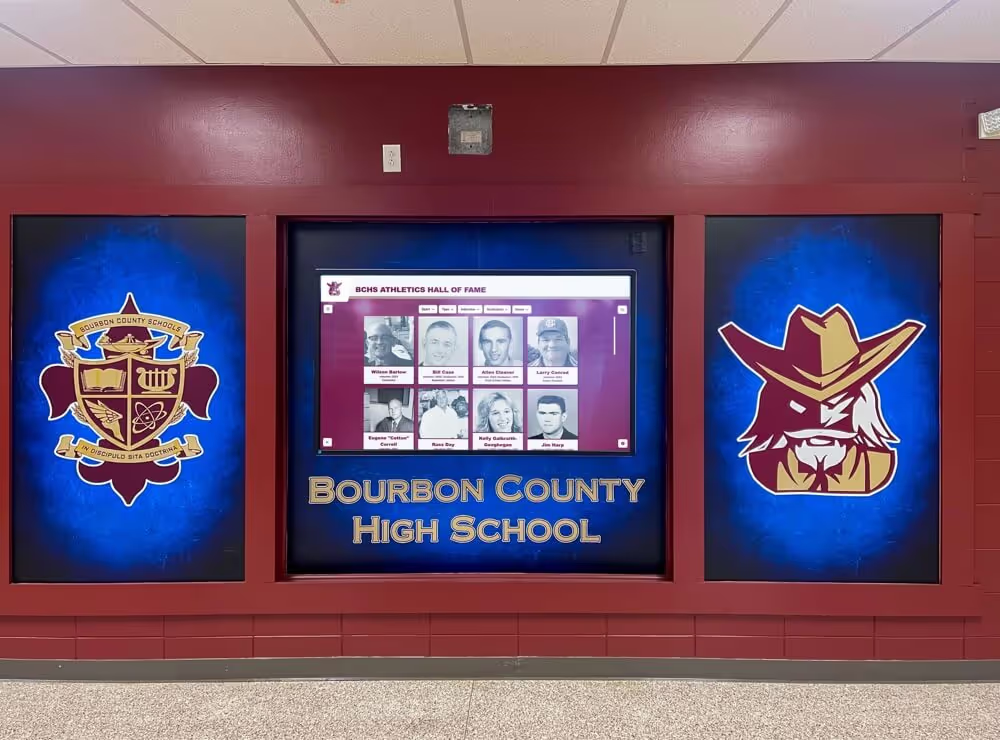
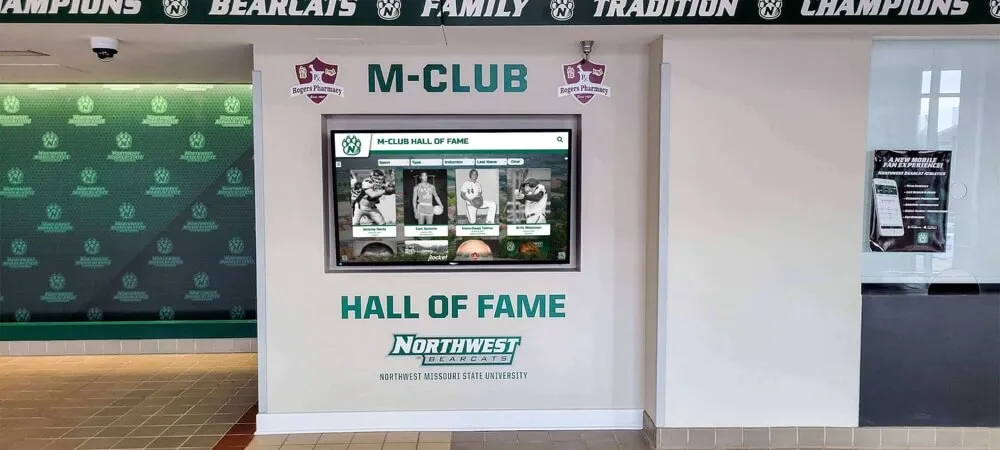
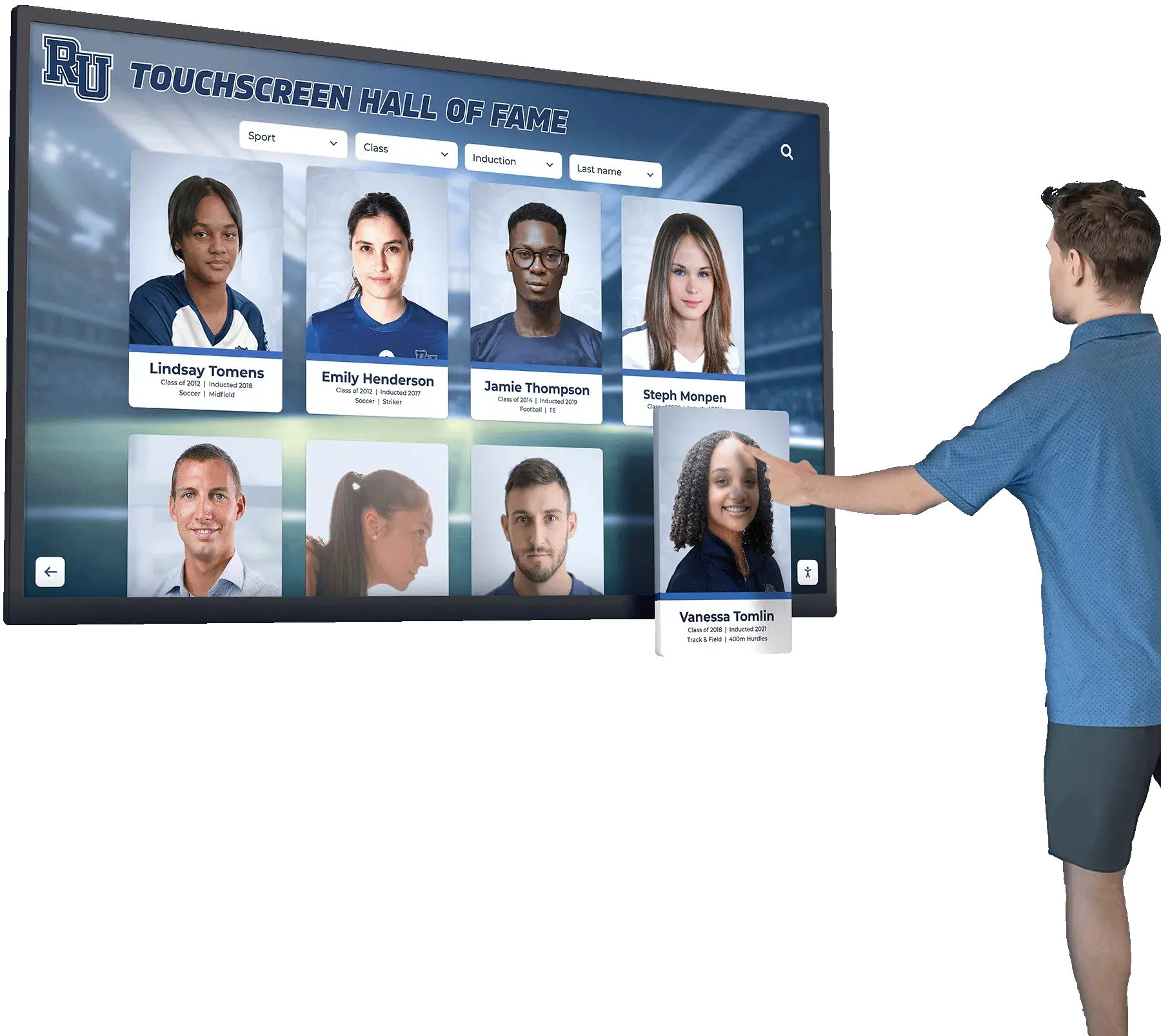
Cross-year browsing. Digital archives let students compare student section culture across multiple years—seeing how chants evolved, which ones persisted, and which were introduced in specific championship seasons. This longitudinal perspective transforms the yearbook from a one-year snapshot into a living document of school identity. Touchscreen yearbook displays installed in school lobbies and hallways can make these archives permanently accessible, creating a physical space where the oral tradition of chanting connects to the visual tradition of yearbook photography.
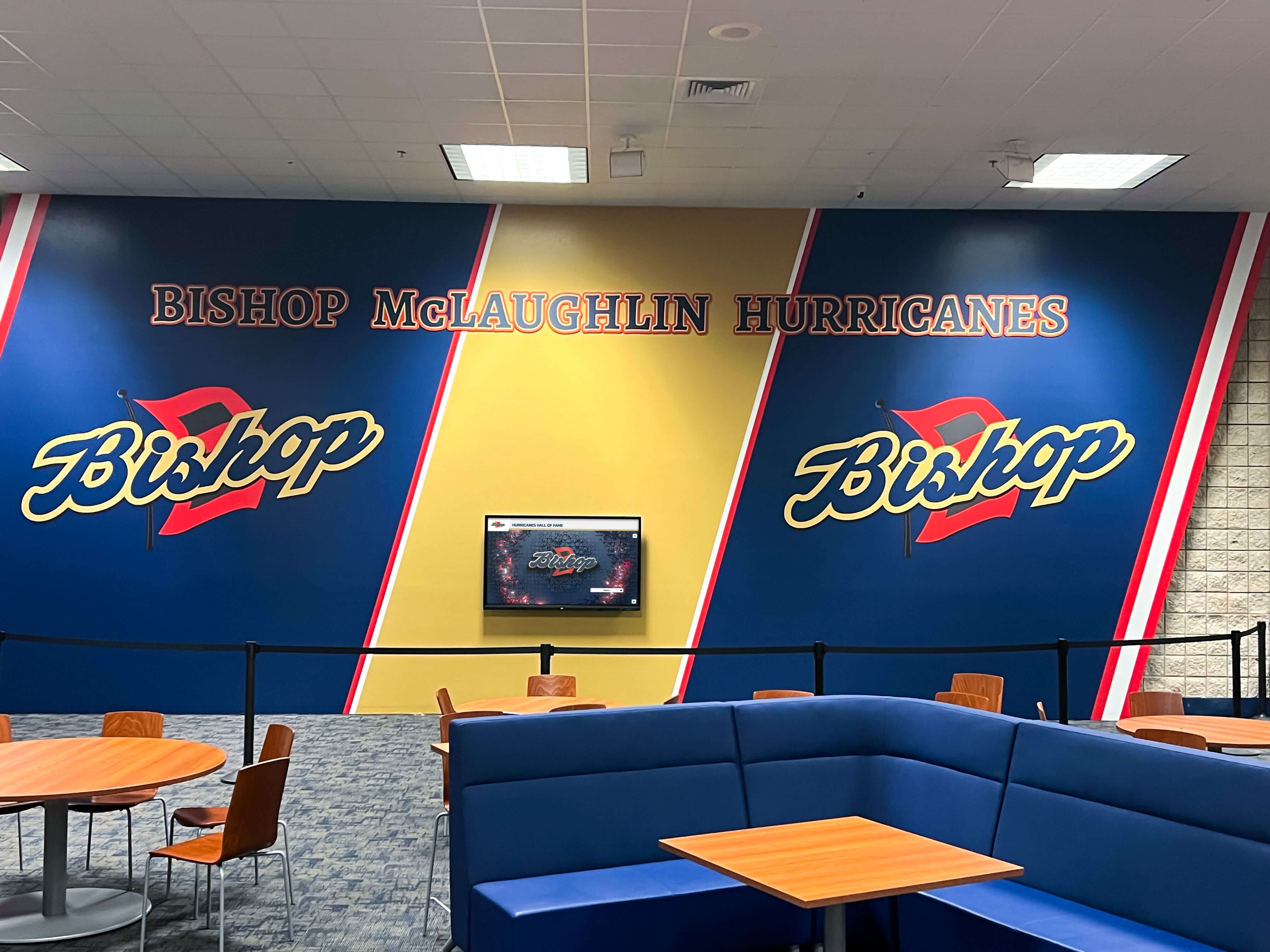
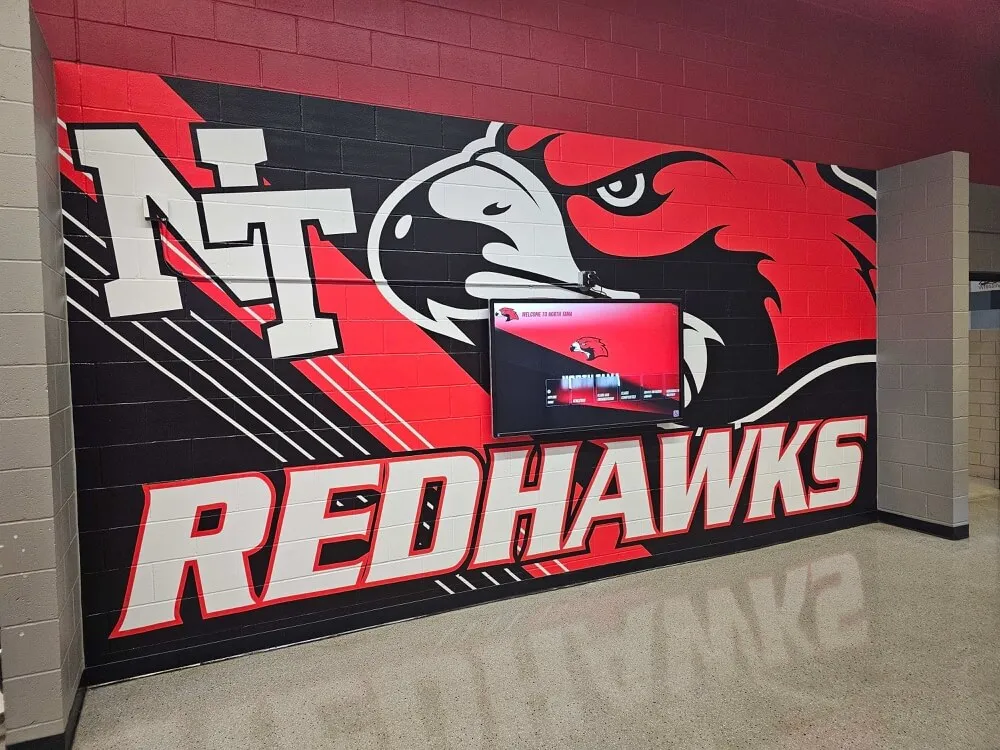
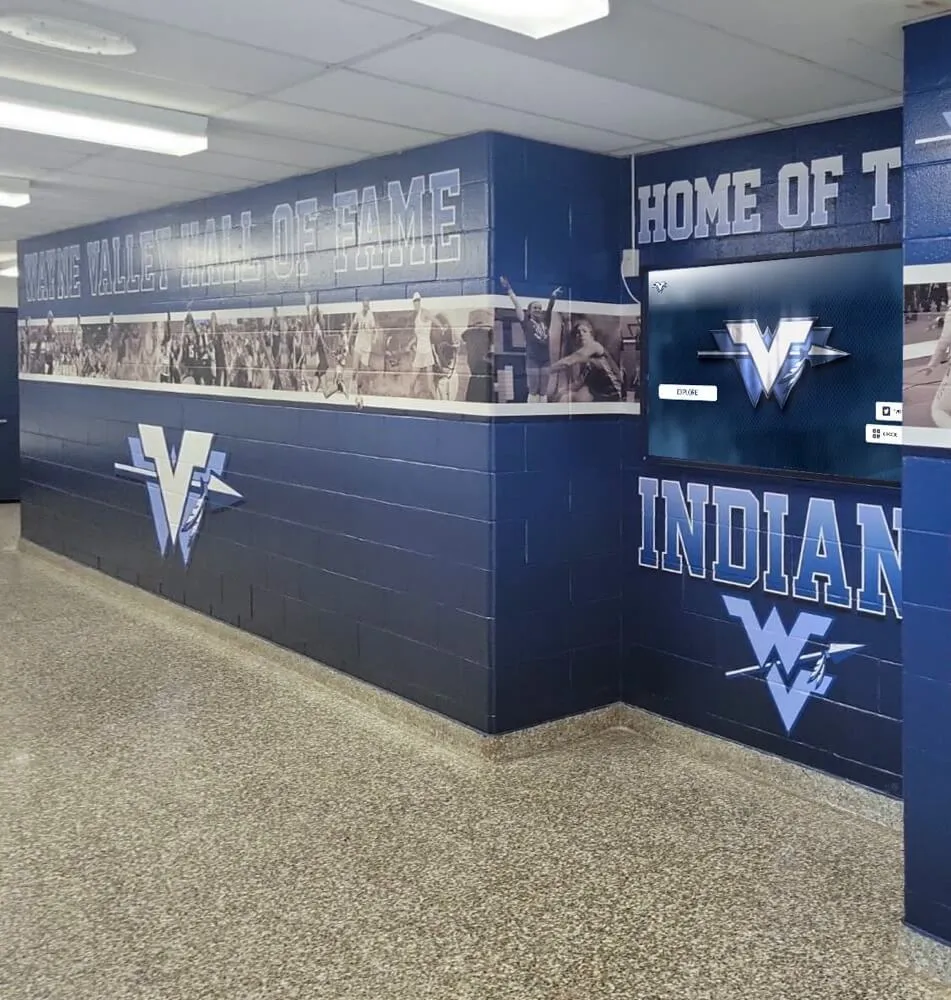
Spirit murals throughout school spaces reinforce chant culture daily—students who are surrounded by their school identity carry it naturally into every game
Building a Living Chant Archive
The most sustainable approach to chant preservation combines annual yearbook documentation with a persistent digital record:
Annual chant catalog. Each yearbook includes a dedicated sidebar or supplemental page cataloging all active chants. Section leaders are responsible for submitting the catalog to yearbook staff before the publication deadline.
Digital supplement. The yearbook’s digital edition includes a video compilation of student section moments from throughout the year, organized by sport season.
Incoming class introduction. Each fall, the student section leadership hosts a brief chant orientation for freshmen—and the yearbook staff documents this as a story, capturing both the chant content and the tradition-passing moment.
Online archive page. A simple page on the school website or digital yearbook platform hosts the chant catalog, updated each year, with links to historical video documentation going back as far as records exist. Tools for consolidating and organizing school photo archives can be applied not just to class portraits but to spirit photography—creating searchable, organized digital libraries of student section moments sorted by year, sport, and event.
Alumni connection. Published chant catalogs give returning alumni something specific to reconnect with at homecoming. Walking back into a gymnasium and hearing the same chant that defined your student experience is a powerful moment of institutional belonging—and one that deepens alumni affinity with the school.
Common Questions About Student Section Chants
What makes a good student section chant for high school? The best student section chants are short (under eight words), rhythmically simple, and easy to learn by watching others. They have a call-and-response structure whenever possible, they reference your school’s specific identity, and they fit naturally into the emotional moments of the game—celebration, pressure, defense, and rallying.
How do you start a new chant in a student section? Introduce it at a low-pressure moment during pregame warmup, use a small group of committed students spread throughout the section to launch it, practice it three times in quick succession, and choose a memorable signal that lets the crowd know a new chant is coming. Printing the lyrics on a pregame pep rally poster also dramatically improves uptake.
How do you include student section chants in a yearbook spread? Use wide crowd photography shot during peak chant moments, include the lyrics of your school’s most iconic chants as text elements in the spread design, write captions that capture the emotional context rather than just identifying who is in the photo, and consider a sidebar catalog listing your top ten chants with the context for when they’re used.
Can digital yearbooks preserve chant culture better than print? Yes, significantly. Digital yearbooks can embed video of the student section in full voice, include audio annotations, host the searchable text of chant catalogs, and connect individual years in a cross-year archive that print cannot replicate. The combination of video documentation and text catalog creates a genuinely recoverable record of oral tradition.
Conclusion: Student Section Chants as School Legacy
The student section is one of the purest expressions of school spirit—spontaneous, collective, and unmistakably alive. Student section chants are its language: the words and rhythms that transform individual students into a unified community, that carry a team through difficult moments, and that echo in alumni memories for decades after graduation.
Building a strong chant culture takes intention—cultivating section leaders, expanding and refreshing your chant repertoire, creating practice opportunities before the biggest games, and building the school-wide spirit ecosystem that makes great student sections possible. But preserving that culture takes equal intention: systematic documentation through yearbook spreads, digital archives, video records, and the annual ritual of passing chants from graduating seniors to incoming freshmen.
Schools that do both—build great chant culture and document it rigorously—create something that transcends any individual class. They build a living tradition that connects every student who has ever filled those bleachers, every team that has drawn energy from that coordinated noise, every alumni who returns to hear the same chants their own section delivered a generation ago. That connection is the deepest form of school spirit, and it’s worth capturing.
Preserve Your School’s Spirit Culture in a Digital Yearbook
Student section chants, spirit week memories, pep rally photography, and the full texture of school spirit life deserve documentation that lasts. Discover how digital yearbook platforms help schools capture, organize, and share every dimension of student life—from championship spreads to chant catalogs—in an interactive format that alumni can access and explore for decades.
Explore Digital Yearbook Solutions to see how Rocket Alumni Solutions helps schools turn spirit culture into permanent, searchable, shareable institutional memory.