



Every school faces a fundamental challenge: how to recognize academic achievement in ways that genuinely motivate students, honor their hard work, and create lasting institutional pride. Traditional approaches—honor roll certificates tucked away in folders, static plaques that quickly fill available wall space, or brief announcements during morning homeroom—often fall short of creating the meaningful recognition students deserve and families want to celebrate.
The stakes are higher than many educators realize. Research consistently shows that well-designed student recognition programs correlate with improved academic performance, increased student engagement, higher family satisfaction, and stronger school culture. When students see their achievements celebrated visibly and permanently, they internalize the connection between effort and acknowledgment while inspiring peers to pursue similar excellence.
This comprehensive guide explores evidence-based strategies for creating student recognition award programs that genuinely honor academic achievement across all levels—from elementary reading milestones to high school valedictorian honors—while addressing the practical challenges schools face in implementation, documentation, and sustained visibility.
Schools implementing modern student recognition strategies report 35-50% increases in family engagement around academic programs, measurable improvements in student motivation to pursue challenging coursework, and significant enhancement in overall school climate as achievement becomes more visible and celebrated throughout the institution.

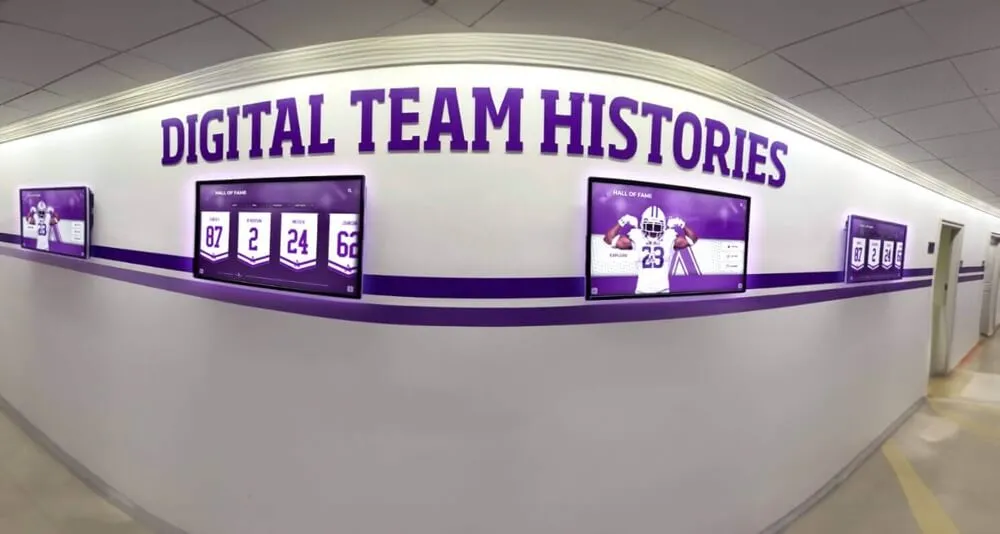
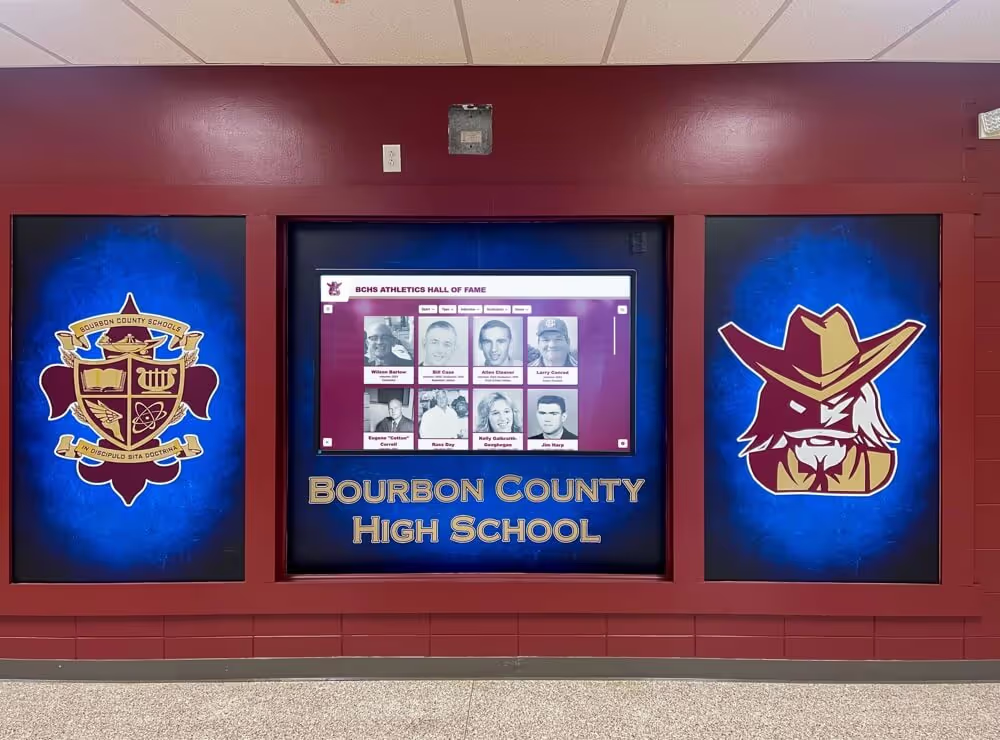
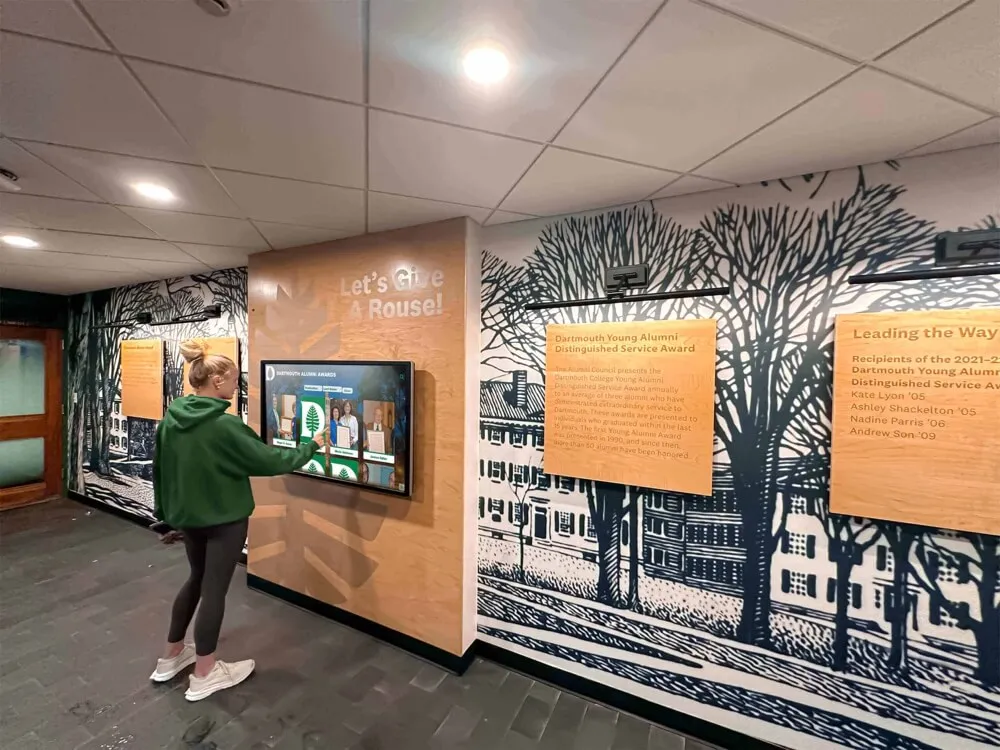
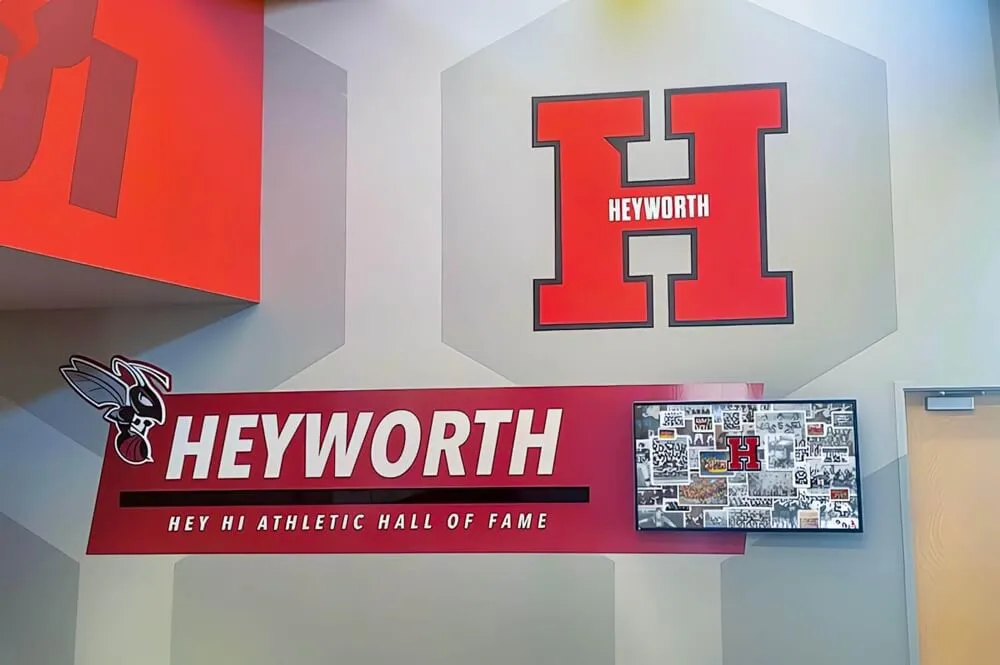
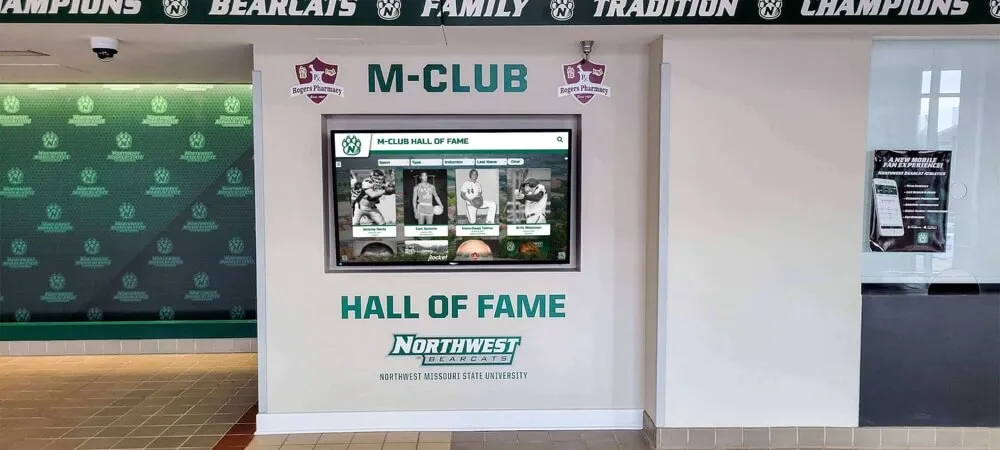
Modern recognition systems create professional, permanent documentation of student academic achievement that traditional paper certificates cannot match
The Psychology Behind Effective Student Recognition Awards
Understanding how recognition influences motivation and achievement helps educators design programs that maximize positive outcomes while avoiding common pitfalls.
Why Academic Recognition Matters More Than You Think
Recognition fulfills fundamental human needs for acknowledgment and belonging, with particularly powerful effects during developmental years:
Intrinsic Motivation Enhancement
- Public recognition validates effort and reinforces achievement behaviors
- Visible celebration of academic success normalizes intellectual excellence as desirable
- Peer acknowledgment creates positive social pressure toward achievement
- Recognition helps students connect abstract effort to concrete outcomes
Identity Formation and Self-Concept Development
- Academic recognition contributes to students’ developing self-perception
- Celebrated achievement becomes part of how students see themselves
- Recognition from respected adults strengthens positive academic identity
- Public acknowledgment validates students’ intellectual capabilities
Social Learning and Modeling Effects
- Visible recognition creates aspirational models for other students
- Peer achievement demonstrates that excellence is attainable
- Diverse recognition shows multiple pathways to acknowledgment
- Systematic celebration normalizes academic ambition and achievement
Research from educational psychology demonstrates that students receiving appropriate recognition maintain achievement trajectories at rates 18-25% higher than comparable students without recognition, with effects particularly pronounced for students from backgrounds where academic achievement may be less culturally emphasized or economically supported.
The Risks of Recognition Done Wrong
Poorly designed recognition programs can actually undermine motivation and create negative outcomes:
Recognition Inflation Problems
- Overly broad recognition dilutes meaning and prestige
- “Everyone gets an award” approaches fail to differentiate genuine achievement
- Meaningless recognition becomes background noise students ignore
- Inflated recognition devalues effort required for genuine accomplishment
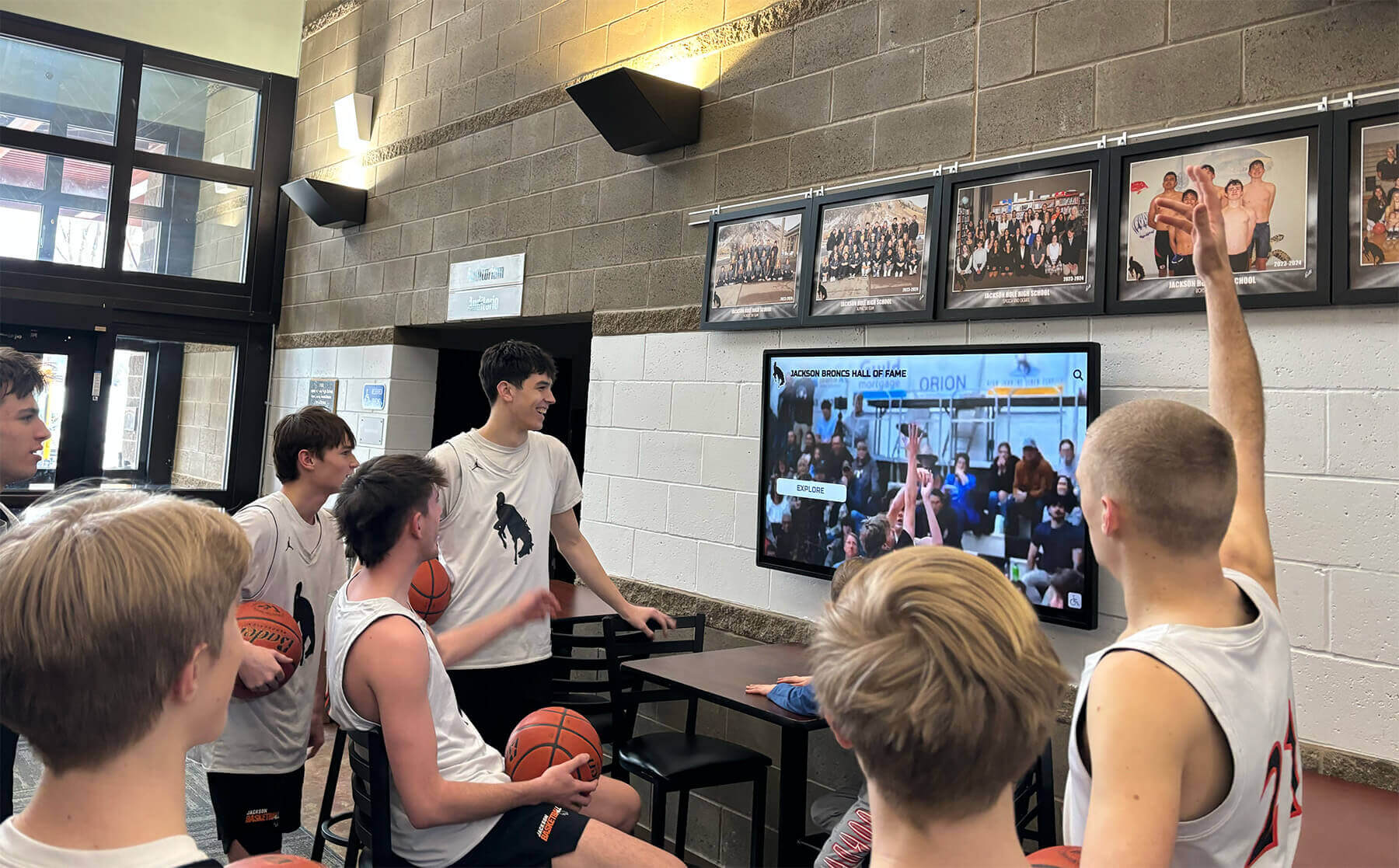
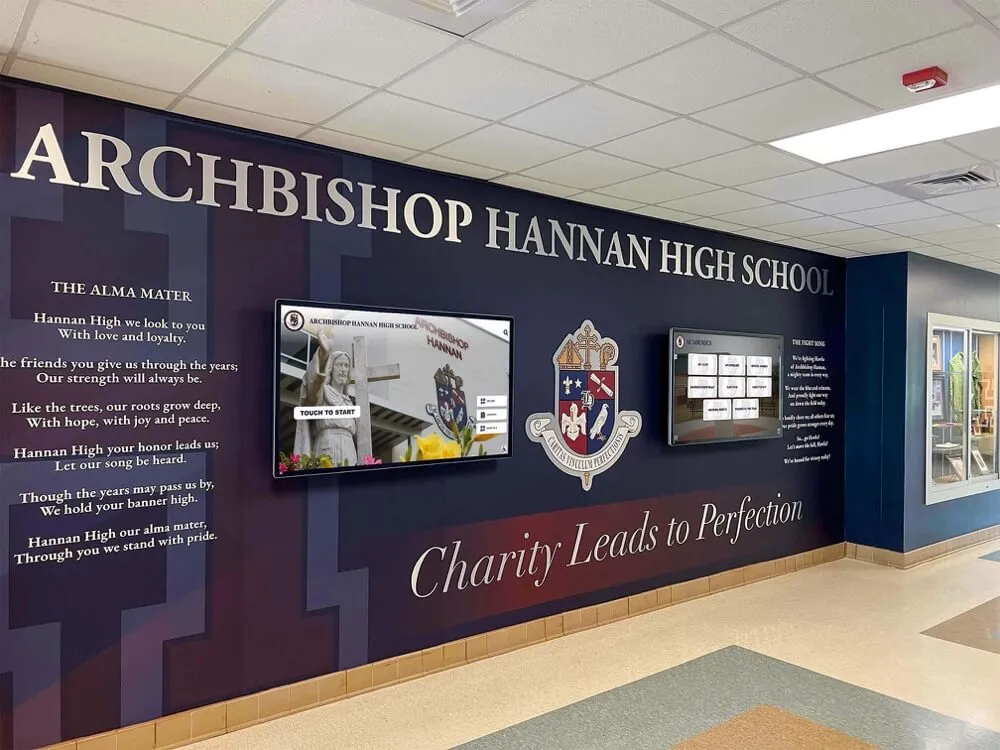
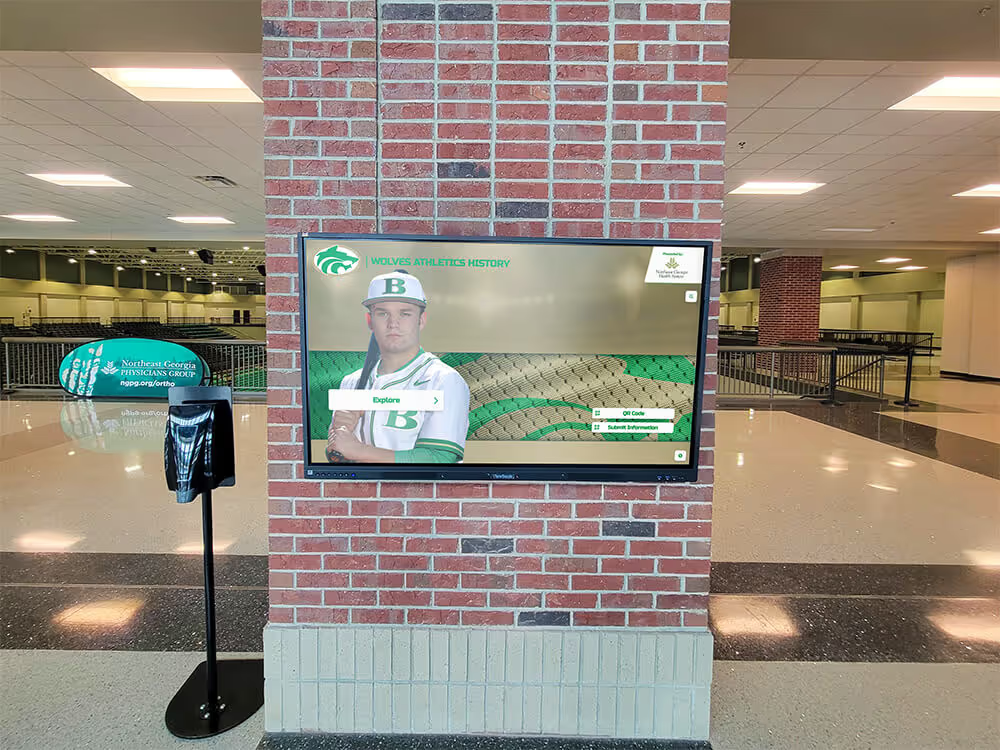
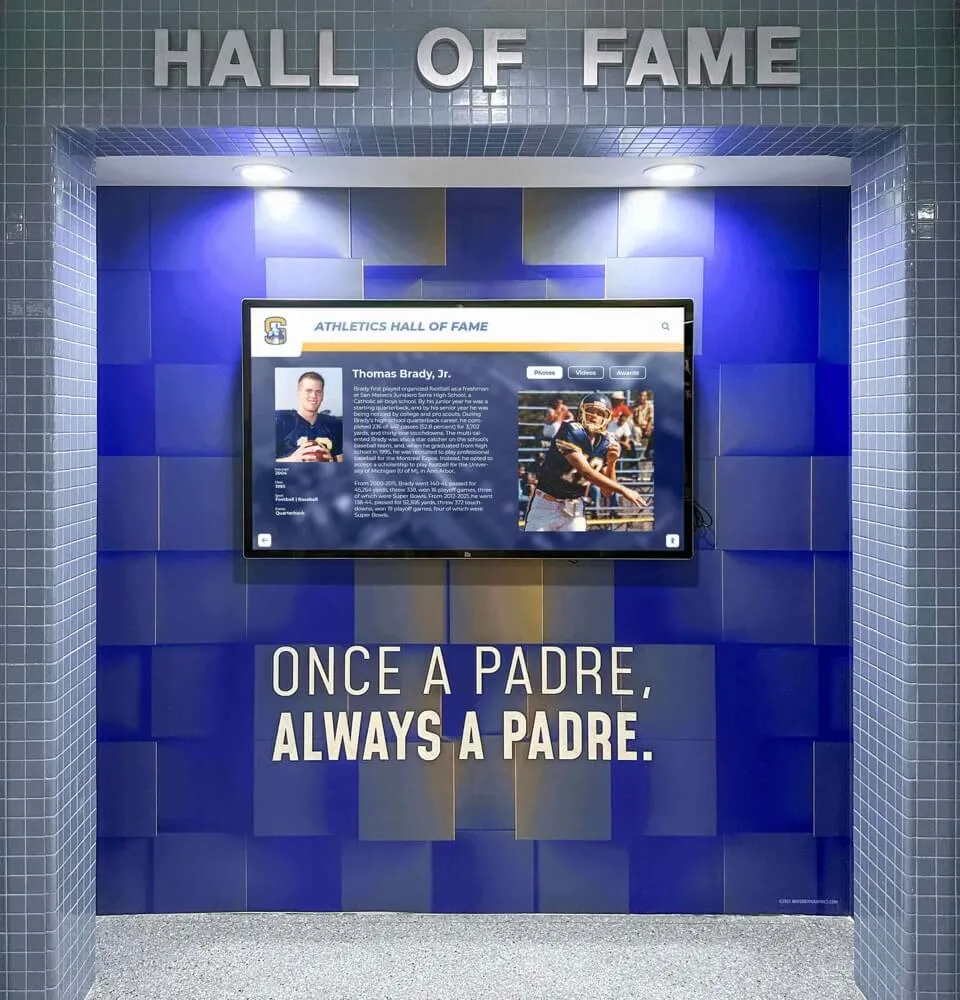
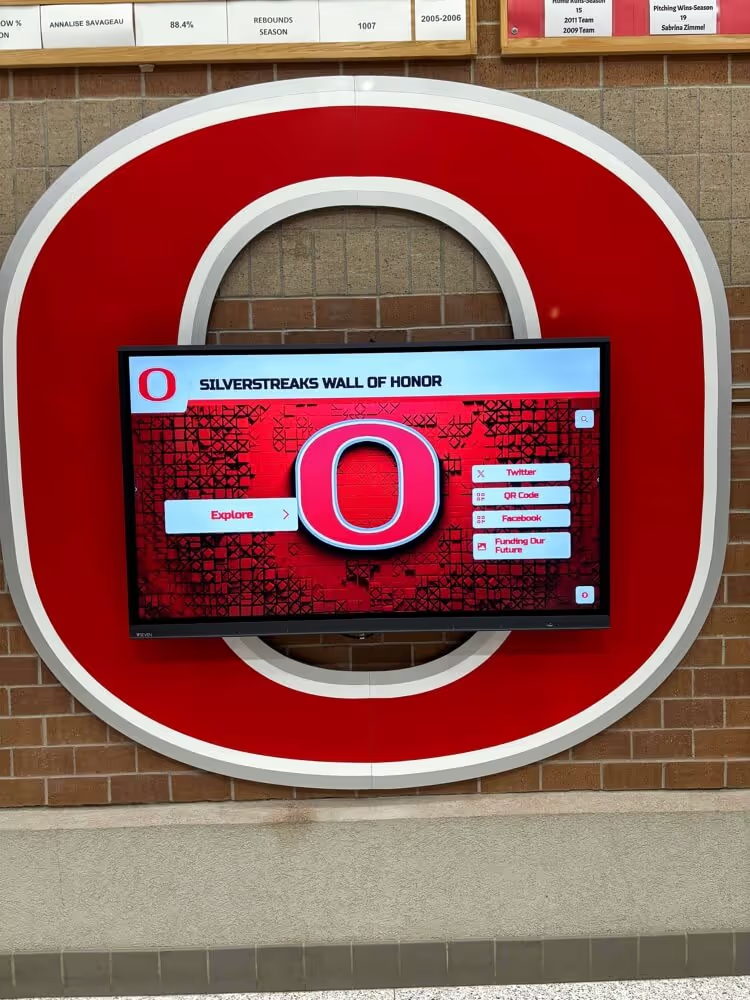
Engaging displays encourage students to explore achievements and connect with institutional values around excellence
Narrow Recognition Creating Exclusion
- Recognition limited to top performers excludes growth and improvement
- Single-metric focus (GPA only) fails to acknowledge diverse excellence
- Elite-only recognition can discourage struggling students
- Limited pathways to acknowledgment create perception that success is for “others”
Visibility and Documentation Failures
- Brief announcement recognition disappears without lasting impact
- Physical awards that go home lack institutional memory
- Outdated displays that are never refreshed suggest stagnant programs
- Inaccessible recognition limits family engagement and pride
The key to effective recognition lies in balanced design—selective enough to maintain meaning and prestige, comprehensive enough to ensure diverse students find pathways to achievement, and visible enough to create sustained motivational impact throughout the school community.
Traditional Student Recognition Award Categories
Understanding established recognition frameworks provides foundation for comprehensive programs honoring diverse achievement.
Honor Roll and GPA-Based Recognition
Grade point average recognition remains the most common academic acknowledgment system across American education:
Tiered Honor Roll Systems Most schools implement multiple recognition levels:
- High Honor Roll: Typically 3.75-4.0 GPA (A average or higher)
- Honor Roll: Typically 3.0-3.74 GPA (B+ to A- average)
- Merit Roll: Sometimes 2.5-2.99 GPA for schools creating additional tiers
These thresholds should align with institutional grading scales and achievement distributions, with adjustments ensuring recognition remains both attainable and meaningful.
Marking Period vs. Cumulative Recognition Schools choose different timeframes for GPA calculation:
- Quarterly/Semester Honor Roll: Recognizes achievement each grading period
- Cumulative GPA Recognition: Acknowledges overall high school performance
- Year-End Honor Roll: Celebrates full academic year achievement
- Improvement Recognition: Honors significant GPA growth regardless of absolute level
The most effective programs combine multiple approaches—regular marking period recognition providing frequent feedback and motivation, with cumulative recognition honoring sustained excellence over extended time.
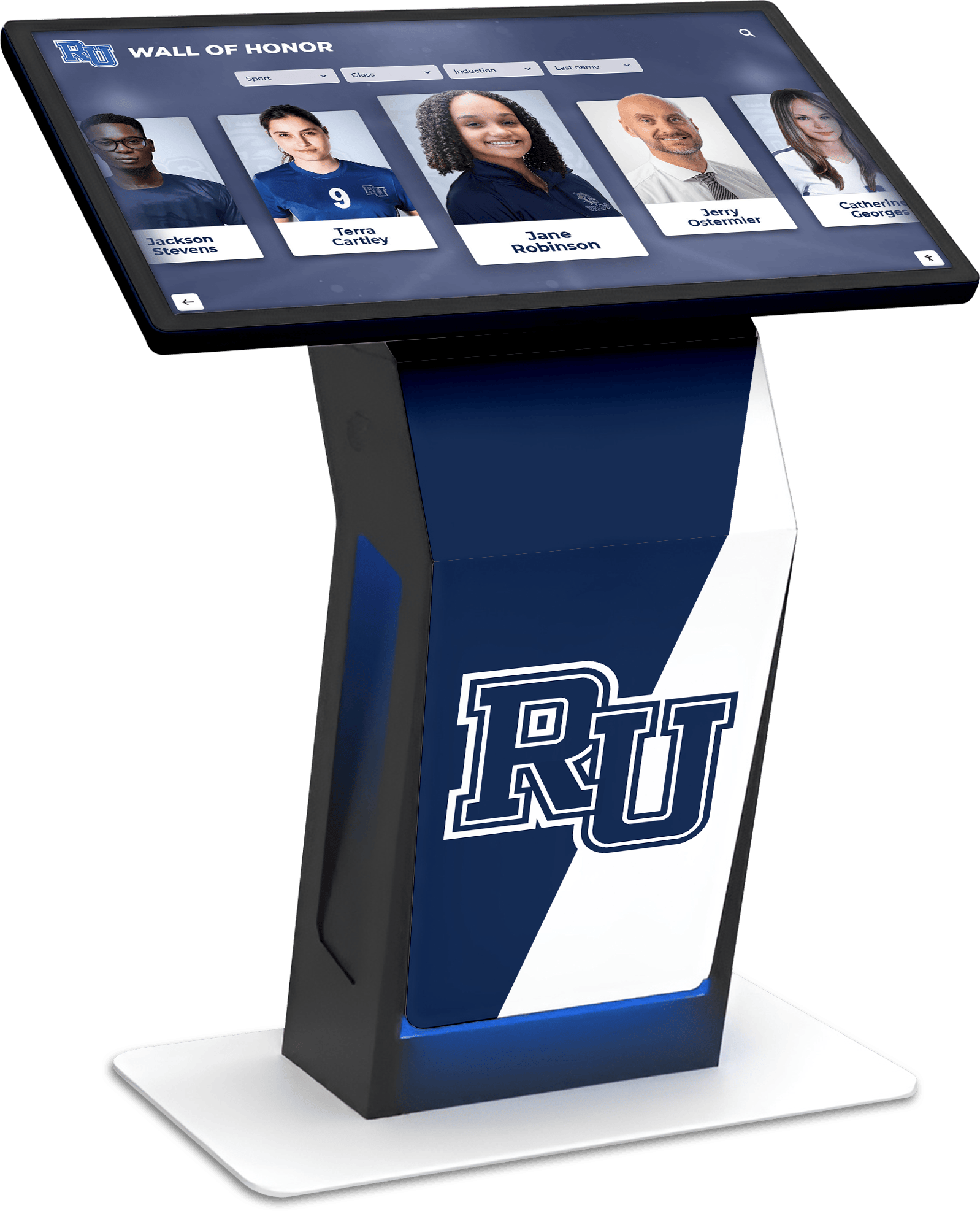
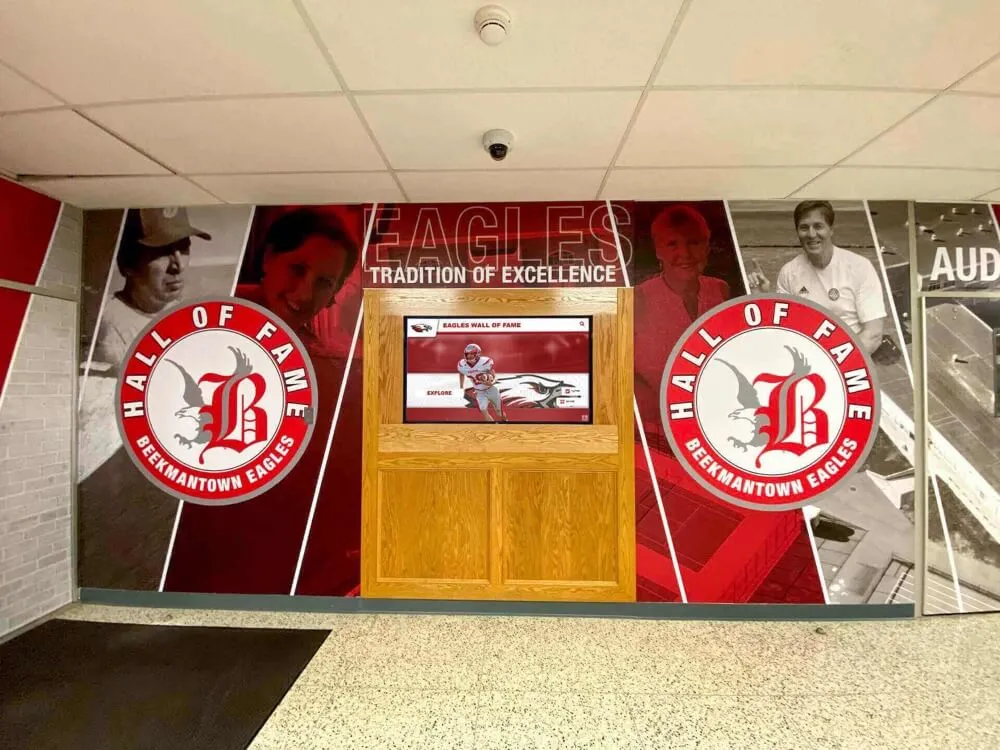
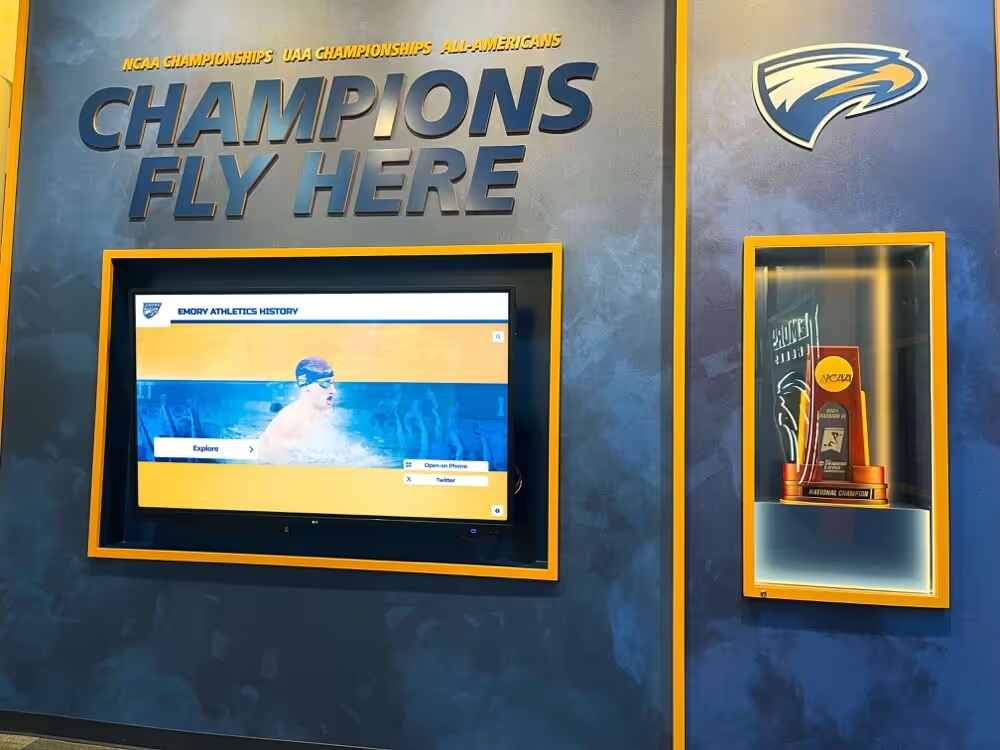
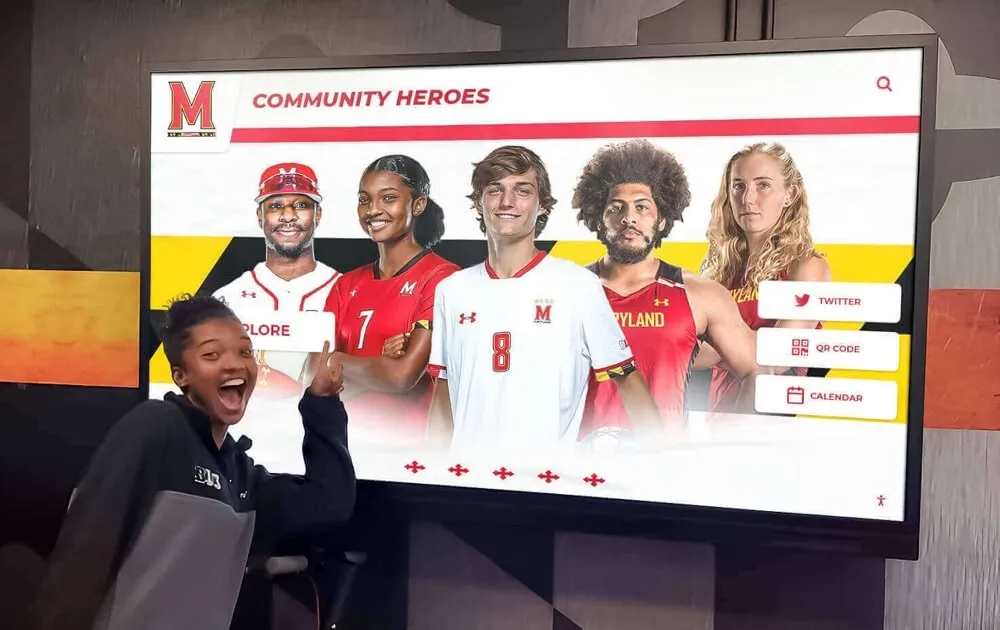
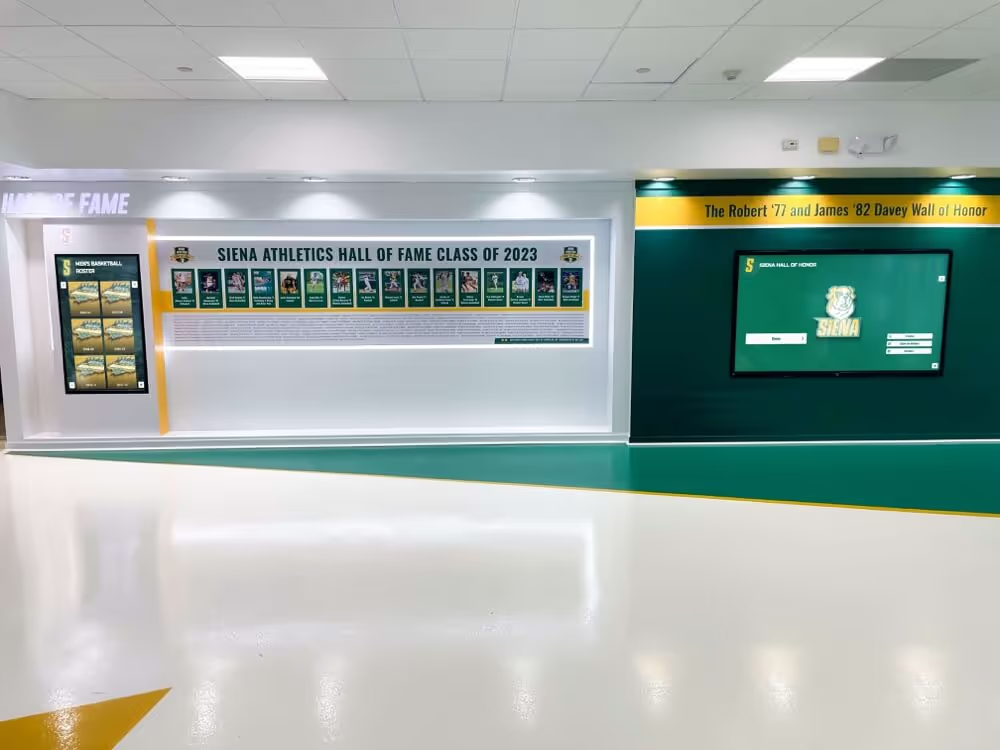
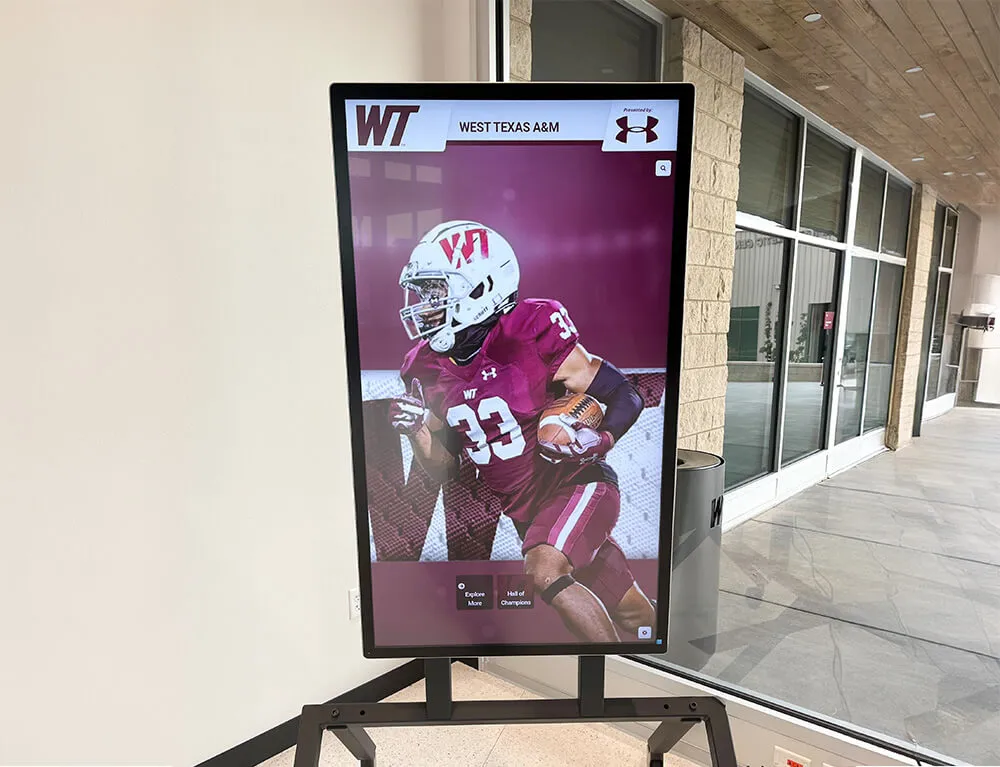
Digital recognition systems eliminate space constraints that force schools to choose whose achievements remain visible
Subject-Specific Academic Excellence
Recognition should extend beyond overall GPA to celebrate domain expertise:
Departmental Academic Awards
- English and Language Arts excellence for writing, literature analysis, and communication
- Mathematics achievement recognizing problem-solving and quantitative reasoning
- Science honors acknowledging laboratory skills, research, and scientific inquiry
- Social Studies awards for historical analysis, geographic knowledge, and civic understanding
- World Language proficiency celebrating multilingual communication and cultural understanding
Specialized Coursework Recognition
- Advanced Placement examination scores and course completion
- International Baccalaureate program achievement and diploma attainment
- Dual enrollment and college credit earned during high school
- Honors and accelerated coursework completion
- Career and technical education certification and industry credentials
Schools should ensure visual equity in how different subjects receive recognition—if athletic championship banners dominate gymnasium walls, academic excellence deserves comparable visibility in common areas throughout buildings.
Explore comprehensive approaches in academic recognition programs that extend beyond simple GPA acknowledgment.
Standardized Achievement and Testing Milestones
National and state assessment success provides objective recognition opportunities:
College Entrance Examination Achievement
- ACT composite score milestones (30+, 32+, 34+, perfect 36)
- SAT score achievements (1400+, 1500+, 1550+, perfect 1600)
- Subject test excellence in specific domains
- Test improvement recognition for significant score increases
Advanced Placement Recognition
- AP Scholar Awards from College Board for examination performance
- School-specific recognition for scores of 3, 4, or 5 on AP exams
- AP Capstone Diploma acknowledgment
- High-volume AP exam completion recognizing ambitious course loads
Learn about National Honor Society recognition displays that complement school-based awards programs.
National Recognition Programs
- National Merit Scholar designations and commended students
- Presidential Scholars Program recognition
- College Board National Recognition Program awards
- State scholar programs and similar honors
These prestigious national recognitions deserve prominent celebration, ideally through permanent displays that maintain visibility beyond single announcement moments.
Academic Competition and Contest Success
Intellectual competitions provide recognition opportunities beyond classroom achievement:
Subject-Specific Competitions
- Science Olympiad medals and team achievements
- Math competition success (MATHCOUNTS, AMC, AIME)
- Robotics competition participation and victories
- Debate tournament success across event formats
- Academic Bowl and Quiz Bowl achievements
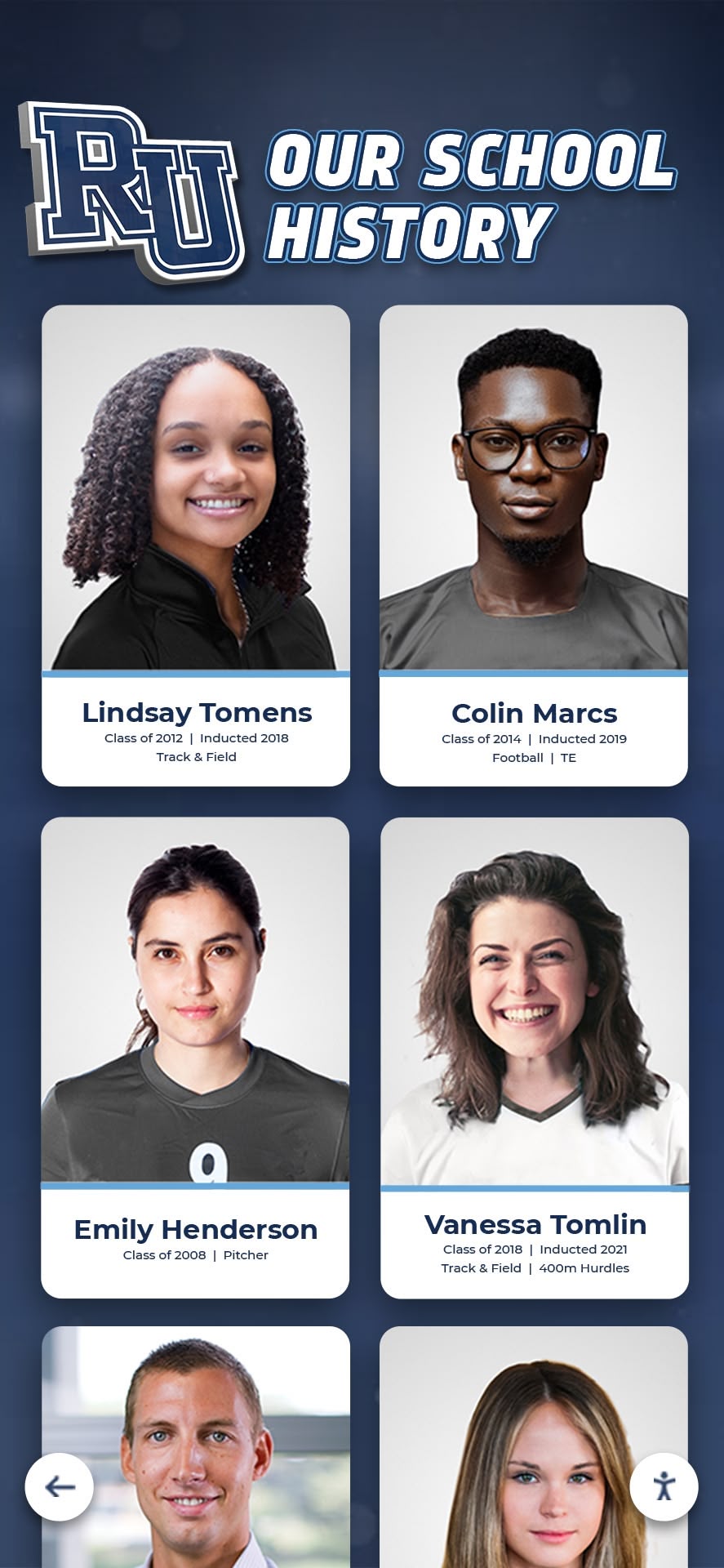
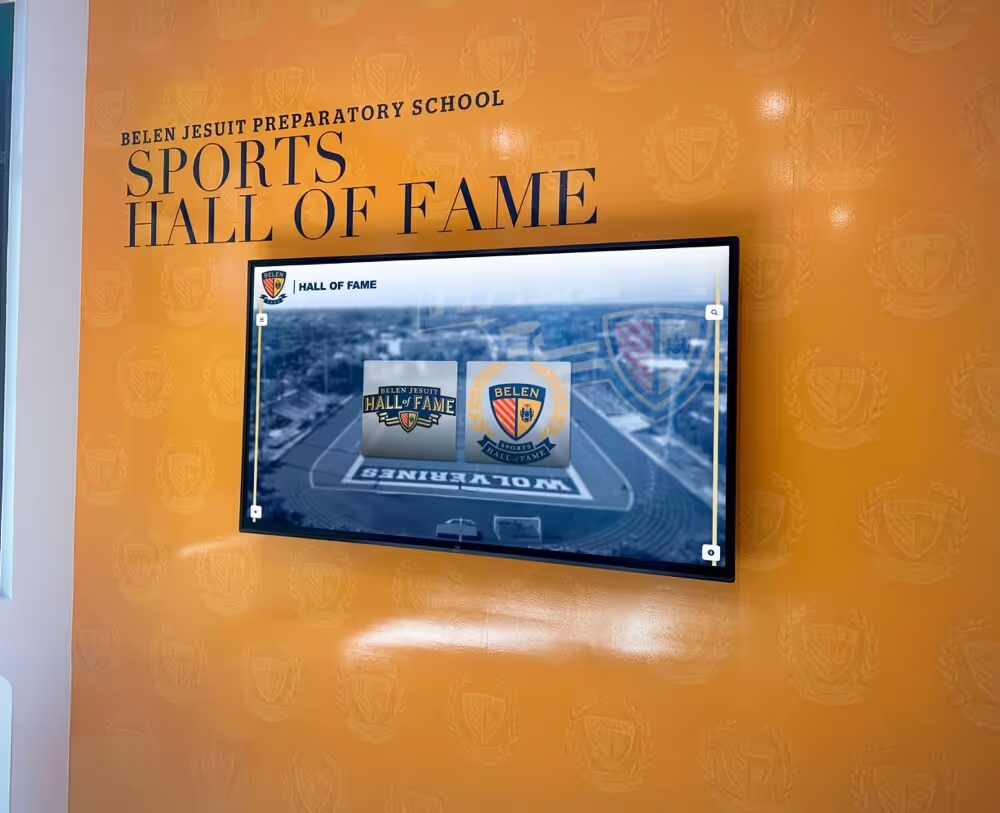
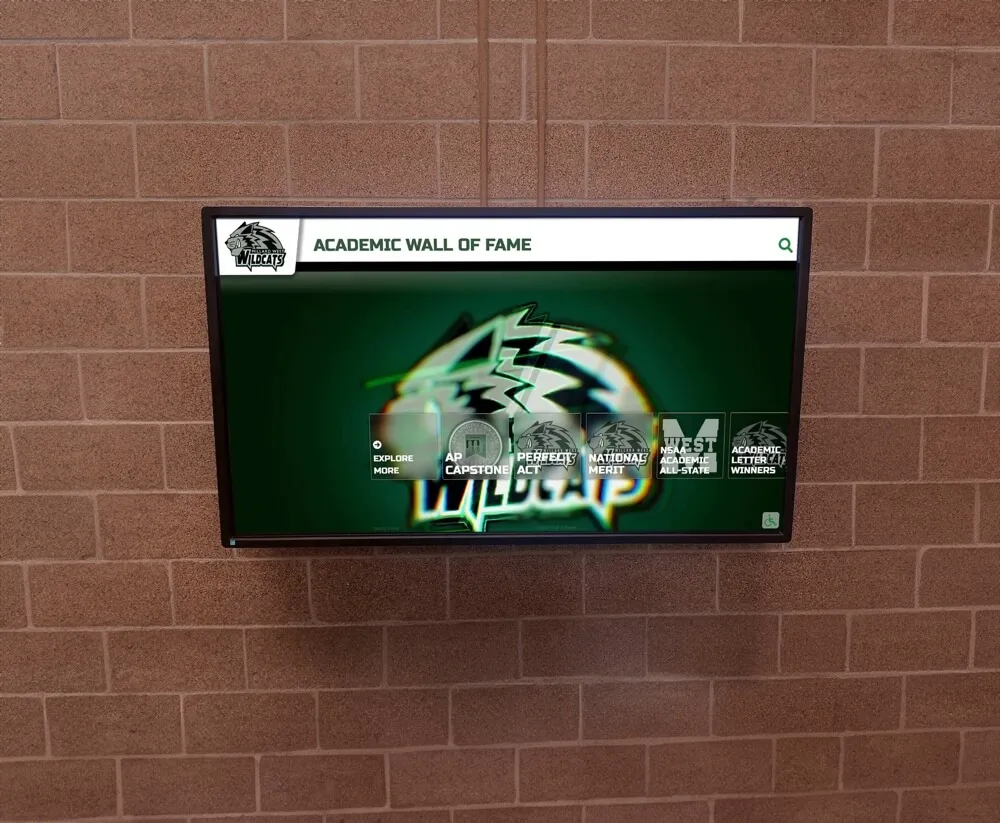
Comprehensive systems document complete student achievement journeys including competitions, honors, and milestones
Arts and Humanities Competitions
- Writing contest awards and publication achievements
- History Day competition recognition at regional, state, and national levels
- Model United Nations achievement
- Foreign language competition success
- Poetry and literary competition recognition
Specialized Academic Contests
- Spelling bee and geography bee success
- Science fair participation and awards
- Engineering challenges and maker competitions
- Coding competitions and hackathon achievements
- Business plan competitions and entrepreneurship recognition
These competitions often receive less systematic recognition than they deserve, despite providing important evidence of deep subject mastery and intellectual initiative beyond classroom requirements.
Innovative Student Recognition Award Approaches
Beyond traditional categories, creative recognition strategies honor diverse forms of academic achievement while addressing gaps in conventional programs.
Growth and Improvement Recognition
Some of the most meaningful recognition celebrates progress rather than absolute achievement:
Most Improved Student Awards Acknowledging significant GPA growth regardless of final level:
- Quarterly improvement awards recognizing marking period progress
- Year-over-year achievement trajectory recognition
- Subject-specific improvement in previously challenging areas
- Attendance improvement as foundation for academic progress
This growth-oriented recognition ensures students starting from different academic levels find pathways to acknowledgment, creating inclusive programs where progress receives celebration alongside pinnacle achievement.
Reading and Literacy Milestones Particularly important in elementary and middle school:
- Reading level advancement beyond grade expectations
- Books read quantity milestones
- Reading comprehension assessment progress
- Independent reading initiative and volume
- Reluctant reader transformation stories
Skill Mastery and Competency Achievement Standards-based recognition as students demonstrate proficiency:
- Specific learning standard mastery
- Skills assessment progression through proficiency levels
- Certification completion in CTE programs
- Competency demonstrations in performance assessments
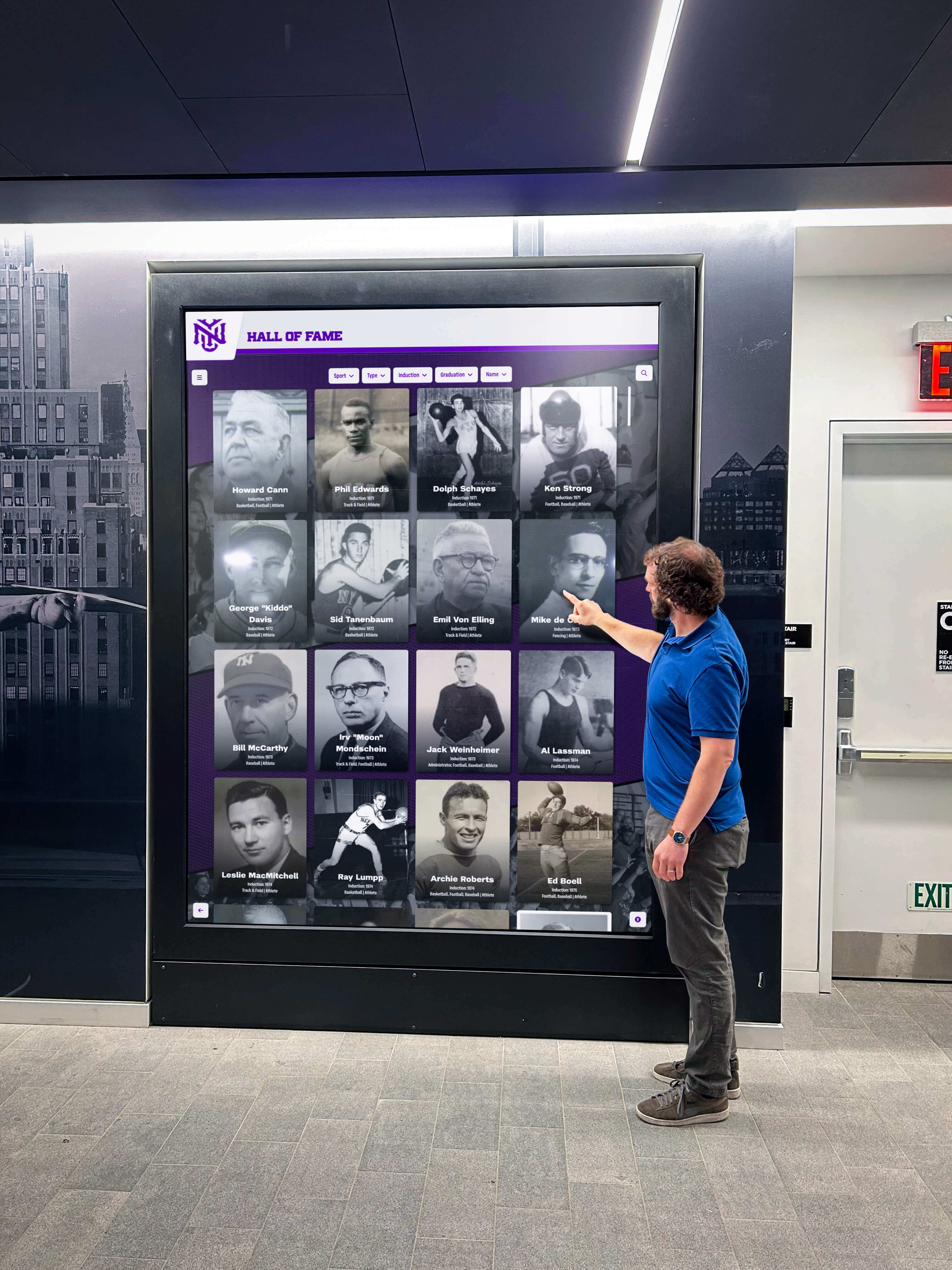
Year-round accessible recognition extends celebration beyond ceremony moments, enabling families to explore achievements anytime
Character-Based Academic Recognition
Academic achievement involves more than test scores and grades:
Perseverance and Resilience Awards
- Sustained effort in challenging coursework despite difficulties
- Overcoming learning challenges or personal obstacles
- Continued academic engagement despite setbacks
- Academic courage in attempting difficult material
Academic Integrity and Citizenship
- Consistent demonstration of honesty in academic work
- Helping peers through tutoring and academic support
- Positive classroom citizenship and learning community contribution
- Ethical behavior in competitive and assessment situations
Intellectual Curiosity Recognition
- Self-directed learning project completion beyond requirements
- Library usage and independent research initiative
- Thoughtful questioning and engaged intellectual discussion
- Cross-disciplinary learning and knowledge integration
These character-based recognitions acknowledge that academic excellence involves dimensions beyond cognitive ability—work ethic, integrity, curiosity, and collaboration deserve systematic celebration as academic values.
Explore related approaches in high school end of year awards programs that balance achievement with character recognition.
Attendance and Engagement Recognition
Consistent presence forms the foundation for academic success:
Perfect Attendance Awards
- Full academic year perfect attendance
- Marking period perfect attendance
- Multi-year attendance streak recognition
- Grade-level attendance achievement
Discover perfect attendance recognition approaches that celebrate this fundamental achievement.
Engagement and Participation Recognition
- Consistent participation in class activities and discussions
- Completion rates for homework and assignments
- Preparation quality and academic readiness
- Active learning engagement beyond minimal requirements
While these recognitions may seem less prestigious than academic honors, they acknowledge foundational behaviors that enable achievement—particularly meaningful for students working to develop consistent academic habits.
Implementation Strategies: From Planning to Practice
Effective recognition programs require systematic design and sustainable management approaches.
Creating Comprehensive Recognition Frameworks
Conduct Recognition Audit Begin by assessing current state:
- Document all existing recognition programs and awards
- Analyze student participation rates and distribution patterns
- Identify achievement types receiving recognition versus gaps
- Gather stakeholder feedback about recognition satisfaction
- Review physical space constraints for traditional recognition displays
Define Recognition Philosophy and Criteria Establish clear guiding principles:
- Determine balance between selective prestige and broad inclusion
- Define what achievement types merit systematic recognition
- Establish GPA thresholds and qualification standards
- Create transparent, objective criteria reducing subjectivity
- Document selection processes ensuring fairness and consistency
Design Tiered Recognition System Create multiple recognition levels:
- Pinnacle Recognition: Highest achievements receiving special ceremony and permanent display
- Regular Recognition: Consistent acknowledgment programs operating each marking period
- Participation Recognition: Engagement-based acknowledgment ensuring broad opportunity
- Growth Recognition: Progress-oriented awards for improvement regardless of absolute level
This tiered approach maintains meaning and prestige for top achievements while ensuring recognition pathways exist for diverse student populations.
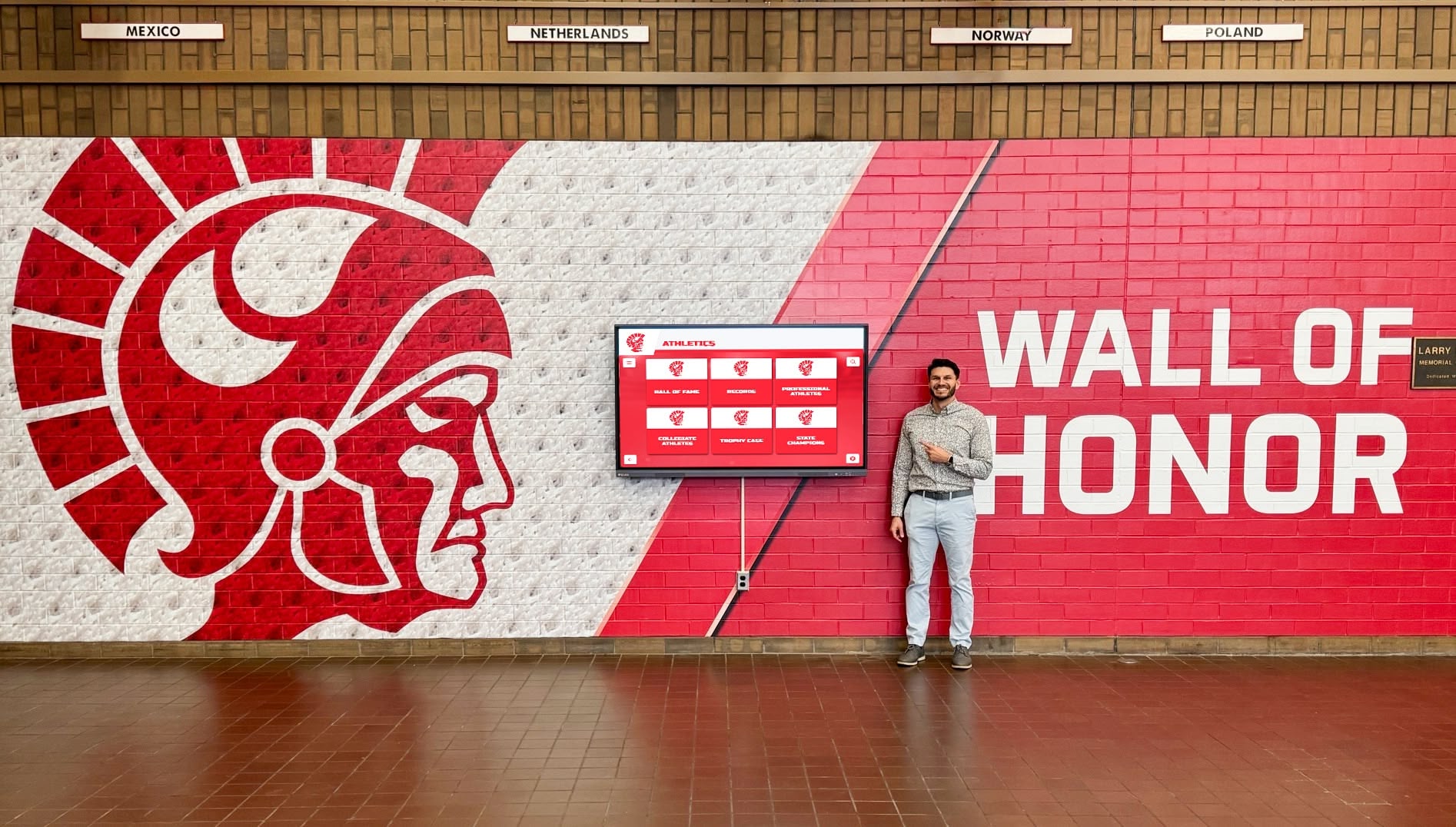
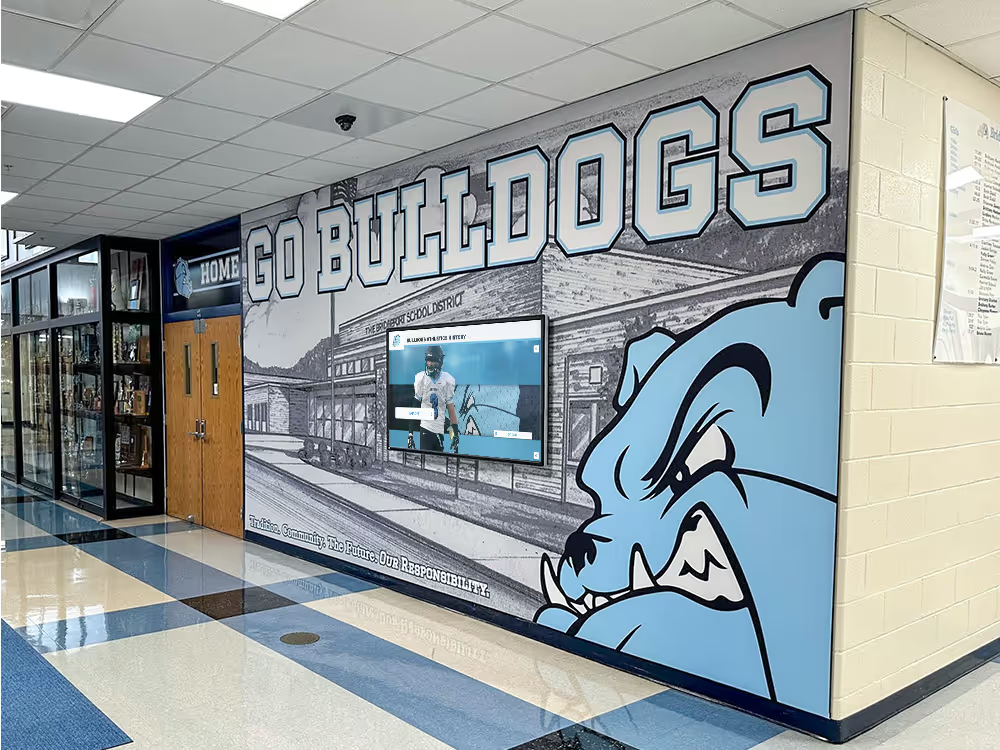
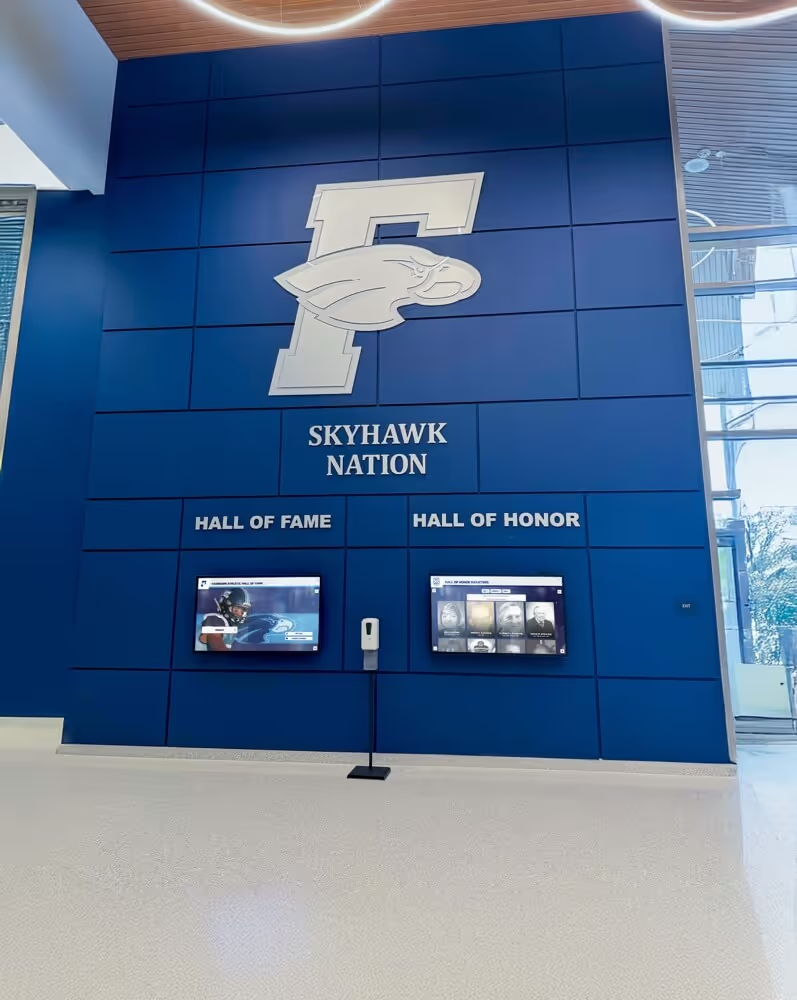
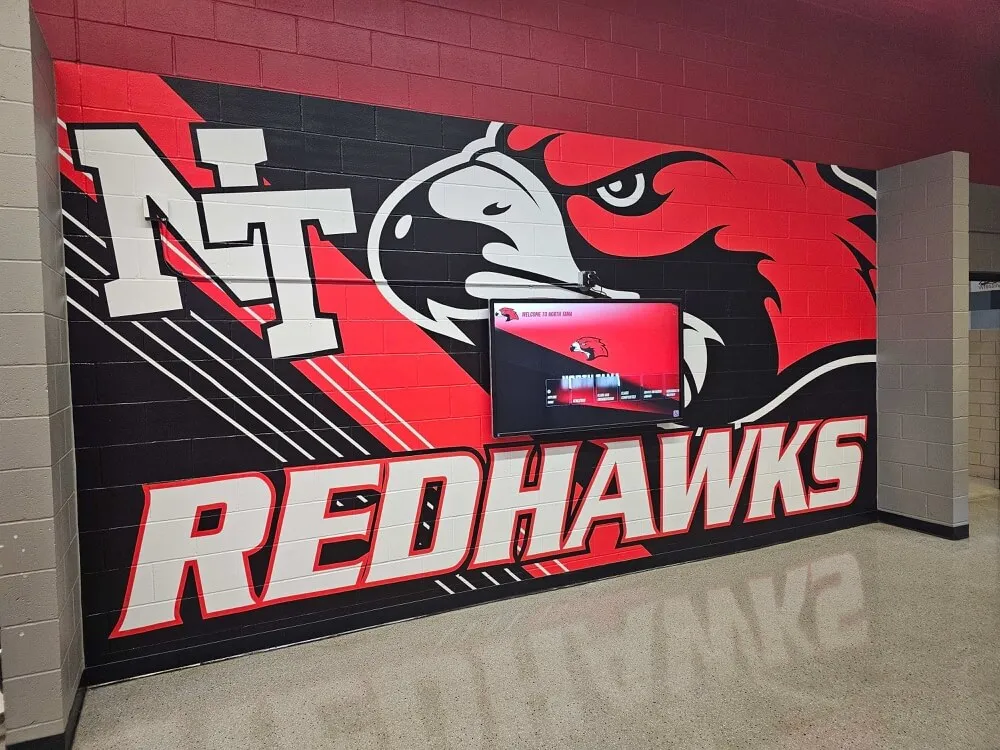
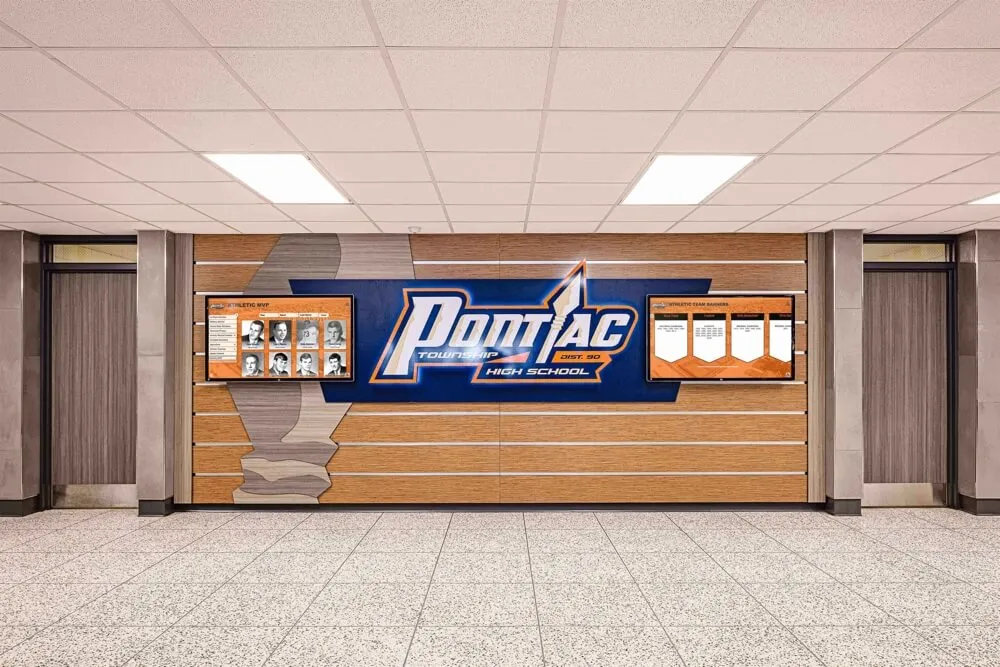
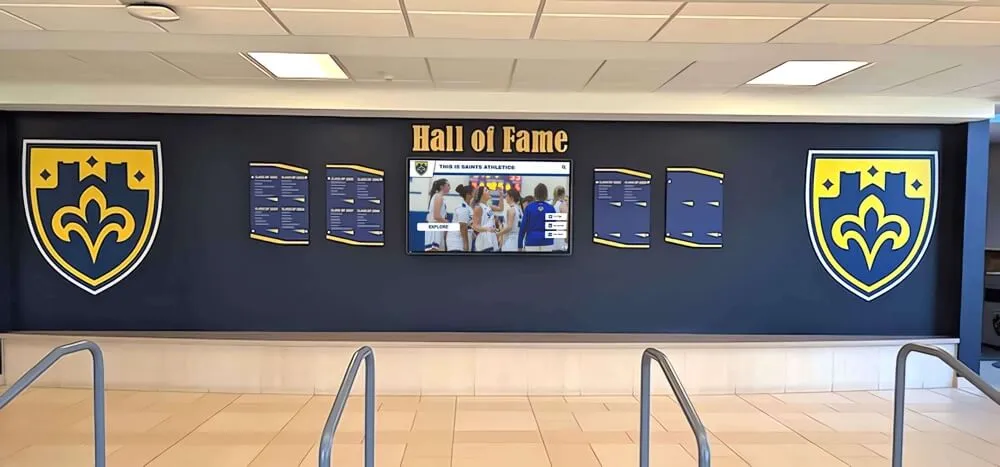
Strategic placement in high-traffic hallways ensures recognition visibility throughout daily school activities
Recognition Communication and Ceremony Design
Multi-Channel Communication Strategy Maximize recognition visibility and impact:
Student-Direct Communication
- Personalized email or letter notifications to recipients
- Morning announcement highlights of award recipients
- Classroom-based recognition and teacher acknowledgment
- Digital display rotation featuring recognized students
- Social media celebration (with appropriate permissions)
Family Engagement Communication
- Parent notification letters celebrating student achievement
- Invitation to recognition ceremonies and celebrations
- Photo sharing from recognition events
- Newsletter features highlighting award recipients
- Progress report recognition indicators
Community Visibility
- Local media press releases about academic achievement
- School website recognition pages with searchable databases
- Community partner sharing acknowledging student excellence
- Alumni communication showing recognition tradition continuation
- Public displays in school buildings and community spaces
Recognition Ceremony Best Practices Create engaging celebrations that honor achievement:
- Balance ceremony length with number of recipients (aim for 60-90 minutes maximum)
- Use visual presentations showing recipient photos and achievements
- Include brief personal remarks explaining achievement significance
- Create photo opportunities for families with good lighting and backdrops
- Provide programs listing all recipients enabling audience follow-along
- Stream ceremonies enabling remote family member attendance
- Post ceremony recordings and photos within 24-48 hours
Learn about student recognition award display design that creates engaging ceremony complements.
Timeline Management for Recognition Programs
Quarterly Recognition Cycle Create consistent rhythm throughout academic year:
Weeks 1-8 of Marking Period
- Students working toward achievement criteria
- Ongoing communication about recognition opportunities
- Progress updates through report cards and conferences
- Teacher identification of emerging achievement and improvement
Weeks 9-10 (End of Marking Period)
- GPA calculation and honor roll determination
- Teacher nomination for qualitative awards
- Achievement verification and recipient confirmation
- Award material preparation and ordering
Weeks 1-2 of New Marking Period
- Recognition ceremony planning and scheduling
- Family notification and invitation
- Digital recognition content development
- Physical award assembly and organization
Weeks 2-3 of New Marking Period
- Recognition ceremony execution
- Photo and video documentation
- Social media and communication dissemination
- Display update with current marking period recognition
This consistent cycle creates predictable rhythms students, families, and staff understand and anticipate.
The Digital Recognition Revolution
Traditional recognition approaches face fundamental limitations that modern technology solves elegantly.
Physical Recognition Challenges
Schools universally struggle with trophy case and plaque limitations:
Space Constraint Problems
- Physical displays fill quickly, forcing difficult decisions
- No room for new recognition without removing historical achievements
- Different achievement types compete for limited wall and case space
- Building renovations often eliminate existing recognition spaces
- Storage of removed recognition eliminates its purpose
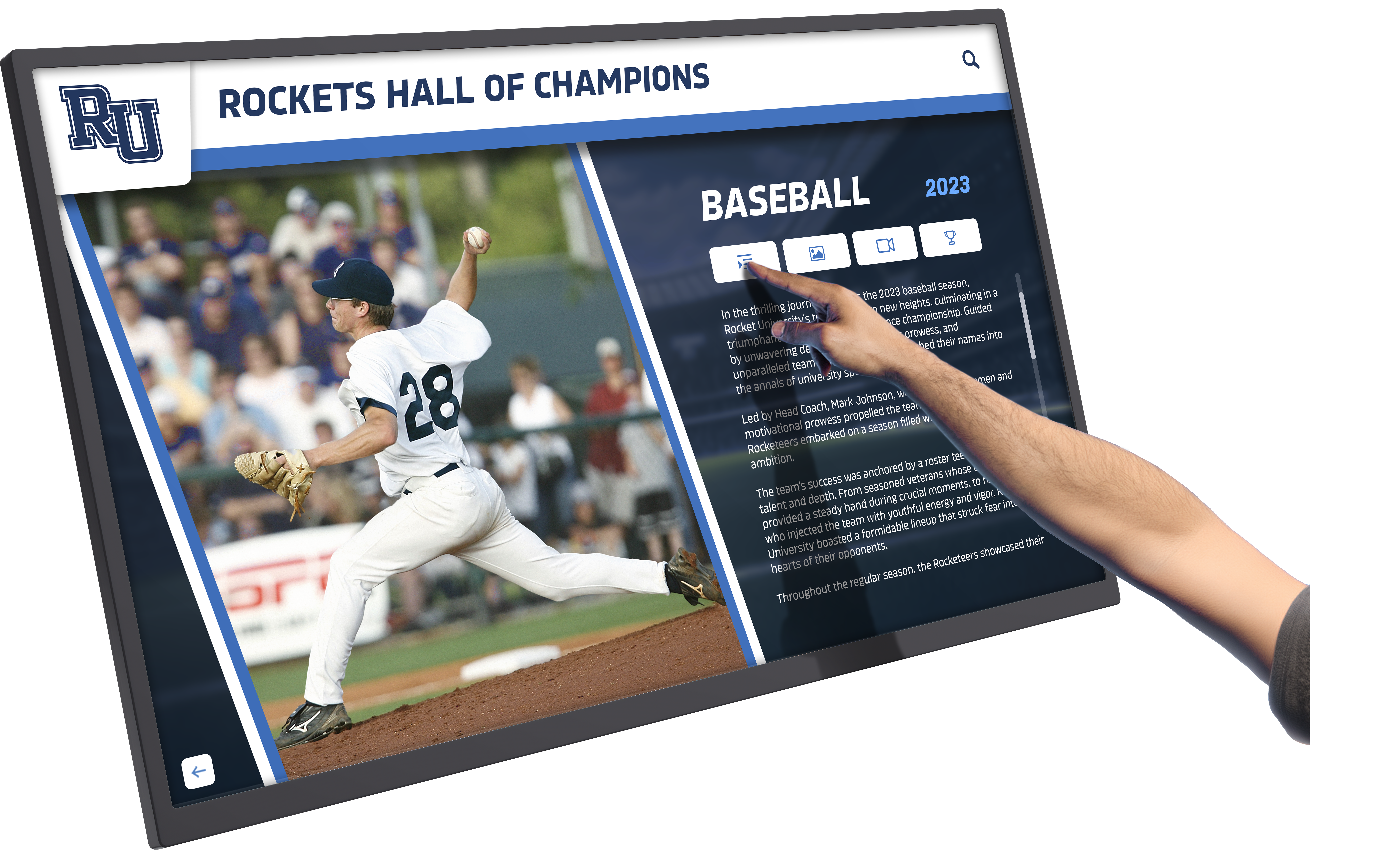
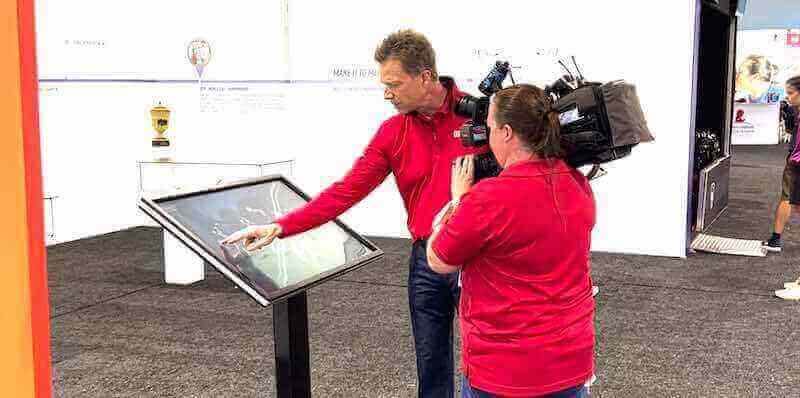
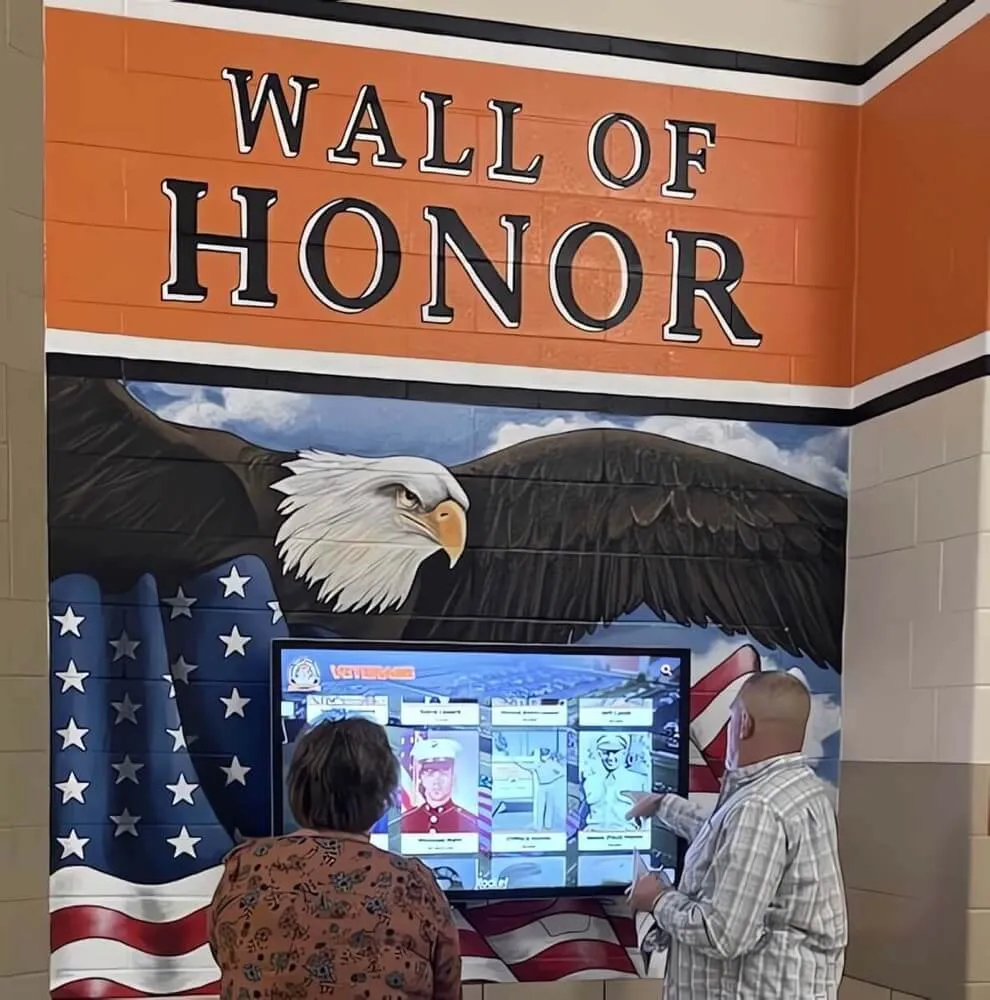
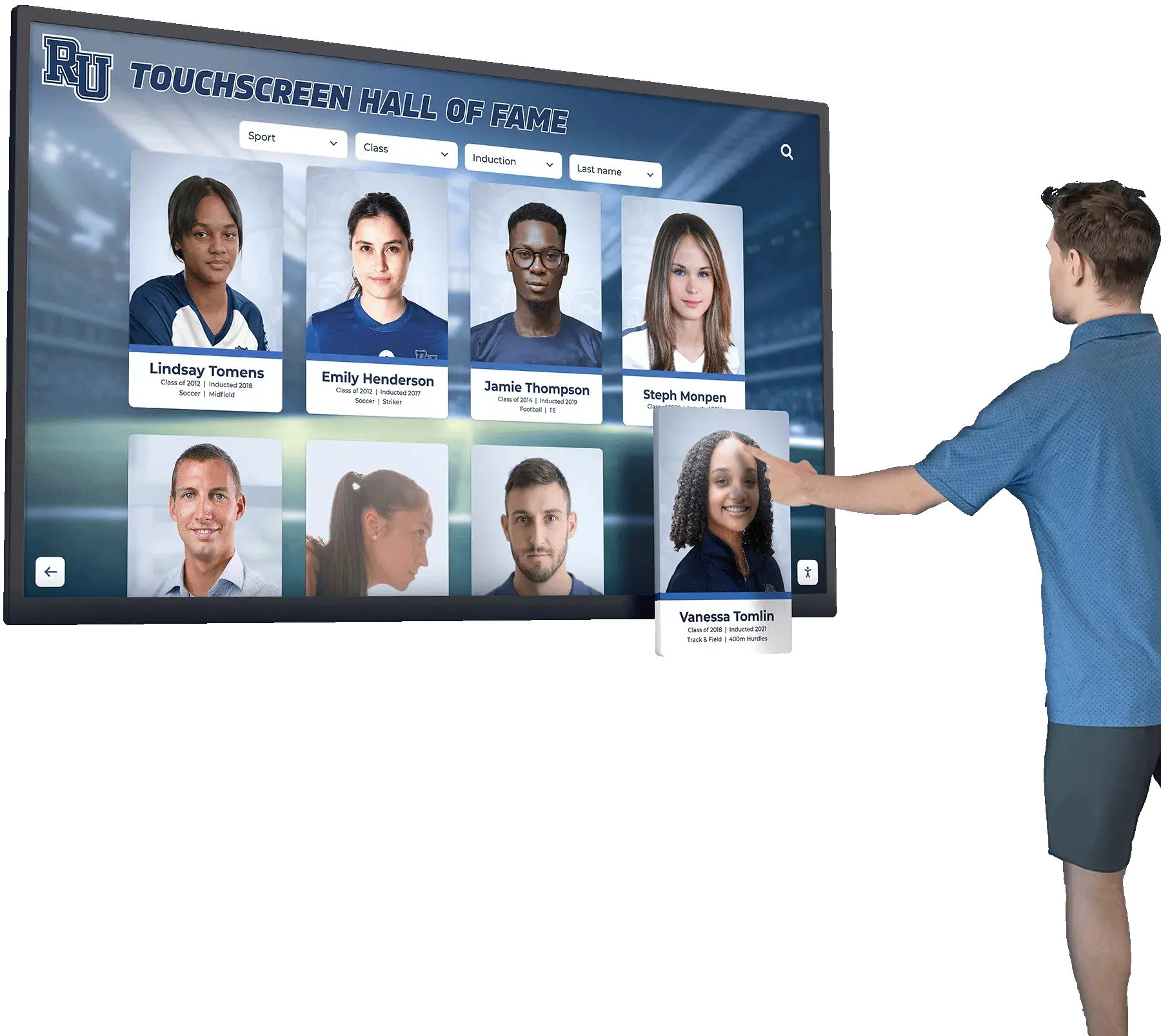
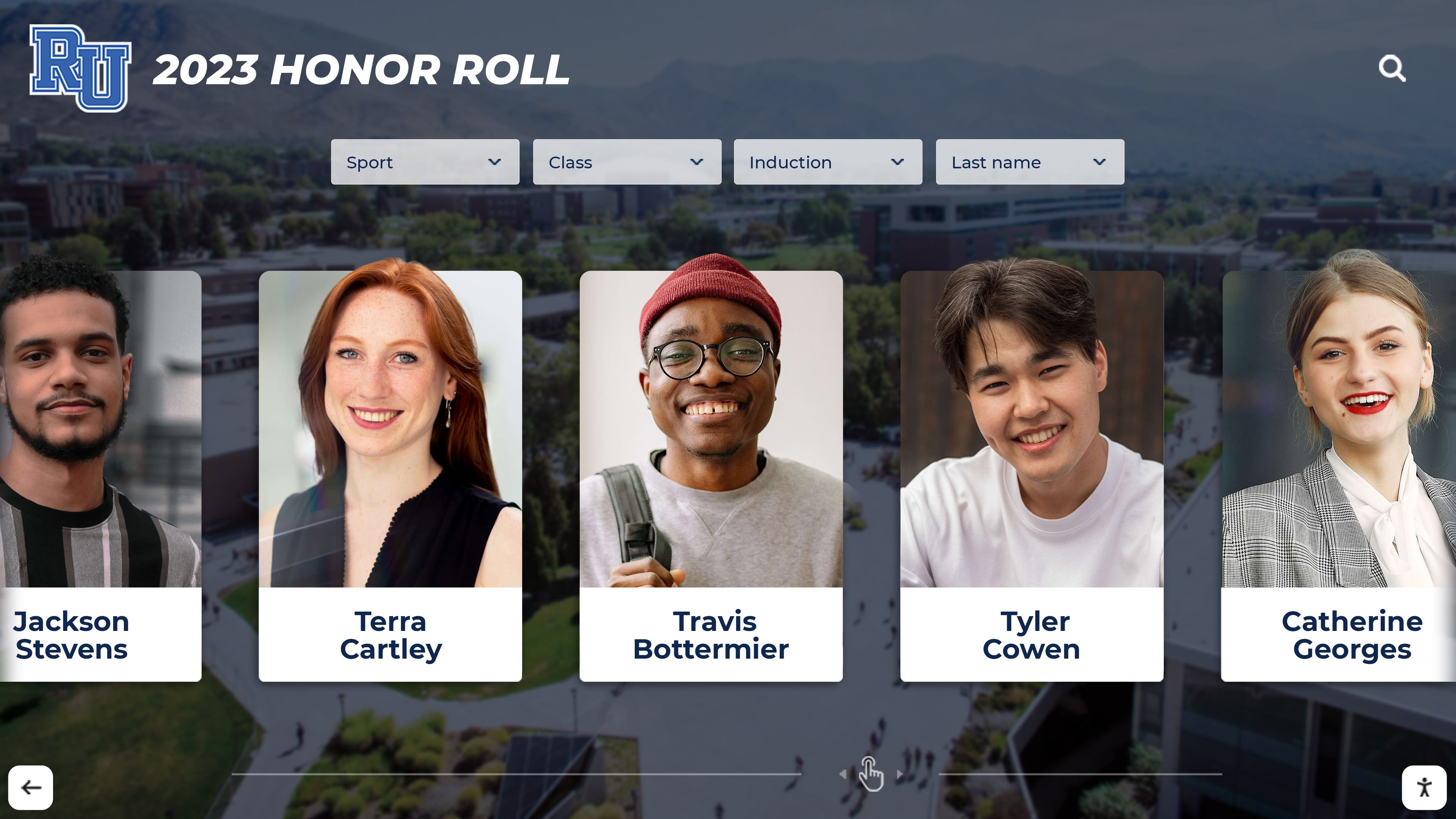
Interactive touchscreen systems create engaging exploration experiences impossible with static physical recognition
Maintenance and Update Challenges
- Physical plaques require professional engraving creating time and cost barriers
- Misspellings and errors become permanent without expensive replacement
- Updating information requires physical modification
- Deterioration over time requires replacement
- Cleaning and maintenance demands on aging materials
Accessibility and Engagement Limitations
- Static displays offer no search or filter capabilities
- Limited information beyond basic names and dates
- No multimedia storytelling or detailed achievement context
- Fixed viewing angles and distances reduce accessibility
- No content updates or refreshes maintaining interest
How Digital Recognition Solves Traditional Problems
Solutions like Rocket Alumni Solutions provide comprehensive platforms addressing these fundamental challenges:
Unlimited Recognition Capacity Digital systems eliminate space constraints entirely:
- Single touchscreen display showcases unlimited students across all years
- No removal required as new recipients receive recognition
- Equal visibility for all achievement types and recipients
- Comprehensive historical documentation showing institutional tradition
- Scalable infrastructure growing automatically with annual additions
Enhanced Storytelling and Rich Content Digital profiles provide context impossible with physical plaques:
- Individual student profile pages with photos and detailed biographies
- Multiple achievement documentation showing complete excellence journeys
- Video integration bringing accomplishments to life
- Document uploads including certificates, articles, and evidence
- Timeline formats showing student development across academic careers
Learn about digital hall of fame displays providing comprehensive recognition solutions.
Interactive Exploration Capabilities Touchscreen interfaces transform passive viewing into active engagement:
- Search functionality finding specific students across graduation years
- Filter by recognition type, achievement category, or time period
- Browse and discover features enabling casual exploration
- Social sharing capabilities extending recognition beyond physical location
- Mobile-responsive web access enabling anytime viewing from anywhere
Simple Content Management Cloud-based platforms eliminate technical barriers:
- Remote updates from any internet-connected device
- Intuitive drag-and-drop interfaces requiring no technical expertise
- Bulk import tools for historical data and annual recipient groups
- Scheduled publishing automation for planned recognition releases
- Role-based permissions enabling appropriate staff access
- Automatic backup ensuring content preservation
Schools implementing digital recognition systems report 80-90% reduction in administrative time spent maintaining recognition displays while dramatically improving accessibility, engagement, and content richness compared to traditional physical approaches.
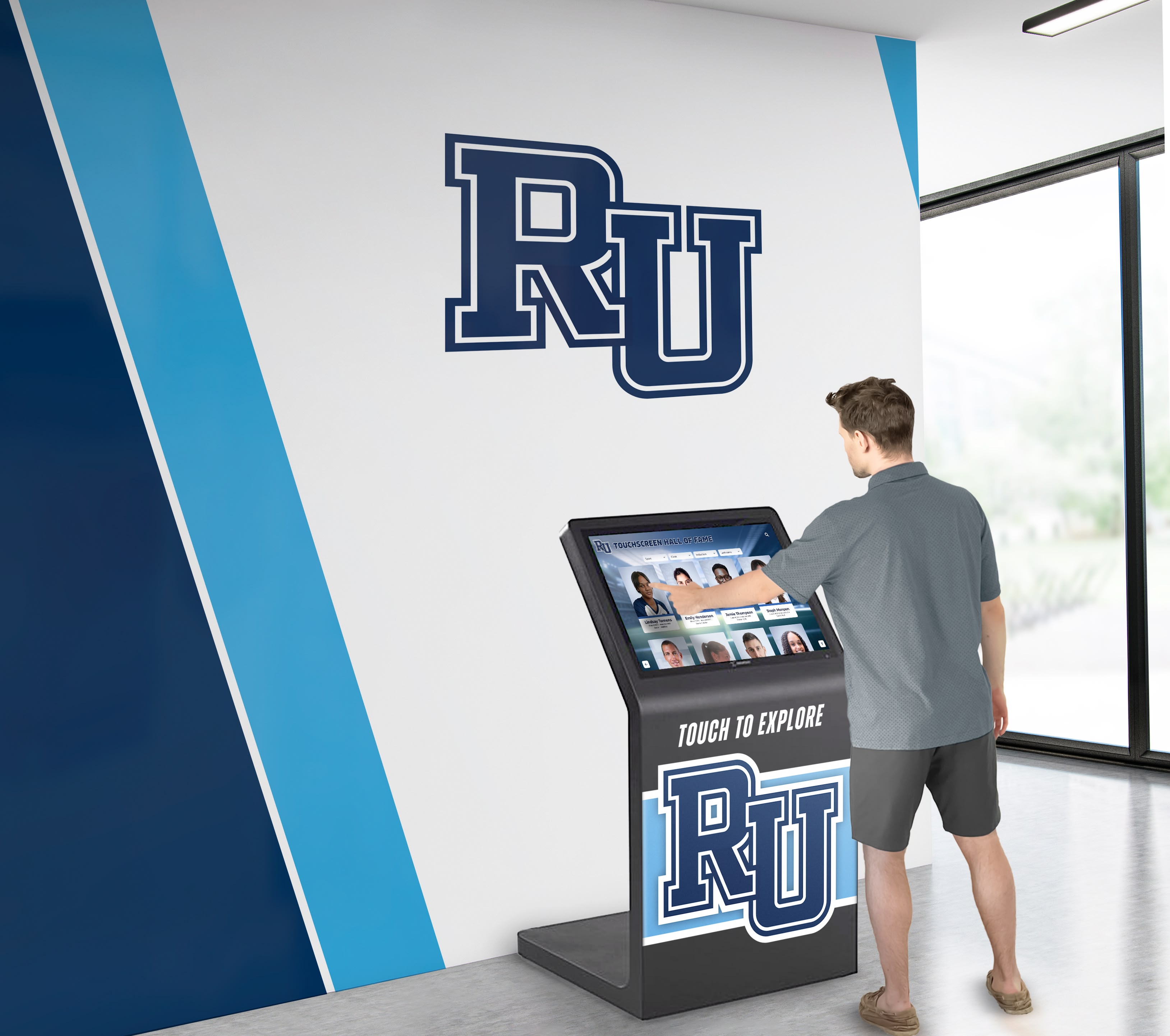
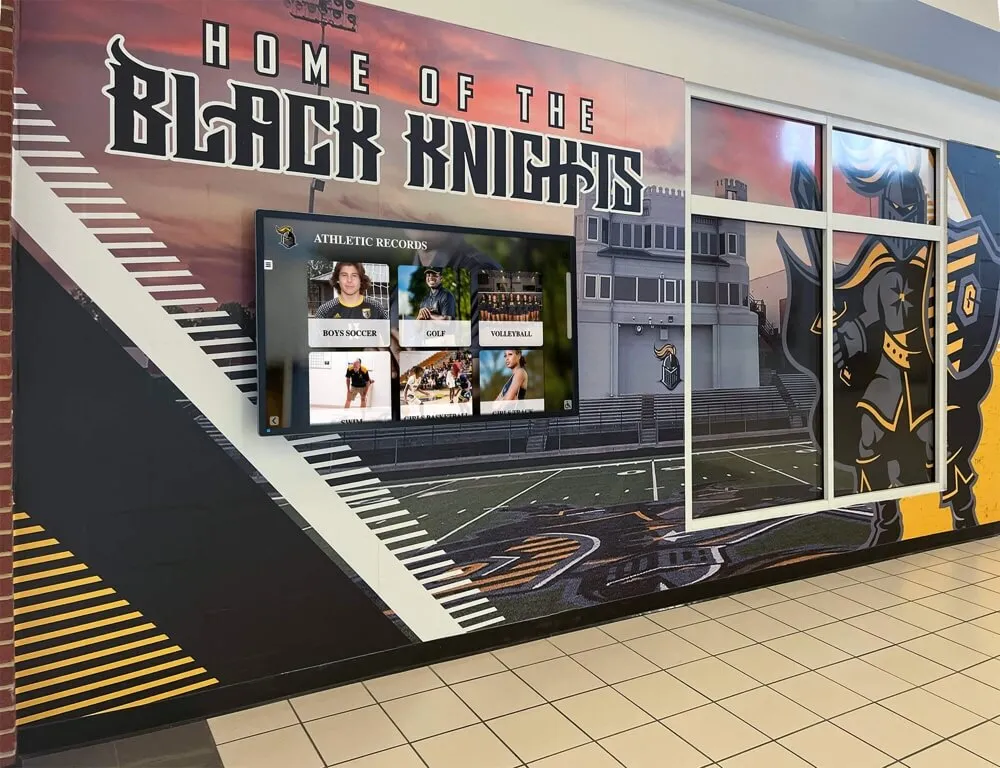
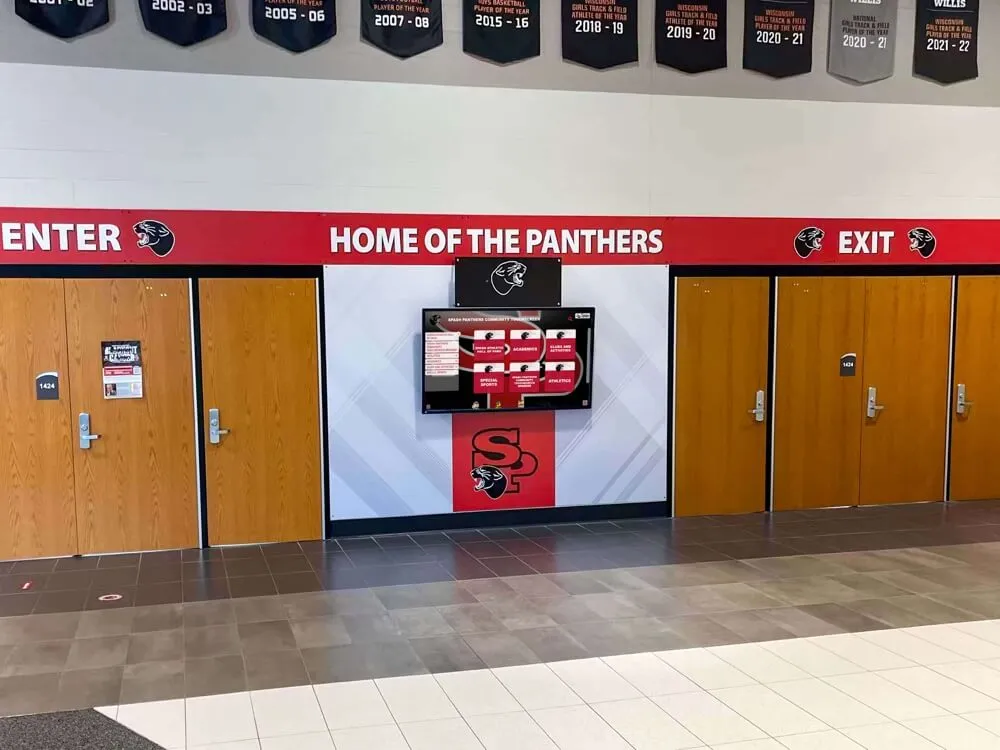
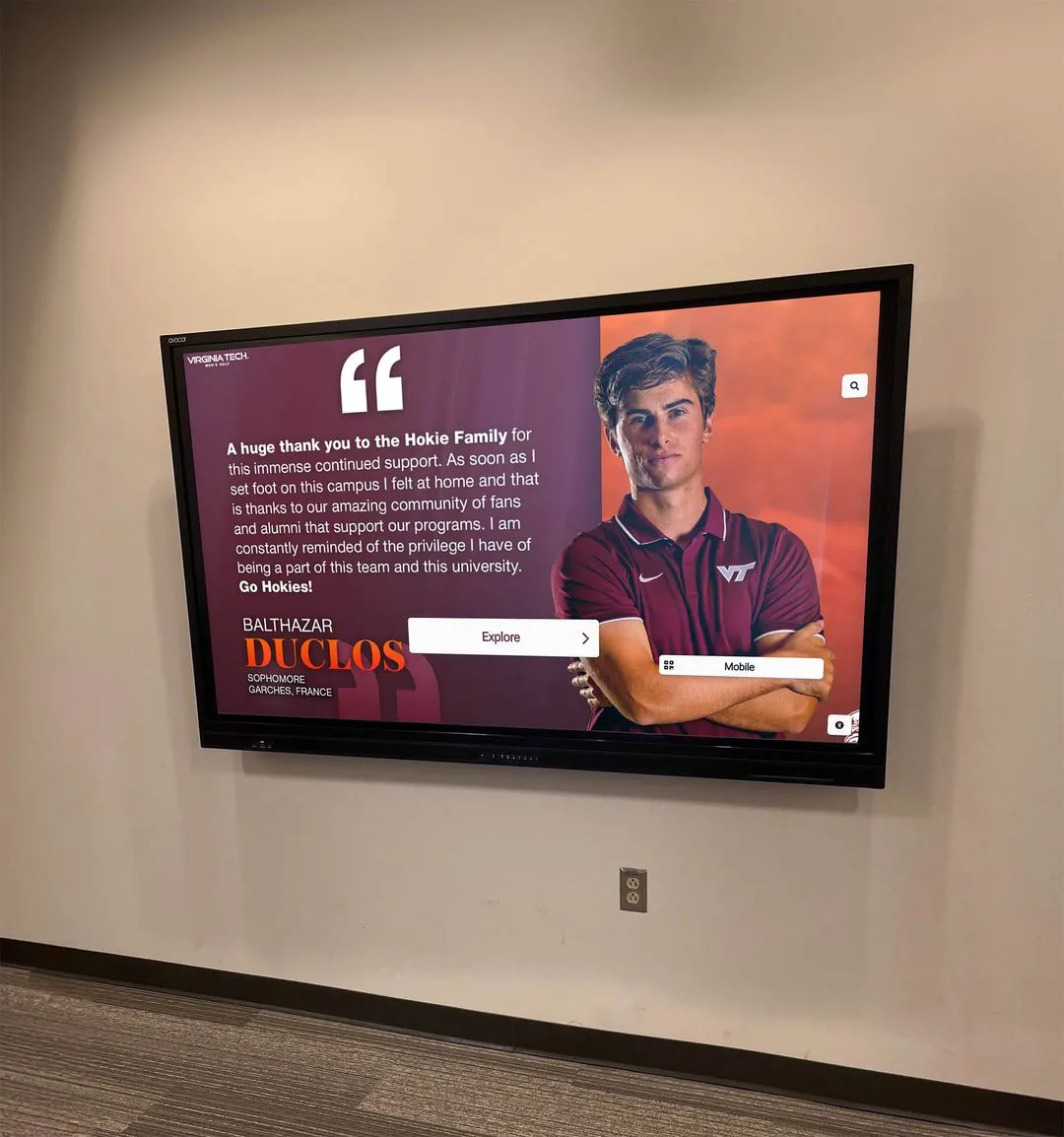
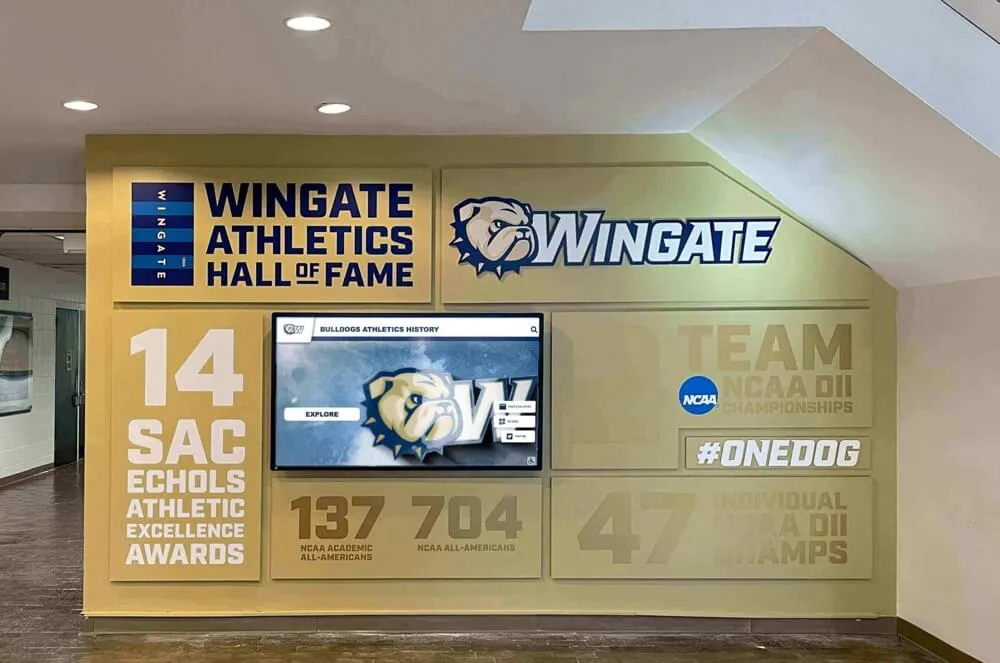
Professional kiosk installations integrate seamlessly with school architecture while providing modern recognition capabilities
Web-Based Recognition Extensions
Physical displays reach limited audiences—students and visitors on campus during school hours. Web-based recognition extends impact exponentially:
Anytime, Anywhere Access
- Families can explore achievements from home at convenient times
- Alumni can rediscover their recognition years after graduation
- Community members worldwide can celebrate student excellence
- Mobile optimization ensures smartphone access
- 24/7 availability removes time and location constraints
Social Sharing Amplification
- Students and families share achievements through social networks
- Recognition reaches extended family and community
- Pride demonstration through personal channels
- Viral potential for exceptional achievement stories
- Backlinks and SEO value for school institutional sites
Alumni Engagement Opportunities
- Historical recognition creates connection points for returning graduates
- “Where are they now” updates linking recognition to career success
- Mentorship connection between recognized students and alumni achievers
- Donation appeals tied to legacy of excellence recognition represents
- Reunion planning resources showing graduating class achievements
Explore high school wall of fame digital approaches that extend recognition beyond physical campuses.
Equity and Inclusion in Recognition Programs
Thoughtfully designed programs ensure recognition opportunities exist for diverse student populations.
Multiple Pathway Recognition Design
Avoid recognition systems benefiting only traditional high achievers:
Absolute Achievement Pathways
- GPA-based honor roll at various threshold levels
- Standardized test score milestones
- Competition success and contest awards
- Advanced coursework completion
Growth and Improvement Pathways
- Most improved GPA regardless of absolute level
- Subject-specific achievement growth
- Reading level advancement
- Attendance improvement for previously struggling students
- Skill progression and competency advancement
Effort and Character Pathways
- Academic perseverance and sustained effort
- Intellectual curiosity and self-directed learning
- Academic integrity and ethical behavior
- Peer tutoring and learning community contribution
- Class participation and engagement quality
This multi-pathway approach ensures recognition opportunities exist for students starting from different achievement levels and demonstrating excellence through various dimensions beyond single metrics.
Monitoring Recognition Distribution
Regular equity assessment ensures fair program implementation:
Demographic Analysis Track recognition patterns across student populations:
- Racial and ethnic distribution of recipients
- Gender balance in recognition across categories
- Socioeconomic status representation
- English Language Learner recognition rates
- Special education student acknowledgment
- First-generation college student recognition
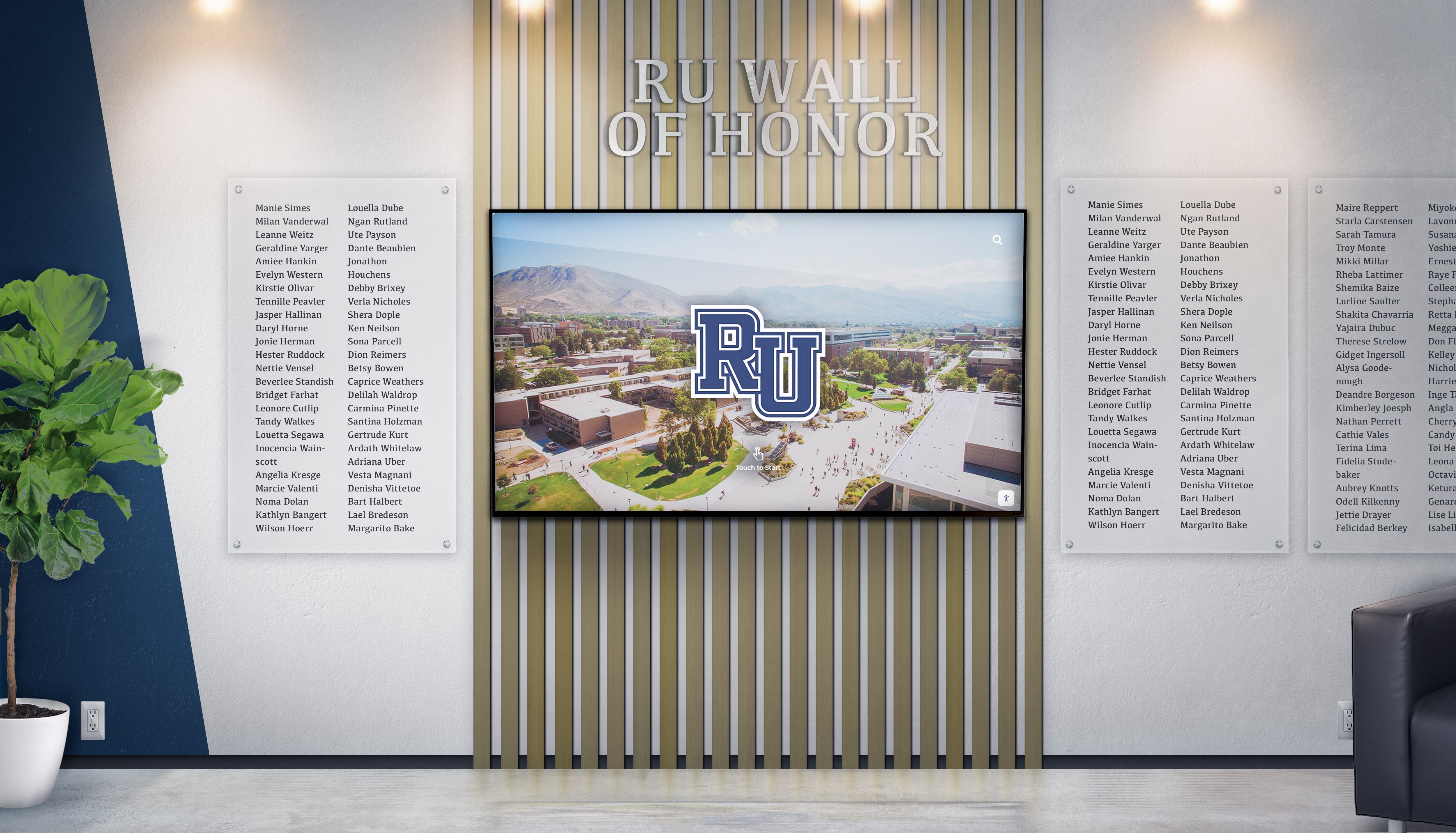
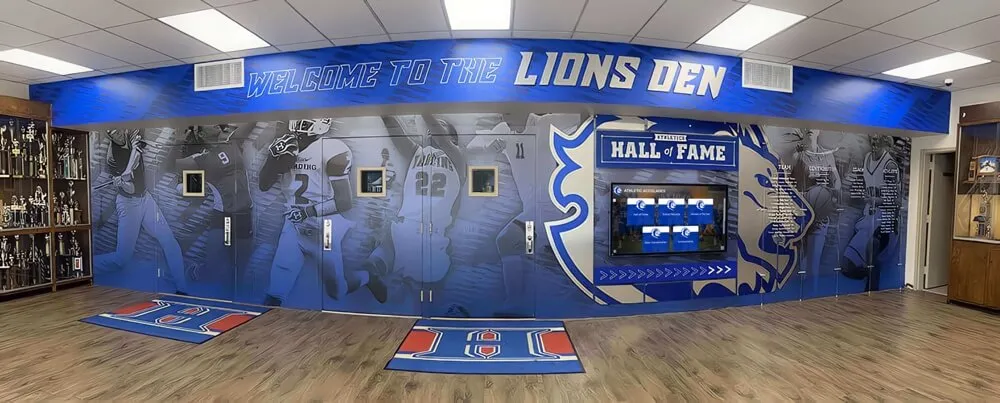
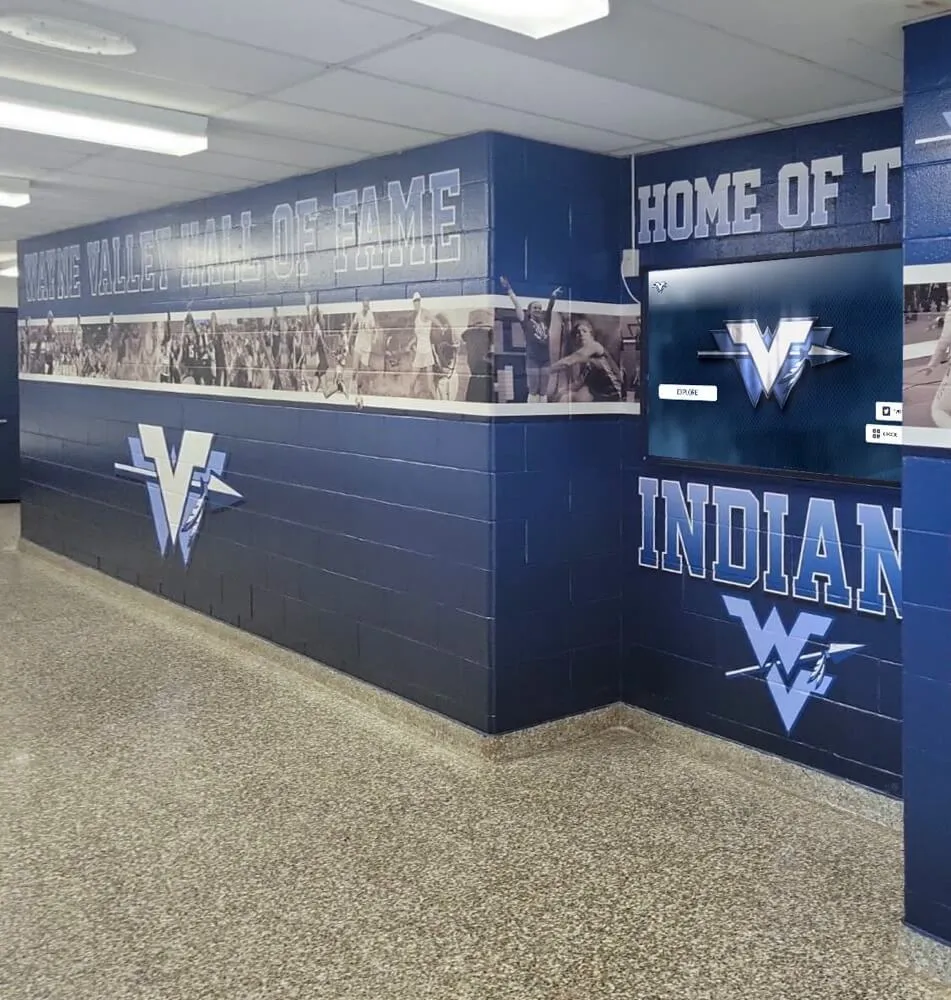
Integrated systems combine traditional physical elements with digital displays creating comprehensive recognition environments
Achievement Type Balance
- Academic versus athletic recognition volume
- STEM versus humanities recognition patterns
- Traditional subjects versus arts and CTE
- Individual versus team/collaborative achievement
- Absolute achievement versus growth recognition
Intervention Strategies When equity analysis reveals concerning patterns:
- Criteria revision ensuring accessibility for diverse populations
- Additional recognition categories creating opportunities for underrepresented groups
- Selection process modification reducing potential bias
- Communication enhancement reaching broader student populations
- Targeted outreach encouraging participation from specific groups
Data-informed equity monitoring prevents recognition systems from inadvertently disadvantaging particular student populations while ensuring institutional commitments to inclusive excellence receive operational implementation.
Accessibility in Recognition Systems
Remove barriers preventing full participation and engagement:
Physical Accessibility
- ADA-compliant mounting heights for digital displays
- Touchscreen functionality accessible from wheelchair position
- Audio description options for visual content
- High-contrast viewing modes
- Captioning for video content
Learn about digital recognition accessibility ensuring comprehensive access.
Communication Accessibility
- Materials in multiple languages serving diverse families
- Translation services for ceremonies and recognition events
- Clear communication about recognition criteria and nomination processes
- Multiple communication channels ensuring broad reach
- Support for families facing technology access barriers
Economic Accessibility
- Zero cost participation in recognition programs
- No requirement to purchase special attire or materials
- Free ceremony admission and programs
- Provided award materials without family expense
- Accommodation support for families facing transportation barriers
These accessibility considerations ensure recognition programs genuinely honor all deserving students rather than creating participation barriers that systematically exclude certain populations.
Recognition Program Assessment and Continuous Improvement
Regular evaluation ensures programs achieve intended outcomes.
Quantitative Metrics
Participation and Coverage Data
- Total number and percentage of students receiving recognition
- Distribution across grade levels
- Recognition frequency per individual student
- Year-over-year trend analysis
- Comparison to enrollment demographics
Engagement Indicators
- Recognition ceremony attendance rates
- Digital recognition platform usage statistics
- Web-based recognition traffic and session duration
- Social media engagement with recognition content
- Search patterns revealing what people seek in recognition systems
Academic Outcome Correlations
- Achievement trends among recognized versus non-recognized students
- Impact of recognition on subsequent marking period performance
- Course selection patterns following recognition
- Retention and persistence measures
- Long-term trajectory analysis
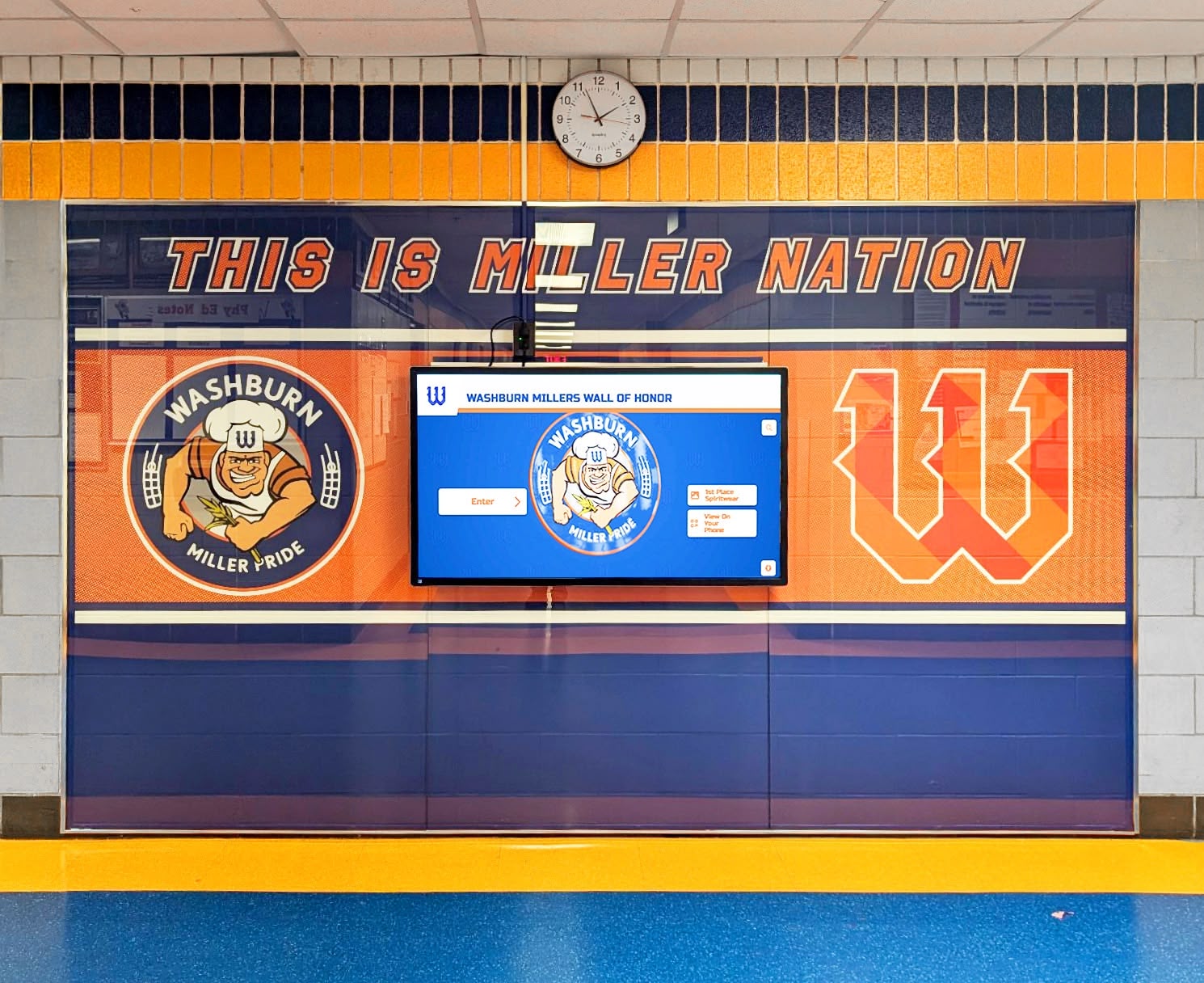
Prominent hallway placement ensures daily visibility connecting recognition to school culture and identity
Qualitative Assessment
Stakeholder Feedback
- Student surveys about recognition awareness and perceived fairness
- Family satisfaction with recognition programs and communication
- Teacher perspectives on selection processes and administrative burden
- Alumni reflection on recognition program value and impact
- Community perception of school academic priorities
Cultural Impact Indicators
- School climate survey results related to achievement culture
- Observed changes in academic engagement and ambition
- Peer attitudes toward academic excellence
- Family involvement in academic programs
- Institutional pride and reputation perception
Success Stories and Testimonials
- Documented stories of recognition impact on student motivation
- Family narratives about achievement celebration meaning
- Teacher observations about recognition program influence
- Alumni connection to high school recognition experiences
- Community member perception of institutional excellence
This comprehensive assessment enables data-informed continuous improvement ensuring recognition programs deliver intended benefits while remaining aligned with institutional mission and stakeholder needs.
Practical Implementation: Getting Started
Schools can begin improving recognition immediately while building toward comprehensive systems.
Quick Wins: Immediate Recognition Enhancements
Expand Communication Channels Even without new programs, increase visibility:
- Add social media celebration of existing recognition
- Create email notifications to families when students achieve
- Develop website recognition pages listing current recipients
- Implement morning announcement rotation featuring award winners
- Photograph and display recognition ceremony moments
Improve Documentation Quality Enhance existing program outputs:
- Use better photography during recognition ceremonies
- Create more detailed written descriptions of achievements
- Develop consistent visual branding for recognition materials
- Preserve ceremony recordings for future access
- Organize historical achievement documentation systematically
Add Growth-Oriented Recognition Ensure progress receives celebration alongside absolute achievement:
- Create “Most Improved” awards in various categories
- Recognize attendance improvement for previously struggling students
- Acknowledge subject-specific advancement and skill development
- Celebrate reading level growth and literacy milestones
- Honor academic perseverance and sustained effort
These immediate improvements require minimal investment while significantly enhancing recognition program impact and accessibility.
Medium-Term Development: Building Comprehensive Programs
Expand Recognition Categories Systematically address achievement types lacking acknowledgment:
- Add subject-specific departmental awards for all academic areas
- Create arts and CTE recognition parallel to traditional academics
- Implement character-based academic recognition programs
- Establish competition success celebration across intellectual domains
- Develop specialized recognition for underrepresented achievement
Improve Selection Processes Enhance fairness and transparency:
- Document clear, objective criteria for all recognition types
- Create rubrics for qualitative awards requiring judgment
- Establish review committees with diverse representation
- Implement nomination processes enabling broader participation
- Develop appeals or reconsideration procedures ensuring fairness
Enhance Ceremony Experiences Create more engaging recognition celebrations:
- Use projection and multimedia during ceremonies
- Include brief achievement descriptions providing context
- Create professional photography opportunities
- Provide streaming options for remote family attendance
- Develop programs and materials families keep and treasure
Long-Term Vision: Digital Recognition Transformation
Implement Comprehensive Digital Recognition System Solve fundamental space and accessibility limitations:
Platform Selection Choose systems matching institutional needs:
- Purpose-built recognition platforms versus adapted digital signage
- Content management complexity matching staff technical capabilities
- Hardware requirements and integration with existing infrastructure
- Web-based access and mobile optimization features
- Scalability accommodating growth and evolution
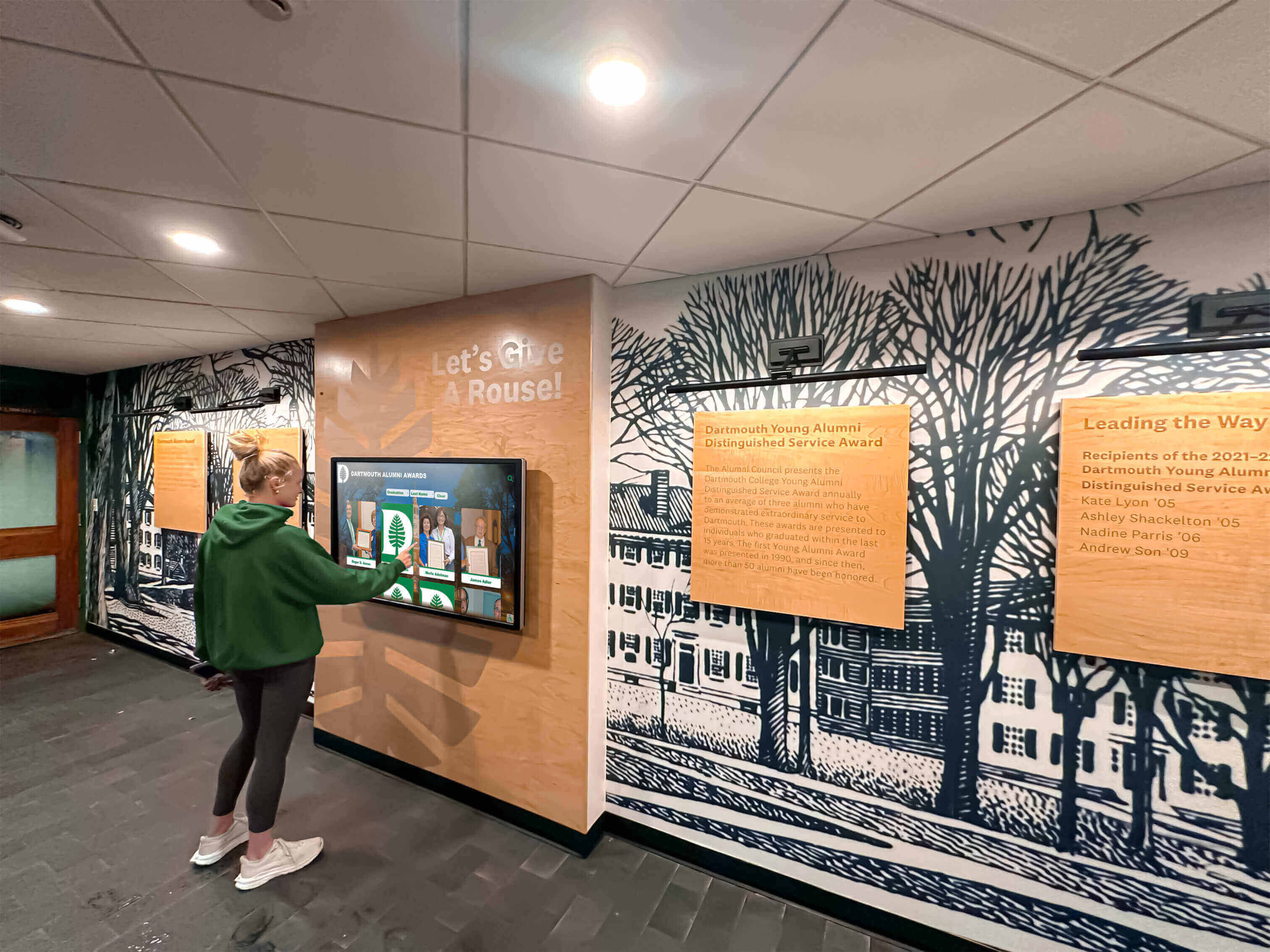
Engaging interfaces encourage casual exploration helping students discover peer achievements and institutional traditions
Solutions like Rocket Alumni Solutions provide turnkey platforms designed specifically for educational recognition, offering functionality that generic systems cannot match while remaining accessible for staff without technical backgrounds.
Historical Content Development Build comprehensive recognition archives:
- Digitize historical award records and recipient information
- Gather historical photos and achievement documentation
- Interview alumni about historical recognition significance
- Organize chronological achievement databases
- Create searchable archives spanning institutional history
Ongoing Content Management Establish sustainable recognition workflows:
- Define roles and responsibilities for content updates
- Create templates and standards ensuring consistency
- Develop processes for annual recipient addition
- Schedule regular content review and refinement
- Train multiple staff members ensuring continuity
Community Engagement Strategy Maximize recognition platform impact:
- Promote web-based access through multiple communication channels
- Encourage social sharing amplifying recognition reach
- Integrate recognition into campus tours and orientation
- Connect recognition to alumni engagement initiatives
- Measure and demonstrate recognition program value through analytics
This long-term vision transforms recognition from constrained physical displays to comprehensive digital systems that honor every deserving student while creating permanent, accessible celebration of institutional excellence.
Recognition Beyond K-12: Extending to Elementary and Higher Education
While this guide emphasizes secondary education, recognition principles apply across educational levels with age-appropriate modifications.
Elementary School Recognition Adaptations
Developmental Appropriateness
- Frequent, immediate recognition rather than distant marking period awards
- Visual recognition systems young students understand
- Growth mindset emphasis celebrating improvement and effort
- Inclusive approaches ensuring all students receive some recognition
- Fun, engaging formats maintaining elementary student interest
Elementary-Specific Recognition
- Reading level advancement and literacy milestones
- Perfect attendance and consistent engagement
- Citizenship and character development
- Academic improvement across fundamental skills
- Student of the month and weekly recognition programs
Higher Education Recognition Extensions
College and University Contexts
- Dean’s List recognition for semester GPA achievement
- Departmental honors and major-specific excellence
- Research presentation and publication acknowledgment
- Thesis and capstone project recognition
- Graduate program academic achievement
Professional and Career Integration
- Connection between academic recognition and career outcomes
- Alumni achievement tracking and institutional success demonstration
- Employer partnership recognition programs
- Internship and co-op excellence acknowledgment
- Career preparation and professional certification recognition
Recognition principles remain consistent across levels—celebrate diverse achievement through multiple pathways, ensure equitable access to acknowledgment, create meaningful visibility extending beyond brief moments, and connect recognition to institutional values and mission.
Conclusion: Creating Recognition That Truly Honors Achievement
Student recognition awards represent far more than simple acknowledgment ceremonies or displays—when designed thoughtfully and implemented systematically, recognition programs create powerful motivational ecosystems that shape student ambition, family engagement, and institutional culture for generations.
The strategies explored in this comprehensive guide provide frameworks for building recognition systems that honor academic achievement authentically while solving the practical challenges schools have faced for decades. From expanded recognition categories ensuring diverse excellence receives celebration to digital platforms eliminating space constraints and accessibility limitations, modern approaches transform recognition from constrained token gestures to comprehensive documentation woven throughout school identity.
Transform Your Student Recognition Program
Discover how solutions like Rocket Alumni Solutions help schools honor every academic achievement through comprehensive digital recognition platforms providing unlimited capacity, engaging interactive exploration, and permanent documentation ensuring no accomplishment ever disappears from institutional memory.
Explore Recognition SolutionsImplementation begins with honest assessment—evaluating current recognition programs against best practices, identifying gaps where deserving achievement goes unacknowledged, gathering stakeholder feedback about recognition satisfaction, and exploring solutions addressing fundamental space and accessibility limitations that constrain traditional approaches.
Digital recognition platforms eliminate the painful trade-offs schools have always faced—no longer must you choose which achievements remain visible and which must be removed to make space for new recognition. Comprehensive systems accommodate unlimited students across all achievement types and graduation years, ensuring every deserving student receives permanent acknowledgment extending throughout their lives and connecting future generations to institutional excellence traditions.
Your students’ academic achievements—from honor roll qualification to perfect attendance, from subject-specific excellence to growth and improvement, from competition success to character-based academic citizenship—deserve recognition systems providing lasting celebration rather than temporary acknowledgment disappearing after brief announcement moments. Through thoughtful program design, equitable selection processes, engaging ceremonies, and permanent digital documentation, you can create recognition that genuinely honors achievement while building the positive, motivating academic culture where all students thrive.
Start today by identifying one immediate enhancement you can implement this marking period, one medium-term program expansion you can plan for next academic year, and one long-term vision component—like comprehensive digital recognition—you can begin exploring for future implementation. Every step toward more meaningful, visible, and permanent recognition creates value for current students while building institutional excellence traditions that will inspire achievement for generations to come.
Ready to begin? Explore digital recognition display options or learn about academic wall of fame implementations that celebrate intellectual excellence alongside athletic achievement, creating balanced recognition reflecting comprehensive school missions.