Student ambassador programs have emerged as powerful frameworks for developing leadership capacity, recognizing standout students, and strengthening institutional culture across K-12 schools and universities. These structured initiatives transform talented students into visible representatives who exemplify school values, guide prospective families, welcome new students, and serve as bridges between administration and the broader student body.
Yet many schools struggle to move beyond informal, ad-hoc selection processes that fail to maximize the leadership development potential of ambassador programs. How do you identify the right students beyond academic achievement alone? What training and support do ambassadors need to succeed? How can recognition systems motivate participation while avoiding elitism? What roles should ambassadors play that genuinely serve institutional needs rather than simply adding resume credentials?
This comprehensive guide explores how schools build effective student ambassador programs—from establishing selection criteria and developing training frameworks to creating recognition systems and measuring program impact. Whether you’re launching a new initiative or strengthening an existing program, these strategies help administrators create ambassador programs that develop authentic leadership skills while providing genuine value to your school community.
Schools implementing structured student ambassador programs report significant improvements in enrollment conversion rates, new student transition outcomes, school culture metrics, and leadership development pathways compared to institutions relying solely on traditional student government or informal peer mentorship. Well-designed programs create reciprocal value—ambassadors develop transferable skills while institutions benefit from authentic student perspectives and peer-to-peer engagement that professional staff cannot replicate.

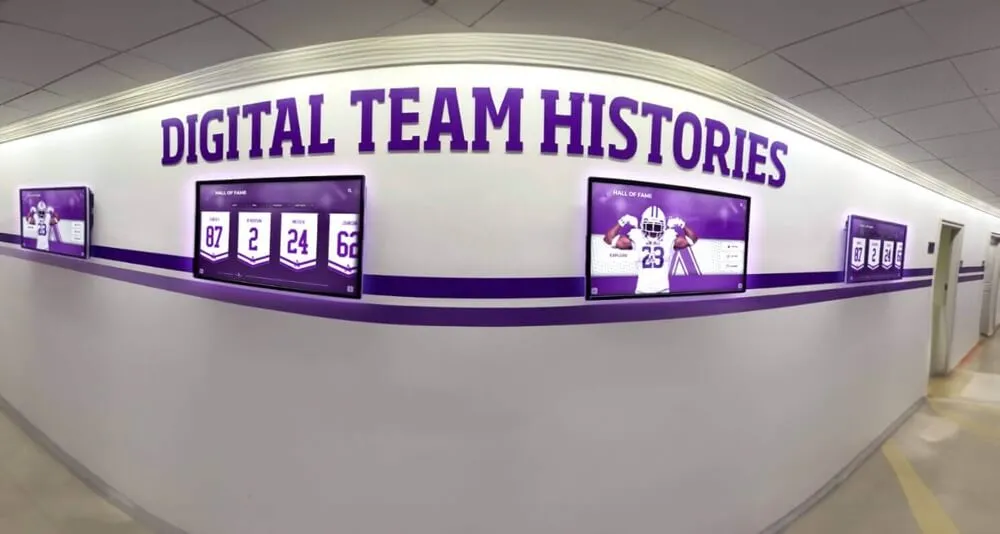
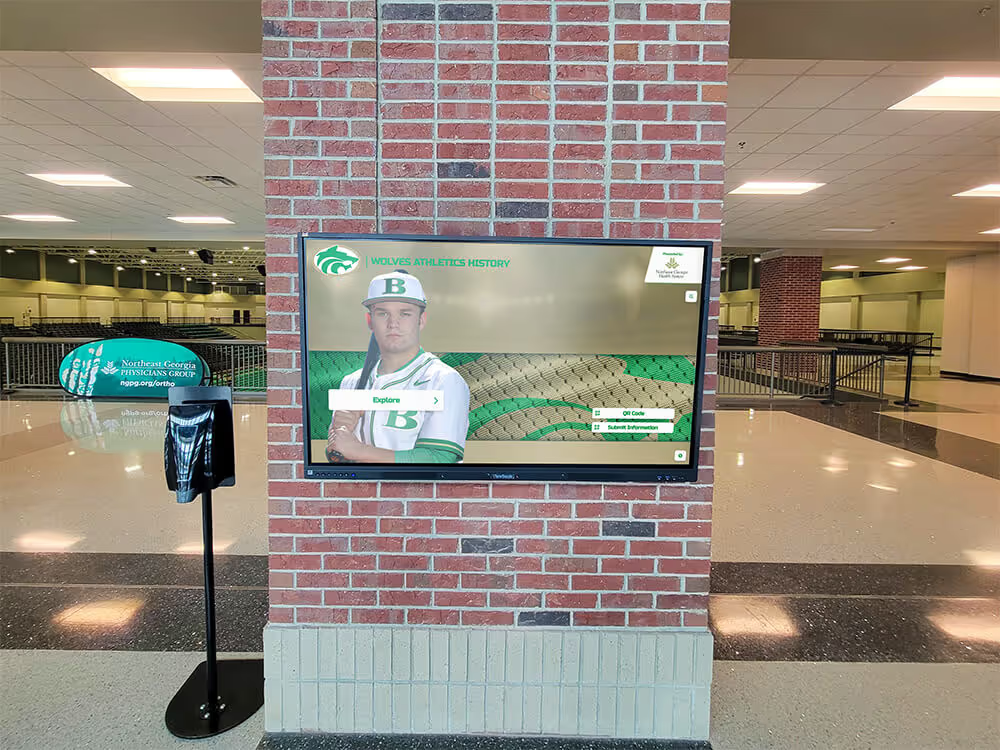
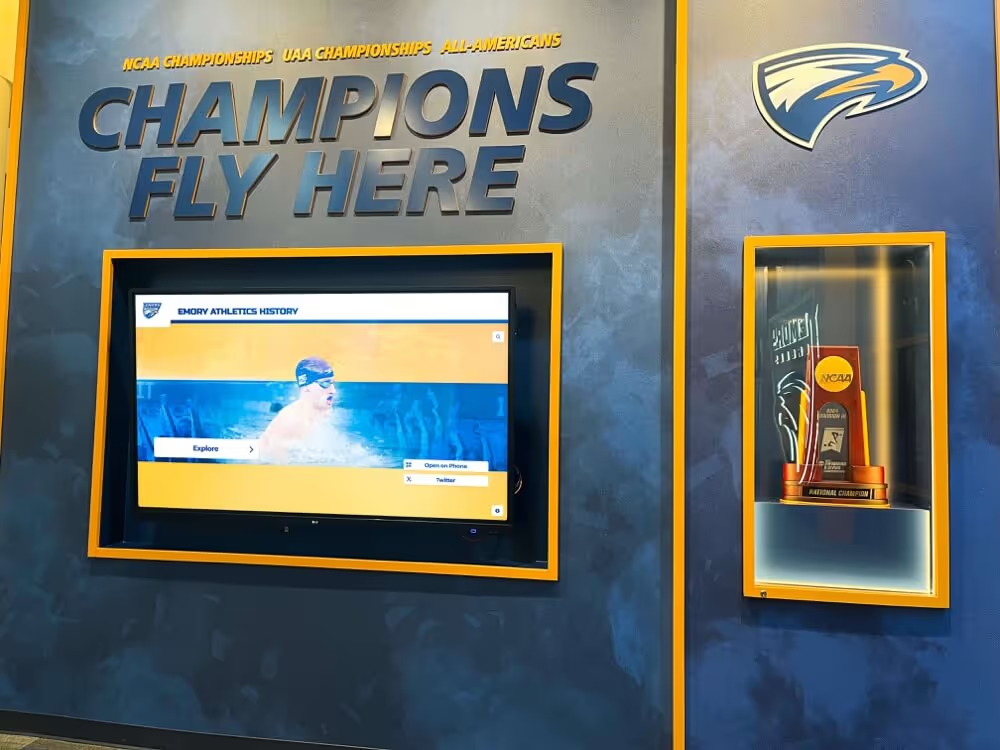
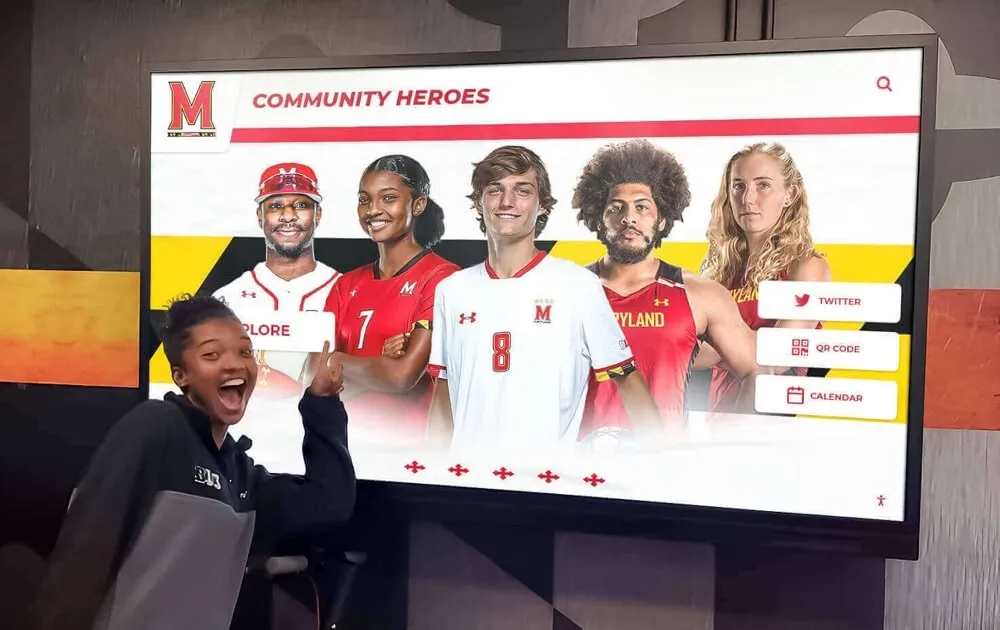
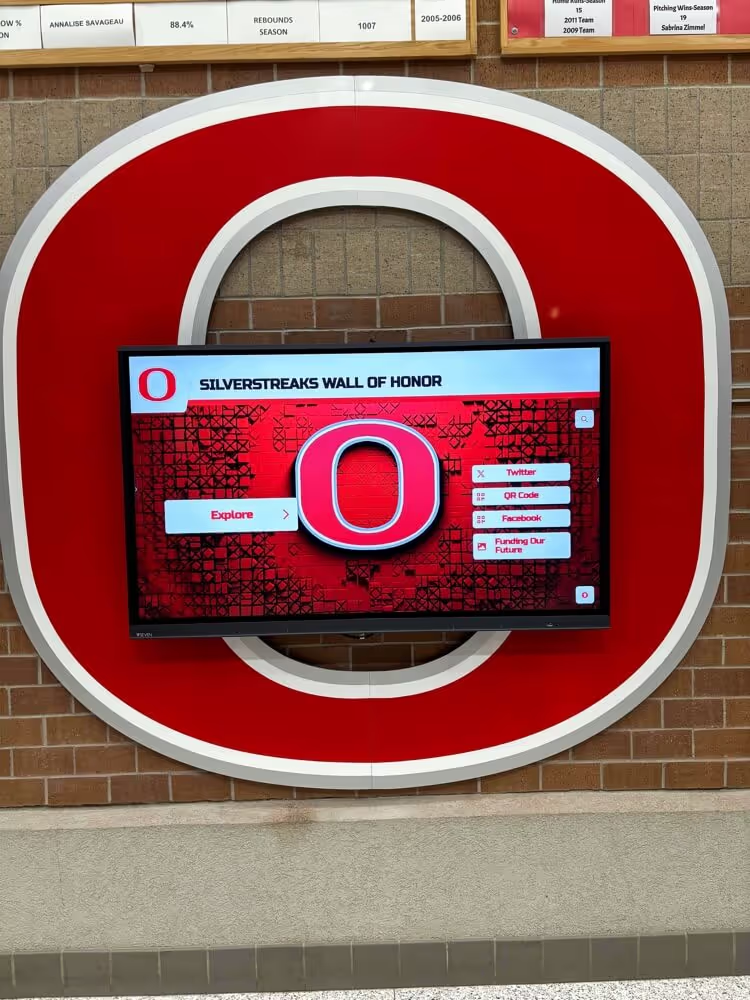
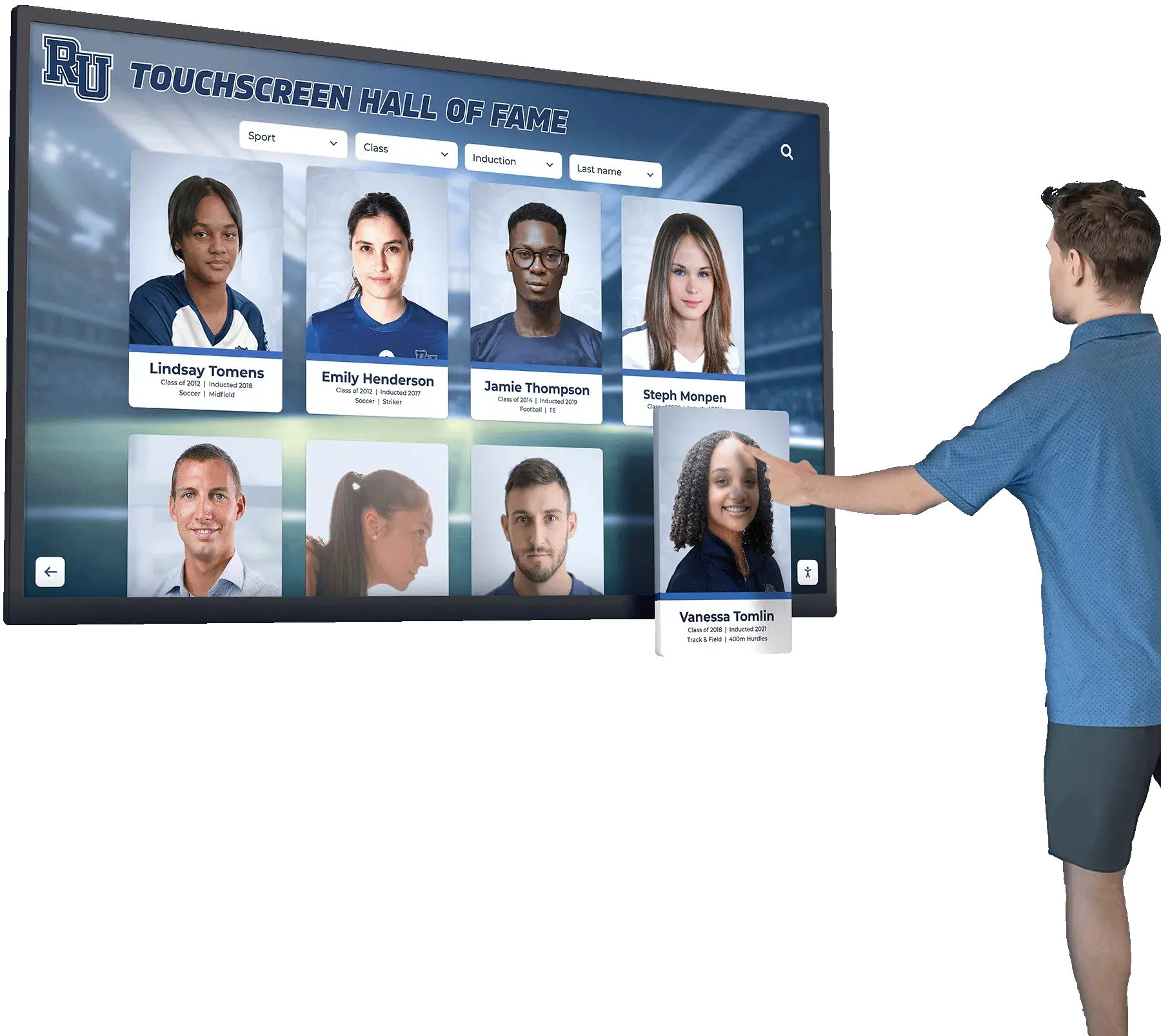
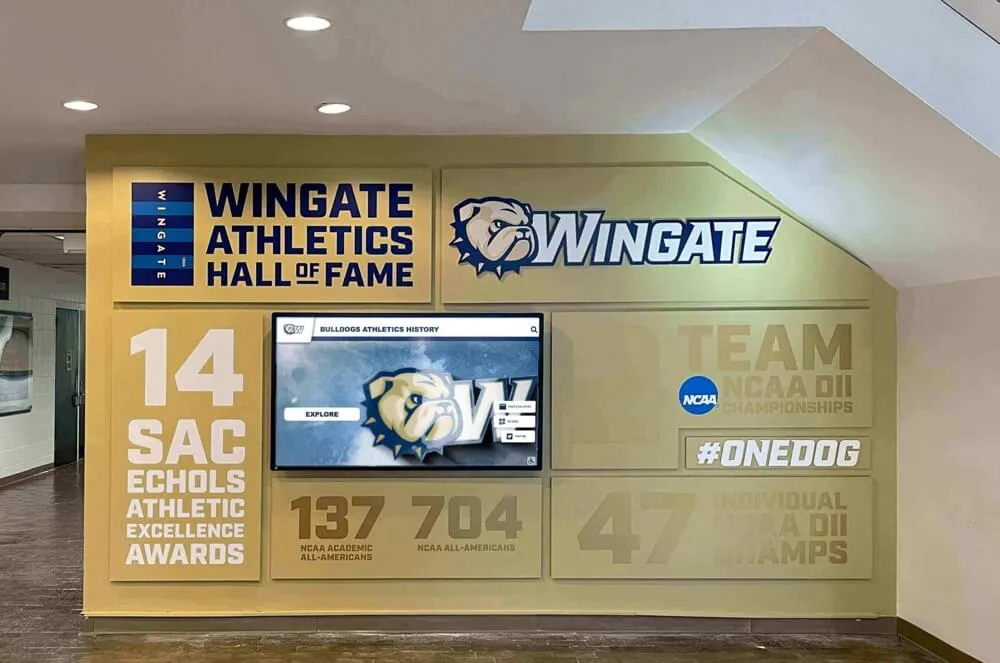
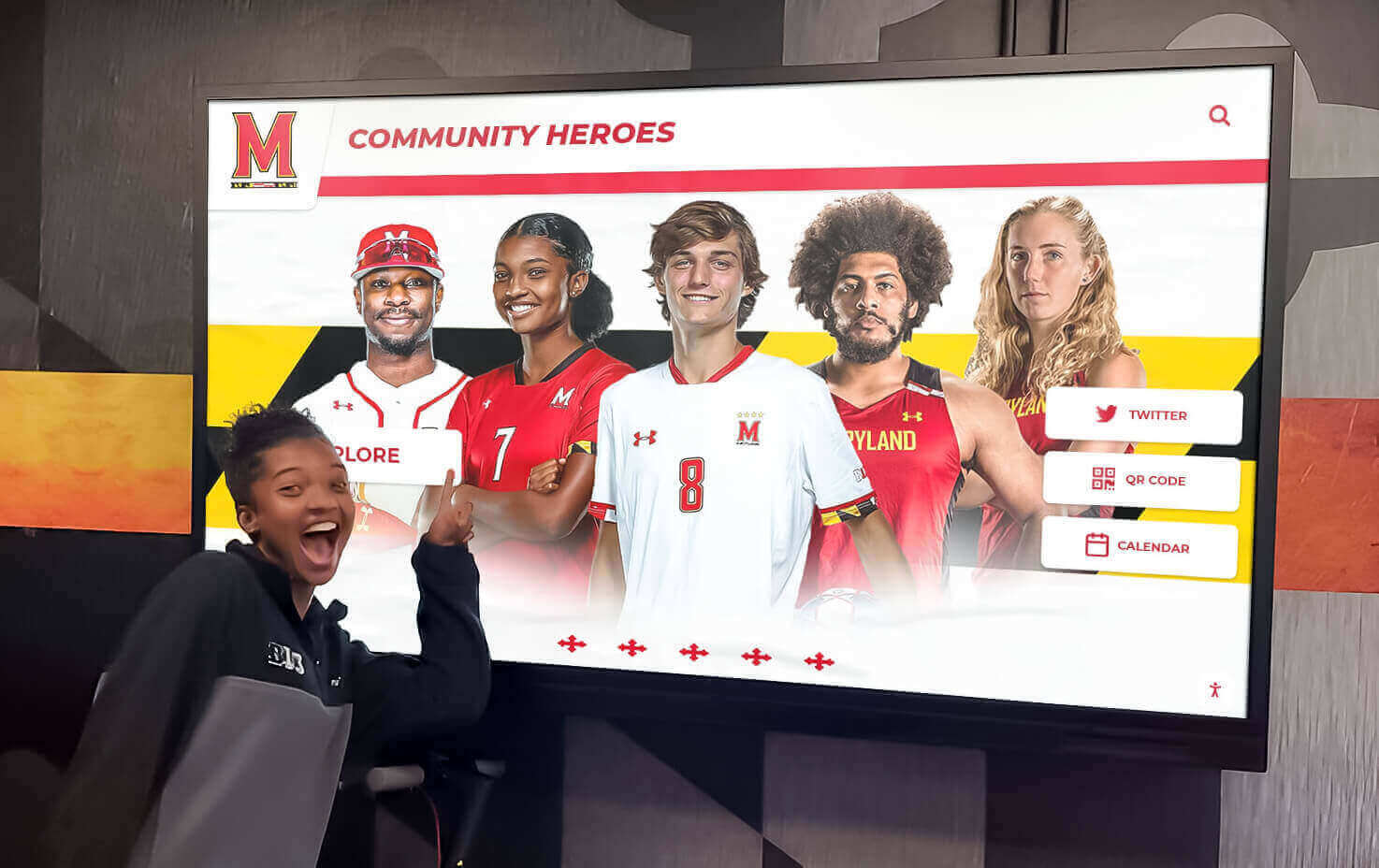
Modern recognition systems help schools celebrate student ambassadors and other standout students through engaging digital displays
Why Student Ambassador Programs Matter
Understanding the strategic benefits of formalized ambassador initiatives helps administrators secure stakeholder buy-in and allocate appropriate resources for program success.
Leadership Development Beyond the Classroom
Student ambassador programs create structured leadership opportunities complementing traditional academic experiences:
Practical Communication Skills
Ambassador roles demand real-world communication competencies rarely developed through classroom instruction alone. Students practice professional conversation with adults, adapt messaging for diverse audiences, manage difficult questions during campus tours, represent institutional perspectives while maintaining authenticity, and receive feedback on presentation effectiveness from administrators and visitors.
These experiences build communication confidence that transfers directly to college interviews, internship applications, and early career success. Schools implementing comprehensive recognition programs discover that visible celebration of ambassador contributions motivates participation and reinforces the value of leadership skill development.
Professional Responsibility and Accountability
Unlike typical teenage activities focused on personal achievement, ambassador roles require students to prioritize institutional needs and stakeholder experiences. They must arrive punctually for scheduled tours, maintain professional appearance standards, respond promptly to administrative requests, represent school perspectives even when personal opinions differ, and understand that their behavior reflects on the entire institution.
This early exposure to professional expectations establishes work habits and personal accountability standards that serve students throughout their academic and professional trajectories.
Peer Leadership and Influence
Ambassador programs position selected students as visible role models whose behavior influences broader student culture. When respected peers demonstrate academic engagement, community service, inclusive behavior, and school pride, these values spread through informal social networks more effectively than adult-driven initiatives ever achieve.
Research consistently demonstrates that peer influence shapes teenage behavior more powerfully than adult messaging—making strategic investment in peer leadership development one of the most effective tools available for cultural transformation.
Enrollment and Admissions Support
Student perspectives significantly influence prospective family decision-making:
Authentic Student Voice
Prospective families evaluating school options consistently report that interactions with current students carry more weight than administrator presentations or marketing materials. Students ask questions they wouldn’t pose to administrators, share concerns about social dynamics and academic rigor, and assess whether they can envision themselves fitting into the school community.
Well-trained ambassadors provide honest, positive perspectives that address these concerns while highlighting genuine institutional strengths. Admissions professionals regularly report that strong ambassador interactions convert undecided families into enrolled students—particularly when competing against other strong academic options.
Targeted Peer Connections
Strategic ambassador selection enables schools to create targeted connections with prospective students sharing specific interests, backgrounds, or concerns. Schools can pair prospective athletes with current student-athletes, connect students interested in specific programs with ambassadors pursuing those pathways, match families from similar geographic or cultural backgrounds, and address specific concerns through students with relevant personal experiences.
These personalized connections create emotional engagement that generic campus tours cannot replicate.
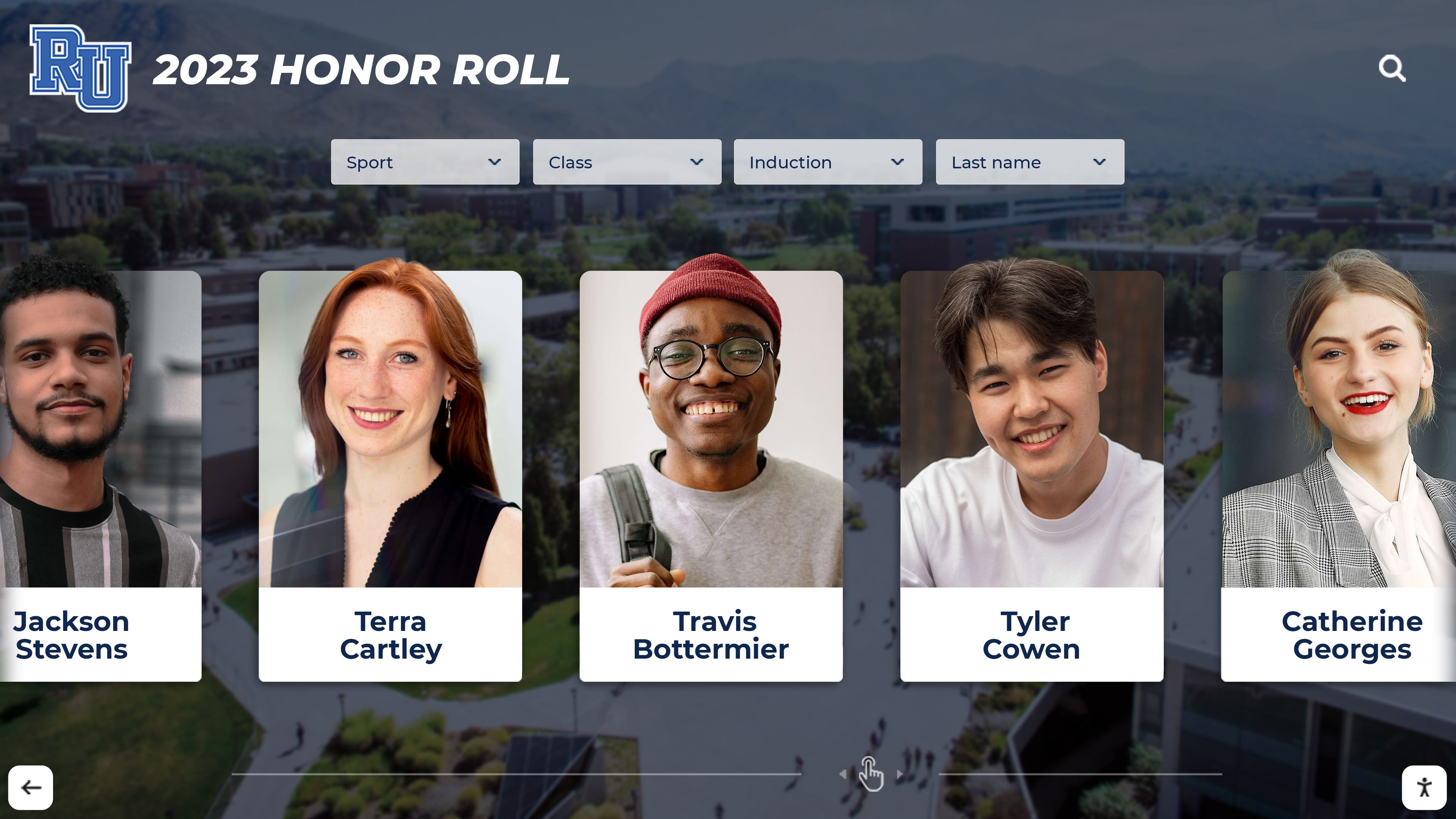
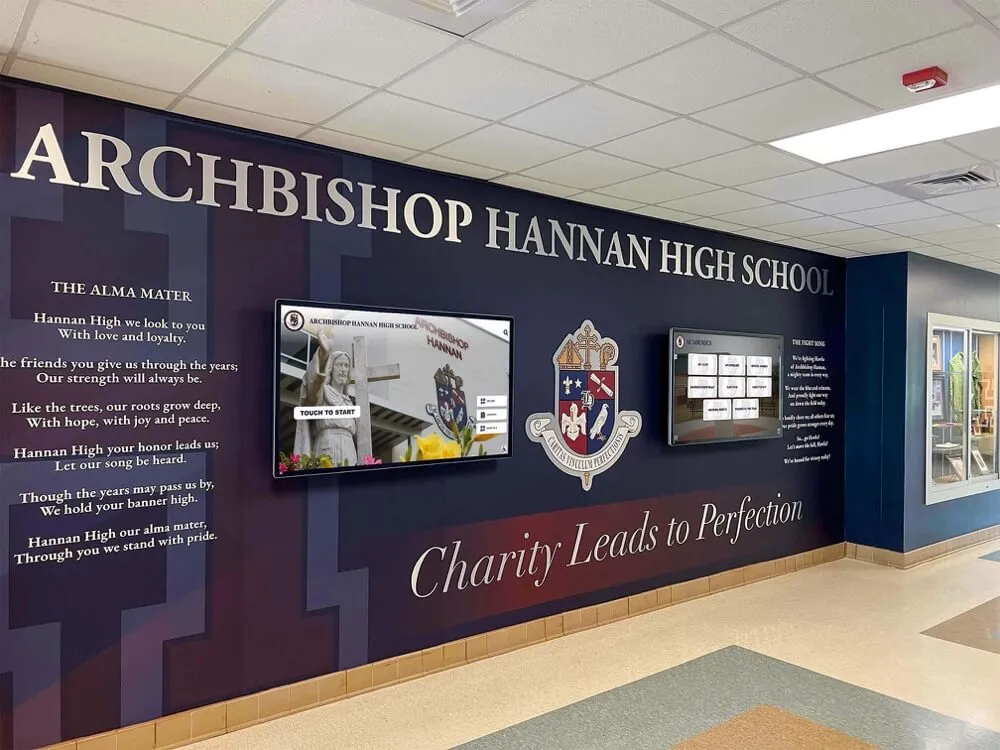
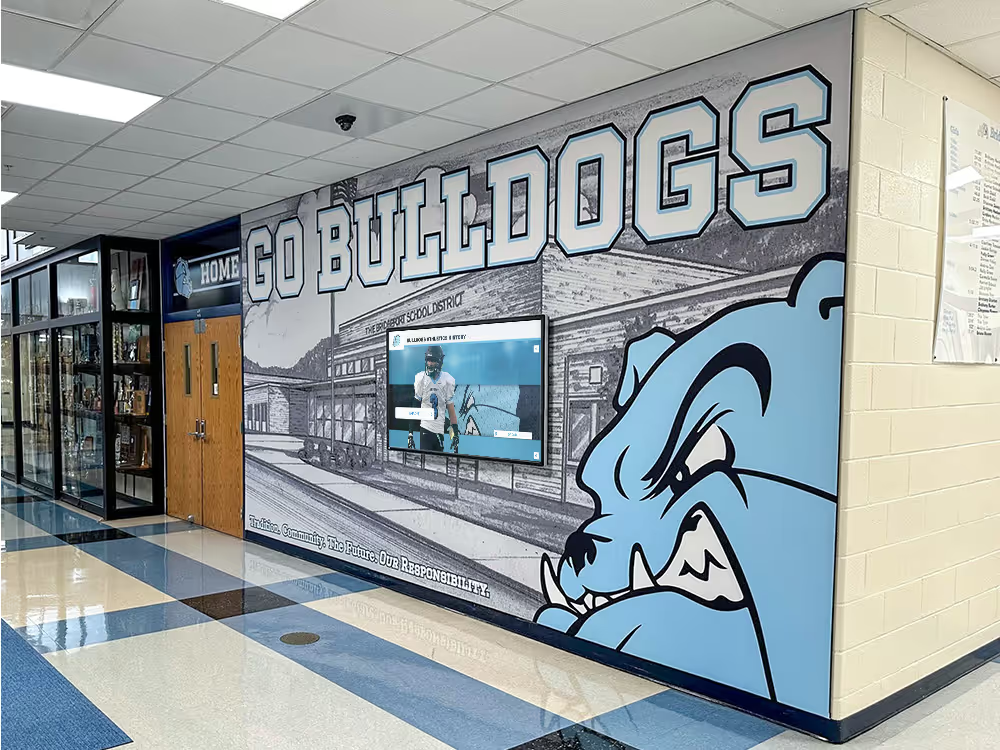
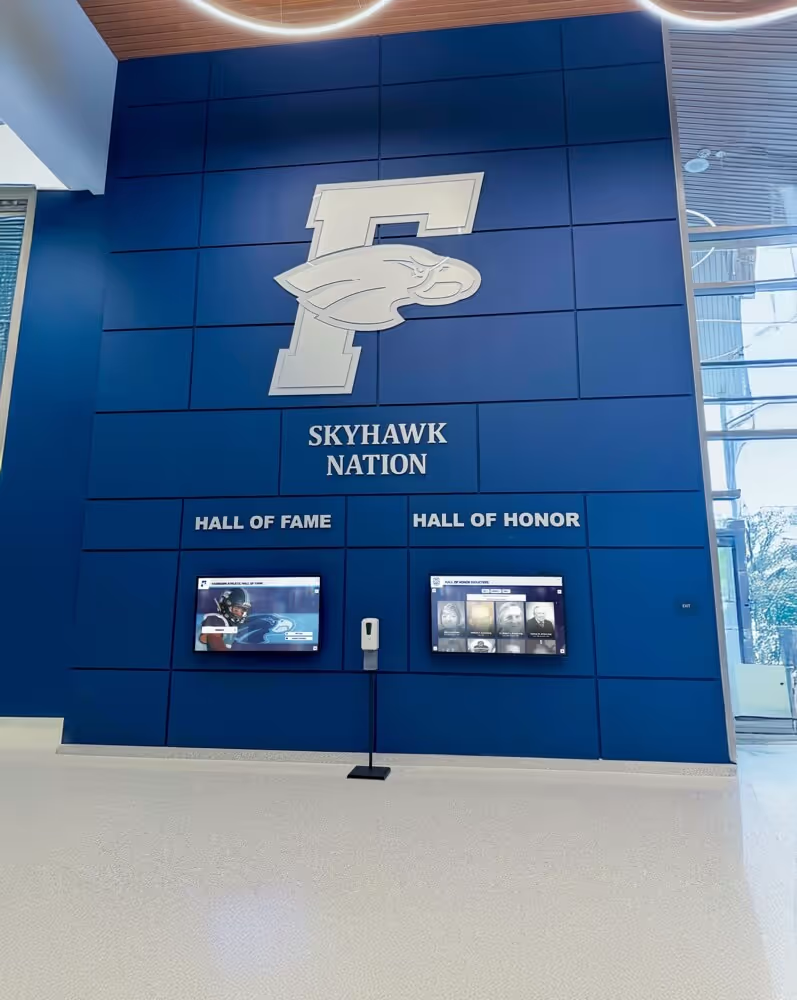
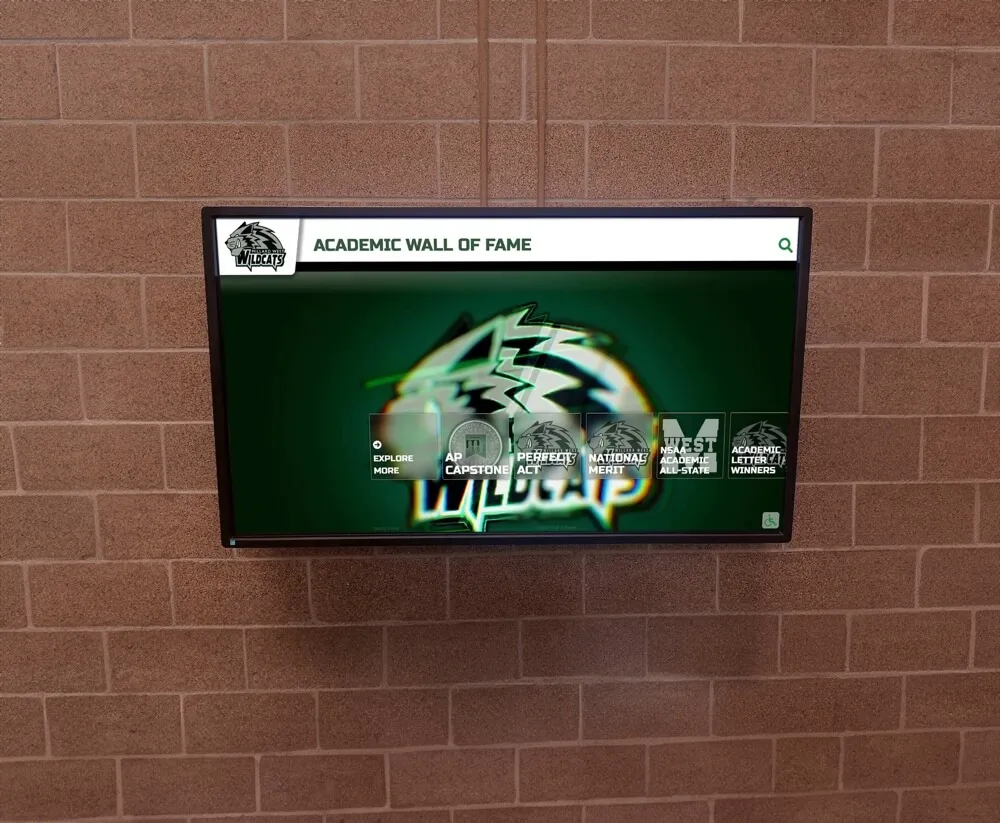
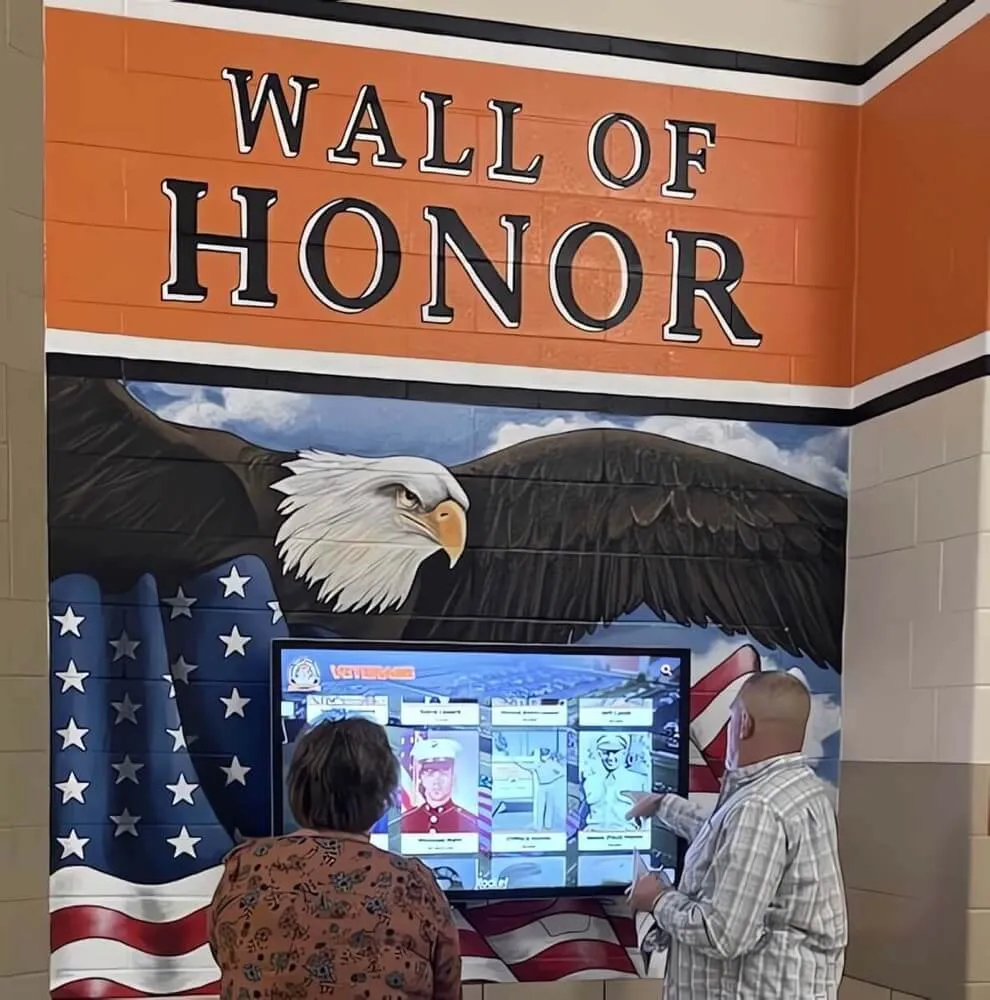
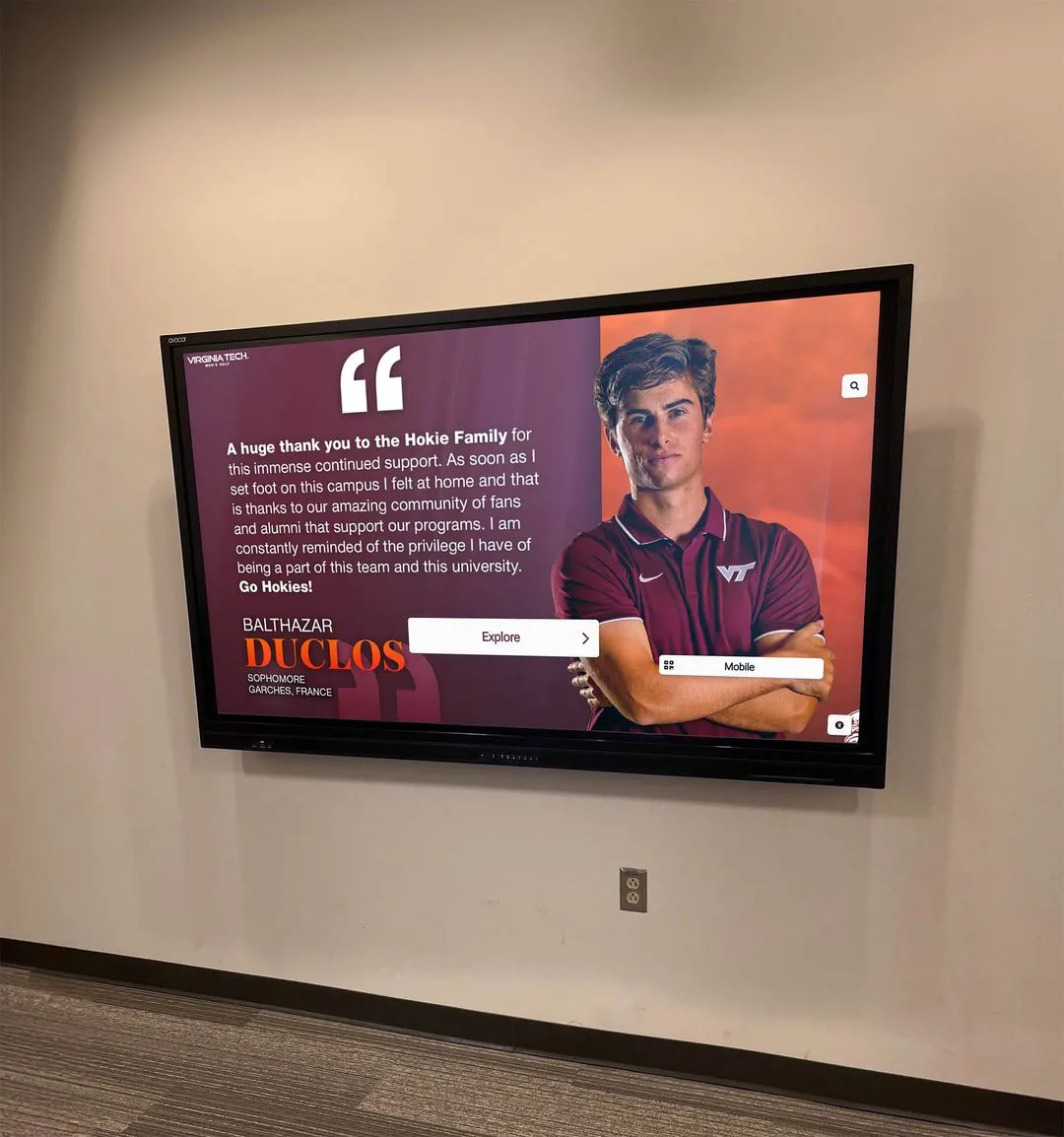
Recognition displays help schools celebrate multiple student achievement categories including honor roll, ambassadors, and leadership roles
New Student Transition and Belonging
Ambassador programs facilitate smoother transitions for incoming students:
Peer Mentorship Networks
Formal ambassador structures create natural mentorship connections that accelerate social integration and academic success for new students. Rather than navigating unfamiliar environments alone, incoming students receive guidance from established peers who recently experienced identical transitions.
These relationships prove particularly valuable for students from underrepresented backgrounds, first-generation college students, or those entering from significantly different academic environments. Ambassador connections provide safe spaces for asking questions, admitting confusion, and seeking advice without fear of judgment.
Organizations focused on student athlete recognition note that visible celebration of diverse achievement categories—including ambassador service—helps new students identify multiple pathways for involvement and belonging.
Cultural Translation and Navigation
Every school maintains unwritten cultural norms, social hierarchies, and institutional quirks that newcomers must learn to navigate successfully. Ambassadors serve as cultural translators who explicitly explain implicit expectations, identify informal student gathering spaces and traditions, clarify confusing terminology and acronyms, and warn about common mistakes or social missteps.
This cultural guidance reduces anxiety, accelerates social integration, and helps new students avoid early missteps that could damage their social standing or self-confidence.
Building Effective Ambassador Selection Processes
Successful programs begin with thoughtful selection criteria and transparent processes that identify students with genuine leadership potential while maintaining program integrity.
Defining Ambassador Qualifications
Move beyond simplistic academic standards to identify multidimensional leadership capacity:
Academic Performance Baselines
While academic excellence shouldn’t be the sole criterion, reasonable performance standards ensure ambassadors can manage additional responsibilities without compromising educational progress. Most successful programs establish minimum GPA requirements (typically 3.0-3.5), require good academic standing without current probation or serious deficiencies, and consider academic trajectory and improvement rather than single-semester performance.
These standards communicate that ambassador status requires demonstrating basic academic responsibility—not perfection—while remaining accessible to students with diverse strengths beyond traditional academic excellence.
Communication and Interpersonal Skills
Effective ambassadors must connect with diverse audiences:
- Comfort speaking with adults and unfamiliar people
- Ability to listen actively and respond thoughtfully
- Positive, welcoming demeanor during interactions
- Clear verbal communication without excessive slang or informal language
- Capacity to adapt communication style for different audiences
- Emotional intelligence recognizing social cues and group dynamics
These competencies matter more than academic credentials for ambassador effectiveness—a student with a 3.3 GPA and exceptional interpersonal skills will typically outperform a 4.0 student uncomfortable with social interaction.
School Knowledge and Authentic Enthusiasm
Strong ambassadors genuinely love their schools and can articulate specific reasons why. They understand academic program offerings and special opportunities, participate actively in school activities and culture, can discuss both strengths and areas for growth honestly, share authentic personal stories illustrating school impact, and demonstrate visible pride in their institutional community.
This authentic enthusiasm proves impossible to fake during prospective family interactions—making it perhaps the most important qualification for ambassador success.
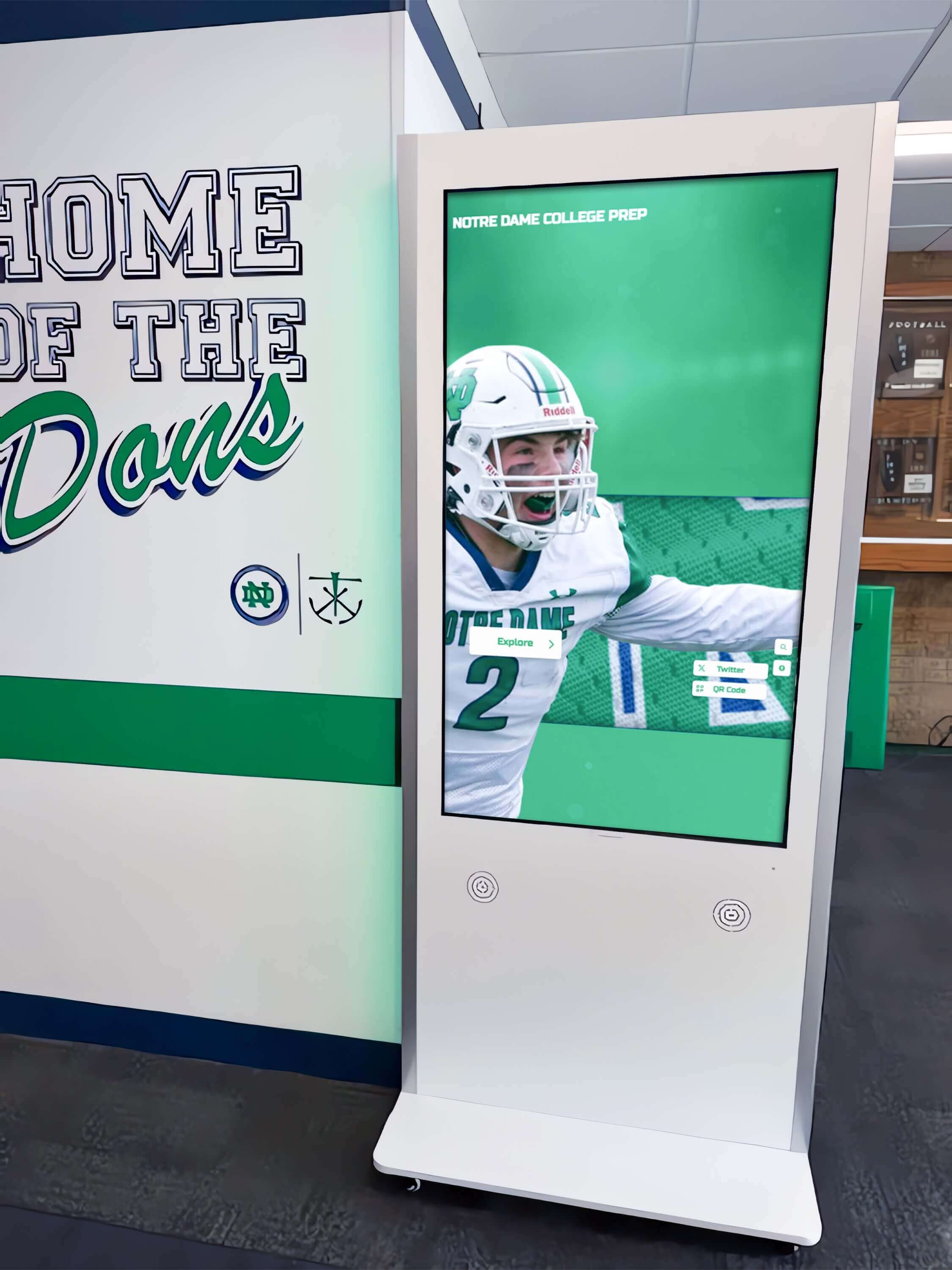
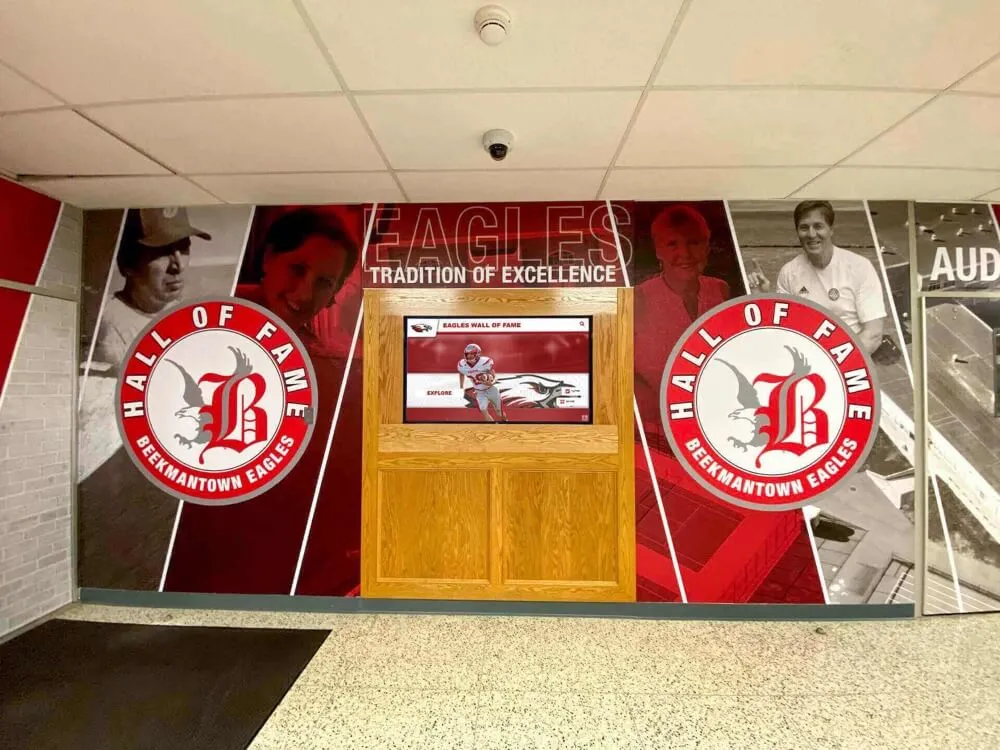
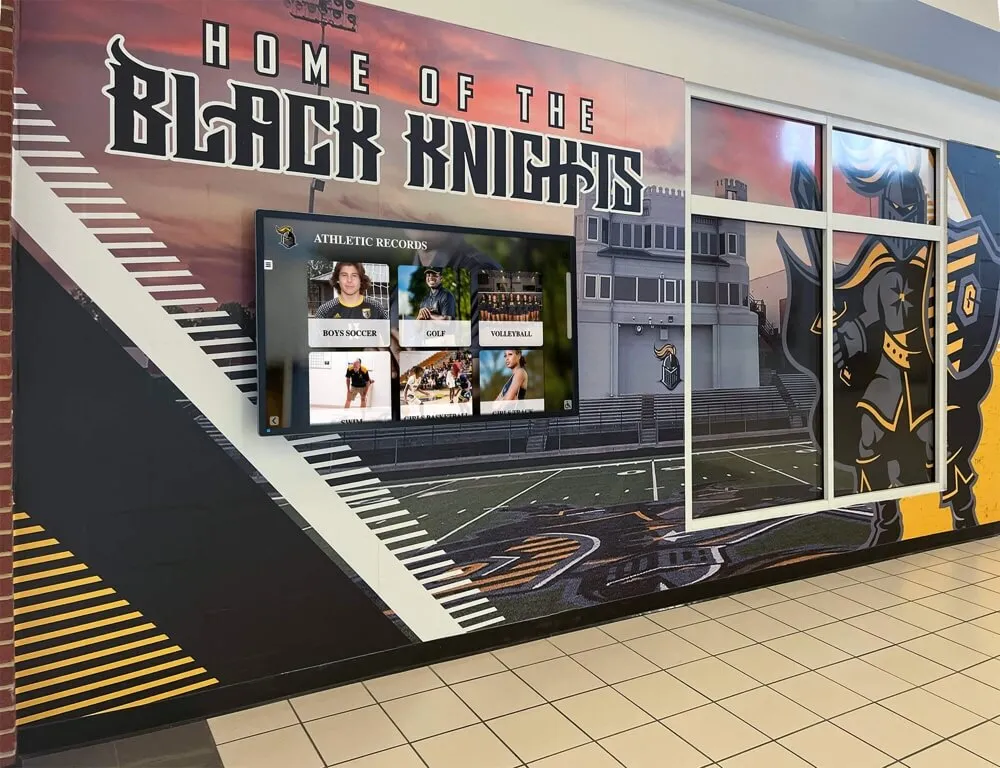
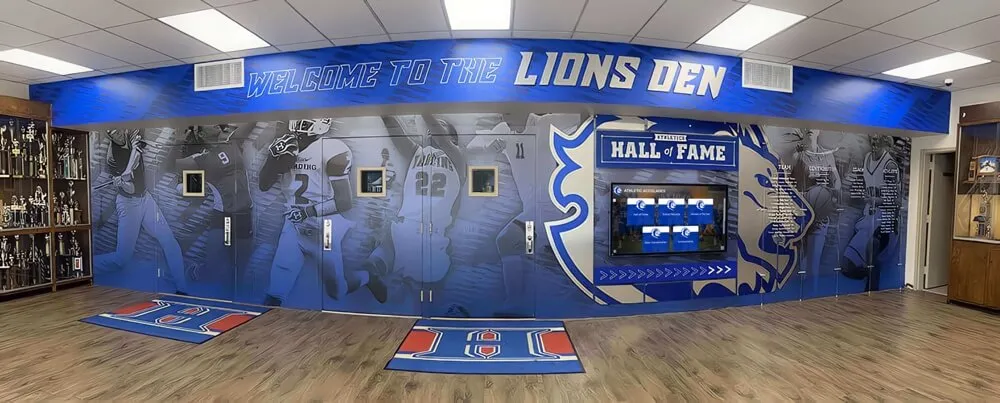
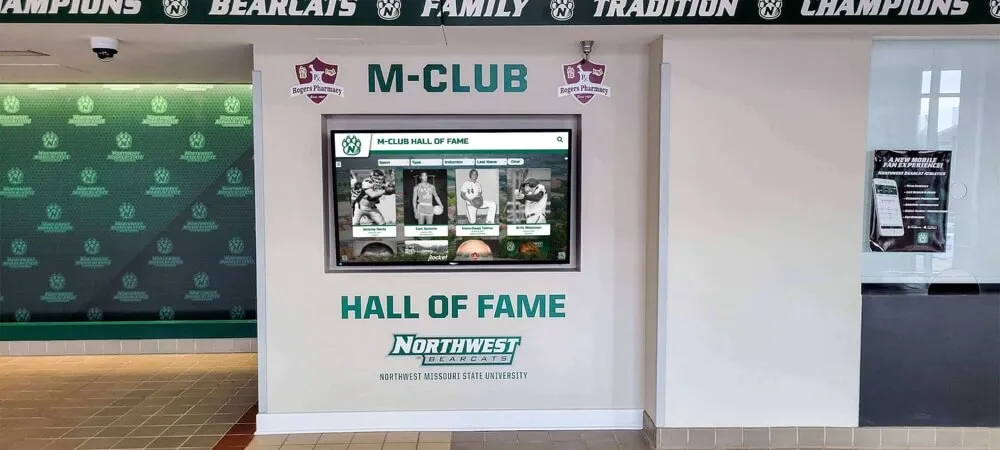
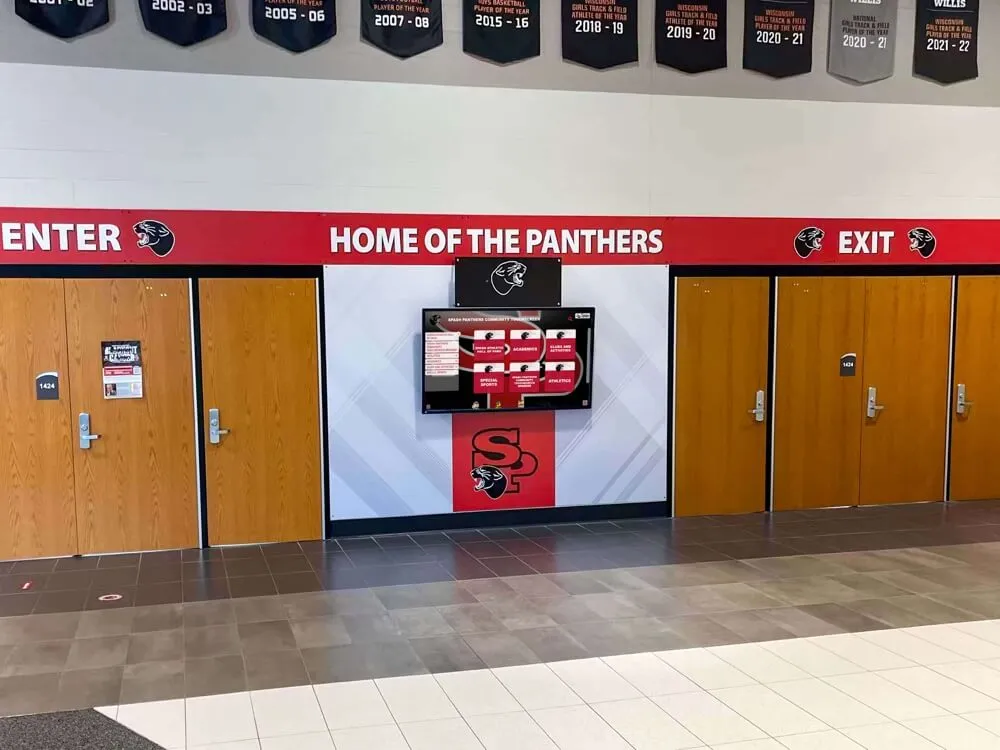
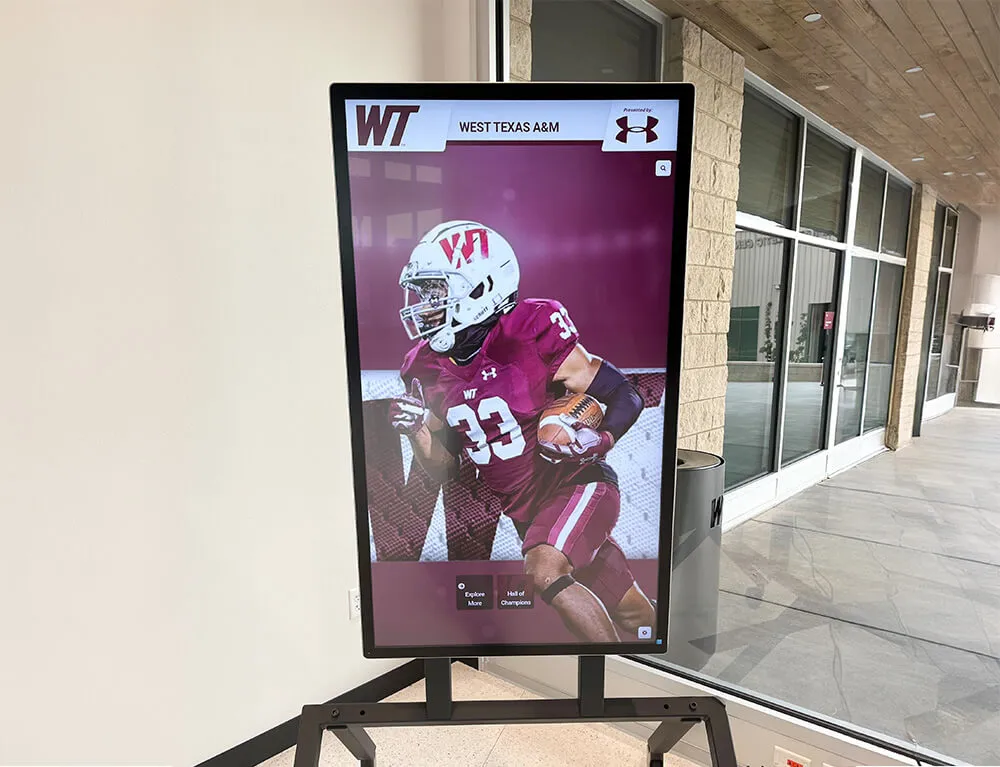
Interactive displays in high-traffic areas showcase various achievement categories and create natural conversation starters about school programs
Application and Interview Processes
Structured selection demonstrates program value while identifying qualified candidates:
Written Application Components
Applications should require students to articulate motivation and demonstrate communication skills:
- Personal statement explaining interest in ambassador role
- Description of relevant experiences demonstrating leadership or service
- Response to scenario questions illustrating problem-solving approach
- Faculty or staff recommendations confirming character and reliability
- Activity resume showing engagement breadth
Written applications enable evaluation of communication clarity, motivation authenticity, and self-reflection capacity before investing time in interviews.
Interview Strategies
Personal interviews reveal interpersonal skills and authentic personality:
Interview Panel Composition:
- Include admissions staff who regularly interact with prospective families
- Add current ambassador representatives who understand role demands
- Consider administrator or faculty perspectives on student readiness
Effective Interview Questions:
- “Tell us about a time you had to explain something complex to someone unfamiliar with the topic”
- “Describe what you love most about our school and one area where we could improve”
- “How would you respond to a prospective family asking about [known institutional challenge]?”
- “What leadership experiences have prepared you for this role?”
- “Tell us about a time you had to represent a group or organization”
Strong candidates provide specific examples, demonstrate self-awareness, balance positivity with honesty, and show genuine interest in helping others discover the school community.
Ambassador Training and Ongoing Development
Selection represents only the beginning—effective programs invest in comprehensive training and continuous skill development.
Initial Training Components
Prepare ambassadors for role expectations and common scenarios:
School Knowledge and Messaging
Ambassadors need deeper institutional knowledge than typical students possess:
- Comprehensive academic program overview including unique offerings
- Admission requirements, application timelines, and decision processes
- Financial aid availability, scholarship opportunities, and cost information
- Athletic program structures, club offerings, and extracurricular options
- Campus facilities, recent improvements, and future development plans
- School history, traditions, and cultural characteristics
Many schools create ambassador resource guides providing talking points, statistics, and answers to frequently asked questions. Organizations implementing digital recognition displays find these systems serve double duty—celebrating ambassadors while providing visual reference points for campus tours.
Professional Communication Skills
Training should explicitly address communication competencies many teenagers haven’t developed:
- Professional introduction and handshake techniques
- Maintaining appropriate eye contact during conversations
- Active listening signals and follow-up question strategies
- Managing conversations with younger children versus parents versus other teens
- Responding professionally when you don’t know an answer
- Graceful subject changes when conversations venture into inappropriate territory
Role-playing common scenarios helps ambassadors develop confidence before real interactions with high-stakes prospective families.
Difficult Question Management
Prepare ambassadors for challenging questions they’ll inevitably encounter:
Common Difficult Questions:
- Questions about known institutional weaknesses or controversies
- Inappropriate questions about other students or specific incidents
- Requests to criticize competitors or make comparative judgments
- Questions about topics ambassadors don’t have knowledge about
- Loaded questions with embedded negative assumptions
Response Strategies:
- Acknowledge the question’s validity
- Provide honest, balanced perspective
- Redirect to appropriate resources for detailed information
- Share personal experience rather than speaking for all students
- Maintain positive tone while admitting areas for improvement
Training ambassadors to navigate difficult conversations builds their confidence while protecting institutional reputation.
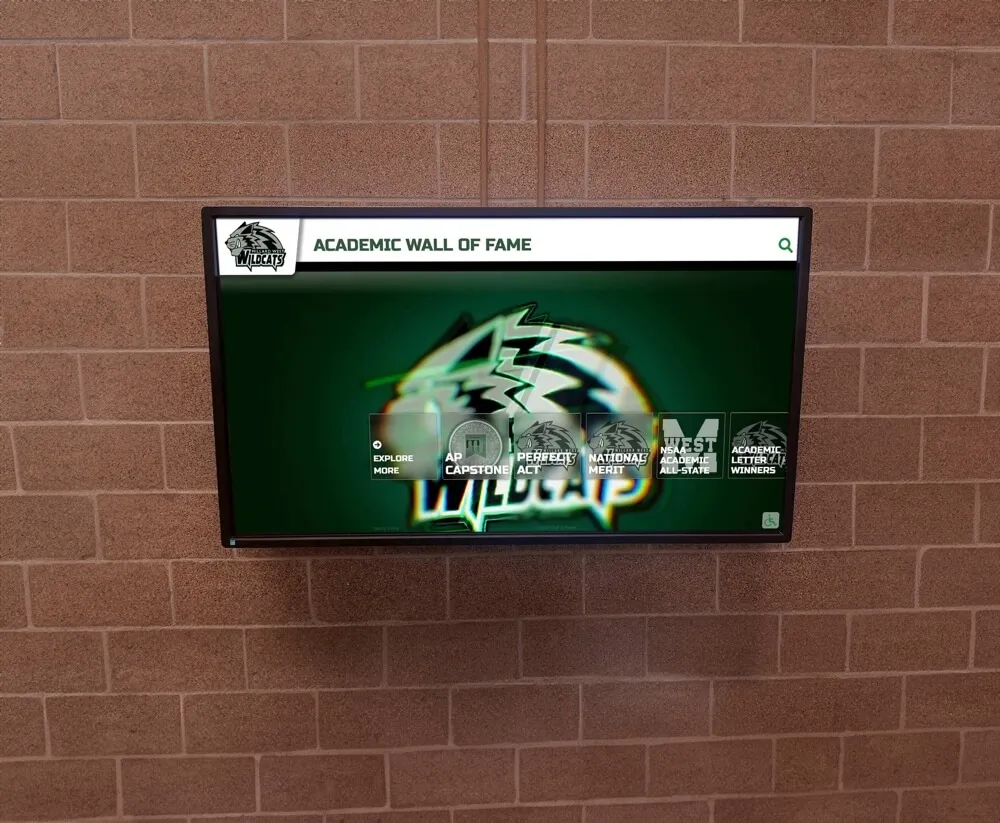
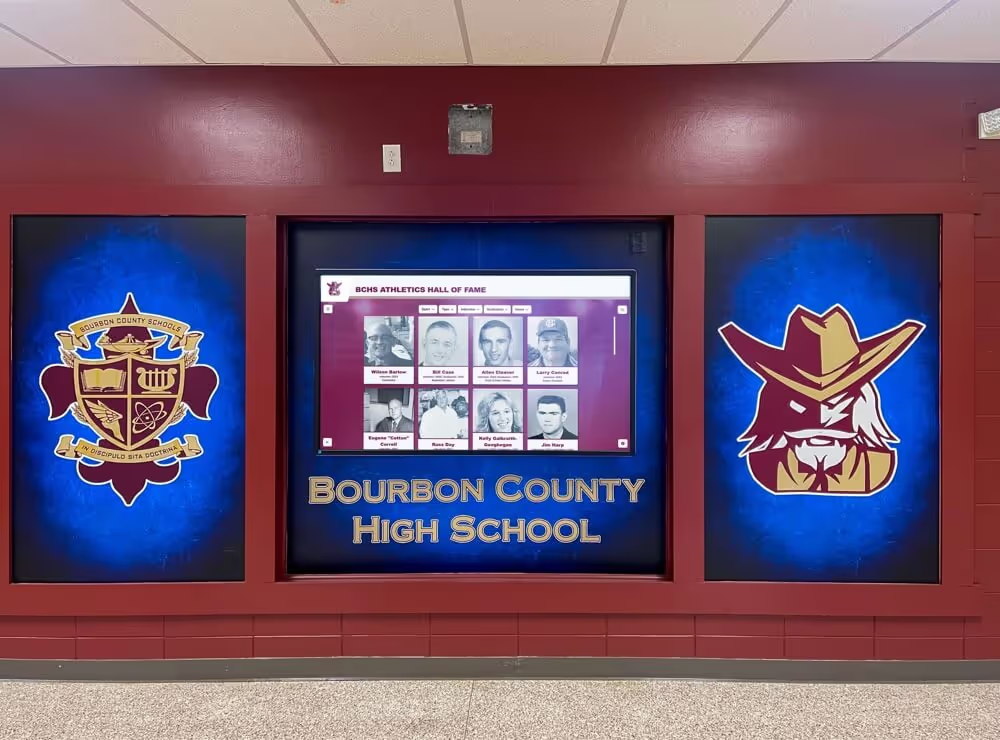
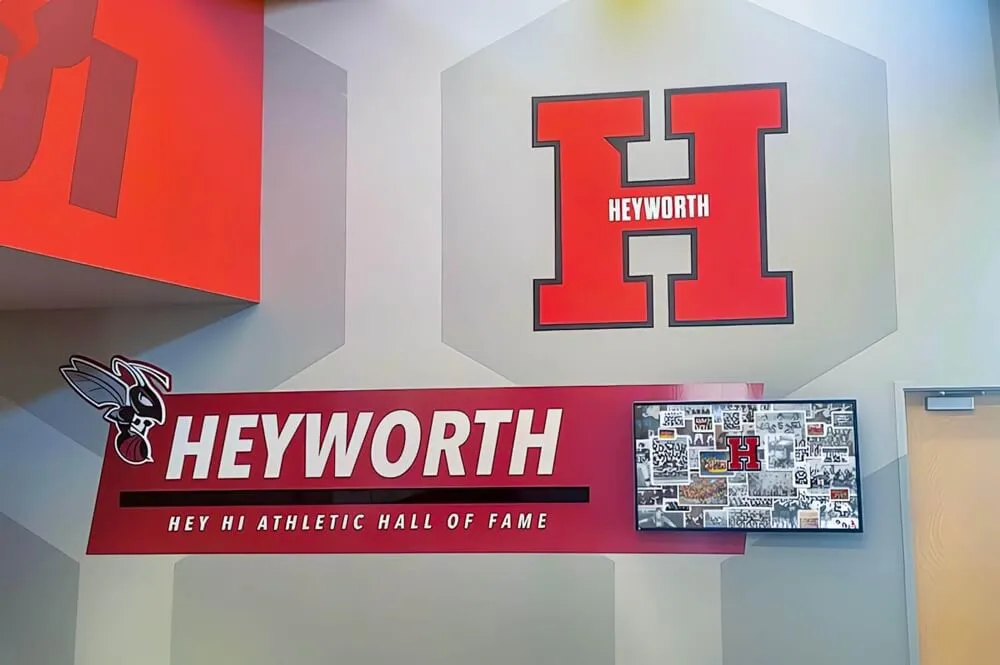
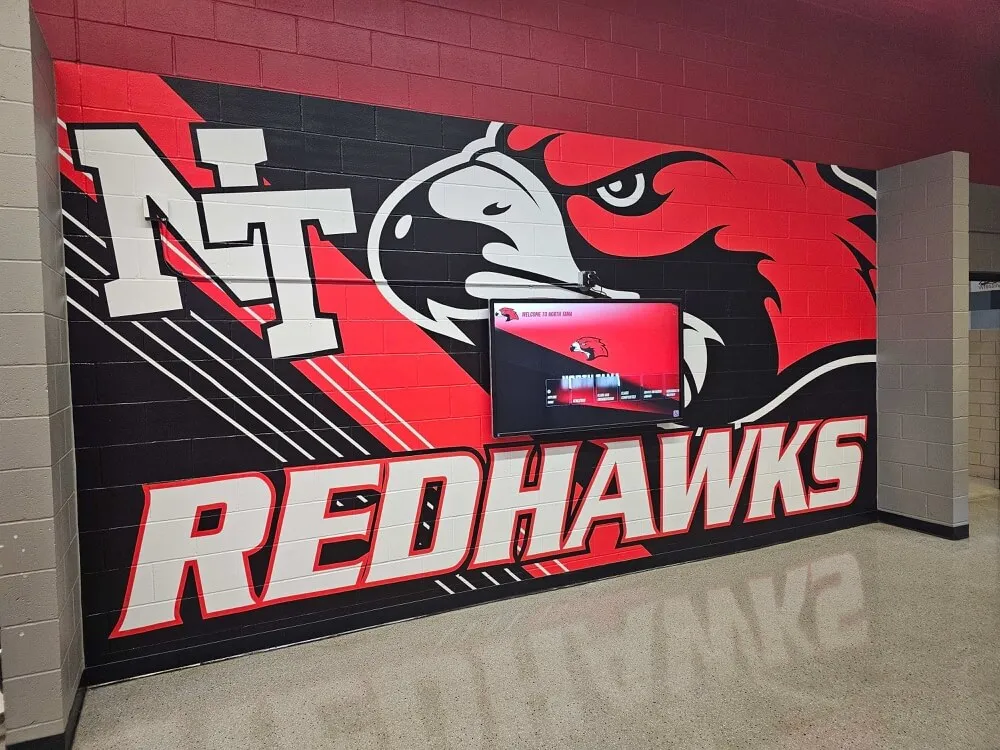
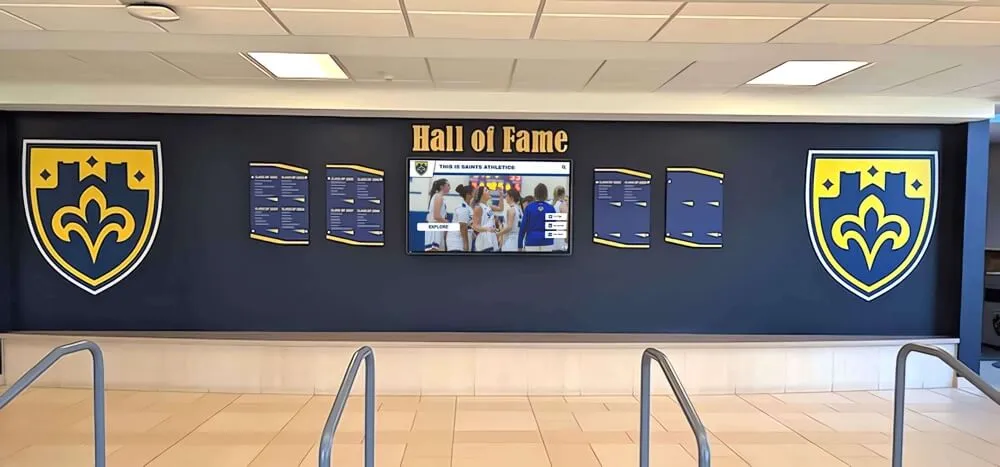
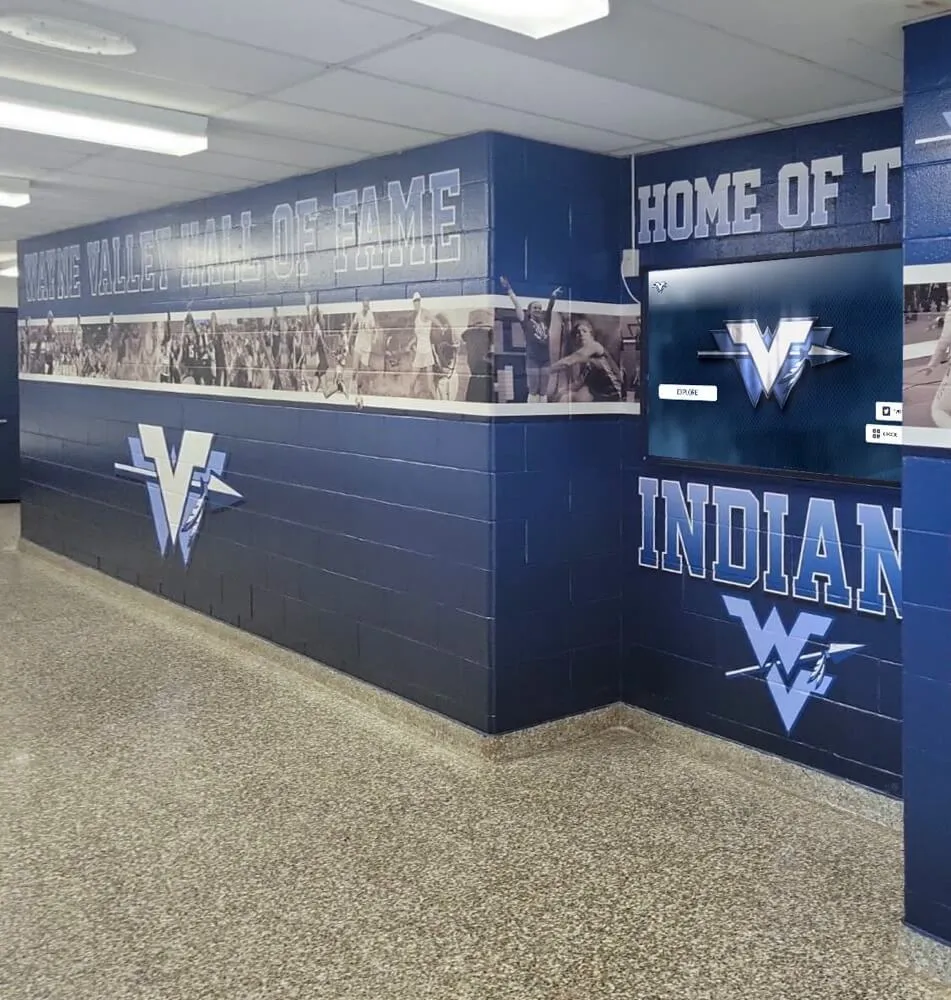
Exterior recognition displays near main entrances celebrate ambassadors and academic achievers, reinforcing program visibility
Ongoing Development and Support
Strong programs provide continuous growth opportunities:
Regular Check-ins and Feedback
Schedule structured opportunities for reflection and improvement:
- Monthly ambassador meetings sharing experiences and problem-solving challenges
- Individual feedback sessions after major events or challenging situations
- Anonymous surveys enabling ambassadors to identify training gaps
- Senior ambassador mentorship pairing experienced students with newcomers
- Year-end reflection activities identifying personal growth and skill development
These touchpoints demonstrate that the program values ambassador experiences and invests in their success rather than simply extracting their labor.
Advanced Training Topics
As ambassadors gain experience, introduce sophisticated leadership concepts:
- Inclusive language and accessibility considerations in campus tours
- Cultural competency and communicating with diverse family backgrounds
- Crisis management and when to escalate issues to administrators
- Public speaking skills for larger group presentations
- Social media responsibility and digital citizenship expectations
Progressive skill development maintains ambassador engagement and deepens leadership capacity throughout their tenure.
Recognition Systems That Motivate Without Creating Elitism
Thoughtful recognition celebrates ambassador contributions while avoiding exclusive hierarchies that undermine school culture.
Balancing Visibility and Inclusivity
Ambassador recognition should feel aspirational rather than exclusionary:
Public Recognition Strategies
Celebrate ambassadors in ways that highlight their service rather than simply their status:
- Profile features sharing individual ambassador stories and motivations
- Service hour tracking and celebration at milestone achievements
- Thank-you recognition from families who particularly appreciated their guidance
- Featured roles in school publications and marketing materials
- Special access to school events or leadership development opportunities
Schools implementing class president recognition programs and similar leadership displays often create “ambassador of the month” features that rotate visibility among all program participants.
Tangible Recognition Elements
Physical recognition reinforces ambassador identity:
- Ambassador name badges or lanyards used during official functions
- Ambassador apparel (polos, jackets, or t-shirts) creating visual program identity
- Certificate or resume recognition documenting service hours and skills developed
- Letter of recommendation offers from administrators who observed their work
- Ambassador alumni network maintaining connections after graduation
These elements provide lasting value beyond the immediate recognition experience.
Digital Recognition Displays for Ambassador Programs
Modern technology enables dynamic recognition that traditional plaques cannot match:
Interactive Ambassador Profiles
Digital displays can feature rotating ambassador spotlights with photos, biographies, achievements, future plans, and personal quotes about their school experience. Visitors and students can browse ambassador profiles, learn about their involvement, and understand diverse pathways to leadership.
Many schools discover that interactive kiosk software enables them to showcase ambassadors alongside other achievement categories—creating comprehensive recognition systems rather than isolated programs.
Multi-Category Recognition Systems
Rather than creating ambassador-only displays that might feel exclusionary, integrate ambassador recognition into broader systems celebrating diverse contributions:
- Academic achievement (honor roll, AP scholars, academic awards)
- Athletic excellence and team accomplishments
- Arts and performance achievements
- Service leadership and community engagement
- Special interest club leadership
- Ambassador program participation
This integration communicates that leadership takes many forms and that ambassador status represents one valuable pathway among many worthwhile contributions.
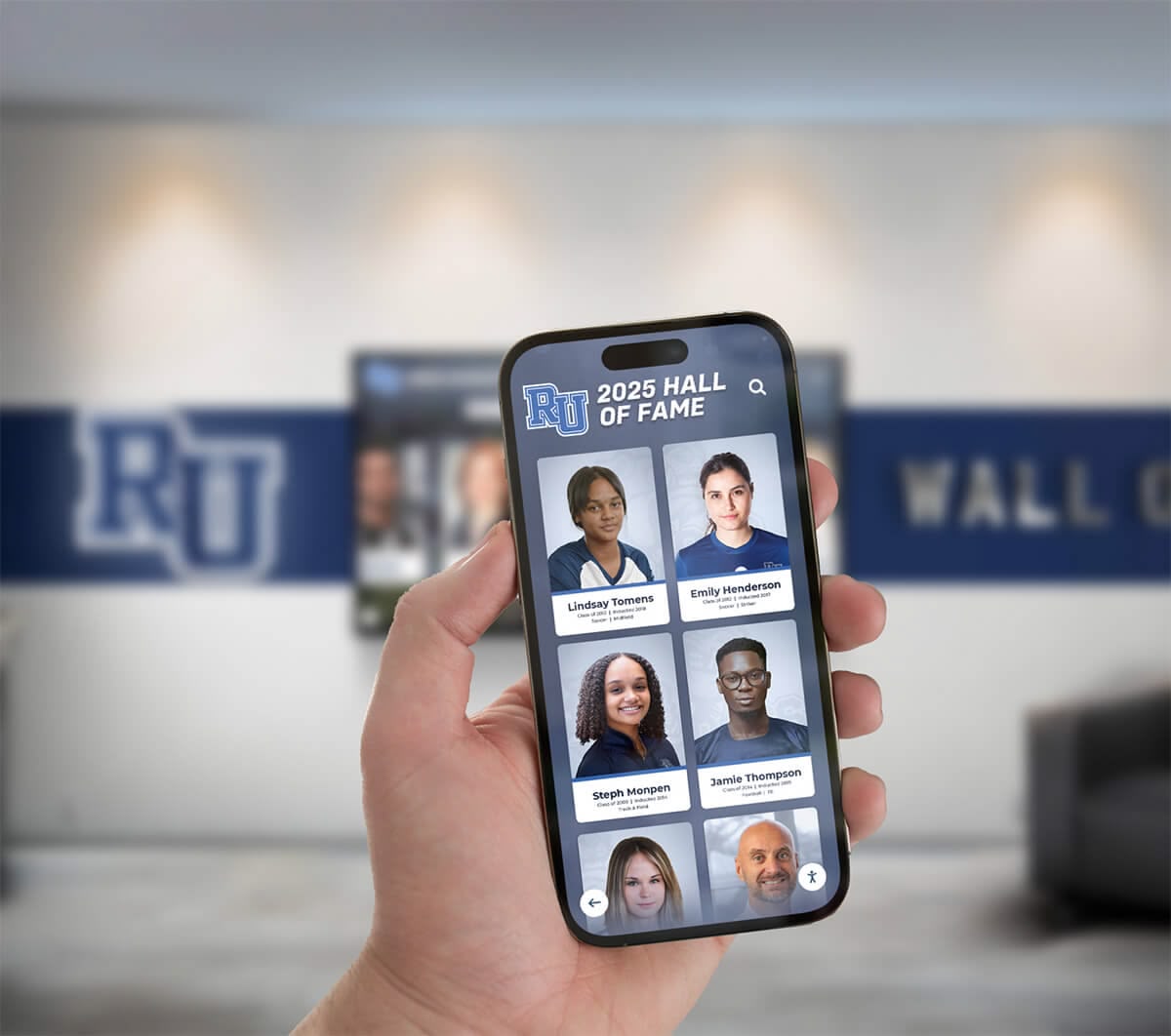
Mobile-integrated recognition systems allow ambassadors and other students to share their profiles with visiting families
Ambassador Program Roles and Responsibilities
Clear role definitions ensure ambassadors provide genuine value while developing meaningful skills.
Campus Tours and Admissions Support
The most common ambassador function serves prospective families:
Prospective Family Tours
Ambassadors lead or participate in campus tours for interested families. Effective tour programs pair ambassadors with admissions staff—professionals provide logistical information and answer detailed administrative questions while ambassadors share authentic student perspectives and personal experiences.
Tour structures typically include welcome introduction and ambassador background, facilities walkthrough highlighting academic spaces and gathering areas, classroom visit when possible to observe instruction, informal Q&A allowing prospective students to ask peer questions privately, and closing remarks reinforcing excitement about the school community.
Special Visit Days and Preview Programs
Many schools host special admitted student events or preview days requiring significant ambassador involvement. Ambassadors welcome families upon arrival, facilitate small group activities or breakout sessions, share personal stories during panel presentations, answer questions during informal reception periods, and provide campus navigation assistance throughout events.
These intensive events require substantial ambassador commitments but generate high impact on enrollment conversion—making them some of the most valuable contributions ambassadors provide.
New Student Orientation and Transition Support
Ambassadors help incoming students navigate their first weeks:
Orientation Programs
Whether week-long summer orientations or single-day welcome events, ambassadors serve as friendly faces helping new students feel welcomed:
- Greeting students as they arrive for their first campus experiences
- Leading campus tours specifically for new students and their families
- Facilitating icebreaker activities and small group discussions
- Answering questions about social dynamics, academic expectations, and school culture
- Sharing tips for successful transitions based on personal experience
New students consistently report that ambassador interactions during orientation significantly reduce anxiety and accelerate social connection development.
Ongoing Mentorship Connections
Some programs formalize ongoing ambassador-to-new-student mentorship throughout the first semester or year. Ambassadors check in periodically via text or conversation, proactively offer guidance during challenging transition moments, introduce new students to relevant clubs or activities matching their interests, and serve as safe resources for questions about academics or social situations.
This sustained support proves particularly valuable for students from backgrounds underrepresented at the institution or those who struggle with initial social integration.
School Community Events and Engagement
Ambassadors contribute to broader school culture and community events:
Special Event Staffing
Schools regularly host events requiring student leadership presence:
- School open houses and information sessions for prospective families
- Alumni reunions and homecoming celebrations
- Donor recognition events and fundraising gatherings
- Athletic competitions requiring visitor assistance
- Community partnership events and service projects
Ambassador participation in these events demonstrates student engagement to external stakeholders while providing ambassadors with diverse leadership experiences beyond typical campus tours.
Organizations implementing digital trophy cases and similar recognition displays often feature ambassadors operating these systems during events—creating natural conversation opportunities about school achievements.
Peer-to-Peer Culture Building
The most sophisticated ambassador programs leverage peer influence to strengthen school culture:
- Modeling academic engagement and classroom participation
- Demonstrating inclusive behavior and welcoming newcomers
- Promoting school events and encouraging participation
- Addressing negative behaviors or attitudes through peer influence
- Reinforcing school values through visible daily choices
This informal culture work generates long-term impact on institutional character—though it proves difficult to measure and often goes unrecognized compared to more visible tour-leading responsibilities.
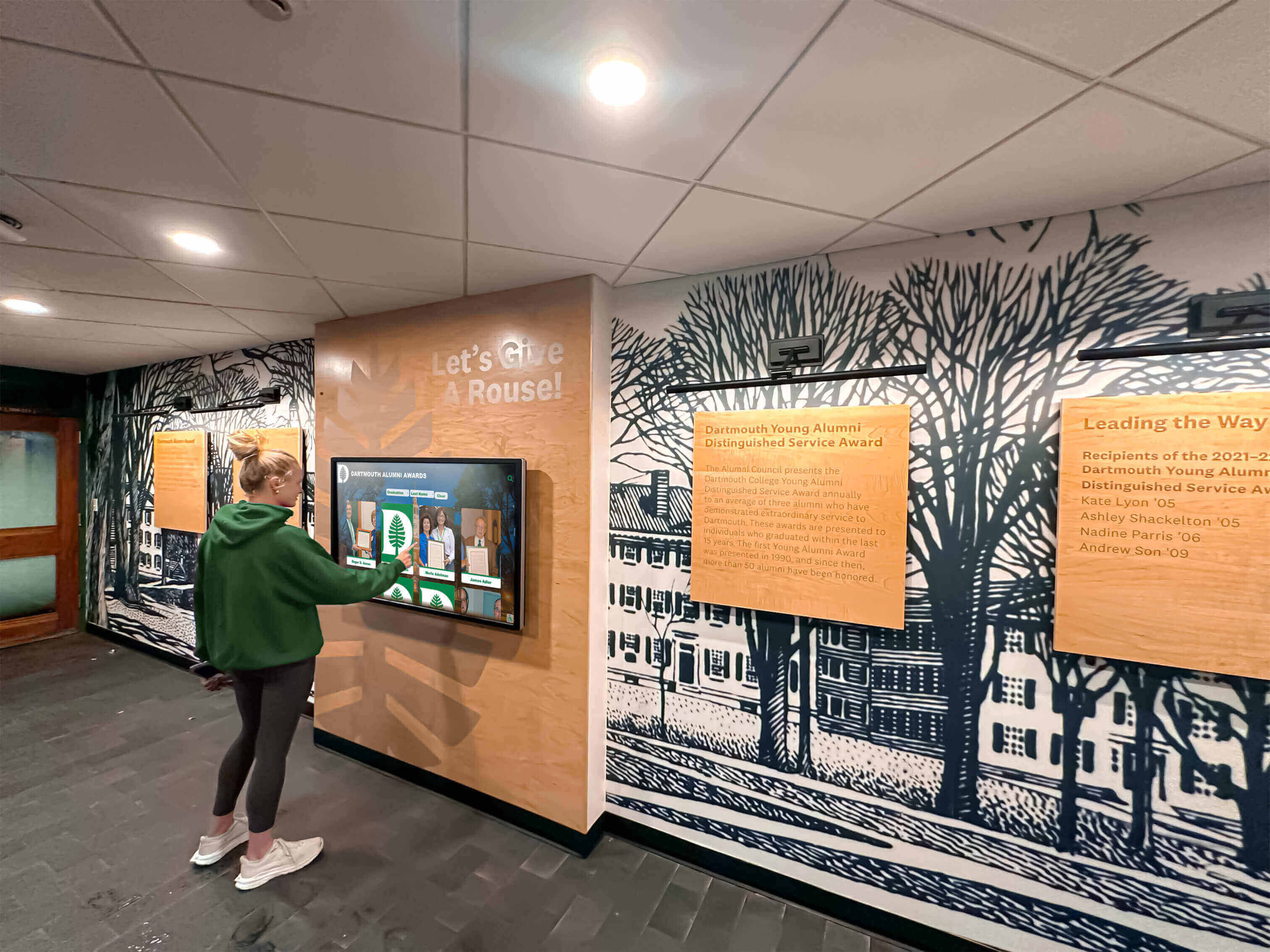
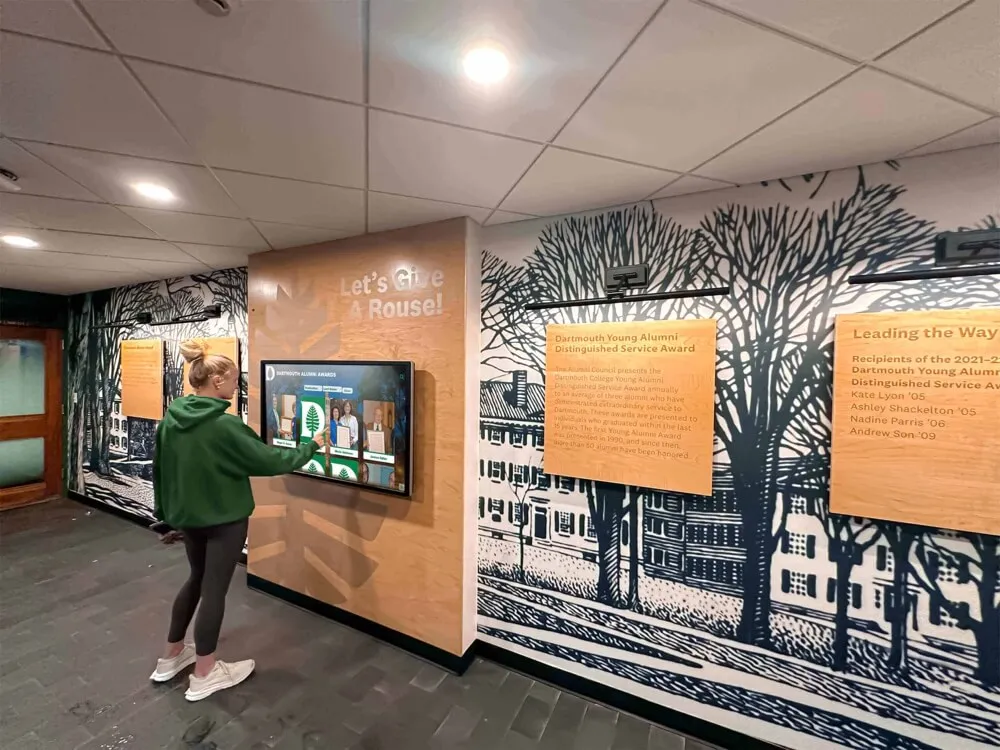
Self-service recognition displays enable students to explore ambassador profiles, alumni achievements, and school history at their own pace
Measuring Ambassador Program Effectiveness
Data-informed evaluation helps administrators strengthen programs and secure continued support.
Quantitative Success Metrics
Track measurable outcomes demonstrating program value:
Enrollment and Admissions Metrics
- Conversion rates for families who interacted with ambassadors versus those who didn’t
- Prospective family survey responses rating ambassador interaction quality
- Yield rates for admitted students who participated in ambassador-led programs
- Ambassador contact hours provided and families served per academic year
- Cost per ambassador contact compared to professional admissions staff time
These metrics help admissions offices quantify ambassador ROI and justify program investments.
Ambassador Participation and Retention
- Number of qualified applicants relative to available positions
- Ambassador retention rates from year to year
- Service hours contributed by individual ambassadors
- Program completion rates for ambassadors who begin the year
- Diversity representation within ambassador cohorts
Tracking these internal metrics helps identify program health and areas requiring adjustment.
Qualitative Program Assessment
Numbers tell only part of the story—qualitative feedback provides crucial insights:
Ambassador Reflections
Regular structured reflection helps ambassadors articulate learning and growth:
- Pre/post self-assessments rating confidence across key competencies
- Written reflections describing most valuable learning experiences
- Exit interviews with graduating ambassadors assessing program impact
- Anonymous feedback surveys identifying program strengths and improvement areas
- Focus groups discussing challenges and brainstorming solutions
These qualitative insights often reveal program impacts impossible to capture through quantitative metrics—particularly regarding personal growth, skill development, and confidence building.
Stakeholder Feedback
Gather perspectives from those who interact with ambassadors:
- Prospective family surveys rating ambassador interaction quality
- Admissions staff assessments of ambassador readiness and effectiveness
- New student feedback about ambassador support during transitions
- Faculty observations of ambassador behavior and leadership
- Parent comments about ambassador professionalism and helpfulness
External perspectives help administrators understand how ambassadors are perceived beyond their own self-assessments.
Common Ambassador Program Challenges and Solutions
Anticipating typical difficulties helps administrators build resilient programs.
Maintaining Consistent Participation
Challenge: Ambassador enthusiasm often wanes after initial excitement, leading to inconsistent availability and reduced program effectiveness.
Solutions:
- Establish clear minimum participation expectations during selection process
- Create formal scheduling systems for tour assignments rather than last-minute requests
- Track individual participation and address low engagement promptly
- Recognize consistent contributors publicly through spotlights and awards
- Build ambassador community through social events and team-building activities
- Provide varied role opportunities beyond repetitive campus tours
Setting clear expectations from the beginning prevents misunderstandings about commitment levels while regular recognition reinforces the value of sustained participation.
Avoiding Ambassador Burnout
Challenge: High-performing ambassadors receive constant requests, leading to overcommitment and eventual burnout.
Solutions:
- Distribute opportunities broadly rather than repeatedly requesting the same students
- Implement maximum monthly participation caps protecting ambassador wellbeing
- Respect academic commitments and exam periods when scheduling
- Create ambassador rotation systems ensuring equitable workload distribution
- Empower ambassadors to decline requests without guilt or penalty
- Provide meaningful breaks during low-admissions periods
Programs that protect ambassador wellbeing maintain higher retention and more genuine enthusiasm compared to those that exploit top performers until they quit.
Ensuring Message Consistency Without Scripting
Challenge: Balancing authentic student voice with consistent institutional messaging proves difficult—overly scripted ambassadors sound robotic while completely unrestricted ambassadors may share inappropriate information.
Solutions:
- Provide talking point guides covering key topics without dictating exact language
- Train ambassadors on information that must remain confidential
- Practice scenario responses without memorizing scripts
- Encourage personal story sharing rather than institutional recitation
- Debrief after challenging interactions to discuss appropriate responses
- Update training based on actual difficult questions ambassadors encounter
The goal is confident ambassadors who sound like themselves while remaining reliably appropriate—a balance achieved through thorough training rather than restrictive scripting.
Managing Diverse Skill Levels
Challenge: Ambassador cohorts inevitably include natural leaders who excel immediately alongside students who struggle with public interaction despite meeting selection criteria.
Solutions:
- Pair inexperienced ambassadors with veterans during initial assignments
- Provide differentiated roles matching varying comfort levels and strengths
- Offer additional coaching for students requiring extra support
- Create low-stakes practice opportunities before high-impact assignments
- Celebrate diverse strengths rather than comparing ambassadors against each other
- Accept that not all ambassadors will reach the same performance levels
Inclusive programs recognize that valuable learning occurs even when students don’t become the most polished tour guides—personal growth matters more than perfect performance.
K-12 Versus University Ambassador Programs
While sharing common foundations, K-12 and university programs feature important distinctions:
K-12 Ambassador Program Characteristics
Smaller Scale and Closer Relationships
K-12 ambassador programs typically involve smaller cohorts with closer administrative oversight. Students often maintain stronger relationships with program administrators who know them personally, enabling more individualized mentorship and development.
Recognition systems in K-12 settings frequently integrate ambassadors with other achievement categories. Many schools implementing pep rally recognition or similar public celebrations feature ambassadors alongside athletic teams, academic achievers, and other student leaders.
Parent Involvement and Family Focus
K-12 programs must navigate parent relationships more directly than university programs. Parents often accompany students to ambassador events, influence student participation decisions, and expect regular communication about student involvement.
Tour content focuses heavily on parent concerns—academic rigor, safety, social development, extracurricular opportunities, college preparation—rather than the independence-focused topics dominating university tours.
Shorter Program Tenure
K-12 ambassadors typically participate for one to four years depending on school level, requiring regular cohort turnover and continuous recruitment. This shorter tenure demands efficient training systems and creates natural leadership succession planning needs.
University Ambassador Program Characteristics
Larger Scale and Decentralized Structure
University programs often involve dozens or hundreds of ambassadors requiring more formal management systems. Programs may subdivide by academic college, residence halls, or special interest groups—creating multiple ambassador subprograms serving different constituencies.
Recognition systems must accommodate larger numbers. Many universities implement digital hall of fame displays capable of showcasing hundreds of students across multiple achievement categories including ambassador programs.
Specialized Ambassador Roles
University complexity enables specialized ambassador roles impossible at K-12 level:
- Academic department ambassadors representing specific majors
- Residence life ambassadors supporting housing communities
- International student ambassadors assisting global recruitment
- Athletics ambassadors focusing on prospective student-athletes
- Graduate program ambassadors supporting advanced degree recruitment
- Transfer student ambassadors with unique perspective on that transition
This specialization allows targeted expertise and authentic peer connections based on shared interests or backgrounds.
Year-Round Recruitment Cycles
Universities recruit continuously with multiple admission cycles, international recruitment, transfer admissions, and graduate programs—creating year-round ambassador demands rather than concentrated fall recruitment seasons typical at K-12 schools.
This sustained need requires larger ambassador pools and more sophisticated scheduling systems ensuring adequate coverage throughout the calendar year.
Technology Supporting Ambassador Programs
Strategic technology investments enhance program effectiveness and reduce administrative burden.
Ambassador Management Platforms
Specialized software streamlines program administration:
Scheduling and Calendar Systems
Platforms coordinating ambassador availability and tour requests prevent double-booking, enable self-service ambassador sign-up for available opportunities, automatically remind ambassadors of upcoming commitments, track service hours and participation metrics, and generate reports for program assessment.
These systems eliminate spreadsheet chaos while reducing administrative overhead.
Communication and Training Tools
Centralized platforms provide ambassador resources and facilitate program communication through training resource libraries accessible anytime, announcement systems reaching all ambassadors efficiently, discussion forums for peer support and problem-solving, feedback collection tools gathering ambassador perspectives, and document repositories storing talking points and reference materials.
Cloud-based systems ensure ambassadors access current information regardless of device or location.
Recognition Display Technology
Digital recognition systems showcase ambassadors more effectively than static plaques:
Dynamic Content Updates
Unlike traditional recognition requiring physical updates, digital systems enable instant additions as new ambassadors join programs, real-time updates reflecting current information, seasonal content adjustments highlighting ambassadors during recruitment periods, integration with other achievement categories in unified displays, and remote content management from any administrative computer.
This flexibility ensures recognition remains current without ongoing maintenance costs.
Interactive Engagement Features
Advanced systems provide interactive experiences:
- Searchable databases enabling visitors to find specific ambassadors
- Video profiles featuring ambassadors sharing their stories
- QR codes linking to expanded ambassador information on personal devices
- Social media integration displaying ambassador program updates
- Analytics tracking which profiles receive most engagement
These interactive elements create memorable experiences while providing valuable data about stakeholder interests.
Launching Your Student Ambassador Program
Ready to create or strengthen your ambassador initiative? Follow this systematic launch sequence:
Year One Implementation Timeline
Summer Before Launch (June-August):
- Define program goals, structure, and selection criteria
- Develop application materials and interview questions
- Create training curriculum and resource materials
- Identify initial program coordinator and administrative support
Early Fall (September-October):
- Announce program and release applications
- Conduct information sessions for interested students
- Review applications and schedule interviews
- Select inaugural ambassador cohort
Late Fall (November-December):
- Conduct comprehensive ambassador training
- Pair ambassadors with mentors or veteran students if possible
- Schedule initial low-stakes practice opportunities
- Gather early feedback and adjust training as needed
Spring Semester (January-May):
- Implement full ambassador program including tours and events
- Provide ongoing coaching and development opportunities
- Collect stakeholder feedback from families and staff
- Evaluate program effectiveness and identify improvements
- Begin recruitment for following year’s cohort
Program Review (May-June):
- Conduct comprehensive first-year program assessment
- Survey ambassadors about experiences and suggestions
- Analyze enrollment and admissions metrics
- Make structural adjustments before second year
- Recognize founding ambassadors and celebrate contributions
This measured approach enables course correction throughout implementation while building sustainable program foundations.
Essential Program Documentation
Create these core documents before launching:
- Program Handbook: Comprehensive guide covering expectations, policies, training resources, and procedures
- Selection Rubric: Standardized criteria for evaluating applications and interviews fairly
- Training Curriculum: Structured content for initial and ongoing ambassador development
- Resource Guide: Reference materials answering common questions and providing school information
- Assessment Plan: Metrics and evaluation methods for measuring program effectiveness
- Recognition System: Clear description of how ambassadors will be celebrated and appreciated
These foundational documents ensure program consistency while reducing administrative burden as programs scale.
Building Leadership That Lasts
Student ambassador programs represent significant investments of administrative time, financial resources, and institutional energy. When implemented thoughtfully with clear goals, structured training, and authentic recognition, these programs deliver measurable returns through improved enrollment outcomes, enhanced school culture, and most importantly, transformation of participating students who develop leadership competencies serving them throughout their lives.
The most successful programs maintain focus on reciprocal value—ambassadors contribute meaningfully to institutional priorities while gaining genuine personal and professional development. Schools that exploit student labor without investing in growth create unsustainable programs that fail within a few years. Conversely, programs centering ambassador development while connecting service to authentic institutional needs create virtuous cycles where exceptional students eagerly join programs they observe positively impacting peers who came before them.
Modern recognition technology enables schools to celebrate ambassadors in dynamic, engaging ways that traditional static plaques cannot match. Digital recognition displays from Rocket Alumni Solutions help schools showcase student ambassadors alongside other achievement categories—creating comprehensive systems that honor diverse contributions while maintaining flexibility for updates as programs evolve.
Whether launching a new student ambassador program or strengthening existing initiatives, the strategies explored in this guide provide frameworks for developing leadership, recognizing standout students, and building school culture through systematic peer leadership development. The investment in today’s ambassadors creates tomorrow’s alumni who remember their schools not just as places they attended, but as communities that believed in their potential and provided opportunities to lead.