



State wrestling tournaments represent the pinnacle of high school competitive wrestling—where months of training, weight management, technique refinement, and mental preparation converge in pressure-filled championship matches determining individual and team supremacy. These multi-day events showcase athletic excellence across weight classes, test coaching strategies, and create defining moments that wrestlers and communities remember for lifetimes.
Yet the intensity and complexity of state tournament experiences often overwhelm preparation efforts. Teams struggle to navigate qualification procedures, bracket systems, and tournament logistics while maintaining competitive focus. Schools miss opportunities to document and celebrate championship achievements permanently, with trophy cases filling quickly and wrestling excellence receiving less visible recognition than other sports. Families face challenges understanding tournament formats, weight class structures, and advancement criteria affecting their wrestlers’ championship paths.
This comprehensive guide explores every dimension of state wrestling tournaments—from qualification systems and tournament structures to preparation strategies, competition best practices, and permanent recognition approaches that celebrate wrestling excellence long after final whistles blow and championship medals are awarded.
State wrestling tournaments serve purposes extending beyond individual championship determination—they establish program legacy and tradition, showcase athletic development culminating from years of training, create recruiting opportunities for college-bound wrestlers, build community pride through championship success, and generate permanent institutional recognition celebrating wrestling excellence alongside other athletic achievements.

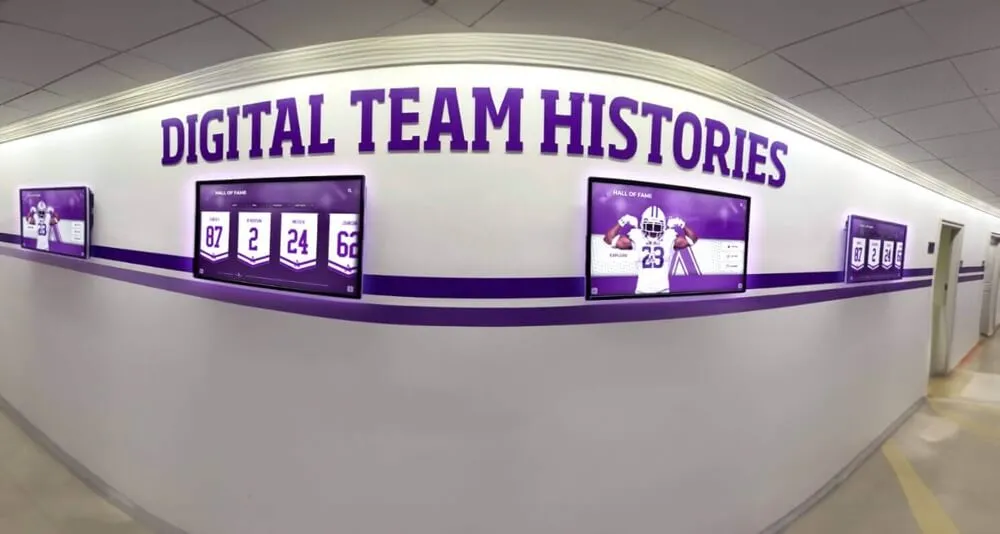
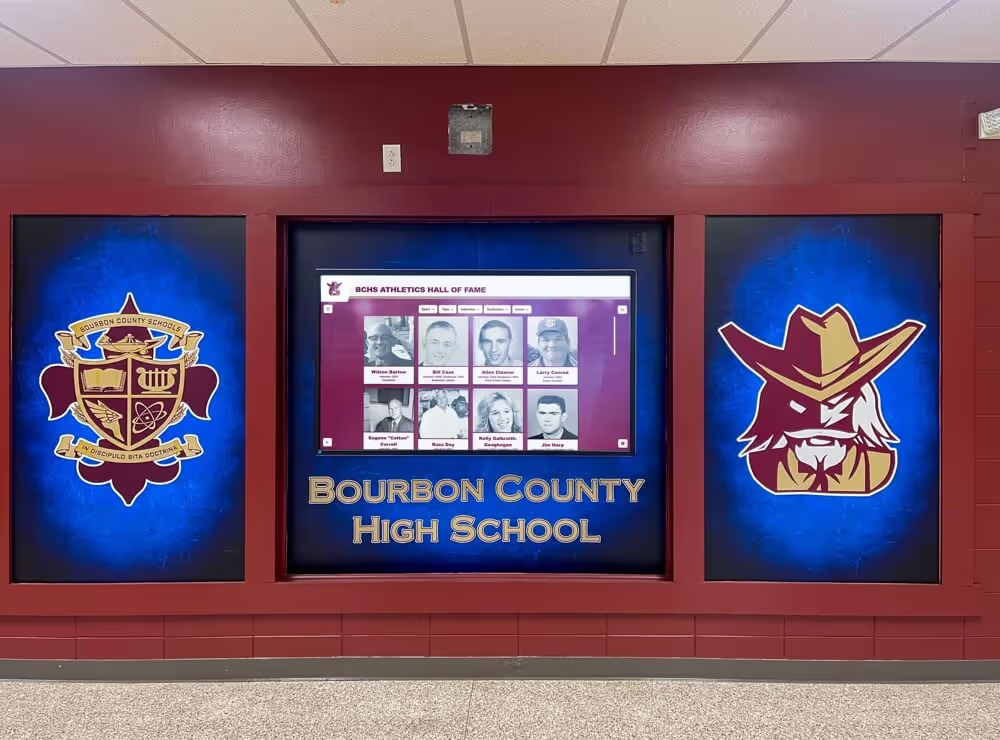
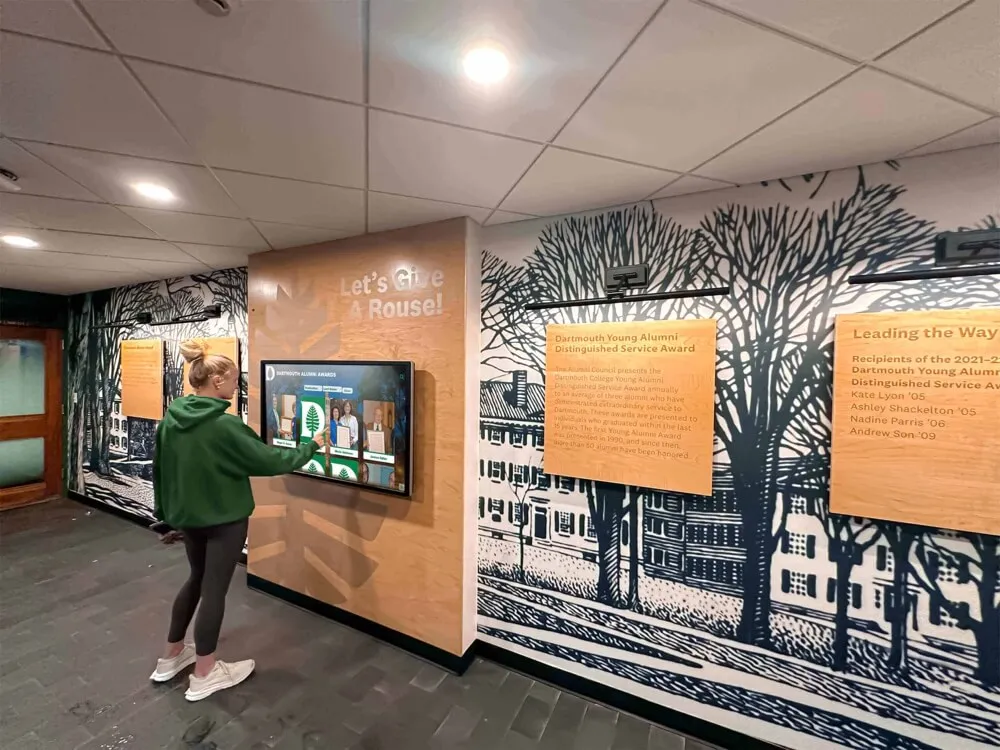
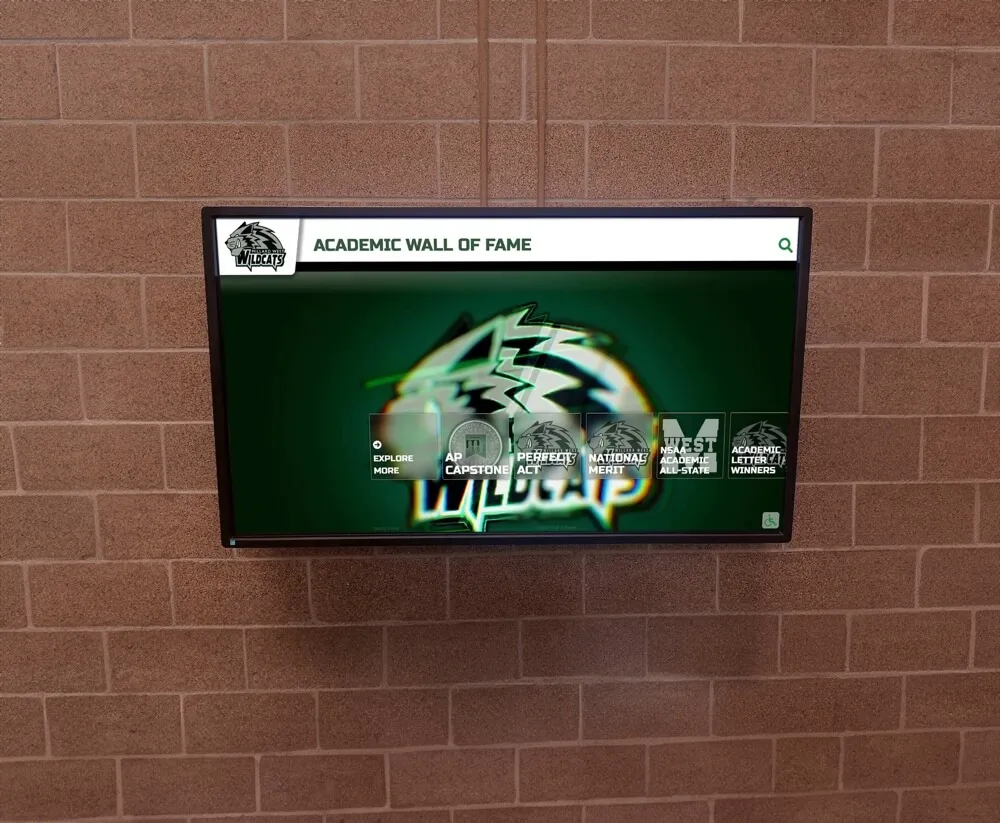
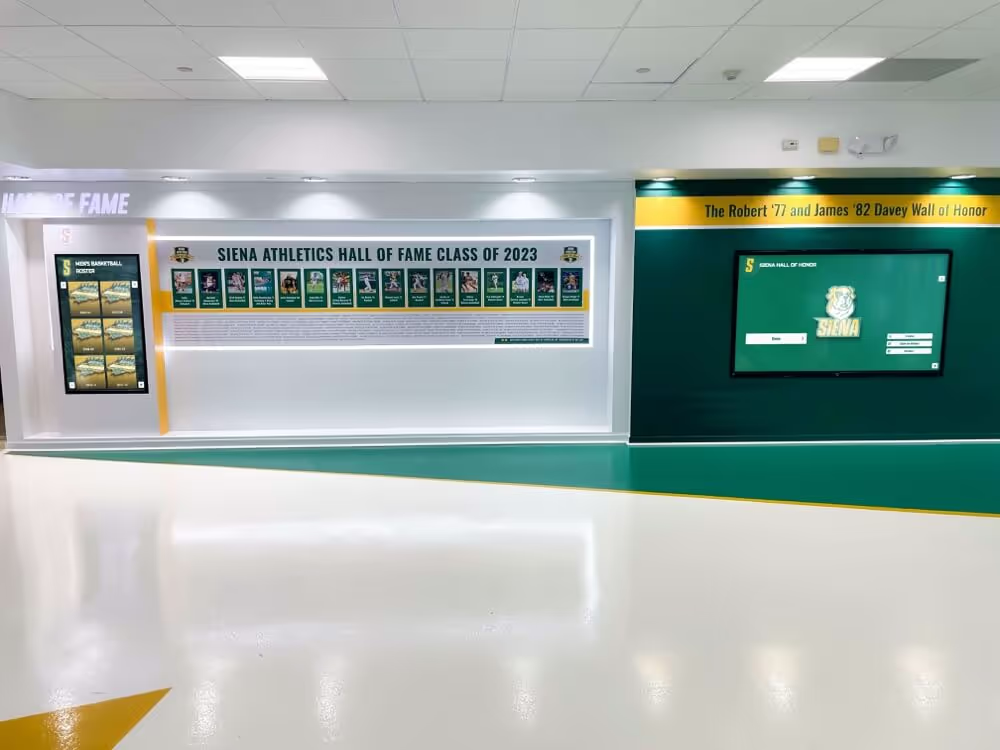
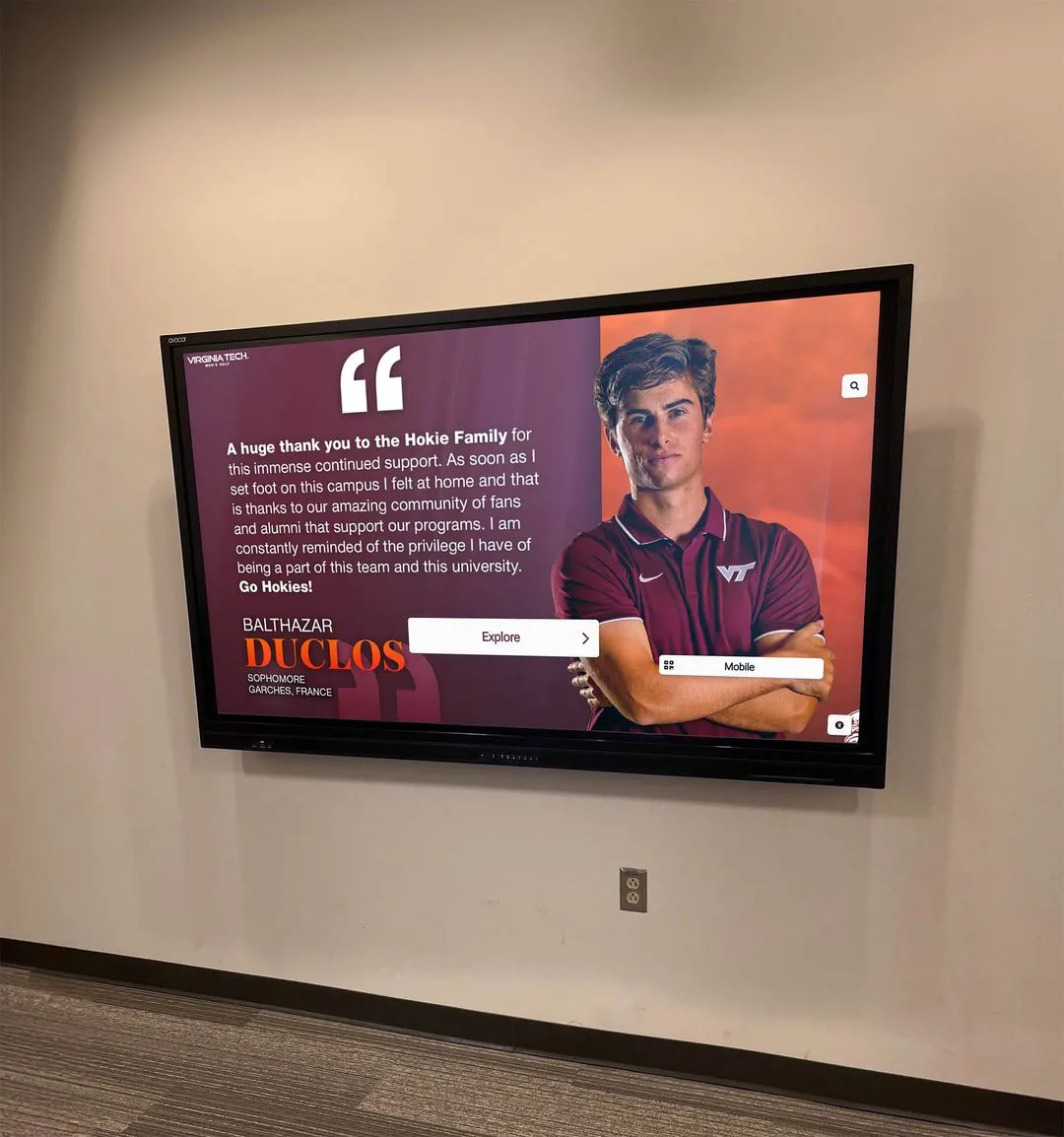
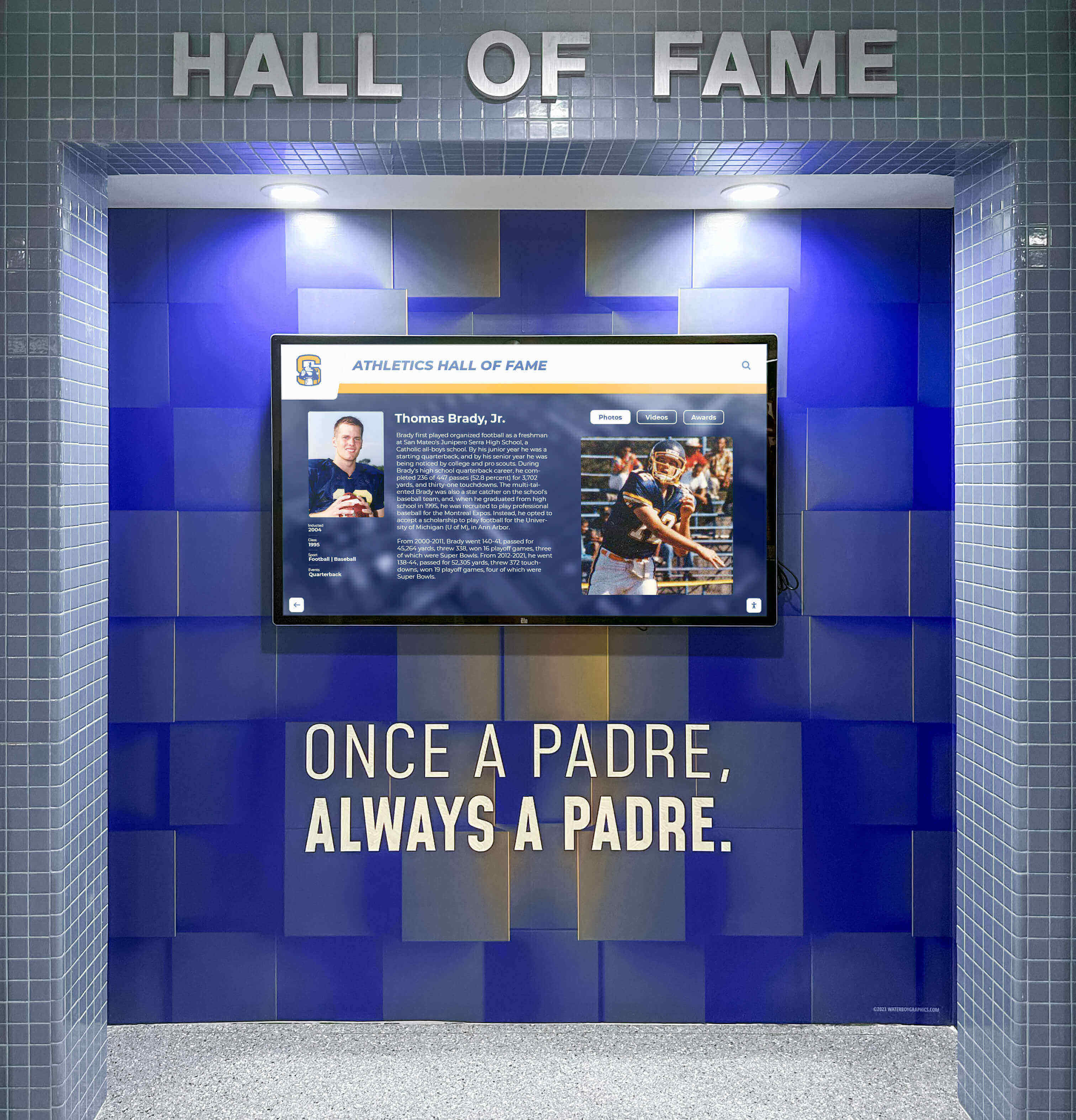
Modern recognition systems document state wrestling tournament achievements permanently, preserving championship excellence for future generations
Understanding State Wrestling Tournament Structures
Before preparing for championship competition, understanding tournament organization, qualification processes, and competitive formats ensures strategic planning and realistic goal setting.
State Tournament Qualification Systems
Different states employ various qualification approaches determining which wrestlers earn state tournament berths:
District and Regional Qualifying Tournaments Most states use tiered advancement systems:
- District tournaments serving as first elimination level with top 2-4 finishers advancing
- Regional tournaments as secondary elimination with typically top 3-4 wrestlers per weight class qualifying
- Sectional systems in larger states adding additional advancement layers
- Combined team/individual advancement criteria in some state formats
- Wild card or at-large qualification selections based on season records and rankings
Understanding your state’s specific qualification pathway enables strategic season planning, including scheduling challenging competition to improve seeding, peaking conditioning and technique timing for qualification tournaments, weight class decisions based on advancement probability, and tournament bracket analysis identifying optimal positioning opportunities.
State Association Classification Systems States typically organize tournaments by school enrollment or competitive divisions:
- Class divisions separating schools by enrollment size (Class A, AA, AAA, etc.)
- Division systems based on competitive level and historical performance
- Combined tournaments versus separate championship events by classification
- Team tournament formats alongside individual championships
- Dual meet championship systems in some states
Learn about comprehensive approaches to athletic recognition programs that celebrate tournament qualifiers and champions.
Weight Class Structures and Management
State tournaments typically feature 12-14 weight classes ranging from 106 pounds through heavyweight divisions:
Traditional Weight Class Systems Standard weight classes include:
- 106, 113, 120, 126, 132, 138, 145 in lower weights
- 152, 160, 170, 182, 195 in middle weights
- 220 and 285 (heavyweight) completing upper divisions
- Weight allowance considerations and certification requirements
- Two-pound growth allowance after specified season dates
Weight Management Best Practices Championship performance requires careful weight control:
- Season-long weight monitoring avoiding extreme cutting practices
- Hydration protocols maintaining health and performance
- Nutrition strategies supporting training demands while making weight
- Medical oversight ensuring safe weight management approaches
- NCAA and high school federation guidelines limiting dangerous practices
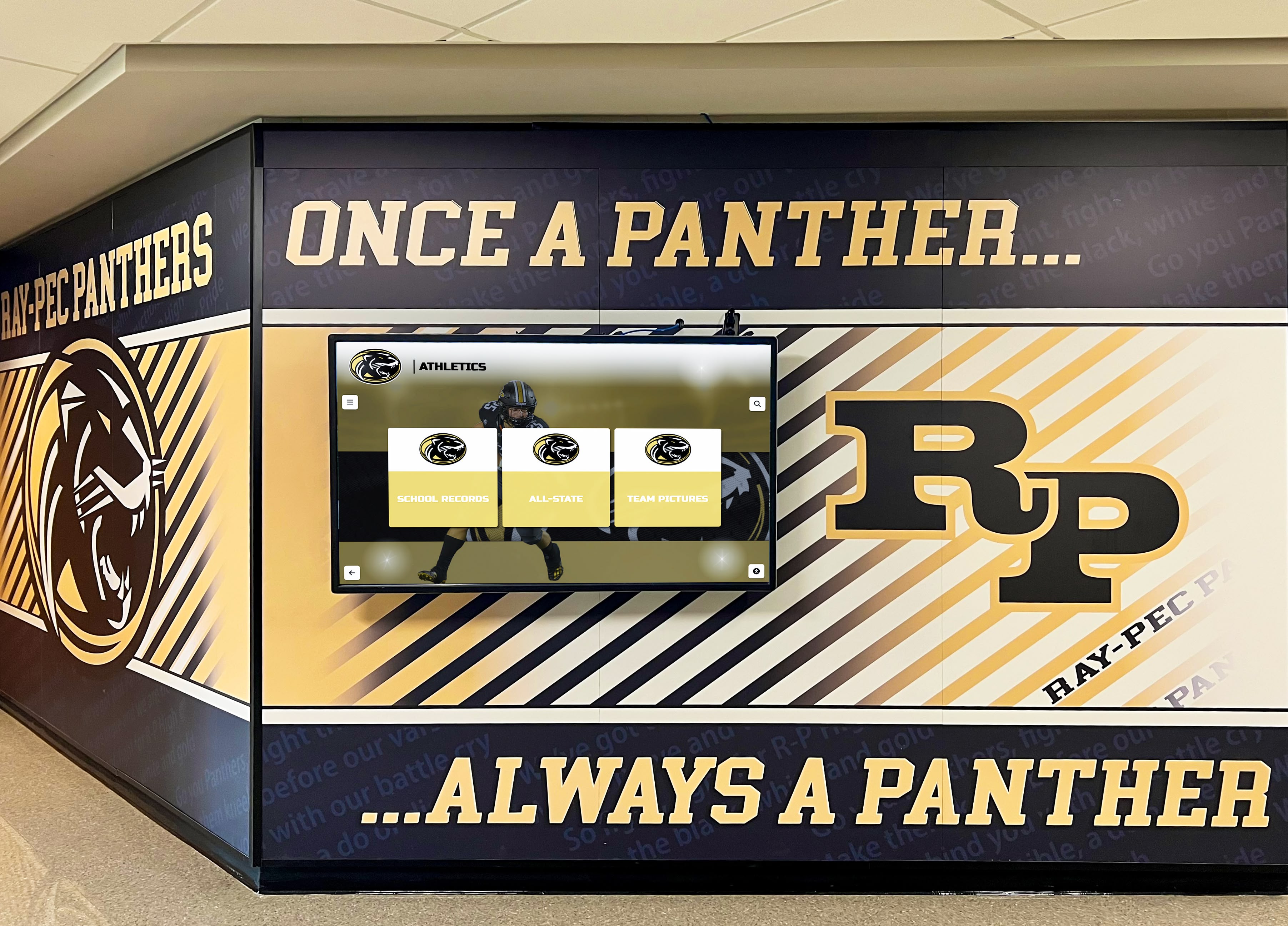
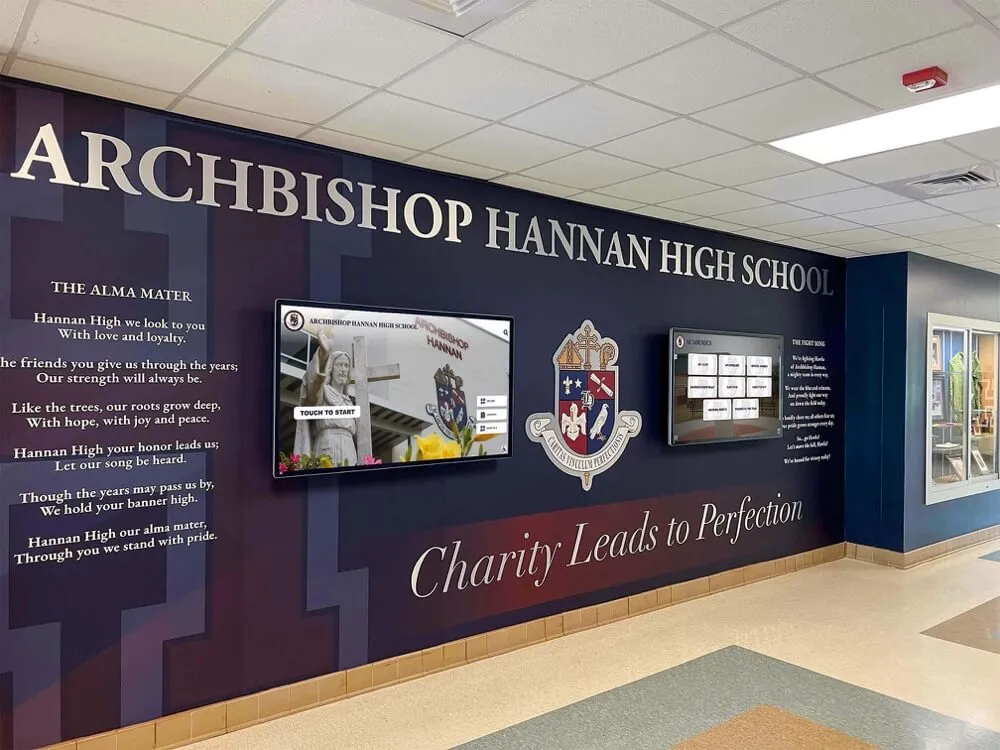
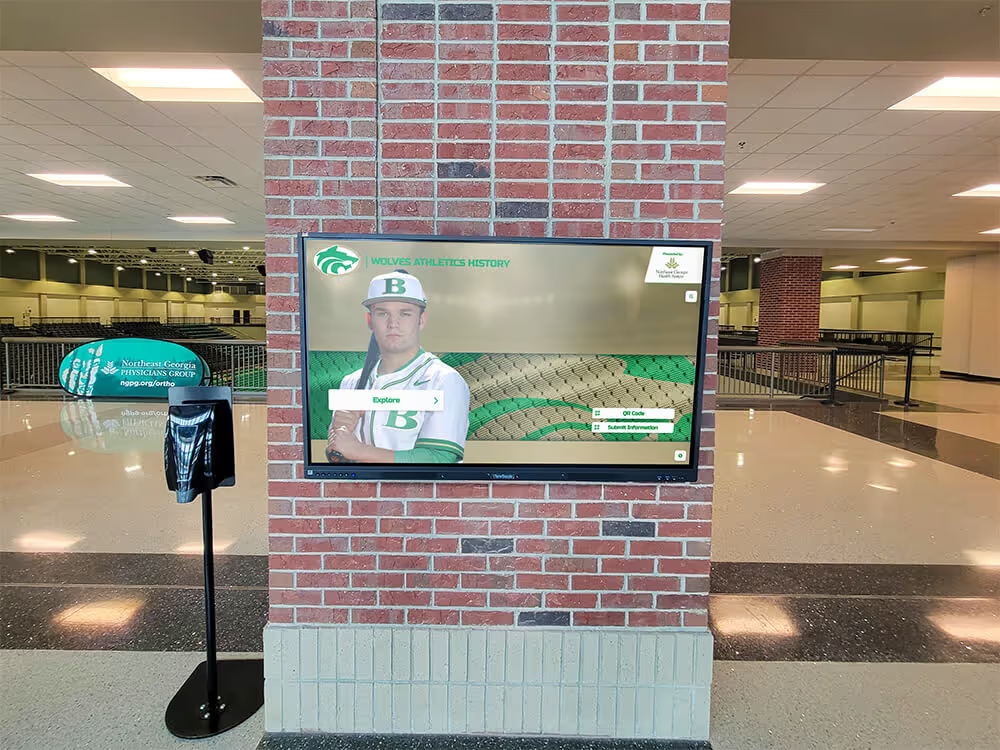
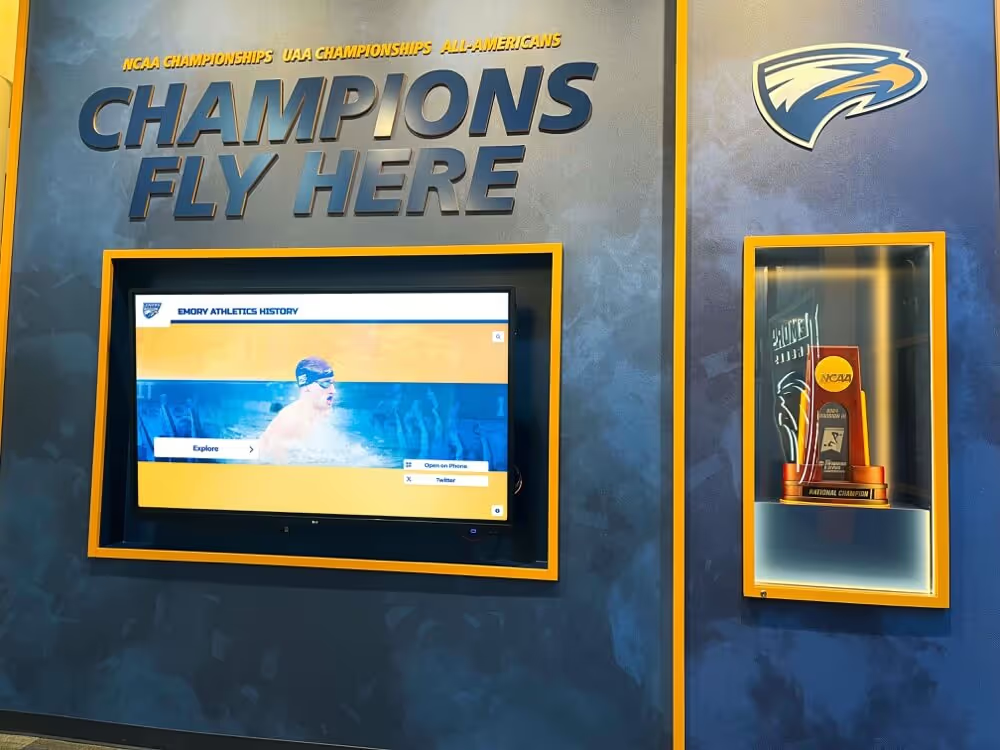
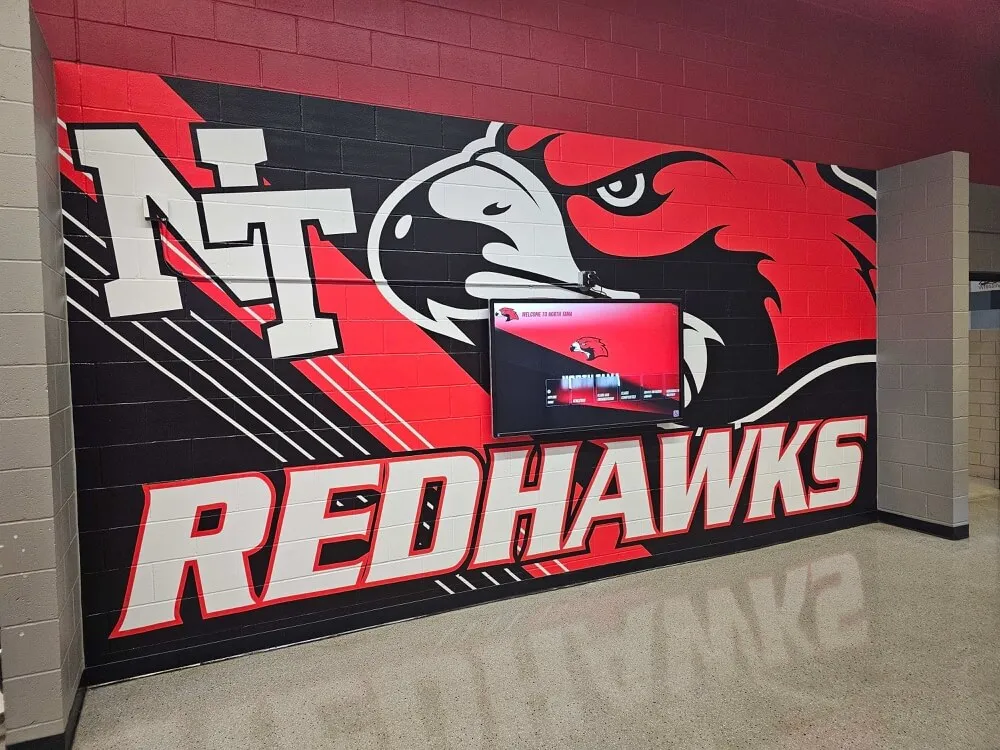
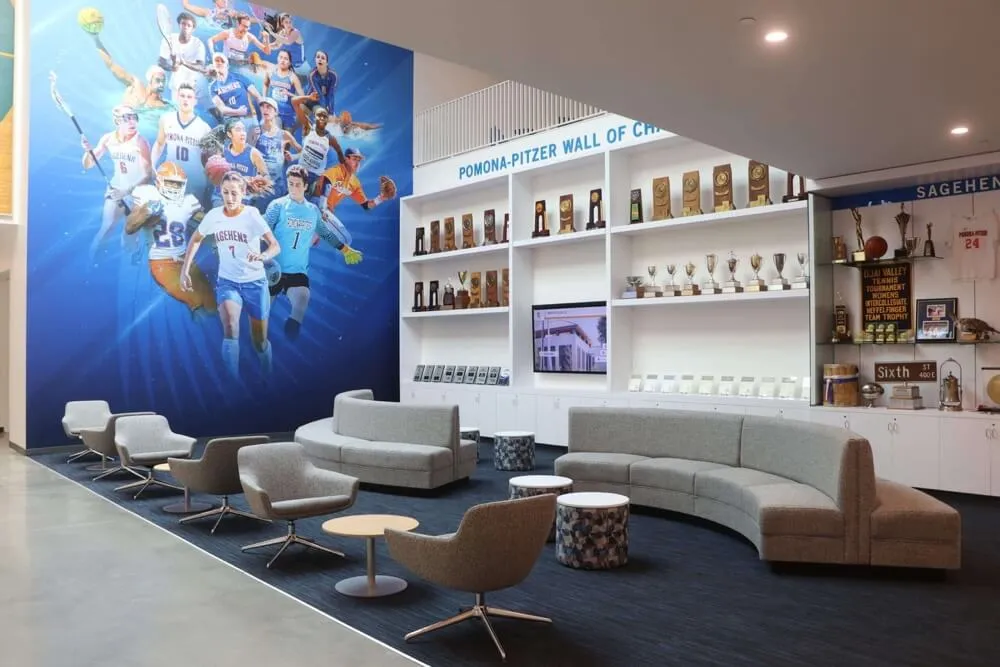
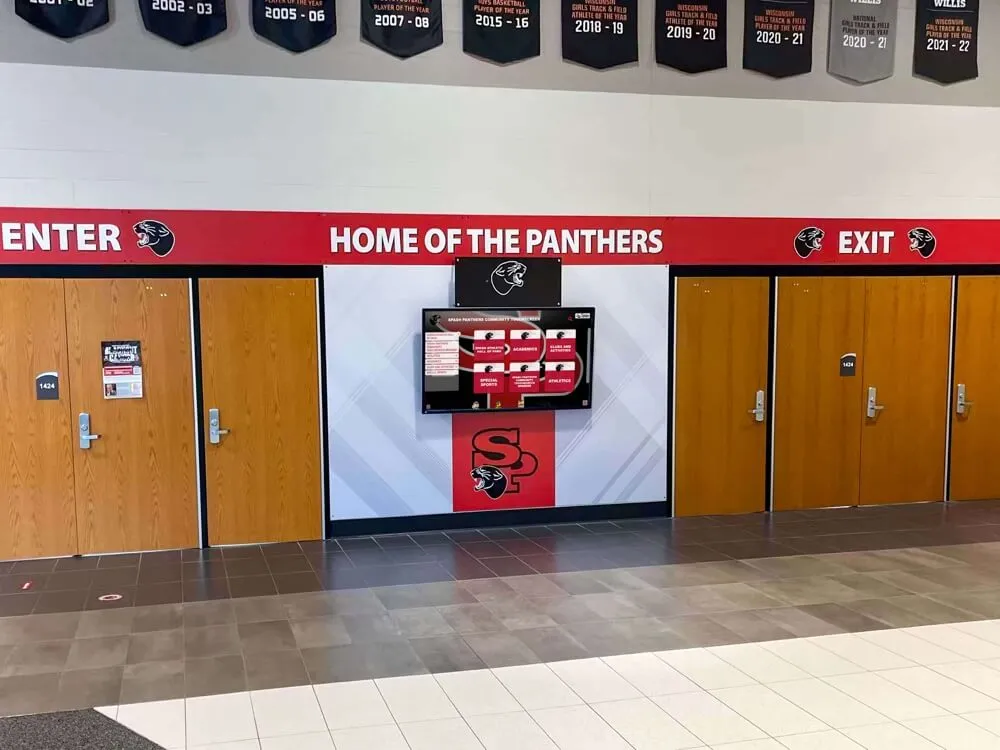
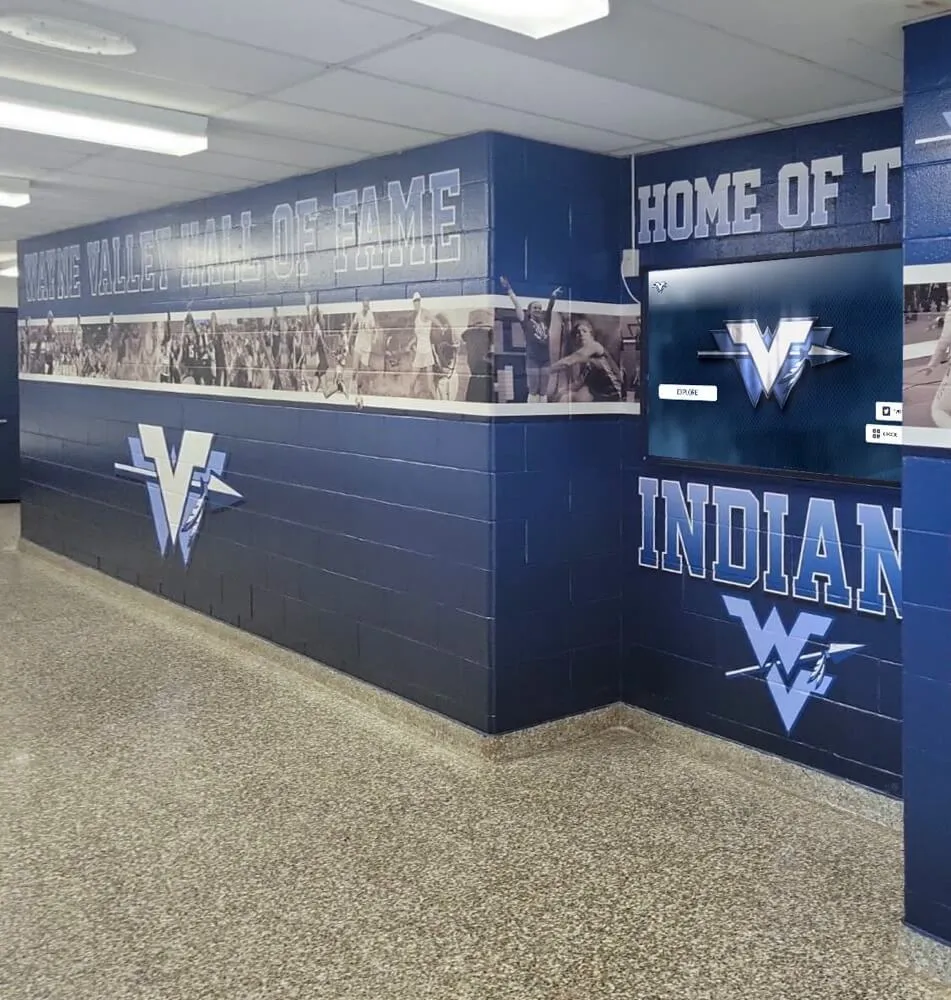
Strategic recognition displays ensure wrestling achievements receive equal visibility alongside other athletic programs
Tournament Bracket Formats and Advancement
Understanding bracket structures helps wrestlers and coaches develop competitive strategies:
Championship and Consolation Bracket Systems Most state tournaments use modified double-elimination:
- Championship bracket for undefeated wrestlers advancing toward finals
- Consolation brackets for first-loss wrestlers competing for placement
- True second-place determination through consolation bracket winners
- Third through eighth place finals in comprehensive tournaments
- Wrestle-back systems maximizing participation and competition opportunities
Seeding and Bracket Positioning Tournament seeds significantly affect championship paths:
- Top seeds (typically 1-4 or 1-8) positioned to avoid early-round meetings
- Unseeded wrestlers randomly distributed throughout bracket sections
- Pigtail preliminary matches when entries exceed bracket capacity
- Strategic considerations in highly competitive weight classes
- Historical performance and season records influencing seed assignments
Explore state championship recognition approaches documenting tournament brackets and results.
Match Scoring and Advancement Criteria Consistent rules govern match outcomes:
- Victory by fall (pin) providing immediate match conclusion
- Technical fall (15+ point margin) ending matches without completing full time
- Major decision (8-14 point margin) and decision (1-7 points) for completed matches
- Tiebreaker procedures including sudden victory, two-point tiebreaker periods, and ultimate tiebreaker
- Default, forfeit, and disqualification outcomes affecting advancement
Pre-Tournament Preparation: Maximizing Championship Potential
Systematic preparation across physical, technical, mental, and logistical dimensions separates successful tournament performances from disappointing outcomes.
Physical Preparation and Training Peaks
Timing conditioning and strength peaks to coincide with state tournaments:
Periodization Strategies Structured training cycles build toward championship performance:
- Base conditioning development during early season building aerobic capacity
- Strength training progression emphasizing wrestling-specific power development
- Technique refinement and live wrestling volume increasing as tournaments approach
- Tapering strategies reducing training volume while maintaining intensity before championship competition
- Recovery protocols ensuring freshness rather than overtraining fatigue
Tournament-Specific Conditioning State tournaments demand unique physical preparation:
- Multiple-match simulation workouts replicating tournament day demands
- Recovery between matches practiced through tournament-format training
- Weight cutting and rehydration protocols rehearsed before championship events
- Explosive technique execution under fatigue conditions
- Mental stamina development sustaining focus across multi-hour competition days
Learn about athletic achievement recognition celebrating preparation dedication alongside championship results.
Technical and Tactical Preparation
Strategic planning addressing likely opponents and match scenarios:
Opponent Scouting and Video Analysis Modern preparation emphasizes opponent intelligence:
- Video review of seeded opponents and likely bracket competitors
- Technique tendency analysis identifying opponents’ preferred attacks and defenses
- Setup sequence recognition enabling defensive preparation
- Conditioning assessment predicting opponent performance across match periods
- Coach collaboration sharing intelligence across team and program
Technical Refinement Focus Championship matches require technique perfection:
- High-percentage move mastery ensuring reliable scoring opportunities
- Counter technique development defending against common attacks
- Neutral position control strategies establishing match tempo and positioning
- Bottom escape and top riding technique refinement affecting match scoring
- Finishing technique ensuring takedown conversion and defensive escape completion
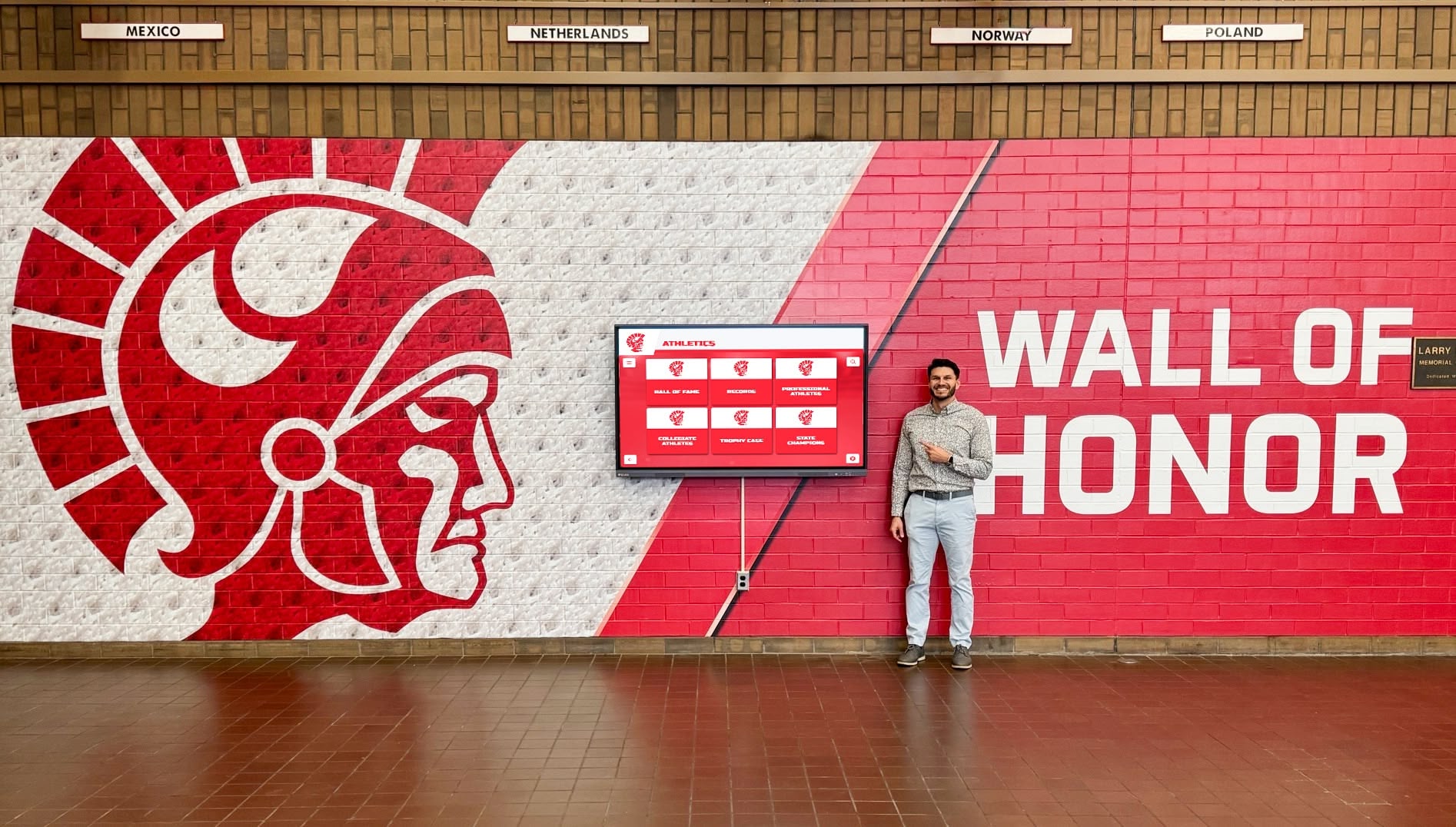
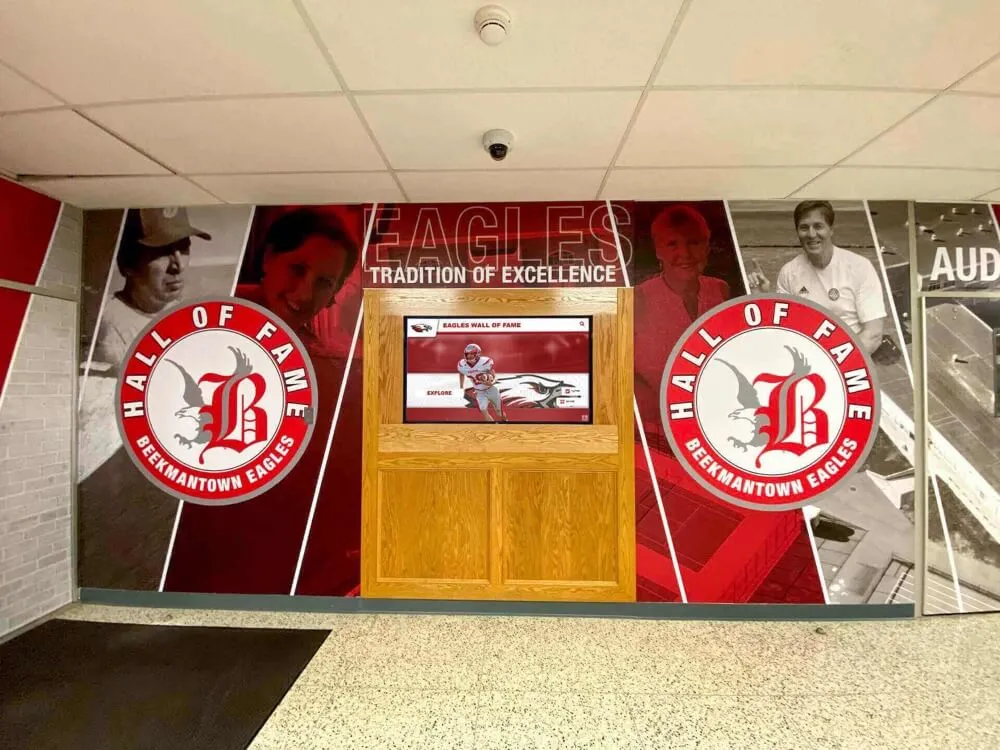
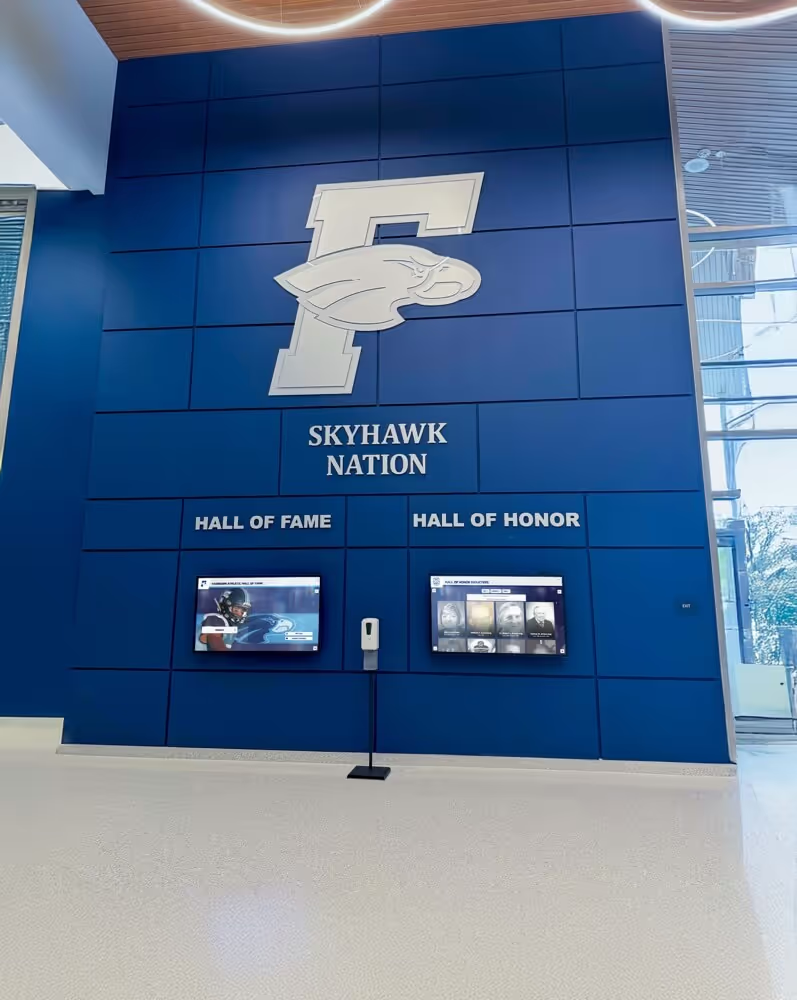
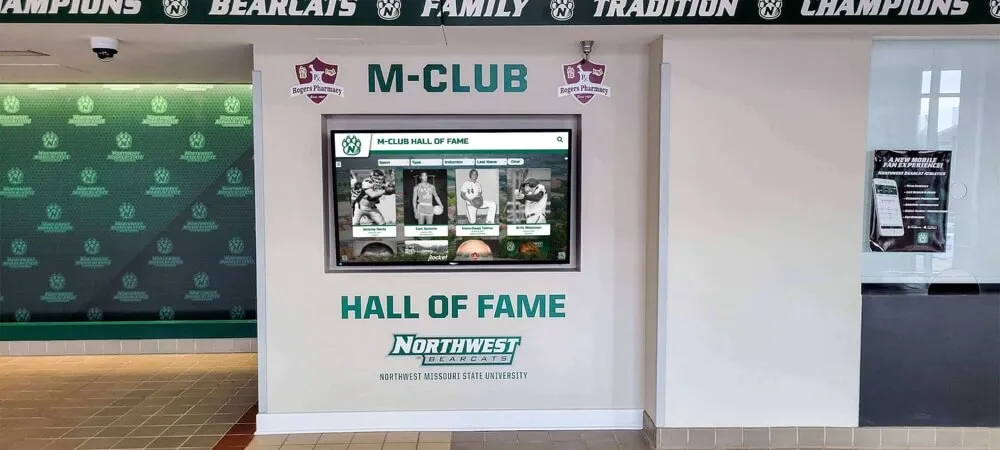
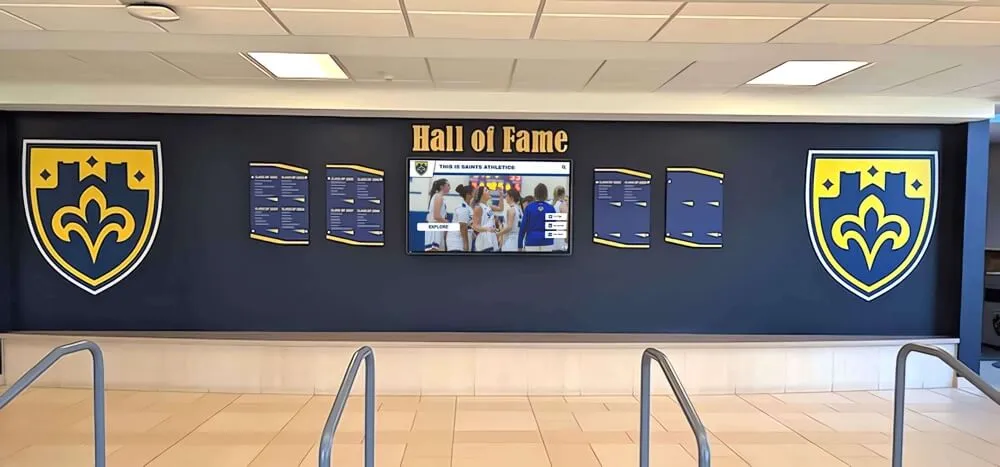
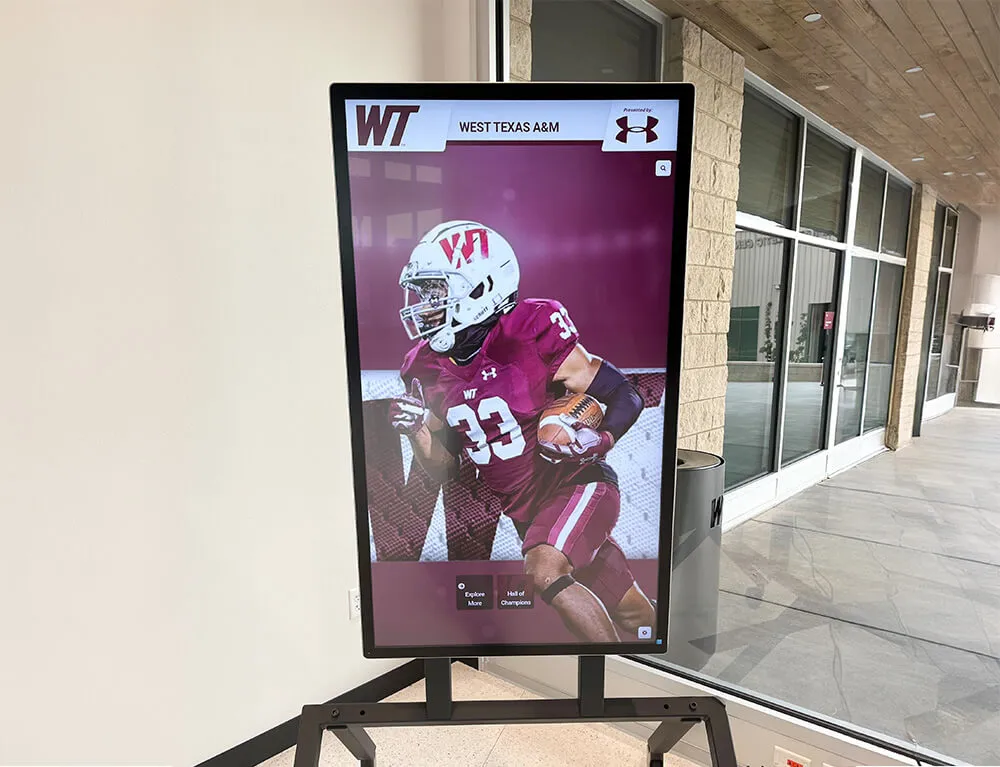
Visible wrestling recognition throughout facilities motivates current wrestlers while honoring past championship achievement
Scenario Planning and Strategy Development Anticipate match situations and tactical responses:
- Leading versus trailing score management approaches
- Period-specific strategies maximizing scoring opportunities and minimizing risks
- Position choice decisions on restarts affecting match control
- Overtime strategy development for extended matches
- Challenging and video review protocols understanding rule applications
Mental Preparation and Championship Mindset
Psychological readiness separates prepared wrestlers from merely physically capable competitors:
Pre-Tournament Mental Skills Training Develop psychological tools for championship pressure:
- Visualization exercises rehearsing successful technique execution and match scenarios
- Breathing and relaxation techniques managing competition anxiety
- Self-talk strategies maintaining confidence and focus during challenges
- Adversity response preparation for unexpected situations or unfavorable outcomes
- Process focus emphasizing controllable actions rather than outcome obsession
Championship Week Mental Routines Tournament week demands special psychological attention:
- Normal routine maintenance providing stability and familiarity
- Controlled arousal management avoiding excessive nervous energy
- Sleep priority ensuring cognitive function and physical recovery
- Distraction limitation preserving mental energy for competition
- Team support and connection providing emotional resources
Discover approaches to senior athlete recognition celebrating wrestlers’ complete high school careers including tournament achievements.
Logistical and Administrative Preparation
Successful tournaments require attention to practical details:
Travel and Accommodation Planning Multi-day tournaments need comprehensive logistics:
- Transportation arrangements accounting for weigh-in schedules and session times
- Hotel selection providing appropriate meal access and recovery environment
- Meal planning maintaining weight while supporting energy demands
- Family coordination facilitating support attendance while minimizing stress
- Emergency contingency planning for unexpected situations
Equipment and Supplies Checklist Tournament competition requires complete preparation:
- Competition singlets and backup uniforms
- Wrestling shoes properly broken in and providing optimal traction
- Headgear meeting regulation requirements and providing comfort
- Weight management supplies including monitoring equipment
- Medical supplies addressing minor injuries and skin conditions
- Nutrition and hydration supplies supporting multi-match energy demands
- Entertainment and recovery items for long competition days
Tournament Day Execution: Competing for Championships
When preparation meets competition, strategic execution and adaptability determine tournament success.
Weigh-In Procedures and Protocols
State tournaments employ strict weigh-in regulations:
Official Weigh-In Requirements
- Specific weigh-in windows typically 1-2 hours before competition sessions
- Two-pound weight allowance after specified season dates
- Singlet and legal uniform verification during weigh-in
- Skin condition inspection ensuring competitor safety
- Certification verification confirming season-long weight documentation
- Hydration testing in some states ensuring wrestler safety
Post-Weigh-In Recovery Effective rehydration and fueling strategies:
- Gradual fluid replacement avoiding stomach discomfort
- Easily digestible carbohydrate intake restoring energy without digestive stress
- Electrolyte replacement supporting hydration and muscle function
- Light protein intake supporting sustained energy release
- Timing meals and snacks relative to first-match schedules
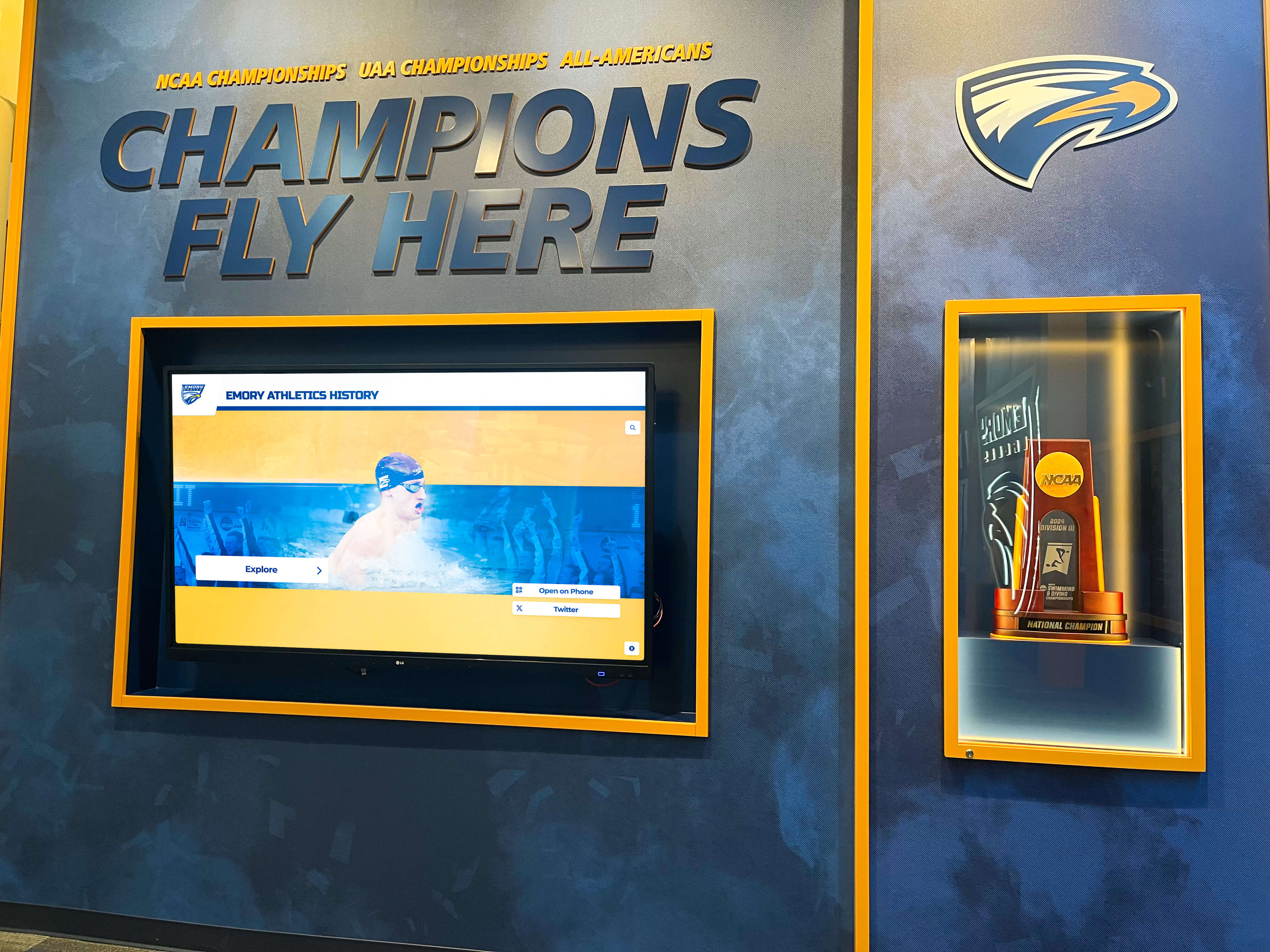
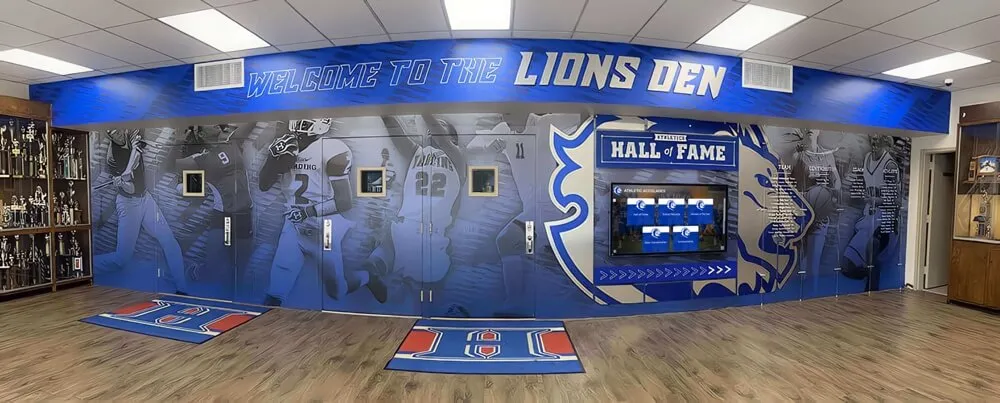
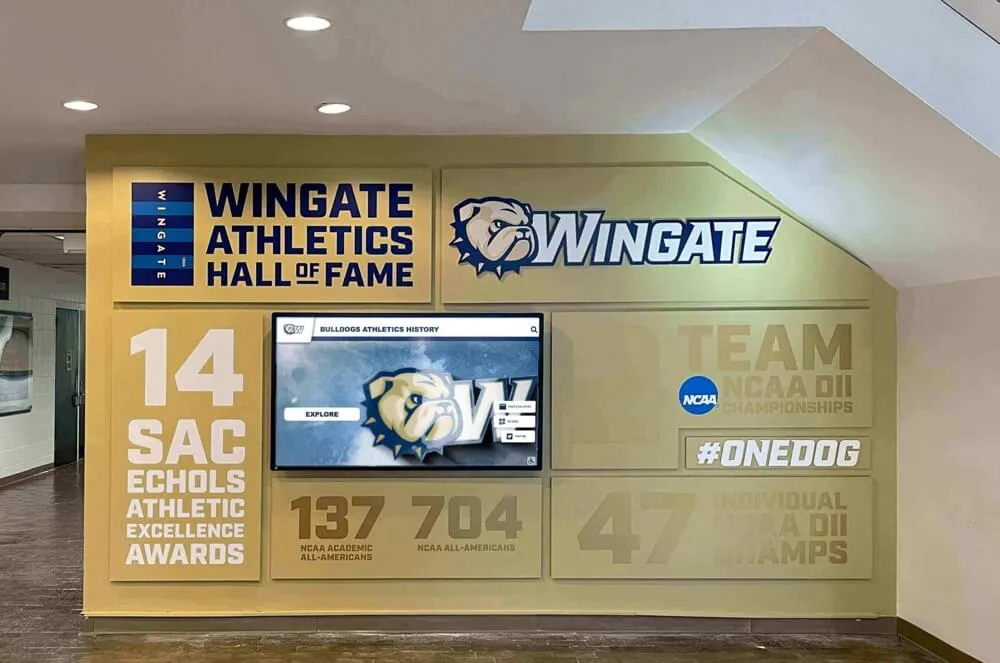
Championship recognition displays celebrate team and individual tournament excellence inspiring future competitors
Warm-Up and Pre-Match Routines
Systematic preparation maximizes performance readiness:
Physical Warm-Up Progression
- General cardiovascular activity elevating heart rate and body temperature
- Dynamic stretching improving range of motion without reducing power output
- Wrestling-specific movement patterns activating technique-relevant muscles
- Live wrestling with partners simulating competition intensity
- Cool-down period preventing premature fatigue before match call
Mental Activation Protocols Psychological readiness complements physical preparation:
- Visualization review of technique and match strategy
- Breathing exercises managing arousal to optimal competition levels
- Self-talk reminders of preparation and capability
- Focus cues directing attention to controllable execution factors
- Routine consistency providing familiar structure reducing anxiety
Match Execution and In-Competition Adjustments
Championship matches demand moment-to-moment tactical excellence:
Match Opening Strategy First period approach sets match trajectory:
- Neutral position dominance establishing tempo and control
- Setup execution implementing practiced attacks
- Defensive positioning preventing opponent’s primary attacks
- Scoring opportunity recognition and finishing
- Position choice strategy on restart if period ends scoreless
In-Match Adjustments Adaptability separates champions from consistent performers:
- Technique modification when primary attacks prove ineffective
- Pace adjustment managing opponent’s stamina or controlling match tempo
- Positioning adjustment based on score and time remaining
- Defensive adaptation addressing opponent’s successful attacks
- Coach communication integration incorporating corner feedback
Learn about athletic record recognition documenting tournament achievements and career milestones.
Between-Match Recovery and Preparation
Multi-match tournaments require systematic recovery:
Physical Recovery Protocols
- Active recovery movement maintaining warm muscles and preventing stiffness
- Hydration and nutrition intake replacing expended energy and fluids
- Injury assessment and treatment addressing match-incurred damage
- Rest positioning and compression supporting circulation and recovery
- Warm-up progression for subsequent matches
Mental Reset and Refocus Psychological management between matches:
- Controlled emotional response to previous match outcome (victory or defeat)
- Bracket awareness understanding next opponent and championship implications
- Strategic adjustment based on observed opponent performance
- Confidence maintenance or rebuilding depending on previous result
- Team connection leveraging social support for emotional management
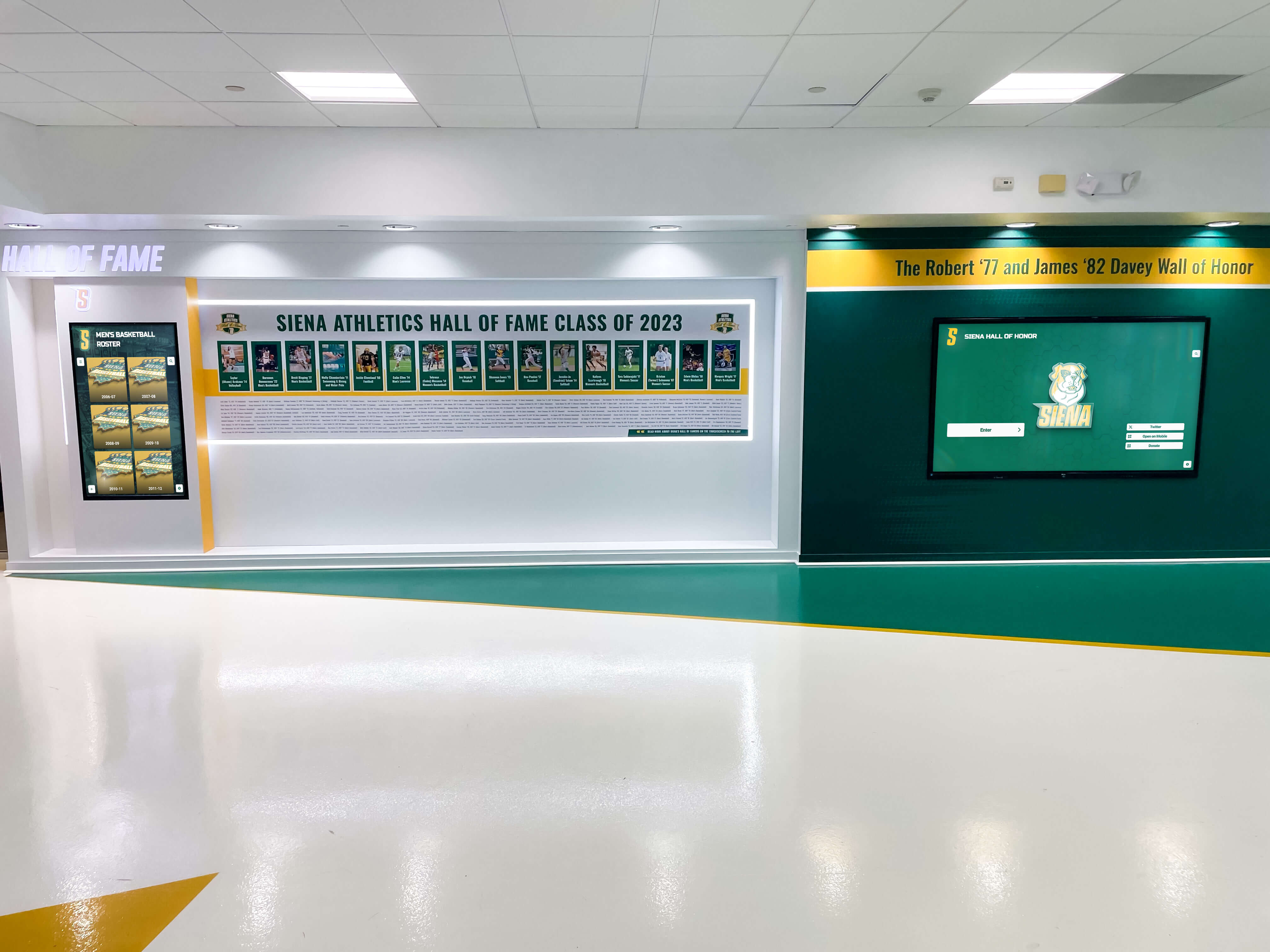
Permanent displays document complete championship tournament results preserving team and individual excellence
Championship Bracket Navigation: Strategic Tournament Progression
Understanding bracket position and strategic advancement maximizes placement opportunities.
Championship Bracket Strategy
Competing through winner’s bracket toward finals:
Early Round Approach Initial matches establish tournament trajectory:
- Aggressive execution establishing dominance and confidence
- Technical precision avoiding careless mistakes leading to upset losses
- Conservative injury avoidance protecting championship run viability
- Confidence building through decisive early victories
- Scouting potential later-round opponents during preliminary competition
Semifinal and Finals Mentality Championship matches demand special preparation:
- Recognition of increased opponent quality and preparation
- Elevated focus and arousal management for high-stakes competition
- Technical perfection emphasis minimizing margin for error
- Strategic patience avoiding desperation mistakes when trailing
- Championship belief and visualization rehearsal of victory scenarios
Consolation Bracket Competition
First-loss wrestlers face unique psychological and strategic challenges:
Consolation Mindset Management Staying motivated after championship loss:
- Placement goal refocusing providing new competition purpose
- Pride in finishing high despite championship bracket exit
- Team point contribution motivation in dual tournament formats
- College recruitment consideration maintaining competitive effort
- Future seeding implications for returning wrestlers
Wrestle-Back Strategy Consolation bracket presents different tactical considerations:
- Must-win mentality recognizing single-elimination nature of remaining competition
- Aggressive risk-taking given championship path closure
- Recovery optimization between consolation matches
- Strategic injury management decisions balancing health against placement goals
- Technique experimentation developing moves for future seasons
Explore sport end-of-year recognition approaches celebrating tournament achievements alongside season awards.
Post-Tournament: Recognition and Legacy Building
Championship tournaments conclude, but achievement recognition and legacy development extend indefinitely.
Immediate Post-Tournament Activities
Tournament conclusion requires systematic follow-through:
Results Documentation and Analysis
- Complete bracket results preservation including all match scores
- Individual performance analysis identifying strengths and development areas
- Team performance assessment evaluating strategic decisions and preparation
- Photo and video documentation capturing championship moments
- Media reporting and social communication sharing results with community
Medical Assessment and Recovery Tournament competition requires physical recovery:
- Comprehensive injury evaluation addressing tournament-incurred damage
- Treatment plan development for injuries requiring rehabilitation
- Weight restoration and nutritional replenishment after tournament weight management
- Rest and recovery period before resuming training
- Mental decompression from championship pressure and intensity
Championship Recognition and Celebration
Tournament achievements deserve appropriate acknowledgment:
Immediate Recognition
- Championship medal and trophy presentation at tournament
- Team and coach celebration of individual achievements
- Family connection and shared appreciation of accomplishment
- Social media recognition announcing championships and placements
- School and community acknowledgment through announcements and coverage
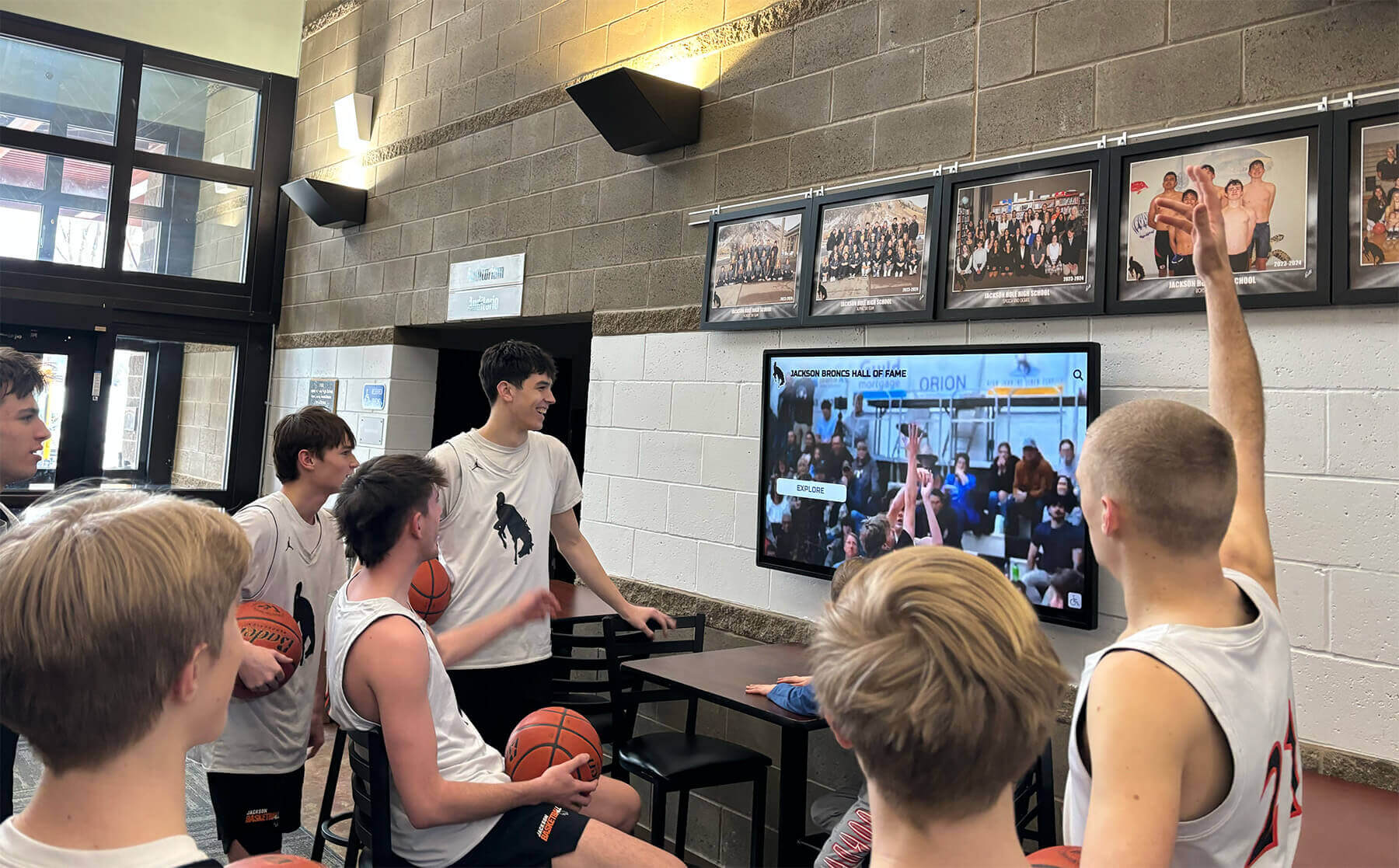
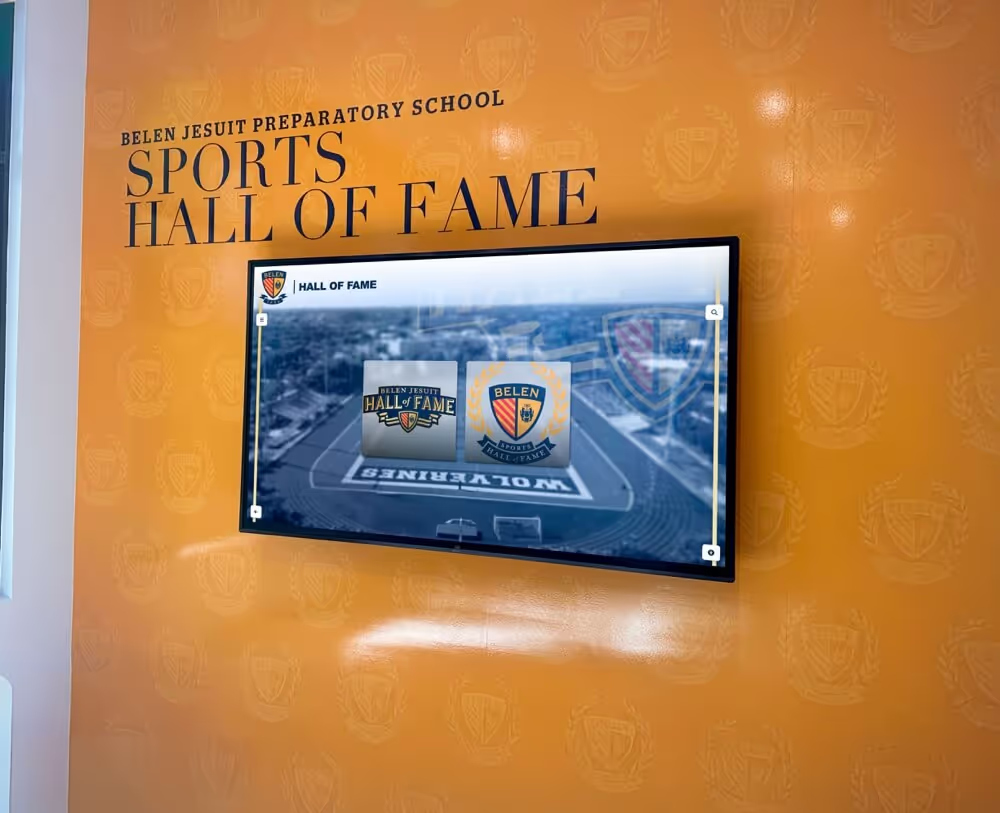
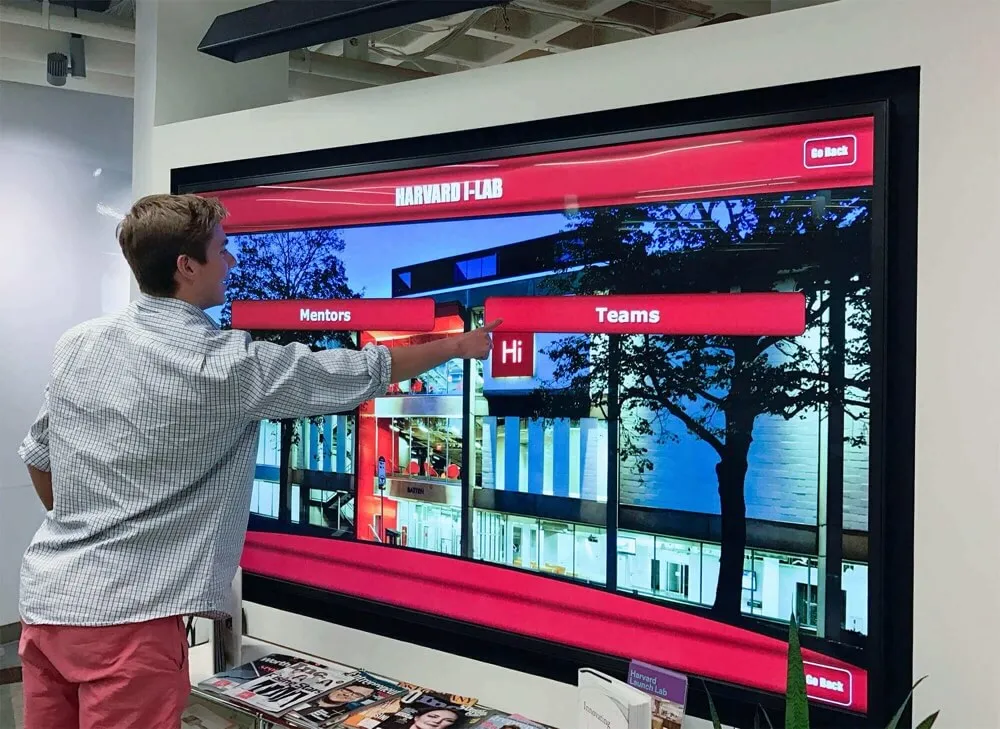
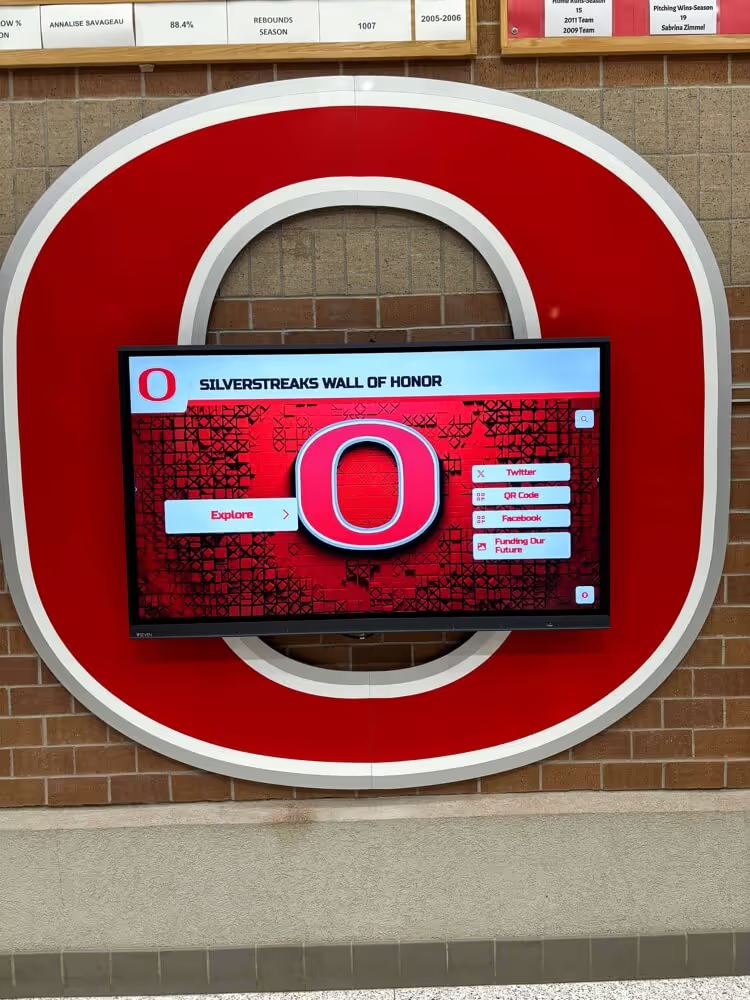
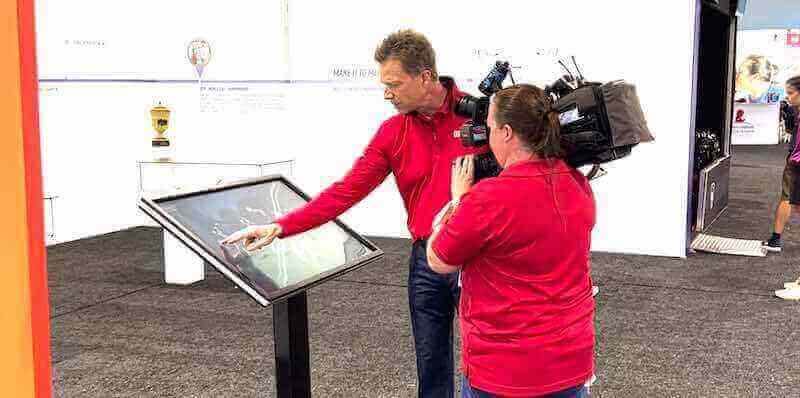
Interactive displays enable year-round engagement with tournament achievements extending recognition beyond medal ceremonies
Formal Season-End Awards State tournament achievements feature prominently in year-end recognition:
- Special awards recognizing state qualifiers and medalists
- Championship team recognition for tournament success
- Individual achievement documentation for college applications
- Historical context placement showing tournament results relative to program history
- Permanent recognition ensuring lasting visibility for championship accomplishment
Learn about comprehensive high school end-of-year awards programs integrating tournament recognition.
Permanent Recognition Systems: Preserving Tournament Excellence
Championship achievements deserve lasting documentation extending beyond physical trophy cases:
Traditional Physical Recognition Limitations Schools struggle with conventional wrestling recognition:
- Trophy cases filling quickly with limited space for comprehensive tournament documentation
- Team trophy and individual medal displays consuming finite facility space
- Historical recognition removal as new championships require display space
- Limited information capacity on physical plaques reducing achievement context
- Static displays providing no interaction or exploration capability
Digital Recognition Solutions Modern platforms solve traditional recognition challenges:
- Unlimited capacity accommodating every state tournament qualifier and placer across all years
- Comprehensive achievement profiles documenting complete tournament bracket progression
- Match-by-match results showing path to championship or placement finish
- Photo galleries capturing competition moments and medal ceremonies
- Video integration showcasing championship matches and technique highlights
- Statistical archives preserving season records and career tournament participation
Solutions like Rocket Alumni Solutions provide purpose-built platforms for comprehensive wrestling recognition, enabling schools to document every state tournament participant permanently while showcasing championship excellence through engaging digital displays that traditional trophy cases cannot match.
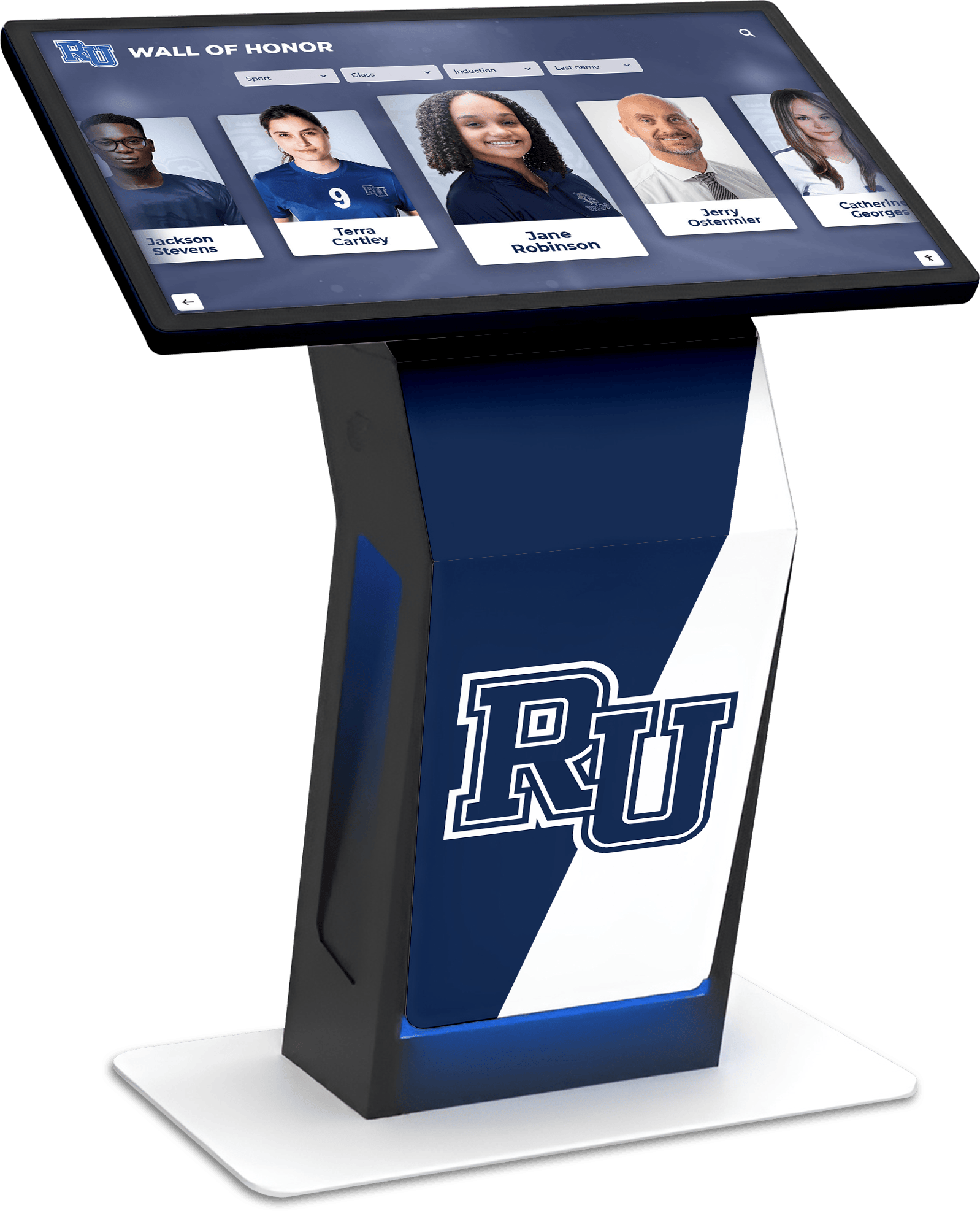
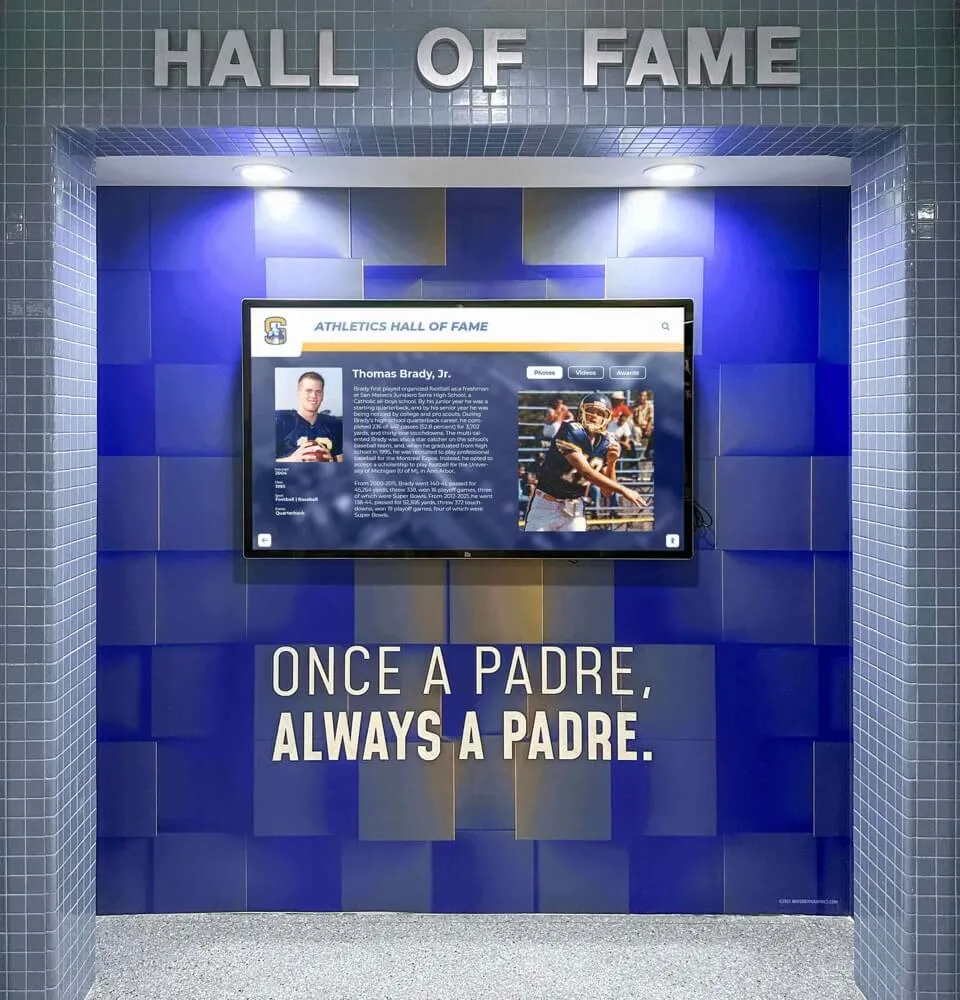
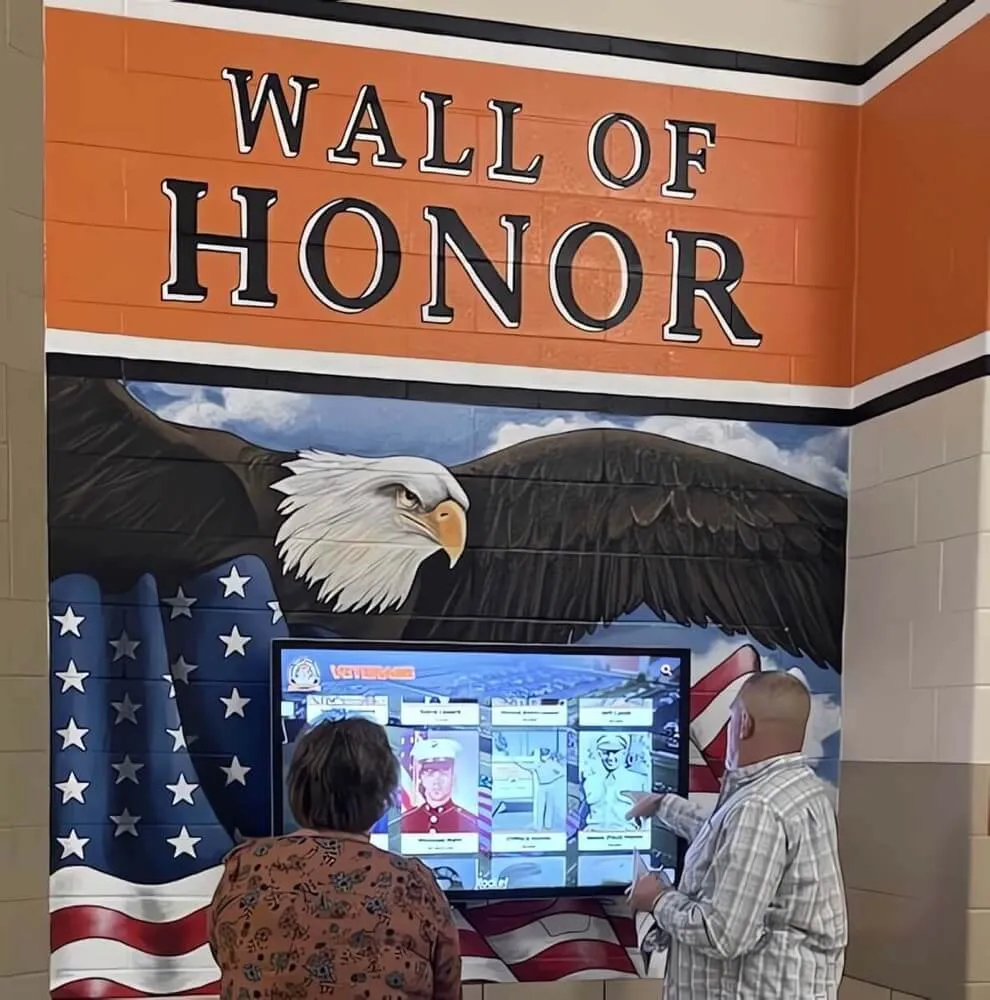
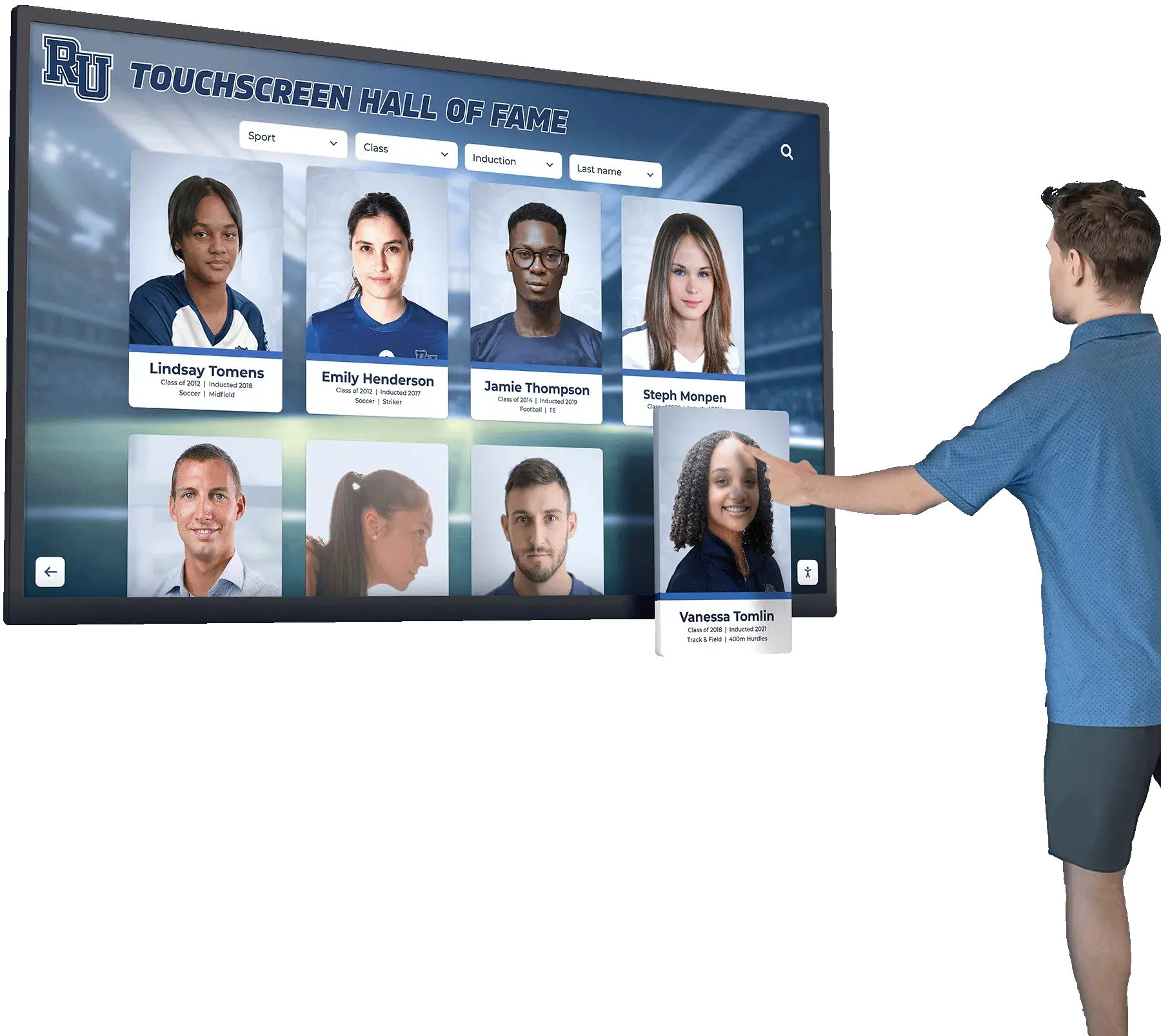
Touchscreen recognition systems enable searchable exploration of state tournament history across decades
Recognition Content Best Practices Comprehensive tournament documentation includes:
- Wrestler profiles with competition photos and biographical information
- Complete tournament bracket showing match-by-match progression
- Opponent information and match scores throughout tournament
- Weight class and classification context
- Season record and career tournament participation
- College recruitment and post-high-school wrestling pathways
- Coach quotes and achievement significance explanation
- Team tournament results and point contributions
Building Wrestling Program Culture Through Recognition
Permanent tournament recognition shapes program identity and tradition:
Inspirational Modeling for Current Wrestlers Historical recognition provides motivation:
- Younger wrestlers seeing program championship tradition
- Specific examples of successful tournament technique and strategy
- Weight class pathways showing past champions at similar weights
- Development trajectories documenting multi-year tournament progression
- Success stories demonstrating championship achievement possibility
Alumni Connection and Program Support Recognition strengthens graduated wrestler relationships:
- Alumni rediscovering their tournament achievements years later
- Historical context showing their place in program tradition
- Connection points enabling alumni to mentor current wrestlers
- Pride reinforcement supporting program advocacy and financial support
- Reunion facilitation through documented shared experiences
Discover alumni engagement strategies leveraging athletic recognition displays.
Regional Variations in State Wrestling Tournaments
Understanding state-specific differences helps wrestlers and families navigate unique tournament characteristics:
Geographic Tournament Traditions
Different regions emphasize various tournament aspects:
Midwest Wrestling Powerhouses States like Iowa, Pennsylvania, Ohio, and Minnesota:
- Deep tournament brackets with multiple state classification divisions
- Strong community attendance and passionate fan engagement
- Long tournament traditions spanning decades
- College recruiting prominence with extensive coaching attendance
- Multi-day tournament formats extending across weekends
Western State Tournaments California, Utah, and western states:
- Large tournament entries reflecting population and program size
- Division systems separating competitive levels
- Geographic sectional tournaments before state finals
- Diverse wrestling styles reflecting varied coaching influences
Southern and Eastern State Championships Growing wrestling regions with developing traditions:
- Expanding participation and competitive depth
- Combination tournaments merging classifications
- Compact tournament formats completing within single weekends
- Increasing recognition and community engagement
State Association Rule Variations
Wrestling rules remain largely consistent, but state associations implement specific variations:
Weight Class Configurations
- Optional weight class selection enabling strategic lineup decisions
- Weight allowance timing and pound increases
- Certification requirements and monitoring procedures
- Growth plan provisions for developing wrestlers
Tournament Format Differences
- Preliminary round procedures and pigtail matches
- Consolation bracket structures and placement finals
- Session timing and rest period requirements
- Medical examination and injury default protocols
Learn about youth sports recognition approaches applicable to tournament achievements.
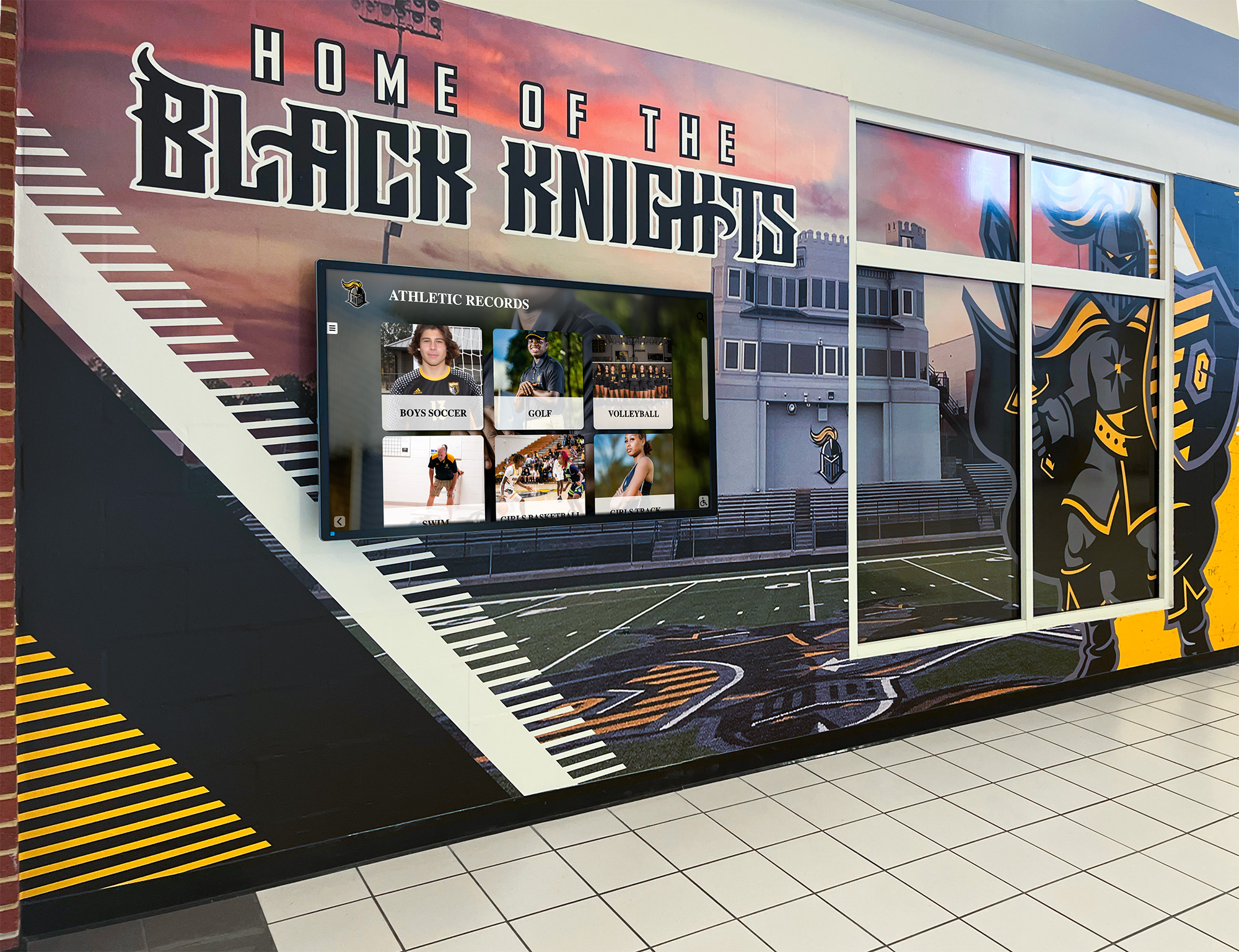
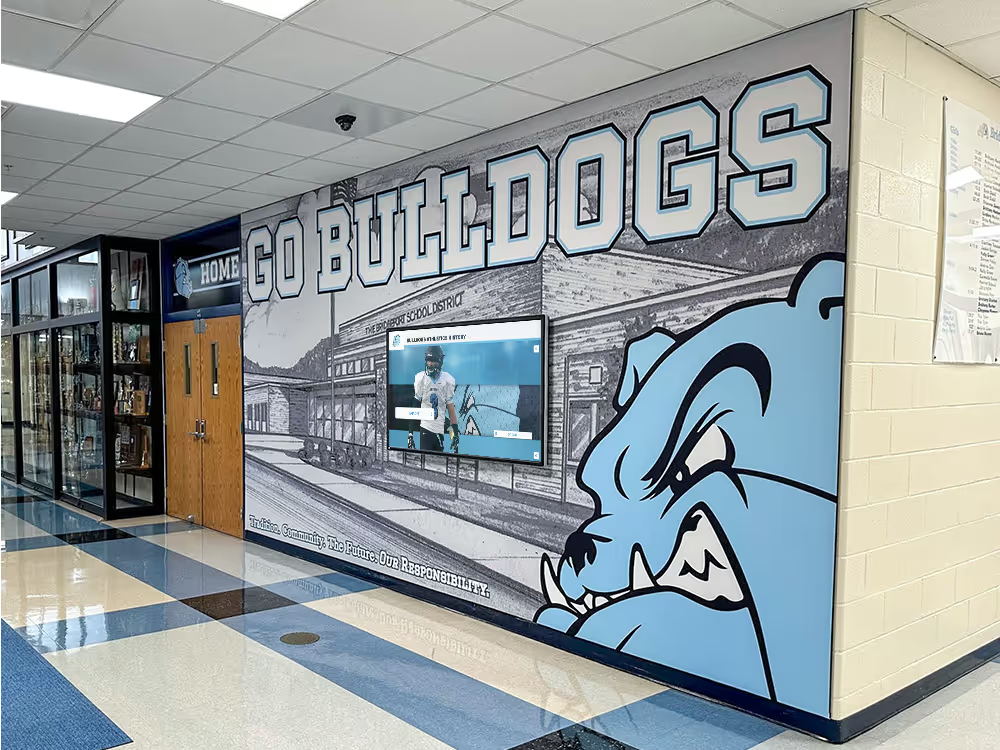
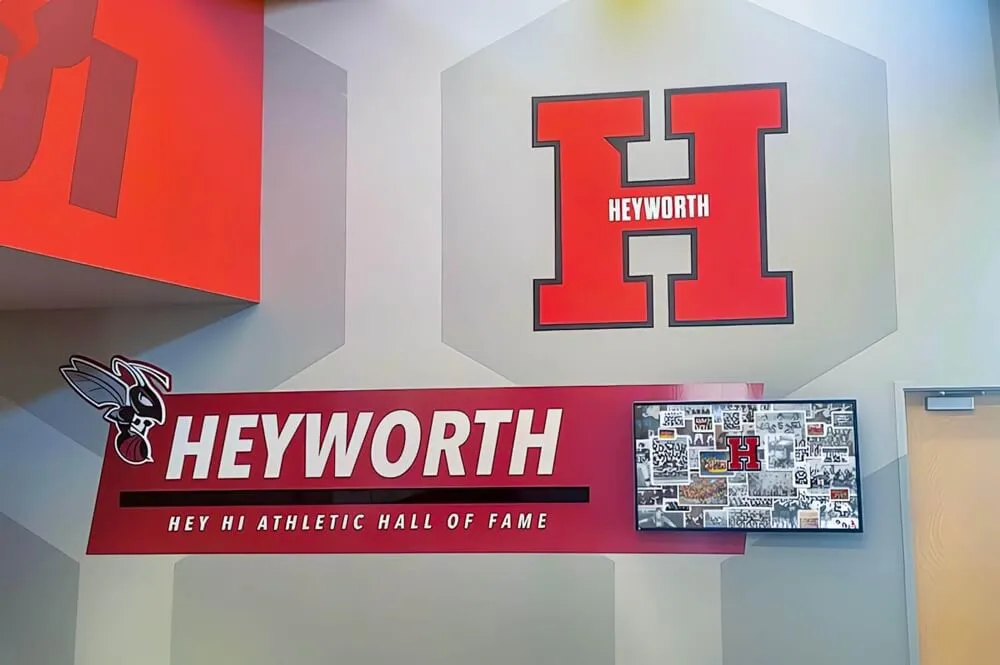
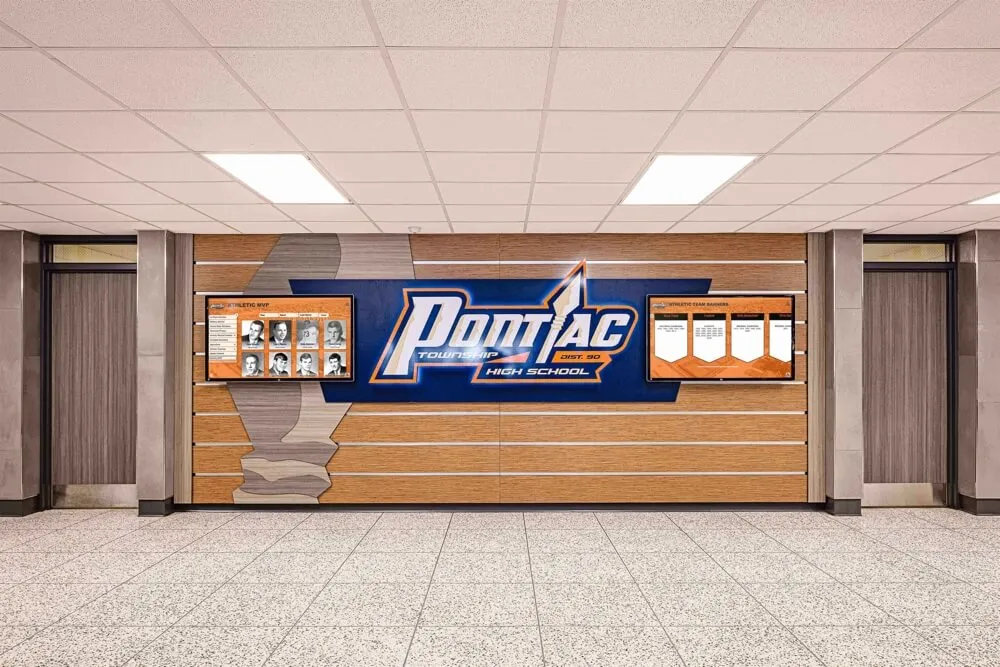
Prominent hallway recognition ensures daily visibility for wrestling achievements alongside other athletic programs
Coaching Considerations for State Tournament Success
Coaches play critical roles in tournament preparation, competition management, and post-tournament follow-through.
Pre-Tournament Coaching Responsibilities
Systematic preparation maximizes team performance:
Strategic Planning and Preparation
- Wrestler readiness assessment and lineup optimization
- Bracket analysis and strategic planning for likely opponents
- Weight management oversight ensuring safe practices
- Practice design simulating tournament conditions
- Team meeting preparation addressing logistics and mental preparation
Administrative Coordination
- Tournament registration and entry verification
- Transportation and accommodation arrangements
- Medical clearance and skin check preparation
- Emergency contact and parent communication
- Equipment verification and backup preparation
In-Tournament Coaching
Competition day demands tactical excellence:
Corner Coaching Effectiveness
- Strategic communication during designated break periods
- Tactical adjustment recommendations based on match flow
- Motivation and confidence maintenance under pressure
- Position choice advice on restarts
- Time and score awareness ensuring appropriate urgency
Multi-Wrestler Management Coaches balance attention across team:
- Warm-up coordination for staggered match schedules
- Recovery supervision between matches
- Mental support after losses or unexpected outcomes
- Team cohesion maintenance throughout competition
- Parent communication about wrestler status and performance
Explore coaching recognition programs celebrating tournament preparation leadership.
Post-Tournament Coach Leadership
Tournament conclusion requires continued guidance:
Immediate Post-Competition Responsibilities
- Individual wrestler feedback and performance assessment
- Emotional support for disappointed wrestlers
- Victory celebration without losing perspective
- Team meeting addressing overall tournament performance
- Travel coordination and safe return home
Long-Term Development Planning Tournament results inform future preparation:
- Off-season training plan development addressing identified weaknesses
- Technique development priorities for returning wrestlers
- Recruiting assessment and program building for future seasons
- Recognition of graduating seniors and program contributions
- Historical documentation preserving tournament legacy
Family Support for Tournament Competitors
Families play important roles supporting wrestlers through championship competition:
Pre-Tournament Family Involvement
Effective support begins before competition:
Emotional Support and Encouragement
- Positive reinforcement about preparation and capability
- Balanced expectations acknowledging both possibility and challenge
- Perspective maintenance preventing excessive pressure
- Confidence building through belief and encouragement
- Unconditional support regardless of tournament outcomes
Practical Assistance
- Transportation to training and preparation sessions
- Meal preparation supporting weight management
- Equipment management ensuring readiness
- Schedule accommodation enabling tournament attendance
- Financial support for tournament-related expenses
Tournament Day Family Roles
Championship competition day requires appropriate family presence:
Supportive Attendance
- Visible presence demonstrating family commitment and care
- Positive energy and enthusiasm during competition
- Respectful behavior toward opponents and officials
- Appropriate emotional expression managing own anxiety
- Connection with wrestler between matches when permitted
Boundary Respect Effective family support includes knowing limitations:
- Coach autonomy respecting technical and tactical authority
- Appropriate physical and emotional space for wrestler focus
- Avoidance of second-guessing coaching decisions
- Positive framing of performance regardless of outcomes
- Delayed processing of competition allowing immediate recovery
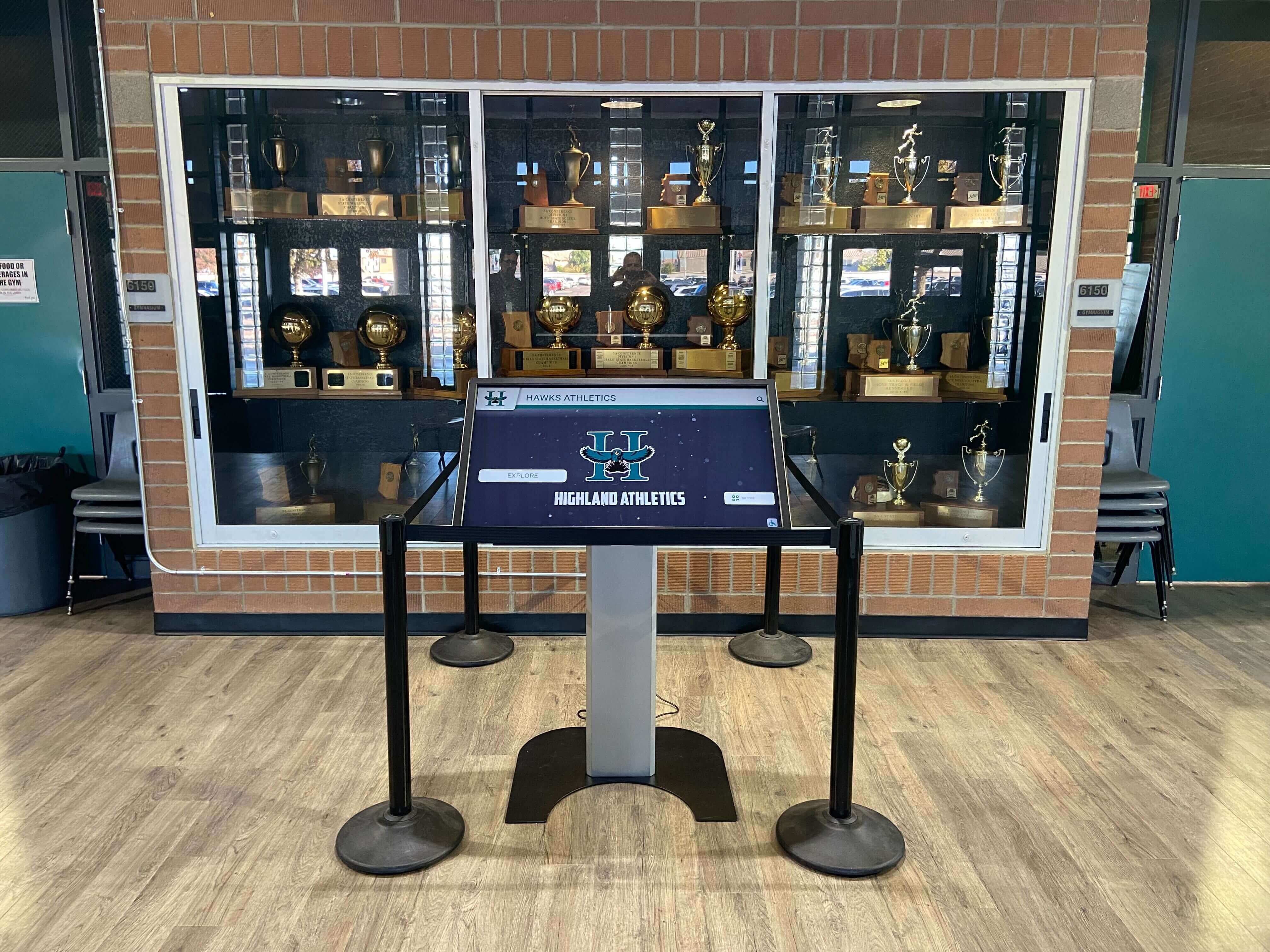
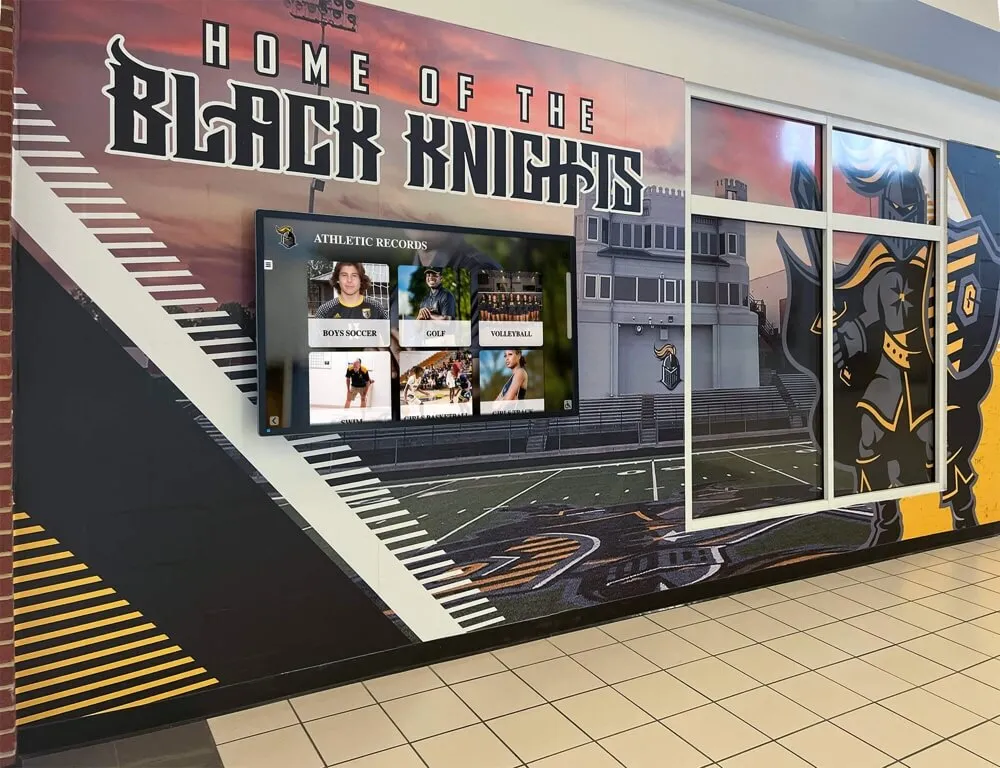
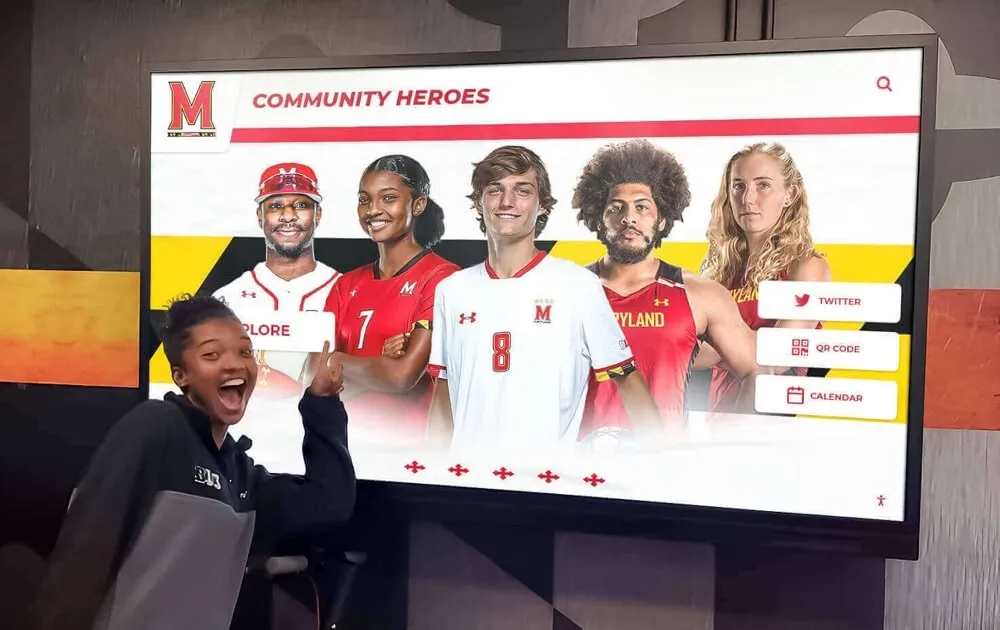
Hybrid recognition combining physical trophies with digital documentation preserves complete tournament history
The Future of State Wrestling Tournament Recognition
Recognition technology continues evolving, enabling enhanced achievement celebration:
Digital Recognition Advances
Modern platforms enable unprecedented documentation:
Comprehensive Historical Archives
- Complete tournament bracket preservation across decades
- Match-by-match results documentation
- Statistical tracking and career progression analysis
- Photo and video integration bringing history to life
- Searchable databases enabling easy exploration
Interactive Engagement Features
- Touchscreen exploration of tournament history
- Weight class and year filtering for targeted searching
- Comparison tools showing performance across eras
- Social sharing capabilities extending recognition reach
- Mobile access enabling anytime viewing
Integration with Broader Recognition Wrestling recognition connects to comprehensive athletic celebration:
- Combined sport achievement displays showing complete athlete excellence
- Academic achievement integration for scholar-athletes
- Leadership recognition documenting wrestler contributions
- Post-graduation tracking showing college and career outcomes
- Alumni engagement facilitation through reconnection platforms
Preserve Your Wrestling Program's Championship Legacy
Discover how modern digital recognition solutions can document every state tournament qualifier, medalist, and champion permanently while creating engaging displays that inspire current wrestlers and honor past excellence. Solutions like Rocket Alumni Solutions provide comprehensive platforms built specifically for athletic recognition, ensuring your wrestling program's championship tradition receives the lasting visibility it deserves.
Explore Recognition SolutionsEnhanced Tournament Experience
Technology improves real-time tournament engagement:
Live Streaming and Remote Viewing
- Family access for those unable to attend in person
- Alumni connection to current tournament competition
- Archive creation for future viewing and recognition content
- Multi-mat coverage ensuring comprehensive tournament documentation
Real-Time Results and Bracket Updates
- Digital bracket displays showing current tournament status
- Mobile notifications updating families on match results
- Statistical tracking throughout competition
- Photo galleries updating during tournament
- Social media integration sharing achievements immediately
Conclusion: Celebrating Wrestling Excellence Through Comprehensive Recognition
State wrestling tournaments represent culminating events where years of training, discipline, sacrifice, and competitive excellence converge in championship-defining performances. These multi-day competitions test physical conditioning, technical mastery, tactical intelligence, and mental toughness while creating lasting memories for wrestlers, families, coaches, and communities.
Yet tournament achievements deserve recognition extending beyond temporary celebration—permanent documentation ensuring every qualifier, placer, and champion receives lasting acknowledgment throughout their lives and beyond. Traditional trophy cases provide limited space forcing difficult choices about which achievements remain visible and which must be removed. Historic tournament results often exist only in dusty record books few ever access, with championship excellence fading from institutional memory as years pass and wrestlers graduate.
The recognition strategies explored throughout this guide solve these fundamental challenges through comprehensive digital platforms providing unlimited capacity, engaging interactive exploration, and permanent accessibility ensuring no wrestling achievement ever disappears from community awareness. From systematic tournament preparation maximizing championship performance to strategic competition execution and lasting recognition preserving excellence permanently, these approaches honor wrestling’s unique demands while celebrating the dedicated athletes who pursue championship competition.
Modern recognition solutions like Rocket Alumni Solutions enable schools to document complete state tournament history while creating engaging displays that inspire current wrestlers through visible examples of program tradition and championship excellence. Rather than choosing which tournament results to feature and which to forget, digital systems accommodate comprehensive documentation across every weight class, every classification, and every season—ensuring all wrestlers who achieved state qualification or placement receive the permanent recognition their accomplishments deserve.
Implementation begins with assessing your current wrestling recognition—identifying gaps in tournament documentation, evaluating trophy case capacity limitations, gathering historical tournament results requiring preservation, and exploring recognition platforms providing comprehensive solutions. Whether you’re documenting decades of tournament tradition or beginning systematic recognition for recent seasons, digital platforms make comprehensive wrestling recognition achievable reality.
Your wrestlers’ state tournament achievements—the countless hours of training, the weight management discipline, the technique refinement, the competitive courage, the championship performances—deserve recognition systems providing lasting celebration rather than temporary acknowledgment fading when trophy cases fill or seasons conclude. Start honoring your wrestling program’s championship excellence today through recognition that truly endures.
Ready to begin? Explore athletic hall of fame best practices or discover digital display solutions that preserve complete tournament history while creating engaging recognition experiences for your wrestling program.