



Sport end of year awards ceremonies represent the culminating celebration of a season filled with dedication, competition, growth, and team achievement—honoring student-athletes who distinguished themselves through exceptional performance, leadership, improvement, sportsmanship, and commitment. Yet many athletic programs struggle to create award ceremonies that truly resonate beyond the evening itself. Traditional banquets fade from memory, physical trophies disappear into storage, and recognition remains confined to a single night rather than building lasting culture.
The most effective sport end of year awards combine meaningful ceremony with permanent recognition systems that inspire future athletes, strengthen program culture, and celebrate achievement throughout the community. This requires thoughtful planning that goes beyond ordering generic trophies—designing award categories that honor diverse contributions, creating memorable presentation formats, and implementing recognition displays that maintain visibility long after the season ends.
This comprehensive guide explores every dimension of sport end of year awards—from planning award categories and selection criteria to organizing impactful ceremonies and creating lasting recognition through both traditional and modern display systems. Whether you manage a single-sport program or coordinate awards across an entire athletic department, these evidence-based strategies will help you celebrate athletic excellence in ways that truly matter.
Sport end of year awards serve purposes extending far beyond individual recognition: they communicate program values, motivate athletes to pursue excellence, create team cohesion through shared celebration, build institutional athletic culture, and establish traditions connecting teams across seasons and generations. When designed with intention and supported by sustainable recognition systems, sport awards become permanent fixtures in program culture rather than fleeting moments that disappear after banquet night.

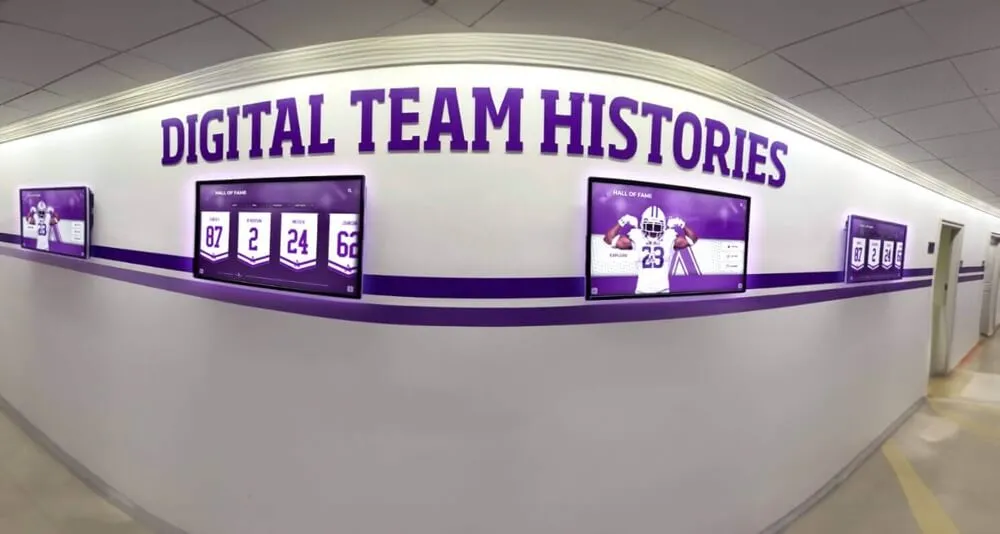
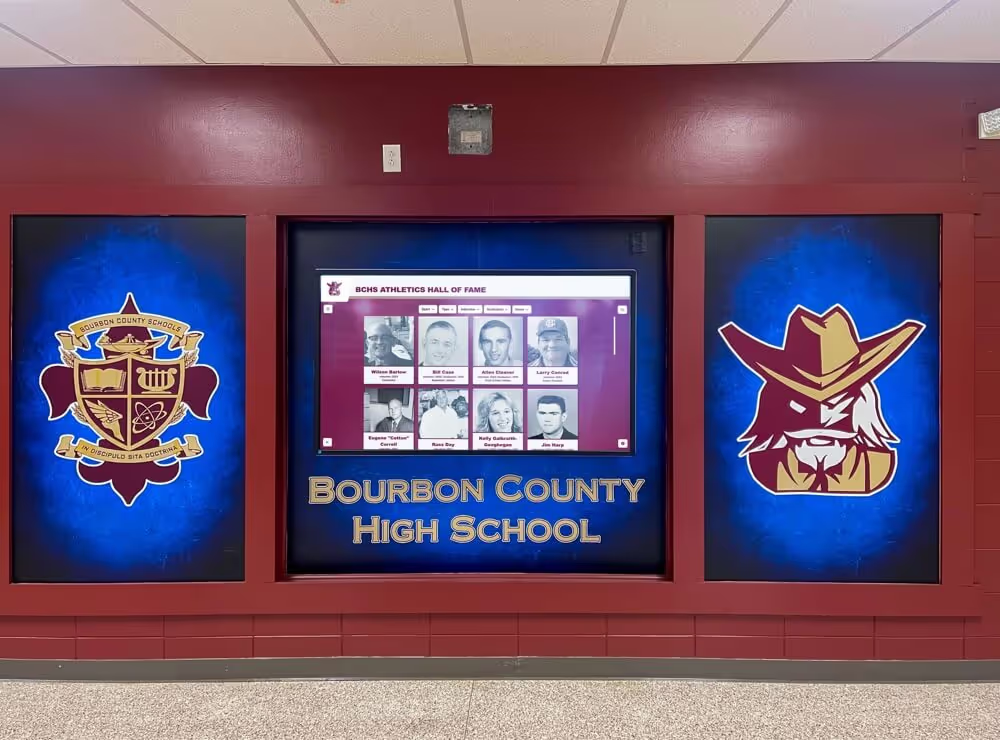
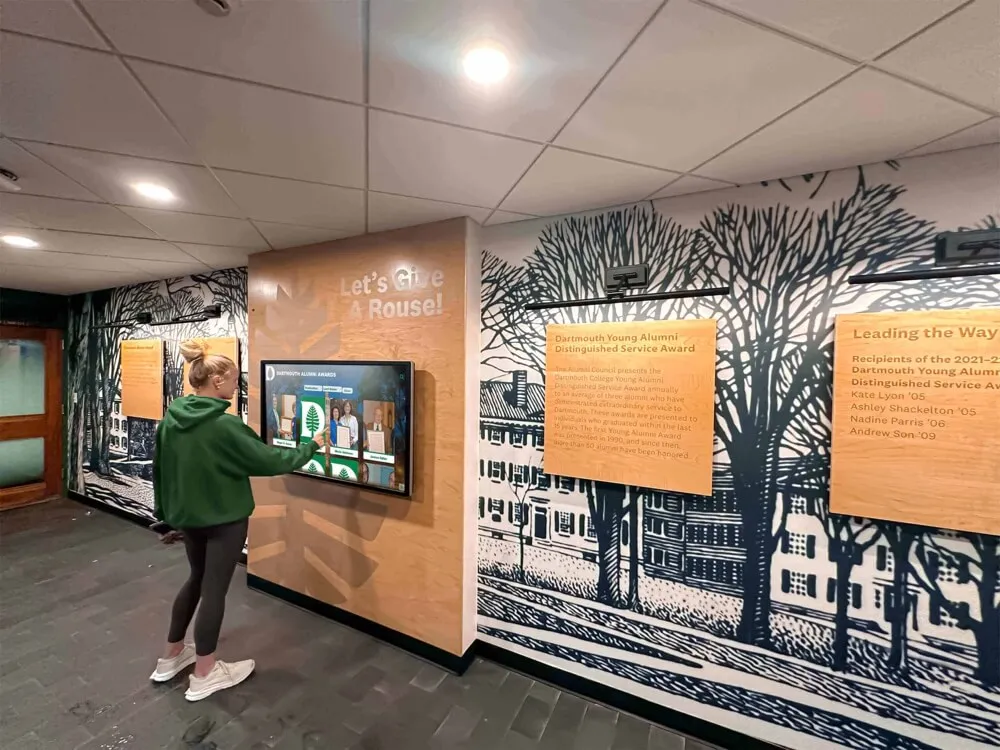
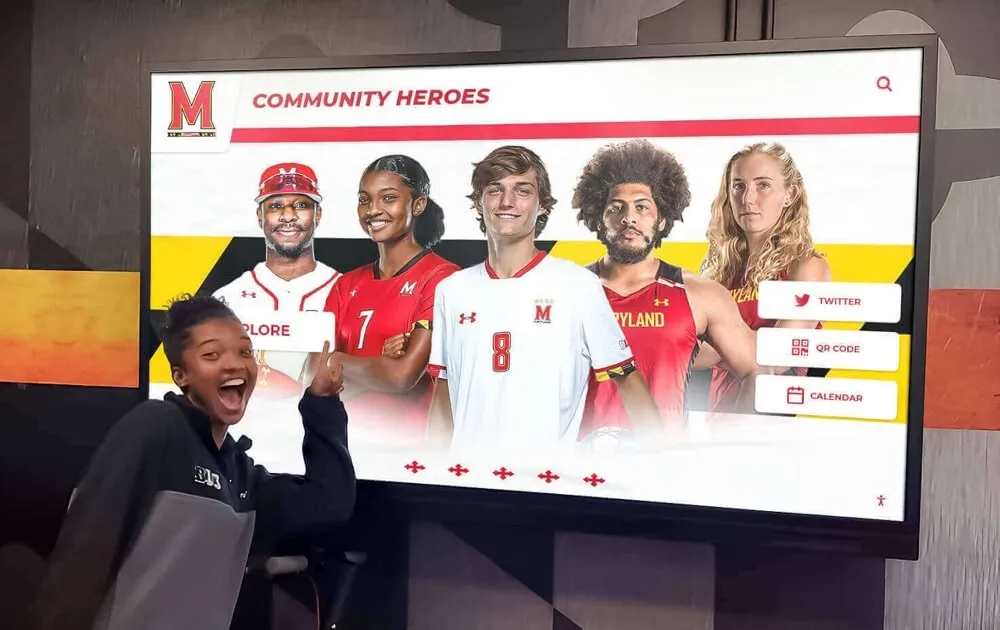
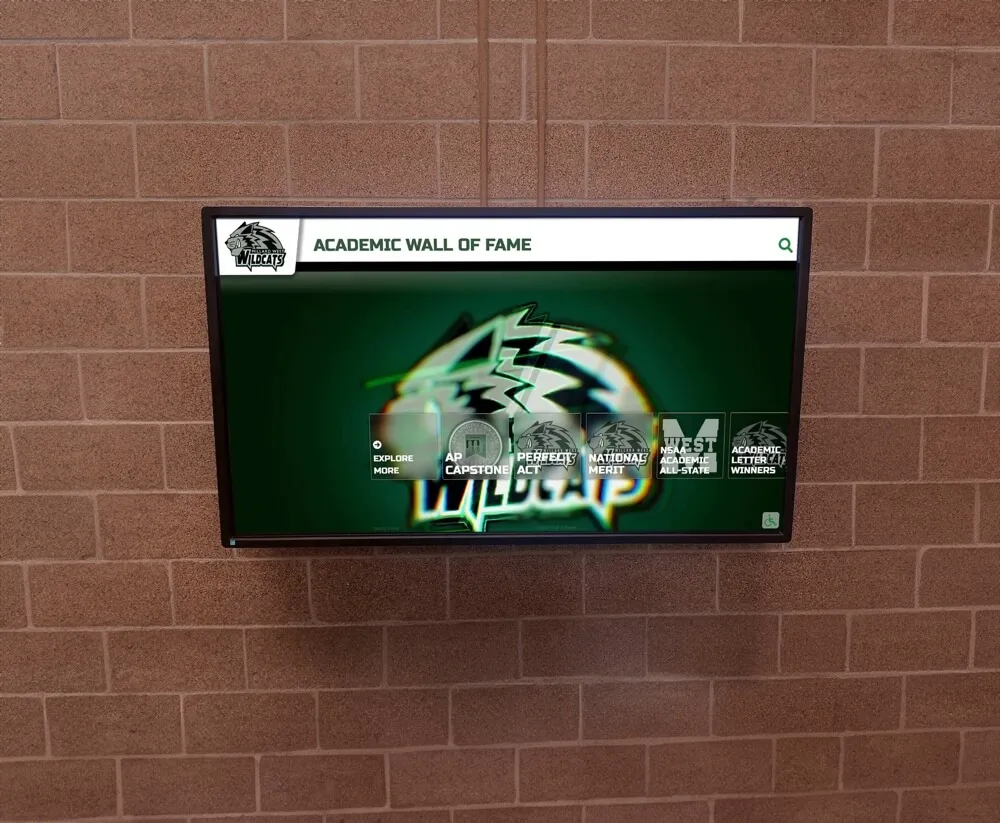
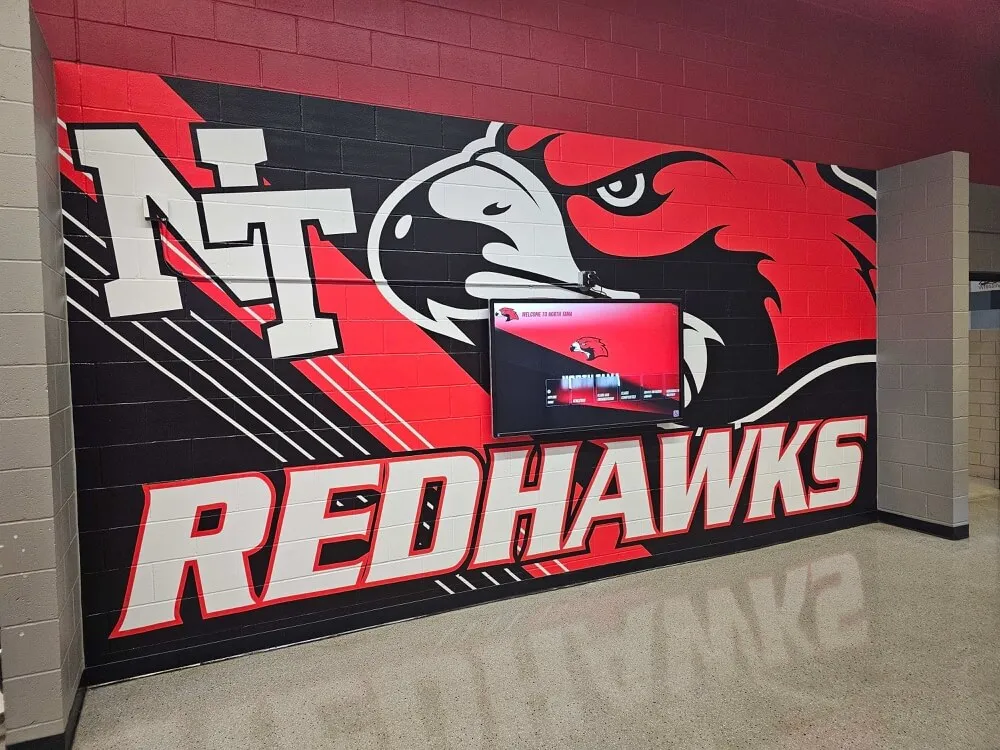
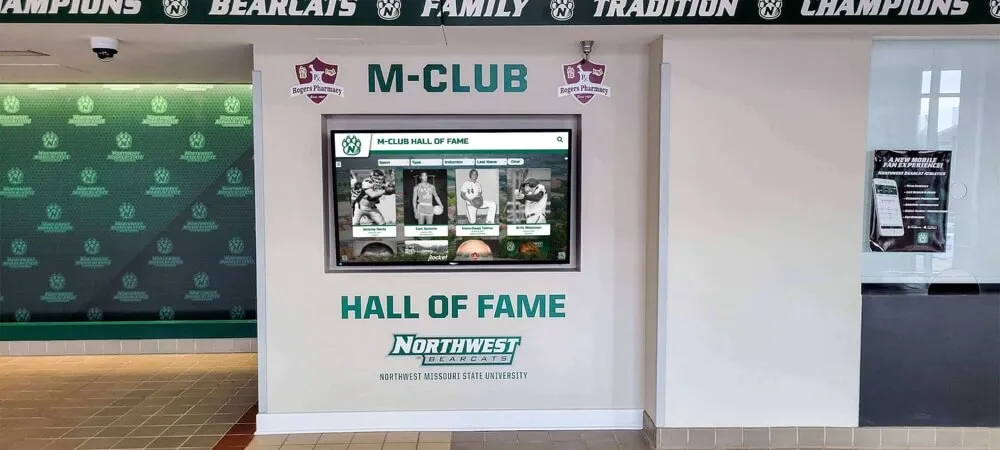
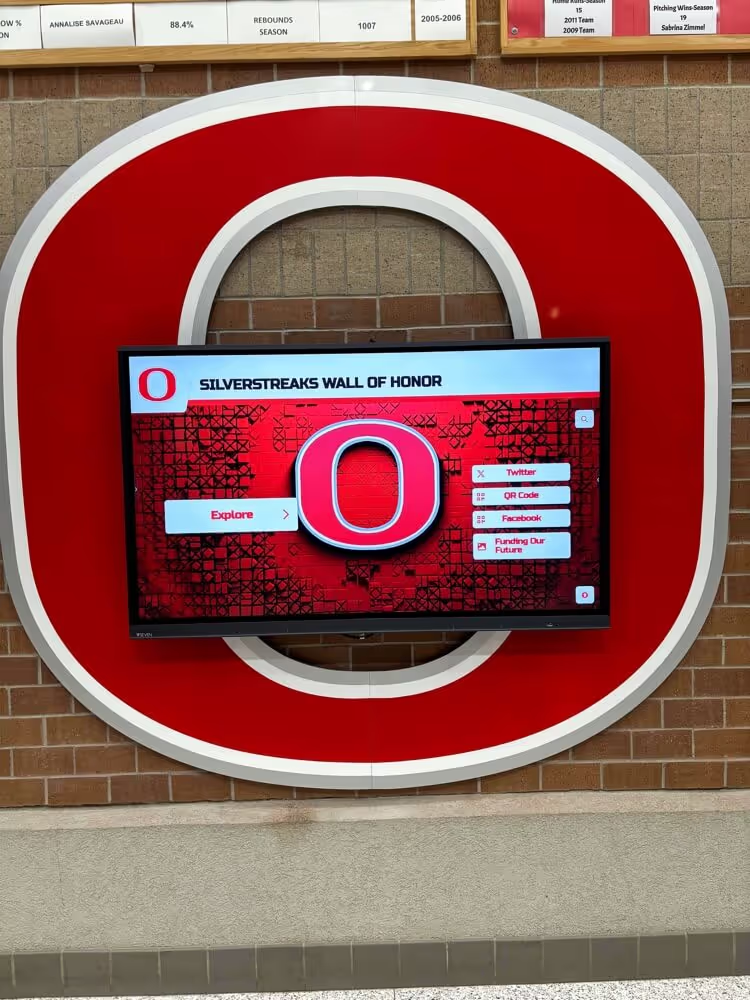
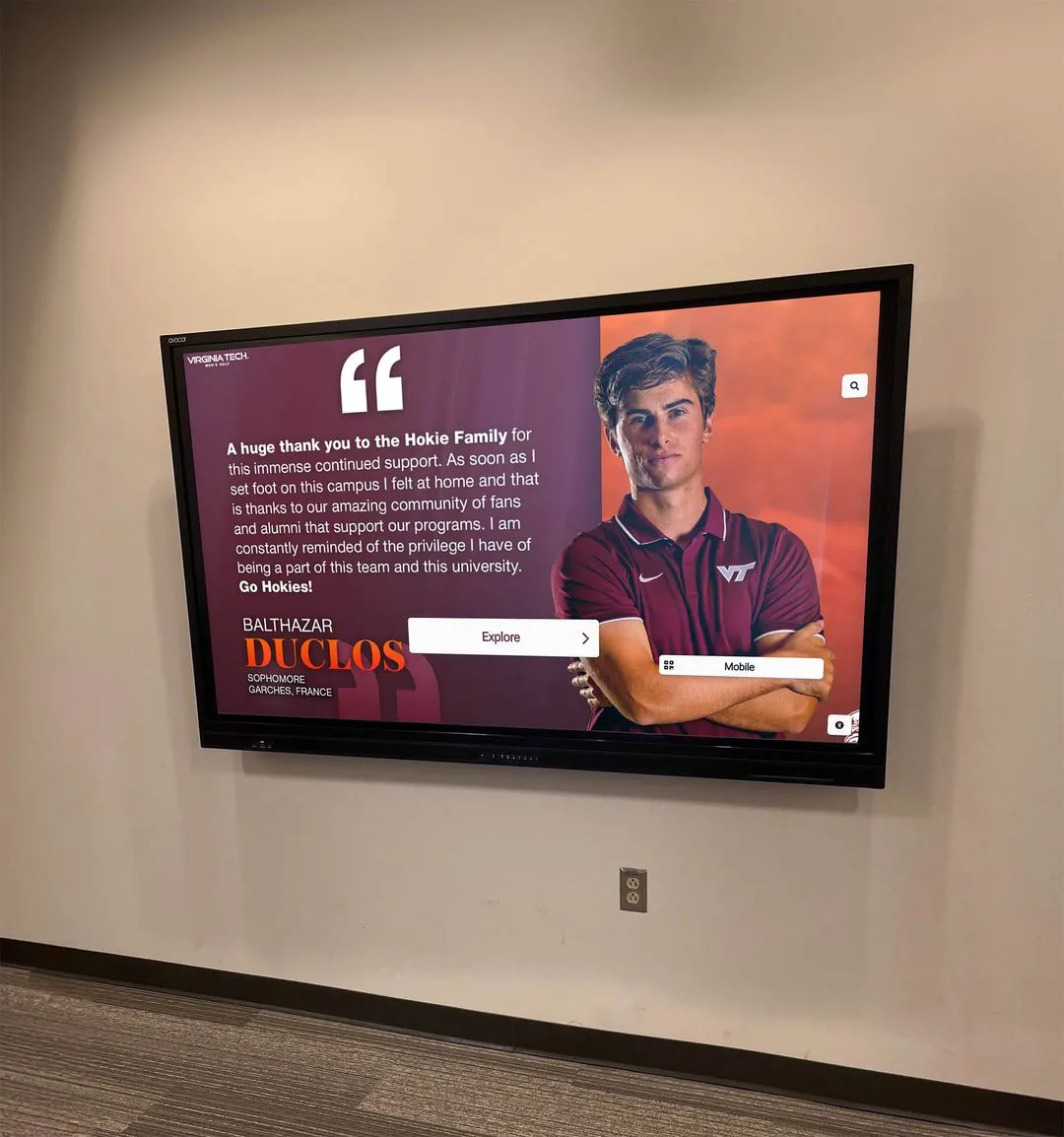
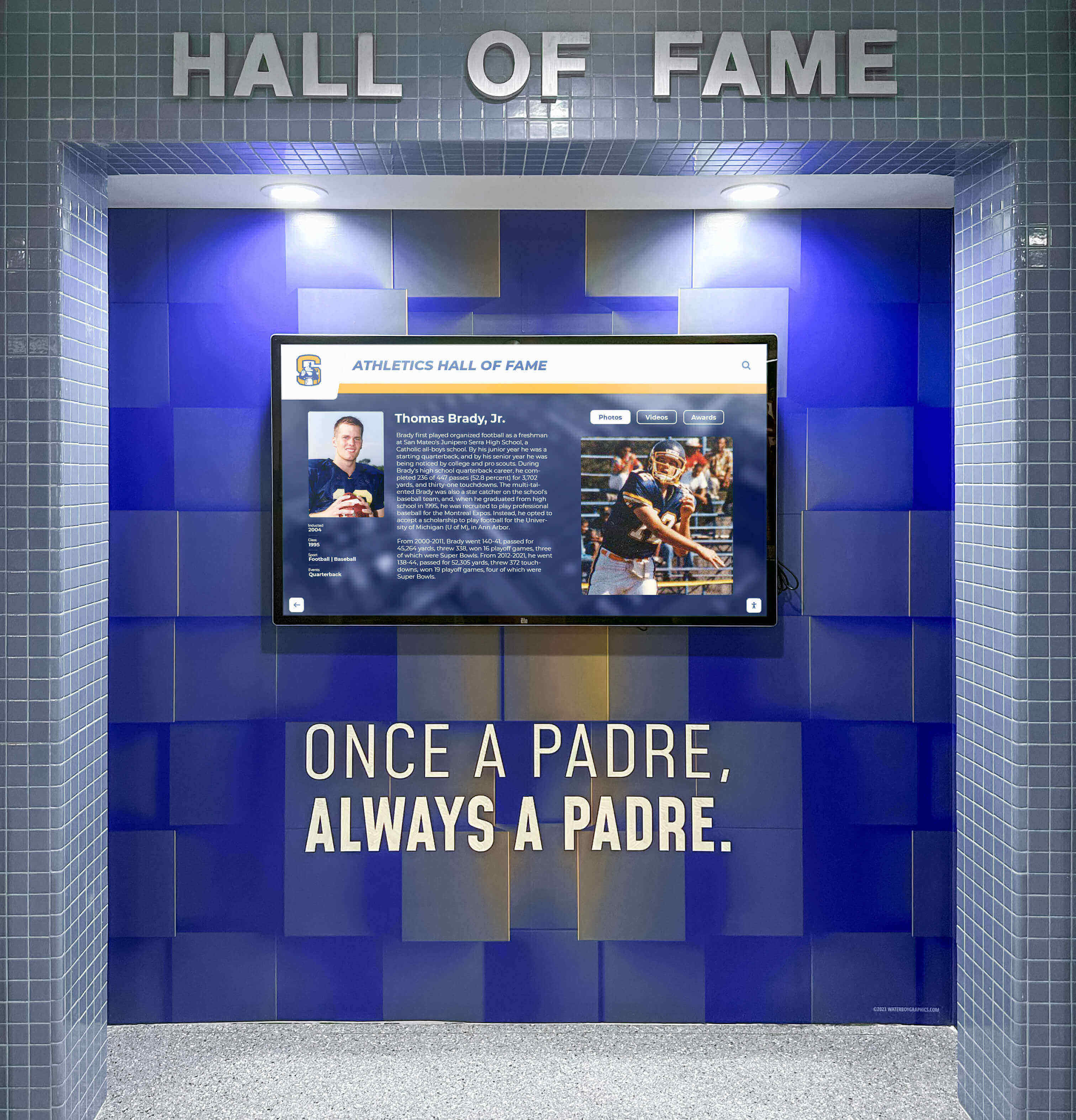
Modern athletic recognition displays create lasting visibility for sport end of year awards beyond traditional banquet ceremonies
Understanding Sport End of Year Awards: Purpose and Impact
Before planning award ceremonies, athletic programs should clarify what end of season recognition represents and how it contributes to team culture and athlete development.
The Value of Athletic Recognition Programs
Sport end of year awards provide benefits extending throughout athletic communities:
Athlete Motivation and Development
- Awards create tangible goals athletes work toward throughout the season
- Recognition of diverse achievement types ensures multiple pathways to honor
- Public celebration reinforces behaviors and accomplishments coaches value
- Younger athletes witnessing awards develop aspirations for future recognition
- Award anticipation increases engagement with team expectations and training
Research in sports psychology consistently demonstrates that appropriate recognition enhances athlete intrinsic motivation, increases commitment to skill development, and strengthens team cohesion through shared celebration of collective and individual success.
Team Culture Development Sport awards shape program identity:
- Award categories communicate coaching priorities and team values
- Recognition ceremonies create shared traditions connecting teams across seasons
- Visible award displays reinforce that achievement receives celebration and permanence
- Alumni returning to programs see their awards still honored, strengthening program bonds
- Community members understand program values through what receives recognition
Programs investing in comprehensive sport end of year awards report stronger team cultures, increased athlete retention, enhanced parent and booster engagement, and improved recruiting outcomes as prospective athletes observe how programs celebrate achievement.
Traditional Sport Award Categories
Classic recognition areas remain valuable in end of year programs:
Performance-Based Awards
- Most Valuable Player recognition
- Offensive and defensive player awards
- Leading scorer or statistical achievement
- All-conference and all-state recognition
- Record-breaking performances
- Championship game MVP honors
Learn about comprehensive athletic recognition programs that support award ceremonies.
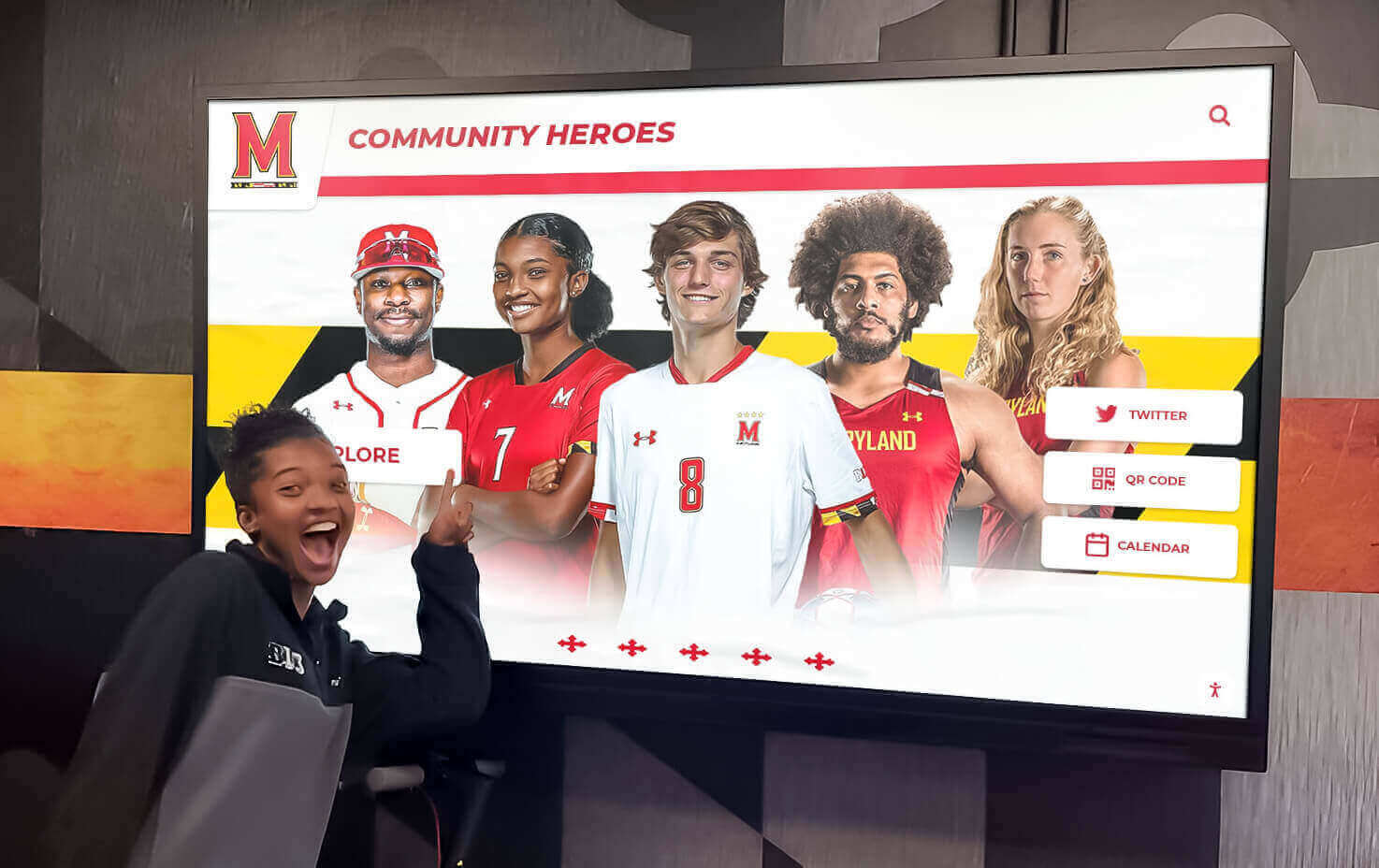
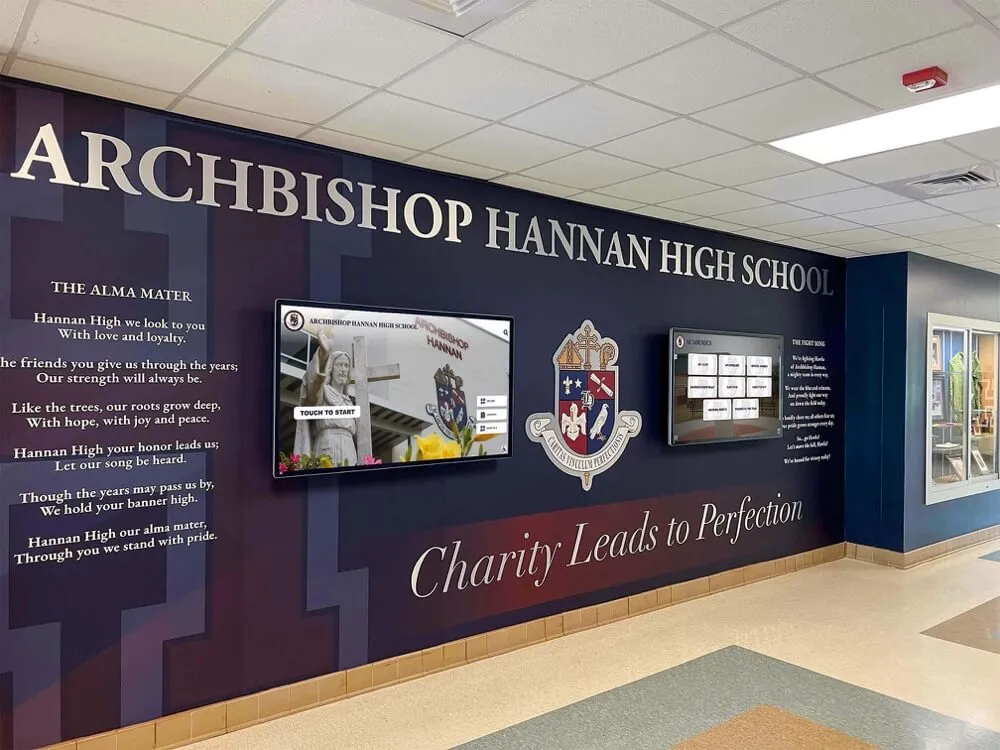
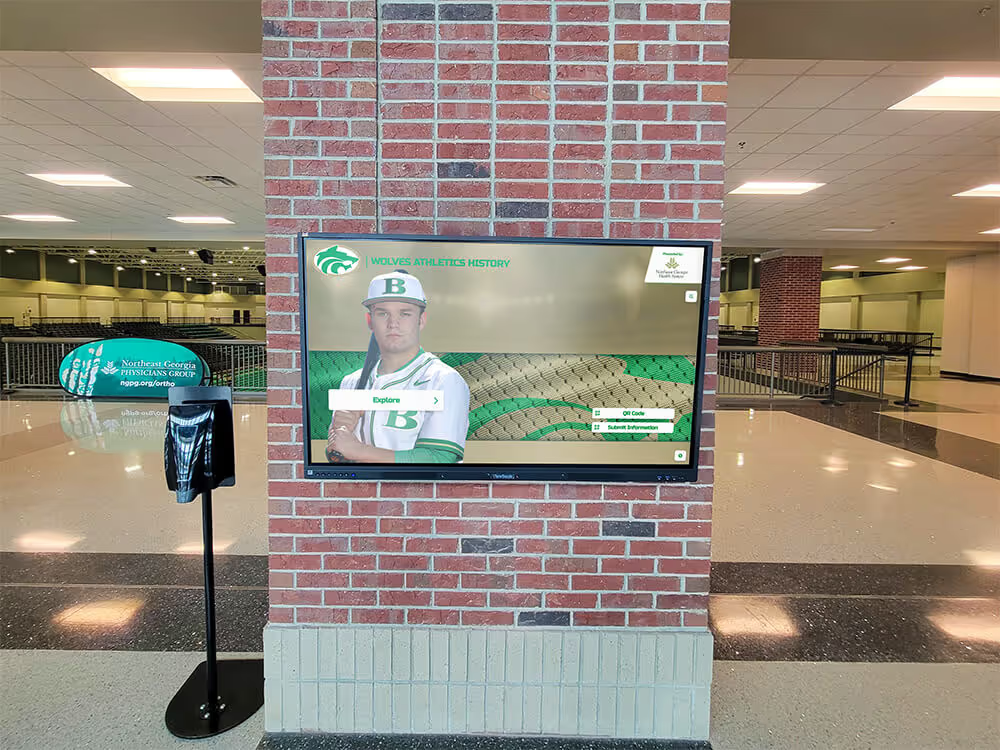
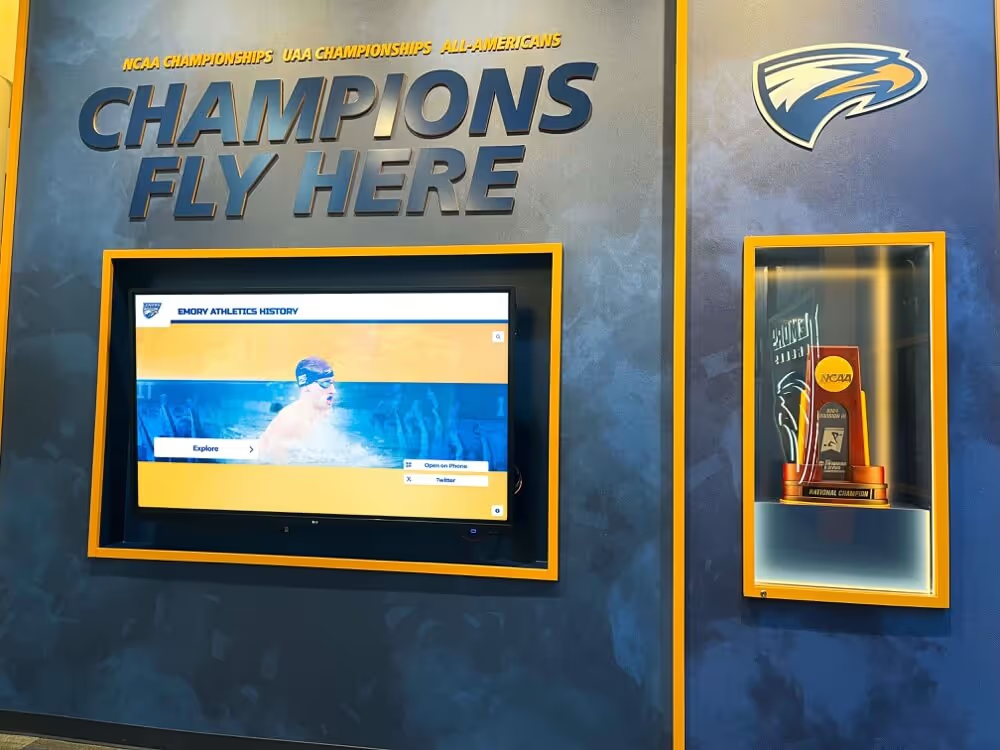
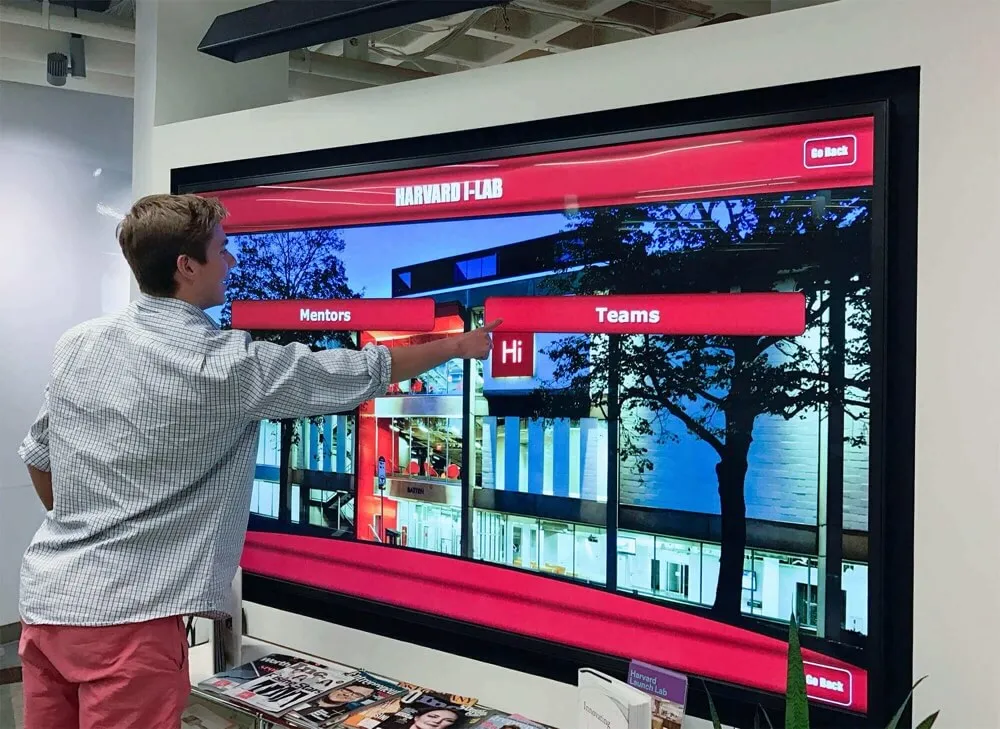
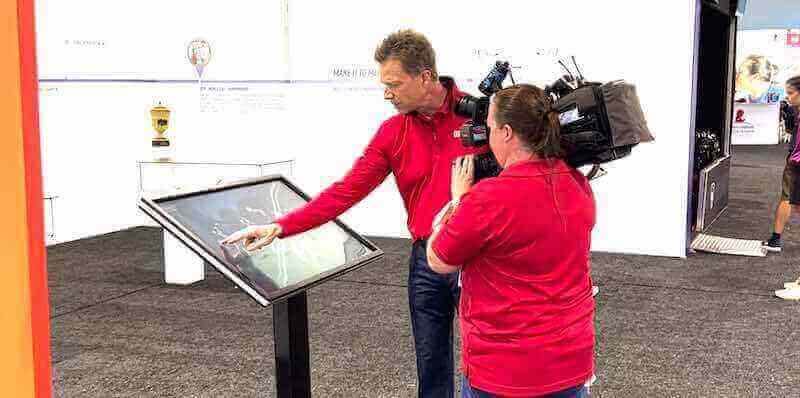
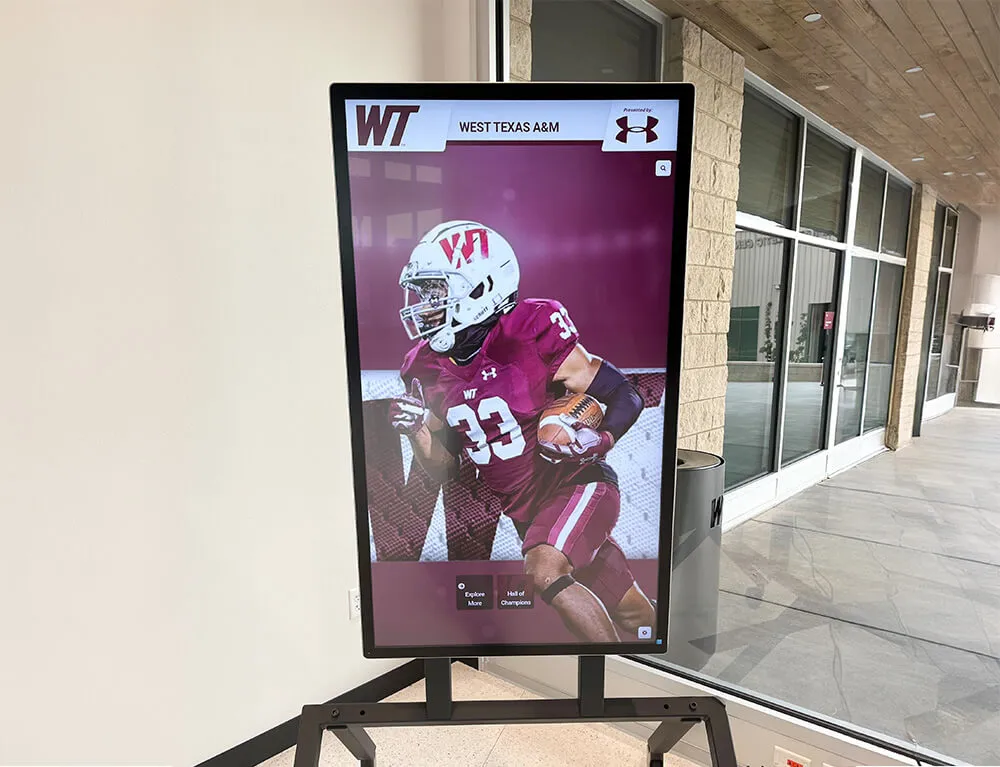
Interactive displays enable athletes and families to explore award winners and achievements beyond the banquet night
Leadership and Character Awards
- Team captain recognition
- Sportsmanship and fair play awards
- Leadership and mentorship recognition
- Most improved player
- Coaches’ award for dedication and commitment
Effort and Dedication Recognition
- Hardest worker or “iron person” awards
- Perfect attendance and commitment
- Weight room or training dedication
- Academic achievement alongside athletics
- Community service through sports participation
Explore student-athlete recognition strategies that complement end of year awards.
Emerging Award Categories for Modern Programs
Contemporary sport awards expand beyond traditional performance metrics:
Growth and Improvement Recognition Programs increasingly honor athletes showing exceptional development:
- Most improved technical skill across the season
- Greatest strength or conditioning gains
- Mental toughness and resilience development
- Overcoming injury or adversity
- Breakthrough performance achievements
These awards ensure recognition opportunities exist for athletes who may not achieve top statistical performance but demonstrate remarkable growth from their starting points.
Team Unity and Culture Building Recognition for athletes who strengthen team dynamics:
- Best teammate and peer support
- Energy and enthusiasm contribution
- Bridging connections across team divisions
- Positive influence on team climate
- Mentorship of younger athletes
Specialized Role Recognition Modern teams value diverse contributions:
- Defensive specialist or role player excellence
- Scout team or practice squad commitment
- Team manager and support staff recognition
- Statistical analysis or video coordination
- Social media and community engagement
Learn about comprehensive digital recognition approaches incorporating diverse award categories.
20 Creative Sport End of Year Award Ideas
Moving beyond standard MVP trophies creates memorable recognition celebrating diverse athletic contributions.
Performance-Based Creative Awards
1. The “Game Changer” Award Recognizing the athlete whose impact most altered game outcomes—not always the leading scorer, but the player whose defensive stops, assists, blocks, or clutch performances changed momentum when it mattered most. This highlights situational excellence beyond season-long statistics.
2. Statistical Excellence Awards Create specific recognition for athletes who led the team in categories like:
- Assist-to-turnover ratio (basketball)
- Save percentage (soccer/hockey goalkeepers)
- Stolen bases and on-base percentage (baseball/softball)
- Dig total or setting efficiency (volleyball)
- Takedown percentage (wrestling)
These specialized awards show you notice contributions beyond obvious scoring totals.
3. Clutch Performance Recognition Honor the athlete who consistently delivered in pressure situations—tie games, championship matches, must-win scenarios. Document specific moments when this athlete elevated their performance when stakes were highest.
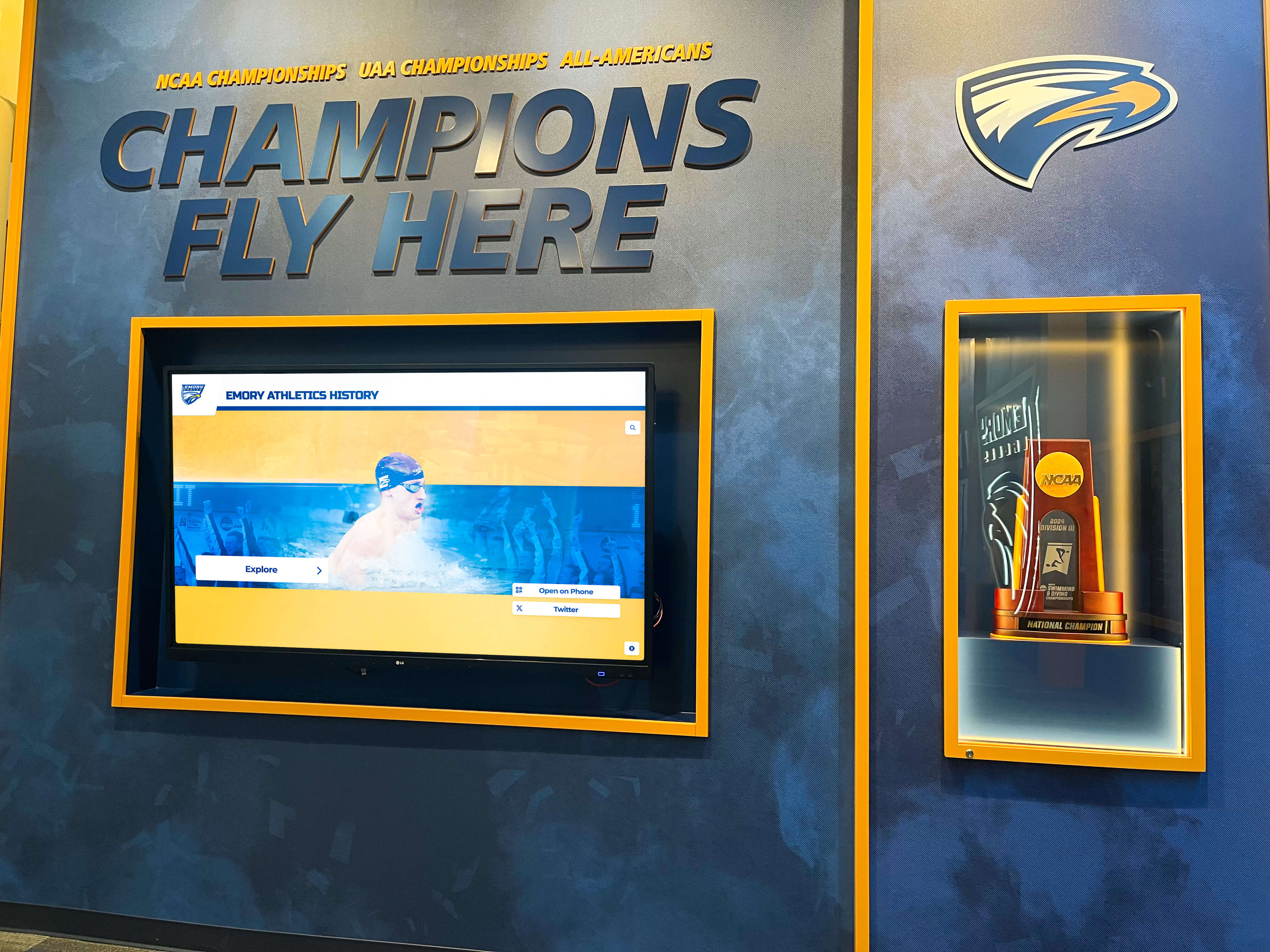
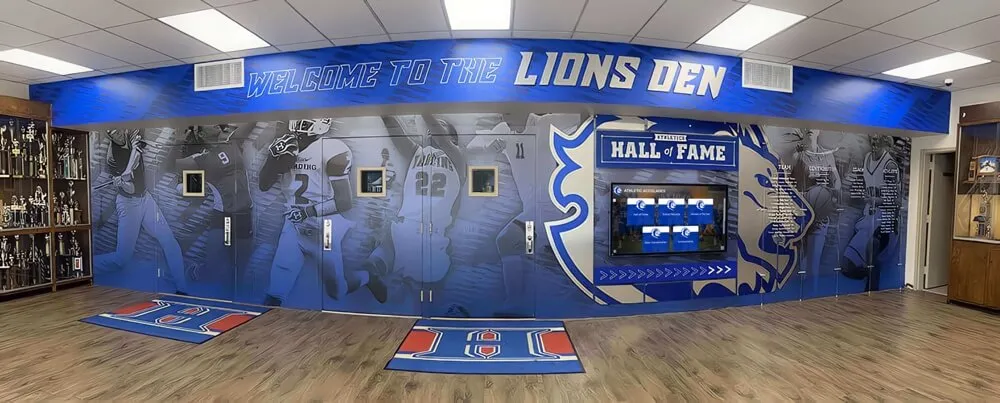
Traditional trophy displays combined with comprehensive award documentation create prestigious athletic recognition spaces
4. Record Breaker Awards Celebrate athletes who established new team, school, conference, or state records—whether single-game performances, season totals, or career achievements. These awards connect current athletes to program history and inspire future record-chasers.
5. Defensive Specialist Recognition In offensive-focused sports cultures, specifically honor athletes whose defensive excellence prevented opponent success—shutdown defenders, rim protectors, defensive backs limiting receptions, goalkeepers with high save percentages.
Character and Leadership Creative Awards
6. The “Heartbeat” Award For the athlete who set team tempo and energy—whose enthusiasm elevated practice intensity, whose encouragement supported struggling teammates, whose presence created the emotional core of team culture. This recognizes emotional intelligence and cultural impact.
7. Lead by Example Award Honoring the athlete whose work ethic, discipline, and commitment set standards others followed—first to practice, last to leave, consistent execution of fundamental skills, visible dedication influencing team expectations.
8. Mentor of the Year Recognizing the athlete who most effectively guided younger teammates—sharing technical knowledge, providing emotional support, modeling team values, and creating welcoming environment for developing athletes.
9. Unsung Hero Recognition For the athlete whose contributions went largely unnoticed by casual observers but were invaluable to team success—the role player accepting limited minutes while preparing starters through practice competition, the injured athlete supporting from sidelines, the athlete sacrificing personal statistics for team benefit.
10. Sportsmanship Excellence Celebrating the athlete who best embodied fair play, respect for opponents and officials, grace in victory and defeat, and positive representation of program values in all competitive situations.
Learn about high school sportsmanship award programs that inspire award design.
Team Culture and Commitment Creative Awards
11. Iron Athlete Award For perfect attendance at all practices, games, and team activities—recognizing reliability and commitment that teammates depend upon. Document the total commitment hours this represents.
12. Weight Room Warrior Honoring the athlete showing greatest dedication to strength and conditioning training—measured through attendance, performance improvement metrics, work ethic during off-season preparation, and physical development across the season.
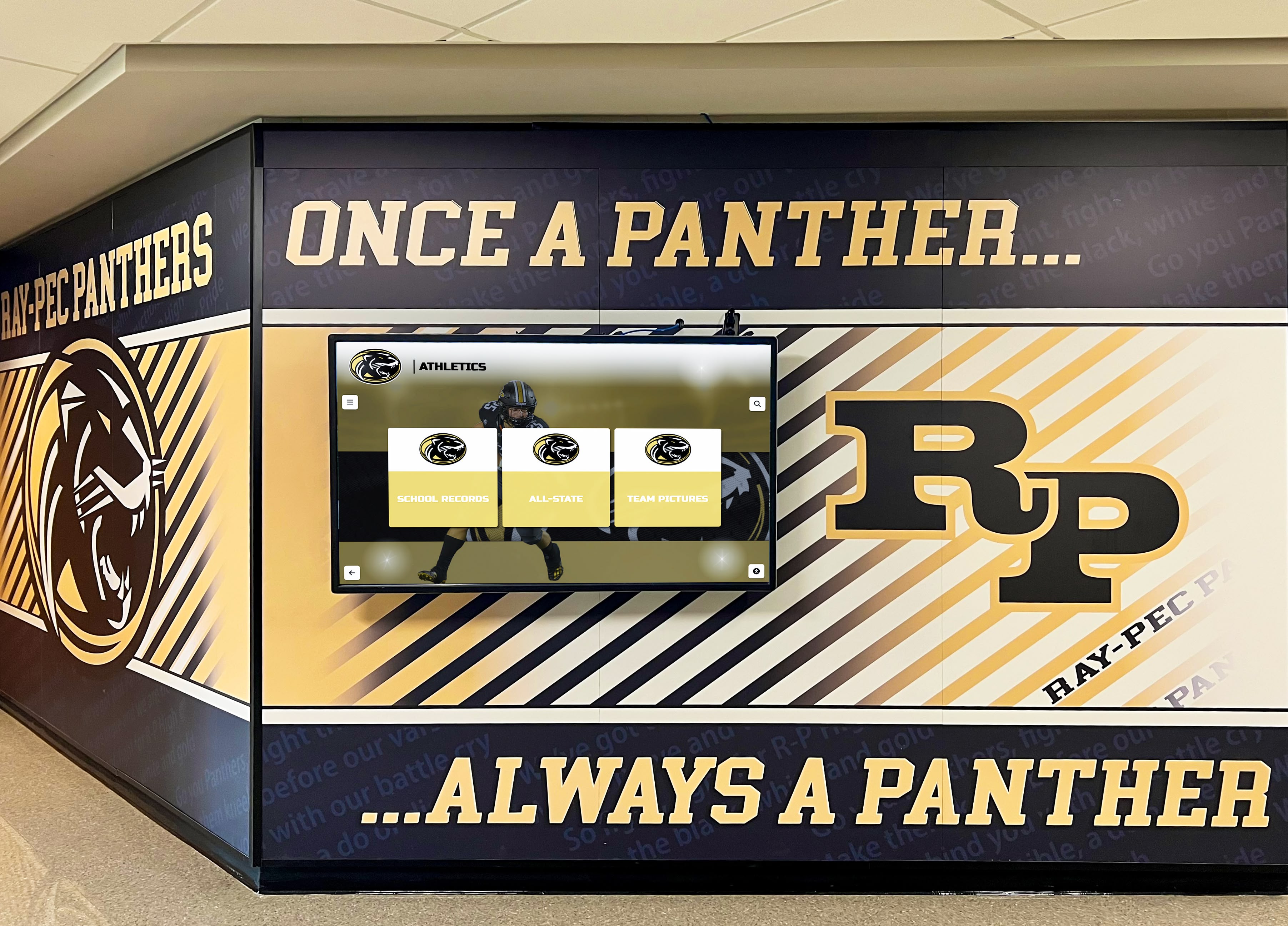
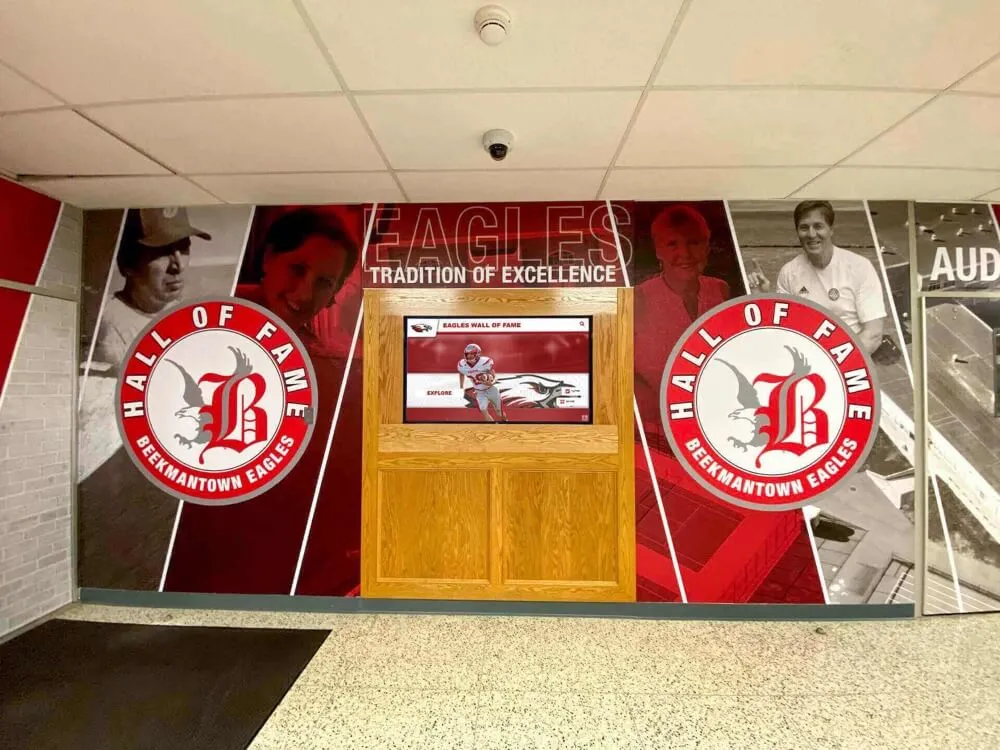
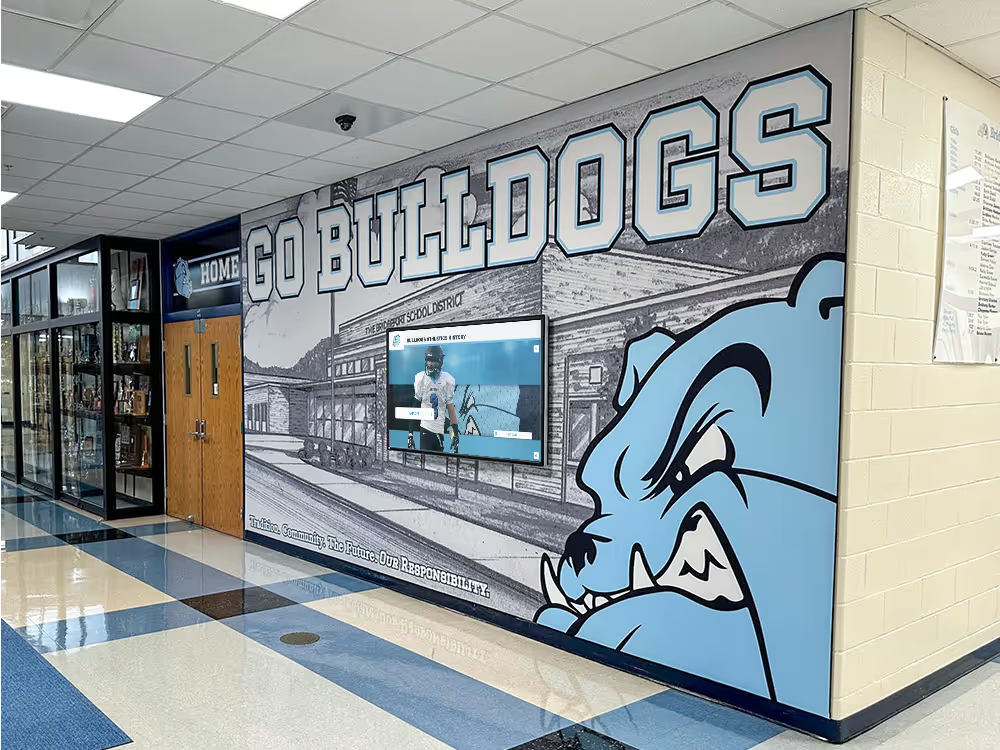
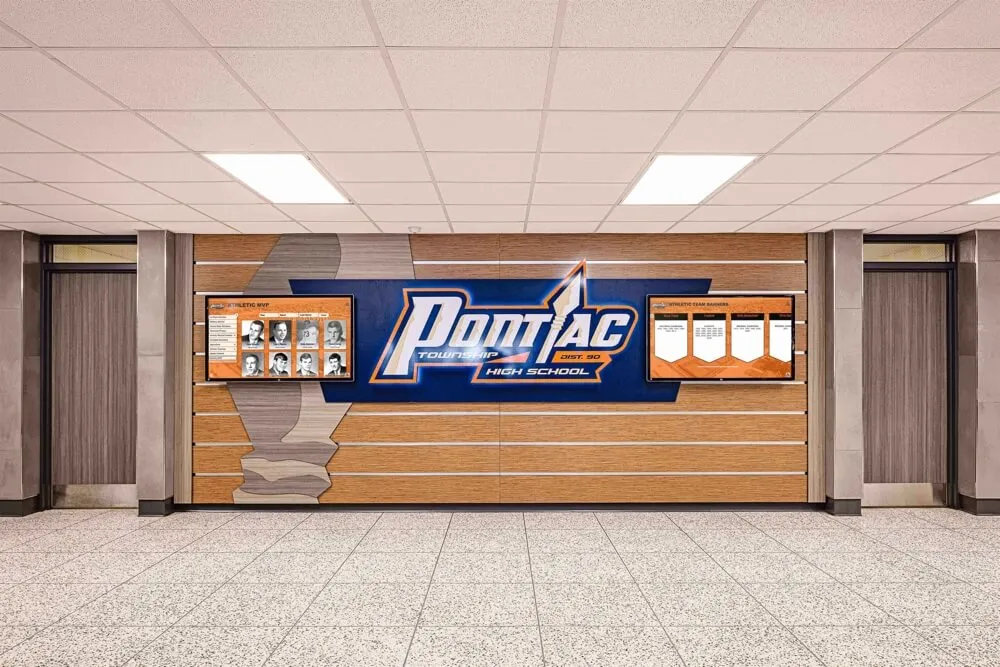
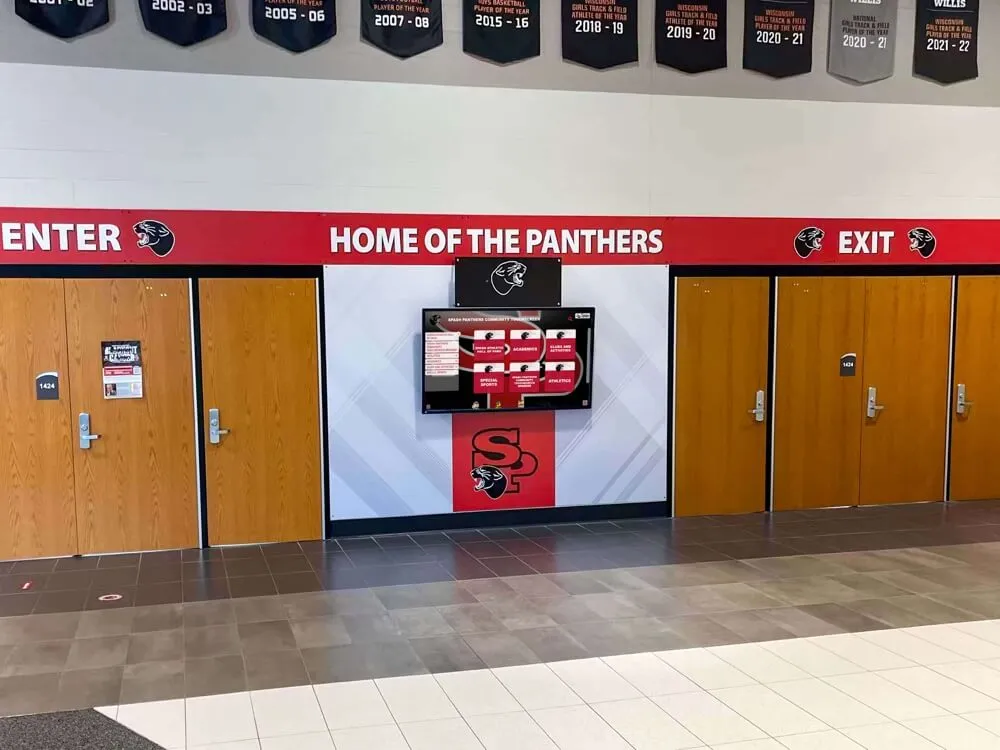
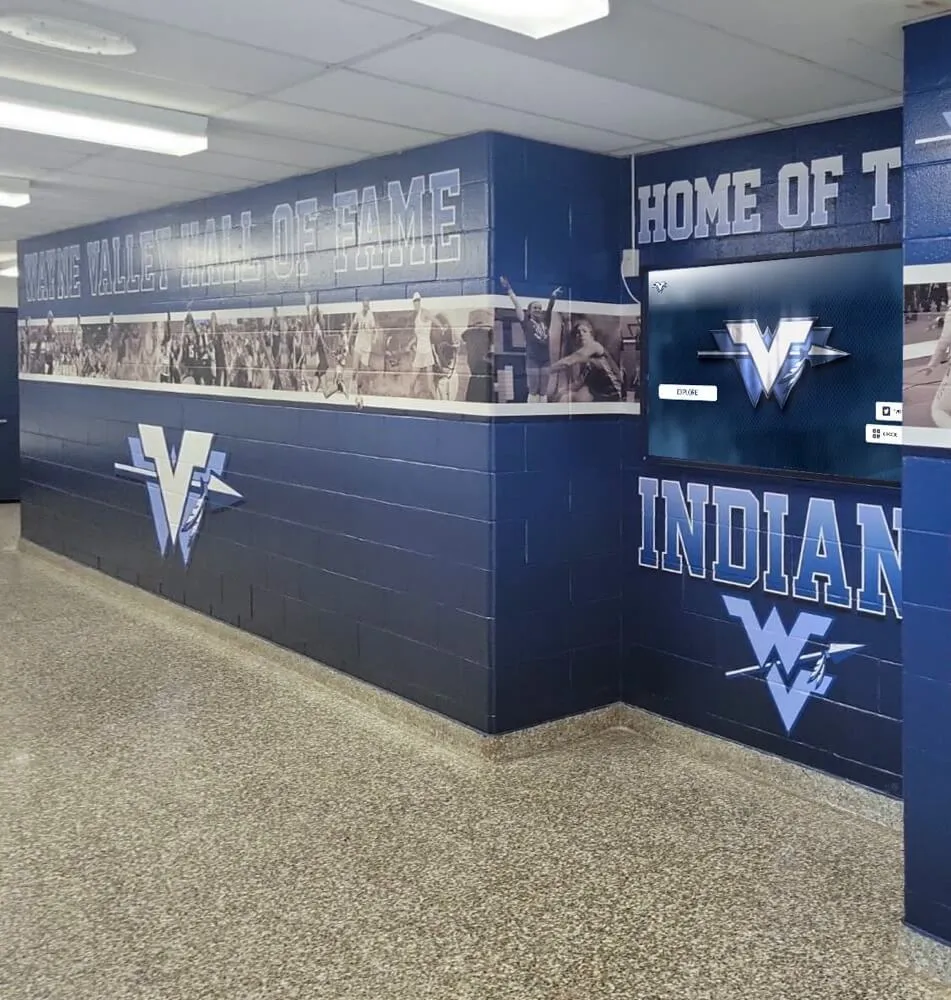
Prominent hallway displays ensure sport awards maintain visibility throughout the school year
13. Scholar-Athlete Excellence Recognizing athletes who achieved academic distinction while maintaining full athletic commitment—typically requiring minimum 3.5 GPA alongside full season participation. This celebrates balance and time management.
14. Team Spirit Award For the athlete who best promoted team unity, organized team bonding activities, created positive locker room environment, and ensured all teammates felt valued and included regardless of playing time or role.
15. Most Improved Attitude Sometimes the most meaningful growth happens in mindset and approach—recognizing an athlete who transformed from negative or disengaged to positive contributor, leader, and team-first player.
Specialized and Unique Creative Awards
16. Breakout Performance Award For the athlete who exceeded all expectations—the JV player earning varsity starting role, the backup becoming starter after seizing opportunity, the late-bloomer whose development accelerated dramatically mid-season.
17. Community Ambassador Award Honoring the athlete who best represented the program in community settings—youth clinics, volunteer activities, positive social media presence, respectful interaction with fans and supporters, exemplary public conduct.
18. Film Room All-Star Recognizing the athlete most dedicated to video study and preparation—understanding opponent tendencies, recognizing strategic concepts, applying film study to performance improvement, and helping teammates through shared analysis.
19. Next Level Award For the athlete committed to pursuing athletics beyond high school—celebrating signing day honorees, recruited college athletes, or those continuing competitive careers. This recognizes the program’s role developing college-bound talent.
20. Program Legacy Award The highest honor, given to the graduating senior who best embodied program values across their entire career—combining performance, leadership, character, commitment, and positive impact on team culture. This athlete represents the ideal of what the program develops.
Explore creating effective recognition programs that celebrate diverse achievements.
Planning Your Sport End of Year Awards Ceremony
Successful banquets require systematic planning addressing selection processes, award criteria, ceremony format, and recognition presentation.
Establishing Selection Processes and Criteria
Transparent, equitable selection builds credibility in award programs:
Clear Award Definitions Each award needs specific, measurable criteria:
- Statistical thresholds for performance-based awards
- Behavioral expectations for character recognition
- Participation minimums for commitment awards
- Objective metrics wherever possible
- Coach observation criteria for subjective awards
Publishing criteria at season start gives athletes clear targets to pursue.
Multiple Evaluation Methods Combining approaches ensures comprehensive assessment:
- Statistical analysis and performance metrics
- Coach evaluation and recommendation
- Team voting for peer-selected awards
- Senior athlete input on team culture awards
- Administrative verification of academic requirements
Selection Timeline Establish clear deadlines:
- Final game/competition completion
- Statistical compilation and verification period
- Coach deliberation and voting timeframe
- Winner notification date
- Public announcement and ceremony scheduling
Most programs complete selection within two weeks of season conclusion while performances remain fresh in evaluation minds.
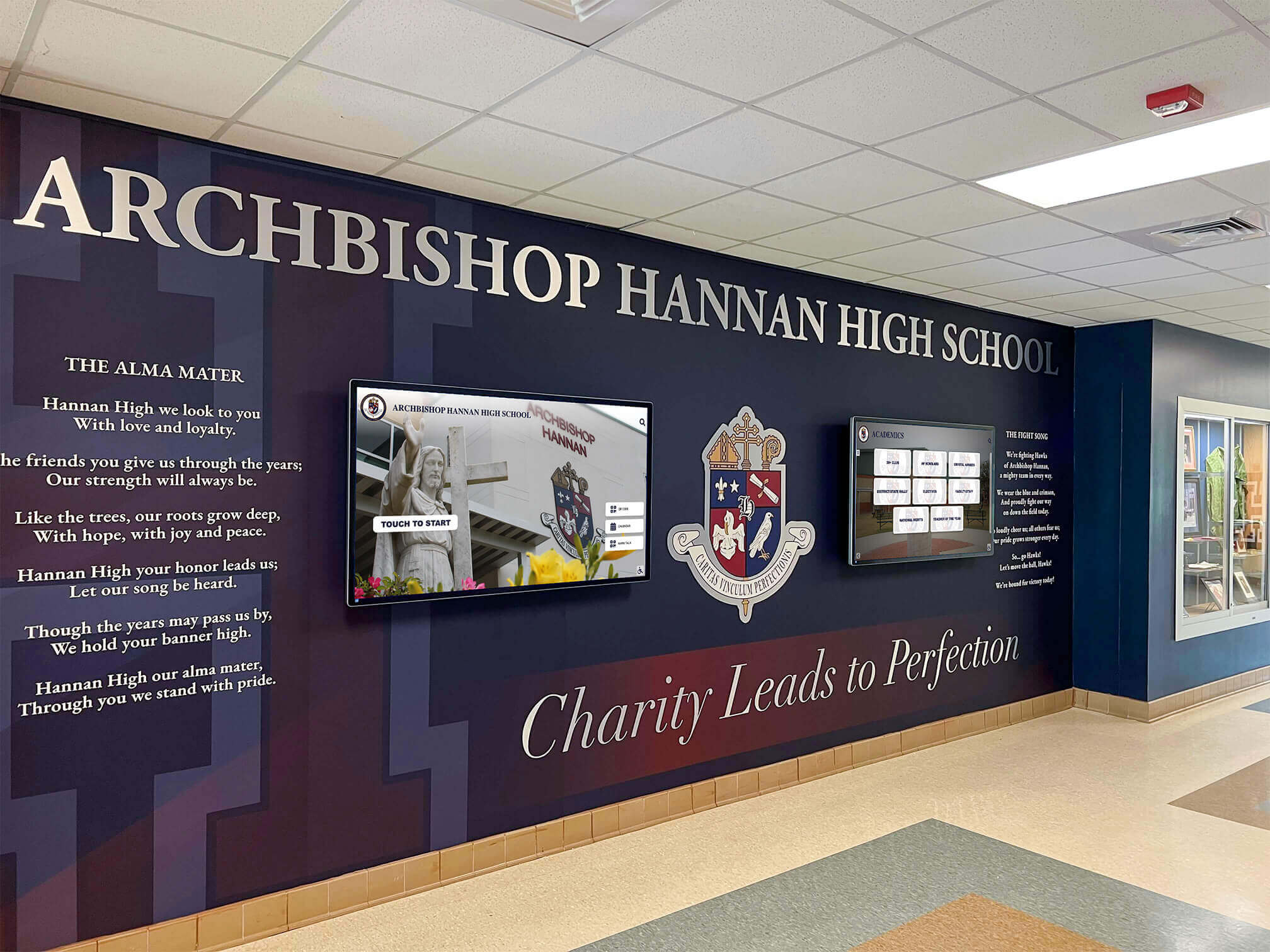
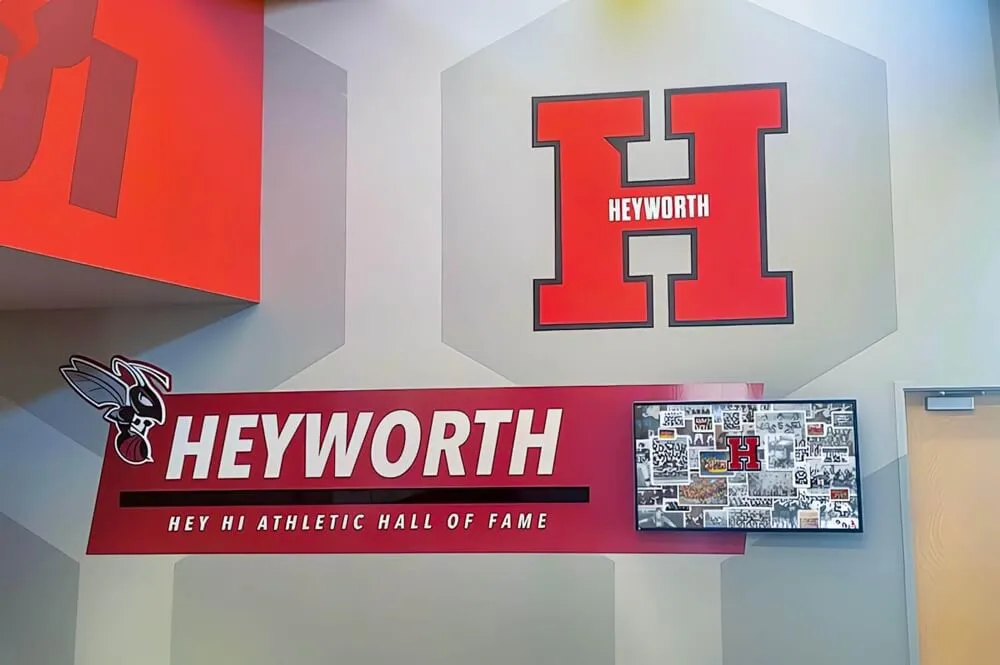
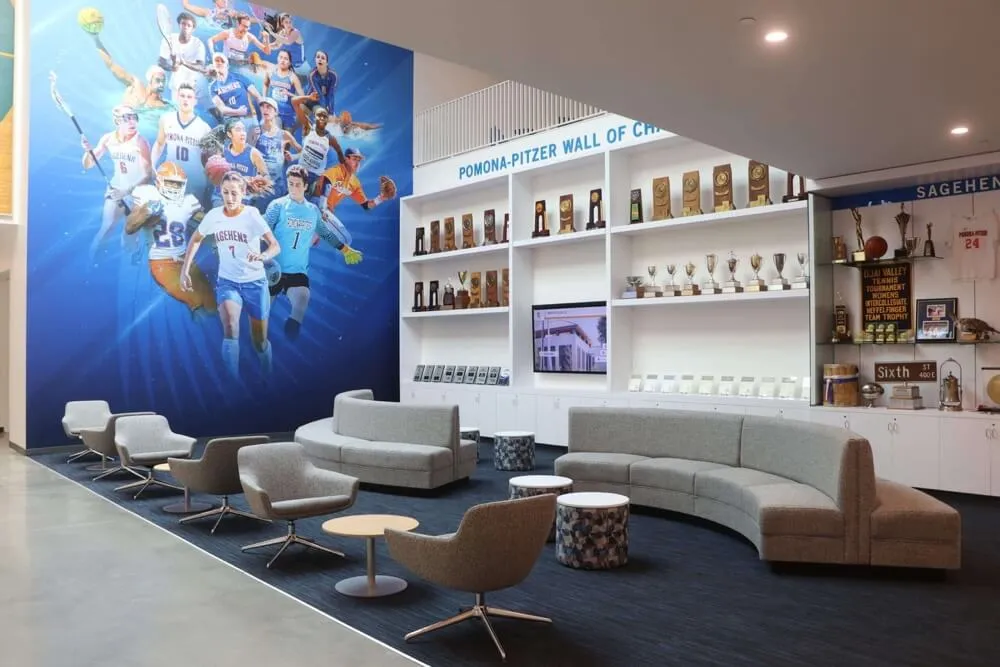
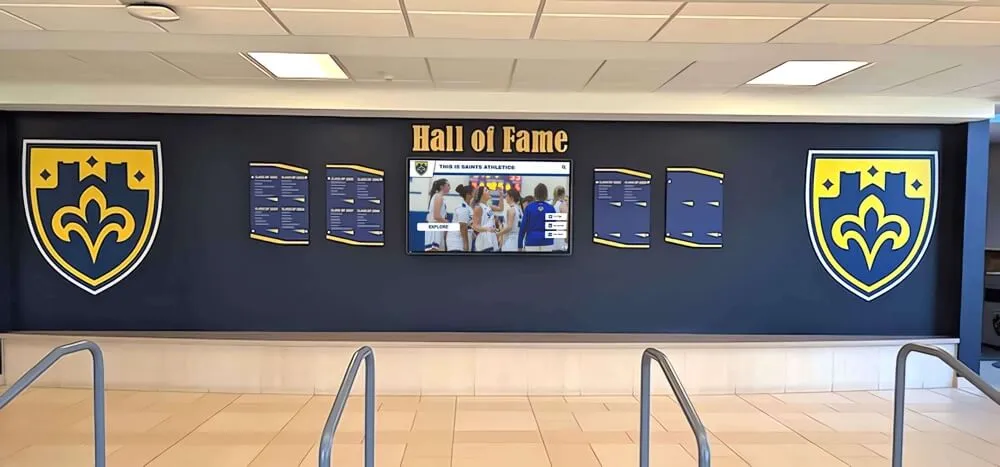
School lobbies integrate sport awards with facility design, creating welcoming spaces celebrating athletic achievement
Award Ceremony Format Options
Different formats serve various program needs and traditions:
Traditional Team Banquet Classic dinner celebration includes:
- Evening event at school cafeteria, banquet hall, or restaurant
- Meal service for athletes, families, and coaching staff
- Formal award presentations with speeches and highlights
- Recognition of all participants before individual awards
- Photo opportunities and social time following ceremony
Traditional banquets create formal occasions families remember, though they require significant planning and often substantial costs for venue and catering.
Afternoon Recognition Ceremonies More casual alternatives include:
- School gymnasium or commons gathering
- Light refreshments rather than full meal
- Streamlined presentations focusing on award highlights
- Photo displays or video montages celebrating season
- Lower cost and planning requirements than formal banquets
Learn about season-end recognition approaches that create impactful celebrations.
Multi-Sport Recognition Events Programs sometimes combine sports:
- Fall, winter, spring sport combined ceremonies
- Reduces redundancy for multi-sport athletes and families
- Creates larger, more energized gatherings
- Shares costs across multiple programs
- Challenges include length and maintaining sport-specific focus
Senior Night Integration Some programs incorporate awards into final home competition:
- Reduces need for separate banquet event
- Creates emotional ceremony with team present
- Allows larger community attendance at no additional cost
- Limits award categories to avoid excessive length
- Works best for smaller rosters and focused recognition
Creating Memorable Award Presentations
Presentation quality affects recognition meaningfulness:
Physical Award Design Tangible recognition carries lasting value:
- Quality trophies, plaques, or medals for major awards
- Engraved recognition including athlete name, season, and specific achievement
- Certificates suitable for framing for all team members
- Personalized elements reflecting individual accomplishments
- Professional design representing program quality and standards
Presentation Context and Storytelling How awards are presented matters tremendously:
- Coach speeches explaining why each athlete earned recognition
- Specific performance examples and memorable moments
- Character anecdotes illustrating leadership or sportsmanship
- Statistical context showing significance of achievements
- Thank you acknowledgment from award recipients
- Video highlights accompanying major award presentations
Meaningful context transforms generic trophy presentation into memorable celebration of specific athlete journeys and contributions.
Family and Community Inclusion Broaden participation and impact:
- Family member presenting awards to their athlete
- Team captain or senior presenting awards to underclassmen
- Community sponsor recognition for financially supporting awards
- Photo opportunities with coaches, teammates, and family
- Social media documentation sharing celebration broadly
Explore athletic recognition display strategies that extend ceremony impact.
Traditional Sport Award Display Methods
Conventional recognition approaches create lasting physical presence for sport awards throughout athletic facilities.
Trophy Cases and Display Cabinets
Protected environments showcase awards and memorabilia:
Dedicated Sport Awards Cases Permanent displays feature:
- Team trophies and championship hardware
- Individual season awards with engraved plaques
- All-conference and all-state certificates
- Photographs of award recipients in action
- Seasonal rotation showcasing current alongside historical recognition
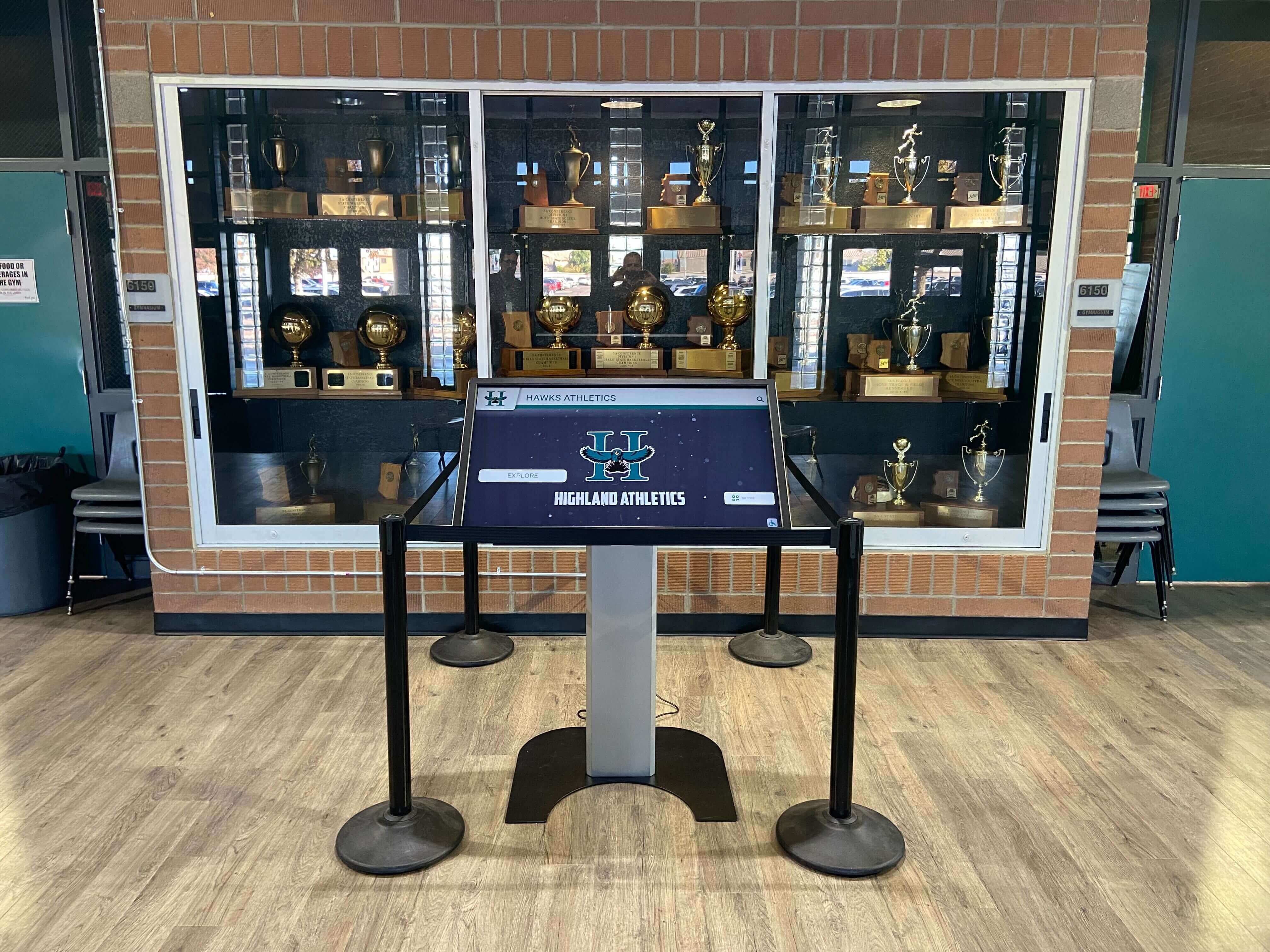
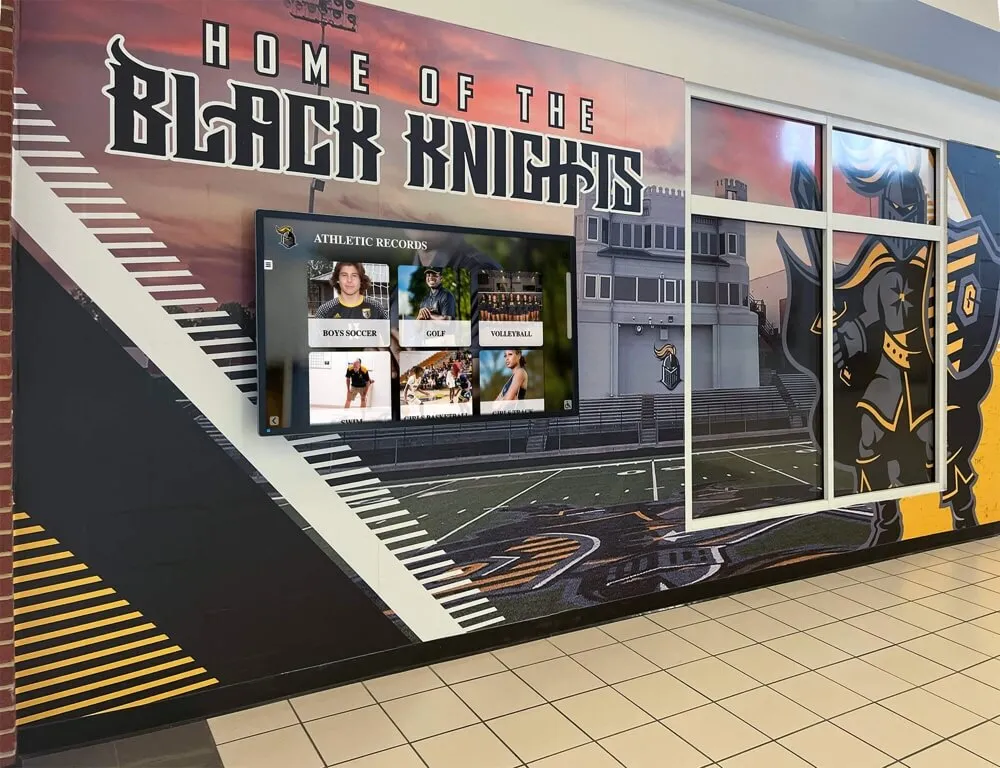
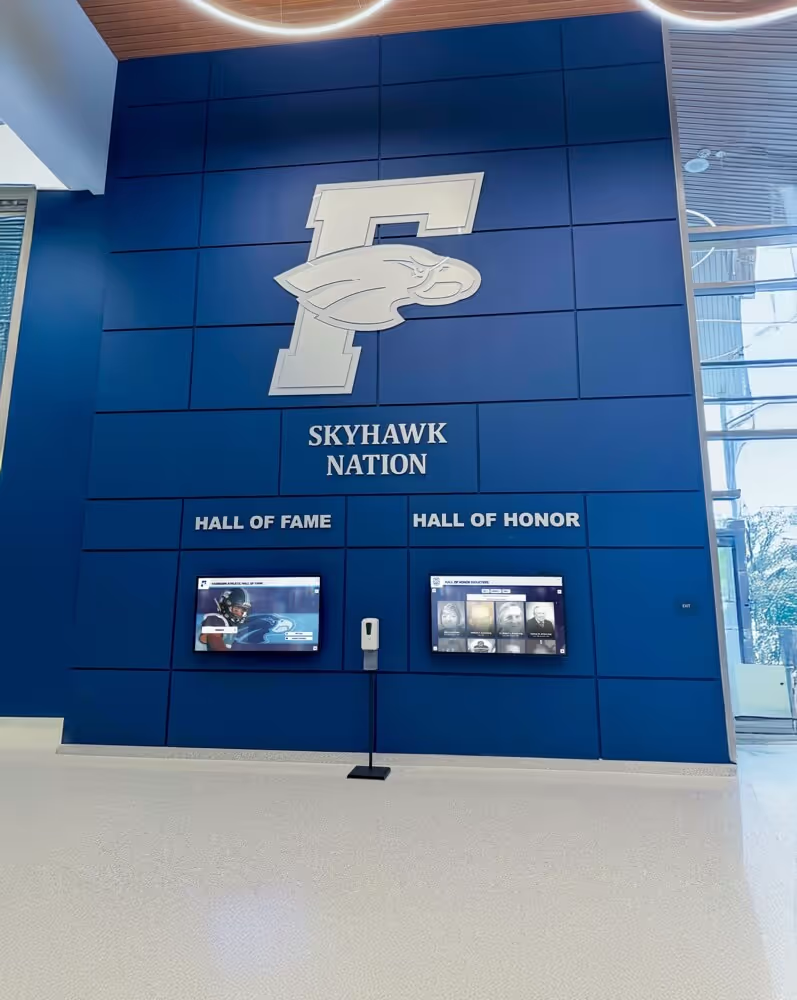
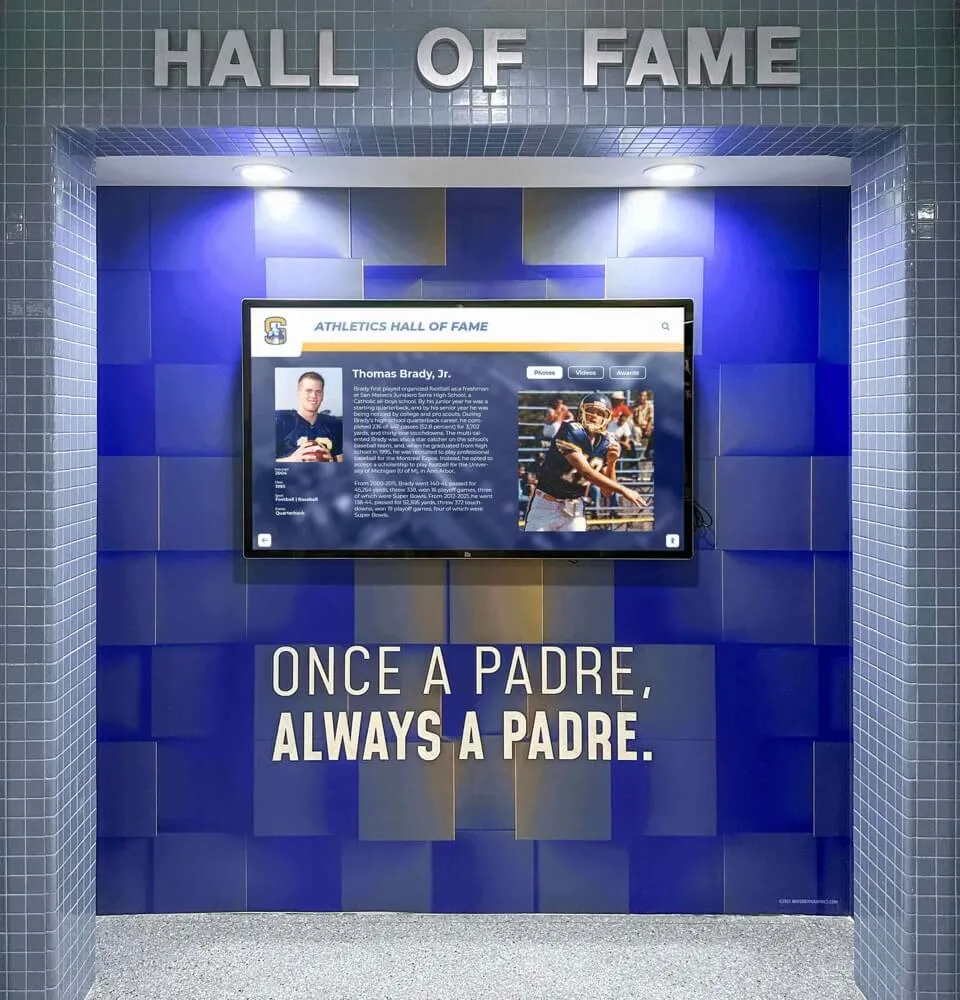
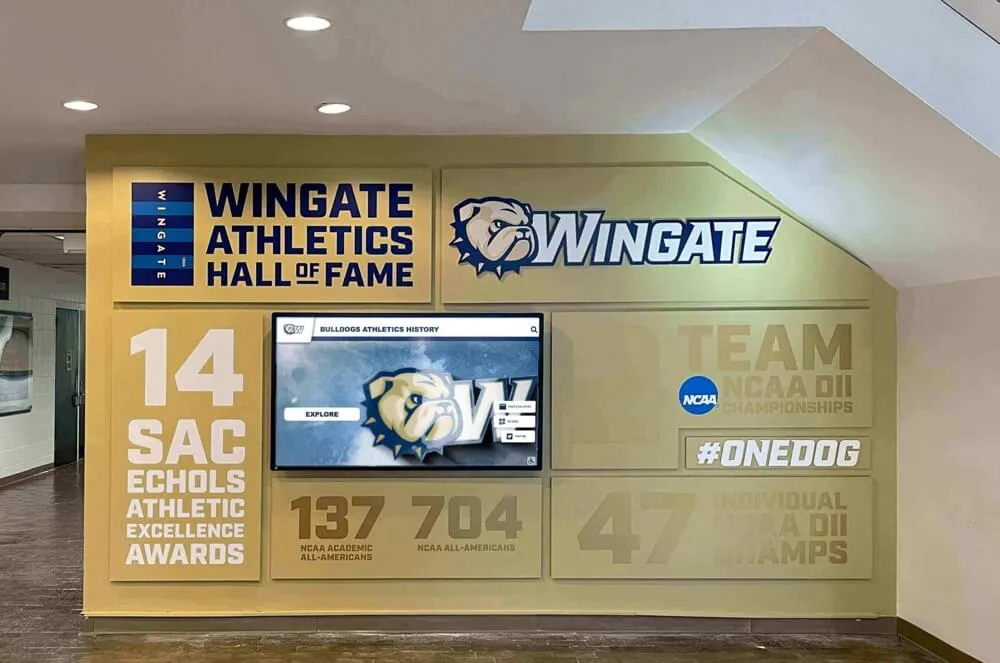
Modern programs integrate interactive displays with traditional trophy cases, combining preservation with accessibility
Implementation Considerations
- Glass cases protecting contents from damage
- Quality lighting ensuring visibility and professional presentation
- Security locks preventing unauthorized access or theft
- Climate control protecting materials from deterioration
- Annual updates adding new season recipients and achievements
Many programs dedicate specific cases exclusively to end of year sport awards, distinguishing seasonal recognition from championship trophies and program history displays.
Wall-Mounted Recognition Systems
Permanent visibility through physical displays:
Individual Award Plaques Traditional engraved recognition:
- Metal or wood plaques for each major season award
- Mounted on dedicated walls creating awards galleries
- Include recipient name, season/year, and award title
- Permanent installation creating lasting tribute
- Traditional aesthetic matching facility architecture
Annual Team Award Boards Group recognition acknowledging multiple recipients:
- Composite boards listing all award winners for each season
- Chronological displays showing decades of recognition
- More space-efficient than individual plaques
- Equal visual treatment of all awards within each season
- Can include team photos alongside award listings
Learn about creating award displays that honor athletic achievements.
Athletic Hallway Recognition
Dedicated spaces celebrating sport excellence:
Awards Corridor Concepts Some programs create entire hallways themed around recognition:
- Walls featuring decades of award winner plaques
- Trophy cases displaying championship hardware
- Action photography of award recipients
- Inspirational quotes and program mission statements
- Seating areas encouraging exploration and reflection
These dedicated spaces elevate program prestige while creating navigational landmarks within facilities—“meet me at the awards hallway” becomes part of athletic culture vernacular.
Strategic Placement Position maximizes visibility:
- Athletic entrance lobbies ensuring all visitors see recognition
- Gymnasium concourses where fans gather before games
- Locker room areas where athletes see aspirational models daily
- Weight room or training facility inspiring commitment
- Main school hallways connecting athletics to broader community
Explore strategies for athletic hallway displays that showcase awards.
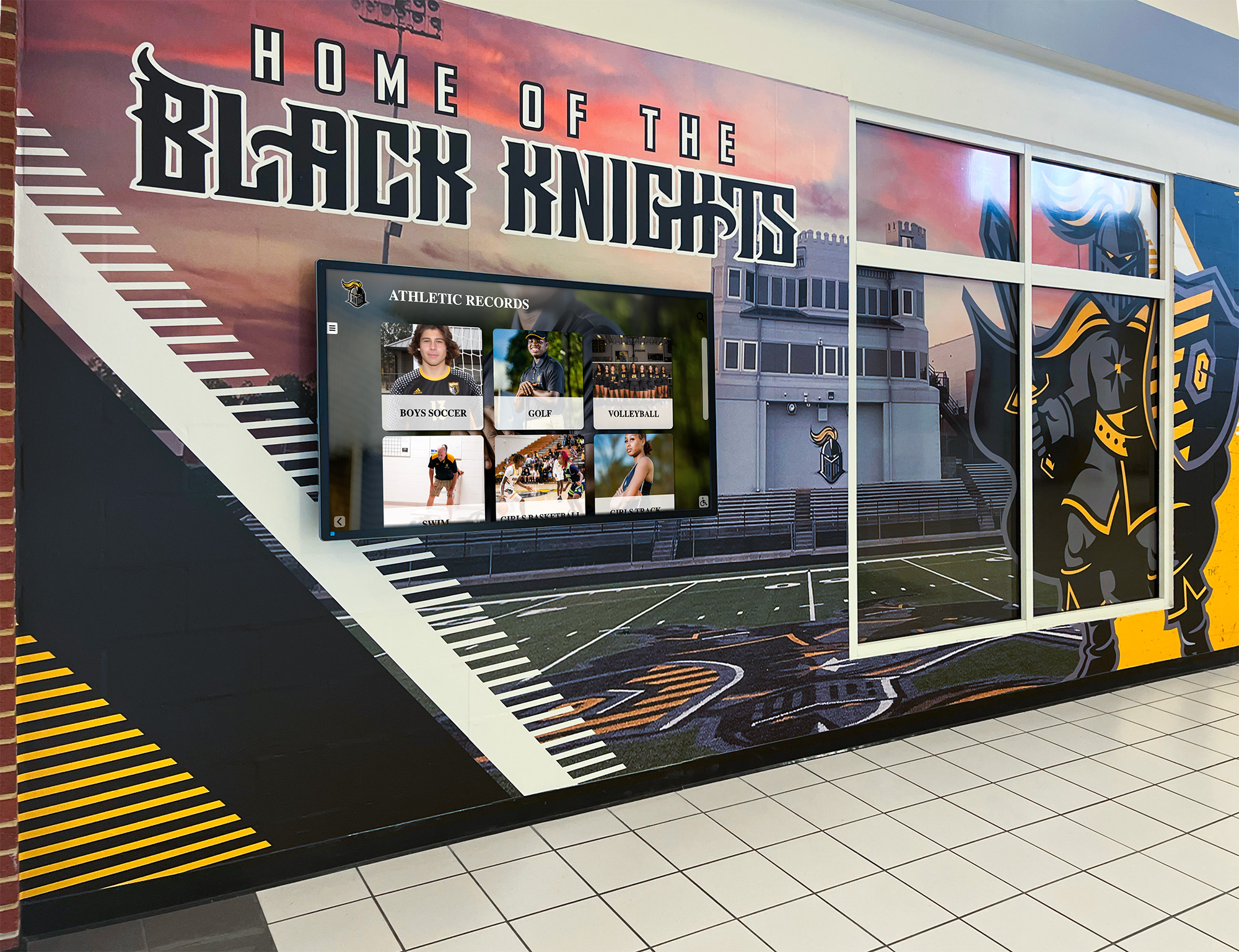
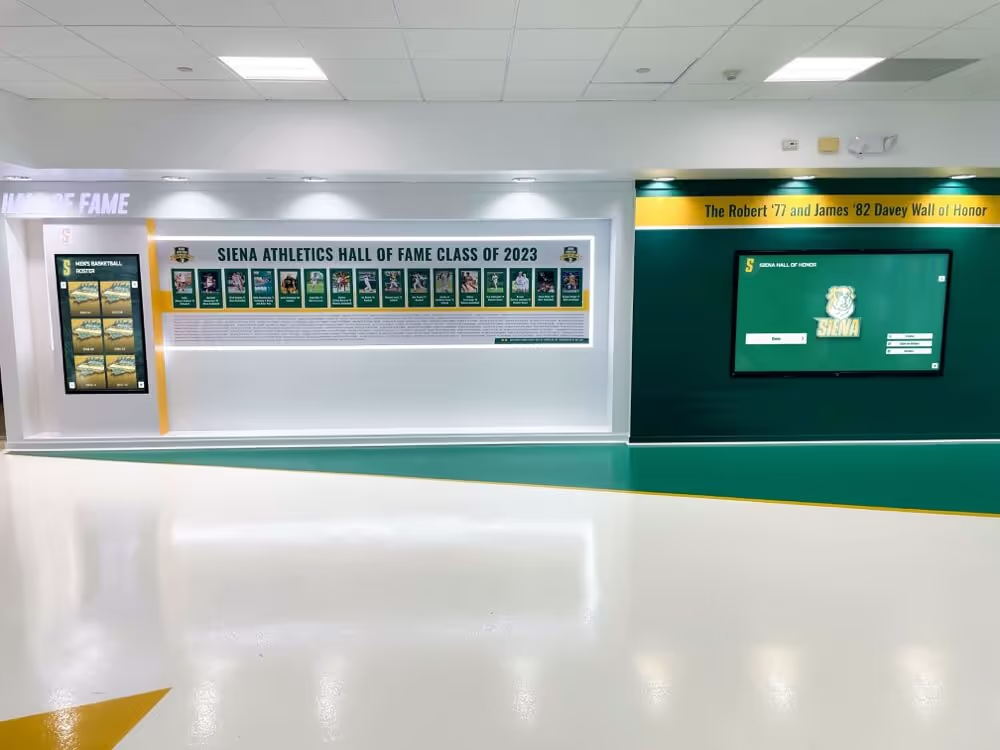
Comprehensive athletic recognition hallways celebrate award winners alongside program history and records
Modern Digital Solutions for Sport Award Recognition
Digital recognition systems eliminate traditional display limitations while expanding possibilities for comprehensive sport award celebration.
Interactive Touchscreen Awards Displays
Solutions like Rocket Alumni Solutions transform sport award recognition through comprehensive digital platforms:
Unlimited Recognition Capacity Digital systems solve fundamental space constraints:
- Single touchscreen showcases unlimited award winners across all sports and seasons
- No need to remove historical recipients when adding new seasons
- Comprehensive archives preserving decades of program award history
- Every award category receives equal display capacity
- Expandable systems growing alongside evolving programs
Programs report digital displays particularly valuable for multi-sport departments recognizing hundreds of athletes annually—volume that would require impossible amounts of wall space with traditional plaques.
Rich Award Winner Profiles Digital platforms enable storytelling impossible with static plaques:
- Individual profile pages for each award recipient
- Multiple action photos showing athletes in competitive contexts
- Comprehensive achievement descriptions and season statistics
- Athlete quotes about what awards mean to them
- Award criteria explanations helping viewers understand significance
- Post-graduation updates tracking college athletic careers
- Video highlights showcasing award-worthy performances
- Links connecting awards to broader program achievements
This depth ensures every award winner’s complete story receives appropriate celebration beyond just names on plaques.
Interactive Search and Filtering Digital recognition creates engagement traditional displays cannot:
- Full-text search finding recipients by name instantly
- Filter by sport, season, year, or award category
- Sort chronologically or alphabetically for systematic exploration
- “Featured recipient” sections highlighting notable stories
- Random award winner spotlight creating serendipitous discovery
- Championship season filters showing roster-wide recognition
Learn about digital display engagement with recognition programs.
Simple Content Management Cloud-based systems simplify ongoing administration:
- Update content from any internet-connected device
- Bulk upload tools adding entire award lists efficiently
- Template-based design ensuring visual consistency
- Role-based access enabling appropriate staff management
- No technical expertise required for routine updates
- Scheduled publishing automating announcement timing
Programs implementing digital systems report 80-90% reduction in time spent maintaining sport award recognition compared to traditional physical displays requiring manual plaque ordering, engraving, and mounting.
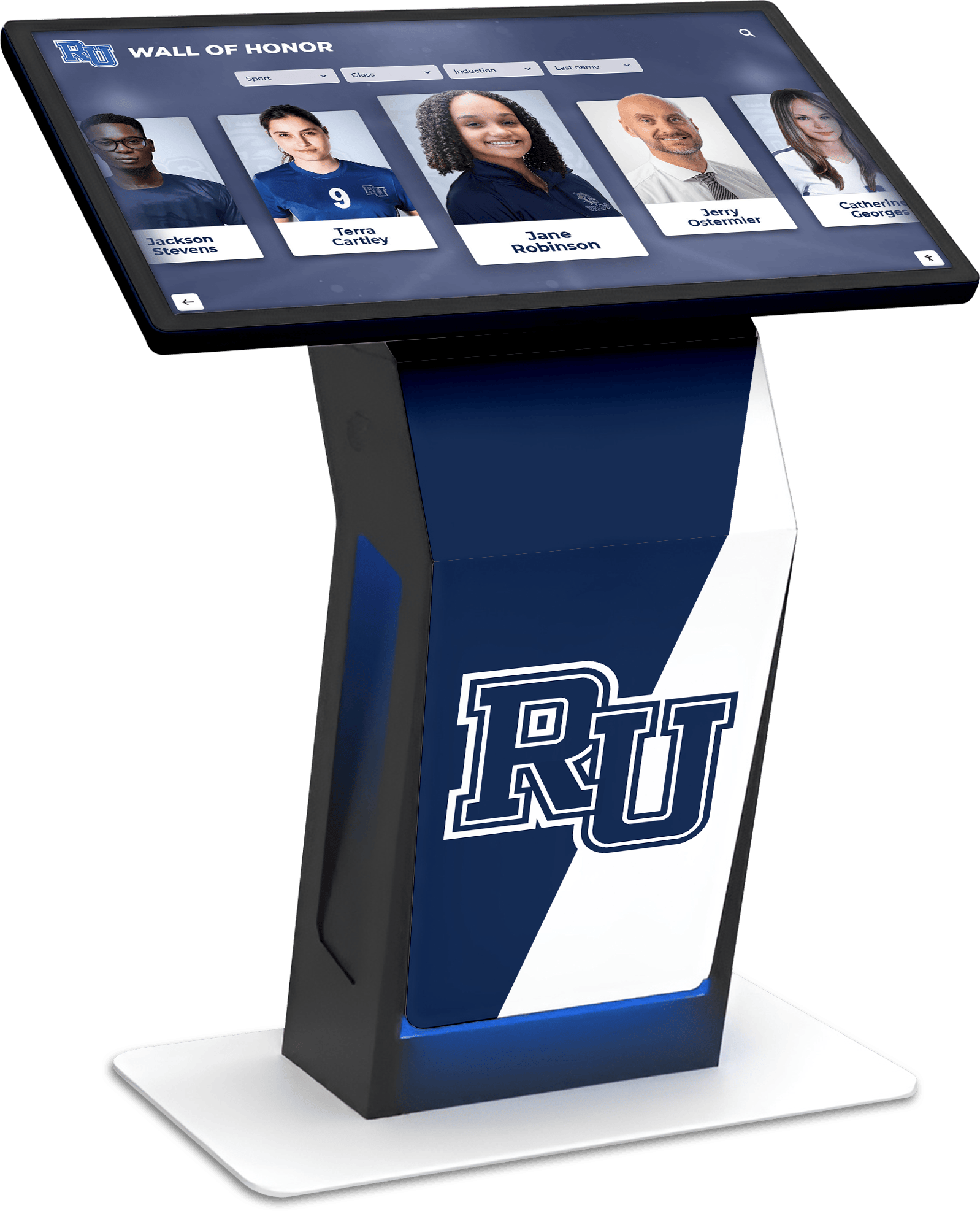
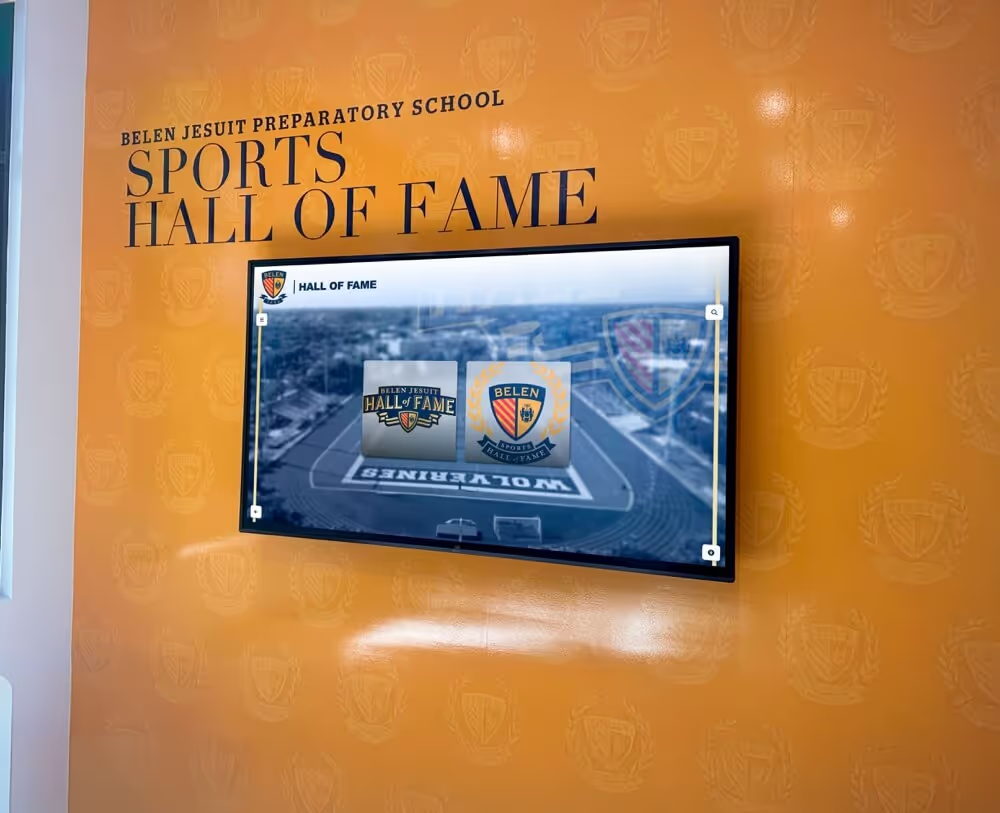
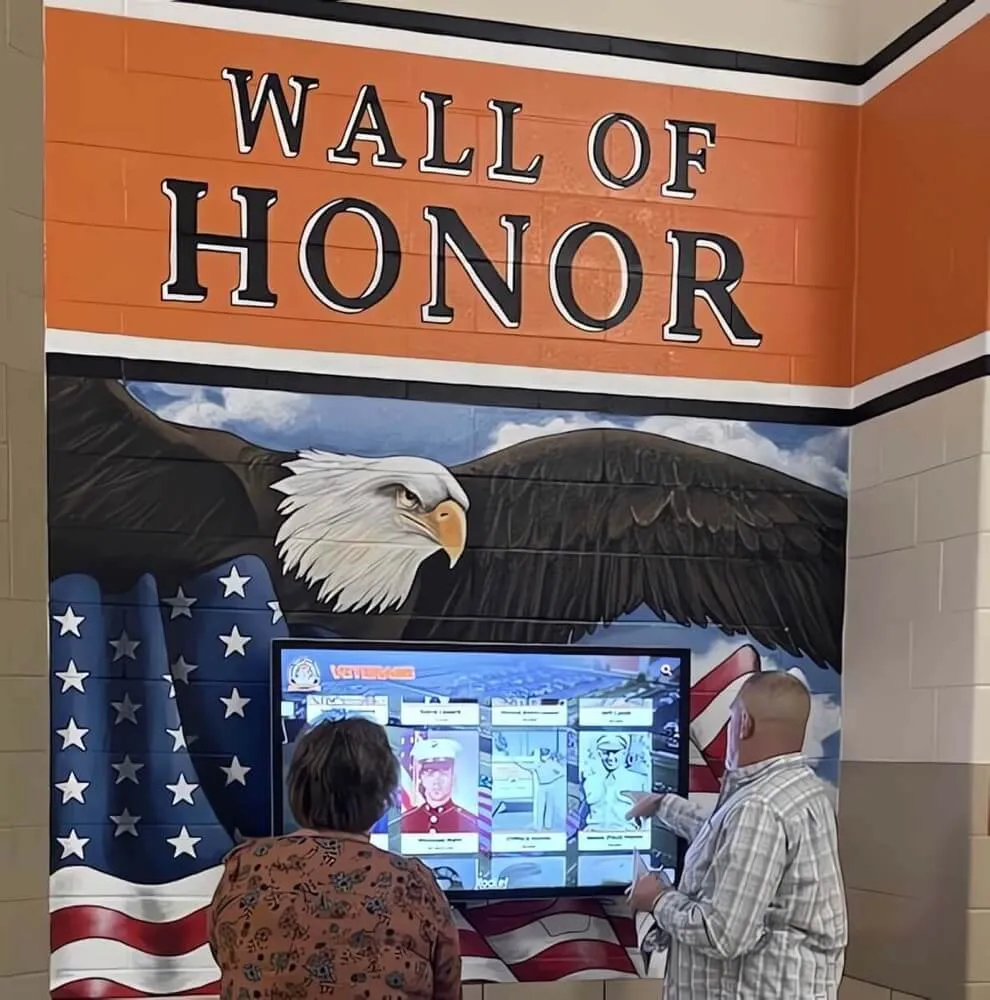
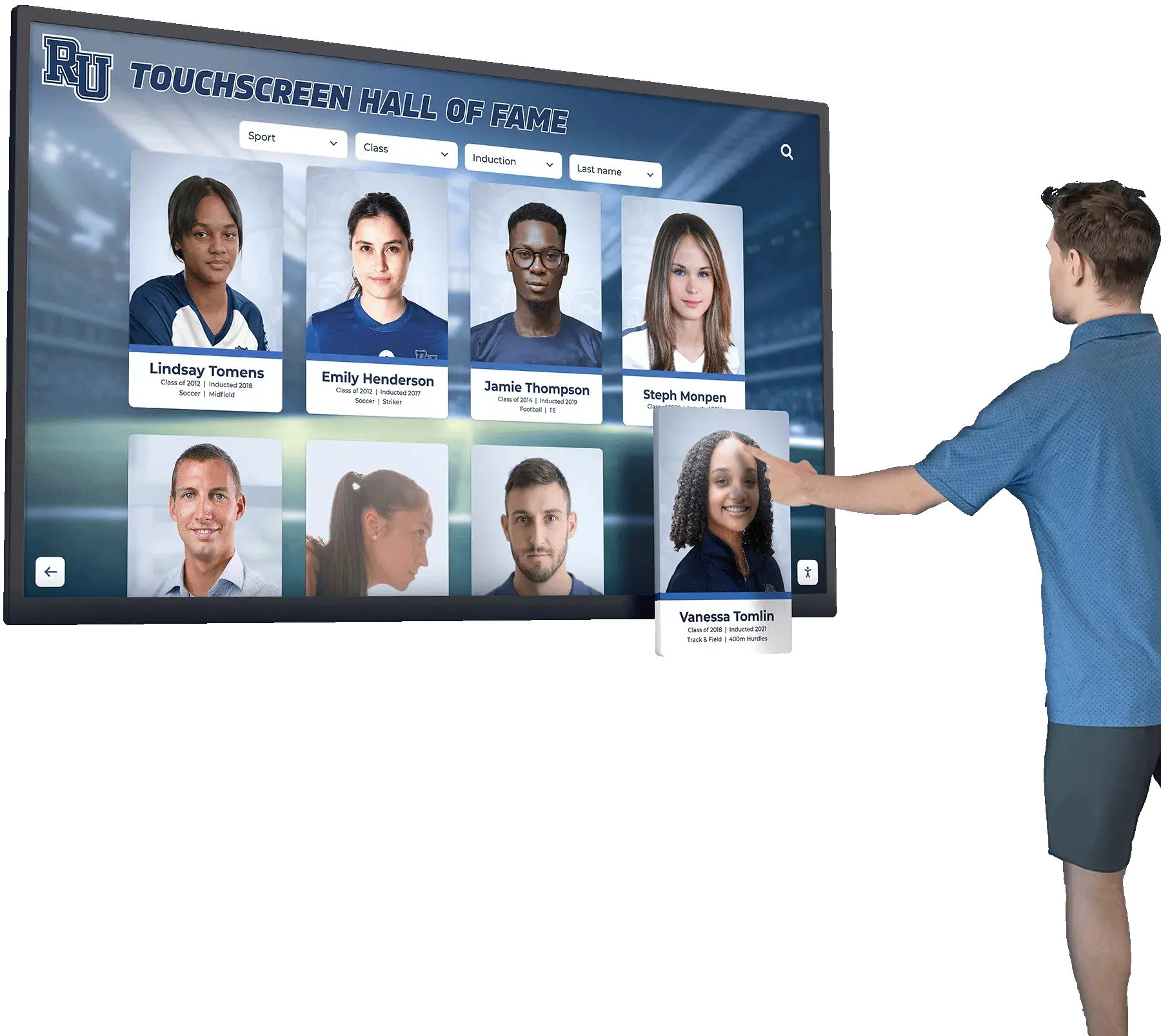
Touchscreen kiosks provide searchable, interactive sport award recognition accessible to entire athletic community
Web-Based Awards Recognition Platforms
Online systems extend recognition reach beyond physical facility:
Mobile-Accessible Awards Databases Web platforms provide universal access:
- Alumni and families worldwide view award winner recognition
- Families unable to attend ceremonies still access complete information
- Prospective athletes researching programs see achievement culture
- Current athletes explore historical awards as they pursue goals
- Social sharing enables recipients to celebrate with extended networks
Explore creating online athletic recognition systems for extended reach.
Integration with Program Communications Digital recognition connects to broader platforms:
- Embed award showcases on athletic websites
- Link from social media to individual recipient profiles
- Email notifications to families when awards are announced
- Alumni newsletter integration featuring award winner spotlights
- Digital yearbook connections preserving award information
Recruiting and Program Promotion Award displays become recruiting tools:
- Prospective athletes explore program recognition culture
- Visual demonstration of development and achievement opportunities
- Alumni success stories showing post-high school pathways
- Championship culture documentation through accumulated awards
- Statistical tracking showing program competitiveness and excellence
Hybrid Recognition Approaches
Many programs find combining traditional and digital methods maximizes impact:
Physical and Digital Integration Complementary systems leverage strengths of both approaches:
- Traditional trophy case displaying physical championship hardware
- Digital touchscreen in same location providing complete historical archives
- Physical plaques honoring most prestigious season awards
- Digital profiles providing comprehensive achievement details and stories
- Ceremony presentation of physical trophies
- Touchscreens offering permanent searchable recognition
Learn about successful digital hall of fame implementation combining approaches.
QR Code Connections Bridge physical and digital recognition:
- QR codes on physical plaques linking to digital profile pages
- Ceremony programs including QR access to award winner profiles
- Trophy case signage directing viewers to comprehensive online information
- Printed team posters connecting to interactive award galleries
- Traditional displays linking to video highlights and acceptance speeches
This hybrid approach respects tradition while embracing modern capabilities expanding what’s possible in sport award recognition.
Content Strategies for Sport Award Recognition
Technology platforms provide infrastructure, but compelling content creates meaningful recognition resonating with athletes and communities.
Essential Award Winner Profile Information
Comprehensive profiles celebrate complete achievement:
Core Award Information
- Athlete full name and nickname
- Graduation year and class
- High-quality action and portrait photography
- Award title and category
- Season and year awarded
- Award criteria explanation
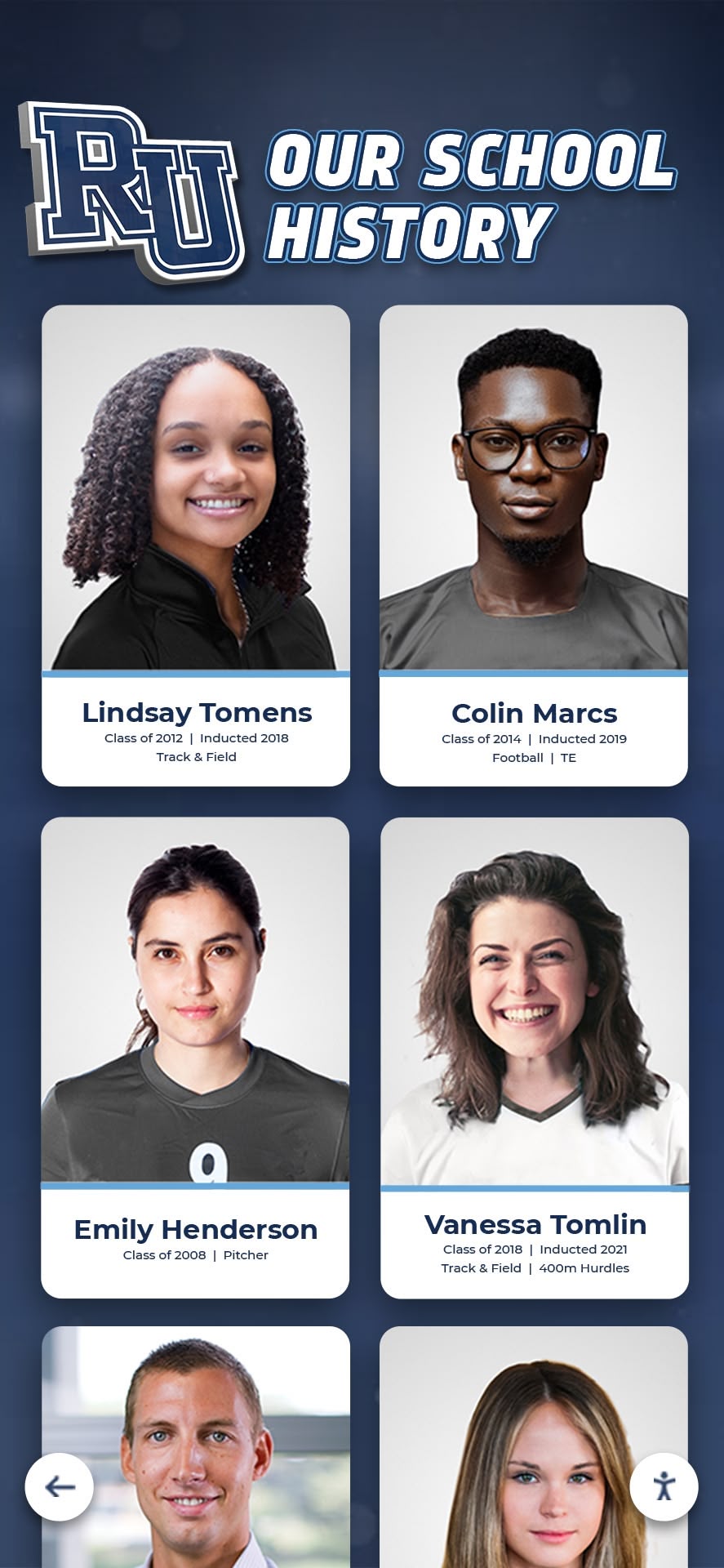
Detailed award winner profiles document complete athletic stories, creating inspiring examples for current and future athletes
Achievement Context and Details
- Specific performances earning the award
- Season statistics and performance metrics
- Memorable game moments and clutch performances
- Years of participation and career progression
- Leadership roles and team contributions
- Competition results and championships
Personal Narrative Elements
- Athlete quotes about what award means
- Reflections on season journey and growth
- Thanks to coaches, teammates, and supporters
- Future athletic and academic plans
- Advice for younger athletes pursuing excellence
- Personal stories about challenges overcome
Explore comprehensive athlete showcase approaches for award content.
Multimedia Content Enhancing Recognition
Beyond text and static photos, rich media creates engaging award recognition:
Video Content Integration
- Award presentation moments from banquet
- Season highlight reels featuring award winners
- Athletic performance clips showcasing award-worthy play
- Acceptance speeches and athlete reflections
- Coach testimonials explaining award selection
- Team reaction to award announcements
Learn about video recognition approaches applicable to sport awards.
Photo Galleries and Visual Storytelling
- Award presentation moment with trophy
- Action photography showing athletic excellence
- Team celebration and championship moments
- Photos spanning career showing growth and development
- Behind-the-scenes training and preparation images
- Celebration photos with family, coaches, and teammates
Statistical Visualization
- Performance graphs showing season progression
- Comparative statistics against team averages
- Career statistics for multi-year athletes
- Record-breaking performance documentation
- Team contribution metrics and impact measurements
Implementing Your Sport Award Program
Successful programs require systematic planning, stakeholder engagement, and sustainable management processes.
Award Planning Timeline
Strategic scheduling optimizes program success:
Pre-Season Preparation
- Define award categories and criteria (3-4 months before season end)
- Order trophies and awards requiring customization (2-3 months before)
- Schedule banquet facility and date (2-3 months before)
- Communicate award opportunities to athletes and families
Season-Long Documentation
- Track statistics and performance metrics throughout season
- Note memorable moments and specific award-worthy performances
- Collect action photography for recognition displays
- Document leadership examples and character demonstrations
Post-Season Implementation
- Complete statistical compilation (within one week of season end)
- Conduct award selection meetings (within 10 days)
- Notify winners before public announcement (minimum 3 days advance)
- Hold ceremony or banquet (within 2-4 weeks of season end)
- Update recognition displays within one week of ceremony
Timely recognition maintains momentum and emotional connection to season while events remain fresh.
Budget Considerations and Resource Allocation
Effective programs balance quality with fiscal responsibility:
Physical Award Costs
- Individual trophies and plaques: $15-75 per award depending on quality
- Certificates and frames: $5-20 per athlete
- Championship banners: $100-500 depending on size and complexity
- Display case updates: $200-1,000 annually
- Photography and videography: $200-1,000 if hiring professionals
Ceremony and Banquet Expenses
- Venue rental if not using school facilities: $200-1,500
- Catering for formal meal: $15-30 per person
- Decorations and table settings: $100-500
- Audio/visual equipment rental: $100-300
- Printed programs: $1-3 per copy
Digital Recognition Investment
- Initial touchscreen display system: $3,000-8,000 depending on size and features
- Annual content management subscription: $500-2,000
- One-time content development: $1,000-3,000 for historical migration
- Ongoing updates: minimal cost with cloud-based systems
Many programs find digital recognition systems provide better long-term value than annual plaque purchases, with breakeven typically occurring within 2-3 years while providing significantly expanded capacity and engagement.
Funding Sources
- Athletic budget allocation
- Booster club support and fundraising
- Parent contributions or banquet ticket sales
- Local business sponsorships
- Alumni donations specifically for recognition
Explore donor recognition approaches applicable to athletic programs.
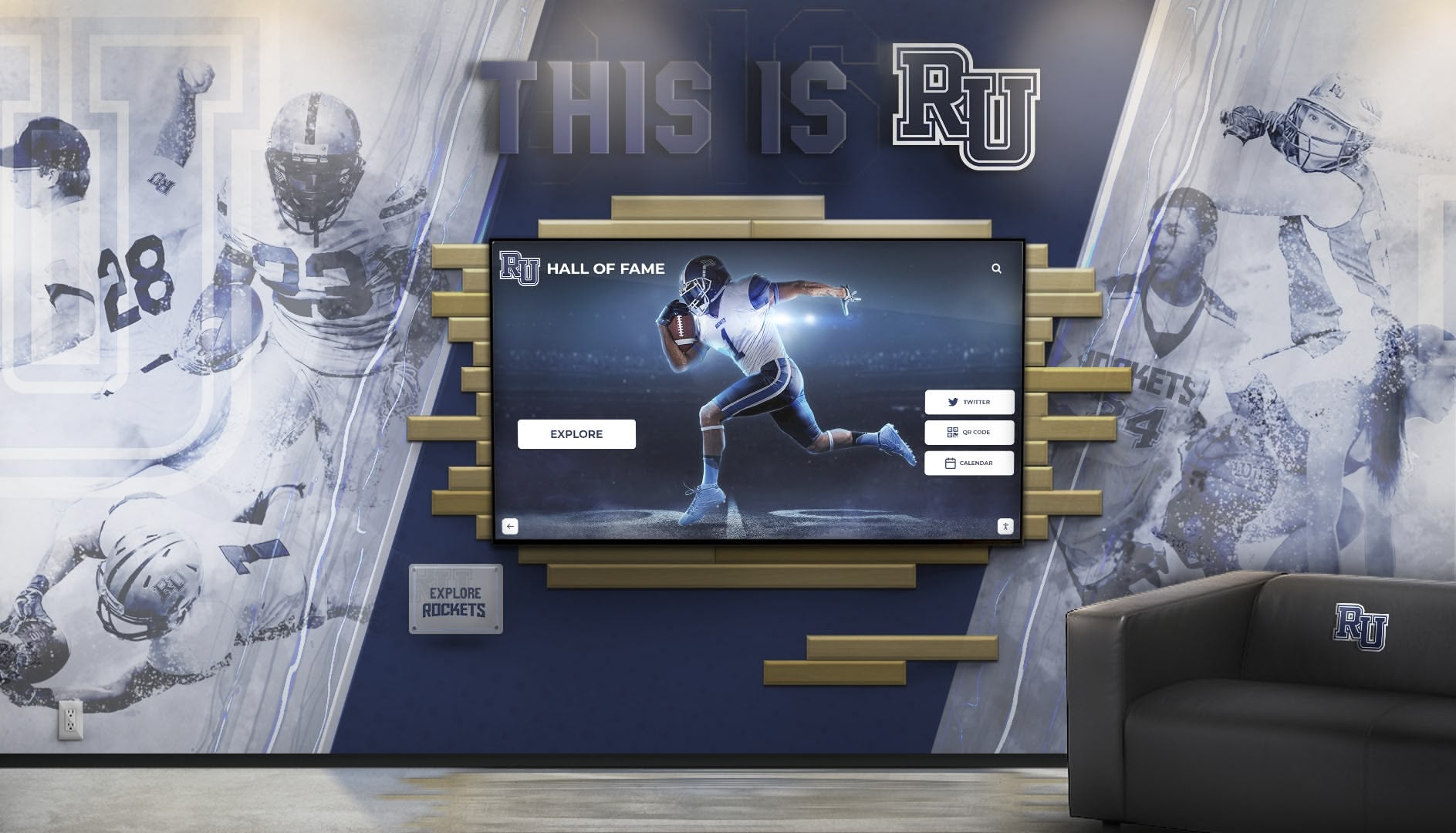
High-quality recognition displays demonstrate program commitment to celebrating athlete achievement
Staff and Coach Responsibilities
Clear role assignment ensures sustainability:
Athletic Director Oversight
- Overall program coordination across all sports
- Budget management and resource allocation
- Facility coordination for ceremonies and displays
- Communication with administration and community
- Policy development for award criteria and selection
Head Coach Leadership
- Sport-specific award selection and criteria development
- Athlete evaluation and recommendation
- Banquet planning and presentation
- Content collection for recognition displays
- Communication with athletes and families
Assistant Coach and Support Staff
- Statistical compilation and verification
- Photography and video documentation
- Administrative coordination for ceremonies
- Display content updates and management
Sustainability and Continuous Improvement
Annual Assessment Evaluate program effectiveness:
- Athlete and family feedback surveys
- Attendance and engagement metrics
- Budget analysis and cost-effectiveness
- Award distribution ensuring equity
- Comparison to peer programs
Program Evolution Adapt to changing needs:
- Award category additions based on team dynamics
- Ceremony format adjustments improving experience
- Recognition display enhancements increasing engagement
- Technology integration expanding reach and impact
- Tradition preservation balanced with innovation
Special Considerations for Different Athletic Contexts
Sport award approaches should adapt to program size, resources, and competitive level.
Large Multi-Sport Athletic Departments
Schools with extensive programs face unique challenges:
Managing Scale Effectively
- Combined sport ceremonies reducing redundancy
- Digital systems essential for accommodating volume
- Automated statistical compilation processes
- Multiple award selection committees distributing responsibility
- Tiered award structure from team to department-wide recognition
Large departments benefit enormously from digital recognition’s unlimited capacity that physical displays cannot provide for comprehensive award programs.
Small or Single-Sport Programs
Smaller programs optimize recognition within constraints:
Maximizing Impact with Minimal Budget
- Focused award categories ensuring prestige through selectivity
- Combined displays serving multiple purposes
- Student or parent volunteers reducing professional service costs
- Phased implementation starting with essential features
- Creative alternatives to expensive traditional trophies
Small programs create meaningful recognition through personal touches and authentic celebration rather than expensive technology.
Explore elementary school recognition approaches applicable to smaller programs.
Youth and Recreational Sports
Community programs require adapted approaches:
Age-Appropriate Recognition
- Participation awards ensuring all athletes receive recognition
- Skill improvement focus over competitive performance
- Fun presentation formats engaging young athletes
- Affordable alternatives to expensive trophies
- Emphasis on sportsmanship and character development
Parent Involvement
- Volunteer committees planning ceremonies
- Potluck banquets reducing costs
- Parent-created highlight videos
- Shared photography and social media documentation
Elite and Competitive Programs
High-performing programs maintain different standards:
Performance-Focused Recognition
- Higher achievement thresholds for awards
- State and national competition-level recognition
- College recruiting acknowledgment
- Championship culture emphasis
- Historical achievement comparison and record documentation
These programs often invest more substantially in recognition systems that serve recruiting purposes and maintain competitive culture attracting top athletes.
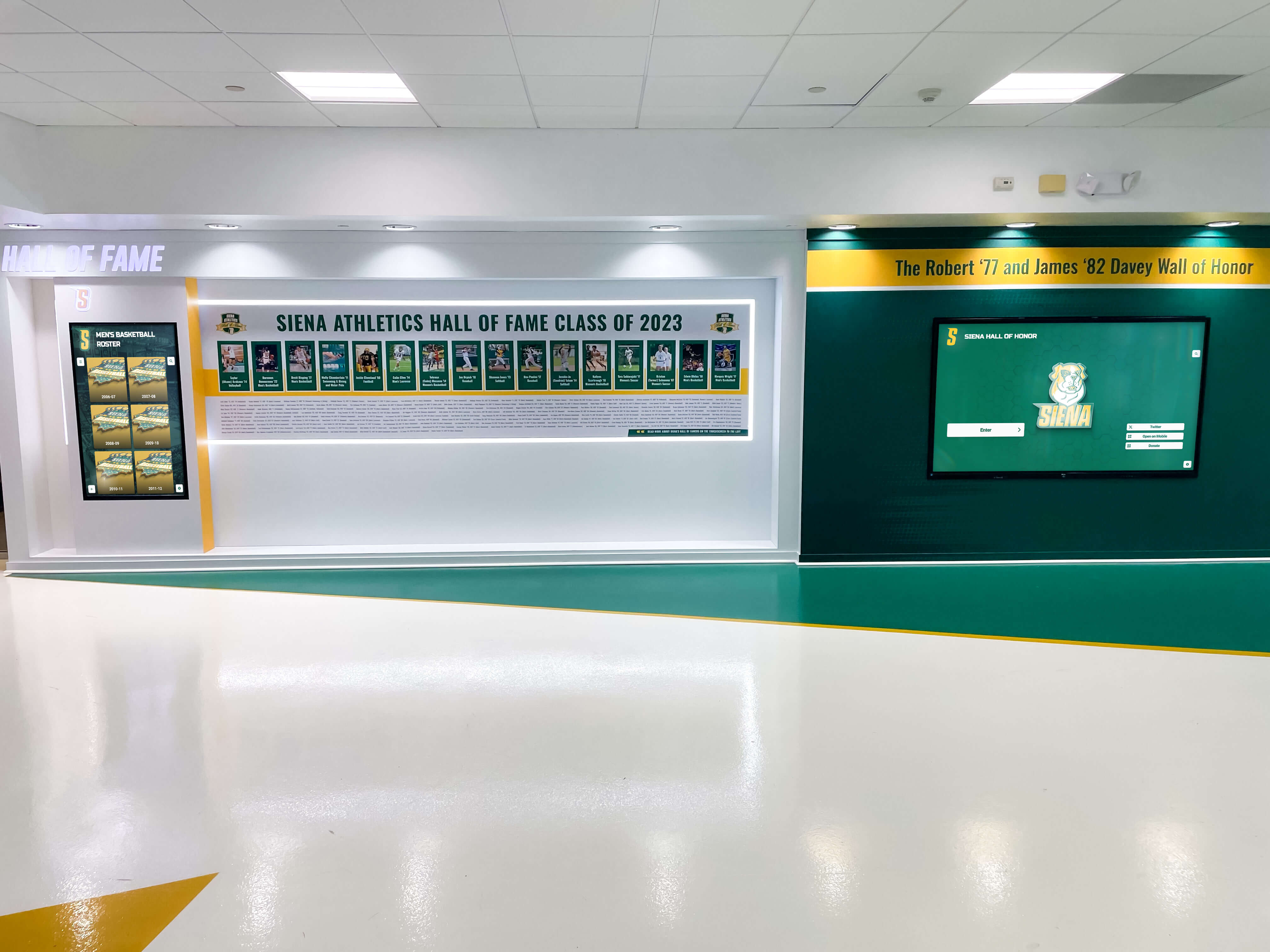
Championship-level programs create prestigious recognition environments celebrating elite achievement
Connecting Sport Awards to Broader Program Culture
Effective recognition displays create foundations for lasting athletic values and traditions.
Building Championship Culture Through Recognition
Awards displays facilitate cultural development:
Aspirational Modeling
- Younger athletes see tangible examples of achievement pathways
- Award criteria help athletes understand excellence standards
- Historical displays demonstrate program tradition and expectations
- Current athlete identification with past award winners
- Visible connection between effort and recognition
Values Communication Award categories reveal program priorities:
- MVP awards communicate performance importance
- Sportsmanship recognition demonstrates character values
- Academic achievement honors emphasize student-athlete balance
- Improvement awards show development emphasis
- Team awards celebrate collective over individual success
Learn about building athletic community through recognition programs.
Alumni Engagement Through Sport Awards
Recognition systems support alumni relationships:
Reunion Planning Resources
- Complete teammate rosters including awards received
- Season statistics and achievement documentation
- Championship team listings and accomplishments
- Photo archives documenting shared experiences
- Contact information facilitating reconnection
Historical Documentation Preserve program legacy:
- Decades of award information creating historical records
- Trend analysis showing program evolution
- Notable alumni identification and celebration
- Institutional story development for milestone anniversaries
Explore preserving athletic history through comprehensive recognition.
Measuring Sport Award Program Success
Regular assessment ensures programs achieve intended goals and justify resource investment.
Quantitative Metrics
Participation and Coverage Data
- Percentage of team receiving some recognition
- Award distribution across position groups and roles
- Number of unique award categories utilized
- Year-over-year participation trend analysis
Engagement Indicators For digital recognition systems:
- Daily interaction counts with award displays
- Average session duration showing engagement depth
- Most frequently viewed award winner profiles
- Social sharing frequency and reach
- Web-based access statistics from alumni and community
Cultural Impact Metrics Broader indicators showing program influence:
- Athlete retention rates season to season
- Prospective athlete interest and recruiting outcomes
- Parent and booster engagement and support
- Alumni connection to program following graduation
- Community perception and attendance trends
Qualitative Assessment
Stakeholder Feedback
- Athlete surveys about recognition meaningfulness
- Family perception of ceremony quality and fairness
- Coach assessment of program effectiveness
- Alumni testimonials about long-term award impact
Success Story Documentation
- Athletes motivated by observing older peers receive awards
- Recipients whose awards influenced college recruitment
- Alumni reflecting on how awards shaped their development
- Coaches describing cultural shifts from recognition programs
Conclusion: Creating Meaningful Sport Award Recognition
Sport end of year awards represent far more than trophies distributed at season-end banquets—they create lasting statements about program values, honor individual athlete journeys, motivate future teams, and build athletic culture extending across seasons and generations. When programs move beyond forgotten trophy cases to comprehensive recognition systems celebrating every award winner’s achievements, they transform how communities understand and value athletic excellence.
The strategies explored throughout this guide provide frameworks for building sport award recognition that resonates with athletes, families, and communities while remaining sustainable for coaching staff. From traditional plaques and trophy cases to modern digital displays eliminating space constraints, these approaches ensure award recipients receive the lasting acknowledgment their accomplishments deserve.
Transform Your Sport Award Recognition Program
Discover how modern digital display solutions can help you celebrate every athlete's achievements while building lasting program culture and inspiring future teams to pursue excellence.
Book a demoSolutions like Rocket Alumni Solutions make comprehensive recognition achievable through intuitive touchscreen displays, unlimited profile capacity, easy content management, and web integration extending reach beyond physical facilities. Programs implementing these systems report dramatic improvements in recognition comprehensiveness, award prestige, and athlete motivation—precisely the outcomes that justify recognition program investments.
Start where you are: assess current award programs and recognition approaches, identify gaps and improvement opportunities, clarify goals for enhanced celebration, and implement systems matching your resources and program needs. Whether beginning with simple trophy cases or launching sophisticated digital platforms, every step toward comprehensive sport award recognition strengthens program culture and honors the athletes who have contributed to your team’s success.
Every award winner deserves recognition acknowledging their unique contribution and celebrating their accomplishment. With thoughtful planning, appropriate technology, and consistent implementation, you can create displays that truly honor every athlete while building the inspirational, motivated, championship-oriented athletic culture where all participants thrive.
Ready to begin? Explore all-state athlete recognition approaches or discover state championship display strategies that complement comprehensive sport award programs.