School history, shared
Senior Recognition Ads in Yearbooks: How Families and Schools Design Lasting Tributes
Senior recognition ads in yearbooks transform commemorative pages into personalized tributes where families celebrate their graduating students through custom messages, carefully selected photos, and heartfelt words that capture years of growth, achievement, and pride. These purchased ad spaces—ranging from quarter-page acknowledgments to full-page spreads—create intimate moments within the broader yearbook narrative, offering parents, grandparents, and families ways to publicly honor milestones that extend far beyond academic transcripts or athletic statistics.
Understanding how senior recognition ads work helps yearbook advisers maximize fundraising revenue while giving families meaningful participation opportunities in their students’ final yearbook. Yet many schools struggle with pricing structures that balance accessibility with production costs, design templates that maintain visual consistency across diverse family submissions, and collection systems that don’t overwhelm already-busy yearbook staff during critical production deadlines.
This comprehensive guide explains how successful schools implement senior recognition ad programs that serve both institutional needs and family desires—covering pricing strategies that generate sustainable revenue, design approaches that honor individual stories while maintaining yearbook aesthetics, submission workflows that reduce staff burden, and creative alternatives that extend recognition beyond traditional print pages into year-round digital displays that preserve these tributes permanently.
Senior recognition ads represent one of yearbook publishing’s most effective revenue sources while simultaneously creating personalized content that graduating families treasure for decades. Unlike generic fundraising appeals, these ads offer tangible value—permanent published recognition that families willingly purchase because the emotional return justifies the financial investment.

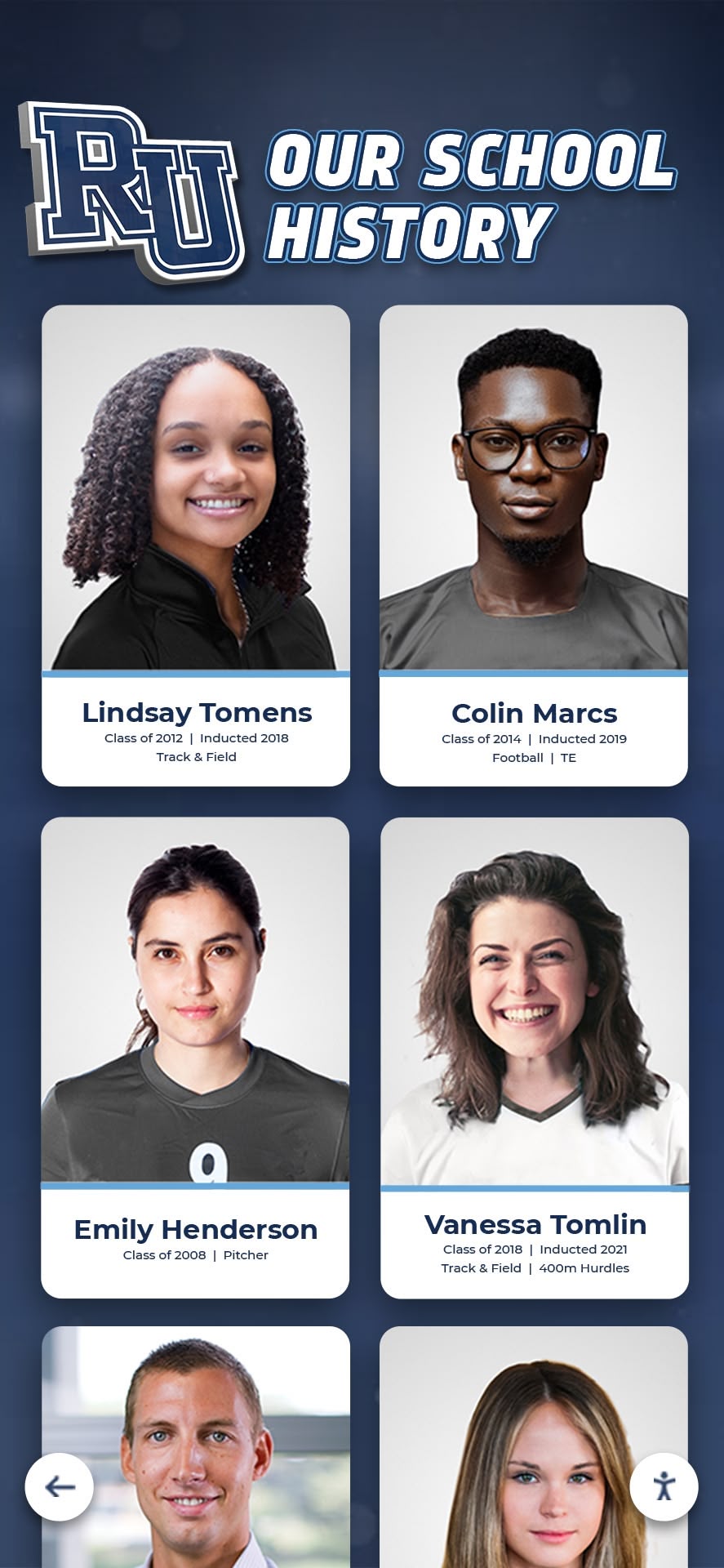
Recognition displays showcase student achievements through personalized tributes similar to yearbook senior ads, creating lasting memories for families and communities
Understanding Senior Recognition Ads
Before implementing or refining a senior ad program, understanding the fundamental structure and purpose of these yearbook elements provides essential context.
What Are Senior Recognition Ads?
Senior recognition ads are purchased spaces within school yearbooks where families create personalized tributes to graduating students. Unlike the standardized senior portraits and generic class content that yearbook staff produces, recognition ads give families editorial control to craft unique messages celebrating their students.
Common Senior Ad Elements
- Personal photos: Baby pictures, childhood milestones, family gatherings, or candid moments beyond official school portraits
- Custom messages: Letters from parents, quotes from siblings, acknowledgments of specific achievements or character qualities
- Timeline layouts: Photo progressions showing growth from kindergarten through graduation
- Achievement highlights: Academic awards, athletic accomplishments, artistic achievements, community service recognition
- Future acknowledgments: College destinations, career plans, or life goals
Senior ads differ from standard yearbook content in both creation and purpose—while yearbook staff produces comprehensive school documentation, families purchase senior ads specifically to publish personalized tributes that express individual family perspectives on their graduating students.
The Purpose and Value of Senior Ads
Senior recognition ads serve multiple stakeholders with different but complementary objectives.
For Families:
- Permanent recognition: Published tributes that exist beyond graduation day ceremonies or social media posts that disappear
- Public celebration: Opportunities to share pride with extended family, friends, and community members who receive yearbooks
- Personalized storytelling: Freedom to highlight unique qualities, inside jokes, or family perspectives that formal yearbook content cannot capture
- Keepsake creation: Pages that graduating students treasure and share with their own children decades later
For Schools:
- Revenue generation: Reliable income that offsets yearbook production costs or funds program enhancements
- Family engagement: Meaningful participation opportunities for parents who want involvement beyond volunteering or attending events
- Content enrichment: Diverse perspectives and personal stories that make yearbooks more comprehensive and emotionally resonant
- Tradition building: Annual rituals that become expected parts of the graduation season experience
Well-designed senior ad programs create genuine win-win scenarios where families receive value they’re willing to purchase while schools generate revenue through offerings that enhance rather than compromise yearbook quality.
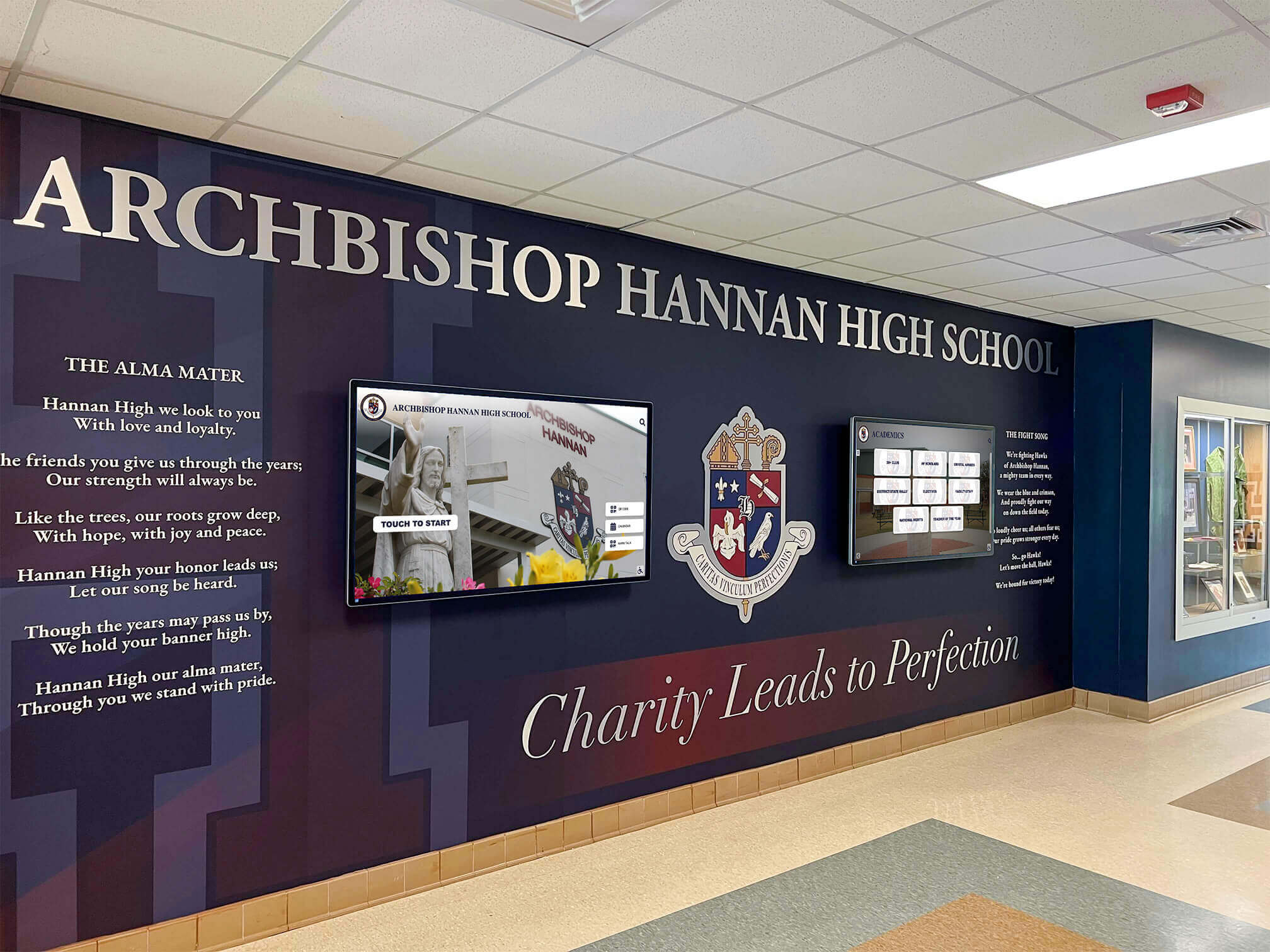
Modern schools complement traditional yearbook recognition with permanent digital displays that celebrate students year-round in high-traffic campus locations
Pricing Strategies for Senior Recognition Ads
Establishing pricing structures that balance accessibility, value perception, and revenue goals requires careful consideration of production costs, market expectations, and institutional objectives.
Standard Ad Size and Pricing Tiers
Most successful senior ad programs offer multiple size options at graduated price points, allowing families to select packages matching their budgets and desired prominence.
Common Ad Size Options:
Quarter Page Ads ($75-$150)
- Smallest entry-level option
- Typically accommodates 2-3 photos plus brief message
- Budget-friendly for families with tight finances
- Still provides meaningful recognition at accessible price point
Half Page Ads ($150-$300)
- Mid-tier option with balanced space and cost
- Accommodates 4-6 photos with substantial message space
- Most popular choice at many schools
- Provides adequate room for creative layouts without premium pricing
Full Page Ads ($300-$600)
- Premium option offering maximum space and impact
- Accommodates extensive photo collections and longer messages
- Often chosen by families wanting prominent display
- Highest per-unit revenue for schools
Two-Page Spreads ($600-$1,200)
- Elite tier for families desiring maximum recognition
- Rare but generates significant revenue per purchase
- Requires careful design to maintain visual cohesion across spread
- May be limited to specific quantity to maintain exclusivity
Schools should calibrate pricing based on local demographics, yearbook production costs, and competitive analysis of what neighboring schools charge for comparable offerings.
Factors Affecting Senior Ad Pricing
Several variables influence appropriate pricing levels for individual school contexts.
Production Cost Considerations
- Page count addition expenses (printing costs per page)
- Design template development and maintenance
- Staff time for layout review, correction requests, and quality control
- Digital file management and organization systems
- Proof distribution and revision processing
Market and Community Factors
- Local income levels and family financial capacity
- Community expectations based on tradition or peer school practices
- Perceived yearbook value and quality reputation
- Competition with other senior-year expenses (graduation announcements, class rings, prom)
- Historical participation rates and price sensitivity analysis
Value Enhancement Opportunities
- Professional design assistance included versus DIY-only submissions
- Digital versions or PDFs of completed ads for family sharing
- Guaranteed ad placement in specific yearbook sections
- Priority processing or rush options for late purchasers
- Package deals combining senior ads with additional yearbook purchases
Pricing strategies should reflect genuine value provided while generating sufficient revenue to justify the administrative effort required to manage senior ad programs effectively.
Learn more about creating comprehensive academic recognition programs that extend beyond yearbook pages.
Design Templates and Submission Guidelines
Providing clear design frameworks helps families create ads that meet technical requirements while maintaining yearbook visual standards.
Creating Effective Ad Templates
Well-designed templates balance creative flexibility with necessary constraints that ensure print quality and visual consistency.
Essential Template Features:
- Safe zones: Clearly marked boundaries ensuring critical content stays away from trim edges
- Image placeholders: Designated photo areas with size and resolution specifications
- Text regions: Defined areas for messages with character count guidance
- Color profiles: RGB vs. CMYK specifications for proper print reproduction
- Resolution requirements: Minimum DPI standards (typically 300 DPI for print quality)
- File format specifications: Accepted formats (PDF, JPEG, PNG) with preparation instructions
Template Variety Approaches:
Schools can offer varying levels of structure:
Structured Templates provide complete layouts where families simply insert photos and text into predetermined arrangements—reducing design errors but limiting creative expression.
Flexible Frameworks establish boundaries and technical requirements while allowing families to arrange content within guidelines—increasing creative possibilities but requiring more sophisticated design skills.
Professional Design Services where families submit raw materials (photos, text) and school-contracted designers create ads for additional fees—ensuring quality while generating supplementary revenue.
The appropriate approach depends on family technical capabilities, staff resources for reviewing submissions, and institutional priorities around visual consistency versus personalization.
Technical Submission Requirements
Clear technical specifications prevent common submission problems that create revision cycles and production delays.
Photo Specifications:
- Minimum resolution requirements (1200x1800 pixels minimum for print reproduction)
- Acceptable file formats (high-resolution JPEG, PNG, or TIFF)
- Color space requirements (CMYK for print vs. RGB for digital)
- Maximum file sizes for upload systems
- Naming conventions for organized file management
Text Guidelines:
- Character or word count limits for different ad sizes
- Font specifications or restrictions
- Prohibited content policies (profanity, inappropriate references, copyrighted material)
- Accuracy responsibility (family verification of spelling, dates, facts)
- Deadline adherence and revision request procedures
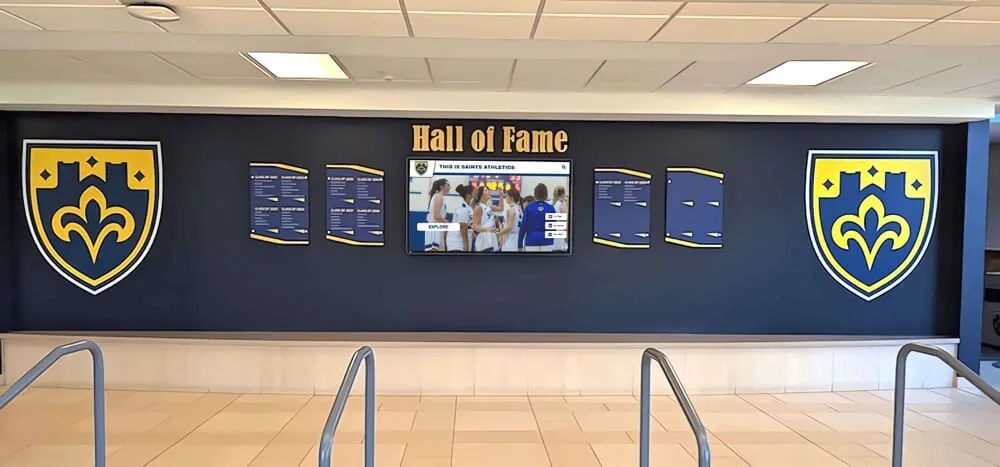
Permanent recognition displays provide year-round visibility that extends beyond annual yearbook distribution
Providing submission checklists and pre-flight review tools helps families catch common errors before official submission, reducing staff burden and ensuring smoother production workflows.
Explore how recognizing valedictorians extends recognition beyond yearbook pages through digital displays.
Content Creation Strategies for Families
Helping families craft meaningful senior ads requires guidance on both practical design decisions and emotional message development.
Photo Selection and Arrangement
Strategic photo choices create visual narratives that capture students’ journeys authentically.
Effective Photo Approaches:
Chronological Progressions
- Series of photos showing growth from infancy through senior year
- Creates emotional impact by visualizing passage of time
- Particularly powerful when including milestone moments (first day of school, significant achievements, family celebrations)
- Works best in half-page or larger formats with adequate space for multiple images
Achievement Showcases
- Photos documenting specific accomplishments (sports championships, academic competitions, artistic performances, community service)
- Demonstrates breadth of student involvement and success
- Provides concrete visual evidence of qualities described in accompanying text
- Effective for students with particularly distinguished records in specific areas
Personality Portraits
- Candid moments capturing genuine personality, humor, or characteristic expressions
- Often more emotionally resonant than formal portraits
- Reveals aspects of students that standard yearbook coverage misses
- Creates ads that feel authentic and personally distinctive
Family Connection Highlights
- Photos emphasizing relationships with parents, siblings, grandparents, or close friends
- Acknowledges support systems that contributed to student success
- Particularly meaningful for extended family members receiving yearbooks
- Balances individual celebration with relational context
Families should select photos that complement rather than duplicate standard yearbook content—choosing images that reveal personal dimensions unavailable in official school photography.
Message Writing Guidance
Well-crafted messages transform senior ads from simple photo displays into meaningful tributes with lasting emotional impact.
Message Content Strategies:
Letter Format Direct address from parents to student creates intimate tone:
- Personal reflections on watching student grow
- Specific memories that define relationship
- Acknowledgment of challenges overcome
- Expression of pride in character qualities beyond achievements
- Encouragement for future endeavors
Quote Collections Compilation of meaningful quotations creates thematic unity:
- Favorite family sayings or inside jokes
- Inspirational quotes reflecting student values
- Song lyrics with personal significance
- Advice for life’s next chapter
- Scripture or philosophical passages guiding student
Achievement Narratives Chronological storytelling documenting journey:
- Early interests that developed into passions
- Obstacles encountered and perseverance demonstrated
- Leadership roles and their impact
- Community contributions and service philosophy
- Future goals and prepared foundations
Collaborative Messages Multiple voices create richer perspective:
- Individual notes from each family member
- Messages from grandparents, siblings, close friends
- Team approach showing breadth of support
- Varied tones and perspectives on shared subject
- Collective expression of love and pride
The most effective messages balance specificity with universality—including concrete details that make tributes authentically personal while touching themes that resonate broadly with readers across the school community.
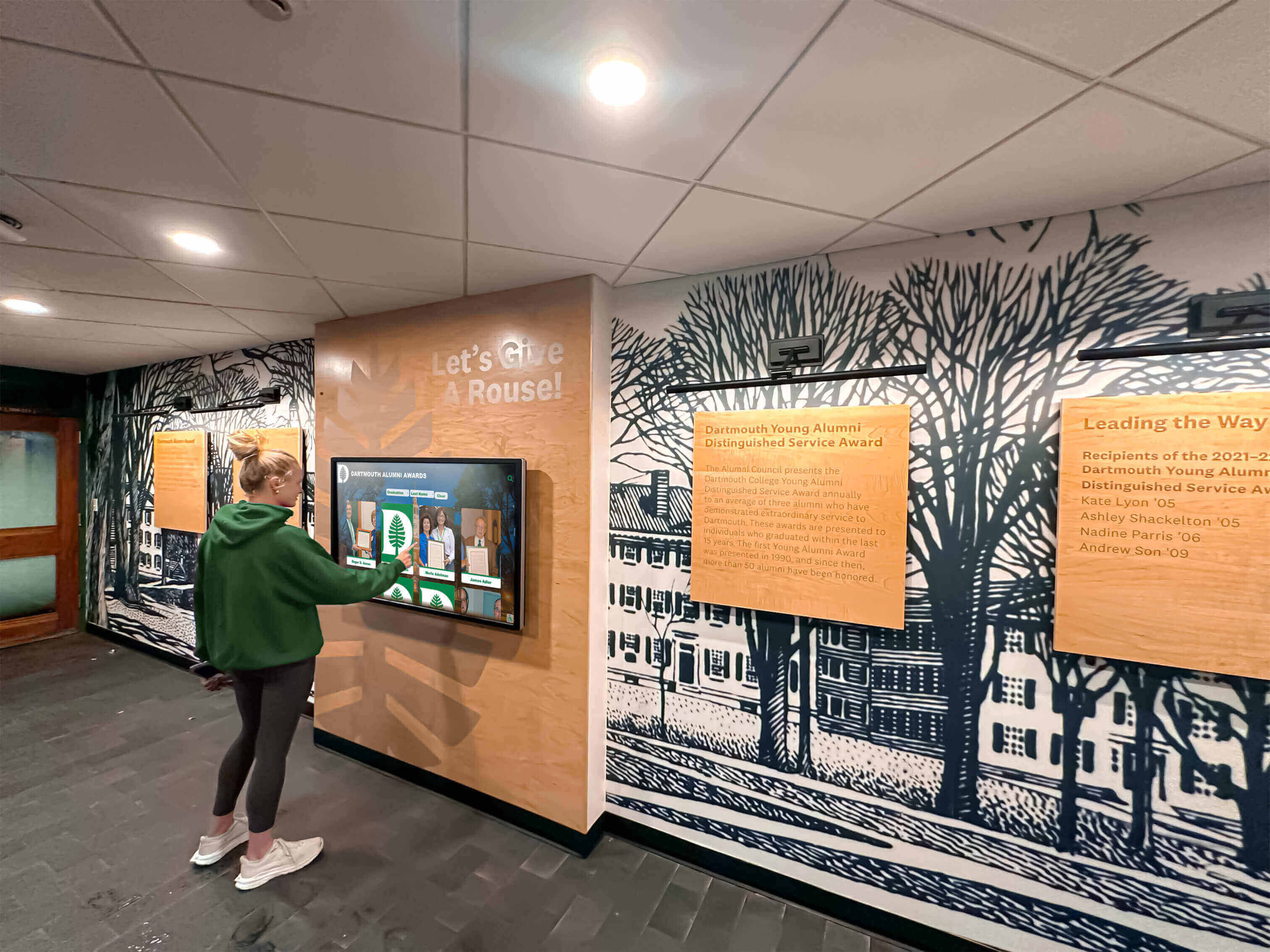
Interactive displays allow students and visitors to explore recognition tributes with engaging touchscreen technology
Managing Senior Ad Programs Efficiently
Successful senior ad programs require systematic workflows that minimize administrative burden while maximizing family participation.
Timeline and Deadline Management
Strategic scheduling prevents last-minute chaos while providing adequate time for quality submissions.
Recommended Program Timeline:
Early Fall (September-October)
- Announce senior ad program to families at back-to-school events
- Distribute information packets with pricing, specifications, and examples
- Launch online ordering and submission portals
- Host information sessions explaining process and answering questions
- Begin marketing campaign through email, social media, and school communications
Mid-Fall (November)
- Send first reminder to families who haven’t purchased
- Offer early-bird discount incentives for November submissions
- Provide design workshops for families needing assistance
- Review early submissions and provide feedback on revisions needed
- Process payments and track order completion
Late Fall (December-January)
- Final deadline for standard pricing (typically 8-10 weeks before yearbook delivery)
- Last-chance reminder communications to non-participating families
- Rush pricing option for late purchasers (higher fee for accommodating delays)
- Complete all ad reviews and finalize layouts
- Integrate completed ad section into yearbook master file
Spring (February-March)
- Absolute cut-off date for any submissions (aligned with yearbook printer deadlines)
- Final quality control review of complete ad section
- Lock ad section and submit to printer with rest of yearbook
- Process final payments and close financial reconciliation
Earlier deadlines relative to final yearbook submission allow buffer time for unexpected revision requests, technical problems, or last-minute family participation that schools choose to accommodate.
Collection and Organization Systems
Efficient systems for receiving, organizing, and tracking submissions prevent lost files and administrative confusion.
Digital Submission Platforms:
Online Portal Solutions
- Dedicated platforms designed for yearbook ad submissions (Jostens, Balfour, TreeRing systems)
- Automated payment processing integrated with submission
- Built-in template editors with technical compliance checking
- Organized file storage with searchable databases
- Automated confirmation emails and receipt generation
Custom Workflow Tools
- Google Drive folders with structured naming conventions
- Dropbox or OneDrive shared folders organized by student name
- Email submission protocols with specific subject line requirements
- Spreadsheet tracking systems monitoring payment and file receipt status
- Manual review processes before printer file preparation
Schools should select systems matching staff technical capabilities and available budget—sophisticated platforms reduce manual work but require subscription costs, while DIY approaches demand more staff time but minimize financial investment.
Quality Control Processes:
Systematic review prevents errors from reaching final print:
- Initial Technical Check: Verify file format, resolution, dimensions meet specifications
- Content Review: Ensure compliance with school policies (appropriate content, accurate information, trademark/copyright compliance)
- Proof Distribution: Send digital proof to family for final approval
- Revision Management: Track correction requests and resubmission cycles
- Final Sign-Off: Obtain family confirmation before locking content
Building multiple review checkpoints catches problems early when corrections remain simple and inexpensive rather than discovering issues after printing when remediation becomes impossible.
Discover how digital recognition systems can complement yearbook tributes with year-round visibility.
Maximizing Senior Ad Participation
High participation rates require proactive marketing, removal of participation barriers, and creating genuine value perception.
Marketing Strategies for Senior Ad Programs
Effective promotion drives awareness and emphasizes value proposition that motivates family purchases.
Communication Channels:
Multi-Touch Campaign Approach
- Initial announcement at senior parent orientation nights
- Follow-up emails with visual examples and testimonials
- Social media posts showing previous years’ ad samples
- Reminder postcards mailed to homes (physical mail often gets attention)
- Personal outreach to families of students with significant achievements
- Peer-to-peer student sharing of their families’ ad purchases
Value Messaging Focus:
Emphasize benefits that resonate with different family motivations:
- Permanence: Unlike social media posts, yearbook ads exist physically for decades
- Public recognition: Extended family and community members see published tributes
- Student treasure: Graduating students value knowing families invested in celebrating them
- Tradition: Creating family traditions where recognition ads commemorate each graduating sibling
- Revenue support: Some families motivated by supporting yearbook program financially
- Creative outlet: Opportunity for family storytelling and personal expression
Different messages resonate with different families—comprehensive marketing addresses multiple motivations rather than assuming single universal appeal.
Addressing Financial Barriers
Ensuring senior ad opportunities remain accessible to families across economic circumstances requires thoughtful accommodation policies.
Affordability Strategies:
Tiered Pricing Options
- Quarter-page entry level providing meaningful participation at lower cost
- Payment plan options spreading cost across multiple months
- Early-bird discounts rewarding advance planning and reducing last-minute workload
- Sibling discounts for families with multiple students graduating same year or consecutively
Financial Assistance Programs
- Scholarship fund for families demonstrating financial need (funded by PTA, booster clubs, or anonymous donors)
- Sponsored ads where community organizations purchase ads for students
- Work-exchange programs where families contribute volunteer hours in lieu of payment
- Confidential application process protecting family privacy
Schools should ensure that financial limitations never prevent students from receiving senior ad recognition if families desire participation—creating quiet accommodation pathways that preserve dignity while ensuring equity.
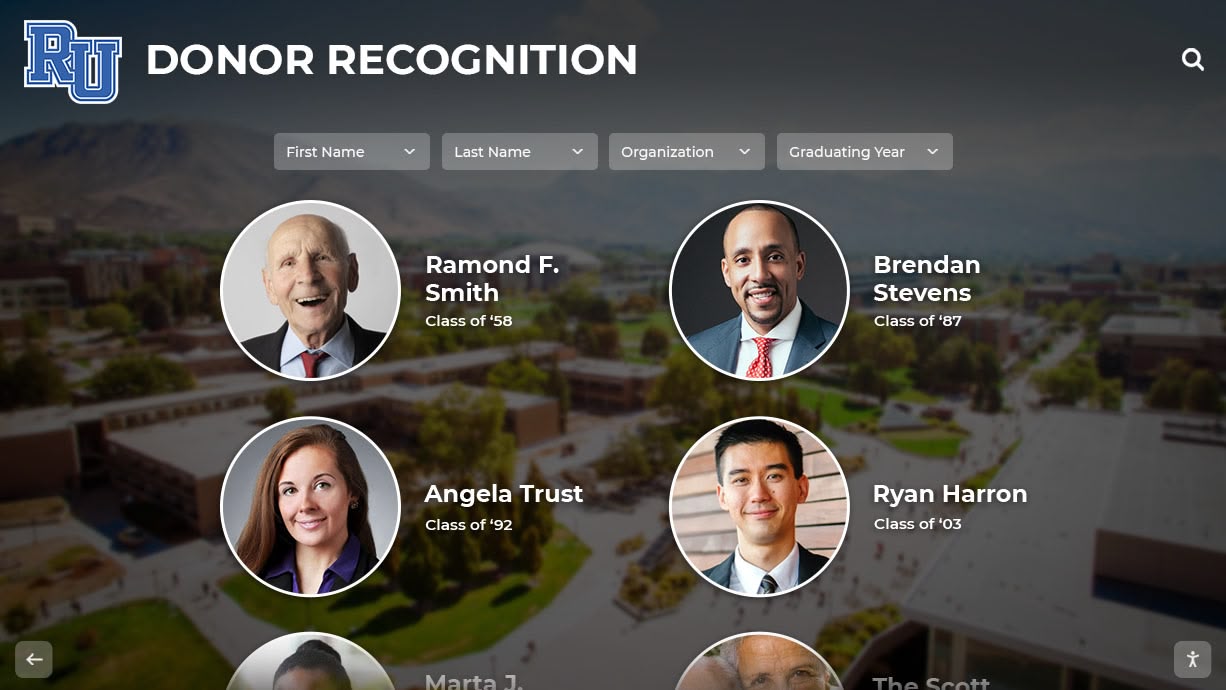
Recognition programs extend to university and community settings, celebrating achievements across educational levels
Creative Senior Ad Variations
Innovation beyond traditional formats creates distinctive programs that better serve diverse family preferences and school contexts.
Group and Organization Ads
Beyond individual family purchases, collective recognition ads serve different purposes.
Team or Club Collective Ads
- Sports team seniors honored together by team parents
- Drama club or band members recognized collectively by boosters
- Academic competition teams celebrated by department
- Reduces individual family cost while maintaining recognition
- Creates sense of collective identity and shared achievement
Extended Family Recognition Ads
- Grandparents purchasing ads celebrating multiple grandchildren graduating from different schools
- Combined tributes for twins or siblings graduating same year
- Collaborative ads from divorced or blended families creating unified tribute
- Multi-generational recognition highlighting family legacy at institution
Sponsored Business Ads
- Local businesses purchasing congratulatory ads supporting graduating class generally
- Family businesses including senior student employee recognition
- Corporate sponsorships combining brand visibility with student support
- Alumni-owned businesses giving back through graduate recognition
These variations expand revenue opportunities while serving recognition needs that individual family ads cannot address.
Digital Integration Approaches
Modern programs increasingly combine print yearbook ads with digital components that extend value.
Digital-First Alternatives:
Schools transitioning toward digital yearbooks can offer recognition ads with enhanced features impossible in print:
- Video tributes: Families submit short video messages that play within digital yearbook platforms
- Extended photo galleries: Unlimited photo collections browsable within student profiles
- Interactive timelines: Chronological presentations with embedded media
- Social sharing features: Easy distribution to extended family unable to purchase physical yearbooks
- Permanent hosting: Continued access decades after graduation versus physical yearbook deterioration
Hybrid Print-Digital Packages:
- QR codes in print ads linking to expanded digital content
- Print ads featuring curated selections from fuller digital galleries
- Digital preview access before yearbook delivery
- Social media sharing versions of print ads for family distribution
- Archival digital copies preserved even if physical books lost or damaged
Digital components particularly appeal to distributed families where grandparents, distant relatives, or military-deployed parents cannot easily access physical yearbooks but appreciate digital sharing options.
Explore how digital history archives preserve recognition content for permanent access.
Policy Considerations and Ethical Guidelines
Clear policies prevent conflicts while ensuring senior ad programs serve educational missions appropriately.
Content Standards and Approval Processes
Establishing clear boundaries protects schools from controversial content while respecting family expression.
Prohibited Content Categories:
- Profanity, vulgarity, or sexually suggestive material
- Alcohol, drugs, or illegal activity references or depictions
- Discriminatory language or imagery targeting protected groups
- Copyrighted material used without permission
- Defamatory statements about individuals or organizations
- Political campaign messaging or partisan advocacy
- Commercial advertising disguised as personal recognition (except authorized business sponsor ads)
Review Authority and Appeal Process:
Clear procedures for content disputes preserve fairness:
- Initial yearbook adviser review with feedback on policy violations
- Opportunity for family revision and resubmission
- Principal or designated administrator final decision authority
- Refund policy if content ultimately deemed unacceptable and family declines revision
Written policies distributed at program launch prevent surprise conflicts and establish shared expectations before families invest time creating ads.
Equity and Inclusion Considerations
Thoughtful programs ensure recognition opportunities remain genuinely accessible across school demographics.
Inclusive Participation Approaches:
- Non-traditional families: Accommodate guardians, foster parents, mentors, or other primary caregivers as ad purchasers
- Privacy protection: Allow families to opt-out entirely without pressure or student penalty
- Cultural sensitivity: Respect diverse family structures, naming conventions, religious traditions in message content
- Language access: Provide instructions in languages reflecting school community composition
- Disability accommodation: Ensure submission platforms meet accessibility standards for families with disabilities
Handling Sensitive Situations:
Some families face circumstances requiring compassionate accommodation:
- Deceased students remembered through memorial recognition ads purchased by school or community
- Incarcerated parents unable to participate but whose students still deserve recognition
- Estranged family relationships where student designates ad purchaser
- Confidential situations (witness protection, domestic violence) requiring privacy exceptions
Senior ad programs should serve all students equitably while maintaining flexibility to address unique family circumstances with dignity and discretion.
Learn about athletic director responsibilities in managing comprehensive student recognition programs.
Beyond Yearbooks: Year-Round Recognition Alternatives
While senior yearbook ads provide valuable commemorative moments, schools can extend recognition through complementary systems that operate continuously.
Digital Recognition Displays
Permanent installations in high-traffic school locations maintain senior recognition visibility far beyond yearbook distribution.
Interactive Touchscreen Systems:
Modern digital displays offer capabilities impossible in static print yearbooks:
- Searchable databases: Visitors browse complete senior class information by name, achievement, or activity
- Photo galleries: Unlimited images celebrating each student without space constraints
- Video integration: Graduation speeches, athletic highlights, artistic performances embedded in profiles
- Real-time updates: Content refreshed annually without reprinting costs
- Alumni connections: Graduated seniors remain accessible to younger students, reinforcing school legacy
These systems transform one-time yearbook publication events into permanent institutional memory accessible to current students, visitors, and returning alumni.
Placement and Accessibility:
Strategic installation locations maximize impact:
- Main school lobbies where visitors first enter campus
- Athletic facilities showcasing graduating athletes
- Performing arts centers celebrating senior theater, music, and arts students
- Library or media center providing research access to school history
- College and career centers inspiring underclassmen with senior destinations
Digital displays remain accessible 365 days annually rather than only during brief periods when yearbooks circulate.
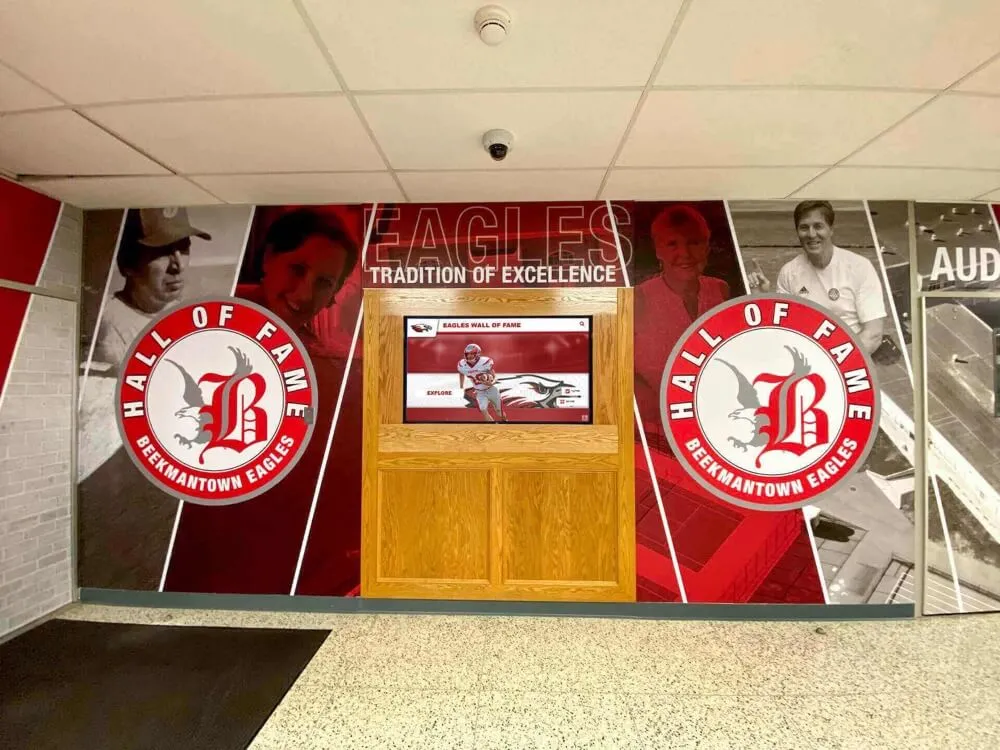
Permanent recognition installations honor students through displays that remain accessible long after graduation
Complementary Recognition Programs
Comprehensive student celebration extends beyond single yearbook ad purchases.
Multi-Platform Recognition Systems:
Graduation Ceremony Integration
- Senior recognition ads projected on screens during commencement processional
- Individual slides featuring ad content during graduate name reading
- Digital program books incorporating senior ad content
- Lobby displays during graduation reception events
Campus Legacy Programs
- Donor wall recognition for families making contributions beyond ad purchases
- Named scholarship recognition celebrating graduating seniors
- Athletic hall of fame inducting graduating senior athletes
- Academic excellence walls highlighting top scholars
- Arts showcase displays featuring graduating performers and artists
Digital Yearbook Platforms
- Unlimited page counts allowing expanded senior recognition sections
- Interactive features letting families update content annually
- Social sharing tools distributing recognition beyond physical yearbook purchasers
- Permanent cloud hosting maintaining access indefinitely
- Alumni networking features connecting graduated seniors with each other
Schools implementing multi-platform approaches maximize recognition impact while creating diverse revenue streams that collectively support comprehensive student celebration programs.
Discover how digitizing old yearbooks extends recognition beyond current students to historical alumni.
Measuring Senior Ad Program Success
Evaluating program effectiveness requires examining both quantitative metrics and qualitative impact.
Key Performance Indicators
Participation Metrics:
- Percentage of senior families purchasing ads (target: 60-80% in established programs)
- Average ad size selected (indicates value perception and financial accessibility)
- Repeat participation rate among families with multiple graduating students
- Early purchase rate before final deadline (indicates marketing effectiveness)
- Demographic participation patterns (ensures equitable access across school populations)
Financial Performance:
- Total revenue generated annually
- Net revenue after production costs, design assistance, platform fees
- Revenue per participating family (average purchase value)
- Year-over-year revenue growth trends
- Comparison to budget projections and fundraising goals
Operational Efficiency:
- Staff hours required for program administration
- Revision cycle rates (lower rates indicate clear guidelines and effective templates)
- On-time submission percentages
- Technical problem frequency requiring staff intervention
- Family satisfaction with submission process
Schools should track metrics consistently across years to identify trends, evaluate program changes, and make data-informed decisions about pricing, marketing, and operational procedures.
Qualitative Impact Assessment
Numbers alone cannot capture full program value—qualitative evidence provides essential success indicators.
Family Feedback:
- Testimonials from participating families about experience and perceived value
- Student reactions upon seeing their recognition ads in delivered yearbooks
- Alumni reflections years later about how ads remain meaningful
- Comparison feedback from families who participated versus those who did not
- Suggestions for improvement in future years
Program Reputation:
- Senior ad tradition status within school culture
- Word-of-mouth promotion among families
- Underclassman family anticipation for their future participation
- Community perception of yearbook quality and comprehensiveness
- Staff morale regarding program administration burden versus value
The most successful senior ad programs generate enthusiasm that makes participation expected rather than promoted—becoming self-sustaining traditions that families anticipate and value rather than efforts requiring constant marketing to maintain participation.
Learn about senior superlative categories that complement recognition ad programs.
Future Trends in Senior Recognition
Evolving technologies and changing family preferences continue reshaping how schools approach senior recognition ads.
Emerging Technologies
Augmented Reality Integration
- QR codes in print ads linking to AR experiences viewable through smartphones
- 3D photo captures creating holographic-style senior portraits
- Interactive elements activated when viewing ads through AR apps
- Virtual reality yearbook experiences offering immersive recognition browsing
Artificial Intelligence Applications
- AI-powered design assistants helping families create professional-quality layouts
- Automated photo enhancement optimizing image quality
- Smart content suggestions based on student achievement data
- Voice-to-text message drafting assistance for families uncomfortable with writing
Social Media Integration
- Automated sharing of senior ads to family social networks upon yearbook release
- Hashtag campaigns collecting family tributes from social platforms into yearbook compilation
- Live social feeds displaying real-time congratulations during graduation events
- Alumni networking platforms connecting senior ad archives across graduation years
Shifting Family Preferences
Understanding changing expectations helps schools adapt programs to remain relevant.
Personalization Demands
- Families expecting greater creative control and customization options
- Resistance to rigid templates in favor of flexible design freedom
- Desire for uniqueness rather than standardized appearances
- Willingness to pay premium prices for truly distinctive tributes
Digital-First Orientations
- Younger parent generations comfortable with digital-only options
- Preference for shareable digital content over physical-only print
- Expectation of interactive features beyond static images
- Interest in video tributes replacing or supplementing text messages
Sustainability Consciousness
- Environmental concerns about paper production and physical yearbook sustainability
- Interest in digital yearbook options reducing waste
- Preference for cloud-based permanent storage versus physical degradation
- Support for programs balancing tradition with ecological responsibility
Schools monitoring these trends can adapt senior ad programs proactively rather than losing relevance as family expectations evolve beyond current offerings.
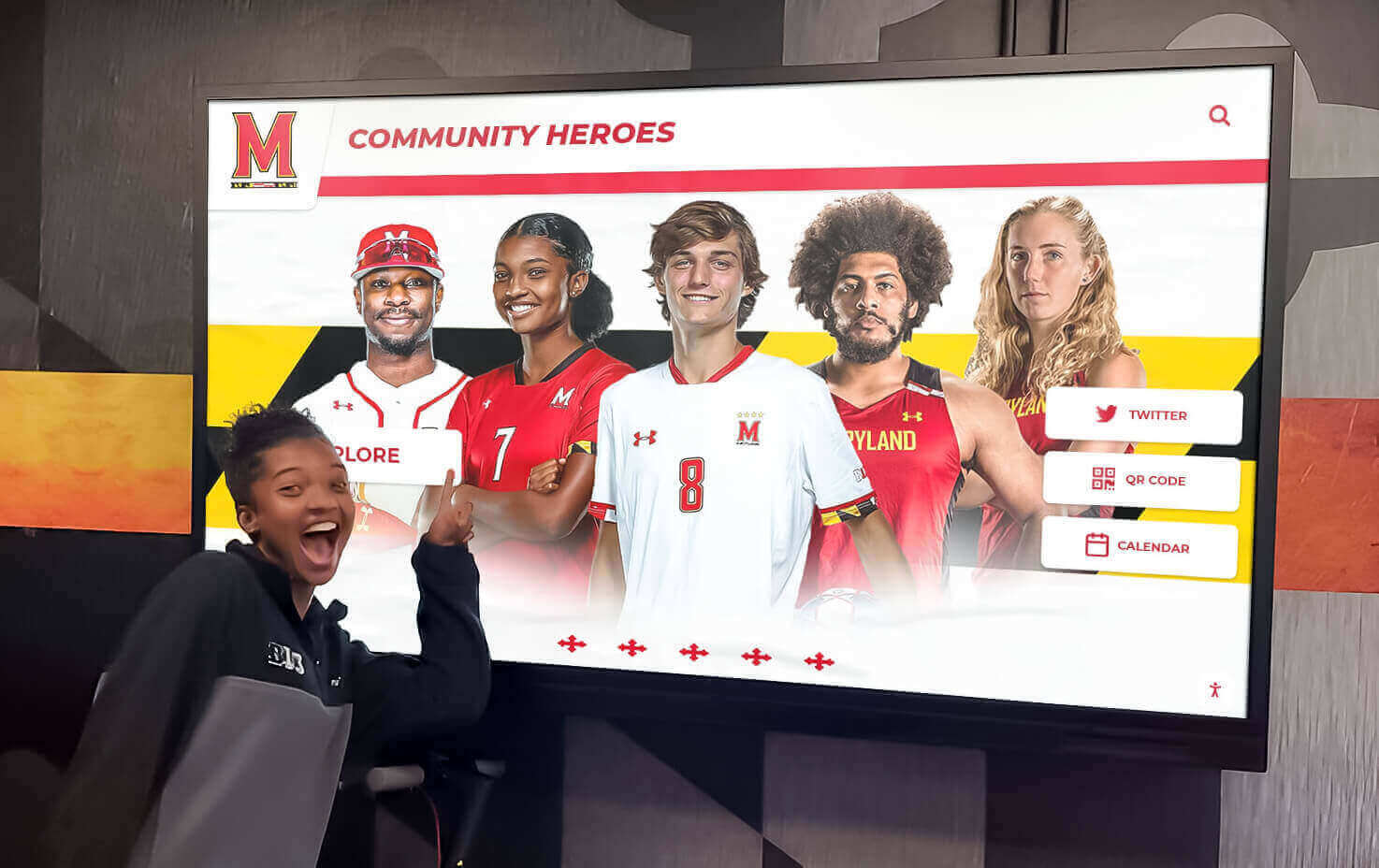
Next-generation recognition systems engage students through interactive technology that brings tributes to life
Implementing or Improving Your Senior Ad Program
Schools without existing programs or seeking to enhance current offerings can follow systematic implementation approaches.
Starting a New Senior Ad Program
Year One Foundation Building:
Planning Phase (Spring Before Launch Year):
- Research peer school programs for pricing, policies, and participation rate benchmarks
- Survey senior families about interest, preferred pricing, and desired features
- Select submission platform (vendor system versus custom workflow)
- Develop design templates and technical specification guidelines
- Draft content policies and review procedures
- Create marketing materials and sample ads
- Train staff on systems and procedures
Launch Phase (Fall of Launch Year):
- Announce program at senior parent events with clear value proposition
- Distribute comprehensive information including examples, pricing, deadlines
- Provide design workshops or office hours for families needing assistance
- Monitor early submissions for common problems requiring guideline clarification
- Send regular reminder communications maintaining program visibility
Execution Phase (Winter/Spring):
- Process submissions through established review workflow
- Communicate efficiently with families requiring revisions
- Meet printer deadlines integrating ad section into complete yearbook
- Evaluate first-year results and gather feedback for improvements
Reflection and Refinement:
- Analyze participation rates, revenue results, and operational efficiency
- Survey participating and non-participating families about program experience
- Identify successful elements to preserve and problems to correct
- Plan year-two improvements based on year-one learning
New programs rarely achieve optimal results immediately—treating year one as learning experience with deliberate refinement planning creates foundation for long-term success.
Enhancing Existing Programs
Common Improvement Opportunities:
Increasing Participation:
- Expand early-bird discount incentives
- Create payment plan options reducing upfront cost barriers
- Improve marketing quality with better visual examples
- Establish financial assistance for families unable to afford participation
- Recruit student ambassadors promoting program among peers
Streamlining Operations:
- Upgrade to more sophisticated submission platforms
- Develop clearer technical guidelines reducing revision cycles
- Create video tutorials explaining submission process
- Implement automated reminder systems reducing manual communication burden
- Establish earlier deadlines providing greater production buffer
Enhancing Value:
- Add digital components complementing print ads
- Offer professional design services for additional fee
- Create keepsake digital copies families can share
- Include senior ads in graduation ceremony presentations
- Develop online galleries extending ad visibility beyond yearbook pages
Expanding Revenue:
- Introduce premium sizes (double-page spreads)
- Offer rush pricing for late participants
- Create business sponsor ad opportunities
- Develop alumni-year reunion ads in current yearbooks
- Package senior ads with other yearbook purchases for discount pricing
Regular program evaluation and continuous improvement maintain senior ad relevance and effectiveness over many years.
Explore how booster clubs support recognition programs through fundraising and volunteer efforts.
Conclusion
Senior recognition ads in yearbooks create meaningful intersections between institutional documentation and personal celebration—transforming commemorative books into treasured keepsakes where families publicly honor their graduating students through personalized tributes that endure far beyond graduation day ceremonies. Well-designed senior ad programs serve multiple stakeholders simultaneously: families receive valuable recognition opportunities they willingly purchase, schools generate reliable revenue supporting yearbook production and program enhancements, and graduating students experience tangible demonstrations of family pride preserved permanently in published form.
Successful implementation requires careful attention to pricing structures that balance accessibility with sustainability, clear submission guidelines that maintain quality while minimizing administrative burden, marketing approaches that communicate genuine value across diverse family motivations, and policies ensuring equitable participation regardless of economic circumstances. Schools that view senior ads not merely as fundraising mechanisms but as genuine service offerings that enhance yearbook comprehensiveness and family engagement create programs that become self-sustaining traditions requiring minimal promotional effort as anticipation and participation build organically over years.
The future of senior recognition increasingly extends beyond traditional print yearbook pages into digital platforms offering enhanced interactivity, permanent accessibility, and year-round visibility impossible in static printed books. Interactive touchscreen displays in school lobbies, searchable digital yearbook platforms with unlimited photo galleries, augmented reality experiences activated by smartphone apps, and social media integration enabling broad content sharing represent emerging opportunities that complement rather than replace traditional recognition ads. Schools embracing multi-platform approaches maximize recognition impact while serving evolving family preferences toward digital engagement and permanent cloud-based content preservation.
Ready to extend senior recognition beyond yearbook pages? Rocket Alumni Solutions creates interactive digital displays that celebrate graduating students year-round through touchscreen systems installed in school lobbies, athletic facilities, and performing arts centers. Unlike yearbooks distributed once and stored on shelves, these permanent installations keep senior recognition continuously visible to current students, visitors, and returning alumni—preserving tribute content with unlimited photos, video integration, and searchable databases that honor achievements in perpetuity. Discover how digital recognition displays complement your yearbook program with lasting tributes accessible 365 days annually.
Ready to see this for your school?
Picture your collection in a custom mockup
Start with your yearbook collection and digitization goals, then request a custom digital mockup for your school.