Senior ads represent one of the most personal and emotionally resonant sections of any K-12 yearbook—dedicated spaces where families purchase advertising to celebrate their graduating student with heartfelt messages, milestone photos, and tributes spanning years of shared memories. Unlike standard yearbook content produced by students and staff, senior ads give parents and guardians an active voice in the publication, transforming the yearbook from a school record into a cherished family keepsake that outlasts any single school year.
Yet many yearbook advisers feel uncertain about managing the senior ad process. Questions accumulate around how to structure pricing, set submission deadlines, guide families through design choices, collect high-quality photos, and coordinate production across dozens or hundreds of individual ad submissions. The logistical complexity compounds when advisers must also ensure digital accessibility so that senior ads created for print survive long after physical yearbooks yellow and bind.
This guide covers everything K-12 schools need to know about senior ads for yearbook—from understanding what they are and why families value them to practical strategies for creating compelling tributes, collecting content digitally, and preserving graduating class memories in formats accessible to future generations.
Senior ads sit at the intersection of family celebration and community record-keeping. When done well, they transform yearbooks into documents that families pull off shelves decades later—not just for the senior’s own portrait page, but for the deeply personal tributes their loved ones crafted with intention and care.

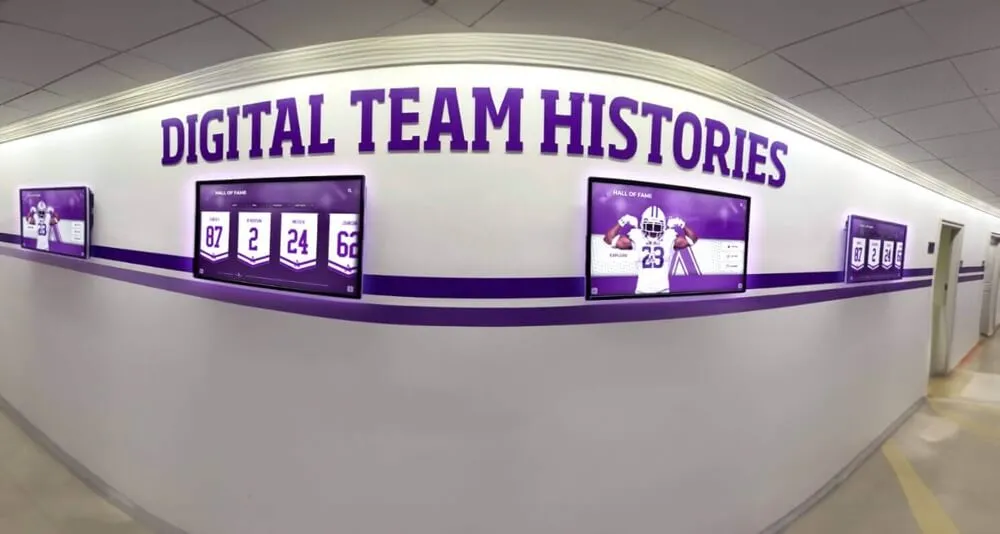
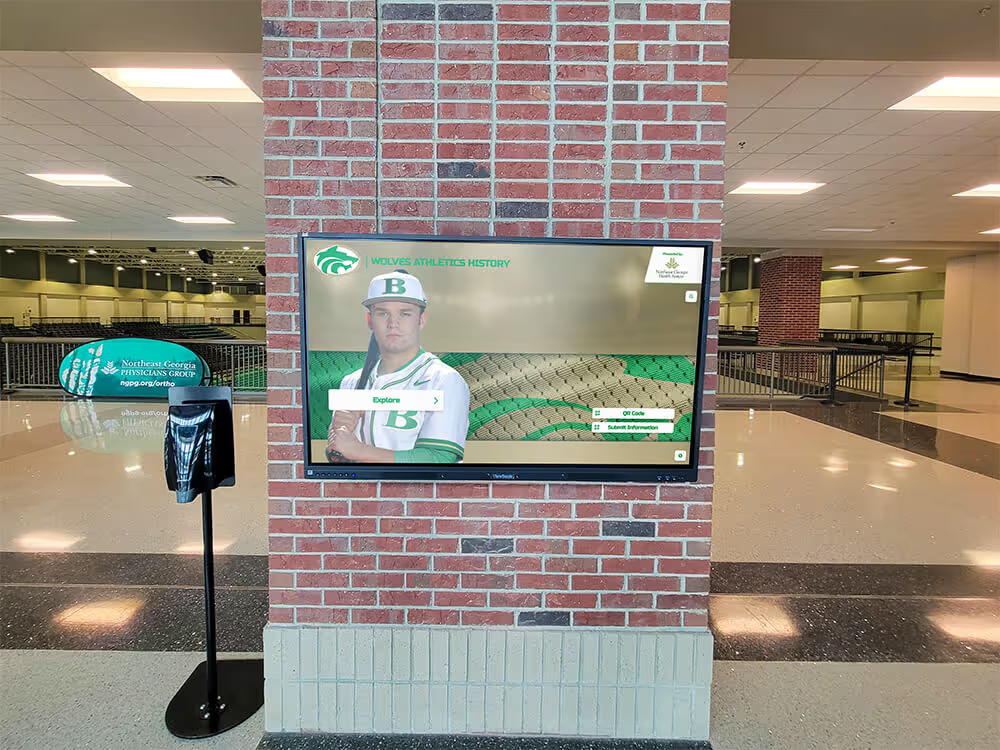
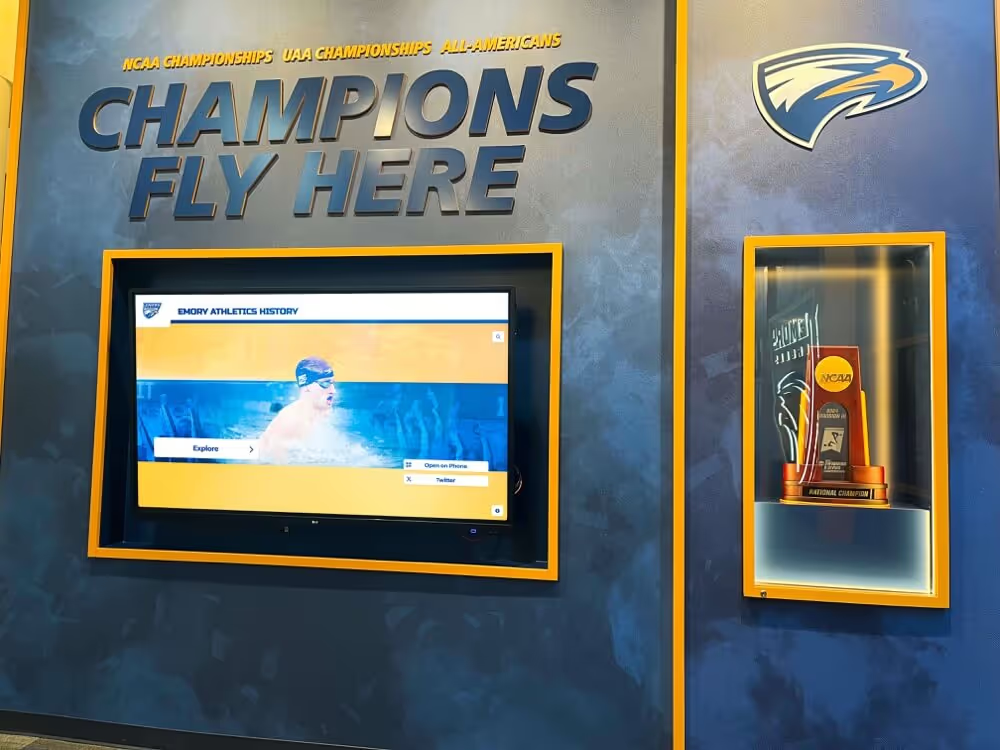
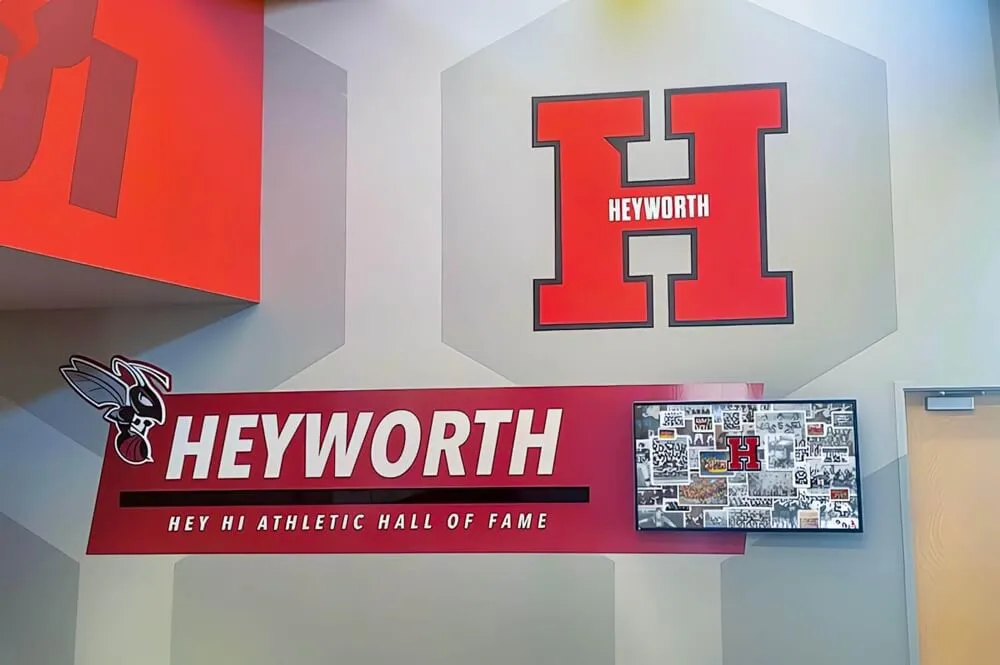
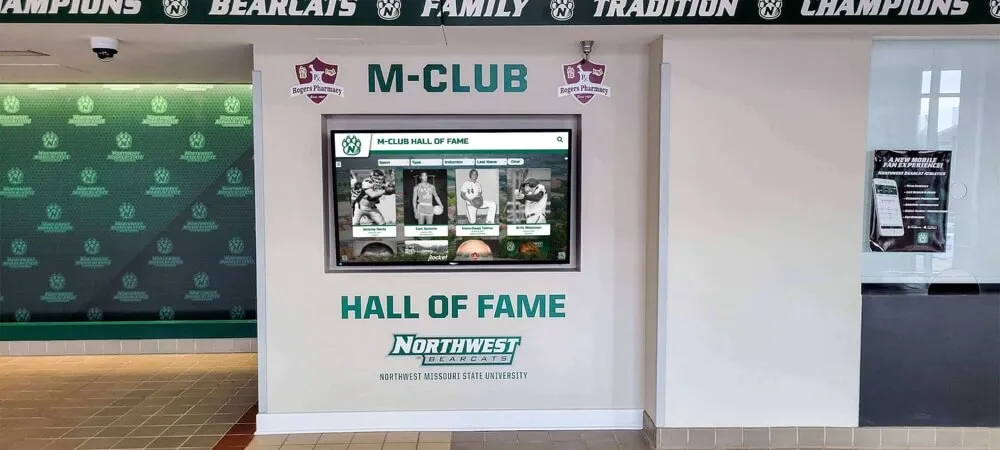
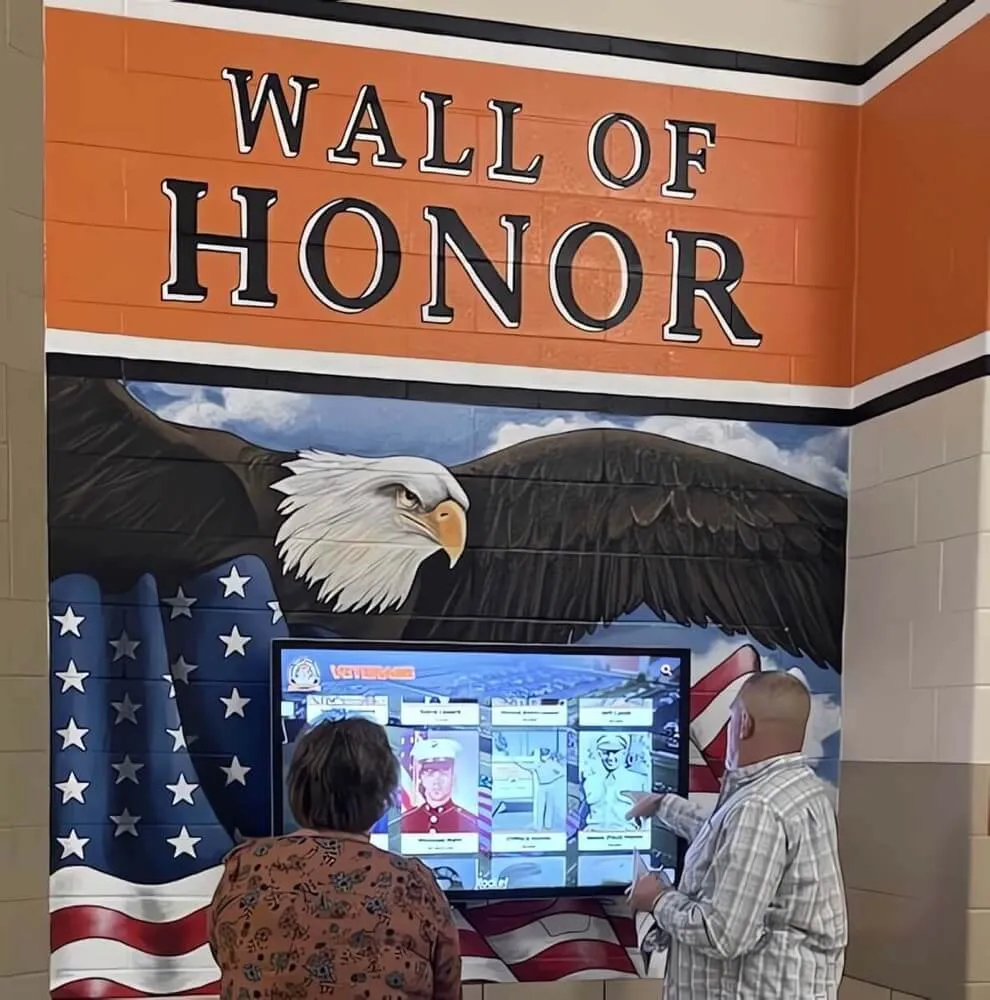
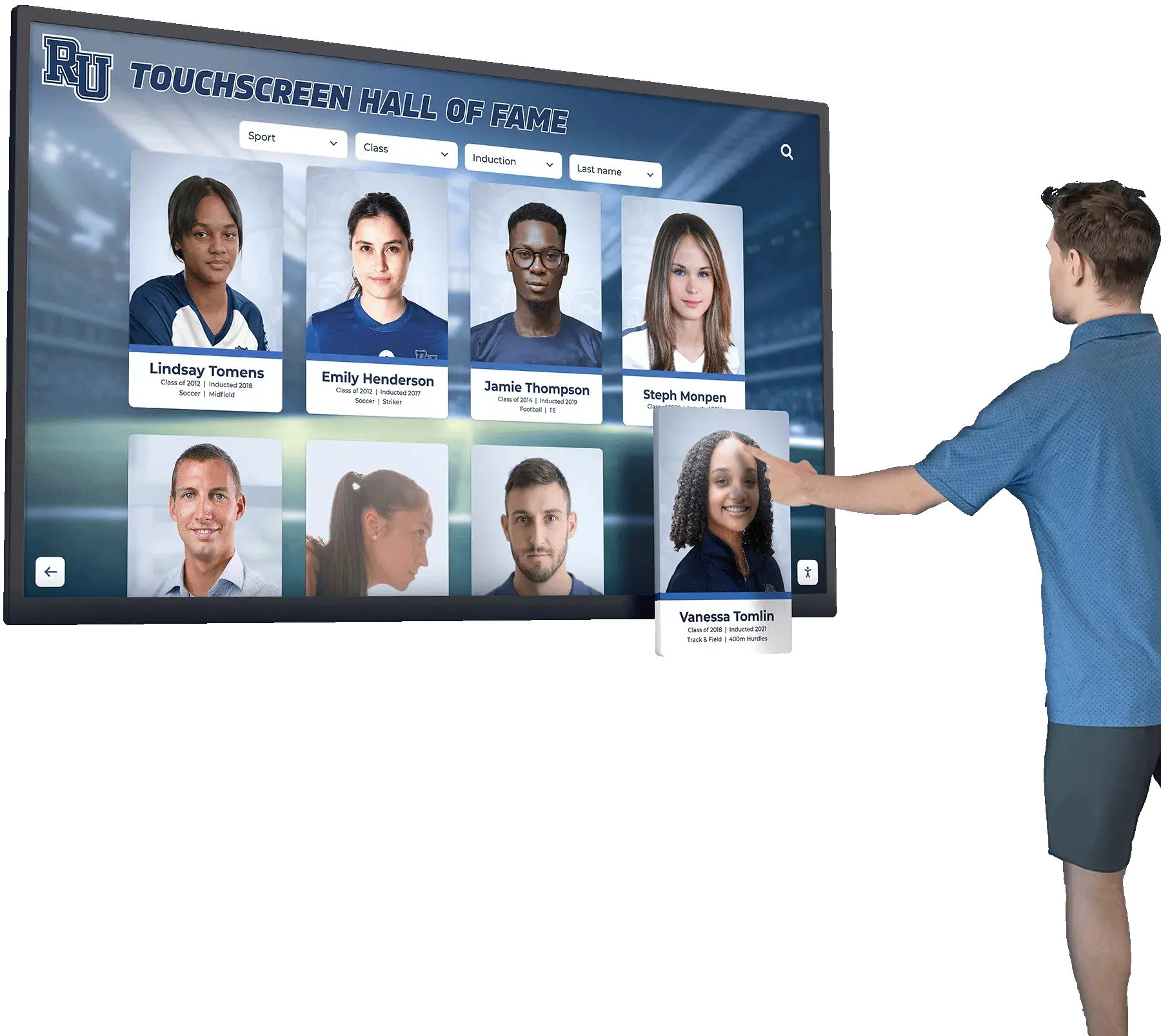
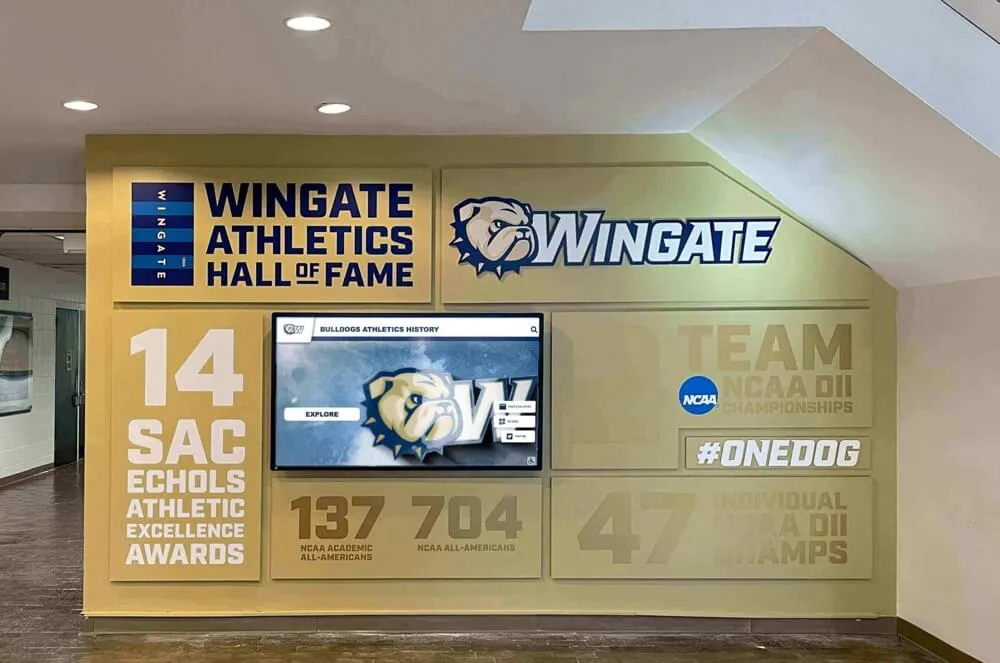
Senior recognition—whether in yearbook ads or digital displays—creates individualized tributes that students and families treasure for decades after graduation
What Are Senior Ads in Yearbook?
Senior ads—sometimes called senior tributes, senior recognition ads, or informally “baby ads”—are purchased advertising spaces within the yearbook that families, friends, grandparents, or other loved ones buy to celebrate a graduating student. These are distinct from school-produced content: a family member submits the design, photos, and personalized message, paying the yearbook program a fee that typically helps fund the publication’s production costs.
The Anatomy of a Senior Yearbook Ad
Most senior ads share common structural elements:
Photos: A mix of childhood photos and current senior images, often spanning the student’s entire educational journey from kindergarten through senior year. Baby photos remain perennially popular choices, giving these tributes their informal nickname.
Personalized message: A heartfelt note from parents, guardians, siblings, or grandparents expressing pride, love, life advice, and memories shared together.
Memorable details: Milestone accomplishments, meaningful personal references, favorite shared memories, future plans, or character traits that capture the student’s unique identity.
Design elements: Decorative borders, background colors, coordinating fonts, and layout choices that reflect the student’s personality or family aesthetic preferences.
Senior ads typically appear in a designated section of the yearbook—often near the senior portrait pages or in a dedicated “tributes” or “ads” section toward the back of the book. Depending on school size, this section can range from a few pages for small graduating classes to elaborate multi-page sections at large schools where nearly every senior receives a family tribute.
Why Senior Ads Matter to Yearbook Programs
Senior ads generate meaningful revenue for yearbook programs, often covering substantial portions of printing, design, and distribution costs. A single full-page senior ad might sell for $150–$400 depending on school size and local market expectations, while quarter-page ads can retail for $50–$100. Programs with strong senior ad participation can generate thousands of dollars that subsidize yearbook costs and reduce the per-book price paid by students.
Beyond revenue, senior ads contribute editorial value. They provide deeply personal content that school-produced photography and writing can never replicate, adding an emotional dimension to yearbooks that families specifically seek out when purchasing copies years after graduation.
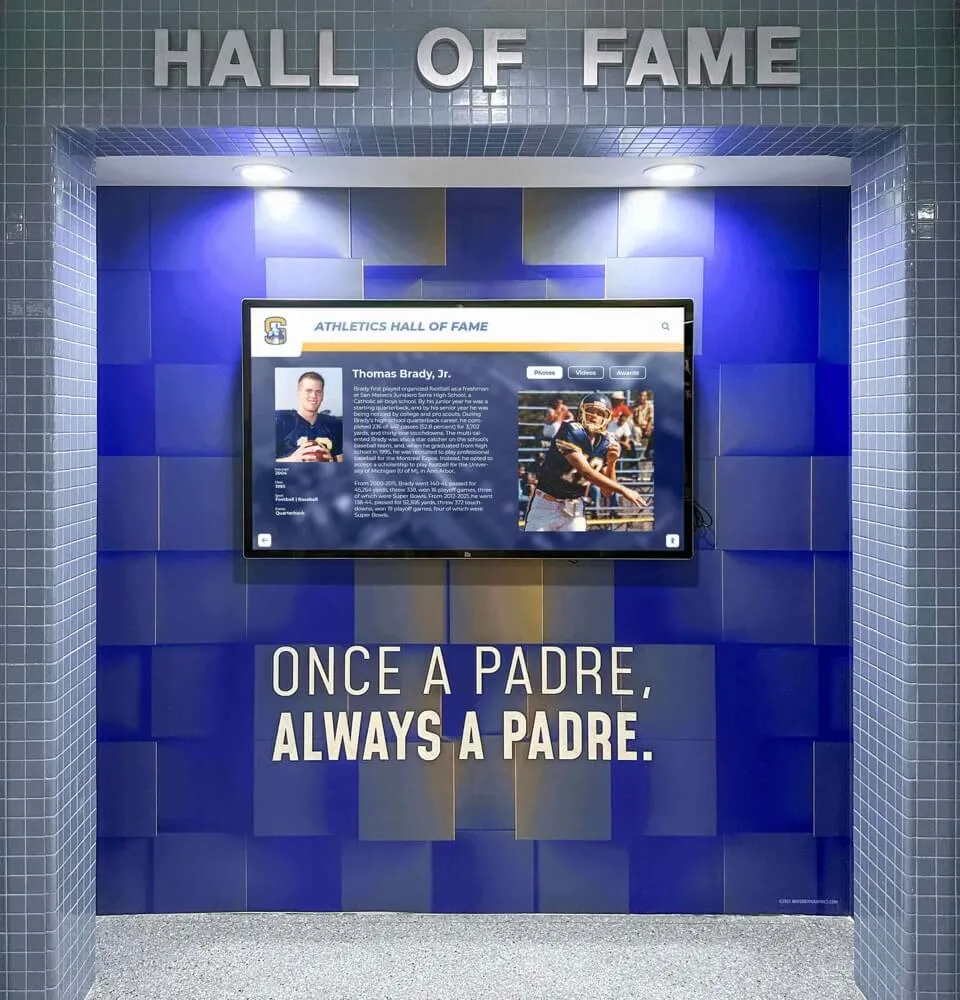
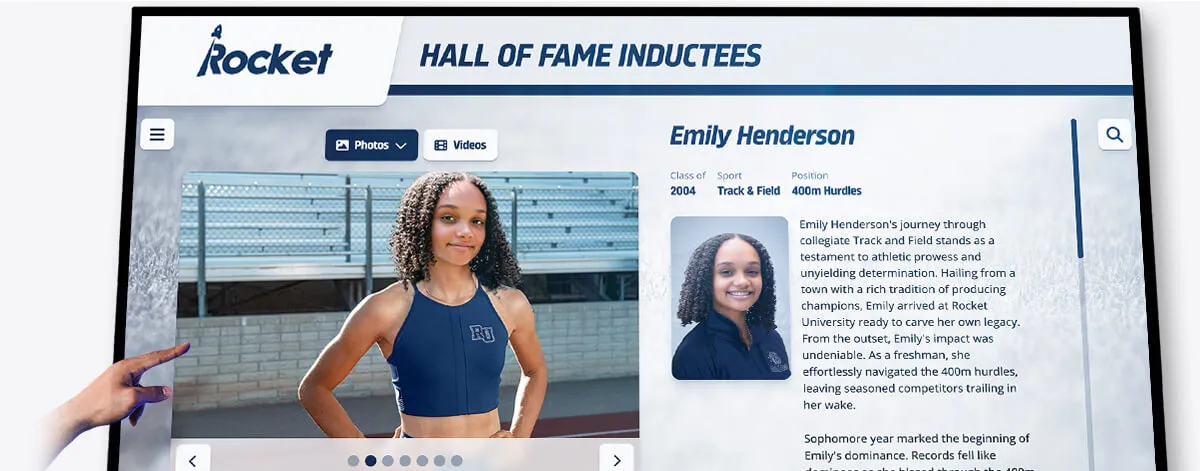
Permanent recognition displays and senior yearbook ads share a common goal: preserving individual student stories for family and community memory across time
Types of Senior Ads by Size and Format
Understanding the available ad formats helps yearbook teams structure pricing tiers and helps families choose options that fit both their budget and their tribute goals.
Full-Page Senior Ads
The most expansive option, full-page ads provide maximum space for photos, text, and design expression. Families who purchase full-page ads can include multiple childhood-to-senior photo progressions, longer personalized messages, collage-style layouts combining sports, academics, and personal moments, and even graduation announcements or family portrait photos.
Full-page ads work especially well for families with many cherished photos and extensive tributes they want to share. They also suit students who’ve participated in multiple activities—a multi-sport athlete, performer, and student council leader might fill a page easily with representative photos from each domain of their school career.
Half-Page Senior Ads
The most popular tier at many schools, half-page ads balance meaningful tribute space with more accessible pricing. Families typically include 3–5 photos and 75–150 words of personal message, creating focused tributes that highlight key relationships and memories without the design complexity of full-page layouts.
Half-page horizontal and half-page vertical orientations both work well, with vertical ads often fitting better alongside senior portrait pages while horizontal ads create distinctive visual breaks in tribute sections.
Quarter-Page Senior Ads
Entry-level ad sizes make senior recognition accessible to more families. Quarter-page ads prioritize one or two strong photos alongside a brief but heartfelt message—often 40–75 words that capture the essential tribute without requiring extensive design work or photo curation.
For families uncertain about purchasing larger ads, quarter-page options provide an accessible starting point. Some yearbook programs create bundled upgrade pathways that encourage families who start with quarter-page purchases to upgrade as the deadline approaches and their enthusiasm builds.
Business and Organization Ads
While not strictly senior ads, many yearbooks sell advertising space to local businesses, athletic booster clubs, PTAs, and community organizations. These ads often congratulate the graduating class collectively or acknowledge individual seniors by name, creating community connection while generating additional revenue that supplements family ad sales.
How to Create Compelling Senior Yearbook Ads
Whether advisers are guiding families through the process or designing ads professionally on their behalf, several principles separate memorable senior ads from forgettable ones.
Photo Selection and Quality
Photo quality determines senior ad quality more than any other single factor. Advise submitting families to prioritize:
High-resolution digital files: Original photos from digital cameras or smartphones export at sufficient resolution for print. Heavily compressed social media screenshots often print poorly and pixelate at yearbook trim sizes. Request files at 300 DPI minimum at the intended print size.
Photo variety: Strong senior ads typically mix at least one current senior portrait with childhood photos spanning multiple ages. The visual progression from baby or kindergarten through senior year creates the narrative arc that makes senior ads emotionally powerful and immediately recognizable.
Clear subjects: Photos where the senior is clearly identifiable and the primary subject reproduce better than large group shots where faces are small or partially obscured.
Sentimental over technically perfect: A slightly soft snapshot of a meaningful moment often creates more emotional resonance than a technically perfect but generic studio image. Families should lean into photos that capture authentic personality and genuine relationships.
Writing Effective Tribute Messages
The written tribute transforms a photo collage into a genuine senior ad. Guide families toward messages that:
Use specific memories: “Remember when you stayed up until midnight finishing your science fair project?” lands differently than generic “We’re so proud of you!” Specificity makes tributes feel genuinely personal rather than interchangeable.
Acknowledge growth honestly: The most affecting senior ads recognize how much the student has changed, often contrasting the child visible in early photos with the adult about to graduate and find their own path.
Look forward as well as back: Alongside celebrating past memories, effective senior ads acknowledge the future—what families wish for the graduate, what dreams they hope will be realized, who they hope the student becomes in the years ahead.
Stay appropriately concise: Even full-page ads benefit from focused writing. A single paragraph written from the heart often creates more impact than several hundred words of comprehensive but diluted tribute text.
Schools that prioritize storytelling through digital recognition understand that combining compelling photos with specific personal narrative creates memories that outlast any single medium—whether print yearbook or digital archive.
Senior Ad Design Principles
Yearbook staffers who assist families with senior ad design should apply consistent visual principles:
Limit font choices: Use 2–3 complementary fonts maximum—typically one display font for headline or student name, one serif or sans-serif body font for message text, and possibly one accent font for dates or quotes.
Create visual hierarchy: The student’s name should read first, followed by photos, then written tribute text. Clear hierarchy guides readers through the ad naturally rather than forcing them to search for the tribute’s focus.
Leave breathing room: White space is a design tool, not wasted space. Senior ads cluttered with too many photos and too much text become difficult to read and emotionally overwhelming.
Coordinate with the student’s aesthetic: When seniors communicate their color preferences, style sensibilities, or design preferences early in the process, families can create stronger personal connection between the ad’s visual design and the graduate it celebrates.
Collecting Senior Ad Content Digitally
The operational challenge of managing senior ads—collecting photos, messages, payment, and design approvals from dozens or hundreds of families—represents one of the most logistically intensive aspects of yearbook production. Digital systems streamline this process significantly while reducing errors and staff time.
Digital Collection Platforms
Modern yearbook programs use purpose-built software to collect senior ad content:
Yearbook ordering platforms: Many yearbook companies offer integrated ordering systems where families can upload photos, enter tribute text, choose ad sizes, and pay—all in a single digital workflow that feeds directly into the design process.
Custom submission forms: Schools that design their own ad content collection often use Google Forms, Typeform, or similar tools to gather structured submissions with file upload capabilities and automatic notification systems.
Email submission systems: Simpler approaches use organized email collection, though these require more staff time to manage and increase error risk compared to structured form-based systems that enforce required fields.
Regardless of platform, clear submission guidelines prevent the most common problems: families who submit low-resolution files, unclear payment confirmations, incorrect student information, or photos that arrive after production deadlines have closed.
Schools with established historical photo archives understand that systematic digital collection processes established for yearbook production also create lasting institutional records that benefit future students, staff, and alumni researching school history.
Managing Deadlines and Communication
Senior ad sales and content collection typically operate on a compressed timeline. Best practices include:
Multi-stage deadlines: Separate the sales deadline (when families must commit to purchasing an ad) from the content submission deadline (when all photos and text must be received). This structure allows staff to confirm total ad count before beginning final layout planning.
Tiered pricing incentives: Early purchase discounts—often 10–20% off for orders placed before a specified date—encourage families to commit and submit early, reducing last-minute rushes and extending the period available for design revisions.
Reminder communications: Automated email reminders, text messages, and school newsletter inclusions in the weeks before deadlines significantly improve on-time submission rates and reduce the number of families who miss the window entirely.
Clear submission specifications: Detailed guides explaining exactly what families should submit, in what file format, at what resolution, and using which platform reduce back-and-forth communication and production delays caused by unusable files.
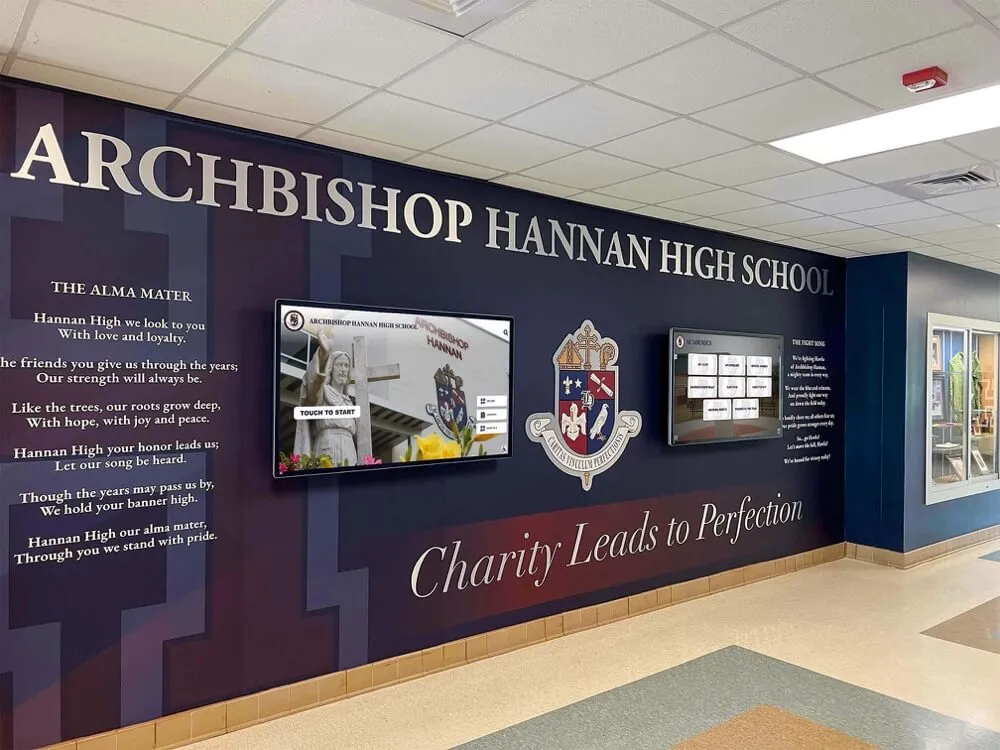
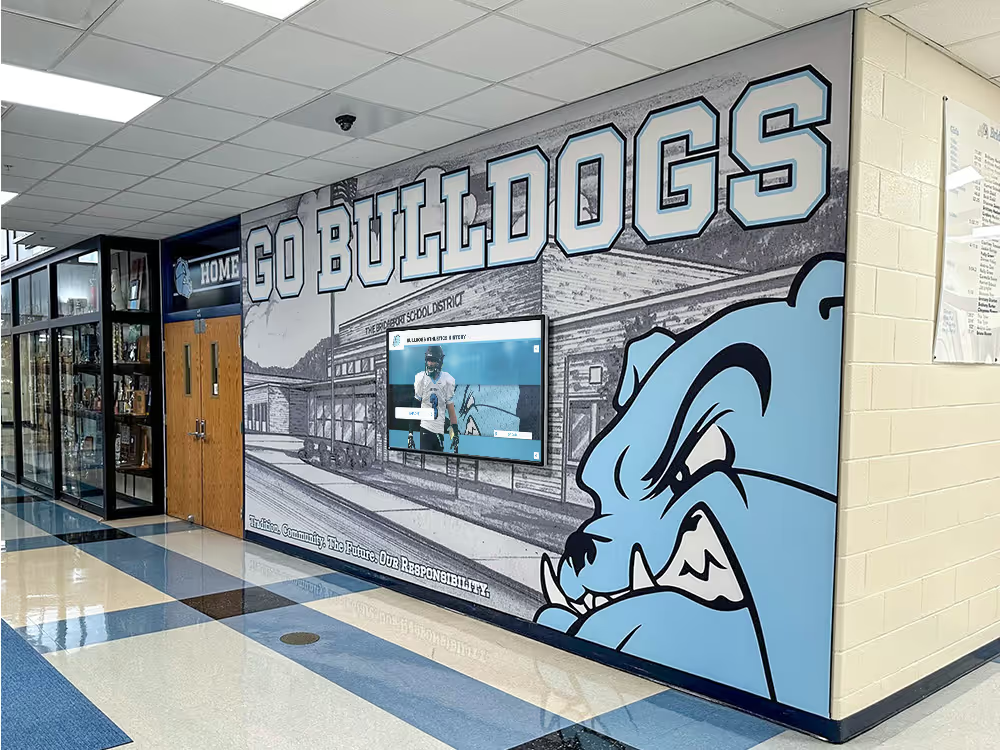
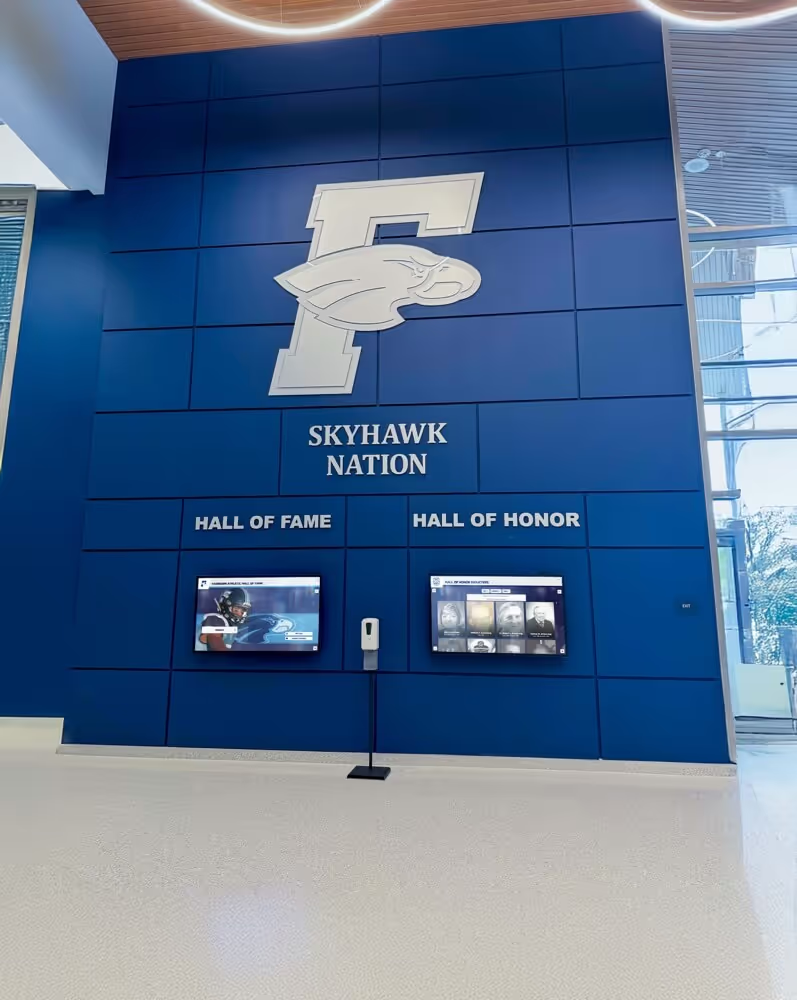
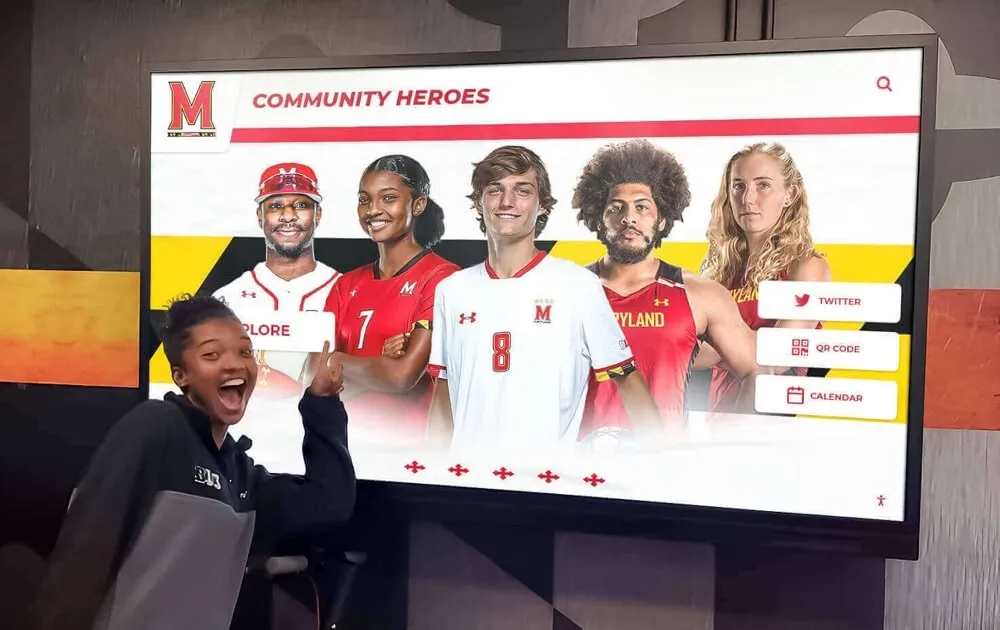
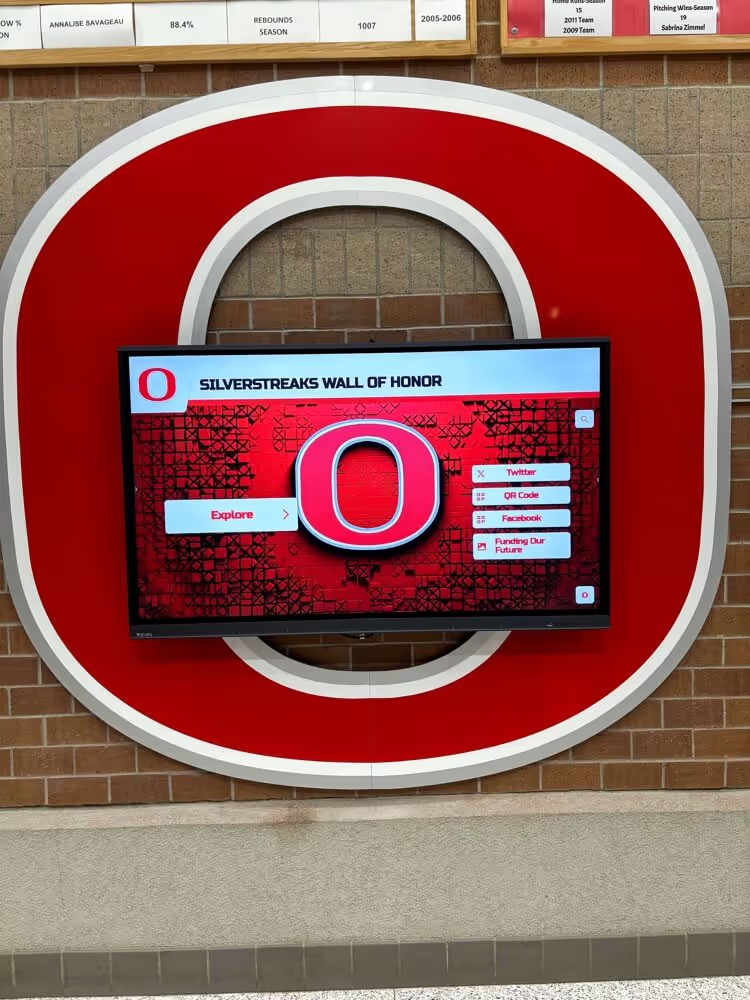
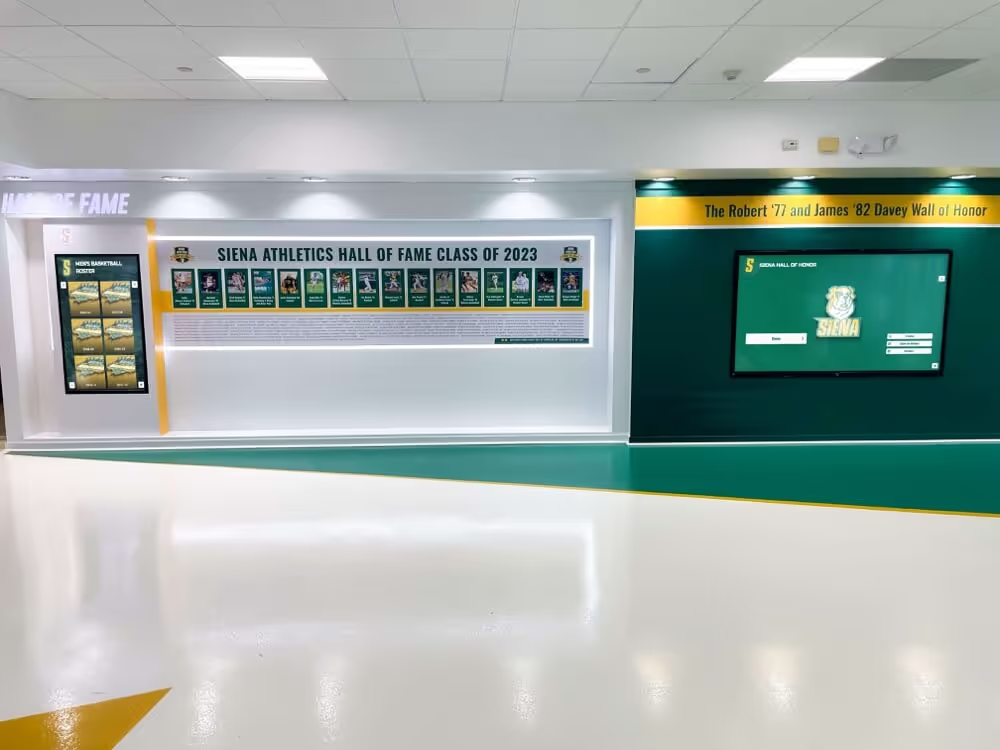
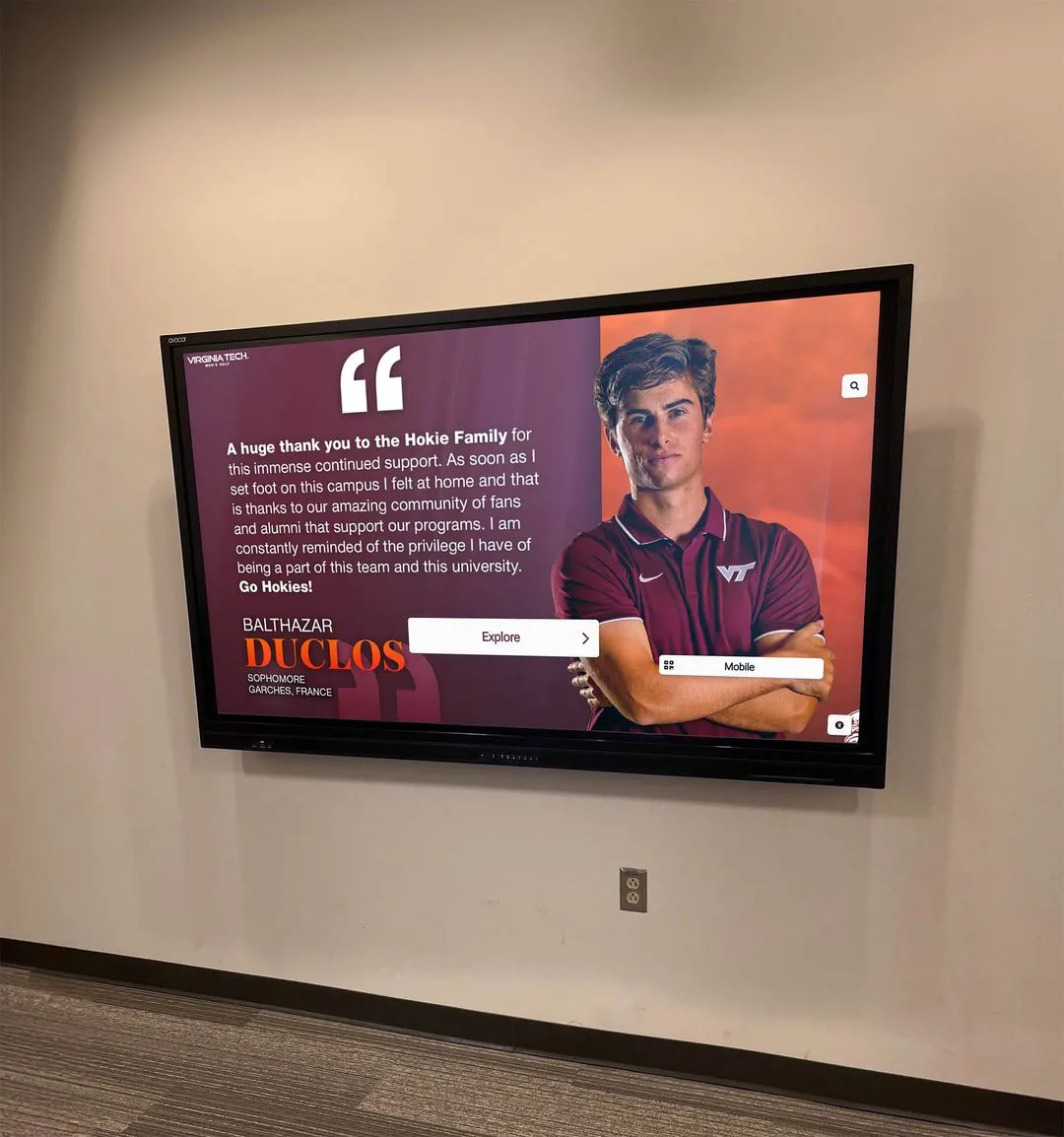
Whether in yearbook pages or permanent hallway displays, individual student recognition requires systematic collection, organization, and thoughtful presentation of personal content
Senior Ads Across K-12: How Different Grade Levels Approach the Tradition
Senior ads look different depending on whether “senior” means 12th grade at a high school, 8th grade at a middle school, or 5th or 6th grade at an elementary school. Each context requires adapted approaches that honor the specific transition being marked.
High School Senior Ads
The most elaborate and emotionally complex versions of senior ads appear in high school yearbooks, where families have 13 years of accumulated memories to work with and seniors are transitioning to genuine adult independence. High school senior ads typically:
- Feature photo progressions spanning all 13 school years
- Include messages from parents acknowledging major milestones from first steps through graduation
- Reference college plans, career aspirations, or gap year activities
- Incorporate photos from major activities: sports, performances, proms, community service, academic achievements
- Sometimes include contributions from siblings, grandparents, or family friends alongside parent tributes
The thoughtful high school graduate display guide offers additional perspective on how schools mark this significant transition across both print and digital recognition channels to ensure graduating students receive lasting acknowledgment.
Middle School Senior Ads (8th Grade)
Middle schools increasingly incorporate senior ad sections into 8th-grade yearbooks, recognizing that graduation from middle school represents a meaningful transition even if it receives less cultural attention than high school graduation. Middle school senior ads typically:
- Span elementary through middle school photos (often 9 school years of accumulated memories)
- Focus on the transition from childhood into early adolescence
- Reference high school plans and growing interests and identities
- Reflect parents consciously processing their child’s rapid maturation during the middle school years
For 8th-grade graduates specifically, the combination of yearbook recognition and broader school celebration activities creates planning opportunities explored in detail in this 8th grade graduation planning guide.
Elementary School Senior Ads (5th and 6th Grade)
Elementary graduation yearbooks often feature the most emotionally intense senior ads because parents are consciously marking the end of their children’s childhood school years. Elementary senior ads:
- Typically feature fewer years of photos (5–6 school years) but often include infant and toddler images
- Carry messages that address the bittersweet nature of elementary graduation with particular tenderness
- Sometimes incorporate teacher tributes alongside parent messages
- Focus on establishing identity and character the family hopes will carry through future school years
Elementary yearbooks also provide unique opportunities for visual creativity—more colorful designs, playful layouts, and age-appropriate styling that differs significantly from high school aesthetic expectations. Schools looking for inspiration can explore elementary school yearbook cover ideas that establish the visual tone for the entire publication, including the senior ads section.
How Schools Preserve Senior Ads Beyond Print
Physical yearbooks face an unavoidable decay timeline. Pages yellow, bindings weaken, and the physical copies families receive at graduation eventually become fragile artifacts requiring careful handling. Digital preservation strategies extend the life of senior ad content indefinitely, ensuring tributes remain accessible long after physical yearbooks have aged past comfortable regular handling.
Digital Yearbook Platforms
Modern digital yearbook platforms allow schools to publish yearbook content—including senior ads—in interactive digital formats accessible via any device. Families who receive digital yearbook access can revisit senior ad tributes without risking damage to physical copies, share specific pages via direct links with extended family, and access the content from anywhere in the world regardless of where life takes them after graduation.
Digital platforms also solve the distribution problem for students who never received physical copies, graduates who moved frequently and lost track of their yearbooks, and alumni who want to reconnect with their senior year memories decades after the fact.
Permanent Digital Recognition Displays
Schools that invest in permanent digital recognition displays create ongoing public acknowledgment of graduating classes that complements yearbook senior ads in powerful ways. These displays:
- Feature graduating class photos, names, and achievement highlights in high-traffic school areas
- Allow future students, staff, and visitors to explore graduate histories interactively
- Preserve institutional memory across leadership changes, staff transitions, and building renovations
- Create alumni connection points that bring graduates back to their school community years and decades later
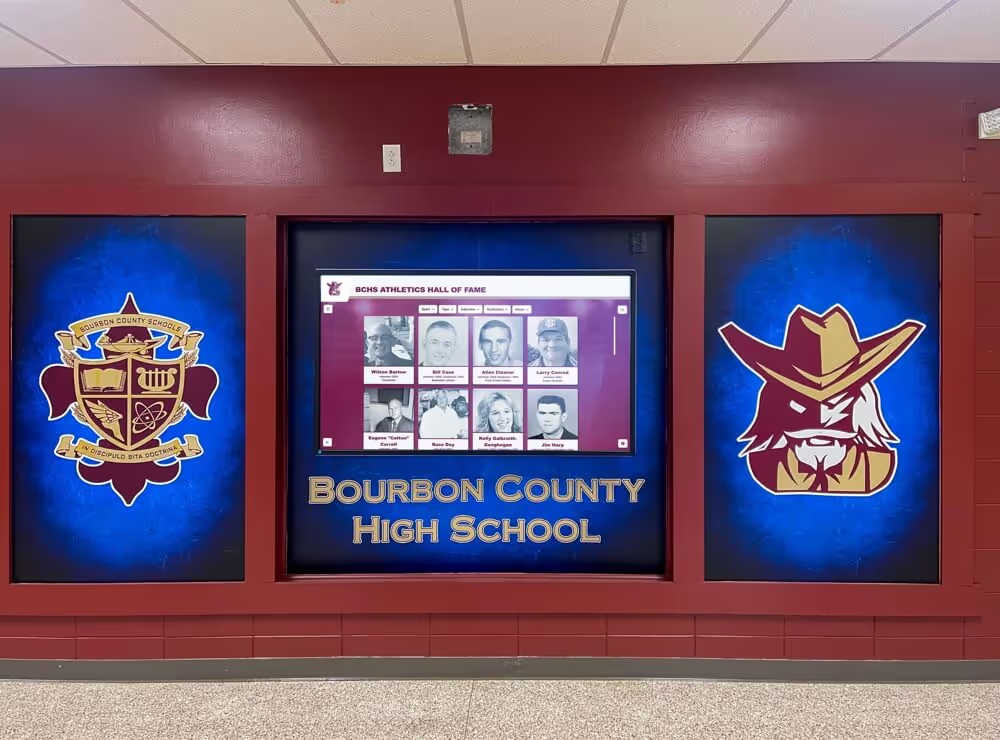
Senior recognition programs that extend beyond yearbook pages into physical school spaces create layered recognition that families and graduates encounter across multiple contexts throughout their ongoing relationship with the school community.
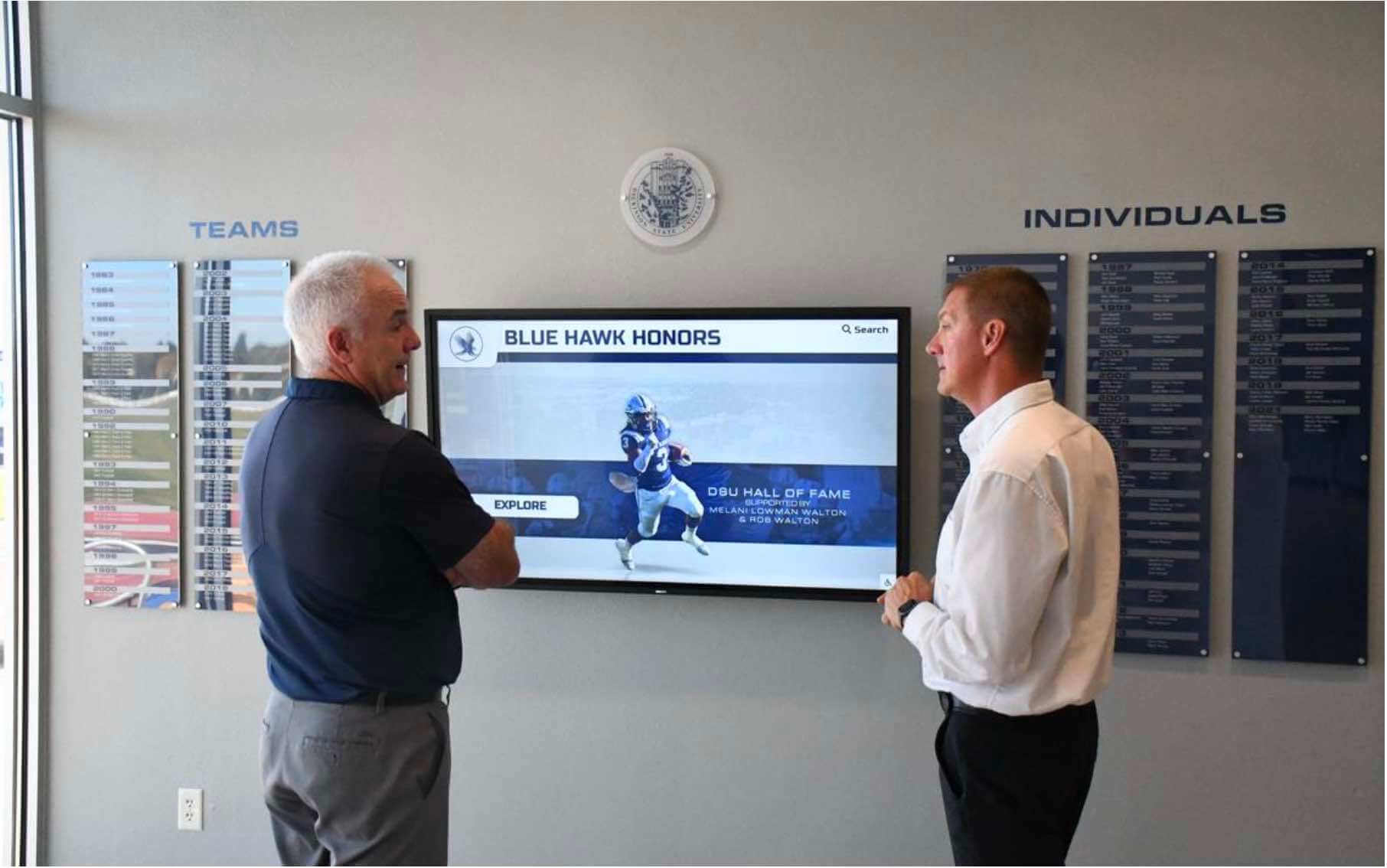
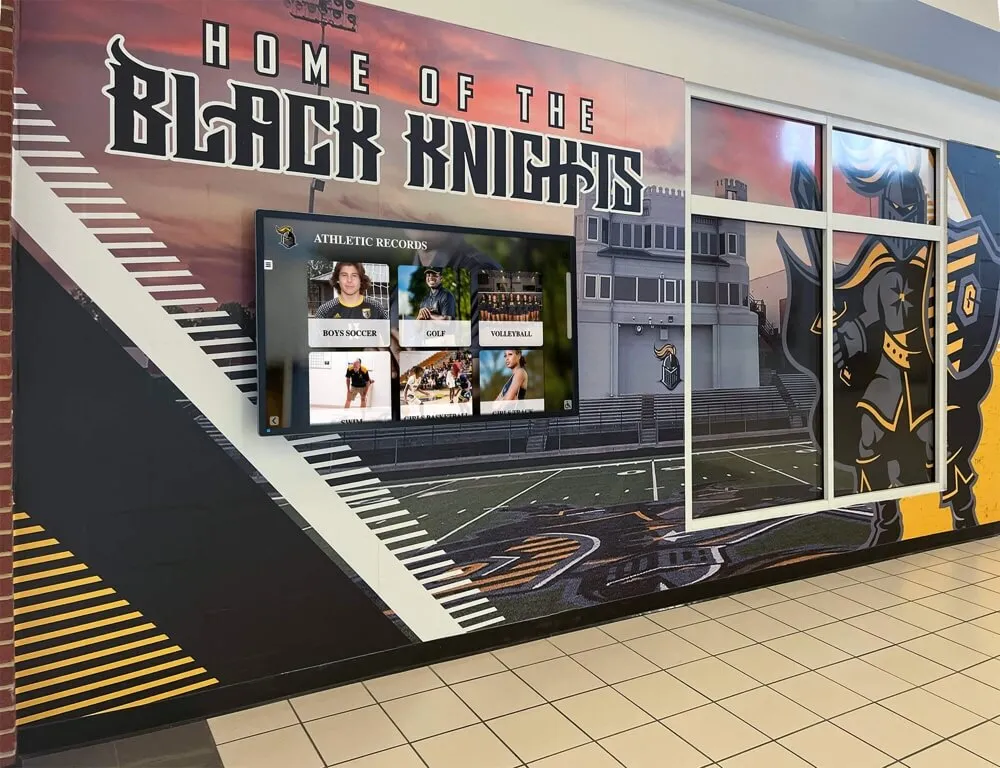
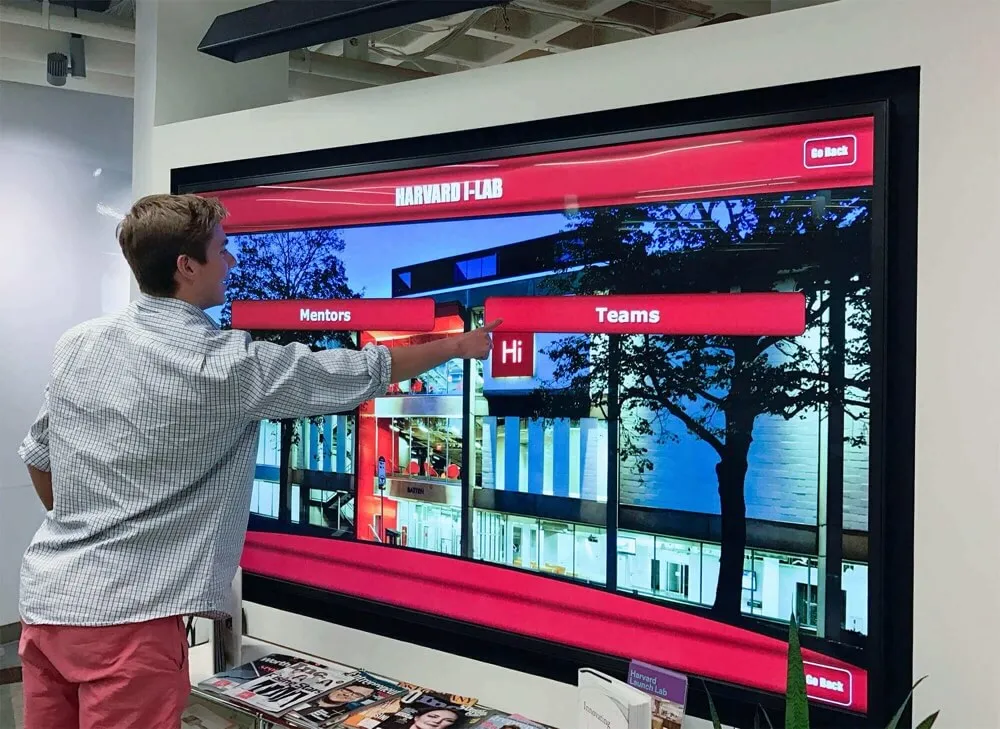
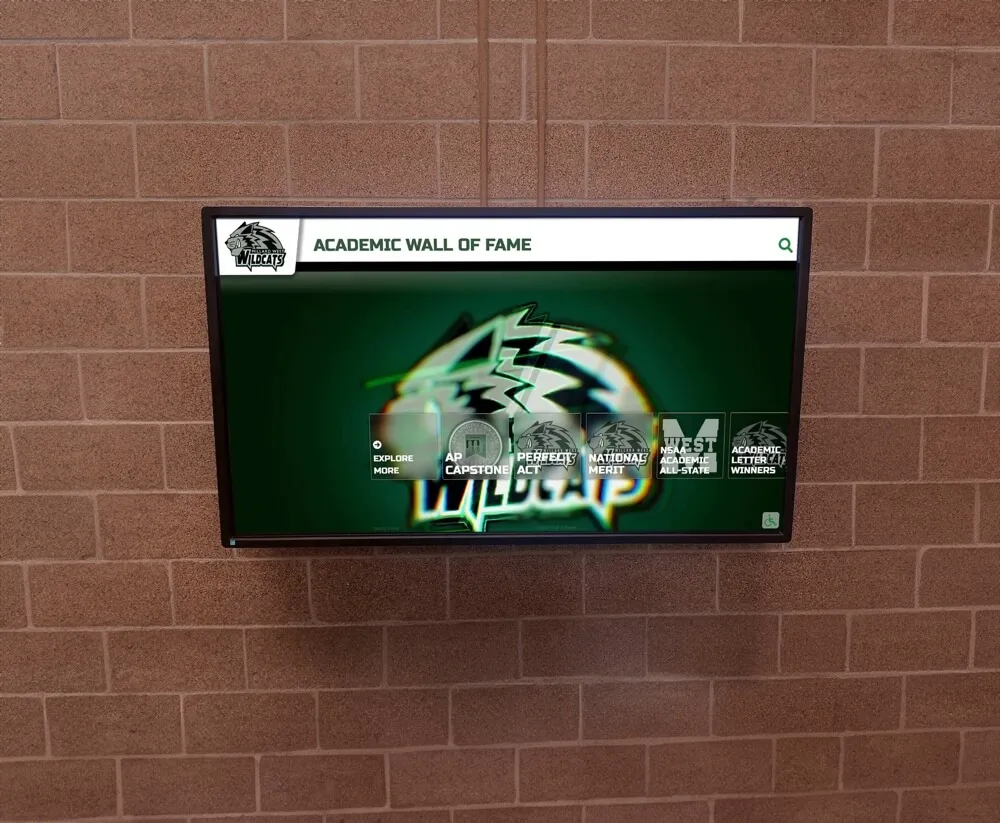
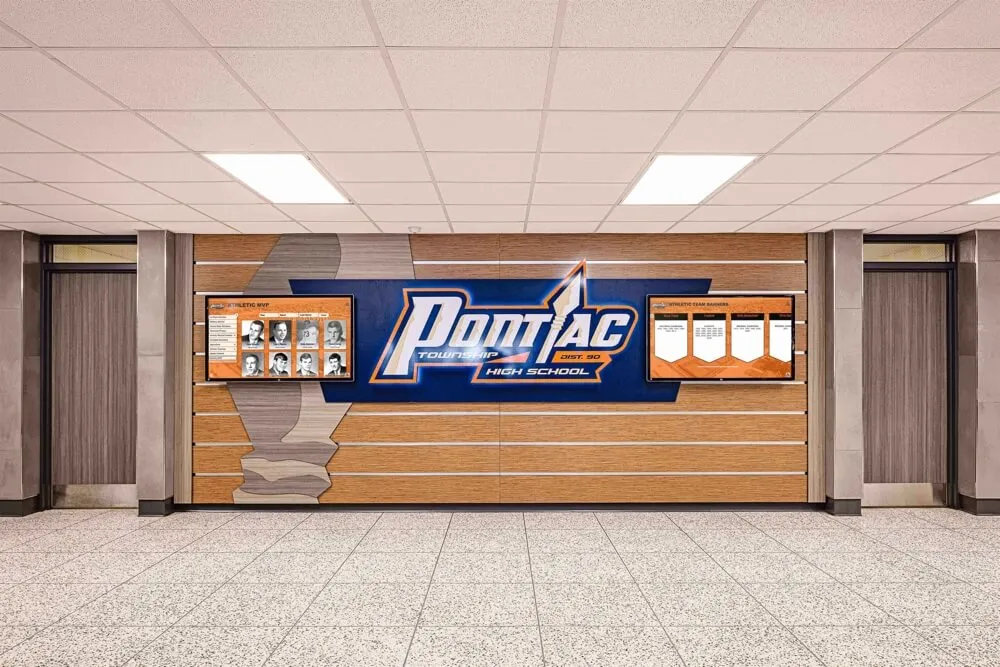
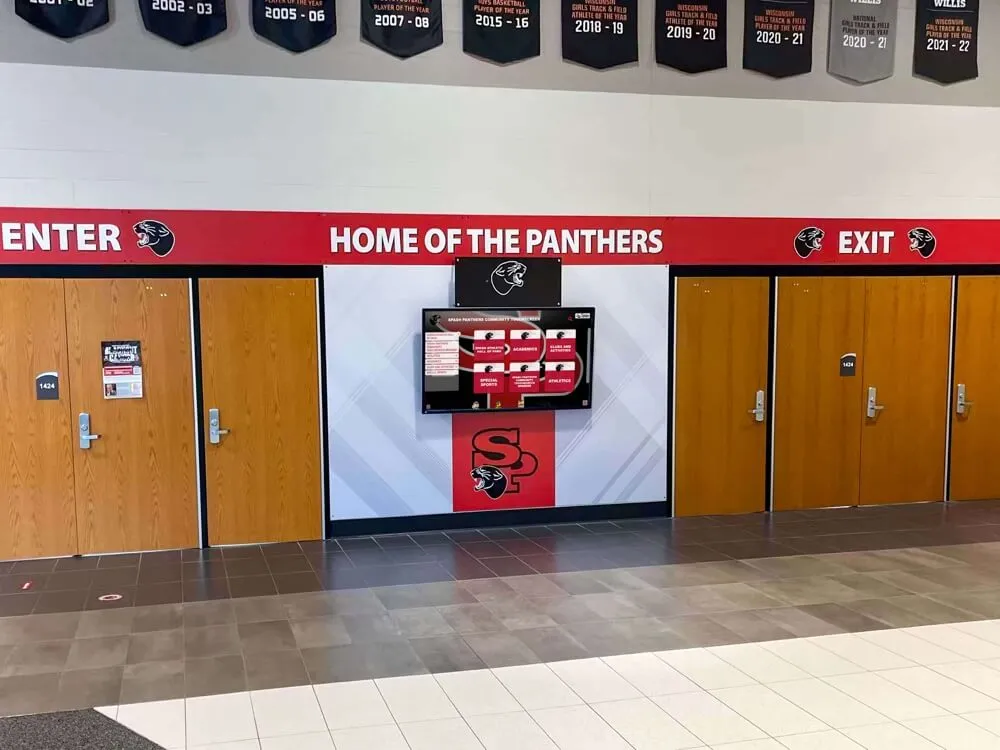
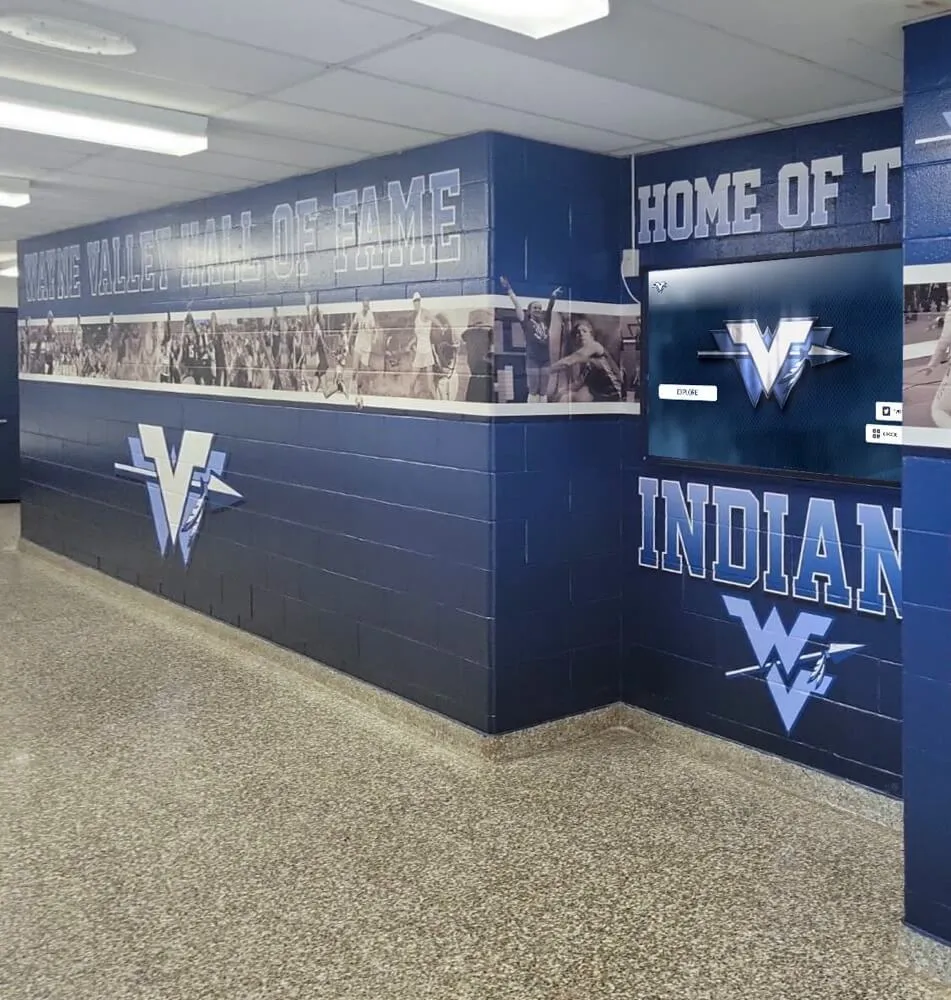
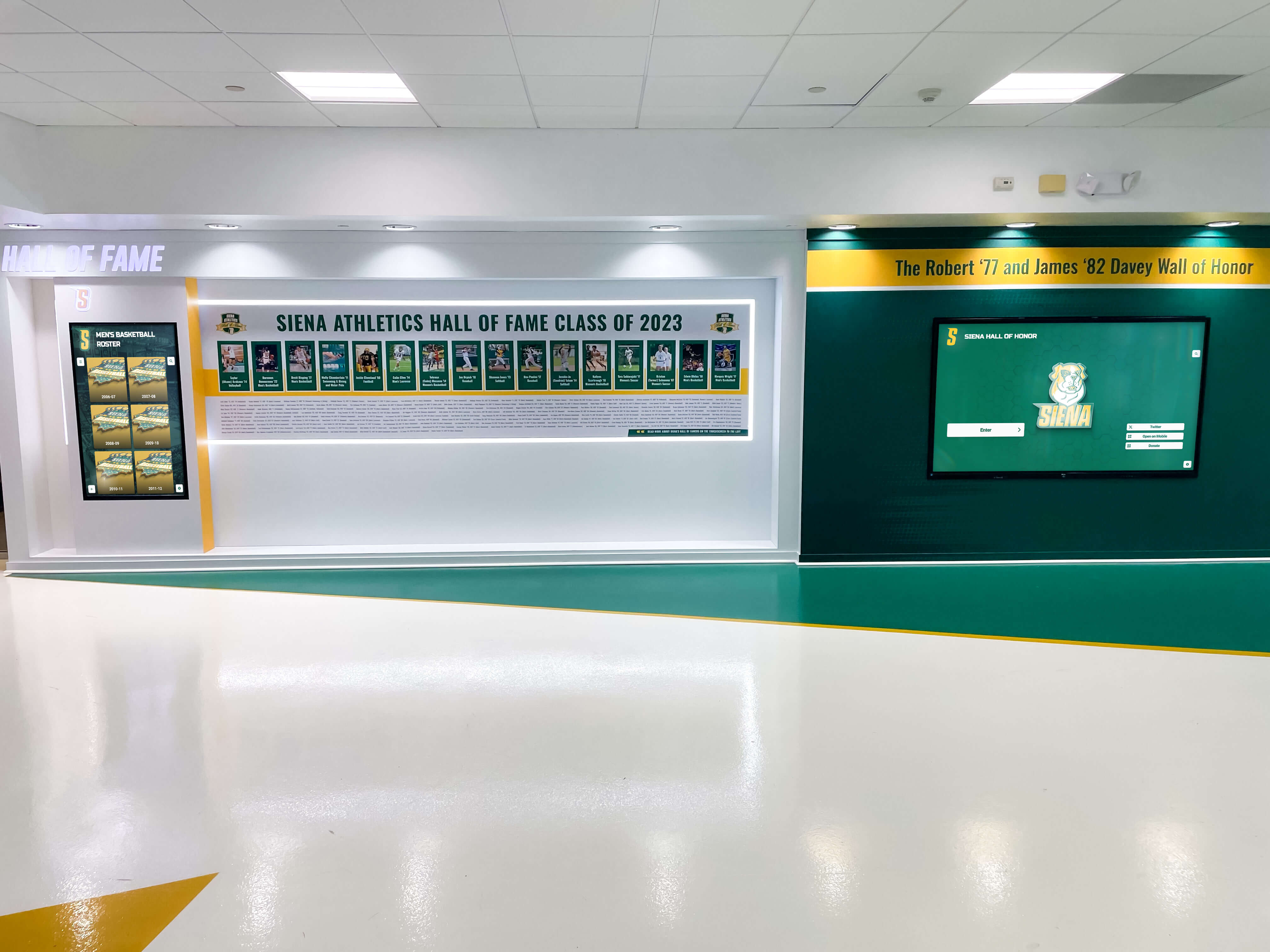
Interactive digital displays in school hallways create ongoing visibility for graduate recognition content that complements the momentary celebration captured in yearbook senior ads
Photo Archive Management
Senior ad photos represent irreplaceable family assets that deserve careful preservation beyond the immediate production cycle. Best practices for long-term digital preservation include:
Organized cloud storage: Schools that maintain organized cloud archives of submitted senior ad content—with permissions clearly defined and families notified of retention policies—create valuable resources for future retrospectives, reunion publications, and anniversary yearbooks.
Family copy protocols: Advisers should encourage—and preferably require—families to retain their own copies of all submitted photos at original resolution. School archives supplement but should never replace family-side storage responsibility for irreplaceable images.
Format standardization: Archiving photos in universally accessible formats (JPEG, PNG, PDF) rather than proprietary design software files ensures content remains accessible as technology evolves and software platforms change over years and decades.
Senior Night and End-of-Year Recognition Connections
Senior ads don’t exist in isolation—they’re part of a broader ecosystem of end-of-year recognition activities that schools organize to celebrate graduating students. Understanding these connections helps yearbook advisers coordinate content, timing, and communication effectively across recognition formats.
Coordinating with Senior Recognition Events
Many schools host dedicated senior recognition ceremonies—athletic senior nights, theater senior celebrations, academic honor events—where the same personal narrative and photo content used in senior yearbook ads can be repurposed for display programs, digital slideshows, and social media posts. The senior night program planning framework helps schools coordinate recognition across multiple formats so families aren’t asked to submit similar content through multiple separate channels.
End-of-Year Classroom Celebrations
For elementary and middle school graduation contexts, senior ads fit naturally within broader end-of-year student recognition events where teachers, families, and peers acknowledge individual student growth and prepare for school transitions. Schools that coordinate yearbook ad content with classroom celebration activities create reinforcing recognition experiences that make graduation transitions feel comprehensively celebrated rather than acknowledged in passing.
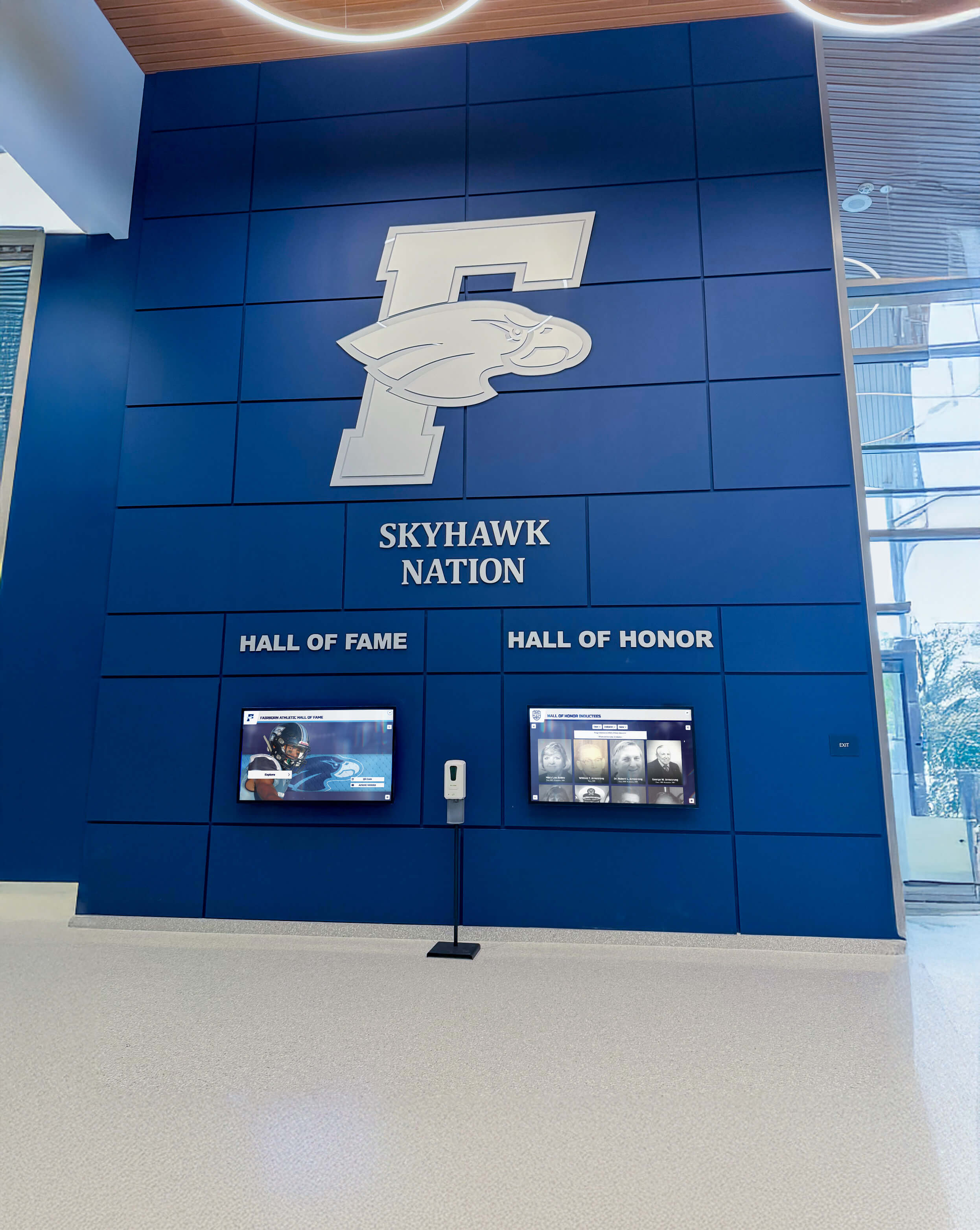
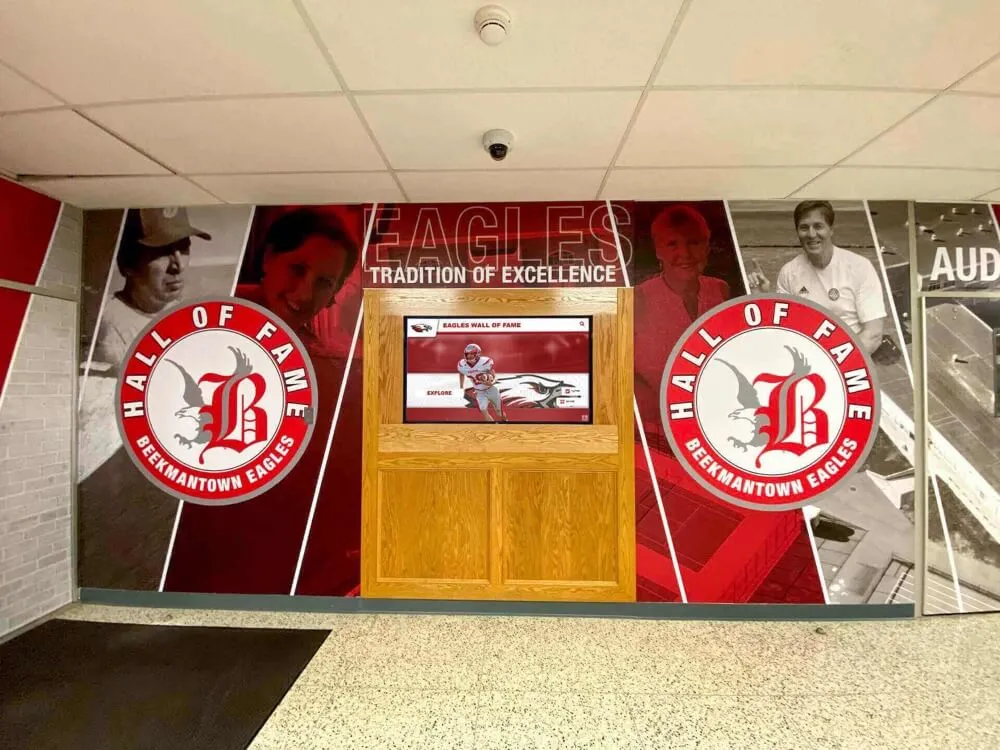
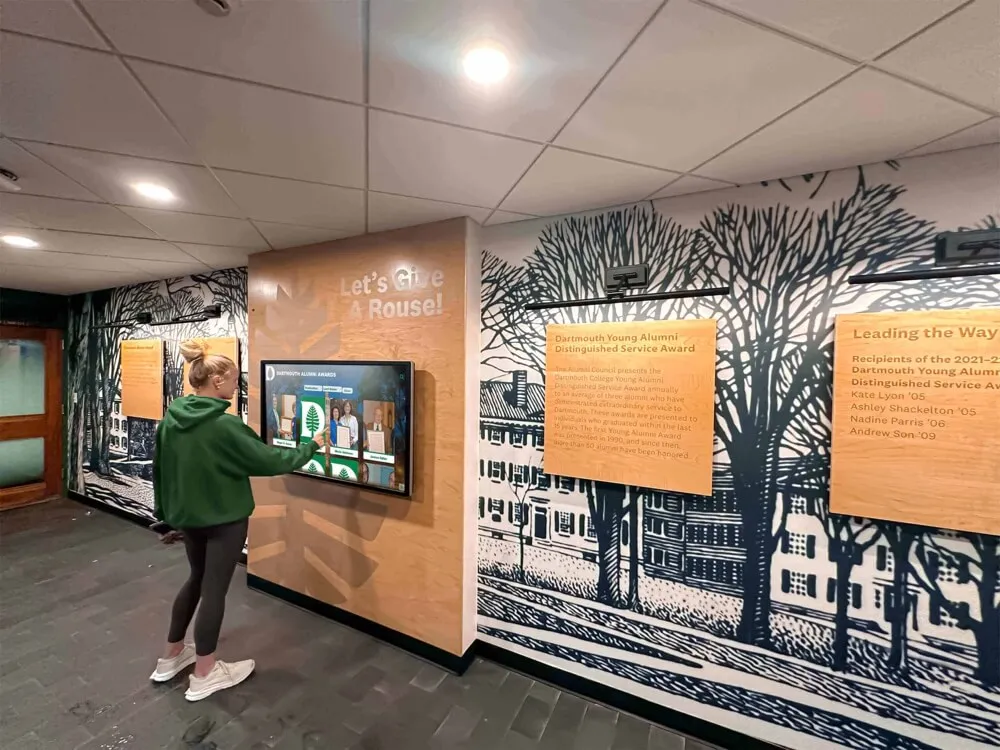
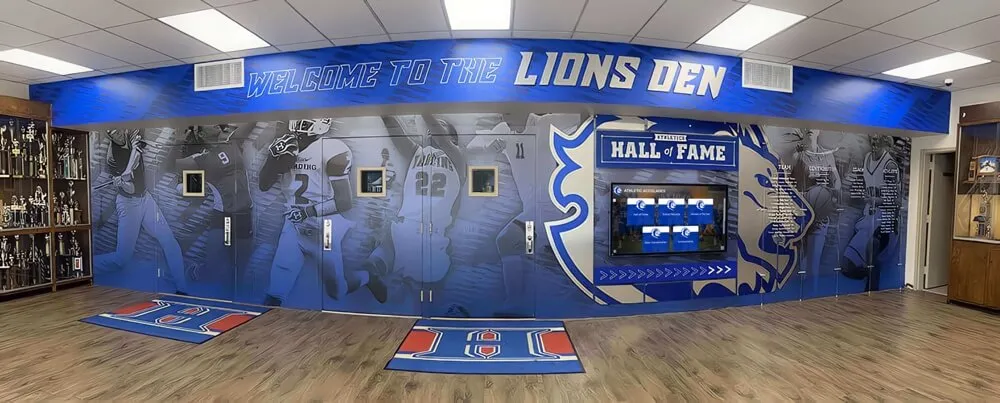
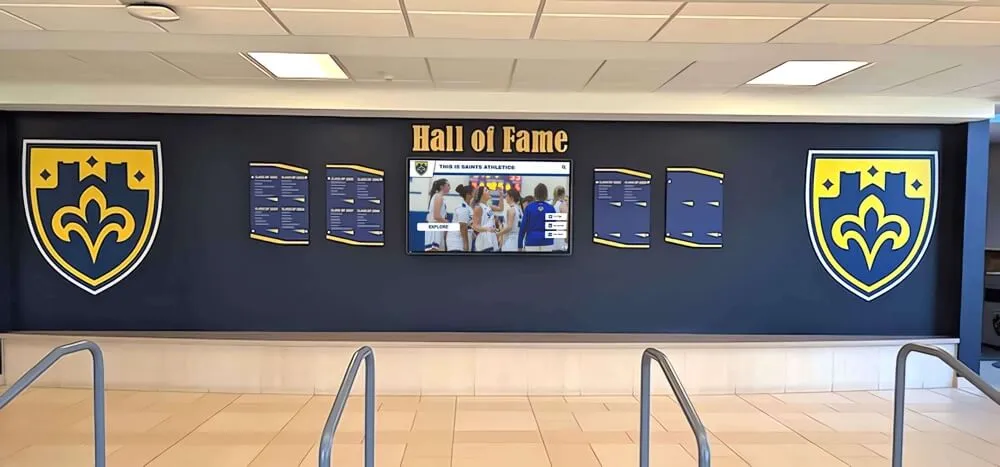
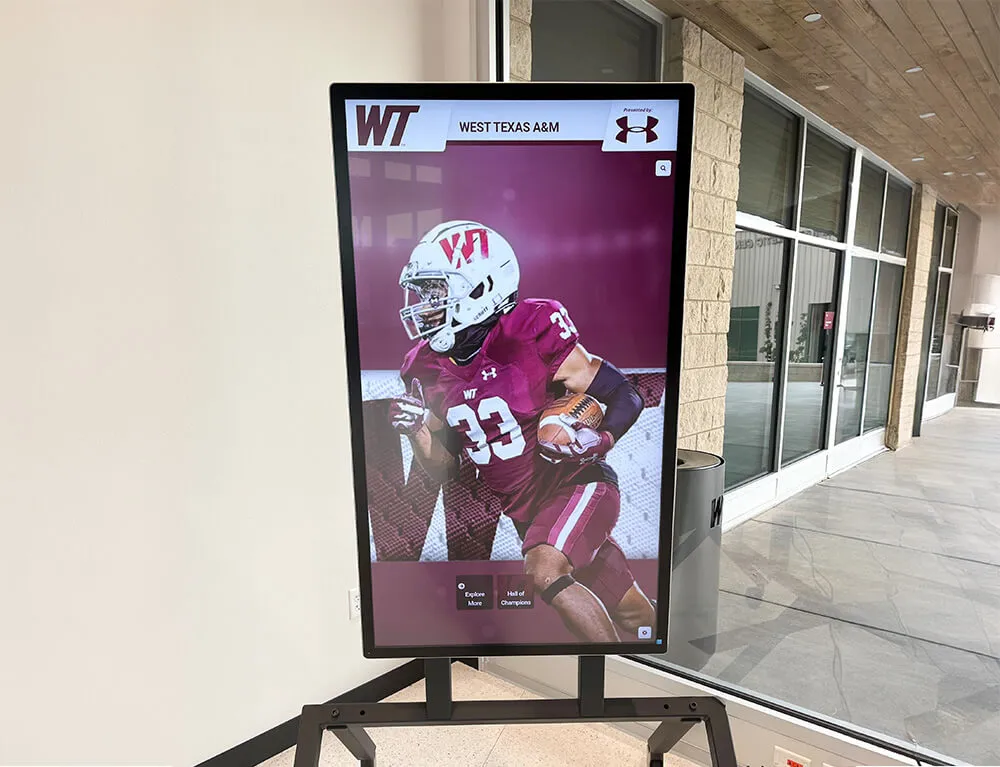
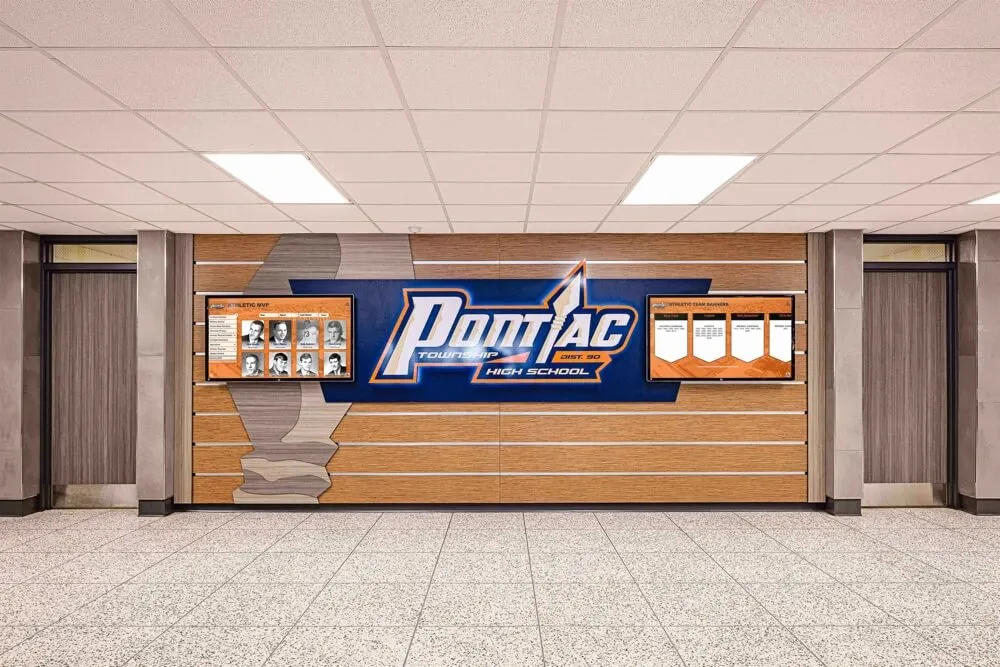
Permanent lobby displays create lasting public recognition for each graduating class that extends the momentary celebration first captured in yearbook senior ads
Senior Ad Production Timeline for Advisers
Managing the senior ad process requires systematic planning across the full school year. This sample timeline helps advisers structure a realistic production calendar:
Summer / Early Fall (August–September)
- Finalize ad size offerings and pricing tiers for the coming school year
- Design submission forms and prepare family spec sheets with photo guidance
- Set all production deadlines working backward from the yearbook delivery date
- Prepare family communication materials and sales packets
Fall Launch (October–November)
- Announce senior ad sales at back-to-school nights, in school newsletters, and via direct family communication
- Open early-bird pricing window (typically 2–4 weeks with meaningful discount)
- Begin collecting early submissions and providing design guidance to families who need assistance
Main Sales Window (November–January)
- Standard-price sales period with consistent weekly communication
- Weekly deadline reminders via email, text, and school communication platforms
- Design consultation availability for families who need hands-on guidance
- Content review and approval workflows for submissions received
Final Collection (February–March)
- Final submission deadlines for most yearbook programs
- Late-fee period if applicable to the school’s policy
- Last-chance communications targeted at families who haven’t yet submitted
Production (March–April)
- Complete design finalization across all submitted ads
- Proof review with families (optional but strongly recommended for full-page ads)
- Integration into overall yearbook layout and section organization
Delivery (May–June)
- Yearbook distribution to students and families
- Digital yearbook launch if the program offers digital access
- Photo archive organization and secure storage for future reference
Frequently Asked Questions About Senior Ads
What are senior ads?
Senior ads—also called senior tributes or baby ads—are paid advertising spaces in yearbooks purchased by families to celebrate graduating students with personal photos and heartfelt written messages.
How much do senior ads for yearbook typically cost?
Prices vary by school and local market, but quarter-page ads typically range from $50–$100, half-page ads from $100–$200, and full-page ads from $150–$400 or more at larger schools.
Can schools outside of high school have senior ads?
Yes. Many middle schools and elementary schools include senior ad sections in their 8th-grade or 5th/6th-grade graduation yearbooks. The content and tone adapt naturally for each grade level’s specific transition context.
How do families submit senior ad content?
Most modern programs use online submission portals where families upload photos, enter tribute text, select ad size, and pay digitally. Some schools still accept email or in-person submissions for families who prefer those options.
What happens to senior ad photos after yearbooks are printed?
Best practice is for families to retain their original files. Schools should define clear retention policies and may maintain organized archives with family permission for future reunion or anniversary publications.
How can graduates access their yearbook ads digitally?
Digital yearbook platforms allow schools to publish yearbook content—including senior ads—in formats accessible via any device, preserving tributes beyond the physical yearbook’s lifespan and making them shareable with family members who never received a physical copy.
Preserving Senior Memories Beyond the Page
Senior ads represent years of accumulated family memory condensed into yearbook pages—photos spanning childhoods, messages written through tears, tributes crafted to outlast the moment of graduation. They deserve preservation strategies as thoughtful as the care families invest in creating them.
Digital yearbook platforms extend the reach of senior ad content indefinitely, allowing graduates and families to access tributes on any device, share specific pages with extended family, and revisit memories across decades without risking physical damage to irreplaceable printed books. For K-12 schools committed to preserving graduating class memories, digital preservation isn’t an afterthought—it’s the completion of the tribute that senior yearbook ads began.
Schools looking to build comprehensive digital recognition programs that connect yearbook traditions with permanent campus displays will find that the investment creates lasting community value that families, graduates, and future students appreciate for generations.
Ready to preserve your graduating class memories digitally?
Rocket Alumni Solutions helps K-12 schools build digital recognition systems that complement yearbook traditions—creating permanent, accessible archives of student achievements and graduation memories that families can revisit for decades. From digital yearbook platforms to interactive hallway displays honoring each graduating class, we help schools give every senior the lasting recognition they deserve.