Every school that has digitized its yearbook collection faces the same defining question the day the project is declared complete: Now that everything is online, can anyone actually find themselves? Scanning pages is only half the work. The other half—the half that determines whether alumni revisit the archive twice or never return—is search. A searchable online yearbook index transforms a passive digital library into an active discovery experience where a graduate can type their own name, press enter, and land on their sophomore portrait in under three seconds.
This guide explains what a searchable yearbook index actually is, how the underlying technology works, what good search design looks like from the alumni’s perspective, and how schools can build or upgrade their indexes without a technical team. It also covers how a strong digital index connects to campus recognition displays, alumni engagement programming, and the broader goal of keeping graduates emotionally invested in the institution long after they receive their diplomas.
When alumni hear that their school has digitized its old yearbooks, the first thing they ask is not “What file format are they in?” They ask: “Can I search for my name?” That single capability—name-based search across decades of yearbook pages—determines whether a digitization project pays off in alumni engagement or sits unvisited in a cloud folder. The searchable online yearbook index is not a nice-to-have add-on. It is the differentiating feature that turns a preservation project into a reunion experience.

A searchable yearbook index gives alumni an immediate, personal entry point into institutional history — the ability to type a name and land on a photo from thirty years ago transforms a digital archive into a reunion-grade experience
What a Searchable Online Yearbook Index Actually Is
A searchable online yearbook index is a structured catalog linking alumni names, graduation years, activities, and other identifiers to the specific pages where they appear across one or more yearbook editions. It is not simply a scanned PDF with a “find” function — it is a purpose-built search layer that understands the context of yearbook content and returns meaningful, navigable results.
The Difference Between a Scan and a Searchable Index
Scanning creates an image of each page. Indexing makes those images retrievable by content. Without indexing, a digitized yearbook collection is functionally no more accessible than the physical books in storage: you still have to know which year to look in, and then page through it manually.
A true searchable index does the following:
Name extraction — Optical character recognition (OCR) reads the text on each page and identifies individual names, linking each name to the page or section where it appears. Quality OCR systems handle the variety of fonts, layouts, and printing artifacts present across decades of yearbook production.
Page and section classification — The index notes whether each name appears in a portrait section, an activity page, a sports roster, or a candid caption, giving search results context (“John Martinez appears on page 47 in the varsity soccer roster and page 112 in the senior portrait section”).
Year attribution — Every result is tagged with the publication year, allowing alumni to filter by era and quickly distinguish between their own appearances and appearances of family members from earlier or later graduating classes.
Cross-edition linking — Strong indexes link results across all available yearbook years, so an alumna searching her name can see every edition in which she appears—from freshman candid to senior portrait—without running separate searches for each year.
Building a comprehensive digital yearbooks archive requires treating the searchable index as a first-class deliverable alongside the scanning itself, not as an afterthought added after the images are processed.
Why Alumni Search Experience Is the True Measure of Digitization Success
From the institution’s perspective, a digitization project may feel complete when the last yearbook is scanned and uploaded. From the alumni’s perspective, the project is only as valuable as the search experience it delivers.
Consider what a graduate is actually trying to do when they access an online yearbook archive. They are not primarily interested in institutional history or preservation policy. They want to:
- Find their own portrait, possibly from multiple years
- Find photos of friends from their graduating class
- Locate their name in rosters, club pages, or honor rolls
- Discover candid photographs they had forgotten existed
- Share specific pages with family members or former classmates
Every one of these goals requires search. Without a functioning searchable online yearbook index, alumni face the same barrier they faced before digitization: finding a specific person in a specific year requires knowing exactly where to look, which most alumni do not.
The emotional payoff of finding yourself in a decades-old yearbook photograph is substantial. Alumni who experience that moment of discovery — who type a name and see a face they had almost forgotten — report immediate emotional connection to the institution and a significantly higher likelihood of attending reunions, contributing to campaigns, and recommending the school to families they know.
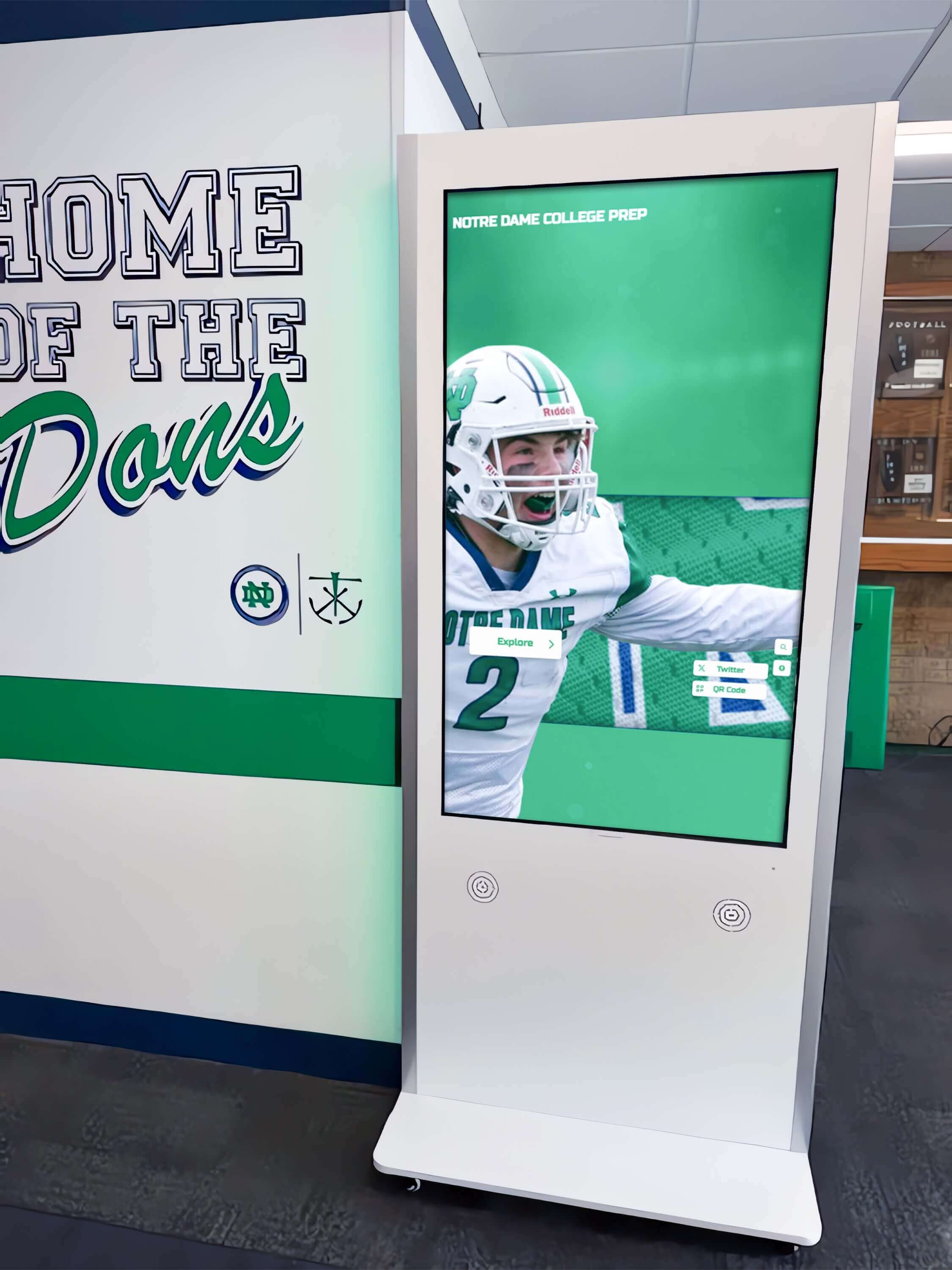
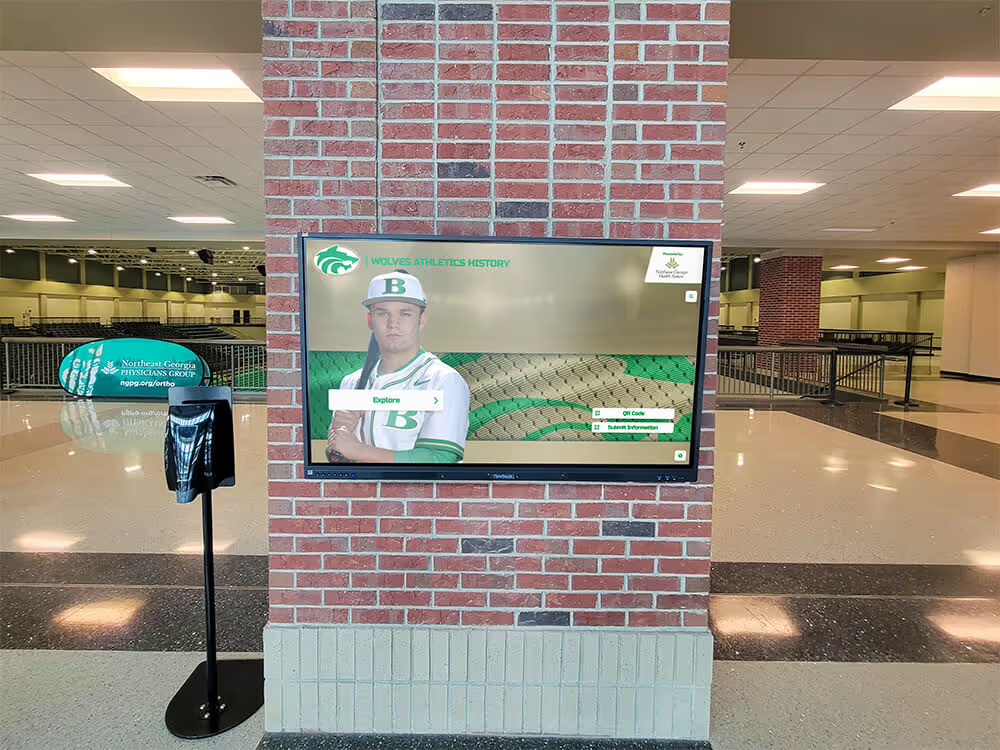
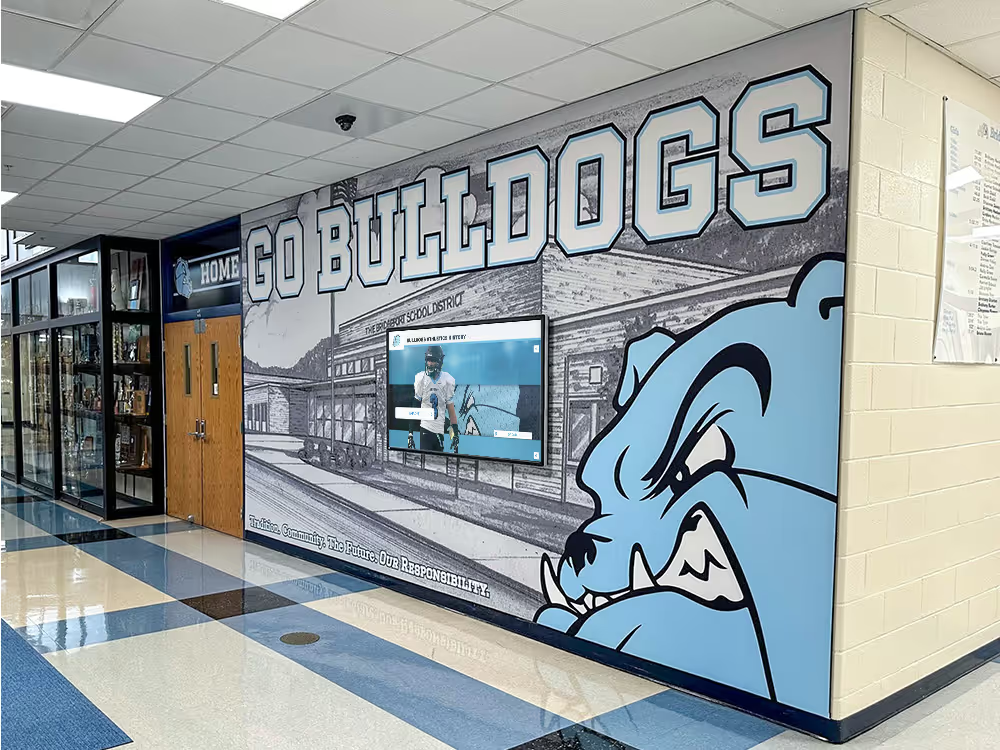
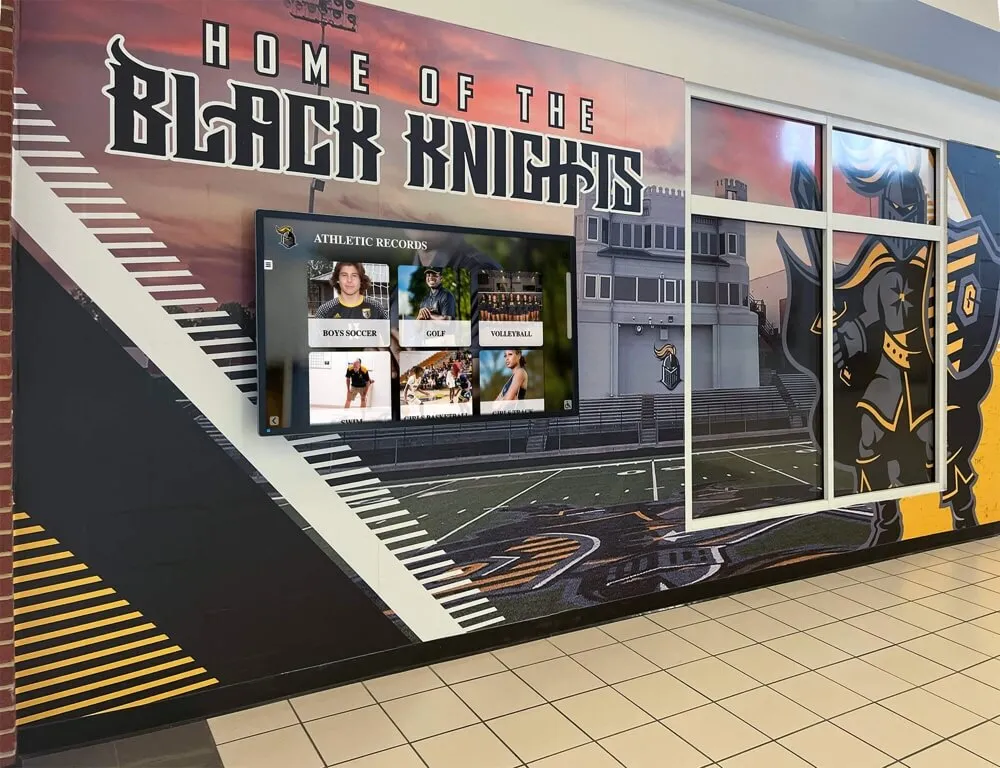
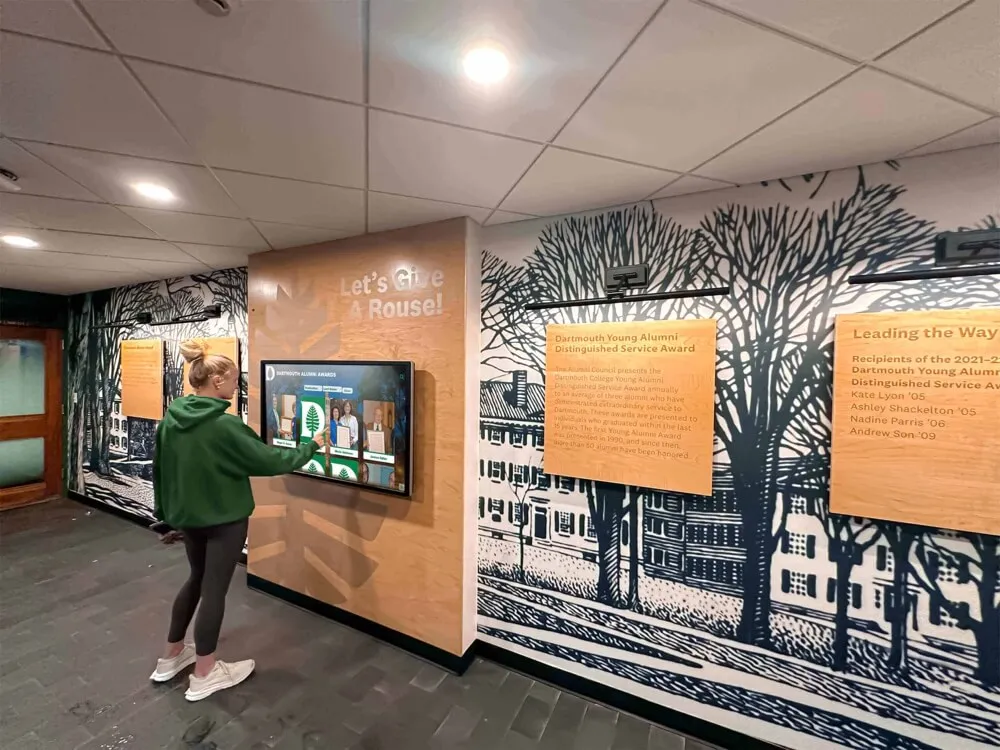
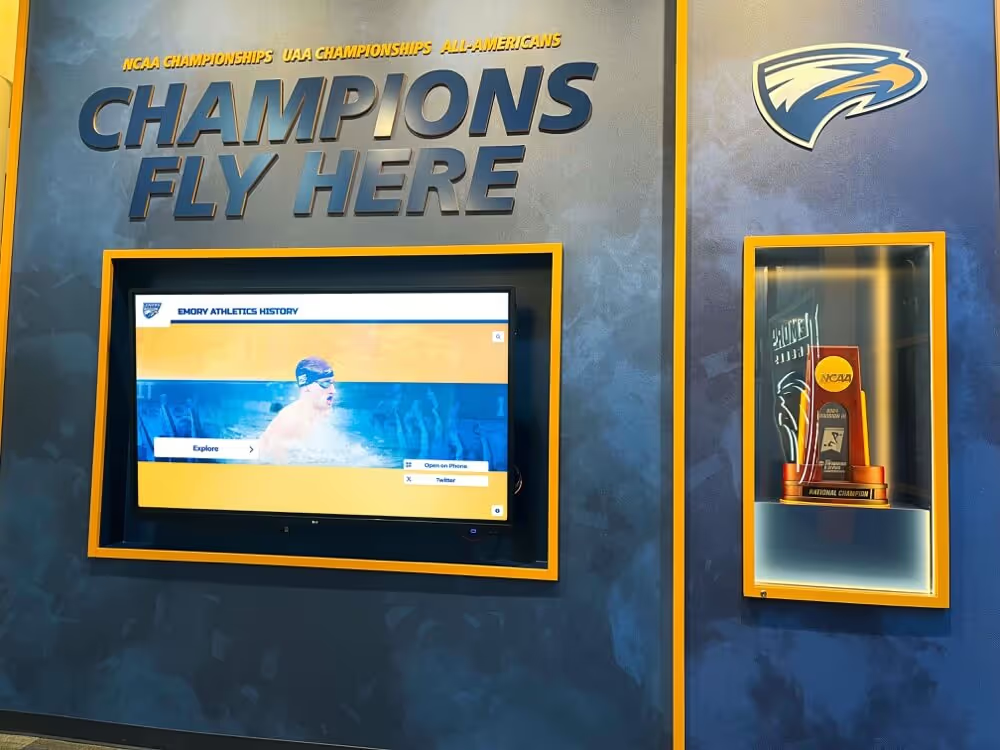
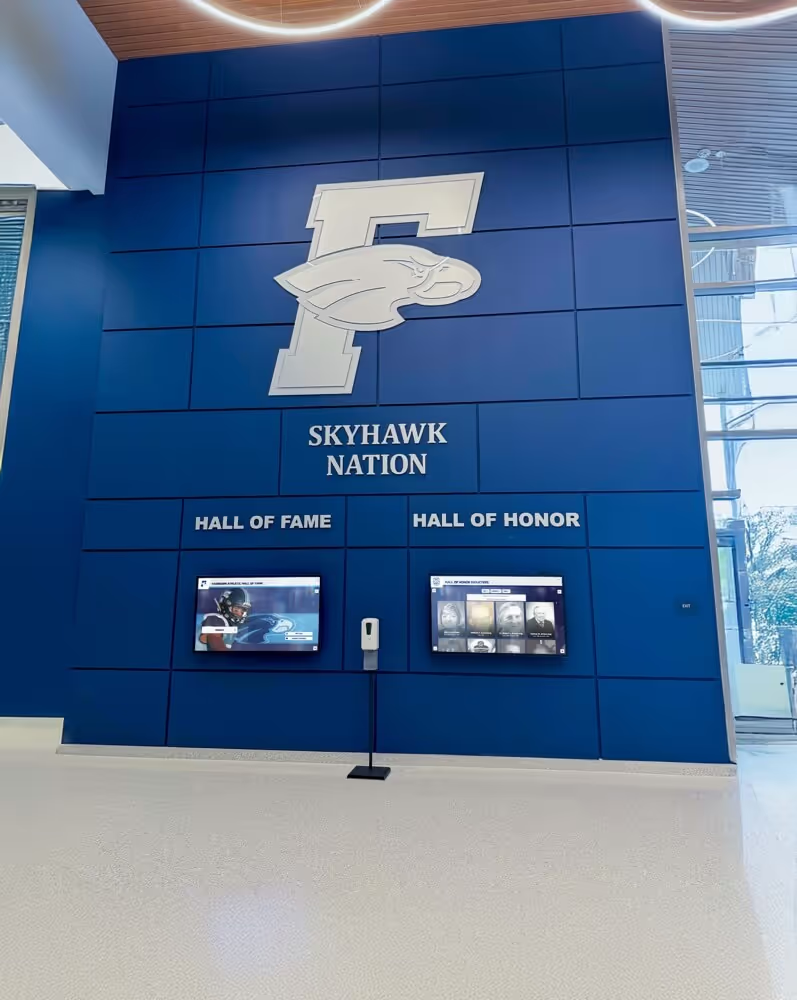
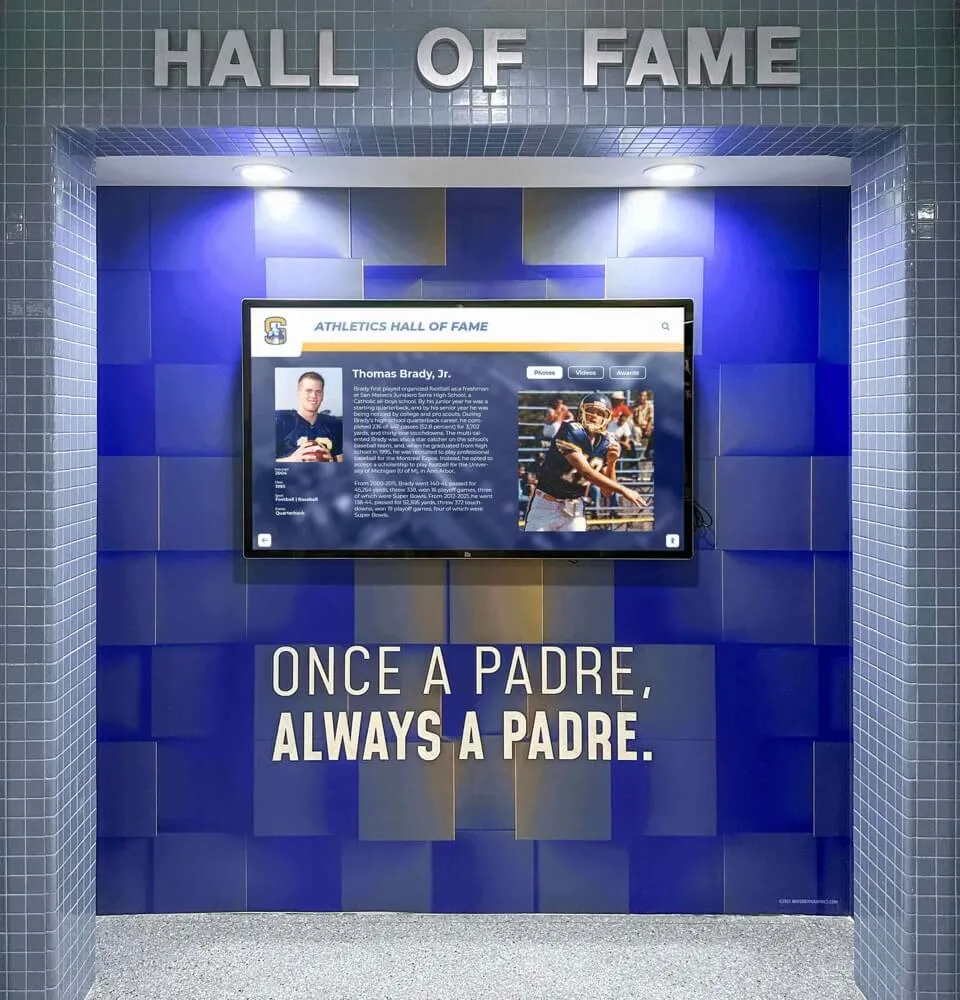
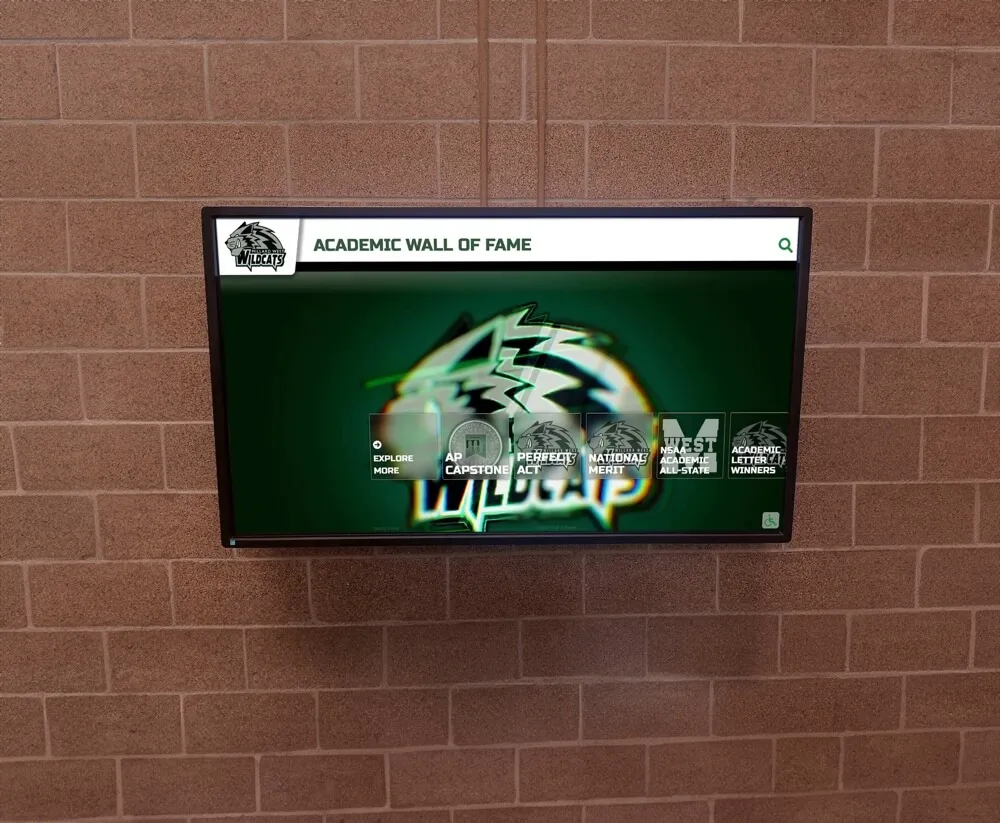
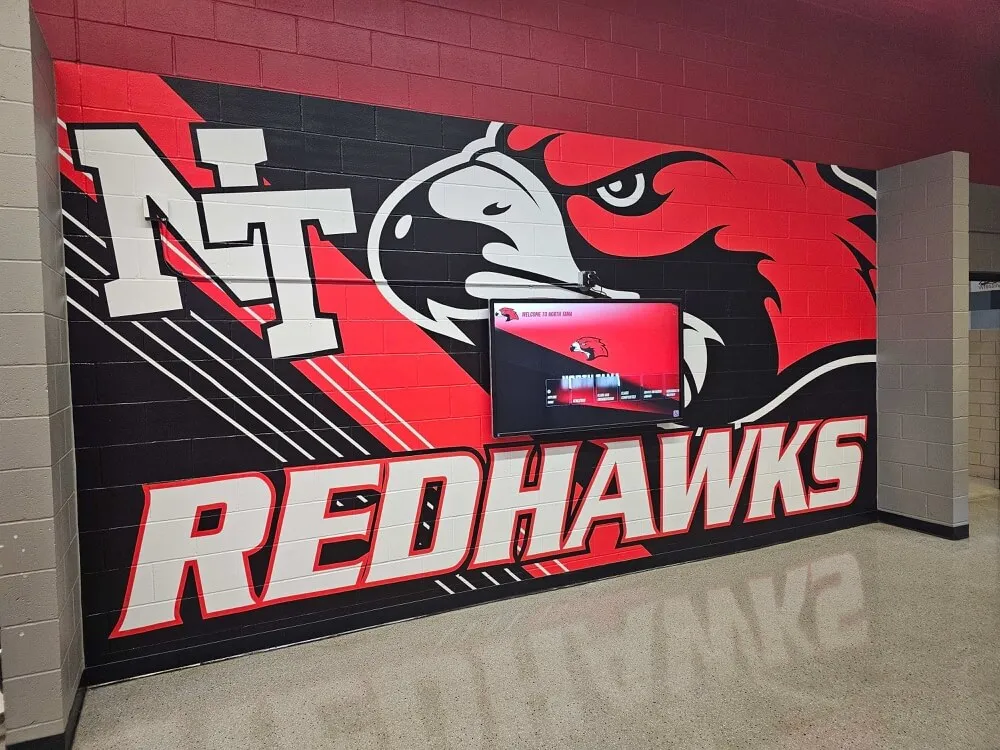
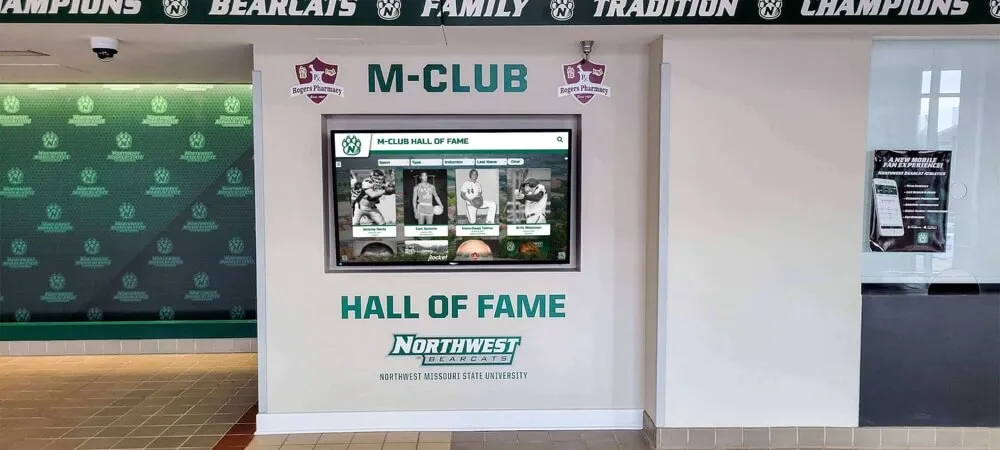
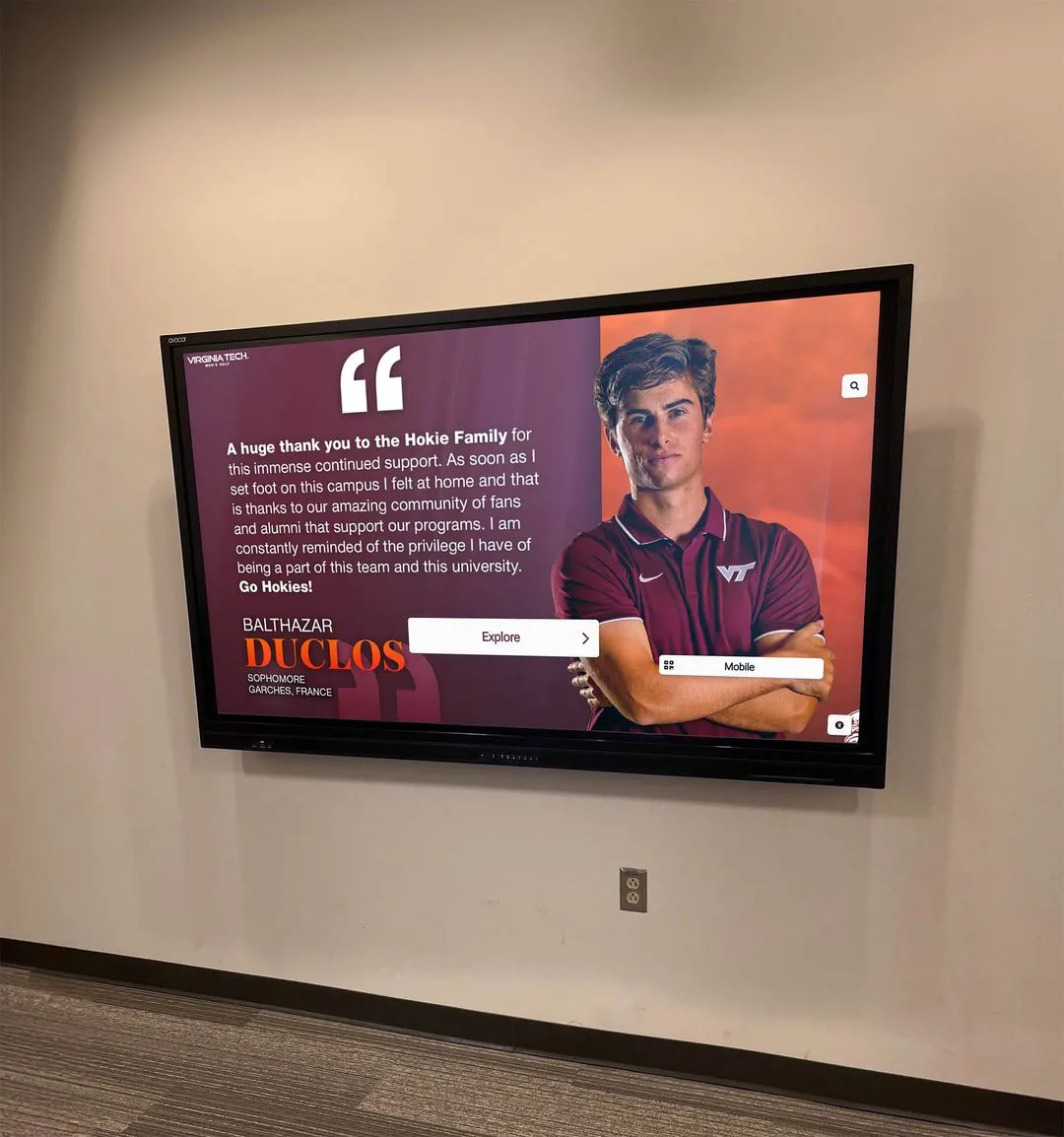
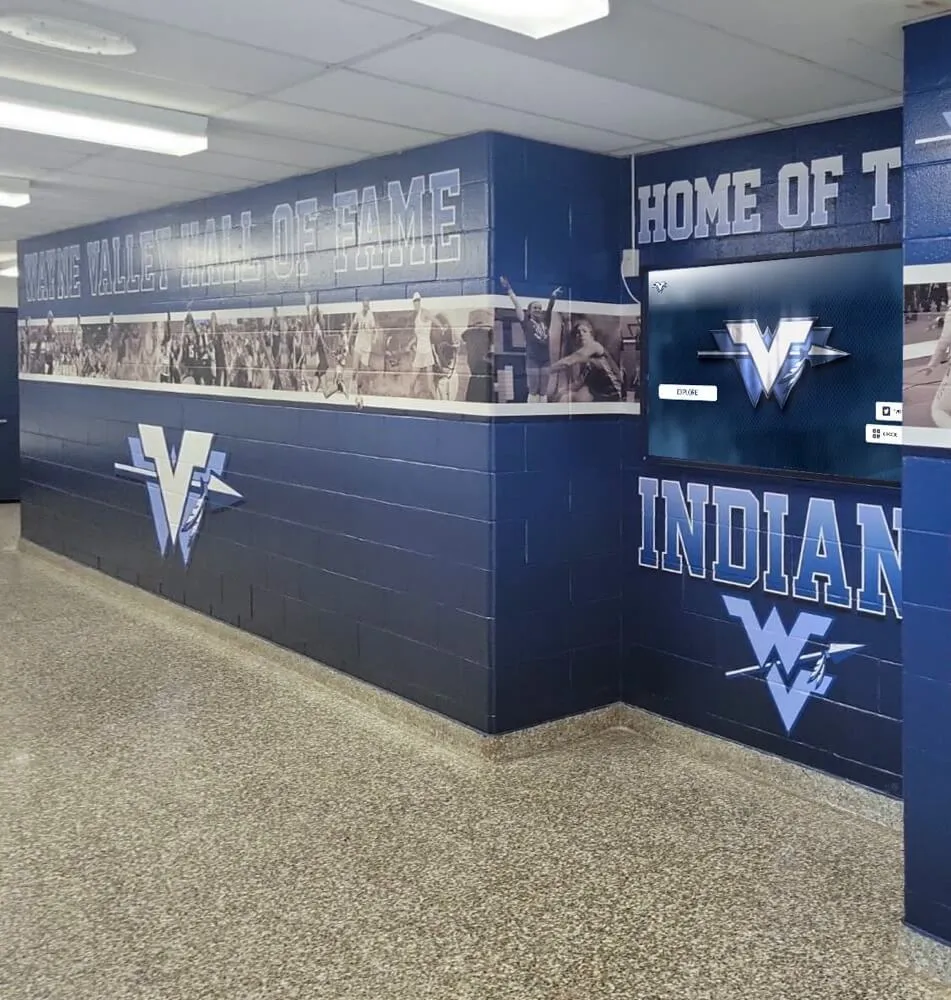
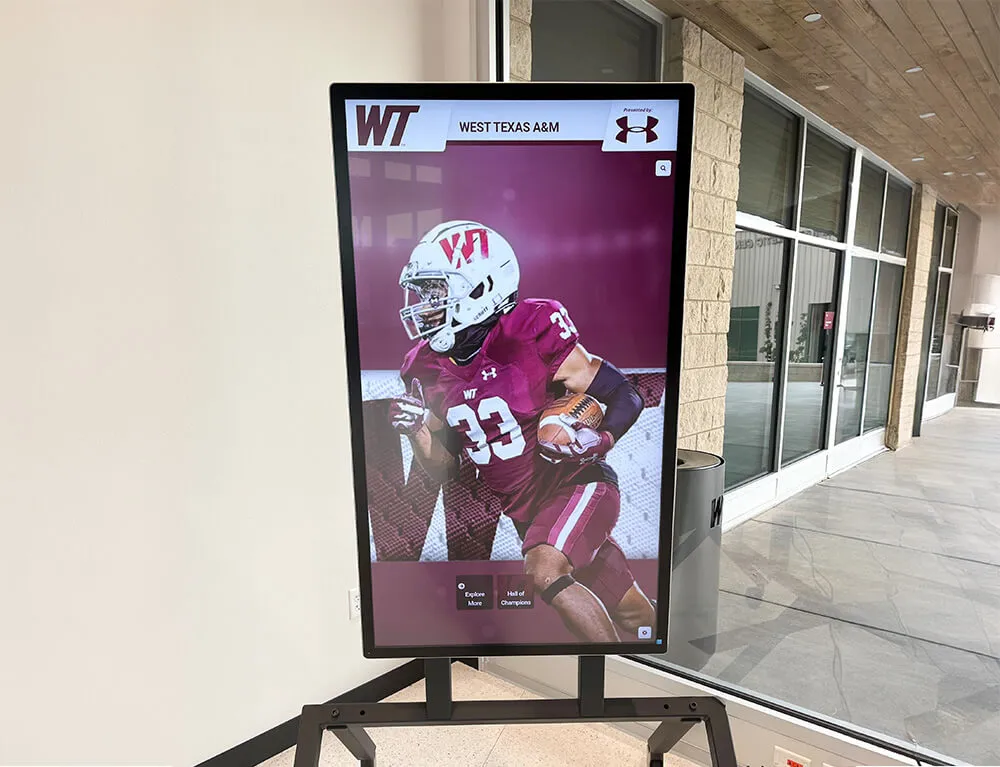
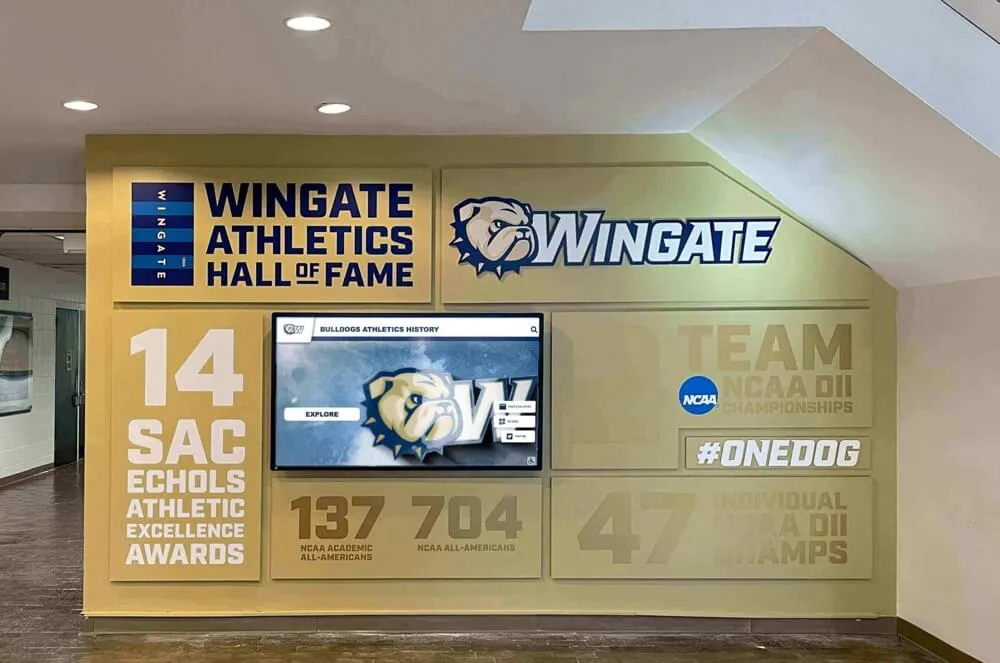
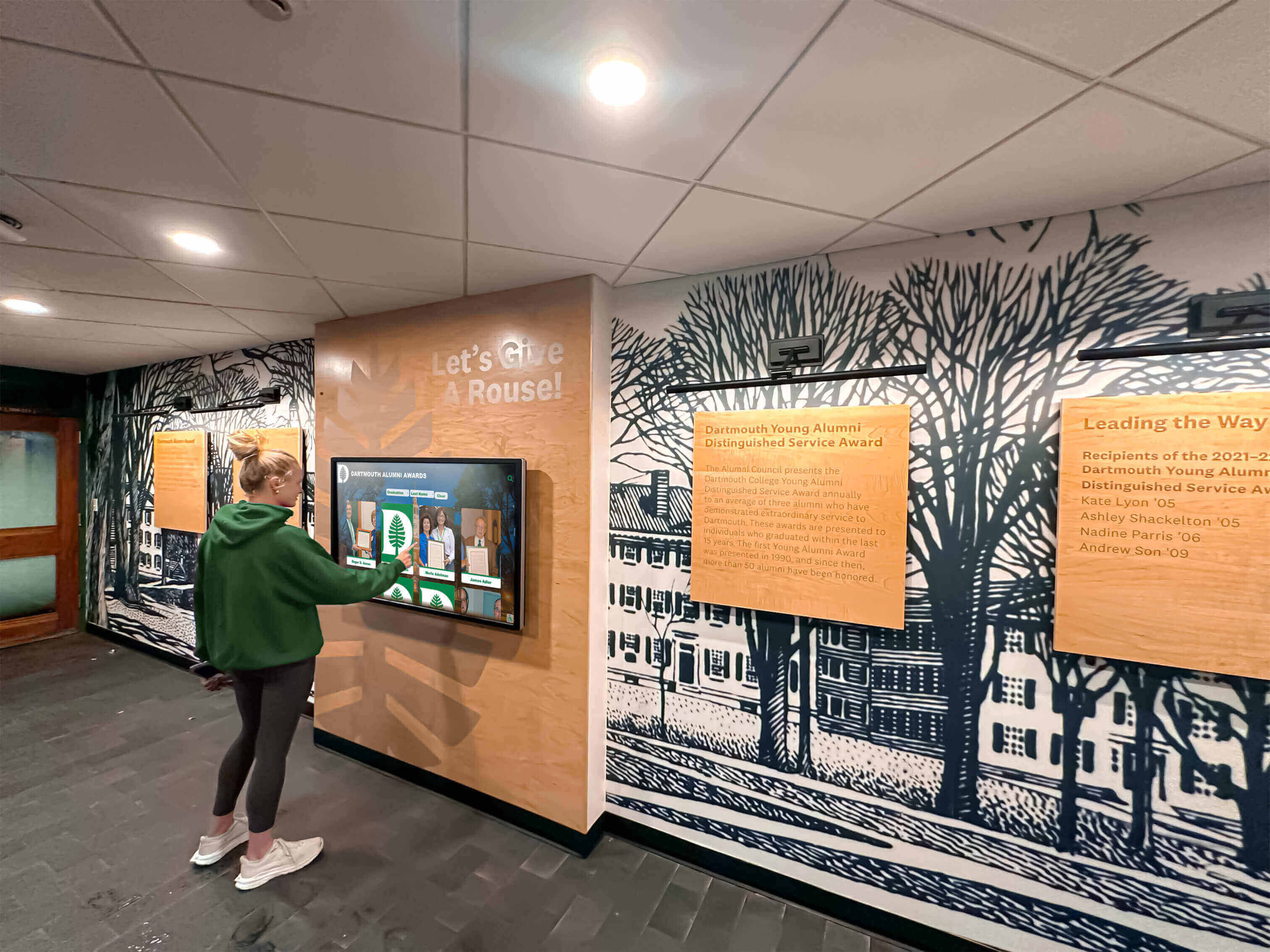
Touchscreen kiosks deployed in campus hallways extend yearbook search capability into physical spaces, giving visitors an on-site discovery experience that complements the online archive
The Technology Behind a Yearbook Search Index
Understanding the technical foundations of yearbook indexing helps school administrators evaluate service providers and assess the quality of their current digital archive. The technology is not as complex as it may appear, but the differences between adequate and excellent implementations are significant.
Optical Character Recognition for Yearbook Content
OCR is the foundational technology converting scanned images into machine-readable text. Standard OCR performs well on clean, modern printing but struggles with common yearbook characteristics: curved text following circular portrait arrangements, reversed-out white type on dark backgrounds, compressed captions in small fonts, and the visual noise introduced by six decades of paper aging.
Yearbook-specific OCR implementations address these challenges through:
Pre-processing image enhancement — Adjusting contrast, straightening distorted pages, and reducing noise before applying character recognition substantially improves accuracy, particularly for older editions with significant paper degradation.
Layout analysis — Identifying portrait grids, caption blocks, and roster tables allows the OCR engine to apply appropriate recognition models to each content type rather than treating every page identically.
Confidence scoring — Quality systems flag low-confidence name extractions for human review rather than silently including potential errors in the search index. A searchable yearbook index that returns wrong names when alumni search their own names damages trust quickly and permanently.
Manual verification workflows — The best digitization services combine automated OCR with human verification, particularly for portrait sections where name accuracy is most critical to alumni experience.
Metadata Enrichment Beyond Name Recognition
Raw OCR produces text; metadata enrichment produces a useful index. Beyond extracting names, quality indexing adds structured information that powers filtering and navigation:
Graduation year vs. appearance year — An index that notes not just “appears on page 34 of the 1988 yearbook” but also “appears in the Class of 1990 portrait section” enables far more precise navigation, particularly for alumni searching for records of younger siblings, parents, or grandparents.
Activity and organization tags — Detecting and tagging sports rosters, club pages, honor roll lists, and student government records allows alumni to filter by activity type, not just by name.
Photo type classification — Distinguishing formal portraits from candid photographs from team photos allows alumni to navigate to the type of image they are looking for most directly.
Distinguished alumni network databases for high schools often build directly from yearbook indexes, using the structured name and year data as the foundation for ongoing alumni engagement platforms. The investment in quality indexing pays forward into every future alumni initiative.
Designing a Search Interface Alumni Will Actually Use
A technically sophisticated index means nothing if the search interface presents it poorly. Alumni searching for their own photographs are not professional archivists — they expect the experience to feel as intuitive as a Google search, not a library catalog from 1995.
The Minimum Viable Search Experience
At the most basic level, a yearbook search interface needs to offer:
A single, prominent search bar — Prominently placed on the archive homepage, with clear placeholder text (“Search by name, class year, or activity”). Alumni should not have to navigate menus or learn a search syntax to begin.
Name autocomplete — As alumni type, showing name suggestions drawn from the index reduces spelling uncertainty and helps alumni find themselves even when they are unsure whether their name was recorded as “Bill” or “William.”
Thumbnail previews in results — Showing a small image of the page alongside the text result allows alumni to identify their photograph immediately rather than clicking into multiple results.
Year filtering — A simple filter allowing alumni to narrow results to specific decades or graduation years dramatically improves precision in large archives spanning many editions.
One-click page navigation — Clicking a result should go directly to the relevant page and section, not to the yearbook homepage for that year.
Advanced Search Features That Deepen Engagement
Schools with the resources to invest in richer search functionality can build experiences that go well beyond the basics:
Face recognition integration — Emerging yearbook platforms incorporate facial recognition allowing alumni to upload a current photograph and receive suggestions of matching portraits across digitized editions. While this capability raises privacy considerations requiring careful policy development, it dramatically lowers the barrier to discovery for alumni who may not remember exactly how their names were recorded.
“Also appears with” connections — Showing which other alumni appear on the same pages as a search result creates a social discovery layer: an alumna finds her own portrait and immediately sees which classmates appeared nearby, sparking curiosity and further browsing.
Class year browsing mode — A complementary navigation mode allowing alumni to select a graduation year and browse all appearances of people from that class across every edition creates a reunion-style exploration experience that works alongside name search.
Mobile-optimized search — Most alumni will access the archive from smartphones. Search interfaces must load quickly on mobile connections, display thumbnail results clearly on small screens, and allow touch-friendly page navigation.
Best alumni management software for schools in 2026 increasingly integrates yearbook search capability directly into alumni portals, making the yearbook archive a natural part of ongoing engagement platforms rather than a separate tool alumni must remember to access independently.
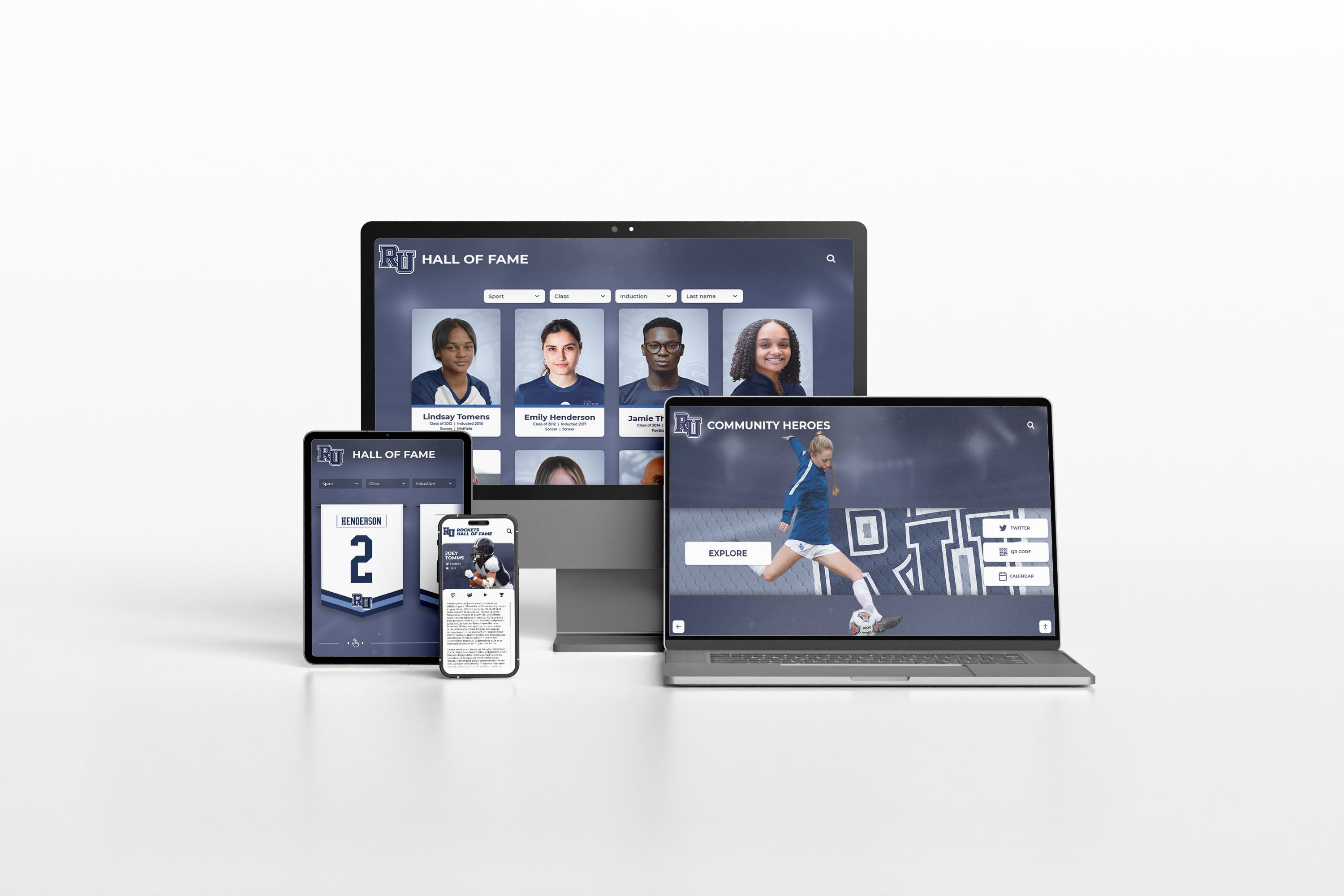
A fully responsive yearbook search experience — identical functionality across desktop, tablet, and smartphone — ensures that alumni can find themselves in old editions regardless of how and where they access the archive
Building a Searchable Index From an Existing Digitized Archive
Many schools that digitized their yearbook collections years ago have high-quality scans but no meaningful search layer. The index can be built after the fact without rescanning, which means the path from “we have PDFs” to “alumni can search by name” is often shorter and less expensive than institutions assume.
Assessment: What Does Your Current Archive Support?
Start by evaluating what your existing digitized collection offers:
Text layer presence — PDF files may contain an embedded OCR text layer from the original scanning project. If they do, that text layer can be extracted and used as the raw material for a search index, potentially with minimal additional processing. Test by attempting to select and copy text from a page in a scanned PDF — if text is selectable, the text layer exists.
Image quality — Portrait sections need sufficient resolution (typically 300 DPI or higher) for accurate automated name extraction and for display quality when alumni zoom into found photographs. Lower-resolution scans may require re-scanning of portrait sections specifically.
Format consistency — Yearbooks digitized across different time periods or by different service providers may be in inconsistent formats (mixed PDF, TIFF, JPEG) requiring normalization before a unified index can be built.
Metadata completeness — Check whether your existing files carry year-level metadata (file names including the publication year, for example) or whether year attribution must be reconstructed from file organization or content.
Choosing Between DIY Indexing and Professional Service
Schools with technical staff and sufficient time can build basic name indexes from existing digitized collections using open-source OCR tools and spreadsheet workflows. This approach works reasonably well for collections of ten to twenty yearbooks where portrait section accuracy can be manually verified.
Larger collections — schools with thirty or more years of digitized yearbooks, or institutions prioritizing search accuracy over speed — benefit substantially from professional indexing services that combine automated processing with human verification workflows designed specifically for yearbook content.
Key questions to ask when evaluating indexing service providers:
- What is your error rate for name extraction in portrait sections?
- How do you handle names that OCR cannot read with confidence?
- What format does the index output, and how does it integrate with our hosting platform?
- Do you provide a hosted search interface, or do we need to implement one separately?
- How is the index updated when we add newly digitized yearbooks?
School yearbook pictures honoring every class through digital archives require indexing quality that meets the standard alumni bring to the search: if they type their name and get no result, or get a result pointing to the wrong page, the experience fails regardless of how comprehensive the underlying archive is.
Privacy, Access Controls, and Responsible Indexing
A searchable yearbook index creates a publicly accessible record of where specific individuals appear in historical documents. This capability, while central to alumni engagement value, requires thoughtful privacy policy design.
Who Should Be Able to Search
Most schools implement tiered access matching their broader alumni portal policies:
Public search with limited results — Anyone can search the index and see that a person appears in specific yearbook editions, but accessing the actual pages requires authentication. This approach maximizes discoverability (alumni can confirm their records exist before creating an account) while protecting page-level content.
Authenticated alumni access — Full page access requires login with a verified alumni email address or school-issued authentication. This is the most common approach for institutions with existing alumni portal infrastructure.
Open public access — Some schools, particularly those with collections more than fifty years old, make indexes and pages fully public as historical resources. This approach maximizes sharing and discovery but requires clear institutional policy on newer editions.
Request-based removal — Regardless of access tier, schools should establish a clear process for individuals who wish to be removed from the searchable index — typically applicable to alumni who have changed their names for safety reasons or who have other legitimate privacy concerns.
Special Considerations for Recent Editions
Yearbooks from the last fifteen to twenty years contain photographs of individuals who may still be minors at the time of a school’s digitization project. Schools generally apply more restrictive access controls to recent editions, requiring verified alumni authentication before allowing access to pages featuring current or recently graduated students.
Interactive announcements and school recognition feeds that pull from yearbook archives for recognition content must apply the same access controls as the underlying archive, ensuring that portraits or records surfaced in display contexts respect the privacy policies governing the source material.
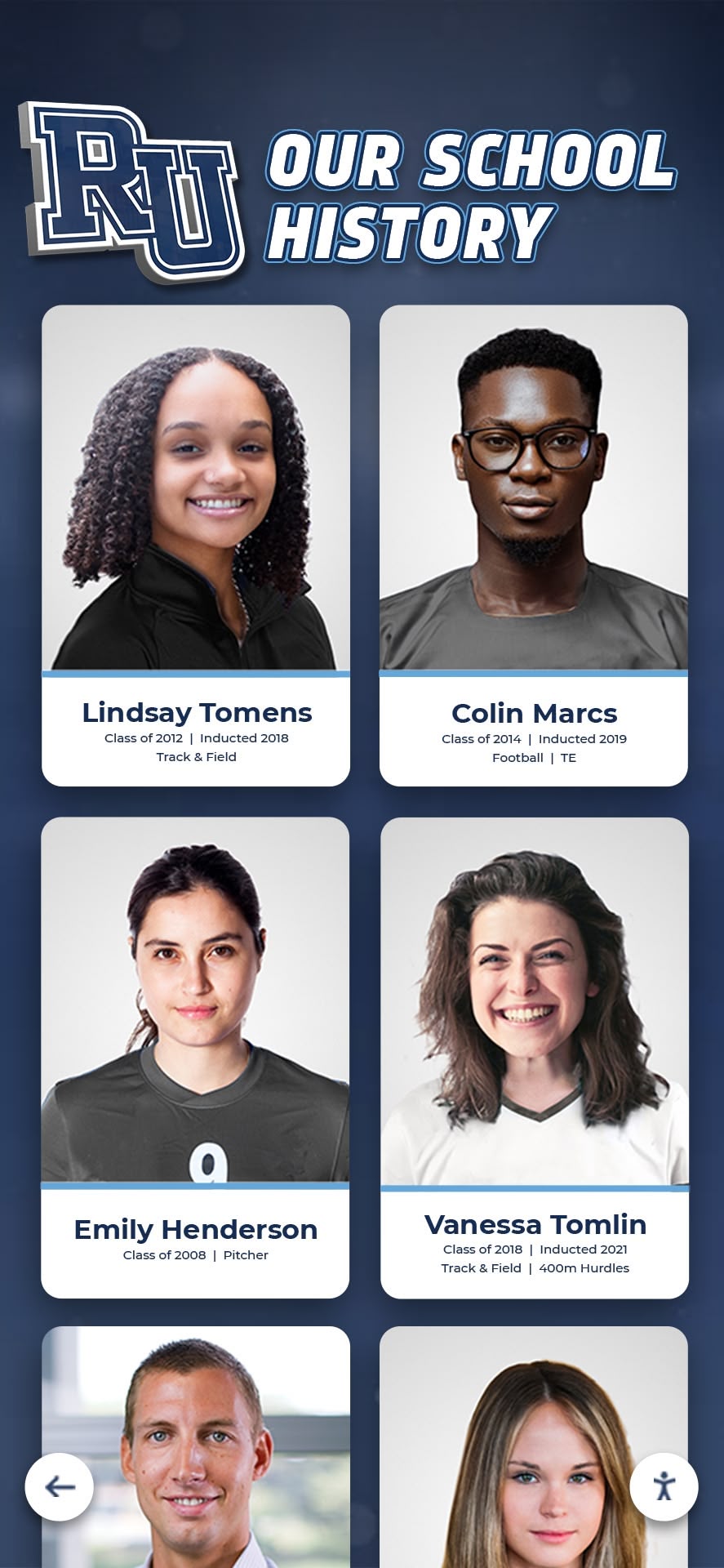
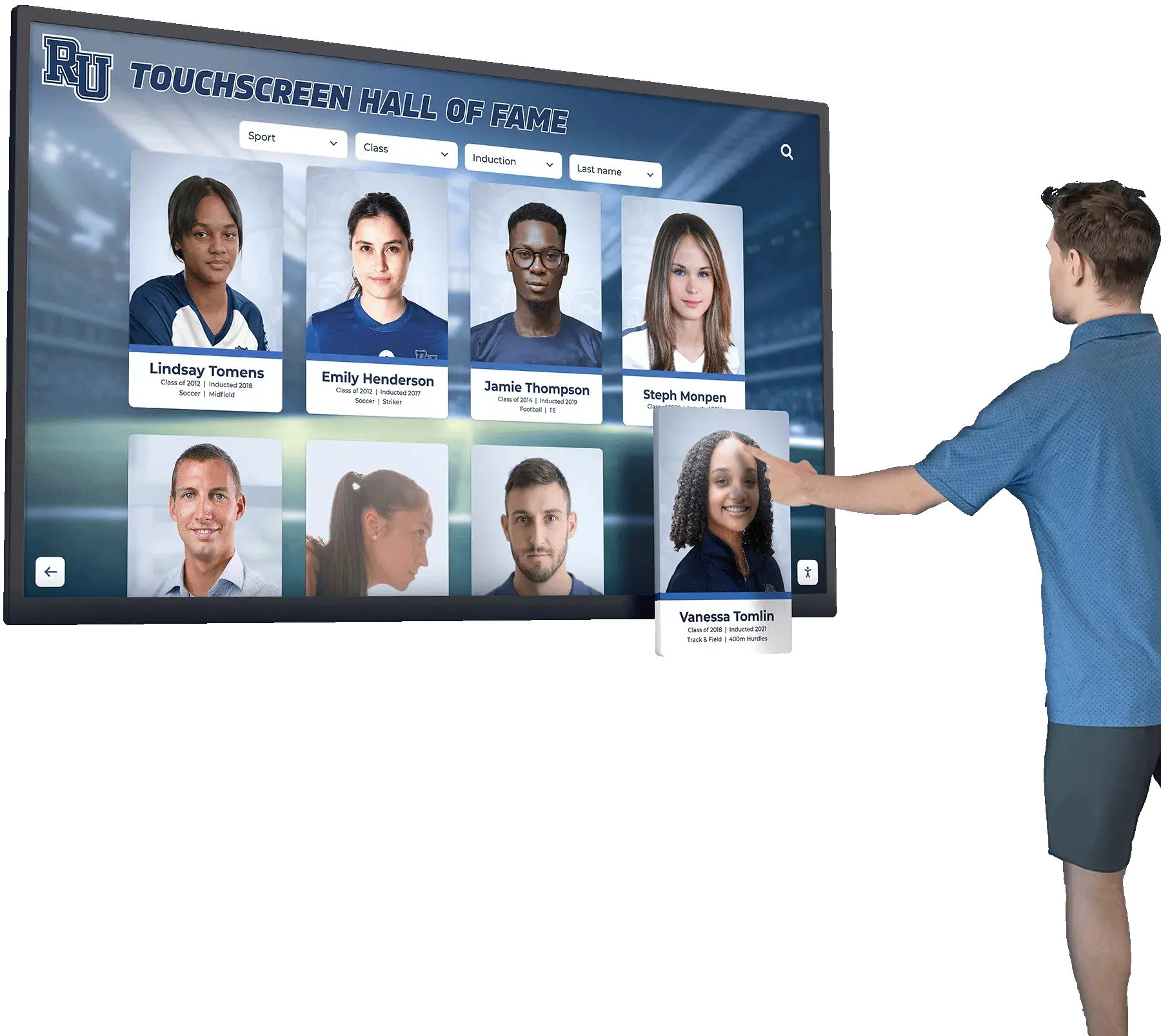
Portrait cards extracted from indexed yearbook content form the visual foundation of alumni recognition programming — each card begins as a yearbook photograph that the index has located, tagged, and made discoverable
Connecting Yearbook Search to Campus Recognition Displays
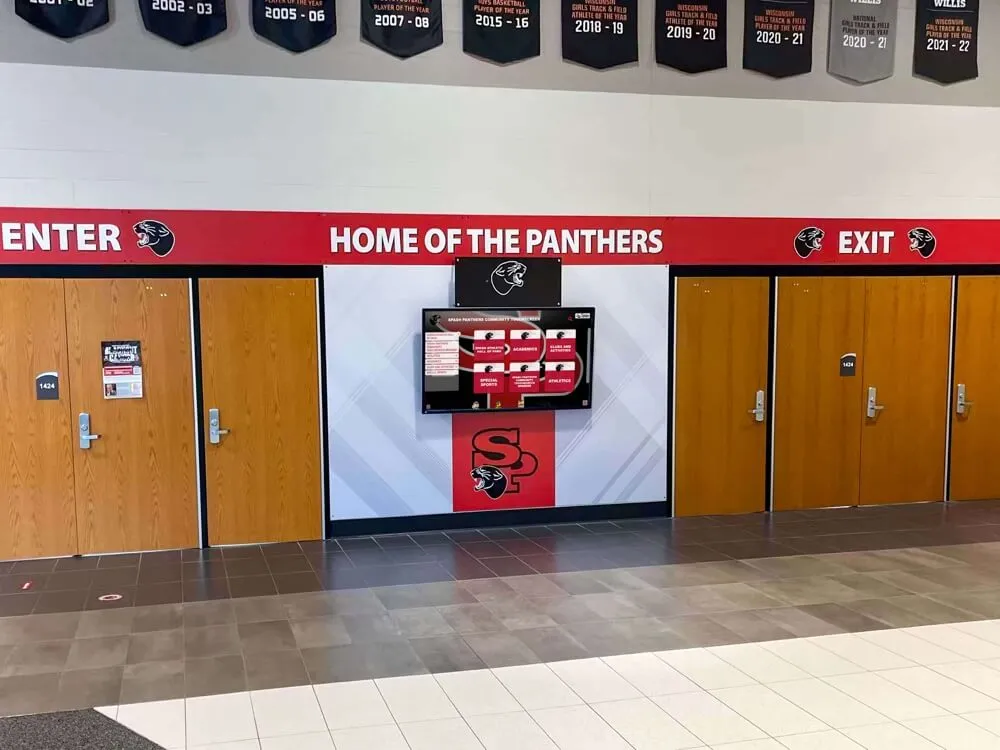
A searchable online yearbook index creates the most immediate value in digital form, accessible from anywhere. But schools that invest in physical campus recognition infrastructure can extend that search capability into the buildings themselves — creating on-site discovery experiences that serve alumni visiting for homecoming, prospective families on tours, and current students every day.
How Touchscreen Kiosks Deliver Yearbook Search On Campus
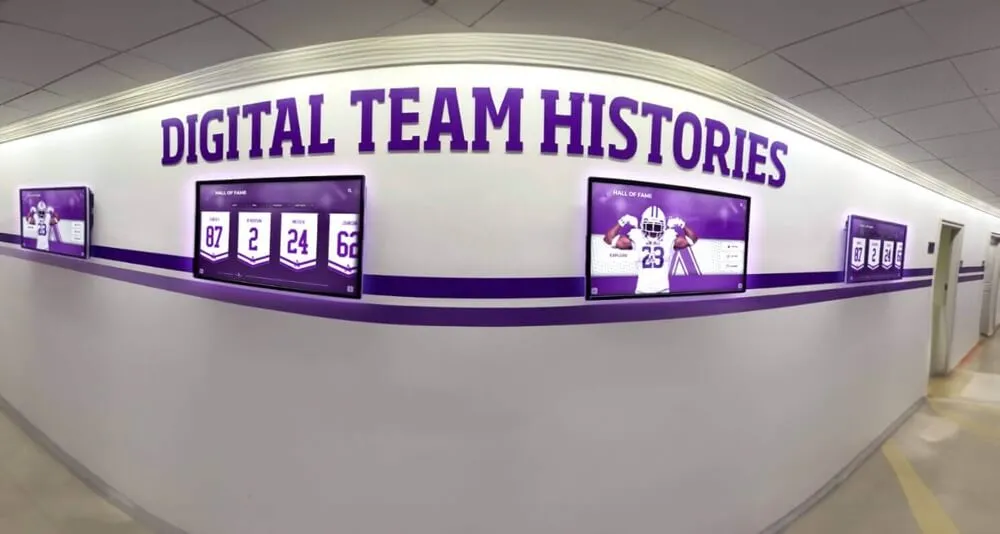
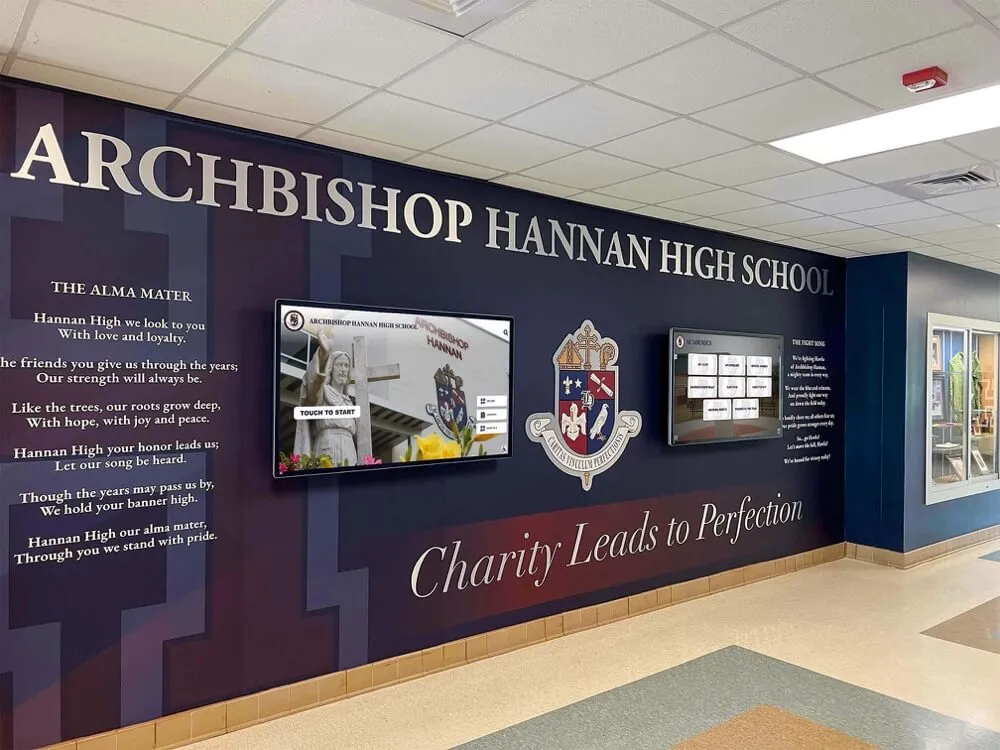
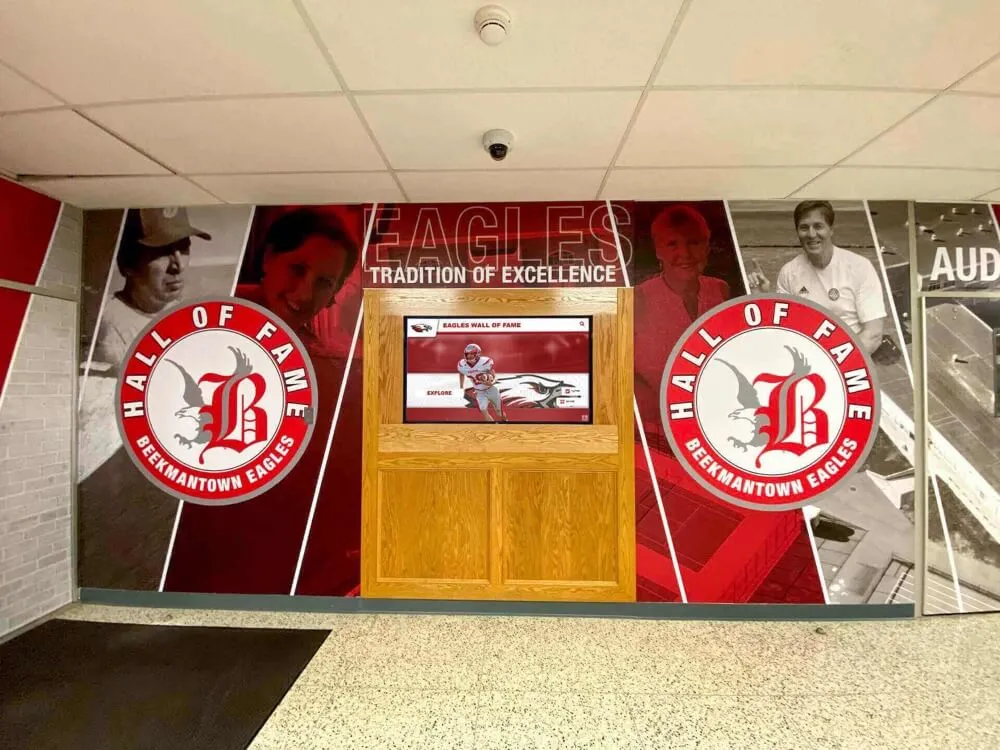
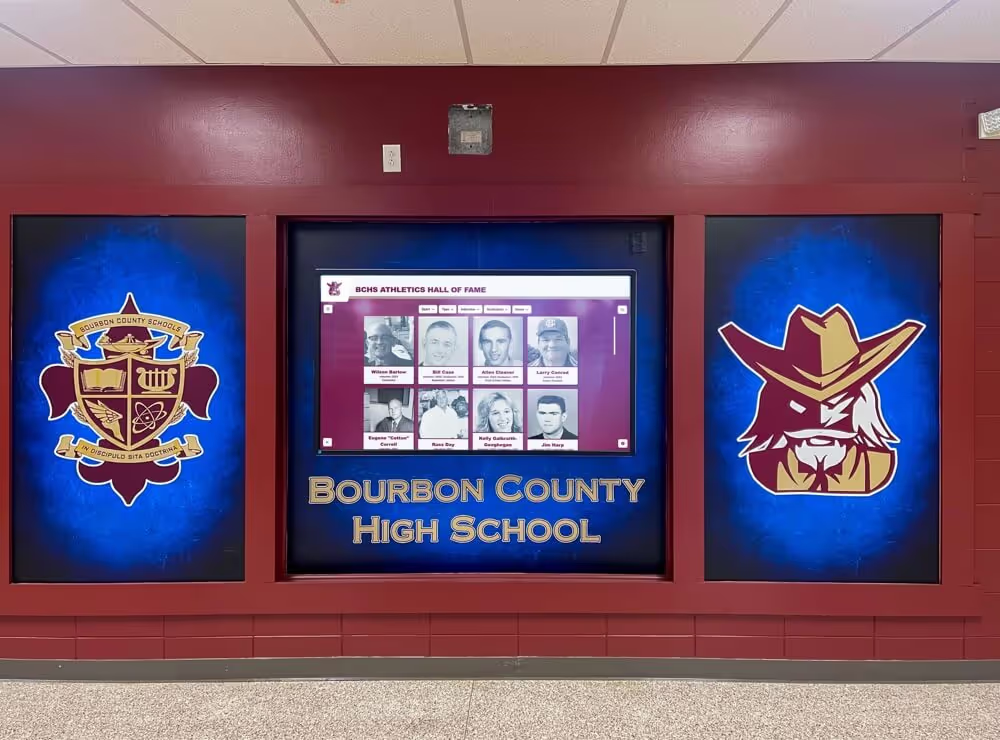
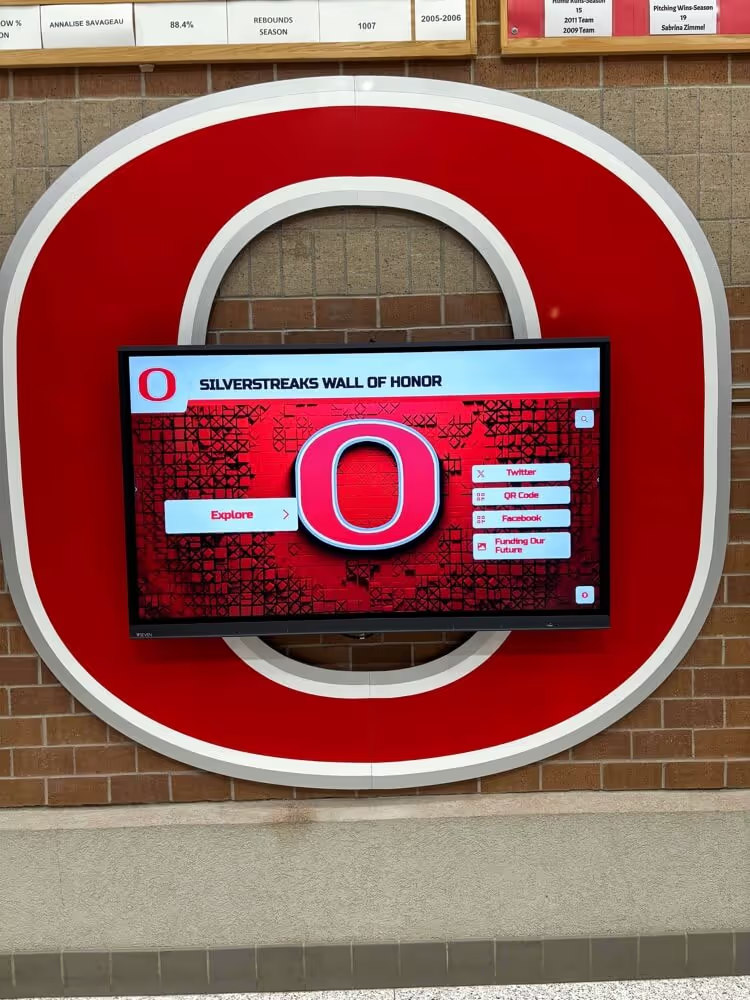
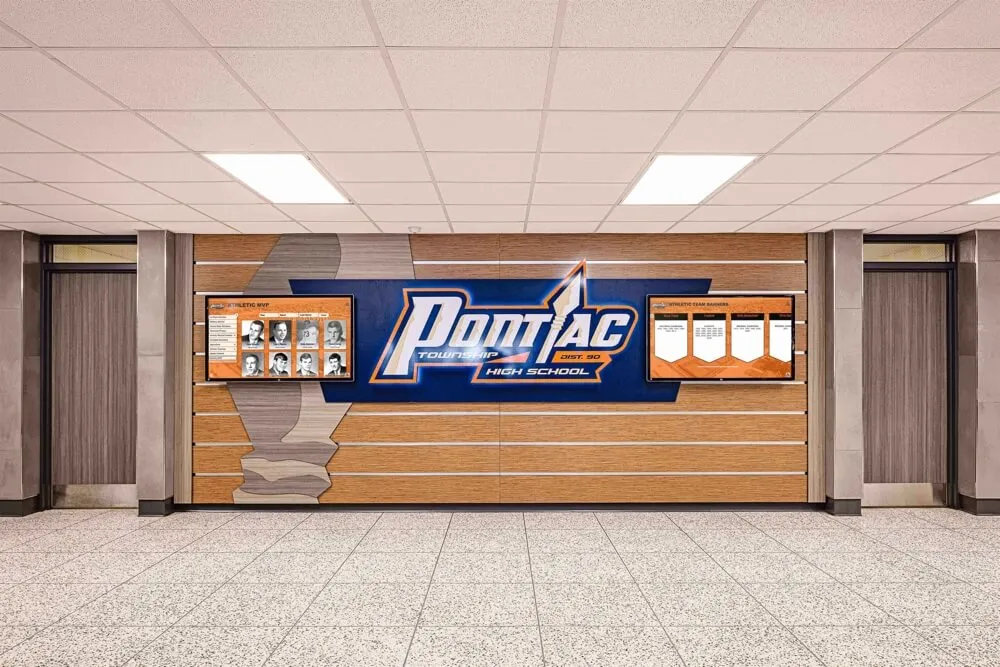
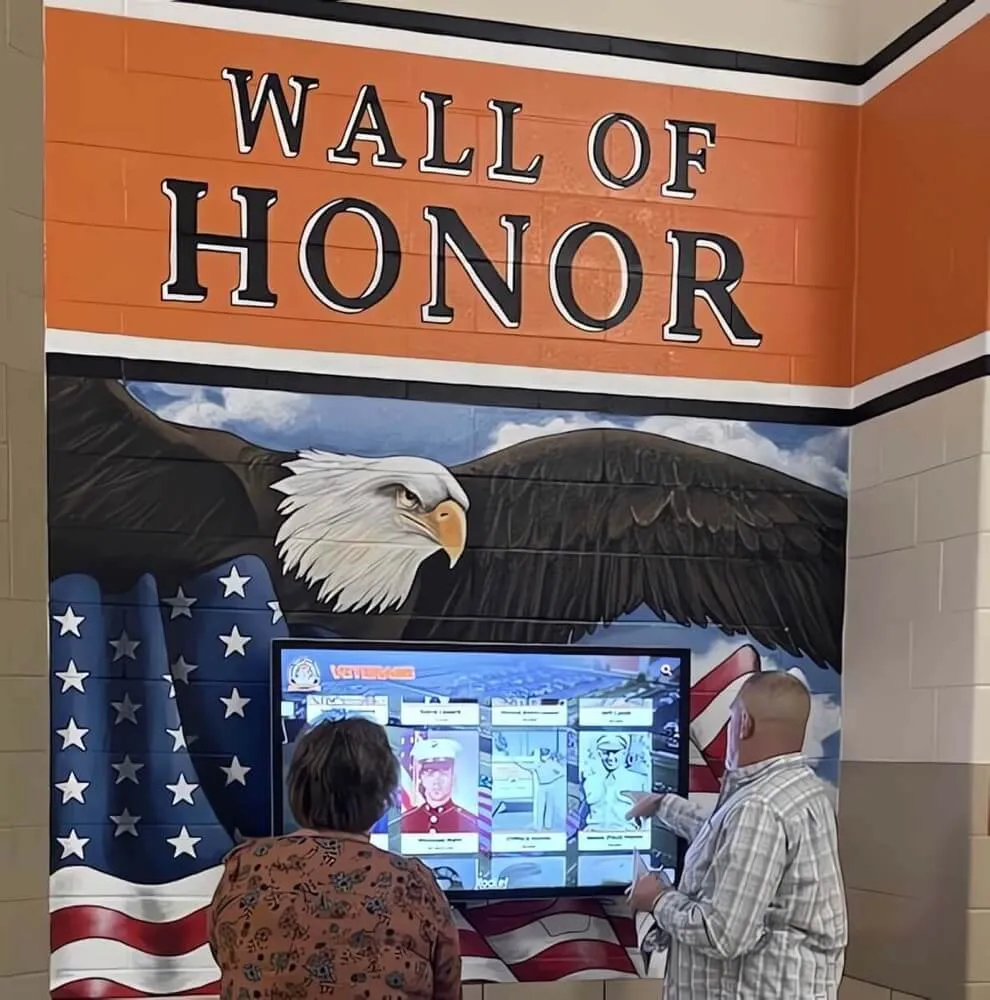
Interactive touchscreen installations in school lobbies, athletic facilities, and alumni spaces can present the same yearbook index as the online platform in a physical, shared-screen format. A visitor approaches the kiosk, types a name, and navigates to a yearbook portrait — the same experience as the web version, delivered through a large-format touchscreen in the building itself.
This on-campus search capability creates several engagement dynamics the online archive alone cannot generate:
Spontaneous discovery — A prospective family visiting for an admission tour passes a kiosk and the parent stops to search for their own name from a high school visit decades ago. This moment of unexpected personal connection to the institution is impossible to engineer through a website.
Social browsing — Groups of alumni visiting during homecoming gather around a kiosk and search together — one person types, others watch, everyone reacts. The shared physical experience amplifies emotional engagement in ways that individual online browsing cannot replicate.
Intergenerational curiosity — Current students searching for parents, grandparents, or older siblings in historical yearbooks create connections across generations that serve the institution’s sense of community and continuity.
Fullscreen kiosk apps for touchscreen websites designed for educational settings handle the specific requirements of campus yearbook search deployments: robust enough to run continuously in high-traffic locations, touch-optimized for intuitive navigation, and configurable to present the school’s branding alongside the content.
Integrating Yearbook Search With Hall of Fame and Alumni Recognition
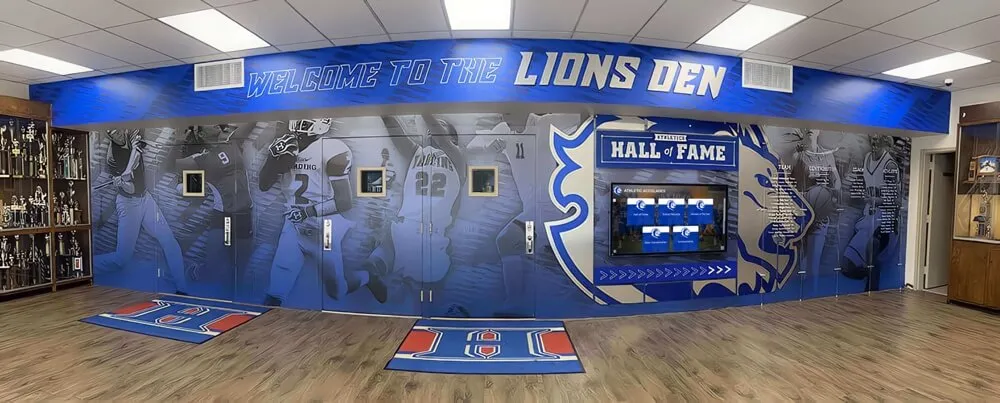
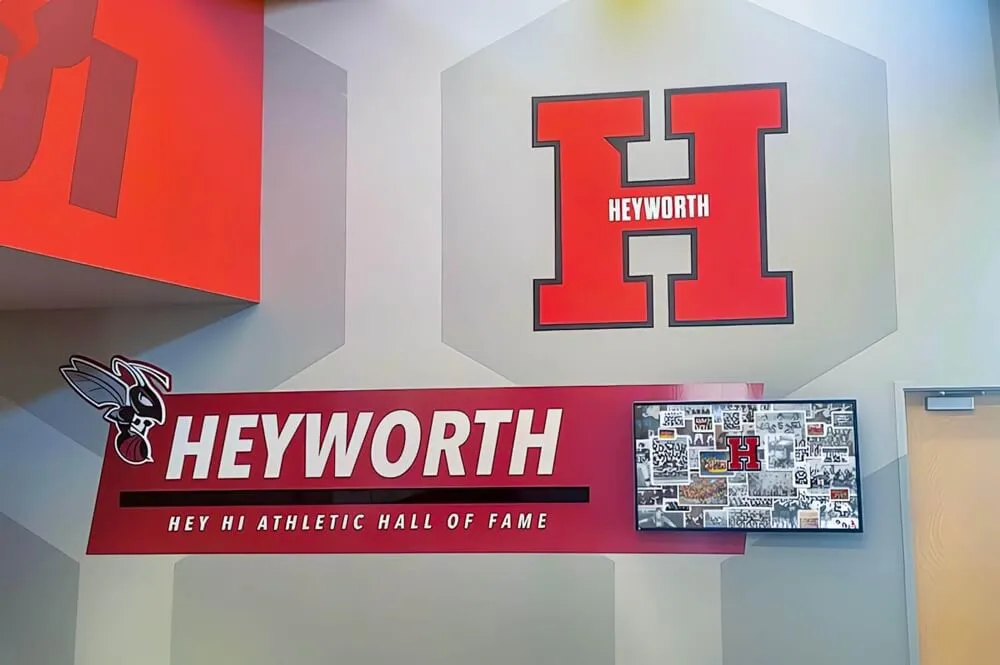
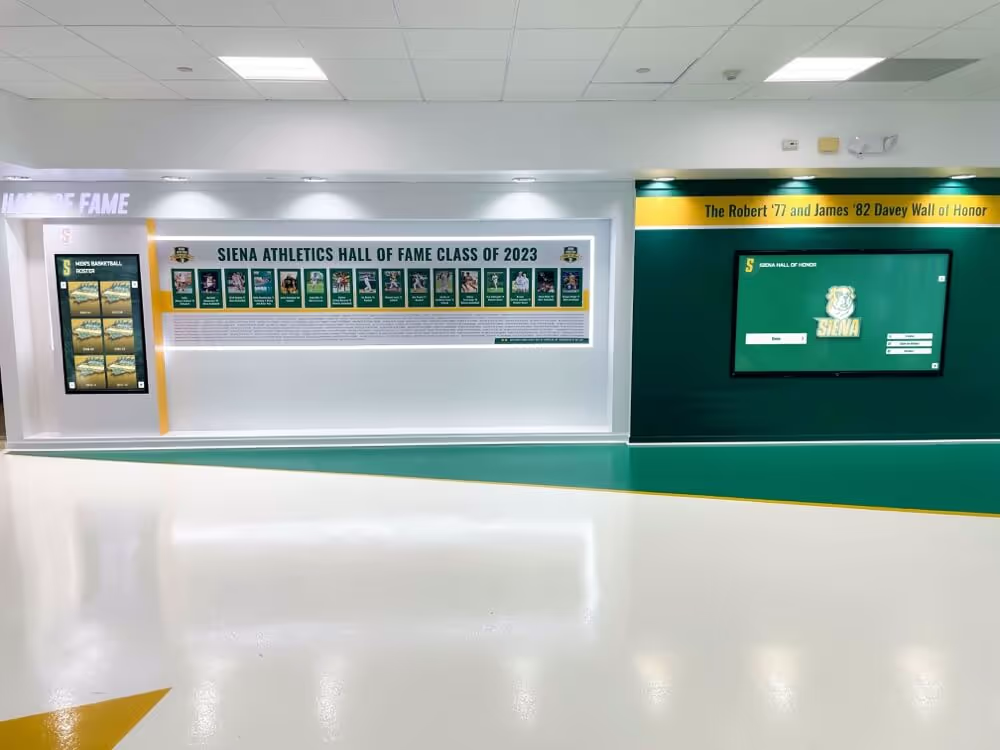
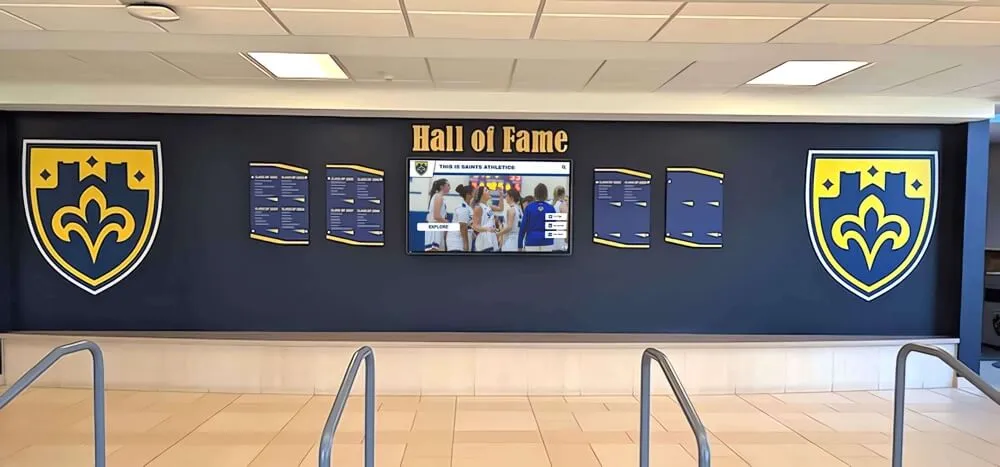
The most powerful campus recognition installations combine yearbook search with broader alumni recognition content — hall of fame inductee profiles, athletic records, distinguished alumni spotlights, and donor recognition — in a single unified interface.
From the alumni’s perspective, this integration creates a complete institutional memory experience: search your name in the yearbook archive, then immediately see how your classmates appeared in subsequent recognition programming, check the athletic records set during your era, and explore the achievements of graduates across every generation.
The documented benefits of digital walls of fame for schools demonstrate consistently that alumni engagement deepens when historical content (yearbooks, archives) and recognition content (hall of fame, honors) are presented together rather than as separate programs. The yearbook index becomes the entry point; the recognition programming becomes the destination.
Student government association digital alumni walls are one example of how yearbook-derived content can populate recognition displays that honor student leadership across decades — connecting a name found in a 1993 student government roster to a permanent campus display honoring class presidents and council members from every era.
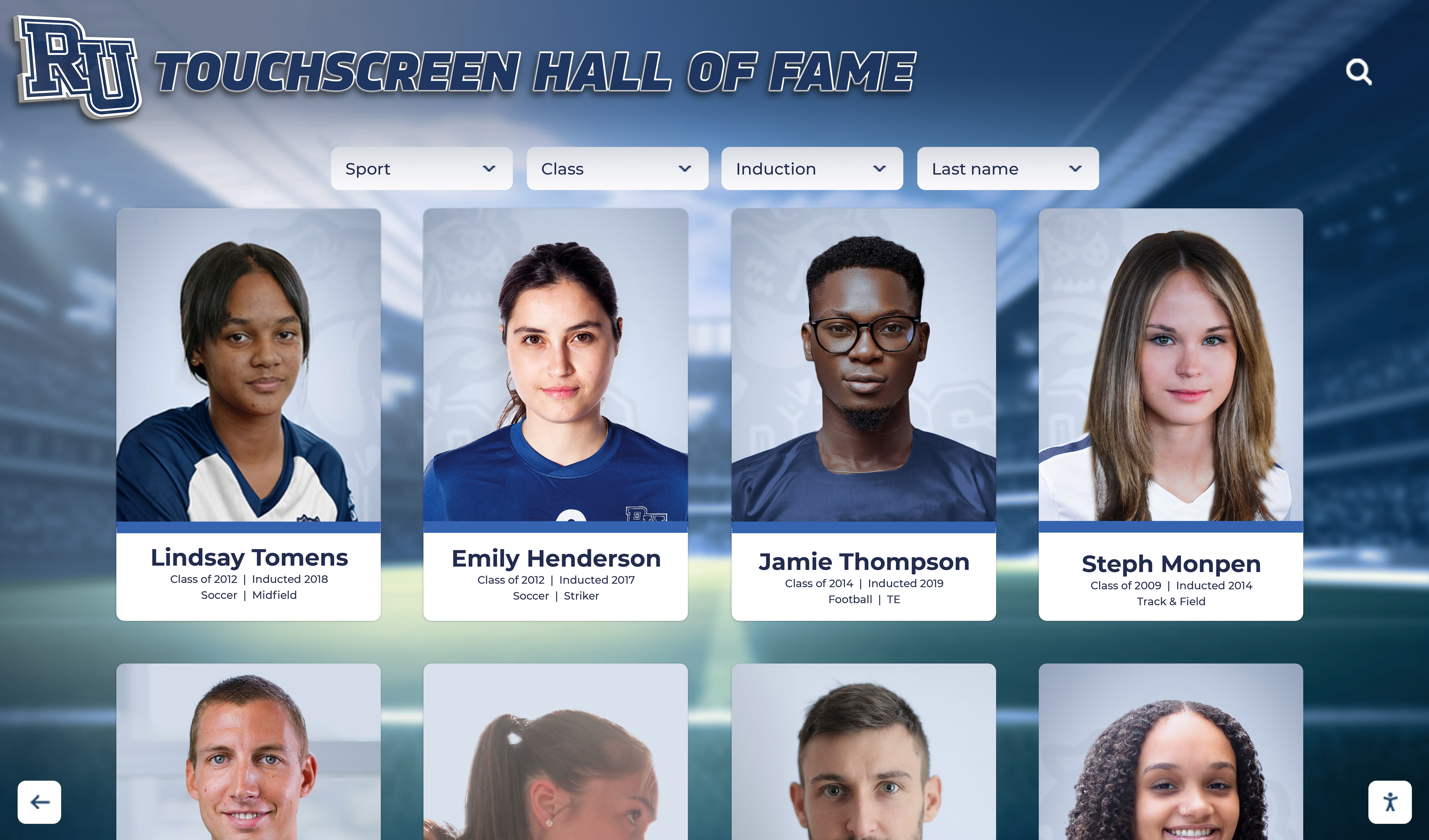
Portrait cards sourced from indexed yearbook content populate touchscreen recognition displays — alumni who find themselves in the search index can often also find themselves in formal recognition programming through the same interface
Maintaining and Growing the Index Over Time
A searchable online yearbook index is not a project with a completion date — it is a living institutional resource that grows as new editions are published and deepens as older editions are refined.
Adding New Editions Annually
Schools publishing yearbooks annually should establish a clear workflow for adding each new edition to the searchable index within a defined period after publication. A one-to-two year lag between publication and index availability is acceptable; a five-year lag degrades the relevance of the index for recent graduates whose engagement and giving motivation are at their early-career peak.
A practical annual workflow for schools with established digitization pipelines:
- Receive the published print yearbook and create a high-resolution scan immediately, before copies are distributed (preventing the “last copy” problem in future archive gaps)
- Submit the scan to the OCR and indexing workflow (automated or professional service)
- Review and verify portrait section accuracy, particularly for the graduating senior class
- Publish to the online archive with the same access controls applied to other recent editions
- Update the campus kiosk content management system with the new edition
Improving Index Quality for Older Editions
Older yearbooks often have lower index quality due to the challenges OCR faces with aged paper and printing styles common in earlier decades. Schools that identify specific years with poor search accuracy can improve them incrementally without re-scanning an entire collection:
Portrait-section re-indexing — Manually reviewing and correcting portrait section name extractions for a single year can be completed by a volunteer in a few hours and immediately improves the most important search context.
Alumni crowdsourcing — Inviting alumni from specific graduation years to review index entries for their year, flag errors, and add names to unlabeled photographs builds community engagement while improving data quality. Many alumni are genuinely interested in contributing to a project that serves their own era.
Activity page enrichment — Adding structured tags to club pages, sports rosters, and honor roll sections in older editions creates additional search pathways beyond name recognition.
Digital donor wall ideas for modern school recognition often incorporate yearbook-sourced biographical information that requires accurate historical indexing — a donor recognition profile that references an alumna’s 1978 yearbook portrait and student government role depends entirely on that edition being correctly indexed and accessible.
Measuring the Impact of a Searchable Yearbook Index
Schools investing in yearbook indexing benefit from tracking engagement metrics that demonstrate the return on that investment and guide ongoing improvements.
Key Metrics to Track
Unique search sessions — How many distinct alumni initiate searches in a given period. This is the primary indicator of whether the index is attracting the intended audience.
Search-to-page conversion rate — What percentage of searches result in a visited yearbook page. Low conversion rates suggest name matching problems (alumni searching but not finding results) or interface friction preventing clicks through to page views.
Repeat visit rate — Alumni who return to the archive multiple times are demonstrating sustained engagement. A high repeat rate indicates the index is delivering genuine discovery value; a low rate suggests the first experience is not compelling enough to motivate return.
Social sharing activity — Many yearbook platforms enable alumni to share specific pages or photographs directly to social media. Tracking share activity reveals which editions and content types generate the most organic outreach — valuable both for measuring engagement and for identifying content worth featuring in alumni communications.
Reunion and event registration correlation — Schools with strong homecoming programming can track whether alumni who used the yearbook search tool in the weeks before homecoming showed higher event attendance rates than the general alumni population. This correlation, while not causal evidence, helps demonstrate the engagement value of the index to institutional leadership evaluating digitization investments.
Frequently Asked Questions About Searchable Yearbook Indexes
How accurate is automated name recognition in old yearbooks?
Accuracy varies significantly with the age and condition of the yearbook. Well-preserved editions from the 1980s onward typically achieve 90-95% name accuracy with quality OCR tools. Yearbooks from the 1950s and 1960s with more variable printing conditions, cursive handwriting in captions, and greater paper degradation may achieve 75-85% initial accuracy, with manual verification improving that substantially. Schools should request accuracy guarantees and sample reports from indexing service providers before committing to a project.
Can the index include candid photos where people are not named in captions?
Unnamed candid photographs can be included in a discovery platform through face recognition technology or through crowdsourced identification workflows. However, privacy considerations apply particularly to candid photographs of minors, and many schools choose to include candids in the archive without connecting them to the name-based search index.
How long does it take to build a searchable index from an existing digitized collection?
For a professional service handling automated OCR with verification, typical timelines run two to four weeks per decade of yearbook content, depending on volume and condition. A school with forty years of digitized yearbooks might receive a complete index in three to five months. DIY approaches using volunteer workflows take longer but allow schools to prioritize specific years.
What happens when alumni cannot find themselves in the index?
Every searchable yearbook index should offer a clear pathway for alumni to report missing entries. Common causes include OCR errors creating misspellings that prevent matching, incomplete portrait sections in certain editions, and alumni who were absent on portrait day. A simple “Suggest a correction” form linked from search results, routed to an administrator who can manually add or correct entries, resolves the vast majority of discovery failures within a few business days.
Conclusion: The Index Is What Fulfills the Promise of Digitization
Digitizing a school’s yearbook collection is an act of institutional commitment — a statement that the history contained in those volumes is worth preserving and sharing. But the promise of that commitment is only fulfilled when any alumna or alumnus can type their own name and find their place in that history.
A searchable online yearbook index is the technology that bridges the gap between preservation and discovery. It converts a static archive into a living engagement platform, connects alumni to the institution at a moment of genuine personal resonance, and creates the foundation for recognition programming that honors every graduating class across every era.
Schools that build strong yearbook indexes — accurate, well-designed, accessible on both web and campus touchscreens, and maintained as new editions are published — are building something that compounds in value with every passing year. Every alumni reunion, every homecoming weekend, every visit from a prospective family, every current student who searches for a parent’s photograph: all of these moments begin with a search bar and a name. Make sure the index is ready to answer.
Ready to make every alumnus findable in your yearbook archive?
Rocket Alumni Solutions helps schools build interactive touchscreen displays and digital recognition platforms that integrate yearbook search directly into campus recognition experiences — so alumni can find themselves in historical archives and in formal recognition programming through the same interface. Schedule a consultation to see how a searchable yearbook platform can deepen alumni engagement at your institution.