School trophy cases represent one of the most visible expressions of institutional achievement—showcasing athletic championships, academic excellence, and student accomplishments while building school pride and motivating future generations. For athletic directors, principals, and facilities managers, selecting the right trophy display solution represents a strategic decision balancing budget constraints, space limitations, maintenance requirements, and the need to celebrate decades of achievements effectively.
Yet many schools struggle with trophy case challenges that undermine recognition effectiveness. Traditional glass cases fill quickly, forcing difficult decisions about which awards deserve display space. Trophies accumulate in storage rooms because existing cases reached capacity years ago. Maintenance demands—dusting, organizing, replacing locks, cleaning glass—consume custodial time. And static displays fail to provide context, searchability, or accessibility beyond the physical location, limiting engagement potential.
This comprehensive guide explores school trophy case options comparing traditional display approaches with modern digital alternatives. You’ll discover practical solutions addressing space constraints, budget considerations, maintenance realities, and recognition objectives—helping you select display systems that honor every achievement while remaining administratively sustainable and financially responsible.
Schools implementing comprehensive recognition displays report measurable benefits including increased alumni engagement, enhanced recruiting outcomes, improved student motivation, and stronger community connections—making trophy displays strategic assets rather than mere decoration.

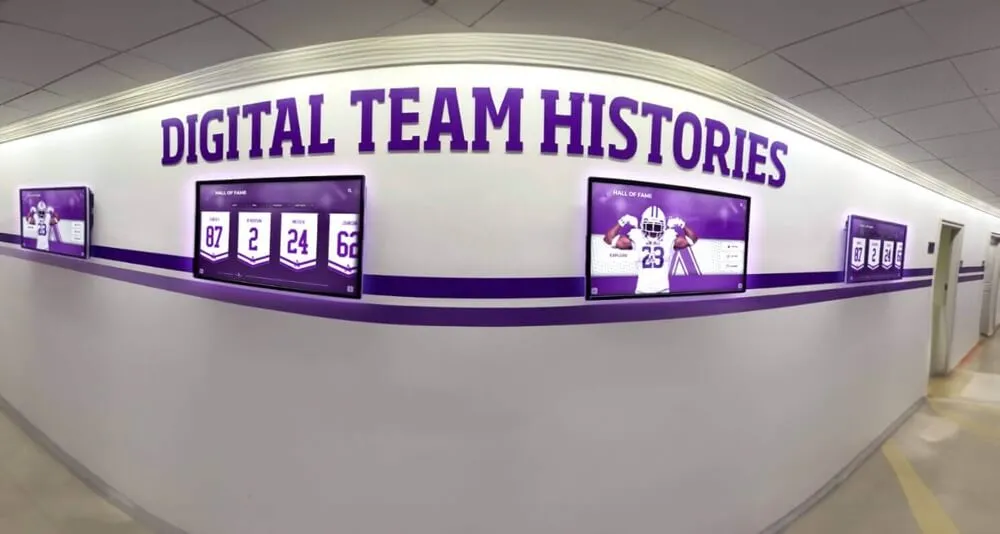
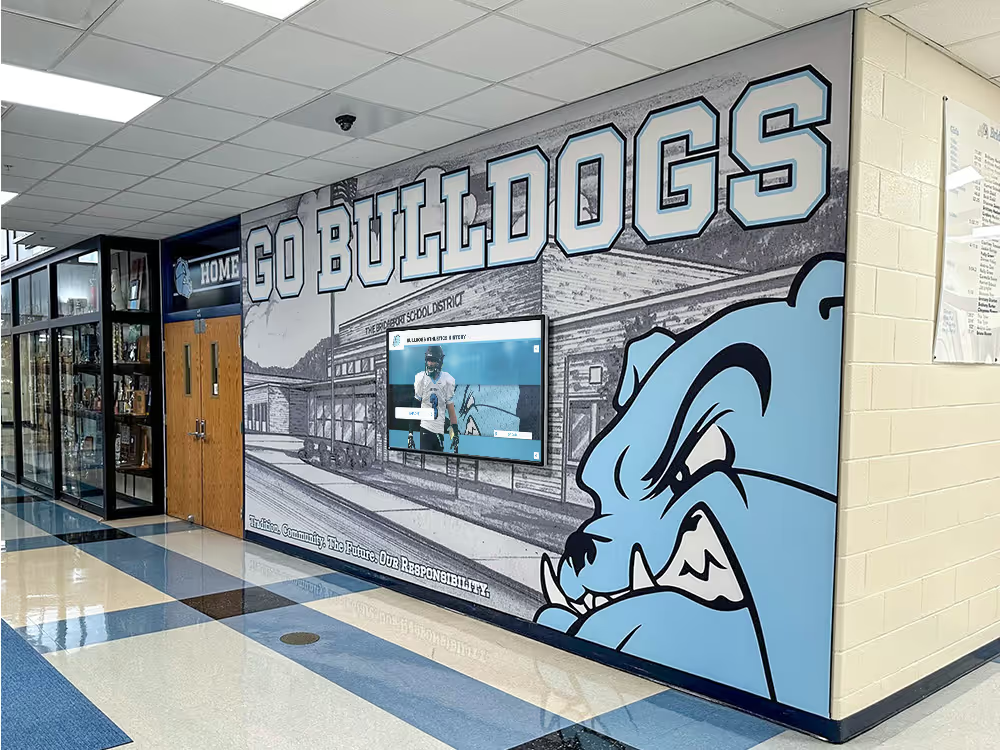
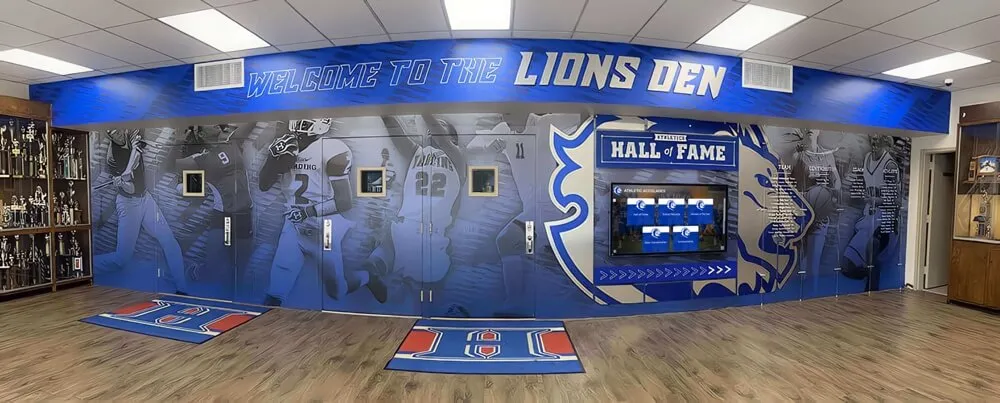
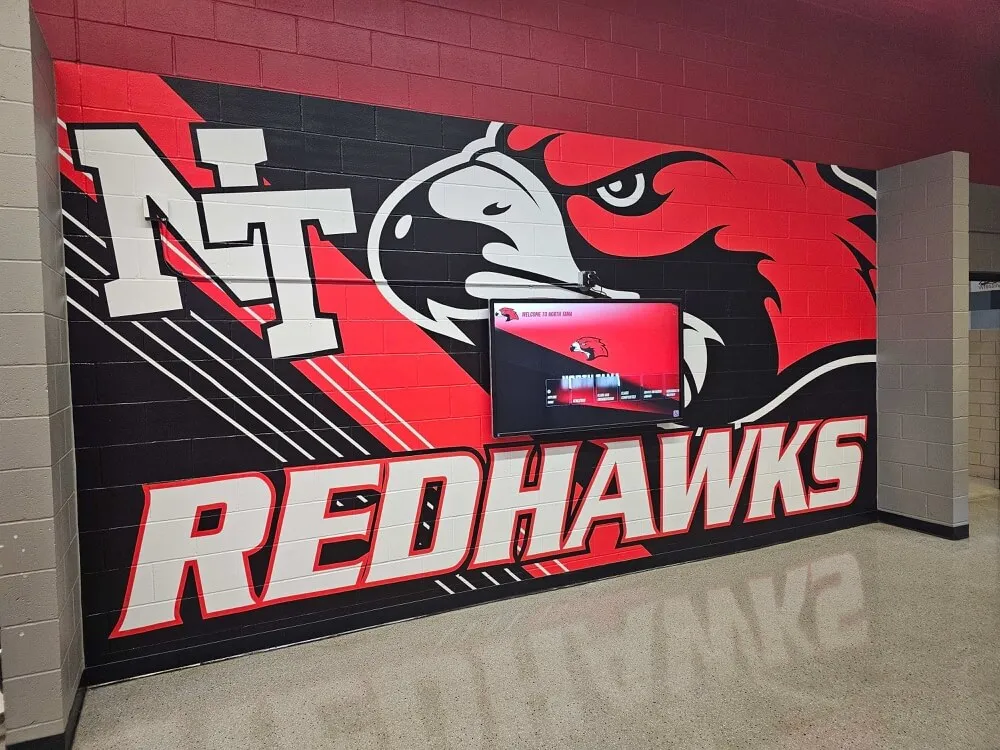
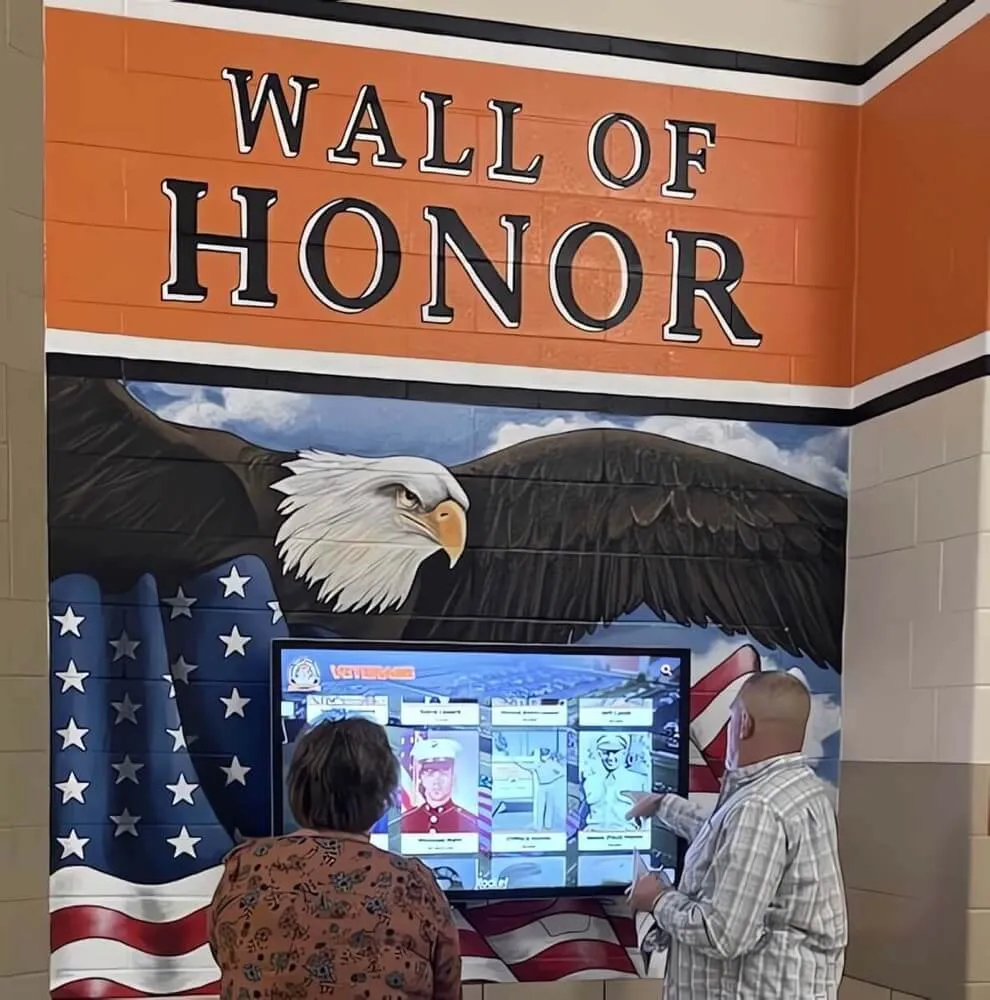
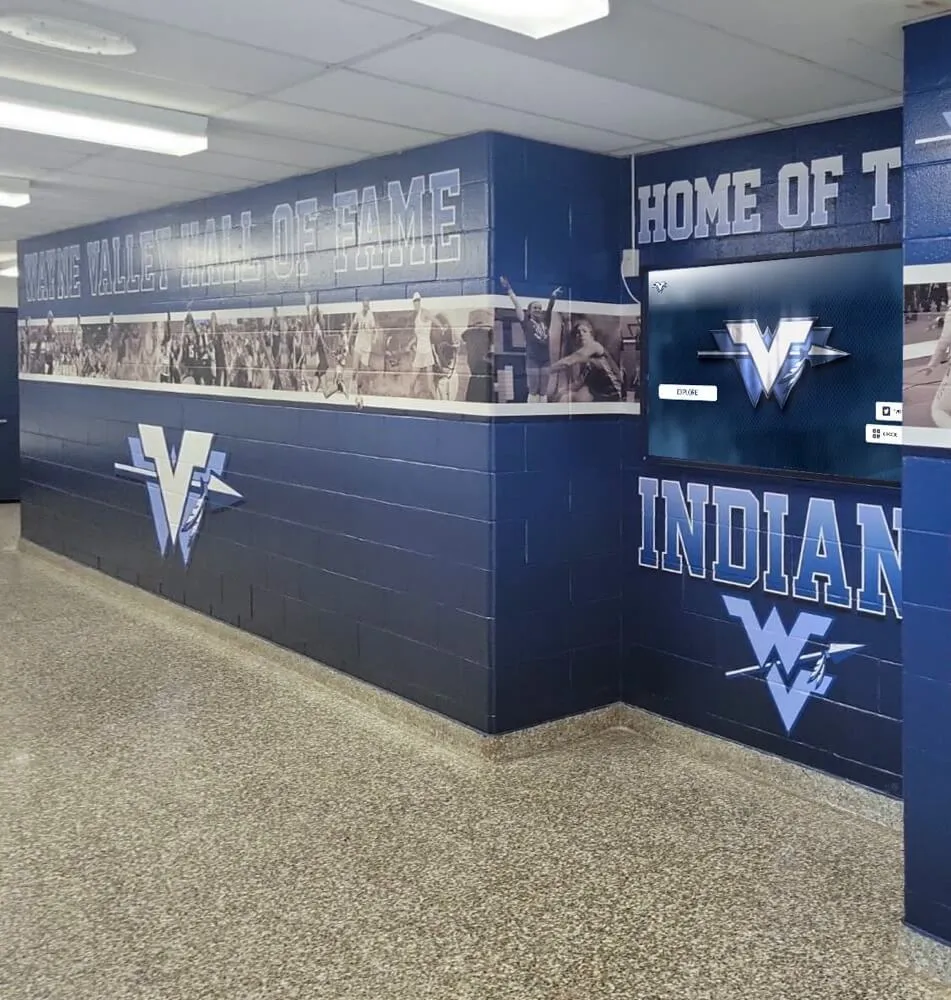
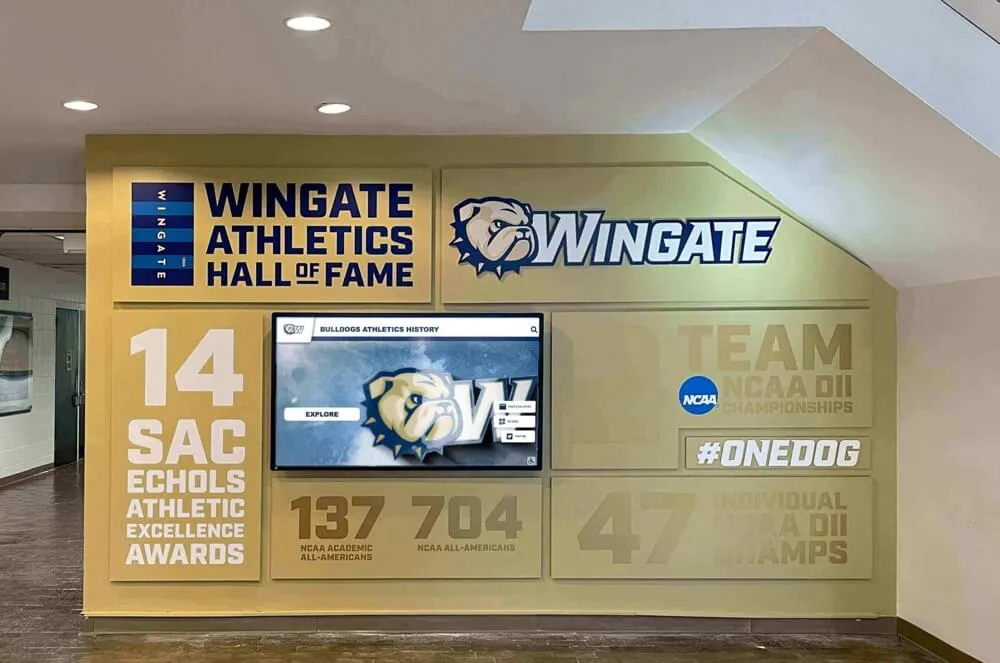
Traditional trophy cases paired with recognition murals create focal points celebrating school achievement and building institutional pride
Understanding School Trophy Case Needs
Before evaluating specific display options, establishing clear recognition objectives ensures your investment delivers intended outcomes.
Defining Trophy Display Purposes
Effective trophy cases serve multiple strategic functions beyond merely housing physical awards:
Achievement Celebration and Validation Trophy displays acknowledge student effort and accomplishment, validating years of dedication while demonstrating organizational appreciation. Visible recognition reinforces that excellence matters and achievement receives appropriate celebration—creating motivational environments where students understand their efforts will be honored appropriately.
School Pride and Identity Building Trophy collections tell institutional stories, documenting athletic programs, academic achievements, and community accomplishments that define school character. These displays create tangible connections to tradition, helping current students understand their place in ongoing excellence legacies while building emotional attachment to institutions.
Recruiting and Competitive Positioning Prospective families evaluating schools consistently notice trophy displays during campus tours. Comprehensive recognition showcasing program success, tradition depth, and achievement breadth creates competitive advantages—demonstrating quality, building confidence, and positioning programs favorably against competing institutions.
Athletic directors report that recognition displays frequently influence recruiting conversations, with prospective athletes specifically commenting on visible program tradition during facility tours.
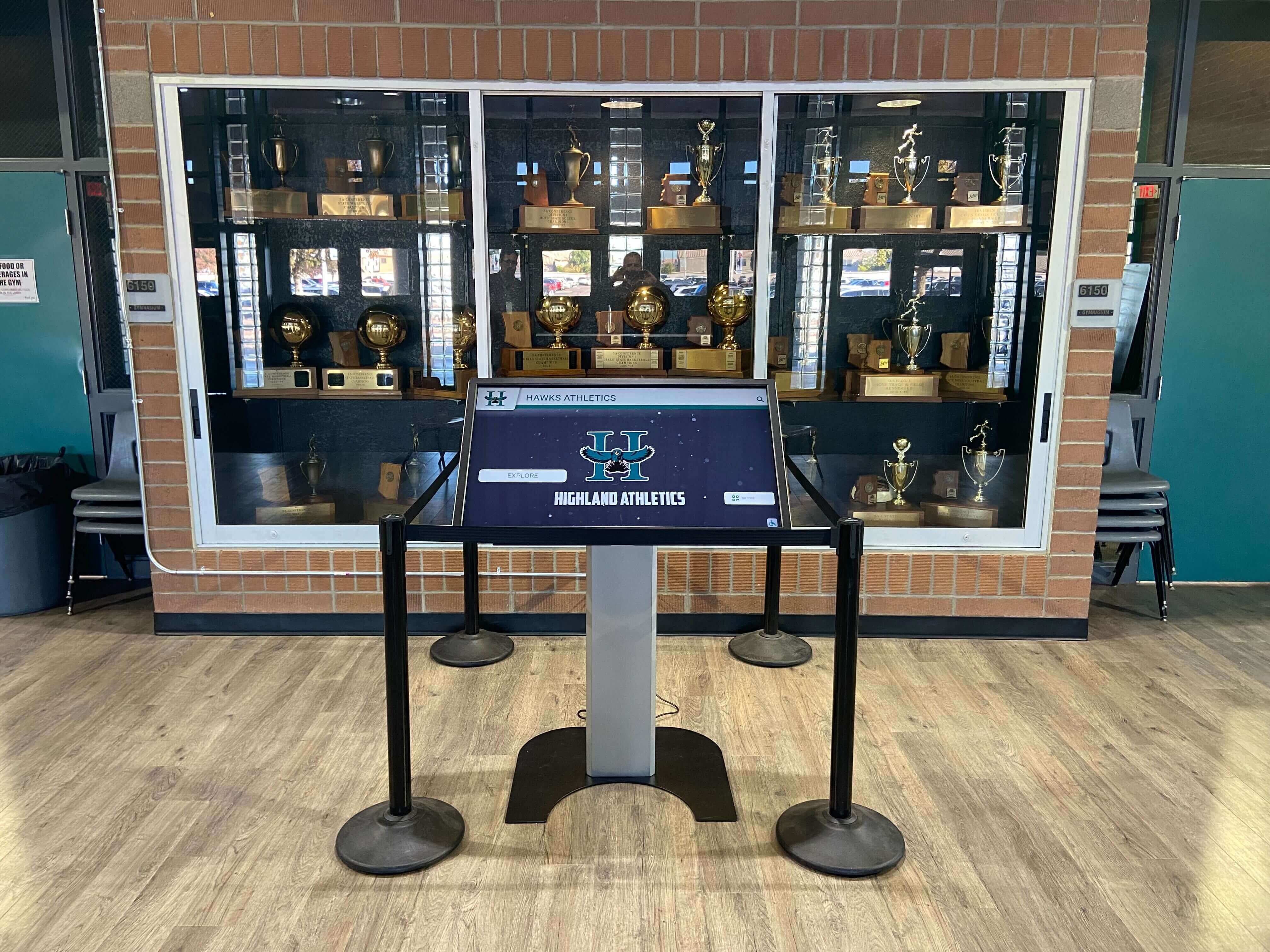
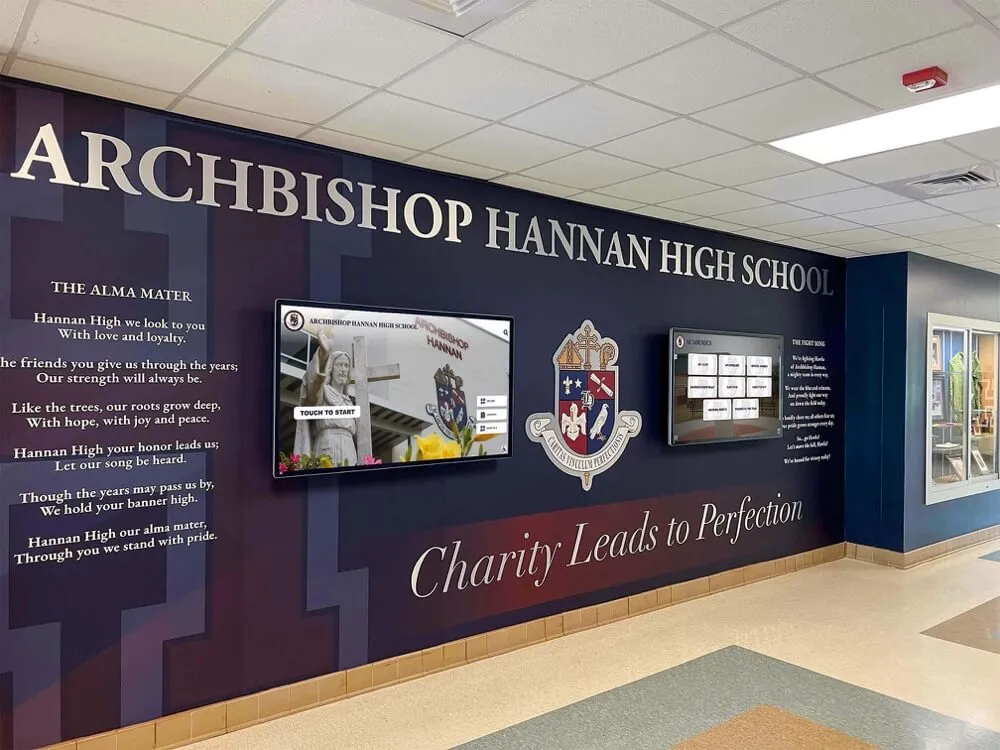
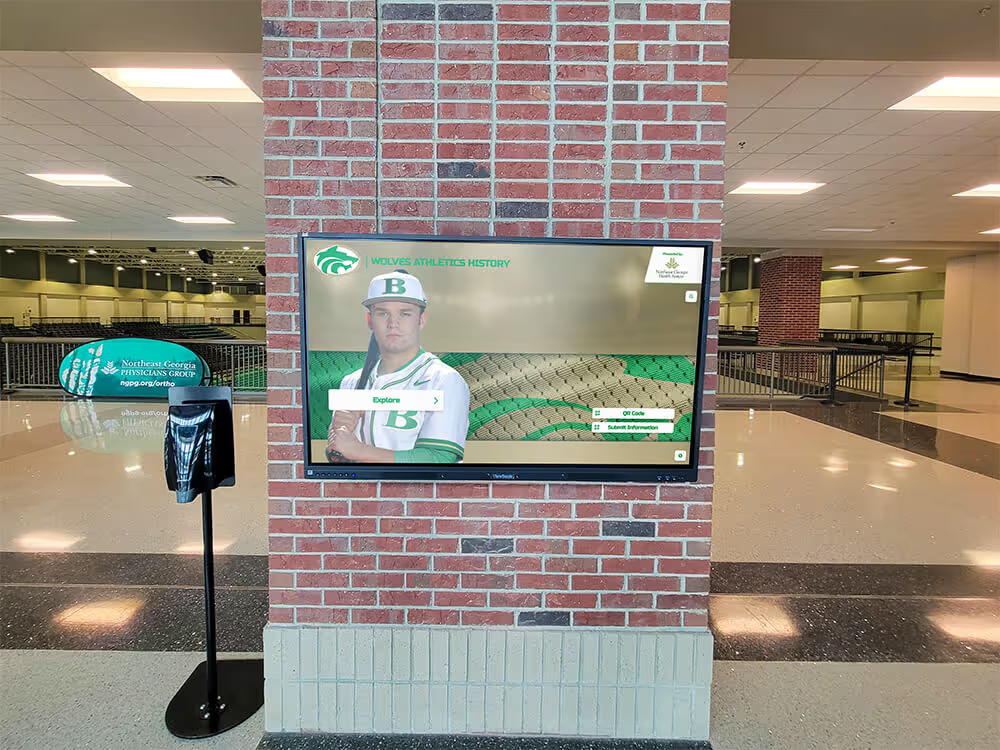
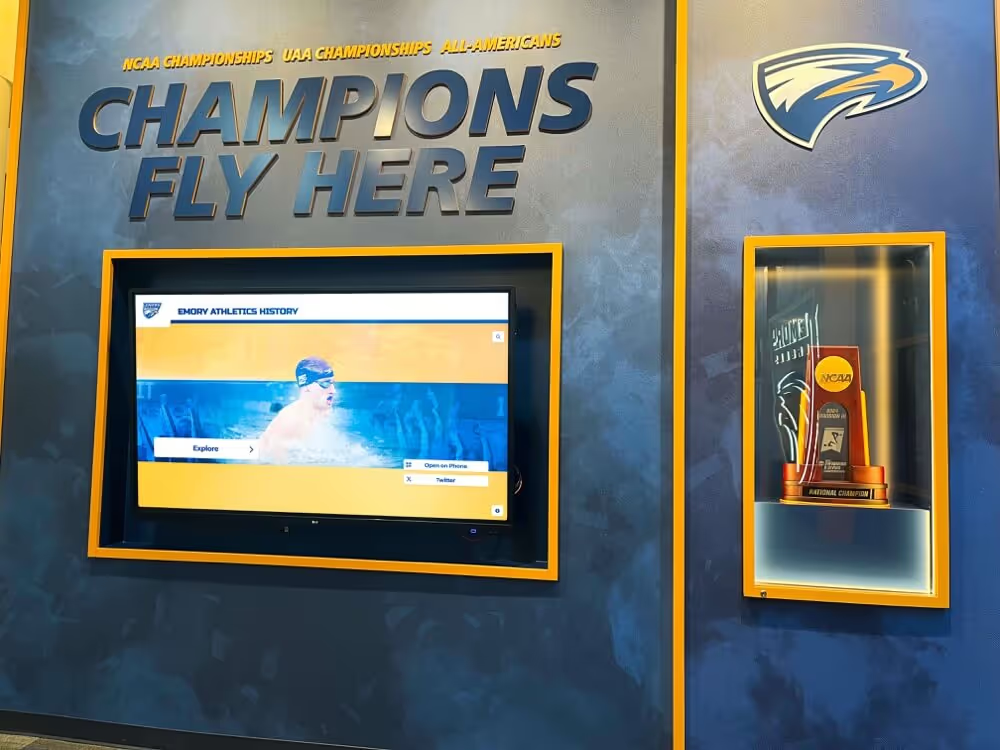
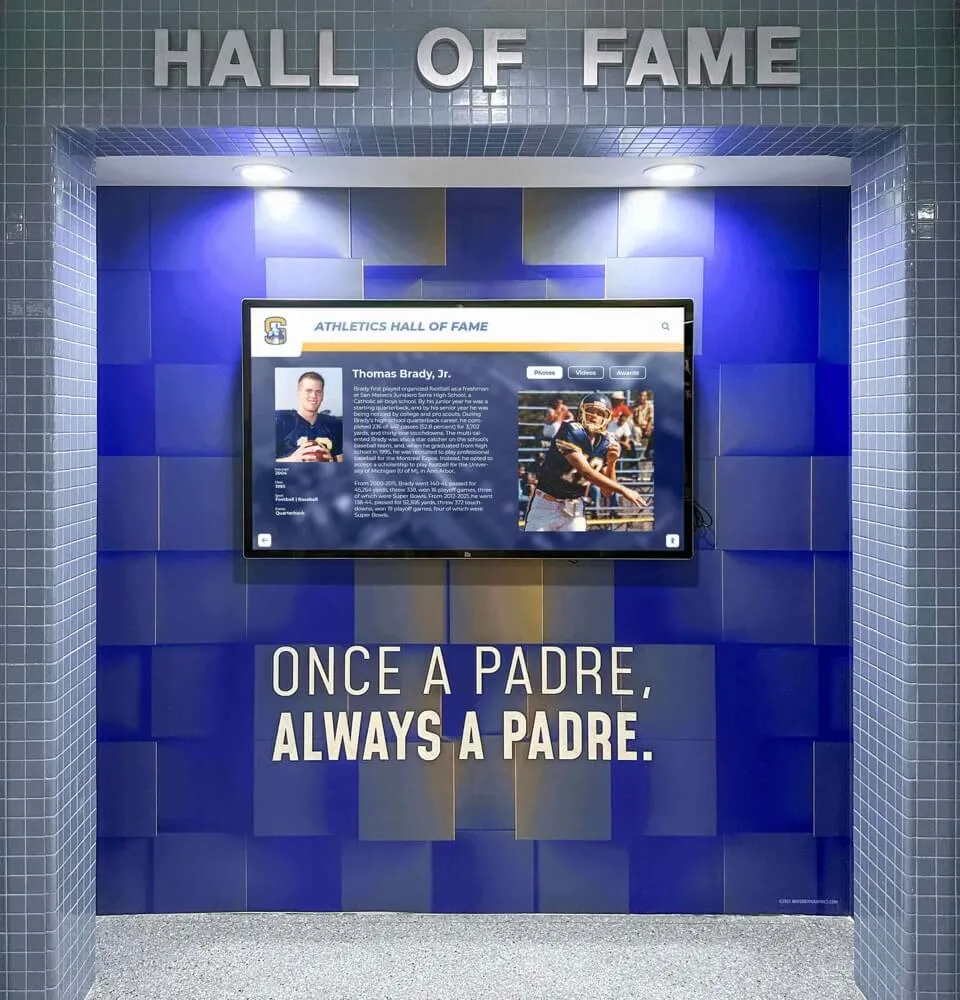
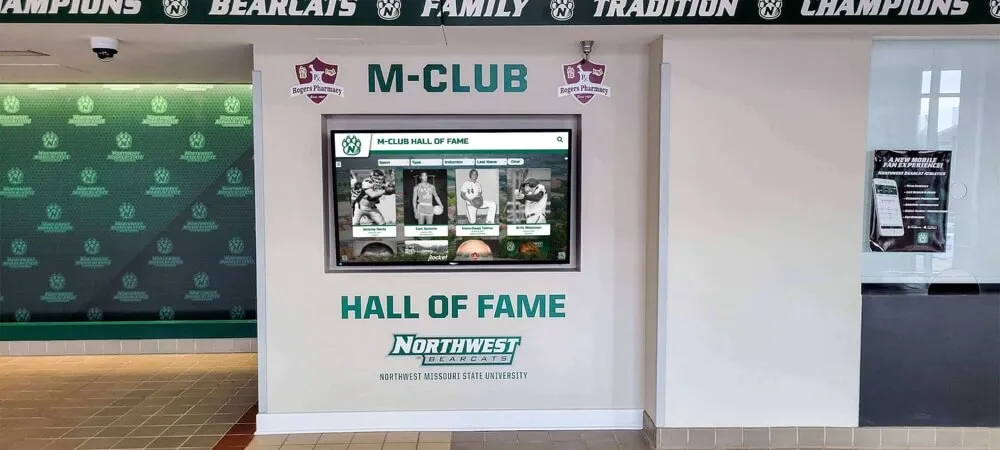
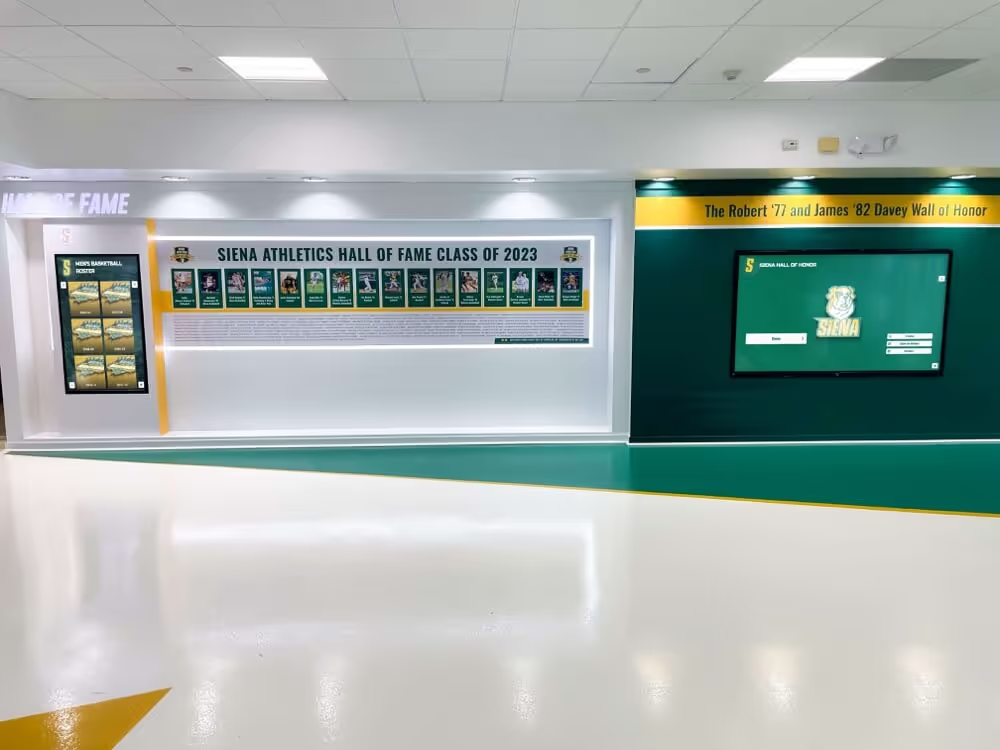
Modern schools integrate digital recognition with traditional displays, maximizing achievement visibility while managing space constraints
Alumni Engagement and Connection Trophy displays create natural alumni touchpoints during campus visits, reunions, and community events. Alumni seek their achievements in recognition systems, reconnect with school memories, and demonstrate accomplishments to family members—maintaining institutional relationships that support fundraising, mentoring, and community advocacy.
Common Trophy Display Challenges
Understanding prevalent challenges helps schools select solutions addressing actual obstacles rather than idealized scenarios:
Space Limitations and Capacity Constraints Most schools face fundamental space problems: existing trophy cases filled years ago, wall space consumed by decades of plaques, and storage rooms containing awards that never achieved display visibility. As programs continue achieving, space constraints force difficult decisions about removal, rotation, or simply accepting that recent accomplishments receive no recognition.
Schools with 50+ year histories frequently discover they’ve accumulated 5-10 times more awards than available display space can accommodate—creating recognition inequities where older achievements occupy prime visibility while recent accomplishments remain hidden.
Maintenance Burden and Administrative Overhead Traditional trophy cases demand ongoing custodial attention: weekly dusting, glass cleaning, lock maintenance, lighting replacement, organization, and damage repair. These maintenance requirements consume staff time while competing with other facility priorities. Additionally, reorganizing displays, adding new awards, or updating information requires facilities coordination, security access, and physical labor—creating administrative friction that discourages regular updates.
Limited Context and Engagement Physical trophies provide minimal information—typically just year and accomplishment. Viewers cannot search for specific achievements, understand context, explore related accomplishments, or access recognition remotely. This limited engagement means trophy cases function primarily as passive decoration rather than interactive exploration tools that could deepen school connection and achievement appreciation.
Security and Damage Concerns Trophy theft and vandalism represent persistent concerns, particularly in facilities with evening activities, public access, or limited security monitoring. Glass cases provide protection but require lock maintenance and key management. Damage from facility use—cart collisions, equipment strikes, or accidental contact—creates repair burdens and potential safety hazards from broken glass.
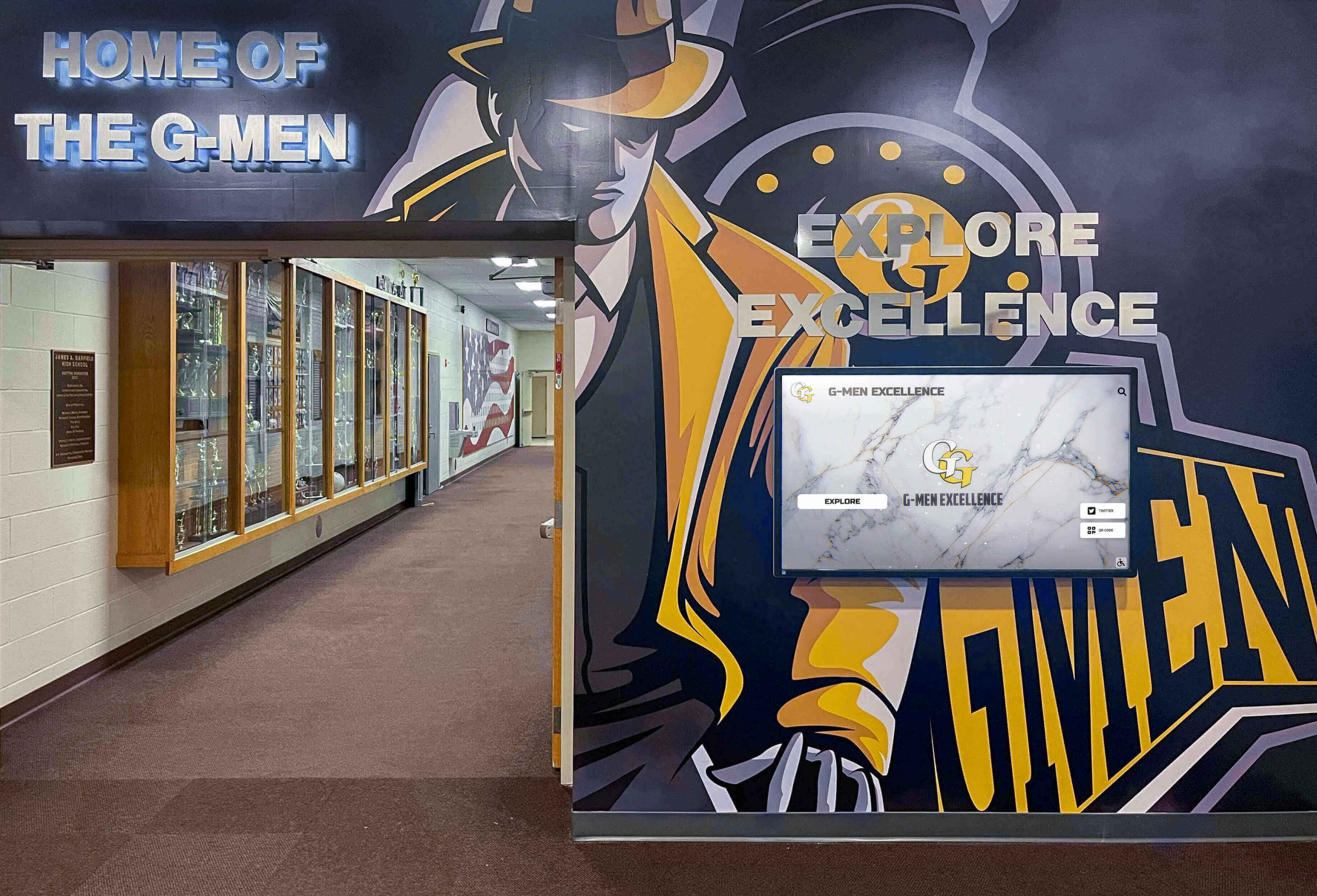
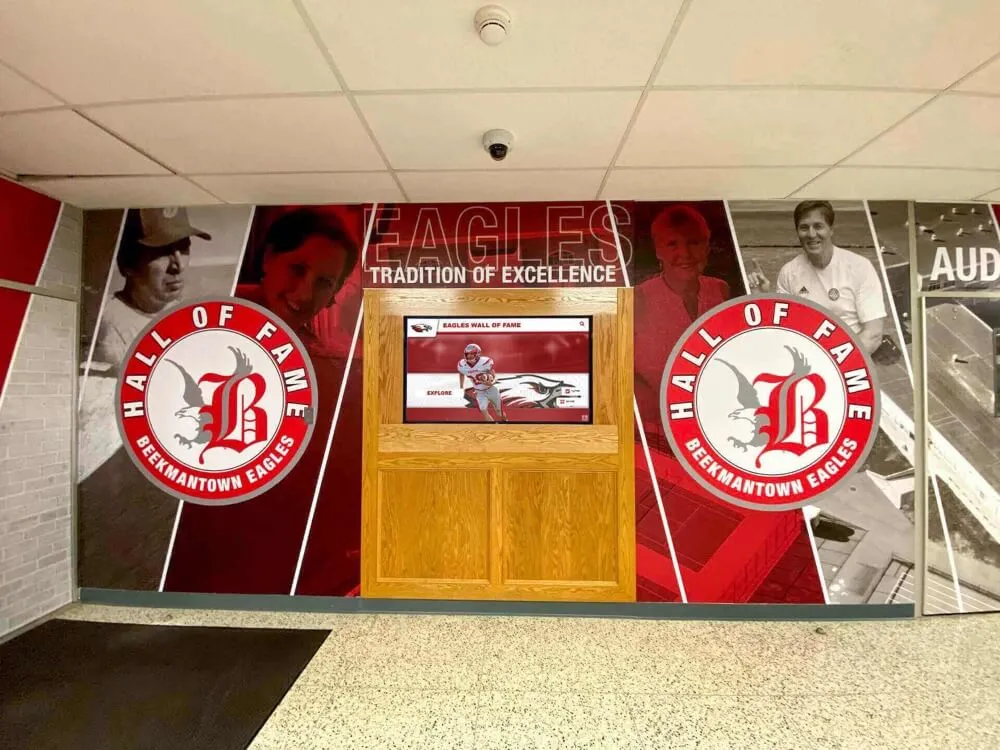
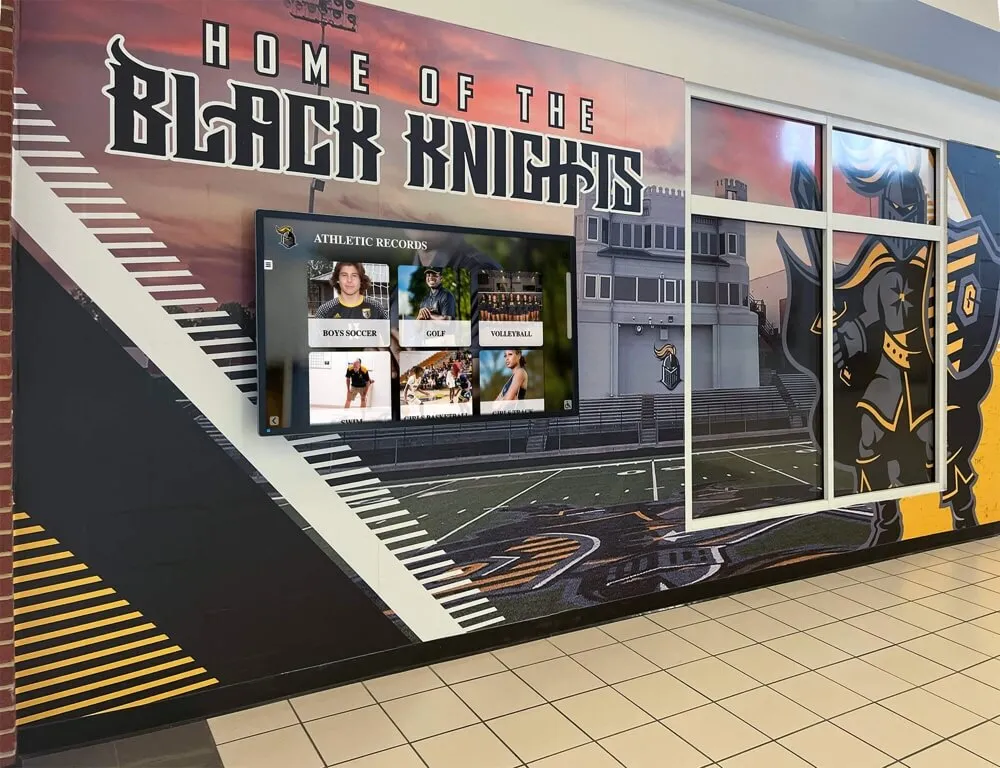
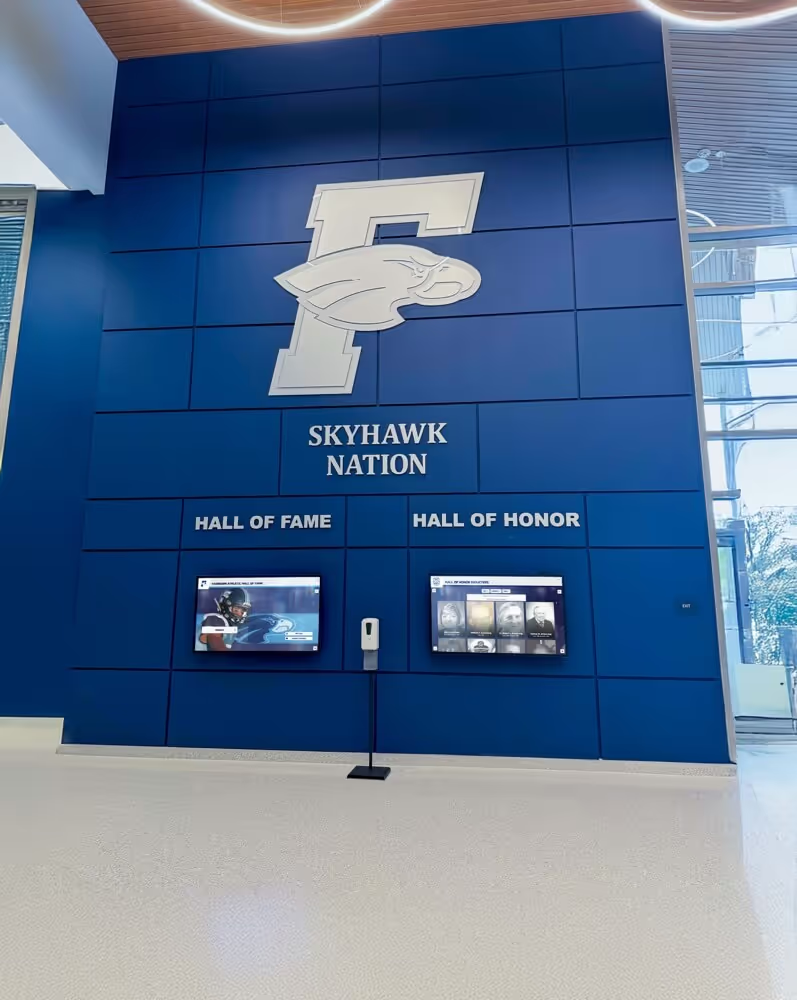
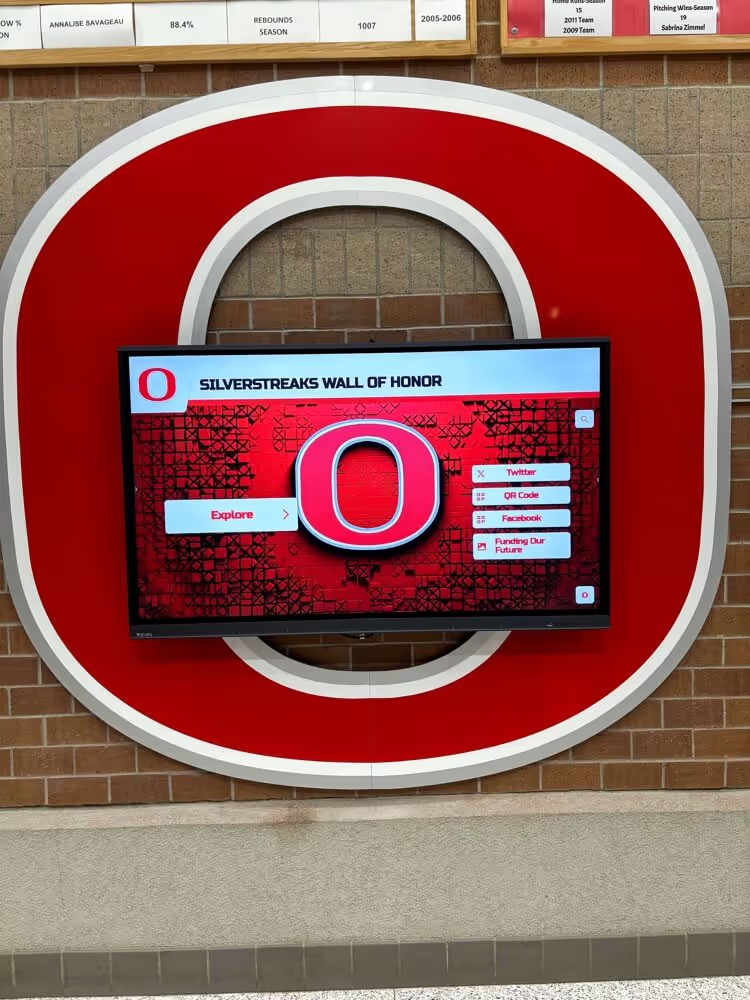
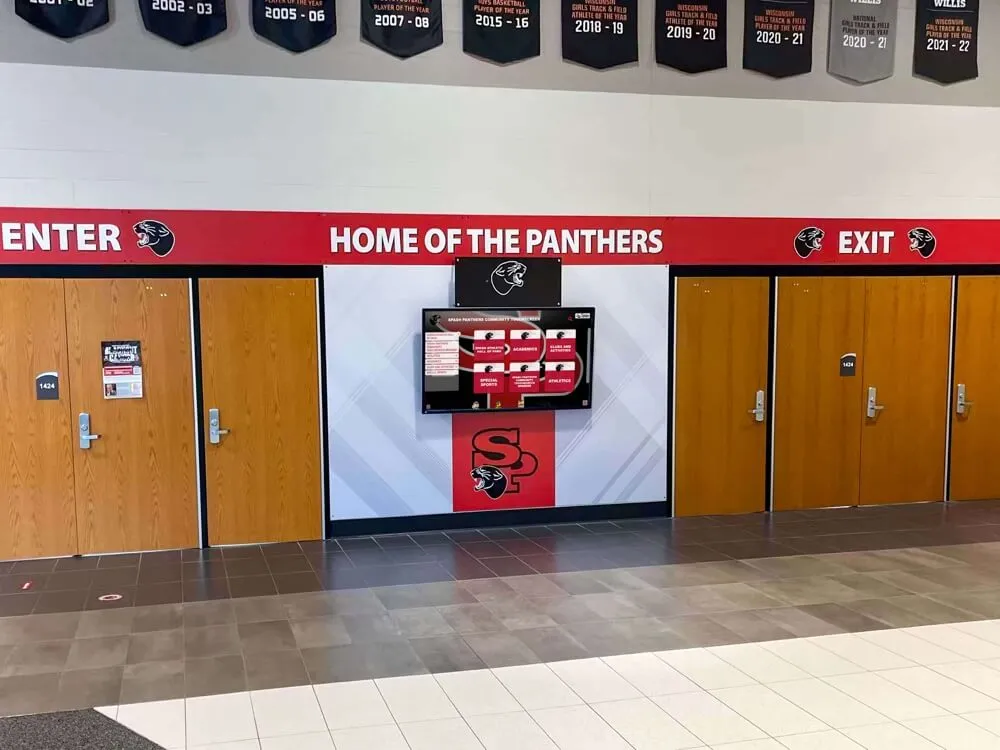
Comprehensive recognition systems integrate multiple display types, maximizing space utilization and celebration capacity
Traditional Trophy Case Options
Understanding conventional display approaches helps establish baseline expectations for space, costs, maintenance, and effectiveness.
Standard Glass Display Cases
Traditional glass trophy cases remain the most common recognition approach in schools nationwide.
Physical Characteristics and Specifications Standard trophy cases feature aluminum or wood frames with tempered glass panels, adjustable interior shelving, integrated lighting (typically fluorescent or LED), locking mechanisms for security, and wall-mounted or floor-standing configurations. Common dimensions range from 4 feet wide by 6 feet tall for wall-mounted units to 8 feet wide by 7 feet tall for floor-standing models.
Display capacity varies significantly based on trophy sizes, shelving configuration, and organization approach. A standard 4x6 wall-mounted case typically accommodates 40-60 trophies depending on size variation, while larger floor-standing units may display 80-120 pieces with proper organization.
Cost Considerations Trophy case pricing depends on size, construction quality, features, and installation requirements:
- Basic wall-mounted cases: $800-1,500 (4’W x 4’H)
- Standard wall-mounted cases: $1,500-3,000 (4’W x 6’H)
- Large floor-standing cases: $3,000-6,000 (8’W x 7’H)
- Custom millwork integration: $5,000-12,000+ (architectural integration)
- Installation costs: $200-800 depending on mounting requirements
These costs cover case purchase and installation but don’t include ongoing maintenance, lighting replacement, or future capacity expansion when cases fill.
Advantages of Traditional Cases Physical trophy cases offer several benefits explaining their continued prevalence:
- Physical trophies remain visible and tangible—creating immediate visual impact
- No technology infrastructure or training required for basic operation
- Alumni familiarity with traditional format reduces change resistance
- Awards remain accessible during power outages or technical issues
- Tangible trophies provide trophy room atmosphere and traditional feel
Limitations and Drawbacks Traditional cases face inherent constraints affecting long-term effectiveness:
- Fixed capacity: Space limitations force difficult decisions about recognition priorities
- Maintenance demands: Regular cleaning, dusting, organization, and lighting maintenance required
- Limited information: Trophies provide minimal context, statistics, or searchability
- Accessibility restrictions: Only visible to those physically present at display location
- Update friction: Adding new awards requires facilities coordination and physical labor
- Security concerns: Glass cases vulnerable to damage; awards potentially stolen if cases compromised
Schools implementing traditional trophy cases should anticipate reaching capacity within 10-15 years for new installations, faster for programs with existing award backlogs.
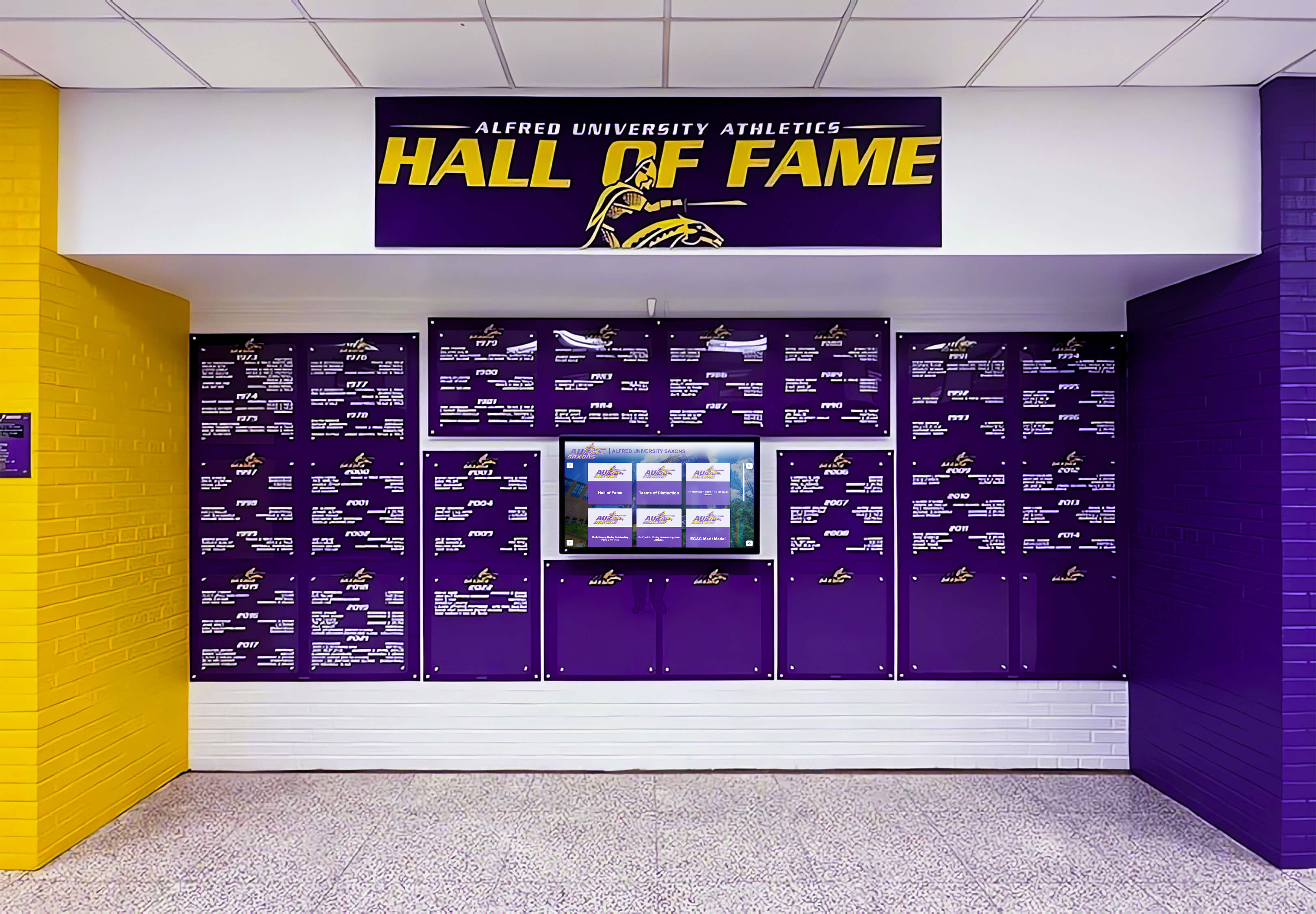
Dedicated recognition spaces accommodate extensive trophy collections while creating impressive visual statements
Wall-Mounted Plaque Displays
Beyond trophy cases, many schools use wall-mounted plaques for individual and team recognition.
Implementation Approaches Wall plaques typically follow organizational systems: championship teams by sport and year, individual achievement plaques grouped by recognition type, or chronological arrangements showing program development over time. Schools create plaque walls in athletic facilities, main hallways, or dedicated recognition corridors.
Cost and Space Considerations Individual plaques range from $50-150 for standard engraved plates to $200-400 for custom designs. However, the cumulative cost for decades of recognition becomes substantial—100 plaques at average $100 each represents $10,000 just in materials before installation labor.
Space consumption creates the primary limitation. Standard plaques occupy 12" x 16" wall space. Recognizing 10 teams annually requires 10+ square feet of wall space every year—consuming 100+ square feet per decade. Schools with 50-year recognition programs need 500+ square feet of dedicated wall space just for team plaques, before adding individual recognition.
Advantages and Limitations Wall plaques provide permanent recognition requiring minimal maintenance and no technology infrastructure. However, they share traditional cases’ fundamental constraints: fixed space capacity, limited information content, no searchability or interactivity, and accessibility restricted to physical location. Additionally, removing or relocating plaques damages walls and creates visible mounting hole evidence.
Modern Digital Display Solutions
Digital recognition systems address traditional trophy case limitations through interactive technology replacing physical space constraints with unlimited digital capacity.
Understanding Digital Trophy Display Technology
Digital recognition platforms combine interactive touchscreen displays, cloud-based content management systems, and web-accessible platforms creating comprehensive recognition ecosystems.
Core Components Effective digital recognition systems integrate three elements:
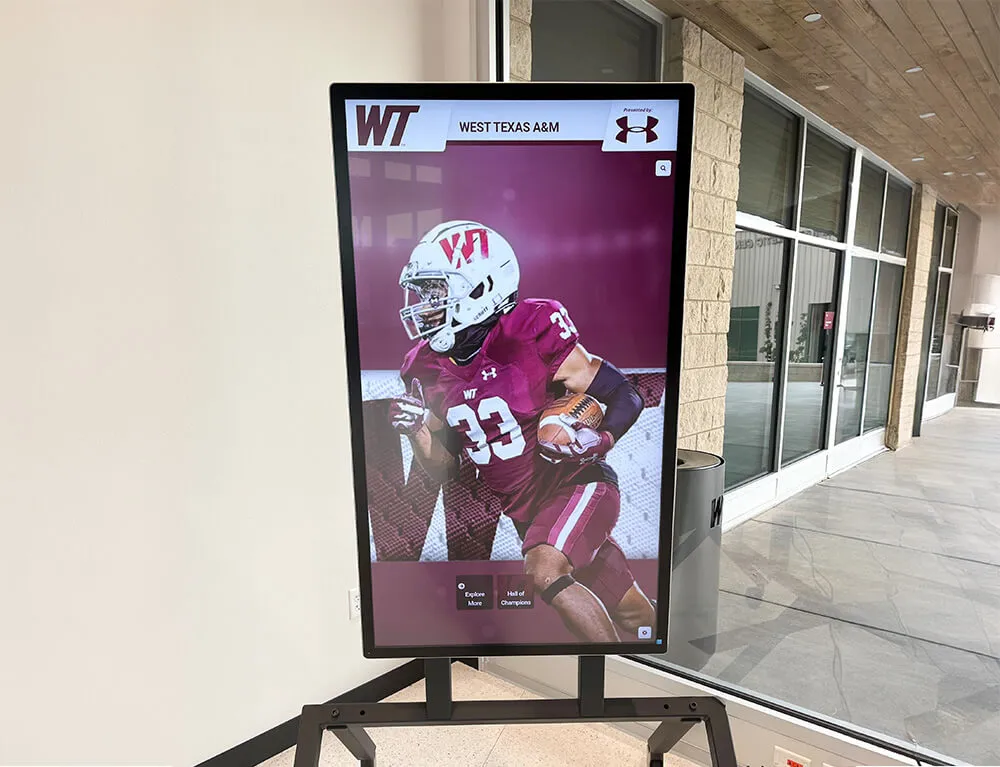
Physical Touchscreen Displays Wall-mounted or kiosk-style interactive screens (typically 43-75 inches) installed in athletic facilities, main lobbies, or gathering spaces. These touchscreens provide the primary on-campus recognition experience where students, visitors, alumni, and community members explore achievements through intuitive touch navigation.
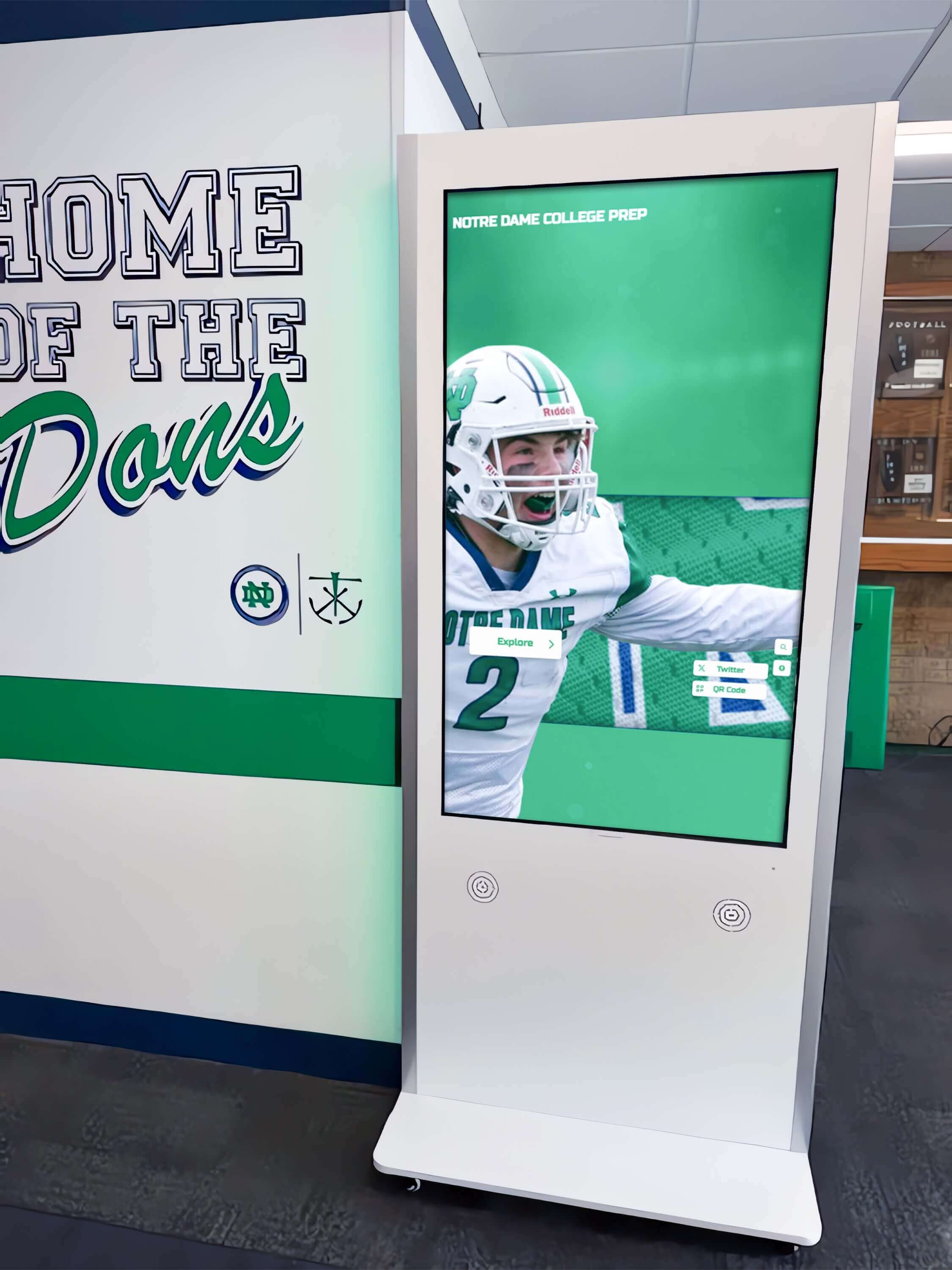
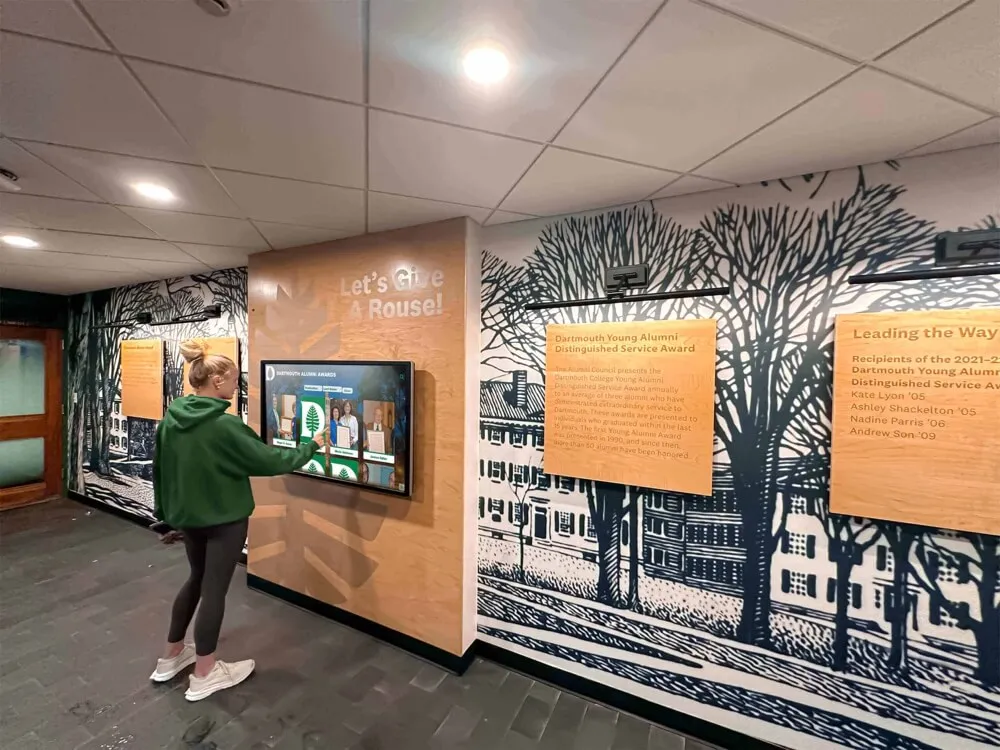
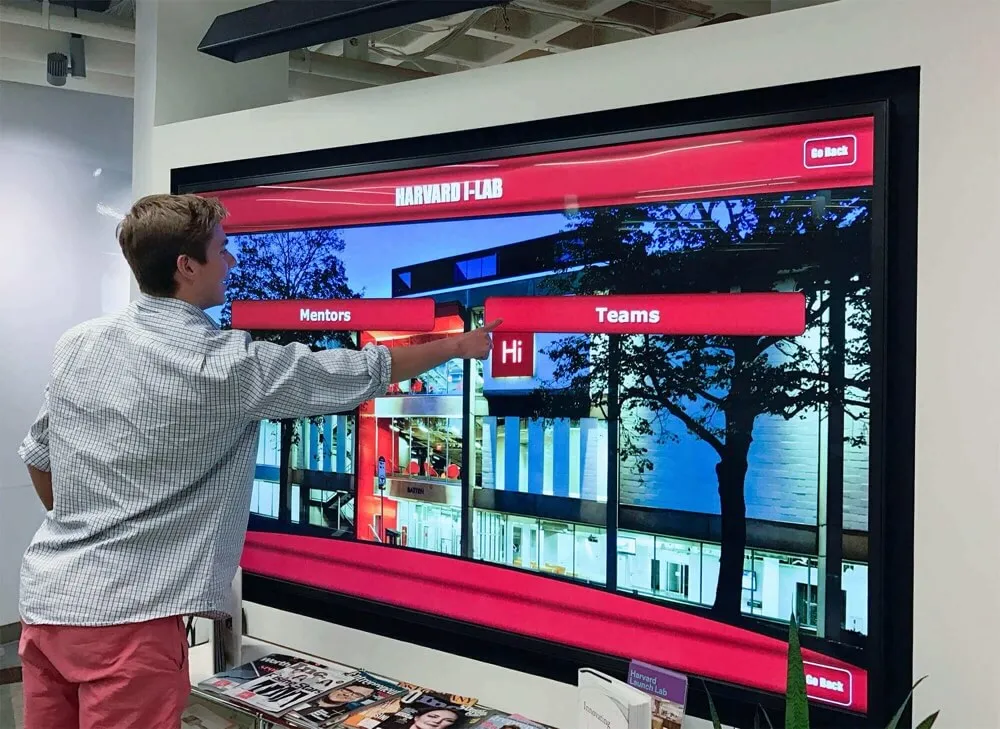
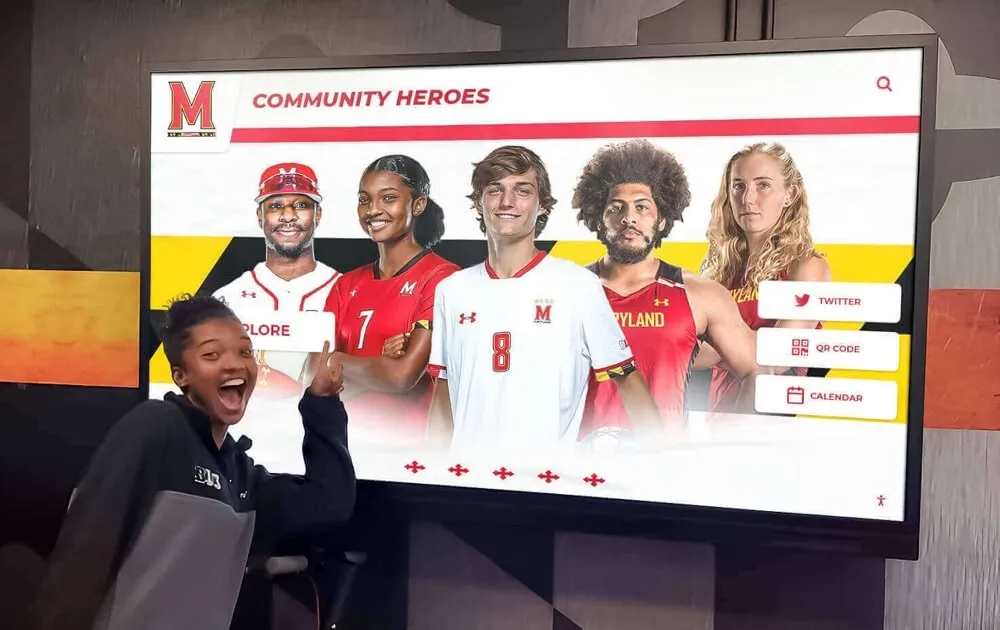
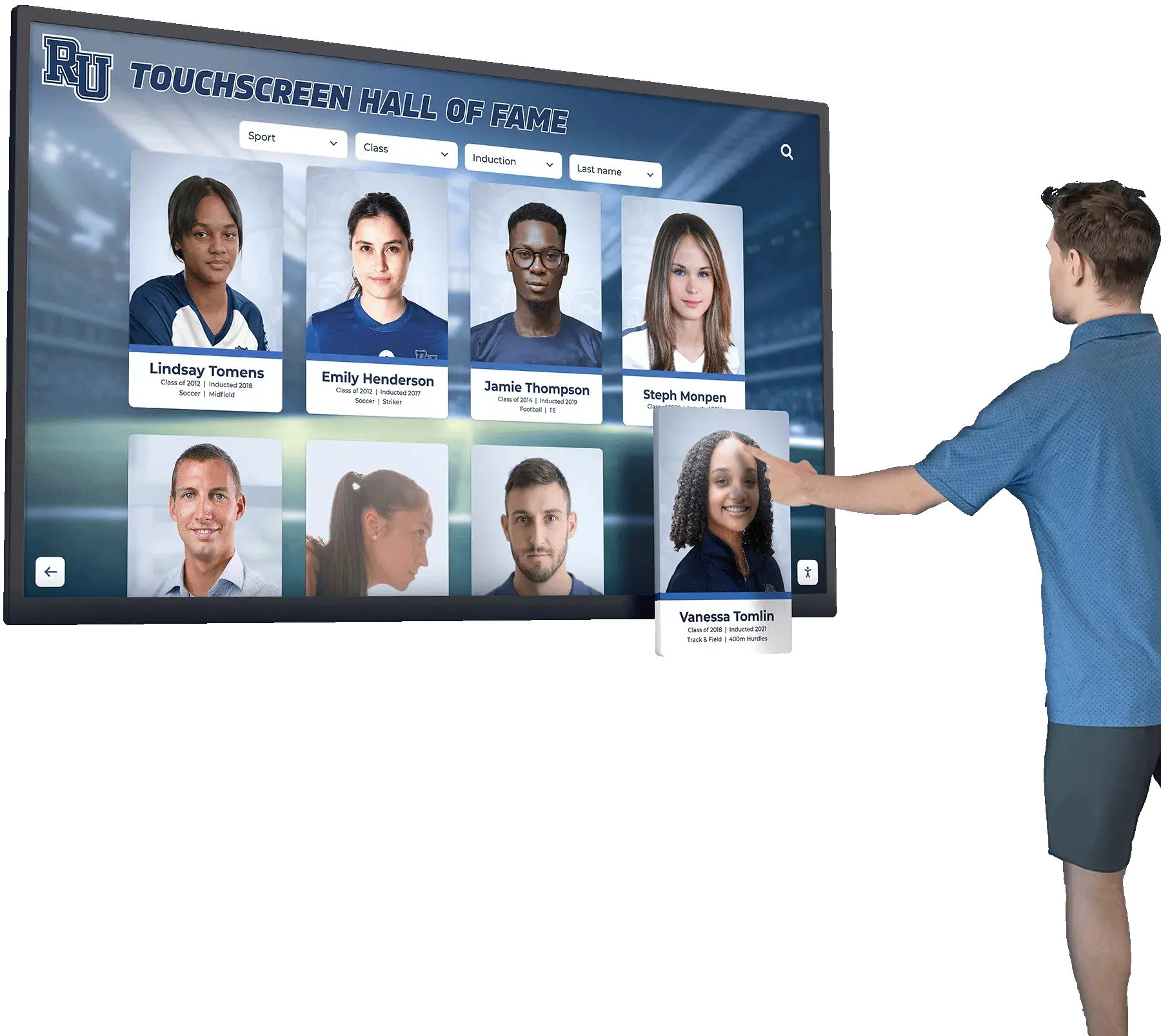
Interactive kiosks transform passive trophy viewing into engaging exploration experiences where visitors discover achievement stories and search for specific individuals
Cloud-Based Content Management Web dashboards enabling authorized staff to add championships, upload photos and videos, create athlete profiles, update statistics, and manage all content without technical expertise. Cloud systems ensure updates made from any internet-connected device instantly appear across all displays and platforms.
Web-Accessible Platforms Online versions of recognition content providing worldwide access through smartphones, tablets, and computers. Web platforms extend recognition beyond campus boundaries, allowing alumni to explore achievements remotely, share profiles on social media, and maintain connections with institutional heritage regardless of geographic location.
Solutions like Rocket Alumni Solutions integrate all three components into unified platforms ensuring consistent experiences whether visitors explore achievements on campus or online.
Key Advantages of Digital Recognition Systems
Digital trophy displays deliver compelling benefits addressing traditional case limitations:
Unlimited Recognition Capacity Digital platforms eliminate physical space constraints entirely. Schools can recognize unlimited championships, showcase every athletic achievement, celebrate academic accomplishments, feature alumni successes, and preserve historical achievements without ever running out of display space or making difficult prioritization decisions about recognition worthiness.
This unlimited capacity fundamentally changes recognition philosophy. Instead of selective halls of fame reserved for exceptional achievements, schools can celebrate comprehensive accomplishment—every conference championship, all-region athletes, academic honor roll, and scholarship recipients—creating inclusive recognition systems where every achievement receives appropriate celebration.
Schools implementing digital recognition report that removing space constraints allows recognition of 10-20 times more achievements compared to physical displays, creating substantially more student motivation and alumni engagement opportunities.
Rich Multimedia Storytelling Traditional trophies display minimal information—typically just year and accomplishment. Digital platforms enable comprehensive storytelling through multiple action photos, biographical narratives, video highlights and interviews, detailed statistics and records, news articles and historical context, and links connecting related achievements, teams, or individuals.
This rich content creates emotional connections impossible with static displays. Visitors don’t just learn that a team won a championship—they watch highlight reels, explore player rosters, see statistics, read coach quotes, and understand the achievement’s significance within program history.
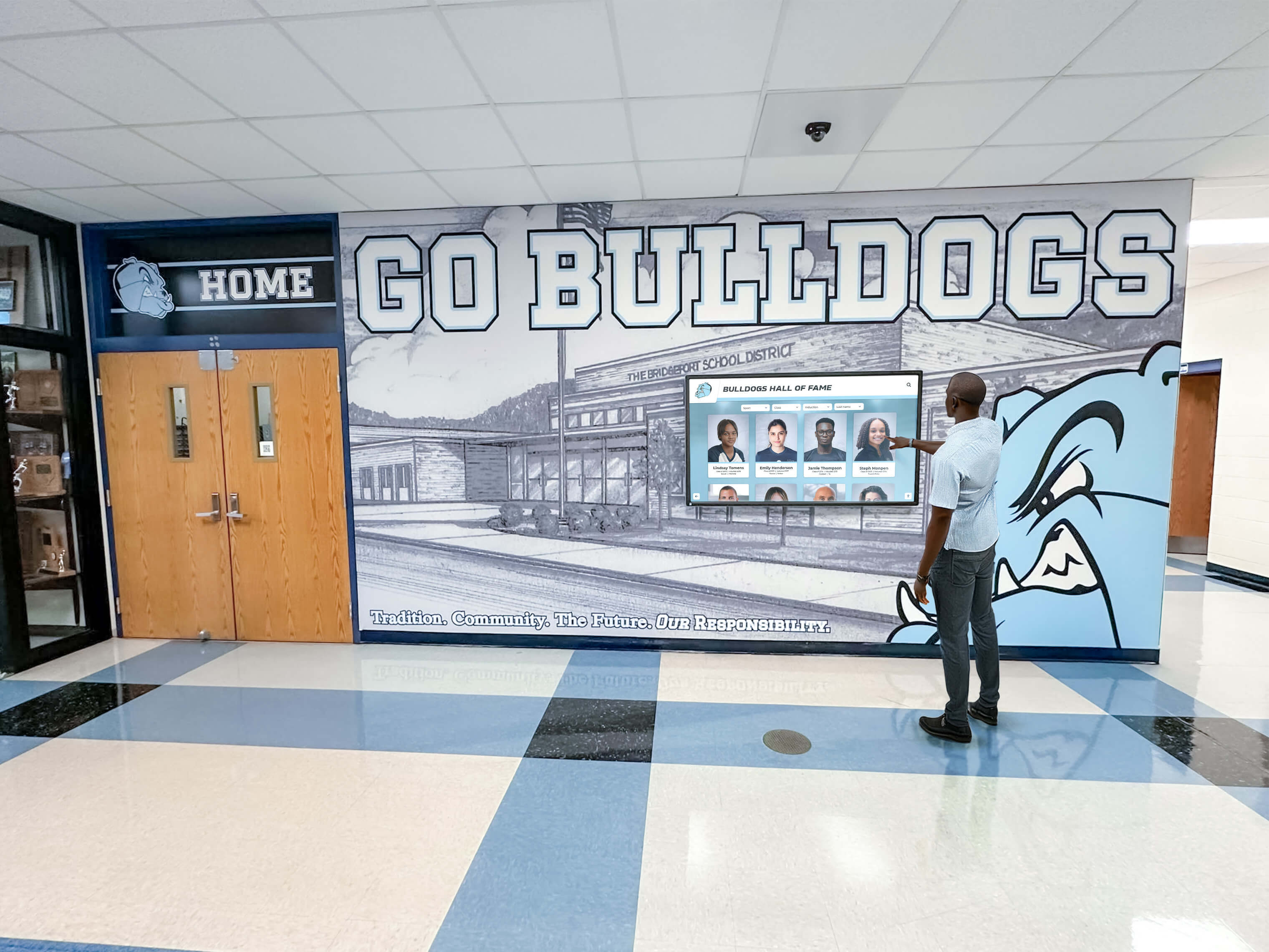
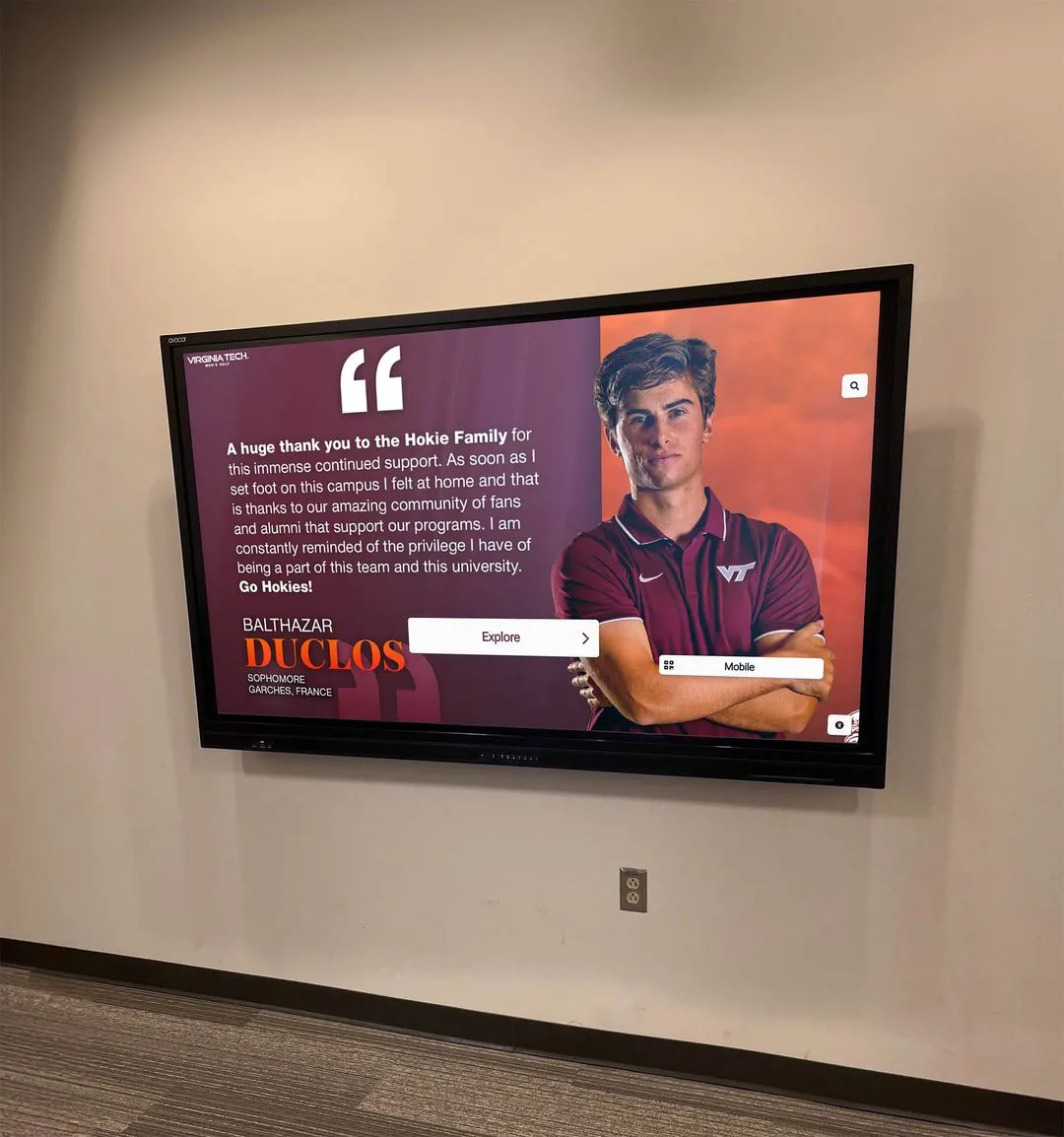
Multimedia content brings achievements to life through photos, videos, and detailed information impossible to display on traditional trophies
Instant Updates and Dynamic Content Adding recognition to traditional trophy cases requires purchasing plaques or trophies (weeks of lead time), coordinating with facilities for case access, physically installing awards, and reorganizing existing displays to accommodate additions. These friction points mean recognition often appears months after achievements occur—diminishing celebration impact.
Digital systems enable immediate recognition through simple content management dashboards. When championships are won, records are broken, or new awards are announced, recognition appears instantly across all displays and platforms—maintaining relevance and celebrating achievements while excitement remains high.
This immediacy extends beyond adding new content. Schools can correct errors immediately, update athlete information as careers progress, add historical context to older achievements, create special features for milestone anniversaries, and respond to changes requiring content adjustments without waiting for facilities scheduling or purchasing replacement materials.
Enhanced Engagement and Interactivity Traditional trophy cases offer passive viewing—visitors look at displays but cannot interact beyond reading visible trophy text. Digital systems transform recognition into interactive exploration where visitors search for specific athletes or teams, filter by sport, year, or achievement type, watch video highlights, explore detailed statistics, share profiles on social media, and discover related achievements through intuitive connections.
This interactivity dramatically increases engagement depth and duration. Schools implementing interactive displays report average session lengths of 4-8 minutes compared to 30-60 seconds for traditional trophy cases—creating substantially more meaningful recognition experiences that deepen institutional connection.
Remote Accessibility and Alumni Connection Physical trophy displays serve only those physically present in specific locations. Digital recognition extends access dramatically through web platforms enabling worldwide exploration, mobile optimization allowing smartphone access anywhere, and social sharing features letting people share achievements with networks.
This expanded accessibility strengthens alumni engagement by making institutional heritage available whenever nostalgia strikes—not just during campus visits. Schools implementing web-accessible recognition report that alumni sessions average 8-12 minutes as users search for themselves, browse teammates, and explore achievements across different eras.
The athletic hall of fame digital buying guide explores how schools maximize alumni engagement through comprehensive digital recognition systems.
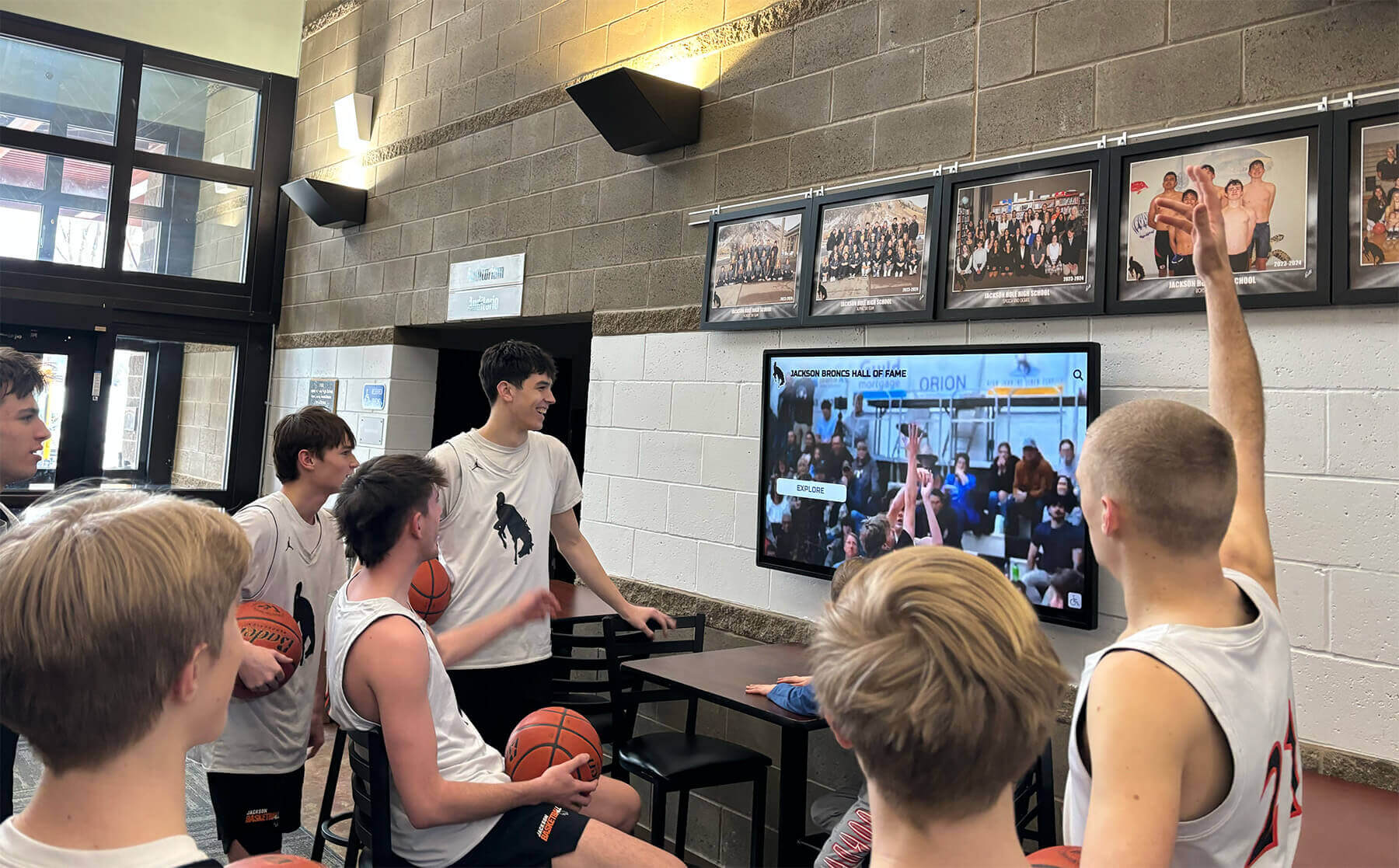
Video integration brings achievements to life, allowing students to relive championship moments and explore program history
Reduced Maintenance Requirements Digital displays eliminate trophy case maintenance burdens: no dusting individual trophies, no glass cleaning, no lock maintenance, no physical reorganization, and no lighting replacement for display interiors. Content updates occur remotely through cloud dashboards without requiring facilities coordination or physical access.
Maintenance requirements reduce to occasional screen cleaning (similar to any display screen) and standard IT infrastructure support—substantially less ongoing burden compared to traditional trophy case upkeep.
Digital Display Cost Considerations
Understanding digital recognition investment helps schools evaluate return on implementation:
Initial Implementation Costs Digital trophy display systems typically involve:
- 55-inch touchscreen display: $2,500-4,000
- 65-inch touchscreen display: $3,500-5,500
- 75-inch touchscreen display: $5,000-8,000
- Software platform subscription: $1,200-3,000 annually
- Content migration and setup: $500-2,000 (one-time)
- Installation and mounting: $500-1,200
A complete implementation with 65-inch display, software, setup, and installation typically ranges $6,000-10,000 for initial year, then $1,200-3,000 annually for ongoing platform access.
While initial digital costs exceed single traditional trophy cases, the unlimited capacity, reduced maintenance, enhanced engagement, and remote accessibility create substantially better long-term value—particularly for schools with decades of achievements requiring recognition.
Cost Comparison Over Time Evaluating 10-year recognition costs reveals digital advantages:
Traditional Approach (3 trophy cases, 50 plaques):
- Initial: 3 cases at $2,000 = $6,000
- Plaques: 50 plaques at $100 = $5,000
- Installation: $1,500
- Maintenance: $300/year x 10 years = $3,000
- 10-year total: $15,500 (limited to ~200 trophies, 50 plaques)
Digital Approach (single 65-inch display):
- Initial: Display + setup = $7,000
- Subscription: $2,000/year x 10 years = $20,000
- Maintenance: $200/year x 10 years = $2,000
- 10-year total: $29,000 (unlimited recognition capacity)
Digital systems cost approximately 2x traditional approaches over 10 years while providing unlimited capacity, remote access, multimedia content, instant updates, and substantially enhanced engagement. For schools with extensive recognition needs or space constraints, digital solutions deliver superior value despite higher absolute costs.
Hybrid Approaches: Combining Traditional and Digital
Many schools implement hybrid strategies preserving physical trophy traditions while gaining digital benefits.
Integrating Both Display Types
Effective hybrid approaches position digital displays as trophy case complements rather than replacements:
Strategic Placement and Function Division Schools place digital displays adjacent to existing trophy cases—creating recognition zones where physical trophies showcase recent championships while digital systems provide comprehensive historical archives, detailed athlete profiles, searchable databases, and video content. This integration preserves trophy traditions while expanding recognition capacity and engagement.
Visitors can appreciate physical championship trophies’ tangible presence then explore complete program history, watch highlight videos, and search for specific athletes on neighboring digital displays—combining both approaches’ strengths.
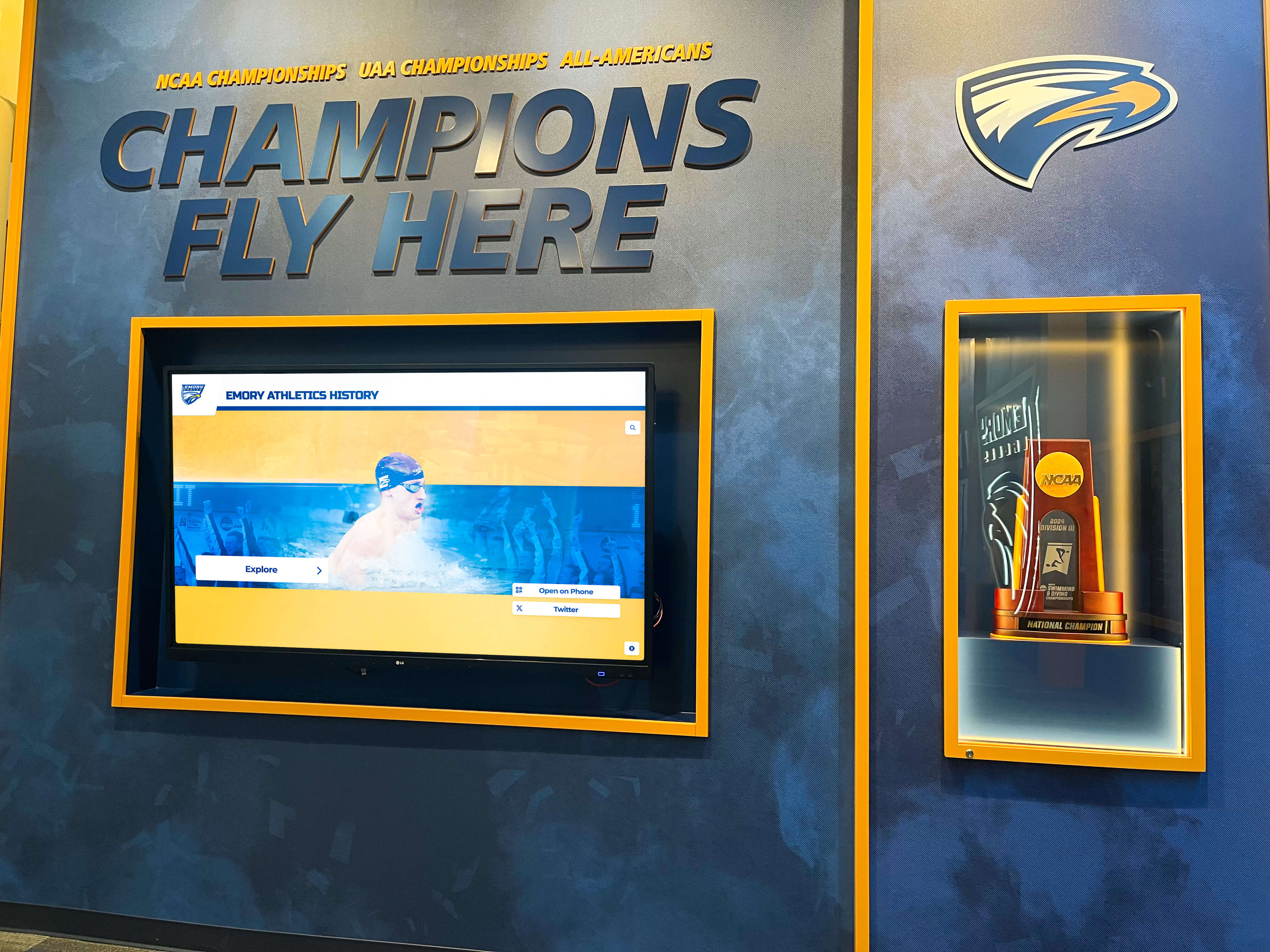
Hybrid approaches showcase premier physical trophies while digital systems provide comprehensive recognition capacity and detailed content
Transitioning from Traditional to Digital
Schools with established trophy displays often implement phased transitions:
Phase 1: Digital Addition Install digital displays as supplements, showcasing expanded content (individual athlete profiles, historical achievements, video highlights) that traditional cases cannot accommodate. This phase familiarizes community members with digital recognition while preserving existing physical displays.
Phase 2: Content Migration Systematically photograph existing trophies and plaques, capture award information, and upload comprehensive recognition history to digital platforms. This creates complete historical archives accessible both on-campus and online.
Phase 3: Space Optimization As digital systems demonstrate value and community acceptance grows, gradually transition trophy case space—perhaps featuring only recent championships physically while archiving older trophies and redirecting visitors to digital platforms for complete historical exploration.
This phased approach respects tradition while gradually shifting toward more sustainable, comprehensive digital recognition systems.
Implementation Best Practices
Successful trophy display implementation—whether traditional, digital, or hybrid—requires systematic planning and execution.
Planning Your Recognition System
Conducting Recognition Audits Before implementing new displays, inventory existing recognition: document all trophies and plaques currently displayed, identify awards in storage lacking display space, catalogue historical achievements not yet recognized, and estimate future recognition needs based on program size and success rates.
This comprehensive audit reveals actual recognition scope—often surprising administrators who discover 5-10 times more achievements than currently displayed. Understanding complete recognition requirements ensures selected solutions provide adequate capacity.
Defining Recognition Criteria and Policies Establish clear policies determining recognition eligibility: which championships qualify for inclusion, individual achievement thresholds (all-conference, all-state, all-american), academic recognition standards, and criteria for special recognition categories.
Documented policies prevent future disputes about recognition worthiness while ensuring consistent, equitable acknowledgment standards across sports and achievement types. Schools implementing comprehensive recognition programs benefit from clear frameworks defining recognition scope and eligibility.
Securing Stakeholder Buy-In Recognition systems affect multiple constituencies—athletes, coaches, parents, alumni, administrators, and facilities staff. Successful implementations involve stakeholders early: present options to athletic directors and coaches, gather alumni feedback through surveys or focus groups, demonstrate solutions to administrative leadership, and address facilities staff concerns about installation and maintenance.
Early stakeholder involvement prevents resistance, uncovers potential objections before implementation, and builds advocacy supporting project success.
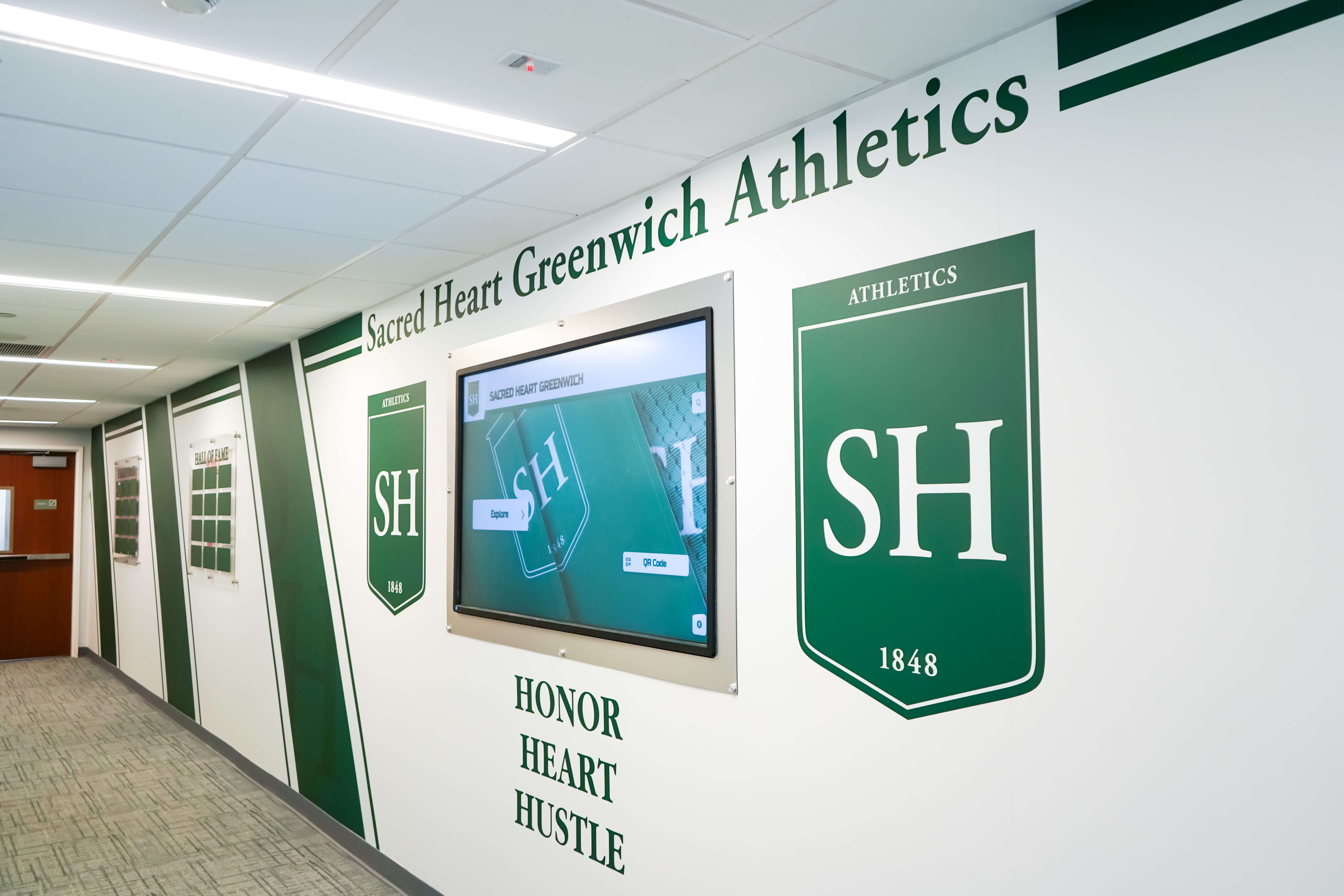
Strategic recognition placement in high-traffic athletic corridors maximizes visibility and daily student engagement
Selecting Optimal Display Locations
Trophy display effectiveness depends heavily on strategic placement:
High-Traffic Area Identification Prioritize locations where students, visitors, parents, and alumni naturally gather or wait: main building entrances, athletic facility lobbies, cafeteria corridors, gymnasium entrances, or parent waiting areas. Displays positioned in these high-visibility, high-traffic zones achieve substantially more engagement than those in isolated corridors or specialized spaces with limited visitor flow.
Sightline and Viewing Considerations Position displays where approaching visitors naturally see them, ensuring adequate viewing distance (typically 8-15 feet for comfortable observation), providing proper lighting avoiding glare for digital screens or glass cases, and maintaining accessibility compliance for visitors with disabilities.
Security and Supervision Balance Trophy displays benefit from supervision discouraging theft or vandalism while remaining accessible enough for regular viewing. Locations near security cameras, administration offices, or staff work areas provide passive supervision without creating restrictive access that limits engagement.
Content Development for Digital Systems
Schools implementing digital recognition need systematic approaches for content creation:
Photography and Media Collection Gather high-quality photos of athletes in action, team championship celebrations, individual award presentations, and historical achievements. Video highlights, coach interviews, and athlete testimonials add engaging multimedia content. Many schools discover existing athletic department photo libraries, yearbook archives, and parent contributions provide substantial content foundations.
Biographical Information and Statistics Document athlete achievements, career statistics, post-graduation accomplishments, and biographical details creating comprehensive profiles. This information transforms basic recognition lists into engaging stories visitors want to explore.
Historical Research and Alumni Outreach For older achievements lacking documentation, historical research through yearbooks, newspaper archives, and alumni interviews helps reconstruct recognition content. Alumni frequently provide photos, memories, and context enriching historical recognition that might otherwise remain basic facts without compelling stories.
Schools creating digital athletic recognition systems discover that alumni enthusiastically contribute content when invited to participate in recognition preservation.
Ongoing Management and Sustainability
Effective trophy displays require sustainable management approaches:
Establishing Update Workflows Define clear processes for adding new recognition: who submits award information, required content and media, approval authorities, and update timelines. Systematic workflows ensure recognition appears promptly while maintaining quality standards and organizational consistency.
For digital systems, cloud-based dashboards enable athletic directors, coaches, or designated staff to manage content independently without requiring IT support for routine updates—creating sustainable processes rather than bottlenecks dependent on specialized personnel.
Regular Content Refresh and Maintenance Schedule periodic reviews ensuring displayed information remains current, accurate, and relevant. For traditional cases, this might include seasonal reorganization, damage inspection, and lighting maintenance. For digital systems, content audits verify information accuracy, identify improvement opportunities, and ensure historical content receives appropriate updates as alumni careers develop.
Measuring Effectiveness and Community Response Track engagement indicators assessing recognition impact: alumni comments and feedback, student awareness of achievements, recruiting conversation mentions, and community response during campus visits. For digital systems, analytics revealing popular content, search patterns, session duration, and peak usage times help optimize content strategy and demonstrate recognition value to stakeholders.
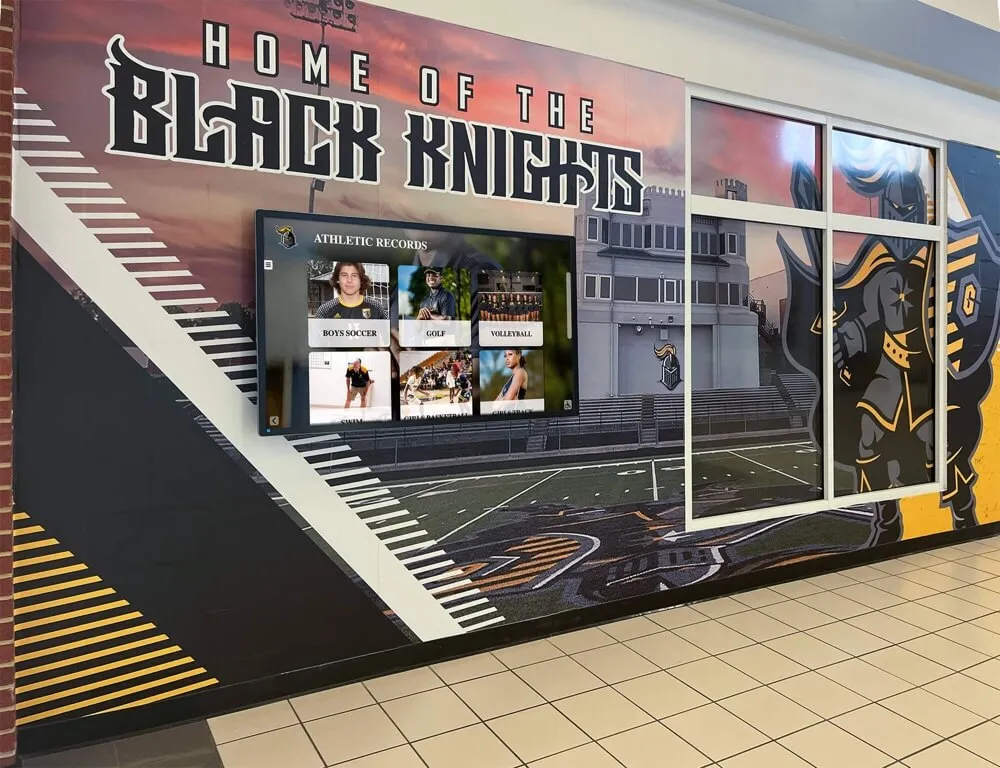
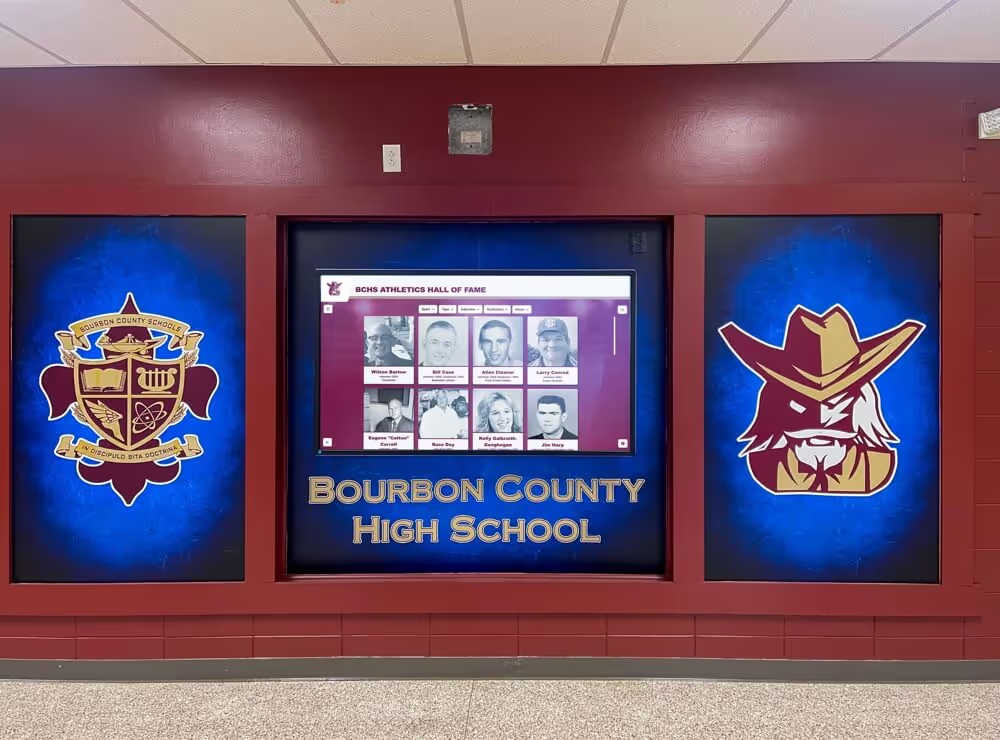
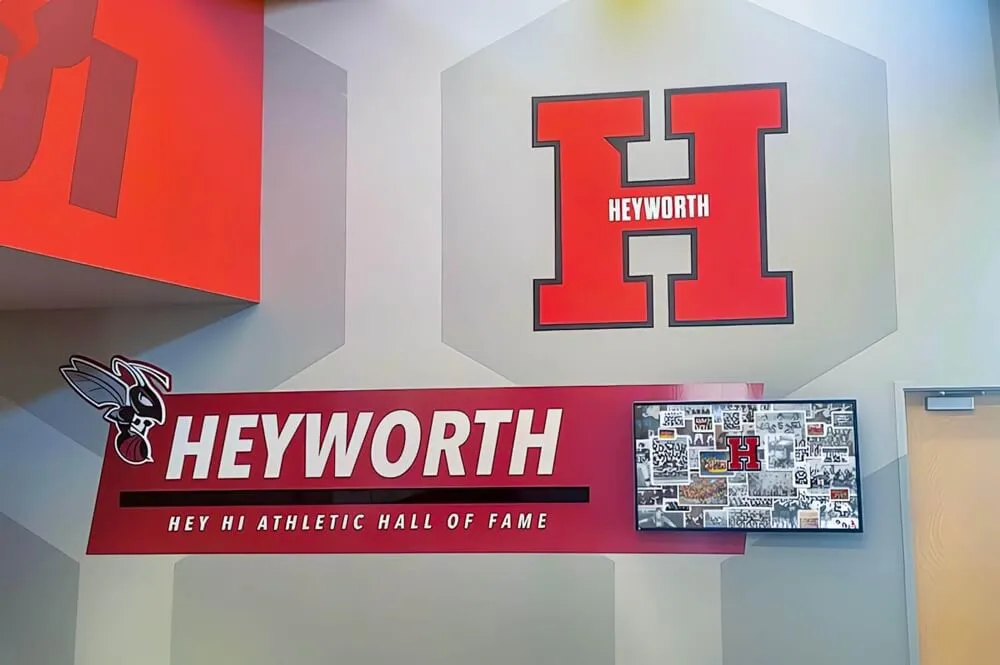
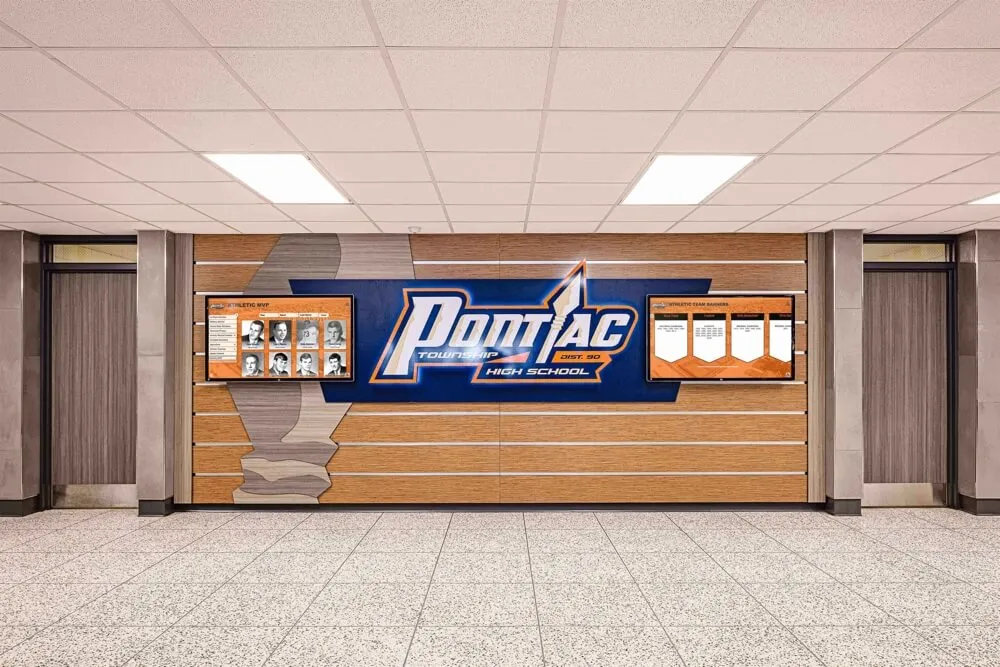
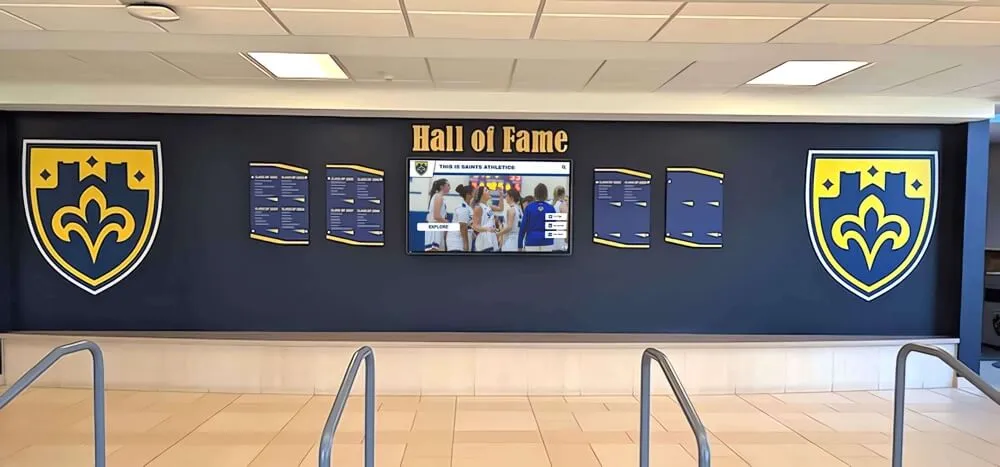
Coordinated recognition spaces combining murals, digital displays, and branding elements create immersive environments celebrating school identity
Making the Right Choice for Your School
Selecting appropriate trophy display solutions depends on institutional priorities, constraints, and objectives.
Key Decision Factors
Budget Realities and Long-Term Value Traditional cases offer lower initial costs but limited capacity and ongoing maintenance. Digital systems require higher initial investment but provide unlimited recognition capacity, reduced maintenance, enhanced engagement, and superior long-term value for schools with extensive recognition needs.
Schools should evaluate total cost of ownership over 10+ years rather than focusing solely on initial purchase price—revealing that digital solutions often deliver better value despite higher upfront costs.
Space Constraints and Capacity Requirements Schools facing severe space limitations or extensive recognition backlogs benefit substantially from digital solutions’ unlimited capacity. Institutions with adequate wall space and modest recognition volumes may find traditional approaches adequately serve their needs.
Technology Comfort and Staff Capabilities Digital systems require comfort with basic cloud software—similar to managing social media or using web-based email. Schools with technology-averse staff or limited internet infrastructure may face adoption challenges, though most modern platforms feature intuitive interfaces requiring minimal technical expertise.
Recognition Philosophy and Priorities Consider what recognition means to your institution: preserving traditional trophy aesthetics and tangible awards versus maximizing recognition capacity and engagement; maintaining static displays versus creating dynamic, searchable databases; restricting recognition to physical location versus enabling worldwide alumni access.
Your recognition philosophy significantly influences which approach aligns with institutional values and objectives.
Recommendations by School Type and Situation
New Programs or Facilities Schools establishing new recognition systems or building new facilities should strongly consider digital-first approaches from the start. Beginning with unlimited capacity prevents future space constraints while establishing modern recognition systems rather than perpetuating traditional limitations.
Established Programs with Space Constraints Schools with existing trophy cases that reached capacity years ago find digital systems solve immediate space problems while honoring achievements currently relegated to storage. Hybrid approaches preserve premier physical trophies while digital platforms provide comprehensive historical recognition.
Budget-Limited Implementations Schools facing tight budgets might implement traditional cases for immediate championships while planning digital transitions for long-term comprehensive recognition. Alternatively, focusing digital investments in high-impact areas (varsity athletics, for example) while maintaining traditional approaches for secondary recognition creates affordable hybrid solutions.
Technology-Forward Institutions Schools already embracing technology across operations—digital yearbooks, online portals, social media engagement—find digital recognition systems align with existing technology ecosystems while delivering superior capabilities compared to traditional displays. The complete digital recognition guide explores how interactive displays transform school environments.
Beyond Trophy Cases: Comprehensive Recognition Ecosystems
Modern recognition extends beyond single trophy cases into integrated systems celebrating achievements throughout school environments.
Multi-Location Recognition Networks
Rather than concentrating all recognition in single locations, schools implement distributed systems:
Athletic Facility Recognition Sport-specific displays in practice facilities, locker rooms, and competition venues showcase relevant achievements—basketball records in the gymnasium, football accomplishments in the stadium, cross country recognition on training trails. This targeted recognition creates daily motivation for current athletes while building program identity.
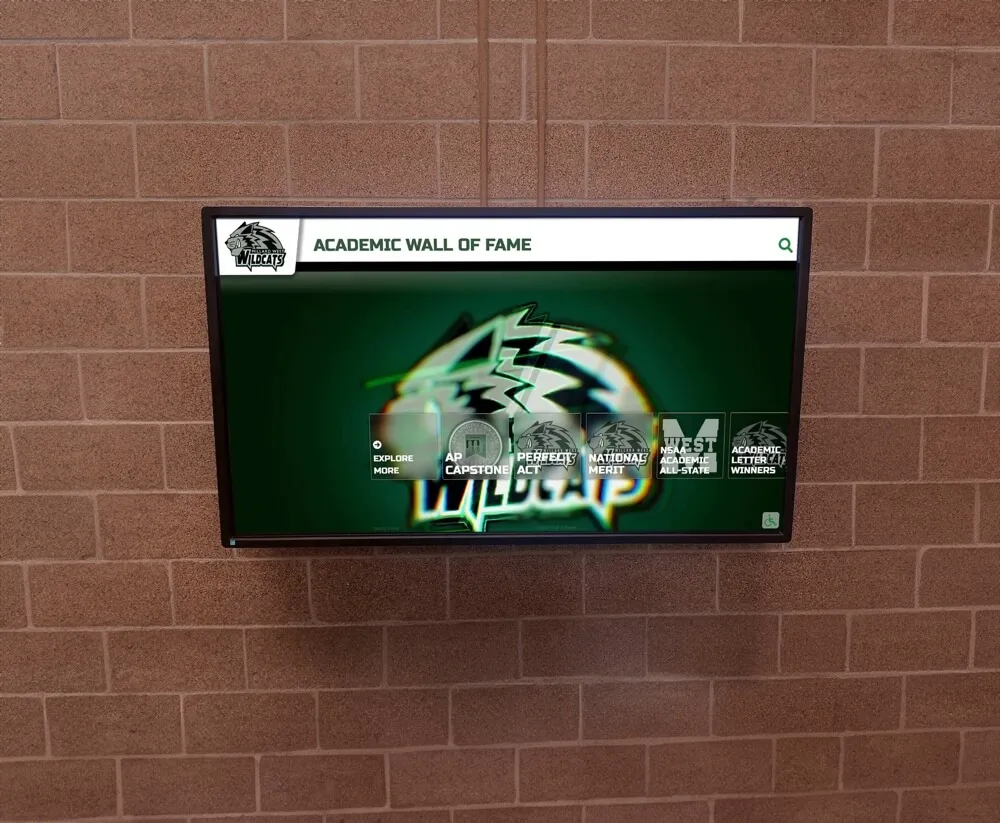
Academic Recognition Integration Comprehensive recognition systems celebrate academic achievements alongside athletic accomplishments: honor roll displays, scholarship recipients, academic all-state athletes, and college admissions successes. Integrated recognition demonstrates that schools value diverse excellence rather than prioritizing athletics exclusively.
The academic recognition programs guide explores effective approaches for celebrating student academic achievement.
Alumni Achievement Showcases Recognition extending beyond graduation—showcasing alumni professional accomplishments, community leadership, notable careers, and continued excellence—demonstrates that school foundations launch lifelong achievement. These alumni showcases strengthen institutional identity while motivating current students through successful role model examples.
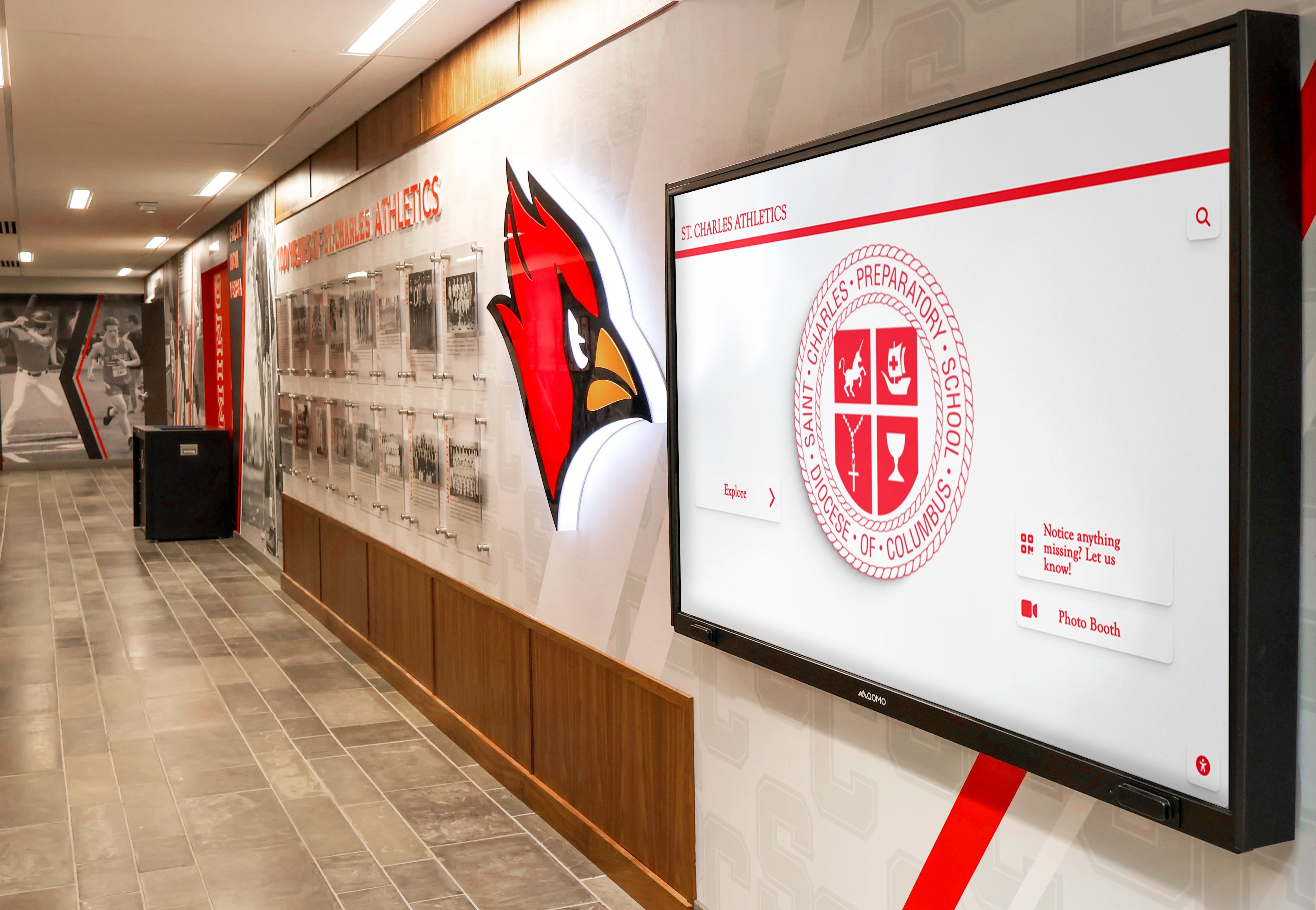
Comprehensive recognition spaces integrate school branding, mascot imagery, and multiple display types creating memorable environments
Social Media and Digital Integration
Modern recognition extends beyond physical and on-campus displays into social channels:
Digital Recognition Sharing Enable social media sharing allowing athletes, families, and alumni to share recognition profiles on Facebook, Instagram, Twitter, and other platforms. This extends recognition reach while creating organic school promotion through personal networks.
Recognition Announcement Campaigns Use digital platforms for immediate recognition announcements—posting new championship celebrations, sharing highlight videos, and featuring weekly achievement spotlights that maintain ongoing visibility rather than limiting recognition to annual induction ceremonies or static displays.
Alumni Engagement Through Recognition Digital recognition systems facilitate systematic alumni outreach: birthday recognition notifications, achievement anniversary features, and invitation to update profiles with post-graduation accomplishments. These touchpoints maintain institutional relationships supporting fundraising, mentoring, and community advocacy.
Creating Recognition Cultures
Effective recognition systems extend beyond displays into institutional cultures systematically celebrating excellence:
Systematic Achievement Identification Establish processes ensuring no significant achievement goes unrecognized: coach reporting requirements, academic office coordination, student nomination systems, and community achievement tracking. Systematic identification prevents oversights where deserving accomplishments receive no acknowledgment.
Celebration Rituals and Traditions Create traditions around recognition: annual induction ceremonies, achievement unveiling events, alumni reunion recognition features, or senior year acknowledgment programs. These rituals transform recognition from static displays into experiential celebrations strengthening school culture and community connection.
Recognition as Motivation Tool Position recognition systems as aspirational goals for current students—helping athletes understand pathways to hall of fame consideration, communicating achievement standards clearly, and celebrating recognition as ultimate program honor. This motivational framing turns recognition from passive acknowledgment into active performance driver.
Schools implementing comprehensive athletic recognition discover that systematic celebration creates cultural shifts affecting student effort, community pride, and institutional identity.
Emerging Trends in School Recognition
Recognition technology and approaches continue evolving—understanding emerging trends helps schools plan future-ready systems.
Augmented Reality and Enhanced Experiences
Some schools experiment with augmented reality (AR) integration where mobile apps overlay digital content onto physical spaces: pointing smartphones at trophy cases reveals video highlights, athlete interviews, and historical context invisible to casual observation. While early-stage, AR represents potential future direction for recognition experiences blending physical and digital elements.
Analytics and Engagement Measurement
Modern digital recognition platforms incorporate analytics tracking visitor engagement: which achievements receive most exploration, search patterns revealing visitor interests, session duration metrics, and demographic information about recognition consumers. These insights help schools optimize content, understand community interests, and demonstrate recognition system value through quantified engagement data.
AI-Assisted Content Creation
Emerging artificial intelligence tools help schools overcome content creation obstacles: automated biographical drafts from available information, statistical summaries generated from performance data, and photo organization systems that identify individuals and suggest relevant recognition content. While human oversight remains essential, AI assistance could substantially reduce administrative burden preventing many schools from implementing comprehensive digital recognition.
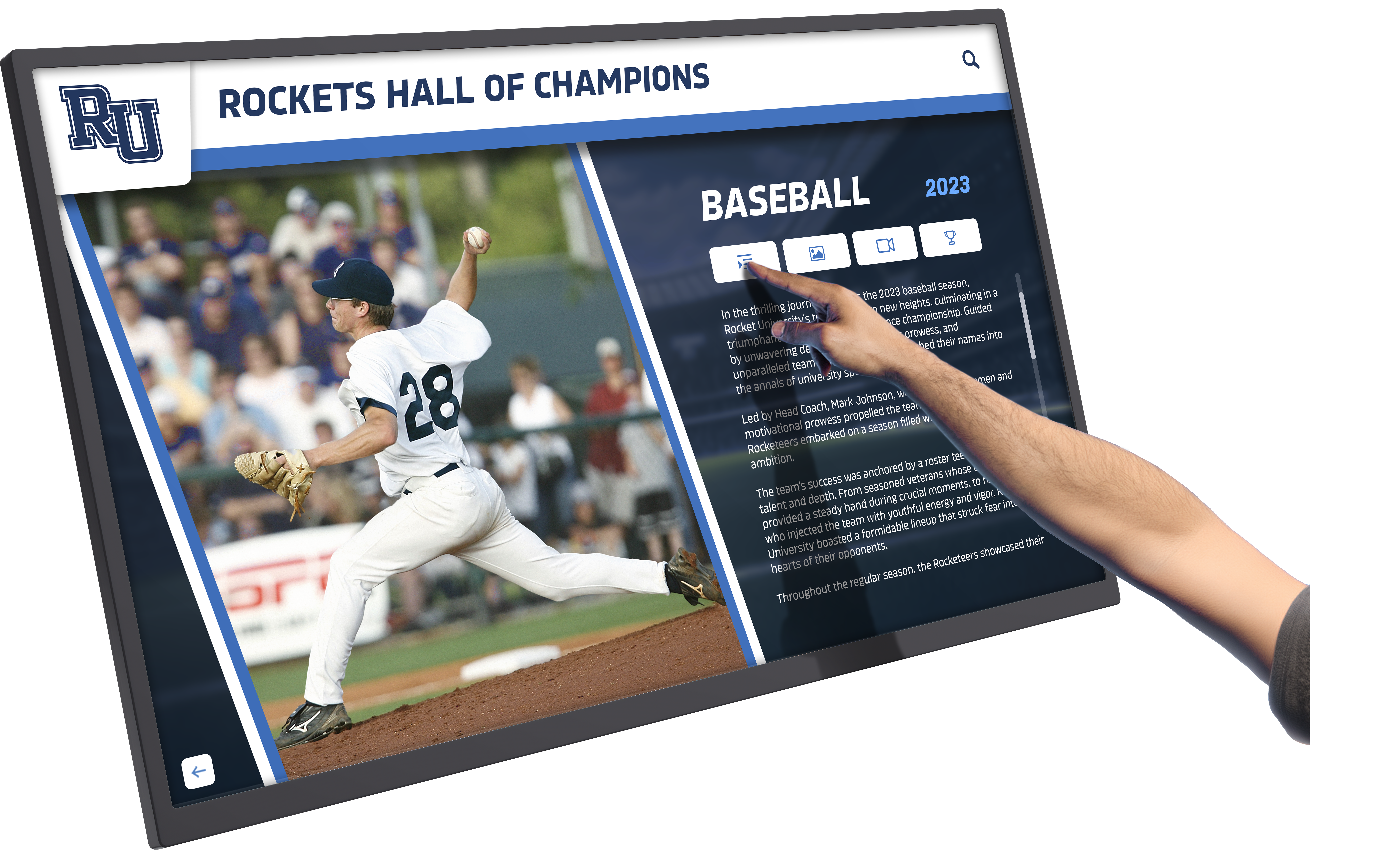
Intuitive touch interfaces make exploring detailed athlete profiles, statistics, and achievement stories effortless for visitors of all ages
Cross-Institutional Recognition Networks
Some recognition platforms enable cross-school comparison and context: how do program achievements compare to conference rivals, state competition, or national benchmarks? Network-enabled recognition systems could provide context helping students, coaches, and community members understand achievement significance within broader competitive landscapes.
Taking Action: Your Next Steps
Whether selecting first recognition systems or upgrading existing displays, systematic approaches ensure successful implementation.
Assessment and Planning
- Audit existing recognition: Document all current trophies, plaques, and achievements including items in storage
- Estimate future needs: Project recognition volume over next 10-20 years based on program size and success rates
- Evaluate space availability: Measure available wall space and identify high-traffic display locations
- Define budget parameters: Establish initial investment capacity and ongoing maintenance budgets
- Clarify recognition philosophy: Determine what institutional recognition should accomplish and communicate
Exploration and Evaluation
- Research solution options: Investigate traditional case vendors and digital platform providers
- Request demonstrations: Experience digital systems firsthand through vendor demonstrations
- Visit reference installations: Tour schools using systems you’re considering—observing actual implementation and community response
- Gather stakeholder input: Present options to coaches, administrators, alumni, and facilities staff
- Calculate total cost of ownership: Compare 10-year costs including initial investment, subscriptions, maintenance, and content creation
Implementation and Launch
- Select appropriate solution: Choose traditional, digital, or hybrid approach aligned with assessment findings
- Develop content strategy: Plan systematic approach for content creation, migration, and ongoing management
- Coordinate installation: Schedule implementation minimizing facility disruption and coordinating with activities
- Train content managers: Ensure designated staff understand system operation and content management
- Promote recognition system: Announce new displays through school communications, social media, and community events
Schools seeking modern recognition solutions that eliminate space constraints while providing unlimited capacity for celebrating every achievement should explore interactive digital platforms. Rocket Alumni Solutions offers comprehensive digital recognition systems combining interactive touchscreens, cloud-based management, and web accessibility—helping schools honor every accomplishment while building lasting institutional pride and community connection.
Conclusion
School trophy cases represent far more than furniture storing physical awards—they serve as visible statements of institutional values, celebration systems honoring student achievement, and strategic tools supporting school pride, alumni engagement, and program excellence. Selecting appropriate display solutions requires carefully balancing budget realities, space constraints, maintenance capabilities, and recognition objectives.
Traditional glass trophy cases continue serving schools with modest recognition needs, adequate space availability, and preferences for tangible trophy displays. These conventional approaches provide familiar, straightforward solutions requiring minimal technology infrastructure while delivering proven recognition effectiveness.
Digital recognition systems offer compelling advantages for schools facing space constraints, managing extensive achievement histories, seeking enhanced engagement, or wanting remote accessibility for worldwide alumni. While requiring higher initial investment, digital platforms eliminate capacity limitations, reduce maintenance burdens, enable comprehensive multimedia storytelling, and provide substantially superior long-term value for schools with significant recognition requirements.
Many schools discover hybrid approaches combining traditional and digital elements deliver optimal results—preserving physical trophy traditions while gaining digital benefits including unlimited capacity, searchable databases, video integration, and remote accessibility.
Regardless of approach selected, successful trophy display implementation requires systematic planning addressing space, budget, content, maintenance, and stakeholder engagement. Schools investing thoughtfully in recognition systems discover these displays deliver measurable returns through improved student motivation, enhanced alumni connection, recruiting advantages, and strengthened institutional identity that extends far beyond trophy case aesthetics into core educational mission fulfillment.
Your school’s achievements deserve celebration matching their significance. Whether implementing traditional displays, embracing digital innovation, or creating hybrid solutions, comprehensive recognition systems honor excellence while building communities united through shared pride in institutional achievement and continued commitment to future success.