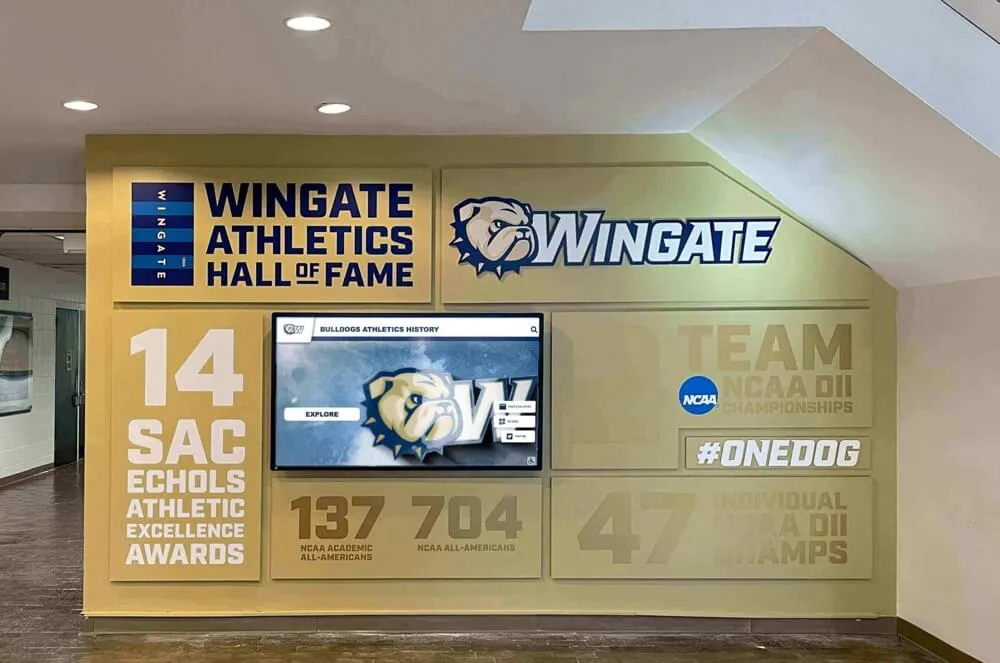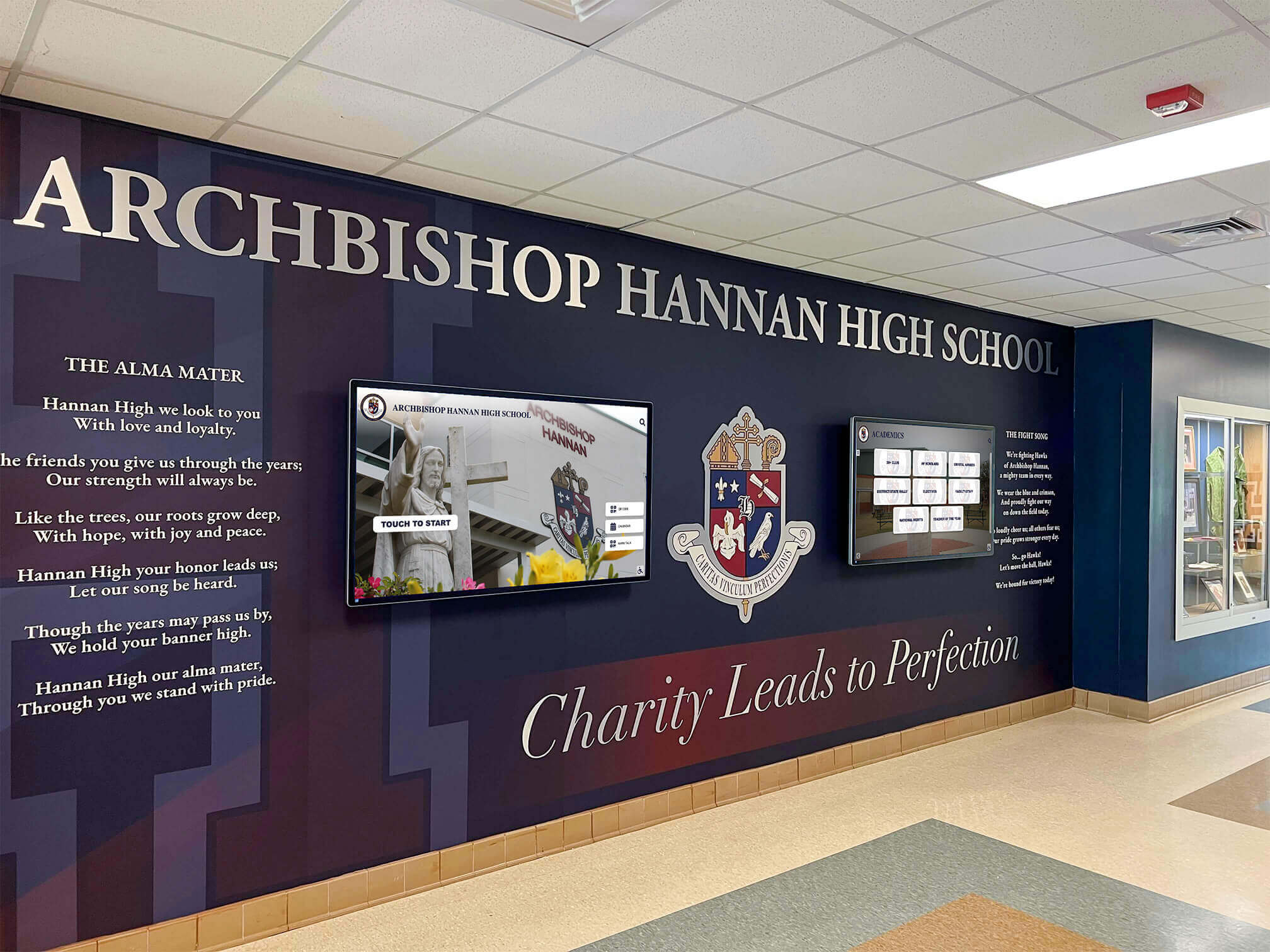
Strong school branding creates more than visual appeal—it shapes identity, builds community pride, and communicates institutional values to students, families, and visitors the moment they encounter your school. From the colors adorning hallway walls to the logo displayed on athletic uniforms, every visual element contributes to a cohesive brand experience that either strengthens or dilutes your school’s message.
Effective school branding extends far beyond a mascot and color scheme. It encompasses the systematic application of visual identity across physical spaces, digital platforms, communications materials, and recognition displays, creating consistent experiences that reinforce who you are as an institution. Whether you’re refining an established brand that’s evolved inconsistently over decades or developing a comprehensive visual identity from scratch, strategic branding transforms how your school community perceives itself and how prospective families, visiting athletes, and the broader community view your institution.
This comprehensive guide explores practical school branding ideas and implementation strategies that strengthen visual identity, create cohesive brand experiences across all touchpoints, and build the institutional pride that defines thriving school communities.
Why School Branding Matters More Than Ever
Visual identity profoundly influences perceptions and experiences in educational environments. Strong branding delivers tangible benefits across multiple aspects of school life.
Building Institutional Pride and Community Identity
Cohesive branding creates visual touchpoints that remind students, staff, and families they belong to something larger than themselves. When students walk hallways displaying consistent school colors, mascot imagery, and recognition of achievements, they internalize institutional identity in ways that strengthen connection and pride.
Schools with strong visual identities report higher levels of student engagement, stronger alumni connections, and more active family participation. Branding becomes the visual language through which community members express shared identity—from wearing spirit wear on game days to posting school-branded social media content celebrating achievements.
This pride factor extends beyond current students. Alumni maintain lifelong connections to schools with distinctive brands they remember fondly, translating into engagement with mentorship programs, attendance at reunions, and philanthropic support that funds programs and facilities.
Creating Consistent First Impressions
Prospective families form initial impressions within seconds of encountering your school—whether through website visits, campus tours, or athletic events. Consistent, professional branding signals that your institution pays attention to details and maintains high standards across all areas.
Conversely, inconsistent or outdated branding raises questions about institutional priorities. When signage appears worn, color schemes clash across different buildings, or digital platforms feel disconnected from physical spaces, visitors notice these discrepancies and question whether the same inconsistency affects academic programs and student support.
Strong branding ensures every touchpoint—from parking lot signage to gymnasium displays to social media graphics—delivers consistent messages about institutional quality and character.
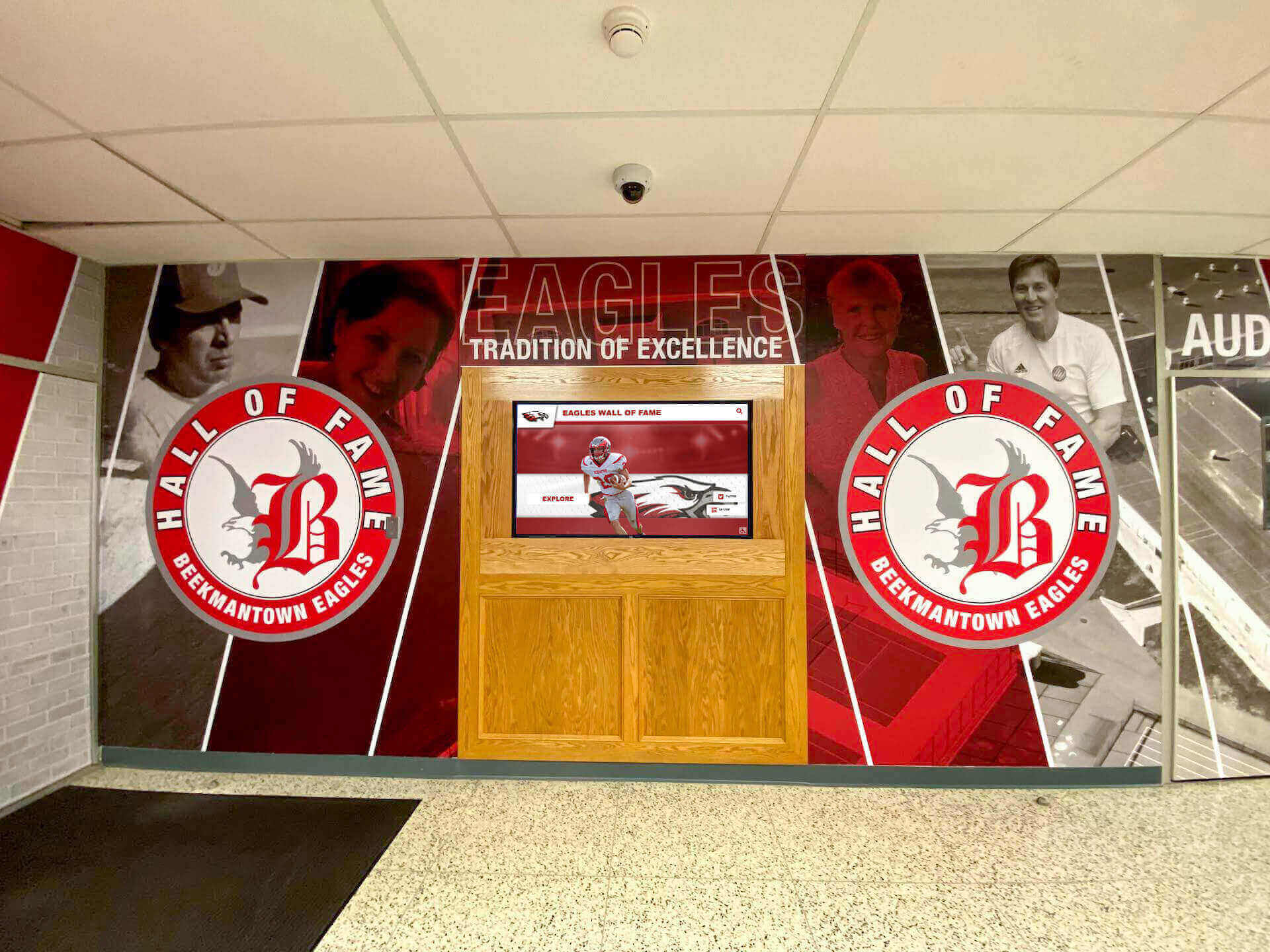
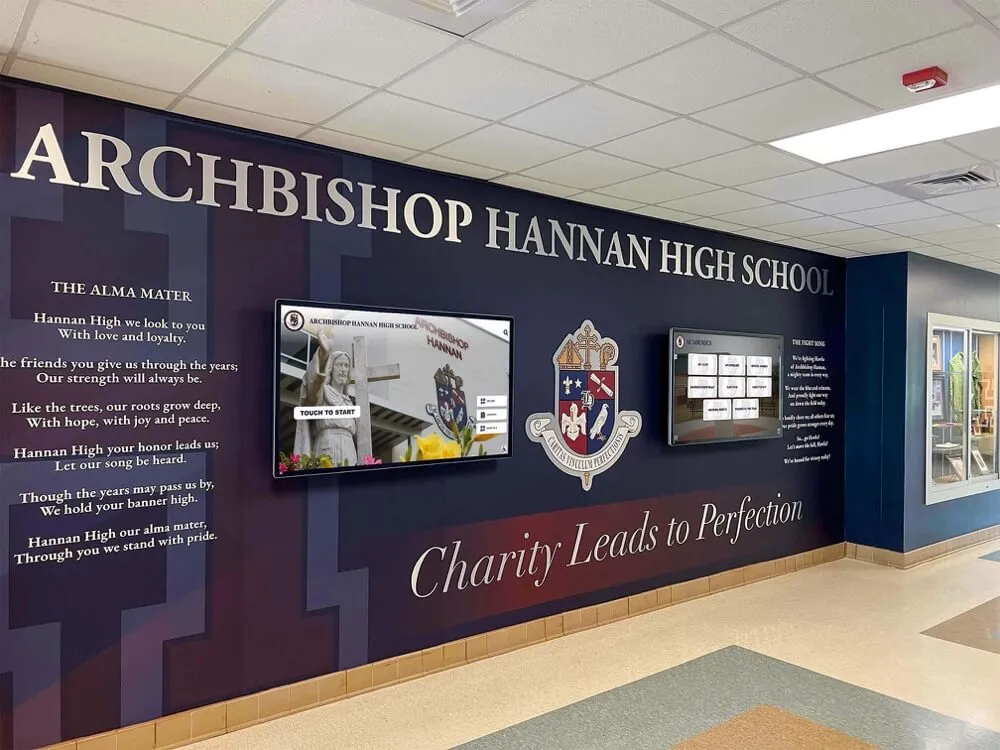
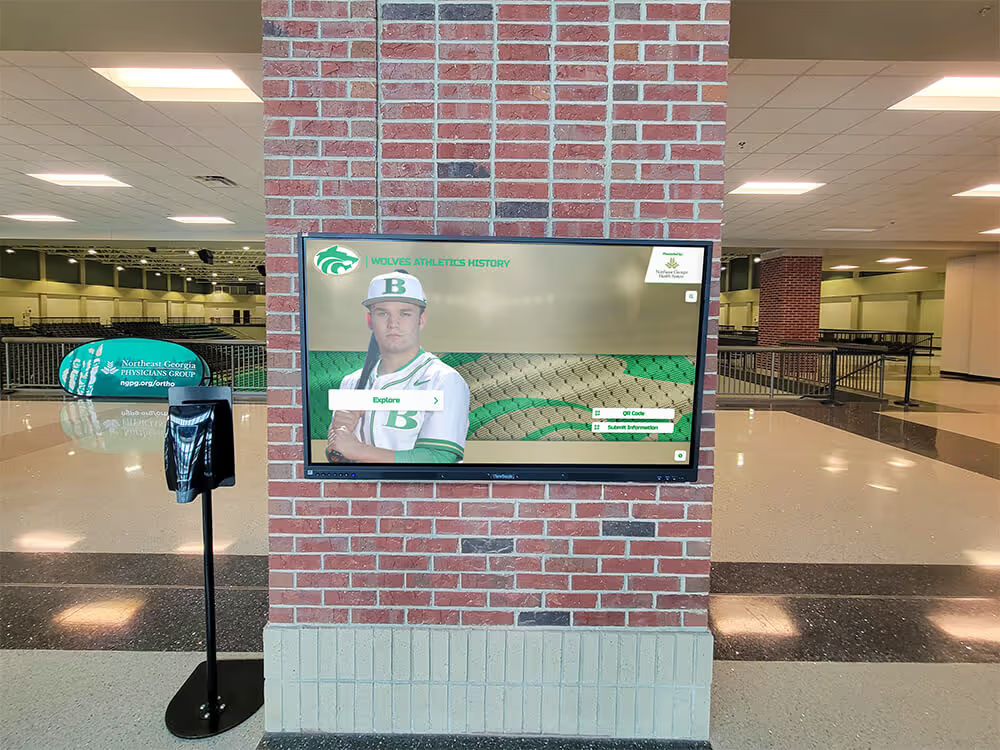
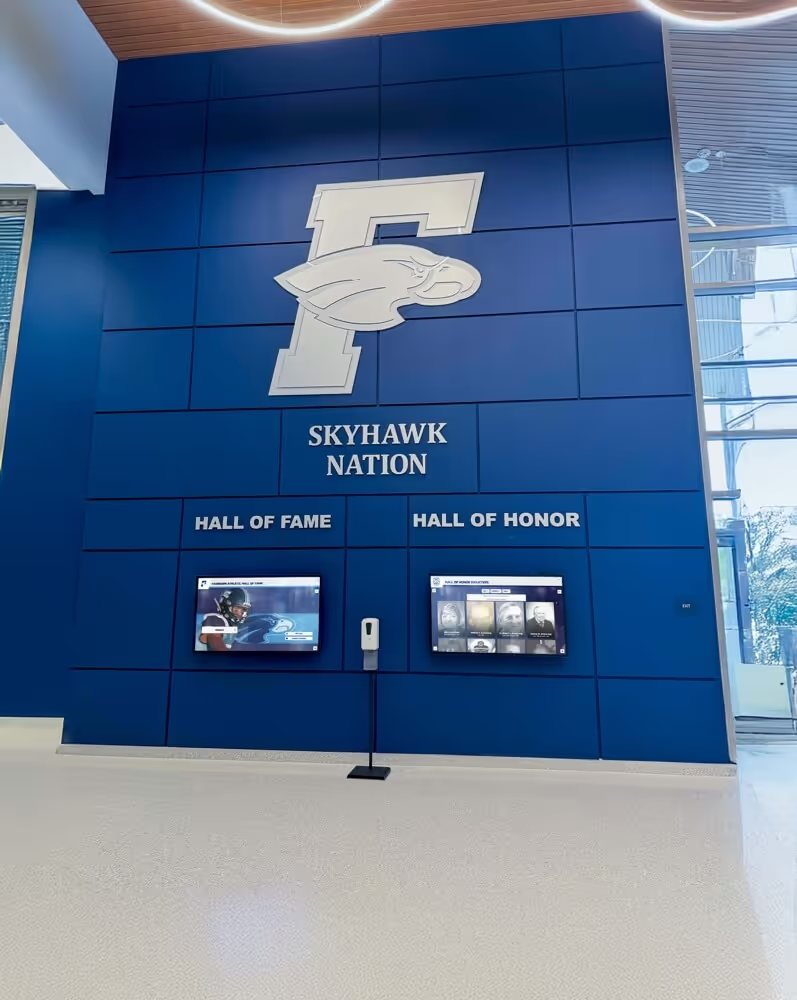
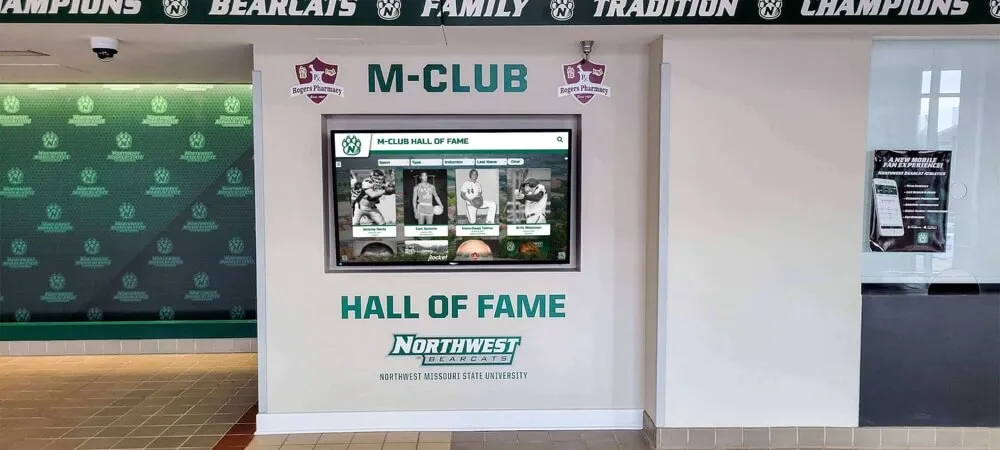
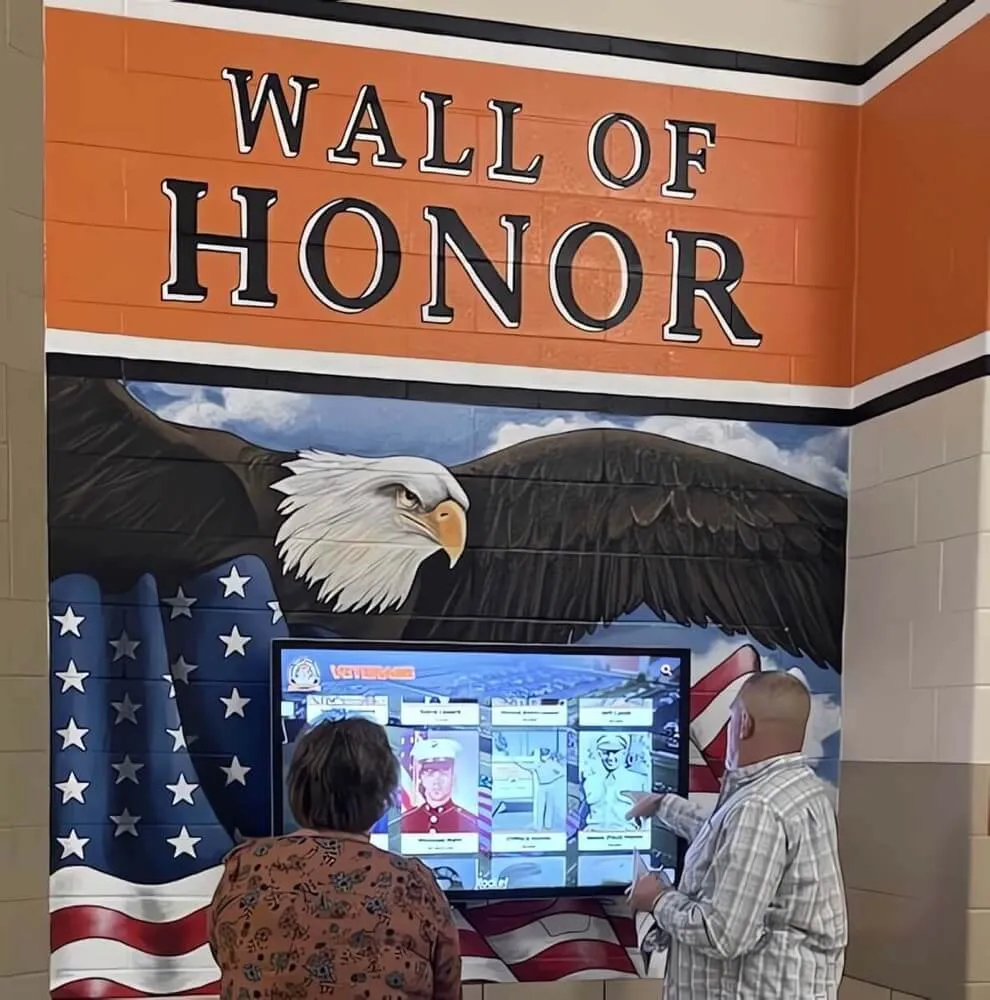
Cohesive branding in high-traffic areas like entrance lobbies creates immediate visual impact that communicates institutional identity to all visitors
Differentiating Your School in Competitive Markets
Educational choice means schools increasingly compete for enrollment, talent, and resources. Distinctive branding helps schools stand out in crowded markets where families evaluate multiple options.
Effective school brands communicate unique value propositions—whether academic excellence, specialized programs, inclusive culture, athletic tradition, or innovative approaches to education. Visual identity becomes shorthand for these differentiators, helping prospective families quickly understand what makes your school special.
Schools with strong brands also find recruiting easier across multiple dimensions: attracting talented teachers who want to work at recognized institutions, drawing top student-athletes who value program prestige, and engaging community partners who associate positive attributes with your visual identity.
Supporting Recruitment and Enrollment Goals
Admissions professionals understand that branding significantly influences enrollment decisions. Prospective families subconsciously assess institutional quality based on visual presentation during campus tours, open houses, and digital interactions.
Professional, cohesive branding throughout facilities signals investment in student experience. When tour routes showcase branded recognition displays, athletic murals reinforcing tradition, and consistent wayfinding signage, visitors perceive organizational competence that extends confidence in educational quality.
Digital branding proves equally important as most families begin school searches online. Websites, social media presence, and virtual tours must reflect the same visual identity families encounter during campus visits, creating seamless brand experiences across physical and digital touchpoints.
Enhancing Fundraising and Development Efforts
Brand strength directly correlates with fundraising success. Donors—whether alumni, parents, or community members—feel more confident supporting institutions with clear identities and professional presentations.
Visual branding creates opportunities for donor recognition that reinforce institutional identity. Donor recognition displays incorporating school colors and logos transform acknowledgment into brand reinforcement, while capital campaign materials leveraging strong visual identity communicate professionalism that inspires confidence in institutional stewardship.
Schools with distinctive brands also generate more spirit wear sales, event attendance, and booster club participation—all revenue sources that supplement operating budgets and fund program enhancements.
Core Elements of School Visual Identity
Comprehensive school branding systems comprise several interconnected visual elements that work together to create cohesive identity.
Logo Design and Official Marks
Your school logo serves as the primary visual identifier appearing across countless applications—letterhead, websites, athletic uniforms, building signage, and spirit wear. Effective logos balance several considerations:
Versatility Across Applications
Strong logos function in various sizes, from tiny website favicons to massive gymnasium murals, and work equally well in full color, grayscale, and single-color applications. Simple, clean designs scale better than complex illustrations with fine details that disappear at small sizes.
Consider how your logo appears when embroidered on uniforms, printed on documents, displayed on digital screens, engraved on trophies, and reproduced in school publications. Logos that work across diverse mediums reduce reproduction problems and maintain consistent quality.
Timeless Design Versus Trendy Elements
While refreshing dated logos makes sense, avoid trendy design elements that quickly appear outdated. Schools live with logos for decades—designs should remain relevant for years rather than requiring frequent updates that confuse brand recognition.
Classic approaches favoring clean typography, simple mascot representations, and traditional design principles age better than styles following current graphic design trends.
Primary and Secondary Marks
Many schools benefit from logo families including a primary mark for official use, simplified versions for small applications, mascot-focused marks for athletic contexts, and wordmarks for situations requiring text-based identification.
This flexibility enables appropriate logo selection based on context while maintaining overall brand coherence through consistent design language across all variations.
Color Palette and Visual Consistency
School colors create immediate brand recognition and emotional associations. Strategic color systems extend beyond traditional “school colors” to encompass complete palettes supporting diverse applications.
Primary School Colors
Most schools feature two primary colors forming the foundation of visual identity—often reflected in athletic uniforms, official publications, and major signage. These colors should contrast sufficiently for readability and accessibility while creating distinctive combinations that separate your brand from nearby schools.
Secondary and Accent Colors
Comprehensive brand palettes include secondary colors for backgrounds, text, and accents that complement primary colors without overwhelming them. These supporting colors provide visual variety in multi-page publications, website designs, and complex signage while maintaining brand consistency.
Color Application Standards
Documenting specific color values—Pantone numbers for print, RGB values for digital, and paint codes for physical applications—ensures consistency across vendors and contexts. Without standardized specifications, “navy blue” varies dramatically between printers, painters, and merchandisers, creating visual inconsistency that weakens brand coherence.
Typography and Font Selection
Typography significantly impacts brand perception, though schools often overlook this element when developing visual identity systems.
Primary Typeface Families
Select one or two typeface families for consistent use across communications. Primary fonts should be readable at various sizes, available in multiple weights (regular, bold, italic), and licensed for diverse applications including print, web, and signage.
Many schools choose complementary pairings like a traditional serif font for formal communications and a modern sans-serif for digital applications and casual materials.
Hierarchy and Consistency
Establish clear typographic hierarchies defining how different text elements—headlines, subheadings, body text, captions—appear across materials. Consistent typography creates professional polish and helps audiences quickly process information following familiar visual patterns.
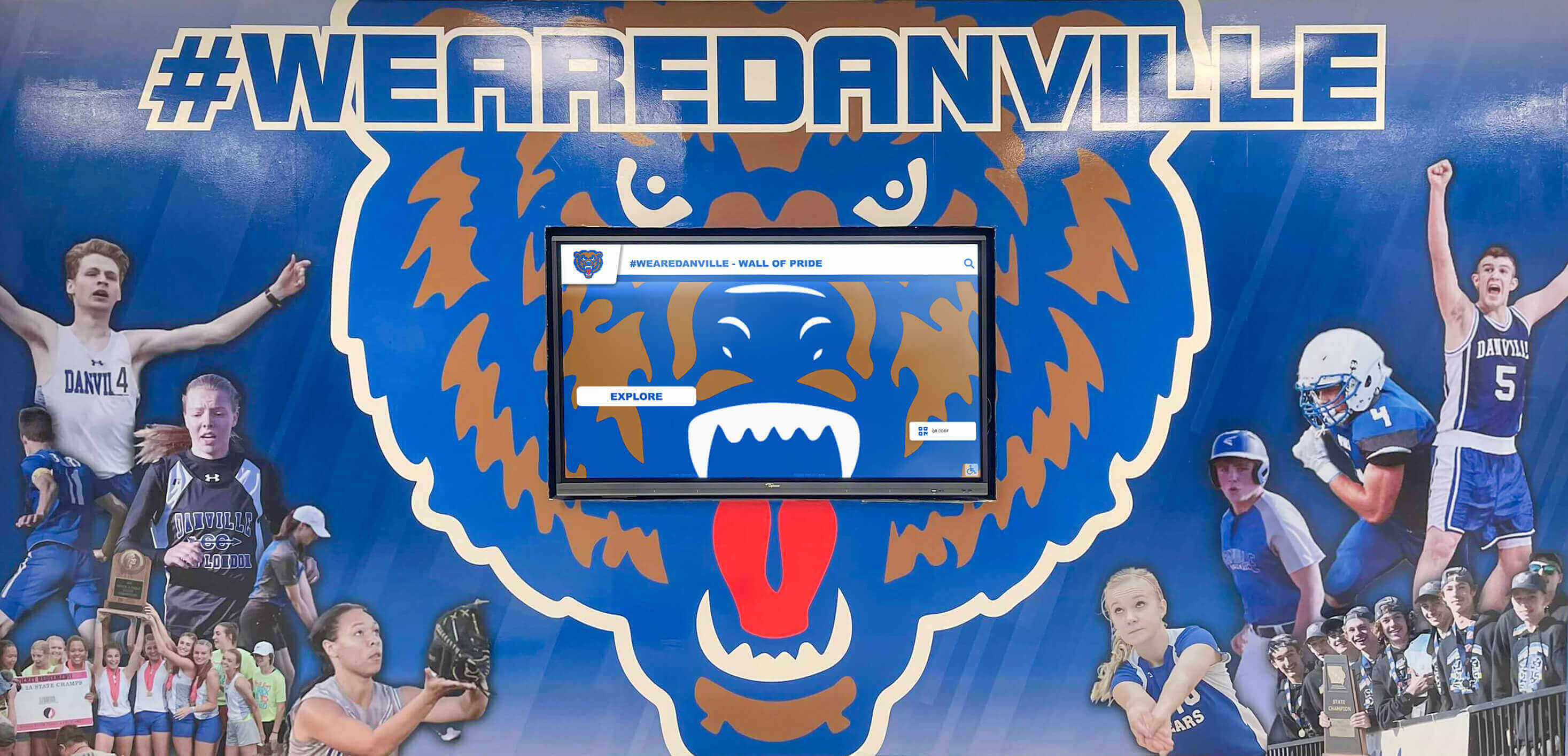
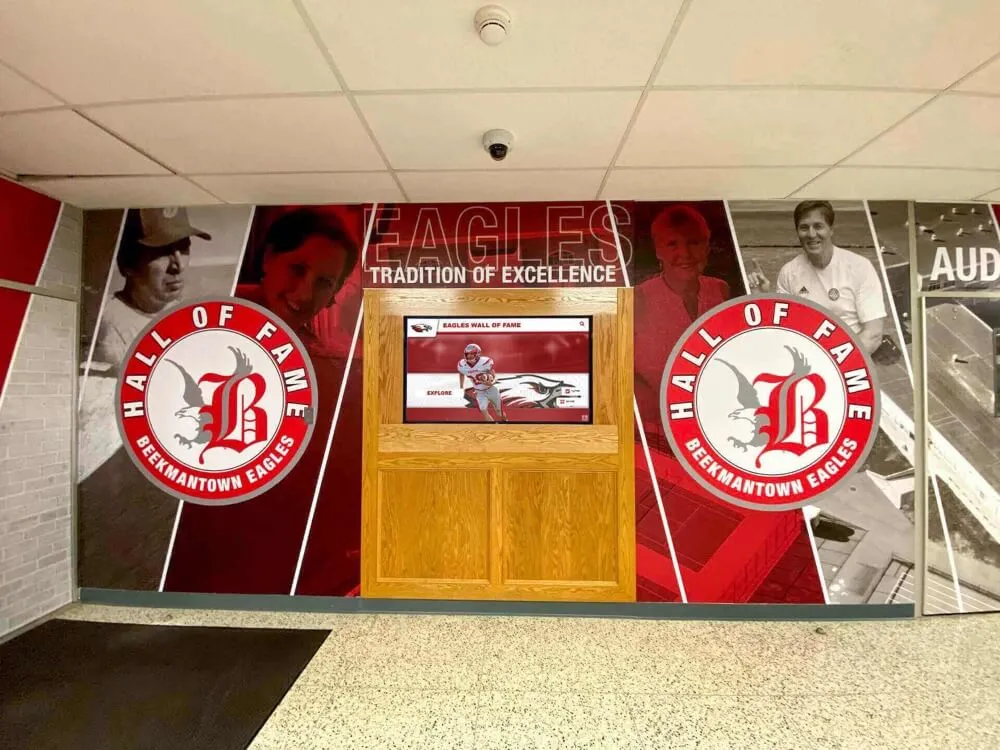
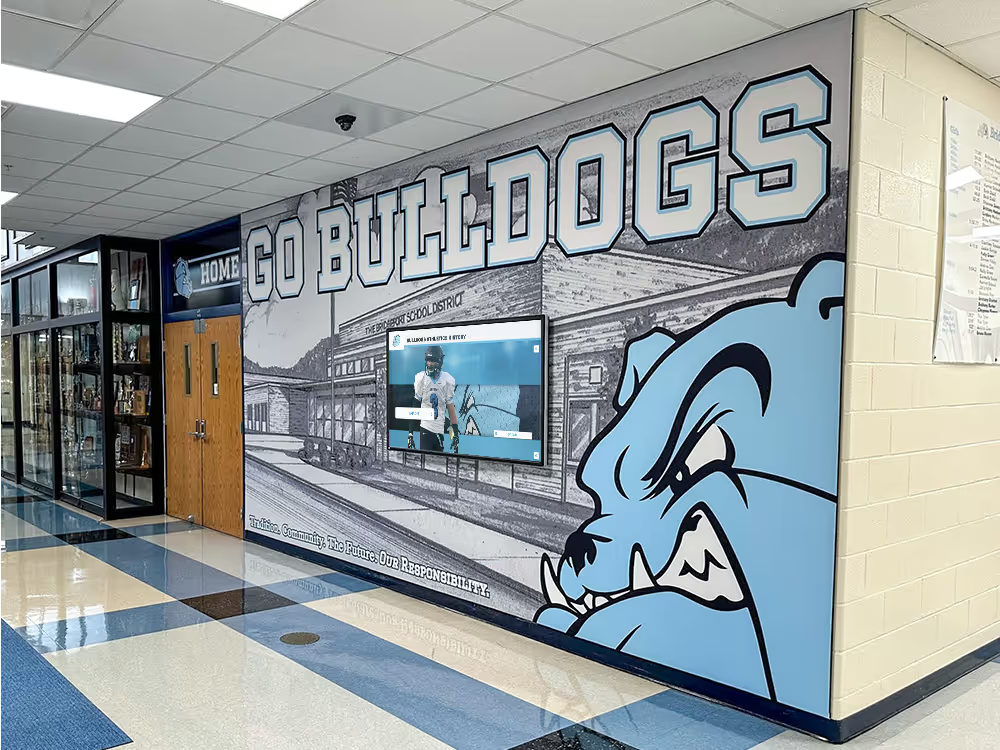
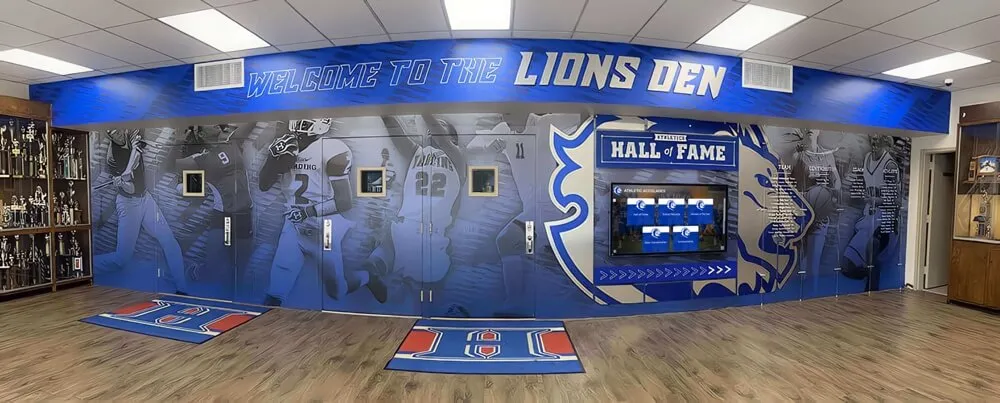
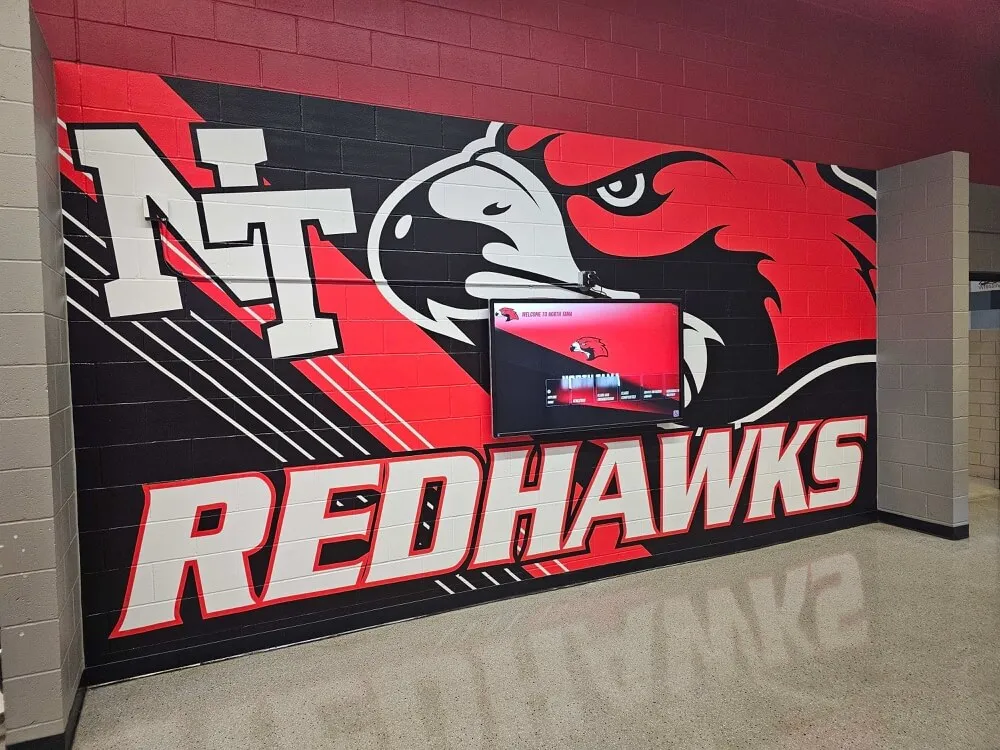
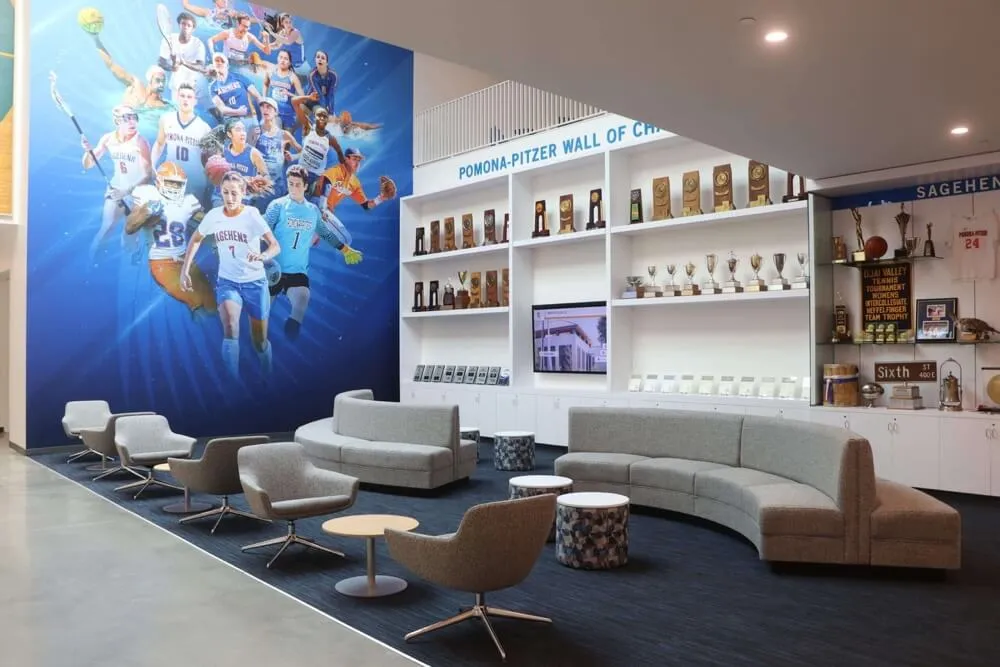
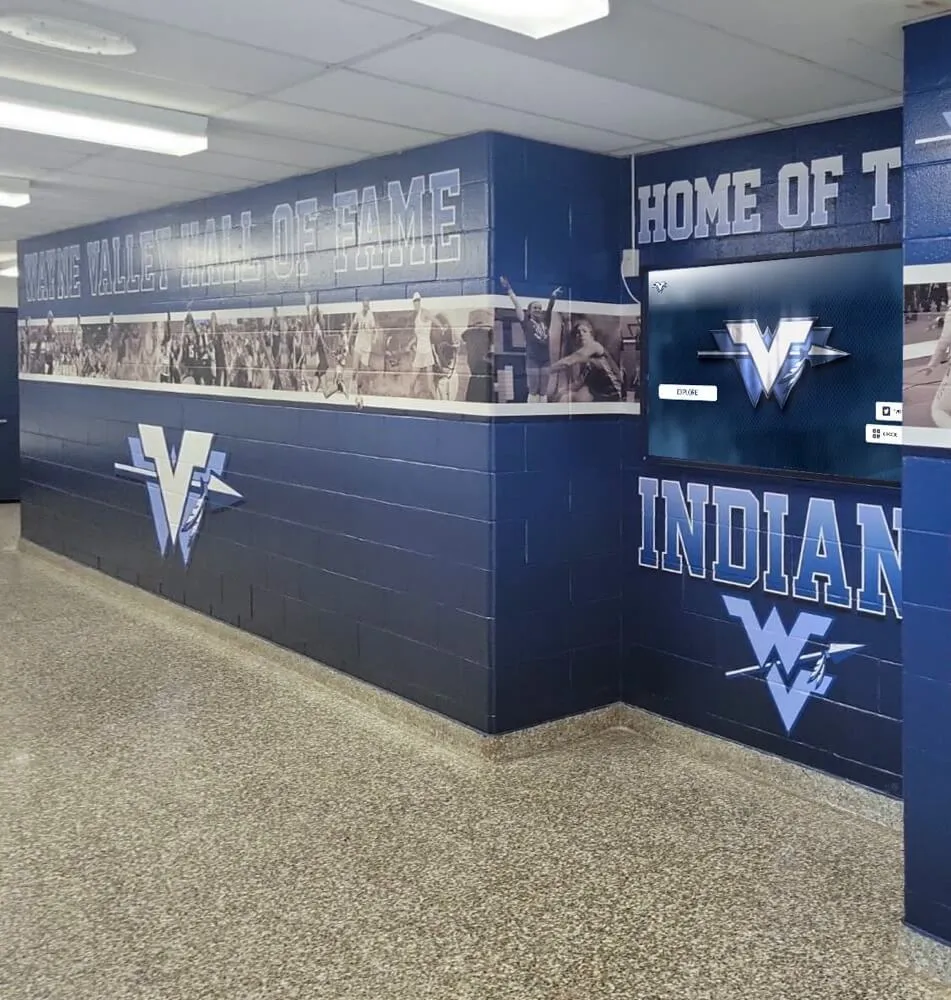
Mascot-focused branding in athletic spaces reinforces school identity while creating engaging environments that build team pride and tradition
Mascot and Visual Symbols
School mascots serve as powerful brand ambassadors creating emotional connections and visual interest beyond abstract logos.
Mascot Design Consistency
Many schools accumulate multiple mascot interpretations over years—fierce versions for athletics, friendly versions for elementary programs, and various artistic styles from different eras. This inconsistency dilutes brand impact.
Establish official mascot artwork in various poses and styles appropriate for different contexts, then enforce consistent use. When all materials feature recognizable mascot representations, brand recognition strengthens significantly.
Symbol Systems and Visual Language
Beyond mascots, schools can develop supporting visual elements—patterns, icons, graphic treatments—creating distinctive brand languages. These elements add visual interest to communications and spaces while reinforcing identity through repetition.
Consider how trophy case displays can incorporate these visual symbols to create cohesive recognition experiences that strengthen brand identity.
Photography Style and Visual Content
Visual content including photography, video, and graphics shapes brand perception as powerfully as logos and colors.
Establishing Photography Guidelines
Develop clear photography standards defining preferred composition styles, lighting approaches, subject diversity, and post-processing treatments. Consistent photography creates cohesive visual experiences across websites, publications, social media, and displays.
Guidelines might specify natural lighting over flash photography, candid moments over posed shots, or diverse student representation across all materials—whatever aligns with your institutional values and brand personality.
Visual Content Curation
As schools accumulate thousands of photos annually, systematic curation ensures quality content remains accessible for communications needs. Organized photo libraries tagged by subject, date, and usage rights enable quick access to on-brand imagery when creating materials.
Developing Your School Brand Identity System
Creating comprehensive brand identity requires systematic approaches balancing stakeholder input, professional expertise, and implementation practicality.
Conducting Brand Discovery and Audit
Understanding current brand perception establishes baselines for identity development or refinement.
Stakeholder Interviews and Surveys
Gather perspectives from diverse constituencies—students, staff, parents, alumni, community members—about current brand perceptions. What words describe your school? What makes your institution distinctive? What visual elements create strong associations?
These insights reveal gaps between intended brand messages and actual perceptions, informing identity development that addresses disconnects.
Visual Audit of Existing Materials
Systematically document current brand applications across all touchpoints: signage throughout campus, printed materials from various departments, digital platforms, athletic facilities, recognition displays, and communications from different time periods.
This audit typically reveals significant inconsistency—different logo versions, color variations, competing mascot designs, and fragmented visual language accumulated over years of decentralized decision-making.
Competitive Analysis
Review branding approaches from peer schools and institutions you admire. What strategies differentiate their visual identities? How do their brands communicate values and priorities? What can you adapt or avoid based on their successes and failures?
This analysis prevents inadvertently copying nearby schools’ color schemes or design approaches, ensuring your brand creates distinctive identity.
Engaging Professional Design Expertise
While internal stakeholders provide valuable perspective, professional designers bring technical expertise and objective viewpoints essential for effective brand development.
When to Hire Brand Consultants
Major rebranding efforts—developing new logos, restructuring complete visual identity systems, or addressing significant brand problems—warrant professional assistance. Experienced brand designers understand technical requirements like logo scalability, color psychology, typography hierarchy, and implementation across diverse applications that internal teams may overlook.
Working With Design Firms
Effective designer relationships begin with clear creative briefs articulating your school’s history, values, competitive context, and brand objectives. The best results emerge from collaborative processes where designers present multiple concept directions, gather feedback, refine preferred approaches, and develop comprehensive identity systems—not just logos.
Budget for complete deliverables including logo files in all necessary formats, brand standards documentation, color specifications, typography guidelines, and usage examples across common applications.
Creating Comprehensive Brand Guidelines
Brand guidelines document visual identity standards ensuring consistent application by anyone creating materials—from professional vendors to parent volunteers making flyers.
Essential Guideline Components
Effective brand standards documents include logo usage rules with proper and improper examples, official color palettes with specific values for all mediums, typography specifications and font files, photography style guidelines, mascot usage standards, and templates for common applications like letterhead, presentations, and social media graphics.
Accessibility and Usability
The most comprehensive guidelines fail if people can’t easily reference them. Make brand standards documents:
- Accessible online in searchable digital formats
- Organized with clear sections and navigation
- Illustrated with visual examples rather than text-heavy descriptions
- Updated regularly as new applications emerge
- Distributed to all staff and common vendors
Balancing Standards With Flexibility
While consistency matters, overly rigid guidelines frustrate users and get ignored. Allow appropriate flexibility for different contexts—less formal applications for elementary programs versus official institutional communications, creative freedom within established parameters for special events, and adaptations acknowledging legitimate contextual needs while maintaining core brand elements.
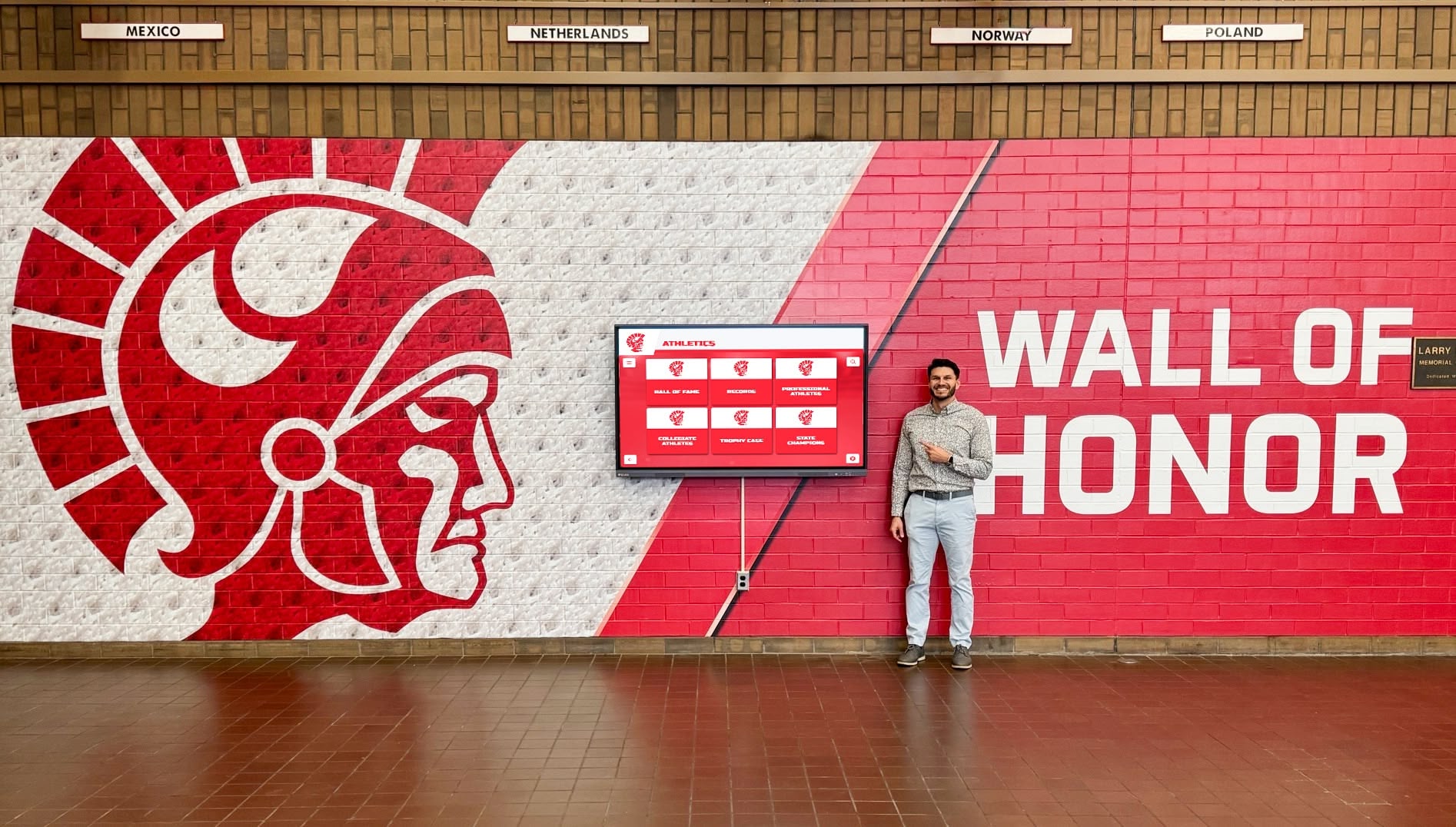
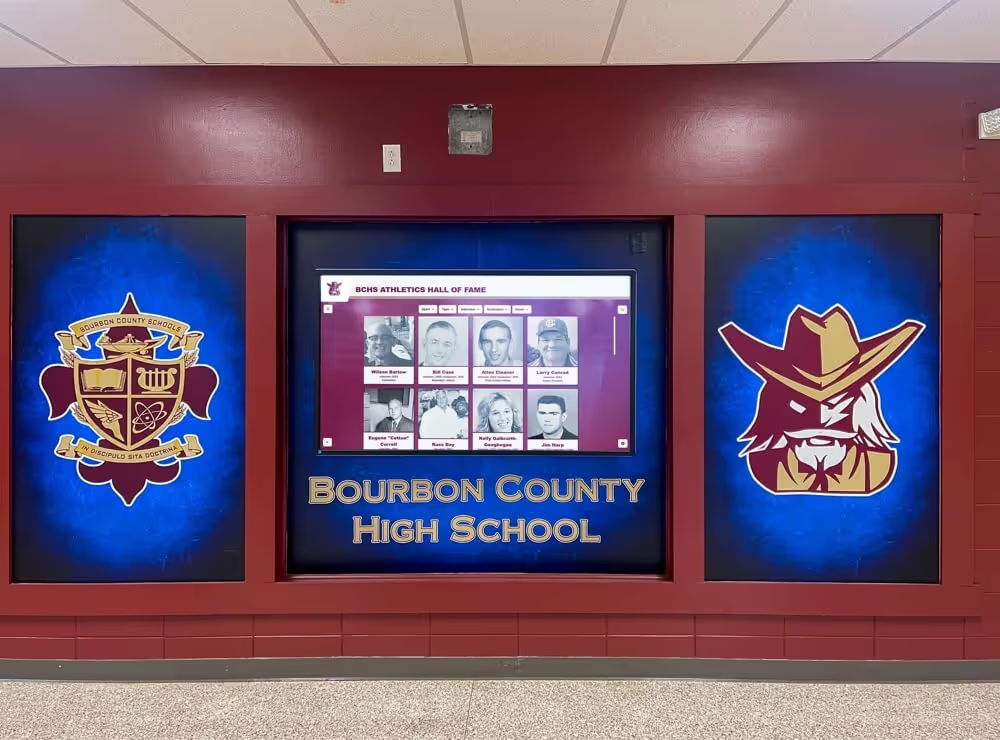
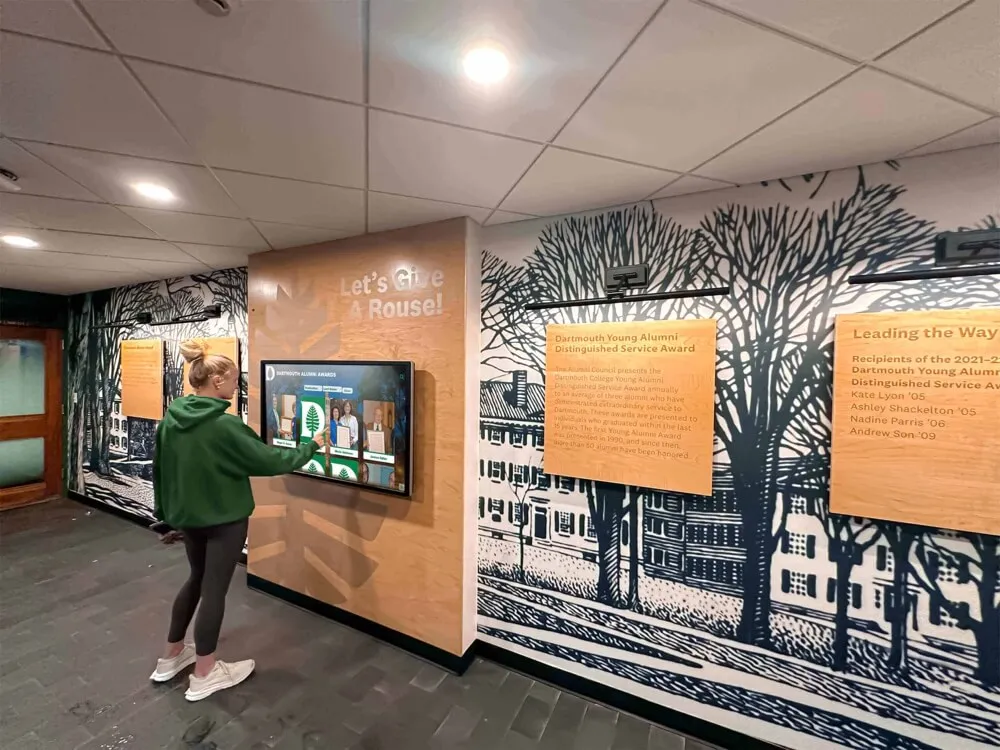
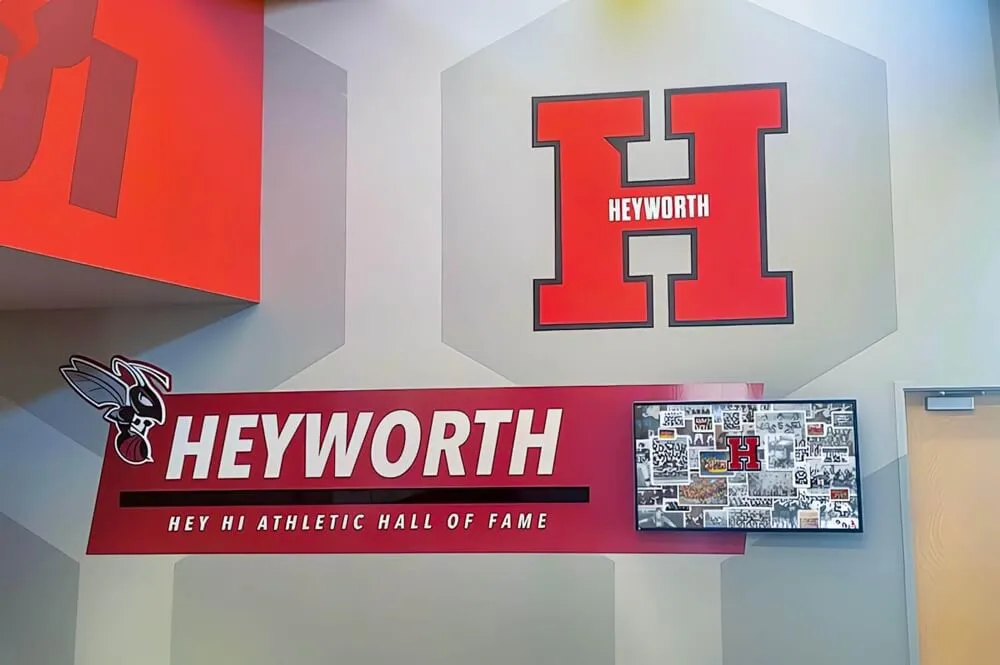
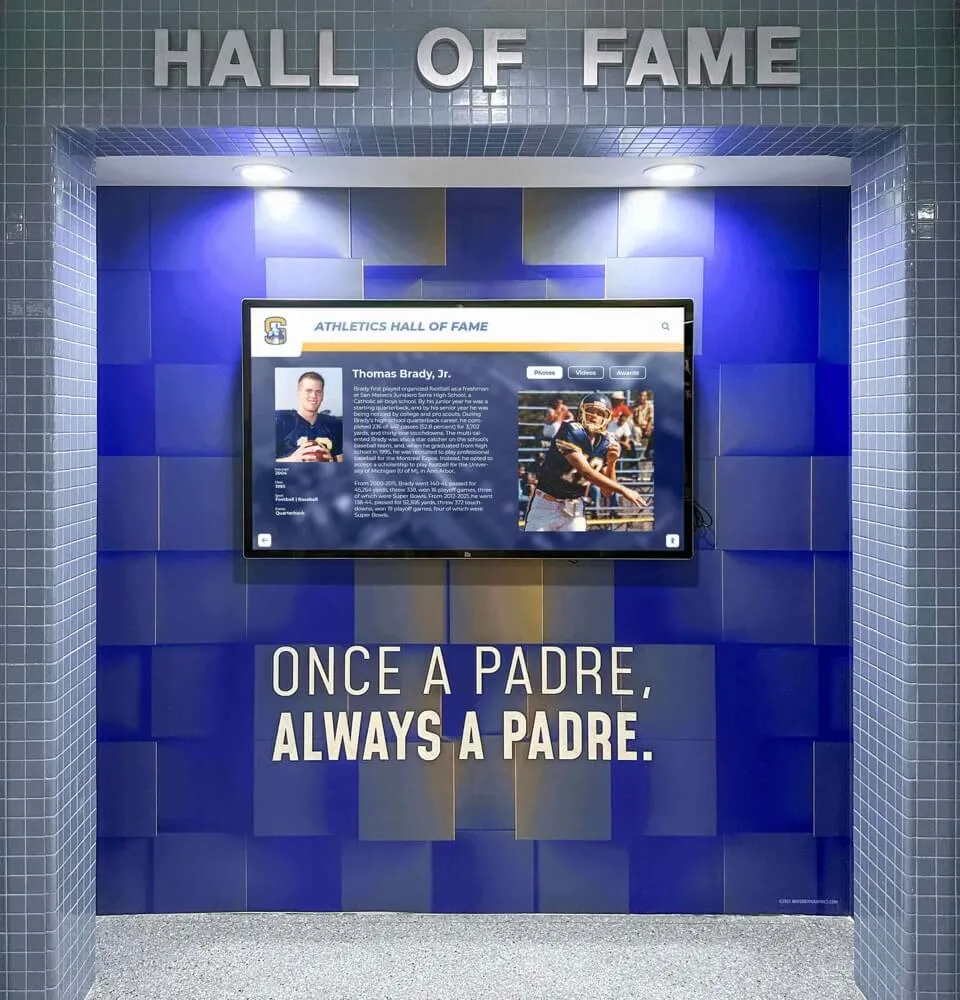
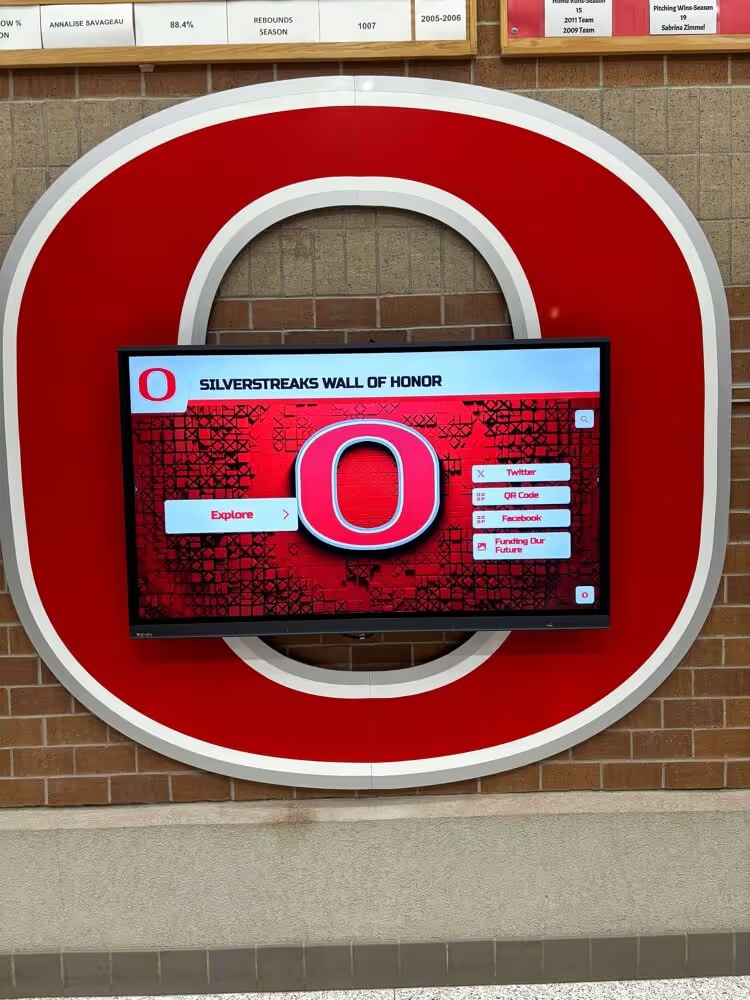
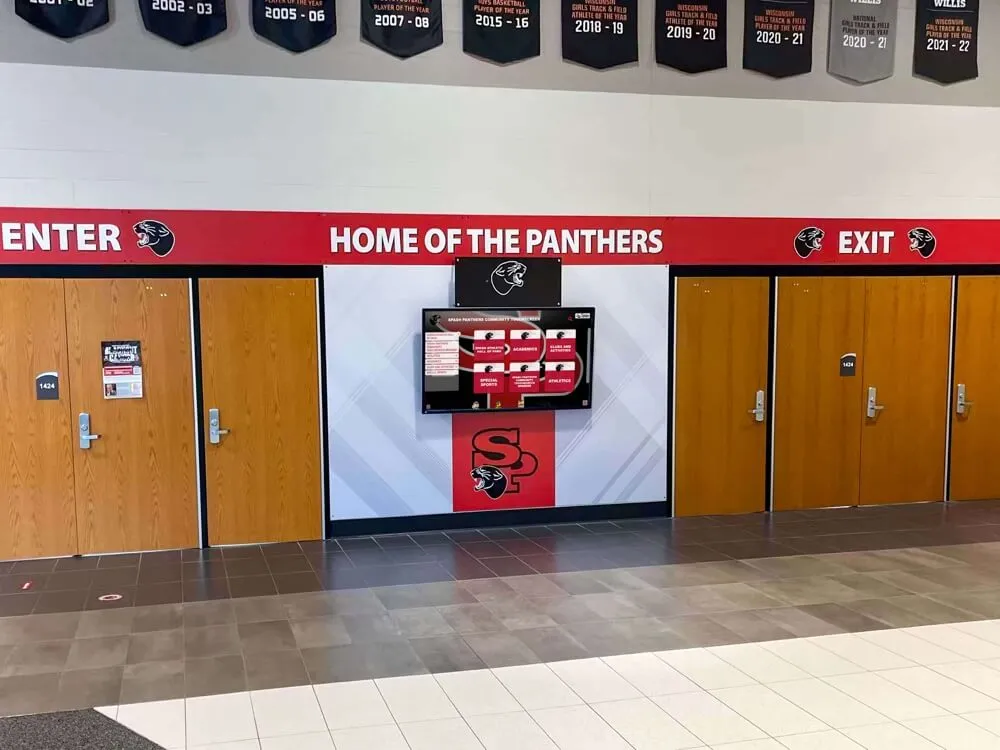
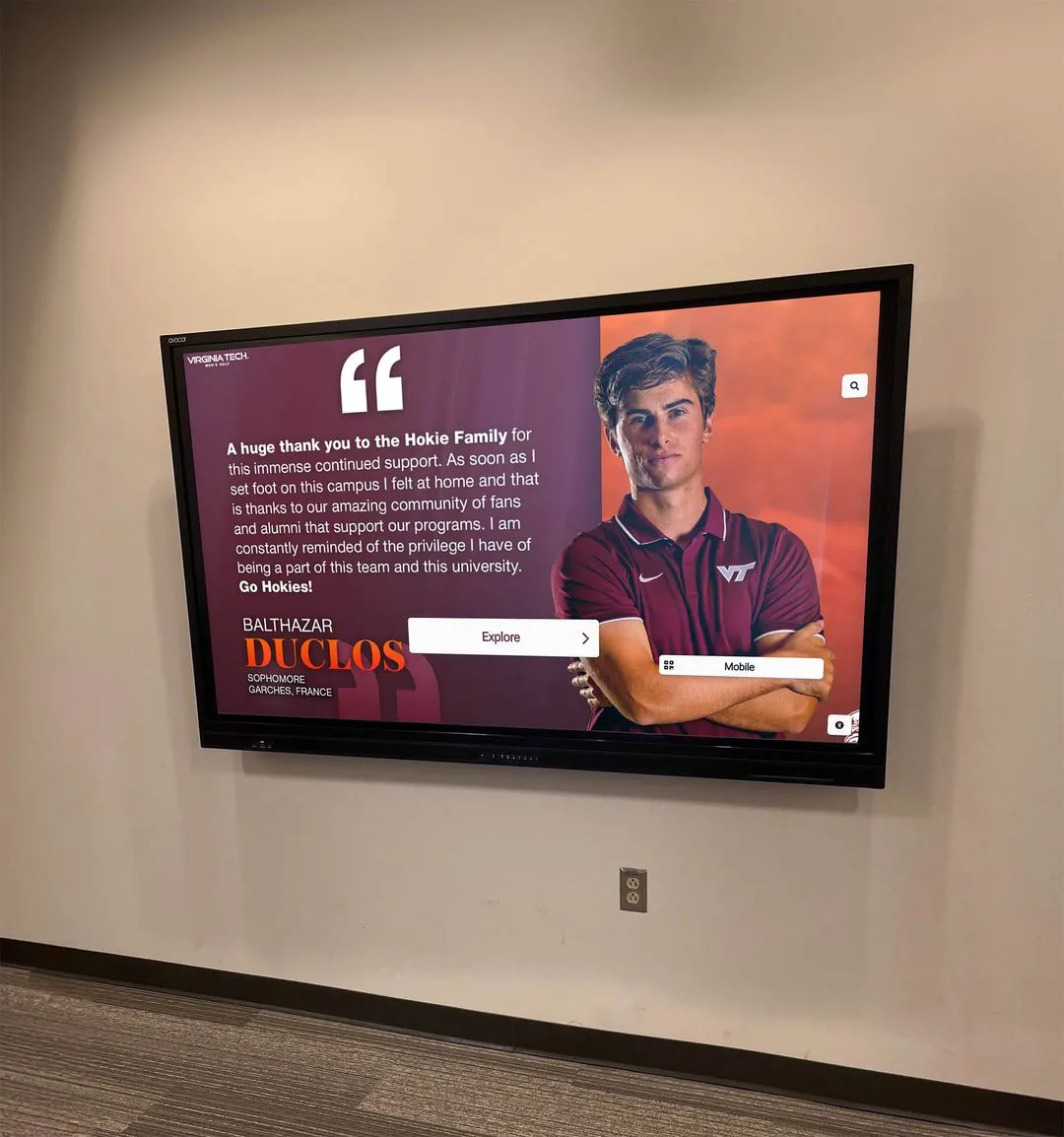
Recognition displays incorporating school colors and branding create cohesive visual experiences while celebrating achievements
Implementing School Branding Across Physical Spaces
Visual identity comes to life through systematic application across campus environments where students, staff, and visitors experience your brand daily.
Exterior Signage and Wayfinding
Building exteriors and campus navigation create first impressions for all visitors.
Monument and Entrance Signage
Primary entrance signs should feature official logos, school colors, and professional construction quality communicating institutional pride. Illuminated monument signs at main entrances ensure visibility during evening events while creating landmark presence in the community.
Budget for quality materials—dimensional letters, durable substrates, professional lighting—that withstand weather while maintaining appearance for years.
Directional and Informational Signage
Comprehensive wayfinding systems help visitors navigate campus while reinforcing brand through consistent design language. Coordinate signage across parking areas, building entrances, hallways, and specific destinations like athletic facilities, auditoriums, and administrative offices.
Consistency in signage typography, colors, and design creates professional cohesion while practical functionality prevents frustrated visitors wandering campus searching for locations.
Interior Murals and Environmental Graphics
Hallways, lobbies, and common spaces offer prime opportunities for branded environmental design that builds school spirit.
Athletic Murals and Spirit Walls
Gymnasiums, locker rooms, and athletic hallways benefit from bold graphic treatments featuring mascots, inspirational messaging, team achievements, and school colors. These installations create impressive backdrops for photos, build team pride, and establish visual identity in spaces representing your school to visiting competitors.
Consider incorporating digital displays into athletic facilities that complement physical branding while providing dynamic content showcasing achievements and school history.
Main Entrance and Lobby Branding
Building lobbies serve as transition points between exterior and interior spaces—ideal locations for branded environments welcoming visitors. Wall graphics, dimensional logos, branded seating areas, and coordinated color schemes create memorable first impressions while communicating institutional pride.
These spaces often house recognition displays, trophy cases, and historical exhibits that tell your school story—ensure these elements incorporate consistent branding reinforcing overall visual identity.
Academic Wing and Classroom Environments
While common spaces accommodate bold branding, academic areas benefit from subtler applications that maintain focus on learning while still reinforcing identity. Consider branded classroom door signage, department-specific color coordination within overall school palette, hallway displays showcasing student work with consistent design templates, and wayfinding graphics using school colors and typography.
Athletic and Event Spaces
Gymnasiums, auditoriums, and athletic facilities represent schools to external audiences during competitions and performances—critical branding opportunities.
Floor Graphics and Court Branding
Gymnasium floors featuring center logos, school wordmarks, and branded end zones create professional environments while providing natural backdrops for photos and video that extend brand visibility through social media and local news coverage.
Coordinate floor graphics with wall murals, banners, and seating area branding for cohesive visual impact.
Portable and Flexible Branding
Event spaces serving multiple purposes benefit from portable branding elements like retractable banners, branded tablecloths, and modular display systems that adapt to different configurations while maintaining consistent visual identity.
This flexibility enables appropriate branding for diverse events—athletic competitions, academic ceremonies, community gatherings—without permanent installations limiting space functionality.
Recognition Displays and Trophy Cases
Achievement recognition creates natural opportunities for branded displays that celebrate accomplishments while reinforcing identity.
Traditional Trophy Case Design
Even traditional recognition benefits from branded design approaches—coordinated background colors, consistent typography for labels and plaques, integrated logo elements, and organized layouts that create professional presentations rather than cluttered collections.
Digital Recognition Integration
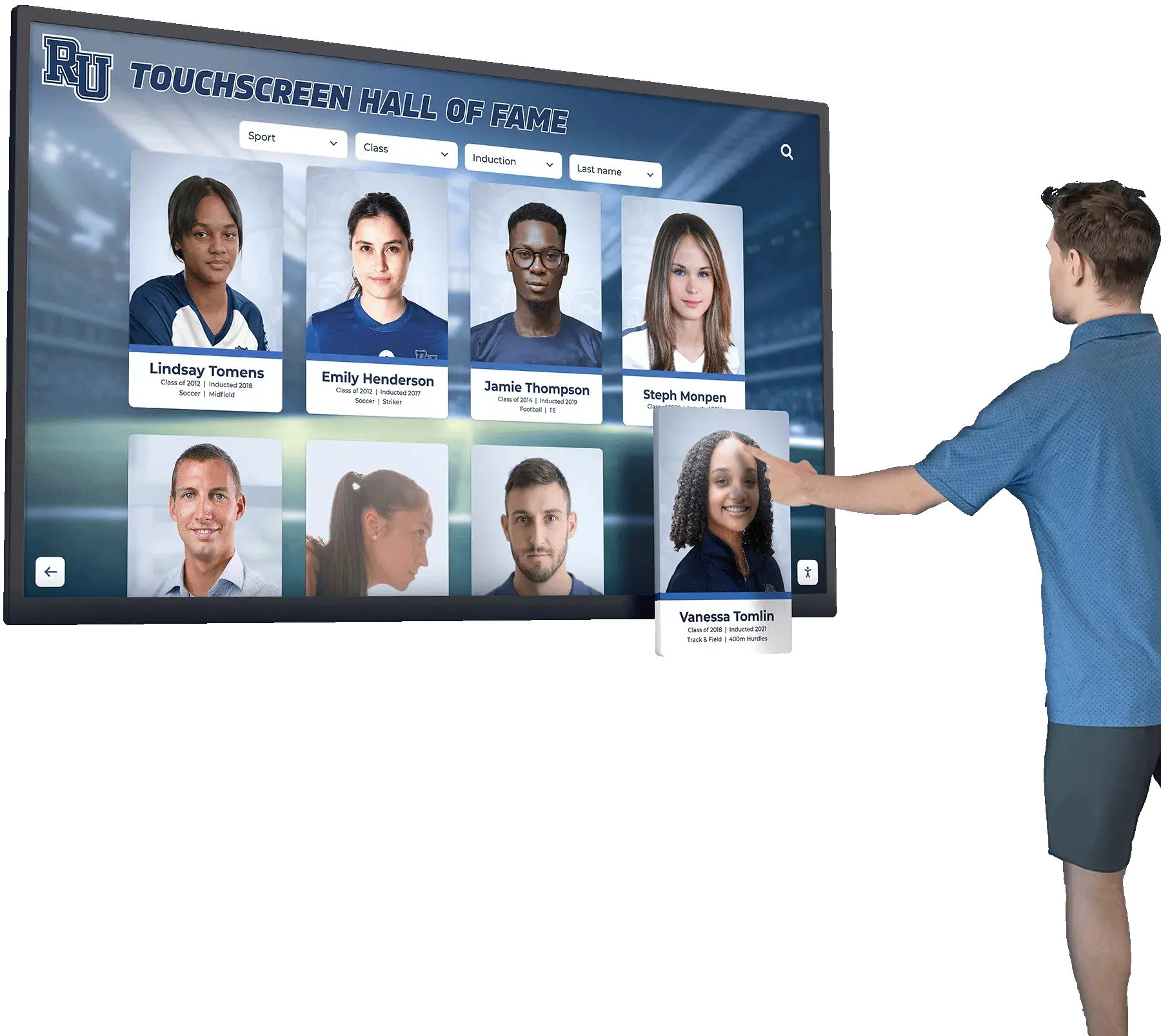
Modern schools increasingly incorporate digital displays alongside or replacing traditional trophy cases. Interactive touchscreen systems can showcase unlimited achievements while maintaining brand consistency through custom designs incorporating school colors, logos, and visual language.
These systems transform recognition from static displays into engaging brand experiences that tell richer stories about achievements and institutional history.
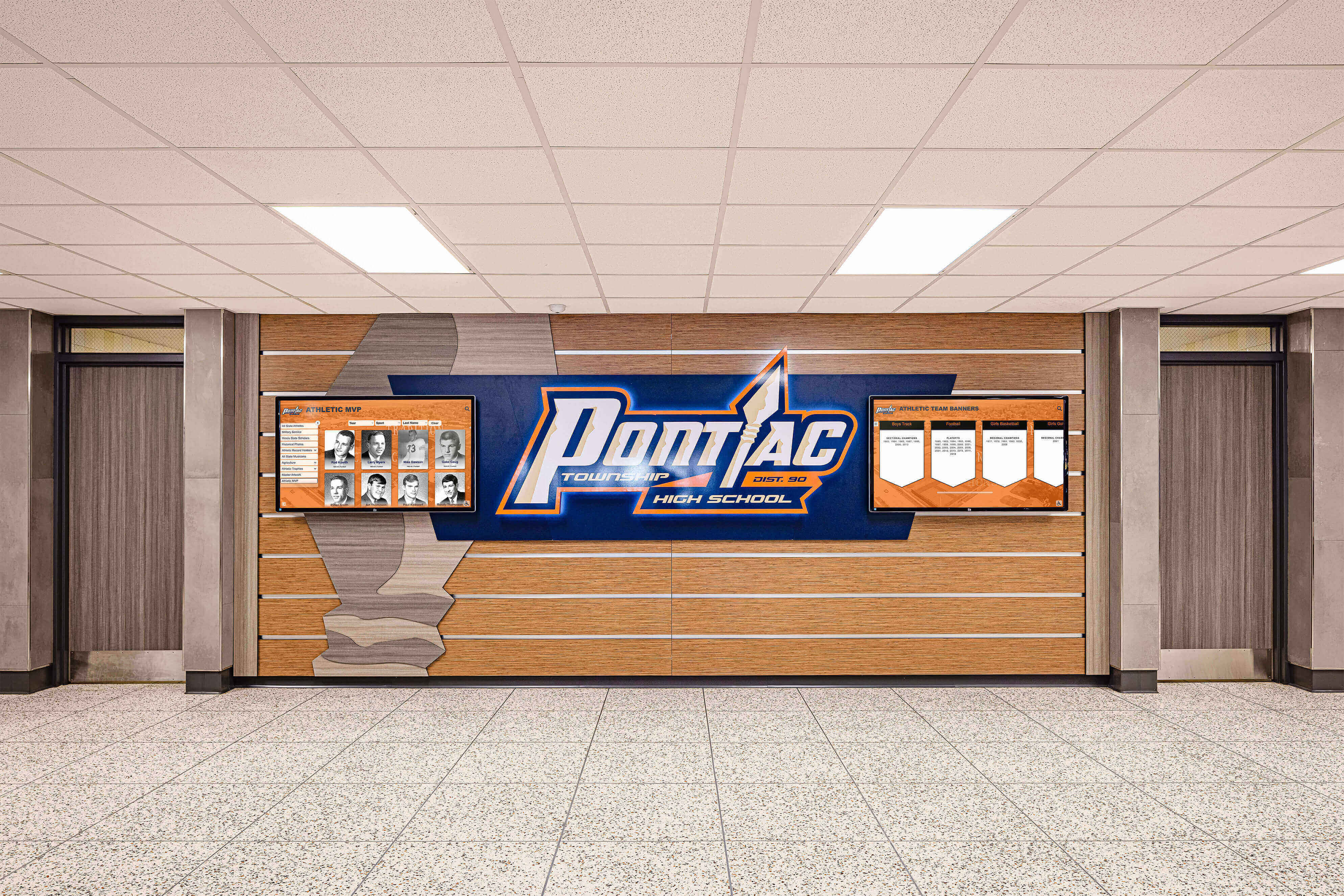
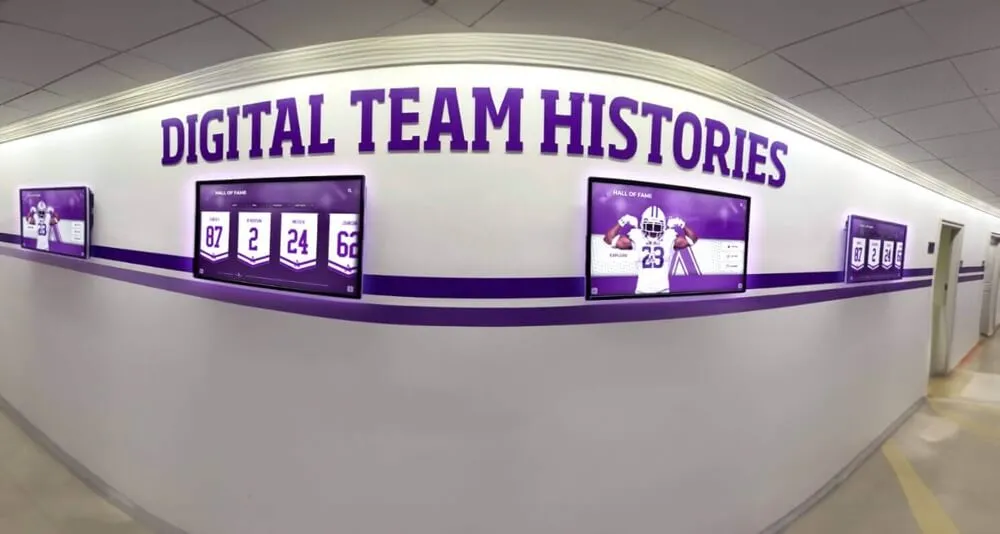
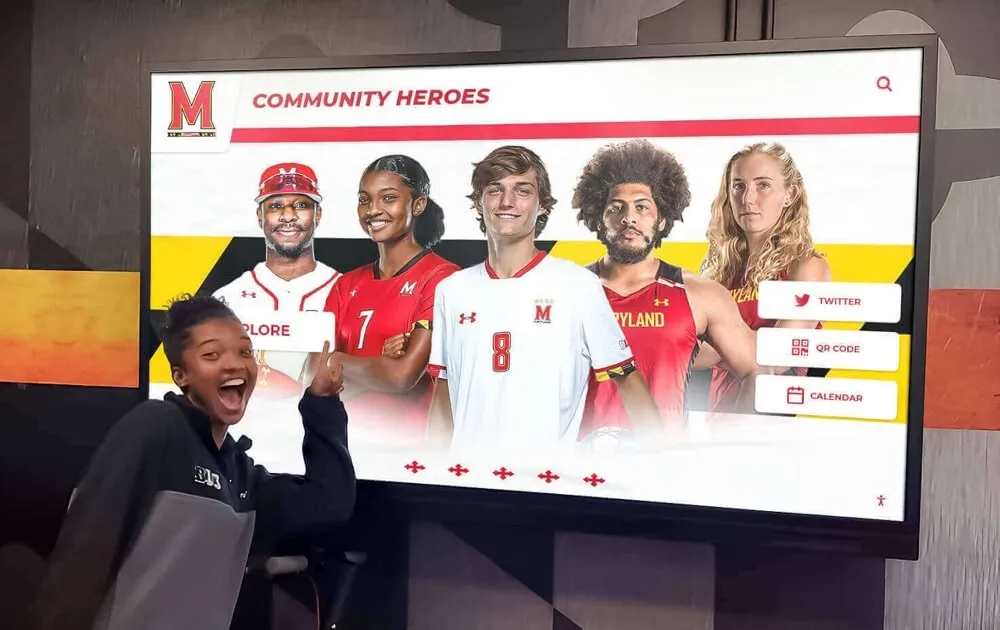
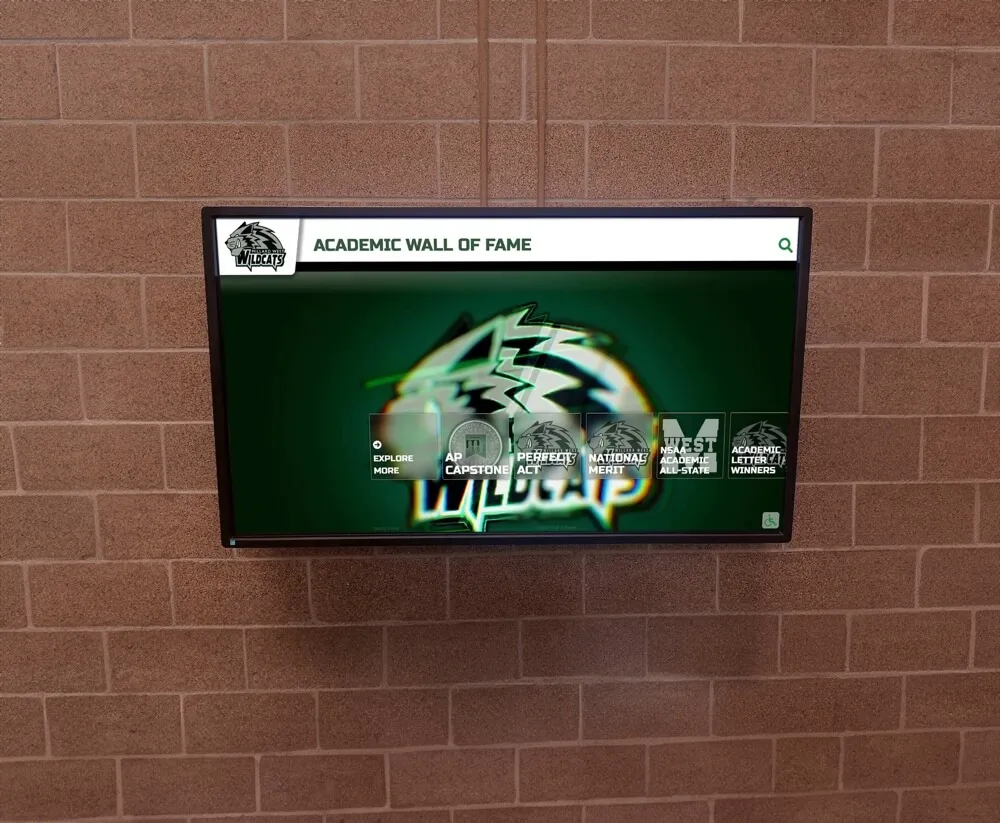
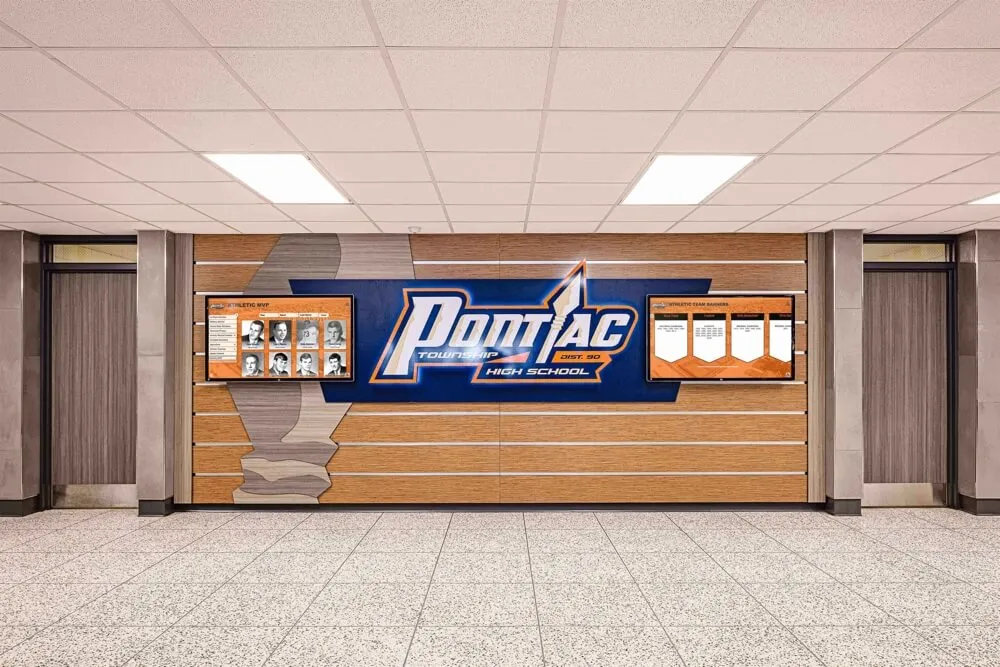
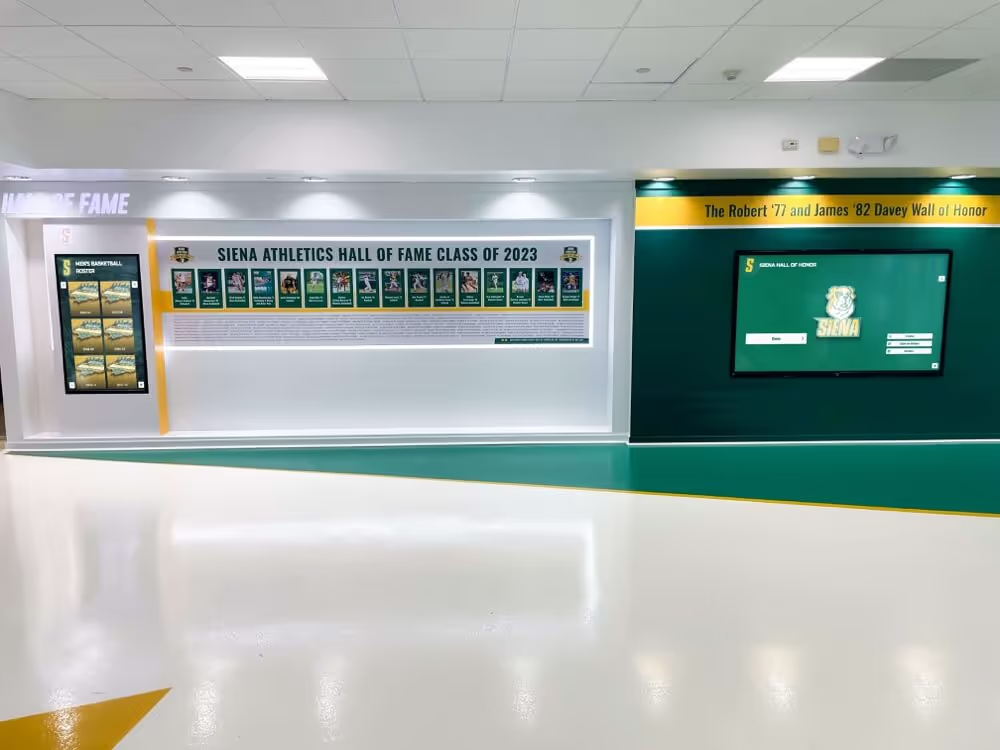
Consistent design language across multiple recognition displays creates cohesive visual environments that strengthen brand identity throughout facilities
Extending Brand Identity to Digital Platforms
Digital touchpoints increasingly shape brand perceptions as families, students, and communities interact with schools online as often as in person.
Website Design and User Experience
School websites serve as primary digital brand ambassadors—often the first interaction prospective families have with your institution.
Visual Consistency With Physical Brand
Website design should reflect the same colors, typography, logo usage, and visual language visitors encounter during campus tours. This consistency creates seamless brand experiences across physical and digital environments, reinforcing identity through repetition.
Misalignment between website appearance and physical branding confuses audiences and suggests institutional disorganization—avoid situations where websites feature outdated logos, different color schemes, or visual styles disconnected from current identity.
Photography and Visual Content Strategy
Website imagery powerfully shapes perceptions. Invest in professional photography showcasing authentic student experiences, diverse community representation, distinctive facilities, and engaging learning environments—all following photography guidelines from your brand standards.
Avoid generic stock photography that could represent any school. Authentic imagery creates emotional connections while visually communicating your unique character and culture.
Mobile Optimization and Accessibility
With most website traffic coming from smartphones, mobile experience determines whether families engage with your content or abandon frustrating navigation. Responsive designs adapting to any screen size, fast loading times, clear calls-to-action, and accessible design following WCAG guidelines ensure positive brand experiences across all devices.
Social Media Presence and Visual Templates
Social media platforms extend brand visibility to broad audiences through content shared by the school and community members.
Branded Content Templates
Develop templates for common social media content types—announcement graphics, event promotions, achievement celebrations, quote cards—ensuring consistent visual identity across posts. Template systems enable staff and students to create on-brand content efficiently without design expertise.
Templates should incorporate logos, school colors, typography, and visual styles from brand guidelines while allowing customization for specific messages and content.
Visual Content Curation and Sharing
Encourage community members to share authentic photos and videos from school events, activities, and daily experiences—user-generated content that builds authentic brand narratives. Curate and reshare the best community content, crediting creators while amplifying positive brand stories.
Establish clear social media guidelines ensuring shared content aligns with brand values and visual identity even when created by students, parents, or alumni rather than official communications staff.
Digital Signage and Internal Communications
Digital displays throughout campus communicate daily announcements, celebrate achievements, and provide wayfinding—all opportunities for brand reinforcement.
Branded Digital Display Templates
Just as print materials follow brand standards, digital signage should feature consistent layouts, color schemes, typography, and logo usage. Create announcement templates maintaining visual identity while communicating information clearly.
Coordinate digital display design with physical branding in surrounding spaces—screens in athletic facilities might emphasize sports-focused branding while academic wing displays reflect learning-oriented messaging, all within cohesive overall identity.
Dynamic Content Showcasing Achievements
Digital displays enable rich storytelling about achievements, history, and community that static signage cannot match. Schools implementing digital recognition systems transform branding from passive decoration into engaging experiences that build pride while celebrating the accomplishments making your school distinctive.
Email and Digital Communication Design
Email newsletters, announcements, and administrative communications reach families and community members regularly—less glamorous than websites but equally important brand touchpoints.
Email Template Systems
Branded email templates incorporating logos, school colors, and consistent typography ensure professional presentation across all digital communications. Templates should work across various email clients and devices while maintaining brand integrity.
Many schools create template hierarchies for different message types: official administrative communications with formal branding, weekly newsletters with friendlier designs, event invitations with promotional aesthetics—all connected through core visual identity elements.
Signature Branding and Contact Information
Standardized email signatures for staff including logos, consistent formatting, and complete contact information create professional impressions in every message while subtly reinforcing brand across thousands of communications annually.
Building Brand Consistency Across Communications
Beyond websites and facilities, schools produce countless communications materials requiring brand coordination.
Print Materials and Publications
Despite digital trends, schools continue producing substantial printed materials from recruitment brochures to event programs.
Letterhead and Business Systems
Official letterhead, business cards, envelopes, and forms establish professional credibility while communicating brand through every official correspondence. Invest in professionally designed templates that all departments use rather than allowing each area to create independent designs that fragment visual identity.
Recruitment and Marketing Materials
Admissions brochures, program guides, and promotional flyers often receive disproportionate design attention, yet should maintain consistency with overall brand rather than pursuing creative approaches that disconnect from established identity.
The most effective recruitment materials balance compelling content and engaging design with brand consistency that reinforces the same institutional identity families encounter during campus visits.
Event Programs and Publications
Athletic programs, performance playbills, yearbooks, and event materials create keepsakes that families save for years—lasting brand impressions extending far beyond event dates. Coordinate these publications through brand standards while allowing appropriate creative flexibility.
Athletic Uniforms and Spirit Wear
Uniforms and merchandise transform community members into walking brand ambassadors while generating revenue supporting programs.
Uniform Design Coordination
Athletic uniforms should reflect school colors and incorporate logos appropriately while meeting sport-specific functional requirements. Coordinate across all teams to create unified visual identity—avoiding situations where different sports feature conflicting color schemes or logo variations that confuse brand recognition.
Many schools establish athletic brand guidelines within overall standards, defining acceptable uniform colors, logo placements, and design approaches while allowing teams some personalization within established parameters.
Spirit Wear and Merchandise Quality
Poor quality merchandise damages brand perception regardless of correct logo usage. Partner with reputable vendors producing durable, attractive spirit wear that community members proudly wear rather than cheap alternatives that fade, shrink, or fall apart after minimal use.
Establish approved vendor relationships and merchandise standards ensuring all official spirit wear meets quality thresholds while following brand guidelines for logo usage and color accuracy.
Signage and Environmental Applications
Beyond primary facility branding, countless smaller signage applications require brand coordination.
Classroom and Office Identification
Room numbers, department signs, and office identifications create wayfinding functionality while contributing to overall brand environment through consistent typography, colors, and design language.
Parking and Campus Navigation
Parking lot signs, directional markers, and campus maps help visitors navigate while reinforcing brand through coordinated design. Consider how even mundane signage like parking regulations can maintain brand consistency through appropriate color usage and typography.
Event Signage and Temporary Applications
Banners, sandwich boards, temporary directional signs for special events, and seasonal decorations should follow brand guidelines while serving practical functions. Develop modular signage systems that adapt to various events while maintaining consistent visual identity.
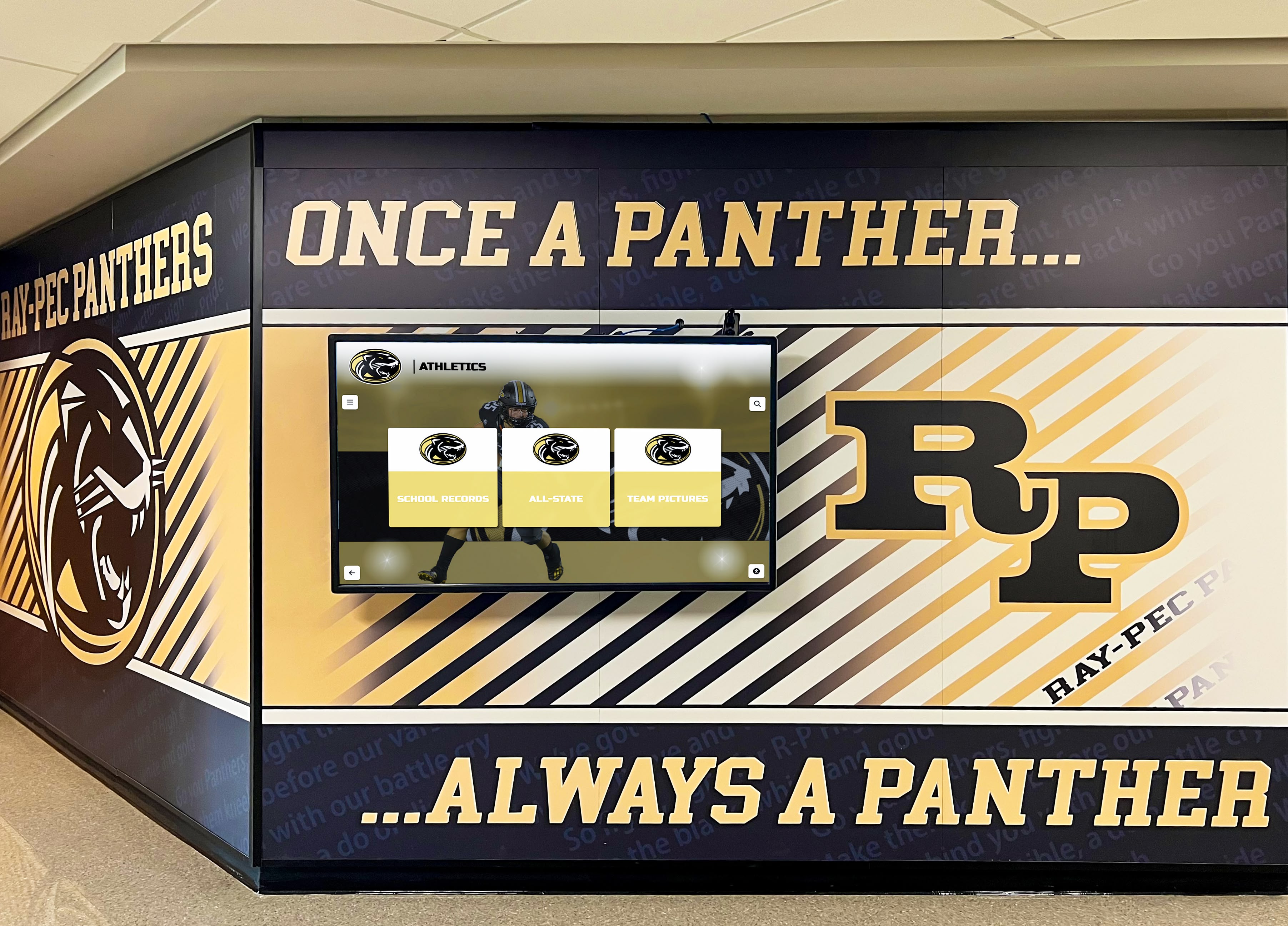
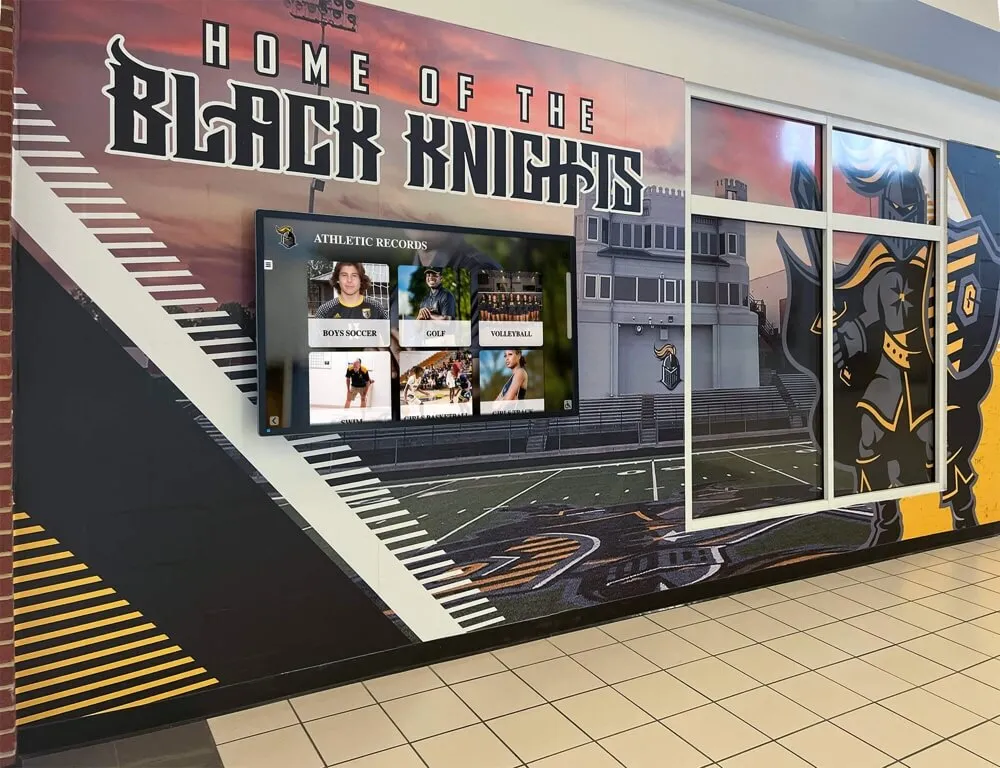
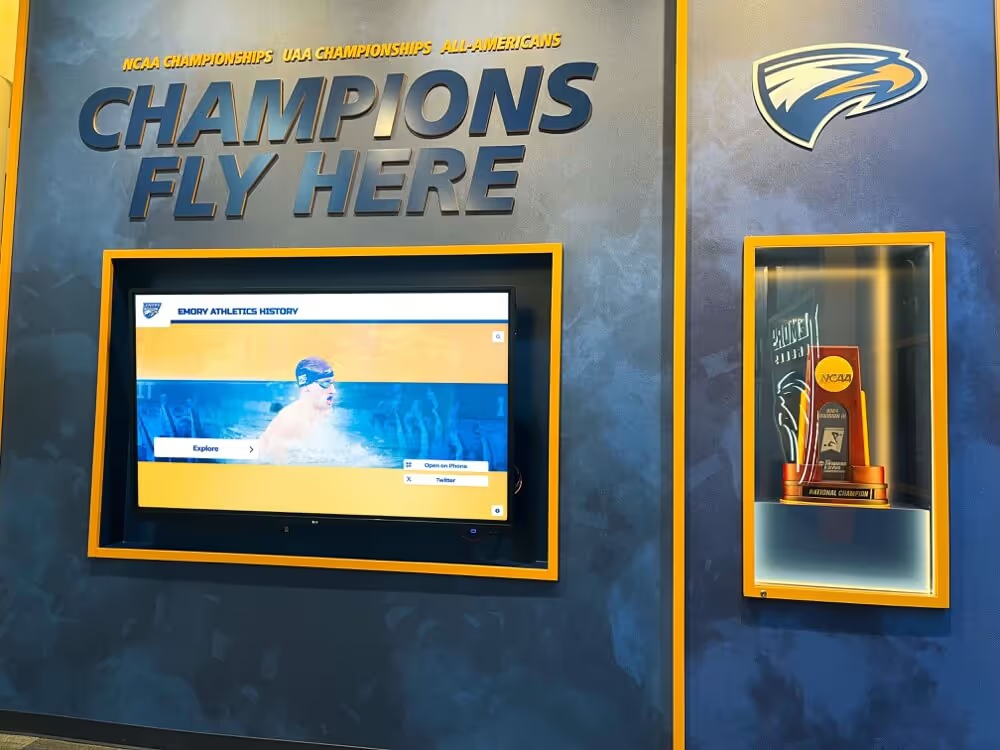
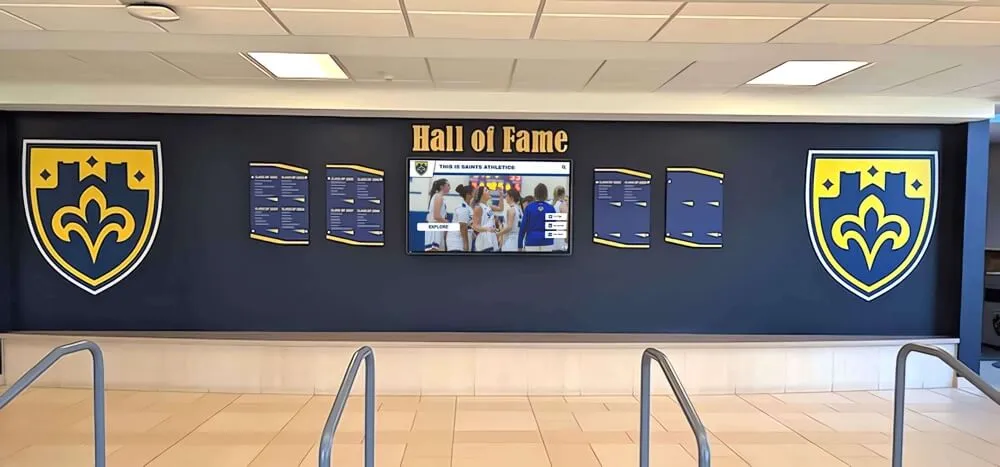
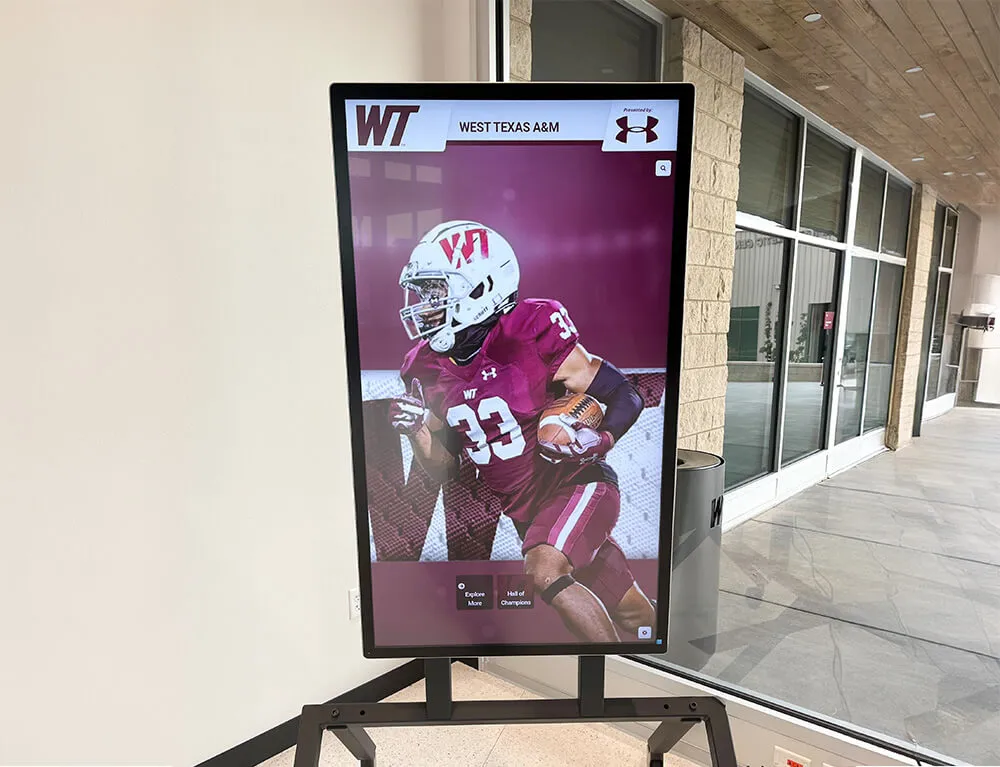
Comprehensive branding combining murals, signage, and digital displays creates immersive environments that build institutional pride and tradition
Common School Branding Challenges and Solutions
Even well-planned branding initiatives encounter obstacles during implementation—anticipating common challenges enables proactive solutions.
Managing Brand Evolution Versus Tradition
Schools balance respecting tradition while keeping brands current and relevant.
The Redesign Dilemma
Alumni often resist logo changes or color modifications, viewing updates as abandoning tradition. Successful rebranding efforts honor heritage while modernizing outdated elements—perhaps refining logos while maintaining recognizable core elements, or expanding color palettes while preserving traditional primary colors.
Engage alumni early in redesign processes, explaining rationale and seeking input to build ownership rather than resistance.
Gradual Versus Comprehensive Updates
Budget constraints sometimes dictate gradual brand implementation—replacing signage as funds allow, updating publications on natural refresh cycles, phasing facility updates. While comprehensive immediate rollouts create maximum impact, systematic phased approaches can succeed if guided by clear timelines and priorities preventing indefinite inconsistency.
Enforcing Brand Standards Across Departments
Decentralized school operations make brand consistency challenging when multiple departments create materials independently.
Centralized Approval Processes
Many schools establish communications offices reviewing all external-facing materials before publication, ensuring brand compliance while supporting departments lacking design expertise. Balance quality control with reasonable turnaround times preventing approval processes from bottlenecking urgent communications.
Education and Support Systems
Rather than purely policing brand violations, invest in training and resources helping staff create on-brand materials independently. Template libraries, brand guideline workshops, preferred vendor lists, and accessible design support reduce non-compliant materials through enablement rather than enforcement.
Budget Constraints and Phased Implementation
Comprehensive branding initiatives require significant investment—strategic prioritization maximizes impact within budget realities.
Identifying High-Impact Starting Points
Begin with brand applications reaching the broadest audiences—entrance signage, primary website pages, recruitment materials, and main facility branding. These high-visibility improvements create maximum perception change even before comprehensive campus-wide implementation.
Leveraging Natural Refresh Cycles
Align branding updates with scheduled replacements reducing incremental costs. When replacing worn signage, updating outdated websites, or repainting facilities, implement new brand standards rather than reproducing previous inconsistent approaches.
Phased Multi-Year Plans
Develop realistic timelines spreading costs across multiple budget cycles while creating clear implementation sequences. Communicate plans transparently so stakeholders understand current inconsistencies represent transitional states rather than permanent situations.
Measuring Brand Impact and Success
Unlike enrollment numbers or test scores, brand strength proves difficult to quantify—complicating efforts to demonstrate return on investment.
Tracking Perception Over Time
Periodic surveys of stakeholders—prospective families, current parents, community members—measuring brand awareness, perception of key attributes, and top-of-mind associations provide quantitative data showing brand strength evolution.
Compare metrics before and after major branding initiatives to demonstrate impact on institutional perceptions.
Monitoring Engagement Indicators
While indirect, various metrics suggest brand health: website traffic and engagement patterns, social media following and interaction rates, spirit wear sales volumes, athletic event attendance, alumni engagement levels, volunteer participation, and donor retention rates.
Track these indicators over time, noting correlations with branding investments and initiatives.
Qualitative Feedback and Testimonials
Document anecdotal feedback from campus tours, admissions interviews, community events, and stakeholder conversations. While not statistically rigorous, consistent patterns in qualitative feedback reveal brand perception trends and validate investment in visual identity.
Advanced School Branding Strategies
Beyond fundamental visual identity, sophisticated branding approaches create deeper connections and differentiation.
Developing Brand Voice and Messaging Platforms
Visual identity creates recognition, but messaging communicates what your brand represents.
Defining Institutional Voice
Beyond what your school looks like, how does it sound? Brand voice describes the personality and tone infusing all communications—whether formal and traditional, innovative and progressive, warm and nurturing, or bold and energetic.
Consistent voice across website copy, social media posts, email communications, and printed materials reinforces brand identity through language as powerfully as visual elements create recognition through imagery.
Core Messaging and Value Propositions
Distill the essential messages distinguishing your school into clear value propositions that answer why families should choose your institution. These core messages should appear consistently across recruitment materials, website content, admissions presentations, and community communications.
Effective messaging balances what makes you distinctive with what matters most to target audiences—finding intersection between your strengths and their priorities.
Creating Branded Student and Family Experiences
The strongest brands extend beyond communications into actual experiences that embody institutional values.
Orientation and Welcome Programs
New student orientations, family welcome events, and freshman programs create initial brand impressions that shape entire school relationships. Design these experiences to embody brand values—if you emphasize community and belonging, create programs that genuinely foster connections rather than just talking about inclusivity.
Traditions and Rituals
School traditions from homecoming celebrations to senior recognition ceremonies to spirit weeks create branded experiences that students remember for lifetimes. Thoughtfully designed traditions that reflect institutional values strengthen brand through meaningful participation rather than passive messaging.
Physical Space Design and Wayfinding
How students and visitors navigate campus, interact with spaces, and experience facilities communicates brand values. Schools emphasizing innovation might feature collaborative learning spaces and technology-rich environments, while institutions highlighting tradition might preserve historic architecture and classic design elements.
Leveraging Student Brand Ambassadors
Students themselves serve as your most authentic brand ambassadors—empowering their voices amplifies brand reach and credibility.
Student Social Media Programs
Student-run social media accounts sharing authentic school experiences reach prospective families more credibly than official institutional accounts. Support student ambassadors with brand guidelines ensuring consistency while encouraging genuine voices that resonate with peers.
Campus Tour Guide Training
Student tour guides communicating consistent brand messages while sharing personal experiences create powerful impressions during campus visits. Train guides not just in logistics but in articulating institutional values, distinctive programs, and what makes your school community special.
Student Content Creation
Engage students in creating branded content—photography, videos, blog posts, social media takeovers—that tells your school story from insider perspectives. Student-generated content proves more authentic and relatable than professionally produced materials while building student investment in institutional brand.
Integrating Recognition Into Brand Strategy
Achievement recognition creates natural opportunities for brand reinforcement while celebrating community accomplishments.
Branded Recognition Displays
Whether traditional trophy cases or modern digital displays, recognition systems incorporating school branding transform celebration into identity reinforcement. Every interaction with achievement displays reminds community members of institutional excellence and tradition.
Awards and Scholarship Branding
Named awards, scholarship programs, and recognition categories can incorporate school branding while honoring benefactors and celebrating achievements—creating win-win scenarios where recognition serves both individual acknowledgment and institutional brand building.
Digital Recognition Platforms
Modern recognition increasingly happens through digital platforms showcasing achievements beyond physical space constraints. These systems should reflect the same brand identity students encounter throughout campus, creating cohesive experiences across physical and digital recognition.
Practical Implementation: Getting Started With School Branding
Moving from branding concepts to actual implementation requires systematic approaches and realistic planning.
Year One: Foundation and Planning
Months 1-3: Discovery and Assessment
- Conduct stakeholder surveys about current brand perceptions
- Complete comprehensive audit of existing brand applications
- Research competitive landscape and peer school approaches
- Form branding committee with diverse representation
- Establish project budget and identify funding sources
Months 4-6: Strategy Development
- Define brand positioning and core values
- Develop or refine logo and primary visual identity elements
- Create comprehensive brand guidelines document
- Design templates for most common applications
- Establish brand governance and approval processes
Months 7-9: Initial Implementation
- Update website with new branding
- Redesign essential print materials and templates
- Begin primary facility signage updates
- Launch internal brand training for staff
- Introduce brand to broader community through announcements
Months 10-12: Expansion and Evaluation
- Continue facility branding in phases
- Implement social media templates and digital presence updates
- Update athletic uniforms and spirit wear merchandise
- Gather feedback on initial implementation
- Refine guidelines based on real-world application learnings
Multi-Year Rollout Strategy
Year Two: Comprehensive Implementation
- Complete major facility branding updates
- Transition all publications to new brand standards
- Launch branded recognition displays and digital systems
- Expand spirit wear and merchandise programs
- Establish measurement systems tracking brand metrics
Year Three: Optimization and Growth
- Address remaining brand inconsistencies
- Launch advanced initiatives like student brand ambassador programs
- Expand digital presence and content strategies
- Evaluate return on branding investment
- Plan future enhancements and evolution
Key Success Factors
Executive Leadership Support
Successful branding requires visible commitment from school leadership—principals, superintendents, board members—who champion brand importance, allocate necessary resources, and model consistent brand usage in their own communications and decisions.
Community Engagement and Buy-In
Branding succeeds when community members embrace and advocate for visual identity. Involve stakeholders in development processes, communicate clearly about changes and rationale, celebrate brand milestones, and recognize that brand adoption takes time as new identities become familiar.
Adequate Resource Allocation
Underfunded branding initiatives produce disappointing results that damage rather than enhance institutional perception. Budget realistically for professional design services, quality materials and implementation, staff time for content creation and management, ongoing maintenance and updates, and measurement and evaluation efforts.
Long-Term Commitment
Brand building happens gradually through consistent application over years rather than quick fixes. Commit to multi-year implementation plans, resist frequent changes that confuse recognition, invest in maintenance ensuring brand elements remain current and attractive, and view branding as ongoing institutional priority rather than one-time project.
Building Your School’s Visual Legacy
Effective school branding transcends marketing tactics—it creates visual languages that communicate institutional identity, build community pride, and strengthen the connections binding students, families, staff, and alumni to shared missions and values. Strong brands make schools more than buildings and programs; they become identities that people proudly claim as part of their own stories.
The investment in developing cohesive visual identity systems—from thoughtful logo design through comprehensive facility branding to consistent digital presence—pays dividends across every aspect of school operations. Stronger enrollment, enhanced fundraising, deeper community engagement, and elevated institutional pride all flow from systematic attention to how your school presents itself to the world.
Whether you’re refining established identity that’s evolved inconsistently over decades or building comprehensive brand systems from scratch, the principles remain constant: understand who you are and what makes you distinctive, create visual languages that authentically communicate that identity, apply branding consistently across all touchpoints, and commit to long-term stewardship maintaining brand strength.
Your school’s visual identity shapes how current students experience daily life, how prospective families evaluate your institution, how alumni remember their connections, and how your community perceives your values and quality. Investing in strong branding isn’t vanity—it’s strategic institutional stewardship that strengthens the foundation supporting all your educational mission work.
Ready to explore how modern recognition displays can reinforce your school’s brand identity while celebrating achievements and building community pride? Discover comprehensive digital display solutions that integrate seamlessly with your visual identity, creating engaging branded experiences that honor your heritage while inspiring your future.