School athletic archive daguerreotype intake is the conservator-informed pre-digitization assessment process that examines a suspected cased portrait associated with an early institutional or program figure — a school founder, a program benefactor, or a civic leader whose name is carried by a historic trophy or honor — for the physical and visual characteristics of the daguerreotype format, documents the case exterior, all accessible inscriptions, donor-supplied provenance and rights information, and the observable condition of the sealed cased object, and determines how each item should be stabilized, re-housed if necessary, and routed before any digitization approach is selected. Daguerreotypes — the earliest commercially successful photographic format, produced from 1839 through roughly the late 1850s — are not typical athletic archive content. A school athletic archive that holds one is most likely holding a portrait of a school founder, an early program supporter, or an institutional benefactor whose name appears on the oldest hardware in the collection. The image surface on a daguerreotype is among the most fragile of any photographic format: microscopic particles of mercury-silver amalgam deposited on a highly polished, silver-coated copper plate, held in place only by their fine adherence to the silver surface, with no coating, binder, or protective layer above them. That surface must never be touched, breathed on, cleaned, or exposed to atmospheric contact outside a conservation setting; the sealed assembly of plate, mat, cover glass, and preserver that constitutes the cased daguerreotype is both the photograph and its primary protection.
This guide gives school athletic directors, recognition-program owners, IT coordinators, librarians, and archive staff a focused intake framework for suspected daguerreotype portraits that arrive in a school athletic archive in connection with early institutional or program history: how to recognize probable daguerreotype characteristics without opening the case, how to distinguish daguerreotypes provisionally from similar cased formats including ambrotypes and tintypes, what exterior and provenance documentation to record, how to assess and address immediate storage risks without intervening in the sealed object, and how the intact cased portrait and its intake record connect to the recognition story the portrait documents.
School athletic archives that hold materials from their founding decades may occasionally acquire a daguerreotype portrait in connection with a donation of early institutional papers — a cased image of the school’s first principal or an early sports benefactor whose name appears in a trophy dedication or the minutes of the founding athletic association. These objects are rare, typically unique, and carry historical significance that makes any loss from mishandling irreversible. Their intact condition, their sealed case assembly, and the provenance documentation that arrived with them are equally important: the cased object and its evidence of who is depicted are inseparable parts of the same historical record.
What Daguerreotypes Are and Why the Sealed Assembly Is the Preservation Unit
The daguerreotype was the first photographic process made publicly available on a commercial scale. Announced in France in 1839 and adopted rapidly across Europe and North America, the process produced a direct positive image on a highly polished, silver-coated copper plate. The image is formed by microscopic particles of a mercury-silver amalgam deposited on the silver surface in areas that received light during exposure; the unexposed silver areas retain their polished, mirror-like finish. There is no binder, gelatin layer, or coating above the image particles — they rest on the silver surface without any adhesive medium to anchor them.
This image structure governs every handling and documentation decision for a daguerreotype at intake: the image surface is extraordinarily fragile. Physical contact with the image surface — including the lightest touch, a brush, a cotton swab, or accidental contact with any surface — can dislodge or smear amalgam particles, causing permanent, irreversible image loss. Breath moisture reaching the plate initiates electrochemical reactions in the silver and can cause tarnishing and image deterioration that no in-house intervention can safely address. No cleaning attempt can restore what has been lost from a daguerreotype image, and every cleaning attempt risks the image further.
The cased assembly as the preservation unit:
The daguerreotype plate is not handled, stored, or displayed as a bare plate. In standard practice, the plate is assembled together with a decorative mat — a cut-paper or embossed-brass frame that defines the image window — a cover glass held against the mat over the image, and a preserver: a folded metal strip that encircles the mat-glass-plate assembly and holds the components together as a sealed package. This assembled package is placed inside a protective case — typically a leather-covered wood, papier-mâché, or thermoplastic (Union case) hinged clamshell — which protects the sealed package from environmental exposure and physical contact when closed.
The sealed package formed by the plate, mat, glass, and preserver is the fundamental preservation unit. The cover glass serves a protective function beyond the optical: it keeps the image surface sealed from direct atmospheric contact, reducing the rate at which sulfur and oxygen compounds in the air can reach the silver and cause tarnishing. The Canadian Conservation Institute’s preventive conservation guidelines for photographic materials address daguerreotype storage and handling within their framework for silver-based photographic processes, emphasizing the importance of maintaining the sealed cased package intact, protecting the object from atmospheric pollutants and humidity extremes, and avoiding any handling that introduces contact with the plate surface. Disassembling the cased package outside of a professional conservation setting — removing the cover glass, lifting the mat, or separating the plate from the preserver — removes the protection that the assembly provides and exposes the image surface to risks the school cannot control.
The exterior of the case, the case hinges, the mat visible through the cover glass, and any labels, inscriptions, or donor-supplied notes accompanying the object are the sources of documentation accessible to school archive staff without opening the sealed assembly. Recording these exterior sources completely and accurately is the primary task of daguerreotype intake.
Attribution uncertainty at intake:
Even when the case carries an inscription naming a subject, or a donor letter identifies the portrait as depicting a school founder, that identification is donor-supplied provenance, not a determination made from the object itself. Attribution uncertainty must be recorded honestly at intake — what is stated in inscriptions, what is supplied by the donor, and what has been independently verified from school historical records. This distinction protects the integrity of every downstream recognition use of the portrait.

Portrait cards and cased photographs in a school's historical collection document the earliest faces associated with the institution's athletic program — suspected daguerreotypes require conservator-informed intake before any attempt to examine, copy, or digitize the plate
Recognizing a Suspected Daguerreotype: Provisional Identification and Its Limits
The goal of visual examination at intake is a provisional identification strong enough to guide immediate handling and routing decisions — not an authoritative process determination. A photographic conservator can confirm process identification through examination techniques not available in a school setting. The following characteristics can support a provisional daguerreotype identification from exterior examination, but each is shared to some degree with other cased formats and none individually confirms the process.
Visual characteristics consistent with a daguerreotype:
- Mirror-like, highly reflective image surface. The polished silver surface of a daguerreotype plate is, in its undamaged areas, reflective like a mirror. The image has a pronounced specular character; viewed at certain angles, the image appears clearly positive, and at other angles — when the reflective surface catches the light source — it shifts toward negative. This viewing-angle-dependent positive-to-negative image shift is one of the most reliable indicators of the daguerreotype format, distinguishing it from all other cased photographic processes.
- Fine, smooth image without visible grain or paper texture. Unlike paper prints, which show fiber texture through the image area, a daguerreotype presents a smooth, tonally refined image that appears to sit within the reflective silver surface rather than on top of a distinct coating.
- Typically within a protective case with sealed cover glass. Most daguerreotypes that survive in institutional collections are still in their original cased assembly. The cover glass is typically sealed to the mat by the preserver; the glass and mat together cover the image and prevent direct access to the plate surface without disassembling the package.
- Date or provenance consistent with the daguerreotype period. Daguerreotypes were produced commercially from 1839 through roughly the late 1850s, with production tapering sharply into the early 1860s as collodion and paper print processes became dominant. A donor note, an accompanying letter, or a known institutional history suggesting a date in this range makes a daguerreotype a plausible provisional identification for a cased, specularly reflective portrait.
- Tarnish visible in highlight areas. Many surviving daguerreotypes show a yellowish or brownish haze — often concentrated in the highlight (lightest) areas of the image — caused by atmospheric oxidation of the silver surface over time. Tarnish does not confirm the format but is consistent with it and is a condition observation that must be documented.
Cased processes that may be confused with daguerreotypes:
- Ambrotype (collodion positive on glass, ca. 1854–1865). An ambrotype is a slightly underexposed wet-plate collodion negative on glass, viewed against a dark backing to appear as a positive. The image surface is not specularly reflective like a daguerreotype and does not shift from positive to negative with viewing angle. The surface is matte to slightly satin; the image sits in a thin collodion layer over the glass rather than on a metal plate. Ambrotypes were frequently housed in the same style of hinged case as daguerreotypes, making identification from the exterior of the closed case difficult without examining the image through the open cover glass.
- Tintype (ferrotype, ca. 1856 onward). A tintype is an image in a thin collodion or gelatin emulsion on a thin iron support coated with a dark lacquer. If the metal support is accessible, it responds to a magnet — a reliable distinguishing test for tintypes, though this requires careful access to the edge of the plate without touching the image. Tintypes are distinctly non-reflective compared to a daguerreotype; they have no mirror-like surface character and show no viewing-angle image shift. Early tintypes were sometimes presented in cases similar to daguerreotype cases; later production was in paper sleeves or cardboard folders.
- Later paper prints or other formats in repurposed cases. Albumen, gelatin silver, or carbon prints are occasionally found in the style of decorative case used for daguerreotypes and ambrotypes, particularly when a portrait has been rephotographed and the copy print placed in an antique case. A paper print in a cased format will show paper fiber texture through the image, will not have a specular surface, and will not shift from positive to negative with viewing angle.
What visual inspection cannot resolve:
- Whether the process is a daguerreotype rather than an ambrotype, tintype, or a copy print in a repurposed case
- Whether visible tarnish is stable or actively progressing
- Whether the sealed assembly has been previously opened, the plate touched, or a cleaning attempt made
- Whether case components are original to the plate or assembled from different objects at a later date
When provisional identification is uncertain — particularly when the image surface is not clearly specularly reflective, or when prior case opening appears to have altered the plate’s position — document the process as uncertain and route to a photographic conservator for identification before any format-dependent handling or treatment decision is made.
School Athletic Archive Daguerreotype Intake: A 5-Step Workflow
Step 1: Prepare the Intake Area
Establish a controlled, clean inspection area before any suspected daguerreotype portrait is moved from its current location.
Required at the intake station:
- Cotton or nitrile gloves at all times — bare hands should never contact the case surface
- A padded, clean flat work surface: archival foam board or clean blotter pad, not a hard tabletop or unprotected desk
- A camera or smartphone capable of close-up photography at a consistent working distance
- Diffuse overhead lighting for overall image and case documentation
- A portable low-angle raking light for case exterior condition documentation (surface of the case leather, clasps, and hinge detail)
- A ruler or archival label scale reference to include in every documentation photograph
- An intake log or form for recording all observations, provisional identifications, and routing decisions
- Archival boxes of appropriate dimensions for re-housing the cased object
Exclude from the intake area at all times:
- Water, cleaning solutions, solvents, or any liquid of any kind
- Cotton swabs, soft cloths, brushes, or any implement intended to clean the plate, glass, mat, or case
- Rubber bands, adhesive tape, paper clips, or staples
- Pressing boards, weights, or implements for flattening or reshaping distorted materials
- Heat sources of any kind
Do not attempt to open a sealed cased assembly, remove the cover glass, touch the plate surface, or disassemble any part of the plate-mat-glass-preserver package at the intake station. The function of the intake workflow is to document the object as found, assess the case exterior condition, record all accessible provenance information, and route the object appropriately — not to examine the plate surface at closer range than what is visible through the cover glass.
Step 2: Document the Case Exterior and Provenance Context
Before examining the image in any way, record every detail of the case exterior, any accompanying documentation, and all donor-supplied provenance information. For daguerreotype portraits in a school athletic archive, donor-supplied identification of the depicted subject — founder, benefactor, early coach, program supporter — and any accompanying historical documentation are frequently the primary evidence connecting the object to its recognition story. These are the fields that populate every downstream display, database entry, and recognition record associated with the portrait.
Case exterior documentation:
- Case type and material: Leather-covered wood / papier-mâché / thermoplastic (Union case) / other. Describe any distinctive cover design (embossed leather pattern, Union case relief motif).
- Case dimensions: Height × width × depth of the closed case; this determines storage box sizing.
- Hinge condition: Intact and functioning / loose / broken / case held shut only by friction or remaining catch.
- Clasps or catches: Present and functional / absent / damaged.
- Case exterior inscriptions: Any handwritten, embossed, or pasted text on the case exterior surfaces. Transcribe verbatim; note the surface on which each inscription appears (front cover, back cover, interior lid, spine).
- Interior lid label: If the case opens safely without forcing (intact hinge, functioning clasp), the interior lid may carry a photographer’s printed or paper label with studio name, address, and city. Record verbatim if accessible. Do not apply force to open a case with a damaged hinge or failing catch.
- Accompanying documentation: Any letter, donation form, historical note, newspaper clipping, or other material that arrived with the cased object. Describe and include in the intake record.
Donor and provenance documentation:
- Donor identity: Name of the individual or institution donating the object.
- Date of donation: Date received by the school archive.
- Chain of custody: Who held the object between the subject’s era and the present donation, to the extent the donor can document it.
- Donor-supplied attribution: Record exactly as the donor describes it — name, role, approximate date. Note explicitly that this attribution is donor-supplied and has not been confirmed from independent archival sources.
- Rights statement: Who holds rights to the image for display and reproduction purposes? If the donor is donating the physical object without a clear rights assignment, or if the object’s history suggests prior owners may retain interests, note the uncertainty and flag for rights review before public display is authorized.
Attribution uncertainty field:
Every daguerreotype intake record must include an attribution uncertainty entry: what the donor states, what is visible in inscriptions, what corroboration exists in school records, and what remains unverified. Attribution uncertainty is not a failure of intake — it is honest documentation of the state of knowledge at the time the object entered the archive, and it is the field that protects the integrity of every subsequent recognition use from unverified attribution.
Step 3: Assess Case Condition and Image Visibility
With the cased object resting face-up on the padded work surface and with cotton gloves worn throughout, examine the case condition systematically. The goal is to assess whether the sealed package provides adequate protection for the plate, to record what is visible of the image through the cover glass, and to determine whether any immediate stabilization is needed — without touching the plate, glass surface, or mat.
Case condition observations:
- Overall case condition: Intact / minor wear to leather or surface material / covering material detaching / spine broken / significant structural damage.
- Cover glass status: Through the open case cover (if the case opens safely), assess whether the glass is intact or cracked, whether the preserver holds the glass firmly against the mat, and whether there is visible separation between glass and mat that might allow air access to the plate.
- Tarnish visible through the glass: Without removing or touching the glass, describe any tarnish visible on the image. Tarnish typically appears as a yellowish or brownish haze, often concentrated in the highlight areas. Record location and approximate extent: margin only / distributed across the image / concentrated in highlights / heavy throughout.
- Image legibility: Is the portrait image clearly legible through the glass? Are there areas where tarnish, residue, or damage has reduced legibility?
- Mat condition: Is the decorative mat visible through the glass intact, flat, and properly aligned, or warped and displaced?
- Visible plate damage: Note whether any obvious mechanical damage — scratches, surface disturbance, areas of missing image — is visible through the glass. Do not open the case to examine damage more closely at intake.
Record all observations with direct language: what is seen, where it is located, and any uncertainty. Observations that require opening the sealed assembly to resolve should be documented as unresolvable at intake and listed as questions for the photographic conservator.
Step 4: Classify, Route, and Record Enclosure Assessment
Based on the condition observations from Step 3, assign a condition classification and routing decision for each cased object. Assess the current storage situation and replace any housing that puts the case at risk of physical impact, contact abrasion, or humidity extremes.
| Condition Classification | Observed Characteristics | Handling Guidance | Digitization Path | Conservator Referral |
|---|---|---|---|---|
| Stable — Sealed, Legible, No Tarnish | Case intact; cover glass sealed by preserver; image clearly legible; no visible tarnish or damage | Handle by closed case exterior; cotton gloves; full support | Overhead camera documentation through closed glass | Not required at this time; re-inspect periodically |
| Stable — Minor Tarnish, Sealed Case | Case intact; cover glass sealed; tarnish in highlight areas; image substantially legible | Handle conservatively; document tarnish location and extent | Overhead camera documentation; tarnish noted in preservation record | Recommended before major digitization decisions; document findings |
| Compromised Case — Hinge or Clasp Failing | Case cannot be safely opened or closed; hinge broken or detached; case held shut only by friction | Do not attempt to open; handle to avoid dislodging components; store closed | No digitization until conservator assesses case and determines safe handling | Required before any further opening or plate examination |
| Separated or Broken Seal | Cover glass visibly separated from mat; preserver no longer holding glass firmly; plate potentially exposed | Handle with extreme care; do not touch glass surface; transport in current condition | No digitization until conservator stabilizes sealed assembly | Required immediately; handle only to transport safely |
| Heavy Tarnish or Image Loss | Tarnish obscures major image areas; legibility significantly reduced; possible previous cleaning visible | Handle conservatively; document through glass only; no cleaning | No digitization until conservator assesses; image recovery may require specialist treatment first | Required before digitization |
| Process Uncertain | Image surface appearance inconsistent with daguerreotype; possible ambrotype, tintype, or print in case | Treat as fragile; conservative handling throughout | Defer digitization until process confirmed | Required for process identification |
Enclosure assessment for cased daguerreotypes:
A cased daguerreotype requires protective housing at two levels: the sealed case assembly (which must remain closed) and the outer archival enclosure that holds the case. Replace any storage situation that puts the case at risk from mechanical contact, shifting, or stacking weight:
- Individual archival clamshell boxes or padded folders sized to the case dimensions provide the best protection from physical impact and surface abrasion
- Label the outer archival enclosure with the accession number only — never mark the case, the preserver, the mat, or the plate
- Store horizontally with adequate padding to prevent the case from shifting; never place other objects directly on top of a cased daguerreotype
Step 5: Re-House, Assign Accession Number, and Complete the Condition Record
After classification and routing, re-house each cased object in its archival enclosure before returning it to storage. Assign an accession number and record it on the archival enclosure exterior only.
Condition record fields for each daguerreotype intake item:
- Accession number and physical location reference
- Case type, dimensions, hinge and clasp condition; interior lid photographer’s label (verbatim, if accessible)
- All case exterior inscriptions transcribed verbatim; accompanying documentation noted
- Attribution uncertainty field: donor-supplied attribution, independent corroboration status, what is unresolved
- Donor rights statement and status
- Provisional process identification: possible daguerreotype / process uncertain / basis for identification
- Tarnish: location and extent; image legibility through glass
- Case structural condition: sealed / seal compromised / hinge failing / significant structural damage
- Visible plate condition through glass: legible / areas of image loss / possible prior cleaning observed
- Enclosure at receipt; enclosure action taken
- Condition classification assigned
- Routing decision: overhead camera documentation / conservator referral required / interim re-house and monitor
- Date of intake and name of staff member completing intake
Evidence and Routing Table: What Daguerreotype Intake Observations Indicate
The table below summarizes what different observations during daguerreotype intake indicate for routing and digitization decisions. It is proposed school intake guidance for workflow management — not a conservation grading standard and not a substitute for specialist assessment.
| What You Observe | What It May Indicate | Proposed School Intake Criterion | Digitization Approach |
|---|---|---|---|
| Mirror-like image surface; viewing-angle shift from positive to negative | Characteristics consistent with daguerreotype format | Provisional daguerreotype identification; apply most conservative cased-object handling; document process identification basis | Overhead camera documentation through closed cover glass only; no plate removal |
| Matte or satin image surface; no viewing-angle positive-to-negative shift | Characteristics inconsistent with daguerreotype; possible ambrotype or tintype | Process uncertain; do not apply daguerreotype-specific assumptions; route to conservator for identification | Defer digitization until process confirmed |
| Case hinge intact; case opens safely; cover glass sealed by preserver | Sealed assembly intact; plate protected from atmospheric contact | Stable intake condition; photograph through open case cover without touching glass | Overhead camera documentation; record that plate was not removed or touched |
| Cover glass visibly displaced or separated from mat | Seal compromised; plate surface potentially exposed to atmospheric contact | Urgent stabilization required; conservator referral before any further handling; do not attempt to reseal in-house | No digitization until conservator has assessed and stabilized |
| Yellow or brown tarnish haze visible through glass in highlight areas | Atmospheric oxidation of image silver; common deterioration finding in aged daguerreotypes | Document tarnish location and extent; route to conservator review before major digitization decisions; no in-house treatment | Overhead documentation through glass; note tarnish in preservation record |
| Heavy tarnish covering large image areas; image legibility reduced | Advanced silver deterioration; possible prior atmospheric exposure from opened case | Document condition through glass; do not attempt any cleaning; conservator referral required before digitization | No digitization until conservator assesses; image recovery may require treatment first |
| Hinge broken or clasp missing; case held shut by friction only | Case structure unstable; risk of case opening and plate exposure during handling | Do not attempt to open; handle to preserve current closed position; conservator referral before further access | No digitization until case structurally stabilized by conservator |
| Inscription on case exterior naming a subject and date | Provenance evidence; date may be consistent with daguerreotype production period | Record inscription verbatim; note as inscription evidence, not independent verification; document in attribution uncertainty field | Proceed with overhead documentation once condition classification complete |
Planning Non-Contact Digitization for Cased Daguerreotype Portraits
For school athletic archive daguerreotype portraits assessed at intake as stable — case structurally sound, cover glass sealed, image visible through glass, no urgent conservation issue identified — the appropriate initial digitization approach is non-contact exterior documentation through the closed cover glass. This is a documentation photograph of the image as it appears through the sealed assembly, not a full-quality reproduction of the plate; it is the appropriate preservation capture for a daguerreotype that has not yet been assessed by a photographic conservator for controlled reproduction conditions.
Why no flatbed or feed scanner, and why no plate removal:
A daguerreotype plate placed on a flatbed scanner platen for reproduction must be removed from its case, handled face-down, and potentially pressed against the scanner glass. The image surface, exposed during this removal and positioning process, is at risk from every moment of unprotected atmospheric contact and from any contact between the image and any surface it touches. Feed scanners introduce mechanical contact with the image surface directly. The Library of Congress’s guidance on the care of photographic materials identifies daguerreotypes as requiring exceptional handling care, notes the extraordinary fragility of the image surface, and addresses the importance of limiting physical handling to the exterior of the sealed case — a principle that excludes any approach requiring plate removal for scanning.
Overhead camera documentation through the closed glass:
A camera mounted directly above the cased portrait — with the case face-up and the image visible through the cover glass — can capture a documentation record of the portrait without the plate being touched or removed. Daguerreotype surfaces are highly sensitive to illumination angle: diffuse overhead lighting produces a more uniformly readable image, while angled illumination emphasizes the specular surface character useful for condition documentation. Both illumination setups can be captured if equipment permits, and both belong in the preservation record. Include the accession number label and a ruler or scale reference in every documentation frame.
When a higher-quality reproduction is needed:
If the school requires a higher-quality reproduction of the daguerreotype portrait for recognition display — one that captures the full tonal range and surface detail of the plate rather than a through-glass documentation capture — this requires a controlled reproduction environment that a conservation specialist or specialist digitization service is equipped to provide. Controlled reproduction of a daguerreotype involves precise lighting at carefully selected angles, exact camera positioning, and in some cases conservation-level examination of the plate under conditions where the plate is never directly touched. Schools should confirm that any contracted service has documented experience with cased daguerreotypes before any portrait leaves the institution.
The Canadian Conservation Institute’s preventive conservation guidelines for photographic materials address the importance of stable, moderate temperature and relative humidity for long-term preservation of silver-based photographic materials — conditions that apply to daguerreotypes in storage waiting for conservation assessment alongside those already documented. Preserving the metadata link between any documentation photograph and the full intake record is equally important: the accession number, verbatim inscriptions, attribution uncertainty field, and condition classification must be embedded in or firmly linked to every digital file derived from the cased portrait. A documentation photograph separated from its intake record loses the evidence of who is depicted, when the photograph was made, and what condition the object was in at the time of capture.

Athletic hall of fame display screens presenting a complete program history depend on a documented archive that extends to the institution's founding era — daguerreotype intake is what ensures the earliest surviving portraits enter the digital record without damage to the only object that carries the original image
Connecting Daguerreotype Intake to Athletic Recognition Programs
The practical goal of daguerreotype intake is a documentation record — an accession entry, a condition classification, verbatim inscriptions, and an explicit attribution uncertainty field — that connects the intact cased object to the recognition story it documents, without requiring the plate to be touched or the sealed assembly opened outside a conservation setting. That record, preserved alongside the through-glass documentation photograph, is the foundation of every downstream recognition use.
A school athletic archive’s rarest surviving portraits — a cased image of a school founder whose name is carried by the original trophy case, or a benefactor who endowed the school’s first athletic program — carry documentary value that extends beyond any individual display. When those portraits are documented correctly and their provenance recorded honestly, they can support an induction ceremony announcement, a centennial recognition installation, a historical section of a digital hall of fame, or a yearbook retrospective tracing the school’s origins. When they are handled without intake documentation, or when sealed cases are opened without conservation guidance, the risk of irreversible damage to a unique historical record is not hypothetical.
Schools managing an athletic photograph collection that extends from daguerreotype-era portraits through mid-twentieth-century team photographs and into the digital archive face the challenge of planning digitization across formats with very different handling requirements. The planning framework for digitizing decades of school athletic team photographs provides useful context for sequencing and organizing a mixed-format photographic archive — particularly for staff whose collection spans from the 1840s through the present and who need a structured workflow for assigning format-appropriate handling to each category of material.
For the daguerreotype portrait to enter a recognition database with its intake record intact and retrievable, the metadata vocabulary used in the attribution fields, condition-status fields, and format identification fields must be consistent with the database’s structure. A controlled vocabulary for format types, condition statuses, and attribution states makes intake records for daguerreotype portraits searchable and comparable alongside records for other format types in the same archive. The framework for developing controlled vocabulary for athletic archive records addresses exactly this challenge — establishing consistent terminology that supports format-specific condition records within a unified collection management system.

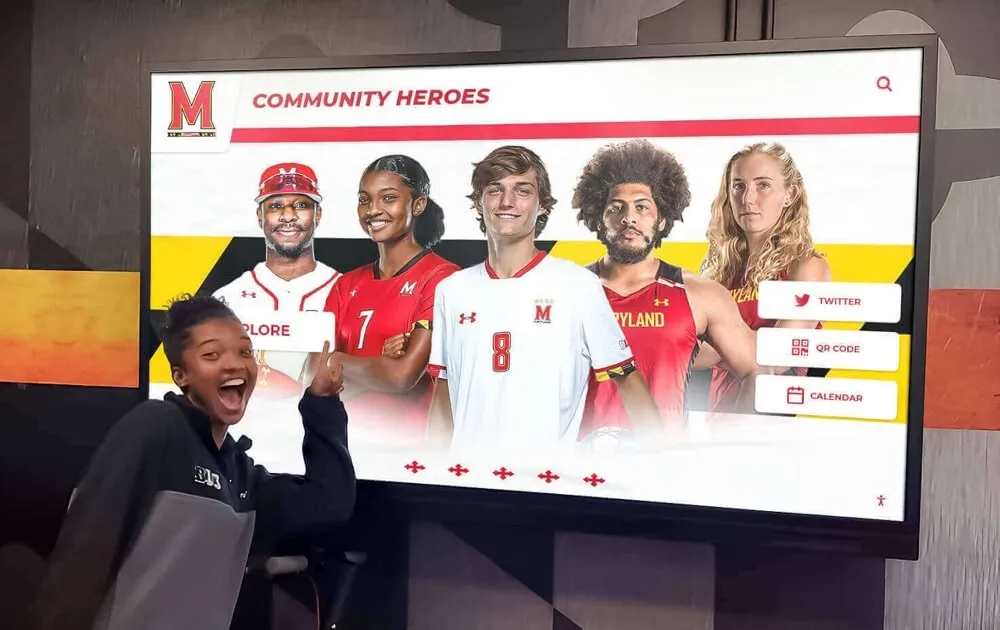
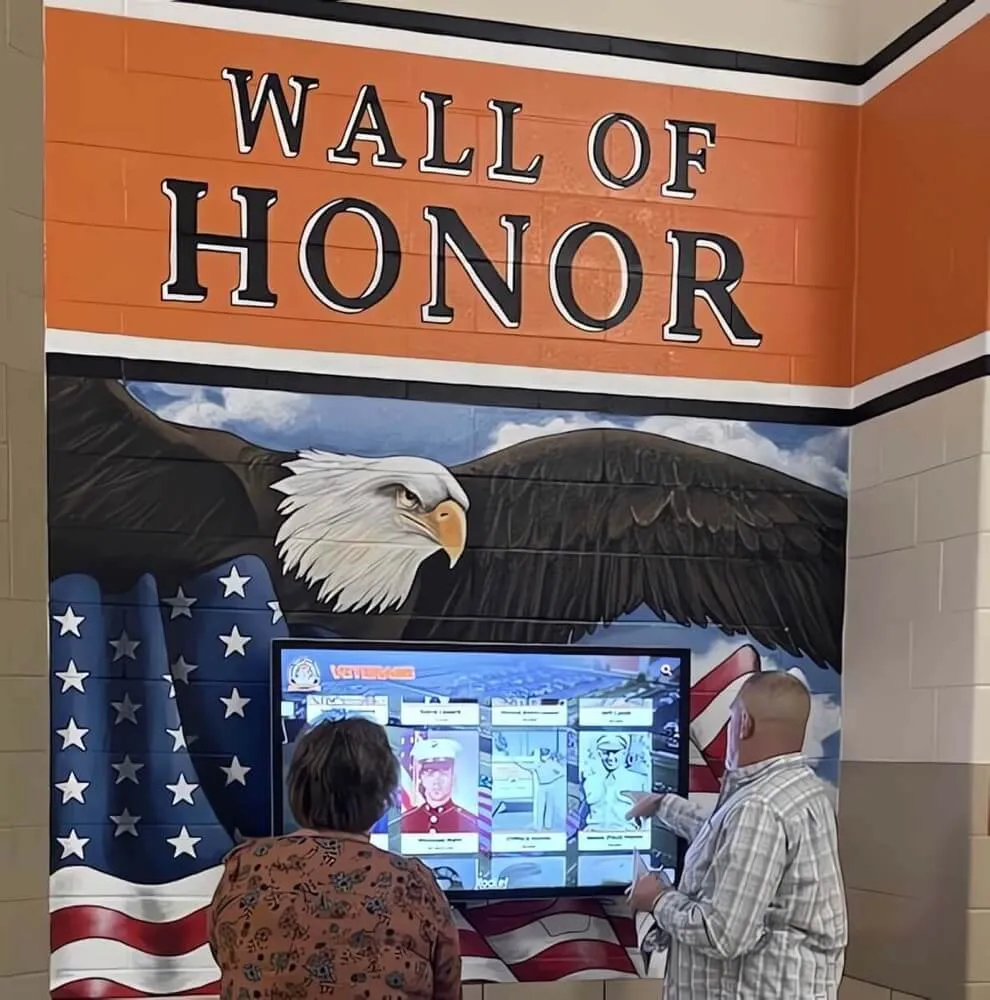
Touchscreen displays that organize athlete portrait cards across program eras depend on a digitized archive built from correctly assessed source materials — daguerreotype intake ensures the earliest portrait records enter the digital display with provenance documented and attribution uncertainty preserved
When the intake record for a daguerreotype portrait is ready to be entered into the school’s hall of fame system or recognition database, the field structure of that system determines how attribution uncertainty is recorded, how the physical condition record links to the display entry, and how format type is captured. The hall of fame profile data dictionary template provides a structured reference for the name, role, date range, format type, and media fields that a daguerreotype intake record should populate — including the fields where attribution uncertainty must be explicitly stated rather than silently defaulted to a confident identification.
Once intake records and documentation images for historic portraits are in the archive system, the broader software environment managing athletic records, rosters, and recognition content shapes how those records are retrieved and displayed. The discussion of what belongs in an athletic department management software stack provides useful orientation for archive staff and IT coordinators deciding where daguerreotype intake records fit within the institution’s data environment — from preservation master file storage and archival database entries through recognition display content management and public-facing hall of fame systems.
Schools that have completed intake and initial documentation for daguerreotype-era portraits and are thinking about how those images appear in public recognition contexts face a wide range of presentation options for founding-era institutional history. The collection of creative ideas for displaying school athletic records and history includes approaches applicable to the school’s earliest program decades — where a properly documented and conservator-reproduced daguerreotype portrait can anchor a historical record board or hall of fame section that connects contemporary athletes to the institution’s founding story.
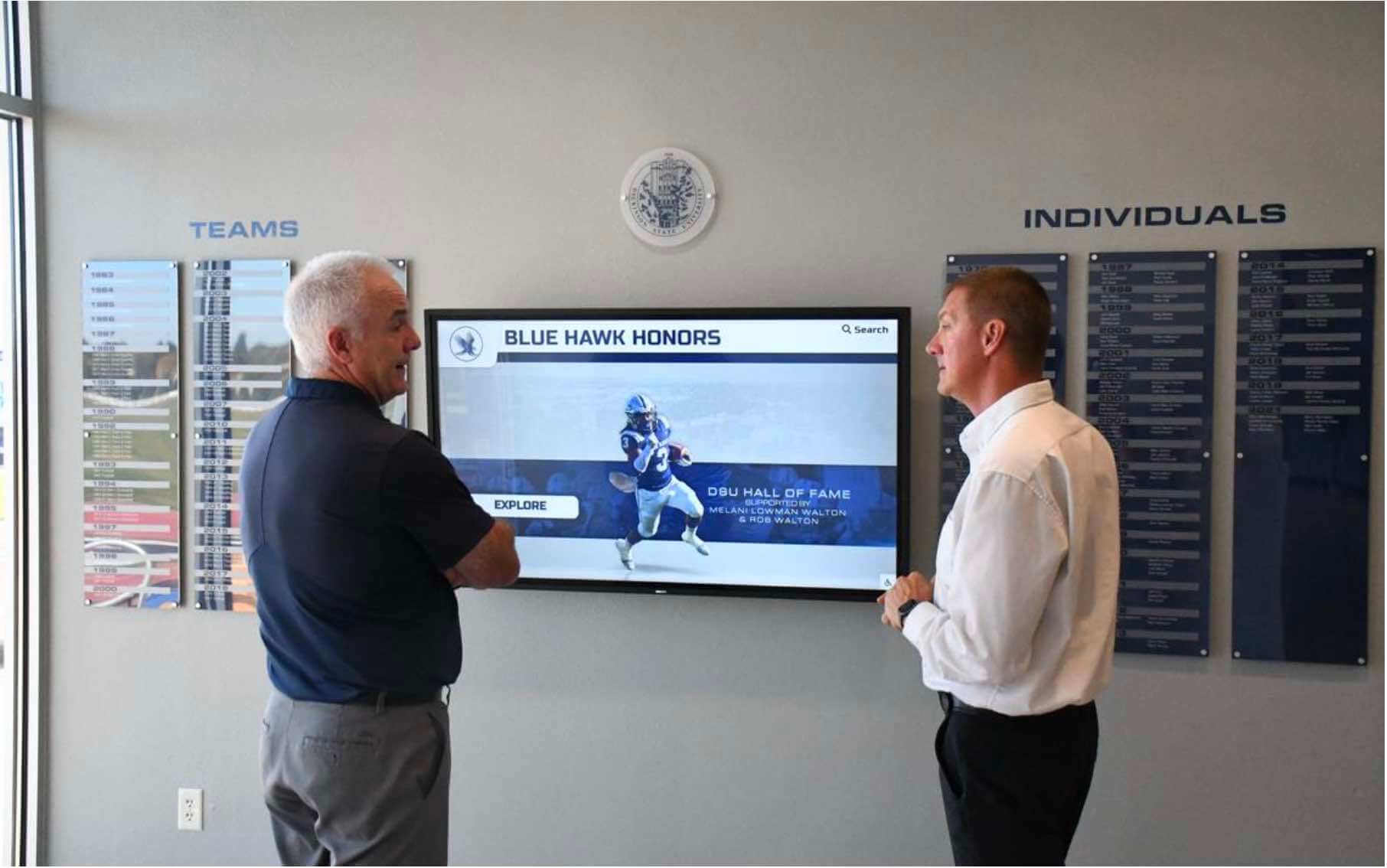
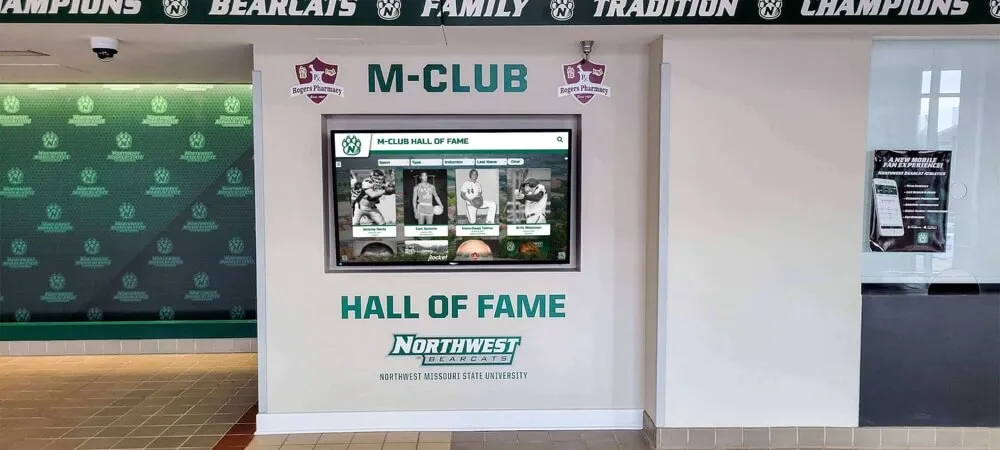
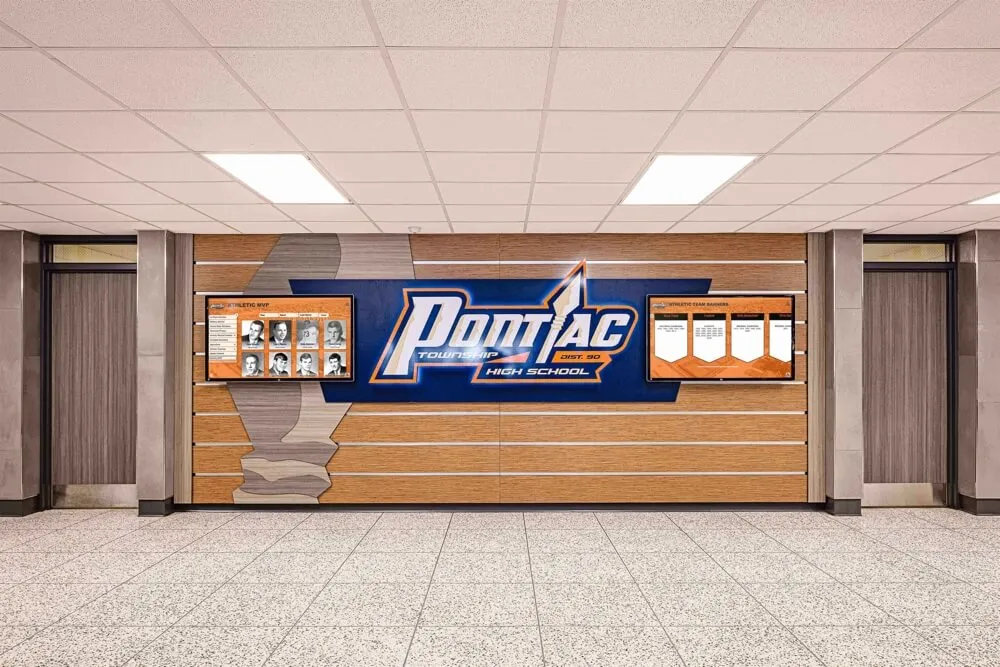
Hall of fame displays presenting school athletic history across all program eras — from founding portraits to current athletes — depend on an archive where each format category has been handled according to its condition and fragility, and where attribution uncertainty is preserved as part of the historical record rather than suppressed
Artifact: Daguerreotype Portrait Intake Record Template
The following template provides a print-level intake record structure for possible daguerreotype program portraits. It is a reference guide for school archive staff — not a legal document and not a conservation assessment instrument. Fields should be completed by the intake staff member responsible for the examination.
DAGUERREOTYPE PORTRAIT INTAKE RECORD (Example field structure — adapt to school archive management system)
| Field | Content |
|---|---|
| Accession Number | [Assigned at intake — record on archival enclosure exterior only; never on case or plate] |
| Intake Date | [Date of examination] |
| Examined By | [Staff member name and role] |
| Prior Storage Location | [Where found within school; building, room, container, accompanying collection] |
| Case Type and Material | Leather-covered wood / papier-mâché / thermoplastic Union case / other |
| Case Dimensions | [Height × width × depth of closed case] |
| Hinge Condition | Intact and functional / loose / broken / non-functional |
| Clasp or Catch Condition | Present and functional / absent / damaged |
| Case Exterior Inscriptions | [Verbatim transcription of all text on case exterior surfaces; none observed] |
| Interior Lid Label | [Verbatim transcription of photographer’s label, if accessible; inaccessible; none observed] |
| Accompanying Documentation | [Donor letter, form, note, clipping: describe or attach] |
| Donor Identity | [Name; institution] |
| Date of Donation | [Date received] |
| Donor-Supplied Attribution | [Subject name, role, approximate date — recorded as donor-supplied, not confirmed] |
| Chain of Custody Statement | [Donor’s account of ownership history from the subject’s era to present] |
| Rights Statement | [Donor’s statement of display and reproduction rights; uncertainty noted if applicable] |
| Attribution Uncertainty | [What is confirmed from independent sources / what is donor-supplied / what is unresolved] |
| Provisional Process ID | Possible daguerreotype / process uncertain / other cased format suspected |
| Basis for Provisional ID | [Mirror-like surface / viewing-angle image shift / tarnish pattern / date range / other — specify] |
| Tarnish | None observed / present (location and approximate extent) |
| Image Legibility Through Glass | Clearly legible / partially obscured / significantly obscured |
| Cover Glass Condition | Sealed by preserver intact / glass cracked / seal compromised / glass absent |
| Case Structural Condition | Intact / hinge failing / clasp absent / significant structural damage |
| Visible Plate Condition Through Glass | Legible image / scratches observed (location) / areas of image loss / possible prior cleaning observed |
| Enclosure at Receipt | [Housing found; condition] |
| Enclosure Action | Retained / replaced with [material specified] |
| Condition Classification | Stable sealed / minor tarnish / compromised case / separated seal / heavy tarnish / process uncertain |
| Routing Decision | Overhead camera documentation / conservator referral required / interim re-house and monitor |
| Conservator Referral Reason | [If applicable: specific condition requiring specialist assessment] |
| Notes | [Any observation not captured in fields above] |
Who This Intake Workflow Serves
| Role | Primary Concern | How Daguerreotype Intake Helps |
|---|---|---|
| Athletic Director | Completeness of the school’s institutional and program founding history in the recognition record | Identifies which early program portraits are stable for documentation and which require conservation before the image enters the digital archive; ensures attribution uncertainty is preserved before subjects are named in recognition programs |
| Recognition Program Owner | Accurately attributed, display-authorized content for hall of fame and institutional recognition | Ensures that the earliest surviving program portraits enter the recognition record with their provenance documented and attribution uncertainty stated honestly, so recognition claims rest on documented evidence |
| IT / Data Staff | Complete metadata linking image files to intake records in the archive system | Produces an accession-linked record that connects the through-glass documentation image to the full condition and provenance record, and specifies controlled vocabulary fields the record should populate |
| Librarian / Archivist | Collection condition documentation and long-term preservation planning | Produces an object-level condition record that sequences conservation referrals and monitors tarnish development; documents the sealed case assembly as the preservation unit rather than the individual plate |
| Facilities Staff | Safe handling of fragile, historically significant cased objects | Establishes clear handling protocols identifying which cased objects require specialist assessment before any further intervention, removing uncertainty about whether in-house staff should attempt to open, clean, or re-house a daguerreotype |
| School Administrator | Institutional record completeness and defensible preservation practice | Documents that the school assessed the condition and provenance of historic program portraits systematically before any digitization was attempted, and that fragile cased objects were routed to specialist assessment without in-house intervention |
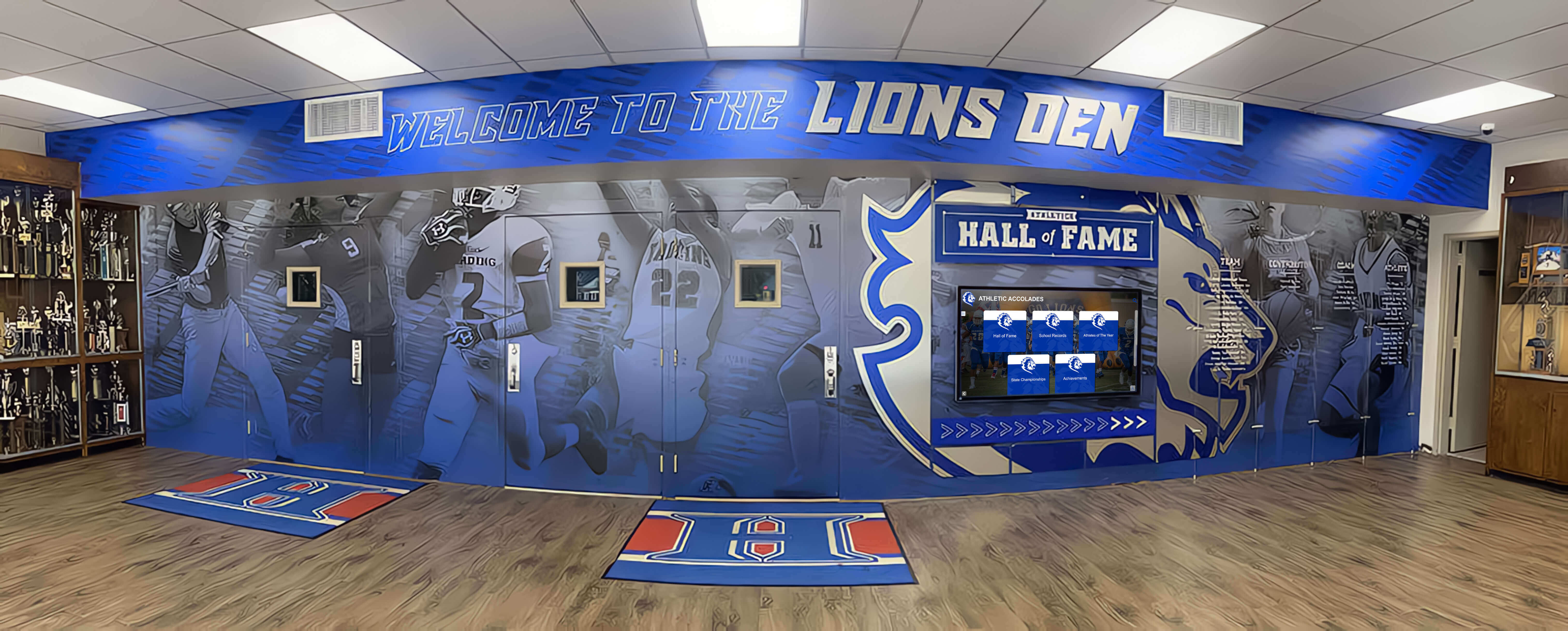
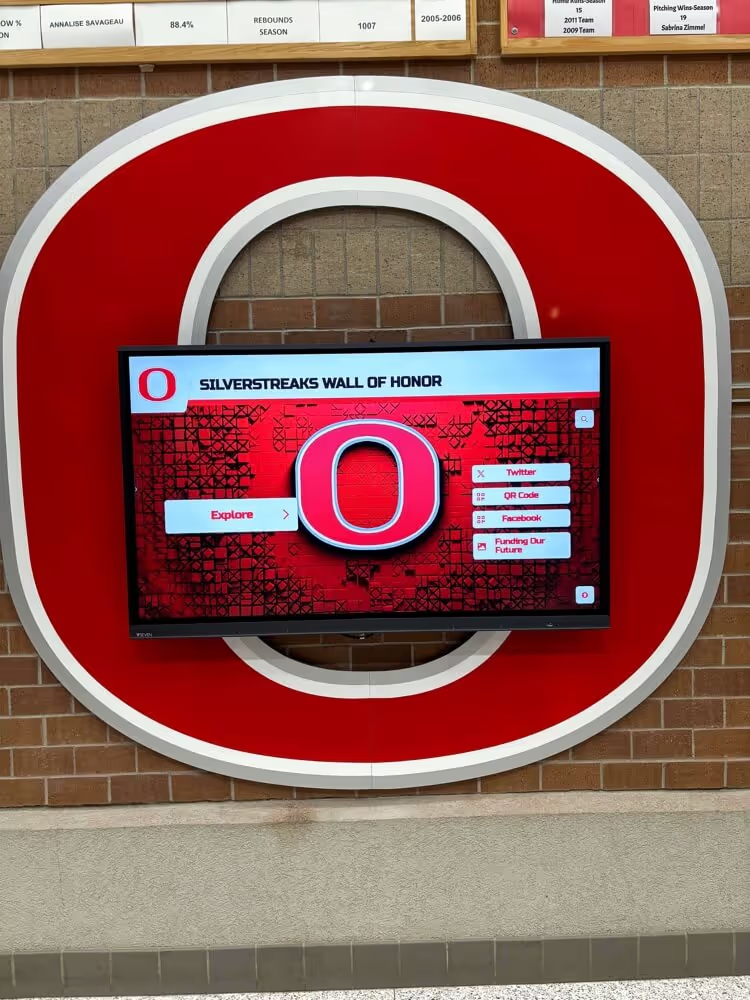
Hall of fame murals and trophy cases in school hallways present a school's complete athletic history — the portrait photographs of the school's founding-era figures that anchor those installations require the most careful intake of any item in the collection, with cased objects preserved sealed and all provenance documented before any reproduction is attempted
Frequently Asked Questions
How do I tell a daguerreotype from an ambrotype in a school athletic archive?
The most reliable visual indicator is the mirror-like, specularly reflective surface of the daguerreotype plate and its viewing-angle-dependent image shift: at one angle the image appears clearly positive; rotating the viewing angle so the plate reflects a light source causes the image to shift toward negative. An ambrotype has no specular surface character — it does not produce this shift, and its surface appears matte to slightly satin under direct observation. If the case can be safely opened (without touching the glass or mat), the areas of the ambrotype that received no exposure will show the dark backing material through the glass, while a daguerreotype’s unexposed areas show the polished silver of the plate. If you are not confident in the distinction, document the process as uncertain and route to a photographic conservator for identification before any format-specific handling or storage decision is made.
Can I open the daguerreotype case to see the plate more clearly?
The sealed assembly of plate, mat, glass, and preserver should not be opened or disturbed at a school intake station. If the case hinges are intact and functional and the case can be opened gently to expose the cover glass without touching, pressuring, or displacing any component of the sealed plate package, the image can be viewed and documented through the cover glass. If opening the case requires forcing a damaged hinge or risks disturbing the sealed assembly, document what is visible through any transparent element of the closed case and route to a conservator for examination. The value of the intact sealed assembly is that it protects the plate from atmospheric contact and physical disturbance; opening it unnecessarily surrenders that protection without recovering equivalent information.
There is visible tarnish on the plate through the glass. Can I clean it in-house?
No. Cleaning a daguerreotype — any form of cleaning, including dry brushing, soft cloth polishing, moisture application, or chemical treatment of any kind — requires controlled conditions and conservation expertise not available at a school intake station. The image particles on a daguerreotype sit on the silver surface without any protective layer; abrasive or chemical contact can permanently remove image material. Tarnish that has developed over decades must be addressed, if at all, by a photographic conservator using techniques appropriate to the specific condition of the plate. Document the tarnish location and extent in the intake record and route to a conservator — that is the appropriate in-school response to visible tarnish, not any attempt to clean or reduce it in-house.
What if the case is damaged and the plate appears exposed?
If the case structure has failed and the sealed plate package appears to be exposed — cover glass absent, preserver detached, or plate lying free within a damaged case — handle the cased object with extreme care to avoid any contact between any surface and the plate surface. Do not attempt to reassemble the case, reseal the package, or insert protective material between the plate and any surface without conservation guidance. Transport the object to a photographic conservator as the highest priority: a daguerreotype with a compromised or absent seal is at active risk from every additional minute of atmospheric exposure. Document the condition from a safe viewing distance, do not touch the plate, and mark the item for urgent conservator referral.
The donor says the portrait depicts the school’s founder, but we have no independent record confirming this. What should we do?
Record the donor’s statement verbatim in the attribution uncertainty field of the intake record, and note explicitly that independent corroboration from school historical records has not been established. Do not enter the founder identification as confirmed in any recognition database until verification is complete. The intake record preserves the donor statement as a starting point for archival research — historical minutes, donor correspondence, school centennial materials, or local newspaper archives may corroborate or conflict with the identification. When verification findings are obtained, add them to the attribution uncertainty field with their source cited, and update the confidence level of the attribution accordingly. A recognition entry built on a verified identification chain is more defensible and more historically valuable than one that accepted an unverified donor statement as fact.
How do I find a photographic conservator with daguerreotype experience?
The American Institute for Conservation maintains a Find a Conservator directory at culturalheritage.org that allows filtering by specialty, including photographic materials. Regional conservation centers, state historical societies, and university library conservation programs also maintain referral lists for photographic material conservators with experience in cased processes. When contacting a conservator, bring your intake documentation — condition photographs of each cased object’s exterior, provisional identification notes, case condition assessment, and verbatim inscription or provenance information — so the conservator can scope the assessment before materials are transported.
A complete school athletic archive daguerreotype intake converts an unknown-risk group of cased early portraits into a documented collection where every object has an assessed condition, a verbatim inscription record, an explicit attribution uncertainty notation, and a confirmed routing path — before any scanning equipment approaches an image surface formed by particles that have rested undisturbed on a silver plate for more than a century, waiting to document the figures at the beginning of a school’s athletic story.
Ready to connect your documented, digitized early program portrait archive to an athletic recognition program that makes school history visible across generations?
Request a Rocket Alumni Solutions demo and see how schools are turning carefully preserved historic athletic archives — daguerreotype portraits, founding-era records, and program documentation from the institution’s earliest decades — into searchable hall-of-fame displays, digital yearbook programs, and touchscreen recognition installations that bring every era of athletic history to life for athletes, alumni, and the school community.