School communicators, athletic directors, and yearbook advisors face a persistent challenge: producing enough quality visual content to keep social media accounts active, celebrate student achievements, and maintain consistent branding across platforms. Between game day graphics, student spotlights, event promotions, and recognition posts, the volume of content schools need to create has become overwhelming for staff already managing full workloads.
Traditional solutions create their own problems. Hiring professional designers is expensive and slow. Template platforms require design skills and produce cookie-cutter results. Generic AI image generators don’t understand school-specific needs around branding, athletics, or recognition. Staff members without design backgrounds spend hours struggling with tools built for professionals, often producing inconsistent results that don’t reflect institutional quality standards.
Rocket Graphics changes this equation completely. This free, AI-powered platform enables anyone on staff to create professional, on-brand graphics in seconds by simply typing what they need—“create a senior night post for girls soccer” or “make a district championship graphic for Instagram”—and letting AI agents handle design, layout, and brand application automatically.
Schools implementing Rocket Graphics report dramatically increased social media output, consistent brand presentation, and significant time savings for communications staff who previously spent hours creating individual graphics manually.

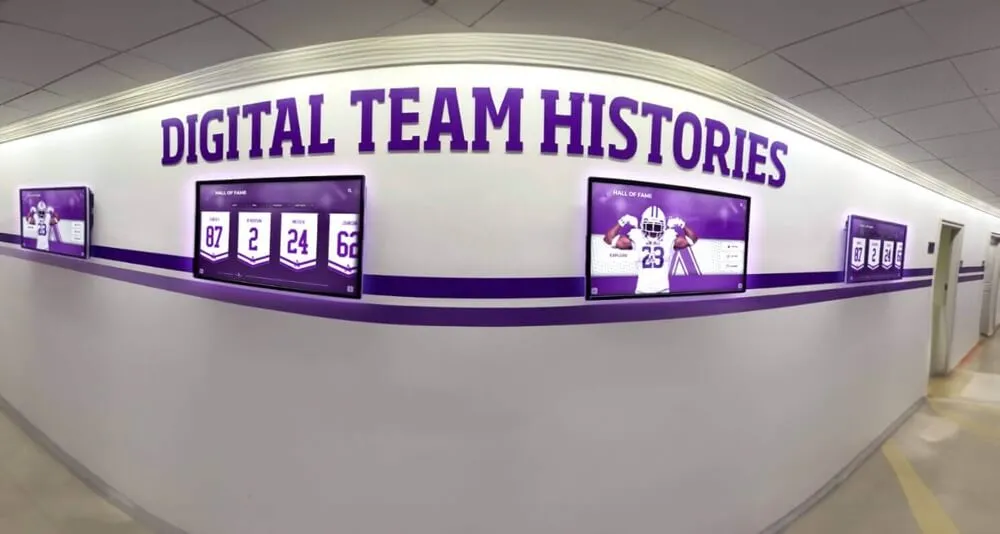
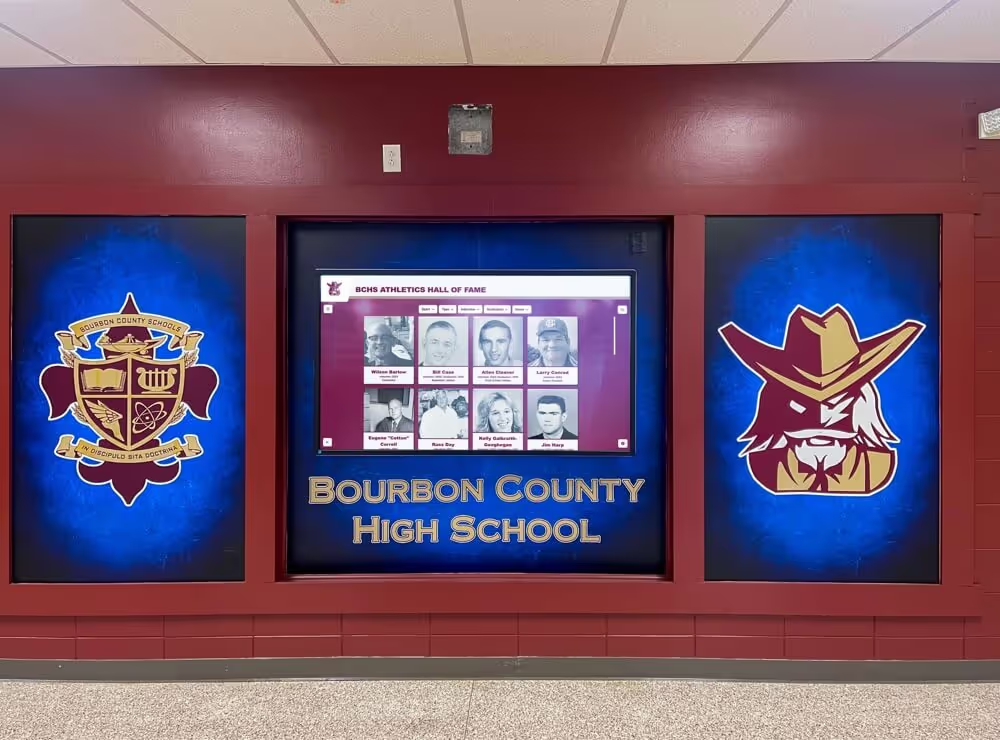
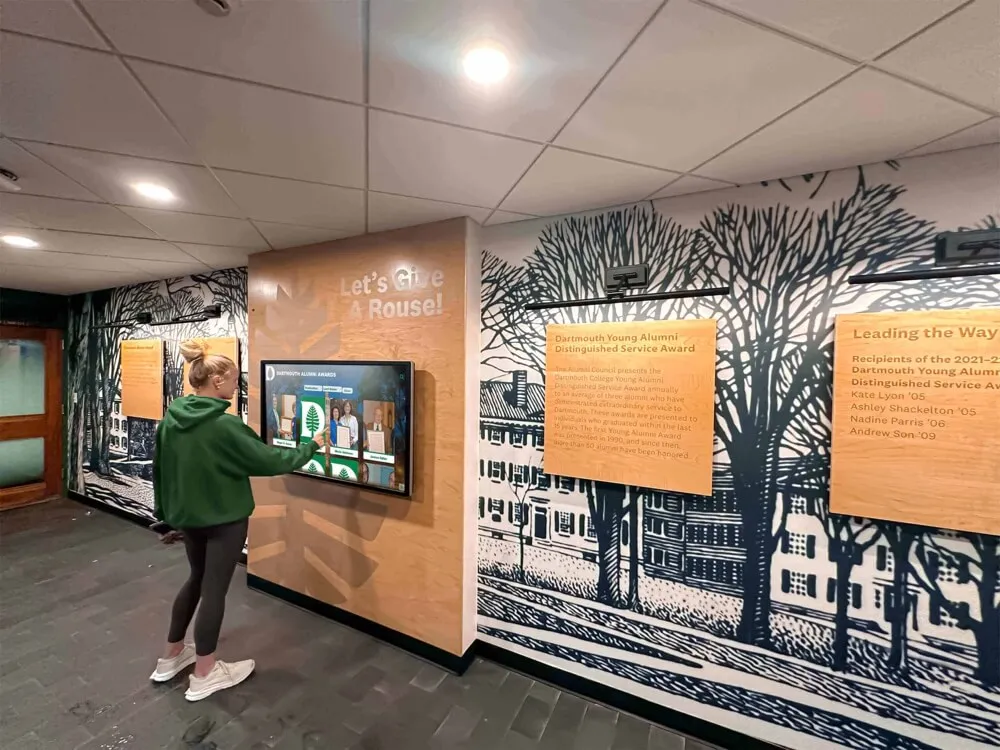
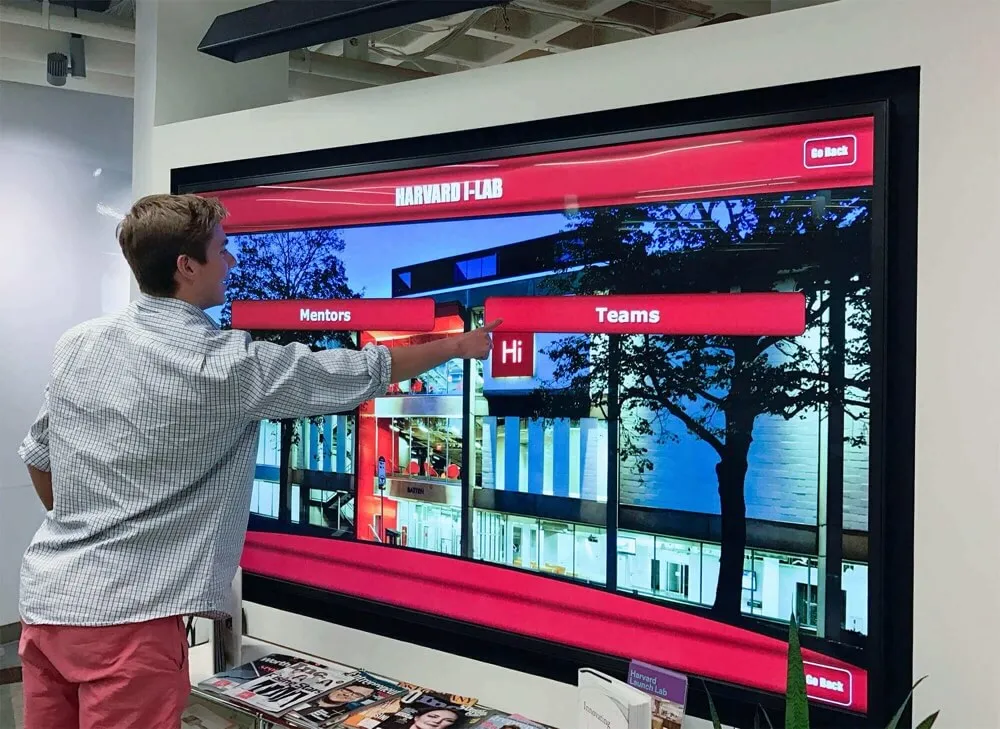
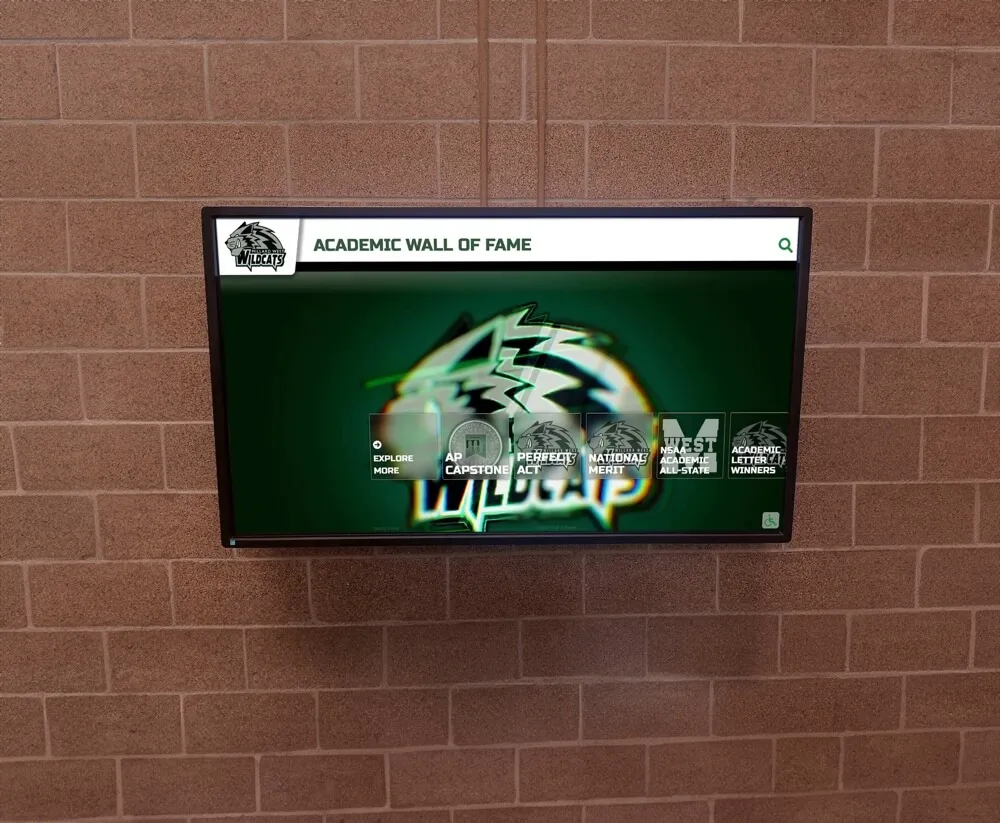
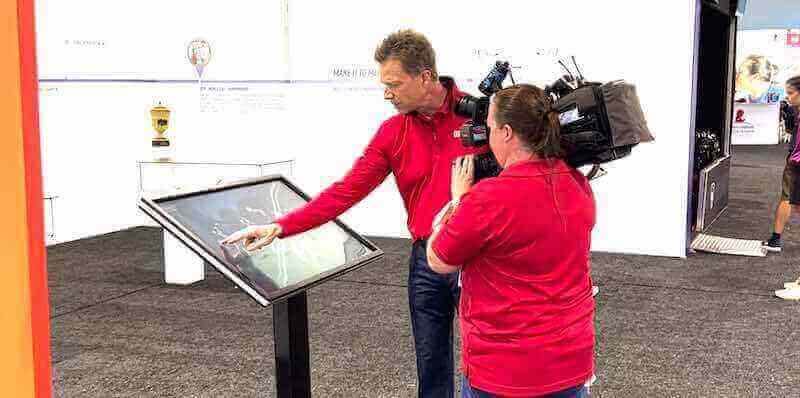
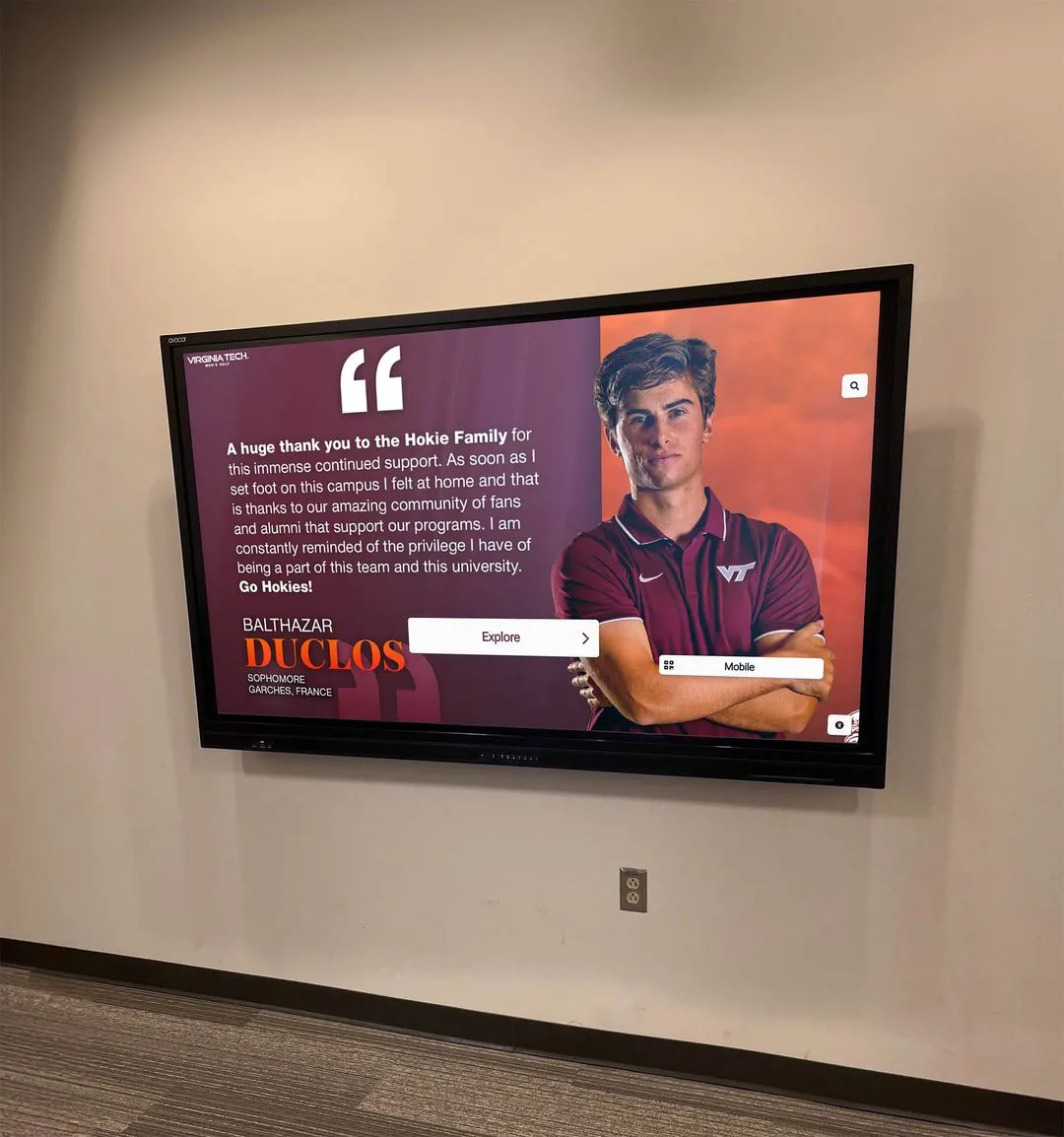
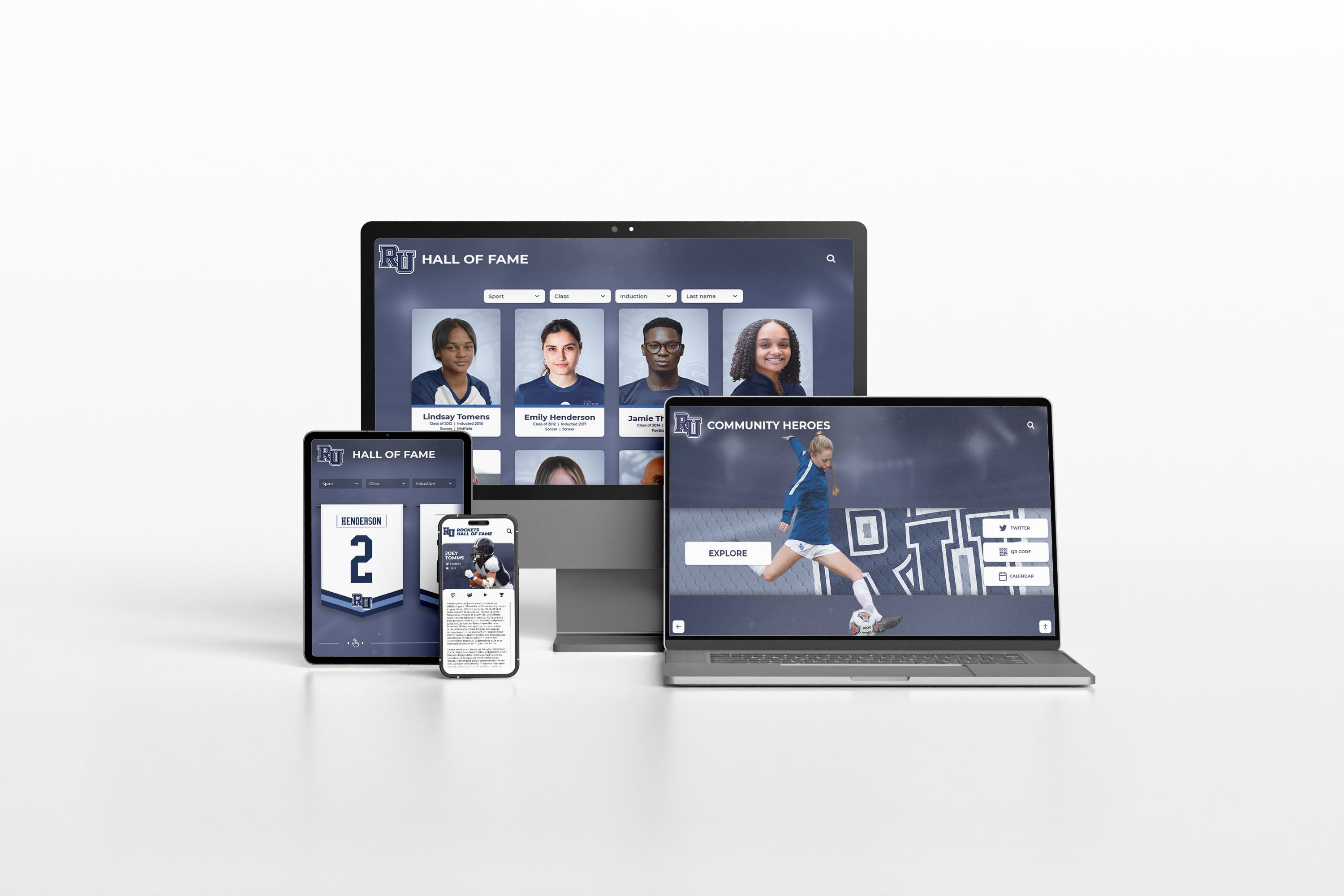
Modern schools need content that works seamlessly across platforms—from social media to websites to digital displays
The School Communications Content Problem
Understanding the Volume Challenge
Contemporary schools operate multiple social media platforms simultaneously—Facebook pages for parent communication, Instagram accounts featuring student life, Twitter feeds with quick updates, and sometimes TikTok channels reaching younger audiences. Each platform demands regular fresh content to maintain engagement and algorithm visibility.
Athletic departments alone need staggering content volumes:
- Game day graphics announcing matchups, start times, and streaming information
- Score updates celebrating victories and acknowledging competitive performances
- Player spotlights recognizing individual athletes and their achievements
- Schedule posts keeping families informed about upcoming competitions
- Senior night graphics honoring graduating athletes with photos and statistics
- Championship announcements celebrating team and individual titles
- Recruitment celebrations acknowledging athletes signing with college programs
- Record-breaking achievements documenting program milestones
Academic and student life areas require similar content production:
- Student of the month recognition celebrating academic achievement
- Academic awards announcements celebrating honor roll and scholarship winners
- Event promotions advertising concerts, plays, fundraisers, and assemblies
- Club activity posts featuring student organizations and participation
- Faculty spotlights introducing staff and celebrating professional achievements
- Spirit week content documenting themed days and school culture
- Alumni updates sharing graduate accomplishments and maintaining connections
Schools implementing comprehensive student recognition programs understand that visibility matters—when achievements go unrecognized publicly, students feel undervalued and families disengage from school community.
The Staff Capacity Reality
Most schools lack dedicated graphic designers. Communications responsibilities fall to administrators, athletic directors, yearbook advisors, or parent volunteers juggling design work alongside primary duties. These staff members typically:
- Have limited design experience or training
- Use consumer design tools not optimized for speed or school use cases
- Struggle to maintain brand consistency across multiple creators
- Spend 30-60 minutes creating individual graphics manually
- Work evenings and weekends to keep up with content demands
- Experience burnout from unsustainable content production expectations
Districts that invest in professional athletic recognition displays for their facilities often overlook the parallel need for digital content creation tools that extend recognition beyond physical spaces into social media where students and families actually spend time.
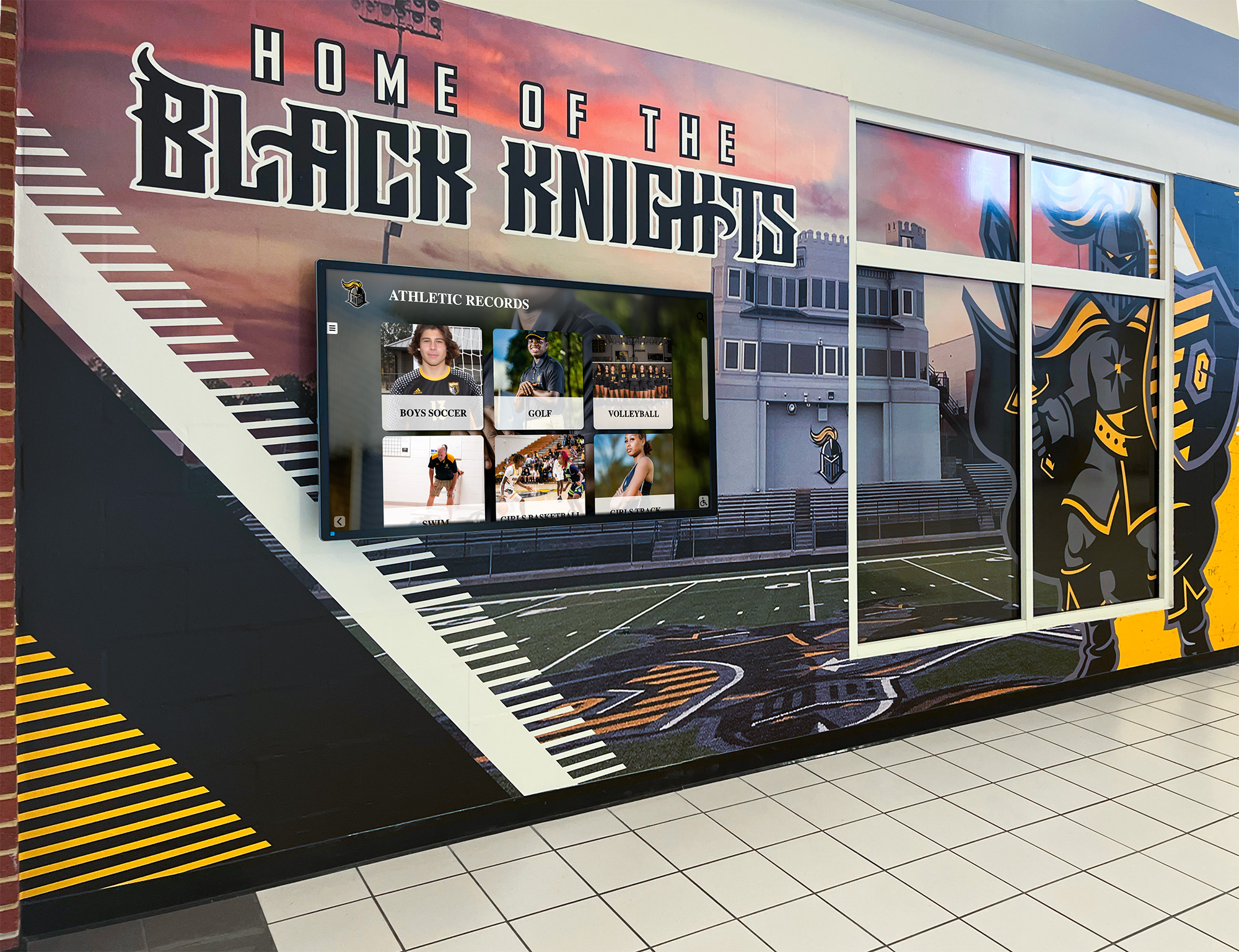
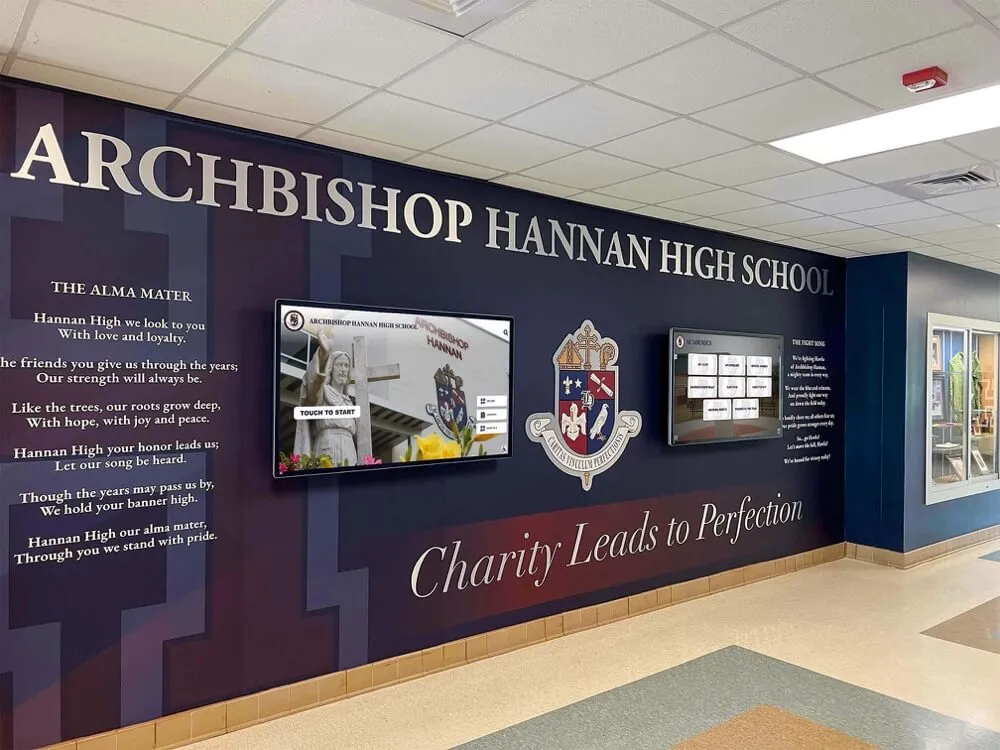
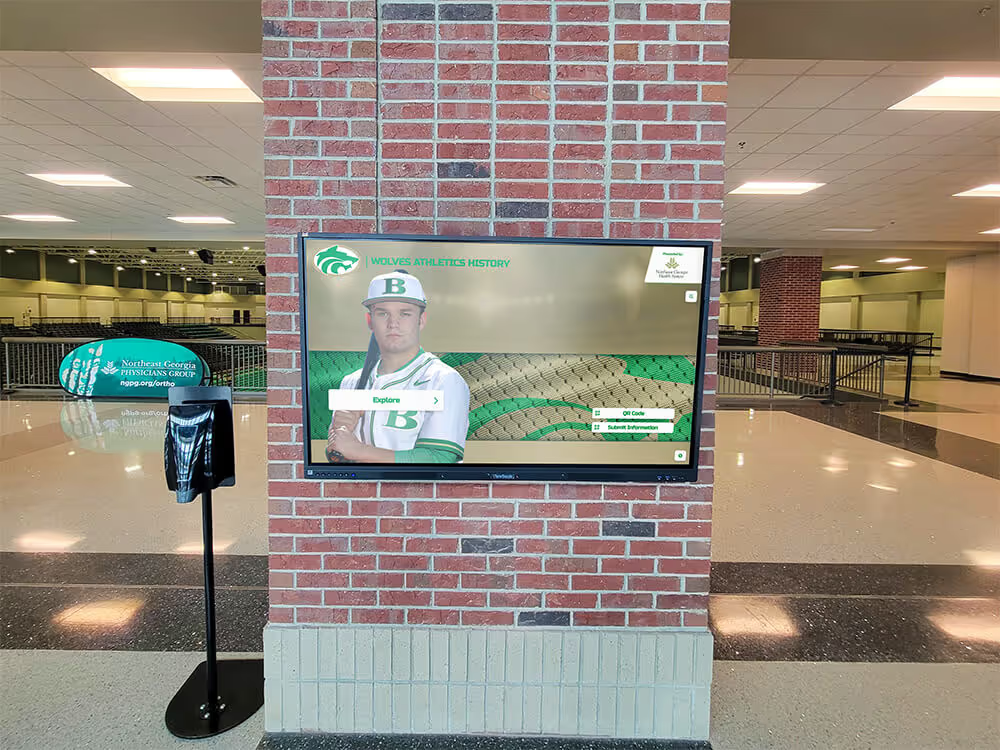
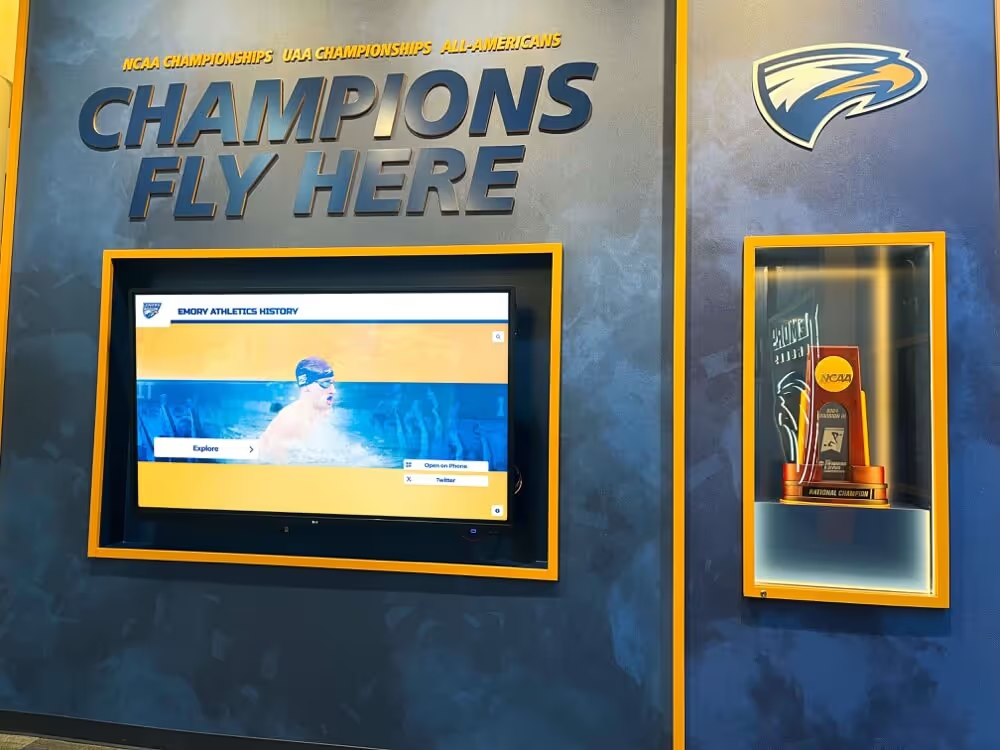
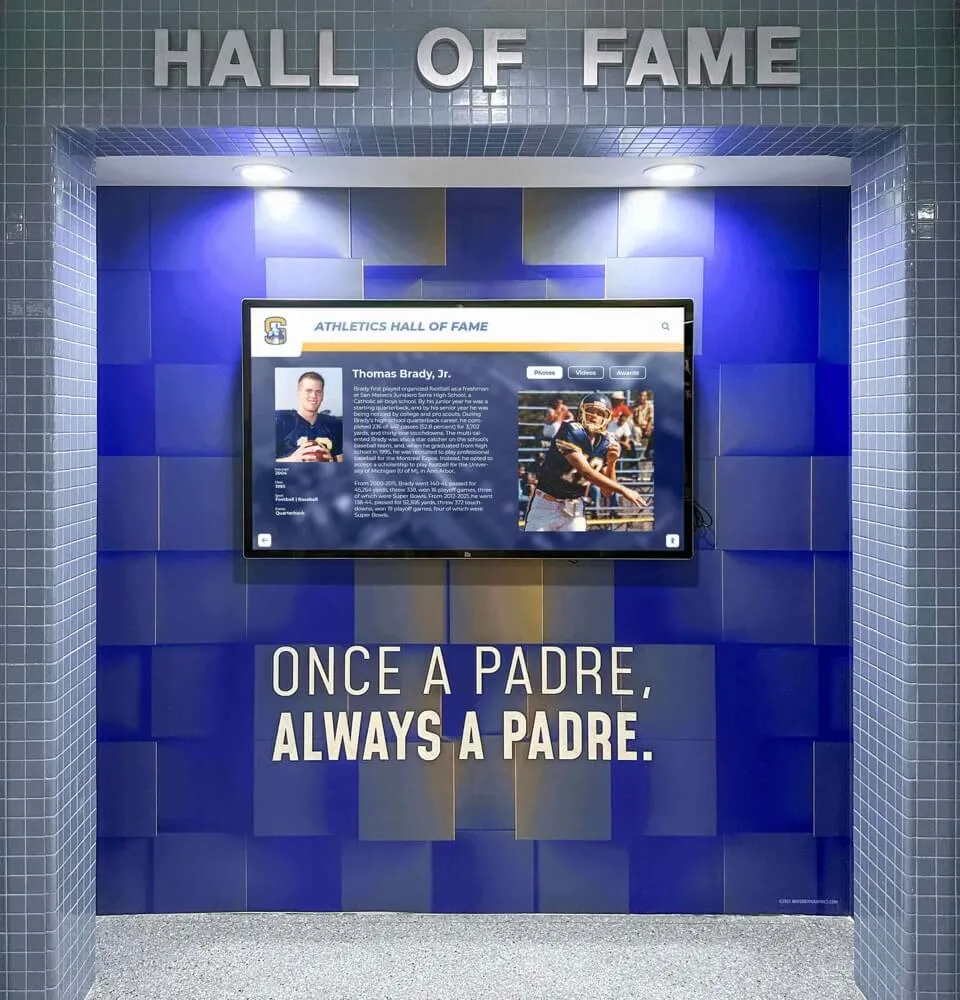
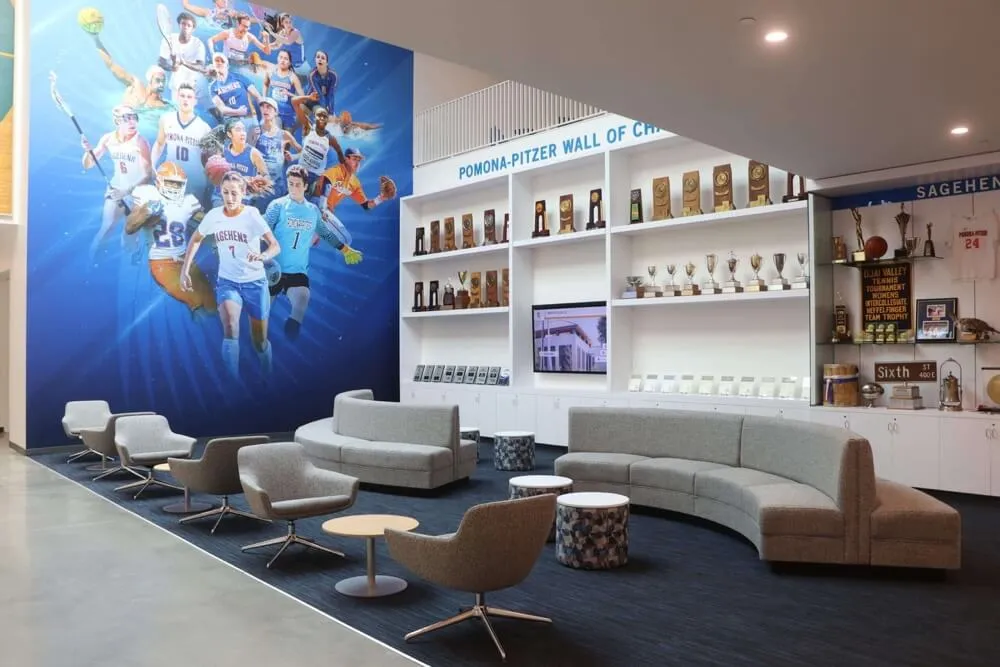
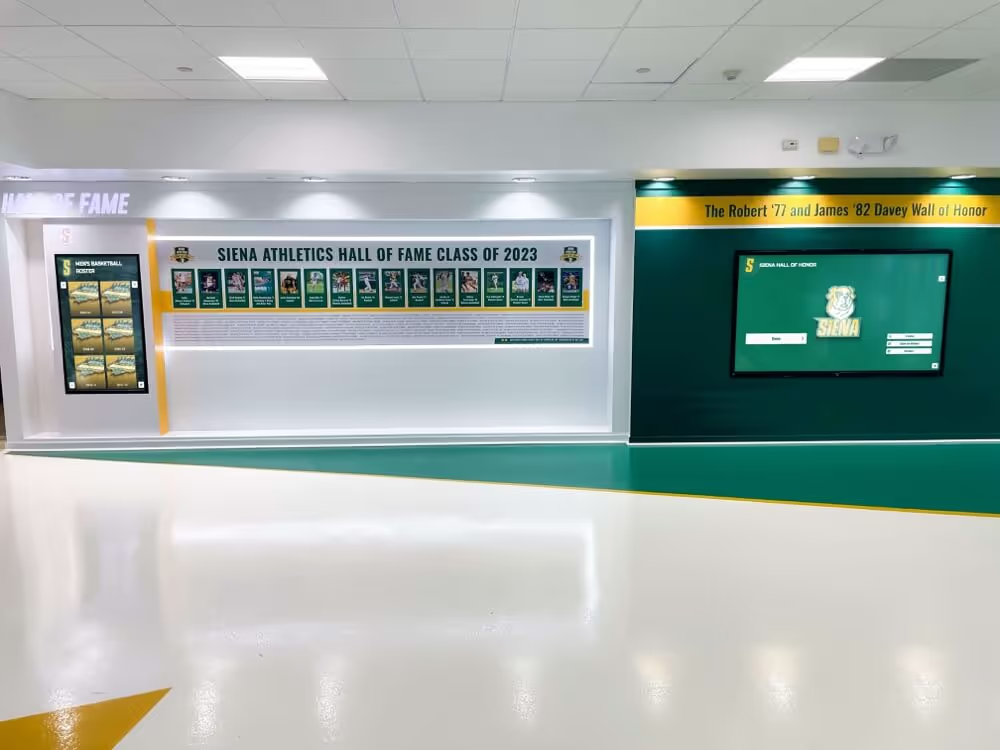
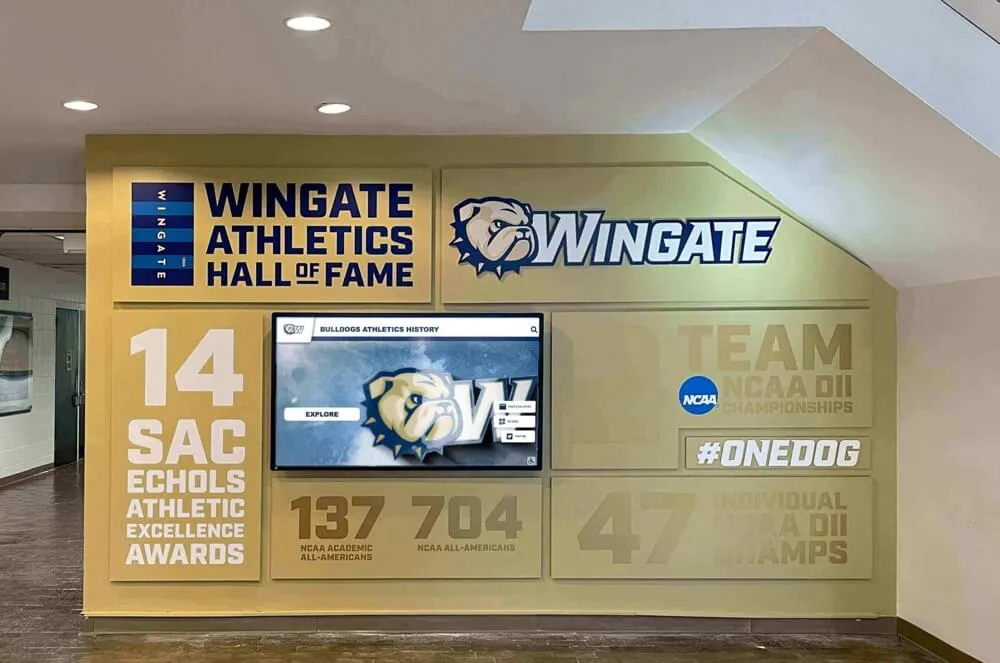
Schools excel at physical recognition displays but often struggle producing equivalent digital content for social platforms
What Rocket Graphics Does Differently
AI Agents for School-Specific Content
Rocket Graphics represents a fundamentally different approach to content creation. Rather than providing templates users must customize, it employs AI agents that understand school-specific content needs and generate complete, branded graphics from simple text prompts.
The platform includes specialized AI capabilities:
Text-to-Post Generation - Type natural language descriptions like “create a football game day graphic for Friday’s homecoming game against Central High” and receive professionally designed options incorporating school branding, appropriate imagery, and platform-optimized dimensions.
Context-Aware Design - The AI understands school categories—athletics, academics, events, recognition—and applies appropriate design conventions. A senior night graphic looks different from a championship announcement, which differs from an academic award post, all automatically.
Brand Intelligence - Once schools upload logos, colors, and fonts, the AI applies brand elements consistently across all generated content without requiring manual placement or color selection for each graphic.
Multi-Platform Optimization - Generate content automatically sized for Instagram posts, Facebook covers, Twitter headers, stories, digital signage, or print—all from a single prompt without manually resizing.
Iterative Refinement - Use conversational AI to modify generated graphics: “make the text larger,” “change to our secondary colors,” “add the school mascot,” with real-time updates rather than starting from scratch.
Schools using comprehensive digital signage systems can now generate matching social content with the same branding and messaging, creating cohesive visual identity across physical and digital channels.
Templates for Quick Starts
While AI generation handles custom content, Rocket Graphics also includes template libraries for common school use cases:
- Athletic game day templates pre-designed for major sports with customizable team names, dates, and details
- Student spotlight frameworks structured for academic recognition and achievement celebration
- Event promotion templates optimized for concerts, fundraisers, open houses, and community events
- Awards and recognition formats designed specifically for honor roll, scholarships, and achievement announcements
- Schedule post designs formatted for season schedules, testing calendars, and academic timelines
- Digital signage layouts sized for hallway displays, lobby screens, and cafeteria monitors
Templates provide starting points that maintain professional quality while allowing customization to specific school needs and individual events.
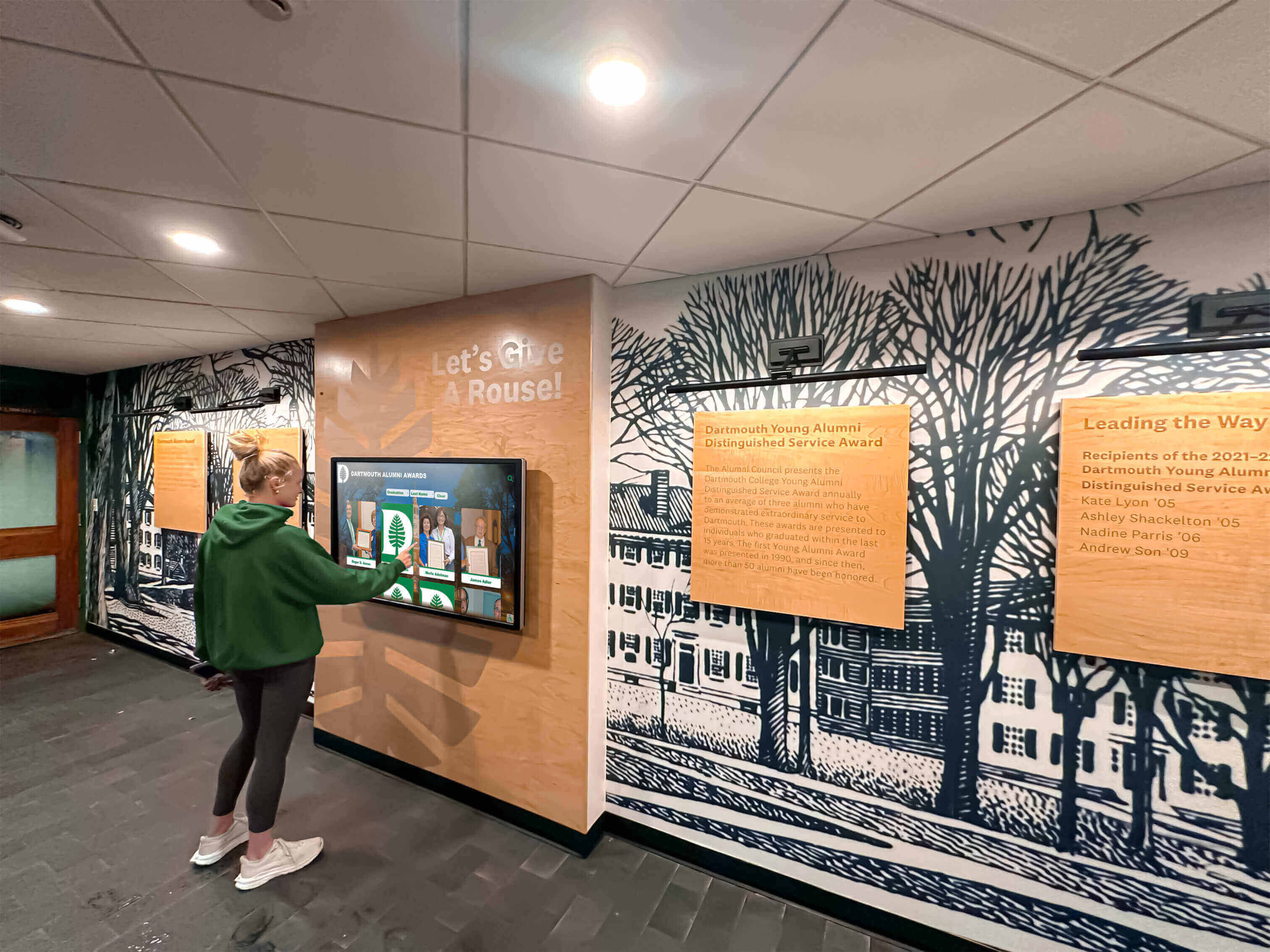
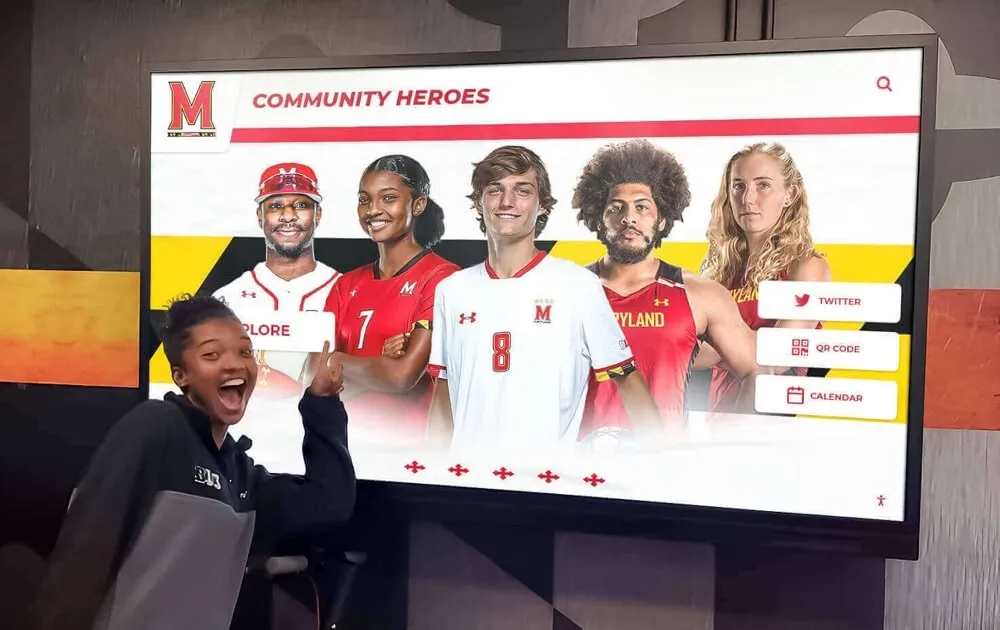
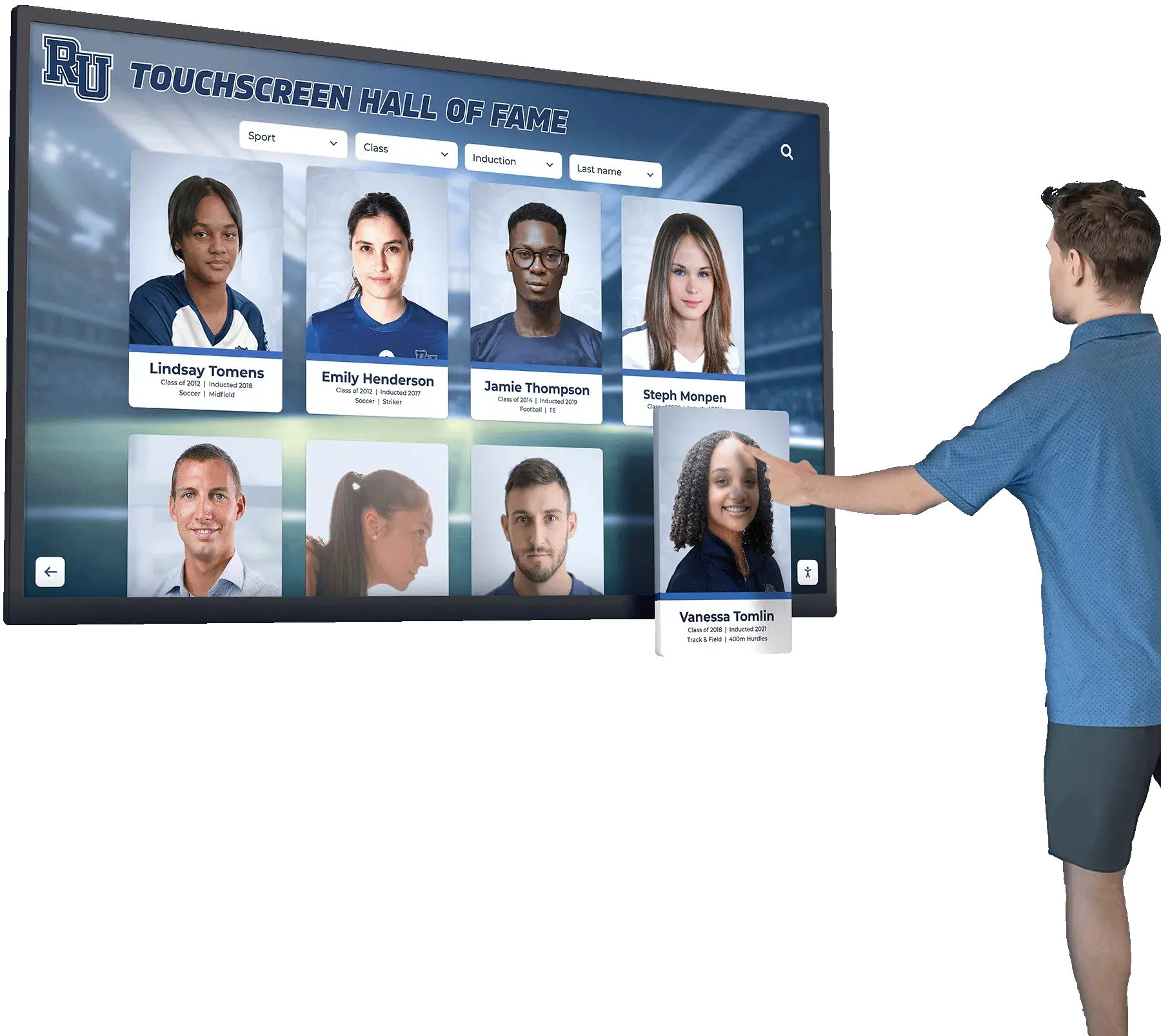
Students engage most with visual content that celebrates their achievements and school community
Key Features and Capabilities
Content Creation Tools
Rocket Graphics provides comprehensive creation capabilities addressing the full spectrum of school communication needs:
Athlete and Student Spotlights
Recognition content forms the backbone of effective school social media. The platform enables quick creation of:
- Individual athlete profiles with photos, statistics, and biographical information
- Academic achievement spotlights recognizing GPA, test scores, and college acceptances
- Senior night graphics celebrating graduating students across all programs
- Player-of-the-game recognition following athletic competitions
- Student of the month features across various categories and departments
- Staff spotlights introducing teachers, coaches, and administrators
- Alumni updates sharing graduate accomplishments and career milestones
Score Updates and Game Graphics
Athletic content requires speed and consistency during busy competition seasons:
- Pre-game graphics announcing upcoming competitions with dates, times, and locations
- Live score update templates for quick posting during or immediately after games
- Victory celebration posts with final scores and standout performances
- Season schedule graphics showing complete competition calendars
- Tournament bracket displays for playoff competitions
- Rivalry game special graphics emphasizing traditional competitions
- Championship and title graphics celebrating team achievements
Event Promotion and Announcements
Schools constantly promote activities requiring family attendance and student participation:
- Concert and performance announcements with dates, times, and ticketing information
- Fundraiser promotion graphics explaining events and participation details
- Open house and admissions event marketing for prospective families
- Spirit week daily theme announcements maintaining engagement
- Club fair and activity signup promotions encouraging involvement
- Professional development and parent education event invitations
- Emergency closures and schedule change notifications requiring immediate visibility
Organizations managing multiple school recognition programs find that maintaining consistent visual quality across academic, athletic, and community recognition builds stronger institutional identity than piecemeal approaches to different program areas.
Brand Controls and Consistency
Professional appearance requires consistent application of school visual identity:
Brand Asset Management
- Central upload location for official logos, mascots, and wordmarks
- Color palette specification matching official brand guidelines
- Typography selection from approved institutional fonts
- Background and texture libraries maintaining consistent aesthetic
- Photo libraries organizing high-quality images of facilities and activities
Automatic Brand Application
- AI automatically applies school colors to generated graphics
- Logo placement follows design best practices without manual adjustment
- Font pairings maintain readability while reflecting institutional personality
- Color combinations respect accessibility standards and brand guidelines
- Consistent spacing, padding, and compositional balance across content types
Multi-User Brand Access
- All staff users access the same brand assets automatically
- Updates to brand guidelines apply across all users simultaneously
- No need to distribute updated logo files or color specifications
- Consistency maintained even with volunteer or rotating staff creating content
- Brand compliance happens automatically rather than through enforcement
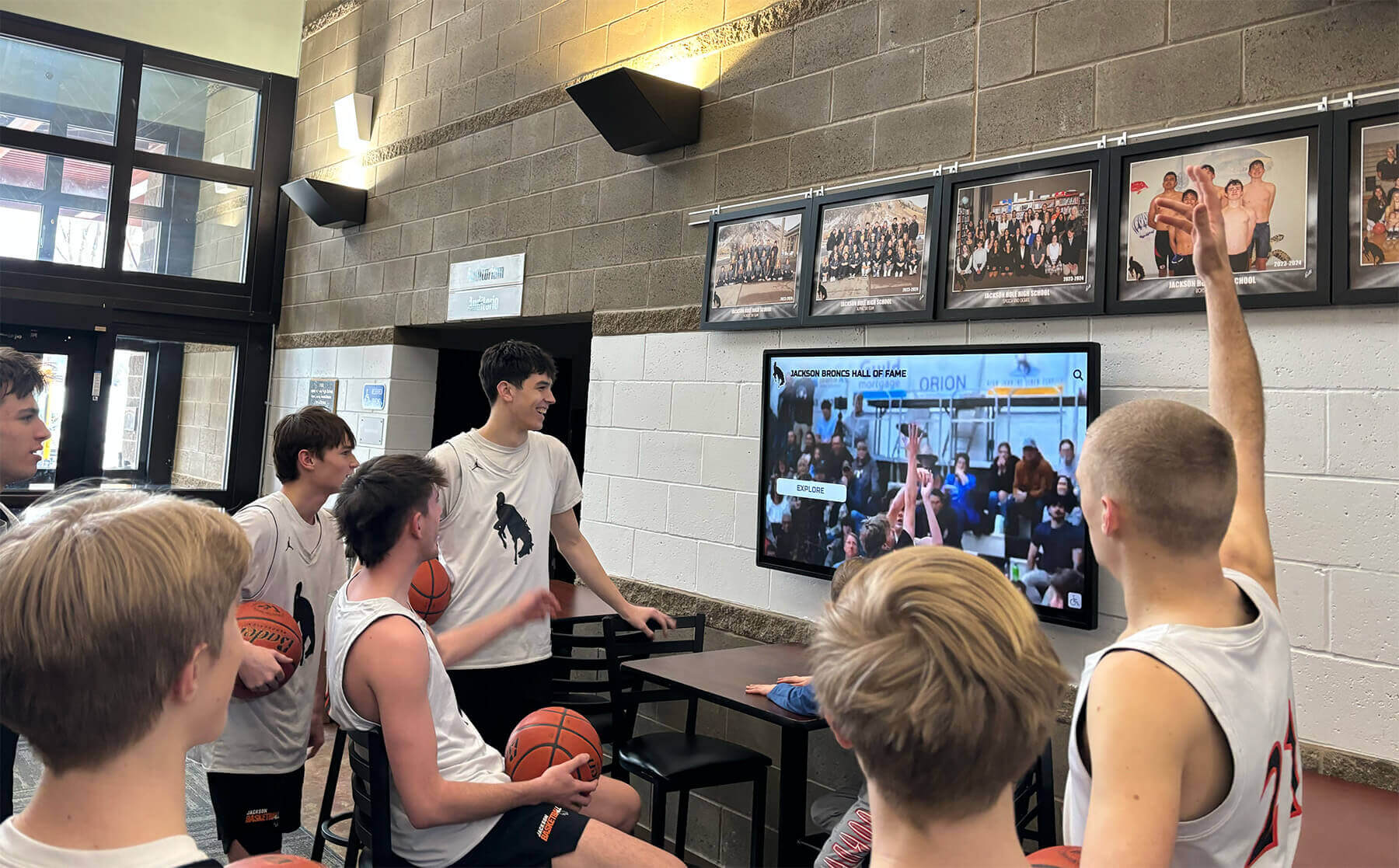
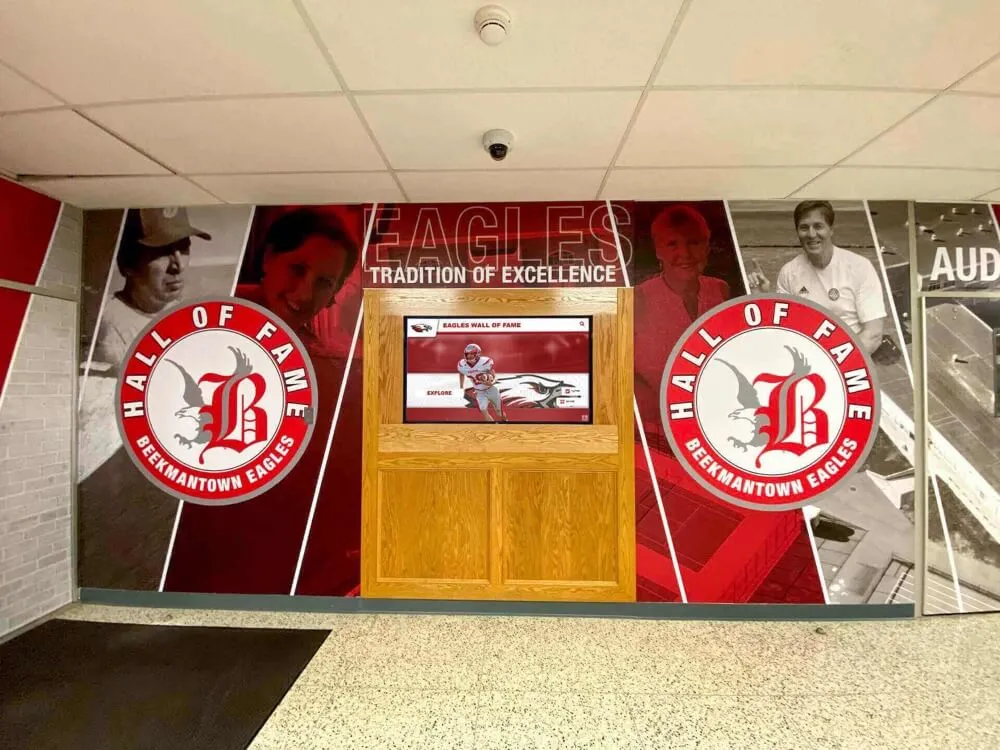
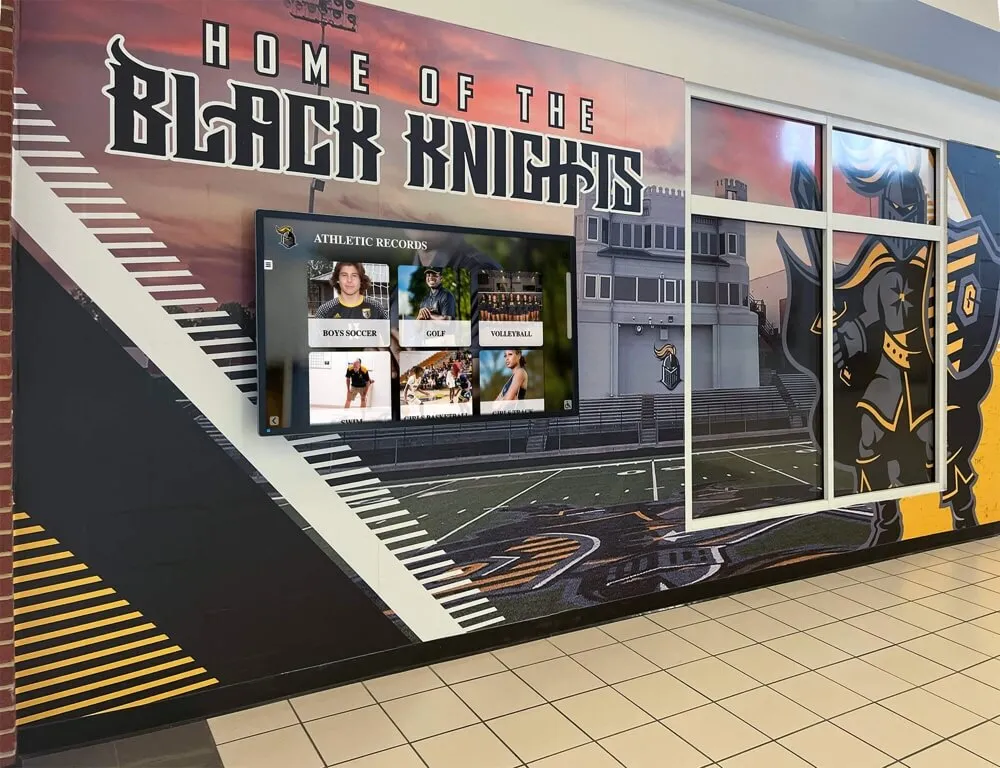
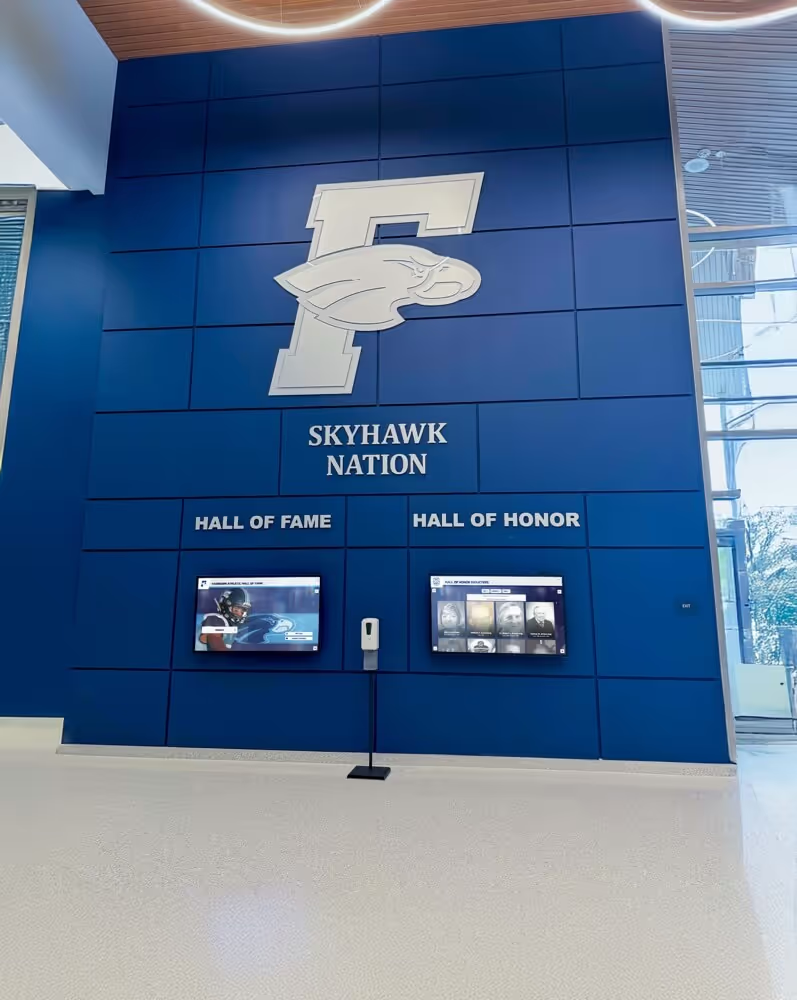
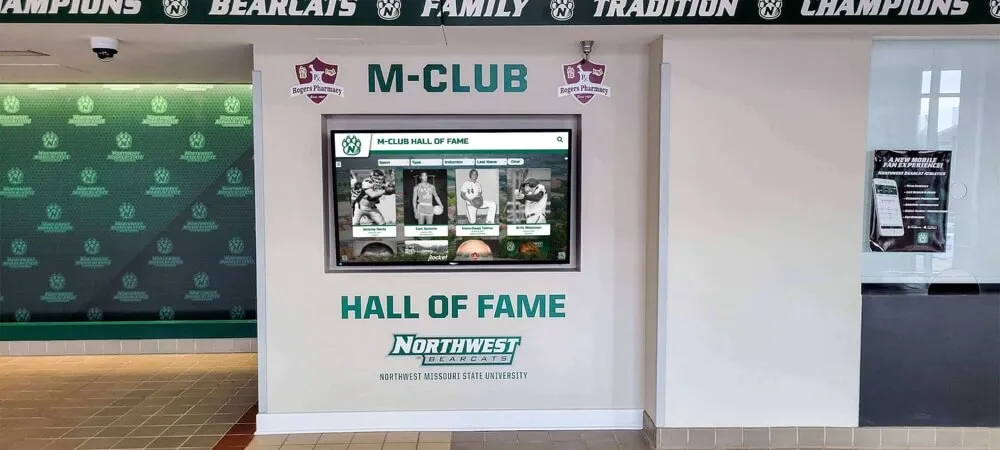
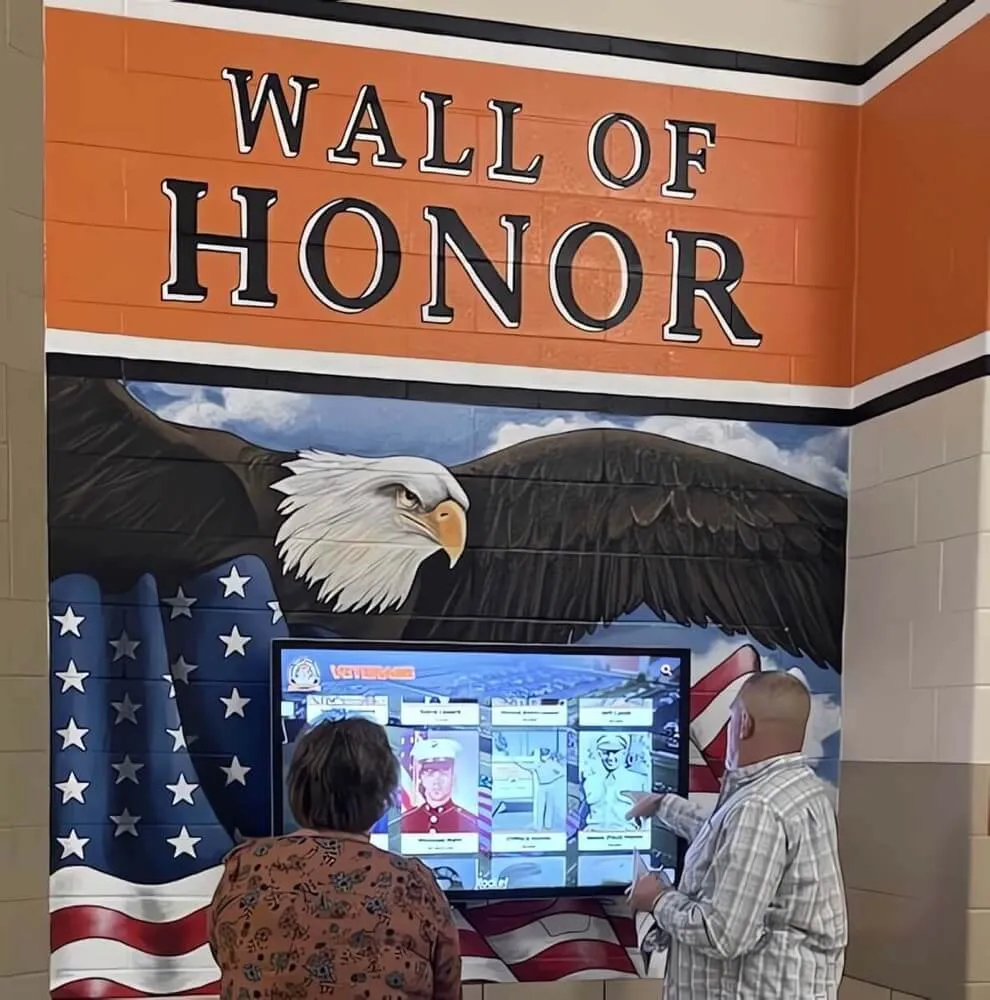
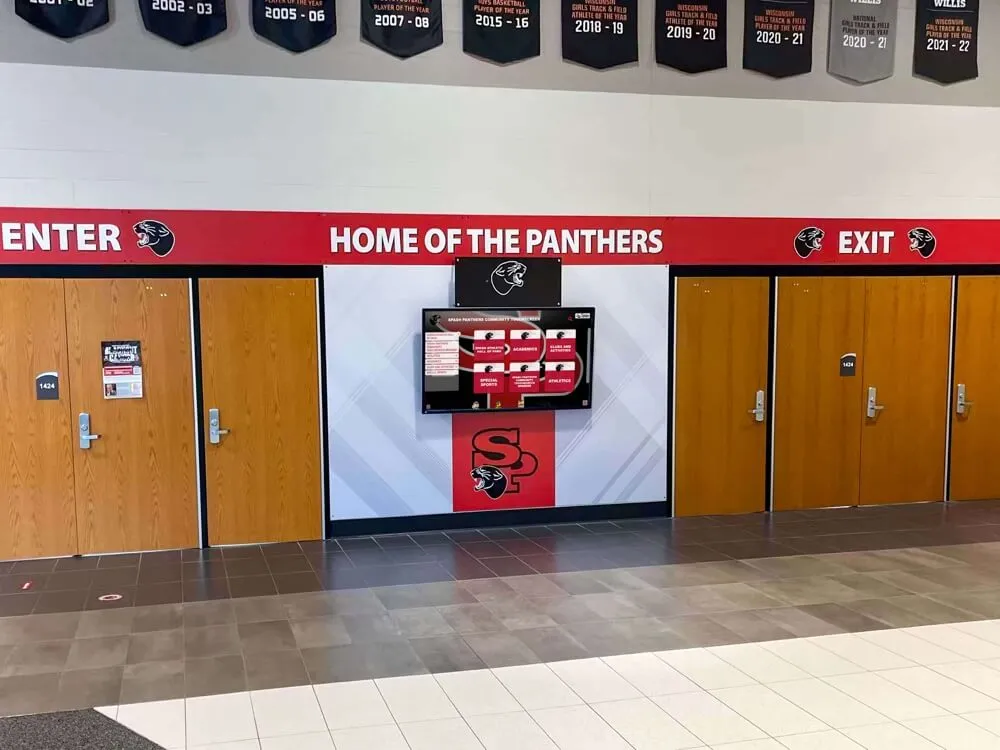
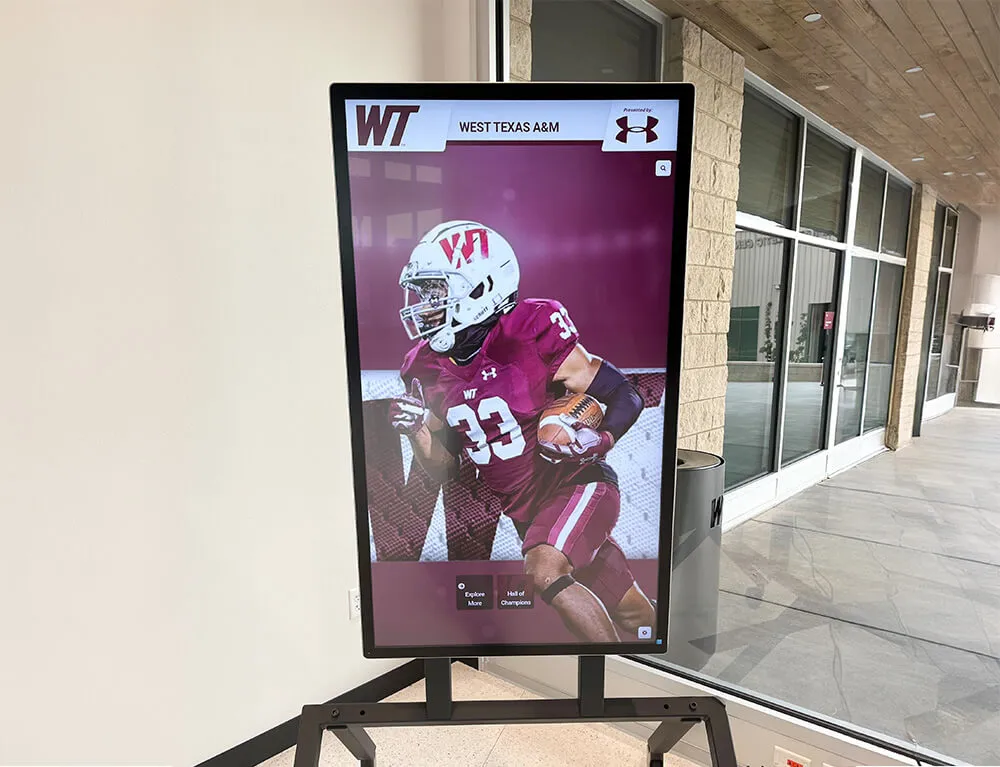
Digital displays in common areas extend social media content into physical spaces where students gather
Publishing and Distribution Features
Content creation represents only part of the workflow—distribution requires additional capabilities:
Multi-Platform Publishing
- Direct posting to Instagram, Facebook, Twitter, and LinkedIn from within the platform
- Cross-posting to multiple platforms simultaneously with platform-specific optimization
- Scheduled posting for advance planning and consistent publishing cadence
- Draft saving for collaborative review before publication
- Post calendar view showing planned content across days and weeks
Content Resizing and Reformatting
- Automatic resizing of single designs for different platform specifications
- Story-format versions for Instagram and Facebook stories
- Cover and header images for profile updates and branding
- Print-ready formats for posters, signs, and printed announcements
- Digital signage versions formatted for hallway displays and lobby screens
Analytics and Performance Tracking
- Engagement metrics showing which content types perform best
- Platform-specific performance comparison identifying optimal channels
- Content category analysis revealing which topics drive most engagement
- Posting time optimization based on when audiences are most active
- Audience growth tracking showing follower increases over time
Schools implementing digital recognition strategies across multiple channels find that coordinated content calendars ensure students receive recognition through whatever platforms families prefer rather than forcing engagement with single channels.
Practical Applications Across School Departments
Athletic Department Use Cases
Athletic communications represent perhaps the highest-volume content need in most schools:
In-Season Competition Management
During active seasons, coaches and athletic directors need to publish multiple graphics weekly or even daily. Rocket Graphics enables:
- Monday game preview graphics promoting Friday night’s matchup
- Pre-game reminders posted hours before competition with location and streaming information
- Halftime or live score updates during games
- Post-game victory graphics with final scores and standout performances
- Weekly schedule reminders showing all upcoming competitions across programs
- Playoff bracket updates as tournaments progress
Player and Team Recognition
Recognition content builds athlete engagement and family support:
- Senior night graphics for all graduating athletes with photos and statistics
- Player spotlight series throughout season featuring individual team members
- Record-breaking achievement announcements when program milestones are reached
- Academic all-state and all-conference recognition posts
- Signing day graphics when athletes commit to college programs
- Team photo announcements at season start
- Coach spotlights recognizing staff contributions
Off-Season Engagement
Athletic content shouldn’t disappear outside competition seasons:
- Summer training announcements and participation encouragement
- Tryout and practice schedule graphics
- Youth camp and clinic promotions
- Facility improvement updates showing stadium or gym renovations
- Historical content sharing program legacy and tradition
- Alumni athlete updates celebrating former player accomplishments
Programs implementing comprehensive athletic hall of fame systems discover that social media content celebrating current athletes naturally connects to historical recognition, creating continuity between past excellence and present achievement.
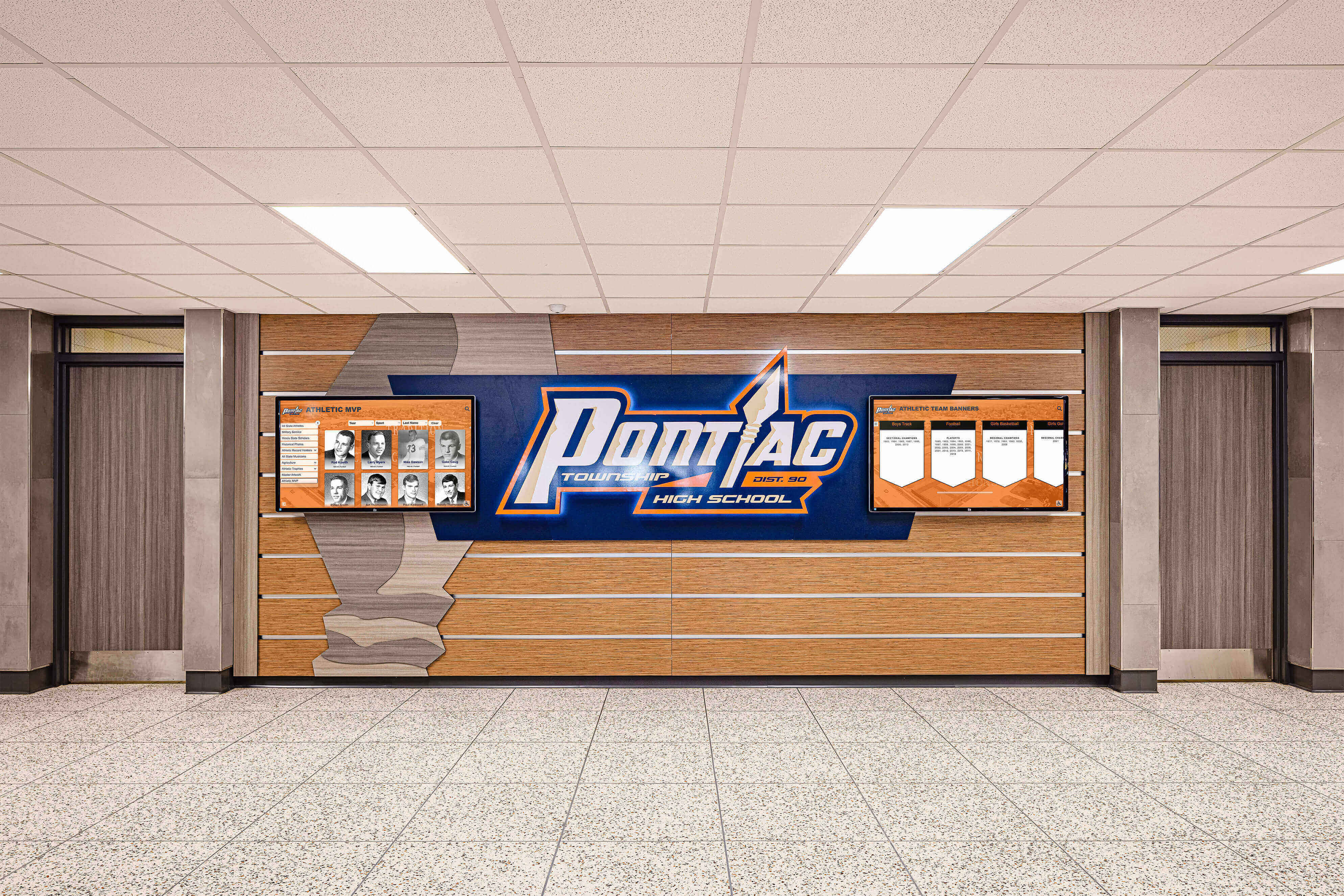
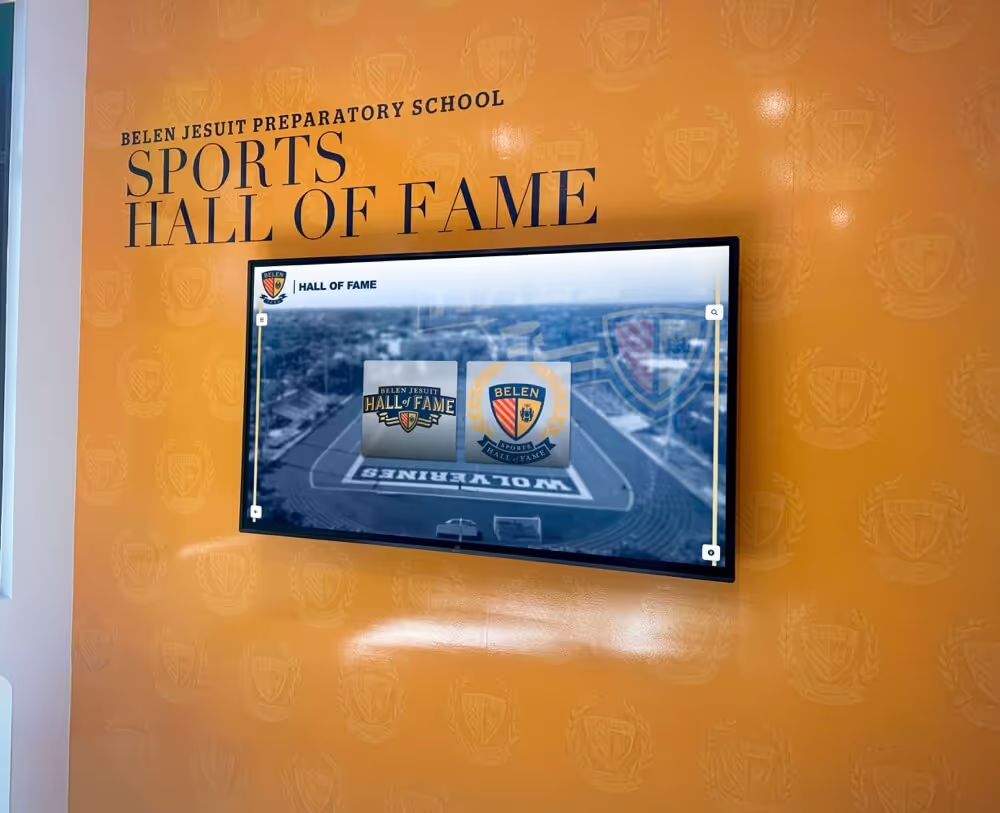
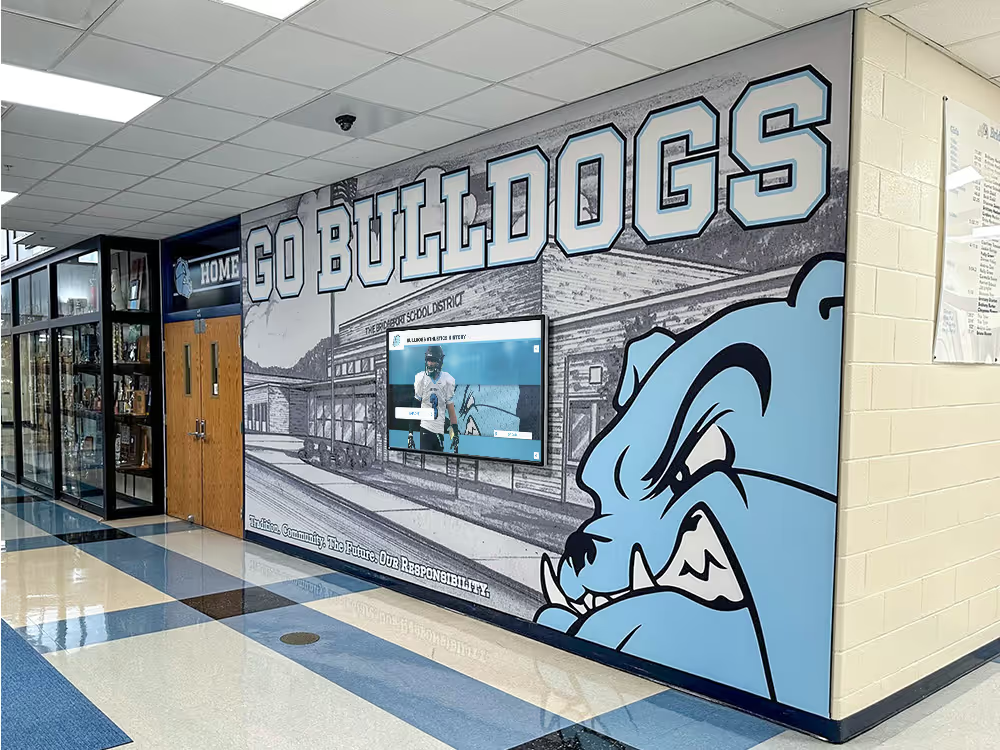
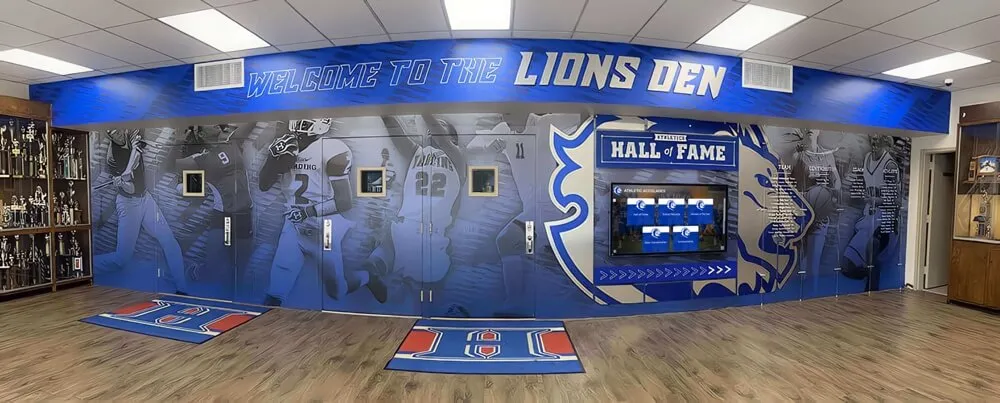
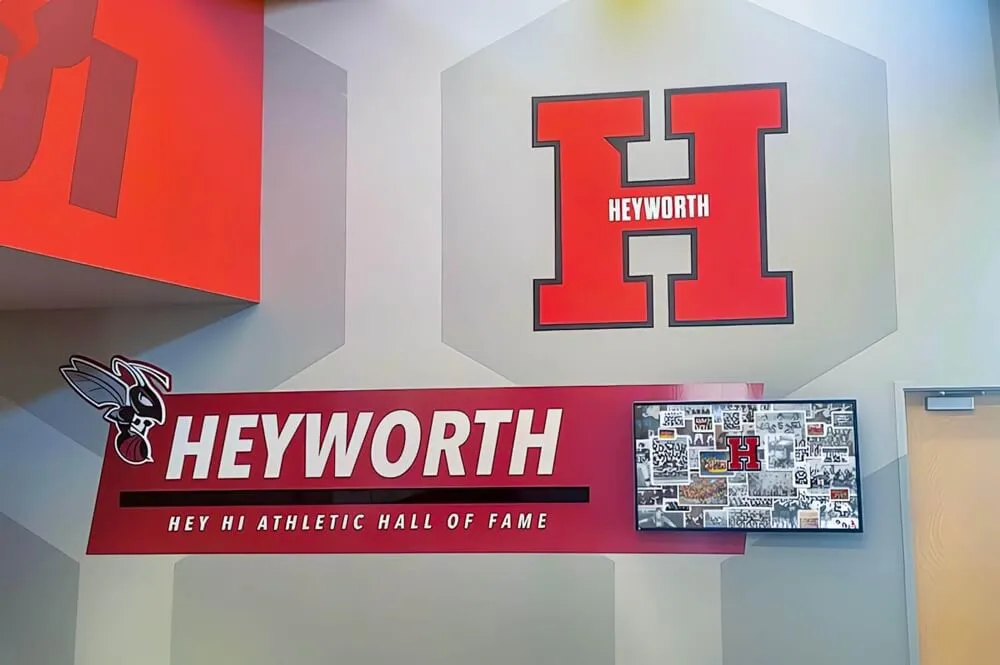
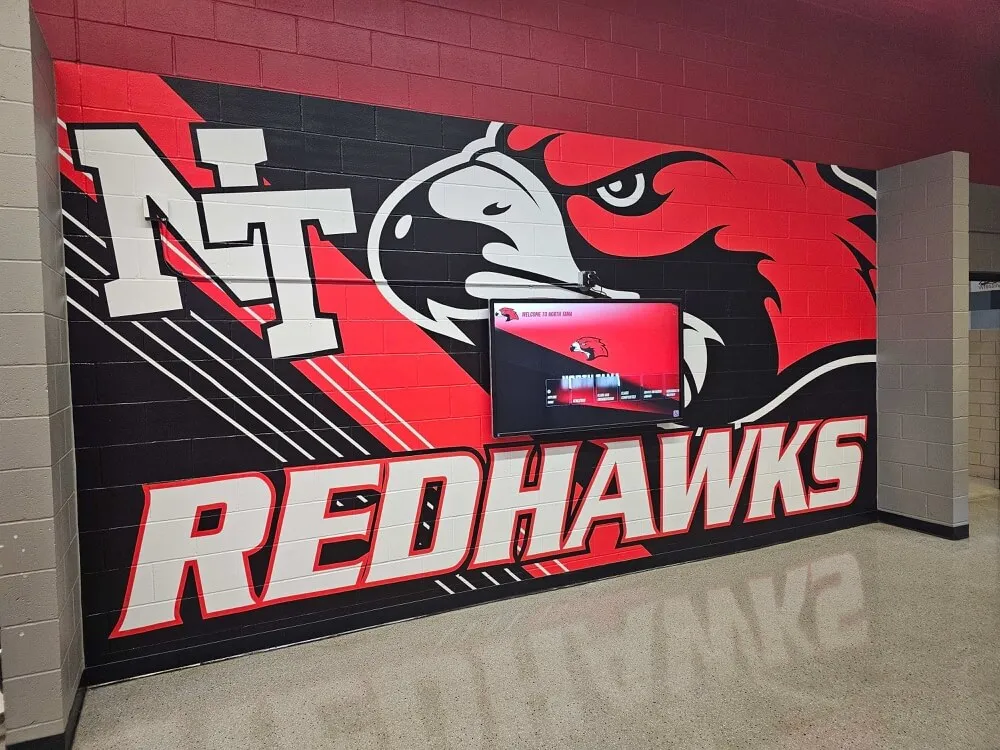
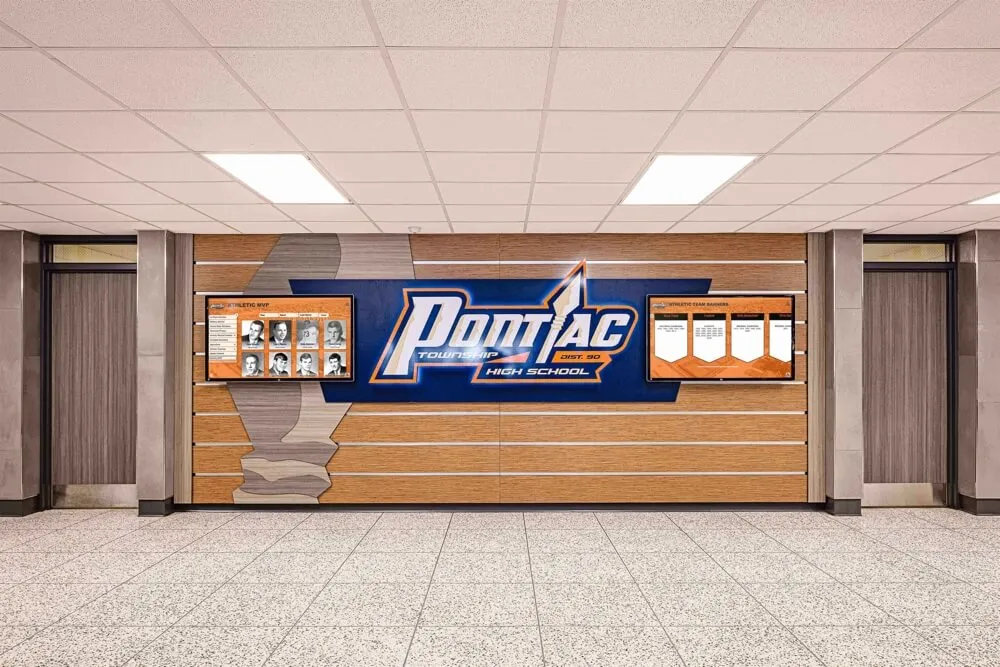
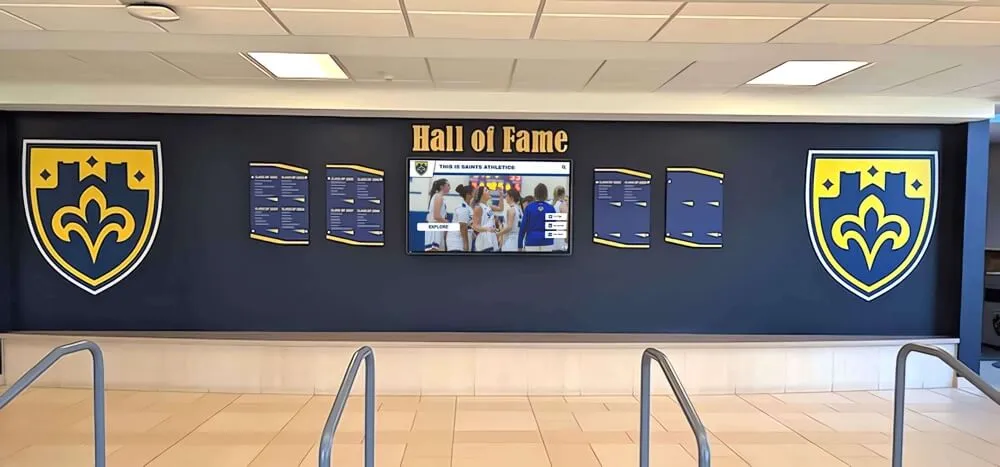
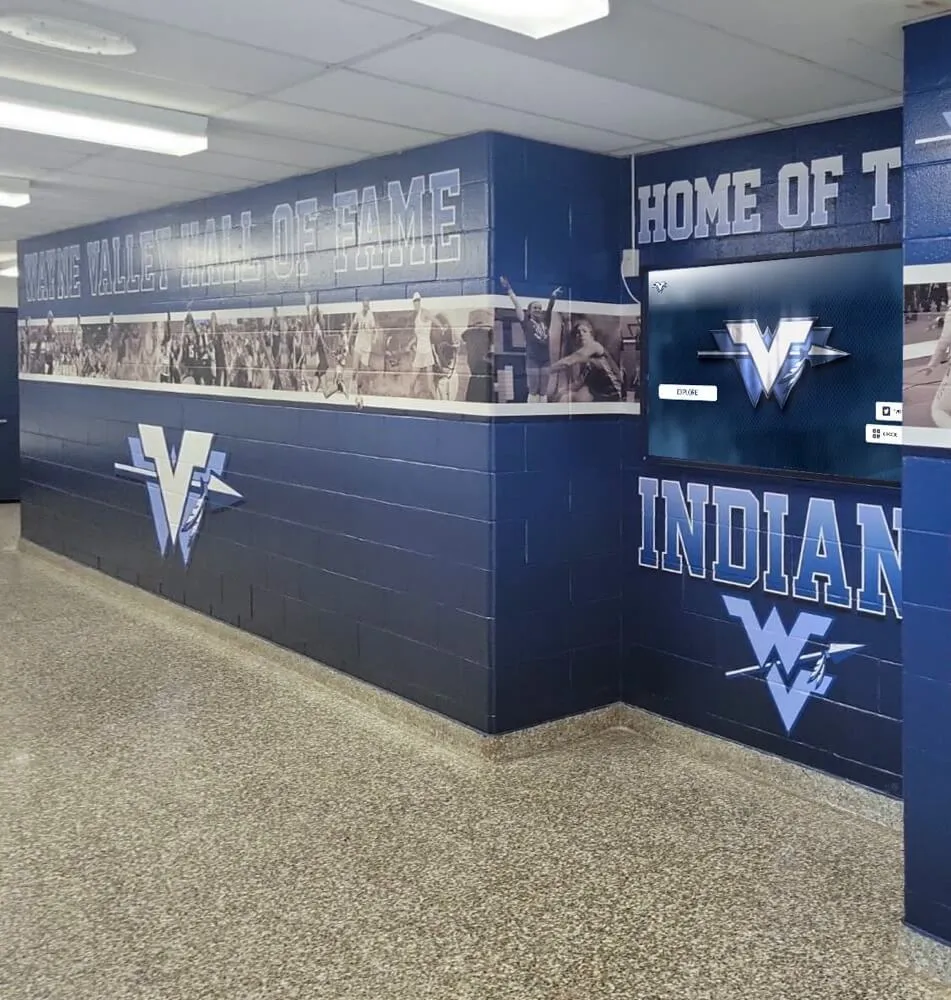
Physical school branding should match social media visual identity, creating cohesive institutional presence
Academic and Student Life Applications
Non-athletic departments have equally significant communication needs:
Academic Recognition Programs
Schools recognize student achievement through various programs requiring visual promotion:
- Honor roll announcements by marking period or semester
- National Honor Society induction ceremony promotion and member recognition
- Scholarship award winner announcements with amounts and qualifications
- Academic competition results from quiz bowl, science fair, or debate tournaments
- Perfect attendance recognition by quarter or year
- Academic improvement celebration for students showing growth
- Advanced Placement scholar recognition following test results
- Valedictorian and salutatorian announcements with photos and college plans
Performing Arts and Fine Arts Promotion
Creative programs depend on audience attendance requiring promotional content:
- Concert and recital announcements with performance dates and ticketing
- Theater production promotion throughout rehearsal and performance periods
- Art show and exhibition graphics inviting community viewing
- Competition participation announcements for regional and state events
- Award and recognition posts for superior ratings and honors
- Student artist spotlights featuring work and creative process
- Audition announcements recruiting student participation
- Behind-the-scenes content building anticipation for performances
Student Life and Culture
Daily school experience includes countless moments worth celebrating:
- Spirit week theme announcements and participation celebrations
- Homecoming court introduction and coronation coverage
- Prom theme reveals and ticket sale information
- Club fair promotion and organization recruitment
- Service learning project documentation and community impact sharing
- Student government election announcements and candidate introductions
- Field trip and educational experience documentation
- Special guest speaker and assembly announcements
Schools that invest in student leadership recognition programs find that social visibility of leadership opportunities encourages broader student participation in service and governance roles.
Administrative and District Communications
School and district leadership require communication channels reaching all stakeholder groups:
Family Communication Graphics
Parents need regular information about school operations and opportunities:
- School calendar updates and important date reminders
- Registration and enrollment information for new and returning families
- Parent-teacher conference scheduling announcements
- Volunteer opportunity promotion and signup information
- PTA meeting announcements and agenda summaries
- Emergency procedure updates and safety information
- Transportation and scheduling change notifications
Community Engagement Content
Schools serve broader communities beyond enrolled families:
- Alumni event invitations and reunion announcements
- Community partnership features and local business recognition
- Facility rental information and availability
- Employment opportunity postings for open positions
- District newsletter features and content promotion
- Bond referendum and levy information for voters
- Community education and enrichment program promotion
Getting Started With Rocket Graphics
Implementation Timeline and Process
Schools can begin using Rocket Graphics immediately with minimal setup:
Week One: Brand Setup
- Create free account at rocketgraphics.ai
- Upload school logos, mascots, and wordmarks in various formats
- Input official color codes from brand guidelines
- Add approved typography selections
- Organize photo library with facility and activity images
Week Two: User Training
- Add staff users who will create content
- Complete 15-minute platform orientation covering basic features
- Practice generating sample content for upcoming events
- Experiment with AI prompts to understand capabilities
- Set up social media connections for direct publishing
Week Three: Content Production
- Begin creating graphics for immediate posting needs
- Establish content calendar for planned events and recognition
- Coordinate across departments to avoid duplicate efforts
- Develop prompt templates for recurring content types
- Gather feedback from early users and refine approaches
Ongoing: Optimization and Expansion
- Analyze performance data to identify high-performing content types
- Expand user base to additional staff and qualified volunteers
- Develop department-specific workflows and prompt libraries
- Connect content to other school systems and platforms
- Refine brand assets as institutional guidelines evolve
Best Practices for Maximum Value
Schools seeing greatest benefit from Rocket Graphics follow common patterns:
Establish Content Ownership
- Assign specific staff members responsibility for different content categories
- Athletic director manages competition and team recognition content
- Activities director handles performing arts and club content
- Administration covers school-wide announcements and family communication
- Student volunteers or yearbook staff can contribute under supervision
Create Prompt Libraries
- Document successful AI prompts for common content types
- Share effective prompt templates across user teams
- Refine language based on output quality and iteration requirements
- Maintain prompt collections organized by season and content category
Maintain Consistent Publishing Cadence
- Establish minimum posting frequency for each platform
- Schedule advance content during planning periods
- Create content batches during slower periods for use during busy seasons
- Balance promotional content with recognition and celebration posts
Coordinate With Other School Systems
- Align social content with digital signage displayed in facilities
- Match yearbook design aesthetics with social media visual identity
- Coordinate recognition content with award ceremonies and events
- Connect social posts to website content and news sections
Districts implementing integrated yearbook and recognition systems discover that consistent visual identity across yearbooks, social media, digital displays, and physical recognition creates stronger institutional brand than siloed approaches to different communication channels.
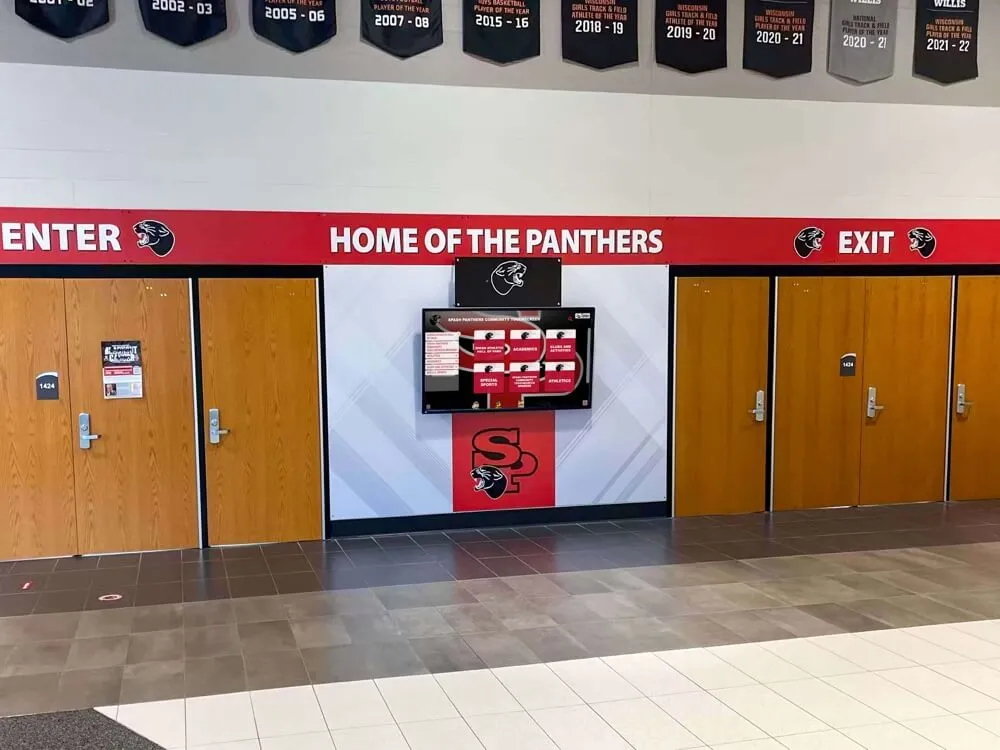
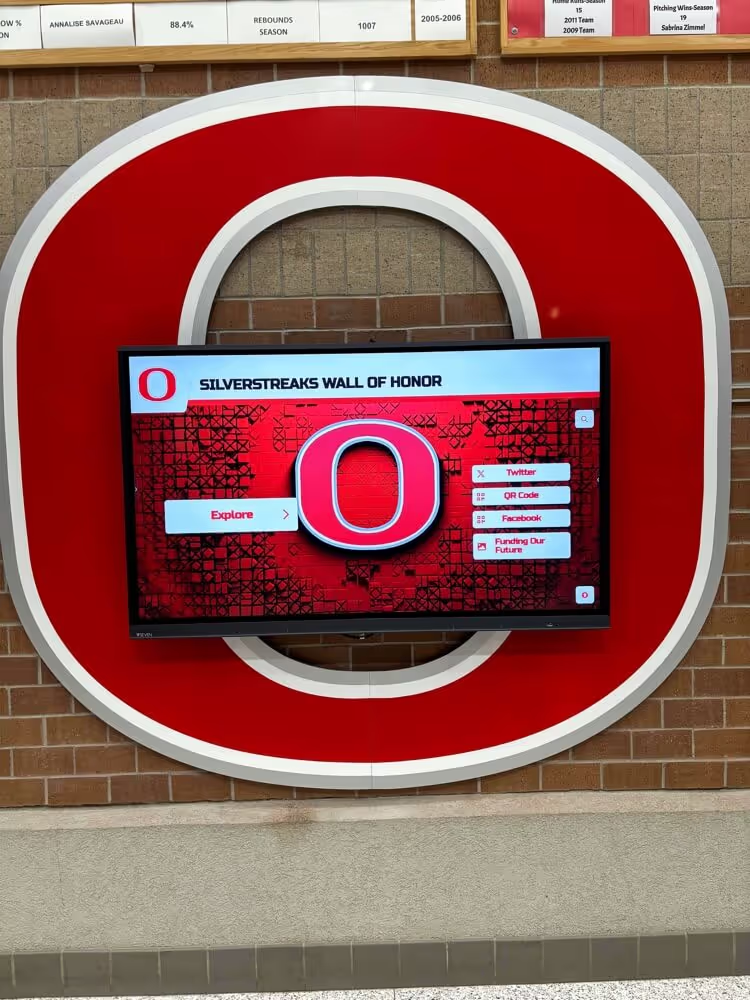
Coordinated visual identity across physical spaces and digital platforms strengthens school brand recognition
Why Free Matters for Schools
Removing Budget Barriers to Quality Communication
School budgets face constant pressure. Technology purchases compete with instructional materials, facilities maintenance, and personnel costs. Communications often receives low budget priority despite its importance for engagement and culture building.
Traditional design solutions create budget obstacles:
Professional Design Services cost $50-150 per graphic, making regular content production financially impossible for most schools. Even modest social media presence requiring 3-4 posts weekly would cost $600-2,400 monthly—untenable for typical school budgets.
Design Software Subscriptions like Adobe Creative Suite run $60+ monthly per user, requiring multiple licenses as content creation responsibilities spread across departments. Annual costs of $700+ per user create budget strain, and most schools lack staff with expertise to maximize these professional tools anyway.
Template Platform Subscriptions charge $15-50 monthly for access to template libraries, with additional costs for premium templates, stock photos, and advanced features. While more affordable than professional design, these tools still require manual design work and produce generic results.
Rocket Graphics eliminates these budget barriers completely. The platform is entirely free—no subscriptions, no per-user fees, no premium feature paywalls, no usage limits. Schools gain access to AI-powered design capabilities that would cost thousands annually through traditional channels, without any budgetary impact.
The Real Cost: Time and Opportunity
While financial costs matter, time represents the more significant constraint for most schools. Staff members creating graphics manually invest 30-60 minutes per post—time pulled from other responsibilities or personal hours.
Consider typical time investments without AI assistance:
- Opening design software and selecting template: 5 minutes
- Customizing colors, fonts, and layout: 10-15 minutes
- Finding and editing appropriate images: 10-15 minutes
- Adding and formatting text content: 5-10 minutes
- Adjusting spacing, alignment, and composition: 5-10 minutes
- Exporting in correct formats and dimensions: 5 minutes
- Total: 40-60 minutes per graphic
Schools needing 5-10 graphics weekly invest 200-600 minutes of staff time on content creation—equivalent to 3-10 hours pulled from other priorities or worked beyond contracted hours.
Rocket Graphics reduces this to 2-5 minutes per graphic:
- Enter text prompt describing desired content: 30 seconds
- Review AI-generated options: 30 seconds
- Request any modifications needed: 1-2 minutes
- Export and publish: 1 minute
- Total: 2-5 minutes per graphic
The same 5-10 weekly graphics now require 10-50 minutes instead of 200-600 minutes—a time savings of 150-550 minutes weekly or 2.5-9 hours. This recovered time enables staff to focus on strategic communication planning, relationship building with families and community partners, or simply maintaining healthier work-life boundaries.
Moving Your School Communications Forward
Contemporary schools compete for student attention in an increasingly visual digital landscape. Families expect regular content celebrating student achievement. Athletes and performers look for recognition on platforms where their peers will see it. Community members form impressions of school quality partly based on professional presentation across digital channels.
Rocket Graphics enables schools to meet these expectations without unsustainable budget investments or staff workloads. By combining AI-powered content generation with school-specific templates and brand intelligence, the platform makes professional-quality social media graphics accessible to any school regardless of size, budget, or design expertise.
The communications landscape will continue evolving toward greater visual content volumes and multi-platform presence. Schools that develop sustainable content creation systems now position themselves to adapt as platforms and expectations change, rather than perpetually scrambling to keep pace with increasing demands using inadequate tools.
For yearbook advisors specifically, coordinated visual identity across yearbook spreads, social media posts, and digital displays creates stronger institutional memory than fragmented approaches treating each content type separately. When students see consistent recognition across multiple channels—physical yearbooks, social media posts, hallway displays—the impact multiplies beyond any single medium alone.
The platform is free, requires no technical expertise, and can begin generating value within minutes of account creation. There’s no reason to delay implementing a tool that addresses immediate content needs while building long-term communication capacity for your institution.
Explore Rocket Graphics and discover how AI-powered content creation can transform your school’s ability to celebrate students, engage families, and build community through visual storytelling that matches the quality of education you provide.