



Distinguished country clubs represent more than recreational facilities—they embody tradition, community, and excellence cultivated over generations. Yet many private clubs struggle to celebrate their rich heritage and recognize member achievements in ways that resonate with today’s digitally-connected membership. Traditional plaques and static photo walls, while respectful of history, often fail to engage younger members or tell the compelling stories that make club communities special.
When one prestigious country club sought to modernize how they honored member accomplishments, preserved tournament history, and welcomed guests, they turned to an innovative solution: a Rocket Alumni Solutions interactive touchscreen display. This installation transformed a previously underutilized lobby area into a dynamic engagement hub where members explore club history, discover fellow members’ achievements, and connect with the traditions that define their community.
This article explores how interactive touchscreen technology serves private clubs, examining the specific applications that create value for members while honoring the heritage and exclusivity that distinguish country club experiences.
Country clubs investing in digital recognition technology report significant improvements in member engagement, with interactive displays becoming focal points during events, tournaments, and social gatherings. These systems complement traditional club aesthetics while providing capabilities that static displays simply cannot match—searchable member directories, tournament history archives, real-time event information, and multimedia storytelling that brings club heritage to life.

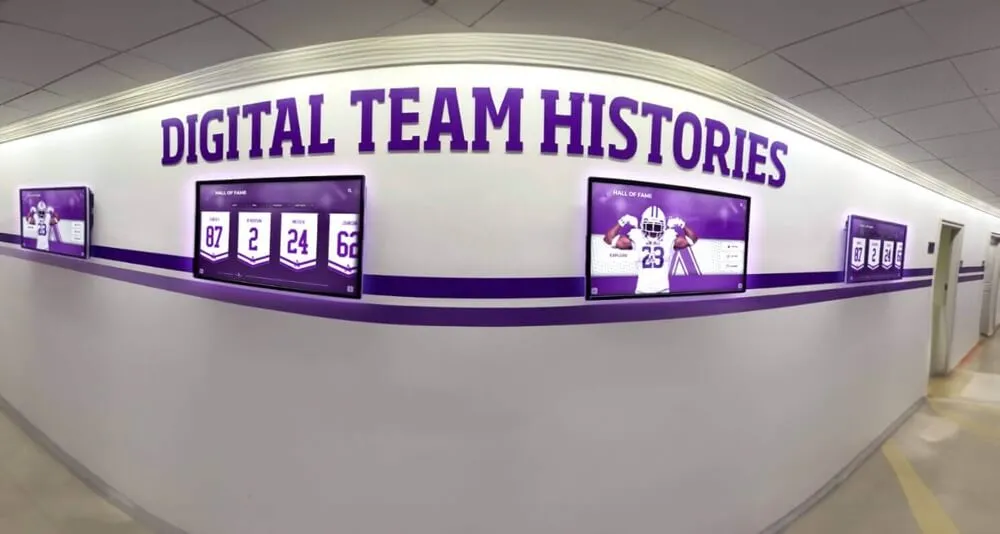
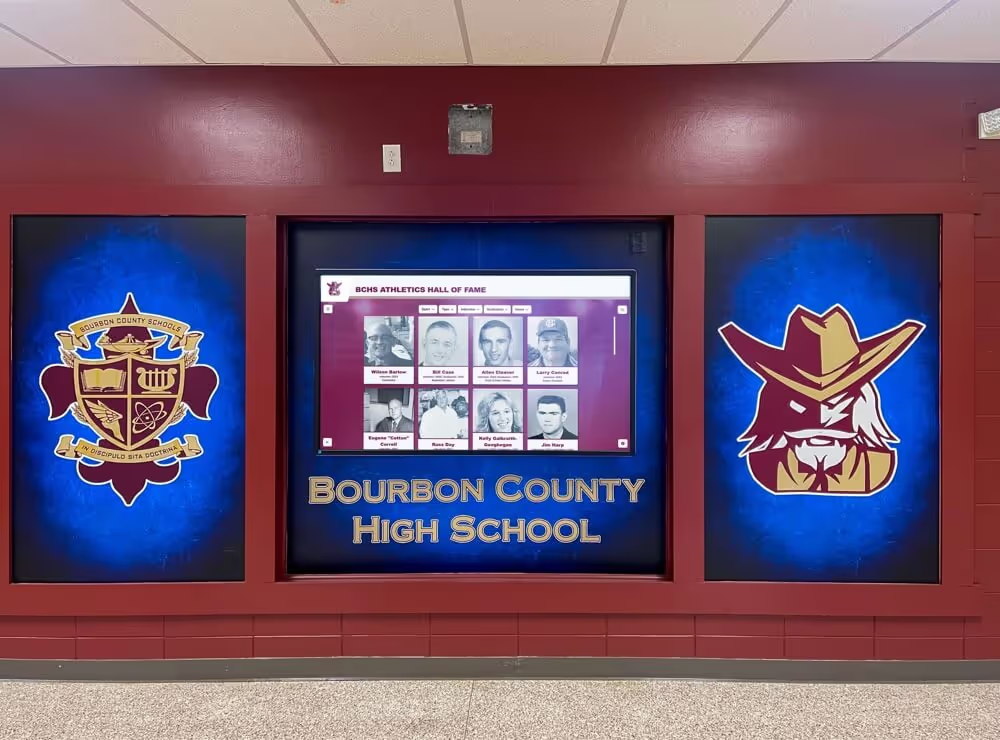
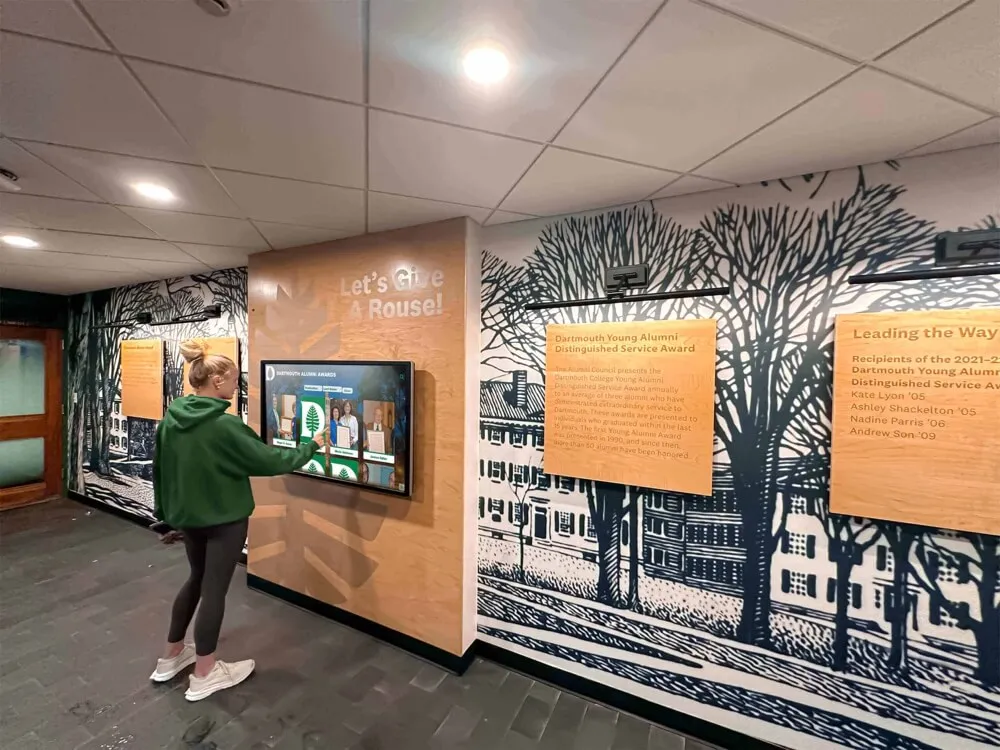
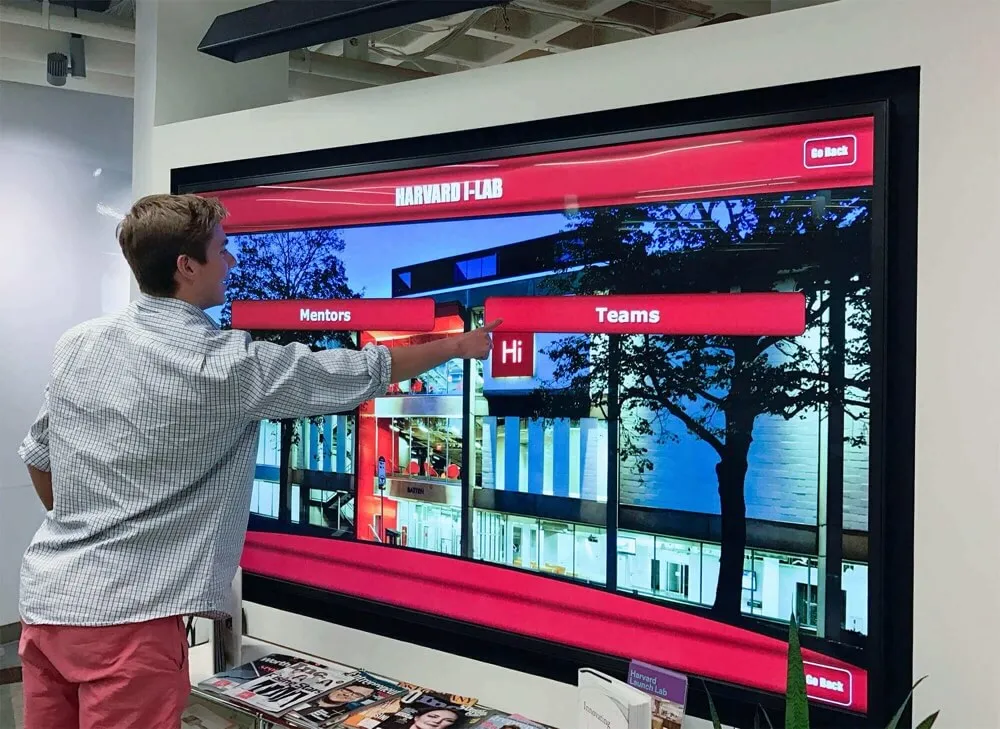
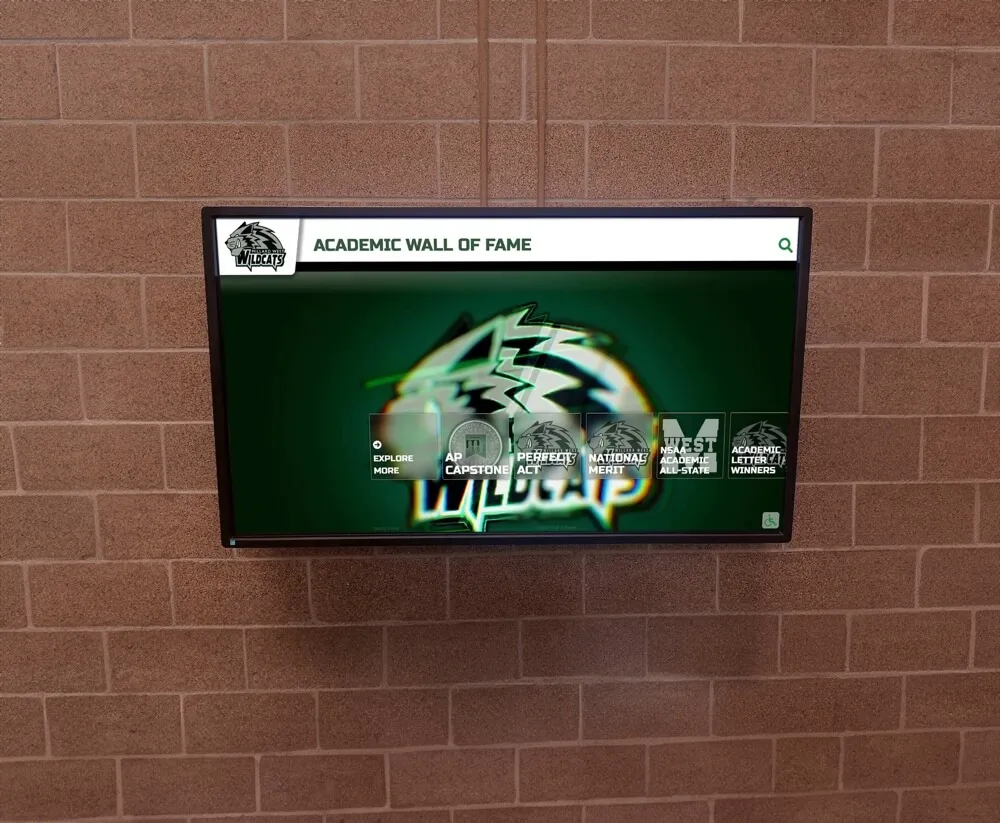
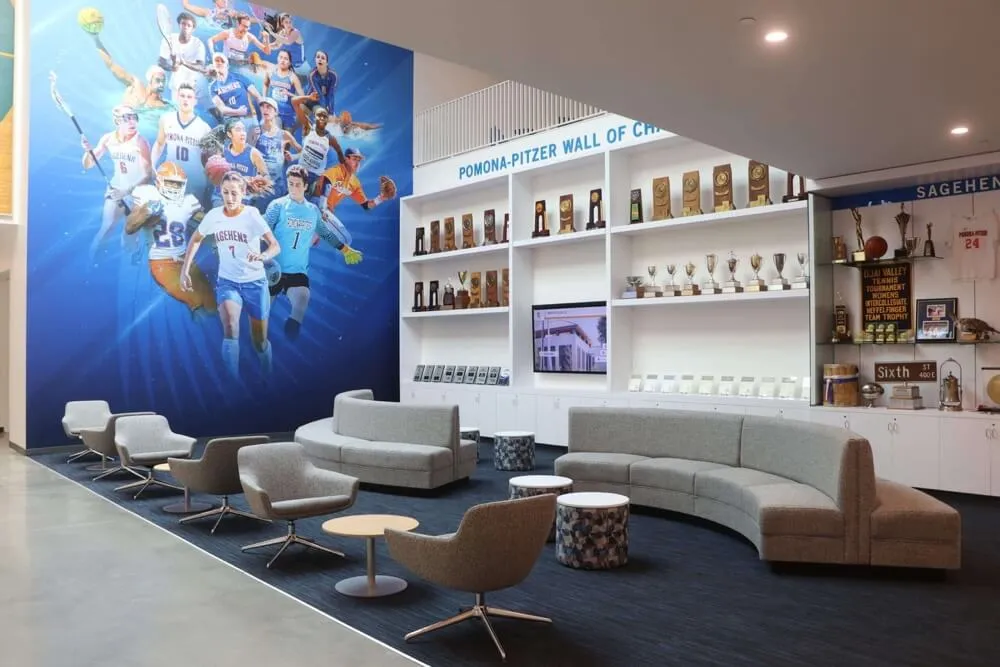
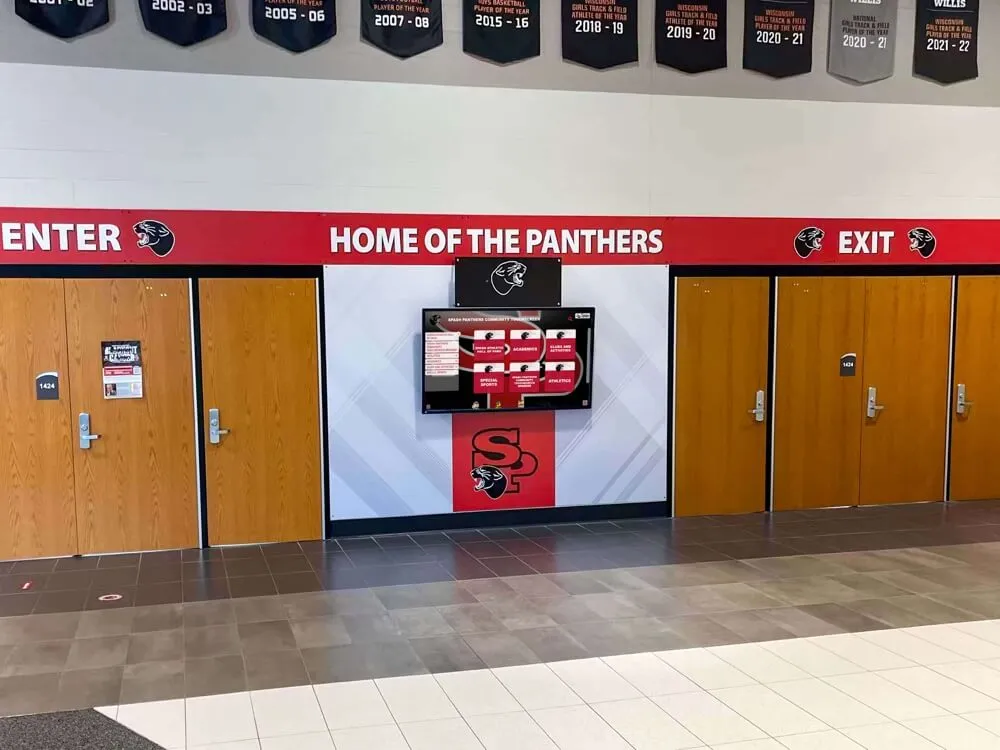
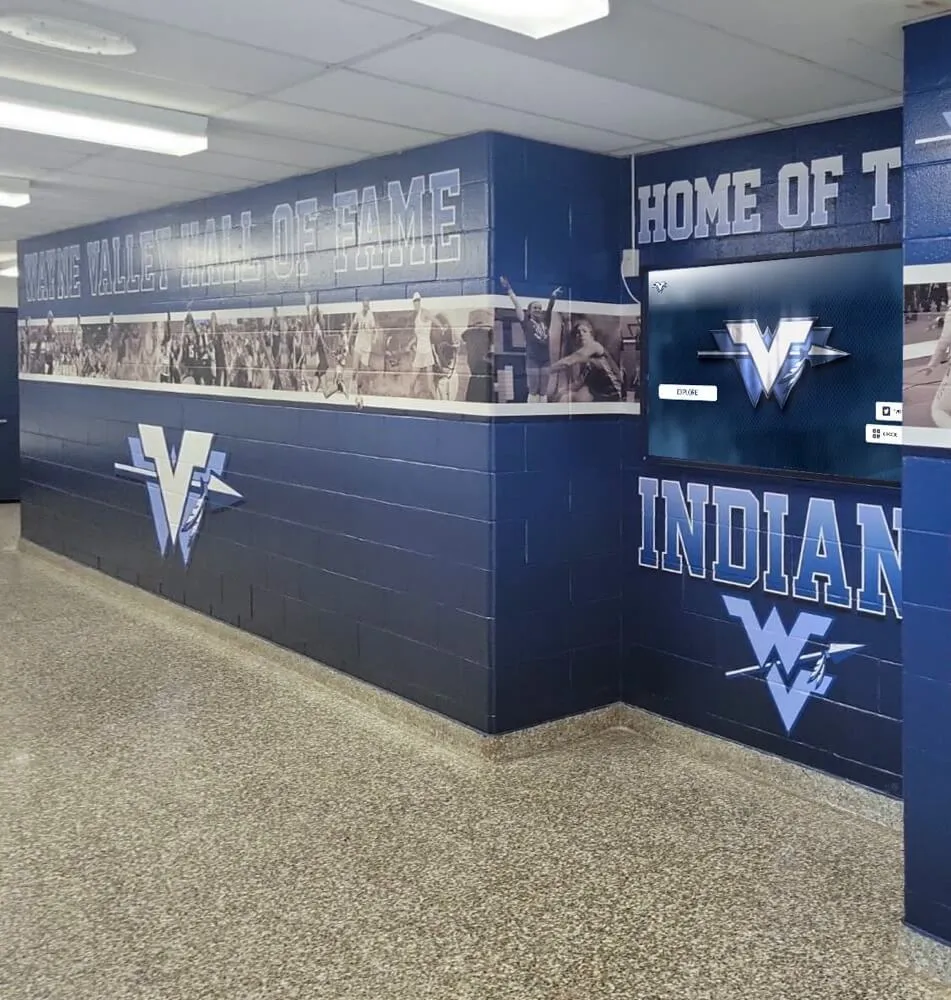
Modern touchscreen displays create elegant engagement points where members explore club history and connect with community
The Evolution of Member Recognition in Private Clubs
Country clubs have long maintained traditions of honoring member achievements, preserving tournament records, and celebrating club history through physical displays and memorabilia.
Traditional Recognition Methods in Country Clubs
Trophy Cases and Championship Boards
Classic country clubs typically showcase excellence through:
- Glass trophy cases displaying tournament trophies and championship memorabilia
- Wooden plaques listing tournament champions by year and event
- Framed photographs documenting significant club moments and celebrations
- Brass nameplate walls recognizing club presidents and board members
- Static displays honoring founding members and major donors
These traditional elements create tangible connections to club heritage and provide permanent recognition of achievement. Trophy cases flanking main hallways honor competitive excellence, while presidential plaques near boardrooms acknowledge leadership contributions.
Space and Maintenance Challenges
Physical displays face inherent limitations:
- Trophy cases eventually reach capacity as tournament history accumulates
- Wooden championship boards require expensive engraving for annual updates
- Photograph displays fade over time, requiring preservation and replacement
- Static recognition provides minimal context about achievements or member stories
- Maintaining accuracy becomes increasingly difficult as records span decades
Many clubs discover that valuable wall space fills quickly, forcing difficult decisions about what history receives visibility and what gets relegated to storage.
The Digital Recognition Opportunity
Modern technology addresses traditional limitations while respecting club heritage and aesthetic standards.
Interactive Touchscreen Capabilities
Purpose-built platforms like those from Rocket Alumni Solutions offer private clubs:
- Unlimited digital capacity for member profiles and tournament records
- Searchable databases enabling quick discovery of specific members or achievements
- Multimedia integration supporting photos, videos, and detailed narratives
- Real-time updates reflecting current information without physical modifications
- Web accessibility extending recognition beyond clubhouse walls
A single touchscreen display can showcase decades of tournament champions, hundreds of member profiles, and countless club milestones—occupying the same wall space as a single traditional trophy case.
Preserving Club Aesthetic Standards
Successful club technology implementations balance modern capability with traditional sensibilities:
- Custom design matching club color schemes and visual identity
- Professional installations integrating displays into existing architecture
- Classical framing and presentation styles honoring club heritage
- Selective technology deployment in appropriate common areas
- Maintaining traditional elements alongside digital enhancements
The most effective approach often combines technology with tradition—preserving treasured physical displays while adding interactive capability that extends what clubs can celebrate and share.
Key Applications for Country Club Touchscreens
Interactive displays serve multiple functions that create value throughout club operations and member experiences.
Tournament and Championship Recognition
Comprehensive Tournament History
Golf, tennis, and other competitive programs generate extensive records:
- Championship flight winners across all club tournaments
- Historical scoring records and notable achievements
- Tournament evolution documenting format and participation changes
- Photo galleries from memorable competitions
- Player statistics and performance tracking
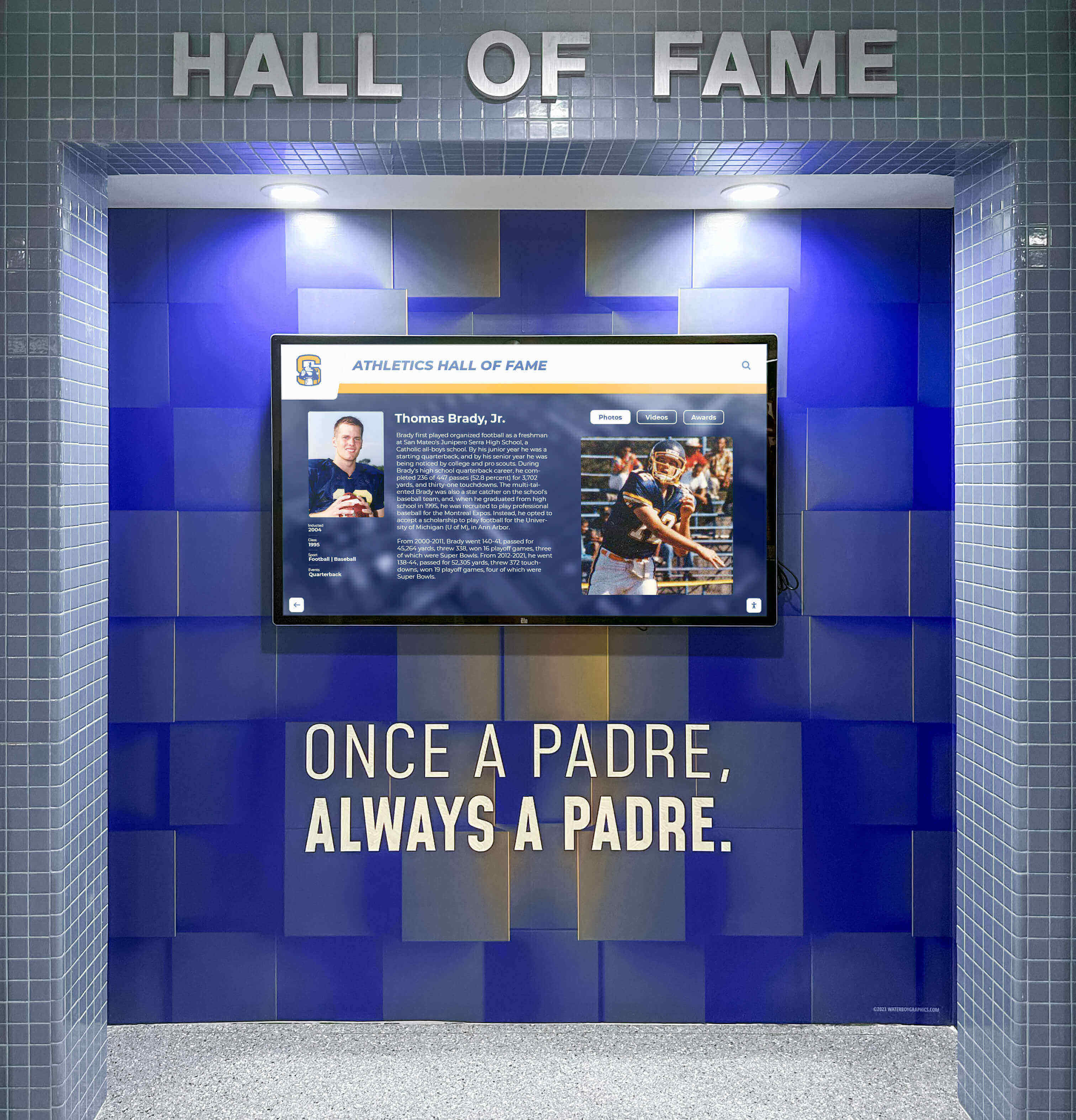
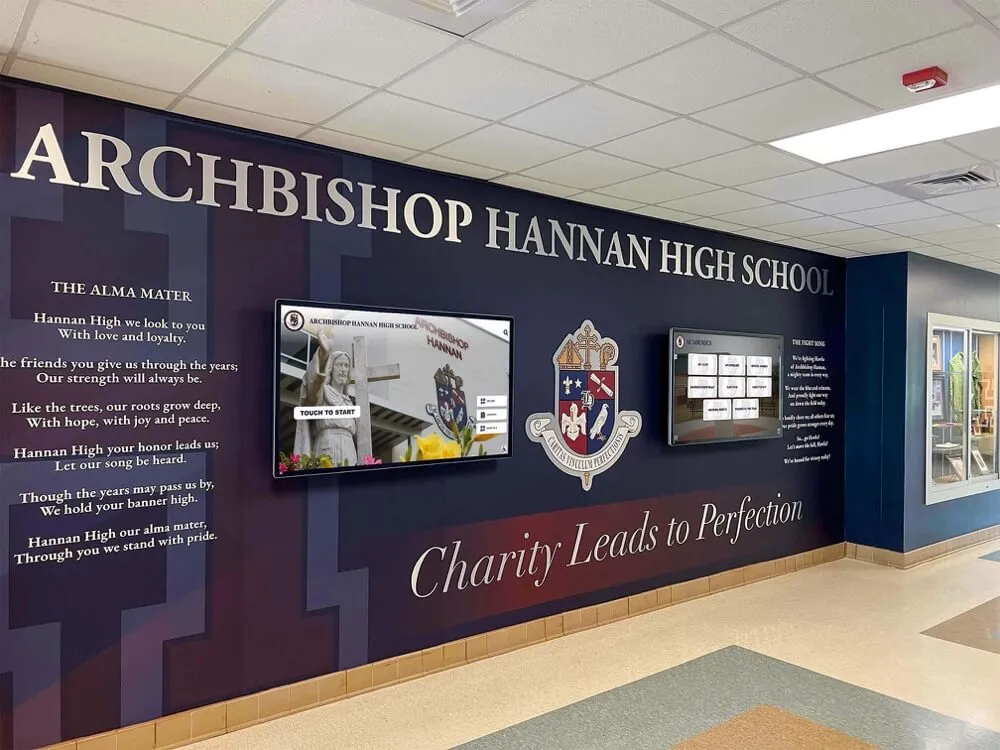
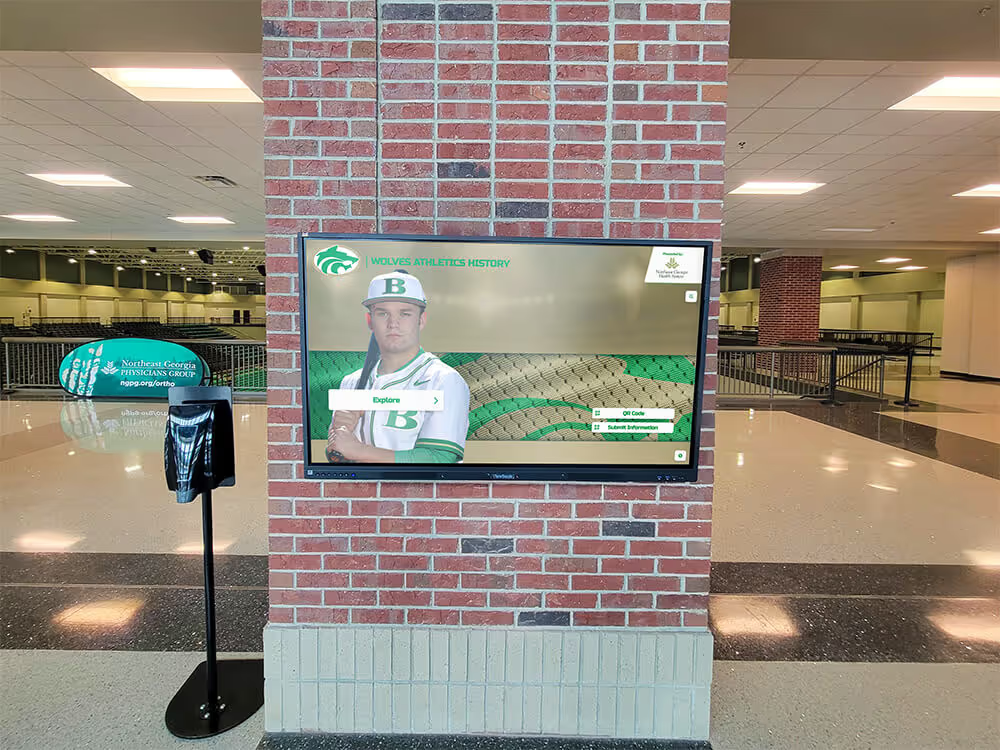
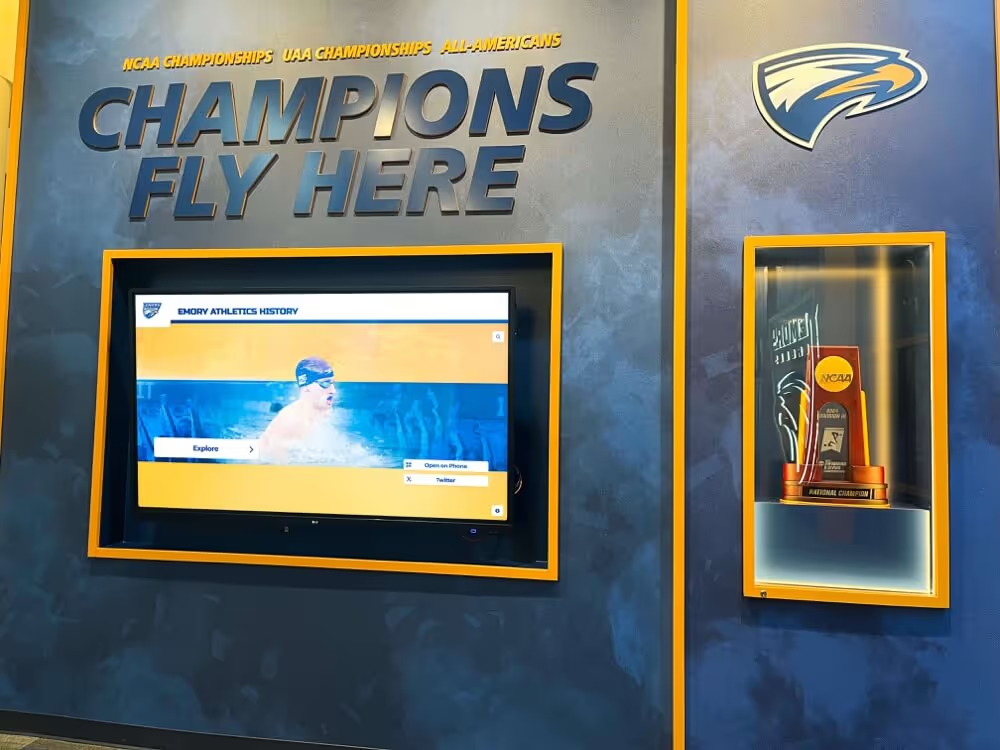
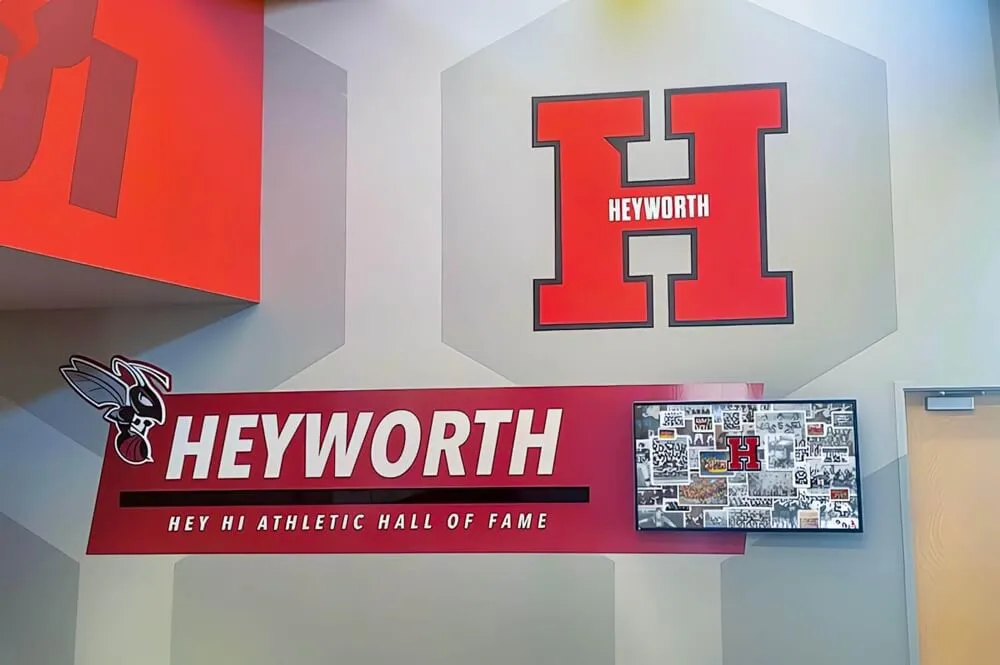
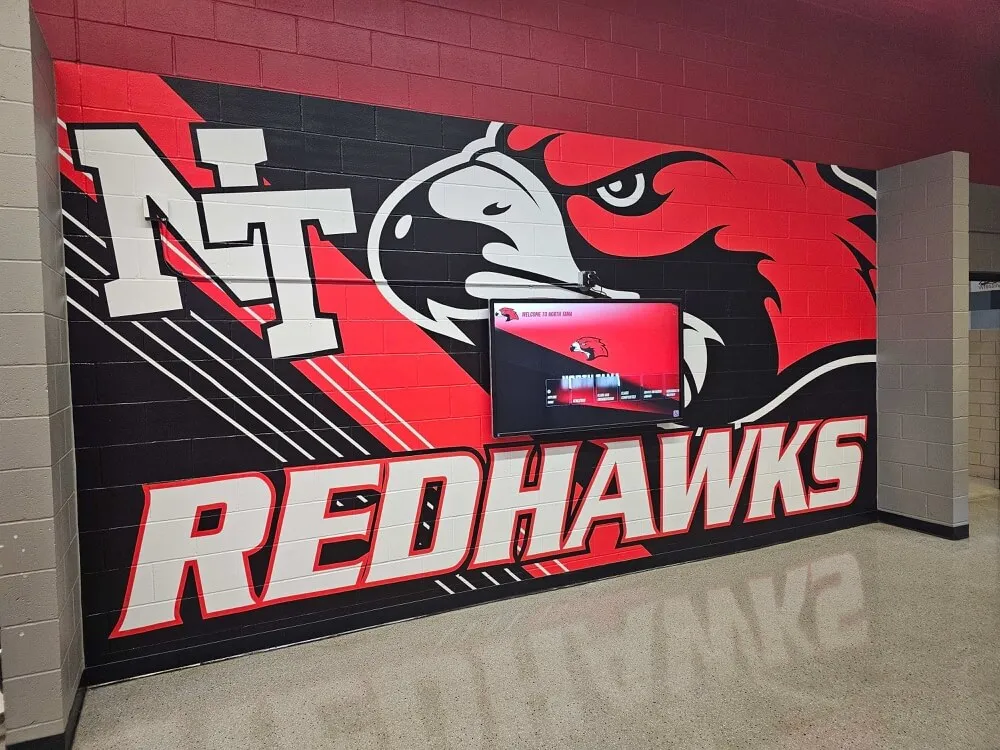
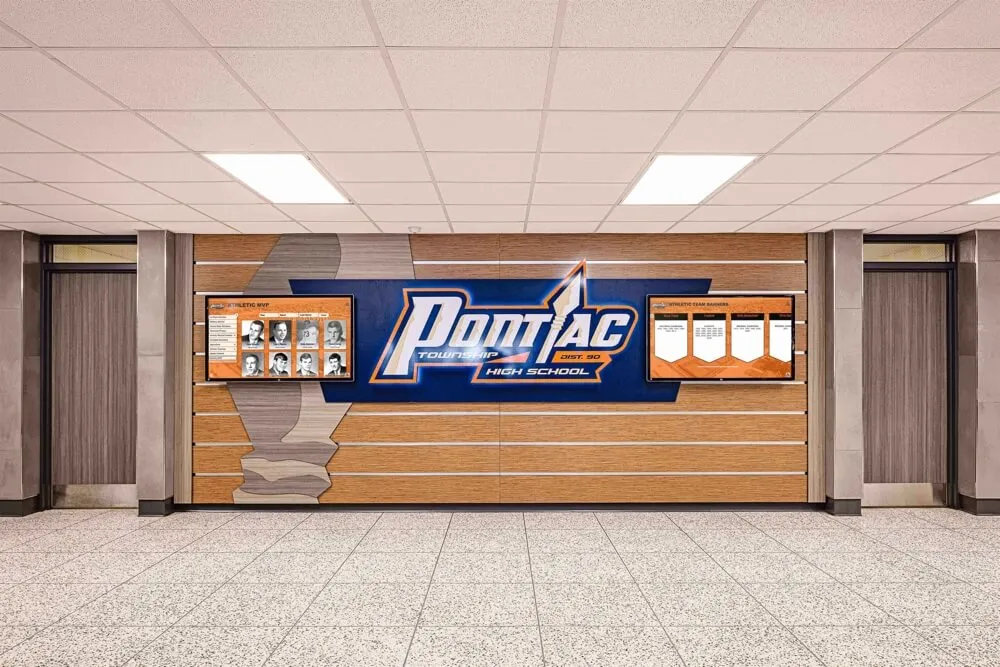
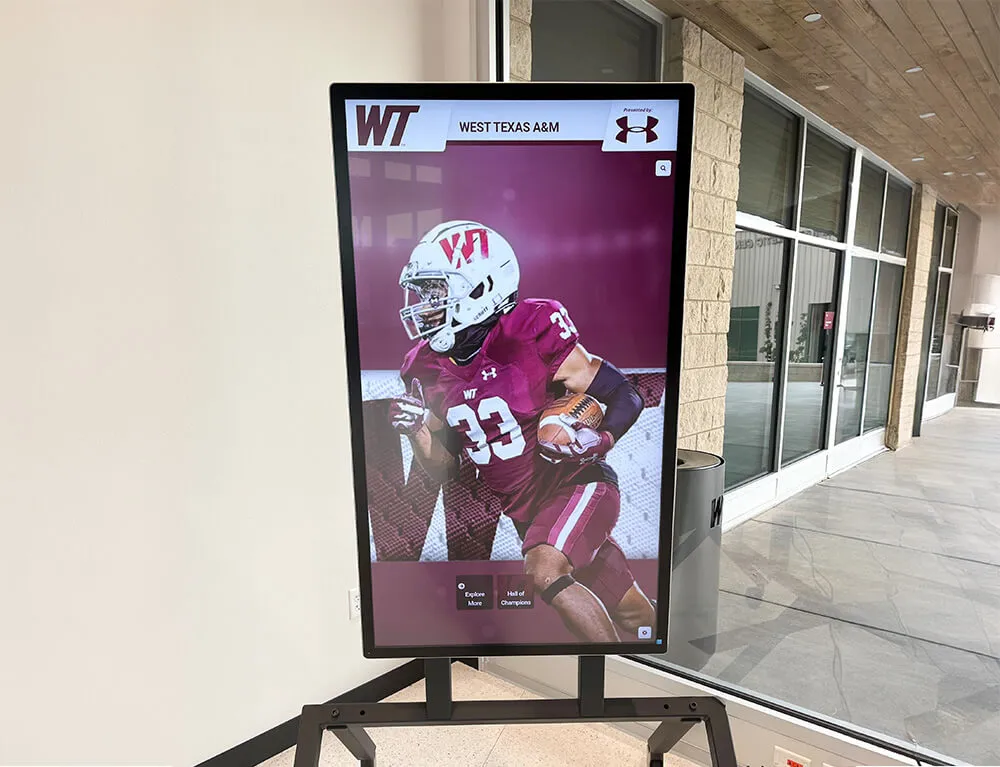
Digital displays integrate seamlessly with club architecture while providing comprehensive tournament recognition
Clubs implementing digital athletic recognition approaches adapted for private club contexts discover that comprehensive tournament documentation strengthens competitive culture while honoring all participants appropriately.
Live Tournament Leaderboards
During major club championships, touchscreens can display:
- Real-time scoring updates as rounds progress
- Flight standings and advancement brackets
- Historical context comparing current performance to past records
- Participant profiles and previous championship results
- Tournament schedules and pairing information
This live information creates engagement hubs where members gather to follow competitions, similar to how interactive displays enhance sporting events in other contexts.
Member Directory and Recognition
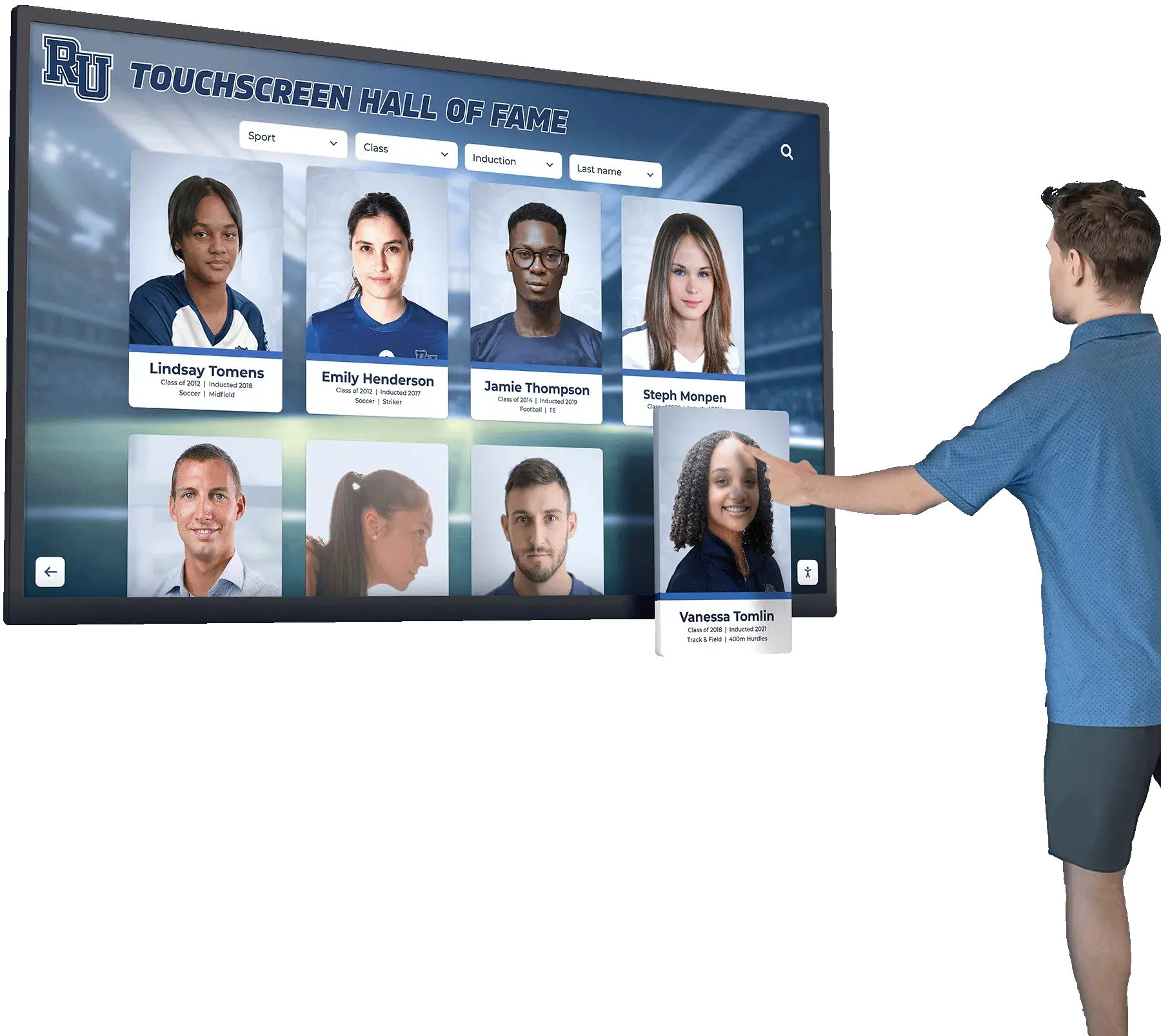
Searchable Member Profiles
Interactive directories transform how members connect:
- Alphabetical browsing enabling quick member discovery
- Search functionality finding specific individuals instantly
- Member categories (golf, tennis, social, junior)
- Years of membership and service recognition
- Committee involvement and club contributions
- Professional information members choose to share
This searchable approach proves particularly valuable for clubs with large memberships where members may not know everyone, fostering connection and community building.
Special Recognition Categories
Clubs can create digital sections honoring:
- Club presidents and board leadership throughout history
- Major capital campaign contributors and facility benefactors
- Volunteer committee chairs and long-serving members
- Founding families and charter members
- Memorial tributes for deceased members who shaped club history
These recognition frameworks, similar to comprehensive donor recognition systems used by nonprofits, honor diverse contributions while maintaining appropriate club discretion and privacy.

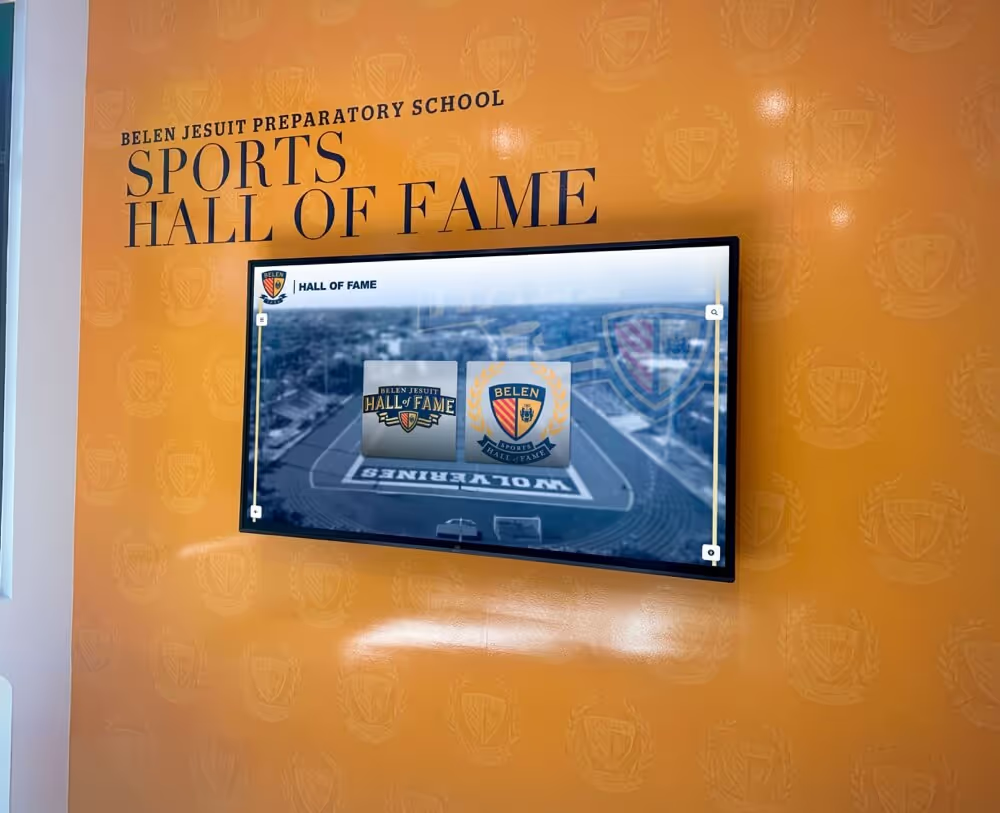
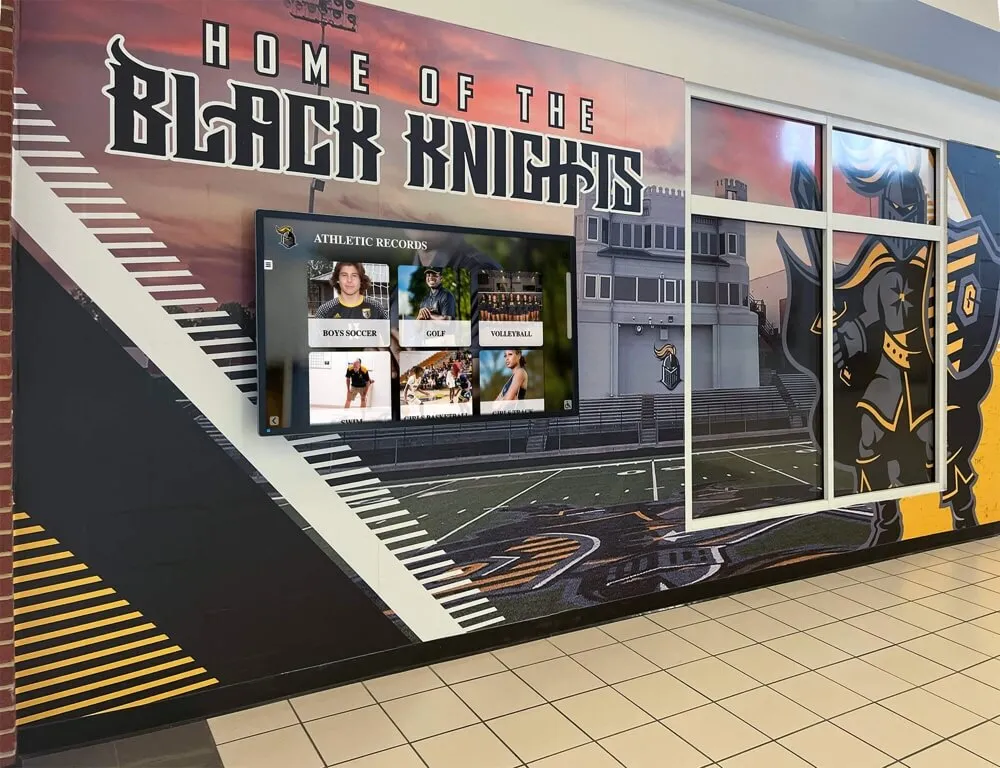
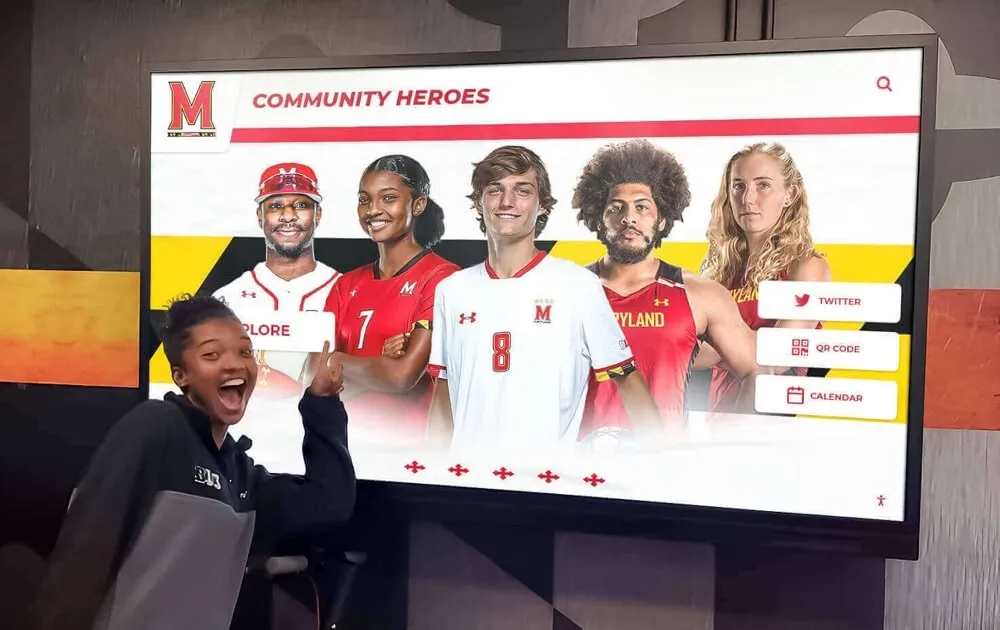
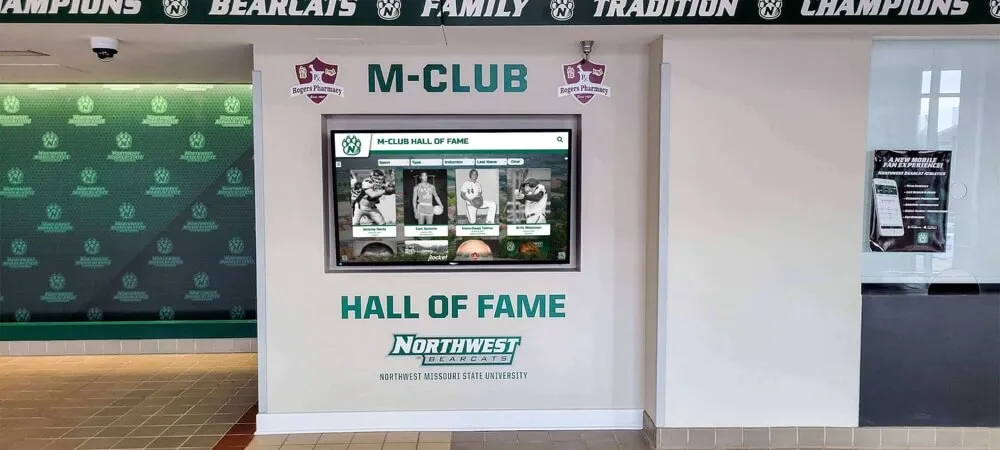
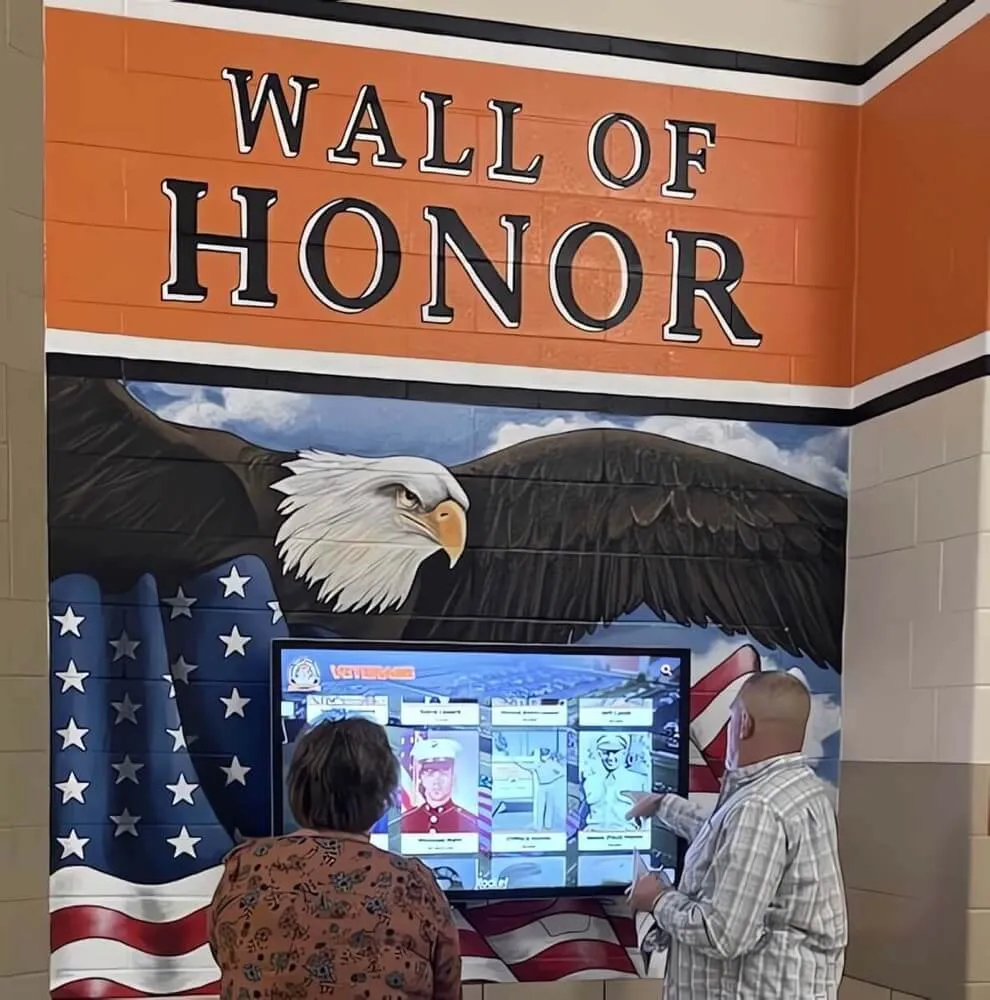
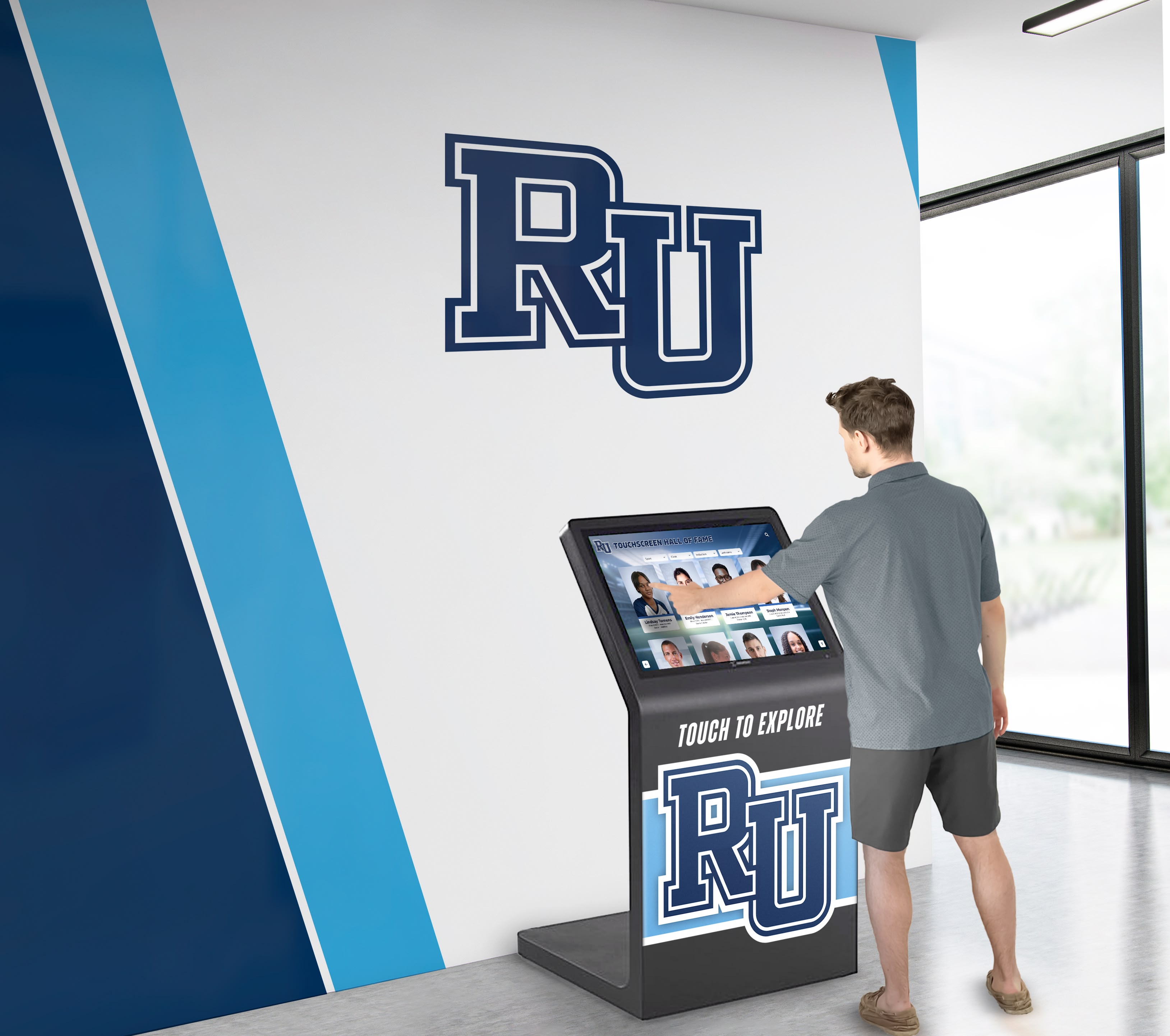
Intuitive touchscreen interfaces enable members to discover fellow members and explore club community
Club History and Heritage Preservation
Archival Photo Collections
Country clubs accumulate rich photographic history:
- Facility evolution documenting clubhouse and course development
- Social event galleries from decades of member gatherings
- Historical tournament photographs and memorable moments
- Architectural heritage showing original construction and renovations
- Landscape transformation tracking grounds improvements
Organizations preserving institutional memory through digital archive approaches demonstrate how touchscreen platforms make extensive collections accessible and engaging.
Timeline Presentations
Interactive timelines document club evolution:
- Founding year and charter member information
- Significant milestones in club development
- Major renovations and capital improvements
- Championship hosts and significant tournaments
- Leadership transitions and era-defining changes
These chronological narratives help members understand club heritage while providing context for current traditions and culture.
Storytelling Through Multimedia
Digital platforms enable rich narrative presentation:
- Video interviews with long-time members sharing club memories
- Historical documents and original correspondence
- Audio recordings from significant club events
- Architectural renderings and planning documents
- News coverage and media about club achievements
This multimedia capability transforms simple historical displays into immersive storytelling experiences that engage members across generations.
Event Information and Communication
Real-Time Event Updates
Touchscreens serve practical communication functions:
- Daily dining menus and special culinary events
- Upcoming tournament schedules and registration deadlines
- Social calendar with member event details
- Holiday hours and facility information
- Weather alerts and course conditions
This current information complements recognition content, making displays valuable reference points members consult regularly.
New Member Orientation
Interactive displays support membership growth:
- Club overview and facility tours for prospective members
- Membership category information and benefits
- Committee descriptions and volunteer opportunities
- Club culture and tradition explanations
- Contact information for membership services
Similar to how campus directories guide visitors, club touchscreens help newcomers understand community and facilities.
Implementation Considerations for Private Clubs
Successfully deploying touchscreen technology in country club environments requires thoughtful planning addressing club-specific needs and sensibilities.
Location and Placement Strategy
High-Traffic Common Areas
Optimal display locations include:
- Main clubhouse lobby where members enter facilities
- Areas adjacent to dining rooms with pre-meal traffic
- Locker room corridors serving golf and tennis participants
- Event spaces used for social gatherings and tournaments
- Pro shop areas with member and guest traffic
Strategic placement ensures displays receive visibility while maintaining appropriate positioning within club architecture and flow.
Multiple Display Considerations
Larger clubs may benefit from distributed approach:
- Primary comprehensive display in main clubhouse lobby
- Golf-specific display in men’s and women’s locker areas
- Tennis pavilion display focused on racquet sport achievements
- Event space displays for social and dining information
- Outdoor displays for course-specific information
This distributed strategy, similar to multi-location recognition systems in institutional settings, ensures relevant information reaches appropriate audiences.
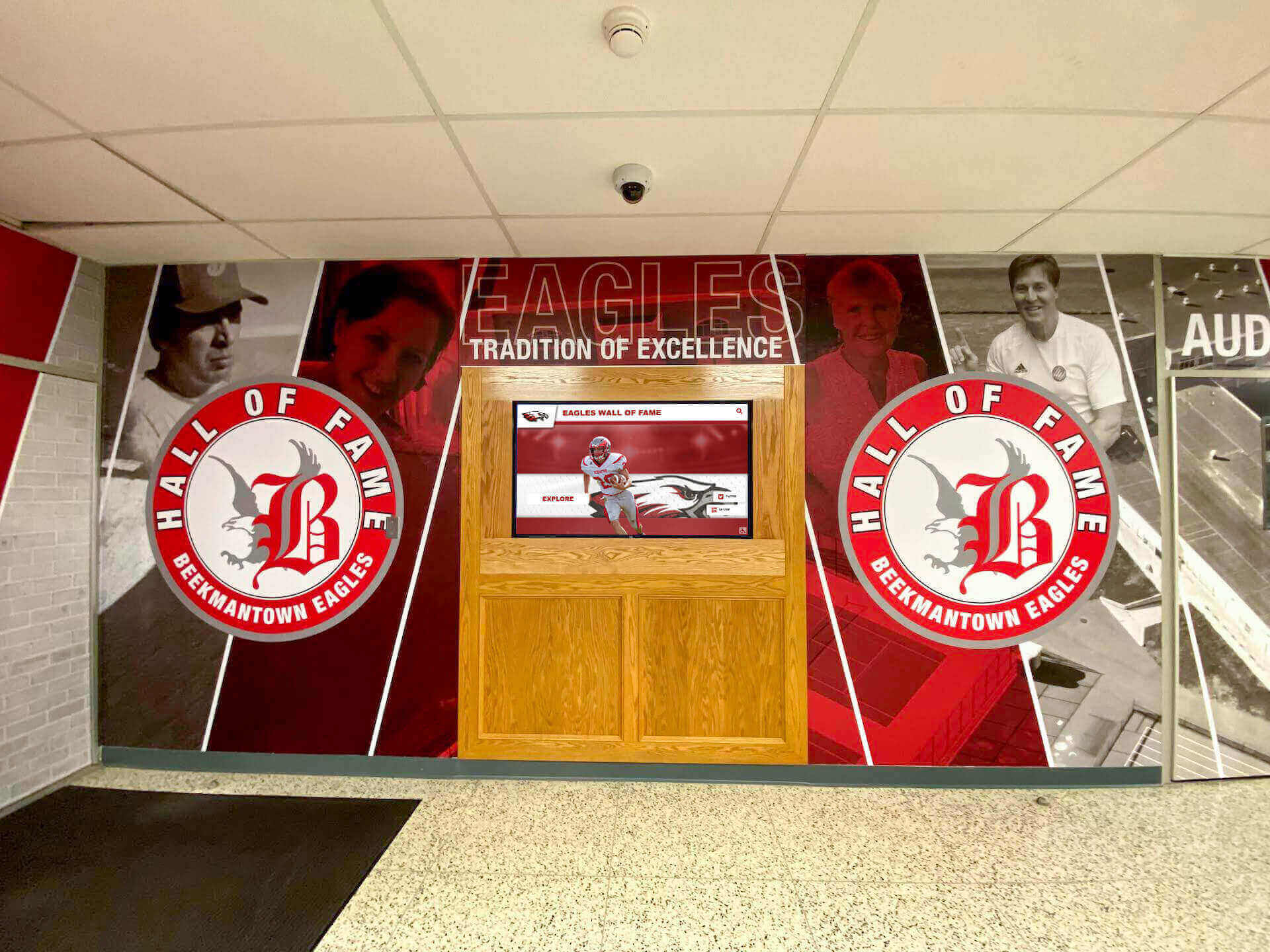
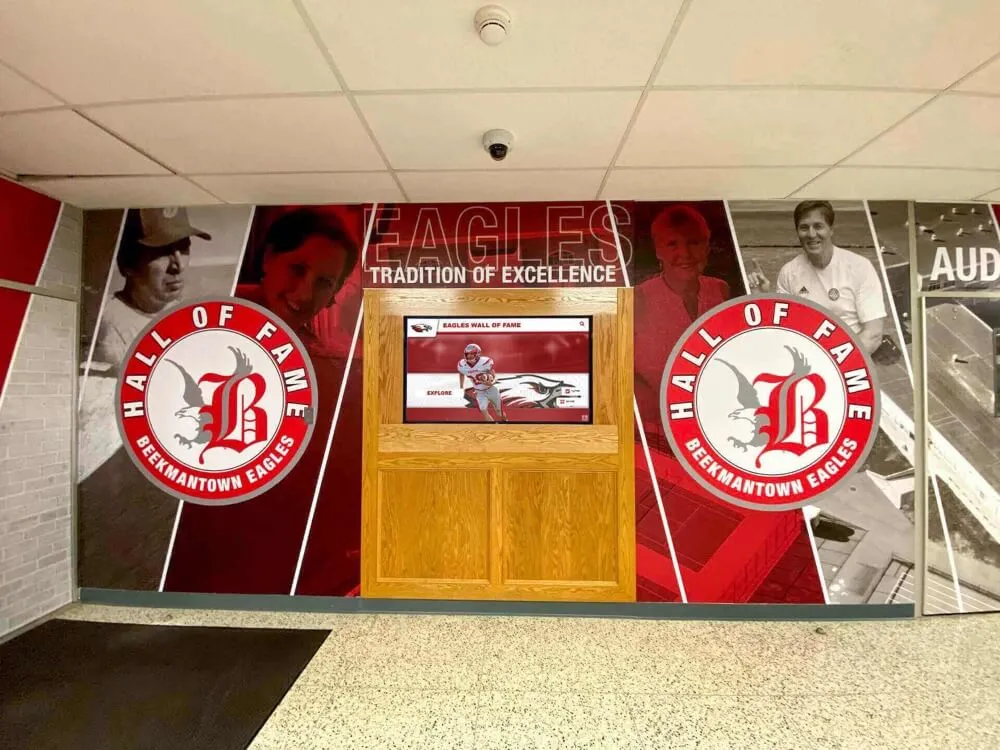
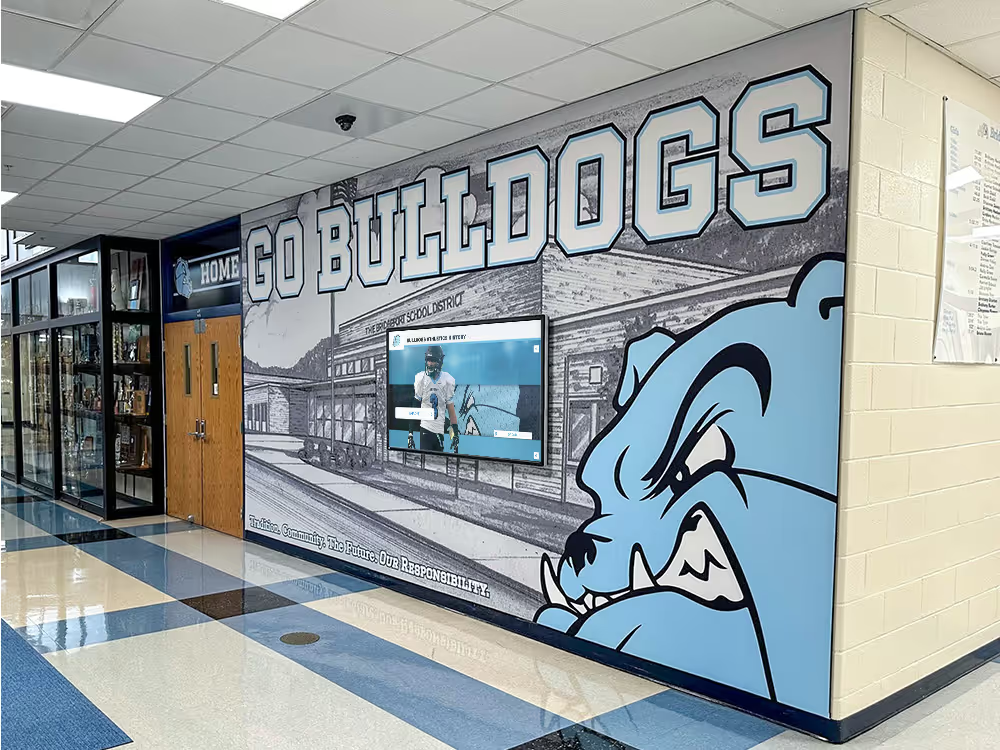
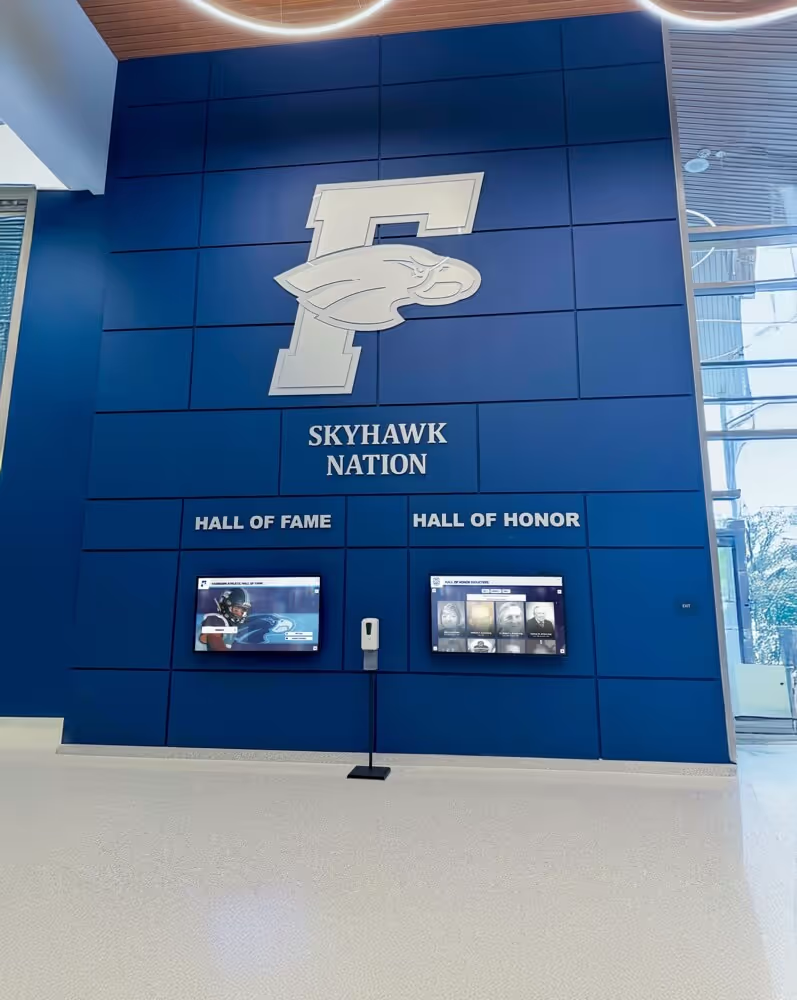
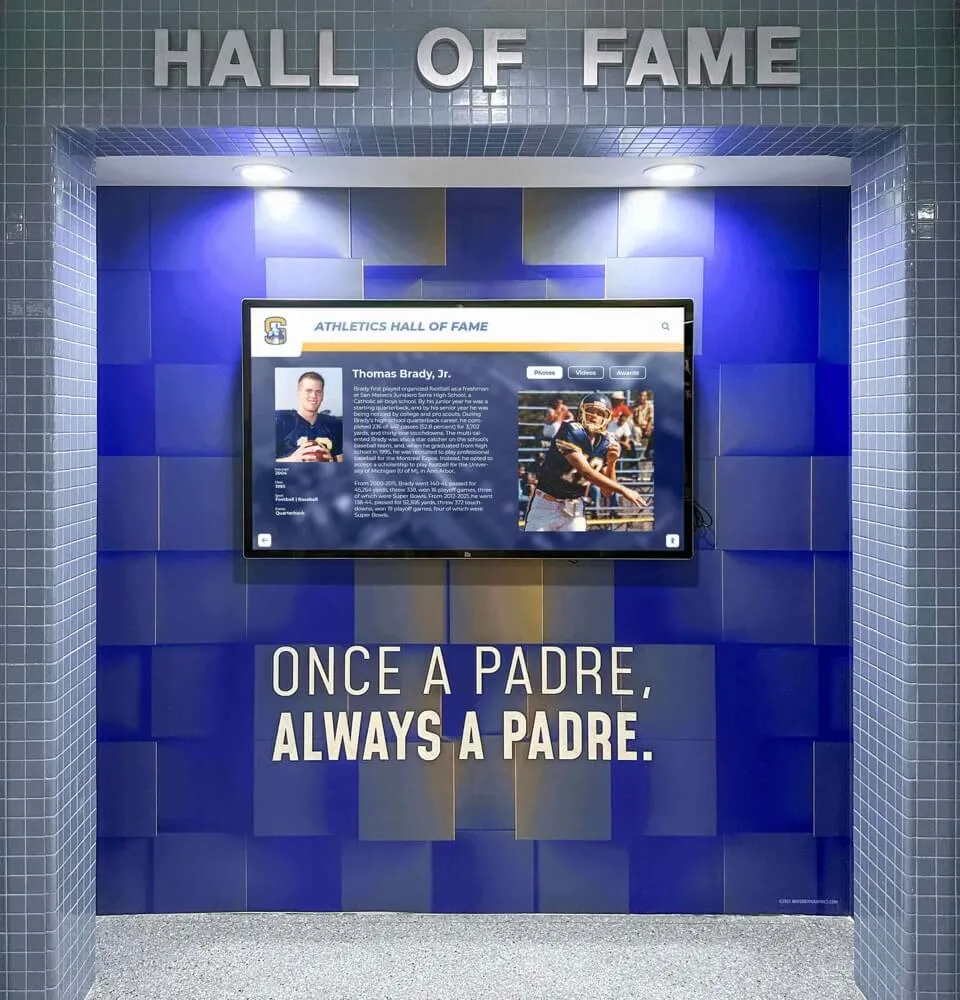
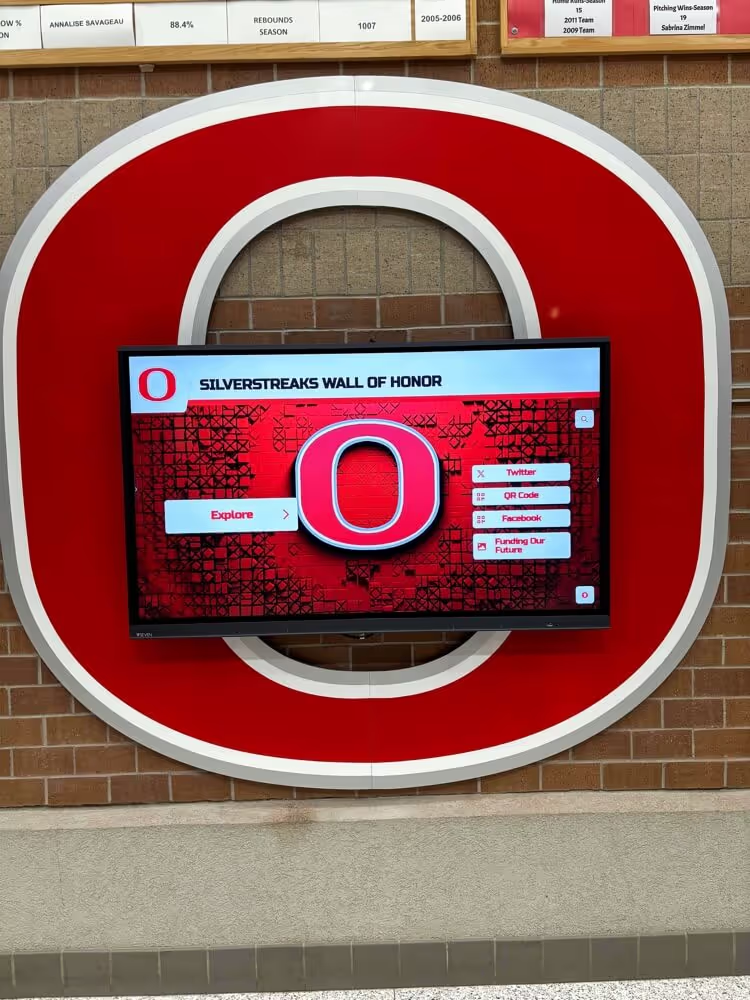
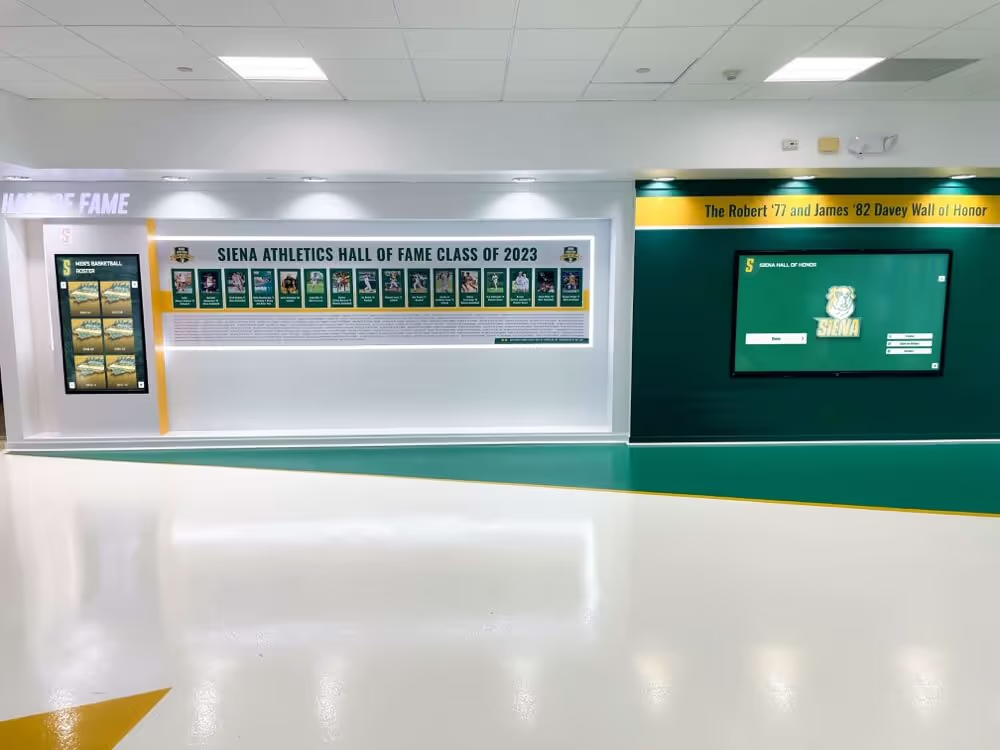
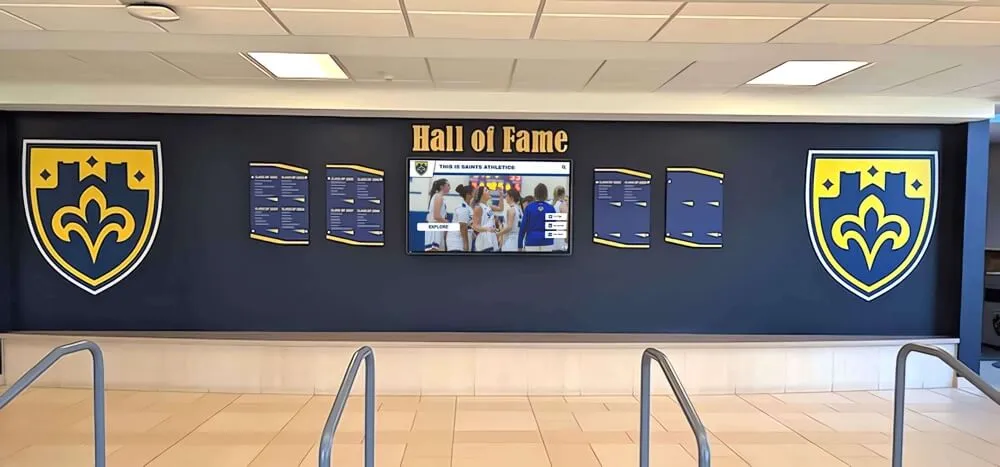
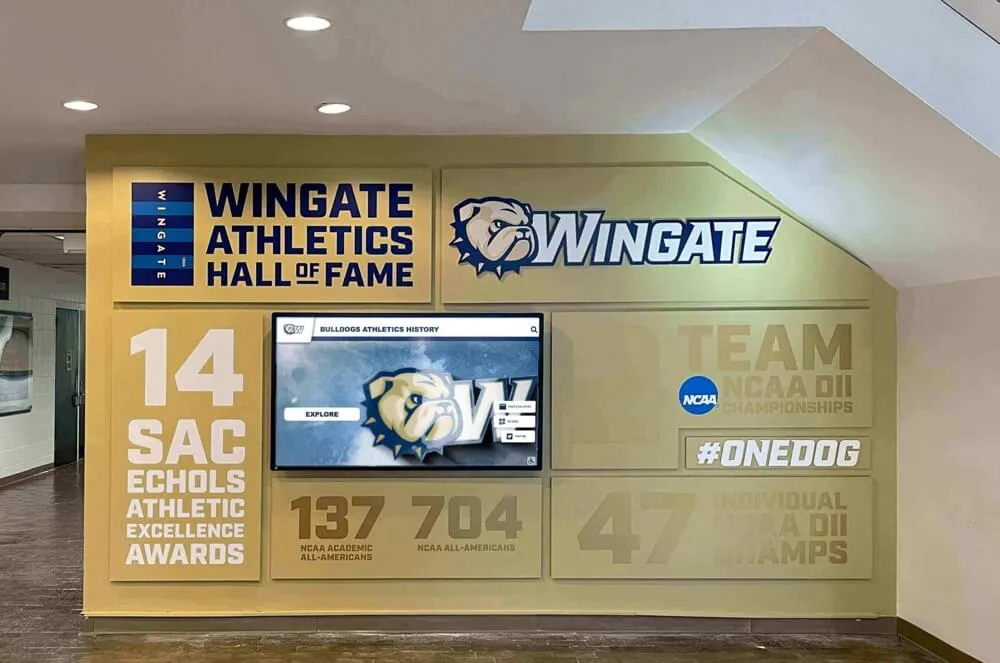
Thoughtful installations combine technology with traditional design elements creating distinguished presentation
Privacy and Discretion Requirements
Member Information Control
Country clubs must respect privacy expectations:
- Opt-in approach for member directory participation
- Granular control over what information members share publicly
- Anonymous options for donor recognition when preferred
- Secure access controls for sensitive membership data
- Compliance with privacy policies and member agreements
Private clubs serve members who value discretion, requiring more careful privacy management than public institutional displays.
Guest Access Considerations
Clubs hosting outside events must consider:
- What information displays show to non-members
- Guest mode options limiting access to certain content
- Tournament participant information during open competitions
- Historical and facility information appropriate for all viewers
- Member-only sections requiring authentication
This tiered access ensures clubs maintain appropriate boundaries while leveraging displays for multiple audiences.
Content Management and Maintenance
Administrative Responsibility
Sustainable programs require clear ownership:
- Membership director managing member profiles and directories
- Golf or tennis professionals maintaining tournament records
- Communications staff handling event information and updates
- Historical committee preserving archival content
- General manager oversight ensuring accuracy and appropriateness
Defining responsibilities prevents displays from becoming outdated or neglected as organizational priorities shift.
Ongoing Content Development
Effective displays require continuous attention:
- Annual tournament updates adding current champions
- New member additions and profile updates
- Event calendar maintenance reflecting current schedules
- Historical content expansion as materials are discovered
- Photo collection growth capturing ongoing club life
Clubs implementing systematic content management approaches discover that regular attention maintains display value while preventing large backlog accumulation.
Technology Selection and Support
Platform Requirements
Country clubs need systems offering:
- Intuitive content management requiring minimal technical expertise
- Professional design capabilities matching club aesthetic standards
- Reliable commercial-grade hardware suitable for public spaces
- Cloud-based administration enabling remote updates
- Responsive vendor support for technical issues
Purpose-built platforms designed for recognition and community engagement typically serve club needs better than generic digital signage software lacking specialized capabilities.
Organizations evaluating options benefit from understanding touchscreen software considerations relevant to recognition applications.
Budget and Investment
Comprehensive implementations typically involve:
- Display hardware: $8,000-15,000 for commercial touchscreen with installation
- Software platform: $1,500-3,000 annually for cloud service and support
- Initial content development: $3,000-8,000 for historical research and database population
- Ongoing maintenance: Staff time for regular updates and content management
Total first-year investment generally ranges $12,000-25,000 depending on scope, with annual costs of $2,000-4,000 thereafter. Many clubs fund implementations through capital campaigns, foundation grants, or memorial giving programs.
Benefits Beyond Member Recognition
Interactive touchscreens deliver value extending throughout club operations and culture.
Recruitment and Membership Development
Prospective Member Impressions
During membership tours, displays communicate:
- Club tradition and heritage demonstrating institutional stability
- Vibrant tournament programs showing competitive opportunities
- Active social calendar indicating community engagement
- Member accomplishments suggesting successful membership demographics
- Professional presentation reflecting overall club quality
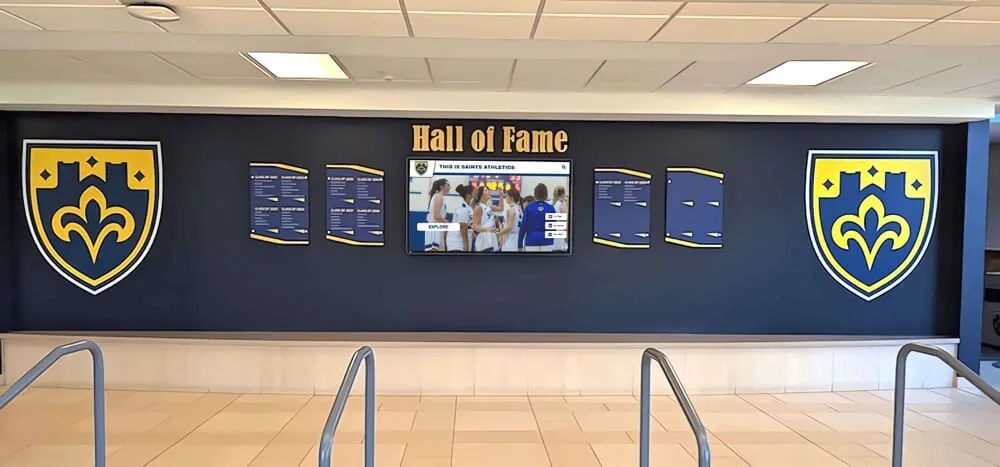
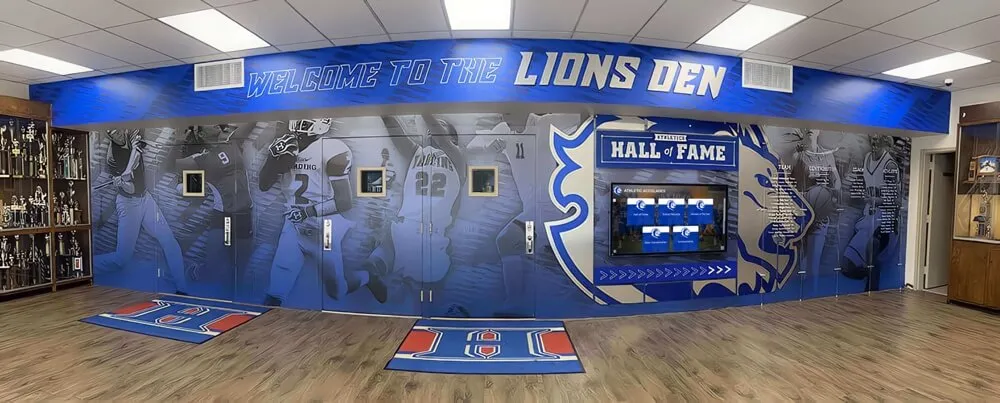
Hybrid approaches preserve traditional displays while adding digital capability
Clubs report that comprehensive displays become valuable recruitment tools, helping prospective members understand community culture and envision their own club involvement.
New Member Integration
Displays support member onboarding:
- Discovering fellow members with shared interests or backgrounds
- Understanding club culture, traditions, and unwritten norms
- Learning tournament options and competitive opportunities
- Identifying committees and volunteer involvement pathways
- Building familiarity with facilities and services
This accelerated integration helps new members feel connected quickly, improving retention during critical early membership periods.
Event Enhancement
Tournament Check-In and Information
During major competitions, displays serve:
- Participant check-in with tee time and pairing verification
- Course information and local rule clarifications
- Historical tournament context and records to chase
- Live scoring updates as competition progresses
- Social event schedules for tournament festivities
These practical functions enhance event operations while creating gathering points where participants engage before and after competition.
Social Event Coordination
Member gatherings benefit from:
- Event schedules and timing information for multi-activity occasions
- Photo slideshows from previous year’s events
- Recognition of event committee and volunteer organizers
- Real-time announcements and updates during gatherings
- Interactive entertainment during cocktail hours
Clubs hosting digital recognition at special events demonstrate how displays create engagement beyond everyday use.
Historical Preservation
Institutional Memory Protection
Digital archiving ensures preservation:
- Tournament records protected against physical deterioration
- Photographic collections digitized for permanent storage
- Member information systematically documented
- Club history captured before knowledge is lost
- Multiple backup copies preventing catastrophic loss
This preservation function grows increasingly important as clubs age and founding generations pass, similar to historical preservation efforts in other contexts.
Research and Inquiry Support
Accessible archives enable:
- Member requests about family club history
- Tournament record verification for publications
- Historical research for anniversary celebrations
- Media inquiries about club heritage
- Genealogical research by member families
Searchable digital systems make information discovery dramatically easier than searching through storage boxes or dusty scrapbooks.
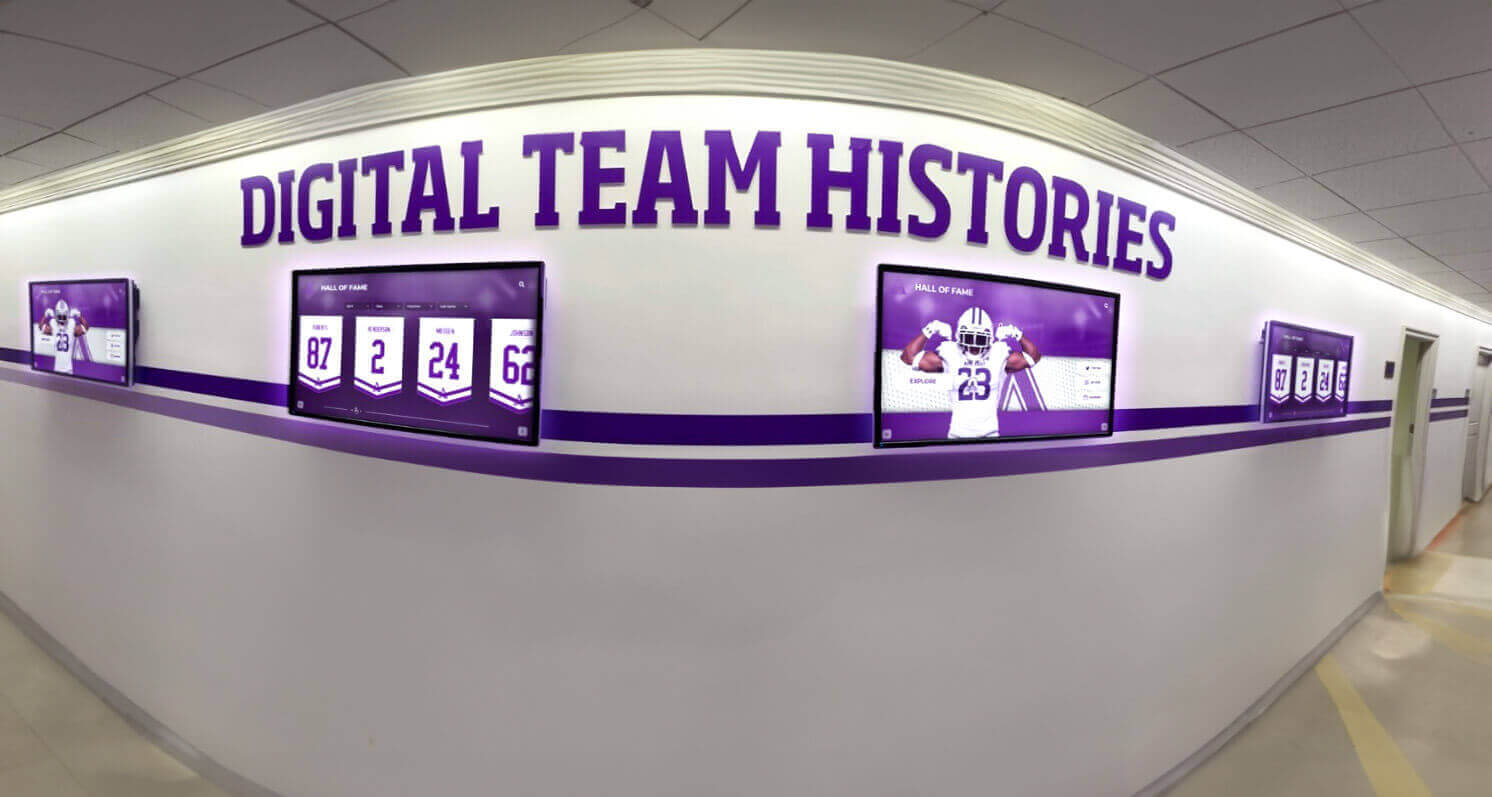
Coordinated multi-display installations enable comprehensive recognition across club facilities
Best Practices from Successful Club Implementations
Learning from clubs that have successfully deployed touchscreen systems helps organizations avoid common pitfalls while maximizing value.
Start with Core Content, Expand Over Time
Phased Implementation Approach
Successful clubs typically:
- Launch with recent tournament champions (5-10 years) rather than attempting complete history
- Begin with basic member directory before developing detailed profiles
- Add club history content incrementally as materials are gathered
- Expand to additional display locations after proving initial value
- Develop advanced features based on actual member usage patterns
This phased approach prevents overwhelming initial content development while demonstrating value that justifies continued investment.
Engage Member Volunteers in Content Development
Leveraging Institutional Knowledge
Long-time members provide invaluable assistance:
- Historical committee members researching tournament records and club milestones
- Photography enthusiasts digitizing historical image collections
- Retired professionals writing member profiles and historical narratives
- Tournament committee volunteers maintaining competitive records
- Technology-savvy members assisting with content management training
This volunteer involvement builds ownership while distributing workload beyond staff responsibilities, similar to approaches used in community recognition projects.
Balance Technology with Traditional Elements
Complementary Recognition Systems
The most successful implementations:
- Preserve beloved physical displays like championship trophy cases
- Add digital capability that extends rather than replaces tradition
- Integrate visual design elements connecting old and new recognition
- Position displays to complement rather than compete with traditional elements
- Maintain ceremonial aspects like annual trophy presentations
This respectful integration honors club heritage while embracing modern capability—satisfying members across generational perspectives.
Market Displays to Drive Engagement
Promoting Awareness and Usage
Clubs maximize return on investment through:
- Announcements introducing displays at member meetings and events
- Newsletter articles showcasing specific content and capabilities
- Signage directing members to display locations
- Staff mentions during membership tours and orientations
- Social media posts featuring interesting historical content from displays
Regular promotion ensures displays don’t become overlooked fixtures, maintaining awareness that drives ongoing engagement.
Maintain Content Currency
Regular Update Schedules
Sustaining value requires:
- Post-tournament updates adding recent champions within days of completion
- Quarterly reviews ensuring event information remains current
- Annual comprehensive audits verifying accuracy and completeness
- Continuous additions of historical content as materials surface
- Responsive correction of errors members report
Establishing update rhythms prevents displays from showing obviously outdated information that undermines credibility and member confidence.
The Future of Member Engagement in Private Clubs
Country club technology continues evolving as member expectations shift and new capabilities emerge.
Mobile Integration and Extended Access
Beyond Physical Displays
Modern platforms increasingly offer:
- Mobile apps enabling member profile and tournament record access from anywhere
- Web portals extending recognition to members traveling or unable to visit clubhouse
- Social media integration allowing members to share achievements with personal networks
- Push notifications alerting members about upcoming tournaments or events
- Virtual tours showing prospective members club facilities and community
This extended access, similar to mobile-accessible recognition platforms in other sectors, meets expectations that information should be accessible whenever and wherever members want it.
Generational Considerations
Serving Diverse Membership Demographics
Successful clubs recognize varying technology comfort:
- Older members may appreciate displays but prefer traditional recognition elements
- Middle-generation members expect professional digital presentation meeting broader life experiences
- Younger members assume mobile access and social sharing capability
- New members arriving from corporate environments expect sophisticated technology
Effective systems accommodate this spectrum through flexible design serving traditionalists while engaging digital natives.
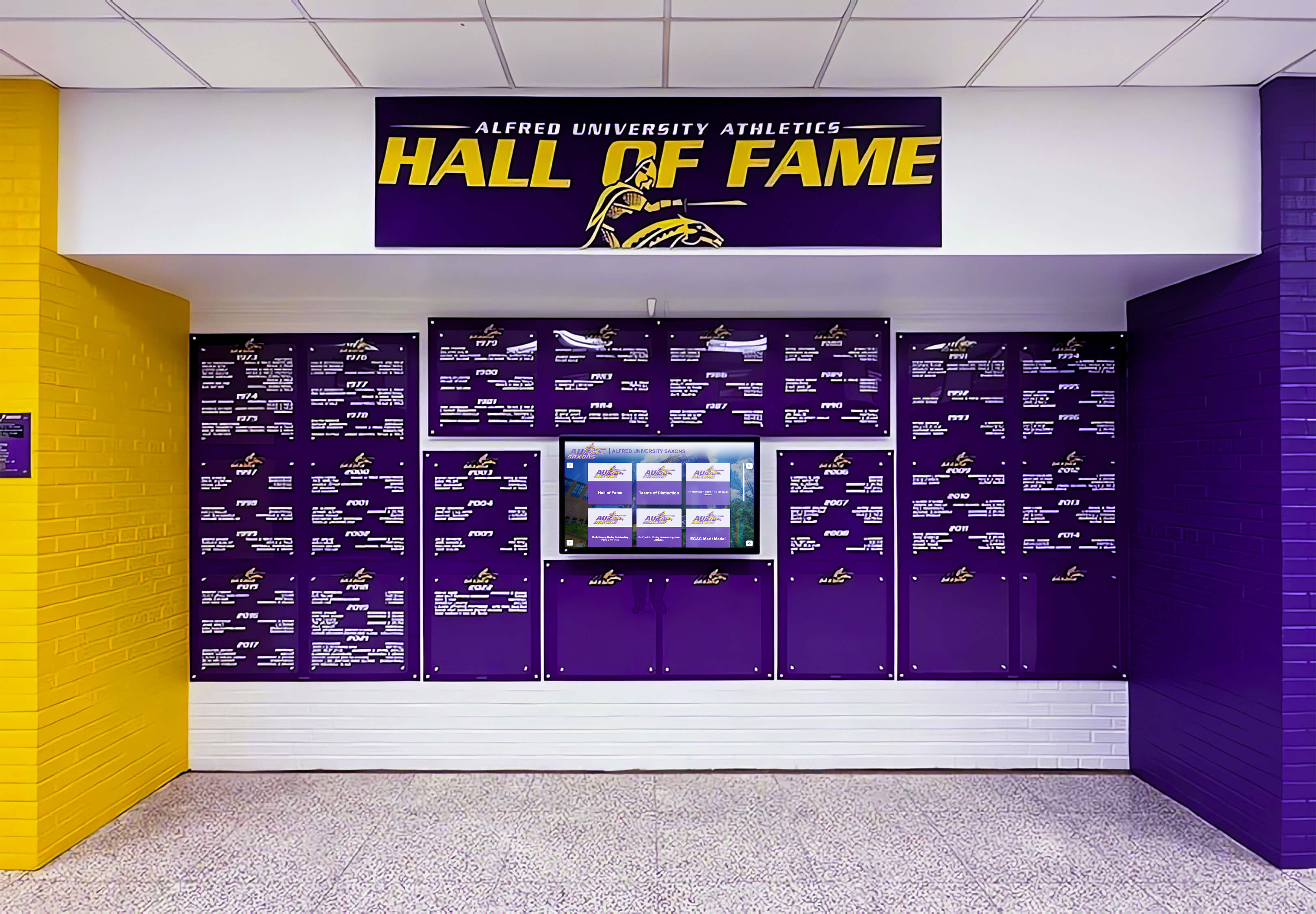
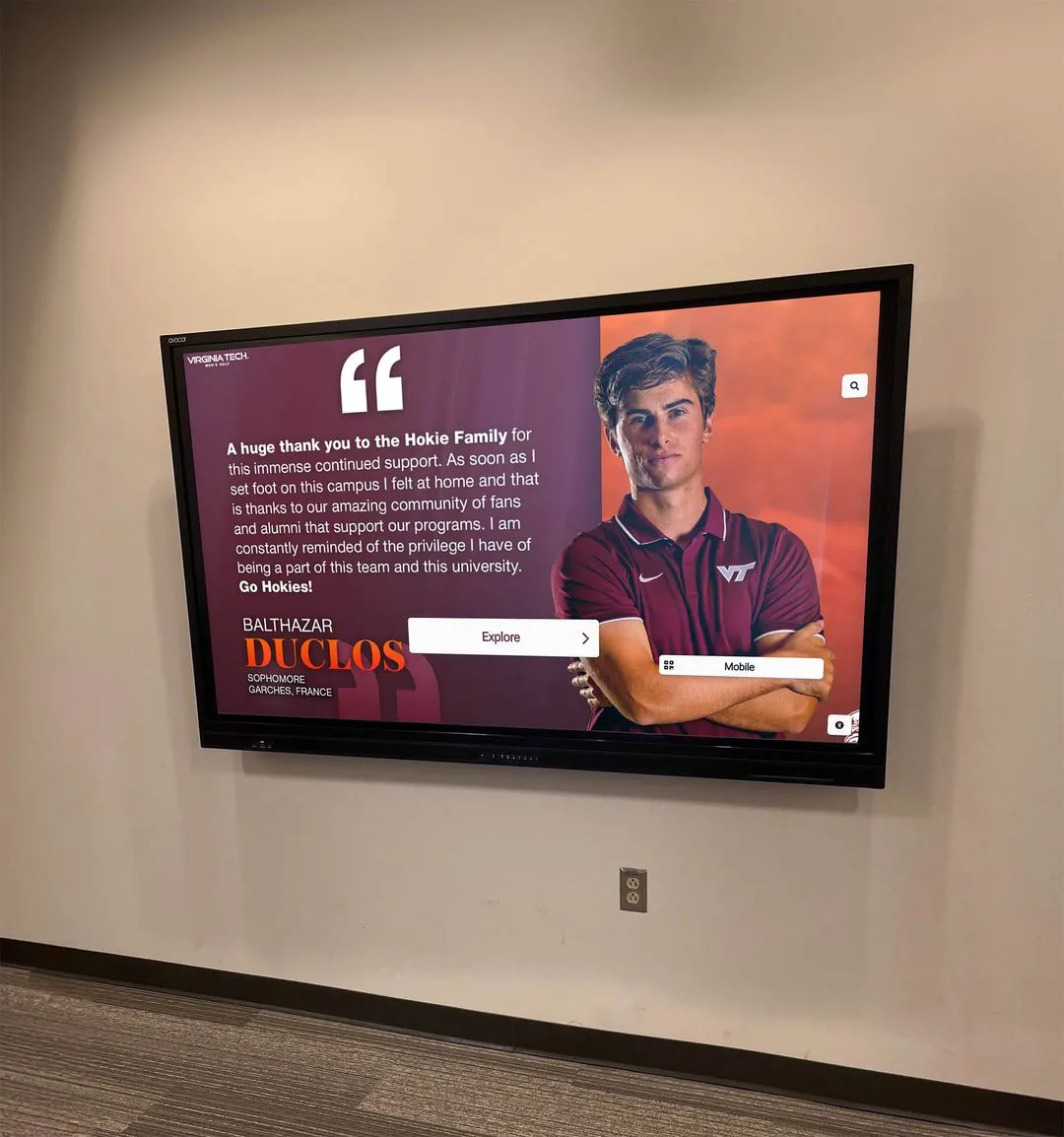
Professional installations deliver presentation quality matching distinguished club environments
Integration with Club Operations
Connected Systems and Automation
Emerging capabilities include:
- Integration with tee time systems showing real-time availability
- Connection to point-of-sale platforms displaying dining menus and pricing
- Automated tournament results import from scoring systems
- Member database synchronization keeping directories current
- Analytics tracking which content receives most engagement
These integrations reduce manual content management while increasing display utility across club functions.
Conclusion: Technology Serving Timeless Traditions
The implementation of a Rocket Alumni Solutions touchscreen at a distinguished country club demonstrates how modern technology can enhance rather than compromise traditional institution values. Interactive displays don’t replace cherished recognition traditions—they extend what clubs can celebrate, preserve what might otherwise be lost, and engage members in ways static displays simply cannot match.
Transform Your Club's Member Experience
Discover how interactive touchscreen technology can help your country club honor achievements, preserve heritage, and engage members while maintaining the distinguished atmosphere that defines your community.
Explore Club Recognition SolutionsFrom tournament champion recognition and searchable member directories to historical preservation and event information, digital displays serve multiple functions that create ongoing value throughout club operations. The key lies in thoughtful implementation that respects club culture, maintains appropriate privacy, and balances innovation with tradition.
Country clubs evaluating technology investments should recognize that recognition displays represent more than expensive gadgets—they’re strategic tools for member engagement, recruitment support, historical preservation, and community building. When implemented thoughtfully with appropriate content and sustainable management, interactive touchscreens become valued club amenities that strengthen the traditions and community that make country clubs special.
Your club’s story—the tournaments that created legendary moments, the members whose contributions shaped community, the heritage that defines identity—deserves recognition equal to its significance. With careful planning, appropriate technology, and commitment to honoring what makes your club special, interactive displays can celebrate achievement and preserve history while serving the practical needs of modern club operations.
Ready to explore how digital recognition could serve your country club? Learn about interactive display technology for institutions, discover approaches to member recognition adaptable to private club contexts, or explore comprehensive heritage preservation strategies that honor tradition while embracing modern capability.