Retired jerseys represent the highest honor an athletic program can bestow upon its athletes. When a school or team permanently removes a jersey number from circulation, they’re making a statement that transcends statistics—they’re declaring that a particular athlete’s contributions were so exceptional, so transformative, that no future player should wear that number. This tradition, borrowed from professional sports, has become increasingly popular among high schools and colleges seeking meaningful ways to honor their most legendary athletes.
Yet many athletic directors and school administrators struggle with jersey retirement implementation. Questions arise about appropriate criteria—should retirement recognize only championship-level performance, or should character and community impact factor equally? Logistics complicate planning—where should retired jerseys be displayed, and how can recognition remain visible as programs grow? And sustainability concerns persist—what happens when wall space fills up, or when multiple athletes from different eras deserve the same number?
This comprehensive guide provides athletic directors, coaches, and school administrators with practical frameworks for establishing jersey retirement programs that honor excellence appropriately while remaining administratively manageable and financially sustainable. From selection criteria and ceremony planning to modern display options and long-term program management, you’ll find strategies for creating recognition traditions that inspire future generations while preserving your program’s greatest legacies.
Jersey retirement has evolved from professional sports tradition into a powerful recognition tool that schools can adapt to honor student-athletes who’ve defined program excellence through extraordinary achievement, character, and lasting impact. Understanding how this tradition functions across different competitive levels helps administrators design recognition programs matching their unique institutional context.

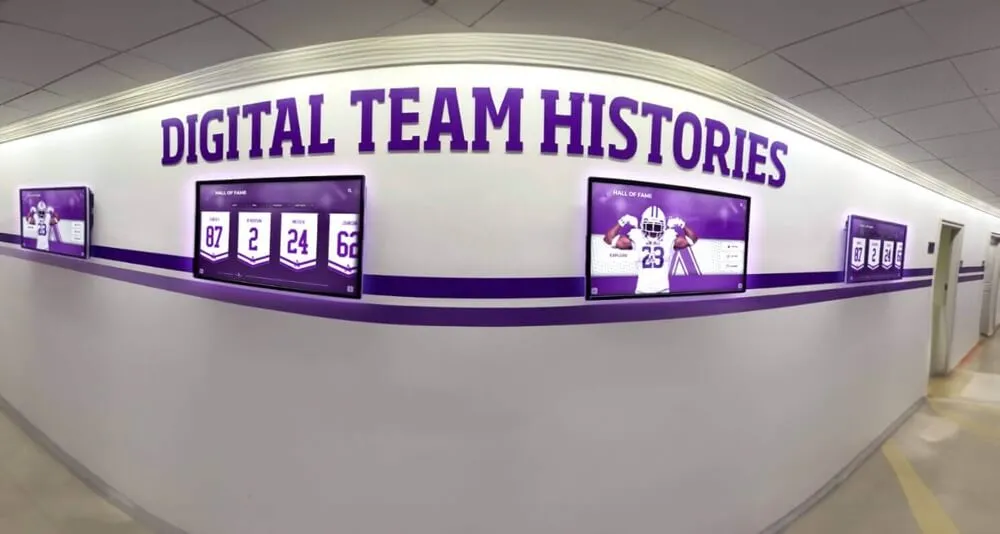
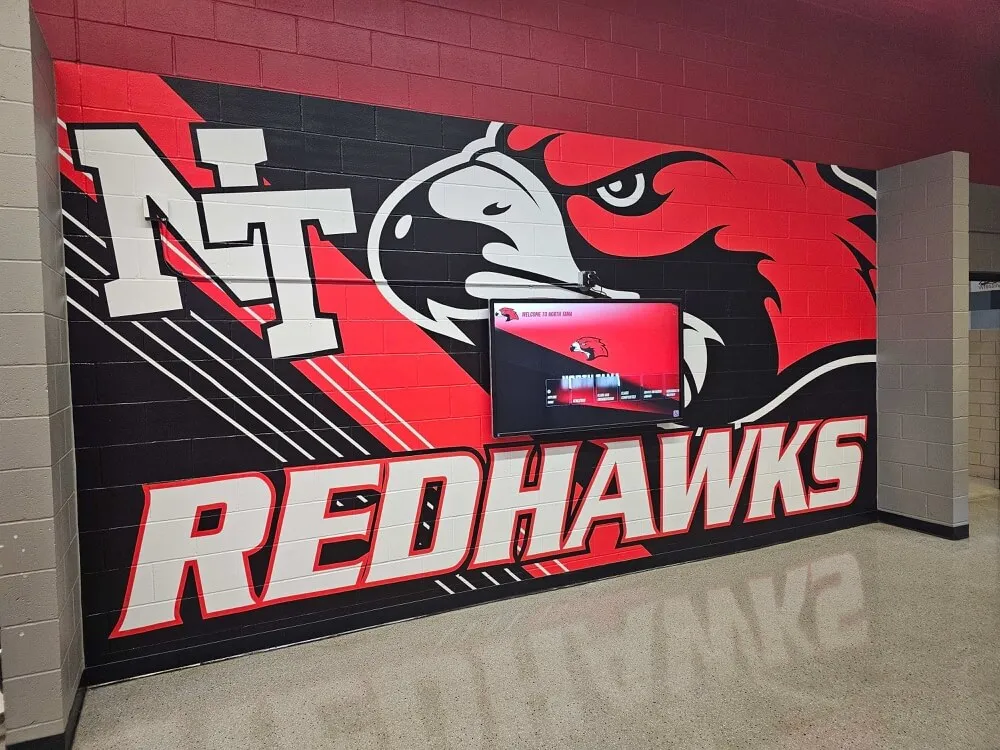
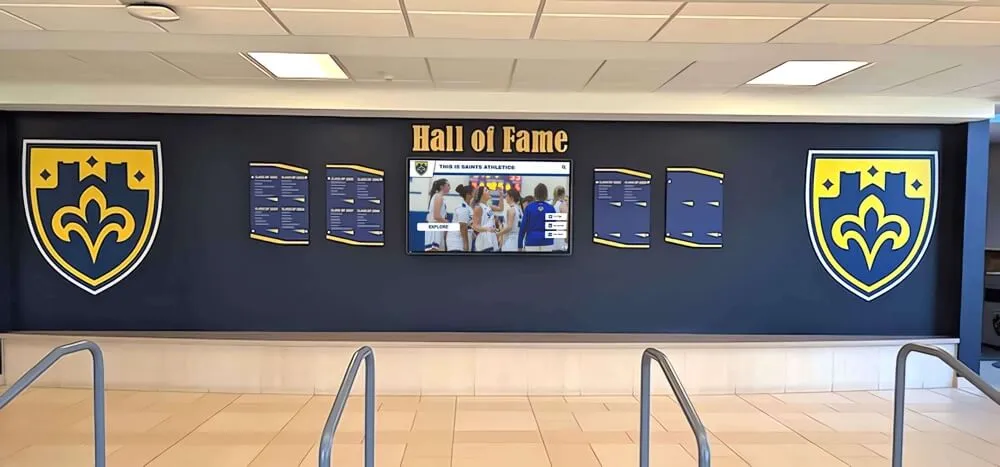
Modern digital displays provide flexible platforms for showcasing retired jerseys alongside current athlete recognition
Understanding Jersey Retirement: Origins and Significance
The tradition of retiring jersey numbers carries deep symbolic meaning rooted in professional sports history.
The Evolution of Jersey Retirement
Jersey retirement began in professional sports during the mid-20th century as teams sought permanent ways to honor franchise legends:
Professional Sports Origins Major League Baseball’s New York Yankees retired Lou Gehrig’s #4 in 1939, establishing the precedent for honoring exceptional athletes by permanently removing their numbers from circulation. This gesture—unprecedented at the time—communicated that Gehrig’s contributions exceeded typical recognition methods like hall of fame inductions or commemorative plaques.
The practice spread across professional leagues as organizations recognized that jersey retirement created powerful emotional connections with fans while honoring athletes who’d literally defined franchise identity. The Boston Celtics eventually retired 22 numbers, creating a literal ceiling of banners that communicated program tradition to every player, fan, and recruit entering their arena.
Adoption by Collegiate Programs Universities with high-profile athletic programs began adopting jersey retirement traditions in the 1950s and 1960s, recognizing similar benefits. Major college programs discovered that retired jerseys created recruiting advantages—prospective student-athletes could visualize themselves potentially joining the elite group of players whose achievements earned permanent recognition.
Schools implementing comprehensive athletic recognition systems discovered that jersey retirement worked most effectively when integrated with broader hall of fame programs that provided context about honorees’ full achievements.
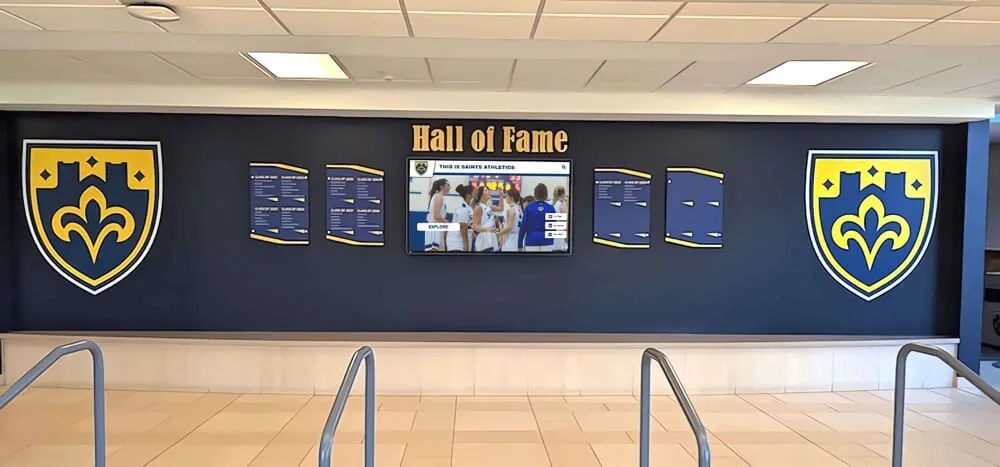
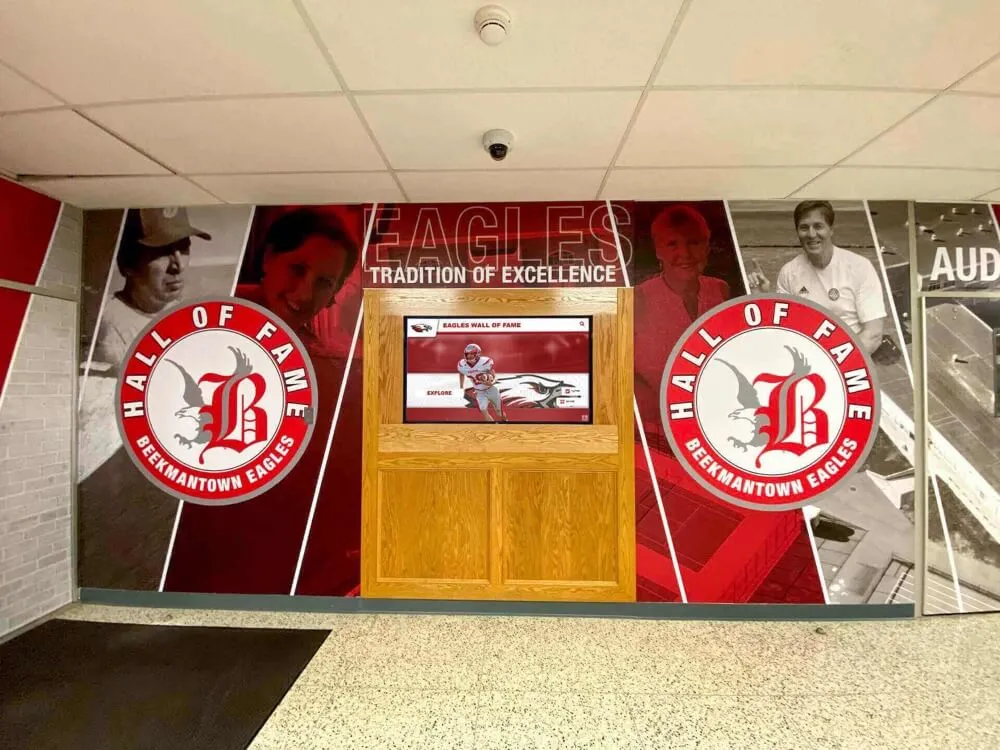
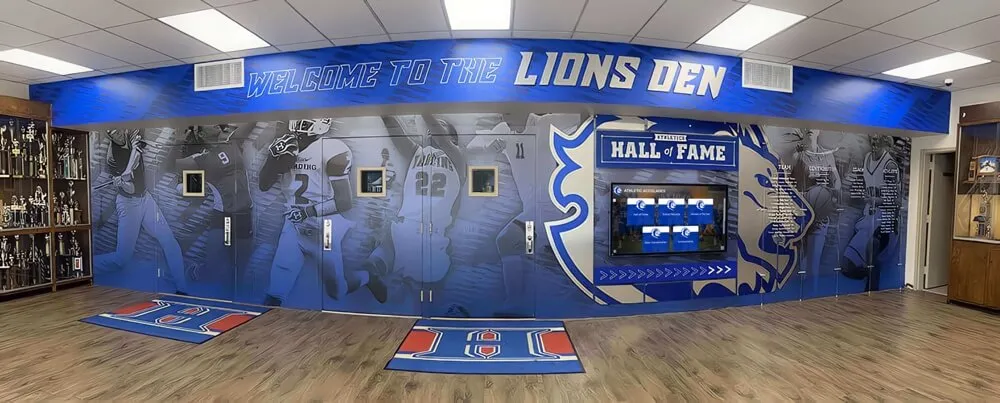
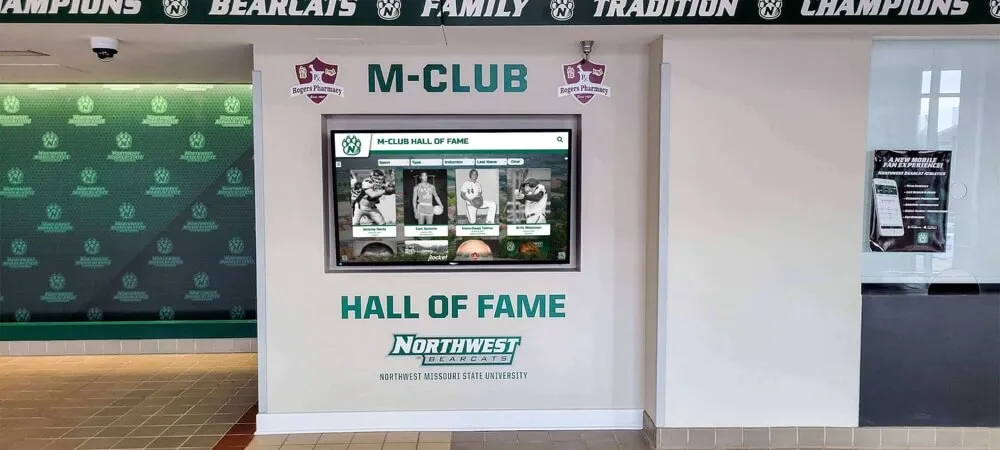
Jersey retirement displays often integrate with comprehensive athletic recognition walls that tell complete program stories
High School Adoption High schools began embracing jersey retirement during the 1990s and 2000s as athletic programs sought recognition methods that elevated their most exceptional athletes beyond traditional senior night ceremonies or hall of fame plaques. Schools discovered that jersey retirement created aspirational goals motivating younger athletes while strengthening alumni connections through visible, permanent honor.
Why Jersey Retirement Matters for School Athletic Programs
Jersey retirement delivers strategic benefits extending throughout athletic department operations:
Creating Aspirational Standards Retired jerseys communicate explicit standards for athletic excellence. When current athletes see that only a handful of numbers have been retired across decades of program history, they understand the exceptional achievement level required for this honor. This clarity creates motivation while maintaining high standards that protect program prestige.
Schools establishing effective student recognition frameworks recognize that jersey retirement should represent the pinnacle of a comprehensive recognition system that also celebrates conference championships, statistical achievements, and leadership contributions.
Strengthening Program Identity and Tradition Jersey retirement creates tangible connections between past and present program members. Current athletes training in facilities where retired jerseys hang develop appreciation for program history and feel responsibility to uphold traditions established by predecessors. This cultural continuity strengthens team cohesion and program identity—particularly valuable as roster turnover occurs annually.
Athletic directors managing multiple sports programs report that jersey retirement traditions help maintain consistent standards across different teams while allowing each sport to celebrate its unique legends.
Alumni Engagement and Fundraising Impact Athletes whose jerseys are retired typically maintain stronger connections with their schools than peers receiving standard recognition. The permanent, public nature of jersey retirement creates gratitude and continued engagement that benefits development offices seeking alumni support.

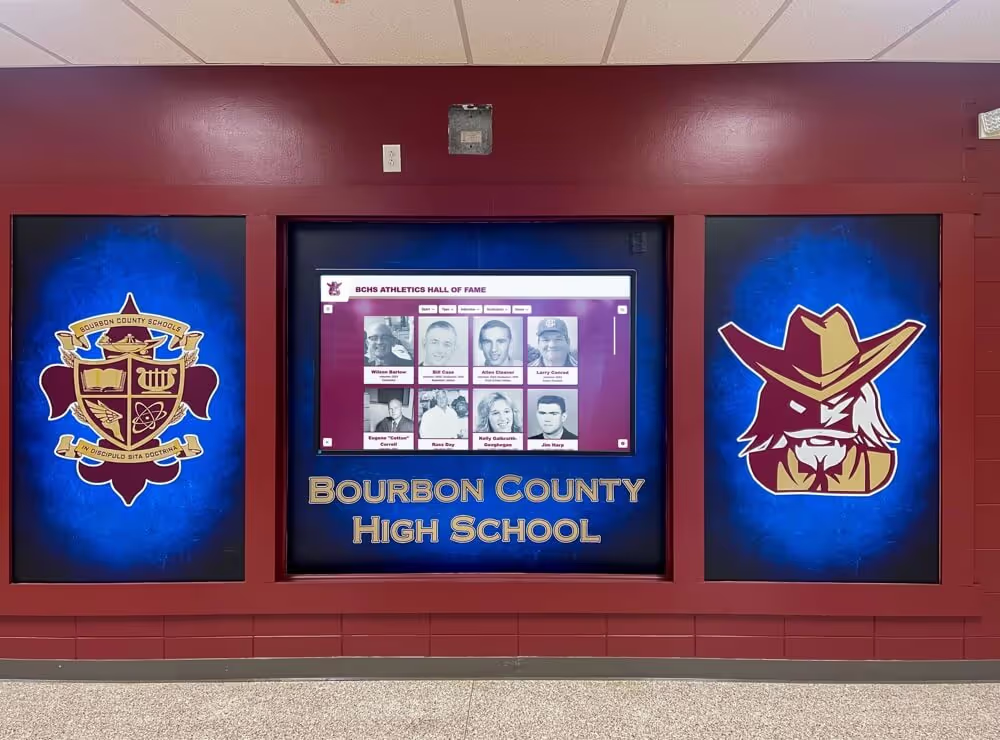
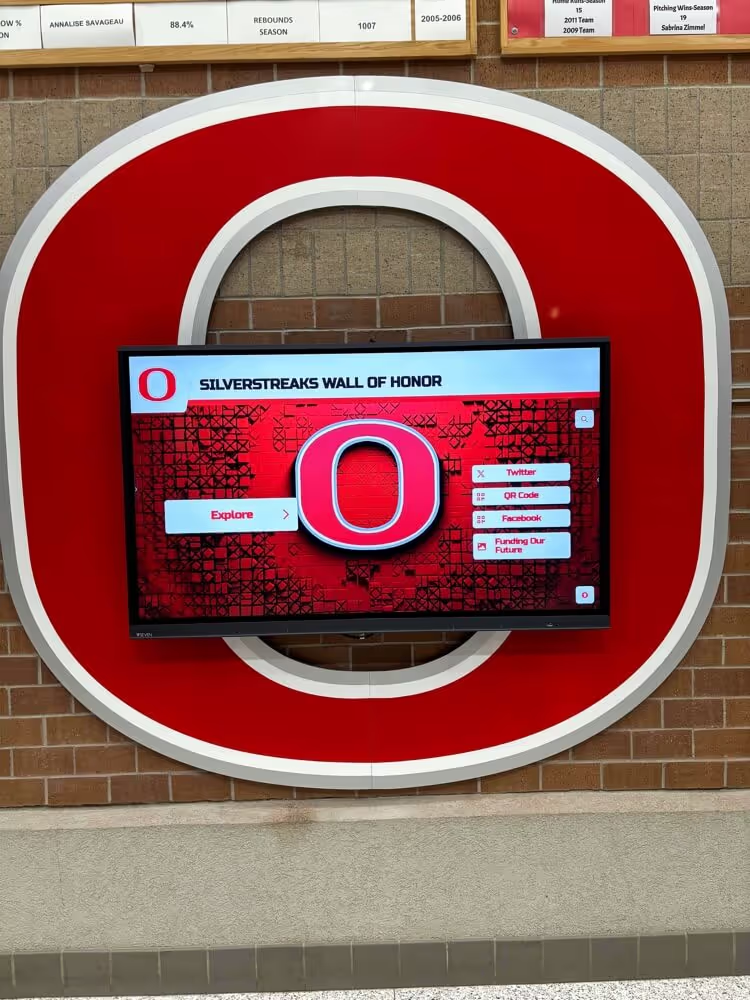
Recognition spaces celebrating retired jerseys create inspiring environments where athletes can reflect on program tradition
Schools report that jersey retirement ceremonies create natural fundraising opportunities—honoring athletes at games with strong attendance maximizes exposure for concurrent capital campaigns or facility improvement initiatives.
Establishing Jersey Retirement Criteria: What Achievements Merit Recognition
Clear, defensible criteria prevent controversy while ensuring jersey retirement maintains prestige and credibility.
Performance-Based Standards
Most schools establish objective athletic achievement thresholds for jersey retirement consideration:
Championship-Level Requirements Many programs require state championship participation or similar high-level competitive success as a baseline criterion. This standard ensures retired jerseys recognize athletes who’ve achieved exceptional competitive success rather than just individual statistics compiled during less successful seasons.
Common championship-based criteria include:
- State championship individual or team titles
- Multiple conference championship contributions
- All-state or all-American recognition
- State or national record-setting performances
- Significant post-secondary athletic success (Division I signing, professional advancement)
Schools implementing comprehensive athletic achievement displays often create tiered recognition systems where jersey retirement represents the highest honor while other displays celebrate additional worthy achievements.
Statistical Excellence Some programs establish statistical benchmarks specific to each sport. Football programs might require 5,000+ career passing yards, basketball programs might establish 1,500+ career point thresholds, and soccer programs might require significant goal-scoring achievements.
Statistical criteria work best when combined with team success requirements—preventing jersey retirement for athletes who compiled impressive individual numbers on consistently unsuccessful teams. This combination ensures honorees contributed to program excellence rather than just personal achievement.
Character and Impact Requirements
The most respected jersey retirement programs balance athletic achievement with character assessment:
Academic Excellence Standards Many schools require minimum GPA thresholds or academic honor society membership as jersey retirement criteria. This requirement reinforces that academic performance matters equally to athletic achievement—a message particularly important for institutions facing criticism about athletic program priorities.
Academic requirements also ensure that honored athletes exemplify the complete student-athlete ideal that schools aim to develop. Athletes meeting both athletic and academic excellence criteria provide powerful role models for younger students.
Sportsmanship and Leadership Jersey retirement criteria increasingly include subjective assessments about sportsmanship, leadership, and character. Selection committees evaluate factors including:
- Coaching staff testimonials about work ethic and team leadership
- Absence of significant disciplinary issues during high school career
- Contributions to team culture beyond individual performance
- Mentorship of younger athletes or continued program involvement
- Community service or school citizenship during athletic career
These character considerations prevent jersey retirement for athletes whose on-field achievements came alongside behavior undermining program values.

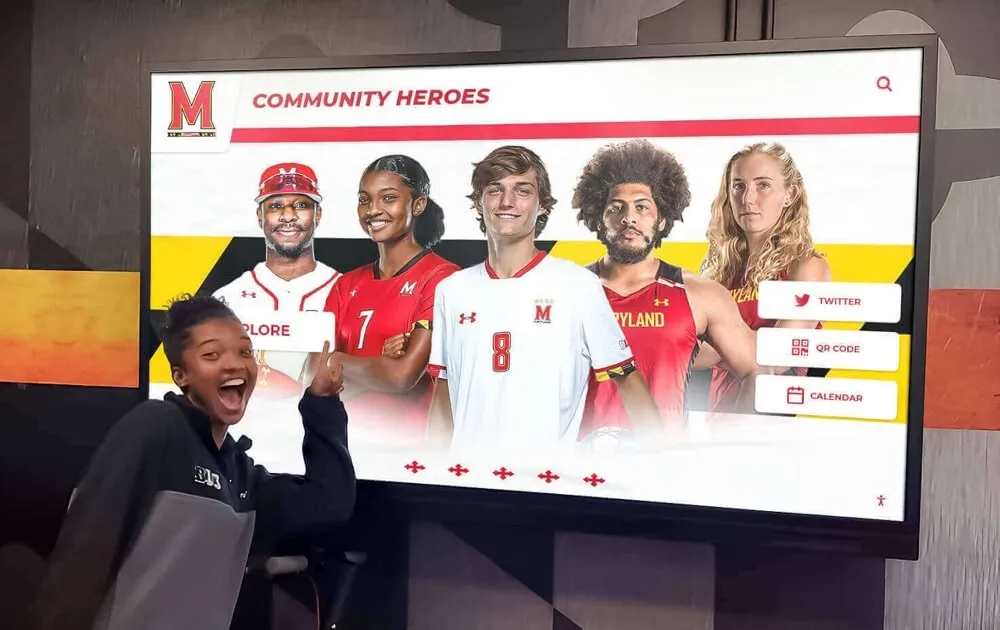
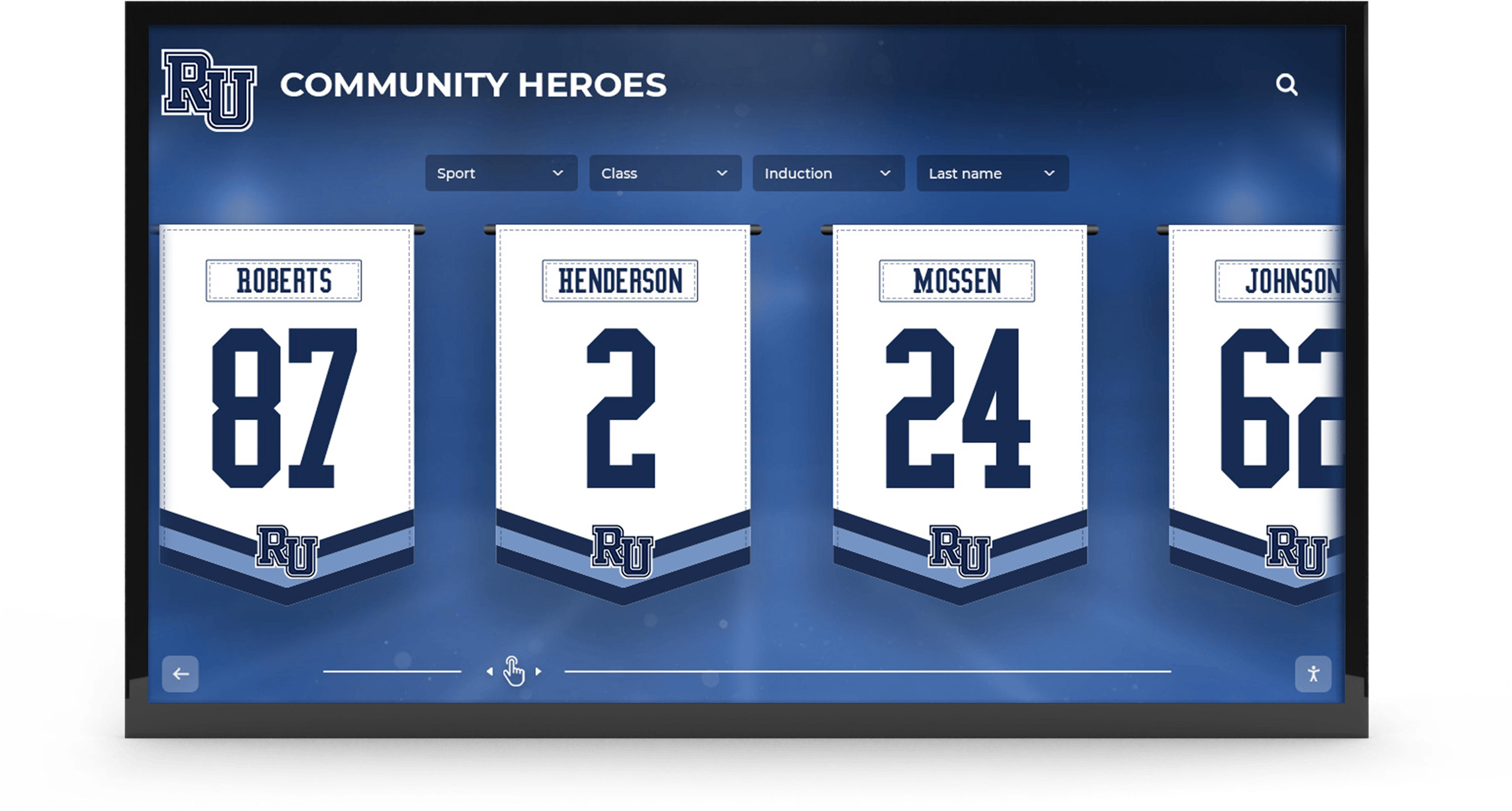
Modern interactive displays allow programs to share complete athlete stories—including character and leadership alongside statistics
Legacy and Long-Term Impact Some programs require a waiting period (commonly 5-10 years) between graduation and jersey retirement eligibility. This delay allows evaluation of an athlete’s long-term impact—whether they’ve maintained connection with the program, achieved post-secondary success validating high school achievement, or otherwise demonstrated lasting value beyond immediate competitive results.
Waiting periods also prevent hasty decisions made in the emotional aftermath of particularly successful seasons. Programs implementing cooling-off periods report fewer instances of reconsidering jersey retirement decisions years later.
Sport-Specific Considerations
Jersey retirement criteria should acknowledge different sports’ unique characteristics:
Individual vs. Team Sports Individual sports (wrestling, track, swimming) might emphasize personal achievement more heavily since athletes can excel even when teams struggle. Team sports (football, basketball, soccer) typically require both individual excellence and significant team success.
Roster Size Implications Football programs with 50+ players per team might establish more restrictive criteria than basketball programs with 12-player rosters. Sports with limited jersey number options (football only using #1-99) need sustainable policies preventing excessive retirements that restrict future roster number availability.
Schools managing multiple athletic recognition programs across different sports often establish sport-specific selection committees that apply consistent principles while accounting for each sport’s unique context.
Planning Jersey Retirement Ceremonies: Creating Memorable Recognition Events
Well-executed retirement ceremonies transform jersey recognition from administrative procedure into emotionally resonant celebrations.
Timing and Format Considerations
Strategic ceremony timing maximizes impact and attendance:
Game-Day Recognition Most schools conduct jersey retirement ceremonies during home games in the sport being honored, typically at halftime or immediately before competition begins. Game-day timing ensures strong attendance from current team members, students, alumni, and community members already planning to attend.
Consider these timing factors:
- Regular season vs. playoffs: Regular season allows advance planning; playoff games offer higher stakes and often larger crowds
- Opponent selection: Home games against traditional rivals or marquee opponents draw larger crowds
- Homecoming or special events: Coordinating with existing school celebrations increases attendance
- Weather considerations: For outdoor sports, have contingency plans for inclement weather
Standalone Ceremony Events Some programs host dedicated jersey retirement banquets or ceremonies separate from regular competition. Standalone events work well when:
- Multiple athletes from different sports are being honored simultaneously
- The honoree’s health or travel constraints make game attendance difficult
- Programs want more extensive ceremony time than game logistics allow
- Fundraising or community recognition components extend beyond simple jersey retirement
Schools implementing comprehensive athlete recognition ceremonies report that standalone events allow deeper storytelling about honorees’ achievements while creating more intimate settings for family and close supporters.
Ceremony Components and Script
Effective jersey retirement ceremonies balance formality with personal touches:
Opening and Context Begin ceremonies by explaining jersey retirement’s significance and rarity. Acknowledge how few athletes across program history have earned this honor, reinforcing the exceptional nature of the achievement.
Provide brief program history—mention when the jersey retirement tradition began, how many total numbers have been retired, and what criteria guided selection. This context helps attendees understand the honor’s prestige.
Athlete Introduction and Achievement Summary Present comprehensive overview of the honoree’s accomplishments:
- Years competed and positions played
- Major championship victories or tournament runs
- Statistical achievements and records
- Post-secondary athletic success (if applicable)
- Academic honors and character recognitions
Use video highlights if equipment allows—showing the athlete competing creates powerful emotional connections and helps younger attendees who may not remember the honoree’s career.

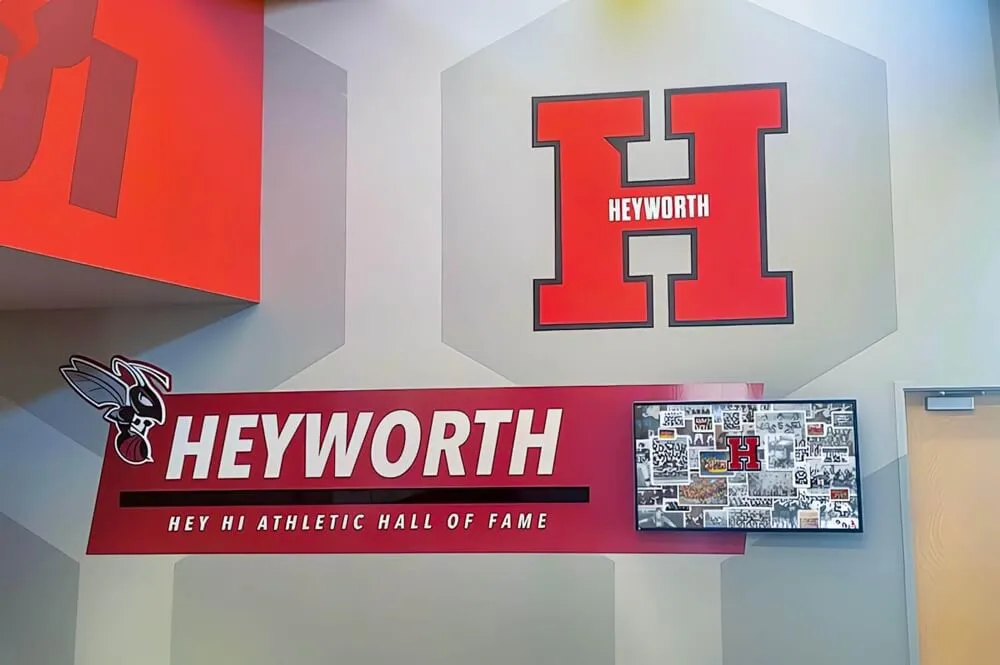
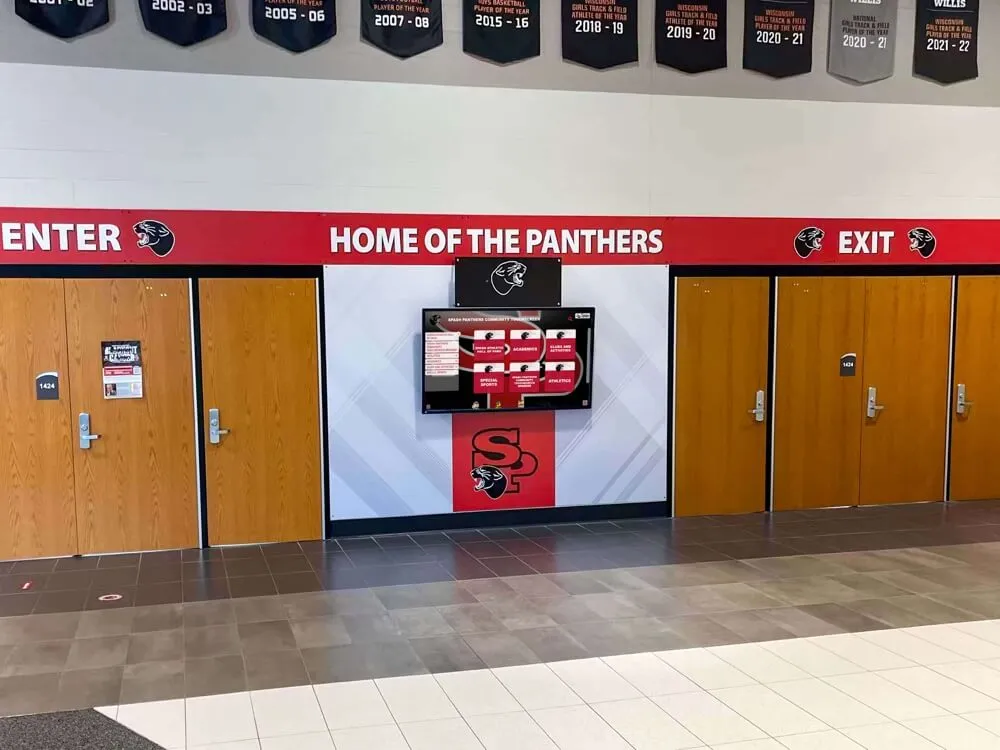
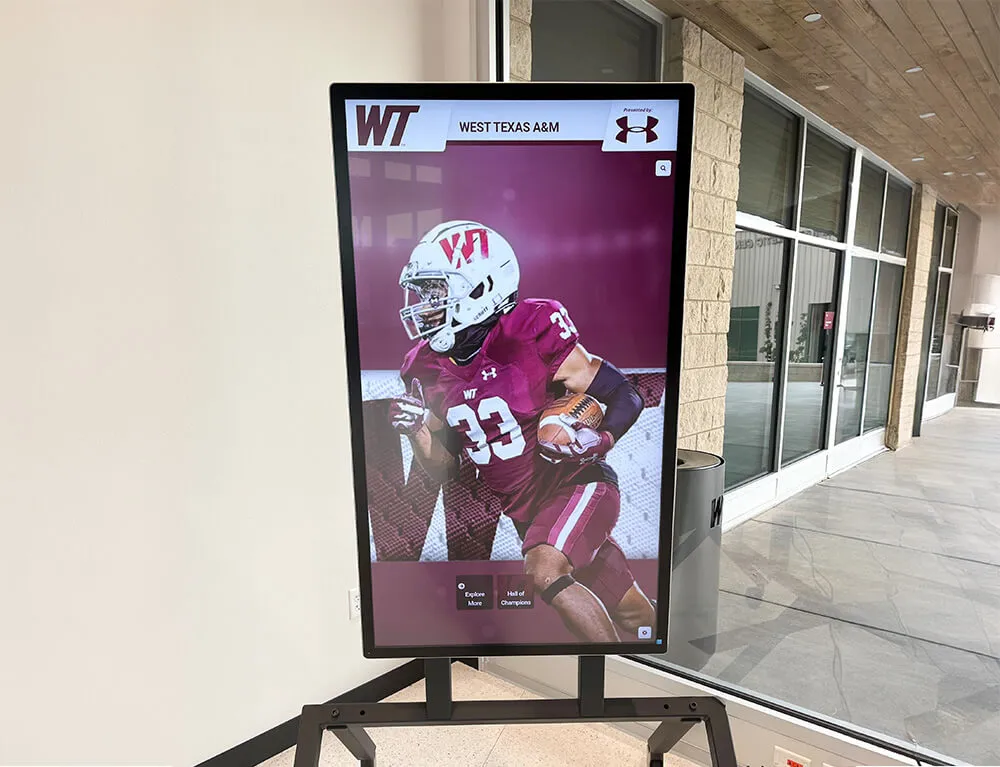
Prominent display locations ensure retired jersey honorees remain visible to everyone entering athletic facilities
Testimonials from Coaches and Teammates Include brief remarks from the coaches who worked with the honoree and teammates who competed alongside them. These personal perspectives provide emotional depth that statistics alone cannot convey.
Limit testimonials to 2-3 speakers keeping remarks to 2-3 minutes each—preventing ceremonies from becoming excessively long while maintaining audience engagement.
Honoree Remarks Allow the athlete whose jersey is being retired time to address the crowd. Most honorees appreciate guidance about appropriate length (3-5 minutes typical) and suggested content—thanking family, coaches, teammates, and community while sharing memorable experiences from their athletic career.
Physical Jersey Unveiling Create visual ceremony centerpiece by unveiling framed jersey or banner that will be permanently displayed. This tangible moment often becomes the focal point for photography and media coverage.
Recognition of Family and Support System Acknowledge parents, family members, coaches, and mentors who supported the athlete’s development. This recognition reinforces that athletic excellence results from collective support rather than individual effort alone.
Display Options for Retired Jerseys: From Traditional to Digital
Jersey retirement requires visible display methods that preserve recognition while managing limited physical space.
Traditional Display Methods
Physical jersey displays have served athletic programs for decades:
Framed Jersey Displays Many programs professionally frame retired jerseys and mount them in prominent athletic facility locations—gymnasium walls, locker room lobbies, weight room entrances, or main school hallways. Framed displays provide immediate visual impact and create inspiring environments where current athletes train and compete.
Consider these framing factors:
- Professional quality framing: Investment in proper framing materials protects jerseys from deterioration while communicating that recognition is valued
- Consistent presentation: Uniform frame styles and sizes create cohesive appearance across multiple retired jerseys
- Descriptive plaques: Include player name, years competed, key achievements, and jersey number on display plaques
- Strategic placement: Position displays where natural foot traffic and gathering occur
Banner Recognition Fabric or vinyl banners hanging from gymnasium ceilings or arena rafters provide visibility during competition while minimizing floor-level space consumption. Banners work particularly well for programs with multiple retired jerseys—creating visual impact through collective display rather than individual showcases.
Banner systems allow programs to continue adding recognition as additional athletes earn jersey retirement without removing previous honorees from visibility.
Dedicated Trophy Cases and Recognition Walls Schools with substantial athletic traditions often create dedicated trophy cases or wall of fame installations that consolidate retired jerseys with other program achievements. These comprehensive displays tell complete program stories—showing how individual excellence contributed to sustained competitive success.
Trophy case integration works well when space allows, but requires careful design preventing overcrowding as recognition accumulates.

Comprehensive recognition walls integrate retired jerseys with team championships and program achievements
Modern Digital Display Solutions
Digital recognition technology addresses traditional display method limitations:
Touchscreen Interactive Displays Digital displays allow programs to showcase unlimited retired jerseys regardless of physical space constraints. Interactive screens enable visitors to explore each honoree’s complete story—viewing statistics, watching video highlights, reading detailed biographies, and understanding the context of their achievements.
Digital solutions provide flexibility impossible with physical displays:
- Unlimited capacity: Add new honorees without removing previous recognition or consuming additional wall space
- Comprehensive storytelling: Include extensive statistics, multiple photos, video content, and detailed narratives
- Easy updates: Modify information if errors are discovered or if honorees achieve new post-retirement recognition
- Accessibility: Web-connected displays allow remote viewing by alumni unable to visit campus
- Multi-sport integration: Single display can showcase retired jerseys across all athletic programs
Schools implementing interactive athletic recognition displays report that current students engage more deeply with program history through digital exploration than they did with static traditional displays.

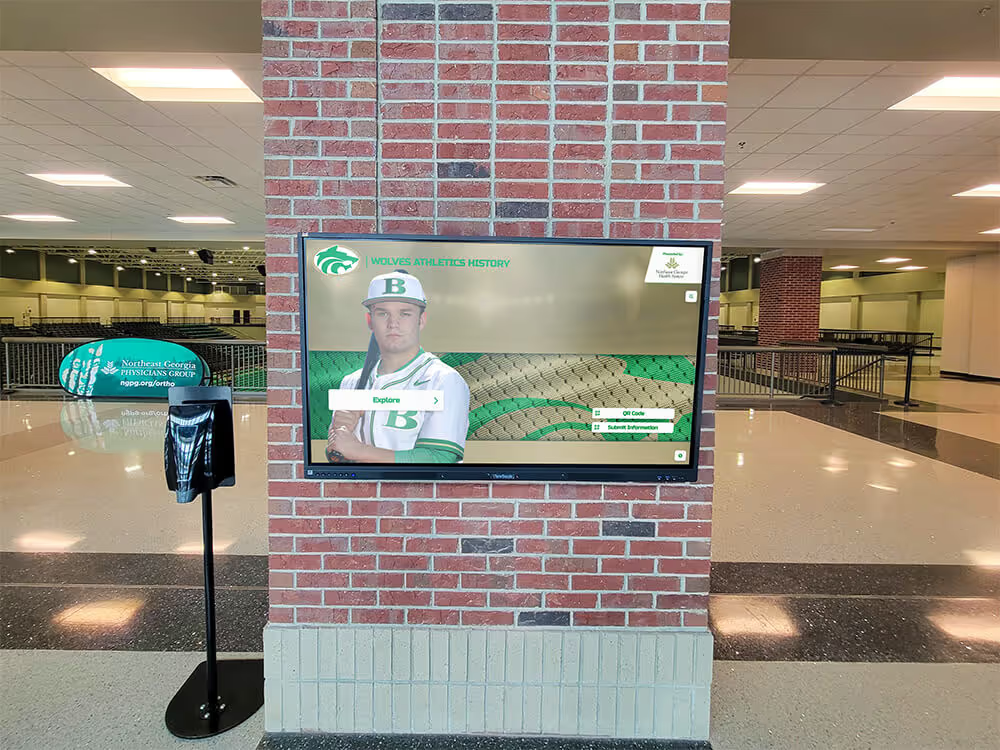
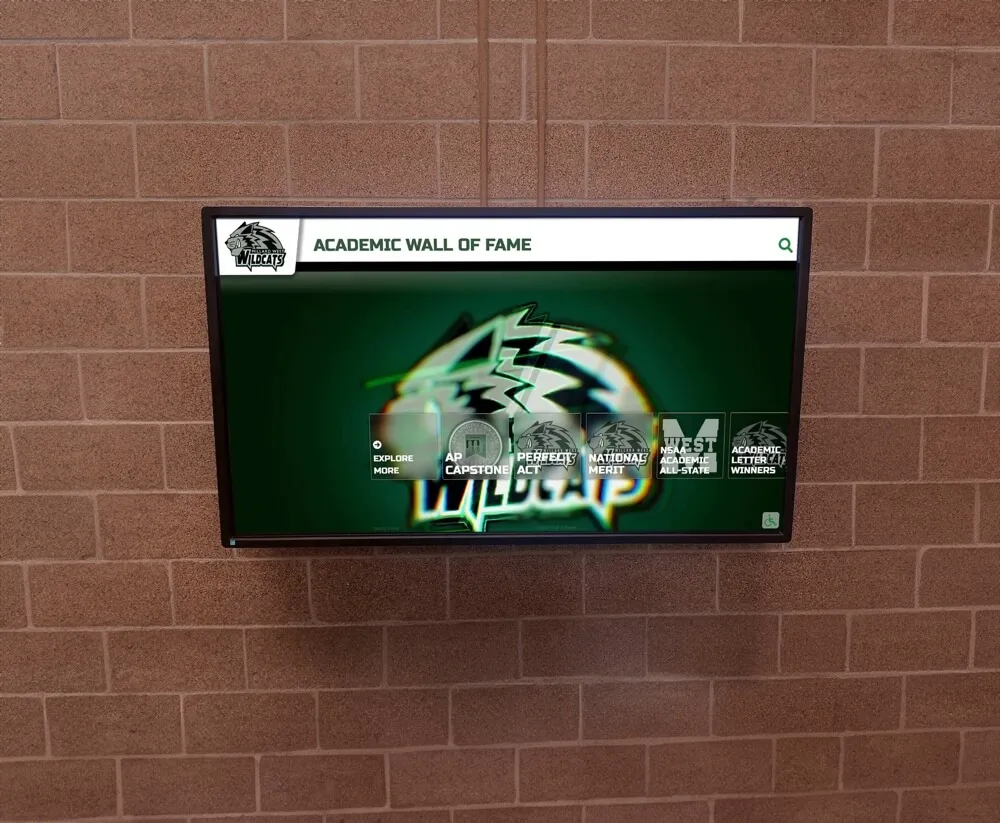
Interactive digital displays engage current students with program history while providing unlimited space for retired jersey recognition
Hybrid Physical-Digital Approaches Many programs discover that combining traditional and digital methods optimizes recognition effectiveness. Schools might display the three most recent retired jerseys physically while using digital systems to showcase the complete historical collection.
Hybrid approaches satisfy different stakeholder preferences—older alumni who value tangible physical recognition and younger students accustomed to digital interaction both find familiar engagement methods.
Managing Jersey Retirement Programs: Governance and Sustainability
Successful jersey retirement requires systematic administration preventing future conflicts.
Selection Committee Structure
Formal governance processes ensure credible, defensible selection decisions:
Committee Composition Effective selection committees typically include:
- Athletic director (usually serves as committee chair)
- Head coach from the sport being considered
- School principal or designee ensuring institutional perspective
- 2-3 alumni representatives providing historical program context
- 1-2 community members maintaining public accountability
Committee size (5-7 members typical) should remain manageable while representing key stakeholder groups. Avoid excessively large committees that become difficult to convene and prone to lengthy, unfocused deliberations.
Term Limits and Rotation Implement term limits (3-5 years common) for committee members to ensure fresh perspectives while maintaining institutional knowledge through staggered rotations. Term limits prevent entrenchment while making committee service feasible asks for busy volunteers.
Decision-Making Processes Establish clear voting procedures—typically requiring supermajority (two-thirds or three-quarters) approval rather than simple majorities. Higher voting thresholds ensure broad consensus around jersey retirement decisions, reducing likelihood of contentious selections or later regrets.
Document deliberations through minutes recording which candidates were considered, what information guided decisions, and what votes resulted. Documentation provides accountability while helping future committees understand previous decisions if questions arise.
Nomination and Review Procedures
Systematic nomination processes ensure all deserving athletes receive consideration:
Open Nomination Period Announce annual nomination windows when coaches, alumni, community members, or athletes themselves can submit candidates for jersey retirement consideration. Open processes prevent accusations of favoritism while ensuring committees evaluate all potentially deserving athletes.
Nomination forms should require:
- Candidate’s complete athletic history and statistics
- Specific achievements warranting jersey retirement consideration
- Supporting documentation (newspaper articles, video footage, coach testimonials)
- Explanation of candidate’s character and leadership contributions
Schools managing multi-program athlete recognition systems often use similar nomination frameworks across different recognition tiers—creating consistency in how athletic achievement is evaluated.
Background Research and Verification Assign committee members responsibility for verifying nominated athletes’ achievements before deliberation. Confirm statistics accuracy, validate championship claims, and research any potentially disqualifying character concerns that nominators might have omitted.
This due diligence prevents embarrassing errors and ensures committee decisions rest on factual foundations.
Formal Deliberation and Selection Convene committee meetings where members discuss each nominee’s qualifications based on established criteria. Encourage honest assessment preventing “rubber stamp” approvals of politically favored candidates who don’t truly meet standards.
Consider using secret ballots for final votes—allowing committee members to make merit-based decisions without concern about personal relationship implications.
Long-Term Program Management
Sustainable jersey retirement requires planning for multi-decade timelines:
Capacity Planning Calculate how many athletes might reasonably earn jersey retirement over coming decades based on historical program performance. If criteria suggest potential for 2-3 jersey retirements per decade, and your program has already retired 12 numbers, you’re approaching limitations for sports with restricted number availability.
Programs facing capacity constraints might:
- Tighten criteria to ensure only truly exceptional achievements earn retirement
- Transition from permanent number retirement to “honored number” status where numbers remain in circulation but are acknowledged as representing program legends
- Implement digital-primary recognition reducing physical space concerns
Policy Review and Adjustment Revisit jersey retirement criteria every 5-10 years ensuring policies remain appropriate as athletic programs evolve. Changing competitive landscapes, shifting community values, or program growth might necessitate criteria adjustments while preserving recognition already granted.
Document all policy changes with clear rationale—explaining why adjustments were necessary helps maintain credibility with stakeholders who might question modifications.
Financial Sustainability Budget for jersey retirement program costs including:
- Annual ceremony expenses (rental equipment, programs, refreshments)
- Display materials (framing, banners, or digital hardware)
- Ongoing maintenance (cleaning displays, repairing damage, updating digital content)
- Administrative support (committee coordination, nomination processing, research verification)
Consider identifying dedicated funding sources—booster clubs, alumni associations, or facility naming rights donors might sponsor jersey retirement programs as tangible ways to support athletic excellence recognition.
Learning from Professional Sports: Lessons for School Programs
Professional sports organizations’ century-long experience with jersey retirement offers valuable insights for school programs.
What Professional Teams Do Well
Examine aspects of professional jersey retirement that translate effectively to educational settings:
Rarity and Prestige Maintenance Professional teams with the most respected jersey retirement traditions (NFL’s Chicago Bears, NBA’s Boston Celtics, MLB’s New York Yankees) maintain extremely high standards. The Bears have only retired 14 numbers across 100+ years—ensuring jersey retirement remains extraordinary rather than routine recognition.
Schools should embrace similar selectivity. Athletic programs tempted to retire jerseys frequently to avoid disappointing deserving athletes ultimately dilute recognition prestige, reducing its motivational impact on future generations.
Storytelling Excellence Professional organizations excel at sharing complete athlete narratives—explaining not just what honorees achieved, but how they transformed franchises, inspired communities, or demonstrated exceptional character. Deep storytelling helps audiences understand why particular achievements merited jersey retirement.
Schools implementing effective recognition should invest similar effort in comprehensive athlete documentation. Collect detailed interviews, preserve video footage, gather teammate and coach perspectives, and create rich biographical content that provides context future generations need for understanding honorees’ significance.
Ceremony Production Value Professional organizations treat jersey retirement ceremonies as major events worthy of significant production investment. High-quality video presentations, thoughtful speaker selection, and carefully choreographed ceremony components create emotional experiences that resonate with audiences.
While schools operate with different resource levels, the underlying principle holds—jersey retirement deserves ceremony investment reflecting the honor’s significance.
Adapting Professional Practices for Schools
Certain professional jersey retirement approaches require modification for educational contexts:
Character Requirements Professional sports primarily retire jerseys based on competitive achievement and franchise impact—sometimes honoring players despite character concerns. Schools must prioritize character alongside athletic achievement, ensuring honored athletes exemplify institutional values throughout their careers.
This emphasis on character distinguishes educational athletic programs from professional entertainment—schools develop students holistically rather than just developing athletic talent.
Selection Objectivity Professional organizations sometimes retire jerseys through owner or executive decisions rather than transparent committee processes. Schools benefit from more structured governance ensuring community confidence in selection integrity.
Alumni Engagement Integration Schools possess unique opportunities to maintain ongoing relationships with athletes whose jerseys are retired—inviting them to mentor current athletes, speak at team events, or contribute to program development. Professional organizations interact with retired athletes differently given contractual and competitive dynamics.
Schools should view jersey retirement as creating decades-long relationships where honored athletes remain active program contributors rather than one-time ceremony participants.
Jersey Retirement Alternatives: Other Recognition Options
Jersey retirement represents just one recognition approach within broader athletic honor systems.
Ring of Honor or Number Honoring
Some programs “honor” rather than permanently retire numbers:
Athletes whose numbers are honored receive formal recognition through ceremonies, displays, and permanent documentation. However, their numbers remain available for future athletes—often with ceremonial presentations where honored alumni approve or endorse new players wearing “their” numbers.
Number honoring provides recognition flexibility for programs concerned about running out of available numbers while still celebrating exceptional achievement.
Hall of Fame Integration
Many schools discover that comprehensive athletic hall of fame programs provide appropriate recognition for most athletes while reserving jersey retirement for the small subset of truly transformational performers.
Hall of fame induction celebrates outstanding achievement without creating number availability constraints—allowing more athletes to receive meaningful recognition.
Tiered Recognition Systems
Effective athletic recognition often employs multiple tiers:
Tier 1: Conference championships, statistical milestones, or single-season achievements Tier 2: Athletic hall of fame induction for sustained excellence and program contribution Tier 3: Jersey retirement for the absolute most exceptional athletes who define program history
Tiered approaches prevent jersey retirement proliferation while ensuring many deserving athletes receive appropriate recognition.
Creating Your Jersey Retirement Program: Implementation Steps
Schools ready to establish or formalize jersey retirement traditions should follow systematic implementation:
Phase 1: Foundation Development (Months 1-3)
Stakeholder Consultation Convene meetings with coaches, athletic department staff, school administrators, booster club leadership, and alumni representatives. Discuss whether jersey retirement aligns with institutional values and athletic program goals. Build consensus around recognition philosophy before developing specific policies.
Criteria Development Draft specific, measurable criteria that jersey retirement candidates must meet. Establish performance thresholds, character requirements, and procedural guidelines. Ensure criteria remain rigorous enough to maintain prestige while being achievable by truly exceptional athletes.
Governance Structure Creation Establish selection committee composition, term lengths, meeting schedules, and decision-making procedures. Document all governance processes in written policy protecting against future disputes.
Phase 2: Policy Approval and Communication (Months 4-6)
Administrative Approval Present draft policies to school boards, superintendents, or other governing bodies requiring formal approval. Address concerns and incorporate feedback before finalizing procedures.
Community Communication Announce jersey retirement program establishment through school communications, athletic department channels, alumni networks, and local media. Explain criteria, nomination processes, and program philosophy.
Retroactive Recognition Planning If establishing a new program, determine whether athletes from past decades qualify for jersey retirement under new criteria. Some schools conduct inaugural ceremonies honoring multiple past athletes simultaneously, creating immediate tradition while recognizing historical excellence.
Phase 3: Program Launch (Months 7-12)
Initial Nomination Period Open first nomination window accepting candidates for consideration. Provide adequate time (60-90 days typical) for thorough nominations.
Selection Committee Work Convene committee to review nominations, verify achievements, and make initial selection decisions. Document deliberations thoroughly establishing precedent for future committees.
First Ceremony Planning Organize inaugural jersey retirement ceremony incorporating all recommended elements. Invest in production quality creating memorable experience that establishes ceremony standards for future years.
Display Implementation Install physical displays or digital systems showcasing retired jerseys. Choose prominent locations ensuring maximum visibility among current athletes, students, alumni, and visitors.
Measuring Jersey Retirement Impact: Recognition ROI
Athletic directors should evaluate jersey retirement program effectiveness across multiple dimensions:
Student Athlete Impact Metrics
Track measurable effects on current athletes:
- Survey data about awareness of retired jerseys and associated motivation
- Pre- and post-implementation comparisons of athlete performance trends
- Academic achievement correlations for teams with visible recognition systems
- Retention rates and multi-year participation among athletes in programs with robust recognition
Alumni Engagement Measurements
Assess recognition’s impact on alumni relationships:
- Alumni event attendance changes following jersey retirement ceremonies
- Giving rate differences between athletes receiving jersey retirement versus other recognition
- Social media engagement and website traffic from alumni accessing recognition displays
- Alumni survey data about connection strength to athletic programs
Recruiting and Competitive Benefits
Evaluate effects on program competitiveness:
- Recruit and family feedback about recognition displays during campus visits
- Win-loss record trends following recognition program enhancement
- Coaching recruitment outcomes when recognition systems are highlighted
- Conference or regional competitive standing changes
Community and Institutional Value
Measure broader impacts:
- Local media coverage volume and tone regarding athletic programs
- Community attendance at games and athletic events
- School pride indicators among students and families
- Institutional reputation measures within athletic conferences
Ready to Transform Your Athletic Recognition?
Jersey retirement represents powerful recognition tradition that honors exceptional athletes while inspiring future generations. Whether establishing a new program or modernizing existing recognition systems, implementing comprehensive jersey retirement policies creates lasting impact extending far beyond individual ceremonies.
The most effective recognition programs combine traditional jersey retirement with comprehensive digital displays that overcome physical space limitations while enabling rich storytelling about honored athletes’ complete achievements. Modern recognition technology allows schools to celebrate unlimited athletes across all sports, providing detailed statistics, video highlights, and biographical context that static displays cannot match.
Rocket Alumni Solutions specializes in helping schools create comprehensive athletic recognition systems that integrate jersey retirement with hall of fame programs, digital displays, and interactive experiences. Our turnkey solutions handle everything from initial planning and display design through installation and ongoing content management—allowing your athletic department to focus on honoring excellence while we manage technical implementation.
Frequently Asked Questions About Jersey Retirement
How many athletes should have their jerseys retired? There’s no single correct answer, but successful programs typically retire jerseys very selectively—often fewer than one athlete per decade. Maintaining rarity preserves prestige and motivational impact. Programs retiring jerseys too frequently risk diluting recognition significance.
Should schools retire jerseys for athletes who didn’t go on to college or professional sports? Jersey retirement should recognize achievement during the school years rather than requiring professional success. Exceptional high school performance combined with character excellence and program impact can merit recognition regardless of post-graduation athletic career. However, criteria should still demand truly transformational high school achievement rather than merely above-average performance.
What happens when multiple athletes wore the same number in different eras? Selection committees should evaluate each athlete independently against established criteria. It’s entirely appropriate to retire the same number for multiple athletes if all met standards—creating shared recognition celebrating different eras’ legends. Some programs create dual-honor displays showing both athletes who made the number legendary.
Can jersey retirement be revoked if honored athletes later exhibit poor conduct? Written policies should address potential revocation circumstances, though actual revocation remains extremely rare and controversial. Most programs establish high character standards for initial selection, minimizing later conduct issues. If revocation becomes necessary due to truly egregious circumstances, follow transparent processes including committee deliberation, communication with affected parties, and thorough documentation.
How should programs handle jersey retirement when facing number availability constraints? Sports with limited number options (football, baseball) should implement especially selective criteria, transition to “honored number” status rather than permanent retirement, or prioritize digital recognition over physical number restriction. Long-term sustainability planning prevents future program constraints.
Should jersey retirement require mandatory waiting periods? Many programs implement 5-10 year waiting periods allowing perspective on athletes’ long-term impact and ensuring selection decisions aren’t driven by recent excitement. Waiting periods also reduce pressure on selection committees to honor athletes immediately following successful seasons. However, exceptional circumstances (athlete illness, premature death, truly unprecedented achievement) might justify expedited recognition.
How can schools afford quality jersey retirement displays? Consider phased implementation starting with budget-appropriate options, engage booster clubs or alumni associations as funding partners, incorporate recognition displays into larger facility renovation projects attracting donor support, or explore digital display solutions that provide comprehensive recognition within accessible budgets while eliminating ongoing physical maintenance costs.
Should different sports within the same school have different jersey retirement criteria? Sport-specific committees should apply consistent recognition philosophy while accounting for each sport’s unique characteristics—individual vs. team dynamics, roster sizes, number availability, and competitive contexts. Maintain consistent principles (achievement level, character requirements, impact standards) while allowing sport-appropriate application.