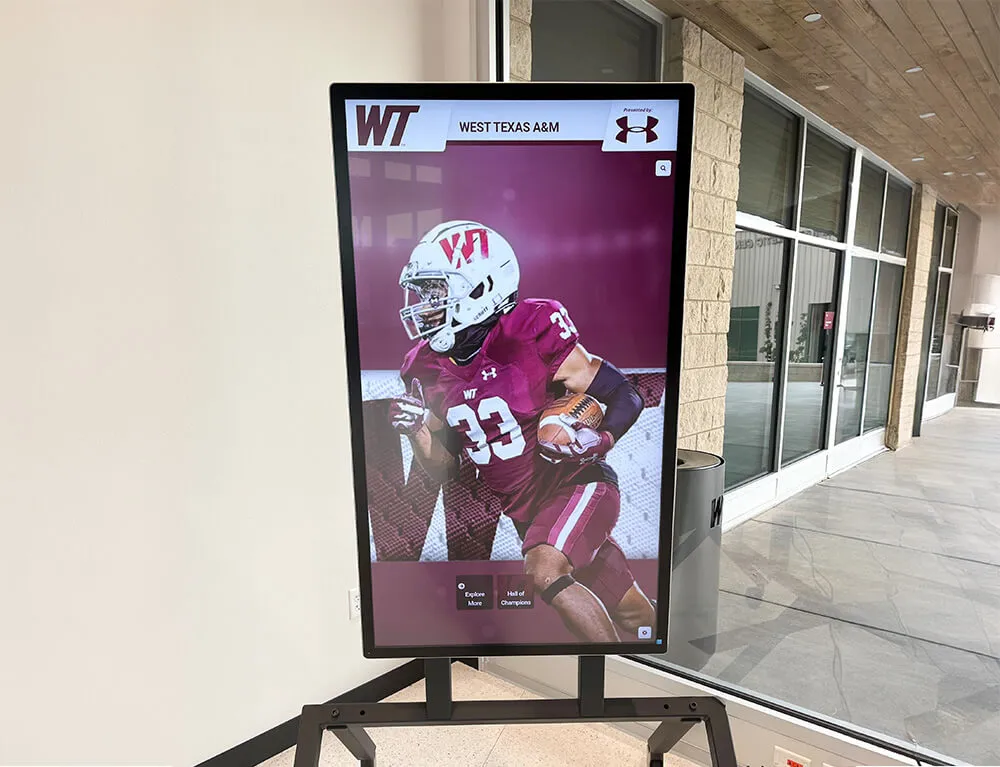
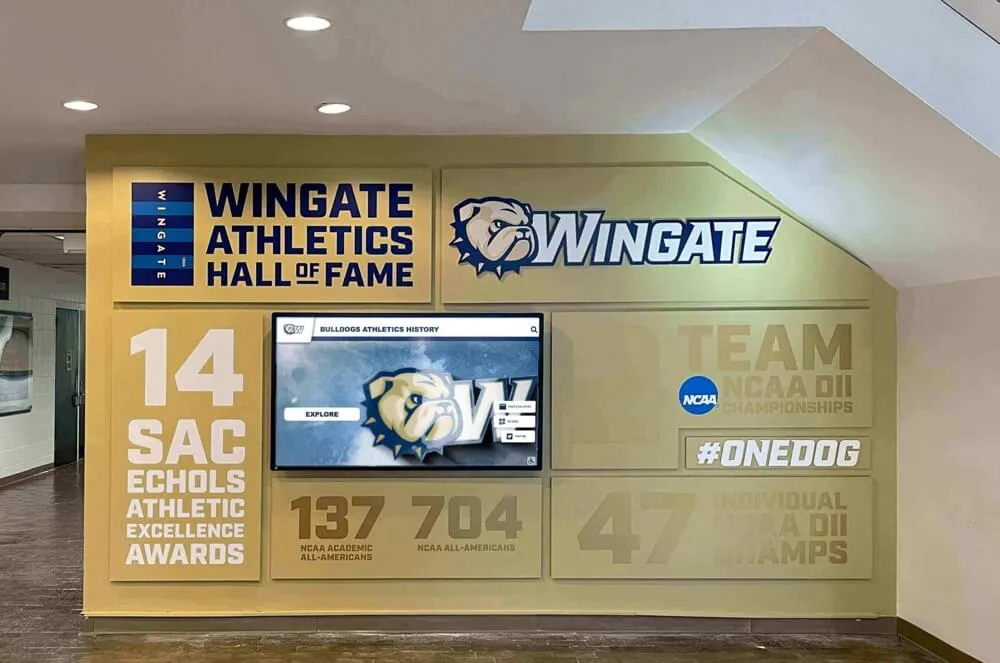
Intent: Calculate & Decide — This guide provides athletic directors and facilities managers with comprehensive cost analysis, implementation strategies, and decision frameworks for replacing expensive traditional gym banners with modern digital recognition displays that save money while celebrating unlimited achievements.
Walk into any high school gymnasium and look up. Championship banners hang from rafters, each representing hundreds or thousands of dollars in custom printing, fabrication, and installation costs. Year after year, schools order new banners celebrating conference titles, state championships, and milestone achievements—accumulating ongoing expenses that strain athletic budgets already stretched thin by equipment needs, facility maintenance, and program operations.
What if there was a better way? A recognition solution that eliminates the recurring cost of banner production while actually improving visibility, engagement, and celebration of athletic achievement? Digital recognition displays offer exactly that—transforming how schools recognize championships and athlete accomplishments while delivering substantial cost savings over traditional banner approaches.
This guide explores the complete picture of replacing gym banners with digital displays: realistic cost comparisons showing total investment versus ongoing banner expenses, implementation strategies for phased transitions that minimize disruption, content approaches that maximize athletic department value, and decision frameworks helping you determine when digital recognition makes sense for your facility and budget.
The True Cost of Traditional Gym Banners
Before evaluating digital alternatives, athletic directors need clear understanding of what traditional banner recognition actually costs over time—not just initial purchase prices, but accumulated expenses across multiple years of program operation.
Initial Banner Production Costs
Custom championship banners represent significant one-time investments:
Standard Vinyl Banners (3’ x 8’ typical championship size)
- Basic single-color design: $200-400 per banner
- Multi-color custom graphics: $400-700 per banner
- Premium materials with reinforced grommets: $500-900 per banner
Sewn Fabric Banners (higher-end traditional style)
- Standard fabric construction: $600-1,200 per banner
- Premium fabrics with appliqué lettering: $1,200-2,000 per banner
- Custom shapes or oversized dimensions: $1,500-3,000+ per banner
Schools celebrating multiple sports championships annually can easily invest $3,000-8,000 each year just in new banner production—before considering installation costs.

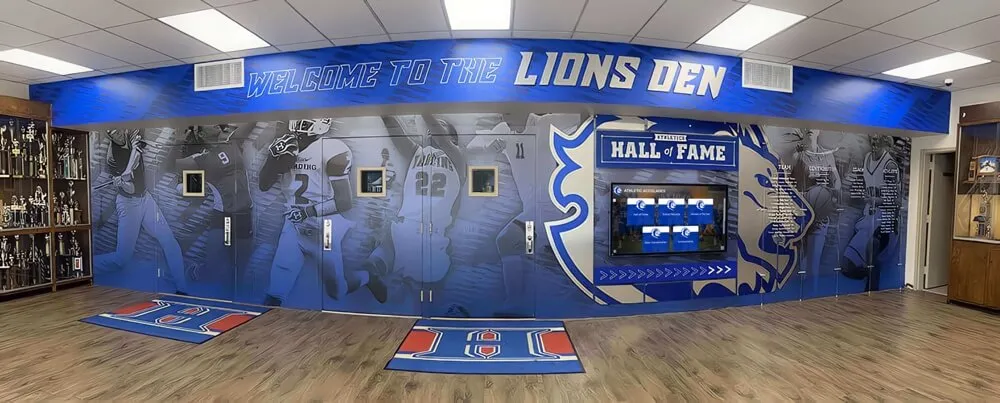
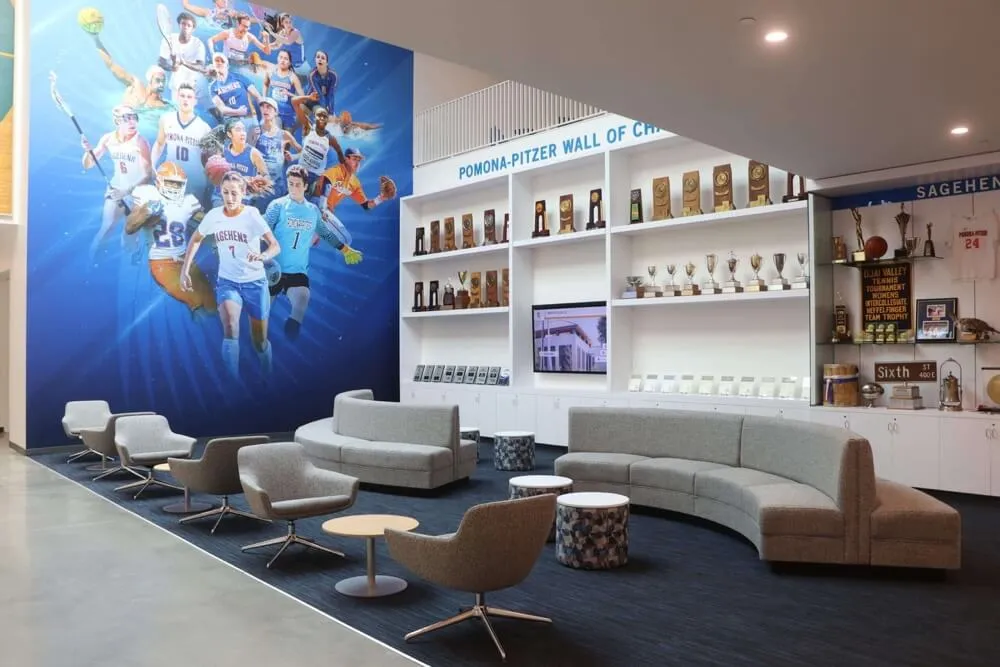
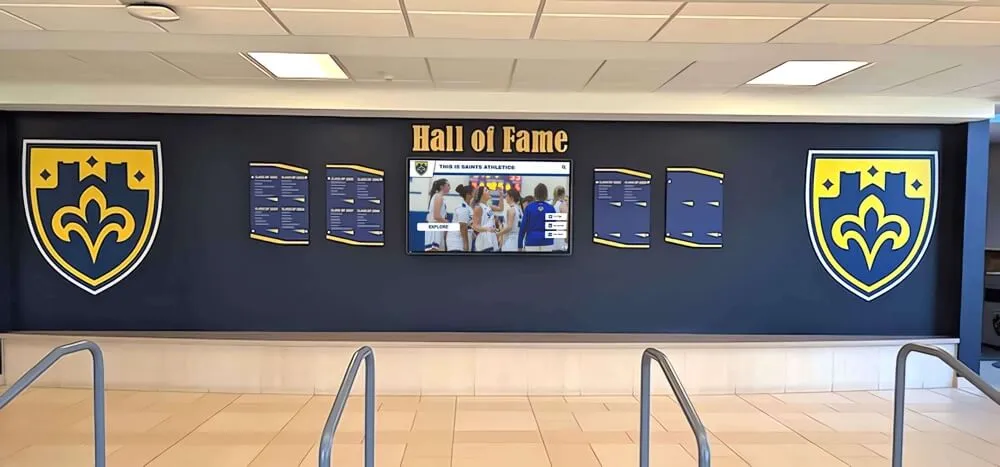
Traditional championship walls combine banners, plaques, and murals—but each element requires ongoing investment as achievements accumulate
Installation and Maintenance Expenses
Banner costs extend well beyond initial production:
Professional Installation Requirements
- Gymnasium ceiling mounting systems: $100-300 per banner for professional installation
- Climbing equipment rental or lift access: $200-500 per installation session
- Labor costs for facilities staff coordination: 2-4 hours per installation
- Safety equipment and liability considerations
Ongoing Maintenance and Replacement
- Cleaning and dust removal: Annual professional cleaning $50-100 per banner
- Fade and wear replacement: Banners typically last 5-10 years before appearing worn
- Storm or equipment damage: Unexpected replacement costs
- Reorganization as more banners added: Labor and coordination time
Space Limitations and Opportunity Costs
Physical space constraints create hidden costs:
Finite Ceiling Space
Gymnasium ceilings accommodate only so many banners before appearing cluttered or running out of prime visibility locations. Schools face difficult decisions: which championships deserve permanent recognition versus rotating displays, whether recent achievements replace older banners, or expensive facility renovations to add more hanging capacity.
Selective Recognition Pressure
Limited space forces selective recognition—conference championships in some sports while only state titles in others, creating perceived inequity between programs. Coaches and athletes notice when their achievements don’t receive same visibility as other programs, impacting morale and perception of athletic department priorities.
Inflexibility and Permanence
Once hung, banners resist change. Correcting errors requires complete reproduction and reinstallation. Adding context, statistics, or additional information to celebrate achievements more fully remains impossible without replacing entire banners.
Calculating Total Cost of Ownership
Athletic directors planning 10-year recognition strategies should calculate accumulated banner expenses:
Hypothetical Large High School Example
Annual Recognition: 6 championship banners yearly (mix of conference and state titles across multiple sports) at $500 average production cost, $150 average installation cost = $3,900 annual investment
10-Year Investment: $39,000 in banner production and installation alone
Additional Costs: Maintenance cleaning $2,000 over 10 years, replacement of damaged/faded banners $3,000, facility modifications for additional hanging capacity $5,000
Total 10-Year Cost: $49,000 for traditional banner recognition across single decade
This calculation excludes opportunity costs from staff time coordinating orders, managing vendors, and organizing installations—time athletic directors could spend on program development, coaching coordination, or student-athlete support.
Digital Recognition Display Alternatives: Features and Capabilities
Modern digital recognition systems transform how athletic facilities celebrate championships and honor athletes while addressing fundamental limitations inherent in traditional banner approaches.
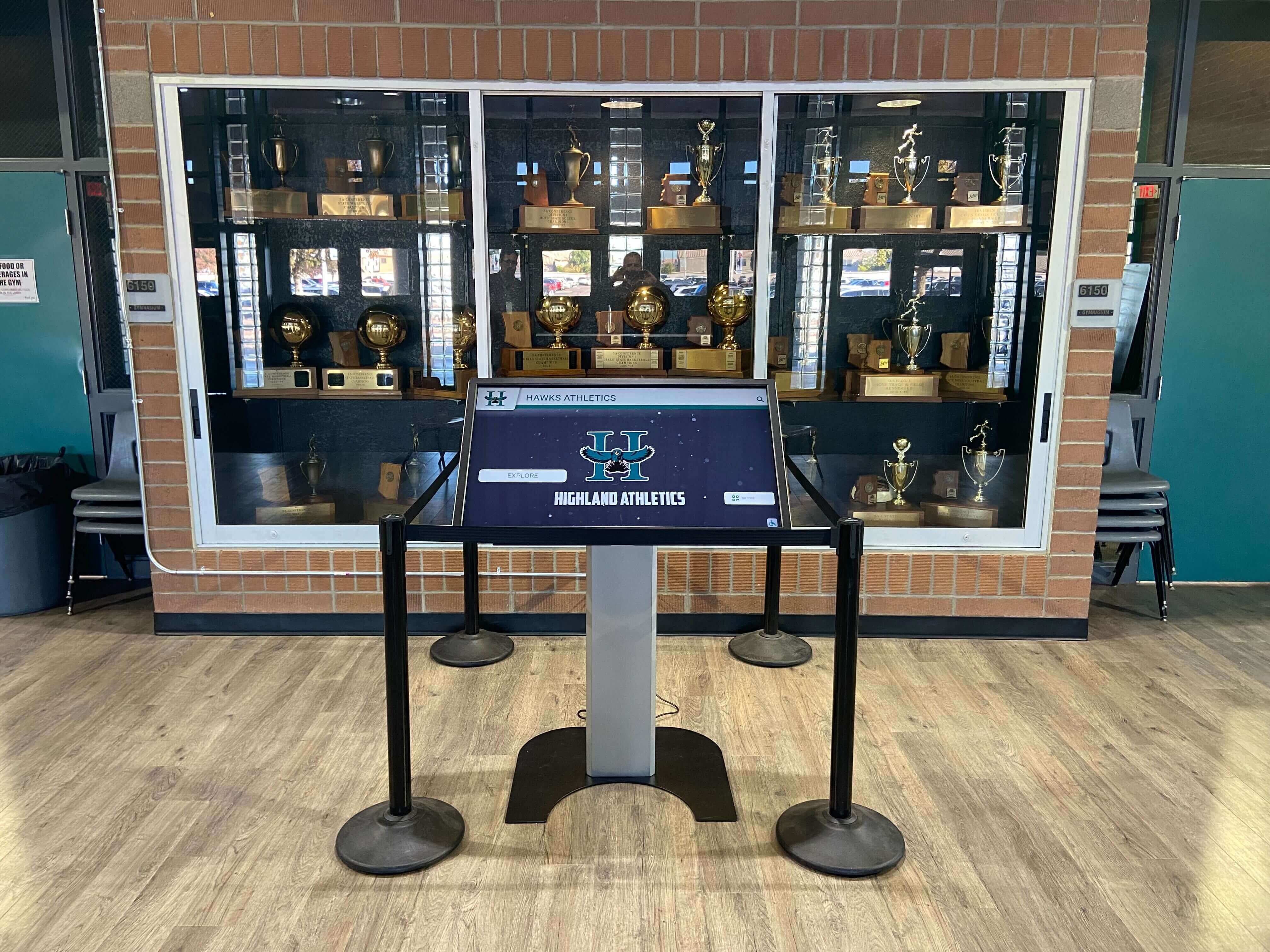
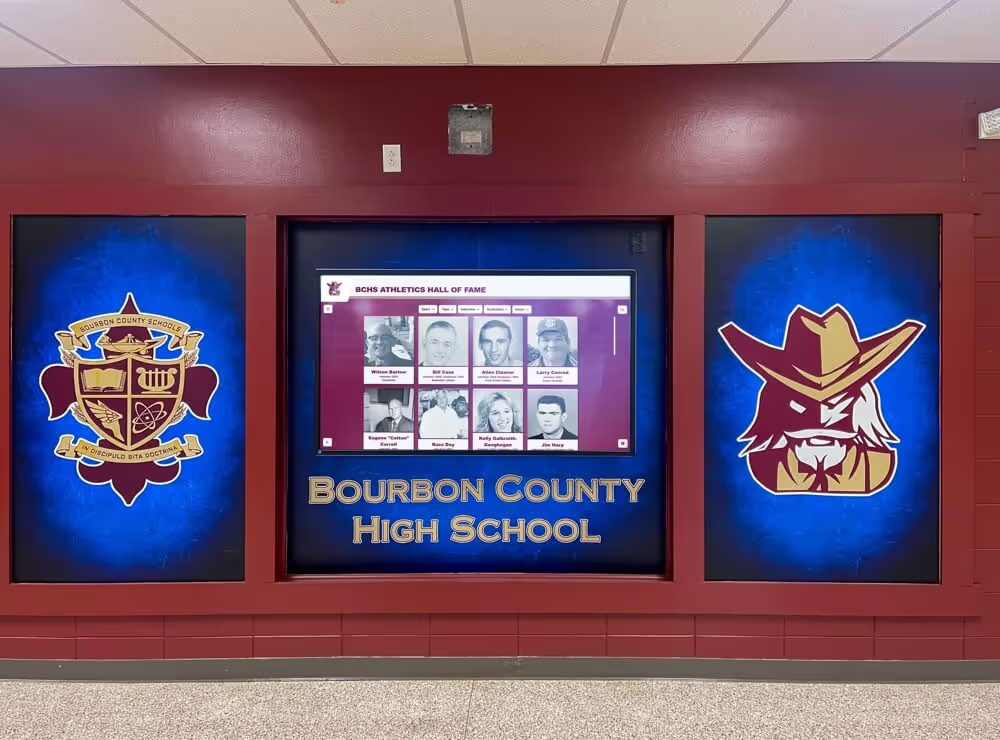
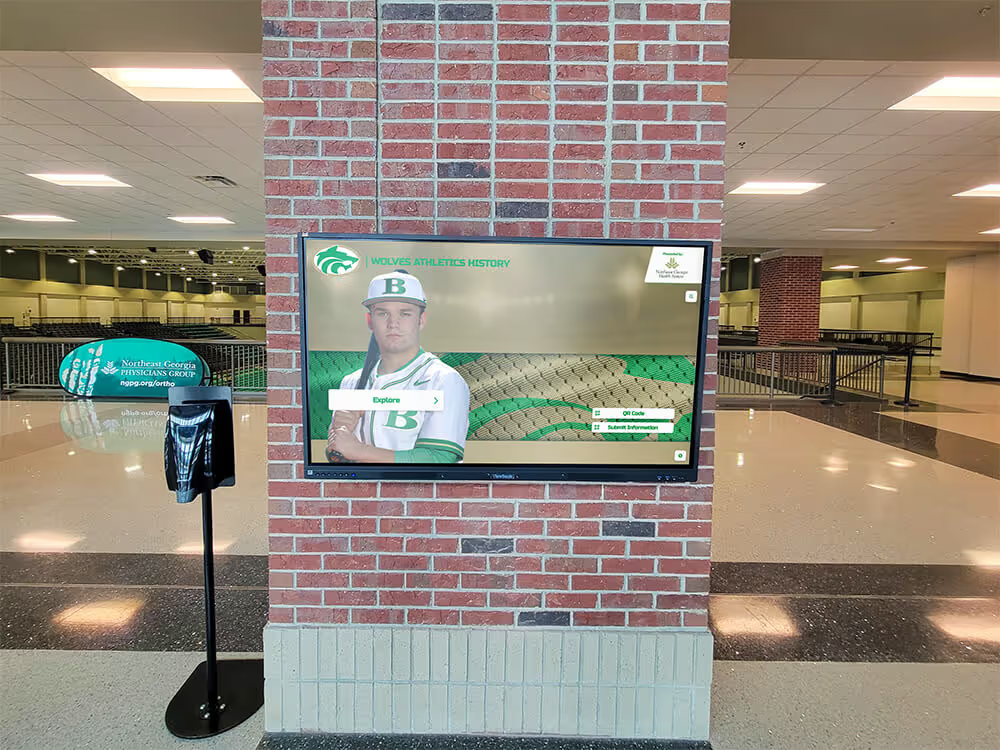
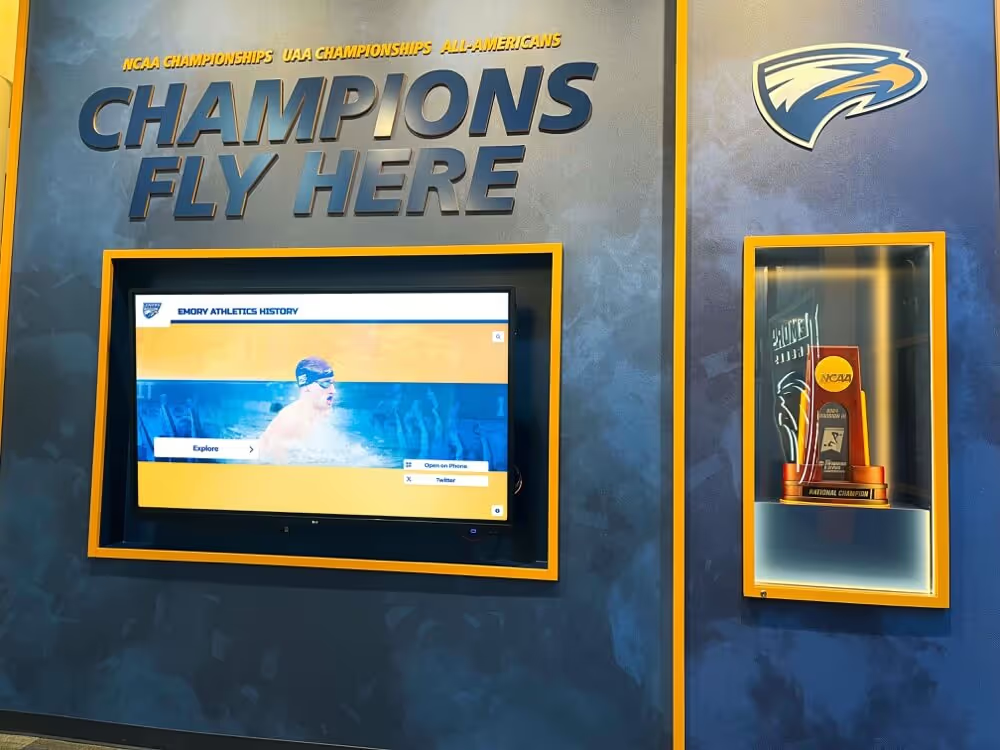
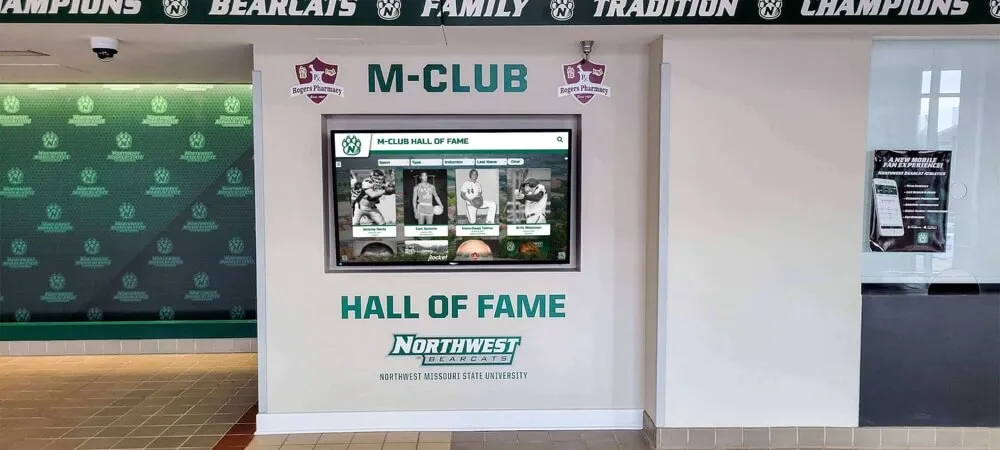
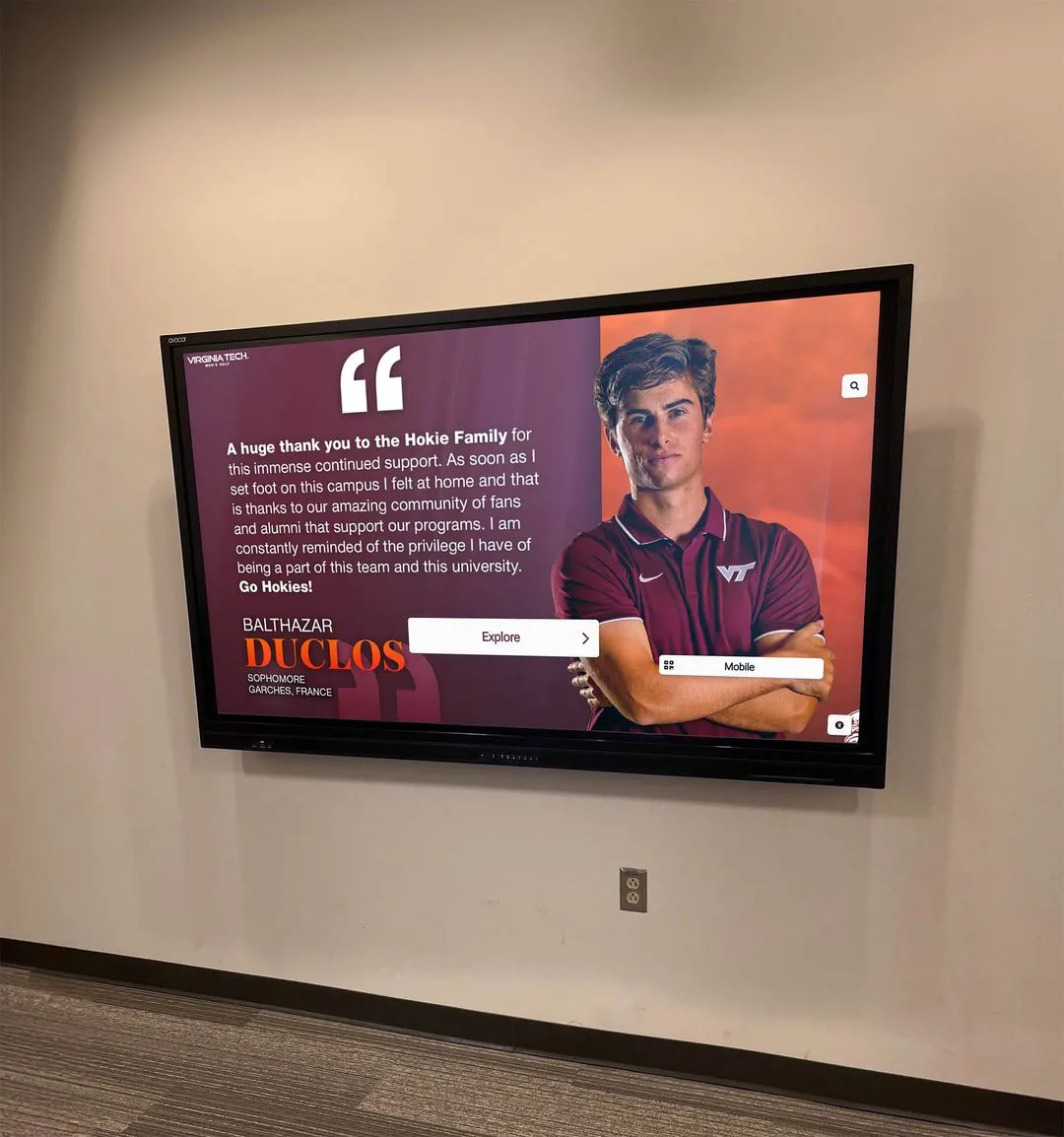
Digital displays integrate seamlessly with existing trophy cases, creating hybrid recognition that combines traditional and modern elements
Core Digital Recognition Features
Quality digital display systems for athletic recognition provide:
Unlimited Recognition Capacity
Physical displays fill up. Digital systems never run out of space. Celebrate every championship across every sport, recognize all-conference athletes alongside state champions, honor milestone achievements without choosing between limited banner positions. One 55-inch touchscreen display can showcase hundreds of championships, thousands of athlete profiles, and complete program history impossible to display traditionally.
Solutions like Rocket Alumni Solutions provide truly unlimited profile capacity—schools never face difficult decisions about which achievements deserve recognition based on artificial space constraints.
Rich Multimedia Storytelling
Traditional banners display text and maybe logos. Digital recognition enables comprehensive celebration through championship game video highlights, athlete action photos and team pictures, detailed statistics and performance records, coach and athlete interviews and reflections, news coverage and historical context, and interactive exploration of championship seasons.
This rich content creates emotional connections impossible with text-only banners hanging from ceilings. Students, parents, and visitors don’t just see that a championship occurred—they experience the achievement through compelling multimedia storytelling.
Instant Updates Without Additional Costs
Adding new championships to banner displays requires ordering production ($500+), scheduling installation ($150+), coordinating facilities access, and waiting weeks for completion. Digital recognition updates happen instantly through cloud-based content management—athletic directors or designees upload championship information, photos, and details immediately after victories, celebrating achievements while excitement remains high.
No recurring production costs. No installation coordination. No waiting. Just immediate recognition exactly when it matters most.
Professional Consistent Presentation
Banner quality and appearance varies across decades as different vendors, design approaches, and material choices create inconsistent visual presentation. Digital templates ensure every championship receives identical professional treatment regardless of year, sport, or level of achievement—creating cohesive athletic program identity.
Platforms designed for athletic recognition programs include customizable templates incorporating school colors, logos, and branding consistently across all content.
Strategic Placement Options
Digital recognition displays work throughout athletic facilities:
Main Gymnasium Lobbies
Install prominent touchscreen displays where athletes, students, parents, and visitors naturally gather before games, practices, and events. High-visibility placement ensures recognition reaches broad audiences throughout facility usage.
Weight Room and Training Facilities
Place displays where athletes spend significant time during practices and conditioning. Daily exposure to championship history and athlete accomplishments creates inspiration and pride in program tradition.
Hallways and Concourses
Position screens along high-traffic pathways between gyms, locker rooms, and support spaces. Capture attention during transitions while providing engaging content during downtime.
Competition Venue Entrances
Install displays at entrances to specific sports venues (basketball courts, wrestling rooms, swimming pools) showcasing sport-specific achievements, records, and athlete recognition relevant to each space.
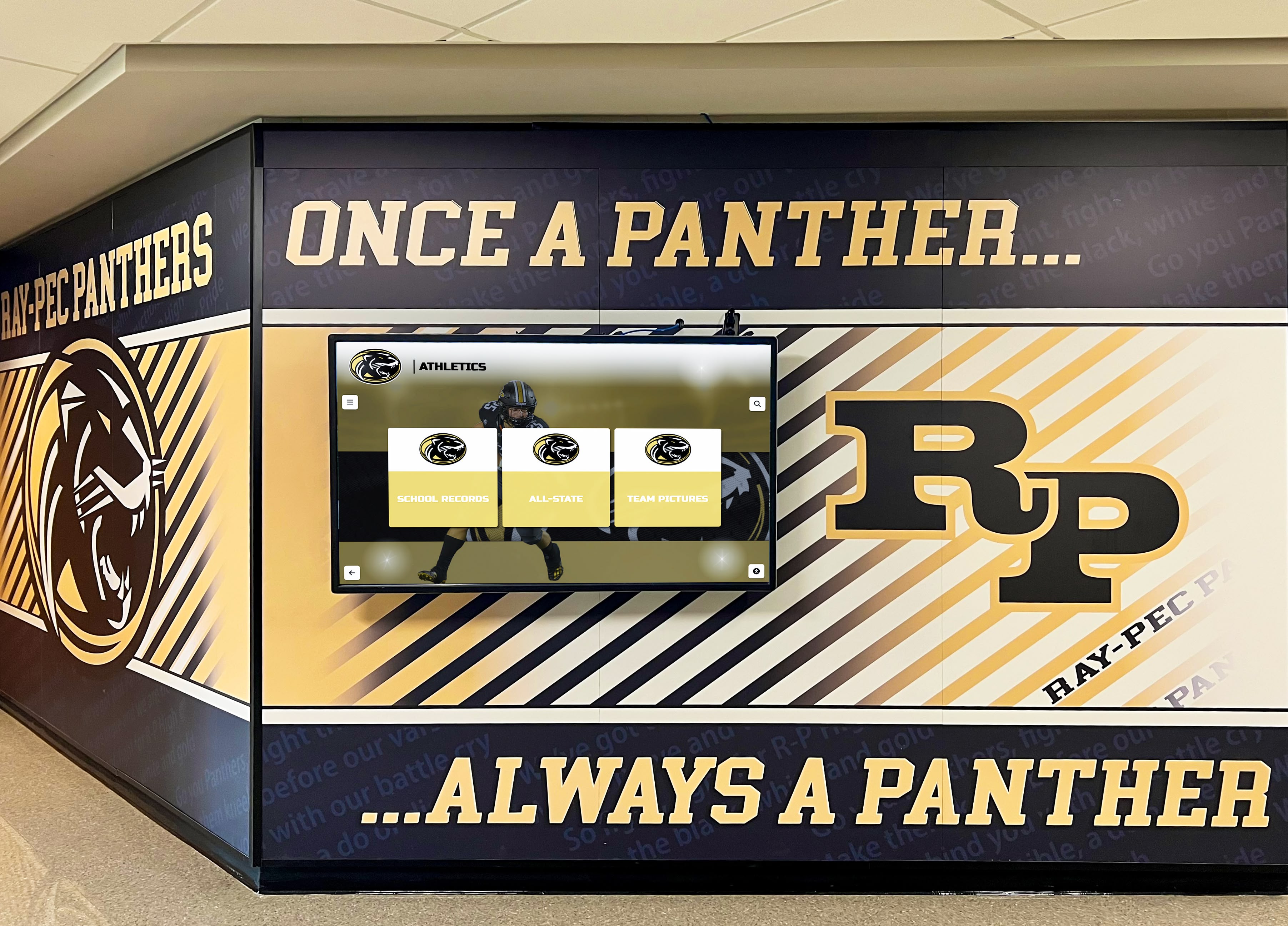
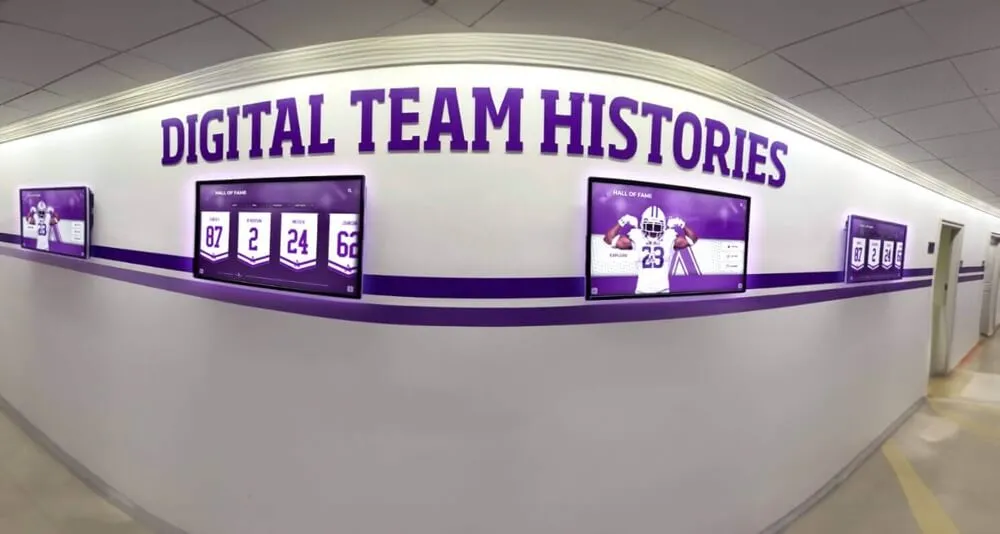
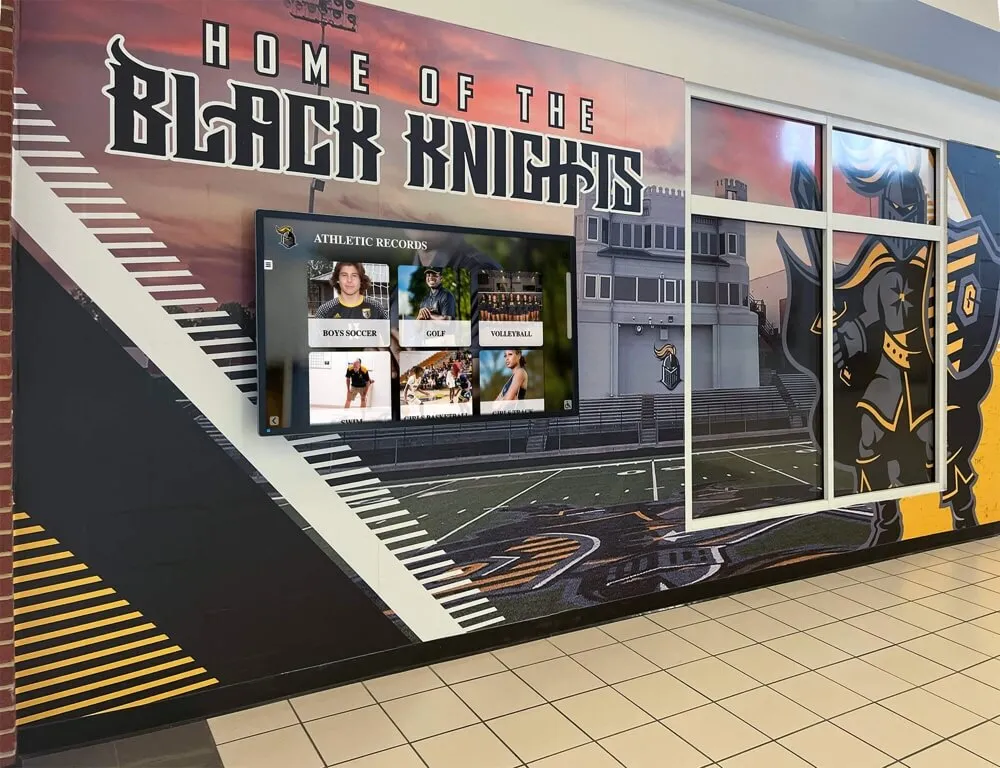
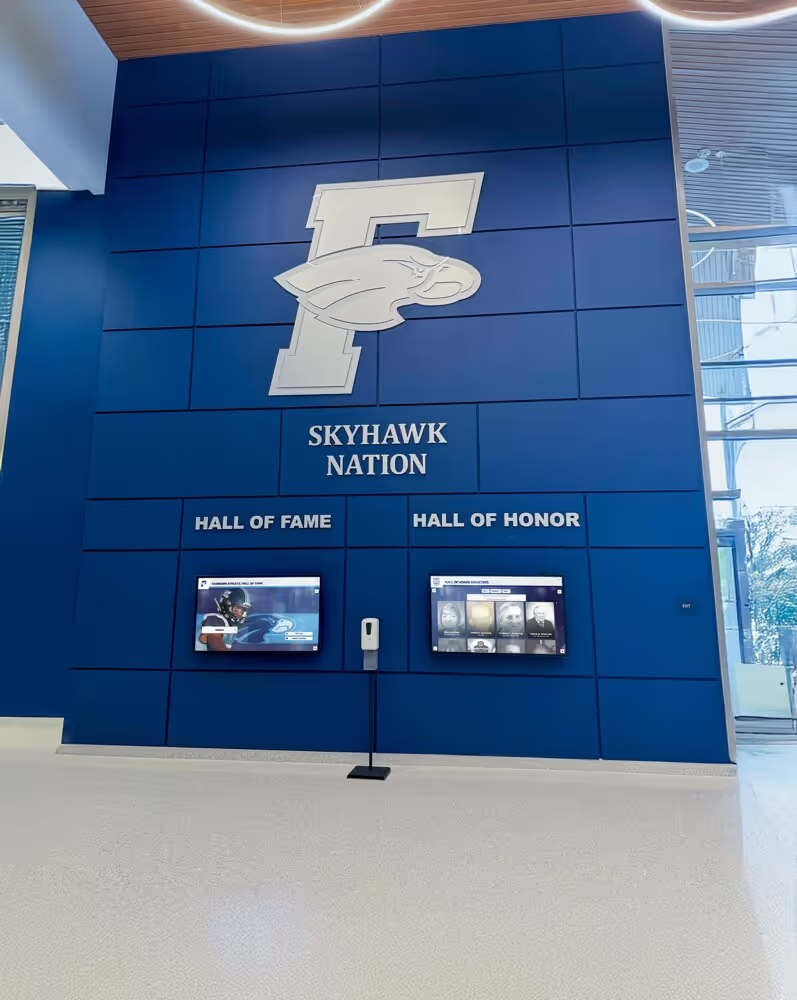
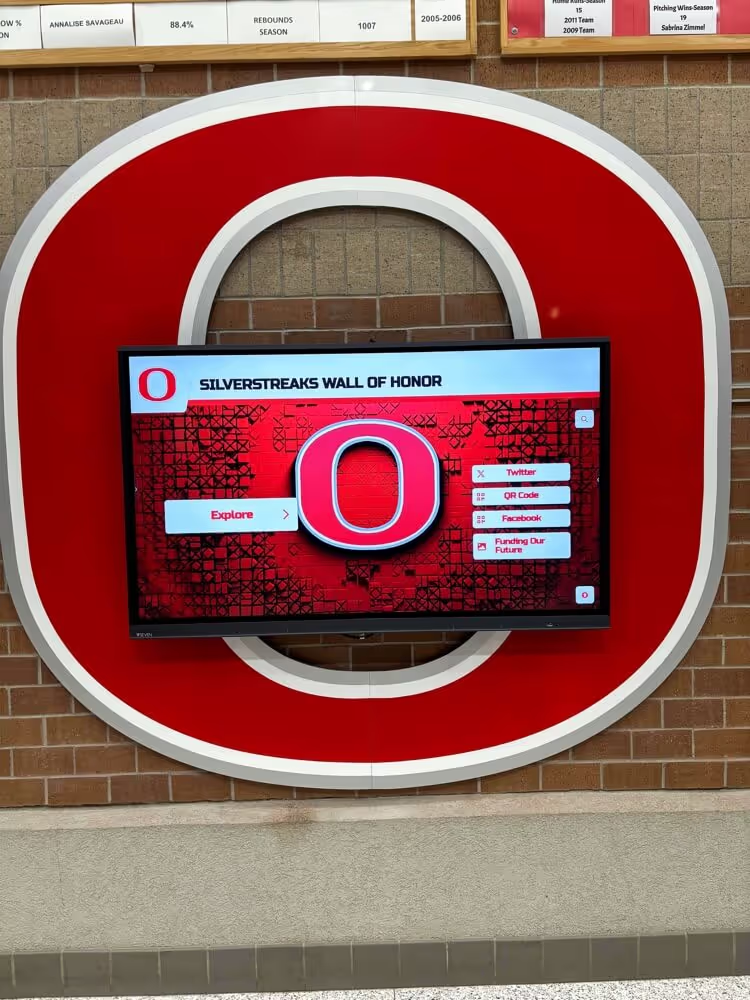
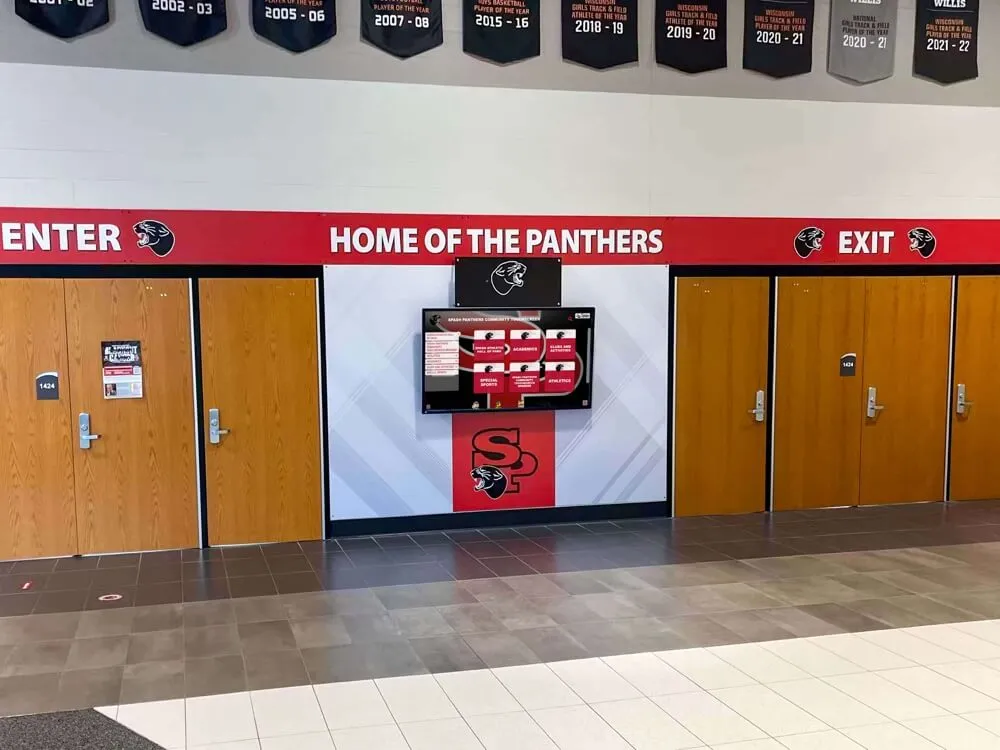
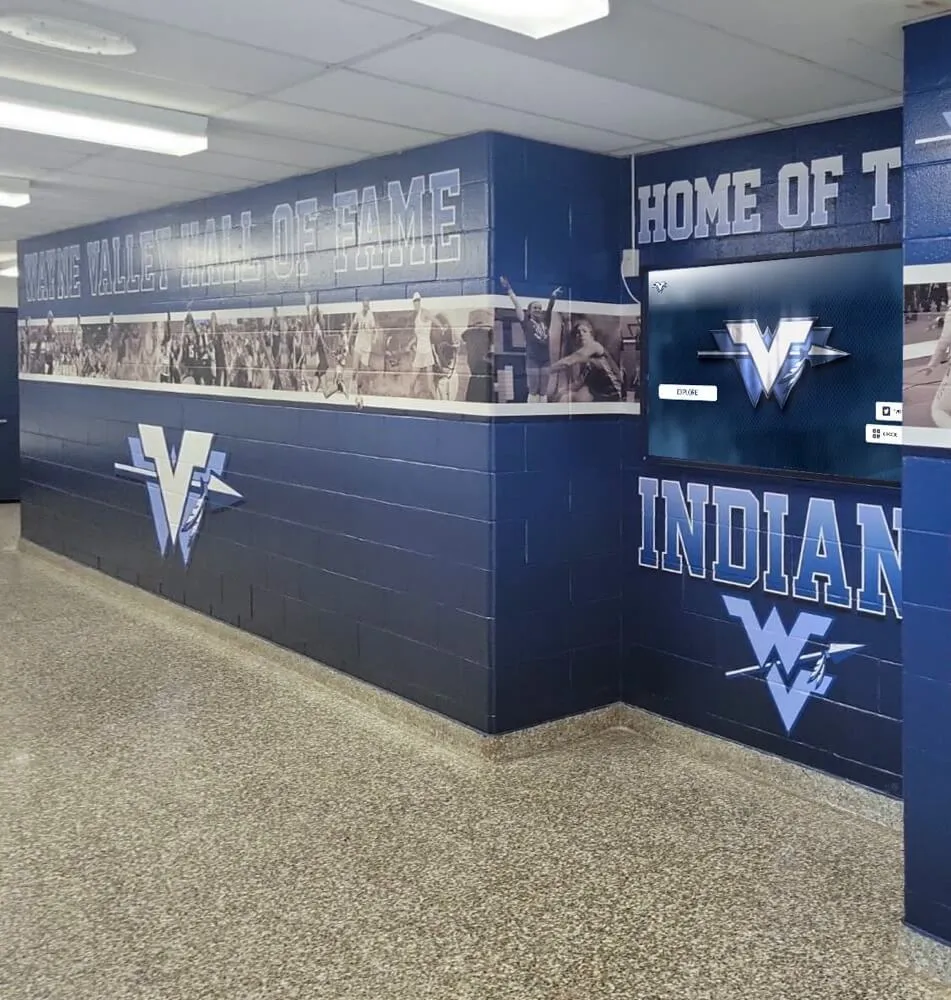
Strategic hallway placement ensures recognition reaches athletes, students, and visitors throughout daily facility usage
Web Accessibility Beyond Physical Facility
Digital recognition extends beyond on-campus displays through responsive web platforms accessible from any device:
Alumni Engagement
Former athletes explore their achievements, browse teammates’ profiles, and share accomplishments with personal networks—maintaining connections to athletic programs long after graduation.
Recruiting Showcase
Prospective student-athletes and families research program tradition, championship history, and athlete development from anywhere—strengthening recruiting efforts through accessible recognition.
Community Visibility
Local media, boosters, and community members follow athletic program success through online recognition—building broader awareness and support beyond facility visitors.
Schools implementing comprehensive digital recognition systems report that web platform access generates 10-15x more engagement than physical displays alone, dramatically extending recognition reach and impact.
Comprehensive Cost Comparison: Banners vs. Digital Displays
Athletic directors evaluating recognition investments need realistic total cost comparisons across meaningful timeframes.
Digital Display Initial Investment Breakdown
Hardware Costs
- 55-inch commercial touchscreen display: $2,500-4,000
- 65-inch commercial touchscreen display: $4,000-6,000
- 75-inch commercial touchscreen display: $6,000-9,000
- Professional wall mounting and installation: $500-1,500
- Network connectivity and power setup: $200-800
Software and Platform Costs
- Cloud-based recognition software (annual subscription): $1,200-3,000/year
- Initial content creation and setup: $1,000-3,000 (depending on historical achievement depth)
- Staff training and onboarding: Typically included in platform subscription
Total Initial Investment
- Single 55-inch display system: $8,000-12,000 including first year software
- Single 65-inch display system: $10,000-15,000 including first year software
- Single 75-inch display system: $12,000-18,000 including first year software
Ongoing Cost Comparison Over 10 Years
Traditional Banner Approach
Using our previous example (6 new championships annually, $650 average cost per banner including installation):
- Year 1-10 new banner costs: $39,000
- Maintenance and replacement: $5,000
- Facility modifications for capacity: $5,000
- Total 10-Year Cost: $49,000
Digital Recognition Approach
Using moderate 65-inch display investment:
- Initial hardware and setup: $10,000
- Annual software subscriptions (10 years at $2,000/year): $20,000
- Hardware refresh at Year 7: $5,000
- Maintenance and support: Included in subscription
- Total 10-Year Cost: $35,000
10-Year Savings: $14,000 with digital recognition
This comparison grows more favorable to digital recognition as recognition needs increase—more sports, more championship levels, more athlete profiles. Schools celebrating 10-15 annual championships see 5-year cost parity with digital investments.

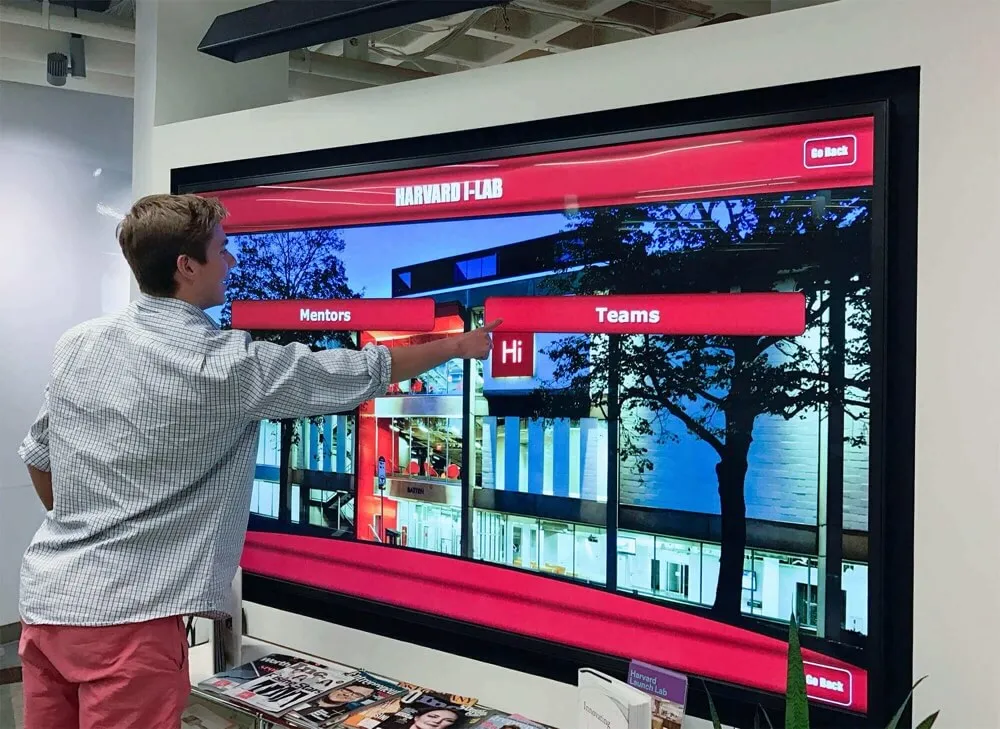
Professional digital installations serve athletic programs for decades while eliminating ongoing production costs
Return on Investment Beyond Direct Cost Savings
Financial comparison captures only quantifiable costs. Additional value creates broader ROI:
Staff Time Savings
Eliminate hours coordinating banner orders, managing vendor relationships, scheduling installations, and troubleshooting production issues. Athletic directors redirect time toward coaching, athlete development, and program operations.
Engagement and Impact
Digital recognition generates measurably higher engagement through interactive exploration, multimedia content, web accessibility, and social sharing—amplifying impact versus passive banner viewing.
Alumni Relations and Development
Enhanced recognition strengthens alumni connections driving increased giving, volunteer coaching support, and program advocacy—tangible benefits with real financial impact.
Recruiting Advantages
Comprehensive digital recognition showcasing program tradition, athlete development, and championship culture provides recruiting advantages helping attract committed student-athletes.
Athletic directors implementing digital athletic recognition programs consistently report that broader institutional benefits justify investments even before calculating direct cost savings.
Implementation Strategies: Phased Transitions and Hybrid Approaches
Most schools don’t immediately remove all existing banners and install comprehensive digital systems. Practical implementation follows phased approaches balancing budget realities, stakeholder concerns, and program needs.
Phase 1: Supplemental Digital Recognition (Year 1)
Begin with single strategic digital display supplementing existing banners:
Implementation Approach
Install 55-65 inch touchscreen in main athletic facility lobby or primary gymnasium entrance. Load comprehensive historical content documenting all championships, athlete achievements, and program milestones—creating searchable database far exceeding what limited banner space could ever display.
Maintain all existing banner displays ensuring no perception of removing recognition. Position digital system as enhancement providing deeper information and unlimited capacity rather than replacement threatening tradition.
Budget Impact: $8,000-12,000 initial investment
Value Delivered
- Unlimited recognition capacity for future championships without new banner costs
- Enhanced content with photos, videos, statistics impossible on banners
- Immediate updates celebrating new achievements without production delays
- Proof of concept demonstrating engagement and stakeholder acceptance
Phase 2: Pause New Banner Production (Years 2-3)
Once digital system proves successful, redirect banner budget toward digital expansion:
Implementation Approach
Stop ordering new championship banners. Instead, immediately add new championships to digital displays where they receive prominent, engaging recognition with rich multimedia content.
Maintain existing banner displays honoring tradition and past investments. Over time, comparison between static aging banners and dynamic updated digital recognition naturally builds support for full transition.
Add second digital display in secondary location (weight room, training facility, sport-specific venue) using budget that would have funded new banners.
Budget Impact: $8,000-12,000 for second display; ongoing banner costs ($3,900 annually) redirect to software subscriptions and content creation
Value Delivered
- Two comprehensive recognition displays throughout athletic facilities
- Elimination of ongoing banner production expenses
- Natural transition allowing stakeholder adjustment to new recognition approach
- Budget reallocation toward permanent digital infrastructure
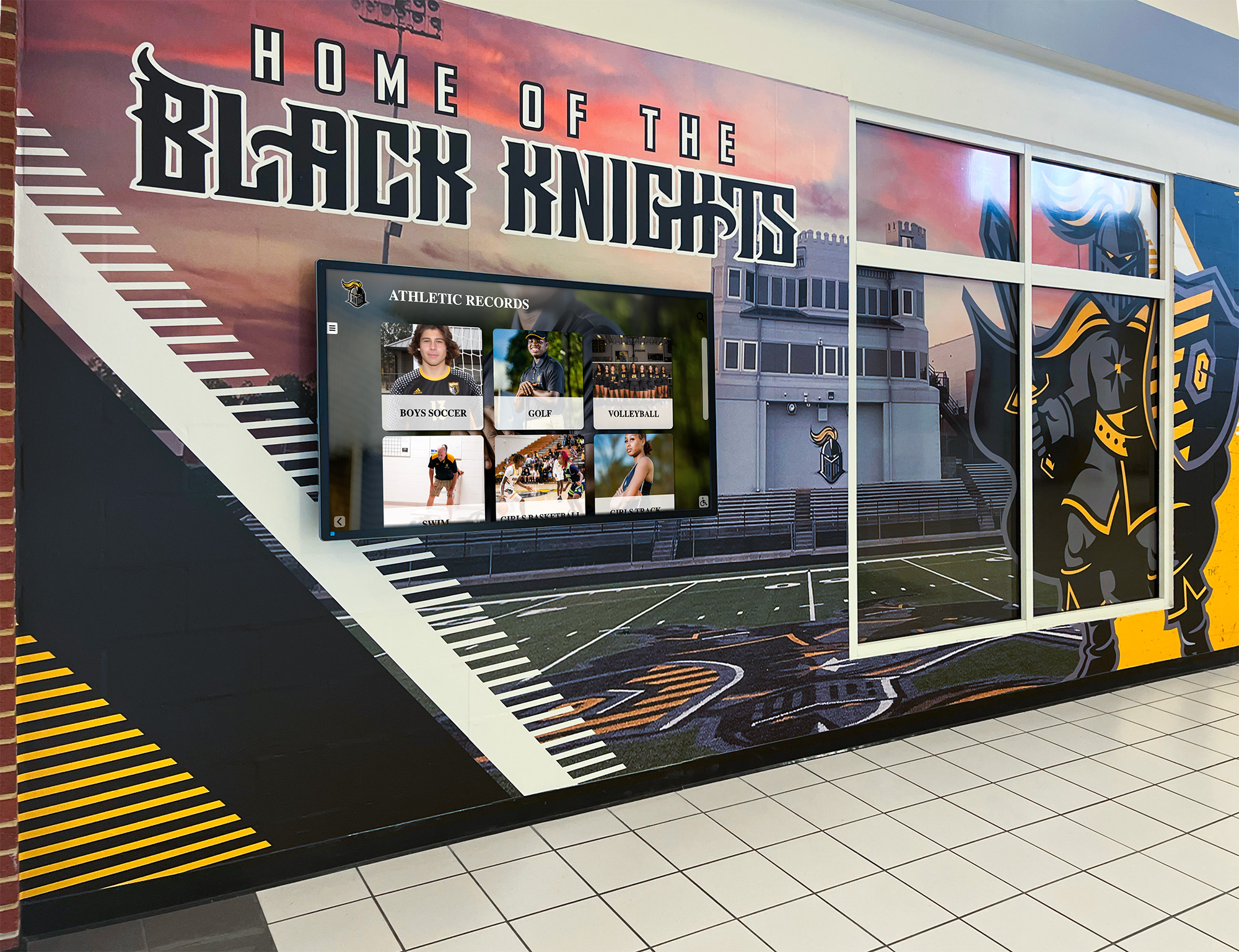
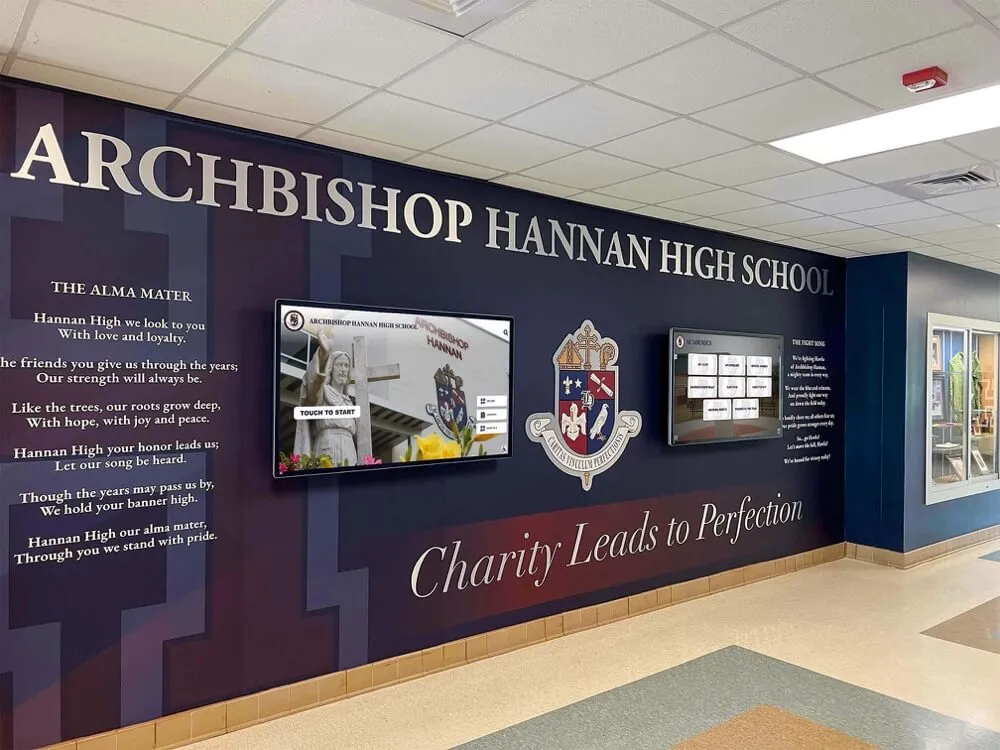
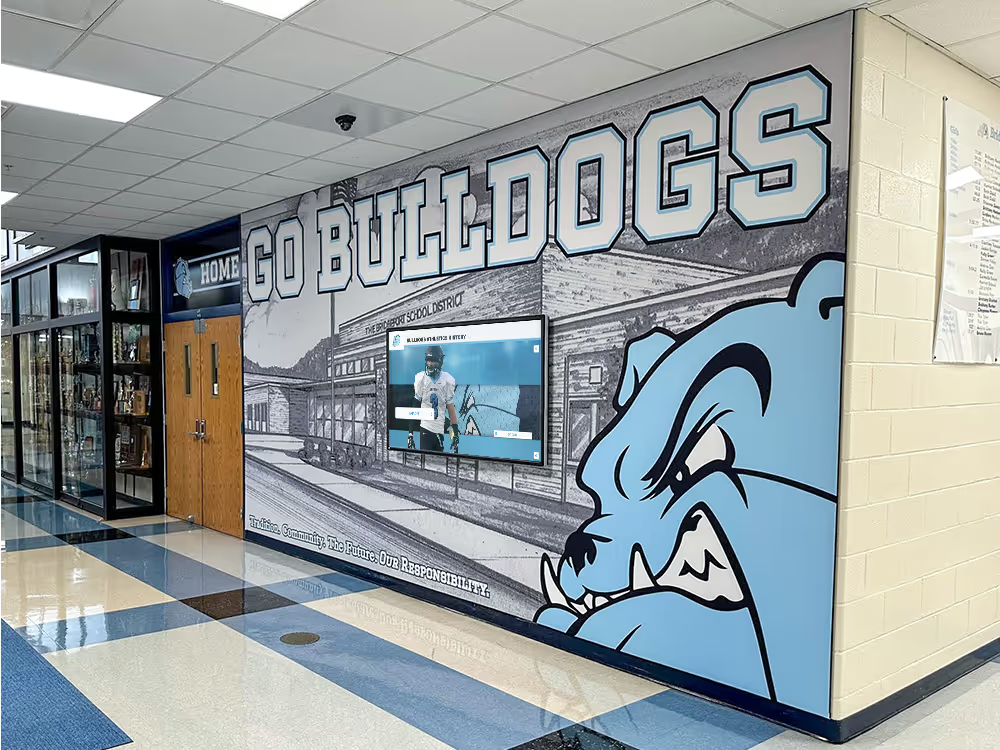
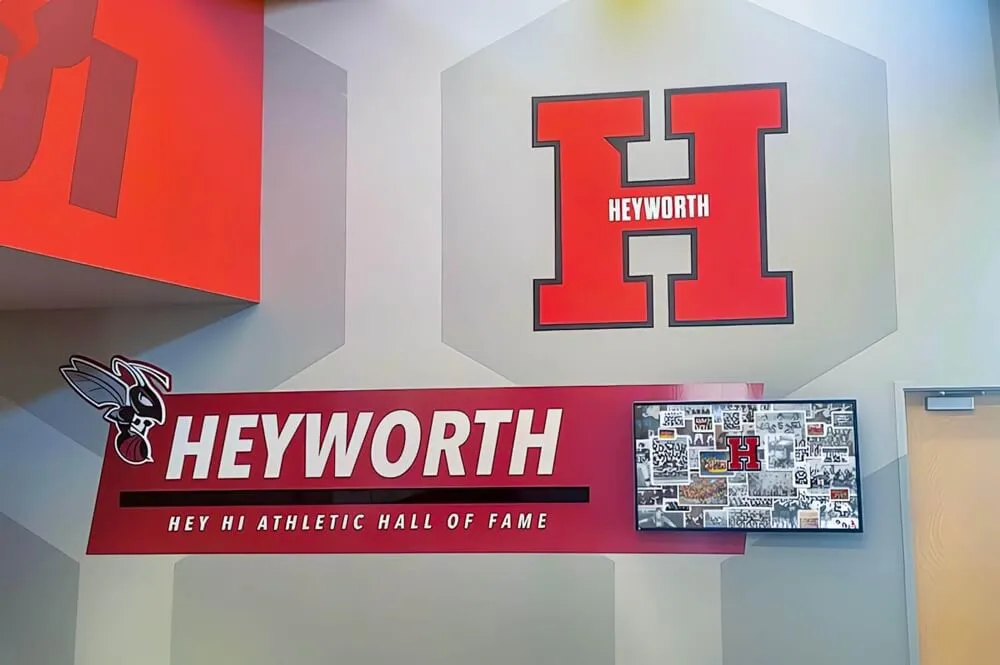
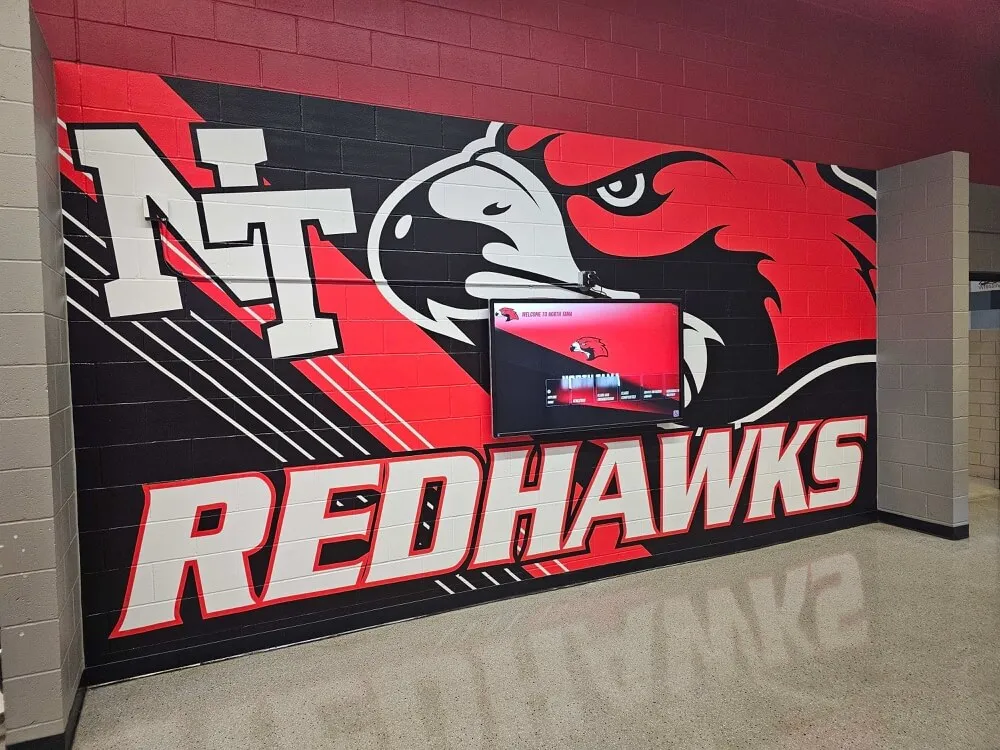
Successful transitions combine traditional athletic branding elements with modern digital recognition creating hybrid approach respecting history while embracing innovation
Phase 3: Facility Refresh Integration (Years 4-5)
Major facility renovations or gym remodeling provide natural opportunities for complete recognition transitions:
Implementation Approach
When undertaking gymnasium renovations, athletic facility improvements, or building updates, integrate comprehensive digital recognition as core facility element. Remove aging banner displays during construction, install multiple strategic digital screens, and create dedicated recognition spaces with professional installations.
Frame changes as facility modernization rather than banner removal—focusing on upgraded recognition capabilities matching upgraded facilities.
Budget Impact: Variable depending on facility scope; digital recognition typically $20,000-40,000 for multiple displays integrated with renovation budgets
Value Delivered
- Comprehensive modern recognition throughout refreshed facilities
- Professional installation integrated with architectural design
- Clear break from past approaches during natural transition moment
- Permanent cost-effective recognition infrastructure for decades
Managing Stakeholder Concerns During Transitions
Change management determines implementation success as much as technical execution:
Honoring Tradition Concerns
Some alumni, coaches, and community members view banner removal as erasing history. Address concerns by emphasizing that digital recognition preserves achievements permanently—older banners fade, tear, or get removed for space, while digital content remains indefinitely with better visibility and context.
Consider creating “banner archive” sections showing photos of historical banner displays as part of digital content honoring tradition while explaining evolution.
Demonstrating Value Before Major Changes
Resistance typically decreases after experiencing digital recognition firsthand. Focus initial implementation on additions rather than removals—building support through demonstrated engagement before discussing banner retirement.
Collect feedback, share usage statistics, and highlight specific success stories (alumni finding themselves, recruits exploring program history, enhanced championship celebrations) building evidence supporting broader transitions.
Involving Key Stakeholders in Decisions
Include coaches, booster leadership, and facilities staff in planning and content decisions. Stakeholder involvement creates ownership and reduces resistance while surfacing concerns early enough to address through implementation adjustments.
Schools implementing athletic facility digital displays emphasize change management and stakeholder engagement as critical success factors equal to technical implementation.
Creating Compelling Digital Recognition Content
Technology platforms enable recognition, but content quality determines engagement and impact.
Championship Recognition Content Structure
Effective championship profiles balance celebration with context:
Essential Elements
- Championship level and year (Conference Champion 2024, State Runner-Up 2023)
- Season record and key statistics
- Tournament or playoff progression
- Championship game or final competition recap
- Team photo with coaches
- Action photos from championship season
- Individual standout performances and records
- Coach quotes reflecting on achievement
- Historical context (first title in X years, program’s Nth championship)
Multimedia Enhancement
- Championship game highlight video (2-3 minutes)
- Trophy or championship medal photos
- Newspaper coverage or media recognition
- Celebration photos showing team joy
- Facility or venue photos establishing setting
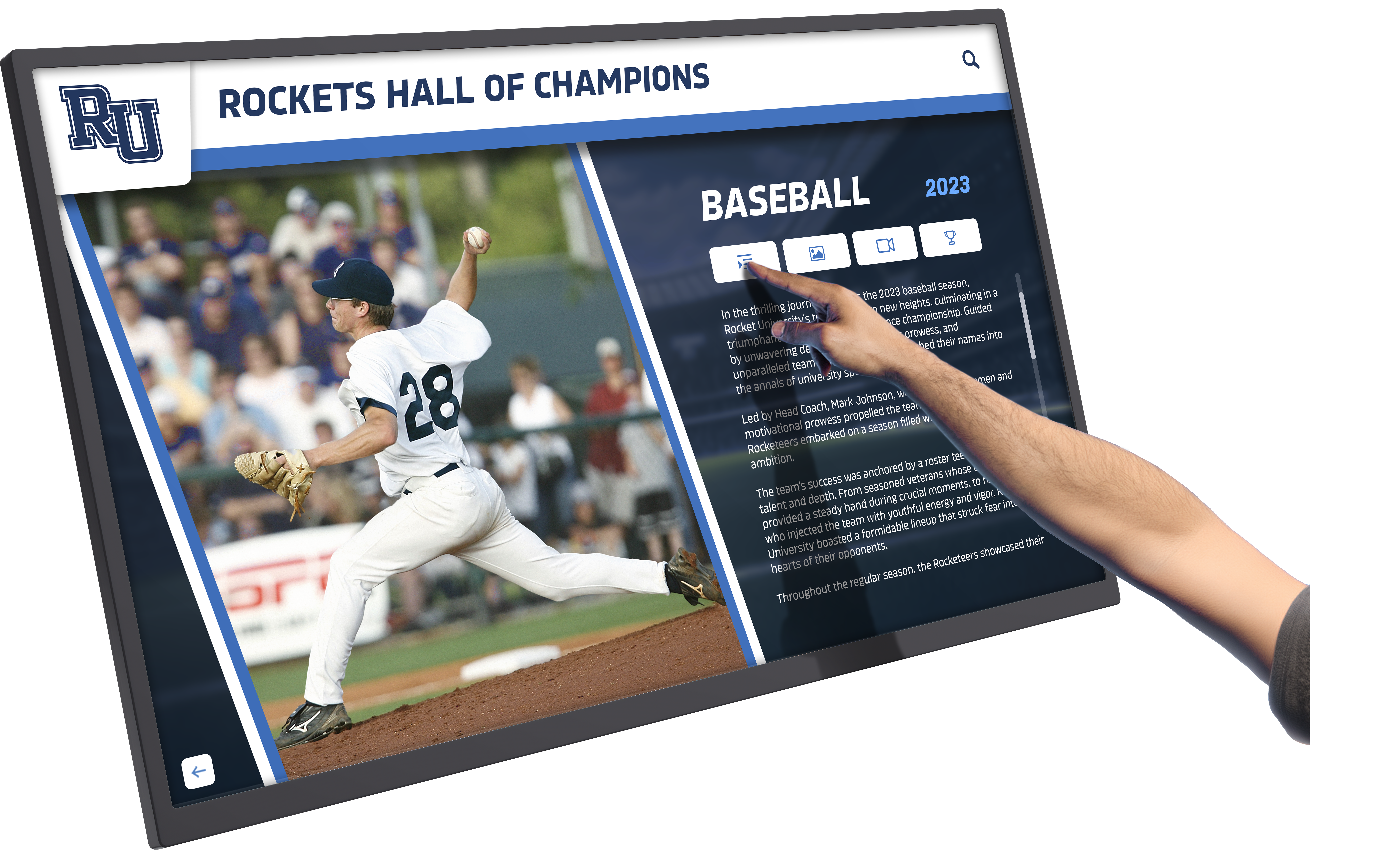
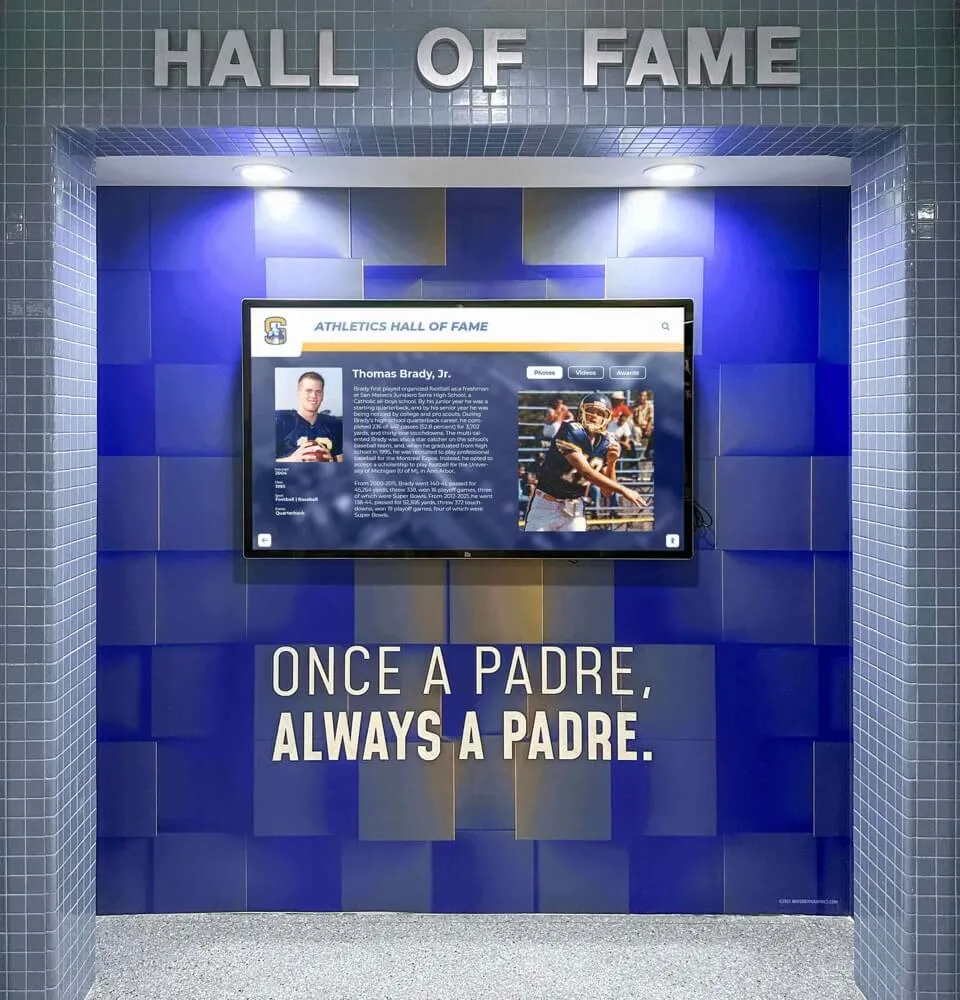
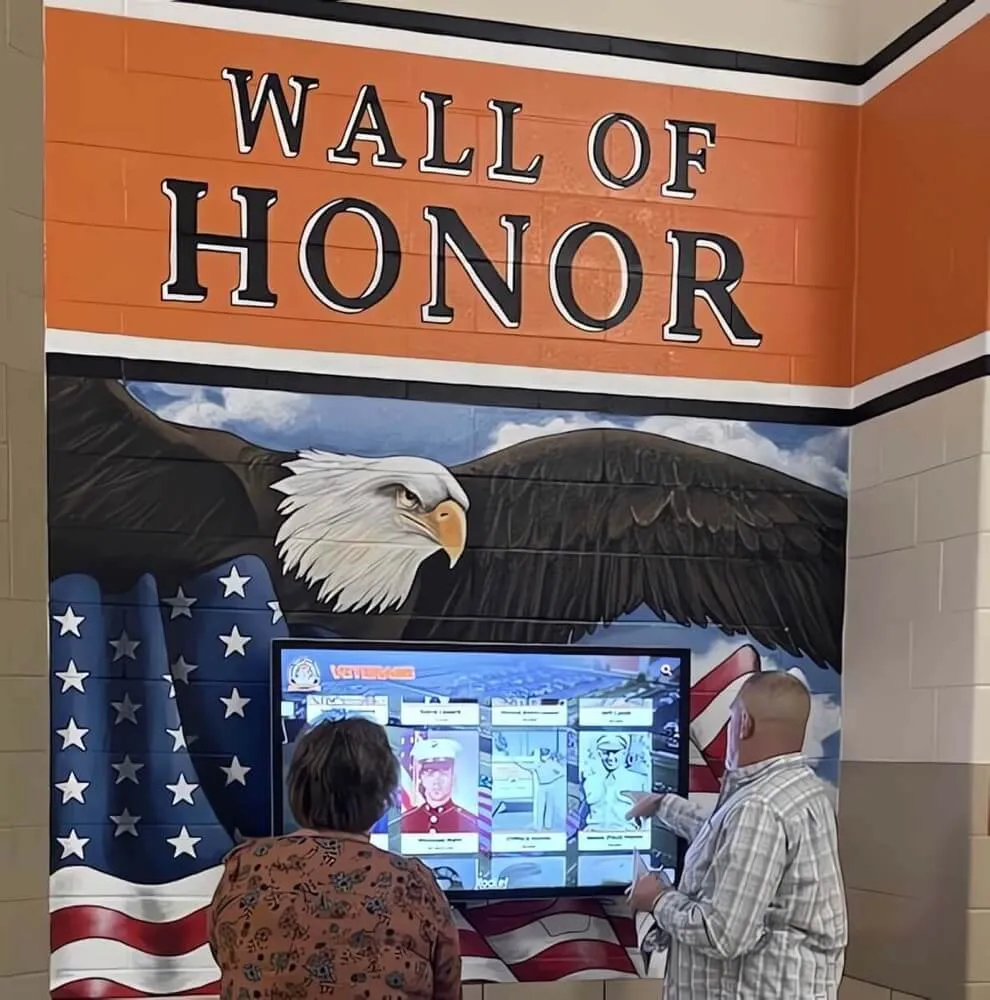
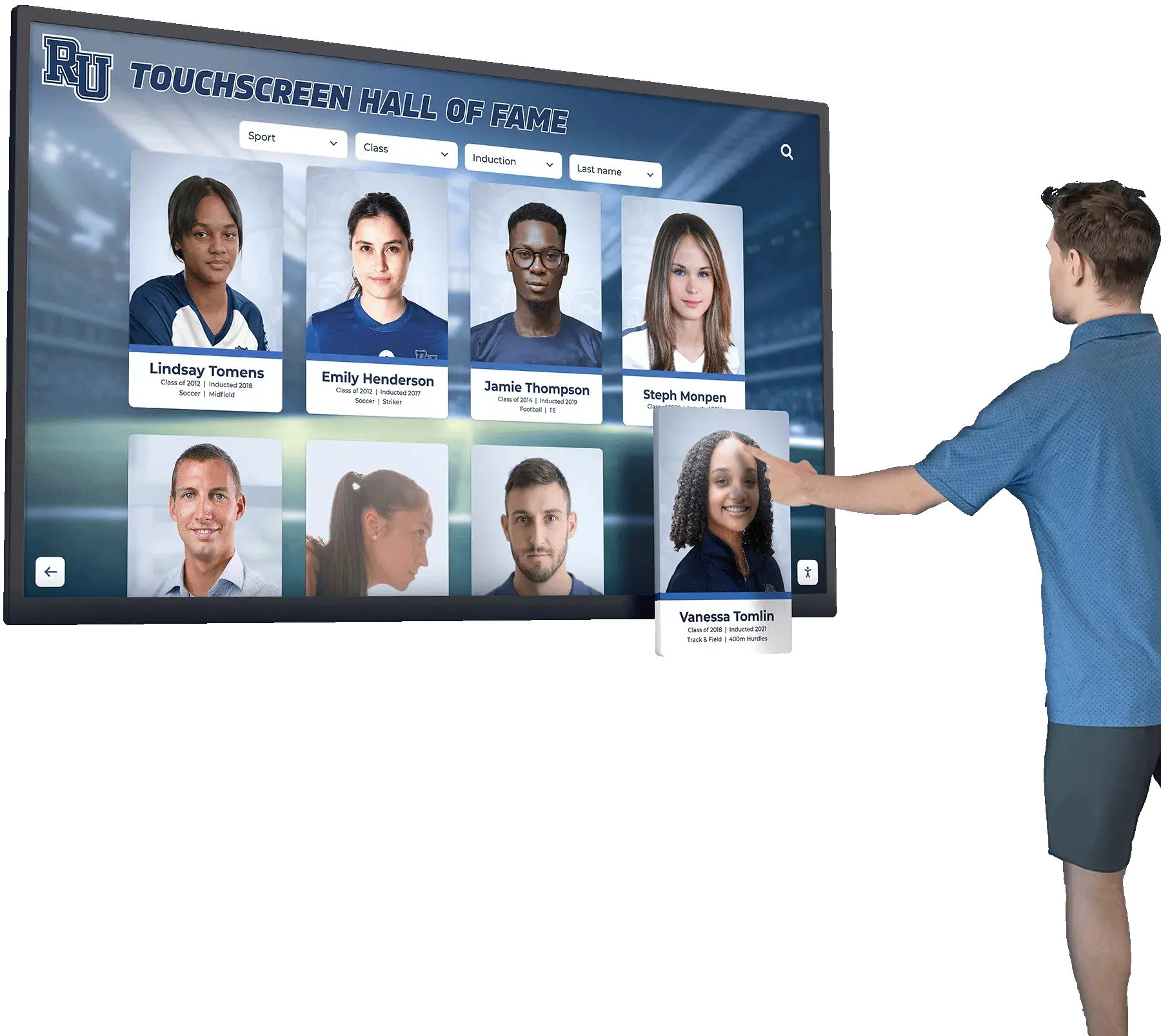
Detailed athlete profiles allow exploration of individual achievements, statistics, and career highlights impossible to display on traditional banners
Individual Athlete Recognition
Digital systems enable celebrating individual accomplishments beyond team championships:
All-Conference and All-State Athletes
Create profiles for every athlete earning conference, regional, or state honors. Include sport, position, year, specific honors (First Team All-Conference, Honorable Mention All-State), season statistics, memorable performances, post-season recognition, and future plans (college commitment, career aspirations).
Record Holders and Milestone Achievements
Document every school record with current holder profile including record details and performance context, previous record holder and date set, performance photos or video, statistical comparison showing achievement significance, and career achievement summary beyond specific record.
Award Recipients and Scholar-Athletes
Recognize academic achievement alongside athletic excellence through academic All-American or All-Conference scholars, team GPA leaders, sport-specific academic awards, and community service recognition.
Schools implementing comprehensive athletic recognition displays report that individual athlete profiles generate highest engagement as current athletes search for themselves while alumni explore their own historical achievements.
Historical Content and Program Traditions
Digital recognition preserves complete athletic program history:
Coaching Legacies
Create profiles for long-tenured coaches documenting years of service, career records, championships won, notable athletes coached, program development achievements, and post-coaching involvement.
Historical Eras and Dynasties
Highlight sustained success periods featuring dominant stretches of championships, evolution of program facilities and resources, key contributors defining eras, and cultural moments shaping program identity.
Facility History and Development
Document athletic facility evolution through historical facility photos, construction and renovation timelines, naming dedications and donor recognition, and capacity and feature improvements.
This comprehensive content creates engagement across constituencies—current athletes exploring present achievements, alumni discovering historical context, and community members understanding program tradition.
Technology Platform Selection for Athletic Recognition
Digital recognition vendors offer varying capabilities, pricing models, and implementation support. Selecting appropriate platforms significantly impacts long-term satisfaction and success.
Essential Platform Capabilities for Athletics
Sport-Specific Templates and Organization
Quality platforms provide templates optimized for athletic content including championship team profiles, individual athlete recognition, coaching achievements, record boards and milestone tracking, and season recaps and highlight showcases.
Look for flexible category structures accommodating multiple sports with independent designs while maintaining cohesive overall experience.
Multimedia Management
Athletic content is inherently visual and video-rich. Platforms must handle unlimited photo uploads and galleries, embedded video hosting or streaming, PDF document integration for media guides or programs, and statistics and performance data display.
Ensure storage capacity supports multimedia needs—some platforms impose tight limits requiring paid upgrades as collections grow.
Hybrid installations maintain traditional trophy displays while adding digital recognition providing expanded content and search capabilities
Web Platform and Mobile Optimization
Athletic recognition should extend beyond facility displays through responsive web design working excellently on phones, fast loading on cellular networks, social sharing enabling athletes to share recognition, search engine optimization potentially attracting recruits, and embed capabilities integrating with athletic department websites.
Test platforms thoroughly on various devices during evaluation. Poor mobile experience dramatically limits engagement and value.
User-Friendly Content Management
Athletic directors and coaches manage content, not technical specialists. Platforms must offer visual editing with real-time preview, drag-and-drop media uploads, template-based profile creation requiring no design skills, bulk upload for efficiently adding multiple items, and intuitive navigation requiring minimal training.
Request live demos where you actually create content yourself. If processes feel complex or confusing during evaluation, ongoing management will prove frustrating.
Analytics and Engagement Tracking
Understanding how athletes, alumni, and visitors engage with recognition informs content strategy and demonstrates value. Look for platforms tracking visitor interactions and session duration, most-viewed content and popular profiles, search queries revealing what people seek, device types and access patterns, and exportable reports for stakeholder presentations.
Recommended Solutions for Athletic Recognition
Rocket Alumni Solutions
Rocket Alumni Solutions provides comprehensive digital recognition specifically designed for educational athletic programs. The platform supports unlimited athlete profiles and championship content, sport-specific templates and flexible organization, integrated web platform and touchscreen display, professional design ensuring consistent quality, robust analytics tracking engagement, and comprehensive implementation support including content creation assistance.
Many schools implement Rocket Alumni Solutions for athletic recognition due to unlimited capacity, athletic-specific features, and white-glove support ensuring successful adoption.
General Digital Signage Platforms Adapted for Athletics
Some athletic departments adapt general digital signage software for recognition purposes. While these provide basic display capabilities, they typically lack athletic-specific features like profile templates, statistics integration, and search functionality—requiring significant customization achieving functionality specialized platforms offer inherently.
General signage works better for rotating announcements and schedules than comprehensive recognition databases.
DIY Approaches Using Presentation Software
Budget-constrained programs sometimes create recognition displays using PowerPoint, Google Slides, or similar presentation tools. While these minimize costs, they lack interactivity, require manual updating on each device, provide no analytics, and rarely deliver engaging experiences.
DIY approaches may work for temporary solutions but don’t deliver value justifying hardware investments for permanent installations.
Schools implementing touchscreen recognition systems emphasize selecting platforms designed specifically for recognition rather than adapting general-purpose tools not optimized for these use cases.
Funding Strategies for Digital Recognition Implementation
Budget constraints challenge most athletic departments. Creative funding approaches make digital recognition achievable even with limited operational budgets.
Booster Club and Boosters Association Support
Athletic booster organizations frequently fund recognition projects as tangible ways to support programs and honor student-athlete achievements.
Funding Proposal Framework
Present digital recognition as permanent infrastructure serving athletic programs for decades while eliminating ongoing banner costs currently funded annually or irregularly by boosters. Emphasize that one-time investment provides unlimited recognition capacity ensuring every future championship and achievement receives celebration without additional booster funding requests.
Frame proposals showing 5-year comparison: continuing current banner approach costs $X,XXX in ongoing funding, while digital system costs $X,XXX initially then requires only software subscriptions potentially covered by operational budgets.
Booster leadership often responds positively to capital investments creating lasting impact versus ongoing consumable spending.
Corporate and Local Business Sponsorships
Digital displays offer valuable sponsorship opportunities creating revenue streams offsetting implementation costs:
Sponsorship Packages
- Presenting Sponsorship: Corporate logo on display welcome screens, recognition in all related communications, naming rights to recognition system ($5,000-15,000)
- Category Sponsorships: Individual sports or achievement categories sponsored by relevant businesses—local sports medicine clinic sponsors athletic training recognition, bank sponsors scholar-athlete awards ($1,000-5,000 per category)
- Display Sponsorships: Multiple sponsors rotating on welcome screens between content interactions ($500-2,000 annually)
Create sponsorship packages with clear benefits and recognition levels appropriate to contribution amounts. Businesses support athletic programs in their communities while gaining visibility and positive brand association.
Capital Campaign Integration
Schools conducting capital campaigns for facility improvements, field renovations, or major equipment purchases should integrate digital recognition as campaign components.
Campaign Messaging
Position comprehensive digital recognition as facility improvement comparable to field turf, lighting upgrades, or locker room renovations—permanent infrastructure serving student-athletes and athletic programs for decades.
Major donors appreciate naming opportunities attached to recognition systems ensuring their philanthropy receives visibility while supporting program needs.
Capital campaigns naturally accommodate larger investments difficult to fund through annual operating budgets or booster dues.
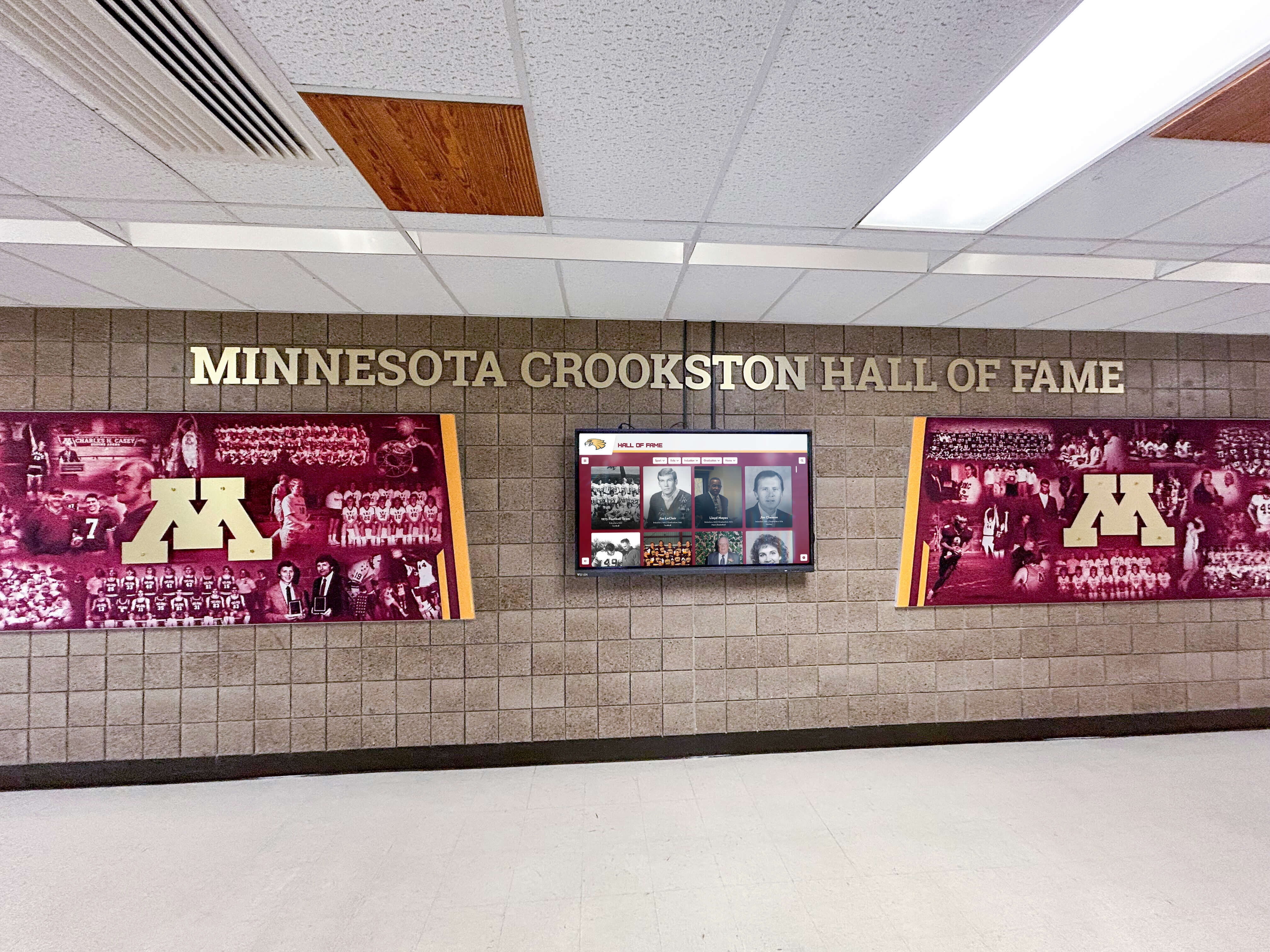
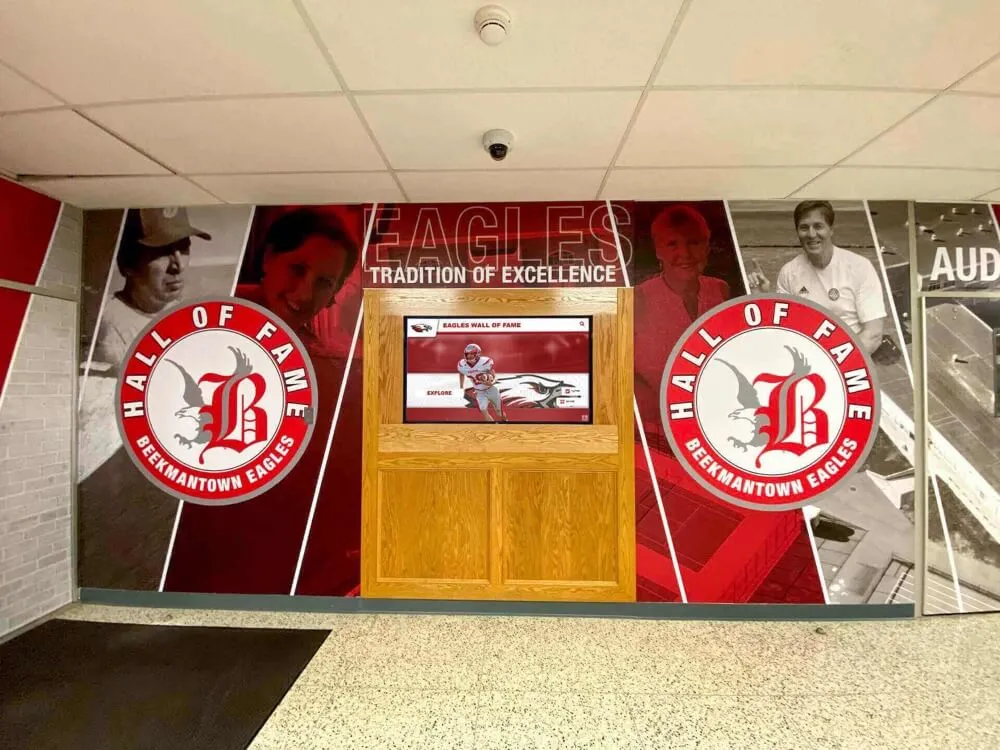
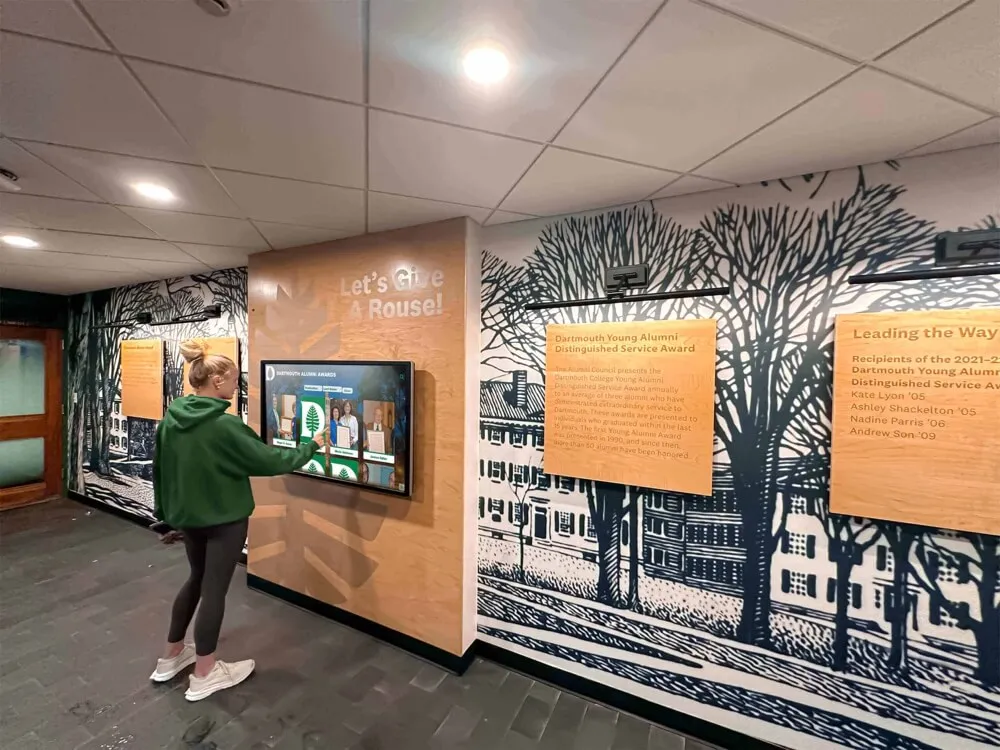
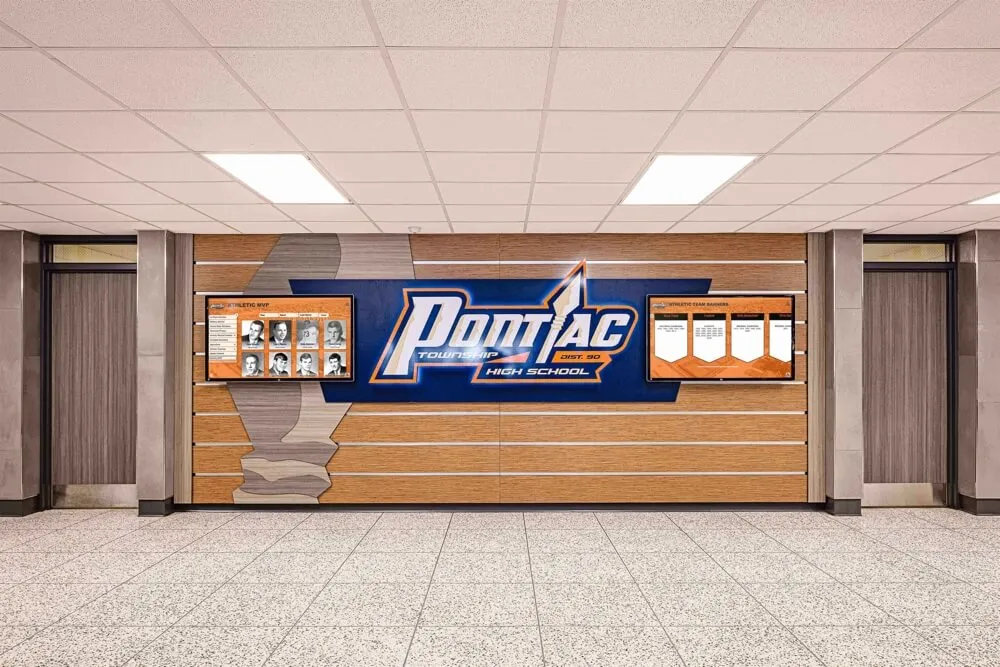
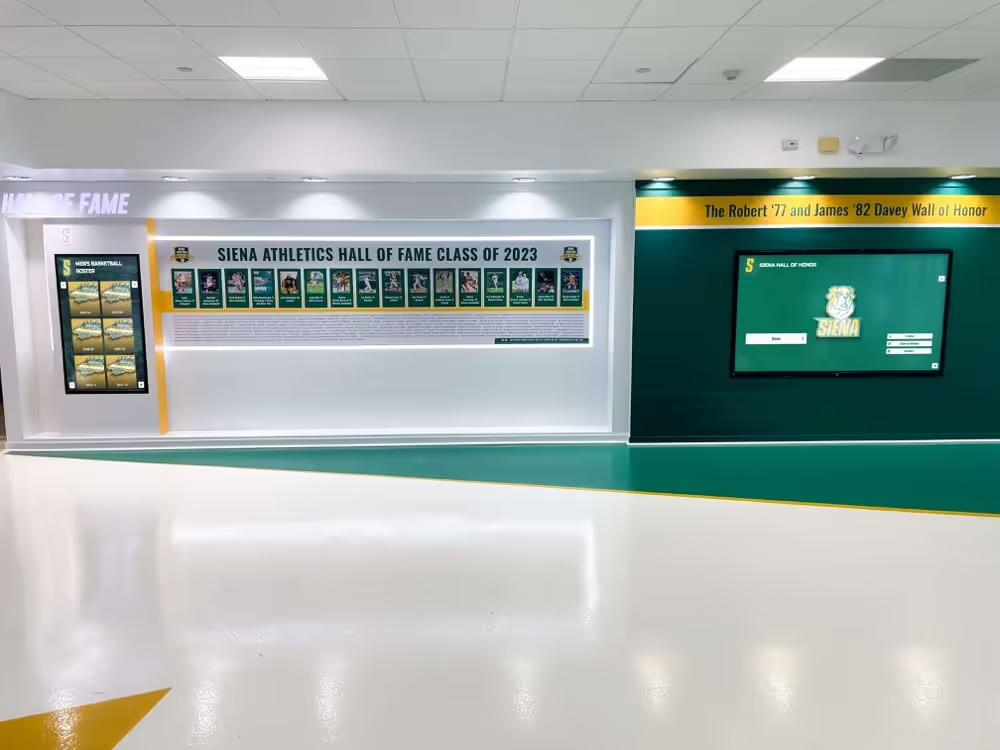
Professional installations integrate digital recognition with facility branding and architectural design creating impressive spaces celebrating athletic tradition
Grant Opportunities
Some grant programs support athletic facility improvements or educational technology implementations:
Potential Grant Sources
- State athletic association grants supporting member schools
- Educational technology grants funding innovative learning environments
- Community foundation grants supporting youth athletics and facilities
- Corporate foundation grants from companies supporting education and athletics
- National athletics organization grants for specific improvement categories
While grants rarely cover complete costs, they can offset significant portions of investments reducing other funding needs.
Budget Reallocation from Banner Elimination
Schools committing to digital transitions can redirect ongoing banner budgets toward digital infrastructure:
Multi-Year Funding Strategy
- Year 1: Maintain banner budget while securing supplemental funding (boosters, grants) for initial digital display ($8,000-12,000)
- Years 2-5: Redirect $3,000-4,000 annual banner budget to software subscriptions and content creation
- Years 6+: Continue software subscriptions from operational budget; banner budget permanently eliminated
This approach spreads costs across multiple years while achieving cost savings within 3-5 years making digital recognition budget-neutral then cost-positive.
Decision Framework: When Digital Recognition Makes Sense
Digital recognition isn’t always the optimal solution for every athletic program and facility. This framework helps athletic directors evaluate whether transition makes sense given specific circumstances.
Strong Candidate Indicators
High Championship Frequency
Programs consistently winning championships across multiple sports accumulate banner costs rapidly. Schools celebrating 5+ championships annually see faster cost parity with digital investments.
Space Constraints
Gymnasiums with limited ceiling space, facilities already crowded with existing banners, or schools facing difficult decisions about which achievements to display physically benefit dramatically from unlimited digital capacity.
Multi-Sport Programs
Comprehensive athletic programs offering 15-20+ sports create diverse recognition needs difficult to serve through banner approaches. Digital systems accommodate all sports equally with customizable templates and unlimited profiles.
Active Alumni Engagement
Programs with engaged alumni bases benefit from web-accessible recognition driving continued connections. Schools with strong reunion culture, active booster organizations, and geographically dispersed alumni see particularly high web platform usage.
Recruiting Emphasis
Athletic programs emphasizing recruiting benefit from digital recognition showcasing program tradition, athlete development, and championship culture to prospective student-athletes researching schools remotely.
Facility Renovation or Construction
Schools planning gymnasium renovations, athletic building construction, or major facility improvements should integrate digital recognition during design—taking advantage of construction budgets and natural transition moments.
Situations Favoring Traditional Banner Approaches
Single-Sport Focus
Small schools with limited athletic programs celebrating infrequent championships may find banner approaches more cost-effective if recognition needs remain minimal (1-2 new banners every few years).
Extremely Limited Budgets
Schools genuinely unable to secure $8,000-12,000 initial investments through any funding source may need to continue modest banner approaches until financial situations improve.
Strong Traditional Culture
Communities with exceptionally strong attachment to traditional recognition may resist digital transitions regardless of practical advantages. Athletic directors should respect institutional culture while educating stakeholders about benefits.
Minimal Technical Support
Schools lacking any technical support resources may struggle with digital system management. However, modern cloud-based platforms require minimal technical expertise—most athletic department staff can manage content after brief training.
Hybrid Approaches Balancing Multiple Priorities
Many schools implement hybrid recognition combining traditional and digital elements:
Selective Banner Retention
Maintain banners for highest-profile achievements (state championships, major milestones) while using digital recognition for broader accomplishments. This preserves traditional visibility for premier achievements while extending recognition capacity.
Sport-Specific Strategies
Continue banners for sports with strong booster support and tradition (football, basketball) while implementing digital recognition for sports without established banner approaches. This respects existing investments while modernizing recognition for other programs.
Phased Transitions
Gradually shift from banners to digital over 5-10 years as described in implementation strategies. This allows natural evolution rather than disruptive immediate changes.
Effective athletic directors evaluate these factors honestly given local contexts, engage stakeholders in decision processes, and select recognition approaches matching specific program needs rather than following universal prescriptions.
Conclusion: Modernizing Athletic Recognition for Budget-Conscious Programs
Traditional gym banners served athletic programs well for decades—providing visible, permanent recognition of championship achievements and honoring student-athlete accomplishments. But as banner costs accumulate, space constraints intensify, and engagement expectations evolve, forward-thinking athletic directors increasingly recognize that digital recognition offers superior long-term value.
The strategies explored throughout this guide provide comprehensive frameworks for evaluating and implementing digital recognition transitions: realistic cost comparisons showing 10-year savings of $10,000-20,000 for typical programs, phased implementation approaches managing budget constraints and stakeholder concerns, content strategies maximizing athletic department value, and decision frameworks determining when digital recognition makes sense given specific circumstances.
Ready to Eliminate Ongoing Banner Costs?
Discover how digital recognition displays provide unlimited championship celebration, immediate updates, and comprehensive athlete recognition while saving money over traditional banner approaches. Schedule a consultation to explore how solutions like Rocket Alumni Solutions transform athletic facility recognition while respecting your budget and tradition.
Schedule Your Custom Recognition DemoDigital recognition doesn’t require abandoning everything about traditional banner approaches—the celebrations remain, the achievements receive honor, and the pride in athletic excellence continues. What changes is the medium, the capacity, and the long-term costs. Schools embracing digital recognition find they can celebrate more achievements, provide richer context, engage broader audiences, and reduce ongoing expenses—creating better recognition experiences while demonstrating responsible stewardship of athletic budgets.
Your championships deserve celebration equal to the effort student-athletes and coaches invested achieving them. By modernizing recognition approaches through strategic digital implementation, you ensure that every achievement receives the visibility, context, and permanence it deserves—while building sustainable recognition infrastructure serving your athletic programs for decades to come.
Ready to explore how digital recognition can transform your athletic facility while respecting your budget and tradition? Learn more about implementing touchscreen recognition systems, discover comprehensive athletic recognition strategies, or review digital display buyer guides helping you select platforms matching your specific needs and priorities.