Running a school booster club well means more than organizing fundraising nights and selling spirit wear. The groups that avoid conflict, retain sponsors year over year, and keep school administrators supportive all share one thing: written parent booster club guidelines that spell out exactly how recognition works, what sponsors are promised, and who must approve anything that goes on a wall or a banner. Without those rules in writing, even well-meaning volunteers create situations that embarrass donors, surprise athletic directors, or violate district policy.
This guide provides a complete governance framework for booster club leadership — a recognition rules checklist, a sponsor promise template, and an approval workflow table you can adapt for your own bylaws. Where relevant, it also explains how permanent digital displays change the stakes around each of these decisions, since more schools are moving athlete honors and sponsor acknowledgments onto touchscreen walls that stay visible long after a season ends.
Parent booster clubs sit at the intersection of volunteer enthusiasm, donor expectations, and institutional policy — and that intersection gets complicated fast when no one has written down the rules. An athletic director who discovers a sponsor banner hung in the gymnasium without approval, a donor who expected a named plaque that never appeared, or a former athlete whose honor was quietly taken down when the trophy case was reorganized — these situations damage relationships that took years to build.

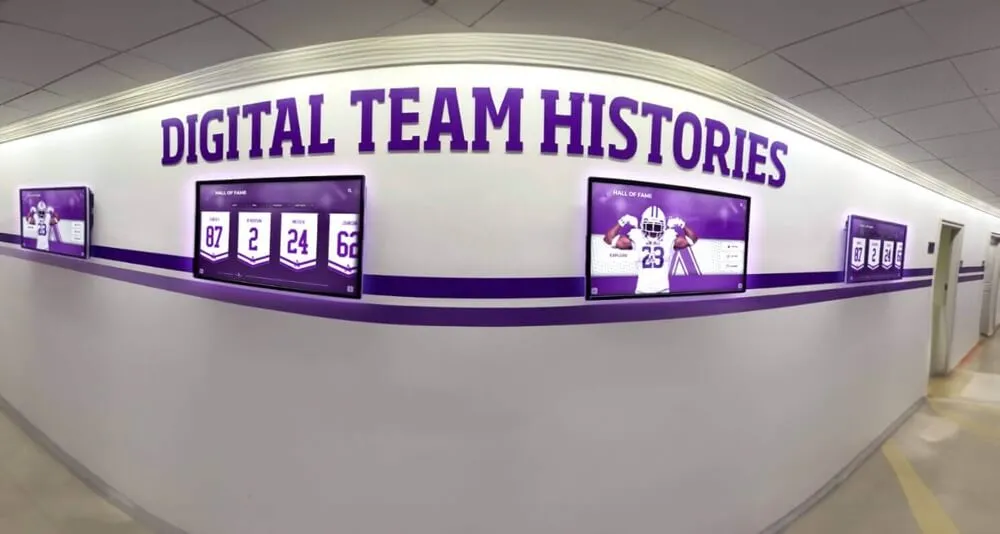
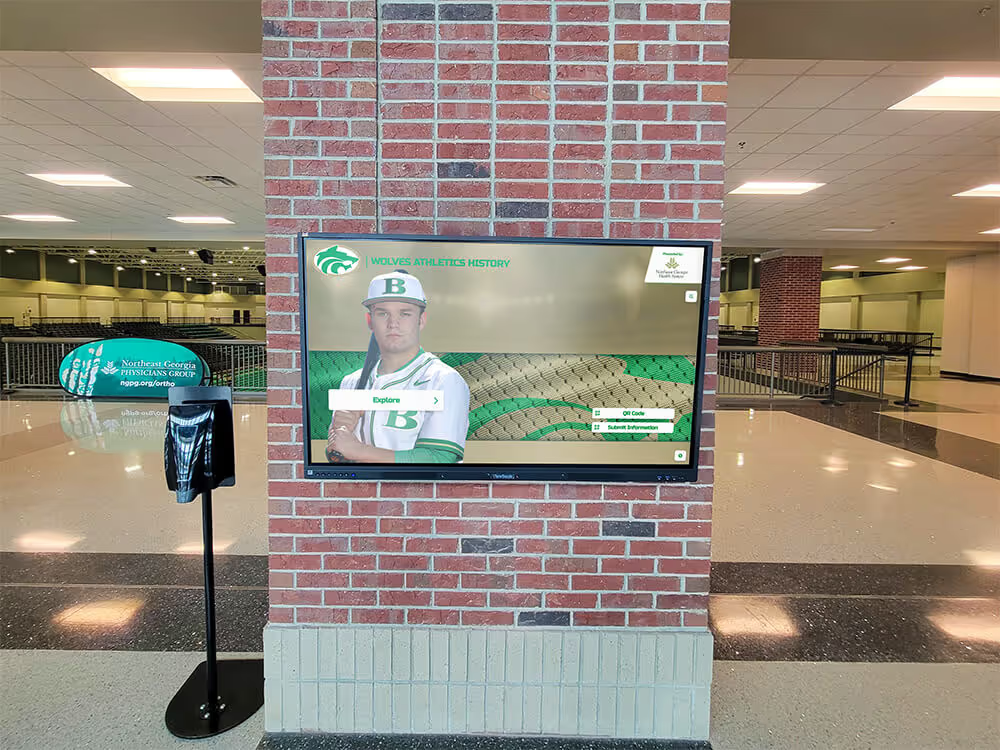
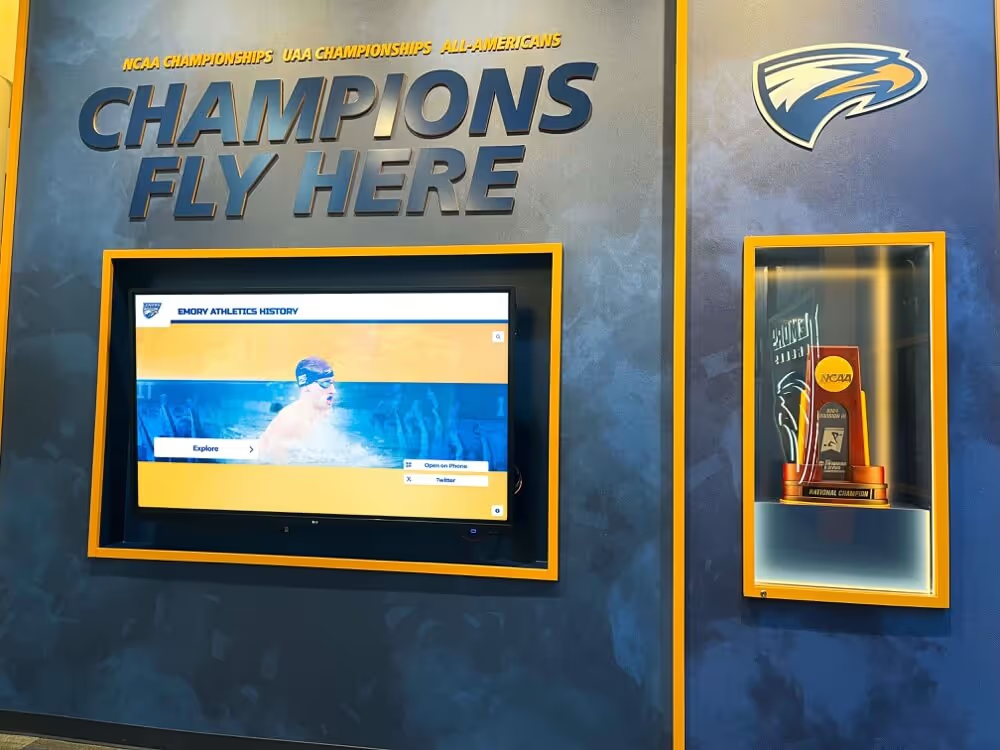
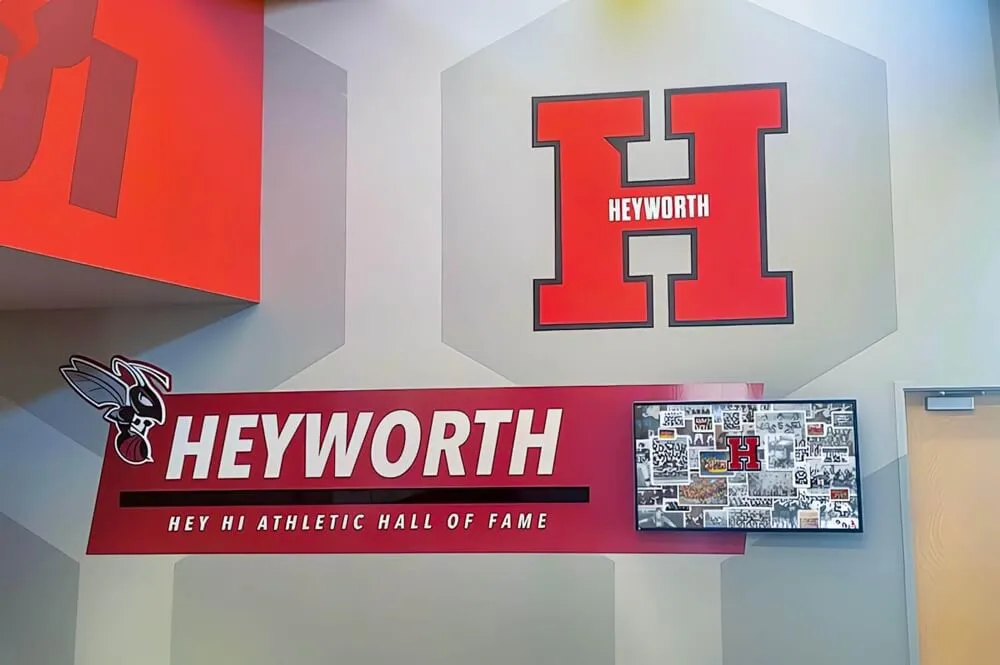
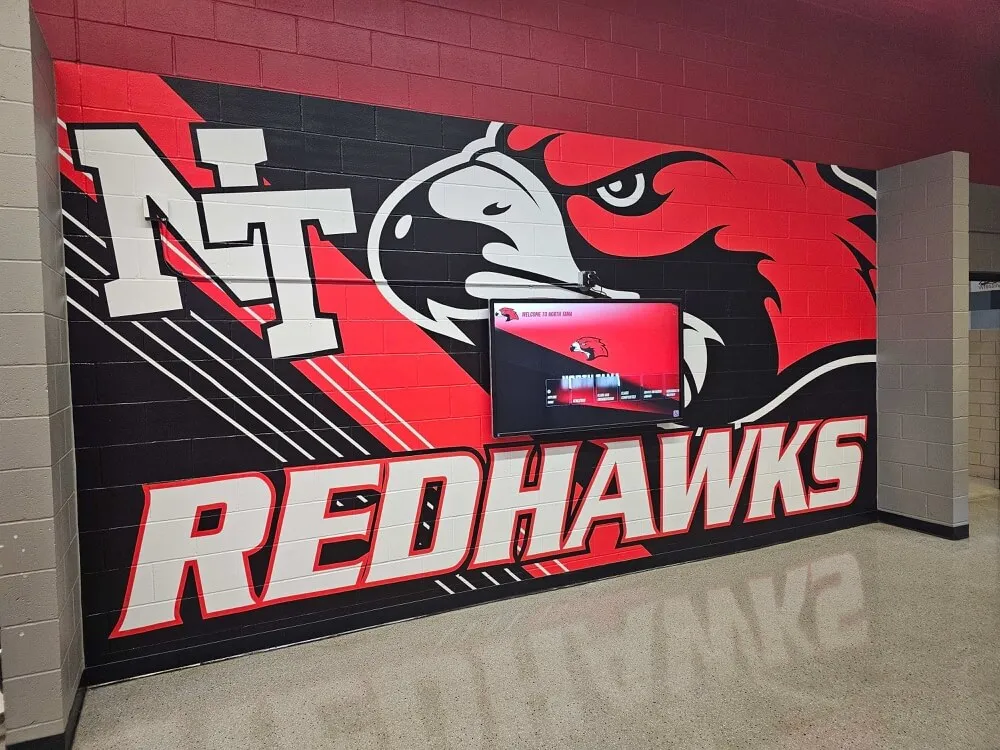
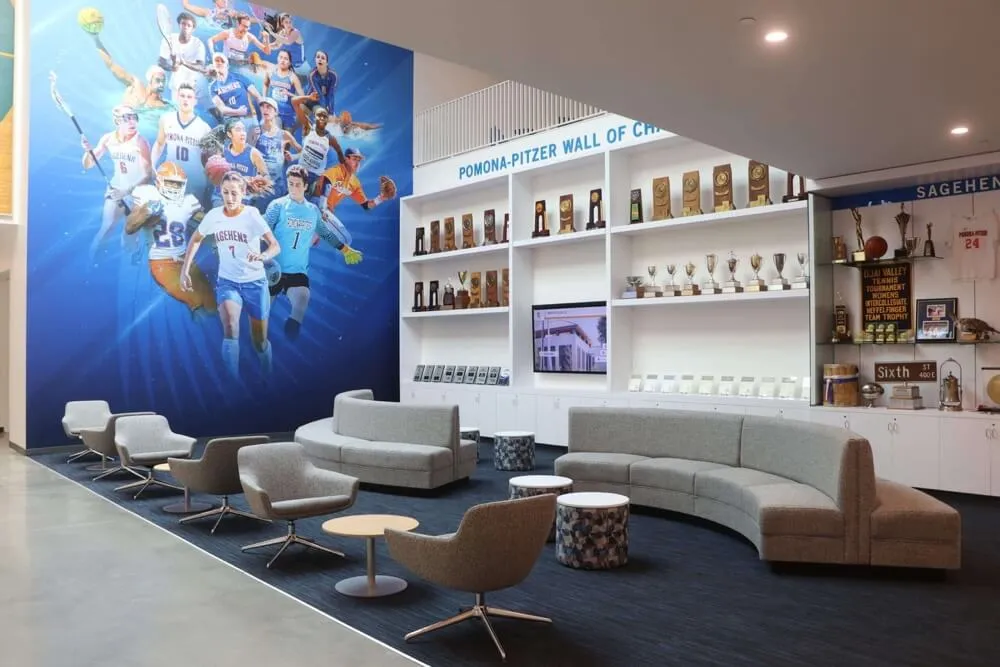
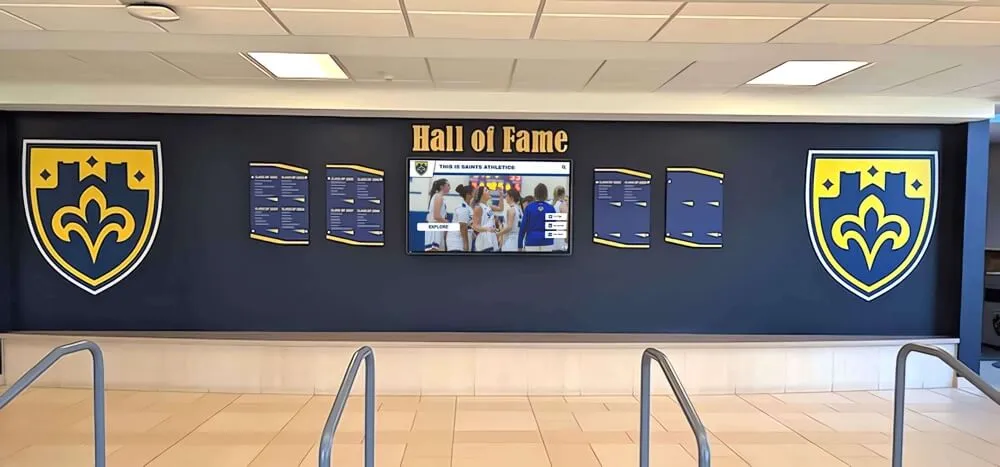
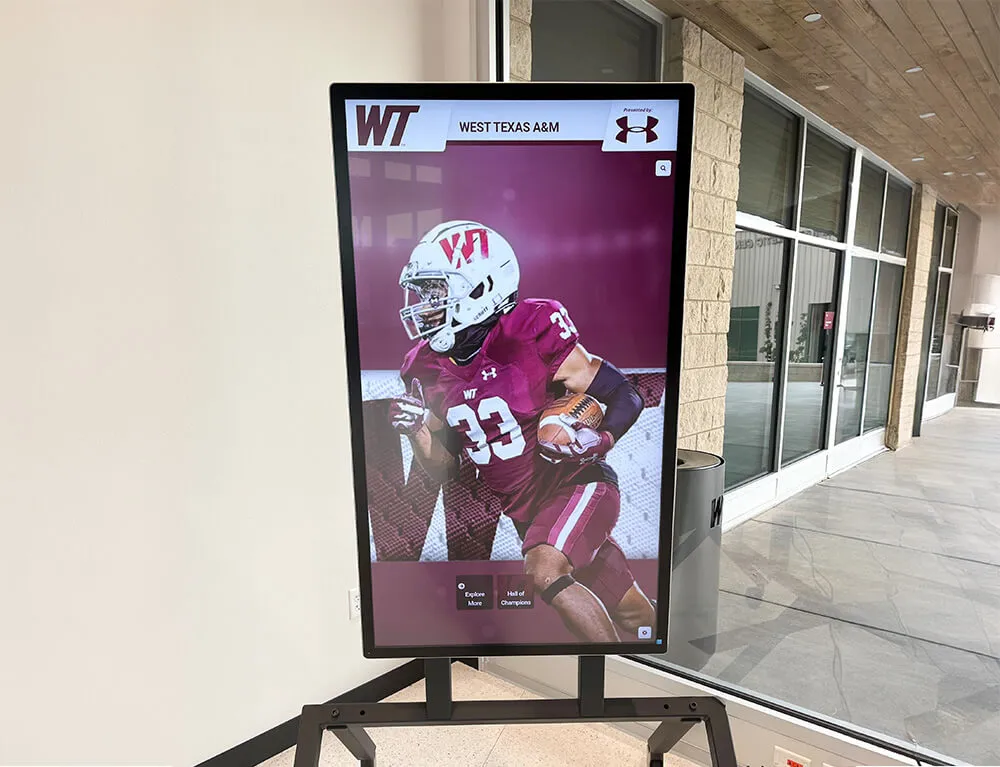
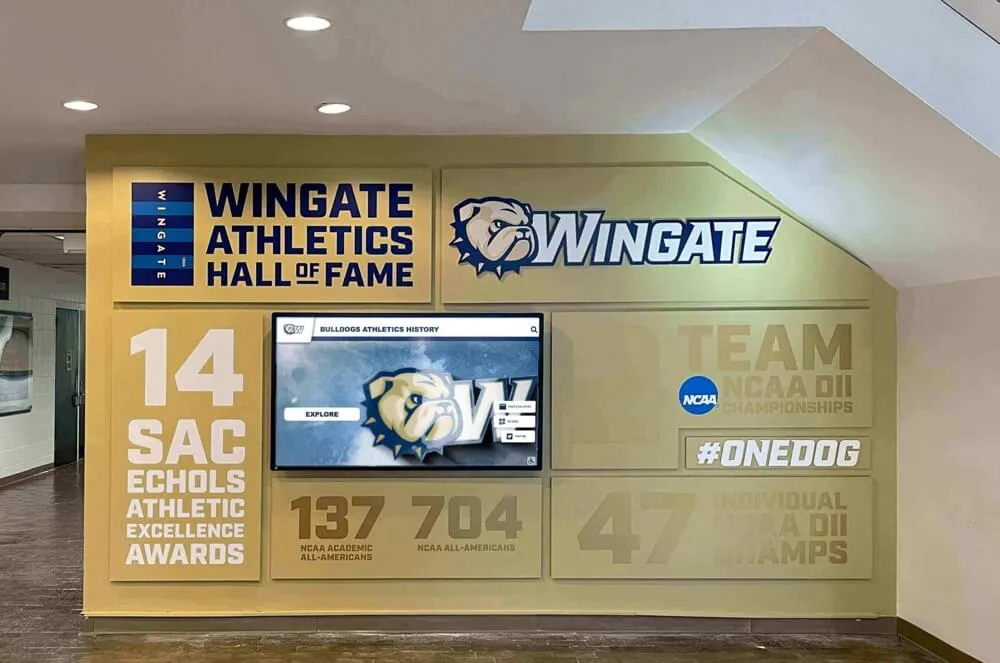
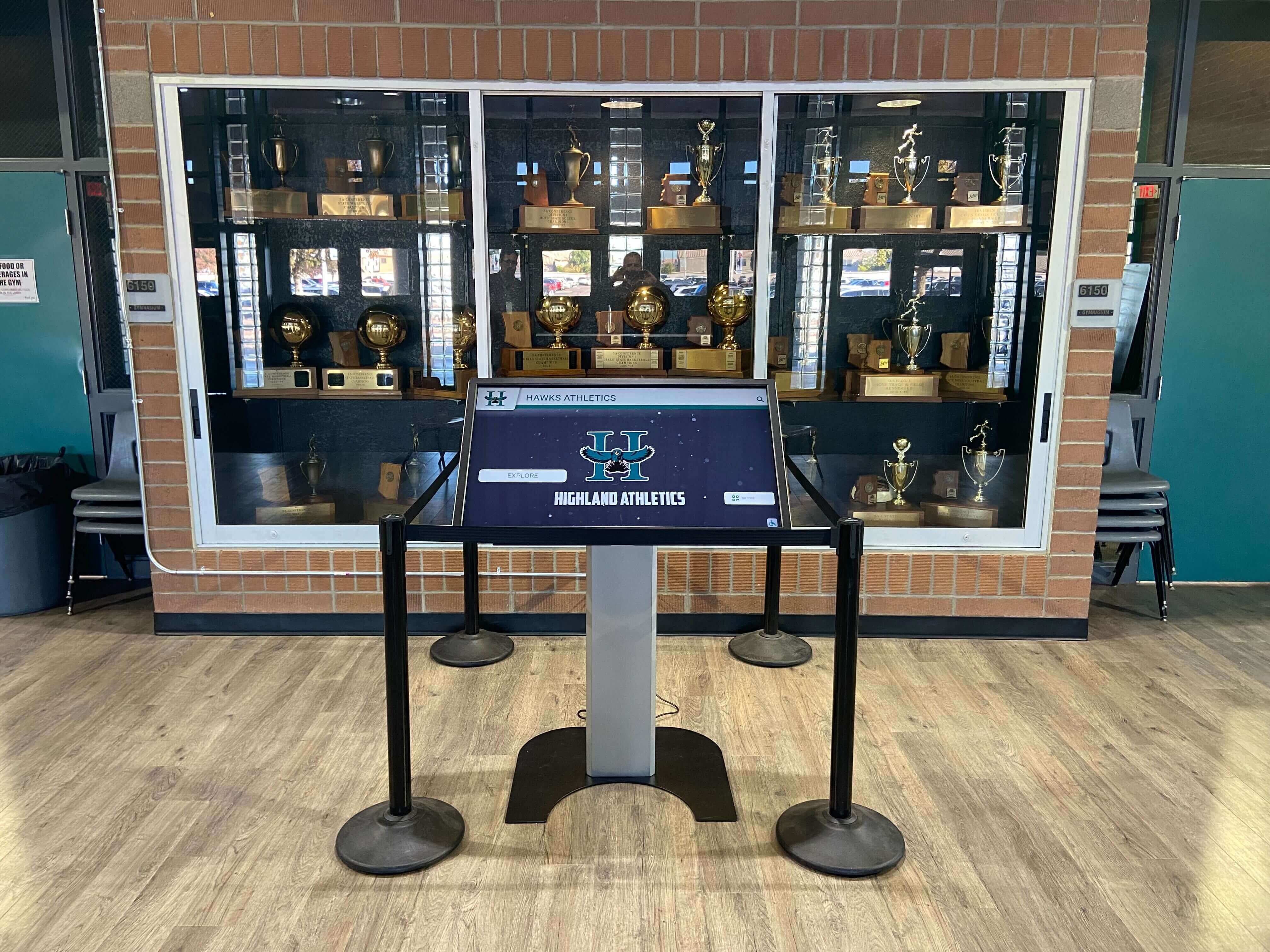
Modern trophy cases increasingly incorporate digital kiosks that display sponsor acknowledgments alongside athlete honors — making clear, written guidelines more important than ever
Why Booster Club Guidelines Matter More Than Ever
School booster clubs operate under more scrutiny than they did a generation ago. District compliance offices pay closer attention to fundraising accounting, state athletic associations publish rules about what sponsors can and cannot receive in exchange for contributions, and parents expect consistency in how athletes are honored.
At the same time, the permanence of recognition has changed. A sponsor’s name painted on a gymnasium wall in 2010 required a fairly formal decision to put up and take down. Today, a sponsor’s logo can appear on a lobby touchscreen, an athletics website, a social media channel, and a printed program — sometimes from the work of different volunteers who each thought they had permission. Written guidelines close that gap.
Three categories of governance cause the most friction for booster clubs that lack clear rules:
Recognition rules — which achievements qualify athletes for permanent acknowledgment, what information is displayed, and who confirms accuracy before anything goes public.
Sponsor promises — what donors are explicitly offered in exchange for their contribution, what the club can never promise without administrator approval, and how those commitments are documented.
Display approvals — who must sign off before content appears on any physical or digital surface on school property, how long the approval process takes, and what happens when something is installed without going through the process.
Part One: Recognition Rules Checklist
Clear criteria for athlete and achievement recognition protect the program from favoritism accusations, protect families from surprises, and give the approval authority clear standards to apply. The checklist below covers the minimum policy decisions every booster club should document.
Athlete Recognition Policy Checklist
Eligibility Standards
- Define the minimum achievement threshold for permanent recognition (e.g., All-State selection, school record, varsity letter count, hall of fame induction)
- Specify whether recognition is limited to currently enrolled students or extends to alumni
- Document whether posthumous recognition follows a separate process
- Clarify grade-level eligibility (varsity only, or JV/freshman programs included)
Information Accuracy
- Require written verification of athlete name, graduation year, sport, and achievement from school records before any display content is finalized
- Designate one staff liaison (typically the athletic director or registrar) who signs off on factual accuracy
- Establish a correction process for errors discovered after display installation
Photo and Media Consent
- Require a signed media release for any athlete photograph used on school property or a club-managed website
- Specify consent requirements for alumni (graduated more than X years ago) whose photos may be used without a current release
- Document who stores signed releases and for how long
Equity and Completeness
- Confirm that recognition covers all varsity sports and does not systematically exclude lower-profile programs
- Review historical recognitions periodically to identify gaps or outdated information
- Establish a process for athletes or families to request corrections or additions
Connecting recognition criteria to your school’s archival records policy keeps athlete data consistent across the trophy room, the yearbook office, and any digital display the booster club funds. Clubs that skip this alignment regularly discover that the athletic department’s records and the booster club’s display disagree on statistics, name spellings, or award titles.
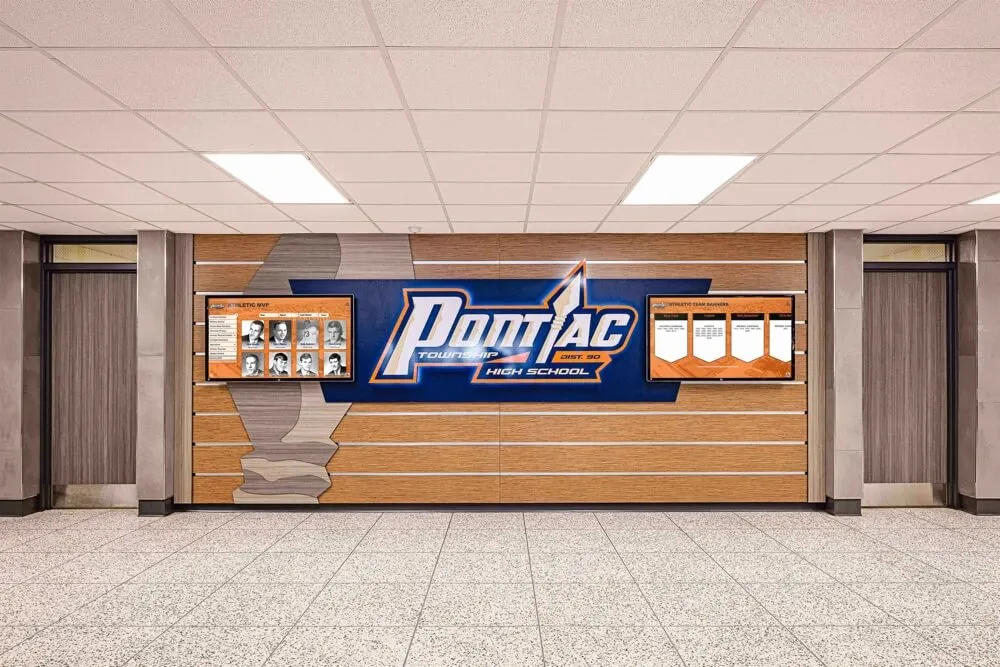
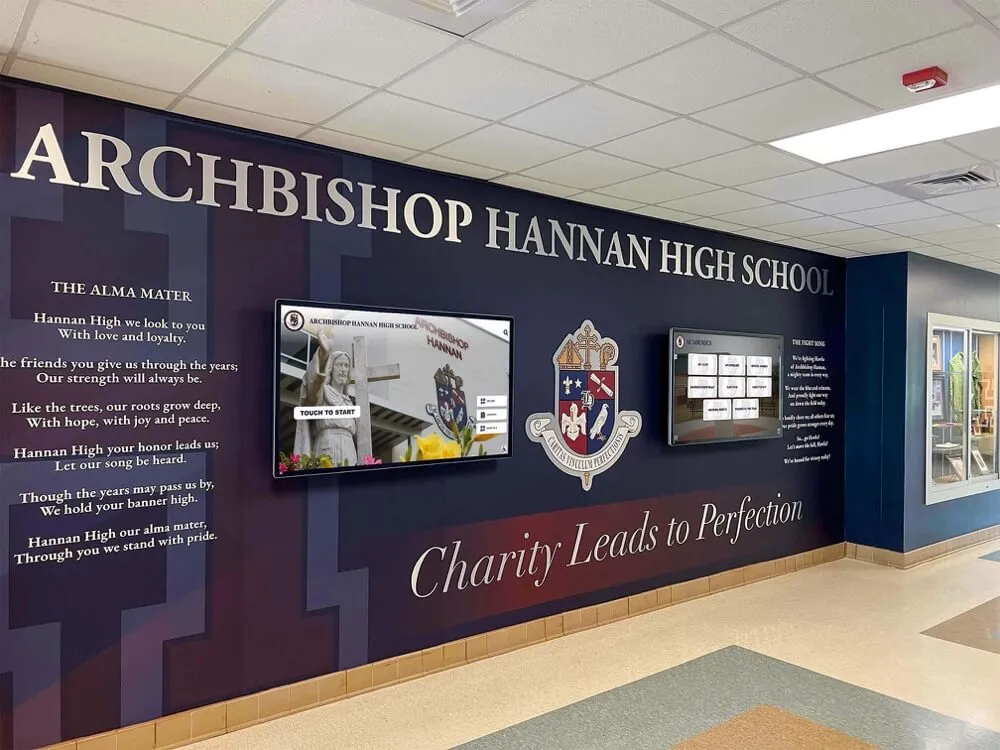
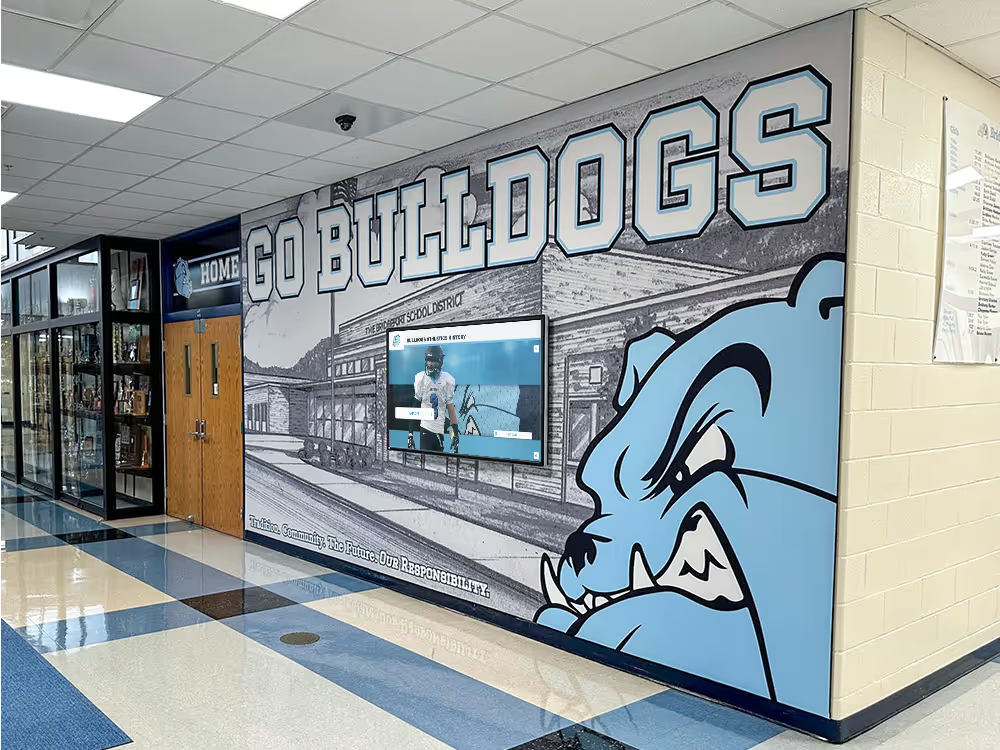
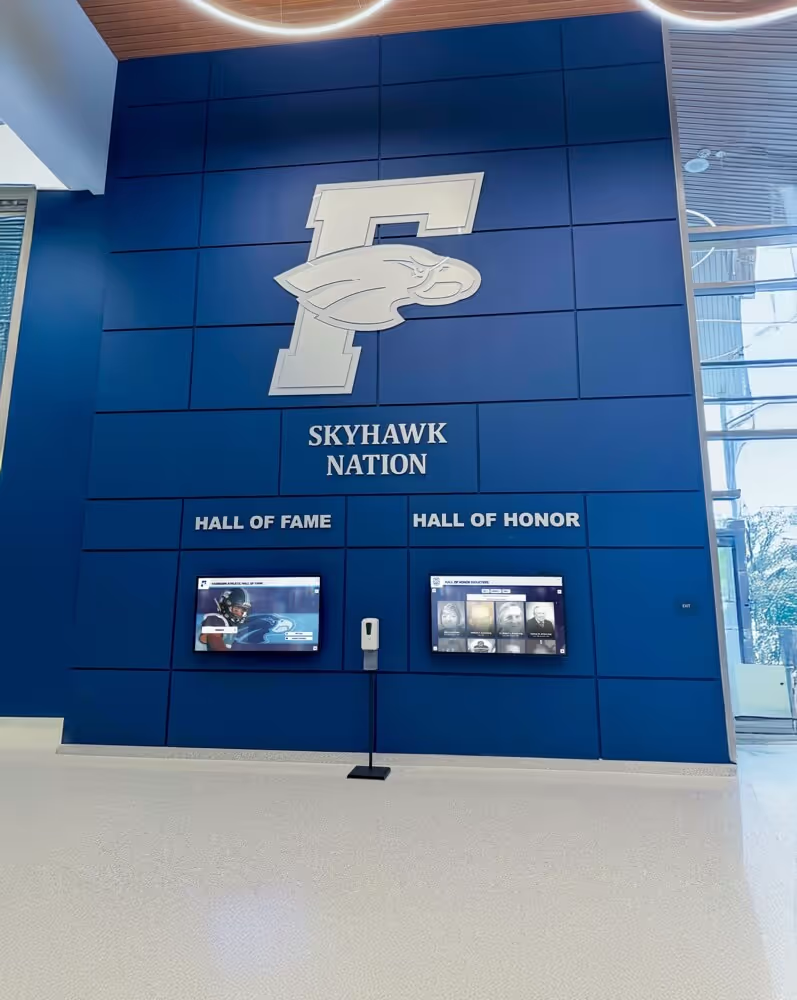
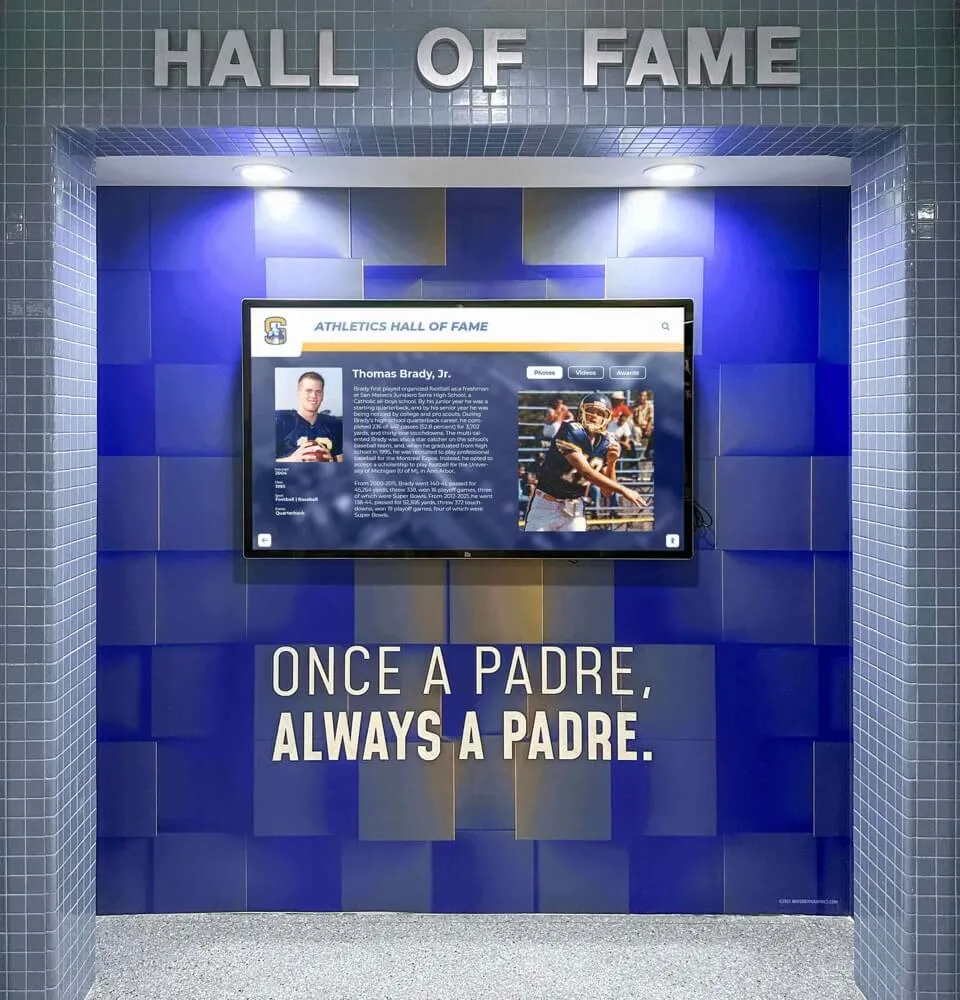
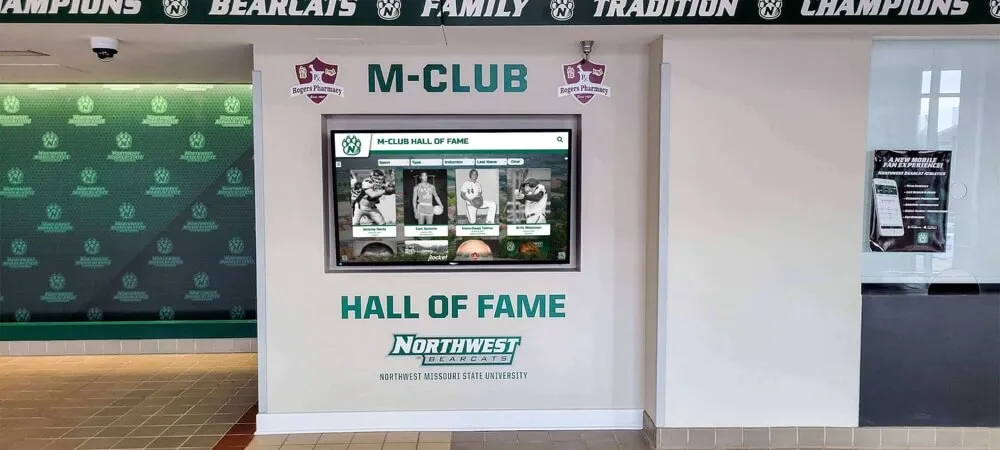
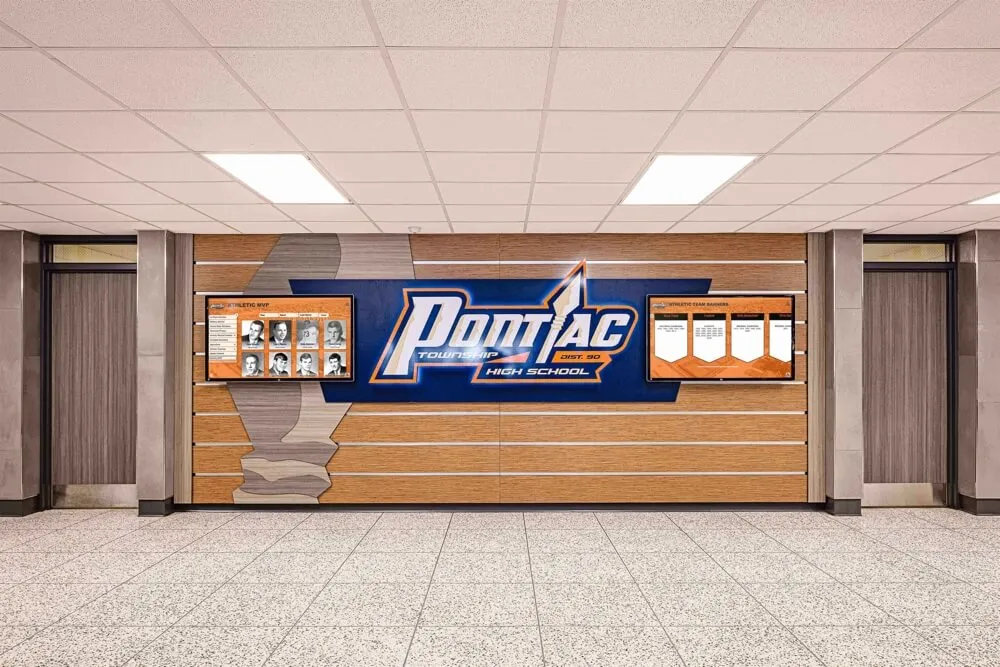
Hallway honor walls carry the booster club's reputation in a highly visible location — errors or unauthorized content are noticed by students, staff, and visitors every day
Induction Processes for Hall of Fame Recognition
Many booster clubs sponsor or co-sponsor a school athletic hall of fame. If yours does, the recognition rules checklist above applies with even more weight, because hall of fame inductions are typically permanent and often involve physical plaques or named display panels.
Key decisions to document:
- Nomination window. When nominations open, who may submit them (staff only, community members, alumni), and what supporting documentation is required.
- Selection committee composition. Who serves, how conflicts of interest are managed, and whether votes are recorded.
- Induction announcement timing. When honorees are notified, how long before any public display is updated, and who communicates the decision to the honoree’s family.
- Legacy clause. Whether recognition can be rescinded, under what circumstances, and who has authority to make that decision.
Alumni recognition programs at peer schools provide useful benchmarks when your committee is setting these standards for the first time.
Part Two: Sponsor Promise Rules
Sponsors make decisions based on what they expect to receive. When a business owner writes a check to your booster club thinking their logo will appear on the home court floor, and instead finds it on a folded banner in the equipment room, that relationship ends permanently. Clear sponsor promise rules prevent that outcome on both sides.

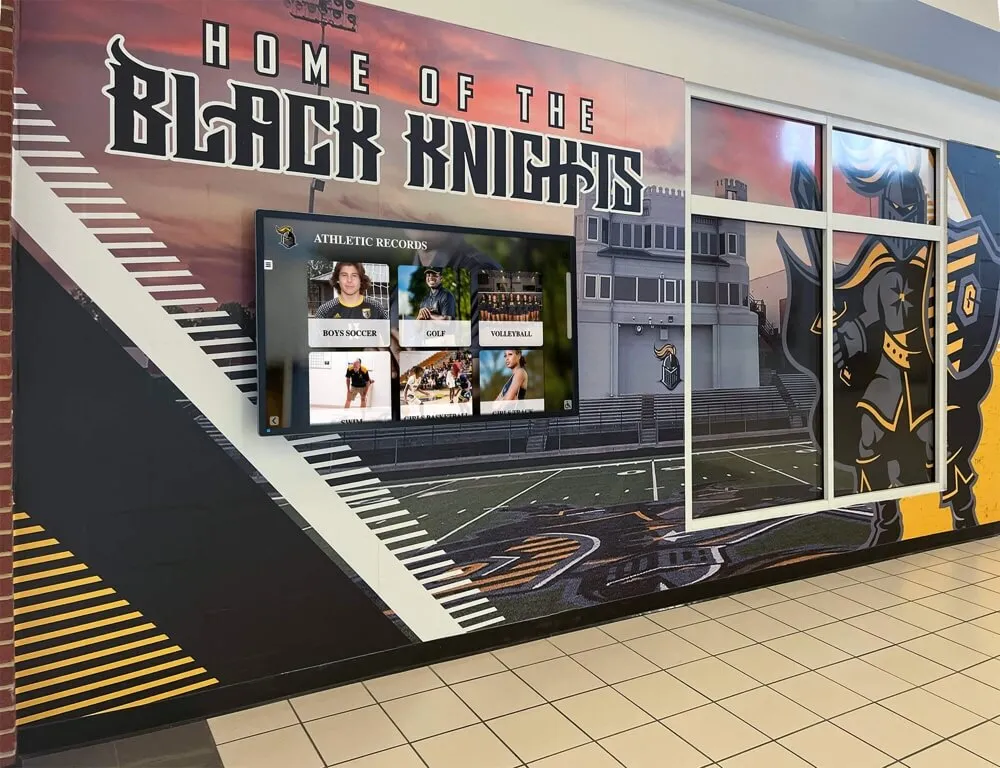
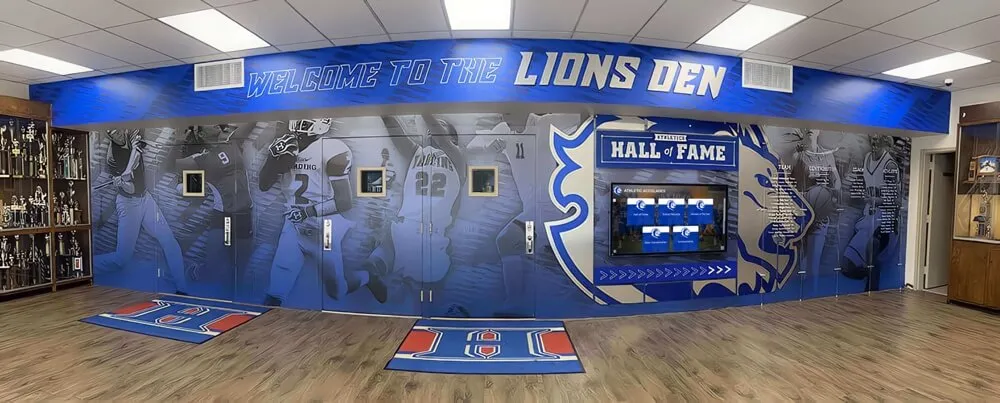
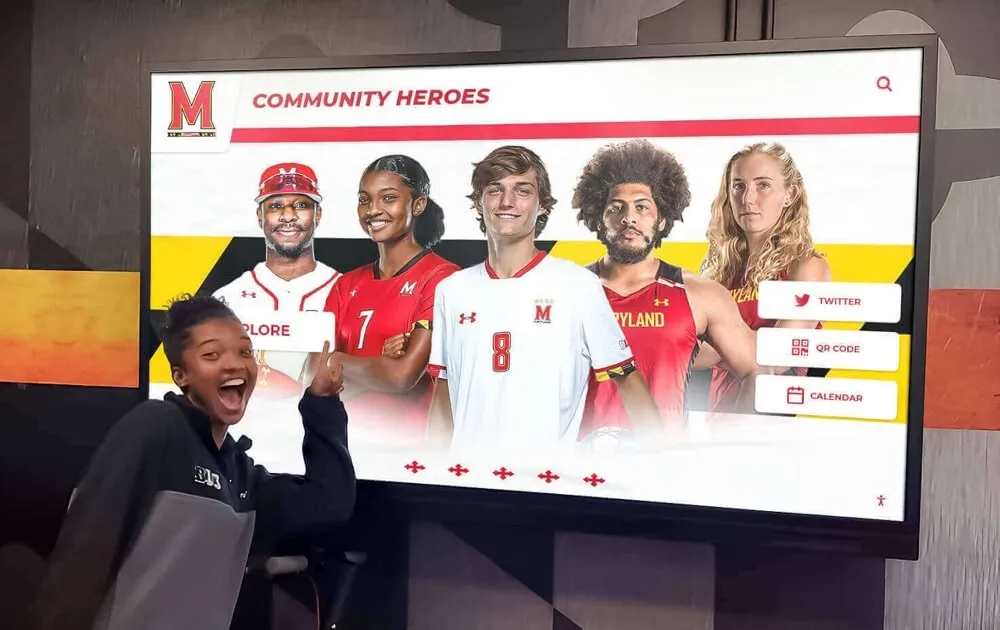
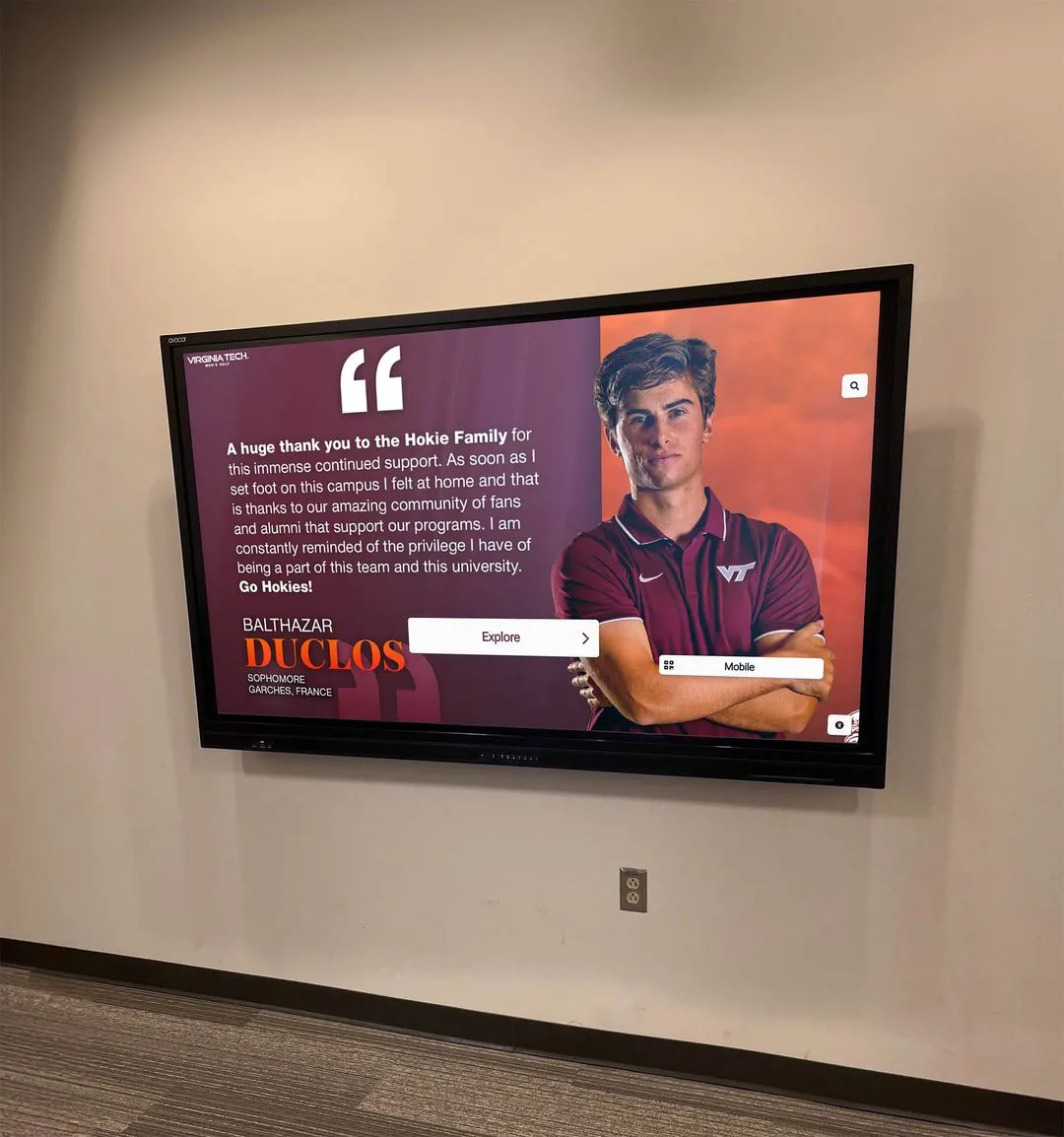
High-visibility spaces like athletic lounges are often covered by district signage policies that booster club sponsors may not know exist — your guidelines should explain what can and cannot be promised
What Booster Clubs Can and Cannot Promise
Before creating any sponsorship tier structure, your guidelines must establish which placement and recognition options are within the booster club’s authority to offer and which require approval from the school or district before they can be included in a sponsor package.
Sponsor Promise Authorization Matrix
| Recognition Type | Booster Club Authority | Requires Administrator Approval | Requires District Approval |
|---|---|---|---|
| Logo in printed game program | Yes | No | No |
| Logo on booster club website | Yes | No | No |
| Name mention in public announcements | Yes | Recommended | No |
| Banner in gymnasium | No | Yes | Check district policy |
| Logo on school scoreboard | No | Yes | Yes |
| Named display panel in school hallway | No | Yes | Check district policy |
| Logo on permanent digital display | No | Yes | Yes |
| Logo on team uniforms | No | Yes | Yes |
| Field/court naming rights | No | No | Yes |
| Social media posts on school accounts | No | Yes | No |
Every new sponsor package should include a written summary of exactly which items from this matrix apply to their tier. When sponsors receive a document that explains what is in the club’s authority versus what requires separate approval, they understand why certain elements may take longer to fulfill — and they are not surprised when an administrator declines something that was listed as conditional.
Game program advertising is one of the most straightforward sponsor benefits a booster club can manage independently. Understanding game program ad standards helps clubs price inventory correctly and set accurate expectations about visibility.
Tiered Sponsorship and Recognition Levels
Most booster clubs organize sponsors into tiers to reflect contribution size and recognition weight. The guidelines should document each tier explicitly.
Sample Sponsor Tier Documentation Template
Tier Name: [Gold / Platinum / Community Partner / etc.] Annual Contribution Range: $[minimum] – $[maximum]
Included Recognition Benefits (booster club authority):
- Logo placement in all printed game programs (season)
- Logo and hyperlink on booster club website
- Social post recognition on booster club social channels (X posts per season)
- Verbal recognition at [X] home events per season
Conditional Benefits (require administrator approval before promising):
- Banner placement in [specific location] — subject to school signage policy
- Named listing on permanent recognition display — subject to athletic director approval
Documentation Required Before Fulfillment:
- Signed sponsor agreement with exact benefit list
- Administrator approval form for any conditional items (attach to sponsor file)
- Logo files received in required formats (PNG, SVG) within [X] days of agreement
Renewal Policy:
- Tier pricing reviewed annually by [date]
- Sponsor notified of renewal window [X] days before expiration
- Lapsed recognition removed from permanent displays after [X] days of non-renewal
When booster clubs promise digital recognition — logos on a touchscreen wall of fame, named acknowledgment on an interactive display — the renewal policy becomes especially important. Unlike a printed program that ages out naturally, digital recognition persists until someone removes it. Your guidelines should specify who is responsible for updating digital content when sponsor relationships end.
Honoring milestones and achievements through recognition displays follows a similar logic in corporate settings — the same principles of documented commitments and clear tier structures apply directly to school sponsor management.
Part Three: Display Approval Workflow
Every physical or digital surface on school property — hallways, gymnasiums, lobbies, trophy rooms, scoreboards, and websites — ultimately falls under the school or district’s authority. Booster clubs that treat these spaces as their own to manage will eventually run into a conflict. Guidelines that build the approval workflow into every recognition and sponsor project prevent that conflict before it starts.
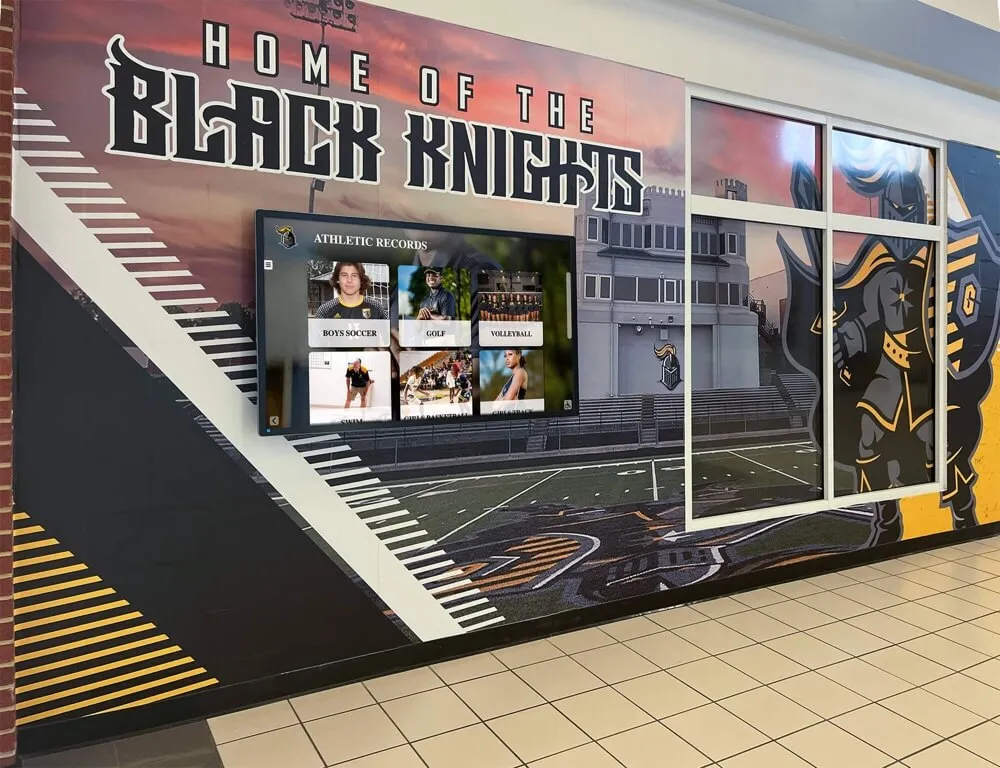
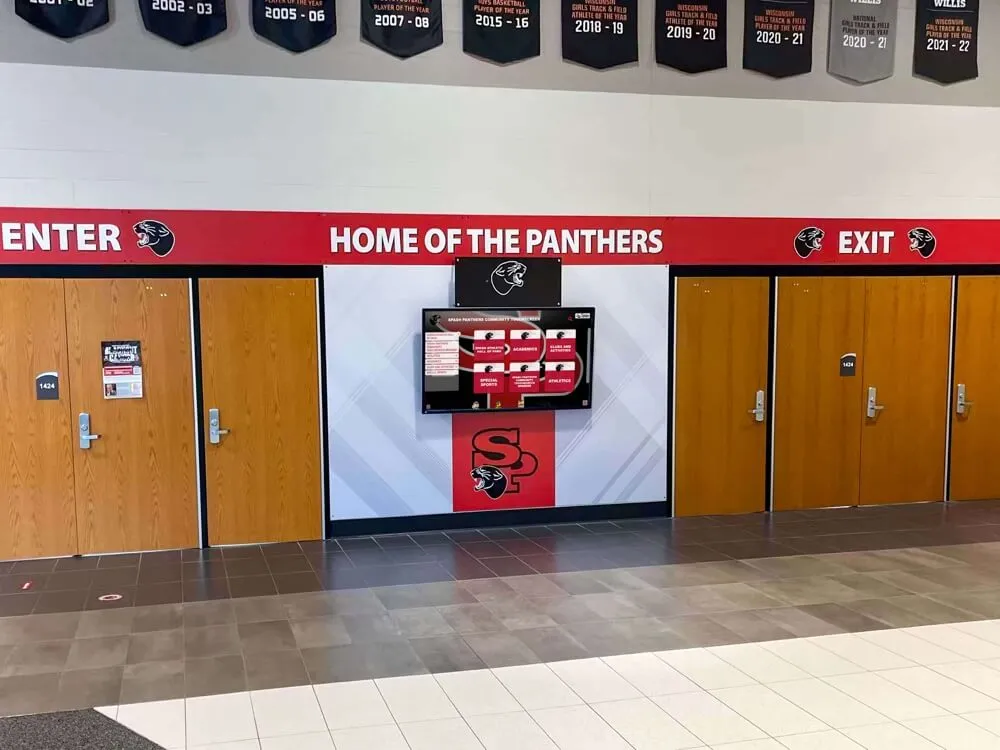
Athletic records and sponsor acknowledgments in shared hallway spaces require the same approval process — treating them differently creates inconsistency that administrators notice
The Four-Stage Approval Workflow
Display Approval Workflow Table
| Stage | Action | Responsible Party | Typical Timeline | Required Documentation |
|---|---|---|---|---|
| 1. Intent | Booster club describes proposed display content, location, and dimensions | Booster Club President | Before any design work | Written description submitted to athletic director |
| 2. Concept Approval | Athletic director reviews for policy compliance, conflicts with existing content, and space availability | Athletic Director | 5–10 business days | AD approval form or email confirmation |
| 3. Content Review | School reviews final design files for accuracy, appropriate branding, and compliance with district identity standards | Principal or designee | 5–10 business days | Final design files; athlete/sponsor release forms if applicable |
| 4. Installation Authorization | Final written authorization issued; installation scheduled through facilities | Facilities Manager | 3–5 business days after content approval | Signed authorization form; contractor or installer information if applicable |
Building this four-stage process into your bylaws accomplishes two things. First, it protects booster club volunteers from the embarrassment of installing something that then has to come down. Second, it gives administrators a predictable process they can actually say yes to, rather than an ad hoc request that feels like it needs to be evaluated from scratch each time.
For digital displays specifically — touchscreens, rotating sponsor boards, lobby kiosks — the content review stage should include confirmation of who manages content updates going forward. If the booster club funds a touchscreen display but the school’s IT department controls the content management system, that needs to be documented before installation, not discovered afterward.
Evaluating touchscreen display options for schools is a useful starting point when the approval process reaches the point of specifying hardware. The display type affects what content workflows are even possible and who controls them.
Provisional and Temporary Displays
Season banners, tournament bracket boards, and event-specific sponsor displays are often time-limited. Your guidelines should handle these separately from permanent installations, since the approval burden should be proportionally lower for content that will come down in two weeks.
A simple rule: any display expected to remain in place for more than [X] days goes through the full four-stage process. Shorter-term displays require concept approval from the athletic director only, with content review required only if the display references a specific sponsor or uses school branding.
Document the distinction explicitly. When a volunteer hangs a banner without asking because “it’s only for the tournament weekend,” and the tournament weekend display is still hanging three months later, the lack of a clear temporary/permanent line in your bylaws is what caused the problem.
Part Four: Booster Club Bylaws Essentials
The recognition rules, sponsor promise rules, and display approval workflow all need a governing document to live in. If your booster club does not have current bylaws — or has bylaws last updated more than three years ago — this section covers the governance provisions most relevant to recognition and display decisions.
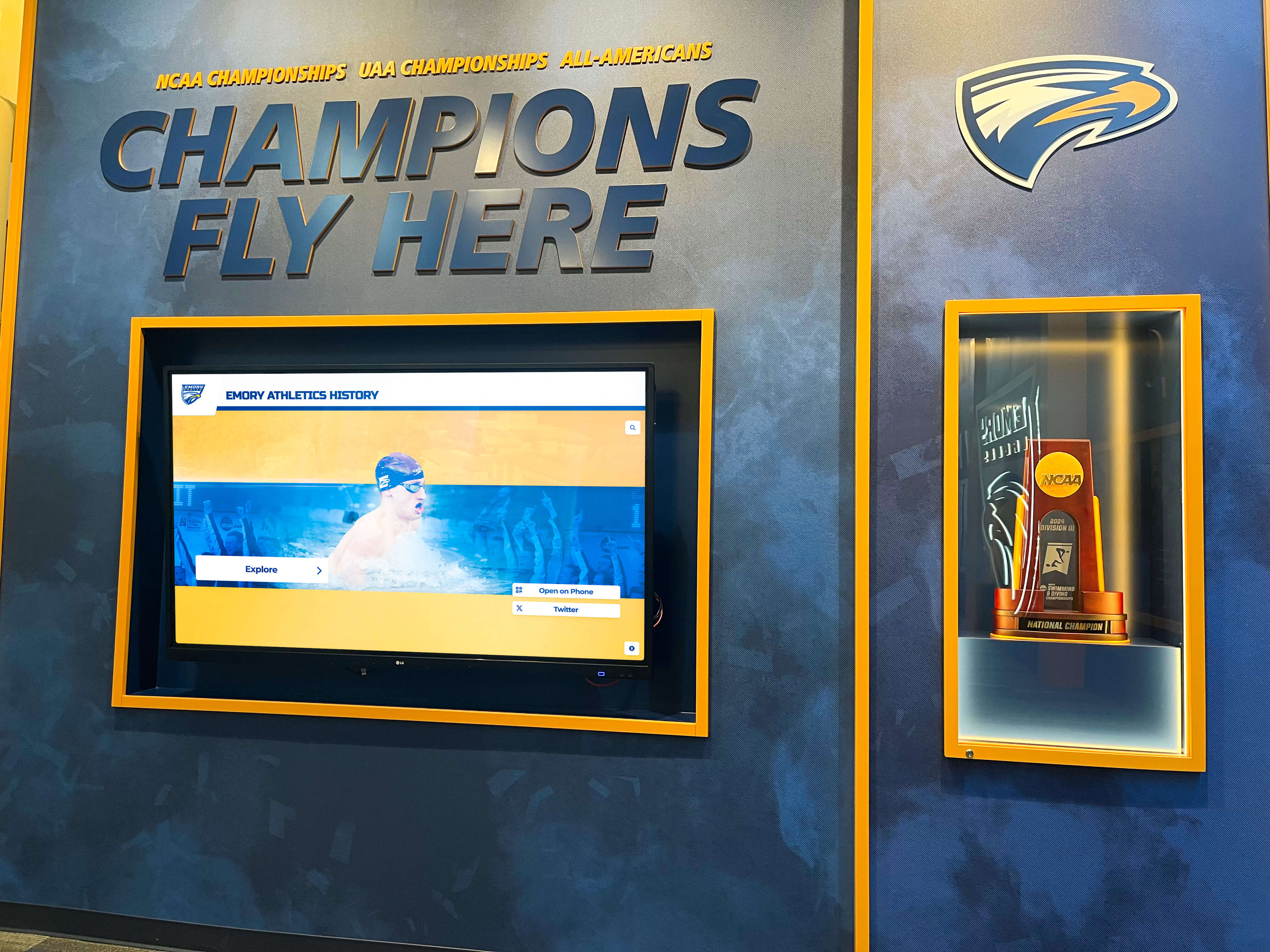
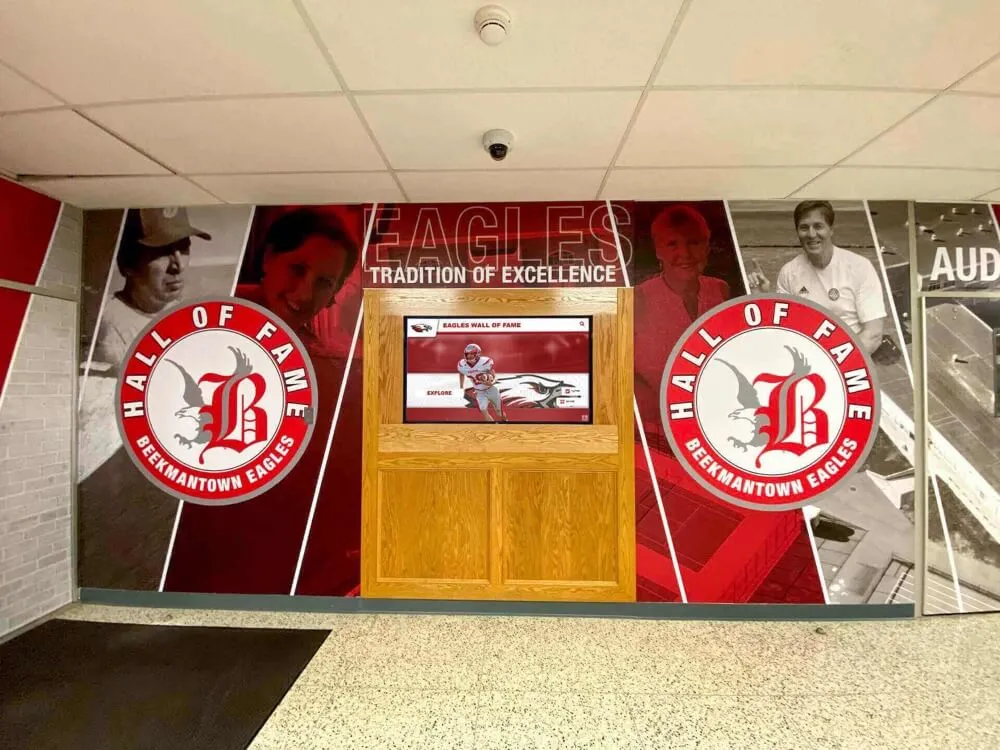
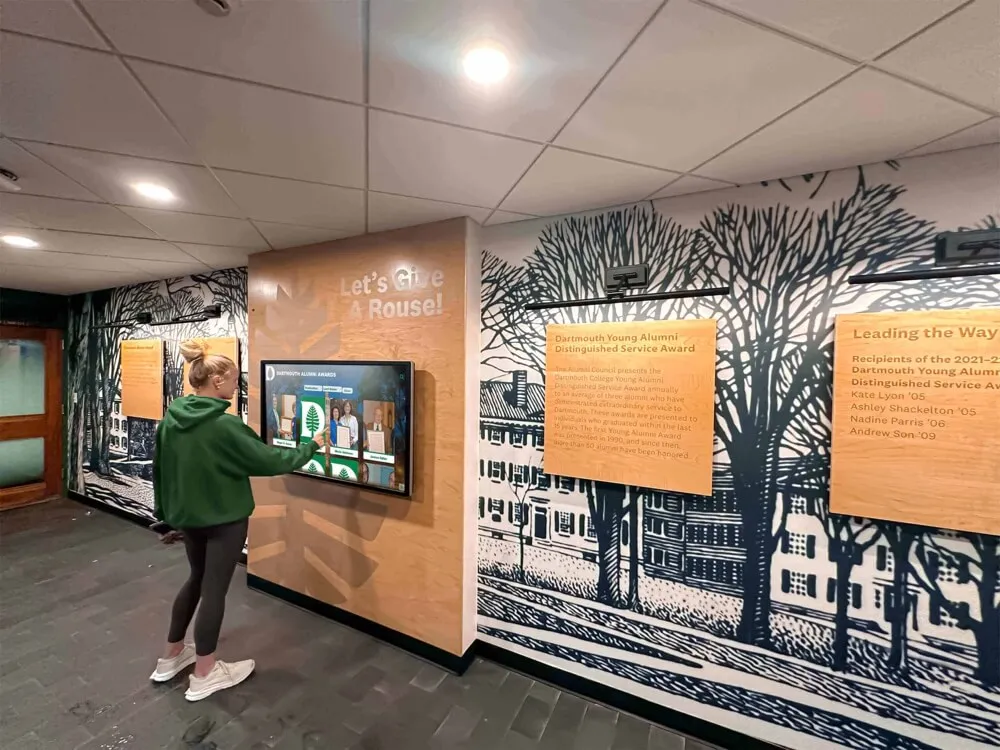
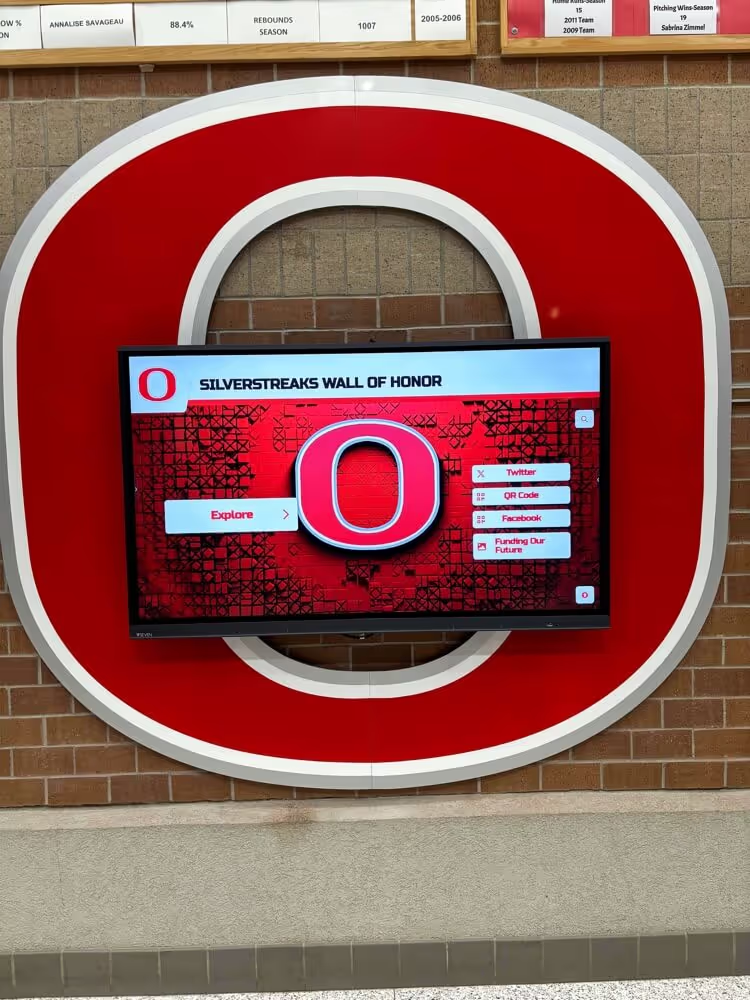
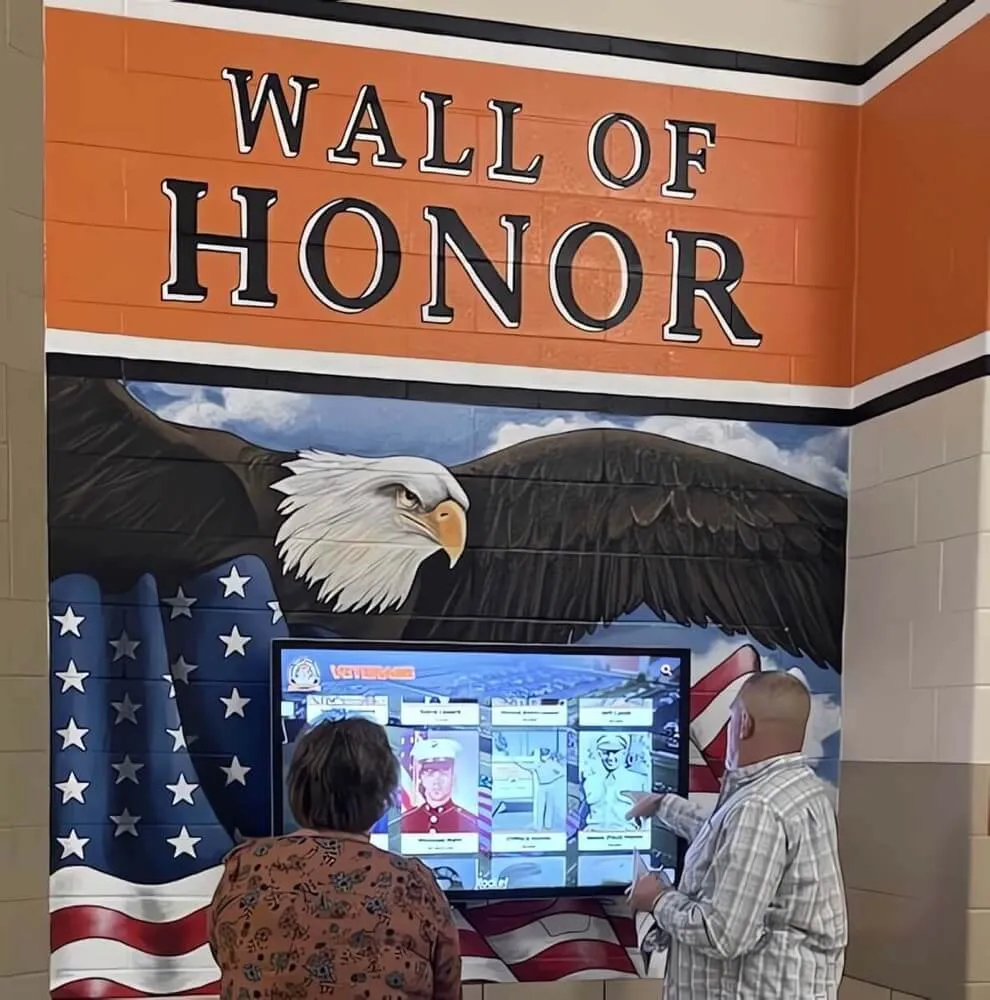
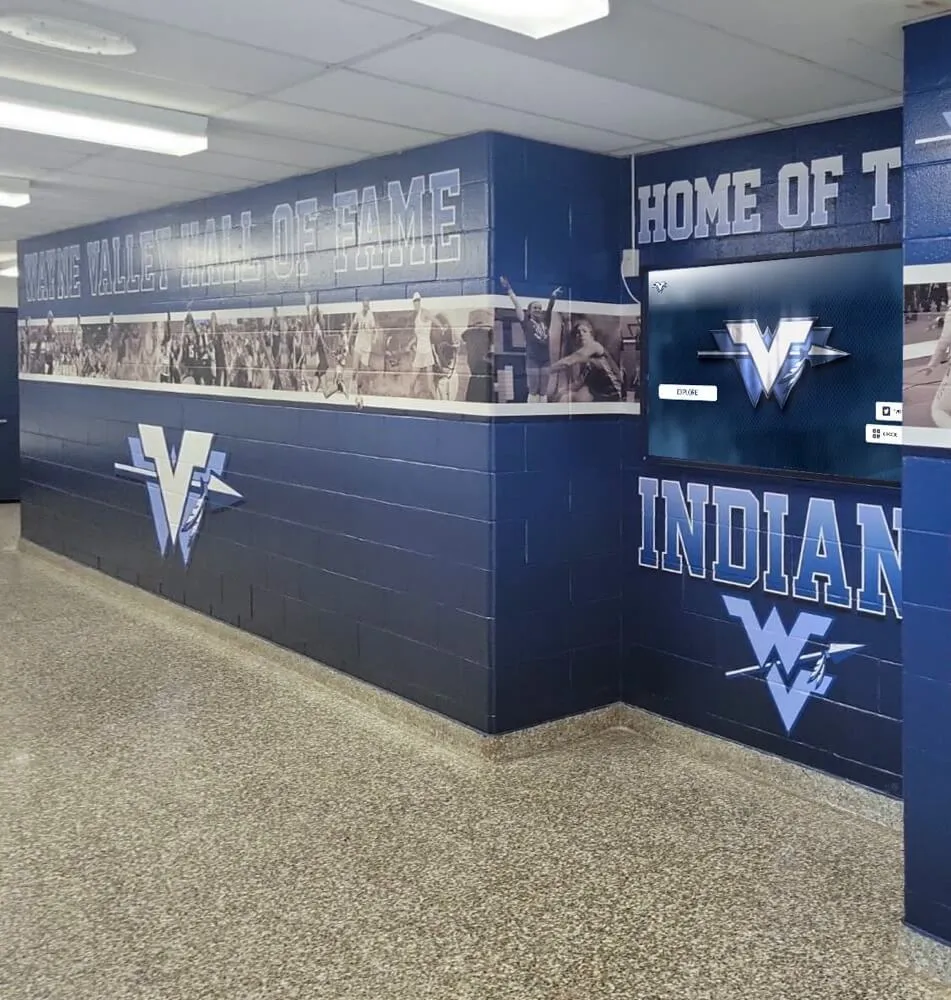
High-profile recognition walls like this one require sustained governance — clear bylaws ensure that the standards that created the display also govern how it is updated and maintained over time
Key Bylaw Provisions for Recognition Governance
Recognition Governance Bylaw Checklist
Authority and Relationships
- Define the booster club’s relationship to the school and district (advisory, fundraising only, program management, etc.)
- Specify which school administrator serves as the club’s primary liaison
- Document which decisions require administrator approval vs. club vote
Recognition Committee
- Establish a recognition committee or designate recognition responsibilities to an officer role
- Define quorum and voting requirements for recognition decisions
- Require committee members to disclose conflicts of interest (e.g., parent of a potential honoree)
Sponsor Agreements
- Require written sponsor agreements for any contribution above $[threshold]
- Mandate that sponsor agreements reference the authorization matrix (what is vs. is not in the club’s authority)
- Specify record retention period for sponsor agreements (IRS guidance for 501(c)(3) organizations requires retention of certain records for at least 3 years)
Display and Content Decisions
- Require the four-stage approval workflow for all permanent display projects
- Designate who holds final authority to correct or remove club-funded content
- Address content removal standards: when can a sponsor’s recognition be removed, and what notice is required?
Annual Review
- Require annual review of all active sponsor commitments against current display content
- Require annual audit of recognition displays to identify outdated, incorrect, or missing content
- Document a process for updating digital displays as athlete achievements accumulate
Bylaws should be reviewed by the school district’s legal counsel or booster club association before adoption, particularly the provisions around financial authority and any language about naming rights or permanent recognition. This is standard practice for any nonprofit operating on public school property.
Supporting student recognition culture at the organization level — including tribute spaces and permanent memorial installations — involves the same governance questions your bylaws need to answer for ongoing athletic recognition.
Part Five: How Digital Displays Change the Governance Picture
Most of the governance challenges above existed before digital displays. What digital recognition changes is the scale, permanence, and multi-channel nature of the problem.
A physical plaque added to a trophy case exists in one location. A sponsor logo added to a touchscreen athletic hall of fame can appear on the in-building display, the web version of the platform, a QR-linked mobile page, and social media posts pulled from the same system — all from a single content update. That reach is part of the value, but it also means the display approval workflow needs to address all those outputs, not just the physical screen.
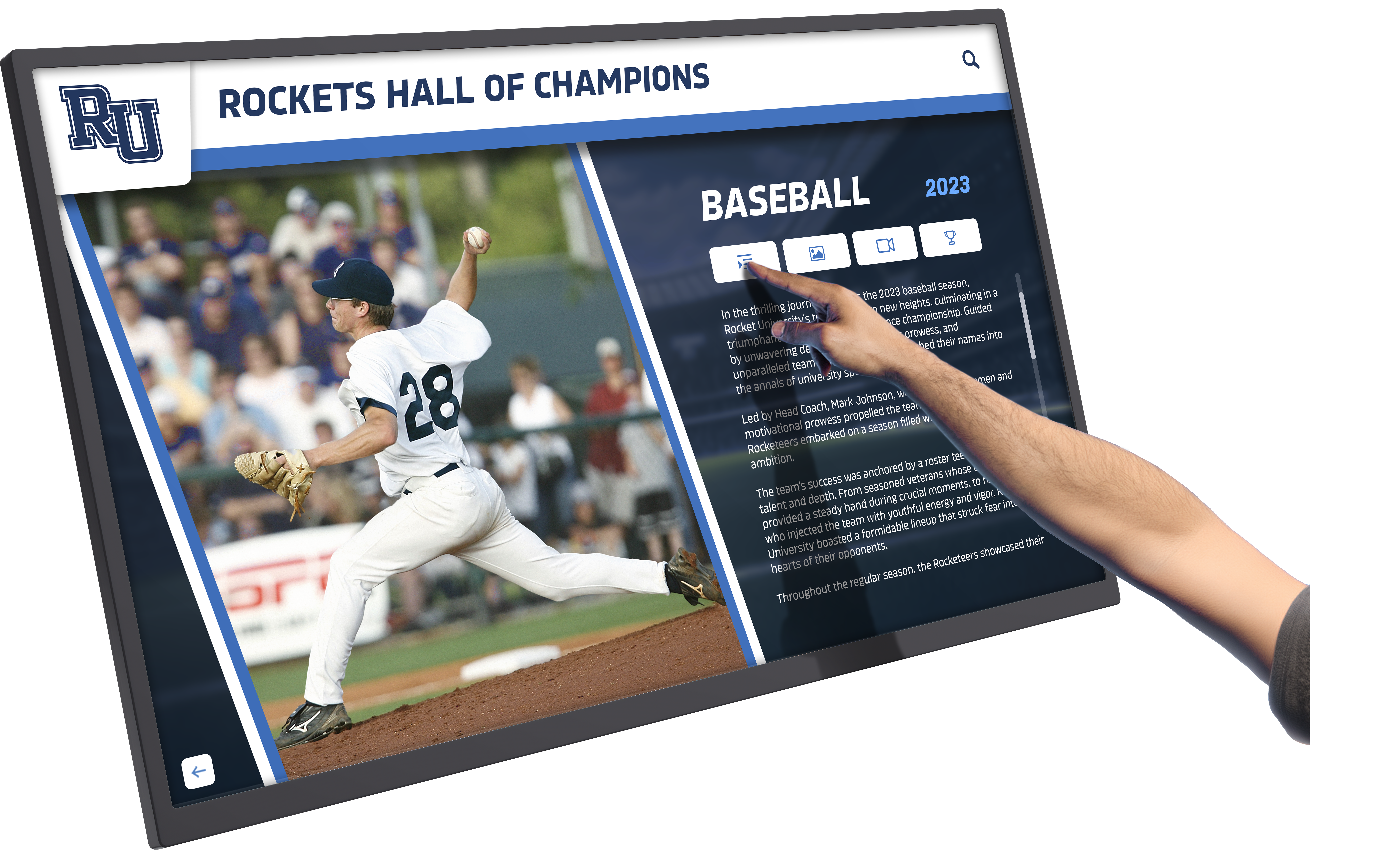
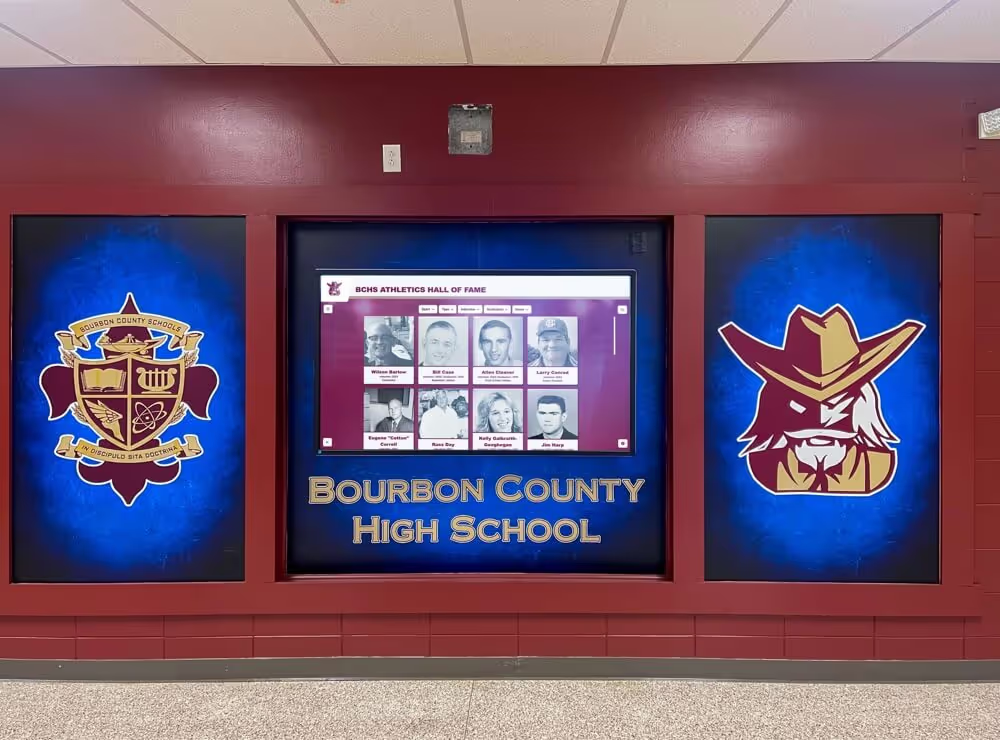
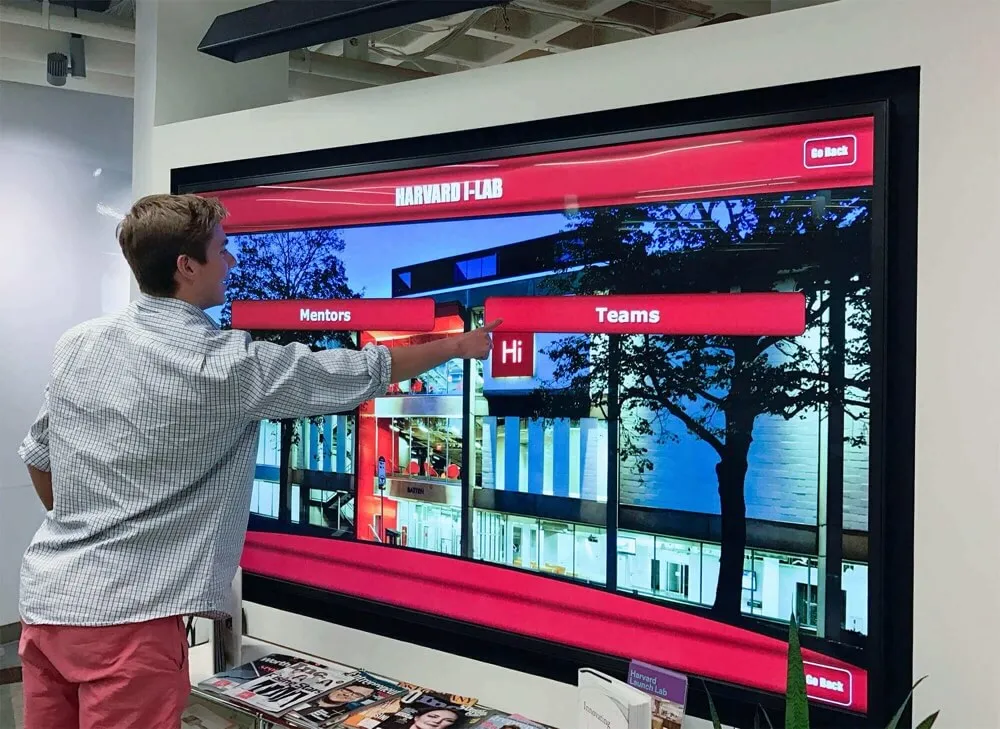
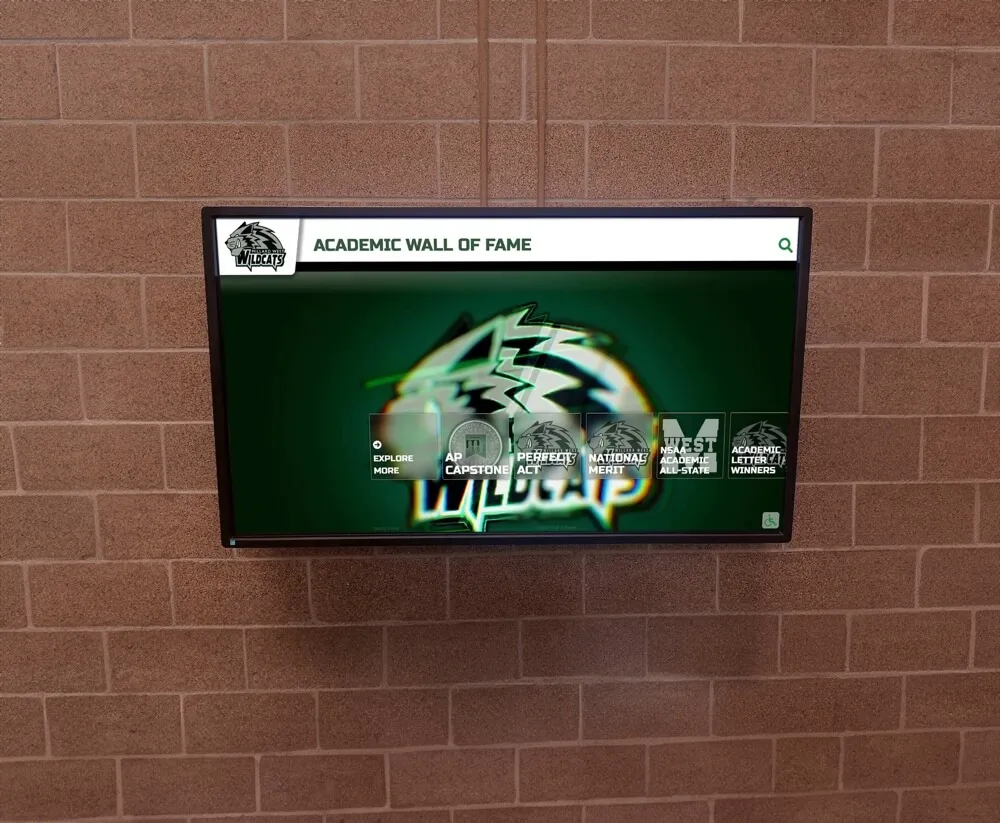
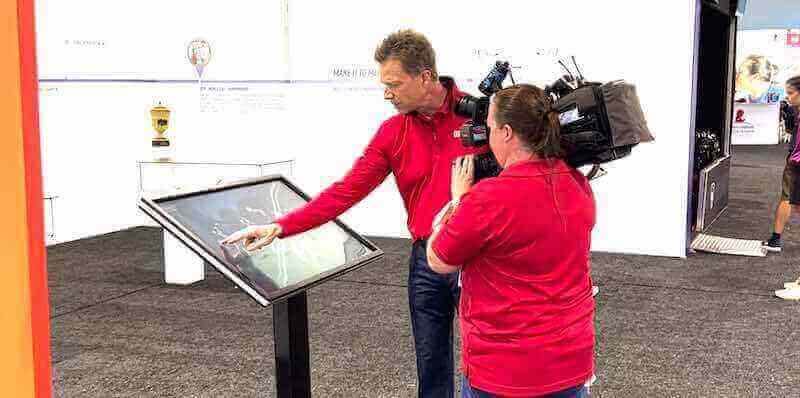
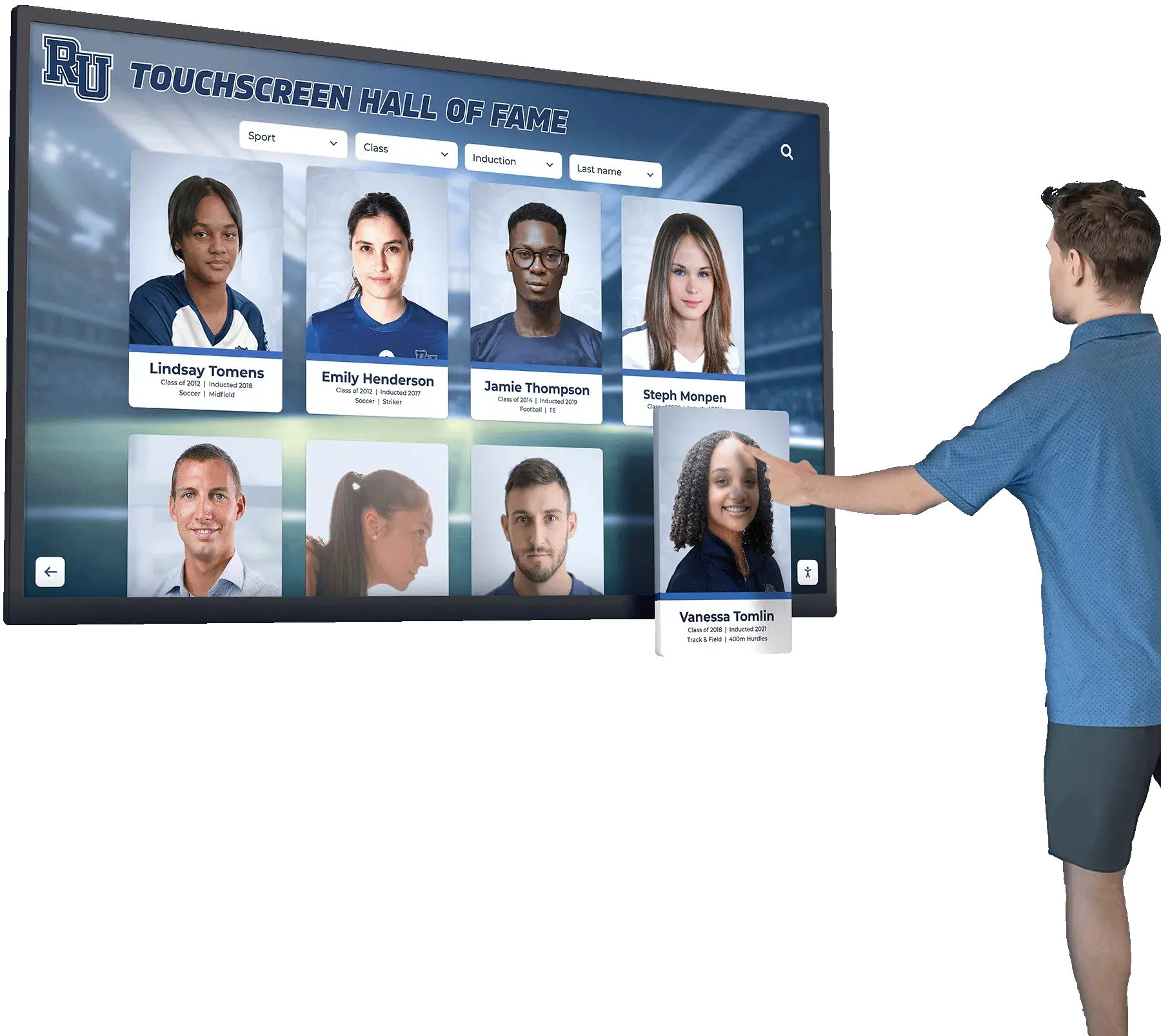
Digital recognition platforms multiply the reach of every content decision — approval workflows need to account for web-accessible and mobile versions, not just the physical screen
Governance Considerations Specific to Digital Recognition
Content management access. When a booster club funds a digital display, the content management system (CMS) access credentials determine who can actually change what is shown. Bylaws should specify whether CMS access belongs to the booster club, the athletic department, or both — and what happens to access when booster club leadership turns over.
Sponsor logo standards. Digital platforms scale images across different screen sizes and resolutions. Your sponsor agreement template should specify file format requirements (typically SVG or high-resolution PNG) and confirm who is responsible for ensuring logos meet those standards before upload.
Update and audit cadence. Physical displays change slowly; digital displays can change in minutes. Your bylaws should define how often the recognition committee audits digital content — at minimum annually, and ideally at the start and end of each athletic season.
Web-accessible recognition and alumni. When a hall of fame display is web-accessible, past inductees and their families can find their recognition years or decades later. That is a significant benefit, but it also means errors live longer. Build the content accuracy provisions from Part One into your digital content workflow specifically, not just your physical display process.
Choosing between web-based and native touchscreen software affects who controls content updates and how quickly changes propagate — a governance-relevant decision that booster clubs funding display projects should understand before hardware is purchased.
The display categories that merit the most careful governance attention tend to be the ones that create the most lasting value: halls of fame, named recognition walls, and sponsor acknowledgment systems that connect financial partnerships to visible public recognition. Sports motivation displays and wall of fame content that are part of the same display system benefit from the same approval discipline, since they represent the program’s voice in a shared school space.
Putting the Guidelines Into Practice
Guidelines only work if booster club volunteers know they exist and understand why they matter. A few practical steps:
Onboard new volunteers with the governance framework. At the first meeting of each school year, walk through the recognition rules, the sponsor promise matrix, and the display approval workflow. Fifteen minutes of orientation prevents months of cleanup.
Use the approval workflow form every time. Even when an administrator has informally said yes, use the written form. The form creates a record that protects the volunteer who did the work and the administrator who approved it.
Review sponsor files at renewal time. Each renewal conversation is an opportunity to confirm that current display content matches what the sponsor was actually promised in writing — and to correct anything that drifted during the year.
Connect recognition additions to the approval calendar. If your school holds a spring athletic banquet, build the display update workflow backward from that event. Content needs to be approved and installed before the honorees arrive to see it, not submitted for approval the week before.
Booster clubs that run clean governance programs — clear eligibility criteria, written sponsor agreements tied to an authorization matrix, and a predictable approval workflow — earn something that money cannot buy: the trust of the school administration that makes every future project easier to approve. That trust compounds over time and becomes the foundation for the more ambitious recognition investments, from athletic record boards to permanently installed touchscreen halls of fame, that define a program’s legacy for decades.
See What a Governed Digital Recognition System Looks Like
Rocket Alumni Solutions builds interactive halls of fame, sponsor recognition walls, and athletic achievement displays that come with defined content workflows — so your booster club, athletic director, and IT department are all working from the same system, not around each other.
Request a Demo