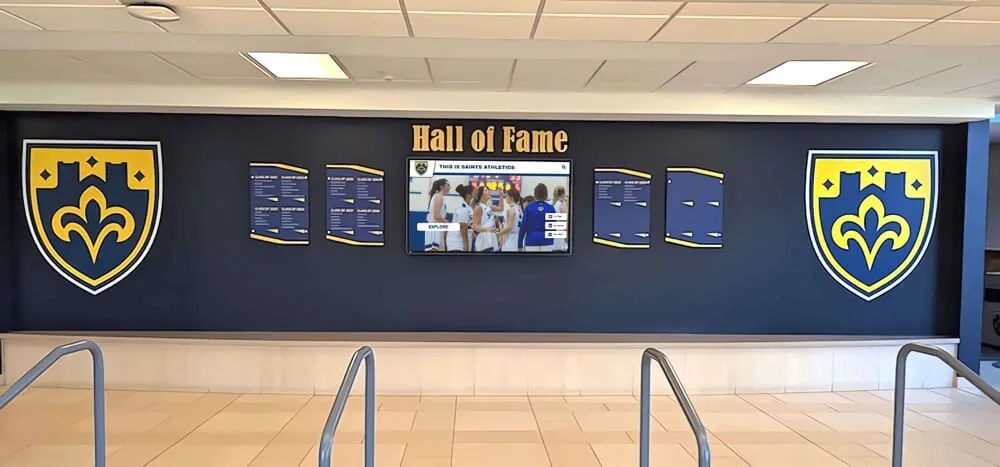




Oldtimers walls serve as vital recognition systems celebrating veteran athletes, long-serving club members, and historical sports figures who built the foundations of athletic programs and organizations. From community sports clubs honoring decades of volunteer service to athletic associations recognizing former players who paved the way for current success, oldtimers recognition preserves institutional memory while demonstrating appreciation for those whose contributions might otherwise fade from collective awareness as time passes and new generations arrive.
Yet many organizations struggle to maintain meaningful oldtimers recognition beyond basic plaques that accumulate dust in forgotten hallways. Traditional static displays face chronic space limitations as veteran populations grow, provide minimal context about historical achievements and contributions, and require expensive updates when information changes or new honorees join recognized ranks. These limitations undermine the recognition purpose—ensuring veteran athletes and long-serving members receive the sustained visibility and appreciation their years of dedication deserve.
This comprehensive guide explores modern approaches to oldtimers wall recognition, examining how digital display technology transforms veteran athlete and historical member celebration from space-constrained static plaques to engaging, comprehensive systems that preserve athletic heritage while inspiring current participants and strengthening organizational identity across generations.
Oldtimers recognition programs exist across diverse athletic contexts—youth sports associations honoring volunteer coaches and officials who dedicated decades to community programs, athletic clubs celebrating founding members and long-serving participants, professional and collegiate athletic facilities recognizing retired athletes and historical figures, and community organizations preserving local sports heritage through systematic veteran athlete documentation.

Modern oldtimers recognition integrates traditional recognition elements with digital displays that provide unlimited capacity and rich storytelling capabilities
Understanding Oldtimers Recognition in Athletic Contexts
Before exploring implementation approaches, organizations should understand the specific purposes and benefits oldtimers walls provide within athletic communities.
Defining “Oldtimers” in Sports Recognition
The term “oldtimers” encompasses various recognition categories depending on organizational context:
Veteran Athletes and Former Players Athletic clubs and professional organizations often recognize former competitive athletes who represented institutions during earlier eras—retired players who competed before current generations, alumni athletes from historical championship teams, record-holders whose achievements established program standards, and pioneering athletes who built foundations for current success.
According to research on media area sports history, oldtimers associations date back decades, with organizations like the Philadelphia Old Timers’ Association growing from a sentimental reunion idea in 1946, eventually evolving into formal hall of fame recognition programs.
Long-Serving Volunteers and Officials Community sports programs particularly value oldtimers recognition for volunteers—coaches who dedicated decades to youth development, officials and referees serving leagues for many years, board members and administrators guiding organizations through generations, and support volunteers maintaining facilities and coordinating logistics.
Organizations like the Greenwich Old Timers Athletic Association demonstrate this model, founded in 1960 to honor both competitive athletes and community sports contributors while raising funds for college scholarships supporting youth athletics.
Founding Members and Historical Figures Many oldtimers programs celebrate individuals who established organizations or contributed during formative periods—founders who initiated clubs and athletic programs, early leaders who built organizational infrastructure, pioneers who introduced sports to communities, and benefactors whose support enabled program growth and sustainability.
Multi-Generational Families Some oldtimers recognition acknowledges athletic families spanning multiple generations—parents, children, and grandchildren all participating in programs, families providing decades of volunteer service across generations, and dynasties demonstrating sustained organizational commitment and engagement.
This multi-generational recognition creates powerful connections between past tradition and present participation while demonstrating organizational longevity and community rootedness.
The Purpose and Value of Oldtimers Recognition
Systematic veteran athlete and long-serving member celebration serves multiple strategic organizational purposes:
Preserving Institutional Memory and Heritage As years pass and personnel change, organizations risk losing connection to historical roots and foundational achievements. Oldtimers recognition prevents this institutional amnesia through documented celebration of earlier eras, biographical preservation of significant contributors, historical achievement context explaining program evolution, and tangible connections linking present success to past foundations.
Without systematic recognition, knowledge of program history often resides exclusively with a few long-tenured members. When these individuals eventually leave, irreplaceable institutional memory disappears permanently.
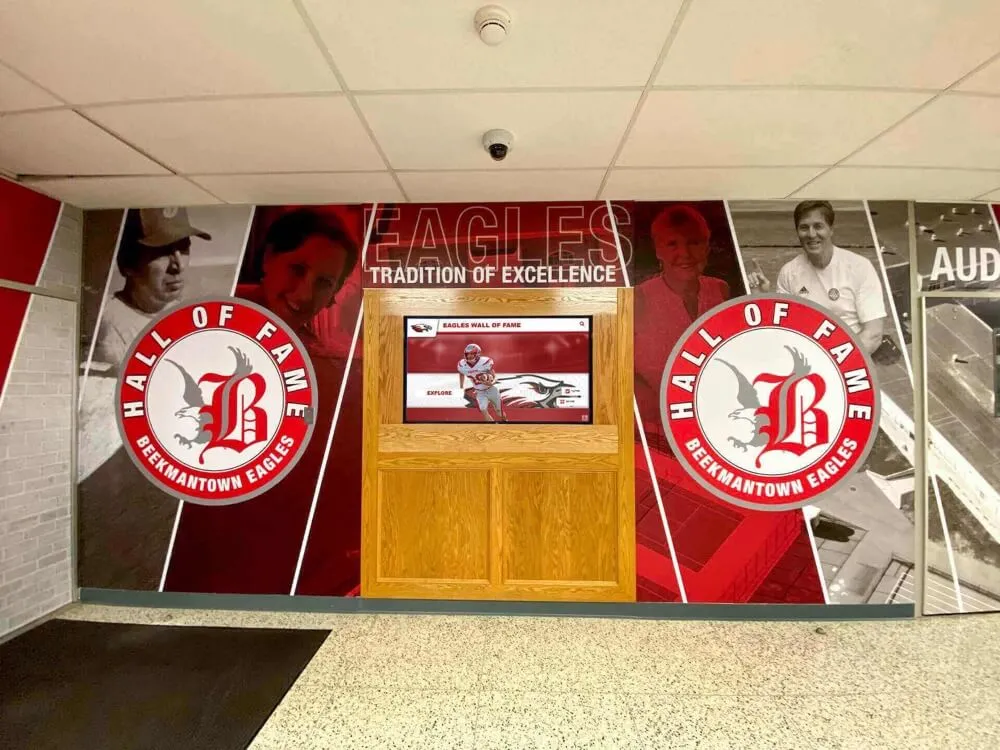
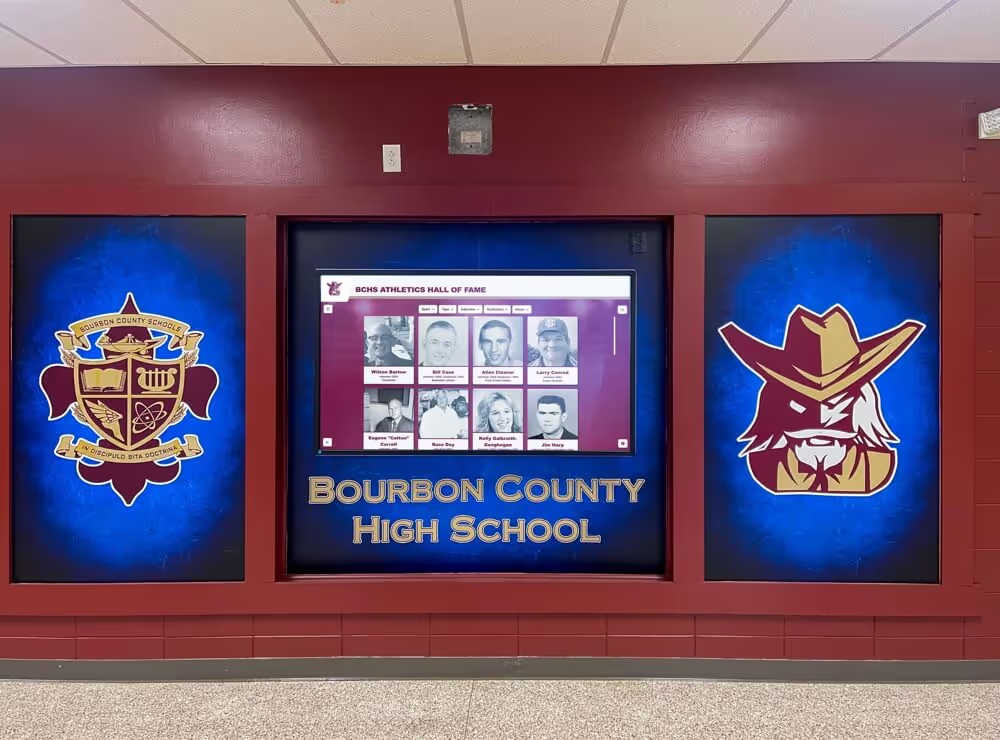
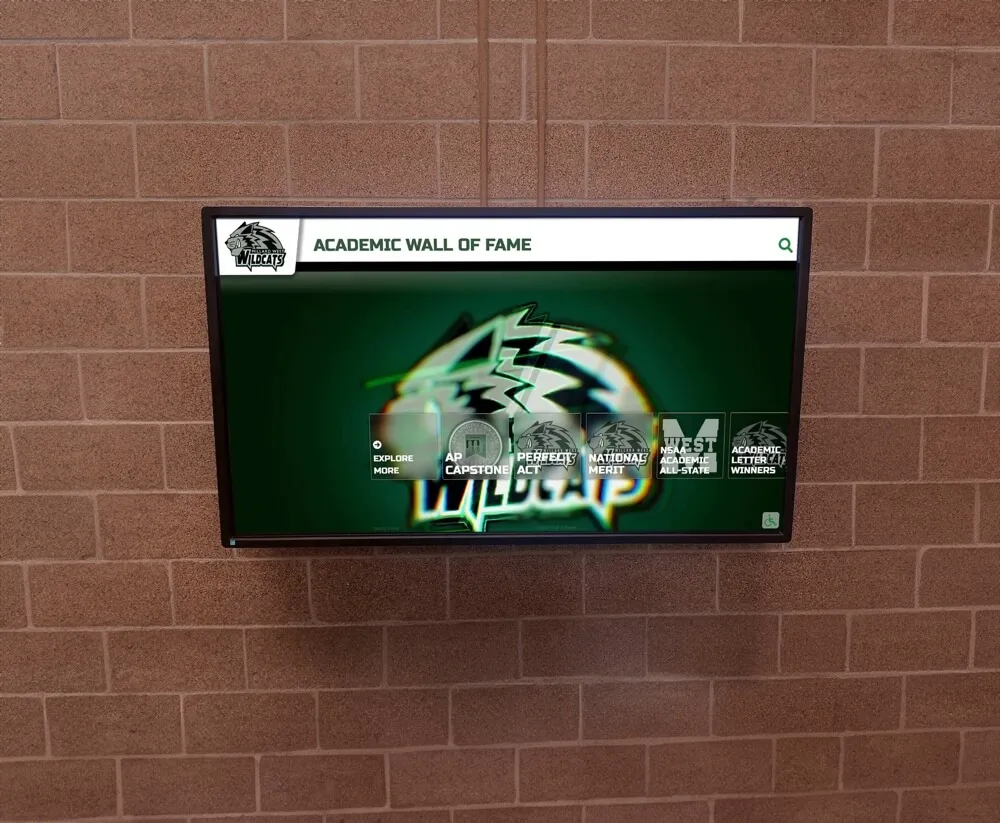
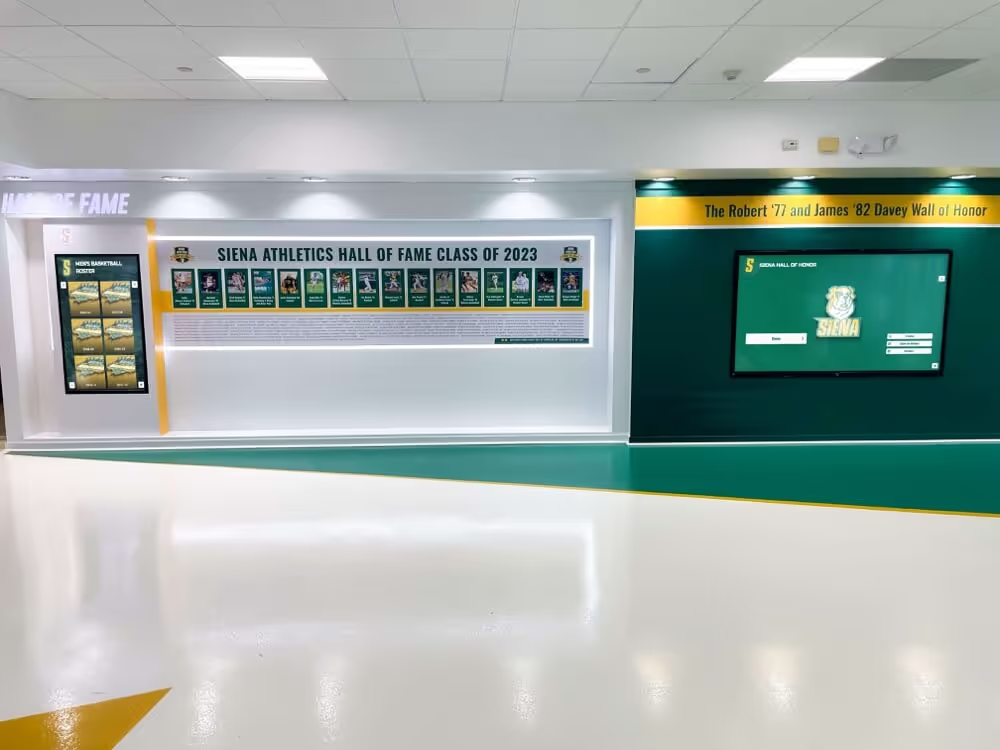
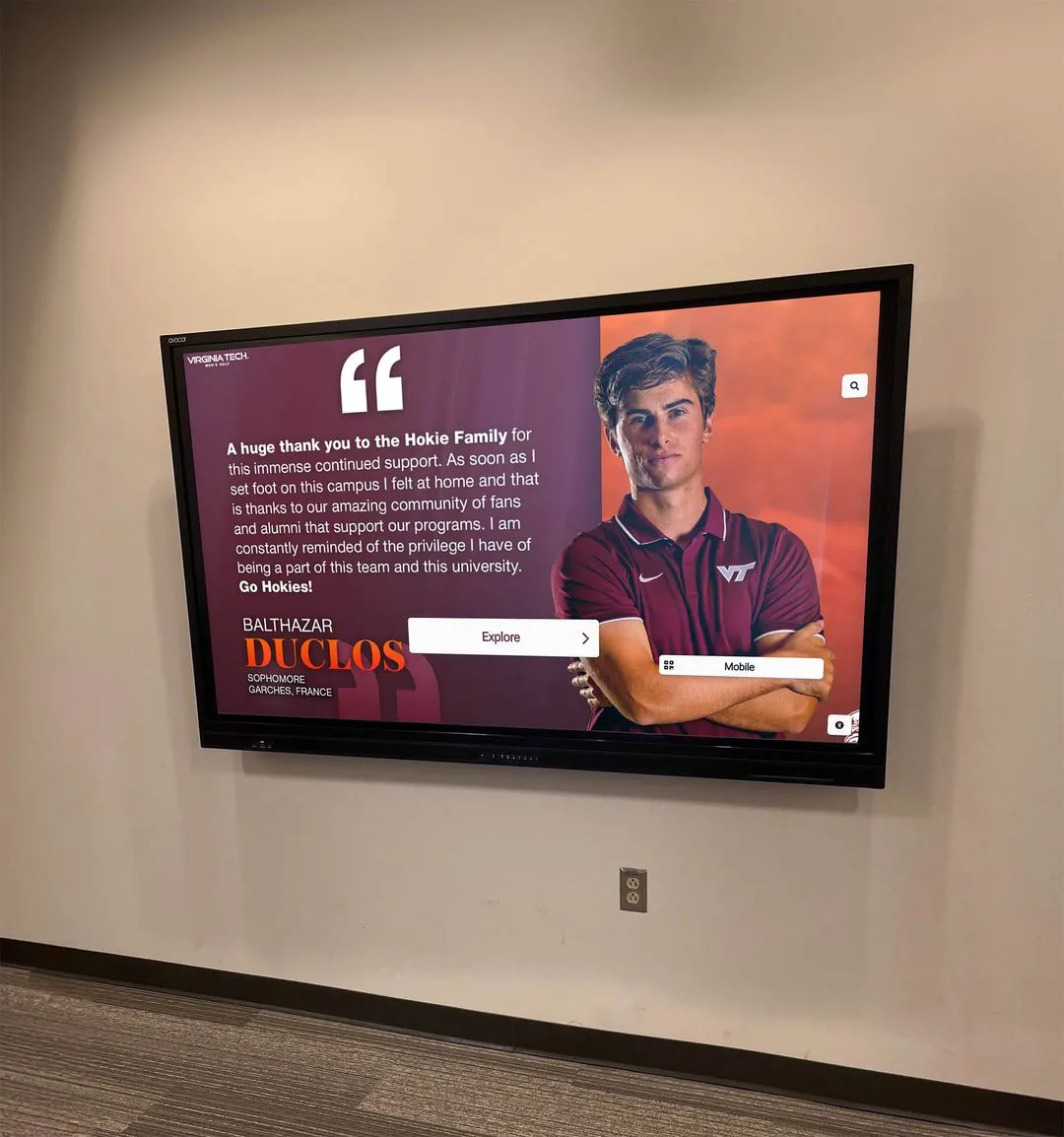
Professional recognition installations demonstrate organizational commitment to preserving athletic heritage and honoring veteran contributions
Demonstrating Appreciation for Past Contributions Oldtimers recognition communicates gratitude to individuals whose efforts built current programs—acknowledging volunteer service spanning decades, celebrating athletic achievements from earlier competitive eras, recognizing sacrifices that enabled program growth, and honoring commitments that strengthened organizations through challenging periods.
This appreciation creates goodwill while potentially motivating continued engagement through mentorship, financial support, or ongoing participation appropriate to veteran status.
Inspiring Current Participants Through Historical Examples Contemporary athletes and members benefit from understanding organizational heritage and veteran achievements—discovering the standards established by predecessors, understanding traditions and values passed through generations, recognizing progression pathways from participation to veteran status, and developing pride in belonging to organizations with distinguished histories.
Organizations implementing comprehensive athletic recognition programs report that historical context strengthens participant commitment and performance by creating aspirational examples and demonstrating that current efforts contribute to ongoing legacies.
Building Organizational Identity and Community Pride Visible oldtimers recognition strengthens collective identity and community connection—establishing continuity across eras and generations, demonstrating organizational longevity and stability, creating gathering points where members explore shared heritage, and building pride that transcends individual participation to encompass institutional achievement across time.
Sports clubs and athletic associations with prominent oldtimers recognition report stronger member retention, more successful recruitment, and enhanced community reputation compared to organizations lacking systematic historical celebration.
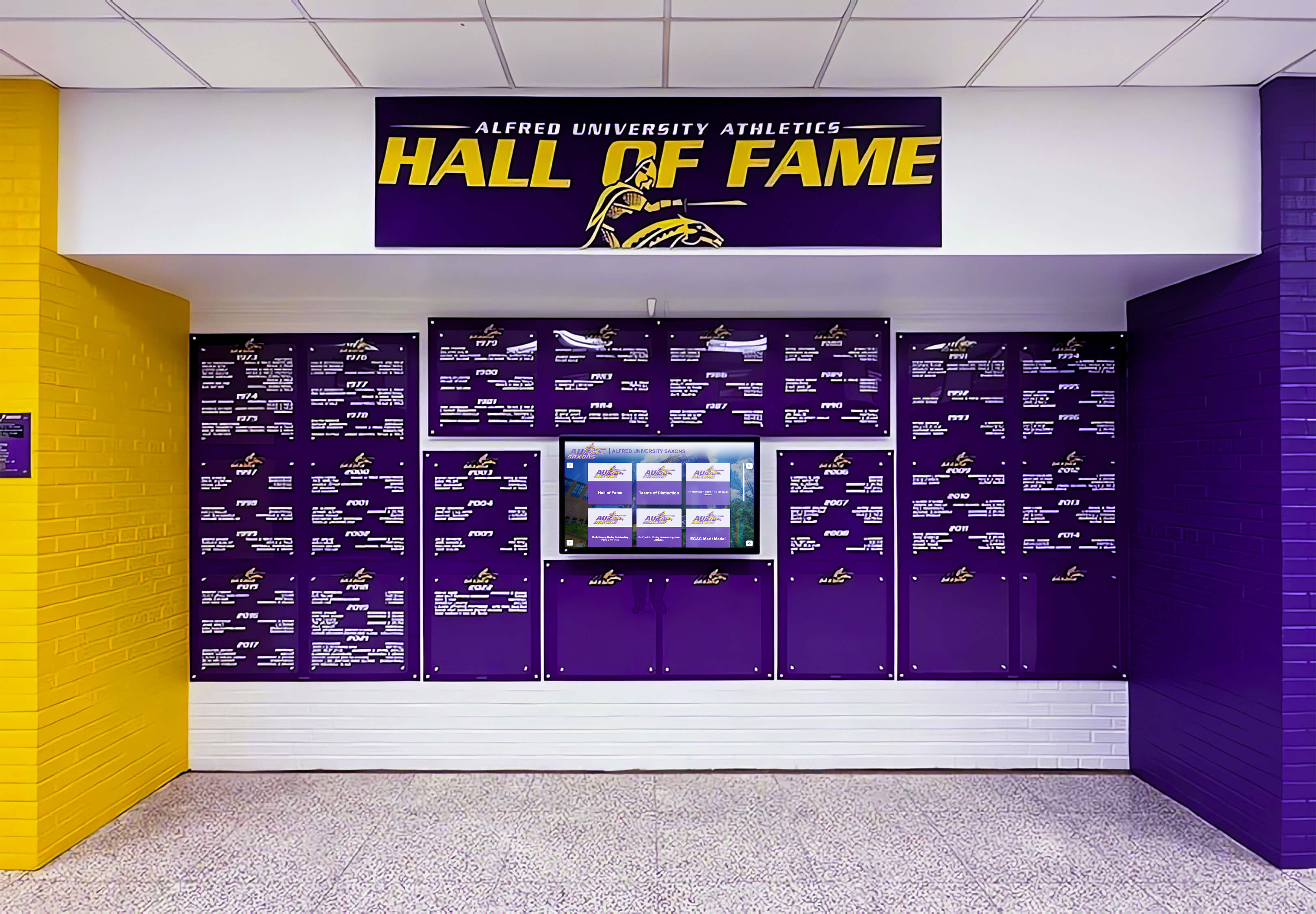
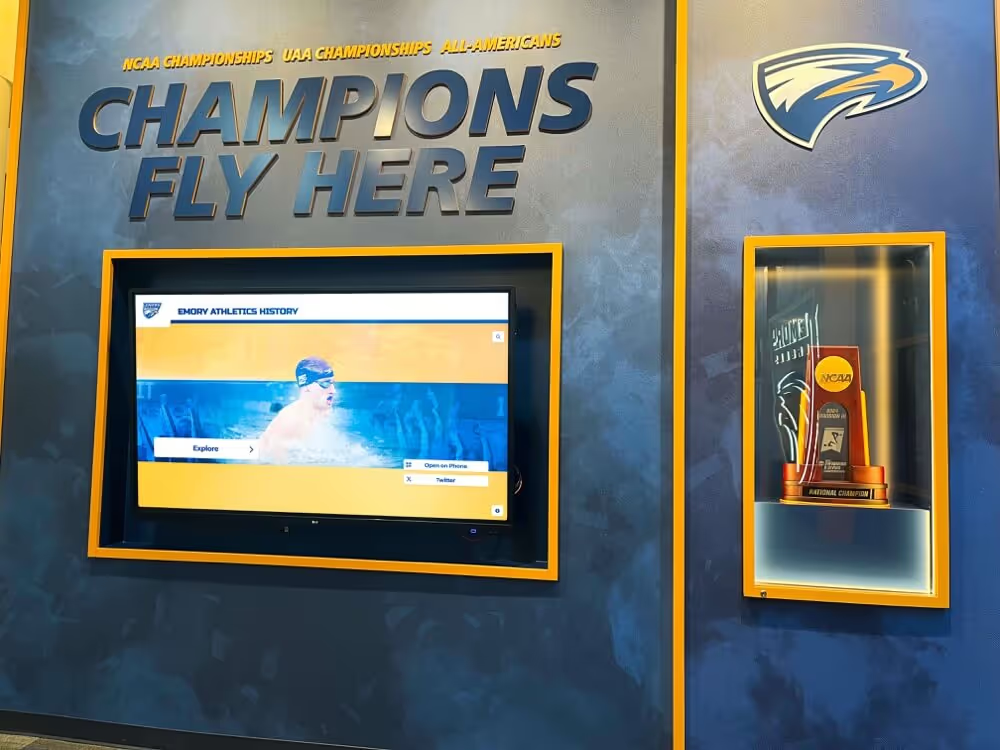
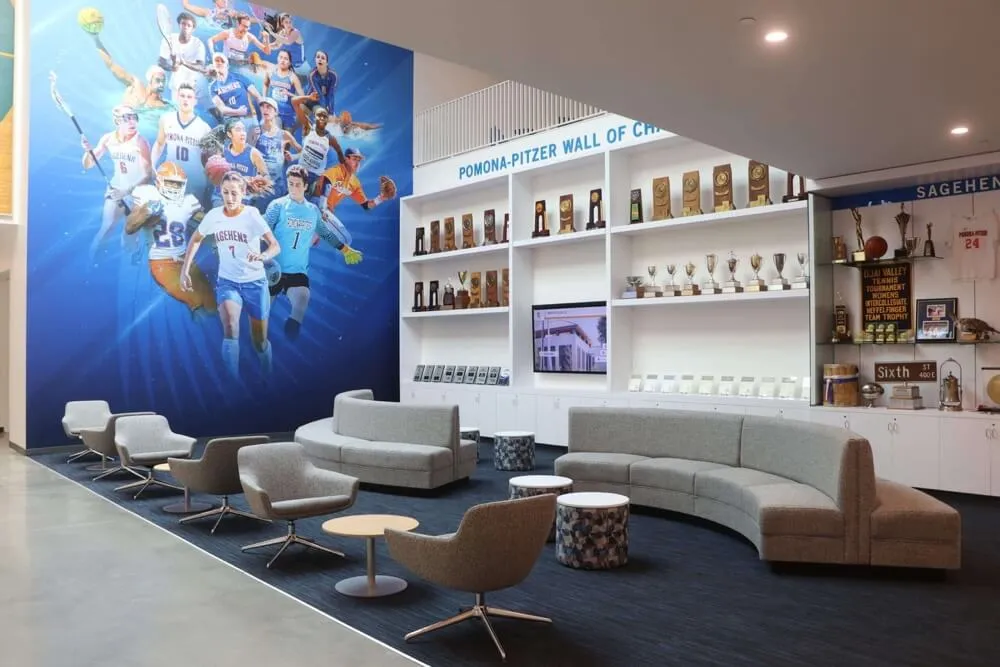
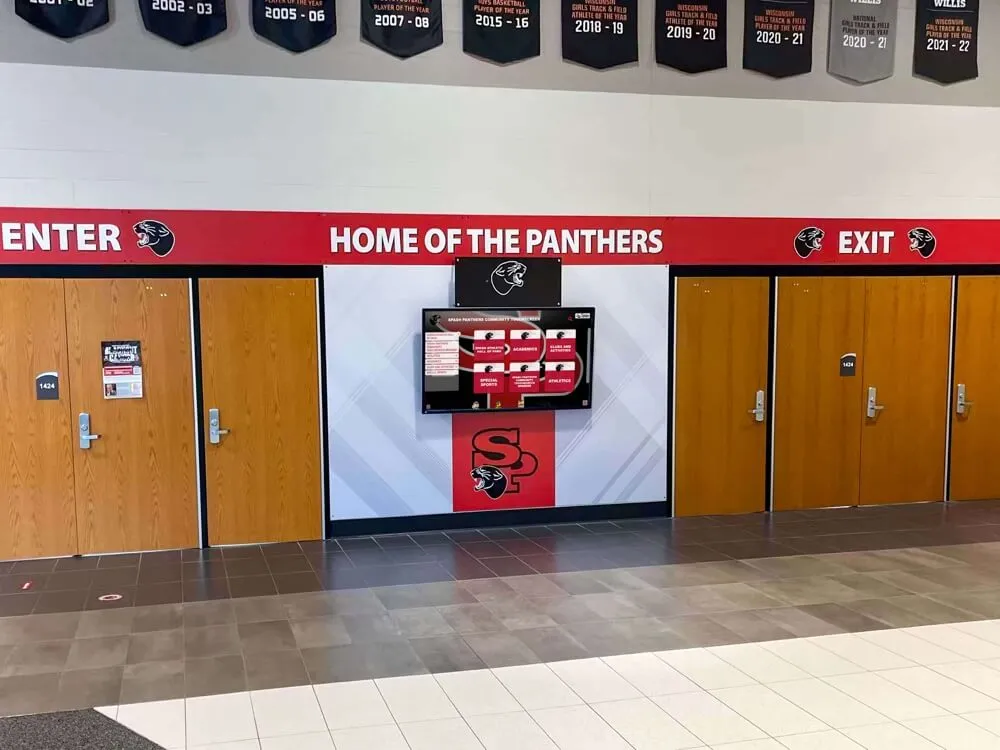
Athletic facility installations ensure oldtimers recognition receives prominent visibility during competitions, practices, and community events
Challenges Facing Traditional Oldtimers Recognition
While the value of veteran athlete and long-serving member celebration is clear, conventional recognition approaches create significant practical challenges undermining effectiveness.
Physical Space Constraints
Traditional plaque-based oldtimers walls face inevitable capacity limitations:
Finite Wall Space Filling Over Time Organizations with decades of history accumulate substantial veteran populations deserving recognition. Physical walls accommodate only limited plaques before space exhausts, forcing difficult decisions about limiting new additions, removing older plaques to accommodate new honorees, expanding to additional walls requiring construction and expense, or establishing restrictive criteria excluding worthy candidates.
According to data on recognition wall displays, traditional modular systems require careful space planning and often necessitate expensive expansions as organizations grow, with costs for quality materials ranging from thousands to tens of thousands of dollars.
Hierarchical Display Limitations Wall-based recognition struggles to accommodate different recognition levels or categories—veteran athletes versus volunteer contributors, different sport or activity categories, chronological organization showing program evolution, and featured spotlights for particularly significant honorees.
Physical space constraints typically force organizations into single-format displays that fail to communicate achievement nuances or recognize diverse contribution types appropriately.
Inflexible Configurations Once installed, traditional plaques create permanent layouts resistant to reorganization—difficult to resequence chronologically as new honorees emerge, challenging to create thematic groupings or categories, expensive to relocate when facilities renovate, and impossible to expand beyond original architectural planning.
This inflexibility creates frustration as organizational needs evolve but recognition systems remain frozen in outdated configurations.
Limited Context and Storytelling
Static plaques provide minimal information about honored oldtimers:
Basic Biographical Information Only Traditional recognition typically includes just names, years of service or competition, and perhaps brief achievement descriptions. This minimal content fails to communicate personality, career trajectories, significant moments, contributions beyond headline achievements, connections to current programs or participants, and human interest stories that create emotional engagement.
Without rich context, oldtimers become abstract names rather than real individuals whose stories inspire and connect with contemporary audiences.
No Multimedia Integration Static plaques cannot incorporate photos showing veterans in action, video interviews capturing personalities and wisdom, historical footage documenting earlier competitive eras, audio recordings preserving voices and stories, or interactive elements enabling exploration and discovery.
This multimedia limitation severely restricts storytelling potential compared to modern digital platforms enabling comprehensive documentation.
Inaccessibility Beyond Physical Location Traditional oldtimers walls serve only those physically present in specific locations. Members unable to visit facilities regularly—relocated participants, traveling families, geographically distant alumni, or individuals with mobility limitations—cannot access recognition, limiting community building and engagement opportunities beyond those with convenient physical access.
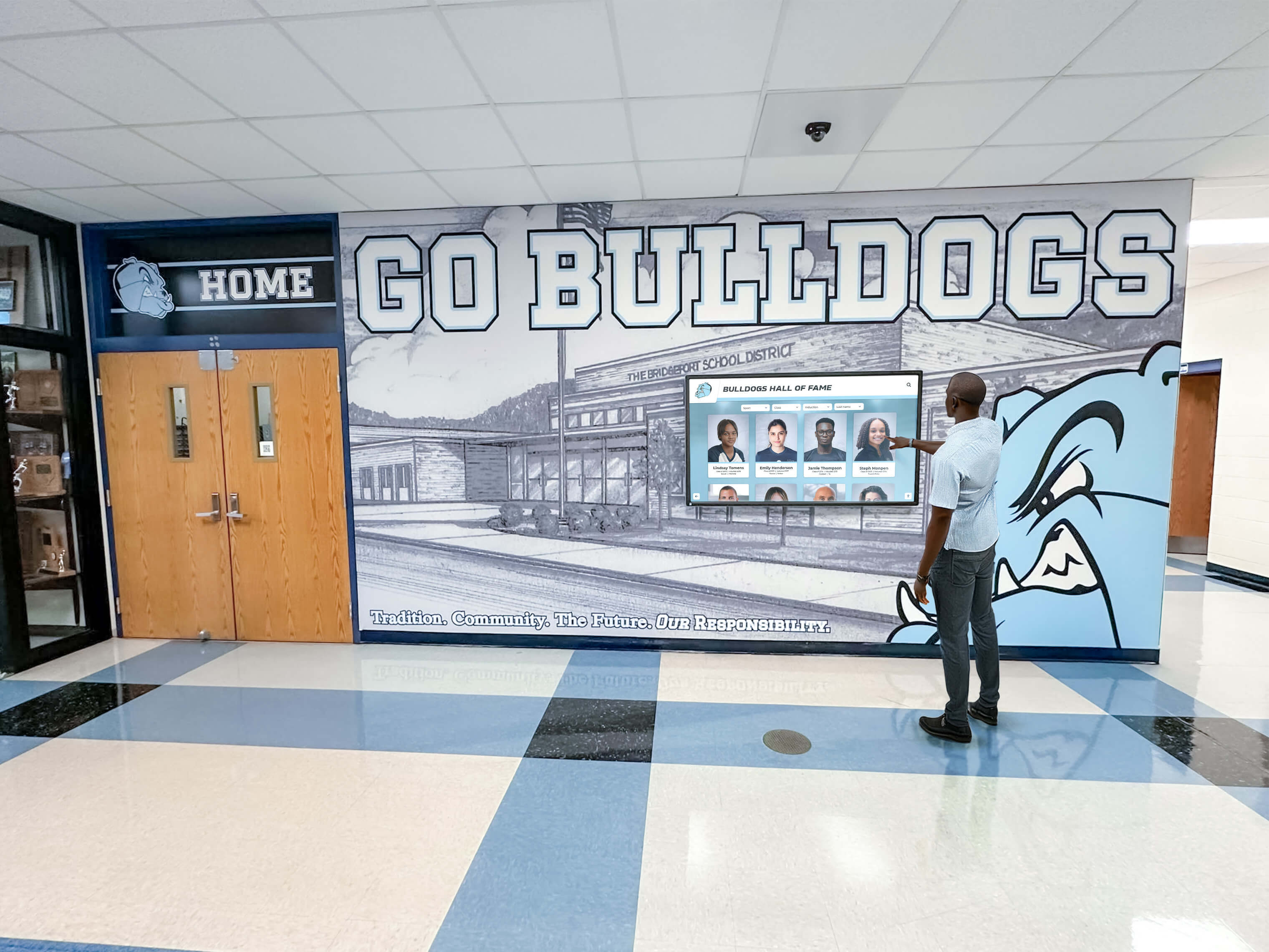
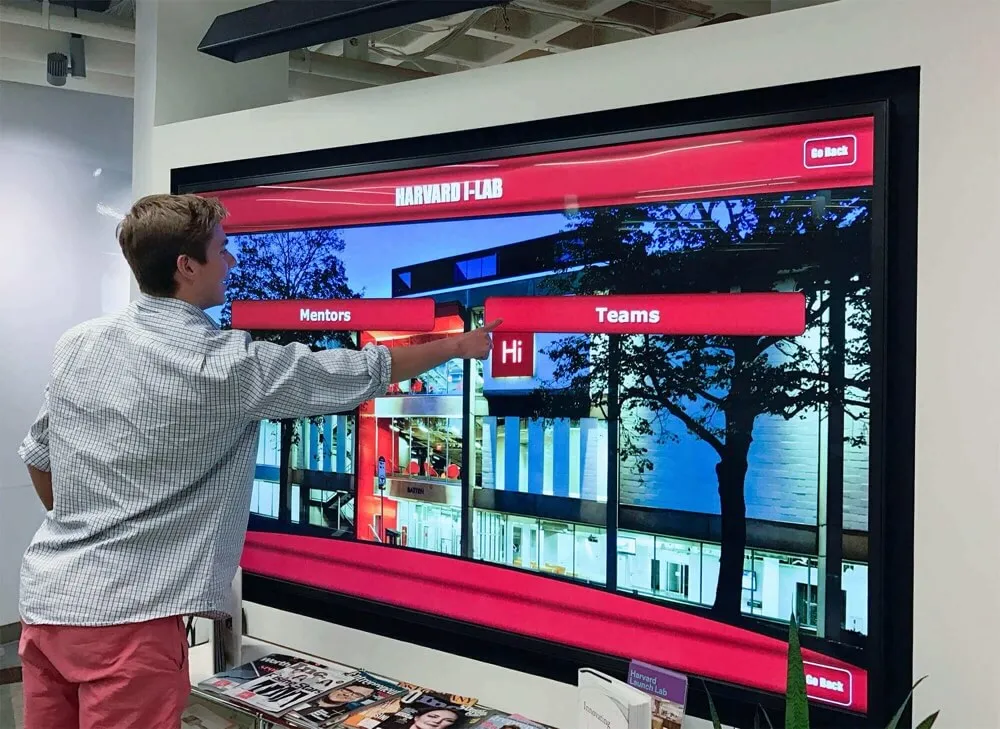
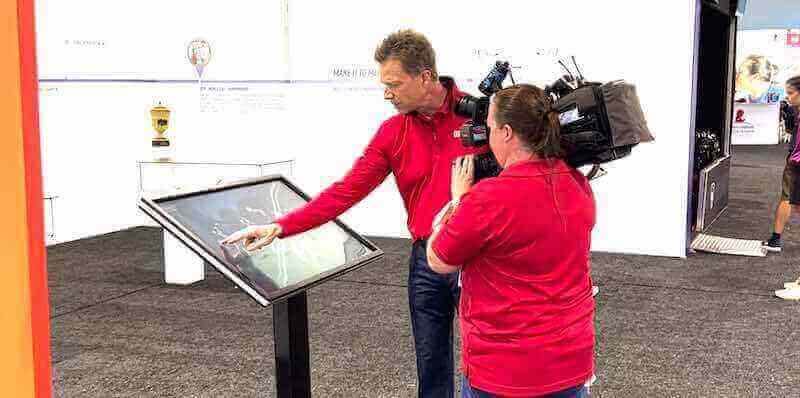
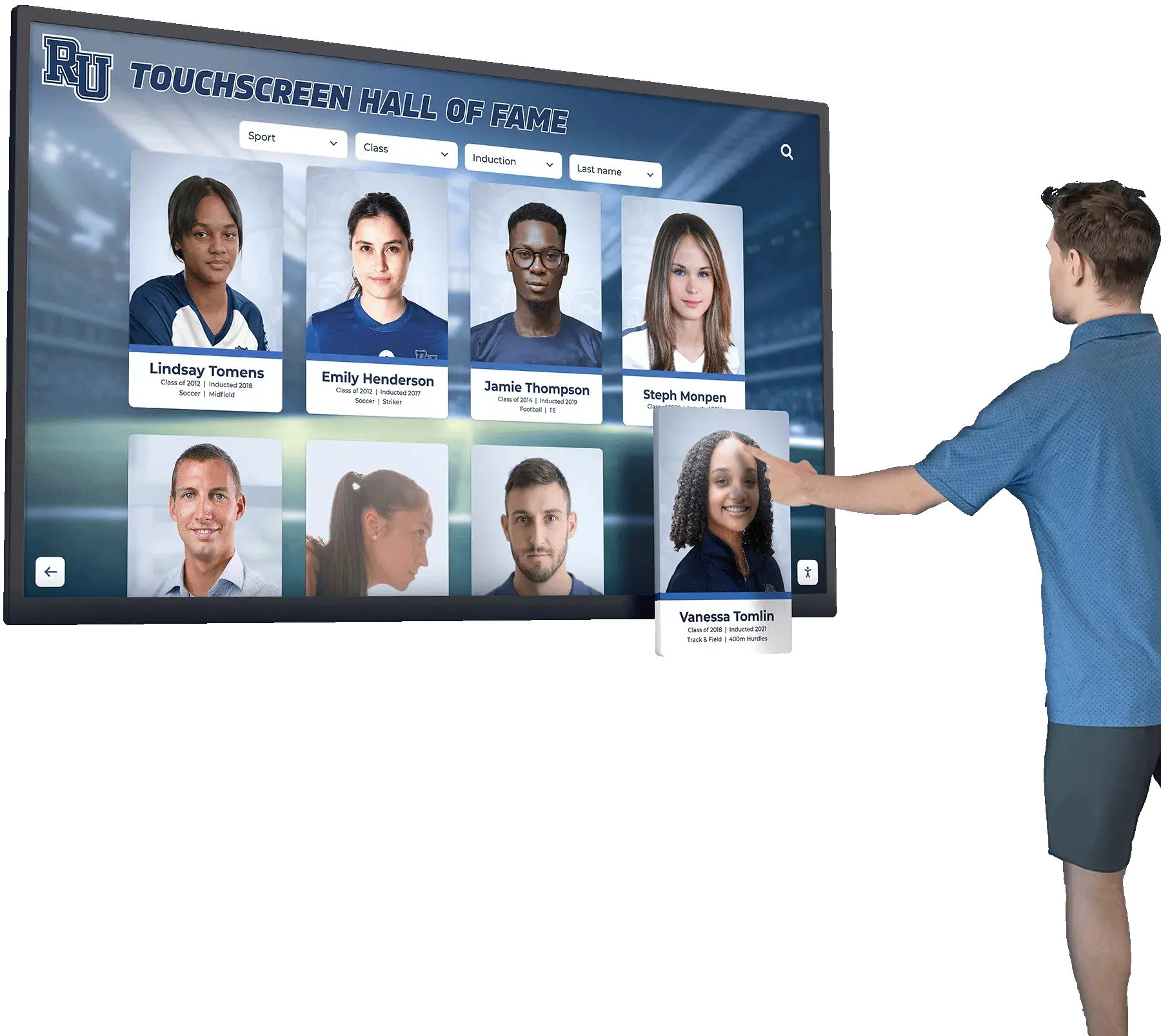
Interactive displays enable exploration and discovery, with users spending significantly more time engaging with oldtimers content than static plaques allow
Maintenance and Update Challenges
Traditional recognition requires ongoing physical maintenance:
Expensive Update Processes Adding new oldtimers or updating information requires ordering custom plaques (weeks of lead time and hundreds in costs), scheduling professional installation, potentially reconfiguring existing displays to accommodate additions, and managing logistics coordinating engravers, installers, and facility access.
These practical barriers often cause recognition delays, with honorees waiting months or years between selection and actual display installation.
Deterioration and Wear Physical materials degrade over time through exposure to light and environmental conditions, accumulation of dust and dirt, damage from accidental contact or vandalism, discoloration and corrosion of metal plates, and wear on mounting hardware and backing materials.
Maintaining professional appearance demands periodic cleaning, repairs, and eventual replacement—ongoing costs and responsibilities many organizations struggle to manage consistently.
Information Accuracy Issues Correcting errors on physical plaques requires expensive replacement rather than simple digital edits. Organizations often live with inaccuracies rather than bearing replacement costs, undermining recognition credibility and potentially offending honored individuals whose achievements deserve accurate representation.
Modern Digital Solutions for Oldtimers Recognition
Digital display technology addresses traditional recognition limitations while enhancing oldtimers celebration through expanded capabilities and engagement features.
Unlimited Recognition Capacity
Digital platforms eliminate space constraints entirely:
Infinite Profile Capacity Solutions like Rocket Alumni Solutions enable unlimited oldtimers profiles on single displays—hundreds or thousands of veteran athletes and long-serving members, comprehensive coverage across all sports and activities, multiple recognition categories and achievement levels, and continuous additions without physical capacity concerns.
Organizations implementing digital hall of fame systems report that removing space limitations fundamentally changes recognition philosophy, shifting from selective honors to comprehensive celebration acknowledging all worthy contributors regardless of era.
Flexible Organization and Categorization Digital systems accommodate multiple organizational structures simultaneously—chronological timelines showing program evolution decade by decade, sport or activity categories separating different program areas, achievement type organization distinguishing competitive versus service recognition, alphabetical browsing enabling quick individual lookup, and featured spotlight rotations highlighting specific oldtimers periodically.
These flexible approaches ensure visitors can explore heritage through pathways matching their interests while comprehensive categorization celebrates diverse contribution types appropriately.
Scalable Infrastructure Cloud-based platforms grow automatically as content expands without hardware upgrades or capacity planning, ensuring organizations never face space limitations requiring difficult expansion decisions or additional capital investments beyond initial implementation.
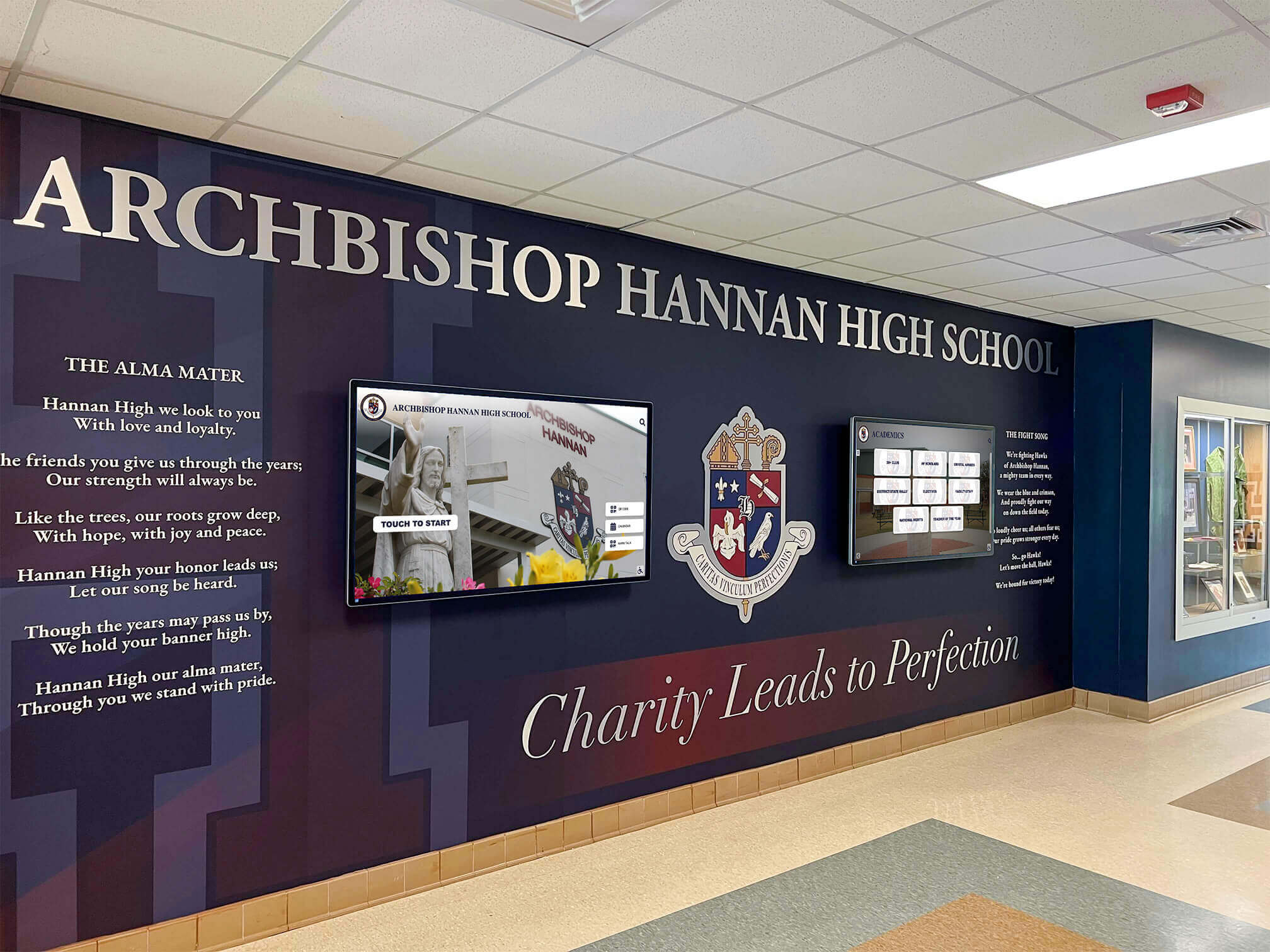
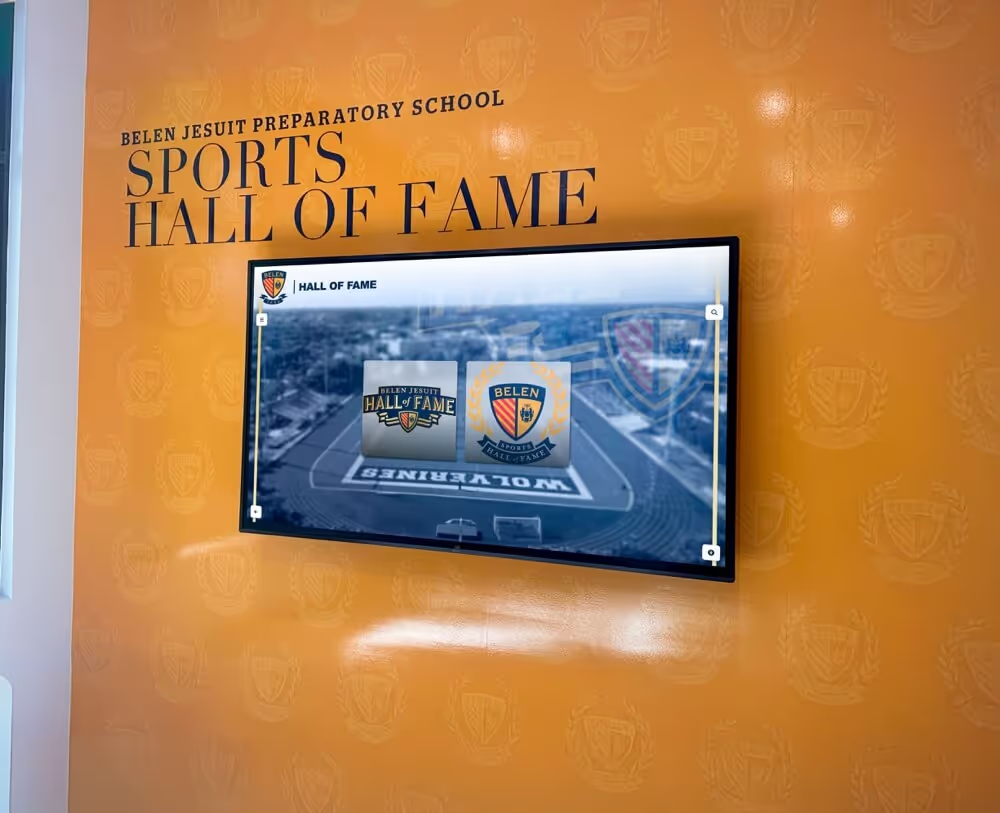
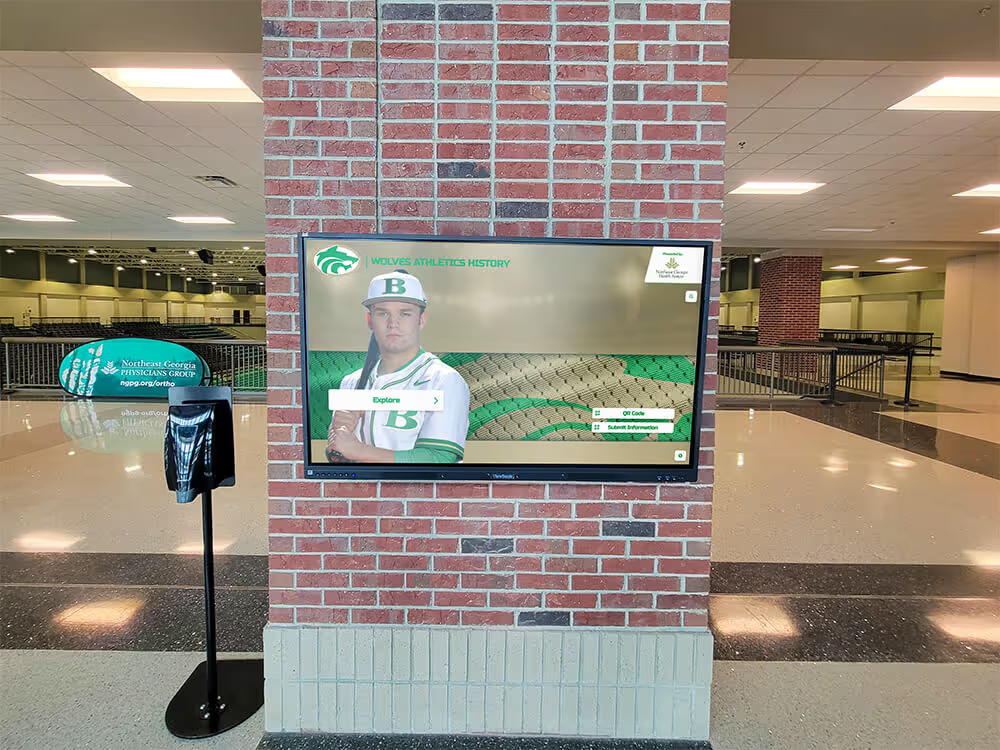
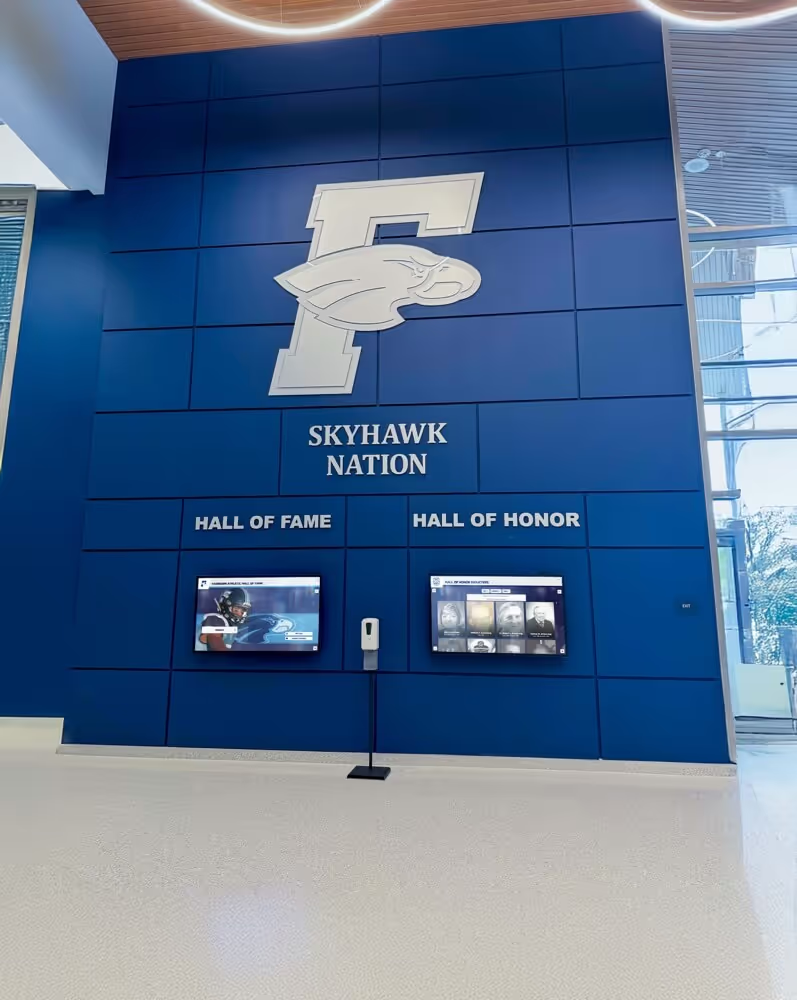
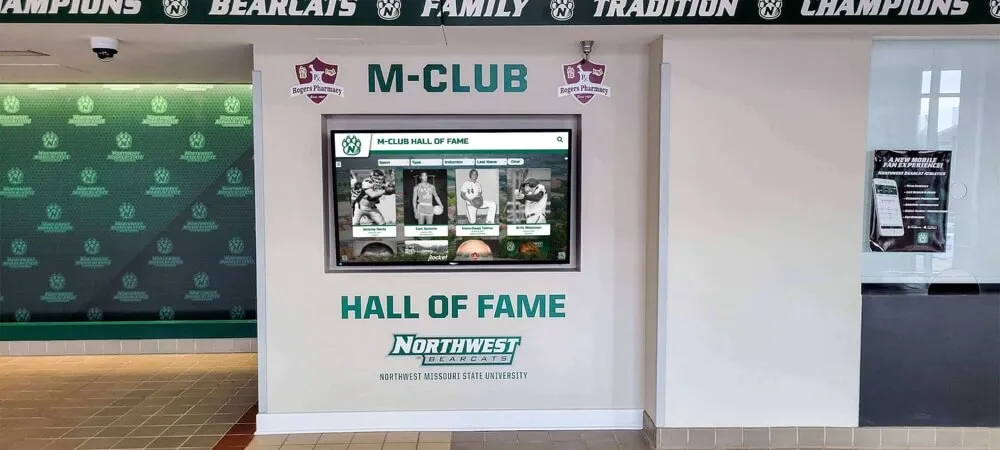
Entrance installations ensure oldtimers recognition reaches maximum audiences including current participants, visitors, and community members attending events
Rich Multimedia Storytelling
Digital oldtimers recognition enables comprehensive biographical documentation:
Photo Galleries and Historical Images Multiple photos per profile show veterans throughout different life stages and contexts—action shots from competitive eras, team photos providing community context, candid images capturing personality, contemporary photos showing veterans at recognition events, and historical facility images documenting program evolution.
Visual storytelling creates emotional connections impossible with name-only plaques while preserving irreplaceable historical documentation that might otherwise deteriorate or disappear.
Video Interviews and Oral Histories Video capabilities enable preserving veteran voices and wisdom—recorded interviews capturing stories and memories, advice and guidance for younger generations, historical perspectives on program development, emotional reflections on meaningful experiences, and testimonials from peers and family members.
Organizations implementing athletic recognition displays emphasize that video content generates significantly higher engagement than text-only recognition, with visitors spending 3-5 times longer exploring profiles featuring multimedia compared to basic biographical text.
Comprehensive Biographical Narratives Unlimited text capacity enables detailed storytelling impossible on physical plaques—complete competitive or volunteer histories, significant achievements and milestones throughout careers, personal background and biographical context, connections to current programs and participants, post-participation contributions and ongoing engagement, and family connections spanning multiple generations.
This narrative depth transforms abstract names into real individuals whose stories inspire contemporary participants while preserving institutional memory with appropriate detail and context.
Statistical and Achievement Documentation Digital platforms accommodate comprehensive achievement records—complete competitive statistics and performance data, championship and award histories, service tenure and volunteer hours, organizational positions and leadership roles, and career progression showing advancement and growth.
Detailed documentation ensures future generations understand achievement significance while providing objective evidence supporting oldtimers recognition decisions and criteria.
Cloud-Based Management Simplicity
Modern platforms dramatically simplify ongoing recognition administration:
Remote Content Updates Administrators can add new oldtimers profiles from any internet-connected device without physical facility access, traveling to equipment locations, or coordinating with technical staff. This remote accessibility enables immediate updates when new honorees are selected, quick corrections if information requires revision, and ongoing enrichment adding photos, videos, or biographical details as materials become available.
Schools and clubs implementing touchscreen recognition systems report 75-85% reductions in time required for recognition updates compared to traditional plaque ordering, delivery, and installation processes.
Template-Based Profile Creation Pre-designed templates ensure consistent professional appearance across all oldtimers profiles—standardized layouts for different recognition categories, drag-and-drop media upload interfaces, guided fields prompting complete biographical information, automatic formatting maintaining brand consistency, and visual previews showing final appearance before publication.
Template approaches eliminate design expertise requirements while ensuring quality regardless of who manages content updates across organizational transitions.
Role-Based Permissions and Workflow Multi-user platforms enable appropriate access for different stakeholders—administrative control for organizational leadership, content editing access for communications or records staff, contribution capabilities for volunteers collecting information, and review processes ensuring quality before publication.
Distributed responsibilities prevent single-point dependencies while maintaining appropriate oversight and quality standards.
Extended Access and Engagement
Digital recognition reaches far beyond physical wall visibility:
Web-Accessible Platforms Online versions of oldtimers recognition enable worldwide access—veterans and families exploring recognition remotely, relocated members maintaining connection to heritage, prospective participants researching organizational history, and community members discovering local athletic legacy.
Web accessibility extends recognition value from limited physical wall visitors to entire organizational communities regardless of geographic location or facility access frequency.
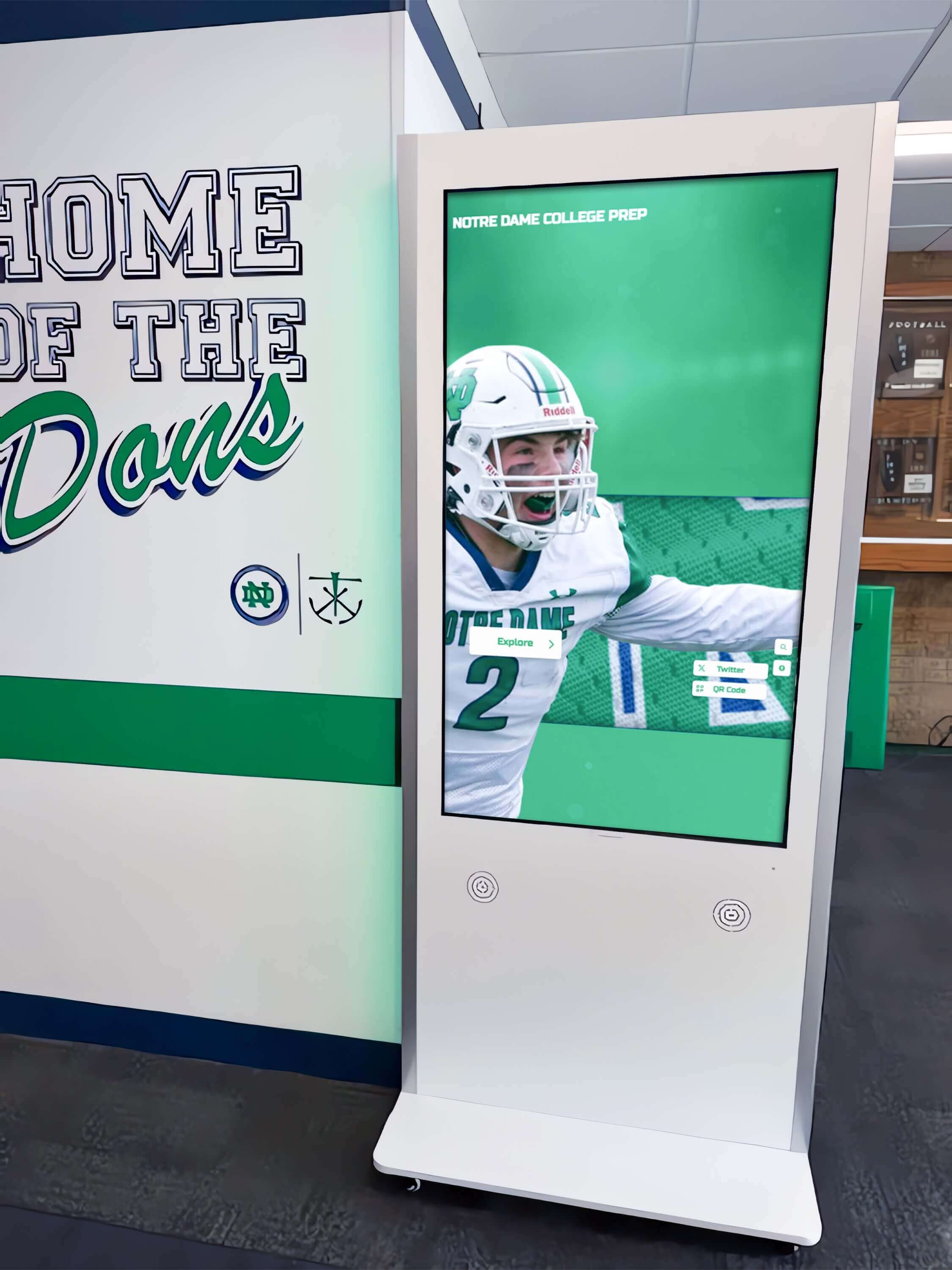
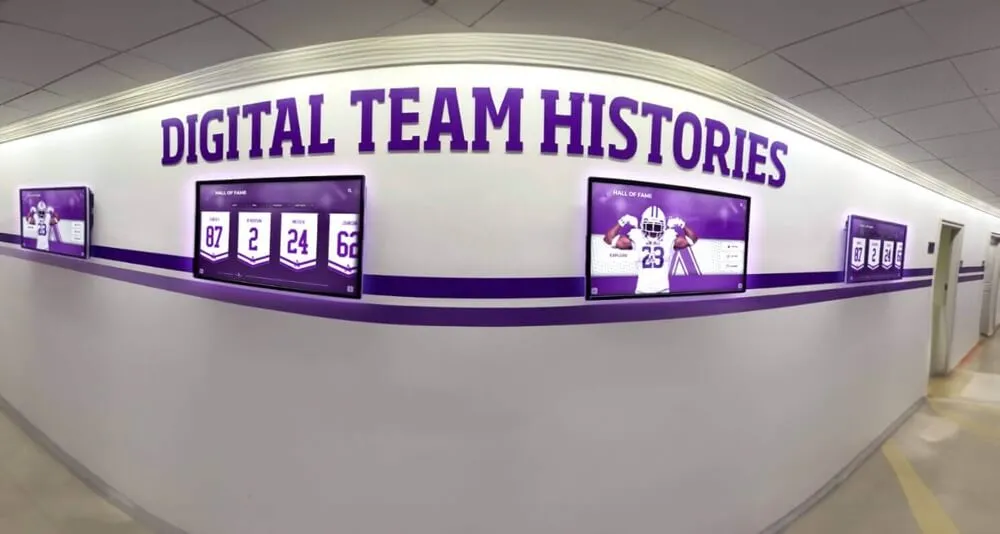
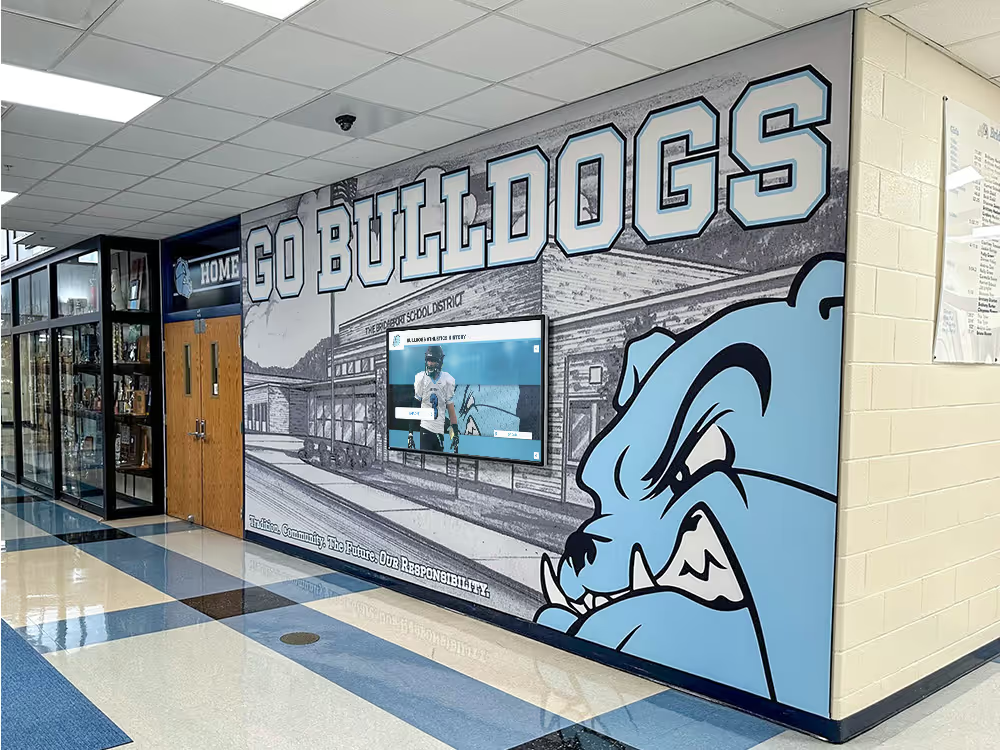
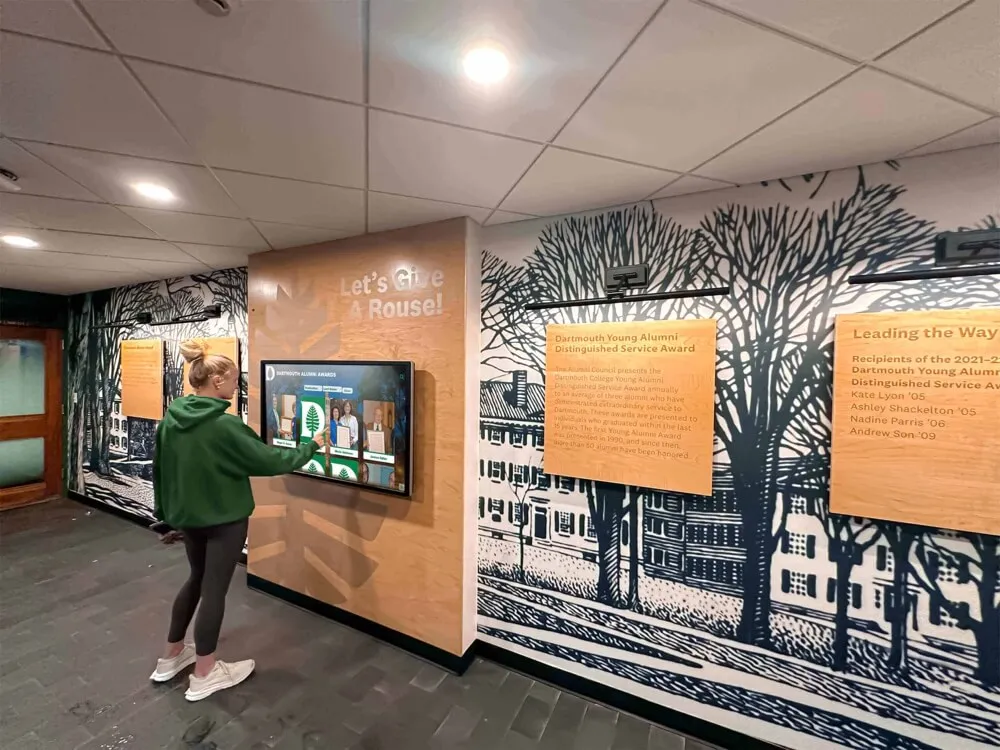
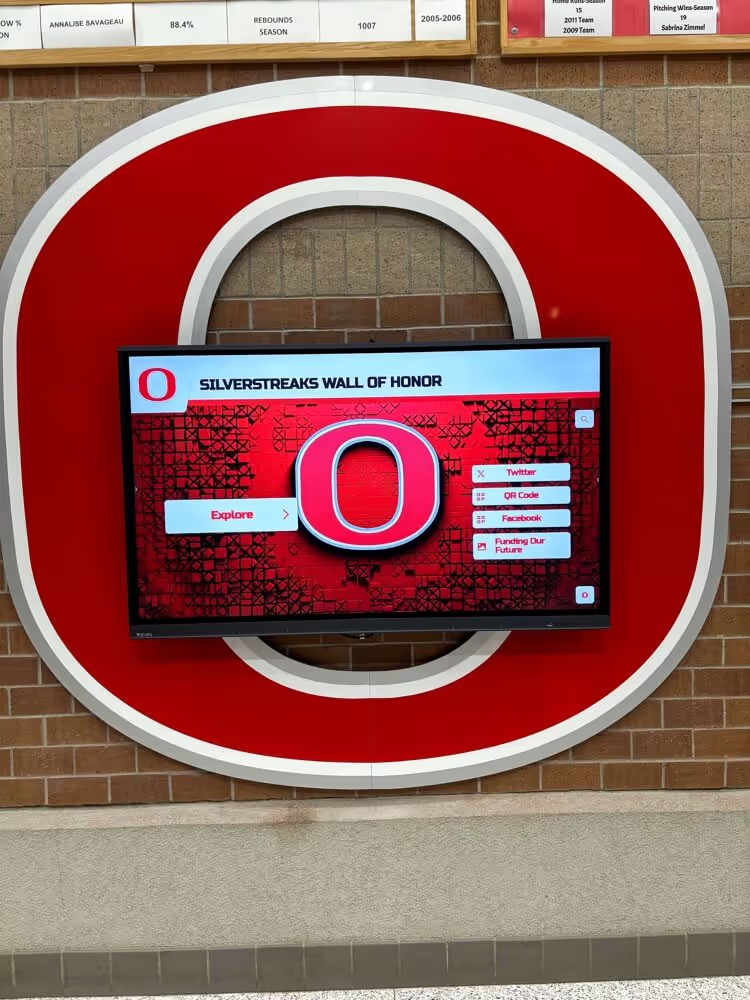
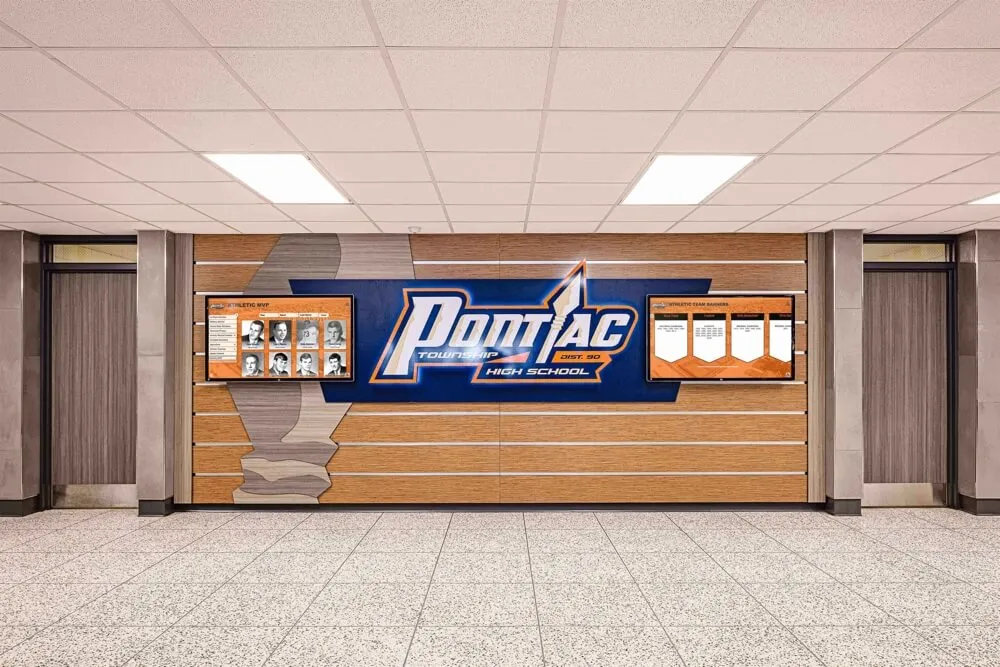
Hallway installations create natural exploration opportunities as participants pass displays during daily activities, practices, and competitions
Interactive Exploration Features Touchscreen capabilities transform passive viewing into active discovery—search functionality finding specific veterans quickly, advanced filtering by sport, era, achievement type, or category, related content connections linking teammates or contemporaries, social sharing enabling veterans to share recognition with networks, and featured rotations highlighting different oldtimers periodically.
Organizations implementing interactive athletic displays report average session durations of 8-12 minutes as users explore oldtimers content, compared to 15-30 seconds typically spent reading static plaques.
Analytics and Engagement Insights Digital platforms provide data impossible with physical walls—most-viewed oldtimers profiles indicating community interest, search patterns revealing what visitors seek, geographic data showing web access locations, peak usage times informing content strategy, and engagement duration indicating effective storytelling.
These insights guide ongoing content improvement while demonstrating recognition program value to organizational leadership and stakeholders.
Planning and Implementing Oldtimers Wall Recognition
Successful digital oldtimers recognition requires systematic planning addressing content strategy, selection criteria, technical implementation, and ongoing management.
Defining Recognition Criteria and Categories
Clear standards ensure consistent, credible oldtimers recognition:
Eligibility Requirements Organizations should establish transparent criteria determining oldtimers status—minimum years of participation or service (commonly 10-20+ years), time since retirement or separation (often 5-10+ years), achievement thresholds for competitive athletes, contribution standards for volunteers and officials, and character requirements reflecting organizational values.
Published criteria prevent perception of favoritism while providing objective standards guiding selection processes and explaining recognition decisions to communities.
Recognition Categories Comprehensive programs accommodate diverse oldtimers types—competitive athlete veterans from different sport programs, volunteer coaches and instructors across activity areas, officials and referees serving leagues for decades, administrative leaders and board members guiding organizations, support volunteers maintaining facilities and coordinating logistics, and founding members who established programs.
Multiple categories ensure recognition celebrates varied contribution types rather than exclusively honoring high-profile competitive achievements while overlooking essential volunteer service enabling programs to function.
Selection Processes Formal procedures maintain recognition credibility—nomination systems enabling community suggestions, selection committees representing diverse perspectives, documented voting or approval processes, regular induction cycles creating predictable timelines, and appeals or reconsideration provisions addressing concerns.
Systematic processes build confidence that oldtimers recognition represents community consensus rather than arbitrary individual decisions lacking broader support or legitimacy.
Similar approaches appear in athletic hall of fame programs that maintain credibility through transparent selection processes and clear standards.

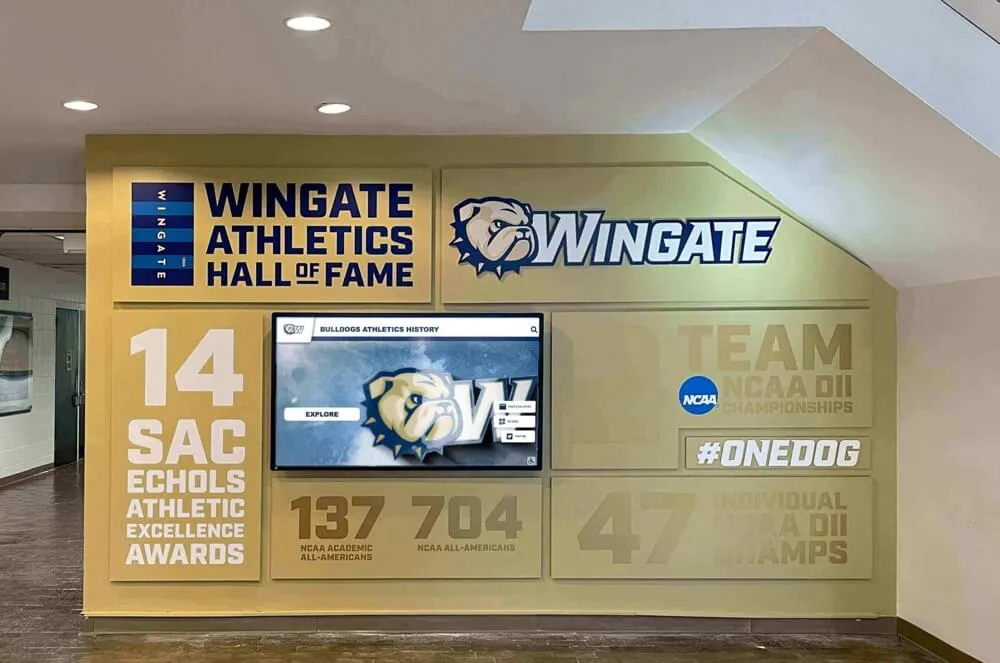
Many organizations integrate digital displays with existing traditional recognition, preserving historical plaques while adding modern capabilities
Content Collection and Historical Research
Comprehensive oldtimers recognition requires gathering substantial historical information:
Identifying Potential Honorees Systematic discovery ensures no worthy oldtimers are overlooked—reviewing historical records and participation rosters, interviewing long-tenured members with institutional knowledge, examining old newspapers and media coverage, researching award recipients and achievement records, consulting with families of deceased veterans, and soliciting community nominations through open calls.
Thorough research particularly benefits organizations with long histories where earliest contributors lack documentation in modern systems or living memory.
Gathering Biographical Information Complete profiles require collecting diverse information—basic biographical details (birth dates, education, careers), competitive or service histories with dates and roles, achievement documentation and statistical records, personal anecdotes and memorable stories, family connections and multi-generational participation, and post-participation contributions to organizations.
Standardized questionnaires simplify information gathering while ensuring consistency across oldtimers profiles regardless of who collects specific content.
Sourcing Historical Photos and Media Visual documentation brings oldtimers recognition to life—digitizing photos from personal and organizational archives, scanning historical yearbooks and publications, obtaining permissions for copyrighted images, conducting photo restoration for deteriorated materials, and coordinating professional photography for contemporary recognition events.
Many organizations engage volunteers or students in historical photo projects, building content libraries while creating meaningful community participation opportunities around heritage preservation.
Organizations implementing historical recognition programs emphasize starting content collection early since gathering complete historical materials requires significant time, particularly when reaching out to veterans or families requiring multiple contact attempts.
Technical Implementation Considerations
Hardware and software decisions determine long-term functionality and satisfaction:
Display Hardware Selection Oldtimers recognition implementations typically use 43-75 inch commercial-grade displays suitable for continuous operation, touchscreen capabilities enabling interactive exploration, commercial durability exceeding consumer televisions, flexible mounting options for various locations, and network connectivity for content updates and analytics.
Schools and clubs implementing interactive touchscreen displays should prioritize commercial equipment designed for public spaces rather than residential televisions lacking necessary longevity and support for continuous operation.
Software Platform Requirements Quality oldtimers recognition software provides intuitive content management for non-technical users, unlimited profile capacity and media storage, flexible categorization and organizational structures, responsive web access extending recognition online, robust search and filtering functionality, analytics tracking engagement and usage, and comprehensive technical support during implementation and ongoing operation.
Solutions like Rocket Alumni Solutions offer purpose-built platforms designed specifically for athletic and institutional recognition rather than generic digital signage systems requiring extensive customization.
Strategic Placement Location dramatically impacts oldtimers recognition visibility and engagement—facility entrances ensuring immediate visitor awareness, lobbies and common areas with natural waiting and gathering, hallways with consistent daily traffic from participants, cafeterias or social spaces encouraging exploration, and near competition spaces connecting historical context to current activities.
Multiple displays distributed across facilities create discovery opportunities while serving different audiences—comprehensive interactive systems in main lobbies, supplementary displays in specific sport or activity areas, and web-accessible versions reaching remote community members.
Learn about effective placement strategies in digital athletic recognition implementation that maximize visibility and engagement.
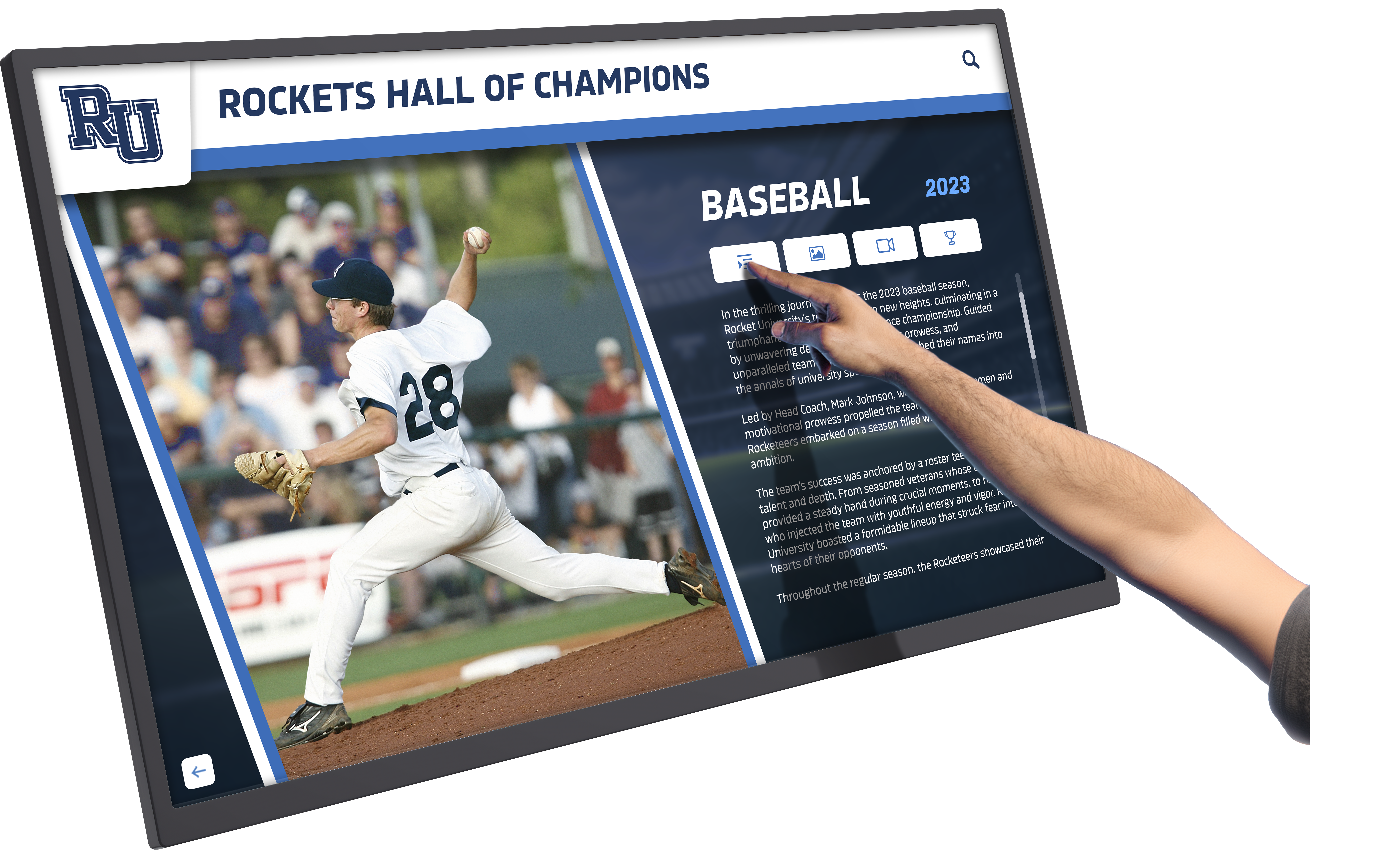
Intuitive touchscreen interfaces enable visitors of all ages to explore oldtimers recognition independently without staff assistance
Content Strategy for Engaging Oldtimers Recognition
Technology provides frameworks, but compelling content creates meaningful recognition resonating with communities.
Writing Effective Oldtimers Profiles
Strong biographical narratives balance factual documentation with engaging storytelling:
Profile Structure and Components Comprehensive oldtimers profiles include opening summary paragraphs capturing key achievements and contributions, detailed chronological histories of participation or service, specific accomplishments with appropriate context, personal background providing humanizing details, quotes from veterans themselves when available, testimonials from contemporaries or family members, connections to current programs and participants, and legacy statements articulating ongoing impact.
Varied profile lengths accommodate different information availability—recent veterans allow extensive documentation, while historical figures with limited records warrant shorter profiles acknowledging scarce source materials.
Storytelling Best Practices Narrative approaches create engagement beyond resume-style listings—leading with compelling hooks capturing attention, using specific anecdotes illustrating character and contributions, balancing achievement documentation with personal elements, explaining historical context for younger audiences, connecting past accomplishments to present programs, and including human interest details creating emotional resonance.
Stories emphasizing challenges overcome, defining moments, and relationships with others prove particularly engaging while demonstrating that honored oldtimers were real individuals with complex lives extending beyond headline achievements.
Era-Appropriate Context Oldtimers profiles benefit from explaining historical circumstances—competition formats and rules during specific eras, facility conditions and resource limitations veterans faced, social contexts influencing participation patterns, technological differences affecting training and competition, and organizational development stages establishing program foundations.
This contextual information helps contemporary audiences appreciate historical achievements appropriately rather than applying current standards to different eras when conditions, resources, and expectations differed substantially.
Multimedia Content Integration
Rich media dramatically enhances oldtimers recognition engagement:
Historical Photography Multiple photos per profile create comprehensive visual documentation—action shots showing athletic competition or activity, team photos providing social context and relationships, facility images documenting environmental conditions, candid shots revealing personality and character, contemporary photos from recognition events, and progression sequences showing veterans across life stages.
Photo captions providing context, identifying teammates, and explaining circumstances enhance understanding while preserving information that might otherwise be lost as collective memory fades.
Video Interviews and Oral Histories Recorded interviews preserve irreplaceable firsthand perspectives—veterans sharing personal memories and experiences, advice and wisdom for younger generations, historical information unavailable in written records, emotional reflections on meaningful moments, and personality and communication styles impossible to capture through text alone.
Organizations implementing video programs often engage students or volunteers in interview projects, creating intergenerational exchanges valuable to both oldtimers sharing stories and younger participants developing appreciation for organizational heritage.
Learn about comprehensive multimedia approaches in digital recognition storytelling that create engaging experiences.
Historical Documents and Artifacts Digital platforms accommodate diverse historical materials—newspaper clippings and media coverage, achievement certificates and awards, statistical records and scorebooks, historical program materials and publications, personal correspondence and documents, and photos of physical artifacts and memorabilia.
This documentary evidence provides objective verification supporting biographical narratives while preserving materials that might deteriorate or disappear if not digitized and systematically maintained.
Creating Connections Across Generations
Effective oldtimers recognition bridges past and present:
Linking Veterans to Current Programs Content should explicitly connect historical figures to contemporary contexts—showing how veterans’ contributions enabled current opportunities, identifying program traditions and values passed through generations, highlighting records or standards established by oldtimers that current participants pursue, and documenting ongoing engagement through mentorship or support.
These explicit connections help current participants understand their place in ongoing organizational narratives rather than viewing history as disconnected from present experiences.
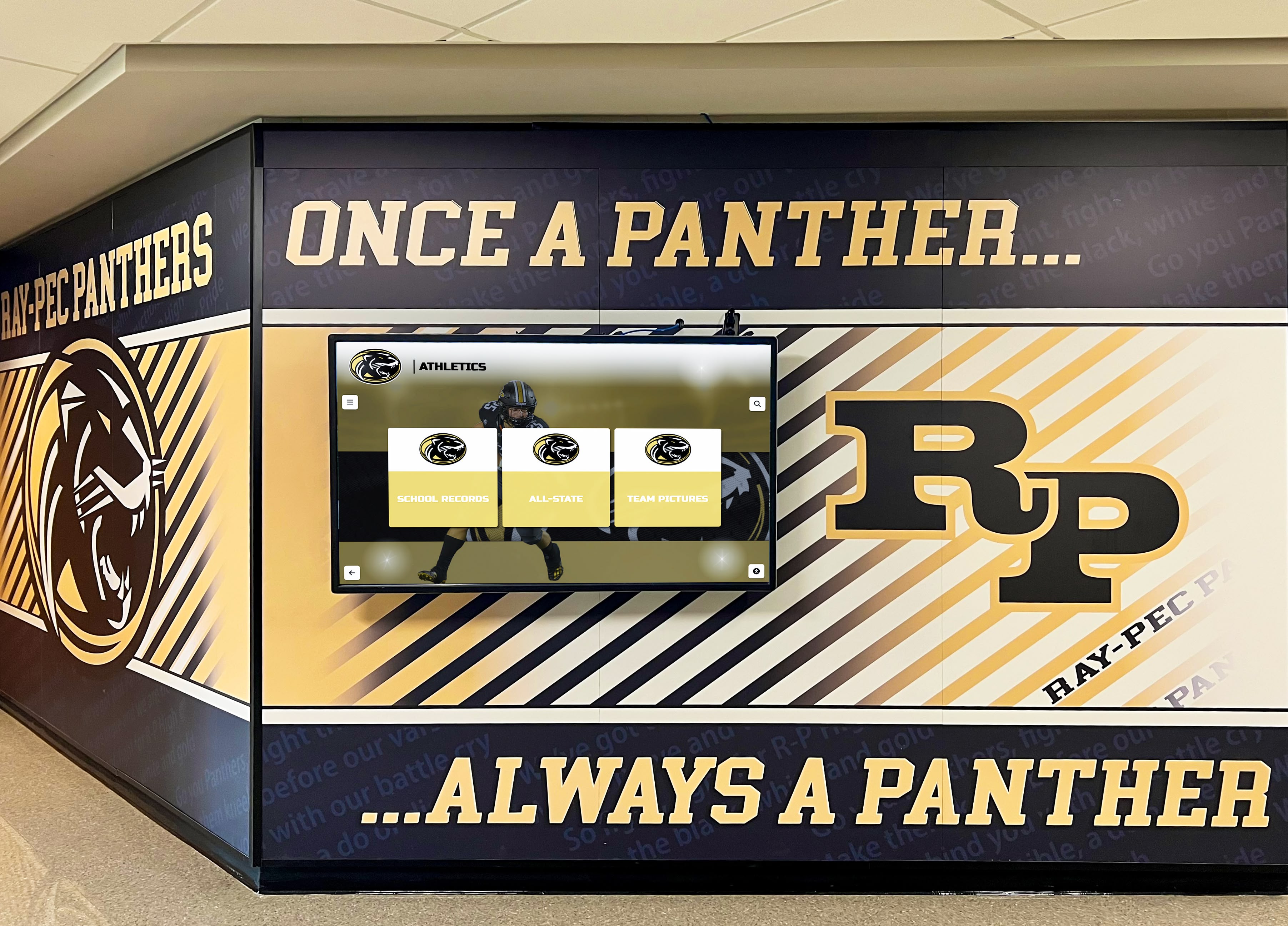
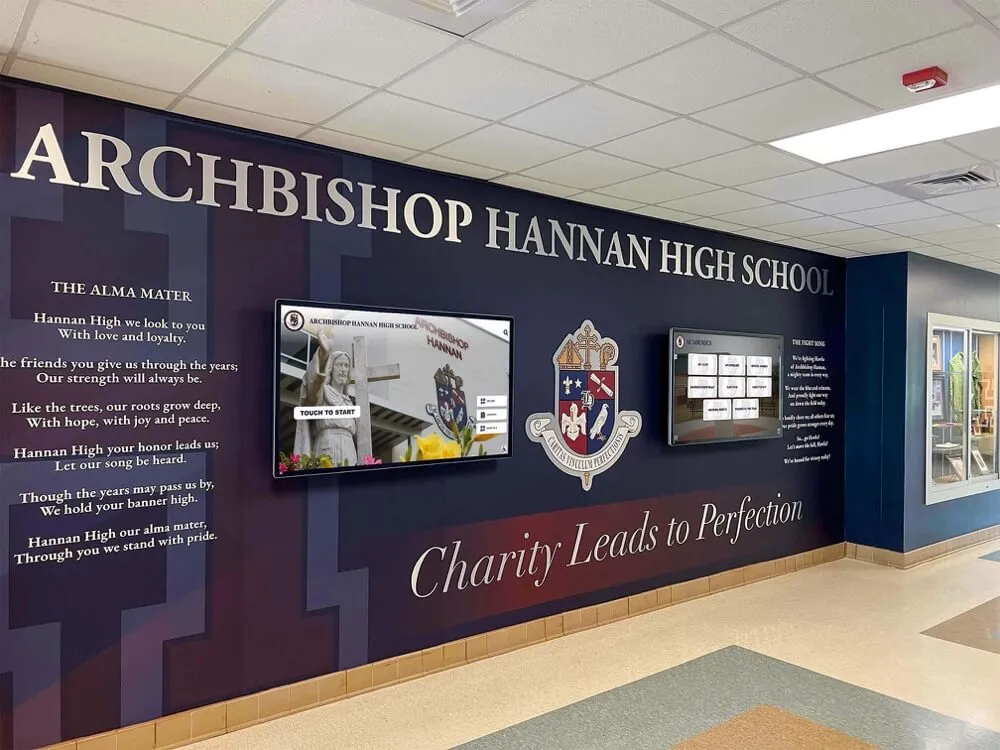
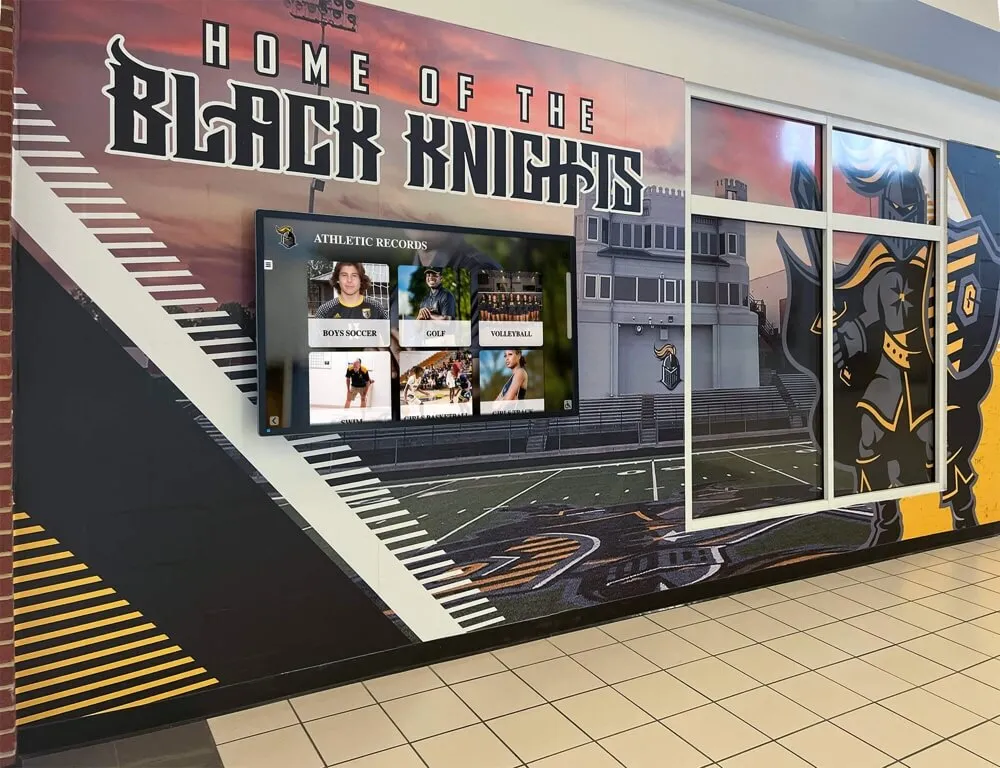
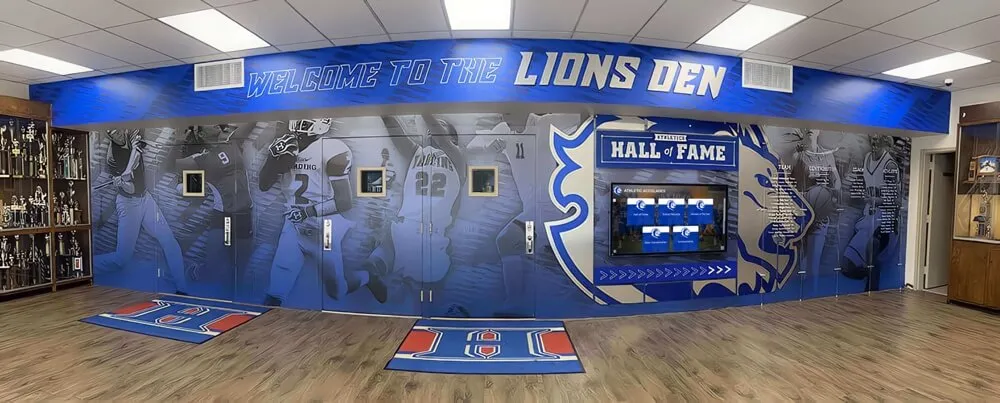
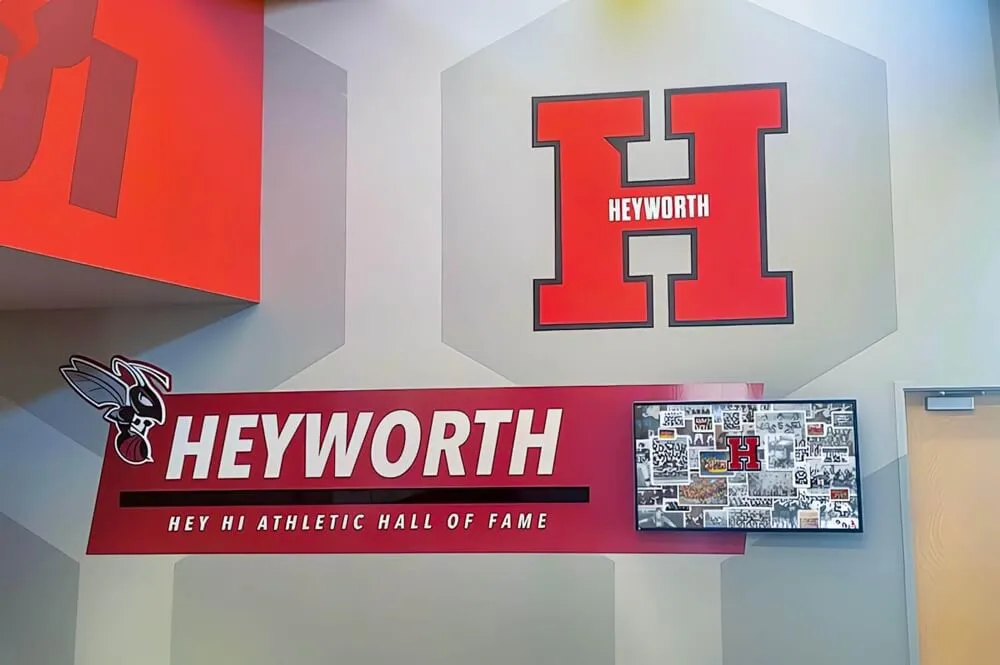
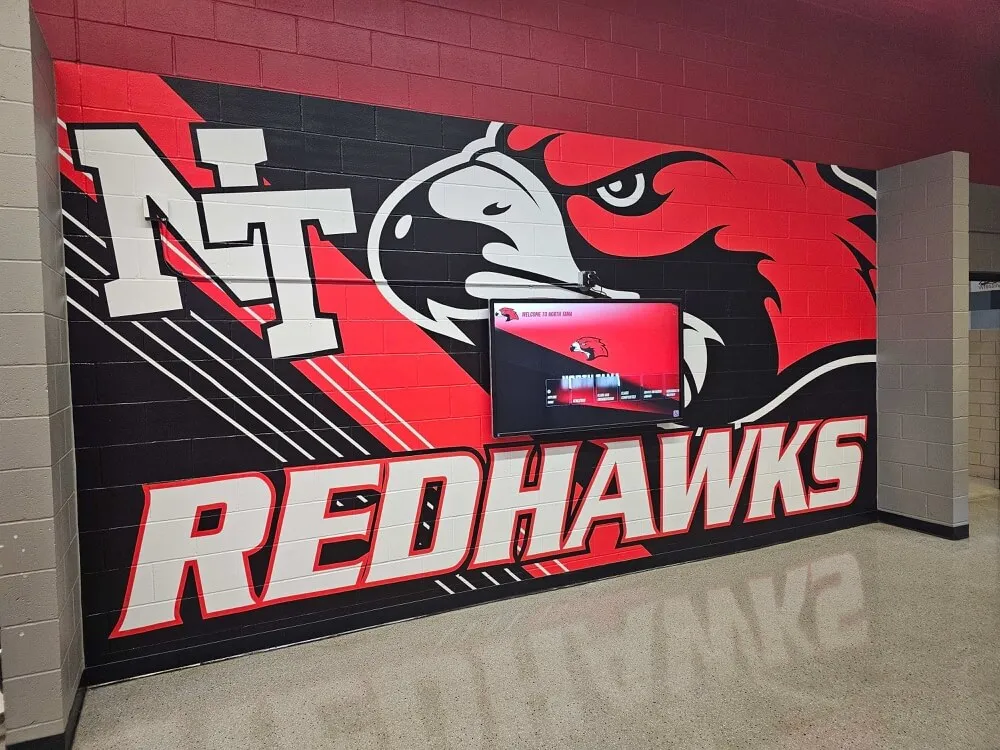
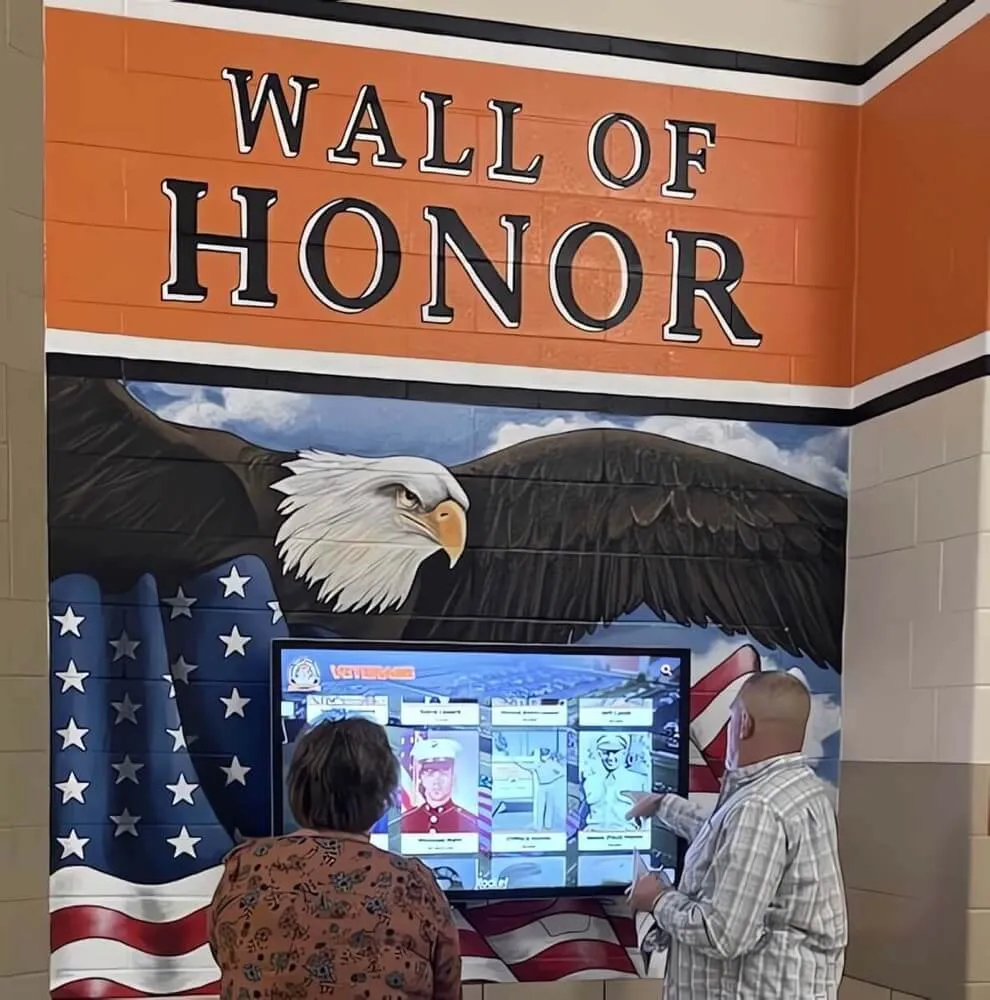
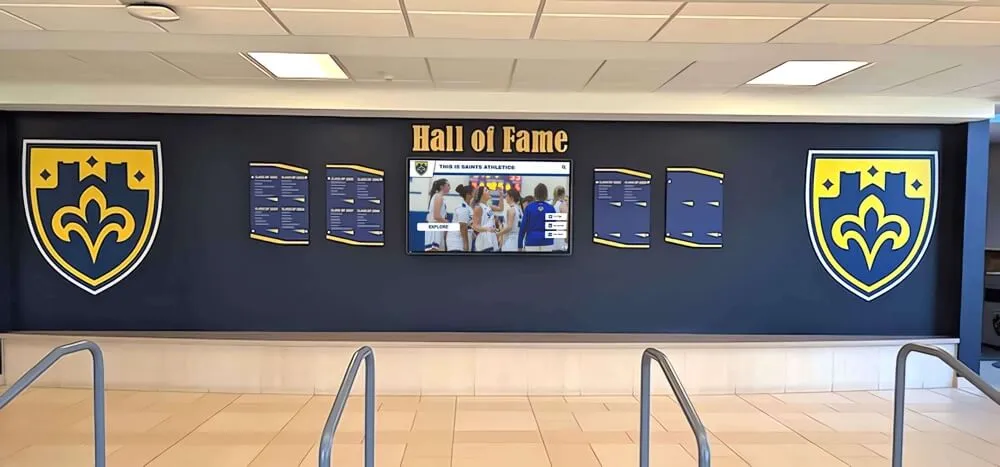
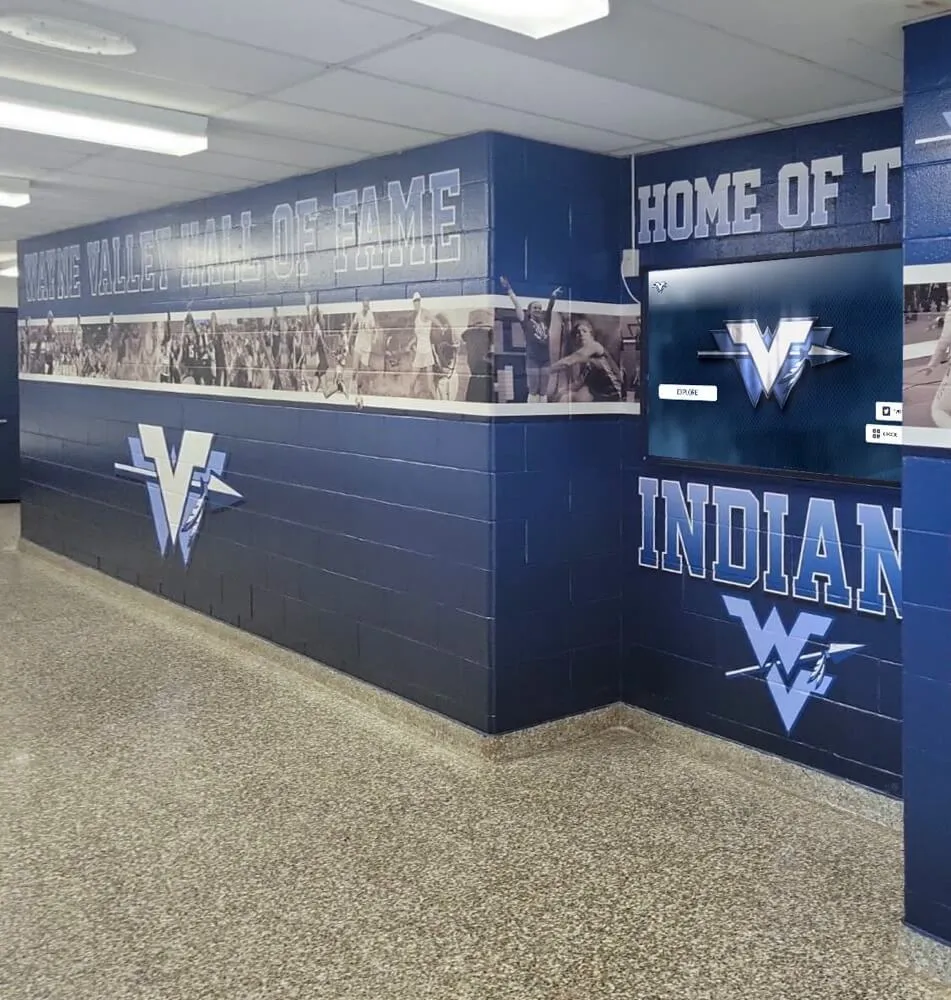
Integrated installations combine traditional murals and branding with modern digital recognition, creating comprehensive celebration environments
Multi-Generational Family Recognition Highlighting family connections across eras creates powerful engagement—documenting parents, children, and grandchildren all participating, celebrating families providing generations of volunteer service, recognizing athletic dynasties spanning decades, and creating family tree visualizations showing organizational connections.
Organizations implementing multi-generational recognition programs report that family-focused content generates particularly strong emotional responses and community sharing as individuals discover their family connections to organizational heritage.
Alumni Engagement and Mentorship Opportunities Oldtimers recognition creates foundations for ongoing engagement—veteran athlete mentorship programs supporting current participants, speaking opportunities bringing veterans back to share wisdom, volunteer roles leveraging historical knowledge, fundraising appeals showing continued connection, and reunion events celebrating specific eras or teams.
Recognition visibility motivates veterans to maintain engagement since acknowledgment communicates that organizations value their contributions and want continued relationships rather than viewing veterans as no longer relevant after active participation concludes.
Managing Oldtimers Recognition Programs Long-Term
Sustainable programs require ongoing administration and community engagement:
Establishing Update Workflows
Systematic processes ensure oldtimers recognition remains current:
Annual Induction Cycles Regular schedules create predictable recognition patterns—annual induction ceremonies honoring new oldtimers classes, nomination periods soliciting community suggestions, selection committee meetings reviewing candidates, announcement events celebrating honorees, and profile publication coordinating with ceremonies.
Established cycles prevent ad hoc recognition decisions while building community anticipation and creating regular opportunities for collective celebration and organizational reinforcement.
Ongoing Content Enrichment Initial profiles provide foundations for continuous improvement—adding newly discovered historical photos, incorporating video interviews recorded at reunion events, updating biographical information as veterans’ lives progress, correcting errors or expanding sparse profiles, and featuring periodic spotlights highlighting specific oldtimers.
Organizations should view oldtimers recognition as living systems continuously growing rather than static monuments frozen at implementation launch.
Stakeholder Feedback Integration Regular community input ensures recognition remains relevant—surveying veterans about satisfaction and suggestions, soliciting current participant perspectives on meaningful historical connections, gathering family input about honored members, requesting suggestions for additional oldtimers deserving recognition, and monitoring analytics indicating popular content and engagement patterns.
Responsive programs incorporating feedback maintain community ownership and support while adapting to changing interests and priorities over time.
Measuring Program Success
Assessment demonstrates oldtimers recognition value while guiding improvement:
Engagement Metrics Digital platforms enable tracking usage and interaction—display touchscreen sessions and duration, web platform visits and geographic distribution, most-viewed profiles indicating interest, search patterns revealing community priorities, video view counts showing multimedia engagement, and seasonal patterns informing content timing.
These objective measures demonstrate recognition utilization justifying investments while identifying high-performing content types worthy of expansion.
Stakeholder Satisfaction Qualitative feedback complements quantitative analytics—veteran satisfaction with recognition quality and visibility, current participant awareness and appreciation of heritage, family member responses to how loved ones are honored, community member feedback about organizational pride, and volunteer willingness to support recognition programs.
Organizations implementing comprehensive recognition assessment use combined quantitative and qualitative measures providing complete program evaluation.
Operational Efficiency Administrative metrics indicate sustainability—time required for adding new oldtimers profiles, cost per profile compared to traditional plaques, staff satisfaction with content management platforms, frequency of content updates and enrichment, and volunteer participation in content development.
Efficient programs demonstrating reasonable administrative burden and costs ensure long-term viability rather than becoming unsustainable obligations organizations eventually abandon.
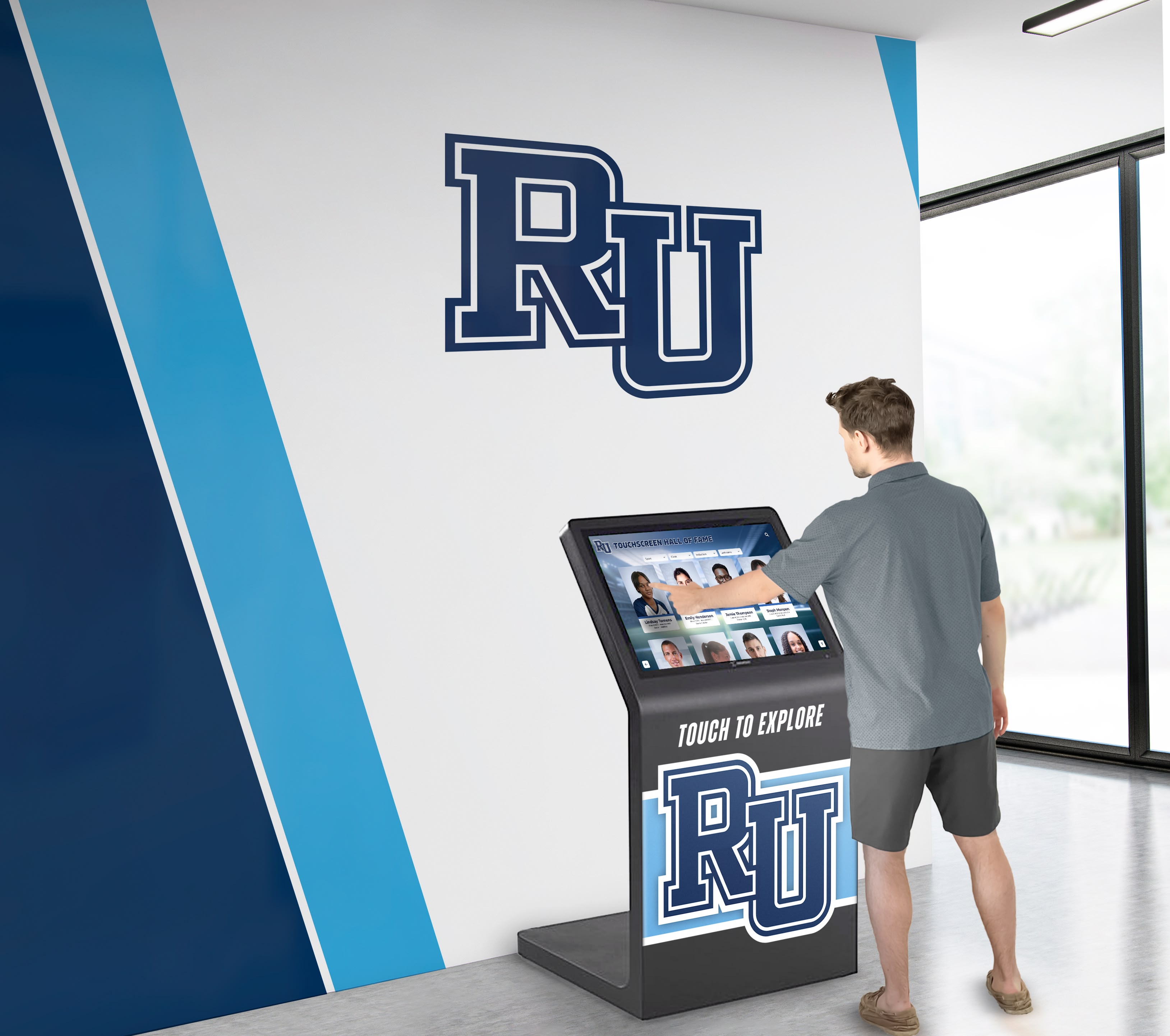
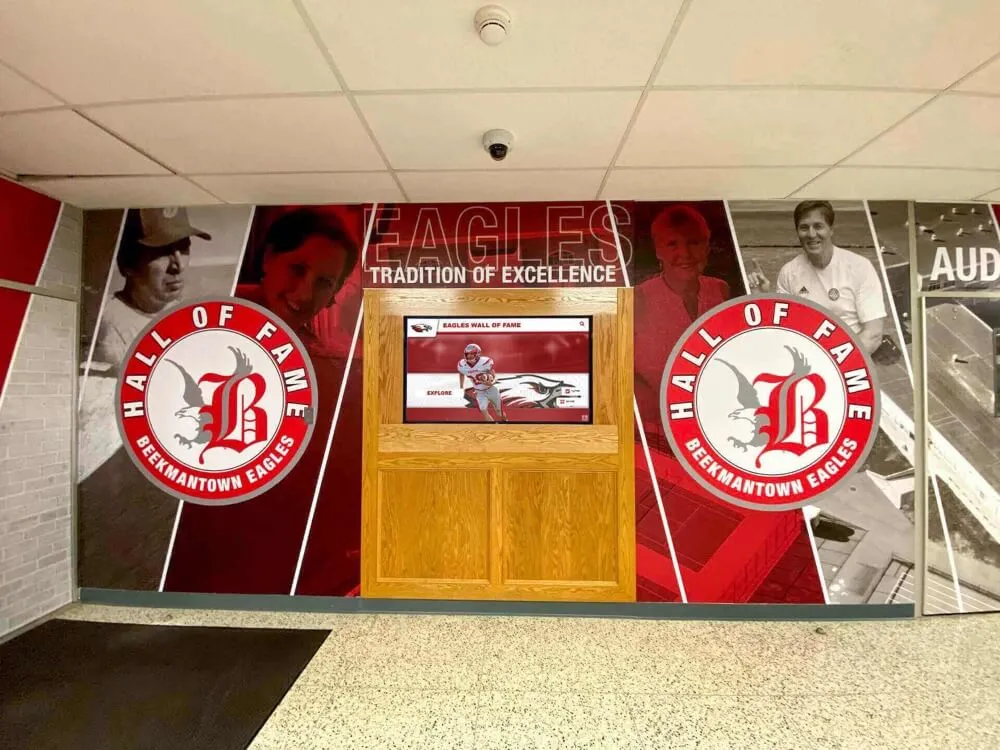
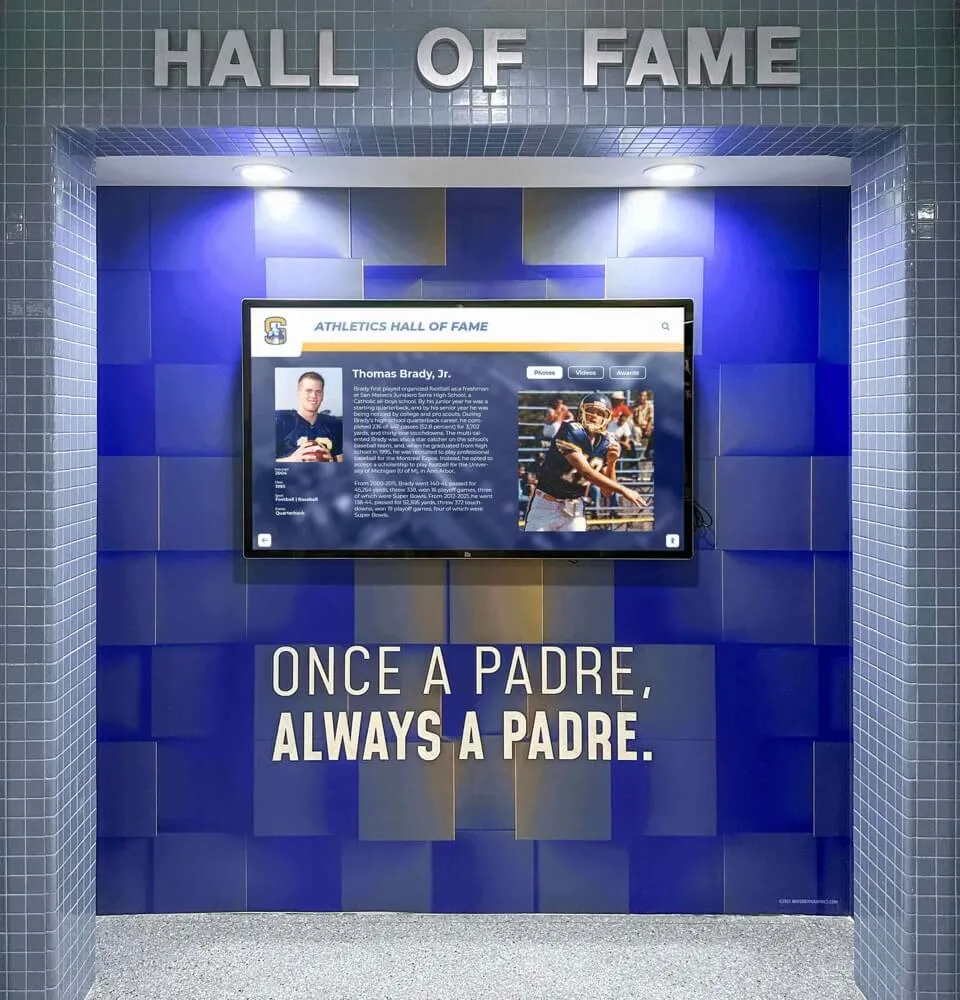
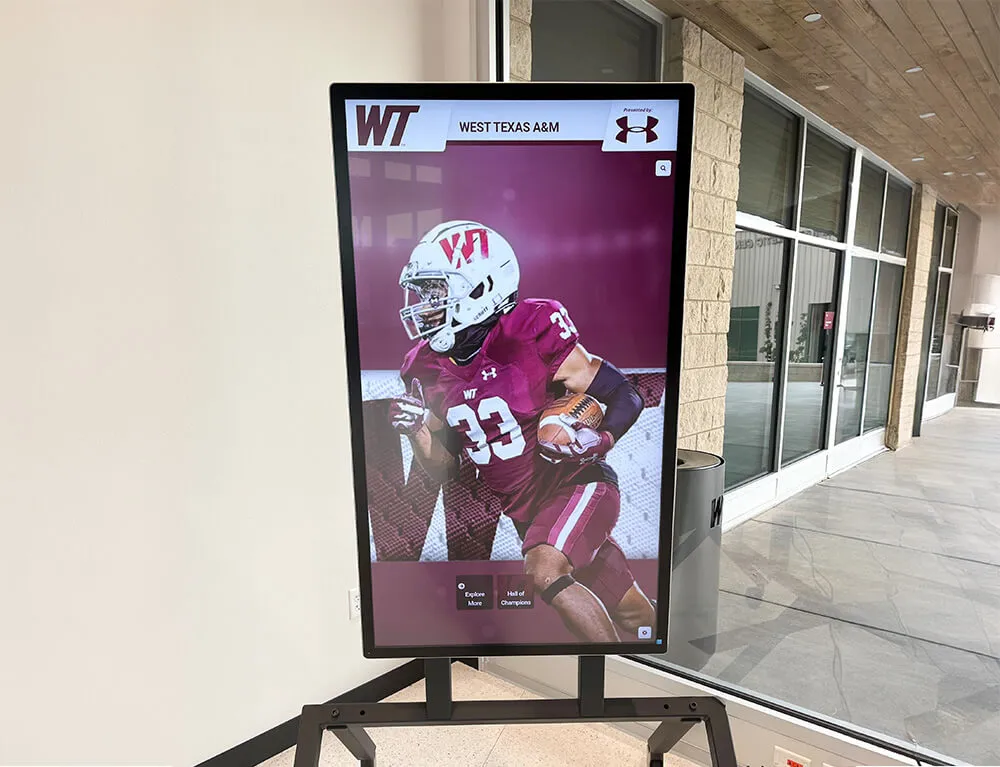
Professional kiosk installations create distinctive recognition landmarks that become institutional identity features and gathering points
Special Applications Across Different Organization Types
Oldtimers recognition adapts to varied athletic contexts:
Youth Sports Organizations and Community Clubs
Local programs serve unique recognition needs:
Volunteer Coach and Official Recognition Youth sports organizations particularly value oldtimers programs honoring volunteers—coaches dedicating decades to player development, officials ensuring fair competition across generations, board members guiding organizations through challenges, facility managers maintaining fields and equipment, and fundraising volunteers supporting program sustainability.
These volunteers rarely receive competitive athlete glory yet provide essential service enabling programs to function. Comprehensive oldtimers recognition ensures volunteer contributions receive equal celebration alongside competitive achievements.
According to research on youth sports organizations, many community athletic associations were specifically founded to honor both competitive athletes and volunteer contributors while raising scholarship funds supporting youth participation.
Multi-Sport Coverage Community organizations typically oversee multiple sports and activities requiring inclusive recognition—baseball, softball, and T-ball programs, soccer and lacrosse leagues, basketball and volleyball, football and cheerleading, swimming and track and field, and special activities like opening day ceremonies and all-star games.
Digital systems accommodate comprehensive coverage across all programs without physical space constraints limiting recognition to major sports while excluding smaller programs.
Scholarship and Giving Programs Many oldtimers associations fund college scholarships—documenting scholarship recipients and their achievements, recognizing major donors supporting scholarship funds, celebrating fundraising milestones and participation, and connecting scholarship programs to oldtimers heritage and values.
This financial connection demonstrates that oldtimers recognition extends beyond nostalgia to provide tangible contemporary benefits through educational support for younger generations.
High School and Collegiate Athletic Programs
Educational institution oldtimers recognition serves academic contexts:
Retired Number and Special Honors Schools often integrate oldtimers recognition with special distinctions—retired jersey numbers honoring exceptional athletes, championship team celebrations acknowledging historic successes, coaching milestones recognizing sustained excellence, and facility dedications connecting physical spaces to honored individuals.
Digital platforms enable combining these special honors with comprehensive oldtimers documentation in unified recognition systems accessible through common interfaces.
Alumni Engagement and Recruitment Educational oldtimers recognition supports strategic priorities—inspiring current student-athletes through historical examples, showcasing athletic program heritage during recruitment visits, engaging alumni through meaningful acknowledgment and connection, and building institutional pride across entire school communities.
Schools implementing alumni athletic recognition often integrate oldtimers walls with broader athletic displays celebrating current teams alongside historical achievements.
Academic Achievement Integration Comprehensive school recognition combines athletic oldtimers with academic honors—celebrating scholar-athletes excelling academically and athletically, recognizing all-academic team selections, documenting post-graduation success in careers and education, and connecting athletic values to broader educational missions.
This integration demonstrates that oldtimers recognition complements rather than competes with academic priorities while showcasing complete student-athlete development.
Professional and Club Athletic Facilities
Adult competitive programs emphasize different recognition aspects:
Championship Teams and Tournament Success Competitive clubs celebrate collective achievements—league championship teams across seasons, tournament victories and advancement, championship game participants and all-tournament selections, and program milestone achievements like anniversary seasons.
Organizations implementing championship recognition programs combine team celebrations with individual oldtimers honors in comprehensive recognition systems.
Member Longevity and Participation Milestones Adult programs value sustained participation—members completing 10, 20, or 30+ years in programs, individuals achieving participation milestones like 500 games played, perfect attendance recognition across seasons, and family participation acknowledging multi-generational involvement.
These longevity recognitions celebrate commitment and community building rather than exclusively competitive excellence.
Facility Heritage and Historical Significance Athletic facilities themselves carry historical significance—documenting facility construction and evolution over decades, recognizing founding members who established programs, celebrating major renovations and improvements, and preserving institutional memory as facilities and leadership change.
Oldtimers recognition ensures this organizational heritage receives systematic preservation rather than residing exclusively in fading memories of longest-tenured members.
Launching Oldtimers Recognition Programs
Successful implementations require strategic planning and community engagement:
Building Stakeholder Support
Gaining buy-in ensures program sustainability:
Demonstrating Recognition Value Stakeholder support requires articulating specific benefits—preserving irreplaceable institutional memory before veterans pass away, strengthening community identity and organizational pride, engaging alumni and veterans as mentors and supporters, inspiring current participants through historical examples, and creating distinctive organizational features celebrating heritage.
Concrete value propositions help leadership understand that oldtimers recognition represents strategic investment rather than nostalgic luxury competing with other priorities.
Engaging Veterans in Planning Including honored oldtimers in planning builds authentic programs—soliciting input on recognition criteria and categories, gathering suggestions about important historical periods and figures, requesting biographical information and historical materials, involving veterans in selection committees and governance, and creating advisory roles ensuring ongoing veteran voice.
This inclusive approach ensures recognition reflects community values while demonstrating respect for those being honored.
Securing Funding and Resources Oldtimers recognition requires financial investment in hardware, software, and content development. Potential funding sources include booster club or foundation support for recognition projects, sponsorships from local businesses and alumni, memorial donations honoring deceased veterans, grant opportunities for heritage preservation, and capital campaign integration with facility improvements.
Organizations implementing recognition funding strategies often combine multiple sources enabling comprehensive programs without excessive burden on any single funding stream.
Planning Launch Events
Dedicated celebrations create awareness and enthusiasm:
Inaugural Induction Ceremonies Formal launch events provide visibility—recognizing substantial inaugural oldtimers classes establishing program foundations, featuring keynote speakers from honored veterans, providing facility tours showcasing new displays, hosting receptions enabling networking and celebration, and generating media coverage building community awareness.
Significant launch investments signal institutional commitment while creating initial momentum supporting ongoing program development.
Ongoing Promotion and Communication Sustained visibility maintains awareness—regular social media features highlighting specific oldtimers, newsletter articles documenting new additions and stories, website integrations providing online access, facility signage directing visitors to displays, and event programming bringing recognition into organizational activities.
Multi-channel promotion ensures oldtimers recognition remains visible rather than launching with excitement that gradually fades as attention shifts to other priorities.
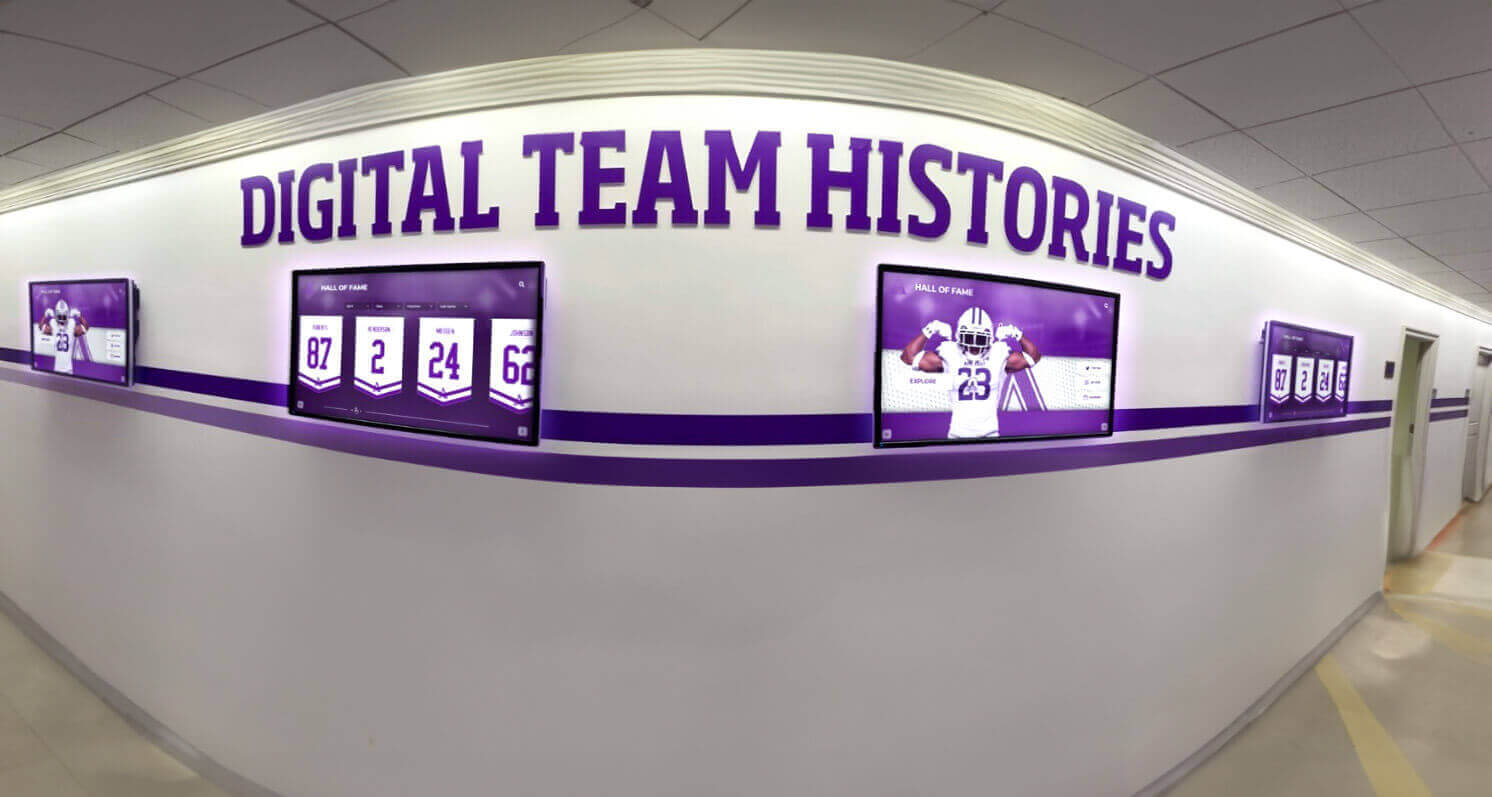
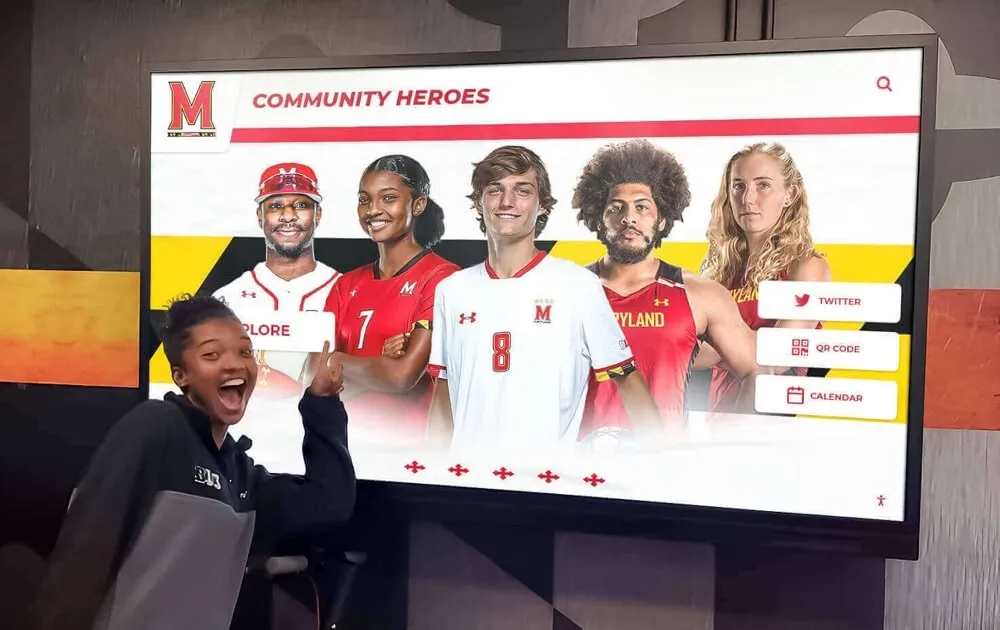
Multiple display installations enable comprehensive coverage across different sports, eras, and recognition categories throughout facilities
Conclusion: Preserving Athletic Heritage Through Modern Recognition
Oldtimers walls represent far more than nostalgic tributes to past glory—they preserve irreplaceable institutional memory, honor individuals whose contributions built current programs, inspire contemporary participants through historical examples, and strengthen organizational identity connecting generations through shared heritage and values. These functions prove essential for athletic programs and sports organizations seeking to maintain continuity, build community pride, and demonstrate appreciation for veterans whose service and achievement deserve sustained celebration extending beyond their active participation.
Traditional plaque-based oldtimers recognition served organizations adequately when veteran populations remained small and space constraints manageable. But as programs mature across decades, physical limitations, minimal storytelling capabilities, expensive maintenance requirements, and restricted accessibility undermine recognition effectiveness. These challenges leave worthy oldtimers unrecognized while failing to leverage recognition opportunities that modern technology enables.
Transform Your Oldtimers Recognition
Discover how modern digital recognition systems can help you honor veteran athletes and long-serving members with unlimited capacity, rich storytelling, and engaging exploration that preserves your athletic heritage for generations to come.
Explore Recognition SolutionsDigital oldtimers wall solutions eliminate traditional limitations while expanding recognition capabilities dramatically. Unlimited capacity accommodates comprehensive veteran celebration regardless of program size or history length. Rich multimedia integration enables biographical storytelling impossible with static plaques through photos, videos, complete narratives, and historical documentation. Cloud-based management simplifies ongoing administration enabling remote updates, template-based content creation, and distributed responsibilities. Extended web access reaches entire communities rather than only facility visitors. Interactive exploration transforms passive viewing into engaging discovery with search, filtering, and related content features. And comprehensive analytics demonstrate recognition value while guiding continuous improvement based on actual community engagement patterns.
Implementation begins with understanding your specific oldtimers population and organizational heritage—identifying veteran athletes, long-serving volunteers, and historical figures deserving recognition, gathering biographical information and historical materials, establishing selection criteria and induction processes, and planning content development and technical implementation. From these foundations, modern recognition platforms like Rocket Alumni Solutions provide turnkey systems combining hardware, software, and support enabling comprehensive oldtimers celebration without requiring extensive technical expertise or ongoing IT dependencies.
Your veterans—whether retired athletes who represented programs with distinction, volunteers who dedicated decades to youth development, founding members who established organizational foundations, or officials who ensured fair competition across generations—deserve recognition systems equal to their contributions and commitment. The time to enhance oldtimers recognition is now, before irreplaceable institutional memory disappears as veterans pass away and before physical space constraints force difficult choices about which worthy individuals receive acknowledgment versus which remain unrecognized despite deserving equal celebration.
Start today by identifying your most significant oldtimers deserving immediate recognition, evaluating modern recognition platforms capable of honoring veterans comprehensively, and building stakeholder support for recognition investments that preserve athletic heritage, strengthen community connections, and celebrate the individuals whose contributions built programs serving current and future generations.
Ready to begin? Explore comprehensive recognition approaches in athletic wall of honor programs, discover effective content strategies in historical timeline displays, or learn about successful implementations through digital hall of fame guides that inform oldtimers recognition planning.