



National Honor Society (NHS) membership represents one of the most distinguished achievements in secondary education, recognizing students who demonstrate excellence in scholarship, service, leadership, and character. Since its founding in 1921, NHS has honored millions of high school students who exemplify these four pillars, creating a legacy of academic distinction and community contribution that extends far beyond individual schools.
Yet many schools struggle to provide NHS members with the sustained, visible recognition these exceptional students deserve. Recognition often defaults to brief induction ceremonies, yearbook listings, or static bulletin boards that quickly become outdated. Meanwhile, these distinguished students continue demonstrating leadership, completing service hours, and maintaining academic excellence throughout their membership—achievements that merit ongoing celebration rather than one-time acknowledgment.
Digital recognition solutions transform how schools highlight National Honor Society students, creating year-round visibility for member achievements, interactive displays showcasing service contributions, comprehensive archives preserving NHS legacy across generations, and engagement platforms connecting current members with accomplished alumni. This guide explores evidence-based strategies for implementing NHS recognition programs that truly honor the organization’s four pillars while inspiring future inductees.
Schools implementing comprehensive NHS recognition report significant increases in junior year academic performance as students pursue membership, higher quality service project proposals from competing candidates, visible cultural shifts elevating character and leadership alongside athletic achievement, and stronger alumni connections through shared NHS identity. These outcomes justify recognition investments while creating foundations for sustained academic excellence cultures.

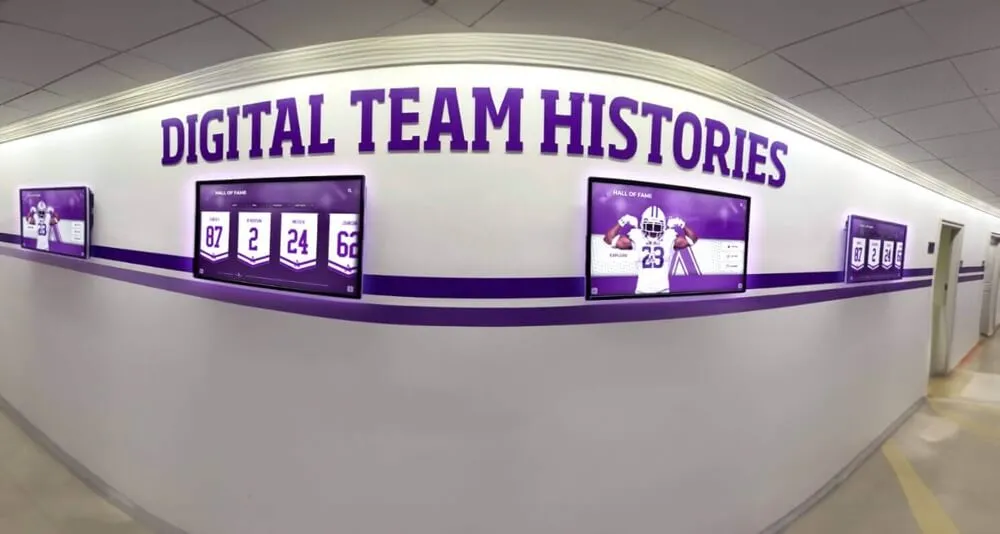
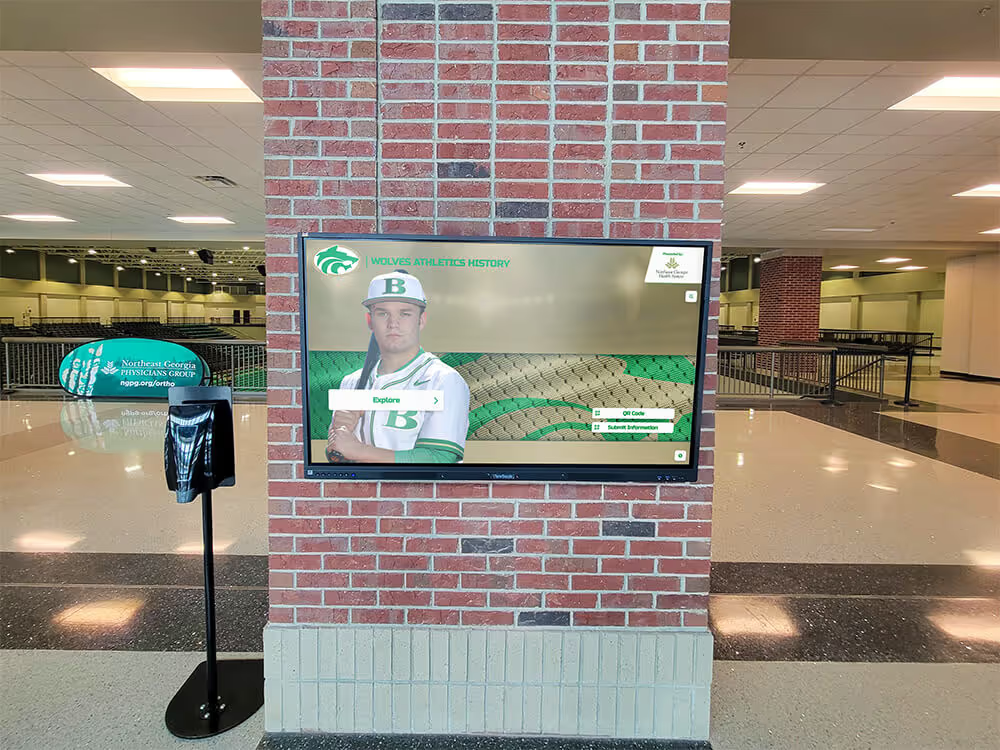
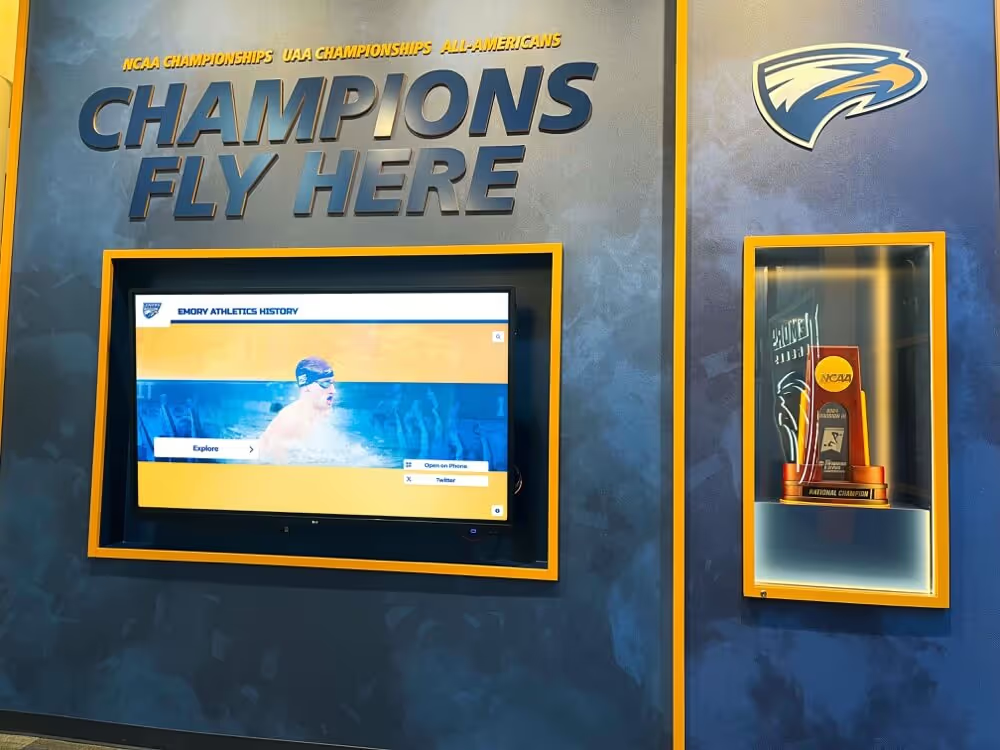
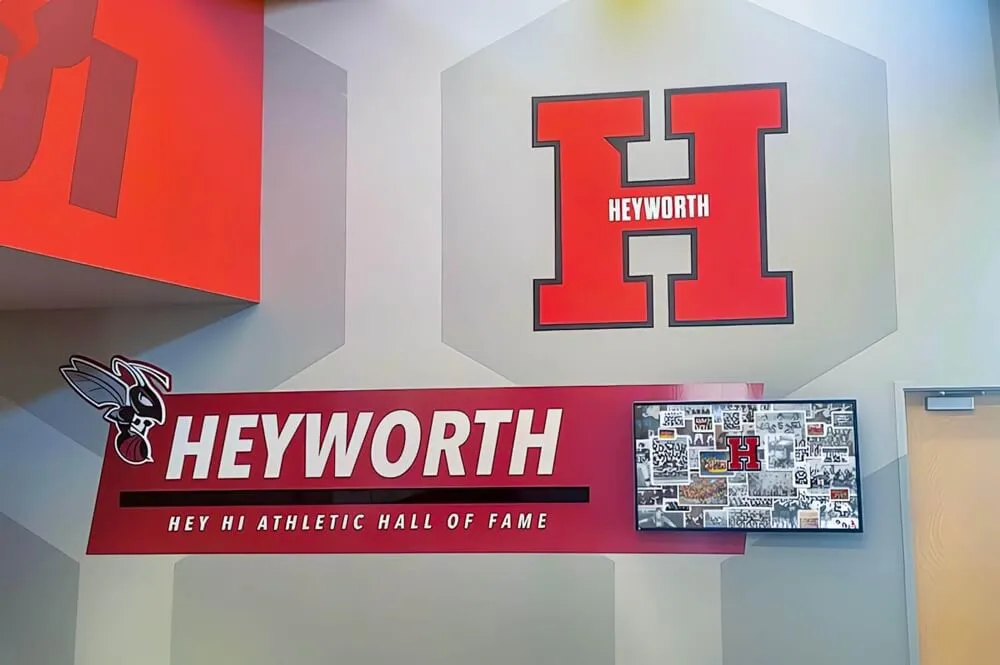
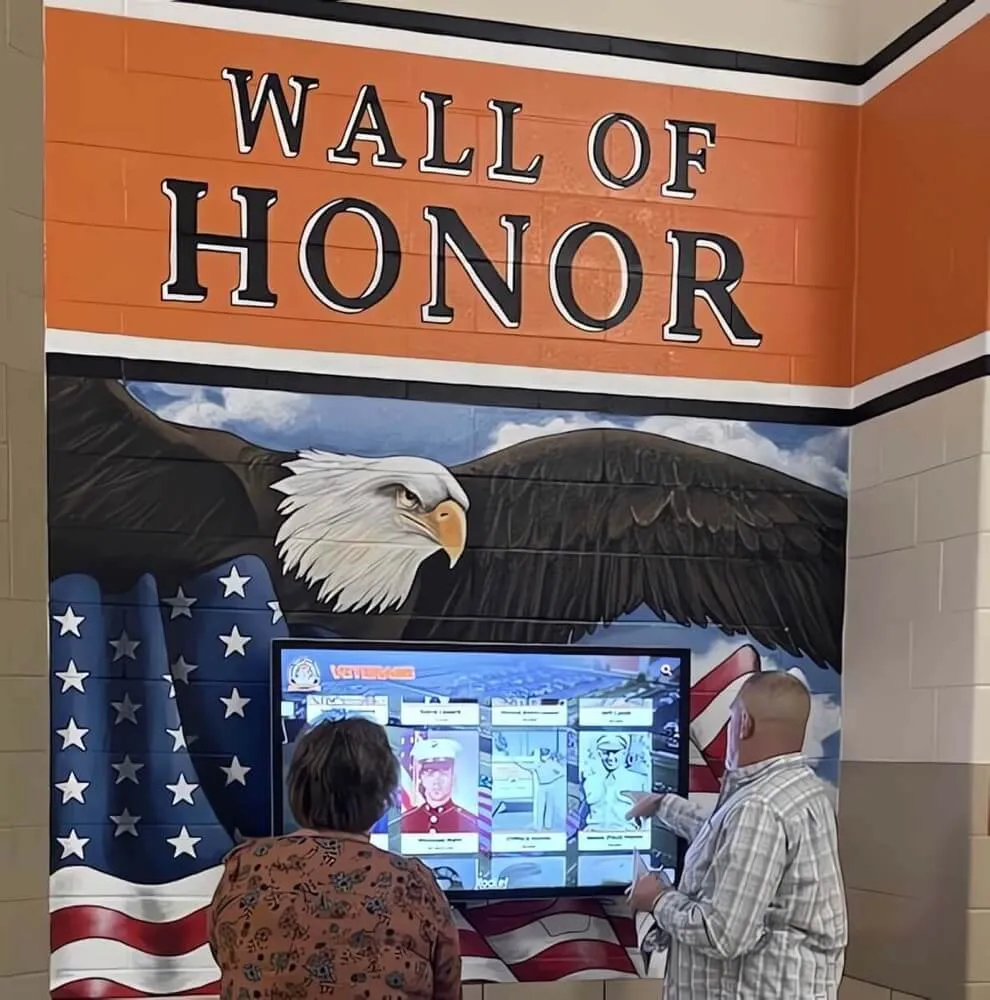
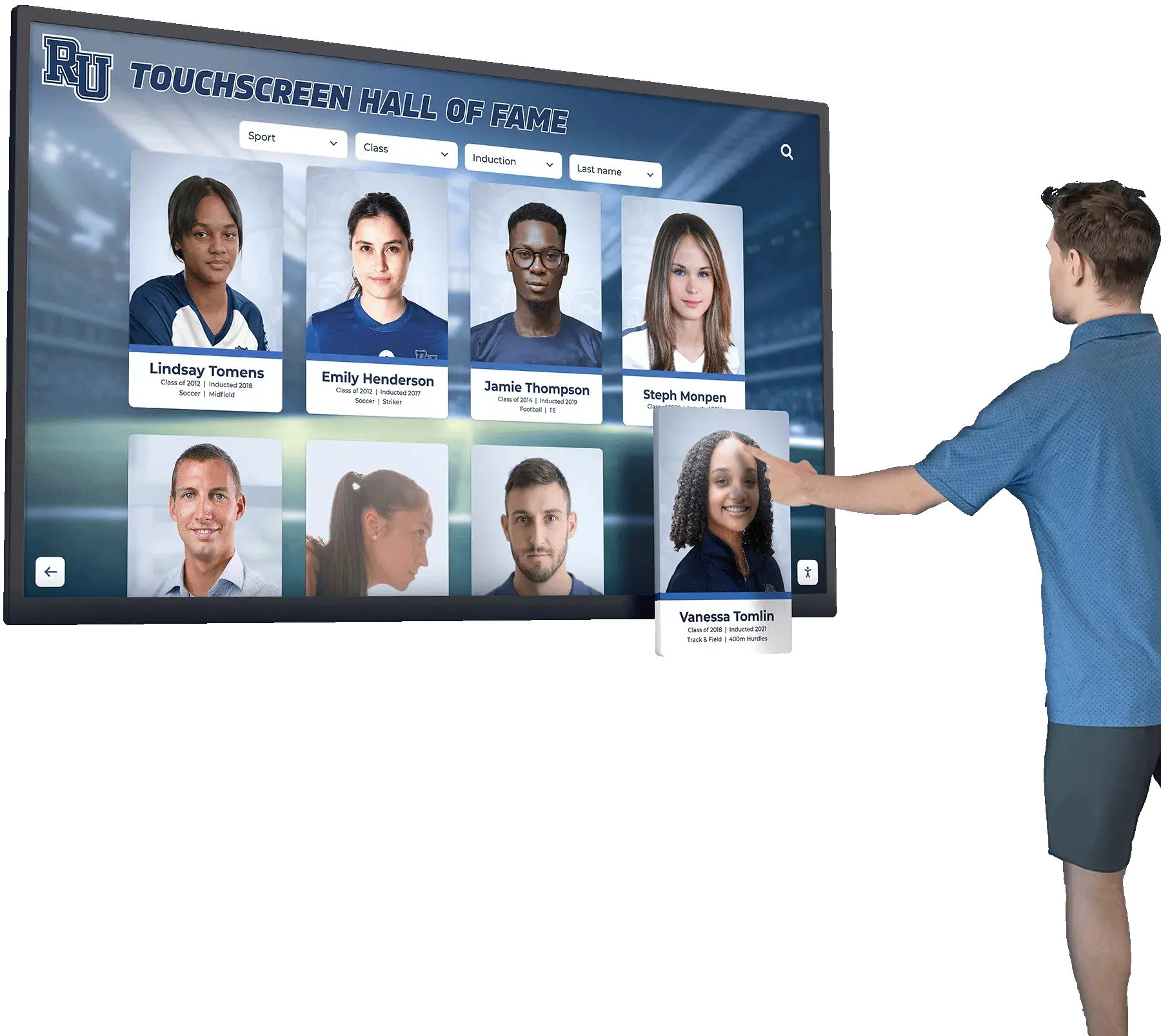
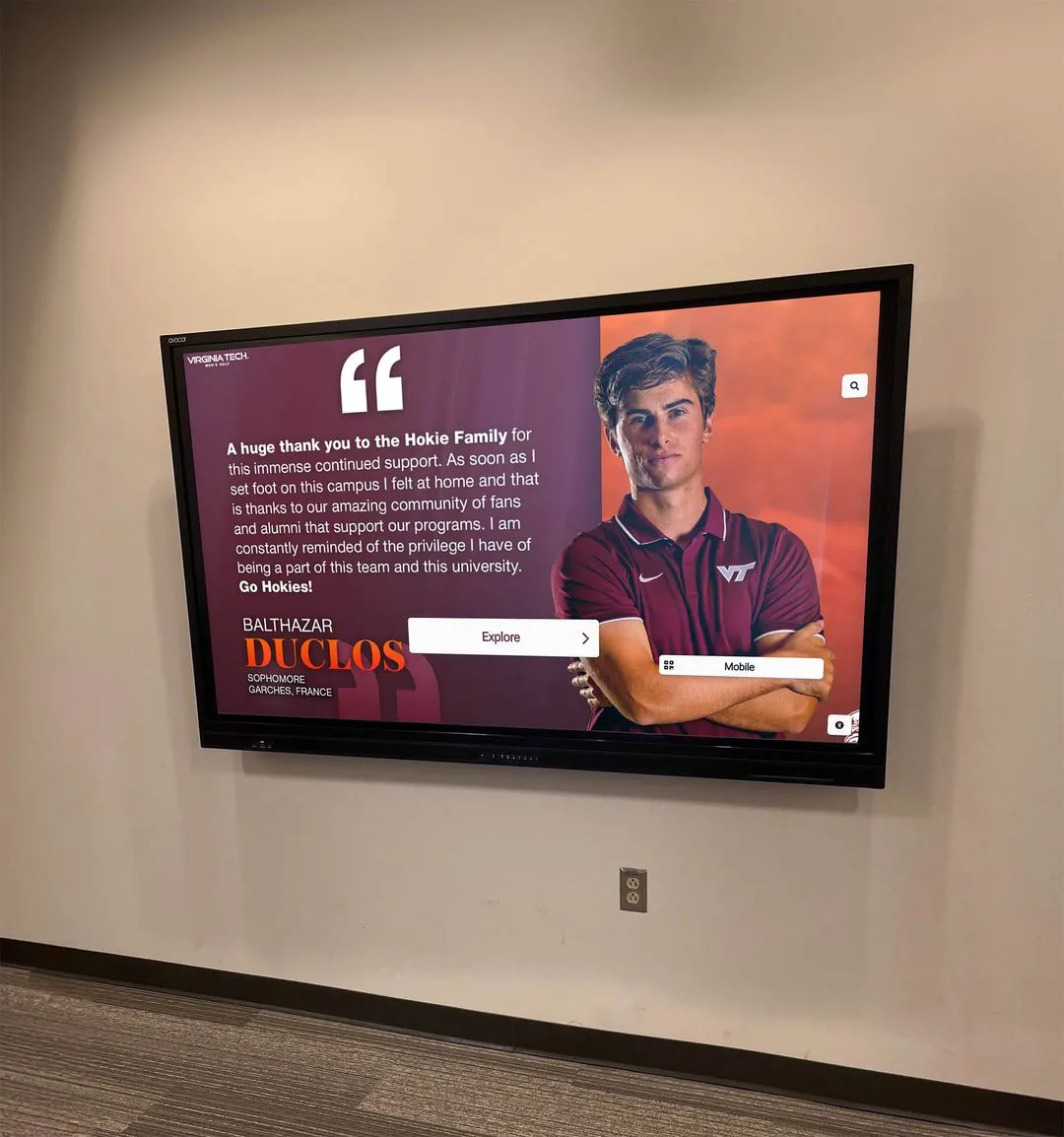
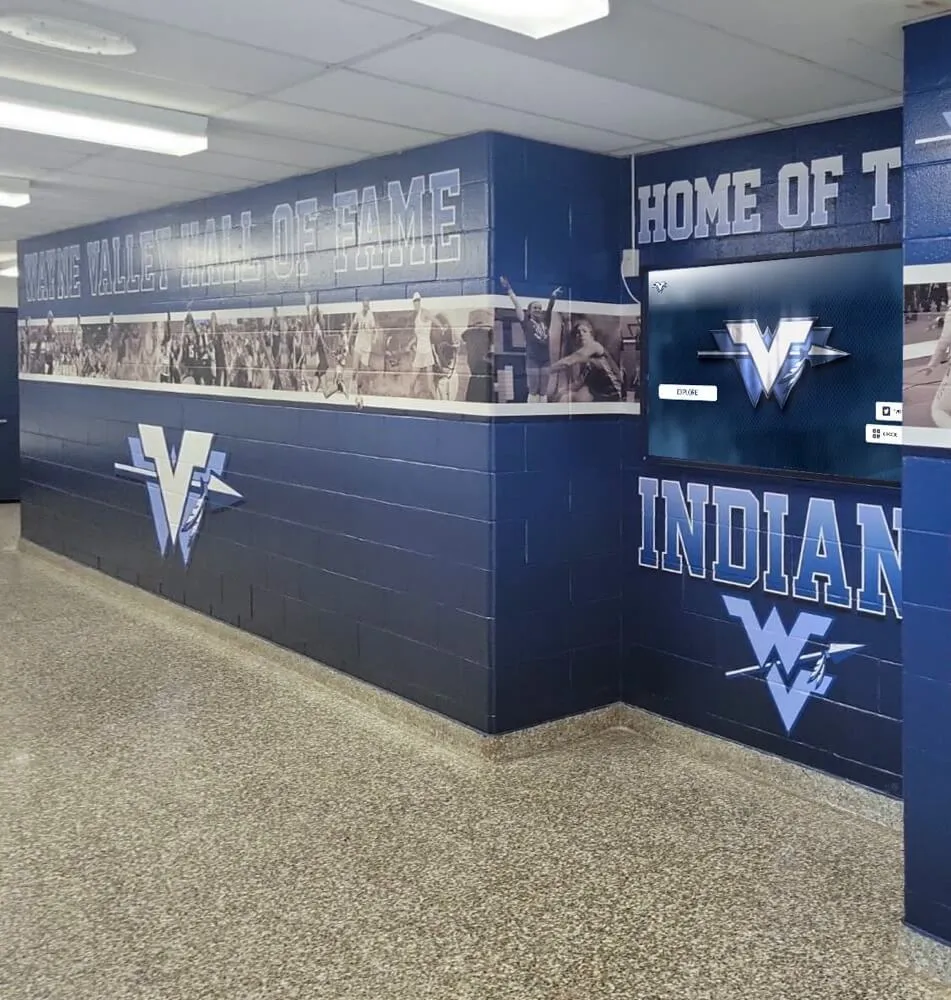
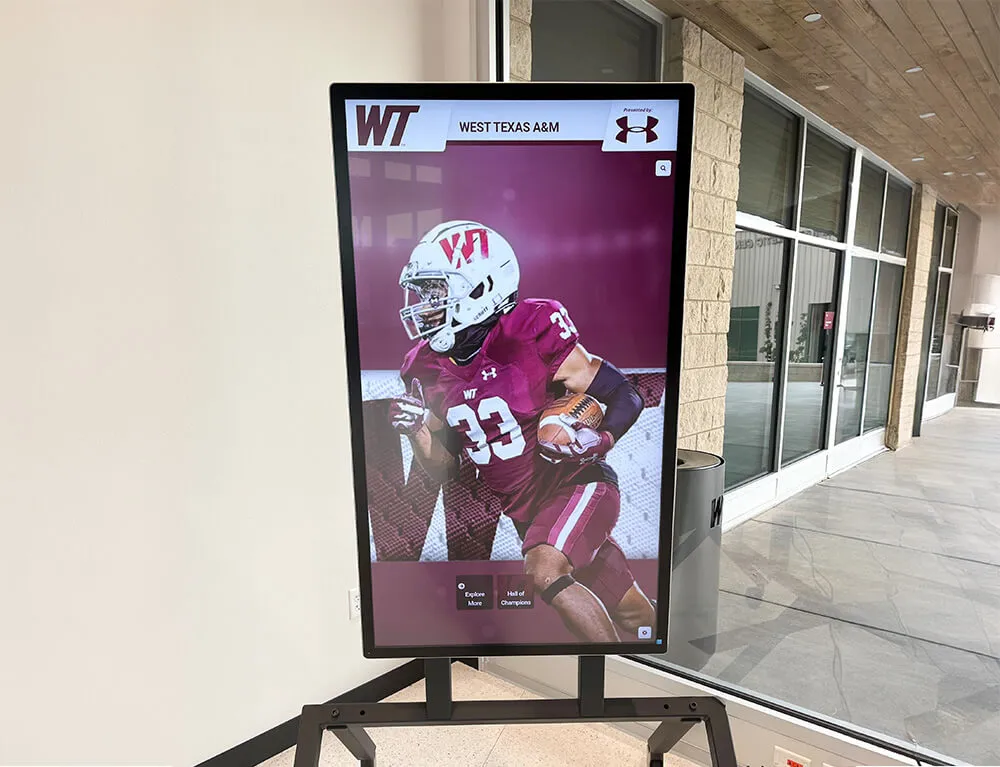
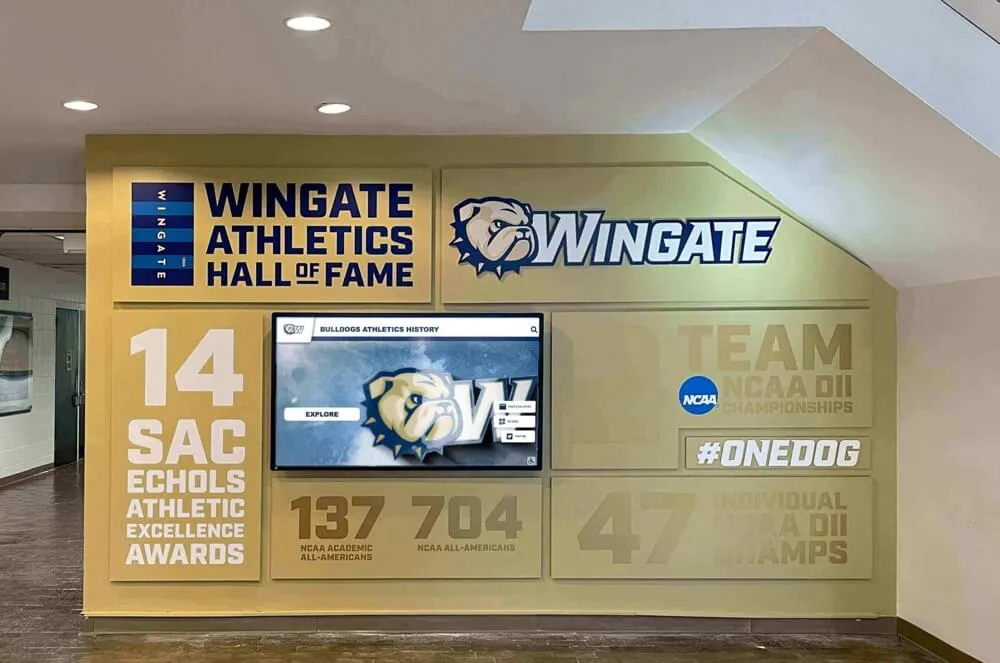
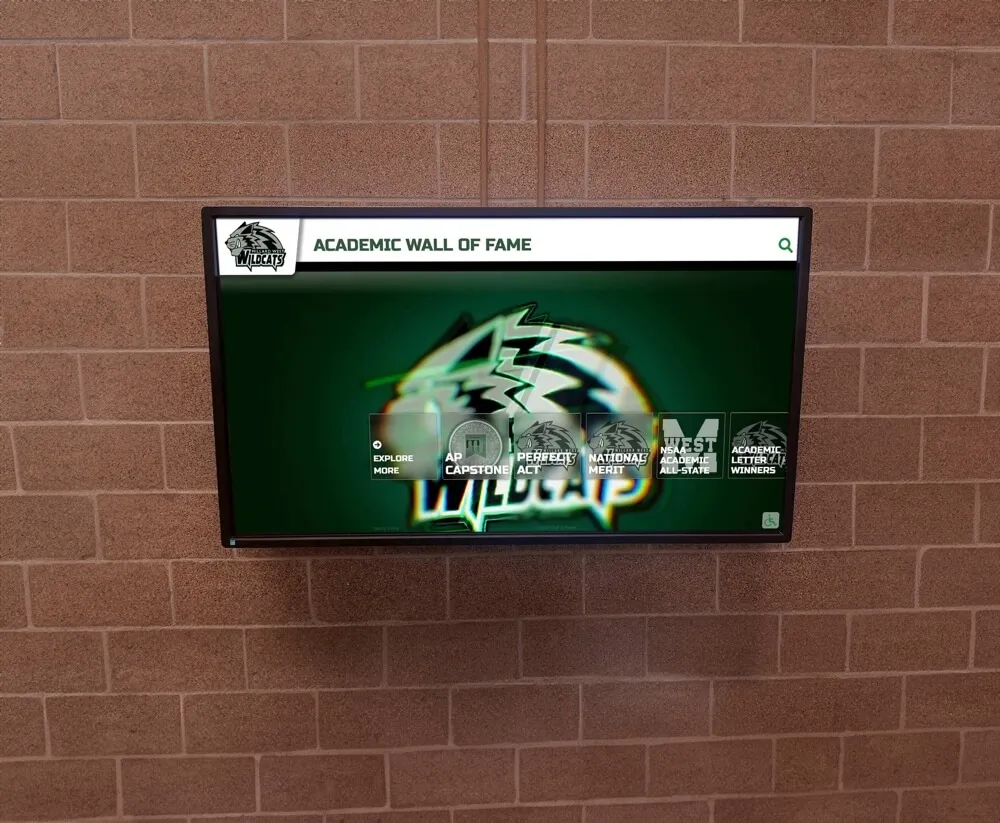
Digital displays provide permanent visibility for National Honor Society achievements, celebrating the four pillars year-round
Understanding National Honor Society Significance
Creating effective recognition requires understanding what NHS membership represents and why these students deserve prominent celebration.
The Four Pillars of NHS Excellence
National Honor Society membership extends beyond academic achievement, requiring demonstration across multiple dimensions:
Scholarship Foundation NHS establishes rigorous academic standards:
- Minimum cumulative GPA requirements (typically 3.5 or higher on 4.0 scale)
- Demonstrated commitment to learning and intellectual growth
- Consistent academic performance across multiple subject areas
- Participation in challenging coursework including honors and advanced classes
- Evidence of academic curiosity extending beyond required coursework
Academic requirements ensure NHS recognizes sustained excellence rather than momentary achievement, distinguishing membership from single-semester honor roll recognition.
Service Commitment Members demonstrate dedication to community contribution:
- Documented volunteer hours serving school and community
- Leadership of service initiatives benefiting others
- Consistent participation in ongoing service programs
- Quality of service emphasizing meaningful impact over hour accumulation
- Diversity of service experiences across different community needs
Service requirements develop civic responsibility and community engagement habits extending throughout members’ lives.
Leadership Development NHS members show ability to guide and inspire:
- Demonstrated leadership in school activities and organizations
- Initiative in creating positive change
- Ability to motivate peers toward constructive goals
- Responsibility in assigned leadership roles
- Positive influence on school culture and community
Leadership criteria extend beyond holding titles, emphasizing genuine impact on peers and communities.
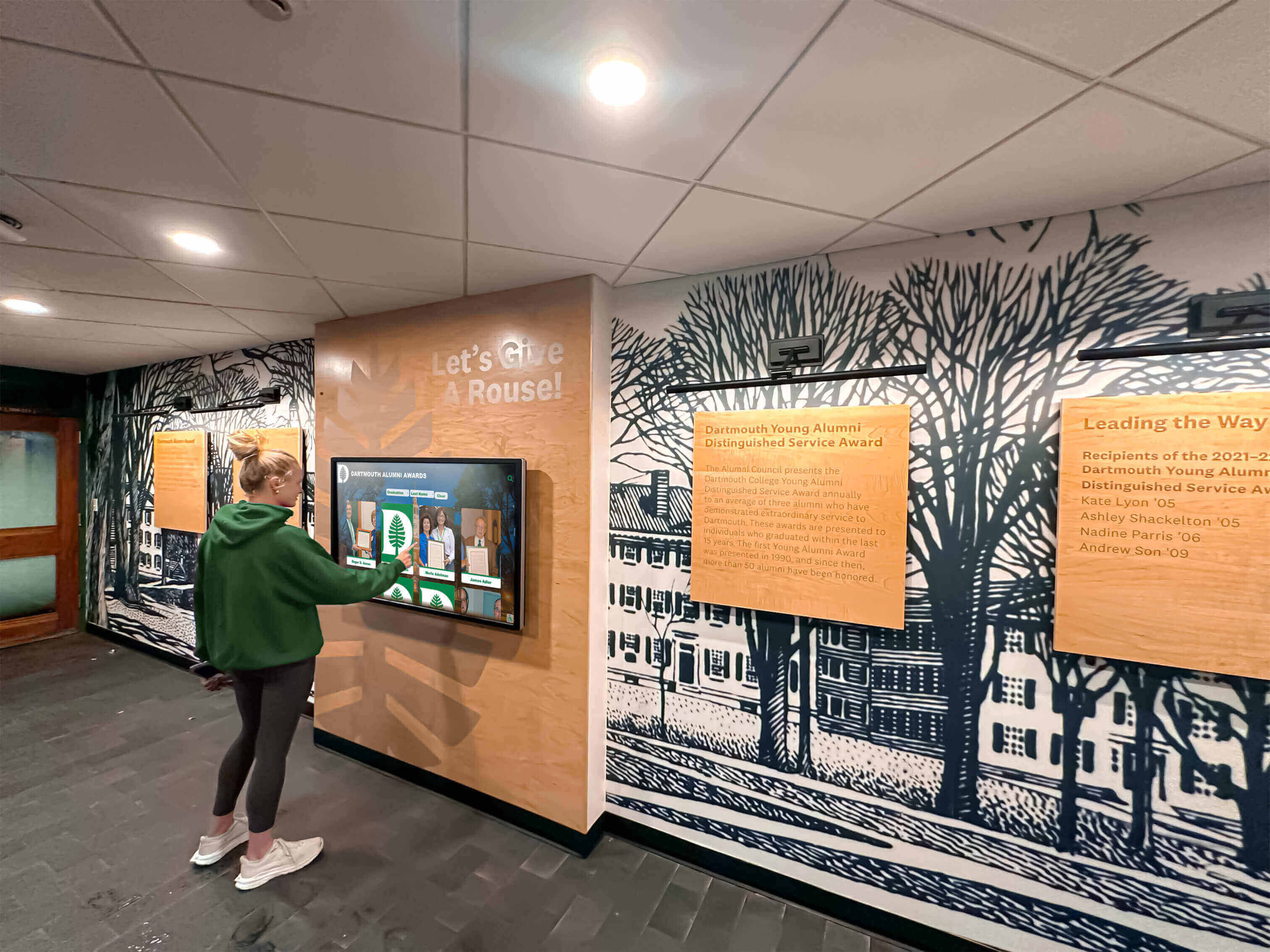
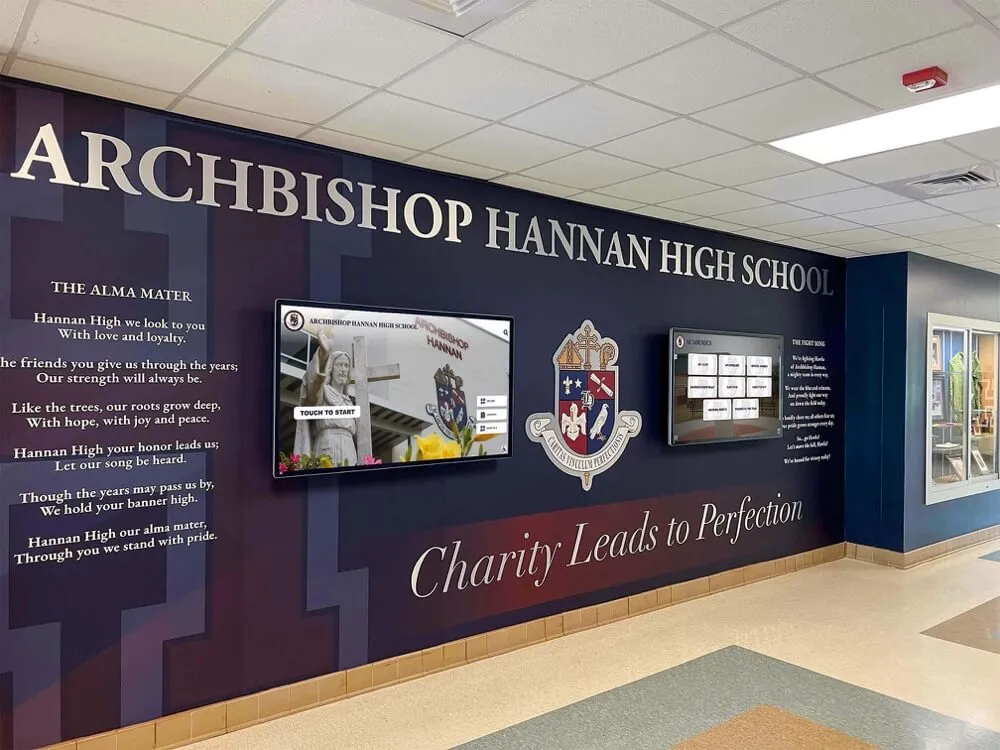
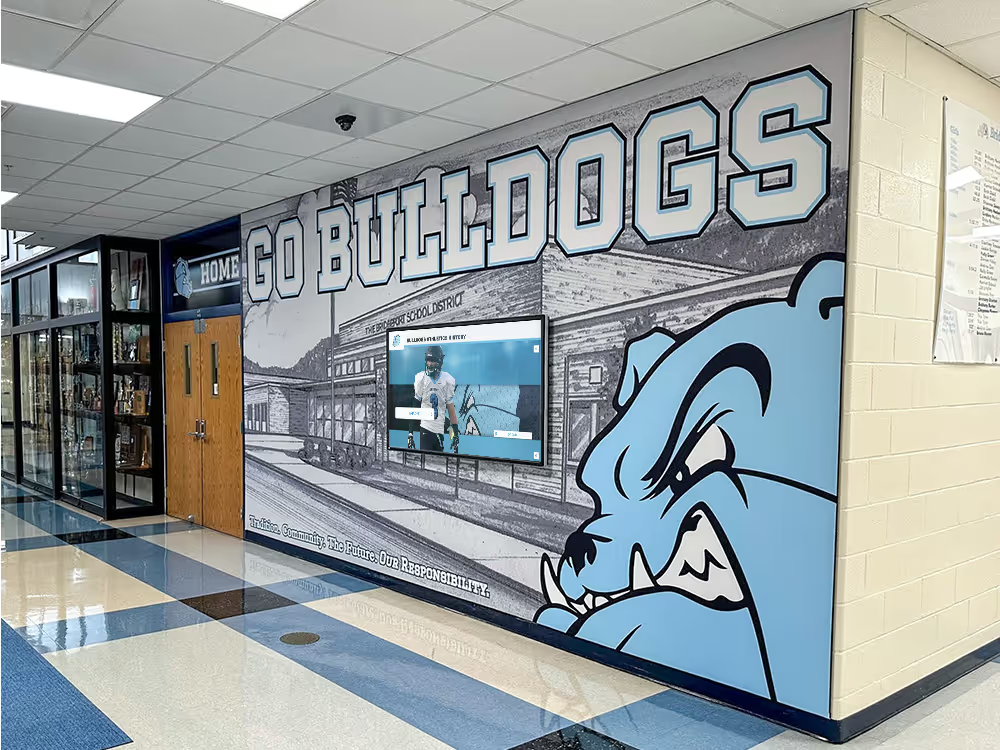
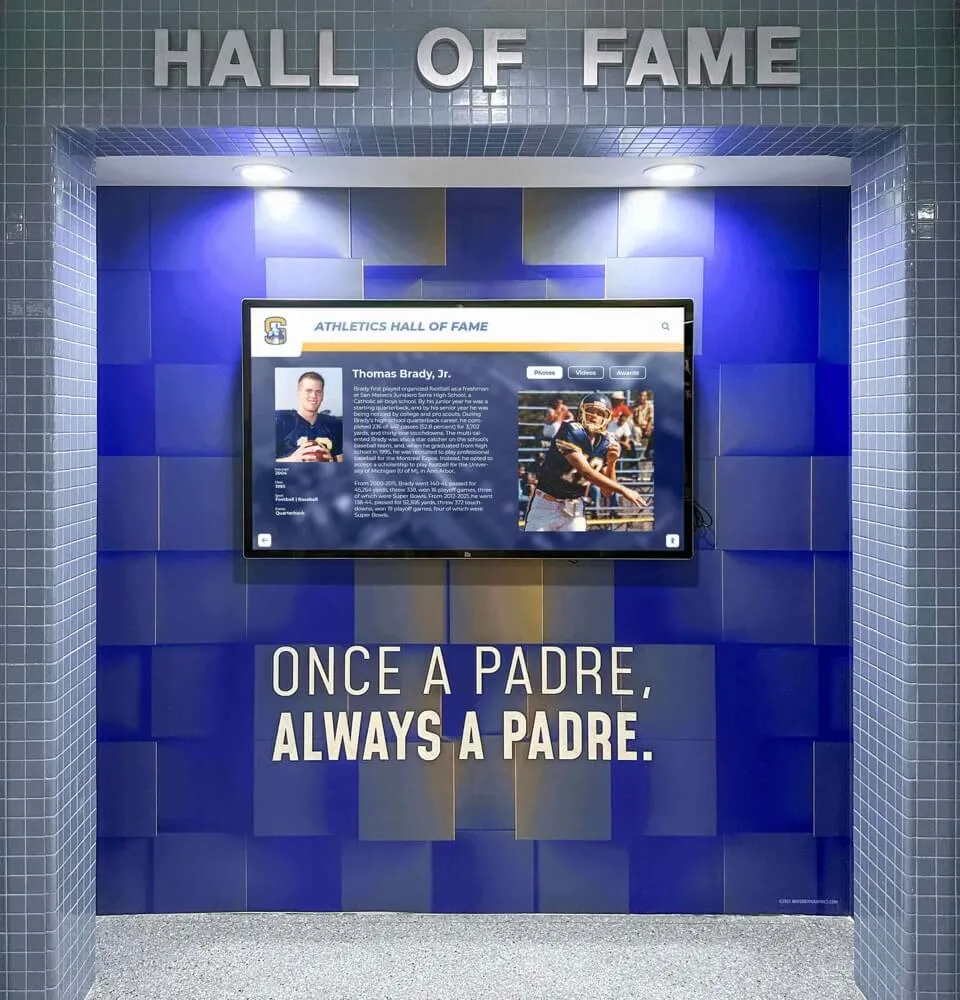
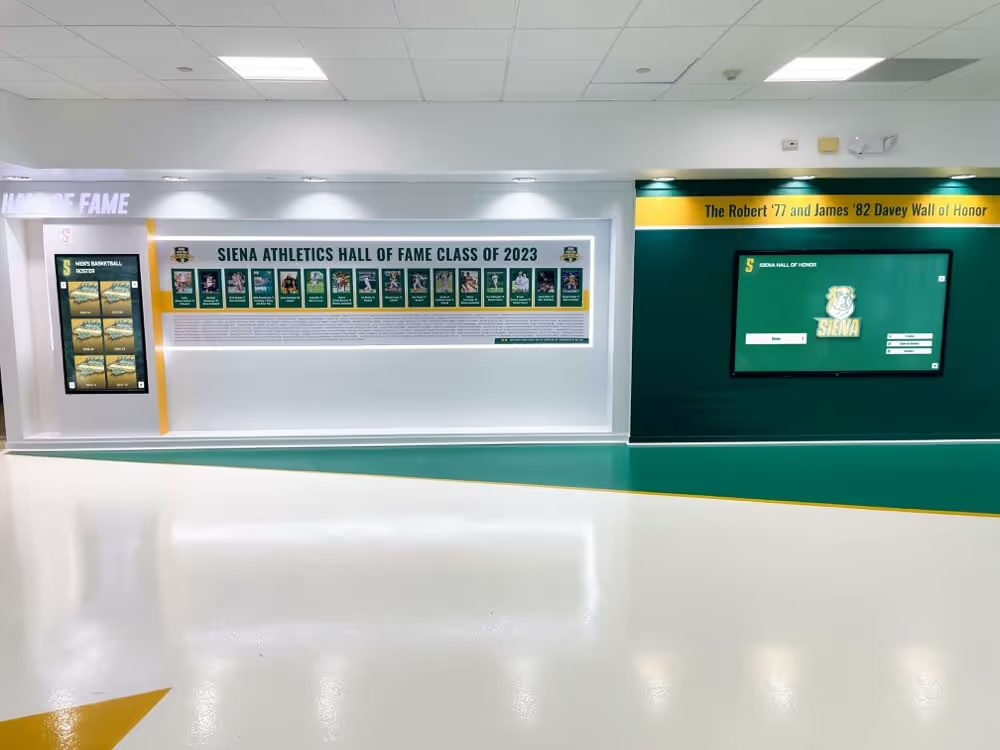
Interactive displays enable exploration of NHS member achievements across all four pillars
Character Excellence Members exemplify integrity and ethical behavior:
- Demonstration of honesty, respect, and responsibility
- Positive citizenship in school and community contexts
- Ethical decision-making and moral courage
- Respectful treatment of all community members
- Alignment between stated values and actual behavior
Character requirements recognize that academic and leadership success must rest on ethical foundations.
This comprehensive evaluation distinguishes NHS from recognition programs focusing solely on grades or test scores, making membership particularly meaningful and deserving of sustained visibility.
Historical Legacy and National Recognition
NHS provides connections to broader excellence traditions:
Organizational Scope and Reach The National Honor Society maintains impressive scale:
- Founded in 1921 by the National Association of Secondary School Principals (NASSP)
- Over 1 million students currently inducted annually across all 50 states
- More than 25,000 active chapters in high schools nationwide
- International chapters extending NHS globally
- Estimated 50+ million members inducted since founding
This extensive network means NHS membership connects students to distinguished alumni communities extending across generations and geographies.
College and Career Impact NHS membership provides tangible benefits:
- Recognition on college applications signaling comprehensive excellence
- Scholarship opportunities exclusively for NHS members
- Leadership development preparing students for college success
- Service experience valued by selective admissions offices
- Network connections supporting career development
- Resume credentials distinguishing candidates throughout professional life
NHS membership frequently appears among activities highlighted by successful college applicants to selective institutions, reflecting its continued prestige in higher education admissions.
Learn about comprehensive approaches to academic recognition programs that complement NHS celebration.
Limitations of Traditional NHS Recognition Approaches
Understanding conventional recognition challenges clarifies why digital solutions provide superior alternatives.
One-Time Induction Ceremony Recognition
Schools relying primarily on annual ceremonies encounter persistent limitations:
Temporary Visibility Challenges Traditional approaches create momentary acknowledgment:
- Single evening ceremony provides brief celebration that quickly fades
- Family members unable to attend miss recognition entirely
- No ongoing reference point for underclassmen to discover NHS pathways
- Certificates stored in drawers rather than displayed prominently
- Recognition disconnected from subsequent service and leadership contributions
- Impossible to showcase multi-year member growth and achievement
Induction ceremonies remain valuable traditions, but shouldn’t constitute the entirety of NHS recognition. Students maintaining membership requirements deserve continued visibility throughout their tenure.
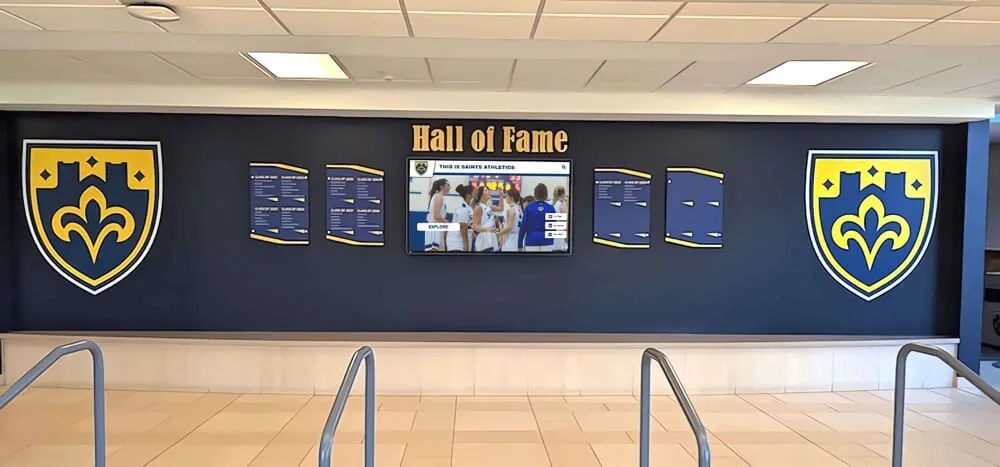
Traditional displays face space constraints preventing comprehensive member recognition across multiple years
Missing the Complete Achievement Story Single-event recognition overlooks powerful opportunities:
- Ongoing service hours and project leadership throughout membership
- Academic improvement and sustained excellence after induction
- Leadership development and expanding responsibilities
- Character demonstrations in daily school life
- Mentorship of younger students and peer influence
- Post-graduation outcomes showing long-term impact
- Connections between NHS foundation and career success
Static bulletin boards listing names cannot convey the depth and breadth of NHS member contributions. Digital platforms address these limitations through comprehensive profiles, regular updates showcasing ongoing achievements, unlimited capacity for historical archives, and interactive features enabling exploration of member stories.
Static Displays and Space Constraints
Physical recognition faces severe practical limitations:
Capacity Problems Traditional approaches encounter:
- Limited wall space accommodating only small numbers of students
- Removal of previous years’ members when adding current inductees
- Inability to showcase detailed information about member achievements
- Physical deterioration of printed materials over time
- Labor-intensive annual updates requiring complete reconstruction
- Single-location restriction limiting viewing opportunities
Schools with 50+ year NHS traditions cannot feasibly display all historical members through conventional methods. Recent inductees receive visibility while previous members disappear from institutional memory.
Inadequate Information Depth Simple name plaques cannot communicate:
- Service projects members completed and hours contributed
- Leadership roles held and organizational contributions
- Academic trajectories and sustained excellence
- Character demonstrations and peer influence
- College destinations and scholarship awards
- Alumni outcomes and career accomplishments
- Advice for students pursuing NHS membership
Comprehensive digital recognition systems solve these problems while creating engagement impossible with static displays. Explore digital recognition wall strategies for implementation approaches.
Digital Recognition Solutions for NHS Programs
Modern platforms provide capabilities transforming how schools highlight National Honor Society students.
Comprehensive Member Profile Systems
Digital solutions like Rocket Alumni Solutions enable rich achievement documentation:
The Four Pillars Showcased Individual profiles can document:
Scholarship Achievement
- Current GPA and academic trajectory throughout high school
- Honors and Advanced Placement course participation
- Academic awards and recognition beyond NHS
- Standardized test achievements (National Merit, AP Scholar, etc.)
- Academic competition success in subject areas
Service Documentation
- Total volunteer hours contributed during membership
- Specific service projects led or participated in
- Community organizations supported through service
- Impact metrics from service initiatives
- Photographic documentation of service activities
- Ongoing service commitment tracking across years
Leadership Demonstration
- Officer positions held within NHS chapter
- Leadership roles in other school organizations
- Initiative launched to benefit school or community
- Peer mentorship and tutoring activities
- Student government and representative responsibilities
Character Evidence
- Teacher and advisor testimonials about integrity
- Peer recognition of positive influence
- Ethical leadership examples and moral courage
- Citizenship awards and recognition
- Positive impact on school culture
This comprehensive documentation transforms NHS recognition from simple name lists to inspiring achievement narratives demonstrating pathways to membership.
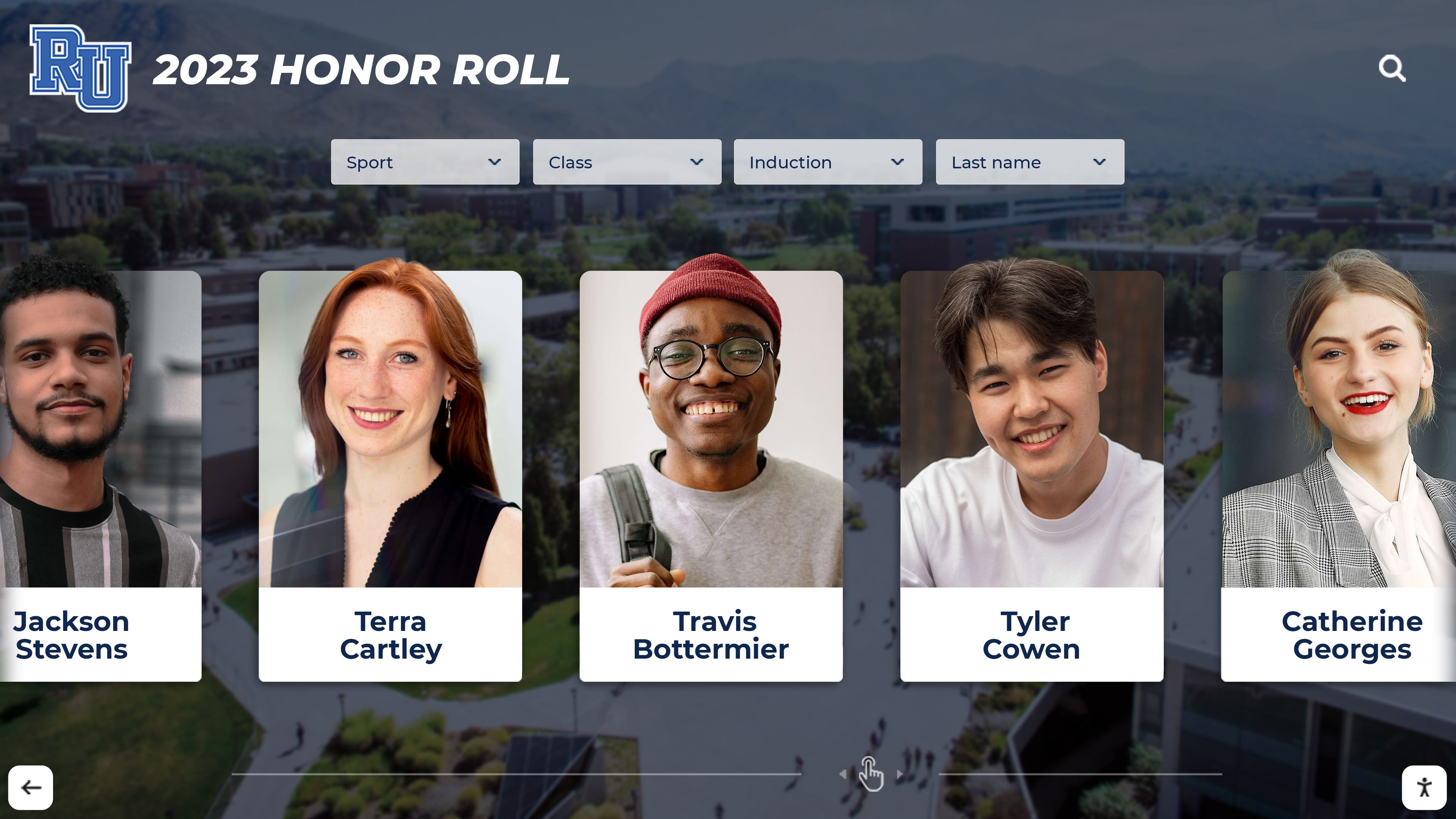
Detailed profiles celebrate complete member journeys across scholarship, service, leadership, and character
Dynamic Content Enabling Updates Cloud-based systems support:
- Adding new members immediately after induction
- Updating profiles as students complete service projects
- Tracking accumulated volunteer hours throughout membership
- Adding leadership positions as members assume new roles
- Documenting ongoing achievements during membership tenure
- Scheduling content to publish during relevant events
- Remote management from any internet-connected device
This flexibility means recognition remains current, celebrating not just induction but sustained excellence throughout NHS membership.
Unlimited Capacity for Historical Archives
Digital platforms eliminate space constraints entirely:
Multi-Generational Recognition Schools can:
- Display every NHS member from all induction years simultaneously
- Provide searchable access to decades of membership records
- Never remove previous members when adding current inductees
- Show institutional NHS tradition trajectory over time
- Create complete historical archives preserving chapter legacy
- Connect current members with accomplished alumni predecessors
This unlimited capacity proves particularly valuable for schools with established NHS traditions spanning generations. Rather than choosing whose achievements remain visible, every member receives permanent recognition creating complete institutional archives.
Alumni Outcome Tracking Extend recognition beyond high school:
- College destinations and undergraduate achievements
- Graduate school acceptances and advanced degrees
- Career accomplishments and professional recognition
- Community leadership and civic engagement
- Entrepreneurial ventures and business leadership
- Continued service contributions and volunteer leadership
- Connection between NHS foundation and long-term success
Alumni outcome tracking transforms historical archives from dated records into inspiring success stories demonstrating lasting NHS impact. Current students researching career paths benefit from discovering alumni who pursued similar fields.
Learn about student recognition approaches that increase future success.
Interactive Search and Discovery Features
Touchscreen capabilities transform passive viewing into active exploration:
Powerful Filtering Options Users can:
- Search by student name finding specific members instantly
- Filter by graduation year discovering cohort membership levels
- Search by service project type connecting similar interests
- Filter by leadership positions held within chapter
- Locate members by college destination or intended major
- Find students with specific service hour milestones
- Search by scholarship type or academic achievement
A sophomore considering NHS membership can search for students who completed similar service projects, discovering detailed documentation of their initiatives. Parents can locate their child’s recognition instantly during campus tours. These search capabilities create engagement impossible with static displays.
Inspiration and Connection Pathways Interactive features enable:
- Discovery of role models with similar interests and goals
- Connection between current members and alumni mentors
- Exploration of diverse service project possibilities
- Understanding of leadership progression pathways
- Timeline views showing membership journey development
- Social sharing allowing students to celebrate induction
- Resource libraries providing membership guidance

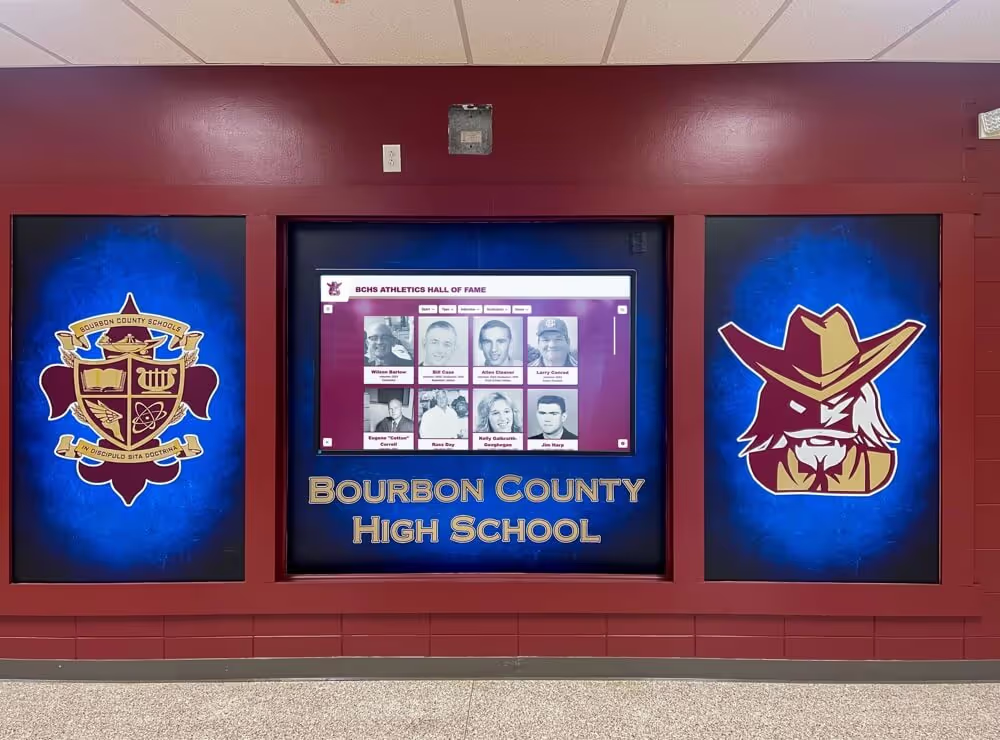
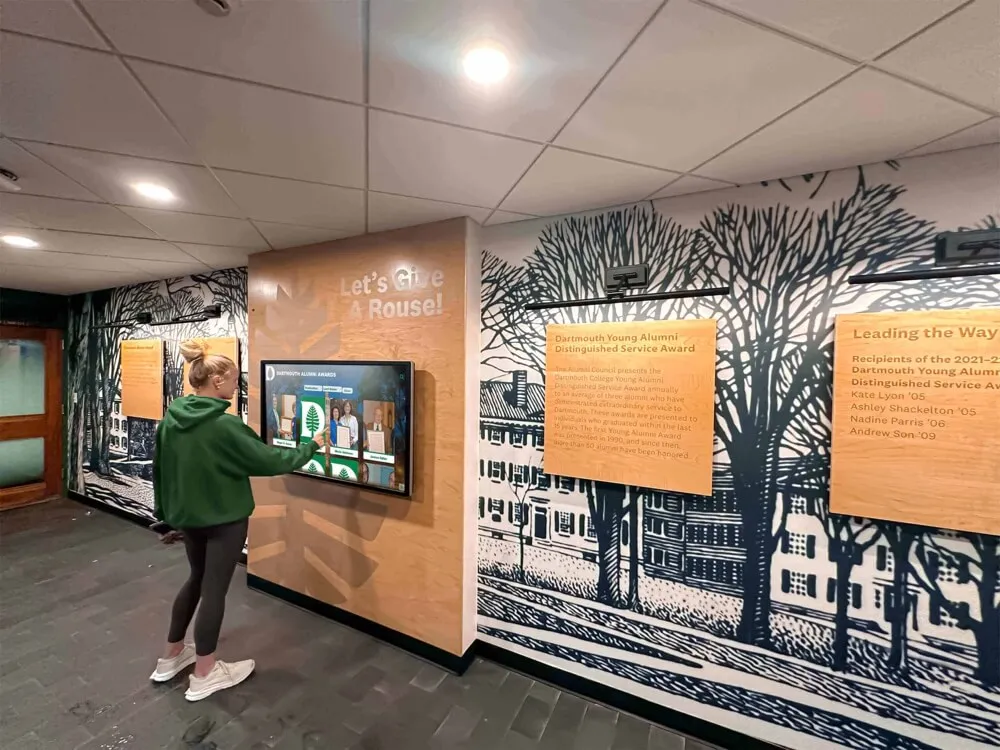
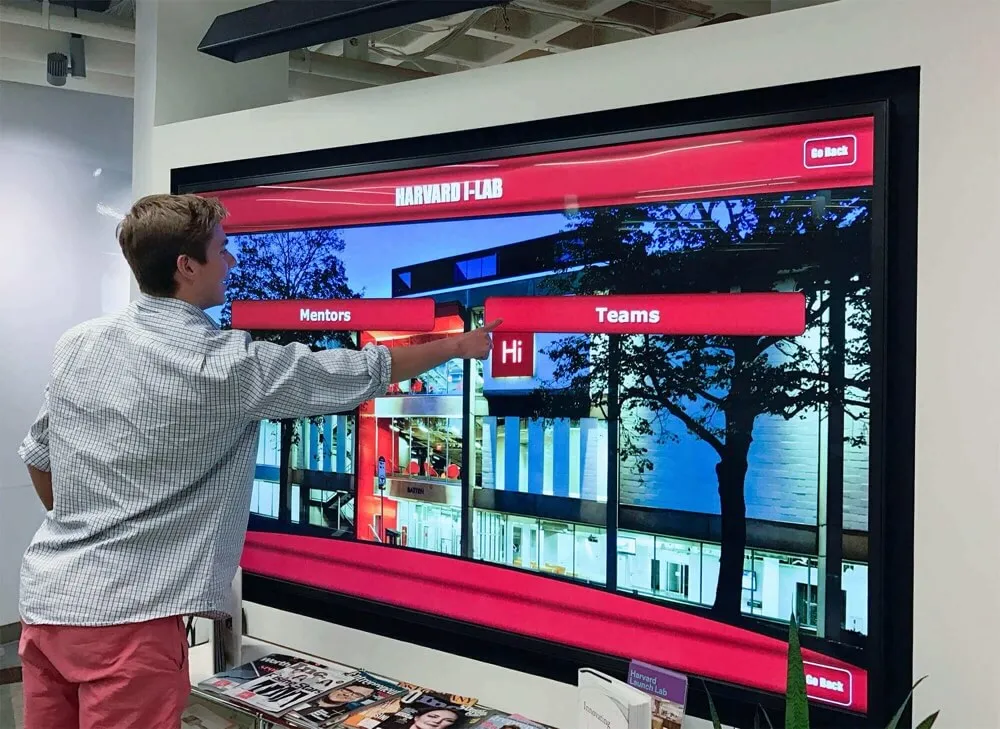
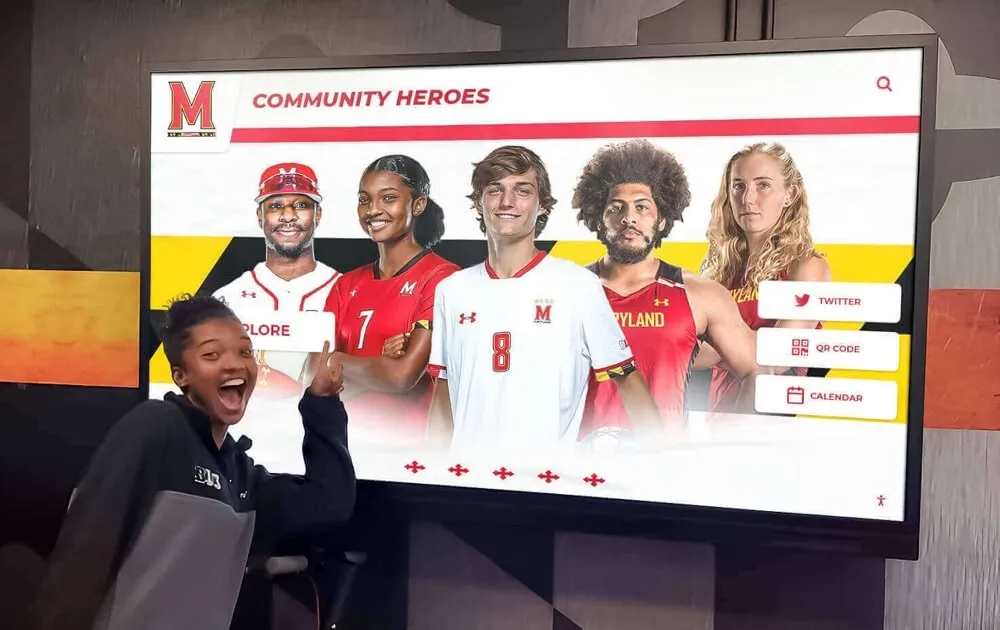
Intuitive interfaces make NHS member exploration engaging for students researching membership pathways
These discovery features transform recognition displays from information sources into inspiration tools actively supporting student goal-setting and leadership development. Schools report students regularly interacting with NHS displays during lunch periods, study halls, and before-school hours—engagement traditional bulletin boards never achieved.
Planning Comprehensive NHS Recognition Programs
Successful implementation requires systematic planning addressing content, technology, and sustainability.
Establishing Recognition Criteria and Guidelines
Define parameters ensuring consistent, meaningful celebration:
Member Information to Showcase Determine what details to include:
- Essential biographical information (name, photo, graduation year)
- Induction date and ceremony details
- Academic achievements supporting membership
- Service hours and specific project documentation
- Leadership positions and organizational contributions
- Character demonstrations and peer impact
- Awards and recognition received during membership
- College destinations and scholarship awards
- Alumni updates and career outcomes (for graduates)
Most schools balance comprehensive documentation with privacy, allowing members to opt into various levels of detail sharing.
Privacy and Consent Management NHS recognition requires careful privacy consideration:
- Written member and family consent before public display
- Opt-out provisions allowing students to decline visibility while maintaining membership
- FERPA compliance protecting educational records
- Clear communication about what information displays publicly and where
- Policies for removing recognition at member or family request
- Separate consent for web-based versus physical display recognition
- Age-appropriate privacy protection for younger members
Some families prefer limiting public information despite member pride in NHS achievement. Consent-based systems respect these preferences while maximizing participation among willing students.
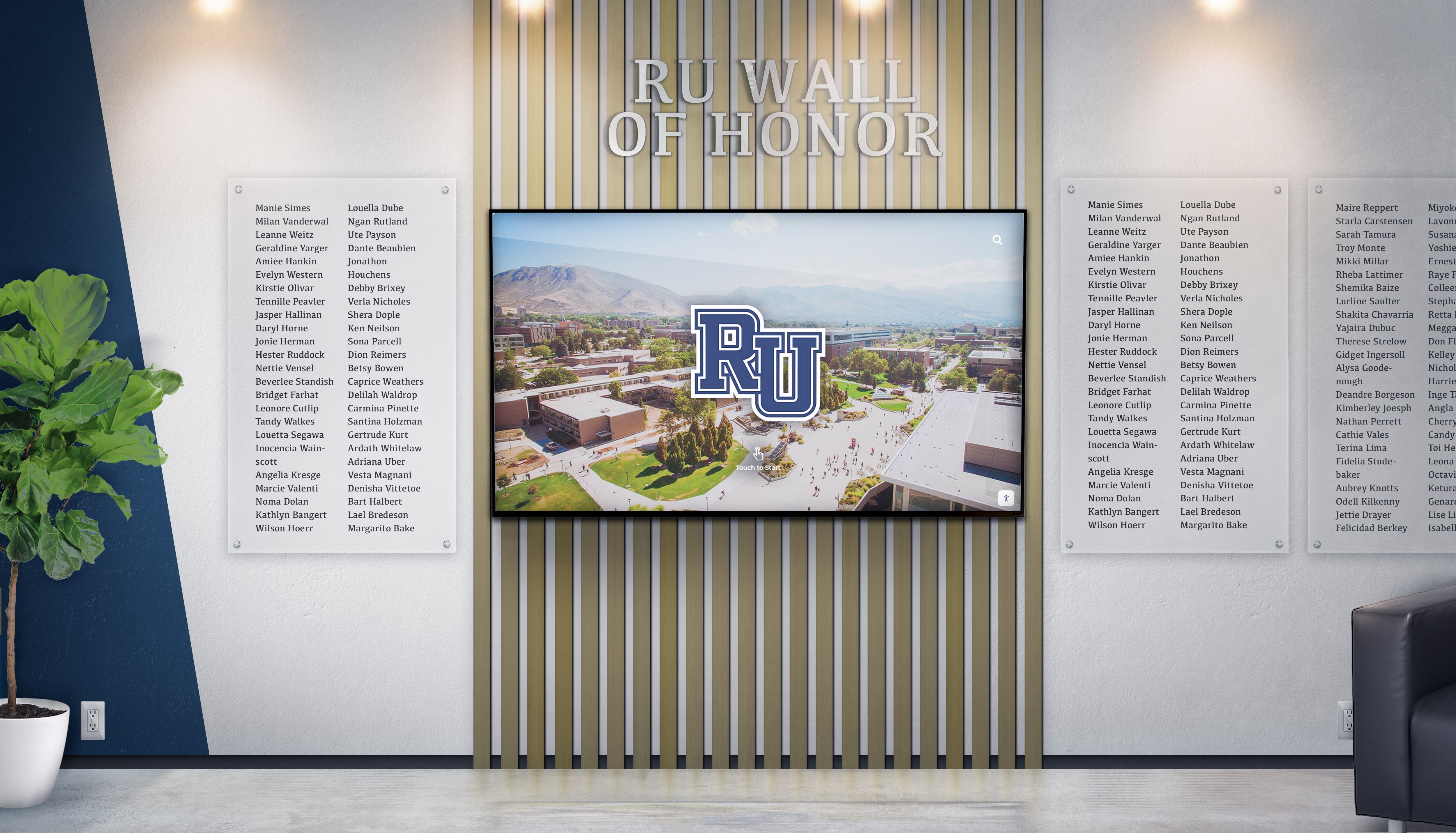
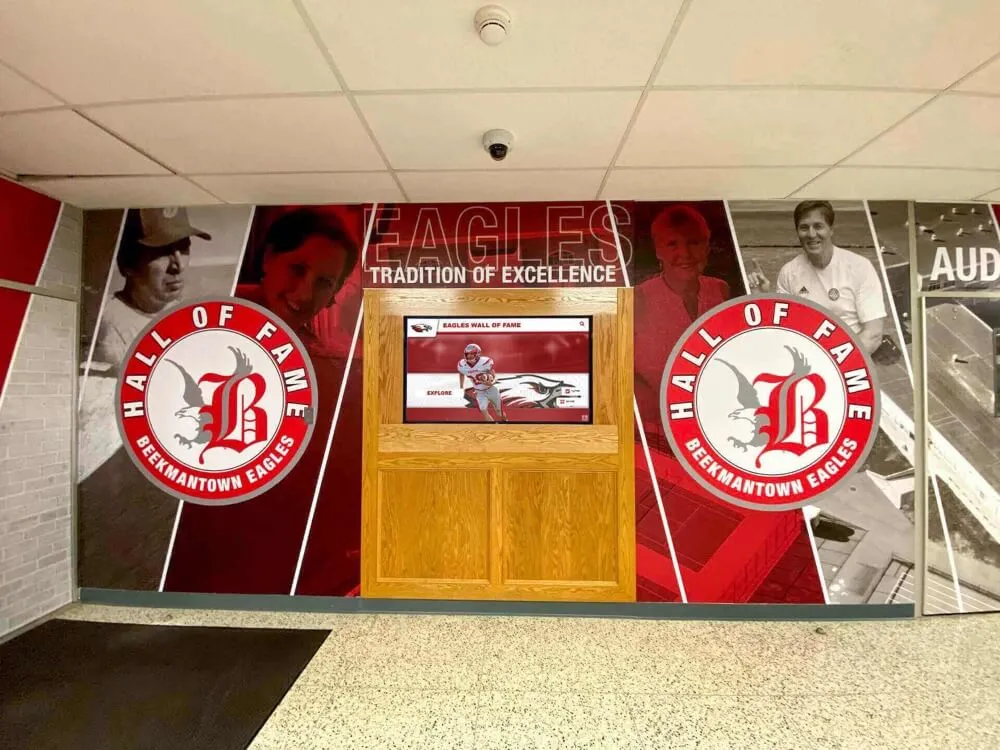
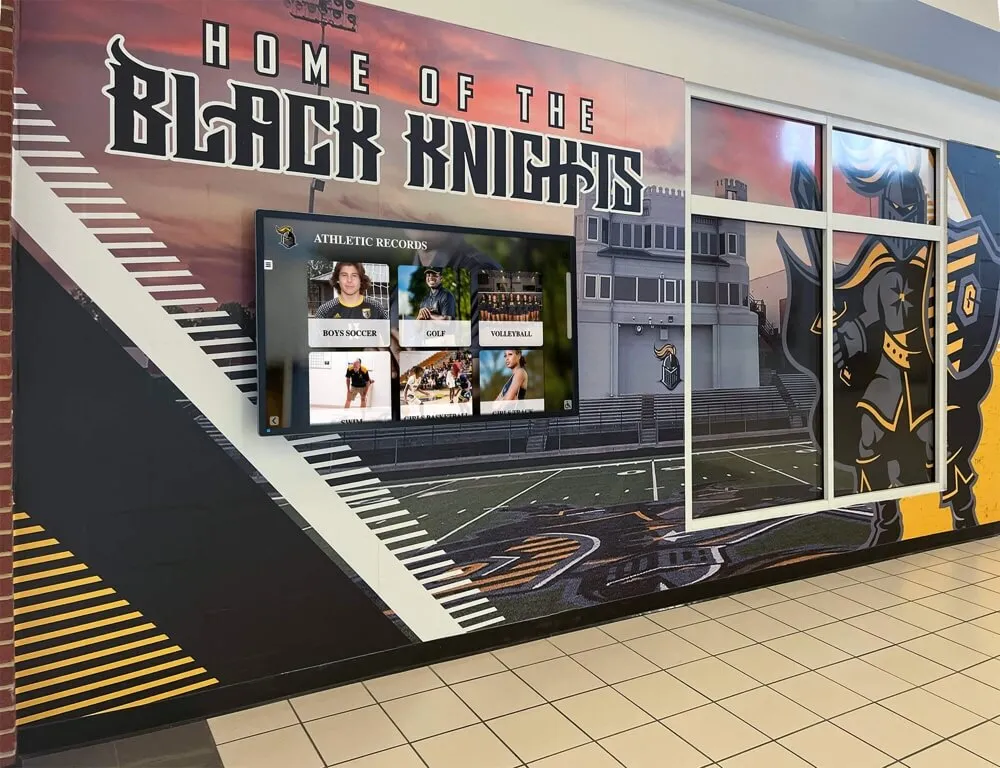
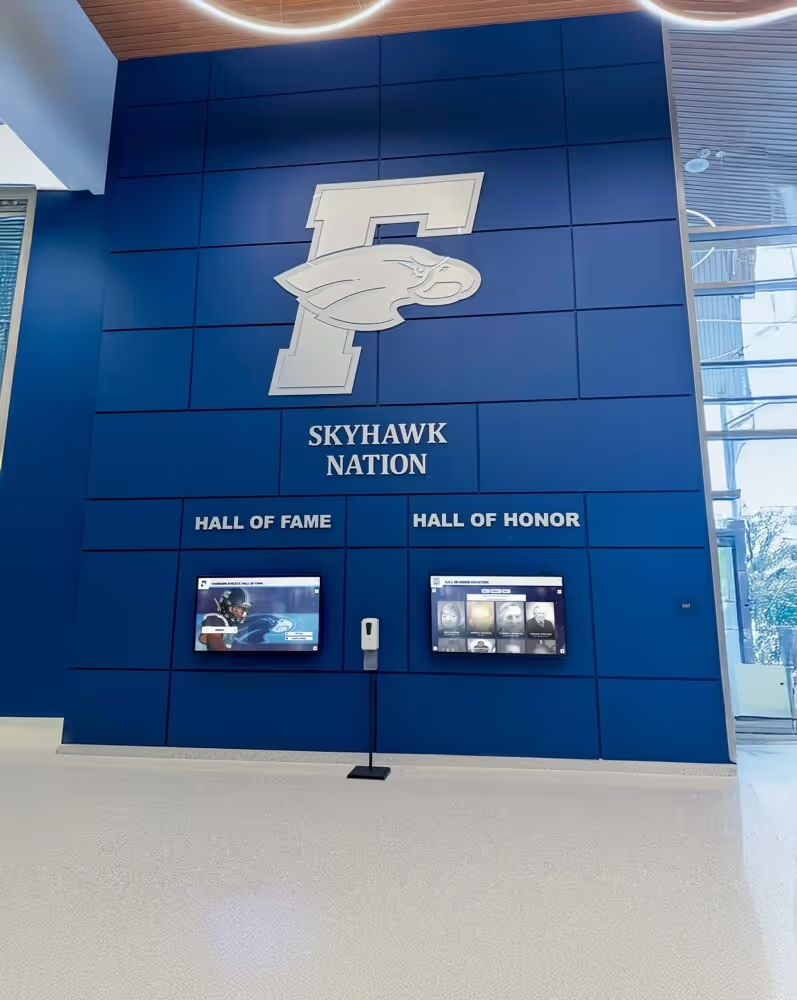
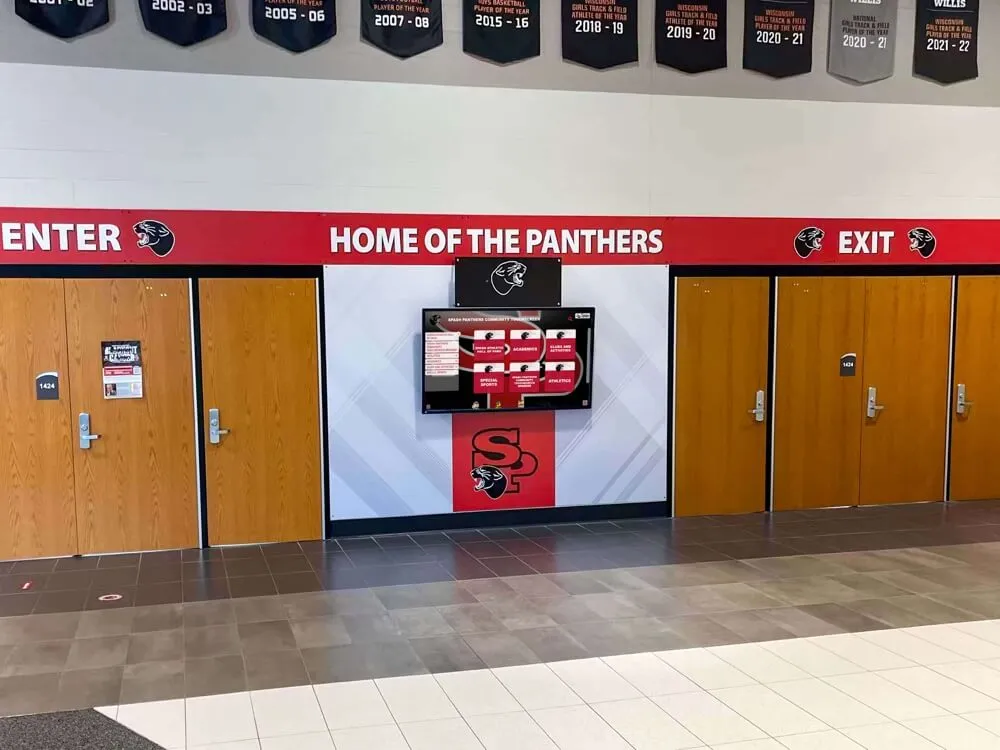
Strategic placement in prominent academic areas ensures maximum visibility and inspiration for prospective members
Content Collection and Profile Development
Systematic information gathering ensures comprehensive, accurate recognition:
Efficient Collection Methods Streamline data acquisition:
- Online submission forms completed during induction application process
- Google Forms or survey tools with photo upload capabilities
- Integration with chapter advisor tracking systems for service hours
- Rolling collection throughout school year as achievements occur
- Follow-up communications gathering college outcomes and career updates
- Alumni outreach for historical data from previous induction classes
- Digital asset management for photos and project documentation
Many schools implement standing processes where NHS advisors provide profile submission forms immediately upon member induction, maximizing participation rates compared to passive notification methods.
Service Project Documentation Capture meaningful service contributions:
- Project name and organization served
- Role held by member (participant, organizer, leader)
- Hours contributed and timeframe
- Project goals and measurable outcomes
- Photographic documentation of service activities
- Testimonials from community partners
- Skills developed through service experience
- Impact on community and member growth
Rich service documentation elevates recognition beyond hour counts, celebrating meaningful community contribution and personal development.
Implementation Timeline and Phasing
Year One: Foundation Building
Fall: Planning and System Selection
- Form planning committee including NHS advisor and administration
- Research digital recognition platform options and capabilities
- Establish recognition criteria and privacy policies
- Determine budget and identify funding sources
- Select hardware and software solutions
- Plan physical installation locations
Winter: Data Collection and Content Development
- Communicate recognition opportunities to all current NHS members
- Launch submission process for member profiles
- Begin gathering historical data from previous induction classes
- Populate digital platform with initial profiles
- Test system functionality and advisor training
- Develop promotional materials and communication strategies
Spring: Launch and Celebration
- Unveil recognition system during NHS induction ceremony
- Demonstrate interactive features to members and families
- Publish comprehensive profiles celebrating all current members
- Share celebration coverage through school communication channels
- Gather initial feedback for refinement
Year Two and Beyond: Expansion and Optimization
- Update member profiles as students complete service projects
- Add new inductees immediately after ceremonies
- Expand historical archives adding previous induction classes
- Promote recognition during junior year NHS information sessions
- Integrate displays into campus tours for prospective families
- Gather usage analytics and user feedback
- Refine content strategies based on engagement data
- Connect alumni members for mentorship programs
Learn about digital hall of fame implementation strategies for recognition programs.
Technology Selection and Physical Installation
Choosing appropriate platforms and equipment ensures sustainable, effective recognition.
Digital Platform Requirements
Evaluate software based on essential capabilities:
Core Functionality Needs Platforms should provide:
- Intuitive content management enabling NHS advisor updates without technical expertise
- Template systems ensuring consistent, professional member presentation
- Bulk import capabilities for efficient historical data addition
- Advanced search and filtering enabling user discovery across four pillars
- Photo and video management with automatic optimization
- Service hour tracking and project documentation tools
- Privacy controls protecting sensitive student information
- Mobile-responsive web access extending reach beyond campus
- Multi-year archiving preserving complete chapter history
- Analytics tracking engagement and popular content
Solutions like Rocket Alumni Solutions specifically designed for educational recognition provide these capabilities with workflows optimized for NHS program needs. Purpose-built platforms accelerate implementation while ensuring best-practice functionality from launch.
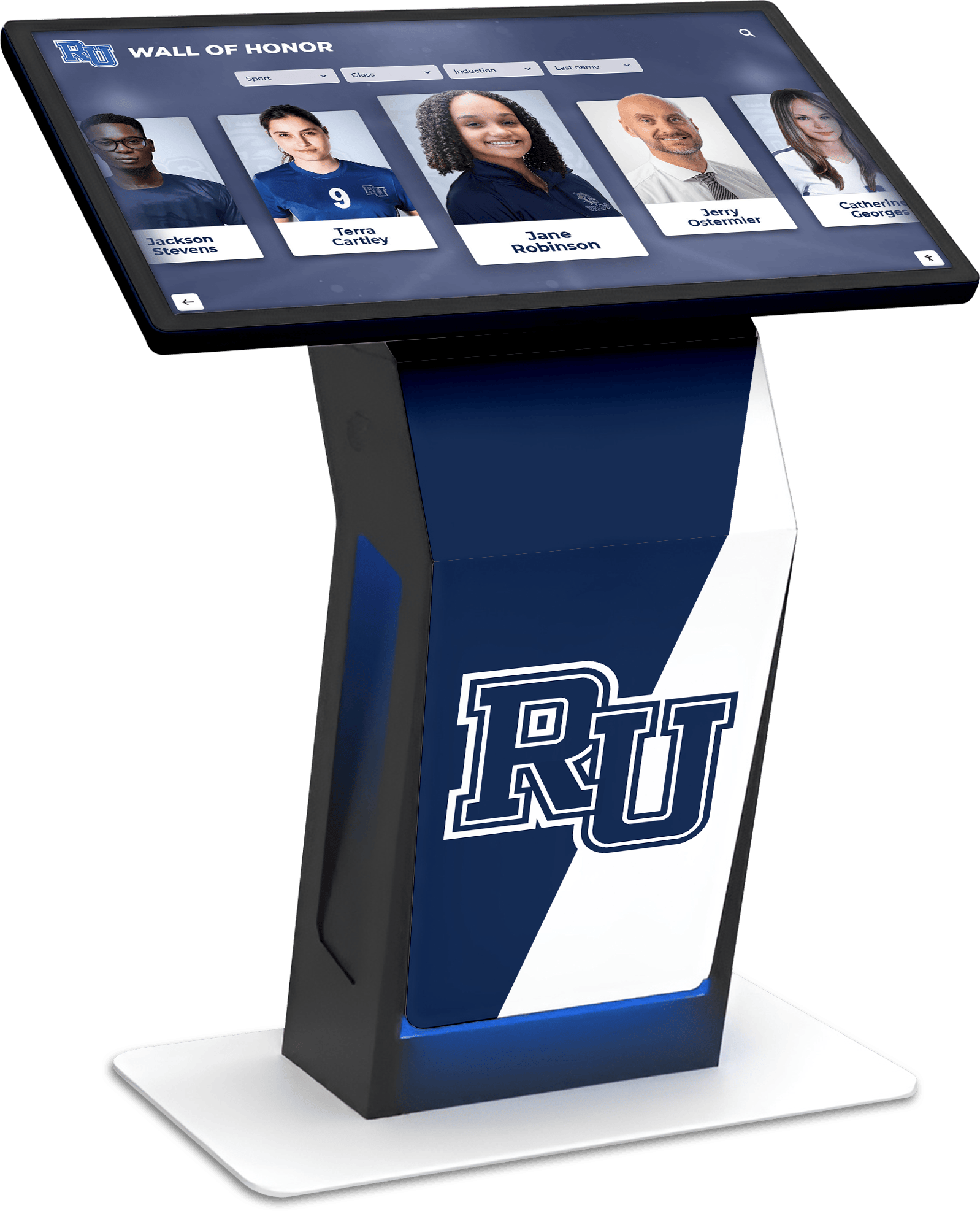
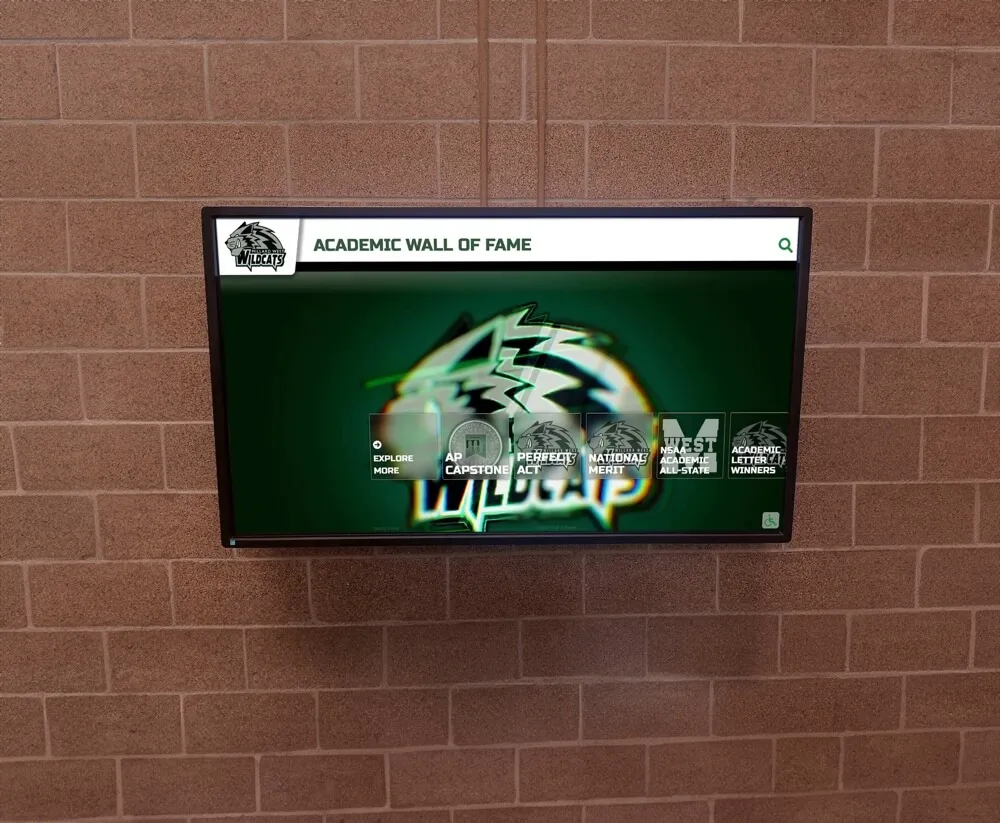
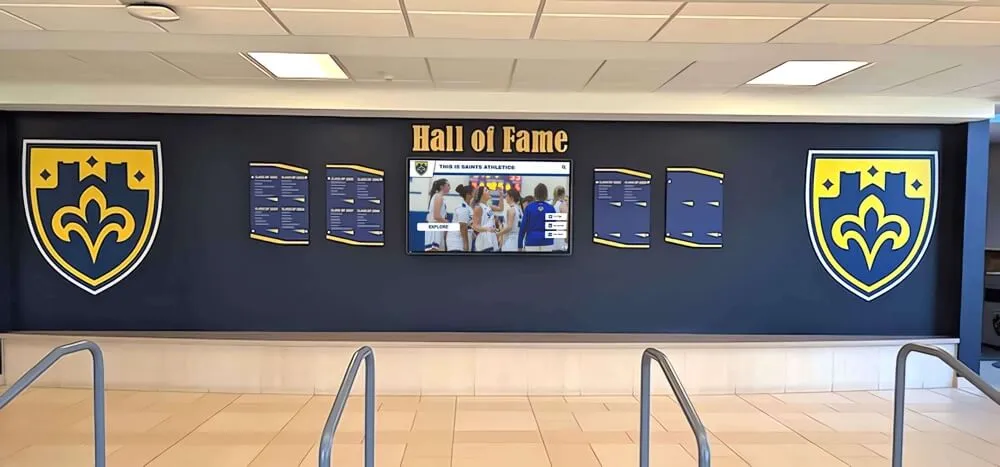
Modern recognition systems combine touchscreen displays with cloud-based management enabling ongoing updates
Administrative Efficiency Features Systems should minimize ongoing work requirements:
- Drag-and-drop interfaces requiring no specialized skills
- Duplicate templates streamlining profile creation for multiple members
- Scheduled publishing enabling advance content preparation
- Version control tracking changes and enabling corrections
- Role-based permissions providing appropriate advisor and staff access
- Automated backups protecting against data loss
- Technical support ensuring rapid issue resolution
Sustainability depends on systems remaining manageable as advisors change roles. Platforms requiring specialized technical knowledge create dependencies threatening program continuity.
Hardware Options and Strategic Placement
Touchscreen Display Choices
Floor-Standing Kiosks Self-contained units offer advantages:
- Professional appearance signaling importance of NHS achievement
- No wall mounting requirements simplifying installation
- Mobility enabling relocation if space needs change
- Integrated computer and display simplifying technical setup
- Protective enclosures preventing damage in school environments
- ADA-compliant heights ensuring accessibility
- Typical screen sizes: 43-55 inches for general use, 65-75 inches for large lobbies
Wall-Mounted Touchscreens Space-efficient alternatives provide:
- Integration with existing hallway walls and school aesthetics
- Smaller physical footprint in constrained spaces
- Various sizes available (32-86 inches) matching different areas
- Lower cost than floor kiosks for similar screen sizes
- Protective glass preventing damage in high-traffic areas
- Cleaner appearance in some architectural contexts
Strategic Placement Considerations
High-Impact Locations
- Main entrance lobbies where visitors immediately encounter NHS excellence
- Guidance office areas where college-bound students gather
- Media center common spaces with consistent student traffic
- Academic wings celebrating intellectual achievement
- Near NHS meeting spaces reinforcing member community
- Locations visible during campus tours and open houses
Technical Requirements
- Electrical power with appropriate capacity
- Network connectivity (ethernet preferred for reliability)
- Appropriate lighting avoiding glare while ensuring visibility
- Viewing angles and sight lines from natural traffic patterns
- Sufficient clearance around interactive displays for multiple users
- Environmental considerations (temperature, humidity, protection)
Professional installation ensures displays function reliably while meeting building codes and accessibility requirements.
Creating Compelling NHS Recognition Content
Recognition effectiveness depends on content quality beyond simple member lists.
Profile Design Best Practices
Visual Consistency and Professionalism Maintain polished presentation:
- Template-based layouts ensuring uniform appearance
- High-quality photography showing students professionally
- Consistent typography and color schemes matching school branding
- Adequate white space preventing cluttered displays
- Clear hierarchy guiding viewers through information
- Accessibility considerations including font size and contrast
Professional presentation signals that NHS achievement deserves recognition equal to any school accomplishment. Consistent, polished designs enhance recognition value.
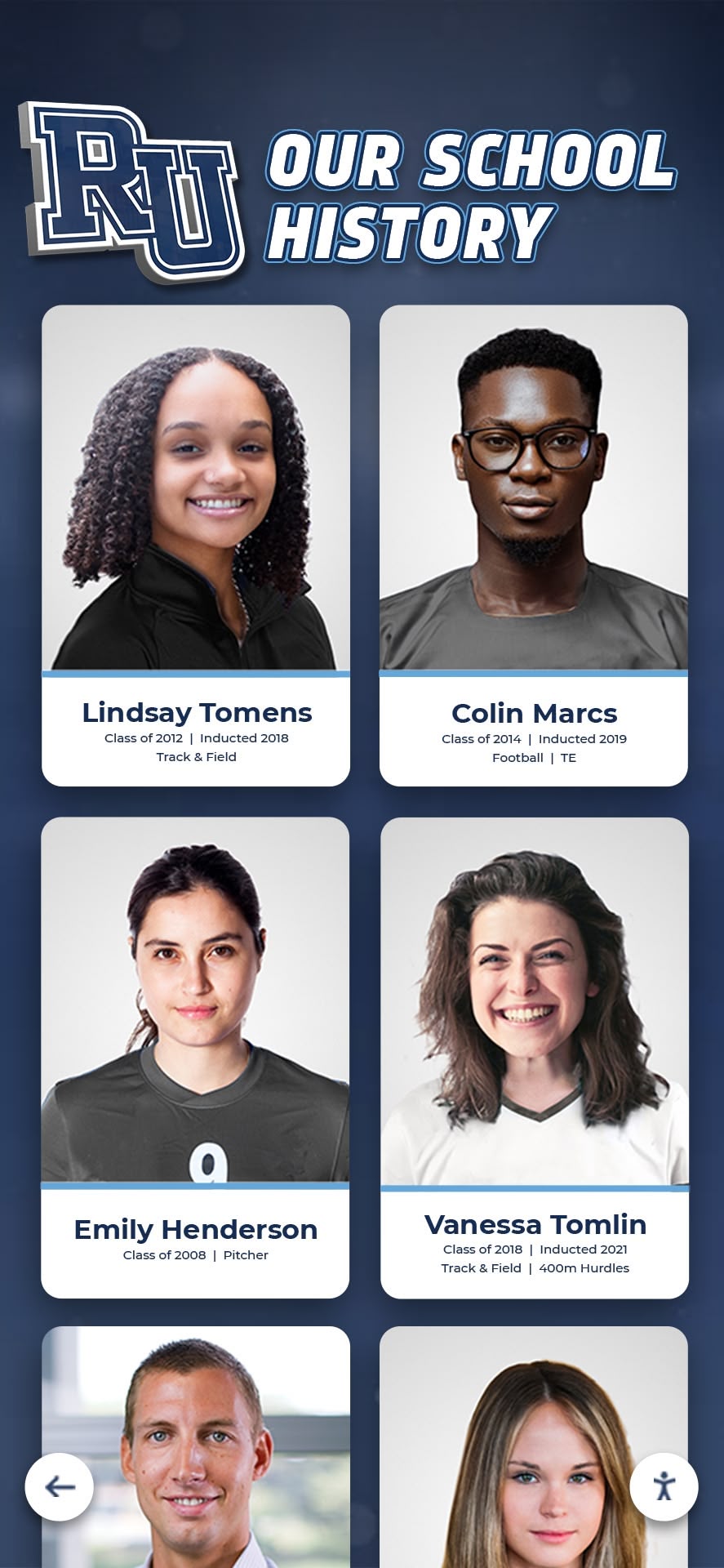
Well-designed profiles balance visual appeal with information depth celebrating complete member stories
Narrative Elements That Inspire Include personal stories creating connection:
- First-person quotes about NHS membership meaning
- Service project descriptions highlighting community impact
- Leadership journey narratives showing growth
- Academic challenges overcome and lessons learned
- Advice for underclassmen pursuing NHS membership
- Gratitude expressions for mentors and supporters
- Future goal connections showing NHS foundation
These narrative elements humanize members, making NHS achievement feel attainable through dedication. Schools report that personal story elements generate highest engagement from underclassmen researching membership pathways.
The Four Pillars Integrated Throughout Ensure comprehensive representation:
Every profile should demonstrate scholarship, service, leadership, and character rather than emphasizing only academics. Balanced representation honors NHS holistic evaluation while providing diverse inspiration for students with different strength areas.
Celebrating Service and Leadership Specifically
Service Project Showcases Highlight community contribution:
- Featured project spotlights with detailed documentation
- Photographic galleries showing service in action
- Measurable impact metrics demonstrating outcomes
- Community partner testimonials validating contribution
- Replicable project templates for future members
- Connection between service and member growth
- Diverse service types showing multiple contribution pathways
Service project showcases inspire future members while demonstrating to communities the tangible benefits NHS chapters provide.
Leadership Pathway Documentation Illustrate development progression:
- Officer position descriptions and responsibilities
- Leadership trajectory from member to officer to advisor
- Initiative development from concept to implementation
- Mentorship relationships between experienced and new members
- Collaboration skills demonstrated through group projects
- Problem-solving approaches in chapter management
- Public speaking and communication skill development
Leadership documentation helps underclassmen understand pathways to officer positions while demonstrating member development beyond academic achievement.
Enhancing NHS Induction Ceremonies with Digital Recognition
Traditional ceremonies gain impact through technology integration.
Pre-Ceremony Recognition Building
Digital Countdowns and Anticipation Create excitement before induction:
- Countdown displays in prominent locations
- Featured profiles of inductees in weeks before ceremony
- Service project highlights demonstrating new member contributions
- Historical member spotlights connecting new inductees to legacy
- Social media campaigns building ceremony awareness
- Video montages showcasing inductee achievements
Pre-ceremony recognition builds anticipation while celebrating inductees before the formal event.
Ceremony-Day Technology Integration
Digital Elements During Ceremonies Enhance traditional programs:
- Projected photo montages during inductee recognition
- Video testimonials from members about NHS impact
- Interactive displays for guests exploring during reception
- Live social media feeds capturing ceremony moments
- Digital programs accessible via QR codes
- Recording for absent family members and archives
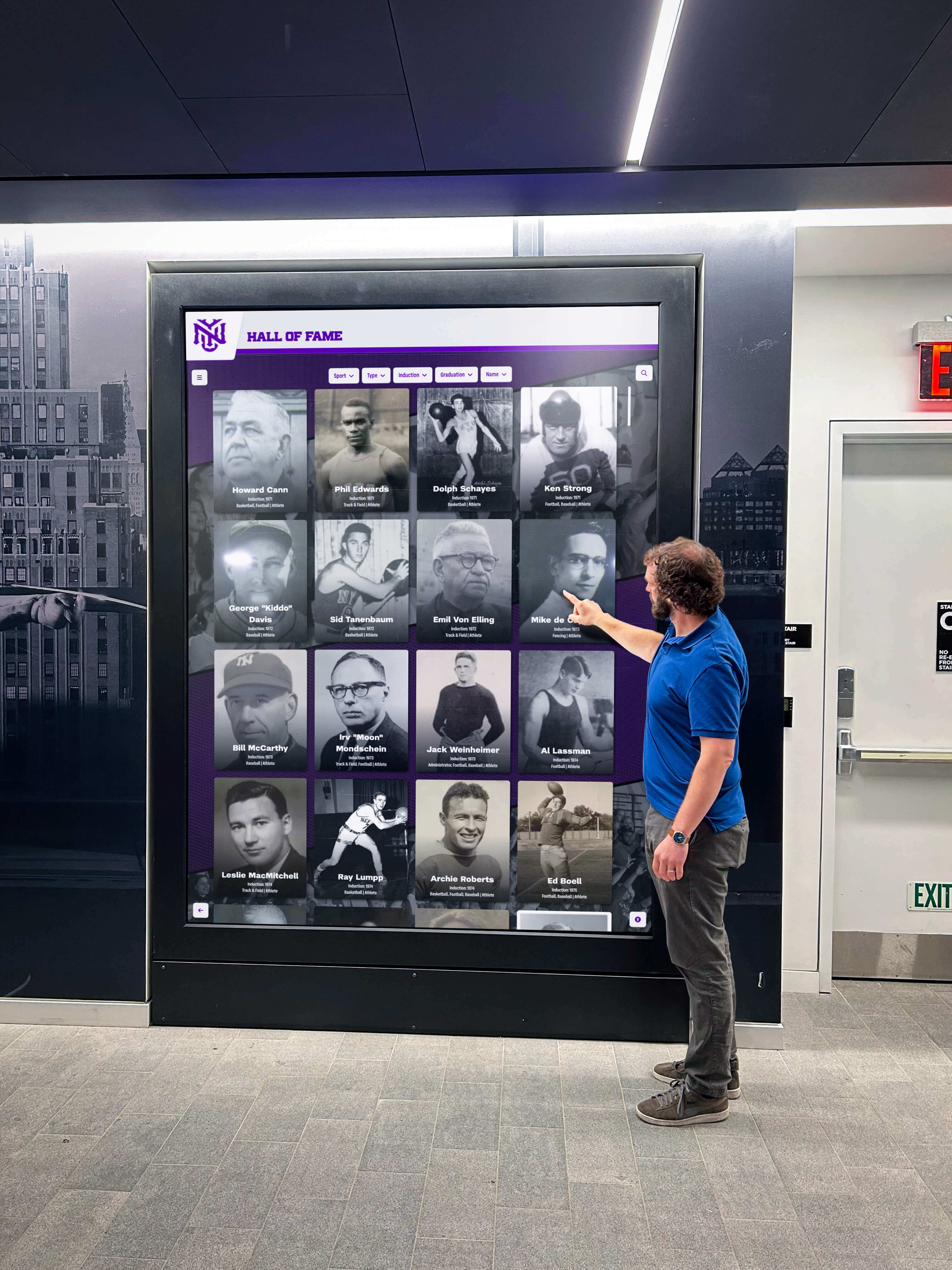
Interactive displays create engagement opportunities during ceremonies and events
Technology integration maintains ceremony tradition while creating opportunities for broader engagement and lasting documentation.
Post-Ceremony Recognition Extensions
Permanent Recognition Activation After induction:
- Immediate profile publishing on digital recognition platforms
- Social media announcements celebrating new members
- Email notifications to families with profile access links
- Webpage integration showing current membership
- Alumni outreach connecting new members to graduate mentors
- Community media announcements expanding celebration
Post-ceremony activation ensures recognition extends beyond the single event, providing ongoing visibility throughout membership tenure.
Learn about celebrating academic excellence digitally across various programs.
Web-Based Extensions Amplifying NHS Recognition
Physical displays should integrate with online platforms extending reach.
Mobile-Responsive Online Recognition
Anytime, Anywhere Access Web platforms provide:
- Alumni worldwide viewing current members from any location
- Families unable to visit campus regularly accessing recognition
- Prospective families researching schools exploring NHS tradition
- College admissions counselors seeing sustained excellence patterns
- Community members understanding chapter impact
- Members accessing their profiles from personal devices
Multi-Device Compatibility Responsive design ensures consistent experience:
- Smartphone optimization enabling easy mobile viewing
- Tablet compatibility for classroom or counseling office use
- Desktop access for detailed exploration with larger screens
- Consistent functionality across all platforms
- Fast loading maintaining engagement on all connection speeds
Social Sharing and Celebration Amplification
Individual Profile Sharing Students can:
- Share personal NHS profiles on social media
- Send direct links to extended family members
- Include digital recognition in personal portfolios
- Tag colleges in social posts creating connection
- Celebrate with networks beyond immediate community
Chapter-Wide Celebration Schools can:
- Share compilation posts featuring multiple members
- Create hashtag campaigns aggregating student shares
- Generate video montages from digital profiles
- Embed recognition widgets on school websites
- Link from email newsletters to individual profiles
- Distribute QR codes providing instant mobile access
Social sharing extends celebration reach exponentially beyond physical campus, generating community-wide pride while amplifying recognition value for honored students.
Integration with Broader Academic Recognition
NHS recognition proves most effective when celebrating diverse achievements alongside membership.
Comprehensive Excellence Displays
Multiple Recognition Types on Unified Platforms Maximize infrastructure investment:
- Academic achievement awards integrated with NHS recognition
- National Merit Scholar designations alongside membership
- Honor roll achievements across all grade levels
- Academic competition successes in all subjects
- Leadership awards from multiple organizations
- Service recognition beyond NHS requirements
- Character and citizenship honors
Integrated recognition ensures significant investment serves multiple purposes while reinforcing that excellence takes many forms.
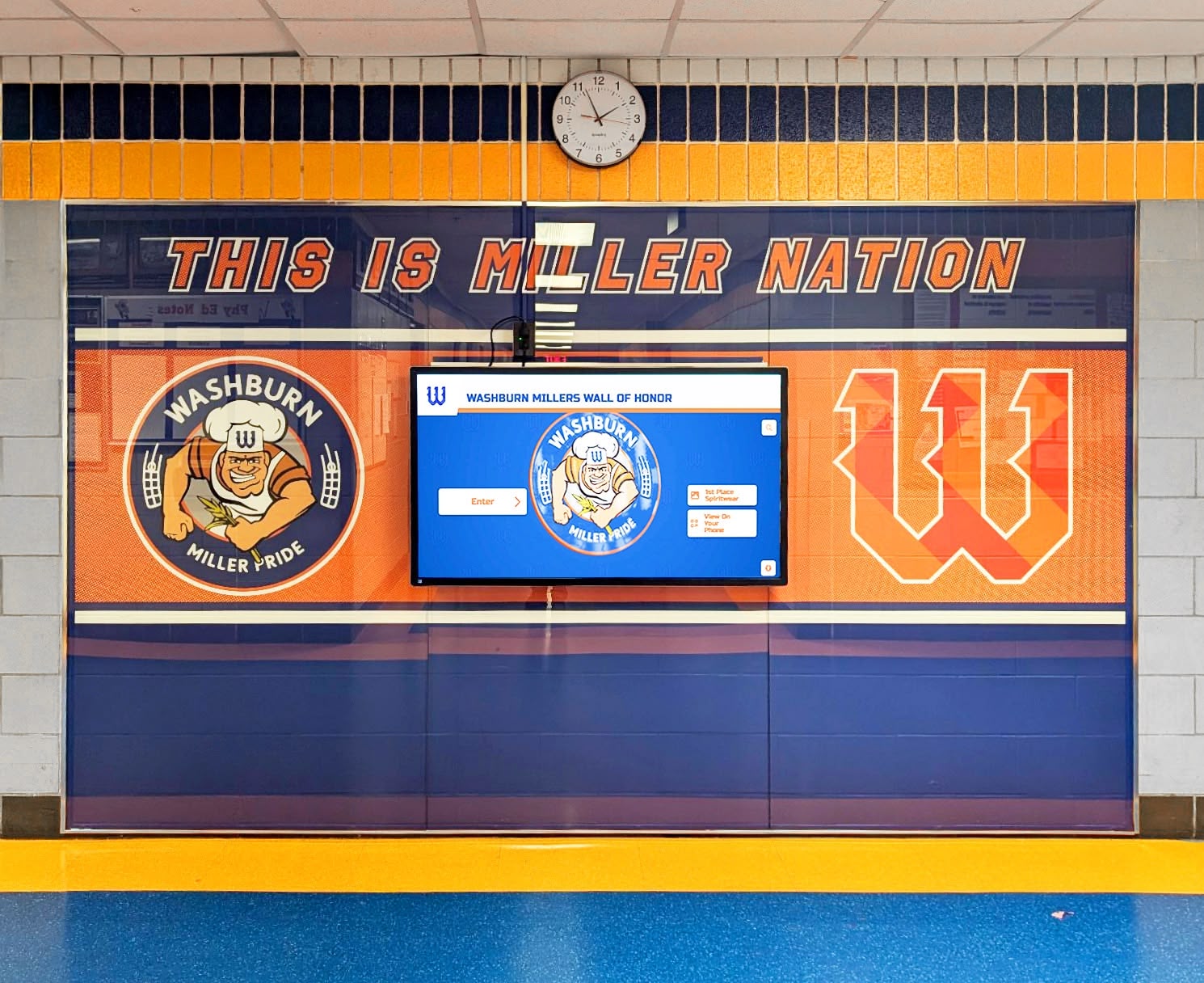
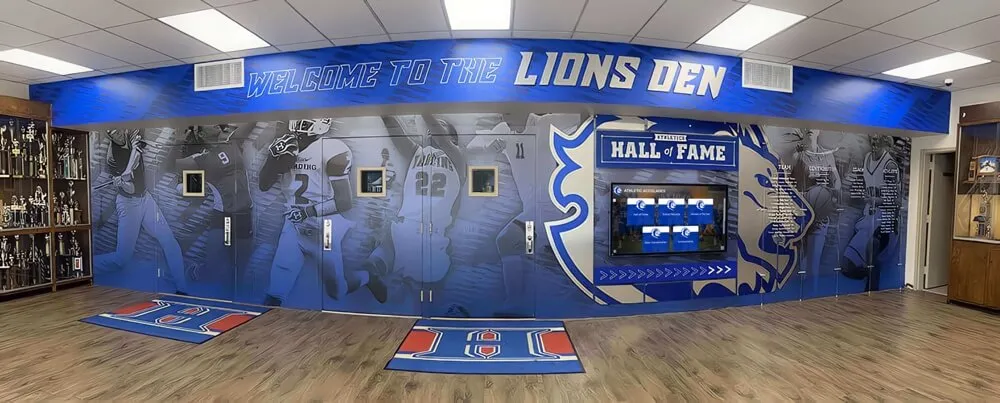
Unified recognition systems celebrate NHS alongside other academic and leadership achievements
Cross-Referencing Related Achievements Link complementary recognition:
- Showing members’ NHS profiles alongside other academic honors
- Connecting service recognition to character awards
- Highlighting students appearing in multiple categories
- Demonstrating relationships between scholarship and leadership
- Creating comprehensive excellence narratives
Cross-referencing helps stakeholders understand achievement relationships while providing richer context than isolated recognition categories.
Alumni Success Stories and Outcomes
Post-Secondary Achievement Tracking Extend recognition beyond high school:
- College acceptances and scholarship awards
- Undergraduate academic honors and achievements
- Graduate school acceptances and advanced degrees
- Career accomplishments and professional recognition
- Continued service contributions and volunteer leadership
- Community leadership and civic engagement
- Connection between NHS foundation and long-term success
Alumni outcome tracking transforms historical archives into inspiring success stories demonstrating lasting NHS impact.
Alumni Engagement Opportunities Leverage recognition for connection:
- Alumni mentor programs connecting current members with graduates
- Career panels featuring former members
- Service project consultation from experienced alumni
- Fundraising appeals emphasizing NHS tradition support
- Reunion events bringing generations together
- Professional networking for current members
Recognition creates natural engagement hooks bringing alumni back while providing value to current members beyond inspiration.
Maintaining and Sustaining NHS Recognition Programs
Long-term success requires clear processes and appropriate resource allocation.
Staff Responsibilities and Workflow Documentation
Role Assignment Distribute responsibilities appropriately:
- NHS Advisor: Overall program coordination and member support
- Content Manager: Profile creation, updates, and quality assurance
- Technology Administrator: Platform management and troubleshooting
- Communications Lead: Promotion, social media, and external engagement
- Event Coordinator: Ceremony planning and recognition celebrations
Clear ownership prevents programs languishing from diffuse responsibility. Written position descriptions with specific duties create accountability.
Documented Workflows Create sustainability through clear procedures:
- Step-by-step profile creation processes with examples
- Information collection templates and submission forms
- Quality checklists ensuring consistency and completeness
- Timeline calendars coordinating annual cycles and updates
- Troubleshooting guides addressing common issues
- Training materials for new advisors and staff
- Technical support contact information
Comprehensive documentation enables continuity when advisors change roles, preventing institutional knowledge loss disrupting recognition programs.
Budget Planning and Resource Allocation
Initial Investment Components Startup costs typically include:
- Digital display hardware and installation ($5,000-15,000 per location)
- Software platform license or subscription (varies by provider)
- Historical content development and profile creation ($2,000-8,000)
- Professional photography for initial member profiles
- Launch event and ceremony enhancement costs
- Training and initial technical support
- Marketing materials and promotional campaign development
While initial investments may appear substantial, digital recognition provides unlimited capacity and decades-long utility creating value impossible with traditional approaches.
Ongoing Operational Costs Annual budget requirements:
- Platform hosting or subscription fees ($1,500-4,000 annually typical)
- Annual inductee content development and photography
- Technical support and maintenance contracts
- Recognition event and ceremony expenses
- Promotional materials and communication campaigns
- Hardware replacement reserves
- Professional development for advisors
Schools report digital recognition operational costs substantially lower than traditional approaches when accounting for materials, labor, and physical display construction required annually with conventional methods.
Measuring NHS Recognition Program Success
Regular assessment ensures programs achieve intended goals and justify resource investment.
Quantitative Success Metrics
Participation and Coverage Indicators
- Percentage of NHS members consenting to recognition
- Time from induction to profile publication
- Year-over-year trends in membership applications
- Quality of membership applications and service proposals
- Historical archive completion percentages
- Alumni profile update rates
Engagement Measurements For digital platforms:
- Daily, weekly, and monthly interaction counts with touchscreens
- Average session duration indicating depth of engagement
- Most frequently viewed profiles and content types
- Search query patterns revealing user interests
- Web platform visits and page views
- Social media engagement with shared profiles
- Geographic distribution of remote access
Motivational Impact Indicators Broader metrics showing program influence:
- Junior year academic performance improvements
- Service hour increases school-wide
- Leadership position application rates
- Student survey responses about NHS awareness and goals
- Underclassmen reports citing recognition as motivation
Schools implementing comprehensive NHS recognition commonly report 20-35% increases in membership application quality and 15-25% increases in underclassmen expressing NHS goals within two years of launch.
Qualitative Assessment Methods
Stakeholder Feedback Collection
- Member surveys about recognition meaningfulness
- Underclassman feedback about how visibility influences goal-setting
- Family perception of recognition appropriateness
- Advisor assessment of system usability and sustainability
- Alumni testimonials about continued connection
- Community feedback about chapter visibility and impact
Success Story Documentation Collect narratives demonstrating impact:
- Underclassmen motivated to improve academics pursuing membership
- Service projects initiated inspired by member examples
- Leadership development attributed to NHS participation
- Character growth demonstrated through member testimonials
- College acceptances and scholarships connected to membership
- Alumni who credit NHS foundation for career success
These qualitative indicators complement quantitative metrics, providing comprehensive understanding of recognition impact across multiple dimensions.
Special Considerations for NHS Chapter Contexts
Recognition approaches should adapt to chapter characteristics and school needs.
New or Small NHS Chapters
Chapters without extensive history face unique opportunities:
Building Recognition Foundations Strategic approaches include:
- Starting with manageable recognition scope
- Emphasizing quality over quantity in initial profiles
- Celebrating chapter founders and early members prominently
- Using recognition to recruit high-quality future applicants
- Building infrastructure before achieving large membership
- Conducting research identifying historical members for belated recognition
First inductees deserve special celebration as chapter founders. Their recognition creates aspirational examples while demonstrating emerging excellence culture.
Large Established Chapters
Chapters with extensive membership face different challenges:
Managing High-Volume Recognition Digital systems become essential:
- Physical displays cannot accommodate numerous annual inductees
- Bulk upload tools critical for efficient content entry
- Automated processes reducing manual work requirements
- Organized categorization by graduation year and officer positions
- Featured rotations ensuring all members receive visibility
- Advanced search capabilities preventing information overload
Large chapters benefit most from digital recognition’s unlimited capacity and efficient management tools.
Chapters Emphasizing Specific Pillars
Some chapters develop particular strengths:
Tailoring Recognition Focus Adapt to chapter priorities:
- Service-focused chapters highlighting project impact and community partnerships
- Leadership-development chapters showcasing officer progression and initiative
- Scholarship-oriented chapters emphasizing academic trajectories and outcomes
- Character-based chapters featuring peer influence and ethical leadership
While all four pillars remain important, recognition can emphasize chapter strengths while maintaining balanced representation.
Conclusion: Honoring NHS Excellence Through Comprehensive Recognition
National Honor Society membership represents exceptional achievement deserving recognition extending far beyond brief induction ceremonies. Students demonstrating excellence across scholarship, service, leadership, and character merit sustained, visible celebration honoring their comprehensive contributions throughout membership tenure.
Digital recognition solutions transform NHS celebration from momentary acknowledgment into permanent, engaging displays inspiring future inductees, celebrating current member achievements, preserving complete chapter history, connecting alumni across generations, and demonstrating institutional commitment to the four pillars. Schools implementing comprehensive NHS recognition create visible evidence of excellence culture that influences prospective families, motivates underclassmen, and engages alumni communities.
The strategies explored in this guide provide frameworks for building recognition systems honoring NHS achievement appropriately. Digital platforms eliminate space constraints while preserving complete membership history, provide interactive interfaces enabling achievement exploration, enable real-time updates celebrating ongoing contributions, offer year-round visibility inspiring continuous motivation, and require minimal ongoing maintenance ensuring sustainability.
Schools implementing comprehensive NHS recognition report measurable increases in membership application quality, higher junior year academic performance as students pursue induction, visible cultural shifts elevating character and leadership, improved service project depth and community impact, and stronger alumni connections through shared NHS identity. These outcomes justify recognition investments while creating foundations for sustained excellence.
Start where you are: define meaningful NHS recognition criteria your chapter values, implement digital recognition systems ensuring achievements receive lasting visibility, gather member information systematically throughout induction and membership, celebrate accomplishments enthusiastically during ceremonies and year-round, and maintain systems through clear processes ensuring sustainability.
Every NHS member demonstrates exceptional achievement across multiple dimensions—scholarship requiring sustained academic excellence, service providing meaningful community contribution, leadership inspiring and guiding peers, and character reflecting integrity and ethical behavior. These comprehensive achievements deserve recognition extending throughout membership tenure and beyond graduation, recognition that inspires younger students, validates member dedication, builds community pride, and creates excellence culture where achievement across all four pillars becomes expected, celebrated, and attainable.
Ready to Transform Your NHS Recognition Program?
Discover how Rocket Alumni Solutions can help you create engaging digital recognition celebrating National Honor Society achievement across all four pillars. With unlimited capacity for member profiles, real-time content flexibility, and intuitive management requiring no technical expertise, Rocket makes comprehensive NHS recognition achievable and sustainable.
Book a demo to see how flexible digital platforms can showcase your chapter’s complete legacy of scholarship, service, leadership, and character.
Ready to begin? Explore student recognition program strategies or discover comprehensive student achievement approaches transforming how schools honor excellence across all categories.