High school football represents more than Friday night games—it’s a cultural cornerstone that shapes communities, builds character, and launches remarkable athletic careers. From small-town fields where entire communities gather under the lights to powerhouse programs sending players to Division I colleges and the NFL, high school football creates legends worth celebrating permanently.
The national high school football hall of fame concept embodies this celebration, recognizing exceptional players, coaches, and programs that have shaped the sport’s rich history. Whether honoring a player who went on to NFL stardom, a coach who transformed a struggling program into a championship dynasty, or a team that captured a state title through perseverance and teamwork, football recognition programs preserve legacies while inspiring current athletes to write their own chapters of excellence.
Yet many high schools struggle to create recognition systems that effectively honor football achievements. Traditional trophy cases overflow with limited space, championship banners fade over decades, and outstanding accomplishments risk being forgotten as years pass and communities evolve. Meanwhile, programs seeking to build tradition and attract top talent need comprehensive ways to showcase their football heritage and celebrate the individuals who built program excellence.
This comprehensive guide explores how high schools can create effective football hall of fame programs—from establishing selection criteria through implementing modern recognition displays that celebrate unlimited achievements while strengthening program tradition and community pride for generations.
Football recognition serves strategic purposes extending far beyond nostalgia. Comprehensive hall of fame programs strengthen recruiting efforts by demonstrating program tradition, engage alumni creating lifelong supporters and donors, inspire current players through accessible role models, and build community pride connecting generations through shared football passion.

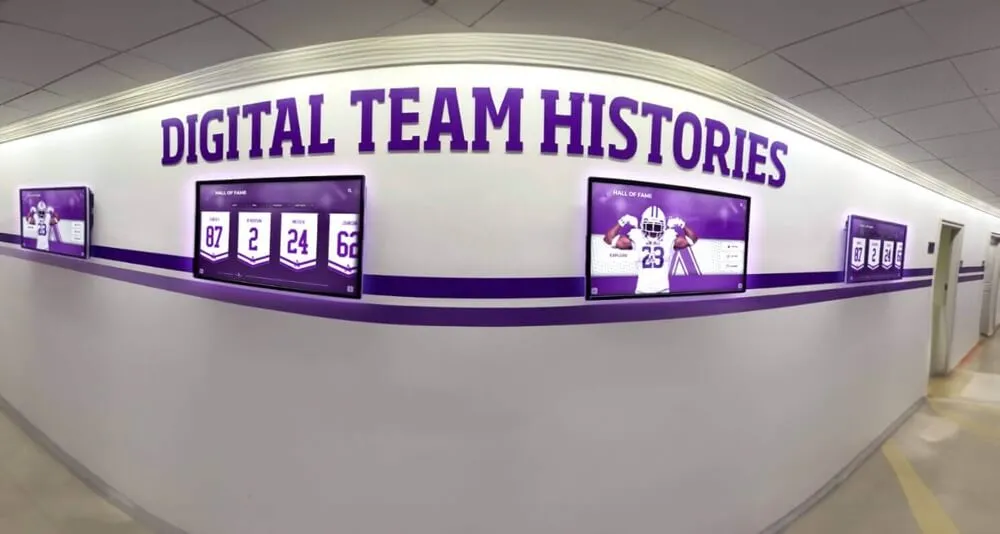
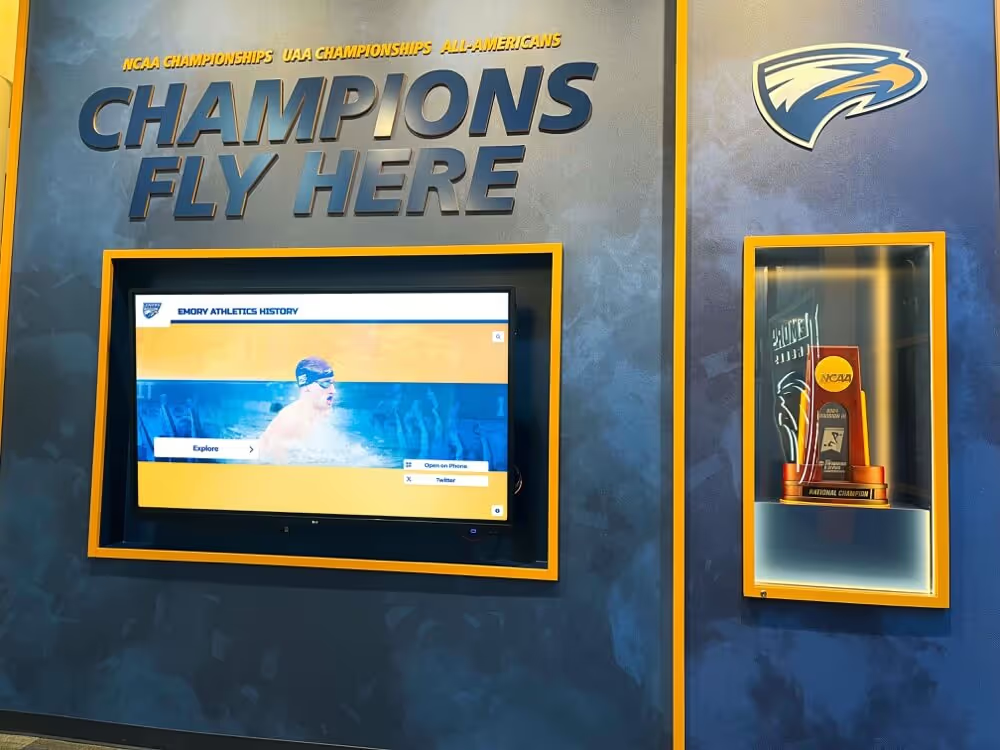
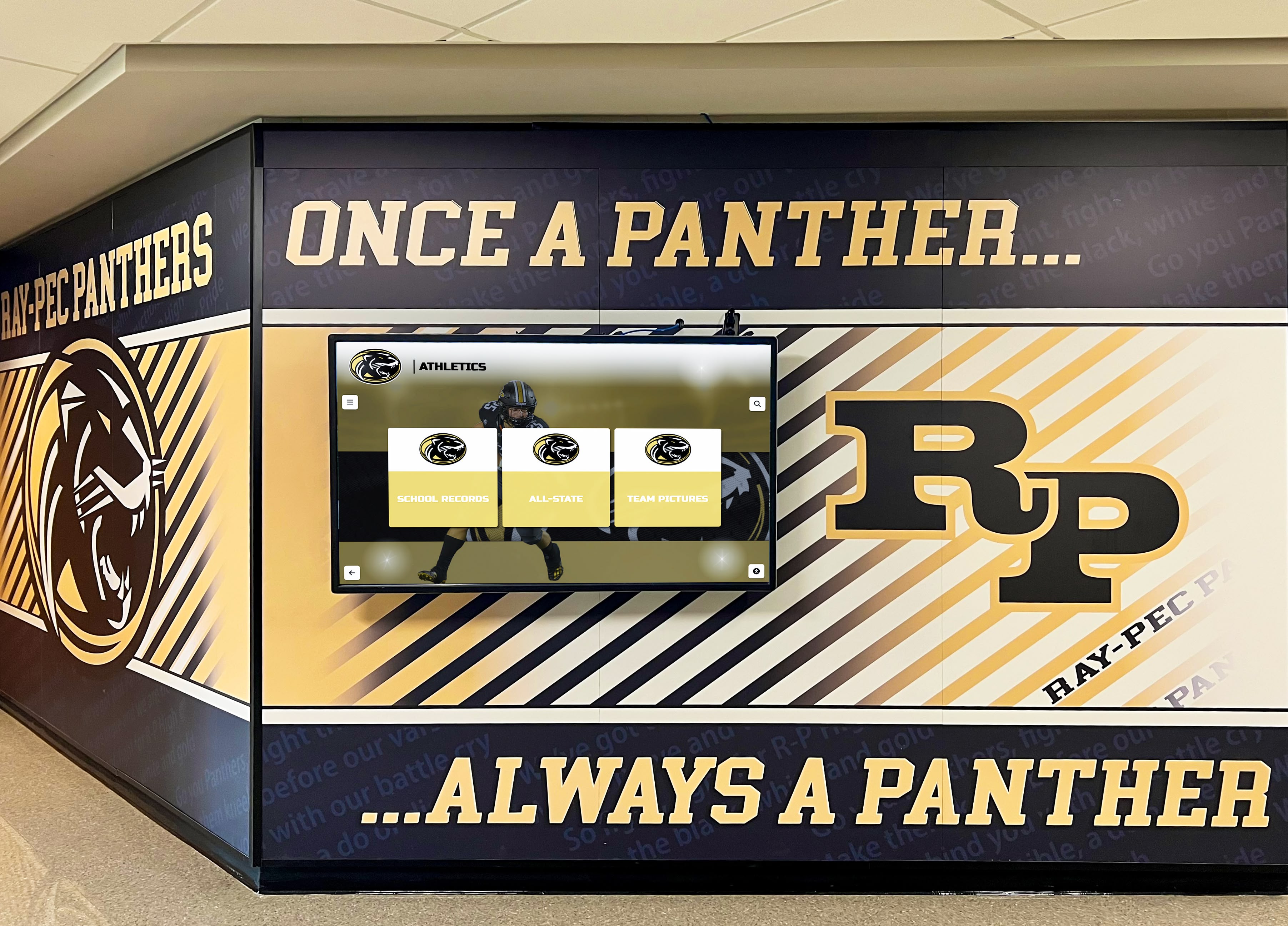
Prominent hallway displays make football excellence visible throughout daily campus life, celebrating achievements while inspiring current athletes
Understanding the National High School Football Hall of Fame
The National High School Hall of Fame, established by the National Federation of State High School Associations (NFHS), represents the highest honor recognizing individuals who achieved exceptional success as high school athletes across multiple sports. While not exclusively focused on football, many legendary football players have received this distinguished national recognition.
Recent inductees into the National High School Hall of Fame include exceptional multi-sport athletes who excelled in football alongside other sports during their high school careers. This national recognition celebrates not just athletic prowess but also academic achievement, leadership, character, and the lasting impact these individuals made on high school sports.
What Makes National Recognition Significant
National hall of fame recognition carries special significance because it:
Validates Historical Excellence Selection to national halls of fame confirms that achievements transcended local or regional success—these athletes competed at the highest levels and demonstrated excellence recognized across the country.
Celebrates Complete Student-Athletes National recognition typically considers academic achievement, leadership, character, and community contribution alongside athletic performance—honoring well-rounded individuals who exemplified educational athletics’ best values.
Creates Lasting Legacy National induction ensures achievements receive permanent documentation and celebration, preserving athletic history for future generations while providing inspiration for current student-athletes.
Connects Past Excellence to Present Opportunity When current high school players learn about national hall of famers who once walked their own hallways and played on their fields, achievement becomes tangible and attainable rather than distant or abstract.
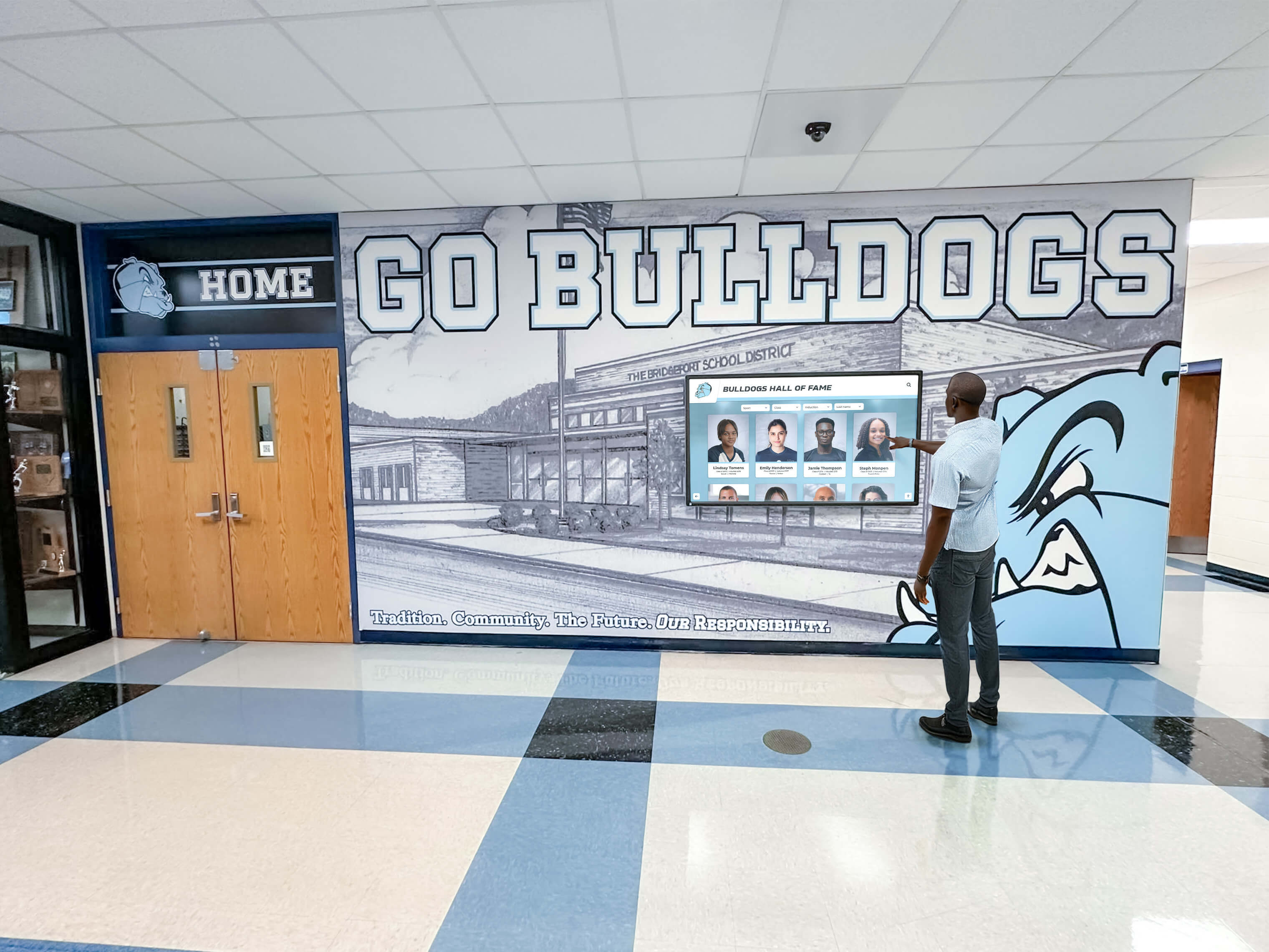
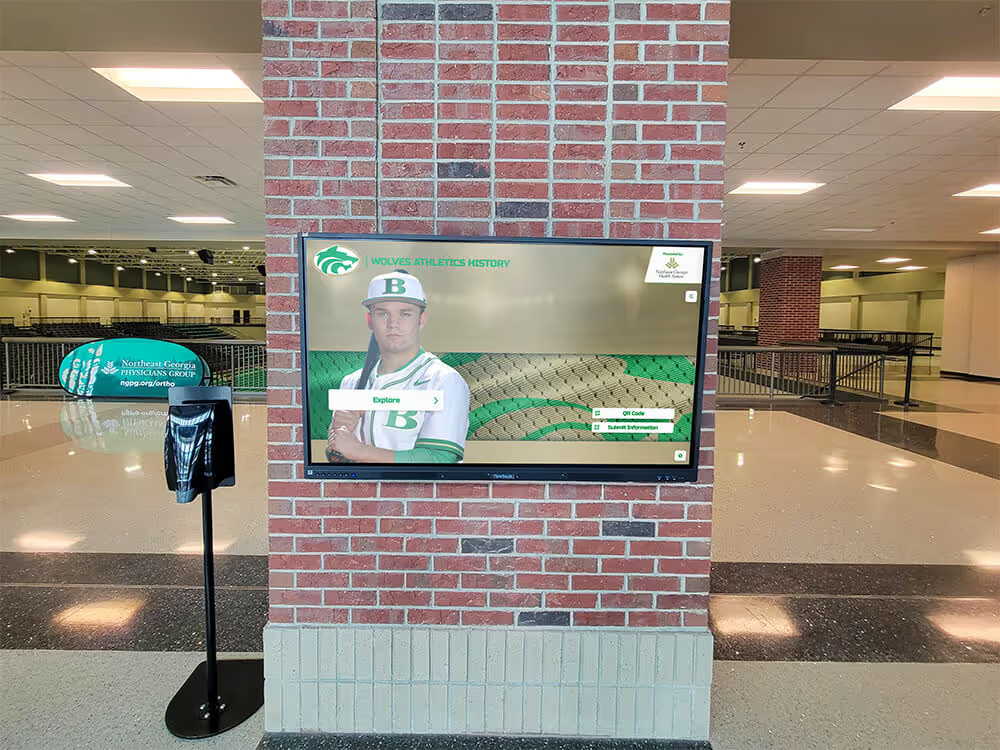
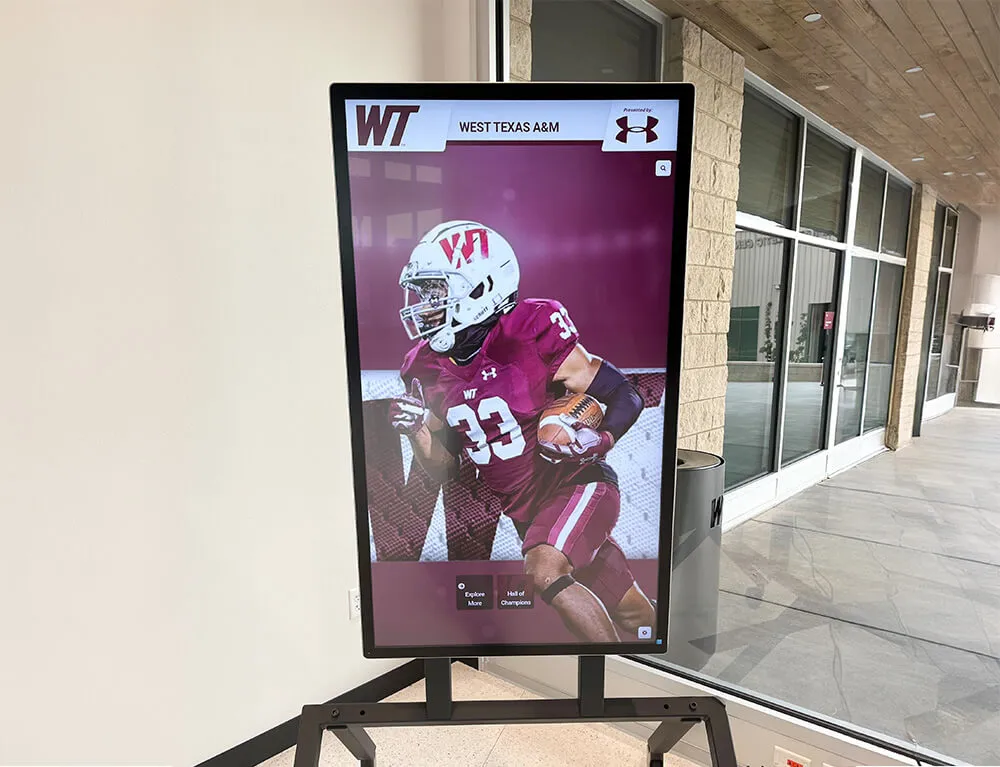
Modern interactive displays enable students to explore football legends' achievements, statistics, and career journeys through engaging touchscreen experiences
Building Local Football Hall of Fame Programs
While national recognition celebrates exceptional individuals, every high school football program can create meaningful local hall of fame recognition honoring their own legends—players who set school records, coaches who built championship traditions, and teams that achieved memorable success.
Establishing Football-Specific Recognition Criteria
Effective football hall of fame programs require clear selection standards ensuring recognition maintains prestige while remaining achievable:
Player Achievement Standards
Football player recognition typically considers:
- All-conference, all-state, all-region, or all-American selections during high school career
- School records in significant statistical categories (rushing yards, passing yards, touchdowns, tackles, interceptions)
- Championship team contributions and playoff success
- Individual honors and awards (player of the year, position-specific recognition)
- Post-high school football achievement (college careers, professional football)
- Leadership, character, and sportsmanship demonstrating program values
Many programs like those featured in California high school football rankings establish specific statistical thresholds appropriate to their offensive and defensive philosophies—ensuring criteria reflect program context rather than applying universal standards that might not fit specific situations.
Coaching Recognition Standards
Football coaches deserve systematic recognition for:
- Career win-loss records and winning percentages
- Conference championships and playoff achievements
- State championship success and tournament advancement
- Program development impact (building struggling programs into competitive forces)
- Player development evidenced through college placements
- Longevity and sustained excellence over multiple seasons
- Character, leadership, and positive community influence
Team Recognition Criteria
Championship teams sometimes receive collective hall of fame recognition:
- State championship teams
- Undefeated or near-perfect seasons
- Teams setting significant program records
- Historically significant achievements breaking program barriers
- Teams demonstrating exceptional character alongside athletic success
Creating Fair Selection Processes
Credible selection processes ensure community confidence in recognition decisions:
Selection Committee Composition
- Current and former football coaches providing expertise
- Athletic directors ensuring program alignment
- School administrators maintaining institutional perspective
- Alumni representatives connecting past and present
- Community members offering broader perspective
- Former inductees when appropriate
Committee size typically ranges 7-11 members—large enough for diverse input while remaining manageable for deliberation.
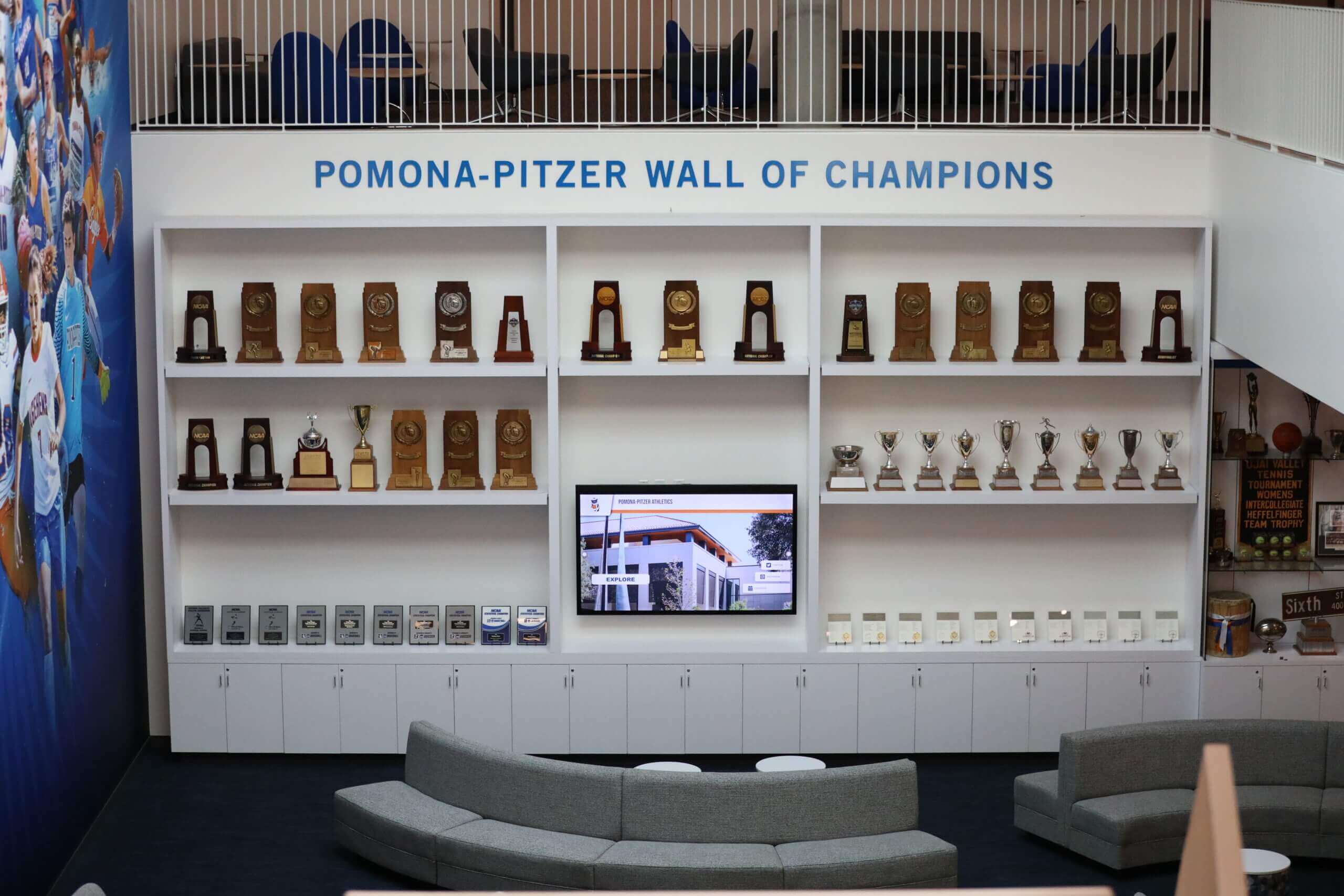
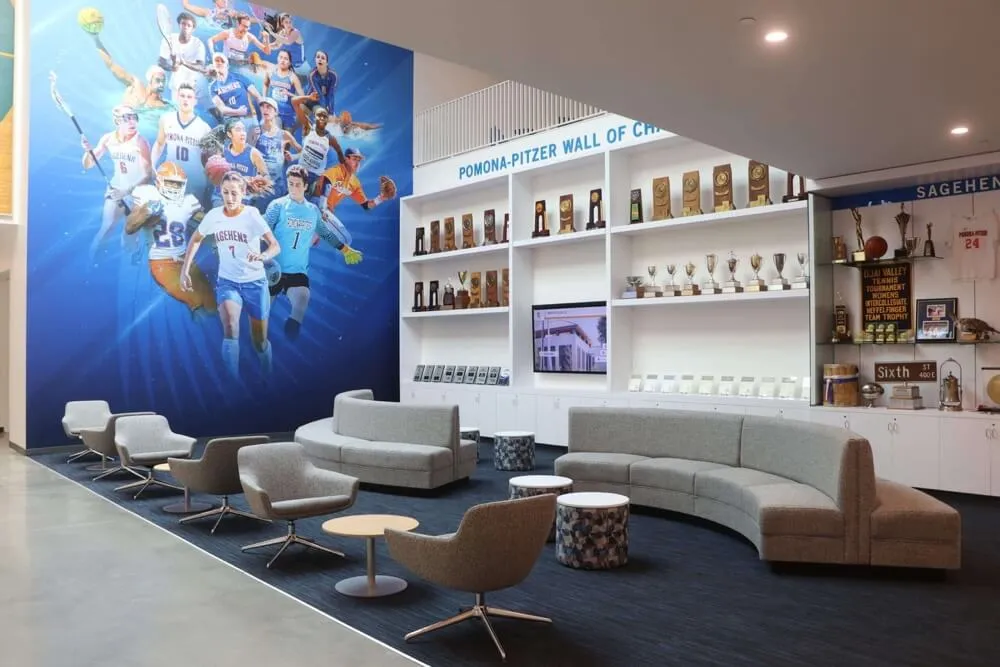
Championship lounges combine trophy displays with gathering spaces where football communities celebrate tradition and excellence
Nomination and Selection Timeline
- Annual nomination windows with clear deadlines
- Committee review evaluating nominees against published criteria
- Deliberation sessions discussing candidate qualifications
- Voting processes determining inductee selections
- Selection announcements generating community excitement
Maintaining Standards Over Time
- Waiting periods (typically 5-10 years post-graduation) ensuring achievement stands test of time
- Annual induction limits preserving recognition prestige
- Regular criteria review ensuring standards remain relevant
- Documentation maintaining selection rationale and institutional memory
Programs implementing comprehensive approaches similar to Illinois high school football playoffs recognition discover that systematic celebration of achievement creates powerful program cultures.
Traditional vs. Modern Football Recognition Displays
Football programs employ diverse display approaches ranging from classic trophy cases to innovative digital solutions—each with distinct advantages addressing different needs and constraints.
Traditional Physical Recognition Methods
Classic approaches remain common across many programs:
Trophy Cases and Plaques Traditional trophy cases display championship trophies, individual awards, and engraved plaques honoring inductees. These physical displays create tangible connections to success while providing visible reminders throughout athletic facilities.
Advantages: Familiar format, permanent physical presence, traditional prestige, direct visual impact
Limitations: Limited space eventually fills completely, minimal information capacity, impossible to update without new fabrication, maintenance challenges as displays age
Championship Banners Many programs hang championship banners in gymnasiums or stadiums celebrating state titles, conference championships, and playoff achievements. These elevated displays create powerful visual statements about program tradition.
Advantages: High visibility during games, strong visual impact, relatively economical, ties directly to facility where achievements occurred
Limitations: Weather exposure for outdoor displays, limited information beyond year and championship, space constraints in smaller facilities, difficult to organize as numbers grow
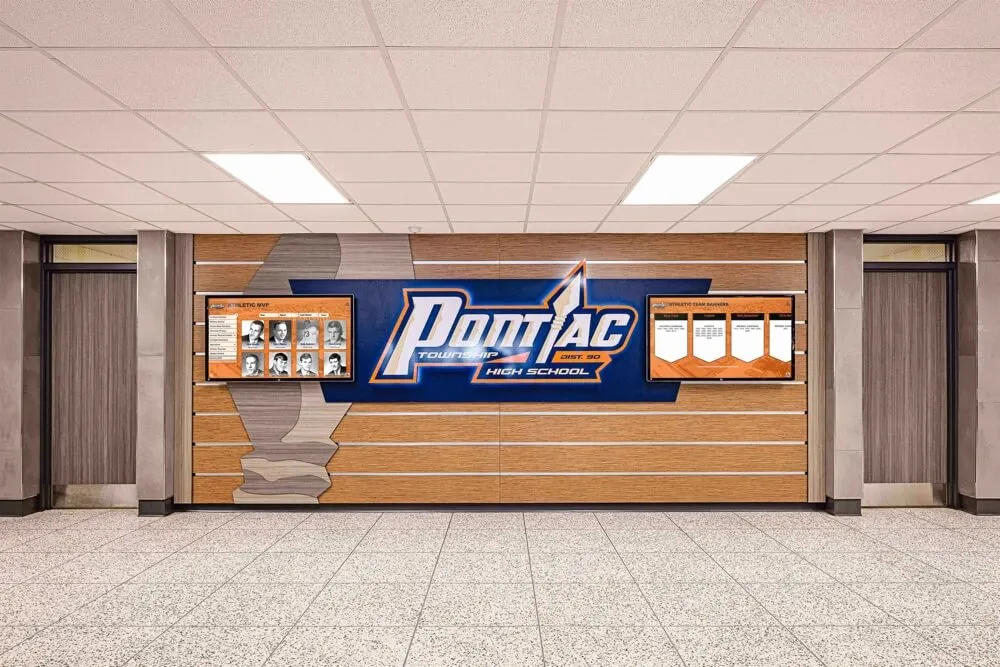
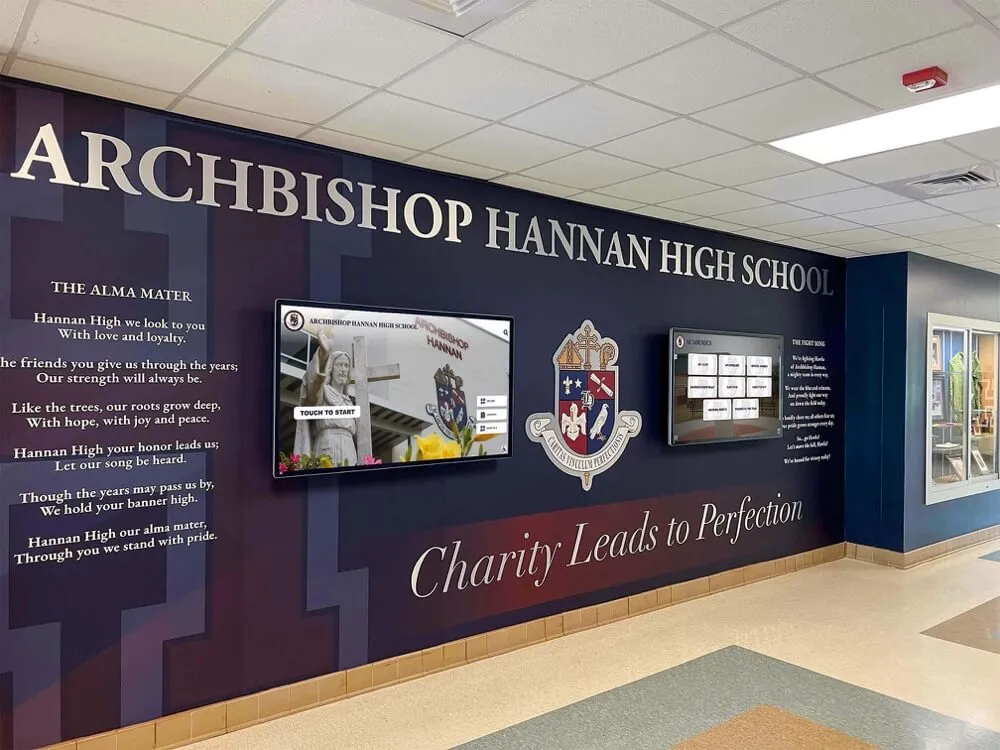
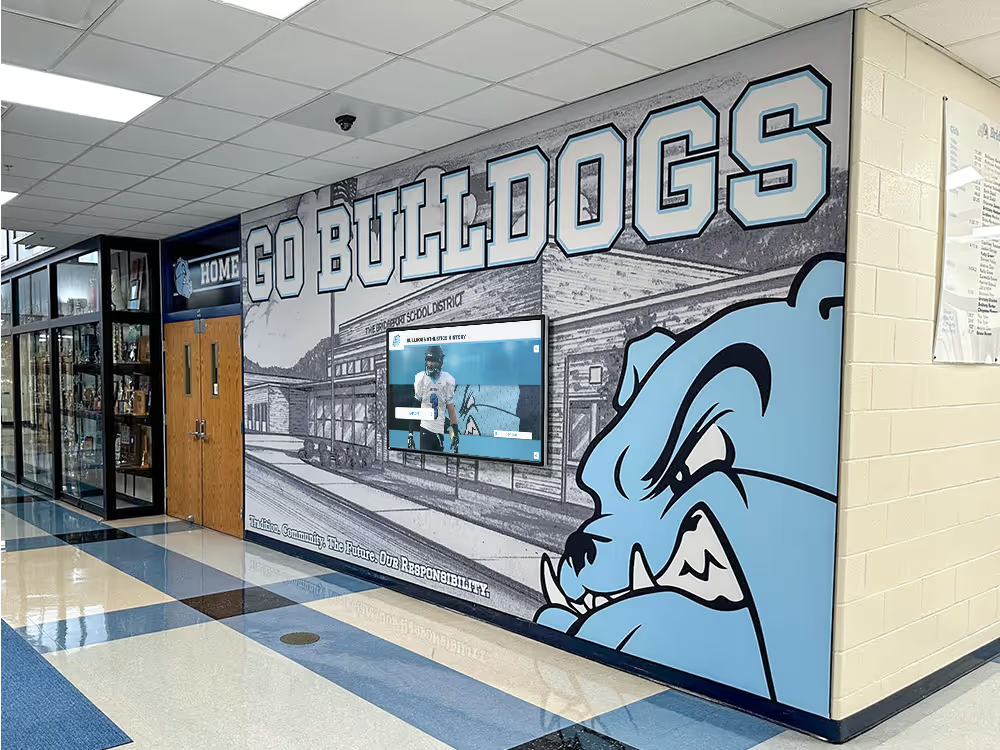
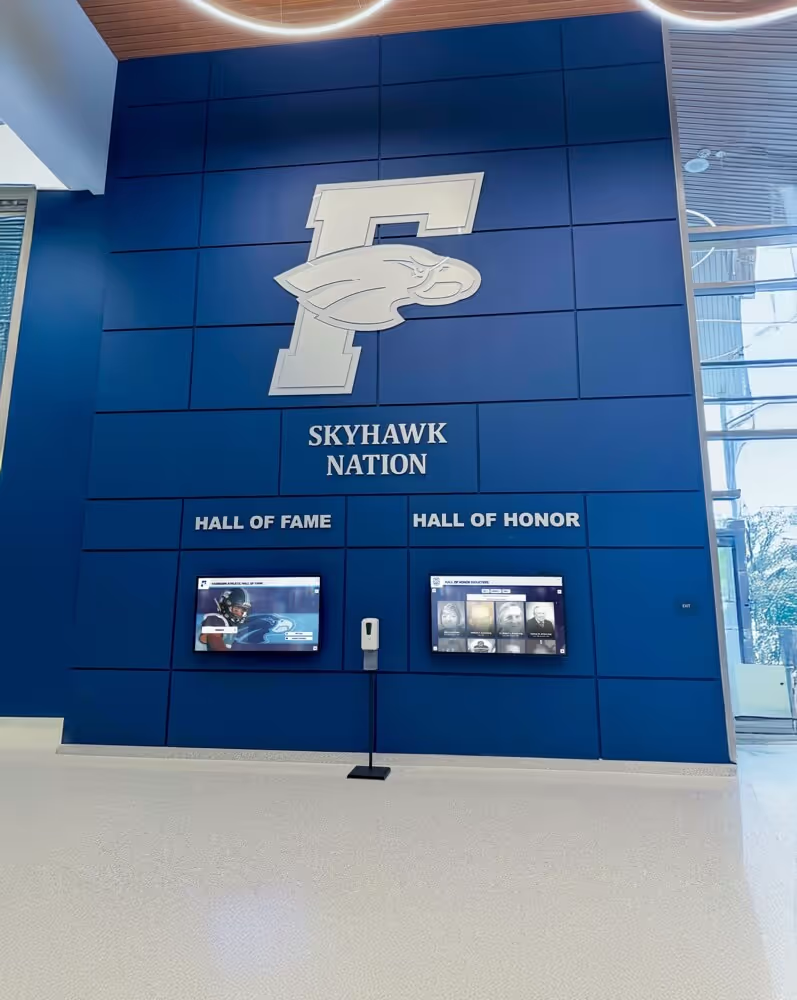
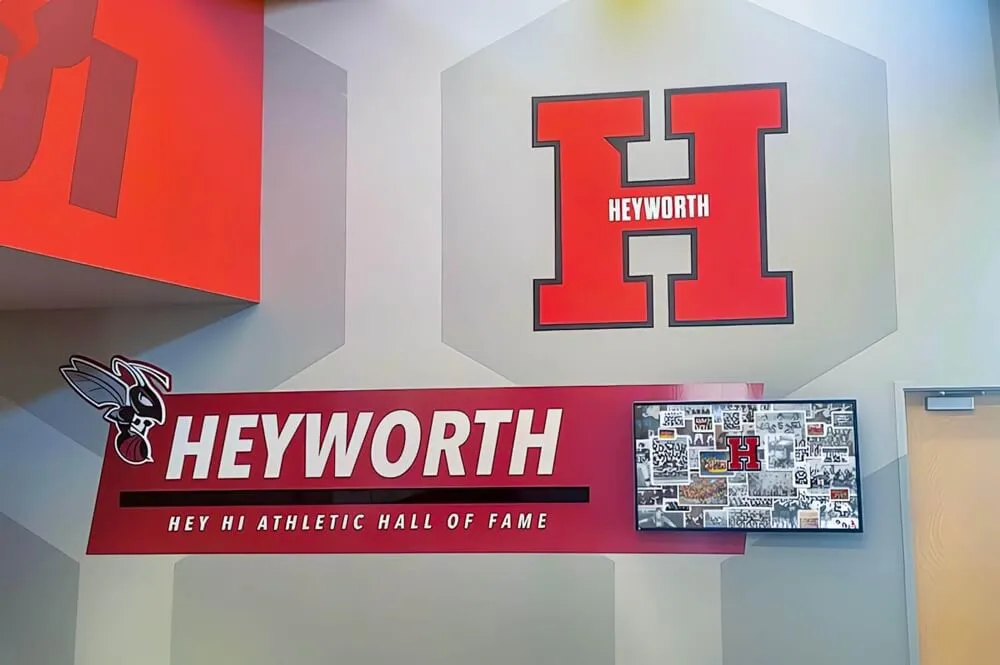
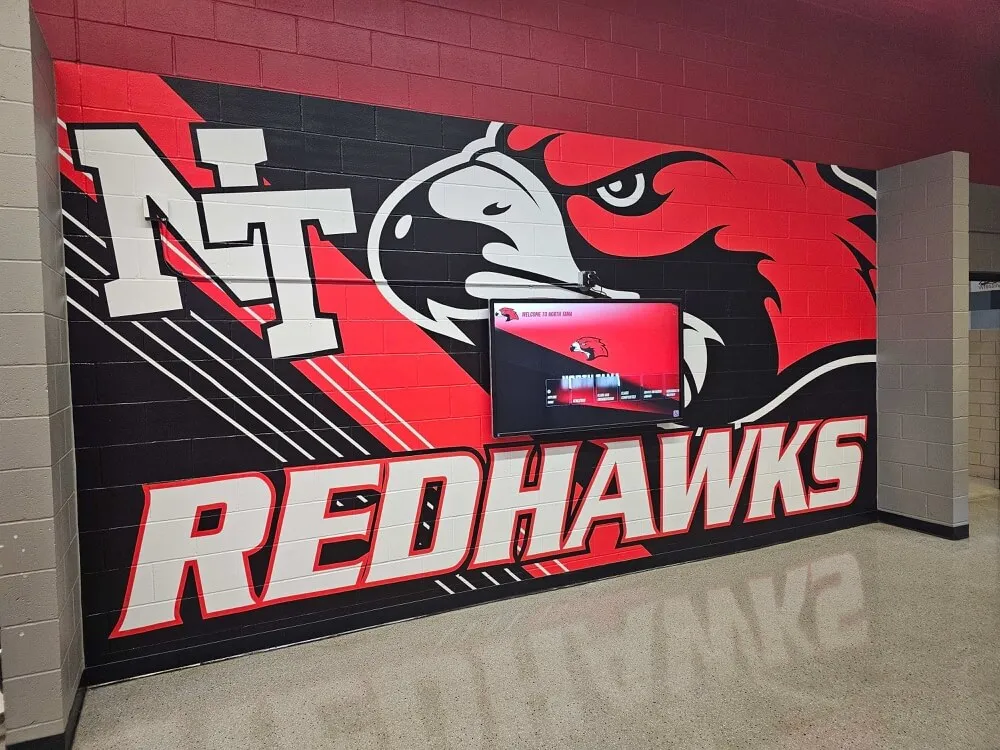
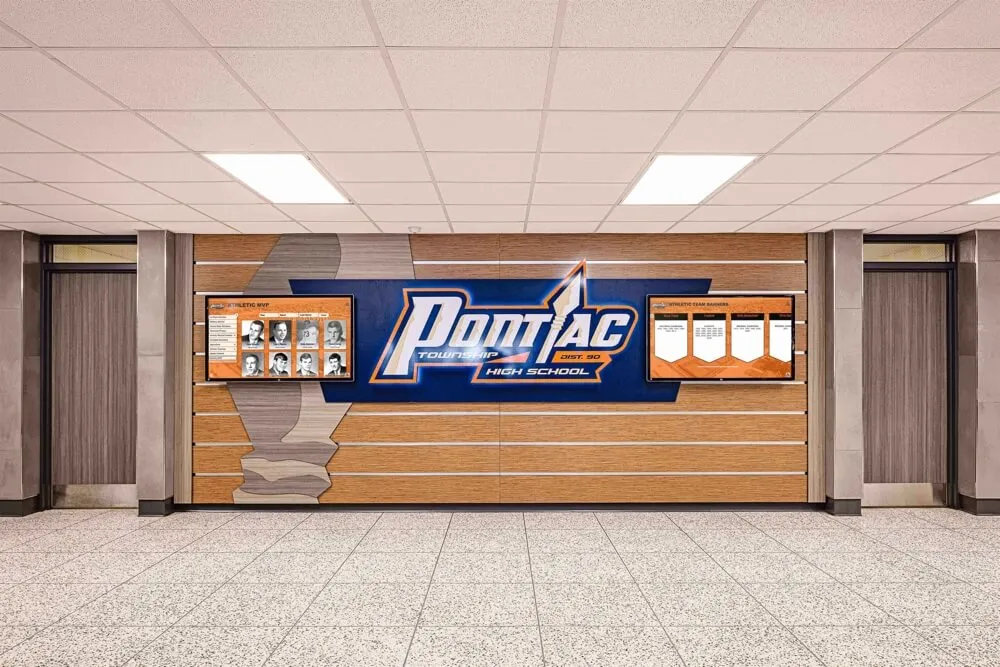
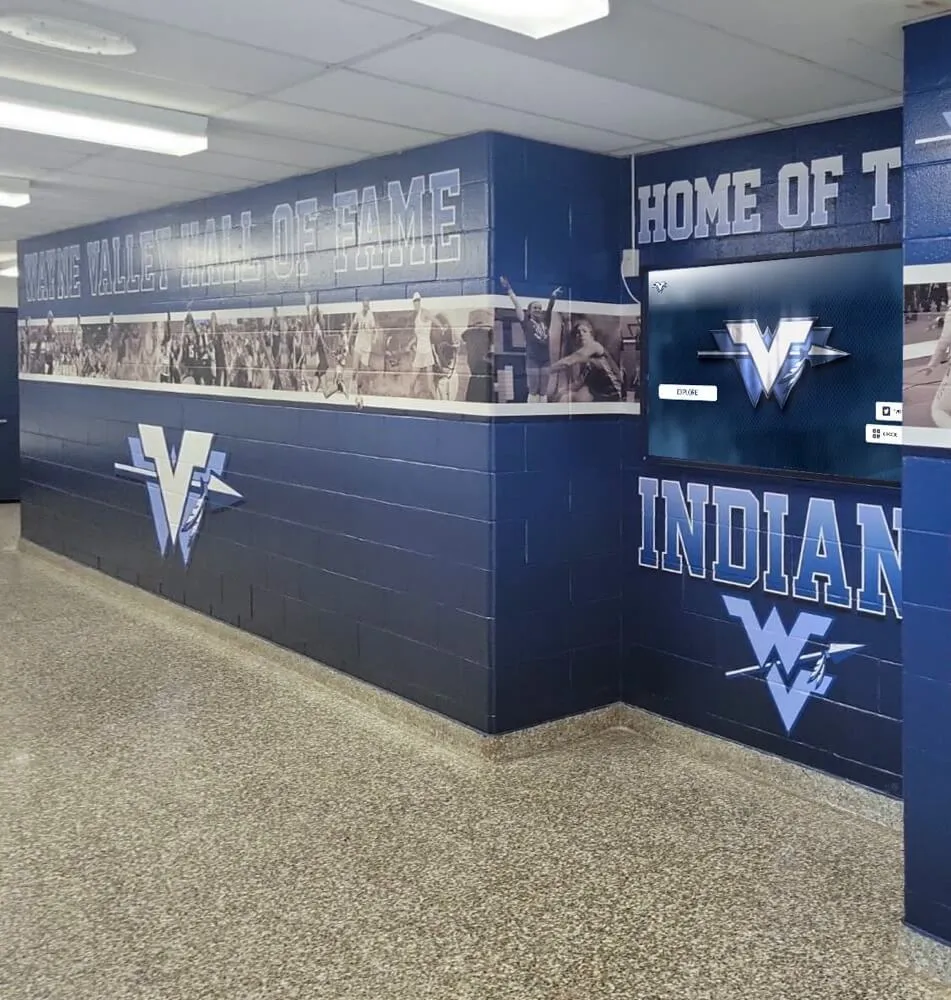
Dedicated hallway recognition spaces integrate school branding with comprehensive achievement displays creating cohesive institutional storytelling
Wall-Mounted Plaque Displays Individual plaques mounted on dedicated walls provide formal permanent recognition. Each plaque typically includes name, year of induction, position played, and brief achievement summary.
Advantages: Professional appearance, individual recognition, controllable costs, respectful traditional format
Limitations: Wall space limitations forcing difficult decisions about expansion, minimal biographical information, no multimedia capability, expensive to update or correct errors
Modern Digital Recognition Solutions
Digital football hall of fame systems address fundamental limitations inherent in physical displays while creating enhanced engagement:
Interactive Touchscreen Displays
Professional touchscreen systems transform football recognition through unlimited capacity and rich multimedia content. Visitors explore detailed player profiles featuring career statistics, championship highlights, biographical information, photos, and video content through intuitive touchscreen interfaces.
Solutions like digital hall of fame touchscreen systems provide:
- Unlimited recognition capacity—never run out of space regardless of inductee numbers
- Rich multimedia profiles including photos, videos, statistics, and biographical depth
- Searchable databases enabling quick discovery of specific players or teams
- Professional consistent presentation across all eras and inductees
- Simple content updates without ordering new plaques or scheduling installation
- Web accessibility extending recognition beyond physical campus
- Cost-effectiveness over long term compared to continuous plaque additions
Implementation Considerations:
- Initial investment ($8,000-15,000 for comprehensive systems)
- Annual software subscriptions ($1,000-3,000 typically)
- Content creation time for historical information
- Technology refresh cycles (7-10 years for hardware)
Strategic Display Placement Maximize impact through thoughtful location selection:
- Athletic facility main lobbies where teams, families, and visitors gather
- Hallway corridors connecting locker rooms to fields or gymnasiums
- School main entrances for programs where football represents institutional identity
- Fieldhouse or stadium entrances creating arrival experiences
- Multiple locations ensuring diverse audience reach
Schools implementing high school trophy case alternatives discover that single digital displays provide recognition capacity equivalent to 50-100+ physical plaques while delivering substantially greater engagement.

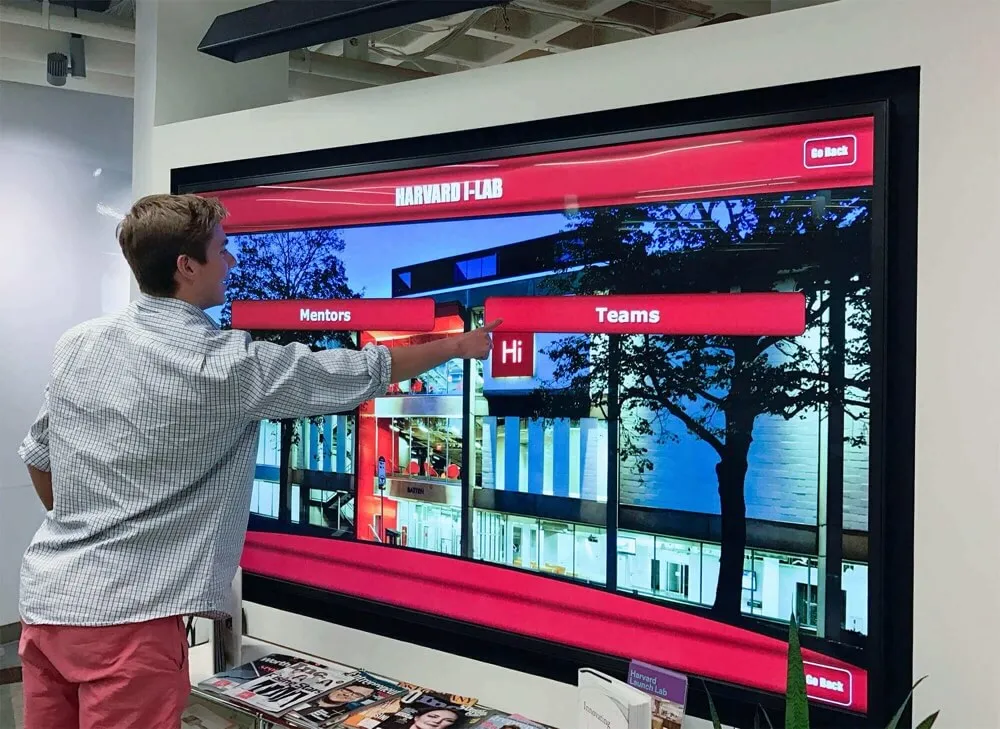
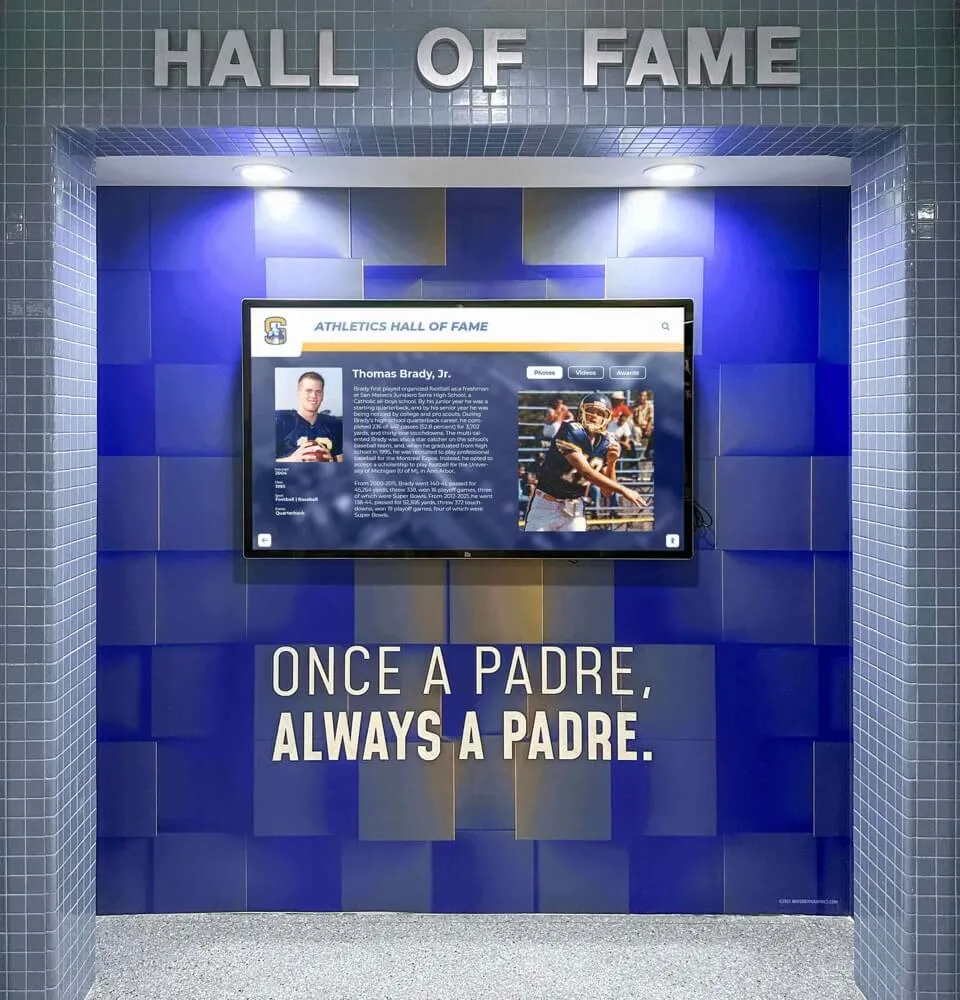
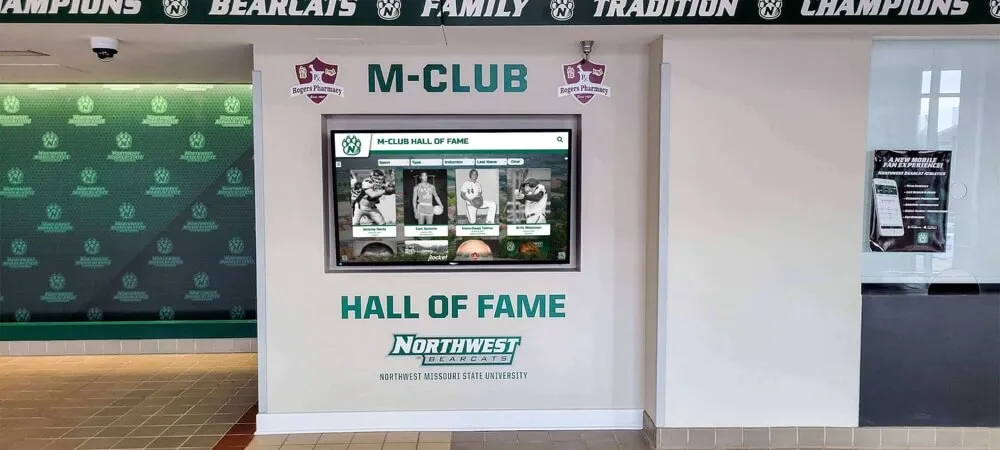
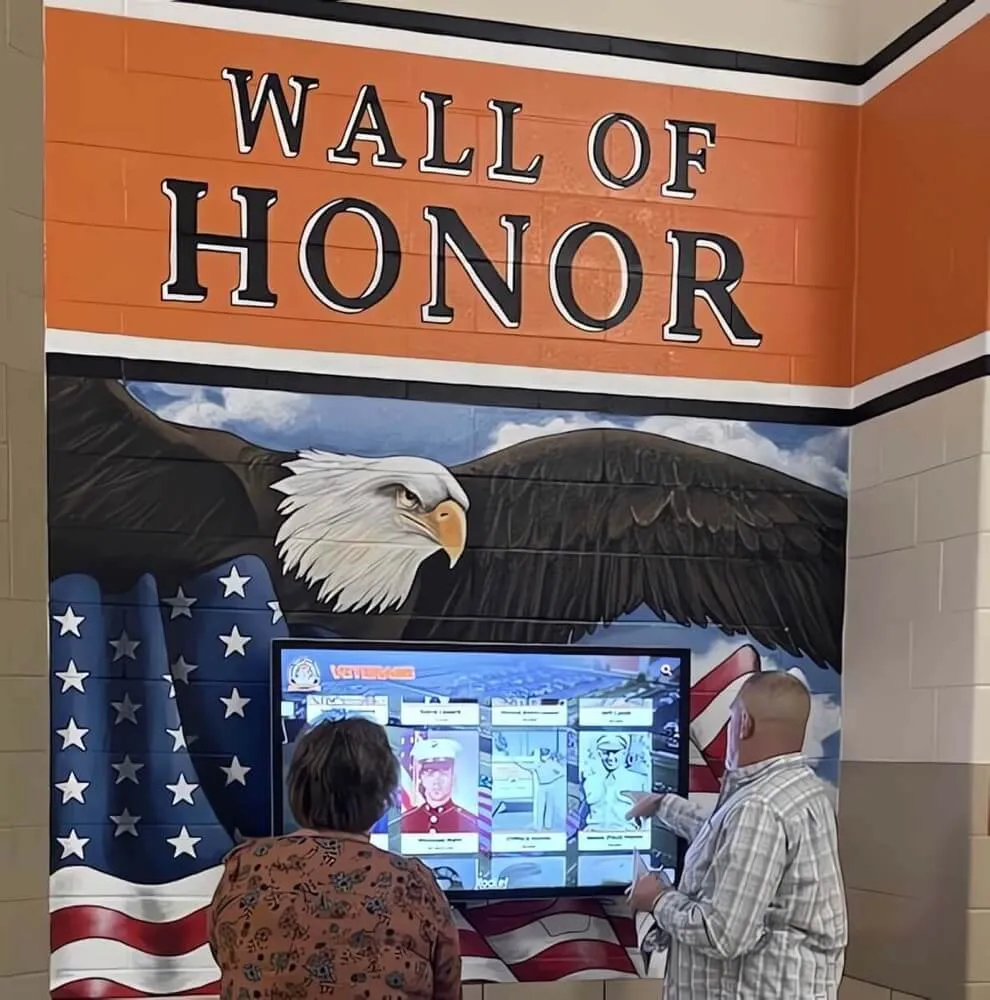
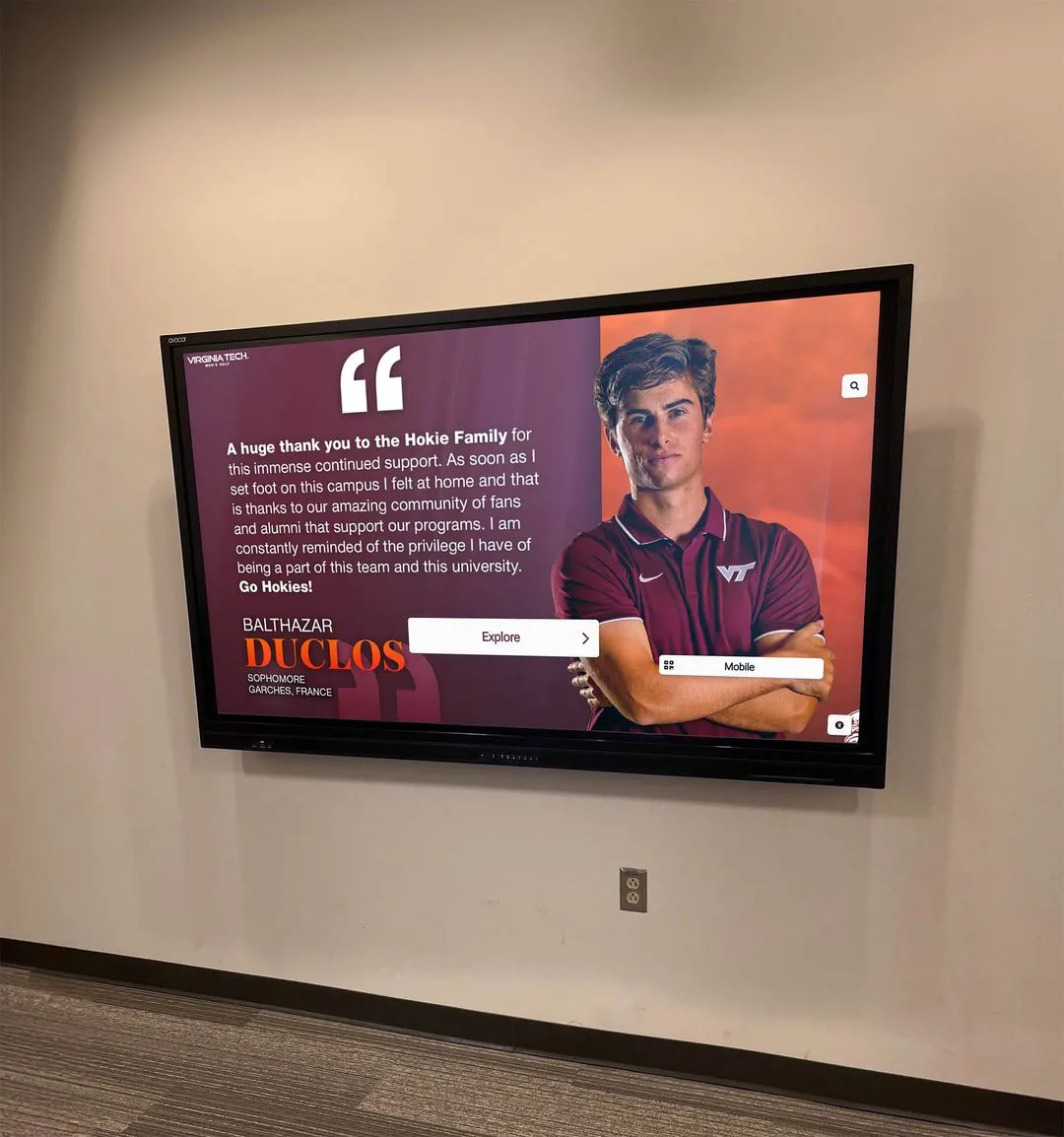
Touchscreen interfaces enable detailed exploration of player achievements, statistics, career highlights, and biographical stories impossible on traditional plaques
Hybrid Recognition Approaches
Many successful programs implement combination strategies:
- Maintain existing physical displays honoring historical continuity
- Add digital touchscreens providing expanded capacity and information
- Create web-accessible online platforms extending recognition worldwide
- Preserve championship banners while supplementing with digital content
This hybrid model respects tradition while embracing capabilities solving space, accessibility, and engagement challenges—often the most sustainable approach in programs where stakeholders value existing recognition.
Content That Brings Football Legends to Life
Recognition effectiveness depends heavily on content quality—the biographical information, statistics, photos, and stories that transform names into compelling narratives inspiring current athletes.
Gathering Historical Football Information
Creating comprehensive profiles, especially for players from decades past, requires systematic research:
Information Sources
- School yearbook archives providing photos and participation documentation
- Athletic department records containing statistics and championship information
- Local newspaper archives offering contemporary game coverage
- Alumni interviews collecting personal memories and career updates
- Family collections accessing photos and memorabilia unavailable elsewhere
- State athletic association records documenting playoff achievements
Programs implementing digital yearbook archives often discover hall of fame projects provide motivation for broader historical preservation efforts benefiting multiple purposes.
Creating Compelling Player Profiles
Effective inductee profiles balance factual achievement with personal storytelling:
Essential Profile Elements
- Headline summarizing primary achievement (e.g., “1,500-Yard Rusher Led Team to State Championship”)
- Years of participation establishing timeframe
- Positions played and role on teams
- Statistical achievements and records set
- Championships won and playoff success
- Individual honors and recognitions received
- Post-high school football career (college, professional)
- Current career and life achievements
- Personal reflections on football experience
- Multiple photos showing playing career
Statistical Documentation Football lends itself to quantitative achievement documentation:
- Career rushing, passing, receiving, or defensive statistics
- Single-season and career records
- Touchdowns, yards, tackles, interceptions, sacks
- Championship game performances
- All-time rankings in program history
Digital platforms excel at organizing and presenting statistical data in visually appealing formats—creating “stat sheets” enhancing profiles without overwhelming viewers with numbers.
Multimedia Content Integration
Video content transforms recognition from static information to engaging experiences:
Game Highlight Videos Championship games, record-setting performances, and memorable plays bring achievements to life. Even 2-3 minute highlight compilations create powerful emotional connections impossible through text alone.
Interview and Reflection Videos Current video interviews with inductees sharing reflections on careers, influences, and lessons learned provide wisdom and inspiration for current players while documenting oral history.
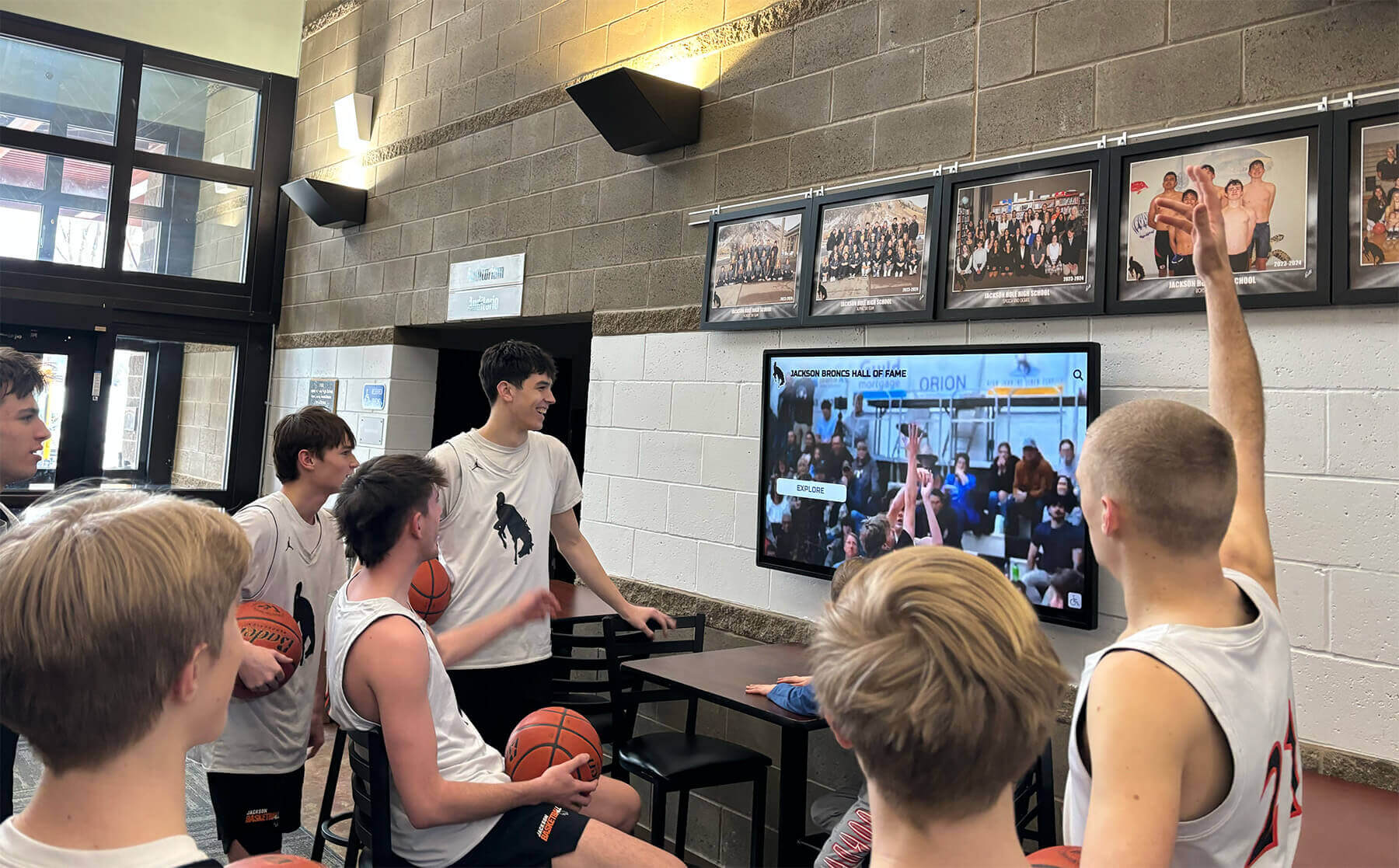
Highlight videos enable current athletes to witness legendary performances, creating tangible connections to program tradition
Coaching Testimonials Former coaches discussing player impact, work ethic, and character provide context about what made inductees special beyond statistics.
Historical Context Content Brief explainers about eras, rule differences, or competitive contexts help viewers understand achievement significance relative to when accomplishments occurred.
Planning Memorable Football Hall of Fame Induction Ceremonies
Formal induction ceremonies represent peak moments in recognition programs—public celebrations creating memorable experiences for inductees, families, and communities while reinforcing program prestige.
Ceremony Timing and Coordination
Strategic scheduling maximizes attendance and impact:
Football Season Integration Most programs schedule inductions during football season creating natural connections:
- Homecoming game weekends bringing alumni to campus
- Senior night celebrations honoring current players alongside legends
- Championship anniversary games (10, 25, 50 years later)
- Halftime ceremonies providing built-in large audiences
- Post-game receptions enabling informal interaction
Off-Season Alternatives Some programs hold spring or summer ceremonies:
- May/June timing after academic year concludes
- Dedicated banquet formats without game distractions
- Better weather for outdoor receptions
- Less competition with fall activities
- Easier travel for distant alumni
Select timing considering:
- Alumni availability and travel logistics
- Weather if outdoor elements planned
- Competition with other school and community events
- Volunteer committee availability
- Facility capacity and accessibility
Engaging Ceremony Elements
Compelling programs balance formality with entertainment:
Opening and Context
- Welcome from athletic director or principal
- National anthem and color guard
- Overview of football program history and tradition
- Recognition of selection committee
- Explanation of hall of fame significance
Inductee Recognition
- Video biography presentations (3-5 minutes each) showcasing careers
- Introduction speeches highlighting specific achievements
- Inductee acceptance remarks sharing gratitude and reflections
- Presentation of plaques, jackets, or rings
- Photo opportunities for media and families
Programs creating content similar to senior recognition ceremonies discover that multimedia presentations significantly enhance emotional impact.
Connection Elements
- Current team introduction connecting past and present
- Recognition of inductees’ former coaches or teammates in attendance
- Special acknowledgment of championship teams represented
- Unveiling updated displays or recognition installations
Post-Ceremony Reception Informal receptions provide crucial networking:
- Space for inductees to reconnect with teammates and coaches
- Opportunities for current players to meet legends
- Family celebration and photo opportunities
- Community interaction and congratulations
- Display viewing enabling exploration of updated recognition
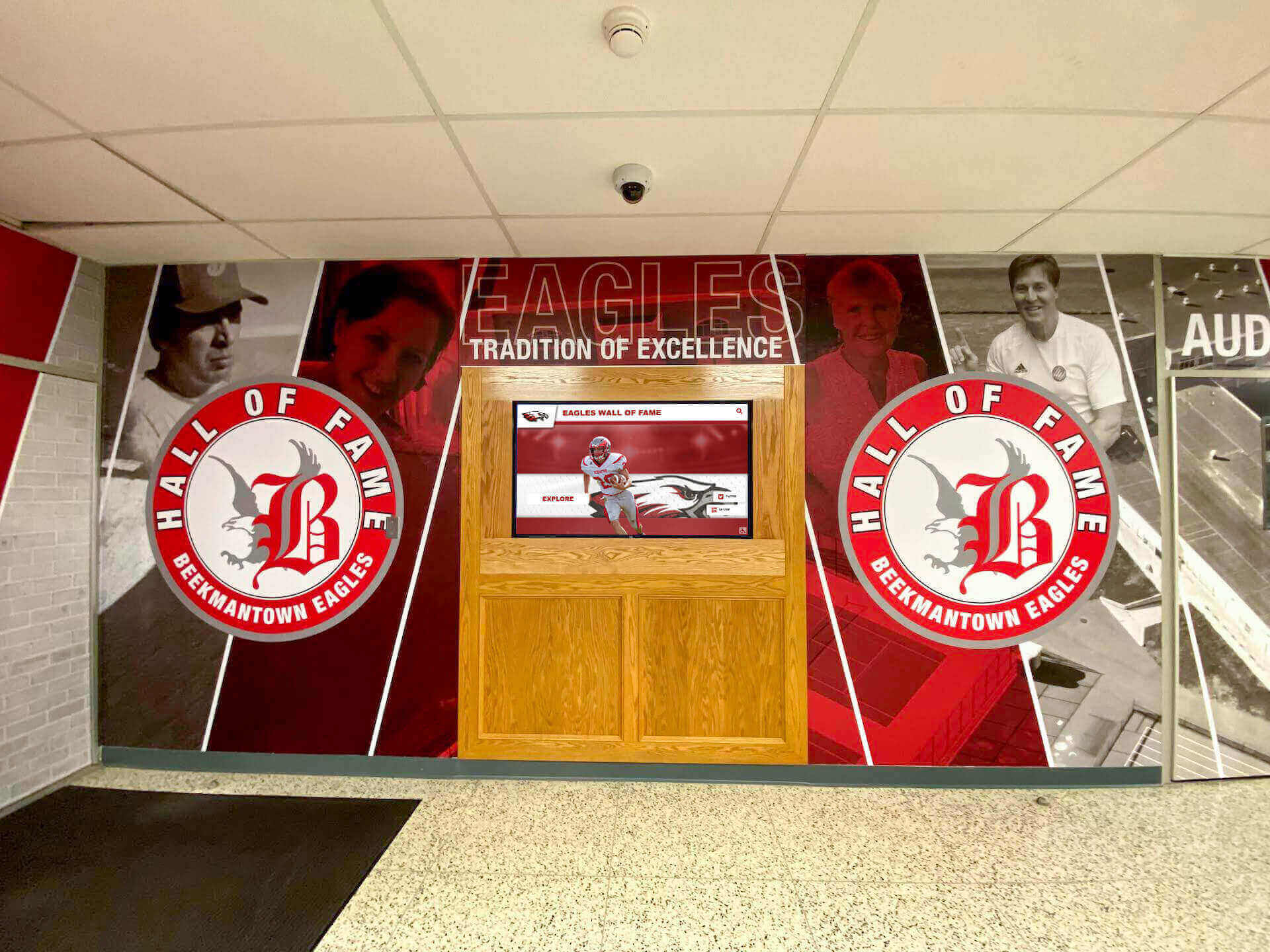
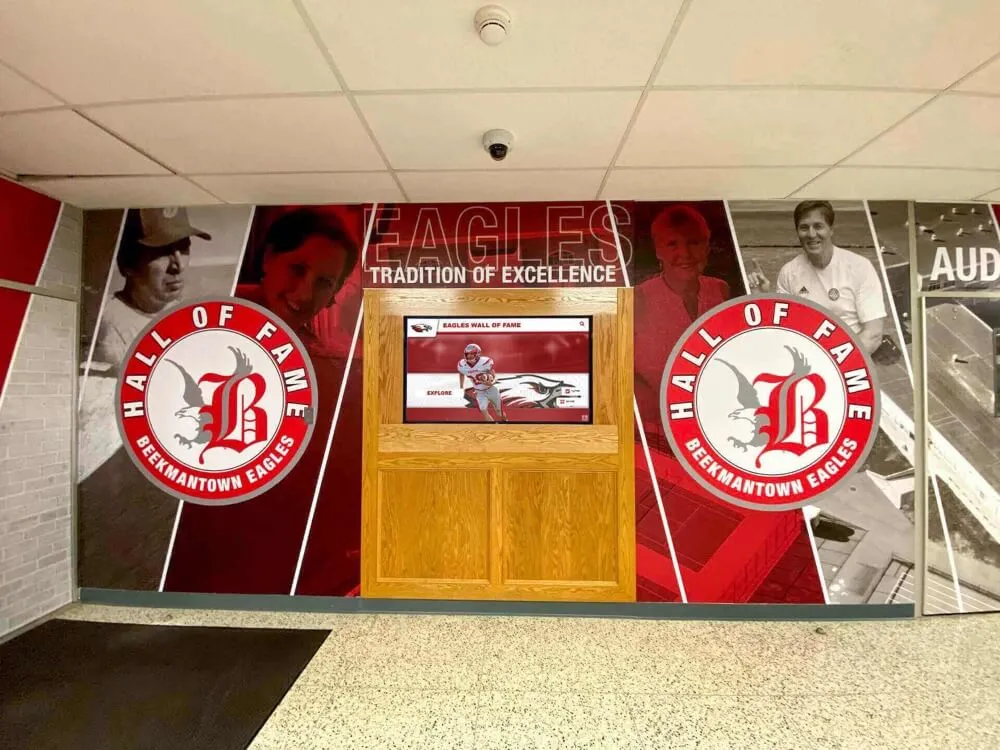
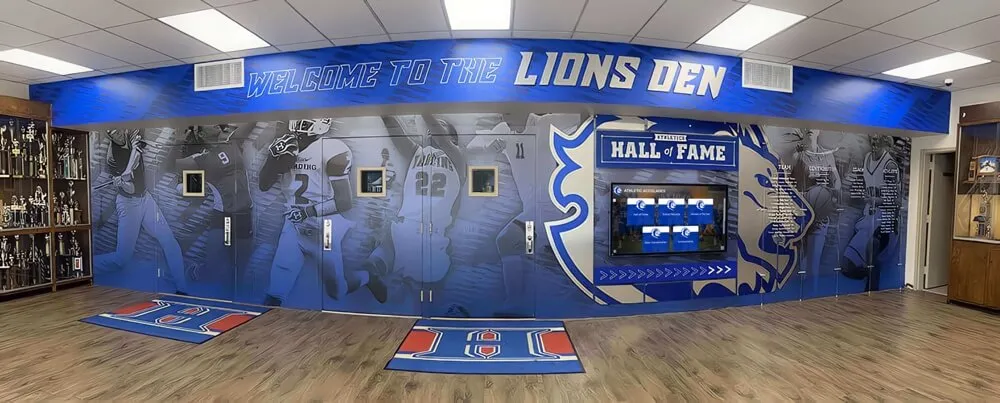
Comprehensive lobby installations create impressive first impressions showcasing football tradition through integrated murals and displays
Leveraging Football Recognition for Program Development
Strategic recognition programs advance multiple football program goals beyond honoring achievement:
Recruiting Advantages Through Visible Tradition
Comprehensive hall of fame displays become powerful recruiting tools:
Demonstrating Program Quality When prospective players and families visit campus, recognition displays provide tangible evidence of:
- Long-term program tradition and success
- Development pathways from high school to college football
- Institutional commitment to football excellence
- Winning culture and championship expectations
High schools with prominent recognition report that displays frequently become conversation focal points during recruiting visits—helping programs compete successfully for top talent against rival schools.
Creating Aspirational Goals Current and prospective players seeing detailed profiles of program legends understand concrete pathways to recognition—achievement becomes tangible rather than abstract. This aspirational quality motivates excellence while communicating that distinction remains achievable through dedication.
Alumni Engagement and Support Building
Hall of fame recognition creates powerful connection points with football alumni:
Strengthening Program Relationships Recognized players maintain stronger program relationships:
- Regular attendance at games and program events
- Volunteer coaching and mentoring current players
- Financial support for equipment, facilities, and program needs
- Professional network connections benefiting current players
- Advocacy supporting program resources and priorities
Research on athletic recognition programs demonstrates that hall of fame members frequently become most engaged supporters—recognition creates gratitude and renewed investment translating to sustained participation.
Creating Reunion and Networking Opportunities Annual induction ceremonies bring former players back to campus:
- Reunions with teammates and coaches
- Cross-generational connections between different eras
- Mentorship relationships with current players
- Fundraising opportunities in celebratory contexts
- Community building strengthening program support networks
Enhancing Financial Support Hall of fame members demonstrate higher lifetime giving rates than non-recognized alumni. Recognition creates appreciation and continued connection translating to:
- Increased annual fund contributions
- Capital campaign participation for facilities
- Memorial gifts honoring teammates or coaches
- Estate planning including program support
- Sponsorships and corporate philanthropy
Building Community Pride and Support
Football recognition extends value throughout communities:
Strengthening Community Identity In many communities, high school football represents cultural centerpieces. Hall of fame programs celebrating local heroes:
- Create shared pride in collective achievements
- Generate positive attention for communities
- Provide intergenerational connections through football memories
- Strengthen social fabric connecting diverse residents
- Support broader community development and cohesion
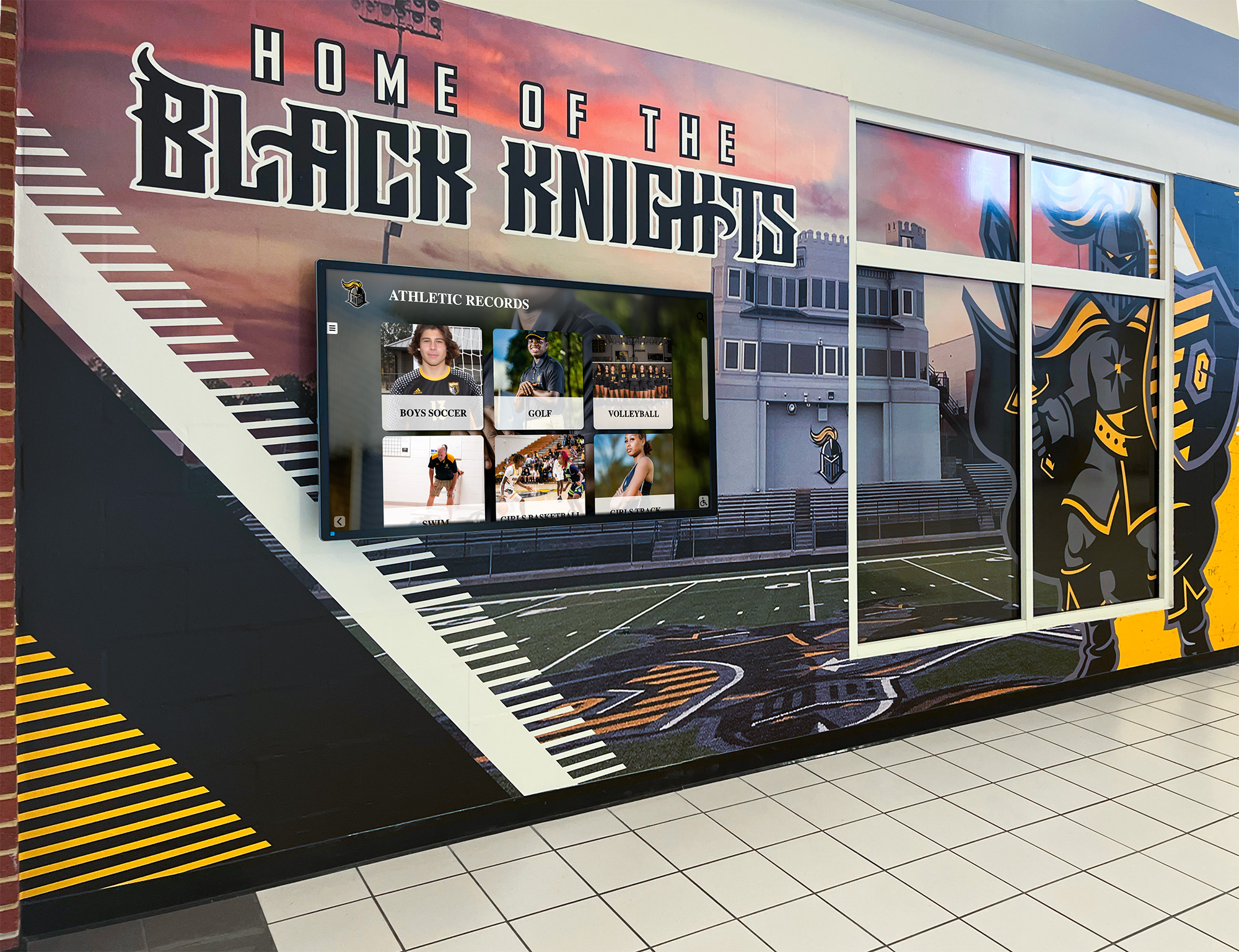
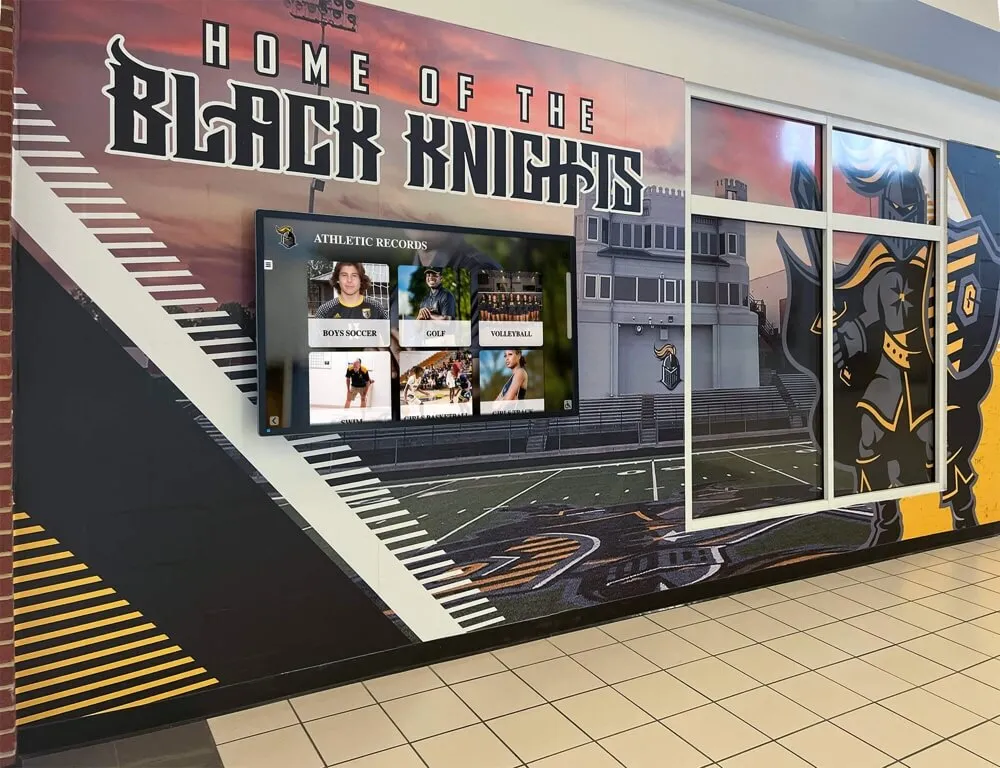
Branded recognition installations strengthen institutional identity while celebrating football excellence throughout campus environments
Enhancing Program Visibility Recognition generates media attention and community awareness:
- Local media coverage of inductions and announcements
- Social media engagement extending reach
- Community conversations about football tradition
- Positive school perception and reputation
- Support for program resources and facilities
Creating Booster and Volunteer Support Visible recognition programs attract volunteers and boosters:
- Pride motivating community members to contribute time
- Fundraising opportunities connected to recognition
- Volunteer coaches drawn to programs celebrating tradition
- Support networks strengthening through shared investment
- Long-term sustainability through broad community engagement
Modern Technology Platforms for Football Recognition
Digital recognition systems require capable technology platforms supporting both touchscreen displays and web accessibility. Platform selection significantly impacts long-term satisfaction and program success.
Essential Platform Capabilities
Quality football hall of fame systems should provide:
Football-Specific Features
- Statistical organization supporting football metrics
- Team roster connections linking teammates
- Championship team recognition alongside individuals
- Position-based organization and filtering
- Season and era-based browsing
- Coach and player relationship connections
Multimedia Integration
- High-quality photo galleries showing multiple images per player
- Video hosting and streaming for highlight reels
- Document embedding for newspaper articles and awards
- Audio integration for interviews or commentary
- Responsive media display across screen sizes
User Experience Excellence
- Intuitive navigation requiring no instruction
- Fast search finding specific players instantly
- Advanced filtering by position, era, achievement type
- Related content suggestions connecting teammates
- Social sharing enabling inductees to share recognition
- Mobile optimization for smartphone access
Programs exploring digital signage services should prioritize recognition-specific platforms over generic digital signage lacking specialized functionality.

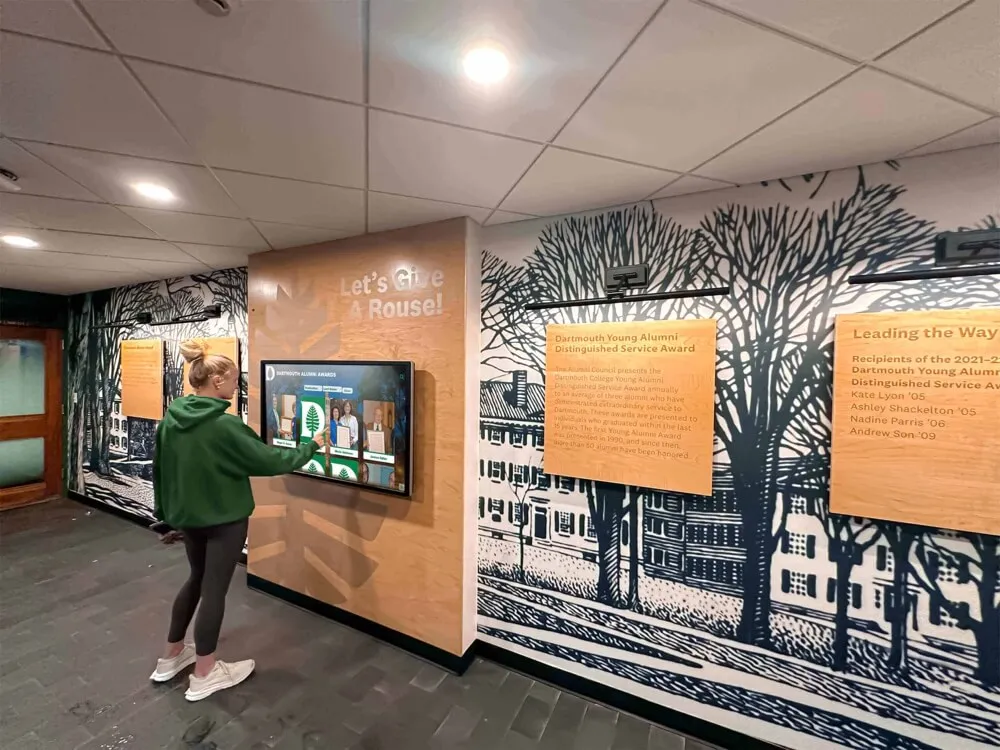
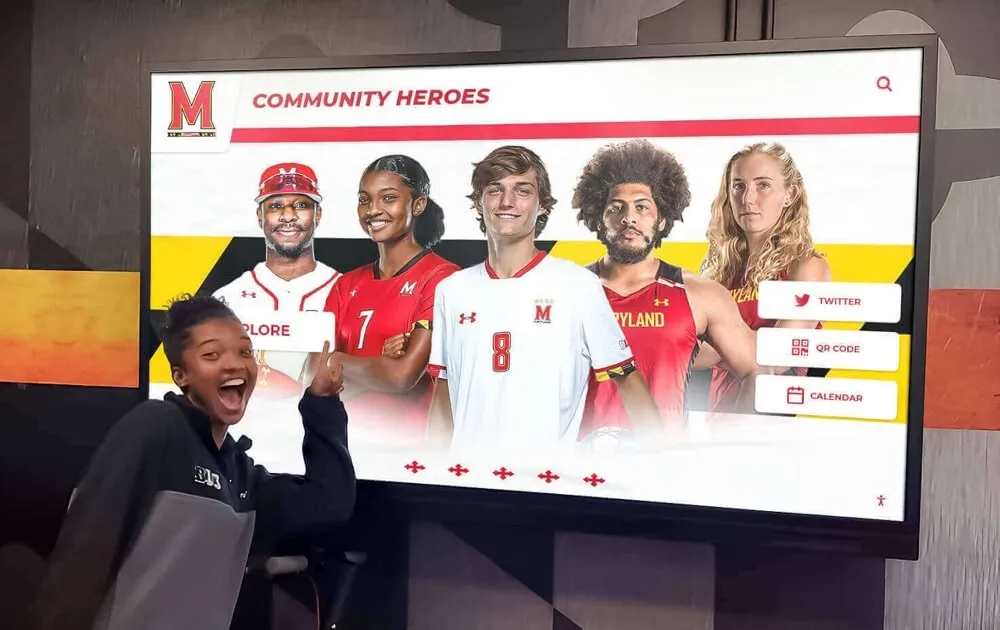
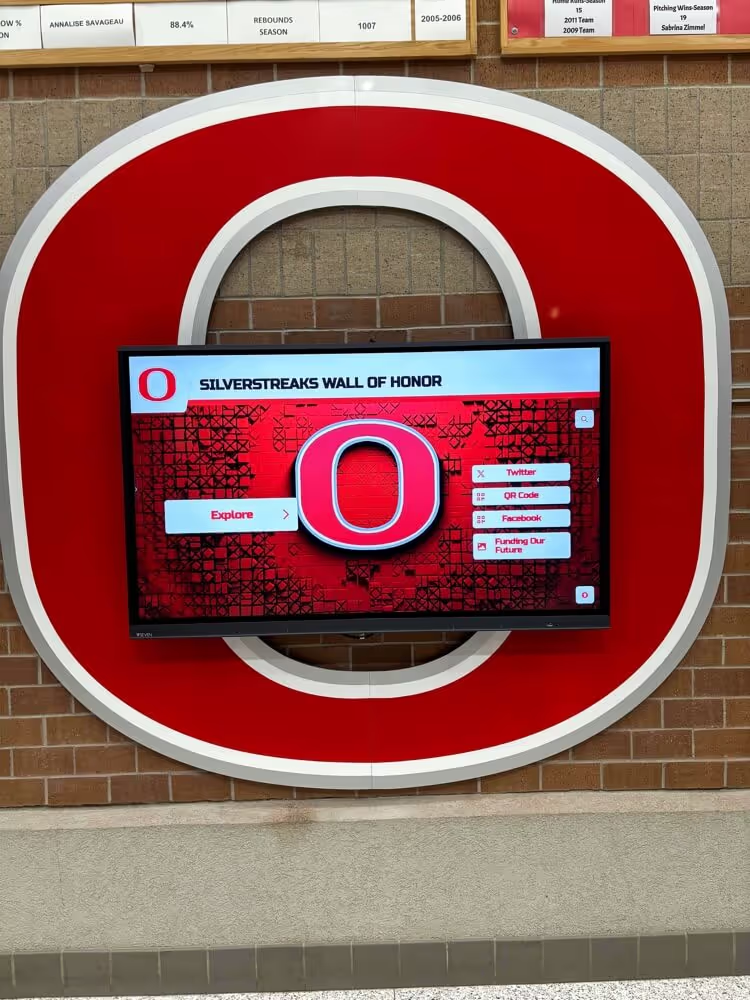
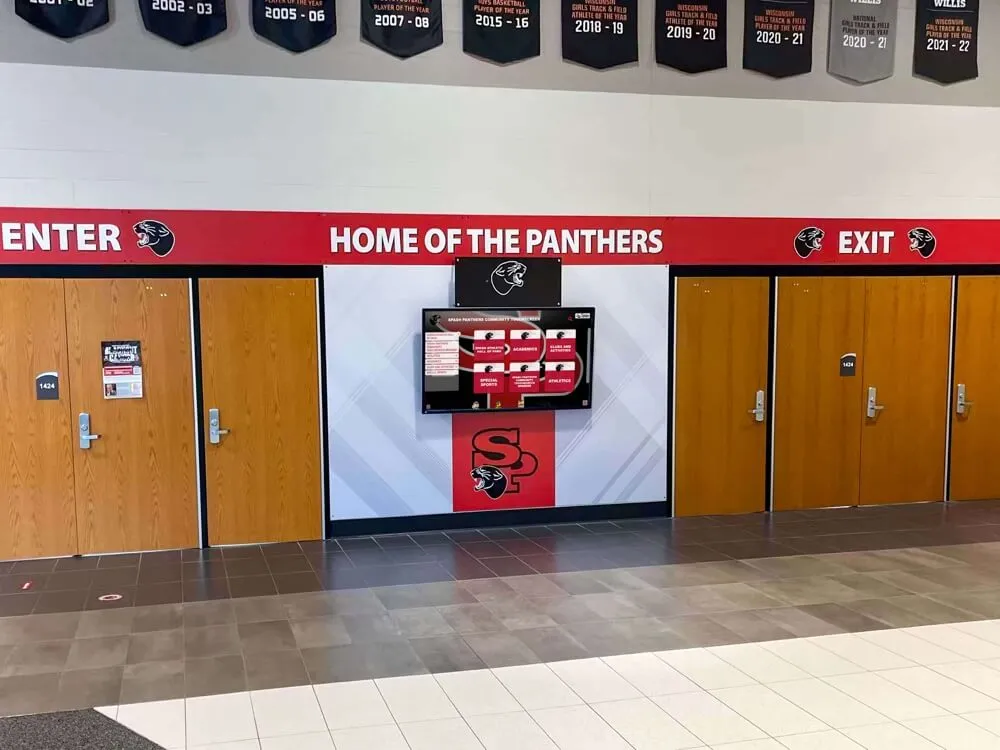
Intuitive card-based interfaces enable easy browsing and selection creating engaging exploration experiences for users of all ages
Content Management Considerations
Sustainable recognition requires manageable systems:
Initial Setup Requirements
- Historical research gathering player information
- Statistical compilation from records and archives
- Photo collection and digitization
- Biographical writing and content creation
- Platform configuration and design customization
This foundational work typically requires 40-80 hours depending on program history depth and inductee numbers. Many programs engage student managers, parent volunteers, or professional content services accelerating initial development.
Ongoing Maintenance Needs
- Annual inductee additions following ceremonies
- Content updates as alumni achieve new distinction
- Photo additions and multimedia enhancements
- Accuracy corrections maintaining credibility
- Platform updates and feature adoption
Athletic directors managing football recognition should establish annual update schedules ensuring content remains current without becoming overwhelming administrative burdens.
Technical Simplicity Quality platforms require minimal technical expertise:
- Cloud-based access from any internet-connected device
- Visual editing with real-time preview
- Template systems ensuring consistent presentation
- No programming or design skills needed
- Vendor support for questions and assistance
This accessibility ensures recognition management doesn’t require dedicated IT staff—coaches or athletic directors with basic computer skills can maintain systems effectively.
Funding Football Hall of Fame Programs
Recognition programs require financial resources for initial setup and ongoing operation. Strategic funding approaches make comprehensive halls of fame achievable even for programs with limited budgets.
Implementation Cost Components
Understanding expenses helps programs budget appropriately:
Initial Costs
- Digital touchscreen system: $8,000-15,000 (hardware, software, installation, initial content)
- Traditional plaque wall expansion: $3,000-8,000 (plaques, mounting, installation)
- Hybrid approach: $10,000-18,000 (combining physical and digital)
- Ceremony facility rental and reception: $2,000-5,000 annually
- Physical recognition items (plaques, jackets): $300-1,000 per inductee
Ongoing Annual Costs
- Software subscriptions: $1,000-3,000
- Annual ceremony expenses: $2,000-10,000
- Physical mementos for new inductees: $300-1,200
- Content updates and management: $500-2,000
- Marketing and communication: $500-1,500
Creative Funding Strategies
Successful programs secure resources through diverse sources:
Booster Club Support Football boosters naturally support recognition programs:
- Hall of fame aligned with booster mission celebrating achievement
- Recognition honors boosters’ family members and friends
- Permanent tributes creating lasting legacy
- Fundraising events specifically supporting hall of fame
- Annual allocations from booster budgets
Programs implementing donor recognition strategies discover that football recognition creates natural fundraising opportunities.
Sponsorship Opportunities Local businesses support football programs through sponsorships:
- Overall hall of fame presenting sponsorships
- Annual induction ceremony title sponsorships
- Digital display welcome screen logo placement
- Individual category sponsorships
- Web platform advertising or recognition
Alumni Fundraising Hall of fame programs create targeted campaigns:
- Appeals to former players who become eligible for future induction
- Reunion year class giving initiatives
- Memorial gifts honoring deceased teammates or coaches
- Major gifts from successful alumni establishing named recognition
- Crowdfunding campaigns engaging broad alumni bases
School and District Budgets Some programs secure institutional funding:
- Capital budgets for facility improvements including recognition
- Athletic department allocations for program development
- Educational foundation grants supporting student inspiration
- Annual budget lines for ceremony and maintenance
Many programs discover hall of fame initiatives become self-sustaining through enhanced alumni giving—recognition frequently generates multiples of cost through increased donor engagement over program lifetimes.

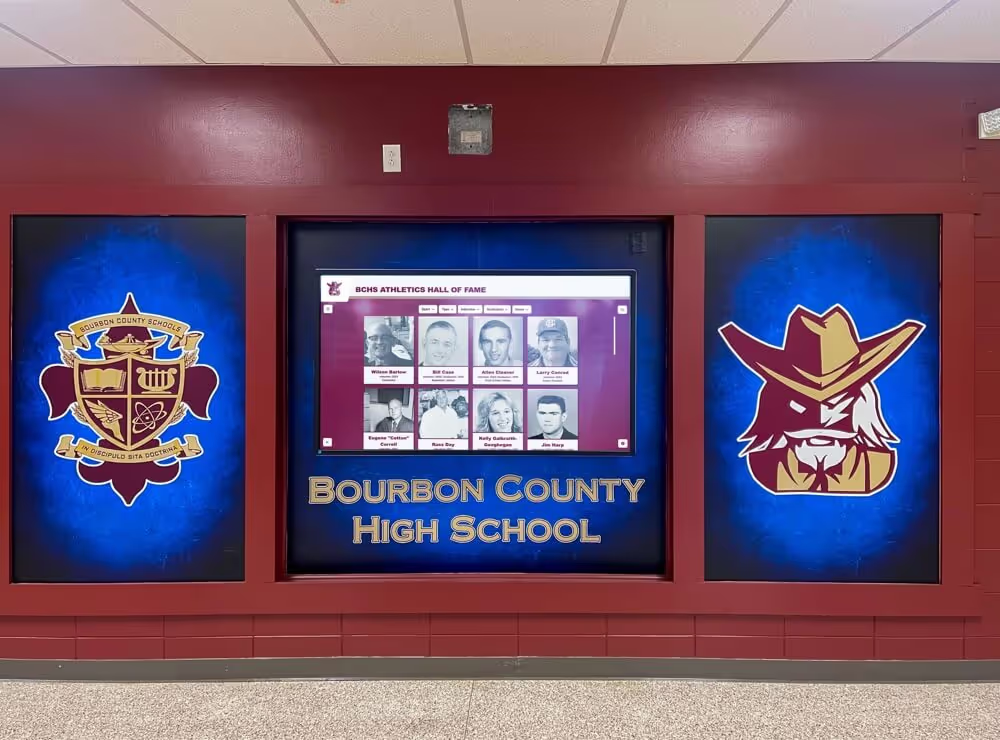
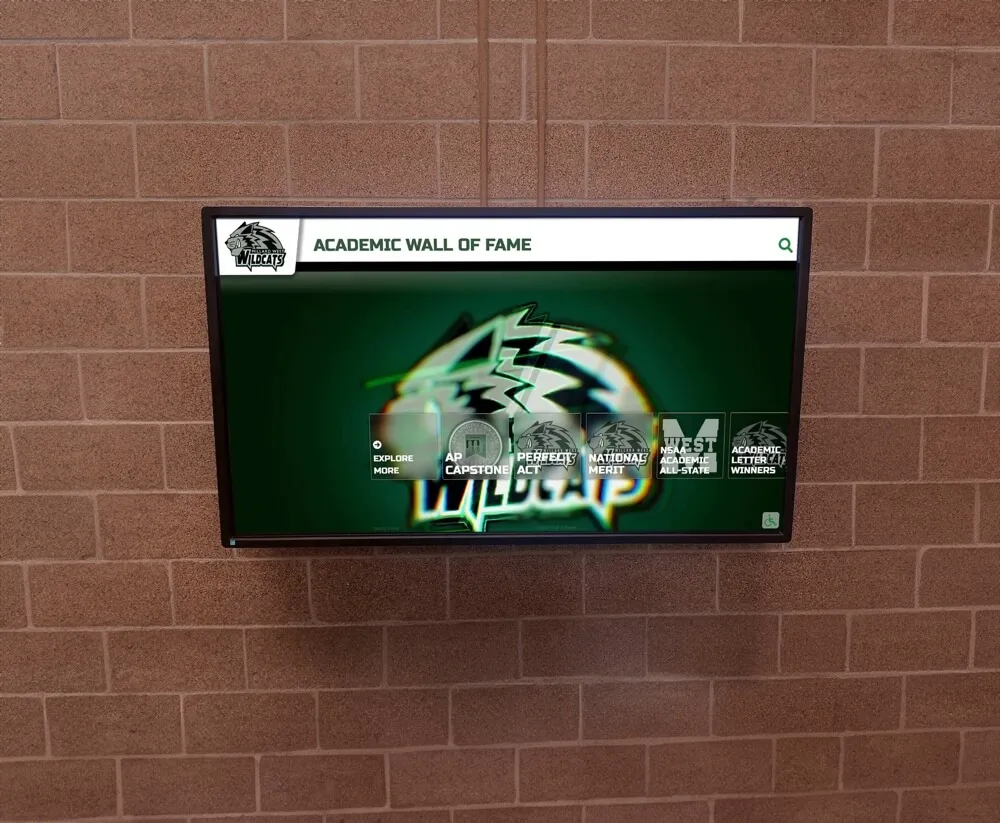
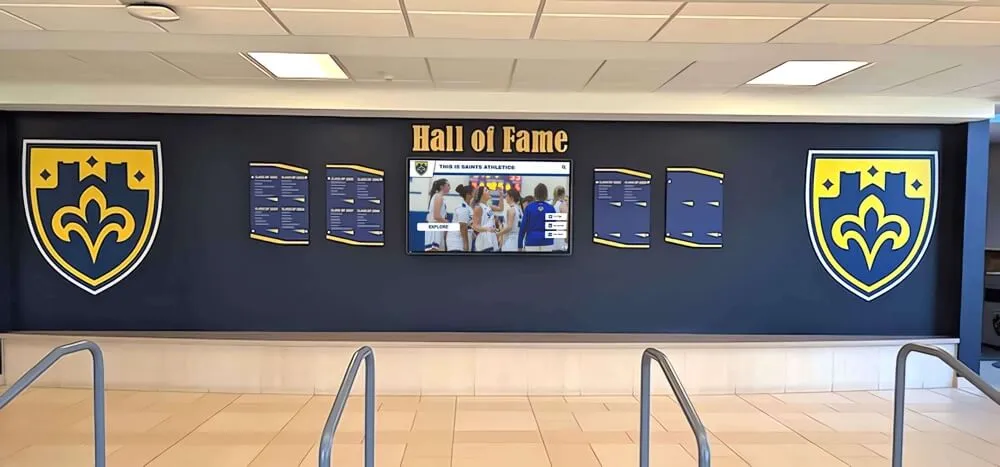
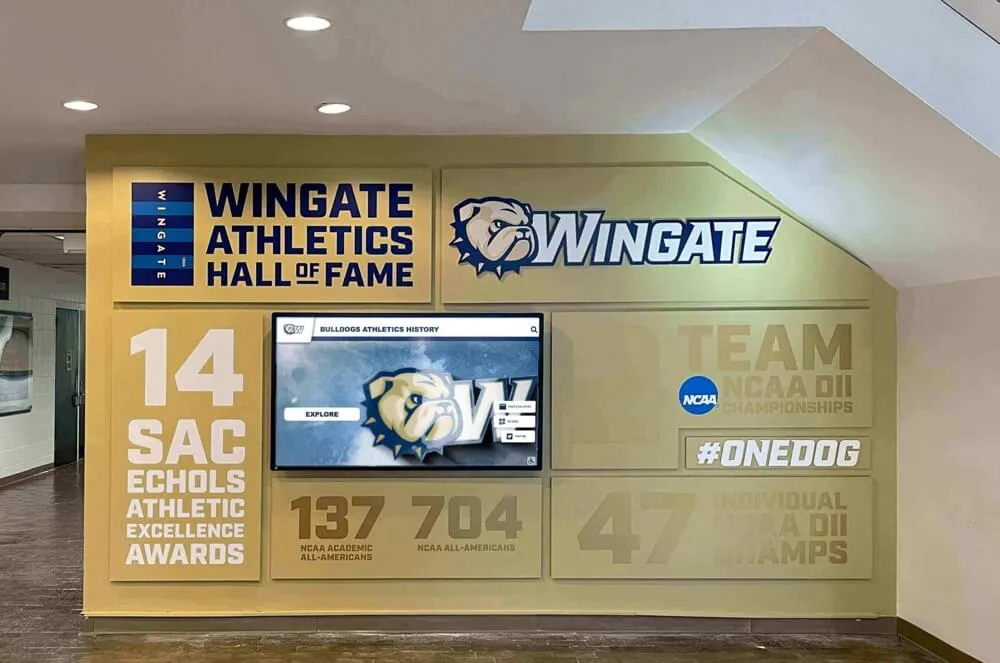
Professional digital installations integrate institutional branding while providing comprehensive searchable recognition accessible to entire community
Best Practices for Football Hall of Fame Success
Learning from successful programs helps avoid common pitfalls while maximizing recognition effectiveness:
Maintaining Recognition Standards
Preserving Prestige Through Selectivity Hall of fame recognition loses significance if selection becomes too common:
- Establish clear minimum qualifications and maintain standards consistently
- Limit annual induction class sizes (typically 3-6 football inductees)
- Require waiting periods ensuring achievements stand test of time
- Accept that some years produce fewer qualified candidates
- Resist pressure to recognize popularity over accomplishment
Regular Criteria Review Standards should evolve appropriately:
- Periodic evaluation ensuring criteria remain fair
- Adjustments for rule changes affecting statistics
- Consideration of competitive level changes over eras
- Updates reflecting program growth or classification shifts
- Community input on fairness and effectiveness
Ensuring Inclusive Recognition
Multi-Dimensional Excellence Comprehensive recognition honors diverse paths to distinction:
- Statistical achievement leaders
- Championship team contributors who elevated collective success
- Defensive specialists and position-specific excellence
- Players overcoming adversity or representing breakthrough achievements
- Character and leadership alongside athletic accomplishment
Programs implementing approaches similar to building school pride initiatives discover that celebrating varied excellence strengthens overall program cultures.
Era-Appropriate Evaluation Fair recognition accounts for changing contexts:
- Statistical norms evolving across decades
- Rule changes affecting scoring and statistics
- Competitive level shifts (playoff expansion, classification changes)
- Season length differences over time
- Training and resource evolution impacting achievement
Selection committees should evaluate candidates relative to their eras rather than applying identical standards across vastly different competitive contexts.
Building Sustainable Programs
Administrative Capacity Recognition requires appropriate staffing:
- Clear responsibility assignments for program management
- Selection committee coordination
- Content management and display updates
- Ceremony planning and execution
- Succession planning through staff transitions
Financial Sustainability Programs need reliable funding:
- Dedicated hall of fame funds or accounts
- Multiple revenue sources reducing single-point dependency
- Long-term planning for technology refresh cycles
- Endowment development for perpetual support
- Regular assessment ensuring fiscal responsibility
Community Engagement Long-term success requires broad support:
- Regular communication about recognition programs
- Volunteer opportunities enabling participation
- Transparent processes building credibility
- Responsiveness to stakeholder feedback
- Integration with broader program activities
Connecting National Excellence to Local Recognition
While few high school players achieve national hall of fame recognition, every program can create local celebration connecting to broader football excellence:
Celebrating College and Professional Achievement
Local halls of fame should recognize players achieving post-high school distinction:
- College football careers at any level (Division I through NAIA)
- Professional football careers (NFL, CFL, indoor leagues)
- Coaching careers at college or professional levels
- Football-related careers (broadcasting, administration, officiating)
- Continued football community involvement and mentorship
This connection demonstrates that high school football launches remarkable journeys—some reaching national prominence while all contributing to football’s rich cultural tapestry.
Honoring Championship Programs and Eras
Beyond individual recognition, celebrate collective achievement:
- State championship teams
- Playoff success and tournament advancement
- Conference championship dynasties
- Record-setting seasons
- Significant program milestones and anniversaries
Programs implementing championship recognition displays discover that team celebration engages broader communities than individual recognition alone.
Preserving Complete Football History
Comprehensive recognition documents:
- Coaching histories and career records
- Facilities evolution and field improvements
- Rivalry histories and memorable games
- Tradition development and community connections
- Statistical records across all positions and eras
This historical preservation ensures football legacy receives comprehensive documentation creating resource for current and future generations understanding program tradition.

Championship walls integrate trophy displays with environmental design creating immersive spaces celebrating football tradition and team success
Measuring Hall of Fame Program Impact
Regular assessment demonstrates value while identifying improvement opportunities:
Engagement Metrics
Digital Interaction Data
- Touchscreen display usage counts and session duration
- Most-viewed player profiles revealing visitor interests
- Search patterns showing what information users seek
- Web platform visits and page views
- Social media engagement with recognition content
Community Participation Indicators
- Nomination submission rates showing community engagement
- Induction ceremony attendance trends
- Alumni event participation among recognized players
- Volunteer support for program activities
- Media coverage quantity and quality
Program Outcomes
Recruiting Impact
- Prospective player feedback about recognition displays
- Commitment decision factors through surveys
- Recruiting visit conversations and emphasis
- Roster quality and competitive success trends
- Transfer and retention rates
Alumni Engagement
- Giving rates among hall of fame members versus general alumni
- Volunteer participation in coaching and mentoring
- Professional network connections benefiting current players
- Reunion attendance and alumni event participation
- Long-term program relationship maintenance
Financial Sustainability
- Fundraising success for football programs
- Booster membership and contribution growth
- Sponsorship development and renewal
- Capital campaign results for facilities
- Self-sufficiency through alumni giving
Regular assessment through surveys, analytics, and stakeholder conversations ensures recognition programs remain effective, valued, and aligned with program goals.
Conclusion: Building Football Legacy Through Recognition
High school football hall of fame programs represent powerful tools celebrating excellence, preserving tradition, and inspiring future generations. From honoring national-caliber players who reached professional football to recognizing local legends whose achievements meant everything to small-town communities, systematic recognition creates lasting value extending throughout football programs and broader communities.
The national high school football hall of fame concept—whether referring to formal national recognition or local programs honoring school-specific achievement—embodies football’s unique cultural significance in American education and community life. These recognition programs validate that high school football matters profoundly, not just for entertainment value but for character development, community building, and launching remarkable life journeys that extend far beyond fields and Friday nights.
Transform Your Football Recognition Program
Discover how modern digital recognition displays can help you celebrate unlimited football achievements, preserve program history, and build lasting traditions that inspire excellence for generations while strengthening alumni connections and community pride.
Explore Digital Football Recognition SolutionsModern technology has transformed recognition possibilities—eliminating space constraints that once forced difficult choices about whose achievements received visibility, enabling multimedia storytelling bringing football excellence to life beyond statistics, creating web accessibility extending recognition beyond campus boundaries, and simplifying content management so programs remain current without excessive burden.
Yet technology serves recognition rather than replacing it. The heart of effective football halls of fame remains unchanged: honoring individuals whose achievements merit permanent celebration, inspiring current players through accessible role models, preserving program history connecting generations, and strengthening communities through shared pride in football excellence.
Your football program—whether small-town tradition or powerhouse dynasty—has stories worth documenting and celebrating. Outstanding players who dedicated countless hours developing skills, coaches who mentored young people and built programs, championship teams creating unforgettable memories, and community supporters making football success possible all deserve recognition honoring contributions while inspiring future generations.
Start planning your football hall of fame program today. Establish selection criteria reflecting program values and competitive context. Explore modern recognition technology eliminating traditional limitations. Engage alumni, community members, and stakeholders building systematic celebration of football excellence. And create lasting traditions honoring achievement while strengthening program competitive position and cultural significance.
The legends who built your football program deserve recognition equal to their dedication and achievement. With thoughtful planning, appropriate technology, and sustained commitment, you can create hall of fame programs that honor every accomplishment while building the proud football tradition your players, coaches, and community deserve.