Minnesota high school football represents a cornerstone of community identity across the state, from the Minneapolis suburbs to small prairie towns. Each fall, more than 30,000 student-athletes compete under Friday night lights, pursuing conference championships, playoff berths, and the ultimate goal: hoisting a state championship trophy at U.S. Bank Stadium in Minneapolis. The Minnesota State High School League (MSHSL) oversees one of the nation’s most competitive high school football landscapes, organizing six classification divisions that ensure schools of all sizes compete fairly for championship glory.
For athletic directors, coaches, and school administrators, Minnesota high school football success creates lasting community impact extending far beyond game outcomes. Championship runs strengthen school pride, playoff appearances validate program development, and all-conference recognition honors individual excellence. These achievements deserve permanent celebration that preserves football tradition while inspiring future generations of athletes, coaches, and supporters.
This comprehensive guide explores everything you need to know about Minnesota high school football—from understanding state rankings and playoff structures through championship traditions, program recognition strategies, and how schools preserve football excellence for decades to come.
Understanding Minnesota High School Football Classifications
The MSHSL organizes football competition into a six-class structure ensuring appropriate competitive balance across Minnesota’s diverse school sizes.
Six-Class Championship Format
Minnesota’s classification system creates championship opportunities for schools across all enrollment ranges:
Class 6A encompasses Minnesota’s largest schools with enrollments typically exceeding 1,600 students. These metro-area powerhouses compete in highly competitive conferences featuring the state’s deepest talent pools. Programs like Eden Prairie, Lakeville North, Maple Grove, and Minnetonka have built dynasty-level traditions with multiple state championships and consistent playoff success.
Class 5A features large suburban and urban schools with enrollments ranging from approximately 1,200-1,600 students. This classification includes established programs from both the Twin Cities metro and larger outstate communities like Owatonna and Bemidji. The competitive depth rivals 6A while maintaining distinct regional character.

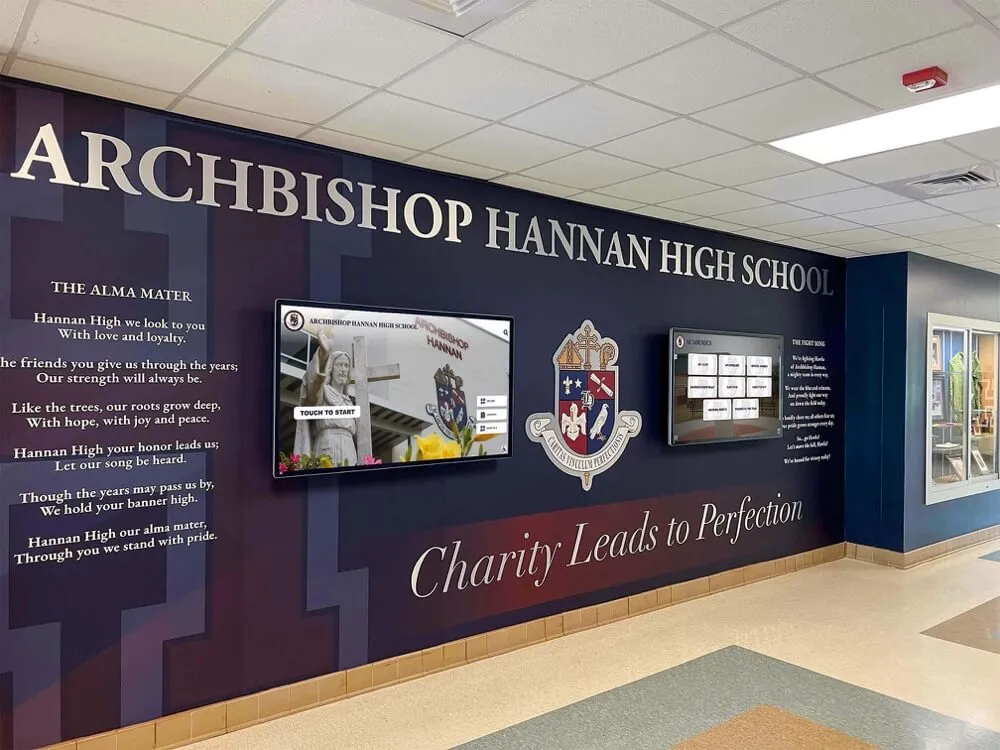
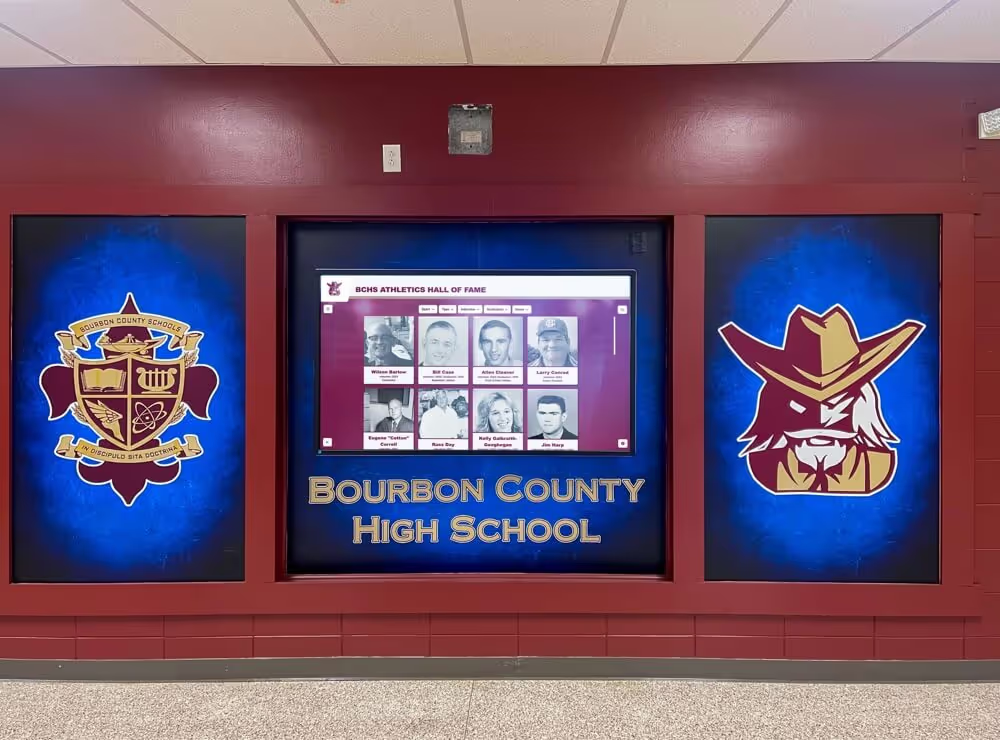
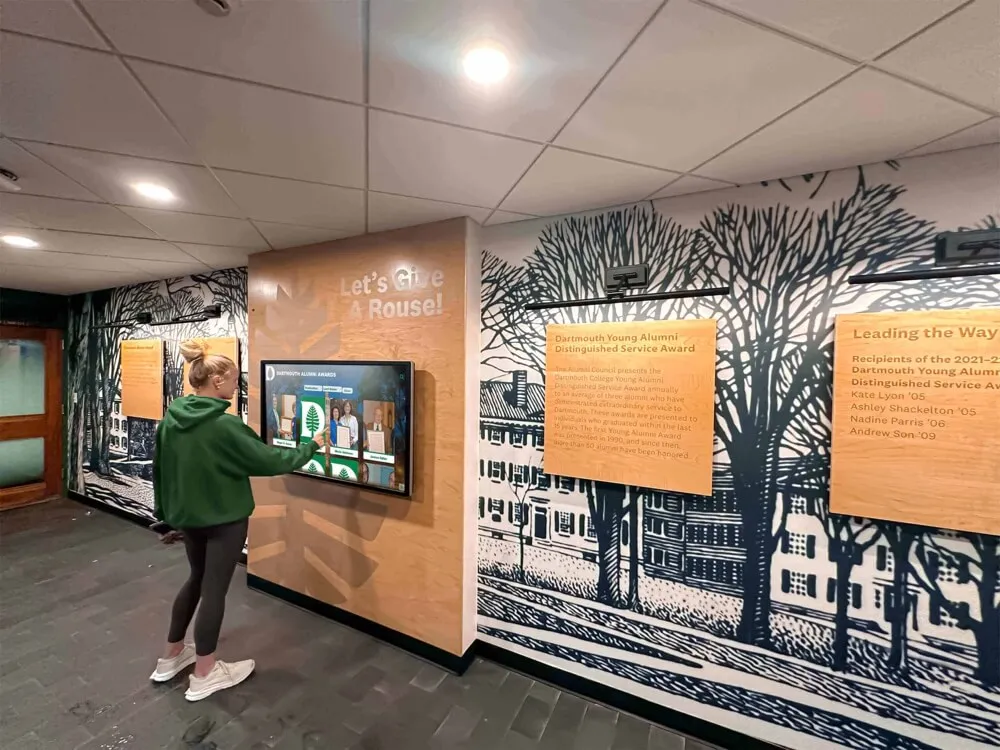
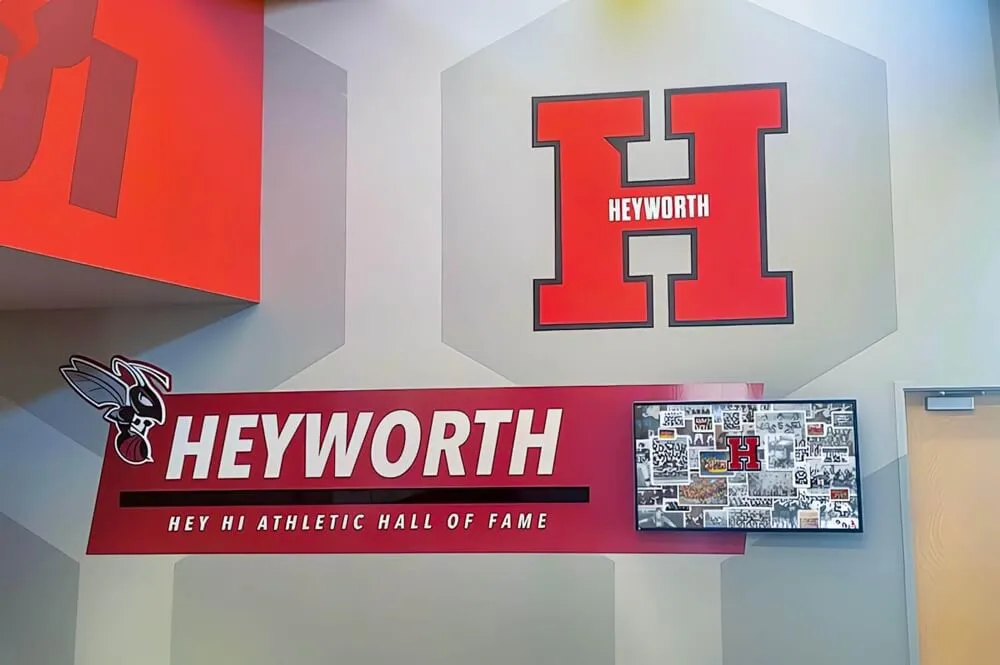
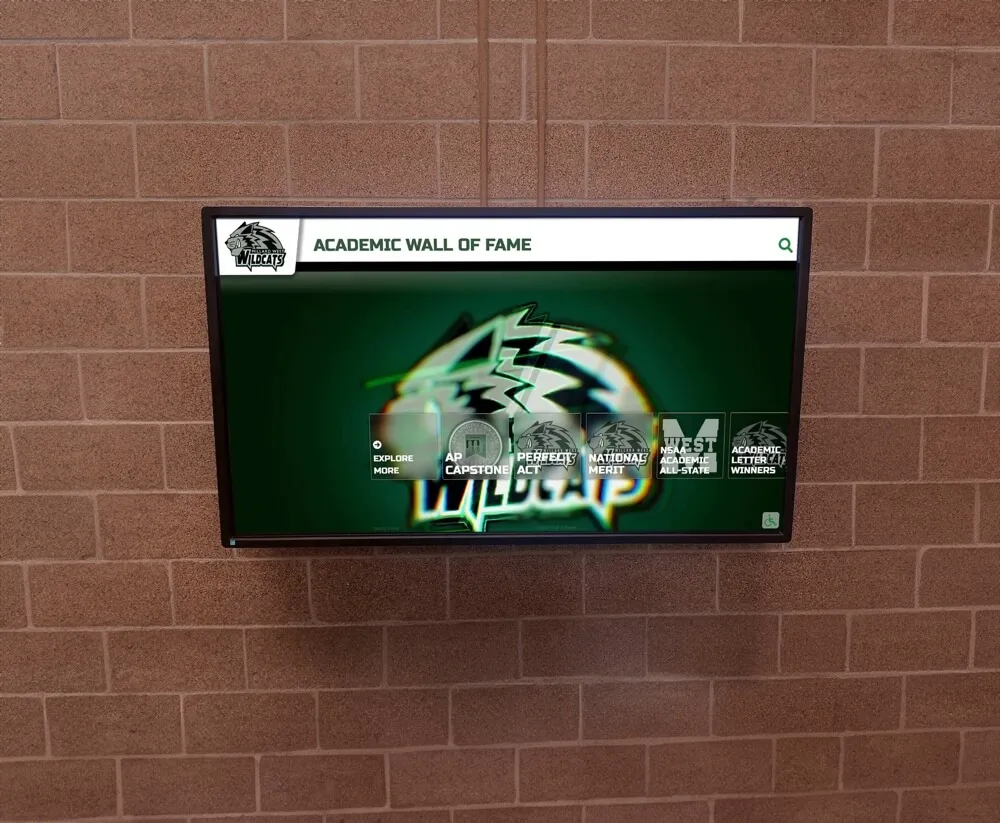
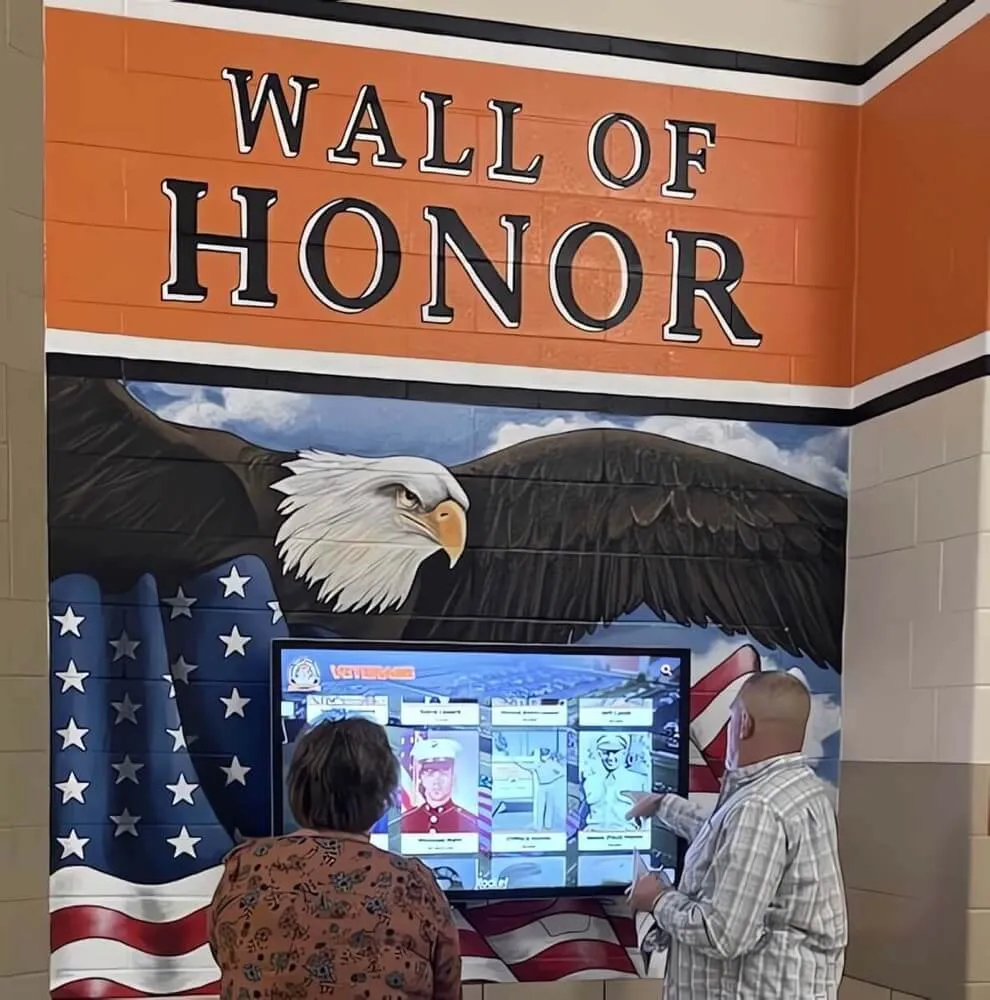
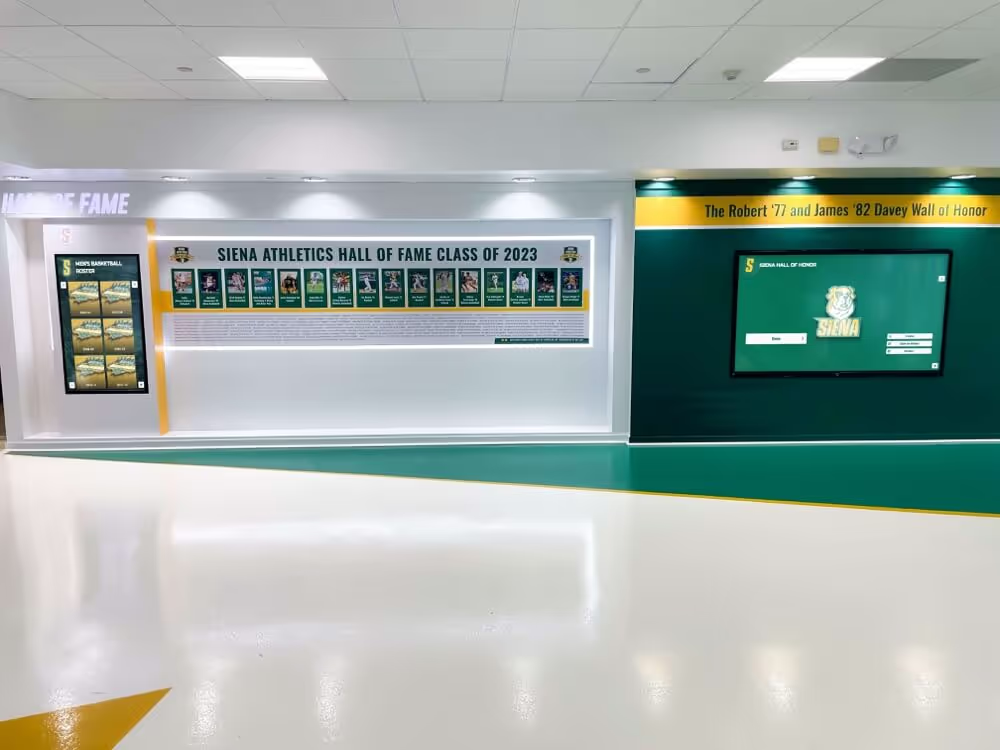
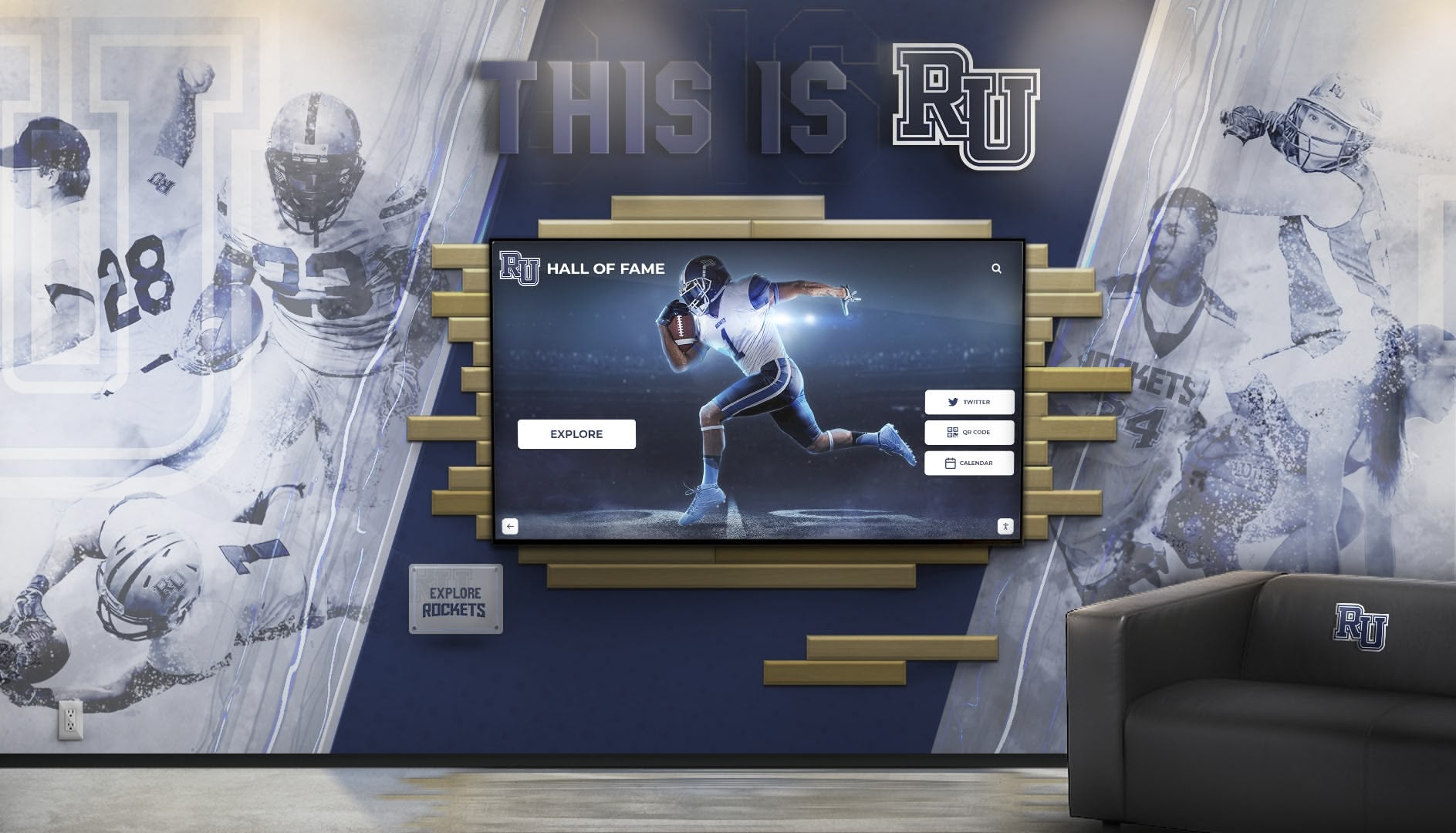
Schools preserve championship traditions through permanent displays combining murals, memorabilia, and interactive digital recognition
Class 4A includes mid-sized schools with enrollments between 800-1,200 students. This classification features competitive balance between metropolitan suburban schools and larger rural communities, creating geographic diversity that makes championship pursuits accessible to programs across Minnesota.
Class 3A encompasses schools with 550-800 students, representing medium-sized communities where football often serves as primary community gathering point. Programs in this classification balance competitive resources with deep community investment, creating passionate Friday night atmospheres.
Class 2A features smaller schools with 300-550 students. These programs primarily come from rural Minnesota communities where multi-sport athletes form program foundations and coaching continuity significantly impacts competitive success.
Class 1A (9-Player Football) includes Minnesota’s smallest schools with enrollments under 300 students. This classification features 9-player football rather than traditional 11-player format, creating unique strategic elements while preserving competitive football opportunities for small rural communities where roster sizes cannot support full-roster programs.
The six-class structure ensures that championship opportunities remain accessible to schools across all enrollment ranges, creating October and November excitement in communities throughout Minnesota.
Enrollment-Based Classification Process
MSHSL determines football classification through systematic enrollment counting:
Biennial Enrollment Counts Classifications recalculate every two years based on updated enrollment figures. Schools submit enrollment data for grades 9-12, with calculations occurring during odd-numbered years and taking effect the following fall. This periodic recalibration ensures competitive balance despite shifting population patterns affecting school sizes.
Classification Thresholds The MSHSL establishes enrollment breaks determining class assignments. These thresholds adjust periodically based on statewide enrollment distributions, ensuring roughly comparable numbers of schools compete in each classification. Schools near classification boundaries sometimes shift between classes following recalculation periods, requiring strategic program adjustments.
Geographic Considerations While enrollment primarily determines classification, geographic factors influence section assignments within classes. The MSHSL balances competitive equity with travel reasonability, particularly for programs in northern Minnesota and other remote locations where distances create logistical challenges.
Schools implementing comprehensive athletic recognition programs often track classification histories alongside championship achievements, documenting how programs navigated competitive landscapes across multiple enrollment periods.
Minnesota High School Football State Rankings
Rankings throughout the regular season provide competitive context while building anticipation for playoff selections.
Major Ranking Systems
Multiple organizations publish weekly rankings tracking Minnesota high school football performance:
Minnesota Football Hub Rankings Independent media outlet providing comprehensive weekly rankings across all six classifications. These rankings incorporate head-to-head results, strength of schedule analysis, and expert evaluations creating widely-followed competitive hierarchies. Coaches, media, and fans reference these rankings extensively when discussing state championship contenders.
QRF (Qualified Reserve Fund) Ratings Computer-based rating system generating objective rankings using algorithmic calculations. QRF ratings evaluate team performance through opponent strength, score margins (within caps preventing excessive blowout credit), and complex formulas producing numerical ratings. These ratings provide playoff seeding foundations in some classifications, making them competitively significant beyond discussion topics.
Section-Level Rankings Local media and section-specific organizations publish rankings focused on playoff race dynamics within particular geographic areas. These specialized rankings provide detailed competitive context for section championship pursuits that determine playoff qualification.
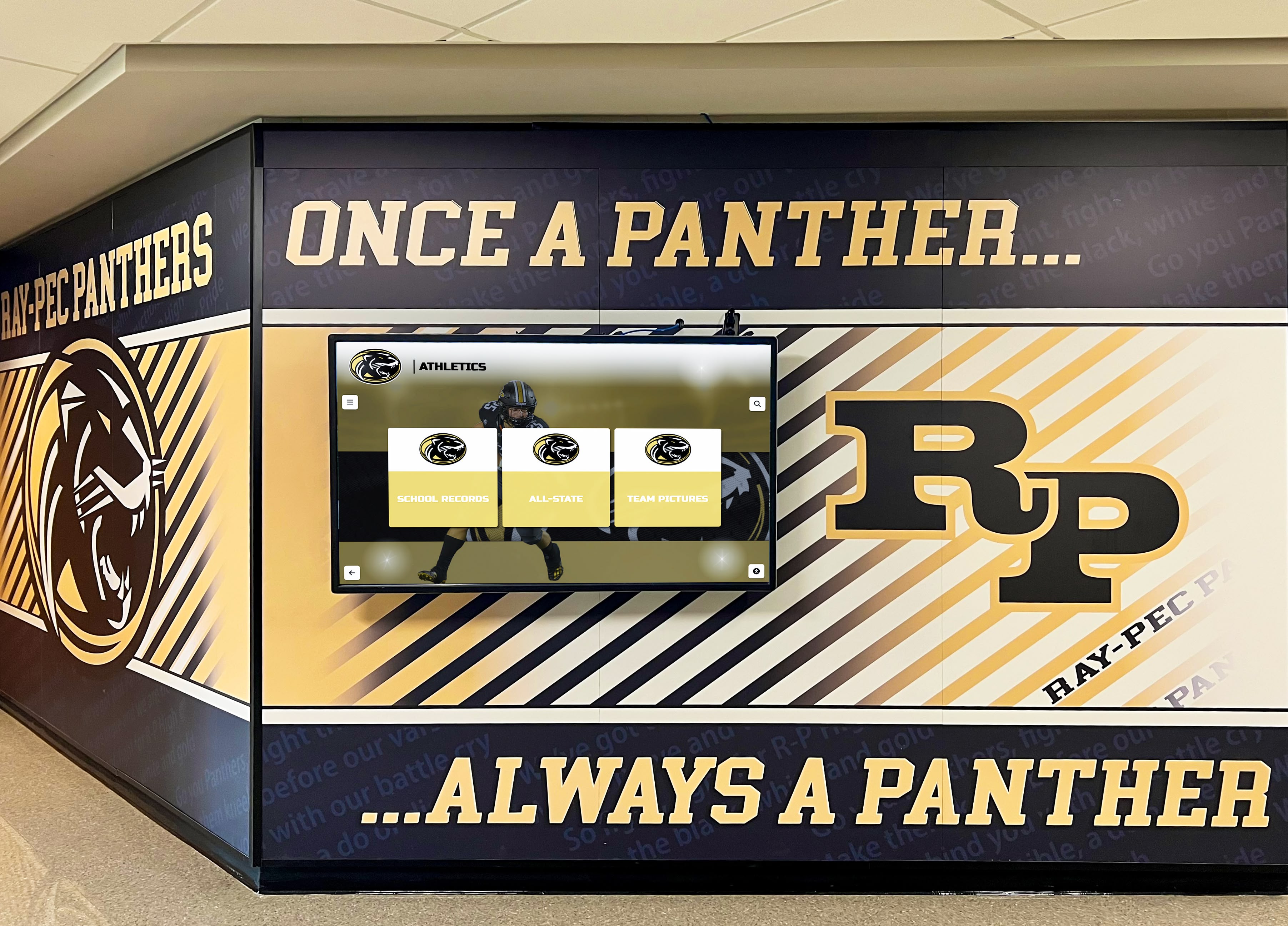
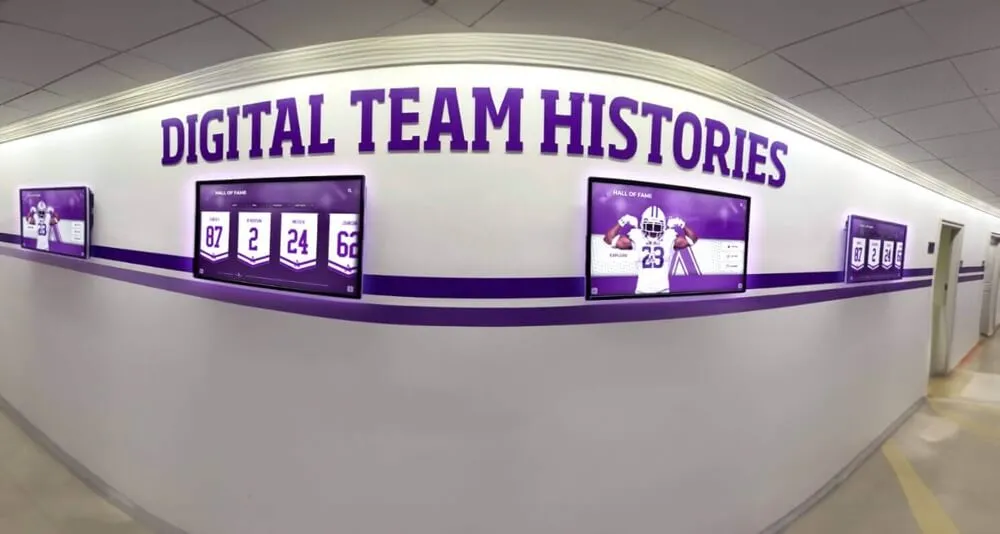
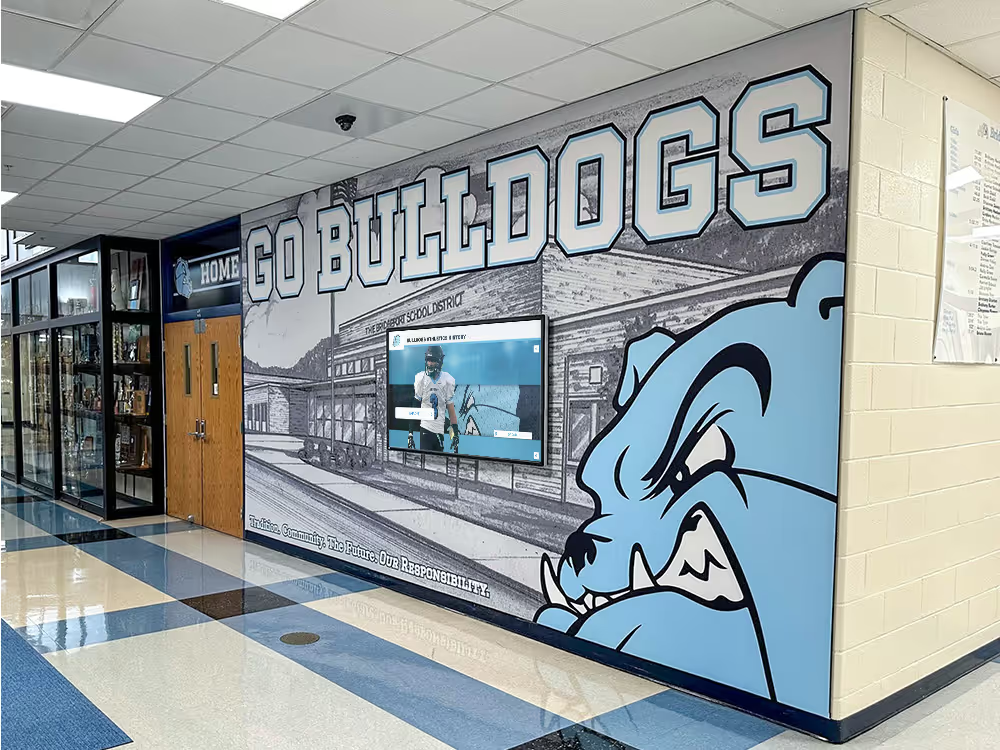
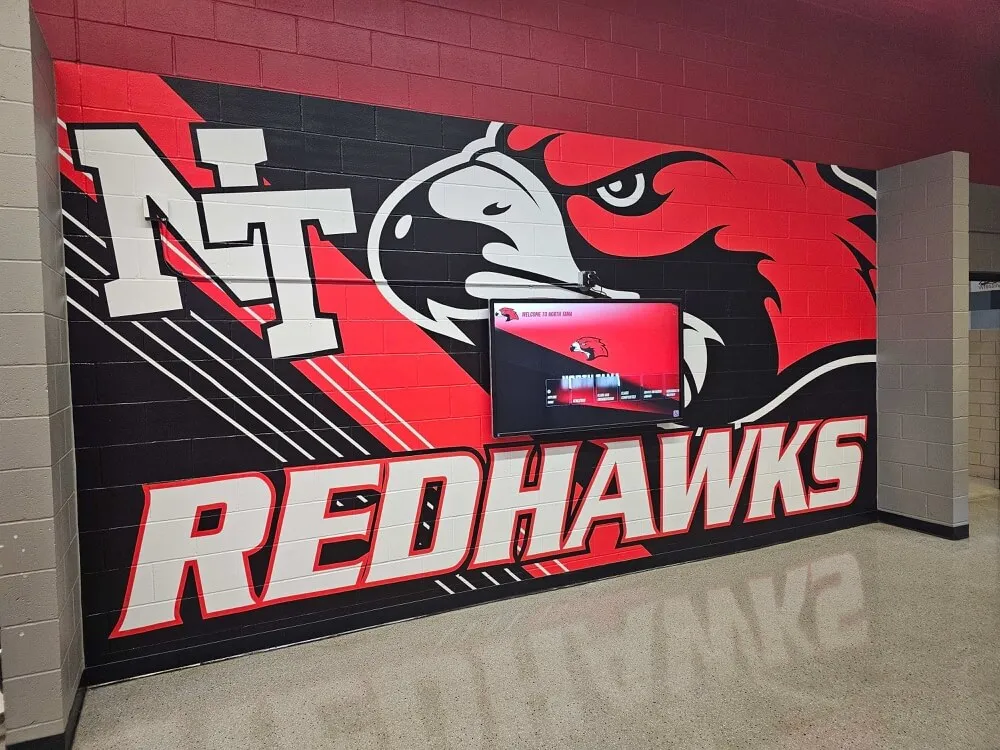
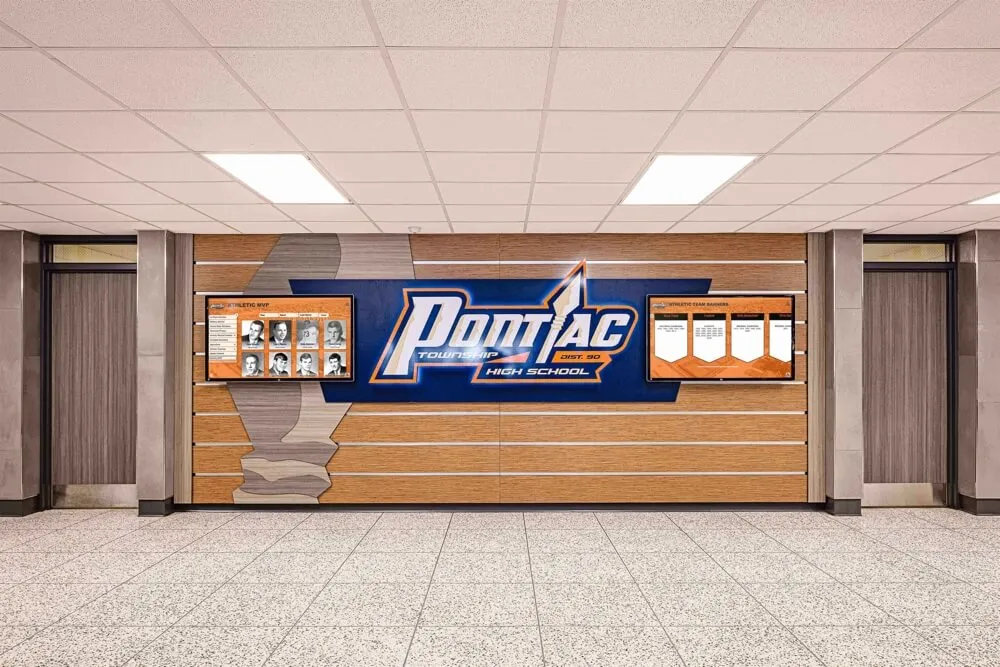
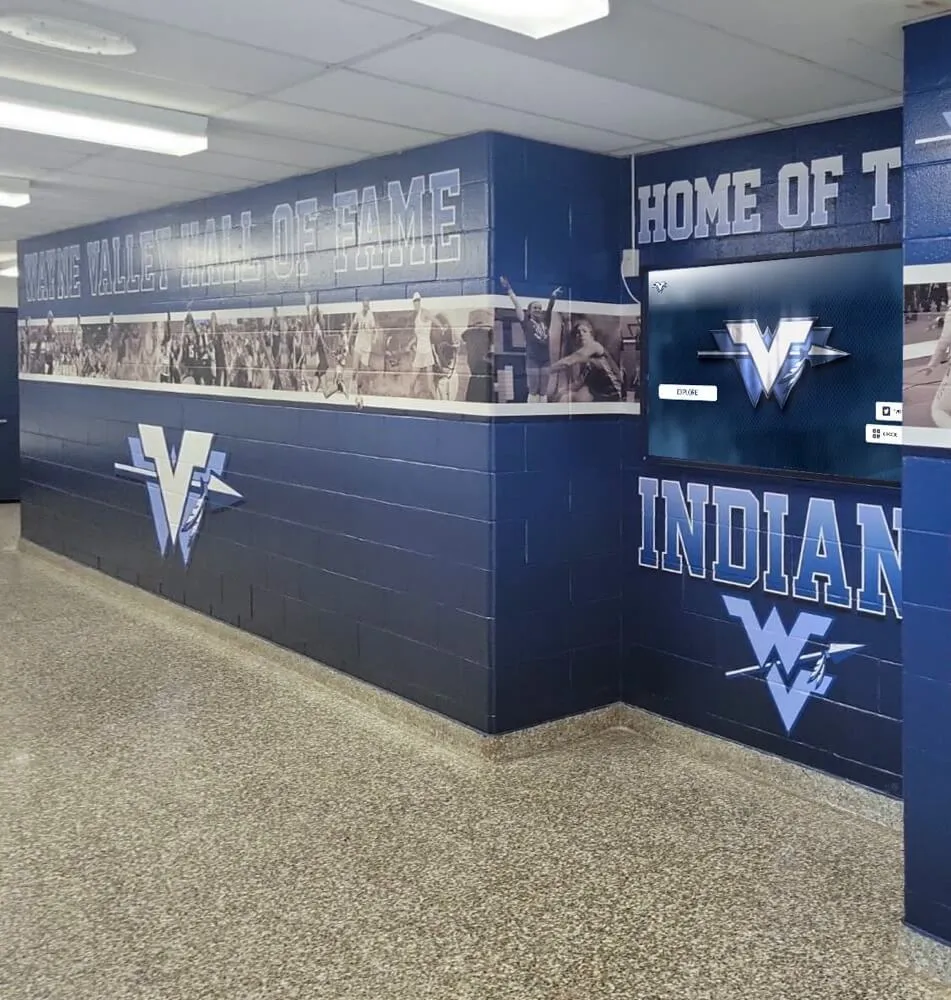
Hallway recognition displays ensure football achievements remain visible throughout the school year, not just during fall seasons
Coach and Media Polls Traditional polling mechanisms where coaches or media members vote on team rankings. While subjective compared to computer ratings, these polls incorporate insider perspectives on team quality, injury situations, and intangible factors algorithms cannot capture.
How Rankings Impact Playoff Seeding
Rankings translate directly into playoff positioning in several classifications:
Top-Ranked Teams and Home Field High rankings generally correlate with favorable playoff seeding, potentially providing home field advantage through multiple playoff rounds. Since Minnesota November weather significantly impacts game outcomes, home field represents substantial competitive benefits—particularly for northern Minnesota programs accustomed to harsh late-season conditions.
Section Seeding Determination Within sections, computer ratings or committee rankings determine playoff bracket seeding. Higher seeds host first-round games and receive more favorable paths to section championships. The seeding process creates intense late-season focus as teams jockey for position during final regular season weeks.
Perception and Respect Beyond mechanical playoff implications, rankings shape competitive perception. Programs appearing consistently in top-10 rankings gain recruiting advantages, media attention, and community excitement that lower-ranked programs struggle to generate. Rankings become self-fulfilling to some degree—highly ranked programs attract athletes wanting to compete at highest levels.
Schools celebrating ranking achievements through digital recognition displays document not just championships but also regular season excellence, creating comprehensive historical records showing program trajectories across multiple seasons.
Notable Minnesota Football Programs
Several programs have established dynasty-level traditions through sustained excellence:
Eden Prairie Eagles Perhaps Minnesota’s most successful modern program, Eden Prairie has captured multiple Class 6A state championships while maintaining remarkable playoff consistency. The Eagles’ combination of suburban talent base, coaching excellence, and program culture creates competitive advantages producing championship results across multiple decades.
Totino-Grace Eagles The Fridley-based private school has built championship tradition in Class 5A through exceptional coaching and athlete development. Totino-Grace demonstrates that non-boundary schools can compete at highest levels through strong program culture and systematic player development.
Caledonia Warriors In 9-player football, Caledonia has established dynasty-level dominance with multiple consecutive state championships. The Warriors represent small-town Minnesota football at its finest, where multi-generational program investment creates sustained competitive excellence despite limited enrollment numbers.
Minnetonka Skippers Perennial Class 6A contender with multiple championships and consistent playoff appearances. Minnetonka’s program exemplifies how suburban programs maintain excellence through strong youth football systems, community support, and coaching continuity.
Luverne Cardinals Class 2A power demonstrating that rural Minnesota programs can build championship traditions through systematic development, coaching excellence, and deep community investment in football success.
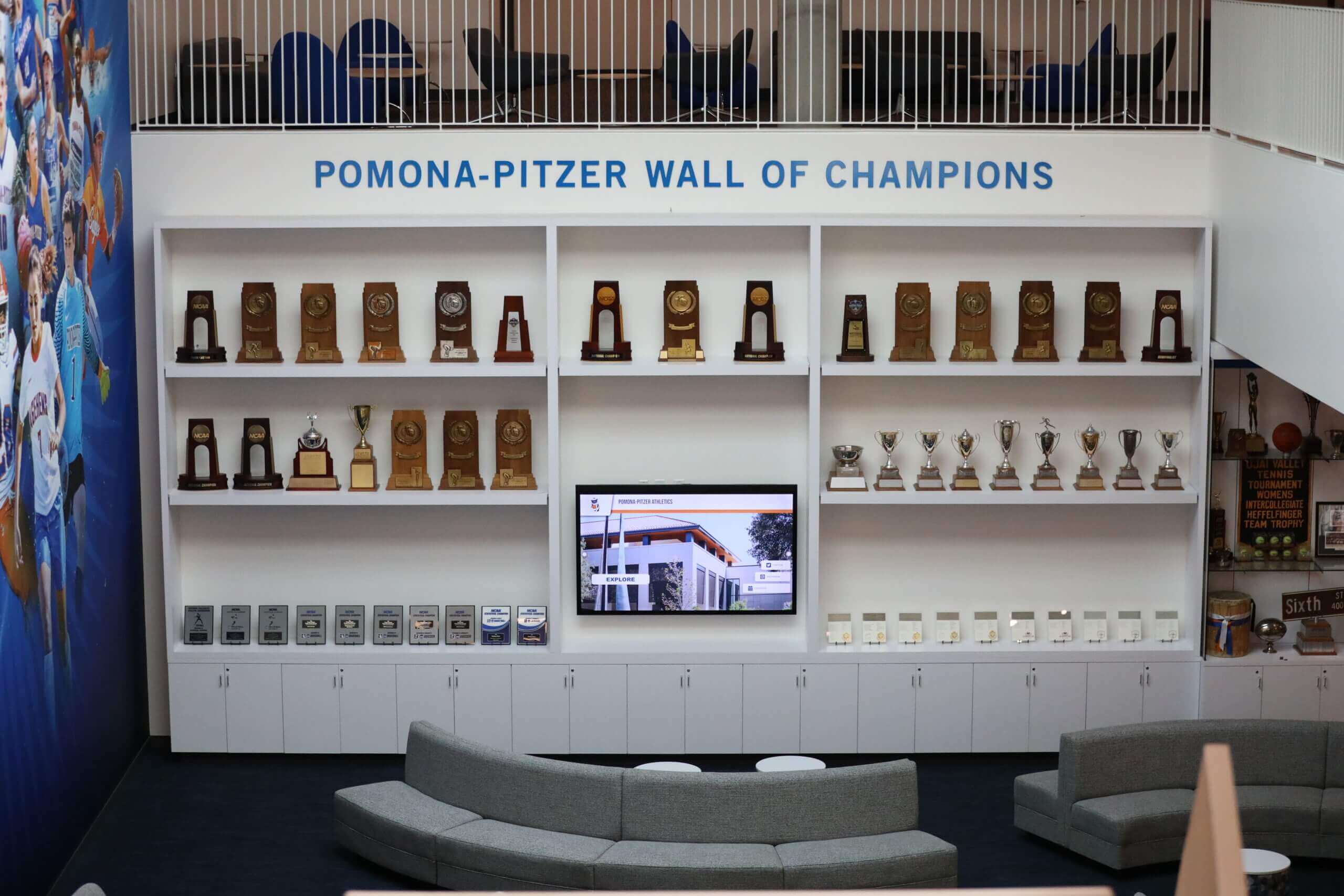
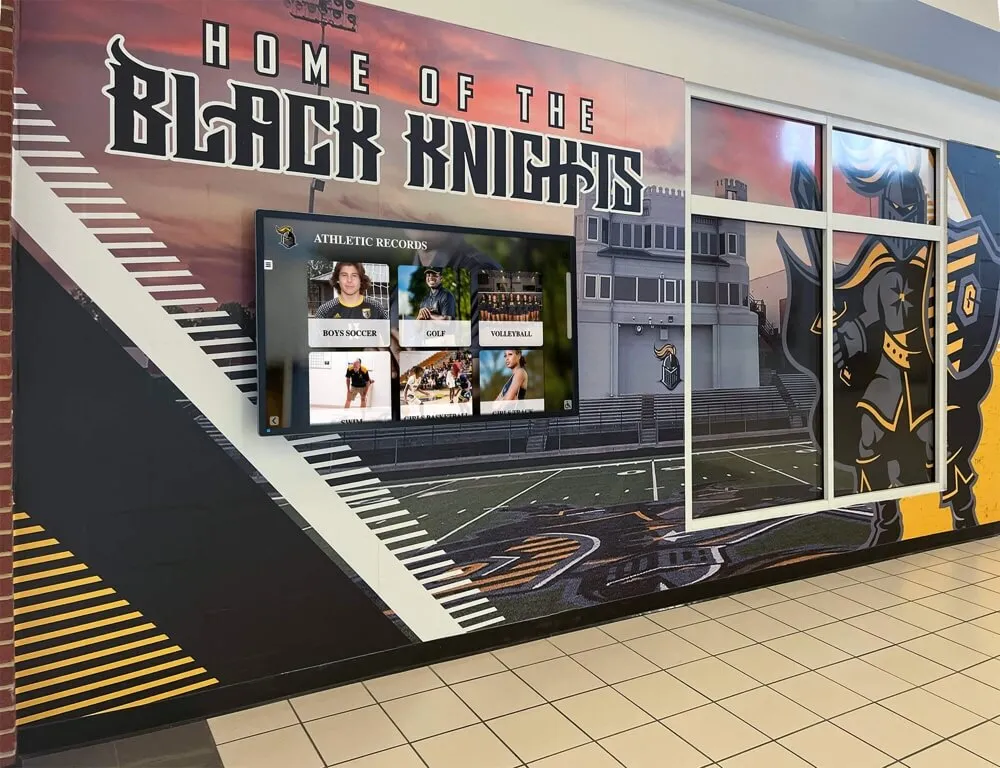
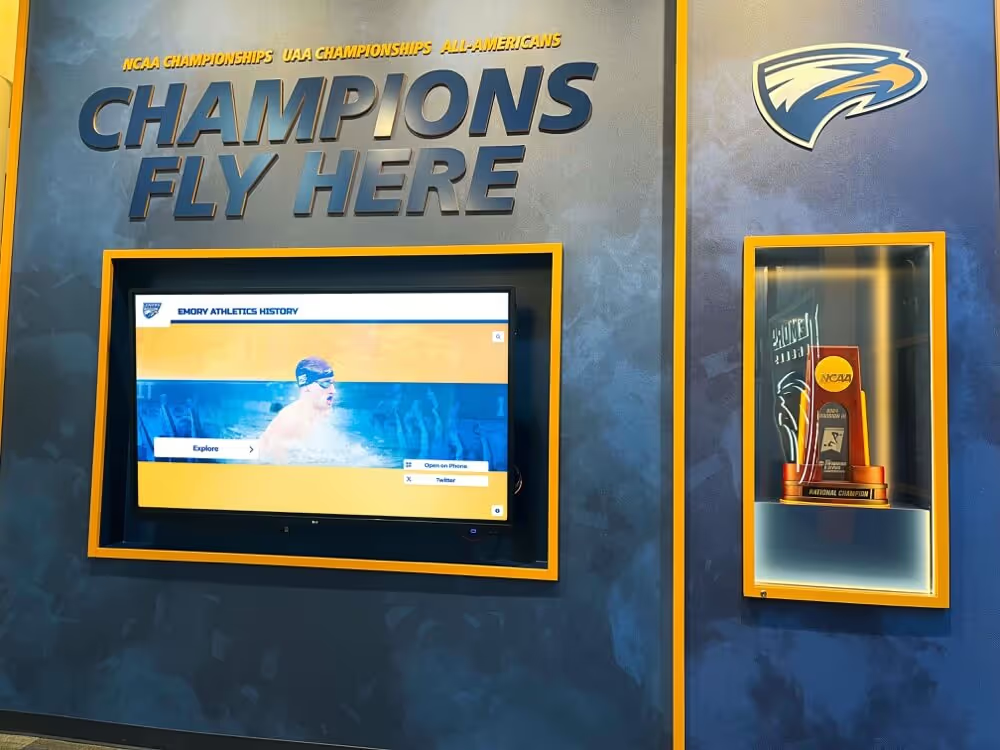
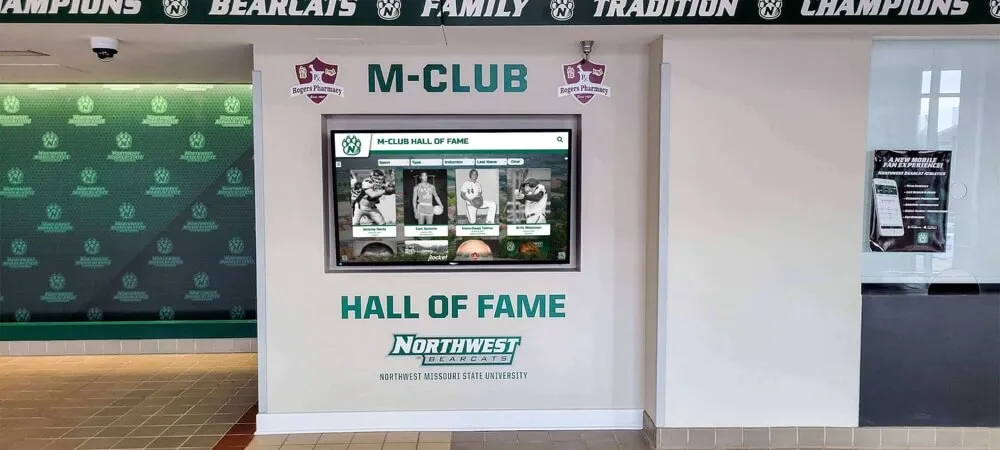
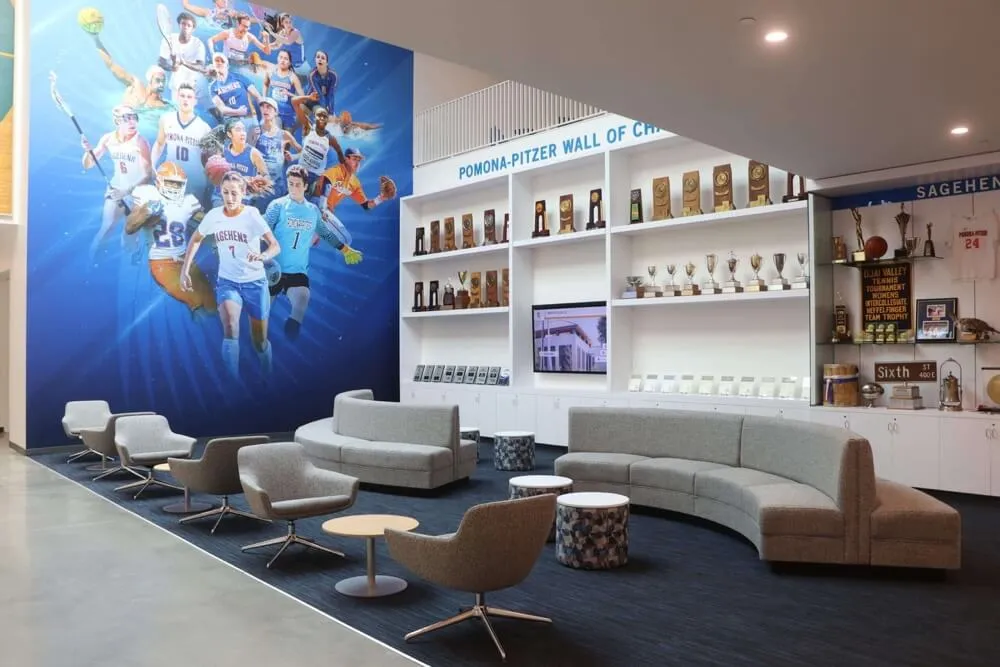
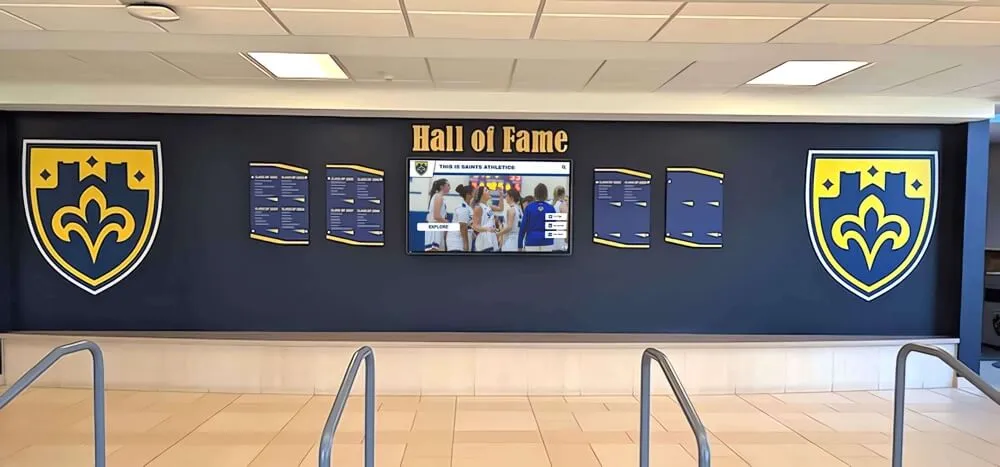
Recognition spaces create gathering areas celebrating football tradition while providing destinations where program history remains visible
These programs share common characteristics: coaching continuity enabling systematic player development, strong youth program connections creating talent pipelines, community cultures prioritizing football excellence, and comprehensive recognition systems preserving traditions inspiring future athletes.
Minnesota High School Football Playoff System
Understanding playoff structures helps schools prepare for postseason competition while celebrating qualification achievements appropriately.
Section Playoff Format
Minnesota’s playoff system operates through geographic sections within each classification:
Section-Based Qualification Rather than statewide playoff fields, Minnesota organizes playoffs through sections—typically 8 sections per classification. Schools compete within assigned sections during regular seasons and playoffs, with section geography determined by proximity and competitive balance considerations.
Section assignments create natural rivalries while limiting travel distances during regular seasons. However, this geography-based approach means competitive strength varies significantly between sections—some sections feature multiple elite programs while others offer clearer paths to section championships.
Regular Season Records All teams with winning records (5-4 or better) qualify for section playoffs. This inclusive approach ensures most competitive programs reach postseason play while maintaining sufficient standards that playoff qualification represents meaningful achievement.
Schools with losing records do not qualify for playoffs, creating clear regular season objectives and ensuring playoff fields consist of programs demonstrating competitive capability during 9-game regular seasons.
Section Playoff Brackets Within sections, teams are seeded based on computer ratings or committee rankings. Single-elimination brackets determine section champions, with higher seeds hosting games through section championship rounds. The compressed playoff schedule means teams play weekly elimination games throughout October, requiring sustained excellence and injury management across 3-4 playoff weeks.
Section Champions Advance Section winners earn berths in state quarterfinal rounds, creating 8-team state tournament fields in each classification. This structure means every section champion remains alive for state championships regardless of how they performed during regular seasons—section playoff upsets frequently propel unexpected teams into state tournament competition.
State Tournament Structure
Section champions compete in state tournaments held at neutral sites:
Quarterfinals (Round of 8) Eight section champions meet in quarterfinal matchups at designated host sites. MSHSL assigns games to schools or neutral venues providing appropriate facilities, with geographic considerations influencing site selections when possible.
Quarterfinal week represents Minnesota high school football’s most intense period, with communities throughout the state rallying around remaining championship contenders. Schools reaching this round experience special recognition regardless of ultimate tournament outcomes.
Semifinals (Final Four) Quarterfinal winners advance to semifinals held at U.S. Bank Stadium in Minneapolis. Playing in the Minnesota Vikings’ home stadium represents extraordinary experiences for student-athletes, coaches, and communities. The indoor facility eliminates weather variables while creating professional-level atmospheres impossible to replicate at high school venues.
Semifinal week creates statewide media attention and community excitement. Schools reaching U.S. Bank Stadium typically organize special events, community sendoffs, and recognition programs honoring semifinalist achievements.
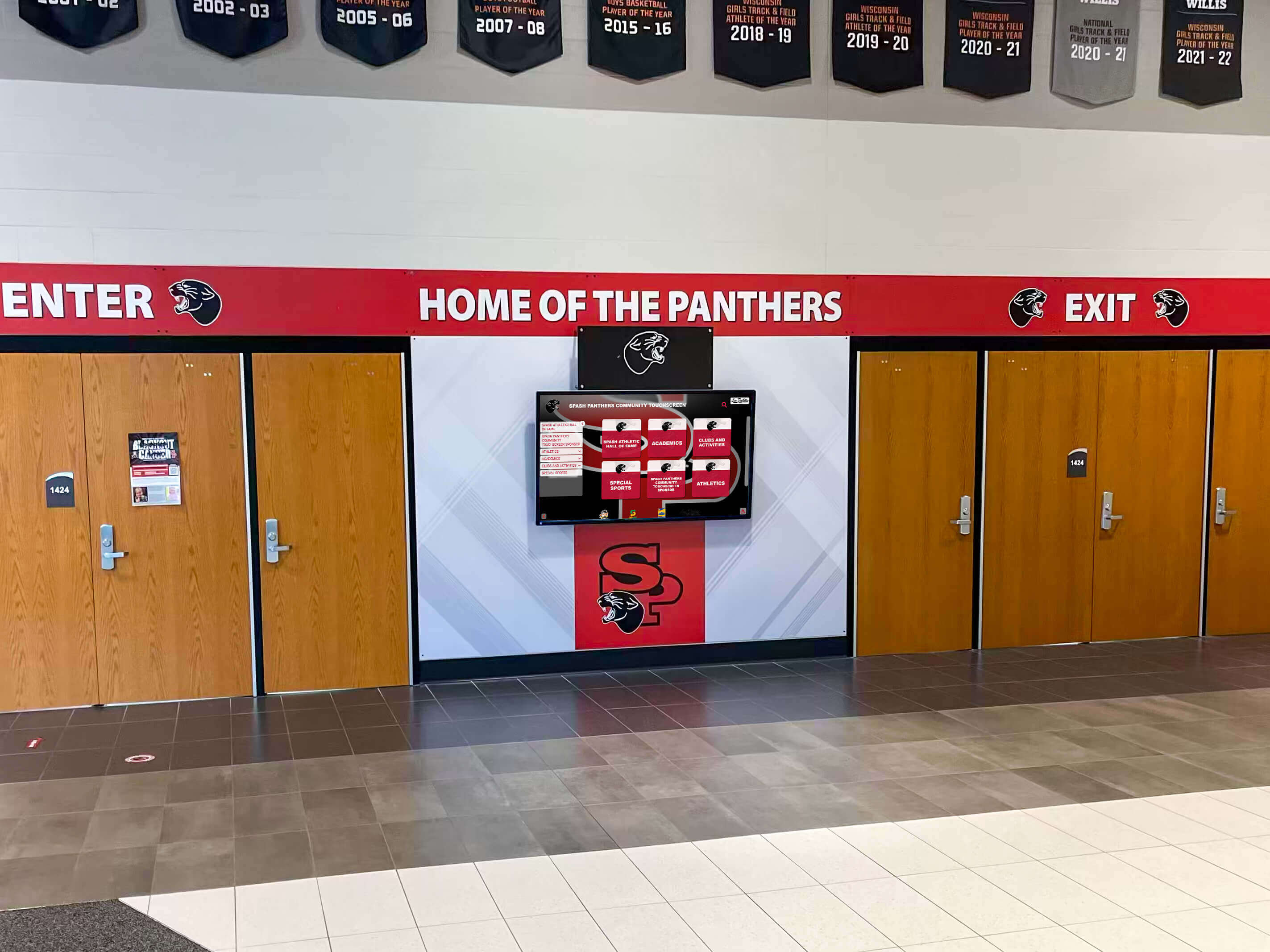
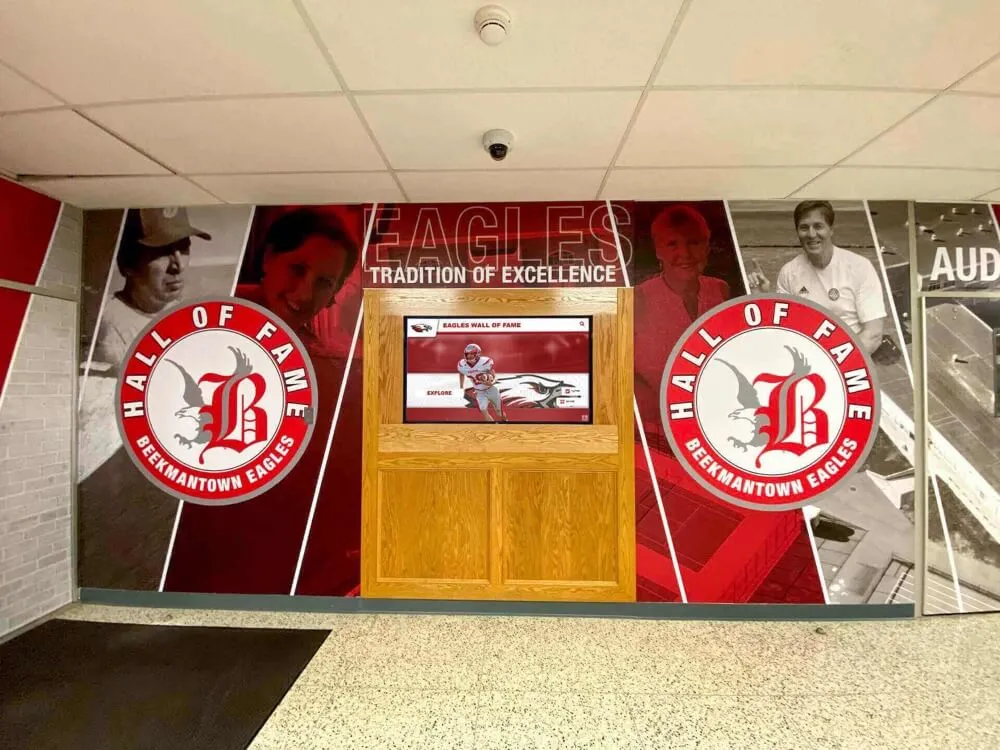
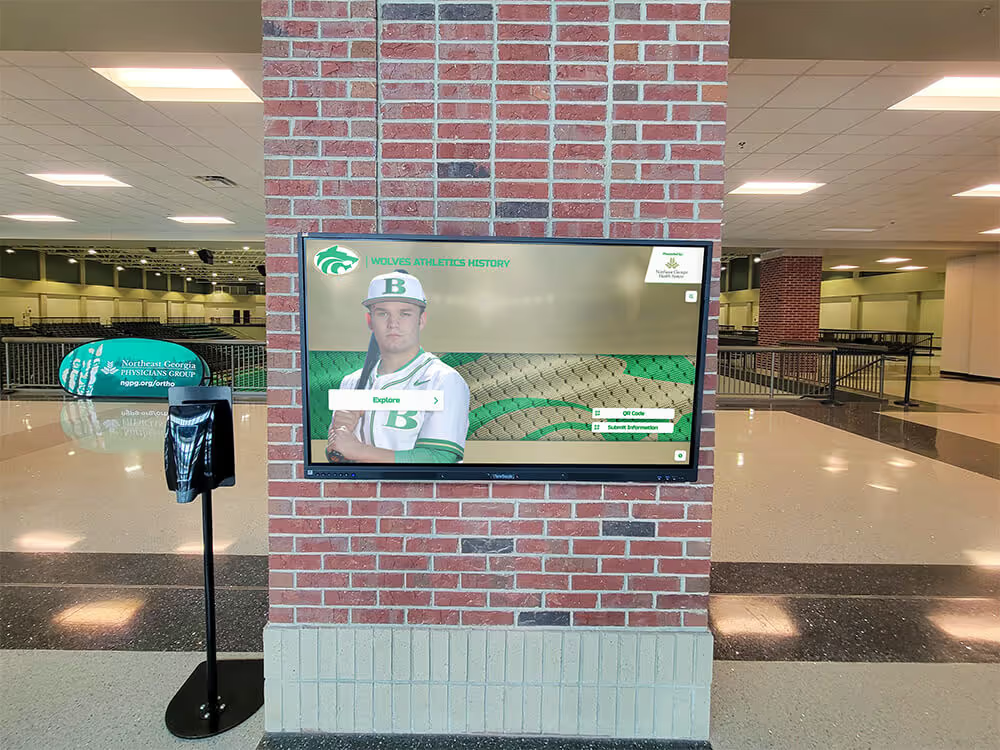
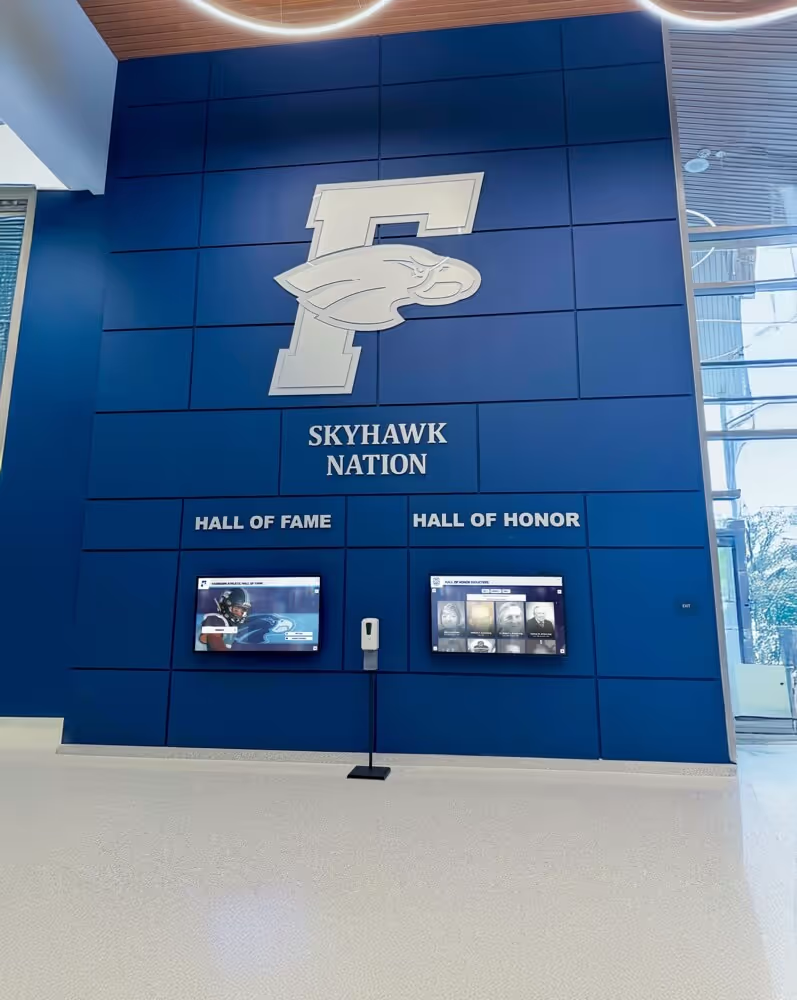
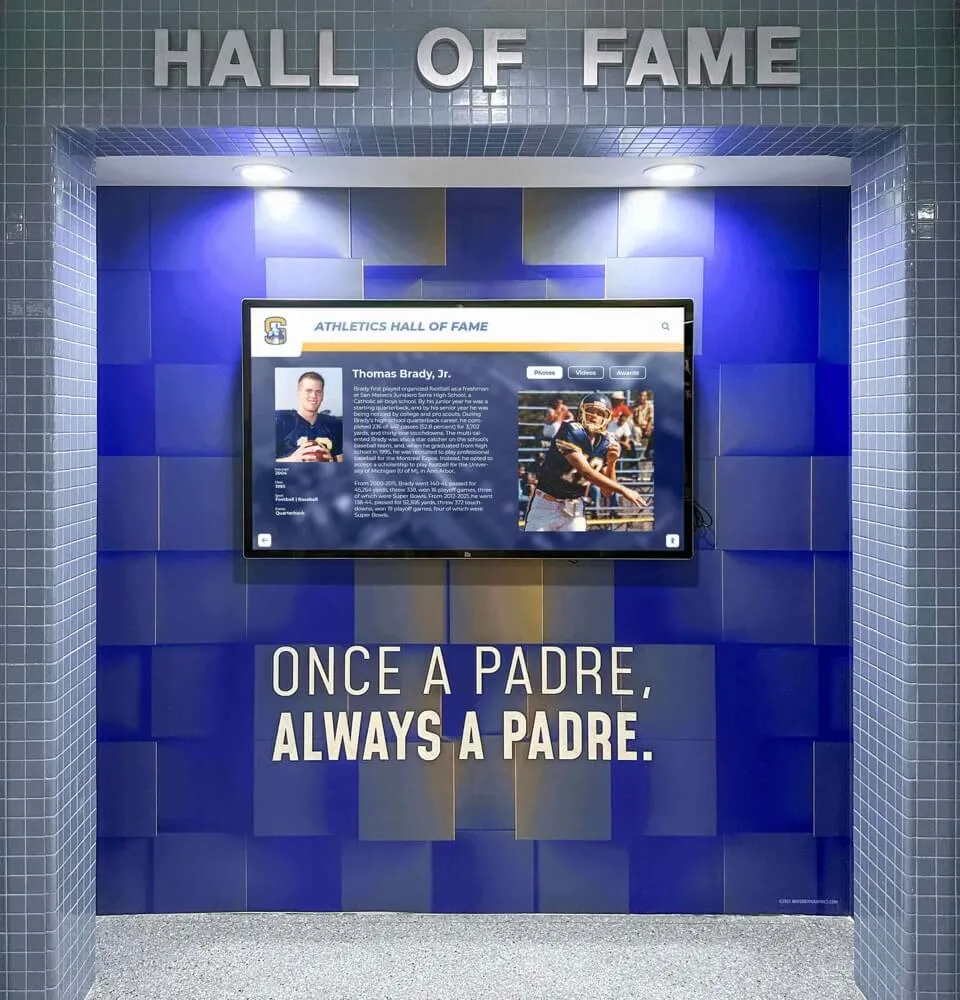
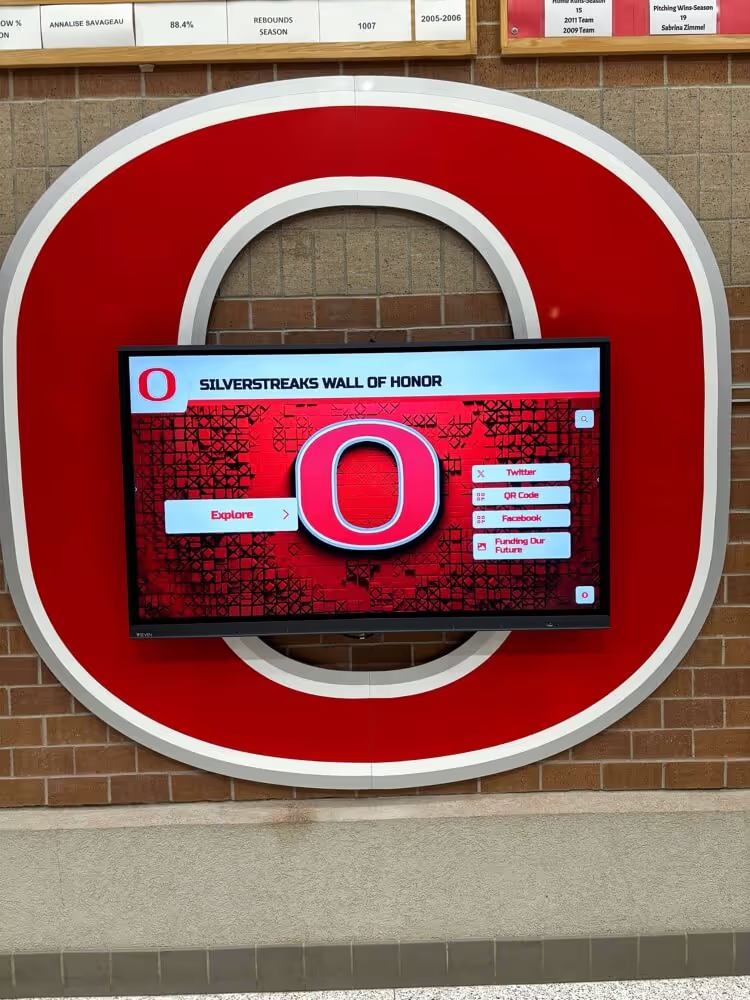
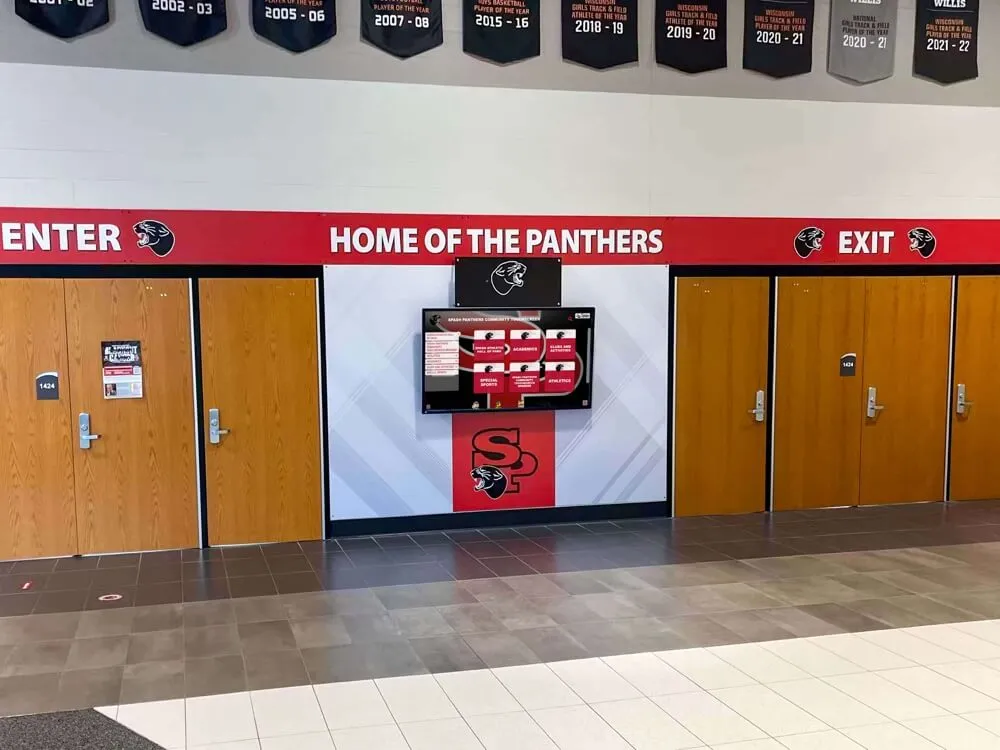
Strategic entrance placement ensures football achievements welcome students, families, and visitors daily throughout school years
State Championship Games Winners of semifinal matchups meet in championship finals at U.S. Bank Stadium, also held during championship weekend. Six championship games across all classifications occur over Friday and Saturday, creating festival-like atmospheres celebrating Minnesota high school football excellence.
Championship trophy presentations occur on the field immediately following games, with players, coaches, and administrators sharing celebration moments. These ceremonies create defining memories athletes carry throughout their lives, while communities celebrate championship achievements for generations.
Schools can preserve championship experiences through comprehensive digital recognition systems featuring photos, videos, biographical information, and complete season documentation that traditional trophy cases cannot accommodate.
Playoff Timing and Schedule
Minnesota’s compressed playoff schedule creates unique challenges and excitement:
Section Playoff Weeks Section playoffs occur during Weeks 10-12 of the season, typically spanning mid-October through early November. This timing places playoff rounds during optimal fall weather before severe winter conditions arrive, though temperature variations and occasional snow already factor into late October Minnesota football.
State Tournament Weekend State quarterfinals, semifinals, and championships all occur within 2-3 weeks, with championship weekend typically falling in mid-November. The compressed schedule means championship contenders play 4-5 consecutive weeks of playoff football, testing depth, injury management, and mental stamina.
Academic Considerations The November playoff schedule creates balance challenges between football and academics. Schools must support student-athletes maintaining classroom performance while managing intense playoff preparation, travel, and emotional investment. Strong academic support systems become essential during playoff runs.
Schools implementing student athlete recognition programs often celebrate academic achievement alongside athletic success, communicating that excellence requires performance in both domains.
Minnesota High School Football Traditions
Beyond competition, Minnesota football includes distinctive traditions making the sport culturally significant:
Friday Night Lights Culture
High school football creates community gathering points throughout Minnesota:
Weekly Community Events Friday nights in Minnesota communities transform around football games. Downtown businesses display team colors, restaurants fill with pre-game crowds, and main streets buzz with anticipation. Football provides regular community gatherings fostering social connections beyond game outcomes.
Halftime and Homecoming Minnesota schools maintain strong halftime traditions featuring marching bands, homecoming court presentations, and community recognitions. Homecoming weeks include dress-up days, pep rallies, bonfire rallies, and celebrations integrating football with broader school spirit traditions.
Band and Spirit Sections Student sections, pep bands, and cheerleading squads create atmospheres distinguishing Minnesota high school football from simple athletic contests. The community involvement transforms games into celebrations of school identity extending far beyond team performance.
Multi-Generational Attendance Minnesota communities turn out across age ranges—alumni return to watch programs they played for decades earlier, grandparents attend supporting current students, and elementary-age children absorb traditions they’ll eventually inherit. This multi-generational participation creates cultural continuity connecting past excellence with future aspirations.
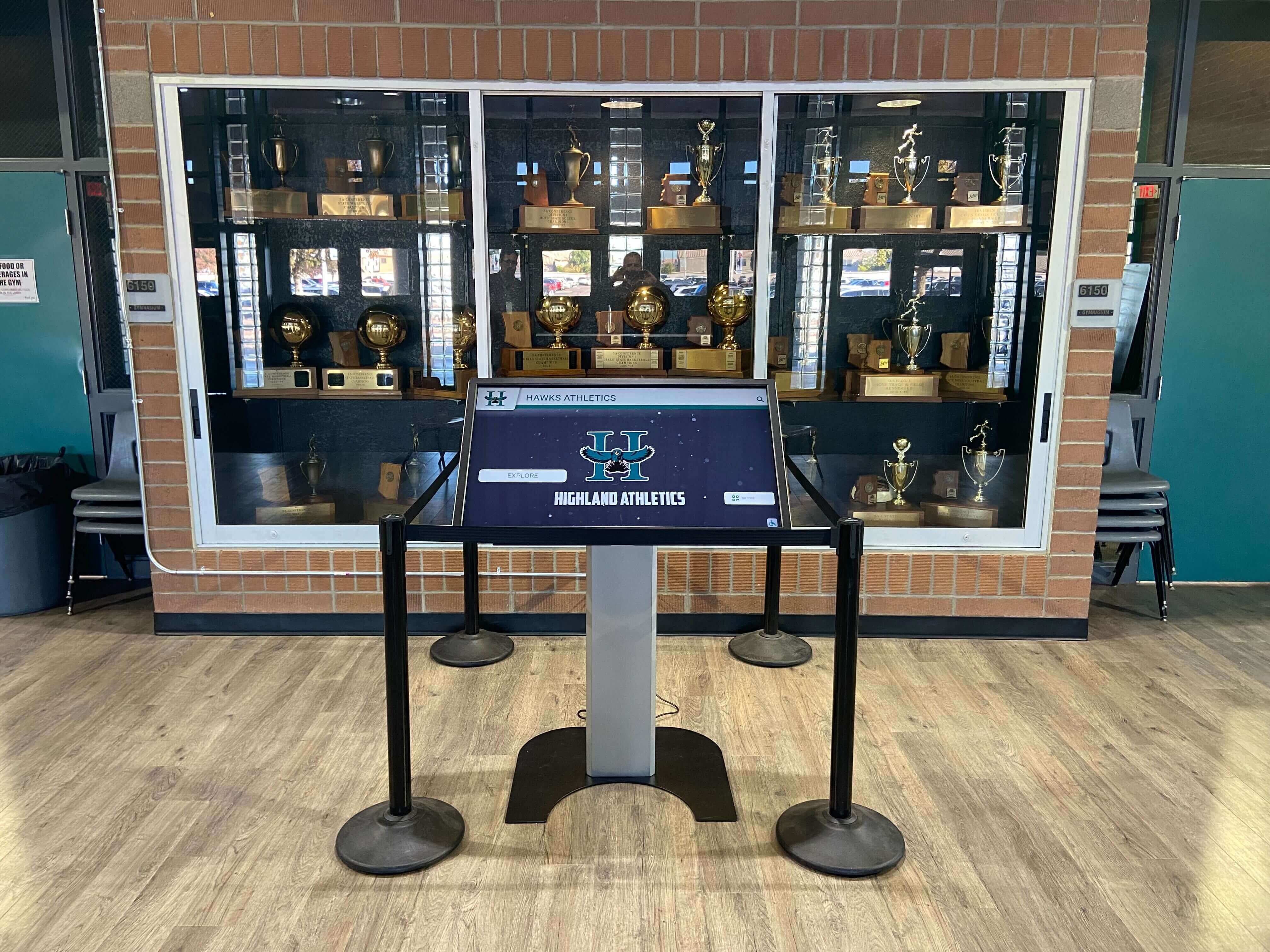
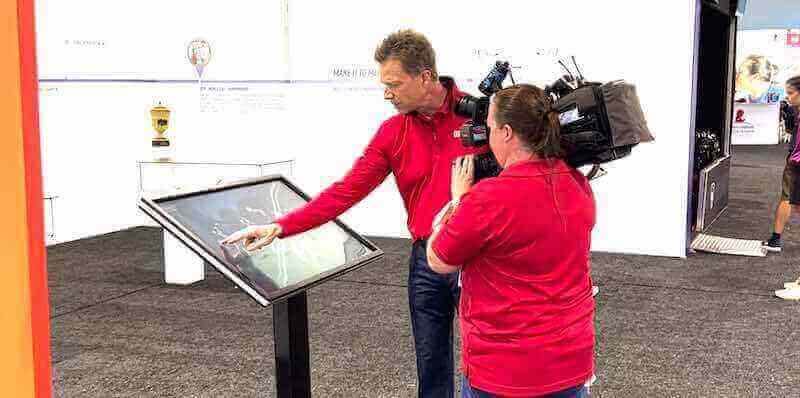
Interactive kiosks integrate with existing trophy cases, providing unlimited recognition capacity while respecting traditional display areas
Schools preserving these community traditions through photography and documentation can later incorporate them into comprehensive recognition displays that capture complete football experiences beyond game statistics.
State Championship Weekend at U.S. Bank Stadium
Playing for championships in the Minnesota Vikings’ stadium represents pinnacle experiences:
Professional Stadium Atmosphere U.S. Bank Stadium provides world-class facilities matching NFL standards. Locker rooms, playing surfaces, video boards, and amenities create once-in-a-lifetime experiences for high school athletes. The indoor climate-controlled environment ensures optimal playing conditions regardless of November weather.
Media Coverage and Attention Championship weekend receives extensive media coverage from Twin Cities television stations, newspapers, and sports websites. Athletes experience press conferences, post-game interviews, and recognition that rarely occurs at high school levels. This attention creates memories extending beyond game outcomes.
Family and Community Celebrations Schools reaching championship games typically organize community travel parties, ticket blocks, and hospitality spaces. These coordinated efforts transform championship weekend into community celebrations where supporters share experiences together rather than attending individually.
Trophy Presentations Championship trophy presentations on U.S. Bank Stadium field create defining moments. Receiving championship hardware in professional stadium surrounded by teammates, coaches, and community members creates powerful memories that participants recall throughout their lives.
Senior Night and Recognition Traditions
Minnesota programs maintain meaningful senior recognition traditions:
Senior Night Ceremonies Final home games feature senior recognition ceremonies where graduating athletes walk with families, receive introductions highlighting career accomplishments, and experience community appreciation for their contributions. These ceremonies create emotional moments honoring dedication and commitment beyond win-loss records.
Senior Banquets Post-season banquets celebrate team achievements while specifically honoring graduating seniors. Programs present awards, share season memories, and provide forums where seniors receive appropriate recognition for leadership and program contributions.
All-Conference and All-State Recognition Conference and state-level honors recognize individual excellence. All-conference teams celebrate athletes excelling within competitive regular season contexts, while all-state selections represent Minnesota’s finest players. These individual honors deserve systematic recognition ensuring outstanding athletes receive appropriate long-term acknowledgment.
Schools implementing comprehensive recognition frameworks document senior achievements, all-conference selections, and individual honors alongside team accomplishments, creating complete historical records.
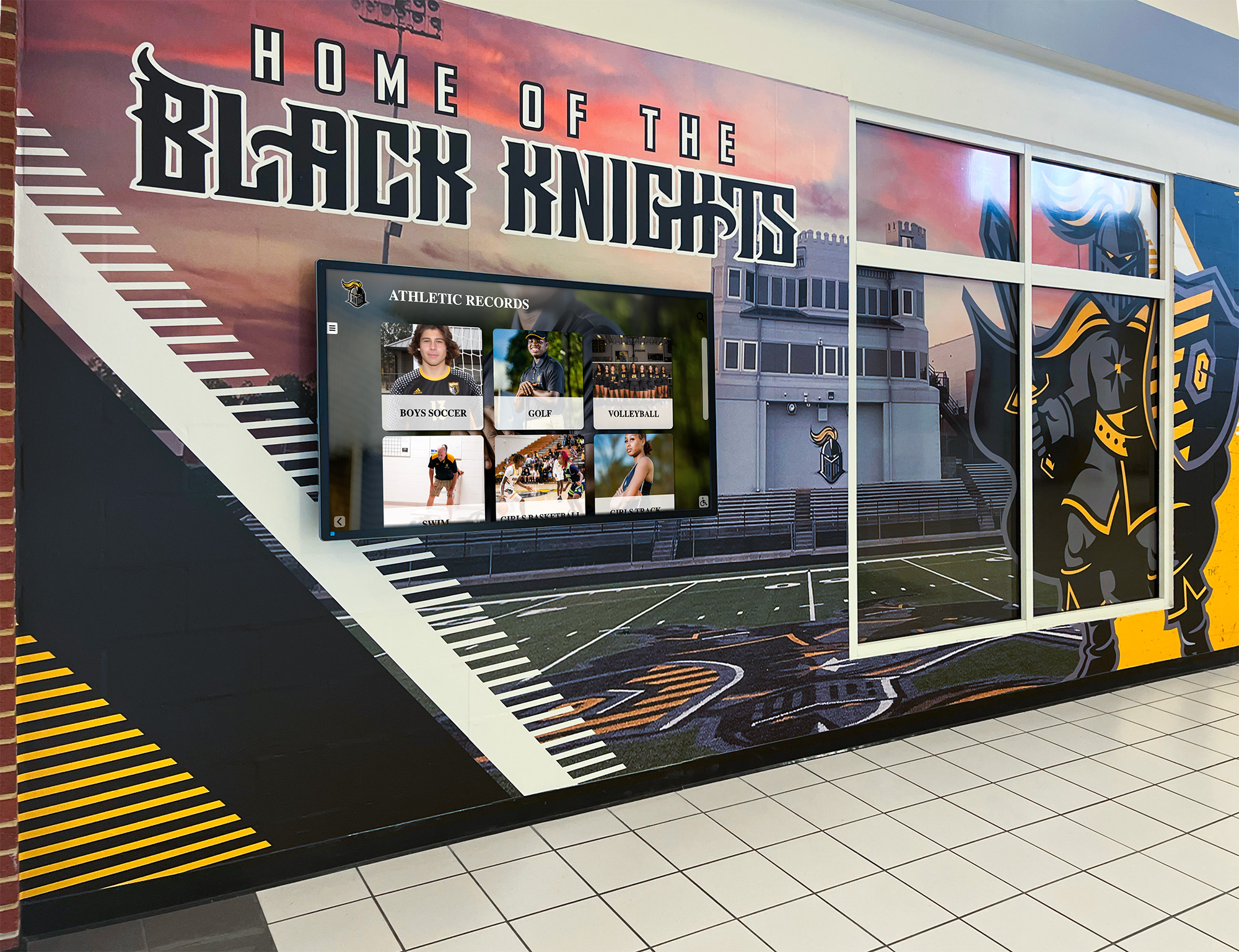
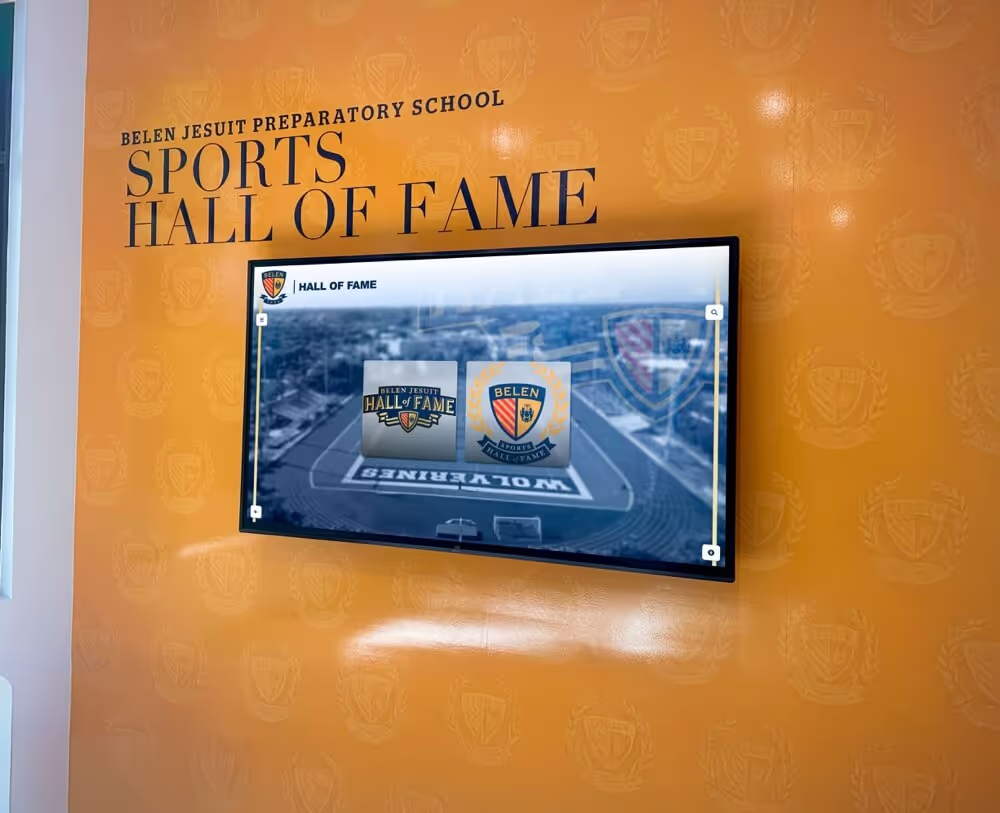
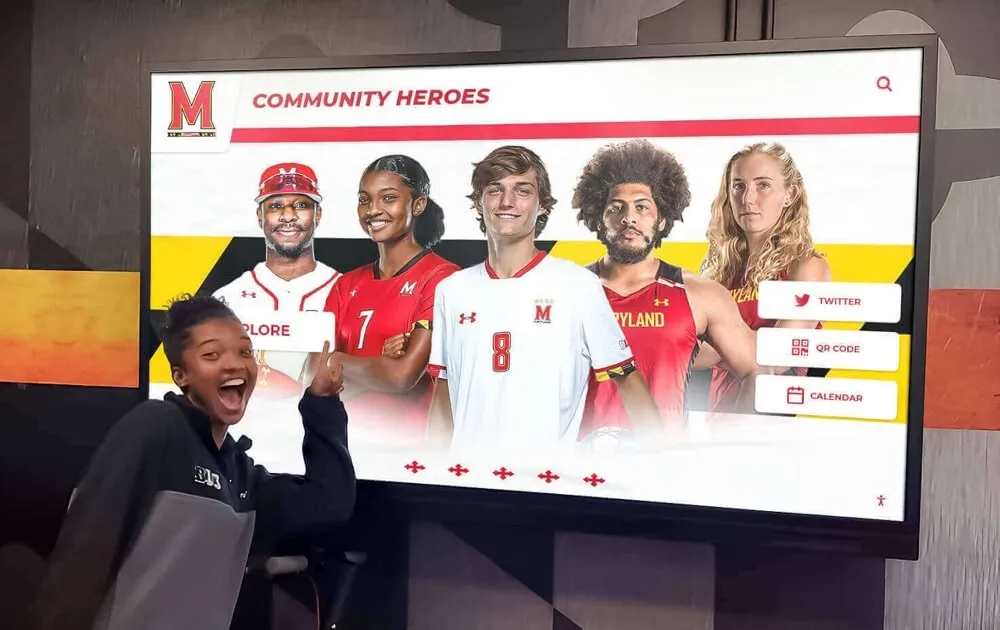
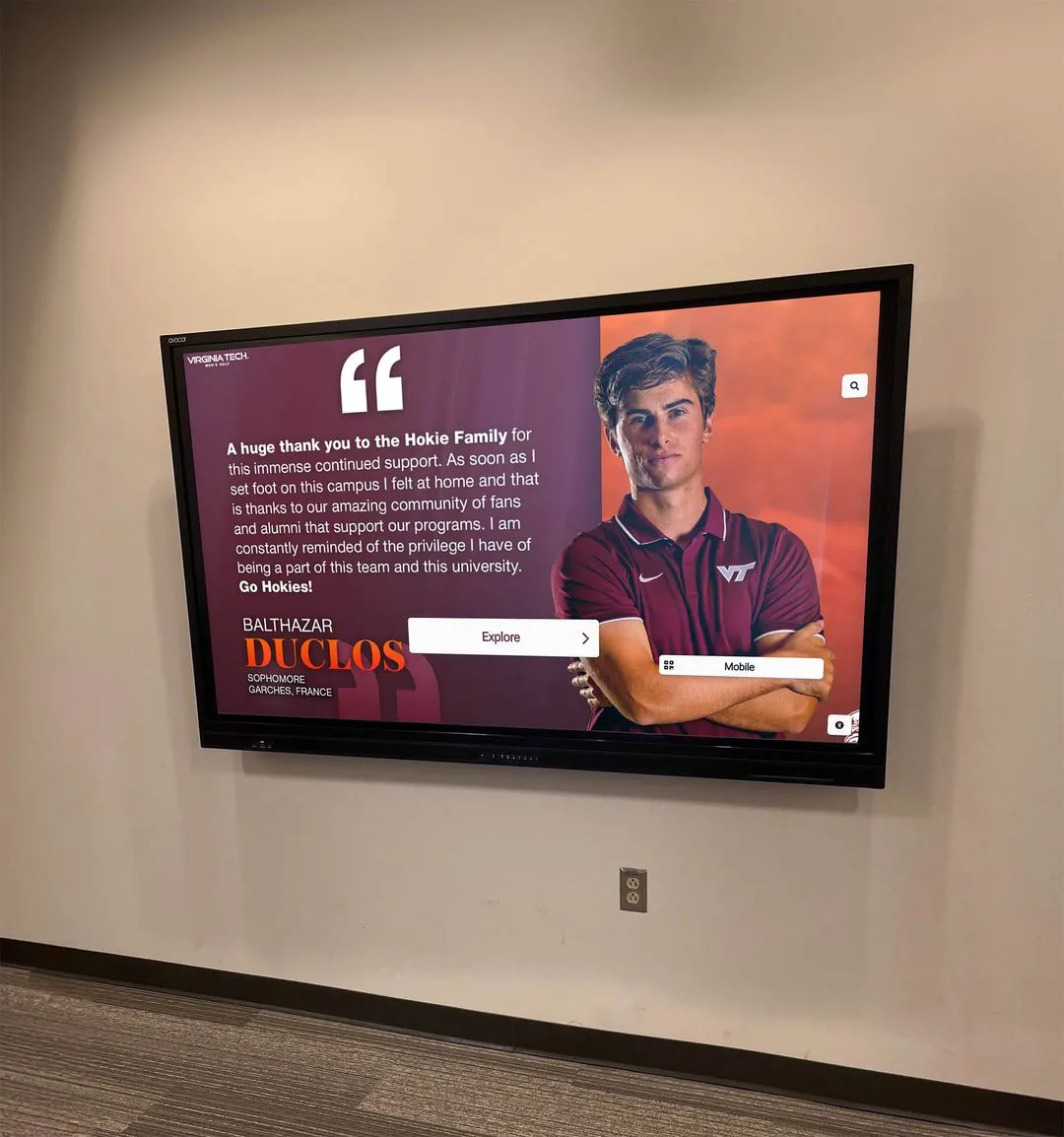
Digital displays enable schools to showcase individual achievements, team records, and statistical leaders across unlimited timeframes
Recognizing and Preserving Football Excellence
Championship runs, playoff appearances, and individual achievements deserve permanent recognition honoring athlete dedication and program excellence.
Traditional Physical Recognition
Schools have long used physical displays celebrating football success:
Championship Banners Fabric banners hung in gymnasiums or athletic facilities list state championship years, section titles, and conference championships. These visible reminders create tradition-rich environments while celebrating pinnacle achievements. Minnesota programs with multiple championships create impressive banner displays documenting dynasty-level excellence.
Trophy Cases Glass-fronted cases display championship trophies, game balls, all-state plaques, and memorabilia from successful seasons. Well-maintained trophy cases create focal points in school lobbies and athletic buildings, providing tangible evidence of program tradition.
Hall of Fame Plaques Individual plaques mounted on hall of fame walls recognize outstanding athletes, coaches, and program contributors. These permanent installations acknowledge excellence that shaped program histories, creating inspiration for current athletes aspiring to similar recognition.
Team Photos and Rosters Framed photographs of championship teams line hallway walls, creating visual timelines of program history. Schools often include complete rosters and coaching staffs alongside photos, ensuring every contributor receives appropriate recognition.
While valuable, traditional physical recognition faces inherent limitations: space constraints limit display capacity as achievement histories grow, static displays cannot accommodate expanding recognition without removing earlier content, limited information depth prevents detailed storytelling, maintenance challenges arise as materials deteriorate, and accessibility limitations prevent alumni and community members from exploring recognition remotely.
Modern Digital Recognition Solutions
Digital recognition systems solve traditional limitations while enhancing celebration capabilities:
Unlimited Recognition Capacity Digital platforms accommodate unlimited content without physical space constraints. Schools can document every playoff team, section champion, all-conference selection, and individual achievement across complete program histories. No accomplishment ever disappears to make room for newer recognition.
Rich Multimedia Storytelling Digital systems enable comprehensive documentation including detailed team rosters with player photos and biographical information, game-by-game statistics and scoring summaries, coach reflections about season accomplishments, video highlights from memorable games, photo galleries capturing playoff experiences, and individual athlete profiles celebrating personal achievements.
Interactive Exploration Features Touchscreen displays and web-based platforms allow searching by year, player name, or achievement type, filtering by classification, playoff round, or opponent, browsing championship histories discovering connections across seasons, and sharing achievements through social media integration. These interactive capabilities transform passive viewing into active exploration.
Simple Content Management Cloud-based platforms with intuitive interfaces enable athletic directors or staff to update recognition content without technical expertise, add new season information within hours, incorporate photos and statistics as they become available, and maintain accurate records across unlimited timeframes.
Web Accessibility Online recognition platforms extend visibility beyond physical campuses, enabling alumni to explore their playing days regardless of current location, families to share achievements with extended networks, and recruiting prospects to research program football traditions.
Solutions like Rocket Alumni Solutions provide purpose-built platforms designed specifically for schools, combining touchscreen displays with intuitive content management systems enabling athletic directors to maintain comprehensive football recognition without technical expertise.
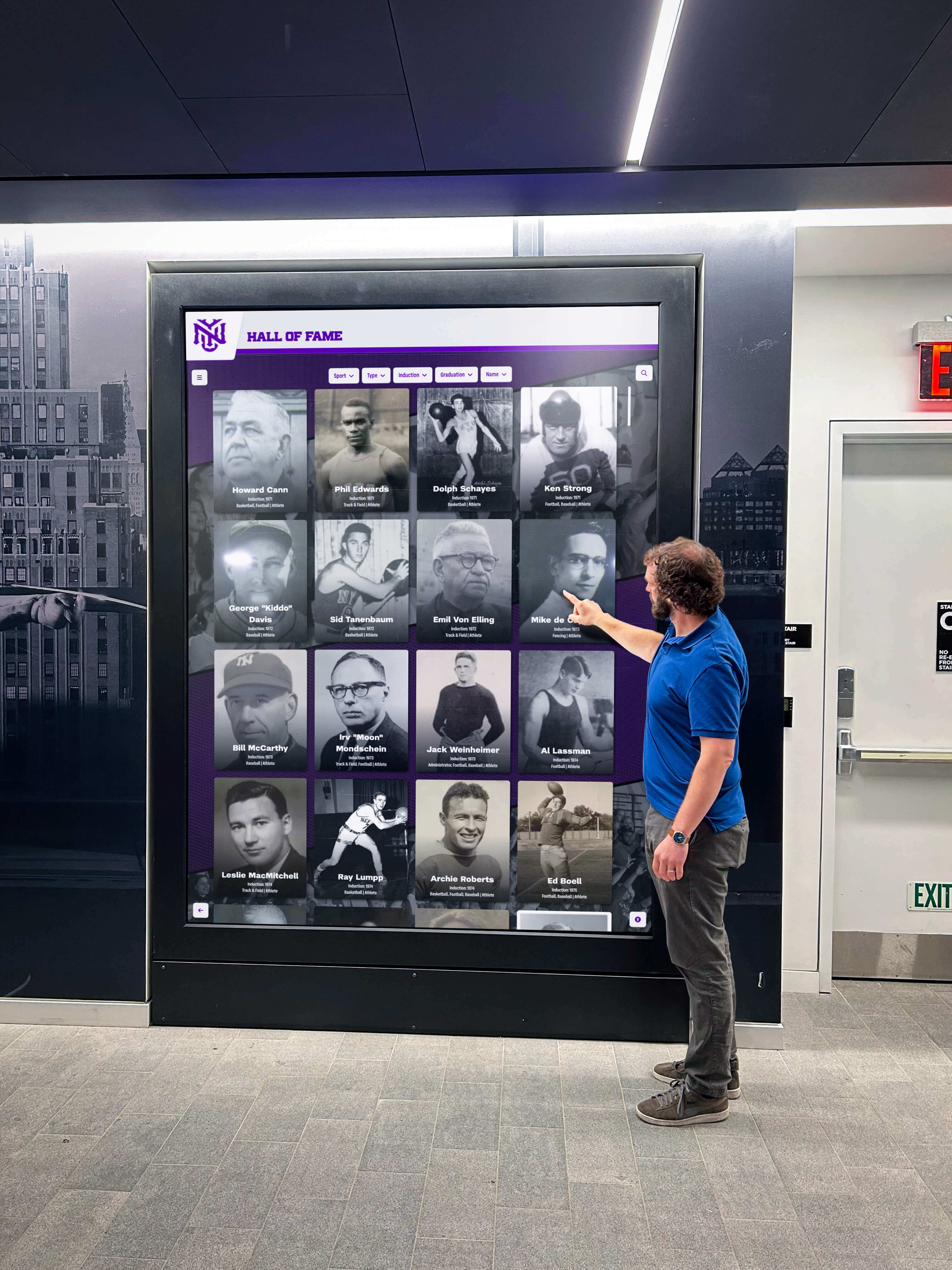
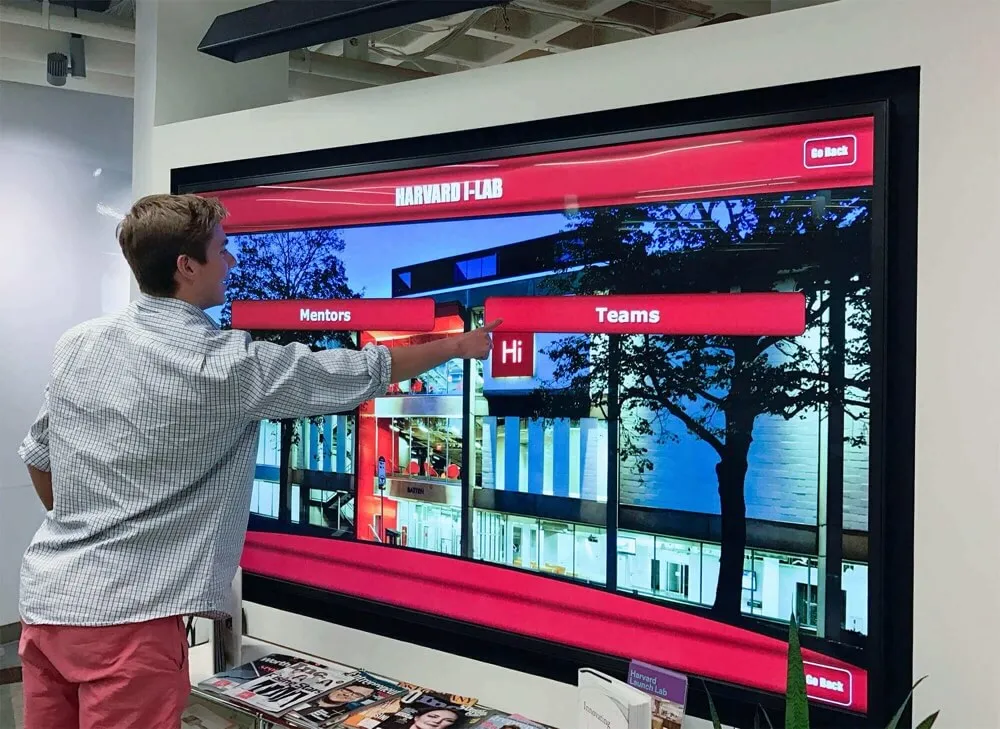
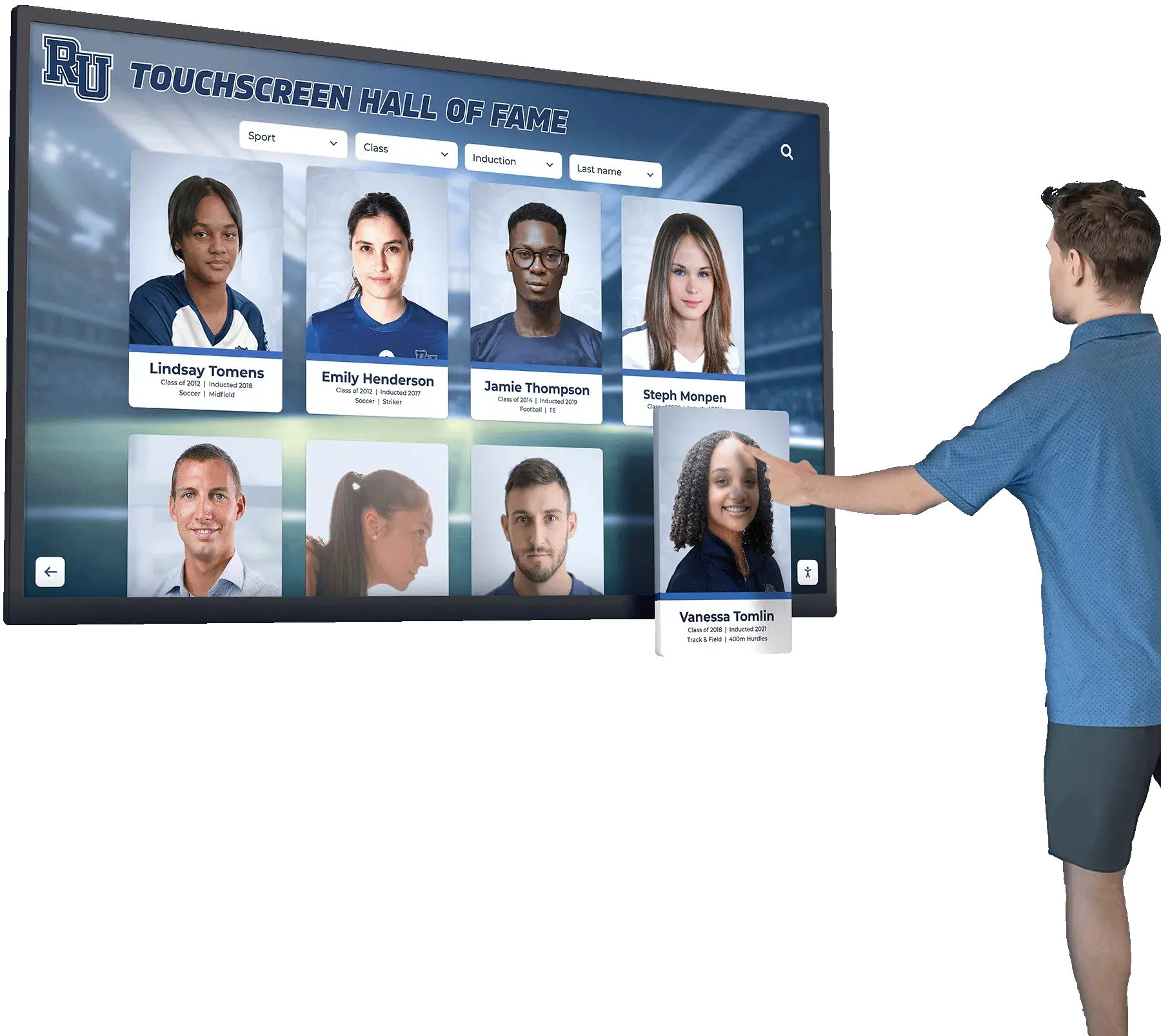
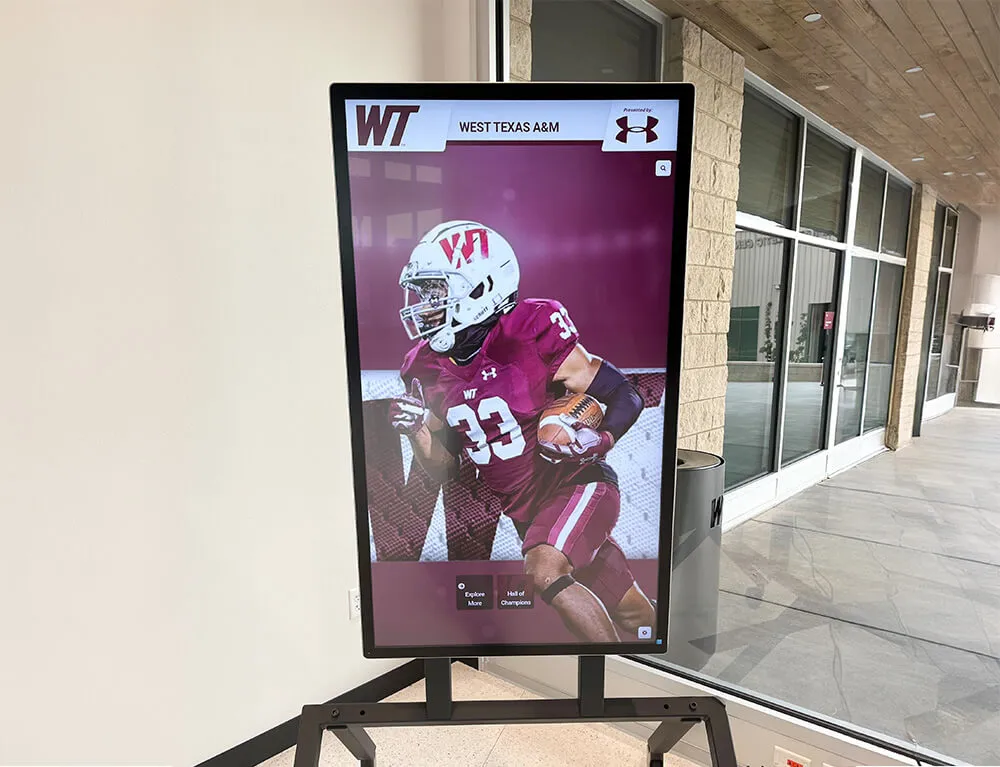
Digital recognition creates engagement opportunities where visitors explore achievement histories through intuitive touchscreen interfaces
Comprehensive Recognition Frameworks
Effective football recognition extends beyond championships alone:
Playoff Qualifiers Document every team reaching section playoffs, acknowledging that postseason qualification represents significant achievement requiring successful regular seasons. Many programs celebrate “making the playoffs” as milestone accomplishments deserving recognition even without advancing deep into tournament play.
Section Championships Recognize every section title, acknowledging that winning sections represents exceptional accomplishment regardless of state tournament outcomes. Section champions demonstrate they were best teams in their geographic regions during specific seasons.
Conference Championships Honor conference titles celebrating regular season excellence within competitive league contexts. Conference championships often require sustained excellence across full seasons, making them significant achievements deserving permanent recognition.
Individual Achievements Celebrate all-conference selections, all-state honors, statistical leaders, and milestone achievements. Individual recognition ensures outstanding athletes receive appropriate acknowledgment even when team success falls short of championships.
Coaching Recognition Acknowledge coaching contributions through career statistics, championship totals, and years of service. Coaching recognition demonstrates institutional appreciation while providing motivation for current staff and inspiration for future coaches.
Schools implementing comprehensive athlete recognition programs discover that frameworks celebrating diverse achievement levels engage broader populations than championship-only approaches.
Building Competitive Football Programs
Sustained success requires systematic program development extending beyond single seasons:
Year-Round Development
Successful programs maintain athlete development throughout the calendar:
Offseason Strength and Conditioning Structured weight training and conditioning programs beginning immediately after previous seasons conclude build physical capabilities required for competitive Minnesota football. The November playoff schedule demands strength and endurance only systematic training develops.
Spring Practice MSHSL-permitted spring practice periods allow skill development, scheme installation, and player evaluation without game pressure. Programs maximizing spring opportunities create competitive advantages entering fall seasons.
Summer 7-on-7 and Camps Quarterback and receiver development through 7-on-7 competitions, combined with position-specific camp participation, accelerates skill growth while building team chemistry before formal fall practices begin.
Youth Program Connection Strong relationships between high school and youth programs create competitive advantages as elementary and middle school players develop within consistent systems preparing them for high school success. Coaching continuity across levels produces athletes entering high school programs already understanding schemes and expectations.
Building Competitive Culture
Championship programs establish cultural foundations:
Excellence Expectations Programs with playoff traditions communicate expectations that postseason play represents normal outcomes rather than occasional achievements. This mindset affects preparation commitment and competitive mentality throughout organizations.
Academic Requirements Strong programs maintain academic standards ensuring athletes remain eligible while developing educational habits supporting long-term success. Academic expectations communicate that excellence requires comprehensive performance, not just athletic ability.
Multi-Sport Participation Many successful Minnesota programs encourage multi-sport participation, recognizing that diverse athletic experiences develop well-rounded athletes with complementary skills. Wrestling builds toughness, basketball develops agility, and track enhances speed—all benefiting football performance.
Community Connection Building community investment in program success creates supportive environments where athletes receive encouragement and programs gain resources supporting competitive excellence.
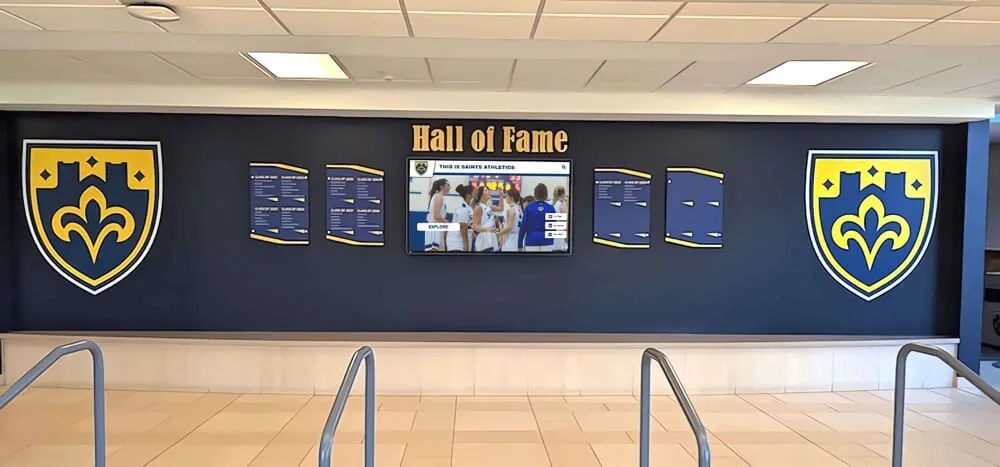
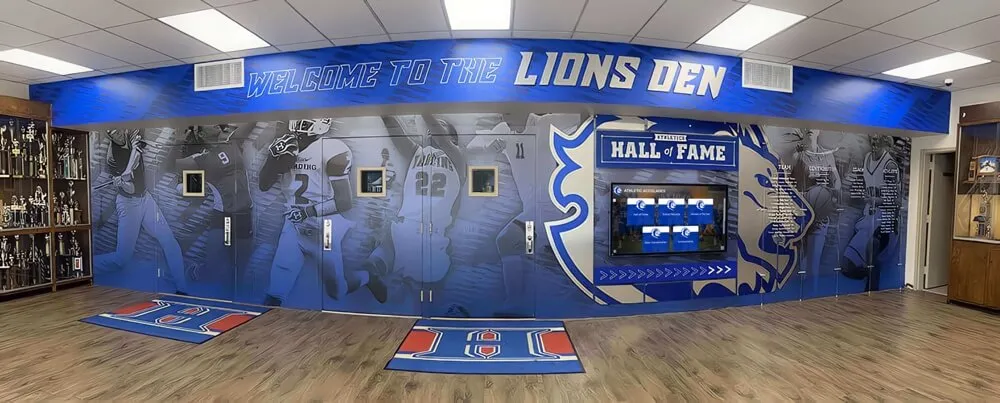
Effective recognition combines traditional design elements with modern digital capabilities, respecting tradition while solving historical limitations
Schools can strengthen culture through athletic recognition displays celebrating not just outcomes but also work ethic, dedication, and values producing championship-caliber performance.
Notable Minnesota Football Rivalries
Traditional rivalries create special significance beyond conference standings:
Historic City Rivalries
Some rivalries span generations:
Minneapolis City Conference Urban Minneapolis schools maintain fierce rivalries rooted in neighborhood pride and decades of competition. South, Washburn, Southwest, and Edison create intense matchups where city bragging rights matter as much as conference standings.
St. Paul City Rivalries Similar dynamics play out among St. Paul schools where Highland Park, Como Park, Central, and Harding compete for city supremacy alongside conference championships.
Suburban Showdowns
Twin Cities suburban expansion created new rivalries:
Lake Conference Featuring programs like Eden Prairie, Minnetonka, Edina, and Wayzata, the Lake Conference includes some of Minnesota’s most successful programs. Matchups between these suburban powers create intense competition and extensive community interest.
Northwest Suburban Conference Programs like Maple Grove, Osseo, Champlin Park, and Centennial compete in one of Class 6A’s most competitive conferences. These relatively young programs have developed intense rivalries despite shorter historical timelines.
Small-Town Traditional Rivalries
Rural Minnesota maintains football rivalries spanning multiple generations:
Proximity Rivalries Small towns separated by 10-20 miles create natural rivalries where families on opposing sides know each other personally, creating intense but respectful competition. These matchups represent community pride beyond simple athletic contests.
Border Battle Games Schools near state borders sometimes maintain rivalries with neighboring South Dakota, Iowa, or Wisconsin programs, creating unique cross-state competitions celebrating regional identities.
Schools implementing comprehensive documentation systems preserve rivalry histories through game results, memorable moments, and historical context that maintains tradition across generations.
Weather Challenges in Minnesota Football
Late-season weather creates unique Minnesota football characteristics:
October and November Conditions
Minnesota’s northern climate significantly impacts football:
Temperature Variations Early season games often occur in pleasant autumn conditions, while November playoffs frequently feature temperatures near or below freezing. Teams from southern Minnesota sometimes lack preparation for harsh conditions, while northern programs train in challenging weather regularly, creating potential competitive advantages.
Snow and Precipitation October and November bring increasing chances of snow and rain. Field conditions deteriorate significantly by late season, with natural grass becoming muddy and worn while artificial turf provides consistent surfaces regardless of weather.
Wind and Field Position Minnesota’s prairie locations create windy conditions affecting passing games and field position strategy. Coaches must adjust game plans based on wind direction, making field position decisions particularly significant during poor weather.
Home Field Advantages
Weather familiarity creates competitive benefits:
Northern Programs Schools in northern Minnesota regions experience harsher conditions earlier and more consistently, creating weather experience advantages when hosting playoff games against southern opponents unaccustomed to severe cold.
Artificial vs. Natural Surfaces Schools with artificial turf maintain consistent playing surfaces throughout seasons, potentially benefiting teams emphasizing speed and precision passing. Natural grass fields deteriorate significantly by November, sometimes favoring physical running-based attacks.
Fan Support in Elements Minnesota football fans demonstrate remarkable dedication attending games in challenging conditions. Home crowds willing to endure harsh weather create intimidating atmospheres for visiting teams, particularly during playoff rounds.
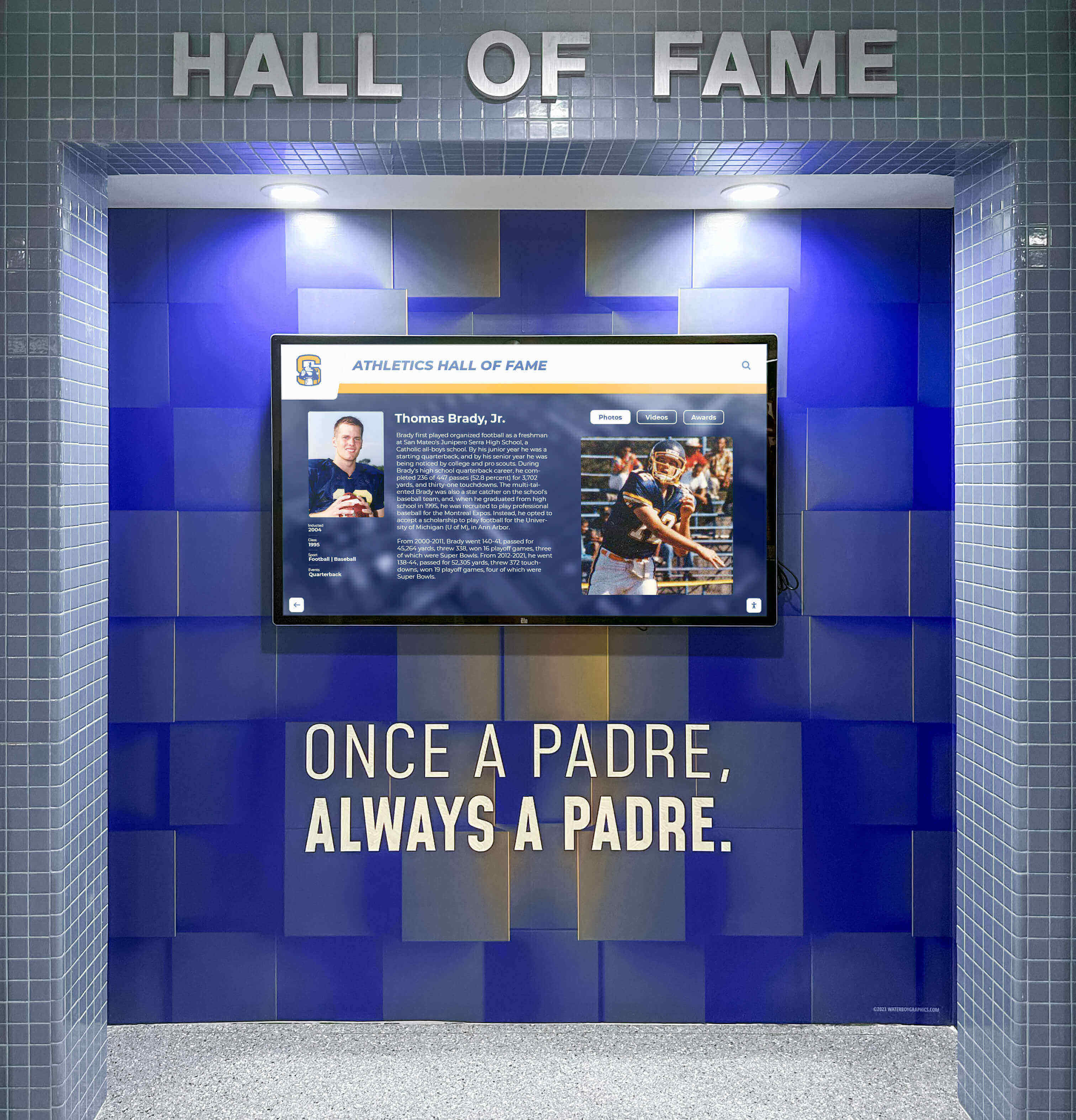
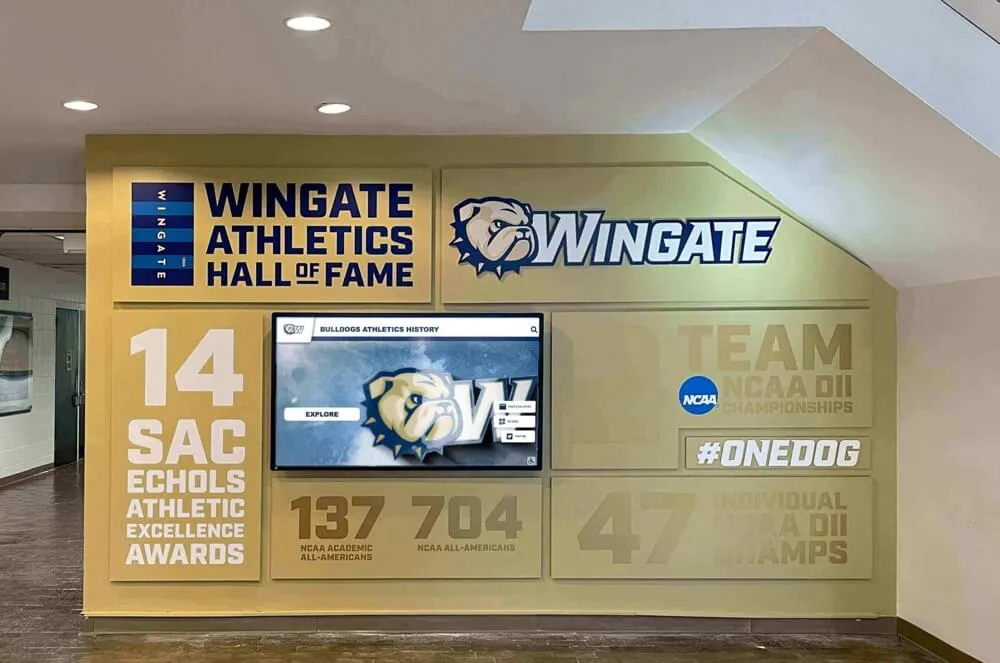
Strategic design integration ensures digital recognition complements existing architecture while providing modern recognition capabilities
Maximizing Football Recognition Impact
Schools seeking to celebrate football achievements effectively should implement systematic strategies:
Document Throughout Seasons
Rather than scrambling after successful campaigns, implement systematic documentation:
Photography Assign photographers (parents, volunteers, or professionals) capturing practices, games, sideline moments, celebrations, and community events throughout seasons. Comprehensive photo archives enable rich recognition development later.
Video Compilation Record game highlights, locker room celebrations, coach speeches, and player reactions creating multimedia documentation that digital recognition platforms can showcase.
Statistics and Records Maintain detailed statistical records for team performance and individual achievements, creating historical data supporting later recognition content.
Biographical Information Collect athlete and coach biographical details during seasons when information is readily available rather than attempting reconstruction years later when memories fade and people become difficult to locate.
Immediate Post-Season Recognition
Celebrate achievements promptly while excitement remains high:
Recognition Assemblies Host school-wide assemblies celebrating football teams regardless of ultimate season outcomes. Acknowledging conference championships, playoff qualification, or successful seasons demonstrates that achievement takes many forms beyond state titles.
Community Events Organize community celebrations where supporters acknowledge team accomplishments and athletes can appreciate community investment in their success.
Social Media Campaigns Leverage social media platforms sharing season stories, photos, statistics, and achievements with broader audiences including alumni networks and community members.
Long-Term Recognition Implementation
Develop permanent recognition ensuring achievements remain visible:
Digital Recognition Platforms Implement comprehensive digital systems documenting all significant teams and achievements across program history. These platforms provide unlimited capacity, rich storytelling capabilities, interactive exploration features, and web accessibility extending recognition beyond physical campuses.
Physical Display Updates Update trophy cases, championship banners, and hallway displays acknowledging recent achievements alongside historical recognition. Ensure new accomplishments receive visibility comparable to traditional displays.
Website Integration Create dedicated football history sections within athletic department websites where supporters explore achievement records, team rosters, statistics, and photos from successful seasons.
Schools implementing comprehensive recognition strategies discover that systematic approaches produce better long-term results than reactive responses after particularly successful seasons.
Conclusion: Celebrating Minnesota Football Excellence
Minnesota high school football represents more than athletic competition—it creates community gathering points, student development opportunities, and lasting memories shaping school cultures and individual lives. Understanding state rankings, playoff structures, championship traditions, and recognition opportunities helps schools maximize these experiences for athletes, families, and communities.
The journey to U.S. Bank Stadium requires dedication extending throughout years of off-season preparation, regular season competition, and playoff intensity. Programs reaching state championship games accomplish extraordinary achievements deserving permanent recognition honoring everyone who contributed to success.
Preserve Your Football Achievements Forever
Discover how digital recognition solutions help Minnesota schools celebrate football excellence through comprehensive platforms providing unlimited capacity for documenting every significant season, rich multimedia content bringing achievements to life, interactive exploration enabling discovery across program history, and permanent preservation ensuring no accomplishment ever disappears from institutional memory.
Explore Recognition Solutions to see how modern technology can transform how your school celebrates football tradition while building recognition culture where achievement receives appropriate acknowledgment.
Whether your program pursues first playoff appearances or next state championships, systematic approaches to documentation, celebration, and recognition ensure achievements receive appropriate acknowledgment. Every playoff qualifier demonstrates success worthy of recognition—not just state champions but also section champions, conference winners, and programs reaching postseason play after years of development.
Modern recognition technology eliminates traditional barriers that limited football celebration to recent seasons or championship years exclusively. Digital platforms accommodate comprehensive football histories documenting every successful season across unlimited timeframes while providing engaging interactive experiences that traditional static displays cannot deliver.
Your football achievements—player dedication, coaching excellence, community support, and competitive success—deserve recognition systems providing lasting celebration rather than temporary acknowledgment disappearing as trophy cases fill or wall space runs out. Through thoughtful planning, appropriate technology investment, and systematic documentation, you can create football recognition honoring every achievement while building the proud tradition your program deserves.
Start preserving your football legacy today by documenting current season achievements comprehensively, exploring recognition solutions that eliminate space constraints, planning long-term recognition investments supporting sustained celebration, and building systematic approaches ensuring future football teams receive appropriate acknowledgment. Every successful season deserves permanent recognition—modern platforms make comprehensive celebration achievable reality.