Every graduating class has one student who walks across the stage first, delivers the commencement address, and wears the title of valedictorian—the highest academic honor a school can bestow. For ambitious students eyeing this distinction, the journey begins not senior year, but the moment they enter freshman orientation. The path to becoming valedictorian demands strategic planning, relentless consistency, and smart choices that compound over four years into an unbeatable cumulative record.
Yet confusion surrounds this prestigious designation. Students wonder whether a single B freshman year eliminates their chances forever. Parents question how weighted versus unweighted GPAs factor into rankings. Rising sophomores struggle to balance rigorous course loads against GPA protection. Meanwhile, schools implement varying calculation methods—some ranking by pure numbers, others considering additional factors like leadership, service, and character—creating uncertainty about exactly what it takes to reach the top.
This comprehensive guide demystifies the valedictorian pursuit, exploring proven academic strategies, GPA calculation methods, course selection frameworks, study habit systems, and the realistic commitments required. Whether you’re a determined freshman mapping your four-year trajectory or a current junior assessing your chances, you’ll discover actionable approaches that position you for this highest academic achievement while maintaining balance, well-being, and genuine learning.
Becoming valedictorian represents more than earning the highest GPA in your graduating class. It validates years of disciplined effort, signals exceptional college readiness, opens doors to prestigious scholarship opportunities, and creates a permanent credential recognized throughout your academic and professional journey. For students willing to commit to strategic excellence, this honor becomes an achievable goal rather than an impossible dream.

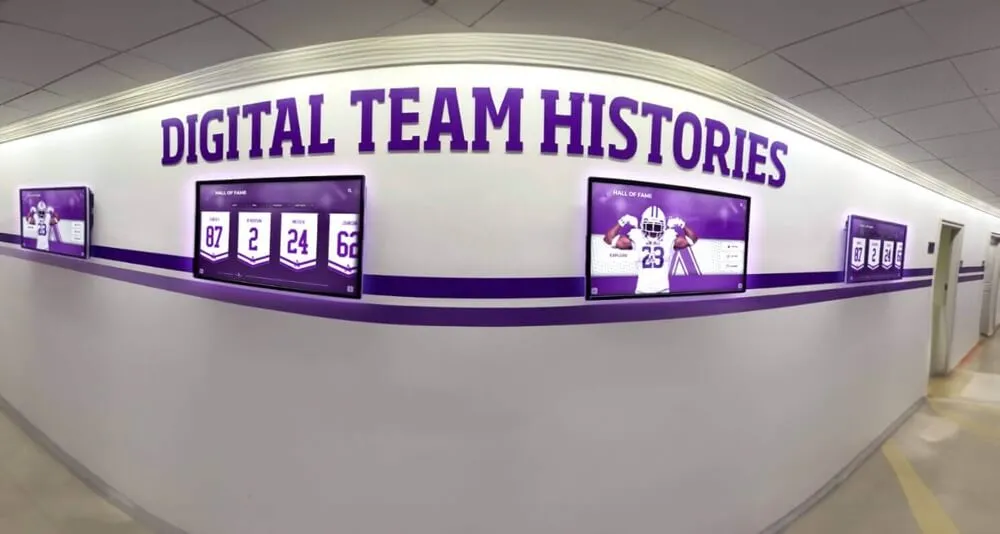
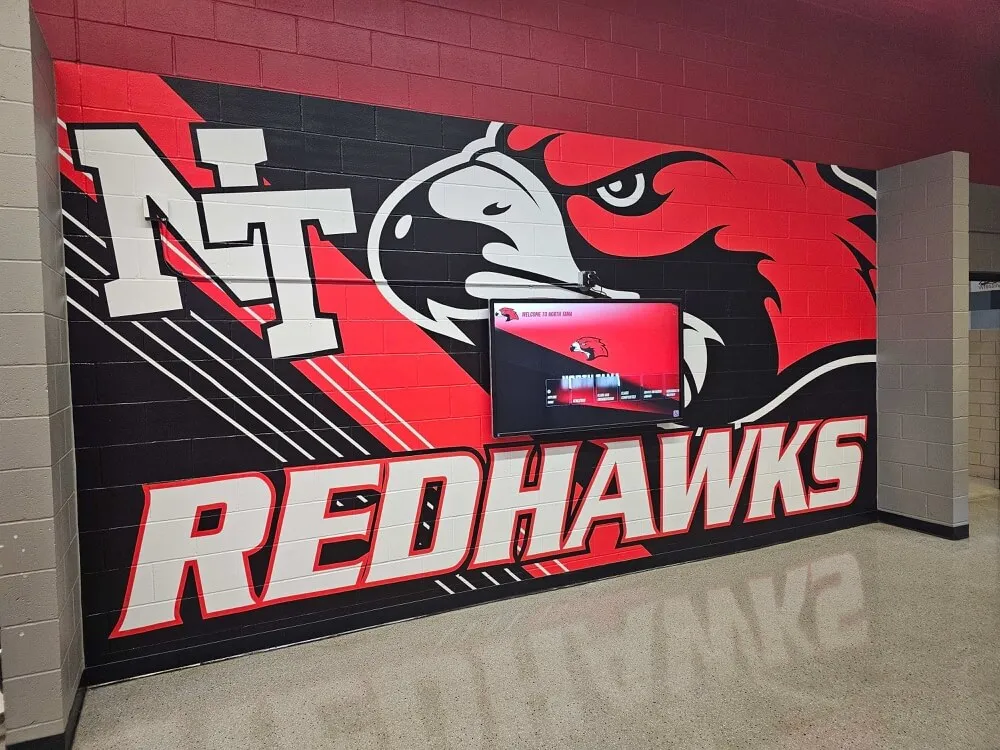
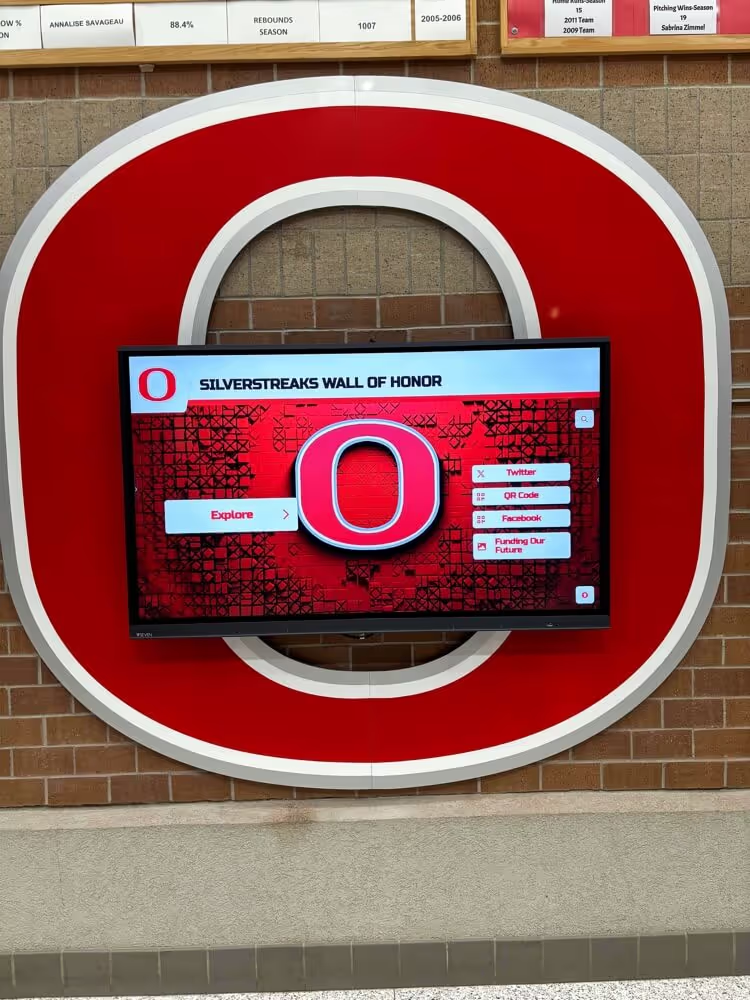
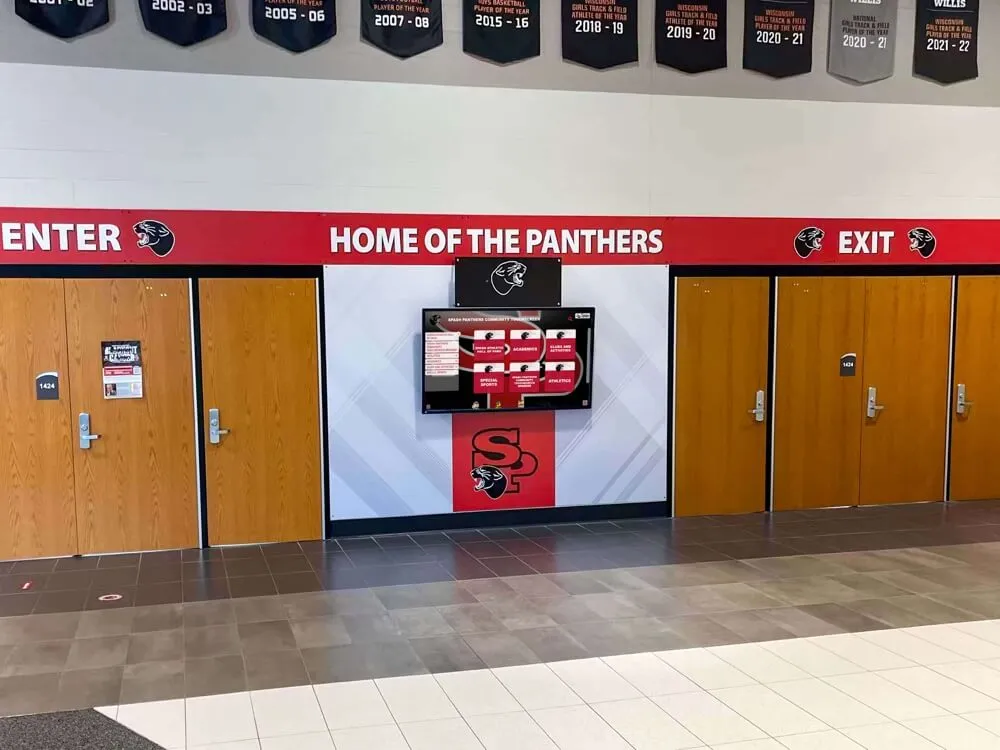
Schools celebrate valedictorians and top academic achievers through permanent recognition displays that inspire future students
Understanding Valedictorian Designation and Requirements
Before pursuing valedictorian status, you need to understand exactly how your school determines this honor and what qualifications you must meet.
What Is a Valedictorian?
The valedictorian traditionally represents the graduating senior with the highest academic standing in their class. The term derives from Latin “vale dicere,” meaning “to say farewell,” reflecting the valedictorian’s ceremonial role delivering the farewell address at graduation.
Core Valedictorian Characteristics
- Highest cumulative GPA in the graduating class
- Exemplary academic performance across all four years
- Recognition as the school’s top academic performer
- Graduation ceremony speaking privileges
- Permanent designation on transcripts and diplomas
- First in line during graduation processional
This designation carries significant weight for college admissions, scholarship applications, and lifelong professional credentials. Schools document valedictorian status on official transcripts, graduation programs, and permanent academic recognition displays celebrating institutional excellence.
Salutatorian: The Second-Highest Honor
Most schools also recognize a salutatorian—the student with the second-highest academic standing:
Salutatorian Distinctions
- Second-highest cumulative GPA in graduating class
- Often delivers salutatory address (“welcome” speech)
- Significant academic honor valued by colleges
- Permanent transcript designation
- Recognition alongside valedictorian at ceremonies

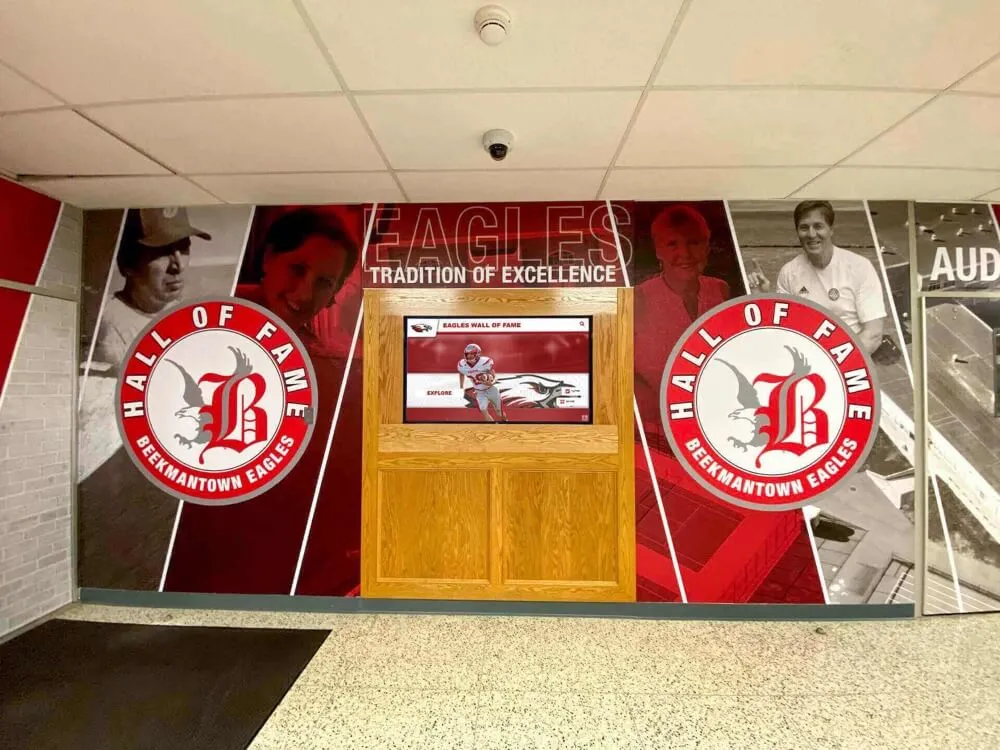
Schools document complete academic journeys of top performers through comprehensive recognition systems
Understanding the difference between valedictorian and salutatorian helps you set realistic goals while recognizing that both honors represent exceptional achievement worthy of celebration and offering substantial benefits for college applications.
How Schools Calculate Class Rank
Schools use different methodologies for determining valedictorian status:
Weighted GPA Systems Most competitive high schools employ weighted GPAs that assign extra points for advanced coursework:
- Regular courses: 4.0 scale maximum
- Honors courses: 4.5-5.0 scale maximum
- AP/IB courses: 5.0-6.0 scale maximum
- Dual enrollment: Varies by institution
Weighted systems reward academic risk-taking and encourage students to challenge themselves with rigorous coursework. A student earning a B+ in AP Calculus receives higher GPA credit than one earning an A in standard-level math.
Unweighted GPA Systems Some schools use unweighted 4.0-scale GPAs treating all courses equally:
- All courses calculated on standard 4.0 scale
- A in any course equals 4.0 regardless of difficulty
- May discourage challenging course selection
- Simpler calculation but less nuanced recognition
- Potentially rewards strategic course selection over rigor
Class Rank Percentage vs. Exact GPA Schools may determine valedictorian through:
- Pure numerical GPA ranking (highest cumulative GPA wins)
- Consideration of course difficulty beyond simple weighting
- Additional factors like attendance, conduct, or service
- Minimum required years of attendance at institution
- Credit hour minimums excluding late transfers
Critical First Step: Understanding Your School’s Specific System
Visit your guidance counselor during freshman year to clarify:
- Whether your school uses weighted or unweighted GPA
- Exact weighting scale for honors, AP, IB, and dual enrollment
- Whether electives, PE, and extracurriculars affect calculations
- Minimum attendance and credit hour requirements
- Tiebreaker procedures if multiple students share top GPA
- Additional requirements beyond pure GPA
This information forms the foundation of your strategic plan. Assumptions about GPA calculations cause many students to make suboptimal course choices that undermine valedictorian pursuits despite strong academic performance.
Strategic Course Selection for Maximum GPA Impact
Course selection represents your most powerful lever for achieving and maintaining the highest class rank.
Balancing Rigor and Performance
The fundamental tension in valedictorian pursuit involves taking the most challenging courses available while maintaining the highest possible grades.
The Rigor Imperative
In weighted GPA systems, you mathematically must take the most rigorous courses:
- Students taking all honors/AP courses can achieve 4.5-5.0+ GPAs
- Students in regular courses max out at 4.0 GPAs
- The weighting system makes it nearly impossible to become valedictorian without advanced coursework
- Colleges evaluating valedictorian transcripts expect to see maximum rigor
However, taking courses beyond your capability damages both GPA and learning. The optimal strategy identifies the right balance point where you’re challenged but capable of consistent high performance.

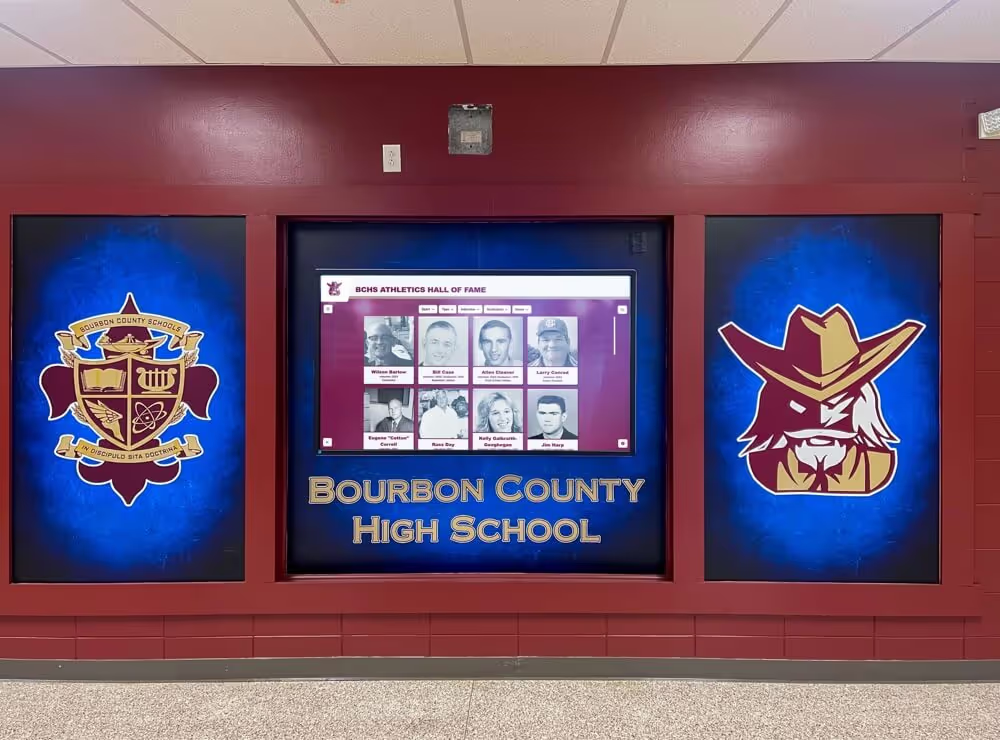
Achievement displays inspire current students by showcasing paths to academic excellence including valedictorian recognition
Strategic Course Selection Framework
Apply this decision-making process for each course:
Advanced Course Consideration Factors
- Your proven strength in the subject (past grades and standardized test scores)
- Teacher reputation for fairness and achievable grading standards
- Your genuine interest in the subject matter
- Time availability for the required workload
- Impact on overall schedule balance
- Alternative course options and their GPA weighting
When to Take Advanced Courses
- You earned A or A- in prerequisite courses
- The subject aligns with your natural strengths
- You have adequate time for the workload
- The weighted GPA benefit justifies potential grade risk
- The course prepares you for intended college major
When to Consider Standard-Level Courses
- The subject represents a consistent weakness
- Your schedule is already overloaded with other APs
- You need a GPA-stabilizing course for balance
- The course doesn’t align with your college/career trajectory
- Teacher grading reputation suggests excessive difficulty
Freshman Year Foundation Strategy
Your freshman year sets the trajectory for valedictorian pursuit:
Establish Strong Academic Patterns
- Take honors courses in your strength areas
- Build study habit systems that will scale
- Develop relationships with teachers who can support you long-term
- Join academic recognition programs and honor societies
- Begin exploring advanced course requirements
Avoid Common Freshman Mistakes
- Overloading schedule with too many APs too soon
- Taking advanced courses in weak subject areas
- Neglecting GPA in assumption you can “fix it later”
- Ignoring attendance and conduct requirements
- Failing to understand school’s specific ranking methodology
A strong freshman year (3.9+ weighted GPA) provides cushion for inevitable challenges in later years while establishing you as a top academic performer.
Sophomore and Junior Year Intensification
These middle years determine valedictorian outcomes:
Sophomore Year Priorities
- Increase to 3-4 AP or honors courses if freshman year went well
- Take AP courses in your strongest subjects
- Maintain or improve freshman GPA
- Build relationships with AP teachers for future courses
- Join extracurriculars that won’t compromise academics
Junior Year Peak Performance Junior year typically requires maximum course rigor:
- 4-6 AP courses representing your schedule’s core
- Continued honors courses in remaining subjects
- Strategic elective selection protecting GPA
- Standardized test preparation (SAT/ACT)
- Beginning college application preparation
Junior year often proves most challenging, requiring careful balance between academic performance, standardized testing, extracurricular leadership, and college preparation. Students pursuing valedictorian typically prioritize coursework and grades above all else during this critical year.
Senior Year Maintenance Strategy
Maintaining valedictorian status through senior year requires continued vigilance:
Course Selection Considerations
- Maintain course rigor to preserve competitive advantage
- Avoid “senioritis” GPA decline
- Take APs in final remaining strength areas
- Carefully consider courses with challenging grading reputations
- Understand final GPA calculation timing
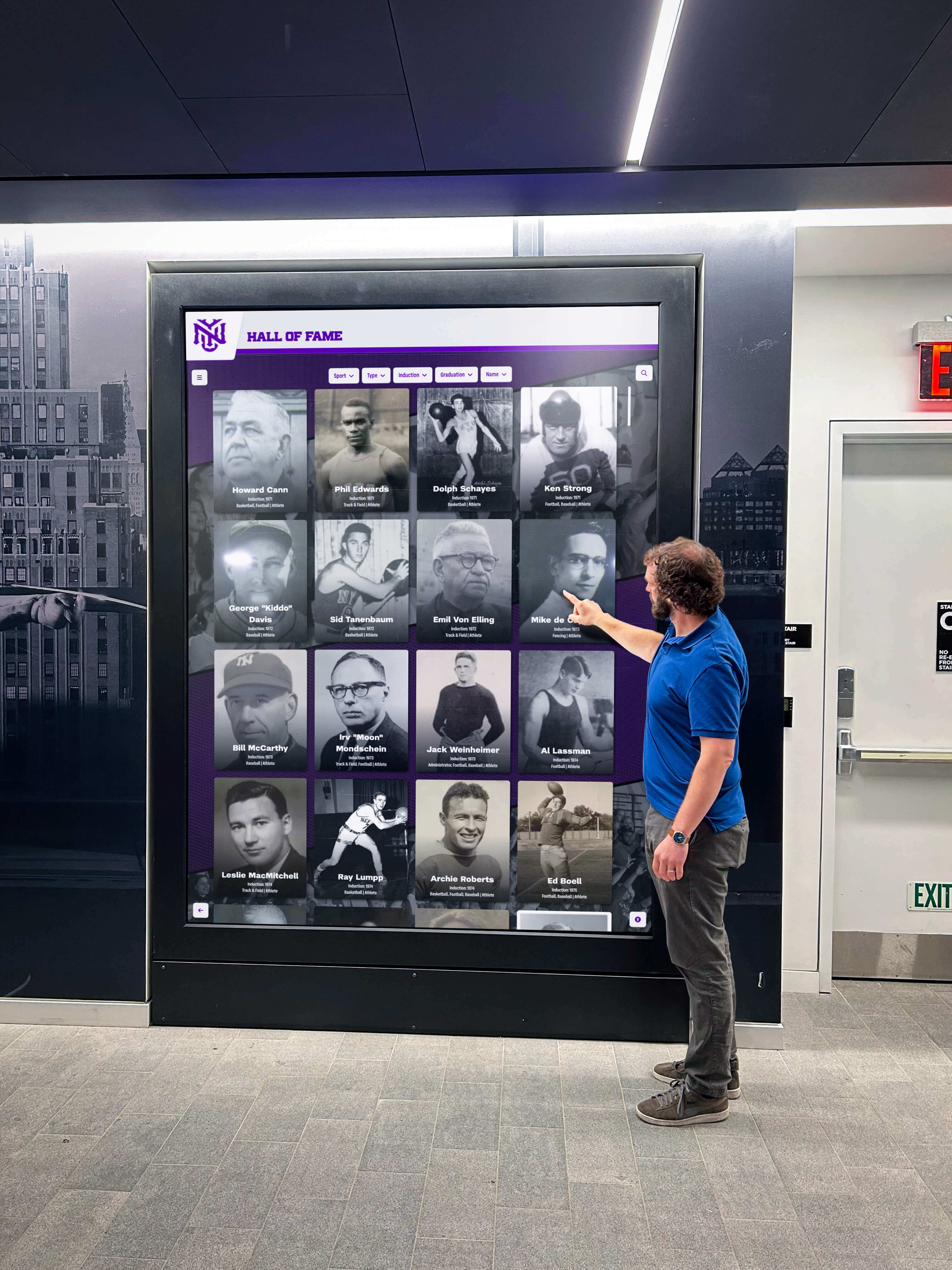
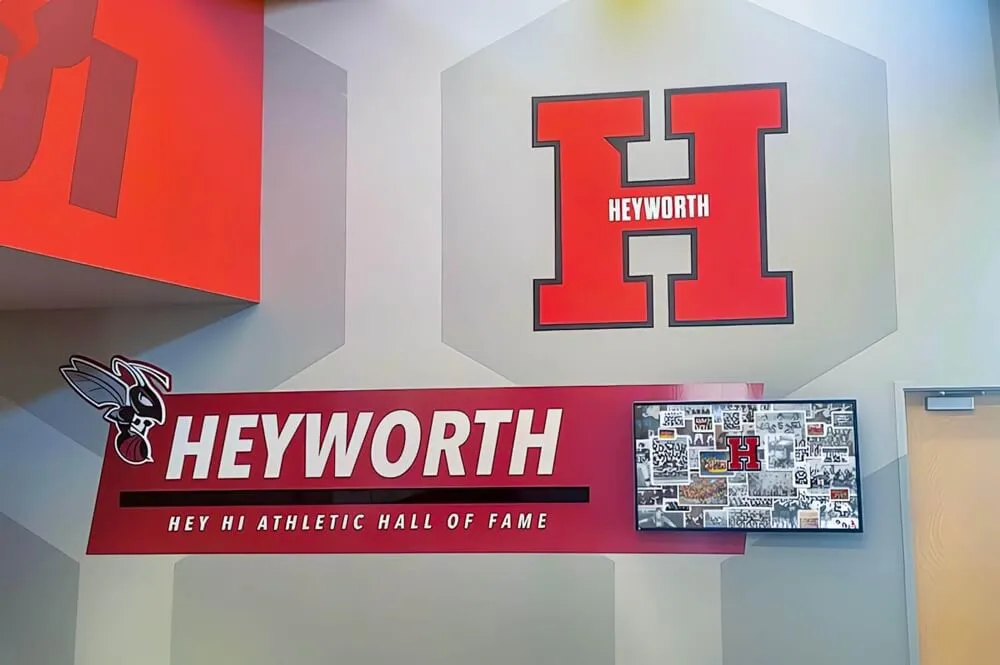
Modern recognition displays document valedictorian achievements and inspire younger students to pursue academic excellence
Timing and Calculation Windows Many schools calculate final class rank based on seven semesters (through first semester senior year) or even six semesters (through junior year). Understanding your school’s specific timing prevents unnecessary stress or complacency.
Some students effectively “lock in” valedictorian status by end of junior year, allowing slightly reduced senior year intensity. Others must maintain maximum performance through final semester. Know which scenario applies to you.
Essential Study Habits and Time Management Systems
Course selection alone won’t make you valedictorian—you need execution systems ensuring consistent high performance.
Time Management Frameworks for Academic Excellence
Valedictorians typically develop sophisticated time management approaches:
Weekly Planning System
Implement Sunday planning sessions:
- Review all upcoming assignments, tests, and deadlines for the week
- Block study time for each major assignment and test preparation
- Schedule extracurricular commitments and estimate duration
- Identify potential time conflicts requiring advance work
- Build buffer time for unexpected challenges
Daily Execution Priorities
Structure each school day:
- After school (3-6 PM): Primary homework and study block
- After dinner (7-9 PM): Secondary study block for challenging assignments
- Weekend mornings: Test preparation and major project work
- Weekend afternoons: Extracurricular activities and social time
Valedictorians typically study 3-4 hours daily on weekdays and 4-6 hours on weekend days, adjusting based on workload intensity and natural productivity patterns.

Comprehensive achievement profiles document the complete academic journeys of valedictorians and top students
Workload Management During Peak Periods
Certain weeks require intensified effort:
- AP exam season (late April-May): 5-7 hours daily study
- Finals weeks: Adjust schedule to accommodate concentrated studying
- Major project due dates: Front-load work to avoid all-nighters
- College application season: Temporarily reduce extracurricular time
Learning to identify high-intensity periods weeks in advance and adjusting schedules accordingly prevents the overwhelm that undermines consistent performance.
Subject-Specific Study Strategies
Different subjects require different mastery approaches:
STEM Course Success Strategies
Mathematics and science courses require consistent practice:
- Complete all homework with full effort (not just for completion)
- Work extra practice problems beyond assignments
- Seek help immediately when concepts are unclear
- Form study groups reviewing problem-solving approaches
- Review notes daily, not just before tests
- Understand concepts, don’t just memorize procedures
Humanities Course Excellence
English, history, and social science courses emphasize analysis:
- Active reading with annotation and note-taking
- Participate meaningfully in class discussions
- Start essays early with multiple revision rounds
- Develop thesis-driven analytical writing
- Connect themes across texts and historical periods
- Build relationships with humanities teachers who value depth
Foreign Language Mastery
Language courses require daily engagement:
- Practice vocabulary and grammar daily
- Speak target language whenever possible
- Consume media in the target language
- Form study partnerships for conversation practice
- Review previous material continuously
- Focus on genuine communication, not just grades
Test Preparation Protocols
Strategic test preparation distinguishes valedictorians from other high performers:
Long-Range Test Preparation (2-3 Weeks Before)
- Create comprehensive study guides
- Identify weaker topic areas requiring extra attention
- Request practice tests or review materials from teachers
- Form study groups for collaborative review
Medium-Range Preparation (1 Week Before)
- Begin daily review sessions
- Work through practice problems and sample questions
- Create flashcards for memorization content
- Schedule teacher office hour visits for clarification
Short-Range Preparation (2-3 Days Before)
- Intensify daily study time
- Focus on weak areas identified during practice
- Review cumulative materials, not just recent content
- Ensure adequate sleep rather than all-night cramming
Test Day Optimization
- Get full night’s sleep (8+ hours)
- Eat proper breakfast
- Arrive early to settle mentally
- Review notes briefly before test, not cramming
- Read all directions carefully during test
- Check work if time permits
This systematic approach prevents the cramming cycle that produces inconsistent performance and test anxiety interfering with optimal results.
Managing Challenges and Maintaining Mental Health
The valedictorian pursuit creates pressures requiring proactive management.
Dealing with Academic Setbacks
Even top students experience occasional poor grades or disappointing test scores:
Productive Response to Individual Poor Grades
When you receive a lower-than-expected grade:
- Analyze what went wrong objectively: Did you misunderstand the material? Did you underestimate the difficulty? Was your preparation inadequate?
- Meet with the teacher: Understand specifically what the grade reflects and what improvement looks like
- Adjust your approach: Modify study strategies, time allocation, or preparation methods
- Salvage the situation: Inquire about grade recovery options like test corrections or extra credit
- Move forward strategically: Use the experience to strengthen future performance
GPA Recovery After Subpar Semesters
If you complete a semester with lower GPA than needed:
- Calculate exact GPA requirements for remaining semesters to reach valedictorian status
- Develop specific improvement plan addressing root causes of underperformance
- Consider whether valedictorian remains realistic or whether salutatorian becomes new target
- Seek guidance counselor assistance for planning and support
- Implement enhanced study systems preventing repeat performance

Schools document valedictorian achievement through modern recognition systems preserving academic excellence for future inspiration
Stress Management and Burnout Prevention
Maintaining peak academic performance for four years requires sustainable approaches:
Recognizing Burnout Warning Signs
- Chronic fatigue despite adequate sleep
- Loss of interest in academics and activities
- Increased irritability and anxiety
- Physical symptoms like headaches or stomach issues
- Declining performance despite continued effort
- Social withdrawal and isolation
Building Sustainable Academic Intensity
Balance high achievement with well-being:
- Maintain social connections: Regular time with friends prevents isolation
- Preserve sleep: 7-8 hours nightly non-negotiable for performance
- Exercise regularly: Physical activity reduces stress and improves focus
- Pursue genuine interests: Engage in activities you enjoy, not just resume builders
- Set boundaries: Learn to say no to excessive commitments
- Seek support: Talk to parents, counselors, or therapists when struggling
Strategic Rest and Recovery
Build recovery into your schedule:
- One day per week with minimal academic work
- Breaks between major assessment periods
- Summer periods with reduced intensity
- Permission to occasionally choose well-being over perfection
Remember that valedictorian status shouldn’t come at the cost of your mental or physical health. Sustainable excellence over four years matters more than unsustainable perfection for limited periods.
Beyond GPA: Additional Factors in Valedictorian Selection
Some schools consider factors beyond pure GPA in determining valedictorian status.
Attendance and Conduct Requirements
Many institutions impose supplementary requirements:
Attendance Standards
- Minimum attendance thresholds (typically 90-95%)
- Excused vs. unexcused absence policies
- Impact of extended absences even if excused
- Senior year attendance requirements
Excessive absences—even for legitimate reasons—can disqualify otherwise qualified students from valedictorian consideration at schools with strict policies.
Conduct and Discipline
- Clean disciplinary record requirements
- Academic integrity expectations (no cheating incidents)
- Character and citizenship standards
- Behavioral conduct aligned with honor designation
A single serious disciplinary infraction can eliminate valedictorian eligibility regardless of academic performance. Maintaining exemplary conduct throughout high school proves essential.
Leadership and Service Components
Some schools incorporate holistic factors into valedictorian selection:
Leadership Considerations
- Student government or club leadership positions
- Peer mentoring or tutoring roles
- Community service or volunteer work
- Contribution to school culture and climate
Holistic Selection Criteria Rather than purely highest GPA, some schools use:
- Faculty committees reviewing student applications
- Essays or statements from candidates
- Recommendation letters from teachers
- Evaluation of overall contribution to school community
These holistic approaches—more common at private schools—recognize that the highest academic performer may not be the best graduation speaker or most representative student. Understanding whether your school uses pure GPA ranking or holistic selection shapes your strategic approach.
Residency and Credit Hour Requirements
Technical requirements affect eligibility:
Minimum Attendance Duration
- Most schools require 2-4 years at the institution
- Protects against strategic late transfers
- Ensures connection between honor and school attendance
- May have exceptions for legitimate relocations

Interactive displays enable students to explore achievement pathways and understand requirements for honors like valedictorian
Credit Hour Minimums
- Required number of credits completed at the institution
- Restrictions on transfer credits or online coursework
- Full-time enrollment requirements
- Summer school and credit recovery implications
Students transferring to competitive high schools sometimes find themselves ineligible for valedictorian despite strong academic performance due to residency requirements. Early clarification prevents disappointing surprises.
The Role of Standardized Testing
While standardized test scores don’t typically factor into class rank calculations, they complement valedictorian credentials.
SAT and ACT Performance Expectations
Valedictorians typically score in top percentiles:
Typical Valedictorian Score Ranges
- SAT: 1450-1600 (top 3-5%)
- ACT: 32-36 (top 3-5%)
These scores validate GPA excellence and strengthen college applications. A valedictorian with relatively weak standardized test scores may face questions about grade inflation or less rigorous coursework, while strong test scores confirm exceptional academic capability.
Test Preparation Strategy
Balance test prep with GPA maintenance:
- Begin preparation junior year (fall/winter)
- Take official tests 2-3 times for optimal scores
- Consider professional test prep if needed
- Don’t let test preparation compromise GPA
- Remember that GPA matters more than test scores for valedictorian
What Happens If There’s a Tie?
Multiple students sometimes achieve identical GPAs creating valedictorian ties.
School Tiebreaker Policies
Institutions handle ties through various methods:
Common Tiebreaker Approaches
- Co-valedictorians: All tied students share designation and speaking opportunities
- Additional decimal places: Extending GPA calculations to additional precision
- Standardized test scores: Using SAT/ACT as secondary criteria
- Course rigor comparison: Evaluating strength of schedule beyond weighting
- Earlier semester performance: Giving weight to sustained vs. late achievement
- Faculty vote: Committee selection among tied candidates
Regional Variations
Different states and districts establish varying policies. Some explicitly mandate co-valedictorian designation for all ties, while others require schools to establish transparent tiebreaker procedures documented in handbooks.
Understanding your school’s specific tiebreaker policy helps you strategize if you’re in close competition with peers.
Benefits of Achieving Valedictorian Status
The valedictorian designation provides substantial advantages throughout your educational and professional journey.
College Admissions Impact
Valedictorian status significantly strengthens college applications:
Admissions Advantages
- Immediate credential distinguishing your application
- Validation of academic excellence and consistency
- Signal of strong work ethic and achievement orientation
- Demonstration of sustained performance over four years
- Competitive advantage in highly selective admissions
However, valedictorian alone doesn’t guarantee admission to top universities. Elite colleges reject thousands of valedictorians annually because they evaluate applications holistically. Valedictorian status makes you competitive but doesn’t ensure acceptance.
Strategic Application Positioning
Leverage valedictorian status effectively:
- Prominently feature designation in application materials
- Connect valedictorian achievement to your broader narrative
- Highlight what the achievement reveals about your character
- Demonstrate how you’ll contribute to campus community
- Balance academic achievement with other compelling qualities
Scholarship Opportunities
Many scholarships specifically target valedictorians:
Valedictorian-Specific Scholarships
- Institutional merit scholarships with valedictorian criteria
- Private scholarships prioritizing class rank
- Full-tuition offers from regional universities
- Competitive national scholarship programs
- Honor society and academic recognition scholarship opportunities
Financial Impact
Valedictorian status can translate to:
- $50,000-$200,000+ in scholarship offers over four years
- Full-ride offers from multiple institutions
- Honors program admissions with additional benefits
- Priority consideration for competitive awards
- Ongoing recognition supporting graduate school funding
For many families, the scholarship opportunities associated with valedictorian status provide substantial financial benefit justifying the intense academic commitment required.
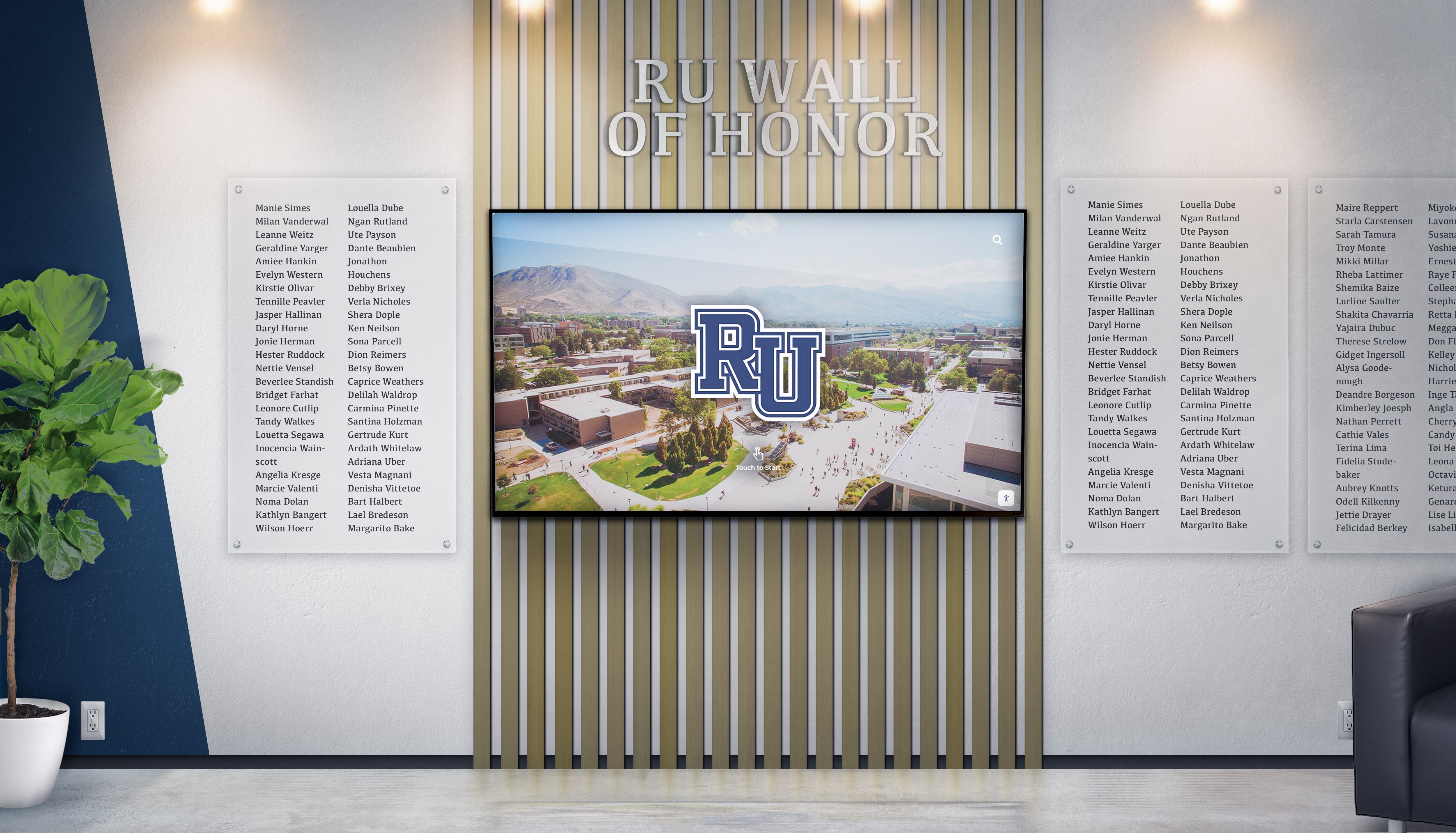
Schools preserve valedictorian achievements through integrated recognition systems combining digital displays with traditional elements
Lifelong Professional Credibility
Valedictorian designation provides permanent credential:
Resume and Professional Value
- Distinguishing credential throughout early career
- Conversation starter in professional networking
- Signal of excellence and achievement orientation
- Permanent transcript and diploma notation
- Alumni network connection point
Long-Term Impact
While professional accomplishments eventually overshadow high school achievements, valedictorian status:
- Provides early career differentiation when experience is limited
- Appears on professional profiles and biographies
- Creates talking points in interviews and networking
- Opens doors to mentorship and opportunity
- Establishes personal brand of excellence
Personal Growth and Character Development
Beyond external benefits, the valedictorian pursuit develops valuable qualities:
Skills and Traits Developed
- Exceptional time management and organizational skills
- Ability to maintain sustained focus on long-term goals
- Resilience and recovery from setbacks
- Strategic thinking and decision-making
- Self-discipline and delayed gratification
- High achievement orientation and standards
These characteristics serve you throughout life regardless of specific academic or professional paths you choose.
How Schools Celebrate Valedictorians
Schools recognize valedictorian achievement through multiple channels creating lasting impact.
Graduation Ceremony Recognition
Valedictorians receive prominent ceremony roles:
Traditional Honors
- First position in graduation processional
- Delivery of valedictory address (farewell speech)
- Special regalia including honor cords and medals
- Recognition by name and achievement
- Enhanced diploma cover or special certificate
- Family and community celebration moment
Speech Preparation
The valedictory address represents a significant responsibility:
- Work with faculty advisor on speech development
- Balance inspiration, gratitude, and reflection
- Represent your class while sharing personal perspective
- Practice delivery for confidence and pacing
- Create memorable moment for classmates and families
Permanent Recognition Systems
Many schools create lasting documentation of valedictorian achievement:
Traditional Recognition Methods
- Physical plaques listing valedictorians by year
- Trophy cases featuring academic honors
- Printed honor rolls and archives
- School website recognition pages
- Yearbook special designation
Modern Digital Recognition
Contemporary schools increasingly use digital platforms providing enhanced recognition capabilities. Solutions like those from Rocket Alumni Solutions transform how institutions celebrate valedictorians through:
Interactive Display Features
- Unlimited capacity documenting every valedictorian across school history
- Search and filter capabilities enabling exploration by year or name
- Individual achievement profiles with photos and accomplishments
- Integration with broader academic honor roll systems
- Web-accessible platforms extending beyond physical campus
Recognition System Benefits
Digital recognition provides advantages over traditional approaches:
- Never removing historical valedictorians to make space for new ones
- Creating inspirational displays in high-traffic school areas
- Enabling family and alumni worldwide to view achievements
- Simple content management updating annually
- Preserving institutional excellence tradition comprehensively
Schools implementing modern recognition systems report enhanced community engagement with academic achievement and increased student aspiration toward top honors.

Strategic placement of recognition displays in hallways ensures daily visibility of valedictorian achievements inspiring current students
Making the Decision: Is Pursuing Valedictorian Right for You?
Honestly assess whether valedictorian pursuit aligns with your goals, interests, and well-being.
Questions to Consider
Reflect on these considerations:
Motivation Assessment
- Why do you want to become valedictorian?
- Are you pursuing this for yourself or external pressure?
- What would you sacrifice to achieve this goal?
- How would you handle not achieving valedictorian despite maximum effort?
Realistic Capability Evaluation
- Where do you currently stand academically?
- What GPA improvement is required?
- Do you have the necessary academic foundation?
- Can you sustain required intensity for remaining years?
Opportunity Cost Analysis
- What activities might you reduce or eliminate?
- What social opportunities might you sacrifice?
- How will this pursuit affect your mental health?
- What alternatives provide similar benefits with less intensity?
Alternative Achievement Paths
Consider that multiple paths lead to college success and personal fulfillment:
Salutatorian Honor
Being second in your class provides:
- Nearly identical college admissions advantages
- Similar scholarship opportunities
- Significant achievement recognition
- Potentially better balance and well-being
Top 10% Achievement
Graduating in your class’s top 10% offers:
- Automatic admission to many state universities
- Strong college application credentials
- Honor society and recognition opportunities
- More flexibility for extracurricular depth
Holistic Excellence
Pursuing excellence across multiple dimensions:
- Strong but not highest GPA
- Significant leadership and extracurricular achievement
- Distinctive accomplishments and personal growth
- Compelling college application narrative
- Better-rounded skill development
The “right” choice depends on your individual circumstances, goals, values, and what creates meaning in your educational journey.
Conclusion: Strategic Excellence and the Path to Valedictorian
Becoming valedictorian demands more than intelligence—it requires strategic planning, consistent execution, and sustained commitment across four years of high school. Students who achieve this highest academic honor typically begin with clear understanding of their school’s specific ranking methodology, make informed course selection decisions balancing rigor with capability, develop sophisticated study and time management systems, and maintain the discipline to execute daily habits that compound into exceptional cumulative performance.
The strategies explored throughout this guide provide frameworks for pursuing valedictorian status systematically rather than hoping talent alone carries you through. From freshman year foundation building through senior year maintenance, from course selection optimization to test preparation protocols, from stress management to holistic well-being, these approaches transform valedictorian pursuit from overwhelming aspiration to achievable goal broken into manageable steps.
Yet the valedictorian journey represents means, not end. The discipline, resilience, strategic thinking, and sustained focus required to achieve highest academic standing develop qualities serving you throughout life regardless of specific paths you ultimately pursue. Whether you ultimately achieve valedictorian status or graduate with strong but not top ranking, the pursuit itself creates growth exceeding any single designation or ceremony moment.
Celebrate Academic Excellence at Your School
Discover how modern recognition solutions help schools honor valedictorians and all academic achievers through inspiring displays that preserve excellence and motivate future students.
Explore Recognition SolutionsFor students currently pursuing valedictorian status, remember that perfect consistency proves impossible. You will experience challenging weeks, disappointing grades, and moments of doubt. What distinguishes eventual valedictorians from other capable students isn’t flawless execution but rather recovery ability—bouncing back from setbacks, adjusting strategies when approaches prove inadequate, and maintaining overall trajectory despite inevitable fluctuations.
Start where you are today. Calculate your current GPA and class rank position. Understand exactly what academic performance you need to maintain or achieve. Map your remaining course selection strategy. Build or refine your study systems and time management approaches. Seek support from teachers, counselors, parents, and peers who can guide and encourage you throughout the journey.
Most importantly, maintain perspective. Valedictorian status represents one measure of high school success among many possible accomplishments. Your worth as a person and your potential for future success extend far beyond any single achievement or designation. Pursue excellence for growth and learning, not merely for recognition. The habits and capabilities you develop matter more than any title, however prestigious.
Whether you achieve valedictorian status or graduate with strong academic standing short of top ranking, you’re developing qualities that will serve you throughout your educational journey and beyond. The goal isn’t perfect performance but rather continuous improvement, strategic effort, and becoming the best version of yourself academically while maintaining balance across all dimensions of well-being.
Ready to learn more about academic excellence recognition? Explore comprehensive approaches to showcasing student achievement or discover how schools create cultures of academic achievement through effective recognition programs.