Setting up a high school volleyball court requires precision—and at the center of that setup is getting the net height exactly right. Whether you’re an athletic director preparing facilities for a new season, a coach ensuring your practice space meets competition standards, or a facilities manager responsible for court setup, understanding official net height requirements ensures fair play while preventing match delays from improperly configured equipment.
High school volleyball follows specific regulations established by the National Federation of State High School Associations (NFHS), with net height varying based on the gender of competitors. These measurements aren’t arbitrary—they’re carefully calibrated to create competitive balance while accommodating physical differences and promoting skill development appropriate for high school athletes. Yet confusion persists around exact measurements, setup procedures, and how to verify compliance with official standards.
This comprehensive guide covers everything you need to know about high school volleyball net heights, from official NFHS standards and proper measurement techniques to complete court setup requirements and how schools document volleyball achievements through modern recognition systems.
Volleyball stands as one of America’s most popular high school sports, with over 450,000 student-athletes competing annually across boys’ and girls’ programs nationwide. Proper court setup forms the foundation for fair competition and skill development—making accurate net height installation essential for every athletic program.

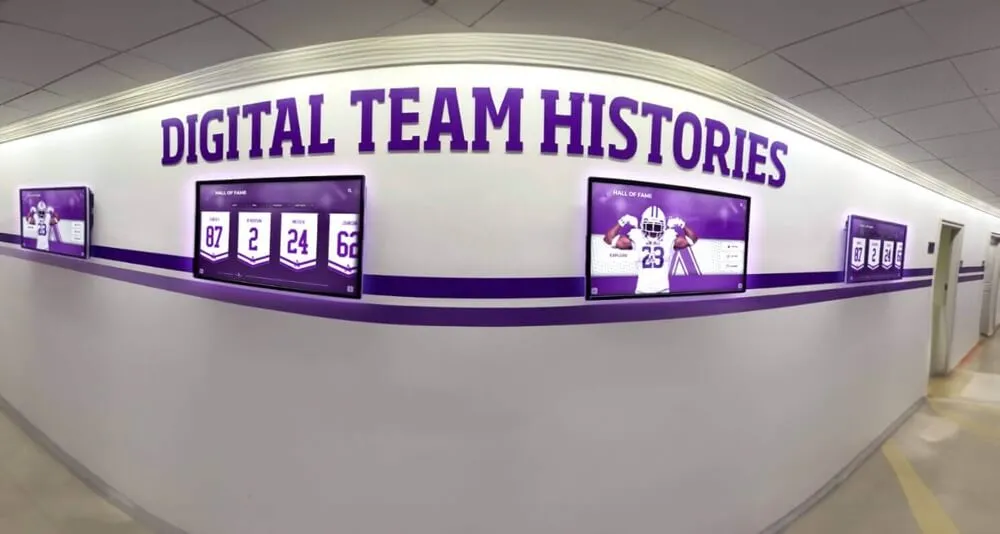
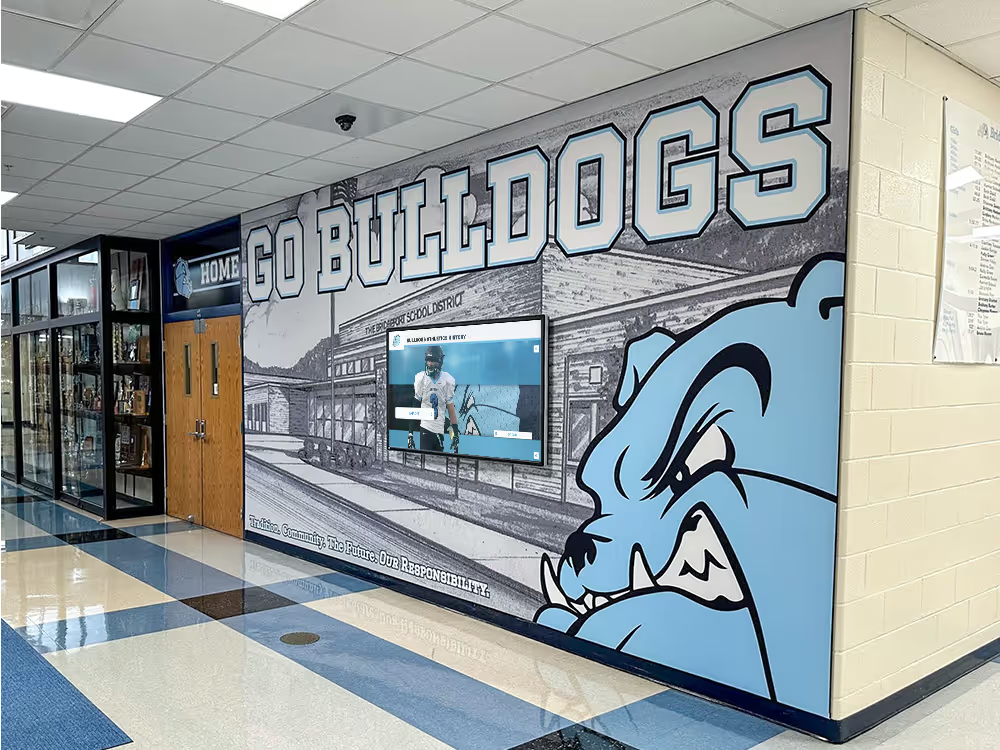
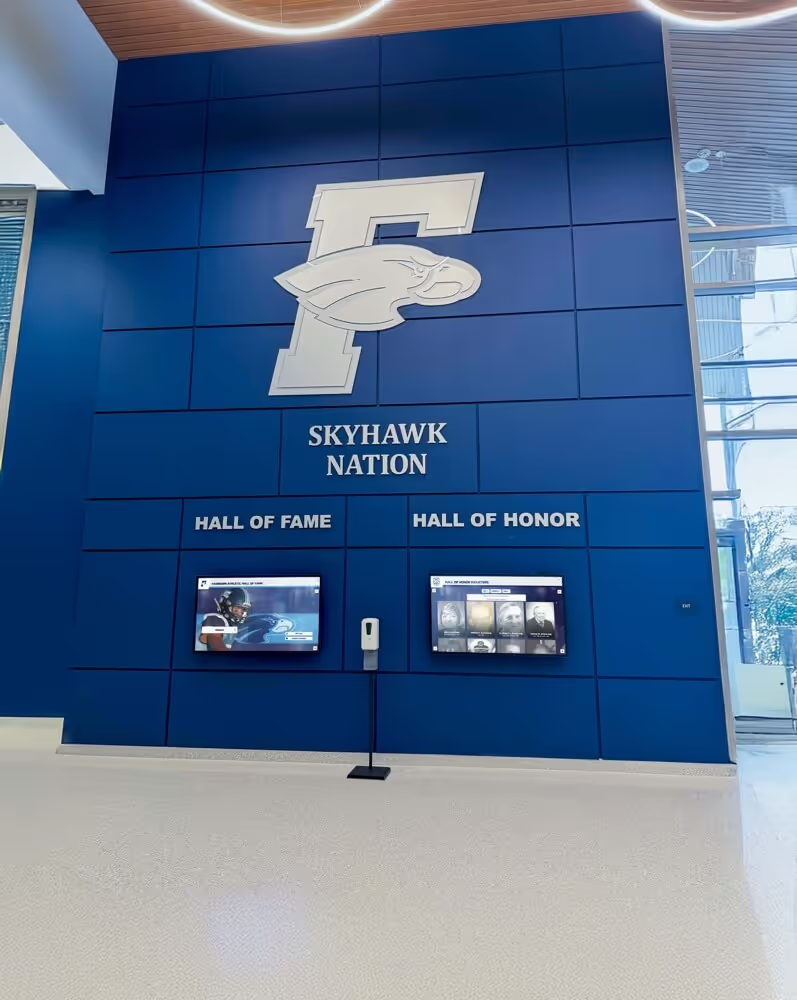
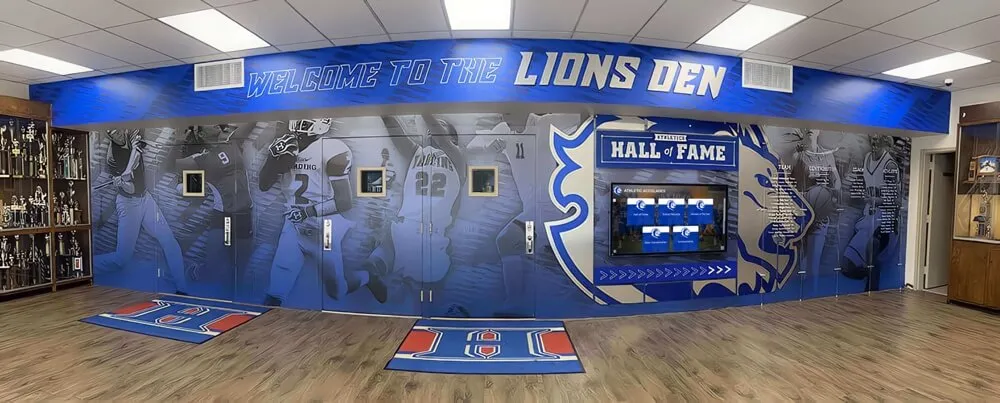
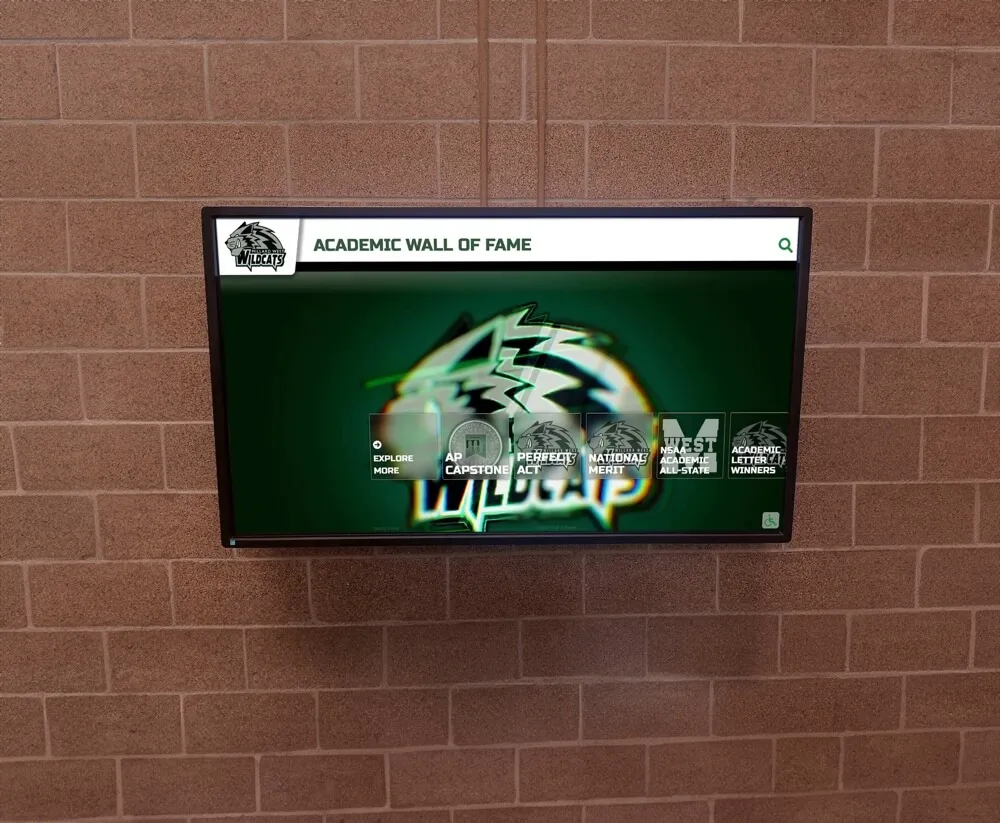
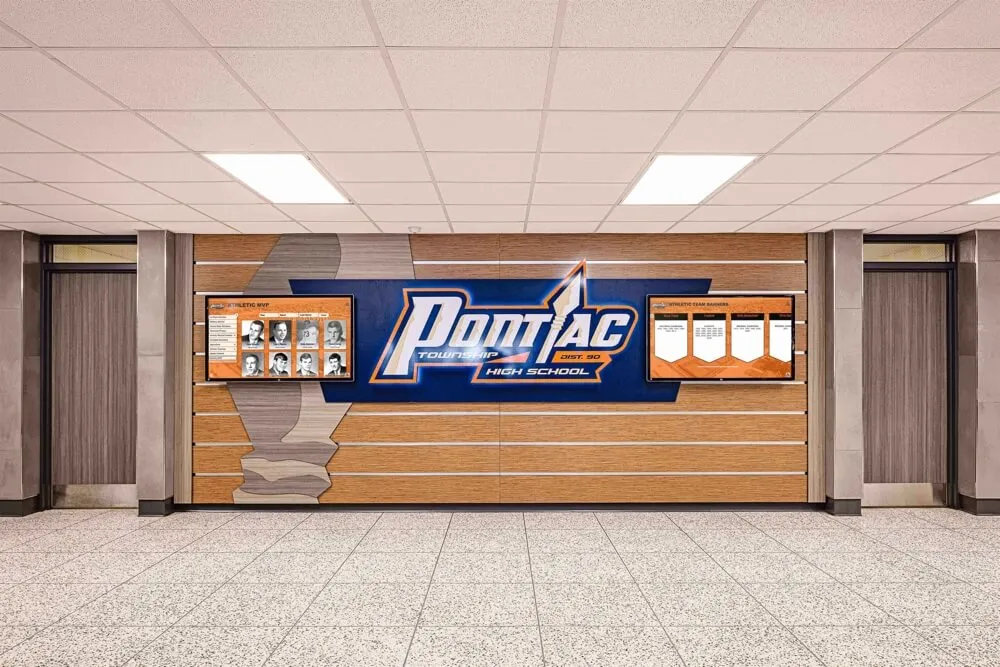
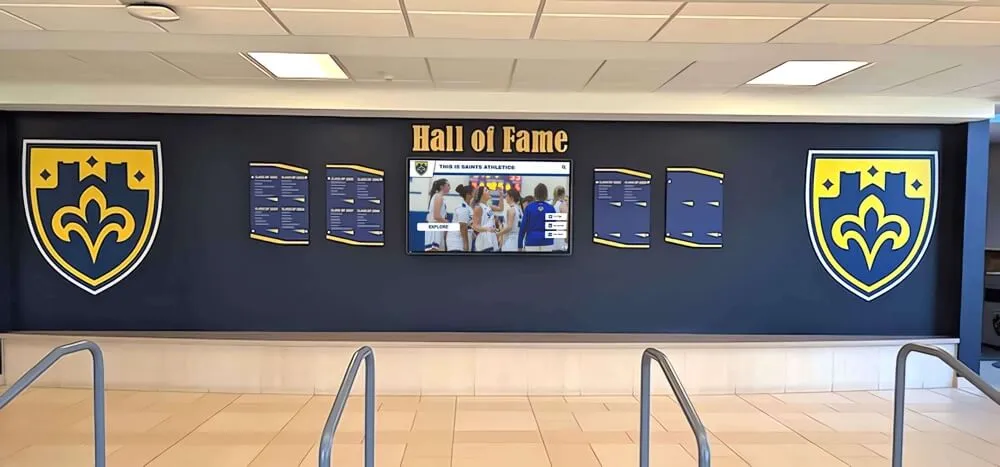
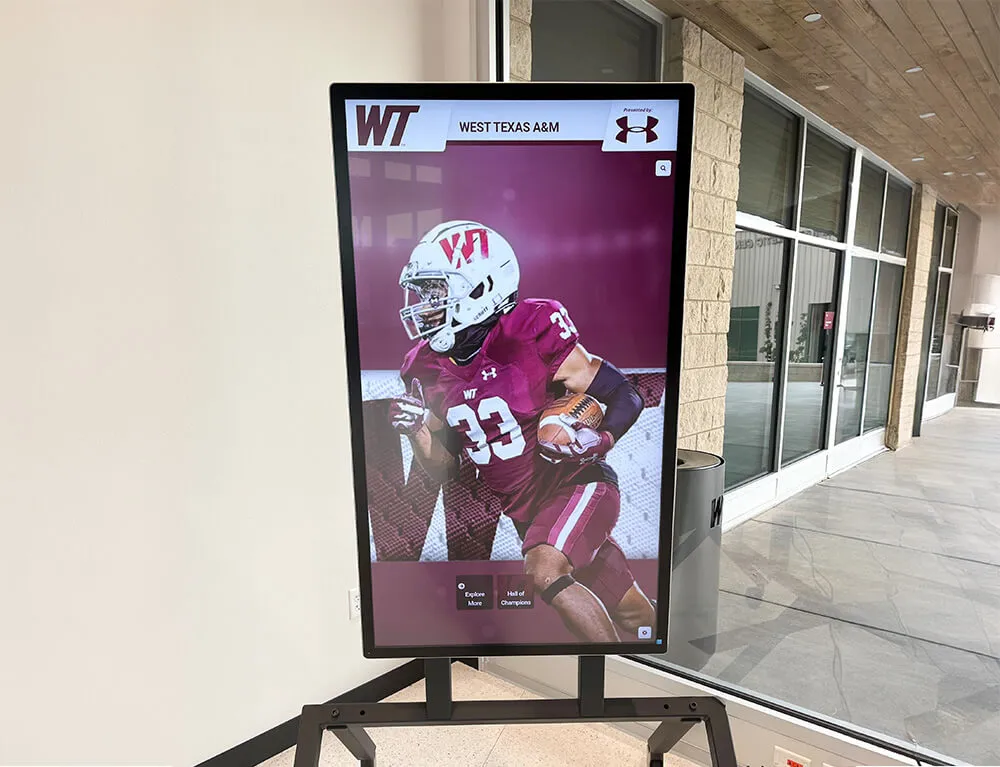
Modern athletic facilities integrate recognition displays celebrating volleyball achievements alongside properly maintained competition spaces
Official High School Volleyball Net Height Standards
Understanding the precise measurements ensures your facilities meet competition requirements while providing appropriate challenge levels for student-athletes.
NFHS Net Height Regulations
The National Federation of State High School Associations establishes the official standards that govern high school volleyball across the United States:
Girls’ High School Volleyball Net Height
- Official height: 7 feet, 4⅛ inches (2.24 meters)
- This measurement remains consistent from freshmen through varsity levels
- The height matches women’s collegiate and international standards
- All NFHS-sanctioned competition must use this specification
Boys’ High School Volleyball Net Height
- Official height: 7 feet, 11⅝ inches (2.43 meters)
- Applies to all high school boys’ competition levels
- Matches men’s collegiate and international standards
- Required for all NFHS-sanctioned matches and tournaments
These specific measurements create the competitive environment that balances offensive opportunities with defensive capabilities, allowing athletes to develop skills that translate to higher levels of competition.
Coed Volleyball Specifications When schools host coed recreational or intramural volleyball, net height typically follows one of these approaches:
- Using the girls’ height standard (7'4⅛") for inclusive play
- Adjusting to an intermediate height around 7'6" to 7'8"
- Maintaining separate competition divisions using gender-specific heights
Athletic directors should clarify height standards for all volleyball programming to ensure consistency and safety across competitive, practice, and recreational play.

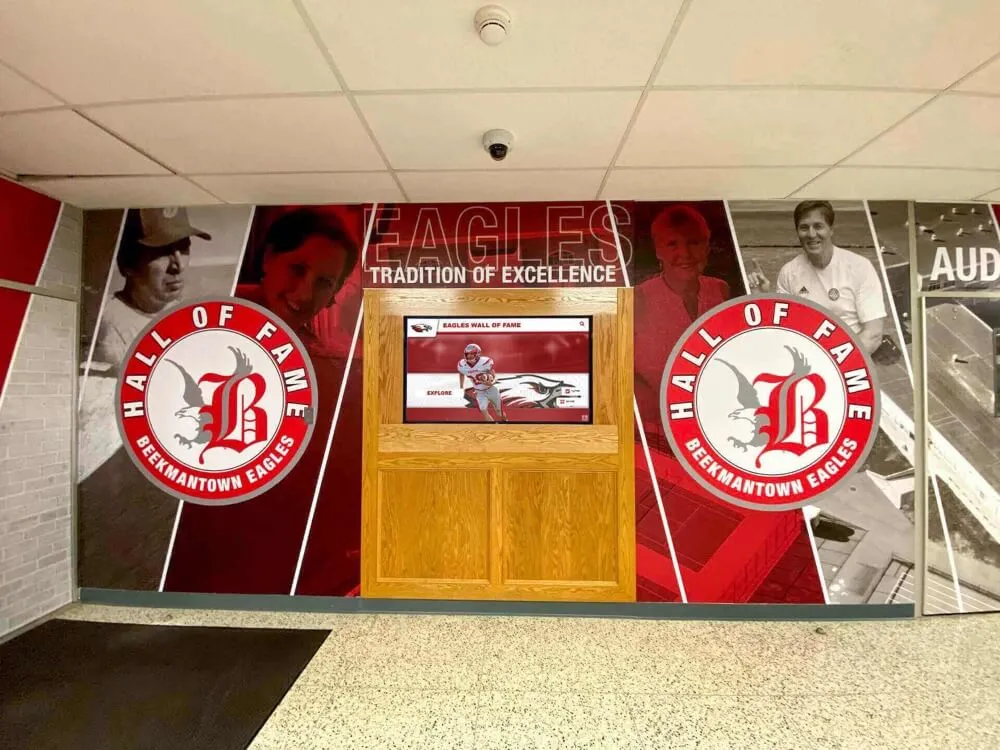
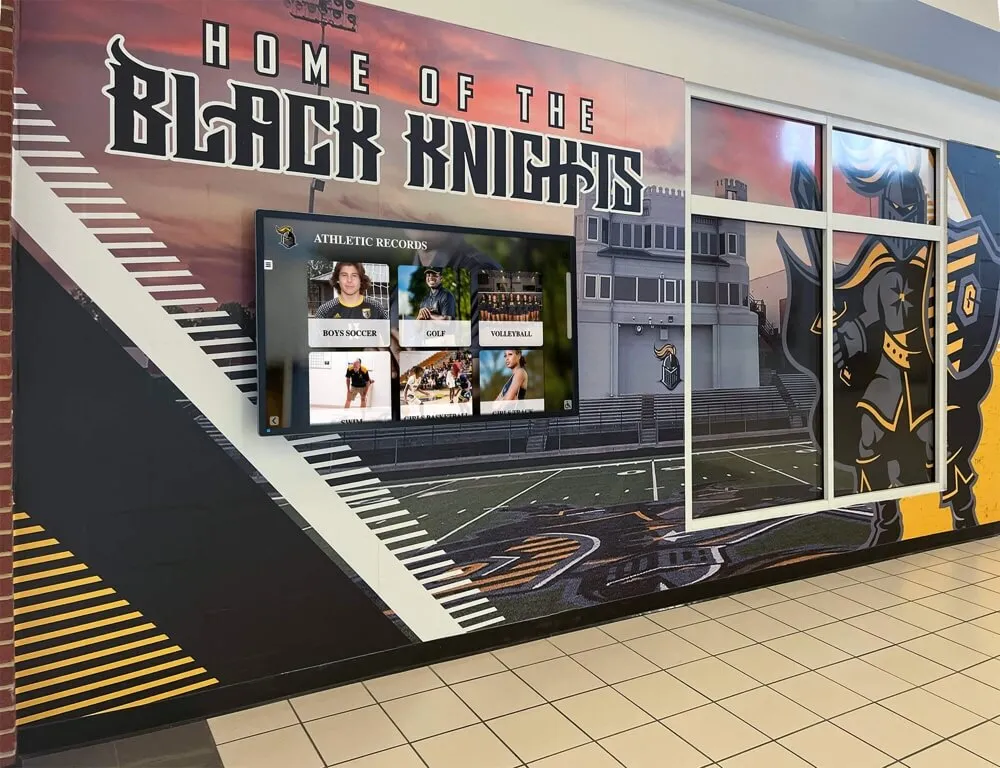
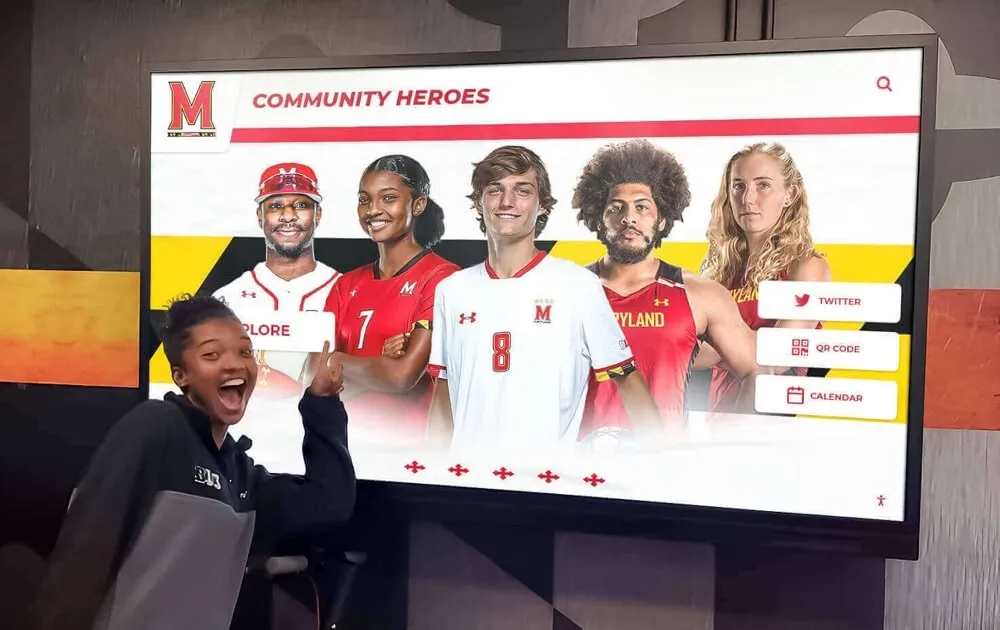
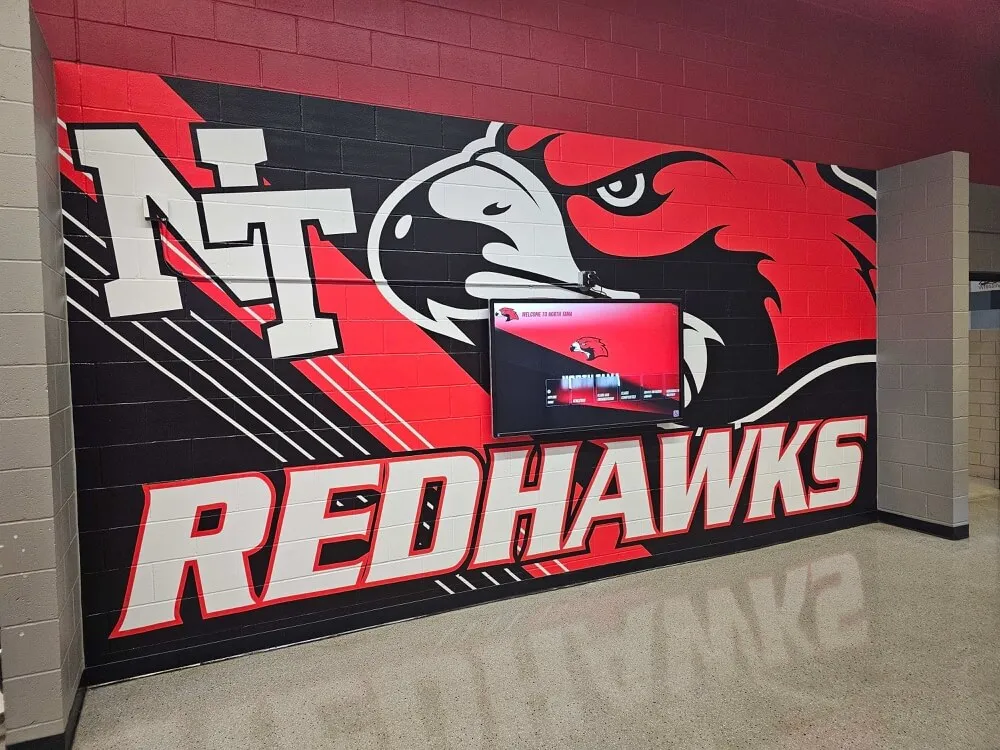
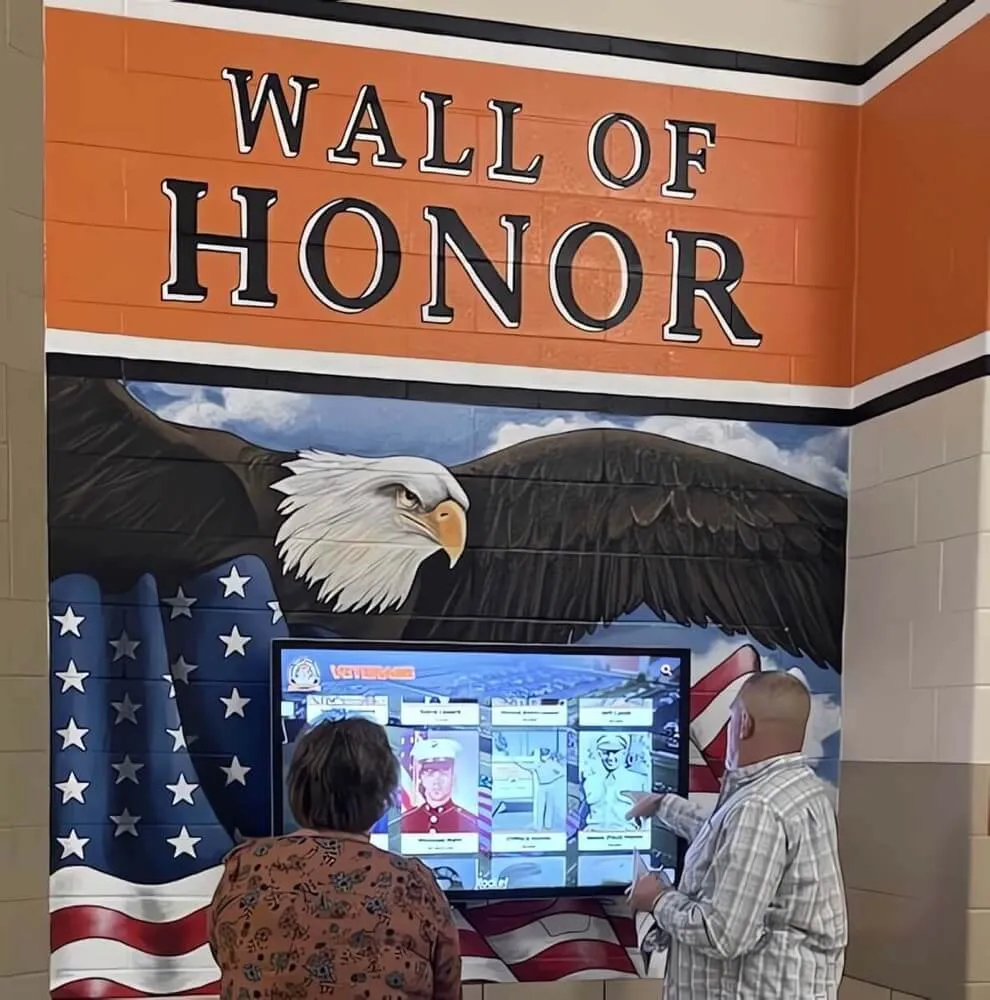
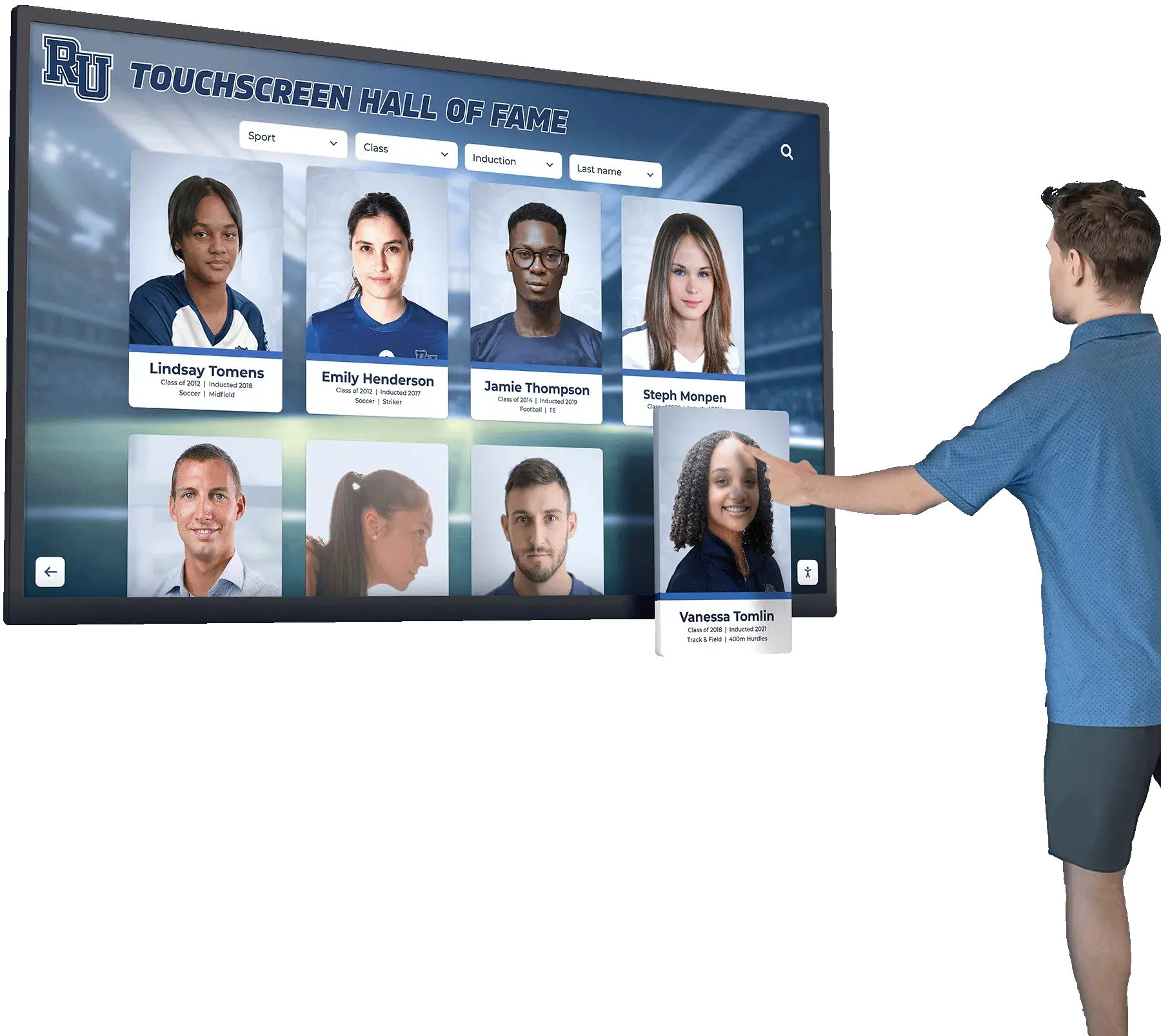
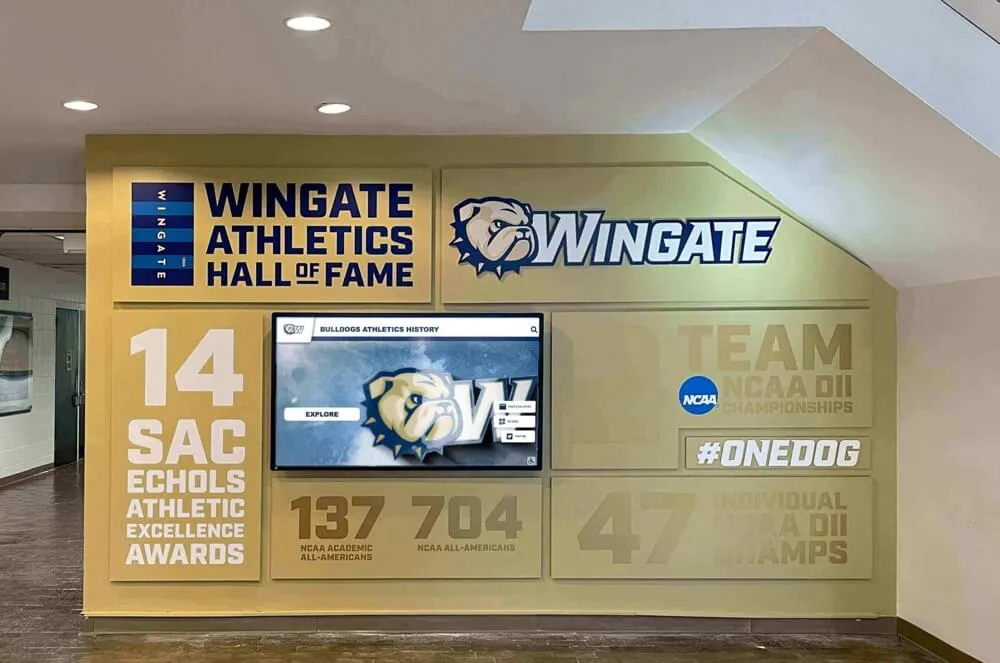
Digital recognition systems document volleyball team achievements including conference championships and individual player honors
Why Net Height Matters for Competition
The specific net heights serve multiple important purposes in high school volleyball:
Competitive Balance Net height directly affects the balance between offensive and defensive play. The prescribed heights create environments where:
- Attackers can successfully execute kills without dominating every play
- Defenders and blockers can contest attacks effectively
- Back-row players contribute meaningfully to both offense and defense
- Setters can utilize diverse offensive strategies
- Serving remains challenging but achievable for skilled players
When net height deviates even a few inches from standards, the competitive balance shifts significantly—making accurate setup essential for fair competition.
Skill Development Alignment Official heights correspond to the physical development and skill levels typical of high school athletes:
- Girls’ height (7'4⅛") accounts for average female athlete reach and jumping ability
- Boys’ height (7'11⅝") reflects typical male athlete physical capabilities
- Both heights encourage development of proper technique rather than relying solely on physical attributes
- Standards align with collegiate competition, easing transition for advancing athletes
Schools that celebrate athletic achievement understand that proper facility standards contribute directly to player development and program success.
Injury Prevention Correct net height contributes to player safety:
- Proper height reduces awkward reaching that can cause shoulder injuries
- Appropriate challenge level prevents excessive strain from repeated jumping
- Standards minimize net contact injuries from improper clearance
- Consistent heights across facilities prevent adaptation injuries
Athletic directors responsible for facility safety should verify net height regularly as part of comprehensive equipment maintenance programs.
Measurement Precision and Tolerance
Official regulations specify exact measurements, but practical implementation requires understanding measurement procedures:
Official Measurement Points Net height must be measured at specific locations:
- Directly over the center line of the court
- At both sidelines (the net should be level across its width)
- With the net under proper tension (not sagging or over-tightened)
Acceptable Tolerance NFHS rules specify minimal tolerance for net height variance:
- Maximum deviation of ¾ inch from standard height at center
- Net must not sag more than ¾ inch below height at sidelines
- Excessive sagging creates unfair competitive advantage and violates regulations
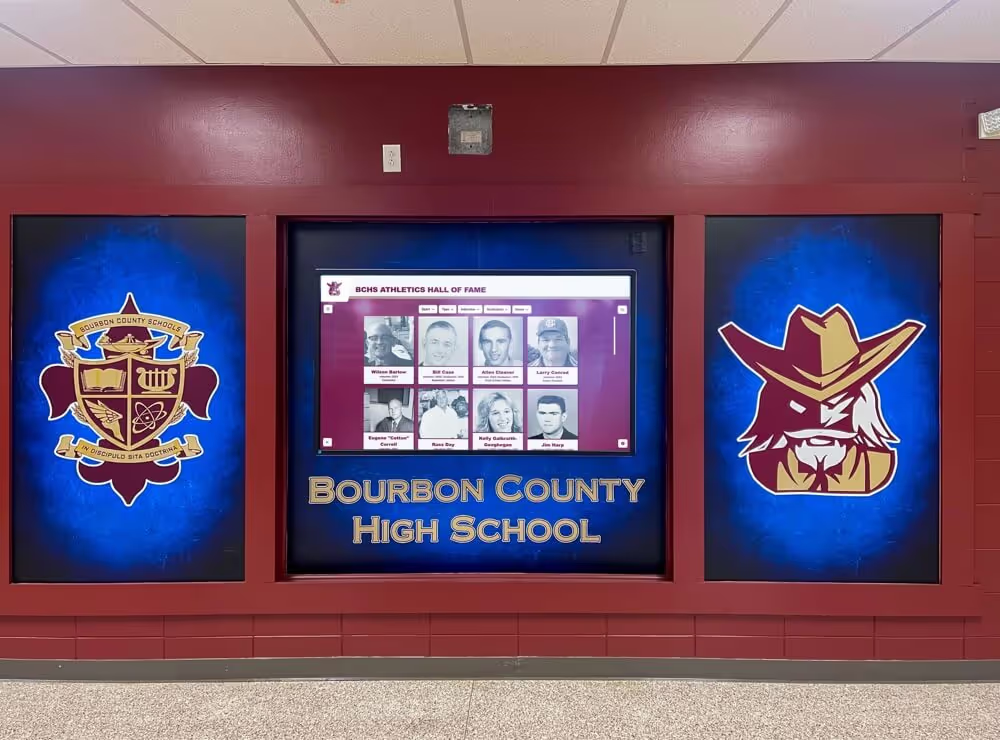
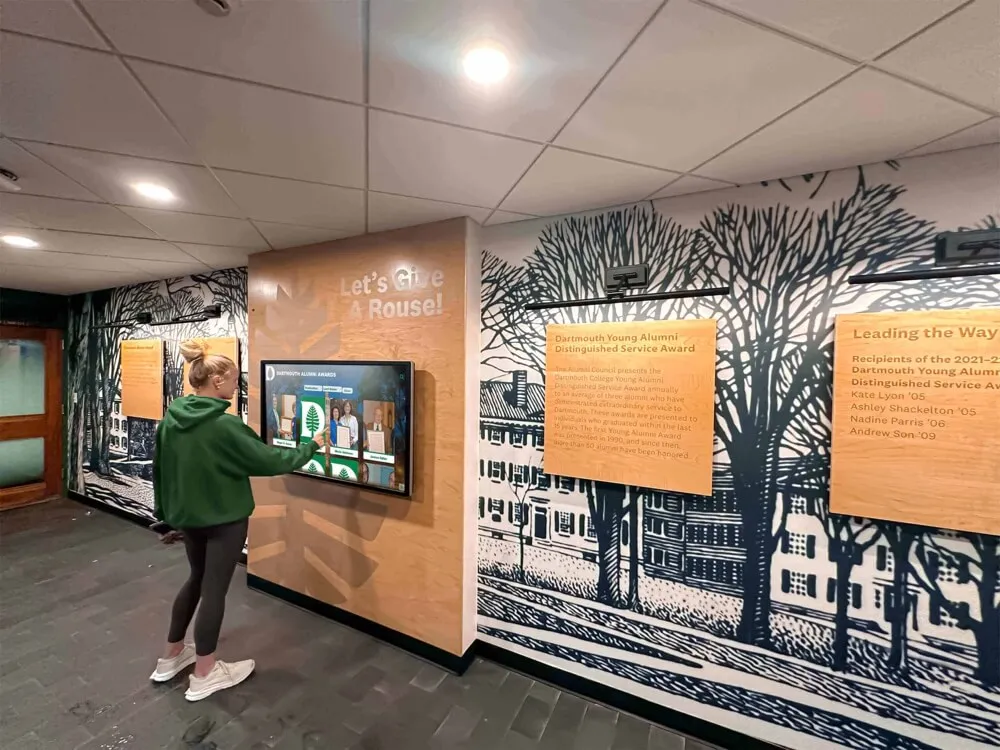
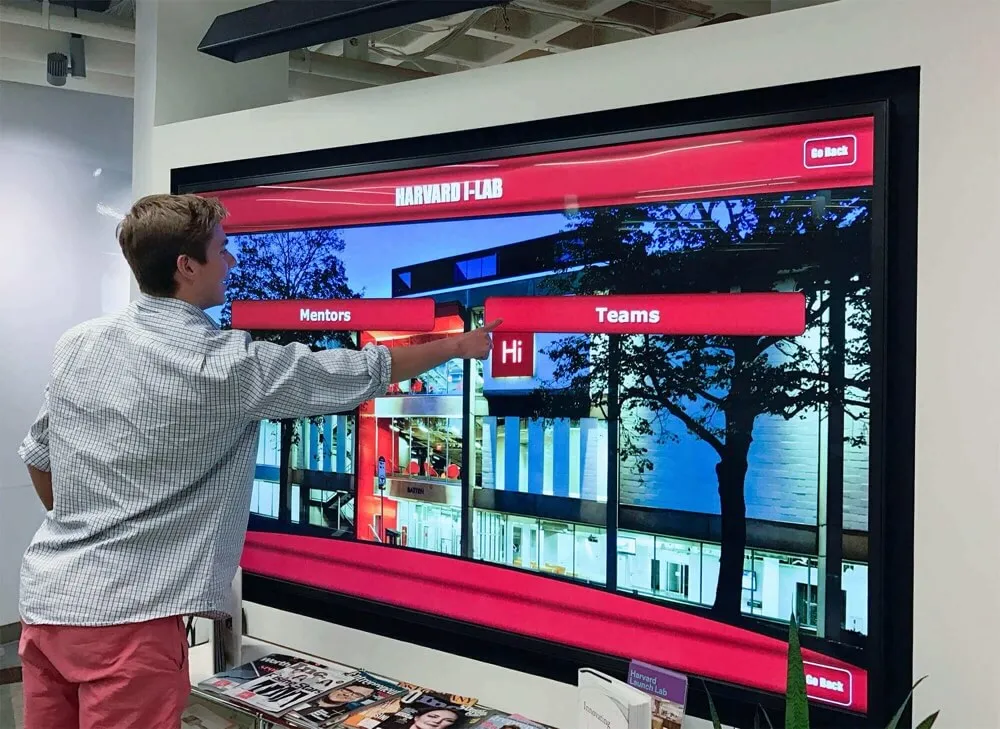
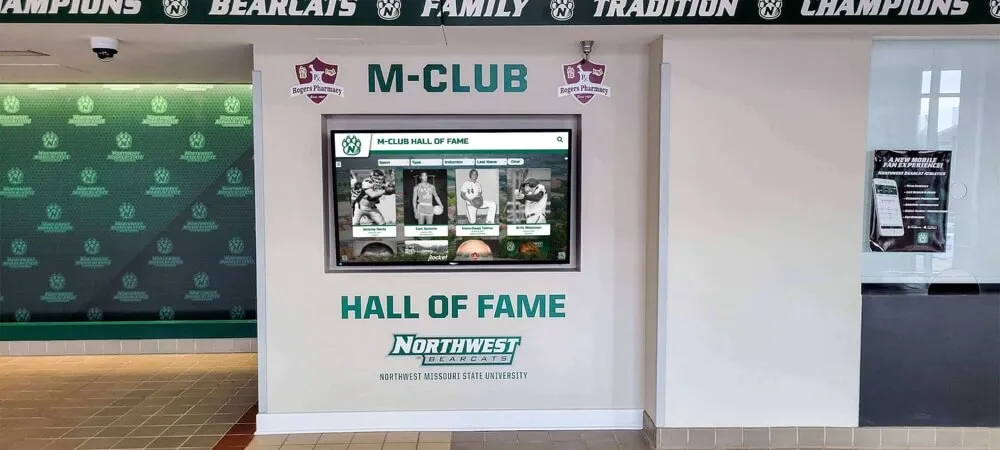
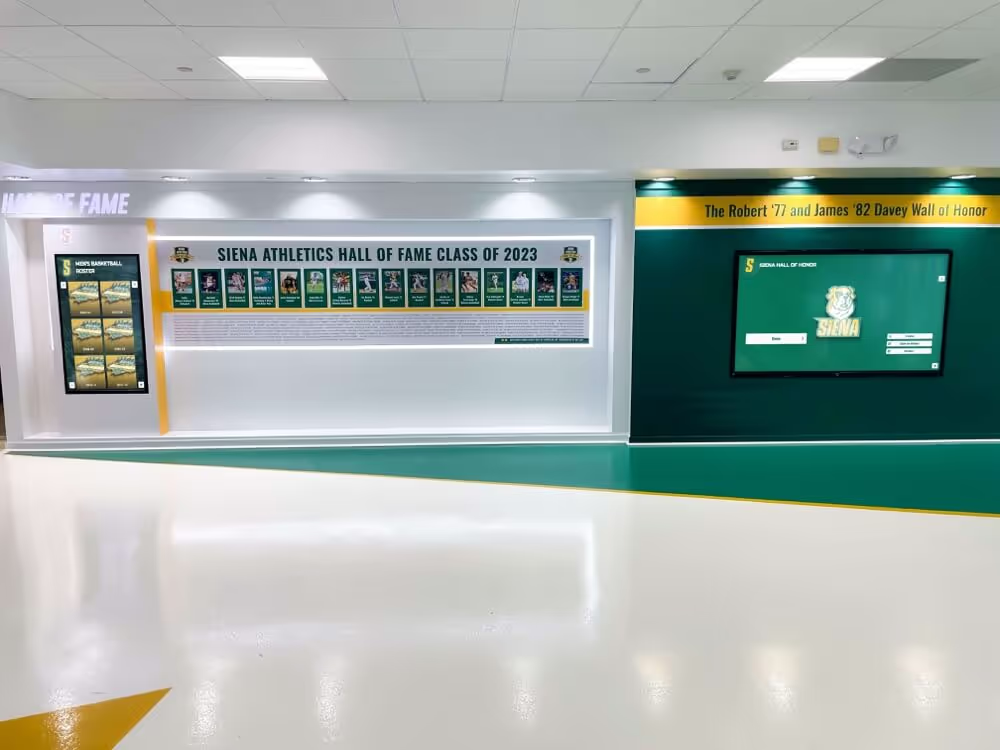
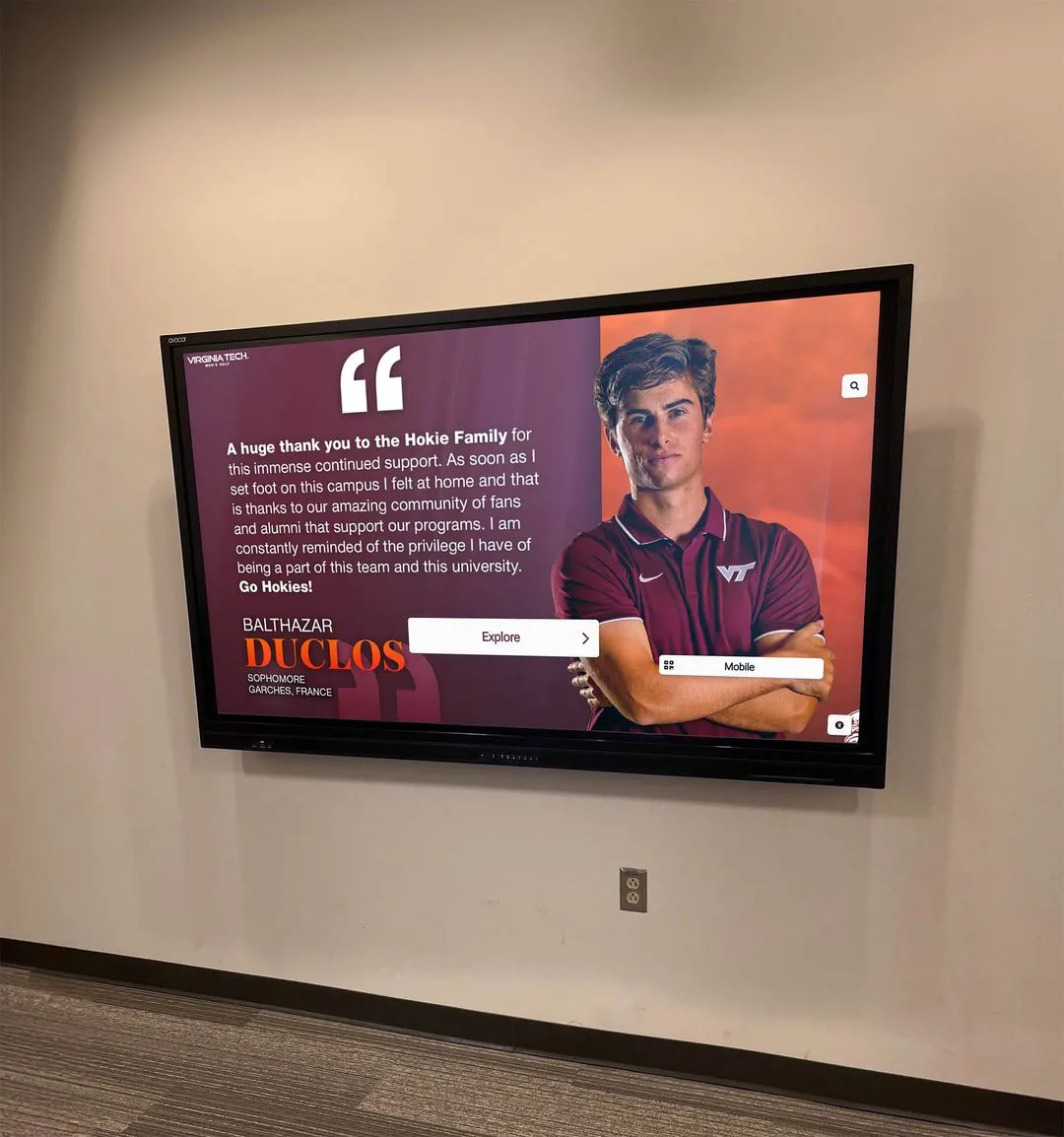
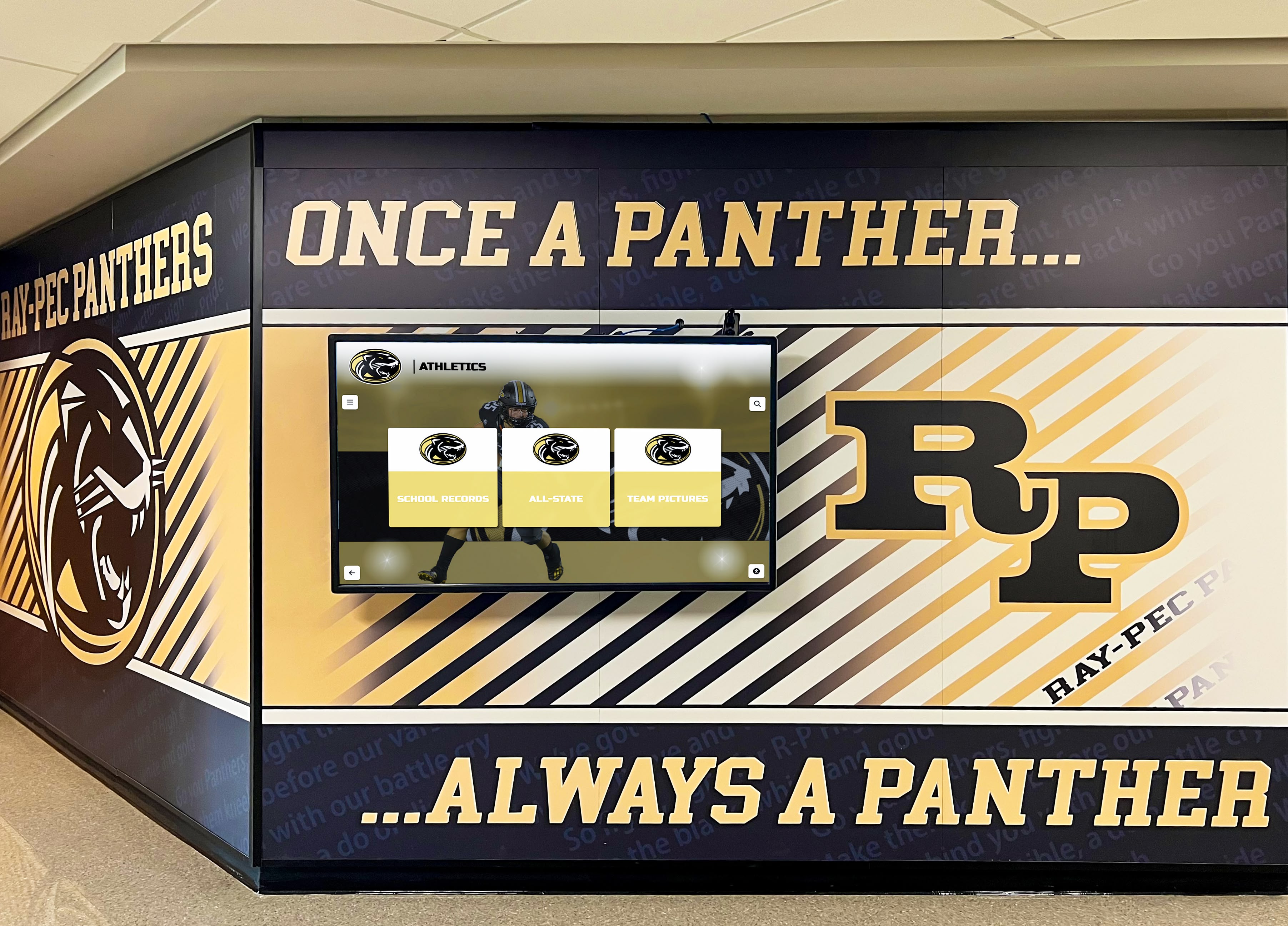
Interactive displays enable exploration of volleyball program history including all-conference selections and championship teams
Pre-Match Verification Best practices include systematic verification procedures:
- Officials should check net height before each competition
- Athletic directors should implement regular facility audits
- Maintenance staff should document setup procedures
- Coaches should verify during practice setup
- Portable measuring devices should be readily available
This verification process prevents match delays from discovering height discrepancies during competition while ensuring consistent playing conditions across all contests.
Complete Volleyball Court Setup Requirements
Net height represents just one component of complete court setup—comprehensive facility preparation requires attention to multiple specifications.
Court Dimension Standards
High school volleyball courts follow specific dimensional requirements:
Playing Area Specifications
- Court length: 60 feet (18 meters)
- Court width: 30 feet (9 meters)
- Total playing area: 1,800 square feet minimum
- Clear ceiling height: Minimum 23 feet (7 meters), 25 feet preferred
Line Markings Court lines must meet specific standards:
- Boundary lines: 2 inches wide (may be up to 4 inches)
- Center line: 2 inches wide, dividing court into two 30’x30’ halves
- Attack lines: Located 10 feet from center line on each side
- Service line: Extends from sideline behind baseline
- All lines are part of the court (balls landing on lines are considered “in”)
Free Zone Requirements NFHS specifies minimum clearance around the court:
- End line clearance: Minimum 6 feet, 10 feet preferred
- Sideline clearance: Minimum 6 feet, 10 feet preferred
- Free zone provides safety buffer for diving plays and emergency stopping
- Larger clearances improve safety and allow more aggressive play
Athletic directors planning new volleyball facilities should maximize free zone dimensions within available space—providing players adequate safety margins while accommodating spectator seating and team benches.
Discover comprehensive facility design considerations that integrate athletic recognition into gymnasium spaces.
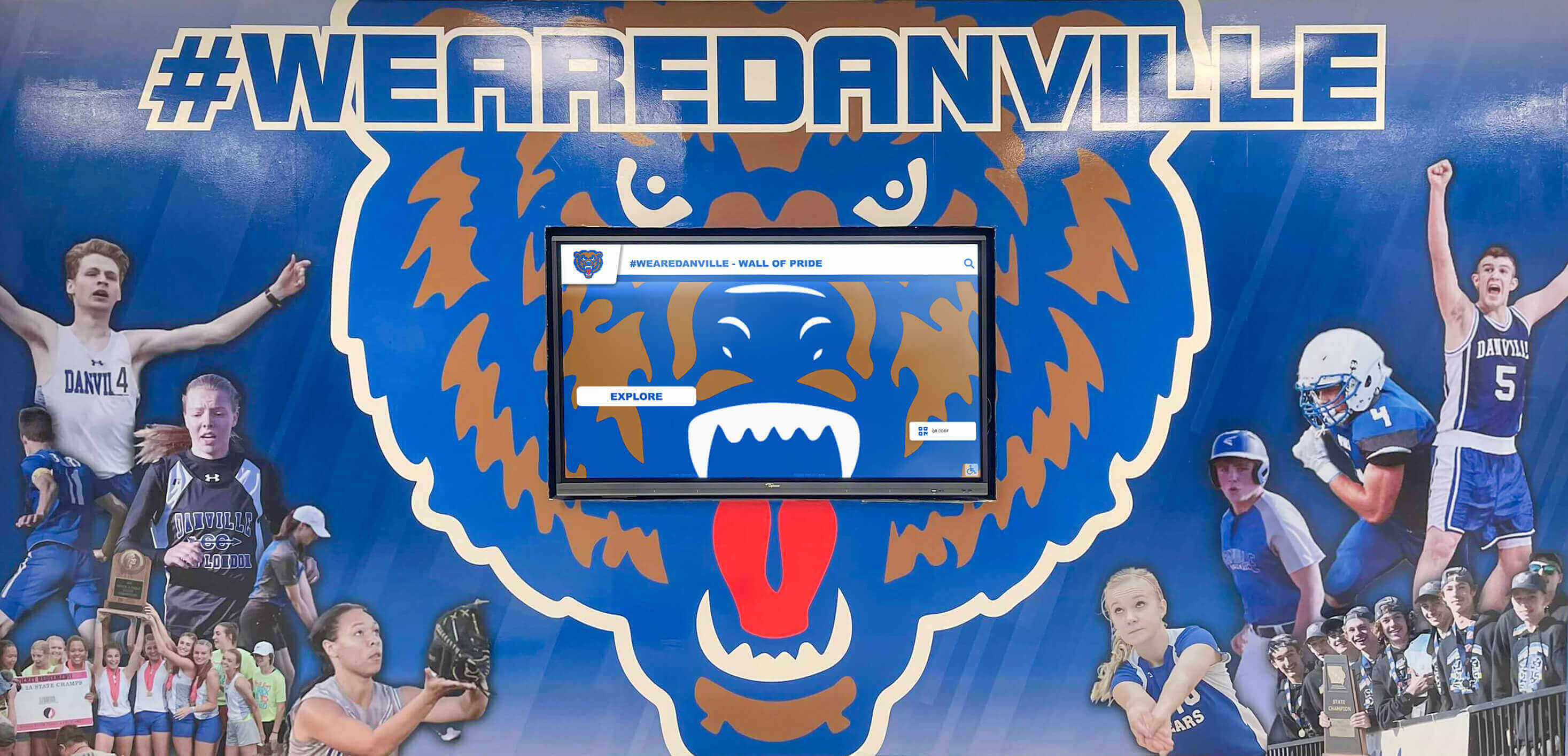
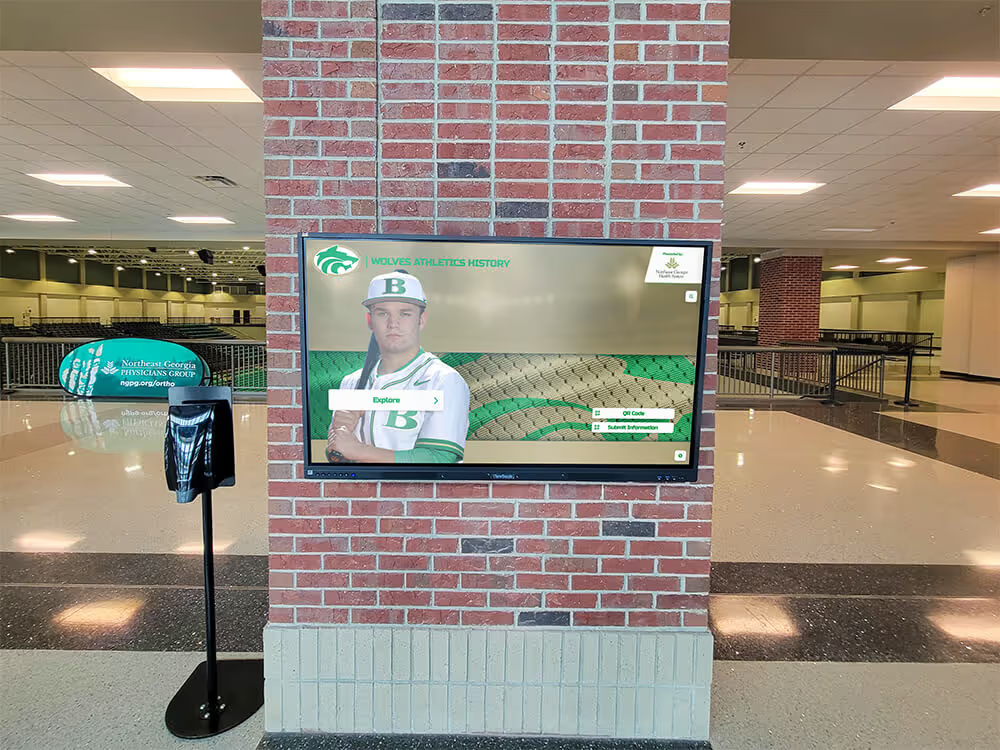
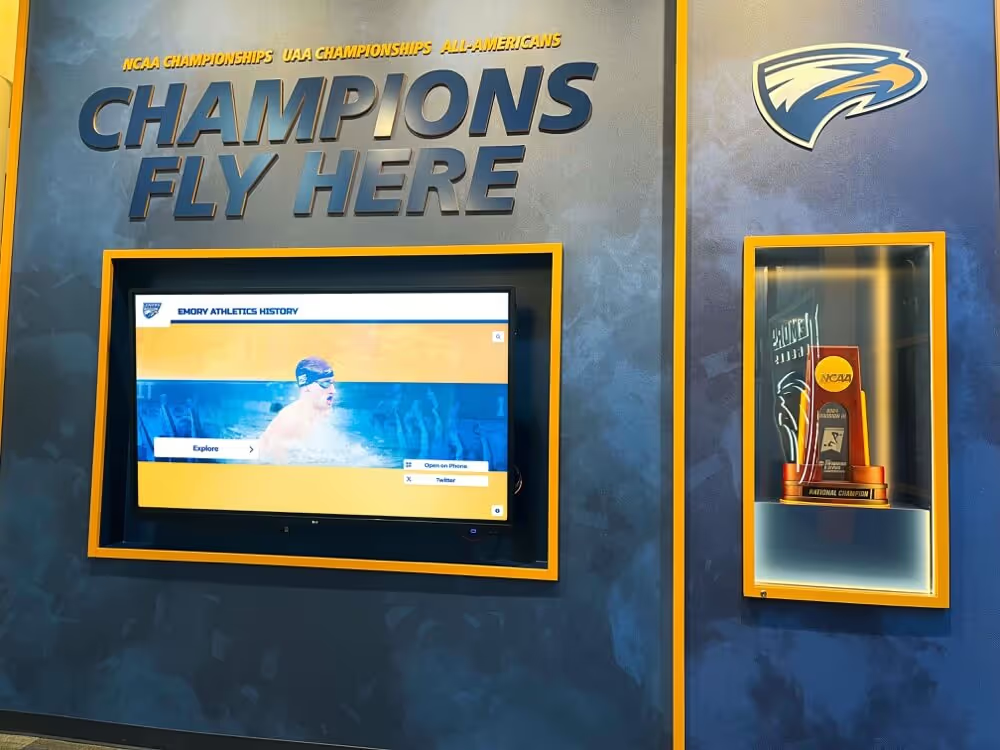
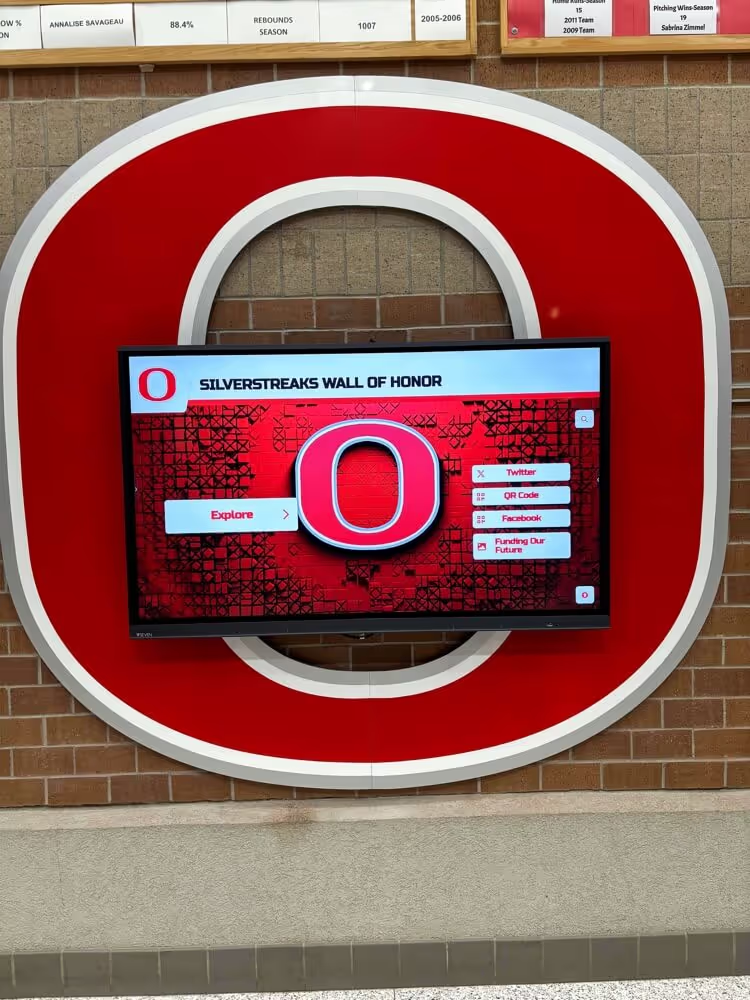
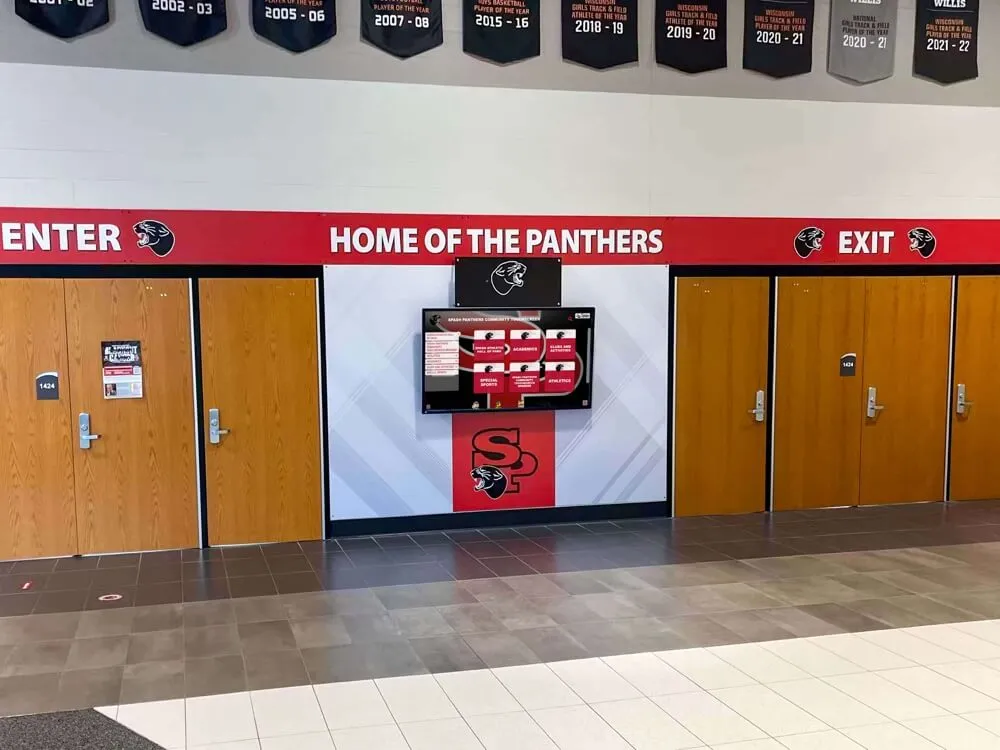
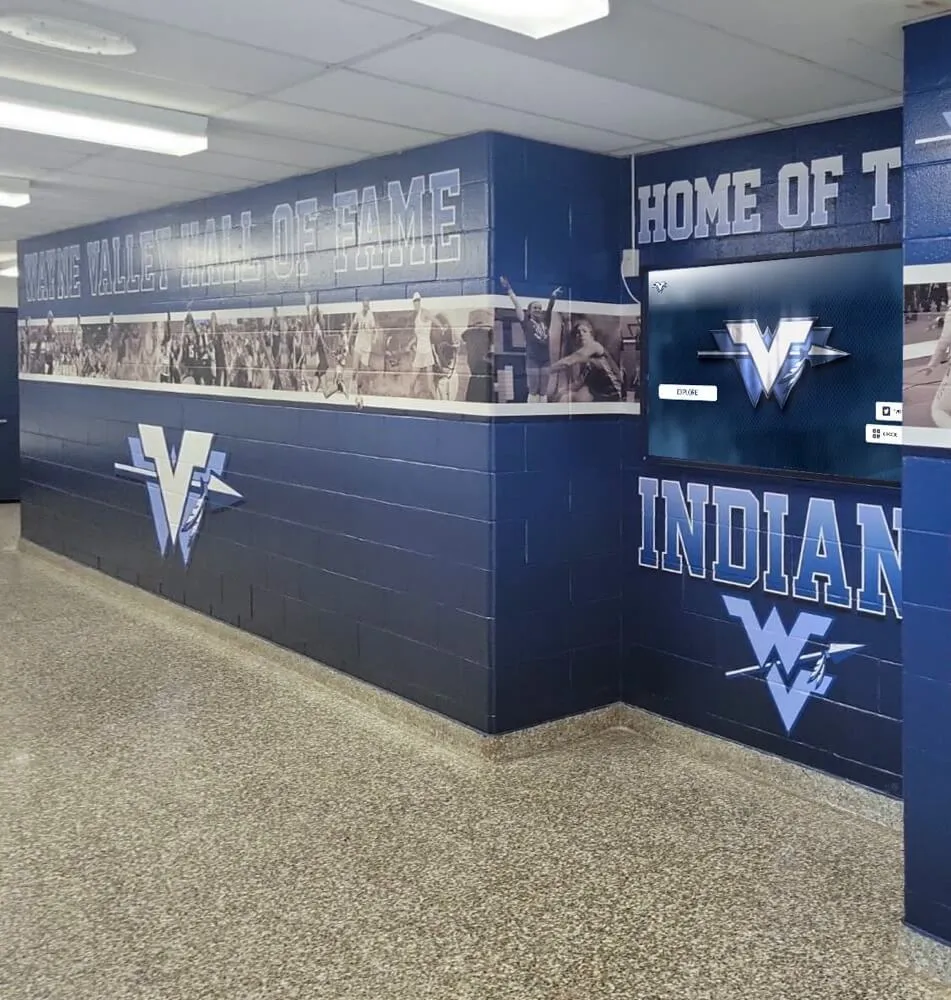
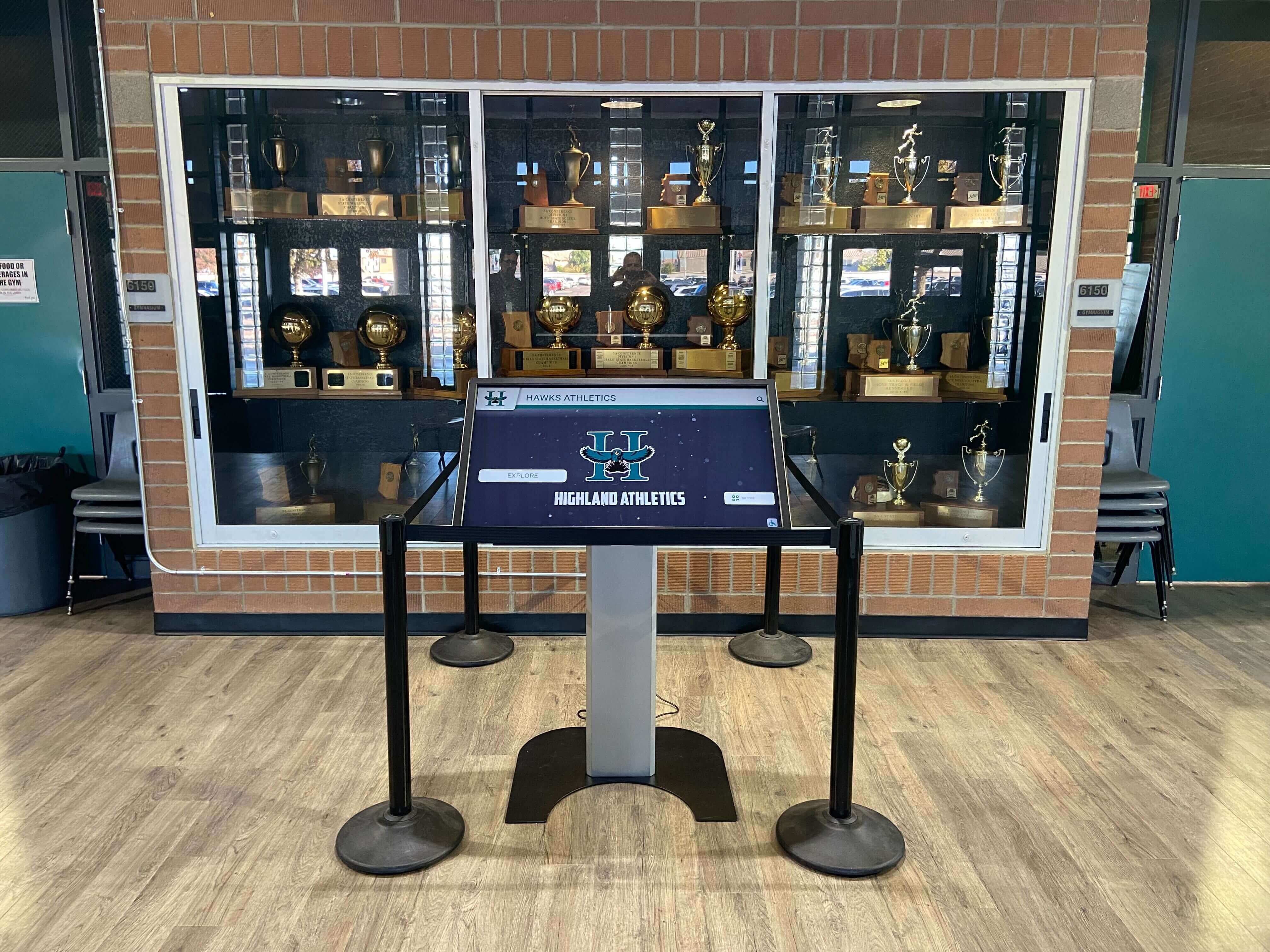
Athletic facilities integrate recognition displays showcasing volleyball team rosters, season highlights, and historical achievements
Net System Components and Setup
Complete net systems include multiple components requiring proper installation:
Net Specifications Official volleyball nets must meet these standards:
- Width: 39 feet (one meter wider than court)
- Height: 32 inches from top to bottom tape
- Mesh size: 4-inch square mesh throughout
- Net material: Durable synthetic fiber with UV resistance for outdoor use
- Color: Typically black, brown, or white (check state association rules)
Antenna Placement Vertical antennas mark the sideline boundaries:
- Height: Extend 32 inches above net (total 80 inches from floor)
- Position: Directly over sideline, attached to net
- Color: Alternating red and white bands in 4-inch segments
- Material: Flexible fiberglass preventing injury from player contact
- Purpose: Provides visual reference for legal ball trajectory
Post and Tension System Proper net support requires quality equipment:
- Posts must extend net to regulation height with proper tension
- Telescoping posts allow adjustment for different heights
- Posts should be located 36 inches outside sidelines
- Padding should cover posts from floor to 6 feet high
- Floor sleeves or weighted bases provide stable mounting
Net Tension Adjustment Proper tension ensures regulation compliance:
- Net should be taut across entire width without excessive sag
- Center height should match regulation within ¾ inch tolerance
- Tension adjustment typically uses ratchet systems or tensioning cables
- Over-tightening can damage net material and create player contact hazards
- Regular tension checks prevent gradual loosening during play
Facilities managers should maintain detailed setup procedures documenting proper net installation, measurement verification, and safety inspections for each court configuration.
Multi-Court Facility Considerations
Schools with multiple volleyball courts face additional setup challenges:
Height Adjustment Systems Facilities hosting both boys’ and girls’ programs need efficient height adjustment:
- Telescoping post systems enable quick height changes
- Some schools use separate net systems for each gender
- Adjustment time typically ranges from 5-15 minutes per court
- Clear height markings on posts prevent measurement errors
- Documentation of proper settings for each configuration
Schools implementing team celebration programs should ensure facility setup supports both practice and recognition activities.
Practice vs. Competition Setup Different uses may require varied configurations:
- Practice sessions might use modified heights for skill development drills
- Competition setup must meet exact NFHS specifications
- Multi-purpose facilities need quick conversion procedures
- Separate practice and competition courts provide scheduling flexibility
Shared Facility Coordination Many schools share gymnasium space across multiple programs:
- Volleyball setup must accommodate basketball, badminton, or other court sports
- Removable net systems enable efficient space transitions
- Floor markings for multiple sports require color coordination
- Storage for volleyball-specific equipment needs accessible location
- Scheduling protocols prevent setup conflicts between programs
Athletic directors managing shared facilities should develop systematic setup procedures ensuring each sport receives proper configurations while maintaining efficient facility utilization.
Proper Net Height Measurement Procedures
Accurate measurement requires systematic procedures and appropriate equipment:
Measurement Equipment
Official Measuring Tools Recommended equipment includes:
- Measuring rod calibrated to exact regulation heights
- Standard tape measure (minimum 12 feet) for verification
- Level for ensuring proper net orientation
- Written procedure documentation
- Equipment calibration records
Many athletic equipment suppliers offer specialized volleyball net measuring devices marked with regulation heights for both boys’ and girls’ competition.
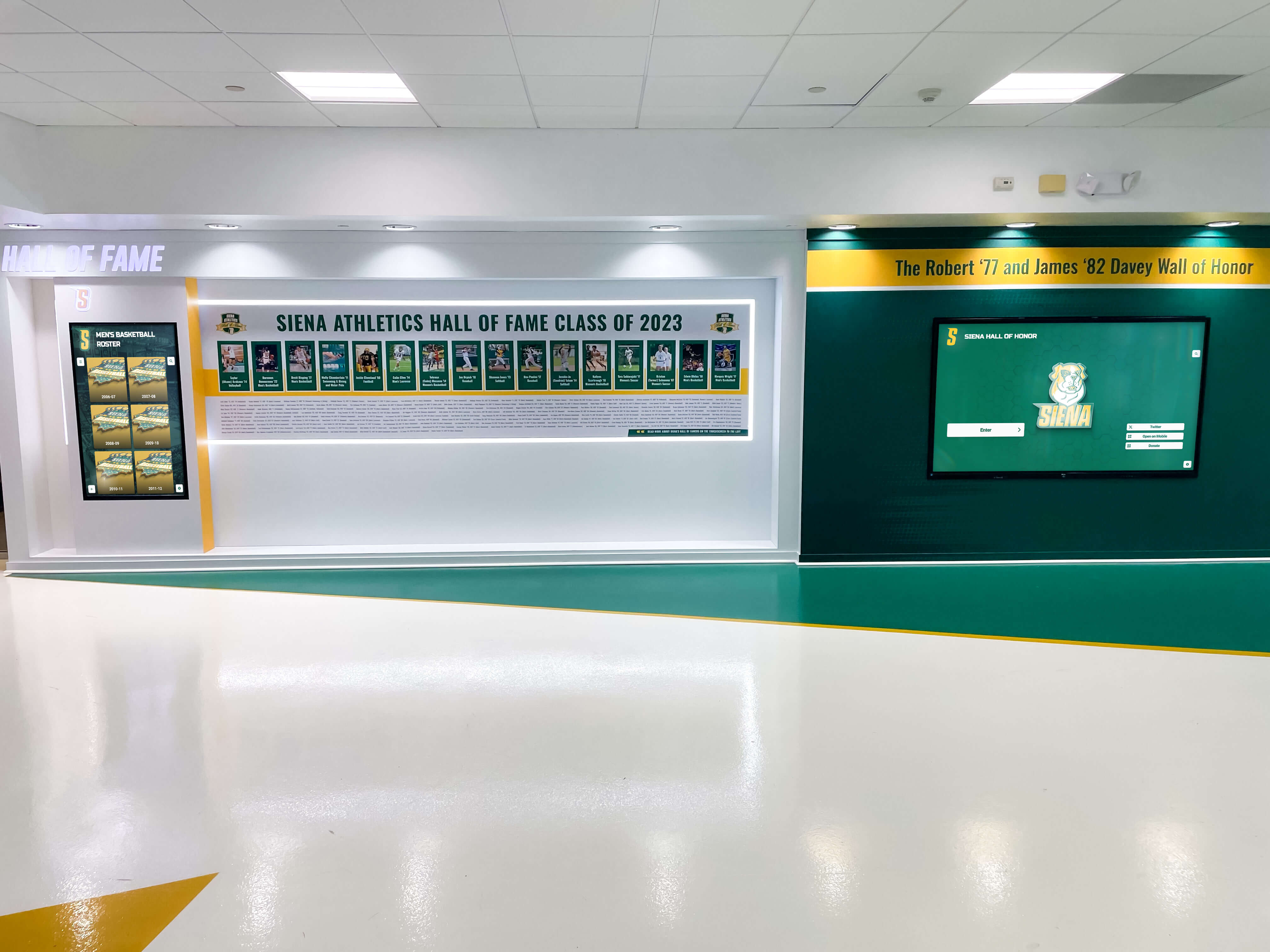
Recognition displays document volleyball program milestones including conference titles, all-state honors, and player records
Measurement Technique Proper height verification follows specific steps:
- Center Line Measurement: Place measuring device at center of net directly over center line
- Height Verification: Confirm net top tape reaches exact regulation height (7'4⅛" or 7'11⅝")
- Sideline Checks: Verify height at both sidelines within ¾ inch of center measurement
- Tension Assessment: Ensure net maintains height under normal contact pressure
- Documentation: Record measurements and any adjustments made
Pre-Competition Protocol Match officials should verify net height through systematic procedures:
- Measurements taken before teams begin warm-up
- Any adjustments completed before warm-up period starts
- Final verification after adjustment to confirm compliance
- Documentation provided to both team coaches
- Resolving discrepancies before competition begins prevents later disputes
Common Measurement Errors to Avoid
Facilities staff and officials should watch for these frequent mistakes:
Measurement Point Errors
- Measuring from floor to top of net rather than specific tape location
- Taking measurements away from designated center line position
- Failing to account for uneven gym floors affecting height
- Measuring at posts rather than center and sidelines
- Neglecting to measure under proper net tension
Setup Mistakes
- Over-tightening net causing excessive height at center
- Inadequate tension allowing excessive sag
- Post positioning too close or far from sidelines
- Antenna placement not aligned with sideline boundaries
- Using damaged or stretched nets that cannot maintain proper height
Environmental Factors
- Temperature changes affecting tension in synthetic net materials
- Humidity impact on net stretch characteristics
- Floor surface irregularities creating measurement challenges
- Portable court systems with uneven base positioning
Regular training for facilities staff and officials on proper measurement procedures prevents these common errors while ensuring consistent playing conditions.
Schools that maintain comprehensive athletic documentation should include facility specification records alongside team achievement histories.

Touchscreen systems enable detailed exploration of volleyball player profiles including statistics, honors, and career highlights
Equipment Specifications and Maintenance
Proper net height depends on quality equipment maintained through systematic procedures:
Net System Selection
Athletic directors purchasing volleyball equipment should consider:
Commercial-Grade Net Systems Competition-quality equipment includes:
- Heavy-duty net material resisting stretching and wear
- Reinforced top and bottom tapes preventing height changes
- UV-resistant materials for indoor/outdoor installation
- Cable or steel-wire top construction maintaining proper tension
- Adjustable tension systems allowing precise height control
Post System Options Different mounting approaches suit various facilities:
- Floor sleeve systems providing permanent installation with removable posts
- Weighted base systems for portable court setup
- Ceiling-mounted systems for facilities with permanent volleyball courts
- Telescoping posts enabling height adjustment between boys’ and girls’ standards
- Padding requirements meeting safety standards
Budget Considerations Equipment investment varies significantly:
- Basic recreational systems: $300-$800
- Quality high school competition systems: $1,000-$2,500
- Premium tournament-grade systems: $2,500-$5,000+
- Installation and floor sleeve preparation adds additional cost
- Annual maintenance and replacement budgets should anticipate 5-7 year equipment lifecycle
Schools should prioritize quality competition-grade equipment for varsity facilities while potentially using more economical systems for practice courts or physical education classes.
Preventive Maintenance Programs
Systematic maintenance extends equipment life while ensuring regulation compliance:
Regular Inspection Schedule Recommended maintenance intervals include:
- Daily: Quick visual inspection for obvious damage or improper setup
- Weekly: Detailed examination of net material, tension systems, and post stability
- Monthly: Complete measurement verification and adjustment documentation
- Seasonally: Comprehensive assessment with professional recalibration if needed
- Annually: Full equipment evaluation and replacement planning
Common Maintenance Issues Watch for these problems requiring attention:
- Net material stretching affecting height maintenance
- Tensioning system degradation preventing proper adjustment
- Post stability problems from loose floor sleeves or weighted bases
- Antenna damage from player contact or improper storage
- Padding wear requiring replacement for safety compliance
Maintenance Documentation Quality programs maintain detailed records:
- Equipment purchase dates and specifications
- Inspection logs documenting date, inspector, and findings
- Repairs and adjustments made with parts replacement records
- Measurement verification results tracking height compliance
- Replacement planning based on equipment condition assessment
This systematic approach prevents equipment failures during competition while providing accountability for facility management responsibilities.
Learn about digital recognition systems that celebrate volleyball senior athletes and program traditions.
Portable vs. Permanent Installation
Schools must choose between installation approaches:
Permanent Installation Benefits Fixed systems offer advantages:
- Consistent setup reducing measurement variance
- Minimal setup time between uses
- Maximum stability for competitive play
- Professional appearance for hosted tournaments
- Reduced wear from repeated assembly/disassembly
Portable System Advantages Removable equipment provides flexibility:
- Multi-purpose facility conversion
- Storage capability protecting equipment
- Transportability for off-site events
- Lower initial installation costs
- Easier replacement when upgrading
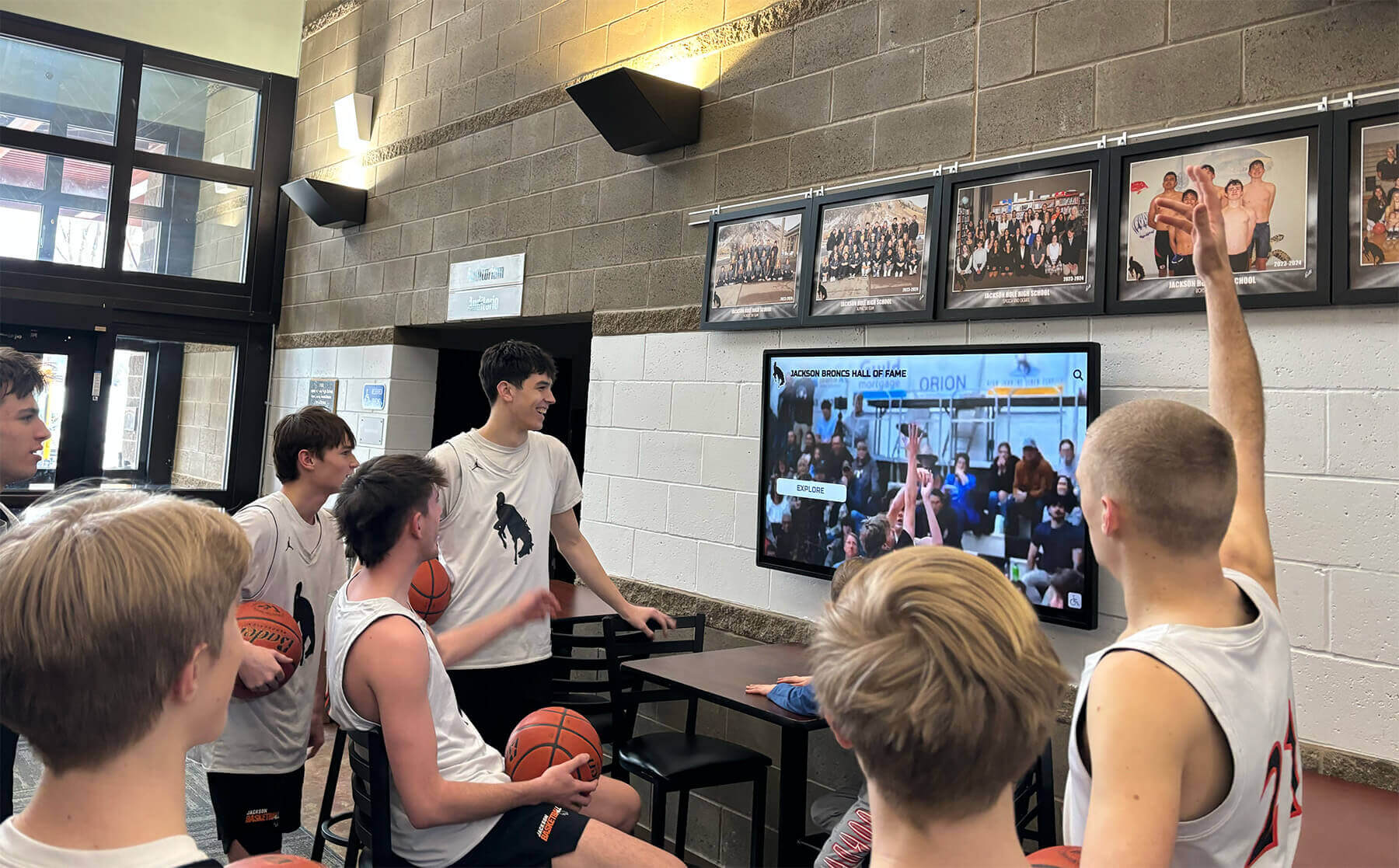
Modern displays engage students with volleyball highlights, player profiles, and program achievements in high-traffic school areas
Hybrid Approaches Many schools implement combination solutions:
- Permanent installation in primary volleyball venue
- Portable systems for auxiliary practice courts
- Outdoor courts using removable equipment
- Community-accessible recreational courts with simplified setup
Athletic directors should assess facility usage patterns, budget constraints, and program priorities when selecting installation approaches for each volleyball venue.
Variations Across Different Levels
Understanding height differences across competition levels helps programs prepare athletes for advancement:
Youth and Junior High Specifications
Younger athletes often use modified heights:
Middle School Standards Typical specifications include:
- Girls’ middle school: Often 7 feet, 0 inches (though some use high school height)
- Boys’ middle school: Typically 7 feet, 4⅛ inches (girls’ high school height)
- Local leagues and organizations may use alternative standards
- Modified heights account for developmental stage and skill levels
Elementary and Youth Programs Beginning players benefit from adjusted heights:
- Youth leagues often use 6'6" to 7'0" depending on age group
- Adjustable heights enable progression as players develop
- Lower nets emphasize skill development over power
- Organizations like USA Volleyball provide age-appropriate recommendations
Schools with vertical program development should consider how equipment can accommodate multiple age groups while maintaining proper developmental progression.
College and Beyond
Understanding advanced competition helps prepare elite players:
Collegiate Standards College volleyball uses same heights as high school:
- NCAA women’s volleyball: 7 feet, 4⅛ inches (matches high school girls)
- NCAA men’s volleyball: 7 feet, 11⅝ inches (matches high school boys)
- Transition from high school to college requires no height adjustment
- Consistency aids recruiting and player development planning
International Competition Elite volleyball uses identical measurements:
- FIVB women’s international: 2.24 meters (7'4⅛")
- FIVB men’s international: 2.43 meters (7'11⅝")
- Olympic and World Championship standards match high school specifications
- Universal heights enable seamless progression for elite athletes
This consistency across levels means that proper high school facility setup directly prepares athletes for advanced competition—making accurate net height essential for programs developing elite talent.
Schools celebrating athlete advancement to college programs should highlight consistent playing standards supporting player development.
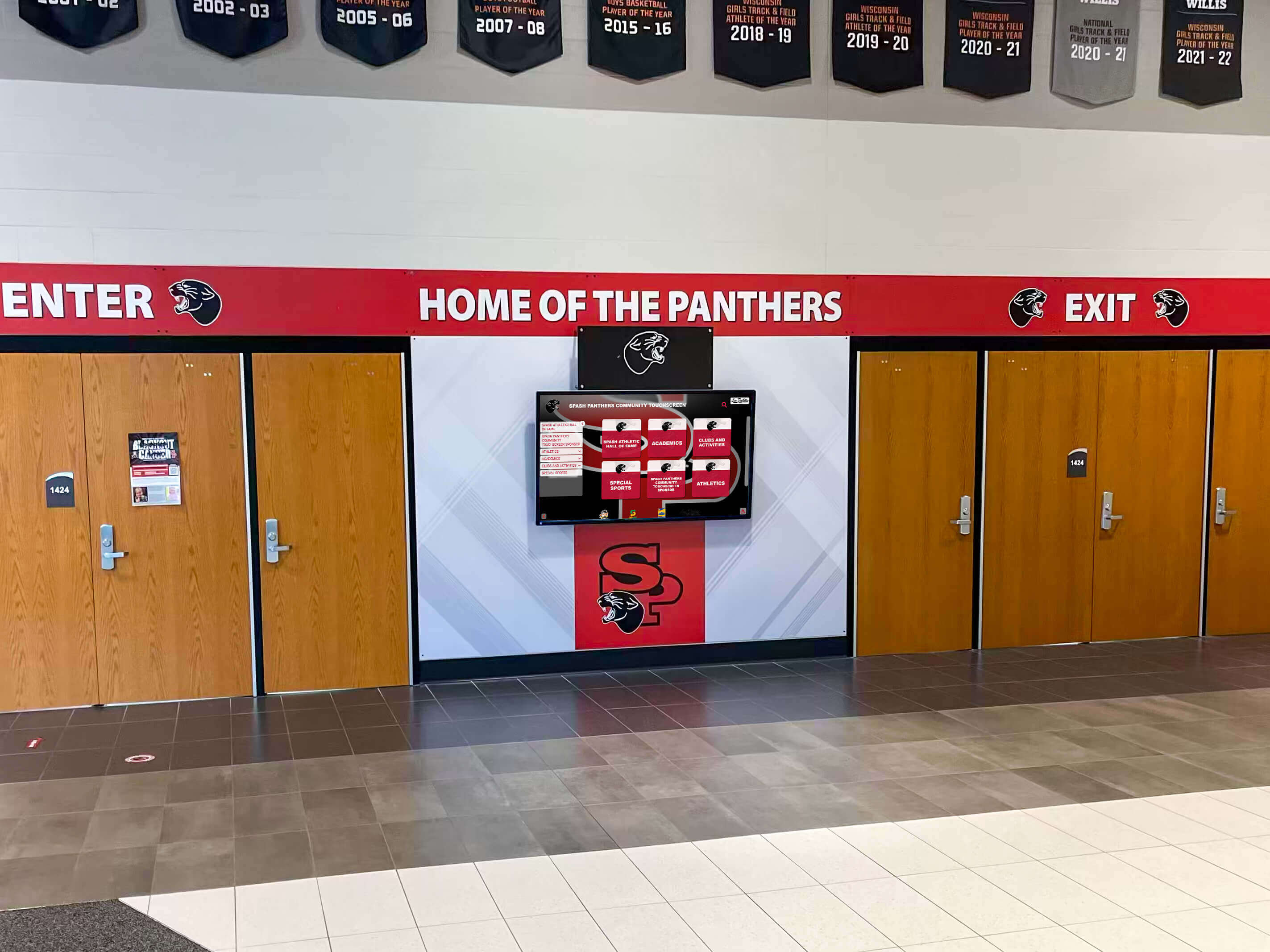
Strategic display placement at school entrances ensures volleyball achievement recognition receives visibility from entire school community
Documenting Volleyball Excellence Through Modern Recognition
Schools that celebrate volleyball success create cultures of achievement extending beyond proper facility setup:
Comprehensive Volleyball Recognition
Quality programs document diverse achievements:
Individual Player Honors Recognition systems should celebrate:
- All-conference and all-state selections
- Career statistical milestones (kills, digs, assists, blocks)
- Individual awards (player of the year, academic honors)
- College recruitment and scholarship achievements
- Record-setting performances in specific statistical categories
Team Success Documentation Comprehensive recognition includes:
- Conference championship teams by year
- State tournament qualifiers and placement
- Season records and winning streaks
- Tournament championships and invitational victories
- Undefeated seasons and special accomplishments
Coach and Program Recognition Complete documentation acknowledges:
- Career win milestones for coaches
- Coach of the year honors
- Program builders who established volleyball tradition
- Long-serving contributors to program success
- Facility donors enabling quality volleyball spaces
Schools implementing athletic recognition programs understand that systematic celebration of achievement motivates current athletes while honoring past excellence.
Challenges with Traditional Recognition
Physical displays create volleyball-specific problems:
Space Limitations Traditional approaches struggle with:
- Limited trophy case space forcing selectivity about recognized achievements
- Difficulty displaying complete team rosters and seasonal accomplishments
- Inability to showcase both individual and team success comprehensively
- Visual clutter when attempting to represent multiple seasons
- Historical achievements removed to accommodate recent success
Information Depth Constraints Static displays cannot provide:
- Detailed statistics and career performance data
- Context about competition level and opposition quality
- Season narratives explaining championship runs or significant achievements
- Player profiles with biographical information and photos
- Post-high school updates tracking continued volleyball careers
Equity and Accessibility Issues Physical recognition faces challenges:
- Gender equity concerns when boys’ and girls’ programs receive unequal display space
- Accessibility limitations for community members unable to visit campus
- Difficulty updating information without physical plaque replacement
- Inability to search or filter by specific achievement types, years, or players
These limitations mean many volleyball achievements receive insufficient recognition or disappear entirely from institutional memory as physical space fills with recent accomplishments.
Celebrate Your Volleyball Program's Excellence
Discover how modern digital recognition solutions document volleyball achievements comprehensively—from all-conference honors to championship teams—creating engaging displays that inspire current players while preserving program history. Digital platforms provide unlimited capacity, rich multimedia content, and interactive exploration ensuring your volleyball tradition receives the lasting visibility it deserves.
Explore Recognition SolutionsDigital Recognition Solutions for Volleyball Programs
Modern platforms solve traditional volleyball recognition challenges:
Comprehensive Achievement Documentation Digital systems enable:
- Unlimited capacity documenting achievements across all seasons and teams
- Individual player profiles with photos, statistics, and career highlights
- Team pages featuring complete rosters, season records, and championship documentation
- Searchable and filterable databases enabling access by name, year, or achievement type
- Statistical leaderboards tracking career and single-season records
Rich Multimedia Content Advanced platforms incorporate:
- Photo galleries showing teams, individual players, and championship moments
- Video highlights from matches and tournaments
- Season narratives providing context about championship runs
- Post-high school updates tracking college careers and continued volleyball involvement
- Coach testimonials and player reflections
Interactive Exploration Engagement features include:
- Search functionality finding specific players, teams, or achievements instantly
- Filtering options isolating conference championships, statistical records, or other categories
- Comparison capabilities showing program evolution across different eras
- Social sharing extending recognition beyond campus to families and community
- Mobile-responsive access enabling viewing from any device
Solutions like digital recognition platforms provide purpose-built systems designed specifically for athletic documentation, with intuitive content management enabling coaches and athletic directors to maintain comprehensive volleyball recognition without requiring technical expertise.
Equitable Gender Recognition Digital capacity ensures equal celebration:
- Unlimited space eliminating competition between boys’ and girls’ programs for display area
- Equivalent profile depth and content quality regardless of program size
- Balanced historical documentation preventing bias toward higher-profile teams
- Equal accessibility and prominence for all volleyball achievements
This comprehensive approach ensures all volleyball athletes receive appropriate recognition regardless of when they competed, maintaining complete program history accessible to current athletes, alumni, and community.
Troubleshooting Common Setup Problems
Even experienced facilities staff encounter occasional volleyball court setup challenges:
Net Height Adjustment Issues
Problem: Net won’t reach regulation height Potential causes and solutions:
- Stretched net material: Replace net if material has permanently elongated
- Insufficient tension capacity: Upgrade tension system or posts
- Incorrect post positioning: Verify posts are proper distance from sidelines
- Damaged tension mechanisms: Repair or replace ratchet or cable systems
Problem: Center sags below regulation Addressing excessive sag:
- Increase overall net tension using adjustment mechanisms
- Verify net cable or steel wire core hasn’t broken internally
- Check that net is properly attached to tension systems at both ends
- Consider net replacement if material stretching prevents proper tension
Problem: Height varies significantly between center and sidelines Correcting uneven net height:
- Adjust individual post heights ensuring equal measurements
- Verify court surface is level (uneven floors affect measurements)
- Check that both posts have equal tension on tensioning systems
- Ensure net is centered properly with equal length on each side
Measurement Verification Challenges
Problem: Measuring device shows inconsistent readings Ensuring accurate measurements:
- Verify measuring equipment is properly calibrated
- Check that measurements are taken at exact center line
- Ensure net has proper tension before measuring (not slack or over-tight)
- Account for floor irregularities affecting measurement points
- Use multiple measuring devices to verify if discrepancies persist
Problem: Officials dispute height compliance Resolving measurement disagreements:
- Re-measure using standard procedures with both parties present
- Document measurement process and results
- Use certified measuring equipment if available
- Make necessary adjustments and re-verify
- Consider having neutral third party verify if controversy persists
Athletic directors should maintain documented procedures for resolving setup disputes, preventing competition delays while ensuring fair playing conditions.
Planning New Volleyball Facilities
Schools building or renovating volleyball spaces should consider comprehensive facility requirements beyond net height alone:
Facility Design Considerations
Gymnasium Specifications Complete facility planning includes:
- Minimum court dimensions plus adequate free zones
- Ceiling height meeting or exceeding 25-foot recommendation
- Flooring designed specifically for volleyball (spring-loaded wood or synthetic court surface)
- Adequate lighting meeting minimum foot-candle requirements for competition
- Spectator seating with clear sight lines to entire court
Support Space Requirements Quality facilities incorporate:
- Team locker rooms with adequate storage and shower facilities
- Officials’ locker room separate from team spaces
- Equipment storage for nets, balls, training equipment
- Coach offices and meeting spaces
- Athletic training room access for injury prevention and treatment
Multi-Sport Flexibility Maximizing facility utilization:
- Floor markings accommodating volleyball plus basketball, badminton
- Removable or retractable net systems enabling quick court conversion
- Adequate clearance for multiple simultaneous courts when possible
- Storage solutions keeping volleyball equipment accessible but out of play
- Shared spaces serving multiple programs efficiently
Schools implementing facility recognition elements should integrate displays celebrating volleyball achievements into gymnasium design.
Budget Development
Comprehensive facility planning requires realistic cost projection:
Construction and Equipment Costs Major facility elements include:
- Court surface installation: $8-$15 per square foot
- Quality net system: $1,000-$5,000 per court
- Flooring, walls, and ceiling work varying based on project scope
- Electrical and lighting systems meeting competition standards
- Spectator seating, team benches, and scorer’s table
Ongoing Operational Costs Annual facility maintenance budgets should account for:
- Replacement nets and equipment: $500-$2,000 annually
- Floor refinishing and court line repainting: $2,000-$5,000 every 3-5 years
- Preventive maintenance and repair: $1,000-$3,000 annually
- Utilities for lighting, climate control, and ventilation
- Cleaning and custodial services
Funding Strategies Schools successfully finance volleyball facilities through:
- Capital campaigns including volleyball facility needs
- Booster club fundraising and donations
- Community partnerships and corporate sponsors
- State athletic facility grant programs
- Bond initiatives including athletic facility renovation
Athletic directors should develop comprehensive facility plans demonstrating how volleyball spaces serve multiple programs and community needs—strengthening funding proposals while maximizing facility value.
Conclusion: Precision Setup Enabling Volleyball Excellence
High school volleyball net height standards—7 feet, 4⅛ inches for girls and 7 feet, 11⅝ inches for boys—represent far more than arbitrary measurements. These precisely calibrated specifications create competitive environments where skill, strategy, and athleticism determine outcomes while preparing student-athletes for advanced competition at collegiate and international levels. Proper net height setup forms the foundation for fair play, skill development, and player safety that quality volleyball programs require.
Yet accurate net height represents just one component of comprehensive volleyball facility management. Complete court setup encompasses proper dimensions, line markings, free zone specifications, equipment maintenance, and systematic verification procedures ensuring consistent playing conditions across practice and competition. Athletic directors, facilities managers, and coaches who implement detailed setup protocols prevent match delays, ensure regulatory compliance, and provide athletes the quality playing surfaces their development deserves.
Modern athletic programs extend beyond facility preparation to include comprehensive recognition celebrating volleyball achievements across teams, individual players, and program milestones. While proper net height and court setup enable competition excellence, systematic documentation of achievement creates cultures of aspiration that inspire current athletes while honoring past success. Digital recognition platforms solve the traditional space and equity challenges schools face in volleyball celebration—providing unlimited capacity with engaging interactive experiences that preserve complete program history accessible to athletes, families, and community.
Your volleyball program’s foundation begins with precision—exact net heights, accurate measurements, quality equipment, and systematic procedures ensuring every match begins under regulation conditions. Building on that foundation, comprehensive facility planning, preventive maintenance programs, and modern recognition systems create environments where volleyball excellence flourishes across generations. From proper court setup through lasting celebration of achievement, these elements combine to build volleyball traditions that strengthen schools while developing student-athletes prepared for success at every level.
Ready to enhance your volleyball program? Ensure your facilities meet exact specifications, implement systematic measurement verification, develop preventive maintenance protocols, and explore how modern recognition systems can document your volleyball tradition with the comprehensive celebration it deserves.