Every school gymnasium tells a story. Walk into any athletic facility and you immediately understand what that institution values—whether through championship banners celebrating decades of excellence, empty walls suggesting untapped potential, or thoughtful design elements that inspire athletes while honoring tradition. Gymnasium design profoundly influences athletic culture, student motivation, community pride, and competitive success in ways that extend far beyond functional requirements for basketball courts and volleyball nets.
Yet many schools approach gymnasium design purely from utilitarian perspectives—focusing exclusively on dimensions, equipment, and safety regulations while overlooking the psychological, cultural, and motivational dimensions that transform basic athletic spaces into inspiring environments where excellence flourishes. Outdated facilities with poor acoustics, inadequate lighting, and no systematic recognition of achievement fail to maximize student potential while offering no competitive advantages in recruiting or community engagement.
This comprehensive guide explores evidence-based gymnasium design strategies that create athletic spaces inspiring excellence. From fundamental layout and technical specifications to recognition systems, technology integration, and cultural elements that make facilities memorable, these approaches help schools design or renovate gymnasiums that serve as more than practice venues—they become destinations celebrating tradition, motivating achievement, and building school pride for generations.
Gymnasium design decisions made today will influence student experiences, athletic program success, and institutional identity for decades. Schools investing thoughtful consideration in facility design—balancing functional requirements with psychological impact, honoring tradition while embracing innovation, and creating spaces that celebrate achievement systematically—discover that gymnasiums become powerful educational tools supporting development far beyond athletic skill.

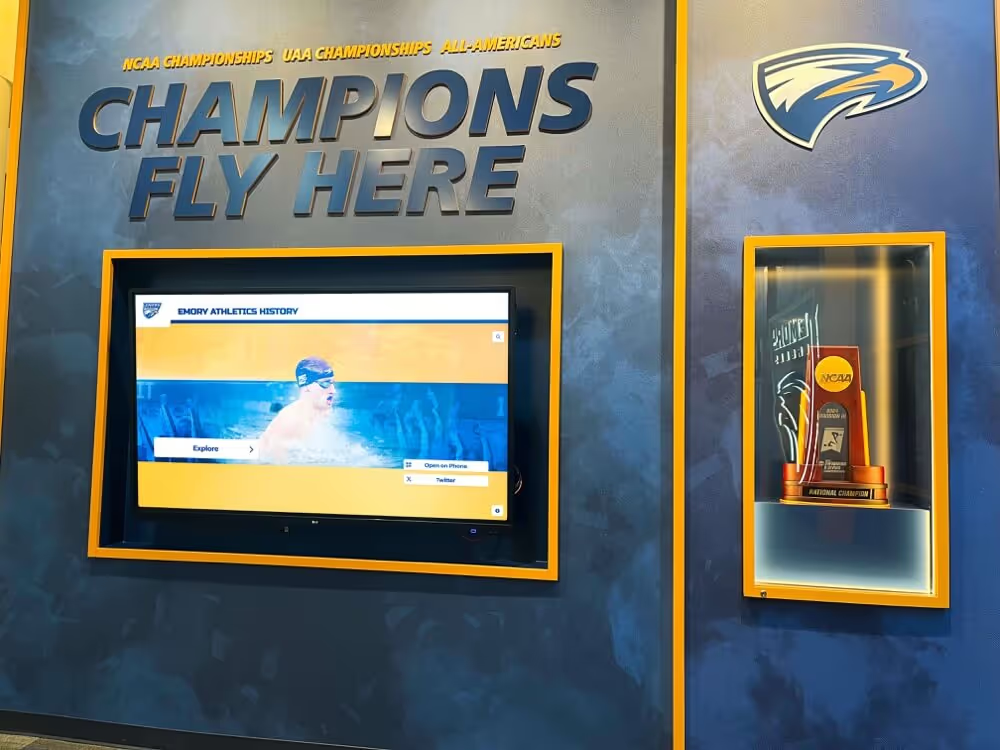
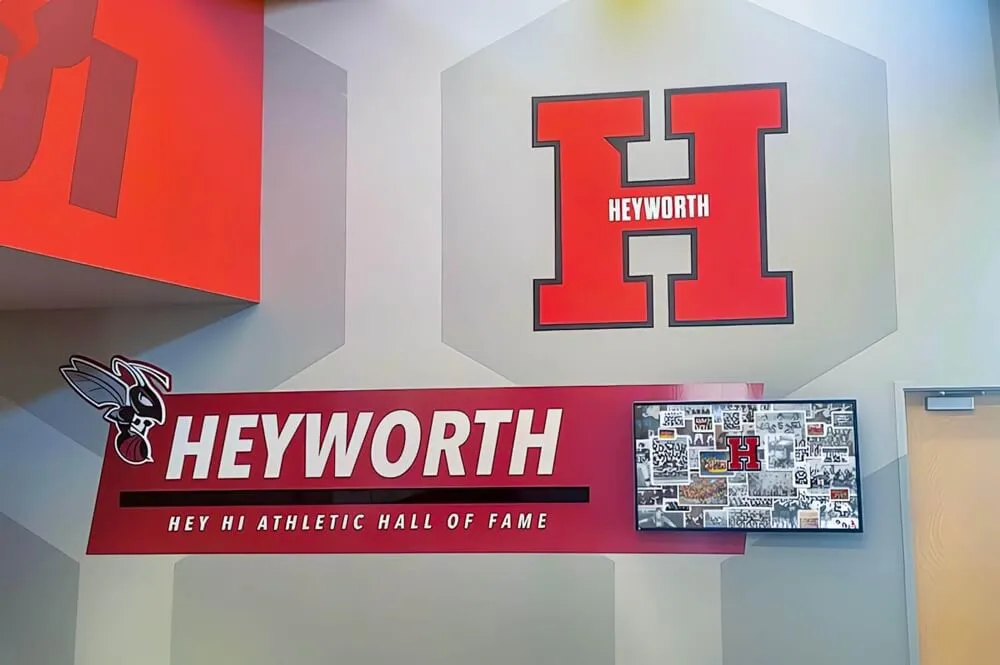
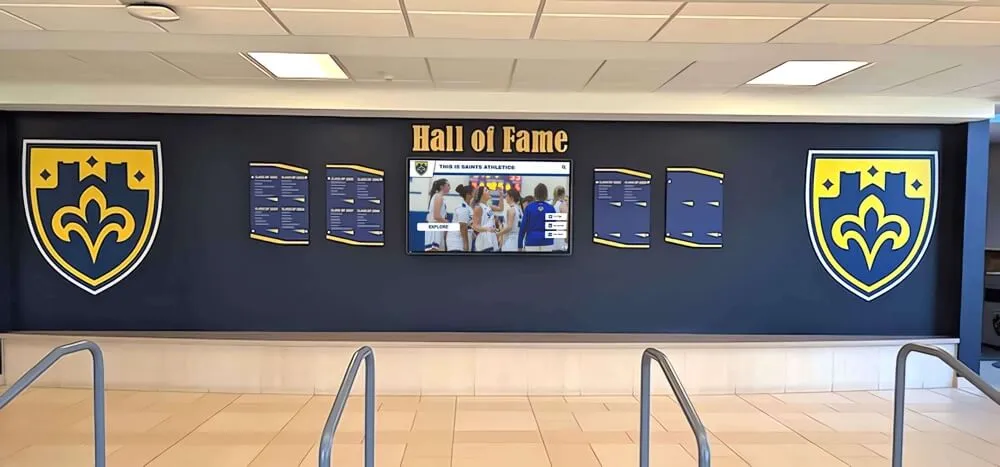
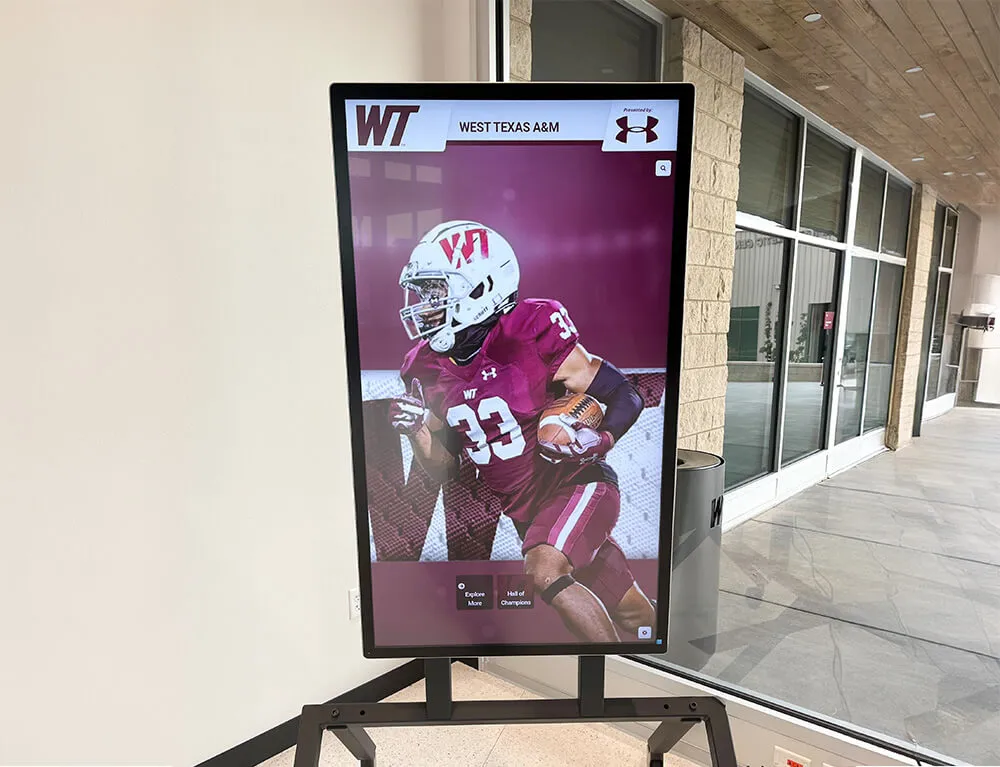
Championship recognition walls establish immediate visual identity communicating program excellence and tradition to athletes, visitors, and community members
Fundamental Gymnasium Design Considerations
Before exploring advanced features, understanding foundational design principles ensures facilities function effectively for athletic programming.
Space Planning and Dimensional Requirements
Athletic facilities must accommodate diverse activities while meeting regulatory standards:
Primary Court Specifications Basketball represents the dimensional standard most gymnasiums follow:
- Full basketball court requires minimum 84 feet × 50 feet playing surface
- Recommended clearance adds 10 feet behind baselines and 5 feet beyond sidelines
- Optimal ceiling height reaches 24-30 feet minimum (higher ceilings accommodate volleyball better)
- Multi-court facilities require additional width for parallel courts with adequate spacing
- Regulation compliance with state athletic association specifications ensures competition eligibility
These dimensions provide baseline requirements, though schools planning multi-purpose facilities should consider flexibility accommodating volleyball, wrestling, indoor track, and other programs sharing gymnasium space.
Spectator Capacity and Seating Bleacher planning balances capacity with space efficiency:
- Retractable bleachers maximize floor space flexibility when not needed
- Fixed seating in renovated facilities provides comfort but reduces adaptability
- ADA-compliant seating ensures accessibility throughout spectator areas
- Sightline analysis prevents obstructed views from structural elements
- Capacity planning considers typical attendance for various event types
Schools often miscalculate required capacity—oversized bleachers waste space and budget while insufficient seating creates overcrowding during popular events.
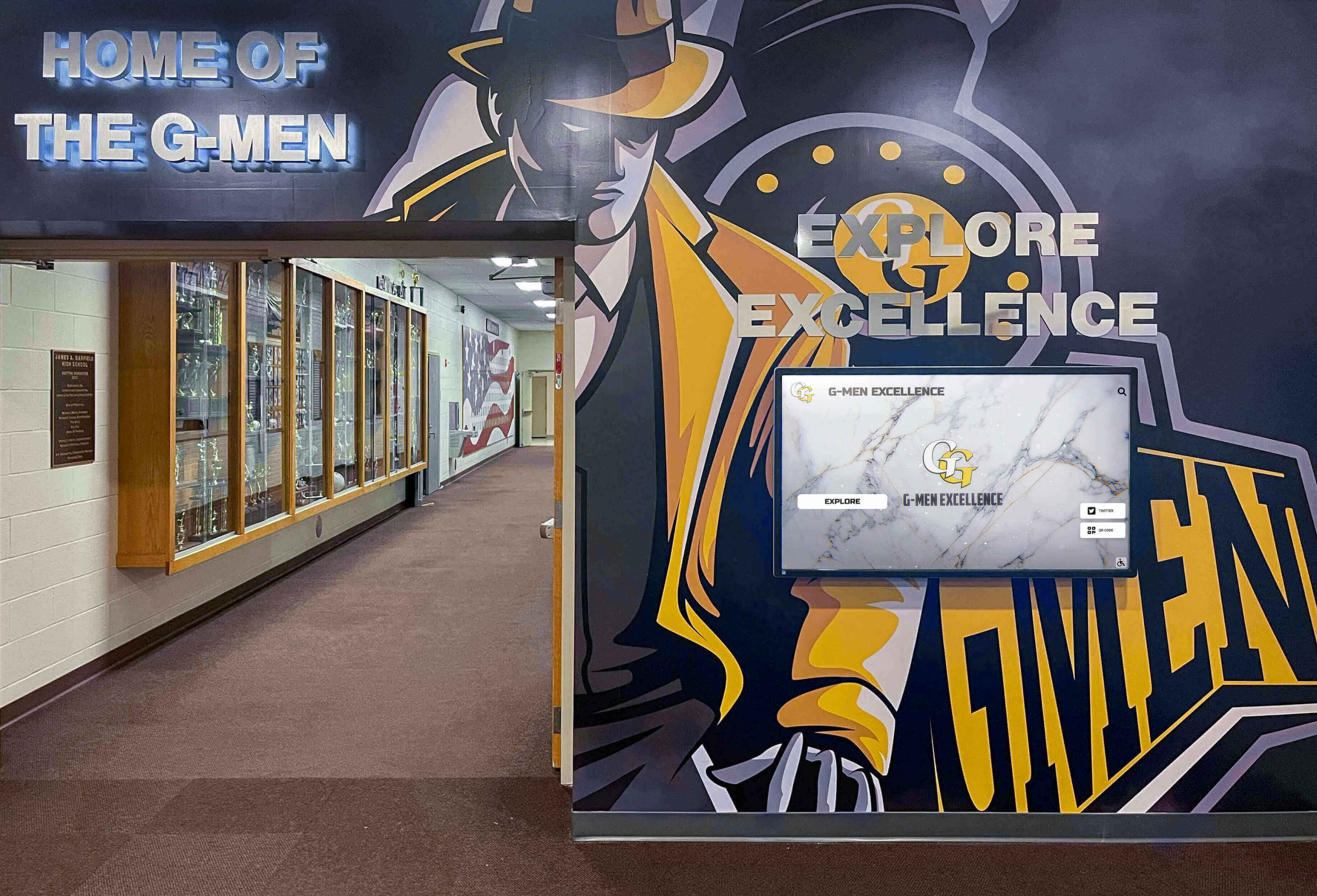
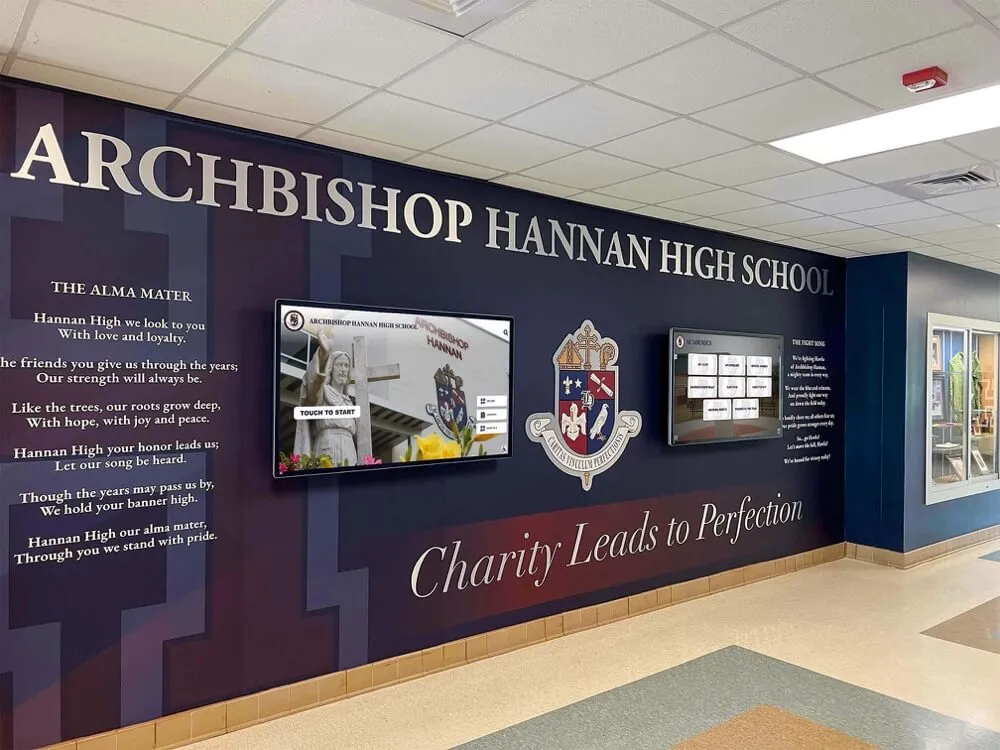
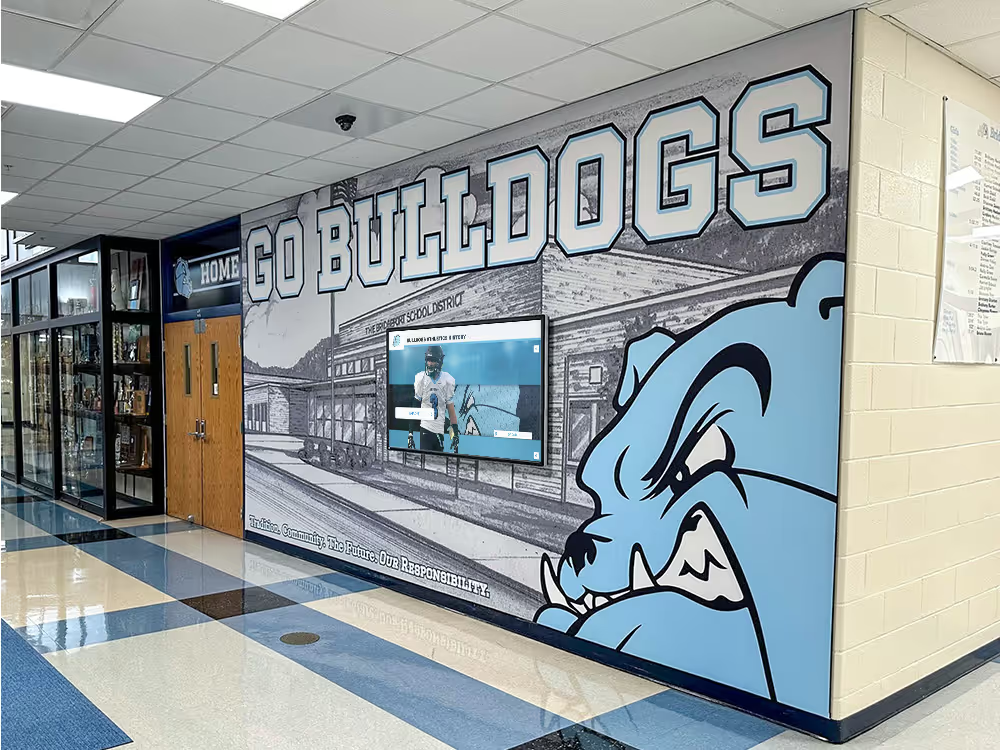
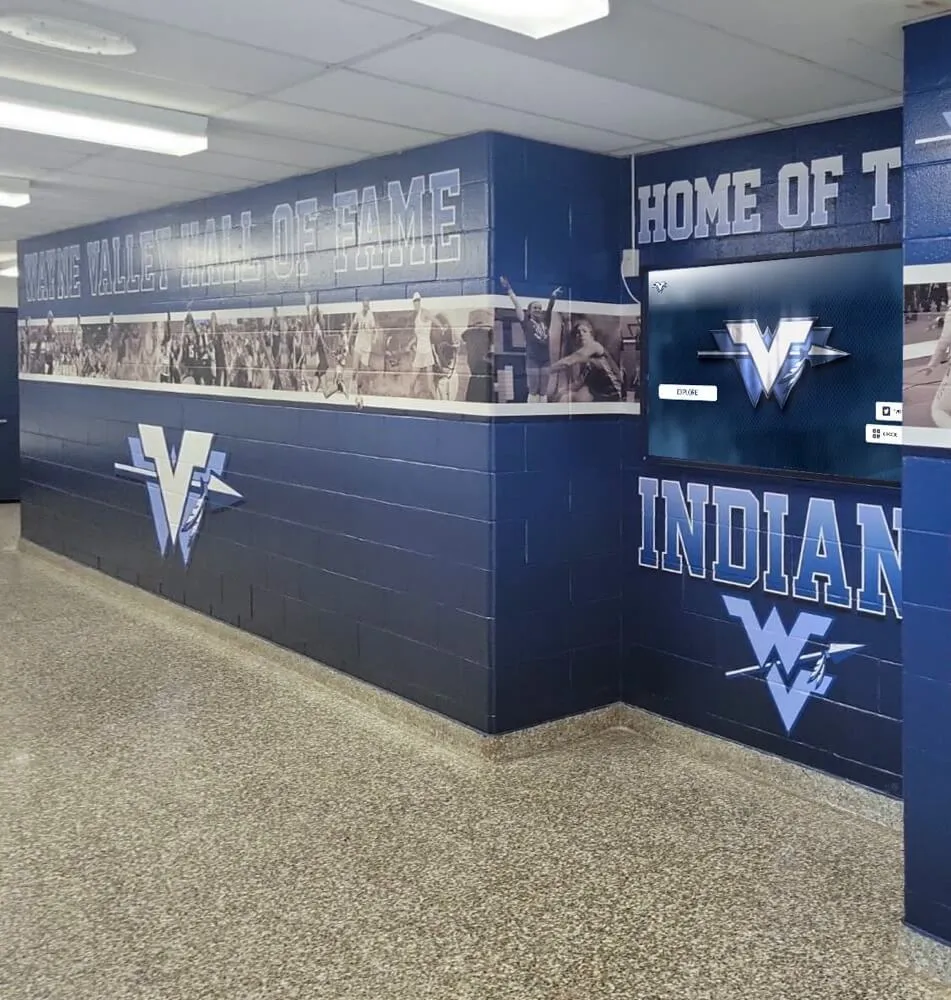
Entrance corridors leading to gymnasiums establish program identity through integrated murals and recognition displays
Ancillary Spaces and Support Facilities Complete facilities require more than primary court area:
- Locker rooms separated by gender with adequate sizing for largest teams
- Equipment storage rooms for portable goals, mats, and maintenance supplies
- Officials’ changing areas and restrooms separate from team facilities
- Athletic training rooms for injury treatment and rehabilitation
- Coaches’ offices providing workspace and meeting areas
- Concession stands and public restrooms for event operations
These support spaces significantly impact total facility footprint and construction budget—schools sometimes underestimate ancillary space requirements focusing primarily on primary court dimensions.
Flooring Selection and Surface Quality
Athletic flooring represents critical investment influencing performance and safety:
Hardwood Court Systems Maple hardwood remains the gold standard for gymnasium flooring:
- Hard maple provides optimal ball response, traction, and durability
- Cushioned subfloor systems reduce joint impact protecting athlete health
- Professional installation ensures proper moisture barriers and dimensional stability
- Regular maintenance including refinishing preserves surface quality for decades
- Higher initial cost offset by longevity and performance advantages
Quality hardwood courts properly maintained last 50+ years—making upfront investment cost-effective over facility lifetime despite premium pricing compared to alternatives.
Synthetic Flooring Alternatives Rubber and vinyl systems offer different advantages:
- Significantly lower initial cost than hardwood installation
- Reduced maintenance requirements with no refinishing needed
- Excellent shock absorption protecting athletes from impact injuries
- Acceptable performance for recreational and practice facilities
- Less prestigious appearance compared to traditional hardwood
Schools with budget constraints or multi-use facilities where non-athletic activities occur regularly often select synthetic options balancing cost with adequate performance.
Explore comprehensive athletic facility planning approaches that inform design decisions.
Lighting Design for Athletic Performance
Proper illumination influences safety, performance, and video quality:
Functional Lighting Requirements Athletic activities demand specific lighting conditions:
- Minimum 50 foot-candles illumination for recreational play
- 75-100+ foot-candles for competitive events and video recording
- Uniform distribution preventing shadows and dark spots
- Glare control protecting athlete vision during play
- Energy-efficient LED systems reducing operational costs while improving quality
LED technology has revolutionized gymnasium lighting—providing superior illumination, dramatic energy savings, instant-on capability, and significantly longer bulb life reducing maintenance burden.
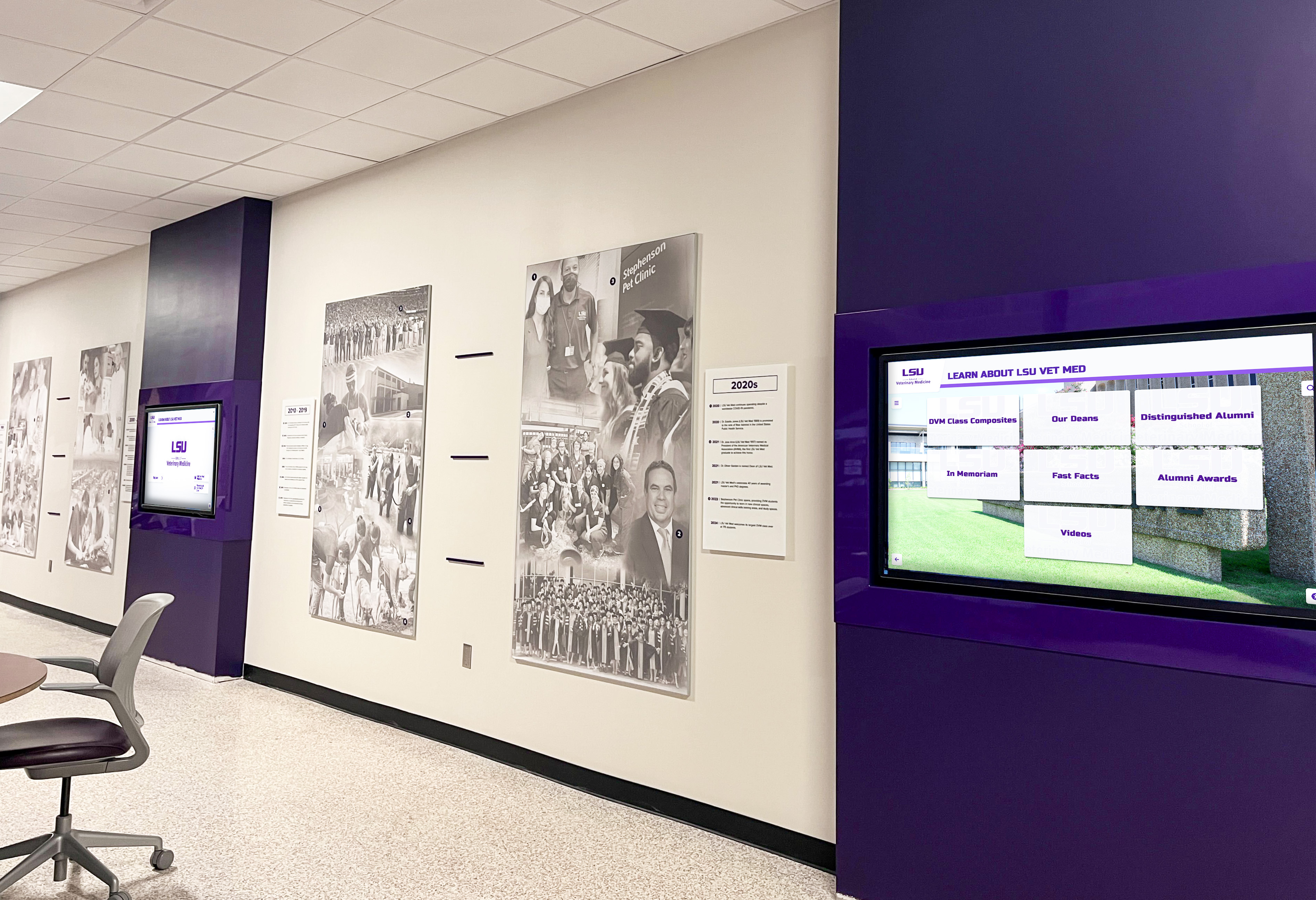
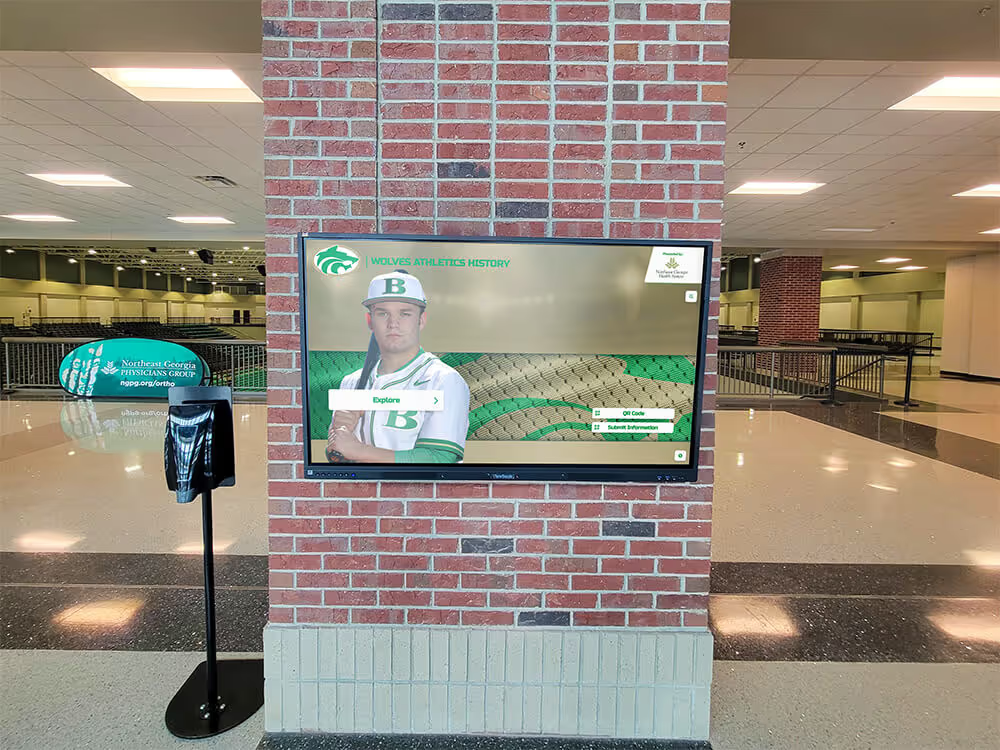
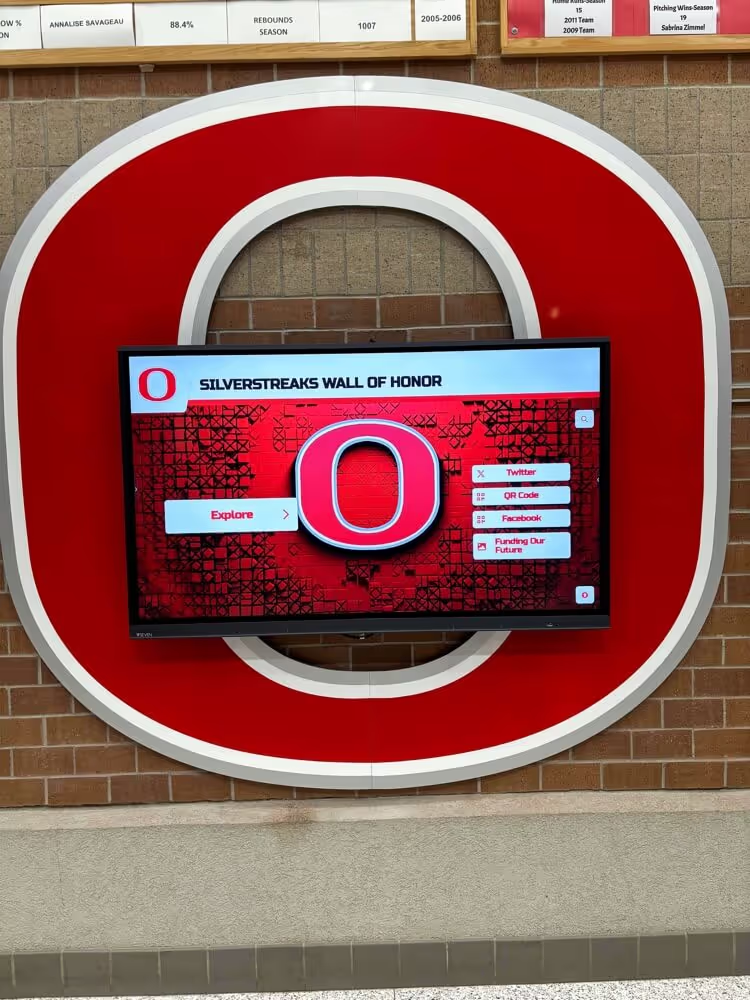
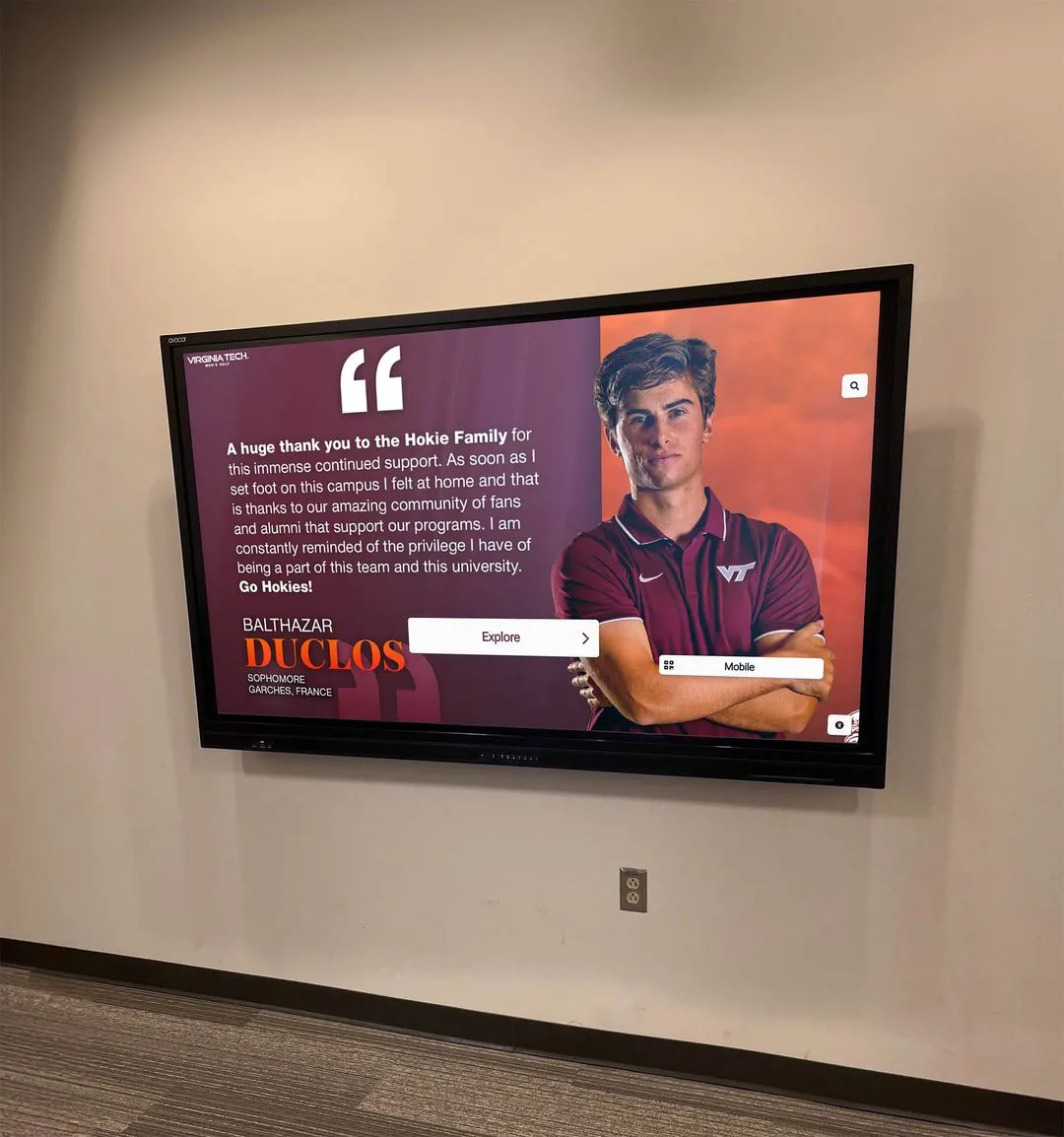
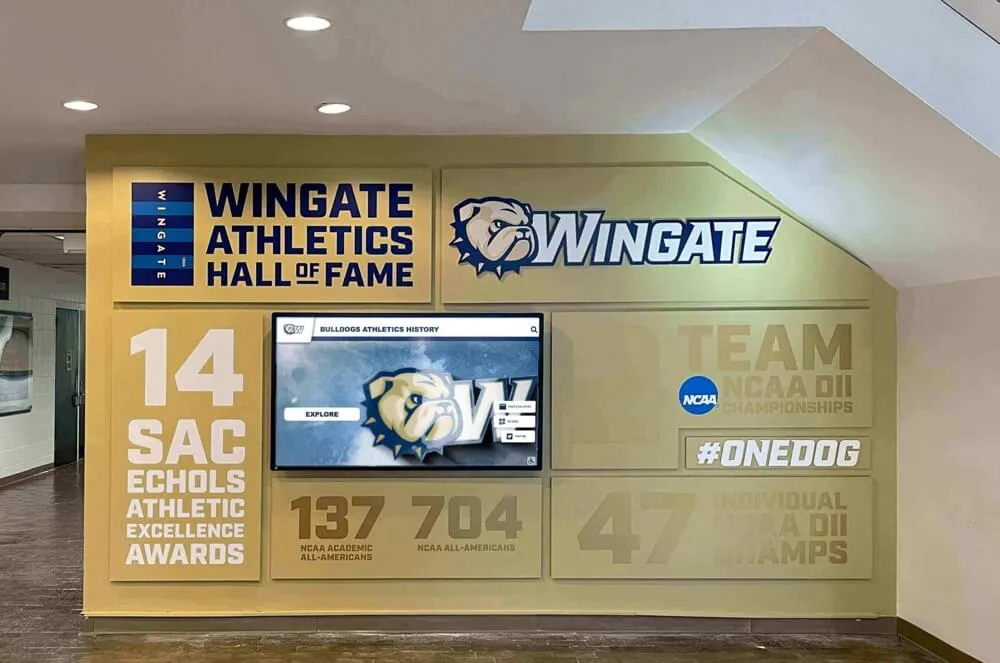
Integrated digital displays throughout athletic facilities provide dynamic recognition capability celebrating achievements
Competition and Broadcast Considerations Advanced facilities require enhanced lighting:
- Television broadcast standards demand higher illumination levels (100+ foot-candles)
- Color temperature selection affects visual comfort and video quality
- Dimming capabilities enable varying lighting for different event types
- Emergency lighting ensuring safe evacuation during power failures
- Smart controls adjusting illumination automatically based on facility use
Schools hosting televised events or creating highlight video content should specify lighting meeting broadcast standards during initial installation rather than retrofitting later at substantially higher cost.
Acoustic Design and Sound Management
Gymnasium acoustics significantly impact user experience:
Reverberation Control Hard surfaces in gymnasiums create challenging acoustic environments:
- Untreated gymnasiums produce 5-10 second reverberation times creating unintelligible sound
- Target reverberation of 2-3 seconds enables speech intelligibility while maintaining energy
- Acoustic panels on walls and ceiling reduce echo and improve sound quality
- Strategic placement targeting reflection points provides maximum effectiveness
- Material selection balancing acoustic performance with durability and aesthetics
Poor acoustics make announcements unintelligible, prevent effective coaching communication, and create unpleasant environments discouraging facility use. Acoustic treatment represents relatively modest investment delivering dramatic quality-of-life improvements.
Sound System Integration Quality audio systems require careful planning:
- Professional speaker selection and placement ensuring coverage throughout seating areas
- Adequate amplifier power driving speakers effectively without distortion
- Mixing equipment enabling multiple inputs (microphones, music, announcements)
- Wireless microphone systems providing flexibility for ceremonies and presentations
- Integration with video displays for coordinated multimedia presentations
Schools often underinvest in audio systems—attempting to save costs through consumer-grade equipment that delivers poor performance in challenging gymnasium acoustic environments.
Learn about digital recognition integration enhancing facility impact.
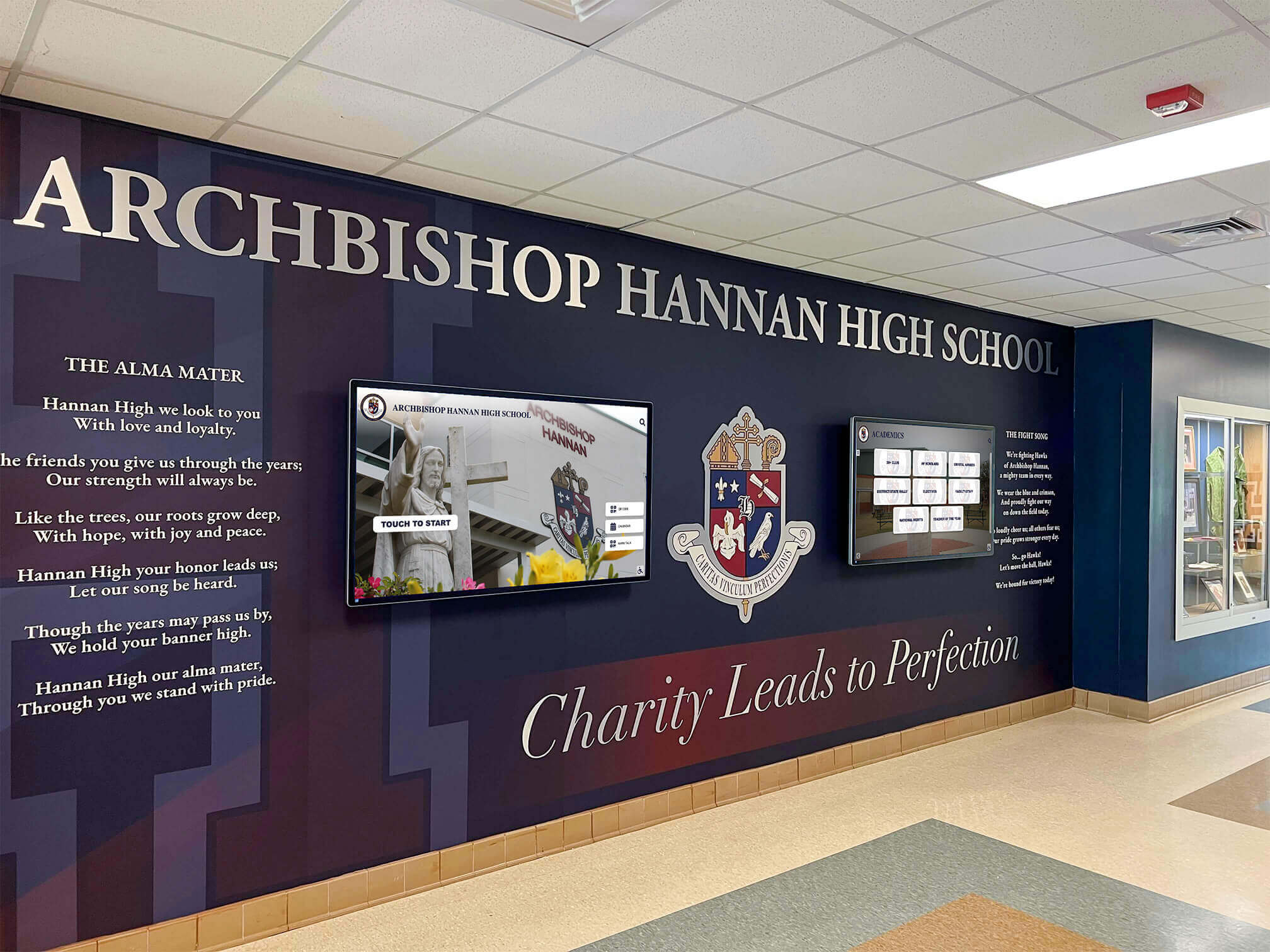
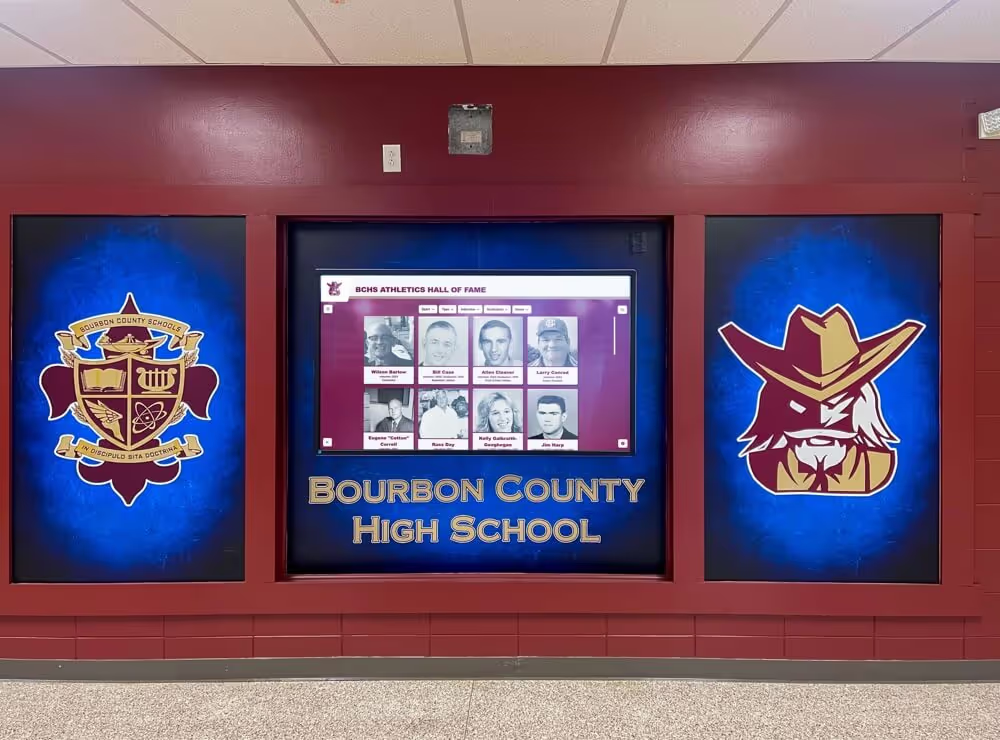
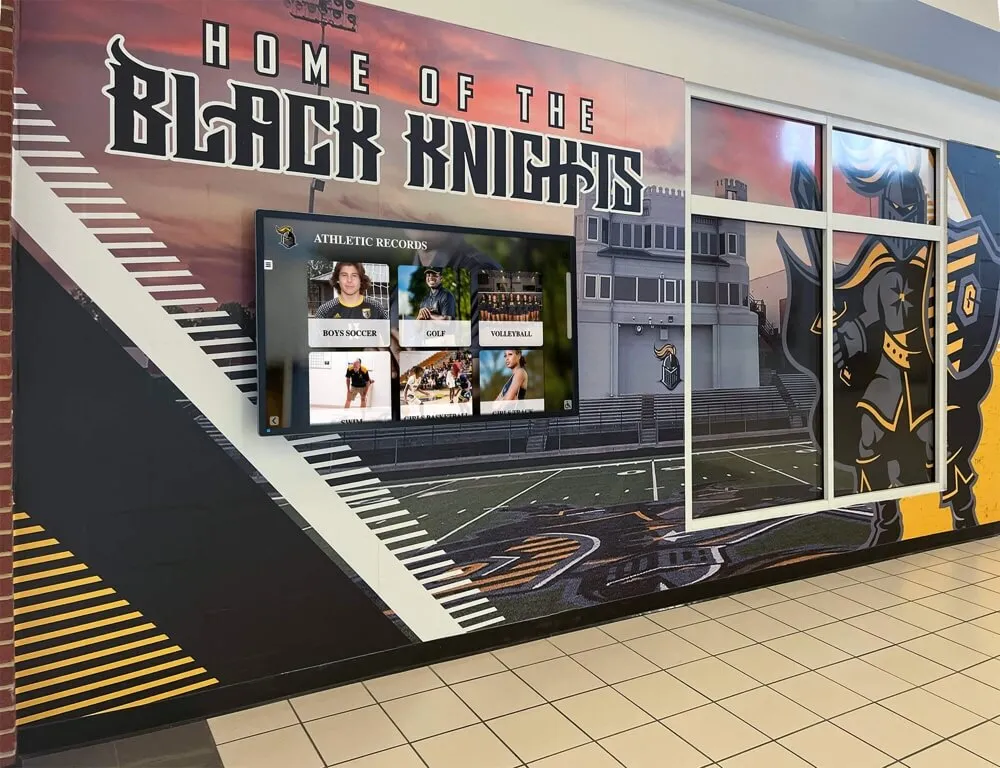
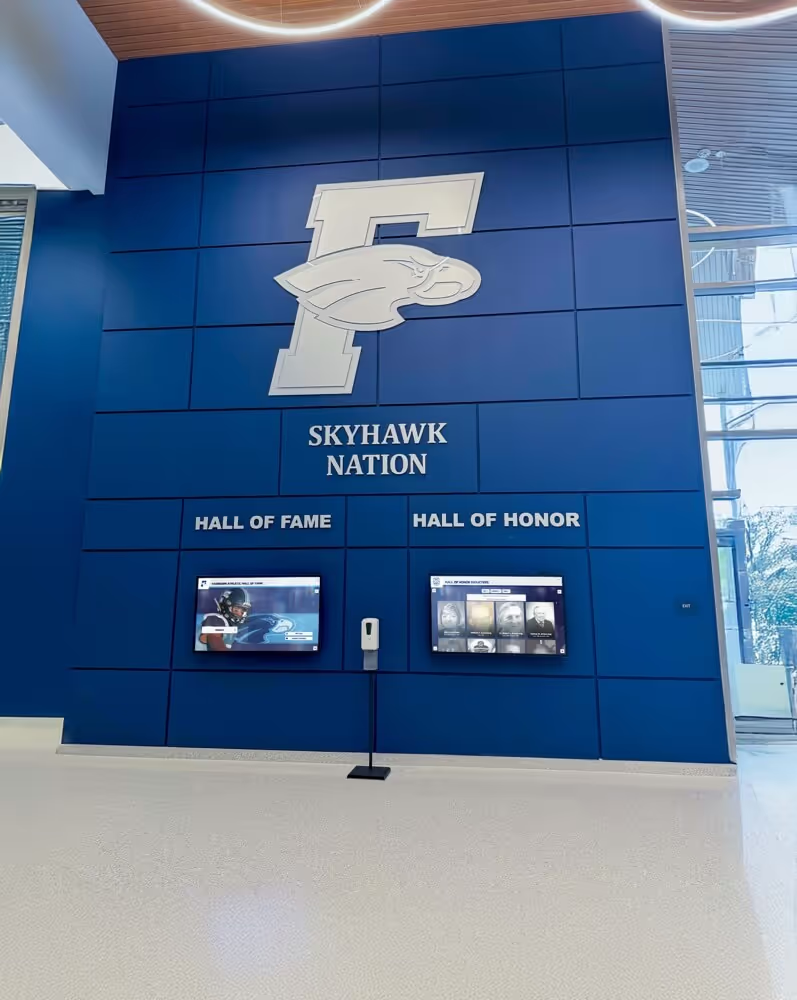
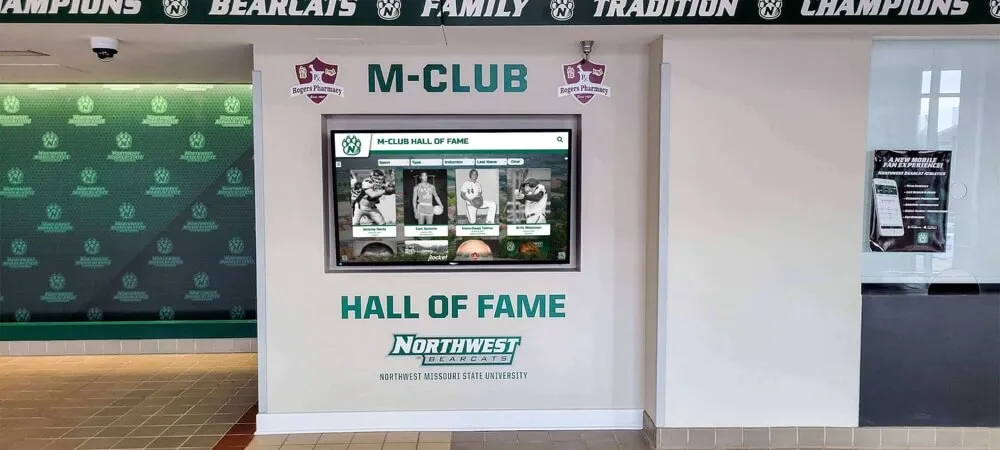
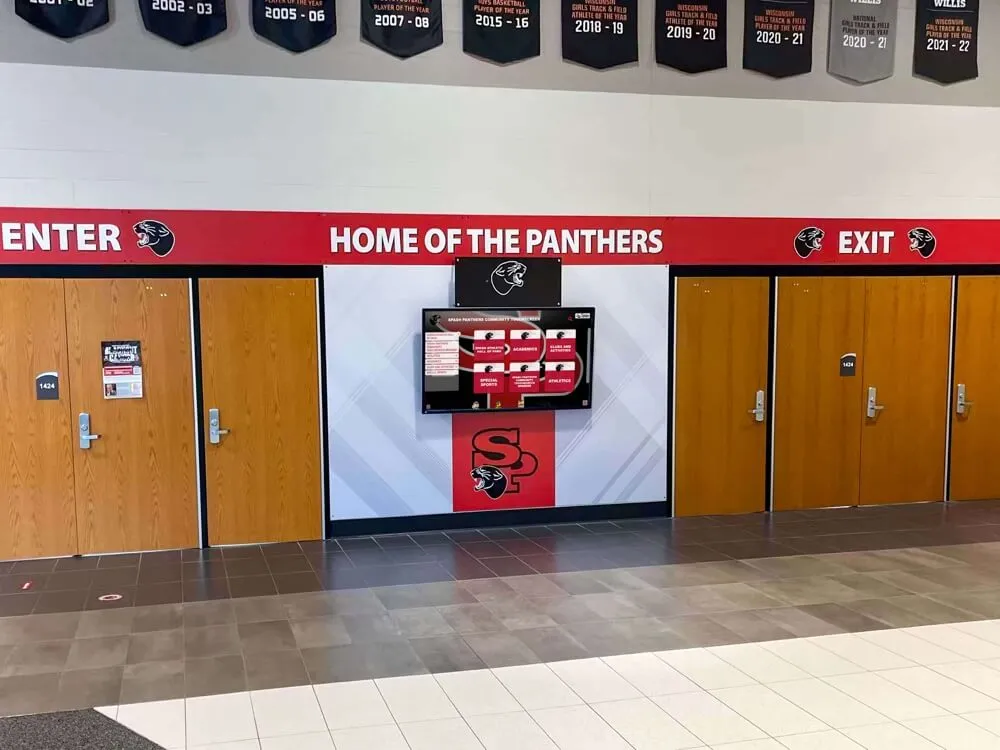
Main athletic facility entrances establish program identity through coordinated visual branding and recognition systems
Recognition Systems and Display Integration
Modern gymnasium design systematically incorporates achievement recognition creating inspiring environments:
Traditional Championship Banners and Signage
Classic recognition approaches remain valuable design elements:
Championship Banner Programs Suspended recognition creates immediate visual impact:
- Conference championship banners documenting successful seasons
- State tournament participation and championship recognition
- Retired jersey numbers honoring exceptional individual achievement
- All-American and individual honor recognition
- Historical program milestone acknowledgment
Strategic banner placement requires planning during gymnasium design—adequate ceiling height, structural support for hanging systems, and sightline consideration ensuring visibility from spectator areas. Schools retrofitting banner programs into existing facilities sometimes discover inadequate infrastructure requiring expensive structural modifications.
Wall-Mounted Recognition Displays Permanent installations provide lasting acknowledgment:
- Record boards tracking all-time achievements by sport
- Hall of fame plaques honoring inducted athletes and coaches
- Team photo displays preserving championship team memories
- Donor recognition acknowledging facility funding contributors
- School branding and mascot imagery reinforcing institutional identity
These permanent displays require adequate wall space—schools should designate specific recognition areas during design phase rather than attempting to retrofit recognition into already-completed facilities where available space may be inadequate.
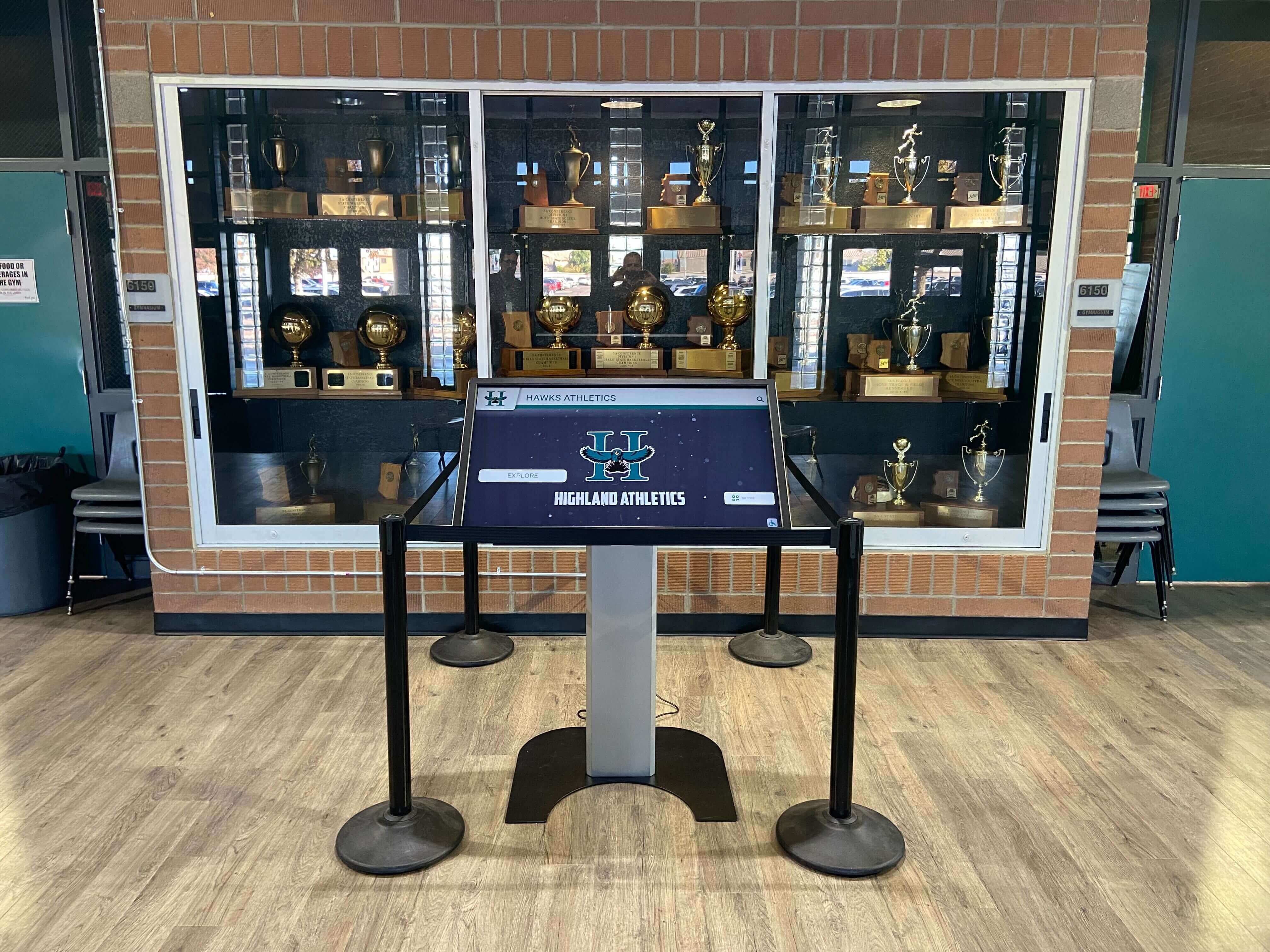
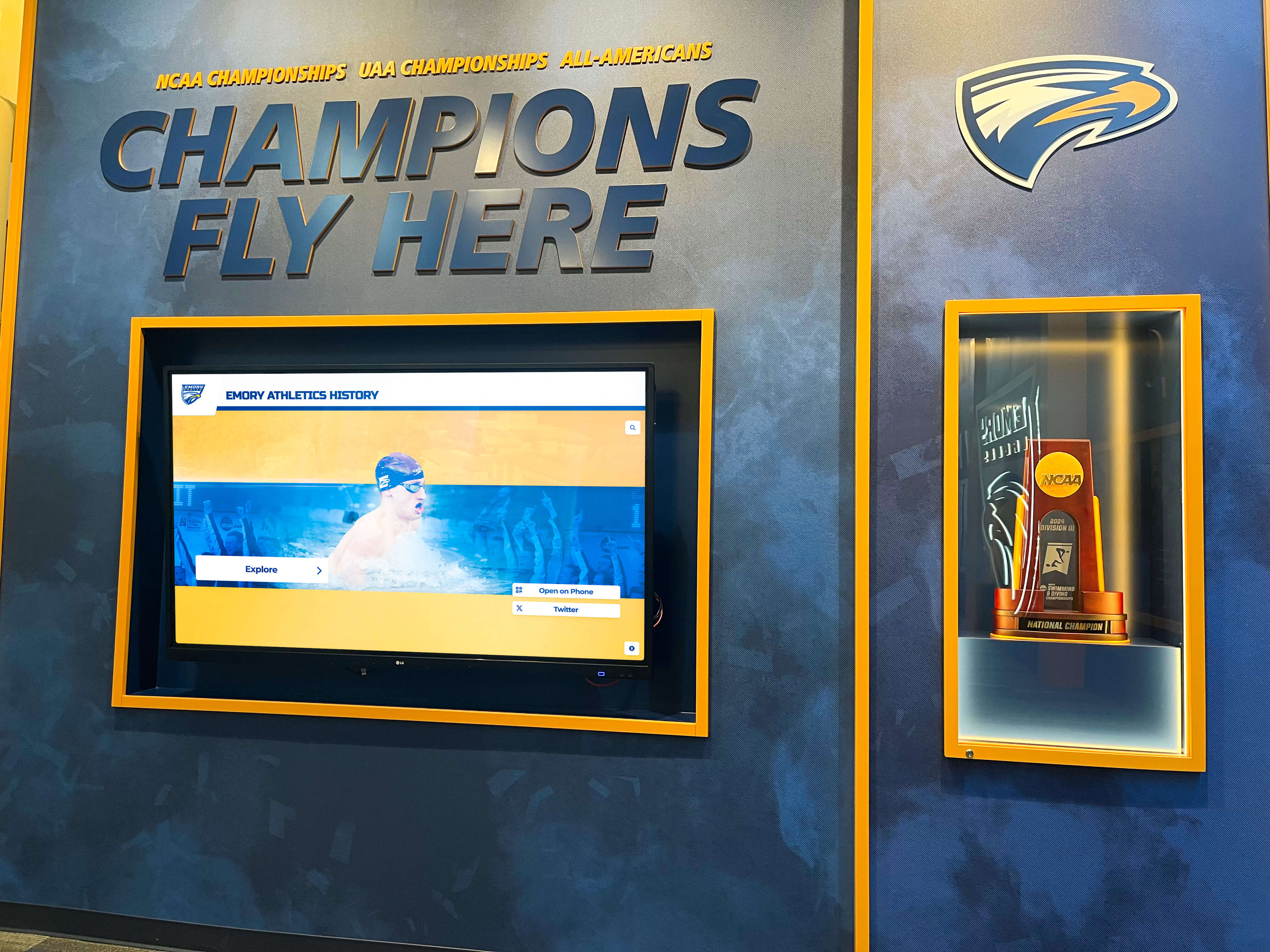
Trophy case areas provide natural locations for interactive recognition technology expanding traditional display capacity
Explore comprehensive trophy display strategies that inform gymnasium recognition planning.
Digital Recognition Technology Integration
Modern facilities incorporate interactive displays transforming static recognition:
Touchscreen Recognition Kiosks Interactive technology creates engaging experiences:
- Unlimited recognition capacity eliminating space constraints of traditional plaques
- Rich multimedia profiles including photos, videos, statistics, and biographical information
- Interactive search and filtering enabling visitors to explore achievements
- Remote content management allowing updates without physical installation work
- Web integration extending recognition beyond physical facility to online platforms
Solutions like Rocket Alumni Solutions provide purpose-built platforms specifically designed for athletic recognition, combining touchscreen displays with intuitive content management systems enabling coaches and administrators to update recognition without technical expertise.
Schools implementing digital recognition systems report 5-10 minute average engagement time compared to 30-60 seconds viewing static displays—dramatically greater interaction delivering more substantial motivational impact while showcasing achievements comprehensively.
Strategic Placement Throughout Facilities Recognition effectiveness depends on visibility:
- Primary touchscreen displays in main gymnasium lobbies receiving highest traffic
- Secondary displays in hallway corridors connecting to athletic facilities
- Locker room displays providing motivation in team-only spaces
- Weight room and training facility recognition inspiring during conditioning
- Multiple locations ensuring recognition receives consistent visibility
Multi-location strategies maximize recognition impact—athletes encounter achievement celebration throughout facilities rather than in isolated trophy case areas visited infrequently.
Cloud-Based Content Management Modern systems enable efficient administration:
- Update recognition from any internet-connected device without facility access
- Bulk upload tools adding entire team rosters or seasonal achievements efficiently
- Template-based design ensuring visual consistency across athletes and seasons
- Role-based access enabling appropriate staff management without security risks
- Scheduled publishing automating announcement timing for new recognition
- Analytics tracking engagement revealing how visitors interact with displays
Schools implementing cloud-managed recognition systems report 80-90% reduction in administrative time compared to maintaining traditional physical displays requiring manual updates.

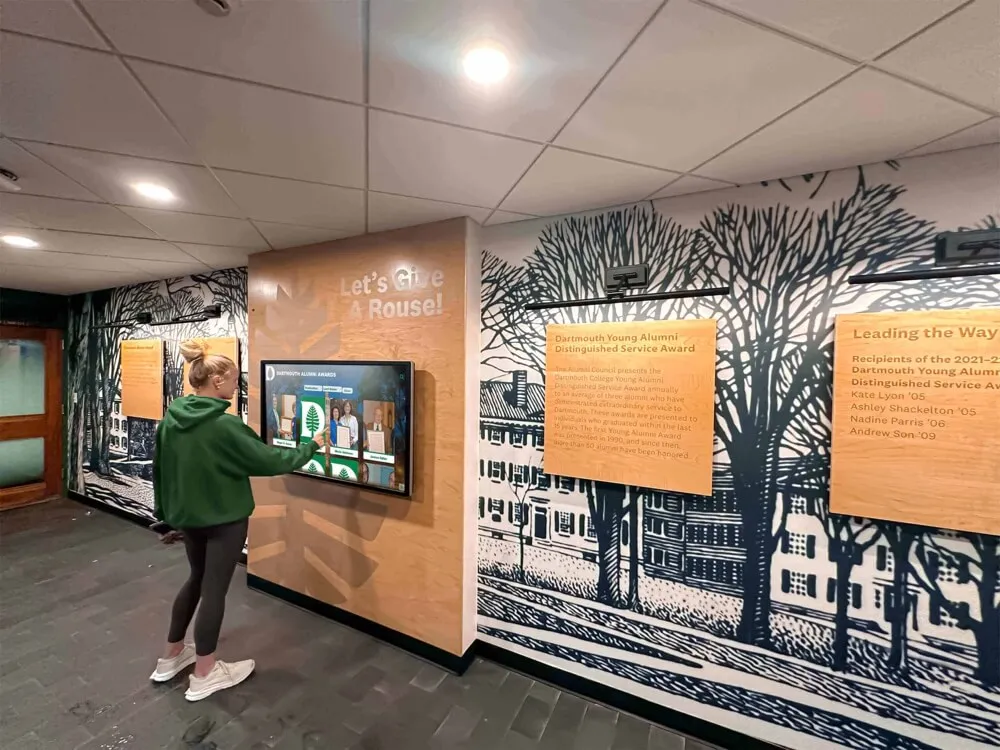
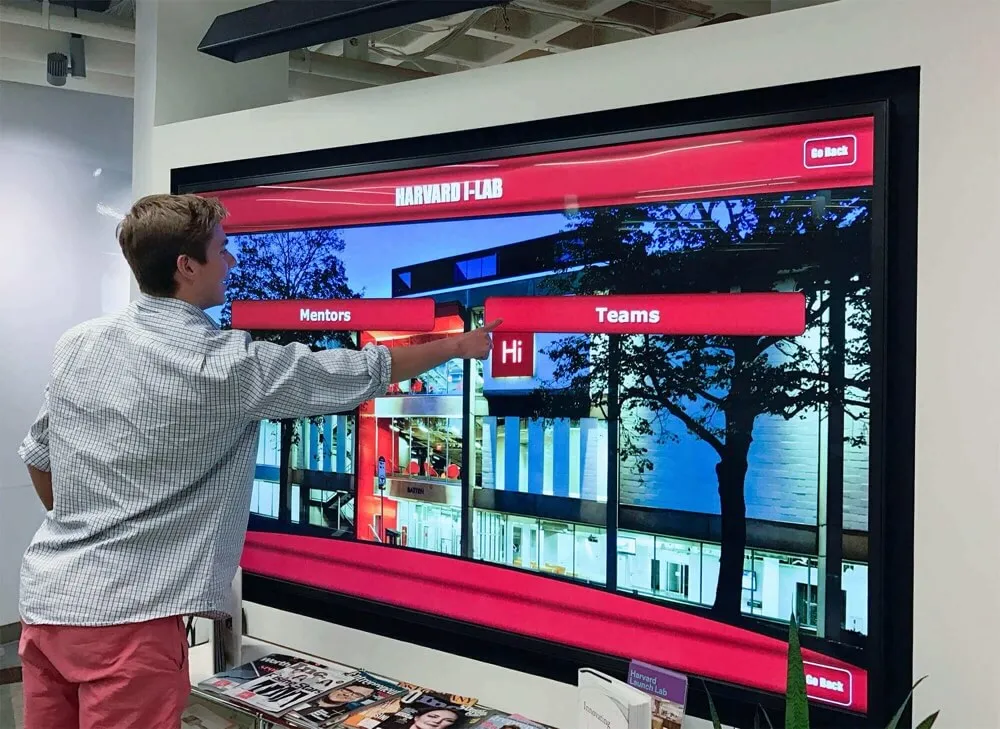
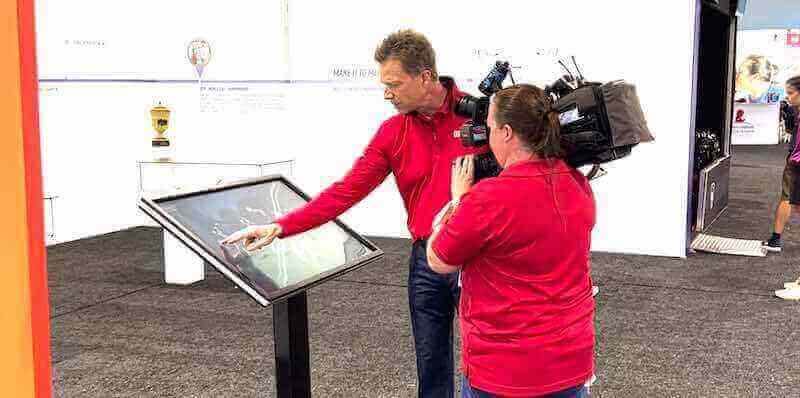
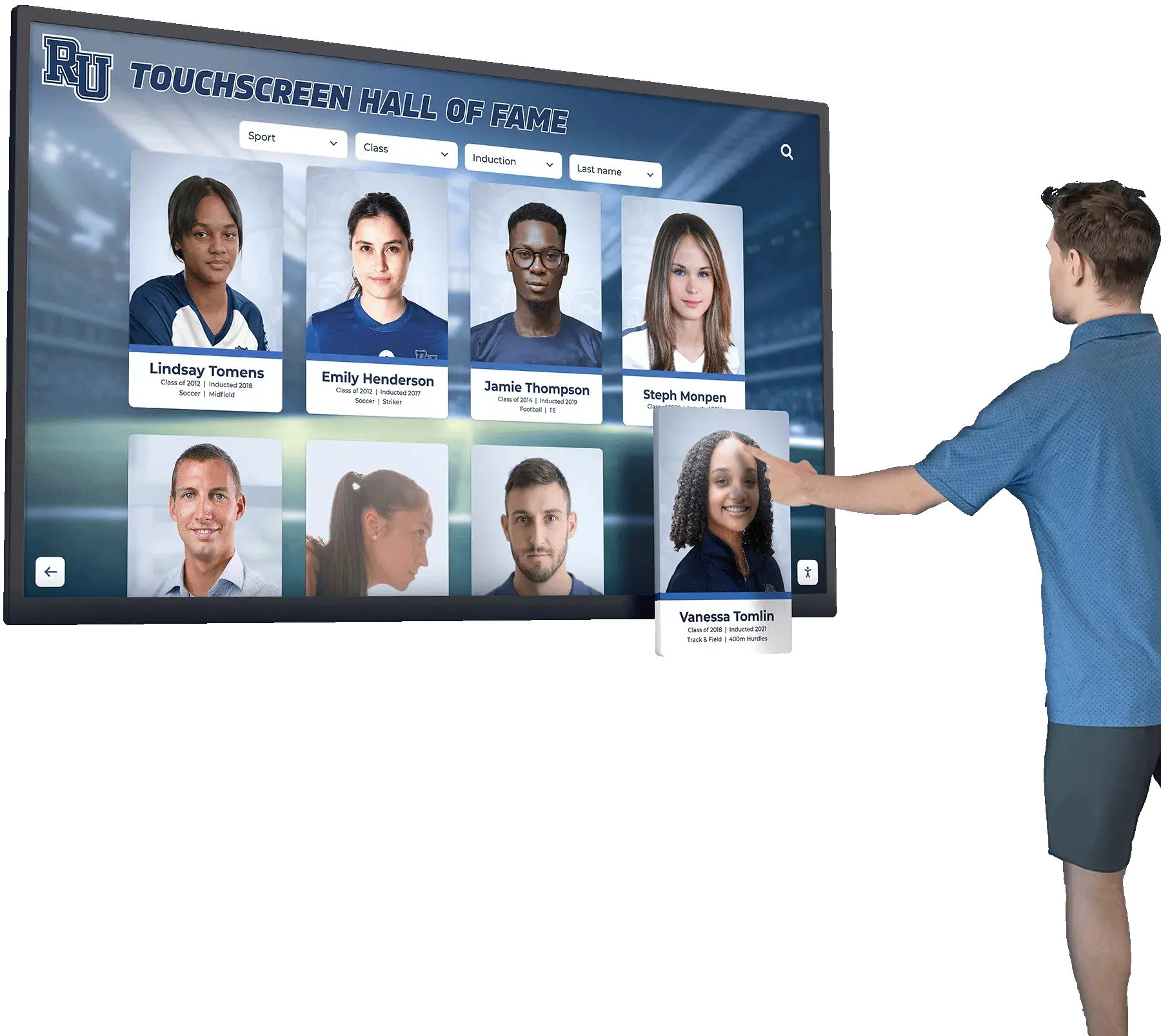
Intuitive touchscreen interfaces enable visitors to explore detailed athlete profiles and achievement histories
Learn about digital hall of fame implementation for gymnasium recognition systems.
Record Boards and Statistical Recognition
Systematic tracking creates competitive motivation:
Sport-Specific Record Boards Comprehensive displays document program achievement:
- All-time individual records by relevant statistical categories
- Single-game, single-season, and career achievement tracking
- Team records documenting collective excellence
- Historical context showing record progression over decades
- Update processes ensuring current season achievements receive prompt recognition
Traditional static record boards require expensive replacement when records fall—digital displays enable instant updates maintaining accuracy while reducing long-term maintenance costs.
Multi-Sport Integration Comprehensive systems honor diverse programs:
- Dedicated recognition for each sport avoiding high-profile program dominance
- Consistent design language creating cohesive facility aesthetic
- Equal visibility regardless of sport prestige or visibility
- Title IX compliance ensuring gender equity in recognition
- Comprehensive coverage demonstrating institutional commitment to all athletics
Schools must ensure gymnasium design incorporates adequate recognition capacity for all athletic programs—not just basketball and football typically occupying gymnasiums primarily.
Explore athletic record board approaches that inform facility planning.
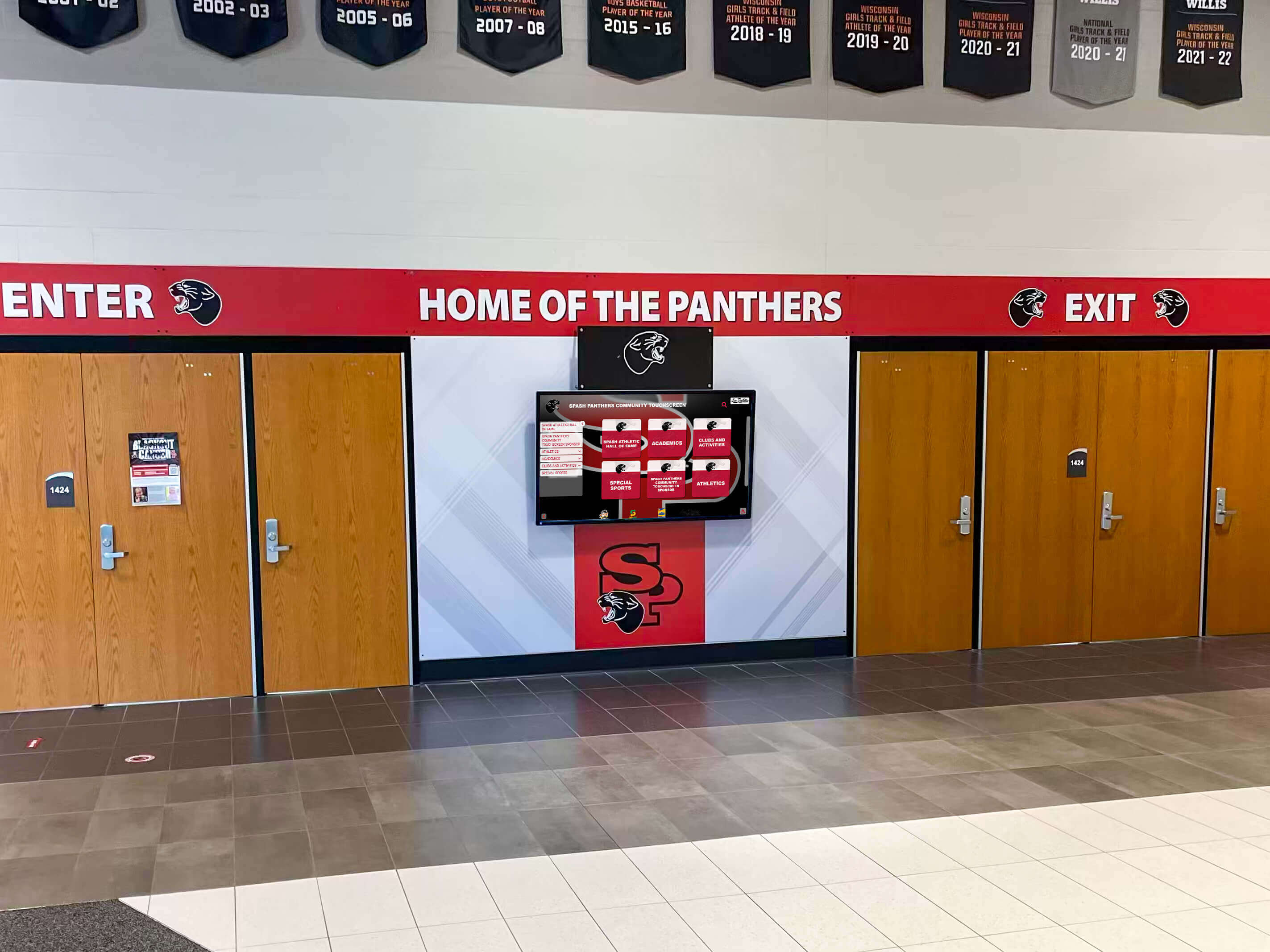
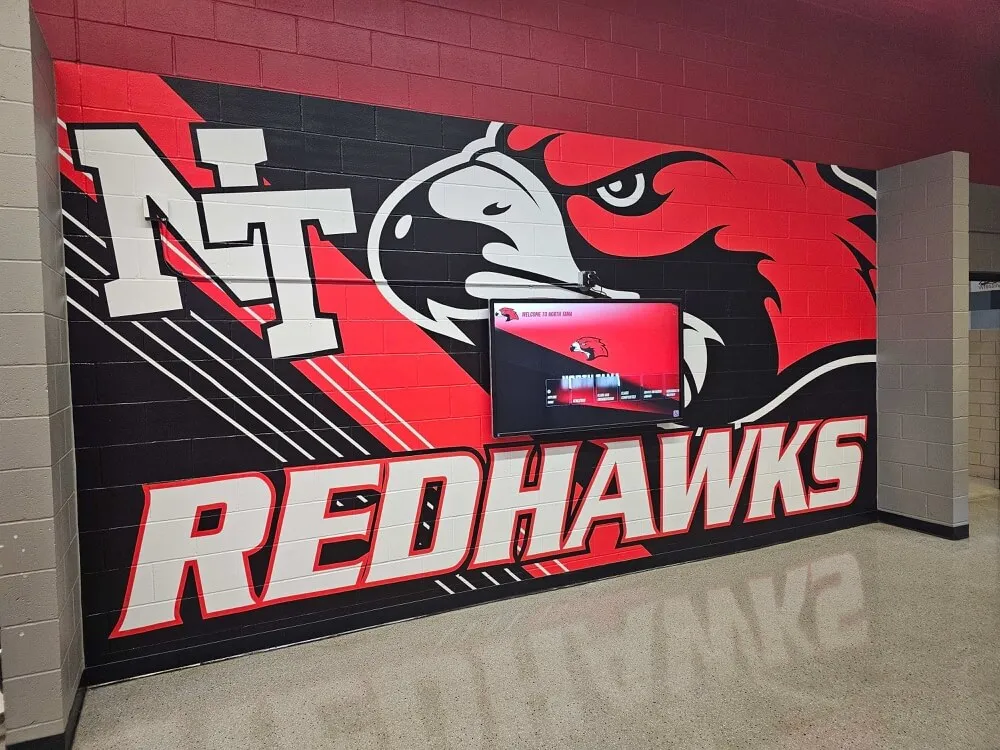
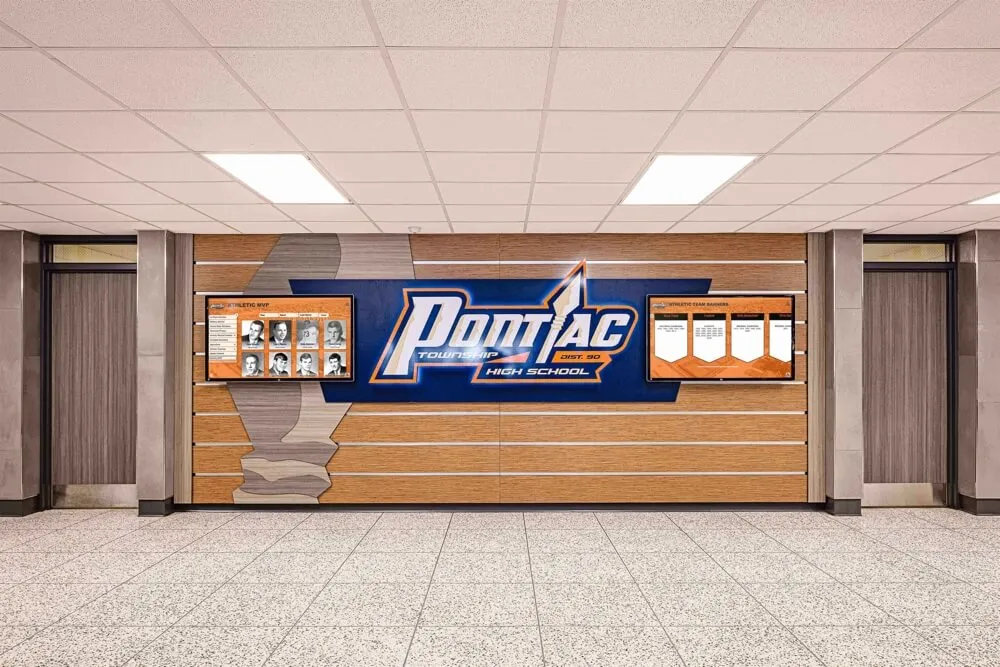
Branded entrances establish program identity while digital displays provide flexible recognition capacity
Technology Infrastructure and Smart Facility Features
Contemporary gymnasium design integrates advanced technology supporting athletic programs:
Video and Broadcast Capabilities
Modern facilities accommodate recording and streaming:
Built-In Camera Systems Permanent installations enable consistent documentation:
- Multiple camera positions capturing various game angles
- Professional mounting hardware providing stable, protected installation
- Centralized control rooms managing recording and streaming equipment
- Network infrastructure supporting high-bandwidth video transmission
- Storage systems archiving game footage for coaching analysis
Schools increasingly stream athletic events to families unable to attend in person—requiring video infrastructure planned during facility design rather than cobbled together through portable equipment for each event.
Scoreboard and Display Integration Contemporary scoreboards extend beyond simple scoring:
- Large LED video boards showing instant replays and highlights
- Sponsor recognition displays generating revenue supporting programs
- Integrated statistics tracking providing real-time performance data
- Multimedia capabilities showing promotional content before and during events
- Mobile app integration enabling remote scoreboard operation
Video scoreboards represent significant investment—schools should evaluate whether enhanced engagement and sponsorship revenue justify premium costs compared to traditional scoreboards.
Connectivity and Network Infrastructure
Digital facility features require robust infrastructure:
Comprehensive Network Coverage Modern gymnasiums need enterprise-grade connectivity:
- Wired network connections supporting fixed equipment installations
- High-capacity wireless access points providing guest and operational WiFi
- Adequate bandwidth supporting simultaneous video streaming, recognition displays, and public access
- Network security isolating public access from operational systems
- Professional installation and ongoing management ensuring reliability
Inadequate network infrastructure undermines digital recognition systems, prevents effective streaming, and creates frustrating experiences for visitors expecting connectivity. Schools should specify commercial-grade network equipment rather than consumer products insufficient for public facility demands.
Power and Electrical Planning Digital systems require adequate electrical service:
- Dedicated circuits for digital displays preventing interference and ensuring reliability
- Convenient outlet placement throughout facilities supporting equipment and charging
- Backup power for critical systems maintaining functionality during outages
- Future capacity accommodating technology additions as needs evolve
- Professional electrical design meeting code requirements and supporting all systems
Retrofitting electrical service into completed facilities proves substantially more expensive than incorporating requirements during initial design—schools should plan generously for technology power needs.
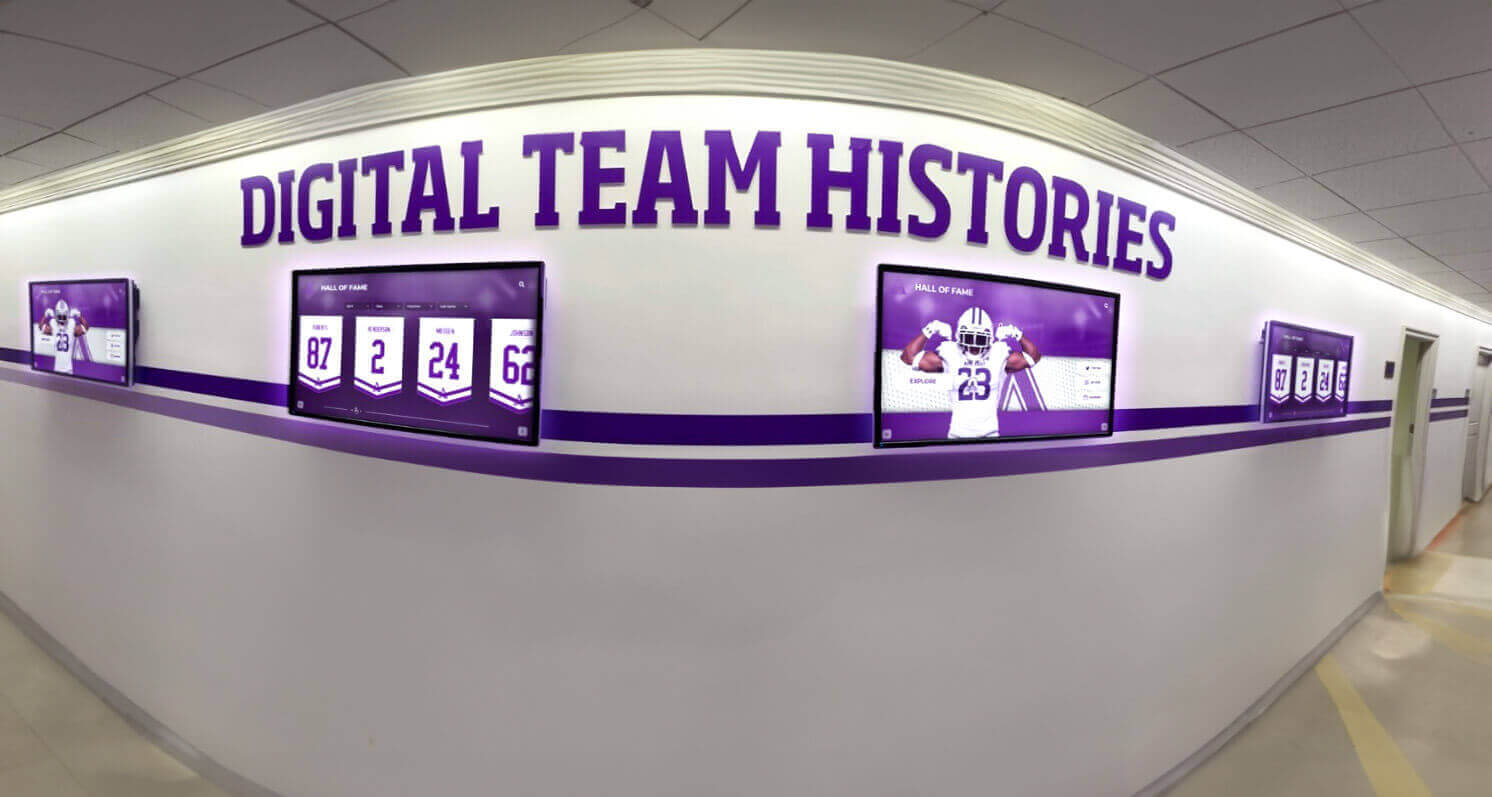
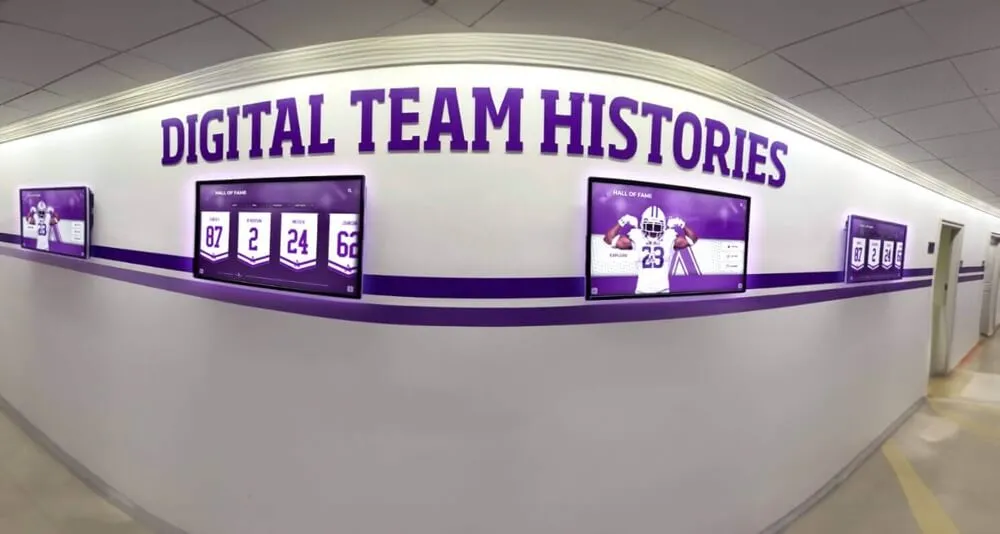
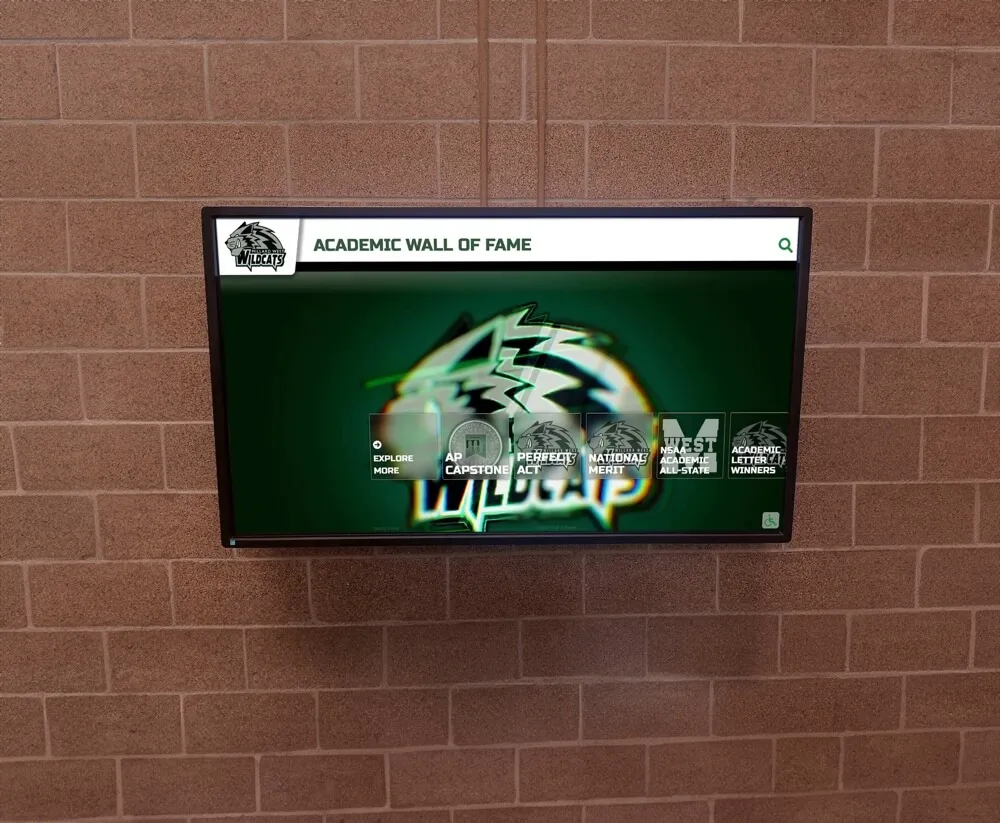
Hallway digital displays provide continuous recognition visibility for athletes and visitors moving through facilities
Learn about digital signage implementation for athletic facilities.
Environmental Control and Air Quality
Athletic facility comfort influences performance and health:
HVAC System Design Gymnasium heating, ventilation, and air conditioning face unique challenges:
- Large open spaces requiring significant heating/cooling capacity
- High occupancy loads during events generating substantial heat
- Indoor air quality management essential for athlete respiratory health
- Humidity control preventing condensation and maintaining floor quality
- Energy efficiency balancing comfort with operational costs
Schools sometimes undersize HVAC systems attempting to reduce initial construction costs—resulting in uncomfortable facilities, poor air quality, and equipment that operates inefficiently at maximum capacity continuously.
Ventilation Requirements Air exchange rates influence facility quality:
- Minimum 6-8 air changes per hour for athletic facilities
- Higher rates during high-occupancy events improving comfort
- Fresh air introduction preventing CO2 buildup during extended occupancy
- Filtration systems removing particulates and allergens
- Quiet operation preventing HVAC noise from interfering with events
Adequate ventilation represents invisible but critical design element—poor air quality causes premature fatigue, increases illness transmission, and creates unpleasant facility experiences discouraging use.
Cultural and Motivational Design Elements
Beyond functional requirements, thoughtful design creates inspiring environments:
Visual Branding and Identity
Cohesive design establishes immediate program identity:
Color Scheme and Graphics Consistent visual language reinforces institutional identity:
- School colors integrated throughout flooring, walls, and equipment
- Mascot imagery prominently featured establishing immediate recognition
- Typography selections reflecting institutional character and tradition
- Coordinated signage using consistent design language throughout facility
- Professional graphic design creating polished, unified aesthetic
Visual branding transforms generic athletic spaces into unique environments reflecting specific institutional identity—creating pride among students while impressing visitors and recruits.
Motivational Messaging Strategic messaging inspires excellence:
- Team values and program philosophy statements visible in training areas
- Historical quotes from legendary coaches or athletes providing wisdom
- Achievement standards posted where athletes can reference goals regularly
- School mottos and mission statements connecting athletics to broader education
- Inspirational messages creating positive psychological environment
These messages should reflect authentic institutional values rather than generic motivational clichés—meaningful content resonates while trite sayings become invisible background noise.
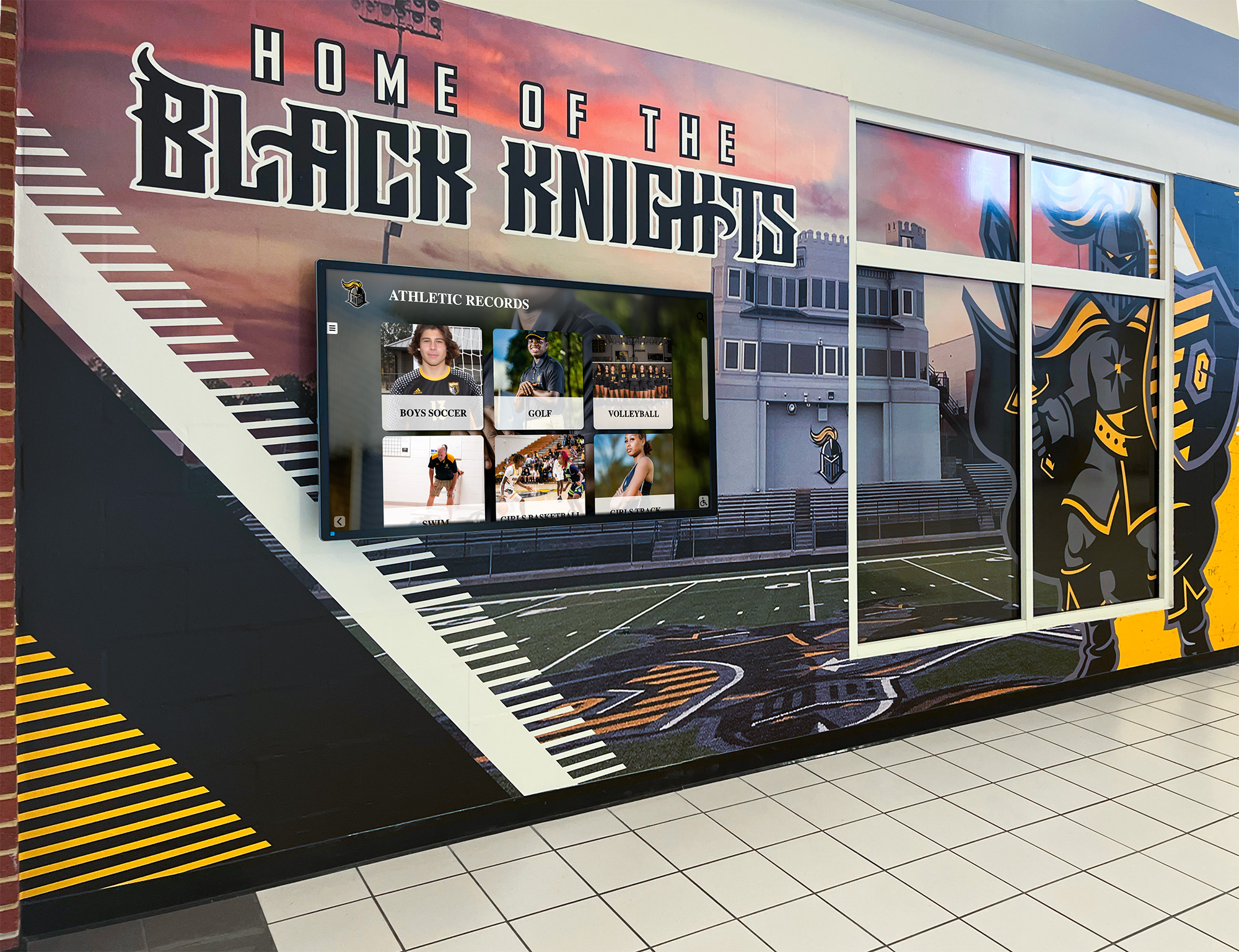
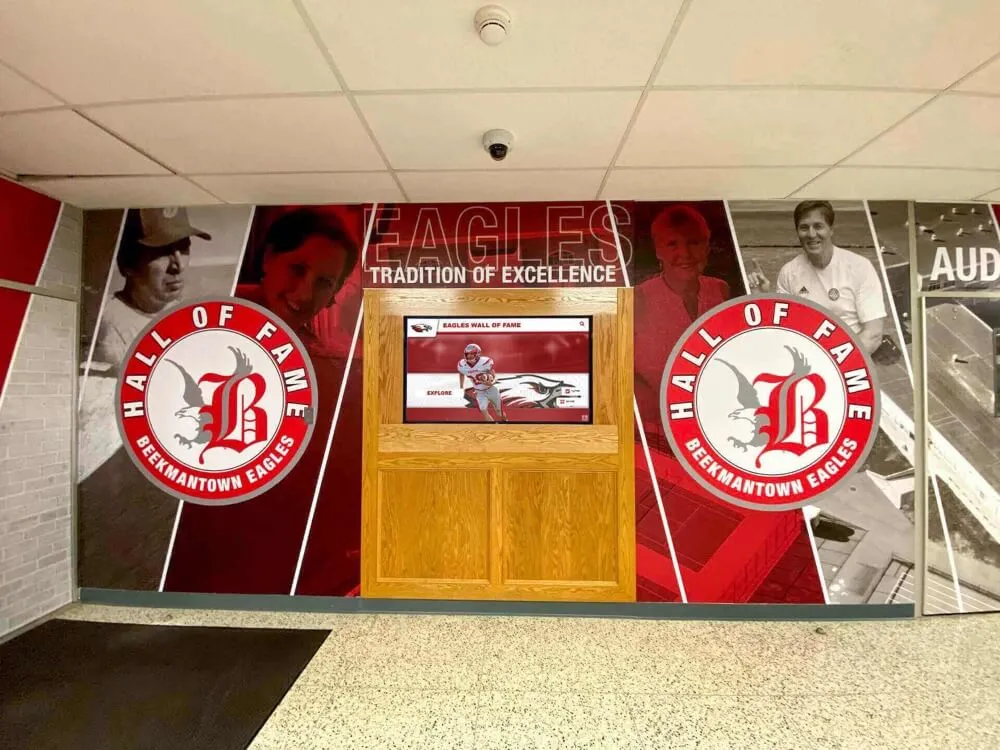
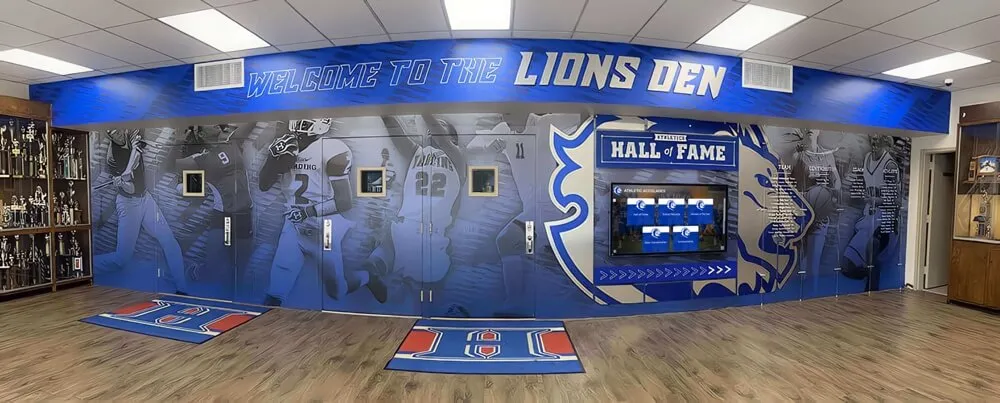
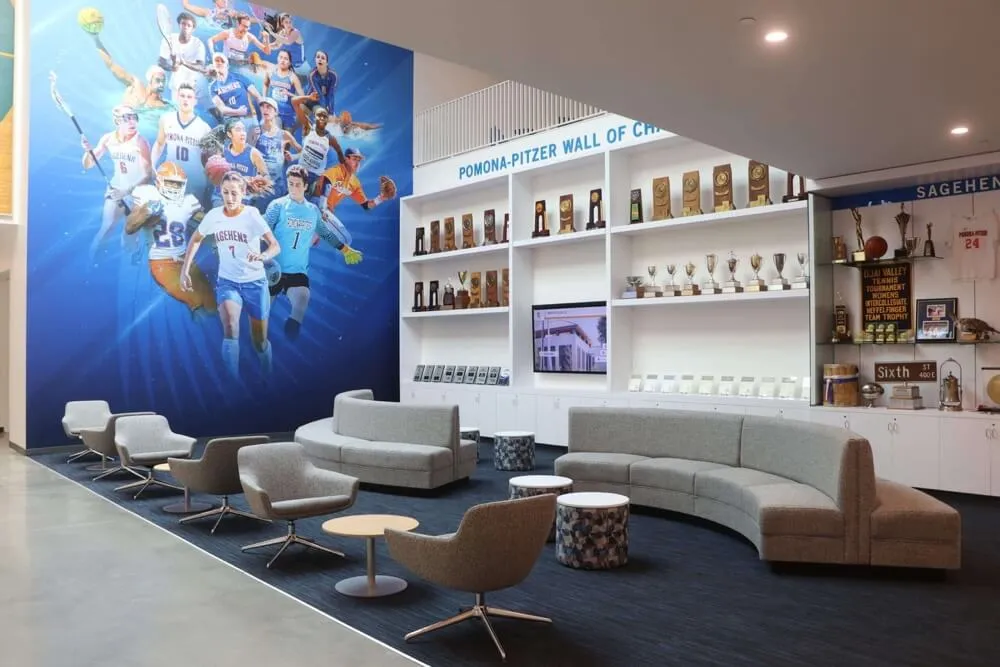
Coordinated murals and digital record boards create immersive environments celebrating program tradition and excellence
Explore recognition wall design strategies applicable to gymnasium environments.
History and Tradition Integration
Systematic incorporation of institutional history builds connection:
Historical Photography and Archives Visual documentation preserves program evolution:
- Team photographs from throughout program history displayed chronologically
- Facility evolution images showing gymnasium development across decades
- Notable athlete and coach portraits honoring significant contributors
- Championship team celebrations documenting memorable moments
- Candid images capturing authentic program culture and experience
Historical displays connect current athletes with program legacy—providing perspective on traditions they’re joining while inspiring them to add their own chapters to ongoing stories.
Timeline Displays Chronological presentations communicate development:
- Interactive timelines allowing exploration of program milestones by decade
- Significant achievement documentation showing program progression
- Facility improvement history demonstrating institutional investment
- Rule and competitive structure evolution providing context
- Community and cultural context surrounding athletic achievements
Digital recognition platforms enable comprehensive timeline creation impossible with physical displays—unlimited capacity allows documentation of complete program histories rather than selective highlights fitting available space.
Learn about historical display approaches enhancing gymnasium design.
Dedicated Recognition Spaces
Purposeful areas celebrate achievement comprehensively:
Athletic Hall of Fame Locations Distinguished spaces honor excellence:
- Dedicated wall areas or alcoves specifically for hall of fame recognition
- Elevated importance through architectural emphasis (lighting, finishes, prominence)
- Interactive displays enabling comprehensive inductee profile exploration
- Traditional plaque integration preserving existing physical recognition
- Ceremony space accommodating induction events and celebrations
Hall of fame spaces signal institutional commitment to honoring excellence—demonstrating that achievement recognition receives attention equivalent to competitive performance.
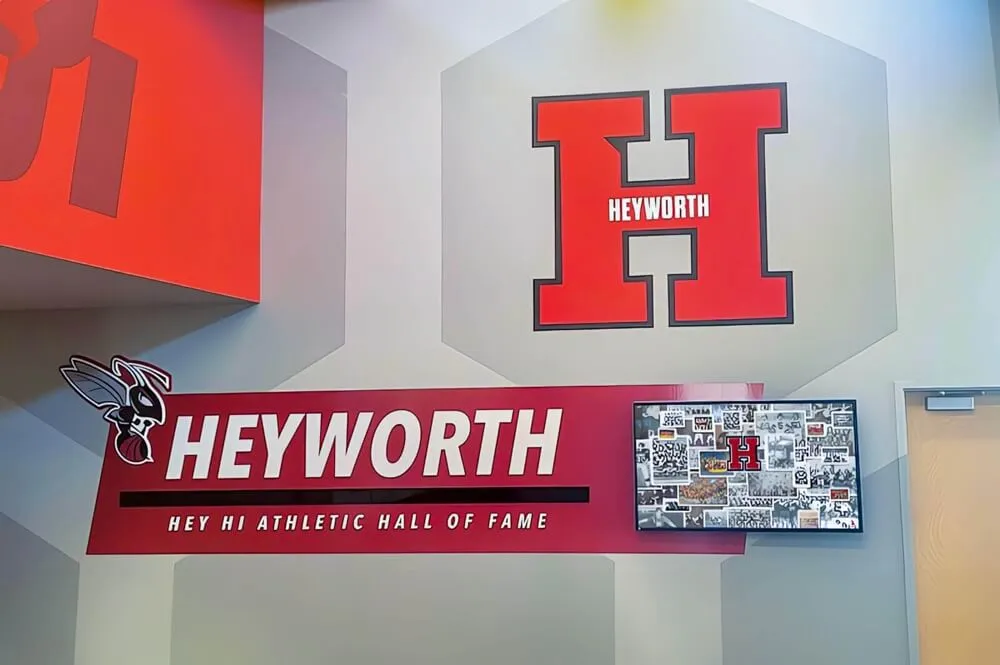
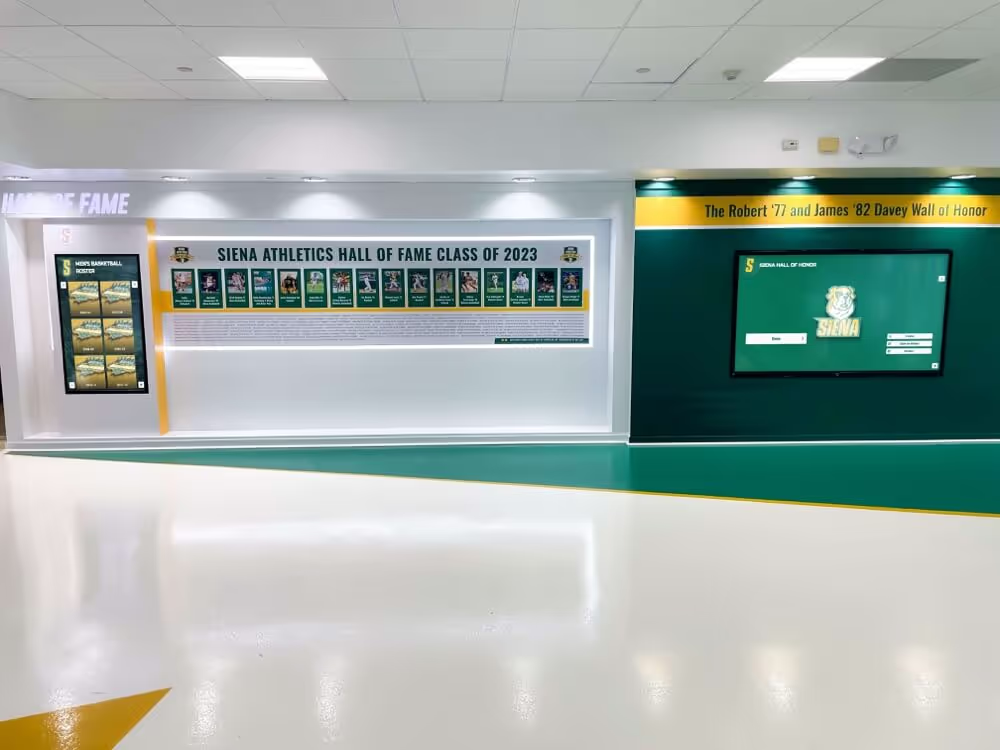
Dedicated hall of fame spaces establish recognition as central facility purpose rather than afterthought
Trophy and Award Display Areas Visible achievement documentation:
- Lighted trophy cases protecting awards while providing visibility
- Championship trophy prominence based on significance and prestige
- Individual honor displays (All-American certificates, scholar-athlete awards)
- Organized presentation preventing cluttered, disorganized appearance
- Regular updates ensuring current season achievements receive timely recognition
Trophy case planning during gymnasium design ensures adequate capacity, proper lighting, security, and visibility—retrofitting display areas into completed facilities often produces suboptimal results.
Explore comprehensive athletic recognition approaches for gymnasium facilities.
Renovation and Modernization Strategies
Many schools face improving existing facilities rather than new construction:
Assessing Current Facilities
Systematic evaluation identifies improvement priorities:
Functional Deficiency Analysis Comprehensive assessment addresses:
- Dimensional adequacy for current and planned athletic programming
- Equipment condition and remaining useful life
- Safety compliance with current standards and regulations
- Accessibility meeting ADA requirements throughout facility
- Mechanical system capacity and efficiency
- Spectator comfort and capacity appropriateness
This analysis provides objective foundation for prioritizing investments—addressing critical deficiencies before cosmetic improvements or enhancement features.
User Experience Evaluation Stakeholder perspectives reveal opportunities:
- Athlete feedback about training environment quality
- Coach input regarding functionality and competitive disadvantages
- Spectator comments about comfort and experience quality
- Maintenance staff perspectives on operational challenges
- Community member perceptions during facility visits
- Recruit and family reactions during athletic recruiting visits
Direct user input often identifies issues administrators may not recognize—providing valuable guidance for renovation priorities.
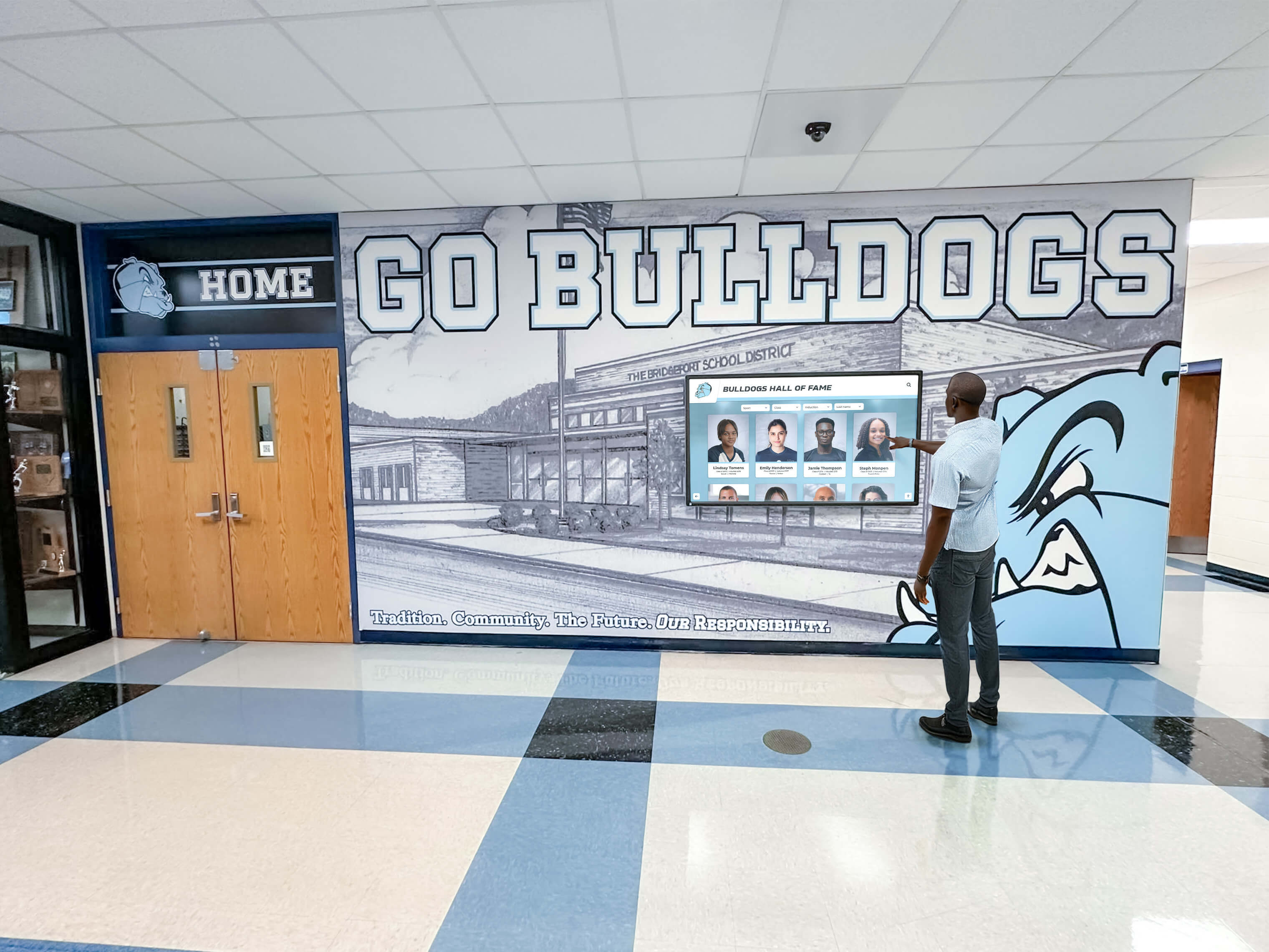
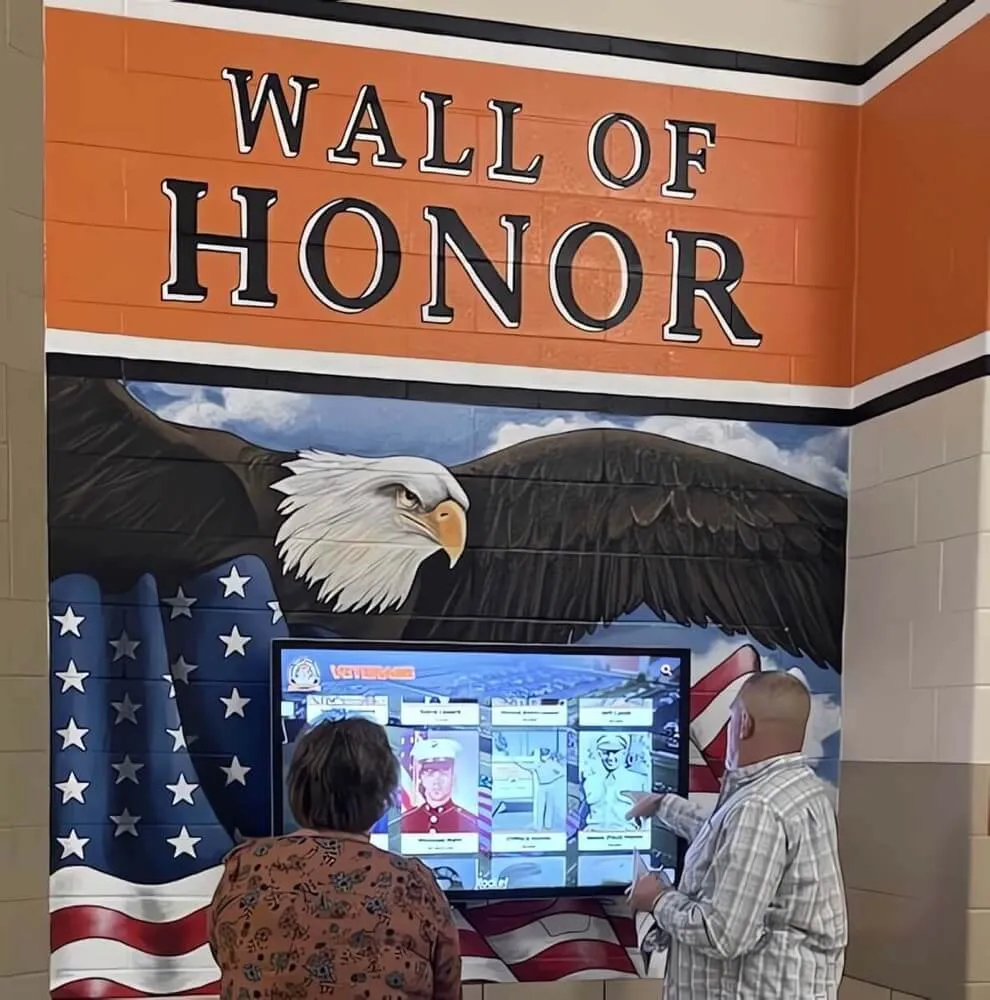
Interactive recognition systems create engaging experiences where students regularly explore athletic achievements and tradition
Phased Improvement Approaches
Budget constraints often necessitate staged renovations:
Priority-Based Implementation Strategic sequencing maximizes impact:
- Phase 1: Critical safety and compliance issues requiring immediate attention
- Phase 2: Recognition systems and cultural elements influencing motivation
- Phase 3: Technology integration enhancing functionality and engagement
- Phase 4: Aesthetic improvements refining appearance and comfort
- Phase 5: Expansion features adding capabilities beyond current requirements
Phased approaches enable progress within budget limitations while ensuring critical needs receive attention before enhancement features—preventing situations where facilities gain cosmetic improvements while fundamental deficiencies remain unaddressed.
Funding Strategy Development Multiple sources support renovation:
- Capital improvement budgets from general institutional funds
- Booster organization fundraising campaigns
- Alumni donation initiatives targeting specific improvements
- Naming opportunities for major donors funding significant elements
- Grant programs supporting facility improvements in educational settings
- Bond issues enabling larger projects requiring significant capital
Schools should develop comprehensive funding strategies rather than waiting for complete funding before beginning improvements—phased approaches enable progress as resources become available.
Explore fundraising strategies supporting gymnasium improvements.
Maximizing Impact on Limited Budgets
Strategic investments deliver substantial results:
High-Impact, Lower-Cost Improvements Targeted investments create significant change:
- Fresh paint in school colors dramatically improves appearance at minimal cost
- LED lighting upgrades reduce energy costs while improving illumination quality
- Digital recognition systems replace inadequate physical display space
- Vinyl wall graphics creating visual impact without expensive construction
- Acoustic panels significantly improving sound quality through targeted placement
- Refinished flooring restoring court appearance and performance
These focused improvements often deliver more substantial impact than dispersed spending across numerous minor changes—concentrating resources on visible, meaningful elements creates perception of comprehensive renovation even when budget remains limited.
Volunteer and In-Kind Contribution Strategies Community involvement extends resources:
- Parent and alumni volunteer labor reducing installation and construction costs
- Local business material donations providing supplies at reduced or no cost
- Student involvement in mural painting and graphic installation
- Community service projects addressing maintenance and improvement needs
- Professional services donated by skilled alumni and community members
Schools with strong community connections often accomplish substantial improvements through volunteer mobilization—extending limited financial resources through contributed time and materials.
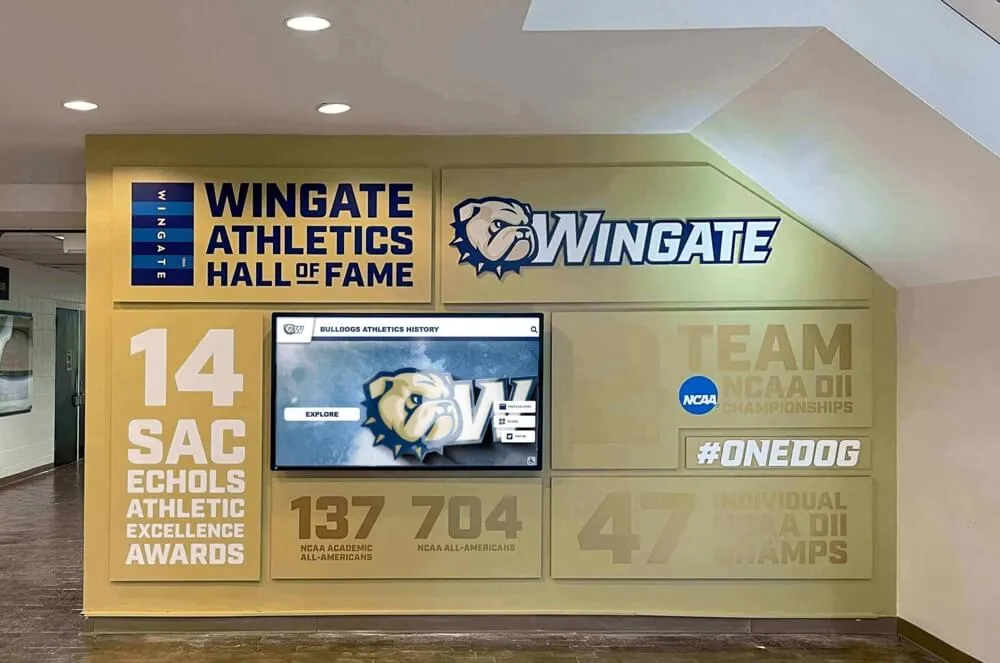
Comprehensive recognition walls integrate traditional design elements with modern capability celebrating program excellence
Sustainability and Long-Term Facility Management
Responsible design considers lifecycle costs and environmental impact:
Energy Efficiency and Environmental Design
Sustainable approaches reduce operational costs:
High-Efficiency Systems Modern technology delivers environmental and financial benefits:
- LED lighting reducing electricity consumption 60-80% compared to traditional fixtures
- High-efficiency HVAC systems minimizing heating and cooling energy requirements
- Programmable controls adjusting environmental systems based on facility usage
- Natural lighting through strategic window placement reducing daytime electricity needs
- Energy recovery ventilation recapturing heat/cooling from exhausted air
These efficiency investments typically generate positive financial returns through operational savings within 5-10 years—making sustainability improvements economically sensible independent of environmental considerations.
Material Selection for Durability Lifecycle thinking influences choices:
- Durable finishes reducing replacement frequency and long-term costs
- Low-maintenance materials minimizing custodial labor and chemical use
- Sustainable sourcing supporting environmental responsibility
- Indoor air quality considerations affecting occupant health
- Warranty evaluation ensuring long-term manufacturer support
Short-term cost minimization often proves penny-wise and pound-foolish—cheap materials requiring frequent replacement ultimately cost more than durable alternatives with higher initial prices but dramatically longer service lives.
Maintenance Planning and Facility Care
Systematic maintenance preserves investment value:
Preventive Maintenance Programs Proactive approaches prevent deterioration:
- Regular floor refinishing maintaining playing surface quality and appearance
- HVAC system servicing ensuring efficient operation and preventing failures
- Lighting maintenance replacing bulbs before failure disrupts events
- Technology system updates maintaining security and functionality
- Structural inspection identifying issues before they become serious problems
Schools often defer maintenance attempting to reduce short-term costs—inadvertently causing accelerated deterioration requiring substantially more expensive remediation than preventive care would have cost.
Custodial Standards and Procedures Daily care influences facility condition:
- Appropriate cleaning products preventing surface damage
- Regular floor care between refinishing maintaining appearance
- Trash removal and restroom servicing creating positive visitor experiences
- Prompt response to spills and damage preventing permanent issues
- Staff training ensuring proper procedures and product use
Facility presentation directly influences community perception—well-maintained gymnasiums communicate institutional pride and competence while neglected facilities suggest organizational dysfunction regardless of actual program quality.
Learn about maintaining recognition displays in athletic facilities.
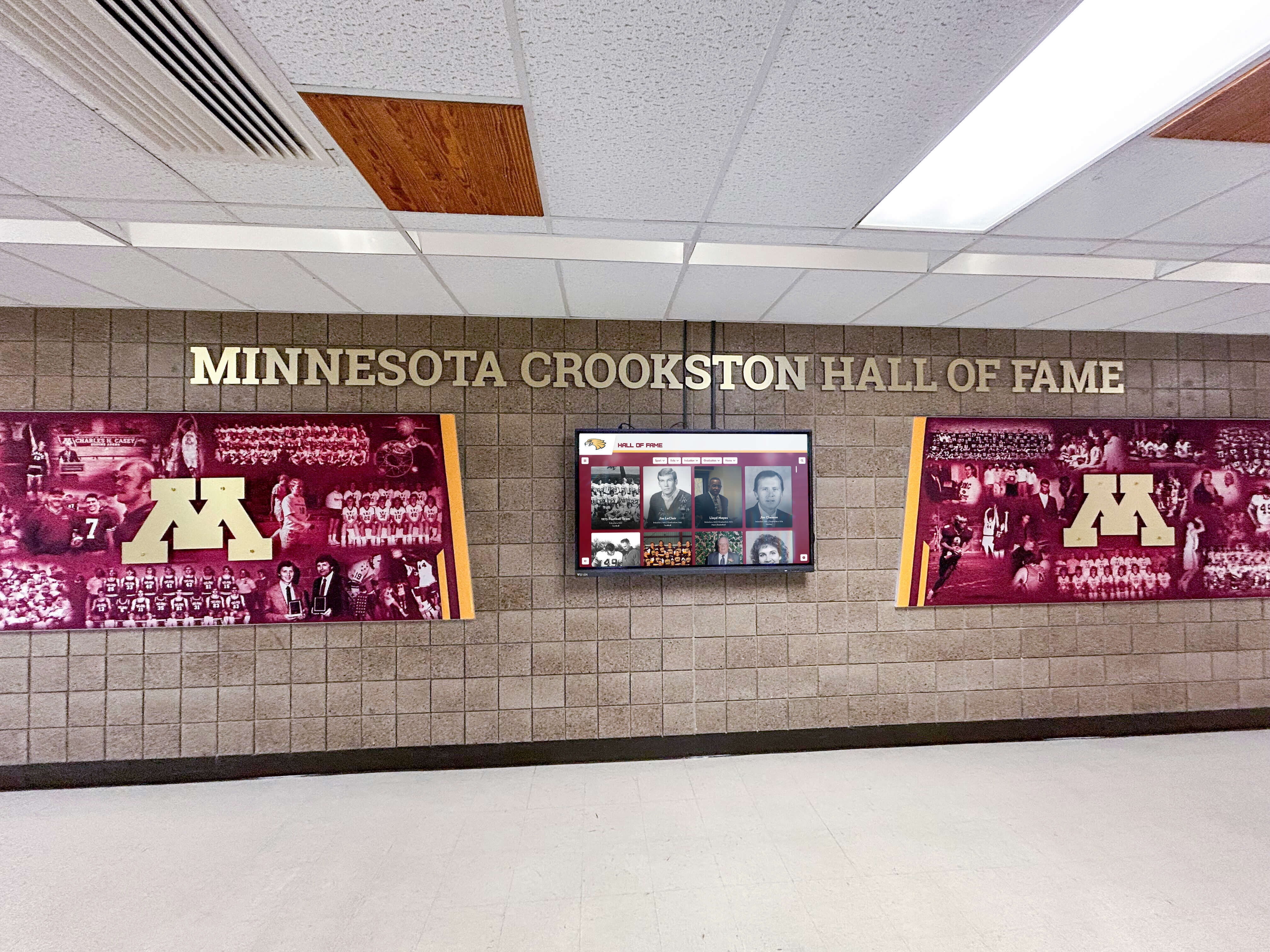
Integrated design approaches combine physical architectural elements with digital technology for comprehensive recognition systems
Special Considerations for Different School Levels
Gymnasium design requirements vary across educational contexts:
Elementary School Athletic Spaces
Younger student needs differ from secondary facilities:
Age-Appropriate Design Elementary gymnasiums require special consideration:
- Lower basketball goals accommodating developing players (typically 8-9 feet adjustable)
- Smaller playing areas appropriate for youth competition dimensions
- Protective padding on walls and exposed structures preventing injury
- Bright, welcoming color schemes creating positive, non-intimidating environments
- Flexible space supporting physical education beyond competitive athletics
Elementary facilities often serve multiple purposes—physical education, assemblies, performances, and community events—requiring design flexibility accommodating diverse uses beyond athletics alone.
Recognition Approaches Younger student celebration differs from secondary approaches:
- Emphasis on participation and effort rather than elite achievement exclusively
- Seasonal recognition rotating regularly to acknowledge current students
- Positive messaging focusing on development and improvement
- Age-appropriate content and presentation methods
- Connection to broader character education and whole-child development
Elementary recognition should inspire without creating anxiety about competition—fostering positive relationships with physical activity that support lifelong health rather than identifying winners and losers prematurely.
Middle School Transition Facilities
Early adolescent gymnasiums bridge elementary and high school:
Developmental Considerations Middle school facilities address unique needs:
- Regulation dimensions preparing students for high school competition
- Recognition systems acknowledging achievement appropriately for developmental stage
- Balance between youth participation emphasis and emerging competitive excellence
- Flexible capacity accommodating growing bodies and changing enrollment
- Connection to high school facilities and programs when located on shared campuses
Middle school gymnasium design should support athletic skill development while remaining developmentally appropriate—avoiding premature intensity while building foundations for future competitive success.
High School Competitive Facilities
Secondary gymnasiums emphasize competitive athletics:
Competition-Ready Specifications High school facilities meet advanced requirements:
- Full regulation dimensions for state tournament hosting eligibility
- Adequate spectator capacity for community support and large event attendance
- Advanced technology supporting broadcasting, recruiting, and recognition
- Comprehensive recognition systems celebrating program tradition and excellence
- Professional presentation creating competitive advantages in recruiting
High school gymnasiums often serve as community gathering spaces beyond school athletics—requiring design consideration for diverse users and events including youth programs, adult leagues, and community celebrations.
Recruiting and College Preparation Support Facilities influence student opportunities:
- Video capability enabling highlight reel production for college recruiting
- Recognition displays documenting achievement for applications and visits
- Professional environment impressing college coaches during recruiting visits
- Training facilities supporting athlete development and performance
- Statistics tracking and documentation supporting recruitment processes
Quality facilities directly influence college recruiting success—coaches evaluating programs assess facilities as indicators of institutional commitment and player development capability.
Explore athletic program approaches enhancing gymnasium impact.
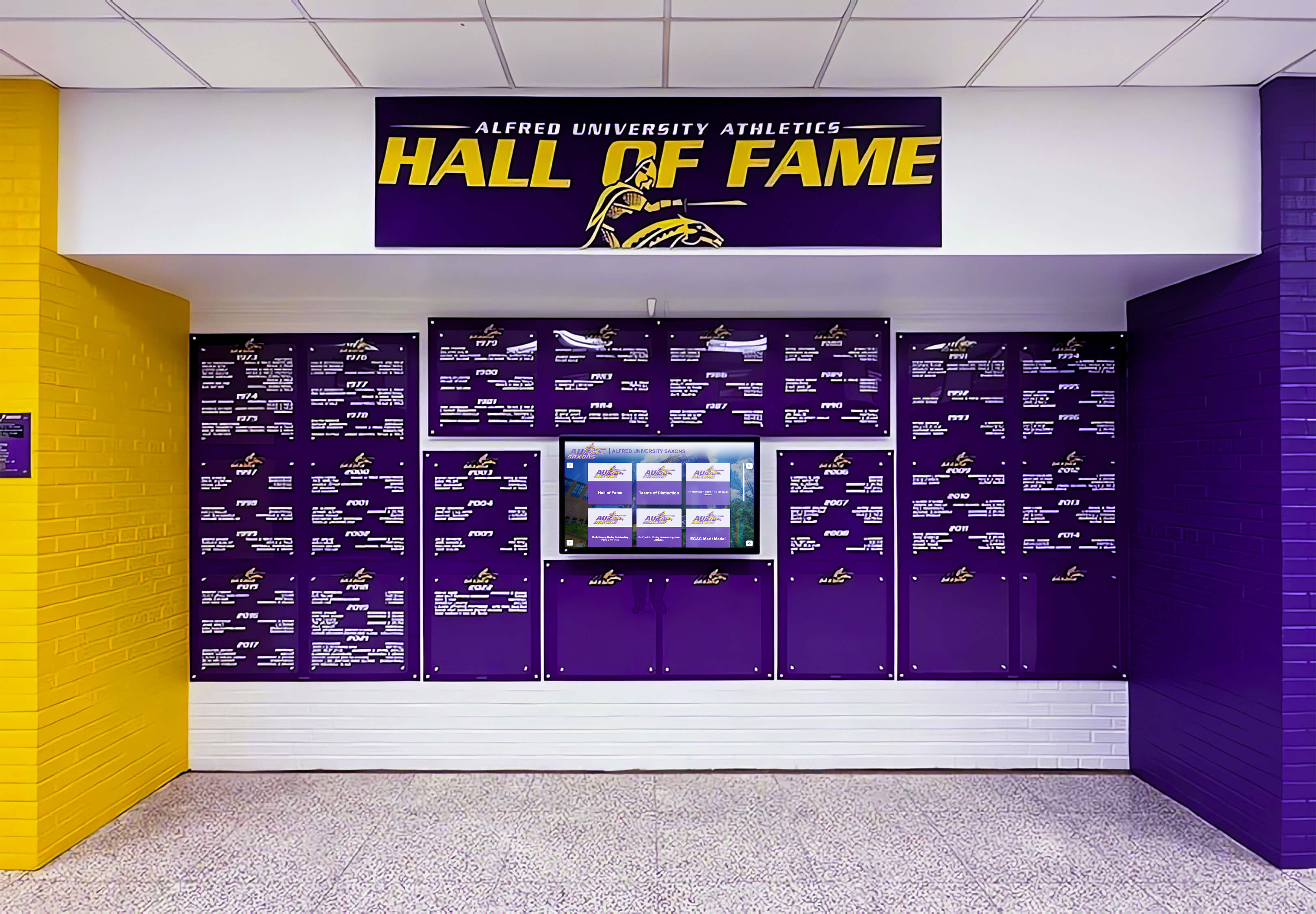
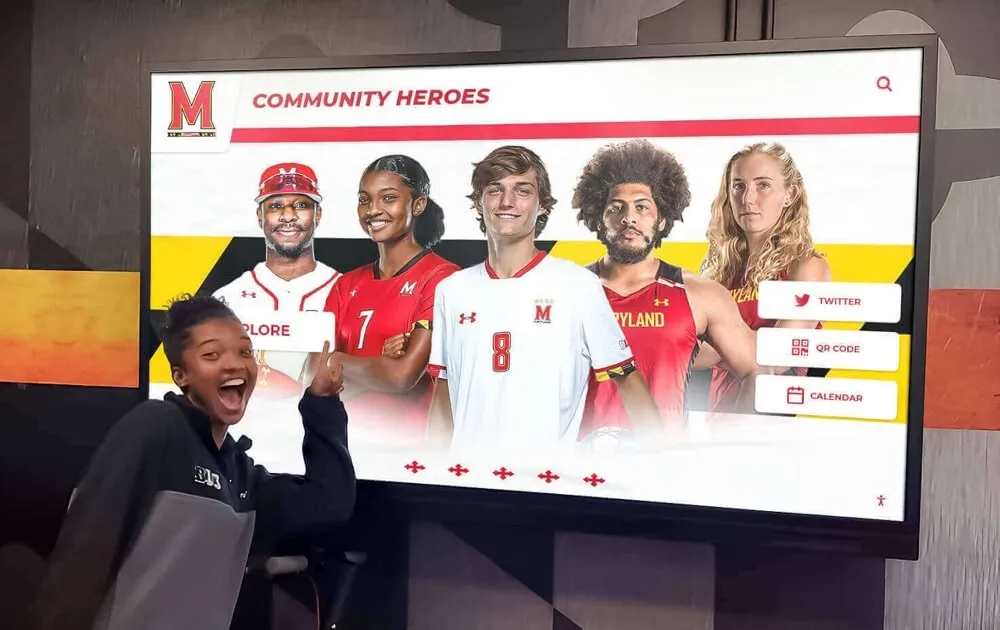
University-level facilities integrate sophisticated recognition systems celebrating athletic excellence and institutional tradition
Measuring Gymnasium Design Success
Assessment ensures facilities achieve intended goals:
Functional Performance Metrics
Quantitative evaluation reveals effectiveness:
Utilization Statistics Usage data demonstrates value:
- Facility reservation rates and scheduling density
- Athletic team practice and competition usage hours
- Physical education class utilization patterns
- Community and non-school organization rental frequency
- Maintenance issues and service request patterns
High utilization indicates facility meets stakeholder needs effectively while chronic underuse suggests design deficiencies or functionality problems limiting value.
Energy and Operational Costs Efficiency metrics reveal sustainability:
- Utility consumption compared to similar facilities
- Maintenance expenditure trends over time
- Custodial labor requirements for facility care
- Equipment replacement frequency and lifecycle costs
- Total cost of ownership compared to initial investment projections
Monitoring operational costs identifies opportunities for improvement while demonstrating return on efficiency investments made during design or renovation.
User Satisfaction Assessment
Stakeholder perspectives complement quantitative data:
Athletic Program Feedback Primary user evaluation provides critical insight:
- Coach satisfaction with training environment quality and functionality
- Athlete perceptions of motivation and inspiration from facility design
- Performance trends potentially influenced by improved facilities
- Recruiting success and competitor perception during visits
- Safety and injury patterns potentially related to facility conditions
Regular stakeholder surveys ensure facility design continues meeting program needs as athletics evolve—identifying emerging deficiencies before they become serious problems.
Community and Visitor Responses External perspectives reveal impact:
- Spectator comfort and experience quality feedback
- Community member pride and perception of facility quality
- Prospective student and family reactions during campus visits
- Alumni connection and nostalgia regarding facility improvements
- Media and official feedback when hosting competitive events
Positive community response demonstrates that facilities successfully project institutional quality while creating welcoming environments supporting broader school mission beyond athletics.
Learn about student recognition approaches enhancing facility impact.
Conclusion: Creating Gymnasiums That Inspire Excellence
Gymnasium design profoundly influences athletic program success, student motivation, community pride, and institutional identity for decades following construction or renovation decisions. Schools approaching facility design strategically—balancing functional requirements with psychological impact, honoring tradition while embracing innovation, and creating systematic recognition celebrating achievement—discover that gymnasiums become powerful educational tools supporting development far beyond athletic skill.
The most effective gymnasium designs share essential characteristics: proper dimensional and technical specifications ensuring functionality, thoughtful recognition systems celebrating achievement comprehensively, integrated technology supporting modern athletic programs, inspiring cultural elements motivating excellence, and sustainable approaches ensuring long-term value. When these elements combine within cohesive design visions, gymnasiums transcend utilitarian sports venues to become destinations where students connect with institutional tradition, visualize their potential contributions, and find inspiration pursuing excellence.
Transform Your Gymnasium With Modern Recognition
Discover how digital recognition displays can help your athletic facility celebrate every achievement while building traditions that inspire excellence, strengthen community connections, and maximize the motivational impact of your gymnasium design.
Explore Recognition SolutionsDigital recognition technology has fundamentally transformed what’s possible in gymnasium design—eliminating space constraints that once forced difficult decisions about whose achievements received acknowledgment, enabling rich multimedia storytelling impossible through traditional plaques, providing simple content management accessible to staff without technical expertise, and extending recognition beyond physical campuses through web-accessible platforms connecting with alumni and community members worldwide.
Yet technology represents only one component of effective gymnasium design. The most inspiring facilities balance sophisticated displays with fundamental functional excellence—proper acoustics enabling effective communication, adequate lighting supporting performance and safety, quality flooring protecting athlete health, and thoughtful spatial design accommodating diverse activities. Recognition systems deliver maximum impact when integrated into excellently designed facilities rather than attempting to compensate for fundamental design deficiencies through technological additions.
Your school’s athletic achievements deserve celebration in environments worthy of the dedication, sacrifice, and excellence they represent. Outstanding student-athletes who committed countless hours developing skills, coaches who mentored young people while building programs, championship teams creating unforgettable memories, and community supporters making athletic success possible all deserve facilities that honor their contributions systematically while inspiring future generations to pursue similar excellence.
Start planning your gymnasium design or renovation project today. Assess current facilities identifying functional deficiencies and improvement opportunities, engage stakeholders understanding how facilities can better serve program needs, explore modern recognition technology eliminating traditional display limitations, develop sustainable funding strategies supporting phased implementation, and create systematic approaches ensuring your gymnasium becomes a destination celebrating athletic excellence for decades to come.
Whether designing new construction, planning comprehensive renovation, or implementing focused improvements within limited budgets, thoughtful gymnasium design creates lasting value extending far beyond initial investment. Every design decision—from floor selection to recognition systems, lighting specifications to cultural elements—influences how students experience athletics, connect with institutional tradition, and develop motivation pursuing excellence in sports and life.
Ready to begin? Explore comprehensive approaches to displaying athletic achievement, discover digital trophy wall strategies, or learn about school spirit enhancement through comprehensive recognition approaches that inform gymnasium design planning.
Your gymnasium should inspire every student walking through its doors—creating immediate understanding that excellence matters, achievement receives celebration, and tradition connects current athletes with those who came before. With thoughtful design balancing functional excellence with motivational impact, you can create athletic facilities worthy of the remarkable young people they serve and the communities they represent.