Every spring, schools across the country face the same challenge: crafting graduation speeches that feel genuine, inspire the senior class, and give families something worth remembering long after the ceremony ends. Great graduation speeches do more than fill time between the processional and the diploma handshakes — they distill four years of shared experience into a few minutes of meaningful reflection, and the best ones become part of a school’s permanent story.
The challenge is that most guidance on graduation speeches focuses exclusively on the speaker — the valedictorian’s nerves, the principal’s closing remarks, the guest luminary’s life lessons. Far less attention goes to the school’s role as curator: the institution responsible for selecting strong speakers, setting expectations for quality, and preserving speeches that future classes and alumni can revisit for years to come. Schools that treat graduation speeches as enduring artifacts rather than one-time performances create a richer legacy of senior celebration.
This guide provides 12 ready-to-use graduation speech examples and templates for different speaker roles and tones, from the reflective retrospective to the humor-forward send-off. It also covers practical strategies for preserving and showcasing those speeches so they become a permanent part of your school’s recognition culture — displayed on digital archives, incorporated into senior highlight reels, and accessible to alumni long after commencement.
Graduation ceremonies mark one of the most significant transitions in a student’s life. The speeches delivered in those moments — by student leaders, administrators, and invited guests — frame how the graduating class understands its own story. Schools that invest in thoughtful speech content and thoughtful preservation of that content multiply the impact of every commencement ceremony they host.

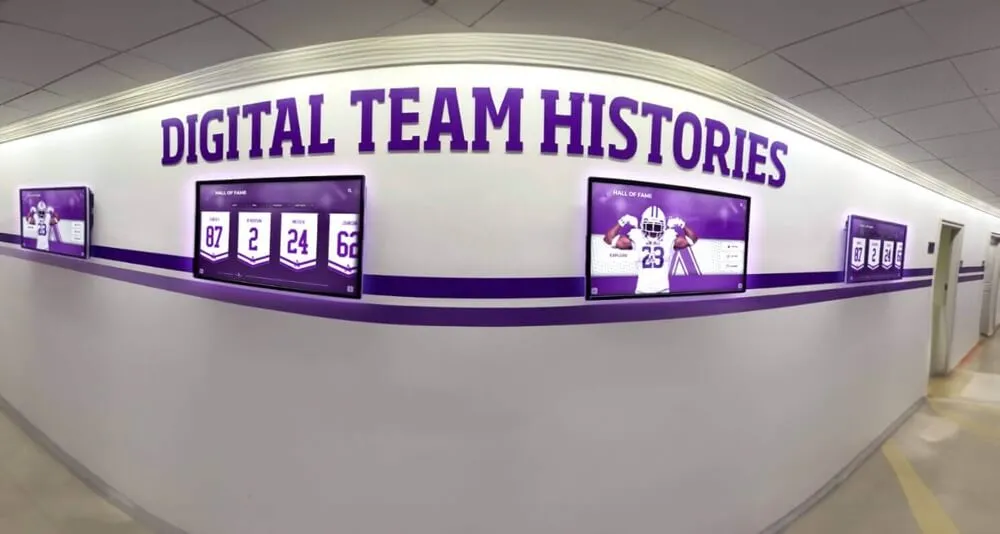
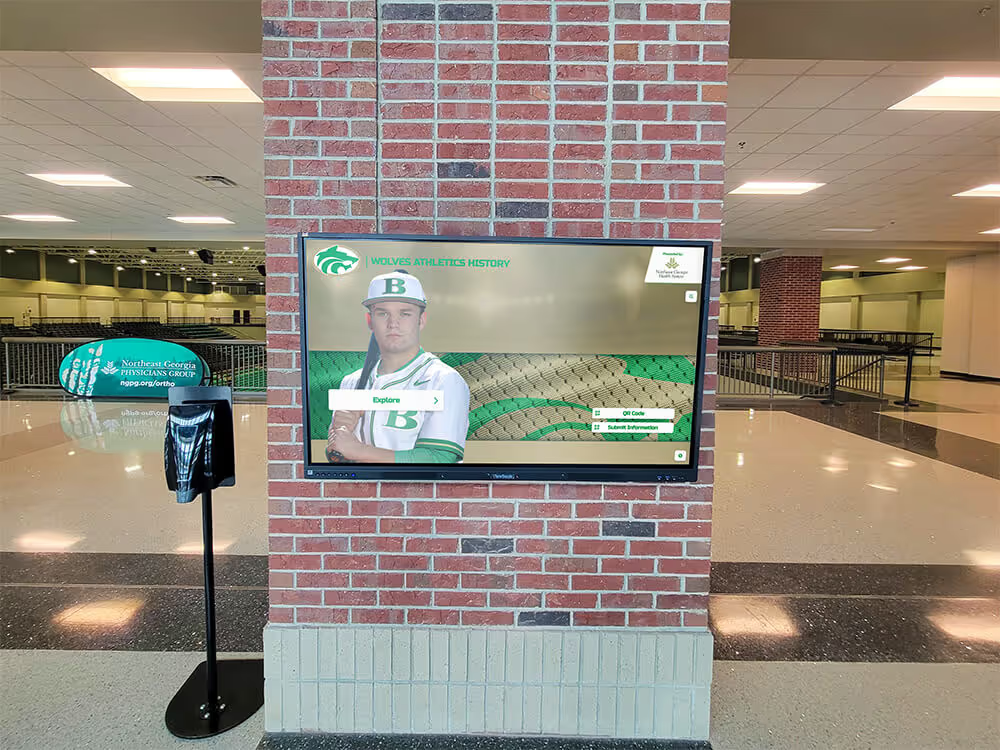
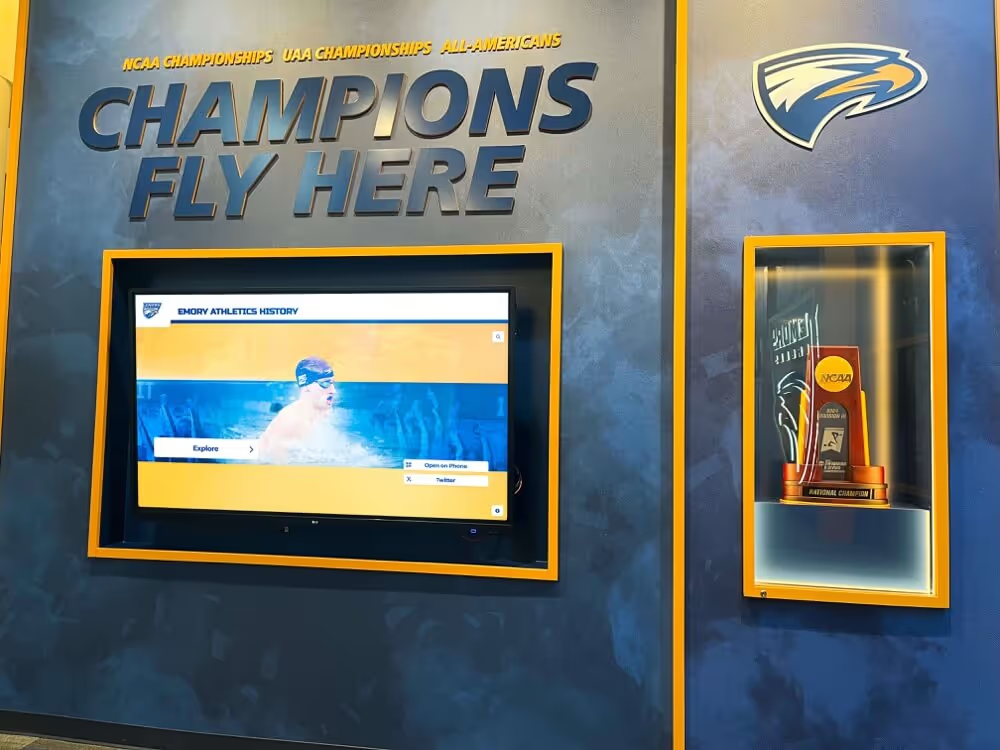
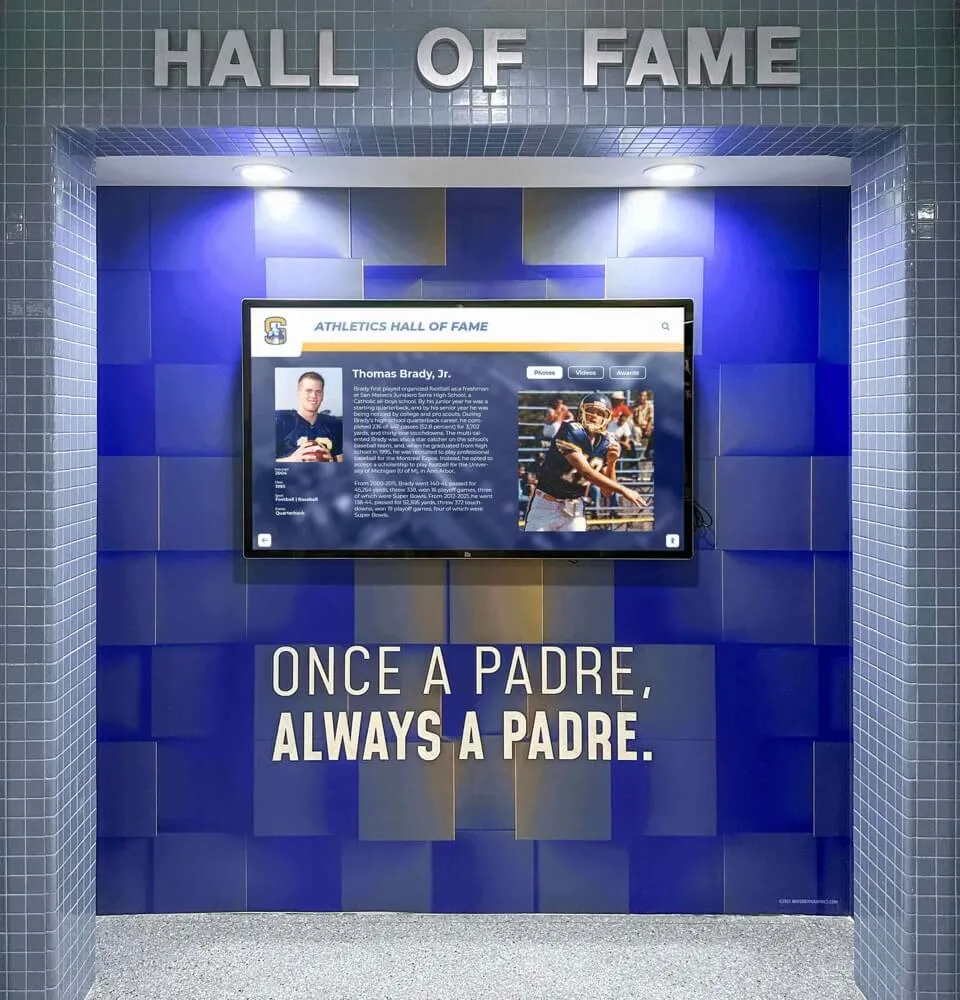
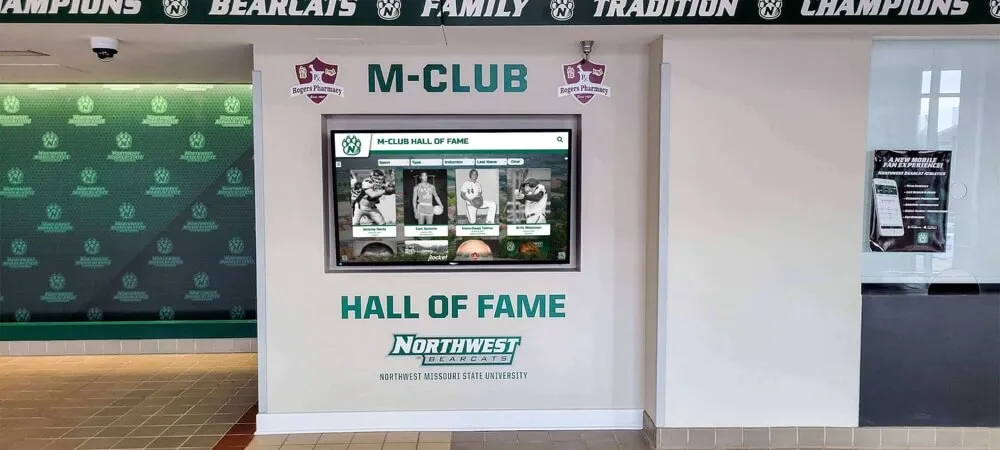
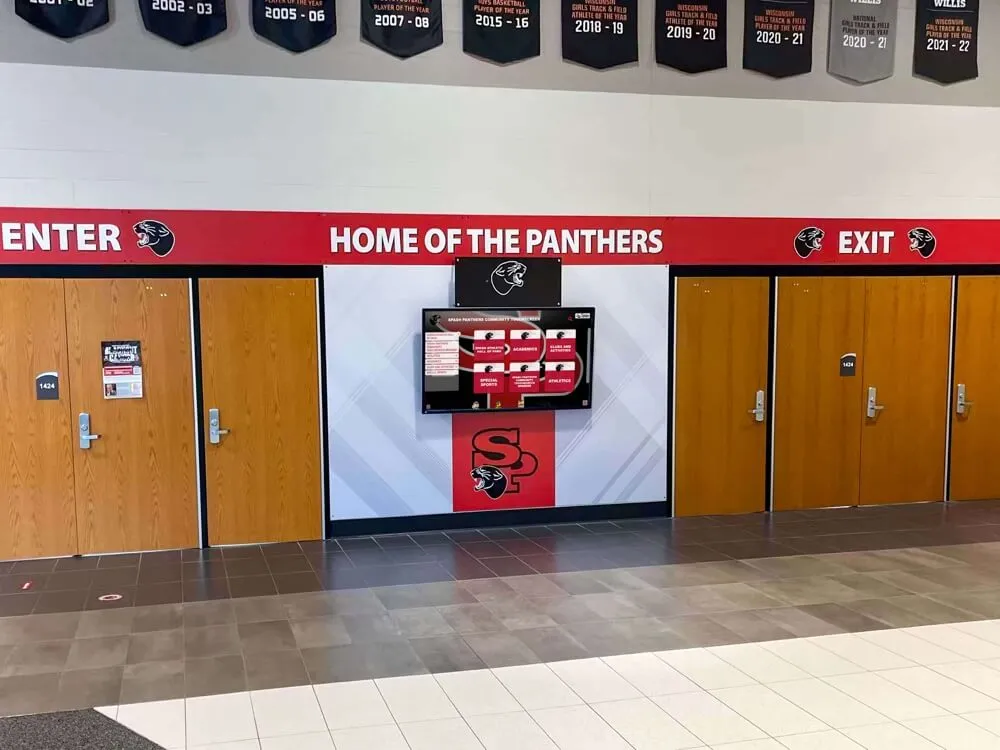
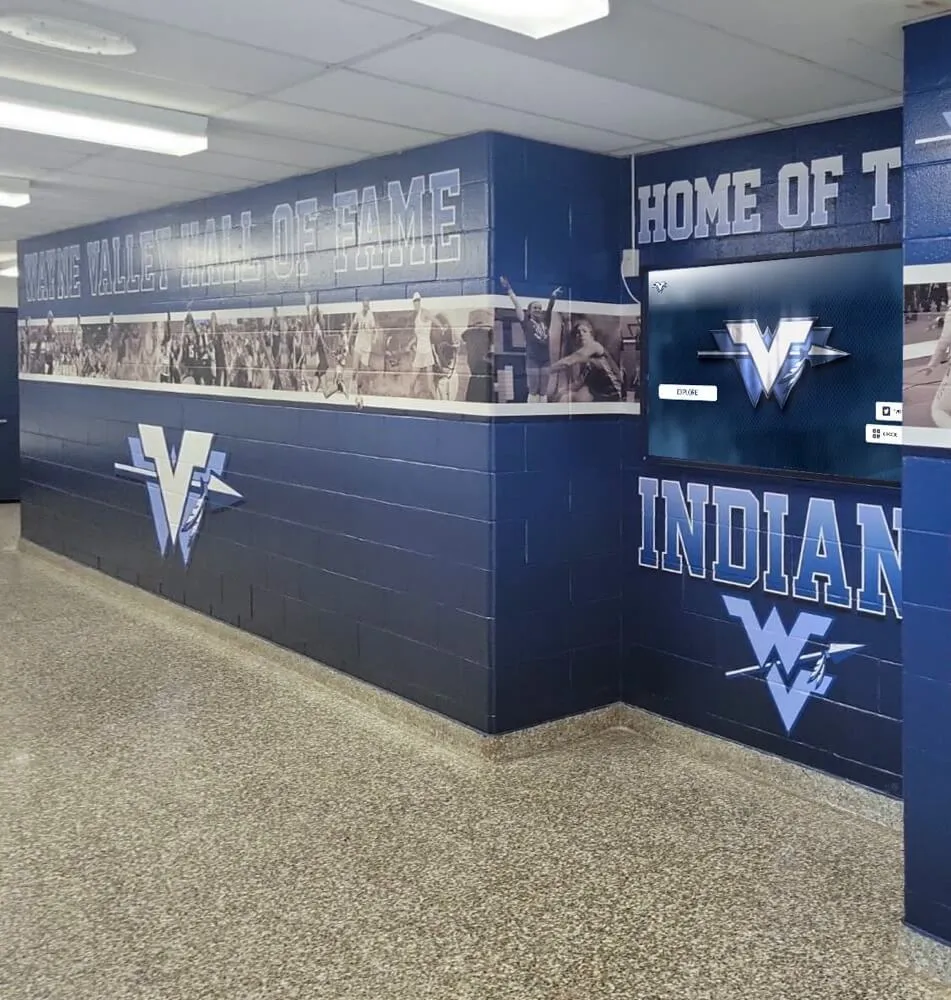
Graduation achievements deserve permanent recognition — from the speech podium to the school's hallways and digital archives where memories live on for alumni
What Makes a Graduation Speech Worth Preserving
Not every graduation speech earns a second listen. The ones that do share a handful of consistent qualities that make them worth capturing, archiving, and showing to future classes.
Emotional Resonance That Connects Across Generations
The most memorable graduation speech examples carry emotional truth that doesn’t expire. A speaker describing the anxiety of the first day of high school, the sting of a missed opportunity, or the quiet pride of watching a classmate overcome serious difficulty creates recognition in listeners who weren’t present — including alumni returning decades later. Emotional specificity beats vague inspiration every time.
Avoid speeches built entirely on motivational clichés: “reach for the stars,” “your best days are ahead,” “be the change.” These phrases have been used so often they register as background noise. Instead, the strongest speeches anchor broad themes in concrete, school-specific details — the name of the coach who stayed late, the science fair that almost failed, the lunch table that became a family.
Authentic Voice That Reflects the Speaker’s Actual Personality
Authenticity matters enormously in graduation speeches. Student speakers coached too heavily into a formal, authoritative register often produce speeches that feel like they were written by adults — which frequently they were. The most compelling student speakers sound like themselves: a little nervous, genuinely funny when humor appears, self-aware about their limitations, and honest about uncertainty.
Advisers and coaches who support student speakers should focus on structure and clarity rather than word choice and delivery style. A speech that sounds like the actual valedictorian — not a committee’s idea of what a valedictorian should sound like — will resonate more authentically with classmates, and will hold up better as an archived document representing that senior class years later.
Universal Themes With Specific, School-Rooted Anchors
The paradox of great graduation speeches is that they work through the specific to reach the universal. A speech about the particular character of a graduating class — the difficult years, the championship season, the community loss, the unexpected joy — creates a universally resonant document precisely because it doesn’t try to be universal. Specificity is what makes speeches worth revisiting.
Schools that build strong graduation speech traditions encourage speakers to name things: the programs that mattered, the teachers who shaped students, the challenges that defined the class. These concrete details become valuable historical touchpoints — the kind of material that end-of-year student recognition programs and digital archives can display with genuine resonance to future students and returning alumni.
How to Use These 12 Templates
Each template below represents a structural approach to graduation speech writing. They are not scripts to memorize wholesale — they are frameworks for organizing ideas, identifying key moments, and ensuring the speech has a clear beginning, middle, and end.
For student speakers: Use the template as a planning scaffold. Fill in the school-specific details, personal stories, and authentic observations before you draft. The template prevents the two most common student speech failures: rambling without direction and ending abruptly when ideas run out.
For speech coaches and advisers: Use these templates to evaluate speaker drafts. If a student’s draft doesn’t map to any recognizable structure, help them identify where their speech is trying to go — then suggest the template that matches their instincts.
For administrators selecting speaker topics: Consider which templates suit different speaker roles. Valedictorians often gravitate toward retrospective or legacy frameworks; class presidents work well with community and gratitude themes; principal and commencement remarks often benefit from forward-looking templates.
A complete graduation ceremony benefits from speech variety — different tones and templates ensure the program doesn’t feel repetitive even when multiple speakers take the podium. When planning commencement and ceremony programs, school awards night planning resources can help coordinate speech variety with overall program flow.
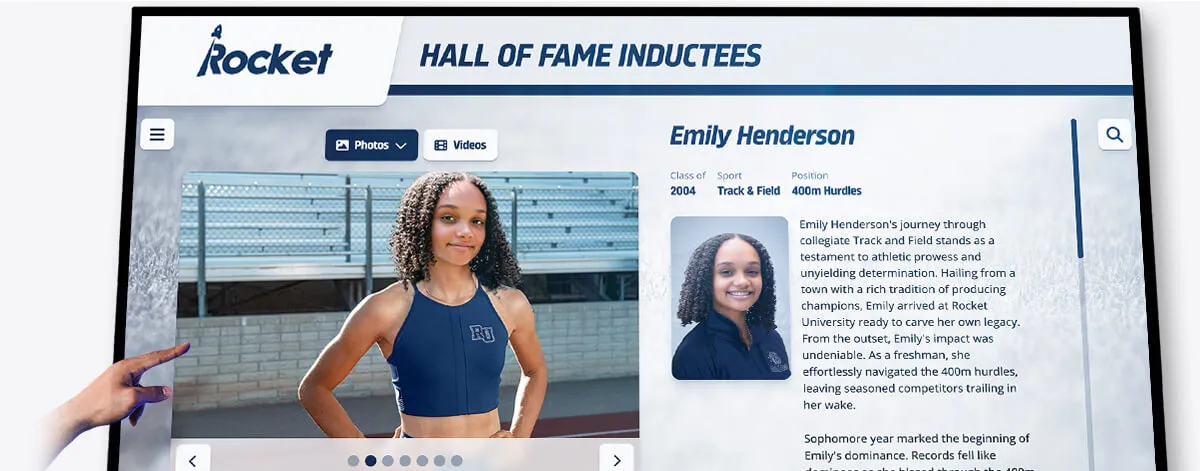
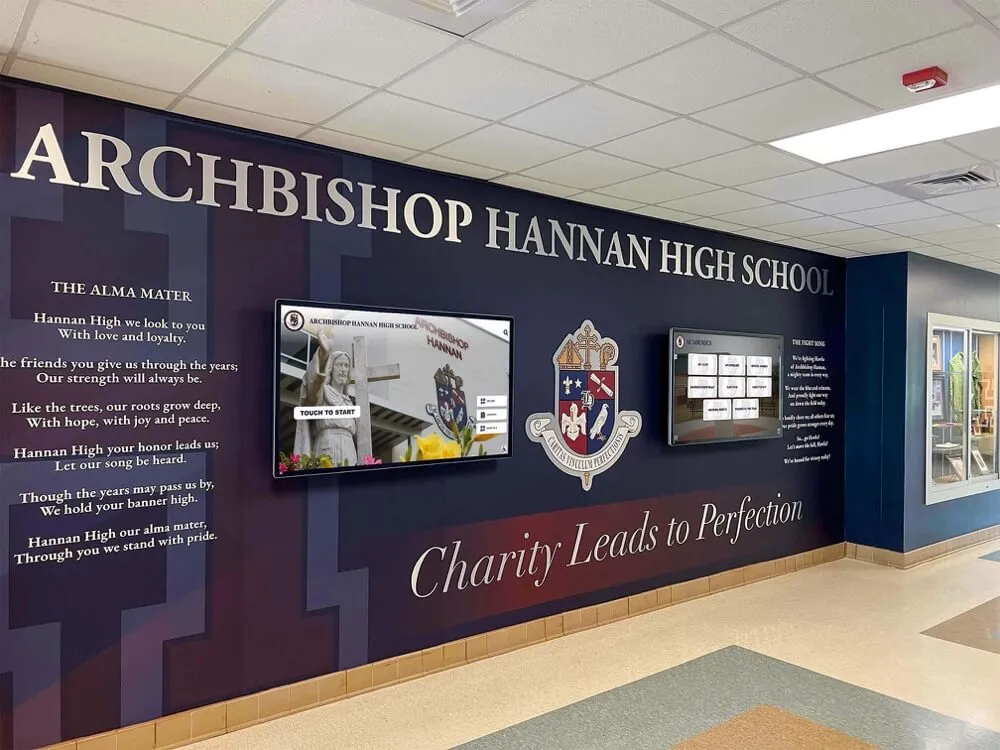
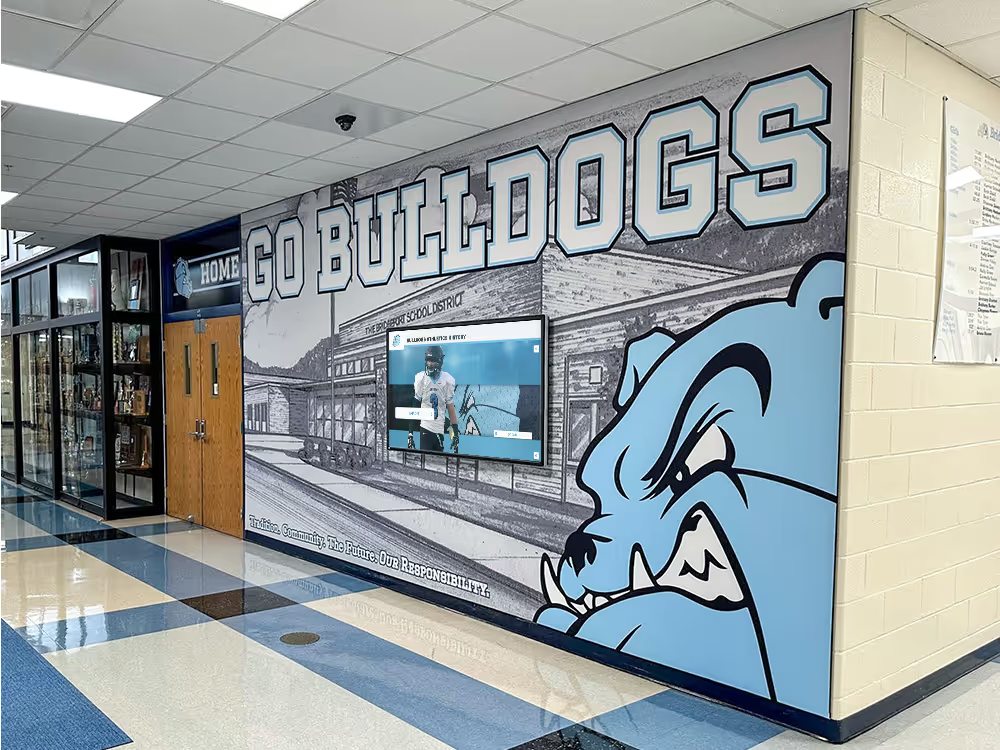
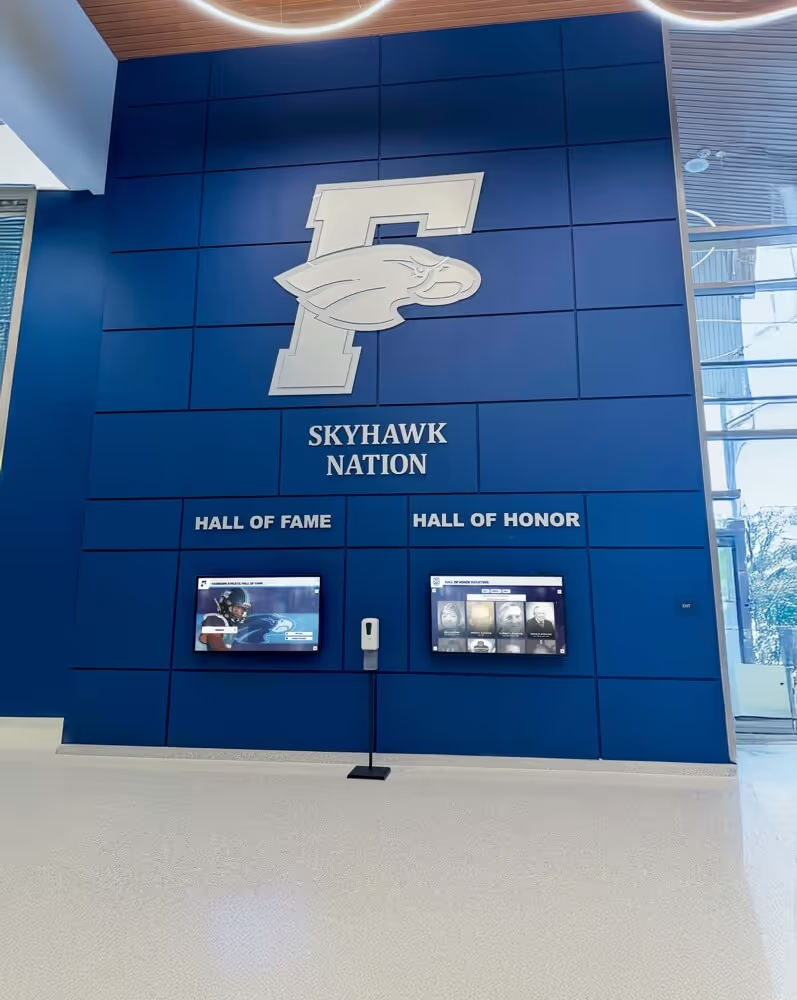
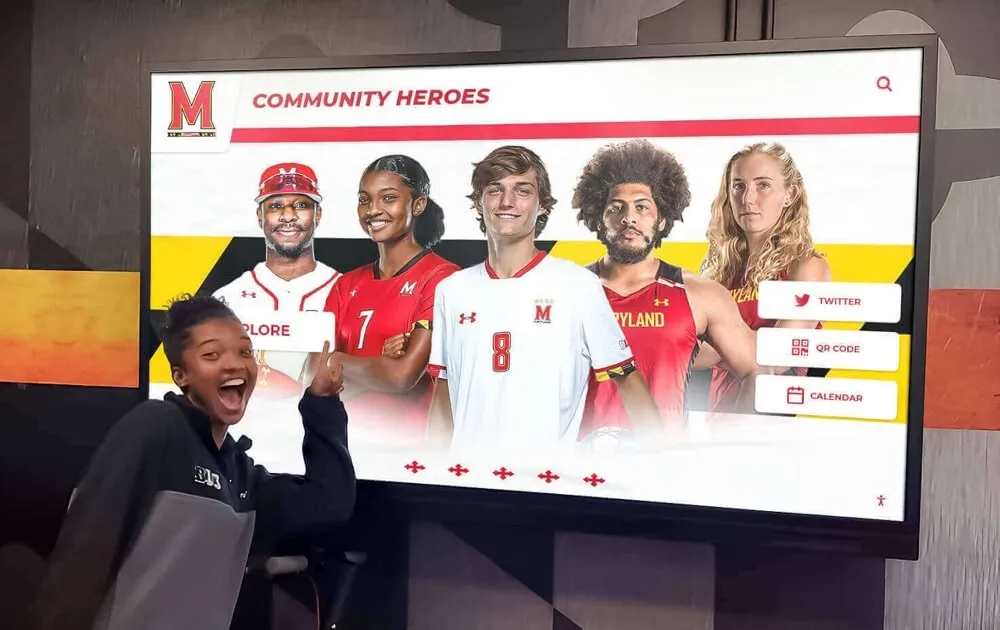
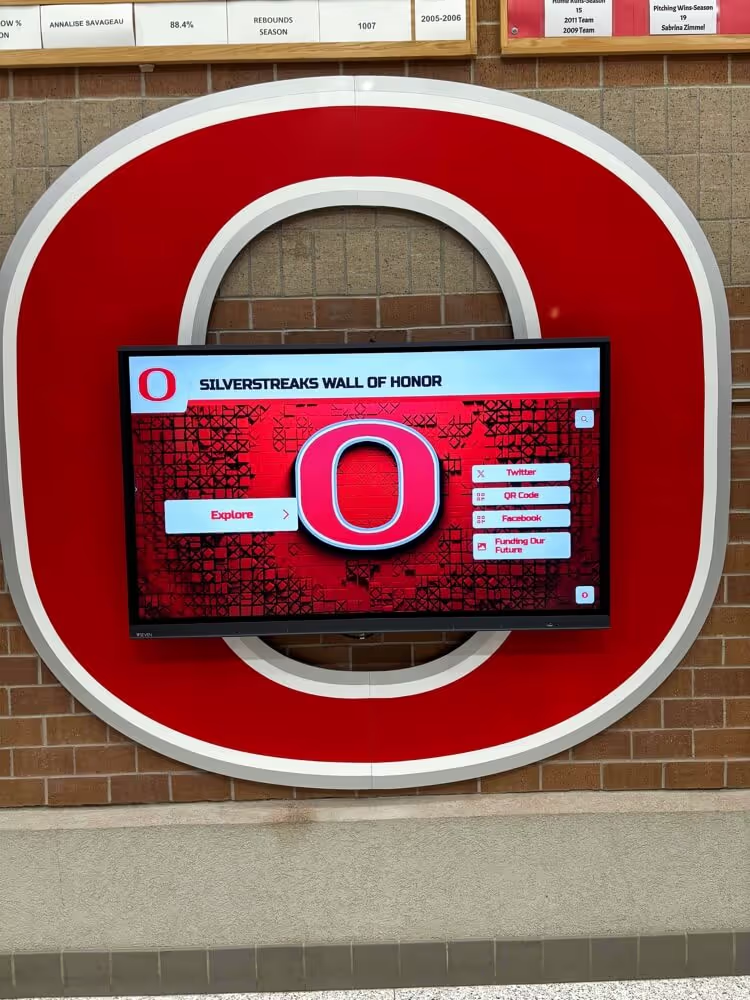
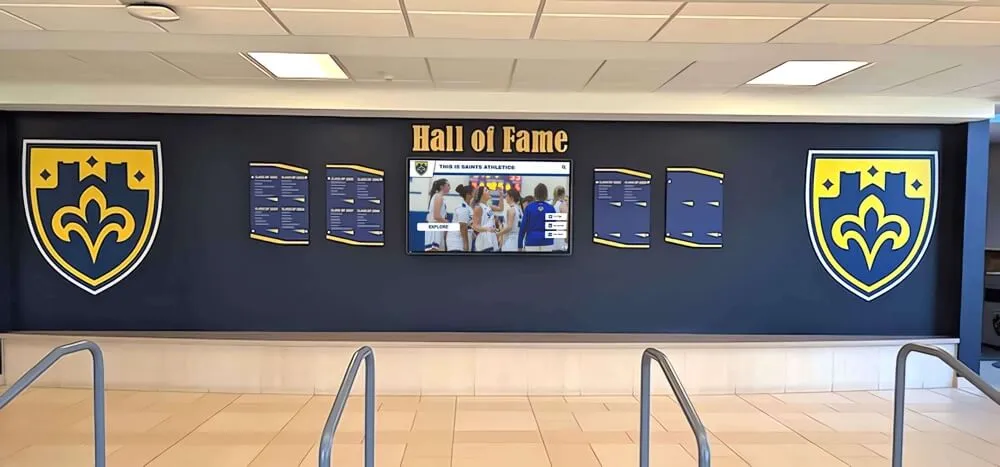
Individual student recognition — including the words spoken about graduates at commencement — can be preserved and displayed on interactive school recognition systems
12 Graduation Speech Examples: Templates for Every Speaker and Tone
Template 1: The Retrospective Journey
Best for: Valedictorian, class president, or any student speaker reflecting on the full four years
Tone: Reflective, warm, nostalgic without being sentimental
Structure:
- Opening (hook): A specific sensory memory from freshman year — the first day, the first class, an early school event
- Bridge: Acknowledge how much has changed and how little anyone predicted it
- Middle section: Three moments that defined the class — one shared struggle, one shared triumph, one unexpected gift
- Turn: The transition from “who we were” to “who we’ve become” — with humility rather than pride
- Closing: A specific image of the class as it sits right now, together for the last time as a class
Template outline:
“Four years ago, [specific memory from freshman year]. None of us had any idea what we were actually getting into. We’ve been through [specific shared challenge], survived [specific shared difficulty], and found something unexpected in [unexpected positive experience]. The class that sits here today isn’t the same one that walked in on that first day — and that’s the entire point. Whatever comes next, we carry this with us: [specific value or lesson from your class’s experience]. [Closing image of the class in this moment.]”
What to personalize: All bracket items require school-specific memories. The speaker should identify three actual moments from the class’s experience rather than generic references. These details are what separate a preserved speech from a forgettable one.
Template 2: The Forward-Looking Vision
Best for: Principal, commencement speaker, or student speaker focusing on what graduates carry forward
Tone: Inspiring, confident, slightly formal — the “send-off” speech
Structure:
- Opening: A statement about the world these graduates are entering — specific, not generic
- Transition: What school prepared them for, named explicitly
- Core section: Three capabilities or values this class developed — specific to the school context
- Challenge: A direct ask of the graduates — what to remember when things get hard
- Closing: A declaration, not a question — “You are ready”
Template outline:
“The world you’re entering [specific true statement about current conditions, opportunities, or challenges]. What this school gave you — beyond the academics — was [specific capability]. And [second capability]. And perhaps most importantly, [third capability]. When [specific difficult scenario that graduates will face], remember [specific thing]. You have been prepared for this. Go.”
What to personalize: The framing of the world graduates are entering should be honest rather than relentlessly optimistic. Acknowledging real challenges while expressing genuine confidence in graduates’ preparation makes this template powerful rather than clichéd.
Template 3: The Gratitude Speech
Best for: Valedictorian, senior class representative, or student speaker from a close-knit class
Tone: Warm, specific, genuine — a thank-you that feels earned
Structure:
- Opening: Brief statement that this speech is about acknowledging the people who made these years possible
- First section: Parents and family — specific, not formulaic
- Second section: Teachers and staff — name specific teachers by name or role; cite specific moments
- Third section: Classmates — what the speaker learned from unexpected friendships
- Closing: Circle back with a specific declaration about what gratitude looks like going forward
Template outline:
“I’ve thought a lot about what to say today, and what I keep coming back to is this: we didn’t get here alone. [Specific moment of parental or family support.] [Named teacher or coach] changed something fundamental about how I [specific academic or personal thing]. [Classmate group or specific relationship] taught me something I didn’t expect to learn in [unexpected context]. The people in this room — across that stage, in those seats, behind those cameras — you are the reason this feels like something worth celebrating. Thank you.”
What to personalize: The gratitude speech fails when it becomes a list. The speaker should choose one or two specific people or moments from each category and develop those briefly rather than rattling through every name.
Template 4: The Challenge Accepted Speech
Best for: Student speakers from classes that faced significant adversity — illness, loss, community crisis, or disruption
Tone: Honest, resilient, not triumphalist — acknowledging real difficulty without dwelling
Structure:
- Opening: Direct, honest acknowledgment of what the class faced
- Brief section: What it cost — without being maudlin
- Turn: What the class learned to do in response — specific actions, not vague attitudes
- Recognition: Acknowledge specific people who helped navigate difficulty
- Closing: Forward-facing statement grounded in what the class proved it could handle
Template outline:
“Let’s be honest about what this four years actually looked like. We didn’t get the [specific thing the class missed or lost]. A lot of us are [specific honest statement about where the class actually is emotionally]. And that’s okay — because [specific thing the class did in response to difficulty]. What we learned wasn’t resilience as a concept. We learned [specific practical skill or capability developed through hardship]. We learned it because we had to. That’s a different kind of preparation than most graduation classes get — and we’re better for it.”
What to personalize: Avoid rushing adversity into a tidy lesson. The most powerful versions of this template sit with the complexity for a moment before turning forward — they don’t sprint to “but it made us stronger.”
Template 5: The Community Speech
Best for: Class president, student body leaders, or any speaker wanting to honor collective achievement
Tone: Inclusive, celebratory, “we” rather than “I”
Structure:
- Opening: A declaration about this class as a community — something true and specific
- Three moments: Three times this class showed up for each other or for the broader school community
- Expansion: How this class extended community beyond school walls — service, outreach, connection
- Challenge: A call to carry that community commitment forward in new contexts
- Closing: An acknowledgment that the class continues — in reunion, in shared identity, in memory
Template outline:
“From the beginning, this class has been [specific quality observed across multiple years and contexts]. When [specific moment of collective action or support], you showed up. When [second moment], you showed up again. And when [third moment — perhaps unexpected], you still showed up. That quality doesn’t stop at the diploma. Whatever comes next, you know how to find each other, support each other, and show up. That’s what it means to be a [school name or mascot] graduate.”
What to personalize: The three moments should represent different aspects of community — one athletic or competitive, one academic or intellectual, one personal or emotional — to demonstrate range.
Template 6: The Humor-Forward Speech
Best for: Student speakers known for personality, wit, and ability to read a room
Tone: Genuinely funny, self-aware, warm at the core even when joking
Structure:
- Opening: A joke or observation that immediately signals this will be different — but don’t open with “so” or “um”
- Humor section: Two to three bits based on specific, shared school experiences — the more specific the better
- Pivot: A genuine turn toward sincerity that earns its emotion because it follows laughter
- Real point: One thing the speaker actually wants to say, said plainly
- Closing: Return to lightness — but end on something true
Template outline:
“[Opening observation or joke specific to this class and school]. I know, I know — [callback]. But seriously. Underneath all of that [humorous reference to four years], something genuine happened here. We [specific sincere observation]. And if I’m being honest — [real thing the speaker wants to say]. I’ll miss [specific funny thing about school]. But more than that, I’ll miss [genuine thing]. [Callback to opening.] Congratulations, everyone. We actually did it.”
What to personalize: Humor speeches are the hardest to template because timing and delivery are everything. The structure works; the jokes themselves require the speaker’s actual voice and genuine observations about their specific class.
Template 7: The Values-Centered Speech
Best for: Principals, commencement speakers, or student leaders who want to articulate what the school stands for
Tone: Grounded, serious, purposeful — not preachy
Structure:
- Opening: A statement of what this school claims to value
- Evidence section: Three moments that proved those values weren’t just words — specific events or programs
- Challenge: An invitation to carry those values beyond the diploma — with specificity about what that looks like
- Closing: A reiteration of the core value, now earned rather than assumed
Template outline:
“[School name] has always said it values [specific school value or motto]. Today, I want to tell you what that actually looked like. When [specific moment where value was demonstrated], [what the school or class did]. When [second moment], [what happened]. When [third moment], [response]. Those weren’t accidents. They were the school working as it’s supposed to work. Carry that with you. It’s not a slogan. It’s [specific declaration].”
What to personalize: This template is particularly powerful when the values section includes moments that weren’t comfortable — times when living the stated values required actual sacrifice or courage. Generic positive examples don’t carry the same weight.
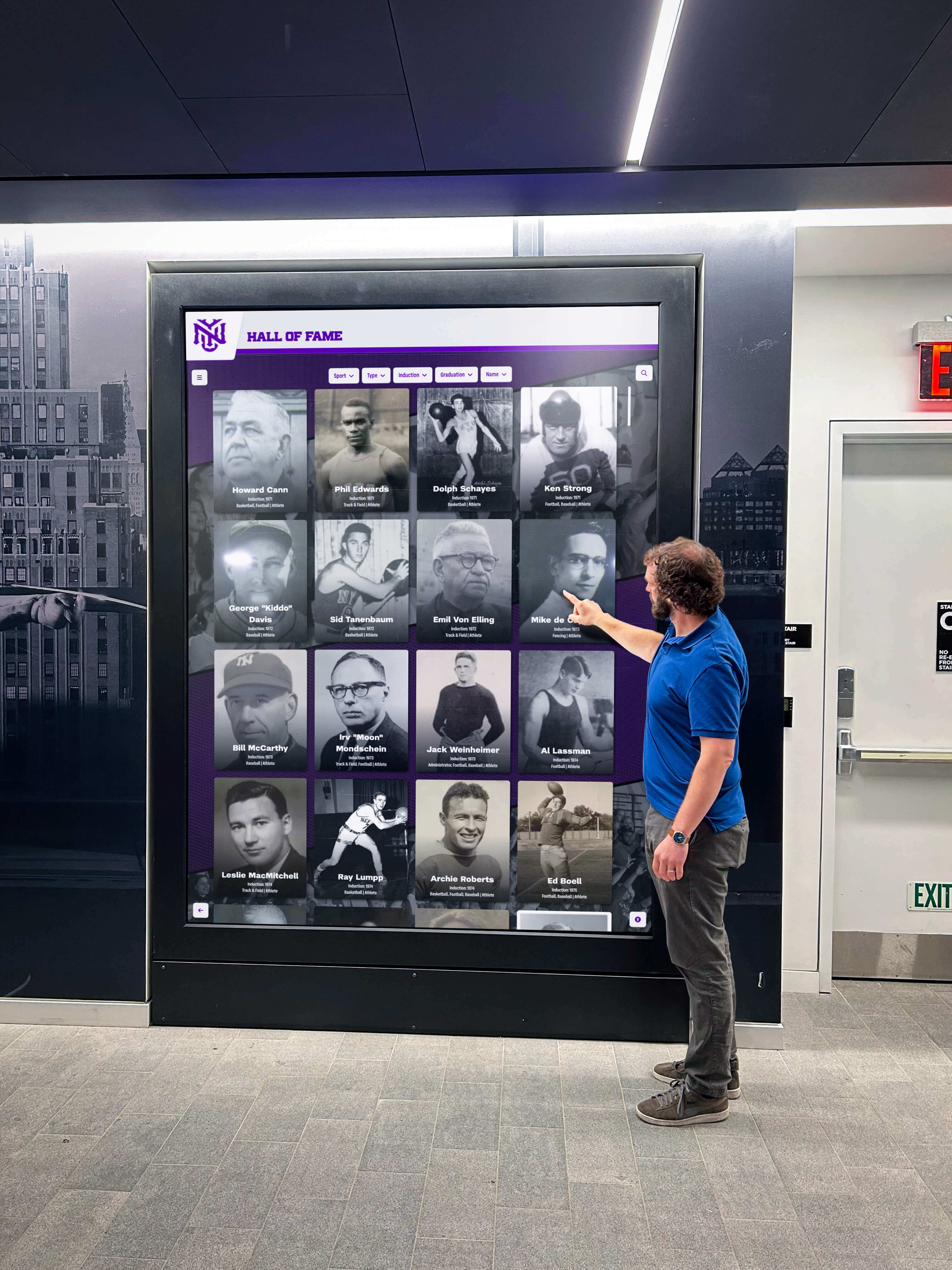
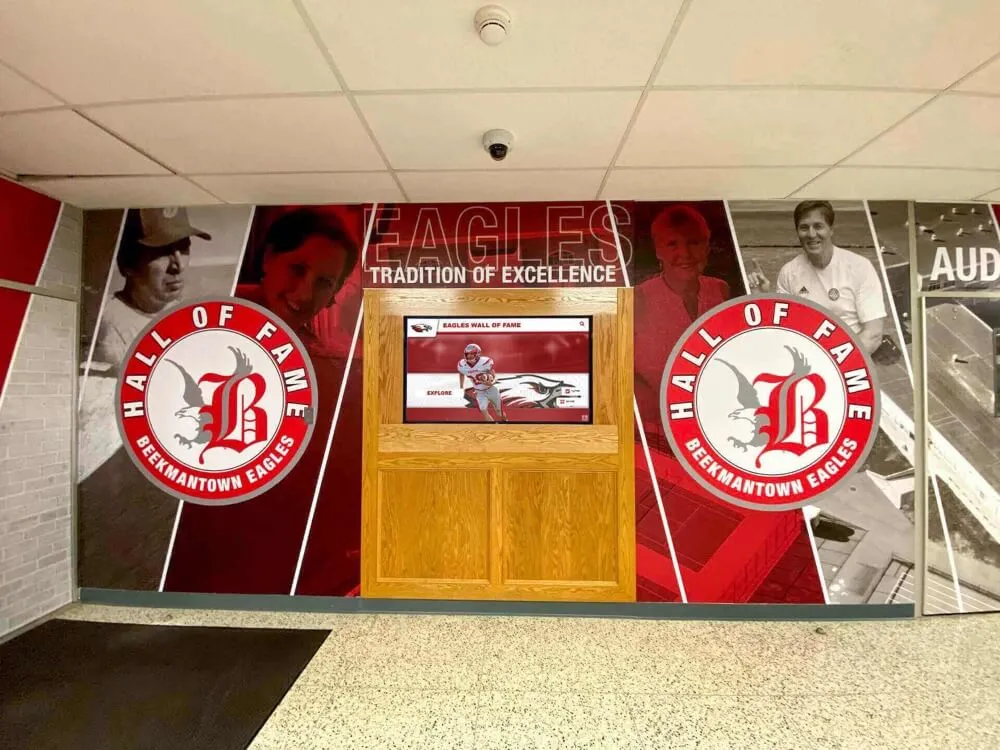
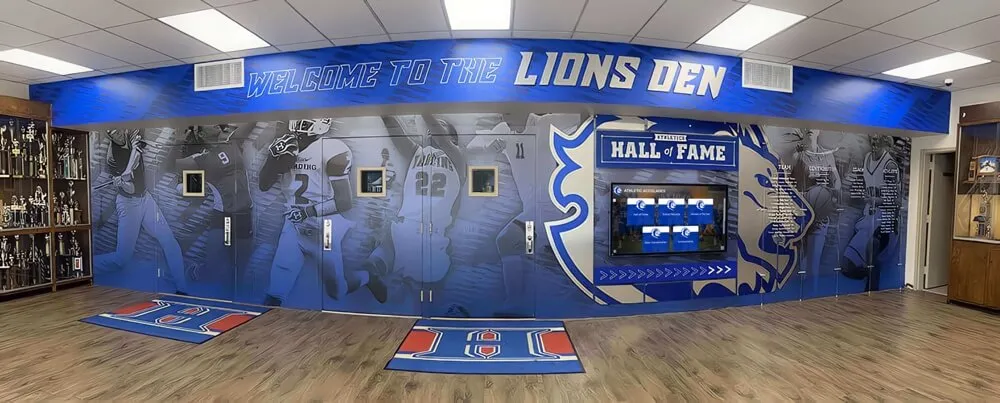
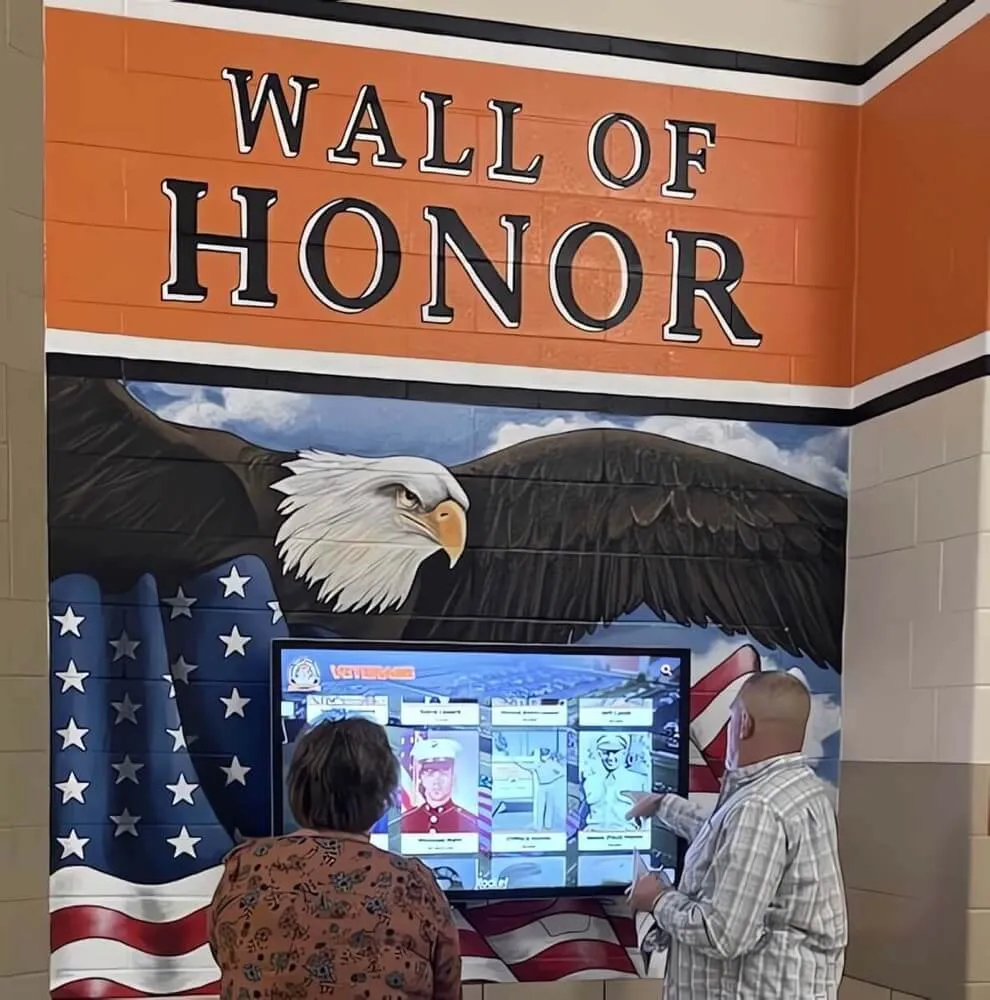
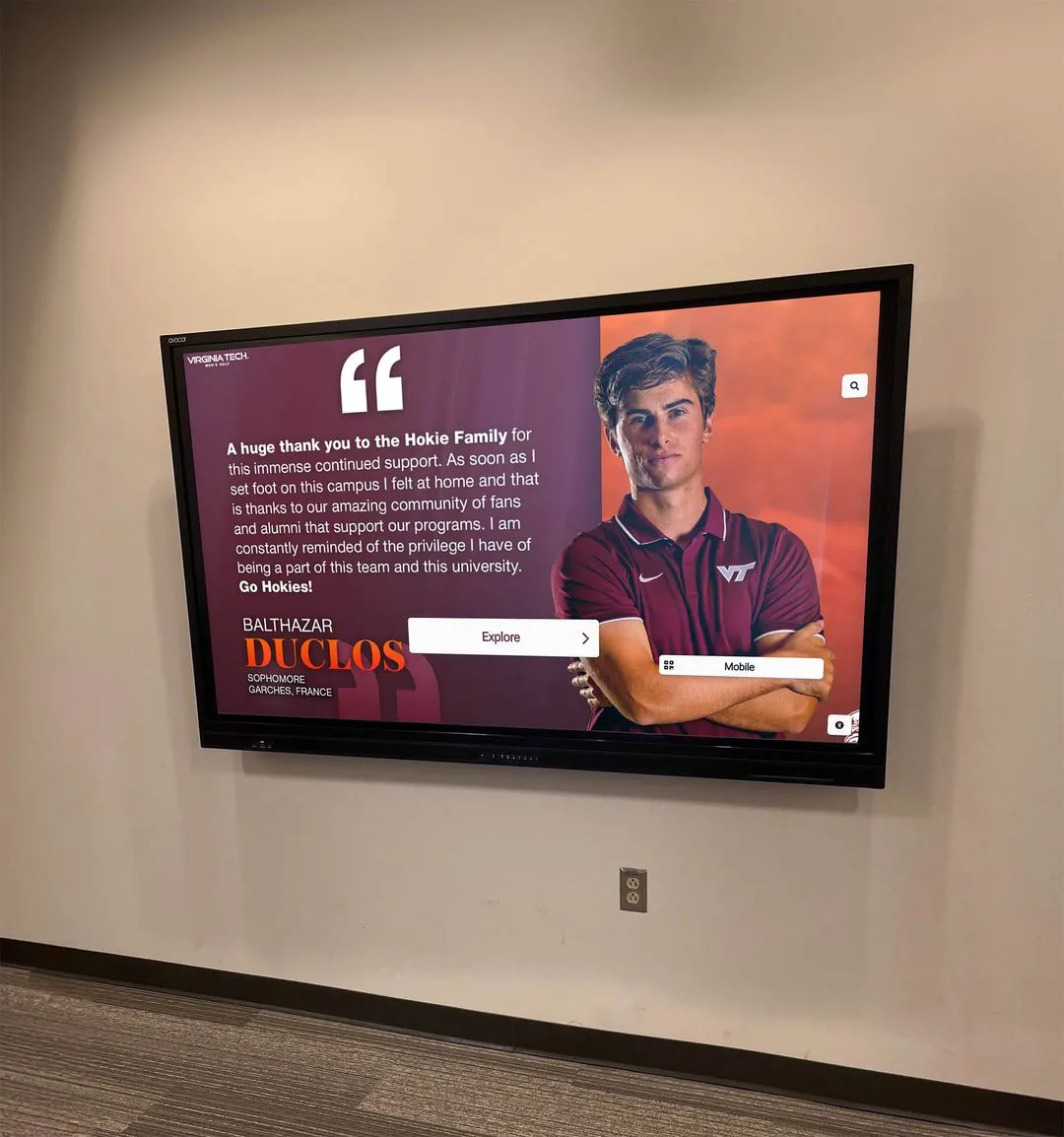
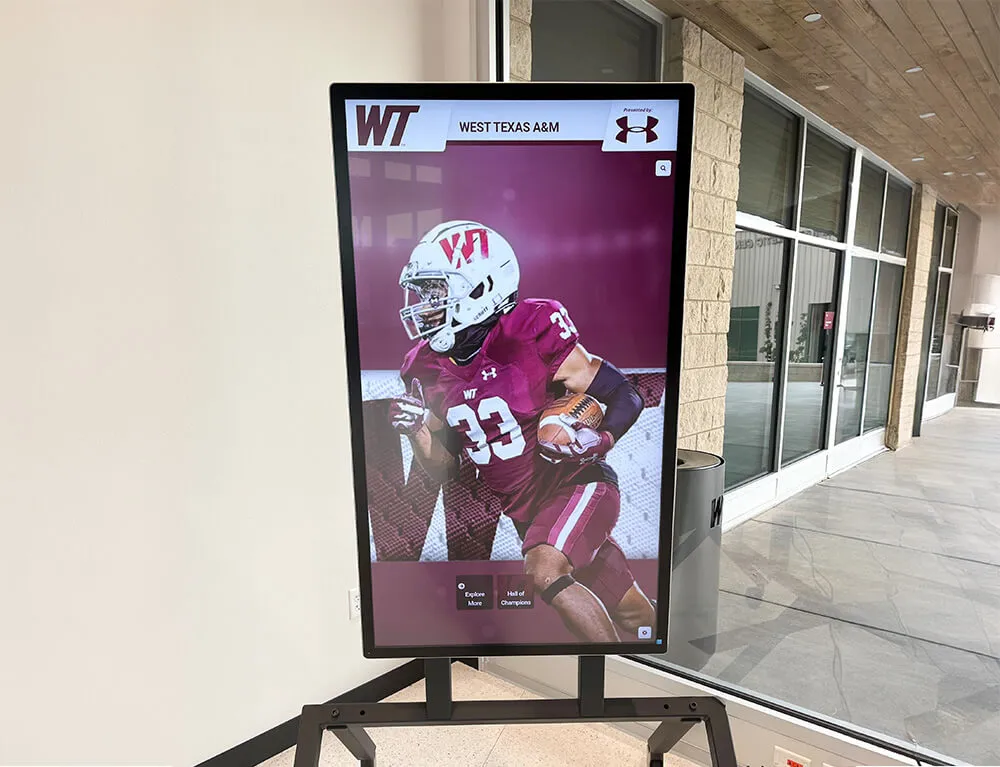
Graduation speeches and senior recognition become permanent touchpoints when preserved on interactive displays that alumni can revisit during future visits to campus
Template 8: The Call to Action Speech
Best for: Keynote commencement speakers, community leaders invited to address graduating class
Tone: Direct, urgent, hopeful — not self-congratulatory
Structure:
- Opening: A statement of what the world needs right now — specific, grounded in current reality
- Bridge: What this class’s education has prepared them to contribute
- The ask: A specific, defined call to action — not “change the world” but a particular approach or commitment
- Addressing resistance: Acknowledge why this is hard and why it’s worth it anyway
- Closing: A declaration of confidence in this class’s specific capacity to answer the call
Template outline:
“Right now, [specific real-world need or challenge]. You are leaving school with [specific preparation, skills, or knowledge]. I am asking you to [specific defined action or approach]. I know it feels [specific honest acknowledgment of challenge or uncertainty]. But [specific reason this class is particularly positioned to contribute]. I believe in your capacity to [specific action]. That belief isn’t generic — it’s grounded in [specific observation of this class or school].”
What to personalize: Guest speakers often use this template ineffectively because they make the call to action too vague. Specificity is the difference between a forgettable charge and one graduates actually carry forward.
Template 9: The Mentor Tribute Speech
Best for: Students honoring a teacher, coach, or staff member during graduation — or an educator’s own retirement remarks
Tone: Personal, affectionate, specific — a public acknowledgment of someone who made a difference
Structure:
- Opening: Introduce the mentor without revealing who it is yet — describe their impact before naming them
- Story: One specific moment with this mentor that changed something for the speaker
- Expansion: What other students experienced from this person — without becoming a list
- Declaration: What this mentor represents in terms of the school’s values
- Closing: A direct address to the mentor — what graduates carry forward because of them
Template outline:
“There’s someone at [school name] who [describe impact without naming]. They’re the kind of person who [specific behavior or quality]. The first time I realized what they were doing for me was [specific moment]. Years later, talking to classmates, I found out they’d done the same thing for [name or group] in [slightly different way]. What they gave us wasn’t just [subject knowledge or skill] — it was [deeper impact]. [Name of mentor]: thank you for [specific thing]. We carry that with us.”
What to personalize: The mentor tribute works best when the opening description is specific enough that classmates immediately know who is being described before the name appears. That moment of recognition creates shared emotion before the name is spoken.
Template 10: The Local Pride Speech
Best for: Students from tight-knit communities, rural schools, or institutions with strong local identity
Tone: Warm, rooted, honest about the tension between staying and going
Structure:
- Opening: A specific sensory detail about the community — something only someone who grew up there would know
- Middle: What this place gave the class — and what the class gave back
- Honest moment: Acknowledge that many graduates are leaving, and that’s okay — and hard — simultaneously
- Connection: How this place travels with graduates wherever they go
- Closing: A specific declaration about community identity that transcends physical location
Template outline:
“You know you’re from [community or town] when [specific, inside-community observation]. Growing up here gave us [specific genuine thing]. And we gave back — [specific community contribution by this class]. Some of us are leaving tomorrow. Some of us are staying. Both of those choices are the right ones for different reasons. But none of us are really leaving — because [specific declaration about portable community identity]. Wherever you go, [school mascot or name] goes with you.”
What to personalize: The tension between leaving and staying should be named honestly. Local pride speeches that pretend everyone is staying — or that dismiss those who leave — miss an opportunity to address what’s real for many graduates.
Template 11: The Time Capsule Speech
Best for: Unique class context — significant world events, milestone years, or classes with strong historical awareness
Tone: Reflective, a little wistful, future-oriented without being predictive
Structure:
- Opening: Address the speech to a future audience — either future students, the graduates themselves decades from now, or both
- Documentation section: What this moment looks like from the inside — what’s happening, what people are worried about, what people are hopeful about
- Prediction (humble): Not “this is how it will turn out” but “here’s what we hope”
- Instruction: One specific thing future readers should remember about this class
- Closing: Return to the present — end the time capsule letter and address the graduating class directly
Template outline:
“Dear [future reader — future students, or ourselves in twenty years]: In the spring of [year], we were [honest description of where this class is]. The world outside [specific current condition or context]. What we wanted — what most of us wanted — was [honest articulation of collective desire]. We hope [specific hope, not guarantee]. Remember this about us: [one thing this class wants to be remembered for]. [Turn back to the present.] But that’s the future. Right now, we are here, together. And right now, that’s enough.”
What to personalize: The time capsule template works particularly well for classes graduating during historically significant moments. Honest documentation of “what this was actually like” becomes more valuable as time passes.
Template 12: The Legacy Speech
Best for: Final speeches of a ceremony — often given by a principal or honored faculty member
Tone: Ceremonial, weighty, forward-looking — the speech that closes the door on one chapter
Structure:
- Opening: A definition of legacy — not the dictionary definition, but a school-specific one
- What this class leaves: Three specific contributions, changes, or marks this class made on the school community
- What they take: Three things the school gave this class — named specifically
- Declaration of continuity: How the relationship between graduates and school persists beyond diploma day
- Closing: A final charge or blessing — brief, direct, lasting
Template outline:
“Legacy isn’t about monuments. At [school name], legacy is [school-specific definition]. This class leaves behind [specific contribution 1], [specific contribution 2], and [specific contribution 3]. And this class takes with them [specific thing 1], [specific thing 2], and most importantly [specific thing 3]. That exchange — between a school and its students — never fully ends. You carry [school name] wherever you go. And [school name] carries you. [Closing charge — brief and direct].”
What to personalize: The legacy template requires the speaker to do real homework — identifying what this specific class actually contributed to the school. Generic references to “you’ve all worked so hard” undermine the template’s power.
How Schools Are Preserving Graduation Speeches as Lasting Artifacts
The 12 templates above help schools and speakers produce better graduation speeches. But equally important is what happens to those speeches after commencement ends — because a great speech delivered once and never revisited represents only a fraction of its potential value.
Schools that treat graduation speeches as permanent artifacts create a richer culture of senior celebration. Alumni who return to campus during homecoming, class reunions, or informal visits gain access to a living record of how their class was sent into the world. Current students gain context for the school’s evolving story. Families can revisit moments they want to carry forward.
Video Capture and Digital Archiving
The baseline for speech preservation is video recording. High-quality recording of every commencement speech — not just the student speakers but the principal remarks, the faculty tributes, and the invited keynotes — creates a searchable archive of the school’s graduation history.
Modern schools pair video archiving with digital display systems that make historical speeches accessible beyond graduation day. A visitor browsing a campus lobby touchscreen during alumni and class events might encounter clips from notable graduation speeches alongside athletic records and academic achievements — creating a richer, more complete picture of the school’s history.

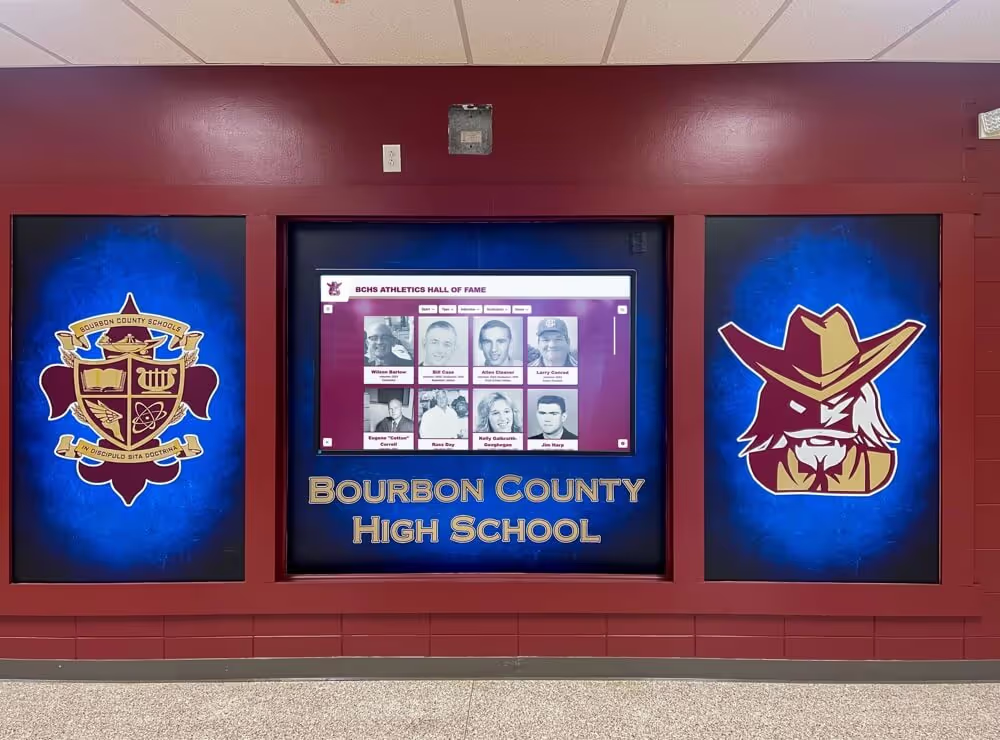
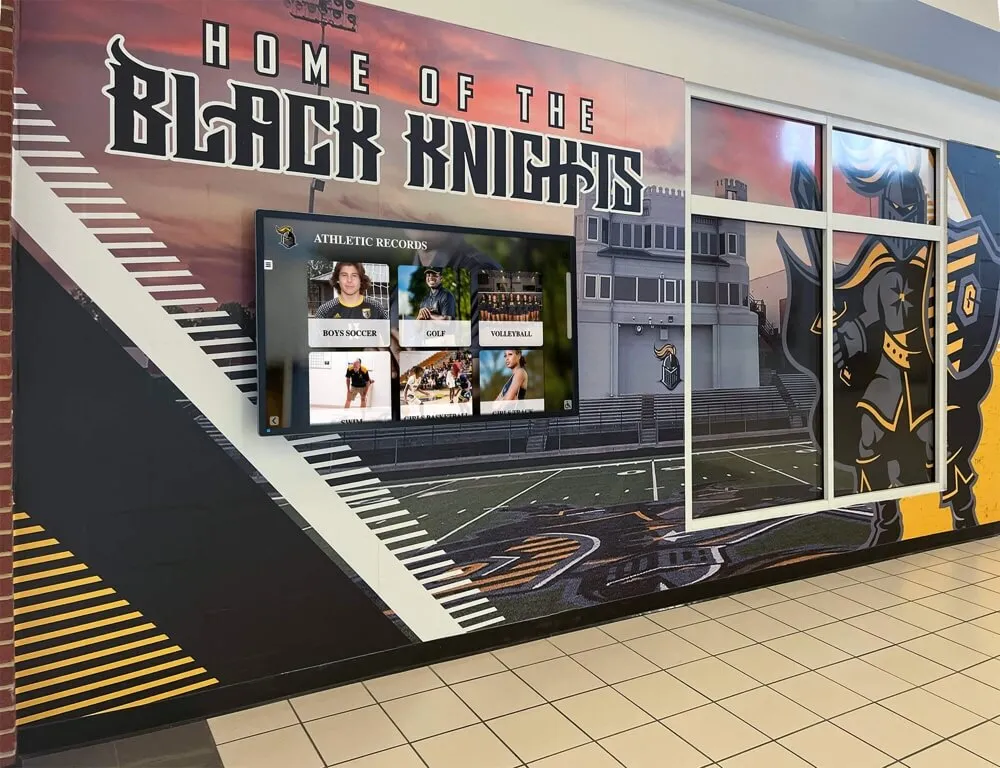
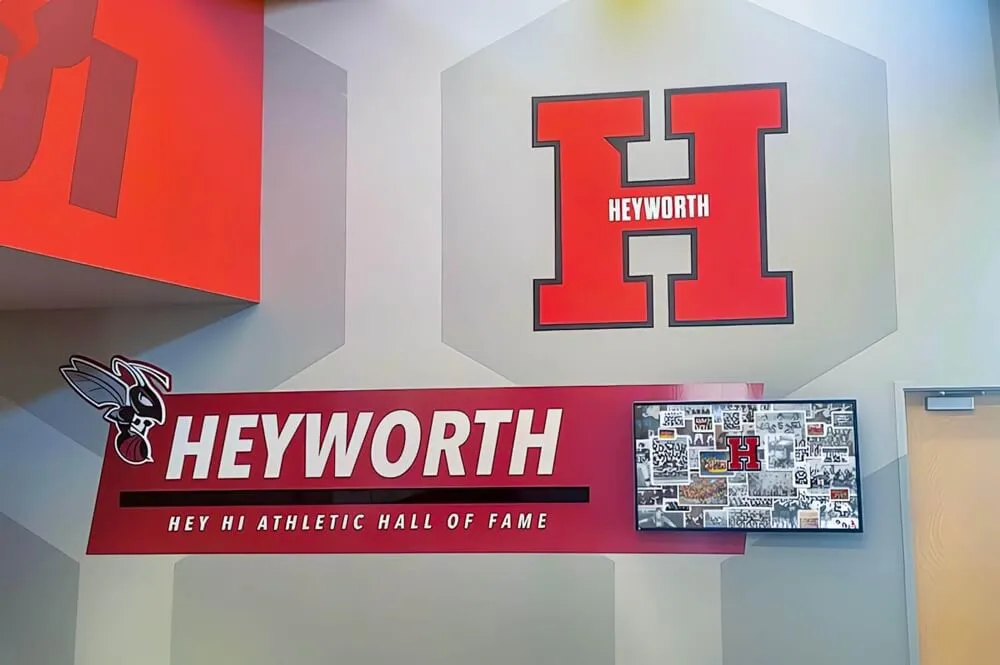
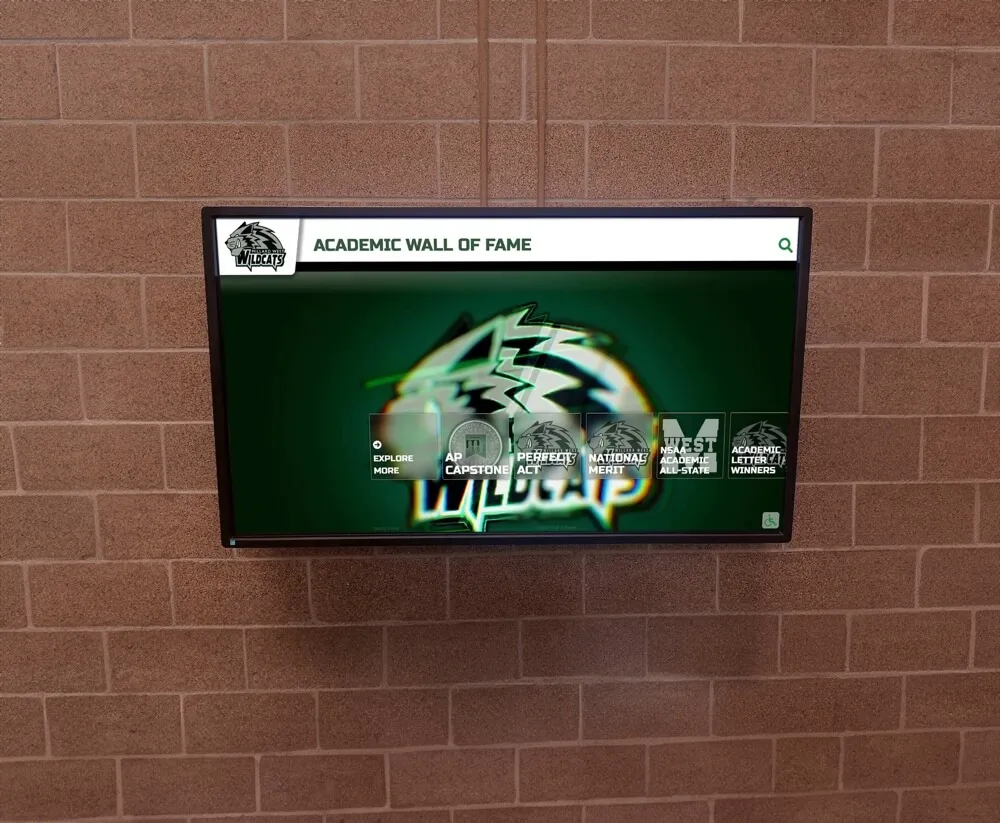
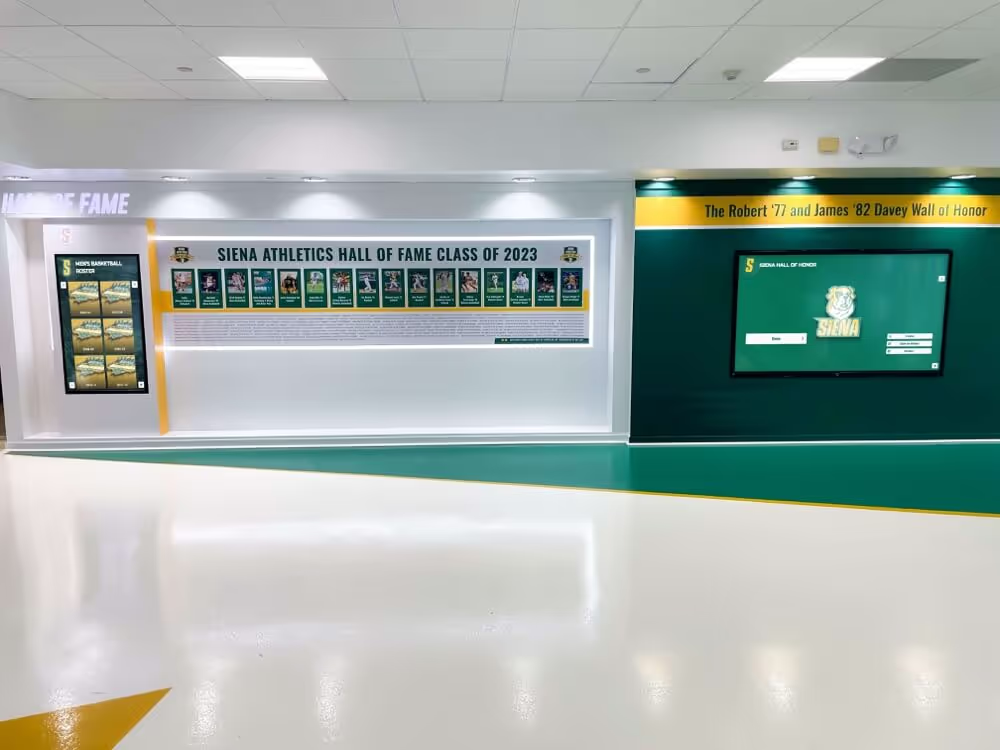
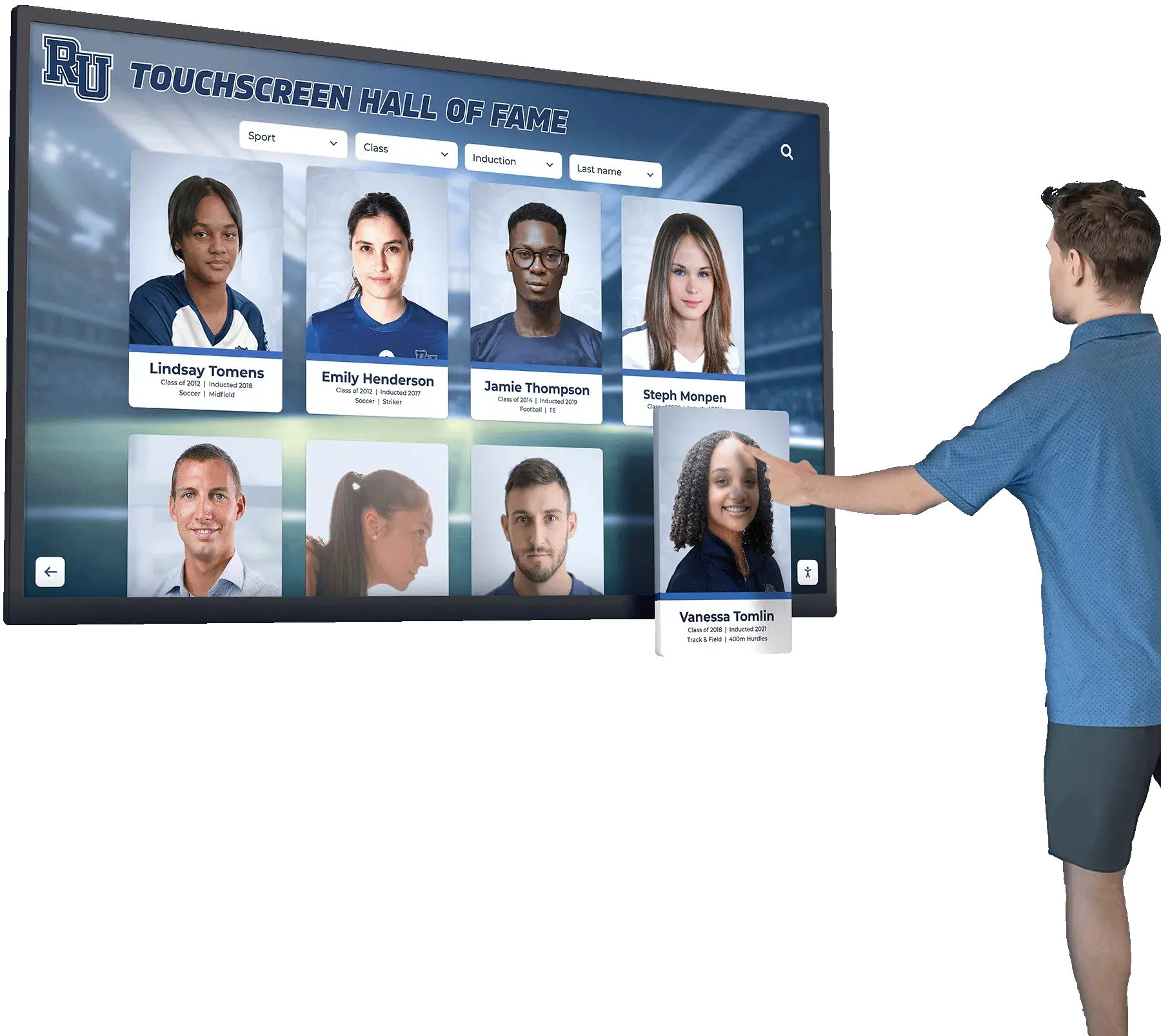
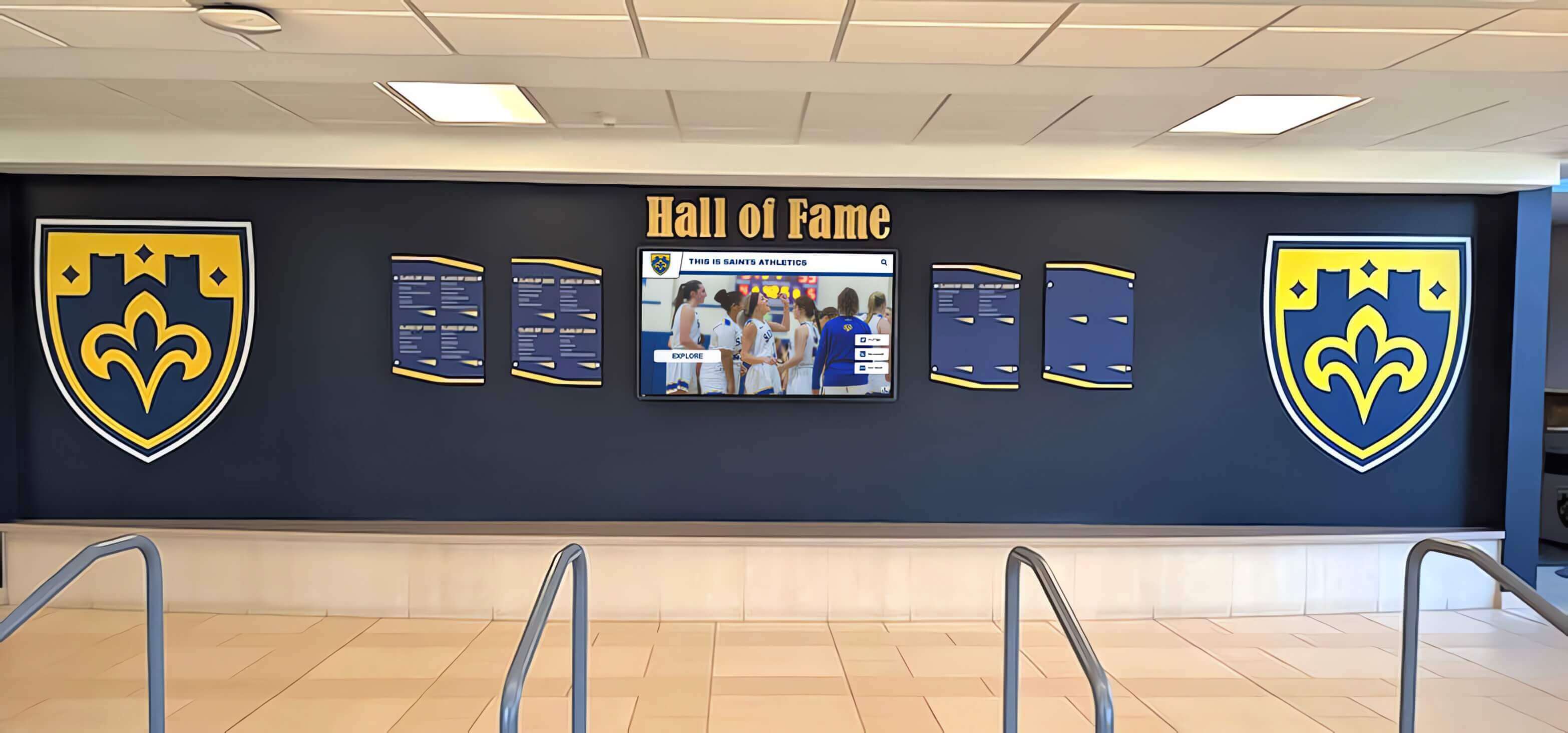
Modern digital recognition walls can archive graduation speech highlights alongside athletic achievements, honor roll displays, and senior class portraits for a complete historical record
Interactive Touchscreen Displays for Campus Recognition
Many schools have found that integrating graduation speech content into permanent campus displays extends the reach and longevity of commencement. Interactive touchscreen walls in school lobbies, hallways, and athletic facilities can incorporate speech excerpts, video clips, and senior class profiles in ways that make graduation content accessible year-round rather than just on ceremony day.
These systems work particularly well when graduation speech content is connected to other senior recognition elements — class composite photos, academic achievement recognition, athletic honors, and community service acknowledgment. The graduation speech becomes part of a comprehensive senior celebration ecosystem rather than an isolated ceremony element.
Platforms like Rocket Alumni Solutions help schools build these permanent recognition systems — touchscreen displays that can showcase graduation speech highlights alongside the full story of each senior class, creating interactive archives that alumni, current students, and visitors can explore for decades.
Schools implementing these systems find that graduation content becomes one of the most-engaged-with features. Former students return to campus and seek out the moments from their commencement — the speech that moved them, the remarks that captured their class’s particular character. Interactive class photo displays that include searchable speech content by year give alumni exactly this kind of rich, accessible archive.
Yearbook and Digital Yearbook Integration
Print yearbooks have long included graduation content — photos of the processional, quotes from speeches, portraits of the senior class. Digital yearbooks extend this dramatically, enabling full text of graduation speeches, embedded video of key moments, and interactive connections between speech content and the students, teachers, and events referenced within it.
For class reunions, having digital access to the original graduation speech becomes a powerful reunion asset — something committee chairs can show at the event, send ahead of time to build excitement, and incorporate into anniversary programming. The speech that meant so much in the moment often means even more a decade or two later, when graduates can hear their younger selves being sent into a world they’ve since navigated.
A full-featured digital yearbook platform can store full speech transcripts, link them to relevant class photos and profiles, and make them searchable by speaker, year, or theme — creating a graduation speech archive that grows more valuable every year schools add to it.
Tips for Student Speakers: Translating Templates Into Authentic Speeches
Choosing the right template is the beginning. Here’s how student speakers turn a structural framework into a genuinely compelling graduation address.
Preparation: Do the Work Before You Write
The most common reason student graduation speeches feel generic is that speakers skip the research and write entirely from memory. Strong speeches are built on specific details — and collecting those details requires real work before writing begins.
Gather raw material first. Before choosing a template or drafting anything, spend time collecting specifics: names of teachers who mattered and why, moments from the four years that stood out, honest reflections on what was hard. This material becomes the speech — the template just organizes it.
Interview classmates. The most resonant graduation speech examples represent more than the speaker’s own experience. Talk to five or ten classmates about their strongest memories from the four years. Look for moments and observations that appear across multiple conversations — these are the experiences that represent the class rather than just the speaker. Incorporating shared moments creates recognition in the audience that generic reflection never achieves.
Read great speeches. Studying graduation speech examples from previous classes, from celebrated commencement addresses at other schools, and from public figures helps speakers develop pattern recognition for what works. This isn’t about copying — it’s about building a mental library of effective structures and techniques that your own voice can then fill.
Delivery: How You Say It Matters as Much as What You Say
A well-written speech delivered poorly loses most of its impact. Student speakers benefit from specific, practical guidance on delivery — not just “speak clearly and make eye contact.”
Practice out loud, not in your head. A speech that reads well on paper often requires significant adjustment when spoken aloud. Sentences that seem clear when reading become tongue-twisters when delivered. Paragraphs that feel brief on the page take longer to say than expected. The only way to discover these issues is to speak the speech aloud, ideally in a space similar to where it will be delivered.
Record yourself. Watching or listening to a practice recording reveals habits the speaker doesn’t notice in real time: pacing that’s too fast, upward inflection that makes statements sound like questions, pausing too rarely or too often. This feedback loop is more valuable than any amount of coaching from someone listening in the room.
Use the pause deliberately. The most effective graduation speakers use silence as a rhetorical tool — pausing before and after key statements to let them land. Students who rush through speeches because of nerves lose this tool entirely. Building deliberate pauses into the written text helps train the habit before the ceremony.
Handling Nerves: Productive Anxiety vs. Derailing Fear
Some anxiety before a graduation speech is productive — it sharpens focus and energy. Derailing fear produces the physical symptoms that interfere with delivery: forgotten words, shaking voice, rushing. The difference is largely about preparation and mindset.
Over-prepare rather than trying to memorize. Memorized speeches are fragile — one missed word can cause a complete breakdown. Speeches prepared thoroughly enough that the speaker understands the structure deeply, and has the text available as a reference, are far more resilient. The speaker who knows where the speech is going and why can improvise gracefully when nerves affect recall.
Practice in front of live people before the ceremony. Speaking to a family member, a teacher, or a small group of trusted classmates is qualitatively different from practicing alone. The presence of an audience, even a supportive one, activates the same nervous system responses that appear during the real speech — making practice more realistic and more useful as preparation.
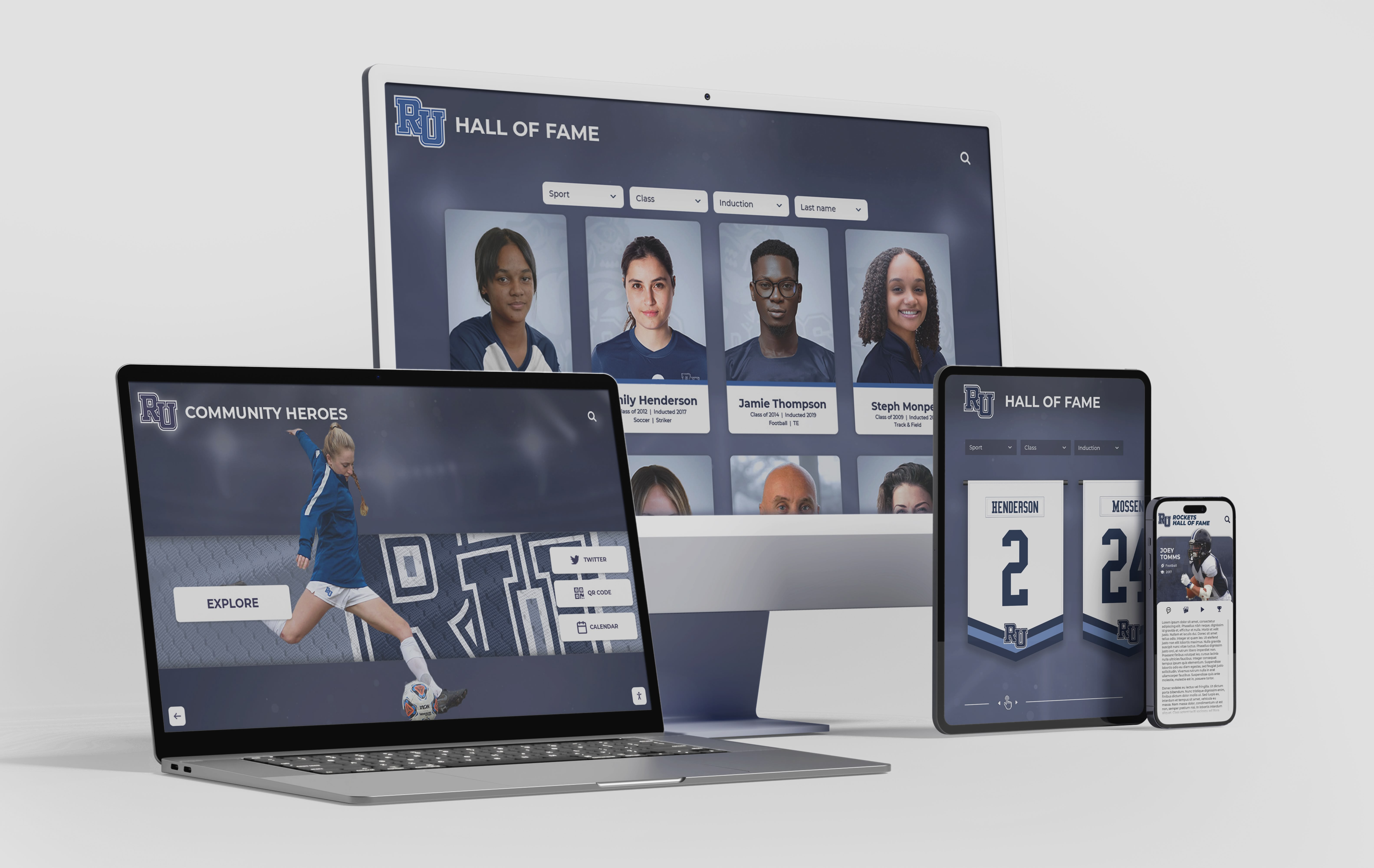
Graduation speech archives and senior recognition can be accessed across devices, ensuring alumni can revisit commencement memories from anywhere they are
Selecting Student Speakers: Building a Process That Produces Great Speeches
The quality of graduation speeches is substantially determined by the process schools use to select student speakers — before any templates or coaching enter the picture.
Audition-Based Selection vs. Role-Based Assignment
Many schools automatically assign graduation speech roles based on academic rank — the valedictorian gives the student address, the class president delivers a second speech. This produces speeches of inconsistent quality because academic achievement and public speaking ability don’t necessarily correlate.
Audition-based processes — where any senior can submit a speech proposal or draft, and a committee selects speakers based on quality and fit — consistently produce stronger graduation ceremonies. The valedictorian can still be recognized prominently in the program without necessarily giving the longest or most visible speech. Schools discover student speakers they wouldn’t have identified through rank-based assignment alone.
Consider speaker diversity beyond academics. The strongest graduation ceremonies feature speech variety in tone, theme, and speaker identity. An all-academic selection process often produces all-similar speakers. Intentional diversity in the speaker selection process — including students from different extracurricular communities, different backgrounds, different perspectives on the school experience — produces ceremonies that represent the full class rather than its academic peak.
Coaching and Support That Preserves Authentic Voice
Once speakers are selected, the coaching process matters as much as the initial selection. Advisers who rewrite student speeches in an adult voice undermine the authenticity that makes student speeches valuable. The goal of coaching should be helping speakers clarify what they’re actually trying to say, not replacing their voice with a smoother one.
Offer structural feedback, not line-by-line rewrites. “Your second section loses focus — what are you actually trying to say here?” is more useful coaching than rewriting those paragraphs. Speakers who understand the structural issue can solve it in their own voice, preserving the authenticity that makes graduation speeches worth preserving.
Build in multiple rounds with time between. First drafts are almost never graduation-ready. A coaching process that allows three or four revision cycles, with real time between each for reflection and revision, produces dramatically stronger final speeches than a compressed timeline. For a May or June commencement, speakers should have rough drafts by March and working drafts by April.
Consider how the speaker selection and coaching process connects to the broader school recognition calendar — with speech selection milestones built into the spring semester’s official recognition events rather than added as last-minute logistics.
Working With Administrative Speakers and Faculty Remarks
Student speeches typically get more coaching attention than administrative remarks, but principal and faculty addresses at commencement are equally important to the ceremony’s overall quality. Administrators who default to generic graduation tropes — “you are the future,” “this is just the beginning,” “go change the world” — miss an opportunity to say something genuinely meaningful to the graduating class.
Encourage administrative speakers to use the same template approach as student speakers: choose a specific framework, gather school-specific details, and build remarks that feel intentional rather than formulaic. A principal who uses the Legacy template to name specific things this class actually contributed to the school delivers a far more memorable address than one who offers generic congratulations.
The goal is a graduation ceremony where every speech — student, faculty, administrative — feels purposeful, specific, and worthy of preservation. That standard applies across the entire program.

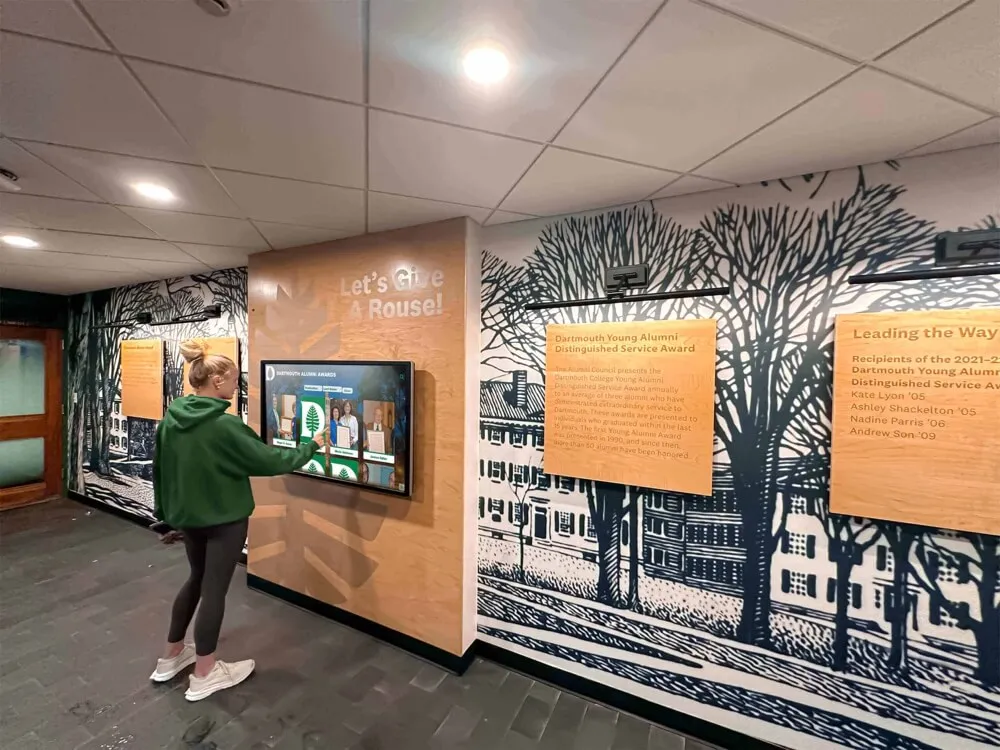
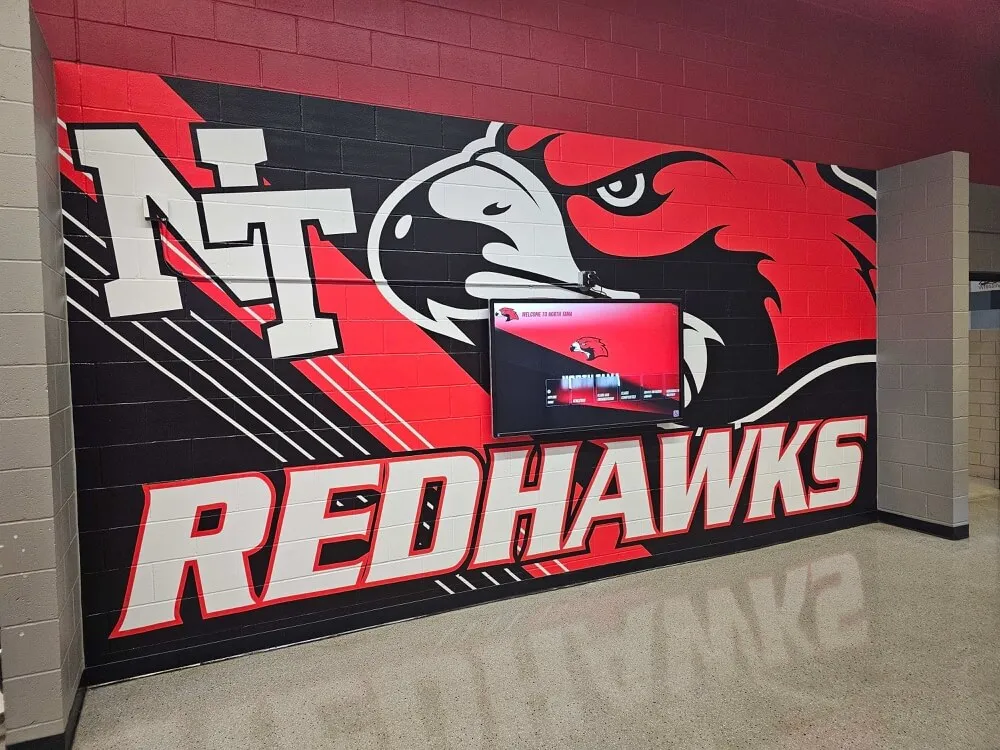
Campus touchscreen kiosks allow students, families, and alumni to explore graduation speech archives and senior recognition histories as part of the school's living record
Making Graduation Speeches Part of Your School’s Living Legacy
A graduation speech heard once, recorded but never accessed, represents a missed opportunity. The schools that maximize the value of their commencement speeches treat them as one input into a larger, ongoing recognition ecosystem.
Building a Multi-Year Graduation Speech Archive
Start simple: maintain a folder of commencement speech transcripts organized by year. Even schools without video recording infrastructure can preserve full speech text. When video recording exists, link the transcript to the corresponding footage and store both in a centralized, accessible location.
Over time, this archive becomes a rich resource:
- For current students who want models for their own speeches and connection to previous senior classes
- For alumni who want to revisit the moment they were sent into the world
- For school historians and communicators who want to trace the institution’s evolving narrative and values
- For class reunion planning, where commencement speeches become programmatic anchors for anniversary events
The end-of-year class celebration infrastructure that schools build for current students can anchor a multi-year archive with consistent formatting, consistent archiving practices, and consistent digital access.
Connecting Speeches to the Broader Senior Recognition Ecosystem
Graduation speeches are most powerful when they connect to the broader architecture of senior recognition rather than standing alone. Consider how speech content maps to other recognition elements already in place:
Senior class portraits and composites: Speeches referencing specific students become even more resonant when paired with visual records. A digital archive that links speech moments to the portraits of referenced students creates a richer document than text alone.
Athletic and academic achievement recognition: Many graduation speeches include references to athletic achievements, academic milestones, or community service records. These references become more meaningful when connected to the relevant recognition displays — so a visitor exploring the campus recognition system can move fluidly from a speech excerpt to the athletic trophy case display to the honor roll recognition board. Campus engagement displays built around this connected approach create more compelling experiences for visitors, alumni, and prospective families.
Graduation celebration materials: Families building personal archives of graduation memories benefit from easy access to full speech text and video — making it possible to share the commencement address alongside graduation gifts and celebration materials that commemorate the day.
Digital yearbook integration: Schools that maintain comprehensive digital yearbooks can embed graduation speech content directly into the senior section — connecting speeches to senior portraits, superlatives, and class-year summaries for a fully integrated senior experience.
The Role of Digital Displays in Speech Preservation
For schools investing in campus recognition infrastructure, graduation speech content is a natural fit for interactive display systems. Touchscreen walls in school lobbies, hallways, and athletic facilities can incorporate:
- Annual speech highlight clips organized by graduation year
- Searchable full-text transcripts
- Featured quotes selected from particularly powerful speeches
- Speaker profiles connecting graduation address to the student’s broader school career
These displays make graduation speech content accessible during the moments when it matters most — during open houses for prospective families, during homecoming events for alumni, and during the day-to-day school life that benefits from connection to the institution’s history and values.
A comprehensive graduation slideshow paired with archived speech content creates a powerful combined artifact — the visual celebration of the senior class anchored by the words that framed what those years meant. Schools that invest in this kind of layered preservation create archives that alumni genuinely return to, rather than static records that accumulate and go unvisited.
Frequently Asked Questions About Graduation Speeches
How long should a graduation speech be?
Student addresses at high school graduation ceremonies typically run 4–7 minutes when delivered at a comfortable pace, which translates to approximately 600–1,000 words of written text. Shorter speeches (3–4 minutes) can be highly effective when well-crafted and specific. Speeches exceeding 10 minutes risk losing audience attention regardless of quality. Administrative remarks often run 5–10 minutes; keynote commencement addresses at universities can extend to 15–20 minutes with a notable speaker.
Who typically speaks at high school graduation?
Most high school commencement ceremonies include a principal or superintendent address, one or two student speakers (valedictorian, salutatorian, or class president), and sometimes a faculty or staff tribute. Some schools invite community leaders, alumni, or elected officials as keynote speakers. The ideal program has 2–4 speeches totaling no more than 30–40 minutes of address time.
How do I make a graduation speech stand out?
Specificity is the single most reliable differentiator in graduation speeches. The speeches remembered and discussed after the ceremony are almost always the ones with specific, unexpected details — names, moments, honest observations — rather than inspirational generalities. Use real school memories, avoid clichés, and practice enough that delivery feels natural rather than rehearsed.
Should graduation speeches be memorized or read from notes?
Most student speakers benefit from a hybrid approach: knowing the speech well enough to speak without reading, but having the text available as a security reference. Pure memorization is risky — a missed line can cause a breakdown. Reading directly from text reduces connection with the audience. Speaking from deep familiarity, with the text available, allows natural delivery with graceful recovery when nerves intervene.
How can schools preserve graduation speeches for alumni?
Video recording is the baseline. Beyond that, schools benefit from maintaining a centralized transcript archive organized by year; incorporating speech highlights into campus digital display systems; embedding speech content in digital yearbook platforms; and creating searchable online archives that alumni can access remotely. Schools with interactive touchscreen displays in their lobbies can incorporate graduation speech content alongside athletic and academic recognition for year-round accessibility.
Can graduation speech templates be reused across years?
Yes — and that’s precisely what makes templates valuable. The framework (Retrospective Journey, Legacy Speech, Community Speech, etc.) can anchor graduation programs year after year, while the school-specific content changes completely each time. A school that uses the same structural templates consistently develops stronger speaker preparation processes, clearer expectations for students, and more consistently high-quality ceremonies over time.
Conclusion: Speeches That Outlast the Ceremony
The graduation speech is a temporary artifact — delivered once, in real time, to an audience simultaneously celebrating and managing the emotional weight of a major life transition. But the words spoken at commencement don’t have to disappear when the gown comes off.
Schools that invest in strong graduation speech frameworks — using templates like the 12 provided here to help speakers find their structure — and in robust preservation systems — video archiving, digital display integration, yearbook connection — transform commencement speeches from ceremony logistics into lasting institutional artifacts. The valedictorian’s address from five years ago becomes a window into who your school was in that moment. The principal’s legacy remarks become a record of institutional values as they were actually practiced, not just stated.
Every senior class deserves to be sent into the world with words worth keeping. Every school deserves a record of the send-offs it has given. The 12 templates in this guide help get the speeches right. The rest of the work is making sure they last.
Preserve Your Graduation Speeches as Permanent School Artifacts
Discover how interactive digital display systems can transform your commencement speeches, senior portraits, and class achievement records into a living archive that alumni, students, and families can explore for decades to come.
Explore Recognition SolutionsSenior recognition doesn’t end at the diploma. The graduation speech, the digital yearbook, the campus recognition wall, and the searchable senior archive all become part of the record that defines each class in a school’s history. Schools that treat these elements as connected — rather than isolated ceremony logistics — build recognition cultures that serve graduates, alumni, and current students simultaneously for years after the ceremony ends.
Start with better speeches. Archive them well. Build the infrastructure that makes them accessible for decades. That’s how graduation speeches become part of the school’s permanent story.