



FFA (Future Farmers of America) chapters across the nation celebrate remarkable student achievement through comprehensive award programs—from Greenhand degrees for first-year members to prestigious American FFA Degrees, from specialized proficiency awards recognizing excellence in agricultural education to Star Awards honoring outstanding chapter members. These awards represent countless hours of supervised agricultural experience, leadership development, and dedication to strengthening agriculture and building communities.
Yet many FFA chapters struggle to showcase this impressive array of member achievements effectively. Traditional recognition methods—static plaques lining agriculture classroom walls, paper certificates filed away in folders, trophy cases with limited space—fail to communicate the breadth and depth of FFA accomplishments to school communities, prospective members, and visiting families. As chapters compete for student participation and program visibility within comprehensive high schools, the inability to showcase FFA excellence prominently undermines recruitment and program advocacy efforts.
This comprehensive guide explores how digital display technology transforms FFA awards recognition, creating dynamic, interactive systems that celebrate member achievements while elevating agricultural education programs’ visibility and prestige throughout school communities.
The Recognition Challenge Facing Modern FFA Chapters
FFA chapters consistently produce exceptional student achievement across multiple recognition categories. Members earn degrees, win proficiency awards in specialized agricultural areas, receive Star Awards recognizing outstanding accomplishment, compete successfully in Career Development Events, and demonstrate leadership through officer positions and community service. This multi-dimensional excellence deserves comprehensive celebration that reflects the sophistication and importance of agricultural education.

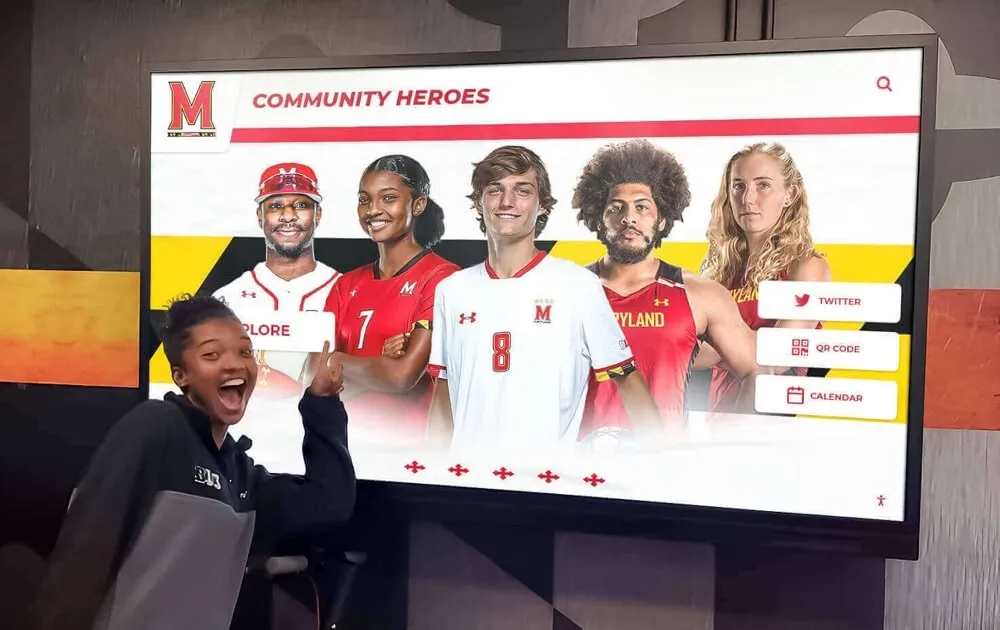
Modern interactive recognition systems provide FFA chapters with comprehensive platforms to showcase member achievements, degrees, and awards in engaging formats
Traditional Recognition Limitations
Traditional FFA recognition methods create significant challenges:
Space Constraints in Agricultural Education Facilities
- Agriculture classrooms and shops have limited wall space for recognition displays
- Shared facilities restrict permanent FFA recognition installations
- Growing membership numbers exceed available display capacity
- Multiple award categories compete for the same limited recognition real estate
- Historical achievements get removed to accommodate current recognition
Limited Visibility Beyond Agriculture Departments Many FFA recognition systems remain confined to agriculture classrooms, visible only to current members and agricultural education teachers. This isolation prevents broader school communities from appreciating FFA excellence, limits prospective member exposure to program achievements, reduces administrative awareness of FFA program success, and diminishes opportunities for recognition to build school pride and community support.
Static Recognition Formats Traditional plaques and certificates provide minimal context about achievements. Visitors see names and award titles without understanding the supervised agricultural experience behind proficiency awards, leadership development culminating in degree recognition, skill mastery demonstrated through Career Development Events, or community impact created through FFA projects.
Schools implementing comprehensive student achievement recognition programs understand that meaningful recognition requires storytelling that brings accomplishments to life beyond basic name and award listings.
The Digital Recognition Opportunity
Digital display technology eliminates traditional recognition limitations while amplifying FFA program visibility throughout schools and communities.
Unlimited Recognition Capacity Interactive digital systems showcase unlimited FFA members across all achievement categories without physical space constraints. Single displays accommodate complete chapter histories, comprehensive proficiency award documentation, all degree recipients across multiple years, Star Award winners and their stories, and Career Development Event team achievements.
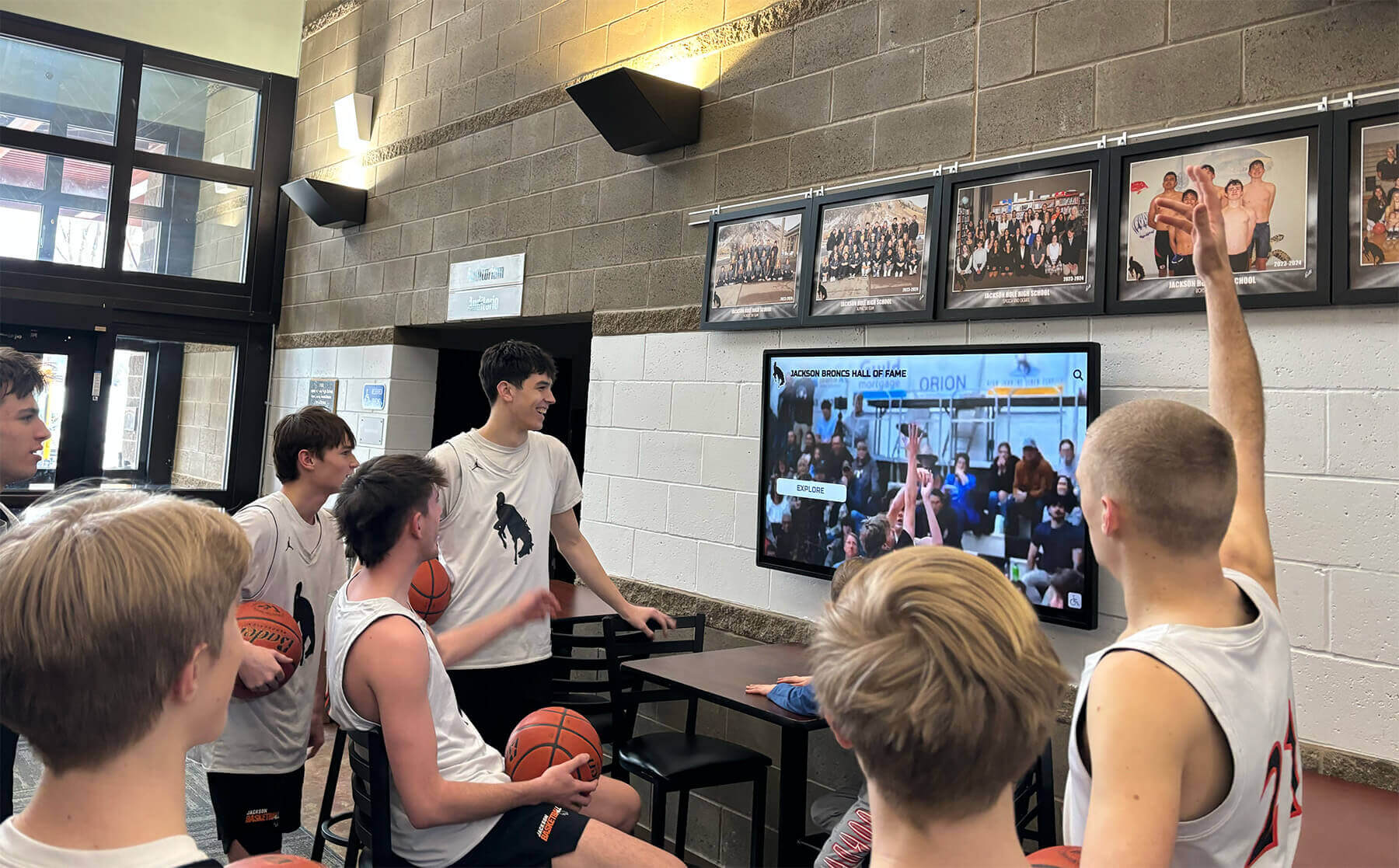
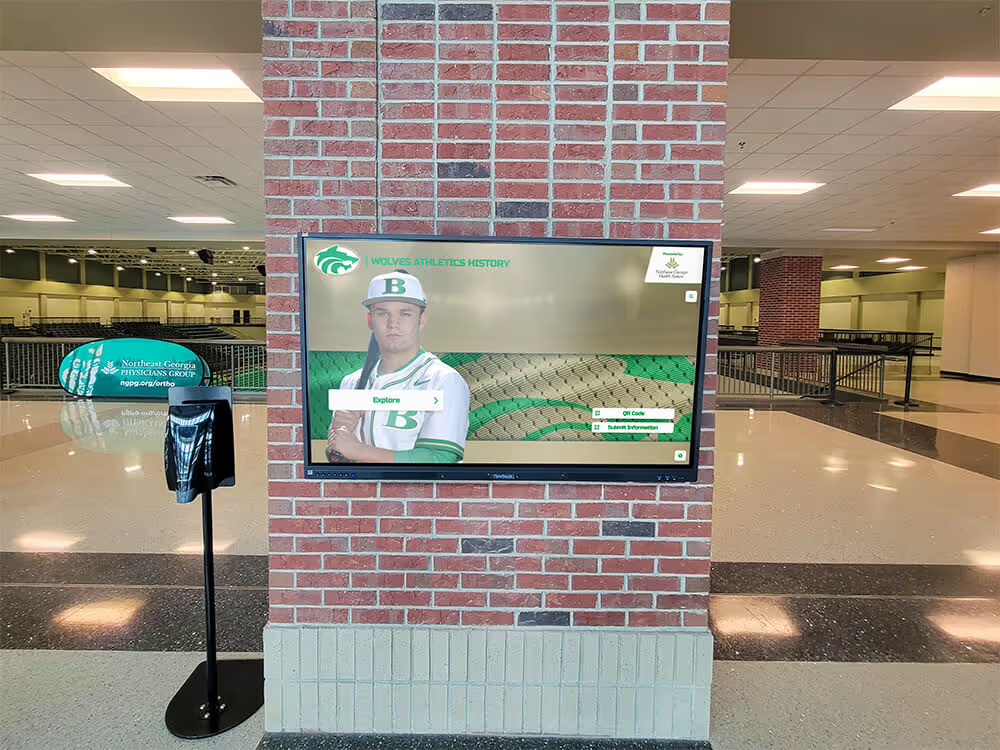
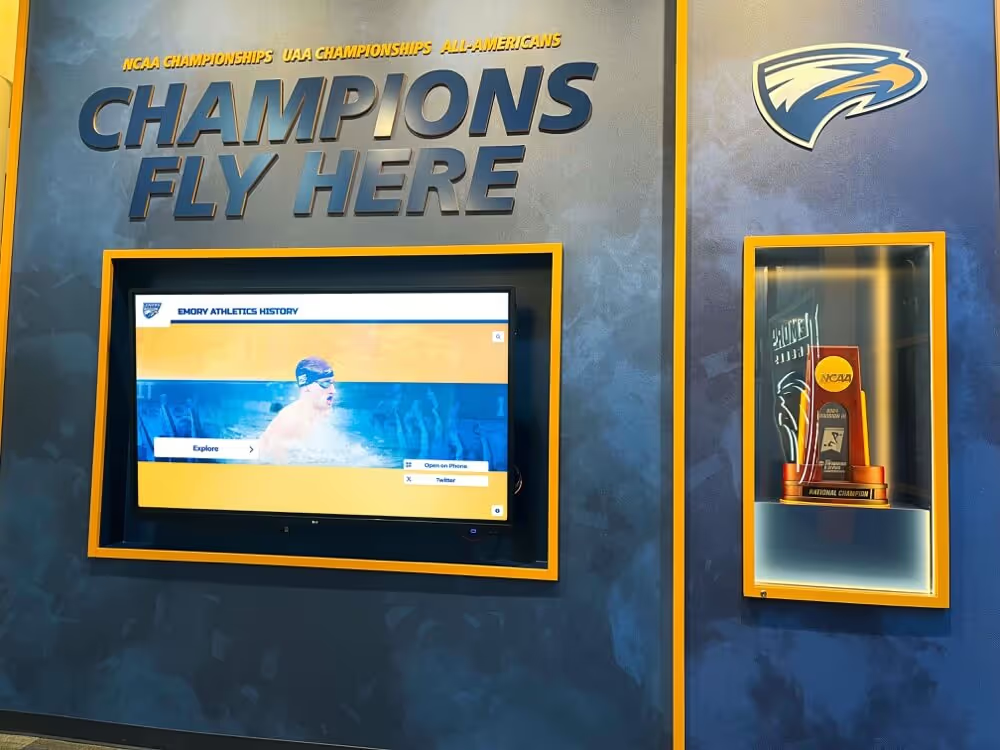
Strategic placement of digital recognition displays in high-traffic school areas ensures FFA achievements receive visibility beyond agriculture departments
Strategic School-Wide Placement Digital displays can be positioned in prominent school locations—main lobbies, cafeterias, main hallway intersections, and near administrative offices—ensuring FFA recognition reaches broader audiences beyond current members.
Rich Multimedia Storytelling Digital platforms enable comprehensive recognition through member biography pages detailing agricultural experiences, photo galleries documenting projects and activities, video highlights showcasing Career Development Event performances, achievement timelines tracking member progression, and detailed descriptions explaining award significance and requirements.
This transformation parallels innovations in digital athletic recognition, where comprehensive digital platforms replaced space-limited trophy cases, creating more engaging and inclusive celebration of achievement.
Understanding FFA Recognition Programs and Award Categories
Effective digital recognition systems require understanding the comprehensive array of FFA awards and achievement categories chapters celebrate.
FFA Degree Programs
The FFA degree program recognizes member progression and achievement through structured advancement:
Discovery FFA Degree Designed for middle school students participating in agricultural education programs, Discovery Degree recognizes foundational engagement with FFA and agricultural education. Digital recognition systems celebrating Discovery Degree recipients encourage younger members and build progression pathways toward advanced degrees.
Greenhand FFA Degree First-year high school FFA members earn Greenhand Degree by demonstrating knowledge of FFA history, chapter structure, and agricultural education opportunities. Recognition of Greenhand recipients creates visible onboarding into FFA membership—welcoming new members while showcasing chapter growth and recruitment success.

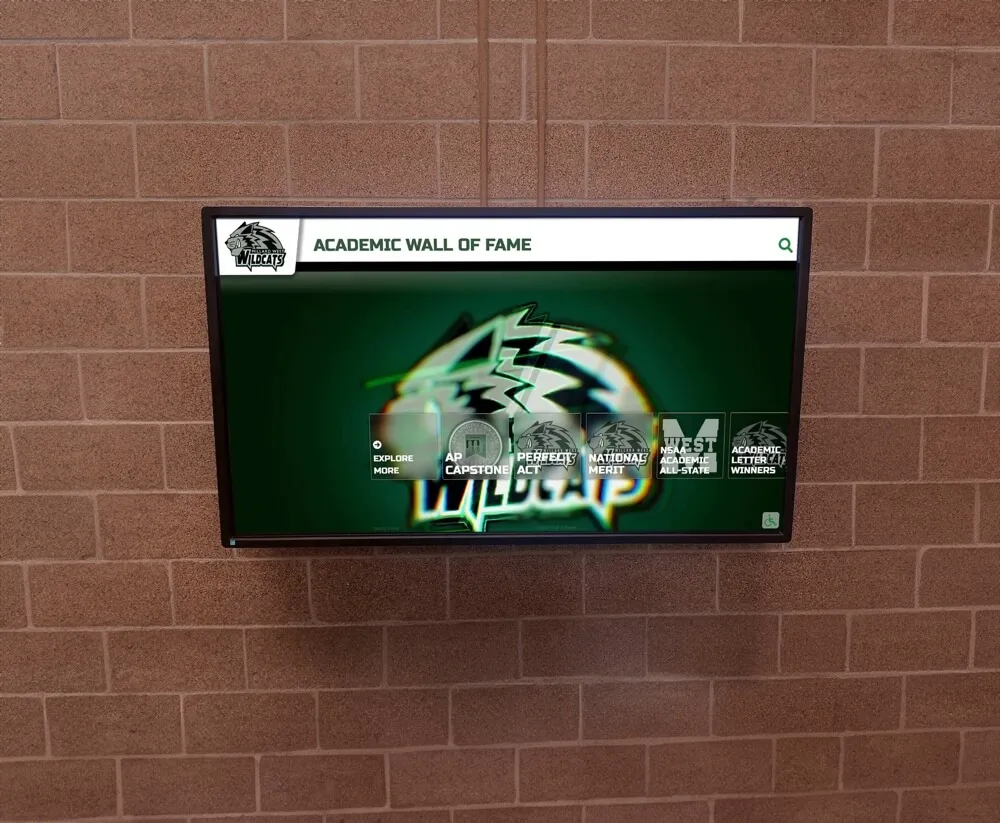
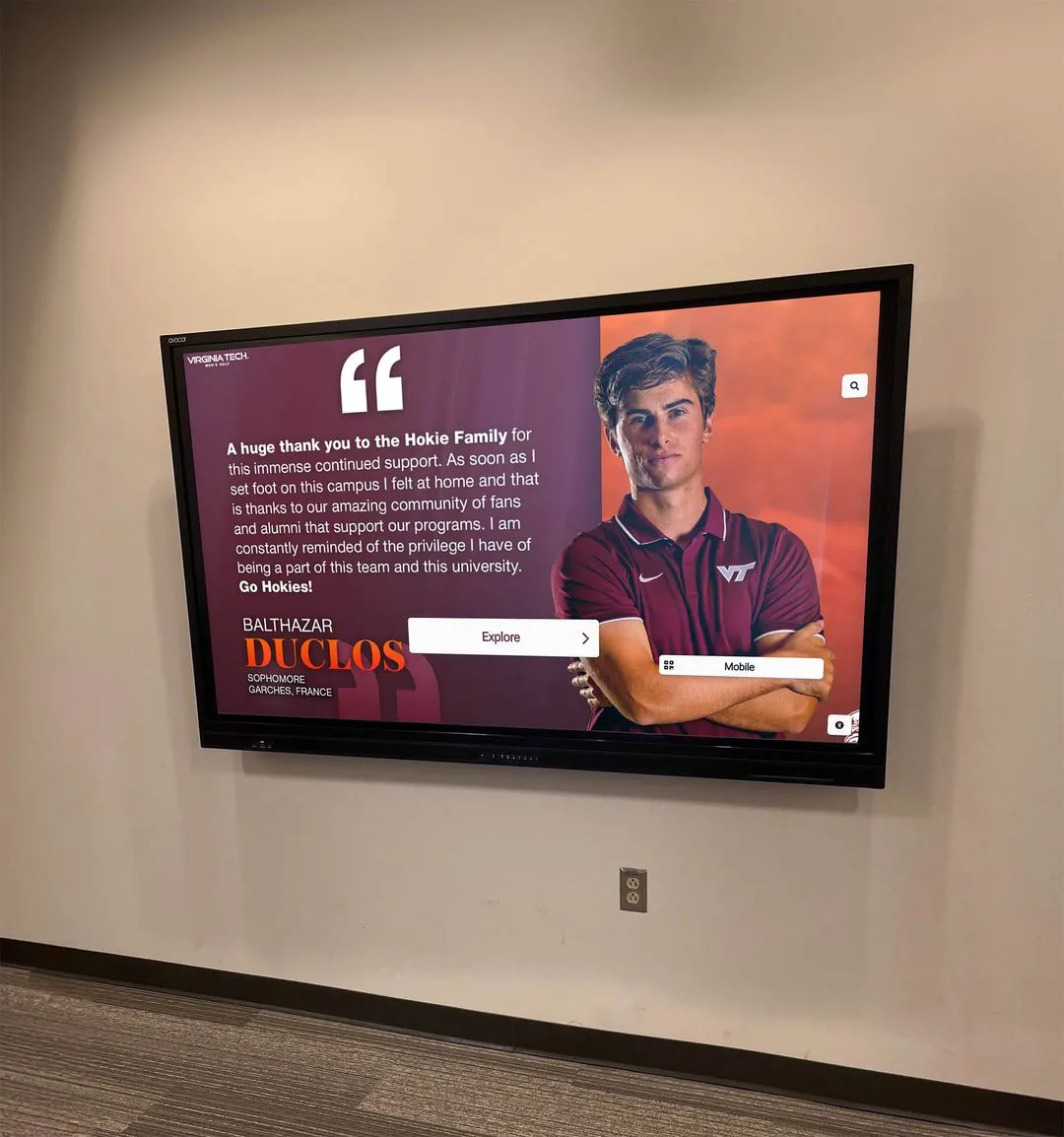
Individual member profile cards in digital systems provide comprehensive recognition including photos, achievements, and agricultural education experiences
Chapter FFA Degree This significant milestone recognizes members who have demonstrated leadership, completed substantial supervised agricultural experience programs, and contributed meaningfully to chapter activities. Chapter Degree recipients represent committed FFA members deserving prominent recognition that inspires younger members pursuing similar achievement.
State FFA Degree State FFA Degrees honor members demonstrating exceptional agricultural education achievement, substantial SAE programs earning significant income or demonstrating agricultural proficiency, proven leadership within chapters and communities, and academic achievement in agricultural coursework. These prestigious state-level honors merit comprehensive digital recognition showcasing recipients’ agricultural accomplishments and leadership contributions.
American FFA Degree The American FFA Degree represents the highest recognition FFA bestows upon members, requiring outstanding SAE programs, demonstrated leadership at state and national levels, significant agricultural achievement and financial success, and comprehensive community involvement. These exceptional achievements deserve recognition systems providing extensive space for biography, accomplishment documentation, and storytelling that inspires younger members.
FFA Proficiency Award Programs
Proficiency awards recognize FFA members excelling in specific agricultural career areas through supervised agricultural experience programs.
Career Area Diversity FFA proficiency awards span diverse agricultural sectors including agricultural mechanics and technology, beef, dairy, and livestock production, agricultural sales and entrepreneurship, environmental science and natural resources, food science and technology, landscape management and horticulture, veterinary science and equine science, agricultural communications, and many specialized areas.
This diversity ensures recognition opportunities exist for members pursuing varied agricultural interests—from traditional production agriculture to emerging agricultural careers in technology, science, and communications.
Chapters implementing comprehensive recognition benefit from multi-dimensional recognition systems that celebrate achievement across varied categories, ensuring diverse student interests receive appropriate acknowledgment.
Recognition Levels Proficiency awards progress through chapter, state, regional, and national levels, with increasing achievement requirements at each stage. Digital recognition systems can document member progression through proficiency award levels, celebrating initial chapter recognition while highlighting advancement to state and national competition.

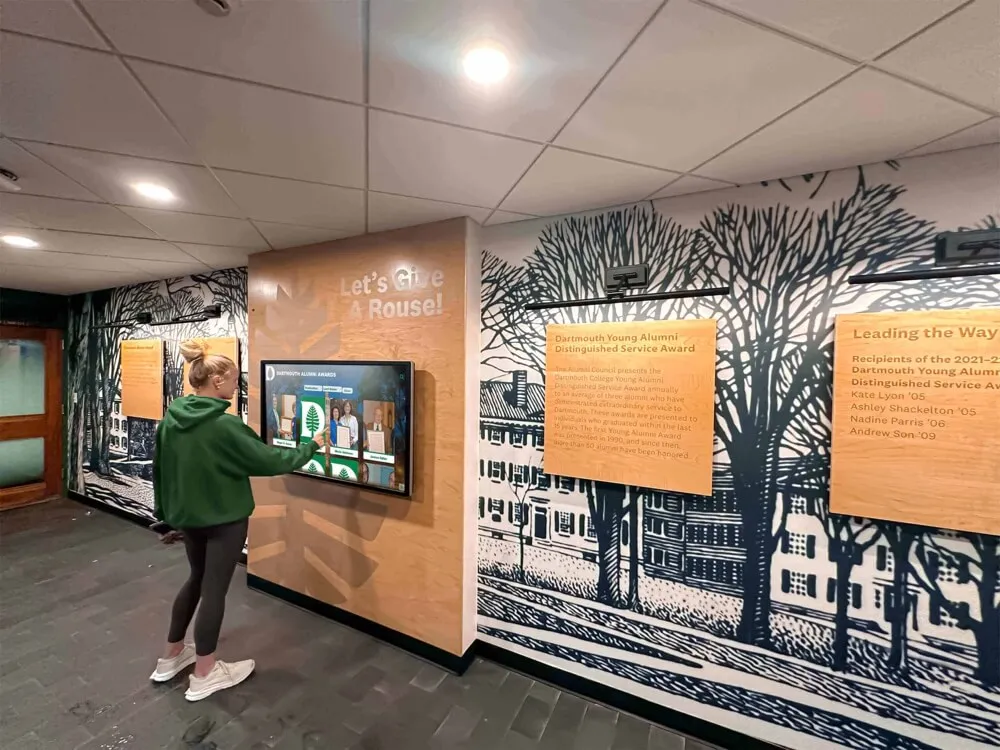
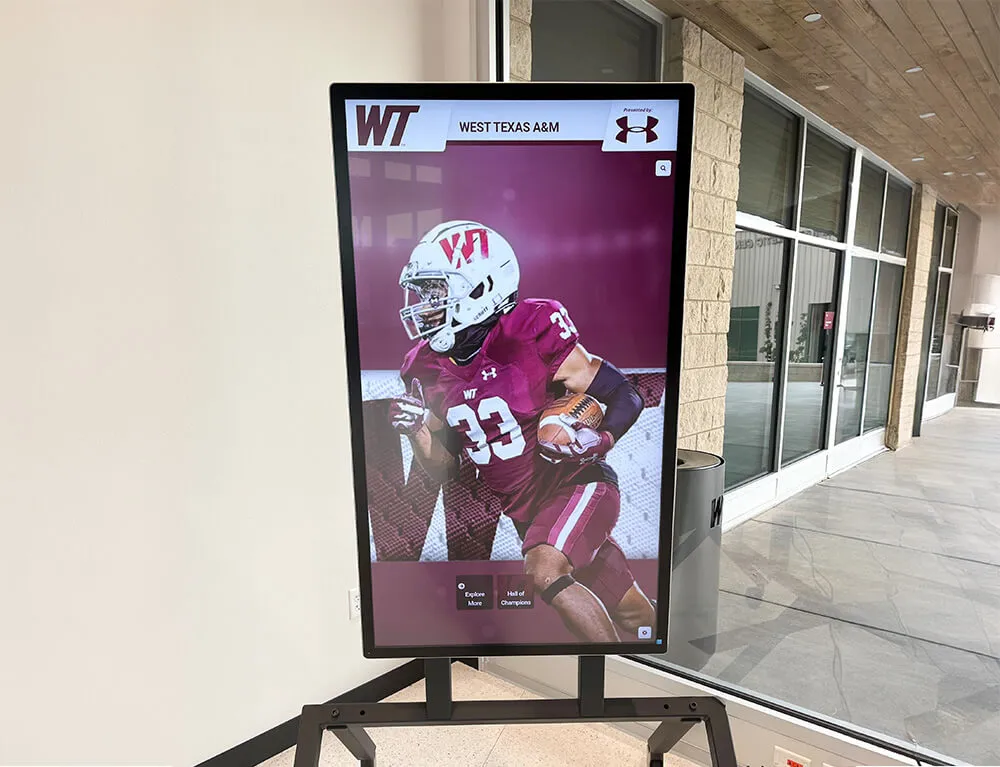
Touchscreen interfaces enable FFA members to explore peer achievements, understand career pathways, and envision their own agricultural education progression
Star Award Recognition
Star Awards recognize FFA members demonstrating exceptional achievement in specific categories.
Star Chapter Recognition Chapter Star Awards identify outstanding members across categories including Star Greenhand for exceptional first-year members, Star Chapter Farmer for excellence in agricultural production, Star in Agribusiness for entrepreneurial achievement, and Star in Agricultural Placement for outstanding work-based learning experiences.
These chapter-level recognitions deserve prominent display celebrating excellence while motivating members pursuing similar achievement pathways.
State Star Recognition State Star Awards represent significant achievement at state levels, recognizing top members statewide across Star categories. Digital recognition of State Star recipients builds chapter pride while demonstrating program quality to school administrators, prospective members, and community supporters.
National Star Recognition American Star Awards—American Star Farmer, American Star in Agribusiness, American Star in Agricultural Placement—represent pinnacle FFA achievement, recognizing the nation’s top members in each category. These extraordinary accomplishments merit comprehensive digital recognition with extensive biography, achievement documentation, and multimedia content celebrating national excellence.
Similar to all-state athlete recognition programs, national FFA recognition demands prominent display that honors exceptional achievement while inspiring younger members and elevating program prestige.
Additional FFA Recognition Categories
Comprehensive digital recognition systems accommodate diverse FFA achievement beyond degrees, proficiencies, and Star Awards.
Career Development Events (CDEs) CDE teams competing in specialized agricultural skill competitions deserve recognition for team placement, individual awards, state and national qualifications, and championship victories across diverse contest areas from livestock evaluation to agricultural advocacy.

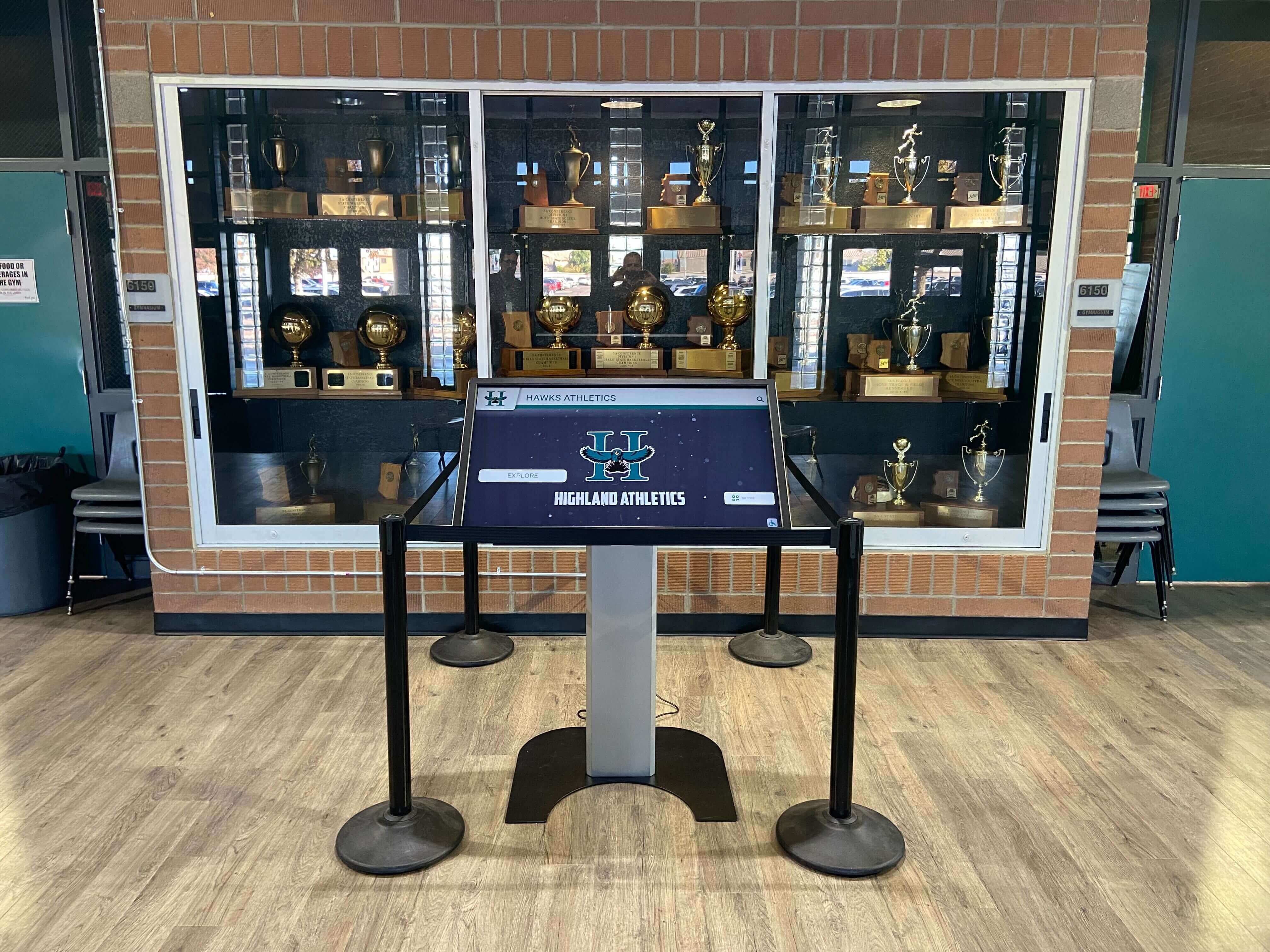
Digital recognition systems complement physical trophies, providing context and storytelling that brings CDE achievements to life
Leadership Development Events (LDEs) LDE recognition celebrates members excelling in public speaking, parliamentary procedure, creed speaking, and other leadership competitions that develop professional skills essential for agricultural leadership.
Chapter Awards and Recognition National Chapter Awards, Three-Star Chapter ratings, and other chapter-level honors demonstrate collective excellence deserving digital showcase. Learn about comprehensive organizational recognition in community recognition programs.
Scholarship Recipients FFA scholarship recipients pursuing agricultural education at colleges and technical schools represent investment returns that agricultural education stakeholders appreciate seeing documented and celebrated.
Designing Effective FFA Digital Recognition Systems
Creating digital recognition displays that effectively celebrate FFA achievement requires thoughtful planning addressing both technical and content considerations.
Strategic Placement and Visibility
Location dramatically impacts digital recognition effectiveness.
High-Traffic School Locations Positioning FFA recognition displays in prominent school areas maximizes visibility among non-FFA students, prospective members, school administrators and staff, visiting families during open houses and admissions events, and community members attending school functions.
Effective locations include main school lobbies and entrance areas, cafeteria or commons spaces where students gather, main hallway intersections with high foot traffic, near auditoriums and performing arts spaces hosting community events, and agricultural education facility entrances creating prominent first impressions.
Schools implementing strategic recognition placement often create exciting hallway displays that transform circulation spaces into celebration zones showcasing diverse student achievements including FFA excellence.
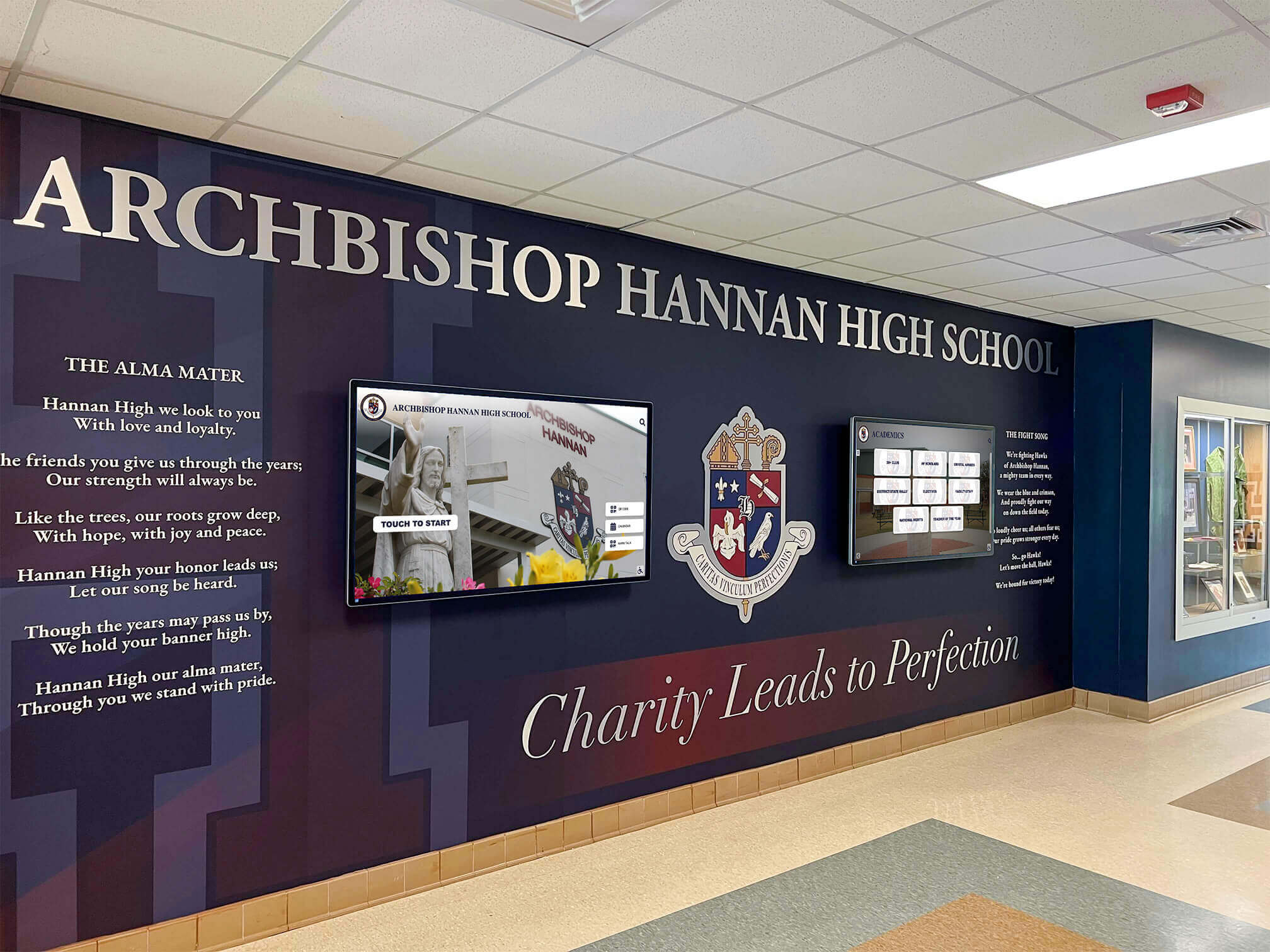
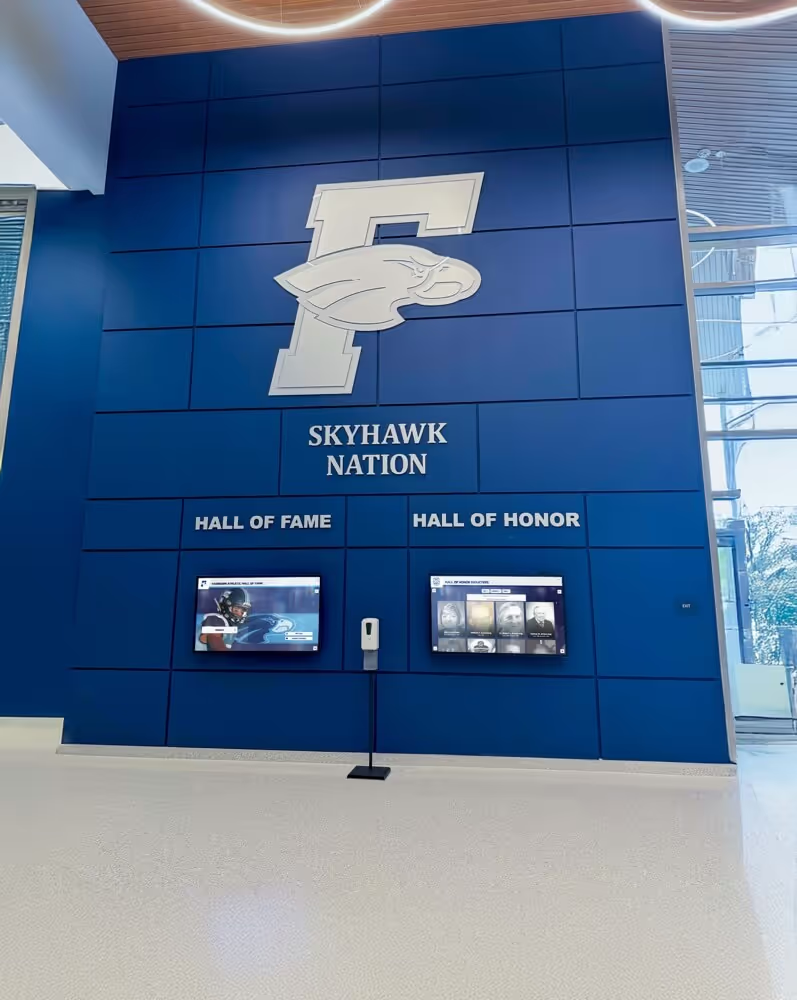
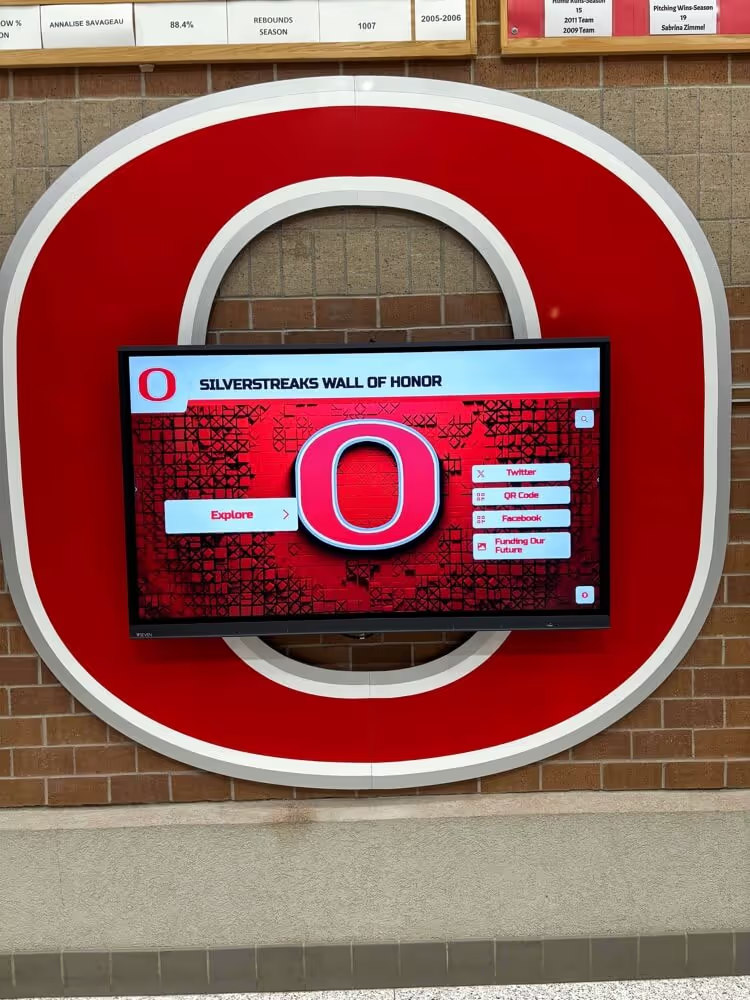
School lobby installations integrate FFA digital recognition with broader institutional identity, celebrating agricultural education alongside other programs
Multiple Display Strategies Larger chapters may benefit from distributed recognition systems with primary displays in prominent school-wide locations for maximum visibility and secondary displays in agriculture departments providing detailed member exploration. This approach ensures broad awareness while maintaining depth of information for interested viewers.
Content Organization and Navigation
Intuitive content structure enables visitors to explore FFA achievements effectively.
Category-Based Organization Digital systems should organize recognition by logical categories including degree programs with separate sections for Greenhand, Chapter, State, and American Degrees, proficiency award areas organized by career sectors, Star Award recipients at chapter, state, and national levels, Career Development Event teams by competition area, and leadership recognition for chapter officers and positions.
This categorical organization parallels effective athletic recognition structures where sport-by-sport organization with chronological and achievement-based filtering creates intuitive navigation.
Search and Filter Functionality Robust search capabilities enable visitors to find specific members, explore particular award types, filter by graduation year or era, identify members pursuing specific agricultural careers, and discover achievements in areas of personal interest.

Intuitive touchscreen interfaces invite exploration, transforming passive recognition viewing into active engagement with FFA achievements
Member Profile Pages Individual member pages should provide comprehensive recognition through profile photos and member information, complete lists of awards and degrees earned, detailed descriptions of supervised agricultural experience projects, leadership positions held and contributions made, Career Development Event participation and achievements, and scholarship awards and post-secondary agricultural education plans.
This biographical approach creates meaningful recognition that tells complete stories rather than simply listing awards—essential for helping non-members understand FFA achievement significance.
Visual Design and Branding Integration
Effective FFA recognition displays integrate chapter identity while maintaining professional appearance.
FFA Brand Standards Recognition systems should incorporate official FFA colors (National Blue and Corn Gold), FFA emblem and official graphics, chapter name and school identification, and state FFA association branding where appropriate.
This visual consistency reinforces FFA identity while creating professional displays that reflect organizational standards and agricultural education quality.
Agricultural Imagery and Themes Visual design should reflect agricultural education through relevant imagery including agricultural production and career photography, supervised agricultural experience project documentation, FFA event and activity photos, Career Development Event competition images, and community service and leadership activities.
Schools creating comprehensive recognition displays often draw from extensive digital asset management systems that organize photos, videos, and documents supporting recognition content creation.
Multimedia Content Integration
Digital platforms enable rich multimedia recognition impossible with traditional methods.
Photography Galleries Comprehensive photo collections document supervised agricultural experience projects, CDE team competitions and preparation, chapter activities and community service, leadership conferences and conventions, and State Fair and agricultural exhibition participation.
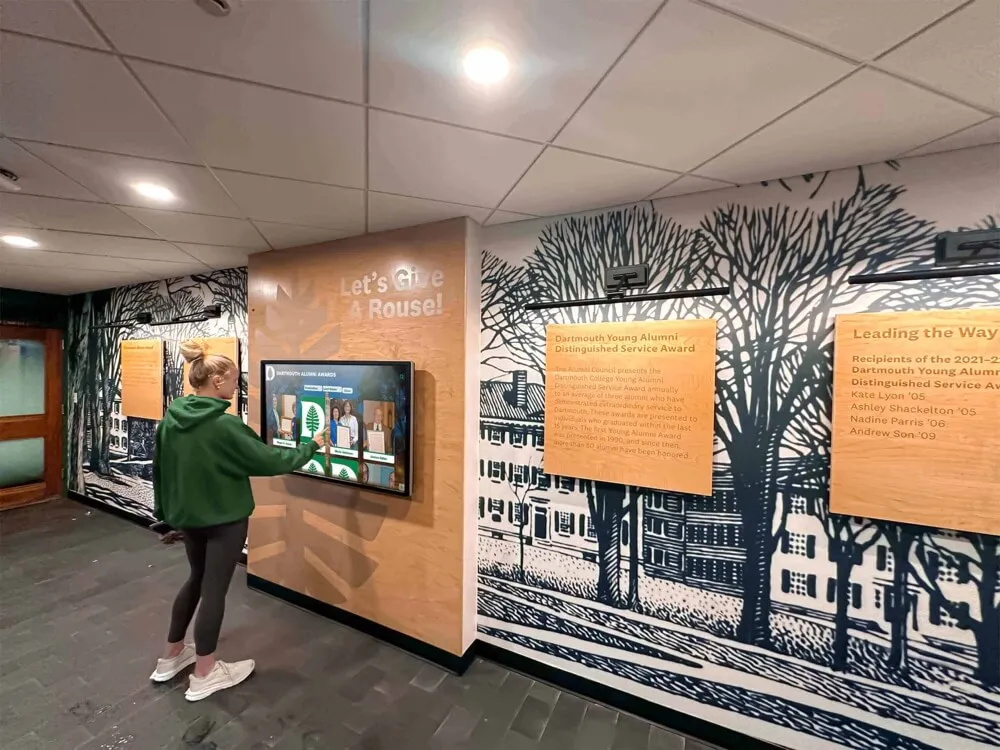
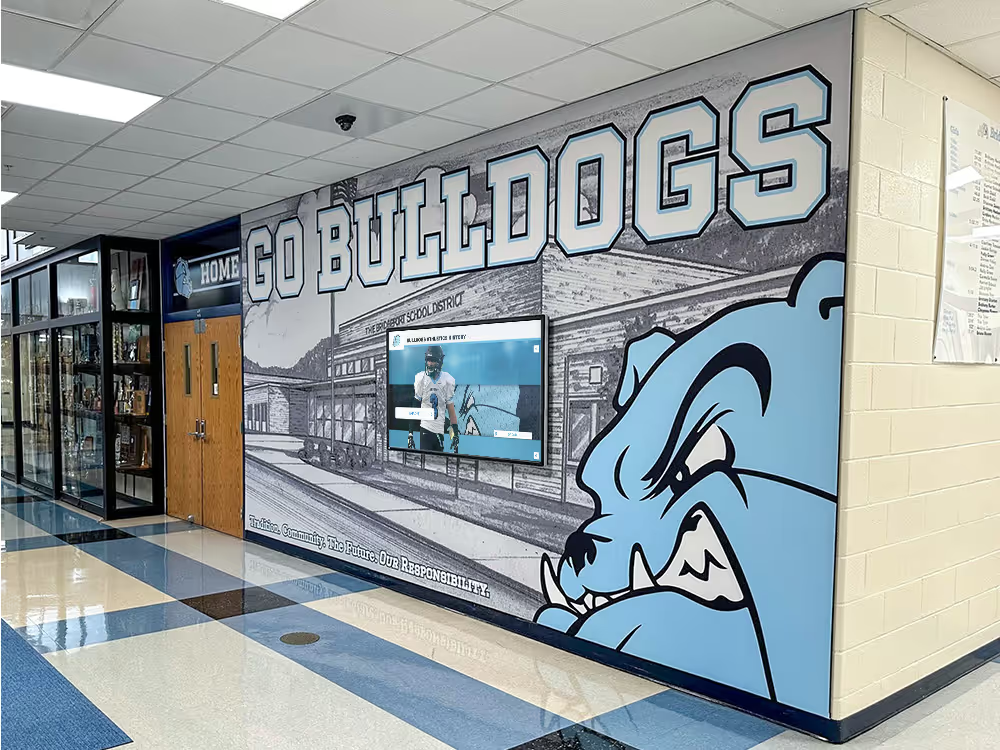
Hallway recognition displays create informal gathering spaces where students naturally explore achievements and agricultural education opportunities
Video Integration Video content brings FFA achievements to life through CDE performance highlights, speaking competition recordings, agricultural project documentation, chapter activity recap videos, and member testimonials about agricultural education experiences.
Similar to video archives used in athletic recognition, multimedia FFA content creates engaging experiences that communicate achievement depth and member dedication.
Achievement Context and Descriptions Written content should explain achievement significance for audiences unfamiliar with FFA recognition systems, providing context about degree requirements and progression, proficiency award career areas and SAE expectations, Star Award selection criteria and competitiveness, CDE format and skill requirements, and scholarship opportunities and agricultural career pathways.
This educational component helps non-FFA audiences appreciate recognition significance while potentially inspiring prospective members exploring agricultural education opportunities.
Technical Implementation Considerations
Successful FFA digital recognition requires appropriate technology infrastructure and management systems.
Hardware Selection
Choosing appropriate display hardware balances functionality, durability, and budget.
Display Size and Format FFA recognition applications typically utilize touchscreen displays ranging from 43-55 inches for single-location installations to multiple smaller displays for distributed chapter recognition. Larger displays (65-75 inches) work effectively in spacious lobbies or cafeterias where viewing distances are greater.
Display selection should consider mounting location and viewing distance, expected user interaction patterns (touch versus passive viewing), content type and detail level requiring visibility, and budget constraints balancing size with quality.
Educational institutions implementing interactive touchscreen systems must balance capability with budget realities—selecting commercial-grade displays designed for continuous operation and public interaction rather than consumer televisions lacking necessary durability.
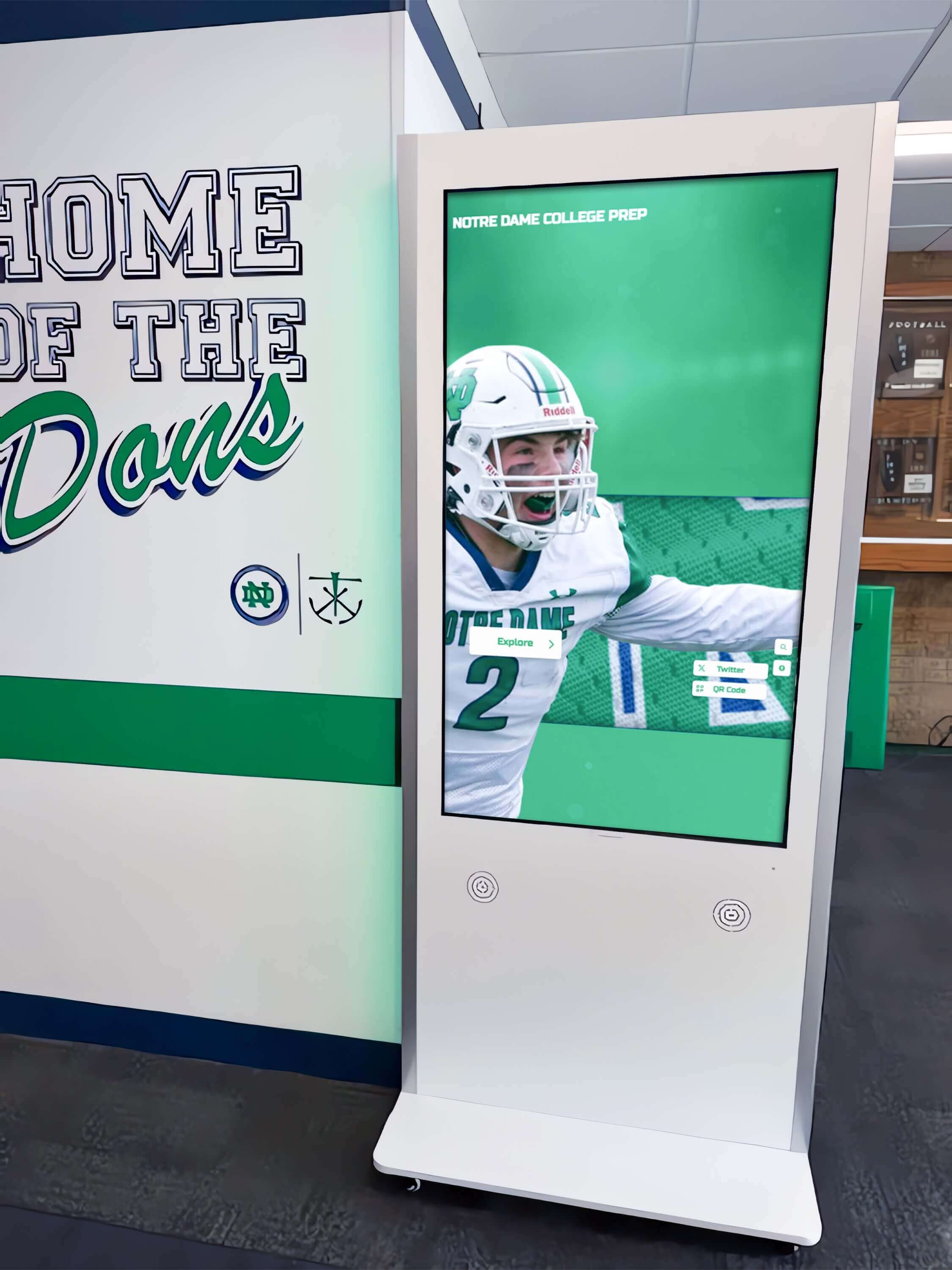
Educational facility kiosk installations demonstrate effective integration of interactive recognition technology in school hallways and common areas
Touchscreen Versus Non-Interactive Displays FFA chapters must decide between fully interactive touchscreen displays enabling member search and detailed exploration, or non-interactive displays presenting rotating content in slideshow formats. Interactive touchscreens provide superior engagement and comprehensiveness but represent higher initial investment, while non-interactive displays offer lower cost with more limited recognition capacity.
Many chapters implement hybrid approaches with interactive displays in primary locations and supplementary non-interactive screens providing rotating FFA content in additional areas.
Mounting and Installation Professional installation ensures secure, ADA-compliant mounting that protects institutional investment. Considerations include wall-mounted installations in hallways and lobbies, freestanding kiosk enclosures for flexible placement, appropriate height for standing interaction and wheelchair accessibility, cable management maintaining clean, professional appearance, and security measures protecting equipment in public school spaces.
Software Platforms and Content Management
Digital recognition effectiveness depends on capable software platforms and manageable content systems.
Content Management System Requirements FFA chapters need platforms enabling easy content updates without technical expertise, support for multiple content types (photos, videos, documents), organizational structures matching FFA award categories, user permission management allowing appropriate staff access, and scheduled content publication for updating recognition regularly.
Solutions like Rocket Alumni Solutions provide purpose-built platforms designed specifically for educational recognition needs, offering intuitive interfaces that agricultural education teachers can manage without IT department dependency.
Cloud-Based Versus Local Systems Cloud-based content management offers significant advantages including remote updates from any internet-connected device, automatic backup and content preservation, no on-site server hardware requirements, simplified software updates and maintenance, and potential for mobile-responsive web access extending recognition beyond physical displays.
Schools implementing touchscreen digital signage solutions increasingly prefer cloud-based platforms that reduce IT burden while improving functionality and reliability.
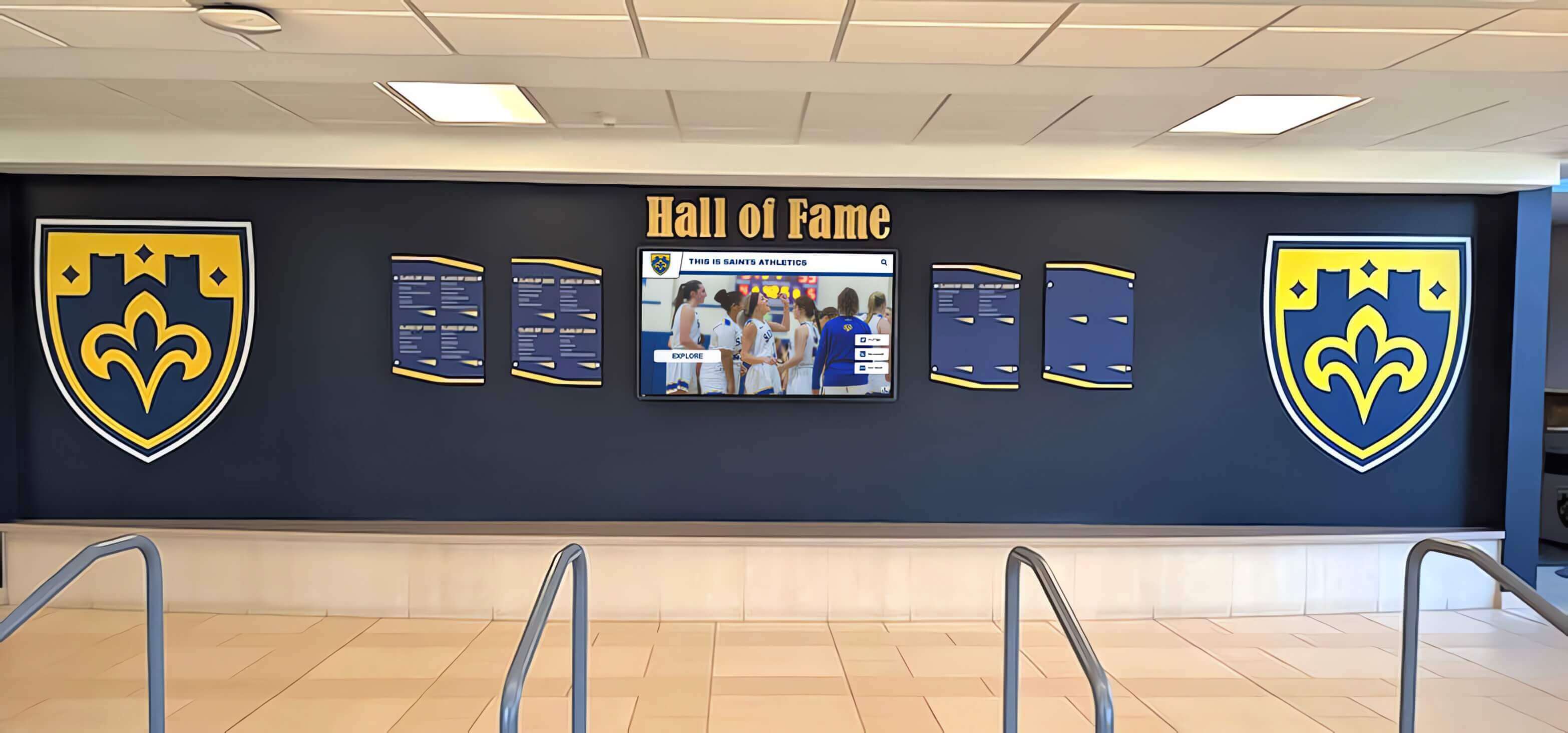
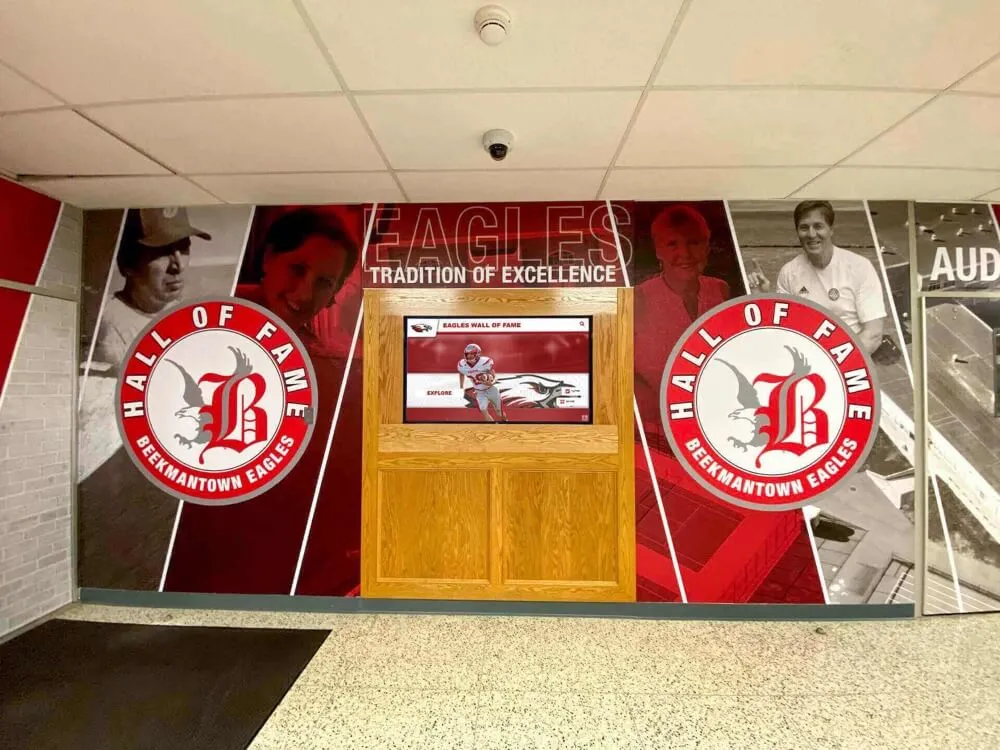
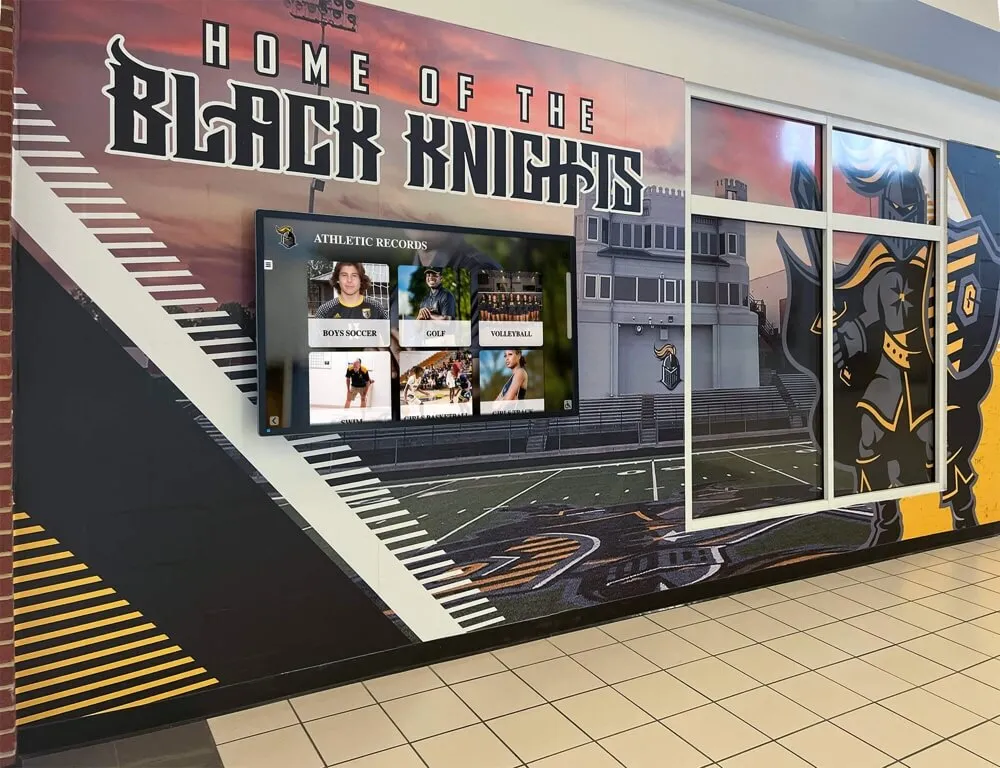
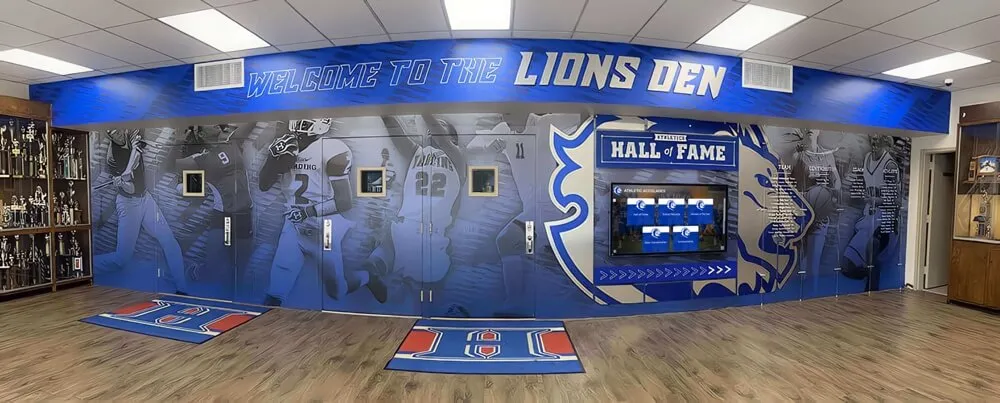
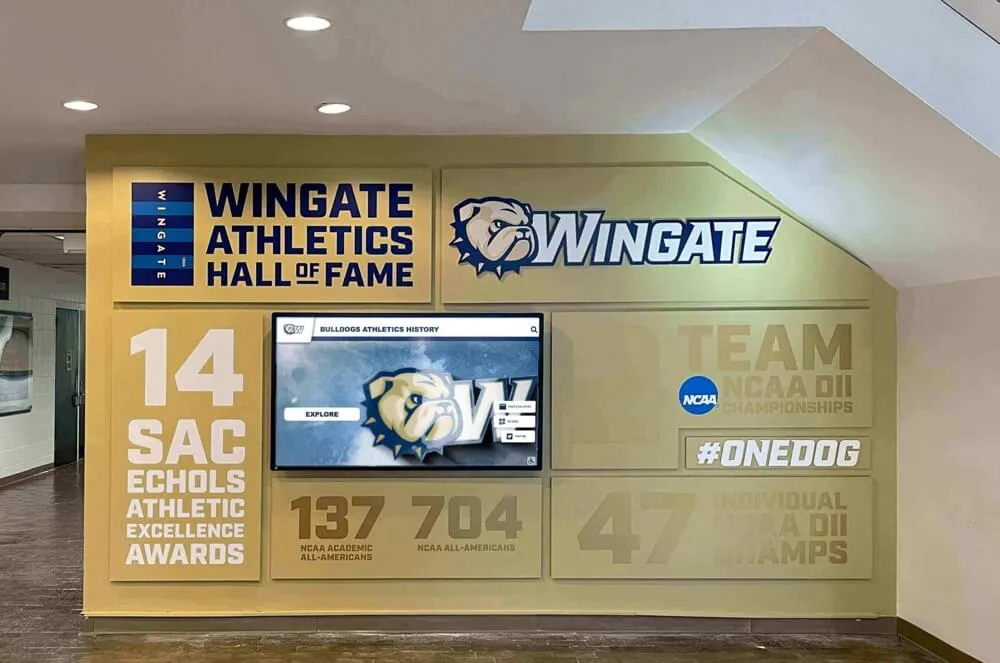
Integrated recognition walls combine traditional design elements with digital displays, creating impactful installations that honor FFA heritage while embracing modern technology
Integration with Existing Systems Advanced implementations may integrate FFA recognition displays with school websites providing online recognition access, student information systems for automatic data import, social media platforms for recognition content sharing, and digital signage networks for distributed display management.
While integration adds complexity, it can significantly reduce manual content management work while extending recognition reach beyond physical displays.
Content Creation and Management Workflows
Sustainable FFA recognition requires manageable processes for ongoing content development and updates.
Initial Content Development Launching comprehensive FFA digital recognition demands significant upfront work including gathering historical award information across multiple years, collecting member photos and biographical information, documenting supervised agricultural experience projects, recording achievement details and dates, and organizing content by appropriate categories and hierarchies.
This foundational work benefits from dedicated project time—perhaps during summer break when agricultural education teachers have fewer daily instructional responsibilities. Some chapters engage student officers or FFA alumni in content development projects, building comprehensive recognition databases while creating meaningful leadership activities.
Ongoing Update Processes Sustainable recognition requires establishing routine processes for capturing new member photos and information at enrollment, documenting award recipients as recognition occurs throughout the year, updating degree recipients following FFA ceremonies, recording CDE results and team achievements, and publishing scholarship awards and post-secondary plans.
Agricultural education teachers managing FFA recognition displays should establish quarterly or semester update schedules ensuring content remains current without becoming overwhelming administrative burdens. Learn about managing recognition programs in student recognition implementation guides.
Student Leadership Involvement Engaging FFA officers and members in recognition content development creates sustainable management models while providing leadership development opportunities. Student roles might include chapter historians managing content collection, public relations officers creating member biographies, photographers documenting events and activities, and officer teams conducting quarterly recognition updates.
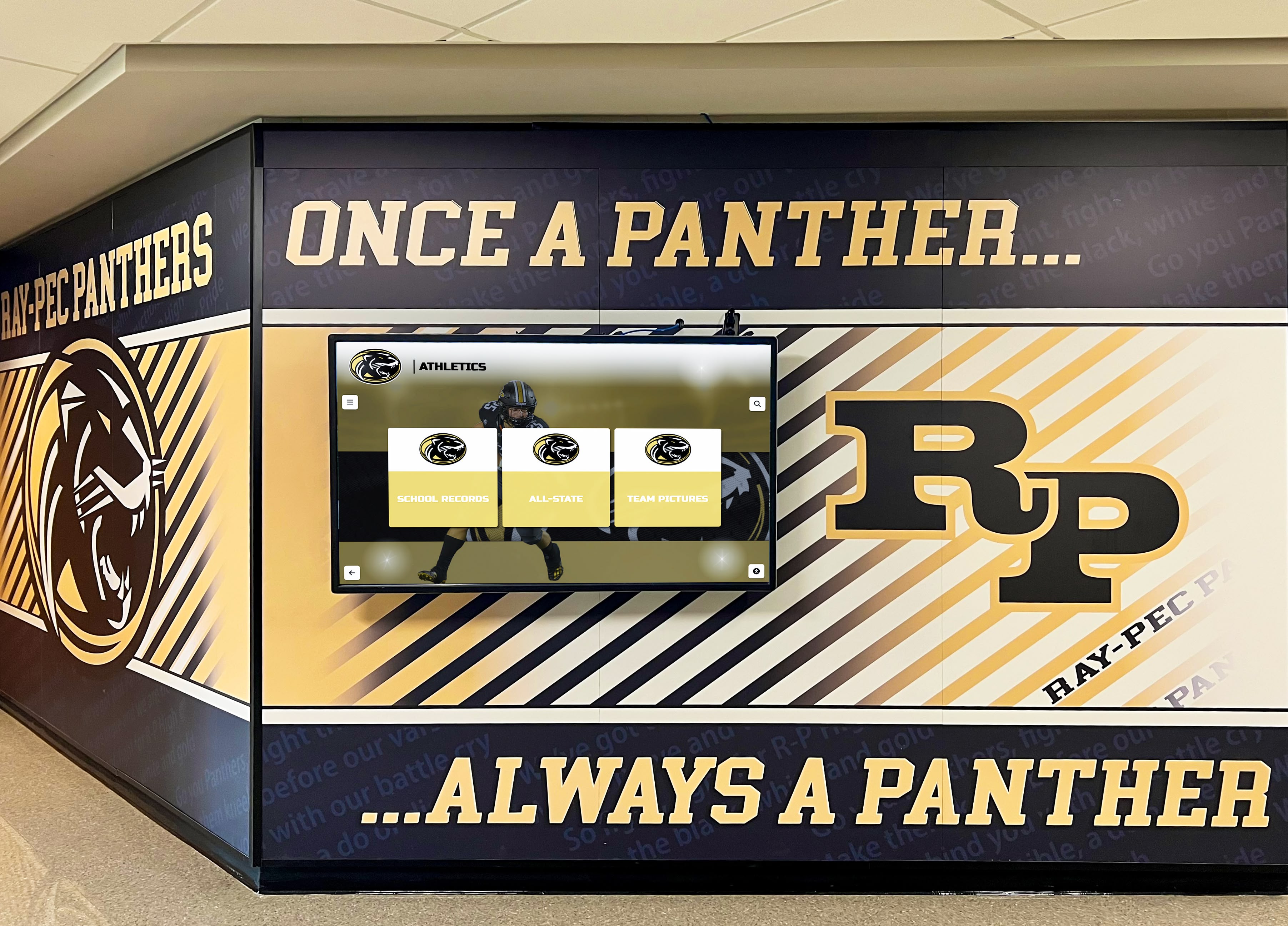
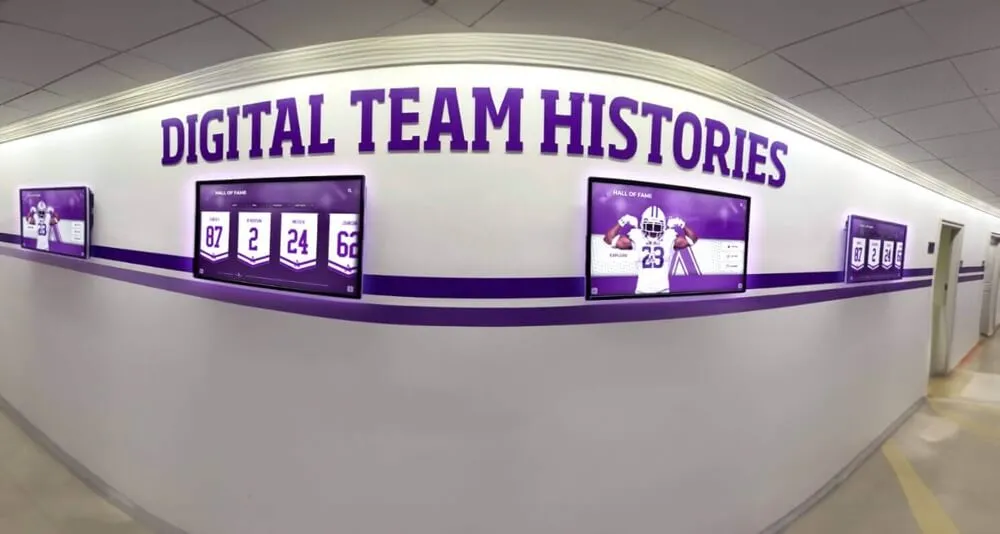
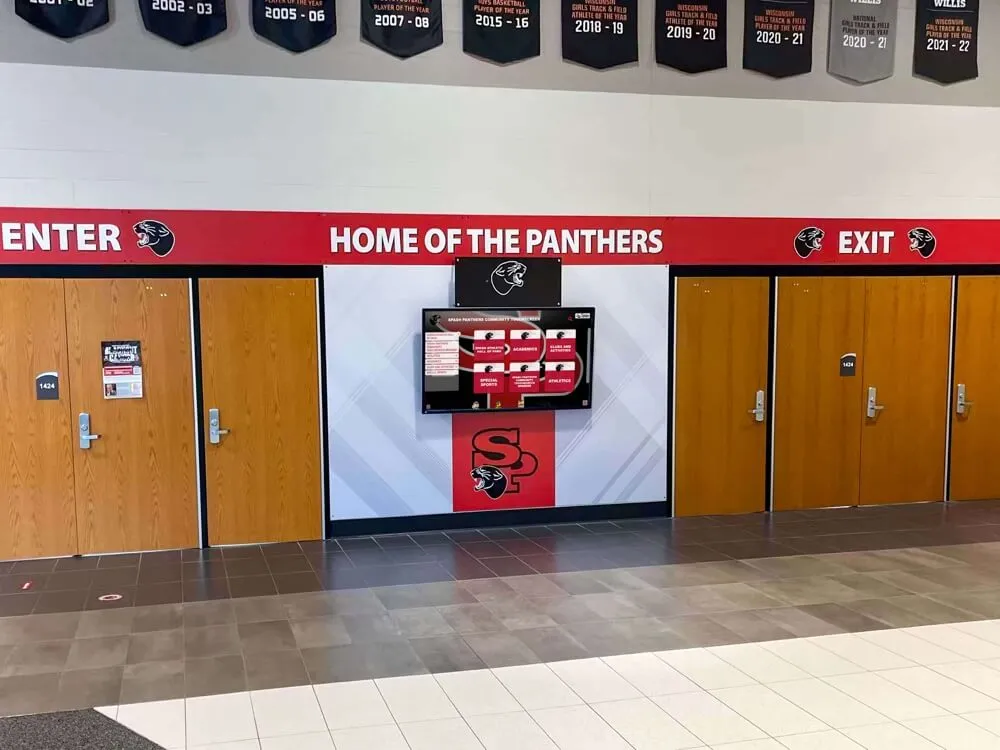
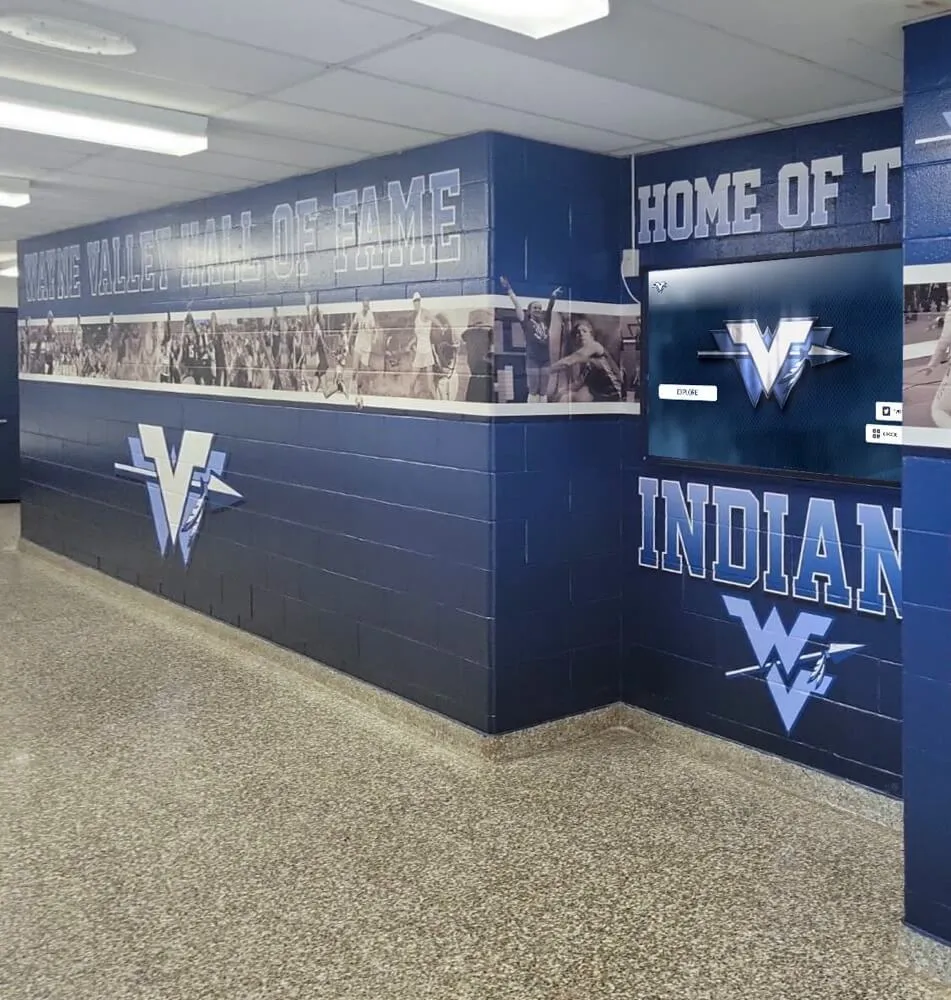
Strategic hallway placements ensure FFA recognition receives visibility during daily circulation, informal gathering, and special events
This leadership delegation reduces teacher burden while creating authentic agricultural communications and leadership experiences for members—aligning recognition management with FFA mission of developing student leadership capacity.
Expanding Recognition Beyond FFA Awards
Comprehensive digital displays can celebrate broader agricultural education excellence beyond individual member awards.
Chapter Achievement Recognition
FFA chapters collectively earn recognition deserving prominent display.
National Chapter Award Recognition Chapters achieving National Chapter Award recognition—Superior, Gold, Silver, Bronze levels—demonstrate comprehensive program quality across growing leaders, building communities, and strengthening agriculture. Digital displays should prominently feature chapter-level achievements with descriptions of accomplishment requirements, year-by-year chapter award history, student activities and programs demonstrating quality standards, and community impact created through chapter programs.
This chapter-level recognition builds institutional pride among all members while demonstrating agricultural education program quality to school administrators, board members, and community stakeholders.
State FFA Recognition State-level chapter honors, contest sweepstakes awards, and other recognitions earned collectively deserve celebration alongside individual member achievements, providing comprehensive documentation of chapter excellence.
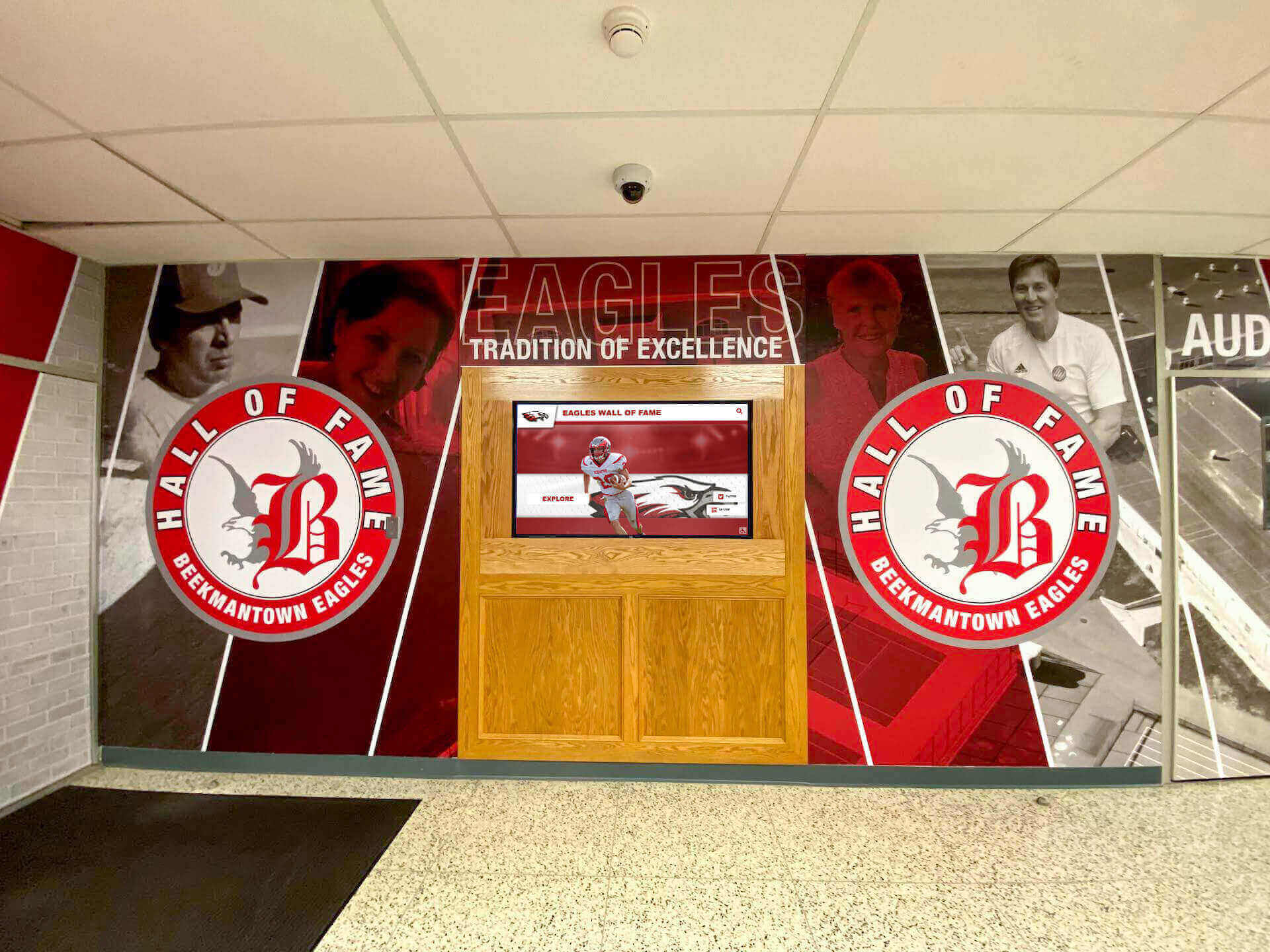
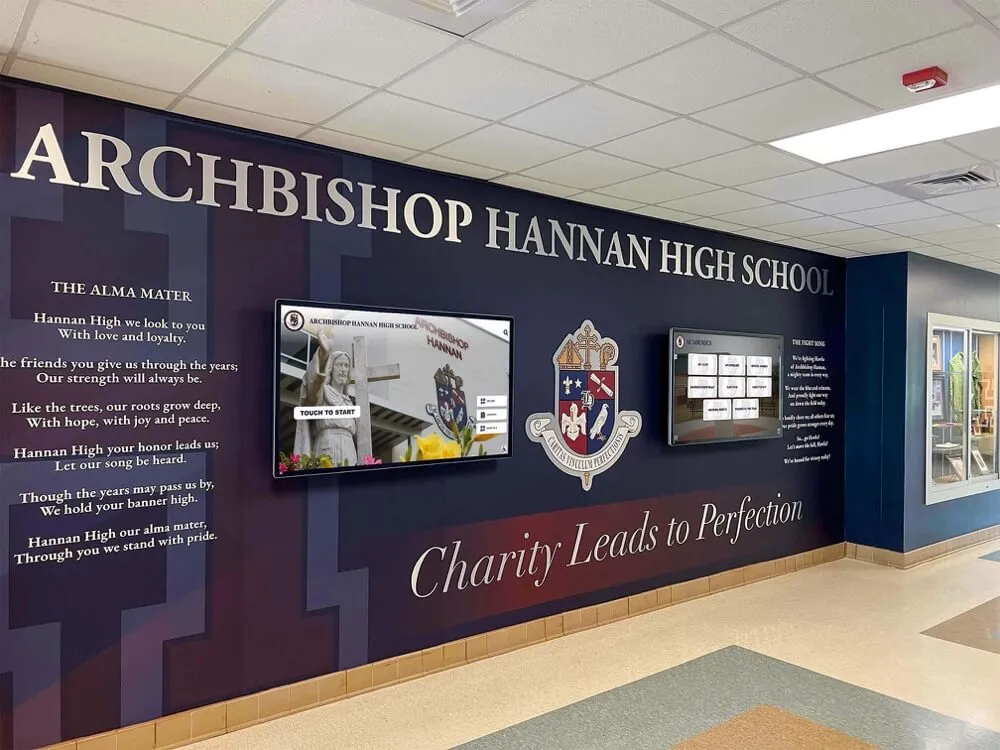
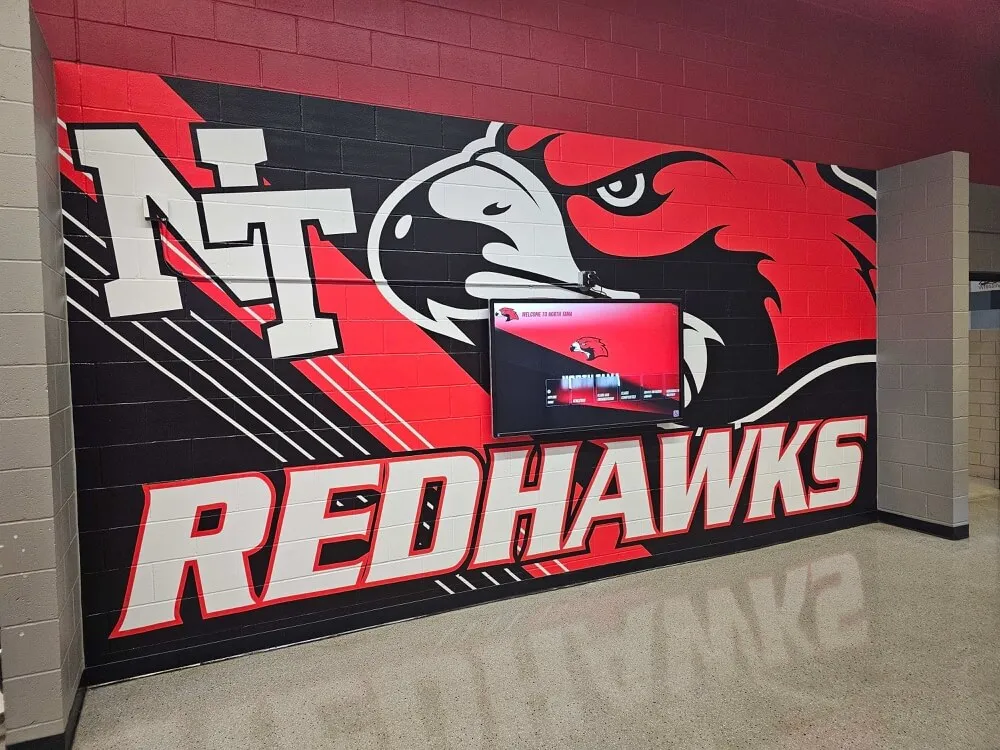
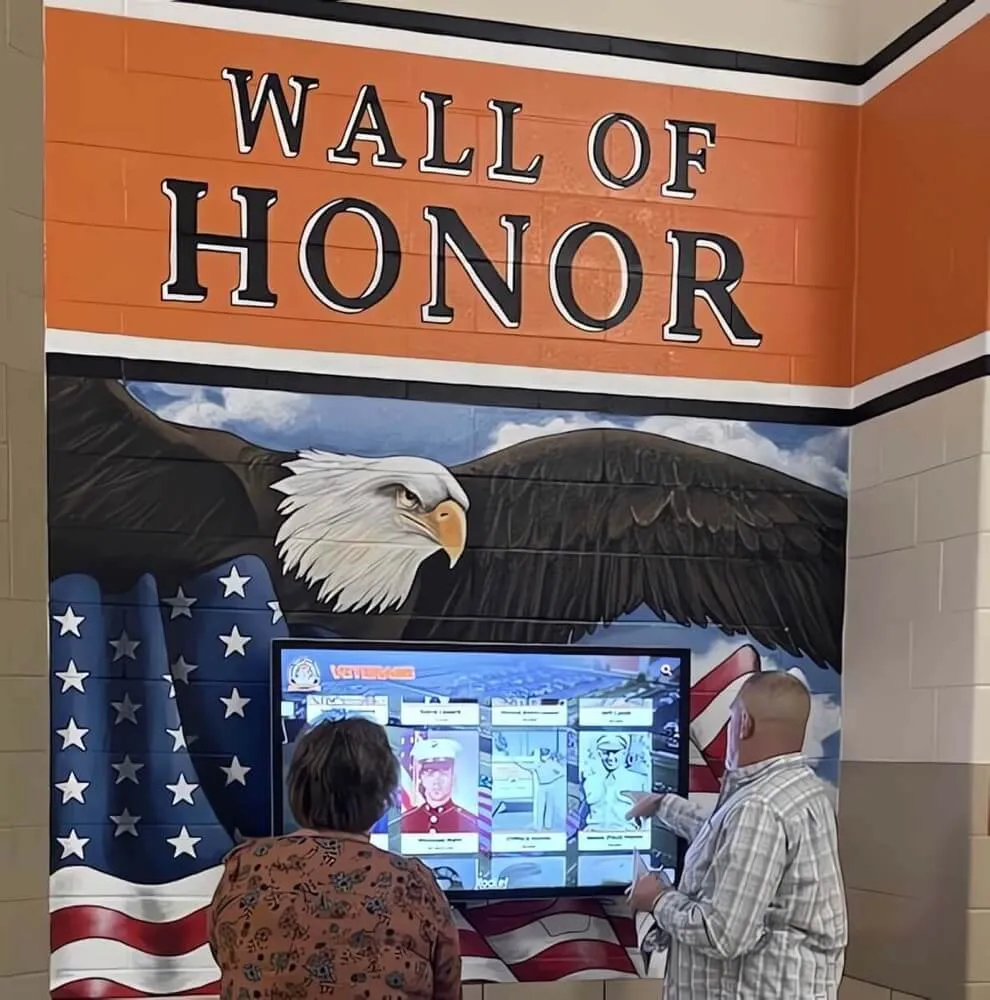
Lobby installations combining murals, institutional branding, and digital recognition create powerful first impressions for visitors while celebrating program excellence
Agricultural Education Program Highlights
Digital recognition can extend beyond FFA-specific awards to celebrate broader agricultural education program elements.
Career Development Event Programs Comprehensive CDE recognition might include all contest areas offered by the chapter, team rosters and coaching staff across years, individual and team achievement progression, state and national qualification history, and championship victories and program milestones.
This team-based recognition creates inclusive celebration ensuring students participating in CDEs—regardless of individual award achievement—receive acknowledgment for their contributions and skill development.
Supervised Agricultural Experience Showcases SAE projects represent the experiential learning foundation of agricultural education. Digital displays can feature member SAE portfolios with project descriptions and outcomes, diverse SAE examples across entrepreneurship, placement, research, and exploratory categories, financial records and agricultural business achievement, and agricultural career pathways demonstrated through SAE programs.
Similar to project-based learning recognition, SAE showcases demonstrate learning depth and real-world application that distinguishes agricultural education from traditional academic coursework.
Leadership Development Recognition Beyond competitive LDEs, recognition can celebrate chapter officer teams and leadership positions, leadership conference participation and outcomes, community service projects and impact, agricultural advocacy activities, and alumni pursuing agricultural leadership careers.
This comprehensive approach ensures multiple pathways to recognition exist—critical for maintaining diverse member engagement and demonstrating that FFA excellence encompasses varied contributions beyond competitive awards.
Agricultural Education Alumni Recognition
Many agricultural education programs span decades with impressive alumni achievement deserving celebration alongside current member recognition.
Notable Agricultural Education Alumni Alumni sections might showcase graduates pursuing agricultural careers, FFA alumni serving in agricultural leadership positions, former members contributing to agricultural industries, alumni supporting current chapter programs, and career pathway examples inspiring current members.
Comprehensive alumni recognition approaches demonstrate agricultural education impact extending beyond high school participation to career success and industry leadership—powerful advocacy for programs facing funding pressures or enrollment challenges.

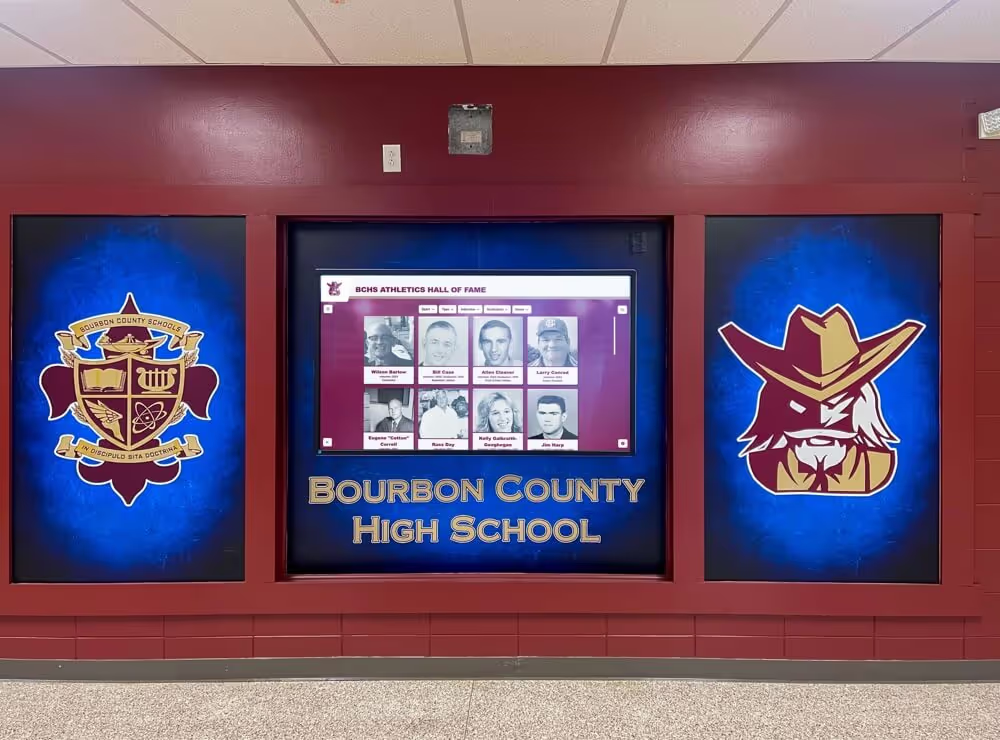
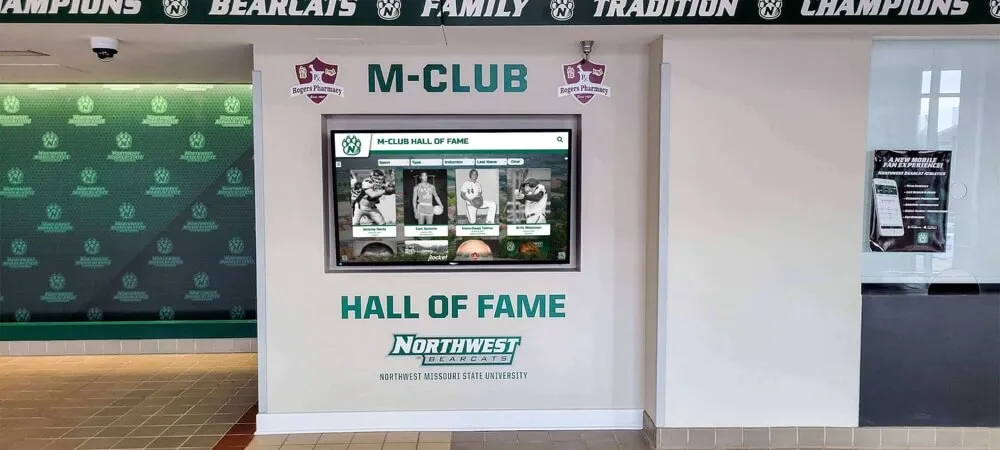
Hybrid recognition walls preserve traditional plaque-based recognition while adding digital displays providing expanded capacity and multimedia storytelling
Agricultural Education Heritage and History Historical content celebrating program legacy creates context for current achievements while building institutional identity. Content might include program founding and evolution, historical photos from past decades, agricultural education teacher legacy and impact, facility development and improvement over time, and milestone achievements and anniversary celebrations.
Schools preserving institutional memory through school history displays create powerful connections between past tradition and current excellence—demonstrating enduring commitment to agricultural education and FFA program quality.
Benefits of FFA Digital Recognition Beyond Member Celebration
Strategic digital recognition systems deliver value extending beyond individual member acknowledgment to support broader agricultural education program goals.
Recruitment and Membership Growth
Prominent FFA recognition influences prospective member enrollment decisions.
Aspirational Visibility Non-FFA students seeing prominent chapter achievement displays in school common areas gain awareness of agricultural education opportunities, understand diverse career pathways available through FFA, recognize achievement potential in agricultural programs, and develop interest in FFA participation and membership.
This aspirational recruitment parallels successful athletic program marketing where comprehensive achievement displays inspire prospective athletes while celebrating current team excellence.
Middle School Recruitment FFA chapters serving high schools drawing from feeder middle schools can extend digital recognition access online, enabling prospective high school students to explore FFA opportunities before enrollment. Web-accessible recognition platforms become powerful recruitment tools during eighth-grade visits, agricultural education orientation programs, and family research about high school program offerings.
First-Impression Impact During Admissions Schools featuring FFA prominently during admissions processes—campus tours, open houses, prospective family visits—benefit from professional digital recognition systems creating positive impressions. Comprehensive displays demonstrate program quality and achievement, showcase diverse agricultural education opportunities, reflect institutional investment in agricultural programs, and create memorable distinction from schools without comparable agricultural education options.

Interactive exploration enables prospective members and families to understand FFA achievement depth and opportunity diversity through self-guided discovery
Program Advocacy and Administrative Support
FFA recognition displays serve as ongoing advocacy tools communicating program value to educational decision-makers.
Demonstrating Educational Outcomes Agricultural education programs justifying funding and resources benefit from comprehensive achievement documentation showing student success measures, career pathway development and technical skill acquisition, leadership development and professional competency, and community engagement and service impact.
Digital displays located near administrative offices ensure principals, superintendents, and school board members regularly encounter FFA excellence documentation—maintaining awareness of program value and student achievement.
Competitive Parity with Athletic Programs Schools dedicating extensive resources to athletic recognition while providing minimal agricultural education visibility create perception that athletic achievement holds greater value. Professional FFA digital recognition systems comparable to athletic displays establish competitive parity, ensuring agricultural education excellence receives equivalent celebration and visibility.
This recognition equity supports agricultural education advocacy by demonstrating institutional commitment to diverse excellence beyond athletics—essential messaging for comprehensive educational programs serving varied student interests.
Alumni Engagement and Agricultural Education Support
Recognition systems create touchpoints for alumni engagement with current programs.
Alumni Connection Opportunities Agricultural education alumni encountering digital recognition displays during school visits can explore current chapter achievements, recognize program growth and evolution, identify opportunities to support current members, and reconnect with agricultural education experiences and FFA memories.
This natural engagement can catalyze alumni involvement through mentorship of current members, financial support for chapter programs, Career Development Event coaching and judging, supervised agricultural experience consultation and resources, and professional networking supporting member career development.
Schools implementing comprehensive alumni engagement strategies recognize that recognition displays serve as conversation starters facilitating meaningful alumni-program connections.
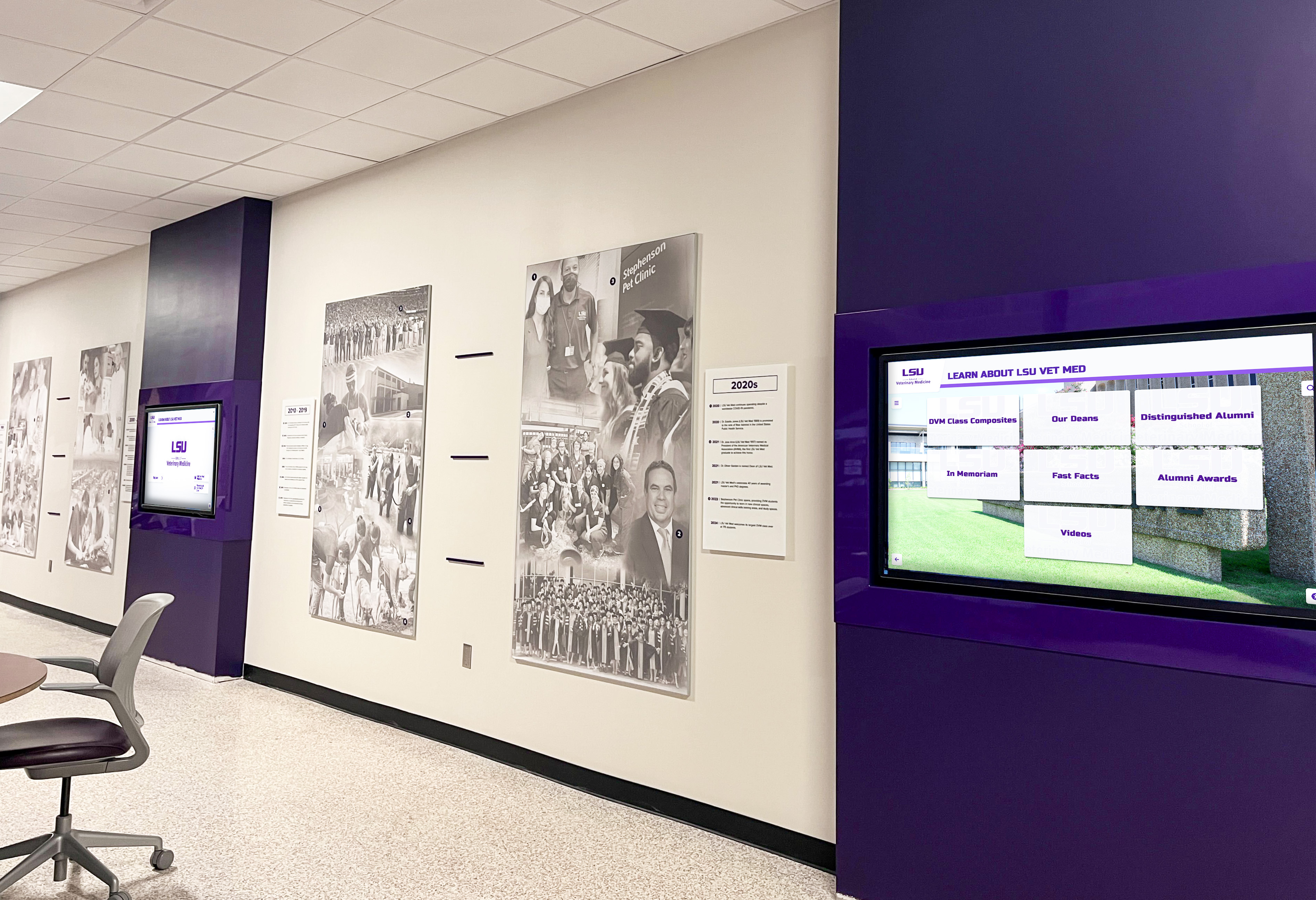
Professional digital installations in educational facilities demonstrate institutional commitment to recognition while creating sophisticated, branded environments
Community Awareness and Agricultural Education Advocacy
FFA recognition visible to broader school communities educates non-agricultural audiences about agricultural education value and career opportunities.
Addressing Agricultural Literacy Gaps Many students, families, and community members lack understanding of modern agriculture, diverse agricultural careers, and agricultural education’s role in career preparation. Comprehensive FFA recognition displays educate audiences about agricultural career diversity through proficiency award categories, SAE project variety, technical skills developed through Career Development Events, leadership competencies developed through FFA participation, and post-secondary agricultural education and career pathways.
This educational function addresses agricultural literacy gaps while positioning agricultural education as rigorous, relevant career preparation rather than outdated vocational programming—critical advocacy in communities where agricultural education programs face skepticism or resource constraints.
Building Broader Agricultural Support Schools serving agricultural communities benefit when community members appreciate agricultural education quality and student achievement. Recognition displays visible during community events hosted in schools—performing arts productions, athletic competitions, school board meetings, civic gatherings—communicate agricultural education value to broader constituencies whose support influences program sustainability and growth.
Implementation Planning for FFA Chapters
Agricultural education teachers and FFA advisors considering digital recognition systems should approach implementation systematically, ensuring solutions effectively serve chapter needs while remaining manageable long-term.
Needs Assessment and Goal Setting
Begin implementation planning by clarifying recognition needs and objectives.
Current Recognition Inventory Assess existing FFA recognition systems including physical displays and their locations, content currently recognized and celebrated, space available for additional recognition, update processes and management responsibilities, and stakeholder satisfaction with current recognition approaches.
This assessment identifies gaps, opportunities, and challenges that digital recognition systems should address.
Recognition Objectives Define specific goals for digital recognition such as increasing FFA visibility in school-wide spaces, celebrating diverse achievement categories comprehensively, improving recruitment and membership growth, engaging FFA alumni and community supporters, supporting program advocacy with administrators and boards, and creating sustainable recognition management processes.
Clear objectives enable evaluation of implementation options against specific chapter priorities rather than generic technology adoption.
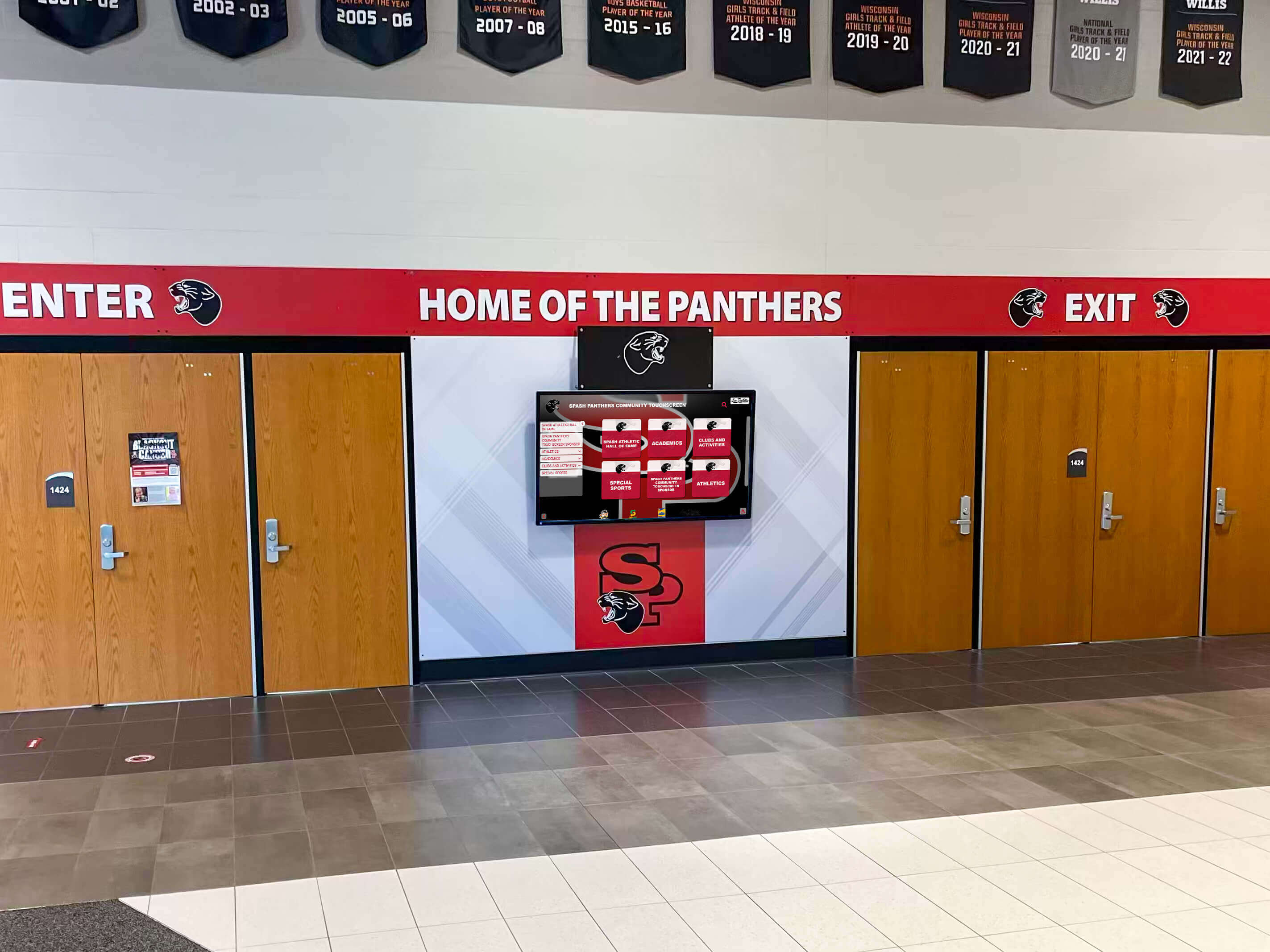
Entrance locations ensure FFA recognition reaches maximum audiences during daily traffic, special events, and community activities hosted in school facilities
Budget Development and Funding Strategies
Digital recognition systems require upfront investment in hardware, software, and implementation—costs chapters must address through strategic budgeting and fundraising.
Investment Components Comprehensive budgets should account for display hardware (touchscreen or non-interactive), mounting systems and professional installation, software platform licensing or subscription, initial content development labor or services, training for content management, and ongoing maintenance and support costs.
Initial implementation costs typically range from $3,000-$8,000 for single-display installations depending on display size, interactivity, software capabilities, and professional services required. Schools implementing multiple displays or more sophisticated systems should budget accordingly.
Funding Sources Agricultural education programs can pursue multiple funding strategies including FFA chapter budgets and fundraising activities, agricultural education departmental allocations, school technology budgets for educational displays, grant opportunities from agricultural organizations and foundations, alumni donations and giving campaigns, donor recognition opportunities where supporter contributions fund displays, and agricultural industry partnerships supporting workforce development.
Many chapters implement recognition displays as multi-year capital projects, phasing hardware acquisition and content development across budget cycles while pursuing diverse funding sources.
Return on Investment While FFA recognition displays represent significant investments, they deliver ongoing value through recruitment and membership growth, reduced time managing static recognition systems, enhanced program visibility supporting advocacy, alumni engagement generating support and resources, and professional program image elevating community perception.
This comprehensive value proposition helps justify initial investment while building support among administrators, advisory committees, and funding sources.
Vendor Selection and Technical Decisions
Chapters must evaluate technology providers offering solutions appropriate for agricultural education recognition needs.
Solution Requirements Identify essential capabilities including content management system usability for non-technical users, organizational structure matching FFA award categories, multimedia support for photos, videos, and documents, mobile responsiveness for web-accessible recognition, support and training availability, and pricing alignment with chapter budgets.

Understanding interactive display capabilities through demonstrations and consultations ensures chapters select solutions meeting specific agricultural education recognition needs
Educational Recognition Specialists While generic digital signage systems provide basic functionality, specialized educational recognition platforms like Rocket Alumni Solutions offer purpose-built capabilities designed specifically for student achievement celebration. Purpose-built platforms typically provide superior content organization for awards and achievements, intuitive interfaces designed for educational contexts, educational sector experience and references, and comprehensive support understanding school environments and needs.
Evaluation Process Thorough vendor evaluation should include reviewing provider portfolios and case studies, requesting demonstrations of platform capabilities, contacting reference schools and FFA chapters, comparing pricing and total cost of ownership, assessing ongoing support and training offerings, and understanding content migration and data portability options.
This due diligence ensures chapters select partners delivering appropriate solutions while avoiding costly mistakes or inadequate systems requiring replacement.
Implementation Timeline and Process
Successful implementations follow structured processes ensuring quality results.
Planning Phase Initial planning (4-8 weeks) should accomplish needs assessment and goal definition, budget development and funding sourcing, vendor evaluation and selection, placement and installation planning, and stakeholder communication about recognition project.
Content Development Phase Content creation (8-12 weeks) requires gathering historical award and member information, collecting photos and biographical content, documenting SAE projects and chapter activities, organizing content by appropriate categories, and loading content into management platform.
This phase often represents the most labor-intensive implementation period—justifying summer break timing when agricultural education teachers have fewer competing demands.
Installation and Launch Phase Installation and activation (2-4 weeks) includes hardware installation and configuration, software setup and integration testing, content review and quality assurance, staff training on management processes, and public launch and celebration.
Many chapters coordinate launches with FFA Week, chapter banquets, or school recognition events—creating celebration opportunities that generate attention for both new recognition systems and FFA program excellence.
Ongoing Management Phase Post-launch operation requires establishing update schedules and processes, training student leaders on content contributions, monitoring system performance and user engagement, collecting stakeholder feedback for improvements, and planning content expansions and enhancements.
Sustainable recognition systems become ongoing chapter operations rather than one-time projects—requiring integration into annual calendars and leadership succession planning.
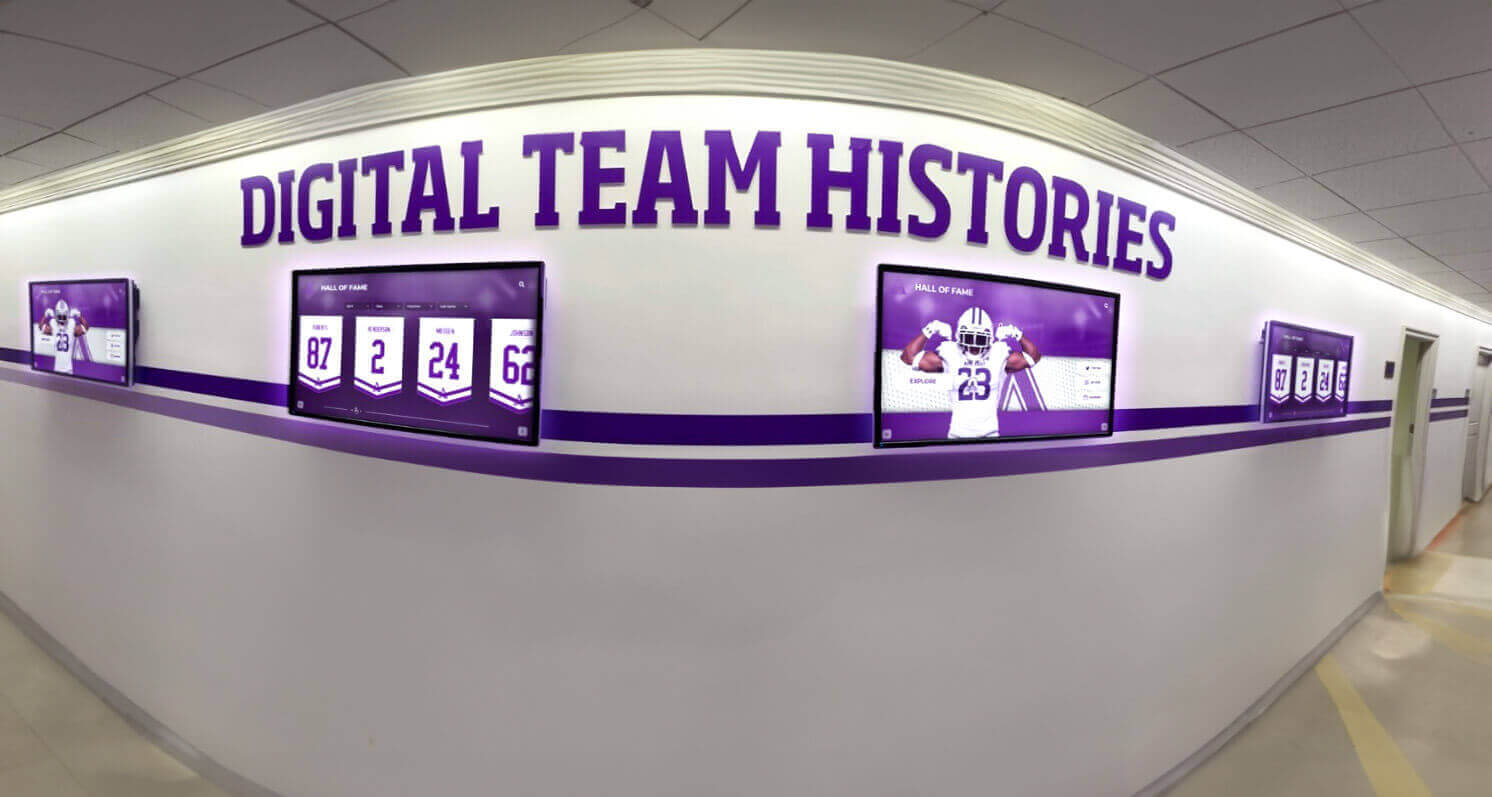
Multiple coordinated displays enable comprehensive recognition across extensive hallway spaces while maintaining visual consistency and branded appearance
Measuring Digital Recognition Impact
Agricultural education programs investing in digital recognition should assess impact across multiple dimensions.
Engagement Metrics
Quantitative measurement provides objective impact data.
Display Interaction Tracking Touchscreen systems can track daily user interactions, average session duration, most-viewed content categories, search terms and member profiles accessed, and time-of-day usage patterns.
This data reveals which FFA achievements generate greatest interest, informs content prioritization decisions, identifies opportunities for content expansion, and demonstrates recognition system utilization to stakeholders.
Web Access Analytics Recognition systems extending online can measure website visits and page views, geographic distribution of viewers, mobile versus desktop access patterns, social media referral traffic, and most-viewed member profiles and awards.
These metrics demonstrate recognition reach extending beyond physical school locations—important value for investment justification and ongoing support.
Qualitative Feedback
Stakeholder perspectives provide insight into recognition impact beyond usage statistics.
Member Feedback Current FFA members can provide valuable input through surveys or focus groups about recognition awareness and visibility, pride in seeing achievements celebrated, motivation from viewing peer accomplishments, usefulness for college applications and resumes, and ideas for recognition improvements.
Positive member feedback demonstrates that recognition systems successfully serve primary constituencies while identifying opportunities for enhancement.
Prospective Member and Family Perspectives Gathering input from students considering FFA enrollment or families exploring agricultural education options reveals whether recognition systems effectively communicate program quality and opportunity, influence enrollment decisions positively, answer questions about FFA participation and benefits, and create positive impressions of agricultural education programs.
These recruiting impact measures directly relate to membership growth and program sustainability—key metrics for agricultural education program success.
Administrator and Community Stakeholder Input Feedback from principals, superintendents, school board members, agricultural advisory committee participants, and community partners indicates whether recognition systems successfully elevate FFA visibility, demonstrate program value and student achievement, compare favorably with other program recognition, and generate community pride and support.
This advocacy impact assessment helps justify investments while identifying opportunities to enhance recognition systems’ strategic value.
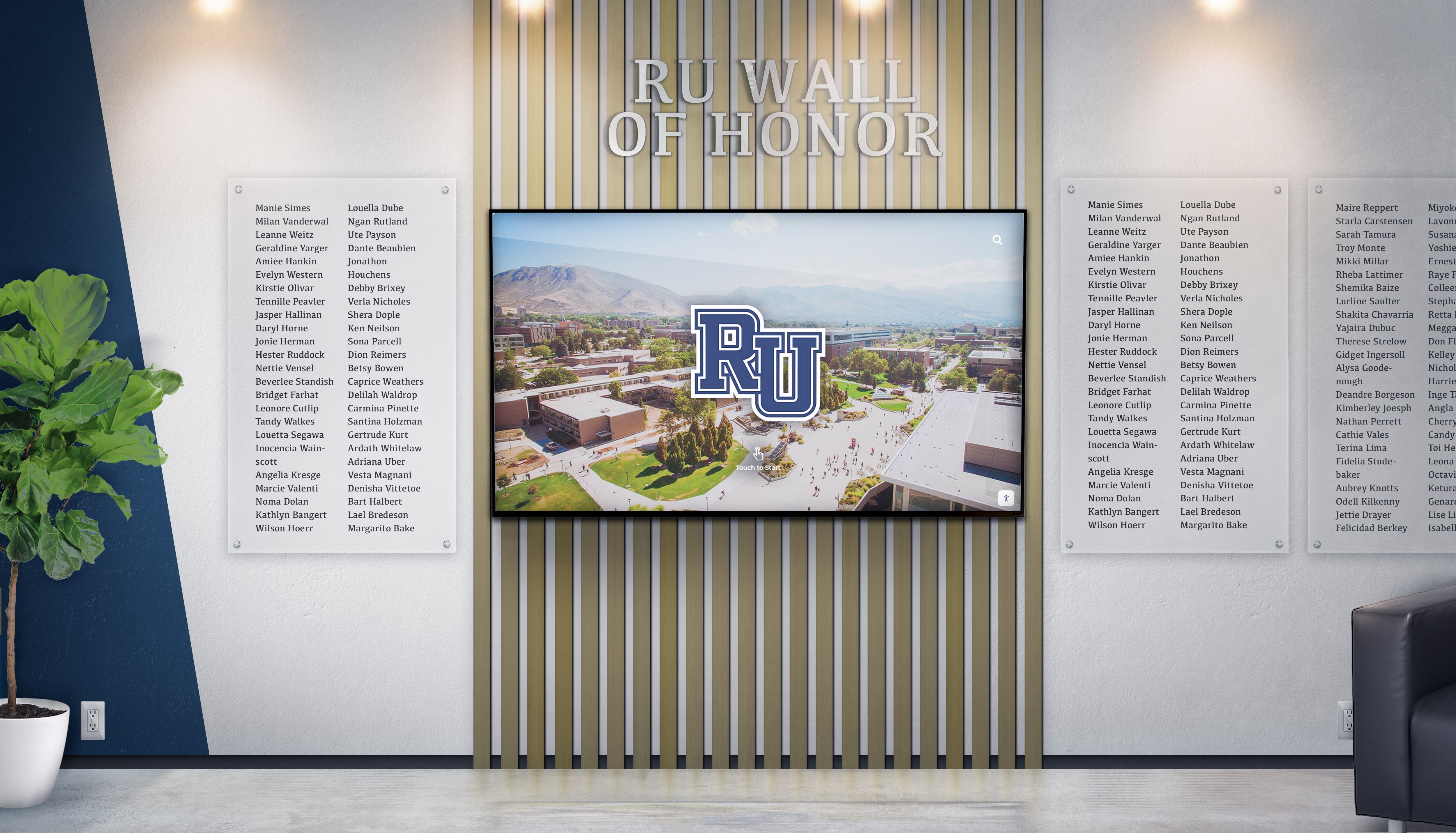
Comprehensive recognition installations integrate multiple recognition modalities, celebrating achievements through complementary traditional and digital approaches
Program Outcome Measures
Long-term assessment should evaluate recognition systems’ relationship with broader agricultural education program goals.
Enrollment and Membership Trends Track FFA chapter membership numbers following recognition implementation, new member enrollment patterns, retention rates across class years, and diversity of member participation across award programs.
While multiple factors influence enrollment, sustained membership growth following recognition system implementation suggests positive recruiting impact.
Achievement Participation Rates Monitor member participation in proficiency award programs, degree application submission rates, Career Development Event team involvement, Star Award competition participation, and scholarship application completion.
Digital recognition showcasing diverse achievement pathways may motivate broader member participation across FFA opportunities—creating cultures of achievement where varied recognition becomes norm rather than exception.
Program Visibility and Advocacy Outcomes Assess agricultural education budget allocations following implementation, administrative support for program expansion, community partnership development, media coverage of FFA achievements, and external recognition of program quality.
Enhanced visibility through professional recognition systems often correlates with improved advocacy outcomes as administrators, board members, and community stakeholders gain greater awareness of agricultural education quality and student success.
Future Trends in FFA Digital Recognition
Agricultural education programs implementing recognition systems today should consider emerging trends shaping future recognition technology.
Enhanced Interactivity and Personalization
Future recognition platforms will offer increasingly sophisticated user experiences.
Individualized Recognition Journeys Advanced systems may enable members to maintain personalized achievement portfolios, track progression toward degree and award goals, receive notifications about recognition opportunities, and share achievements directly to college applications and resumes.
This individualization transforms recognition from passive display to active career development tool—aligning with agricultural education’s career preparation mission.
Interactive Career Exploration Recognition systems could connect award categories with career information and pathways, link proficiency awards to relevant agricultural industry resources, showcase SAE progression toward specific agricultural careers, and connect current members with alumni working in fields of interest.
This career development functionality extends recognition value beyond celebration to provide practical professional preparation support.
Artificial Intelligence and Automation
Emerging AI capabilities may reduce content management burden while enhancing recognition quality.
Automated Content Enhancement AI systems could suggest recognition content based on FFA award databases, automatically format member biographies from provided information, generate achievement summaries from SAE documentation, and recommend content organization and categorization structures.
These capabilities could significantly reduce content development labor—addressing agricultural education teachers’ primary concern about recognition system management sustainability.
Intelligent Content Recommendation AI-powered systems might personalize recognition displays based on viewer interests, highlighting relevant career pathways for prospective members, or showcasing achievements aligned with school initiatives and priorities.
While AI implementation remains emerging, agricultural education programs planning long-term recognition investments should consider platforms positioned to incorporate evolving capabilities.
Extended Reality and Immersive Recognition
Future recognition may incorporate augmented reality and immersive experiences.
Virtual SAE Project Tours AR capabilities could enable virtual tours of member SAE projects—viewing livestock operations, greenhouse facilities, agricultural mechanics projects, and other experiences from school recognition displays.
Interactive Achievement Timelines Immersive interfaces might create visual progression timelines showing member journeys from Greenhand Degree through American FFA Degree—making achievement progression tangible and inspiring for younger members.
While extended reality applications remain largely future possibilities, agricultural education programs should monitor developing technologies that could enhance recognition effectiveness and engagement.
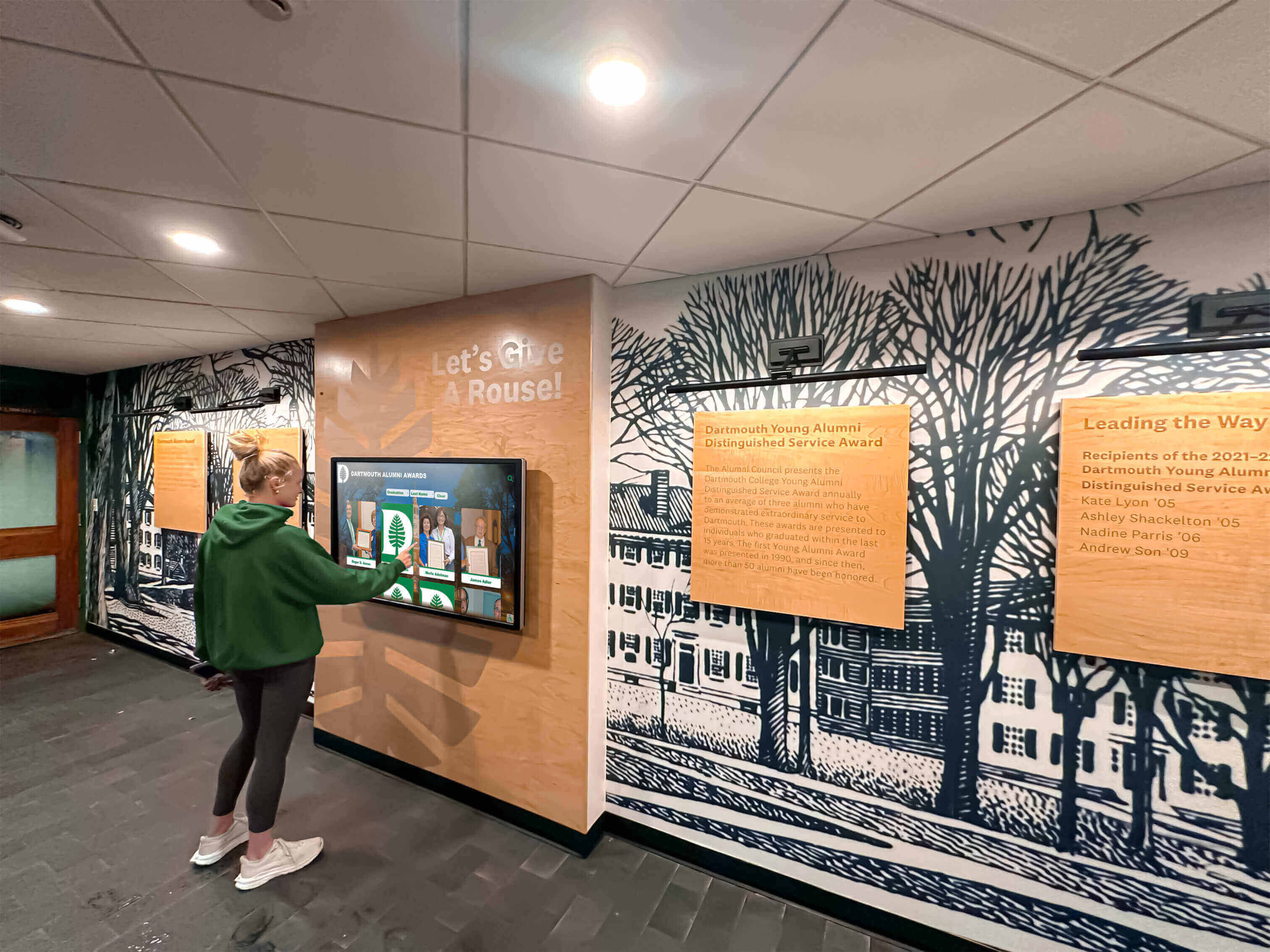
Natural student engagement with hallway recognition displays demonstrates successful integration of technology into school environments and daily routines
Conclusion: Elevating FFA Excellence Through Modern Recognition
FFA chapters across the nation produce remarkable student achievement—from comprehensive supervised agricultural experience programs demonstrating career readiness to competitive success showcasing technical expertise, from degree progression reflecting sustained commitment to leadership development preparing future agricultural industry professionals. This multifaceted excellence deserves recognition systems equal to achievement quality and program value.
Digital display technology transforms FFA recognition from space-limited static plaques to comprehensive, engaging celebration of agricultural education excellence. Interactive touchscreen systems showcase unlimited members across all award categories, strategic school-wide placement ensures FFA visibility reaches broader audiences, rich multimedia content tells complete achievement stories, and cloud-based management enables sustainable content updates without overwhelming agricultural education teachers.
Transform Your FFA Chapter Recognition
Discover how interactive digital recognition displays can celebrate every FFA member's achievements, build chapter pride, support recruitment, and elevate agricultural education visibility throughout your school community.
Explore FFA Recognition SolutionsBeyond member celebration, strategic digital recognition delivers measurable value supporting agricultural education program goals. Professional displays influence prospective member enrollment decisions during critical recruitment periods, advocate for program value with administrators and decision-makers through visible achievement documentation, engage alumni creating support and mentorship connections, and educate broader communities about agricultural career diversity and educational pathways.
Agricultural education teachers and FFA advisors considering digital recognition should approach implementation systematically—assessing chapter needs and recognition objectives, developing comprehensive budgets and pursuing diverse funding sources, evaluating specialized educational recognition providers, planning structured implementation timelines, and establishing sustainable content management processes integrated with chapter operations.
The FFA members your chapter serves dedicate countless hours to supervised agricultural experience projects, prepare extensively for competitive Career Development Events, develop leadership competencies through officer positions and chapter activities, and pursue degree recognition through sustained commitment to agricultural education excellence. Their achievements deserve celebration that honors effort, inspires younger members, attracts prospective participants, and communicates agricultural education value to school communities and broader constituencies.
Digital recognition technology enables comprehensive celebration previously impossible through traditional methods—unlimited capacity overcoming space constraints, strategic placement expanding visibility beyond agriculture departments, engaging multimedia storytelling bringing achievements to life, and manageable cloud-based systems ensuring recognition sustainability across leadership transitions.
Start by exploring how solutions like Rocket Alumni Solutions serve agricultural education recognition needs with purpose-built platforms designed specifically for celebrating student achievement. Research successful implementations at similar FFA chapters and agricultural education programs. Engage chapter officers, advisory committees, and school administrators in planning conversations. Develop funding strategies combining multiple resources toward recognition investments. And envision how comprehensive digital recognition could transform FFA celebration in your chapter and school community.
Your FFA members’ agricultural education achievements, leadership development, and career preparation deserve recognition equal to their dedication and accomplishment. With thoughtful planning, appropriate technology, and sustainable management, you can create recognition systems that celebrate every achievement while building the thriving, visible FFA program your students and agricultural education deserve.
Ready to begin? Explore comprehensive student recognition approaches, learn about career and technical education program showcases, or discover effective strategies for celebrating diverse student accomplishments that can inform your FFA recognition planning.