Traditional employee recognition gifts—engraved plaques collecting dust, generic gift baskets, or standard company swag—often miss the mark when it comes to creating meaningful appreciation that employees genuinely value. After receiving their third company mug or yet another crystal paperweight, team members begin viewing recognition as obligatory gestures rather than authentic acknowledgment of their contributions. HR professionals, facilities managers, and organizational leaders increasingly recognize this disconnect, seeking recognition approaches that resonate authentically while building workplace cultures centered on genuine appreciation.
Meaningful employee recognition gifts balance several considerations: acknowledging individual preferences and values, providing lasting visibility honoring achievements beyond single moments, creating equitable recognition accessible across all organizational levels, fitting within realistic budget parameters, and aligning with company culture and values. Whether you’re designing comprehensive recognition programs for entire workforces, selecting awards for individual achievements, or exploring modern alternatives to traditional gift-giving, understanding what employees actually value transforms recognition from transactional obligation into powerful cultural infrastructure.
This comprehensive guide explores employee recognition gift ideas spanning traditional awards reimagined thoughtfully, modern digital recognition solutions providing permanent visibility, experience-based gifts creating lasting memories, personalized approaches honoring individual preferences, and budget-conscious strategies ensuring all organizations—from schools and nonprofits through corporations—can celebrate team members meaningfully regardless of financial constraints.
Research across diverse industries reveals that 79% of employees who receive meaningful recognition report higher motivation and engagement, while organizations implementing comprehensive recognition programs demonstrate 31% lower turnover rates—measurable returns proving that thoughtful acknowledgment directly impacts retention, performance, and organizational culture far beyond the cost of recognition gifts themselves.

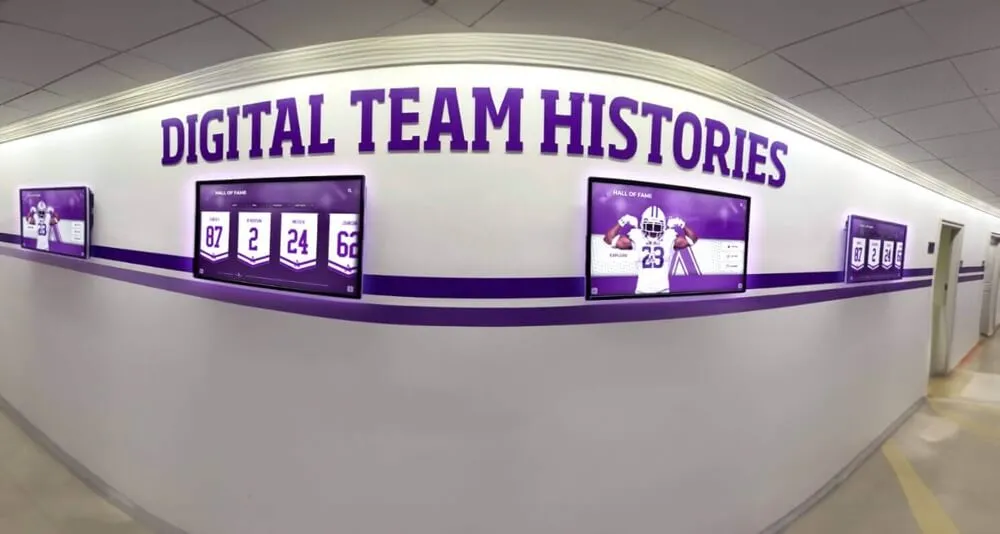
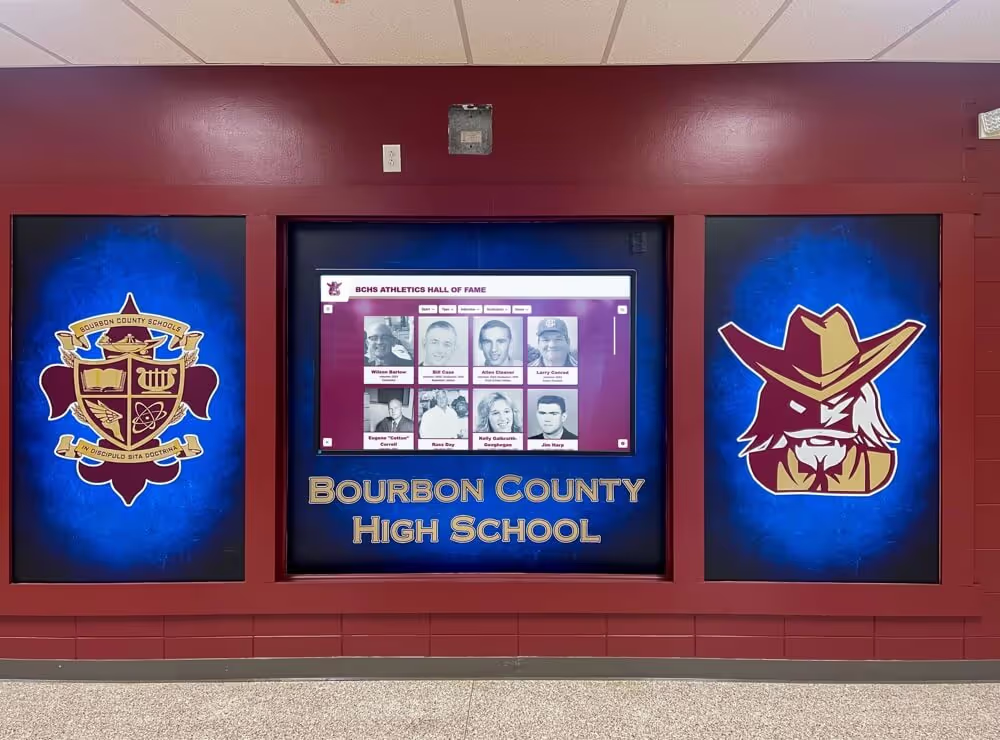
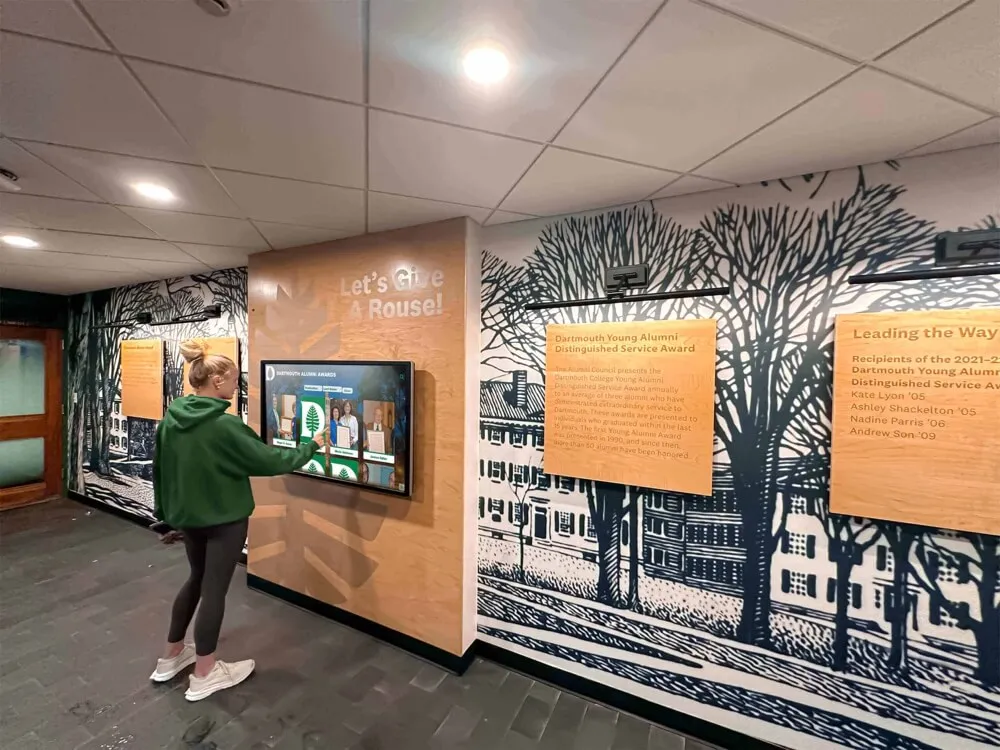
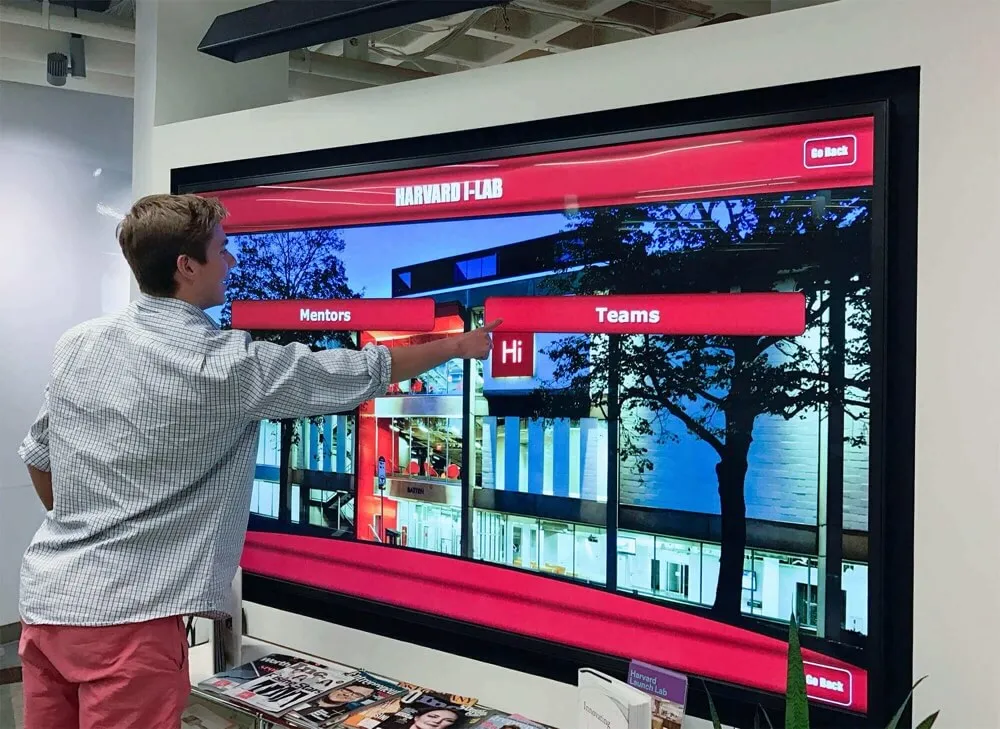
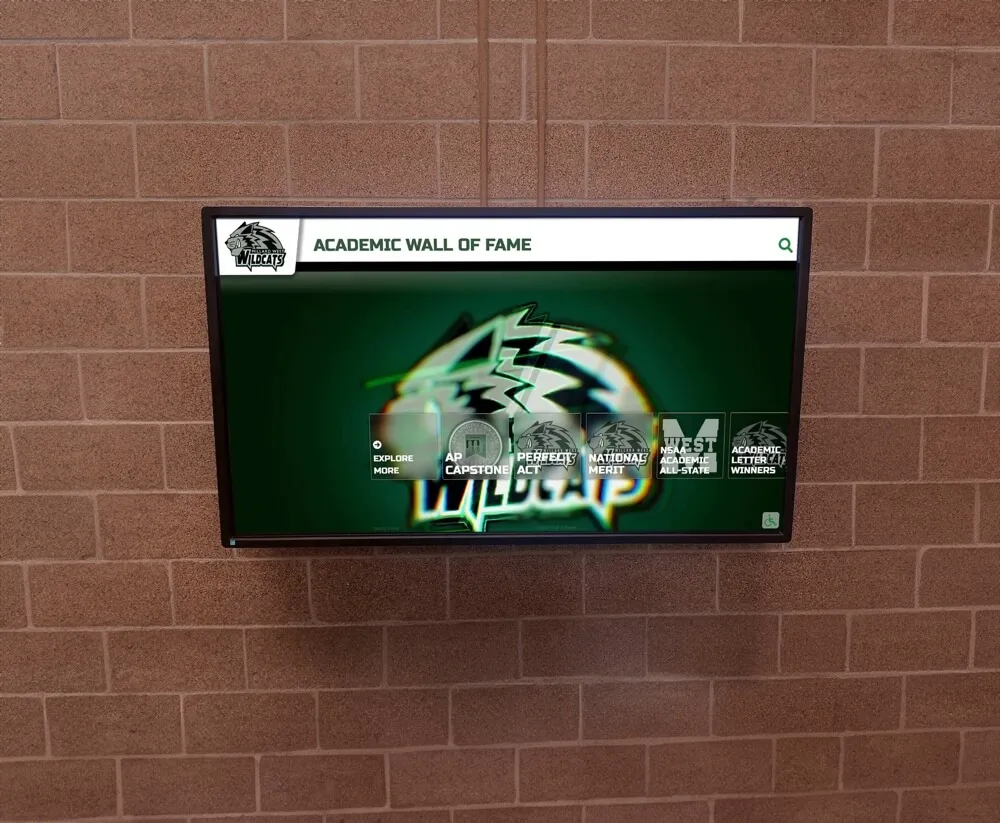
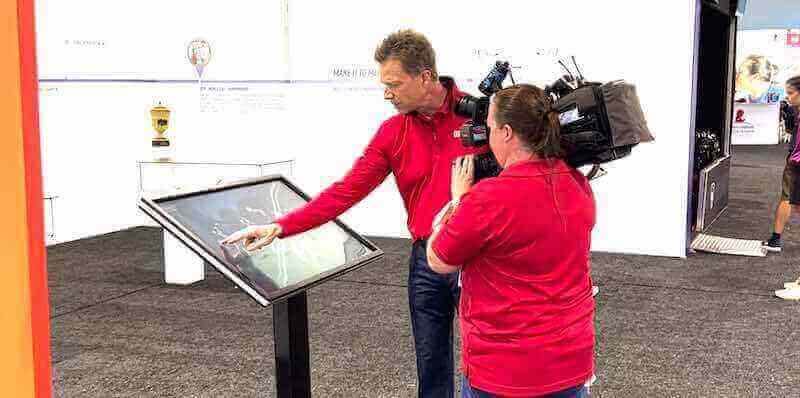
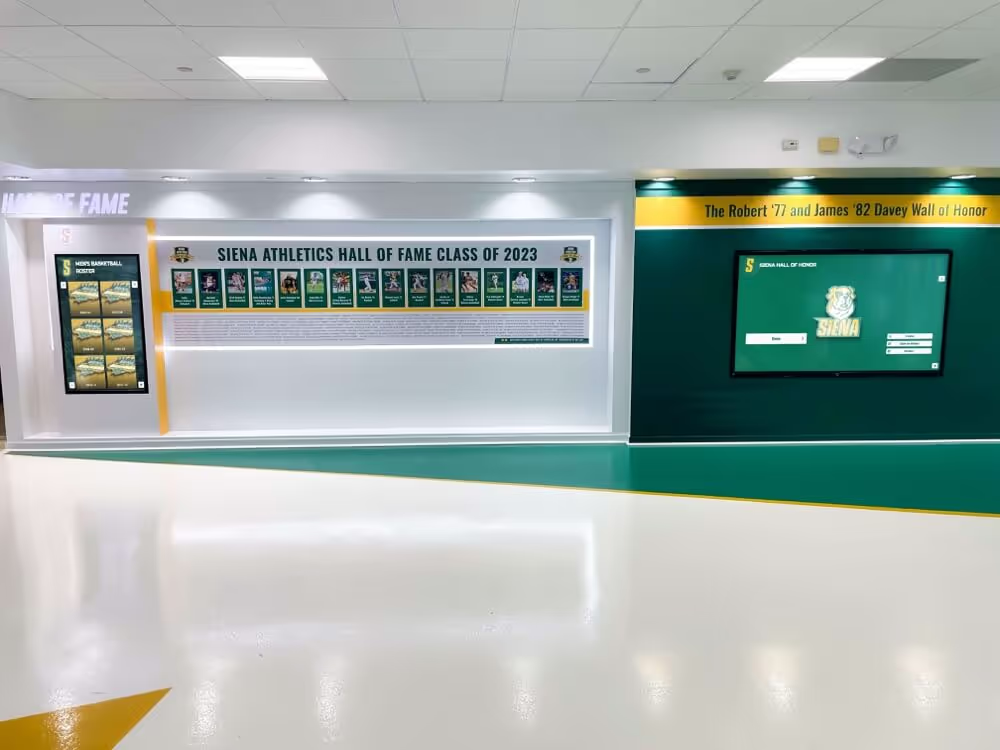
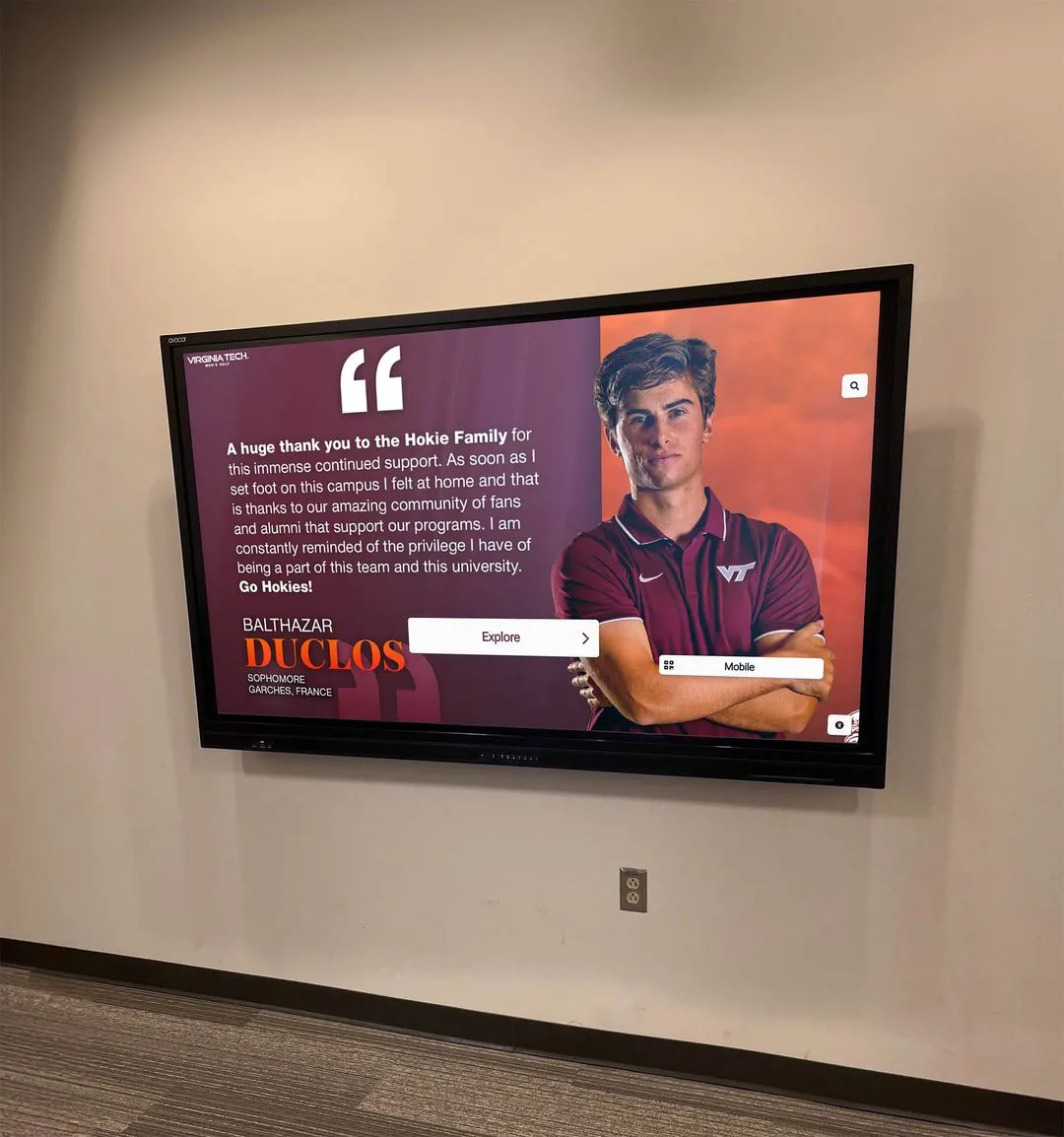
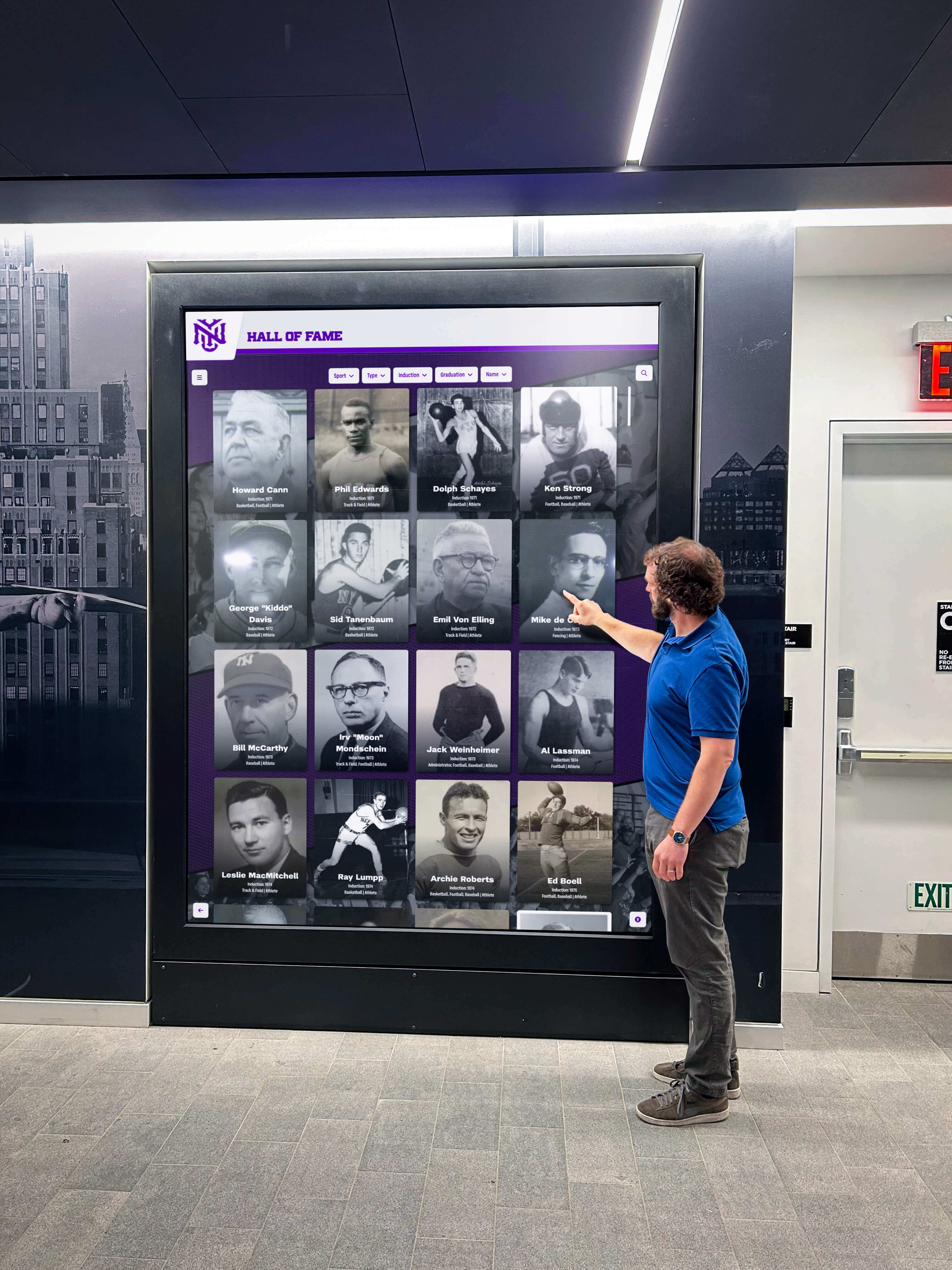
Modern recognition systems create engaging experiences that honor employee achievements while building cultures of appreciation beyond traditional gift-giving
Why Traditional Recognition Gifts Often Fall Short
Understanding common recognition gift failures helps organizations design more effective acknowledgment approaches.
The Generic Gift Problem
Standard corporate recognition gifts frequently disappoint because they lack personalization, feel transactional rather than thoughtful, accumulate without meaningful purpose or display potential, fail to reflect individual contributions or values, and create equity concerns when standardized gifts don’t resonate equally across diverse employee populations.
Common Recognition Gift Pitfalls:
- Engraved plaques that recipients store in desk drawers or basements
- Company-branded merchandise employees never use outside the workplace
- Gift baskets with generic items that don’t match individual preferences
- Cash bonuses that feel transactional rather than appreciative
- One-size-fits-all awards ignoring diverse employee values and interests
The fundamental issue isn’t the gifts themselves but rather the lack of thoughtfulness and personalization demonstrating genuine appreciation for specific individual contributions and preferences.
What Employees Actually Value in Recognition
Research and employee feedback consistently reveal key elements making recognition meaningful:
Recognition Elements That Resonate:
- Specific acknowledgment citing actual contributions and impacts
- Public visibility honoring achievements beyond private exchanges
- Permanence preserving recognition over time rather than fleeting moments
- Personalization reflecting individual preferences, values, and interests
- Peer visibility inspiring colleagues and building organizational culture
- Choice enabling recipients to select meaningful acknowledgment formats
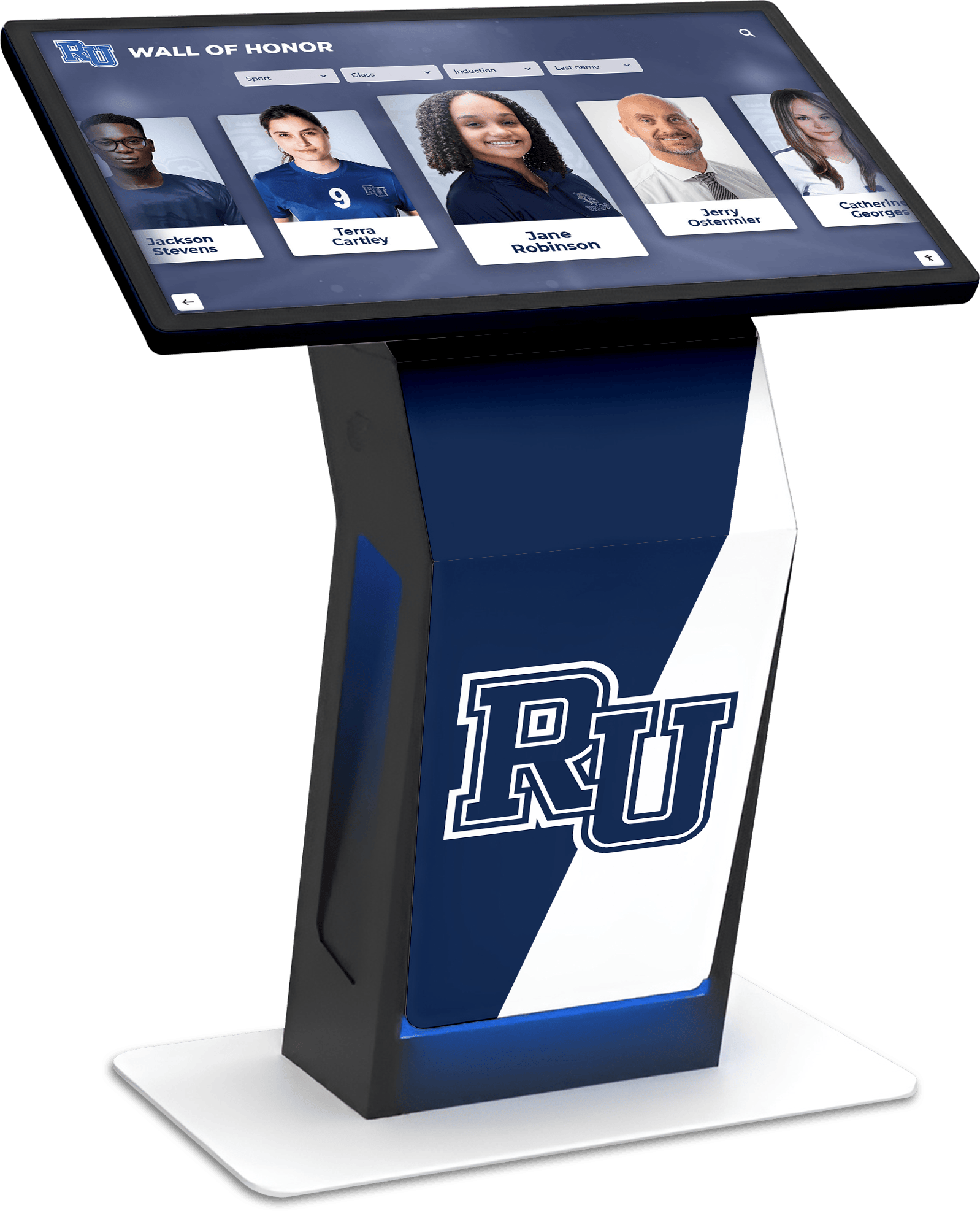
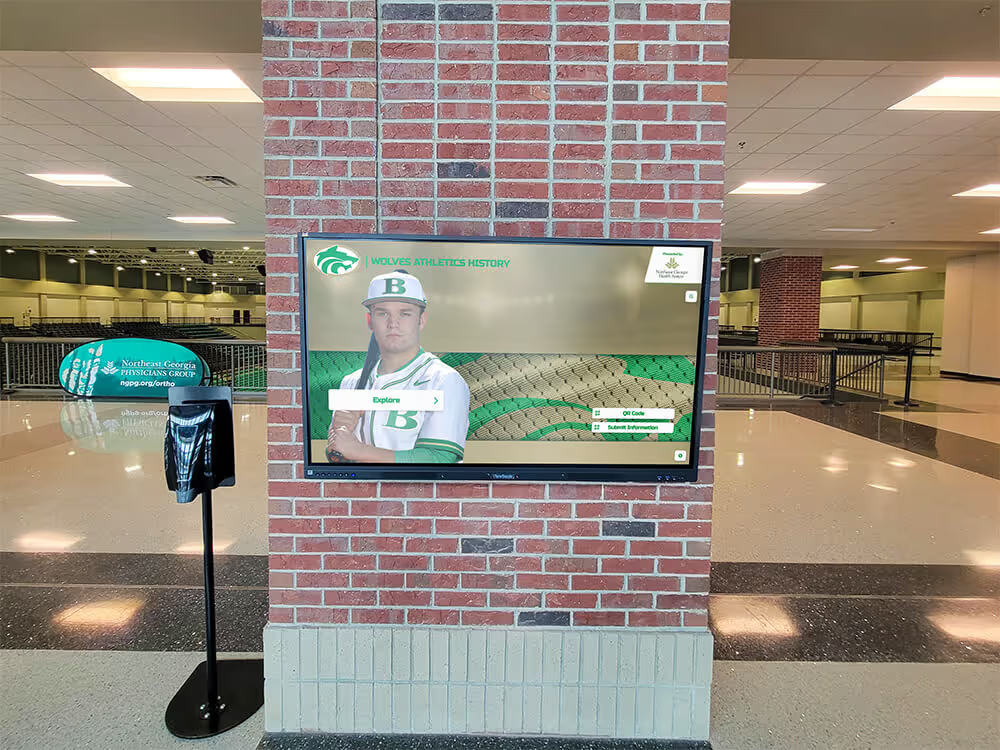
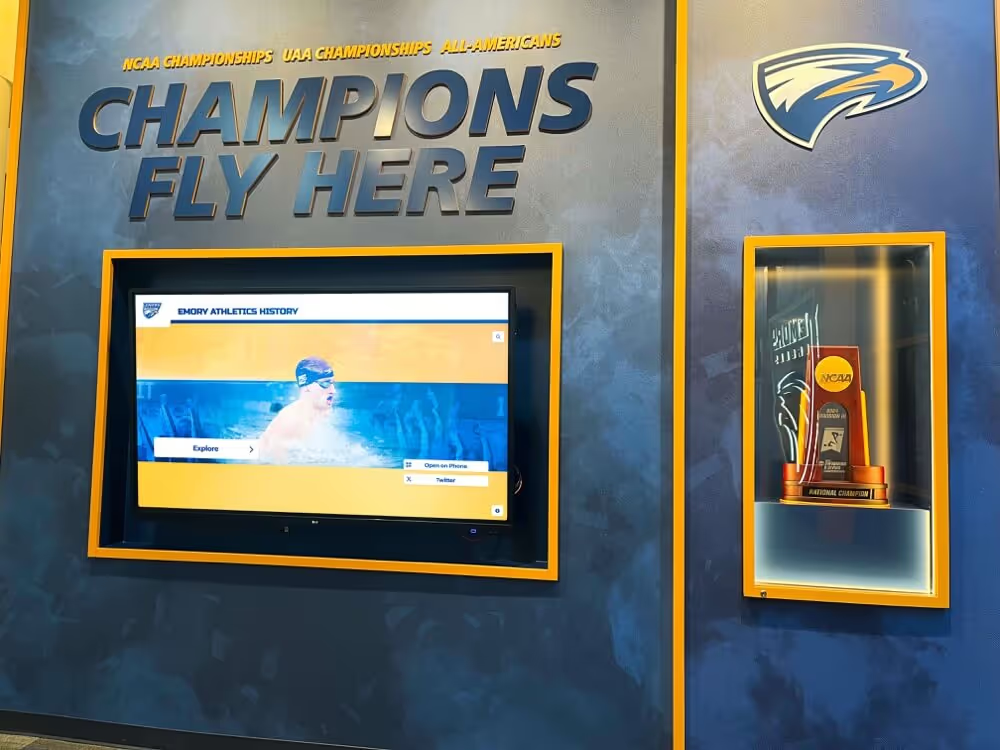
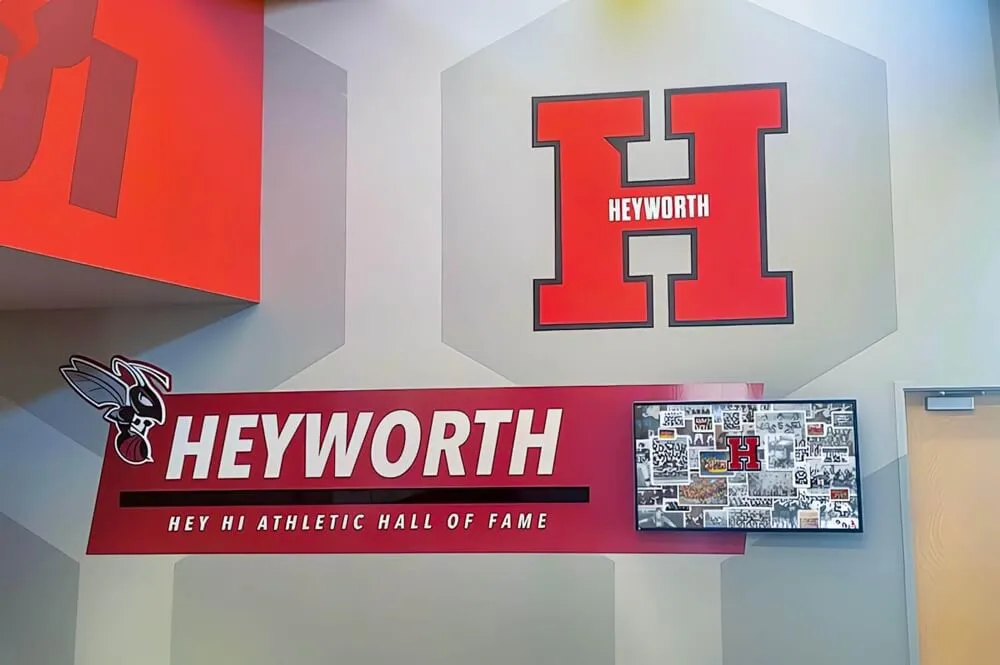
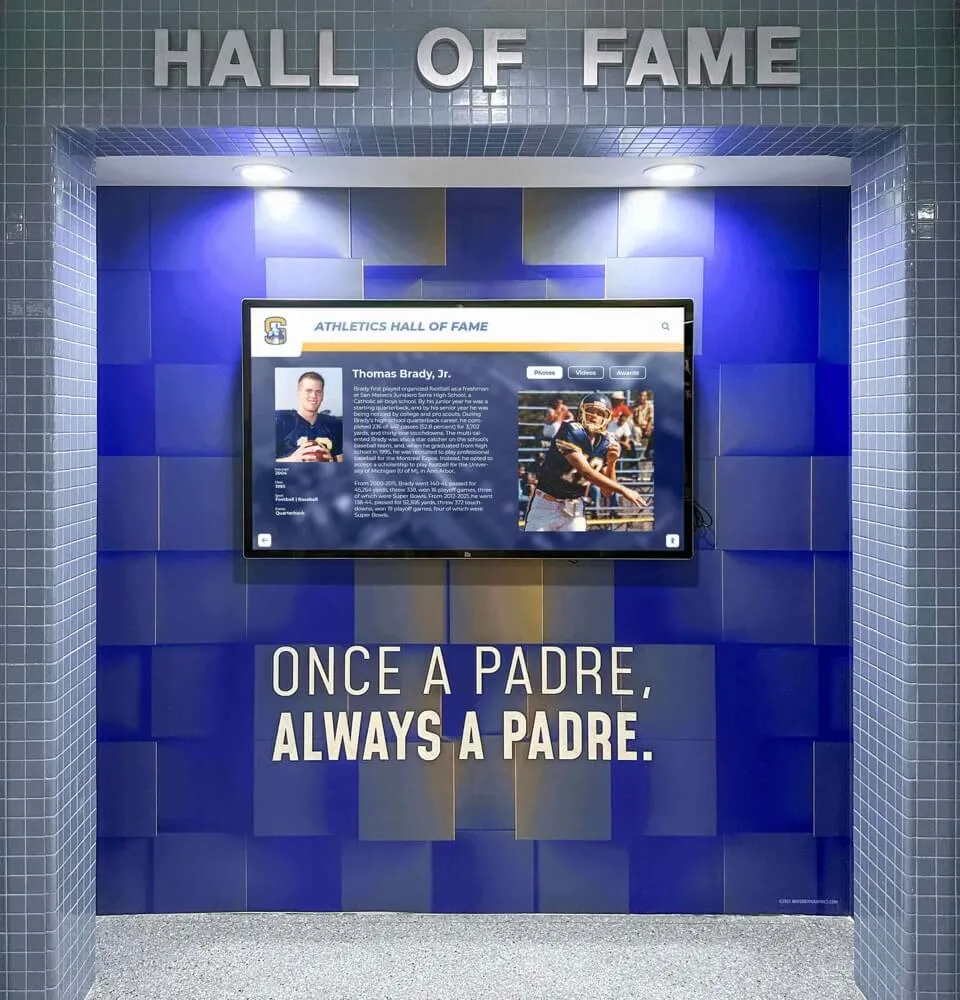
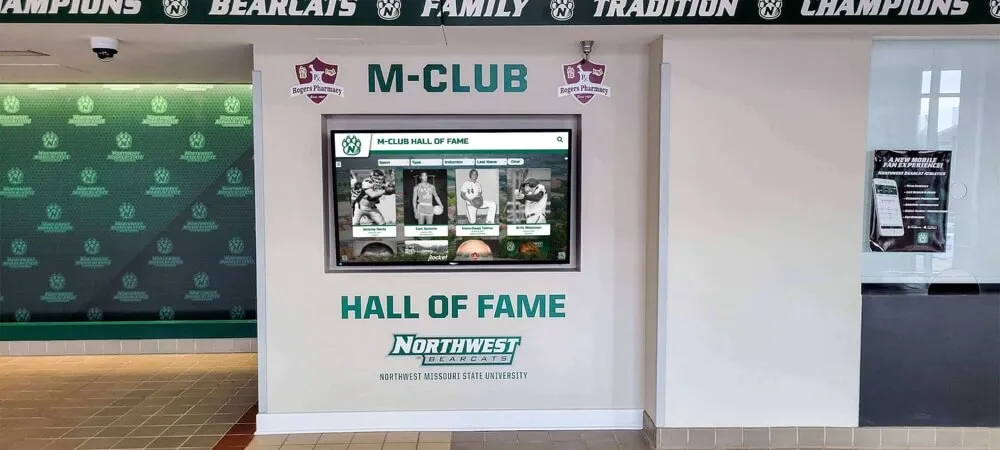
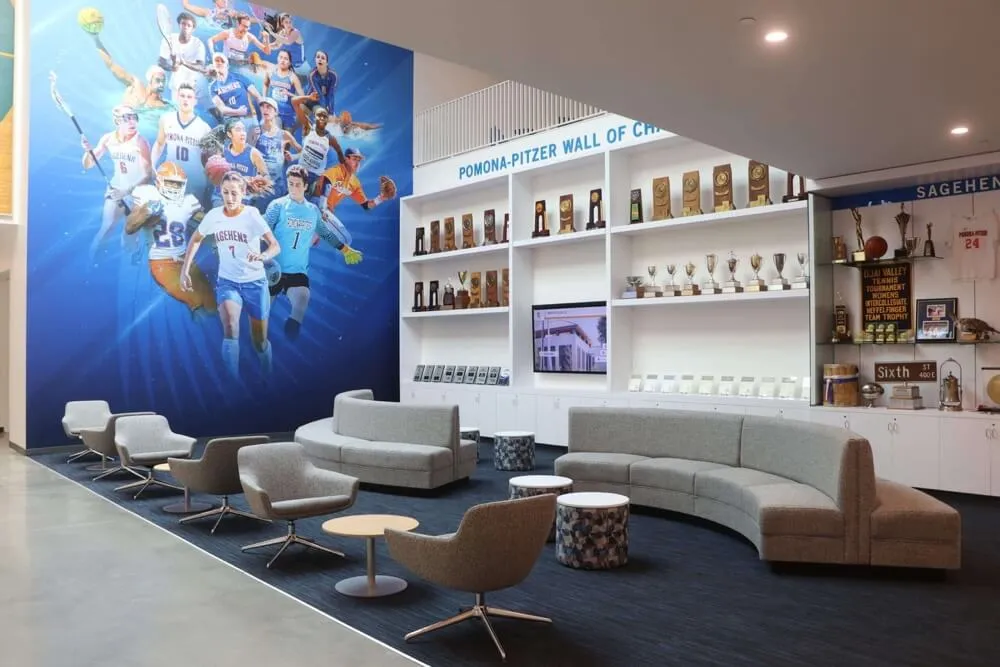
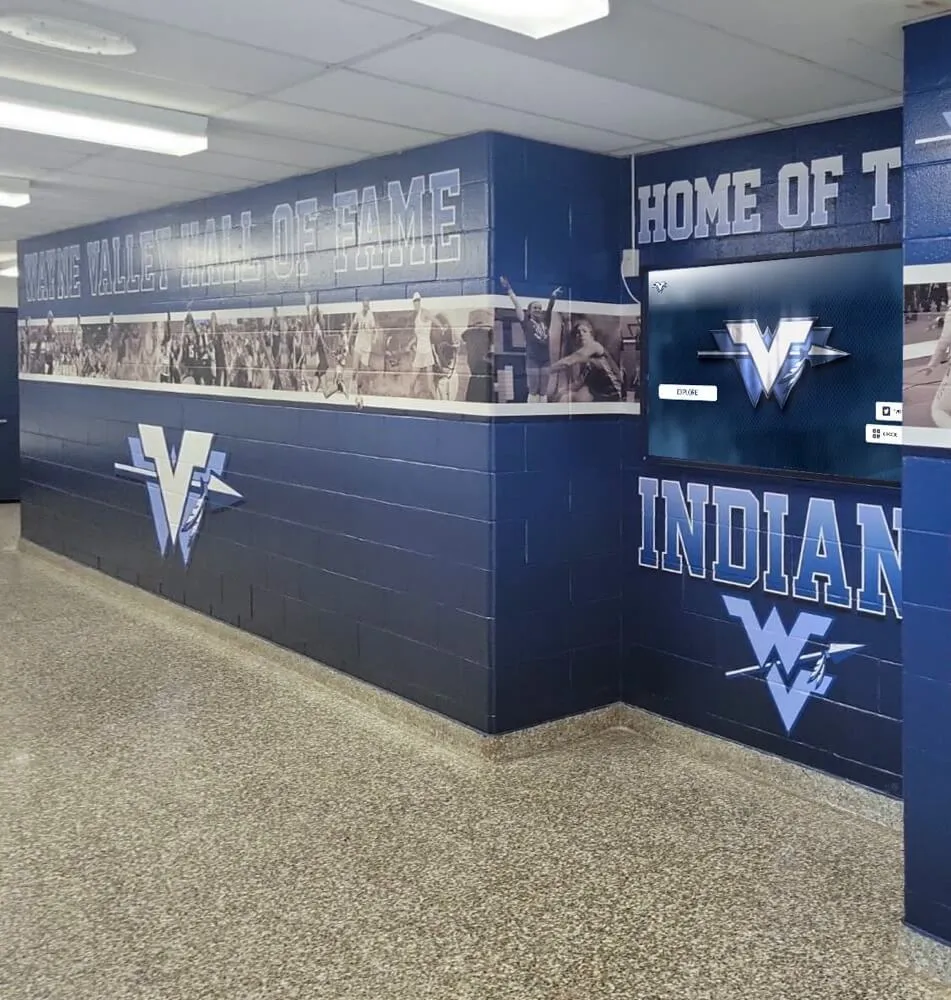
Purpose-built recognition systems provide elegant, searchable displays celebrating employee contributions with permanent visibility
The Shift Toward Experience and Visibility Over Physical Objects
Modern recognition strategies increasingly favor experiences creating memories and digital visibility providing lasting acknowledgment over physical items with limited utility or display potential.
Organizations implementing digital recognition displays report significantly higher employee engagement with acknowledgment systems compared to traditional plaque programs—providing unlimited capacity, real-time updates, and multimedia storytelling impossible with static physical awards.
Digital Recognition Displays: Modern Alternative to Traditional Plaques
Technology enables recognition approaches addressing traditional gift limitations while providing scalable, engaging acknowledgment.
Interactive Employee Recognition Walls
Large-format touchscreen displays transform how organizations honor team members:
Digital Recognition Wall Features:
- Unlimited employee capacity without physical space constraints
- Searchable databases enabling visitors to find specific employees, departments, or achievement types
- Rich multimedia profiles with photos, videos, achievement descriptions, and career narratives
- Real-time updates adding recent recognition immediately without production delays
- Web integration extending recognition beyond physical workplace locations
- Analytics tracking engagement and popular content
- Cost-effective scalability compared to individual plaque expenses
Solutions like Rocket Alumni Solutions provide platforms specifically designed for comprehensive employee recognition that adapt across educational institutions, nonprofits, corporate environments, and organizations seeking engaging acknowledgment approaches combining traditional appreciation values with modern technological capabilities.
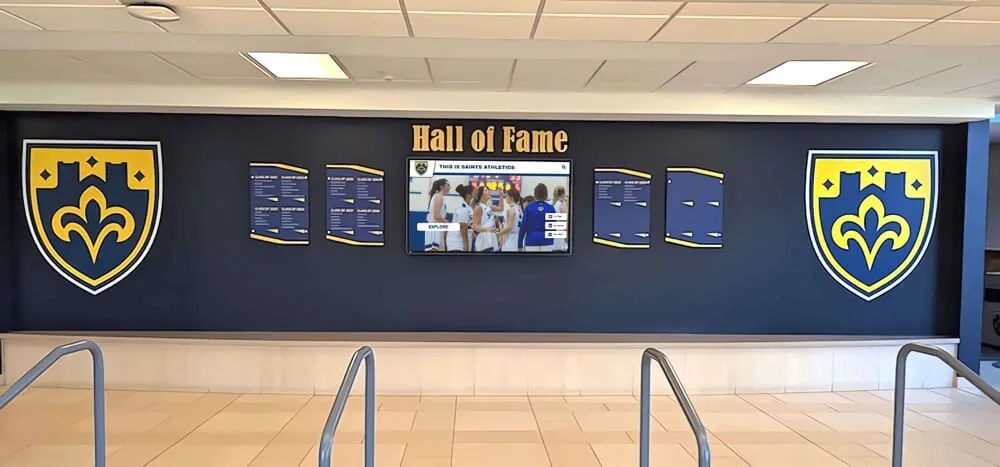
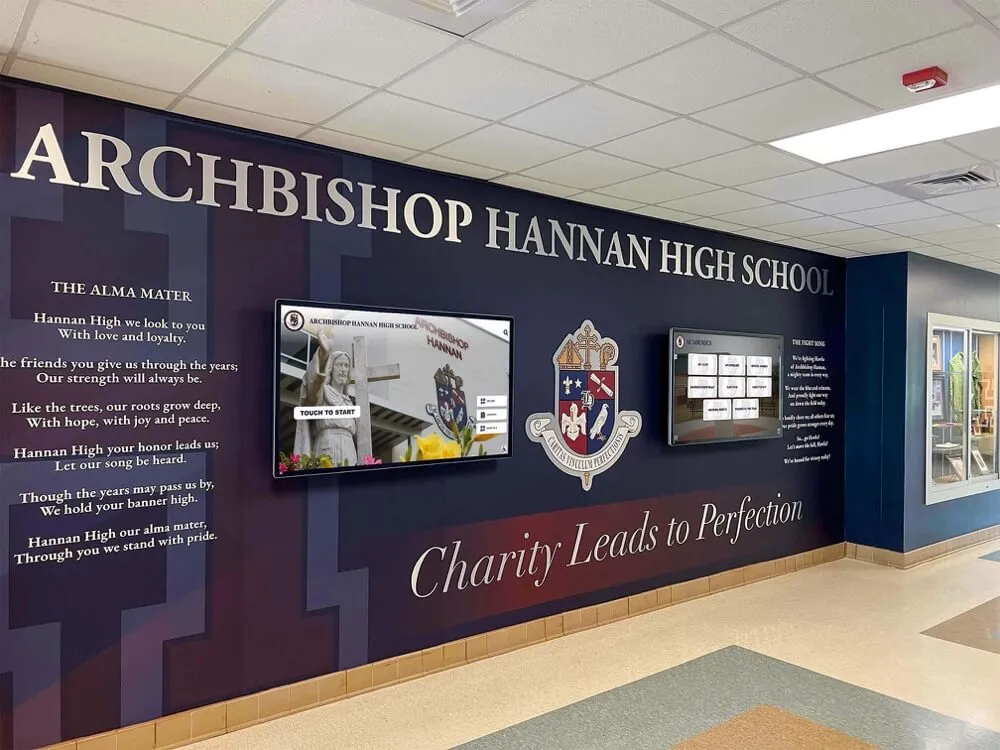
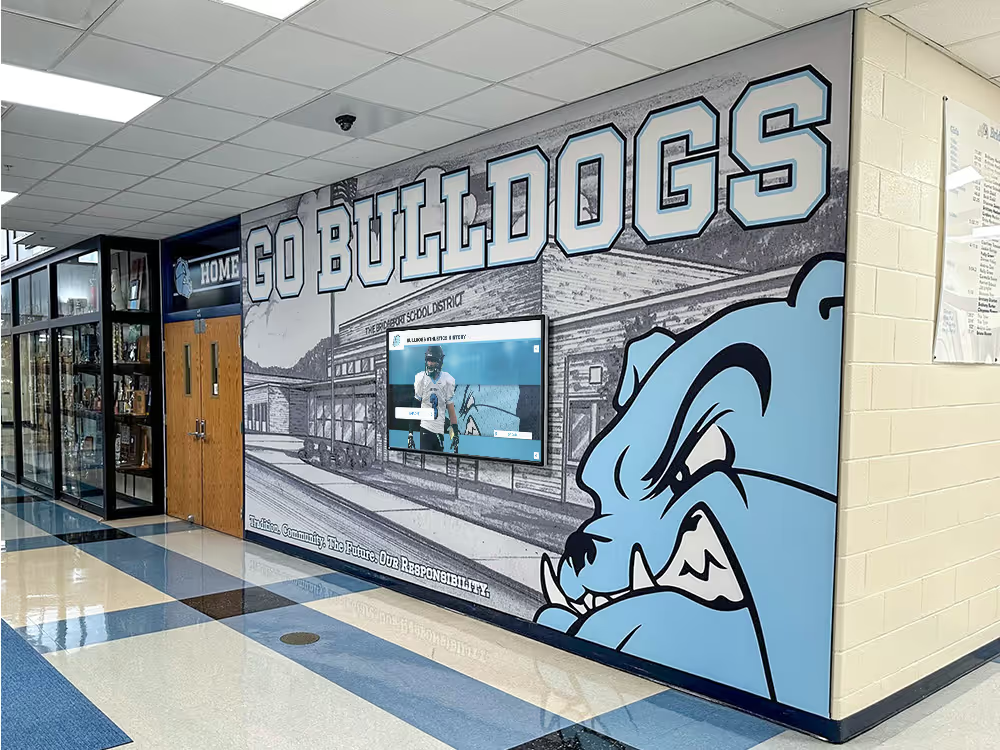
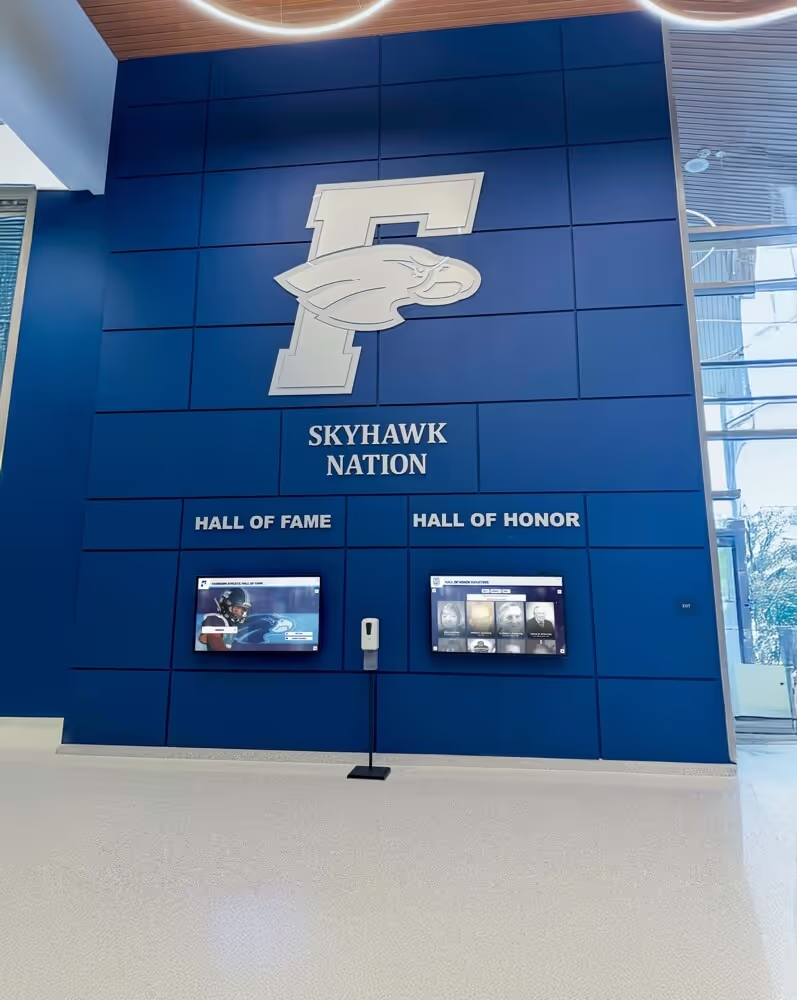
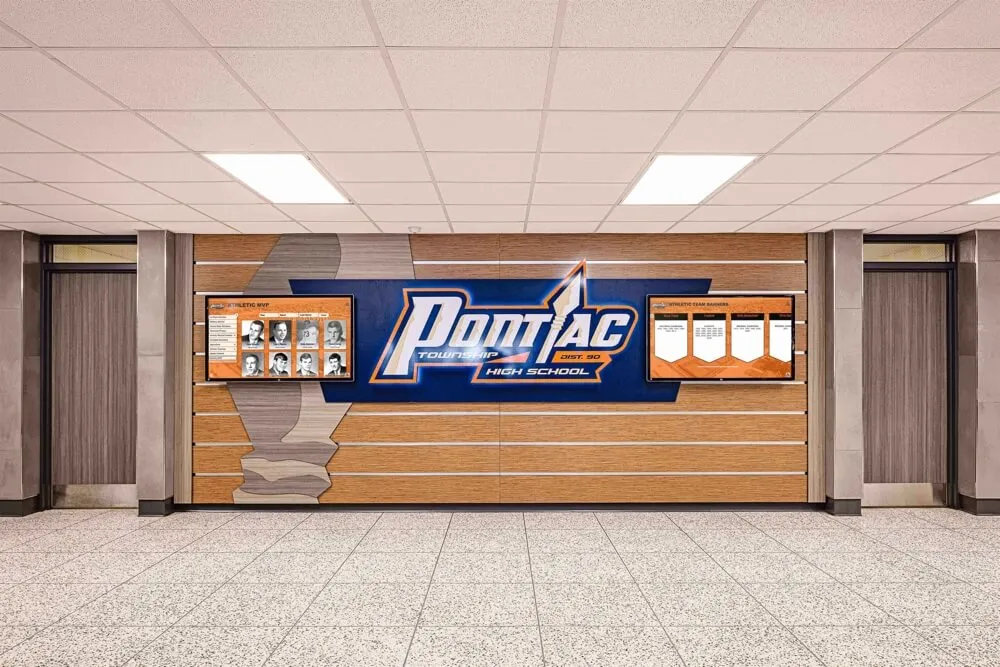
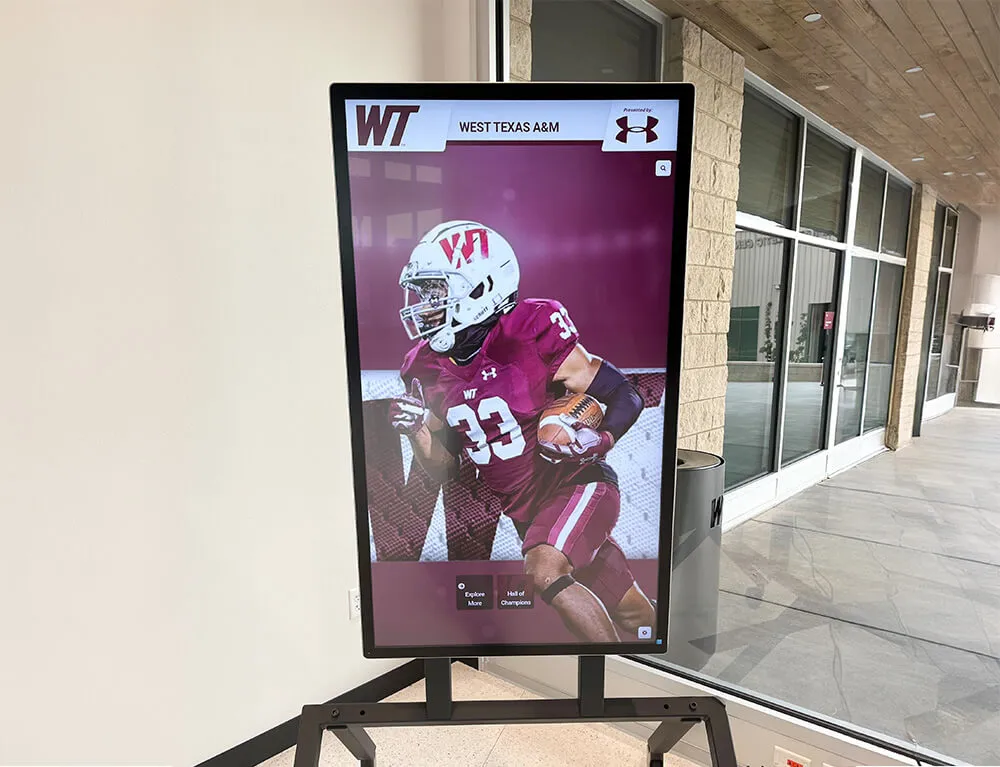
Integrated recognition systems honor tradition while utilizing modern capabilities for comprehensive employee acknowledgment
Implementation Advantages:
- One-time installation supporting decades of recognition without recurring plaque costs
- Environmental sustainability eliminating physical production waste
- Accessibility features enabling universal access regardless of physical abilities
- Dynamic content rotation maintaining freshness and continued engagement
- Lobby placement providing visibility to employees, clients, and prospective talent
- Professional presentation elevating employer brand and workplace culture
Organizations implementing digital recognition report that employees engage with displays regularly, exploring colleague achievements and sharing their own recognition with family and professional networks—creating appreciation visibility impossible with traditional awards stored privately.
Virtual Recognition Platforms and Web-Based Honor Walls
Cloud-based platforms extend recognition beyond physical workplace boundaries:
Virtual Recognition Benefits:
- Accessible from any device enabling remote and distributed team participation
- Shareable links allowing employees to celebrate achievements with personal networks
- Permanent archives preserving organizational history and employee contributions
- Integration with company websites and intranets providing multiple access points
- Mobile responsiveness enabling smartphone and tablet viewing
- Social features allowing colleague comments and congratulations
Virtual platforms particularly benefit organizations with multiple locations, remote workforces, global teams spanning time zones, and employees wanting to share workplace recognition with family and friends outside organizational boundaries.
Hybrid Recognition Approaches
Combining digital visibility with select physical elements:
Hybrid Recognition Models:
- Digital displays providing comprehensive employee databases and detailed profiles
- Supplemental physical recognition for milestone achievements (10-year service, major awards)
- Traditional elements (shields, murals, architectural features) creating visual anchors
- Digital content providing depth, searchability, and unlimited capacity
- Physical components honoring tradition while digital systems provide scalability
Organizations exploring athletic recognition approaches in sports contexts discover principles adaptable to workplace employee celebration combining multiple recognition formats.
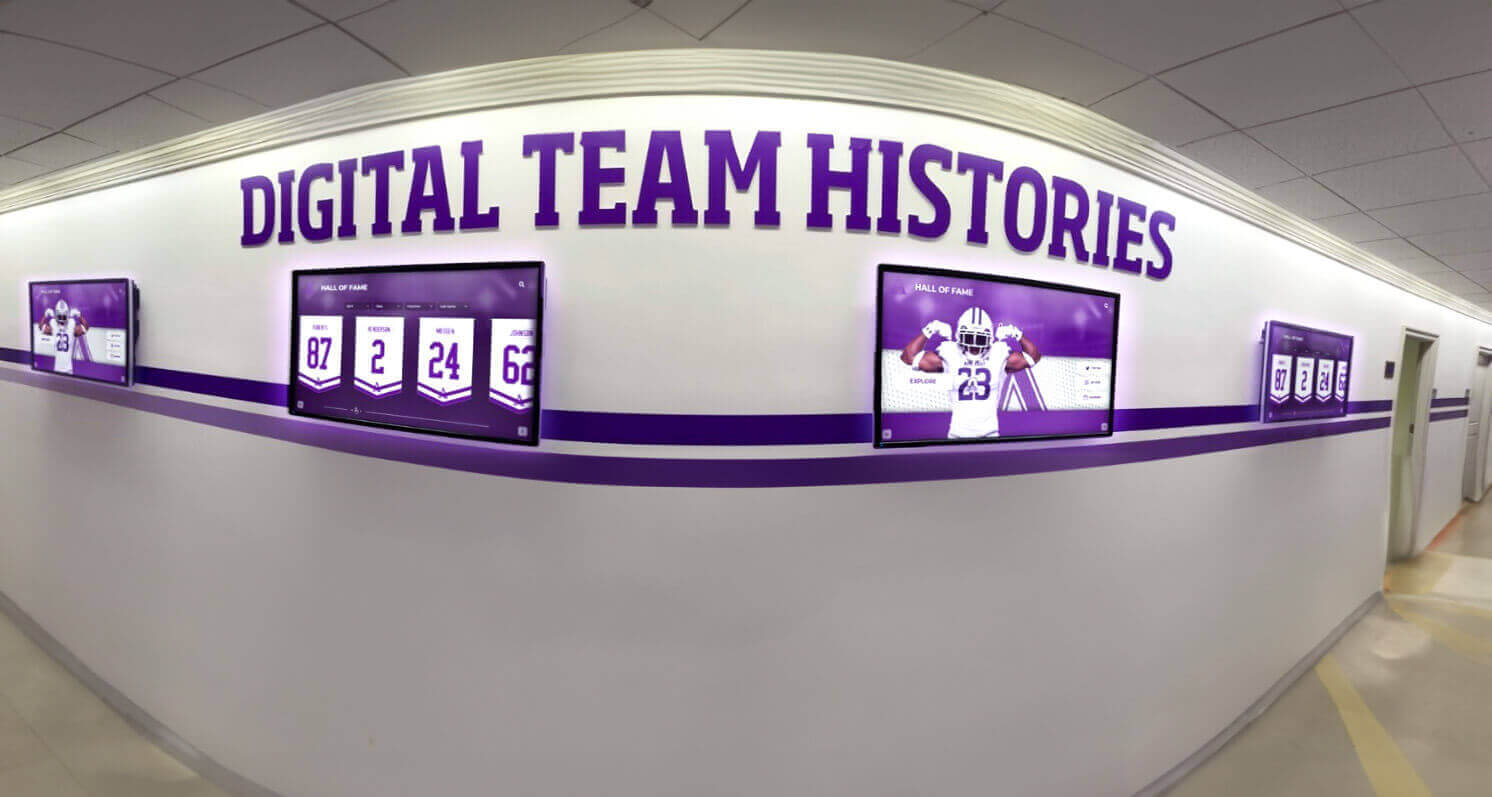
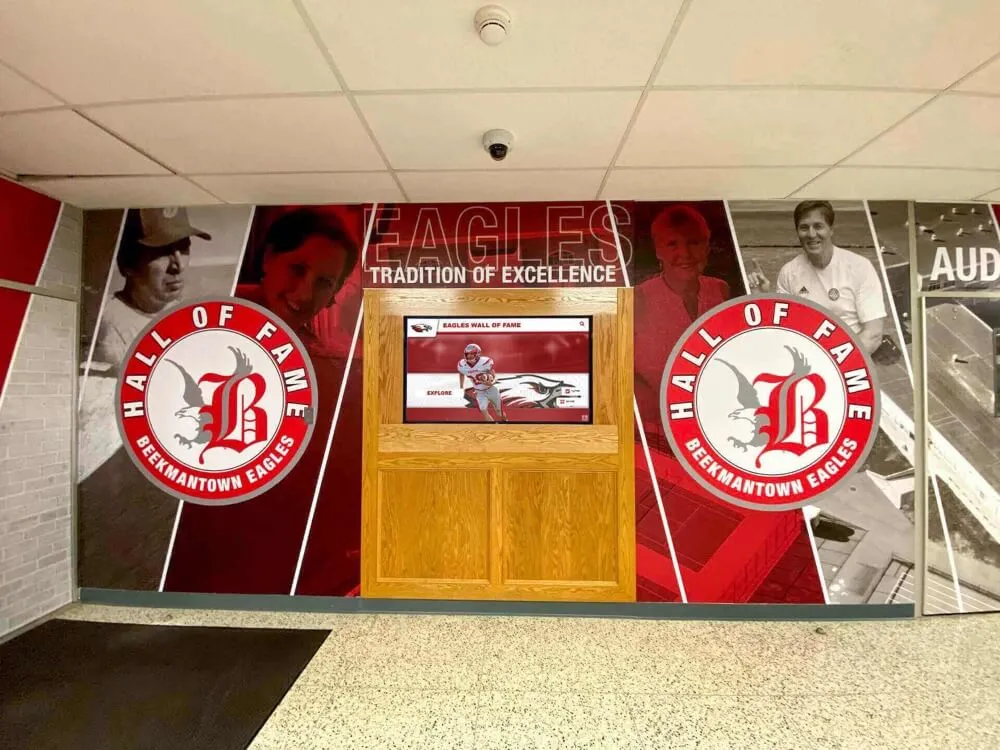
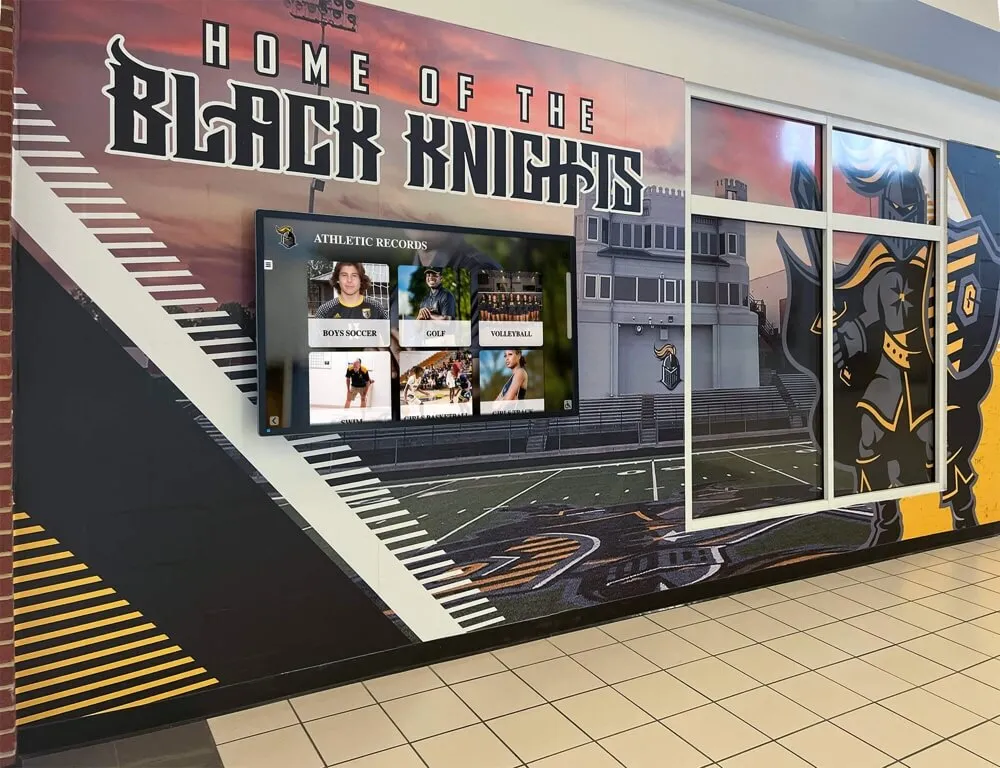
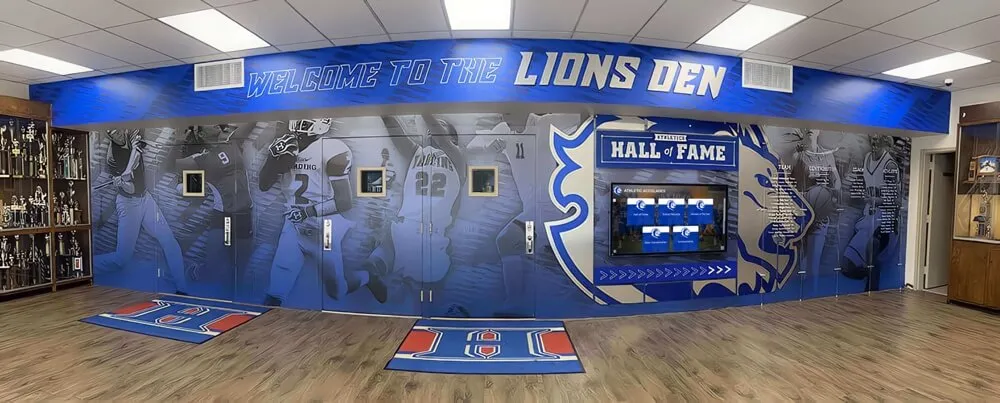
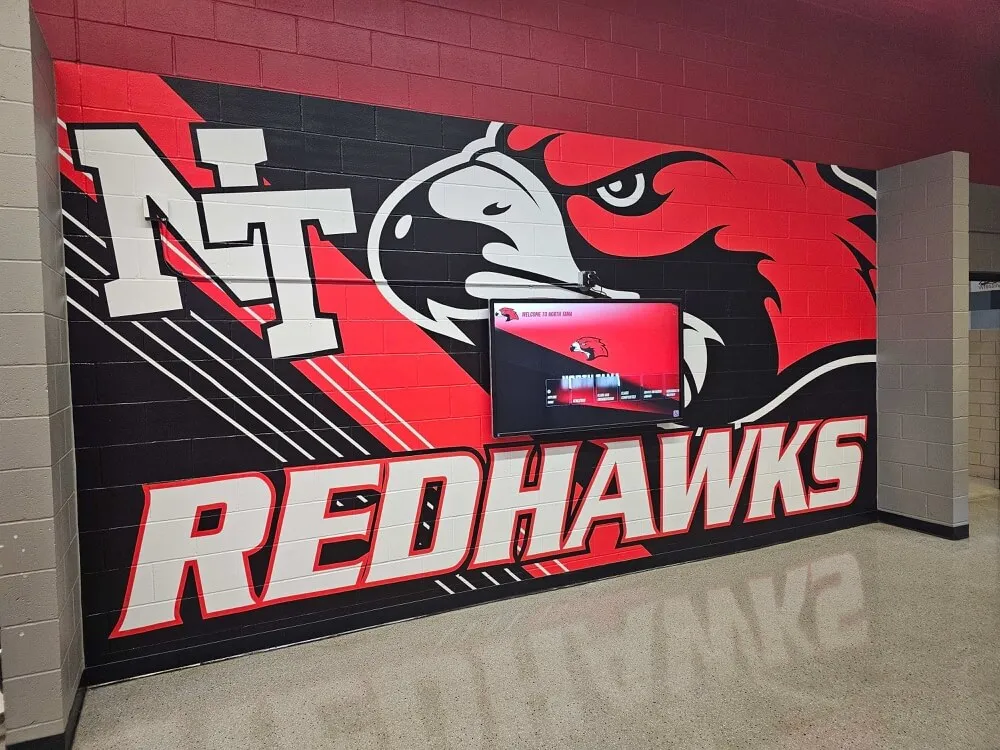
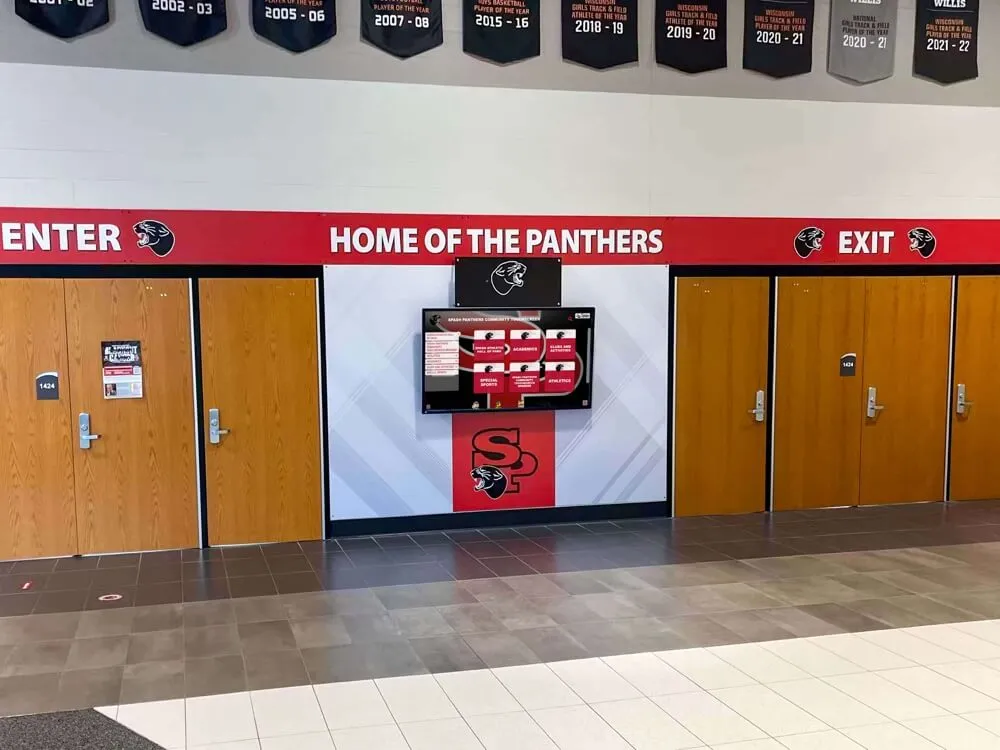
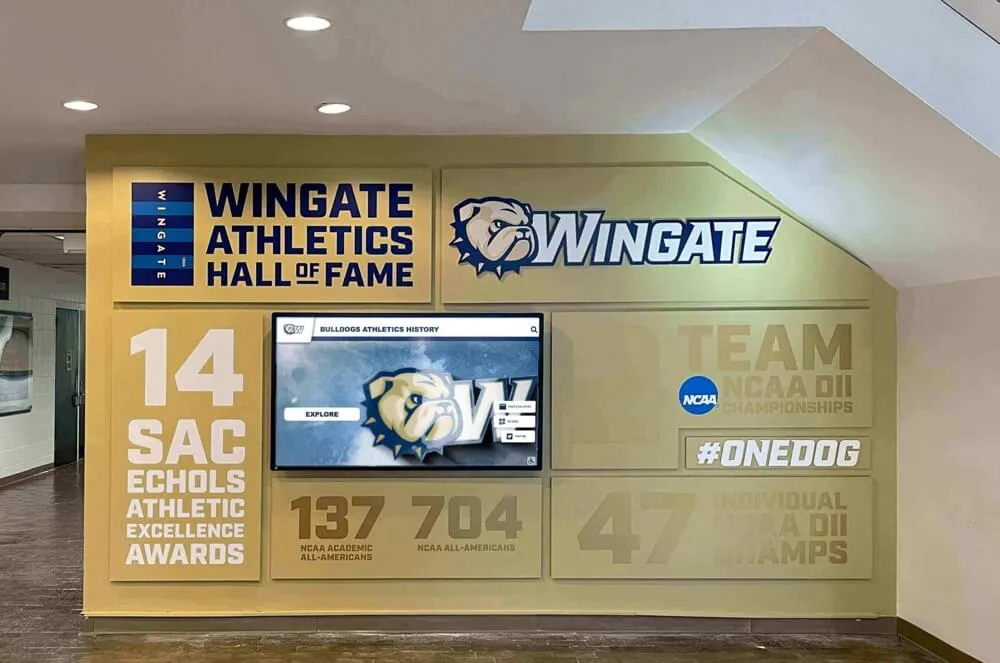
Multiple displays throughout facilities create comprehensive recognition environments celebrating contributions across all departments
Experience-Based Recognition Gifts
Providing experiences rather than physical objects creates lasting memories while accommodating diverse employee preferences.
Professional Development Opportunities
Investing in employee growth demonstrates organizational commitment beyond immediate acknowledgment:
Development-Based Recognition:
- Conference attendance at industry events and professional gatherings
- Certification programs funding relevant professional credentials
- Course enrollment in skills development and continuing education
- Leadership training preparing employees for expanded responsibilities
- Mentorship program access connecting team members with experienced professionals
- Book allowances supporting continuous learning and development
Professional development recognition benefits both employees (advancing careers and capabilities) and organizations (building stronger talent pipelines and institutional capacity).
Time and Flexibility Gifts
Acknowledging that valued employees deserve work-life balance support:
Time-Based Recognition:
- Additional paid time off (extra vacation days or personal days)
- Flexible scheduling options (remote work days, adjusted hours)
- Extended lunch breaks for special occasions
- Early release on Fridays during summer months
- Sabbatical opportunities for long-tenured employees
- Compressed workweek options providing extended weekends
Time recognition particularly resonates with employees juggling professional responsibilities with personal commitments, family obligations, and wellness priorities—demonstrating organizational understanding that life exists beyond workplace boundaries.
Exclusive Access and VIP Experiences
Creating memorable moments through unique opportunities:
Access-Based Recognition:
- Lunch or coffee with organizational executives and leadership
- VIP parking spaces for designated periods
- Behind-the-scenes access to exclusive company experiences or facilities
- First-choice scheduling for vacation requests or preferred shifts
- Priority consideration for desirable projects or assignments
- Executive briefings providing insight into organizational strategy
Exclusive access recognition creates distinction while building relationships across organizational hierarchies that might not otherwise develop through normal workplace interactions.
Entertainment and Recreational Experiences
Providing enjoyable experiences aligned with employee interests:
Entertainment Recognition:
- Event tickets (concerts, sporting events, theater) matching individual preferences
- Dining experiences at employee-favorite restaurants or special establishments
- Recreational activities (golf outings, spa days, adventure experiences)
- Family experiences enabling shared enjoyment with loved ones
- Cultural events (museums, exhibitions, performances)
- Travel vouchers supporting personal exploration and relaxation
Entertainment recognition accommodates diverse interests better than standardized gifts while creating positive memories associated with workplace appreciation.
Organizations implementing sports recognition programs in athletic contexts demonstrate celebration principles adaptable to workplace recognition honoring diverse contributions.
Personalized Recognition Gifts That Resonate
Tailored acknowledgment reflecting individual preferences creates greater impact than generic standardization.
Custom Awards Reflecting Individual Contributions
Moving beyond template recognition to honor specific achievements:
Personalized Award Elements:
- Custom messaging citing specific contributions and impacts
- Achievement-appropriate award types (innovation plaques, service recognition, performance excellence)
- Individual preference consideration (public versus private acknowledgment)
- Personal touches referencing unique strengths and memorable moments
- Collaborative input from colleagues providing peer perspectives
- Presentation timing maximizing impact and meaning
Personalization demonstrates that organizations genuinely understand individual contributions rather than treating recognition as administrative checkbox.
Choice-Based Recognition Programs
Enabling employees to select meaningful acknowledgment:
Recognition Choice Models:
- Gift catalogs offering diverse options across various categories and price points
- Experience menus listing available recognition activities and opportunities
- Donation options allowing employees to direct recognition value toward charitable causes
- Physical award alternatives (traditional plaques versus modern displays versus no physical component)
- Timing preferences (immediate recognition versus accumulated points for larger rewards)
Choice-based programs accommodate diverse employee values—from those preferring tangible awards through others valuing experiences, charitable impact, or professional development opportunities.
Milestone and Tenure Recognition
Honoring sustained organizational commitment:
Service Milestone Approaches:
- 5-year recognition acknowledging sustained contribution
- 10-year awards celebrating decade-long dedication
- 15, 20, 25+ year honors for exceptional organizational commitment
- Increasingly significant recognition matching tenure milestones
- Personalized gifts reflecting individual interests accumulated through years of relationship
- Permanent recognition through digital display systems preserving organizational history
Service recognition demonstrates appreciation for loyalty while providing aspiration for newer team members envisioning long-term careers.
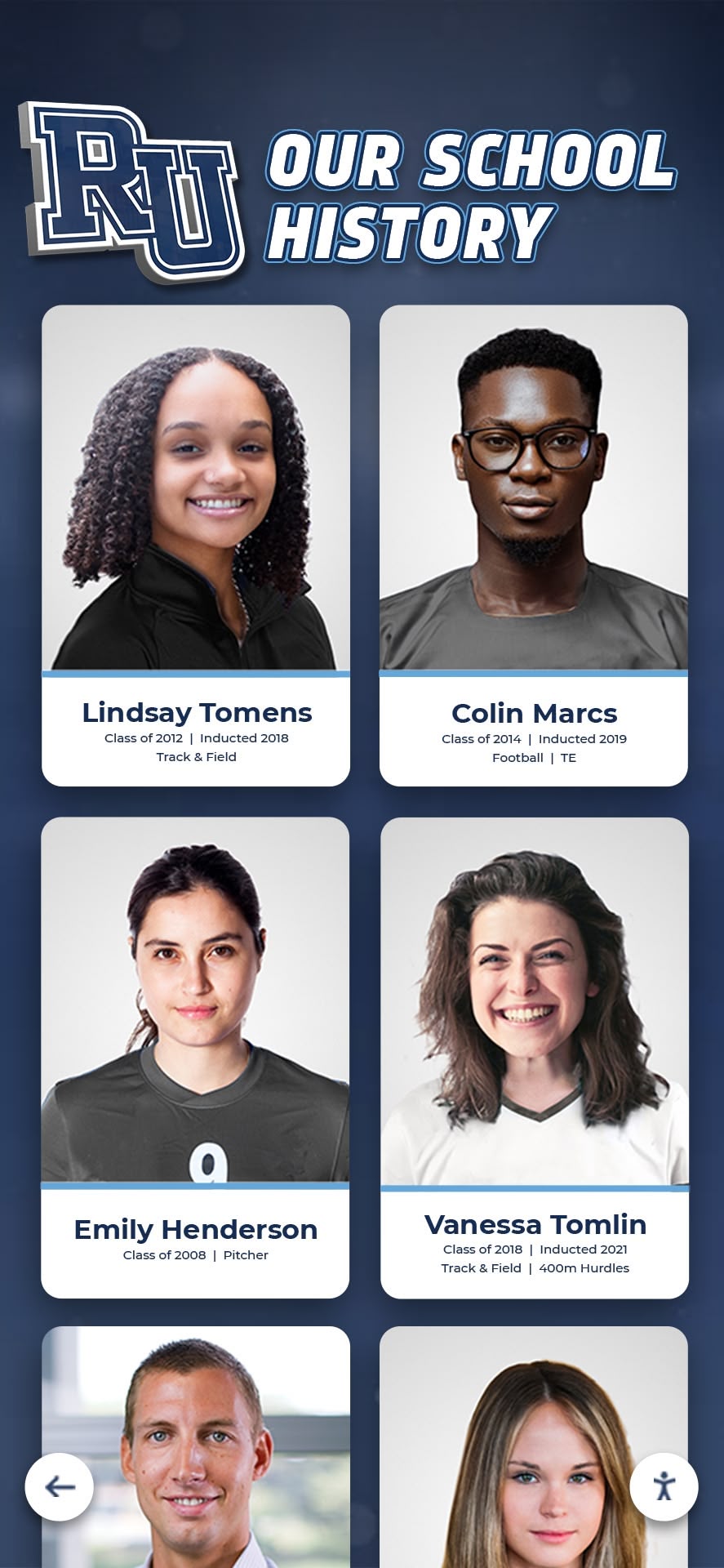
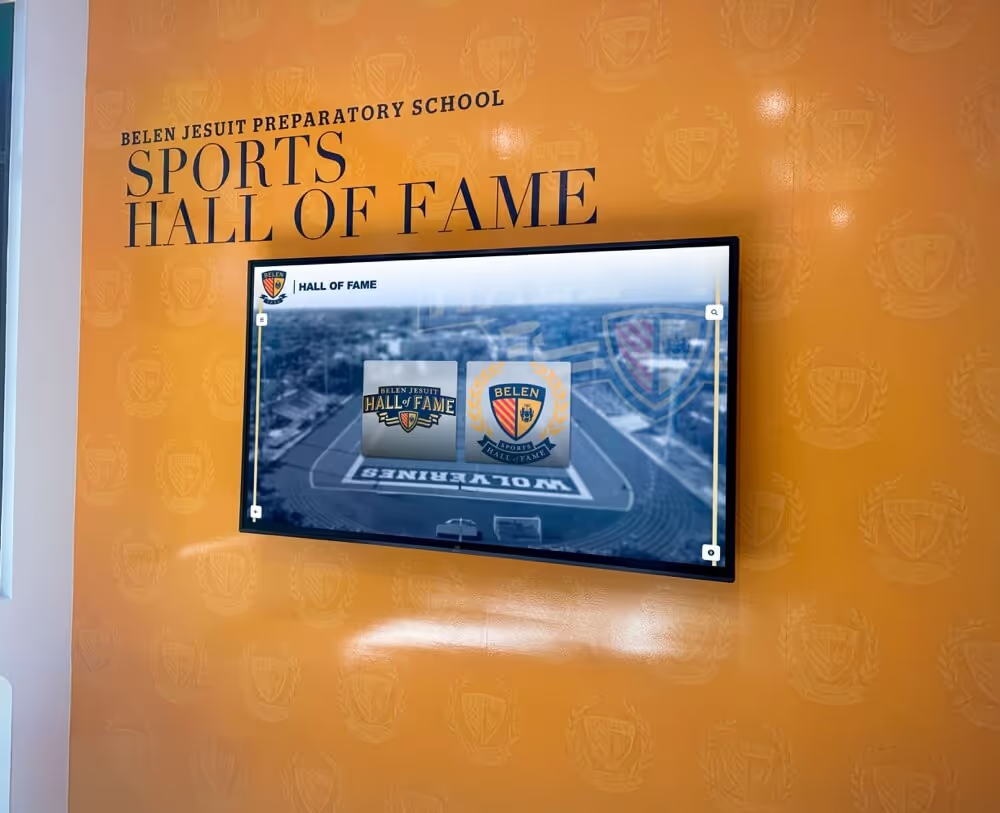
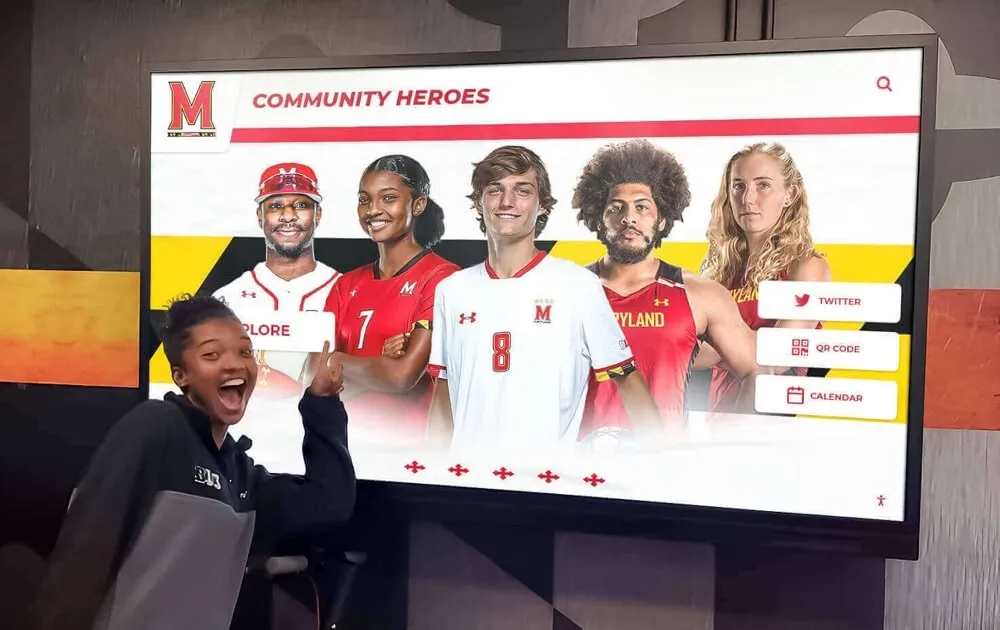
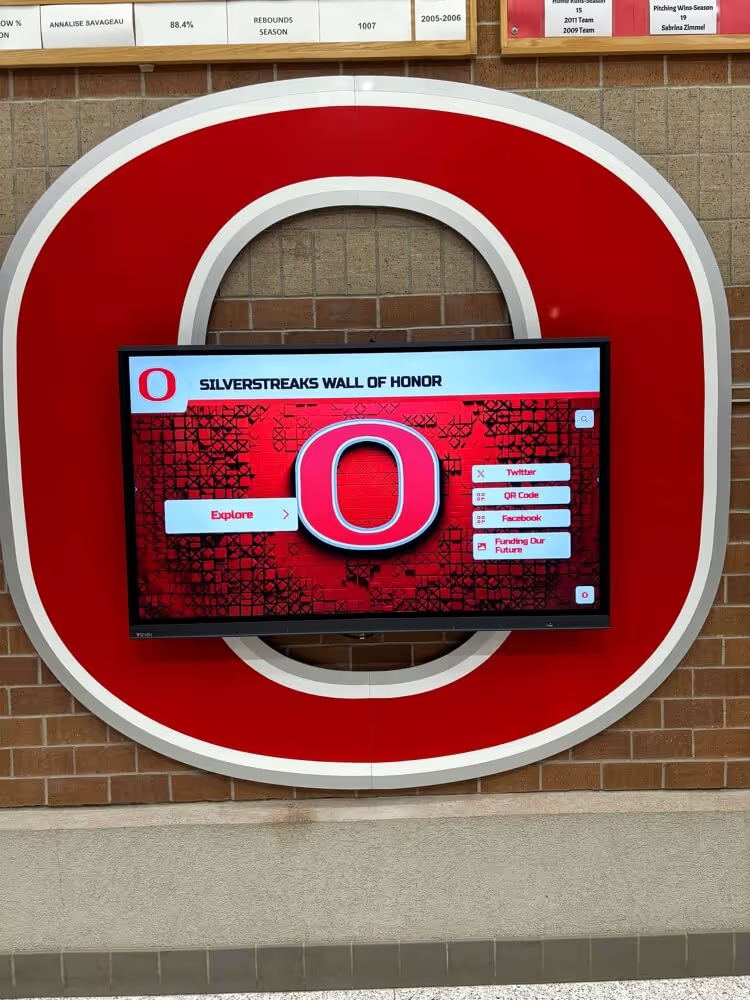
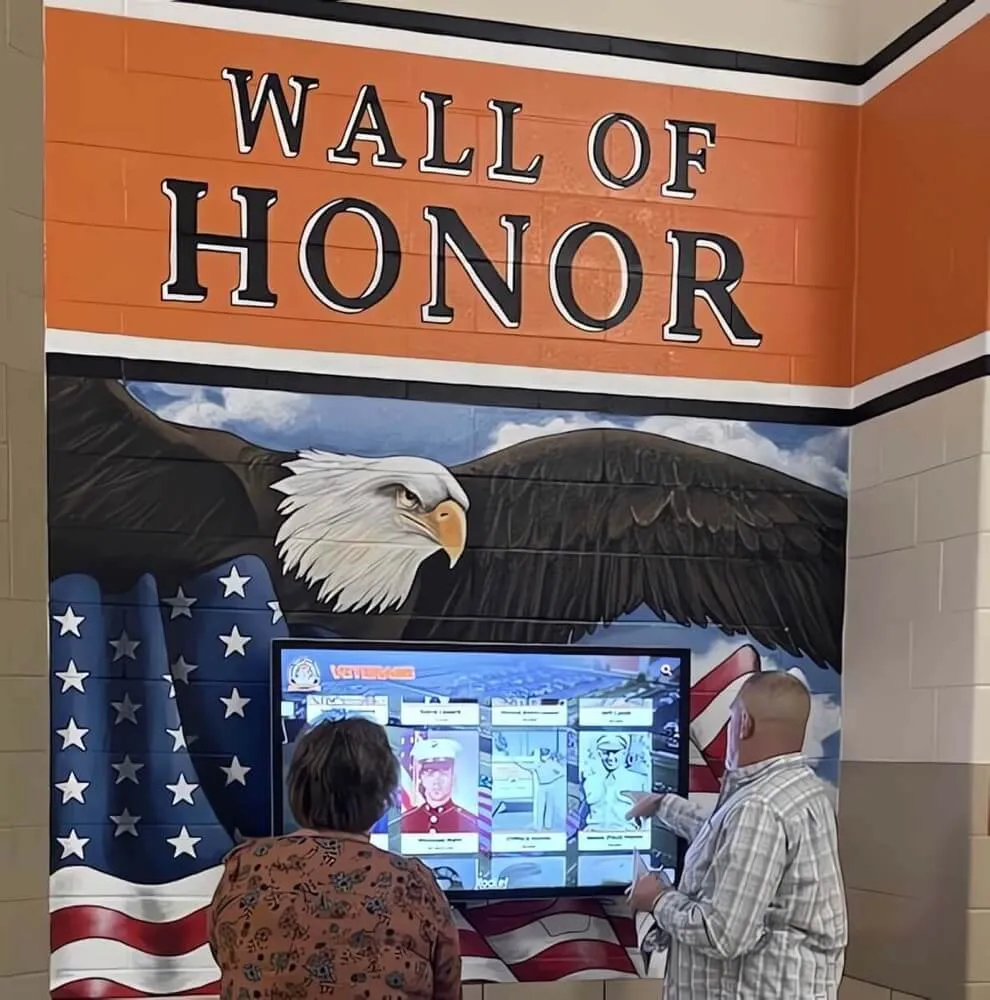
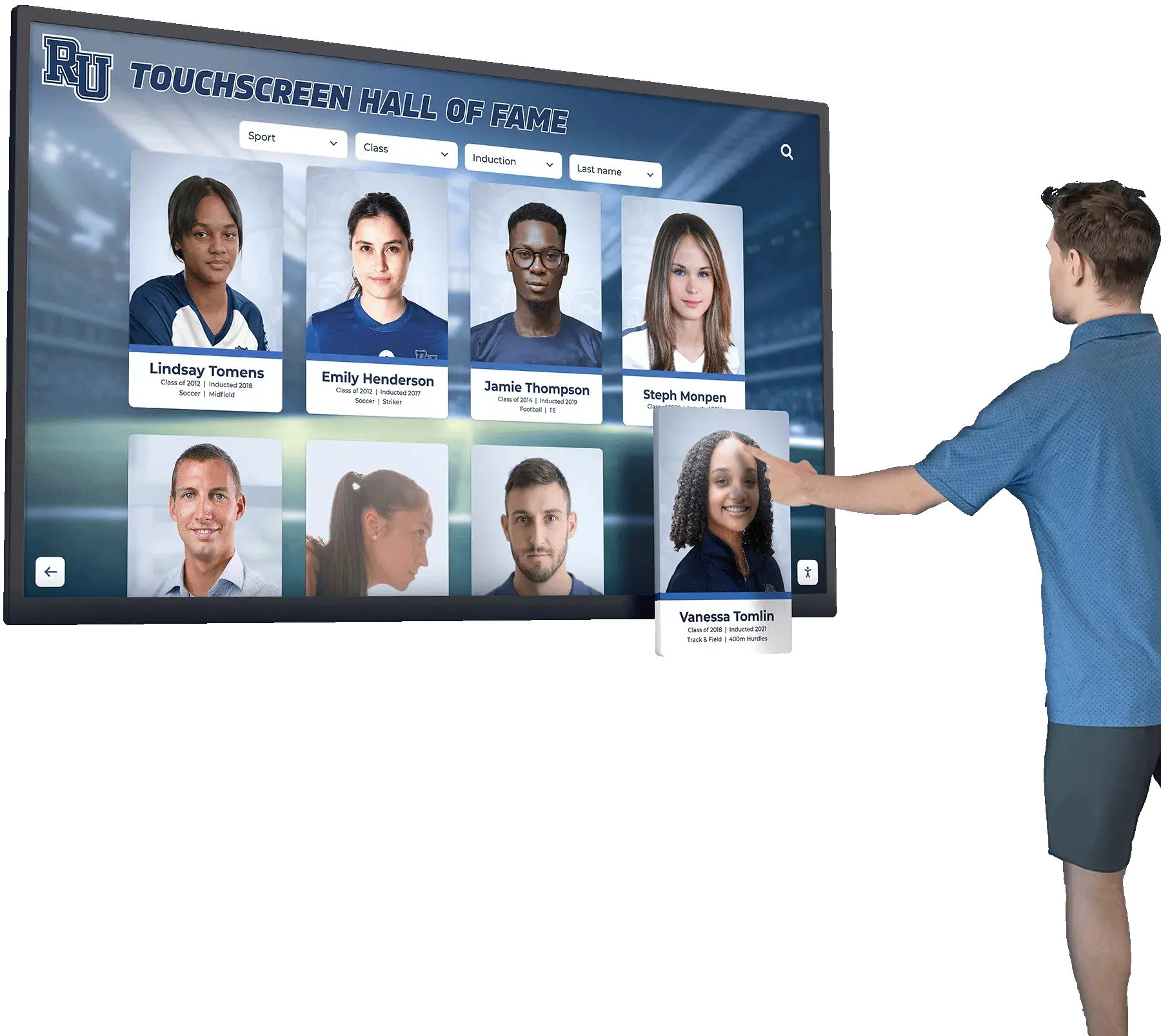
Card-based interfaces showcase individual profiles with photos, career journeys, and contribution stories creating meaningful connections
Peer and Team Recognition Gifts
Honoring collaborative achievements and colleague appreciation:
Peer Recognition Approaches:
- Team awards celebrating collective accomplishments and group contributions
- Peer-nominated recognition based on colleague observations and appreciation
- Department celebrations acknowledging unit-wide achievements
- Cross-functional awards honoring collaboration across organizational boundaries
- Group experiences (team outings, shared meals, recreational activities) as recognition rewards
Peer recognition carries unique weight because colleagues understand daily challenges, observe contributions leadership might miss, and provide appreciation from those working most closely with recognized employees.
Budget-Conscious Recognition Gift Strategies
Meaningful recognition doesn’t require substantial financial investment—authenticity and thoughtfulness matter more than expense.
Low-Cost High-Impact Recognition
Modest investments creating meaningful appreciation:
Affordable Recognition Options:
- Handwritten thank-you notes from leadership citing specific contributions
- Personalized certificates with detailed achievement descriptions and personal touches
- Public acknowledgment during team meetings and all-staff gatherings
- Social media recognition celebrating achievements (with employee permission)
- Desk plants or small office decorations with appreciation tags
- Local bakery treats or specialty coffee delivered to workstations
- Company swag (branded apparel, accessories) with personalized appreciation notes
Research consistently demonstrates that specific, timely recognition from respected leaders creates greater impact than expensive gifts lacking personal connection or authentic acknowledgment of actual contributions.
Leveraging Existing Organizational Resources
Maximizing recognition impact through strategic resource utilization:
Resource-Based Recognition:
- Existing technology platforms (email, intranet, digital displays) for recognition distribution
- Unused meeting spaces converted to appreciation celebration venues
- Internal talent showcase (employee musicians, speakers, artists) providing entertainment
- Cross-departmental collaboration reducing individual cost burden while building connections
- Leadership time investment demonstrating executive appreciation through personal participation
- Volunteer coordination and peer-led planning reducing staff time requirements
Strategic resource allocation ensures even budget-constrained organizations create meaningful recognition demonstrating genuine care without requiring substantial financial investment.
Organizations exploring donor recognition strategies in fundraising contexts discover acknowledgment principles adaptable to workplace employee appreciation programs.
Recognition Through Workplace Improvements
Investing in environmental enhancements benefiting entire teams:
Workplace Enhancement Recognition:
- Ergonomic equipment upgrades (chairs, standing desks, monitor arms)
- Common area improvements (break room furniture, recreational equipment)
- Technology upgrades (dual monitors, better software, improved tools)
- Comfort additions (coffee machines, refrigerators, microwaves)
- Aesthetic improvements (artwork, plants, better lighting)
- Digital signage solutions showcasing team achievements and organizational culture
Workplace improvements benefit all employees while demonstrating organizational investment in team wellbeing and working conditions—recognition extending beyond individual gifts to collective benefit.
Department and Role-Specific Recognition Gifts
Tailored acknowledgment honoring unique contributions across different organizational functions.
Frontline and Customer-Facing Staff Recognition
Employees directly serving customers require adapted appreciation:
Frontline Recognition Gifts:
- On-the-spot acknowledgment cards employees can redeem immediately
- Customer feedback-based recognition celebrating positive reviews and service excellence
- Shift flexibility or preferred scheduling as recognition rewards
- Professional development supporting career advancement from frontline roles
- Visible recognition in customer-facing areas building brand reputation and employee pride
- Team celebrations acknowledging collective service achievements
Frontline workers particularly value recognition because customer-facing roles often receive criticism more readily than acknowledgment—making positive feedback and appreciation especially meaningful and impactful.
Administrative and Support Staff Recognition
Behind-the-scenes team members whose contributions enable organizational function:
Support Staff Recognition Gifts:
- Technology upgrades improving daily workflow efficiency
- Workspace personalization budgets enabling individual office customization
- Professional organization memberships supporting career development
- Process improvement rewards acknowledging operational excellence suggestions
- Cross-training opportunities expanding skills and career possibilities
- Permanent recognition through digital display systems providing visibility for typically invisible contributions
Administrative professionals often report feeling underappreciated despite essential contributions—making thoughtful recognition particularly impactful for building engagement and loyalty in these crucial roles.
Sales and Performance-Based Role Recognition
Employees in revenue-generating and performance-driven positions:
Sales Recognition Gifts:
- Achievement tiers with increasingly valuable rewards matching performance levels
- Commission bonuses supplemented with experiential recognition creating memorable celebrations
- President’s Club experiences honoring top performers through exclusive events
- Professional gear upgrades (technology, travel accessories, presentation tools)
- Networking opportunities with industry leaders and potential clients
- Public acknowledgment demonstrating organizational appreciation for revenue contributions
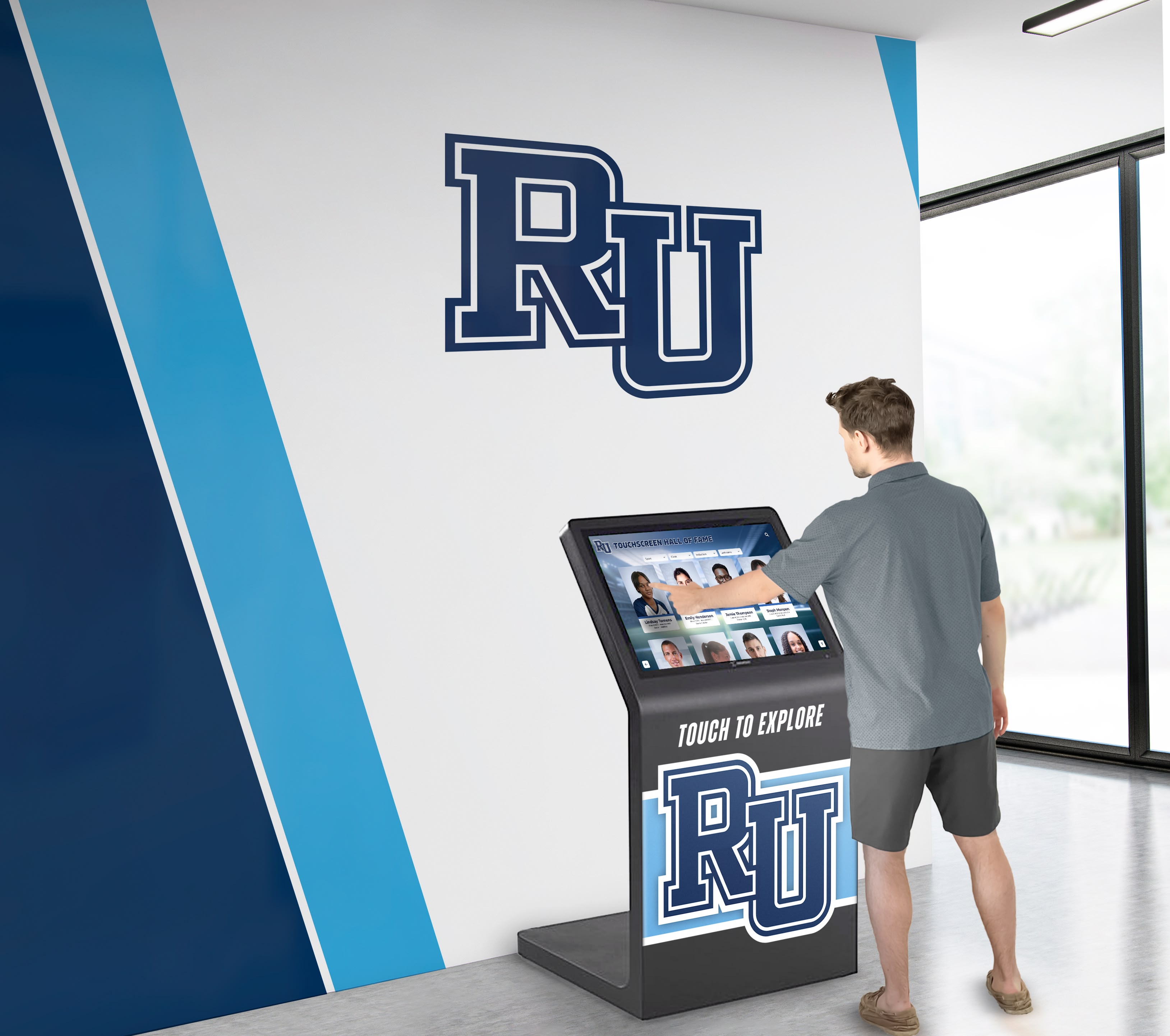
Intuitive interfaces enable all team members to explore recognition and celebrate colleague achievements across organizational levels
Leadership and Management Recognition
Honoring leaders who support, develop, and guide teams:
Leadership Recognition Gifts:
- Executive coaching and leadership development programs
- Strategic planning retreats providing reflection and renewal opportunities
- Industry conference attendance facilitating networking and learning
- Recognition from direct reports through upward feedback programs
- Sabbatical opportunities for long-serving leaders
- Legacy recognition honoring sustained leadership impact through permanent displays
Leadership recognition demonstrates that appreciation extends across all organizational levels while acknowledging the unique pressures and responsibilities leaders shoulder.
Creating Comprehensive Employee Recognition Gift Programs
Systematic approaches ensuring consistent, equitable, and meaningful acknowledgment.
Establishing Recognition Criteria and Categories
Clear frameworks ensure fair, consistent acknowledgment:
Recognition Categories:
- Performance excellence celebrating exceptional results and outcomes
- Values-based awards honoring organizational principles in action
- Innovation recognition rewarding creative problem-solving and process improvements
- Service milestones acknowledging tenure and loyalty
- Peer recognition based on colleague nominations and appreciation
- Leadership awards celebrating mentorship and team development
- Safety recognition honoring accident-free periods and safety initiative leadership
Criteria Development:
- Specific, measurable achievement descriptions avoiding ambiguity
- Objective evaluation methods reducing bias and favoritism perceptions
- Multiple recognition tiers accommodating varying accomplishment scales
- Frequency planning (daily, weekly, monthly, quarterly, annual) maintaining consistency
- Department-specific adaptations reflecting unique contexts and contributions
Well-defined criteria build program credibility and ensure recognition feels earned rather than arbitrary.
Organizations implementing academic recognition approaches in educational settings demonstrate principles adaptable to workplace recognition celebrating diverse contributions.
Building Recognition Budgets
Sustainable programs require appropriate funding:
Budget Components:
- Individual award allocations varying by recognition tier and achievement significance
- Digital display technology investments providing long-term recognition infrastructure
- Experience-based recognition budgets accommodating diverse preferences
- Physical gift inventories for organizations preferring tangible awards
- Event costs for recognition ceremonies and celebrations
- Administrative support and program management resources
Budget Guidelines:
- Organizations typically allocate 1-2% of total compensation costs for comprehensive recognition programs
- ROI demonstrated through retention improvements (reducing recruitment and onboarding costs)
- Engagement gains (improving productivity and performance metrics)
- Cultural impact (strengthening employer brand and talent attraction)
- Multi-year planning for technology investments providing decades of recognition capacity
Appropriate budget allocation ensures recognition programs achieve intended impact without creating unsustainable financial commitments.
Measuring Recognition Gift Program Effectiveness
Regular assessment ensures programs deliver value:
Quantitative Metrics:
- Employee retention rates and turnover trends comparing recognized versus non-recognized team members
- Engagement survey scores specifically addressing recognition satisfaction
- Participation rates in recognition programs and activities
- Distribution equity across departments, demographics, and organizational levels
- Program costs versus retention savings and productivity gains
- Digital display engagement analytics (interactions, session duration, repeat visitors)
Qualitative Indicators:
- Employee feedback through surveys, focus groups, and informal conversations
- Exit interview mentions of recognition (or lack thereof)
- Manager observations of team morale and cultural shifts
- Recognition story quality and personalization levels
- Organic recognition spreading beyond formal program boundaries
Continuous assessment enables program refinement ensuring recognition remains meaningful, equitable, and aligned with organizational goals while demonstrating value justifying continued investment.
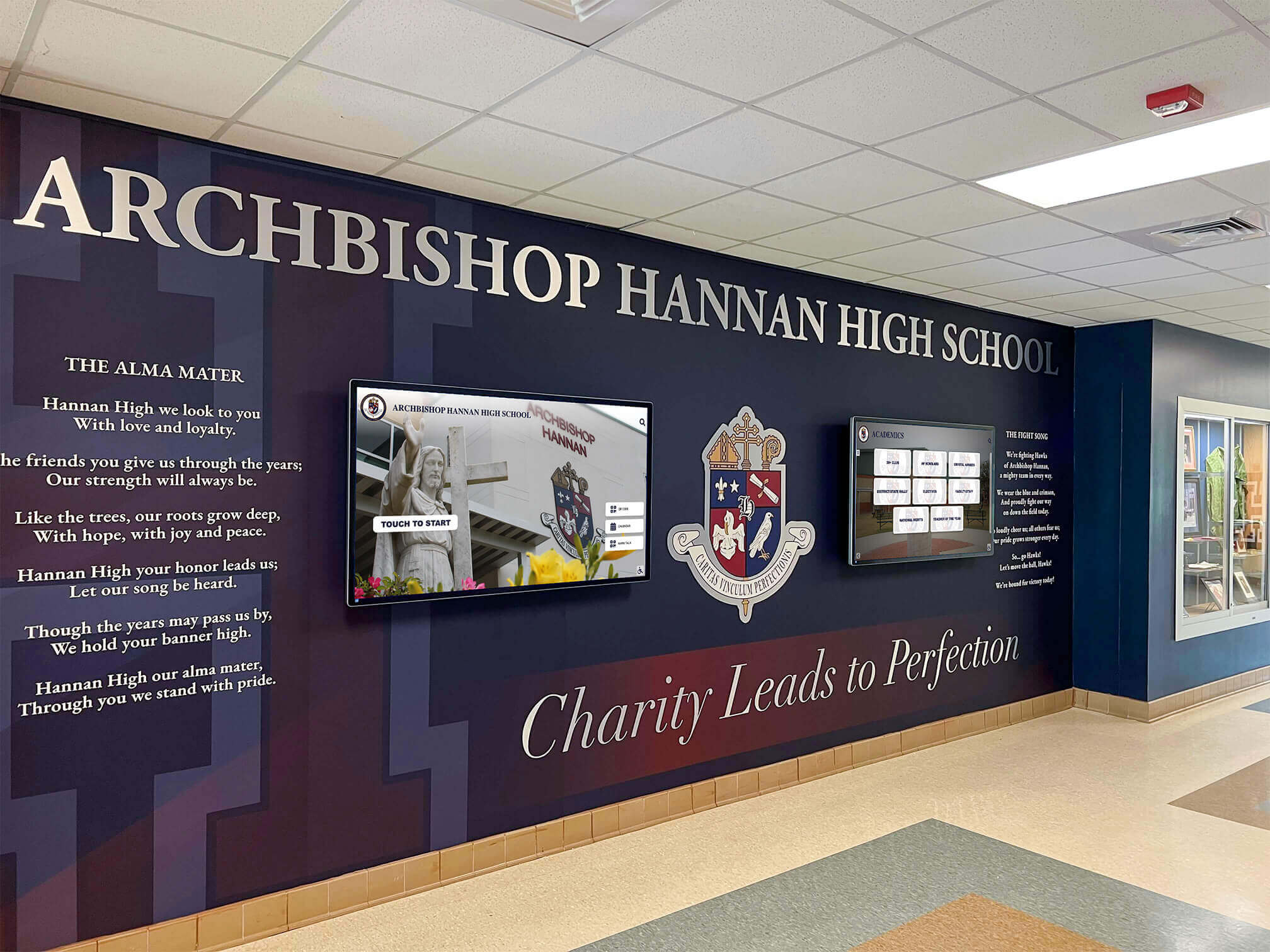
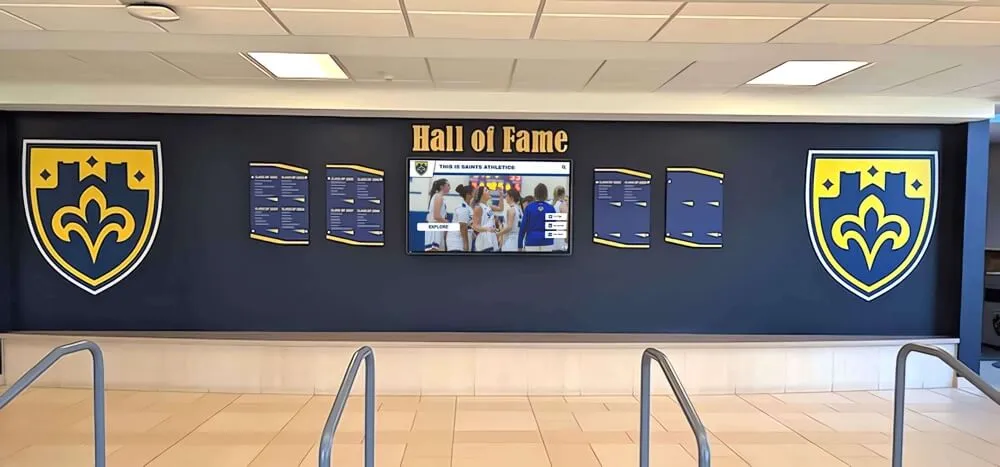
Coordinated recognition environments combining multiple formats create compelling workplace cultures celebrating achievement systematically
Common Recognition Gift Mistakes to Avoid
Understanding pitfalls helps organizations design more effective acknowledgment approaches.
Generic One-Size-Fits-All Awards
The Problem:
- Standardized gifts ignoring individual preferences, values, and interests
- Template recognition lacking specific contribution acknowledgment
- Identical awards for vastly different achievement types and significance levels
- Physical items recipients don’t use, value, or display
The Solution:
- Offer choice-based recognition accommodating diverse preferences
- Personalize acknowledgment with specific achievement details and contributions
- Vary recognition formats matching different accomplishment types
- Invest in permanent visibility through digital systems rather than accumulating physical items
Delayed or Inconsistent Recognition
The Problem:
- Waiting months to acknowledge achievements reduces impact and relevance
- Sporadic recognition suggesting low priority or afterthought status
- Inconsistent application creating confusion about expectations
- Recognition gaps leaving many employees feeling invisible despite contributions
The Solution:
- Implement real-time recognition systems enabling immediate acknowledgment
- Establish consistent recognition schedules everyone understands and anticipates
- Create systematic approaches ensuring equitable distribution across all teams
- Build recognition into regular workflows rather than treating as separate activity
Inequitable Distribution
The Problem:
- Same employees receiving repeated recognition while others never acknowledged
- Certain departments receiving disproportionate acknowledgment
- Manager favoritism creating resentment and undermining program credibility
- Visible bias patterns based on demographics, tenure, or position
The Solution:
- Track recognition distribution across organizational demographics and departments
- Establish nomination systems reducing single-person decision-making
- Rotate recognition categories ensuring diverse achievement types receive acknowledgment
- Audit programs regularly for fairness and address disparities proactively
- Provide manager training on equitable, inclusive recognition practices
Organizations implementing banquet recognition approaches for formal celebrations can adapt strategies ensuring equitable acknowledgment distribution.
Visibility and Impact Limitations
The Problem:
- Physical awards stored privately limiting recognition visibility and cultural impact
- Recognition known only to individual recipients rather than broader organization
- No mechanism for sharing achievements with family, professional networks, or future employees
- Static recognition becoming outdated and forgotten quickly
The Solution:
- Implement digital recognition providing permanent, searchable visibility
- Create public acknowledgment through displays in high-traffic areas
- Enable web access allowing employees to share recognition beyond workplace
- Maintain dynamic systems that grow with organizational recognition needs
Emerging Trends in Employee Recognition Gifts
Forward-looking organizations adopt innovative acknowledgment approaches.
Digital and Virtual Recognition Growth
Technology-enabled recognition continues expanding:
Digital Recognition Trends:
- Interactive touchscreen displays providing engaging employee exploration experiences
- Virtual reality recognition showcasing achievements in immersive environments
- Mobile-first platforms enabling recognition anywhere, anytime
- Social integration allowing employees to share workplace acknowledgment
- Analytics-driven programs identifying recognition gaps and optimization opportunities
Sustainability and Environmental Consciousness
Eco-friendly recognition aligning with organizational values:
Sustainable Recognition:
- Digital displays eliminating physical production waste and ongoing plaque manufacturing
- Experience-based gifts replacing material consumption
- Charitable donations honoring employees while supporting causes they value
- Carbon-neutral award programs offsetting recognition environmental impact
- Reusable recognition infrastructure (digital systems) versus single-use physical items
Environmental sustainability particularly resonates with younger employees prioritizing organizational values and social responsibility in employment decisions.
Personalization Through AI and Data
Technology enabling unprecedented recognition customization:
Data-Driven Personalization:
- AI-powered recommendation engines suggesting recognition gifts matching individual preferences
- Behavioral analytics identifying optimal recognition timing and formats
- Predictive systems flagging employees at risk of disengagement requiring acknowledgment
- Automated personal touches (custom messages, relevant gift suggestions, preferred presentation formats)
- Continuous learning improving recognition effectiveness over time
Personalization technology helps large organizations deliver individualized recognition at scale—combining efficiency with authenticity.
Conclusion: Building Recognition Programs Employees Actually Value
Employee recognition gifts represent far more than transactional acknowledgment—they function as strategic infrastructure communicating organizational values, building workplace culture, and demonstrating authentic appreciation for human contributions driving success. When organizations move beyond generic plaques and standardized gifts toward thoughtful approaches combining digital visibility, personalized acknowledgment, experience-based rewards, and systematic recognition programs, they transform workplaces into environments where employees feel genuinely valued beyond their immediate productivity.
The employee recognition gift ideas explored throughout this guide demonstrate how authentic acknowledgment adapts across contexts—from budget-conscious nonprofits through resource-rich corporations, from traditional industries through innovative startups, from small teams through enterprise workforces. Whether implementing interactive digital displays providing permanent visibility, creating experience-based recognition programs accommodating diverse preferences, or designing personalized acknowledgment reflecting individual values, these strategies help organizations build recognition excellence advancing business objectives while honoring the people making success possible.
Transform Your Employee Recognition Program
Discover how modern digital recognition displays can help your organization celebrate every team member's contributions while building lasting workplace cultures centered on appreciation and excellence.
Explore Recognition SolutionsStrategic employee recognition balances multiple considerations: honoring diverse contributions across all roles and organizational levels, respecting individual preferences for acknowledgment types and presentation formats, accommodating budget realities while maintaining program quality and impact, ensuring equity and fairness in recognition distribution, and measuring effectiveness demonstrating value to organizational stakeholders justifying continued investment. Whether selecting individual recognition gifts, designing comprehensive programs, or exploring modern alternatives to traditional approaches, the principles explored throughout this guide provide frameworks for creating meaningful acknowledgment employees genuinely appreciate.
Start by assessing current recognition gift practices and identifying gaps between acknowledgment aspirations and employee experiences. Survey team members about recognition preferences discovering what your specific workforce values most—some employees prioritize public visibility while others prefer private acknowledgment, some value tangible awards while others favor experiences or professional development, some appreciate immediate recognition while others prefer accumulated rewards. Use these insights to design tailored programs matching your organizational culture, employee demographics, and budget parameters.
Explore solutions providing recognition infrastructure supporting decades of acknowledgment without recurring production costs. Digital recognition platforms like those offered by Rocket Alumni Solutions enable comprehensive employee celebration combining unlimited capacity, multimedia storytelling, real-time updates, and web accessibility—creating permanent visibility impossible with traditional plaques while accommodating budget constraints through one-time technology investments replacing ongoing physical award expenses.
Implement systematic recognition combining one-time milestone celebrations (service anniversaries, major achievements) with consistent ongoing acknowledgment (weekly recognition, monthly awards, quarterly celebrations) creating cultures where appreciation becomes organizational norm rather than exceptional occurrence. Train managers on effective recognition techniques emphasizing specific contribution acknowledgment, timely delivery, personalization reflecting individual preferences, and equitable distribution ensuring all employees receive appropriate appreciation regardless of role, department, or visibility level.
Every employee—from entry-level team members through senior leadership, from frontline service workers through specialized technical roles, from long-tenured veterans through recent hires—deserves recognition acknowledging contributions and celebrating commitment to organizational success. With thoughtful gift selection, appropriate technology investments, authentic implementation, and consistent execution, you can create recognition programs building engaged, motivated workplace cultures where all team members thrive and organizations achieve sustainable excellence through the collective contributions of valued, appreciated people.
Ready to elevate your employee recognition? Explore comprehensive approaches in retirement celebration ideas honoring career-long service, discover top sales performer recognition strategies adaptable to diverse roles, or learn about digital recognition display technologies powering modern acknowledgment that engages teams and celebrates excellence across organizations, schools, nonprofits, and businesses building cultures where recognition transforms from obligatory gift-giving into authentic appreciation driving engagement, retention, and sustained organizational success.