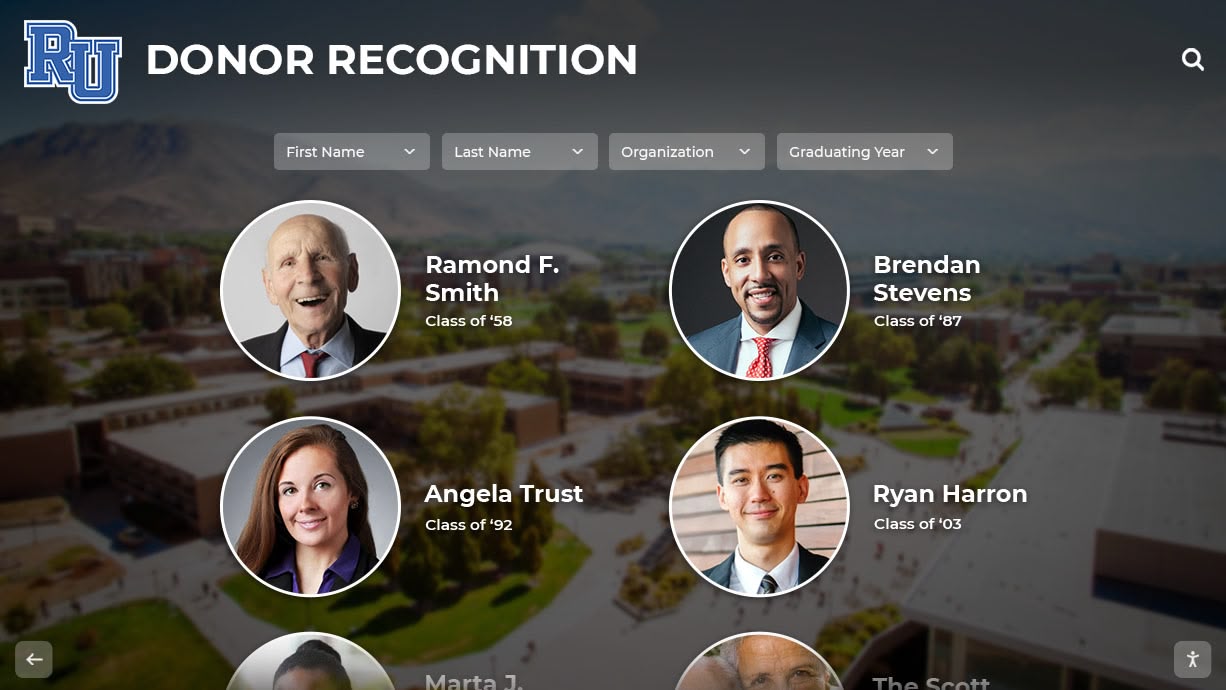
Walking through school hallways and nonprofit facilities, you’ll notice something remarkable about institutions that successfully sustain donor relationships—they make recognition visible, meaningful, and permanent. The signage choices organizations make to honor contributors speak volumes about institutional values and priorities. Whether celebrating major capital campaign donors, annual fund supporters, or longtime contributors, the way schools and nonprofits display recognition directly influences donor satisfaction, retention, and the likelihood that others will step forward to give.
For development professionals and advancement officers, donor recognition signage represents far more than decorative acknowledgment. These displays function as strategic fundraising tools that demonstrate stewardship, inspire prospective donors, validate giving decisions, and create social proof that philanthropy matters within your community. Yet many organizations struggle with recognition approaches—limited by wall space, frustrated by outdated static plaques that can’t adapt as giving levels change, and uncertain how to balance timeless dignity with modern engagement expectations.
This comprehensive guide explores both traditional and innovative donor recognition signage options for schools and nonprofits, examining the strengths and limitations of different approaches. You’ll discover practical frameworks for selecting recognition solutions that align with institutional culture, donor preferences, budget realities, and long-term stewardship goals. Whether you’re planning a capital campaign recognition strategy or refreshing existing donor displays, these insights will help you create acknowledgment that honors generosity while advancing mission fulfillment.
Why Donor Recognition Signage Matters
Visible donor recognition serves purposes that extend far beyond making contributors feel appreciated, though that alone would justify thoughtful implementation. Research consistently demonstrates that recognized donors give more frequently, at higher levels, and remain engaged longer than those whose contributions go unacknowledged or receive only private thanks.
The Psychology of Public Acknowledgment
Social Proof and Giving Culture
When prospective donors see names of community members, alumni, parents, and local businesses prominently displayed throughout facilities, they receive powerful signals about organizational culture. Recognition signage answers questions donors rarely voice directly: “Do people like me support this organization? Is giving normal here? Will my contribution matter?”
Schools with comprehensive donor recognition displays report that visible acknowledgment directly influences additional gifts. Capital campaign consultants consistently observe that recognition walls displaying early major gifts accelerate subsequent fundraising by establishing giving benchmarks and demonstrating momentum.
Permanence and Legacy Validation
Donors—particularly those making significant commitments—want assurance that their generosity will be remembered beyond the immediate thank-you note. Physical recognition signage provides tangible evidence that contributions create lasting impact and permanent institutional memory. This permanence particularly matters to donors considering planned gifts, memorial contributions, or multi-year pledges.

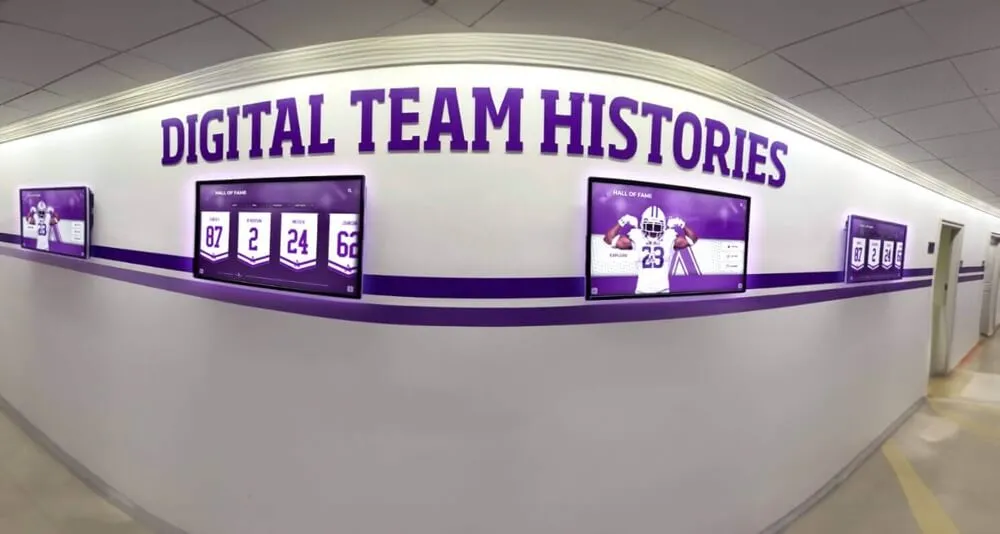
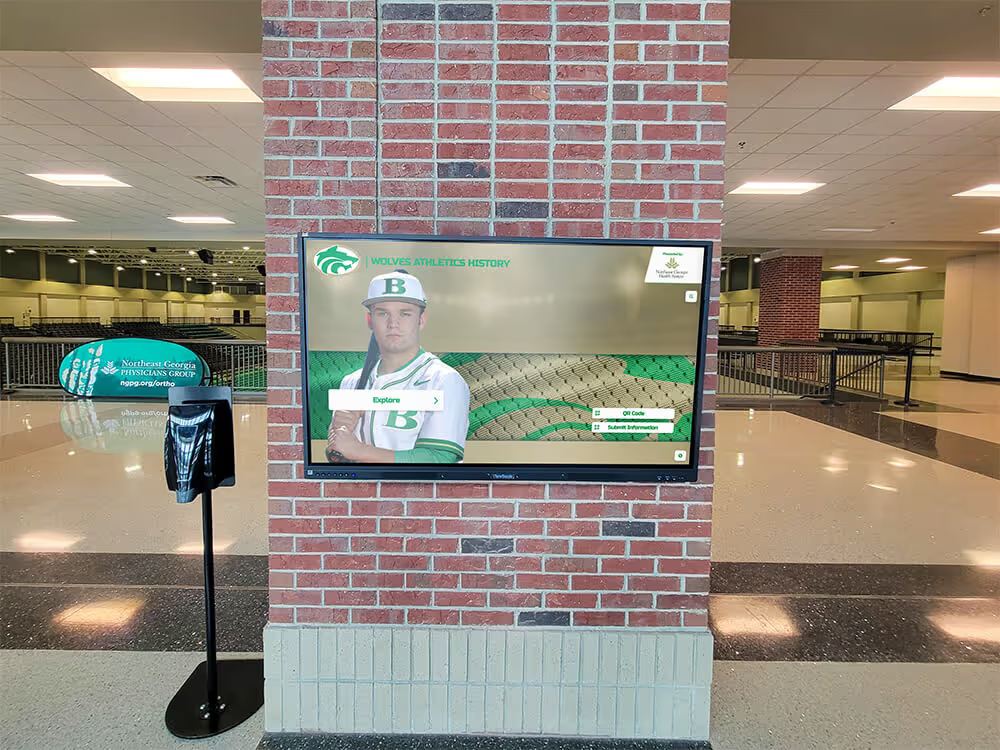
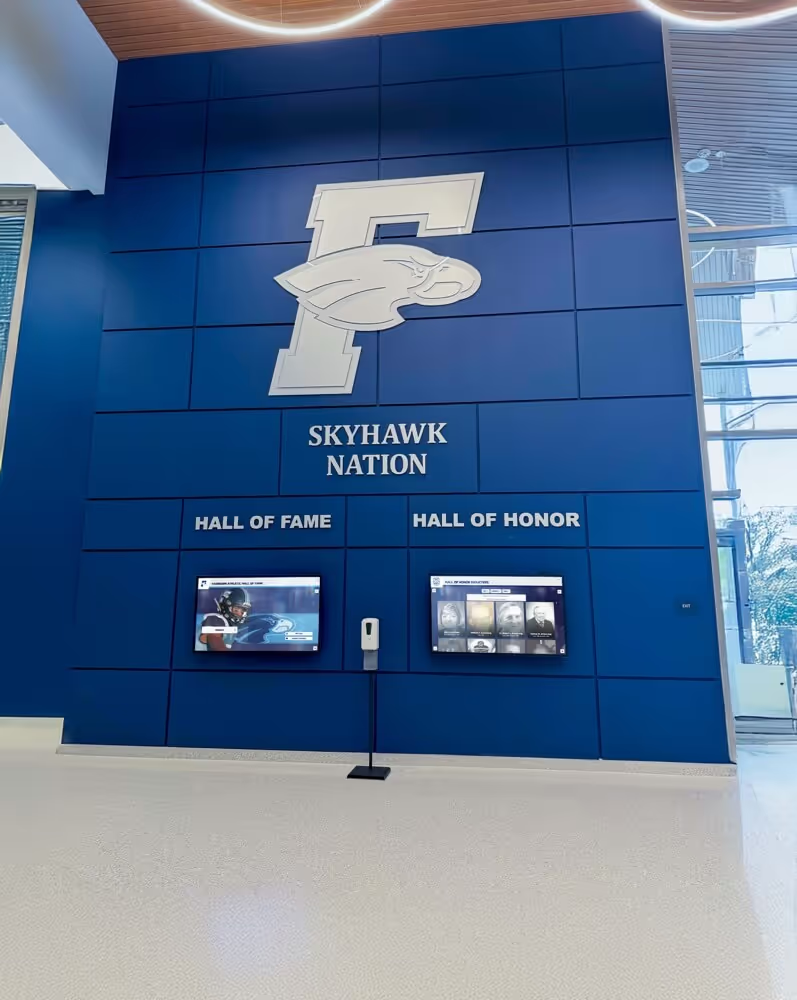
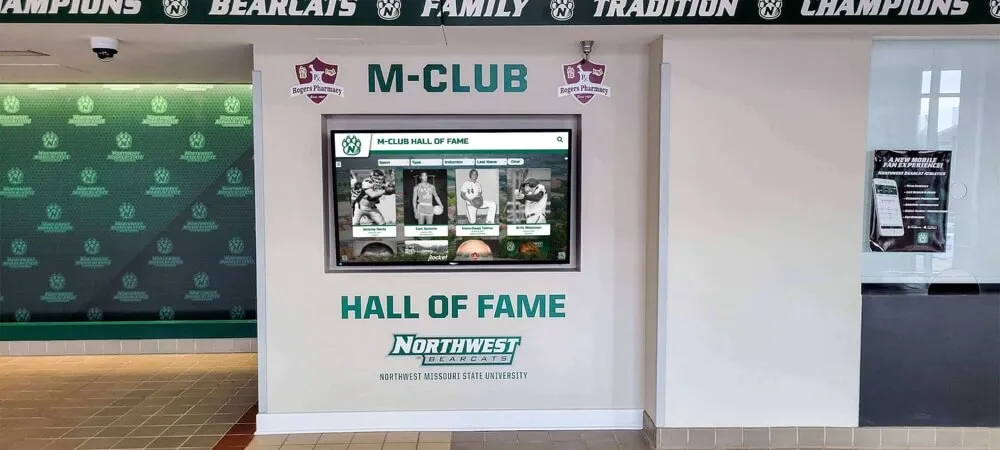
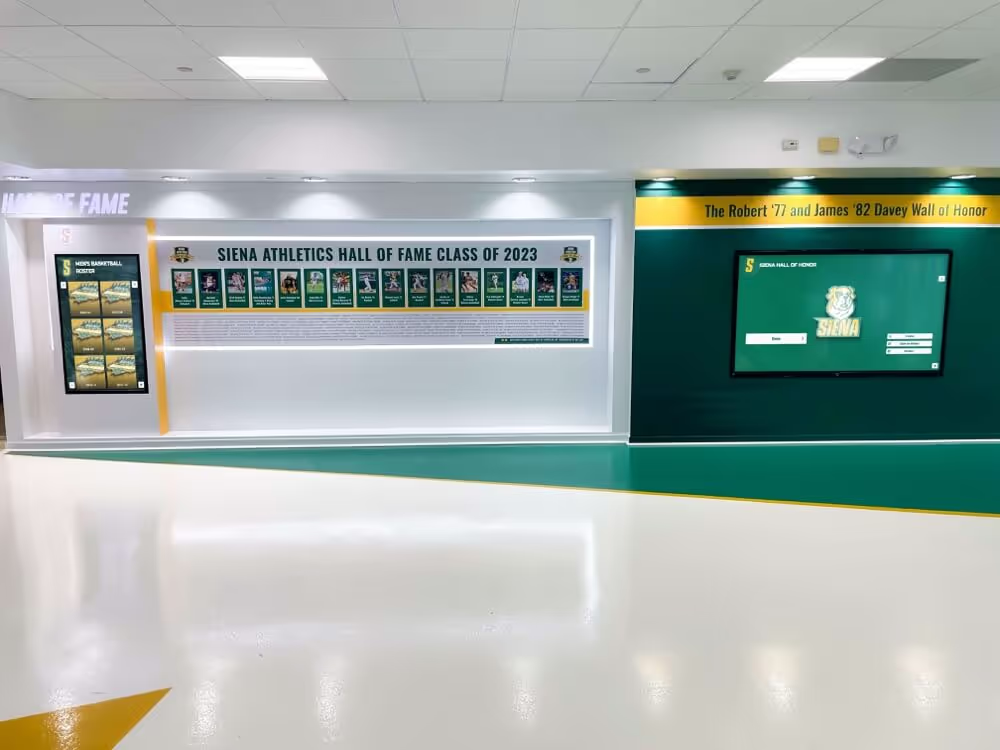
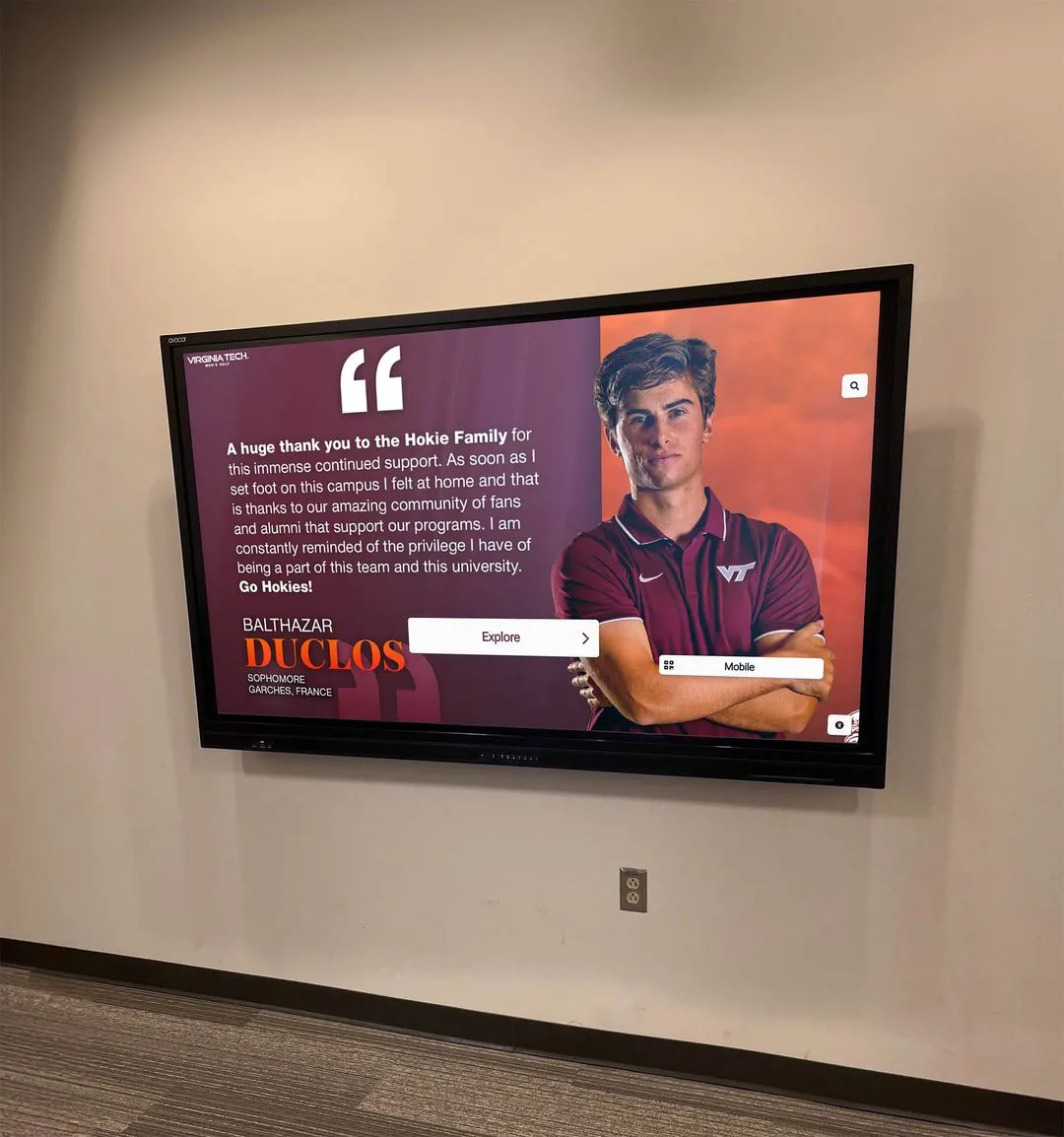
Effective donor recognition signage creates visible acknowledgment that inspires continued support and establishes organizational giving culture
Recognition Signage as Retention Strategy
Stewardship Through Visibility
Development professionals understand that acquiring new donors costs significantly more than retaining existing supporters. Yet many organizations invest heavily in acquisition while underinvesting in stewardship tools like recognition signage that strengthen donor relationships and encourage repeat giving.
When donors visit facilities and see their names displayed respectfully among fellow contributors, they experience renewed connection to mission and validation that their support matters. This visibility functions as ongoing stewardship contact without requiring staff time for individualized communication.
Multi-Generational Engagement
Schools particularly benefit from recognition approaches that connect generations. Alumni wall displays that acknowledge donors across decades demonstrate institutional continuity while inviting younger alumni to join established giving traditions.
Traditional Donor Recognition Signage Options
Before exploring modern alternatives, understanding traditional recognition approaches provides context for evaluating which solutions best serve specific organizational needs. Each option offers distinct advantages alongside inherent limitations.
Engraved Donor Walls and Plaques
The Classic Approach
Brass or bronze plaques mounted on prominent walls represent the most traditional donor recognition format. These installations typically organize donors by giving levels—often labeled as circles, societies, or clubs—with individual names engraved on metal plates.
Strengths:
- Timeless aesthetic that conveys permanence and prestige
- Requires no maintenance once installed
- Creates impressive visual impact when well-designed
- Appeals to donors who value traditional recognition formats
- Works well for capital campaigns with defined completion dates
Limitations:
- Fixed capacity limits how many donors can be recognized
- Extremely expensive to modify when donors upgrade giving levels
- Cannot accommodate new donors without complete reinstallation
- Spelling errors or incorrect information require costly plate replacement
- Static displays lack storytelling capability beyond listing names
Best Applications:
Traditional engraved recognition works particularly well for:
- Completed capital campaigns with defined donor lists
- Memorial gardens and outdoor spaces where electronics aren’t practical
- Historic buildings where modern displays would clash with architectural character
- Naming opportunities for specific facilities, rooms, or program endowments
Printed Donor Recognition Boards
Professional Yet Flexible
Printed boards—often featuring color logos, photos, and formatted donor lists—offer middle ground between expensive engraving and completely flexible digital options.
Implementation Approach:
Organizations typically create professionally designed donor recognition boards using:
- Acrylic panels with UV-printed graphics and donor names
- Fabric-covered boards with updated printed panels
- Vinyl graphics applied to walls or mounted substrates
- Photographic murals incorporating donor recognition elements
Strengths:
- More affordable than metal engraving while maintaining professional appearance
- Easier to update when donor rosters change
- Allows incorporation of photos, logos, and brand elements
- Can be designed to match specific architectural styles
Limitations:
- Still requires physical replacement to update information
- Printed materials fade over time, especially in sunlight
- Updates take weeks from design through production and installation
- Cannot provide interactive experiences or detailed donor stories
Donor Brick Pathways and Courtyard Pavers
Outdoor Recognition Solutions
Engraved bricks or pavers create recognition opportunities in outdoor spaces like courtyards, gardens, athletic facilities, and building approaches. Schools and nonprofits often sell these as affordable giving opportunities that provide permanent acknowledgment.
Typical Programs:
- Individual 4"x8" bricks engraved with donor names, messages, or memorial inscriptions
- Larger pavers for higher giving levels or family recognition
- Themed pathways connecting facilities or commemorating specific initiatives
- Courtyard installations creating gathering spaces anchored by donor support
Strengths:
- Scalable recognition accommodating hundreds or thousands of donors
- Lower price points make philanthropy accessible to broader donor base
- Creates tangible walking spaces that integrate function with recognition
- Families enjoy finding their specific brick among larger installation
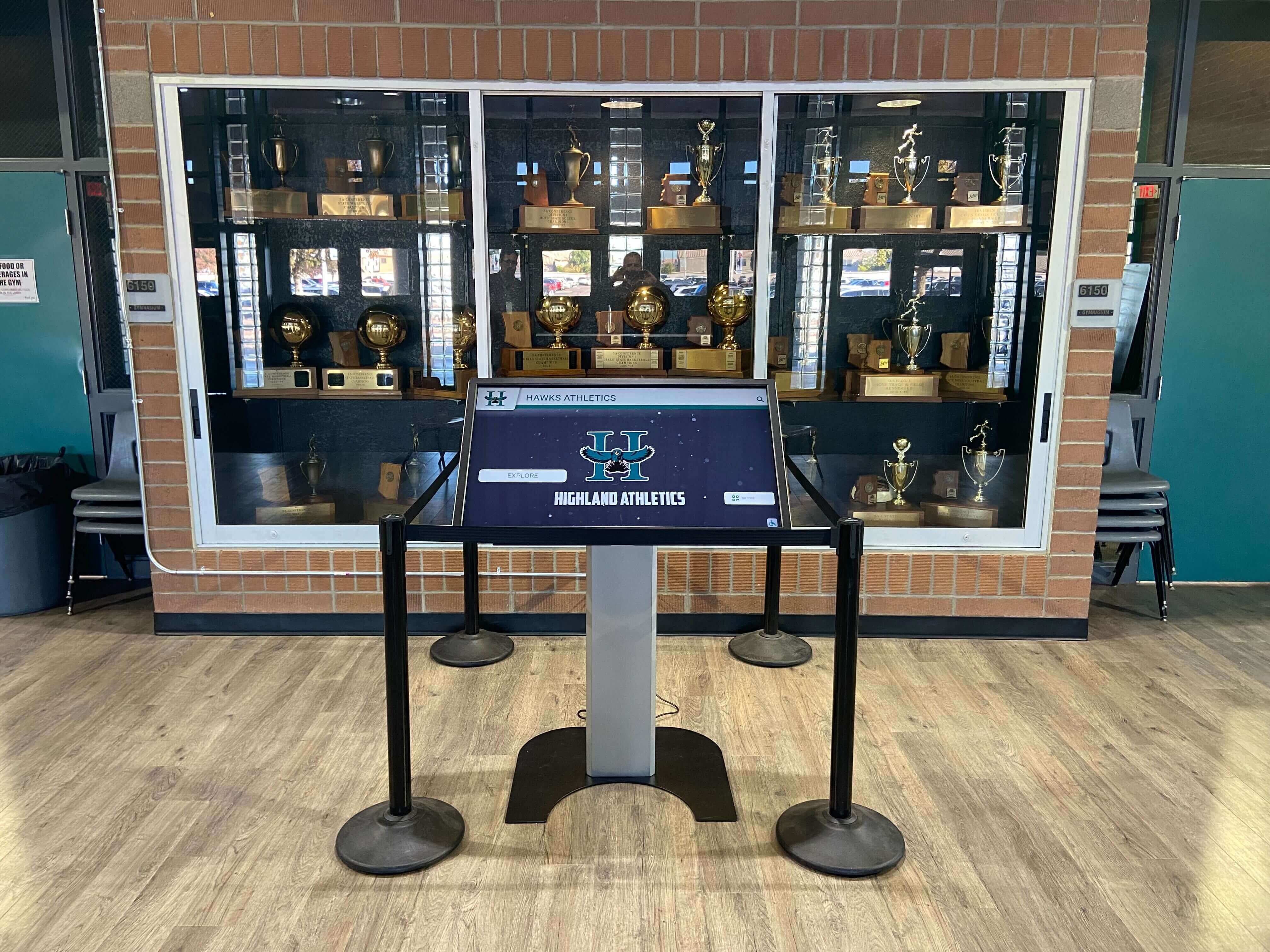
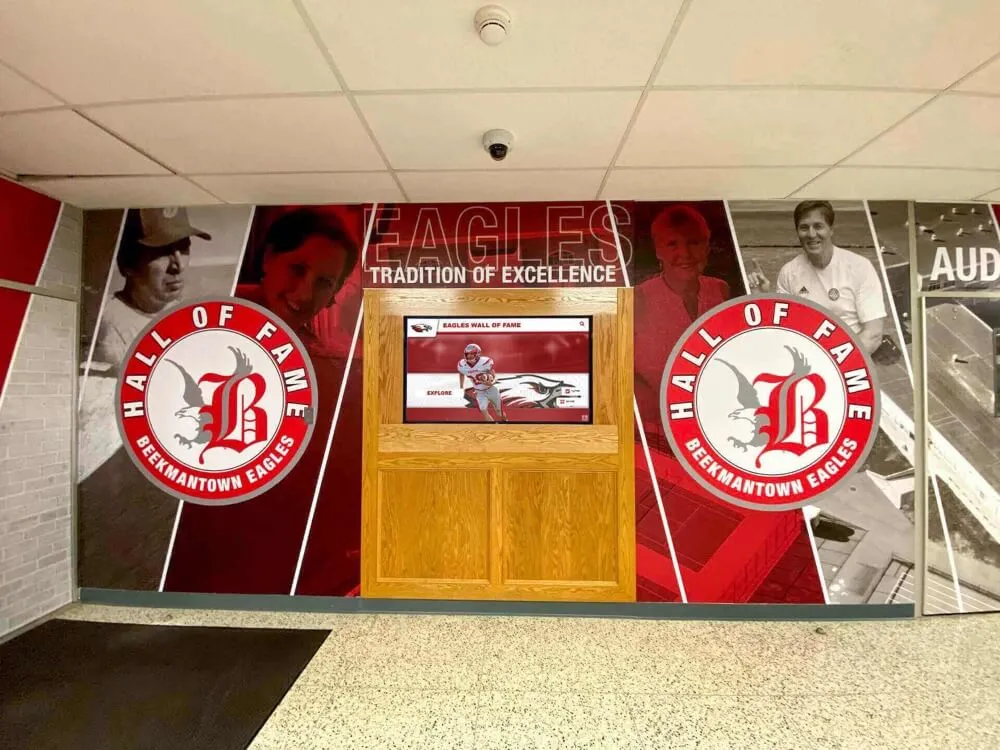
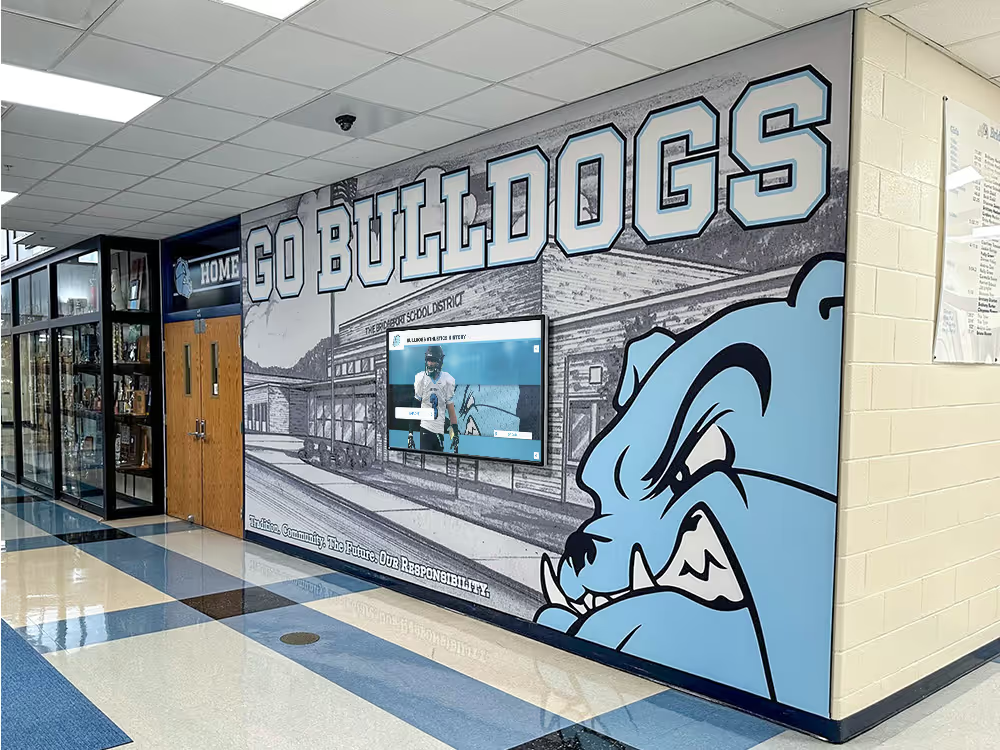
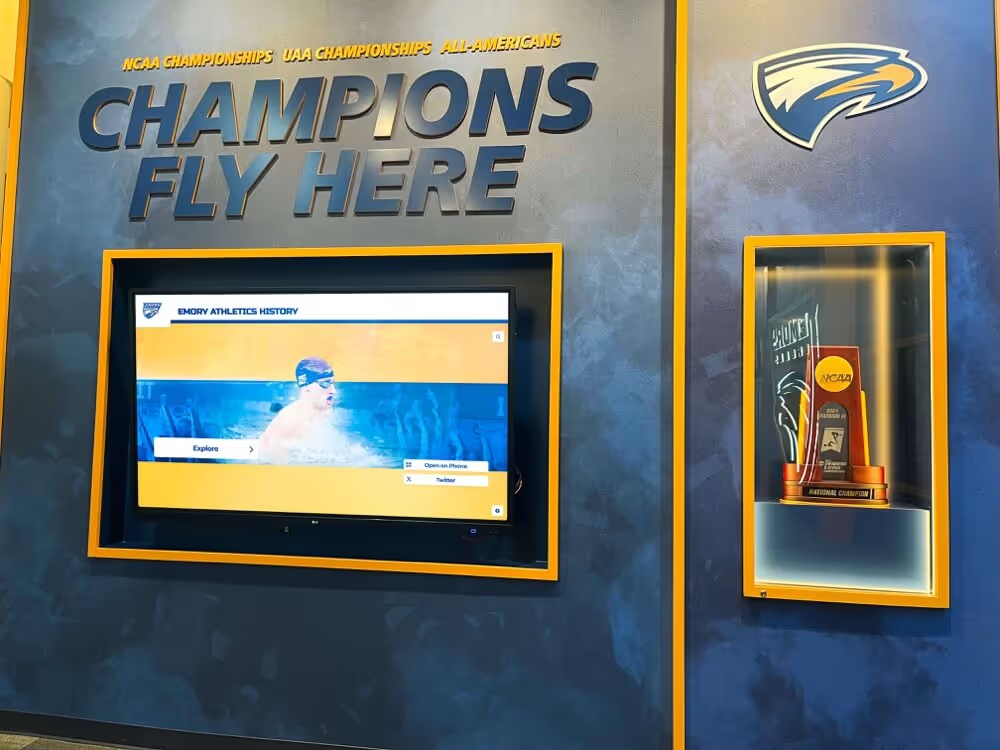
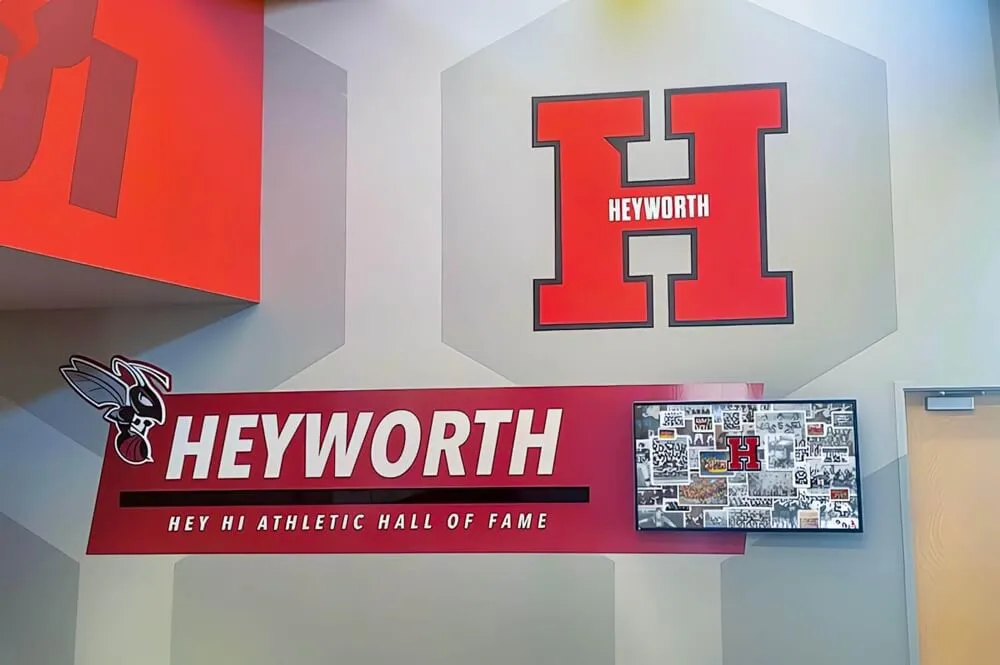
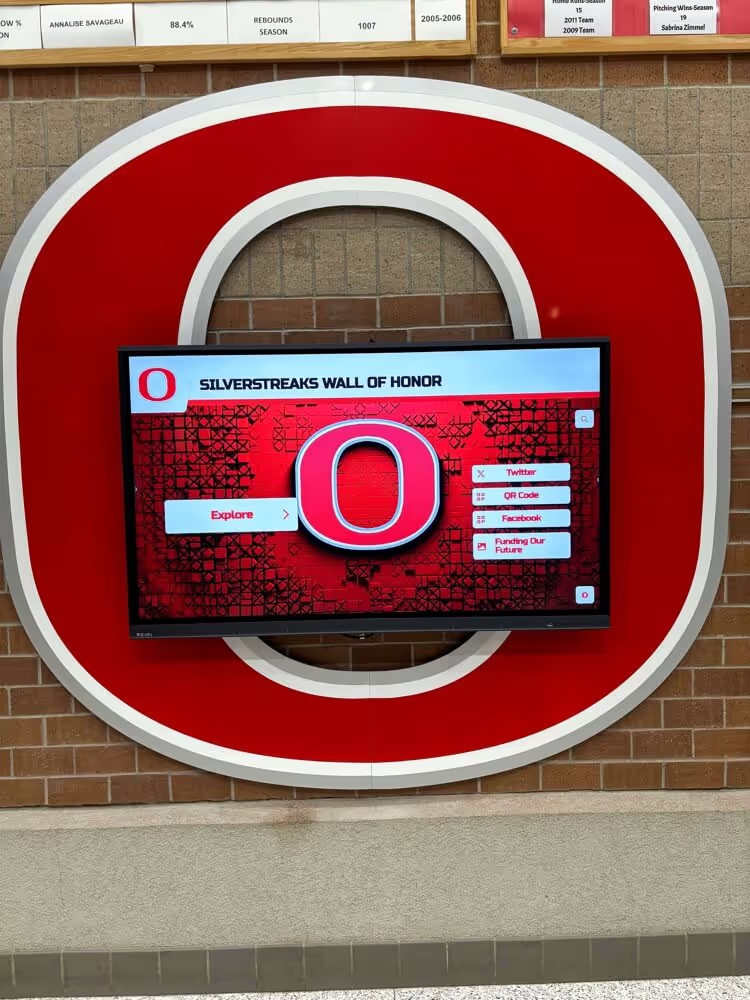
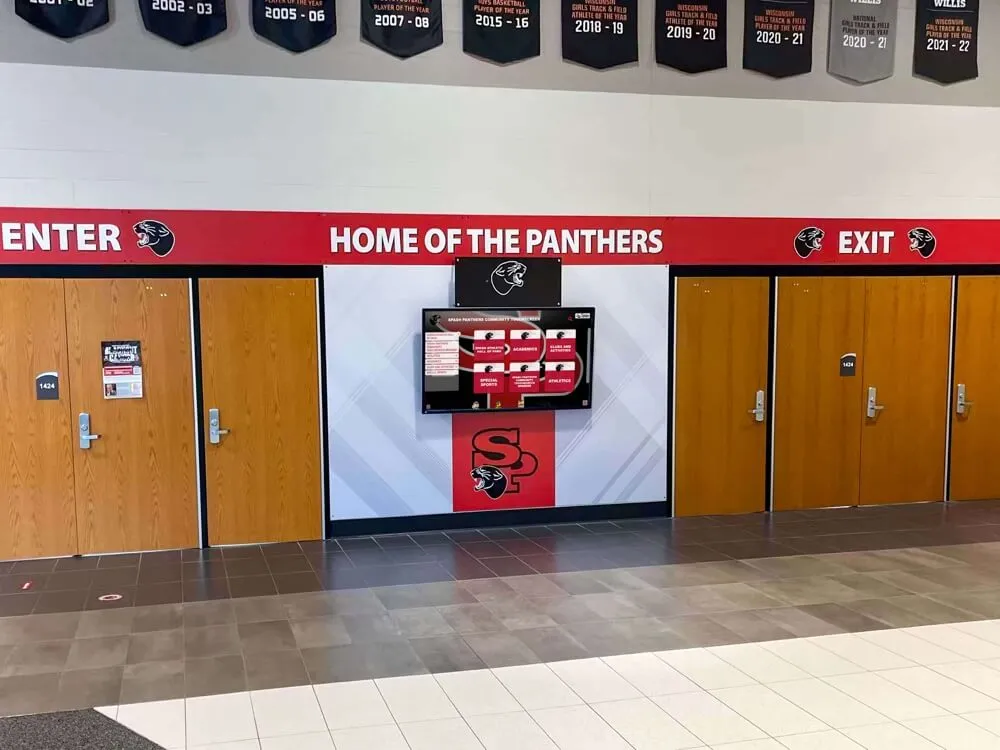
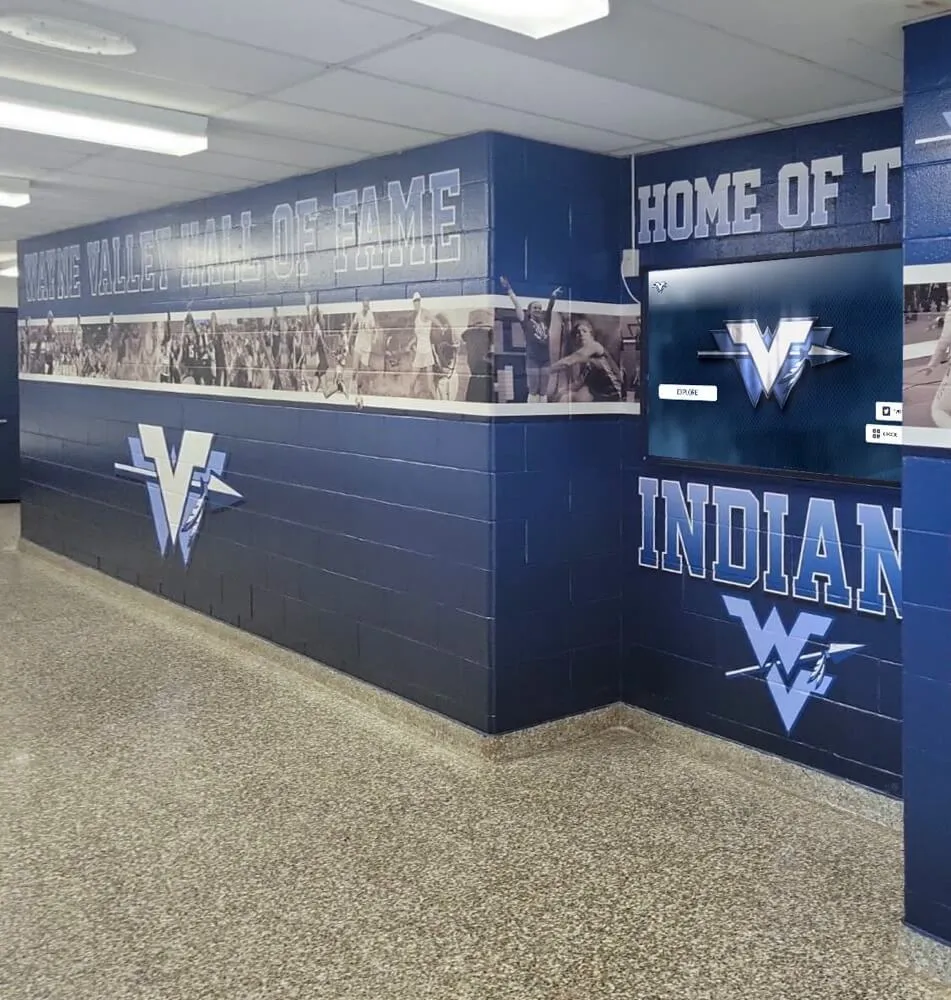
Athletic facilities benefit from recognition signage that acknowledges both donor support and competitive achievements in coordinated displays
Limitations:
- Weather exposure causes engraving to fade over time
- Difficult for donors to locate their specific brick without maps or directories
- Limited space per brick restricts personalization
- Requires ongoing maintenance to manage vegetation, settling, and wear
Modern Digital Donor Recognition Signage
Technology has fundamentally transformed what donor recognition can accomplish, moving beyond static name lists to create engaging, interactive experiences that tell richer donor stories while providing unprecedented flexibility.
Interactive Touchscreen Donor Displays
The Evolution of Recognition
Digital donor recognition screens represent the most significant advancement in acknowledgment technology, combining the prestige of permanent recognition with capabilities impossible through traditional approaches.
Core Capabilities:
Modern touchscreen donor displays enable organizations to:
Unlimited Recognition Capacity: Digital displays accommodate infinite donors without space constraints. As giving programs grow, simply add names to the database rather than commissioning new physical installations.
Dynamic Content Updates: Update donor information instantly from administrative dashboards—correcting names, adjusting giving levels, adding new contributors, and honoring memorial gifts without physical modifications or production delays.
Searchable Donor Directories: Visitors can search alphabetically, by giving level, or through custom filters to quickly locate specific donors among hundreds or thousands of recognized contributors.
Rich Donor Profiles: Move beyond simple name lists to share donor stories, photos, testimonials about why they give, and specific impacts their contributions enabled.
Impact Storytelling: Connect donor acknowledgment to mission outcomes by showing how contributions fund programs, support students, advance research, or strengthen communities.
Real-Time Campaign Progress: During active fundraising initiatives, displays can show live campaign totals, progress toward goals, and recent contributions to build momentum.
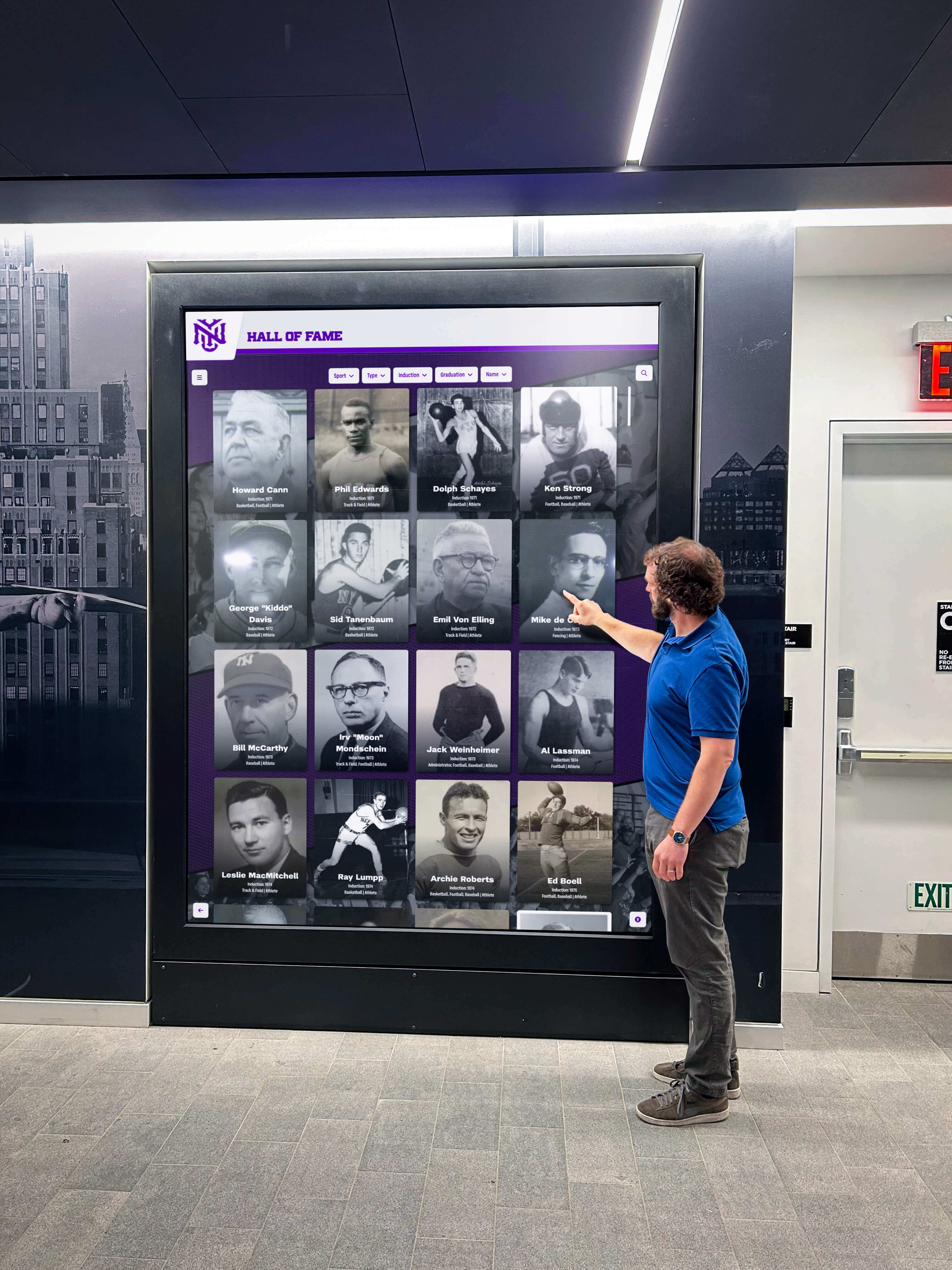
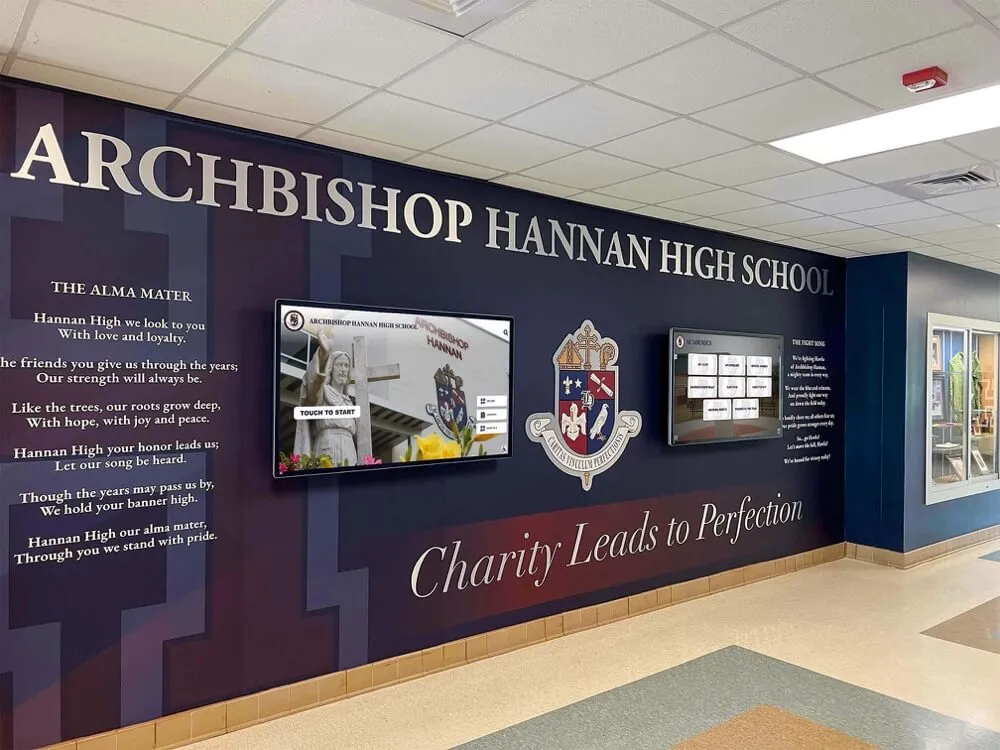
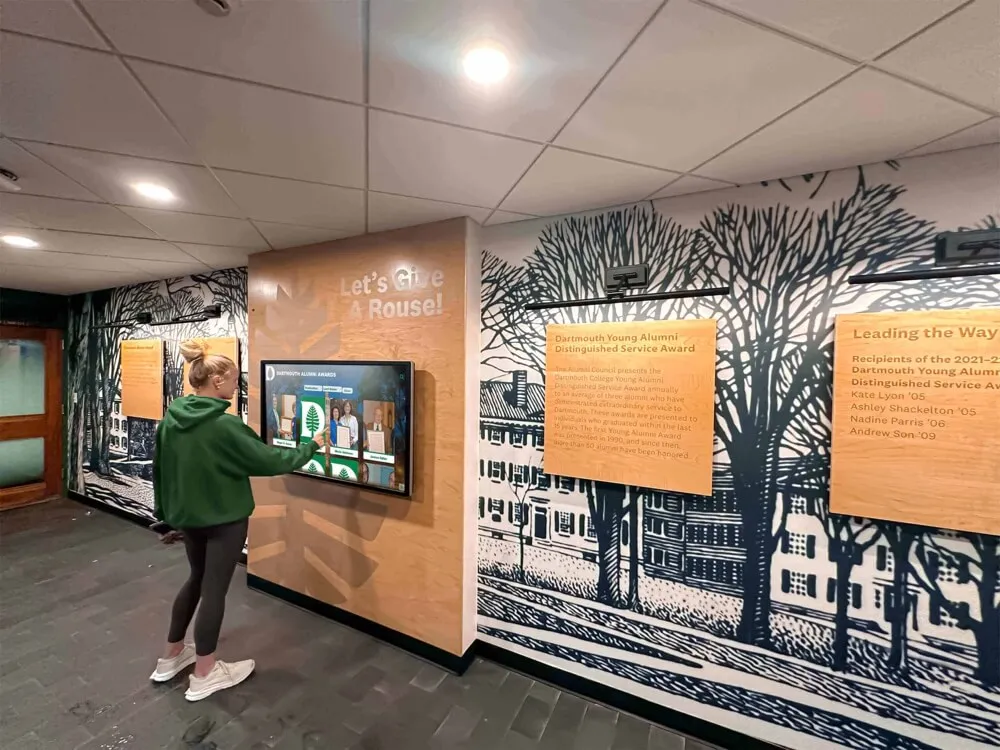
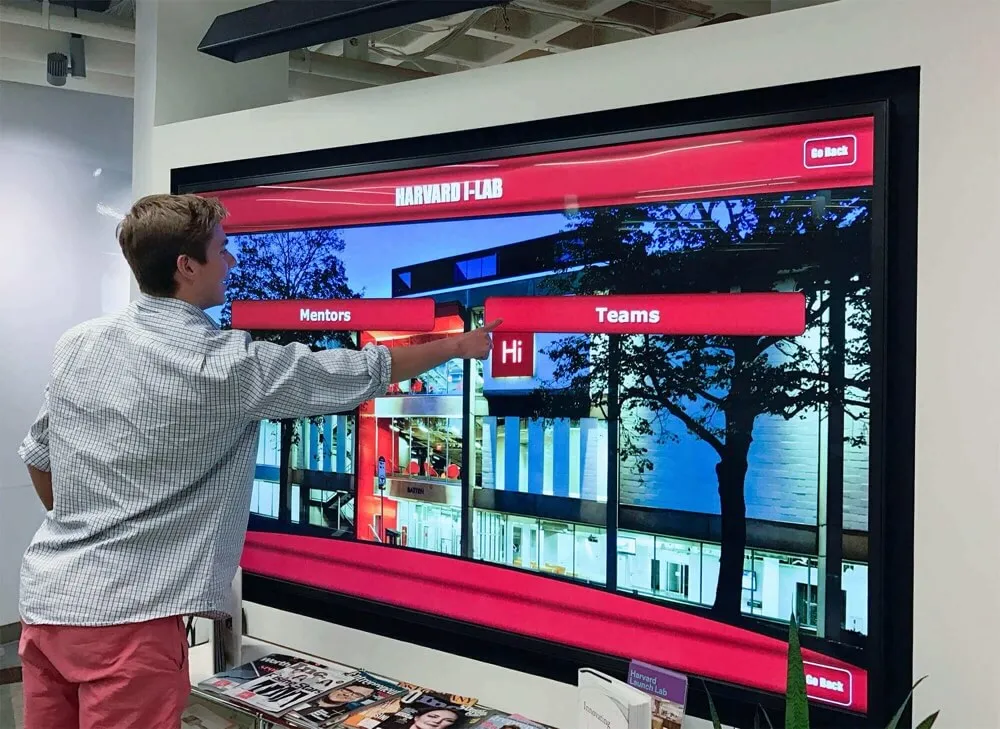
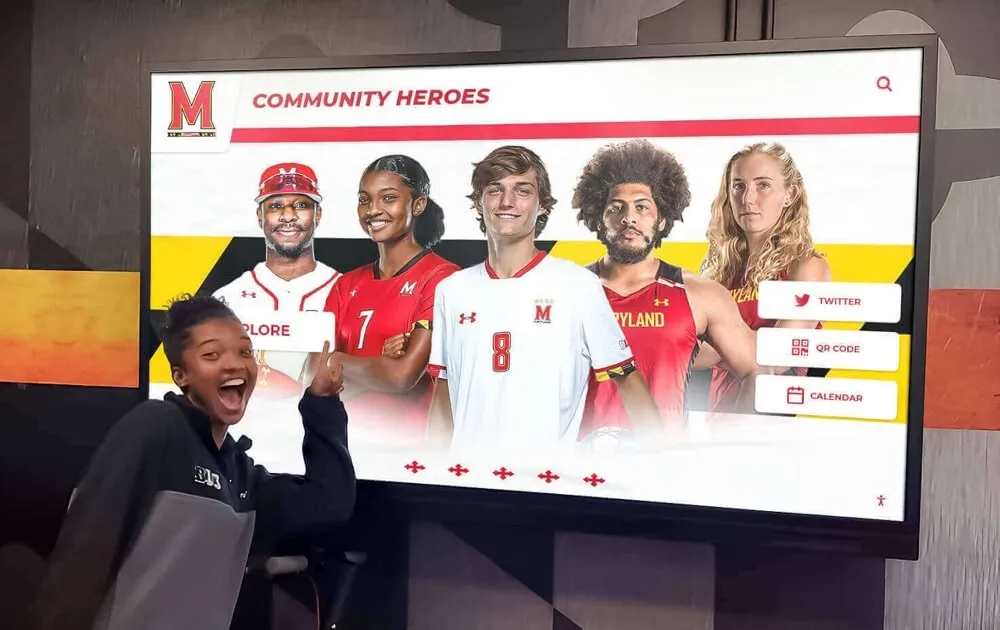
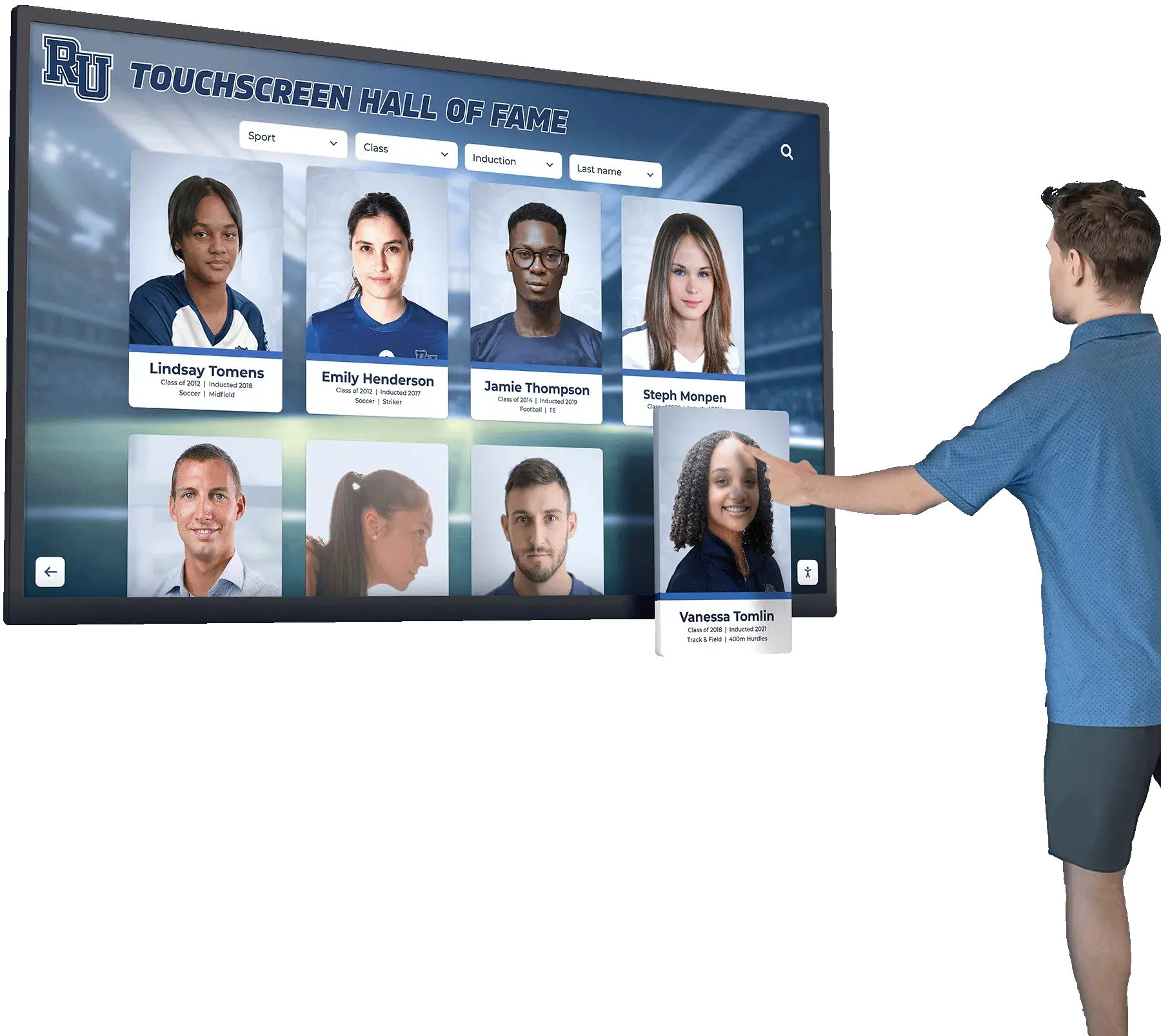
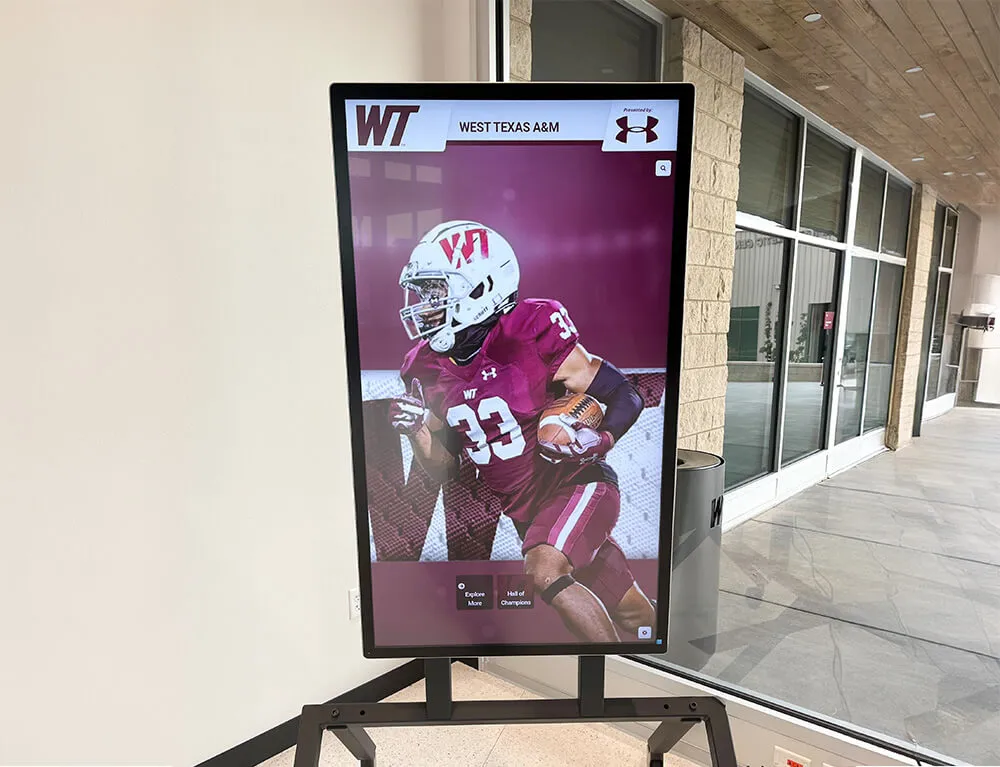
Interactive donor displays invite engagement, allowing contributors to explore recognition directories and learn about fellow supporters' generosity
Implementation Considerations:
Hardware Selection:
Organizations choosing interactive touchscreen kiosks should evaluate:
- Screen size appropriate for typical viewing distances and number of simultaneous users
- Commercial-grade displays designed for continuous operation rather than consumer TVs
- Touch technology responsive enough for intuitive navigation
- Durability for high-traffic public spaces
- Installation requirements including power, networking, and mounting options
Content Management:
Successful digital recognition requires:
- User-friendly administrative interfaces allowing non-technical advancement staff to update content
- Import capabilities from donor databases to automate recognition list updates
- Approval workflows ensuring accuracy before content goes live
- Template systems maintaining consistent design across donor profiles
Design and Aesthetics:
Digital displays must complement architectural environments rather than appearing as afterthoughts. Considerations include:
- Custom frames and surrounds matching institutional branding and facility character
- Screen content designs reflecting organizational visual identity
- Thoughtful placement in high-visibility, high-traffic locations
- Integration with existing signage and wayfinding systems
Digital Donor Walls and LED Recognition Displays
Large-Format Digital Recognition
Beyond individual touchscreens, some organizations implement larger digital wall systems combining multiple displays, LED panels, or projection technologies to create immersive recognition environments.
Applications:
Welcome Lobby Installations: Multi-screen video walls displaying rotating donor recognition alongside mission content and program highlights create impressive entries that orient visitors while acknowledging support.
Gala and Event Recognition: Large LED displays at fundraising events showcase real-time donor acknowledgment, campaign progress, and live contribution tracking as gifts are received during programs.
Athletic Facility Recognition: Gymnasium and arena displays combine donor recognition with game schedules, scores, and athletic achievement content.
Campus Outdoor Displays: Weather-rated outdoor LED displays can acknowledge donors while sharing campus news, event information, and emergency notifications.
Hybrid Recognition Approaches
Many organizations discover that combining traditional and digital recognition delivers optimal results—leveraging the timeless prestige of physical installations while gaining the flexibility and engagement capabilities of digital platforms.
Complementary Recognition Systems
Strategic Integration:
Thoughtful hybrid approaches might include:
Permanent Named Spaces + Digital Donor Directories: Major donors receive traditional room naming plaques or building dedication markers, while digital displays nearby provide comprehensive recognition for all giving levels with searchable directories and donor profiles.
Engraved Society Plaques + Digital Member Lists: Giving society membership receives permanent engraved acknowledgment on traditional plaques identifying each society, while adjacent touchscreens display current member rosters that update as donors join or upgrade levels.
Donor Brick Pathways + Digital Wayfinding: Outdoor brick recognition creates tangible pathways, while digital kiosks provide interactive maps helping families locate their specific bricks and learn about fellow donors.
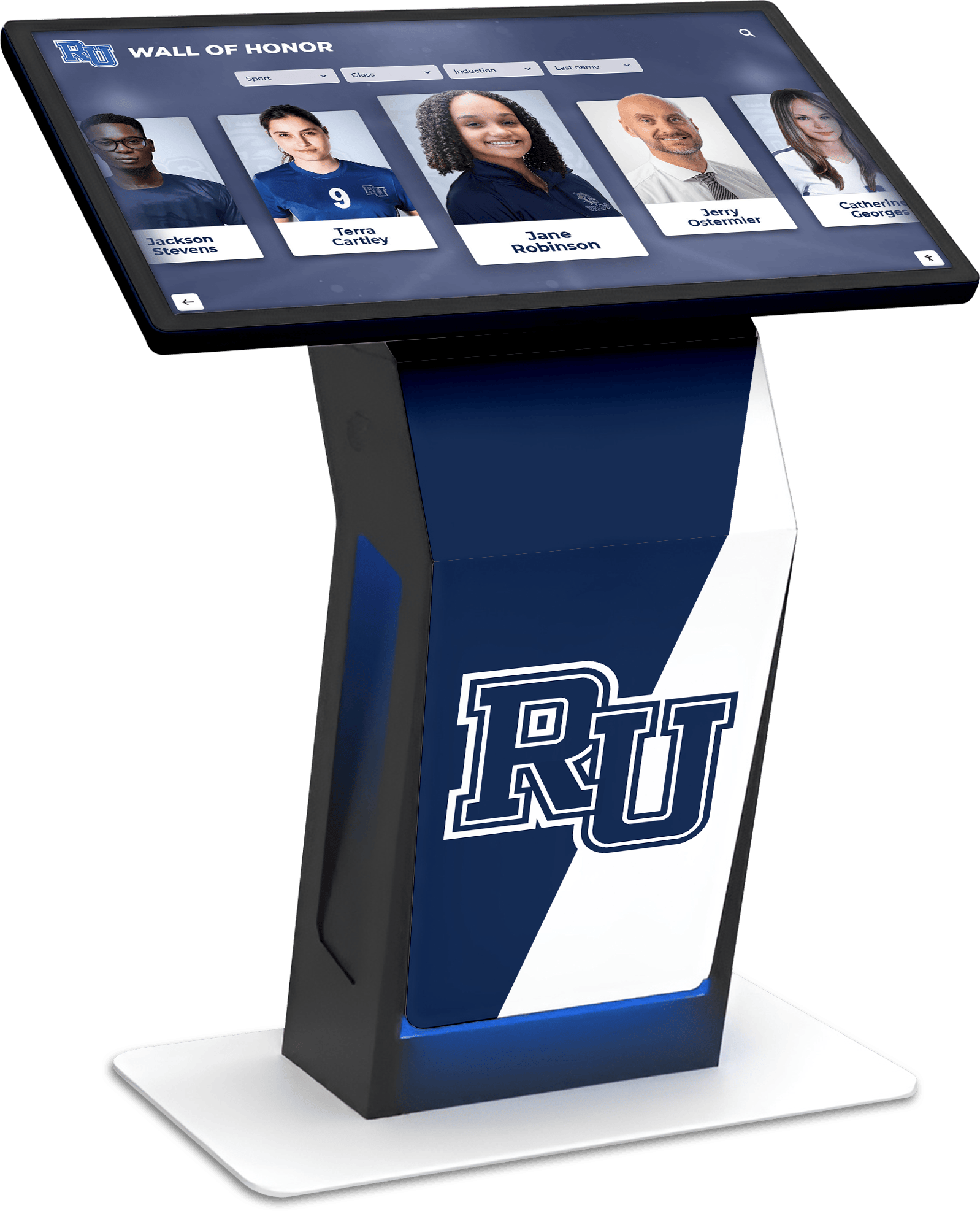
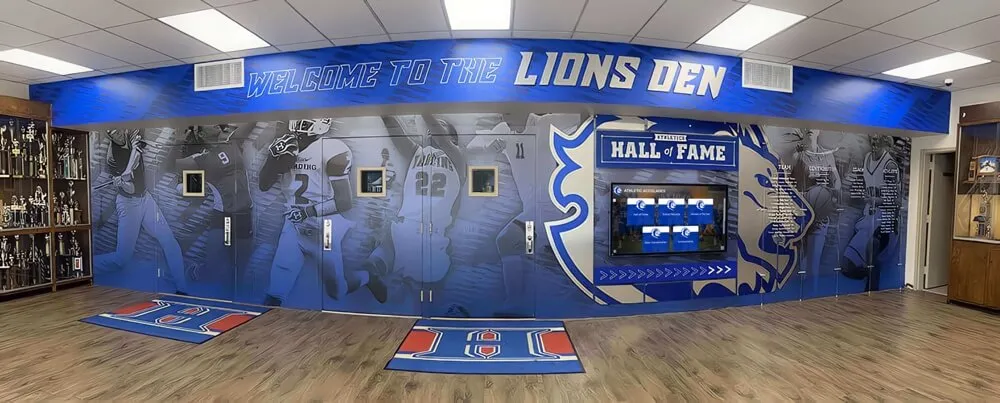
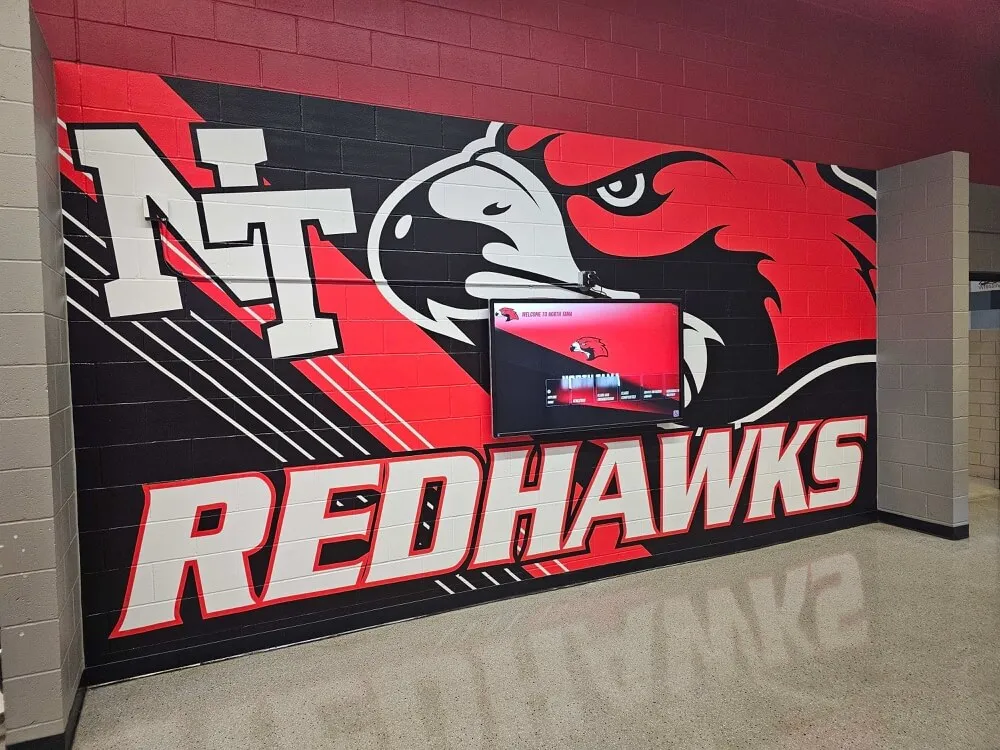
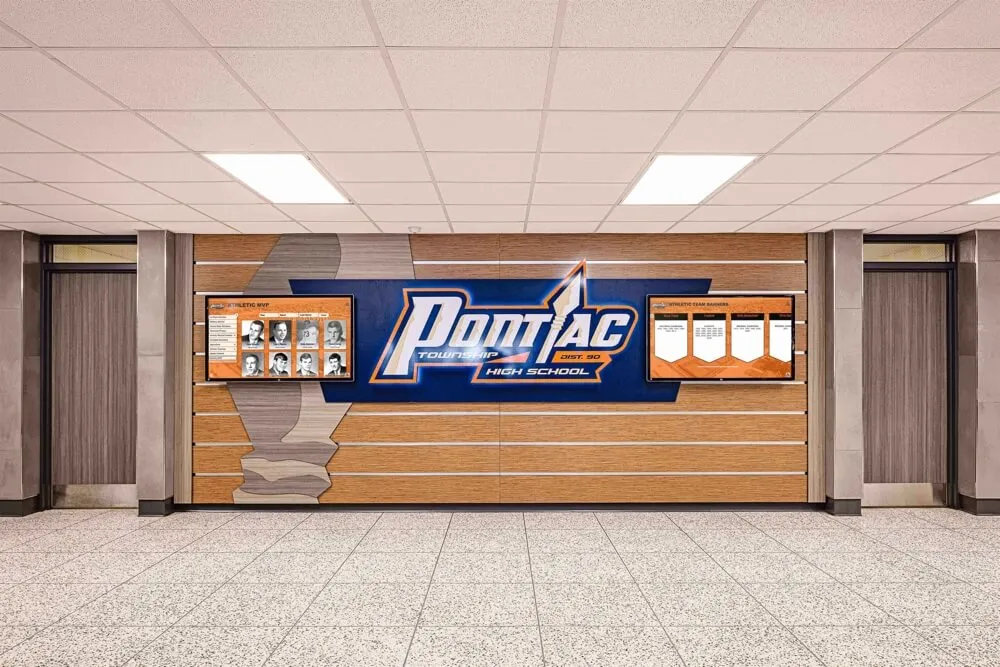
Hybrid recognition approaches combine traditional acknowledgment for major gifts with digital displays providing comprehensive, updateable donor directories
Benefits of Hybrid Models
Balanced Investment:
Hybrid approaches allow organizations to:
- Allocate recognition budgets strategically, reserving expensive custom engraving for top giving levels while using cost-effective digital recognition for broader donor bases
- Honor existing traditional recognition while adding modern capabilities
- Satisfy different donor preferences—some contributors value traditional plaques while others appreciate interactive digital acknowledgment
Future-Proofing Recognition:
Digital components provide flexibility as donor programs evolve without requiring complete replacement of traditional elements. Organizations can update digital content daily while maintaining permanent physical markers for legacy gifts and naming opportunities.
Recognition Signage for Different Donor Levels
Effective recognition strategies differentiate acknowledgment by giving levels—not to create uncomfortable hierarchies, but to appropriately honor different levels of sacrifice and commitment while motivating donor progression.
Major Gift Recognition (Top 1-5% of Donors)
Premium Acknowledgment:
Major donors funding significant programs, facilities, or endowments deserve distinctive recognition reflecting their extraordinary commitment:
Dedicated Spaces: Named rooms, buildings, programs, or endowed positions create lasting legacy recognition.
Custom Installations: Bespoke recognition elements designed specifically for individual donors rather than standardized templates.
Prominent Placement: Primary building entries, lobbies, or program facility spaces ensure maximum visibility.
Storytelling Opportunities: Space to share why donors give, their connection to mission, and impact their support enables.
Leadership and Principal Gift Tiers
Society-Based Recognition:
Mid-level major donors (often $10,000-$250,000+ depending on organization size) typically receive:
Named Giving Societies: Branded recognition circles with meaningful names connecting to institutional history, values, or traditions.
Dedicated Recognition Walls: Specific installations acknowledging society members in high-traffic locations.
Individual Name Listing: Each donor receives personal acknowledgment rather than family or company listing only.
Profile Opportunities: Digital systems can provide individual donor profiles sharing personal connection stories.
Annual Fund and Broad-Base Donors
Inclusive Recognition:
Organizations should honor all donors regardless of giving level through:
Comprehensive Digital Directories: Searchable systems where every contributor receives equal dignity in alphabetical listings.
Annual Recognition Refreshes: Regularly updated displays acknowledging current fiscal year donors to encourage renewal.
Cumulative Giving Recognition: Honoring lifetime giving totals alongside current year support to motivate sustained contribution.

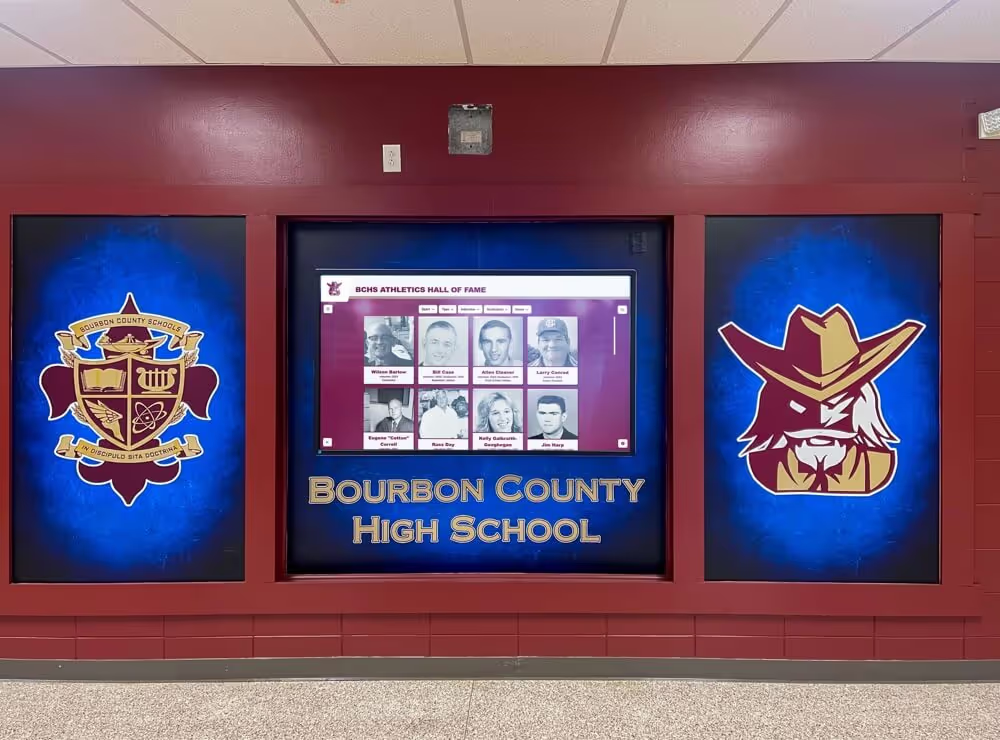
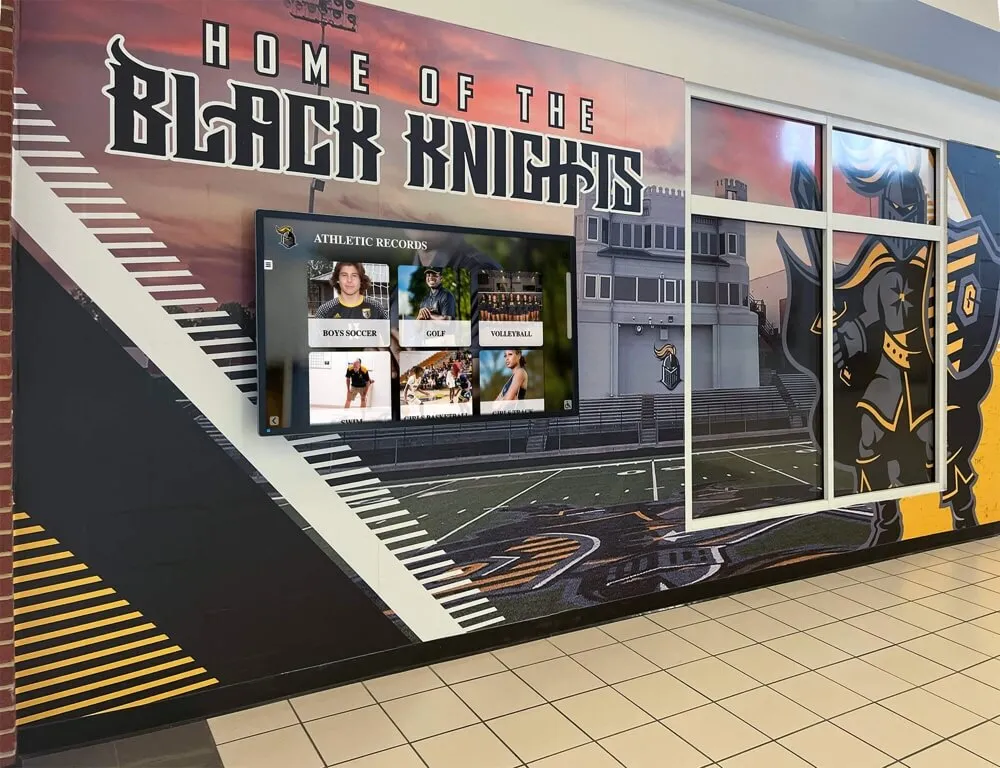
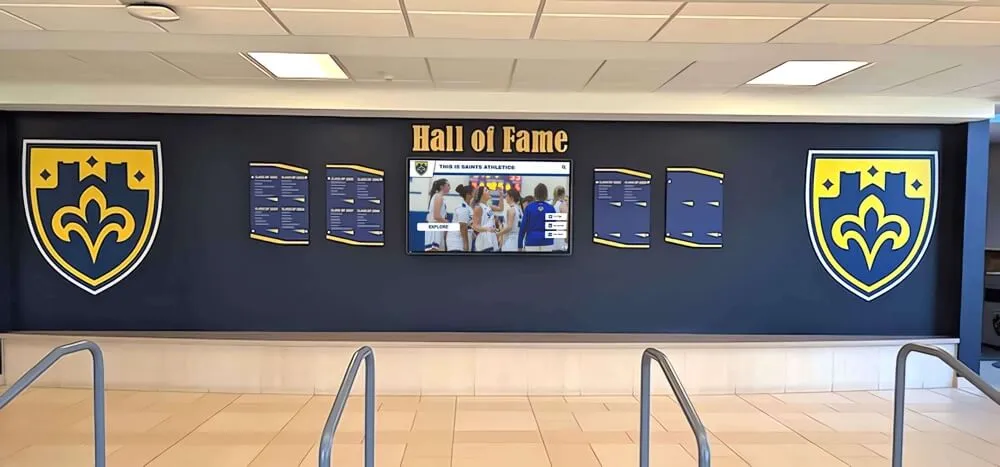
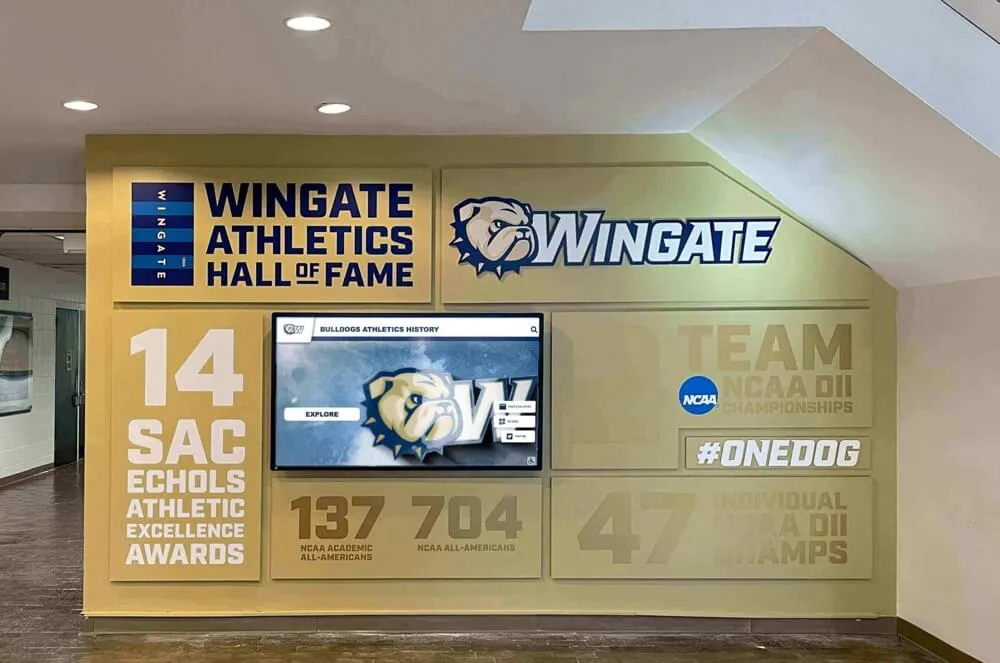
Athletic facilities can integrate donor recognition with program content, acknowledging support while celebrating competitive achievements and team traditions
Specialized Recognition Applications
Different institutional contexts require tailored recognition approaches addressing unique audiences, giving patterns, and organizational cultures.
School and University Donor Recognition
K-12 Independent Schools:
Private schools typically recognize:
- Tuition assistance fund donors supporting financial aid
- Annual fund supporters sustaining operating budgets
- Capital campaign contributors funding facilities and improvements
- Endowment donors creating permanent legacy support
- Alumni donors maintaining connections to alma mater
Effective school recognition balances acknowledging major benefactors with inclusive appreciation for parent annual fund participation that demonstrates community-wide support.
Universities and Colleges:
Higher education institutions manage complex recognition across:
- School and college-specific donors supporting individual academic units
- Athletic supporters funding teams, facilities, and scholarships
- Alumni giving by class year, creating reunion and milestone fundraising opportunities
- Research donors funding labs, equipment, and faculty positions
- Student support donors providing scholarships and emergency aid
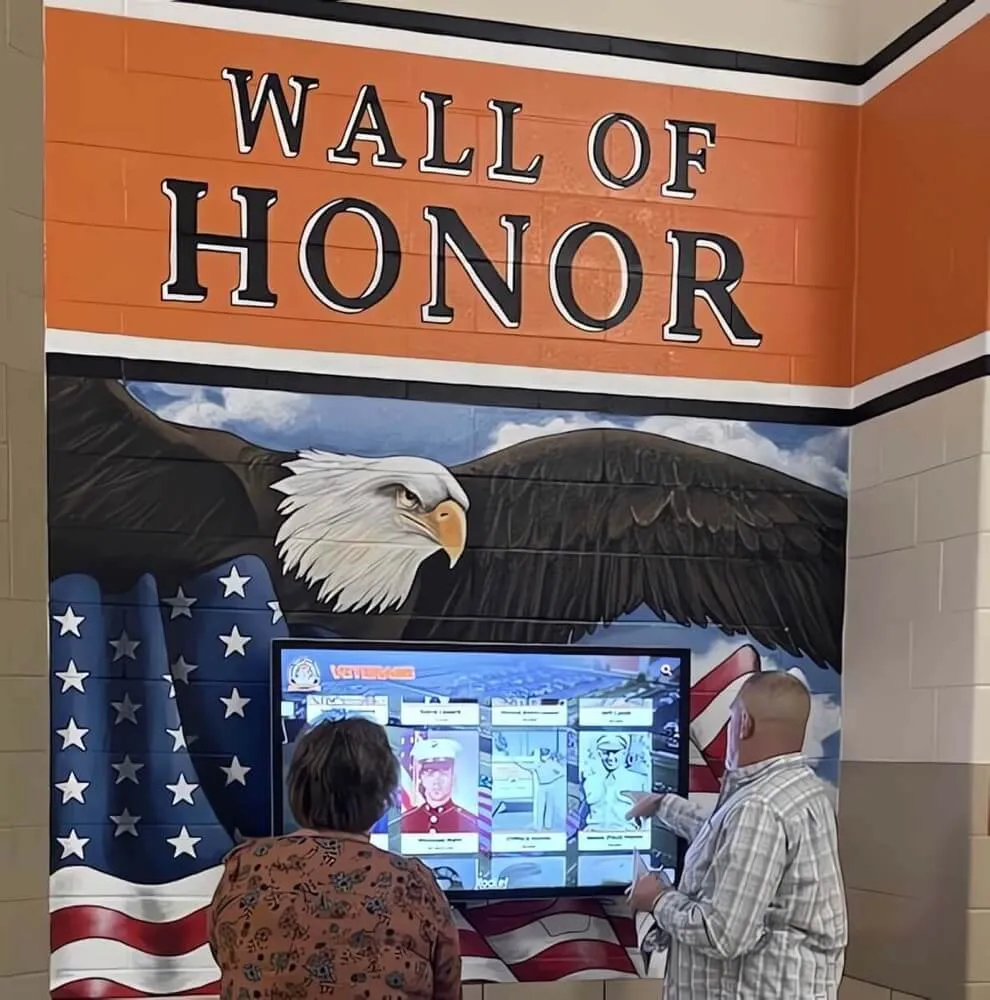
Elementary and secondary school recognition requires developmentally appropriate acknowledgment that inspires students while honoring contributors.
Nonprofit and Foundation Recognition
Community Nonprofits:
Service organizations, arts institutions, healthcare facilities, and social service agencies recognize:
- Board members demonstrating leadership through personal giving
- Corporate sponsors providing program funding
- Individual donors supporting operational sustainability
- Foundation grants enabling program expansion
- Volunteer leaders contributing time alongside financial resources
Faith-Based Organizations:
Churches and religious institutions balance recognition with theological values around humility and anonymous giving. Many implement approaches allowing donors to choose public acknowledgment or anonymous inclusion.
Capital Campaign Recognition
Project-Specific Acknowledgment:
Capital campaigns funding specific facilities or initiatives typically implement dedicated recognition tied directly to funded improvements:
Construction Site Recognition: Temporary displays at building sites acknowledging campaign donors and showing project progress.
Facility Dedication: Formal recognition installations completed alongside facility openings.
Multi-Phase Recognition: Systems accommodating initial campaign donors while allowing additions as follow-up phases continue.
Naming Opportunities Hierarchies: Structured recognition tiers from building naming ($1M+) through individual room naming ($25K+) to lobby recognition ($5K+) creating multiple participation levels.
Selecting the Right Recognition Solution
With numerous signage options available, how should schools and nonprofits evaluate which approaches best serve their specific needs? Consider these key decision factors.
Assessment Framework
Organizational Context Questions:
Budget Reality: What financial resources are available for initial recognition investment and ongoing maintenance? Digital systems require higher upfront costs but lower long-term update expenses, while traditional engraving costs less initially but becomes expensive to modify.
Donor Demographics: What recognition styles resonate with your specific donor base? Older donors often prefer traditional approaches, while younger supporters appreciate interactive digital experiences.
Facility Constraints: What physical spaces accommodate recognition? Historic buildings may restrict certain installations, while new construction offers design flexibility.
Staff Capacity: Who will manage recognition updates? Digital systems require staff comfortable with content management software, while traditional signage requires vendor relationships for updates.
Campaign Timeline: Are you recognizing completed efforts or ongoing programs? Static approaches work well for finished campaigns, while active fundraising benefits from real-time digital updates.
Recognition Volume: How many donors need acknowledgment? Organizations recognizing hundreds or thousands of contributors almost require digital solutions, while smaller programs may function effectively with traditional installations.
Technology Considerations for Digital Recognition
Organizations considering digital donor recognition signage should evaluate:
Software Platforms:
Look for donor recognition systems offering:
- Cloud-based access allowing updates from any location
- Donor database integration preventing duplicate data entry
- Mobile-responsive administrative interfaces
- Template systems maintaining design consistency
- Media libraries for donor photos and impact content
- Approval workflows ensuring accuracy
- Analytics showing display engagement
Hardware Reliability:
Digital recognition represents long-term institutional investment requiring:
- Commercial-grade displays rated for continuous operation
- Warranty and support programs ensuring rapid repair
- Remote monitoring alerting staff to technical issues
- Standard mounting and power requirements simplifying installation
- Upgrade paths as display technology evolves
Content Production Support:
Successful digital recognition requires ongoing content development. Consider:
- Internal capacity for donor photography and story gathering
- Design resources for professional visual content
- Vendor relationships for content production assistance
- Student or volunteer opportunities for content development
Implementing Rocket Alumni Solutions for Digital Donor Recognition
For schools and nonprofits seeking comprehensive digital recognition capabilities without managing complex technology implementations, solutions like Rocket Alumni Solutions provide turnkey platforms specifically designed for educational institutions and mission-driven organizations.
Platform Capabilities
Integrated Recognition Systems:
Rocket Alumni Solutions enables organizations to:
Acknowledge All Supporter Types: Create separate recognition categories for donors, volunteers, alumni, booster club members, staff, and community partners using a unified platform.
Showcase Unlimited Donors: Digital capacity constraints disappear—recognize every contributor regardless of giving level without space limitations.
Update Instantly: Make donor information changes immediately through intuitive administrative dashboards without waiting for vendor updates or physical modifications.
Tell Rich Donor Stories: Move beyond name lists to share why donors give, their connection to mission, and specific impacts their support enables through photos, quotes, and impact narratives.
Mobile Access: Donors and community members can explore recognition directories from anywhere through mobile-responsive web access, not just when visiting physical facilities.
Preserve Donor Legacy: Recognition remains permanently accessible through digital archives, ensuring contributions are remembered perpetually rather than becoming invisible when physical displays reach capacity.
Touchscreen Display Hardware
Professional Installation:
Organizations receive complete hardware solutions including:
Custom-Sized Displays: Screens sized appropriately for specific spaces and viewing distances, from compact 32" displays for small offices to impressive 75" installations for main lobbies.
Premium Enclosures: Professional frames and surrounds designed to complement facility aesthetics and institutional branding rather than appearing as generic technology installations.
Durable Construction: Commercial-grade components designed for continuous operation in high-traffic public environments.
White-Glove Installation: Professional mounting, power, networking, and configuration ensuring displays launch successfully.
Content Management and Support
User-Friendly Administration:
Development staff manage donor recognition through:
Intuitive Dashboards: Content management systems designed for advancement professionals, not technical experts.
Bulk Import Tools: Upload comprehensive donor rosters from Excel or database exports rather than manually entering individual records.
Preview Functions: Review content changes before publishing to catch errors and ensure visual consistency.
Role-Based Permissions: Grant appropriate access levels to different team members from administrators to content contributors.
Ongoing Support:
Organizations receive:
- Technical support resolving hardware or software issues
- Content consulting helping maximize display effectiveness
- Design assistance maintaining professional visual quality
- Training ensuring staff can confidently manage systems
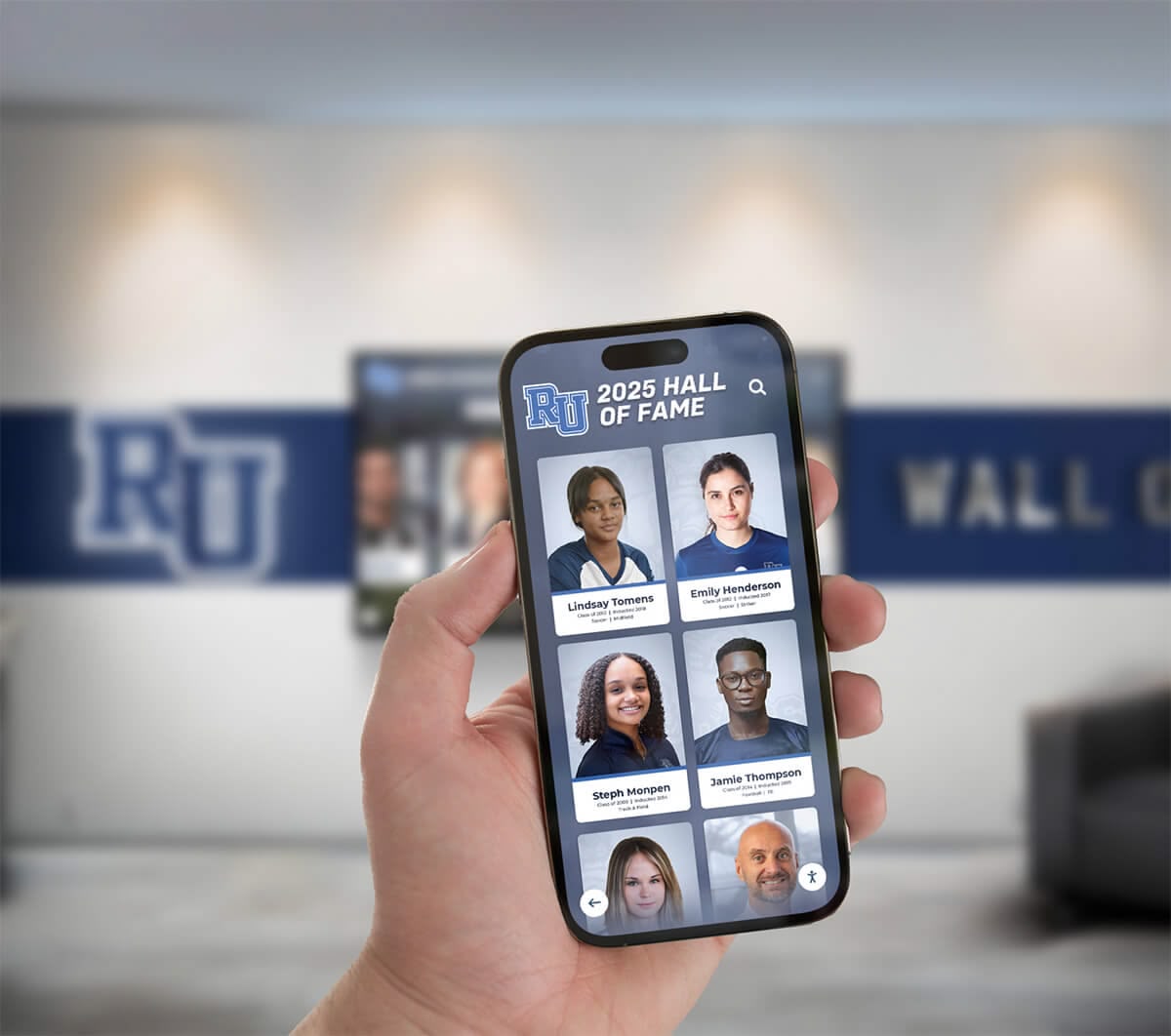
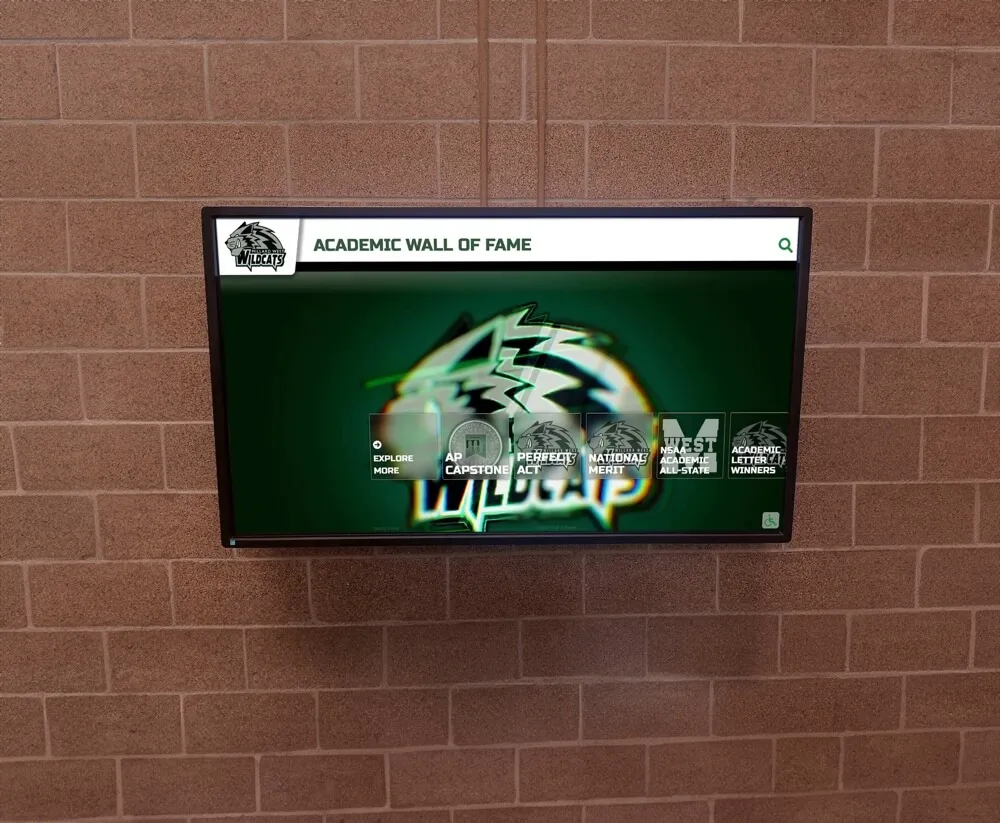
Modern recognition platforms provide mobile access allowing donors and community members to explore acknowledgment directories from anywhere, extending visibility beyond physical installations
Best Practices for Donor Recognition Signage
Regardless of which recognition approaches organizations implement, certain principles consistently produce effective acknowledgment that honors donors while advancing fundraising goals.
Design and Placement Principles
Visibility Matters:
Recognition signage should occupy high-traffic, high-visibility locations where donors, prospects, and community members naturally gather and circulate:
- Main building entries and lobbies
- Reception and waiting areas
- Hallways connecting primary program spaces
- Facility areas directly funded by donor support
Avoid relegating recognition to isolated locations or secondary corridors where acknowledgment becomes invisible.
Professional Quality:
Recognition reflects institutional values and competence. Homemade displays, cheap materials, or poorly executed installations send concerning messages to donors about stewardship and organizational capacity. Invest in professional design, quality materials, and expert installation.
Appropriate Scale:
Recognition signage should feel substantial and important without overwhelming spaces or appearing ostentatious. Consider:
- Facility architecture and scale
- Surrounding design elements
- Viewing distances
- Number of simultaneous viewers
Architectural Integration:
The most effective recognition installations feel purposefully integrated into facility design rather than appearing as afterthoughts. When planning new construction or major renovations, involve recognition planning early in architectural processes.
Donor Information Management
Accuracy is Non-Negotiable:
Nothing undermines recognition effectiveness faster than misspelled names, incorrect giving levels, or missing donors. Implement rigorous:
Verification Processes: Confirm donor name spelling, preferred name format (formal vs. casual), and specific recognition language before finalizing any display.
Approval Workflows: Have donors review and approve their recognition information before it appears publicly.
Regular Audits: Periodically review displayed recognition against donor databases to catch discrepancies.
Correction Protocols: When errors occur (and eventually they will), fix them immediately and communicate proactively with affected donors.
Privacy and Anonymity Considerations
Respecting Donor Preferences:
Some donors prefer or require anonymous recognition for personal, professional, or philosophical reasons. Organizations should:
Default to Permission: Ask donors explicitly if they want public recognition rather than assuming it.
Provide Anonymity Options: Allow donors to choose “Anonymous Donor,” “A Friend of [Institution],” or family/company name rather than personal identification.
Honor Confidentiality: Ensure that donor recognition policies and practices protect privacy for those who request it.
Legal Compliance: Certain giving types (advised funds, foundation grants) may have legal restrictions on public acknowledgment requiring careful navigation.
Maintenance and Updates
Keeping Recognition Current:
Annual Reviews: Schedule regular reviews of all donor recognition ensuring:
- New donors receive timely acknowledgment
- Donors who upgrade giving levels move to appropriate recognition tiers
- Deceased donors receive memorial status acknowledgments
- Donor name corrections and preference changes are implemented
- Recognition aligns with current donor database information
Physical Maintenance:
Traditional recognition signage requires:
- Regular cleaning maintaining appearance
- Lighting maintenance ensuring visibility
- Surface repairs addressing wear and damage
- Periodic refinishing or replacement as materials age
Digital Content Freshness:
Digital displays should refresh regularly with:
- Updated donor rosters following fiscal year changes
- New donor stories and impact content
- Current campaign information during active fundraising
- Seasonal content maintaining visual interest
Measuring Recognition Effectiveness
How can organizations assess whether donor recognition signage achieves intended goals? Consider both quantitative metrics and qualitative feedback.
Quantitative Indicators
Donor Retention Rates:
Track whether recognized donors renew giving at higher rates than unrecognized supporters. Organizations with effective recognition typically see 10-20% higher retention among acknowledged donors.
Giving Level Upgrades:
Monitor whether visible recognition hierarchies motivate donors to increase contributions reaching higher acknowledgment tiers. Capital campaigns with multi-level recognition structures often see 15-25% of donors stretch gifts to reach named recognition opportunities.
New Donor Acquisition:
Measure whether comprehensive recognition displays influence prospect giving decisions. Survey new donors about factors influencing their decision to contribute—recognition visibility often appears among top considerations.
Digital Engagement Metrics:
For interactive touchscreen displays, track:
- Number of visitors exploring donor directories
- Average time spent with recognition content
- Most frequently searched donor names
- Popular content sections
Qualitative Feedback
Donor Satisfaction:
Regularly survey recognized donors about:
- Satisfaction with how acknowledgment was handled
- Accuracy of displayed information
- Meaningfulness of recognition approach
- Impact on likelihood of future giving
Prospect Perceptions:
Ask prospective donors about:
- Awareness of recognition programs
- Influence on giving interest
- Preferred recognition styles
- Barriers to giving related to recognition
Staff Observations:
Development officers and facility staff often observe:
- Donors showing recognition to family and friends
- Prospects photographing donor walls during tours
- Community members engaging with interactive displays
- Conversations sparked by recognition visibility
Common Recognition Challenges and Solutions
Even well-planned donor recognition programs encounter predictable challenges. Understanding common pitfalls helps organizations avoid or address them effectively.
Challenge: Space Constraints
Problem: Traditional recognition runs out of room as donor programs grow.
Solutions:
- Implement digital recognition with unlimited capacity
- Create rotating annual recognition refreshed each fiscal year
- Establish giving level thresholds for permanent recognition while acknowledging all donors through annual reports or digital directories
- Expand recognition to multiple locations throughout facilities
Challenge: Donor Name Changes
Problem: Donors get married, divorced, change preferred names, or have estate executors requesting memorial language changes after death.
Solutions:
- Choose recognition approaches that allow updates (digital, printed boards) rather than permanent engraving
- For engraved recognition, budget for periodic plate replacements
- Implement clear policies explaining update processes and associated timelines or costs
- Use digital directories for detailed current information while maintaining simpler engraved elements
Challenge: Recognition Budget Limitations
Problem: Comprehensive donor acknowledgment seems financially impossible.
Solutions:
- Phase recognition implementation over multiple years
- Allocate percentage of campaign funds specifically to recognition
- Choose cost-effective digital solutions providing better long-term value than repeatedly updating traditional installations
- Partner with local businesses for in-kind recognition materials or installation services
- Engage board members with design or construction connections for discounted services
Challenge: Donor Disputes
Problem: Donors disagree about name spelling, recognition tier placement, or whether giving qualifies for specific acknowledgment levels.
Solutions:
- Establish clear recognition policies defining giving counting rules, acknowledgment timelines, and appeals processes before disputes arise
- Document all donor communications regarding recognition preferences
- Escalate difficult situations to development directors or board leadership rather than allowing staff to absorb conflict
- Offer alternatives when primary recognition requests prove problematic
Challenge: Technology Failures
Problem: Digital displays malfunction, freeze, show outdated content, or suffer network connectivity issues.
Solutions:
- Choose commercial-grade hardware with strong warranty programs
- Implement remote monitoring alerting staff to technical issues
- Establish vendor relationships for rapid response when problems occur
- Maintain static backup recognition options for critical locations
- Budget for eventual hardware refresh as technology ages
Future Trends in Donor Recognition Signage
Recognition approaches continue evolving alongside technological advancement and changing donor expectations. Forward-thinking organizations should monitor several emerging trends.
Personalized Recognition Experiences
AI-Powered Content:
Future recognition systems may use artificial intelligence to:
- Generate personalized donor profiles automatically from contribution data
- Suggest optimal recognition language based on successful patterns
- Create custom thank-you content reflecting individual donor interests
- Predict which donors might respond to recognition tier upgrades
QR Code Integration:
Physical recognition plaques increasingly include QR codes linking to:
- Detailed donor stories and interviews
- Impact reports showing how contributions were used
- Donor giving histories and cumulative totals
- Options for making additional gifts
Augmented Reality Recognition
Enhanced Physical Installations:
Emerging AR applications allow visitors to:
- Point smartphones at traditional donor walls to access rich media content
- View 3D models of facilities or programs funded by specific donors
- Watch video testimonials from scholarship recipients, program participants, or beneficiaries
- Explore interactive timelines showing how donor support evolved over decades
Social Media Integration
Extending Recognition Reach:
Modern donors increasingly appreciate:
- Shareable digital recognition content for posting to social networks
- Hashtag campaigns celebrating donor communities
- Live social media acknowledgment during fundraising events
- Digital badges or graphics donors can use as profile images
Blockchain Recognition Credentials
Verified Permanent Acknowledgment:
Some organizations experiment with:
- Digital recognition tokens providing cryptographically verified donation proof
- NFT-style acknowledgment creating collectible donor credentials
- Blockchain-based permanent records ensuring recognition survives institutional changes
Conclusion: Creating Recognition That Inspires Continued Support
Effective donor recognition signage represents far more than beautiful displays acknowledging past generosity. The most successful recognition strategies function as active fundraising tools that demonstrate stewardship, inspire future giving, and create organizational cultures where philanthropy feels normal, valued, and impactful.
Whether your institution chooses traditional engraved plaques, modern interactive touchscreens, or hybrid approaches combining both, the key lies in implementing recognition that honors donor preferences while advancing long-term fundraising sustainability. The best recognition solutions balance timeless dignity with practical flexibility, individual acknowledgment with community celebration, and appropriate privacy with strategic visibility.
As you plan or refresh donor recognition approaches, prioritize systems that will adapt as your organization evolves. Digital platforms offer unprecedented flexibility for growing recognition programs without repeatedly replacing physical installations. Comprehensive solutions like Rocket Alumni Solutions provide schools and nonprofits with professional recognition capabilities specifically designed for mission-driven organizations committed to honoring supporters who make your work possible.
Ultimately, the donors who fund your mission deserve acknowledgment that reflects the importance of their contributions. Thoughtful recognition signage demonstrates that your organization values generosity, maintains institutional memory, and stewards resources effectively—all essential messages that encourage continued support and inspire others to join your community of contributors.