School yearbooks have captured student memories for over a century, but traditional print yearbooks face significant challenges in the digital age. Budget constraints force schools to limit page counts, exclude groups of students, and raise prices that families struggle to afford. Print deadlines in winter or early spring mean entire seasons of activities and achievements go unrecorded. Physical books deteriorate over time, get lost in moves, and remain accessible only to those who purchased copies decades ago.
Digital yearbooks solve these fundamental limitations while expanding what yearbooks can accomplish for schools, students, families, and alumni. Rather than replacing print yearbooks entirely, digital platforms complement traditional books or serve as standalone alternatives offering unlimited content capacity, instant distribution, perpetual accessibility, and interactive features impossible with printed pages.
This comprehensive guide explores everything yearbook advisers, administrators, communications teams, and alumni directors need to understand about digital yearbook platforms—from core features and benefits through content creation strategies, implementation planning, student engagement approaches, and measuring program success.
Schools implementing digital yearbooks report 40-60% higher alumni engagement compared to print-only approaches, with digital platforms enabling connections that extend decades beyond graduation. Students gain opportunities to contribute content throughout the entire school year, families access memories from anywhere worldwide, and schools build comprehensive archives preserving institutional history accessibly for current and future generations.

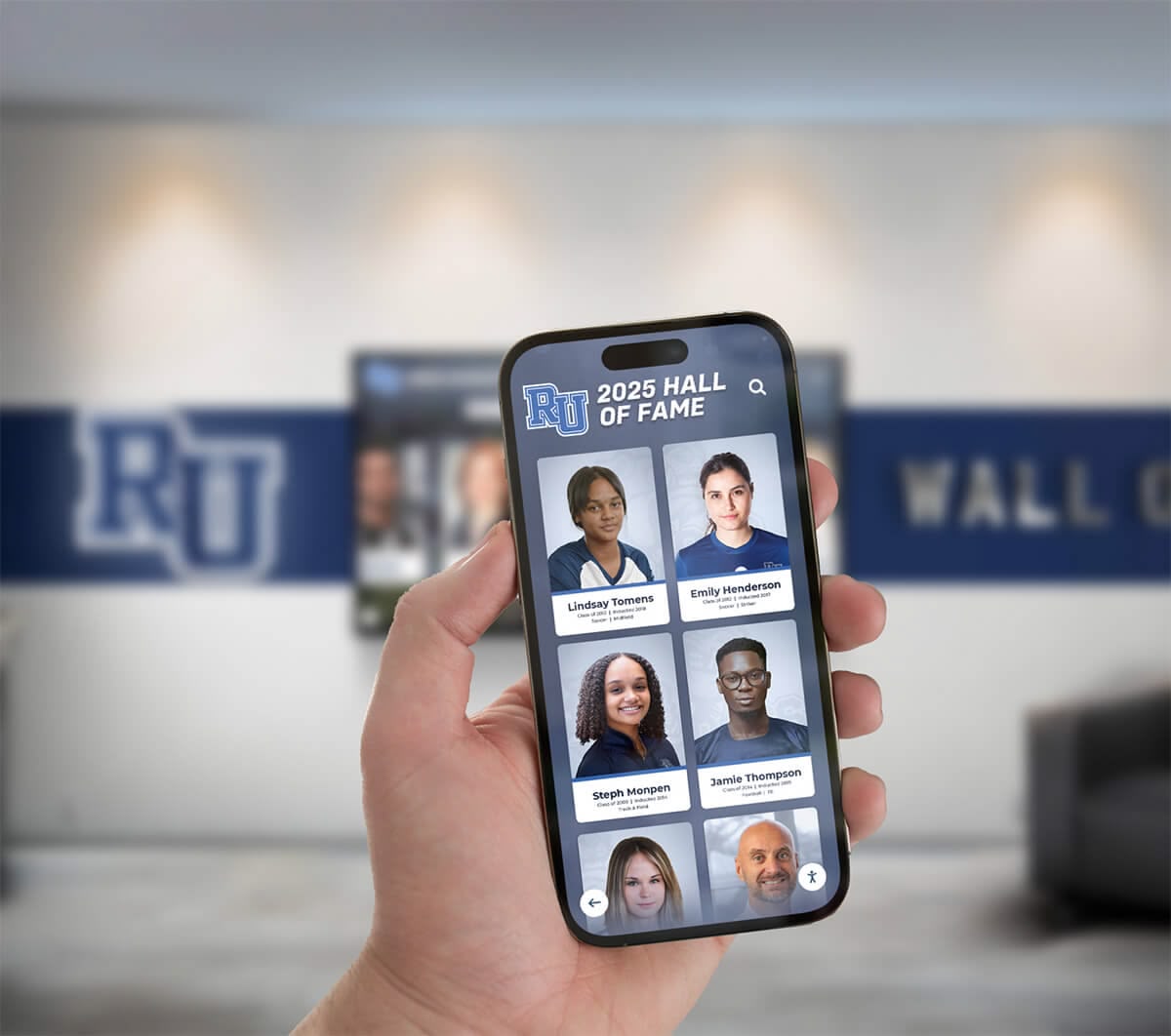
Mobile-optimized digital yearbooks provide anytime, anywhere access enabling students and alumni to explore memories on smartphones, tablets, or computers from any location worldwide
Understanding Digital Yearbook Platforms
Digital yearbooks are cloud-based platforms that capture, organize, and share student memories through interactive websites and applications accessible via web browsers or mobile devices. Unlike static PDF versions of print yearbooks, true digital yearbook platforms offer dynamic content, social features, multimedia integration, and ongoing updates throughout school years and beyond.
Core Components of Digital Yearbook Systems
Cloud-Based Content Management
Intuitive dashboards enable yearbook advisers, student staff, and approved contributors to upload photos, write captions, create layouts, and organize content without technical expertise. Cloud systems mean multiple students can collaborate simultaneously from different locations, changes save automatically, and content remains accessible regardless of which devices staff use.
Quality platforms provide template-based layouts simplifying design decisions, drag-and-drop interfaces for easy content organization, real-time preview showing how pages will appear, version history tracking changes over time, and role-based permissions controlling who can edit versus view content.
Mobile-Responsive Web Platforms
Digital yearbooks function as websites optimized for all screen sizes—desktops, tablets, and smartphones. Responsive design ensures content displays beautifully regardless of device, with navigation adapting to touchscreen versus mouse control, images scaling appropriately, and text remaining readable without zooming.
Mobile accessibility proves particularly important as most students and young alumni access content primarily through smartphones. Platforms not optimized for mobile create frustrating experiences that limit engagement and sharing.
Interactive Multimedia Features
Digital platforms extend beyond static photos and text to include video content showing performances, games, and events, audio recordings capturing speeches, concerts, or school traditions, slideshows and galleries organizing related photos, embedded social media content, clickable links connecting to external resources, and comment sections enabling community interaction.
These multimedia capabilities enable schools to capture dimensions of student life impossible in print formats while creating engaging experiences that students and families revisit repeatedly.
QR Code and Physical Integration
Many schools combine print and digital approaches by including QR codes in limited-page print yearbooks that link to expanded digital content. Students scan codes with smartphones accessing additional photos, videos, and information impossible to fit in print versions—providing tangible keepsakes while maximizing content capacity.
QR integration represents a popular bridge solution enabling schools to maintain print traditions families expect while leveraging digital capabilities for comprehensiveness and accessibility.
Solutions like Rocket Alumni Solutions provide comprehensive platforms integrating all these components into unified systems designed specifically for educational contexts rather than requiring schools to piece together multiple tools.
Key Advantages of Digital Yearbooks
Schools adopt digital yearbook platforms because they address fundamental limitations of traditional print approaches while providing capabilities previously impossible.
Unlimited Content Capacity
Print yearbooks constrain content through page count limitations, physical book size restrictions, printing cost increases for additional pages, and binding limitations affecting maximum thickness. These constraints force difficult decisions: which sports teams receive coverage, which clubs get mentioned, how many student portraits appear, whether to include candid photos, and which activities get documented.
Digital platforms eliminate these space limitations entirely, enabling schools to include unlimited photos from every event and activity, profiles for every student regardless of involvement, comprehensive coverage of all sports, clubs, and organizations, candid photos capturing daily school life, teacher and staff recognition, alumni spotlights and connections, and historical content connecting past and present.
This unlimited capacity transforms yearbook philosophy from selective highlighting to comprehensive documentation of entire school communities and experiences.
Year-Round Content Updates
Traditional print production follows rigid schedules with winter or early spring deadlines necessary for printing and distribution before school years end. These deadlines mean yearbooks miss spring sports seasons, spring performances and events, end-of-year celebrations and graduation, summer programs and activities, and any significant events occurring after production deadlines.
Digital yearbooks support continuous content addition throughout entire school years and beyond, allowing schools to document everything as it occurs, update content after initial publication, add graduation coverage immediately after ceremonies, include summer program content, and even append content in subsequent years creating living documents rather than static snapshots.
Some schools publish “edition releases” at strategic points—fall edition, winter edition, spring edition, and final summer edition—building anticipation while ensuring comprehensive coverage of all activities throughout years.
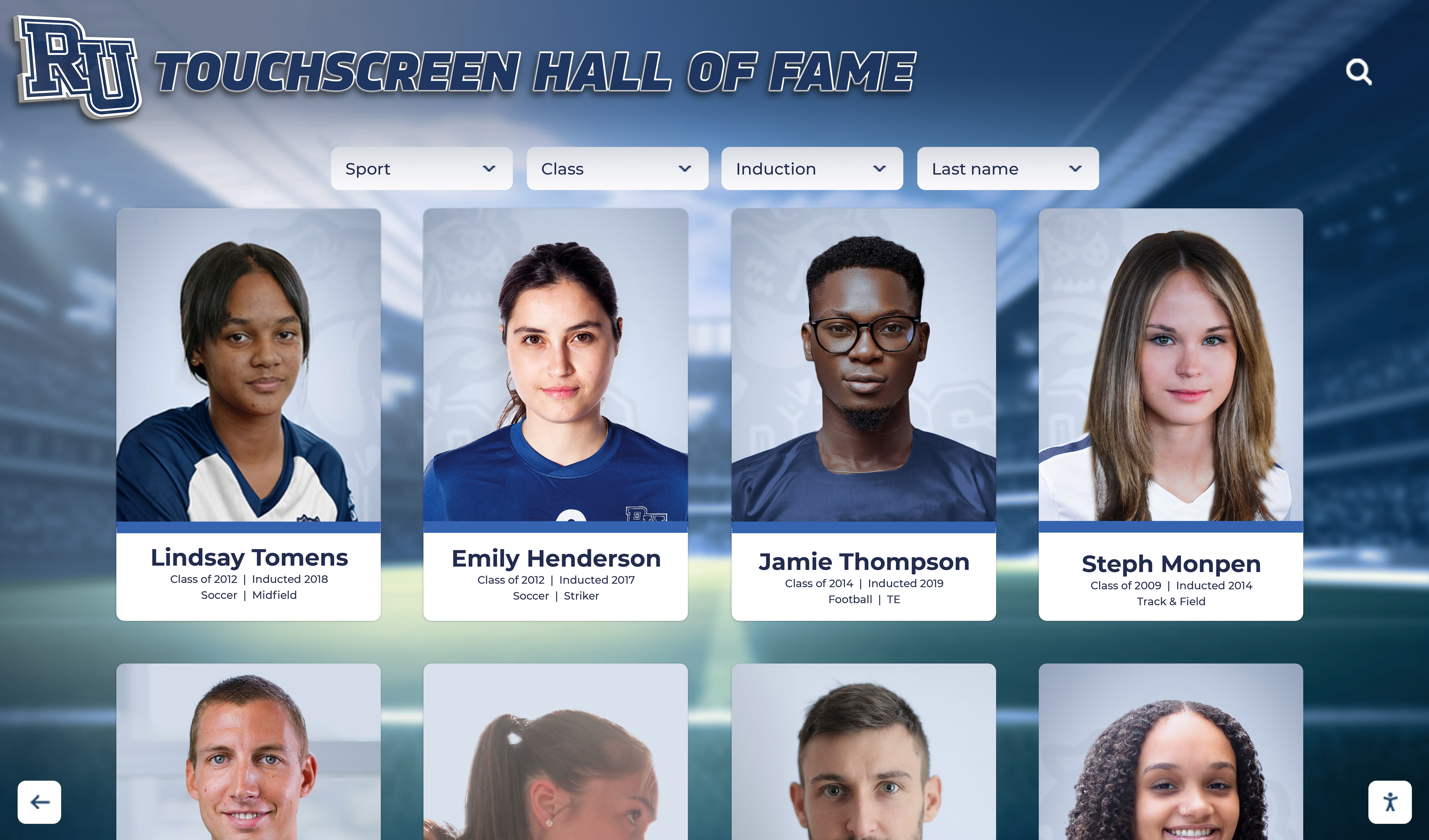
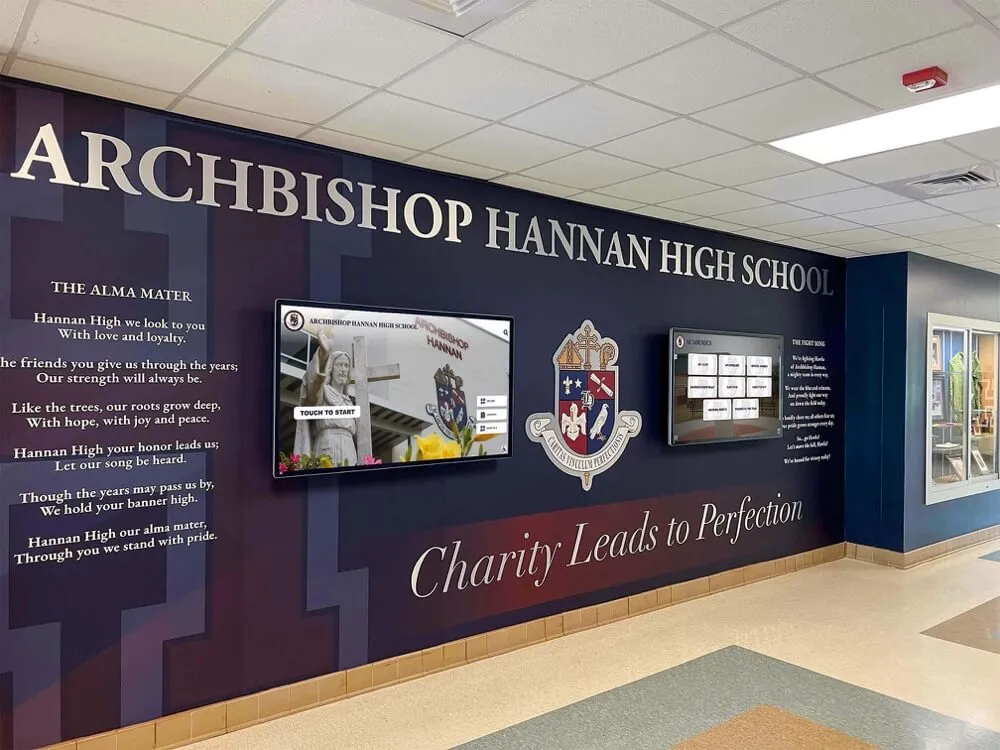
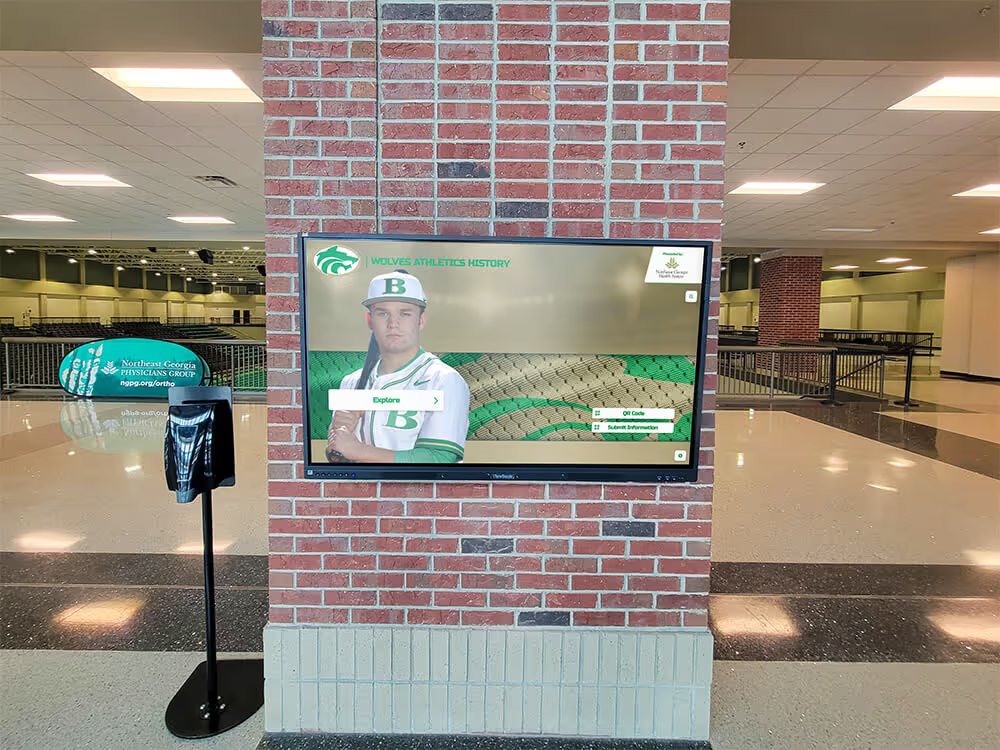
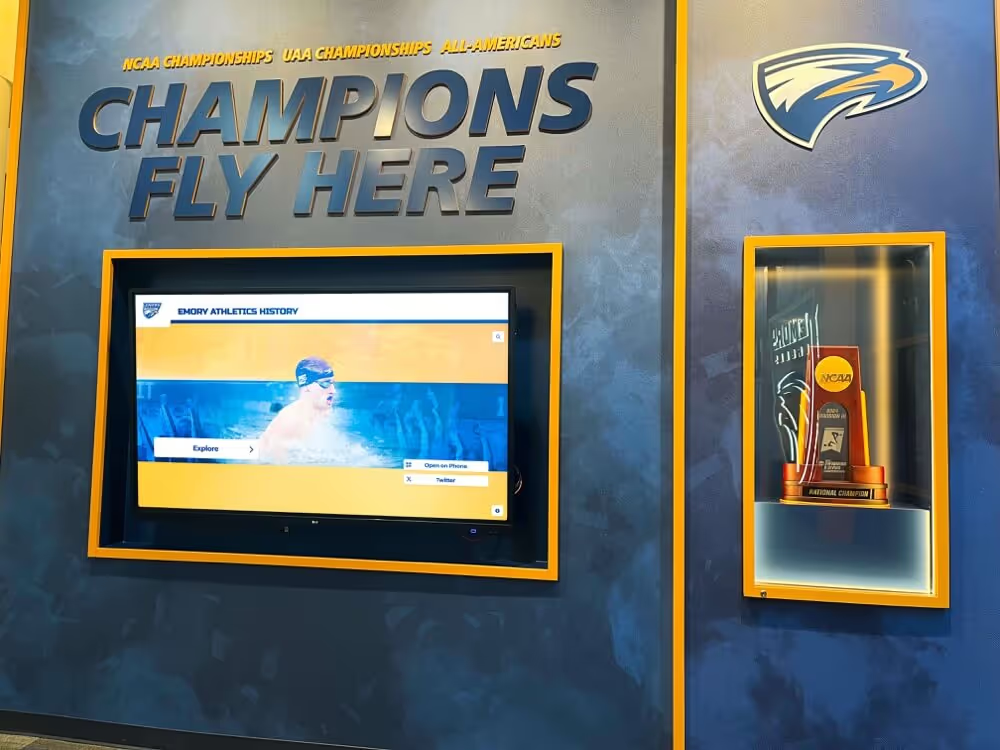
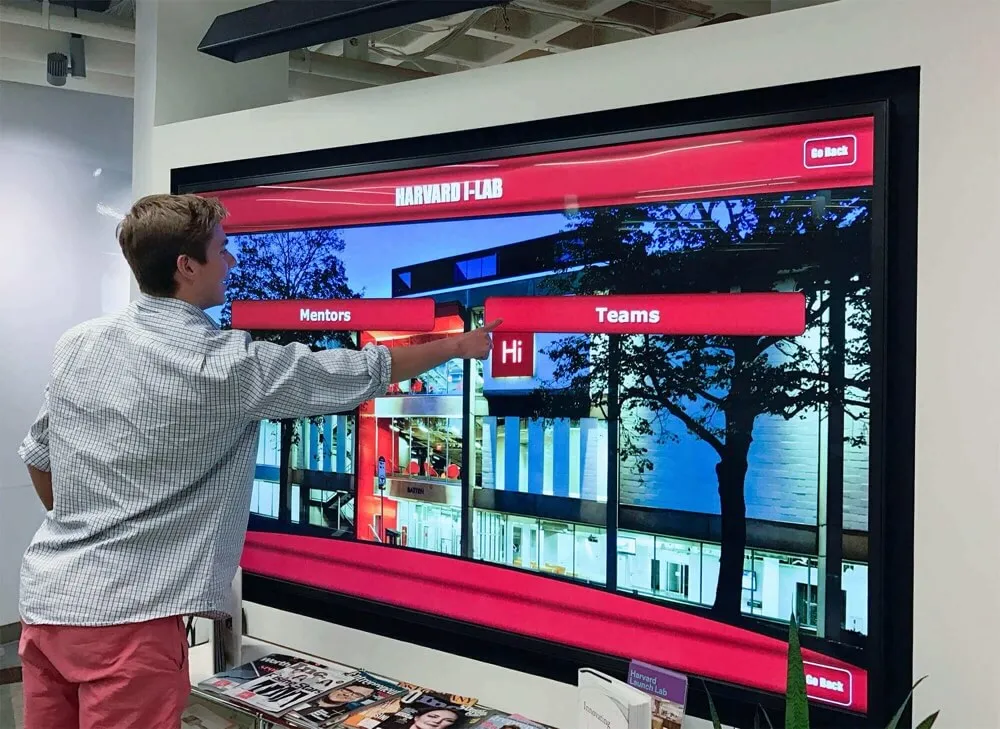
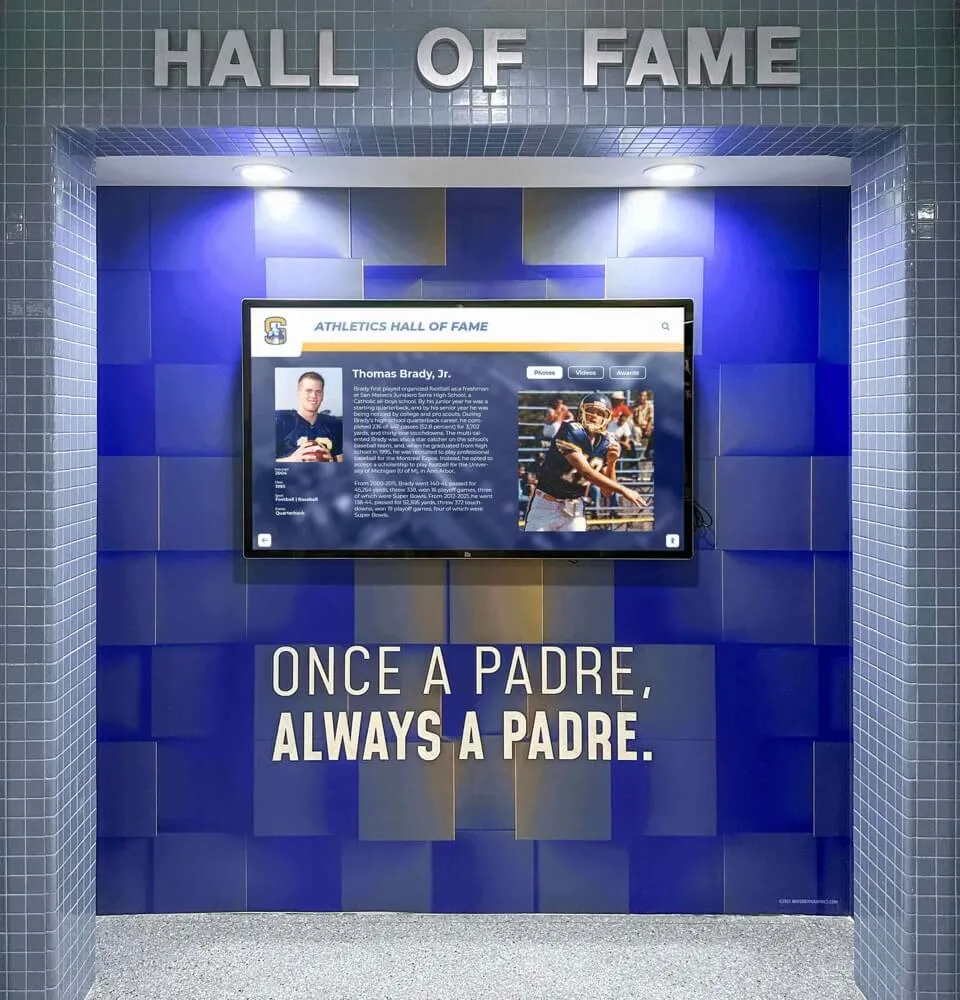
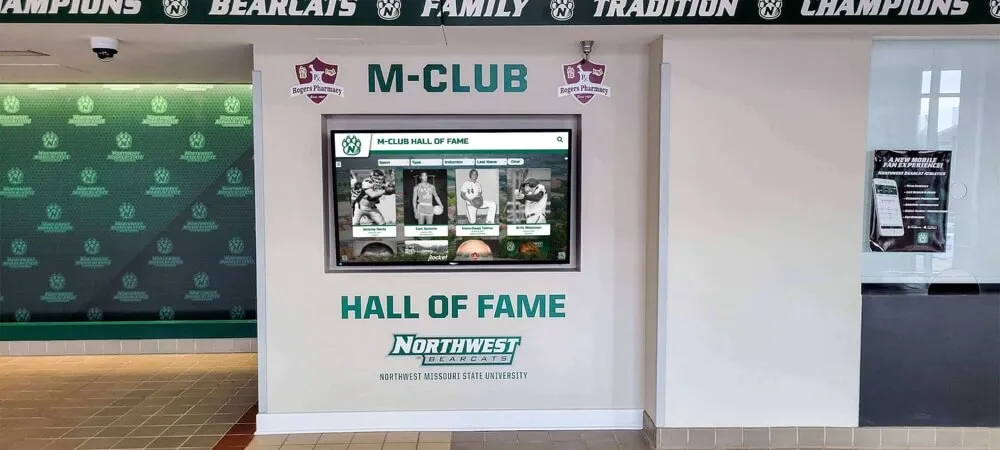
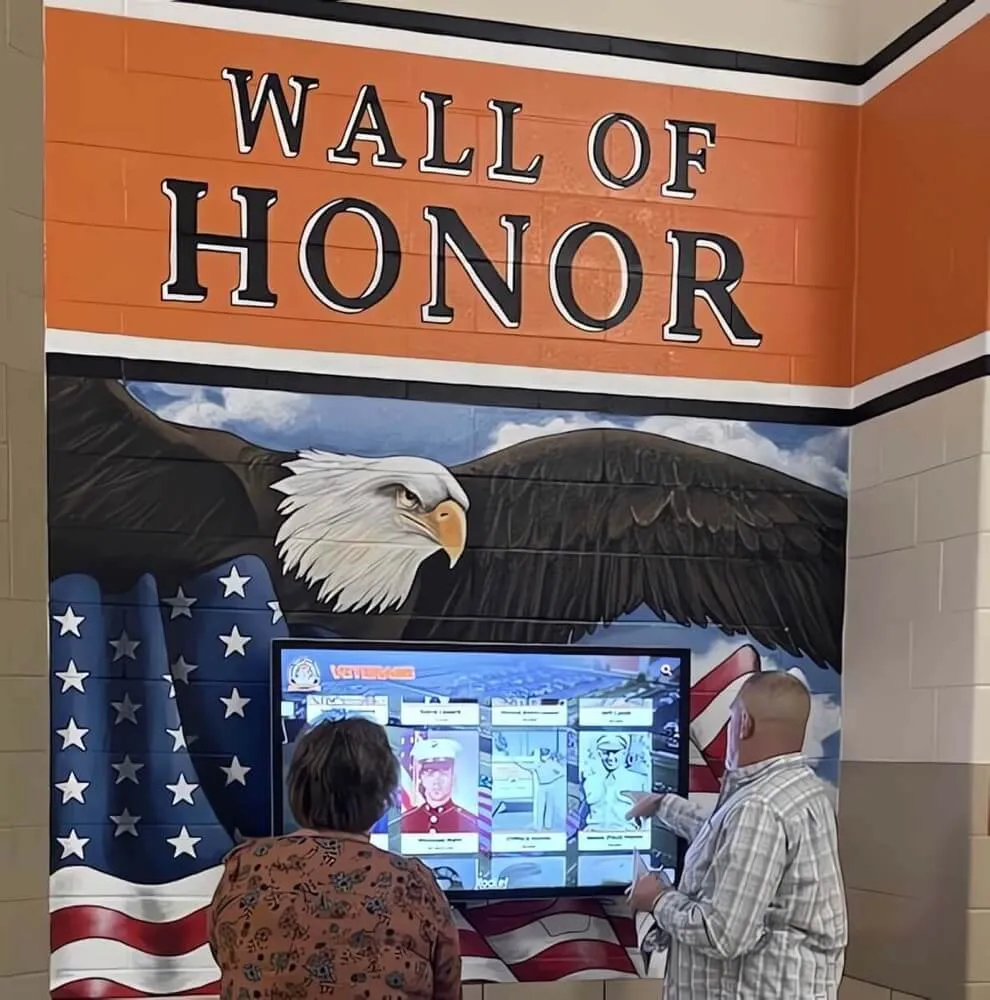
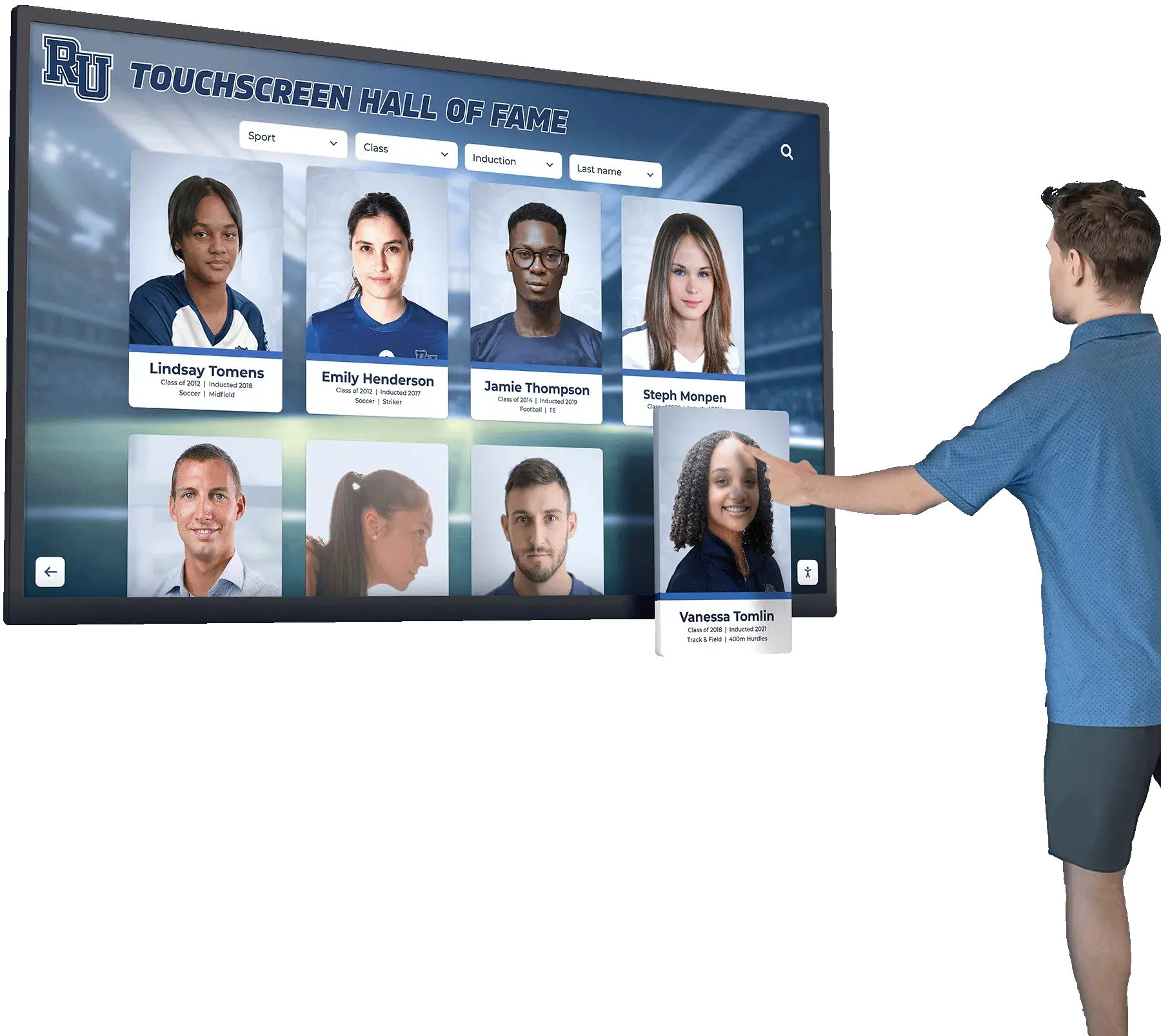
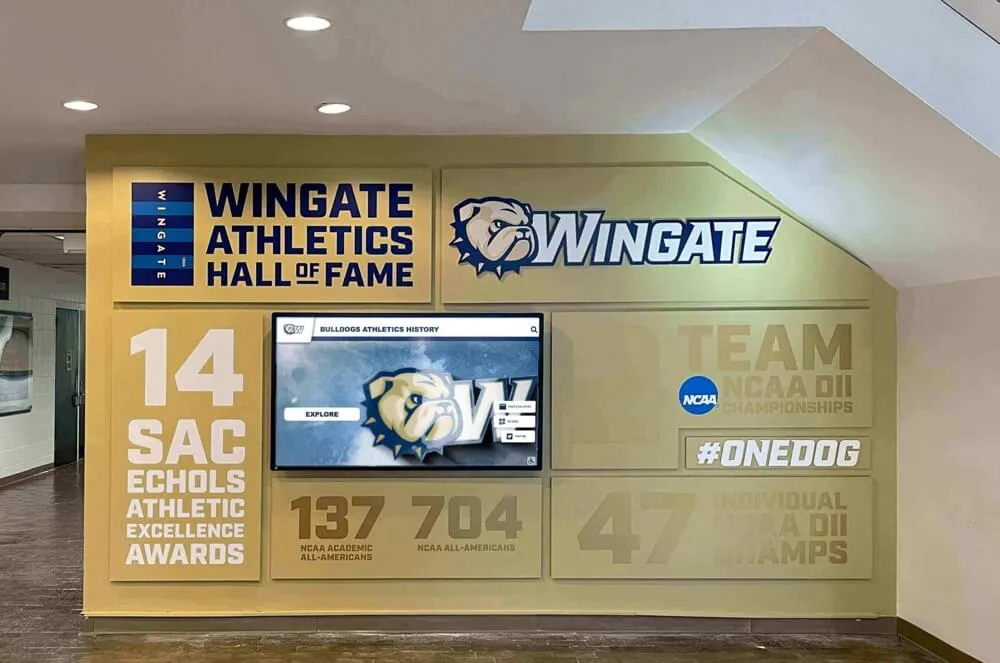
Interactive displays in school lobbies and common areas enable students, visitors, and families to explore yearbook content on large touchscreens creating engaging community experiences
Cost Accessibility for All Families
Print yearbooks cost $60-$120 per copy depending on page count, binding quality, and print quantities. These prices create barriers for families facing financial constraints, forcing schools to choose between excluding economically disadvantaged students from this memory preservation tradition or absorbing costs that strain limited budgets.
Digital platforms dramatically reduce per-student costs, with many schools providing universal access to entire student bodies through institutional subscriptions costing less than purchasing print books for all students. Schools implementing academic recognition programs and memory preservation can ensure every student receives equal access regardless of family financial circumstances.
Some schools offer digital yearbooks completely free to students and families, funding programs through sponsorships, advertising, or general operating budgets. This universal access ensures no student gets excluded from memory preservation traditions due to economic limitations.
Perpetual Accessibility and Preservation
Physical yearbooks degrade over decades, get lost during moves, suffer damage from water or fire, and remain available only to those who purchased and maintained copies. Alumni searching for old yearbooks often find books unavailable, borrowed and never returned, or so deteriorated that photos and text prove unreadable.
Digital platforms provide permanent cloud-based hosting ensuring content remains accessible indefinitely, automatic backups protecting against data loss, unlimited viewing without degradation, worldwide access from any internet-connected device, and preservation of institutional history for current and future generations.
This perpetual accessibility proves particularly valuable for alumni relations, enabling schools to maintain connections with graduates decades after leaving campus by providing ongoing access to memories and connections from their student years.
Enhanced Student Engagement and Contribution
Traditional yearbook production concentrates responsibility among small staff teams of 10-30 students, limiting participation and creating bottlenecks where few students manage overwhelming content creation demands. This model excludes most students from contributing while burdening small teams.
Digital platforms enable distributed content creation where hundreds or thousands of students contribute photos, entire student bodies submit candid shots, individual students write captions and stories, specific clubs and organizations manage their own sections, and automated content collection reduces manual work.
This democratized approach increases student ownership and engagement while distributing workload across larger teams. Schools report that broader participation creates yearbooks reflecting more diverse student perspectives and capturing moments that small staff teams inevitably miss.
Multimedia Storytelling Capabilities
Print yearbooks limited storytelling to static photos and text. Digital platforms enable schools to capture dimensions of student life impossible in print through video highlights from performances and athletic events, audio recordings of concerts, speeches, or traditions, embedded social media posts capturing real-time moments, virtual tours of campus facilities and spaces, interactive timelines showing year progressions, and linked content connecting related stories and events.
These multimedia capabilities create engaging experiences that students and families return to repeatedly, particularly when video content captures voices, movements, and emotions that still photos cannot convey.
Schools building digital archives find digital yearbooks integrate naturally with broader institutional memory preservation efforts.
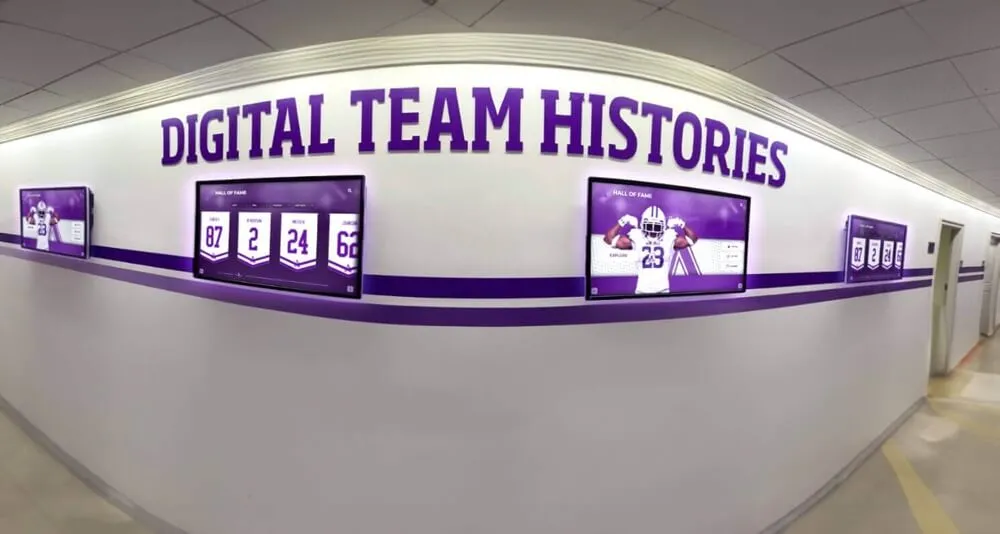
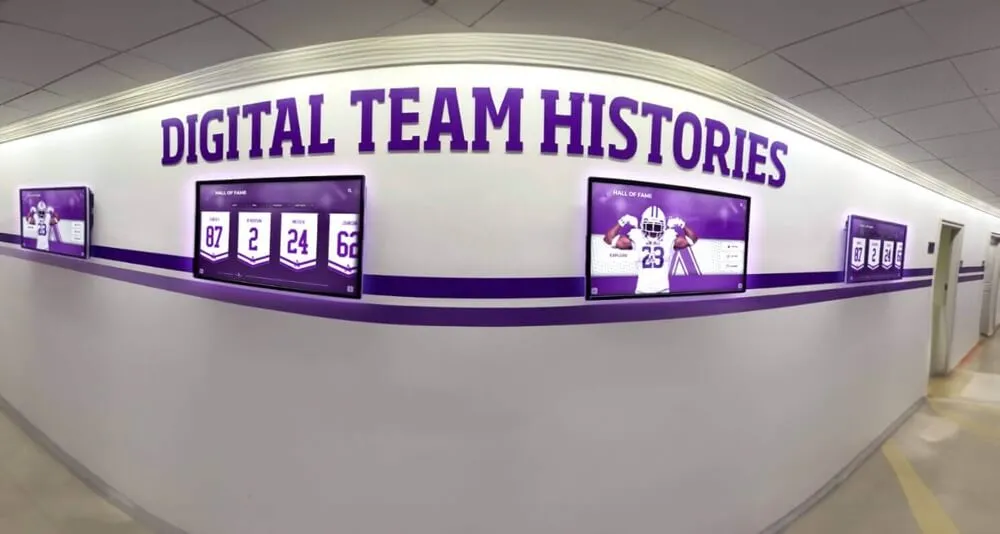
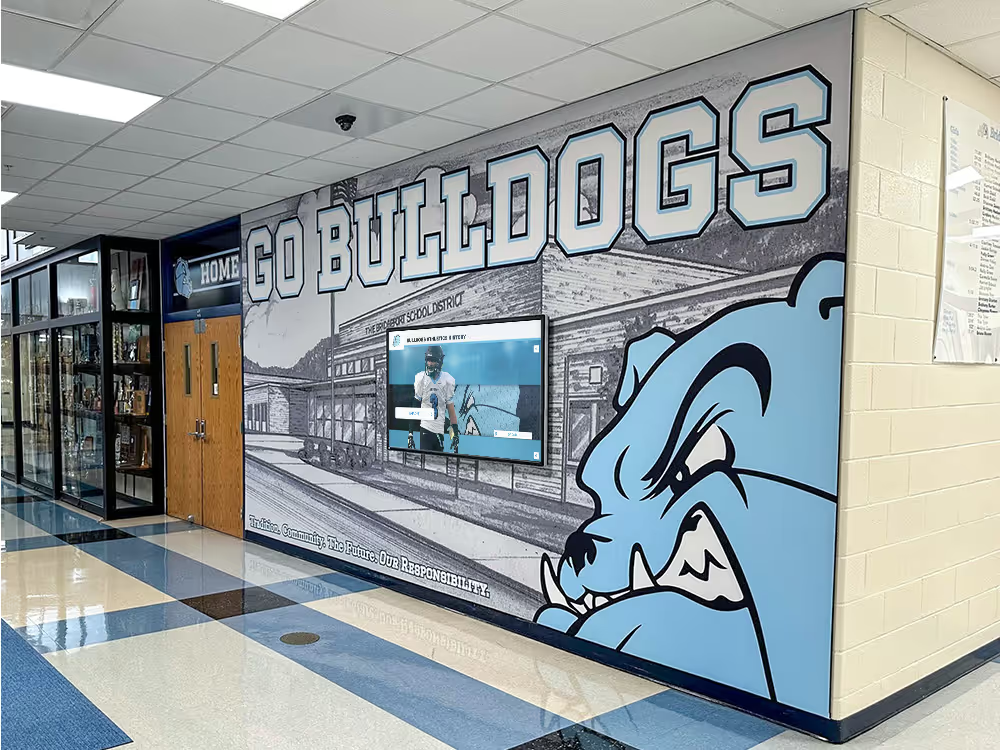
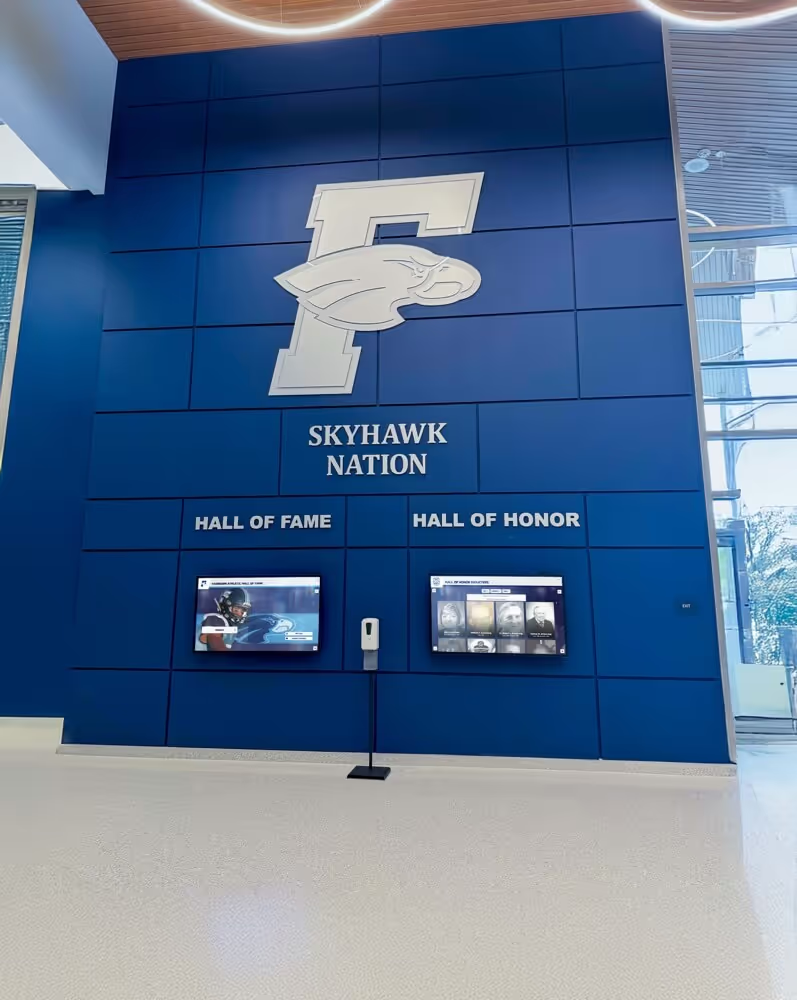
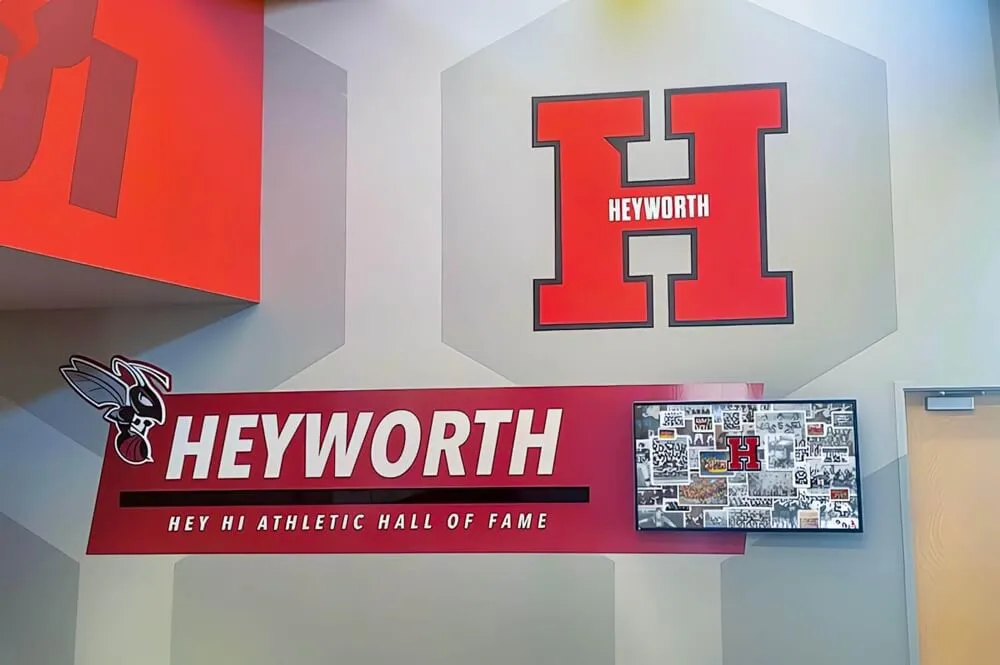
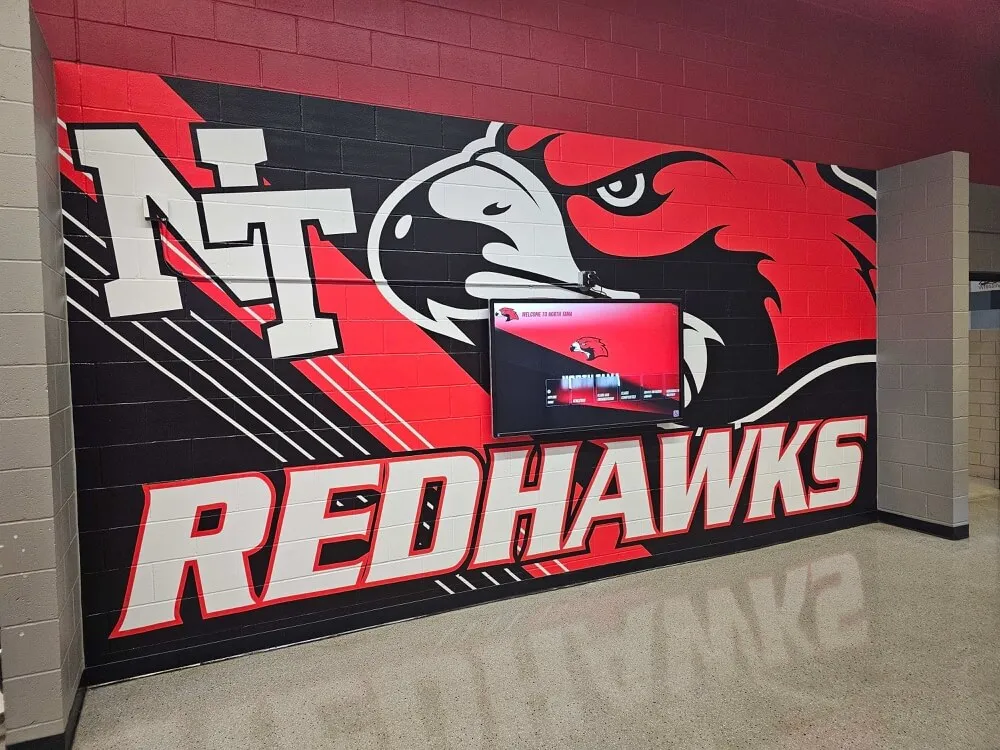
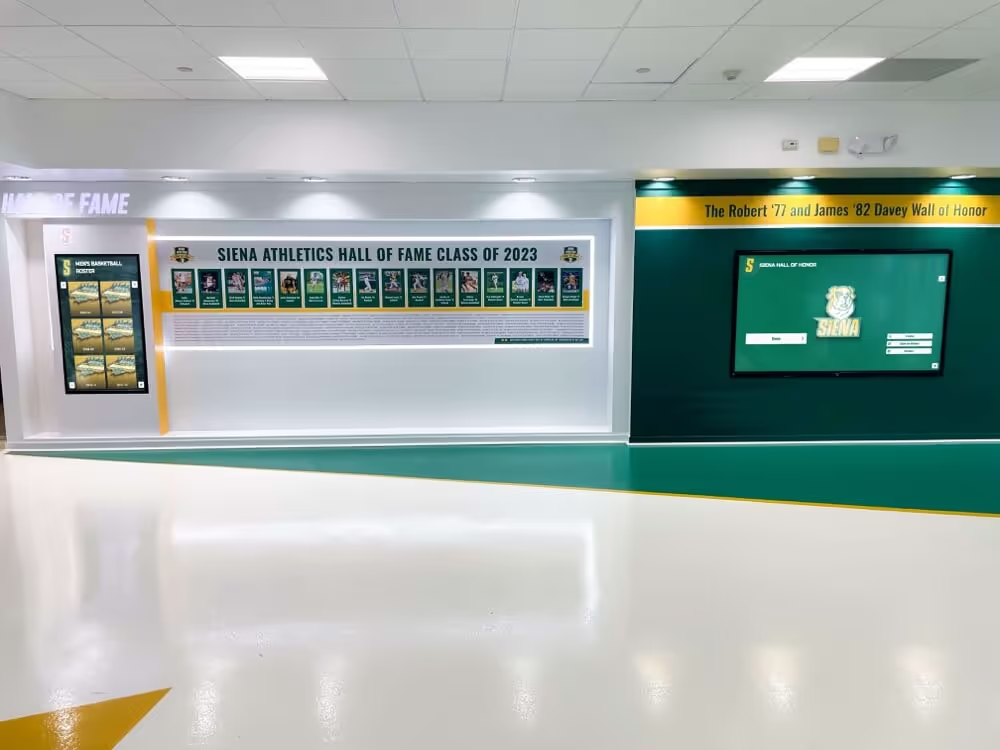
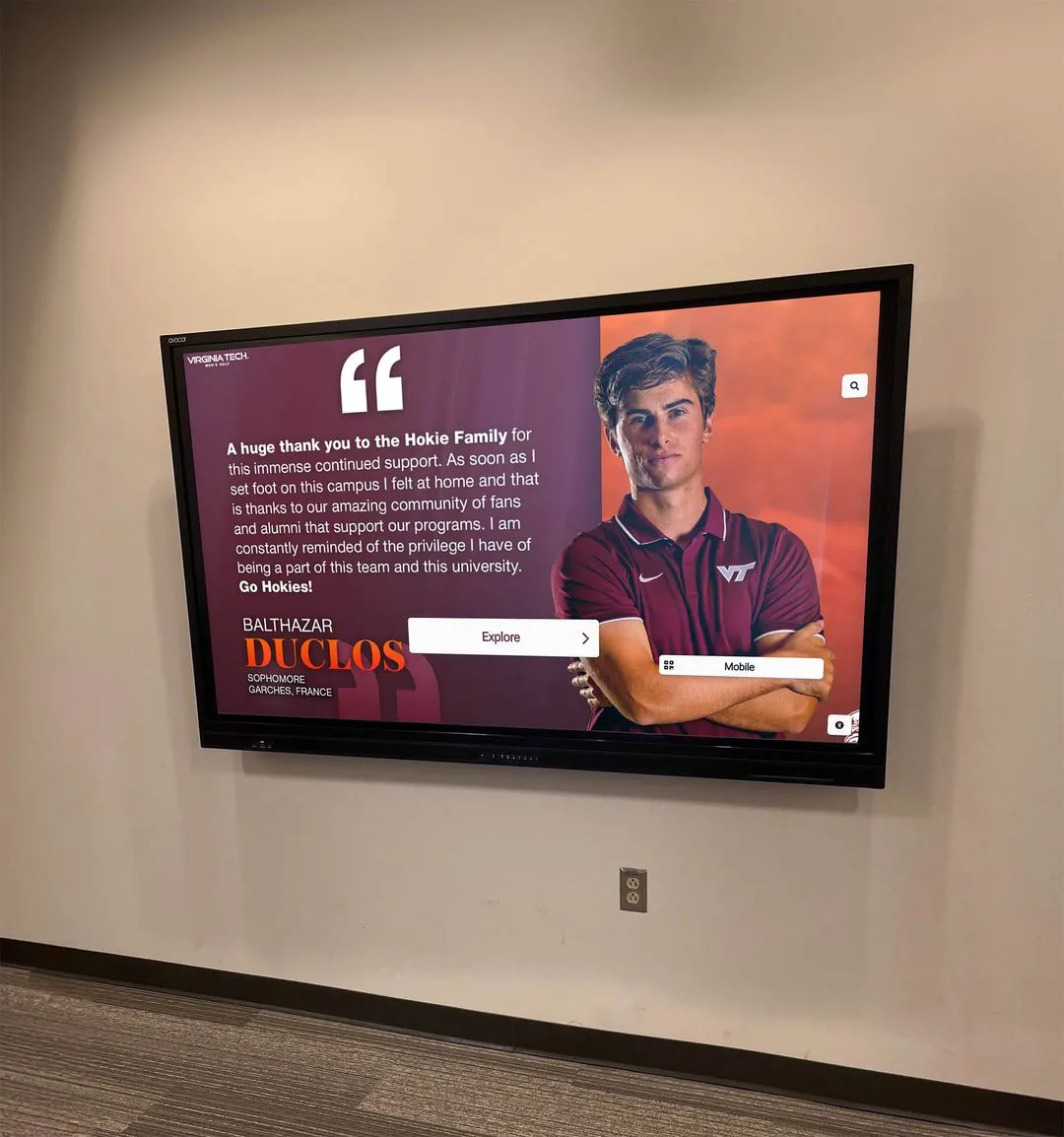
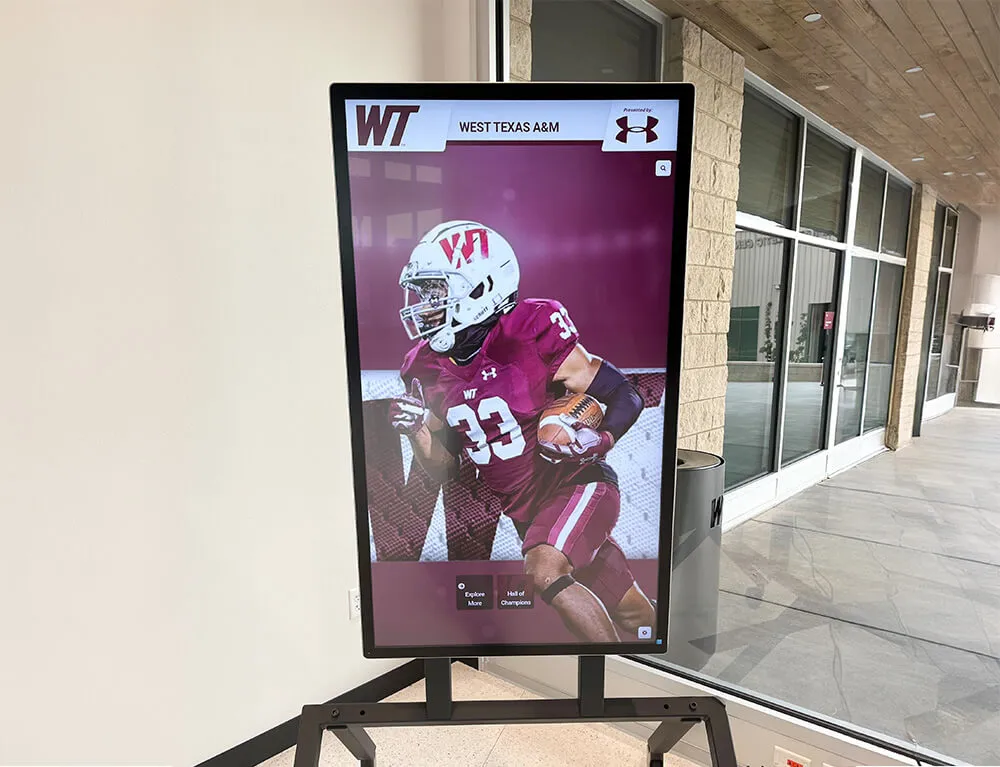
Strategic installation of digital displays throughout schools creates multiple touchpoints where communities can explore yearbook content, building awareness and engagement
Social Sharing and Viral Distribution
Traditional yearbooks limited distribution to physical copies shared within immediate circles. Digital platforms enable students and families to share favorite moments on social media platforms, send direct links to specific photos or pages, embed content on personal websites or blogs, and download images for personal use—exponentially expanding yearbook reach and visibility.
This social amplification extends yearbook impact far beyond school communities as students share accomplishments with extended families, athletic achievements reach broader networks, performing arts content showcases school programs, and positive moments generate community goodwill and pride.
Schools implementing digital yearbooks consistently report dramatic increases in social media engagement and community awareness compared to print-only approaches.
Alumni Connection and Engagement
Traditional yearbooks ended at graduation, with no ongoing connection between schools and alumni through yearbook channels. Digital platforms enable schools to maintain perpetual relationships by providing lifelong access to memories, creating alumni-specific content and updates, enabling alumni to submit “where are they now” updates, organizing virtual reunions around shared memories, and building communities connecting classmates across geographic distances.
Alumni engagement strategies leverage digital yearbooks as foundational tools connecting graduates to institutions and classmates throughout lifetimes rather than only during student years.
Essential Features of Quality Digital Yearbook Platforms
Not all digital yearbook solutions offer equivalent capabilities. Schools evaluating platforms should assess specific features determining long-term satisfaction and success.
Intuitive Content Management Interface
Content creation ease determines whether yearbook staff will maintain active, engaging yearbooks or whether platforms become frustrating obstacles limiting participation. Quality platforms provide visual drag-and-drop page builders, template-based layouts simplifying design decisions, real-time preview showing exactly how content appears, bulk photo uploads handling dozens or hundreds of images simultaneously, automated image optimization for web display, and no-code interfaces requiring no technical expertise.
Test platforms during evaluation by actually creating sample content. If processes feel complicated or require technical knowledge, student staff will struggle with production throughout years.
Comprehensive Privacy and Permission Controls
Schools must protect student privacy and comply with regulations like FERPA. Quality digital yearbook platforms provide granular privacy settings for individual students, role-based access controls limiting who can view content, parental consent management systems, content approval workflows before publication, options for unlisted or private content sections, and compliance features addressing regulatory requirements.
Privacy controls prove non-negotiable for K-12 schools where student protection represents fundamental obligations. Platforms lacking comprehensive privacy features create legal and ethical risks schools cannot accept.
Mobile-First Responsive Design
With most students and young alumni accessing content primarily through smartphones, mobile experience determines platform success or failure. Evaluate platforms on responsive layouts adapting to any screen size, touch-optimized navigation for smartphones, fast loading times on cellular networks, image galleries working well on small screens, and feature parity ensuring mobile users aren’t limited compared to desktop experiences.
Test platforms extensively on actual smartphones during evaluation. If navigation feels awkward or content doesn’t display well on mobile devices, engagement will suffer dramatically regardless of how good desktop experiences appear.
Flexible Content Organization and Navigation
Students and families approach yearbooks seeking different content types—some want to find themselves or friends, others browse chronologically, some explore specific activities or interests, and others search randomly discovering unexpected memories. Support these diverse needs through robust search capabilities across all content, filtering by year, grade, activity, or tag, chronological browsing options, thematic organization by event type, customizable navigation menus, and related content suggestions connecting similar moments.
Poor navigation frustrates users and limits engagement. The difference between finding desired content in seconds versus minutes dramatically affects satisfaction and likelihood of returning to platforms.
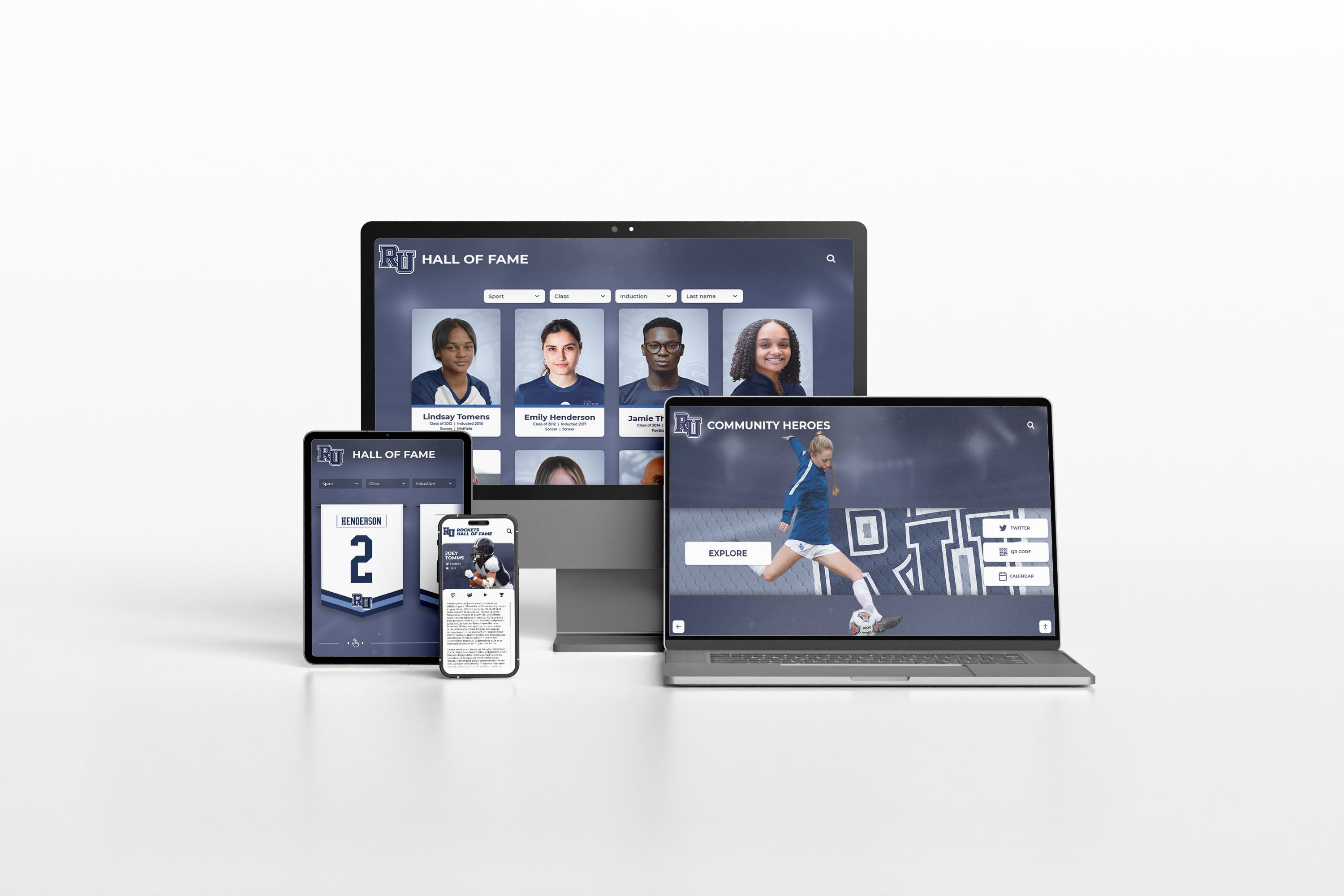
Professional responsive design ensures yearbook content displays beautifully across all devices with navigation optimized for each screen size and interaction method
Unlimited or High Storage Capacity
Multimedia-rich yearbooks with extensive photo galleries, video content, and historical archives require substantial storage capacity. Evaluate whether platforms include unlimited storage in subscriptions, offer very high storage limits suitable for decades of content, charge additional fees when storage limits are exceeded, or require schools to manage external storage services.
Storage limitations force difficult content decisions—which photos to include, whether to accept video submissions, and whether to preserve historical content. Platforms with generous or unlimited storage eliminate these constraints enabling truly comprehensive yearbooks.
Scalability for Different School Sizes
Digital yearbook needs vary dramatically between elementary schools with 200 students, high schools with 2,000 students, and universities with 20,000 students. Quality platforms scale appropriately by supporting both small and large user bases, accommodating varying content volumes, providing pricing tiers matching school sizes and budgets, enabling multiple yearbooks for different grades or divisions, and maintaining performance regardless of content quantity or user numbers.
Platforms designed primarily for either small or large institutions often work poorly at opposite scales. Ensure selected platforms suit your specific school context and size.
Integration with Existing School Systems
Digital yearbooks function best when integrated with broader school technology ecosystems. Evaluate platforms on integration with school websites and navigation, single sign-on using existing authentication systems, connection to student information systems for rosters, compatibility with learning management systems, and export capabilities sharing content with other tools.
Standalone systems disconnected from existing infrastructure create friction, redundant data entry, and lower adoption. Integrated platforms feel like natural extensions of existing school digital ecosystems.
Professional Design Templates and Customization
Yearbook visual quality significantly affects perceived value and student pride. Quality platforms provide professionally designed templates incorporating school branding and colors, customizable layouts maintaining visual consistency, flexible page designs accommodating different content types, theme options offering distinct visual styles, and font and color controls matching institutional identity.
Generic, inflexible designs create yearbooks feeling cheap or unpolished regardless of content quality. Professional, customizable templates enable schools to create yearbooks reflecting institutional pride and excellence.
Analytics and Engagement Data
Understanding how students and families engage with digital yearbooks informs content strategy and demonstrates program value to administrators. Look for platforms tracking views and visitors for different content, most popular pages and photos, search queries revealing what users seek, time spent and engagement depth, geographic access data showing where users connect from, and exportable reports for presentations and decision-making.
Data-driven insights enable continuous improvement while justifying digital yearbook investments through measurable engagement metrics.
Schools implementing digital hall of fame systems often integrate yearbook content into broader recognition and memory preservation programs.
Planning Your Digital Yearbook Implementation
Successful digital yearbook launches require systematic planning addressing content strategy, stakeholder engagement, student participation, and realistic timelines.
Define Scope and Content Strategy
Begin by determining what your digital yearbook will encompass and how it relates to existing print publications:
Digital-Only Yearbook
Some schools replace print yearbooks entirely with digital platforms, embracing unlimited capacity and cost accessibility. This approach requires ensuring all families can access content through school-provided devices if necessary and communicating value to communities expecting traditional print books.
Hybrid Print-Digital Approach
Many schools maintain limited-page print yearbooks as tangible keepsakes while creating comprehensive digital versions with expanded content. Print books include QR codes linking to digital content, combining tradition with modern capabilities. This hybrid approach satisfies families valuing physical books while leveraging digital advantages.
Digital Supplement to Print
Schools can continue existing print yearbooks while adding digital platforms for specific purposes like capturing end-of-year content after print deadlines, providing alumni access to historical yearbooks, or enabling year-round content updates supplementing annual print publications.
Historical Archive Digitization
Some schools focus initially on digitizing historical yearbooks creating accessible archives before launching current digital yearbooks. This approach builds enthusiasm while preserving institutional memory.
Assemble Your Yearbook Team
Digital yearbook production requires diverse roles and responsibilities:
Faculty Adviser or Coordinator
Overall project leadership, budget management, content oversight, student team coordination, and stakeholder communication.
Student Editors and Managers
Content strategy and planning, quality control and consistency, team coordination and delegation, deadline management, and final approval before publication.
Photography Team
Systematic event coverage capturing all activities, photo quality and technical standards, organizing and tagging photos, obtaining photo permissions, and supplementing professional photography.
Content Writers and Editors
Captions and descriptions for photos, feature articles and stories, interview content, proofreading and editing, and maintaining consistent voice and style.
Design and Layout Team
Page design and layout using templates, visual consistency across sections, multimedia integration, and responsive design testing across devices.
Social Media and Promotion Team
Encouraging content submissions, promoting yearbook features and releases, managing social sharing, gathering student feedback, and building anticipation and engagement.
Technical Administrator
Platform configuration and management, privacy settings and permissions, user access and authentication, troubleshooting technical issues, and training team members on platform tools.
Schools successfully implementing digital yearbooks typically expand team sizes compared to traditional print production because broader participation becomes possible and desirable with digital platforms.
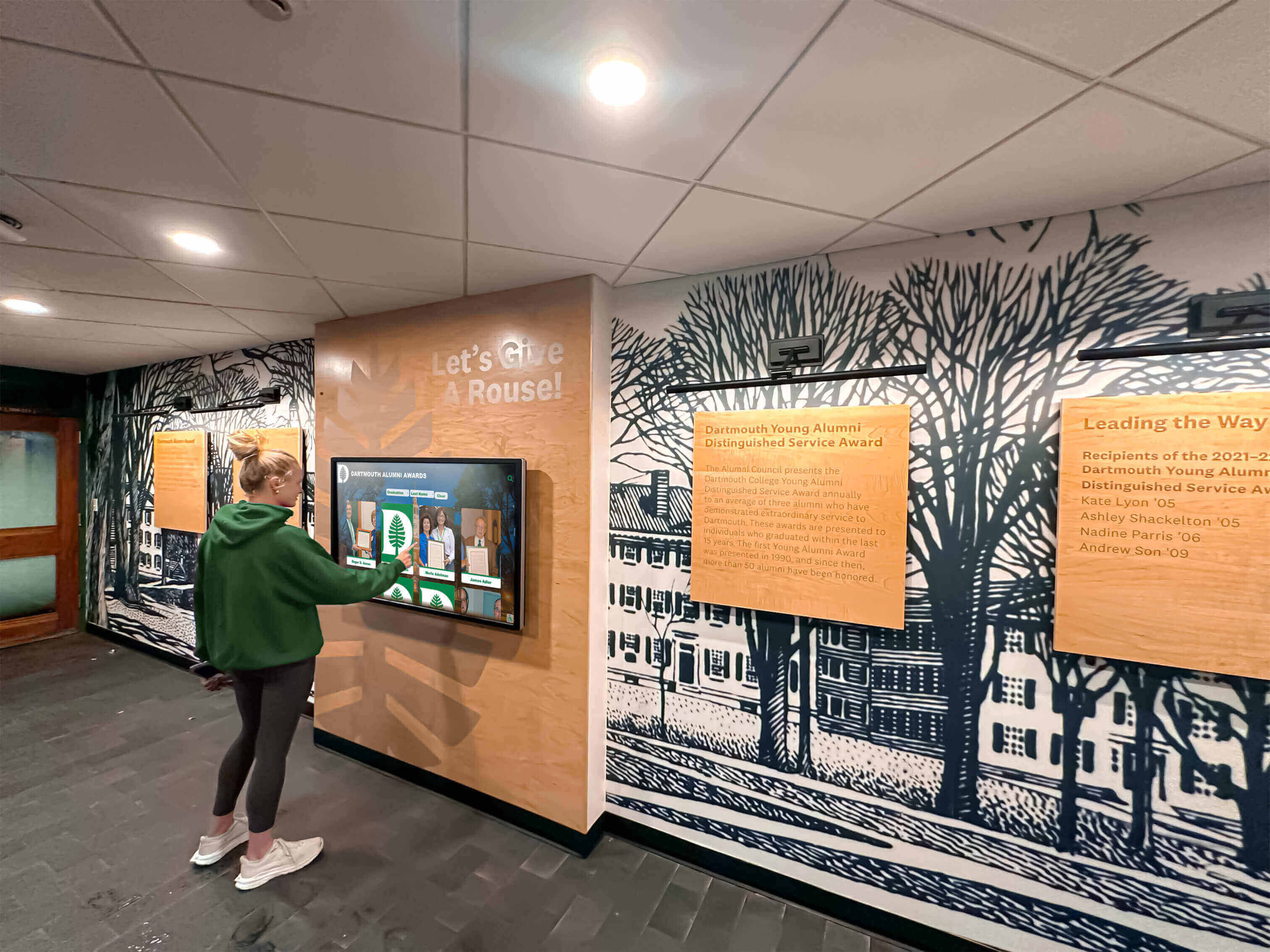
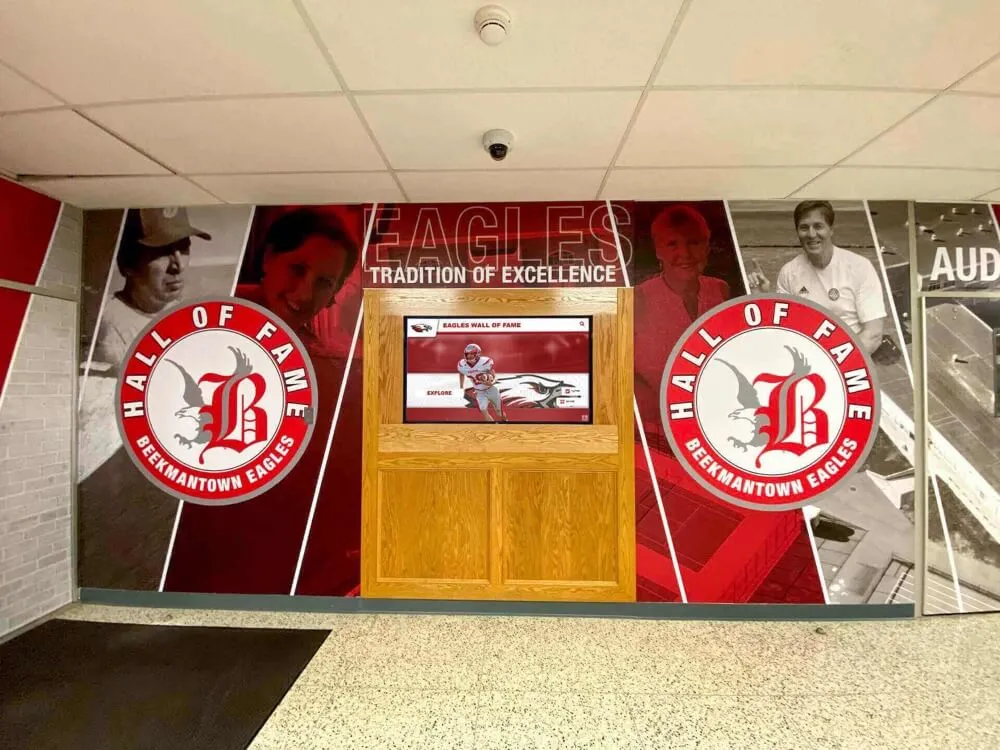
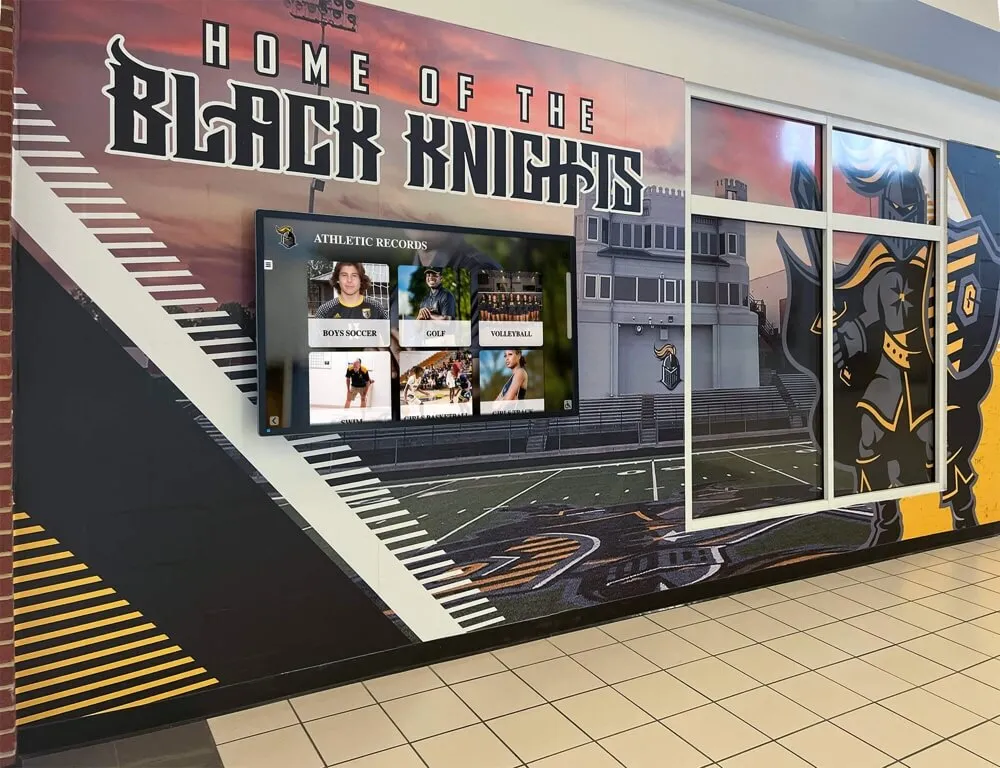
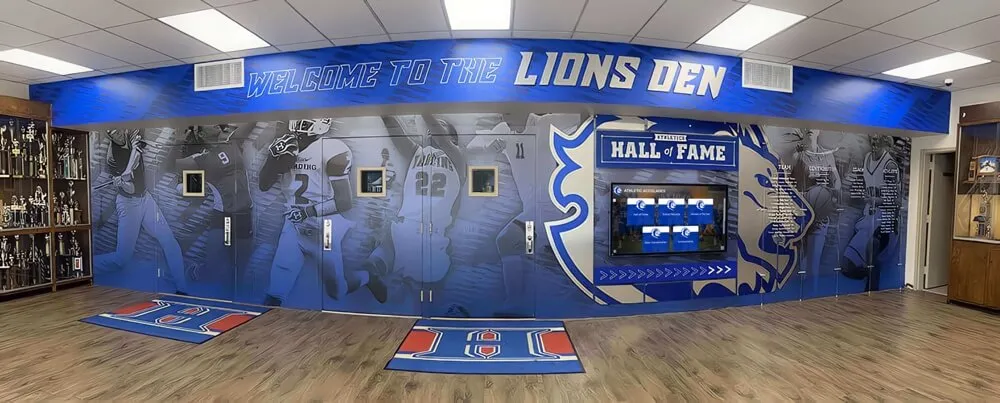
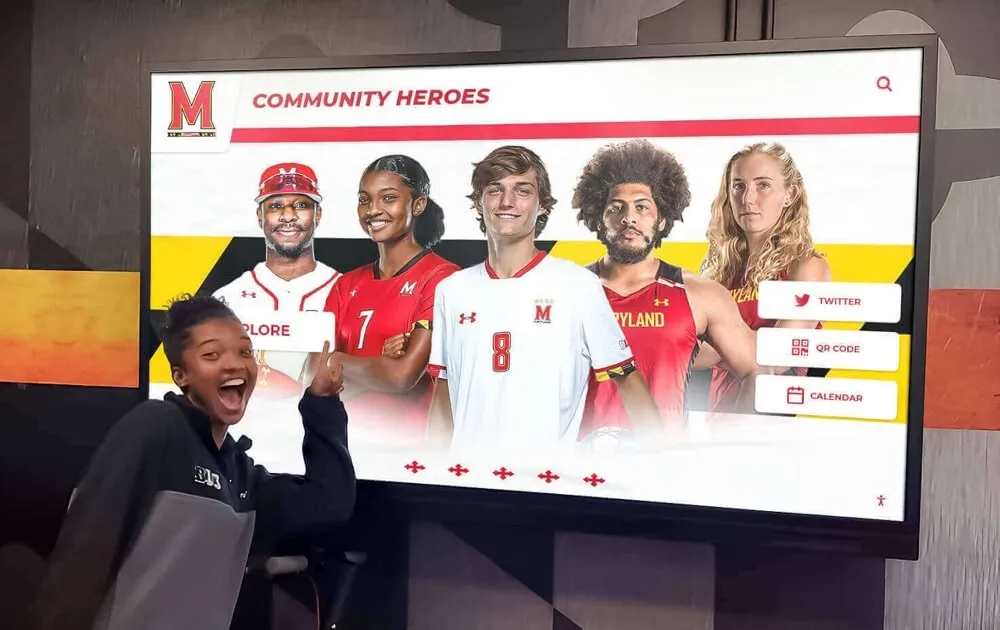
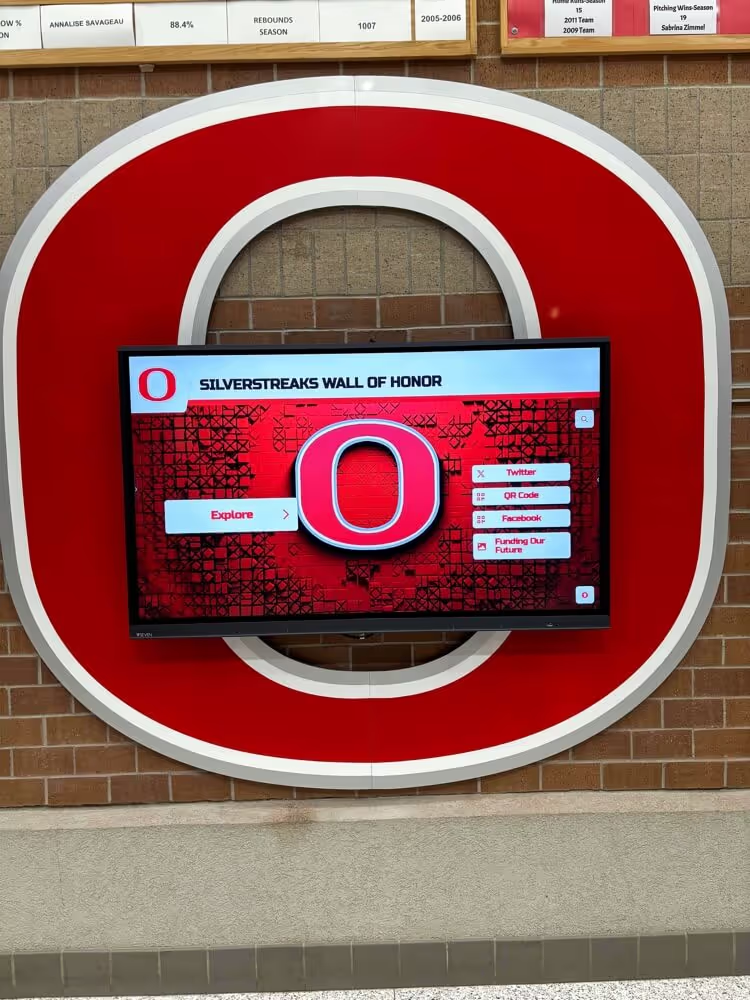
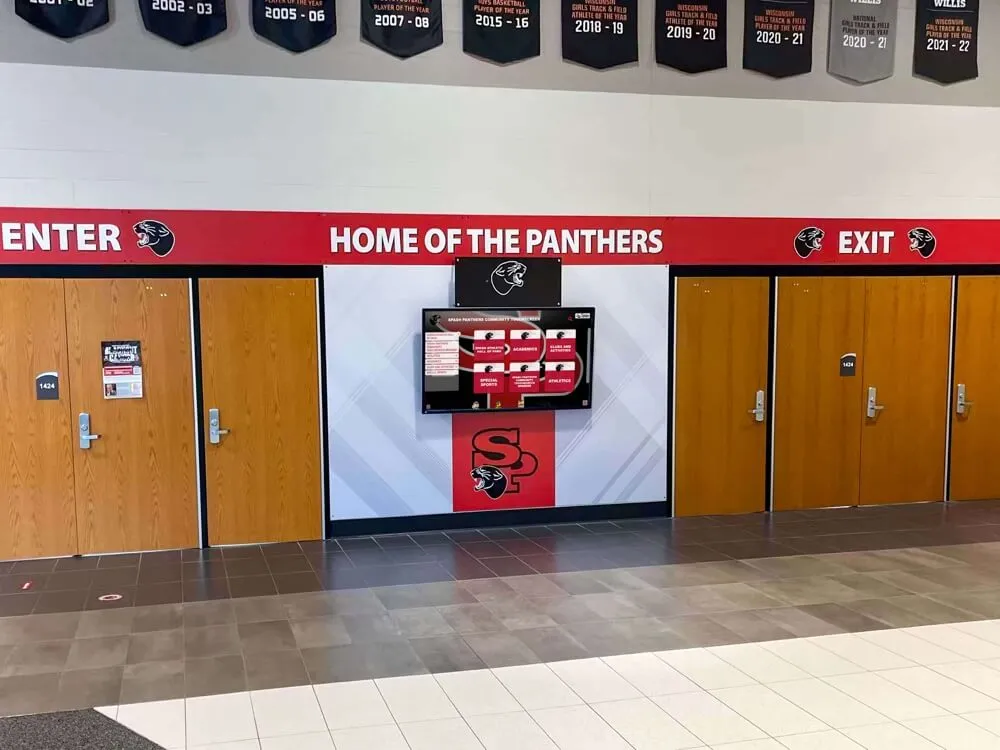
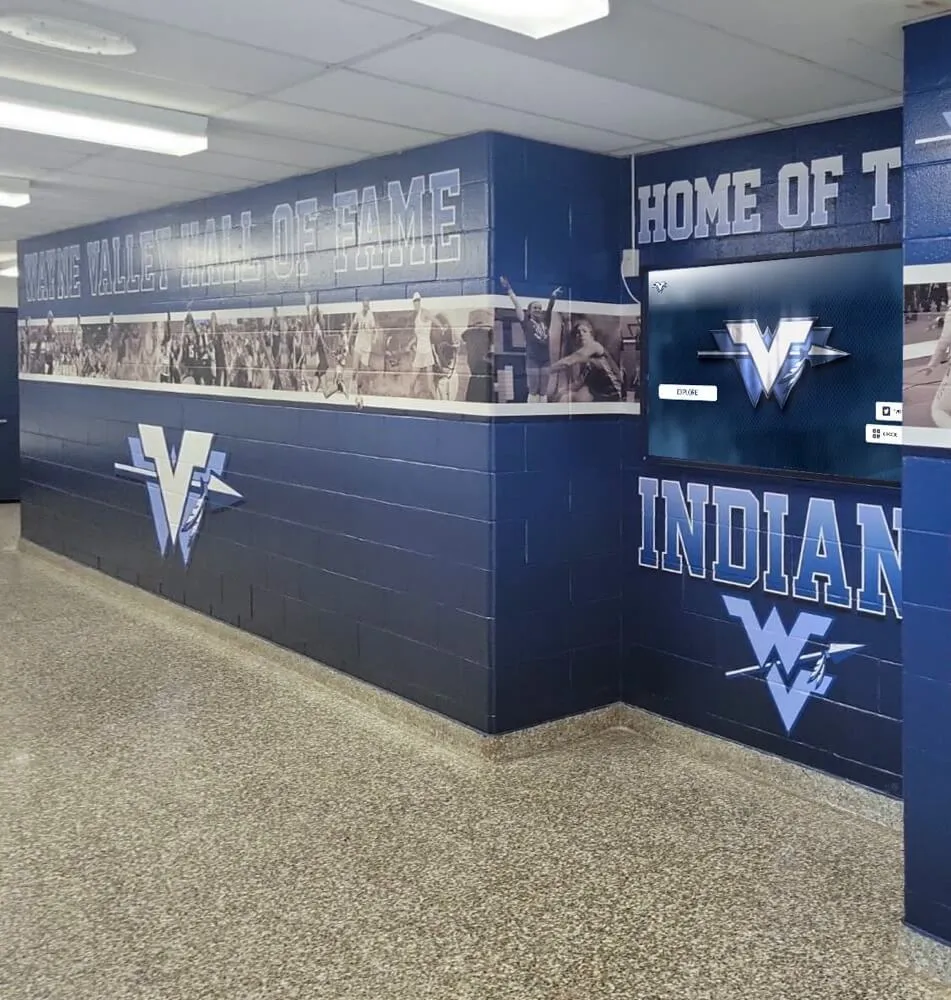
Interactive touchscreen installations in school hallways enable casual exploration during passing periods, lunch, or free time, building awareness and increasing engagement with yearbook content
Develop Content Collection Strategy
Digital yearbooks require systematic content collection throughout years:
Event Coverage Planning
Create comprehensive event calendars identifying all activities requiring documentation—athletic events and competitions, performing arts productions, club meetings and activities, academic competitions and ceremonies, spirit events and traditions, community service projects, and school-wide assemblies and celebrations.
Assign specific coverage responsibilities ensuring nothing gets missed while distributing workload across team members.
Crowdsourced Content Submissions
Enable entire student bodies to submit photos and memories through online submission forms, dedicated email addresses, cloud storage folders, mobile apps designed for submissions, or integration with student social media.
Crowdsourcing dramatically expands content breadth while capturing candid moments and diverse perspectives that small teams inevitably miss.
Professional Photography Supplement
While student coverage provides authentic peer perspectives, professional photographers capture key moments with technical quality that ensures important events receive polished documentation—graduation ceremonies, formal dances, championship competitions, and institutional portraits.
Budget for professional photography at highest-priority events supplementing comprehensive student coverage.
Historical Content Digitization
Incorporate historical yearbooks, photos, and documents creating connections between past and present. Alumni respond enthusiastically to historical content while current students gain context understanding institutional traditions and evolution.
Systematic digitization of physical archives builds comprehensive institutional memory accessible through digital yearbook platforms.
Establish Production Timeline and Milestones
Digital yearbooks benefit from continuous production throughout years rather than compressed spring deadlines:
August-September: Planning and Launch
Team formation and training, content strategy and calendar planning, establishing submission processes, launching promotion and engagement campaigns, and releasing prior year archived content if applicable.
September-December: Fall Coverage and Production
Comprehensive event coverage, regular content additions, first edition release (optional), and building submission habits and engagement.
January-March: Winter Coverage and Production
Continued event coverage, winter edition release (optional), historical content additions, and mid-year team evaluation and adjustments.
April-May: Spring Coverage and Final Production
Spring event coverage, final content additions, comprehensive quality review, spring edition release, and preparation for year-end celebration.
June-July: Graduation and Final Publication
Graduation coverage and immediate publication, final summer additions, year-end celebration and recognition event, and final complete yearbook release.
Ongoing: Alumni Engagement and Archives
Maintaining perpetual access, enabling alumni content submissions, organizing reunion-related features, and continuous archive expansion.
This distributed timeline prevents overwhelming spring deadline crunches while ensuring comprehensive coverage throughout years.
Creating Engaging Digital Yearbook Content
Platform technology enables digital yearbooks, but content quality determines engagement and emotional impact.
Photography Best Practices
Comprehensive Coverage
Document every event, activity, and moment worthy of preservation—not just high-profile athletics and performances. Include classroom learning, club meetings, informal gatherings, campus daily life, behind-the-scenes preparation, candid interactions, student volunteers and workers, teacher and staff moments, and facility and environmental shots showing physical spaces.
Comprehensive coverage ensures every student appears multiple times while capturing fuller pictures of school communities and experiences.
Technical Quality Standards
While smartphone photography proves acceptable for many purposes, establish minimum quality standards: adequate lighting and exposure, proper focus and sharpness, thoughtful composition and framing, minimal distracting elements, respectful and appropriate content, and sufficient resolution for digital display.
Diverse Perspectives and Representation
Ensure photography represents entire student bodies across different grades and ages, academic programs and interests, athletic participation levels, cultural backgrounds and identities, extroverted and quieter students, and various friend groups and social circles.
Diverse representation ensures all students feel valued and included while creating yearbooks that authentically reflect complete school communities.
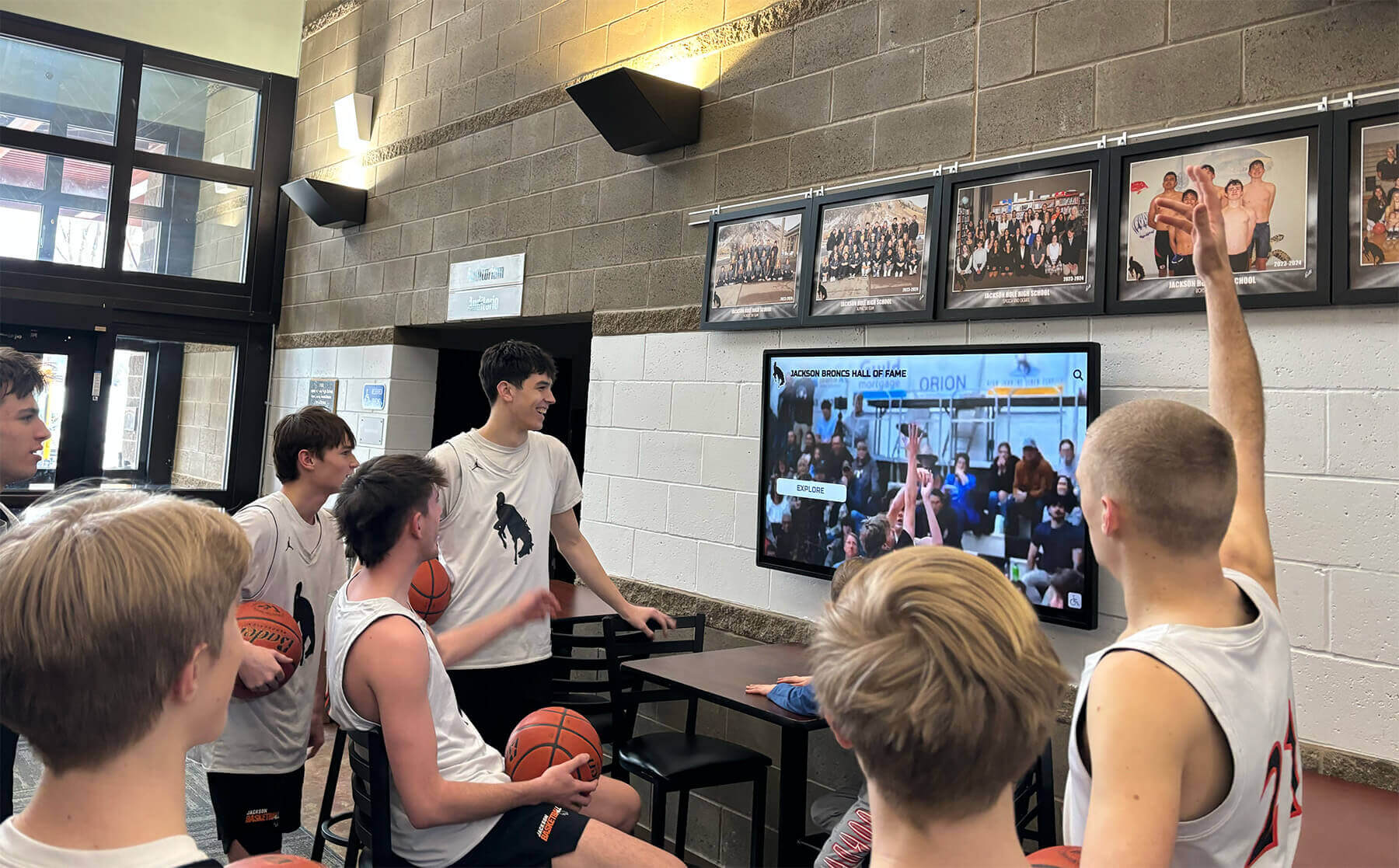
Video content creates compelling yearbook features impossible in print formats, capturing performances, athletic highlights, and moments that still photos cannot fully convey
Writing Compelling Captions and Stories
Meaningful Captions Beyond Names
Move beyond basic “Student Name participates in activity” captions to include context explaining what activities involve, quotes from participants sharing experiences, details about outcomes or achievements, connections to broader themes or traditions, and storytelling elements creating narrative threads.
Quality captions transform photo collections into stories that resonate emotionally and provide context years later when specific moments fade from memory.
Feature Articles and Deeper Stories
Supplement photo galleries with longer-form articles exploring semester themes and experiences, profile features on students, teachers, or programs, behind-the-scenes stories about preparation and work, reflection pieces on traditions and evolution, alumni perspectives connecting past and present, and community impact stories showing school relationships.
These deeper stories provide narrative structure and meaning that photo collections alone cannot achieve.
Student Voice and Authentic Perspective
Prioritize student writing over adult-written content, maintaining authentic peer voices and perspectives that resonate with readers. Student-written content feels genuine while building ownership and pride among contributors.
Leveraging Multimedia Capabilities
Strategic Video Integration
Include video content purposefully rather than simply because platforms allow it—athletic highlights from championship games or performances, fine arts performances capturing music, dance, or theater, student interviews sharing perspectives and experiences, time-lapse documentation of projects or events, behind-the-scenes preparation and practice footage, and celebration moments capturing authentic joy and emotion.
Keep videos concise (1-3 minutes maximum) ensuring engagement throughout while respecting bandwidth limitations for users accessing content on cellular networks.
Audio Content Opportunities
Capture audio content complementing visual storytelling—oral history interviews with retiring teachers, student podcasts discussing school topics, concert and musical performance recordings, traditional school cheers or fight songs, and graduation speeches and reflections.
Audio content proves particularly valuable for preserving voices and spoken traditions that photos and text cannot capture.
Interactive Elements and Features
Utilize digital platforms’ interactive capabilities—clickable image galleries with detailed views, embedded maps showing field trip or travel locations, polls and surveys engaging readers, comment sections enabling community interaction, and linked content connecting related stories and moments.
Interactivity transforms passive viewing into active exploration, increasing engagement time and creating memorable experiences.
Schools implementing comprehensive digital recognition programs often integrate yearbook content with broader celebration of student achievement and institutional heritage.
Building Student Participation and Engagement
Digital yearbooks succeed when entire school communities participate actively rather than small teams working in isolation.
Democratizing Content Contribution
Open Submission Systems
Enable any student to submit photos, stories, or memories through simple online forms, email submissions, cloud storage folders accessible to entire student bodies, mobile apps designed for easy submission, or QR codes posted throughout campuses linking to submission portals.
Broad submission access dramatically expands content breadth and diversity while distributing documentation responsibility beyond small yearbook teams.
Student Section Ownership
Assign clubs, sports teams, grade levels, or other student groups responsibility for creating their own yearbook sections. Provide templates, guidelines, and support while enabling groups to tell their own stories in authentic voices.
Section ownership increases pride and participation while reducing central yearbook team workload.
Social Media Integration
Monitor and incorporate school social media content including student posts, popular hashtags, Instagram stories, and Twitter threads capturing real-time moments and authentic student perspectives.
Social integration bridges platforms students already use enthusiastically with formal yearbook documentation.
Creating Year-Round Engagement Momentum
Regular Content Releases and Updates
Rather than single end-of-year publications, release content continuously or through periodic editions (monthly highlights, seasonal editions, or event-specific releases). Regular updates maintain awareness and anticipation while demonstrating that yearbooks capture ongoing experiences.
Interactive Contests and Challenges
Organize engagement activities throughout years—best photo contests with student voting, caption writing competitions, “where is this?” location identification games, memory sharing prompts, and scavenger hunts finding specific content within yearbooks.
Gamification builds excitement and participation while encouraging exploration of yearbook content.
Social Media Promotion and Sharing
Regularly share yearbook highlights on school social media accounts, encourage students to share favorite moments from yearbooks, feature student contributors spotlighting their work, create teaser content building anticipation for releases, and use hashtags creating discoverable conversation threads.
Active social promotion ensures yearbooks remain visible and top-of-mind throughout school years.
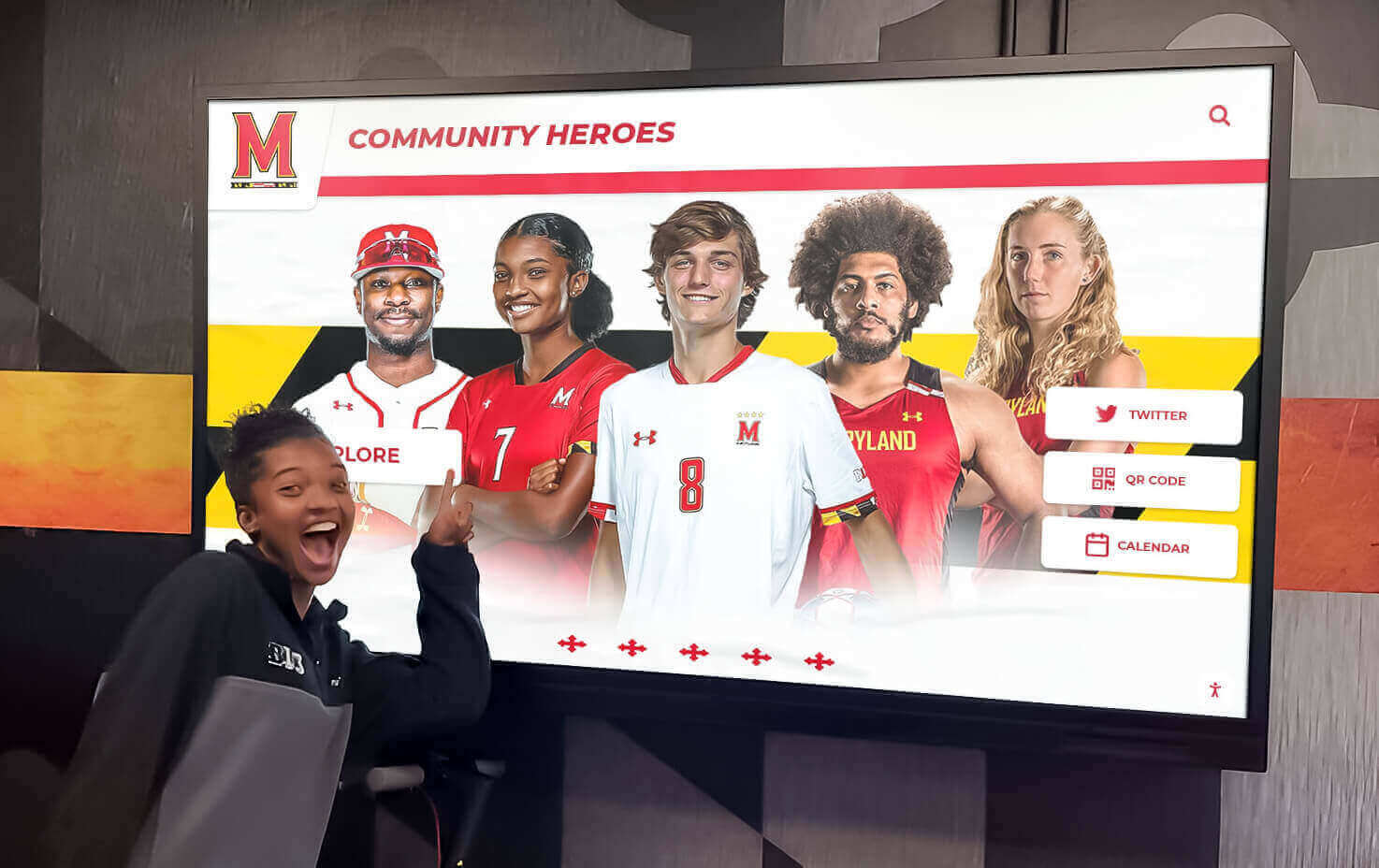
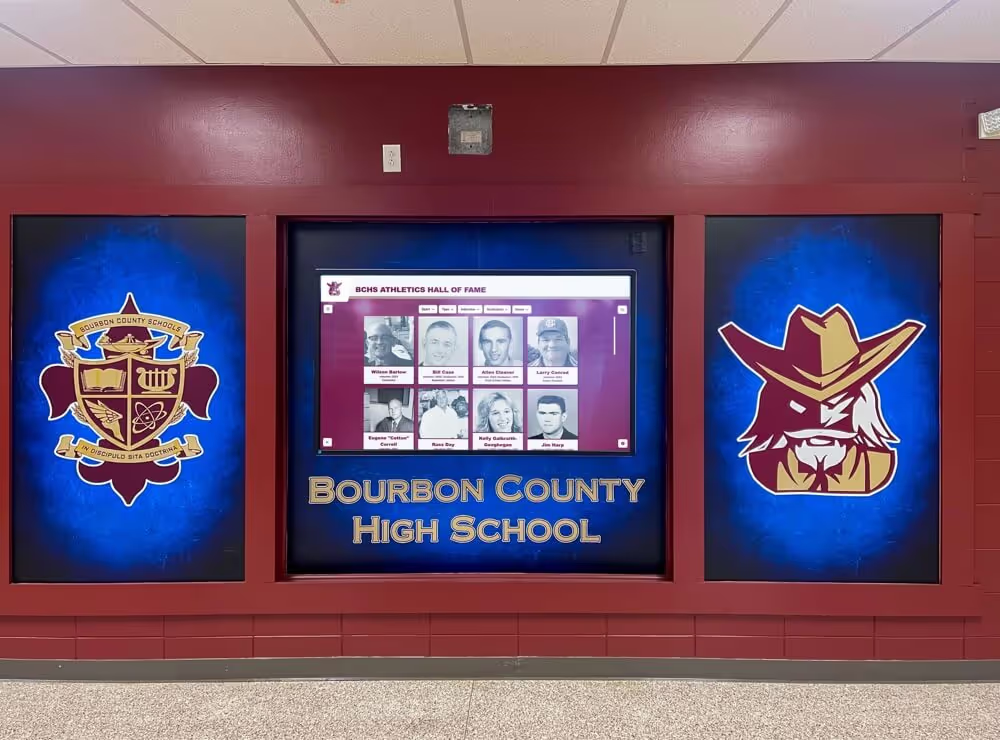
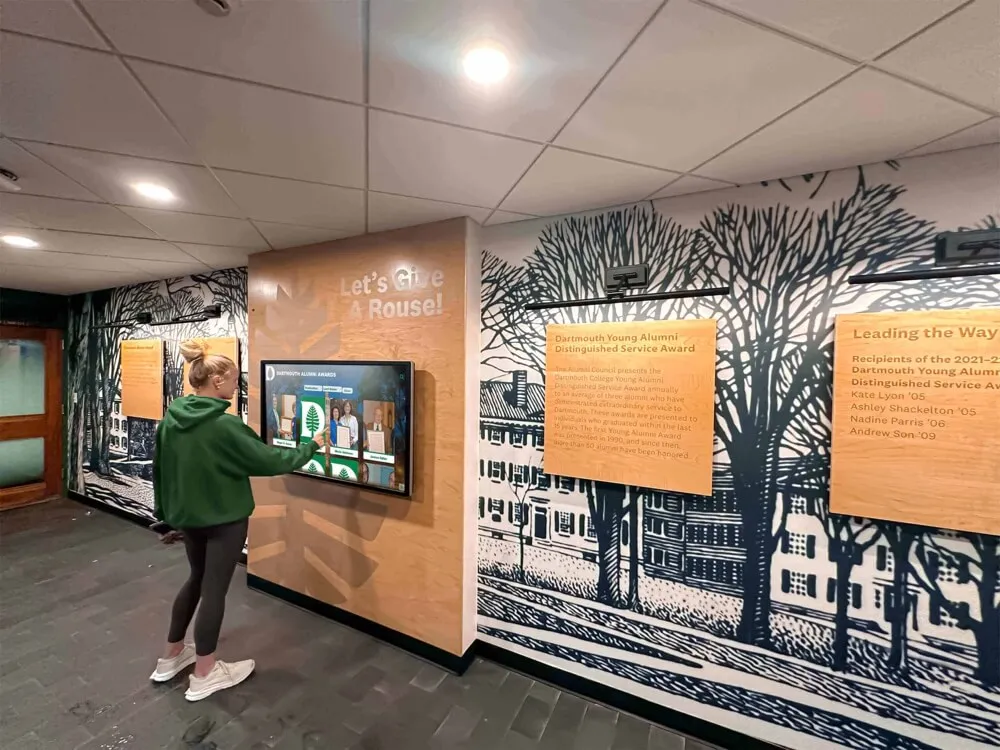
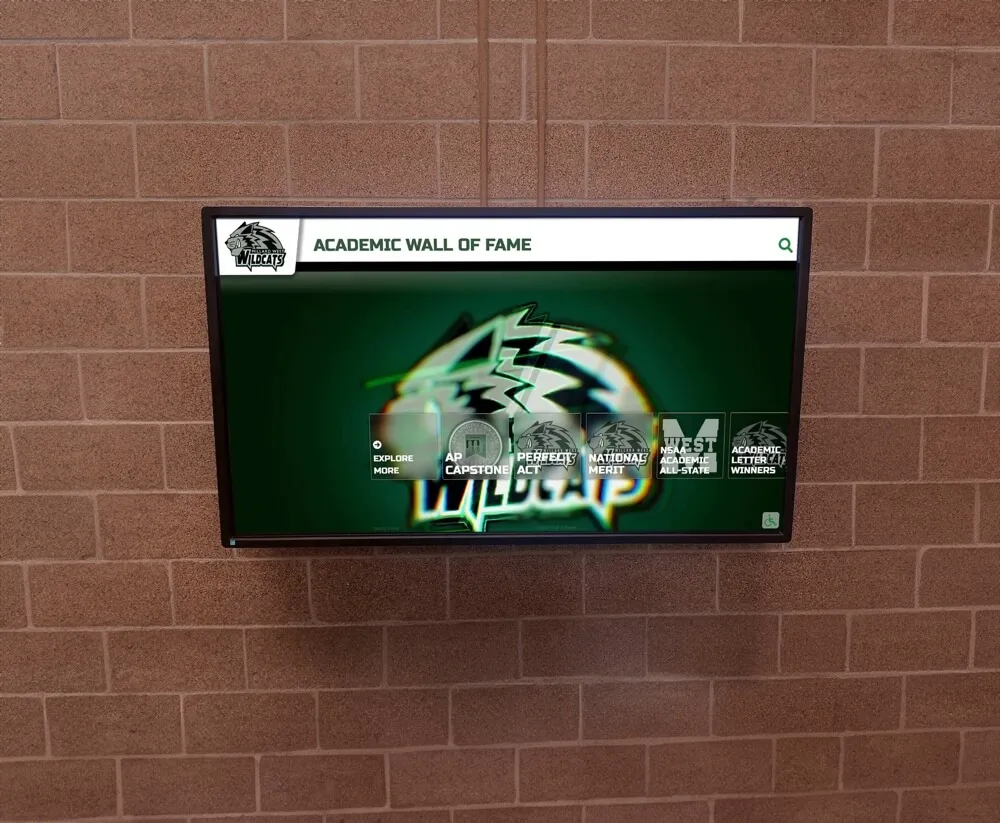
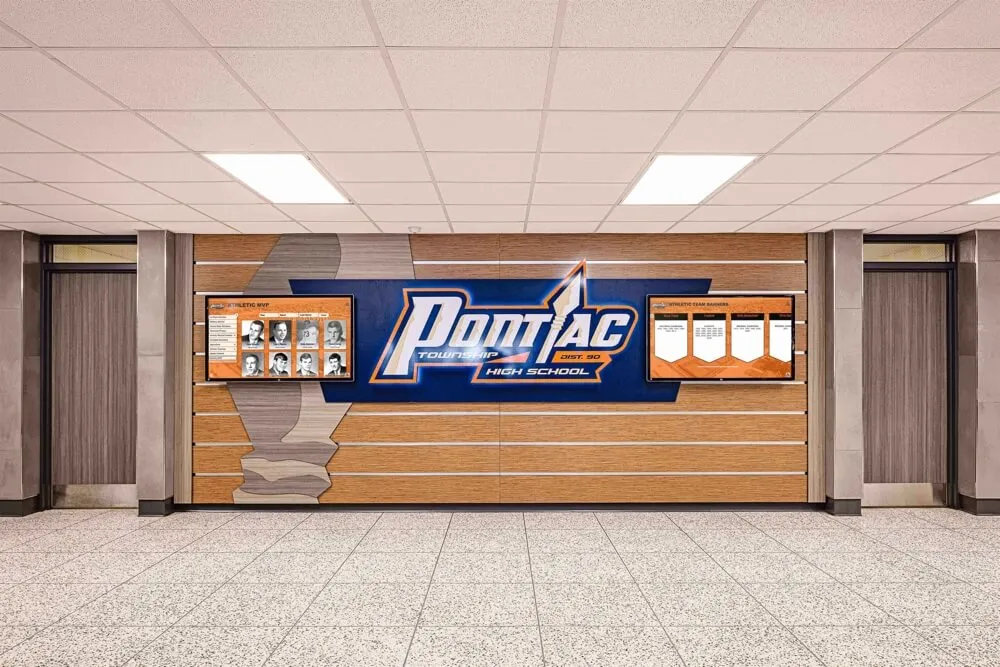
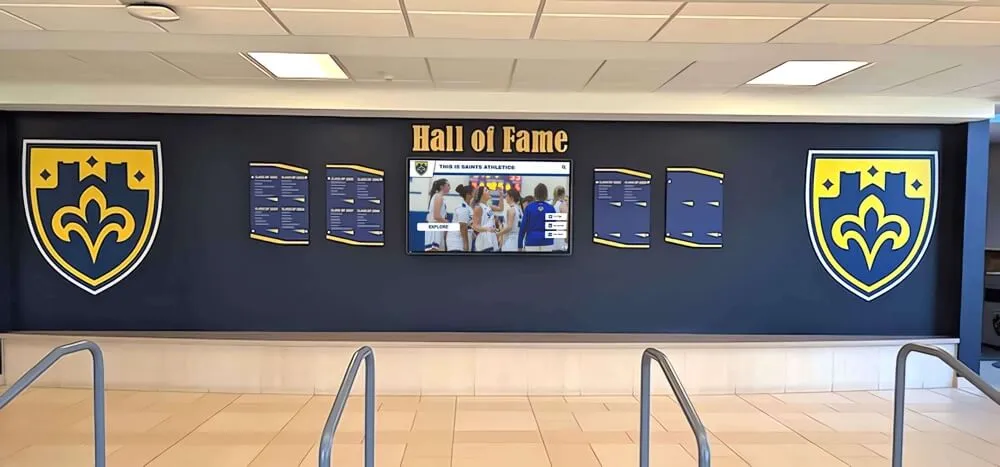
Recognition displays highlighting student achievements create pride and motivation while providing natural conversation starters that strengthen community connections
Ensuring Universal Representation
Systematic Inclusion Efforts
Track which students appear in yearbooks throughout production, identifying gaps and underrepresented groups. Proactively seek content featuring quieter students, non-athletic participants, students in less visible activities, diverse cultural backgrounds and identities, and different grade levels equally.
Intentional inclusion prevents yearbooks from primarily featuring same highly visible students while others feel overlooked or invisible.
Multiple Appearance Guarantee
Establish goals ensuring every student appears multiple times throughout yearbooks—not just in formal portraits or single mentions but through diverse activities and candid moments. Target 3-5 meaningful appearances per student minimum.
Multiple appearances communicate that all students matter and belong while creating personalized value encouraging continued engagement.
Measuring Digital Yearbook Success
Systematic assessment demonstrates program value while identifying opportunities for continuous improvement.
Key Performance Indicators
Engagement Metrics
Track specific data showing platform usage and engagement—unique visitors and returning users, pages viewed per session and total views, average time spent in yearbook content, search queries indicating what users seek, most popular content and sections, download and sharing statistics, and device types (mobile vs. desktop usage).
Digital platforms provide analytics impossible with print yearbooks, enabling data-driven content strategy and demonstrating concrete engagement.
Content Coverage Indicators
Assess whether yearbooks achieve comprehensive documentation goals—total number of photos and content items, number of events and activities documented, student appearance distribution ensuring equity, balance across different content types, representation across demographic groups, and coverage throughout entire school years versus concentrated periods.
Coverage metrics reveal whether yearbooks truly capture complete school experiences or reflect narrow subsets of activities and students.
Community Impact Measures
Evaluate broader program effects through student satisfaction surveys and feedback, family engagement and access patterns, alumni return visits and ongoing engagement, social media mentions and sharing, media coverage and community awareness, and influence on school pride and community cohesion.
Qualitative indicators complement quantitative analytics providing fuller pictures of yearbook programs’ meaning and value to communities.
Collecting Stakeholder Feedback
Student Perspectives
Conduct regular surveys or focus groups gathering student input on content coverage and preferences, platform usability and experience, desired features or improvements, participation barriers or challenges, and overall satisfaction with yearbook programs.
Student voice ensures yearbooks serve intended audiences effectively while maintaining relevance to evolving student interests and behaviors.
Family and Alumni Input
Gather feedback from parents and alumni regarding accessibility and technical experience, content quality and interest, value perception and satisfaction, historical content desires, and willingness to recommend or share with others.
Multi-generational perspectives ensure yearbooks serve diverse community constituencies with varying needs and expectations.
Administration and Faculty Review
Collect institutional perspectives on alignment with school values and priorities, ROI and cost-effectiveness assessment, administrative burden and staffing impacts, potential for improved alumni engagement, and integration with broader school communications.
Administrative support proves critical for long-term program sustainability and resource allocation.
Schools implementing alumni mentorship programs often use digital yearbooks as foundation tools connecting current students with graduates who shared similar experiences.
Demonstrating Return on Investment
Cost Comparison Analysis
Document total program costs including platform subscriptions, staff time allocation, training and professional development, equipment and infrastructure, and ongoing content creation effort.
Compare against print yearbook costs including per-copy printing expenses, shipping and distribution, excluded students due to cost, yearbook adviser overload and burnout, and limited accessibility after distribution.
Present comprehensive ROI showing that digital platforms often cost less while providing dramatically expanded capabilities and accessibility.
Alumni Engagement Impact
Track measurable changes in alumni engagement indicators—website visits and return rates, social media following and interaction, reunion attendance and participation, donor engagement and giving patterns, alumni volunteer participation, and mentorship or career support connections.
Schools implementing digital yearbooks with alumni access consistently report 30-60% increases in alumni engagement within 2-3 years, demonstrating platforms’ value beyond current student benefits.
Taking Action: Your Digital Yearbook Launch
Digital yearbooks represent significant shifts in how schools document student experiences and preserve institutional memory. While technology enables powerful capabilities, successful implementations require thoughtful planning, committed resources, quality content strategies, and ongoing community engagement.
Schools ready to transform yearbook programs should begin with these foundational steps:
Clarify Goals and Priorities
Define what you want digital yearbooks to accomplish—replacing print entirely, supplementing print with expanded content, providing alumni access to memories, reducing per-student costs, ensuring universal student inclusion, building year-round engagement, or creating comprehensive institutional archives. Clear goals inform all subsequent decisions.
Assess Resources and Capacity
Honestly evaluate available budget allocating for subscriptions and infrastructure, staff time and expertise for management, student team size and capabilities, technical infrastructure and support, and stakeholder readiness for change. Right-size implementations match organizational capacity rather than overcommitting to unsustainable programs.
Evaluate Platform Options
Research multiple providers understanding features, costs, support quality, and fit with specific needs. Request demonstrations and trials actually creating sample content to assess usability. Speak with reference schools using platforms in contexts similar to yours.
Develop Phased Implementation Plan
Begin with manageable scope—perhaps supplementing print yearbooks with digital versions before considering print replacement, starting with recent years before digitizing historical archives, or launching with current students before extensive alumni outreach. Build success progressively rather than attempting complete transformations immediately.
Invest in Team Training and Support
Provide adequate training for staff and student teams, establish clear processes and documentation, create quality standards and style guides, schedule regular check-ins and support, and celebrate progress and achievements maintaining momentum.
Promote Aggressively and Consistently
Digital yearbooks require active promotion ensuring awareness and usage—announce launches prominently through multiple channels, demonstrate features and capabilities regularly, share success stories and popular content, encourage social sharing and word-of-mouth, and maintain consistent presence throughout school years rather than single annual pushes.
Transform Your School’s Memory Preservation
Discover how modern digital yearbook platforms enable schools to capture complete student experiences with unlimited content capacity, year-round updates, universal accessibility, and interactive features engaging students, families, and alumni. Explore comprehensive solutions combining intuitive content management, mobile-responsive platforms, multimedia integration, and privacy controls designed specifically for educational institutions.
Schedule a Digital Yearbook mock-up to see how purpose-built platforms create memory preservation experiences that honor traditions while embracing possibilities impossible with print-only approaches.
Digital yearbooks transform how schools document student experiences while expanding who participates in creation and who accesses memories afterward. By embracing unlimited capacity, continuous updates, multimedia storytelling, and perpetual accessibility, schools create living documents that grow and evolve alongside communities rather than static snapshots representing narrow moments in time.
The shift from print-only or print-primary approaches to digital or hybrid models requires change management, stakeholder communication, and commitment to quality content creation. But schools successfully implementing digital yearbooks consistently report that benefits—expanded inclusion, enhanced accessibility, reduced costs, increased engagement, and strengthened alumni connections—far exceed implementation challenges.
Whether you’re considering first moves toward digital yearbooks, planning comprehensive implementations, or seeking to improve existing programs, the strategies and insights throughout this guide provide frameworks for creating yearbook experiences that truly serve entire school communities while preserving precious memories accessibly for current and future generations.
Ready to explore digital yearbook possibilities for your school? Learn about comprehensive yearbook platforms designed specifically for educational contexts, discover school digital signage solutions integrating yearbook content throughout campuses, or explore historical timeline displays connecting past and present. Schools implementing thoughtful digital yearbook strategies create memory preservation traditions that serve communities more comprehensively and accessibly than ever before possible.