Every institution holds priceless historical materials—photographs documenting decades of student life, yearbooks preserving graduating classes, documents chronicling organizational evolution, artifacts representing cultural heritage, and oral histories capturing first-person perspectives. These materials collectively tell your institution’s unique story, providing tangible connections between past and present while building foundations for future identity.
Yet traditional preservation methods create fundamental barriers between historical materials and audiences who should access them. Physical photographs deteriorate in storage boxes while remaining invisible to community members. Yearbooks gathering dust in archives cannot serve alumni searching for classmates. Documents requiring in-person archive visits exclude distant researchers. Limited physical display space forces impossible choices about which history receives recognition while most materials remain hidden from public view.
Digital history archives solve these challenges by transforming physical collections into accessible, searchable digital resources that preserve materials while dramatically expanding who can discover, explore, and contribute to institutional memory. From comprehensive yearbook digitization enabling worldwide alumni access to interactive touchscreen installations that bring historical photographs to life in campus lobbies, digital archival technology has evolved to address needs across educational institutions, museums, libraries, and cultural organizations of all sizes and budgets.
This comprehensive guide explores every aspect of creating and maintaining digital history archives—from understanding strategic benefits and selecting appropriate technology platforms to implementing effective digitization workflows, designing engaging user experiences, and ensuring long-term sustainability that protects institutional heritage for generations.

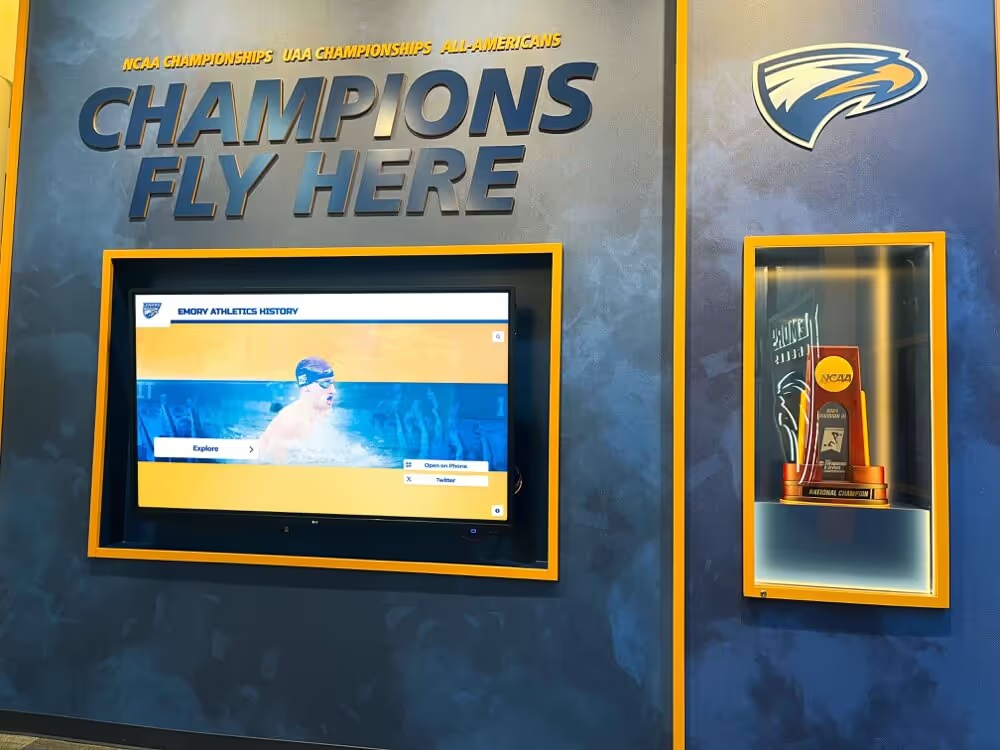
Digital history archives transform scattered historical materials into organized, searchable collections that preserve institutional memory while creating engaging access for diverse audiences
Why Digital History Archives Matter
Before examining implementation strategies, institutions should understand the comprehensive value digital archives provide beyond simple preservation.
Protecting Irreplaceable Historical Materials
Physical historical materials face inevitable deterioration that digital preservation addresses:
Environmental and Physical Threats Paper documents yellow and become brittle through acid content and exposure, photographs fade through chemical degradation and light damage, magnetic media including VHS tapes and audio cassettes deteriorate within 10-20 years, film and negatives suffer emulsion breakdown, binding adhesives fail in aging yearbooks and bound materials, and all physical materials remain vulnerable to disasters including fire, flooding, and natural catastrophes.
According to preservation experts at the Library of Congress, most paper-based materials begin showing significant deterioration within 50-75 years under standard storage conditions, with accelerated damage occurring in suboptimal environments typical of school storage rooms and basement archives.
Digital preservation creates redundant copies protecting against physical loss regardless of original condition. High-resolution digital masters preserve fine details even if originals deteriorate, while cloud-based storage with geographic redundancy ensures institutional history survives local disasters that might destroy physical collections.
Preservation Through Access Traditional preservation creates paradox: materials preserved in climate-controlled archives remain protected but inaccessible, while materials made accessible suffer handling damage. Digital archives resolve this tension—originals receive archival storage minimizing handling, while high-quality digital surrogates provide unlimited access without physical risk.
Research demonstrates that institutions implementing comprehensive digitization programs report dramatically reduced handling of fragile originals, with digital access satisfying 90-95% of reference requests that previously required producing physical materials.
Expanding Access and Engagement
Digital archives democratize historical access in transformative ways:
Geographic Accessibility Physical archives require visitors to travel to specific locations during operating hours. Digital collections enable worldwide 24/7 access—alumni exploring institutional history from distant cities, researchers accessing collections without travel expenses, students completing historical research from dorm rooms or homes, and international audiences discovering institutional heritage previously inaccessible due to distance.
Schools implementing comprehensive digital yearbook archives report that 40-60% of archive access occurs from outside their immediate geographic area, with significant international traffic from alumni who relocated after graduation.
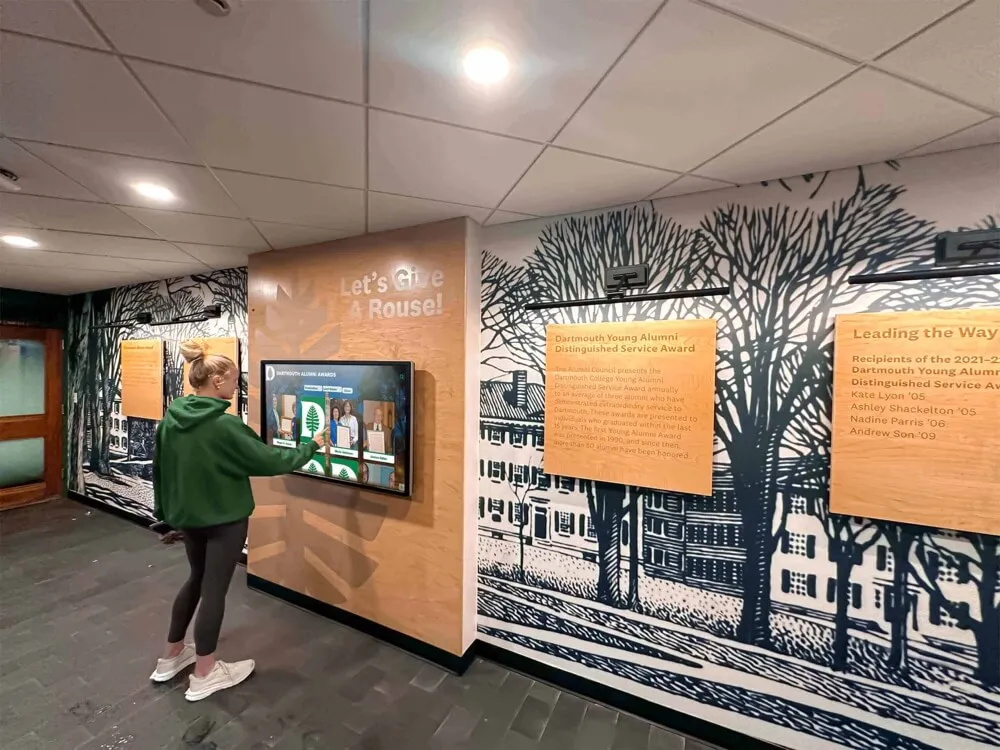
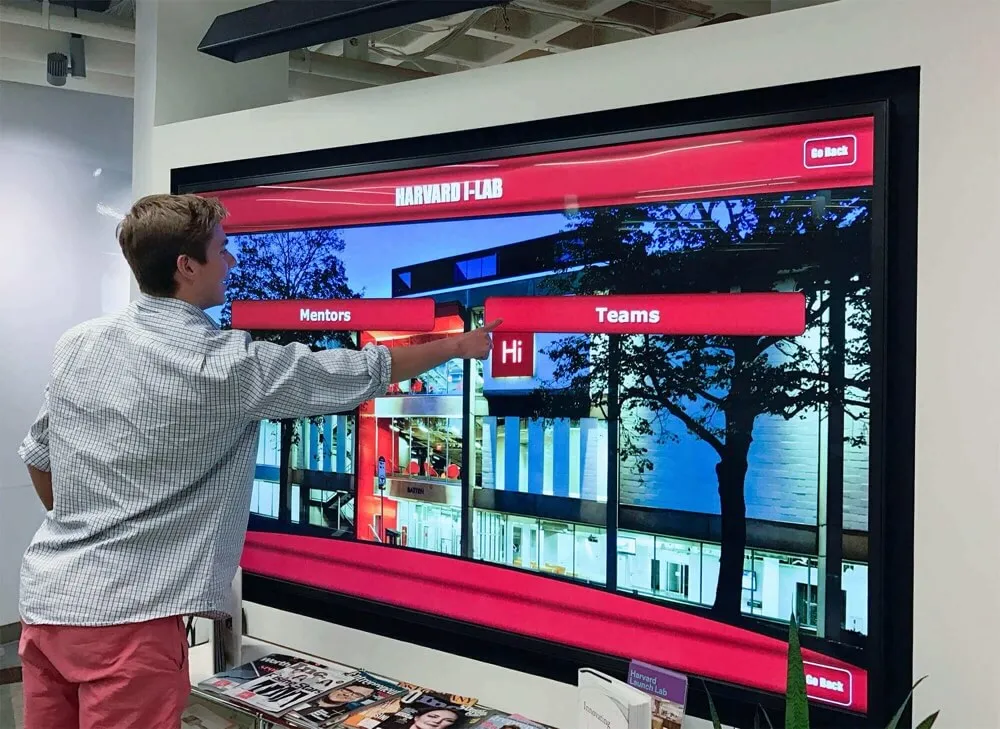
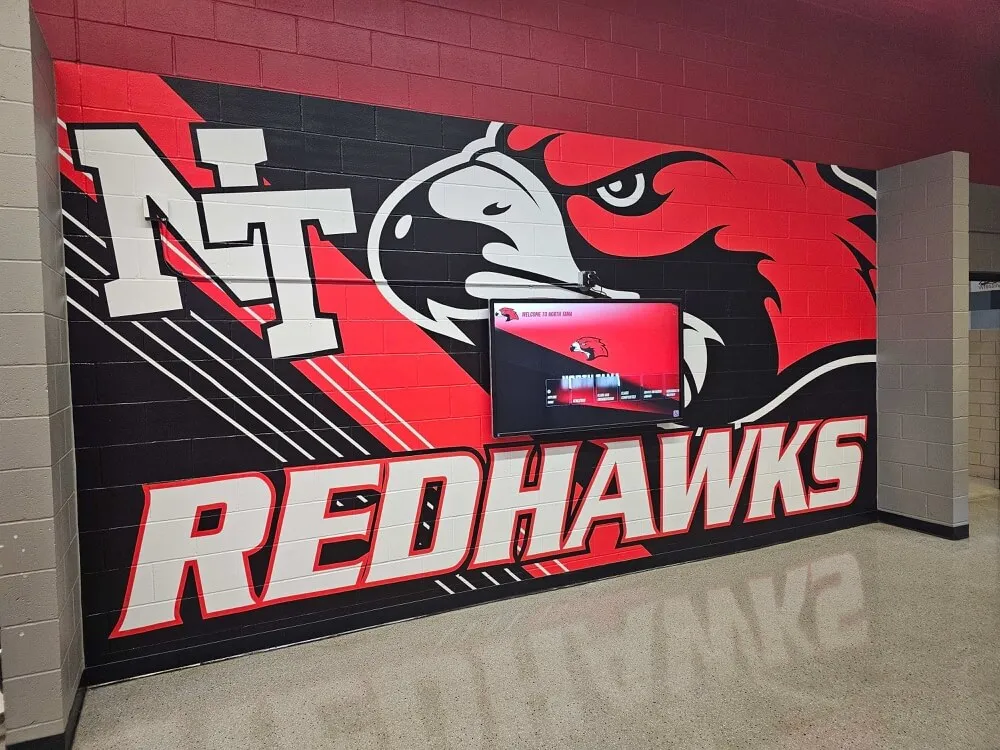
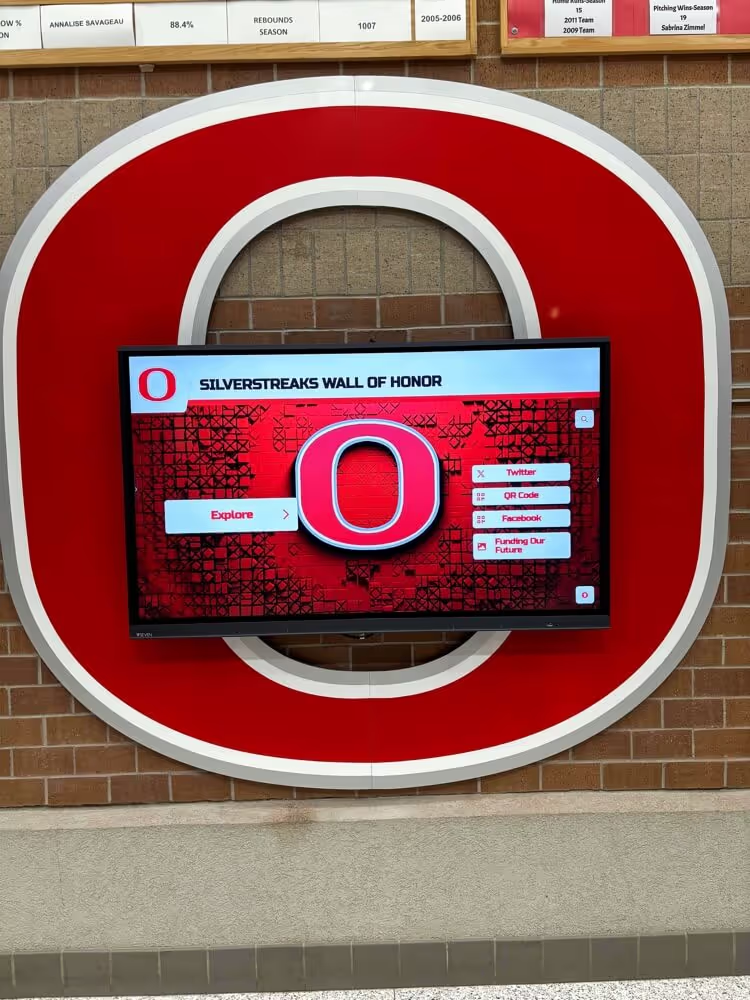
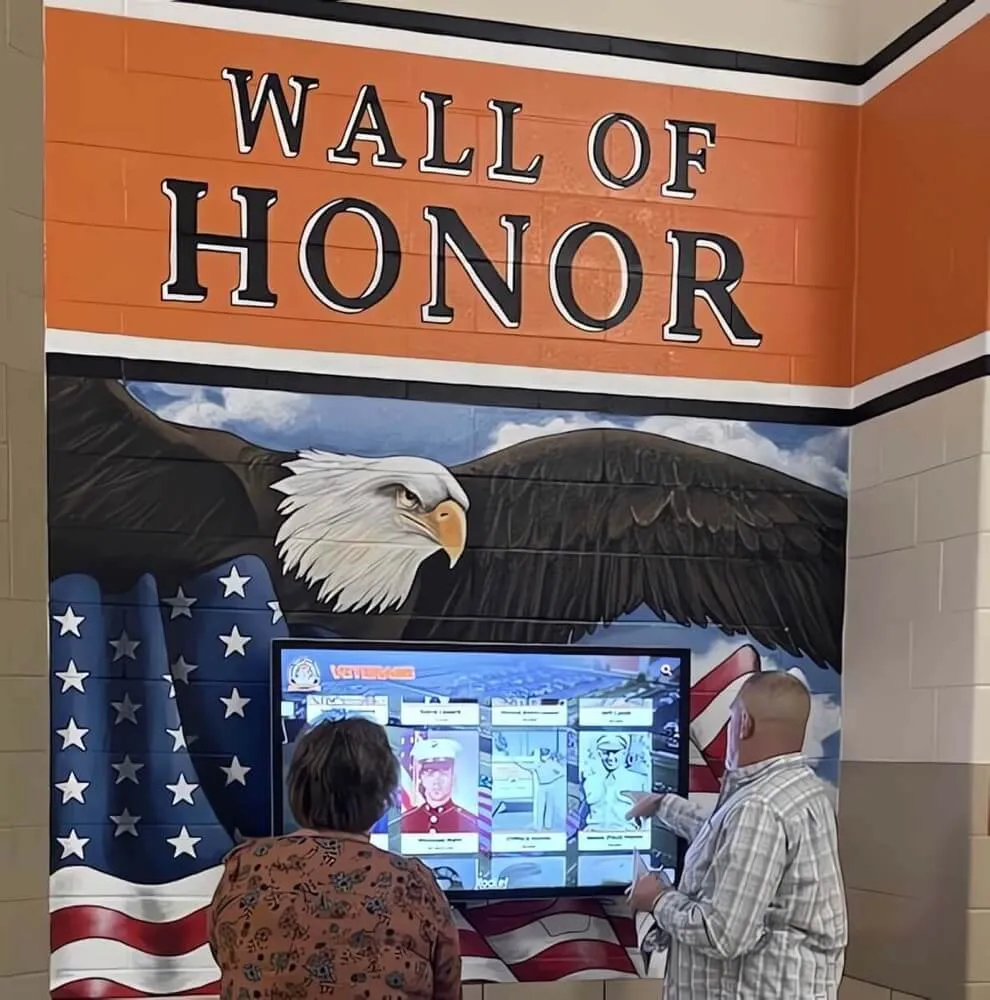
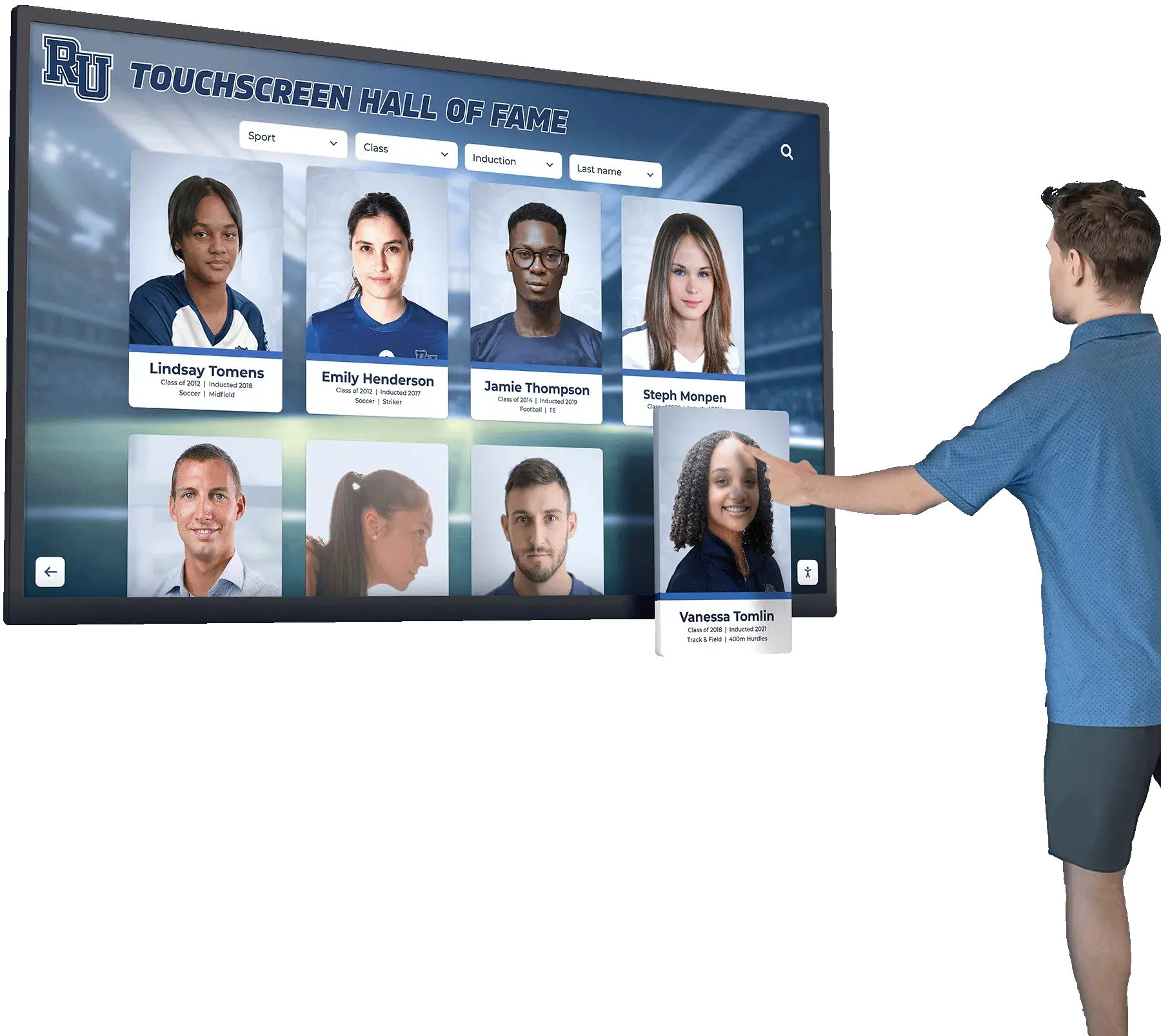
Interactive touchscreen displays in campus locations provide engaging access to digital archives, encouraging spontaneous historical exploration by students, visitors, and community members
Enhanced Discoverability Through Search Physical collections require users to know what exists and where materials are organized. Digital archives with robust search functionality enable discovery based on names, dates, events, topics, or any searchable text—finding all references to specific individuals across decades of materials, discovering photographs from particular years or events, locating documents mentioning specific topics, and making unexpected discoveries through exploratory browsing.
This enhanced discoverability transforms passive collections into active resources where users independently find relevant materials without requiring specialized archival knowledge or staff assistance.
Accessibility for Diverse Abilities Digital platforms support accessibility features impossible with physical materials—screen reader compatibility for visually impaired users, text scaling for users with vision limitations, keyboard navigation for users with mobility challenges, and captioning and transcripts for audio and video content. Well-designed digital archives ensure historical materials remain accessible to entire communities regardless of physical abilities.
Supporting Institutional Goals
Beyond preservation and access, digital history archives advance strategic institutional objectives:
Alumni Engagement and Development Alumni who discover personal connections to institutional history through searchable yearbooks, explore photographs from their student years, and trace institutional evolution since graduation develop renewed emotional bonds motivating continued involvement.
Development professionals leverage comprehensive archives for donor cultivation—researching prospects through historical records, creating personalized outreach referencing specific experiences, developing campaign materials featuring historical context, and recognizing donors by connecting gifts to institutional legacy. Research on alumni engagement strategies consistently demonstrates that nostalgia serves as powerful motivator for philanthropic support.
Student Pride and Institutional Culture Current students who understand institutional history develop stronger school pride and community connection. When schools provide accessible archives showcasing traditions, notable alumni who preceded them, and achievement patterns across generations, students recognize themselves as participants in ongoing institutional narratives rather than isolated cohorts.
Schools implementing historical timeline displays report observable increases in student participation in traditions, stronger institutional identification, and enhanced understanding of school values and mission.
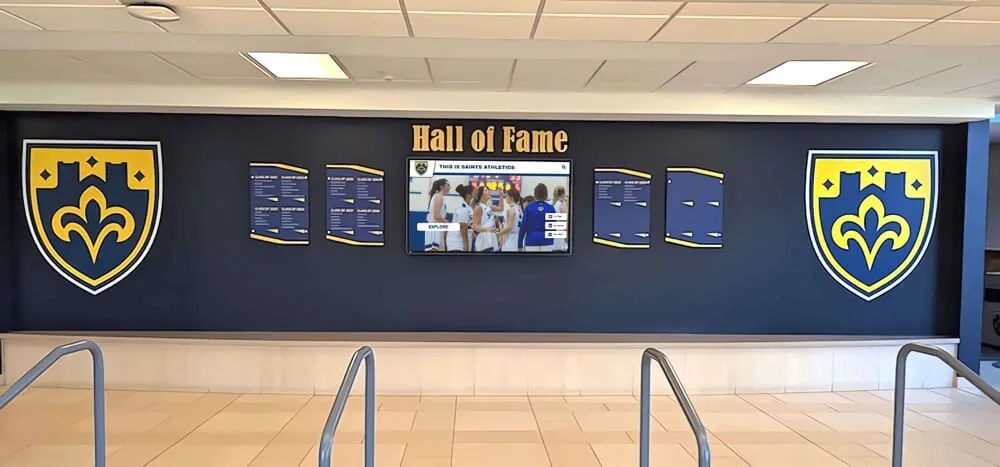
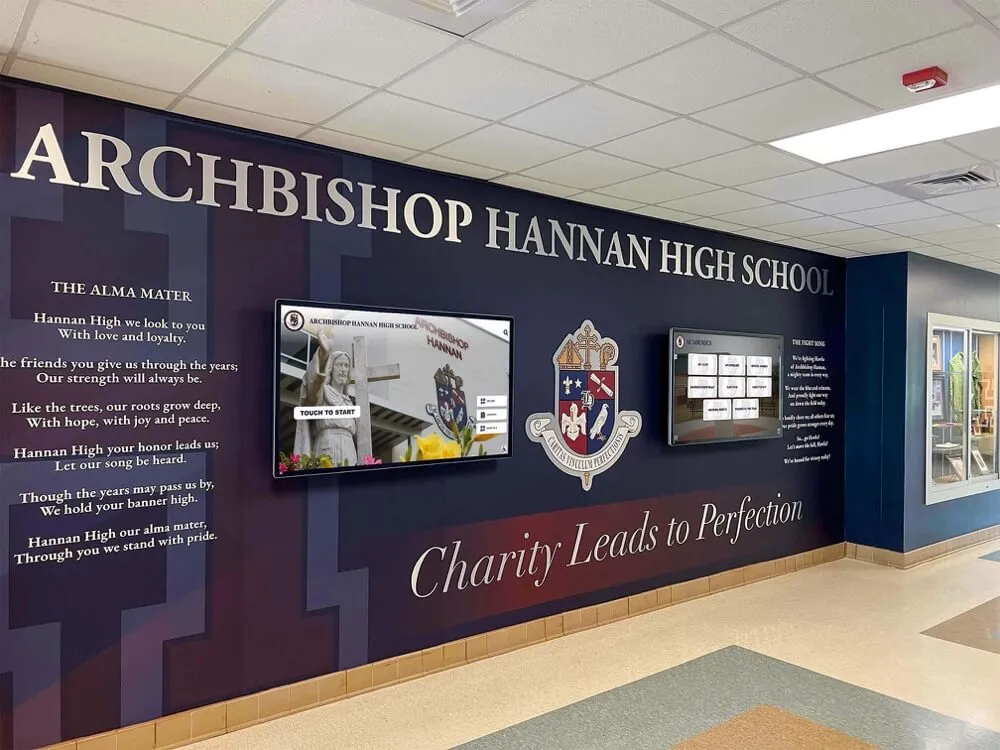
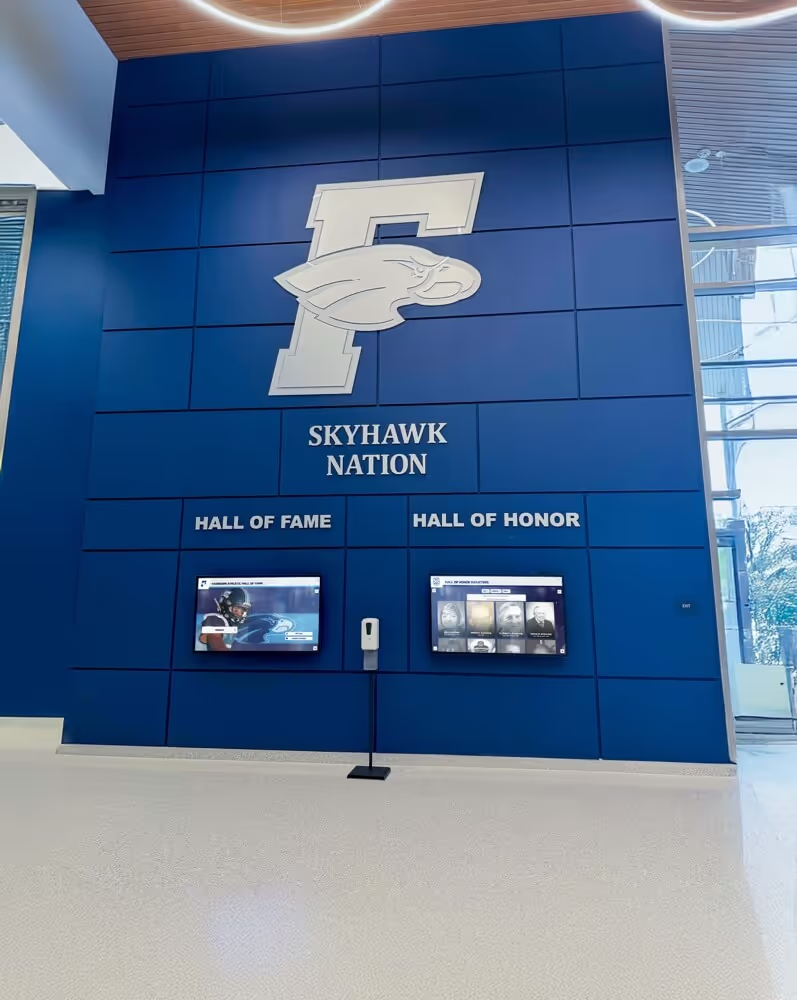
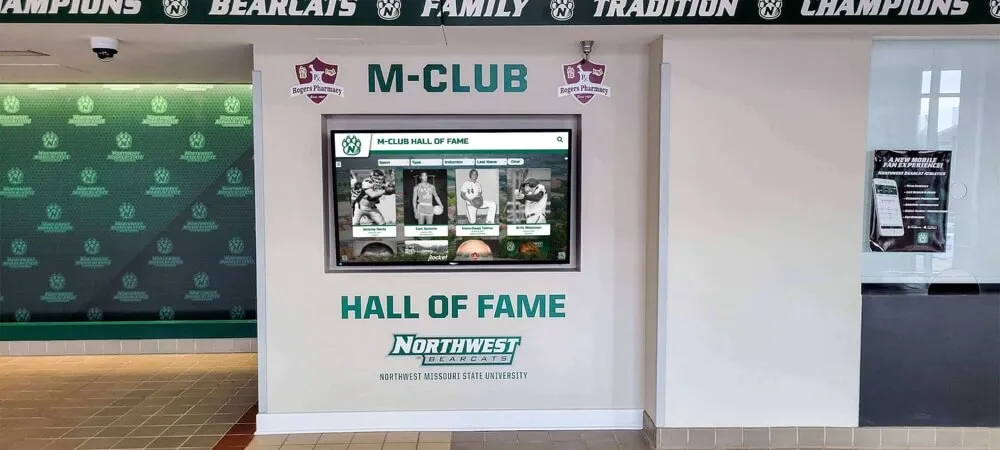
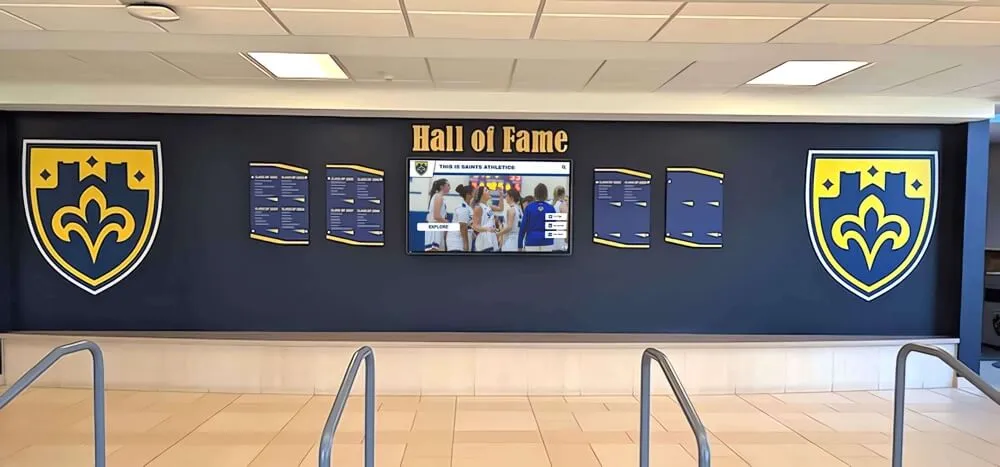
Effective historical recognition integrates digital archives with traditional physical displays, creating comprehensive systems that honor institutional heritage while enabling ongoing updates and expansions
Recruitment and Admissions Value Prospective families evaluating institutions assess stability, traditions, and community strength. Comprehensive digital archives communicate institutional depth—documenting decades or centuries of consistent operation, showcasing traditions and values across generations, demonstrating graduate success patterns, and providing evidence of sustained community support and investment.
According to enrollment management research, prospective families show preference for institutions with visible historical depth and documented traditions when selecting among comparable options.
Academic Research and Educational Programming Digital archives support curricular objectives across disciplines—history courses using institutional materials as primary sources, research methodology instruction through archival exploration, journalism producing documentary content, and student projects connecting institutional history to broader historical movements.
Learn about comprehensive approaches to academic history preservation that create valuable educational resources while protecting institutional memory.
Planning Your Digital History Archive Project
Successful digital archive implementation begins with systematic planning addressing scope, priorities, technology selection, and sustainable management structures.
Assessing Current Collections and Priorities
Comprehensive planning starts with understanding what materials exist and which deserve prioritization:
Conducting Material Inventories Systematic surveys identify historical materials currently held—yearbooks spanning institutional history, photograph collections across departments and storage locations, official documents and administrative records, publications including newspapers and magazines, athletic records and championship documentation, audio and video recordings, architectural drawings and facility documentation, and materials held by alumni or community members.
For each identified collection, basic inventory should document material type and quantity, approximate date ranges and completeness, physical condition and preservation urgency, current storage conditions and accessibility, and existing organization or lack thereof.
Many institutions discover substantial historical materials in unexpected locations—retired staff personal collections, athletic department storage rooms, parent organization files, and basement areas forgotten during facility transitions.
Establishing Preservation Priorities Most institutions cannot simultaneously digitize all historical materials and must establish strategic priorities considering multiple factors:
Historical Significance—materials documenting institutional founding and early years, significant milestones and transformative events, notable individuals and exceptional achievements, unique materials unavailable elsewhere.
Physical Condition—fragile materials requiring immediate intervention, items showing active deterioration, materials in harmful storage conditions, formats facing technological obsolescence like magnetic media.
Community Interest and Engagement Potential—materials generating strong alumni interest and nostalgia, documentation from eras with large living alumni populations, content suitable for public displays and programs, archives supporting fundraising and development initiatives.
Educational and Research Value—collections supporting curriculum and student research, materials requested by researchers and scholars, documentation of underrepresented historical narratives.
Schools frequently adopt phased approaches—digitizing 10-20 years of highest-priority materials initially to demonstrate value and refine workflows before expanding to comprehensive collections spanning institutional history.
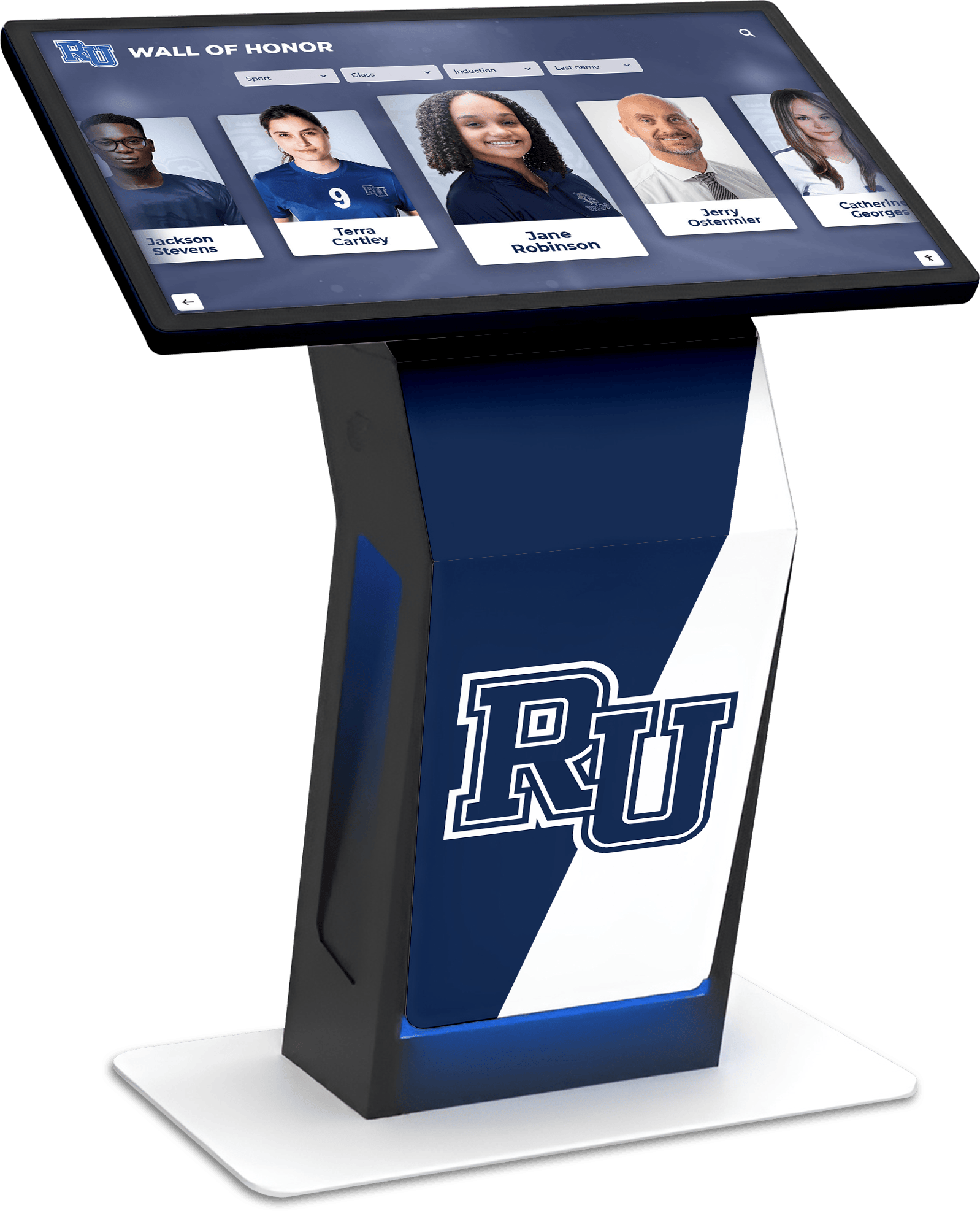
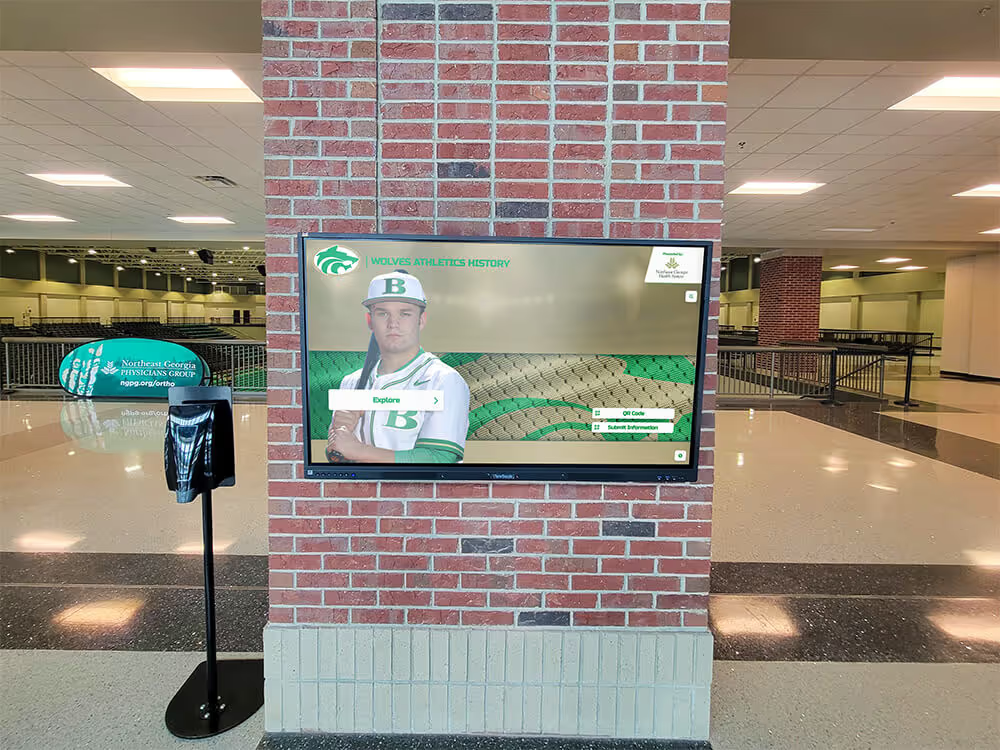
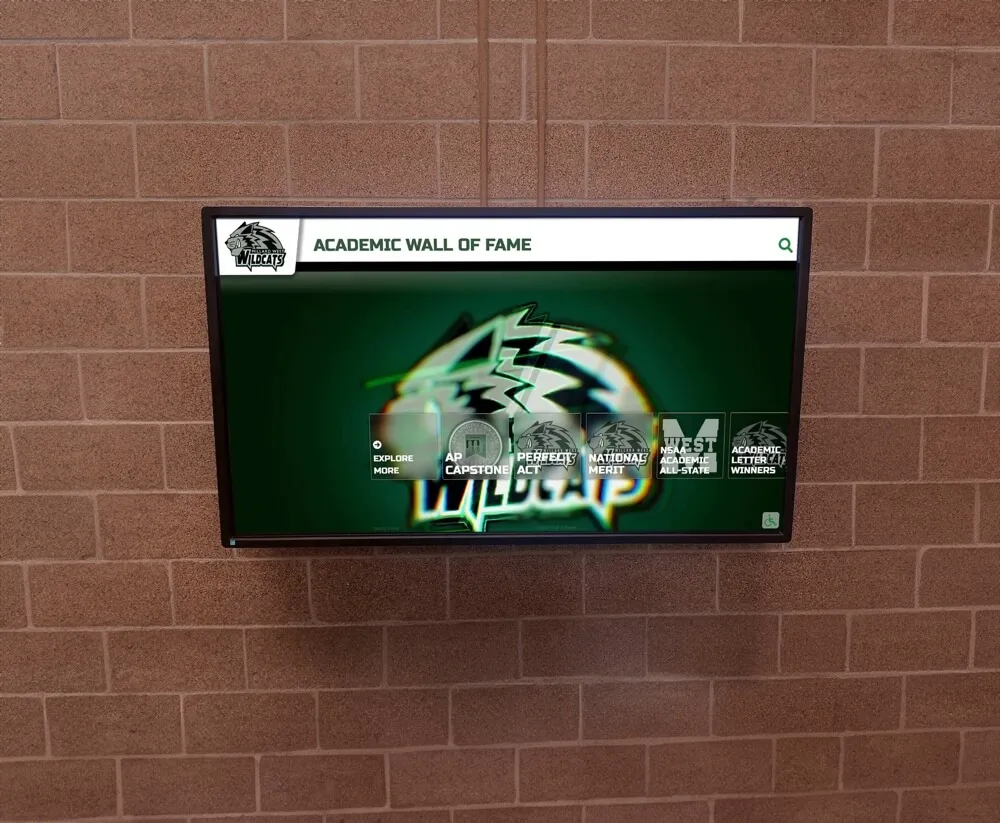
Professional touchscreen kiosks provide durable platforms for comprehensive digital archives in high-traffic institutional locations
Defining Project Scope and Objectives
Clear project definition prevents scope creep while ensuring adequate ambition:
Scope Boundaries Explicit decisions about what the project includes—specific material types to digitize, date ranges for comprehensive coverage, geographic boundaries for collecting, privacy considerations limiting certain materials, partnerships with other institutions or organizations.
Measurable Objectives Concrete goals enabling progress assessment—quantity of materials digitized by project milestones, user access targets for completed archives, engagement metrics for interactive displays, cost-per-item digitization efficiency goals, and completion timelines for different project phases.
Stakeholder Involvement Effective projects engage diverse constituencies with relevant perspectives—library or archive staff bringing preservation expertise, IT professionals addressing technical infrastructure, development and alumni relations identifying engagement priorities, faculty noting educational applications, administrative leadership ensuring alignment with institutional strategy, and alumni or community members contributing institutional memory.
Broad stakeholder involvement from planning stages builds support while ensuring archives serve multiple institutional purposes rather than narrow departmental interests.
Technology Platform Selection
Archive effectiveness depends fundamentally on selecting appropriate technology platforms matching institutional needs, technical capabilities, and budgetary constraints:
Platform Options Across the Spectrum
Purpose-Built Educational Archive Solutions like our platform provide comprehensive systems specifically designed for schools, colleges, and cultural institutions—integrated content management for diverse material types, interactive touchscreen display software for physical installations, responsive web portals enabling worldwide access, intuitive interfaces designed for non-technical staff, pre-configured templates based on educational best practices, and specialized support understanding institutional contexts.
According to research on educational digital archives, purpose-built platforms typically achieve 60-70% lower total cost of ownership compared to extensively customized generic systems while delivering superior user experiences through education-specific design.
Open-Source Archive Platforms like Omeka, CollectionSpace, and AtoM offer no-cost software with maximum flexibility—customizable to specific institutional needs, no vendor licensing fees, strong user communities providing support, but requiring significant technical expertise for setup and maintenance, ongoing server infrastructure and backup responsibilities, and limited pre-built integrations with other systems.
Commercial Digital Asset Management Systems including ResourceSpace, CONTENTdm, and Preservica provide enterprise-grade archival platforms—sophisticated metadata management, format migration ensuring long-term preservation, compliance with archival standards, but typically higher cost structures, possible complexity requiring dedicated archival staff, and may require customization for educational-specific needs.
Essential Platform Capabilities
Regardless of specific platform selected, effective digital history archives require core functionality:
Robust Search and Discovery—full-text search across all names, captions, and descriptions; filtered search by date, type, category, and custom criteria; advanced search with Boolean operators; auto-suggest guiding users toward existing content.
Intuitive Content Management—web-based administration accessible from any device, bulk upload processing hundreds or thousands of items efficiently, batch metadata editing, scheduled publishing for anniversaries or special reveals, workflow systems supporting review and approval processes.
Multiple Access Points—responsive web portals working across all devices, API enabling integration with existing institutional systems, interactive touchscreen software for physical campus installations, social sharing capabilities, and embed functionality incorporating archives into websites and communications.
Multimedia Support—photographs and scanned documents, video streaming and audio playback, PDF documents with text search, maps and geographic content, and integration of external media from YouTube or Vimeo.
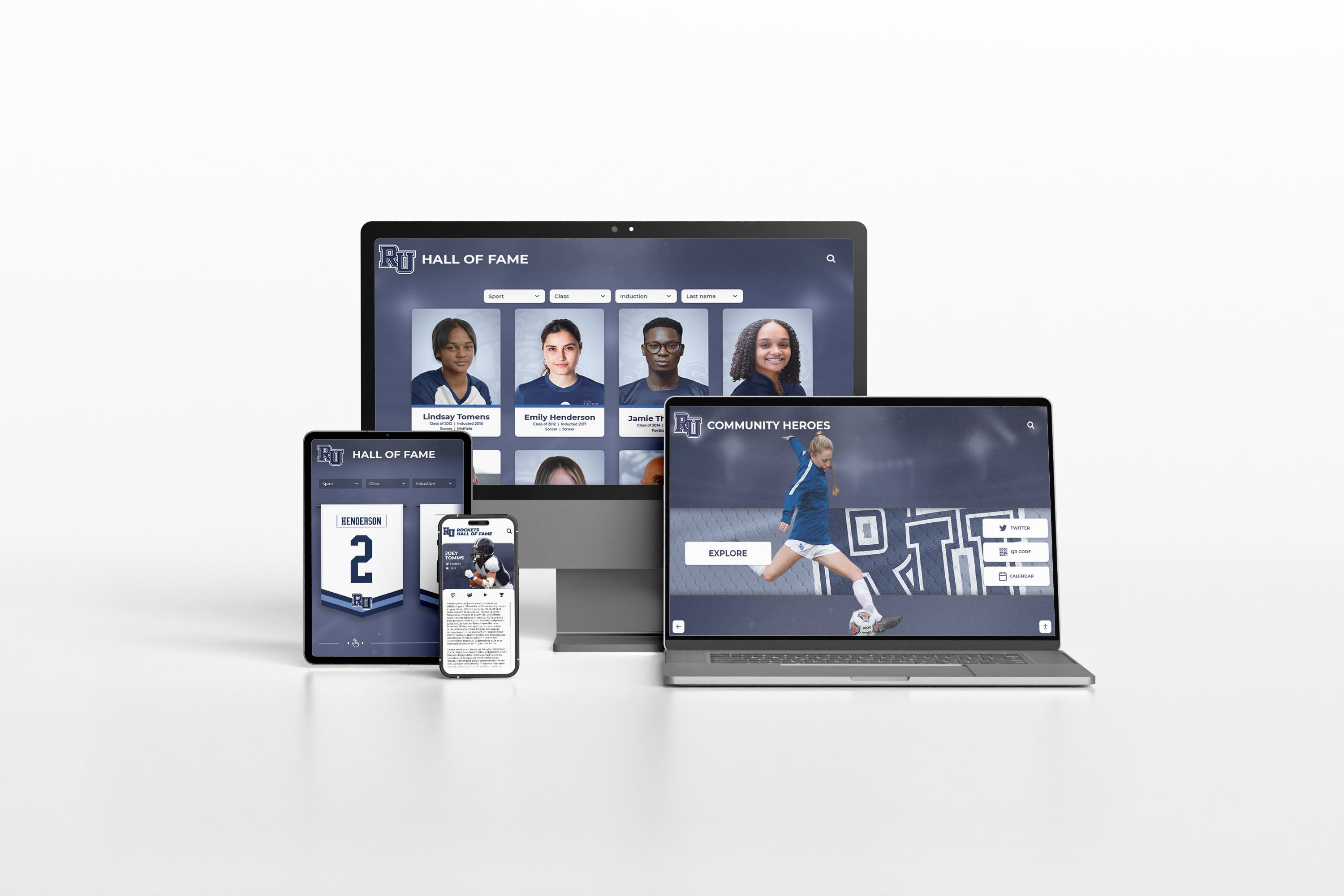
Modern digital history archives deliver seamless experiences across all device types, enabling access from desktops, tablets, and smartphones
Security and Preservation—encrypted data transmission and storage, redundant backup with geographic distribution, access controls supporting public and restricted materials, audit trails documenting all changes, compliance with educational privacy regulations like FERPA.
Institutions should evaluate platforms through hands-on demonstrations, reference conversations with peer institutions, technical requirement verification, total cost of ownership analysis, and vendor stability assessment to ensure long-term platform viability.
Digitization Workflows and Quality Standards
Converting physical historical materials into digital formats represents the most labor-intensive phase of archive creation, requiring careful attention to quality standards, efficient workflows, and metadata creation.
Scanning and Image Capture Standards
Technical specifications significantly impact long-term archive usability and preservation value:
Resolution and Quality Guidelines Different material types warrant different scanning specifications based on intended uses and preservation objectives:
Photographs—minimum 300 DPI for general access and moderate-size printing, 600 DPI for archival-quality masters enabling large-format reproduction, higher resolution for small photographs requiring detail preservation, color scanning even for black-and-white originals to preserve tonal information.
Documents—300 DPI provides optimal balance for most documents, 400-600 DPI for materials with small print or fine details, bitonal (black-and-white) scanning acceptable for clearly printed materials, grayscale or color for documents with annotations or mixed media.
Yearbooks—300-400 DPI enabling both full-page viewing and text recognition, individual page scanning rather than spread scanning for optimal OCR results, special attention to gutter areas where binding causes distortion, consistent lighting avoiding shadows and glare.
Oversized Materials including maps, architectural drawings, and banners require specialized large-format scanning equipment or high-quality photographic reproduction maintaining detail and proportion.
According to digitization best practices from archival experts, scanning at higher resolution than immediately necessary provides future-proofing as display technology evolves and new uses emerge for archival materials.
File Format Selection Appropriate format choices balance preservation goals with practical accessibility:
Archival Masters—TIFF (Tagged Image File Format) preserves maximum quality through lossless compression, creating preservation copies for long-term retention regardless of technology changes, typically 3-10 MB per image at archival resolution.
Access Copies—JPEG provides excellent quality at reasonable file sizes for web and display use, PDF/A for document collections with searchable text layers, optimized resolution balancing quality with loading speed (typically 150-200 DPI for screen display).
Naming Conventions—systematic file naming prevents confusion across thousands of digital files. Effective patterns include institution abbreviation, collection identifier, date or sequence number, and brief description, for example: LincolnHS_Yearbook_1965_Page042.tif or Museum_Artifact_19230515_CeramicBowl.jpg.
Consistent naming enables sorting, automated processing, and clear identification of materials years after initial digitization.
OCR and Text Recognition
Optical character recognition transforms scanned images into searchable text, dramatically improving archive utility:
OCR Process and Quality Modern OCR software achieves 95-99% accuracy on clean printed materials but requires quality control—scanning at appropriate resolution (300 DPI optimal), proper image preprocessing including deskewing and contrast optimization, selection of appropriate OCR engine for material type, manual correction of critical errors particularly in names and dates, verification sampling to assess overall accuracy.
Yearbooks and historical documents with varied print quality, mixed fonts, or aging degradation require more extensive correction than recent professionally printed materials.
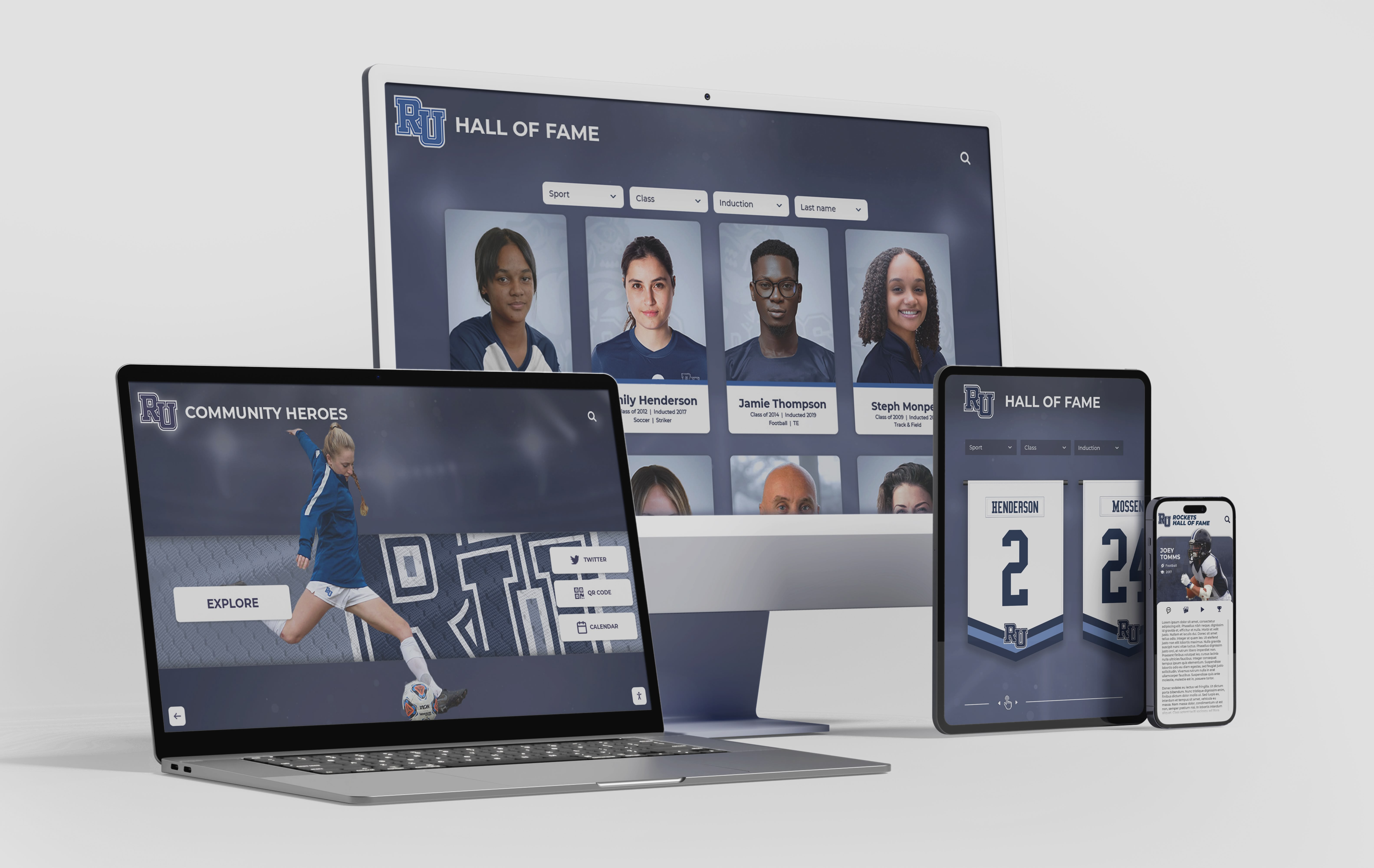
Purpose-built archive platforms provide consistent user experiences across desktop, tablet, and mobile interfaces
Name Recognition and Indexing The most valuable searchability often involves finding specific individuals across historical materials—extracting names from yearbook captions and class lists, identifying people in group photographs when captions exist, creating cumulative indexes showing all references to individuals, connecting same individuals across multiple years and materials.
This name-based indexing proves especially valuable for alumni engagement, enabling searches that instantly locate all yearbook appearances, athletic participation, academic recognition, or other documentation of individual experiences across years of institutional materials.
Learn about comprehensive yearbook digitization strategies that maximize searchability and alumni engagement through systematic name recognition and indexing.
Metadata Creation and Standards
Rich metadata transforms image collections into discoverable, contextual archives:
Essential Metadata Fields Minimum information enabling basic organization and discovery—title or description clearly identifying material, date of creation or time period depicted, creator or photographer when known, subjects or topics represented, people identified in material, geographic location, physical format of original, rights and permissions information.
Enhanced Discovery Metadata Additional fields improving searchability and context—academic year associations, department or program connections, event type categorization, relationships to other materials, historical context notes, transcripts or full-text for audio and video, donor or source information, conservation history and condition notes.
Metadata Standards and Consistency Formal standards ensure long-term interoperability and professional quality—Dublin Core for basic descriptive metadata, Library of Congress authorities for standardized names and terms, controlled vocabularies ensuring consistent terminology, hierarchical relationships linking related materials, clear documentation of metadata practices.
Institutions creating digital archives should document metadata policies, establish quality control procedures, provide metadata training for staff, and plan for ongoing metadata enhancement as archives grow and use patterns reveal needed improvements.
Outsourcing Versus In-House Digitization
Institutions must evaluate whether to digitize materials internally or contract with professional digitization services:
Professional Digitization Services Specialized vendors offer significant advantages—superior quality from professional-grade equipment, faster completion for large backlogs, expertise handling fragile or damaged materials, insurance protecting valuable originals, OCR and metadata services included, and freeing internal staff for other priorities. Typical costs range from $10-30 per yearbook, $0.50-2.00 per photograph, and $0.10-0.30 per document page depending on specifications and volume.
In-House Digitization Internal scanning may suit institutions with—appropriate equipment and workspace, technical staff or trained volunteers, smaller collections manageable with available time, preference for maintaining complete control, budget constraints limiting outsourcing, ongoing digitization needs after initial backlog.
Many successful implementations use hybrid approaches—outsourcing large-scale projects like comprehensive yearbook collections while handling ongoing photograph scanning and current materials internally with staff or student assistance.
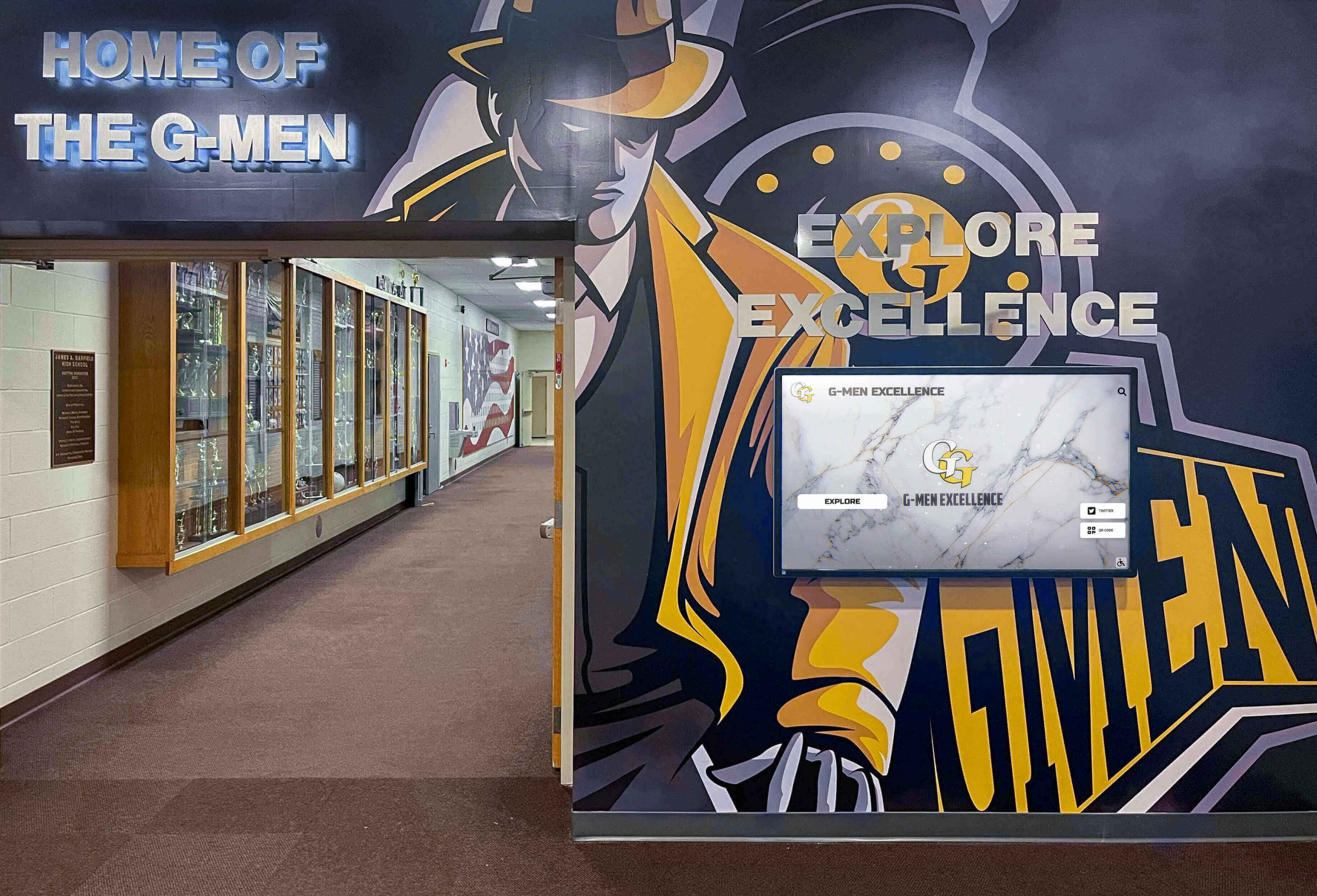
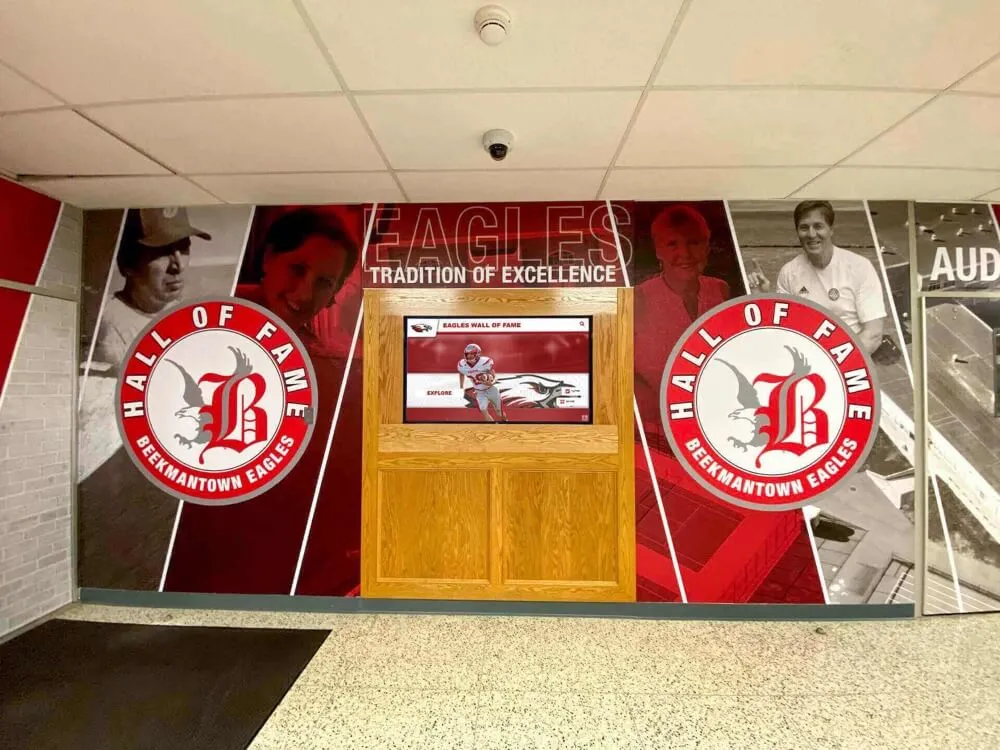
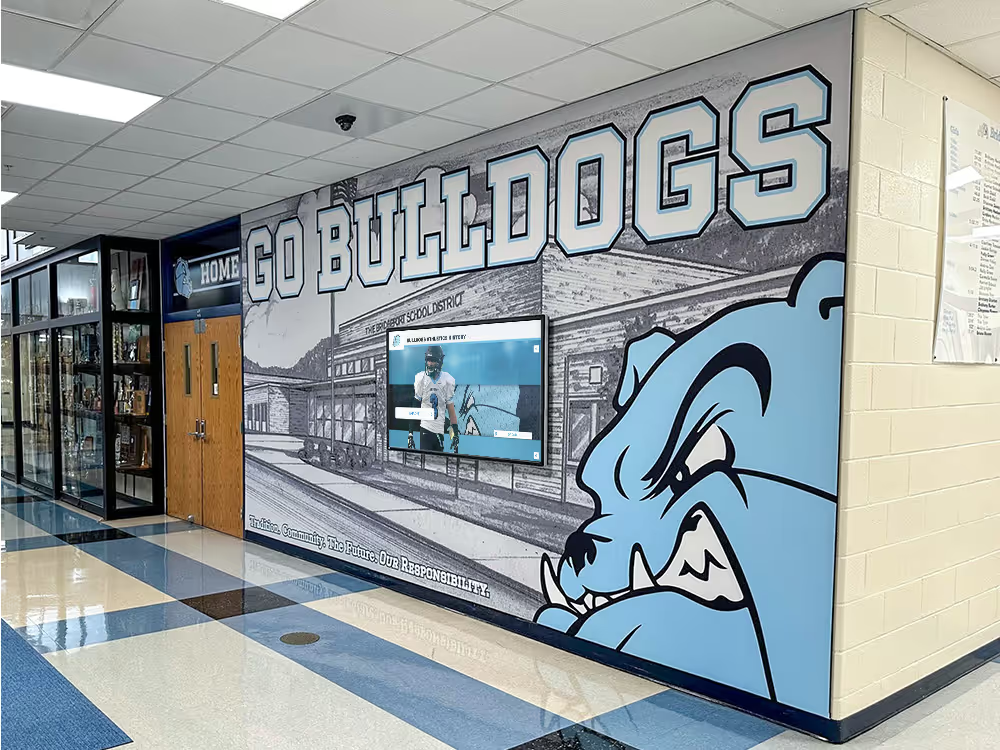
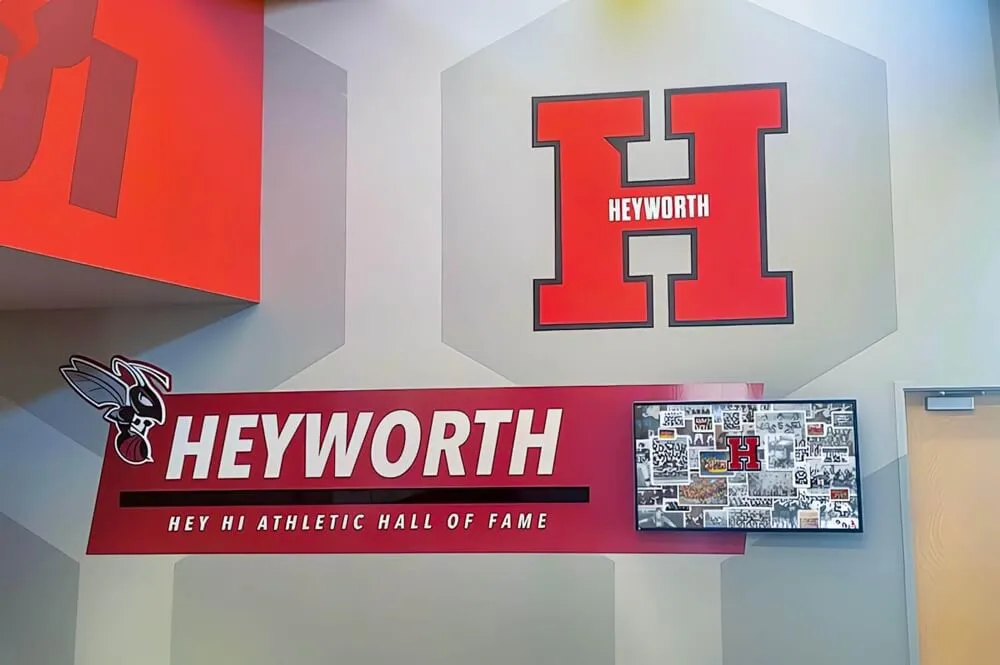
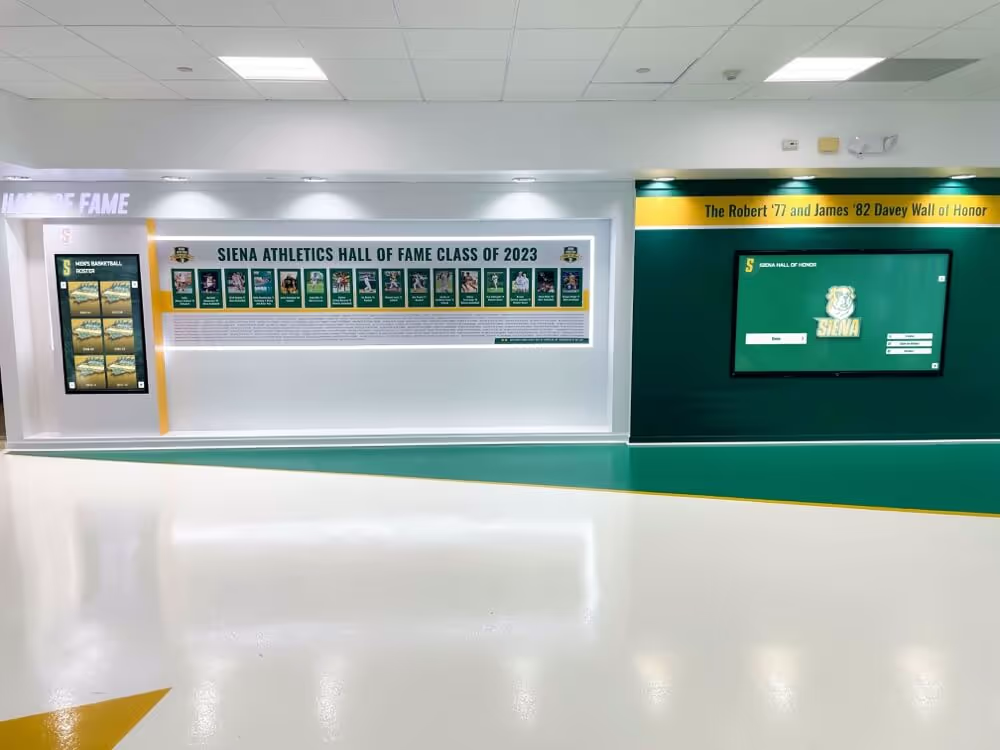
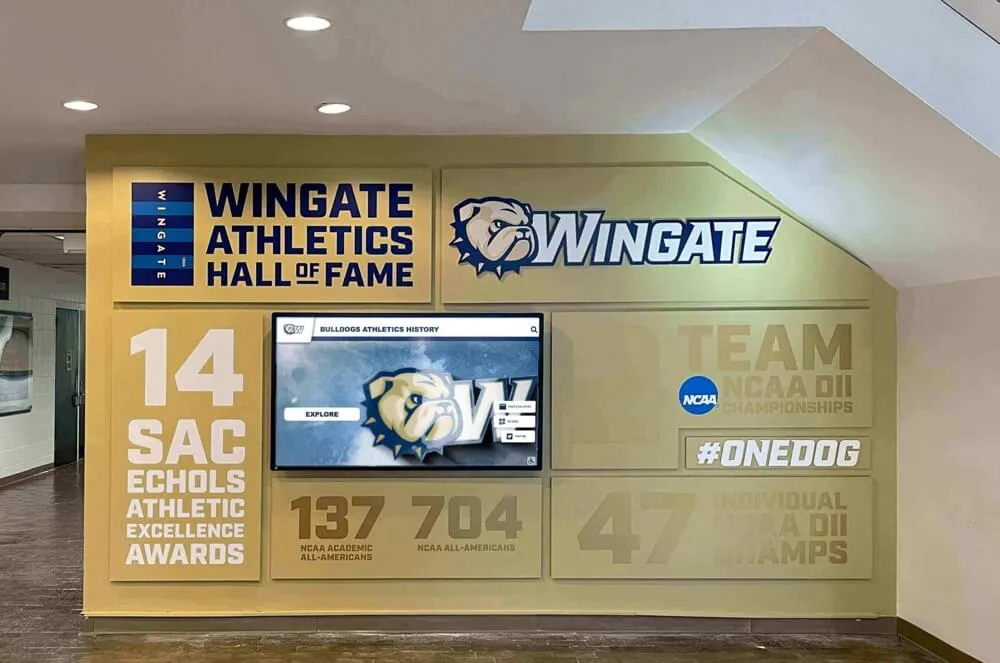
Strategic integration of digital history displays with traditional recognition elements creates comprehensive institutional heritage presentations
Creating Engaging User Experiences
Technical digitization represents only foundation—archive value emerges through carefully designed user experiences enabling intuitive discovery and exploration.
Intuitive Navigation and Search
Effective archives support multiple discovery approaches accommodating diverse user needs:
Browse and Filter Options Chronological browsing by decade, year, or era; categorical organization by content type or subject; featured collections highlighting significant materials; recently added content for returning visitors; popular or most-viewed items.
Search Functionality Simple search finding text anywhere in collections, advanced search with multiple criteria and Boolean operators, auto-suggest guiding users toward existing content, faceted filtering refining large result sets, saved searches for repeated queries.
User-Centered Design Principles Clear visual hierarchy guiding attention, consistent navigation across all sections, descriptive labels avoiding institutional jargon, thumbnail previews before full-content loading, breadcrumb trails showing navigation path, and responsive design maintaining usability across screen sizes.
Research on digital archive usability demonstrates that search quality represents the single most critical factor in user satisfaction—archives with poor search functionality receive minimal use regardless of content value, while archives with excellent search generate sustained engagement and repeated visits.
Interactive Touchscreen Displays
Physical touchscreen installations in institutional spaces create prominent archive access points while showcasing historical materials in engaging formats:
Strategic Physical Placement Main building lobbies welcoming all visitors, library and student center common areas, athletic facilities celebrating sports history, admissions areas for prospective family tours, alumni centers and development offices, and reunion spaces during alumni events.
Multiple strategically placed displays throughout campus ensure diverse populations regularly encounter historical content rather than requiring deliberate archive visits.
Touchscreen Interface Design Touch-optimized navigation with appropriately sized buttons and controls, attractive home screens drawing attention and suggesting exploration, featured content rotations maintaining freshness for repeat visitors, intuitive gestures including pinch-zoom for detail examination, automatic reset returning displays to home screen after inactivity, and accessibility features including text scaling and high-contrast modes.
Solutions like our platform provide integrated systems where web-based archives and physical touchscreen displays share content management, ensuring consistency while enabling location-appropriate curation.
Content Curation for Physical Displays While comprehensive archives include all digitized materials, physical displays benefit from curation—featured historical content rotating regularly to maintain interest, anniversary and milestone recognition timed to relevant dates, athletic achievement celebration during sports seasons, alumni spotlight features supporting engagement, and contextual presentation explaining historical significance.
Schools implementing interactive recognition displays report that curated feature rotations generate significantly higher engagement than static content, with visitors returning regularly to explore newly featured materials.
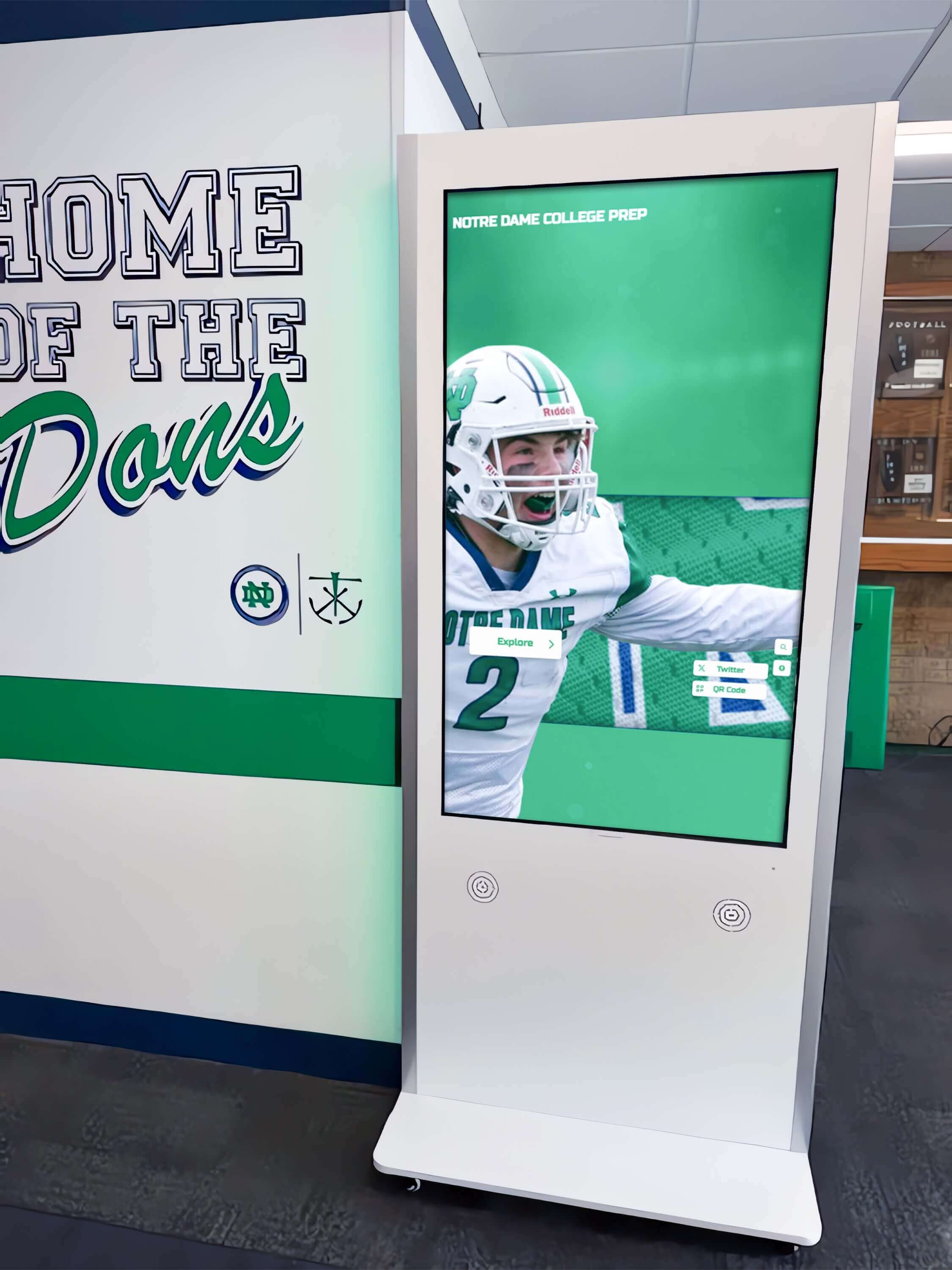
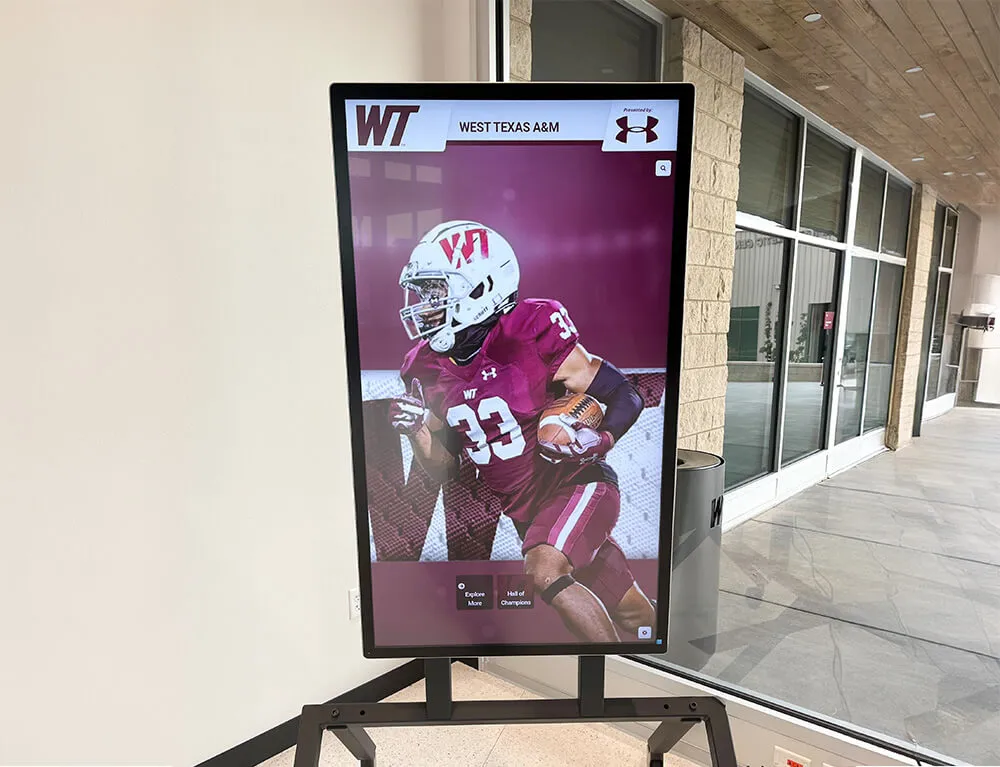
Floor-standing touchscreen kiosks provide dedicated spaces for exploring institutional history without competing for wall space or requiring furniture
Web and Mobile Access
Online archive access extends reach beyond physical campus locations:
Responsive Design Requirements Automatic layout adaptation to screen sizes from phones to large displays, touch-optimized controls for tablet and smartphone use, readable text without requiring zooming or horizontal scrolling, optimized image loading balancing quality with mobile bandwidth, streamlined navigation suitable for smaller screens.
According to user analytics from educational digital archives, 50-70% of remote access occurs from smartphones and tablets, making mobile optimization essential rather than optional.
Social Sharing and Engagement Easy sharing to social media platforms, shareable links to specific materials enabling targeted distribution, embed codes allowing content integration into websites and emails, comment or memory-sharing features for community engagement, and user-contributed content systems enabling alumni photograph donations.
Accessibility Standards Screen reader compatibility for visually impaired users, keyboard navigation for users with mobility challenges, alternative text for all images, captions and transcripts for multimedia content, sufficient color contrast for users with vision limitations, and compliance with WCAG accessibility guidelines.
Comprehensive approaches to making digital archives accessible ensure entire communities can engage with institutional heritage regardless of physical abilities or assistive technology needs.
Sustainable Archive Management
Long-term archive success requires systematic management addressing content growth, platform maintenance, and organizational sustainability.
Organizational Structure and Staffing
Clear responsibilities prevent archives from becoming neglected as initial enthusiasm fades:
Archive Coordinator Role Formal position descriptions ensure consistent management—oversight of ongoing digitization and content addition, platform administration and maintenance, user support and access management, content curation and feature selection, policy development and enforcement, stakeholder communication and reporting, and training for staff and contributors.
Archive management typically resides in library departments, information technology, institutional advancement, or dedicated archival units depending on institutional structure and primary archive purposes.
Distributed Responsibilities Successful archives often distribute work across departments—athletics department documenting current achievements, academic departments contributing department-specific materials, alumni relations soliciting and reviewing alumni contributions, advancement staff identifying donor recognition opportunities, student workers or interns performing routine digitization, and volunteer committees providing specialized expertise and community knowledge.
This distributed model accomplishes more work while creating stakeholder investment in archive success.
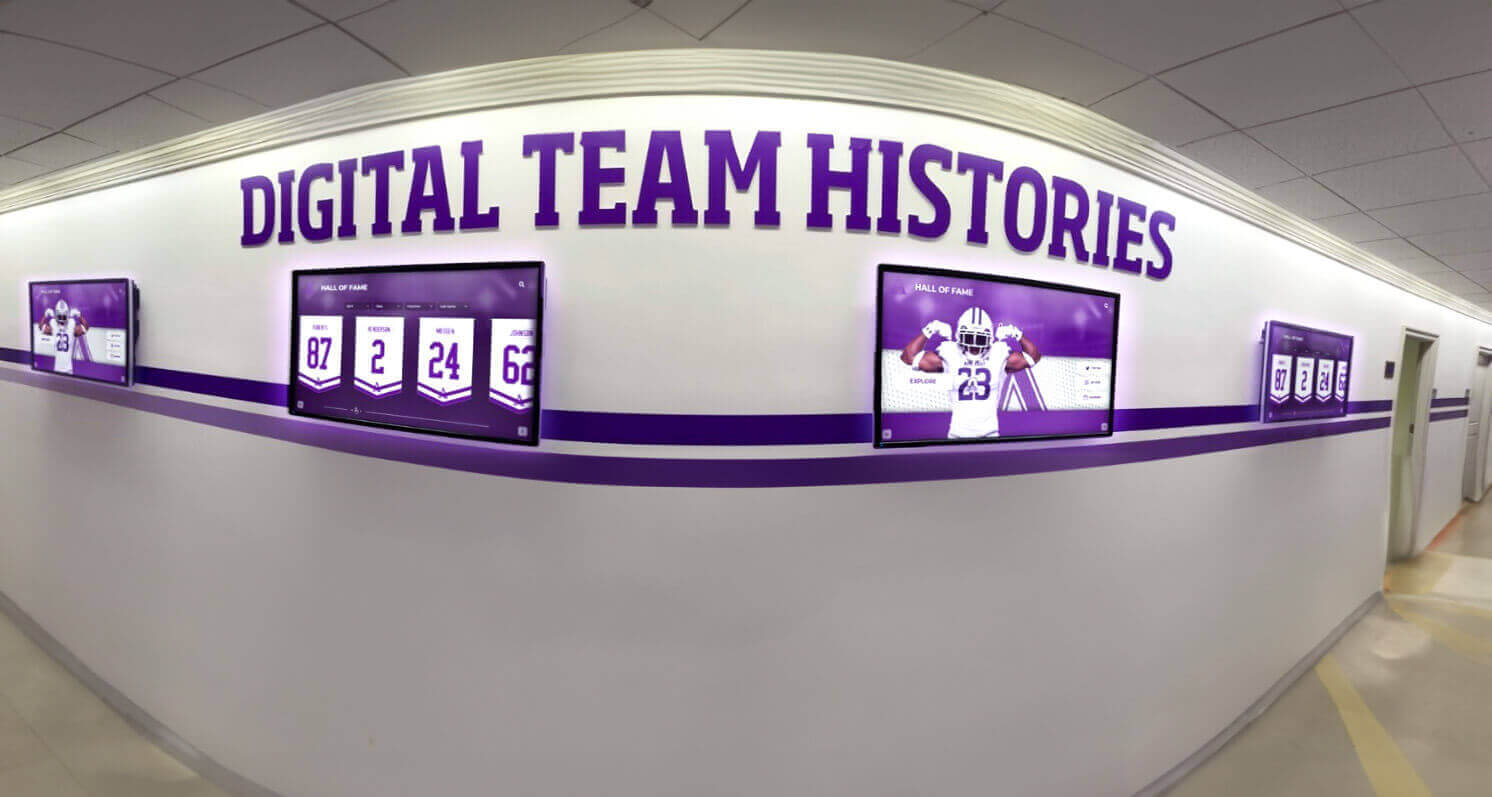
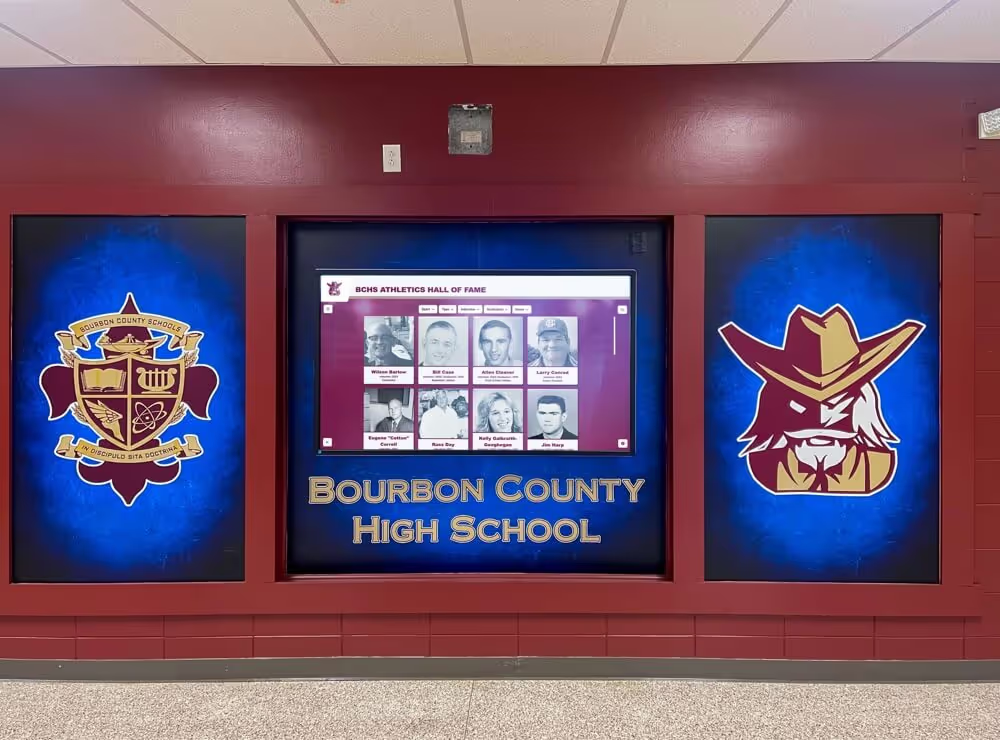
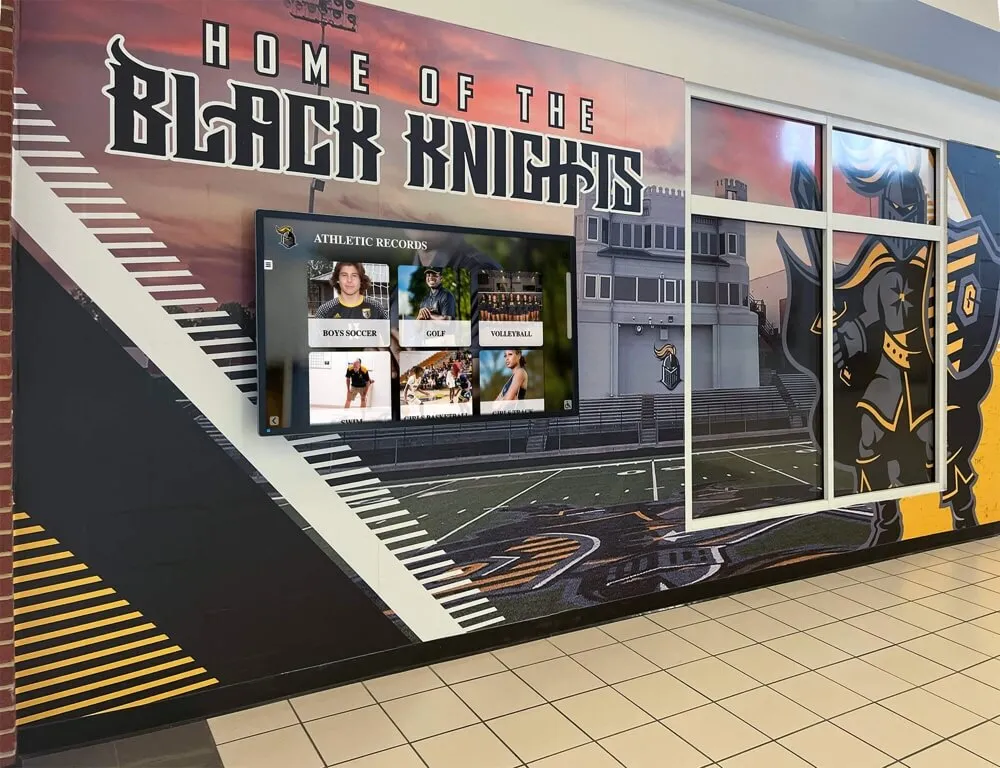
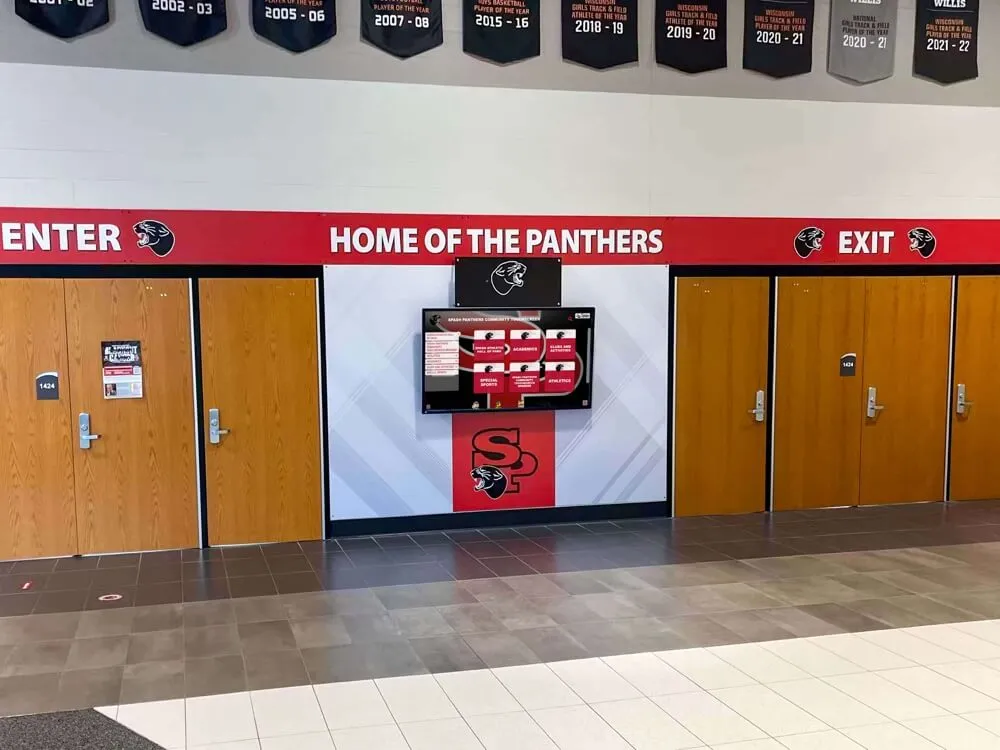
Multiple coordinated displays can present different aspects of institutional history throughout facility spaces
Ongoing Content Addition
Archives remain relevant through systematic growth:
Regular Addition Schedules Annual yearbook digitization upon publication, quarterly photograph batch processing, monthly recognition and achievement updates, event-driven additions after major occasions, periodic oral history recording sessions, and ad-hoc incorporation of donated materials.
Community Contribution Programs Alumni submission portals for personal photographs and materials, reunion event scanning stations where attendees share materials, targeted outreach to specific individuals or classes, formal donation programs with clear policies, and volunteer scanning sessions where community members help digitize collections.
Quality Assurance Processes Metadata accuracy verification through systematic audits, broken link identification and repair, duplicate detection and consolidation, format migration for long-term preservation, regular backup testing, and security and access permission reviews.
Learn about sustainable approaches to maintaining digital recognition systems applicable to archival contexts.
Privacy, Copyright, and Ethical Considerations
Responsible archives balance accessibility with appropriate protection:
Privacy Protection FERPA compliance for student education records, consent documentation for identifiable individuals, takedown policies for requested removal, sensitive content access restrictions, clear communication of privacy policies, and data protection security measures.
Copyright Compliance Most institutional yearbooks and materials qualify as institutional copyright, but considerations include third-party contributed content with separate rights, licensed materials requiring permission, fair use analysis for educational purposes, public domain determination for historical materials, and rights statements informing users of permitted uses.
Ethical Collection Practices Representation balance across demographics and perspectives, difficult history acknowledgment and contextualization, community voice inclusion in interpretation, cultural sensitivity in description and display, and donor intent respect for contributed materials.
Comprehensive guidance on academic recognition programs addresses privacy considerations applicable to archival contexts.
Measuring Archive Success and Impact
Systematic assessment demonstrates value while informing continuous improvement:
Quantitative Metrics
Digital platforms provide comprehensive usage data:
Access and Engagement Statistics Unique visitor counts and growth trends, page views and content interactions, search query volume and popular terms, session duration indicating engagement depth, return visitor rates showing sustained interest, geographic distribution demonstrating reach, device type patterns informing design priorities.
Schools implementing digital archives typically observe thousands of annual unique visitors, with dramatic growth as word spreads through alumni networks and archives gain visibility through social media sharing.
Content Performance Analysis Most-viewed materials identifying popular content, search terms revealing interest areas, download and share statistics, specific collection performance comparisons, identification of underperforming content requiring better description or promotion.
These insights inform digitization priorities—collections generating high interest warrant expansion, while materials receiving minimal attention may need enhanced metadata, better organization, or inclusion in featured content rotations to improve discoverability.
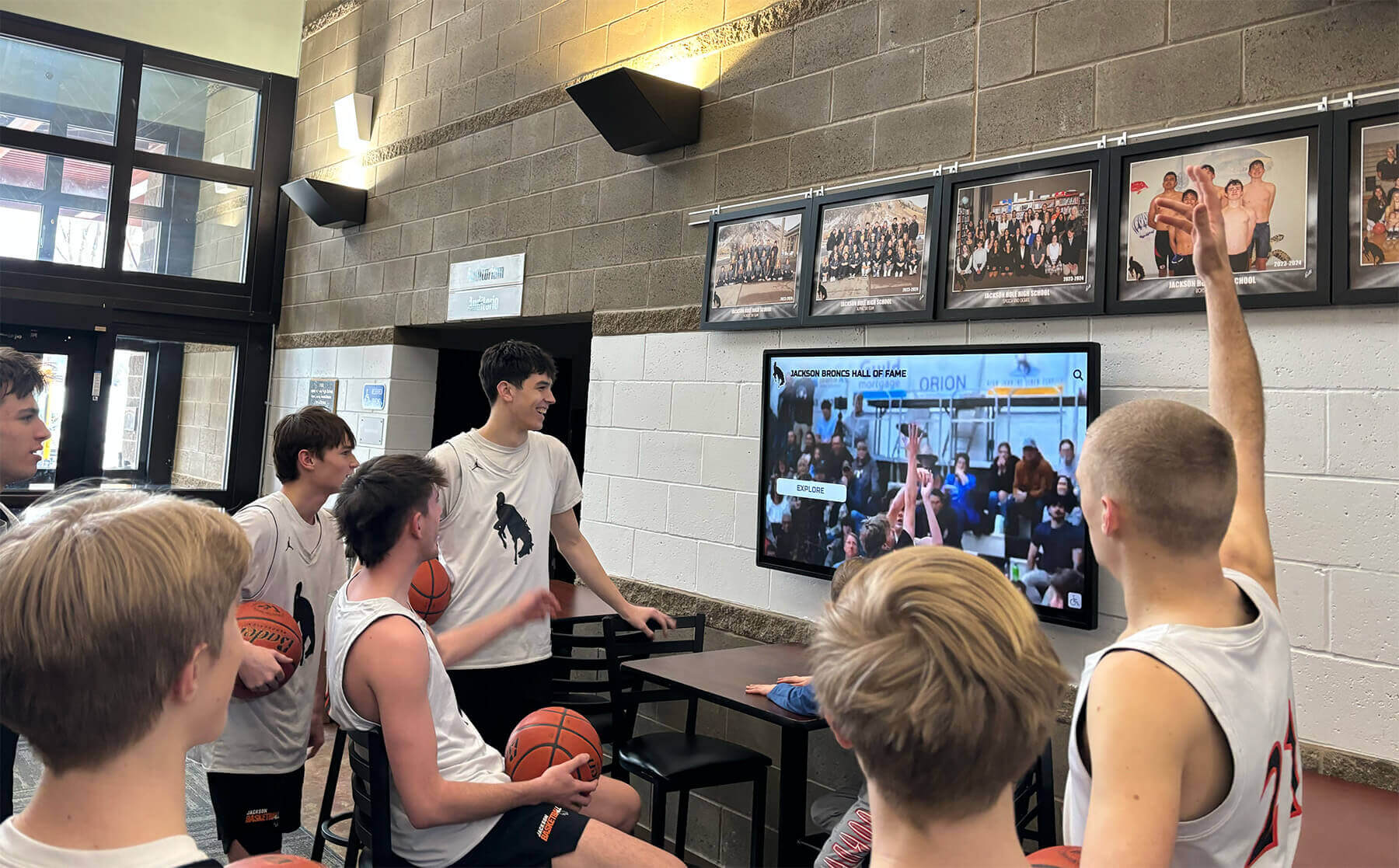
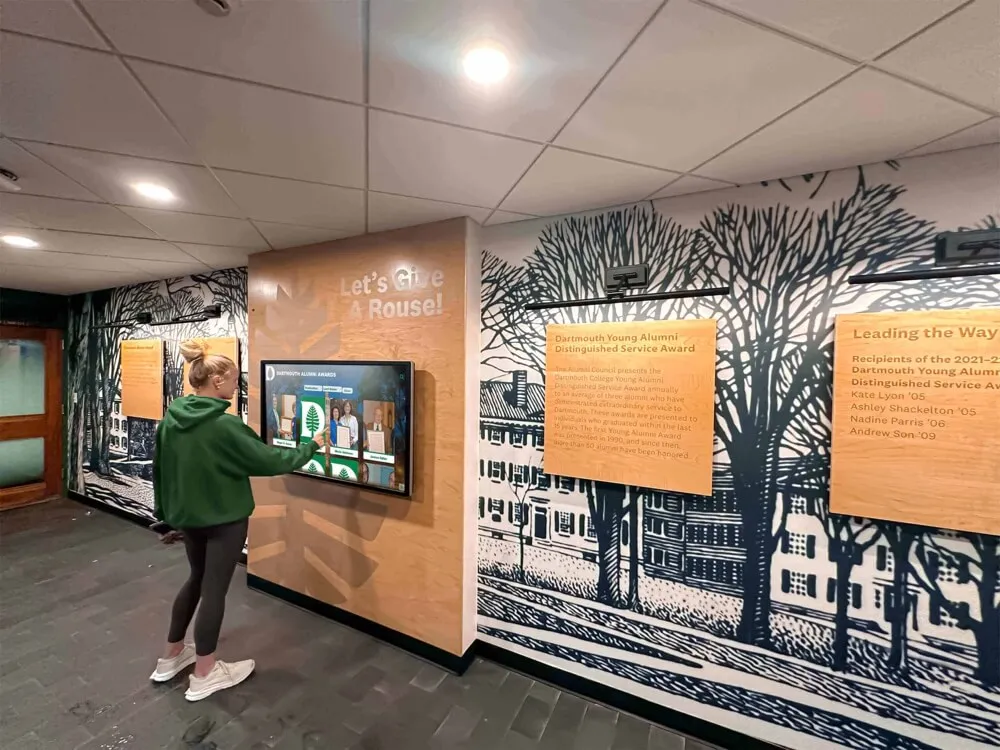
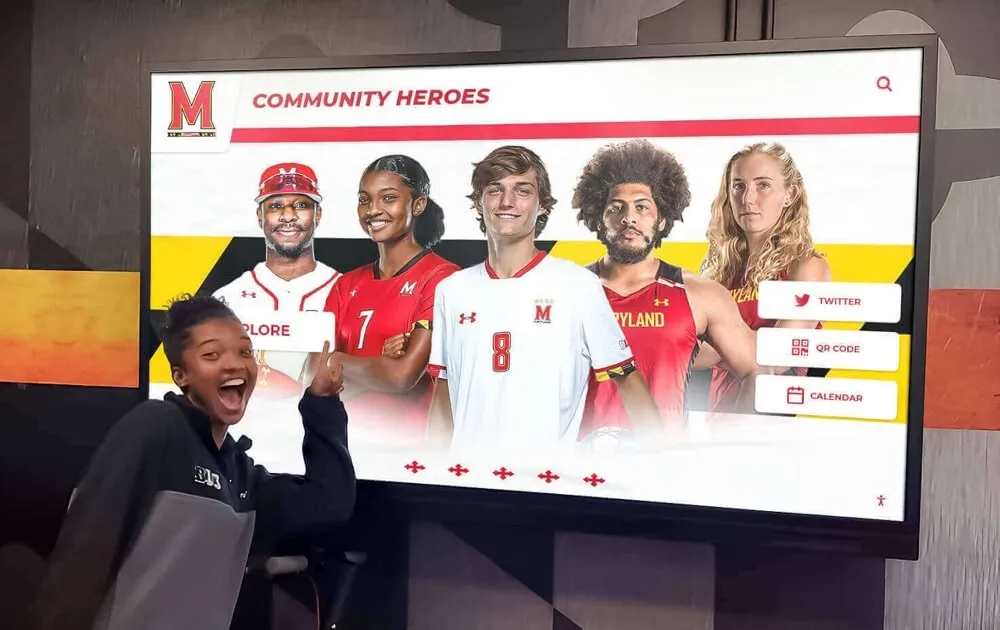
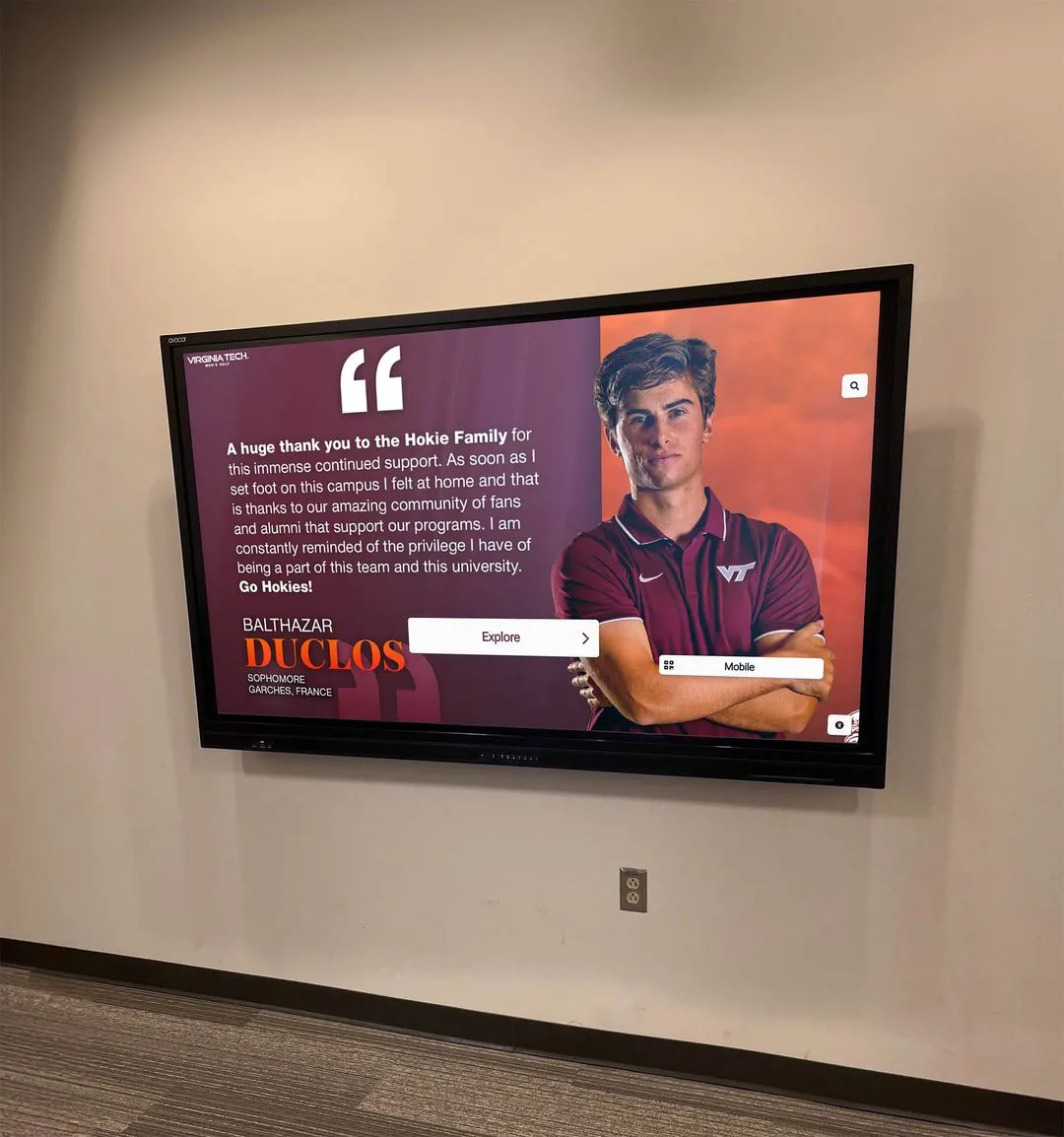
Engaging digital displays capture student attention, creating spontaneous educational moments and fostering connections to institutional history
Qualitative Impact Assessment
Beyond statistics, archives create qualitative value:
Stakeholder Feedback Alumni surveys about archive satisfaction and value, student focus groups on historical awareness and engagement, faculty assessment of educational utility, development staff evaluation of fundraising benefit, admissions team perspective on recruitment value, and community feedback on accessibility and content.
Institutional Impact Indicators Increased historical awareness among students, growing tradition participation, enhanced institutional pride expressions, stronger alumni engagement overall, expanded research and educational use, media coverage of institutional heritage, and community partnership development.
Compelling Impact Stories Alumni reconnections facilitated by archive discoveries, major gifts inspired by historical engagement, student research projects enabled by archival access, family legacy recognition connecting generations, and community historical documentation preserving endangered heritage.
Regular assessment enables data-driven improvements ensuring archives continue meeting stakeholder needs and delivering institutional value justifying ongoing investment.
Future Trends in Digital History Archives
Emerging technologies promise continued evolution in how institutions preserve and present history:
Artificial Intelligence Applications
AI technologies offer exciting enhancement possibilities:
Automated Metadata Generation Image recognition identifying content and context, facial recognition suggesting person identifications (with appropriate privacy safeguards), natural language processing extracting themes and topics, audio transcription for oral histories and videos, and pattern recognition finding related materials.
These AI capabilities dramatically reduce manual labor required for comprehensive archival description while improving searchability and discovery—what currently requires hours of human metadata creation may eventually occur automatically with human review limited to verification and enhancement.
Enhanced Discovery Natural language search understanding conversational queries rather than requiring keyword precision, personalized recommendations based on browsing history and interests, similar image finding by visual characteristics, automatic clustering organizing related materials, and predictive search suggesting queries based on partial input.
Content Enhancement Historical photograph restoration improving image quality, low-resolution image enhancement through AI upscaling, handwriting recognition for manuscript materials, translation services for multilingual archives, and accessibility improvements through automatic captioning and description.
Immersive and Interactive Technologies
Next-generation archives may incorporate emerging platforms:
Augmented Reality Integration Mobile AR apps overlaying historical photographs on current campus locations, timeline exploration through AR interfaces, historical figure appearances providing first-person context, and interactive archive exploration through AR-enhanced displays.
Virtual Reality Experiences Immersive campus tours showing locations across different eras, VR recreations of historical events and ceremonies, first-person historical experiences from past community members, and virtual archive rooms enabling three-dimensional exploration.
Advanced Interactivity Voice-activated search and navigation, gesture-based interaction beyond simple touch, collaborative exploration enabling multiple simultaneous users, gamified discovery encouraging archive exploration, and integration with museum interactive displays creating enhanced visitor experiences.
Blockchain and Long-Term Preservation
Emerging technologies address archival sustainability:
Decentralized storage preventing single-point failure risks, authenticity verification for digital materials preventing tampering, immutable audit trails documenting changes, digital rights management through smart contracts, and long-term preservation assurance extending beyond institutional lifecycles.
While some technologies remain experimental, forward-thinking institutions monitor developments positioning archives to adopt beneficial innovations as they mature and prove reliability.
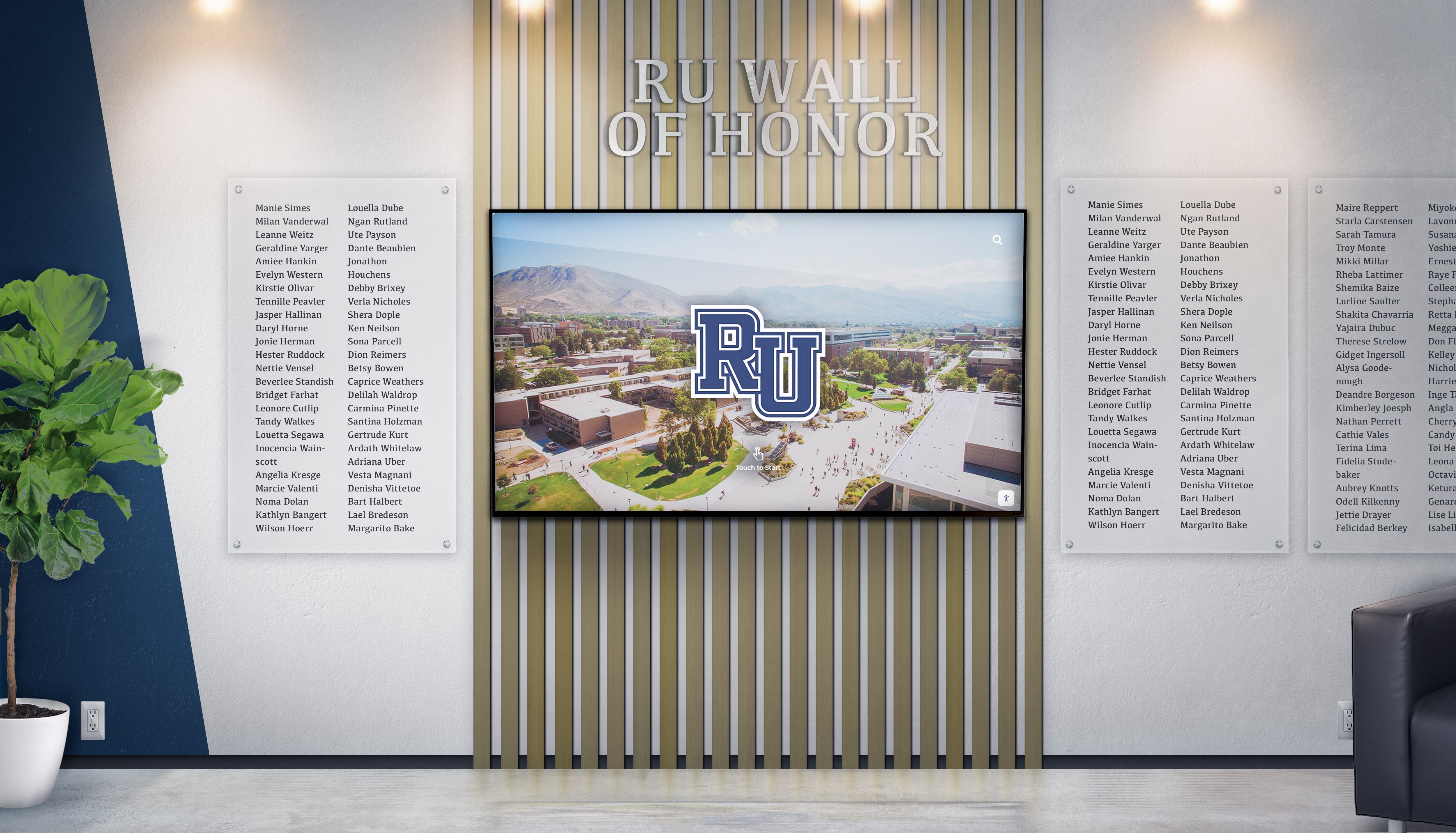
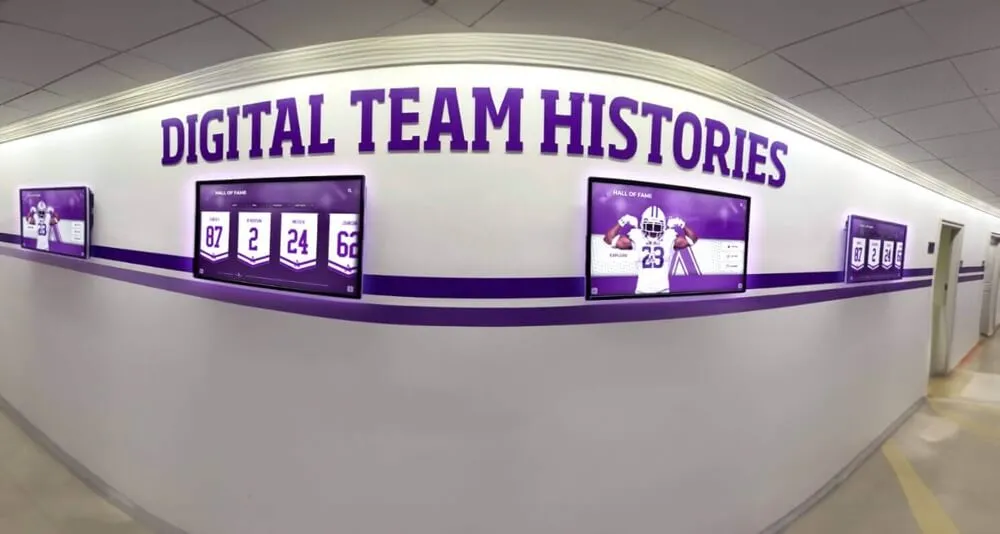
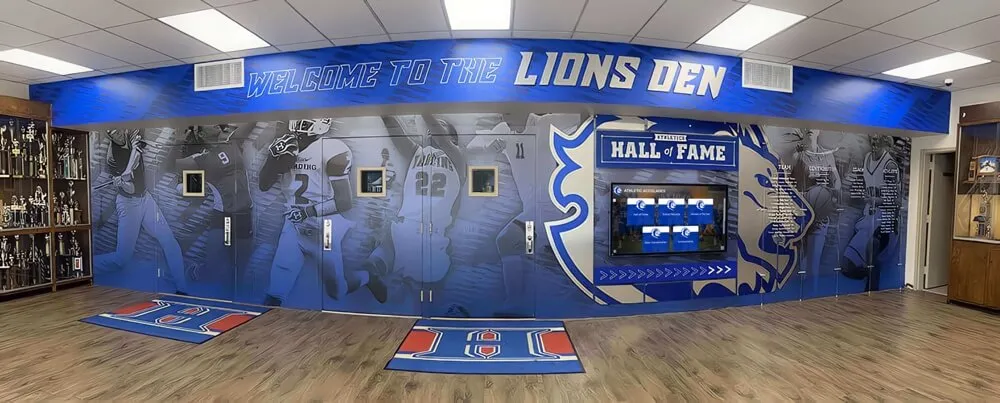
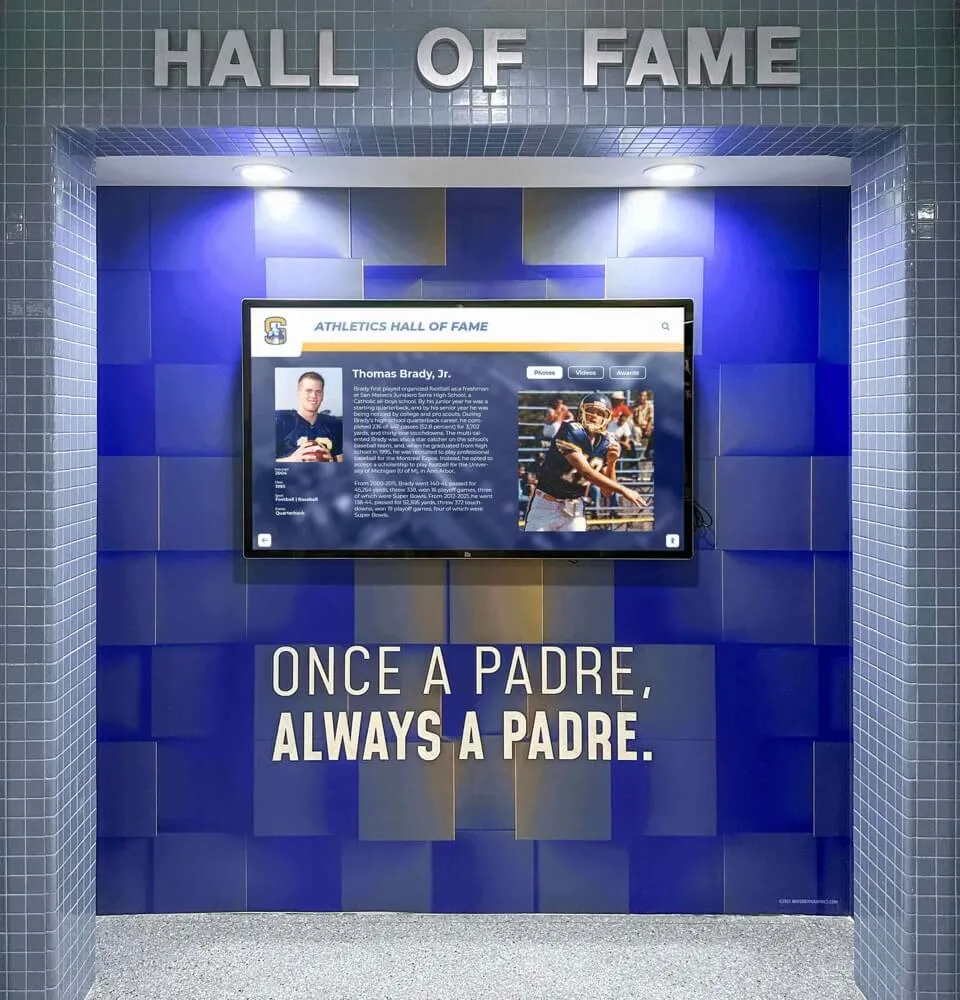
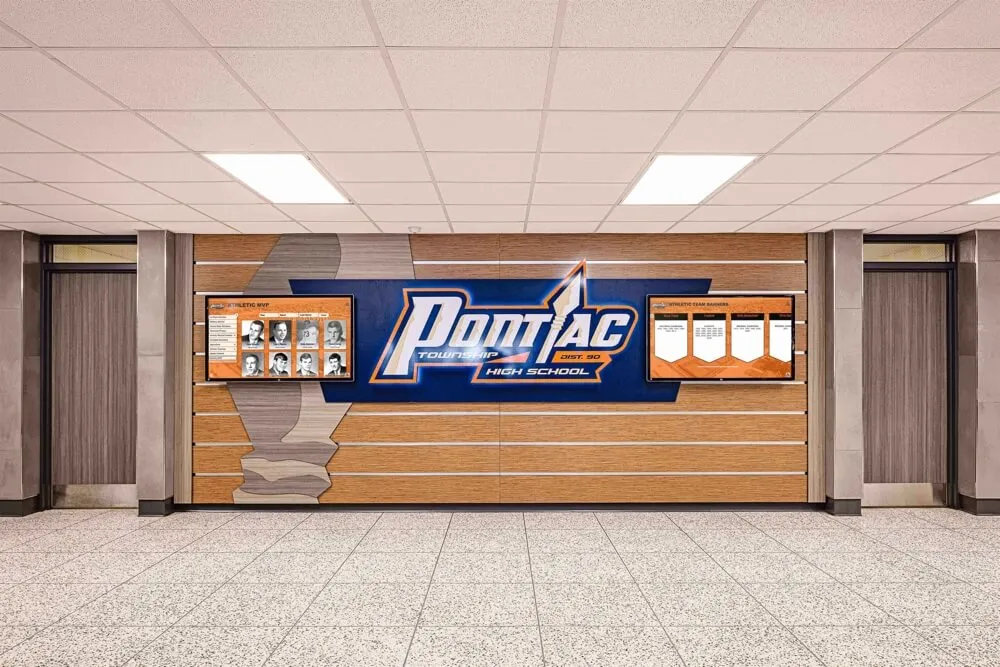
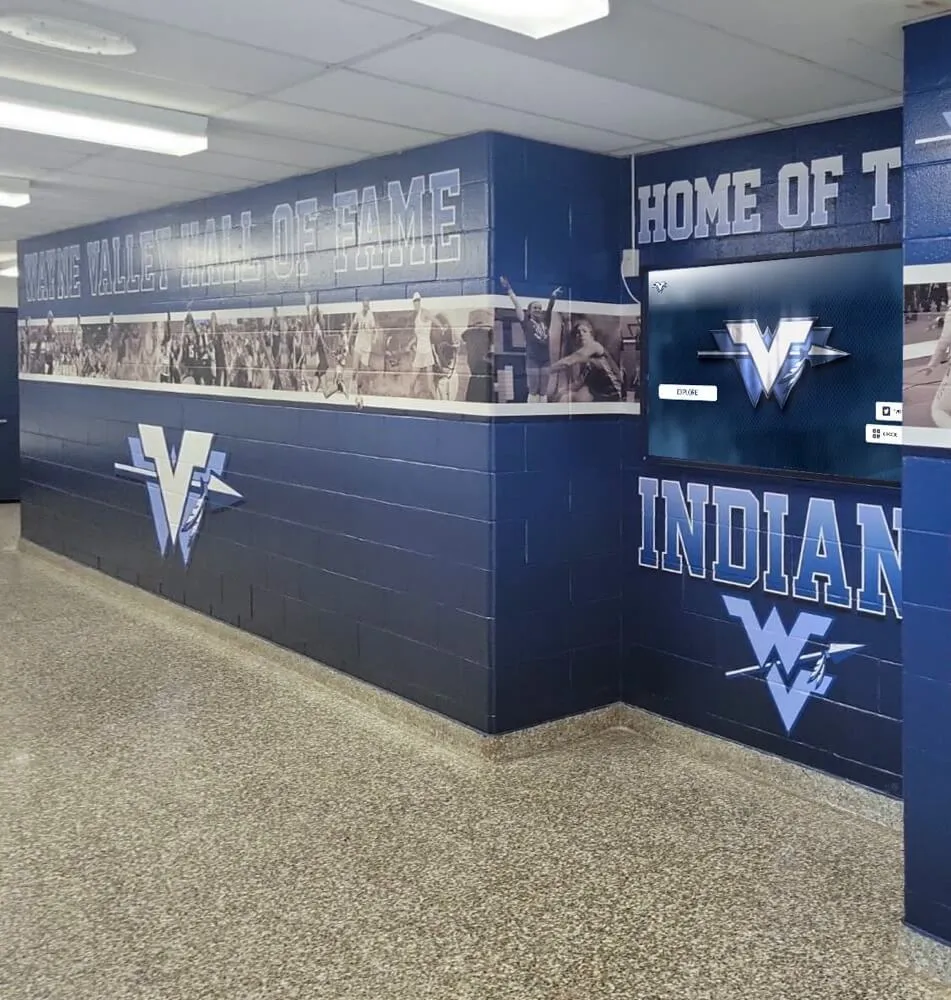
Sophisticated installations integrate digital archives with traditional recognition elements, creating impressive spaces that honor institutional heritage while enabling dynamic content updates
Conclusion: Preserving Heritage, Building Connections
Digital history archives represent transformative investments in institutional memory—protecting irreplaceable materials from inevitable physical deterioration, expanding access from physical limitations to worldwide availability, enhancing discovery from browsing-dependent to search-enabled, enabling engagement from passive viewing to interactive exploration, and supporting sustainability from static collections to continuously growing resources.
The comprehensive framework explored throughout this guide addresses every implementation phase from initial planning through long-term sustainability. Whether your institution approaches significant anniversary milestones requiring historical documentation, seeks to strengthen alumni engagement and giving, or simply recognizes that decades of institutional memory deserve better preservation and presentation, systematic digital archive development creates lasting value serving diverse constituencies across institutional missions.
Modern platforms make implementation achievable without massive resource commitments. Cloud-based systems eliminate local server requirements and technical complexity. Purpose-built educational solutions like our platform provide templates and workflows based on hundreds of institutional implementations, dramatically accelerating deployment while ensuring comprehensive functionality specifically designed for schools, colleges, museums, and cultural organizations.
Your institution’s history—from founding through decades of student experiences, achievements, challenges, and evolution—deserves preservation and presentation honoring its significance while meeting contemporary expectations for accessible, engaging digital experiences. Physical yearbooks deteriorating in storage, photographs scattered across departmental files, and institutional knowledge residing only in retiring staff members represent opportunities for preservation before irreplaceable materials and memories disappear permanently.
Begin with achievable first phases building toward comprehensive archives over time. Engage stakeholders understanding what materials matter most to different constituencies. Research available platforms recognizing how purpose-built solutions simplify implementation compared to generic systems requiring extensive customization. Most critically, start before additional deterioration occurs or institutional knowledge transfers fail during personnel transitions.
The institutions investing in systematic digital archive development create lasting legacies honoring the past while building practical advantages in community engagement, institutional advancement, educational programming, and cultural preservation benefiting institutions and communities for generations.
Ready to begin your digital history archive? Schedule your custom mock-up to explore how comprehensive digital platforms can preserve your heritage while creating interactive experiences connecting current and future community members to your unique institutional story.