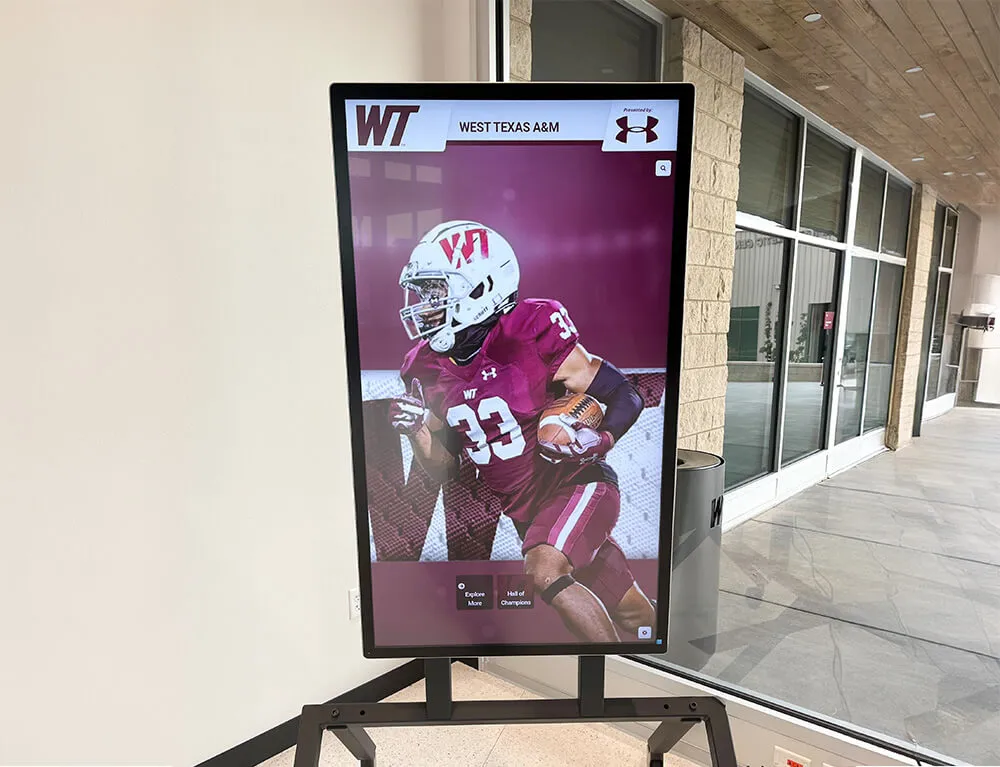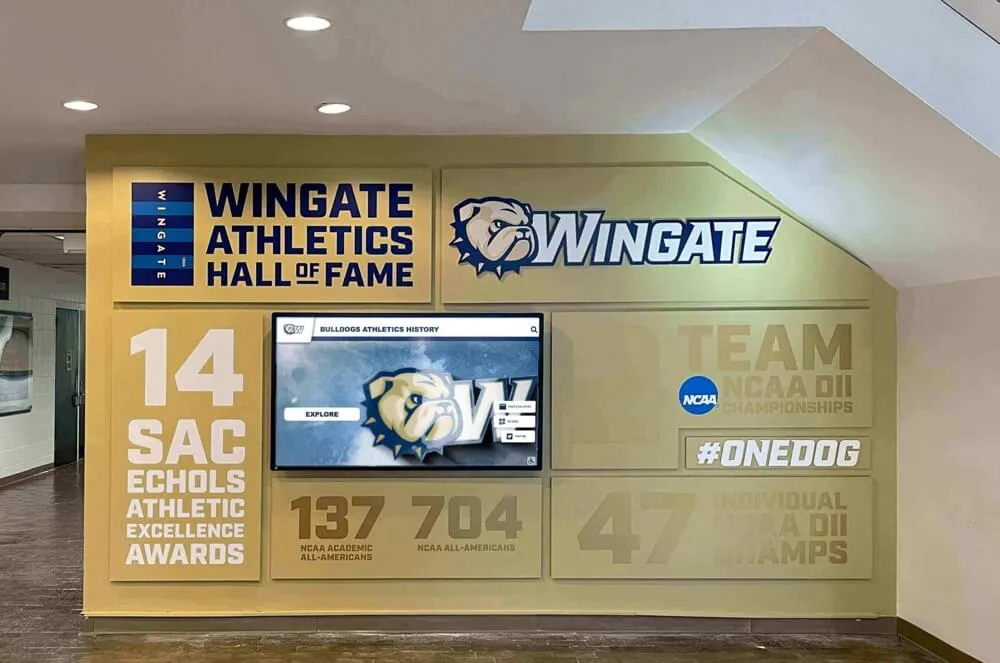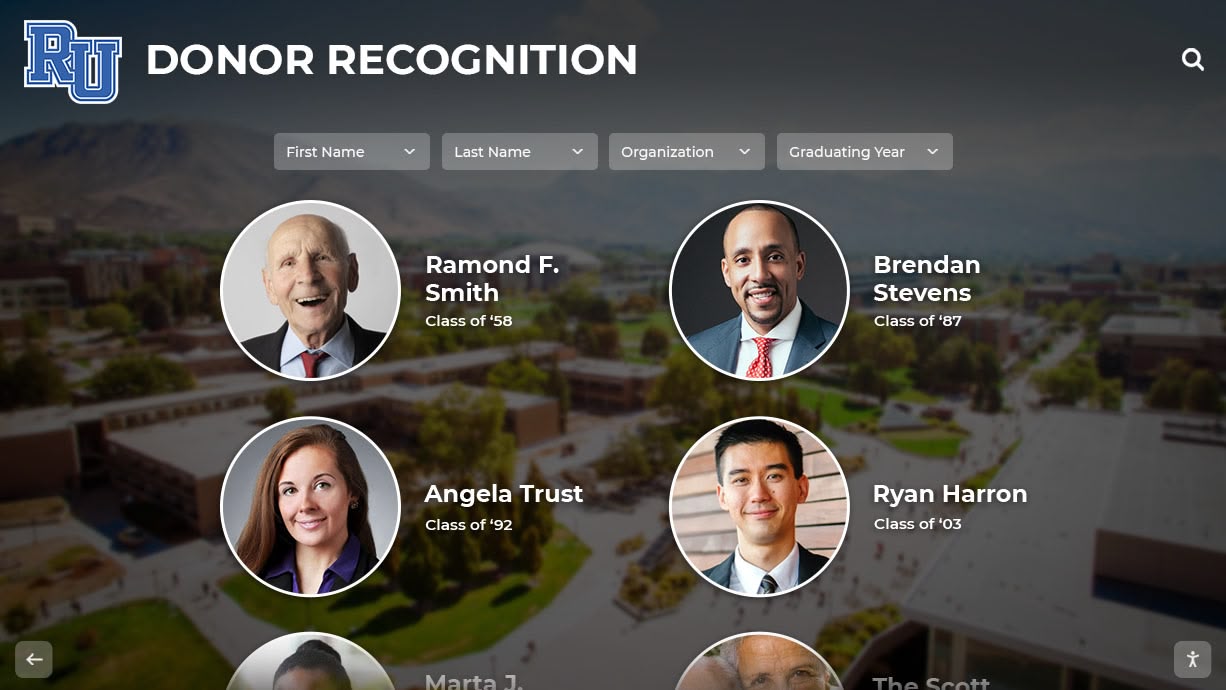
Schools, nonprofits, and organizations frequently face space constraints when honoring both achievement inductees and financial supporters. Traditional recognition requires separate physical displays—trophy cases for athletic achievements, plaque walls for hall of fame members, and distinct donor walls for contributors. As recognition needs grow, available wall space shrinks, forcing difficult decisions about which accomplishments deserve visibility.
Digital recognition displays eliminate these either-or choices by functioning as flexible platforms that accommodate multiple recognition purposes simultaneously. A single touchscreen system can showcase hall of fame inductees, honor donor communities, acknowledge sponsors, celebrate alumni achievements, and recognize volunteers—all within one cohesive platform that visitors navigate easily.
For development directors managing capital campaigns, athletic administrators preserving sports heritage, and facility managers maximizing limited space, understanding how digital displays handle dual recognition purposes solves fundamental capacity constraints. More importantly, these systems provide sophisticated sponsor management capabilities that traditional physical walls cannot match—organizing contributors by giving level, displaying sponsor logos prominently, updating recognition instantly when new gifts arrive, and creating distinct presentation styles for different supporter categories.
This comprehensive guide explores how digital displays successfully combine hall of fame and donor recognition, examines the specific features that enable effective sponsor management, and provides practical implementation strategies for organizations seeking to honor both achievements and financial support through unified digital platforms.
Understanding Dual-Purpose Digital Recognition Systems
Digital displays function effectively for multiple recognition purposes because they separate content management from physical space limitations. Unlike traditional walls where adding new plaques requires finding available space, digital systems store unlimited profiles in cloud-based databases and present them through searchable interfaces on touchscreen displays and web platforms.
This architecture means organizations can dedicate portions of their content library to different recognition categories—athletic hall of fame inductees, academic achievers, donor communities, sponsors, volunteers, and notable alumni—all accessible through the same physical hardware and navigation interface.

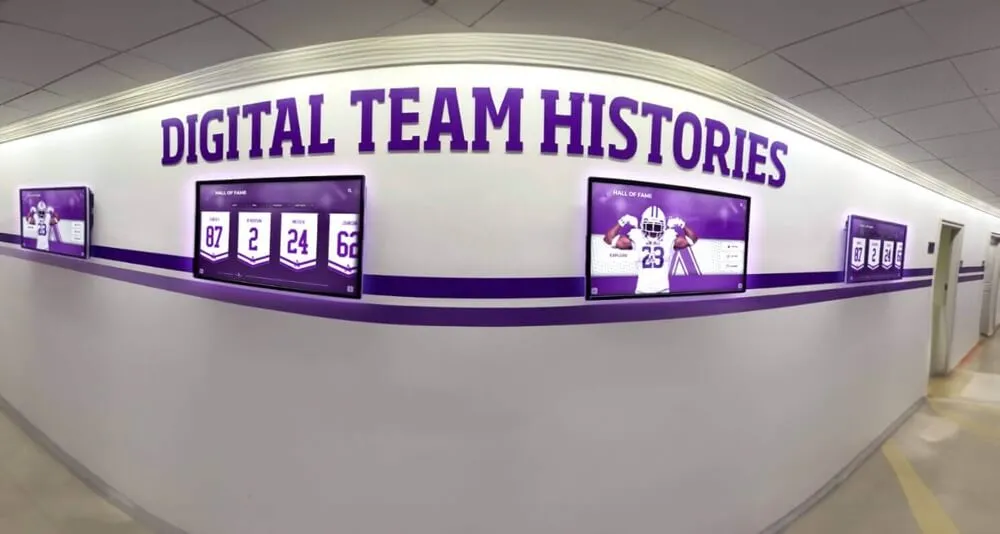
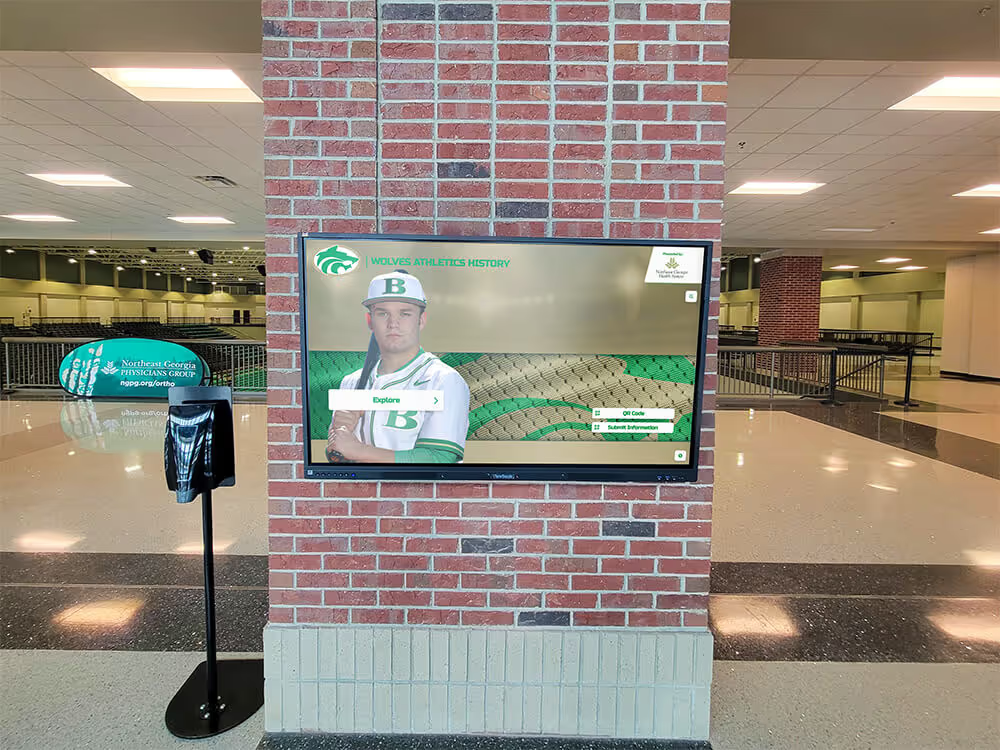
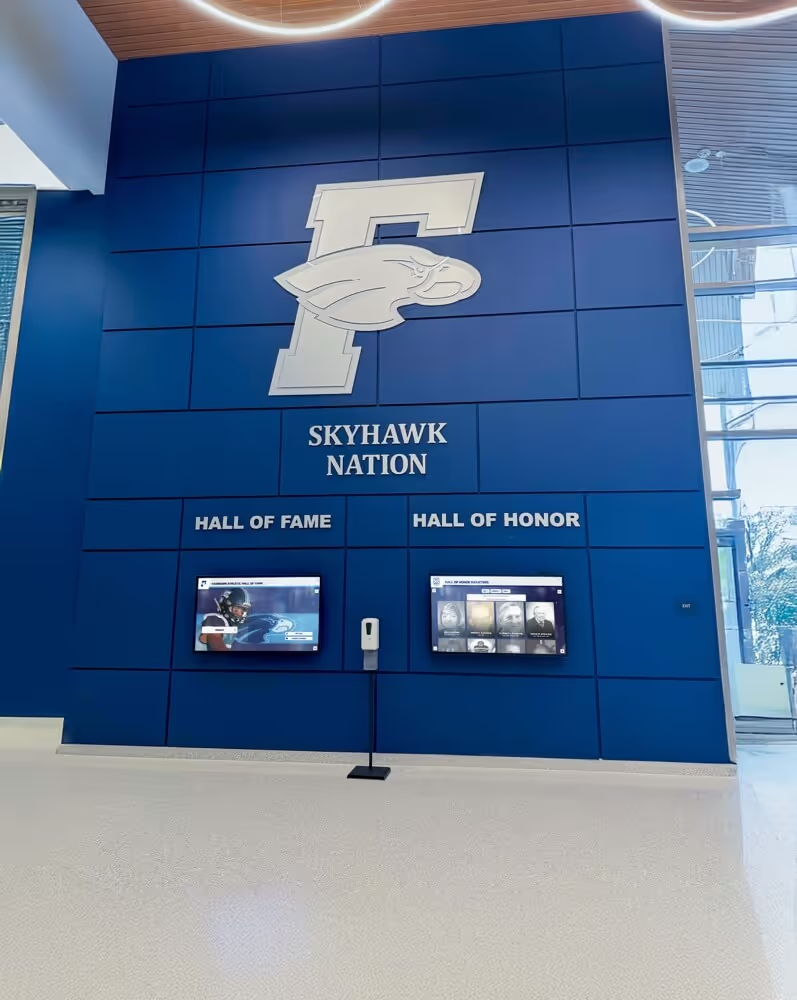
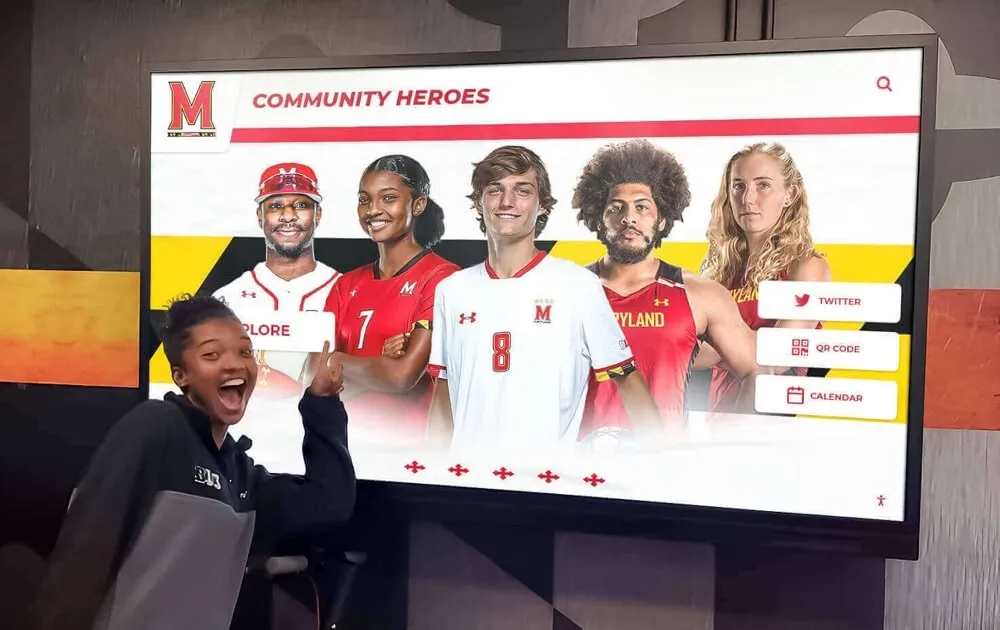
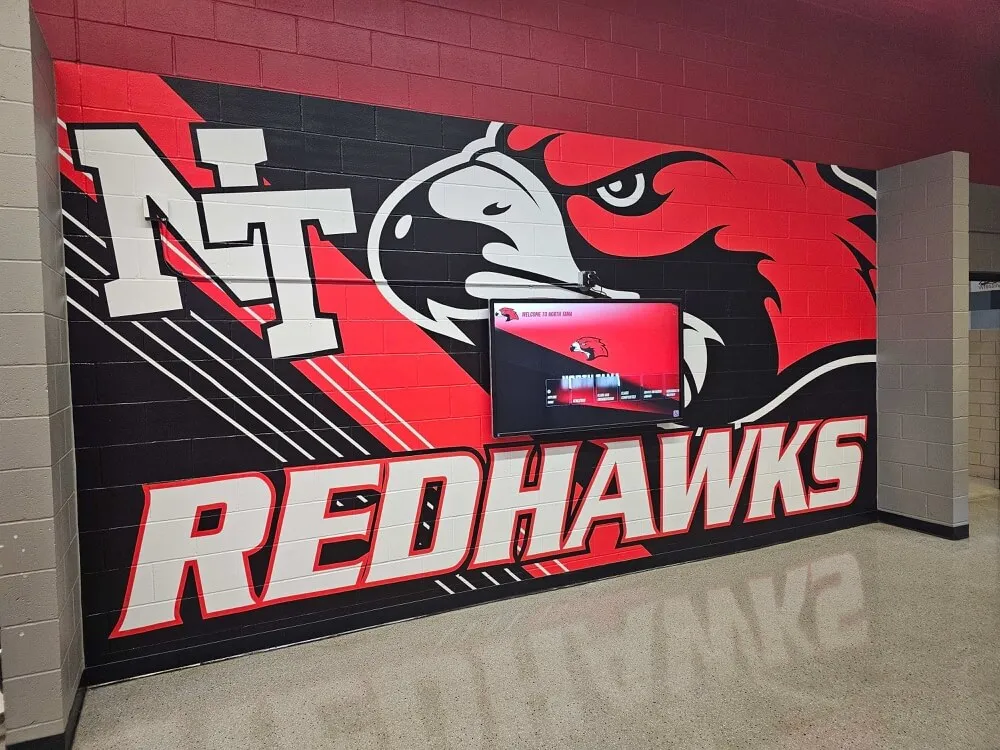
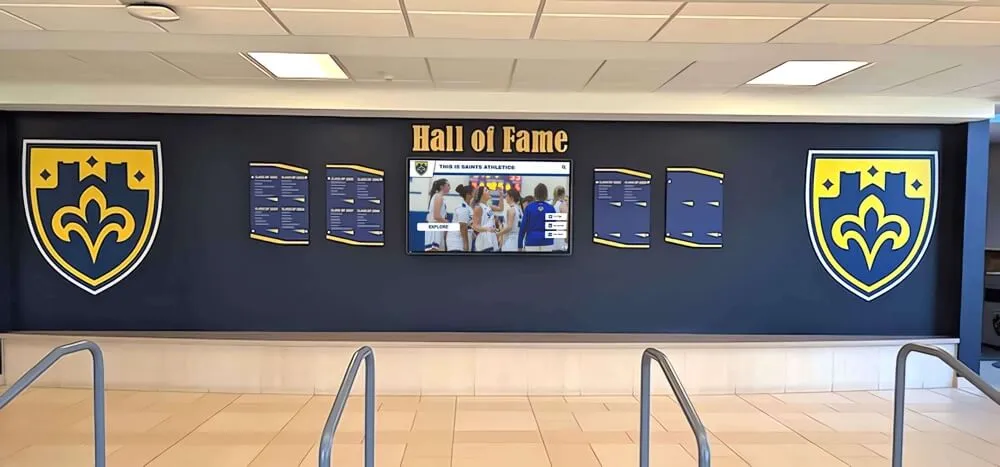
Digital platforms accommodate diverse recognition needs including donor acknowledgment, alumni achievements, and institutional history within unified systems accessible through touchscreens and web browsers
Core Advantages of Combined Recognition Systems
Space Efficiency
Rather than dedicating separate wall areas to different recognition purposes, organizations install a single touchscreen display in a prominent lobby or hallway location. This display provides access to complete recognition databases spanning all categories—potentially thousands of profiles across multiple recognition types occupying just a few square feet of physical space.
Schools implementing combined systems report reclaiming valuable wall space previously consumed by crowded plaque arrangements while simultaneously expanding recognition capacity by 10-20 times compared to physical limitations.
Consistent User Experience
Visitors learn one navigation system that works across all recognition categories. After browsing hall of fame inductees, they can easily switch to exploring donor communities or sponsor acknowledgments using familiar search, filtering, and browsing tools. This consistency encourages exploration across different content areas rather than limiting engagement to single recognition purposes.
Unified Content Management
Staff members manage all recognition content through single administrative dashboards rather than coordinating with multiple plaque vendors, engravers, or trophy suppliers. When someone qualifies for both hall of fame recognition and donor acknowledgment, their profiles live in the same system with appropriate categorization enabling visitors to discover both achievements.
Cost Consolidation
Organizations make single platform investments that serve multiple recognition needs rather than purchasing separate systems for each purpose. The economics of digital recognition improve dramatically when hardware and software costs support hall of fame displays, donor walls, and sponsor recognition simultaneously rather than requiring independent implementations for each category.
Educational institutions implementing comprehensive digital recognition programs find that dual-purpose systems provide return on investment within 2-3 years compared to traditional recognition costs accumulated across multiple physical displays.
How Digital Displays Combine Hall of Fame and Donor Recognition
Effective dual-purpose systems require thoughtful organizational structures that maintain clarity between different recognition purposes while enabling easy navigation.
Content Organization Strategies
Category-Based Navigation
The most common approach presents primary navigation options on home screens: “Athletic Hall of Fame,” “Donor Recognition,” “Notable Alumni,” “Academic Achievers,” and similar category labels. Visitors select their interest area and explore content specific to that recognition type.
Within each category, systems provide appropriate filtering and organization—sports and decades for athletic halls of fame, giving levels for donor recognition, class years for alumni, and academic disciplines for scholars.
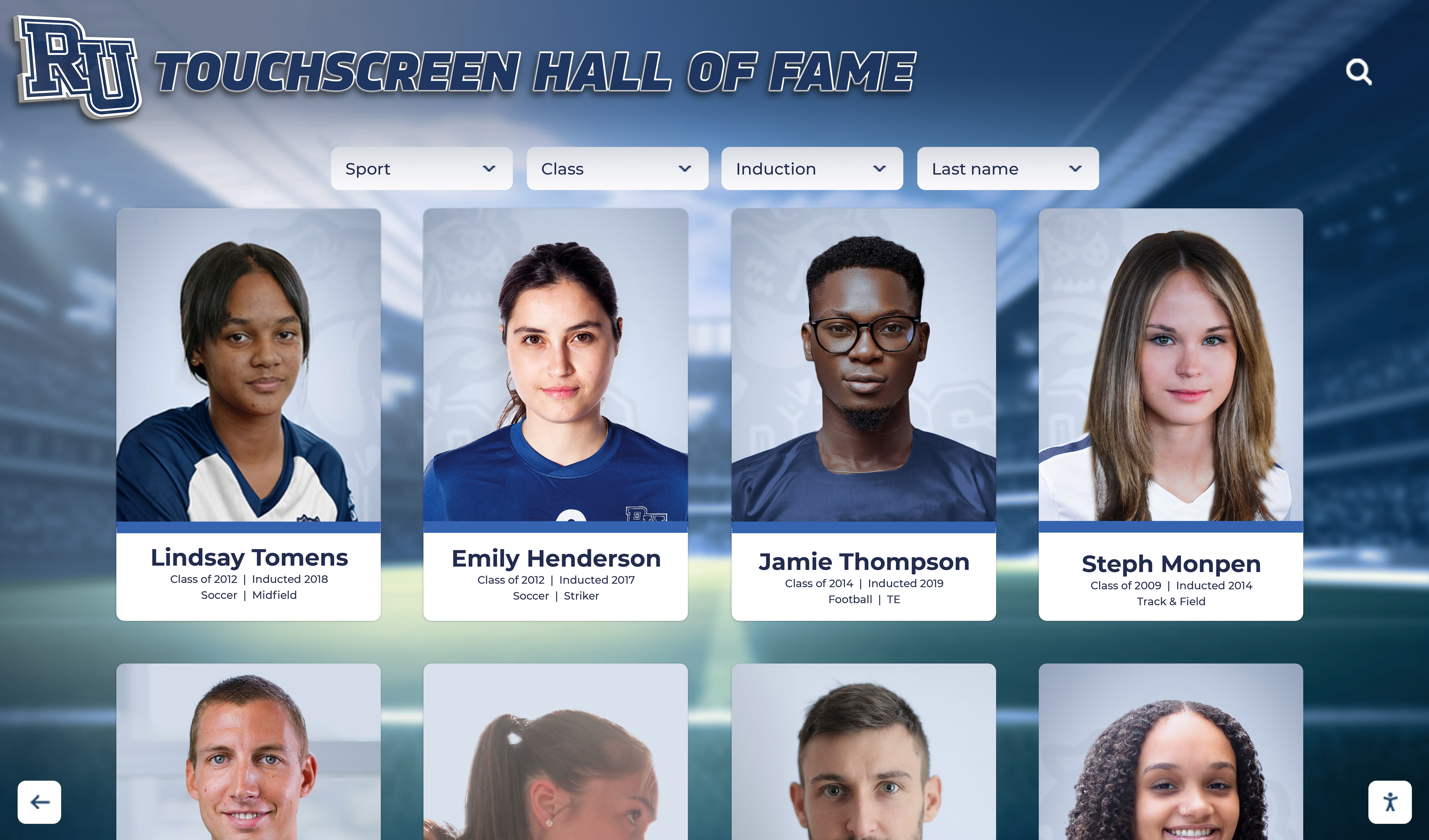
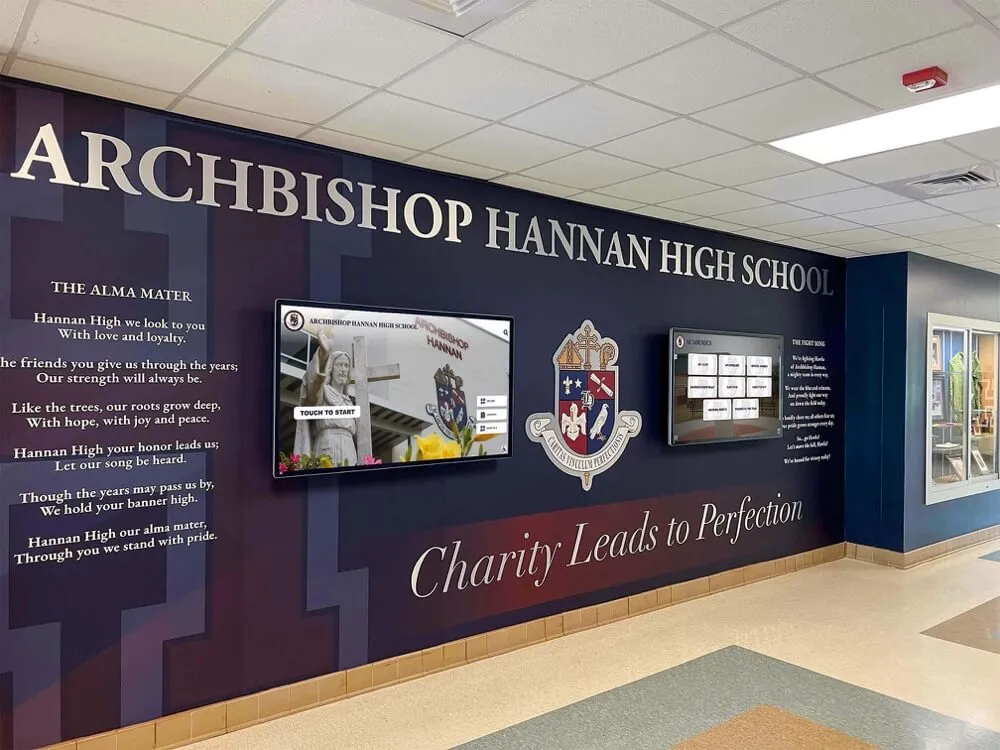
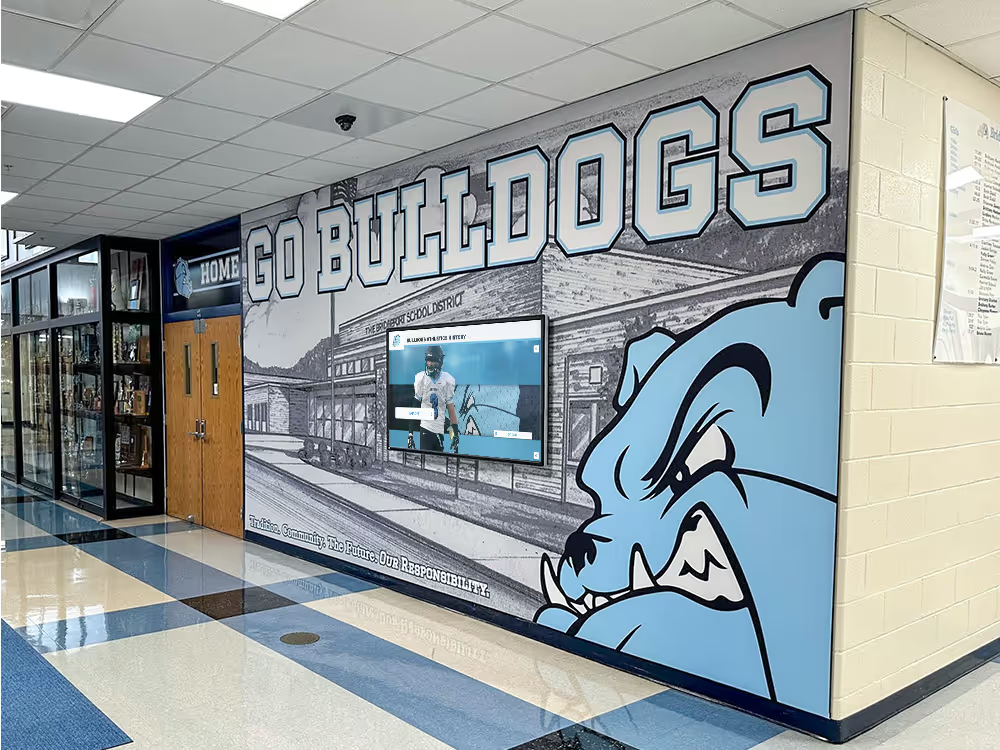
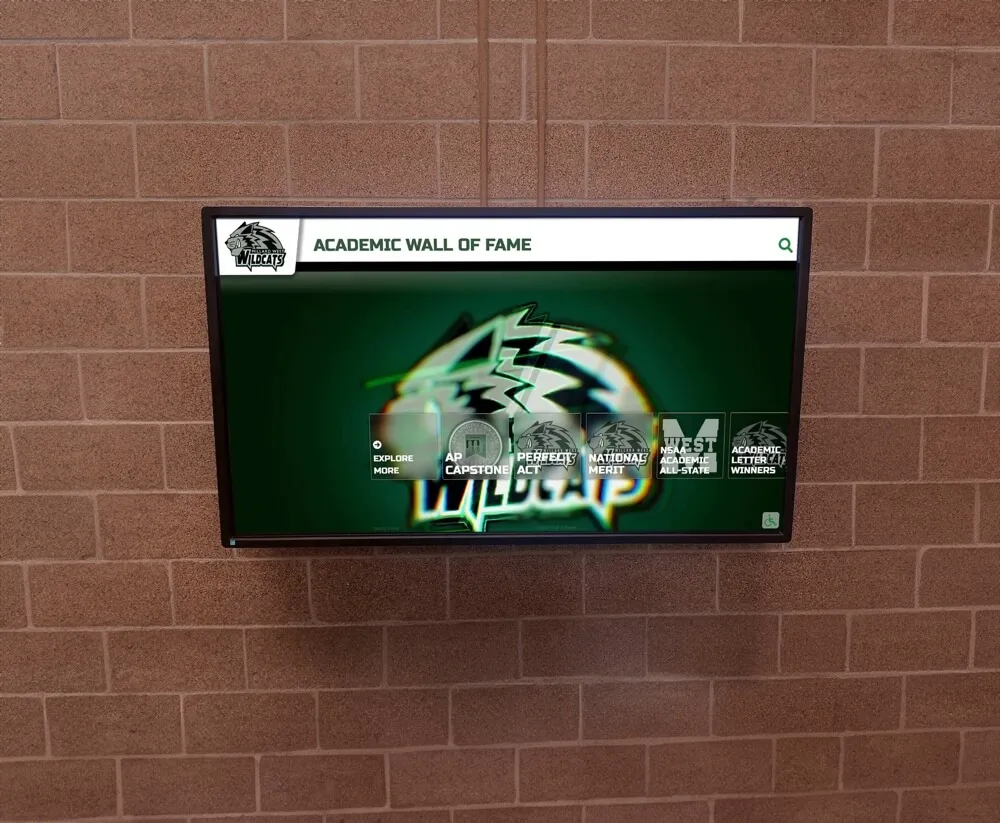
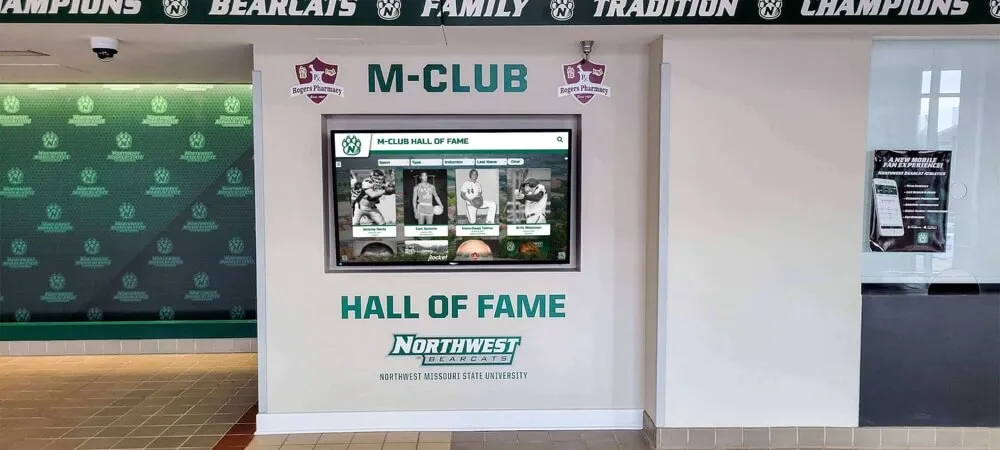
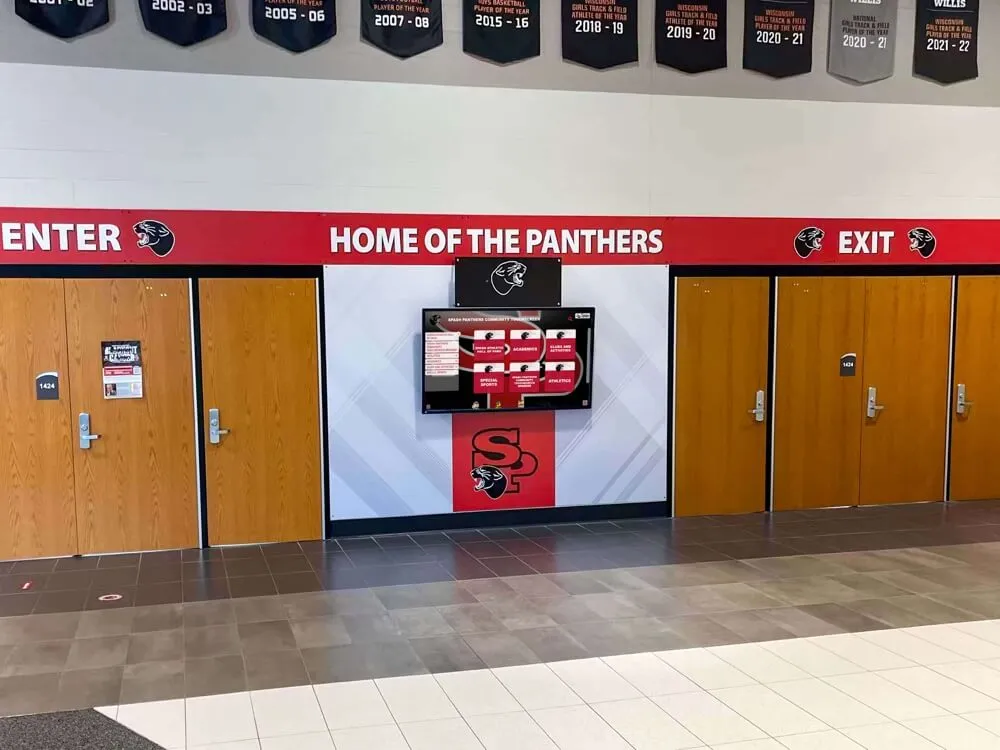
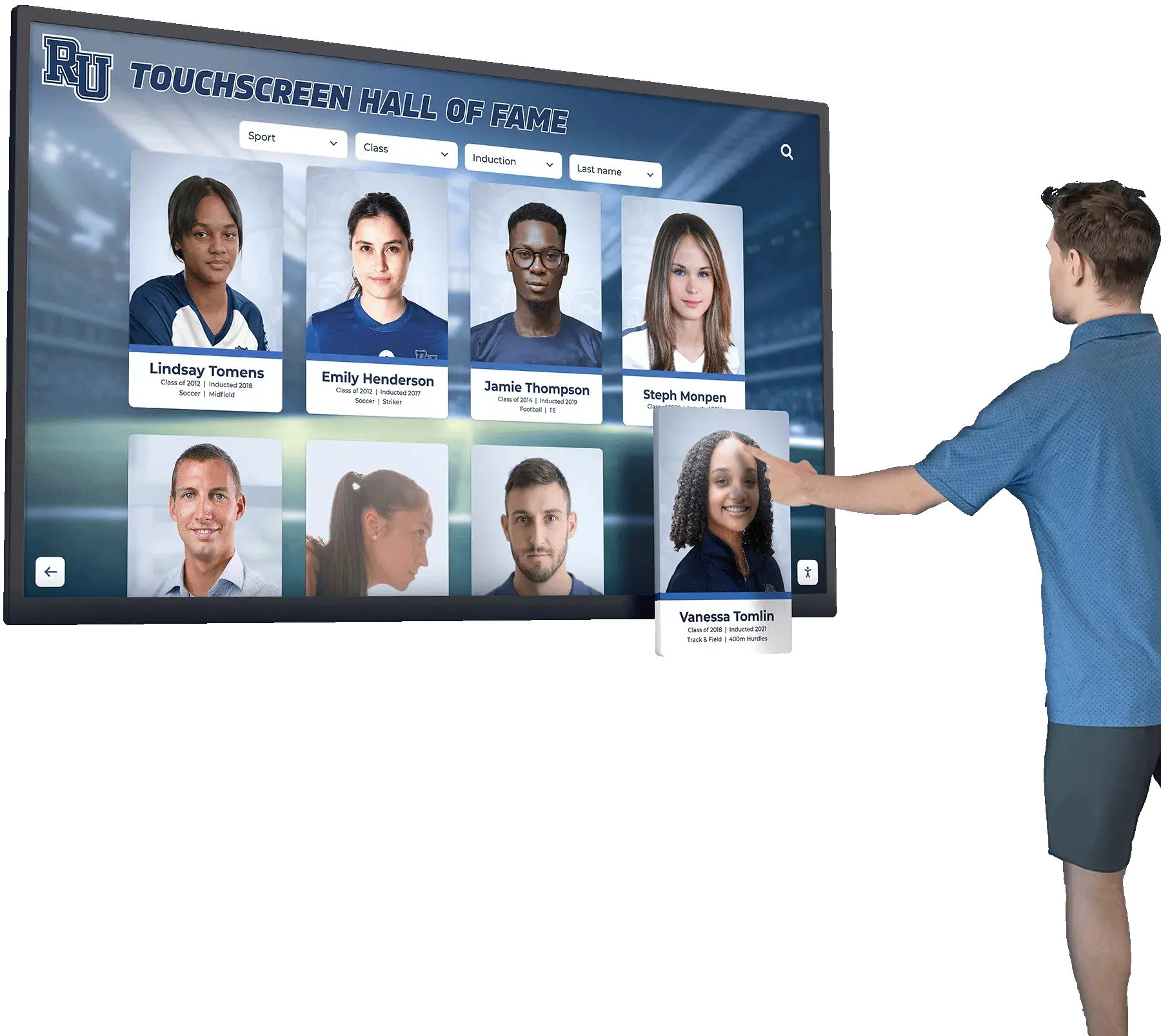
Category-based navigation enables visitors to explore different recognition purposes through clear menu selections that lead to appropriately organized content databases
Combined Individual Profiles
Organizations often honor the same individuals across multiple recognition categories—an alumnus might appear in the athletic hall of fame for playing achievements, donor recognition for financial support, and notable alumni for career accomplishments. Digital systems can create comprehensive profiles that display all recognition dimensions while maintaining appropriate categorization.
Visitors searching by name discover complete recognition histories rather than encountering fragmented acknowledgment across disconnected displays. This integration provides richer storytelling that celebrates multifaceted relationships between individuals and institutions.
Tabbed Interface Approaches
Some implementations use tabbed navigation structures where visitors select “Hall of Fame,” “Donors,” or “Sponsors” tabs to switch between recognition types while remaining on the same screen. This approach works particularly well when organizations want to emphasize connections between categories or encourage exploration across different recognition purposes.
Schools implementing interactive touchscreen recognition systems report that tabbed interfaces increase cross-category browsing by 30-40% compared to separate navigation paths requiring return to home screens.
Visual Design Differentiation
While unified platforms handle multiple recognition types, effective implementations use visual design elements that distinguish categories appropriately.
Color Coding Systems
Athletic hall of fame content might feature school athletic colors prominently, while donor recognition adopts more elegant color palettes communicating gratitude and partnership. Sponsor acknowledgment could incorporate corporate brand colors when appropriate. This subtle visual differentiation helps visitors understand which recognition area they’re exploring without requiring explicit labeling.
Template Variations
Profile templates can vary by category while maintaining overall design consistency. Athletic inductees might feature action photography prominently with statistics displays, while donor profiles emphasize contribution information and impact narratives. Sponsor recognition could prioritize logo visibility with company information.
Quality digital recognition platforms like Rocket Alumni Solutions provide flexible template systems that enable category-specific designs while maintaining unified branding and professional appearance across all recognition types.
Layout Customization
Different recognition purposes benefit from distinct information hierarchies. Hall of fame profiles typically emphasize achievements and biographical narratives, donor recognition highlights giving history and impact connections, and sponsor acknowledgment focuses on partnership benefits and community support.
Organizations can customize information fields, image arrangements, and content emphasis for each category while using consistent navigation structures and interaction patterns.
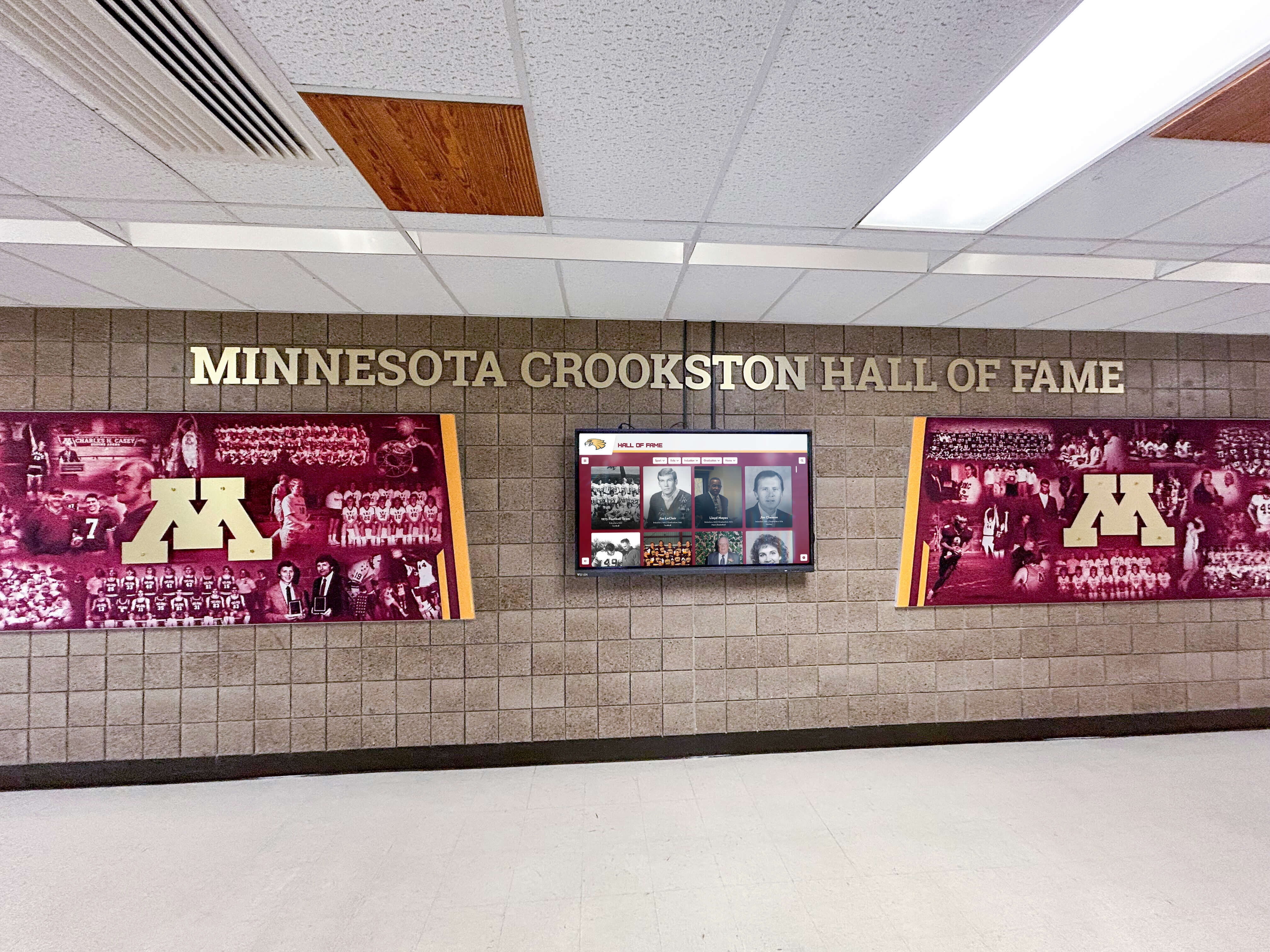
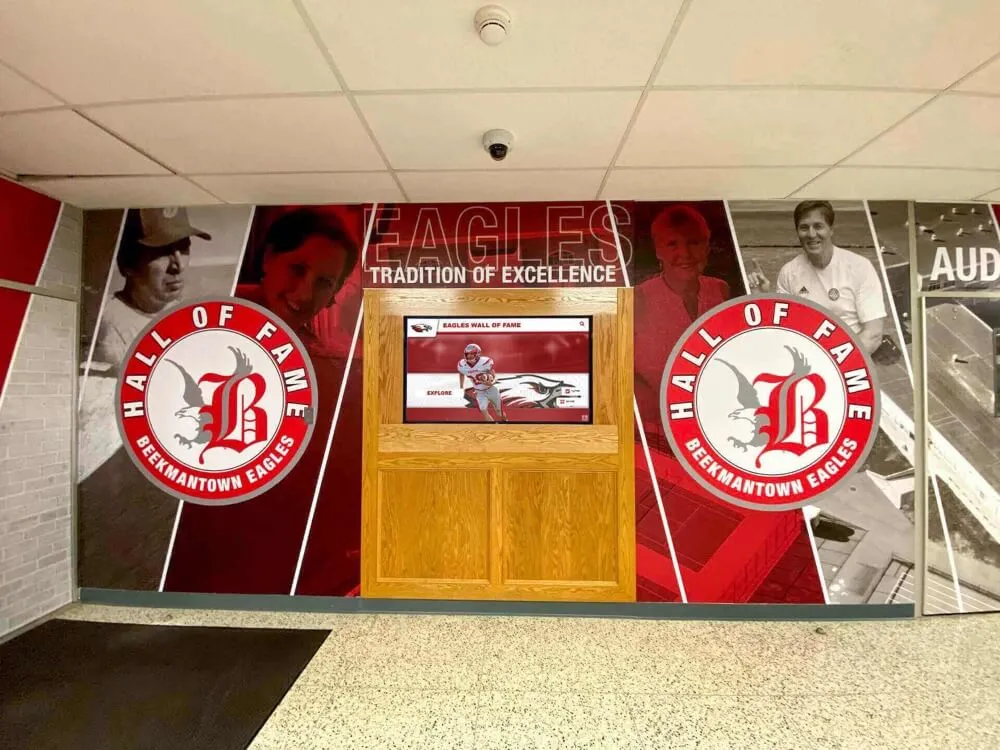
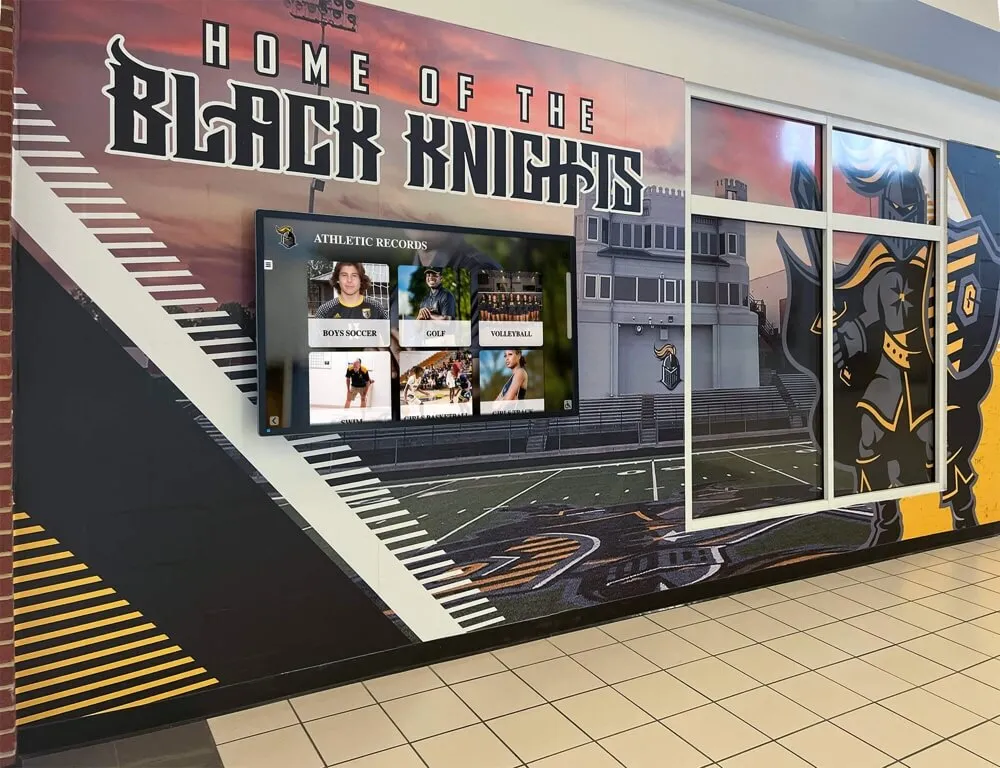
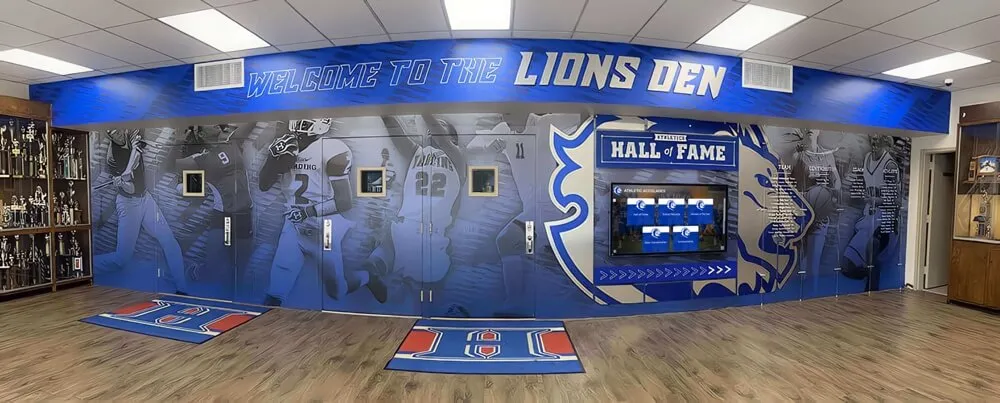
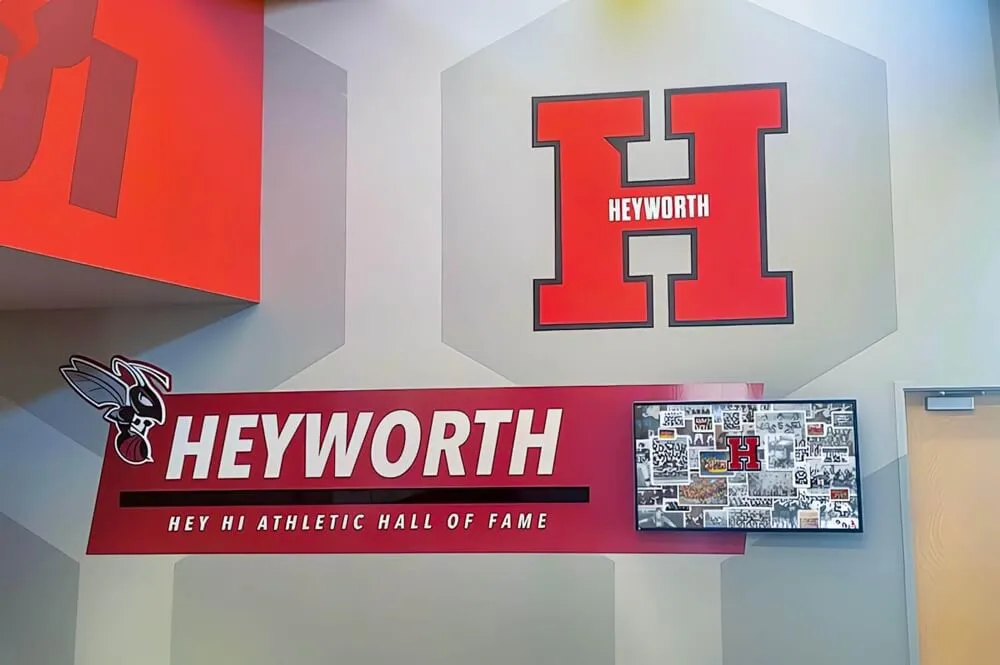
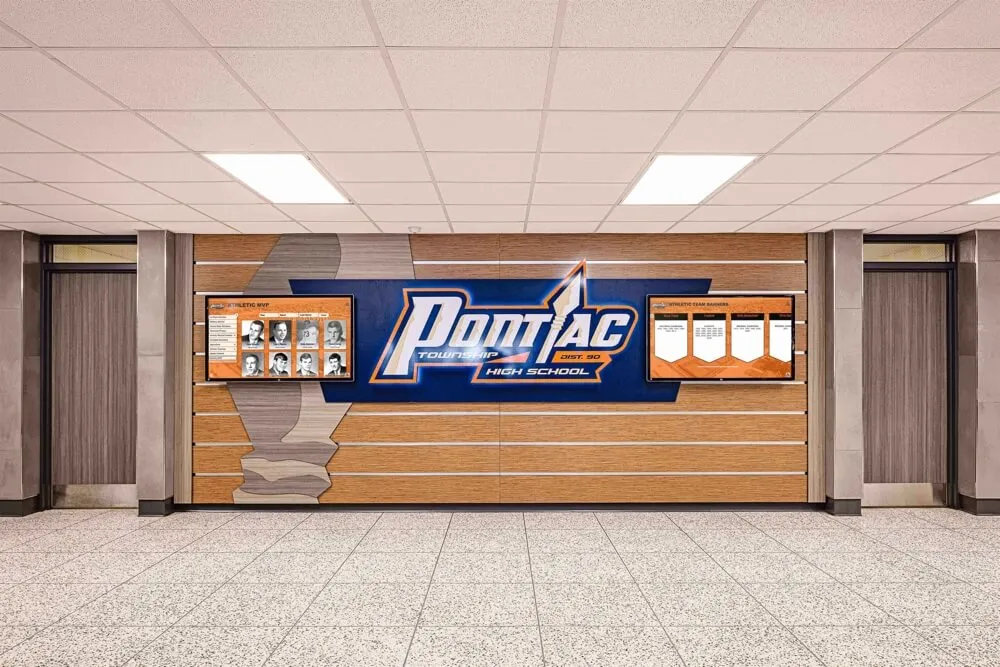
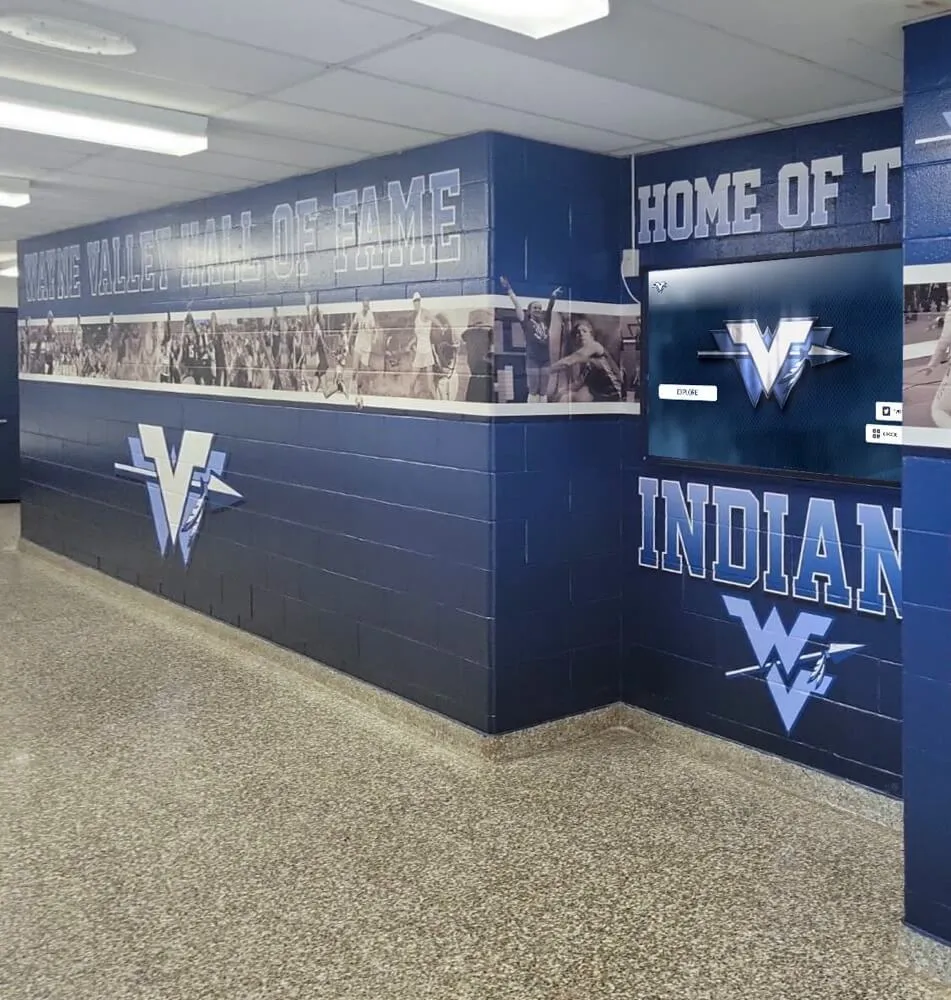
Effective installations integrate digital displays with existing architectural elements and branding, creating cohesive recognition environments that honor multiple constituencies appropriately
Sponsor Recognition Features and Management
Digital displays offer sponsor management capabilities that physical walls cannot match, making them particularly valuable for organizations with ongoing fundraising campaigns or partnership relationships.
Tiered Recognition Display
Sponsor and donor recognition typically involves multiple giving levels with appropriate acknowledgment differentiation.
Giving Level Organization
Digital systems organize supporters by contribution tiers—major donors, leadership circle, benefactors, patrons, friends, and similar designations matching organizational fundraising structures. Navigation allows visitors to browse by level or search across all contributors.
Within each tier, organizations control presentation details: major donors might receive full-screen profiles with photographs and detailed narratives, while community-level supporters appear in scrolling lists or grid arrangements with names and giving years.
Visual Prominence Management
Platform features enable precise control over recognition visibility proportional to contribution significance. Major sponsors might appear featured on home screens, receive dedicated profile pages, or display prominently in rotational content. Supporting-level contributors receive appropriate list-based acknowledgment that honors participation without disproportionate emphasis.
This flexibility solves a fundamental challenge with physical donor walls where space constraints and design limitations make it difficult to differentiate recognition appropriately across giving levels.
Real-Time Tier Adjustments
As donors increase giving over time, organizations can instantly update tier placements without physical plaque replacement costs or waiting for fabrication. A supporter moving from annual fund participation to major gift status receives immediate recognition elevation reflecting their enhanced commitment.
Schools implementing donor recognition displays report that real-time tier updates significantly improve donor satisfaction compared to delayed physical recognition that lags months behind contribution decisions.
Sponsor Logo and Branding Integration
Corporate sponsors and business partners typically expect brand visibility as part of recognition agreements.
Logo Display Options
Digital platforms accommodate sponsor logos through multiple presentation formats: dedicated sponsor profile pages featuring logos prominently with company information, home screen logo rotation displaying supporter brands continuously, category sponsorship acknowledgment for sponsors funding specific recognition areas, and search results that include sponsor logos alongside organizational recognition.
Quality systems support various logo file formats and maintain image quality across different screen sizes and resolutions.
Brand Guidelines Compliance
Organizations can implement sponsor brand guidelines ensuring logos appear with appropriate spacing, background colors, and proportions matching corporate identity requirements. This professionalism matters particularly with major sponsors who invest significant resources and expect recognition reflecting their brand standards.
Clickable Sponsor Information
Interactive capabilities enable sponsor profile pages that visitors access by selecting logos or names. These profiles can include company descriptions, partnership information, contact details, website links, and narratives explaining why sponsors support institutional missions.
This extended recognition creates value beyond simple logo display—sponsors receive meaningful acknowledgment that communicates their community commitment and organizational values.
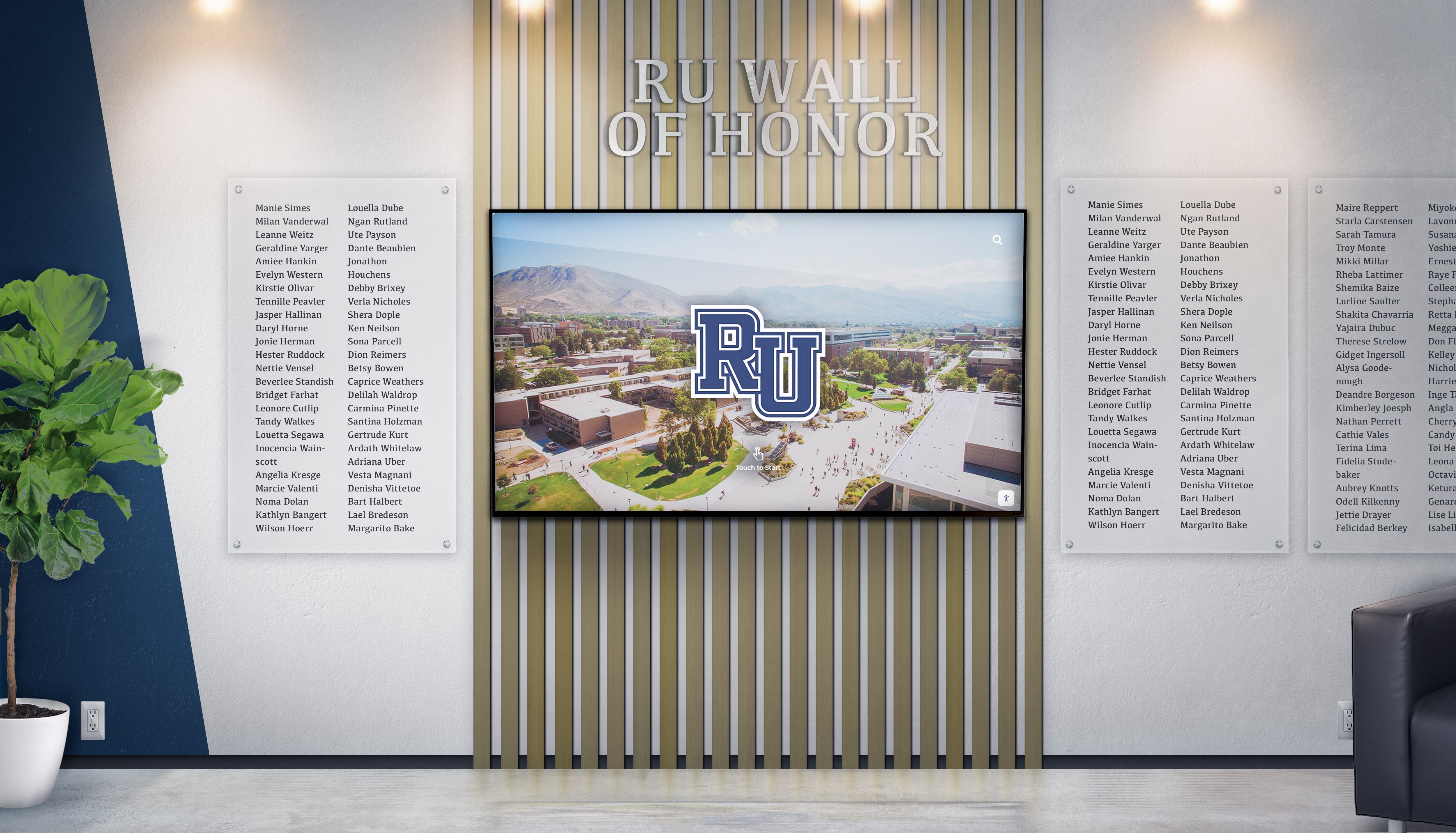
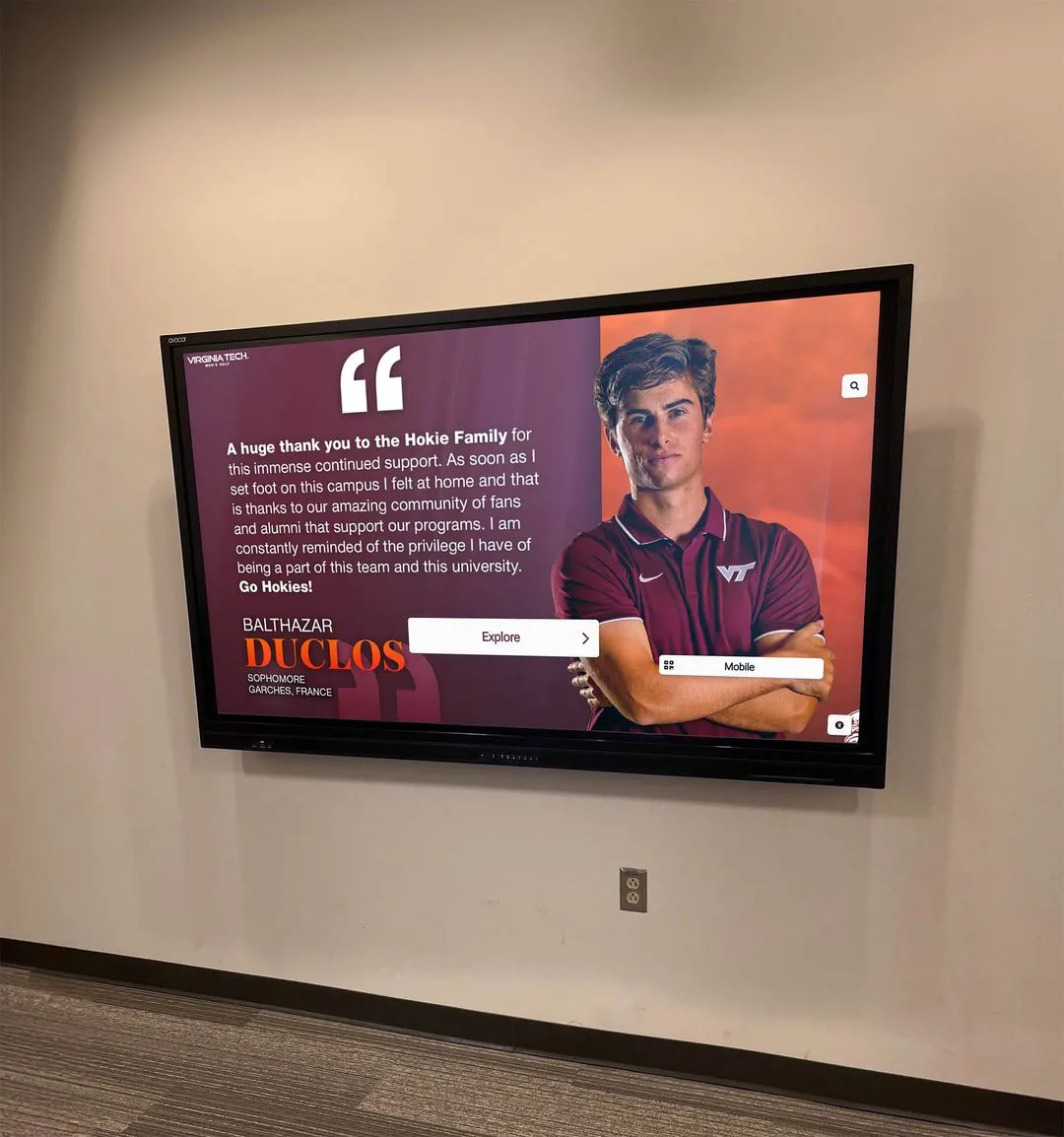
Hybrid approaches combine physical elements like name plaques with digital screens displaying detailed profiles, logos, and impact narratives for comprehensive sponsor recognition
Real-Time Recognition Updates
The ability to acknowledge sponsors immediately after contributions differentiates digital systems from traditional recognition.
Immediate Addition Capability
When sponsorship agreements finalize or contributions arrive, staff can add recognition within minutes through content management dashboards. New sponsor profiles appear instantly across touchscreen displays and web platforms without waiting for plaque fabrication or installation scheduling.
This immediacy strengthens donor relationships by demonstrating organizational responsiveness and ensuring recognition happens while excitement about partnership remains high.
Campaign Progress Display
During active fundraising campaigns, digital displays can show real-time progress toward goals including current contribution totals, percentage of goal achieved, number of donors participating, recent contributions highlighting latest supporters, and countdown timers for campaign deadlines.
This changing content creates urgency that motivates additional giving while publicly celebrating contributor communities building toward shared objectives.
Event-Based Recognition
Organizations can create temporary sponsor recognition campaigns for specific events—athletic tournaments, galas, annual appeals, or facility dedications. Event sponsors receive prominent acknowledgment during relevant timeframes, then transition to ongoing supporter databases after events conclude.
This flexibility enables responsive recognition that adapts to changing organizational priorities and funding campaigns.
Multi-Year Sponsorship Management
Many organizations develop ongoing partnership relationships requiring recognition across multiple years.
Historical Giving Display
Sponsor profiles can show giving history across years rather than acknowledging single transactions. This longitudinal view honors sustained support and demonstrates partnership depth: “Supporting our athletic program since 2015” or “10-year sponsor of academic excellence initiatives.”
Long-term supporters appreciate recognition that acknowledges relationship longevity rather than treating each year as isolated transaction.
Cumulative Giving Calculations
Digital systems can calculate and display cumulative giving totals across time, automatically updating tier placements when accumulated support reaches higher recognition levels. A supporter making five consecutive annual gifts of $5,000 eventually reaches $25,000 cumulative recognition appropriate for major donor status.
This automation ensures recognition remains current and accurate without manual calculation burdens.
Renewal Recognition Features
When sponsorships renew, systems can highlight returning sponsors with special designation: “Proud supporter for 3 consecutive years” or similar language that celebrates sustained commitment. This recognition differentiates loyal long-term partners from one-time contributors.
Nonprofits implementing comprehensive donor stewardship programs report that multi-year recognition significantly improves retention rates for recurring sponsors.
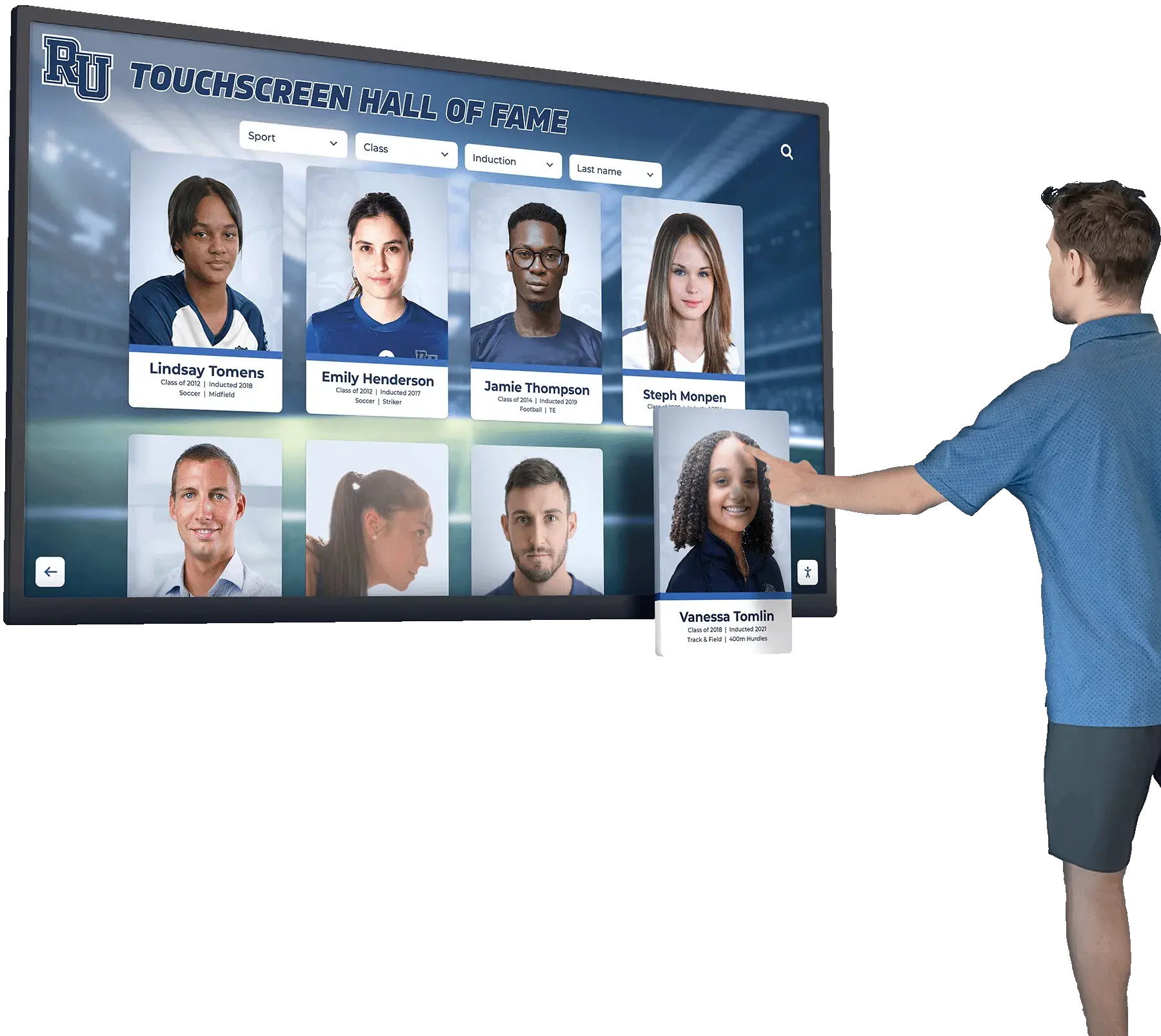
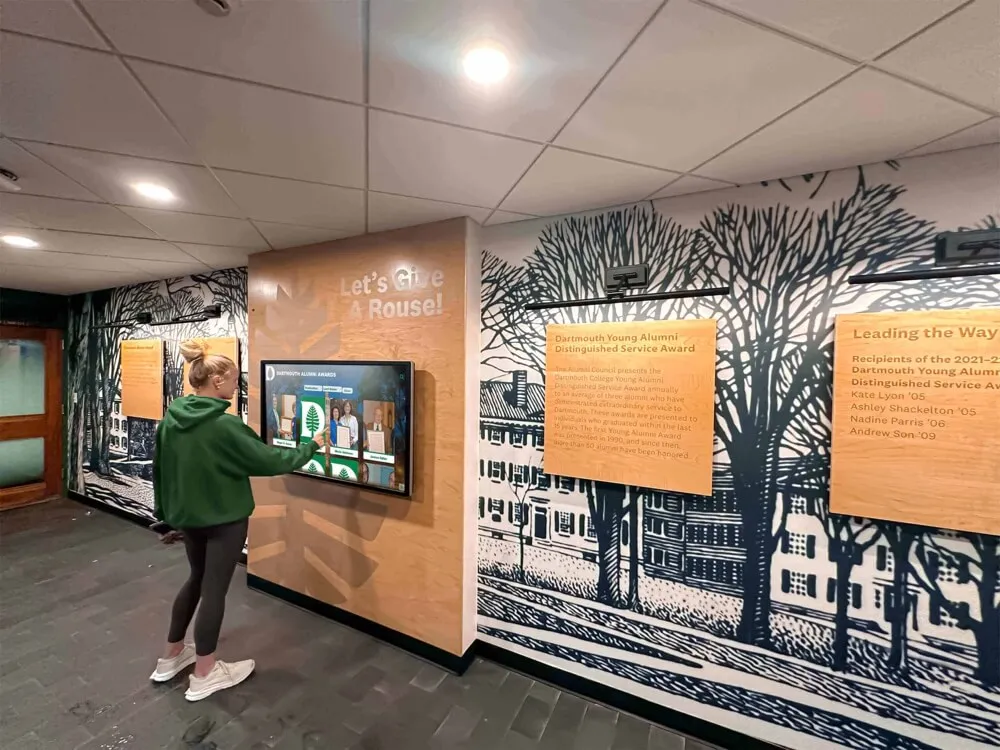
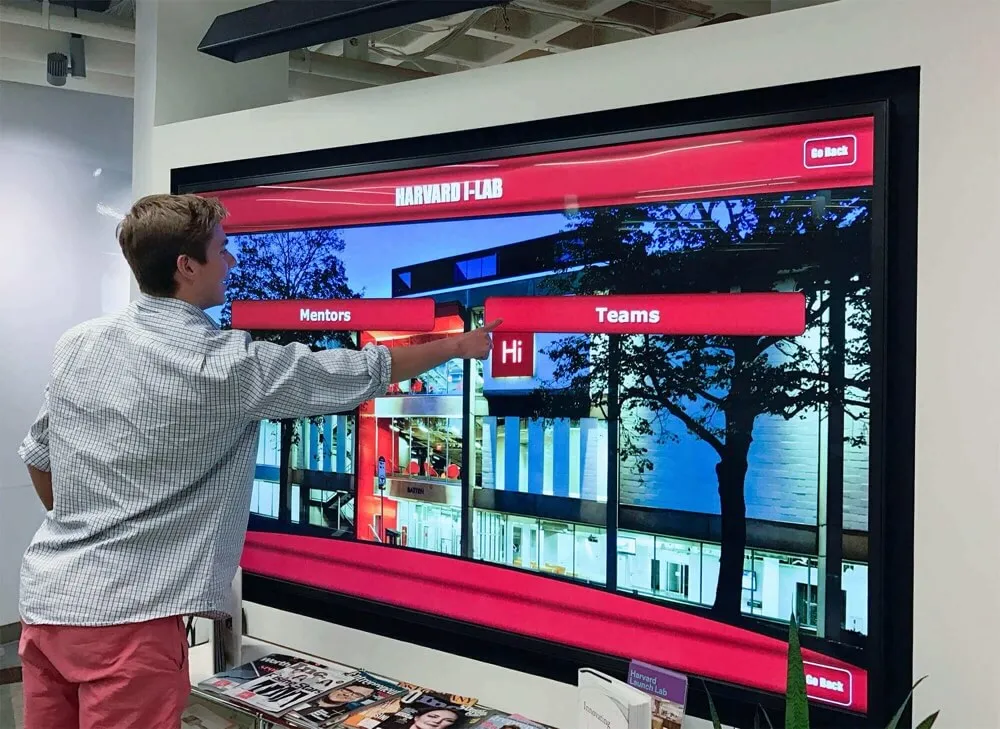
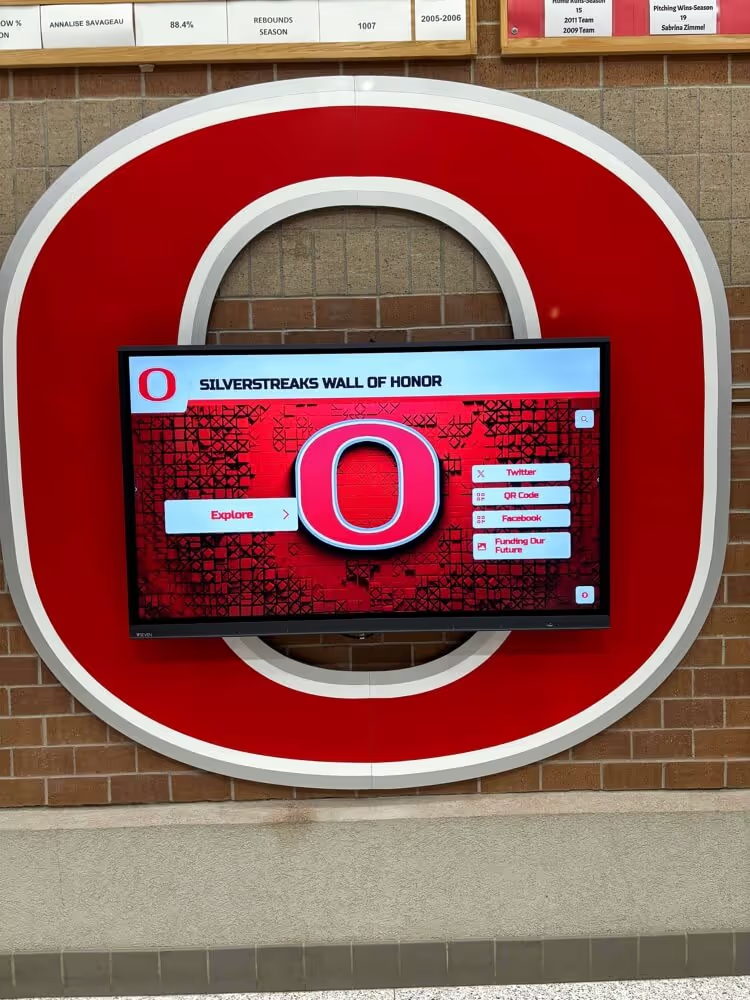
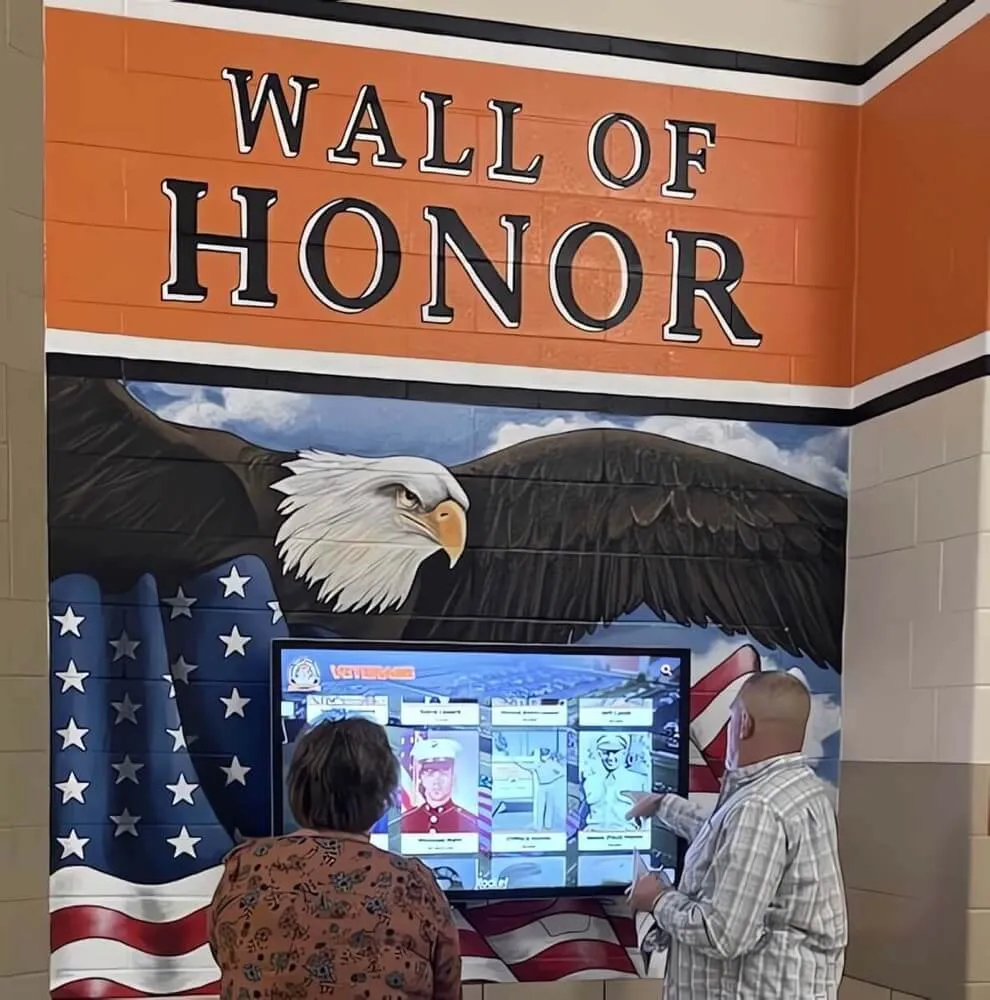
Simple touchscreen interfaces enable visitors to search for specific individuals, browse categories, and discover recognition stories across hall of fame, donor, and sponsor content
Design Considerations for Combined Recognition Systems
Successfully balancing multiple recognition purposes requires thoughtful design decisions that serve diverse audiences and organizational objectives.
Balancing Recognition Visibility
Organizations must ensure appropriate visibility for different content categories without allowing any single purpose to dominate.
Home Screen Content Distribution
Consider which recognition types appear on home screens when displays sit idle or first launch. Many implementations rotate featured content across categories—showing hall of fame inductees for 30 seconds, then donor highlights, then sponsor acknowledgment, cycling continuously.
This rotation ensures all recognition purposes receive visibility while preventing any category from appearing secondary or hidden within navigation structures.
Navigation Hierarchy Decisions
Primary navigation should present all major categories with equal visual weight unless organizational priorities clearly justify emphasis. If donor cultivation remains the top institutional priority, donor recognition might receive primary navigation position, but other categories should remain readily accessible.
Test navigation with diverse users—alumni seeking athletic achievements, prospective donors exploring giving communities, and community members looking for sponsor information—ensuring all groups can accomplish their goals intuitively.
Search Functionality Scope
Implement comprehensive search that spans all content categories rather than requiring users to select recognition types before searching. When visitors search by name, results should include all relevant profiles—hall of fame, donor recognition, notable alumni, and sponsor acknowledgment—allowing discovery of complete recognition histories.
Schools implementing digital hall of fame systems report that universal search significantly increases engagement compared to category-restricted search requiring users to predict where individuals might appear.
Privacy and Preference Management
Different recognition purposes involve distinct privacy considerations.
Donor Privacy Options
Some contributors prefer anonymous giving or limited public recognition. Digital systems should accommodate privacy preferences through anonymous designation for donors wanting no public acknowledgment, last-name-only display for partial privacy, and list inclusion without profile pages for minimal visibility donors.
Quality platforms enable donor-specific privacy settings that differ from other recognition categories where privacy concerns rarely arise.
Contact Information Handling
Sponsor recognition might appropriately include business contact information, while hall of fame profiles rarely warrant addresses or phone numbers. Configure information fields appropriate to recognition purposes rather than forcing uniform templates across categories.
Photo Permission Management
Ensure proper consent for photographs appears in content management workflows. Hall of fame inductees typically expect photo usage, but donors may require explicit permission for image display. Track and respect these preferences within profile management systems.
Content Quality Standards Across Categories
Maintain consistent professional presentation regardless of recognition type.
Biographical Information Completeness
Establish minimum content standards ensuring all profiles meet quality thresholds. Incomplete profiles with minimal information diminish recognition impact and create uneven user experiences. Define what constitutes acceptable profile completion for each category.
Photo Quality Requirements
Specify image resolution, aspect ratio, and quality standards. Low-resolution or poorly cropped photos undermine professional appearance. Provide editing resources or services that help organizations meet visual standards across all content.
Regular Content Audits
Schedule periodic reviews identifying outdated information, broken links, missing photos, or other quality issues. Digital recognition requires ongoing maintenance ensuring all content remains current, accurate, and professionally presented.
Organizations maintaining high content standards across mixed recognition purposes report higher engagement and more positive visitor feedback compared to systems with inconsistent quality.
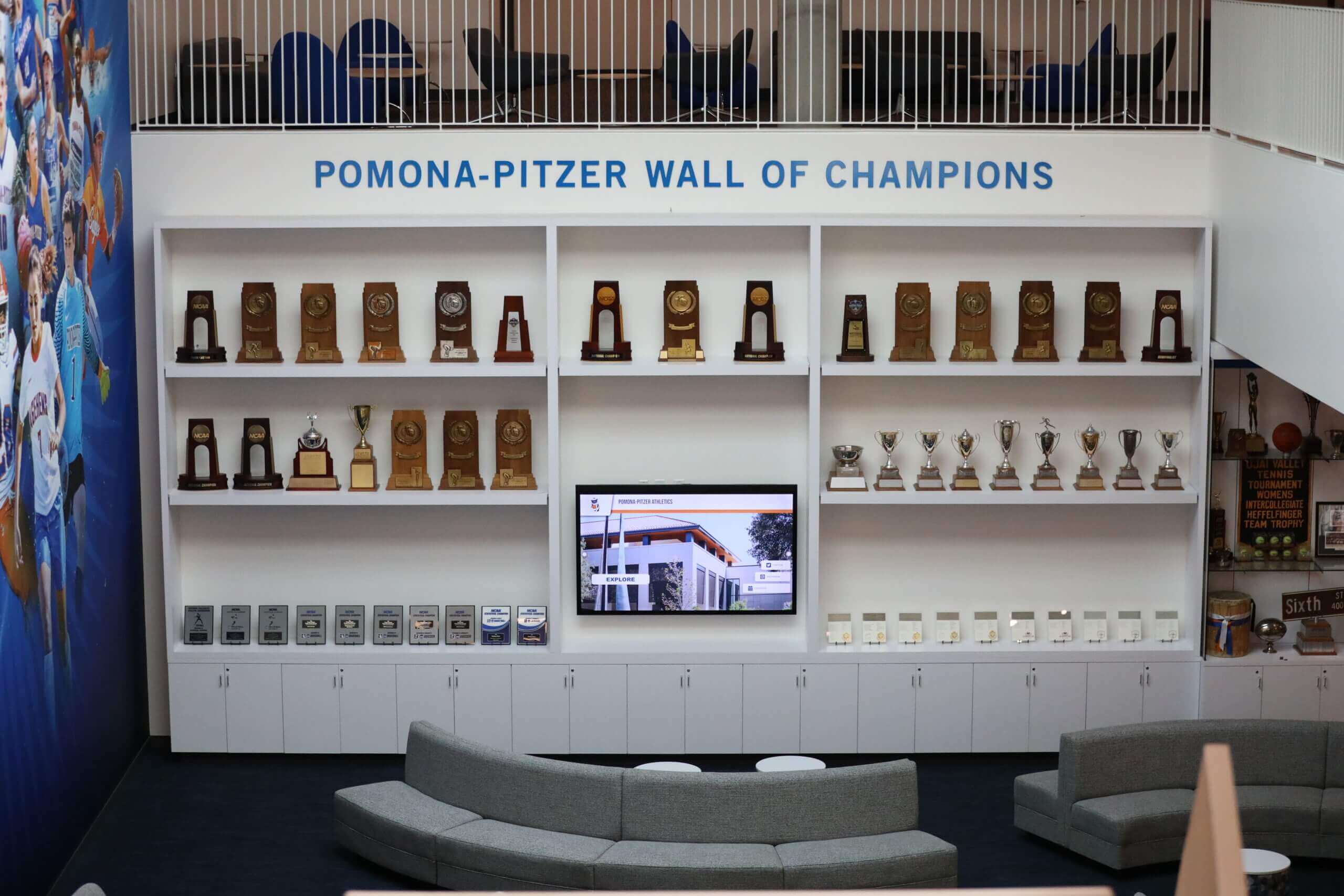
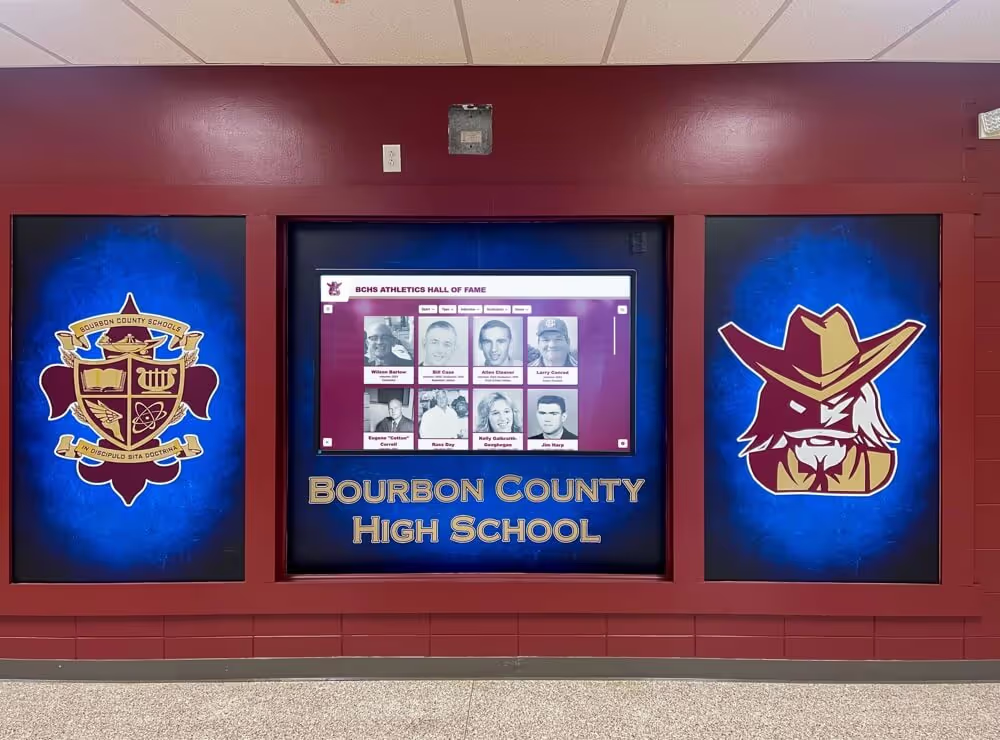
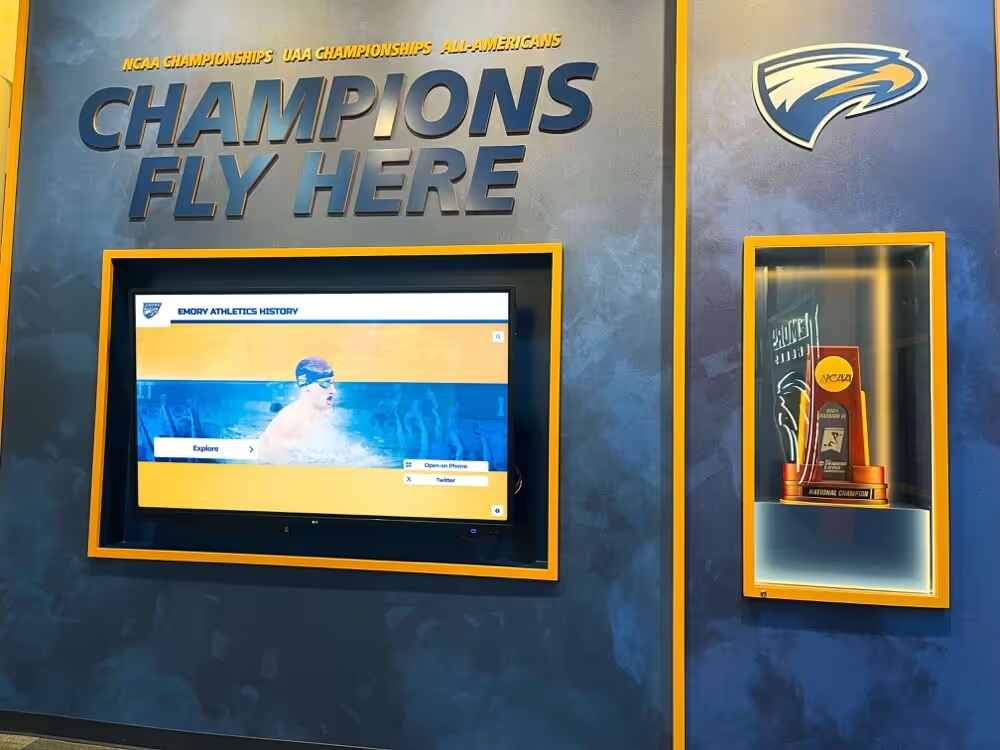
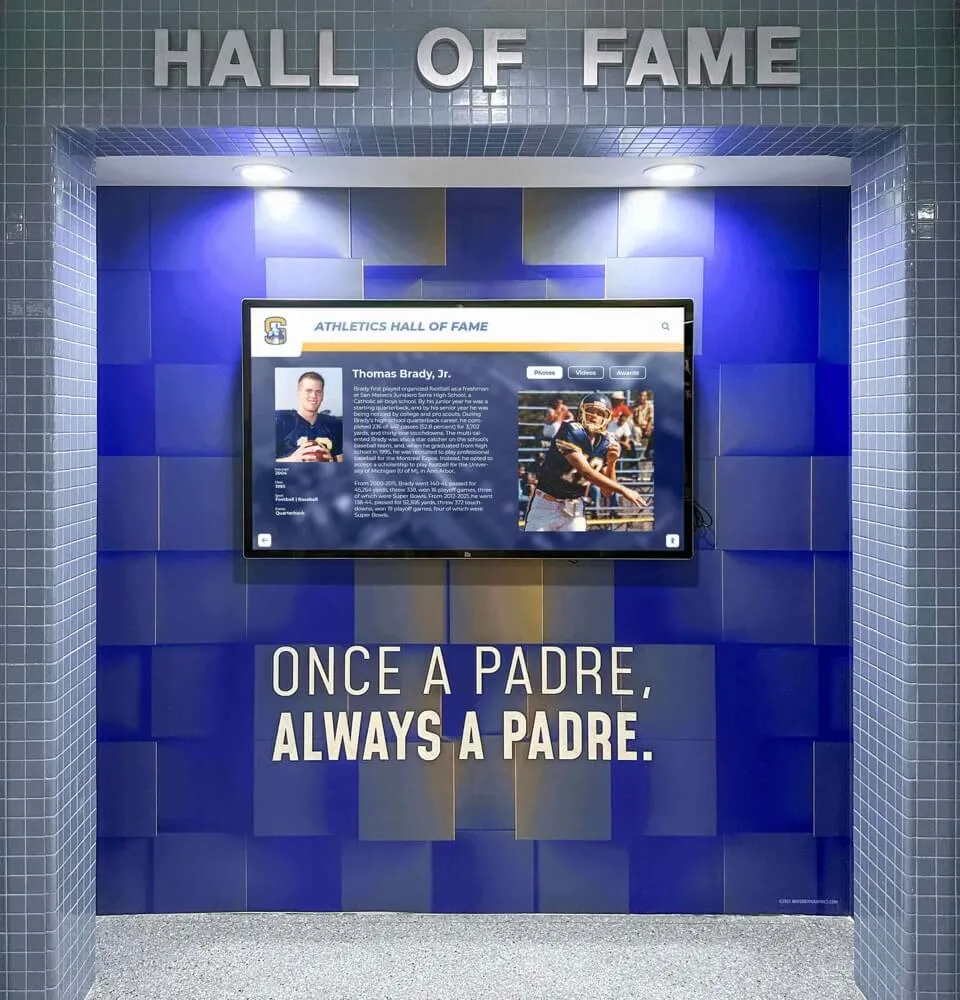
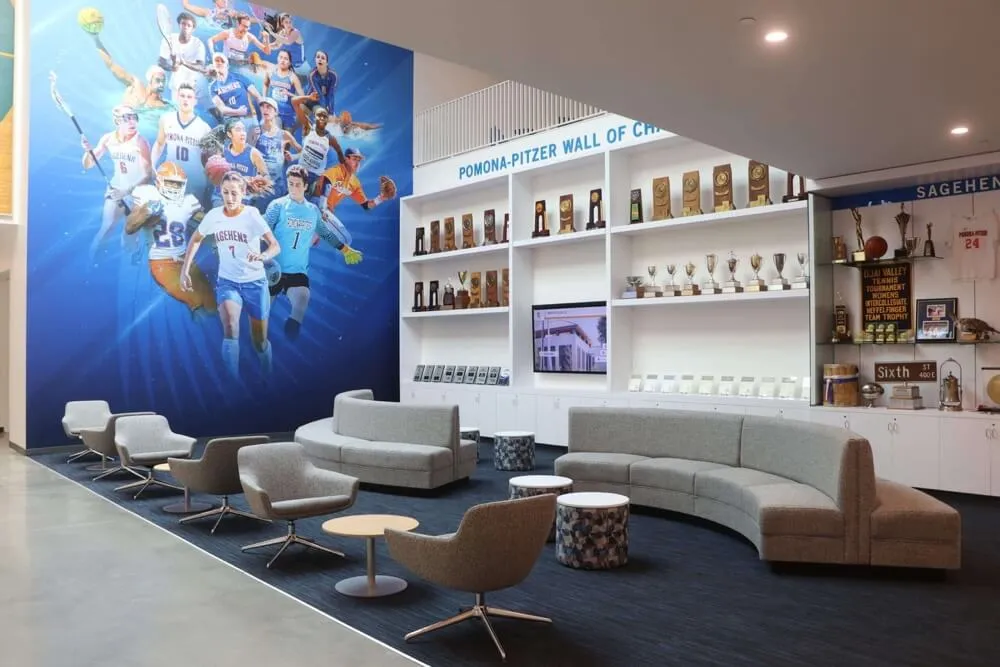
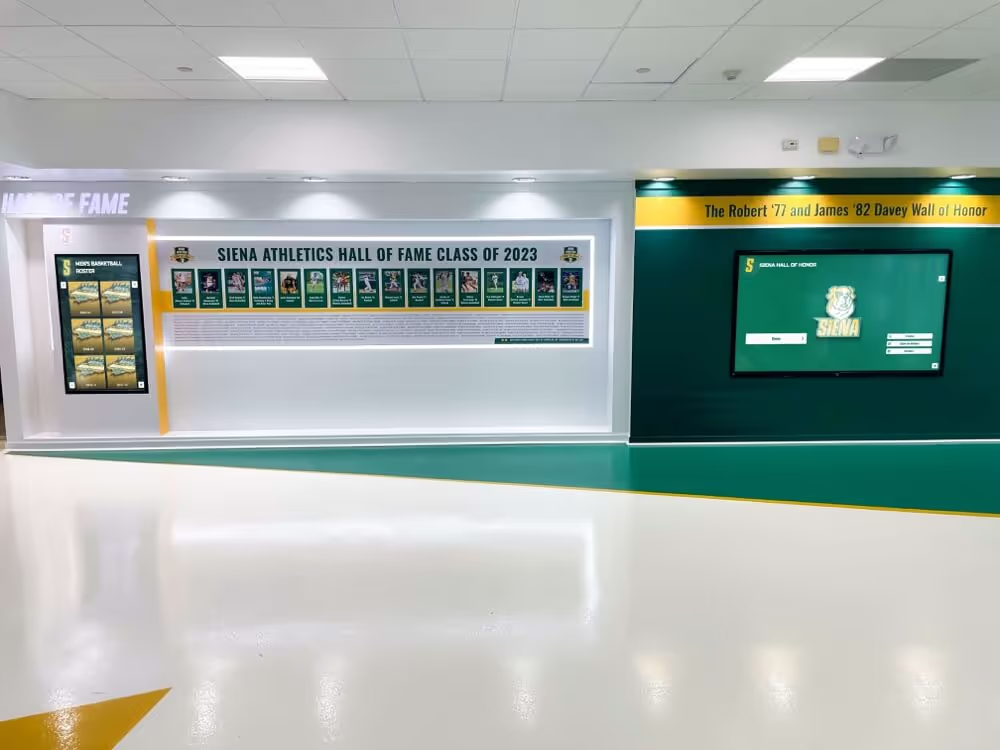
Thoughtful installations preserve existing physical recognition elements like trophy displays while adding digital capacity that expands recognition to unlimited inductees, donors, and sponsors
Implementation Best Practices for Dual-Purpose Systems
Successful deployments require systematic planning that addresses content strategy, technical requirements, and stakeholder engagement.
Phased Content Development
Rather than attempting to populate all recognition categories simultaneously, consider phased approaches.
Priority Category Launch
Begin with the recognition purpose having the most complete existing data and highest organizational priority. Many schools start with athletic hall of fame content since sports programs typically maintain good historical records and photography.
Launch with quality content in one category, then expand to donor recognition and other purposes as resources and content become available. This approach prevents delayed launches while waiting for complete cross-category content.
Historical Content Strategy
Determine how far back historical recognition extends. Complete historical coverage for every donor and hall of fame inductee since institutional founding may prove impractical. Consider reasonable timeframes: perhaps 20-30 years of historical content with selective coverage of particularly notable earlier contributors and inductees.
Communicate coverage timeframes transparently so visitors understand scope decisions.
Ongoing Addition Processes
Establish clear workflows for adding new recognition across categories: who creates content, what approval processes ensure accuracy, how quickly new inductees or donors receive recognition, and what quality control mechanisms prevent errors.
Organizations implementing comprehensive recognition technology report that documented processes significantly improve content consistency and addition efficiency.
Stakeholder Communication Strategies
Different constituencies have interests in various recognition purposes.
Donor Communication
When implementing donor recognition components, communicate clearly with existing contributors about: timeline for recognition appearing on displays, how contributors will receive notification when profiles go live, privacy options and preference management processes, and how cumulative giving and tier progression work.
Development directors report that early communication about recognition implementation significantly improves donor satisfaction and reduces confused inquiries.
Alumni and Inductee Outreach
Hall of fame inductees appreciate notification about digital recognition with web platform links enabling personal sharing. Facilitate this connection through email campaigns, social media announcements, and reunion event promotion.
Sponsor Relationship Management
Coordinate with marketing or development staff managing sponsor relationships ensuring recognition terms align with partnership agreements. Verify logo usage rights, confirm branding guideline compliance, and obtain any necessary approvals before public launch.
Technical Configuration Decisions
Hardware and software selections significantly impact long-term satisfaction.
Display Placement Strategy
Install touchscreens in high-traffic locations where diverse audiences naturally gather: building lobbies serving students, alumni, and visitors; athletic facility entrances reaching sports community members; and development office waiting areas exposing prospective donors to giving communities.
Avoid placing displays in low-traffic or single-purpose areas limiting which constituencies encounter recognition.
Network and Power Requirements
Digital displays require reliable network connectivity for content updates and web platform integration. Ensure adequate electrical infrastructure and consider backup power for critical locations. Work with IT departments early in planning addressing security, bandwidth, and connectivity requirements.
Hardware Longevity Planning
Commercial-grade displays typically function reliably for 7-10 years with proper maintenance. Budget for eventual hardware replacement while selecting platforms supporting hardware upgrades without requiring complete system replacement.
Organizations implementing recognition displays benefit from selecting platforms with hardware flexibility enabling future equipment changes without vendor lock-in limitations.
Benefits Organizations Report from Combined Recognition Systems
Schools, nonprofits, and institutions implementing dual-purpose displays consistently identify specific advantages.
Space Efficiency Gains
Single displays replacing multiple physical recognition areas free valuable wall space for other purposes while expanding recognition capacity dramatically. Organizations report reclaiming 50-100 square feet of wall space previously consumed by crowded plaque arrangements.
This space efficiency matters particularly in older facilities with limited available walls or organizations occupying leased space where permanent physical installations pose challenges.
Improved Donor Cultivation
Development professionals report that advanced donor recognition capabilities enhance cultivation conversations. Prospective major donors touring facilities encounter professionally presented giving communities that demonstrate strong philanthropic cultures and organizational commitment to stewardship.
The ability to show donors how recognition will appear—including logo placement, tier positioning, and profile presentation—before gifts finalize helps close major commitments by addressing acknowledgment concerns proactively.
Enhanced Engagement Metrics
Analytics from dual-purpose systems show higher engagement compared to single-purpose displays. Visitors exploring athletic achievements often browse donor recognition out of curiosity, and prospective donors investigating giving communities frequently explore hall of fame content.
Organizations report average session durations of 3-5 minutes on dual-purpose displays compared to 1-2 minutes on single-purpose installations—engagement differences that justify combined approaches.
Administrative Efficiency
Managing all recognition content through unified platforms reduces administrative complexity compared to coordinating multiple vendors for different recognition purposes. Staff report time savings of 40-60% compared to traditional processes involving separate plaque orders, trophy suppliers, and donor wall coordination.
Cost Justification
While digital recognition requires meaningful initial investment, organizations combining multiple recognition purposes justify costs more easily. When single platforms serve hall of fame, donor, and sponsor needs simultaneously, per-purpose costs decrease significantly compared to separate implementations.
Schools report achieving return on investment within 2-3 years through physical plaque cost elimination, space renovation savings, and administrative efficiency gains.
Planning Your Dual-Purpose Recognition Implementation
Organizations ready to implement combined recognition systems should follow systematic planning processes.
Conduct Needs Assessment
Begin by clearly defining recognition requirements across categories: which achievements warrant hall of fame inclusion, what donor giving levels require acknowledgment, what sponsor recognition commitments exist, and what other recognition purposes matter.
Document existing recognition processes, pain points, and stakeholder feedback informing system requirements.
Evaluate Platform Options
Research providers offering genuine dual-purpose capabilities rather than single-purpose systems requiring awkward adaptation. Key evaluation criteria include content capacity and limits across categories, template flexibility supporting diverse recognition types, sponsor-specific features including logo management, privacy and preference management capabilities, content management interface ease of use, web platform quality and mobile optimization, analytics and reporting functionality, and support quality during implementation and ongoing operation.
Solutions like Rocket Alumni Solutions provide purpose-built platforms designed specifically for combined recognition rather than requiring organizations to force-fit general digital signage tools into recognition applications.
Develop Content Strategy
Create detailed content plans addressing historical coverage decisions, ongoing addition workflows, quality standards and consistency requirements, photo collection and optimization processes, privacy and permission management, and responsible staff assignments.
Realistic content planning prevents implementations stalling due to underestimated content development requirements.
Plan Stakeholder Engagement
Design communication strategies ensuring relevant constituencies understand recognition implementation: donor communication about timeline and features, alumni outreach encouraging profile exploration and sharing, sponsor coordination confirming recognition terms, internal staff training on content management, and board or leadership updates demonstrating program value.
Establish Success Metrics
Define how you’ll measure implementation success beyond simple launch completion: engagement metrics including touchscreen interactions and web sessions, donor satisfaction feedback and retention patterns, sponsor renewal rates and partnership satisfaction, administrative time savings and process improvements, and qualitative feedback from diverse stakeholders.
Tracking these outcomes demonstrates value and informs ongoing optimization.
Moving Forward with Combined Recognition
Digital displays that function as both halls of fame and donor walls solve fundamental space and flexibility limitations that constrain traditional recognition approaches. By combining athletic achievements, donor acknowledgment, and sponsor recognition in unified platforms, organizations honor diverse constituencies effectively while maximizing technology investments.
The sophisticated sponsor management capabilities these systems provide—tiered recognition, logo integration, real-time updates, and multi-year tracking—enable development programs that traditional physical walls cannot support. Meanwhile, athletic directors and alumni professionals gain platforms celebrating achievements with unlimited capacity and rich multimedia storytelling.
Organizations implementing dual-purpose recognition report higher engagement, improved donor relationships, significant space savings, and administrative efficiency gains that justify initial investments many times over. As technology continues advancing and recognition expectations evolve, combined digital systems position institutions to adapt and expand recognition without physical constraints or major reinvestment.
Ready to explore how digital recognition can serve multiple purposes for your organization? Talk to our team about comprehensive platforms that combine hall of fame displays, donor recognition, and sponsor management in unified systems designed for schools, nonprofits, and organizations committed to honoring achievements and celebrating supporters.