Walk through any high school hallway and you’ll encounter trophy cases—glass-enclosed displays filled with decades of athletic achievements, dusty plaques commemorating state championships, and overcrowded shelves struggling to fit one more award. These traditional recognition fixtures have served schools for generations, but many administrators now face a critical question: Should we stick with conventional trophy cases, or is it time to transition to digital hall of fame displays?
The answer isn’t always straightforward. Traditional trophy cases offer tangible, physical recognition that many communities value deeply. Digital displays provide interactive experiences, unlimited capacity, and multimedia storytelling capabilities that static cases can’t match. Understanding the differences between these two approaches helps schools make informed decisions about recognition investments that will serve their communities for years to come.
This comprehensive comparison examines traditional trophy cases and digital hall of fame displays across critical dimensions including physical space requirements, initial and ongoing costs, maintenance demands, visitor engagement, accessibility, content flexibility, and long-term scalability. Whether you’re planning a new athletic facility, renovating existing recognition spaces, or simply wondering if your current trophy cases still serve your needs, this guide provides the practical information you need to evaluate both options objectively.
Understanding Traditional Trophy Cases
Traditional trophy cases have been the standard school recognition solution for decades. These physical displays typically consist of glass-fronted cabinets mounted on walls or built into hallway alcoves, housing physical trophies, plaques, photographs, and other memorabilia commemorating athletic achievements, academic honors, and institutional milestones.
The appeal is straightforward: tangible recognition that visitors can see as they walk through school buildings. Championship trophies gleam behind glass, team photos document winning seasons, and engraved plaques provide permanent records of individual accomplishments. For many schools, these displays represent tradition and institutional history in their most concrete form.
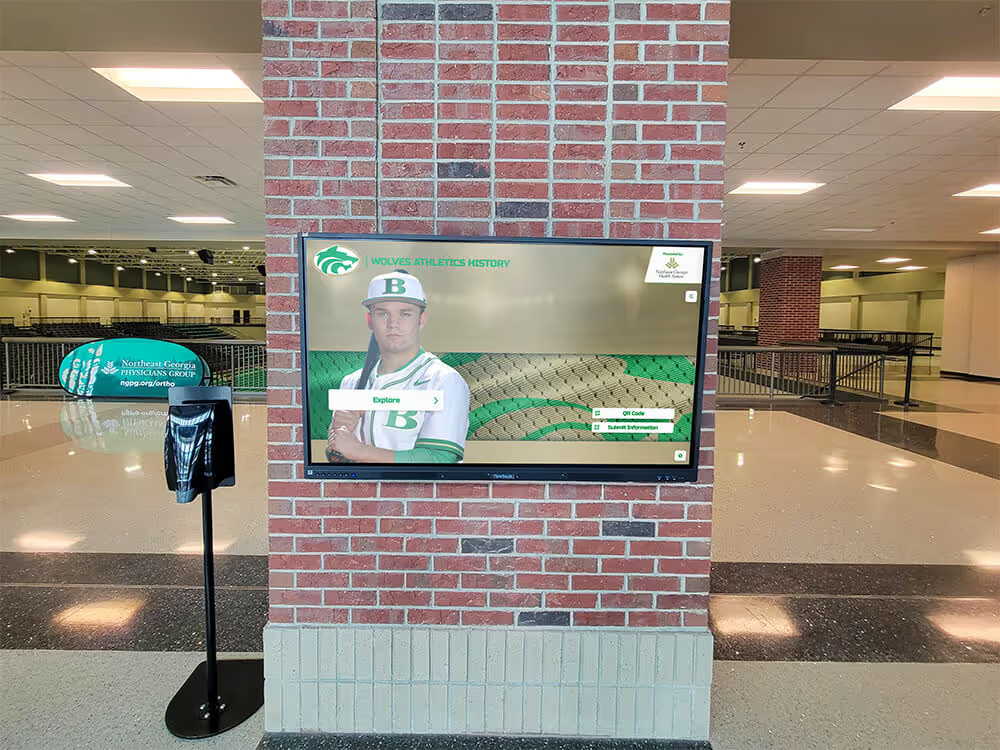
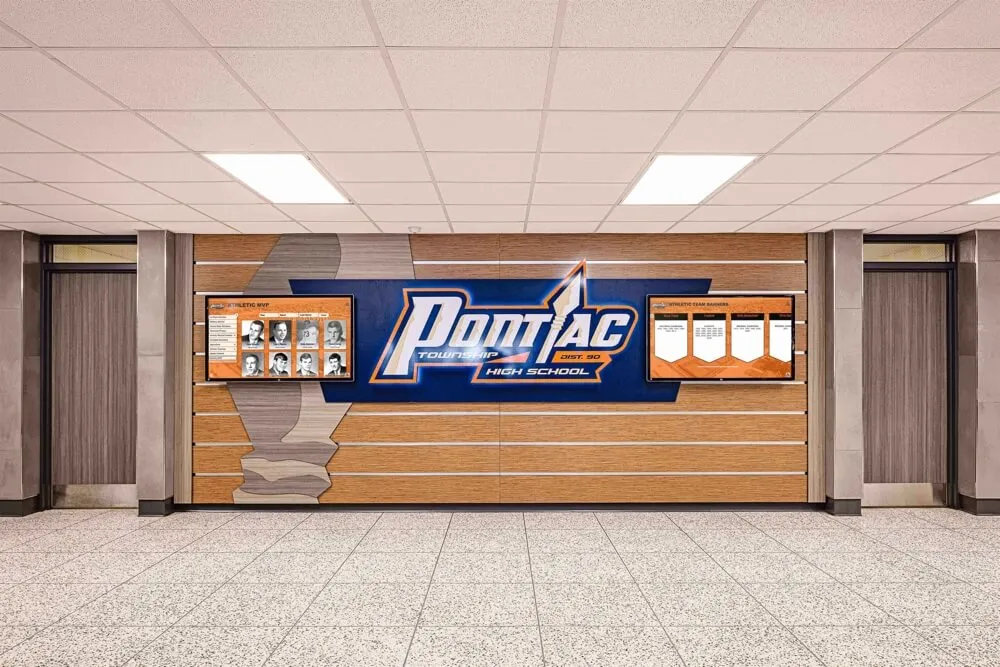
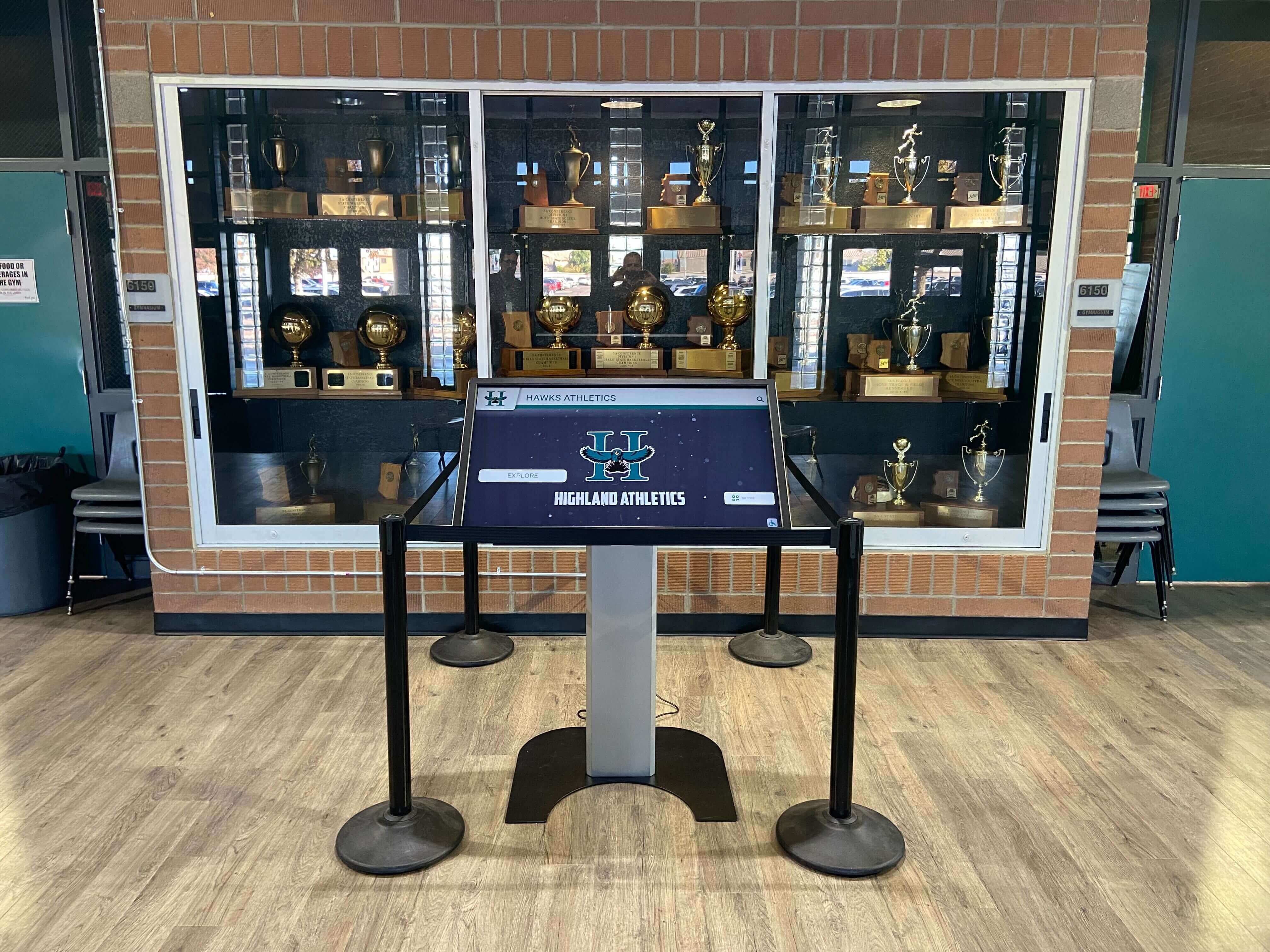
Traditional trophy cases create focal points in school hallways, displaying physical trophies and memorabilia behind protective glass
Typical Features of Traditional Trophy Cases
Most conventional trophy cases share common characteristics:
Physical Construction
Built-in or wall-mounted cabinets constructed from wood, metal, or composite materials with tempered glass fronts and sides. Cases typically measure 3-6 feet wide and 4-7 feet tall, with depth ranging from 12-24 inches. Quality cases include adjustable shelving, internal lighting (often fluorescent or LED), locking mechanisms, and mirrored or painted back panels.
Static Display Content
Trophies, plaques, medals, and ribbons representing championships and achievements. Team photographs (often 8x10 or larger prints) documenting winning seasons. Game balls, jerseys, or equipment from significant events. Newspaper clippings and programs from championship games. Engraved nameplates identifying specific achievements and dates.
Limited Capacity
Physical constraints define traditional trophy cases. A typical 4-foot-wide case might accommodate 15-20 trophies depending on size, several team photos, and a handful of plaques. Once shelf space fills, schools face difficult decisions about which achievements deserve display and which get relegated to storage.
Permanent Installation
Most trophy cases represent significant construction projects involving carpentry, electrical work for lighting, and often structural modifications to walls or hallways. Once installed, relocating cases requires substantial effort and expense.
Understanding Digital Hall of Fame Displays
Digital hall of fame displays represent a modern alternative to traditional trophy cases, using interactive touchscreen technology and cloud-based content management to showcase achievements through photos, videos, statistics, biographical information, and multimedia content.
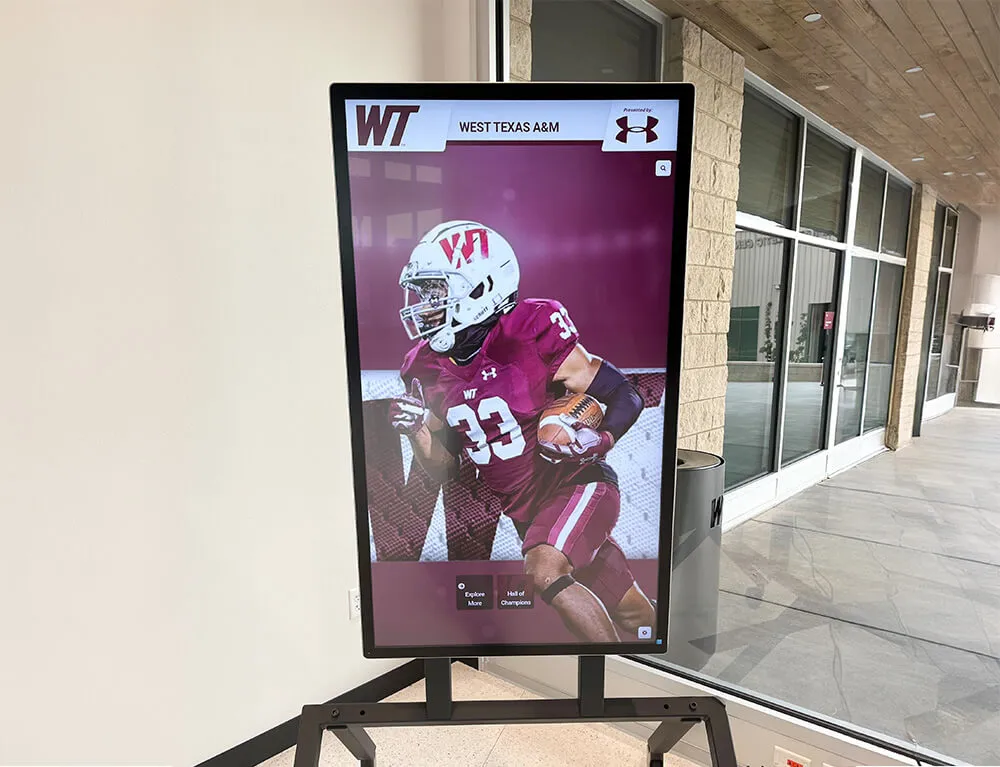
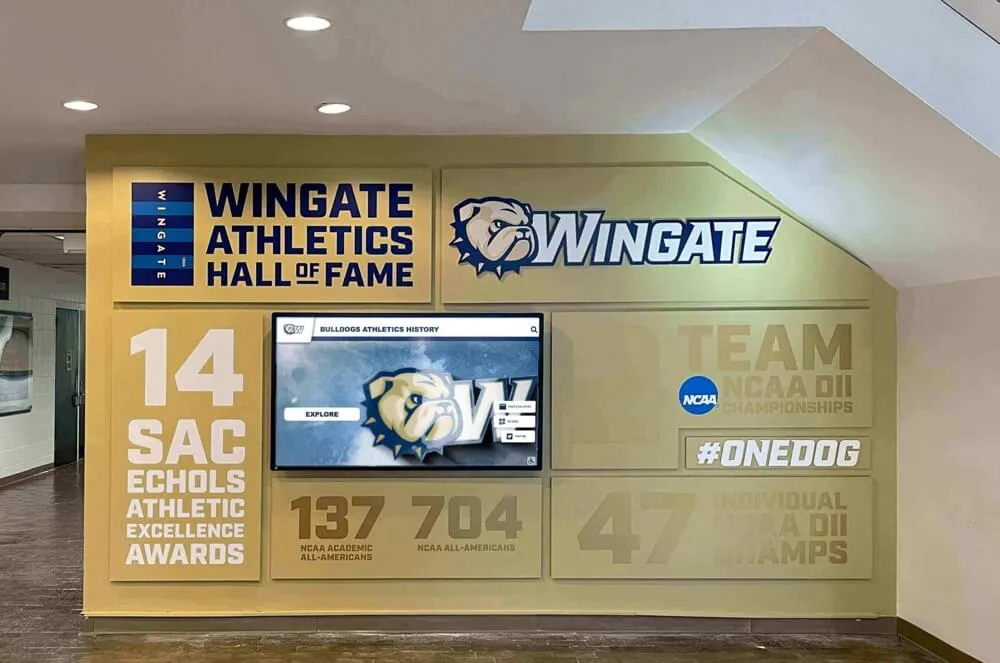
Rather than physical trophies behind glass, digital displays present recognition content on large touchscreen monitors—typically 43-75 inches—installed on walls in high-traffic locations. Visitors interact with these displays by touching the screen to browse inductees, search for specific individuals, watch video highlights, and explore achievement details that would be impossible to convey on static plaques.
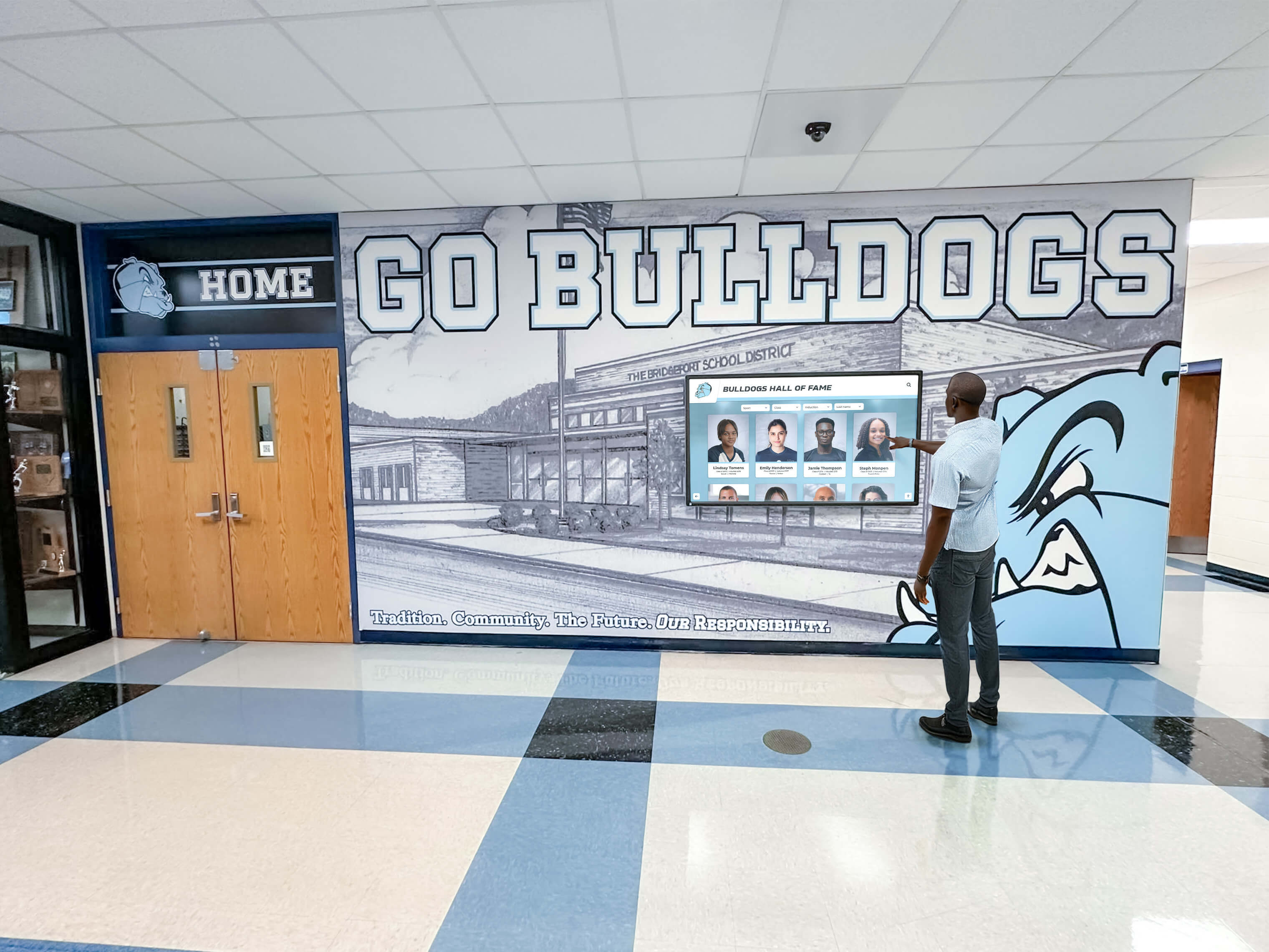
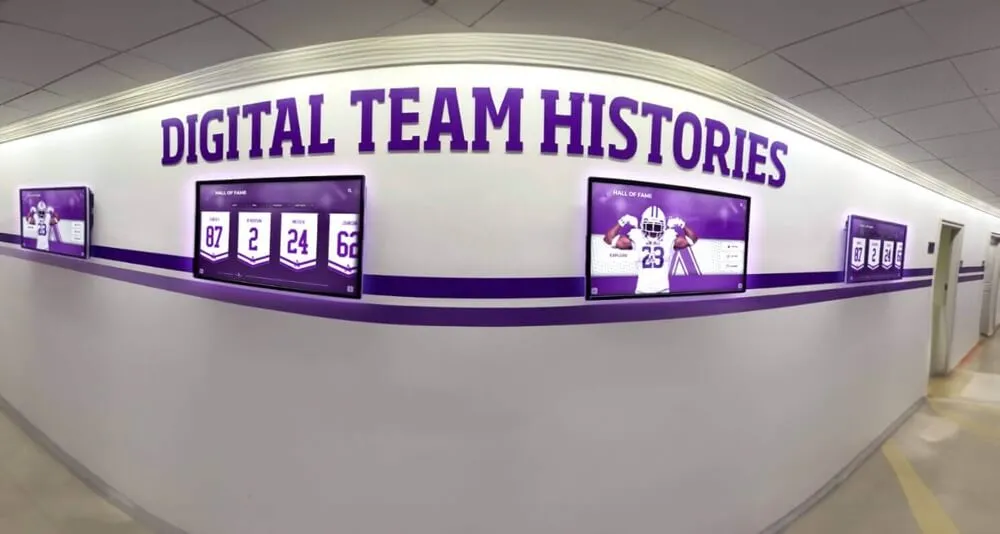
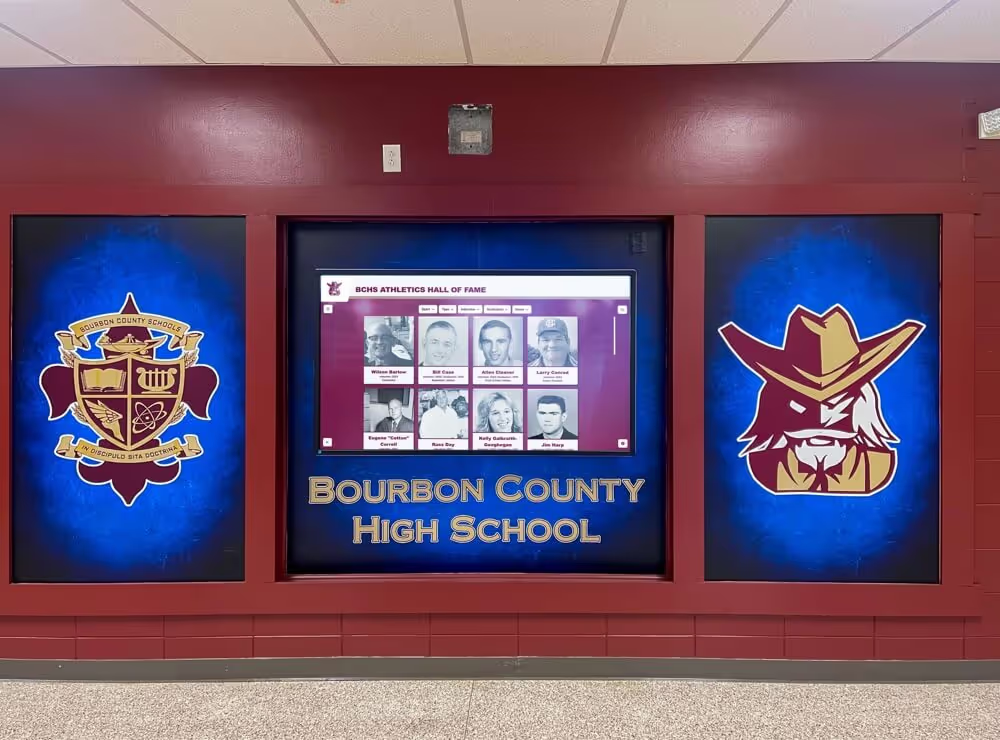
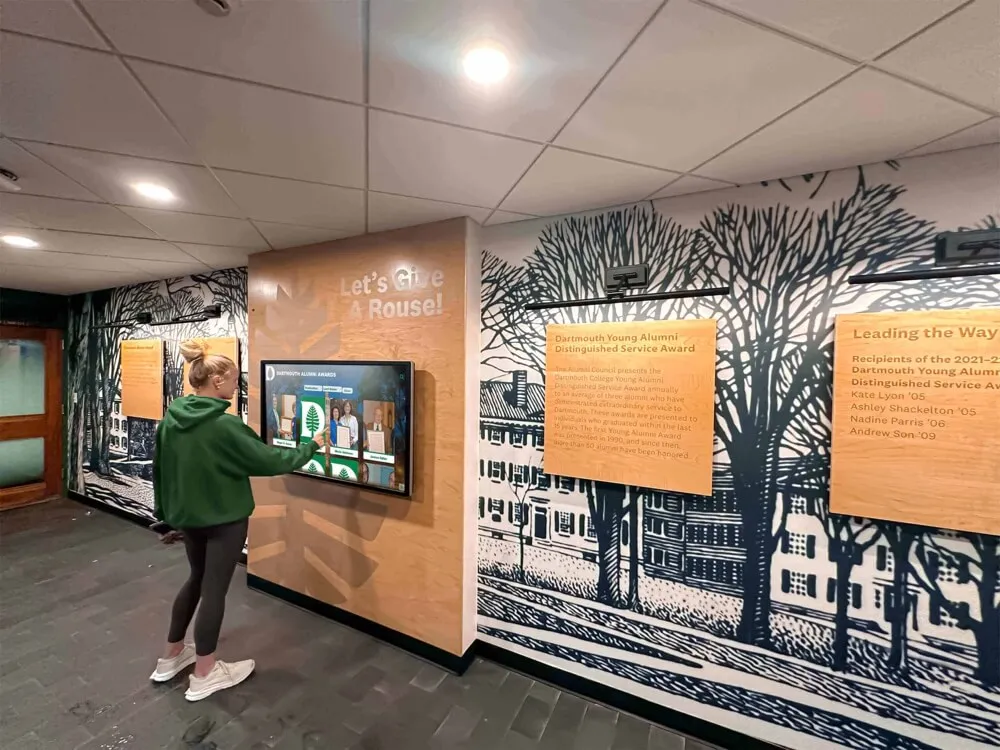
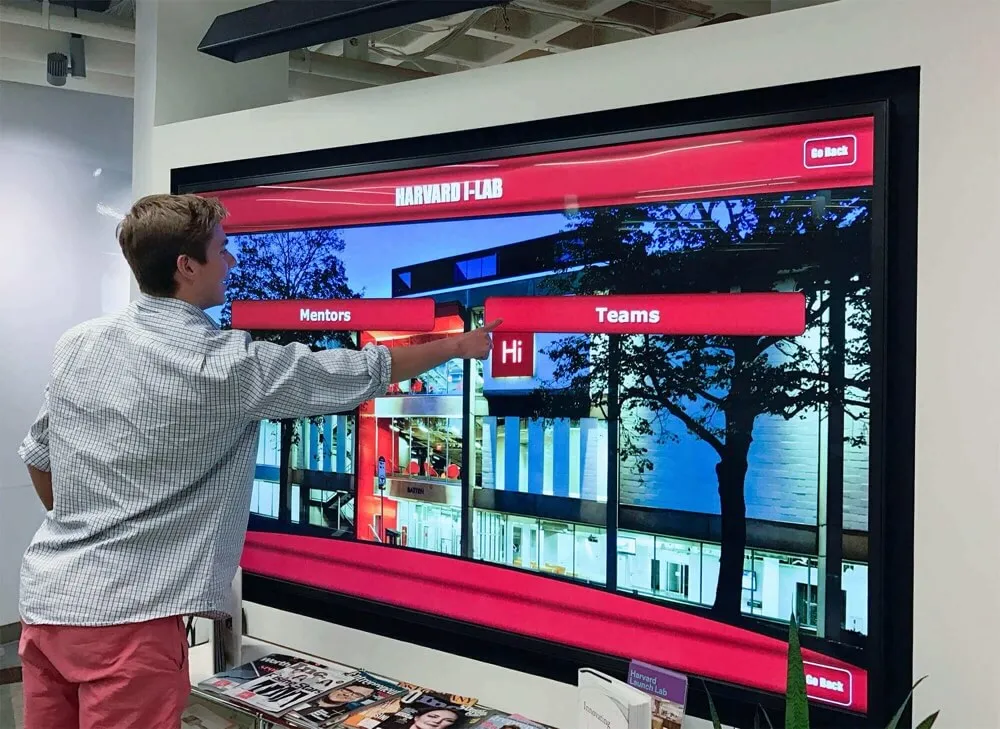
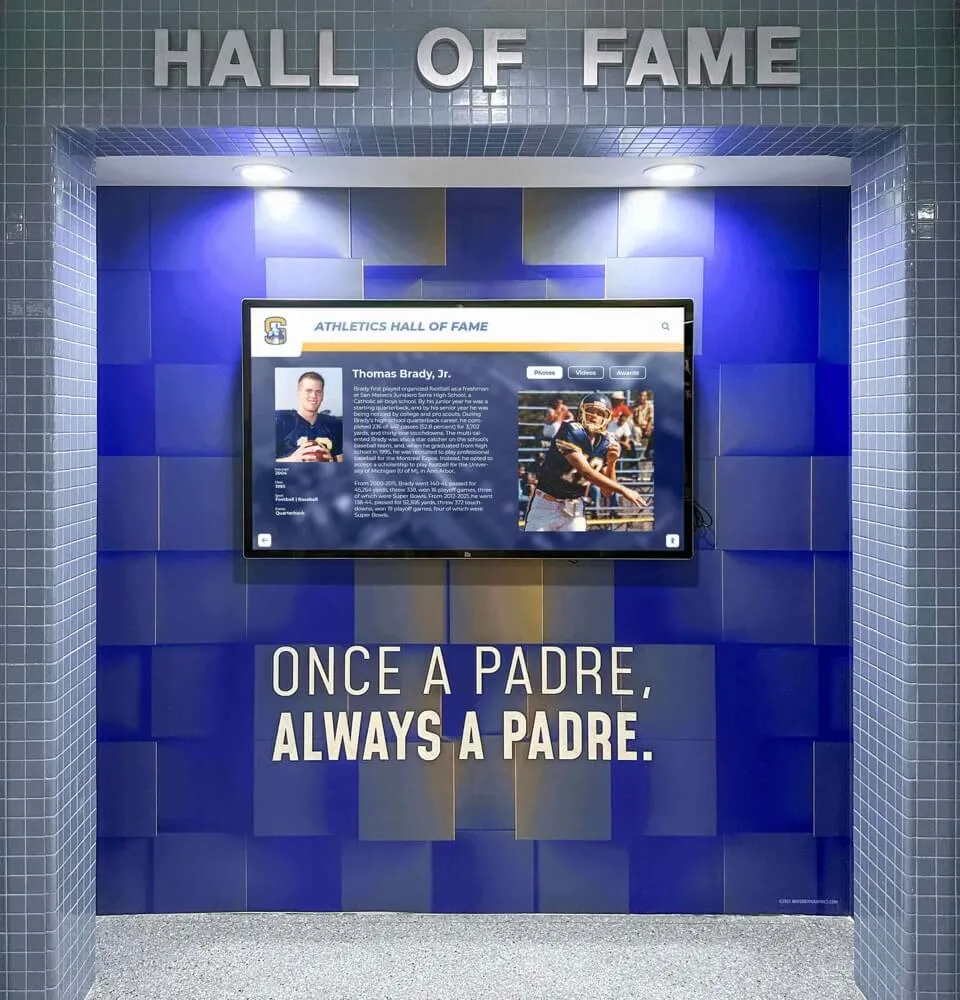
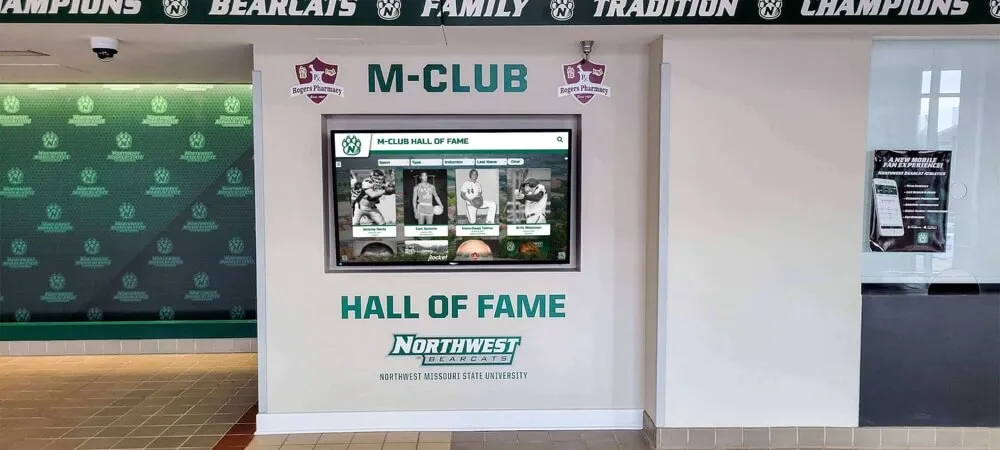
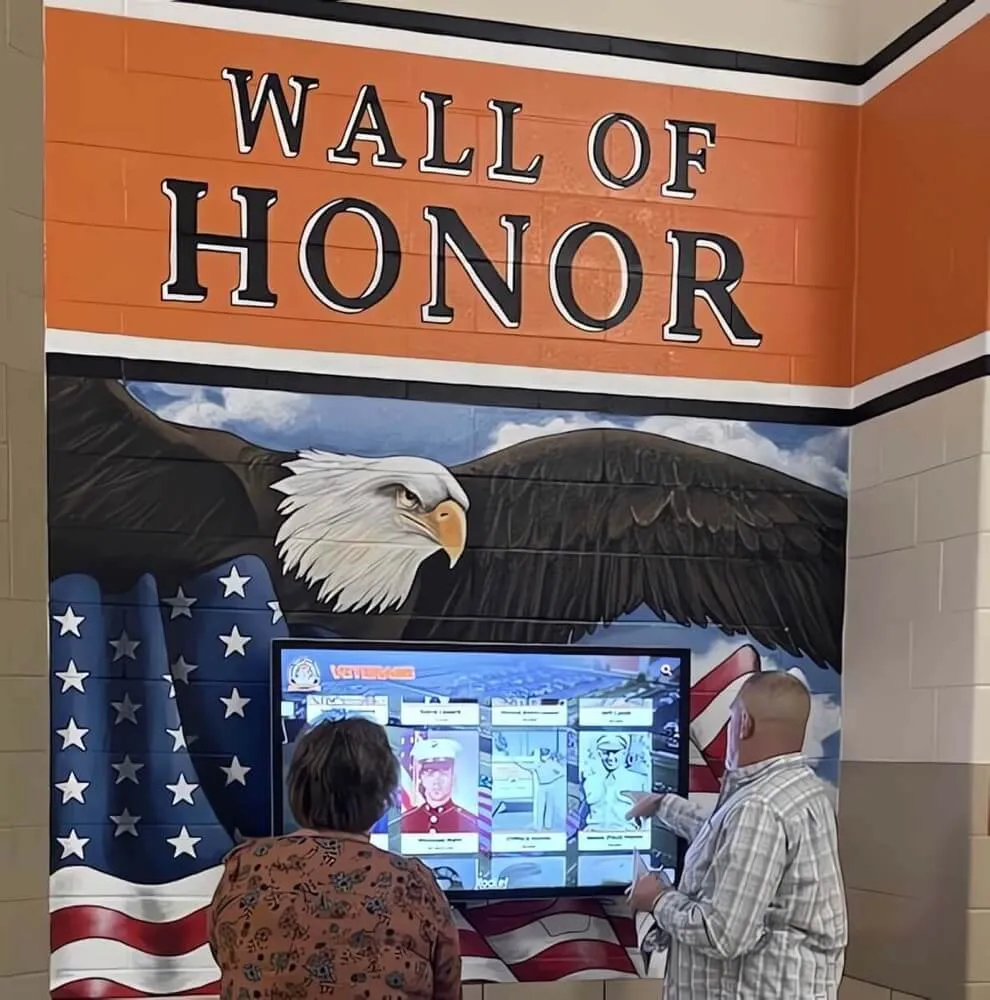
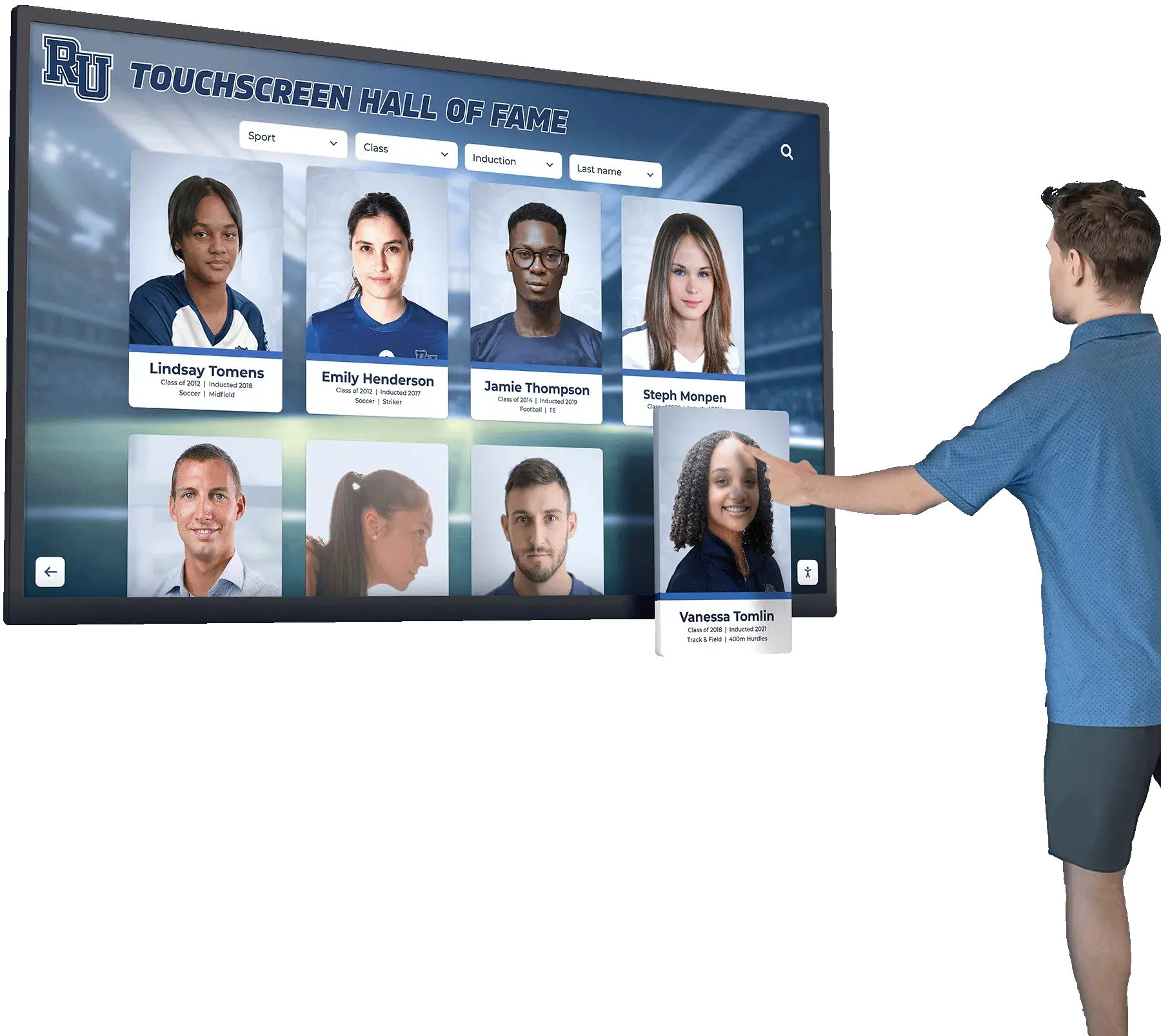
Digital displays transform passive viewing into active exploration, allowing visitors to search, browse, and discover achievement stories through intuitive touchscreen interfaces
Core Components of Digital Hall of Fame Systems
Modern digital recognition displays typically include several integrated elements:
Interactive Touchscreen Hardware
Large-format touchscreen displays (43-75 inches) mounted on walls or freestanding kiosks in hallways, lobbies, or athletic facilities. Commercial-grade monitors designed for continuous operation rather than consumer televisions. Protective glass or acrylic covers preventing damage. Optional custom surrounds integrating school colors and branding.
Cloud-Based Content Management
Web-based dashboards allowing authorized staff to add inductees, upload photos and videos, edit biographical information, create recognition categories, and manage all displayed content without technical expertise. Updates made from any internet-connected device appear instantly across all displays and platforms.
Multimedia Recognition Profiles
Individual profiles for each recognized person or team including multiple photos, biographical narratives, achievement descriptions, statistics and records, video highlights or interviews, and related content connections. Unlike the name-and-date limitation of physical plaques, digital profiles enable comprehensive storytelling.
Web Accessibility
Online versions of hall of fame content providing worldwide access through smartphones, tablets, and computers. Alumni can explore achievements from anywhere, search for classmates, share profiles on social media, and maintain connections with school heritage regardless of geographic distance.
Solutions like digital trophy case systems integrate these components into unified platforms ensuring consistent experiences whether visitors explore achievements on campus or online.
Space Requirements and Physical Footprint
One of the most significant differences between traditional trophy cases and digital displays involves physical space demands and installation requirements.
Traditional Trophy Case Space Needs
Physical trophy cases consume substantial hallway space. A typical built-in case projects 12-24 inches from the wall, narrowing hallway width and potentially creating accessibility concerns in constrained spaces. Multi-bay installations spanning 10-20 feet of wall space aren’t uncommon in schools with extensive athletic programs.
Beyond the cases themselves, physical space limitations create recognition bottlenecks. Once trophy cases fill, schools face difficult choices: remove older trophies to make room for new achievements, expand trophy case installations (requiring wall space that may not exist), create secondary recognition areas with less visibility, or simply stop adding new recognition as space runs out.
Many schools maintain multiple trophy cases in different locations—one for athletics, another for academics, separate displays for different sports—fragmenting recognition across campus and making it difficult for visitors to discover the full scope of institutional achievements.
Digital Display Space Efficiency
Digital displays require far less physical space. A 55-inch touchscreen mounted flat against a wall projects only 2-4 inches, maintaining hallway width and flow. A single display can showcase unlimited achievements that would require dozens of traditional trophy cases to display physically.
This space efficiency becomes particularly valuable during facility renovations or new construction when every square foot carries cost implications. Rather than dedicating significant hallway space to multiple trophy case installations, schools can install compact digital displays while using reclaimed space for lockers, seating areas, or other functional needs.
Schools implementing digital display technology often consolidate recognition from multiple locations onto single displays, creating comprehensive achievement showcases while freeing physical space throughout buildings.
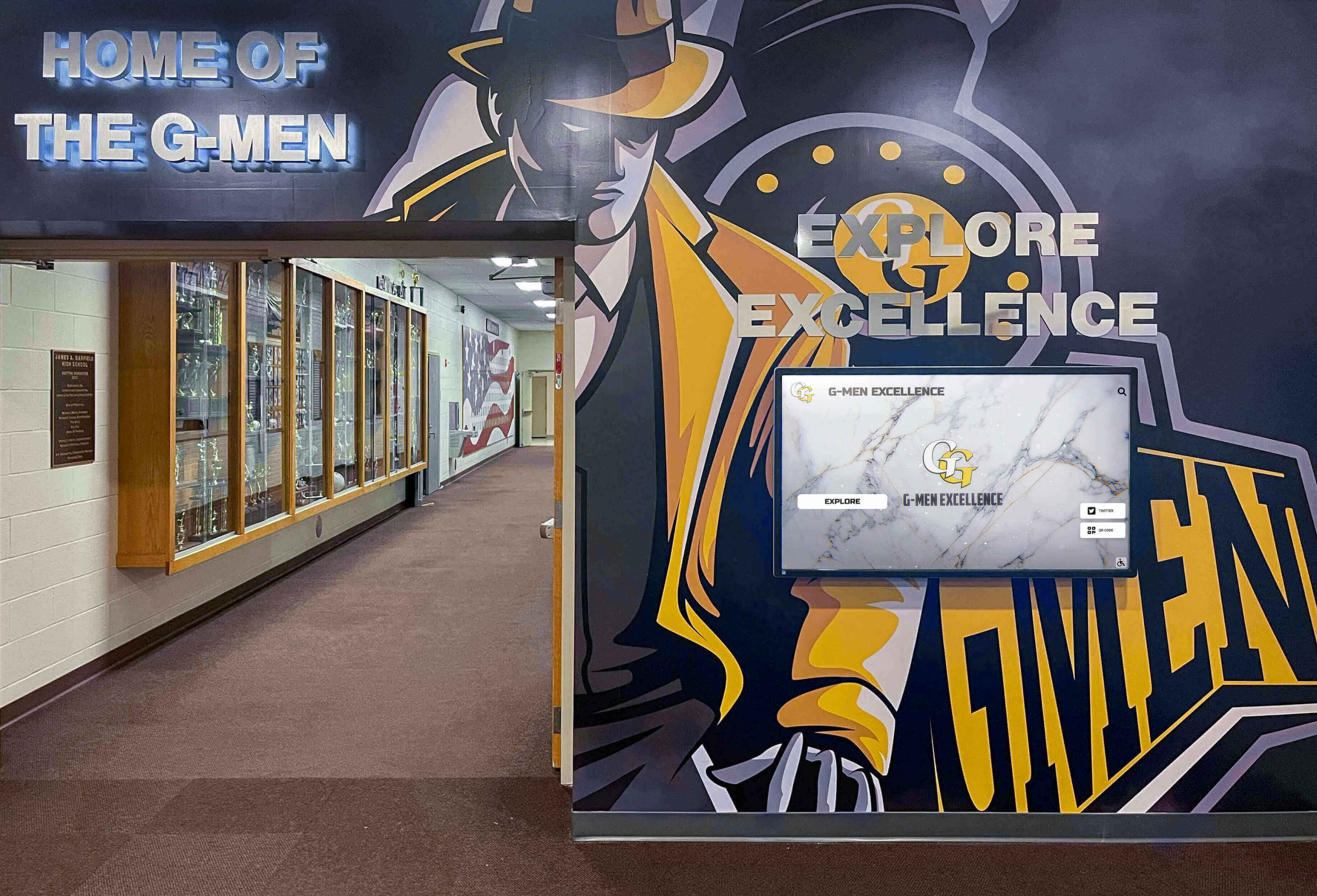
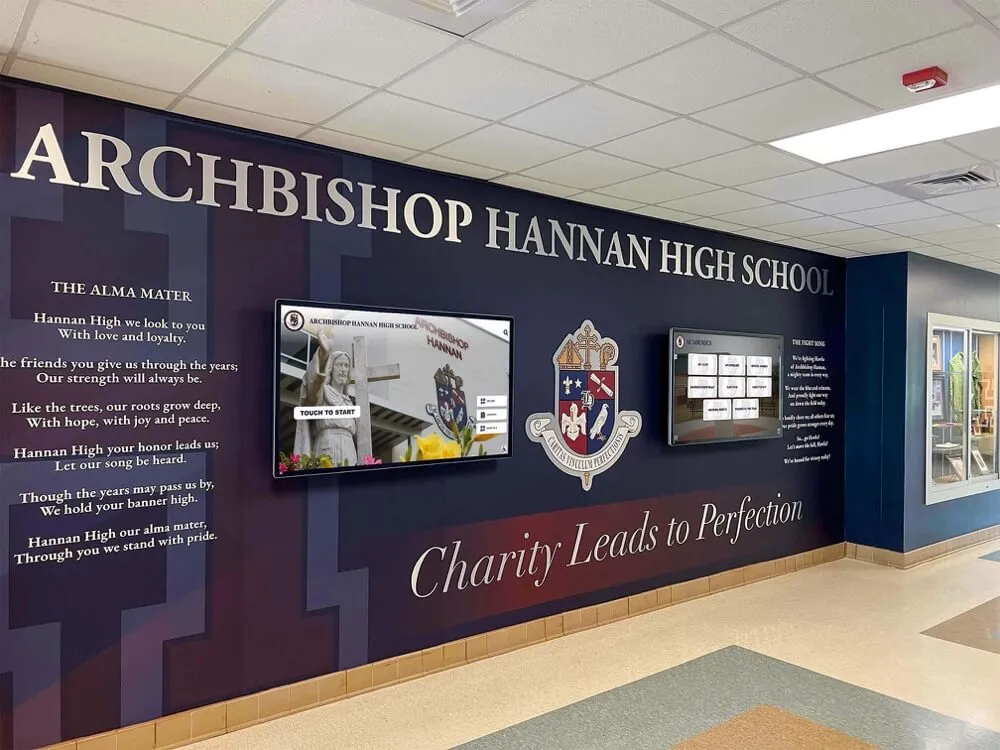
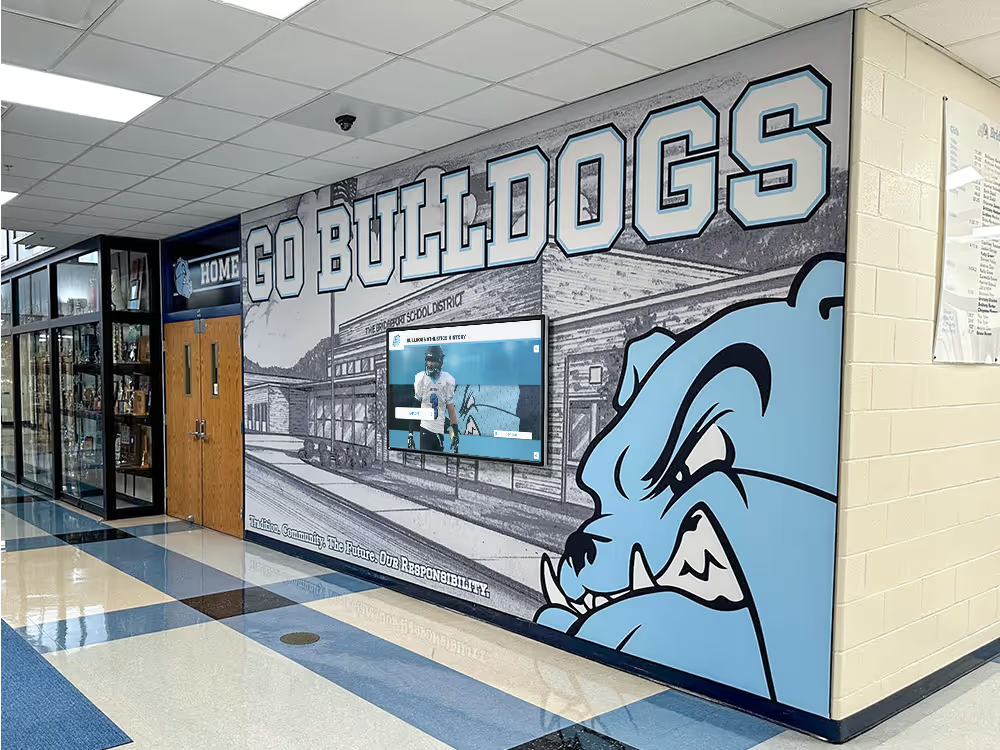
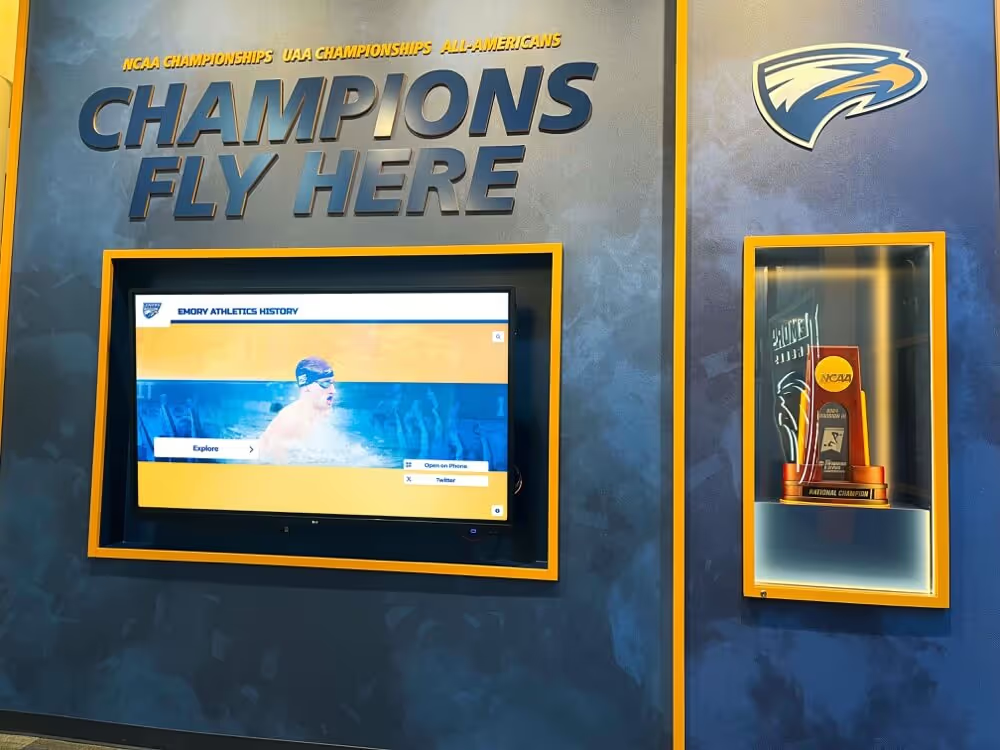
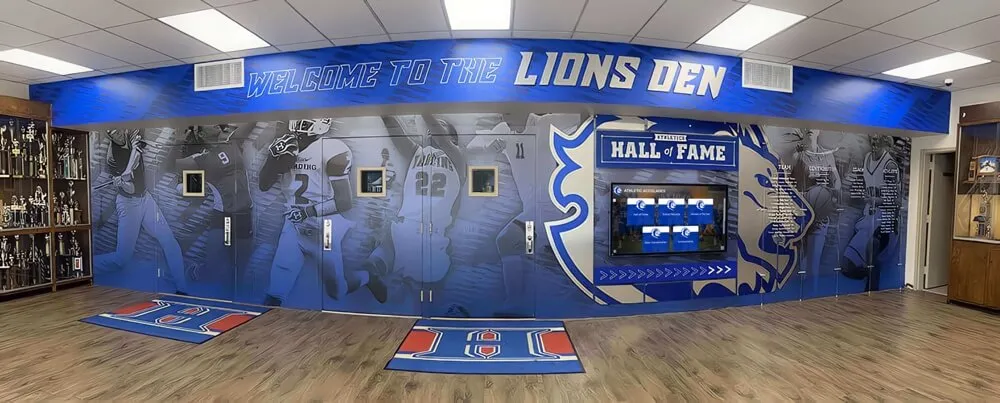
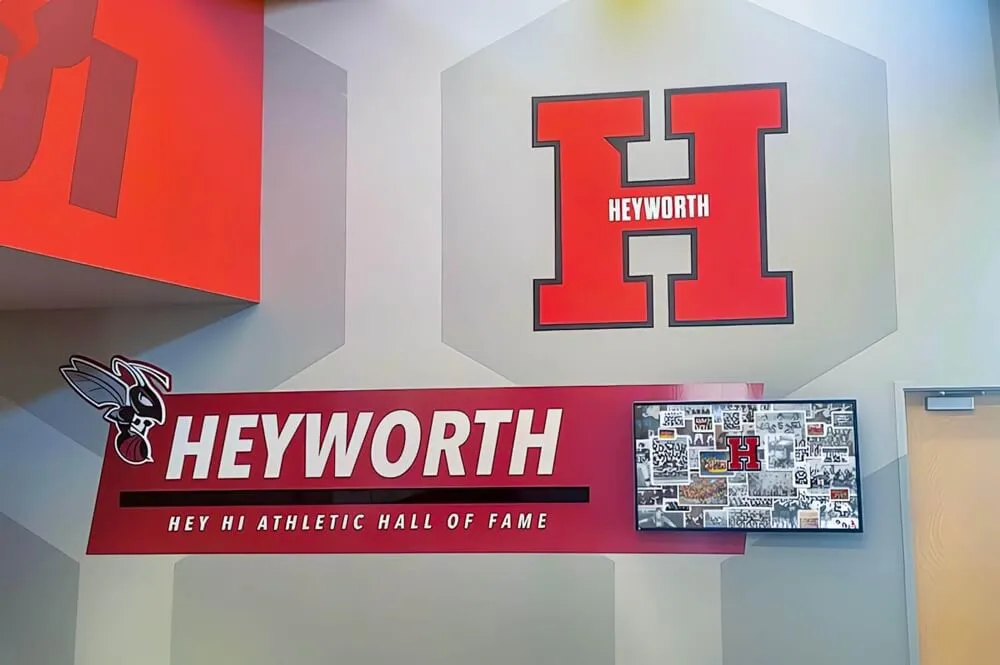
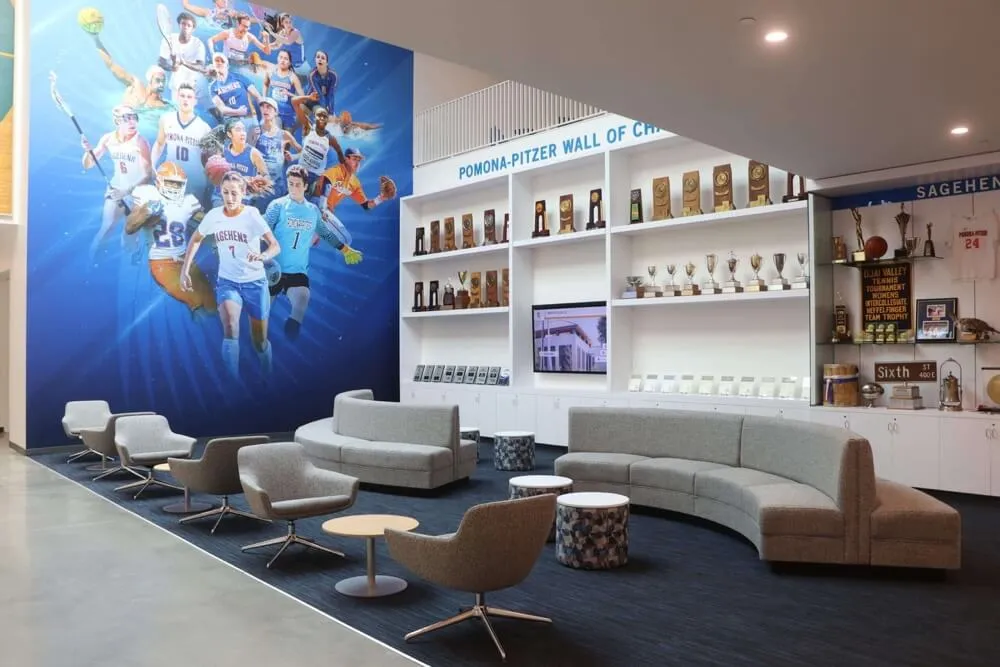
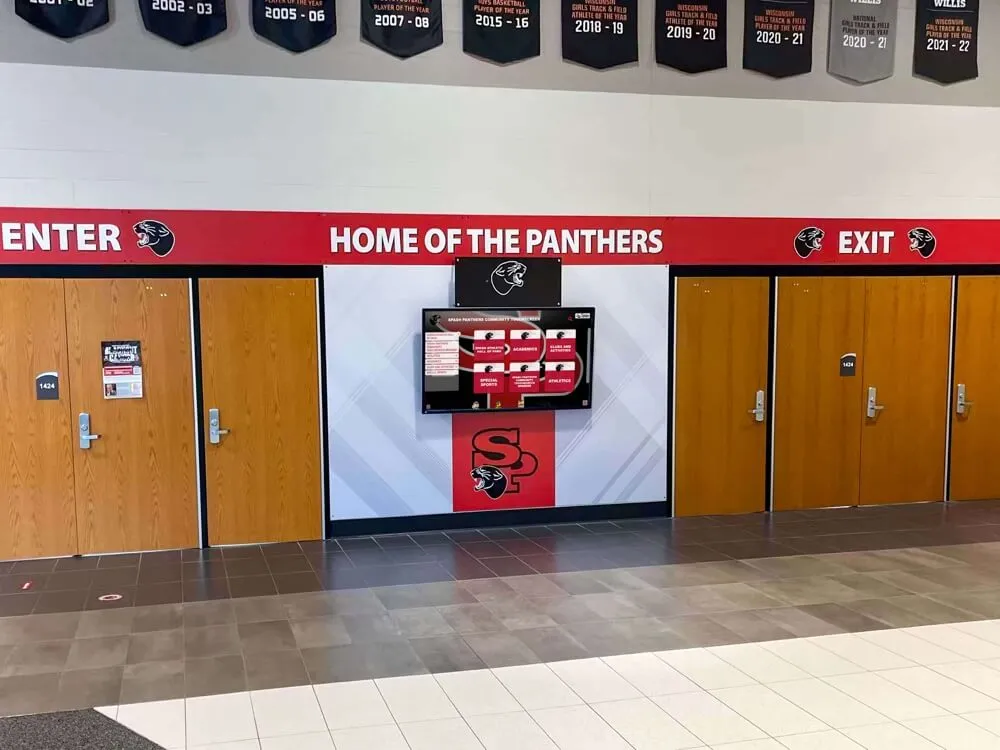
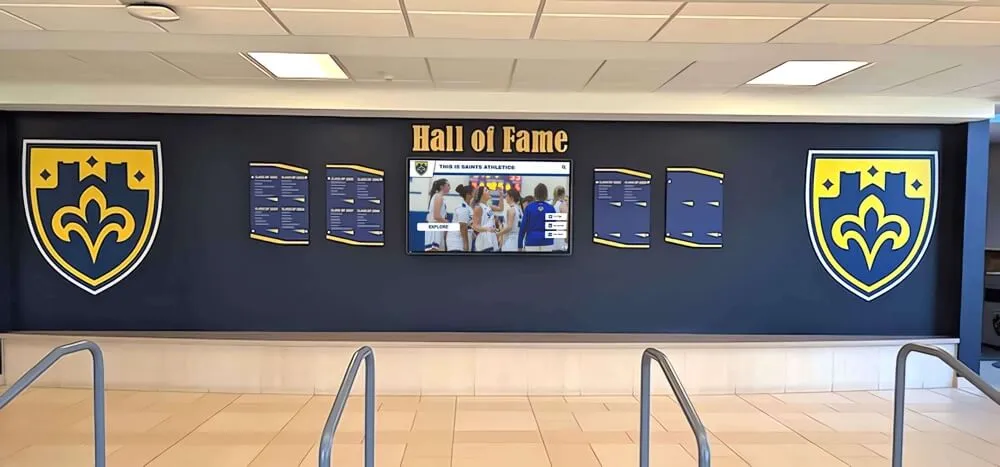
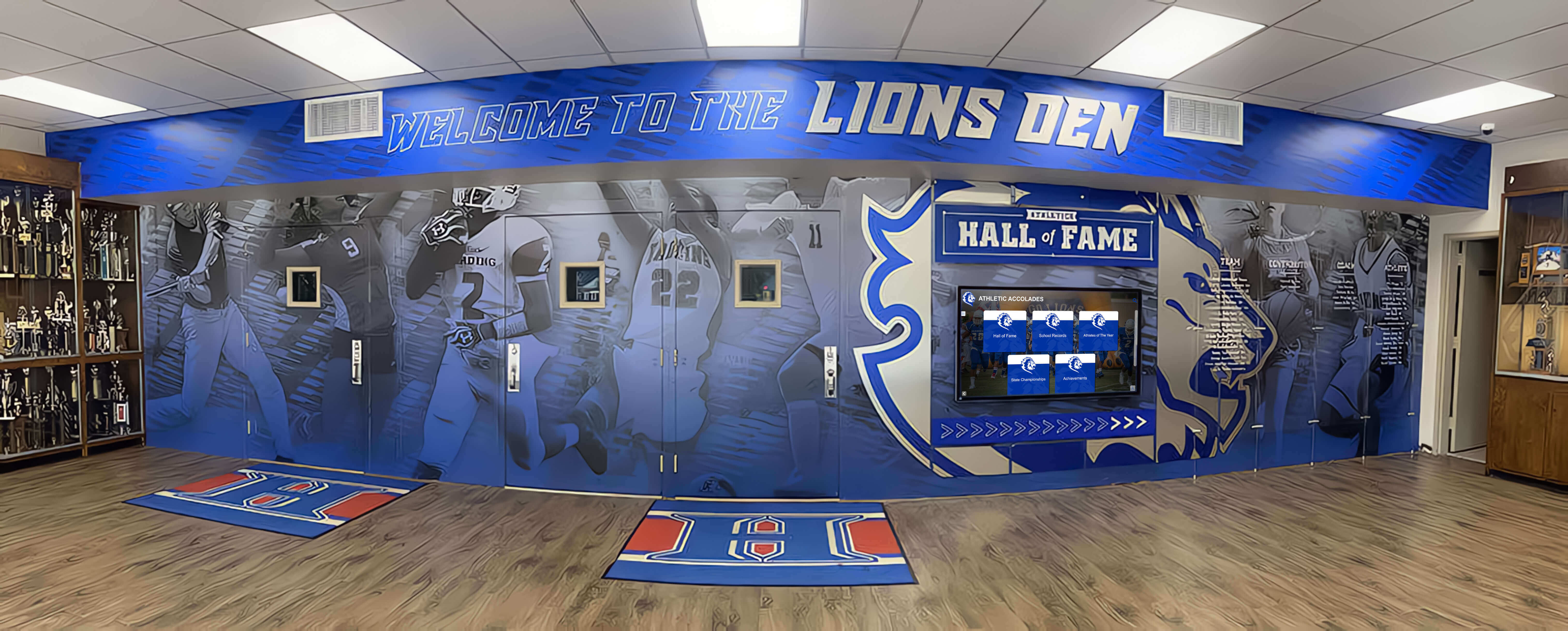
Many schools integrate digital displays with existing trophy cases and murals, combining traditional visual elements with modern interactive technology
Initial Investment and Setup Costs
Understanding upfront costs helps schools budget appropriately for either recognition approach.
Traditional Trophy Case Costs
Quality built-in trophy cases typically cost $3,000-8,000 per unit depending on size, materials, lighting, and customization. A comprehensive athletic recognition display might require 3-5 cases totaling $15,000-40,000.
Installation costs add significantly to the total investment. Built-in cases require carpentry work, electrical wiring for lighting, potential structural modifications, and professional installation. These services often add $2,000-5,000 or more to the project total depending on complexity and local labor rates.
Custom features increase costs further: etched glass panels with school logos, specialized lighting systems, climate control for protecting memorabilia, automated lighting controls, and architectural detailing matching existing hallway aesthetics.
Many schools spread trophy case investments over years, adding individual cases as budgets allow or as specific needs arise. While this approach manages cash flow, it often results in mismatched aesthetics as cases installed in different years vary in style and materials.
Digital Display Investment
Comprehensive digital hall of fame systems typically cost $8,000-15,000 for initial implementation including touchscreen hardware (commercial-grade displays, mounting systems, protective covers), software licensing, content management platform access, implementation support and training, and initial content setup assistance.
Optional enhancements that increase costs include custom surround designs integrating school branding, multiple displays in different locations, premium software features or analytics, professional content creation services, and extended hardware warranties.
While digital displays require higher initial investment than single trophy cases, the comparison reverses when considering comprehensive recognition needs. A school requiring 5-6 trophy cases to accommodate all athletic achievements would invest $20,000-40,000 or more—comparable to or exceeding digital system costs while providing far less functionality.
Ongoing Maintenance and Operating Costs
Beyond initial investments, both recognition approaches carry ongoing expenses that significantly impact total cost of ownership.
Trophy Case Maintenance Requirements
Traditional trophy cases require regular attention to remain presentable:
Cleaning and Presentation
Glass surfaces require frequent cleaning—fingerprints, dust, and smudges accumulate quickly, particularly on frequently-used hallway displays. Many schools assign custodial staff weekly glass cleaning duties, consuming labor hours.
Trophy polishing maintains appearance as metal tarnishes over time. Removing trophies for cleaning, polishing, and reinstalling requires careful handling and time.
Burned-out display lighting needs replacement periodically. Fluorescent fixtures may require new bulbs every 1-2 years while LED systems last longer but eventually need replacement.
Physical Updates and Additions
Every new achievement requiring recognition incurs costs. Engraved plaques cost $50-300 depending on size and complexity, with 2-4 week lead times from order to delivery. Installation may require hiring professionals to safely remove glass panels, arrange new plaques, and reassemble cases.
Trophies for championship teams typically cost $100-500 or more for quality awards, plus potential engraving charges.
As cases fill, schools face renovation costs to expand capacity: building additional cases ($5,000-10,000 each), modifying existing cases to add shelves or space, or rearranging entire display areas.
Damage and Repairs
Glass panels crack or break, requiring replacement. Locks malfunction and need repair. Lighting systems fail and need troubleshooting. Wooden components warp or weather in schools without climate control. These repairs happen sporadically but accumulate costs over time.
Digital Display Operating Costs
Digital systems have different maintenance patterns and ongoing expenses:
Software Subscriptions
Most digital hall of fame platforms charge annual software subscriptions ranging from $1,000-3,000 depending on features, number of displays, storage capacity, and support level. Subscriptions typically include software updates, technical support, cloud hosting and storage, content management system access, and web platform hosting.
While these recurring costs may initially seem burdensome, they eliminate per-recognition costs entirely. Adding new inductees costs nothing beyond staff time to create profiles—no plaques to order, no installation fees, no physical space constraints.
Minimal Physical Maintenance
Digital displays require far less ongoing physical maintenance than trophy cases. Screens need occasional cleaning with appropriate screen cleaners, but cleaning requirements are minimal compared to maintaining multiple glass-fronted trophy cases. No polishing, no trophy rearrangement, no burned-out bulbs in most LED-backlit displays.
Hardware Lifecycle
Commercial touchscreen displays typically last 7-10 years before requiring replacement due to technology obsolescence or component failure. Schools should budget for eventual hardware replacement, but modern displays prove remarkably durable in school environments when properly installed.
Content Management Labor
Digital systems require regular content updates to remain current and engaging. However, cloud-based management systems make updates straightforward—staff can add new inductees, upload photos, and edit content in minutes rather than the hours or days required to commission, order, and install physical plaques.
Schools implementing comprehensive digital displays typically report that total cost of ownership favors digital solutions within 5-7 years when accounting for all maintenance, updates, and expansion costs.
Recognition Capacity and Scalability
How much recognition each approach can accommodate represents one of the most significant functional differences.
Traditional Trophy Case Limitations
Physical space imposes absolute limits on recognition capacity. A large trophy case might display 20-30 trophies, a dozen team photos, and 15-20 individual plaques. Multiple cases expand capacity, but each requires additional wall space, investment, and maintenance.
More fundamentally, trophy cases force difficult decisions about selectivity. When space runs out, schools must choose which achievements merit recognition and which don’t. This selectivity often means only the most exceptional accomplishments receive recognition—state championships, record-breaking performances, hall of fame inductees—while worthy achievements like all-conference selections, academic honors, or community service awards lack display space.
These constraints also create temporal limitations. Older achievements often get removed to make room for newer recognition, relegating historical accomplishments to storage boxes in athletic offices where nobody sees them.
Digital Display Unlimited Capacity
Digital systems eliminate capacity constraints entirely. Schools can recognize unlimited individuals, preserve every achievement regardless of era, showcase comprehensive career statistics and multiple photos, include video highlights and interviews, and create detailed biographical narratives—all without physical space limitations.
This unlimited capacity fundamentally changes recognition philosophy. Rather than selective halls of fame reserved for rare exceptional achievements, schools can celebrate broader accomplishments including all-conference athletes, academic achievers, notable alumni across various fields, and community contributors.
Students see more pathways to recognition when systems aren’t limited to state championships alone. Athletes achieving all-conference honors, academic all-state recognition, or program records receive meaningful recognition even if they never won state titles.
Historical preservation improves dramatically as well. Schools can digitize and showcase achievements from throughout institutional history, creating comprehensive archives rather than displaying only recent decades due to space constraints.
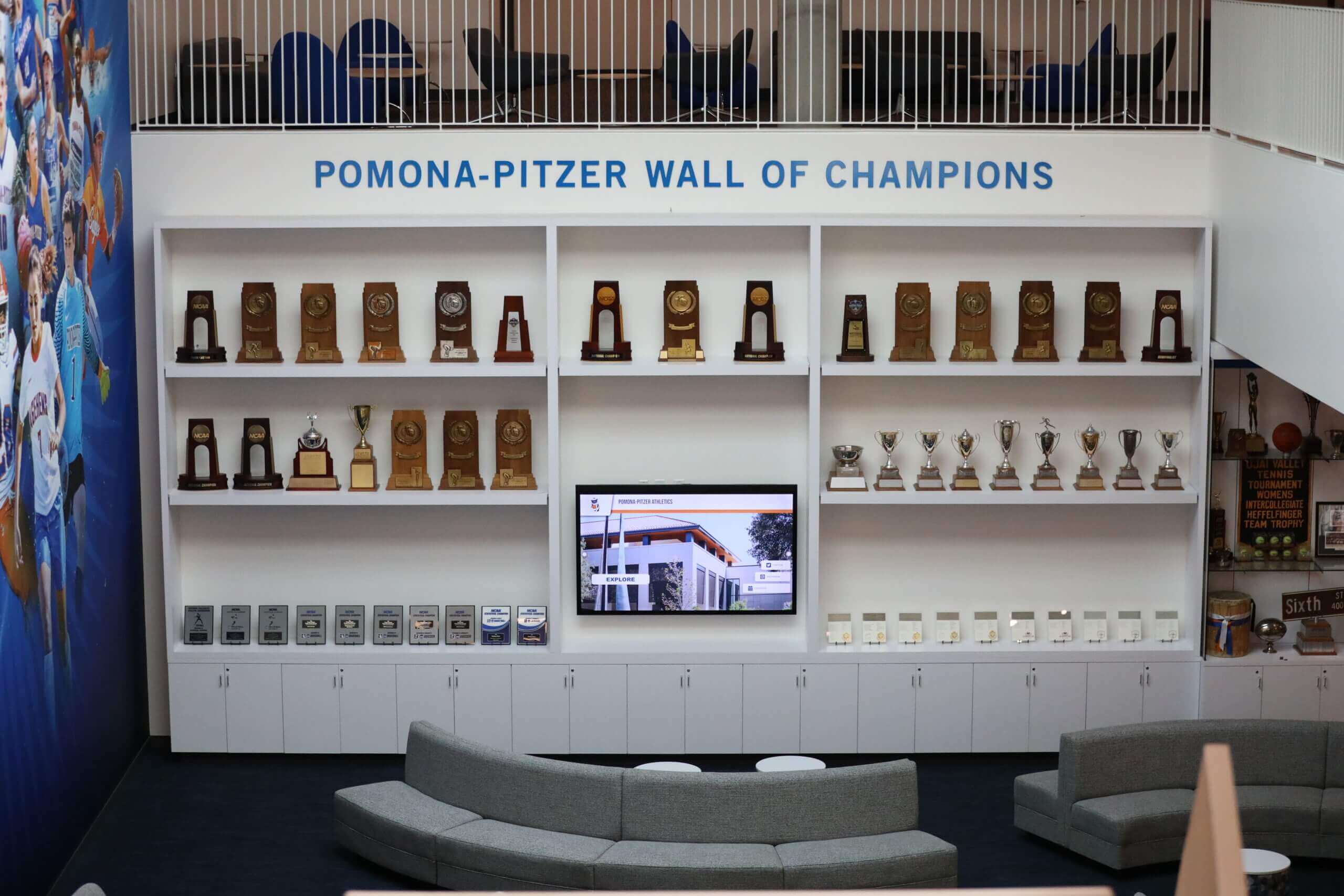
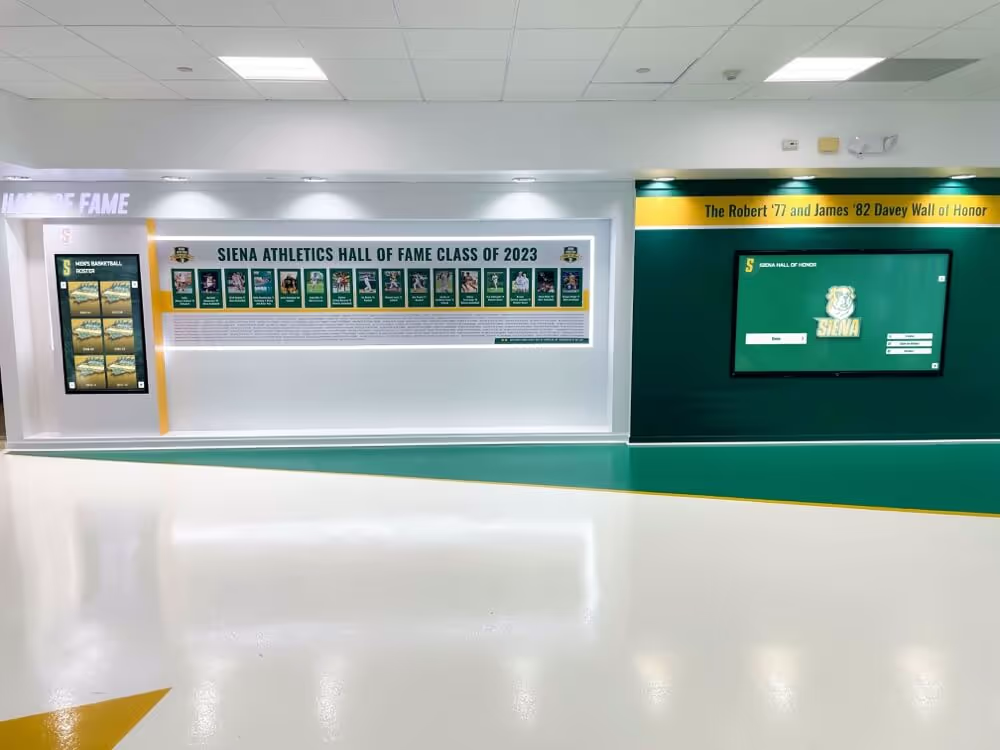
Some schools maintain physical trophies for championships while using digital displays to provide comprehensive context, statistics, and achievement details
Visitor Engagement and Interactive Experience
How visitors interact with recognition displays significantly impacts emotional connection and time spent exploring achievements.
Passive Viewing of Traditional Cases
Trophy cases offer passive viewing experiences. Visitors walk past displays, glance at trophies and plaques, and continue on their way. Those who stop to examine displays more closely find basic information—championship years, trophy descriptions, perhaps brief plaque text—but little context or storytelling.
Engagement barriers limit deeper exploration. Glass prevents touching or closer examination. Plaques mounted in the back of cases may be difficult to read from hallway viewing angles. No search functionality helps visitors find specific individuals or years. No organization beyond physical arrangement guides exploration.
For visitors unfamiliar with school history, traditional displays provide minimal context. A trophy reading “State Champions 1987” tells nothing about the team, key players, game highlights, or championship significance. Visitors lacking institutional knowledge simply see old trophies without understanding the stories behind them.
Interactive Exploration of Digital Displays
Digital hall of fame displays create fundamentally different engagement experiences. Touchscreen interfaces invite interaction—visitors naturally want to explore what they can discover. Average session times on digital displays range from 3-8 minutes, dramatically longer than seconds spent glancing at trophy cases.
Interactive features enable personalized exploration. Search functions let visitors find themselves, classmates, or specific athletes instantly. Filters help browse by sport, decade, achievement type, or other criteria. Alphabetical directories enable systematic exploration. Related content suggestions connect similar achievements, encouraging deeper discovery.
Multimedia storytelling creates emotional connections impossible with static plaques. Visitors don’t just read that someone scored 1,000 career points—they see action photos, watch highlight videos, read about the athlete’s background and post-graduation career, view complete statistics, and understand the achievement’s significance within program history.
This rich context makes recognition meaningful to broader audiences. Alumni exploring digital displays often spend 10-15 minutes searching for themselves, browsing former classmates, and discovering athletes from different eras. Prospective students and their families engage with school history during campus visits. Community members attending evening events explore achievements while waiting in lobbies.
Schools implementing comprehensive digital recognition report that interactive displays generate substantially more engagement than traditional trophy cases ever achieved, with visitors regularly photographing screens showing their own profiles to share on social media.
Accessibility and Reach
Who can access recognition and from where represents another critical difference between approaches.
Limited Access with Physical Displays
Traditional trophy cases serve only people physically present in specific school locations during building hours. Alumni living across the country never see recognition unless they visit campus. Community members may never enter school buildings where displays are located. Evening event attendees in gymnasiums don’t see hallway trophy cases.
This geographic limitation significantly restricts recognition reach. Schools may recognize hundreds of athletes and achievers, but most will never actually see their own recognition after graduation unless they happen to visit campus and specifically seek out trophy cases.
Physical accessibility challenges also limit who can engage with traditional displays. Trophy cases mounted high on walls place plaques out of reading range for people in wheelchairs or children. Reflective glass creates glare issues for people with visual impairments. Small engraved text proves difficult for those with limited vision to read.
Worldwide Web Access with Digital Systems
Digital hall of fame systems extend access dramatically through web platforms enabling worldwide exploration from any location. Alumni can search for themselves, browse classmates, and explore achievements from home, office, or anywhere with internet access.
Mobile optimization allows smartphone access, meaning recognition reaches people in their pockets wherever they go. Social sharing features let people share achievements with networks, exponentially expanding visibility beyond those who actively seek out recognition displays.
This expanded accessibility strengthens alumni engagement by making institutional heritage available whenever nostalgia strikes—not just during infrequent campus visits. Schools report that alumni sessions on web-accessible halls of fame average 8-12 minutes as users search for themselves, browse classmates, and explore achievements across different eras.
Physical accessibility improves as well. Touchscreen displays can be mounted at appropriate heights for wheelchair access. High-contrast modes assist visitors with visual impairments. Large, readable text replaces tiny engraved plaques. Audio descriptions can supplement visual content for visitors with sight limitations.
Content Flexibility and Update Speed
How quickly recognition can be updated and what content can be displayed differs dramatically between approaches.
Static Content and Slow Updates
Traditional trophy cases display fixed content that changes only through physical intervention. Adding new recognition requires ordering plaques (2-4 weeks typically), scheduling installation, coordinating with facilities staff or contractors, and potentially reorganizing existing displays to accommodate additions.
This delay means recognition rarely happens immediately after achievements occur. Championships won in November might not see trophy case recognition until January or February—long after celebratory momentum has passed.
Content limitations constrain what can be displayed. Plaques accommodate names, dates, and perhaps a brief sentence. Photographs provide visual documentation but lack context. Video, detailed statistics, biographical narratives, and comprehensive achievement stories simply don’t fit in physical trophy cases.
Errors or changes create permanent problems. If a plaque contains incorrect information, it requires ordering and installing a replacement—assuming the error is even discovered. Updating information as alumni careers progress is impossible once plaques are engraved.
Instant Updates and Rich Multimedia
Digital systems enable immediate updates through simple content management dashboards. When championships are won, new records are set, or inductees are announced, recognition appears instantly across all displays and web platforms—celebrating achievements while excitement remains high.
This immediacy extends beyond adding new content. Schools can correct errors instantly, update biographical information as alumni careers progress, add historical context to older inductees, create special features for milestone anniversaries, and respond to privacy concerns immediately rather than living with permanent physical installations.
Content flexibility allows comprehensive storytelling: multiple photos showing athletes in action and personal moments, biographical narratives explaining achievements and personal journeys, video highlights, interviews, and championship game footage, statistics and performance data, news articles and historical documents, and links to related achievements, teammates, or team pages.
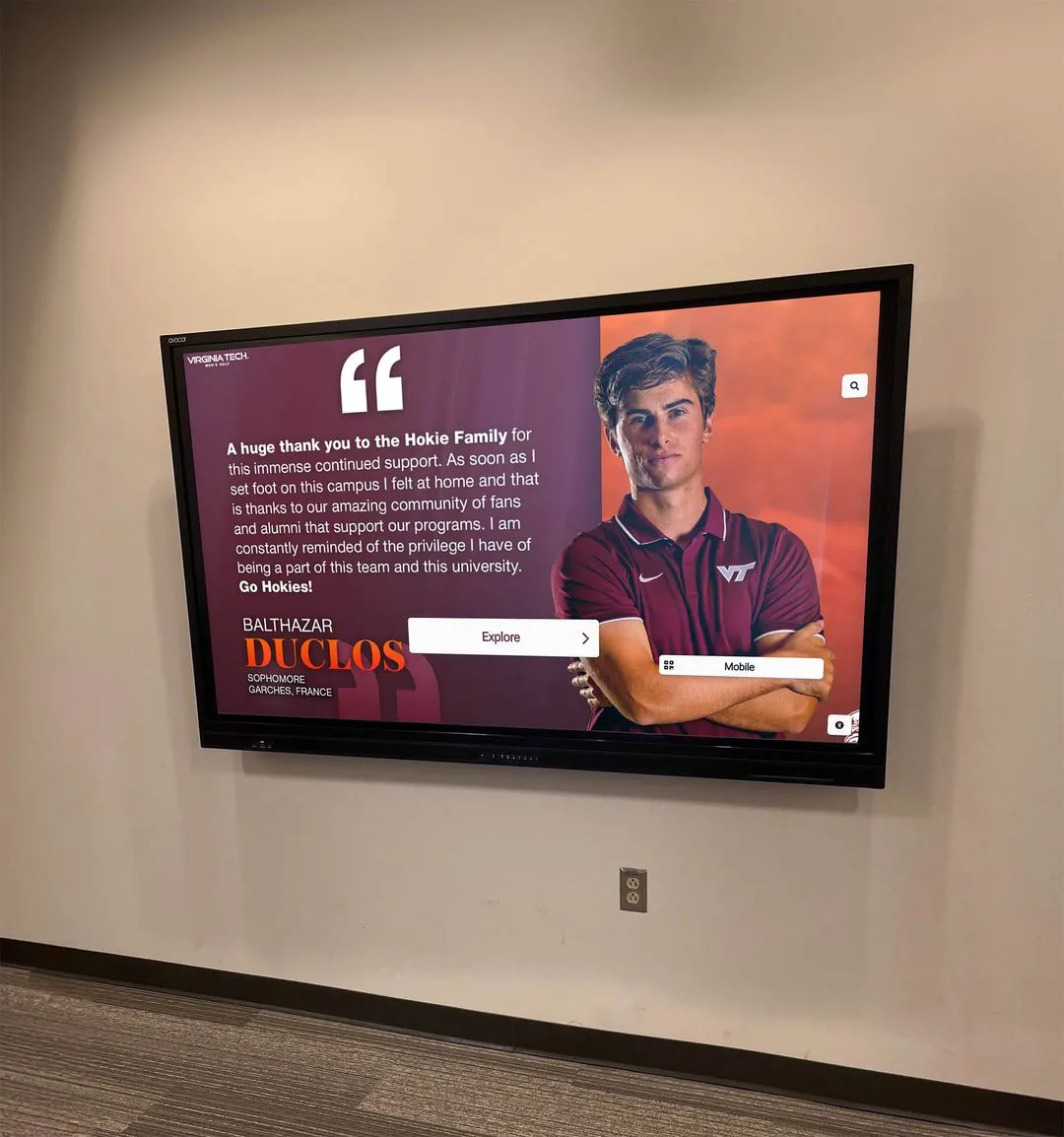
Schools implementing interactive trophy displays can feature rotating content on home screens, highlight different achievements seasonally, create special tributes for anniversaries or memorials, and keep recognition fresh and engaging rather than static and unchanging.

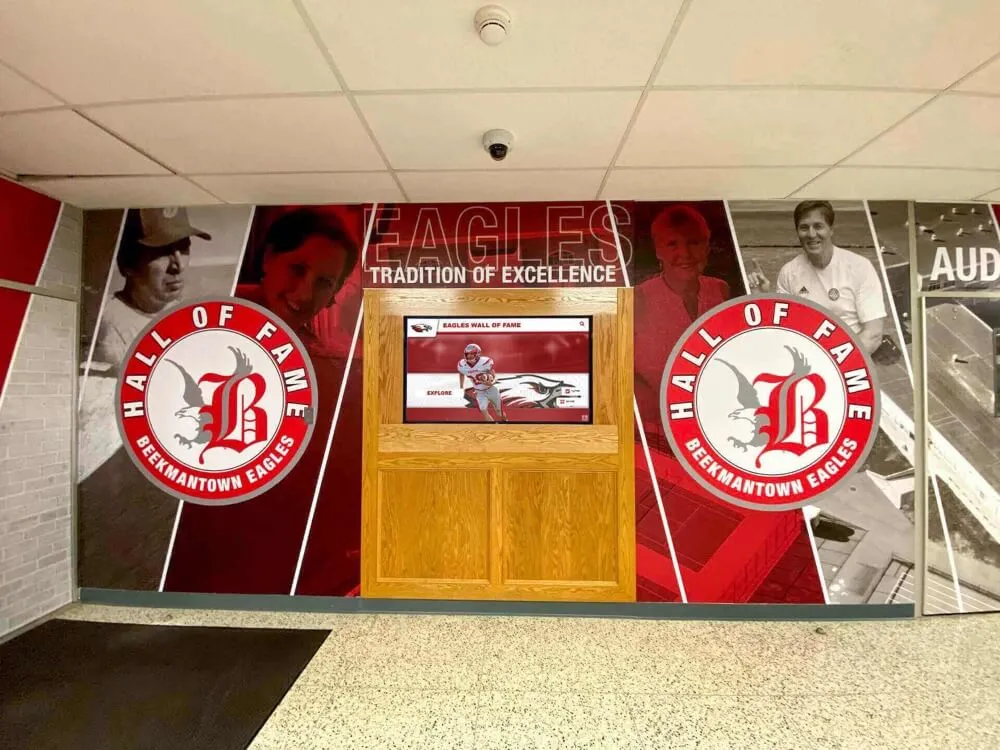
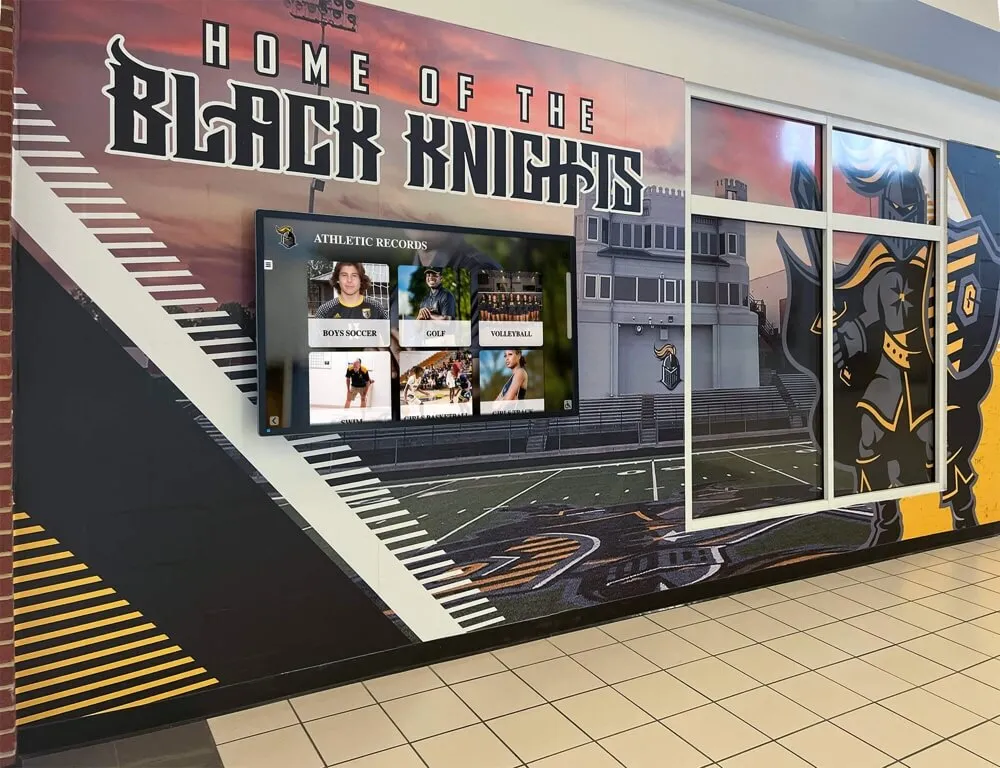
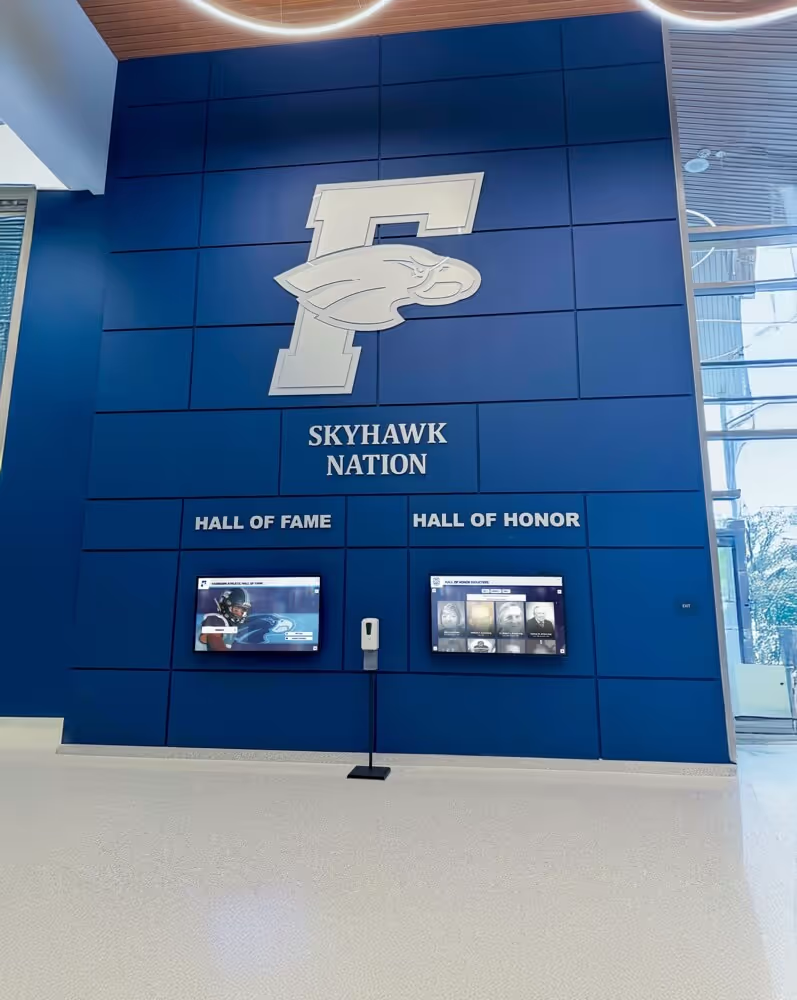
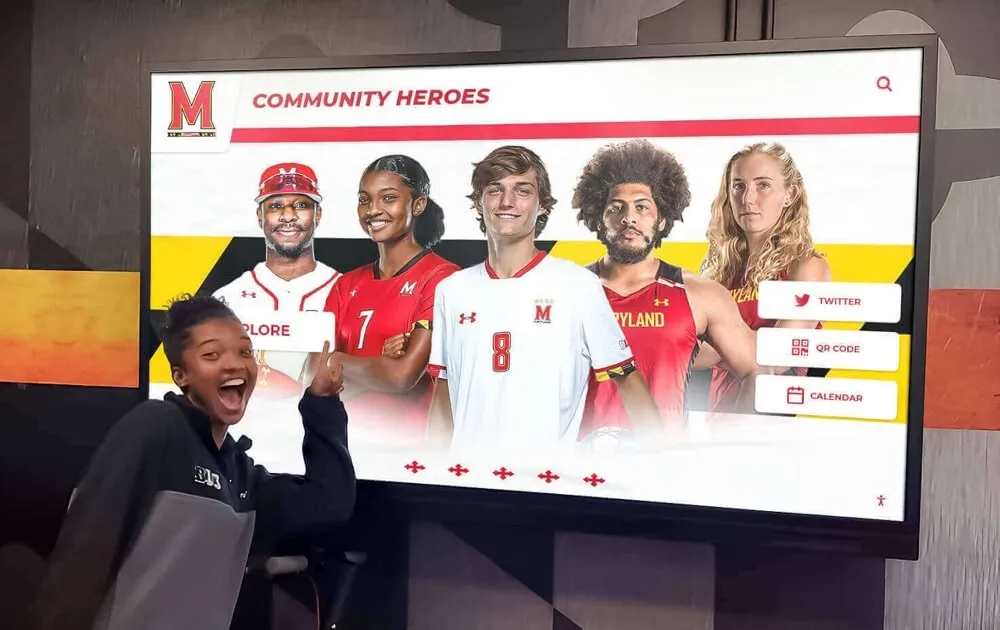
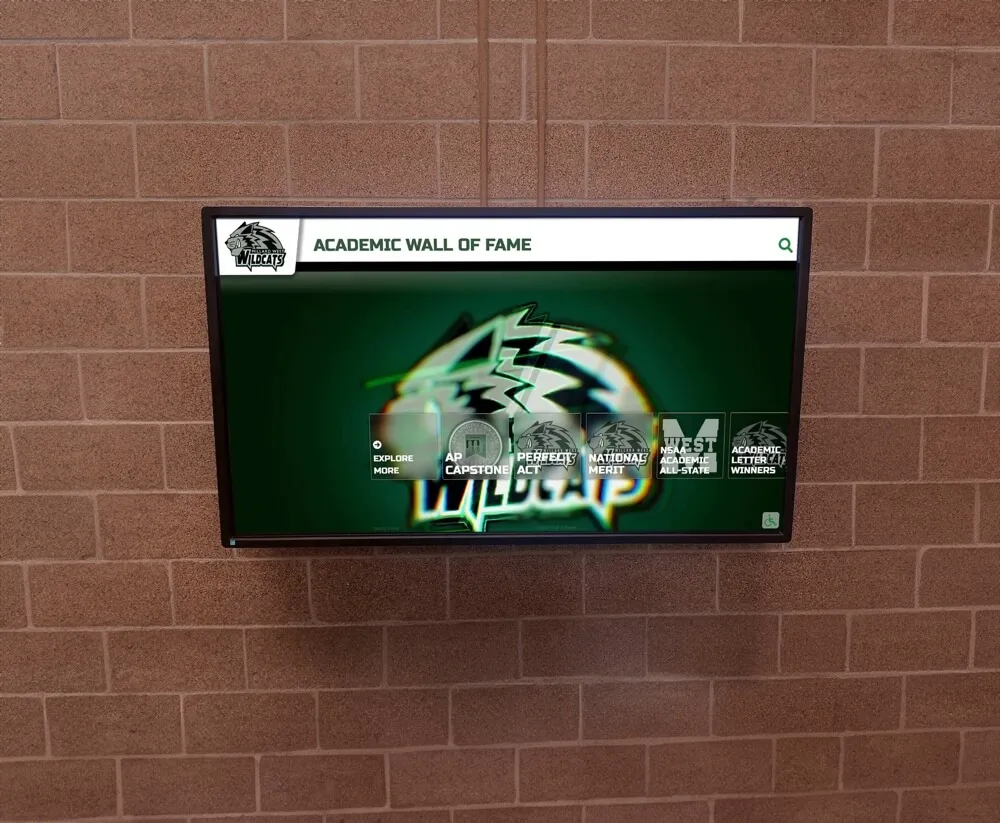
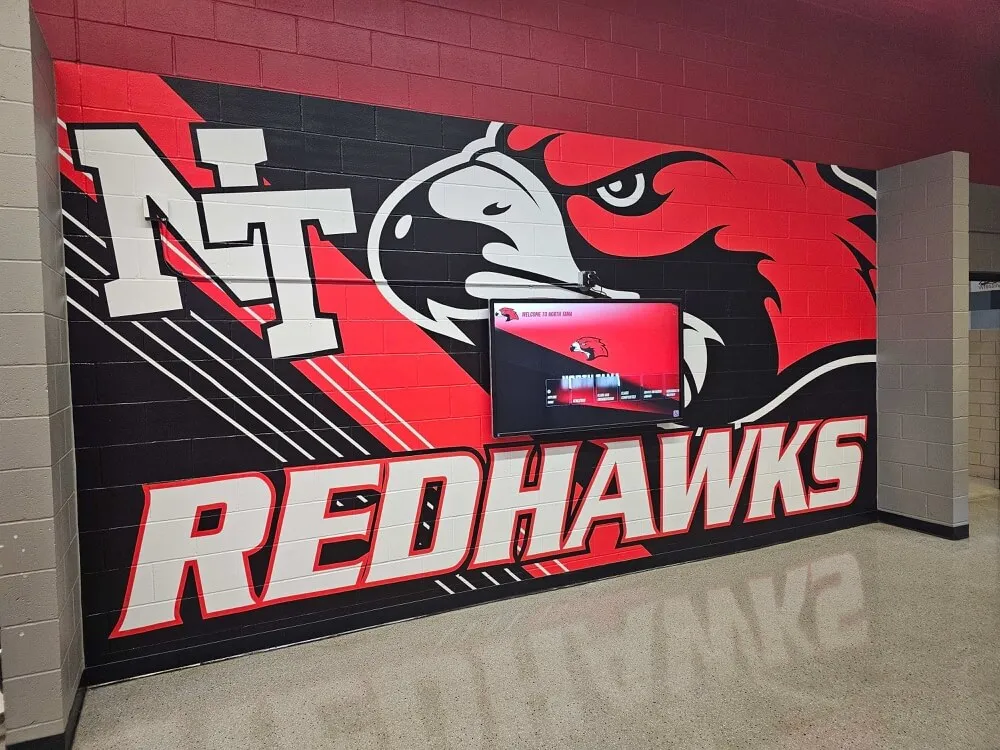
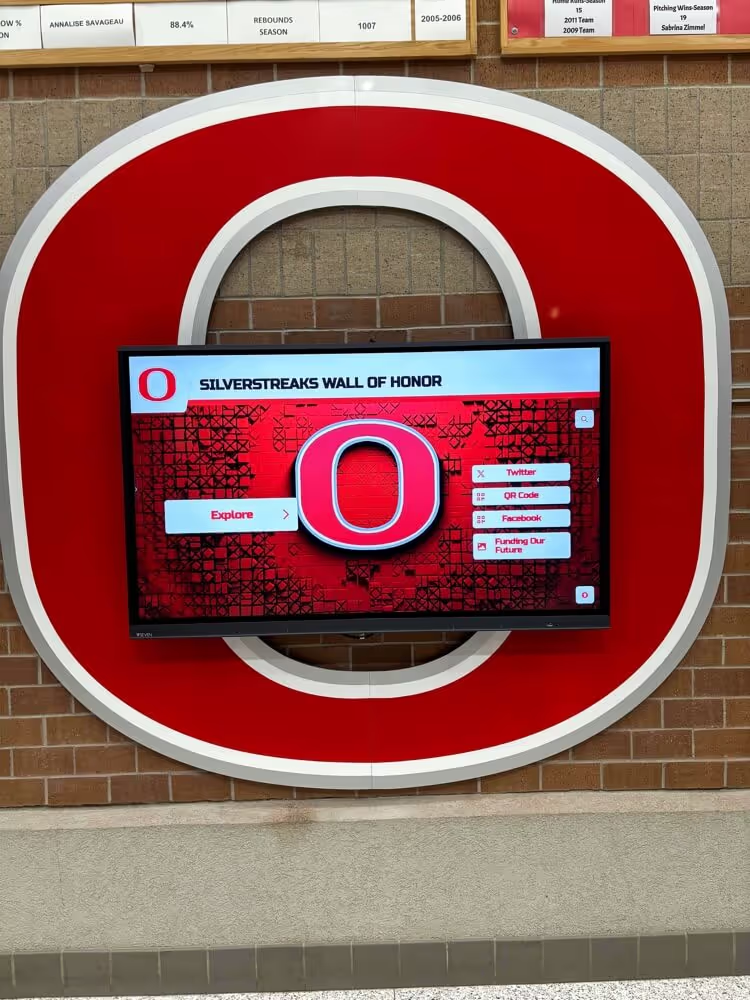
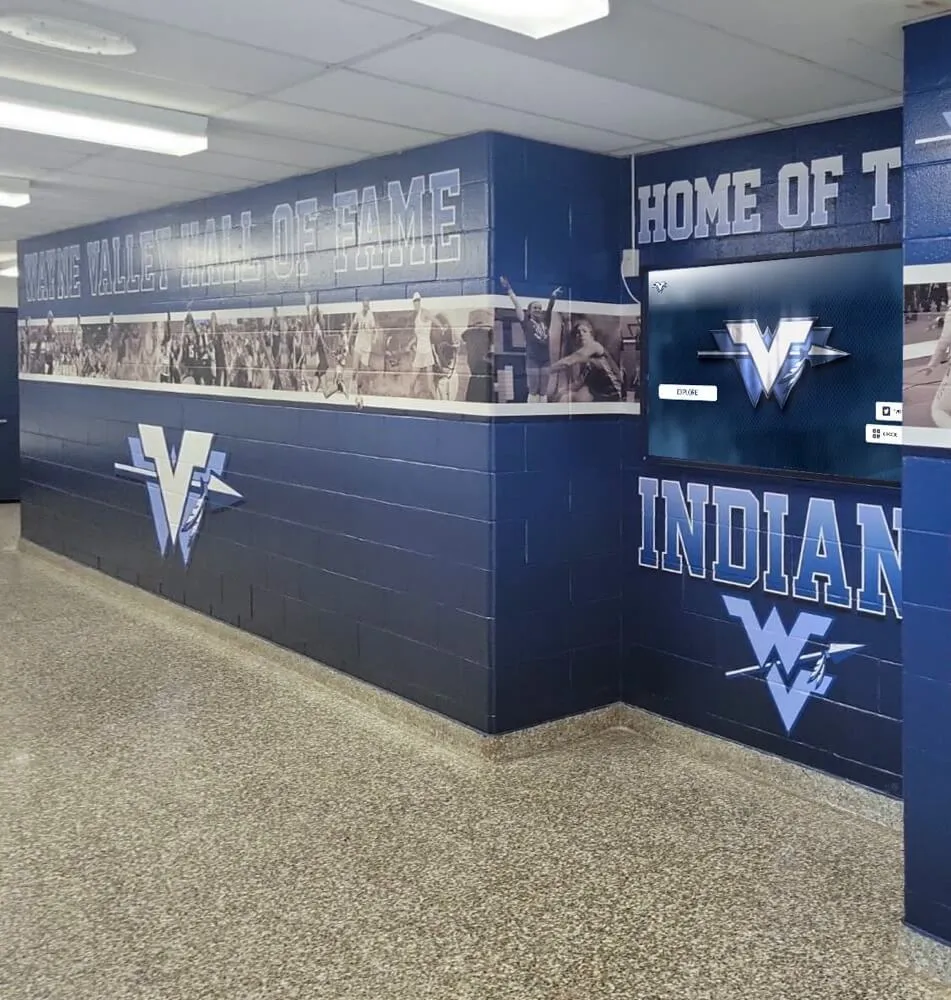
Digital displays integrate school branding, colors, and identity into recognition presentations, creating cohesive visual experiences that reinforce institutional pride
Which Solution Fits Your School?
Choosing between traditional trophy cases and digital hall of fame displays depends on your school’s specific circumstances, priorities, and constraints.
When Traditional Trophy Cases Make Sense
Physical trophy cases remain appropriate in certain situations:
Limited Budget Availability
If your school can allocate only $3,000-5,000 for recognition, a single quality trophy case represents a more accessible entry point than comprehensive digital systems, though it provides far less capacity and functionality.
Strong Community Preference for Physical Recognition
Some communities value tangible trophies deeply. If your stakeholders strongly prefer seeing physical championship trophies and would resist digital alternatives, traditional cases may better serve community expectations.
Very Limited Recognition Needs
Schools with small athletic programs generating few achievements each decade might find that a single trophy case adequately accommodates recognition for years without capacity constraints.
Existing Infrastructure and Investments
Schools with recently-installed, high-quality trophy cases in good condition may choose to maximize existing investments rather than replacing functioning displays.
Complementary Physical-Digital Approaches
Many schools maintain trophy cases for actual championship trophies while using digital displays to provide comprehensive context, statistics, team rosters, and achievement details that physical cases can’t accommodate. This hybrid approach satisfies communities that value physical trophies while delivering digital functionality.
When Digital Displays Make More Sense
Digital hall of fame systems typically better serve schools facing these circumstances:
Space Constraints
Schools struggling with crowded trophy cases, limited wall space, or hallway congestion benefit from space-efficient digital displays that showcase unlimited achievements without consuming physical space.
Growing Recognition Needs
Athletic programs generating substantial achievements each year quickly overwhelm trophy case capacity. Digital systems accommodate unlimited growth without recurring expansion costs.
Desire for Rich Storytelling
Schools wanting to celebrate achievements through photos, videos, statistics, and biographical narratives require digital platforms capable of multimedia presentation.
Alumni Engagement Priorities
Institutions prioritizing alumni connections benefit from web-accessible recognition that alumni can explore from anywhere, share on social media, and revisit whenever nostalgia strikes.
Modern Facility Renovations
New construction or major renovations provide ideal opportunities to install digital recognition systems integrated with contemporary architectural design.
Administrative Efficiency
Schools wanting to update recognition quickly without ordering plaques, scheduling installations, or coordinating with contractors prefer digital systems enabling instant updates through web dashboards.
Comprehensive Analytics Interest
Administrators wanting data about recognition engagement, popular content, and visitor patterns require digital systems generating detailed analytics that physical trophy cases can never provide.
Making the Transition: From Traditional to Digital
Many schools maintain existing trophy cases while gradually transitioning to digital recognition or implementing hybrid approaches combining both methods.
Phased Implementation Strategies
Rather than immediate complete replacement, consider staged transitions:
Phase 1: Digital Addition
Install initial digital displays in high-traffic locations while maintaining existing trophy cases. Use digital systems for new recognition while leaving historical trophy cases unchanged. This approach lets communities experience digital recognition without removing valued physical displays.
Phase 2: Hybrid Integration
Maintain physical championship trophies in cases while moving individual recognition (all-conference athletes, record holders, hall of fame inductees) to digital displays. Physical trophies satisfy traditionalists while digital profiles provide comprehensive storytelling and unlimited capacity.
Phase 3: Full Digital Migration
Once communities embrace digital recognition and see its advantages, retire trophy cases completely, relocate select physical trophies to administrative offices or special display areas, and rely primarily on digital systems for comprehensive recognition.
Preserving Physical Trophies in Digital Systems
Schools don’t need to discard physical trophies when implementing digital recognition. Many photograph championship trophies for inclusion in digital profiles, maintain select iconic trophies in special display areas, donate trophies to athletics halls or booster club offices, or offer trophies to team members as mementos.
Digital systems preserve trophy images and championship stories far better than dusty physical displays where trophies tarnish and context disappears.
Managing Stakeholder Concerns
Transitions from traditional to digital recognition sometimes face resistance. Address concerns proactively:
“Digital displays lack the permanence and gravitas of physical trophies”
Explain that cloud-based digital content actually provides greater permanence than physical displays subject to damage, loss, or removal when space runs out. Digital archives preserve achievements forever rather than relegating older trophies to storage.
“Older community members won’t use touchscreens”
Demonstrate that touchscreen interfaces prove intuitive across age groups. Most people use smartphones daily, making touchscreen interaction familiar. Web access also ensures non-technical users can explore recognition from home computers.
“It’s too expensive compared to trophy cases”
Present total cost of ownership calculations showing that digital systems achieve cost parity within 5-7 years when accounting for ongoing trophy case expansion, plaque orders, and maintenance. Highlight unlimited capacity compared to physical space constraints requiring recurring investments.
“Our tradition matters and we’ve always used trophy cases”
Acknowledge tradition while explaining that digital recognition better serves modern communities. Physical cases made sense when they were created, but technology now enables recognition that’s more accessible, comprehensive, and engaging while actually better preserving institutional heritage.
The Future of School Recognition
Looking ahead, digital recognition systems will continue advancing while traditional trophy cases remain largely unchanged in functionality.
Emerging capabilities for digital systems include artificial intelligence automatically creating highlight reels from game video, facial recognition helping organize and tag historical photos, voice search allowing hands-free exploration, augmented reality overlaying digital content on physical spaces, and integration with broader digital ecosystems including yearbooks, archives, and student information systems.
Schools implementing digital recognition position themselves to adopt these advances as they mature, while trophy cases offer no equivalent evolution path beyond periodic cleaning and occasional expansion.
Making Your Recognition Decision
The choice between traditional trophy cases and digital hall of fame displays ultimately depends on your school’s priorities, budget, community preferences, and vision for recognition.
Traditional trophy cases serve schools with limited budgets, strong preferences for physical recognition, minimal recognition needs, or desire to maintain existing investments. They provide tangible displays of championship hardware that many communities value.
Digital hall of fame displays better serve schools facing space constraints, growing recognition needs, desire for multimedia storytelling, alumni engagement priorities, administrative efficiency goals, or plans for comprehensive recognition programs. They eliminate capacity limits, enable instant updates, provide worldwide access, and deliver engagement that static displays can’t match.
Many schools find that hybrid approaches combining select physical trophy displays with comprehensive digital recognition systems satisfy both traditionalists who value tangible trophies and forward-looking stakeholders who appreciate digital functionality.
Whatever approach your school chooses, the most important consideration is that recognition happens consistently and meaningfully. Whether through glass-fronted trophy cases or interactive touchscreen displays, celebrating achievements honors student effort, builds institutional pride, and strengthens community connections that define successful schools.
Ready to explore how digital recognition can transform your school’s approach to celebrating achievements? Talk to our team about interactive hall of fame solutions designed specifically for schools.