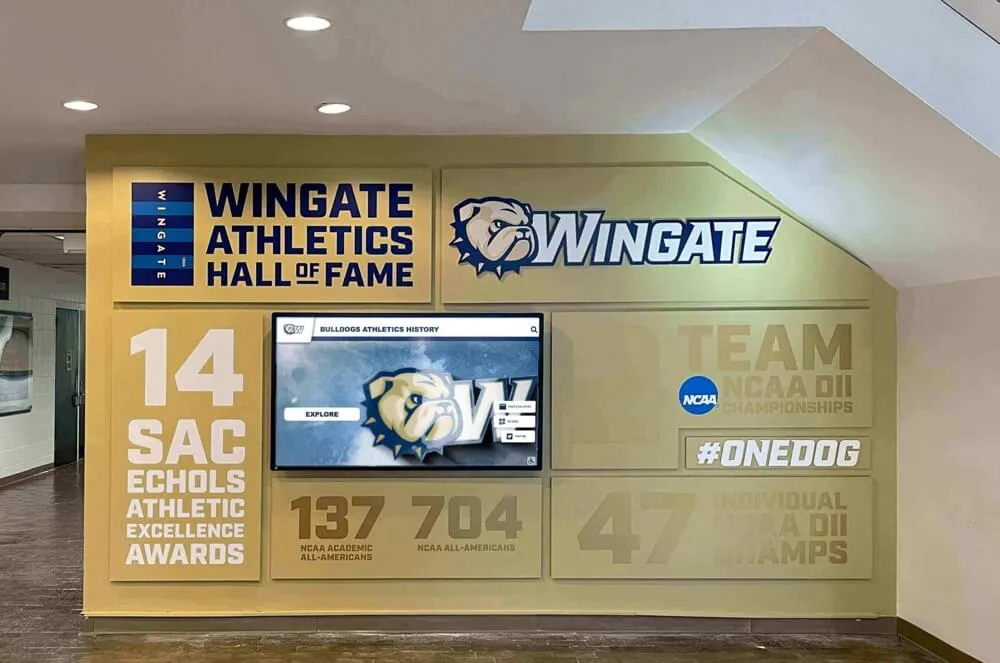
When nonprofits, schools, and organizations plan capital campaigns or major fundraising initiatives, donor recognition often presents a persistent challenge: how do you meaningfully honor every contributor when wall space is limited, budgets are tight, and traditional plaques cost hundreds of dollars each? Development directors face difficult decisions about minimum gift thresholds, watch donor lists grow beyond available display space, and struggle to tell compelling stories that inspire future giving—all while managing the considerable expense of engraved plaques and installation.
Digital donor walls solve these fundamental constraints by replacing space-limited physical plaques with dynamic interactive displays that accommodate unlimited contributors, showcase rich multimedia stories, update instantly when new gifts arrive, and extend recognition worldwide through web platforms. Rather than choosing which donors receive visibility, organizations can honor everyone from transformational major gifts to first-time community supporters, creating inclusive recognition that strengthens relationships while demonstrating appreciation for every level of support.
This comprehensive guide explores creative digital donor wall ideas that transform recognition from static acknowledgment into engaging experiences. Whether you’re planning your first capital campaign, upgrading outdated plaque systems, or seeking cost-effective alternatives to traditional approaches, these strategies will help you create meaningful tributes that celebrate contributors, inspire prospective donors, and build lasting philanthropic communities supporting your mission for years to come.
Organizations implementing thoughtful digital donor recognition report 30-45% improvements in donor retention rates and increased average gift sizes compared to traditional plaque systems, according to advancement professionals. The investment in modern recognition technology generates measurable returns through enhanced donor satisfaction, more effective stewardship, and tools that actively support ongoing fundraising efforts rather than passive acknowledgment alone.
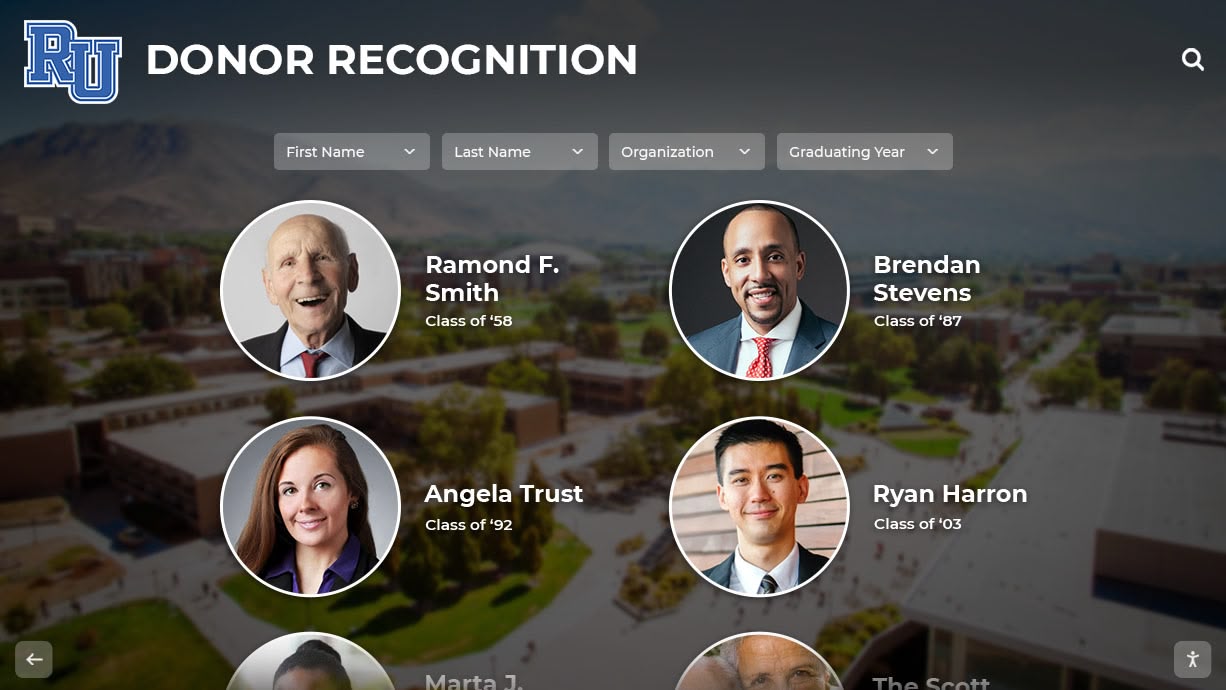
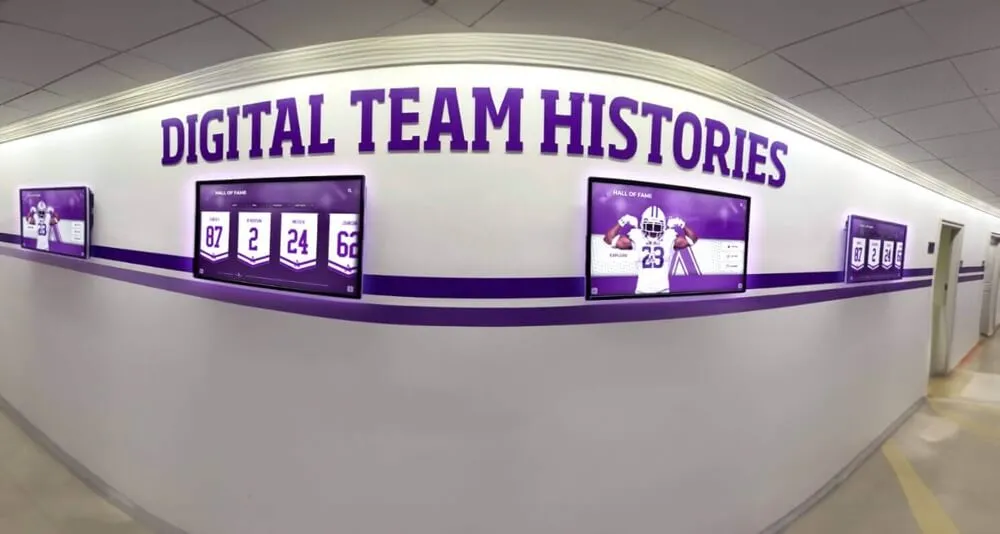
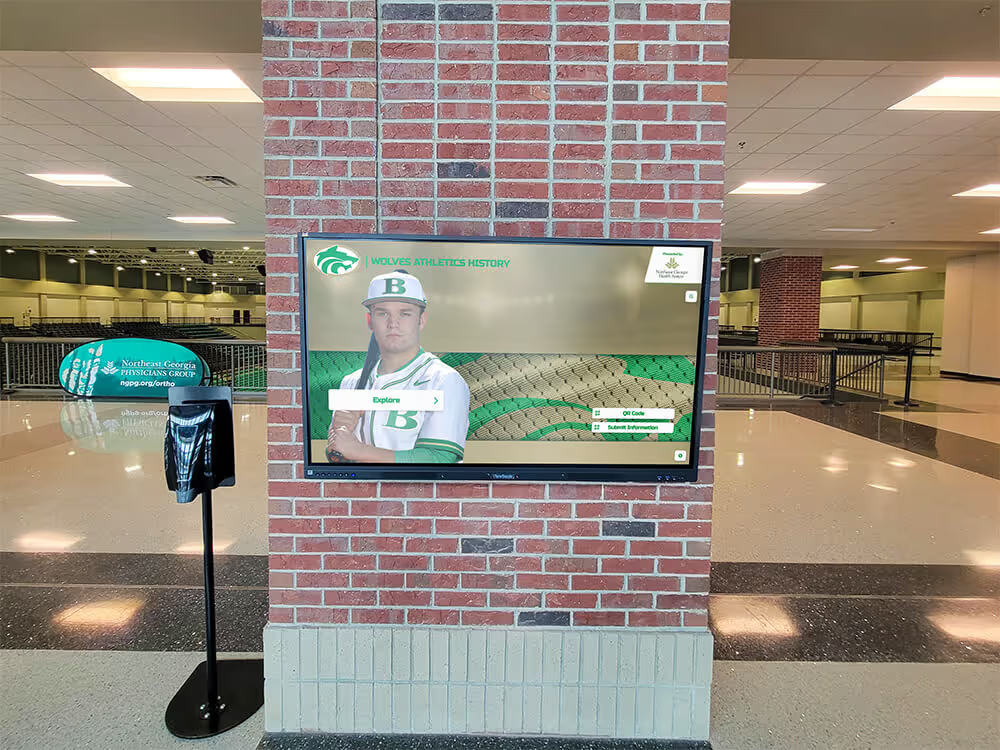
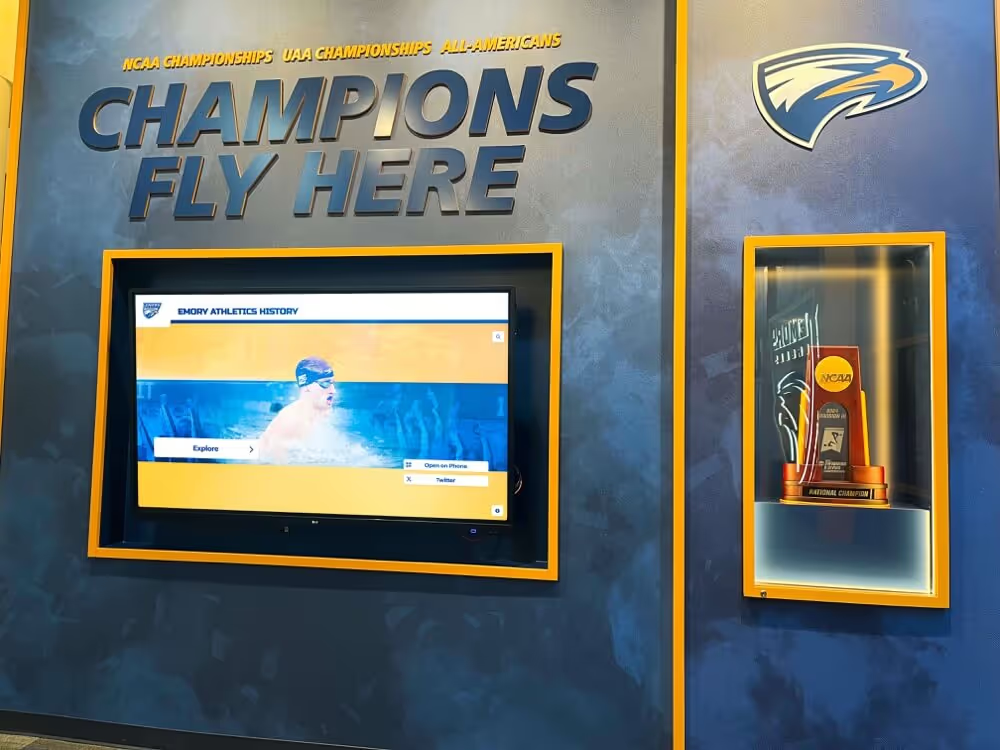
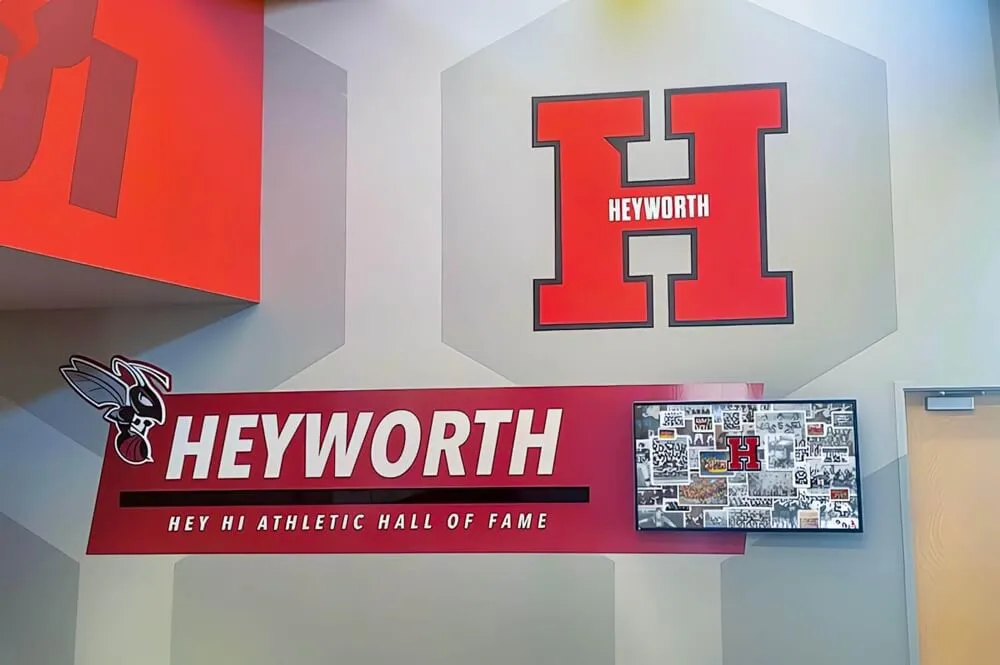
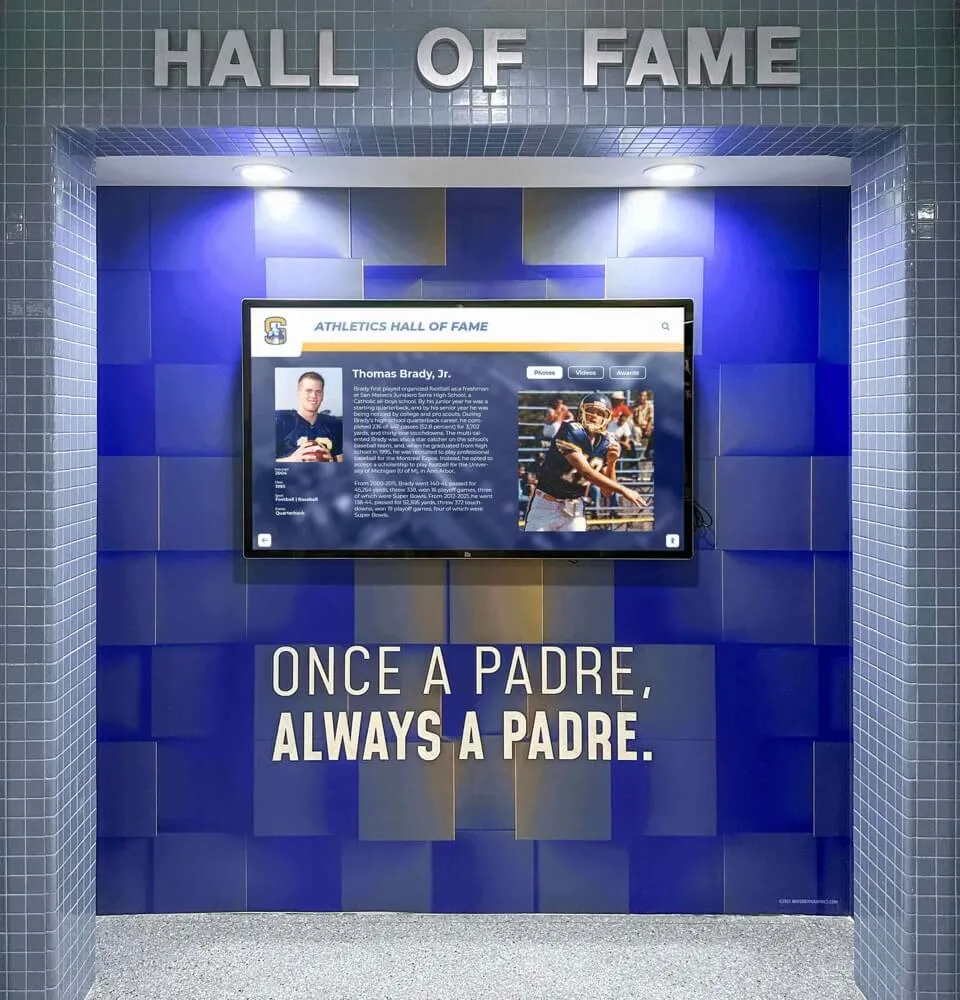
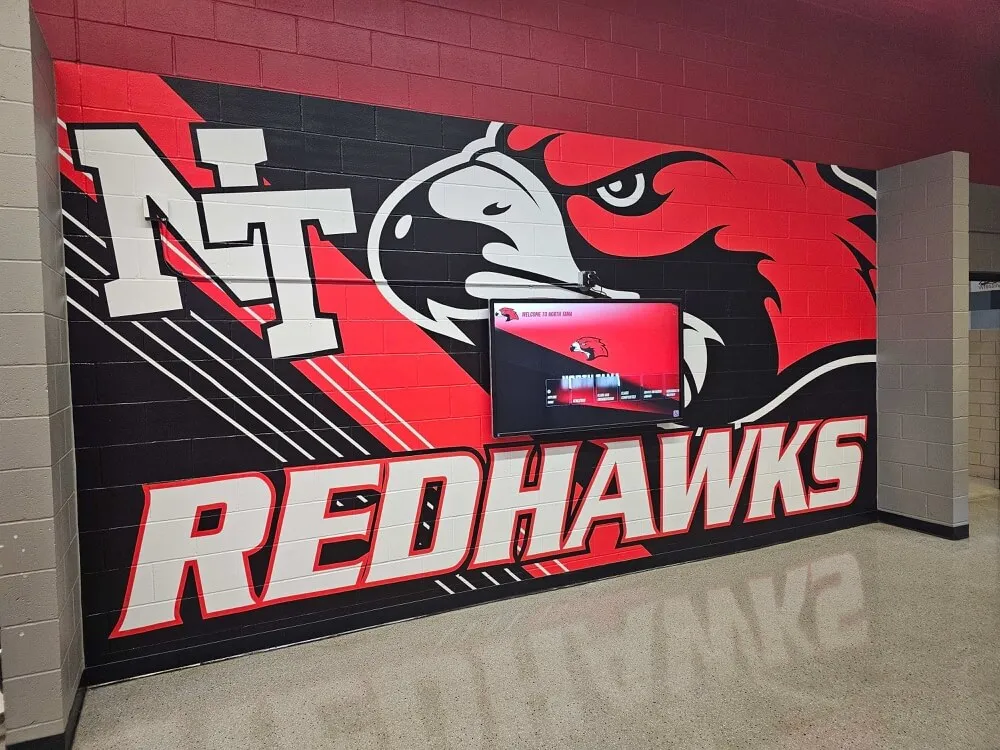
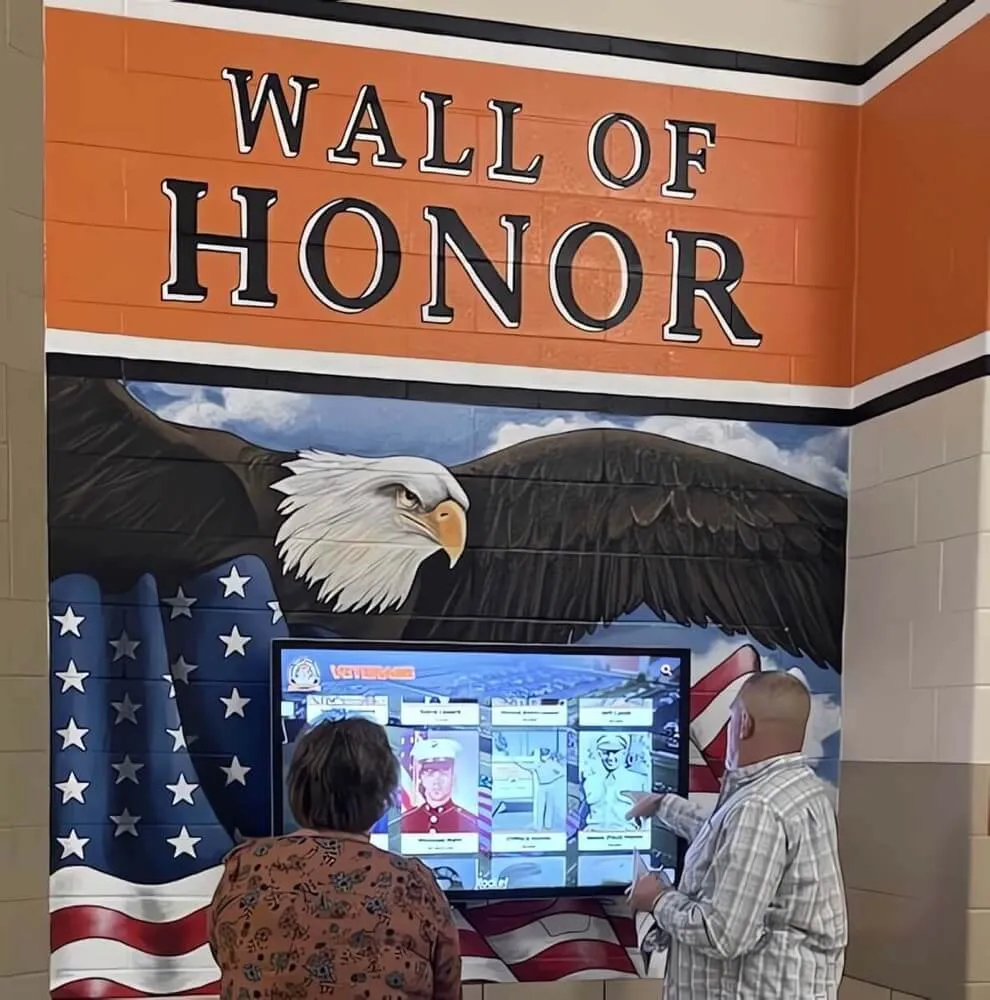
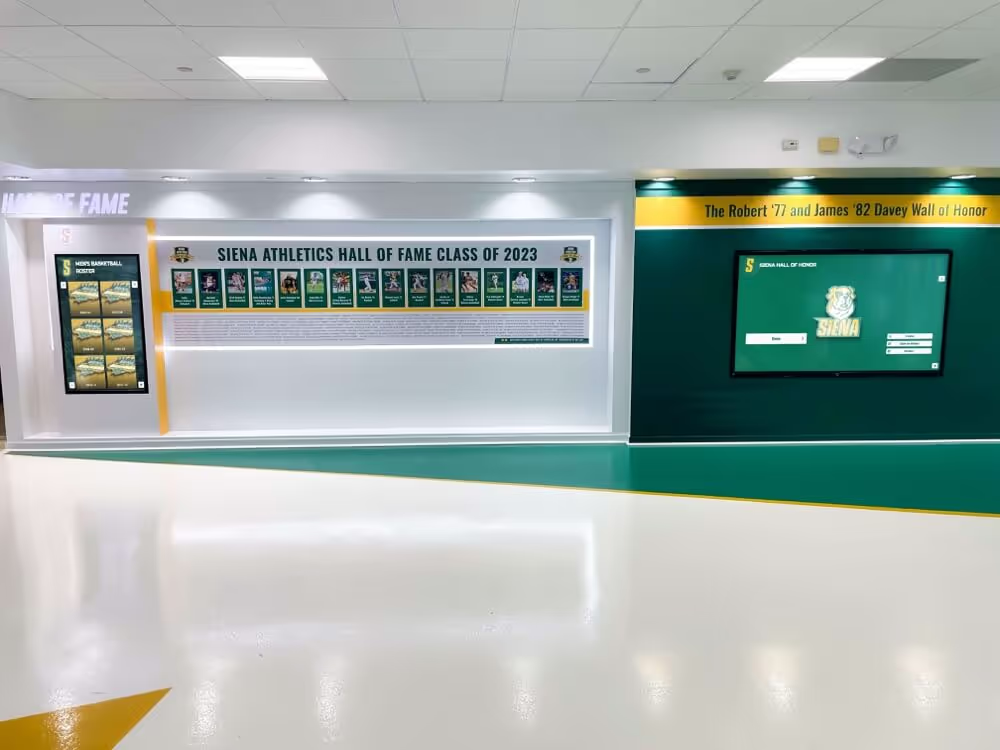
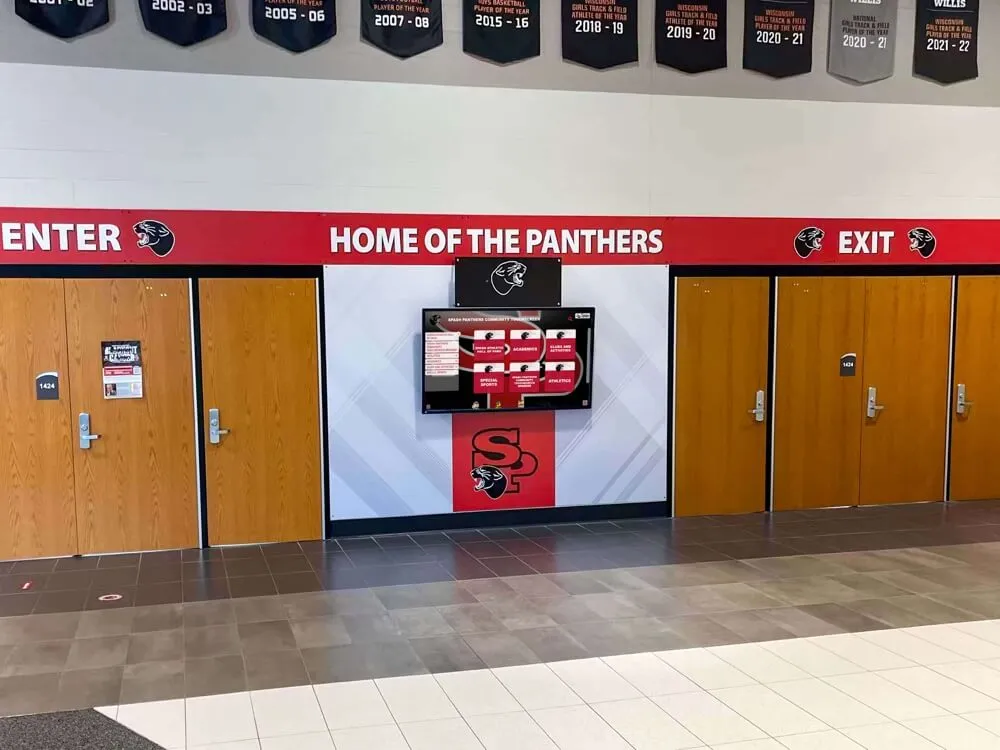
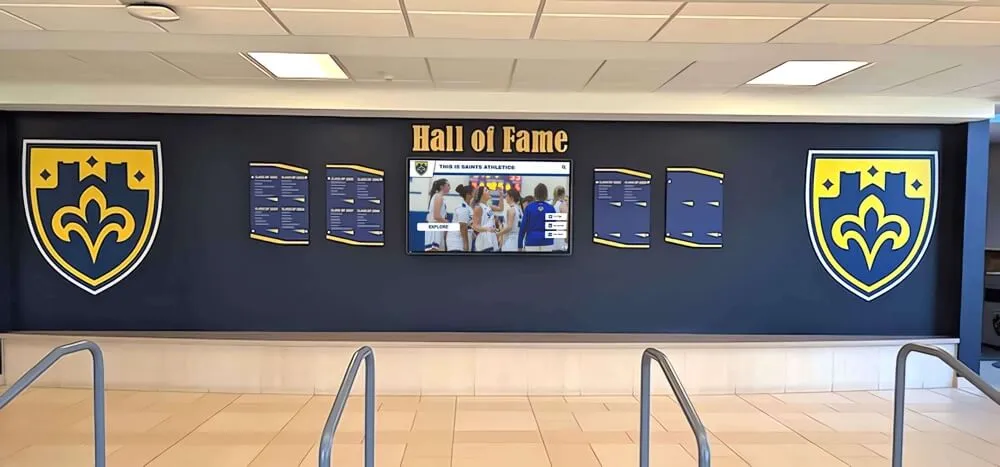
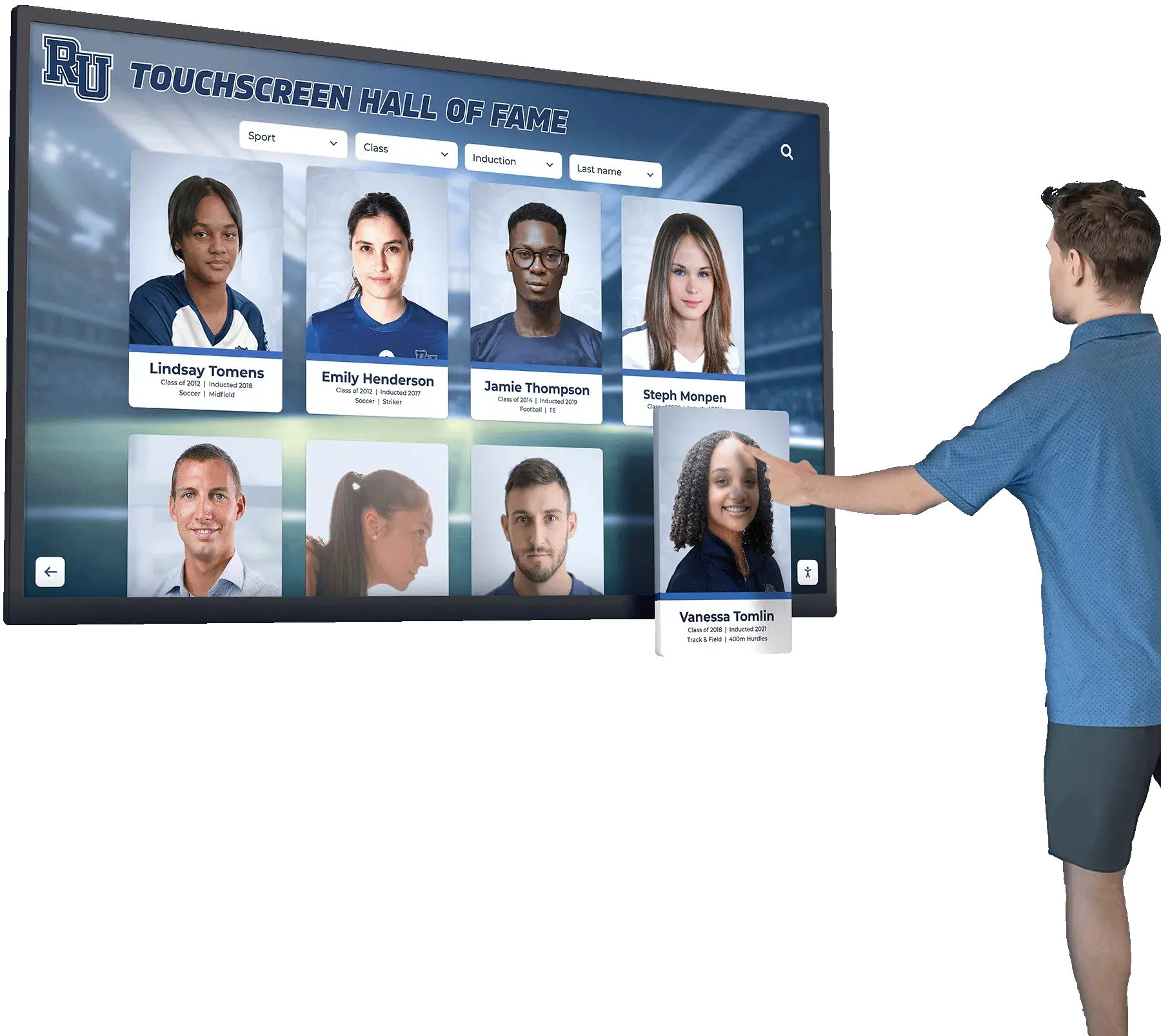
Modern digital donor walls create engaging recognition experiences that celebrate contributors while inspiring continued philanthropic support
Understanding Digital Donor Wall Concepts
Digital donor walls represent a fundamental shift in how organizations acknowledge philanthropic support. Instead of engraved plaques limited by physical wall space and expensive per-donor costs, digital recognition systems use interactive touchscreen displays, cloud-based content management, and web platforms to create scalable, dynamic acknowledgment that serves both current contributors and prospective donors exploring giving opportunities.
What Makes Digital Donor Walls Different
Unlimited Recognition Capacity
Traditional plaque systems force difficult decisions as wall space fills. Organizations must establish minimum gift thresholds excluding smaller donors, remove older plaques to accommodate new contributors, or undertake expensive renovations adding more wall space. Digital systems eliminate these constraints entirely—a single display accommodates hundreds or thousands of donor profiles without additional hardware investment, ensuring every contributor receives appropriate recognition regardless of gift size.
Rich Multimedia Storytelling
Engraved plaques limit recognition to names, dates, and minimal text—rarely enough space for meaningful context. Digital platforms enable comprehensive storytelling through multiple photographs showing donors and their connections to organizations, biographical narratives explaining giving motivations and personal stories, video testimonials sharing philanthropic philosophy, impact descriptions connecting contributions to tangible outcomes, and donor quotes inspiring others considering support.
This depth transforms simple acknowledgment into compelling narratives that honor complete donor relationships while demonstrating to prospective contributors the meaningful recognition they’ll receive for their generosity.
Real-Time Updates and Dynamic Content
Adding recognition to physical displays requires ordering plaques (weeks of production time), coordinating engraving, and scheduling installation—creating delays between contributions and acknowledgment. Digital systems enable immediate updates through intuitive content management dashboards. When major gifts arrive, campaign milestones are reached, or new contributors join donor communities, recognition appears instantly across all displays and platforms, maintaining relevance and celebrating support while enthusiasm remains high.
Core Components of Digital Donor Recognition
Effective digital donor wall implementations combine three integrated elements:
Interactive Physical Displays
Touchscreen kiosks or wall-mounted screens installed in high-traffic institutional locations—building lobbies, reception areas, event spaces, or development office suites. These displays provide the primary on-site recognition experience where visitors, prospective donors, board members, and stakeholders explore donor communities, search for specific contributors, and discover philanthropic stories through intuitive touch interfaces.
Modern systems range from 43-inch displays suitable for smaller spaces to 75-inch or larger screens creating impressive centerpieces in major lobbies and campaign headquarters.
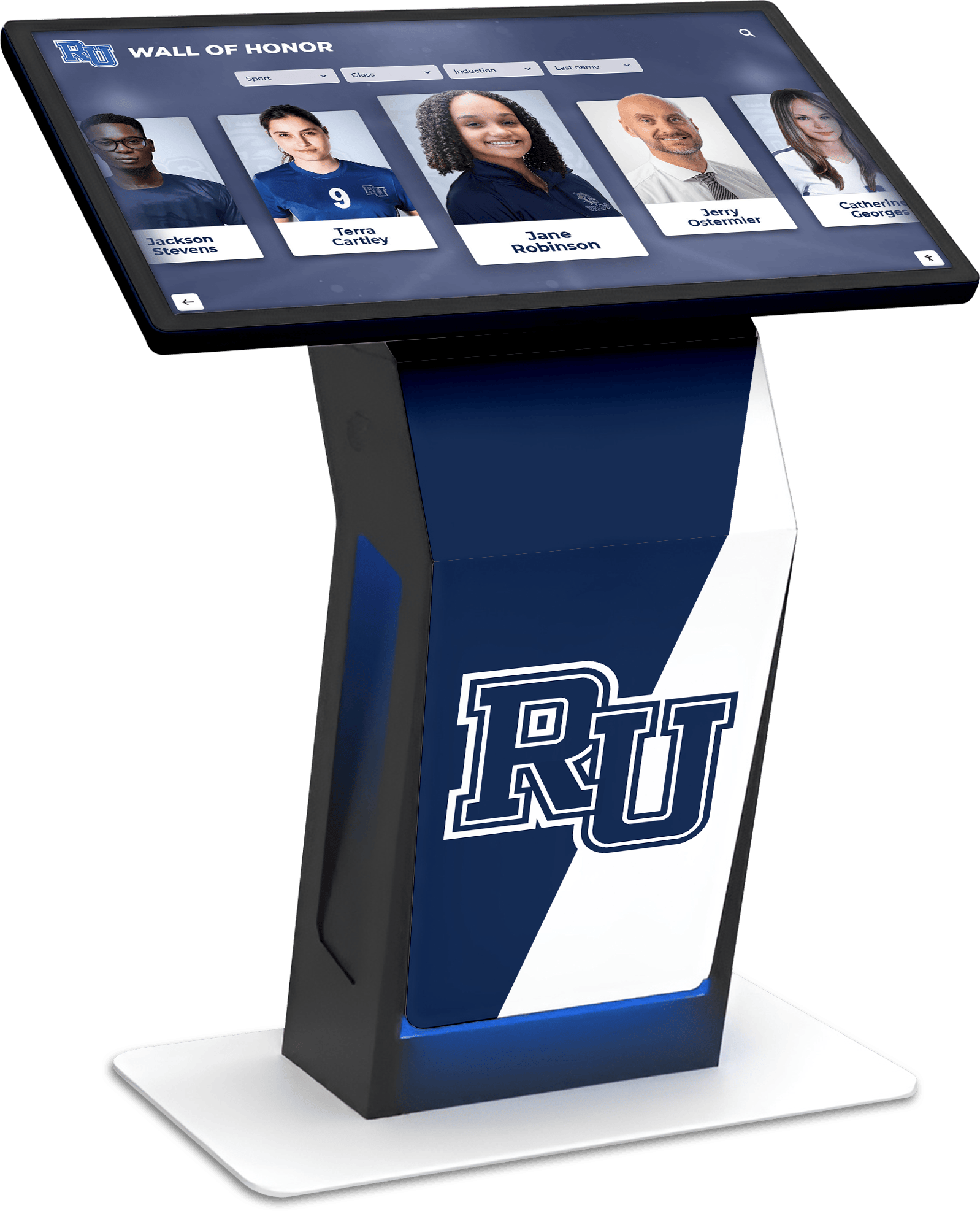
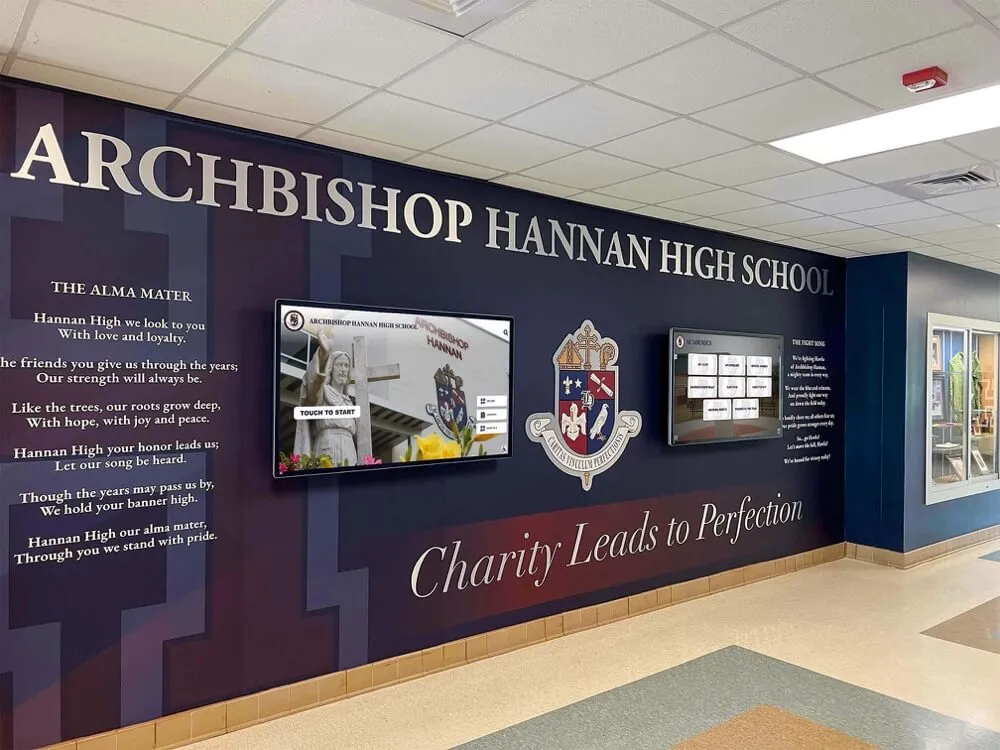
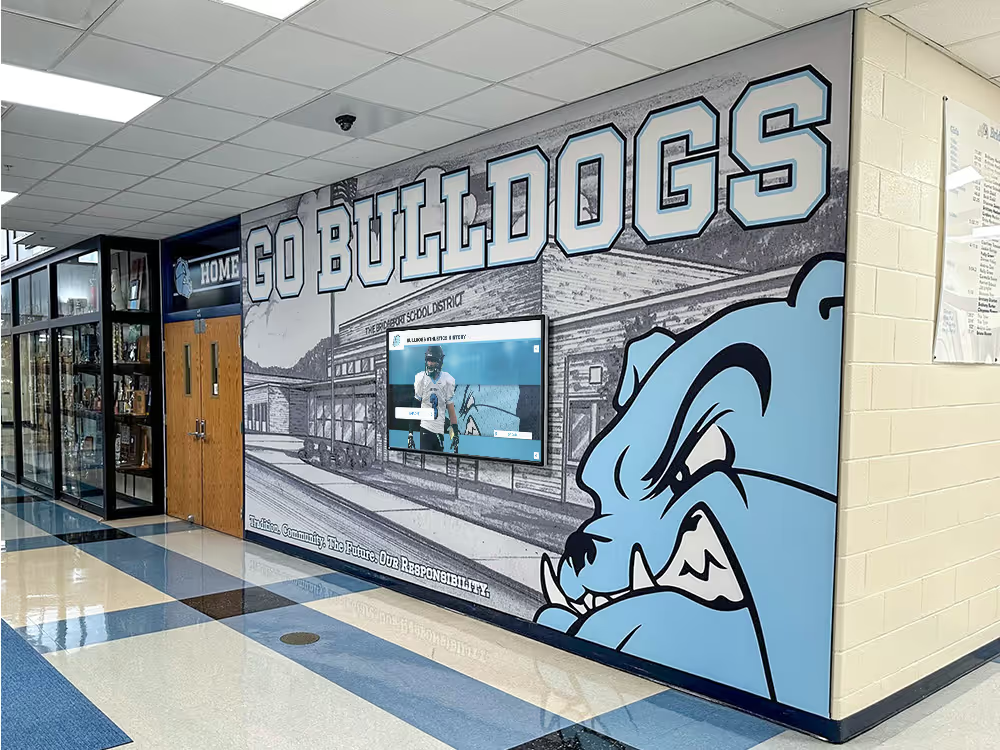
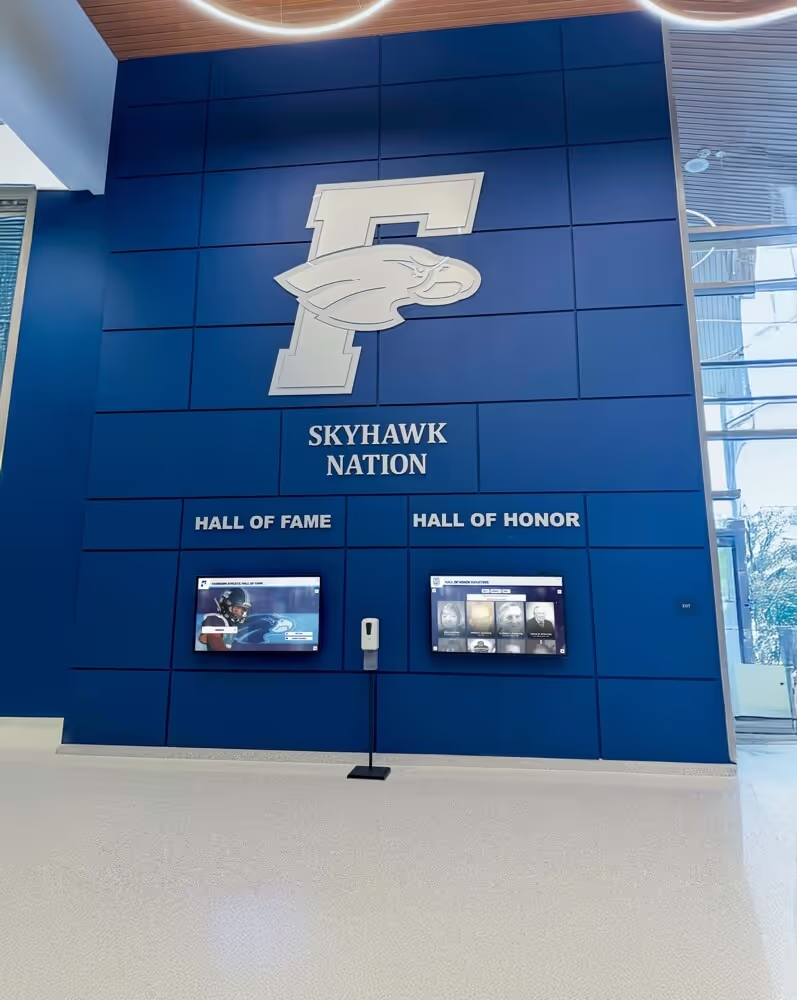
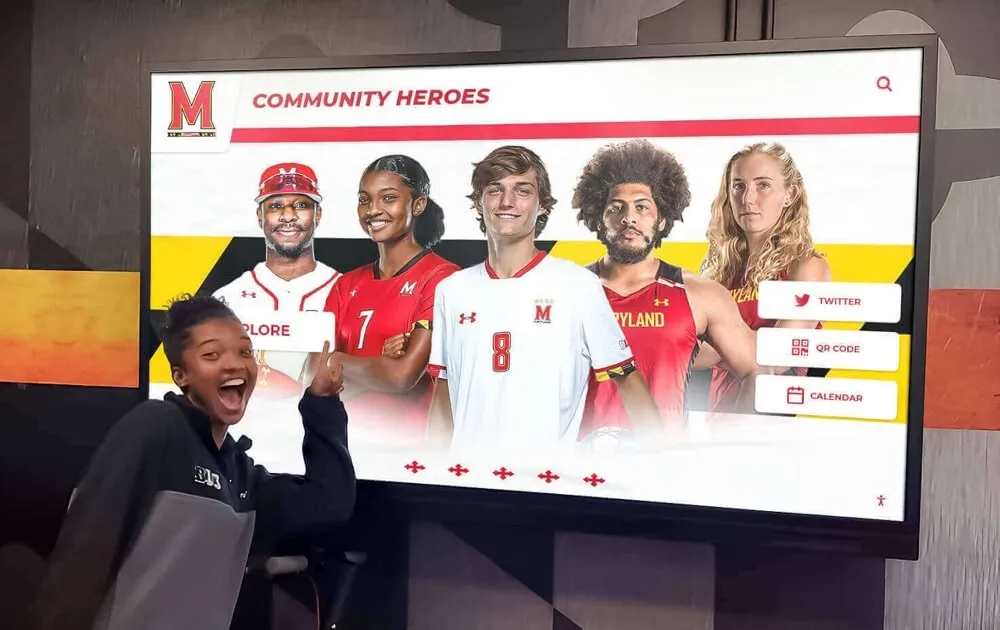
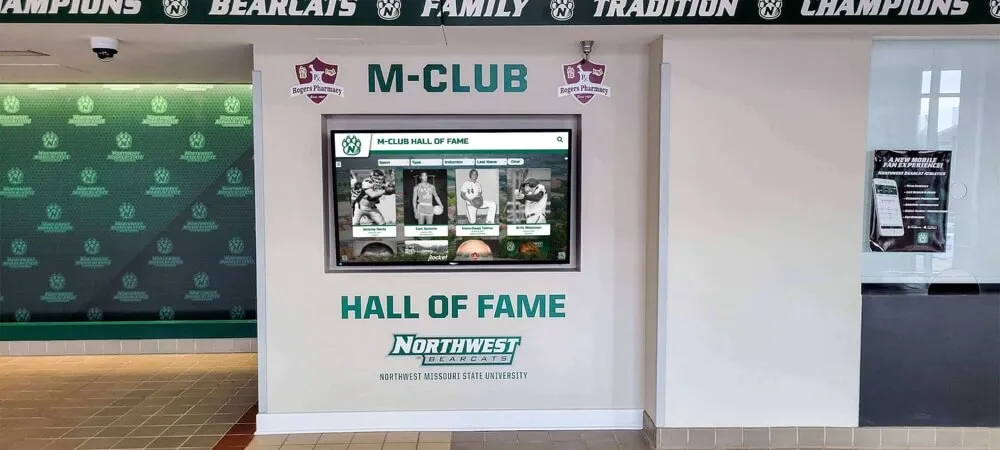
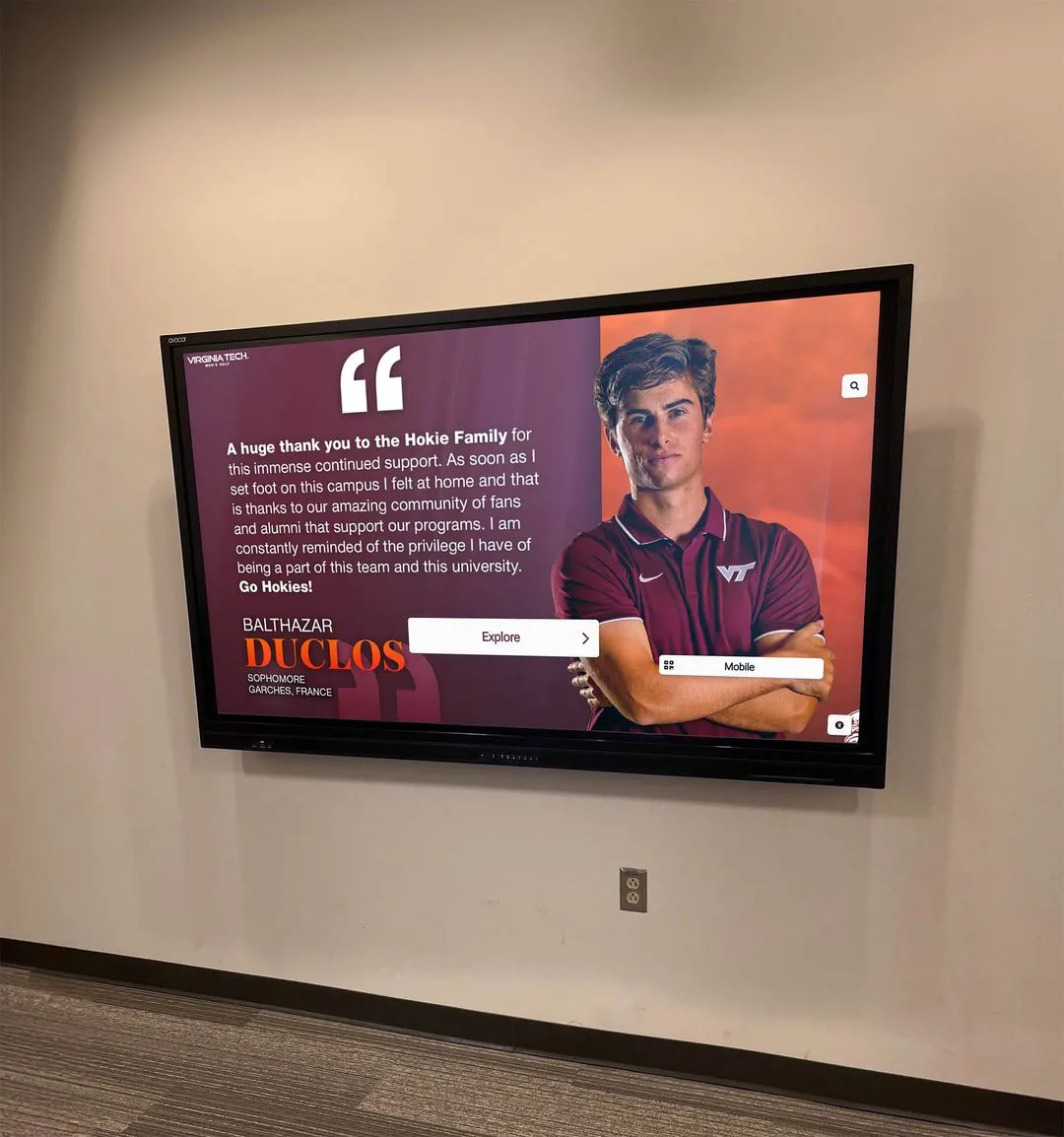
Purpose-built recognition kiosks provide professional installations with intuitive interfaces enabling all visitors to explore donor communities
Cloud-Based Content Management
Web-based dashboards enabling development staff to add donors, upload photographs, update biographical information, create new recognition categories, and manage all displayed content without technical expertise. Cloud platforms mean updates made from office computers, home devices, or anywhere with internet access instantly appear across all displays and web platforms—eliminating coordination with facilities staff or technology departments.
Web-Accessible Recognition Platforms
Online versions of donor recognition content providing worldwide access through smartphones, tablets, and computers. Web platforms extend acknowledgment beyond physical campus boundaries, allowing donors to view their profiles from anywhere, share recognition on social media, and maintain connections with institutional heritage regardless of geographic distance. Solutions like Rocket Alumni Solutions integrate all three components—touchscreen displays, content management, and web accessibility—into unified platforms ensuring consistent experiences whether supporters explore recognition on-site or online.
Creative Digital Donor Wall Design Ideas
Moving beyond basic name displays, innovative organizations implement recognition designs that engage visitors, inspire giving, and strengthen community connections.
Interactive Giving Level Displays
Tiered Recognition Visualizations
Rather than simple lists organized by contribution amount, creative implementations visualize donor communities through concentric circles showing giving levels radiating from center, tree diagrams with major donors as trunk and supporters as branches, building visualizations where donor levels correspond to floors or architectural elements, pathway designs showing donor journey from initial gifts to major support, and constellation patterns grouping donors by campaign or purpose with stars sized by contribution level.
These visual approaches help visitors understand community giving structure while making recognition more engaging than traditional alphabetical lists. Organizations implementing capital campaign donor recognition often find visual hierarchies more effective than text-based lists for communicating campaign progress and community participation.
Progressive Disclosure Design
Home screens showcase giving level categories with donor counts (“45 Leadership Circle Members, 127 Benefactor Society Supporters”), allowing visitors to select categories revealing individual donors within each level, then tap specific names accessing full biographical profiles with photos, stories, and impact descriptions. This layered approach prevents overwhelming visitors with thousands of names while enabling systematic exploration based on visitor interests.
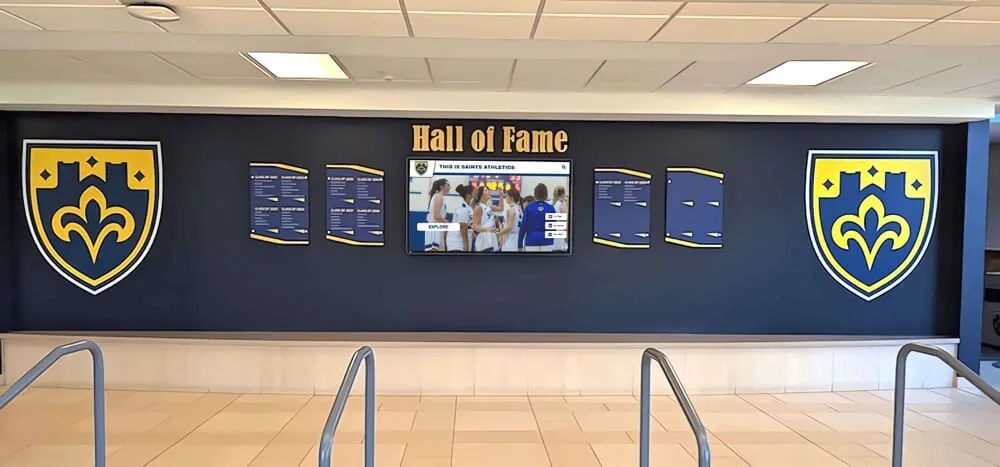
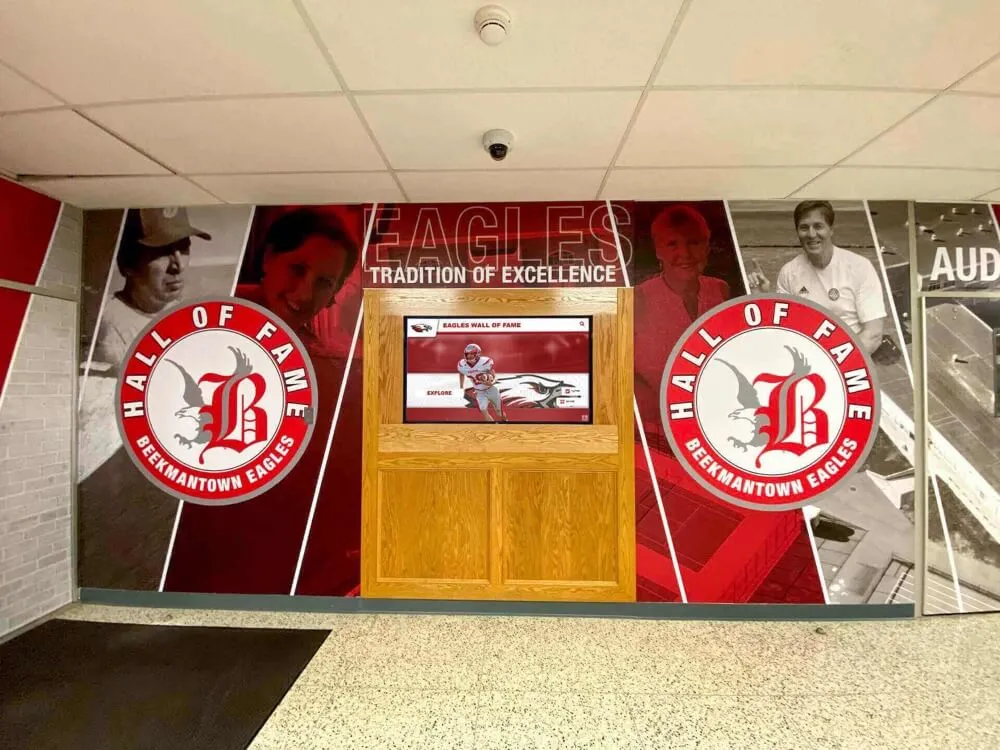
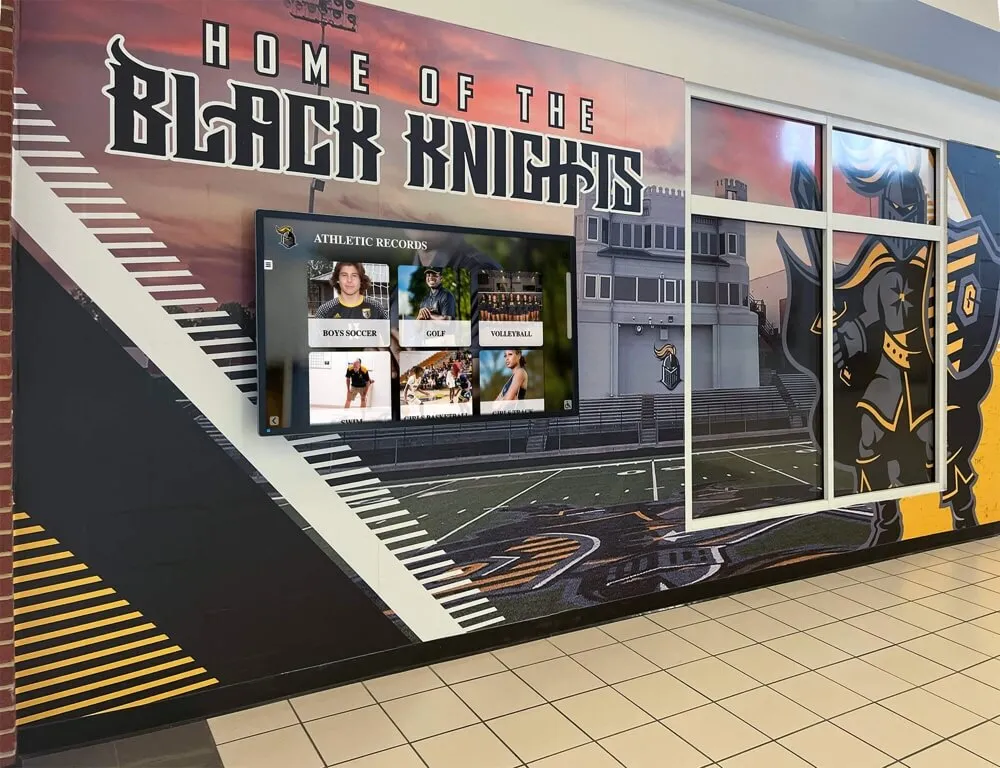
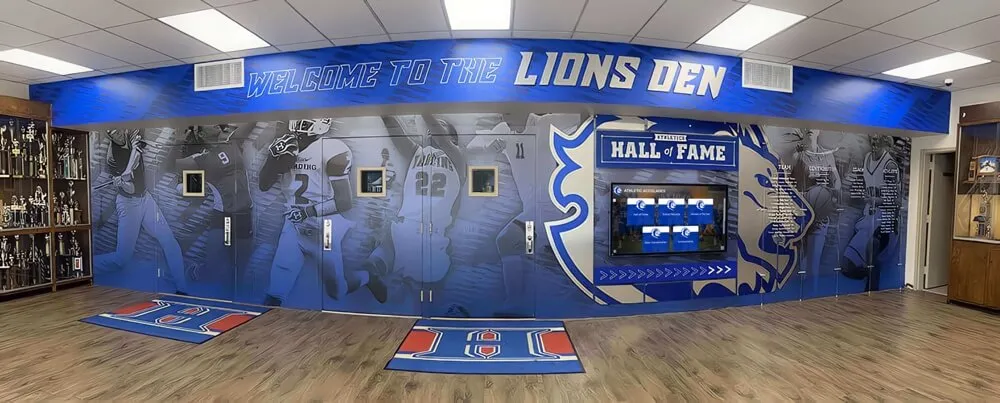
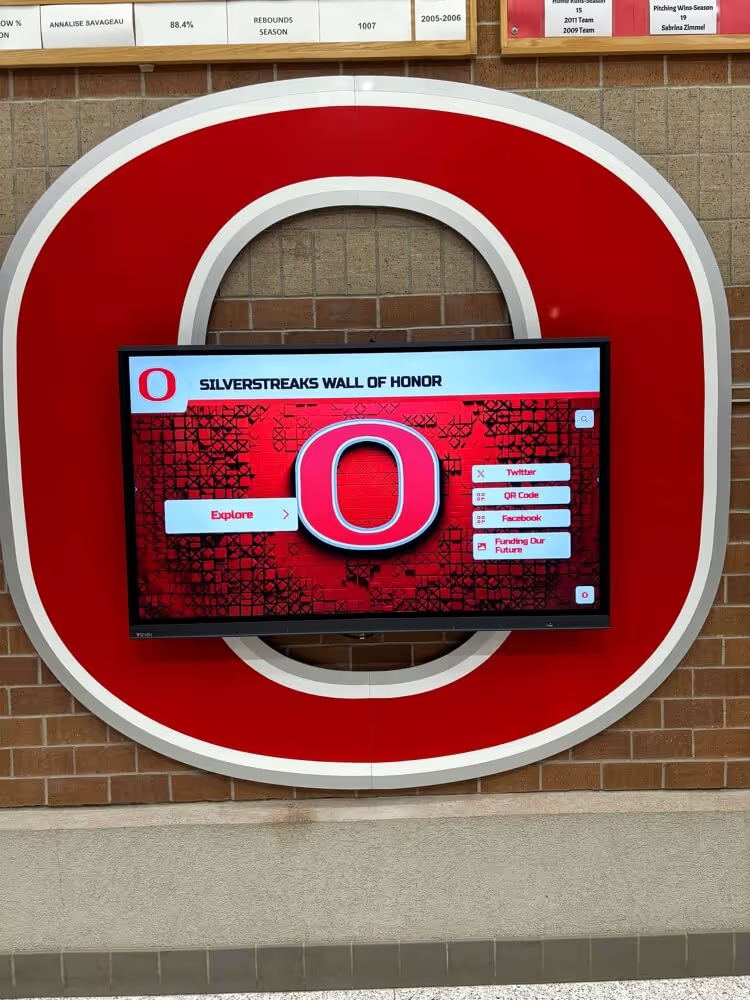
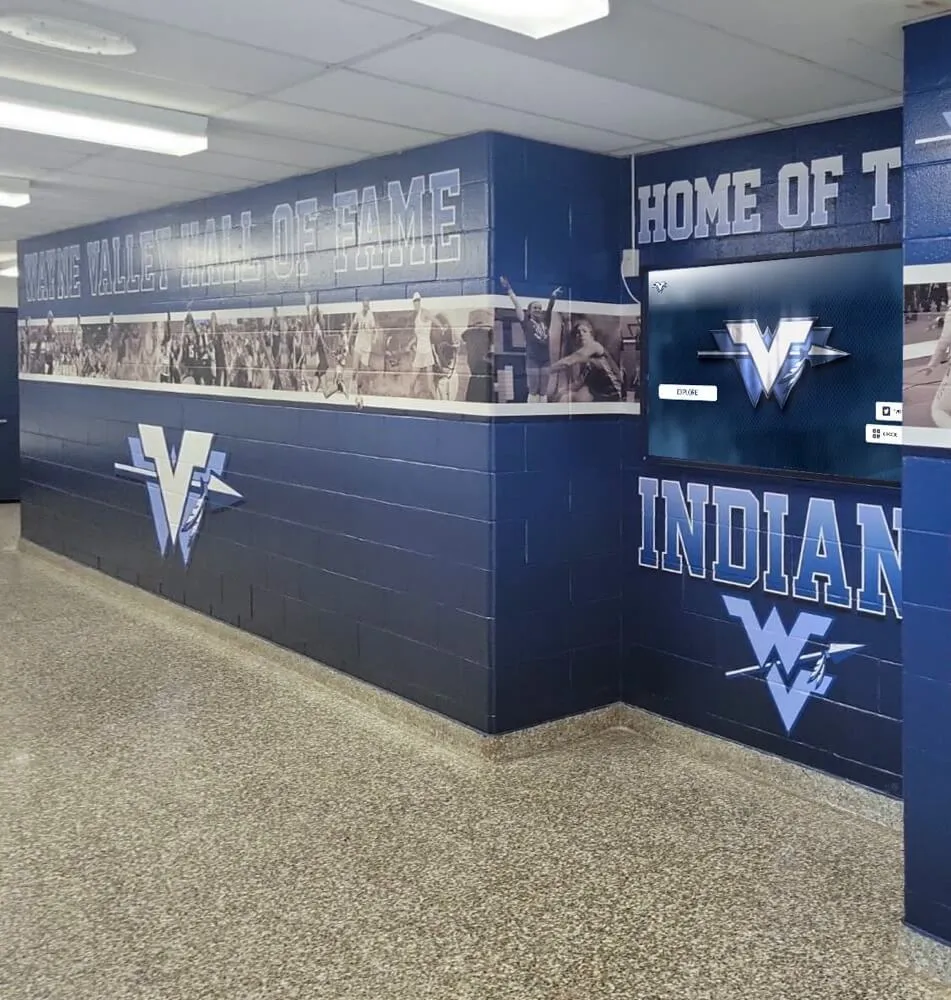
Hybrid recognition approaches combine traditional elements with digital capacity, honoring heritage while embracing modern capabilities
Campaign-Specific Recognition Concepts
Capital Campaign Progress Displays
Real-time campaign thermometers showing total raised toward goals, recent donor additions with names appearing as contributions arrive, milestone celebrations highlighting significant progress points, countdown timers for campaign conclusion dates, matching gift opportunities and challenge campaign status, and naming opportunity visualizations showing which building spaces, rooms, or programs remain available for major gift designation.
Dynamic campaign displays function as active fundraising tools during cultivation conversations, donor events, and facility tours—creating urgency and demonstrating momentum that inspires prospective contributors. Development professionals report these real-time visualizations significantly enhance solicitation effectiveness compared to static campaign materials that quickly become outdated.
Multi-Campaign Organization
Organizations simultaneously managing annual giving programs, capital campaigns, endowment initiatives, and special appeals benefit from digital systems accommodating unlimited campaigns through separate sections for each fundraising initiative, donors supporting multiple campaigns appearing in all relevant areas, filter functionality allowing visitors to view specific campaign recognition, historical archives preserving completed campaign acknowledgment, and cumulative giving calculations showing total support across all initiatives over multiple years.
This comprehensive organization impossible with space-constrained physical plaques becomes straightforward with digital platforms accommodating unlimited categorization and cross-referencing.
Geographic and Demographic Recognition Ideas
Alumni Class Year Organization
Educational institutions organize donors by graduation year, creating recognition structures featuring class year navigation enabling reunion-based exploration, cumulative class giving totals showing collective impact, participation percentages demonstrating class engagement, multi-generation family recognition highlighting legacy support across decades, and reunion campaign special features during milestone anniversaries.
This organization taps into powerful class identity and reunion dynamics that drive educational philanthropy, making recognition feel personally relevant while encouraging friendly competition among class years.
Regional Donor Communities
Organizations with geographically distributed supporters implement interactive maps showing donor locations worldwide, regional giving totals and participation rates, local chapter or alumni group recognition, city-specific donor exploration, and event-based recognition highlighting donors attending regional gatherings.
Geographic visualization helps donors see themselves as part of broader communities while demonstrating organizational reach and national or international support base to prospective contributors.
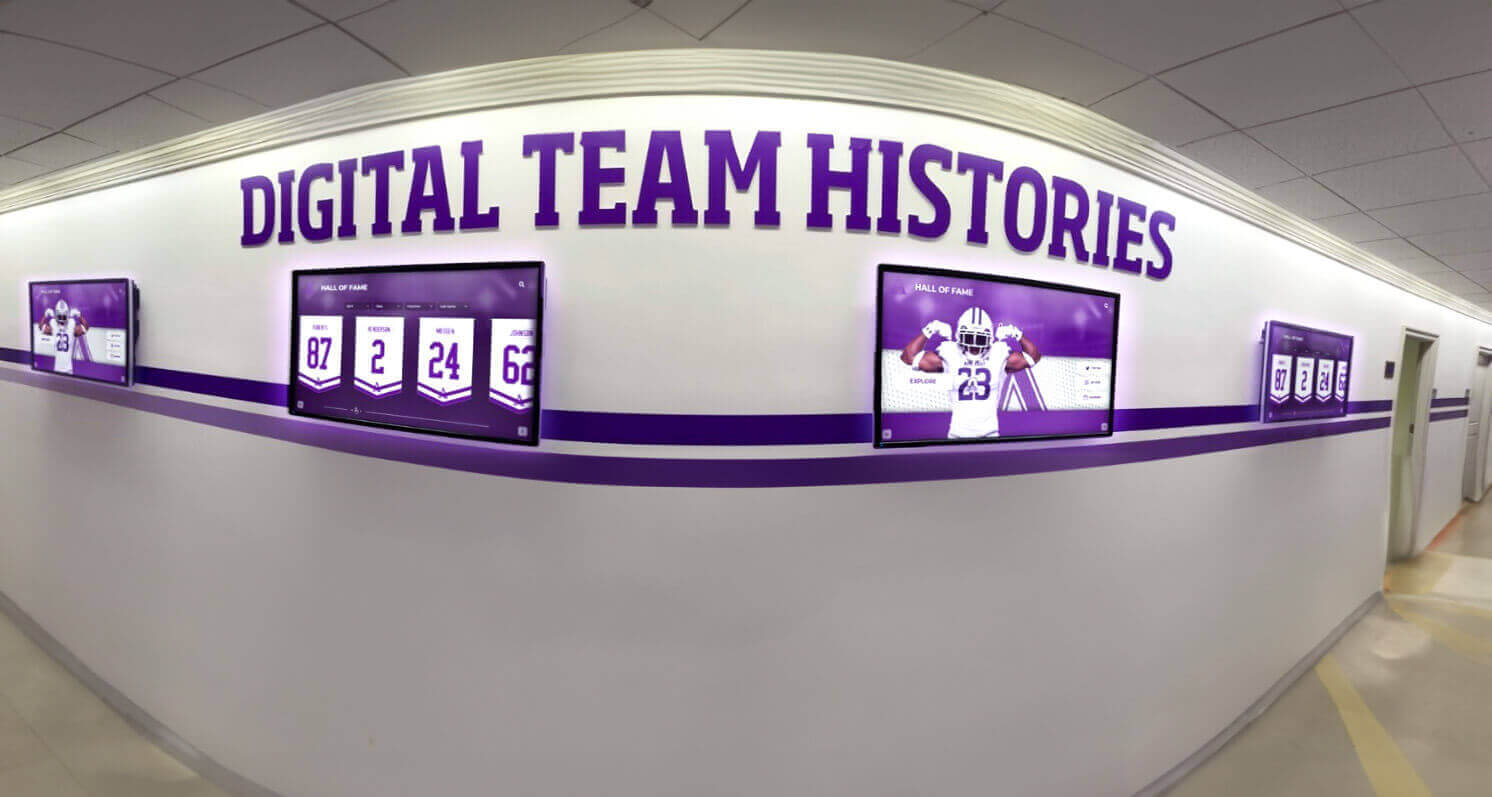
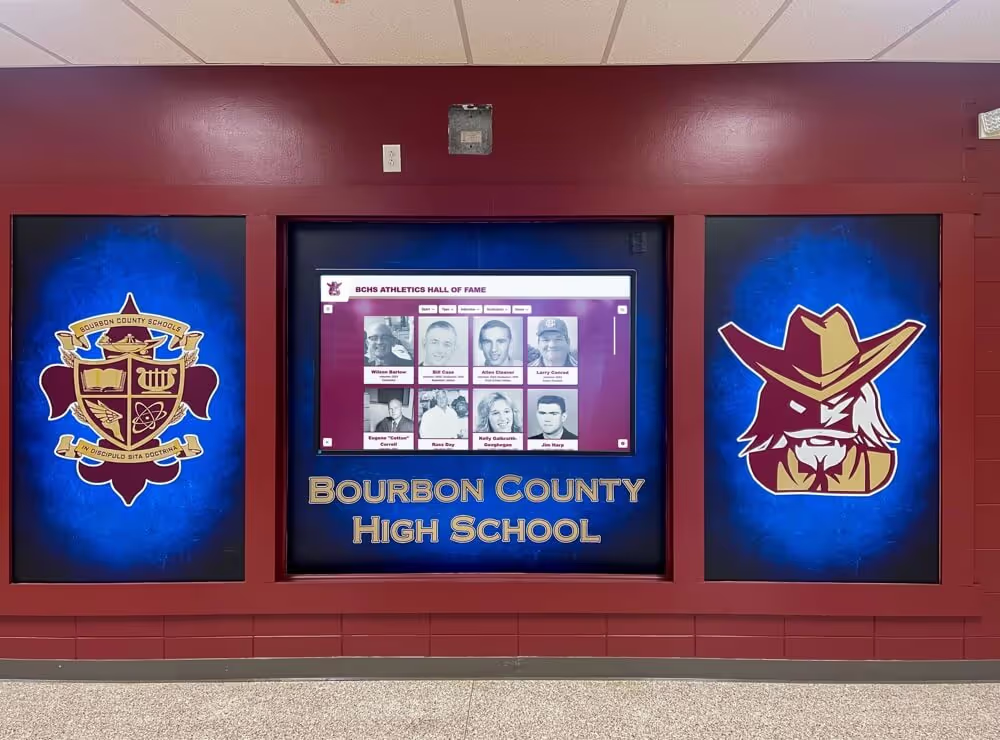
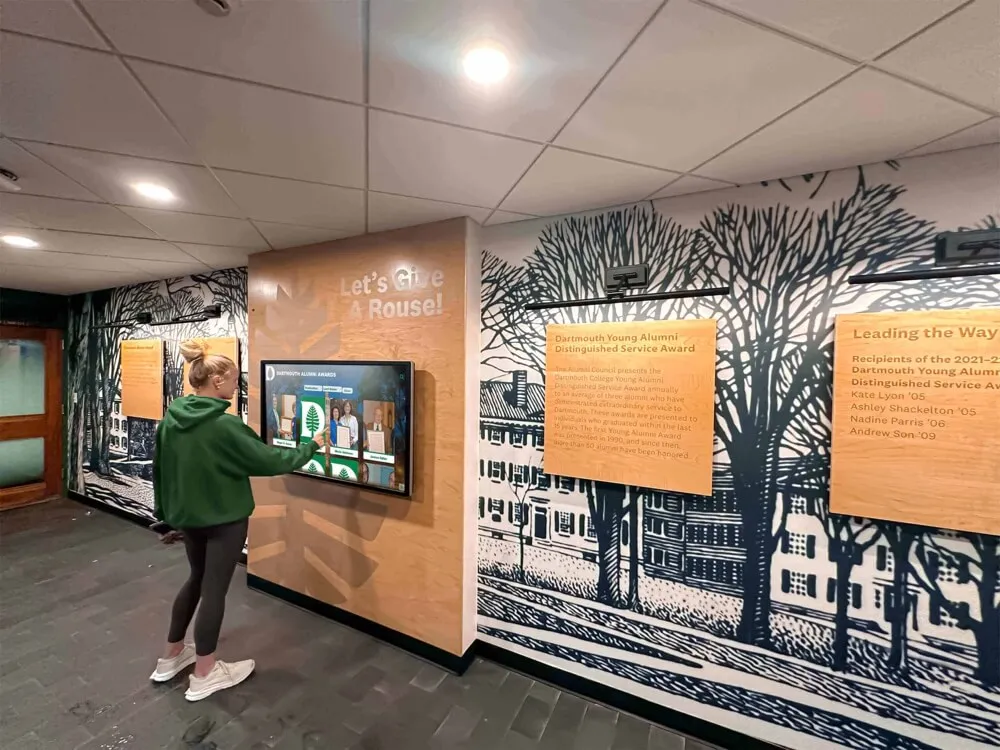
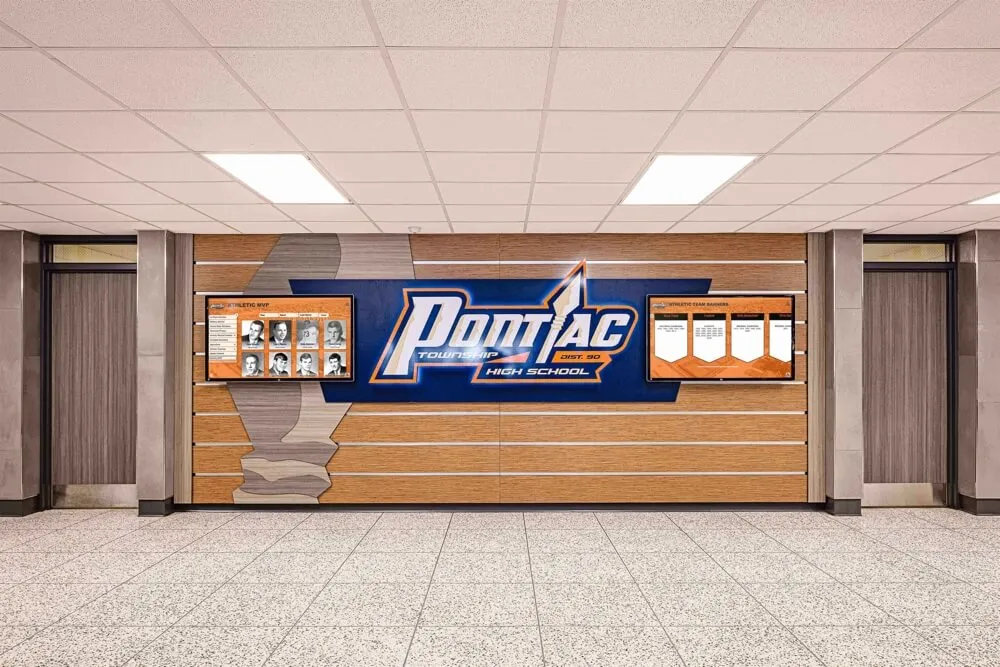
Multiple coordinated displays create comprehensive recognition environments celebrating diverse contributor communities throughout facilities
Story-Driven Recognition Approaches
Impact-Centered Donor Profiles
Rather than focusing primarily on contribution amounts, impact-driven recognition emphasizes outcomes enabled by support through scholarship recipient testimonials thanking supporter community, facility improvement photos showing donor-funded renovations, program statistics demonstrating educational outcomes, faculty and staff interviews explaining how support advances mission, and beneficiary stories connecting contributions to changed lives.
This approach resonates particularly with younger donors who prioritize tangible impact over naming recognition, while helping all supporters understand how their generosity creates meaningful change.
Donor Journey Storytelling
Comprehensive profiles documenting complete donor relationships including first contribution details and initial motivation, progression from annual giving to major support, specific campaigns and initiatives supported over years, volunteer service and leadership roles beyond financial contributions, planned giving intentions and legacy plans, and advice for others considering philanthropic partnership.
Journey-based storytelling honors long-term relationships while showing prospective donors the multi-faceted engagement pathways available beyond one-time contributions.
Legacy and Memorial Recognition Concepts
Perpetual Endowment Acknowledgment
Special recognition for donors creating permanent endowed funds through distinctive visual treatments highlighting endowment permanence, named scholarship or program details showing what funds support, income generation and distribution information demonstrating ongoing impact, beneficiary connections linking donors to students or programs they support, and legacy language emphasizing multi-generational impact lasting far beyond donor lifetimes.
Perpetual recognition motivates estate gifts and planned giving among donors valuing acknowledgment that extends beyond their lifetimes, demonstrating long-term stewardship commitment.
Memorial and Tribute Giving
Thoughtful recognition honoring deceased contributors and tribute gifts through memorial designations with dates of remembrance, “in memory of” and “in honor of” distinctions, family photos and biographical information, perpetual tribute sections ensuring lasting remembrance, and connections between memorial gifts and supported causes or programs meaningful to those remembered.
Organizations implementing memorial tribute recognition find digital platforms particularly valuable for creating permanent, dignified acknowledgment that honors contributors in perpetuity while accommodating family input and expanded storytelling impossible with brief plaque inscriptions.
Implementation Strategies for Digital Donor Walls
Successful digital recognition requires systematic planning addressing technology selection, content strategy, and sustainable management.
Comprehensive Turnkey Solutions
Purpose-built donor recognition platforms offer integrated packages combining hardware recommendations or supply, recognition-specific software with donor profile templates, cloud-based content management systems, web integration extending recognition online, professional implementation support and training, and ongoing technical support ensuring reliable operation.
These solutions work well for organizations prioritizing convenience, comprehensive support, and proven track records over lowest initial costs. Digital yearbook platforms designed for recognition contexts provide intuitive interfaces specifically optimized for donor acknowledgment workflows.
General Digital Signage Approaches
Organizations with technical capacity sometimes adapt general digital signage software for recognition purposes. While these platforms cost less initially ($300-1,200 annually for software), they require organizations to handle hardware selection and purchasing, content design and template creation, technical setup and configuration, ongoing troubleshooting and maintenance, and integration with web platforms if desired.
This approach suits organizations with design capacity and technical comfort willing to invest staff time for lower software costs.
Evaluation Criteria
When comparing provider options, assess ease of content management for non-technical staff, quality and professionalization of provided templates, content capacity limits and storage restrictions, hardware flexibility and vendor lock-in, pricing structure and total cost of ownership, support quality and availability, web platform capabilities and mobile optimization, and references from similar organizations implementing systems.
Request demonstrations and trial periods allowing staff to actually create sample donor profiles—if processes feel complicated during evaluation, ongoing content management will prove burdensome after implementation.
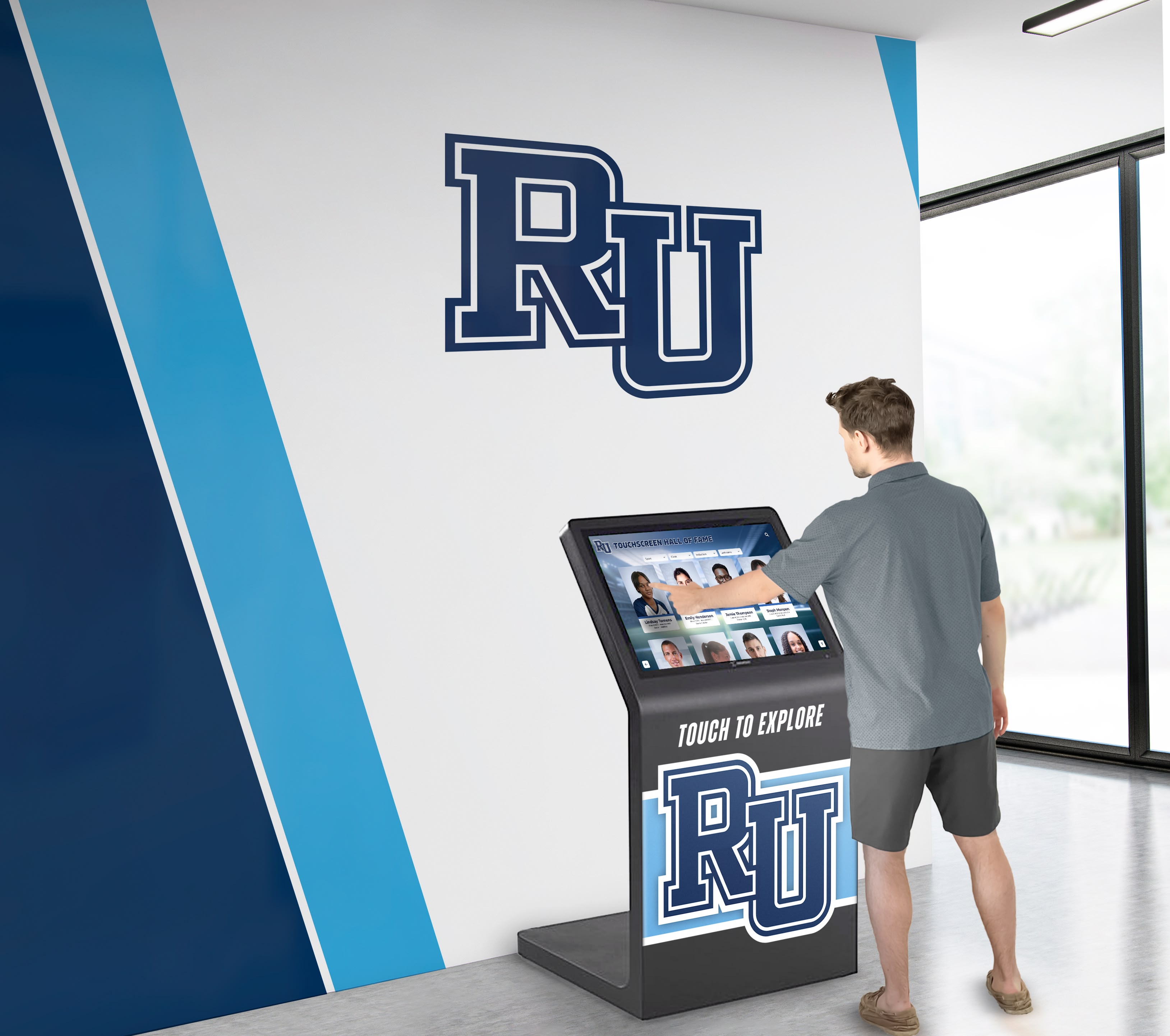
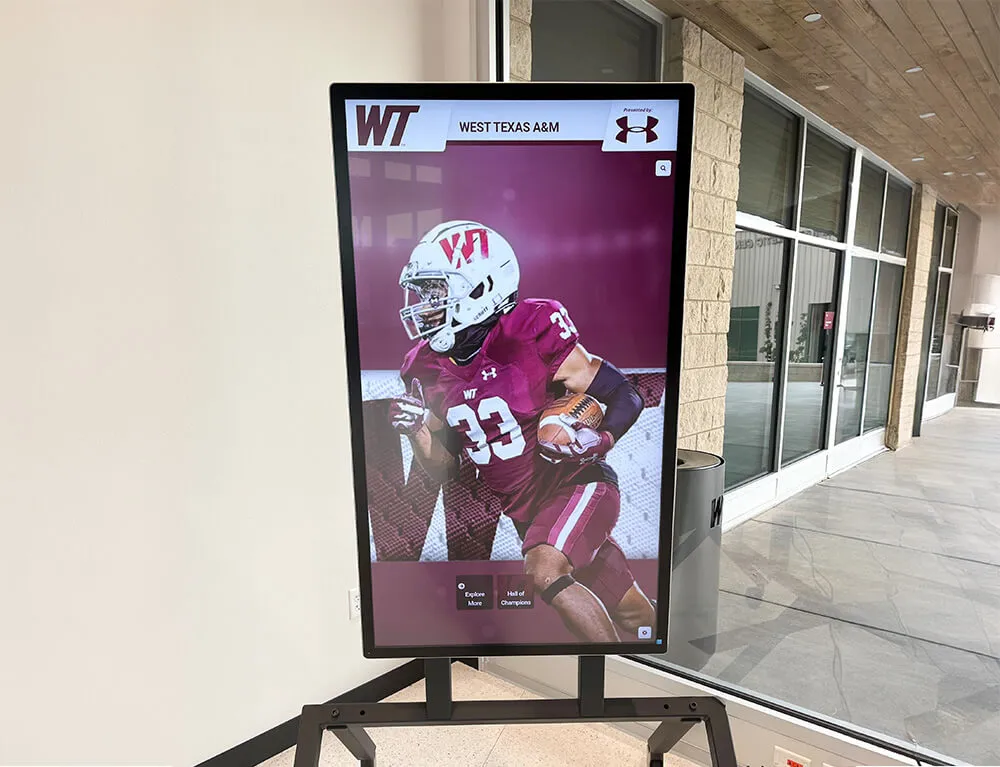
Elegant installations in high-traffic locations ensure recognition reaches broad audiences while creating sophisticated first impressions
Planning Recognition Location and Placement
High-Impact Location Strategies
Donor wall effectiveness depends significantly on strategic placement in main entrance lobbies where all visitors naturally pass, reception areas with waiting guests and stakeholders, board rooms emphasizing donor support importance during meetings, event spaces hosting fundraising gatherings and donor celebrations, campaign-specific areas like building lobbies for capital project donors, and development office suites where cultivation conversations occur.
Walk facilities during typical operating hours observing where visitors naturally pause, congregate, or wait—these represent ideal recognition locations providing maximum exposure to diverse audiences.
Multiple Display Coordination
Larger institutions benefit from coordinated recognition across multiple locations including primary comprehensive displays in main administration buildings, program-specific recognition in buildings funded by particular campaigns, portable displays for events and temporary installations, and web-based recognition accessible worldwide from any device.
Synchronized content across all locations creates consistent experiences while strategic placement ensures recognition reaches different constituent groups where they naturally gather.
Developing Systematic Content Collection
Donor Information Gathering
Comprehensive recognition requires content beyond basic names and contribution amounts gathered through post-gift questionnaires distributed with acknowledgment letters, stewardship visit interviews during major donor cultivation, online submission forms accessible through donor portals, photography at events and facility tours, research into existing institutional relationships, and alumni or constituent office records.
Essential information includes preferred name format and spelling, contribution details and recognition level, high-quality photographs (minimum 1920x1080 resolution), brief biographical information and institutional connections, giving motivations and philanthropic philosophy, and privacy preferences including anonymous options.
Organizations implementing proactive collection processes report 65-75% participation in enhanced profile submissions when requests occur promptly after contributions and clearly explain recognition benefits.
Balancing Depth with Efficiency
Not all donors will provide extensive biographical information. Create tiered profile approaches with comprehensive features for major donors willing to share detailed stories, standard profiles for mid-level contributors providing basic information, and minimal acknowledgment for supporters declining detailed recognition while still honoring their generosity.
This flexibility ensures every contributor receives appropriate recognition regardless of participation level in content collection.
Budget Planning and Cost Management
Comprehensive Budget Components
Realistic digital donor wall budgets include initial hardware costs for displays ($3,000-10,000 depending on size), mounting systems or kiosk enclosures ($500-2,500), media players or computers (often included with displays), software licensing (typically $500-2,000 annually for cloud platforms), initial content creation including profile development ($1,000-3,000), professional installation ($500-1,500), and ongoing costs including annual software subscriptions, periodic content updates, and eventual hardware replacement after 7-10 years.
Total initial investments typically range from $8,000-15,000 for single-display implementations, with $500-2,000 annual operating costs thereafter.
Cost Comparison with Traditional Plaques
While digital systems require larger upfront investments, long-term costs favor digital approaches. Traditional plaques cost $200-500 each including engraving and installation, meaning 50 donors require $10,000-25,000 in plaque costs alone. As donor communities grow, these per-donor costs accumulate indefinitely, while digital systems accommodate unlimited additional donors without incremental expenses.
Organizations tracking comprehensive costs report digital systems achieve cost parity with traditional recognition within 5-7 years while providing dramatically superior functionality and user experience.
Funding Source Ideas
Explore diverse funding beyond general operating budgets including capital campaign budgets incorporating recognition infrastructure, major donor gifts specifically designated for recognition systems, booster clubs or foundations supporting tangible institutional improvements, corporate sponsorships receiving logo placement on welcome screens, and anniversary campaigns or reunion fundraising among alumni.
Frame recognition investments as permanent tributes honoring decades of philanthropic partnership that will celebrate contributors for generations—making compelling cases for dedicated funding from those who will themselves appear in recognition displays.
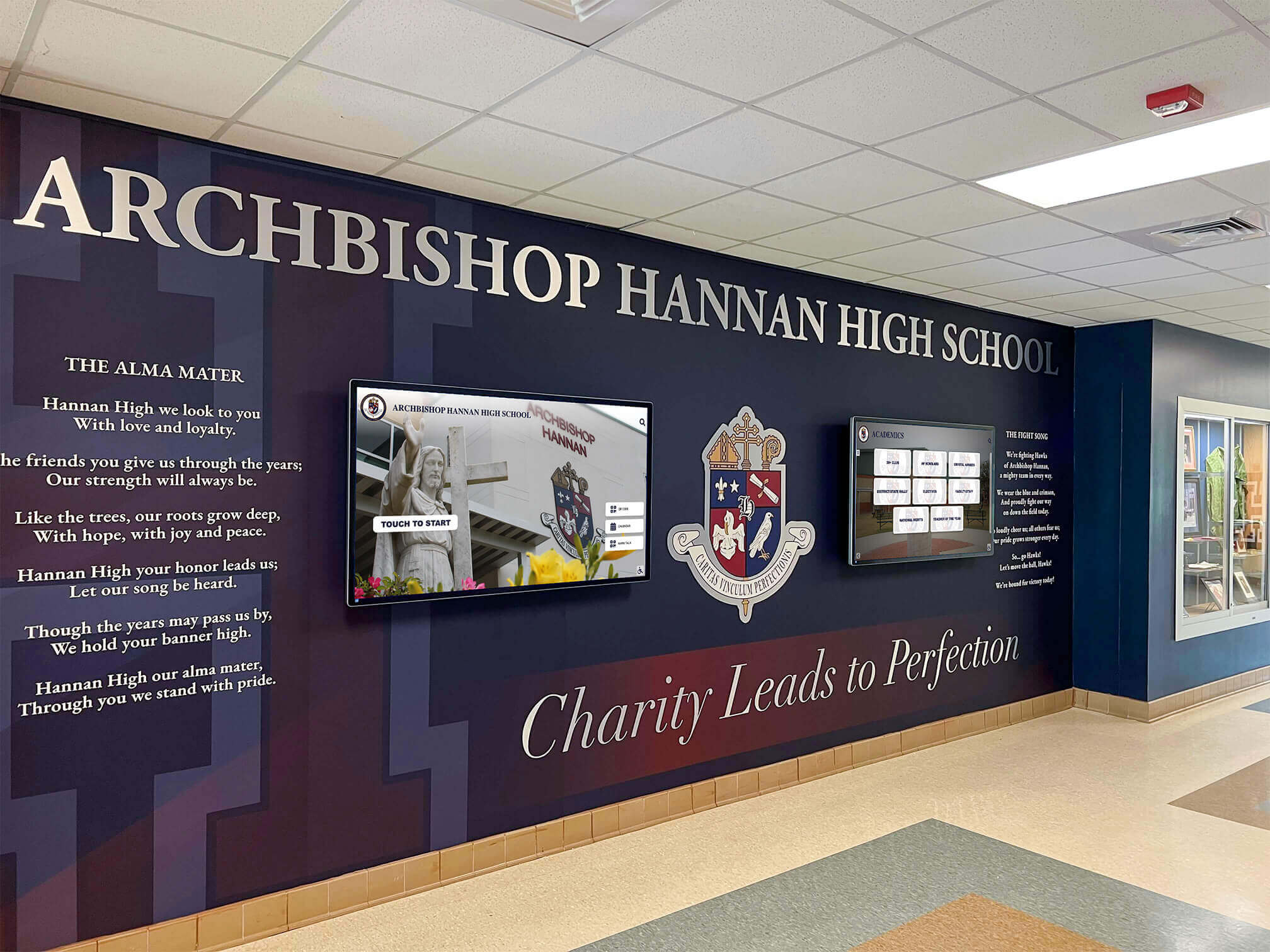
Thoughtful design integration connects donor recognition with organizational identity and branding throughout facilities
Best Practices for Digital Donor Recognition
Effective recognition programs follow proven principles that strengthen relationships and inspire continued giving.
Create Inclusive Recognition Philosophy
Honor Every Contributor Appropriately
While major donors may receive more extensive profiles with video testimonials and detailed storytelling, ensure every contributor regardless of gift size receives professional acknowledgment including searchable profiles with names and giving levels, attractive visual presentation using consistent templates, equal discovery accessibility through search functionality, appropriate gratitude and appreciation in all content, and opportunities to enhance profiles over time as relationships deepen.
Inclusive approaches demonstrate that organizations genuinely value all expressions of generosity rather than reserving recognition exclusively for major gifts. This philosophy strengthens comprehensive development programs by honoring diverse contributors whose collective support drives mission success.
Respect Privacy and Donor Preferences
Flexible Acknowledgment Options
Responsible stewardship honors donor choices about public recognition through multiple options including full public acknowledgment with photos and stories, name-only recognition without biographical details, partial acknowledgment using initials or “Anonymous,” complete opt-out for donors declining any recognition, and easily updated preferences accommodating changing comfort levels over time.
Organizations implementing effective donor recognition programs build trust through rigorous privacy systems that encourage participation while demonstrating respect for contributor autonomy—critical for maintaining relationships and organizational reputation.
Connect Recognition to Active Fundraising
Recognition as Development Tool
Strategic implementations transform acknowledgment into engagement by incorporating QR codes near displays linking to secure donation pages, “Join our donor community” calls-to-action with giving instructions, current campaign information showing progress toward goals, matching gift opportunities that multiply impact, planned giving resources and legacy society promotion, and testimonial videos from donors inspiring prospective contributors.
Development professionals report donor recognition displays directly influence 20-30% of prospective donor conversion decisions, functioning as active fundraising infrastructure beyond passive acknowledgment systems.
Maintain Fresh and Current Content
Systematic Update Processes
Recognition effectiveness depends on accuracy and timeliness through immediate additions when contributions arrive (within days or weeks), quarterly updates for expanded biographical information, annual comprehensive content audits verifying accuracy, memorial designations when contributors pass away, and campaign progress updates during active fundraising.
Assign specific staff responsibilities for ongoing content management preventing systems from becoming static, outdated museums rather than living recognition platforms demonstrating current philanthropic communities.
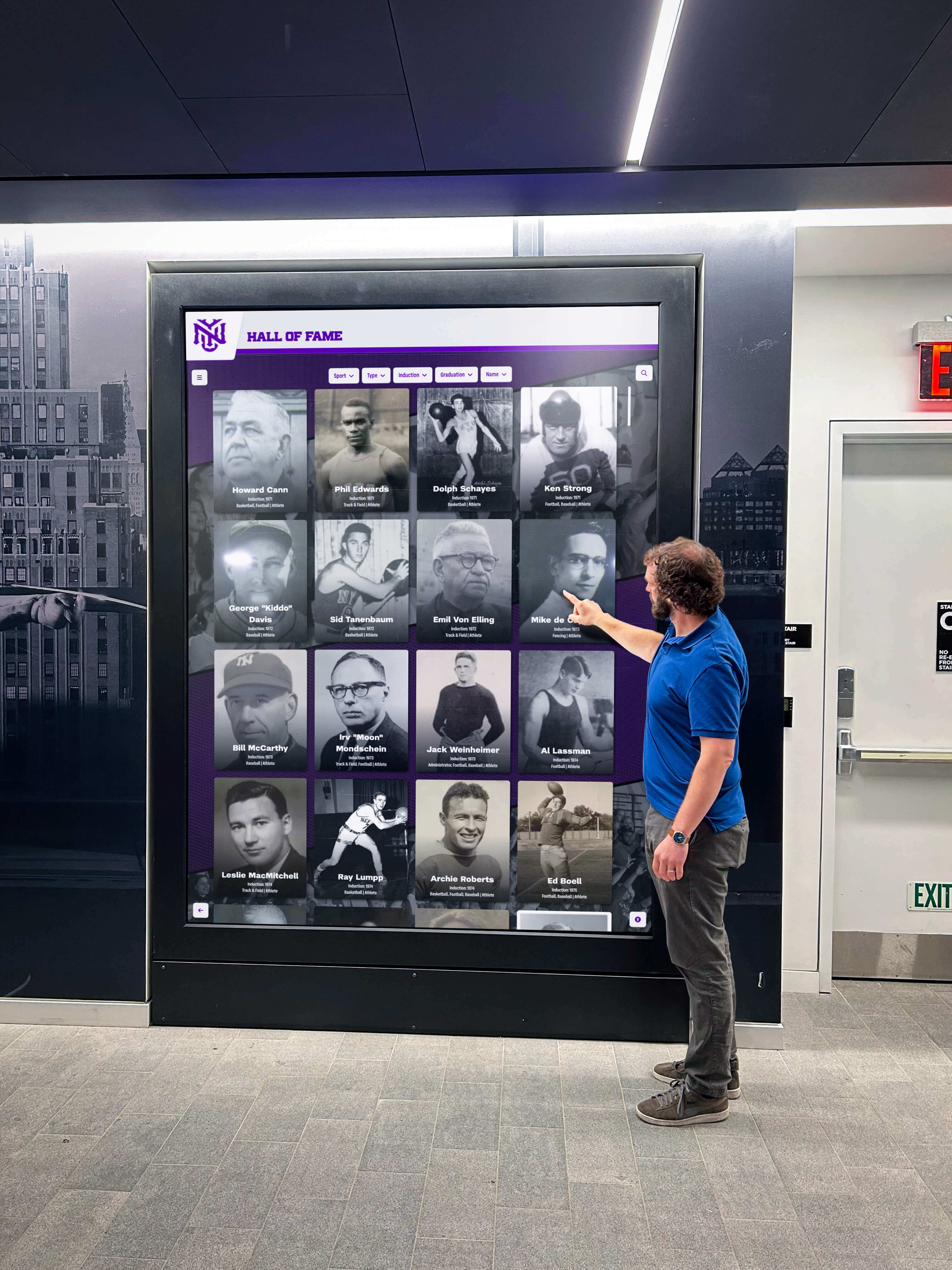
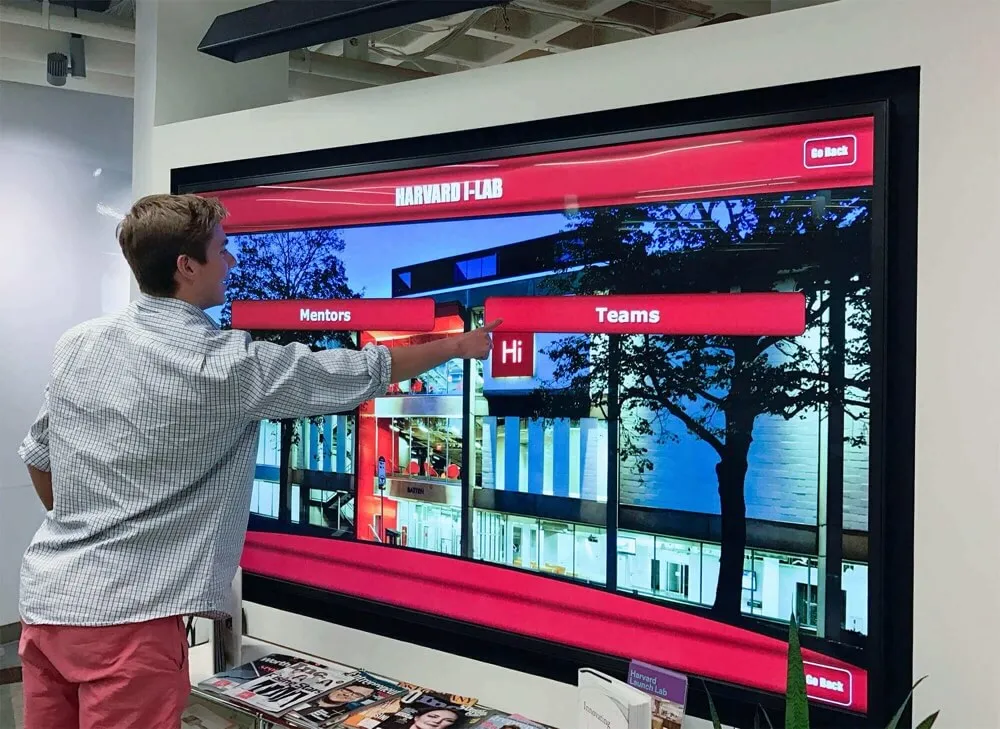
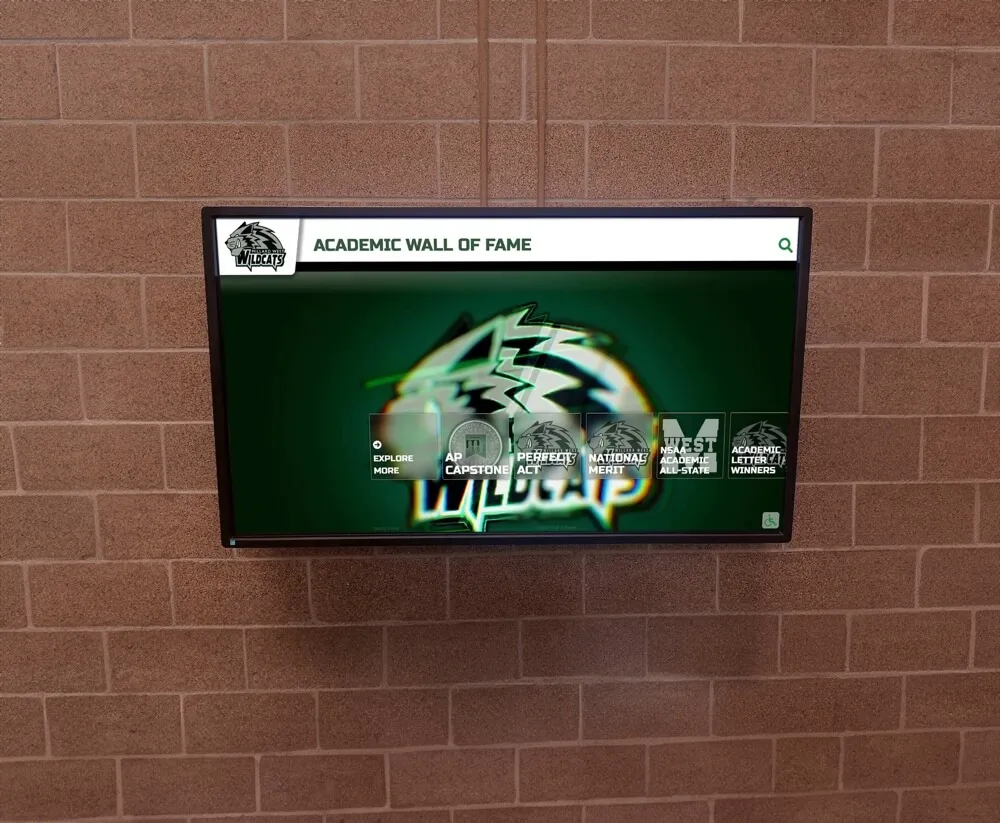
Interactive exploration encourages deeper engagement as visitors discover complete donor stories and philanthropic impact
Measure and Demonstrate Value
Key Success Metrics
Track specific indicators showing recognition impact including donor satisfaction through post-gift surveys and feedback, retention rates comparing recognized versus unrecognized supporters, gift progression showing contribution increases over time, touchscreen interaction counts and average session duration, web platform traffic and geographic distribution, most-viewed profiles and popular content, and fundraising outcomes during campaigns utilizing recognition displays.
Regular assessment demonstrates value to stakeholders, identifies improvement opportunities, justifies continued investment, and optimizes content based on actual engagement patterns rather than assumptions.
Overcoming Common Implementation Challenges
Organizations encounter predictable obstacles that require strategic solutions.
Limited Budgets and Resource Constraints
Cost-Effective Implementation Approaches
Budget-conscious organizations can still create meaningful recognition through phased deployment starting with web-based systems requiring minimal hardware, single displays in highest-traffic locations proving concept before expansion, commercial displays rather than custom kiosks reducing initial costs, DIY content creation using staff photography and writing, and gradual historical content additions rather than comprehensive initial launches.
View recognition as fundraising investment rather than expense—improved retention and increased giving typically generate returns offsetting recognition costs within 2-3 years while improving donor relationships independent of financial metrics.
Technical Capacity Limitations
Managing Technology with Limited Skills
Non-technical development teams successfully implement recognition by choosing intuitive cloud-based platforms requiring no technical expertise, prioritizing vendor support quality over feature complexity, selecting turnkey solutions over custom development, ensuring multiple staff understand management preventing single points of failure, and documenting processes thoroughly enabling knowledge transfer.
Right-sized solutions prevent recognition systems from becoming unsustainable burdens—ensuring long-term success rather than initial enthusiasm followed by gradual neglect as technical challenges overwhelm capacity.
Building Profiles with Available Data
Not all donors provide extensive biographical information. Create meaningful recognition regardless through professional name-only acknowledgment for minimal information, organizational logos for corporate or foundation donors, impact descriptions showing what support accomplishes even without personal stories, generic imagery maintaining visual consistency, and equal search accessibility ensuring discovery regardless of profile depth.
Proactive collection processes request but don’t require comprehensive information, respecting donor preferences while creating opportunities for enhanced profiles when contributors choose to participate.
Balancing Tradition with Innovation
Honoring Heritage While Embracing Change
Organizations with existing physical recognition often face stakeholder concerns about “replacing” traditional plaques. Address these concerns by framing digital recognition as expansion rather than replacement, maintaining prominent physical acknowledgment for major transformational donors, integrating QR codes on traditional plaques linking to expanded digital profiles, creating hybrid approaches combining both recognition formats, and emphasizing how digital capacity enables honoring more donors than space-constrained plaques allowed.
Thoughtful communication positions digital recognition as respecting tradition while ensuring every contributor receives appropriate acknowledgment impossible with physical space limitations alone.
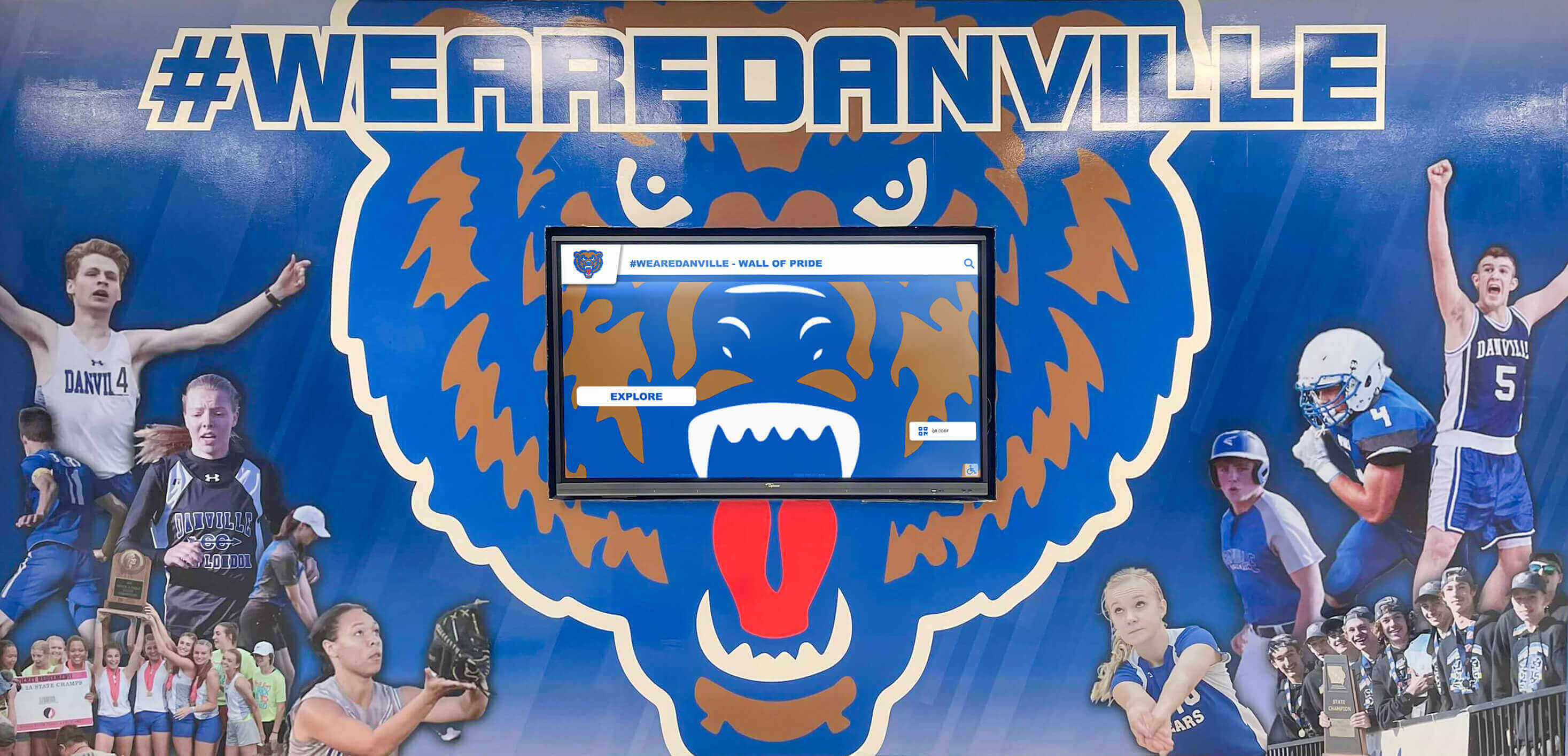
Strategic integration with existing branding and facility design creates cohesive environments reinforcing institutional identity
Digital Donor Wall Content Ideas
Compelling recognition requires thoughtful content that honors contributors while inspiring continued support.
Donor Profile Components
Essential Information Elements
Effective profiles balance comprehensive acknowledgment with respect for privacy through full name as donor prefers, recognition giving level or society designation, contribution purpose or fund supported, giving year or campaign timeframe, high-quality photographs or organizational logos, biographical summary explaining institutional connection, and quotes sharing philanthropic motivation when available.
Supplement core information with impact descriptions showing outcomes enabled, multi-year cumulative giving totals, volunteer service and leadership roles, family connections across generations, career highlights and notable achievements, and advice for others considering support.
Visual Content Strategies
Photography Best Practices
Strong donor recognition requires quality imagery through action photos showing donors engaged with organizations, formal portraits providing professional presentation, historical photos connecting past and present, facility or program photos demonstrating impact, candid moments capturing authentic connections, and consistent editing maintaining visual quality standards.
Technical optimization ensures fast loading and attractive display with 1920x1080 minimum resolution for primary photos, appropriate compression balancing quality and file size, consistent aspect ratios within categories, and professional editing for brightness, contrast, and color correction.
Video Integration Ideas
Multimedia Storytelling Formats
Video dramatically increases engagement and session duration through 60-90 second donor testimonials explaining giving motivations, program director interviews showing how contributions advance mission, beneficiary testimonials thanking supporter communities, facility tour footage demonstrating donor-funded improvements, historical retrospectives documenting institutional evolution, and campaign announcement videos celebrating milestones and success.
Keep videos concise—engagement drops significantly beyond 2-3 minutes—and optimize file sizes for smooth streaming across devices.
Writing Compelling Recognition Copy
Narrative Best Practices
Effective text content honors contributors while inspiring readers with genuine gratitude without excessive flattery, specific details rather than generic praise, impact orientation focusing on outcomes, personal voice reflecting donor values and motivations, inspirational tone showing what support enables, and appropriate length balancing comprehensiveness with readability (75-300 words depending on profile tier).
Use donor’s own words from interviews when possible, avoid development jargon and institutional acronyms, focus on human stories rather than transaction details, and connect individual giving to visible tangible outcomes.
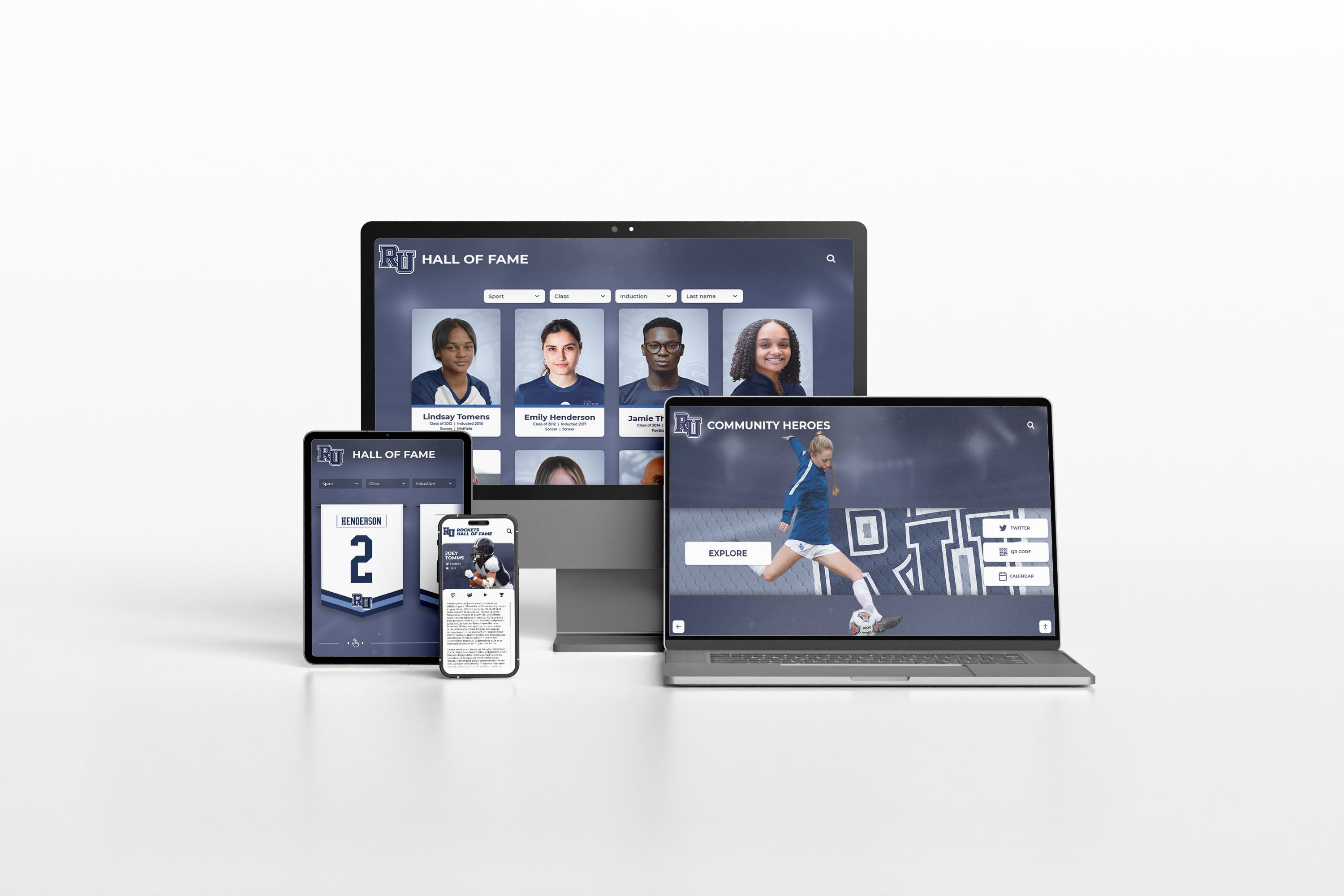
Web-based recognition extends acknowledgment worldwide across all devices, enabling remote donor access and social sharing
Emerging Trends in Digital Donor Recognition
Recognition technology and practices continue evolving with changing donor expectations and advancing capabilities.
Technology Innovations
AI-Enhanced Recognition
Artificial intelligence increasingly supports donor recognition through automated photo enhancement and optimization, content recommendation engines suggesting related donors, natural language search understanding conversational queries, facial recognition organizing historical photographs, and analytics insights identifying engagement patterns and opportunities.
Mobile-First Experiences
With most web traffic coming from smartphones, mobile optimization becomes essential through responsive designs adapting to any screen size, touch-optimized interfaces for smartphone interaction, fast loading on cellular networks, mobile-friendly search and navigation, and social sharing capabilities optimized for mobile patterns.
Organizations implementing interactive touchscreen technology prioritize mobile experiences ensuring recognition reaches donors wherever they access content.
Evolving Donor Expectations
Impact-Centered Acknowledgment
Younger donors increasingly prefer recognition emphasizing tangible outcomes over contribution amounts through beneficiary testimonials showing program impact, quantified metrics demonstrating results, outcome storytelling connecting giving to changed lives, transparency about fund use and distribution, and collaborative community acknowledgment rather than individual prominence.
Adapt recognition frameworks accommodating these preferences while maintaining traditional options for donors valuing conventional approaches—flexibility serves diverse donor constituencies strengthening comprehensive development programs.
Privacy and Discretion
Growing numbers of contributors prefer limited public recognition despite significant giving. Flexible acknowledgment options become increasingly important retention factors including private recognition visible only through secure donor login, partial acknowledgment using initials or limited information, anonymous designation honoring giving without individual identification, and easily updated preferences accommodating changing comfort levels.
Conclusion: Creating Meaningful Digital Donor Recognition
Digital donor walls represent fundamental shifts in how organizations acknowledge philanthropic support and build engaged contributor communities. While technology enables powerful capabilities, successful implementations require thoughtful planning, quality content, strategic design, and ongoing attention ensuring recognition remains current, accurate, and meaningful to diverse stakeholders.
The transition from space-constrained physical plaques to dynamic digital recognition creates opportunities for truly inclusive acknowledgment honoring every contributor regardless of gift size, rich multimedia storytelling impossible with engraved bronze, real-time updates maintaining relevance and immediacy, worldwide accessibility extending recognition beyond physical locations, and cost-effective scalability accommodating organizational growth.
Transform Your Donor Recognition Program
Discover how modern digital donor wall solutions can help your organization honor every contributor meaningfully while building lasting relationships that strengthen fundraising capacity and advance your mission for generations to come.
Explore Digital Recognition SolutionsOrganizations implementing digital recognition create acknowledgment experiences that celebrate past generosity, honor current contributors, and inspire future support—ensuring philanthropy receives the visibility, appreciation, and professional presentation it deserves. By combining strategic planning, appropriate technology, quality content, and consistent management, development teams build recognition programs that strengthen relationships, demonstrate stewardship excellence, and function as active fundraising tools supporting sustained mission success.
Whether you’re launching your first capital campaign, upgrading outdated plaque systems, or seeking cost-effective recognition alternatives, digital donor walls offer proven solutions accommodating organizational needs, donor preferences, and budget realities. Start by clarifying recognition goals and priorities, exploring available platforms and providers, developing realistic budgets and funding strategies, planning systematic content collection, and establishing sustainable management processes ensuring long-term success.
Every donor—from transformational major gift contributors to first-time community supporters—deserves recognition acknowledging their commitment to your cause and celebrating their role in advancing institutional mission. With thoughtful implementation, digital donor walls create meaningful tributes that honor every supporter while building the engaged, motivated philanthropic communities sustaining organizational excellence for generations to come.
Ready to explore modern donor recognition solutions? Learn more about comprehensive platforms combining interactive displays and donor management, discover innovative recognition strategies that strengthen fundraising campaigns, or explore nonprofit technology solutions designed specifically for educational and mission-driven organizations creating lasting philanthropic impact.