When graduation season arrives, certain students walk across the stage wearing special cords, sashes, or receiving diploma covers marked with Latin phrases like “cum laude,” “magna cum laude,” or “summa cum laude.” For families watching their student graduate with these honors, pride mingles with questions: What exactly do these Latin designations mean? How did their student qualify? What doors might this recognition open for future opportunities?
Latin honors represent centuries-old academic traditions recognizing exceptional student achievement through cumulative grade point performance. Yet confusion surrounds nearly every aspect: parents struggle to understand the difference between honor levels, students wonder whether their GPA qualifies for recognition, and high schoolers question whether Latin honors even matter beyond graduation day. Meanwhile, institutions grapple with establishing fair qualification criteria while maintaining recognition prestige and value.
This comprehensive guide clarifies everything about cum laude graduation honors—from historical origins through modern qualification requirements, from recognition differences between high school and college through the lasting impact on careers and graduate school applications. Whether you’re a student approaching graduation, a parent supporting your scholar’s journey, or an educator designing recognition programs, this resource provides the knowledge needed to understand and appreciate Latin honor designations fully.
Understanding cum laude and related honors enables students to set appropriate academic goals, families to celebrate achievement meaningfully, and schools to design recognition systems that honor excellence fairly. These designations represent more than ceremonial decoration—they validate years of sustained academic dedication while creating credentials that enhance college applications, graduate school admissions, and professional opportunities.

Cum laude and related Latin honors designate the highest levels of academic achievement, earning graduates recognition that institutions celebrate through ceremony and permanent displays
What Does Cum Laude Mean? Understanding Latin Honor Origins
The phrase “cum laude” comes directly from Latin, translating literally to “with honor” or “with praise.” This designation, along with its higher variations magna cum laude (“with great honor”) and summa cum laude (“with highest honor”), traces back to medieval European universities where Latin served as the universal scholarly language.
Historical Background of Latin Honors
Academic Latin honors originated in European universities during the medieval period, particularly gaining prominence at institutions like Oxford and Cambridge. According to historical education records, these universities developed systematic approaches to distinguishing exceptional scholars from their peers, using Latin designations that reflected the scholarly culture of the time.
American colleges adopted the Latin honors tradition in the 19th century, with Harvard University among the first to implement a formal system in 1869. The practice spread throughout American higher education, eventually extending to high schools seeking to recognize exceptional student achievement systematically.
Evolution of Modern Recognition
- Medieval universities: Informal distinction of exceptional scholars
- 19th century American colleges: Formal Latin honors systems established
- 20th century expansion: High schools adopt modified versions
- Contemporary practice: Widespread use across secondary and higher education
- Modern variations: Institutions adapt criteria while maintaining core concepts
This centuries-long tradition means graduating cum laude connects students to an unbroken lineage of academic excellence spanning generations of scholars worldwide.
The Three Primary Latin Honor Levels
American educational institutions typically recognize three distinct Latin honor levels:
Cum Laude (“with honor”)
- Entry-level Latin honors designation
- Recognizes strong cumulative academic performance
- Typically awarded to top 10-20% of graduating class
- Demonstrates consistent above-average achievement
- Valued credential for college applications and employment

Modern recognition systems make Latin honors achievements accessible and inspirational for current students exploring academic pathways
Magna Cum Laude (“with great honor”)
- Mid-tier Latin honors designation
- Recognizes exceptional cumulative academic performance
- Typically awarded to top 5-10% of graduating class
- Demonstrates outstanding sustained excellence
- Carries additional prestige beyond basic cum laude
Summa Cum Laude (“with highest honor”)
- Highest Latin honors designation
- Recognizes truly exceptional academic achievement
- Typically awarded to top 1-5% of graduating class
- Reserved for most distinguished academic performers
- Most prestigious credential available to graduating students
These three-tiered systems enable recognition of excellence at multiple levels while reserving the highest designations for truly exceptional achievement.
Why Schools Use Latin Terminology
Institutions maintain Latin honor terminology rather than translating to English for several reasons:
Tradition and Prestige The Latin language creates connection to centuries of academic tradition, lending gravitas and historical significance that English equivalents like “with honor” cannot match. The unfamiliarity of Latin to many families actually enhances prestige—these honors feel special precisely because they employ specialized scholarly language.
Universal Recognition Latin honors work across cultural and linguistic boundaries. A summa cum laude designation from an American university carries meaning internationally, whereas an English phrase might require translation and explanation. This universality proves especially valuable as education becomes increasingly global.
Clear Differentiation The three Latin phrases provide unambiguous distinction impossible with English alternatives. Terms like “high honors,” “highest honors,” and “top honors” blur together, while cum laude, magna cum laude, and summa cum laude create crystal-clear hierarchical recognition levels.
Learn more about comprehensive approaches to academic recognition in academic recognition programs that showcase diverse student excellence.

Schools document complete academic journeys including Latin honors recognition alongside other achievements through comprehensive digital displays
High School Latin Honors: Requirements and Criteria
High schools increasingly adopt Latin honors systems recognizing exceptional students, though implementation varies significantly between institutions.
Typical High School GPA Requirements
Most high schools determine Latin honors eligibility through cumulative GPA thresholds calculated across all four years:
Common GPA Thresholds (4.0 scale)
- Cum Laude: 3.5-3.7 cumulative GPA
- Magna Cum Laude: 3.7-3.9 cumulative GPA
- Summa Cum Laude: 3.9-4.0 cumulative GPA
These thresholds represent typical ranges, but individual schools adjust based on their specific grading philosophies, student body characteristics, and desired recognition percentages. Some competitive high schools with rigorous programs may lower thresholds slightly, recognizing that a 3.6 GPA in advanced coursework represents greater achievement than a 3.9 in standard classes.
Weighted vs. Unweighted GPA Considerations
Schools face critical decisions about whether Latin honors should reflect weighted or unweighted GPAs:
Weighted GPA Approach
- Recognizes students taking challenging AP, IB, and honors courses
- Rewards academic risk-taking and intellectual ambition
- May result in GPAs exceeding 4.0
- Potentially favors students with access to advanced coursework
- Encourages enrollment in rigorous academic programs
Unweighted GPA Approach
- Treats all courses equally regardless of difficulty
- Creates more straightforward qualification criteria
- May discourage challenging course selection
- Potentially favors students optimizing easy courses
- Simpler for families to understand and calculate
Many schools compromise by calculating Latin honors from weighted GPAs while capping maximum values or adjusting thresholds to maintain appropriate recognition percentages. This balances rewarding rigor with maintaining reasonable qualification standards.
Class Rank vs. GPA Threshold Systems
High schools typically use one of two primary approaches for determining Latin honors:
GPA Threshold System Establishes fixed GPA minimums for each honor level:
Advantages
- Clear, transparent criteria students can track
- Multiple students can achieve same honor level
- Reduces competition between classmates
- Maintains consistent standards across graduation years
- Recognizes all students meeting criteria regardless of peers

Recognition displays serve as gathering points where families learn about academic achievement pathways and honor requirements
Challenges
- May result in large percentages earning honors in strong academic years
- Grade inflation can render thresholds less meaningful over time
- Difficult to adjust thresholds once established
- May not account for year-to-year student body variations
Class Rank Percentage System Awards honors based on ranking within graduating class:
Advantages
- Ensures consistent honor percentages across years
- Adjusts automatically for variations in student achievement
- Maintains prestige by limiting recipients
- Creates clear competitive context
- Honors relative achievement within specific cohort
Challenges
- Creates zero-sum competition between students
- May exclude deserving students in strong academic classes
- Less transparent for students tracking progress
- Class rank can fluctuate unpredictably
- Potential for gaming through course selection strategies
Schools should clearly communicate which system they employ, ensuring students and families understand qualification criteria from freshman year forward.
Additional Qualification Considerations
Beyond GPA or rank, schools may impose supplementary requirements:
Attendance and Conduct Requirements
- Minimum attendance thresholds (90-95% typical)
- Clean disciplinary records without major infractions
- Demonstration of character consistent with honor designation
- Citizenship requirements showing community contribution
- Behavioral standards maintaining institutional reputation
Course Requirements
- Completion of minimum number of advanced courses
- Specific subject area requirements (math, science, English)
- Restrictions on credit recovery or grade replacement
- Full-time enrollment for minimum number of years
- Prescribed core curriculum completion
Residency Requirements
- Attendance at institution for minimum period (2-4 years typical)
- Prevents late transfers from earning institutional honors
- Ensures grades reflect institutional academic standards
- Maintains relationship between honor and school attendance
- Creates connection between recognition and full program completion
These additional requirements ensure Latin honors recognize comprehensive excellence rather than purely academic performance isolated from character, attendance, and sustained engagement.
Explore comprehensive student recognition in end-of-year awards programs celebrating diverse achievements.
College and University Latin Honors Systems
Higher education Latin honors typically employ more complex and varied criteria than high schools.
University-Specific Calculation Methods
Colleges and universities implement Latin honors systems reflecting their unique academic cultures and philosophies:
Major GPA vs. Cumulative GPA Some institutions calculate honors from major coursework only, recognizing depth of achievement in chosen field. Others use cumulative GPA across all courses, valuing breadth of excellence. This fundamental difference significantly impacts qualification, particularly for students excelling specifically within their major while performing adequately in distribution requirements.
Departmental Honors vs. University Honors Many universities offer separate departmental honors (requiring thesis, comprehensive exam, or capstone project) distinct from university-wide Latin honors based on GPA. Students may graduate with departmental honors without Latin honors, Latin honors without departmental honors, or both designations depending on performance.

Interactive displays enable students to explore various academic recognition pathways including Latin honors requirements and past recipients
Transfer Credit Considerations Institutions vary significantly in how they treat transfer credits:
- Some calculate honors from institutional credits only
- Others include transfer coursework in GPA calculations
- Many require minimum institutional credit hours for eligibility
- Policies dramatically affect transfer student qualification
- Creates potential equity concerns for transfer populations
Students should research their specific institution’s policies early in their college career, as Latin honors calculation methods vary far more than most families realize.
Common University GPA Thresholds
College Latin honors typically require higher GPAs than high school equivalents:
Typical University Thresholds (4.0 scale)
- Cum Laude: 3.5-3.7 cumulative GPA
- Magna Cum Laude: 3.7-3.85 cumulative GPA
- Summa Cum Laude: 3.85-4.0 cumulative GPA
Highly selective universities often set higher thresholds (summa cum laude requiring 3.95+) while recognizing smaller percentages of graduates. Less selective institutions may use lower thresholds but maintain prestige through limited percentages receiving each designation.
Percentage-Based University Systems
Many prestigious universities award Latin honors based on class rank percentages:
- Top 5% of class: Summa cum laude
- Top 10% of class: Magna cum laude
- Top 20-25% of class: Cum laude
Harvard, Yale, and many Ivy League institutions use percentage-based systems automatically adjusting for GPA inflation and variations in academic preparation across admission cycles. This approach maintains consistent honor prestige across generations while preventing threshold erosion through grade inflation.
Graduate and Professional School Variations
Master’s and professional degree programs handle Latin honors differently:
Master’s Degree Recognition
- Many programs don’t offer Latin honors
- Limited coursework makes GPA less meaningful
- Thesis quality often matters more than grades
- Professional programs may use alternative recognition
- Research-focused programs emphasize publications

Modern recognition systems document Latin honors alongside other academic distinctions in searchable, comprehensive formats
Law School and Medical School Honors Professional schools use specialized honor societies and ranking systems:
- Law schools: Order of the Coif (top 10%) and law review membership
- Medical schools: Alpha Omega Alpha honor society
- Business schools: Beta Gamma Sigma distinction
- These replace traditional Latin honors in professional contexts
- Often carry greater prestige than cum laude in respective fields
Doctoral Degree Traditions PhD programs rarely use Latin honors, as doctoral distinction comes through dissertation quality, publications, awards, and post-graduation placement rather than coursework grades. The PhD itself represents the highest academic achievement, making additional honor designations redundant.
How Cum Laude Recognition Appears at Graduation
Latin honors receive visible acknowledgment during graduation ceremonies and on official credentials.
Graduation Ceremony Recognition
Schools showcase Latin honors achievement through multiple ceremony elements:
Visual Distinctions During Ceremony
- Honor cords in gold, silver, or institution-specific colors
- Special sashes worn over graduation gowns
- Distinctive honor stoles or medallions
- Different colored tassels on mortarboards
- Special seating sections for honor graduates
- Medal or pin worn with regalia
These visual markers enable families and attendees to identify honor graduates during processionals and degree conferrals, creating public recognition moments celebrating achievement.
Verbal Acknowledgment
- Names announced with honor designation (“Jane Smith, Summa Cum Laude”)
- Special applause or standing ovation for honor graduates
- Group recognition before individual degree conferral
- Special certificate or diploma cover presentation
- Mention in program materials and ceremony scripts
- Honor graduate speaker opportunities
The combination of visual and verbal recognition creates meaningful ceremony moments validating years of academic dedication while inspiring younger students in attendance.

Permanent recognition displays document Latin honors recipients alongside other graduating class achievements
Diploma and Transcript Notation
Latin honors appear on official academic documents:
Diploma Recognition
- Honor designation printed on diploma face
- Special seal or medallion on diploma
- Latin phrase appears with degree conferral statement
- Enhanced diploma covers for honor graduates
- Permanent credential documenting achievement
Diplomas serve as lifelong documentation of Latin honors, appearing on office walls and in professional portfolios throughout careers.
Transcript Documentation
- Honor designation noted on final transcript
- Cumulative GPA meeting qualification threshold listed
- Academic honors section highlighting distinction
- Permanent record for graduate school applications
- Verification for scholarship and employment purposes
Transcript notation proves particularly important for graduate school admissions and competitive employment, as selection committees frequently request official transcripts where honor designations appear alongside grades.
Public Recognition and Celebration
Schools extend recognition beyond ceremony:
Printed Recognition
- Graduation program listings with honor designations
- Local newspaper announcements
- School website honor roll publications
- Digital yearbook features
- Social media celebration posts
- Alumni magazine listings
Permanent Recognition Displays Many schools create permanent installations celebrating academic excellence:
- Digital displays showcasing Latin honors recipients
- Physical plaques listing honor graduates by year
- Interactive touchscreens enabling exploration by name or year
- Online archives preserving achievement records
- School lobby recognition walls celebrating excellence
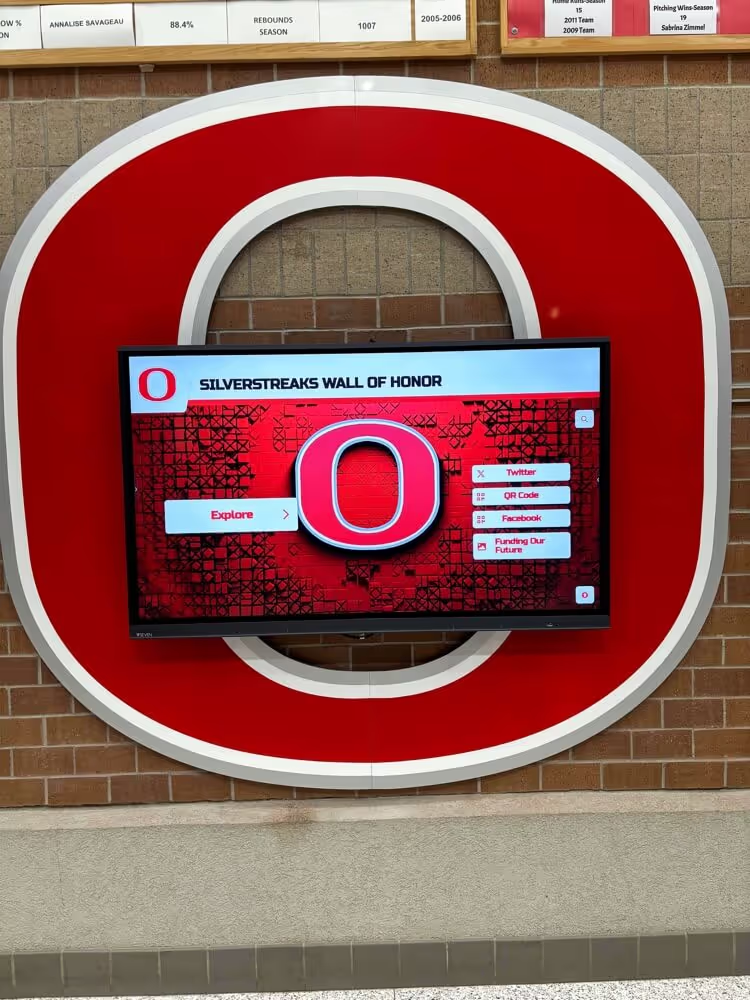
Modern digital recognition displays provide unlimited capacity for honoring all Latin honors recipients across decades without physical space constraints that force removal of historical recognition.
The Value of Latin Honors Beyond Graduation
Cum laude and related designations provide tangible benefits extending well beyond graduation day.
College Admissions Advantages (High School Latin Honors)
High school Latin honors significantly enhance college applications:
Admissions Impact
- Demonstrates sustained academic excellence across four years
- Validates strong GPA with institutional recognition
- Shows consistency and reliability in academic performance
- Distinguishes applications in competitive admissions pools
- Indicates strong likelihood of college success
According to college admissions professionals, Latin honors carry particular weight because institutions understand the achievement represents comprehensive evaluation rather than single test scores or semester performances. Admissions committees viewing “Summa Cum Laude” immediately recognize exceptional academic credentials.
Scholarship Opportunities Many merit scholarships specifically target Latin honors recipients:
- Institutional merit aid considering high school honors
- Private scholarships with Latin honors eligibility criteria
- Honors program admissions based partly on high school recognition
- Fellowship programs valuing demonstrated sustained excellence
- Academic competition qualifications requiring honor designation
Students graduating with Latin honors gain access to scholarship opportunities unavailable to peers with similar GPAs who fell slightly short of honor thresholds.
Graduate School Application Benefits
College Latin honors provide advantages for competitive graduate programs:
Selection Committee Perspective
- Immediate credential signaling academic excellence
- Demonstrates undergraduate success and preparation
- Indicates strong likelihood of graduate program completion
- Shows sustained performance over extended period
- Distinguishes applications in large applicant pools

Comprehensive recognition profiles document complete academic journeys including Latin honors achievements
Competitive Program Admissions Top graduate programs in law, medicine, business, and doctoral studies receive thousands of applications for limited positions. Latin honors designation helps applications stand out:
- Medical school admissions: Magna or summa cum laude signals strong undergraduate performance
- PhD program selection: Honors demonstrate research and academic potential
- Law school applications: Honors combined with LSAT create compelling credentials
- MBA admissions: Undergraduate honors offset limited work experience
- Fellowship consideration: Honors factor into competitive awards selection
While strong GPA alone carries weight, the institutional validation of Latin honors provides additional credibility particularly valuable when selection committees evaluate applications from unfamiliar undergraduate institutions.
Professional Career Impact
Latin honors influence early career opportunities and lifetime professional development:
Resume and CV Value
- Permanent credential appearing on professional documents
- Demonstrates excellence and achievement orientation
- Signals strong work ethic and capability
- Distinguishes candidates in competitive job markets
- Provides conversation topic in interviews
Career counselors consistently advise cum laude graduates to list their honors prominently on resumes, as the designation conveys valuable information to potential employers about candidate quality and achievement.
Employer Perceptions Hiring managers interpret Latin honors as signals:
- Strong analytical and intellectual capabilities
- Consistent performance over extended periods
- Goal-orientation and achievement motivation
- Potential for professional excellence
- Lower training risk for employer investment
While employers obviously consider many factors beyond academic honors, the designation contributes positively to overall candidate evaluation particularly in fields valuing intellectual capability, sustained performance, and achievement orientation.
Professional Network Access Some organizations and honor societies base membership on Latin honors:
- Alumni networks with honors-based membership
- Professional organizations with academic criteria
- Networking groups for high-achieving graduates
- Mentorship programs targeting distinguished alumni
- Career development resources for honor graduates
These networks provide ongoing professional value throughout careers, creating connections and opportunities extending decades beyond graduation.
Explore how schools celebrate academic excellence in comprehensive recognition programs alongside Latin honors.

Integrated recognition systems preserve Latin honors achievements alongside other academic distinctions in accessible formats
Strategies for Achieving Cum Laude Recognition
Students targeting Latin honors need strategic approaches from the beginning of their academic careers.
Freshman Year Foundation Building
Latin honors journey begins with first semester courses:
Academic Planning Strategies
- Calculate GPA requirements needed for each honor level
- Understand weighted vs. unweighted GPA impact
- Map four-year course plan balancing rigor and performance
- Identify support resources before struggling emerges
- Establish communication with counselors about honor goals
Study Habit Development Students eventually earning Latin honors typically establish effective patterns early:
- Consistent daily study schedules rather than cramming
- Active reading and note-taking strategies
- Time management balancing academics and activities
- Proactive help-seeking when concepts challenge
- Test preparation beginning weeks before assessments
- Assignment completion well before due dates
These habits become automatic through freshman year practice, enabling sustained excellence as coursework intensifies in later years.
Maintaining Consistency Across Four Years
Latin honors require sustained performance:
Avoiding GPA Decline Many students start strong but face challenges maintaining excellence:
- Sophomore slump: Increased course difficulty without freshman motivation
- Junior year stress: Standardized tests and college planning competing for attention
- Senior slide: Decreasing motivation as graduation approaches
- Social pressures: Increased activity involvement reducing study time
- Personal challenges: Family issues, relationships, or mental health affecting performance
Students targeting Latin honors must recognize these predictable challenges and implement strategies preventing significant performance declines.
Strategic Course Selection Balancing rigor and performance requires careful planning:
Honors and AP Course Considerations
- Take challenging courses demonstrating intellectual ambition
- Avoid overloading schedules beyond sustainable workload
- Consider subject-specific strengths when choosing advanced courses
- Understand weighted GPA benefits and limitations
- Balance college preparedness with GPA preservation
Strategic Elective Selection
- Choose electives matching strengths and interests
- Avoid courses with reputations for unpredictable grading
- Consider summer coursework for challenging requirements
- Use electives strategically for GPA support
- Balance transcript rigor with performance sustainability
GPA Recovery Strategies
Students experiencing academic setbacks can still achieve Latin honors:
Damage Control After Poor Performance
- Calculate exact GPA needed in remaining semesters
- Develop specific improvement plans with counselor support
- Consider credit recovery or grade replacement if allowed
- Address underlying issues preventing previous success
- Seek tutoring or academic support proactively
Upward Trend Value Schools and colleges often view improving GPAs favorably:
- Strong finish demonstrates resilience and growth
- Upward trajectory shows maturity and adaptation
- Recovery from setbacks displays important character traits
- Later performance may receive greater weight in some systems
- Context can explain early struggles overcome through determination
Students should never assume early poor performance permanently eliminates Latin honors possibility, as strong subsequent performance can overcome freshman or sophomore struggles at many institutions.
Latin Honors Variations and Alternatives
Educational institutions implement diverse approaches to recognizing academic excellence.
International Education System Differences
Countries outside the United States use varied honor systems:
British System Honours Classifications UK universities award degree classes rather than Latin honors:
- First-class honours (first): Top distinction (roughly equivalent to summa)
- Upper second-class honours (2:1): Strong performance (roughly magna equivalent)
- Lower second-class honours (2:2): Satisfactory achievement
- Third-class honours (third): Basic degree completion
- Pass: Degree without honours classification
This system creates clearer tiers with different employment and graduate school implications than American Latin honors.
European Credit Systems Many European universities use numeric scales without Latin designations:
- Grade point averages on different scales (5.0, 20-point, percentage)
- Pass with distinction options at some institutions
- Departmental honors based on thesis evaluation
- University medals or prizes for exceptional achievement
- Less standardized systems across institutions
Students considering international graduate programs should research how American Latin honors translate to foreign recognition systems.

Strategic recognition placement ensures Latin honors achievements receive daily visibility inspiring current students
Phi Beta Kappa and Honor Societies
Academic honor societies provide recognition alongside or instead of Latin honors:
Phi Beta Kappa Distinction Founded in 1776, Phi Beta Kappa represents America’s oldest and most prestigious academic honor society:
- Membership limited to approximately top 10% of graduates
- Invitation-only based on liberal arts breadth and excellence
- Only available at 293 American colleges and universities with chapters
- Lifetime membership with ongoing benefits and connections
- Often considered more prestigious than basic cum laude designation
- Frequently combined with Latin honors for highest achievers
Students attending institutions with Phi Beta Kappa chapters should understand invitation criteria and timeline, as membership provides distinctive credential beyond Latin honors.
Discipline-Specific Honor Societies Major academic fields maintain honor societies recognizing excellence:
- Alpha Epsilon Delta: Pre-medical honor society
- Psi Chi: Psychology honor society
- Sigma Tau Delta: English honor society
- Pi Mu Epsilon: Mathematics honor society
- Omicron Delta Epsilon: Economics honor society
- Dozens of specialized societies across all disciplines
These societies often consider GPA alongside other factors like research, service, and leadership, providing recognition beyond pure academic performance measured by Latin honors.
Honors Programs and Scholars Programs
Many institutions offer comprehensive honors programs distinct from graduation Latin honors:
Honors College Benefits Separate honors colleges within universities provide:
- Enhanced curriculum with smaller classes
- Priority registration for courses
- Special housing and community building
- Research and study abroad opportunities
- Thesis or capstone project requirements
- Distinct recognition at graduation
- Alumni network connections
Students can graduate from honors programs with or without Latin honors, and vice versa, as these represent separate recognition systems.
University Scholars Programs Prestigious scholarship programs recognizing exceptional students:
- Named scholarship programs (Presidential Scholars, Chancellor’s Scholars)
- Full or substantial tuition coverage
- Special programming and mentorship
- Study abroad and research funding
- Leadership development opportunities
- Distinguished alumni network access
These programs often recruit students with strong potential for eventual Latin honors graduation, though admission doesn’t guarantee ultimate honor achievement.
Common Questions About Cum Laude Recognition
Clarifying frequent concerns helps students and families navigate Latin honors appropriately.
Does Cum Laude Guarantee College Admission?
No. While Latin honors significantly enhance college applications, admission decisions consider numerous factors:
- Standardized test scores (SAT, ACT)
- Extracurricular activities and leadership
- Letters of recommendation
- Personal essays and character qualities
- Special talents, achievements, or circumstances
- Institutional priorities and class composition goals
Students graduating cum laude possess strong credentials, but selective college admissions remains holistic and unpredictable. The honors help applications stand out without guaranteeing acceptance.
Can Students Lose Latin Honors Before Graduation?
Yes. Most schools calculate final Latin honors eligibility through graduation:
- Declining grades in final semester can drop cumulative GPA below thresholds
- Disciplinary infractions may disqualify students from honor eligibility
- Attendance problems could violate honor requirements
- Course failures or incomplete grades affect cumulative calculations
- Transfer of final semester grades from other institutions
Students should maintain performance through graduation to preserve honors earned through years of work. “Senioritis” has cost many students Latin honors they would have achieved through junior year performance.
Do Latin Honors Expire or Lose Value?
No. Latin honors remain permanent credentials throughout life:
- Diplomas and transcripts reflect honors indefinitely
- Graduate school applications completed years after undergraduate graduation still benefit
- Professional credentials and resumes list honors throughout careers
- Alumni networks recognize honors from decades past
- Historical distinction doesn’t diminish with time
The achievement represents performance during specific academic period and maintains value regardless of subsequent accomplishments or challenges.
How Do Employers View Latin Honors?
Employer perspectives vary by industry and position:
Early Career Value Recent graduates benefit significantly from Latin honors recognition:
- Distinguishes candidates with limited work experience
- Signals strong capabilities and work ethic
- Provides interview conversation topics
- Demonstrates goal achievement and excellence orientation
Mid-Career Relevance Experienced professionals find Latin honors less central:
- Work performance and accomplishments matter more than academic credentials
- Professional achievements overshadow college distinctions
- Still appears on CVs but receives less attention
- Remains relevant for graduate school consideration
- May factor into alumni networking connections
Latin honors provide greatest career value early when academic credentials constitute primary qualifications, gradually diminishing in importance as professional track records develop.

Entrance placement ensures Latin honors achievements greet students, families, and visitors daily, reinforcing excellence culture
How Schools Can Effectively Celebrate Latin Honors
Institutions should systematically recognize graduates earning academic honors.
Multi-Stage Recognition Programs
Effective celebration honors achievement through multiple channels:
Pre-Graduation Announcements
- Honor designation notifications sent to qualifying students
- Family notifications celebrating student achievement
- Press releases to local media outlets
- Social media campaigns featuring individual profiles
- Website honor roll publications
- School newsletter features highlighting recipients
Graduation Ceremony Recognition
- Visual honor regalia (cords, stoles, medallions)
- Verbal announcement of designation with name
- Special seating sections for honor graduates
- Enhanced diploma covers or certificates
- Recognition in printed graduation programs
- Standing ovation or special applause
Post-Graduation Documentation
- Permanent recognition displays documenting honor recipients
- Digital archives preserving achievement across years
- Alumni publications featuring distinguished graduates
- School history records documenting excellence tradition
- Online searchable databases of honor recipients
Modern Recognition Display Solutions
Traditional trophy cases and plaques struggle to document comprehensive Latin honors achievement:
Physical Space Limitations
- Finite wall space forces removal of historical recognition
- Static plaques become outdated immediately after graduation
- Physical updates require expense and installation time
- Limited information can appear on space-constrained displays
- Historical archives disappear as new graduates replace old
Digital Recognition Advantages
Solutions like those from Rocket Alumni Solutions transform how schools preserve and celebrate Latin honors:
Unlimited Historical Capacity
- Document every Latin honors recipient across unlimited years
- Never remove historical achievement to accommodate new graduates
- Complete institutional excellence archive accessible permanently
- Searchable databases enabling exploration by name, year, or honor level
- Integration with other academic recognition systems
Interactive Engagement Features
- Touchscreen interfaces creating discovery experiences
- Search and filter by graduation year or honor designation
- Individual profiles with photos and achievement details
- Class comparison views showing honor recipient trends
- Mobile-responsive access extending beyond physical campus
Simple Content Management
- Cloud-based updates from any internet-connected device
- Bulk import tools for historical honor recipient data
- Scheduled publishing for annual graduation updates
- Role-based permissions enabling appropriate staff access
- No technical expertise required for ongoing maintenance
Schools implementing digital recognition report dramatic improvements in how community members engage with Latin honors achievements, creating inspirational experiences impossible with static physical displays.
Explore comprehensive recognition approaches in digital trophy display solutions celebrating academic excellence.
Creating Inspirational Achievement Culture
Latin honors recognition should motivate current students:
Underclassman Outreach Programs
- Information sessions explaining honor requirements and benefits
- Current honor student mentorship connecting with younger students
- GPA calculation workshops helping students track progress
- Study skill development supporting honor pursuit
- Parent engagement programs building family support for academic excellence
Visible Achievement Celebration
- Recognition displays in high-traffic areas ensuring visibility
- Morning announcements celebrating honor recipients
- Social media features showcasing distinguished graduates
- Alumni profiles demonstrating long-term honor impact
- Celebration events positioning academic achievement as aspirational
Schools creating strong Latin honors traditions build cultures where the designation becomes something younger students naturally aspire to pursue, establishing excellence as institutional norm rather than exceptional outlier achievement.

Accessible recognition displays enable casual exploration creating inspiration through regular exposure to Latin honors examples
Conclusion: Understanding and Appreciating Latin Honors
Cum laude graduation honors represent centuries-old traditions recognizing exceptional academic achievement through sustained excellence across years of dedicated study. These Latin designations—cum laude, magna cum laude, and summa cum laude—provide meaningful recognition that enhances college applications, supports graduate school admissions, advances early career opportunities, and creates lifelong credentials validating intellectual capability and achievement orientation.
For students approaching graduation, understanding Latin honors enables strategic academic planning from freshman year forward. Knowing specific GPA requirements, whether weighted or unweighted calculations apply, what supplementary criteria schools impose, and how sustained performance across all years determines final eligibility helps students make informed decisions about course selection, study strategies, and goal-setting throughout their academic careers.
For families supporting student achievement, Latin honors provide concrete recognition of years of dedication validating the countless hours invested in homework, test preparation, and academic perseverance. These honors create meaningful celebration opportunities while opening doors to scholarship opportunities, honors program admissions, and competitive college placements that reward sustained excellence appropriately.
For educators designing recognition systems, thoughtful Latin honors programs balance maintaining prestige through selective designation with ensuring achievable goals motivate student effort. Clear communication of qualification criteria, fair application of standards, and prominent celebration of achievement create cultures where academic excellence receives visibility and recognition comparable to athletic and artistic accomplishment.
Celebrate Latin Honors with Lasting Recognition
Discover how modern digital recognition solutions help schools honor cum laude graduates alongside all academic achievements through comprehensive displays providing unlimited capacity, engaging interactive exploration, and permanent documentation that inspires current students while preserving institutional excellence tradition.
Explore Recognition Solutions to see how digital platforms transform academic recognition beyond traditional trophy cases and static plaques.
The strategies explored throughout this guide provide frameworks for understanding what cum laude means, how students qualify for each honor level, why these designations matter beyond graduation day, and how institutions can celebrate achievement meaningfully. From GPA threshold calculations and class rank systems through graduation ceremony recognition and professional career impact, these approaches transform Latin honors from mysterious Latin phrases into clear achievement pathways students can pursue strategically.
Your graduating students earning cum laude, magna cum laude, or summa cum laude designations have accomplished something extraordinary: sustaining academic excellence across years of challenging coursework while developing intellectual capabilities and work habits that will serve them throughout life. This achievement deserves recognition systems providing lasting visibility rather than temporary acknowledgment quickly forgotten.
Start today by clearly communicating Latin honors requirements to current students, supporting graduates pursuing honor designation through academic counseling and study resources, celebrating honor recipients prominently at graduation and beyond, and exploring recognition solutions providing permanent documentation that traditional approaches cannot deliver.
Ready to learn more? Explore comprehensive academic recognition approaches or discover digital display solutions celebrating student excellence effectively.