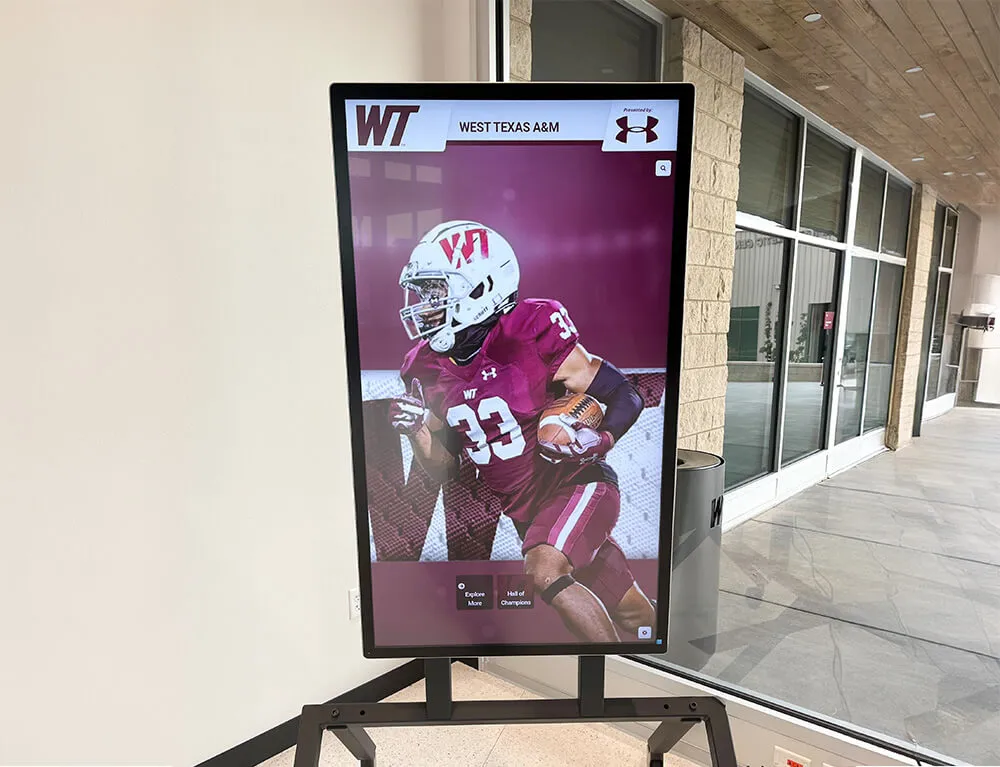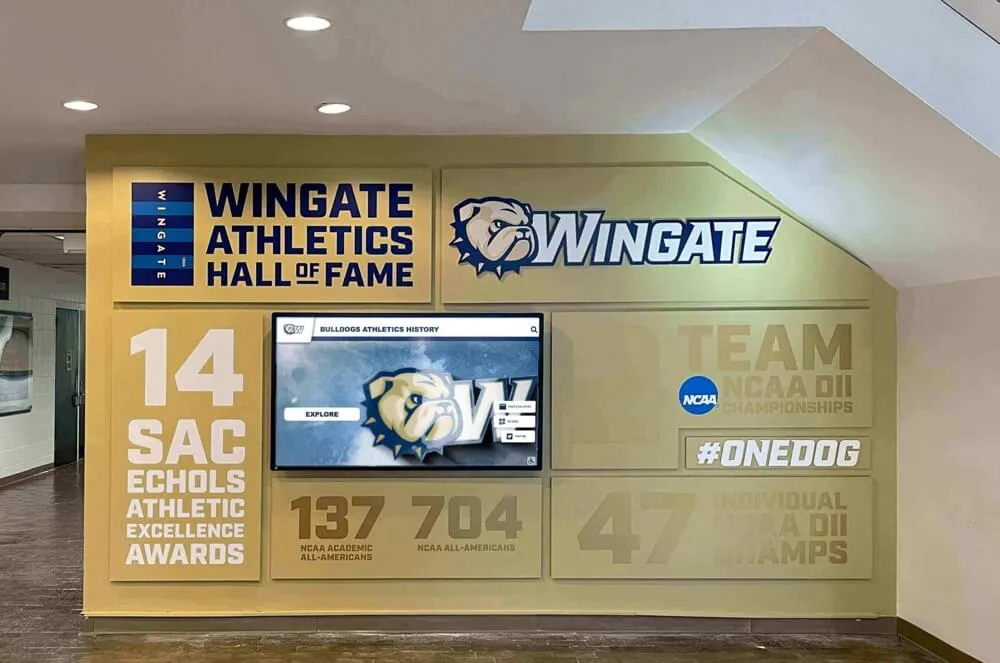
Creative donor wall designs represent one of the most strategic investments organizations make in recognition infrastructure—yet many nonprofits, schools, and institutions struggle with recognition systems that fail to inspire. Traditional engraved plaques line hallway walls with names and dates but rarely tell compelling stories. Capital campaign recognition fills available space but offers no room for future growth. Donor walls become static museums rather than dynamic celebrations of ongoing philanthropic partnership.
The challenge facing development professionals, facility planners, and organizational leaders isn’t whether to recognize donors—that commitment remains fundamental to stewardship excellence. The real question is how to create recognition experiences that genuinely inspire continued giving while honoring every contributor meaningfully. How do you design donor walls that prospective contributors notice and remember? What recognition formats motivate increased gift sizes while demonstrating authentic gratitude? How can limited recognition budgets compete with sophisticated donor expectations shaped by leading institutions?
This comprehensive guide explores creative donor wall design concepts that transform acknowledgment from obligatory gestures into strategic engagement tools. From innovative interactive technologies enabling unlimited recognition capacity through storytelling approaches that connect contributions to tangible impact, these strategies help organizations create donor walls that celebrate past generosity, honor current supporters, and inspire future philanthropic investment in mission-critical work.
Organizations implementing thoughtfully designed donor recognition report 30-45% improvements in donor retention rates and measurable increases in average gift progression compared to static traditional systems, according to development professionals. Creative recognition doesn’t just acknowledge past support—it actively cultivates continued giving through compelling experiences that demonstrate genuine appreciation while inspiring others to join philanthropic communities.

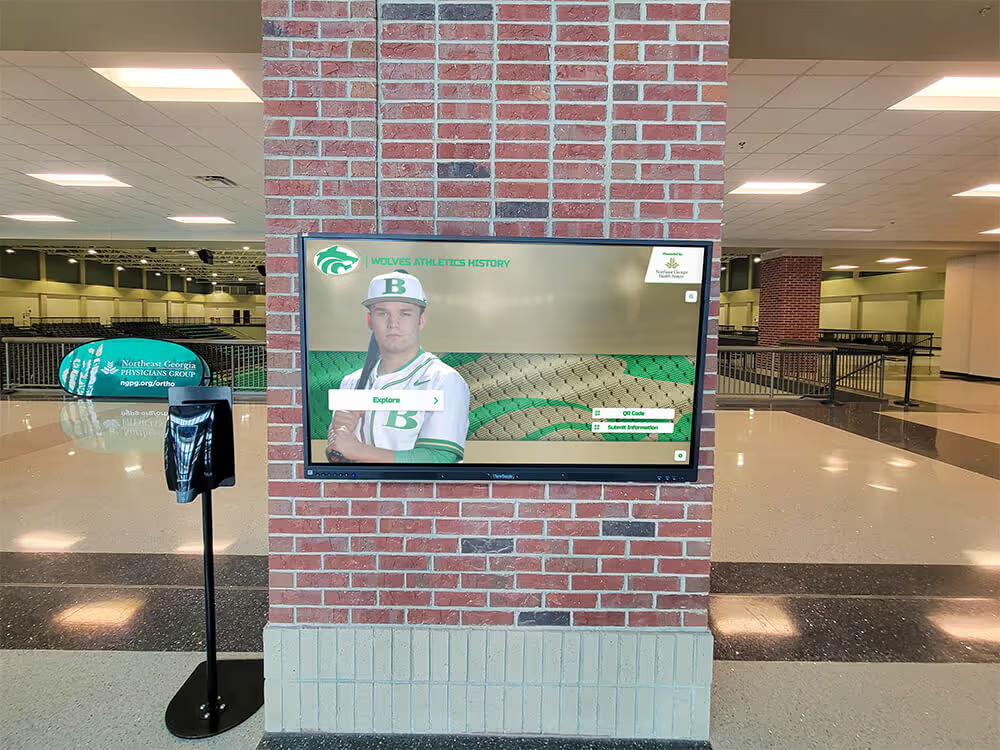
Creative donor wall designs transform traditional acknowledgment into engaging experiences that celebrate contributors while inspiring sustained philanthropic support
Understanding What Makes Donor Walls Truly Creative
Before exploring specific design concepts, understanding what distinguishes creative recognition from conventional approaches helps organizations develop strategies that genuinely engage audiences rather than simply occupying wall space.
Beyond Names on Plaques: The Innovation Imperative
Why Traditional Recognition Falls Short
Conventional donor walls typically feature engraved bronze or acrylic plaques arranged on walls in alphabetical order or by giving level. While these systems provide permanent physical recognition, they share fundamental limitations constraining effectiveness:
- Static information limited to names, contribution years, and minimal text—rarely enough context for meaningful storytelling
- Space constraints forcing difficult decisions about recognition thresholds as walls fill completely
- Expensive scalability requiring $200-800 per donor for plaques plus mounting costs that compound indefinitely
- No interactivity preventing visitors from exploring donor communities or discovering specific contributors
- Single-location visibility restricting recognition to physical facility boundaries
- Difficult updates making error corrections or information changes expensive and time-consuming
These inherent constraints mean traditional recognition often becomes selection process—choosing which donors receive visibility rather than honoring entire contributor communities comprehensively.
What Defines Creative Donor Recognition
Essential Innovation Characteristics
Truly creative donor wall designs share common attributes differentiating them from conventional approaches:
Storytelling Depth Creative recognition moves beyond basic identification toward meaningful narratives explaining why donors give, what contributions accomplish, and how support connects to organizational mission. Rich storytelling creates emotional resonance impossible with name-only acknowledgment.
Interactive Engagement Rather than passive viewing, creative designs invite exploration through touchscreen interfaces, searchable databases, or multimedia presentations that reward visitor attention with deeper discovery opportunities.
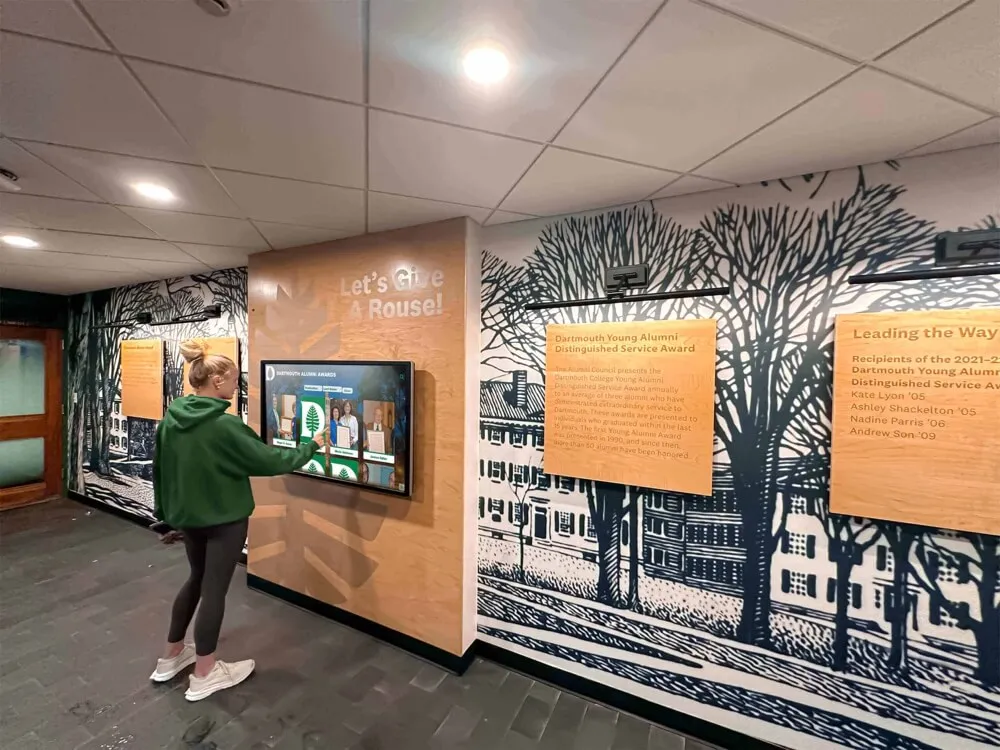
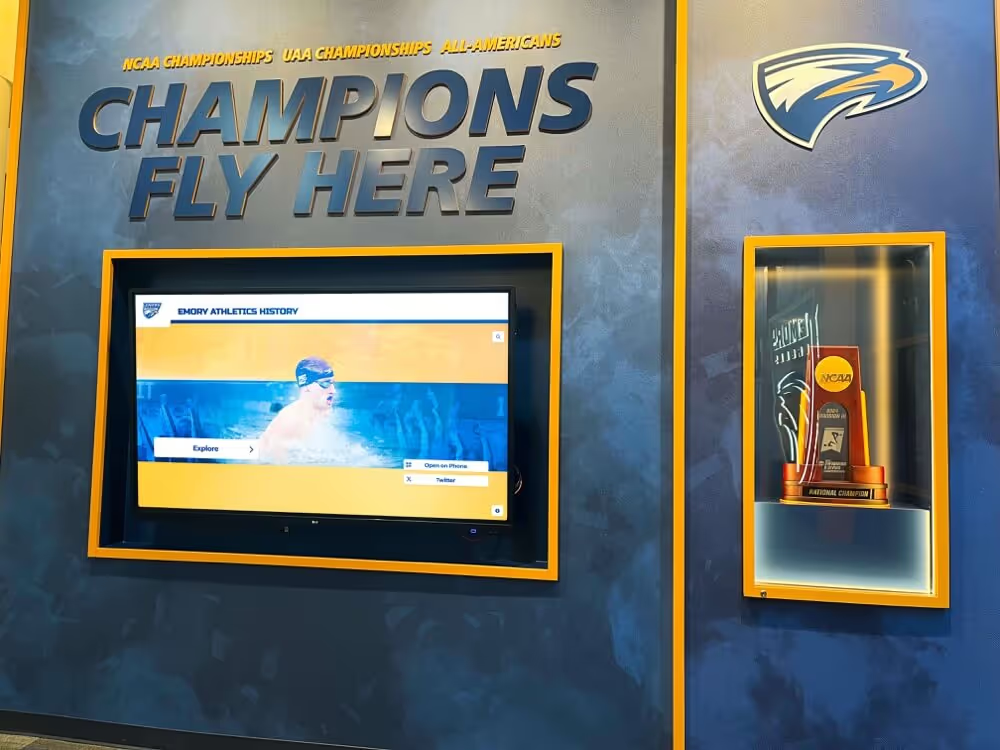
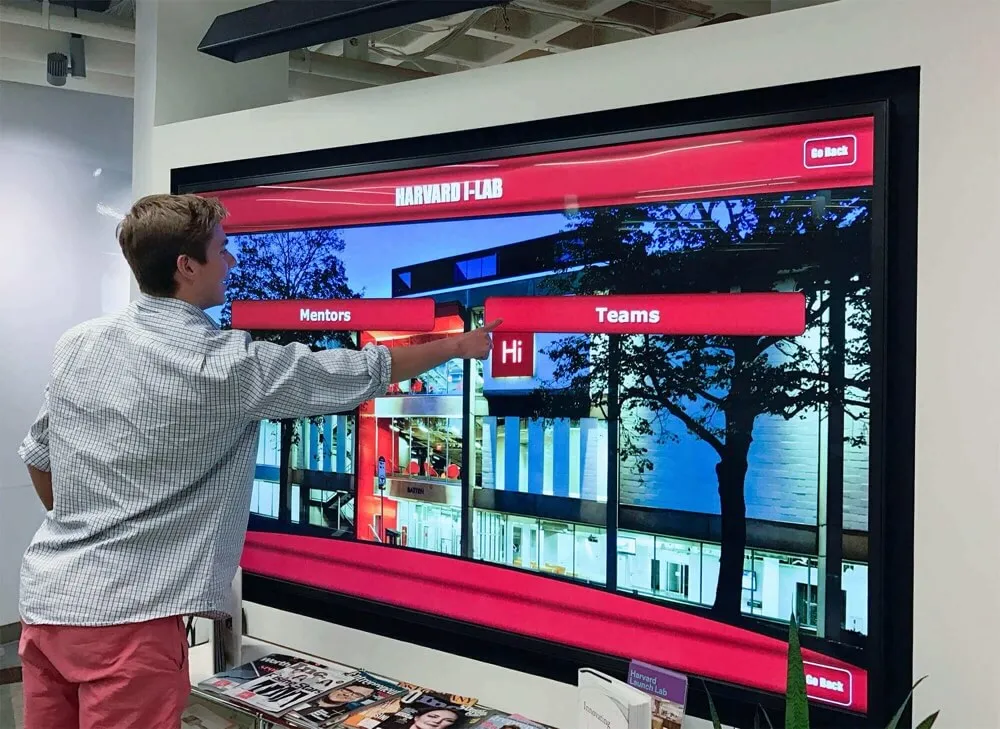
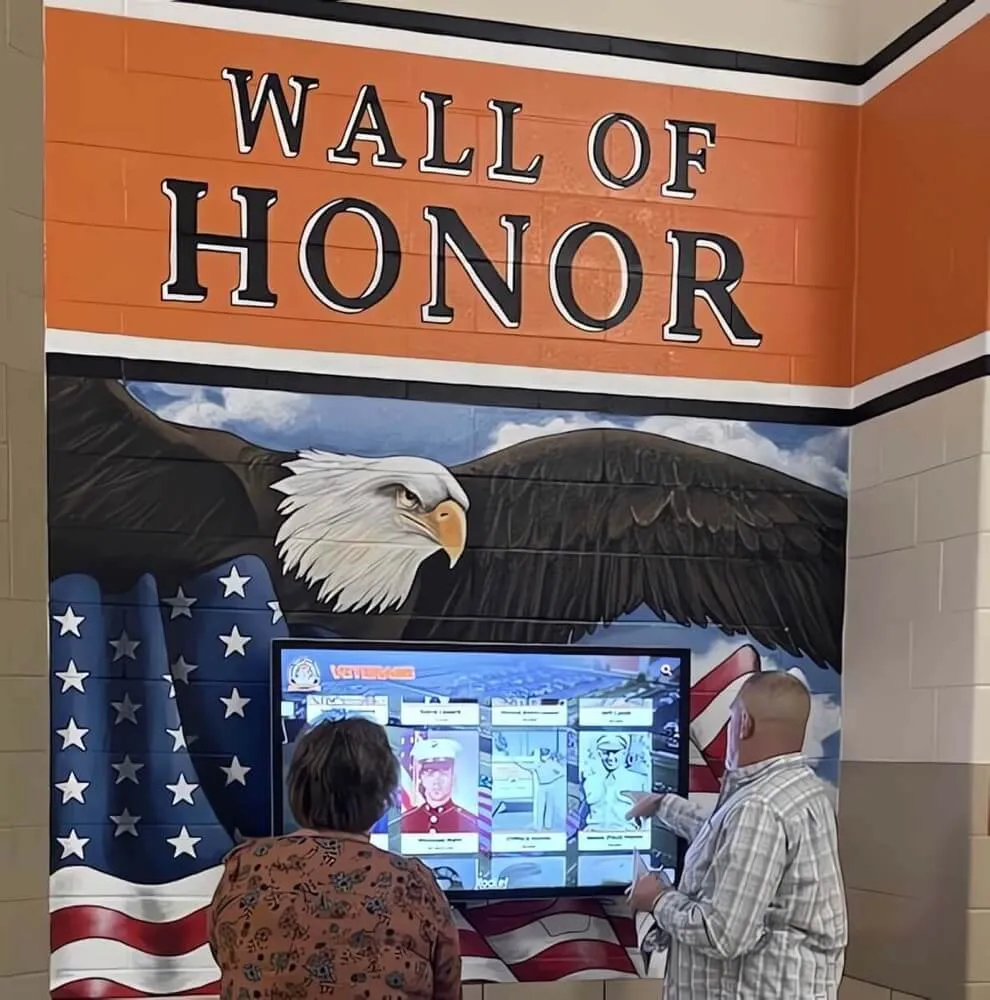
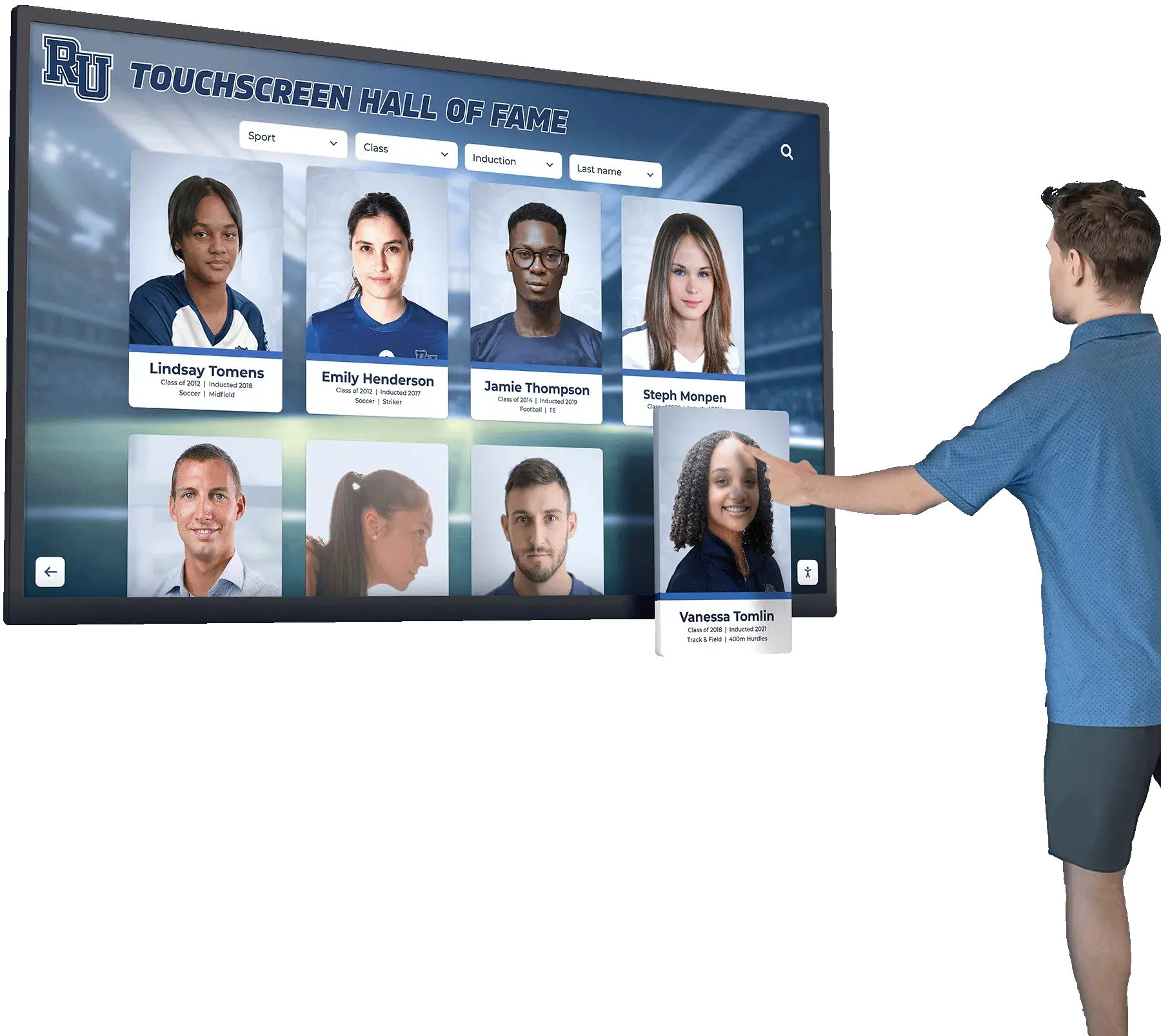
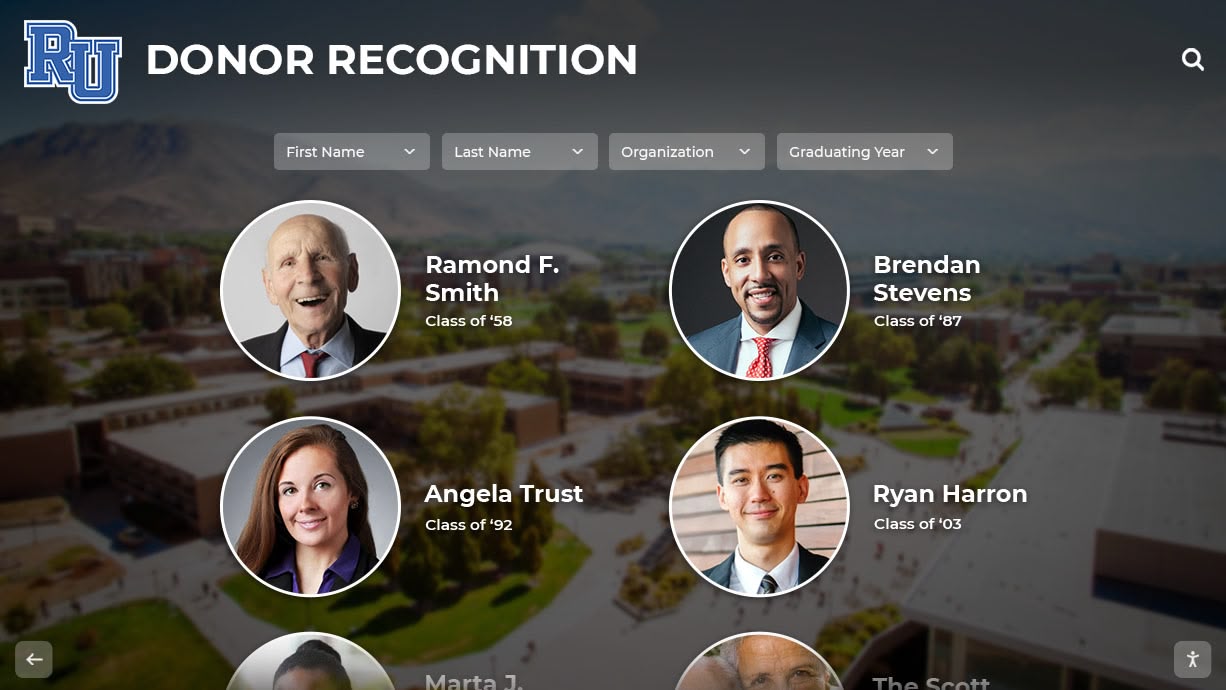
Interactive donor recognition enables visitors to explore contributor communities through engaging touchscreen experiences rather than passive viewing
Visual Impact Creative approaches utilize compelling design, striking imagery, or innovative presentations that capture attention and create memorable impressions distinguishing recognition from generic institutional displays.
Unlimited Capacity Forward-thinking designs accommodate growth without physical expansion—particularly important for organizations with aspirations toward increasing donor community size rather than establishing fixed recognition populations.
Dynamic Content Creative systems enable regular updates adding recent contributors, celebrating campaign milestones, or refreshing featured stories—maintaining relevance rather than becoming historical artifacts immediately after installation.
Organizations implementing comprehensive donor recognition strategies discover that creative approaches generate measurable returns through improved retention, increased giving, and enhanced organizational reputation among stakeholder communities.
Creative Concept #1: Interactive Digital Recognition Walls
Interactive touchscreen technology fundamentally transforms donor recognition from static displays into engaging explorations.
The Digital Recognition Advantage
How Interactive Systems Change Donor Engagement
Digital donor walls replace space-limited physical plaques with dynamic touchscreen displays enabling unlimited recognition capacity. Rather than scanning walls searching for specific names, visitors interact with intuitive interfaces that provide:
Instant Search Functionality Type any donor name and immediately access their complete profile—eliminating frustration of hunting through hundreds of alphabetically-organized plaques scattered across multiple walls or facility locations.
Rich Multimedia Profiles Beyond basic names and dates, digital profiles incorporate high-quality photographs, biographical narratives, video testimonials, impact descriptions, and giving histories impossible with engraved plaques constrained by physical dimensions.
Organized Exploration Pathways Browse donors by giving level, campaign supported, geographic region, class year, or other relevant categories. This organized discovery helps visitors understand donor community structure while finding personally meaningful connections.
Real-Time Updates Add new donors immediately after contributions arrive without waiting weeks for plaque production and installation. Campaign progress updates, milestone celebrations, and content corrections happen instantly across all connected displays.
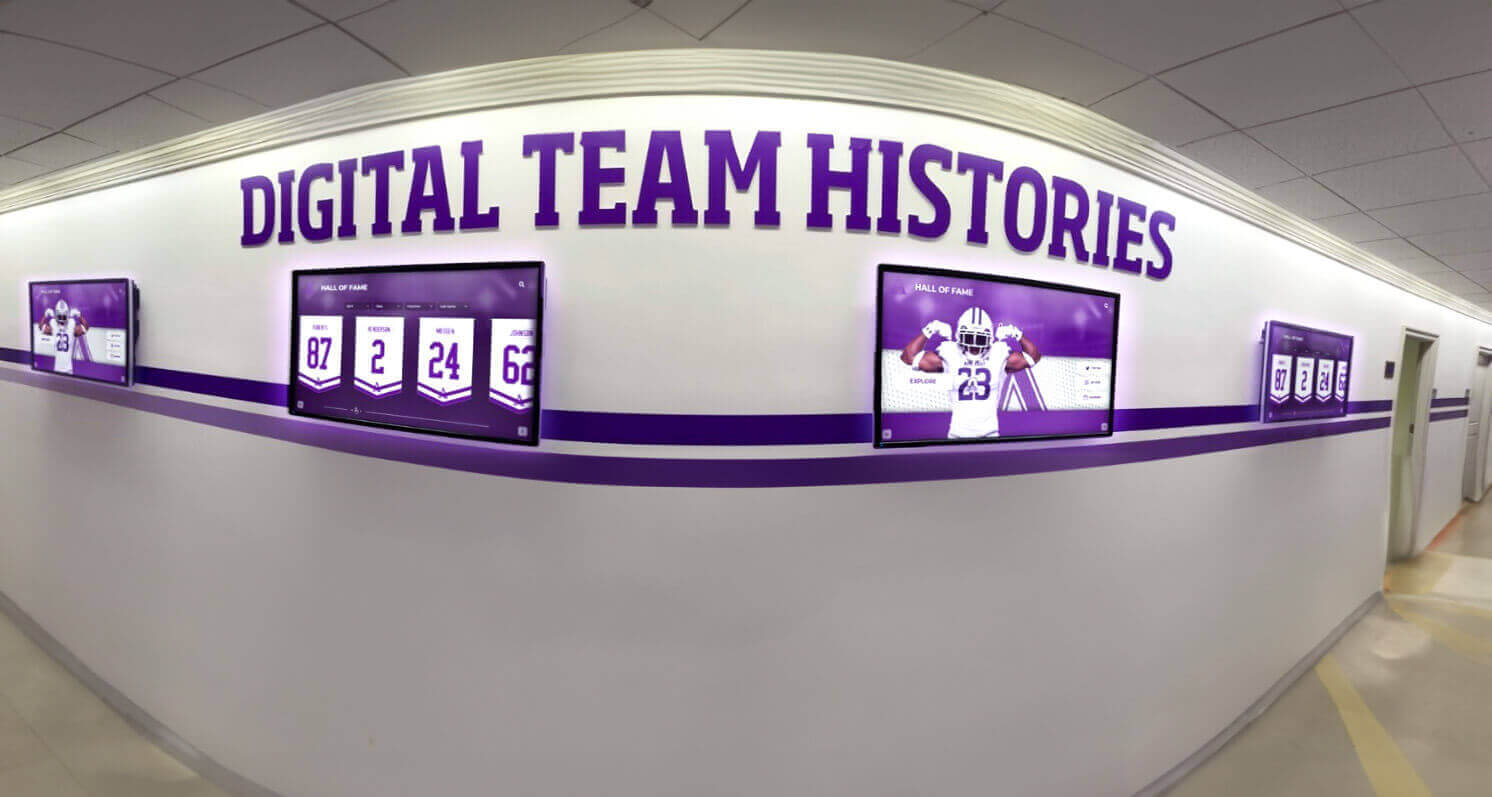
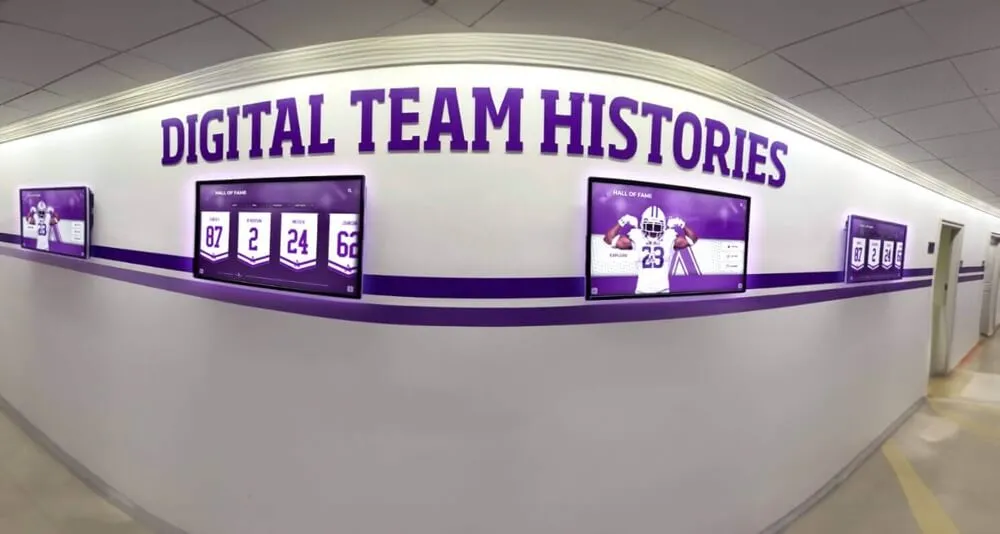
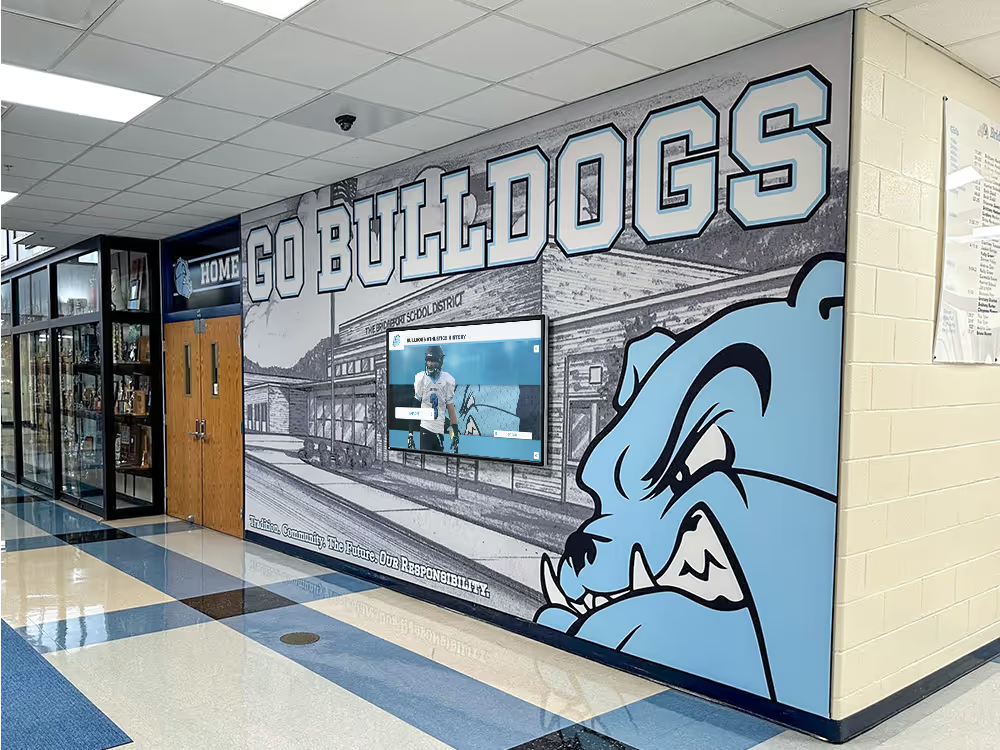
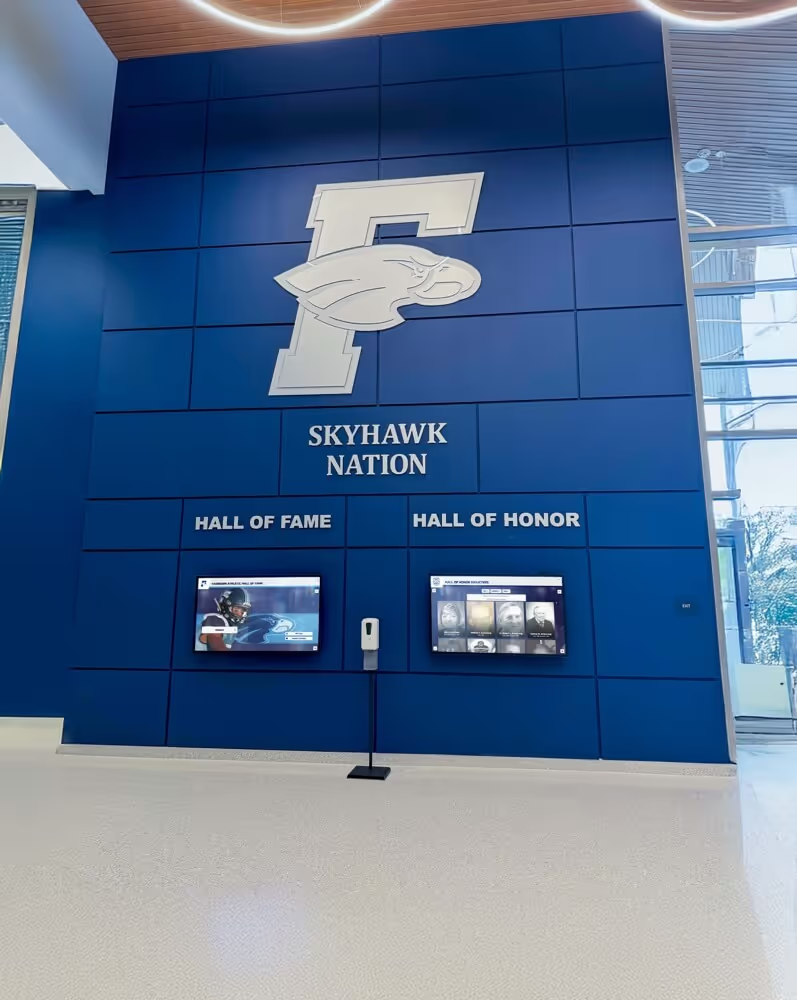
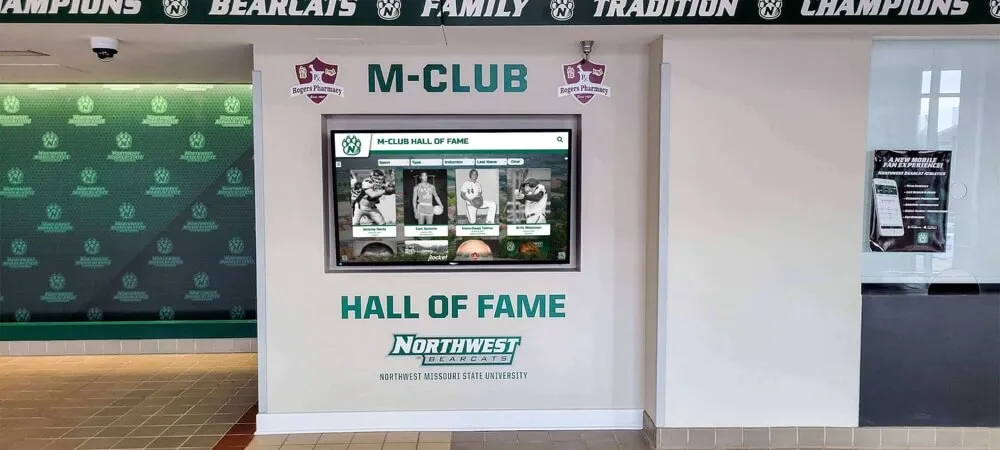
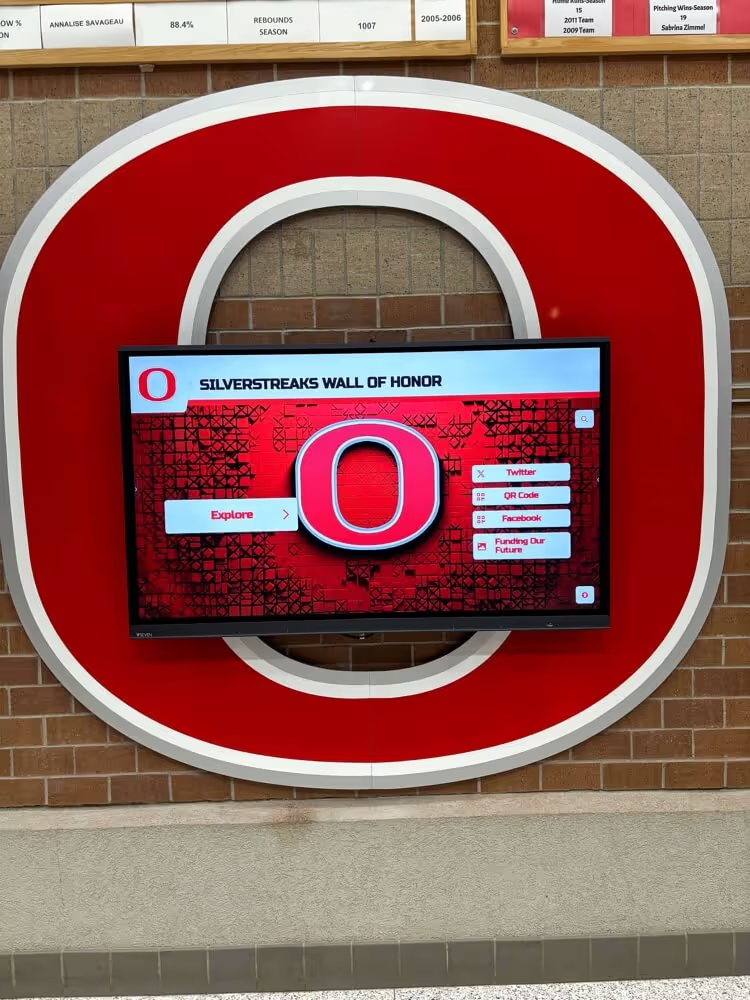
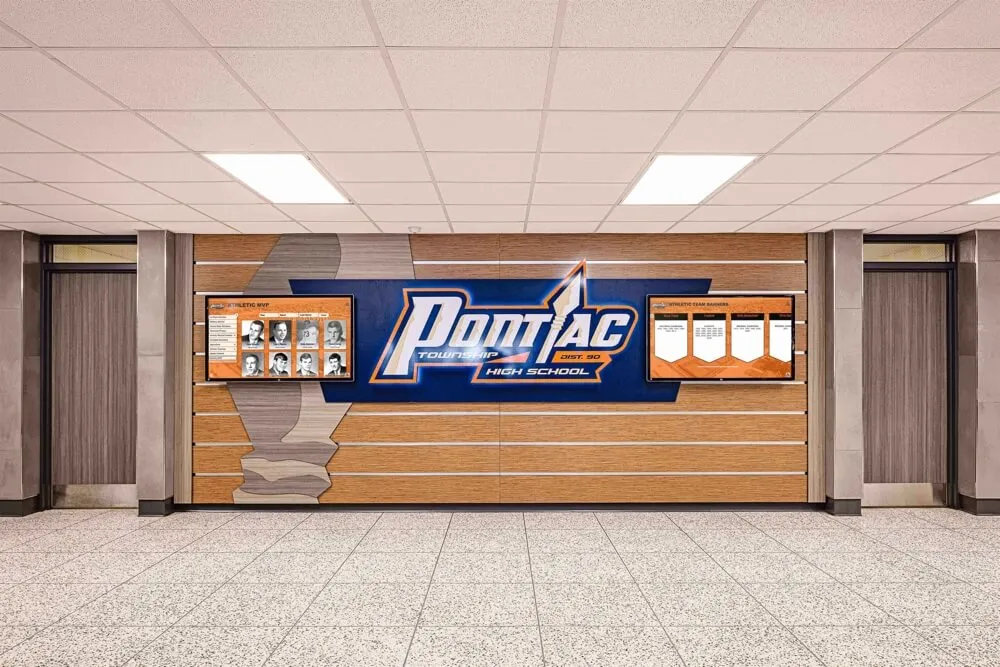
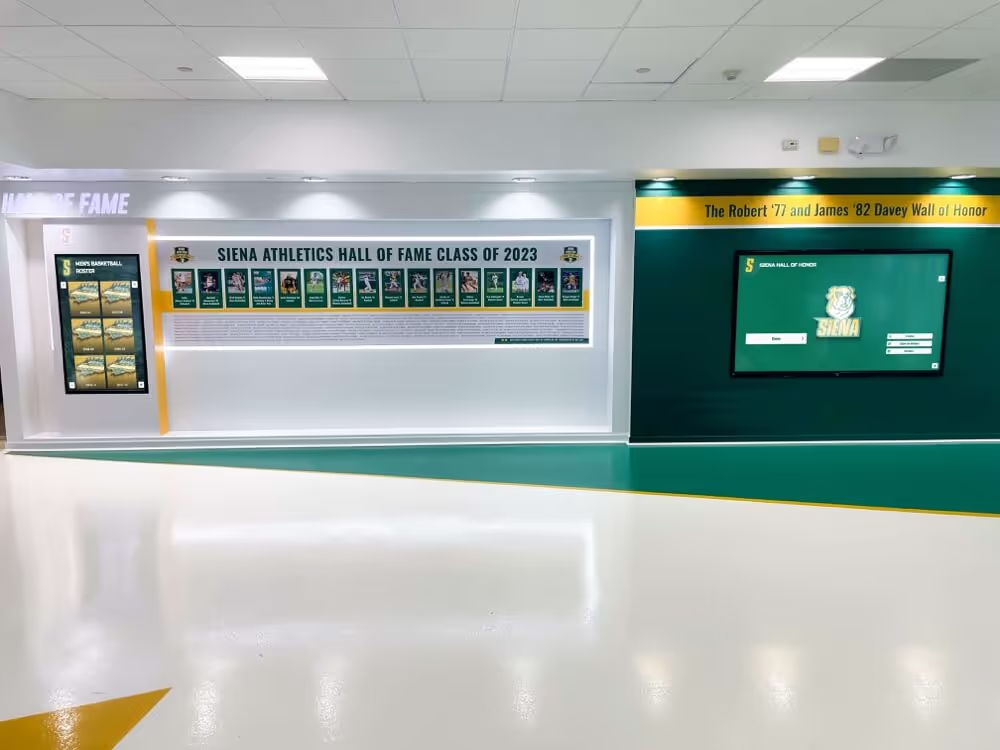
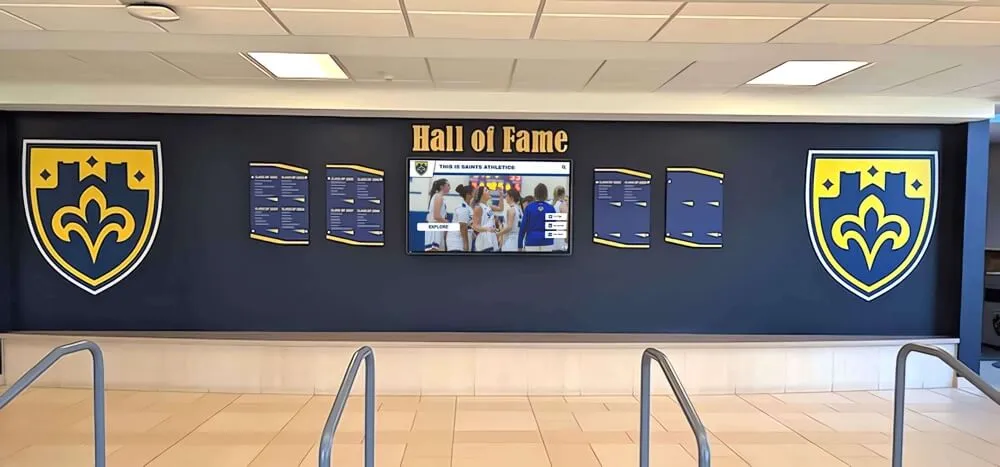
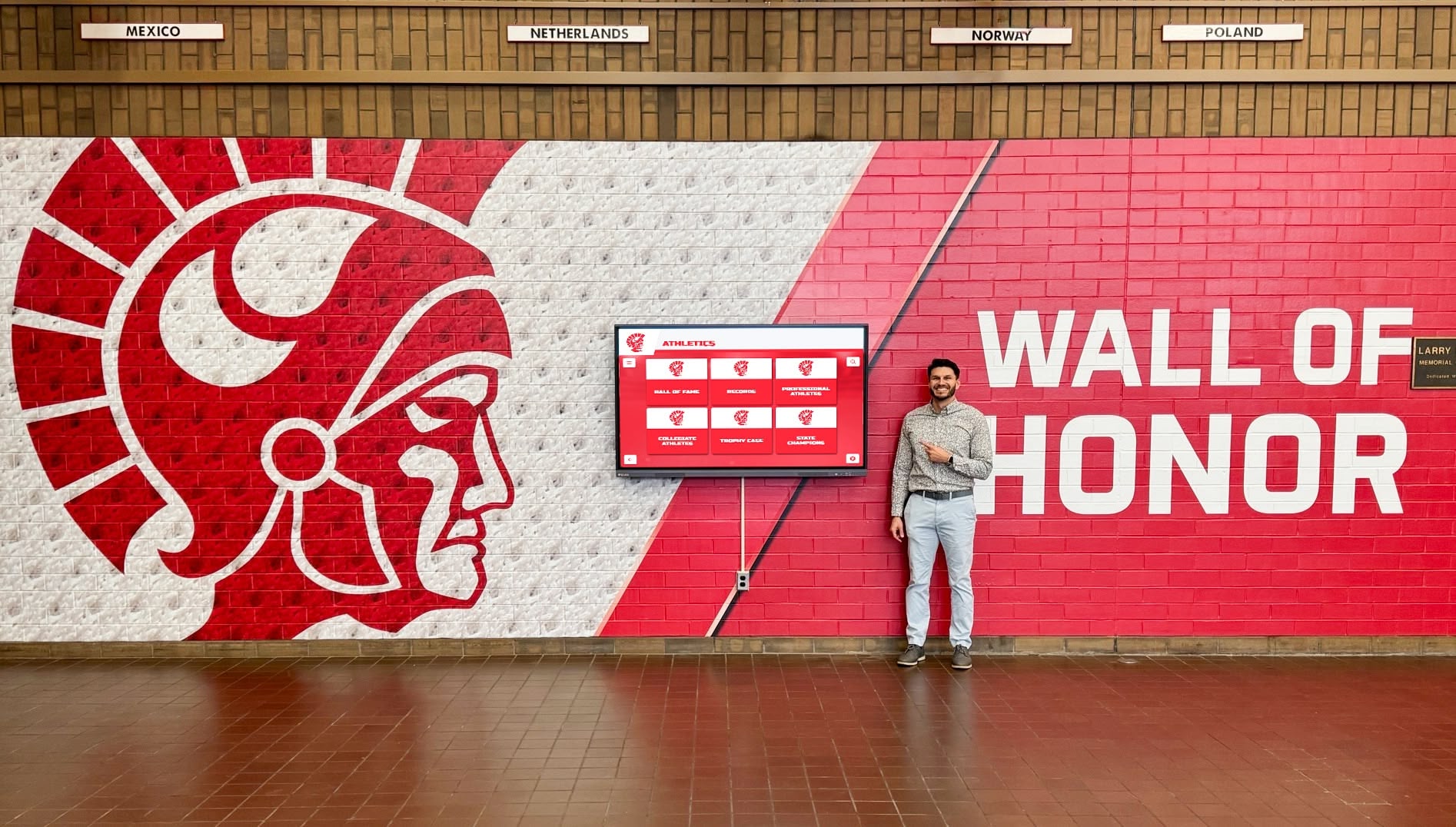
Multiple coordinated digital displays create comprehensive recognition environments celebrating diverse contributor communities throughout institutional facilities
Implementing Interactive Recognition Effectively
Design Principles for Digital Donor Walls
Effective digital recognition requires thoughtful implementation beyond simply purchasing touchscreen hardware:
Intuitive Navigation Design Home screens should present clear pathways for exploration—featured donors, giving level categories, recent contributors, campaign recognition, or search functionality. Avoid overwhelming visitors with too many options simultaneously while ensuring desired discovery methods remain accessible within one or two interactions.
Visual Hierarchy and Consistency Establish clear templates ensuring donor profiles maintain professional appearance with consistent typography, imagery specifications, color schemes, and information architecture. This visual consistency creates cohesive experiences whether visitors explore dozens of profiles or focus on specific individuals.
Accessibility Considerations Digital systems must serve all visitors regardless of physical abilities through appropriate screen height and angle positioning, sufficient text contrast ratios meeting ADA standards (minimum 4.5:1), voice-over compatibility for screen readers, and simple gesture-based navigation avoiding complex multi-touch interactions requiring fine motor control.
Strategic Placement Decisions Install touchscreens in high-traffic locations where diverse audiences naturally gather—main entrance lobbies, reception areas with waiting visitors, event spaces hosting donor gatherings, development office suites during cultivation meetings, and board rooms emphasizing philanthropic community strength during meetings.
Solutions like Rocket Alumni Solutions provide purpose-built platforms designed specifically for donor recognition contexts—combining intuitive content management, engaging touchscreen experiences, and comprehensive web integration extending acknowledgment worldwide beyond physical display locations.
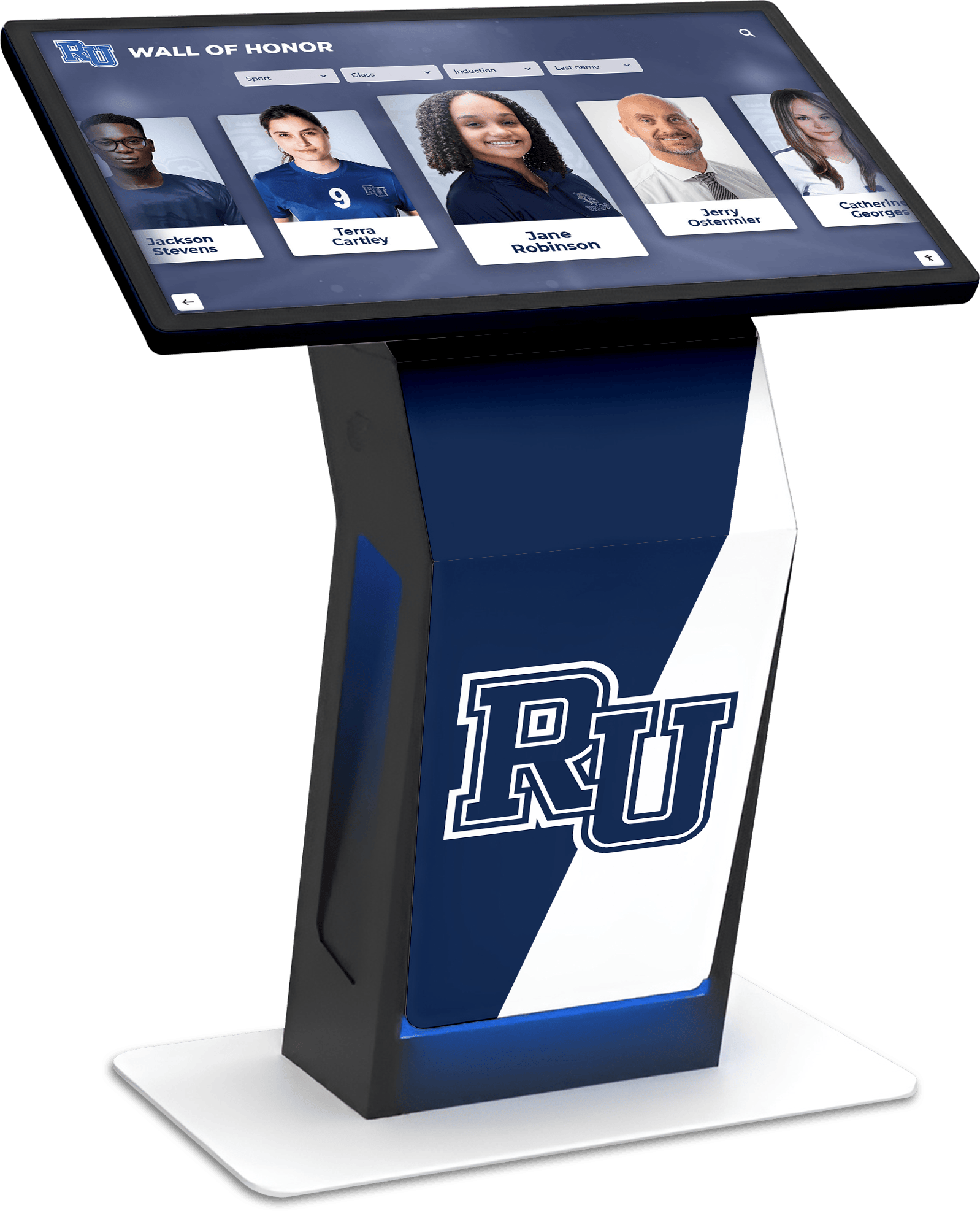
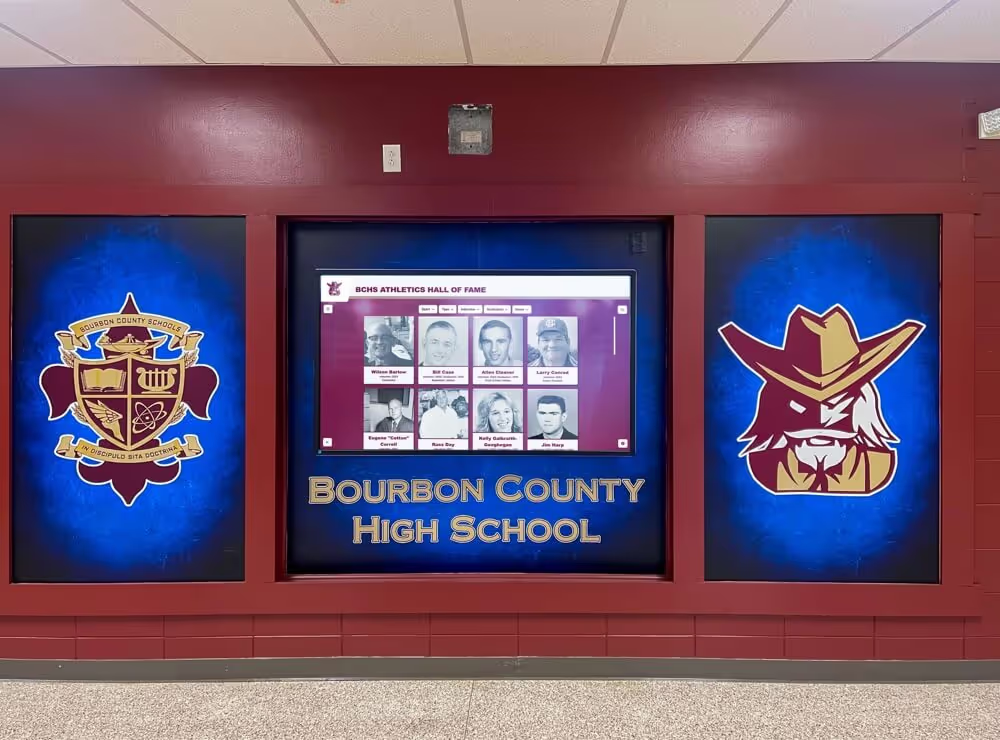
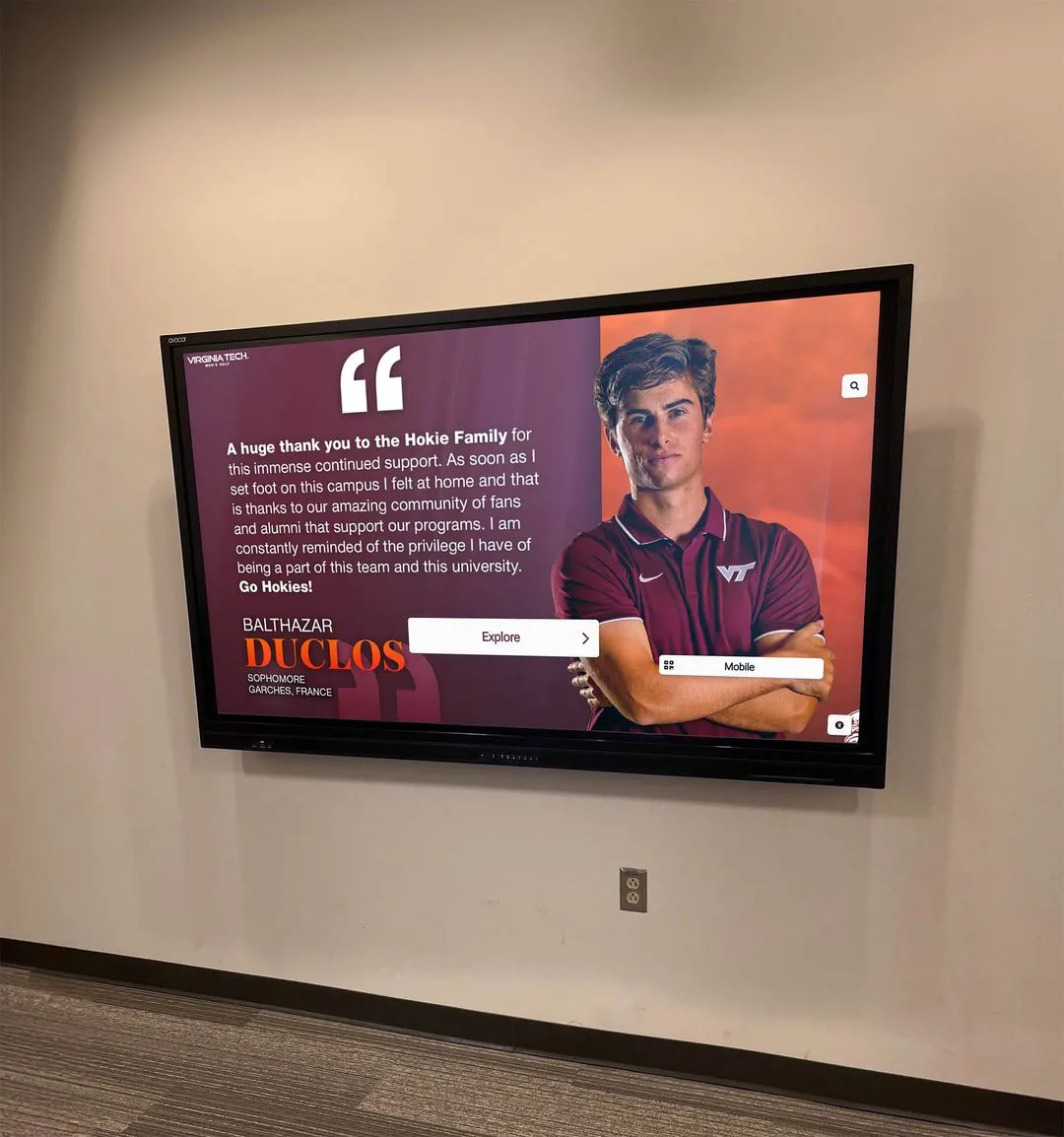
Purpose-built recognition kiosks provide professional installations with intuitive interfaces enabling all visitors to explore donor communities effectively
Content Strategies for Digital Platforms
Creating Compelling Donor Profiles
Technology enables rich storytelling, but effectiveness depends on quality content:
Essential Profile Components
- Full donor name as contributor prefers including organization names for institutional giving
- Contribution level or recognition society designation
- High-quality photographs showing donors in meaningful contexts (minimum 1920x1080 resolution)
- Biographical summaries explaining institutional connections or philanthropic motivations
- Impact descriptions connecting specific contributions to tangible outcomes
- Giving history showing cumulative support or multi-year commitment patterns
Enhanced Storytelling Elements
- Personal quotes sharing why donors chose to give
- Video testimonials providing authentic donor voice (60-90 seconds optimal length)
- Beneficiary connections linking contributions to students, programs, or outcomes supported
- Multi-generation family giving patterns demonstrating legacy commitment
- Volunteer leadership roles beyond financial contributions
- Future aspirations and continued partnership intentions
Organizations implementing systematic content collection through post-gift questionnaires, stewardship visit interviews, and online submission portals report 65-75% donor participation in providing enhanced profile information when requests emphasize recognition benefits and occur promptly after contributions.
Creative Concept #2: Story-Driven Recognition Experiences
Moving beyond transactional acknowledgment toward narrative-based recognition creates emotional connections that inspire continued giving.
The Power of Impact-Centered Design
Connecting Dollars to Outcomes
Traditional donor walls acknowledge contributions but rarely illustrate what support accomplishes. Creative story-driven designs shift emphasis from contribution amounts toward tangible impacts enabled by philanthropic investment:
Scholarship Beneficiary Connections Rather than simply listing scholarship fund donors, creative recognition features student testimonials thanking donor communities, graduation photographs showing educational outcomes, career success stories demonstrating long-term impact, and specific examples of how financial support eliminated barriers enabling degree completion.
Facility Transformation Documentation Capital campaign recognition becomes more compelling when incorporating before-and-after photography showing donor-funded improvements, construction progress timelines documenting project evolution, student or staff testimonials explaining how upgraded facilities enhance programs, and usage statistics demonstrating community benefit from philanthropic investment.
Program Outcome Visualization Abstract program support becomes tangible through infographics showing students served annually, achievement metrics demonstrating educational excellence, alumni success rates, community reach statistics, or research breakthroughs enabled by donor funding.
This impact emphasis resonates particularly with younger donors who prioritize measurable outcomes over naming recognition, while helping all contributors understand how their generosity creates meaningful change beyond generic institutional gratitude.
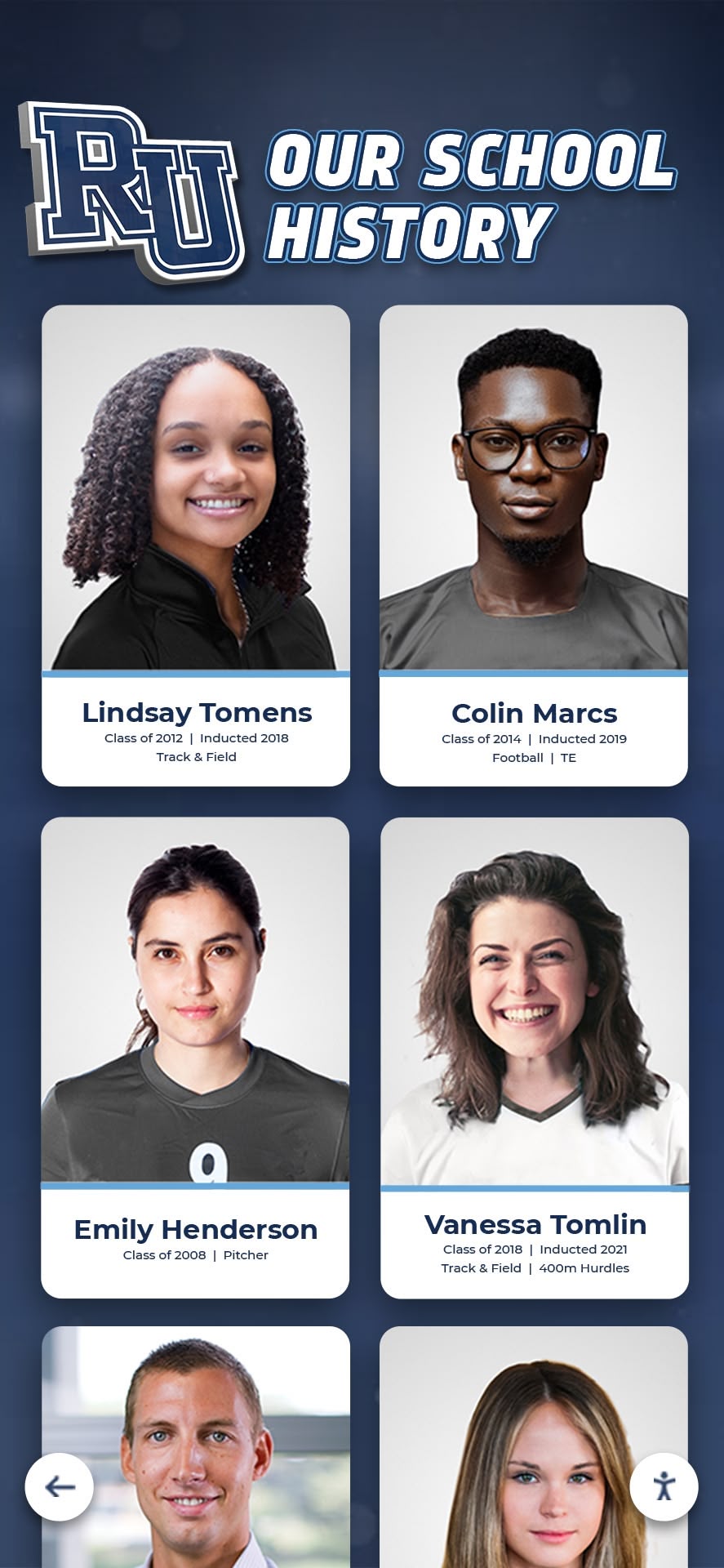
Card-based profile interfaces showcase individual donor stories with photographs and narratives creating meaningful connections beyond basic acknowledgment
Donor Journey Recognition
Celebrating Philanthropic Progression
Rather than acknowledging single contributions in isolation, journey-based recognition honors complete donor relationships over time:
First Gift Emphasis Highlight when donors began supporting organizations regardless of initial contribution size—celebrating that crucial first commitment demonstrating confidence in mission and willingness to invest in organizational success.
Giving Progression Documentation Show how donor relationships deepen over years through timeline visualizations, cumulative giving calculations, or narrative descriptions of increasing engagement from annual gifts through major support to planned giving commitments.
Multi-Faceted Involvement Recognition Acknowledge volunteer service, board leadership, event participation, advocacy efforts, and other contributions beyond financial giving—demonstrating that organizations value comprehensive partnership rather than viewing relationships purely through transactional fundraising lens.
Legacy Planning Celebration Create special recognition for donors making planned giving commitments through estate provisions, beneficiary designations, or other deferred gifts. This forward-looking acknowledgment motivates similar commitments while honoring donors whose ultimate contributions may exceed lifetime giving by substantial margins.
Organizations implementing donor stewardship programs that emphasize relationship depth over transaction size build stronger long-term partnerships yielding higher lifetime value than approaches focusing exclusively on immediate gift amounts.
Creative Concept #3: Visual Innovation and Artistic Design
Strategic artistic approaches transform functional recognition into compelling visual experiences that capture attention and inspire giving.
Architectural Integration Strategies
Donor Walls as Design Features
Rather than afterthoughts added to completed buildings, creative recognition becomes intentional architectural element integrated from initial facility planning:
Custom Fabrication and Materials Move beyond standard plaque systems toward unique fabricated elements using unexpected materials—backlit acrylic panels creating glowing recognition, laser-etched glass panels with sophisticated transparency effects, sculptural metal installations creating three-dimensional recognition, custom woodwork incorporating natural beauty with recognition functionality, or artistic tile mosaics embedding donor names within larger artistic compositions.
Environmental Graphics Approaches Large-scale wall graphics or murals incorporate donor names within broader artistic narratives celebrating organizational mission, history, or values. These integrated approaches prevent donor walls from feeling like separate acknowledgment displays disconnected from surrounding environments.
Lighting Design Integration Sophisticated lighting transforms recognition visibility and emotional impact through dramatic uplighting emphasizing recognition importance, focused spotlighting drawing attention to featured sections, color-changing LED systems enabling campaign-specific emphasis or seasonal variation, and backlit elements creating luminous effects distinguishing recognition from standard displays.
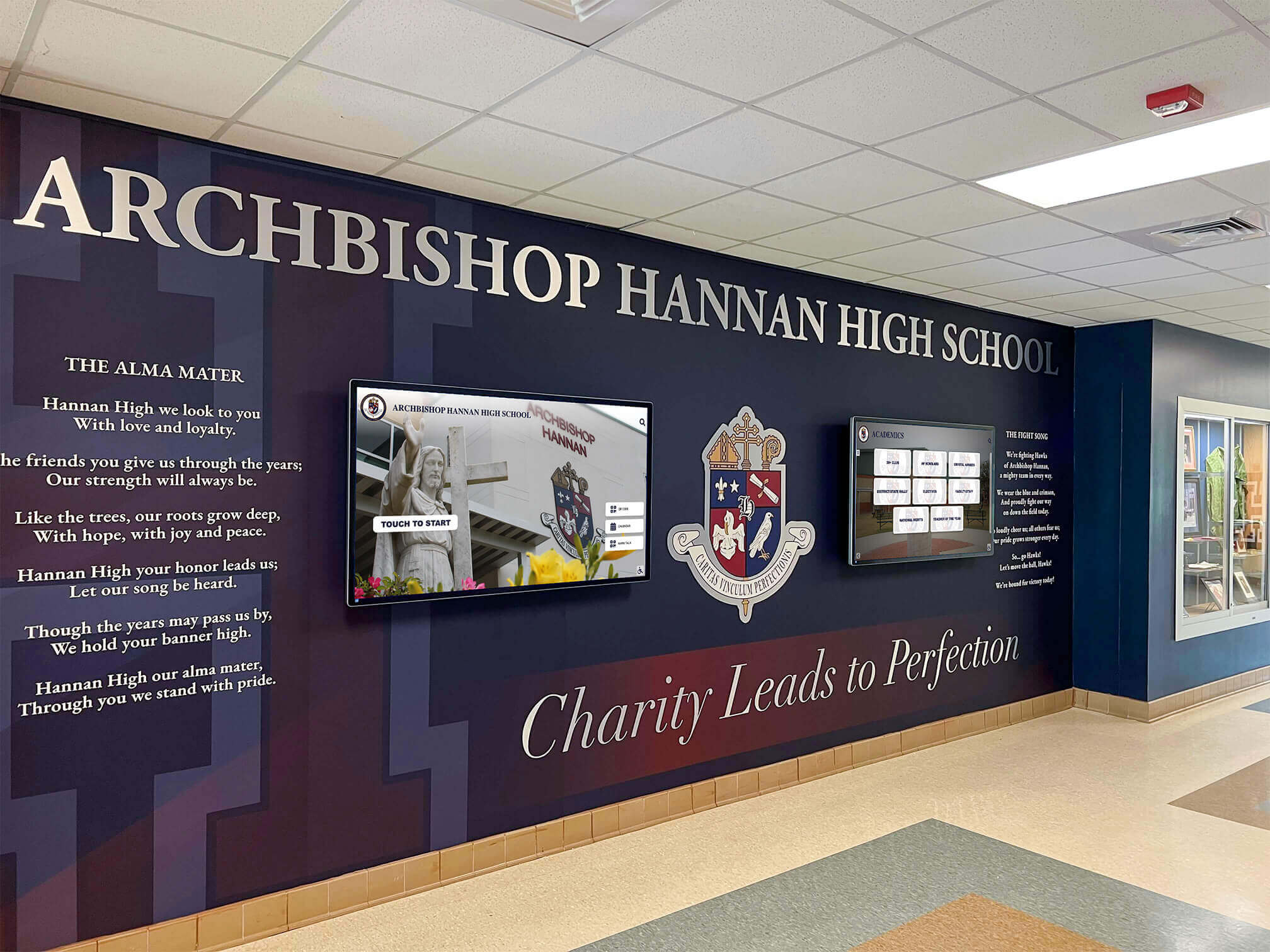
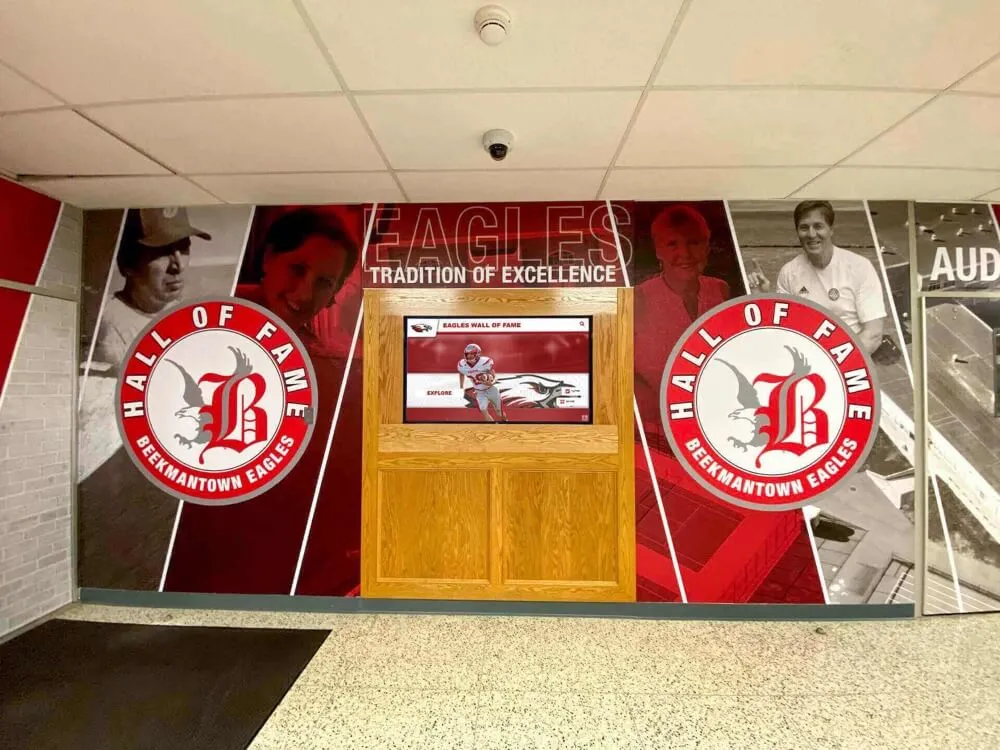
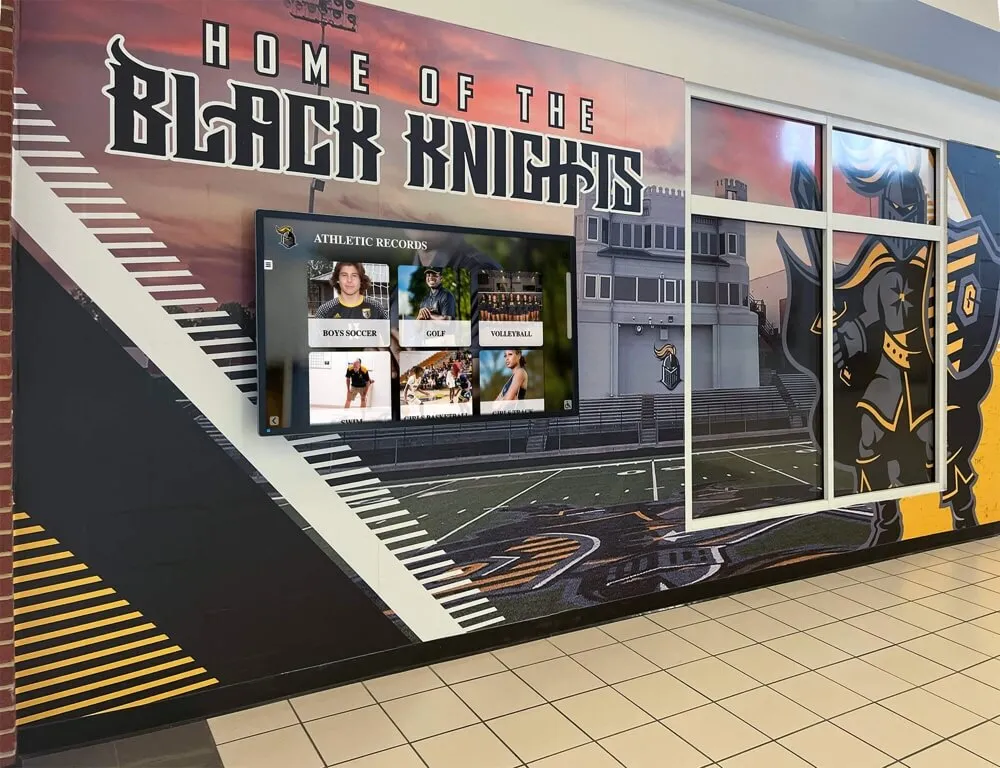
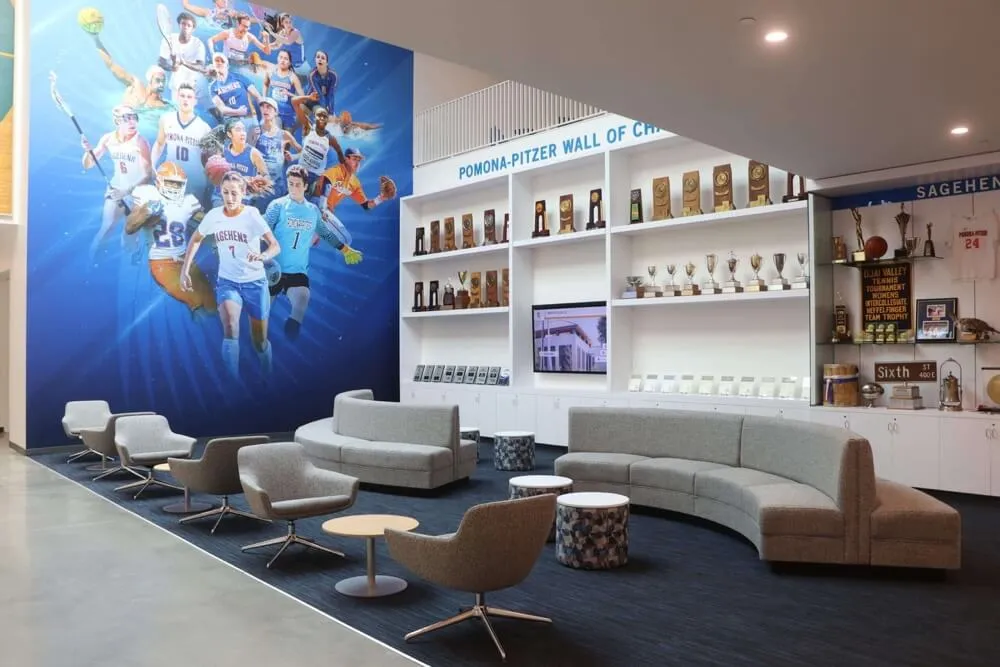
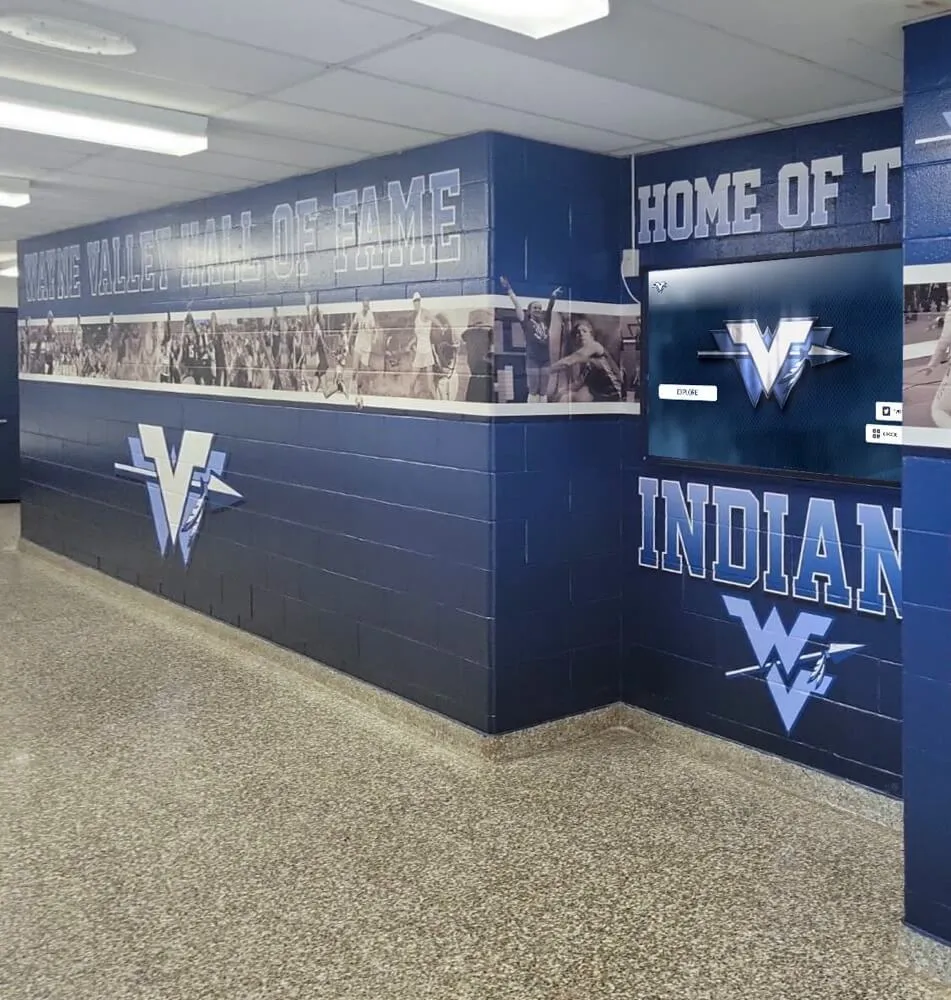
Thoughtful architectural integration connects donor recognition with organizational identity and facility design creating cohesive environments
Creative Visualization Concepts
Beyond Alphabetical Lists
How donor names arrange visually dramatically affects recognition impact and visitor engagement:
Geographic Mapping Displays Organizations with geographically distributed supporters create powerful visuals through donor location maps showing worldwide support, regional concentration visualizations, or interactive geographic exploration enabling visitors discovering donors from specific cities, states, or countries.
Giving Level Visualizations Rather than simple text lists organized by contribution tier, creative approaches visualize donor communities through concentric circles showing giving levels radiating outward, tree diagrams with major donors forming trunk and community supporters as branches, building cross-sections where donor levels correspond to floors or architectural elements, or constellation patterns grouping donors by campaign with stars sized proportionally to contribution levels.
Timeline-Based Organization Historical recognition arranged chronologically tells institutional development stories—showing early founding donors who established organizations, campaign-by-campaign recognition documenting growth phases, anniversary-based organization celebrating milestone giving years, or decade groupings demonstrating sustained support across generations.
Thematic Clustering Group donors by programs supported rather than contribution amounts—scholarship donors together regardless of gift size, athletic facility contributors as cohesive community, arts program supporters in unified section, or research funding acknowledgment emphasizing collective investment in discovery.
These creative organizational approaches help visitors understand donor communities through multiple meaningful lenses beyond simple financial hierarchy, creating richer recognition that honors diverse motivations and contribution patterns.
Creative Concept #4: Campaign Progress and Real-Time Recognition
Dynamic systems that evolve throughout fundraising campaigns create urgency while celebrating momentum toward goals.
Live Campaign Visualization
Real-Time Fundraising Progress
Traditional donor walls become static after installation, but creative campaign-focused designs remain dynamic throughout active fundraising:
Thermometer Visualizations Classic fundraising thermometers updated digitally show current totals, goals remaining, recent contribution highlights, and percentage completion. Real-time updates create momentum perception crucial for closing campaigns successfully.
Donor Addition Announcements Recent contributor names appear prominently with “welcome” messaging celebrating new additions to donor communities. This immediate recognition honors support while donors’ giving decisions remain recent and emotional connections stay strong.
Milestone Celebration Features When campaigns reach significant progress points—50% completion, $1 million raised, 100 donors achieved—recognition systems highlight accomplishments through special visualizations, celebration messaging, or temporary featured displays emphasizing community achievement.
Challenge Campaign Countdown During matching gift periods or challenge campaigns with deadlines, recognition displays show time remaining, matching opportunities available, and real-time progress toward unlocking challenge funds—creating urgency motivating immediate action.
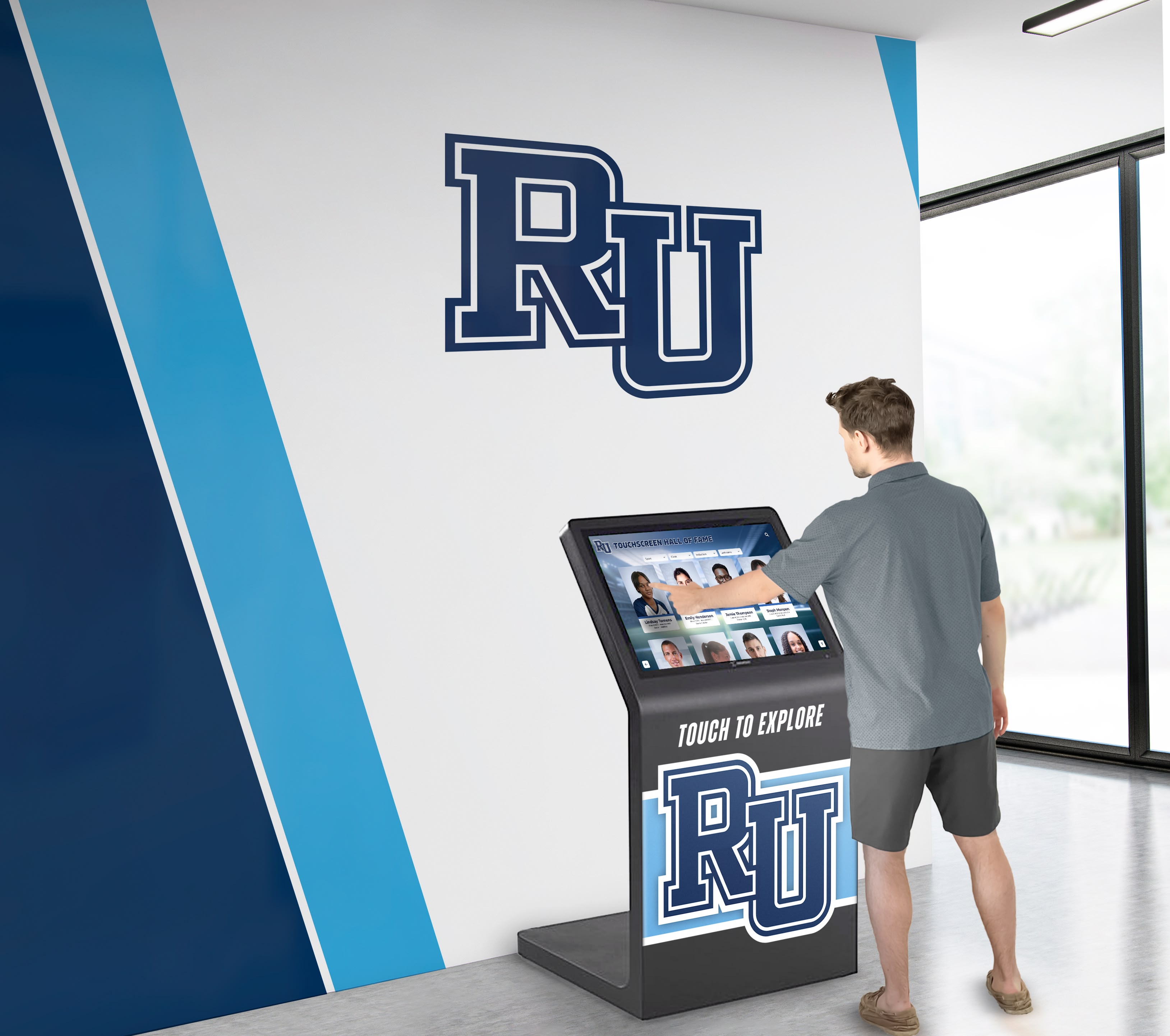
Real-time campaign visualization creates urgency and demonstrates momentum that inspires prospective contributors during active fundraising initiatives
Naming Opportunity Showcases
Available Recognition Inventory
Transparent visualization of remaining naming opportunities serves dual purposes—honoring current donors while motivating prospective contributors:
Interactive Facility Maps Digital building floor plans or campus maps show which spaces remain available for naming recognition at various giving levels. Color coding distinguishes named spaces from available opportunities, with interactive selection revealing naming details, contribution requirements, and how to explore gift possibilities with development staff.
Program Naming Galleries Visual displays showing faculty positions, scholarship programs, research initiatives, or other non-physical naming opportunities organized by contribution level with clear indication of availability status. This comprehensive view helps prospective donors discover appropriate recognition matching giving capacity and personal interests.
Virtual Tours Video walkthroughs of facilities highlighting both existing donor recognition and available naming opportunities in context. Seeing actual spaces rather than abstract naming lists helps prospective contributors envision how their support enables tangible improvements while receiving meaningful acknowledgment.
Organizations implementing capital campaign recognition report that transparent naming opportunity visualization significantly accelerates major gift solicitation by helping prospects identify personally meaningful recognition aligned with giving capacity.
Creative Concept #5: Multi-Generational and Legacy Recognition
Thoughtful designs that honor giving patterns across decades inspire sustained family philanthropy and planned giving commitments.
Family Giving Recognition
Celebrating Multi-Generation Support
Recognition that acknowledges family philanthropic traditions creates powerful emotional connections:
Family Tree Visualizations Literal or metaphorical family tree diagrams showing multi-generation giving patterns—grandparents who established relationships, parents who continued support, and current generation sustaining legacies. These visual representations honor family traditions while creating aspirational examples for other families considering similar commitments.
Cumulative Family Recognition Rather than acknowledging individual family members separately, aggregate total family giving across all contributors and generations. This approach emphasizes collective impact while honoring collaborative family decisions treating philanthropy as shared values rather than individual transactions.
Legacy Society Prominence Create distinctive recognition sections for donors making planned giving commitments regardless of ultimate contribution size. This forward-looking acknowledgment motivates estate gifts while honoring donors whose final contributions may substantially exceed lifetime giving.
Perpetual Endowment Emphasis Endowed funds deserve special recognition highlighting permanence through distinctive visual treatments emphasizing ongoing impact, annual income generation and distribution information, beneficiary testimonials showing perpetual benefit, and legacy language reinforcing multi-generational influence extending far beyond donor lifetimes.
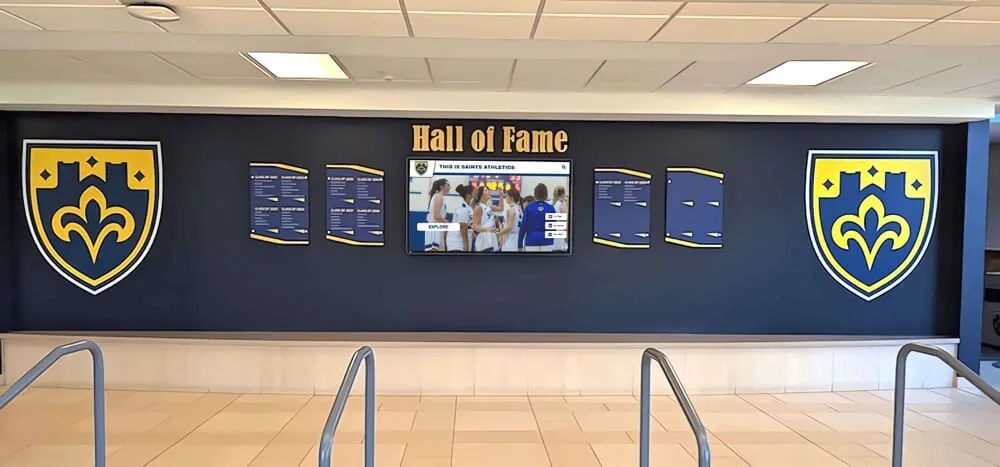
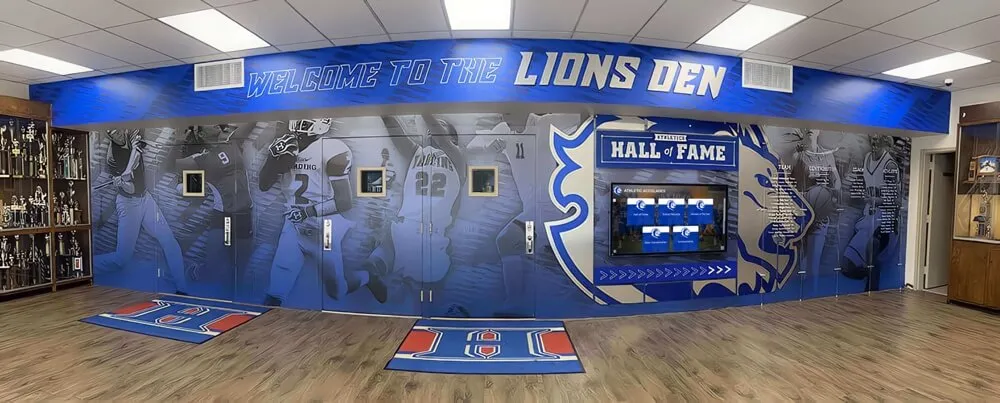
Hybrid recognition approaches combine traditional elements with digital capacity, honoring heritage while embracing innovation for comprehensive acknowledgment
Memorial and Tribute Recognition
Honoring Remembrance and Celebration
Thoughtful memorial recognition serves grieving families while inspiring others toward tribute giving:
Memorial Designation Sensitivity Create dignified acknowledgment for gifts honoring deceased loved ones through respectful visual treatments, memorial language emphasizing remembrance and legacy, dates of recognition honoring life spans, and connections between memorial gifts and causes or programs meaningful to those remembered.
Tribute Gift Categories Distinguish “in memory of” gifts honoring deceased individuals from “in honor of” contributions celebrating living people for achievements, milestones, or simply expressing appreciation. These different tribute motivations deserve distinct acknowledgment communicating appropriate recognition contexts.
Family Input Opportunities When memorial or tribute gifts arrive, contact families requesting biographical information, photographs, or personal messages they’d like incorporated into recognition. This collaborative approach ensures acknowledgment honors loved ones appropriately while demonstrating genuine care beyond transactional gift processing.
Perpetual Remembrance Unlike physical plaques that deteriorate over decades, digital recognition platforms preserve memorial acknowledgment indefinitely—ensuring loved ones remain honored permanently regardless of facility renovations, institutional changes, or passage of time that might otherwise erase physical recognition.
Organizations implementing memorial recognition programs discover that thoughtful tribute acknowledgment strengthens relationships with grieving families while inspiring others toward memorial giving honoring their own loved ones.
Implementation Strategies for Creative Donor Recognition
Moving from conceptual inspiration toward actual implementation requires systematic planning addressing budget, timeline, and stakeholder considerations.
Planning and Design Process
From Vision to Reality
Stakeholder Input Gathering Begin by consulting diverse stakeholders—development staff understanding donor preferences, facility managers knowing physical constraints, board members representing donor perspectives, design professionals bringing creative expertise, and institutional leadership ensuring alignment with broader strategic priorities.
Budget Development Realistic budgeting includes initial hardware costs for interactive displays ($3,000-10,000 depending on size and quantity), custom fabrication for artistic elements ($5,000-50,000+ depending on complexity), software platforms for digital recognition ($500-2,000 annually), initial content creation and design ($2,000-5,000), professional installation ($1,000-3,000), and ongoing maintenance reserves.
Timeline Establishment Comprehensive recognition projects typically require 4-9 months from initial planning through final installation including concept development and stakeholder approval (4-8 weeks), detailed design and specifications (4-6 weeks), fabrication or technology procurement (6-12 weeks), installation and configuration (2-4 weeks), and content population and testing (2-4 weeks).
Vendor Selection When choosing partners for technology platforms, fabrication, or installation services, evaluate portfolio quality showing previous recognition work, client references from similar organizations, pricing transparency without hidden fees, support availability ensuring long-term success, and design collaboration willingness respecting organizational input while contributing professional expertise.
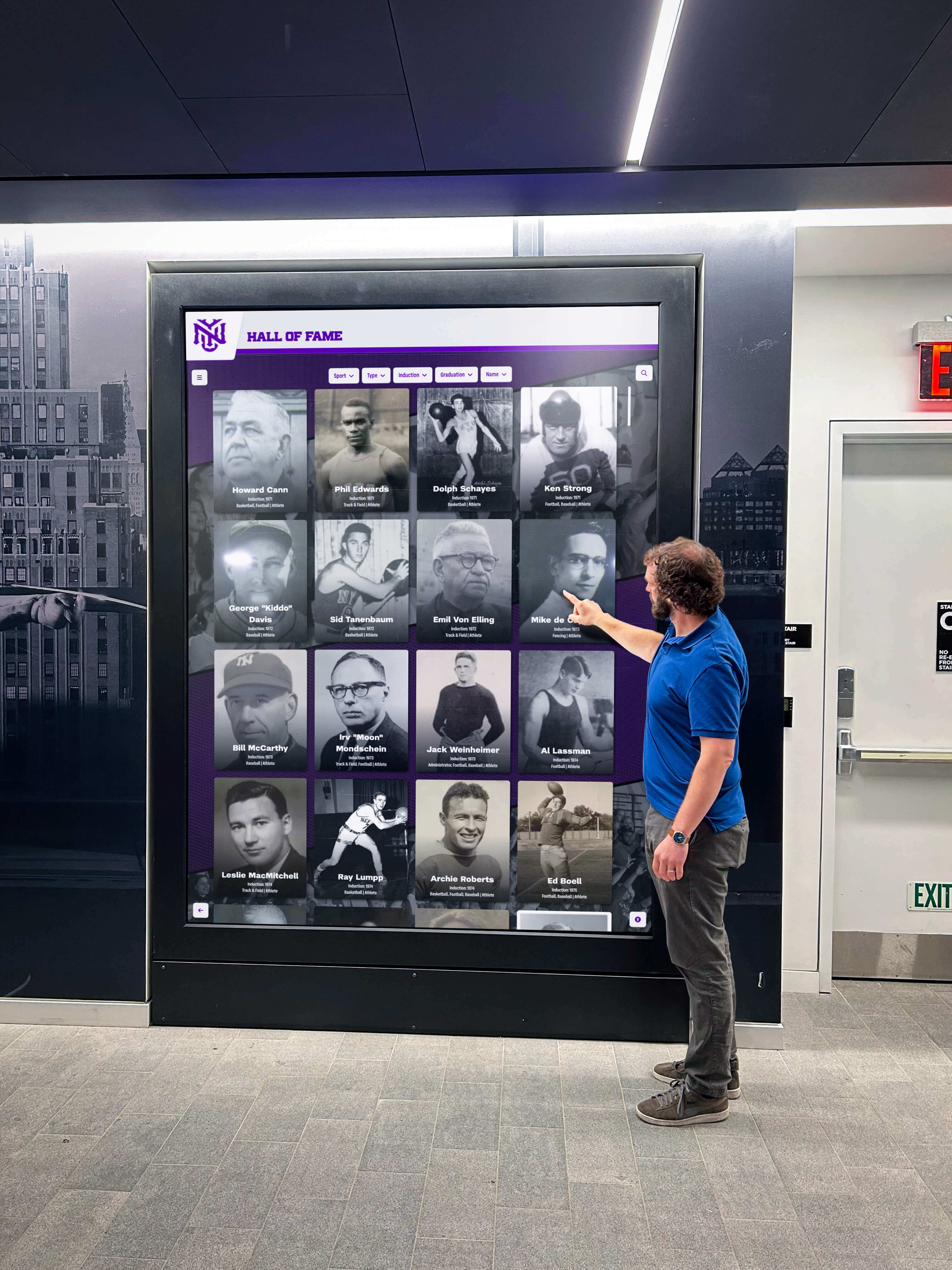
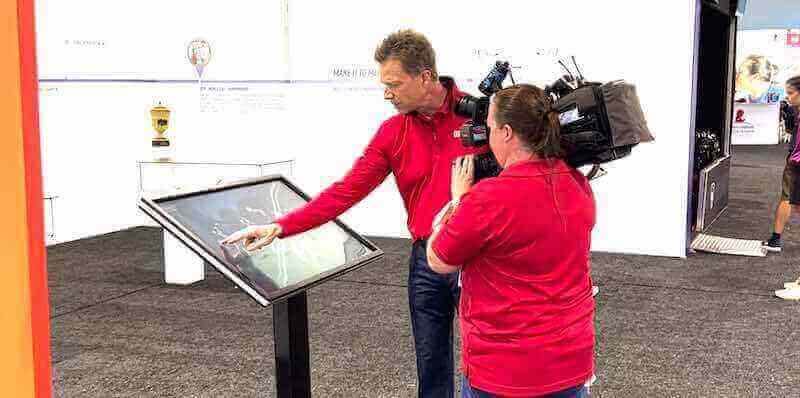
Interactive exploration encourages deeper engagement as visitors discover complete donor stories beyond surface-level acknowledgment
Content Collection and Management
Building Comprehensive Donor Profiles
Creative recognition requires quality content beyond basic names:
Systematic Information Gathering Develop proactive collection processes through post-gift questionnaires distributed with acknowledgment letters, stewardship visit interviews during major donor cultivation, online submission forms accessible through donor portals, photography sessions at events or facility tours, and research into existing institutional relationships documented in development databases or historical archives.
Essential Information Elements Request preferred name formats and spelling verification, contribution details and recognition levels, high-quality photographs (minimum 1920x1080 resolution), brief biographical information and institutional connections, giving motivations and philanthropic philosophy, and privacy preferences including anonymous options when donors prefer discretion.
Balancing Depth with Efficiency Not every donor provides extensive information. Create tiered approaches with comprehensive profiles for major donors sharing detailed stories, standard profiles for mid-level contributors providing basic information, and minimal acknowledgment for supporters declining extensive recognition while still honoring their generosity appropriately.
Ongoing Content Maintenance Recognition effectiveness depends on keeping information current through quarterly additions for recent donors (within 30-90 days of contributions), annual verification campaigns ensuring accuracy, memorial designations when donors pass away, cumulative giving updates reflecting additional contributions, and periodic comprehensive audits verifying continued accuracy.
Measuring Recognition Effectiveness
Demonstrating Return on Investment
Track specific metrics proving recognition value:
Donor Satisfaction Indicators Post-gift surveys measuring acknowledgment satisfaction, anecdotal feedback during facility visits and stewardship conversations, social media mentions and sharing of recognition content, retention rates comparing recognized versus unrecognized supporters, and gift progression patterns among acknowledged contributors.
Engagement Analytics For digital systems: daily visitor counts and session numbers, average engagement duration showing interest depth, most-viewed profiles revealing compelling content, search queries demonstrating discovery patterns, and time-of-day usage patterns informing optimal content refresh scheduling.
Fundraising Performance Metrics Year-over-year retention improvements post-implementation, average gift size progression comparing before and after recognition installation, major gift cultivation cycle duration, planned giving inquiry rates and conversion, and campaign success rates during active fundraising utilizing recognition displays.
Organizations implementing digital recognition platforms with built-in analytics capabilities gain valuable insights demonstrating recognition value while identifying improvement opportunities based on actual engagement patterns rather than assumptions.
Common Creative Design Challenges and Solutions
Organizations encounter predictable obstacles when implementing innovative recognition requiring strategic responses.
Budget Constraints
Creating Impact Within Financial Limitations
Phased Implementation Rather than comprehensive installations exceeding budgets, implement recognition in stages—begin with web-based acknowledgment requiring minimal hardware investment, add single interactive display in highest-traffic location proving concept, and expand gradually over multiple fiscal years as additional funding becomes available.
Hybrid Approaches Combine modest traditional recognition for major transformational donors with comprehensive digital systems acknowledging broader donor communities. This balanced strategy respects major donor expectations for physical permanence while utilizing technology’s unlimited capacity for inclusive community-wide recognition.
Creative Funding Sources Seek corporate sponsors donating equipment or services, board member professional service contributions for design and installation, technology grants supporting recognition initiatives, volunteer coordination for content creation reducing labor costs, and capital campaign inclusion treating recognition infrastructure as essential campaign component rather than afterthought.
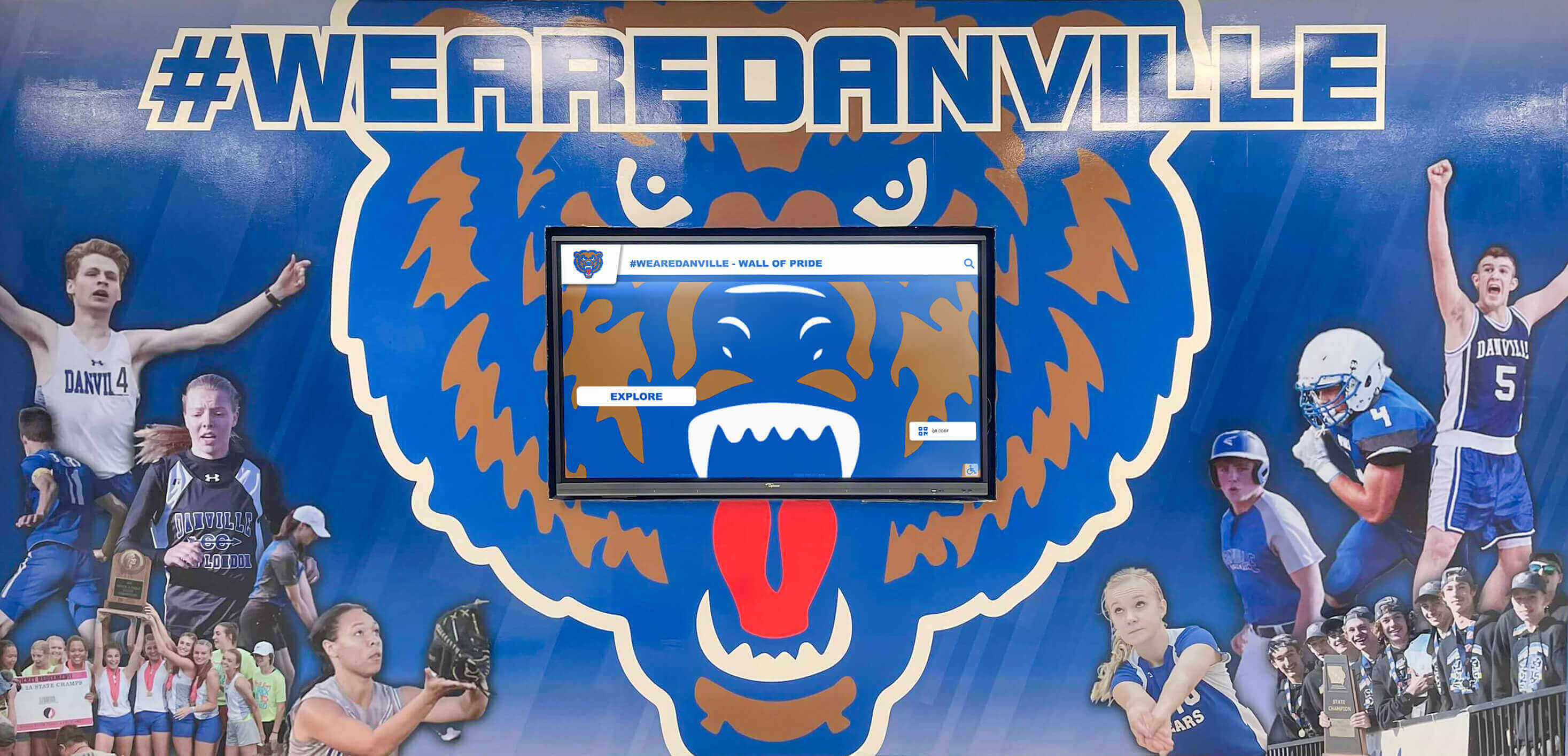
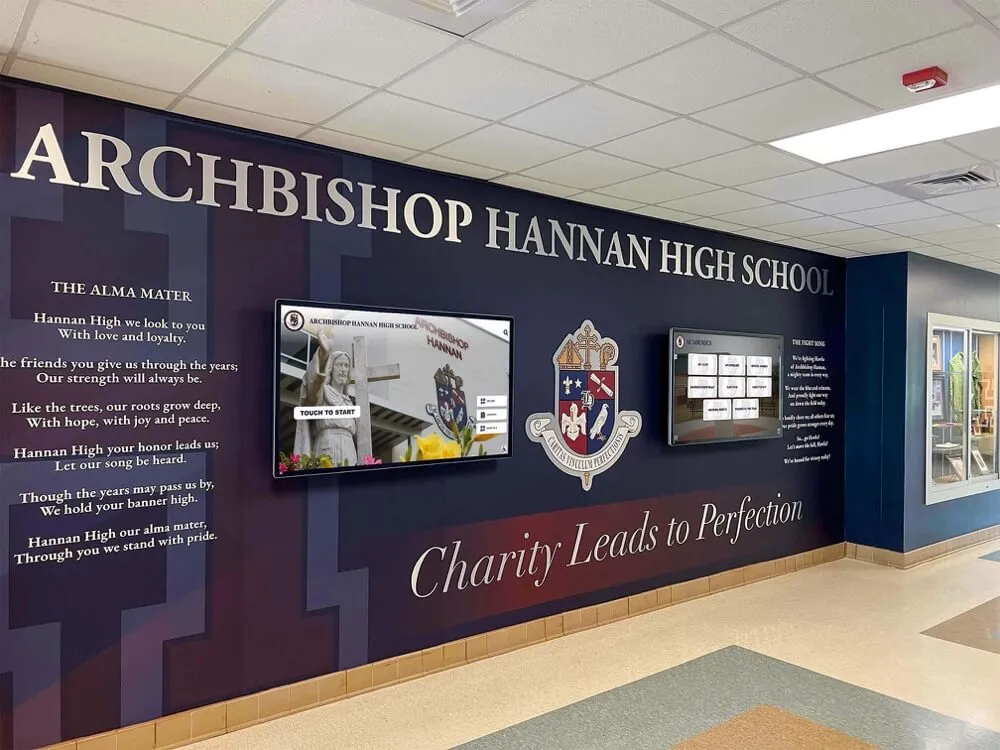
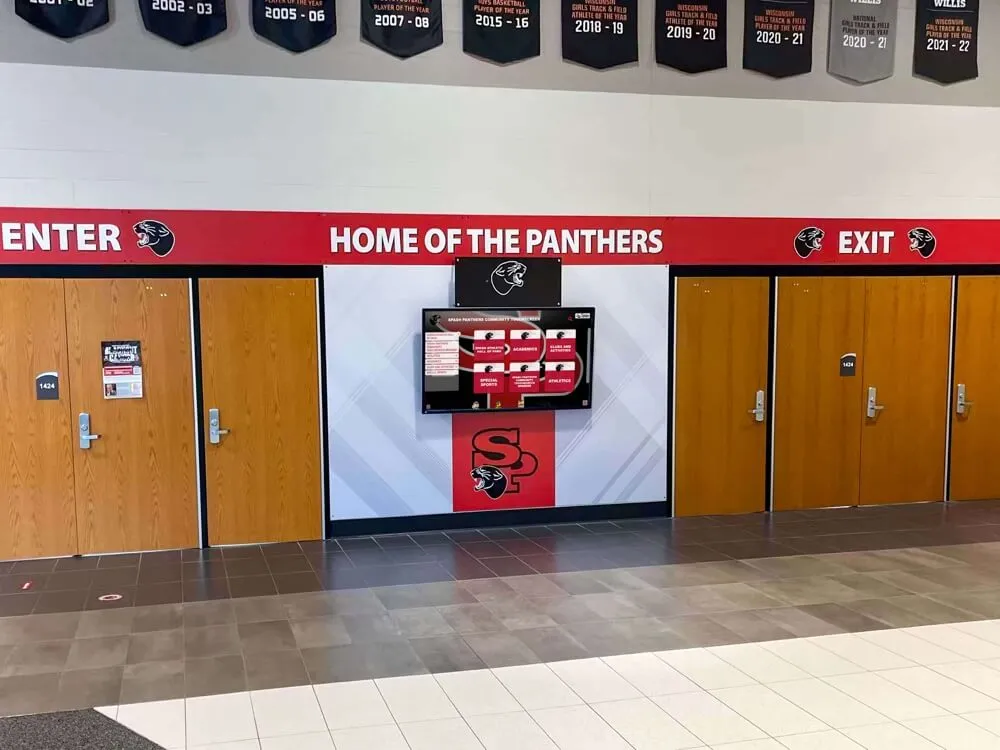
Strategic branding integration connects donor recognition with institutional identity throughout facilities creating cohesive environments
Technical Capacity Limitations
Managing Technology Without Extensive Expertise
Intuitive Platform Selection Prioritize user-friendly cloud-based systems requiring no technical expertise over complex solutions demanding ongoing IT support. Purpose-built recognition platforms designed for development staff prove more sustainable than general digital signage requiring constant technical intervention.
Vendor Support Quality When technical capacity limits exist, comprehensive vendor support becomes critical selection criteria—responsive troubleshooting assistance, clear documentation and training resources, proactive platform updates and improvements, and realistic expectations about internal versus external management responsibilities.
Multiple Staff Training Ensure several team members understand content management preventing single points of failure. Document processes thoroughly enabling knowledge transfer when staff transitions occur—common development department reality requiring systems surviving personnel changes.
Balancing Creativity with Donor Preferences
Innovation That Honors Tradition
Some donors expect traditional engraved plaques creating tension with innovative approaches:
Stakeholder Communication Frame creative recognition as expansion rather than replacement of traditional acknowledgment. Explain how innovation enables honoring more donors than space-constrained plaques allow while providing richer storytelling impossible with brief inscriptions.
Flexible Recognition Tiers Offer major transformational donors choice between traditional physical plaques and enhanced digital profiles respecting individual preferences while providing appropriate acknowledgment matching contribution significance.
Pilot Programs Implement creative recognition for specific campaigns or giving societies allowing donors experiencing innovation before comprehensive adoption. Success examples convince skeptics more effectively than theoretical proposals.
Organizations implementing innovative recognition approaches report that thoughtful communication and phased implementation overcome initial resistance as stakeholders recognize benefits through direct experience rather than abstract descriptions.
Sector-Specific Creative Recognition Ideas
Different organizational contexts require tailored recognition approaches reflecting unique missions and donor communities.
Educational Institution Recognition
Schools, Colleges, and Universities
Educational donor recognition often emphasizes alumni connections, scholarship impact, and multi-generation family traditions:
Alumni Class Giving Walls Organize donors by graduation year creating recognition that taps into powerful class identity and reunion dynamics. Show cumulative class giving totals, participation percentages, and class-specific campaigns creating friendly competition among graduating years.
Scholarship Donor-Student Connections Link scholarship funders directly to beneficiary testimonials, graduation photos, career success stories, and thank-you messages. These tangible connections demonstrate how philanthropy changes lives inspiring continued support.
Campus Development Timelines Historical recognition showing how philanthropy enabled campus evolution through facility construction timelines, program launch histories, enrollment growth patterns enabled by financial aid, and transformation photography documenting donor-funded improvements across decades.
Organizations serving educational contexts find that school-focused recognition solutions designed specifically for academic environments create more effective acknowledgment than generic systems requiring extensive customization.
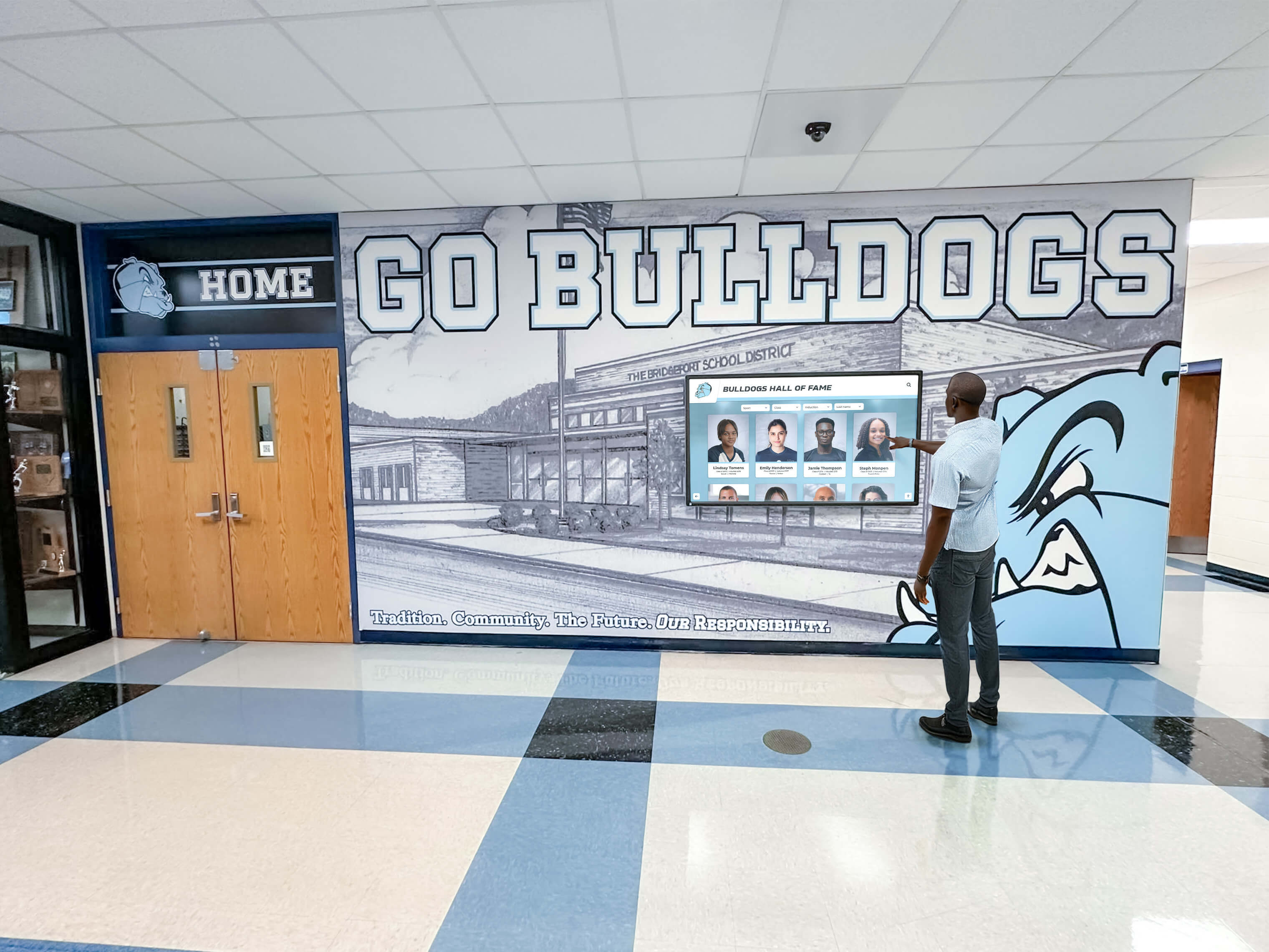
Educational institution recognition creates engaging exploration of donor communities while connecting philanthropy to student success and campus development
Healthcare Organization Recognition
Hospitals and Medical Centers
Healthcare donor recognition emphasizes patient care improvements, research advancement, and grateful patient acknowledgment:
Department-Specific Recognition Organize donors by medical departments or programs supported—cancer center contributors, cardiac care supporters, pediatric unit funders, or research initiative investors. This organization helps visitors understanding how philanthropy advances specific care areas.
Patient Outcome Storytelling Share anonymous patient success stories enabled by donor-funded equipment, facilities, or programs. These compelling narratives demonstrate tangible impact while respecting privacy requirements preventing patient identification.
Research Breakthrough Recognition Highlight discoveries, treatment advances, or clinical innovations enabled by philanthropic research funding. Connect donor support to specific outcomes helping contributors understand how their investments advance medical knowledge benefiting entire communities.
Sensitive placement remains critical—recognition should inspire rather than overwhelm patients and families during difficult circumstances requiring thoughtful location decisions respecting emotional contexts surrounding healthcare environments.
Arts and Cultural Organization Recognition
Museums, Theaters, and Arts Centers
Arts organization recognition opportunities for creative expression reflecting artistic missions:
Exhibition and Performance Sponsorship Create dynamic recognition celebrating donors supporting specific exhibitions, performances, or artistic programs. This program-specific acknowledgment allows arts supporters seeing direct connections between contributions and creative experiences they enjoy.
Collection Acquisition Recognition Highlight donor-funded artwork, artifacts, or collection pieces. Position acknowledgment near actual items enabling visitors connecting philanthropy to tangible cultural assets they’re experiencing during visits.
Artistic Recognition Design Leverage organizational artistic expertise creating recognition that reflects aesthetic excellence and design sophistication matching institutional brand rather than generic acknowledgment systems appearing disconnected from creative missions.
Arts organizations implementing culturally-appropriate recognition demonstrate institutional identity while honoring contributors in ways resonating with arts-focused donor communities valuing creativity and aesthetic quality.
Future Trends in Creative Donor Recognition
Recognition technology and approaches continue evolving with emerging capabilities and changing donor expectations.
Emerging Technology Integration
Next-Generation Recognition Capabilities
Artificial Intelligence Applications AI-powered systems enable automated content creation assistance for donor profiles, natural language search understanding conversational queries, personalized content recommendations based on visitor interaction patterns, and predictive analytics identifying engagement opportunities development staff might otherwise miss.
Augmented Reality Experiences Mobile applications overlay digital recognition content onto physical spaces through smartphone cameras. Visitors pointing devices at buildings, rooms, or campuses see donor acknowledgment, contribution impact visualization, historical context, and naming opportunity information augmenting physical environments with rich digital layers.
Voice-Activated Interaction Voice interfaces enable touchless recognition exploration through natural conversation—visitors asking questions like “Who funded the science center?” or “Show me donors from California” receiving immediate responses without physical touchscreen interaction.
Social Media Integration Direct sharing capabilities enabling donors posting their recognition profiles to personal social networks, automated social celebration when new donors join communities, and peer influence amplification as donor networks see friends’ philanthropic participation.
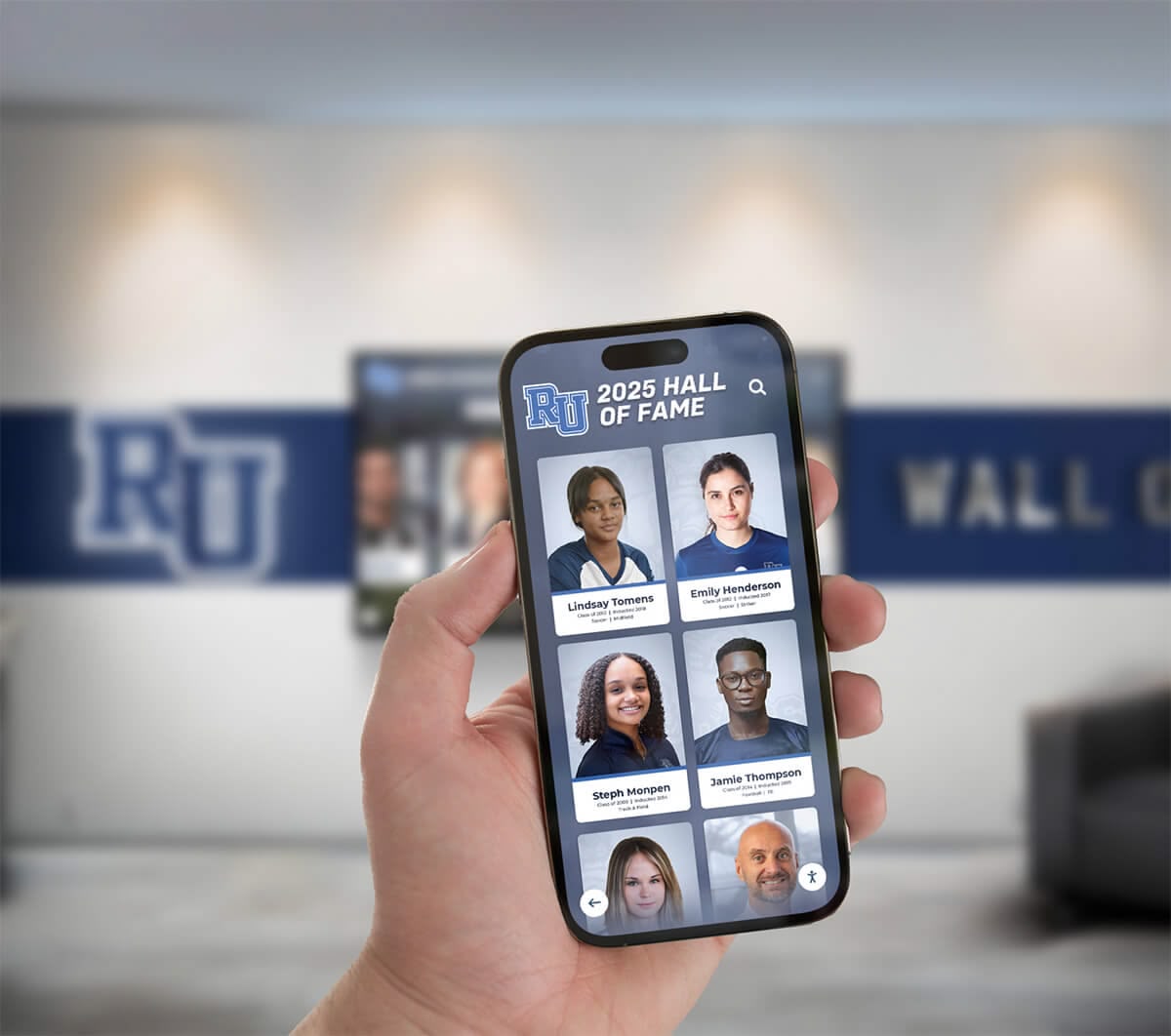
Mobile accessibility extends recognition worldwide enabling donors viewing acknowledgment from anywhere and sharing with personal networks amplifying institutional reach
Evolving Donor Preferences
Adapting to Generational Shifts
Impact Over Prominence Younger donors increasingly prefer recognition emphasizing tangible outcomes over personal prominence. Recognition formats celebrating collective community impact rather than individual contribution hierarchies align with generational values prioritizing cooperation over competition.
Privacy and Discretion Growing numbers of major donors prefer anonymous or limited public recognition despite significant contributions. Flexible acknowledgment options respecting these preferences become increasingly important retention factors—private recognition through secure donor portals, partial acknowledgment using initials only, or complete opt-out options.
Transparency Expectations Modern donors expect clear information about how contributions are used and what impact they create. Recognition incorporating outcome metrics, beneficiary testimonials, and transparent reporting builds confidence while demonstrating accountability that strengthens donor relationships.
Organizations implementing modern recognition approaches that adapt to evolving preferences while maintaining traditional options serve diverse donor constituencies strengthening comprehensive development programs across generations and giving motivations.
Conclusion: Building Donor Recognition That Truly Inspires
Creative donor wall designs represent far more than attractive installations acknowledging past contributions—they function as strategic engagement tools that celebrate generosity, inspire continued support, and motivate prospective donors toward philanthropic partnership. Organizations moving beyond conventional engraved plaques toward innovative recognition approaches create meaningful experiences that honor contributors authentically while building motivated donor communities sustaining mission-critical work across generations.
The creative concepts explored throughout this comprehensive guide—from interactive digital platforms enabling unlimited recognition capacity and rich multimedia storytelling, through impact-centered designs connecting contributions to tangible outcomes, to artistic approaches creating memorable visual experiences—help organizations develop recognition strategies matching their unique contexts, donor communities, and resource realities. Effective recognition isn’t about implementing every innovation simultaneously but rather selecting creative approaches aligned with organizational culture, stakeholder preferences, and strategic development goals.
Transform Your Donor Recognition Experience
Discover how creative recognition solutions can help your organization honor every contributor meaningfully while inspiring continued giving through engaging experiences that demonstrate genuine appreciation and strategic stewardship excellence.
Explore Creative Recognition SolutionsStrategic implementation requires balancing multiple considerations—honoring tradition while embracing innovation, respecting diverse donor preferences, planning sustainable content management processes, establishing realistic budgets appropriate for organizational scale, and measuring effectiveness proving recognition value to institutional stakeholders. Whether upgrading outdated plaque systems that no longer serve growing donor communities, implementing first recognition programs as development capacity matures, or enhancing existing acknowledgment toward greater creativity and engagement, the principles explored throughout this guide help organizations create meaningful tributes strengthening relationships while building the engaged philanthropic communities that advance mission success.
Start by clarifying recognition goals and priorities understanding what you hope to achieve beyond basic acknowledgment—improved retention, increased giving, enhanced reputation, or all three. Assess realistic budgets including initial investments and ongoing operational costs. Evaluate creative concepts determining which approaches align with organizational culture and donor preferences. Develop systematic content collection ensuring quality profiles honoring contributors appropriately. And measure effectiveness tracking metrics demonstrating recognition value while identifying improvement opportunities based on actual engagement patterns.
Every donor—from transformative major gift contributors establishing endowments and naming opportunities to first-time community supporters expressing confidence in organizational mission—deserves creative recognition acknowledging their commitment and celebrating their role in advancing important work. With thoughtful planning, appropriate technology choices, quality content, strategic design, and consistent implementation, development teams build recognition programs that honor every supporter meaningfully while inspiring the continued generous giving that sustains organizational excellence for generations to come. The investment in creative donor recognition excellence pays dividends far exceeding costs through strengthened relationships, improved retention, enhanced giving, and motivated philanthropic communities choosing your organization as worthy recipients of their charitable investments.
Ready to explore creative recognition solutions? Learn more about interactive donor displays, discover innovative acknowledgment strategies that strengthen fundraising campaigns, or explore comprehensive recognition platforms designed specifically for mission-driven organizations creating lasting philanthropic impact through creative donor engagement experiences that celebrate past generosity while inspiring future support.