



Campus tours represent the single most influential touchpoint in the admissions journey—yet most institutions deliver them using approaches that haven’t evolved in decades. Prospective students and families walk through hallways, hear scripted facts about founding dates and student-faculty ratios, and leave with fading impressions that barely differentiate one campus from another. In an era when digital natives expect immersive, personalized experiences in every aspect of their lives, traditional campus tours fail to create the emotional connections that drive enrollment decisions.
Interactive campus storytelling transforms passive campus visits into engaging experiences that prospective students remember long after they leave. By integrating digital displays, touchscreen technology, interactive timelines, and authentic student narratives throughout the campus tour experience, admissions teams create powerful emotional connections that traditional tours cannot achieve. These technology-enhanced storytelling approaches don’t just inform visitors—they inspire them, creating the lasting impressions that convert campus visits into enrolled students.
This comprehensive guide explores how institutions leverage interactive storytelling to revolutionize campus tours and boost admissions outcomes. Whether you’re an admissions director seeking to improve yield rates, a campus tour coordinator looking to modernize visitor experiences, or a marketing professional developing recruitment strategies, you’ll discover proven approaches for transforming how your institution tells its story to prospective students.
Campus tours profoundly impact enrollment decisions, with research consistently showing that students who visit campus are significantly more likely to apply and enroll compared to those who don’t. Yet traditional tours often fail to capitalize on this critical opportunity, delivering generic experiences that don’t distinguish institutions or create memorable connections with prospective students. Interactive storytelling addresses these limitations by weaving compelling narratives throughout the physical campus experience, using technology to bring institutional identity, student success stories, and academic excellence to life in ways that resonate with digital-native prospective students.

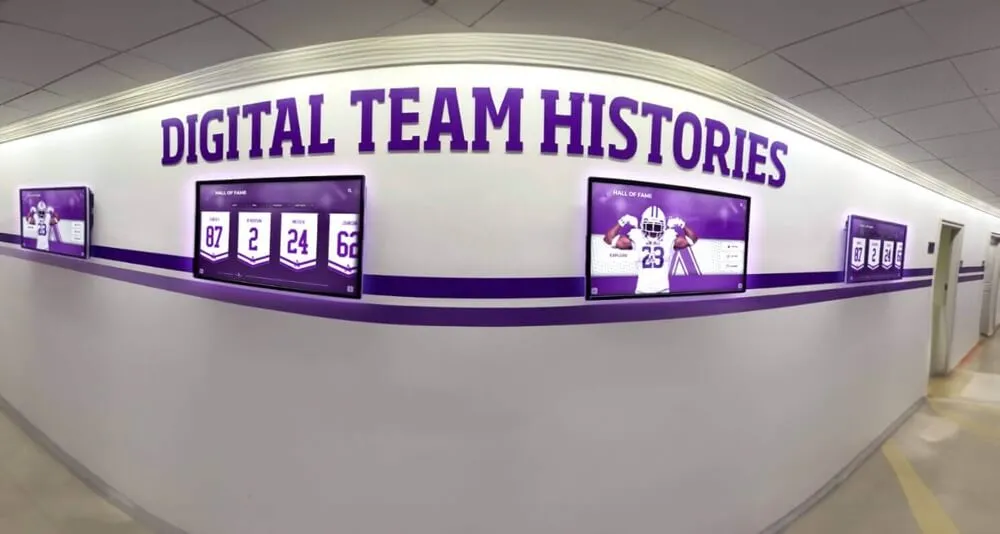
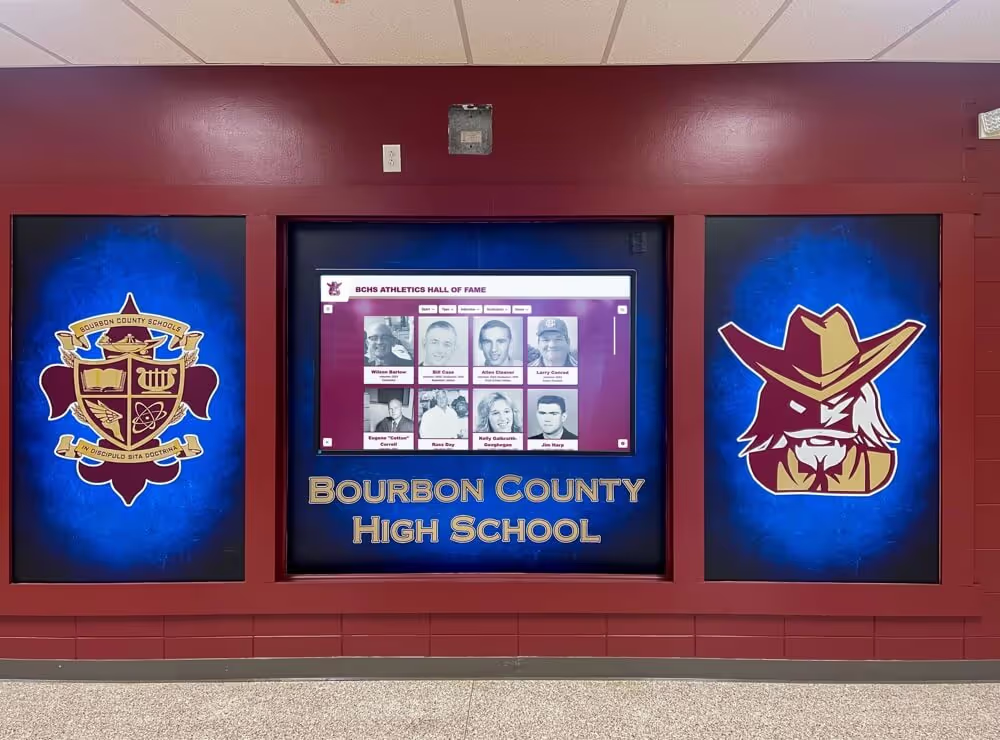
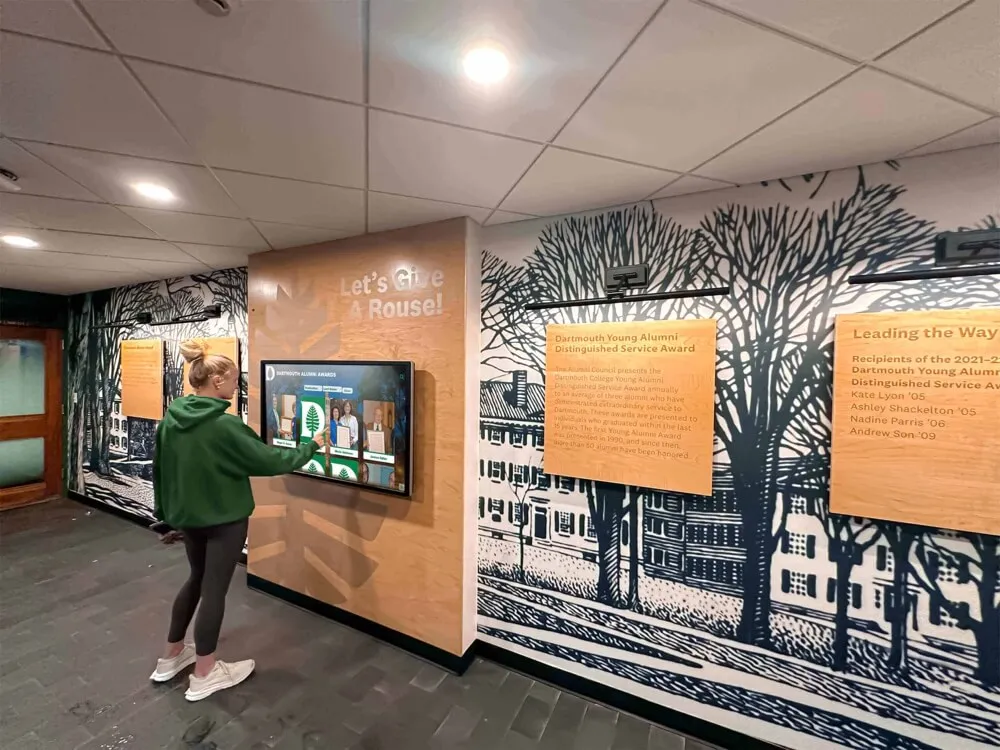
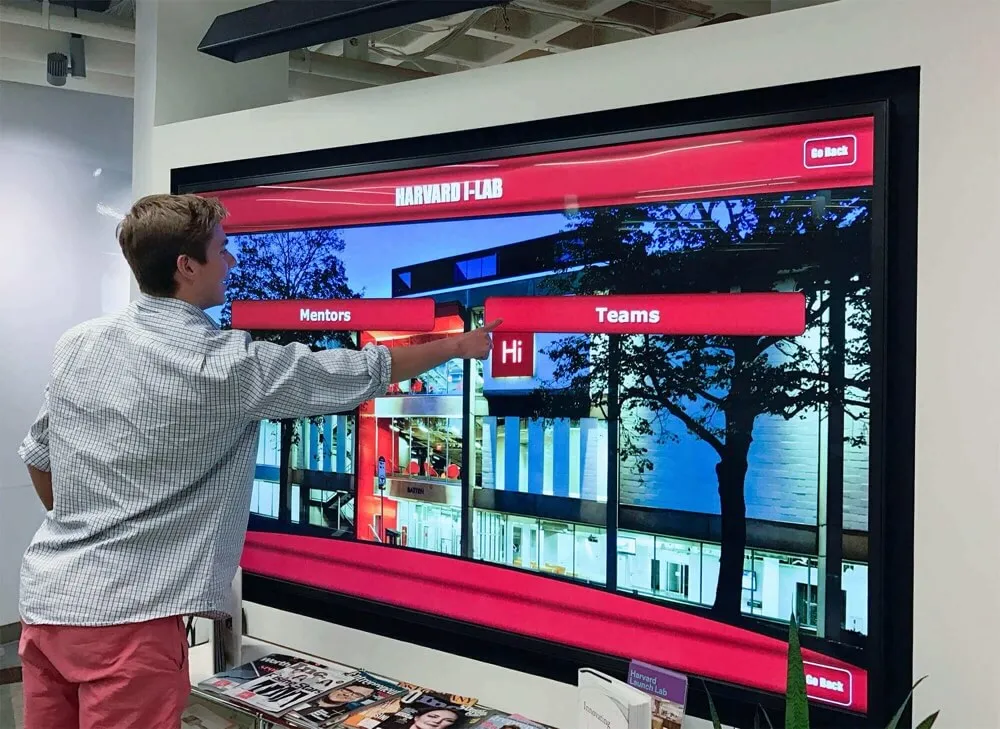
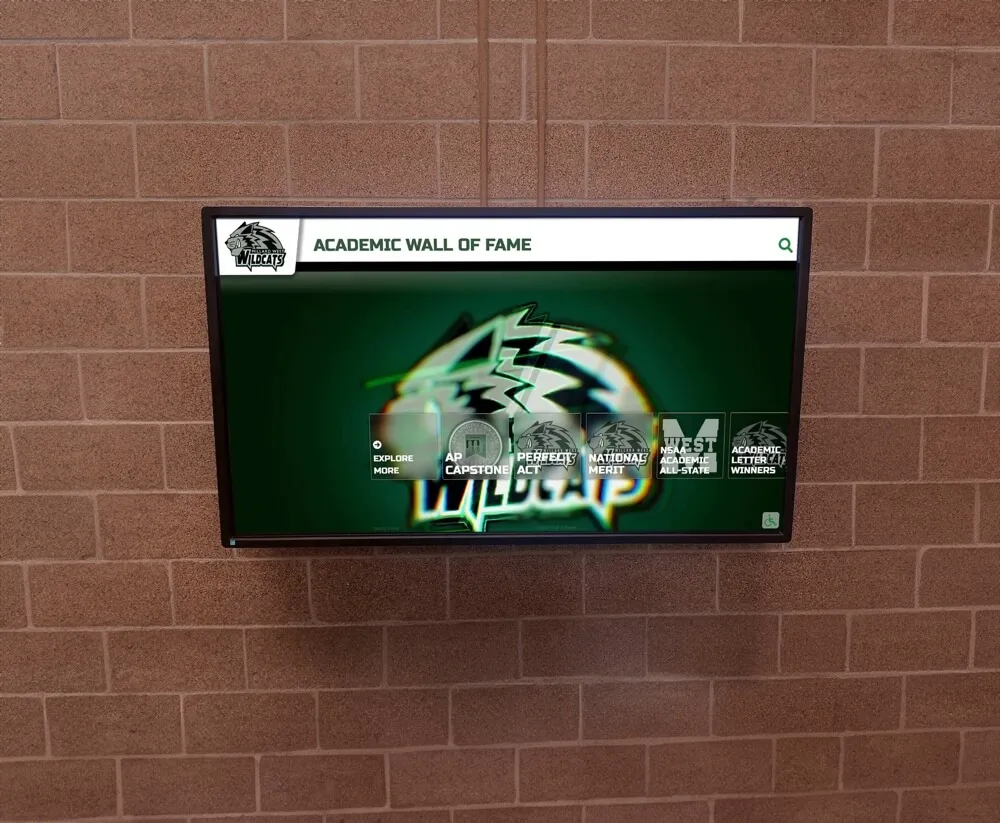
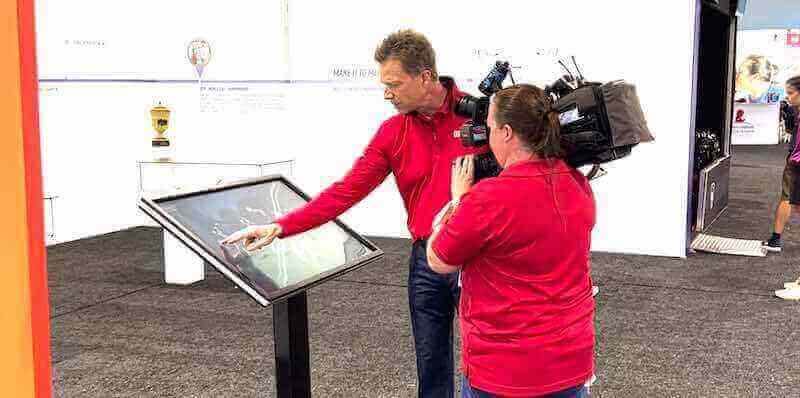
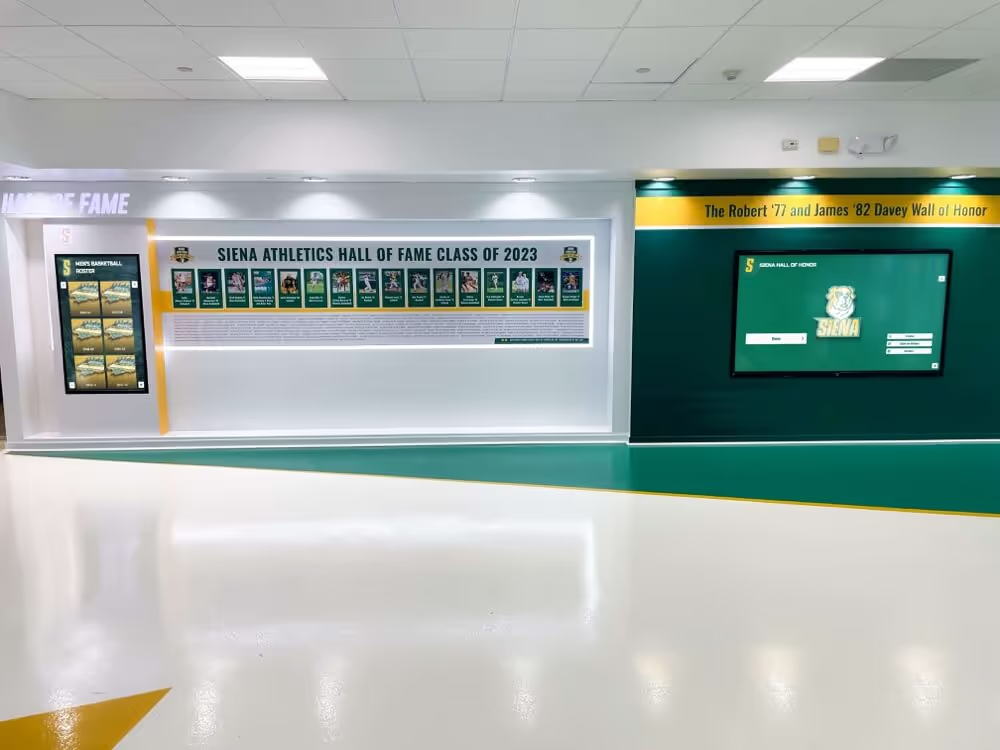
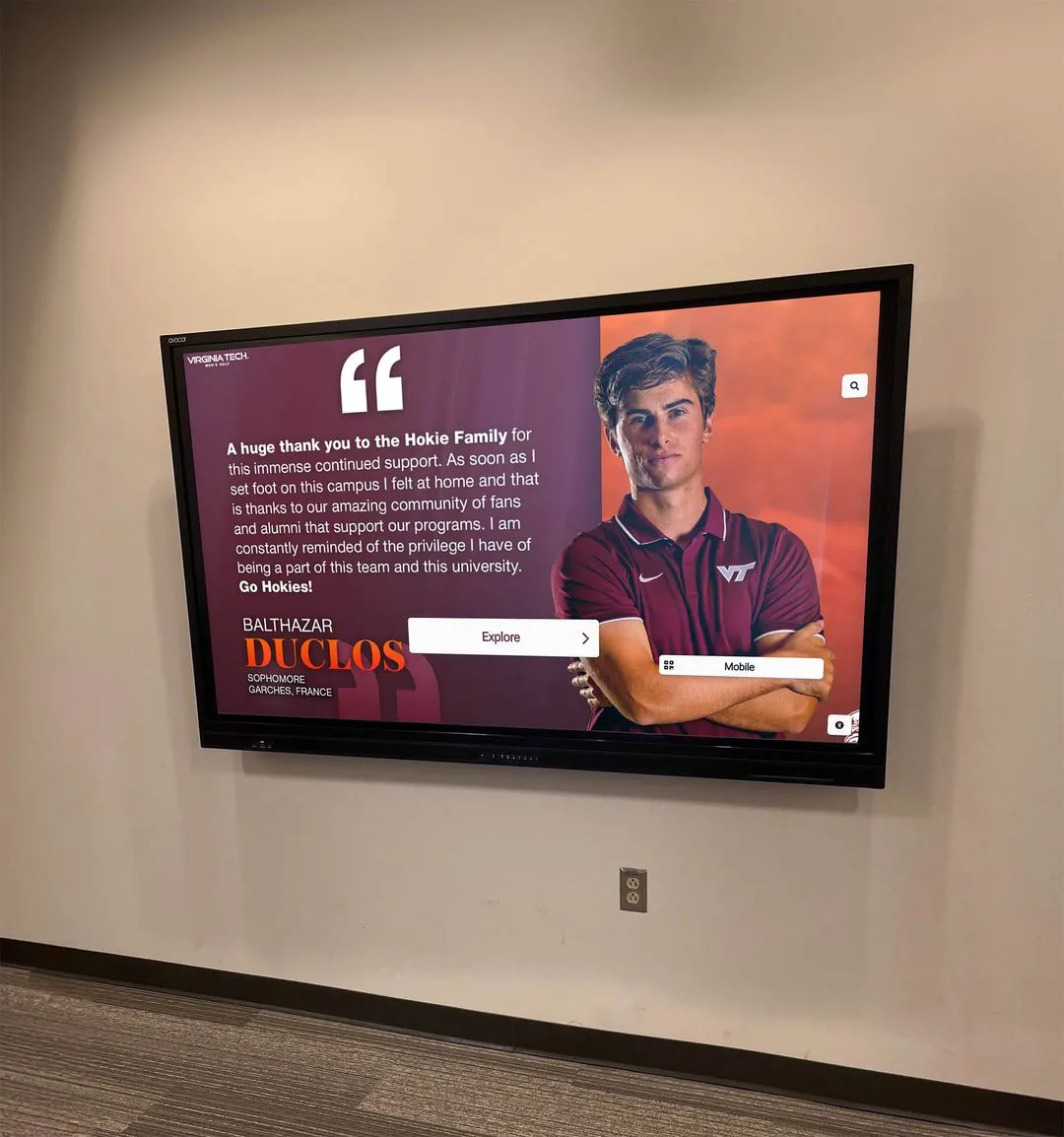
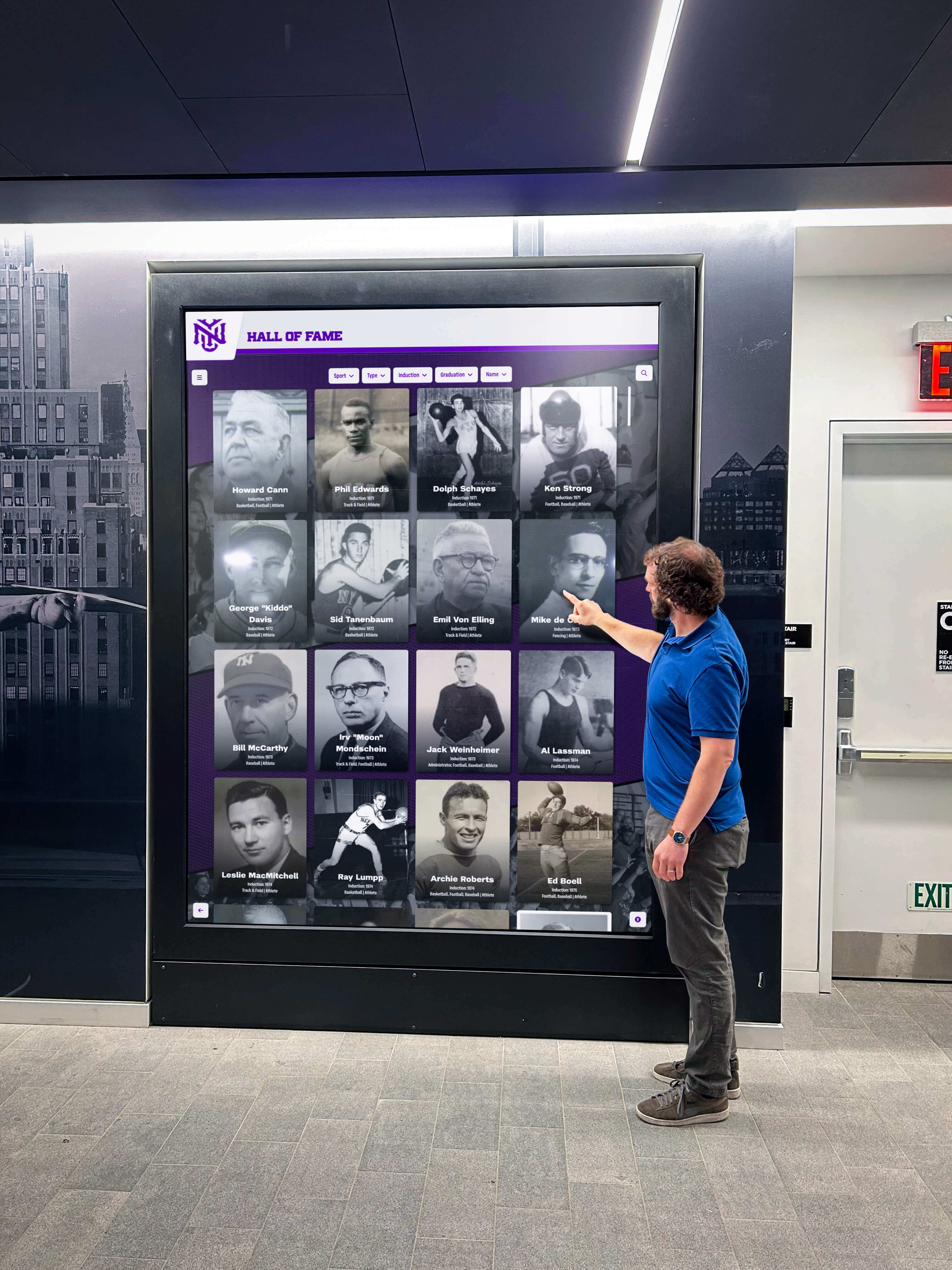
Interactive storytelling displays transform passive campus tours into engaging experiences where prospective students actively explore institutional narratives
The Evolution of Campus Tours and Admissions Storytelling
Understanding how campus tours have evolved reveals why interactive storytelling represents the next necessary advancement in admissions strategy.
Traditional Campus Tour Limitations
Conventional campus tours face inherent challenges that interactive storytelling effectively addresses:
Script-Dependent, One-Dimensional Narratives Traditional guided tours rely entirely on tour guide performance:
- Student tour guides deliver memorized scripts with variable quality and enthusiasm
- Information remains surface-level, focused on facts rather than emotional connection
- Large tour groups prevent personalized exploration of individual interests
- Prospective students with specific questions often don’t get answers
- Tours follow rigid routes that may not showcase areas relevant to visitor interests
- Bad weather, guide illness, or scheduling conflicts can cancel or compromise tours
According to higher education research, prospective students report that traditional campus tours often fail to answer their most important questions about campus life, academic experiences, and student outcomes—the very information most critical to enrollment decisions.
Inability to Showcase Depth and Diversity Physical tours cannot comprehensively present institutional richness:
- Limited time constraints force superficial coverage of complex academic programs
- Can’t simultaneously show residential life, athletics, arts, research, and community engagement
- Individual student success stories remain abstract rather than tangible
- Historical institutional evolution and traditions lack visual context
- Alumni achievements and career outcomes aren’t visible during campus walks
- Diversity of student experiences and perspectives remains largely invisible
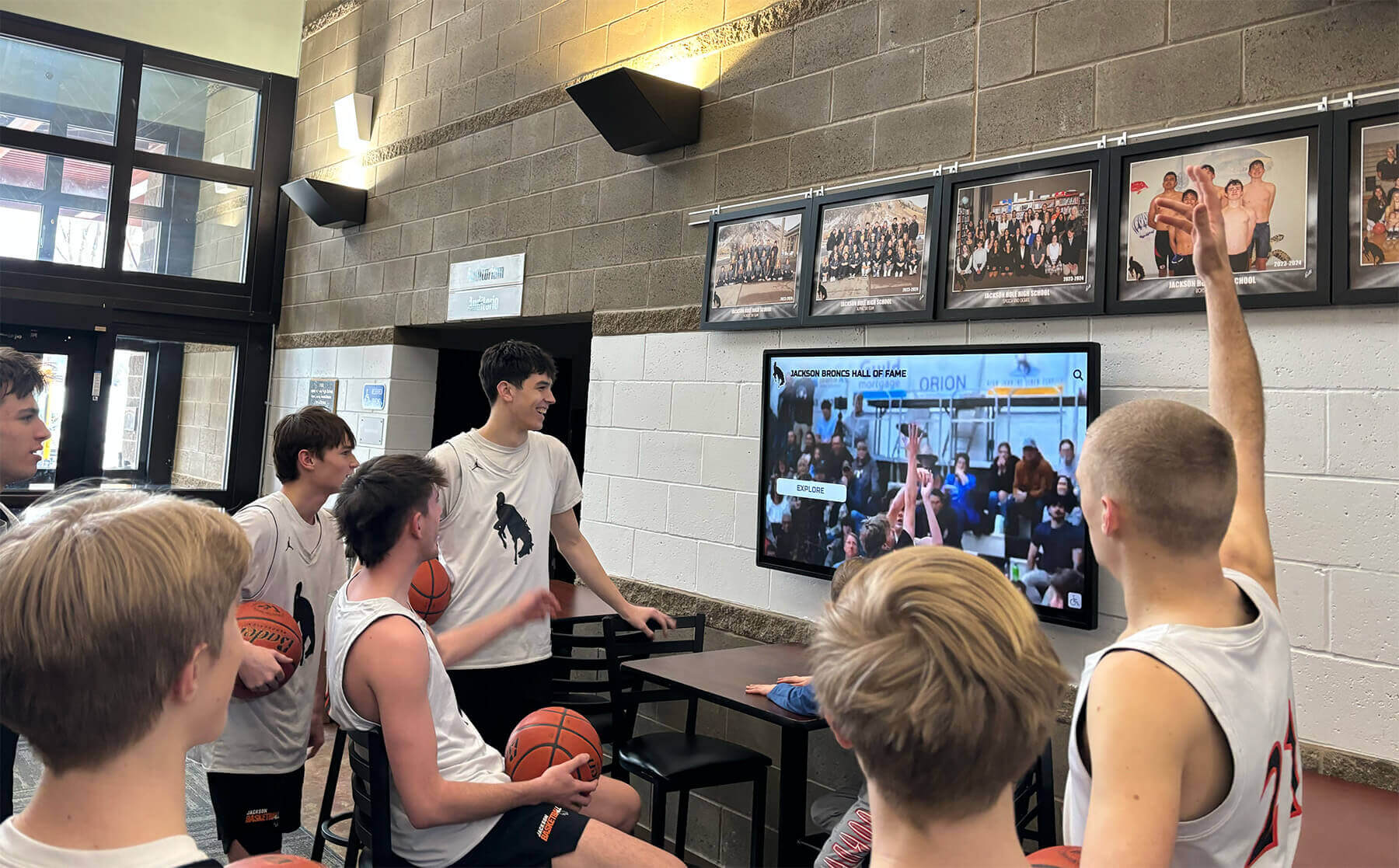
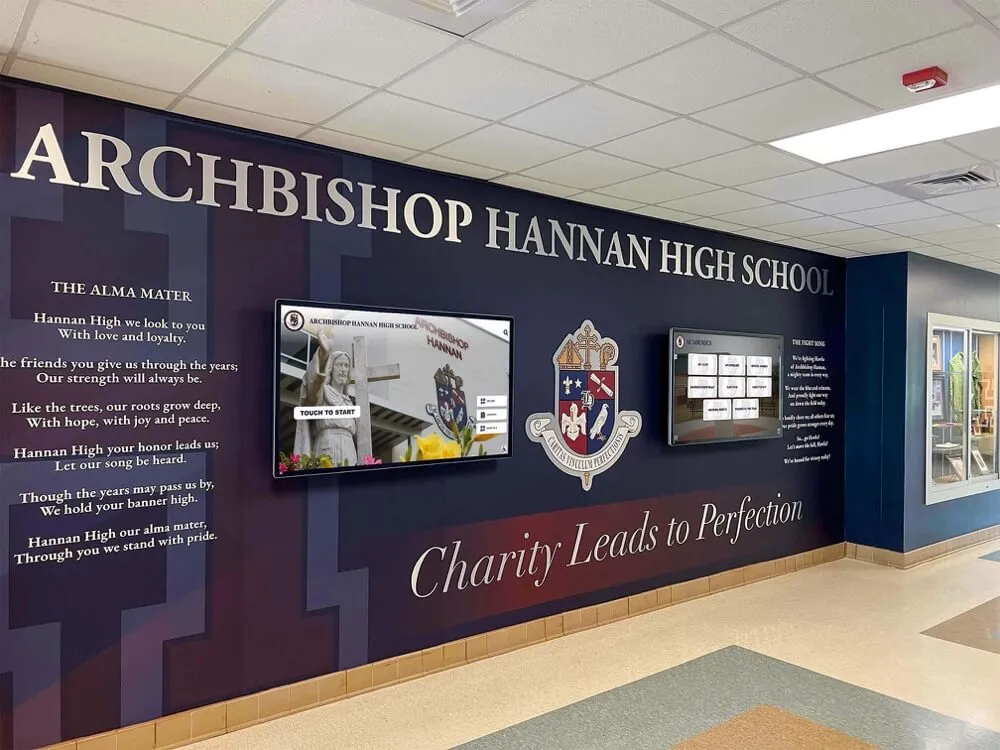
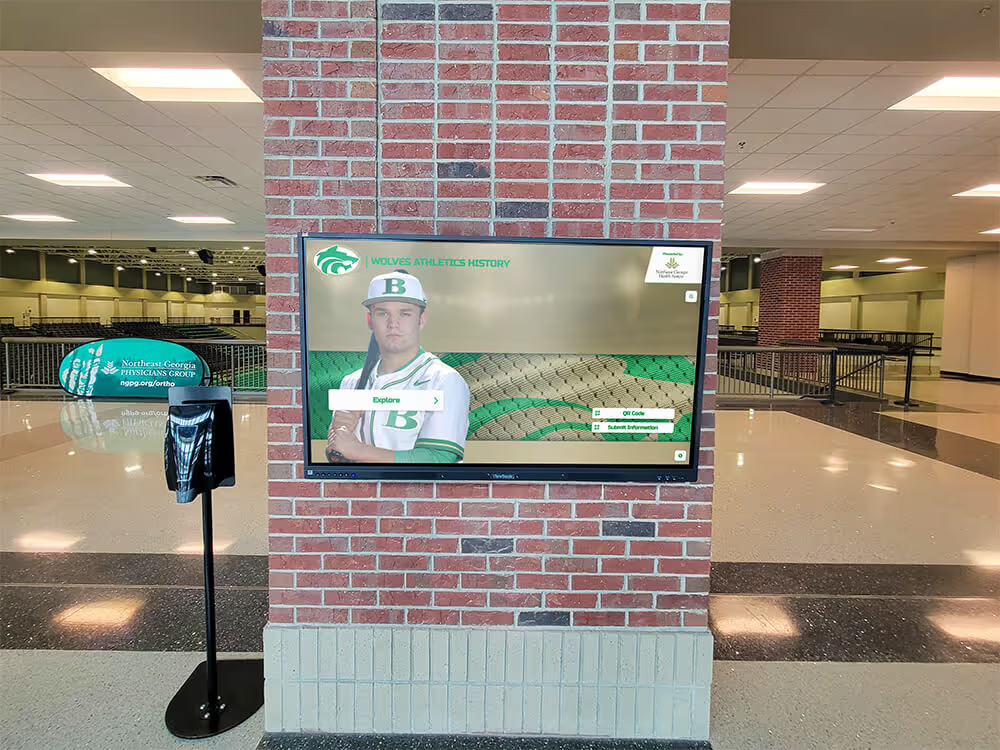
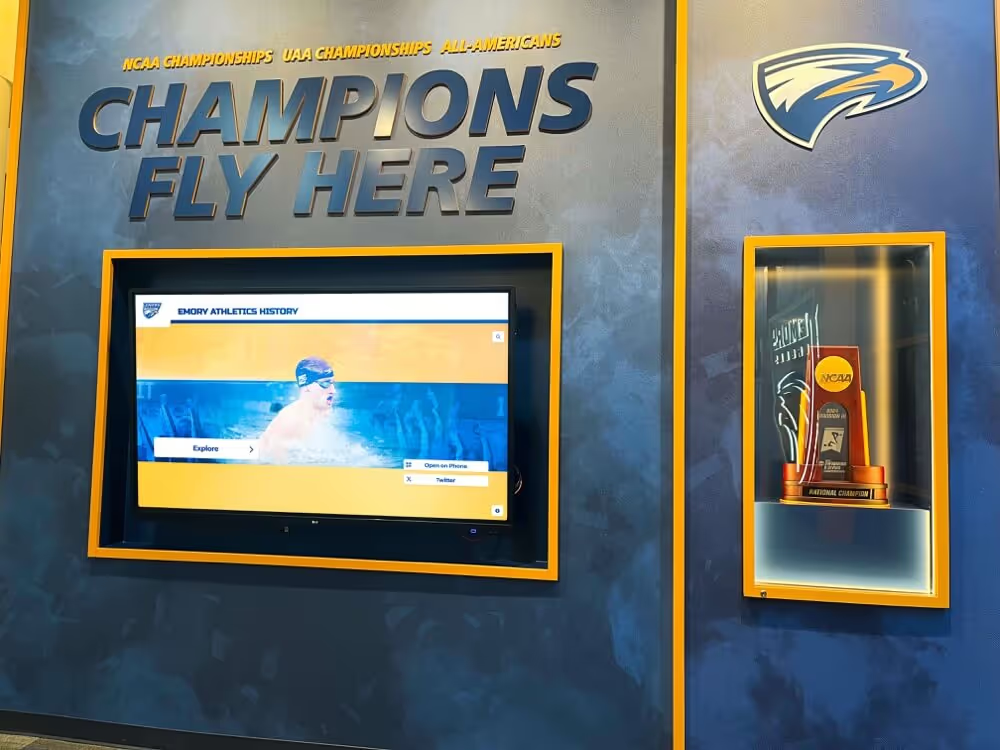
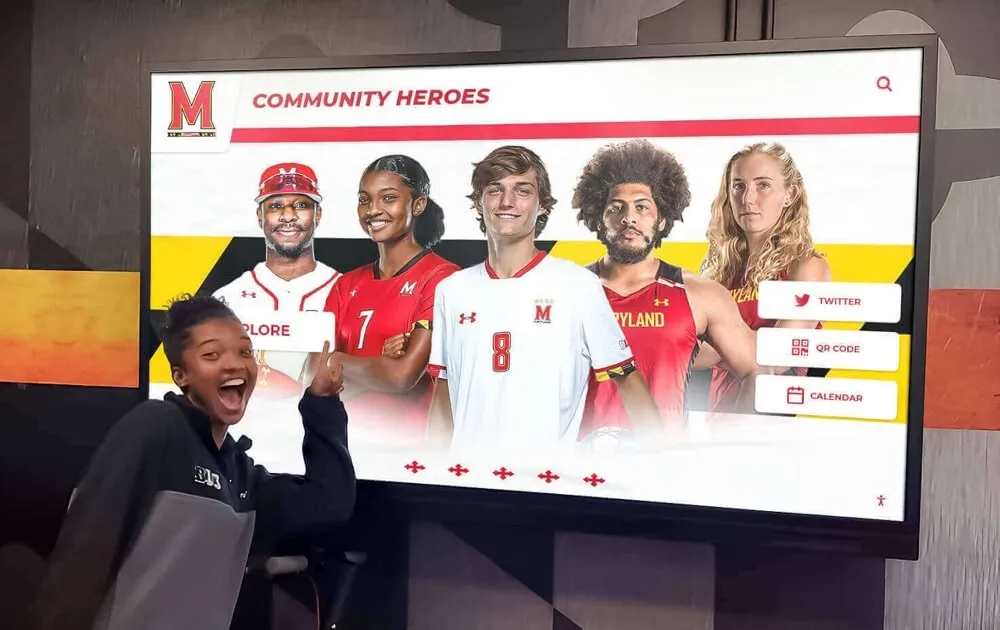
Digital displays enable prospective students to explore diverse student experiences and achievements beyond what traditional tours can show
Limited Engagement for Different Learning Styles Traditional tours primarily serve auditory learners:
- Visual learners struggle with verbal-only information delivery
- Kinesthetic learners have no hands-on interaction opportunities
- Introverted prospective students feel uncomfortable asking questions in groups
- International students may struggle with rapid spoken English
- Students with hearing difficulties miss important information
- Parents and students retain only 10-20% of verbally delivered facts
These limitations create significant missed opportunities during what should be the most impactful admissions touchpoint.
How Interactive Storytelling Transforms Campus Tours
Modern interactive storytelling addresses traditional limitations while creating new engagement opportunities:
Multi-Sensory, Self-Directed Exploration Digital storytelling enables personalized discovery:
- Prospective students explore topics of personal interest at their own pace
- Visual, auditory, and interactive elements accommodate all learning styles
- Touchscreen displays invite hands-on engagement rather than passive listening
- Multiple family members can simultaneously explore different content
- Interactive campus directories guide self-directed exploration
- Content available 24/7 for prospective students visiting outside tour hours
Research on campus tour effectiveness demonstrates that prospective students who actively interact with campus storytelling content retain 60-70% more information compared to traditional guided tours, with significantly higher self-reported satisfaction and enrollment intent.
Rich, Layered Institutional Narratives Digital platforms enable comprehensive storytelling impossible in traditional formats:
- Student profile galleries showcasing diverse experiences and perspectives
- Interactive timelines revealing institutional evolution and traditions
- Video testimonials bringing authentic student voices to campus tours
- Alumni success stories demonstrating long-term outcomes
- Program-specific content diving deep into academic offerings
- Data visualizations showing research impact, career outcomes, and student demographics
This depth transforms superficial campus visits into meaningful exploration of institutional identity and student experience.
The Psychology of Story-Driven Admissions
Interactive storytelling leverages fundamental psychological principles that drive decision-making:
Emotional Connection Over Rational Comparison Enrollment decisions are fundamentally emotional:
- Stories create emotional resonance that facts alone cannot achieve
- Prospective students imagine themselves within narratives they encounter
- Personal identification with student stories drives enrollment intent
- Emotional memories from campus visits persist longer than factual information
- Narrative transportation reduces analytical distance and increases connection
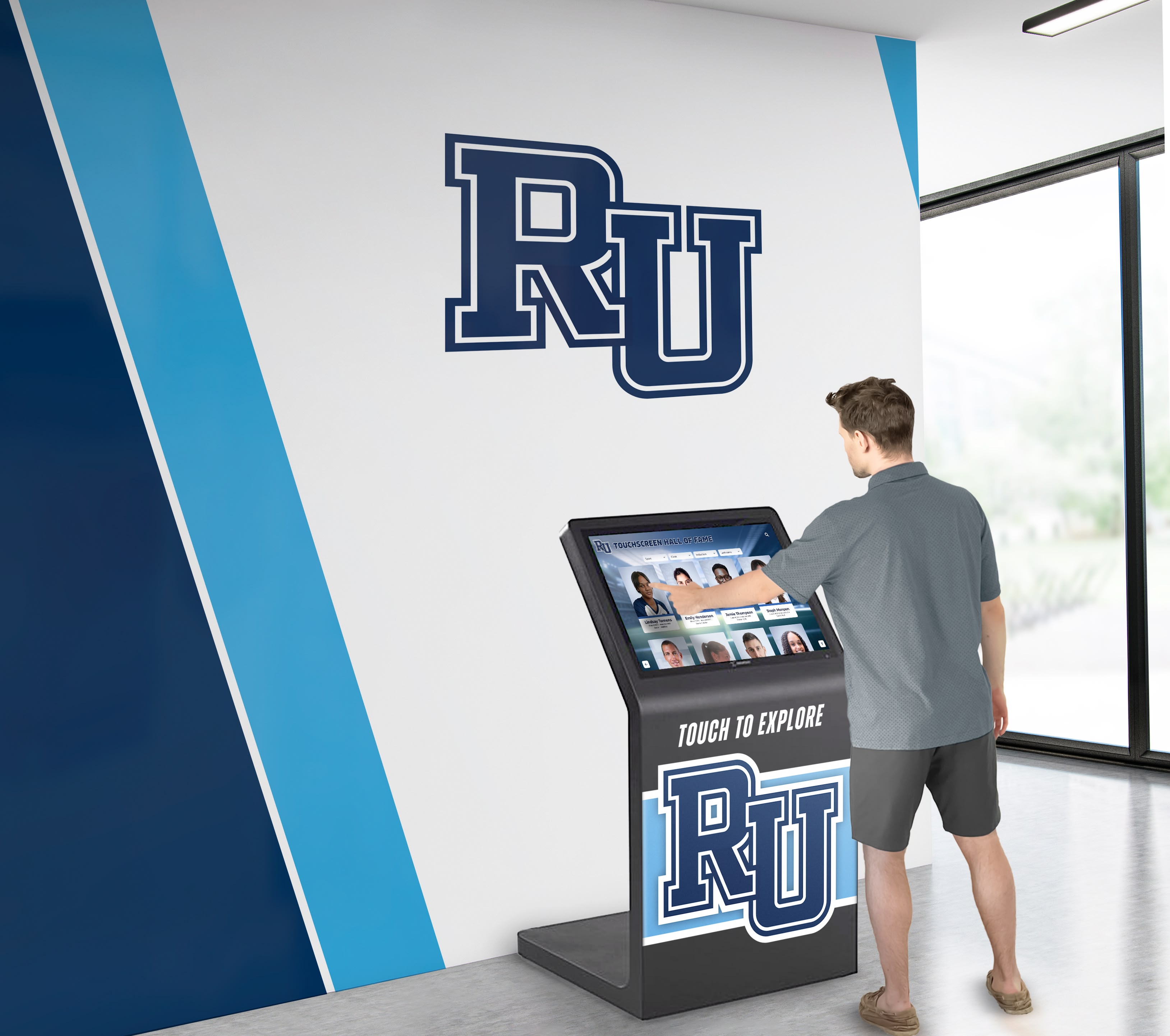
Interactive storytelling creates emotional connections that influence enrollment decisions more powerfully than facts alone
Social Proof and Belonging Seeing student success stories builds confidence:
- Prospective students see people “like them” thriving at the institution
- Alumni achievements provide evidence of successful outcomes
- Diversity of represented students demonstrates inclusive community
- Current student testimonials offer authentic peer perspectives
- Award recognition and achievements signal institutional quality
- Community engagement stories demonstrate values alignment
According to psychological research on college choice, social proof—seeing evidence that similar students succeed—ranks among the top three factors influencing enrollment decisions, often outweighing traditional metrics like rankings or cost.
Strategic Storytelling Elements for Campus Tours
Effective interactive storytelling integrates specific narrative elements that resonate with prospective students and drive admissions outcomes.
Student Success Stories and Testimonials
Authentic student narratives create the most powerful admissions impact:
Current Student Profile Galleries Interactive displays showcase diverse student experiences:
- Individual student profiles with photographs, major, hometown, and activities
- Personal narratives describing why they chose the institution
- Favorite campus experiences and transformative moments
- Academic achievements and research opportunities
- Career aspirations and post-graduation plans
- Advice for prospective students considering enrollment
Schools implementing comprehensive student profile galleries report that prospective students spend an average of 8-12 minutes voluntarily exploring profiles during campus visits—engagement time impossible to achieve with traditional tours.
Video Testimonials Integrated Throughout Campus Strategic video placement brings student voices to high-traffic locations:
- Welcome center displays featuring diverse student perspectives
- Academic building lobbies showing program-specific student experiences
- Residence halls highlighting residential life and community
- Athletic facilities featuring student-athlete balance stories
- Student union spaces presenting involvement and leadership narratives
- Library and research facilities showcasing academic achievement
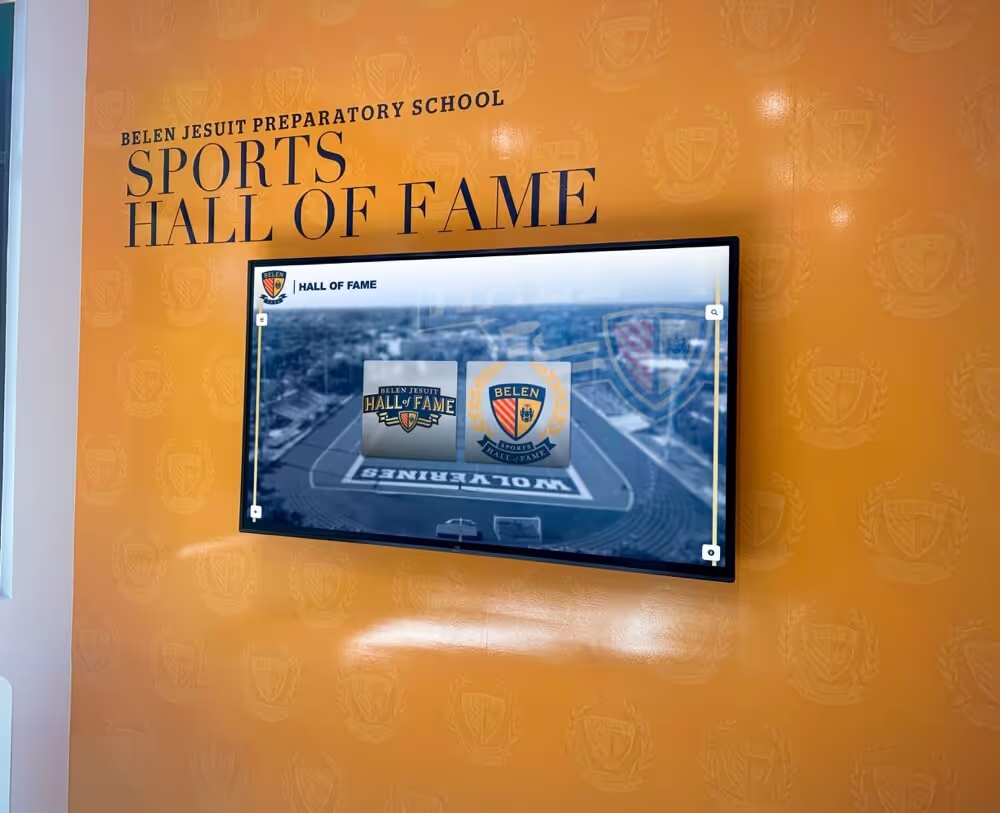
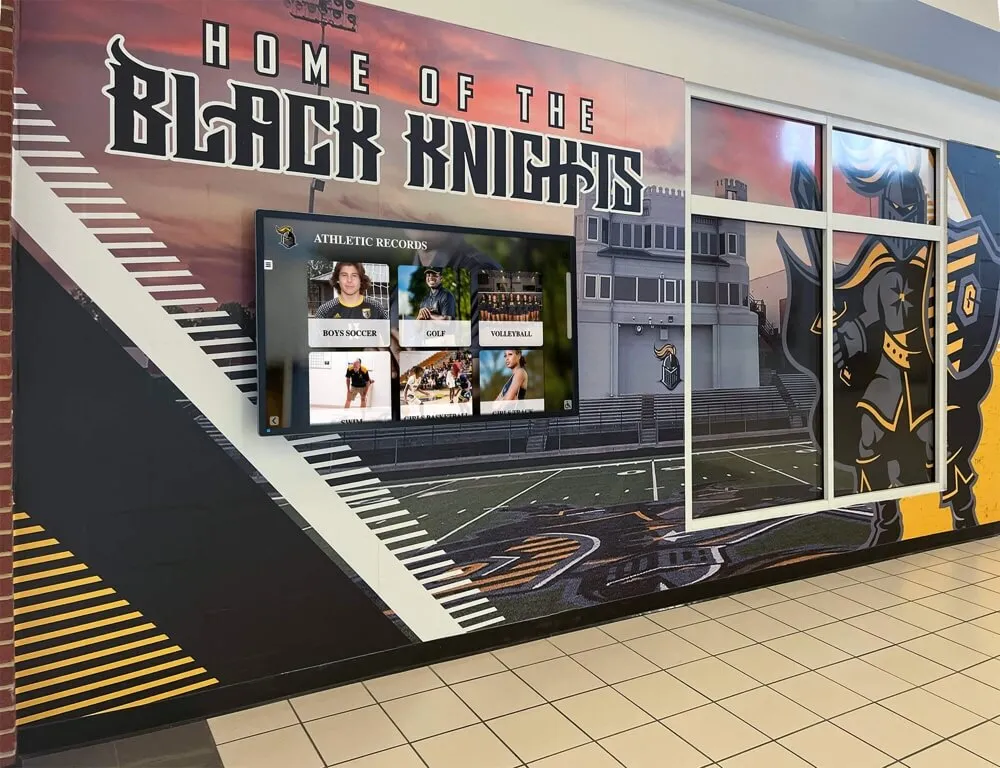
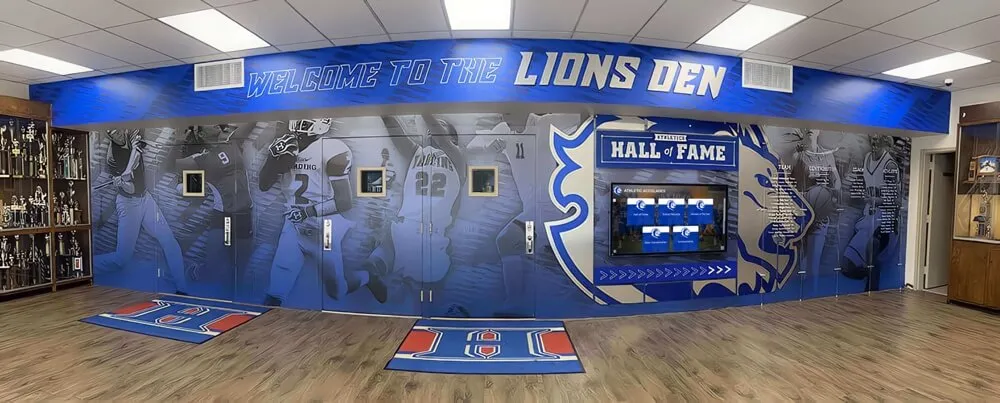
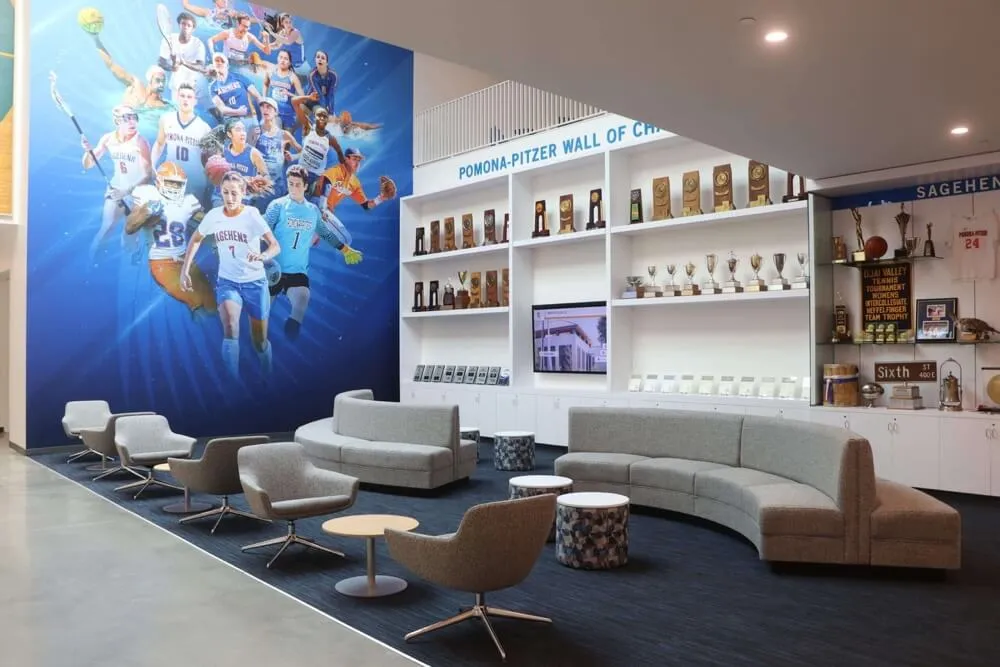
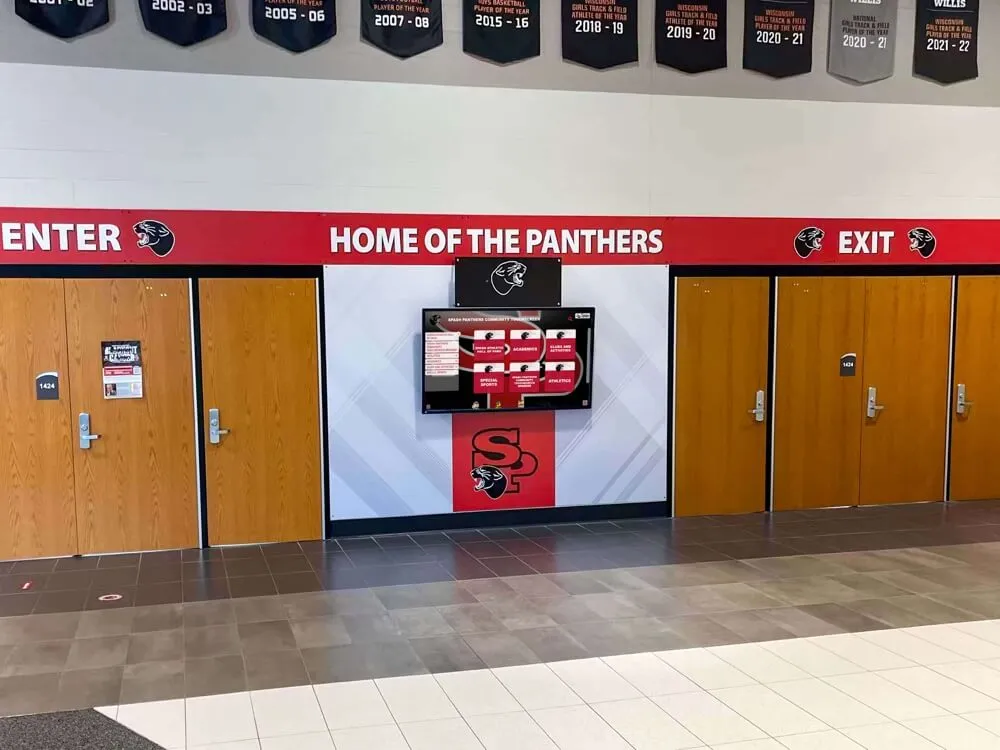
Strategic placement of interactive displays throughout campus enables continuous storytelling beyond formal tour routes
Alumni Success and Career Outcomes Long-term outcomes provide powerful enrollment motivation:
- Recent graduate profiles showing first destination employment
- Mid-career alumni highlighting professional progression
- Distinguished alumni demonstrating lifetime achievement potential
- Industry-specific career pathway examples
- Graduate school placement documentation
- Alumni recognition showcasing institutional impact
Research on enrollment decision-making consistently identifies career outcomes as a top concern for prospective students and families. Interactive displays presenting concrete alumni success stories address this concern far more effectively than abstract statistics.
Academic Excellence and Research Storytelling
Compelling academic narratives differentiate institutional educational quality:
Faculty Achievement Recognition Highlighting distinguished faculty builds academic credibility:
- Faculty profiles with research interests and expertise
- Grant funding and publication highlights
- Teaching awards and student mentoring recognition
- Industry partnerships and community engagement
- Media appearances and expert consultation
- Student collaboration opportunities and accessibility
Research and Innovation Showcases Making abstract research tangible and exciting:
- Undergraduate research project galleries with student researcher profiles
- Laboratory and facility tours through interactive virtual experiences
- Research impact stories connecting academic work to real-world applications
- Visualization of research funding, publications, and collaboration networks
- Interactive timelines showing institutional research evolution
- Student research presentation videos and outcomes
Academic Program Depth Going beyond catalog descriptions to showcase educational experience:
- Day-in-the-life student narratives for specific majors
- Sample course project galleries and student work
- Study abroad and experiential learning opportunities
- Internship partnerships and career preparation
- Capstone project showcases demonstrating learning outcomes
- Program-specific career outcome data and graduate placement
Institutional History and Tradition Storytelling
Historical narratives build emotional connection and institutional pride:
Interactive Historical Timelines Visual chronologies make heritage tangible:
- Founding stories and institutional evolution over decades
- Significant milestones and achievements throughout history
- Architectural development showing campus physical transformation
- Leadership progression and influential institutional figures
- Crisis navigation and institutional resilience stories
- Comprehensive digital archives preserving institutional memory
Schools with rich histories often underutilize this powerful storytelling asset. Interactive historical displays transform abstract institutional heritage into compelling narratives that help prospective students understand institutional character and feel connected to institutional tradition.
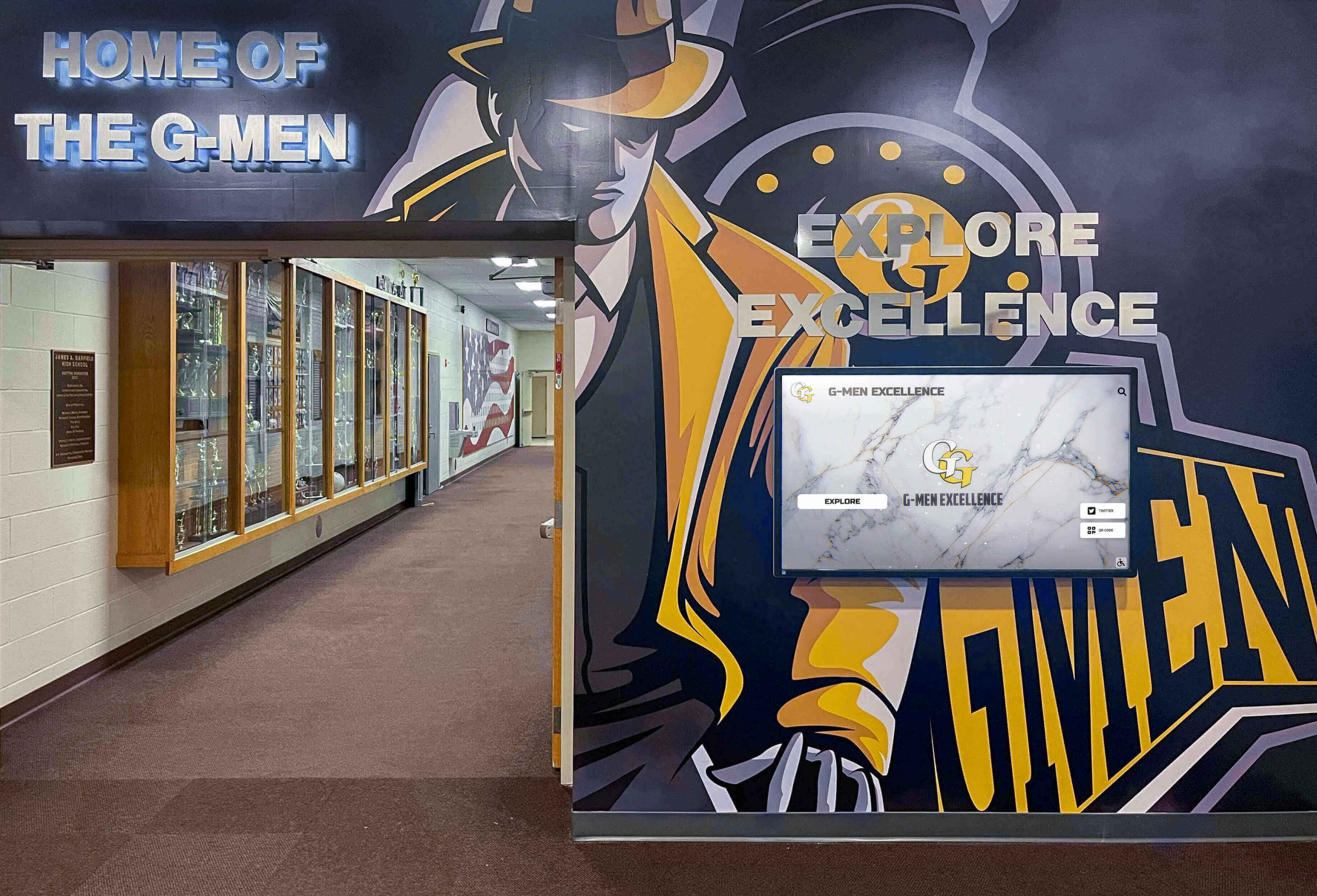
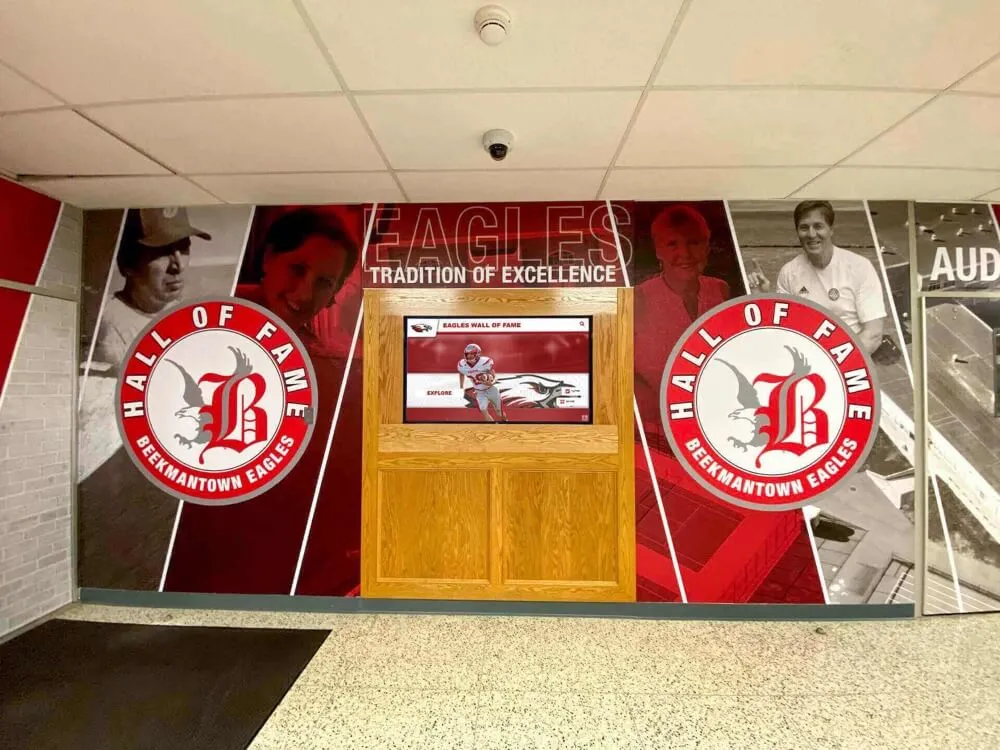
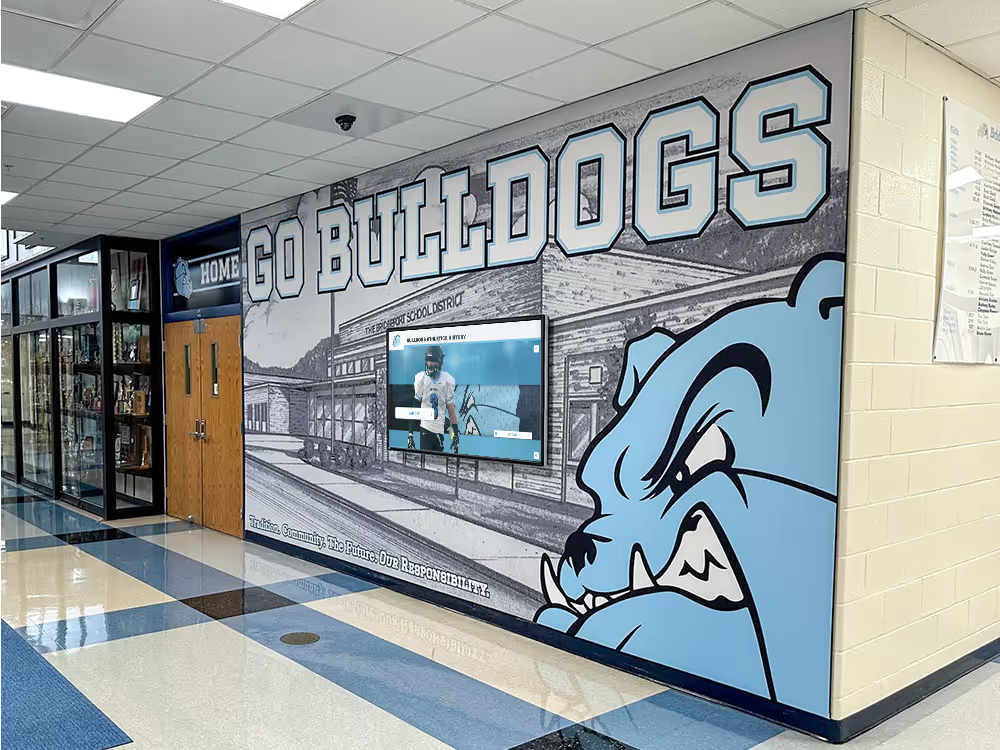
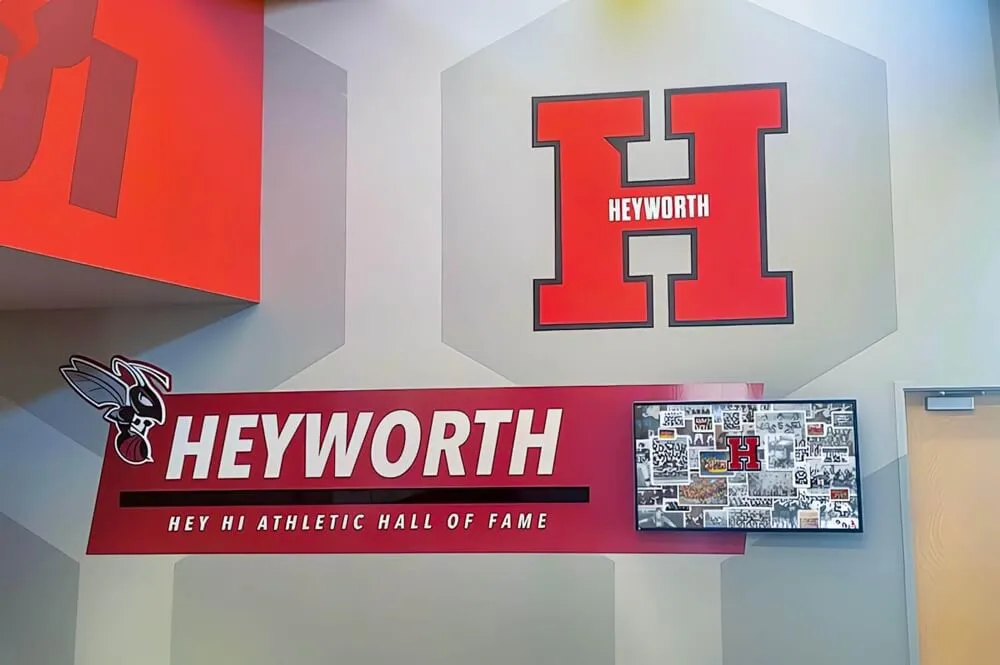
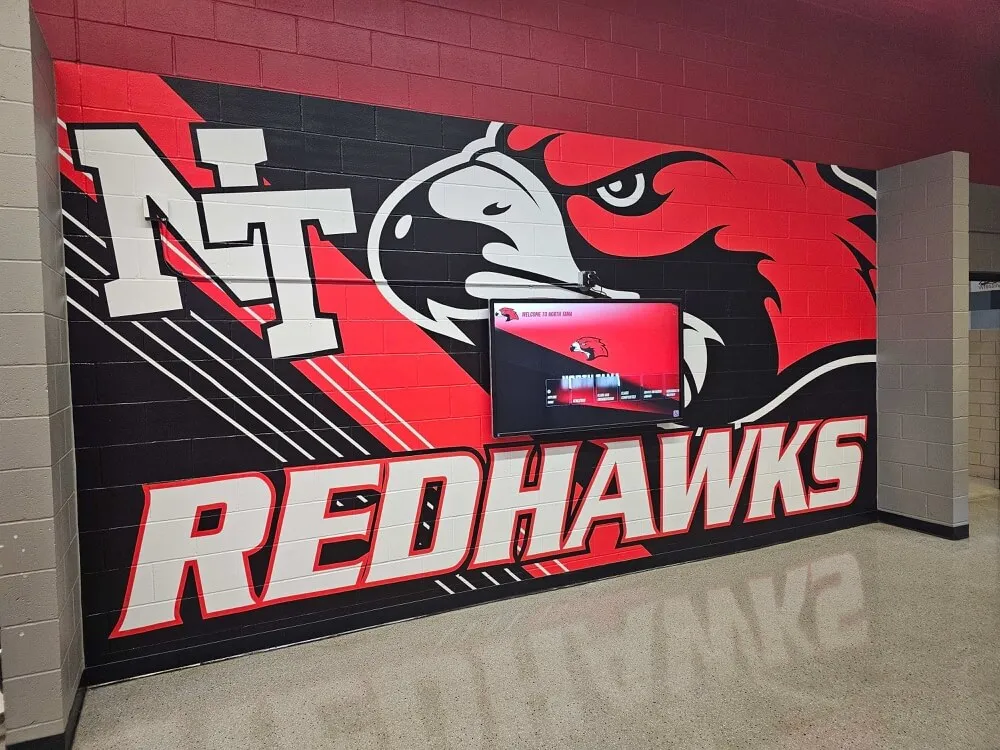
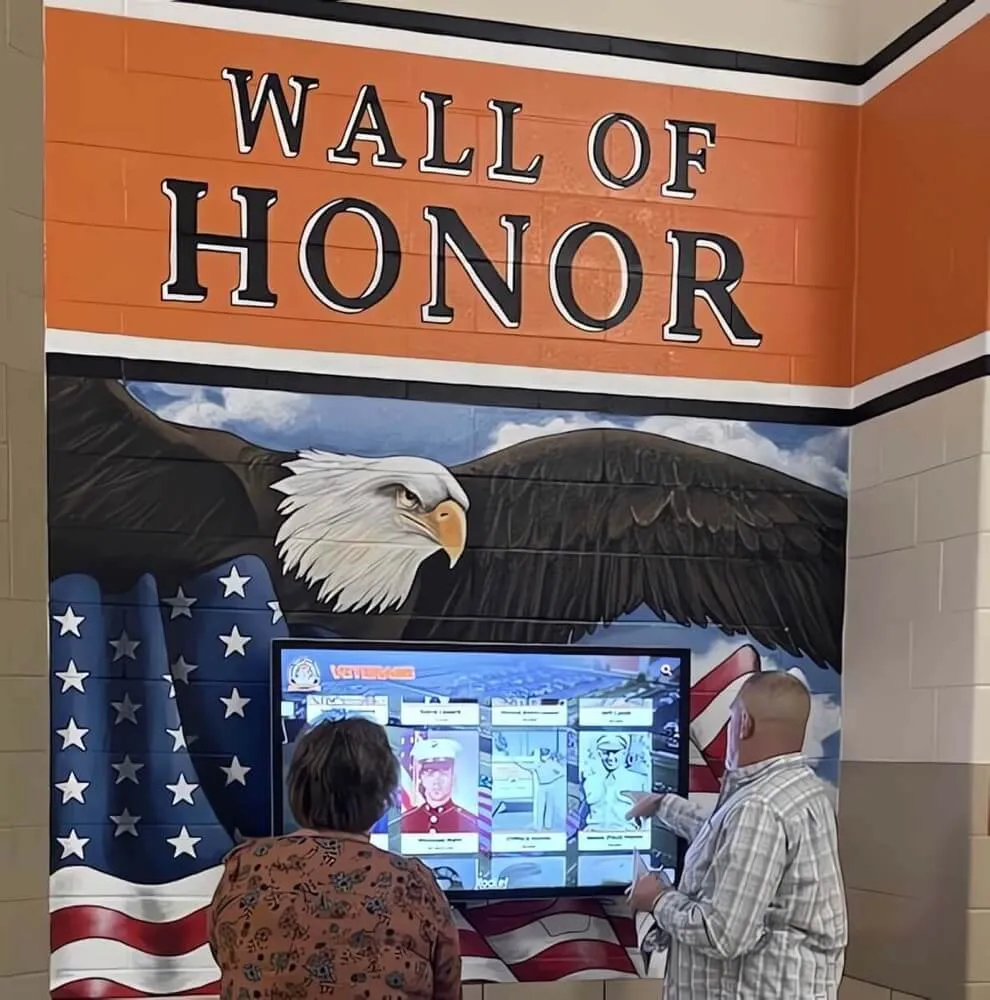
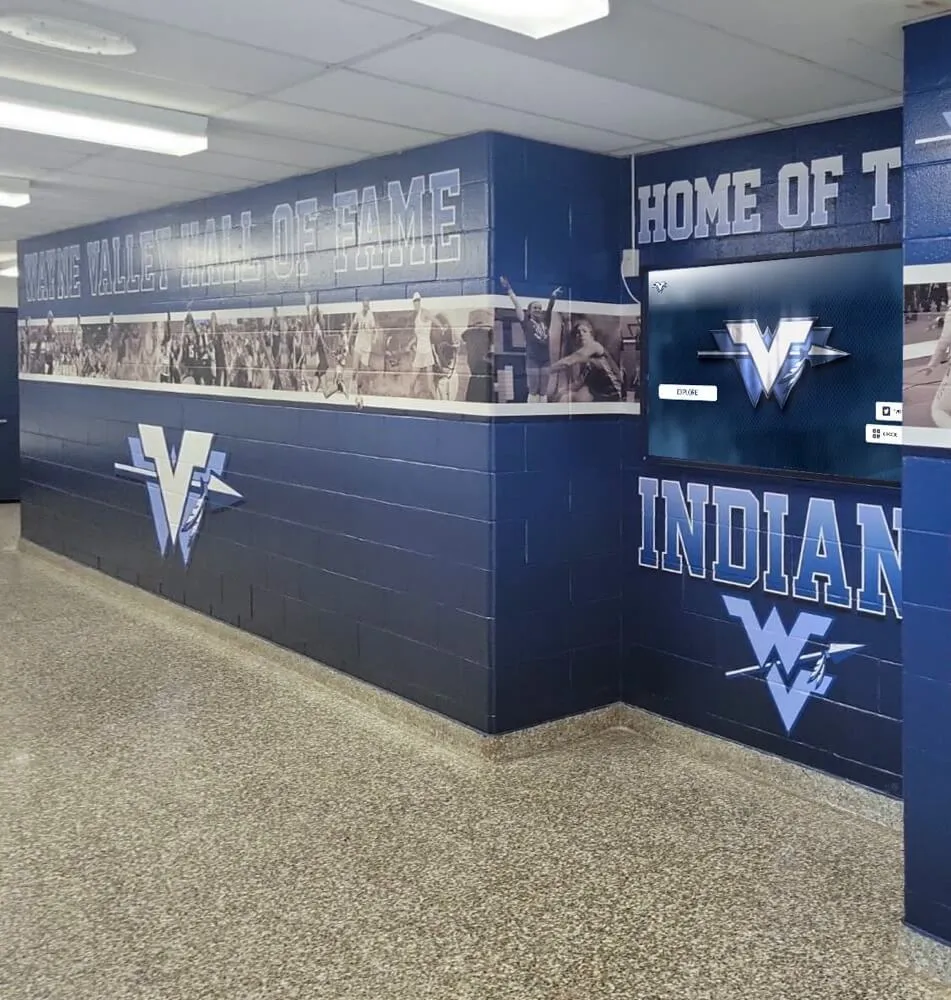
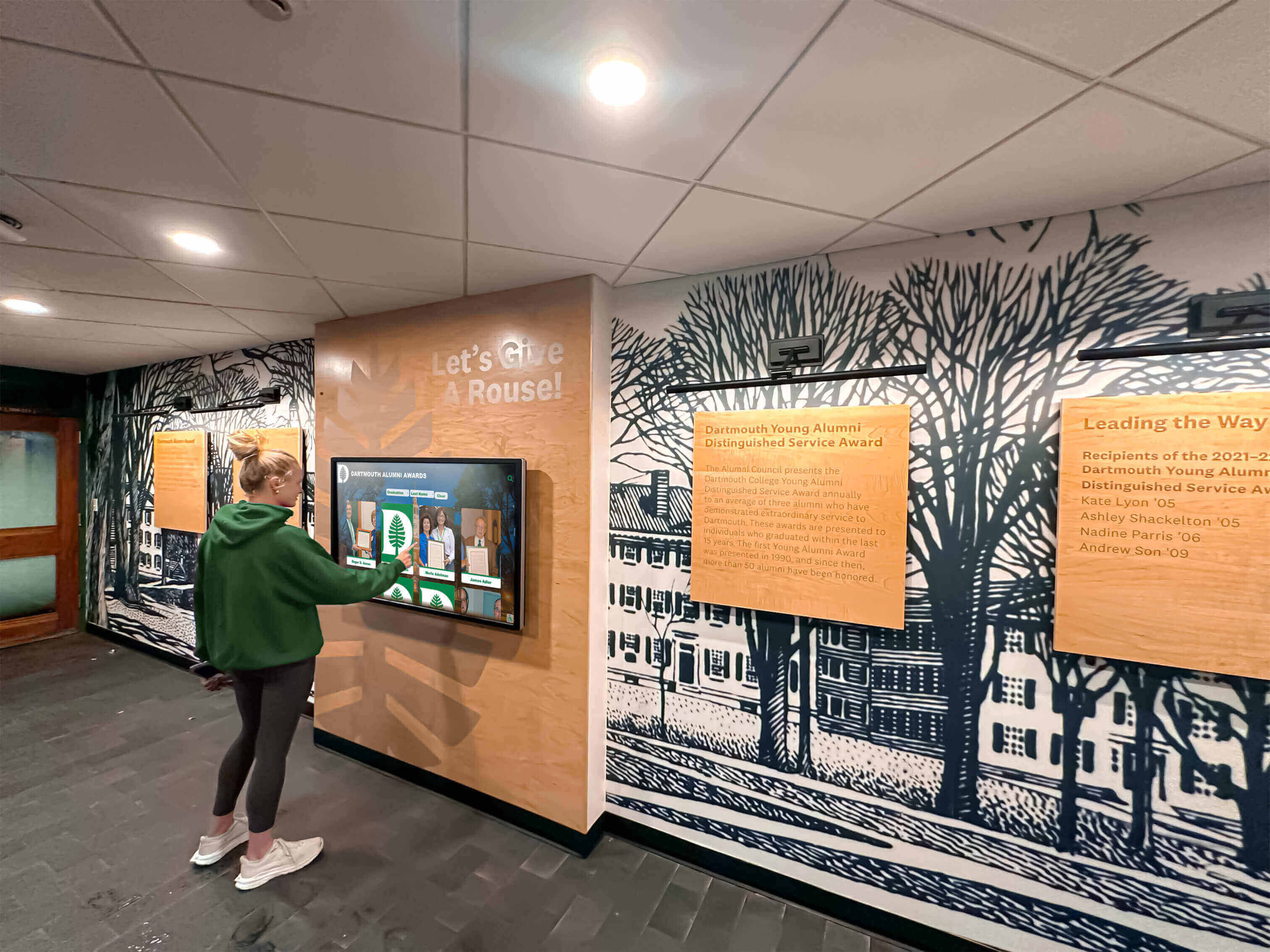
Effective campus storytelling integrates traditional elements like murals with interactive digital displays for comprehensive narrative presentation
Campus Landmark Stories Every building and space has narratives worth sharing:
- Architectural significance and design stories
- Notable events that occurred in specific locations
- Building naming stories and donor recognition
- Student tradition evolution connected to specific spaces
- Transformation and renovation stories showing investment
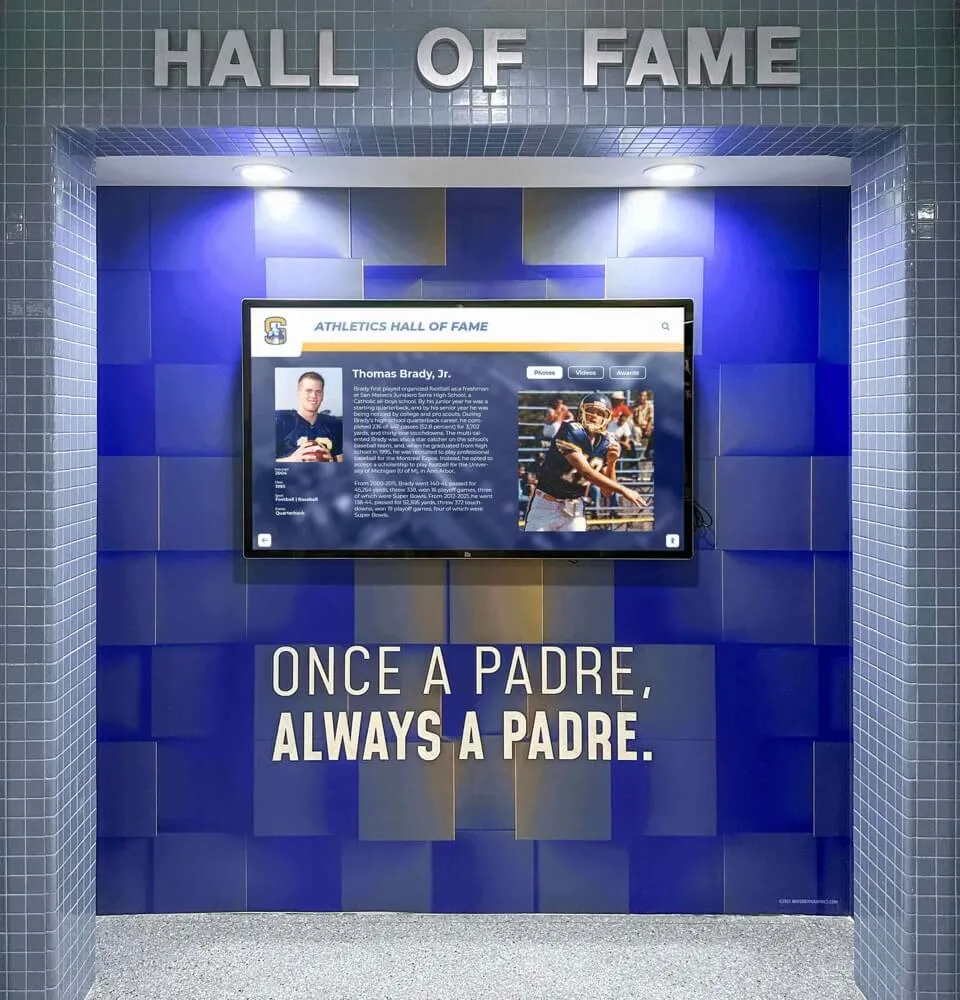
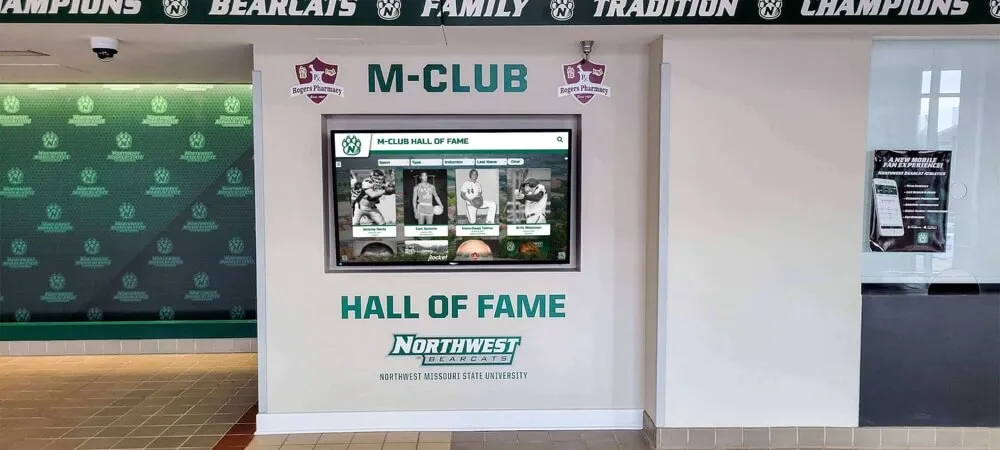
- Location-specific achievement recognition and hall of fame displays
Tradition and Ritual Documentation Campus culture stories differentiate institutional identity:
- Annual event histories and tradition evolution
- Student organization legacies and impact stories
- Athletic tradition and rivalry narratives
- Academic ceremony significance and historical context
- Community partnership stories demonstrating institutional values
- Digital yearbook archives preserving student life across generations
Technology Platforms Enabling Interactive Campus Storytelling
Strategic technology implementation transforms storytelling vision into reality on campus tours.
Interactive Touchscreen Display Systems
Touchscreen displays represent the most versatile platform for campus storytelling:
Lobby and Welcome Center Installations First impressions set the tone for entire campus visits:
- Large-format touchscreens greeting visitors with institutional welcome
- Searchable campus directories enabling self-directed navigation
- Featured story rotations highlighting timely institutional achievements
- Interactive campus maps showing building locations and purposes
- Event calendars displaying campus vibrancy and opportunities
- Admissions information and next-step guidance
Admissions offices implementing comprehensive welcome center touchscreens report that prospective families arrive at scheduled appointments better informed and more engaged, having spent 10-15 minutes exploring institutional content while waiting.
Academic Building Storytelling Stations Department-specific narratives in relevant locations:
- Program-specific student and faculty profiles
- Research project galleries and publication highlights
- Curriculum information and course sampling
- Career outcome data for specific majors
- Alumni success stories from program graduates
- Interactive recognition of academic achievements and honors
Hallway and High-Traffic Installations Continuous storytelling throughout campus experience:
- Historical photograph galleries with contextual information
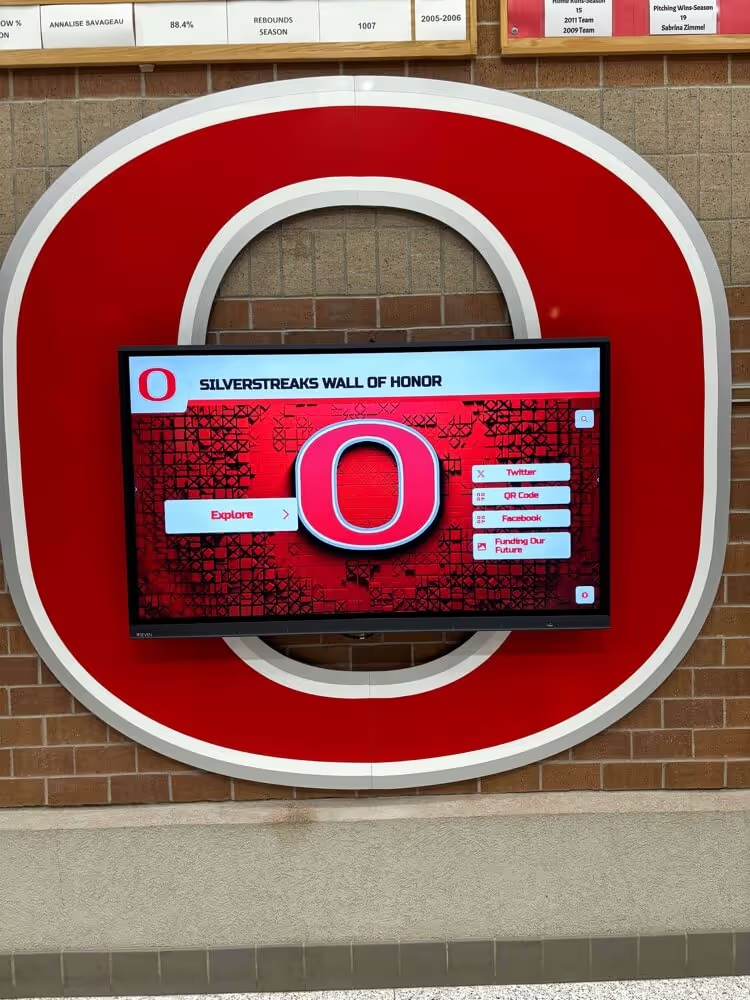
- Student achievement recognition and honor roll displays
- Athletic championship histories and team roster archives
- Arts performance and creative work showcases
- Community engagement and service learning documentation
- Comprehensive institutional achievement timelines
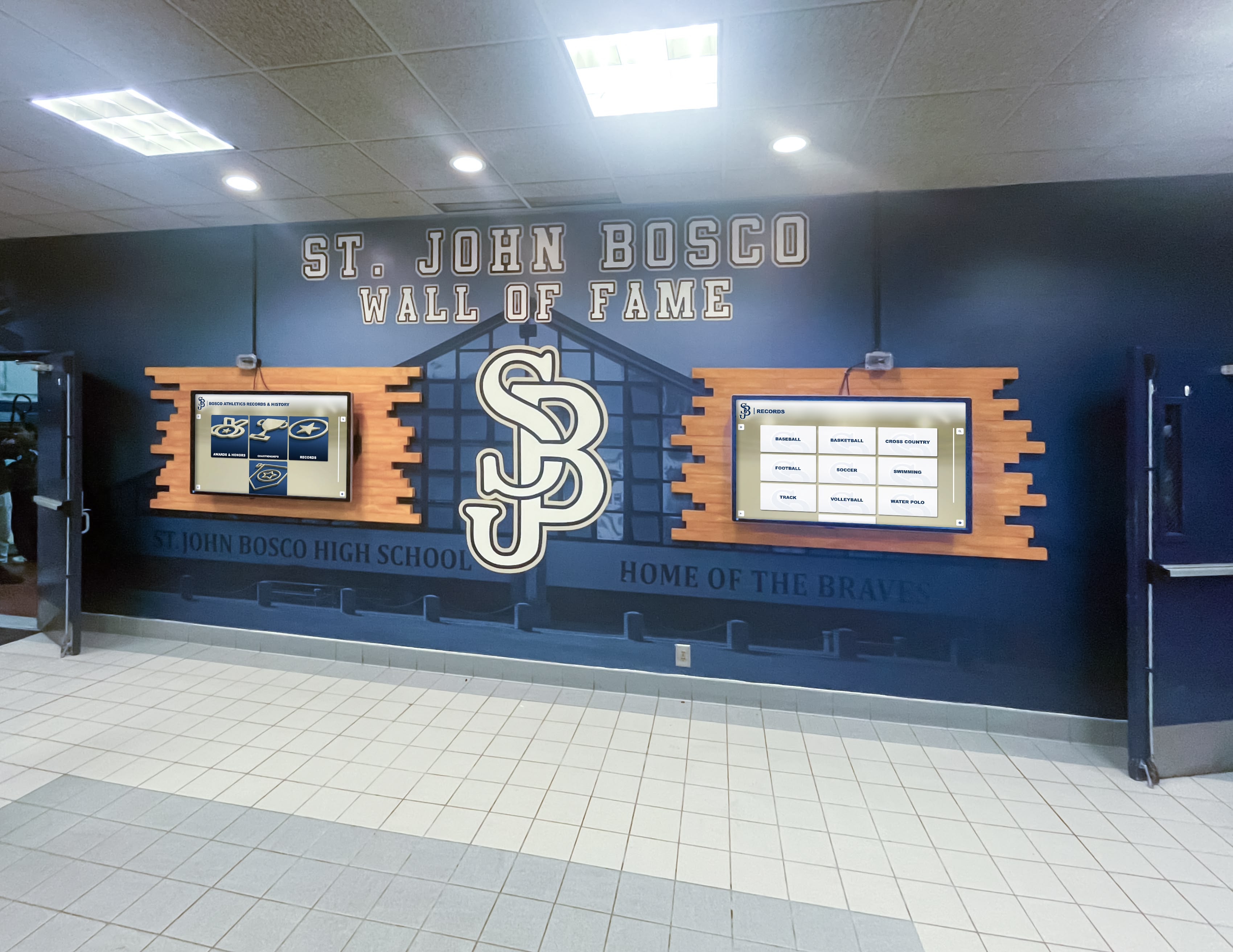
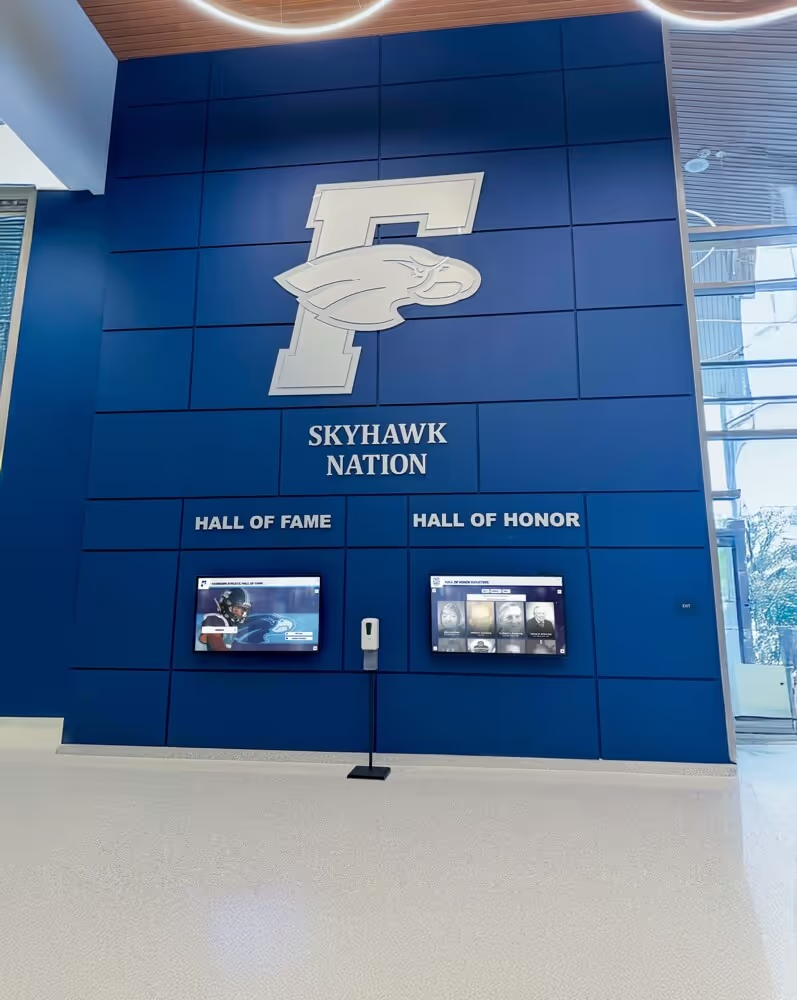
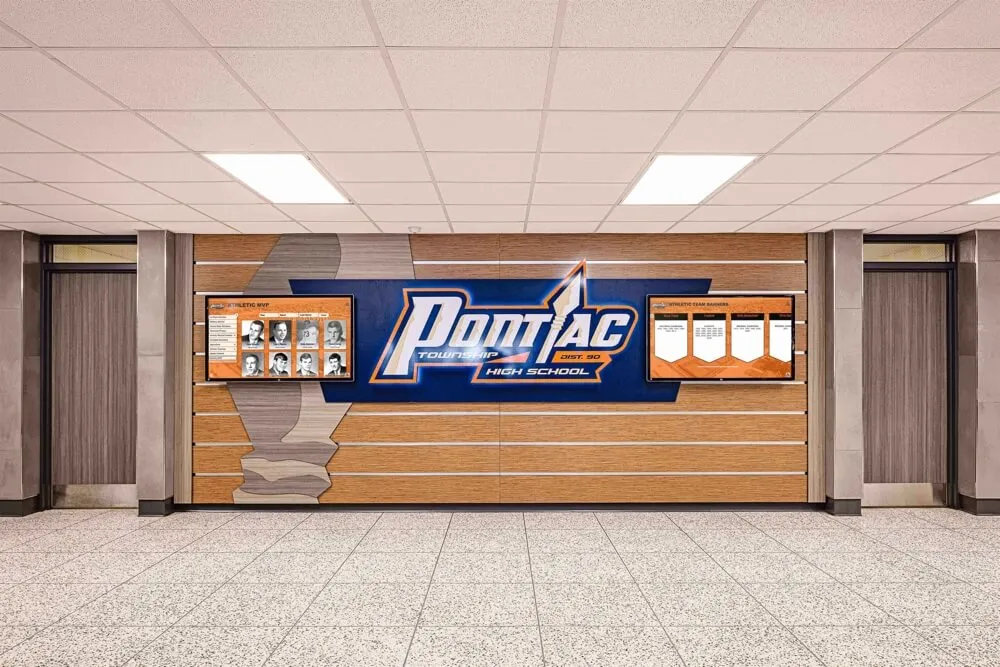
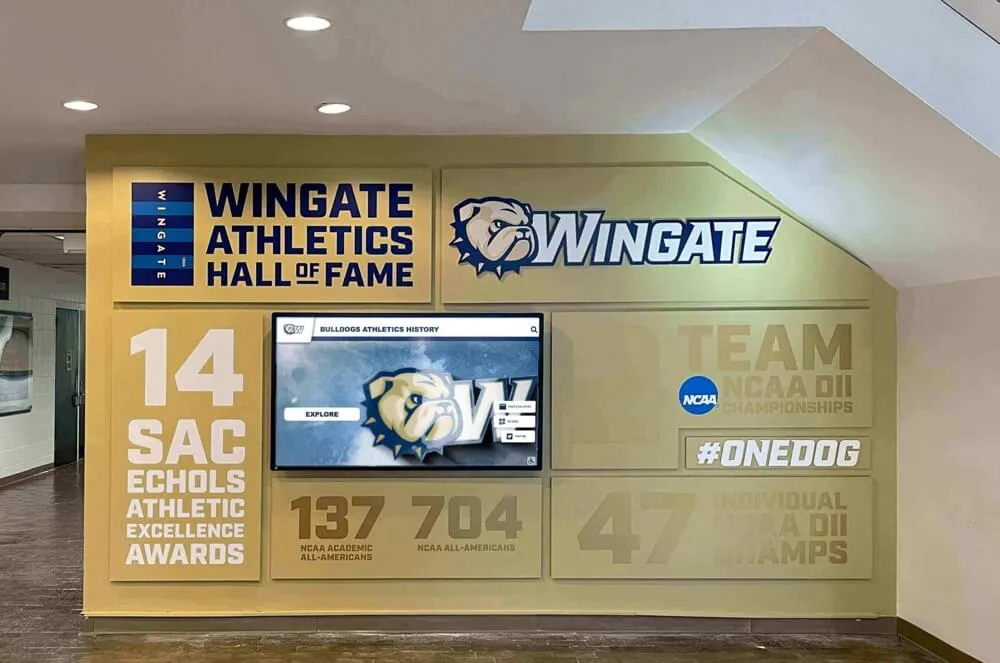
Multiple display installations throughout campus enable comprehensive storytelling that supplements and extends traditional guided tours
Web-Based and Mobile Storytelling Integration
Digital storytelling extends beyond campus to reach prospective students everywhere:
Pre-Visit Virtual Tour Experiences Building excitement and context before campus arrival:
- 360-degree virtual tours enabling remote campus exploration
- Interactive maps showing campus layout and building purposes
- Student video greetings introducing campus culture
- Academic program overviews preparing visitors for in-depth exploration
- Residence hall virtual tours managing expectations
- Athletic and arts facility showcases highlighting opportunities
Research on admission processes demonstrates that prospective students who engage with virtual storytelling content before campus visits arrive better prepared, ask more informed questions, and show higher enrollment rates compared to those who don’t pre-engage.
Mobile Tour Companion Applications Extending and personalizing the physical tour experience:
- QR code integration connecting physical spaces to digital content
- Self-guided tour routes based on individual interests
- Augmented reality overlays providing historical context
- Real-time information about campus activities and events
- Social sharing enabling prospective students to include distant family
- Follow-up content delivery maintaining engagement after departure
Post-Visit Engagement and Nurture Maintaining connection after campus departure:
- Personalized content recommendations based on tour interests
- Virtual meetings with faculty or current students in areas of interest
- Application milestone reminders and support resources
- Continued story delivery maintaining institutional presence
- Alumni connection opportunities for deeper exploration
- Ongoing digital yearbook and institutional archive access
Content Management and Platform Selection
Successful interactive storytelling requires appropriate technology infrastructure:
Essential Platform Capabilities Effective storytelling systems provide:
- Intuitive content management requiring no technical expertise
- Cloud-based access enabling updates from any device
- Media optimization ensuring fast, responsive performance
- Scheduling capabilities for timely content updates
- Analytics showing engagement patterns and popular content
- Multi-display management updating multiple locations simultaneously
- Mobile integration extending content beyond physical displays
Solutions like Rocket Alumni Solutions provide comprehensive platforms purpose-built for institutional storytelling, combining touchscreen display management with web and mobile integration—eliminating the need to coordinate multiple separate systems.
Hardware Considerations for Campus Installations Physical display requirements for optimal storytelling:
- Commercial-grade touchscreens rated for continuous daily operation
- Screen sizes appropriate for viewing distance and location (43-75 inches typical)
- Vandal-resistant housings protecting sensitive components
- ADA-compliant mounting heights ensuring accessibility
- High-resolution displays maintaining visual quality (4K minimum)
- Anti-glare coatings ensuring visibility in various lighting conditions
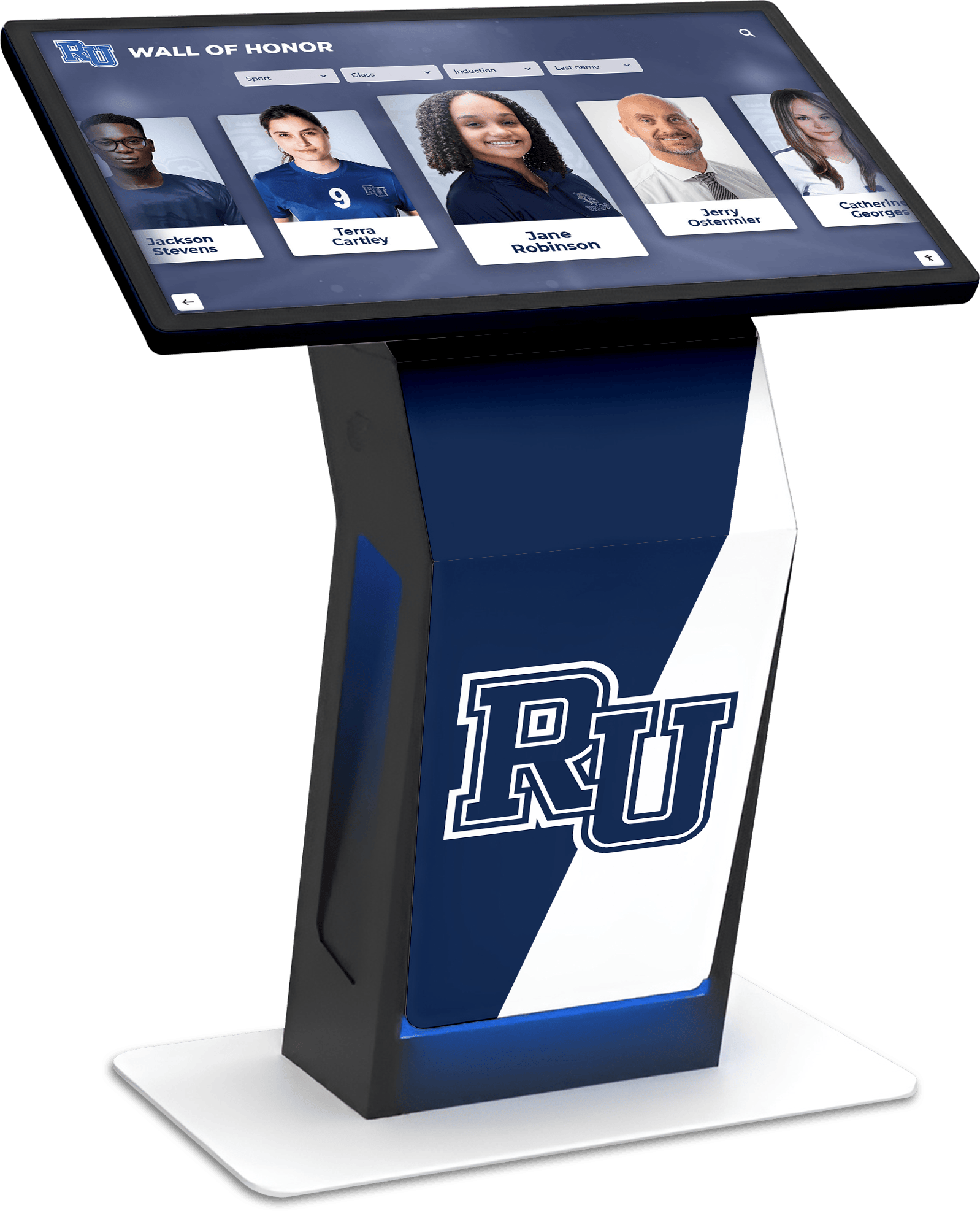
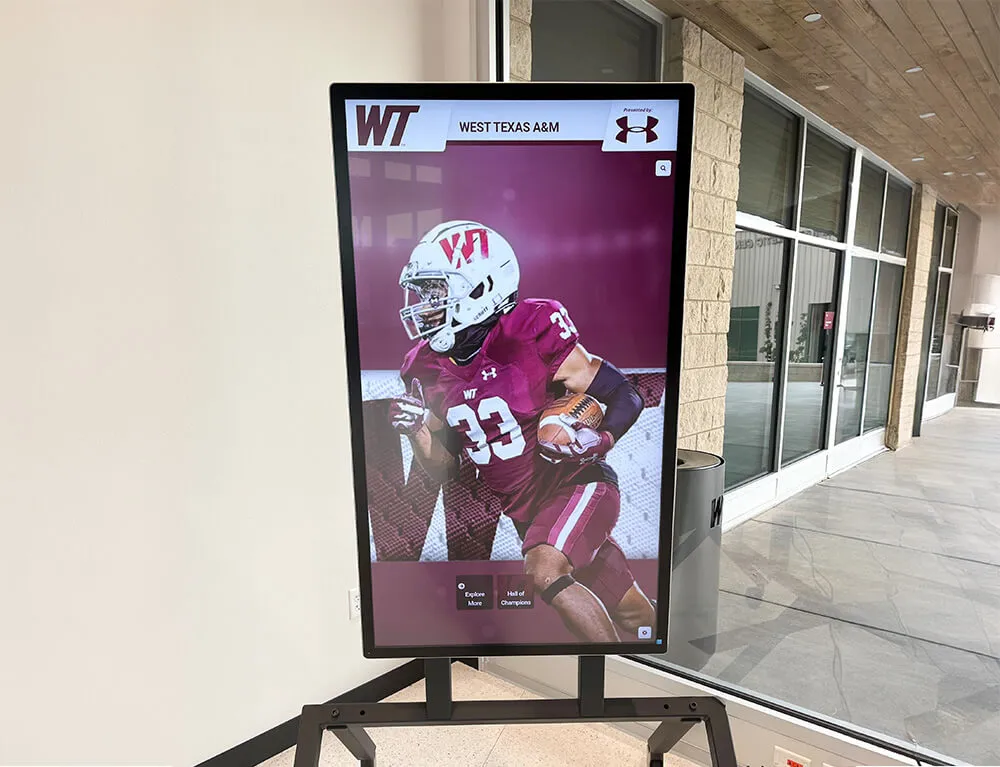
Professional-grade touchscreen kiosks provide robust platforms for comprehensive campus storytelling in high-traffic admissions areas
Implementing Interactive Storytelling on Campus Tours
Strategic implementation ensures technology enhances rather than complicates admissions operations.
Phase 1: Content Strategy and Story Development
Successful implementation begins with content rather than technology:
Stakeholder Engagement and Story Collection Gathering diverse institutional narratives:
- Student interviews capturing authentic experiences and perspectives
- Faculty profiles highlighting teaching and research excellence
- Alumni outreach documenting career outcomes and institutional impact
- Staff input on unique program characteristics and differentiators
- Historical archives providing context and tradition stories
- Student organization documentation of campus life richness
Most institutions discover they already possess remarkable stories—the challenge isn’t creating content but rather systematically collecting, organizing, and presenting existing narratives in compelling formats.
Content Organization and Narrative Themes Structuring stories for maximum impact:
- Academic excellence themes highlighting educational quality
- Student experience narratives showcasing campus life
- Career preparation stories demonstrating outcome focus
- Community and belonging themes emphasizing inclusive culture
- Innovation and impact narratives showing institutional forward momentum
- Historical tradition stories building emotional connection
Media Production and Content Creation Developing high-quality storytelling assets:
- Professional photography capturing campus life authenticity
- Video interviews with students, faculty, and alumni
- Graphic design creating visual consistency and brand alignment
- Writing and editing ensuring compelling narrative flow
- Historical digitization preserving and presenting institutional archives
- Multimedia integration creating engaging multi-sensory experiences
Phase 2: Technology Deployment and Integration
Technical implementation follows content development:
Strategic Display Placement Location determines storytelling effectiveness:
- Admissions office lobby and waiting areas where families naturally gather
- Campus entrance points greeting all campus visitors
- Academic building lobbies providing program-specific context
- Student life facilities showcasing residential and social opportunities
- Athletic and arts venues highlighting co-curricular excellence
- Historical landmark locations where stories naturally resonate
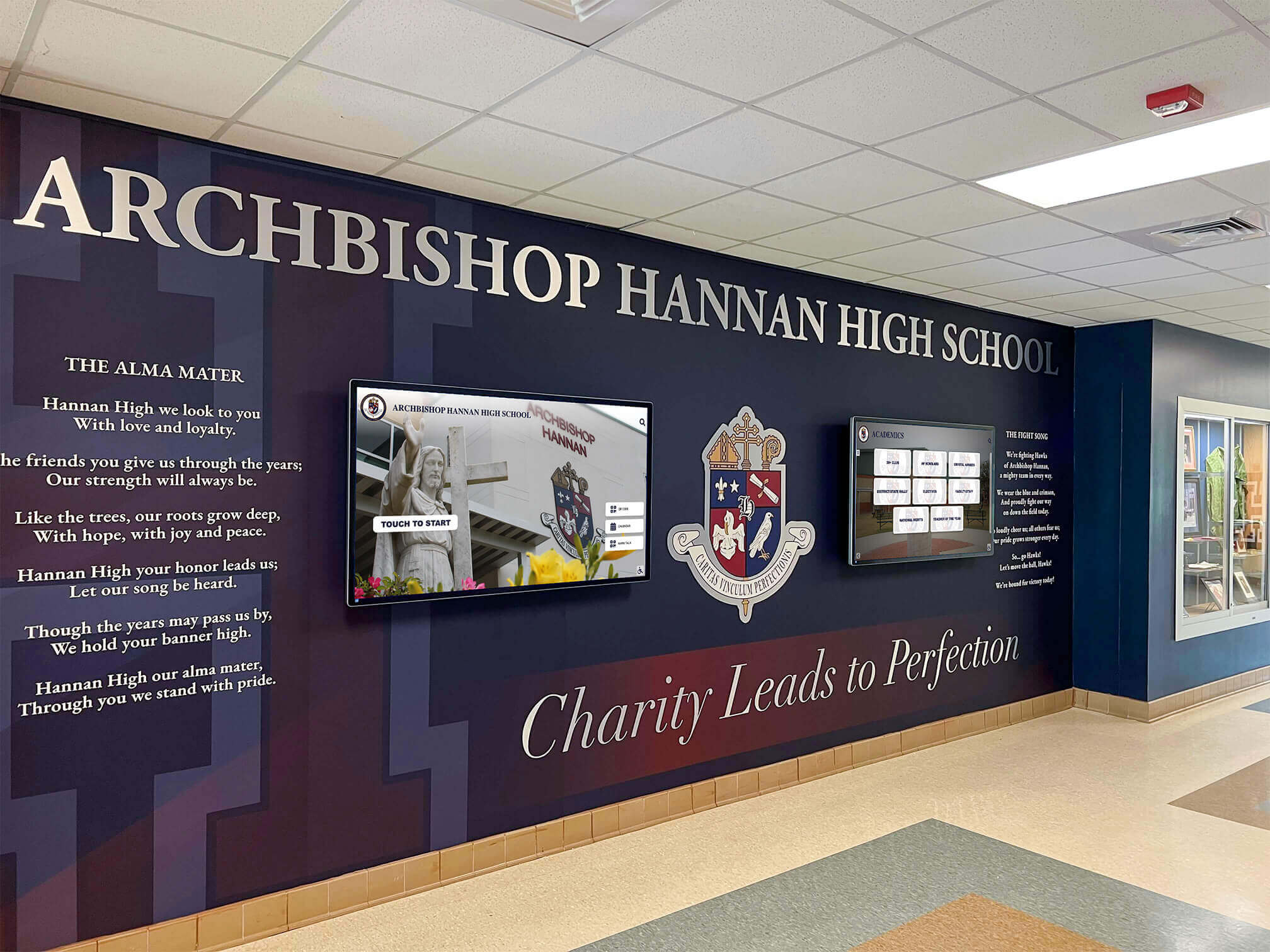
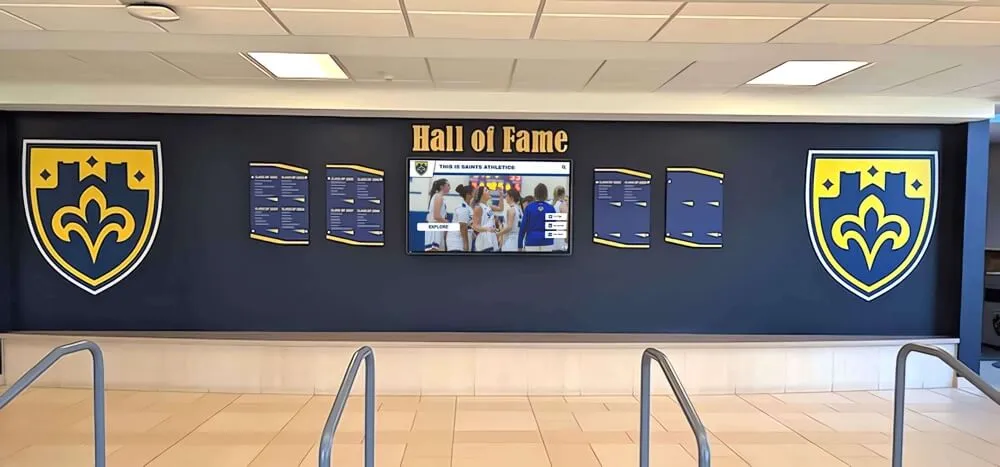
Strategic display placement in campus lobbies creates natural storytelling opportunities during campus tour experiences
User Experience Design Intuitive interfaces encourage exploration:
- Touch-optimized navigation requiring no instruction
- Clear visual hierarchies guiding content discovery
- Search functionality finding specific content quickly
- Category browsing accommodating exploratory learning
- Featured content rotations highlighting timely stories
- Accessibility features ensuring inclusive access
Content Management Training Empowering staff to maintain storytelling systems:
- Admissions staff training on content updates and management
- Tour guide education on directing visitors to interactive displays
- Marketing team coordination ensuring brand consistency
- IT support preparation for technical troubleshooting
- Student worker training for routine content management
- Documentation and resources supporting ongoing operations
Phase 3: Tour Integration and Staff Enablement
Technology enhances rather than replaces human connection:
Tour Guide Training and Integration Combining technology with personal engagement:
- Tour scripts incorporating interactive display demonstrations
- Timing strategies ensuring adequate exploration time
- Personal storytelling complementing digital content
- Question facilitation using displays as discussion prompts
- Technology troubleshooting basics for common issues
- Feedback collection on prospective student engagement patterns
Successful institutions emphasize that interactive storytelling doesn’t replace tour guides—it empowers them to facilitate deeper, more personalized experiences by offloading basic information delivery to technology while focusing on relationship building and answering specific questions.
Hybrid Tour Models Combining guided and self-directed elements:
- Guided introduction to campus followed by self-exploration with digital aids
- Split family touring enabling personalized interest pursuit
- Extended tour times accommodating digital interaction
- Pre-tour content engagement preparing visitors for focused questions
- Post-tour follow-up leveraging digital engagement data
- Flexible timing accommodating different prospective student needs
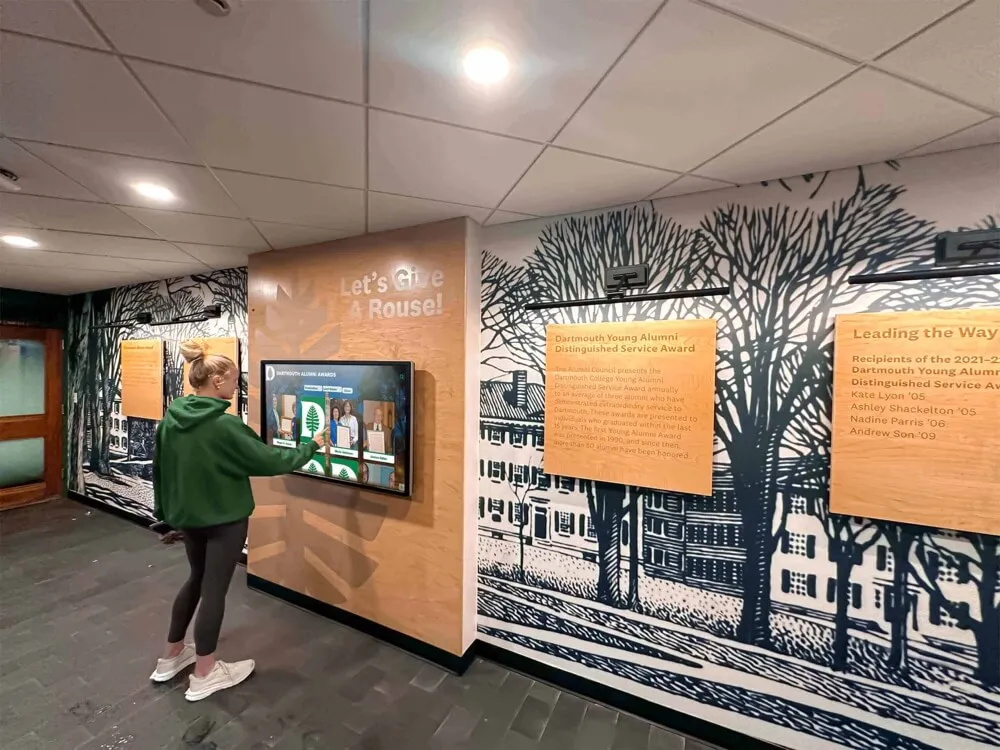
Self-directed exploration through interactive displays enables prospective students to pursue personal interests during campus visits
Measuring Impact on Admissions Outcomes
Systematic assessment demonstrates storytelling ROI and guides continuous improvement.
Engagement Analytics and Usage Metrics
Digital storytelling platforms provide valuable usage data:
Display Interaction Tracking Understanding how visitors engage with content:
- Total interactions and daily usage patterns
- Average session duration indicating engagement depth
- Most viewed content categories and stories
- Search terms revealing prospective student interests
- Navigation paths showing exploration patterns
- Peak usage times informing staffing and tour scheduling
Institutions implementing interactive storytelling consistently report that prospective students voluntarily spend 10-15 minutes exploring digital content during campus visits—engagement time impossible to achieve with traditional tours, representing substantial incremental touchpoint exposure.
Content Performance Analysis Identifying most effective storytelling elements:
- Student profile views and engagement duration
- Video completion rates showing compelling narratives
- Program-specific content access patterns
- Historical content interest levels
- Alumni story engagement metrics
- Comparative analysis across different display locations
This data enables continuous content refinement, ensuring storytelling investments focus on narratives that most effectively engage prospective students.
Admissions Funnel Impact Metrics
Connecting storytelling to enrollment outcomes:
Campus Visit Conversion Rates Measuring tour effectiveness:
- Visit-to-application conversion rates before and after implementation
- Application-to-enrollment yield rates for campus visitors
- Comparative analysis of visitors who engaged vs. didn’t engage with storytelling
- Time-to-application data showing decision acceleration
- Visit frequency for enrolled students vs. non-enrolled visitors
- Student-reported influence of campus visit on enrollment decision
Institutions implementing comprehensive interactive storytelling report 15-25% improvement in visit-to-application conversion rates and 10-15% yield rate increases among students who visited campus—representing substantial enrollment impact from relatively modest technology investments.
Qualitative Feedback and Satisfaction Understanding visitor experience quality:
- Post-visit satisfaction surveys comparing traditional vs. interactive tours
- Specific feedback on storytelling elements and content
- Net Promoter Score tracking visitor likelihood to recommend
- Social media sentiment analysis of campus visit mentions
- Admitted student focus groups on enrollment decision factors
- Parent feedback on information completeness and confidence
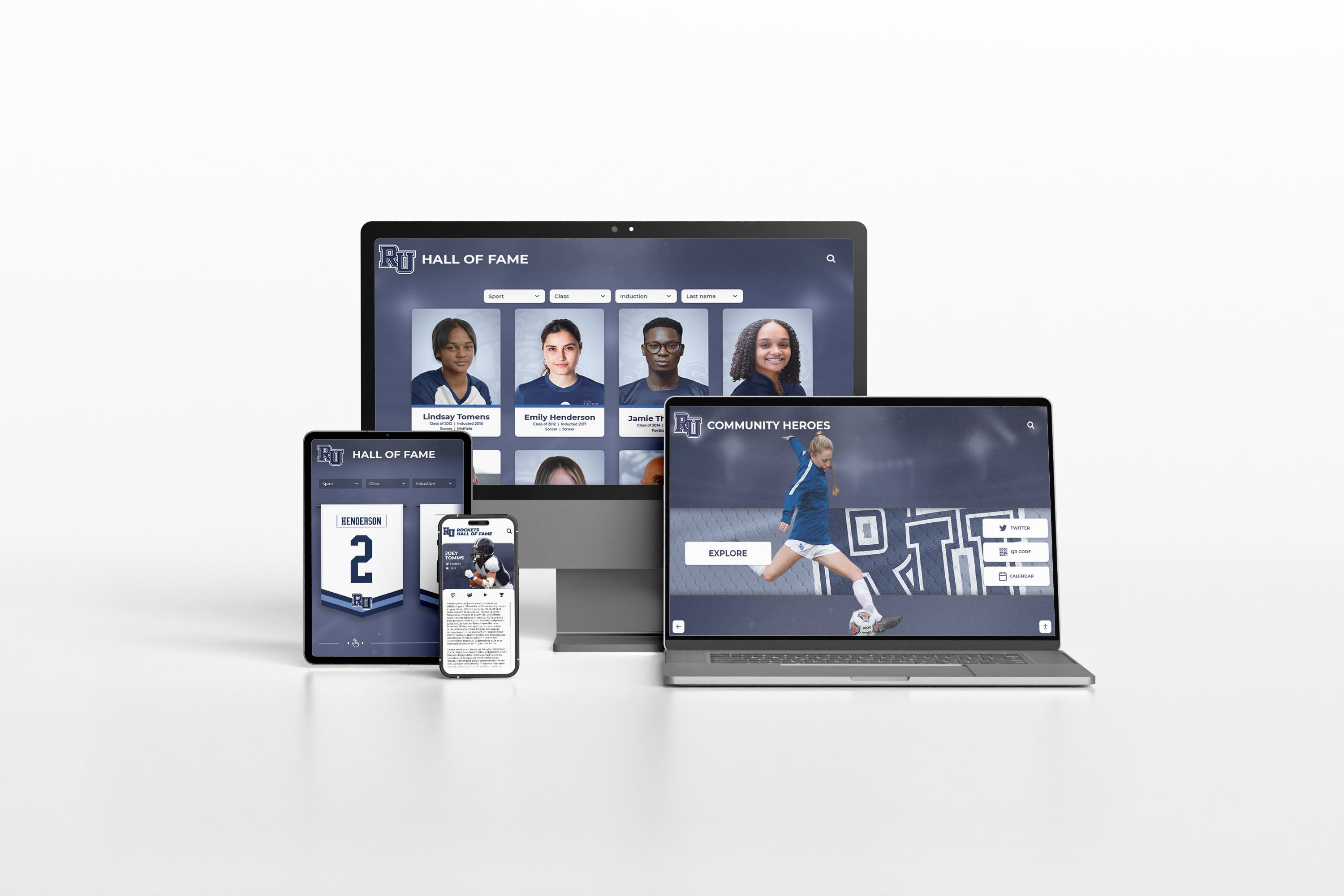
Modern storytelling platforms deliver consistent experiences across devices enabling pre-visit, on-campus, and post-visit engagement
Return on Investment Calculation
Quantifying storytelling value justifies continued investment:
Enrollment Revenue Impact Small yield improvements generate significant returns:
- Each additional enrolled student generates $30,000-$70,000+ annual tuition revenue
- 10-15% yield improvement among campus visitors represents substantial enrollment gains
- Reduced summer melt as stronger campus connections persist through decision period
- Enhanced student fit leading to higher retention and completion rates
- Positive word-of-mouth reducing future marketing costs
- Alumni engagement foundation building lifetime institutional connection
Operational Efficiency Gains Beyond enrollment, storytelling creates operational benefits:
- Reduced admissions staff time answering repetitive questions
- Extended tour capacity without proportional staff increases
- 24/7 content availability supporting prospective students outside office hours
- Improved tour guide focus on relationship building vs. information delivery
- Enhanced virtual visit experiences serving distance prospective students
- Reduced printed material costs and environmental impact
Comprehensive assessment typically demonstrates positive ROI within 2-3 years through combination of enrollment increases and operational efficiencies—with continuing benefits compounding over time as content libraries grow and prospective student expectations increasingly favor technology-enhanced experiences.
Best Practices and Success Factors
Institutions achieving strongest outcomes from interactive storytelling share common approaches:
Authenticity Over Production Value
Genuine stories resonate more powerfully than polished marketing:
Student-Created and Student-Voiced Content Prospective students trust peer perspectives:
- Video testimonials captured with smartphones rather than professional crews
- Written narratives in students’ authentic voices without marketing polish
- Candid photographs showing real campus life vs. staged shots
- Unscripted conversations revealing genuine experiences
- Diverse representation showing many student types and experiences
- Current rather than outdated content maintaining relevance
Admissions research consistently demonstrates that prospective students find authentic peer content far more credible and influential than institutionally produced marketing materials—even when production quality is lower.
Balanced Storytelling Including Challenges Honesty builds trust and manages expectations:
- Acknowledging campus challenges alongside strengths
- Student stories including struggles overcome rather than only easy successes
- Realistic portrayals of academic rigor and workload
- Honest discussion of campus life aspects requiring adjustment
- Recognition that institutional fit varies by individual
- Transparency building trust and relationship foundation
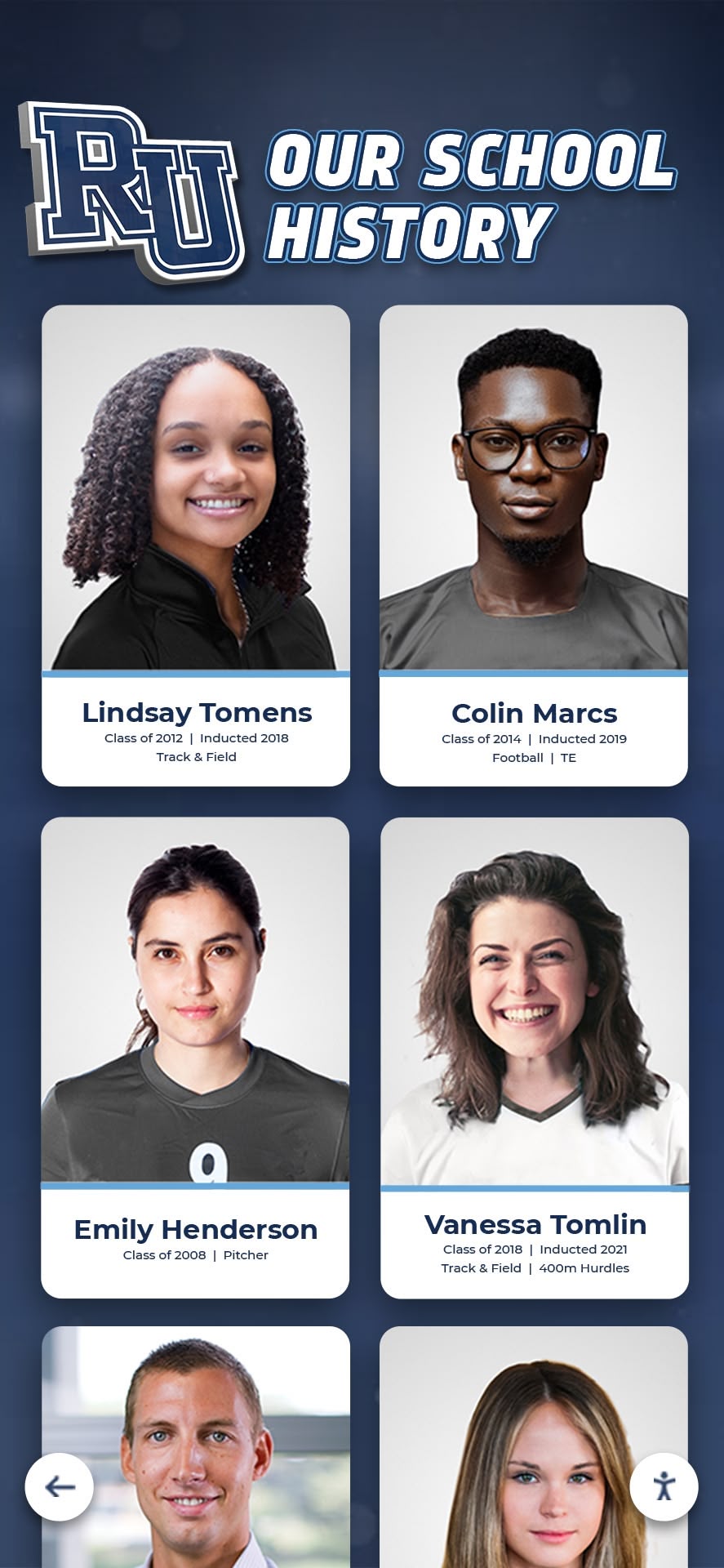
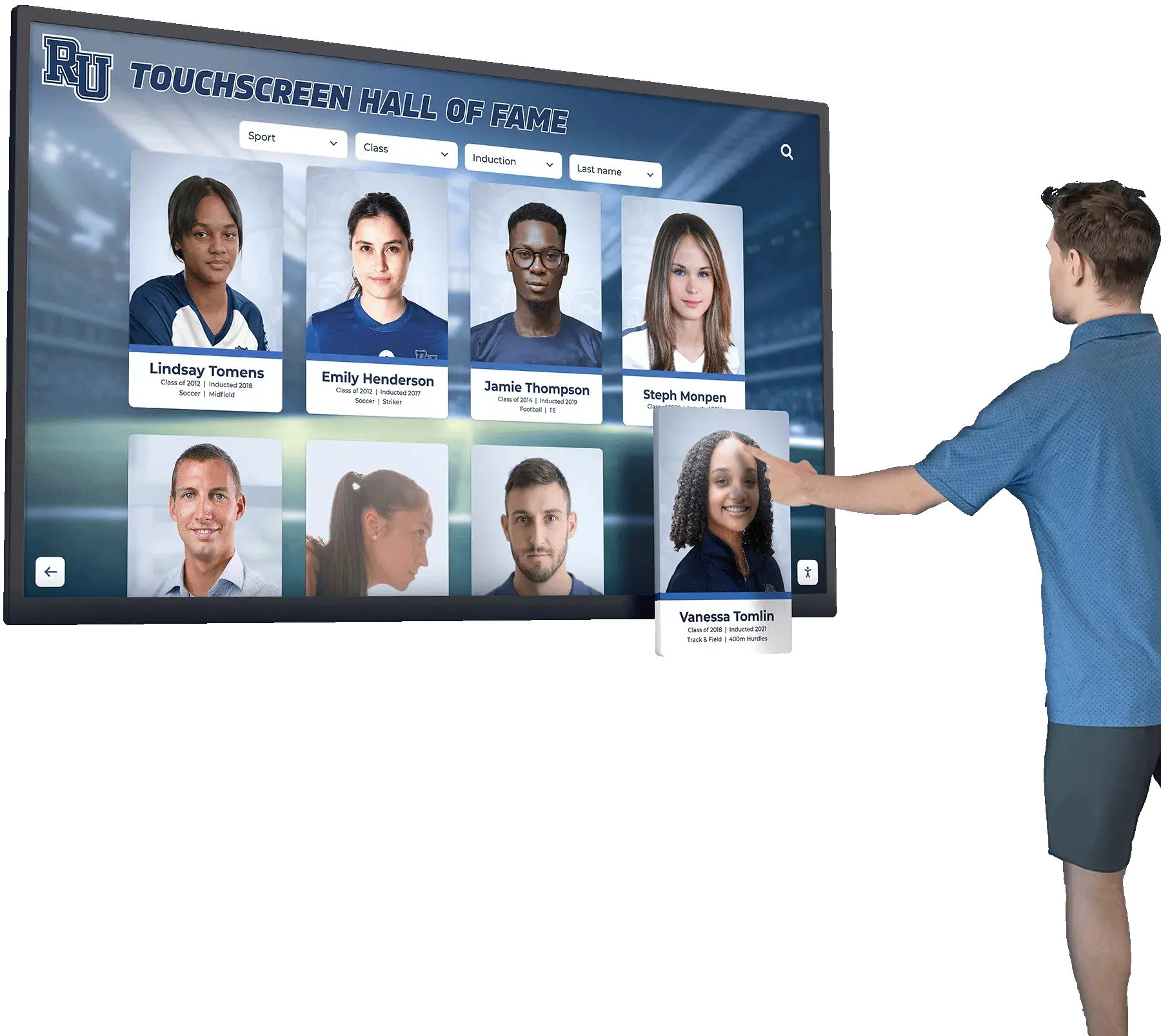
Comprehensive profile galleries showcasing diverse student experiences help prospective students identify peers with similar backgrounds and goals
Regular Content Updates Maintaining Relevance
Static content quickly becomes stale and ineffective:
Systematic Content Refresh Schedules Maintaining currency requires planning:
- Quarterly student profile updates adding recent stories
- Annual photography refreshes capturing current campus life
- Semester academic achievement recognition additions
- Weekly featured content rotations highlighting timely events
- Immediate updates for major institutional news and achievements
- Regular historical content additions expanding archive depth
Event-Triggered Content Updates Aligning storytelling with institutional calendar:
- Commencement content highlighting graduate outcomes
- New student orientation introducing incoming class
- Homecoming celebrations connecting alumni to current students
- Research symposium documentation showcasing academic excellence
- Athletic championship recognition capitalizing on excitement
- Award recognition maintaining currency and relevance
Data-Driven Continuous Improvement
Analytics inform strategic storytelling refinement:
Content Performance Optimization Amplifying what works, revising what doesn’t:
- Expanding high-engagement content categories
- Reformatting or replacing low-engagement stories
- Testing different content formats and presentation approaches
- A/B testing headlines, images, and narrative structures
- Learning from outlier high-performers
- Cutting ineffective content maintaining quality standards
User Experience Refinement Improving navigation and discovery:
- Streamlining pathways to popular content
- Adding search functionality for commonly queried topics
- Improving categorization based on actual usage patterns
- Reducing friction in content access
- Enhancing mobile experiences based on device usage data
- Accessibility improvements ensuring inclusive access
Transform Your Campus Tours with Interactive Storytelling
Discover how modern digital platforms can help you create compelling campus storytelling experiences that engage prospective students, showcase your institutional excellence, and boost admissions outcomes through technology-enhanced tours.
Explore Campus Storytelling SolutionsFuture Trends in Campus Tour Storytelling
Emerging technologies will further transform admissions experiences:
Personalized AI-Driven Storytelling
Artificial intelligence will enable unprecedented personalization:
Adaptive Content Recommendations AI systems learning visitor interests:
- Real-time content suggestions based on interaction patterns
- Predictive presentation of relevant stories before visitors request them
- Personalized tour route recommendations matching stated interests
- Follow-up content aligned with individual exploration history
- Chatbot assistants answering specific questions
- Natural language interaction replacing menu-based navigation
Visitor Recognition and Continuity Technology remembering returning visitors:
- Previous visit content recall enabling deeper second visits
- Progress tracking through self-guided tour routes
- Personalized welcome messages for returning families
- Preference learning adapting to individual interaction styles
- Multi-visit journey tracking supporting long decision processes
- Family member coordination enabling different exploration paths
Augmented and Virtual Reality Integration
Immersive technologies will enhance physical campus experiences:
Augmented Reality Campus Overlays Digital enhancement of physical spaces:
- Smartphone AR showing historical campus photographs overlaid on current buildings
- Virtual student guides providing narrated tours through AR applications
- Interactive wayfinding with AR directional arrows in real space
- “X-ray vision” revealing activities inside buildings from external locations
- Time-travel AR showing campus evolution across decades
- Virtual artifact and achievement examination through AR triggers
Virtual Reality Pre-Visit Experiences Immersive remote exploration before traveling:
- 360-degree VR campus tours enabling distance evaluation
- Virtual residence hall room tours managing expectations
- VR classroom and laboratory experiences showcasing learning environments
- Athletic facility virtual tours attracting prospective student-athletes
- Live-streamed VR campus events for remote attendance
- Social VR group tours enabling family participation from distance
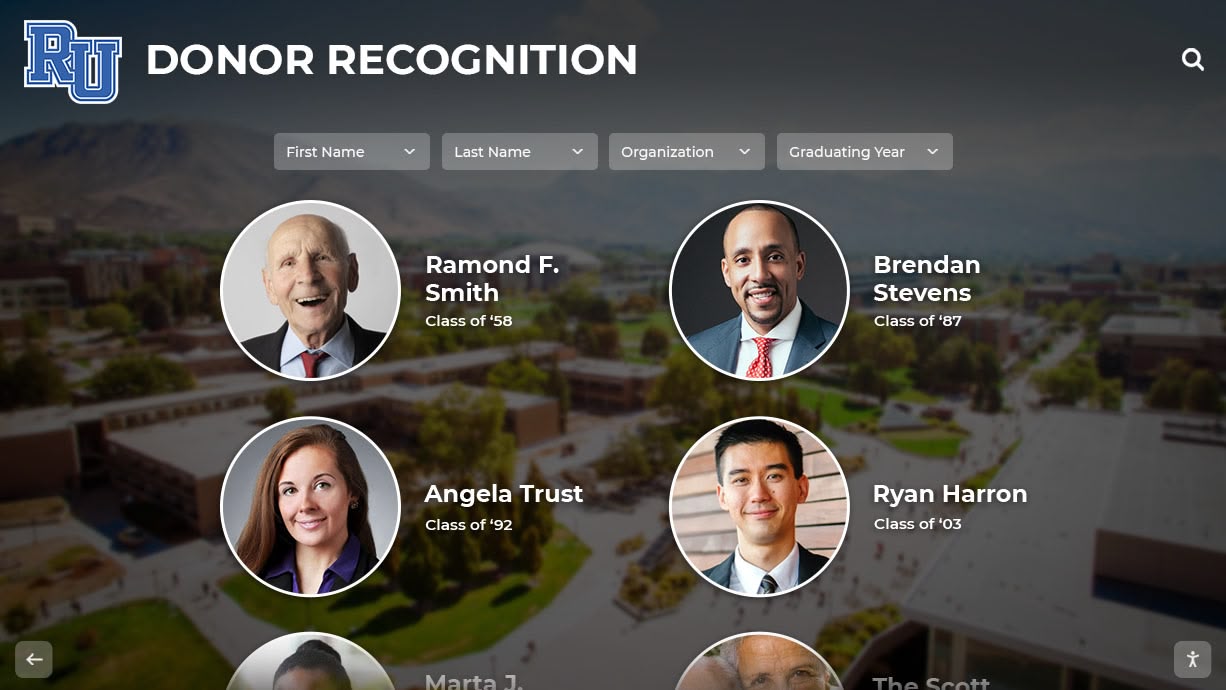
Future campus storytelling will seamlessly blend physical spaces with digital overlays creating immersive experiences impossible with traditional tours
Conclusion: Storytelling as Competitive Advantage in Admissions
In an increasingly competitive higher education landscape, institutions that deliver memorable, engaging campus visits gain substantial enrollment advantages over competitors providing generic, forgettable tour experiences. Interactive storytelling transforms passive campus walks into active exploration, creates emotional connections that influence enrollment decisions, provides personalized experiences matching digital native expectations, showcases institutional depth impossible to convey through traditional tours, and maintains engagement throughout the entire admissions journey from pre-visit through enrollment.
The technology enabling effective campus storytelling has reached the inflection point where implementation is accessible to institutions of all sizes and budgets. Cloud-based platforms eliminate server infrastructure requirements, touchscreen hardware costs have declined substantially while quality has improved, content management systems require no technical expertise to operate, mobile integration extends storytelling reach beyond physical campus, and analytics provide clear visibility into engagement and impact—making strategic assessment and continuous improvement straightforward.
Institutions achieving strongest results treat interactive storytelling not as isolated admissions technology but as comprehensive institutional strategy integrating marketing, admissions, student life, academics, and alumni relations. This holistic approach creates storytelling ecosystems where prospective students encounter compelling, consistent narratives throughout their decision journey—from first website visit through campus tour to enrollment and beyond.
The prospective students visiting your campus today expect technology-enhanced, personalized experiences in every aspect of their lives. Those institutions that meet these expectations through interactive campus storytelling will convert more visits to applications and enrollments, build stronger connections with incoming students from their first campus interaction, create differentiation in crowded admissions markets, demonstrate institutional innovation and student-centeredness through visitor experiences, and establish storytelling infrastructure that serves recruitment needs for decades.
Your institution has remarkable stories—student transformations, faculty achievements, research breakthroughs, historical traditions, alumni successes, and community impact that distinguish you from competitors. Interactive storytelling ensures these powerful narratives reach prospective students during the most influential touchpoint in the admissions journey, creating the lasting impressions that convert campus visits into enrolled students and eventually engaged alumni.
Ready to revolutionize your campus tours? Explore interactive storytelling solutions or discover how comprehensive digital platforms transform admissions experiences at institutions nationwide. The technology exists today to transform your campus storytelling—the only question is whether you’ll implement it before your competitors do.