



Intent: Evaluate & Select — This comprehensive guide provides detailed analysis of the best platforms for building virtual halls of fame in 2025, helping you select the optimal solution that balances features, usability, cost, and long-term sustainability for your organization’s recognition needs.
Traditional halls of fame face fundamental limitations—physical plaques consume wall space that inevitably runs out, bronze engravings cost hundreds of dollars per inductee, updates require ordering new materials and scheduling installations, and recognition remains confined to those physically present at specific locations. These constraints force difficult decisions about who deserves limited recognition space and leave achievements invisible to geographically dispersed communities.
Virtual halls of fame eliminate these limitations through digital platforms that provide unlimited recognition capacity, instant updates without physical installations, worldwide accessibility through web and mobile access, rich multimedia storytelling impossible on static plaques, and sustainable long-term costs compared to continuous physical expansion. Whether you’re launching a new recognition program or modernizing existing displays that have outgrown traditional formats, selecting the right platform determines both immediate success and long-term satisfaction.
This guide explores the complete landscape of virtual hall of fame platforms available in 2025—from specialized turnkey solutions designed specifically for recognition to flexible custom development approaches, website-based systems, and comprehensive integrated platforms combining physical touchscreens with online accessibility. You’ll discover key evaluation criteria, understand pricing models and total ownership costs, and gain frameworks for selecting solutions matching your technical capabilities, budget constraints, and engagement goals.
Understanding Virtual Hall of Fame Platform Categories
The virtual hall of fame landscape encompasses diverse platform types with varying capabilities, implementation complexity, and ideal use cases.
Comprehensive Digital Recognition Platforms
Purpose-built solutions designed specifically for halls of fame and recognition programs offer streamlined implementation and recognition-optimized features.
Core Characteristics
These specialized platforms typically provide pre-built templates designed for common recognition types (athletic achievements, academic honors, alumni spotlights, donor acknowledgment), searchable databases enabling visitors to find specific individuals instantly, multimedia integration showcasing photos, videos, statistics, and detailed biographical narratives, both physical touchscreen displays and web accessibility in unified systems, cloud-based content management requiring no technical expertise, and proven track records with hundreds of successful installations.

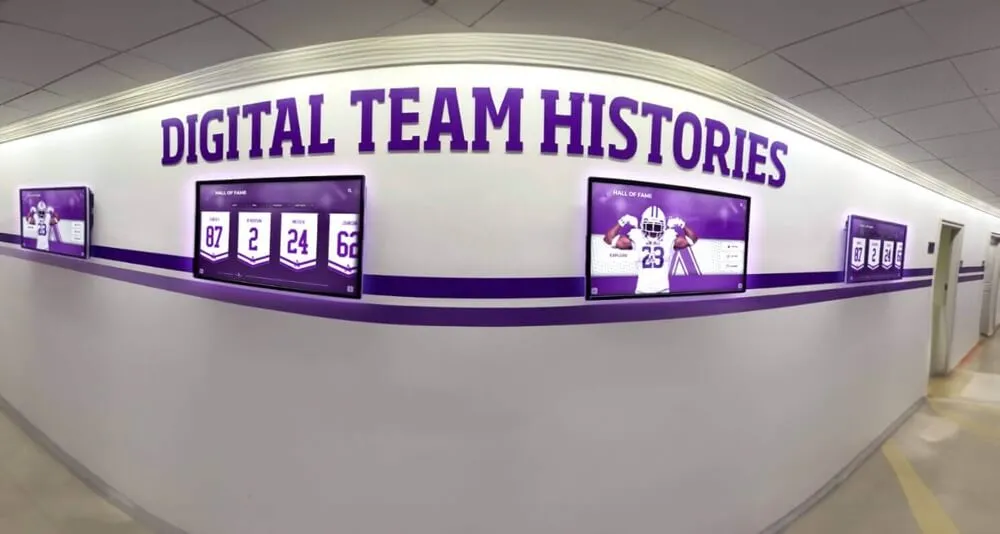
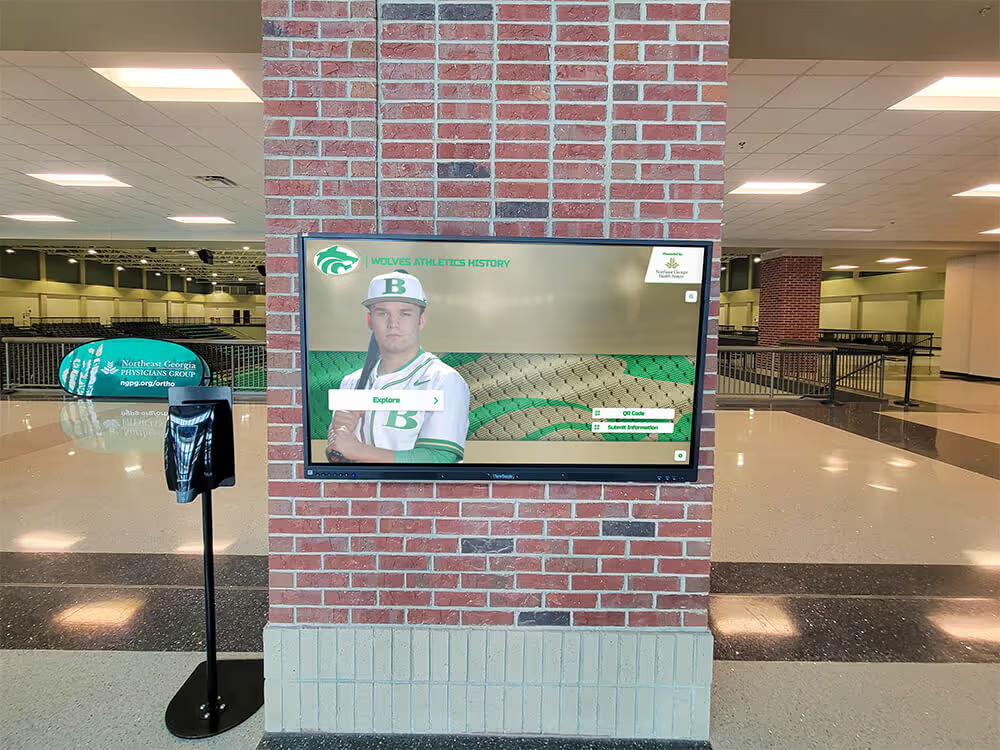
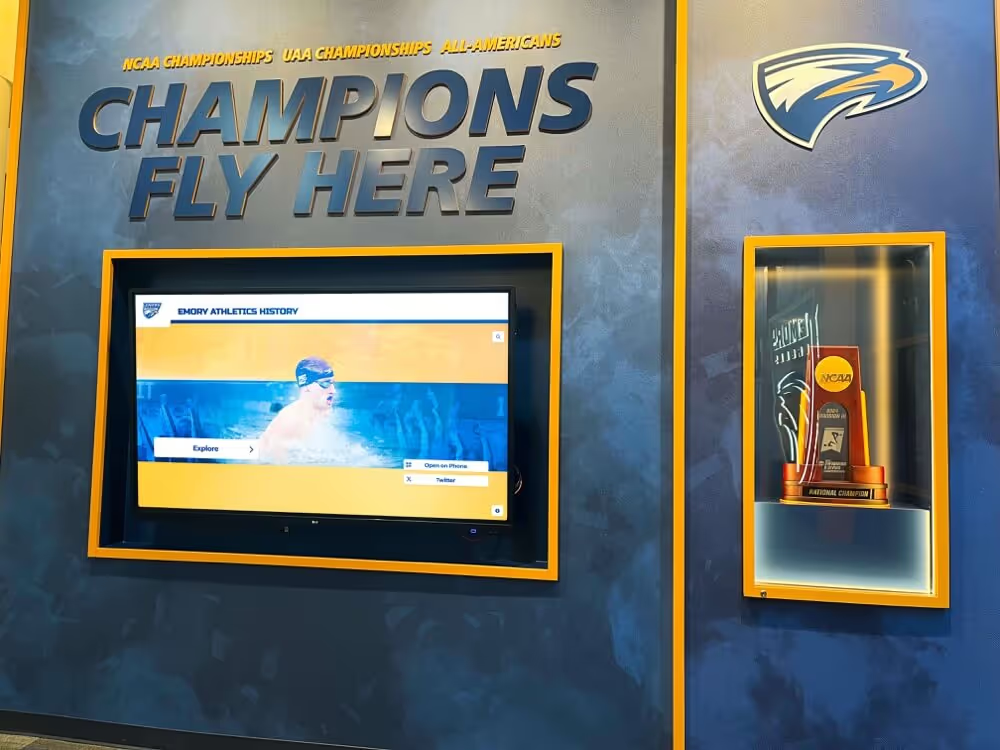
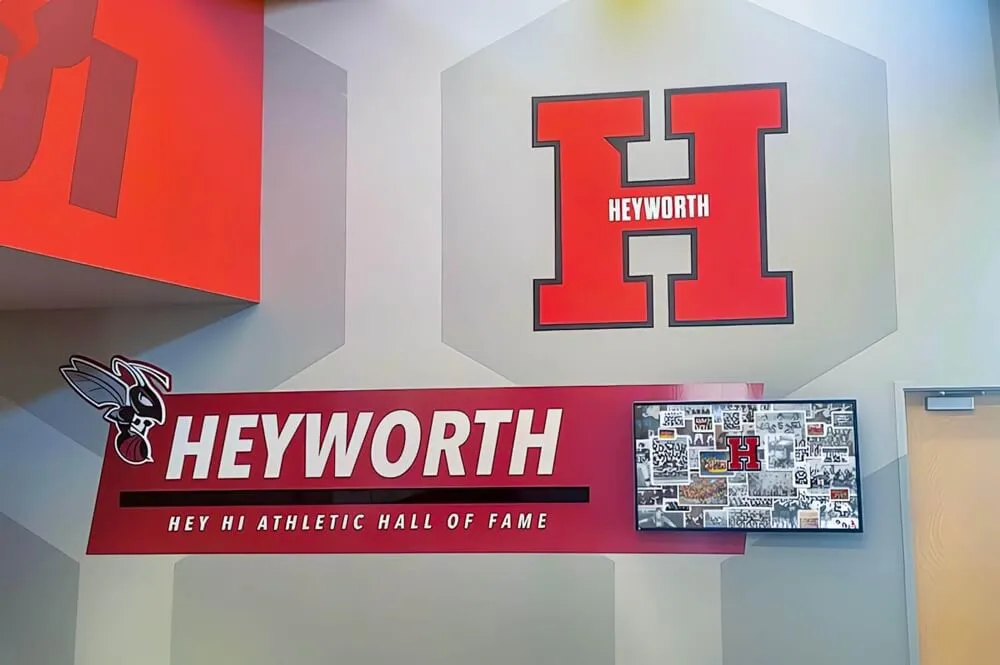
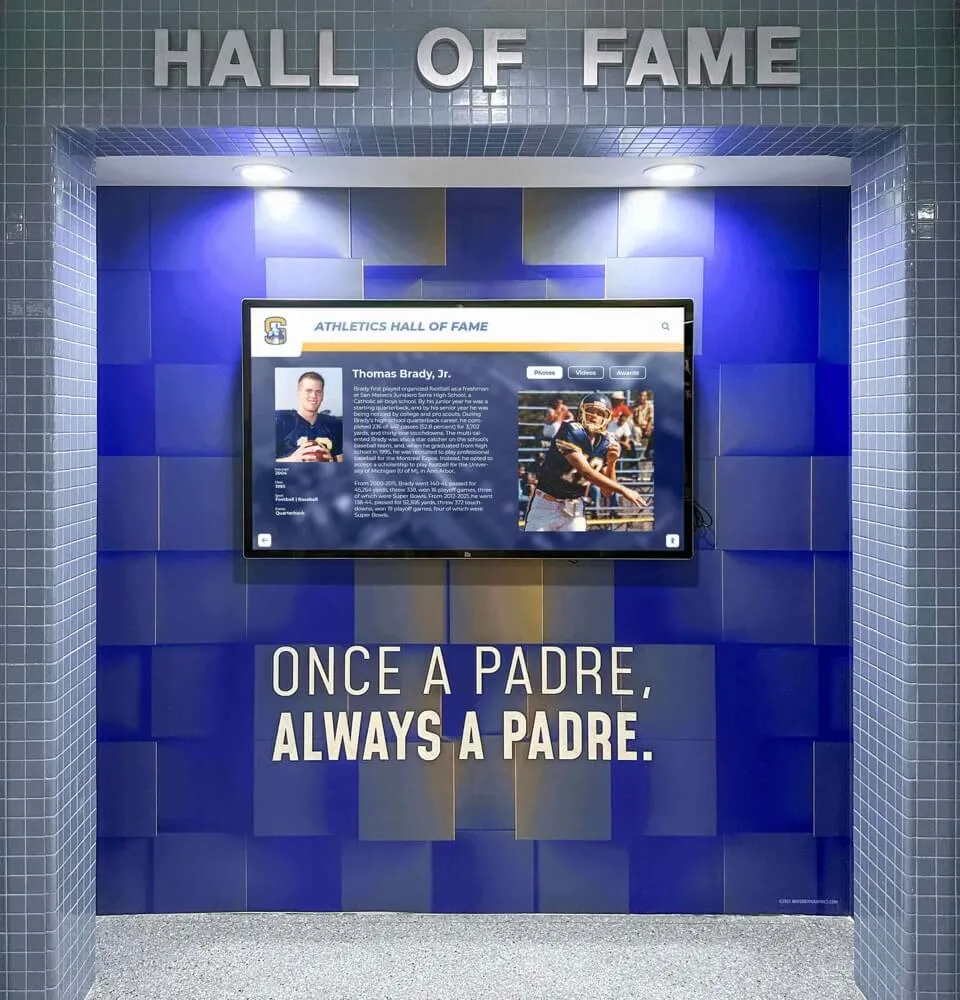
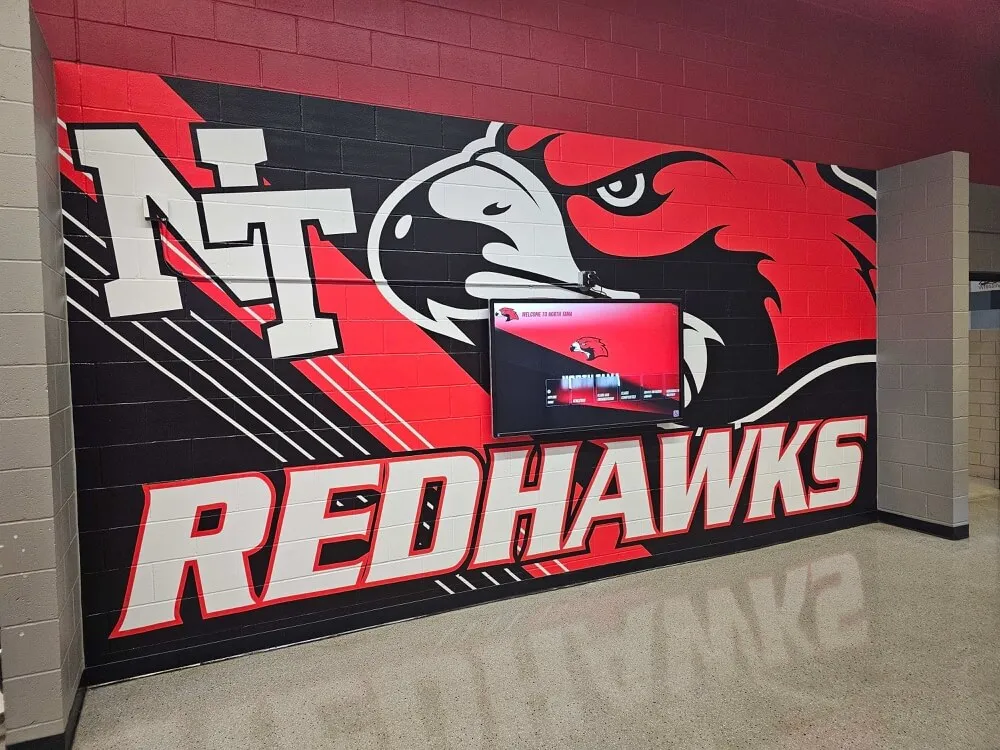
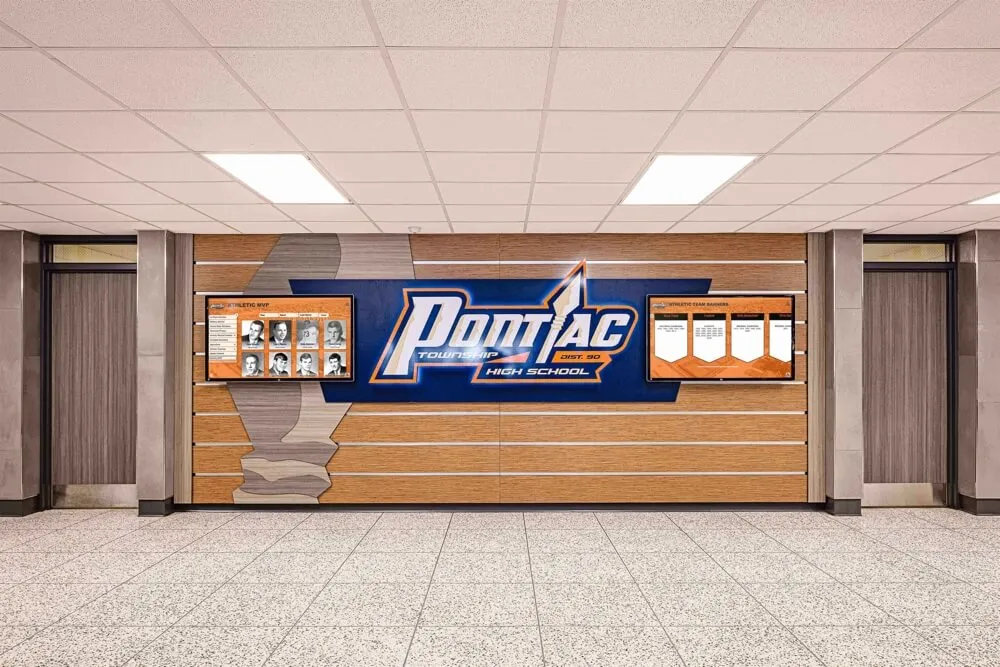
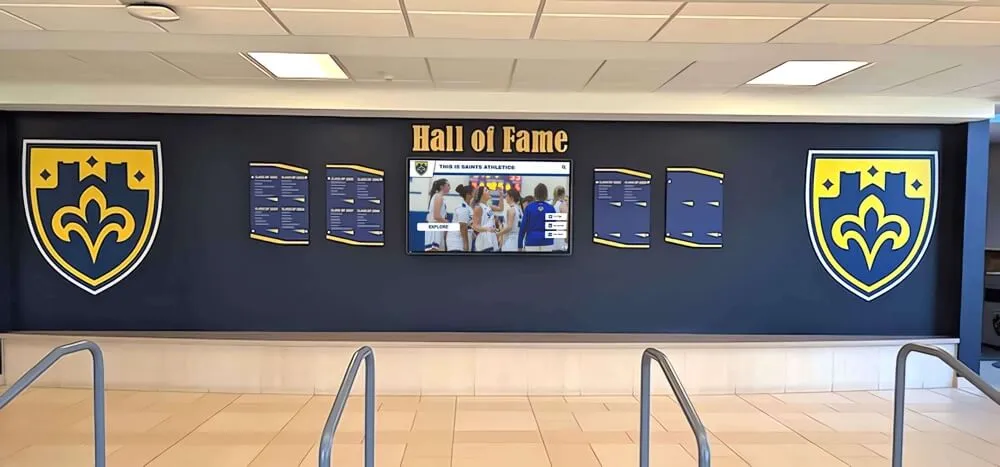
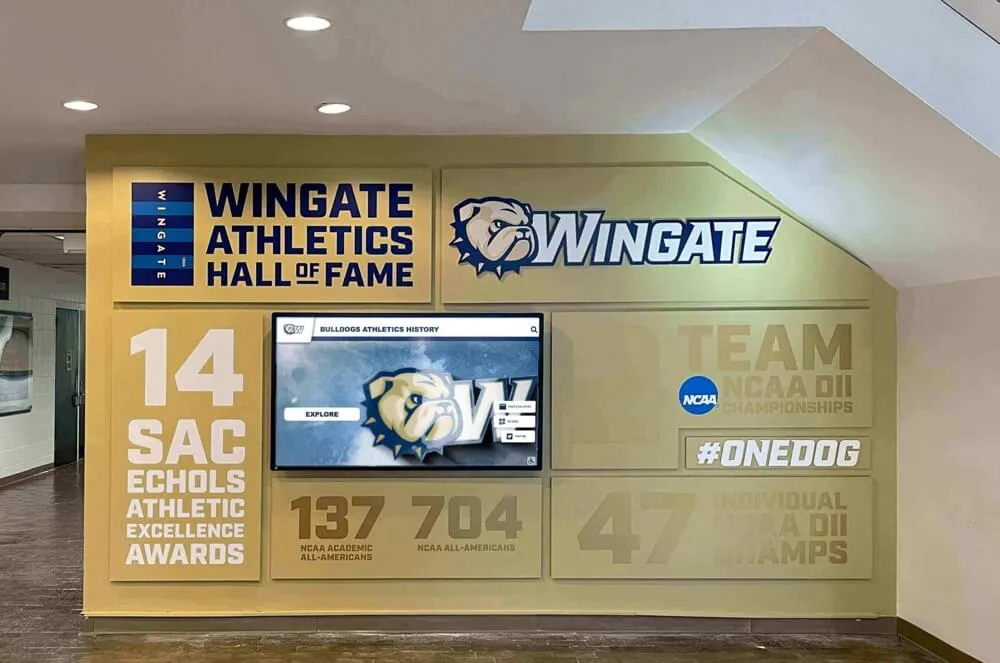
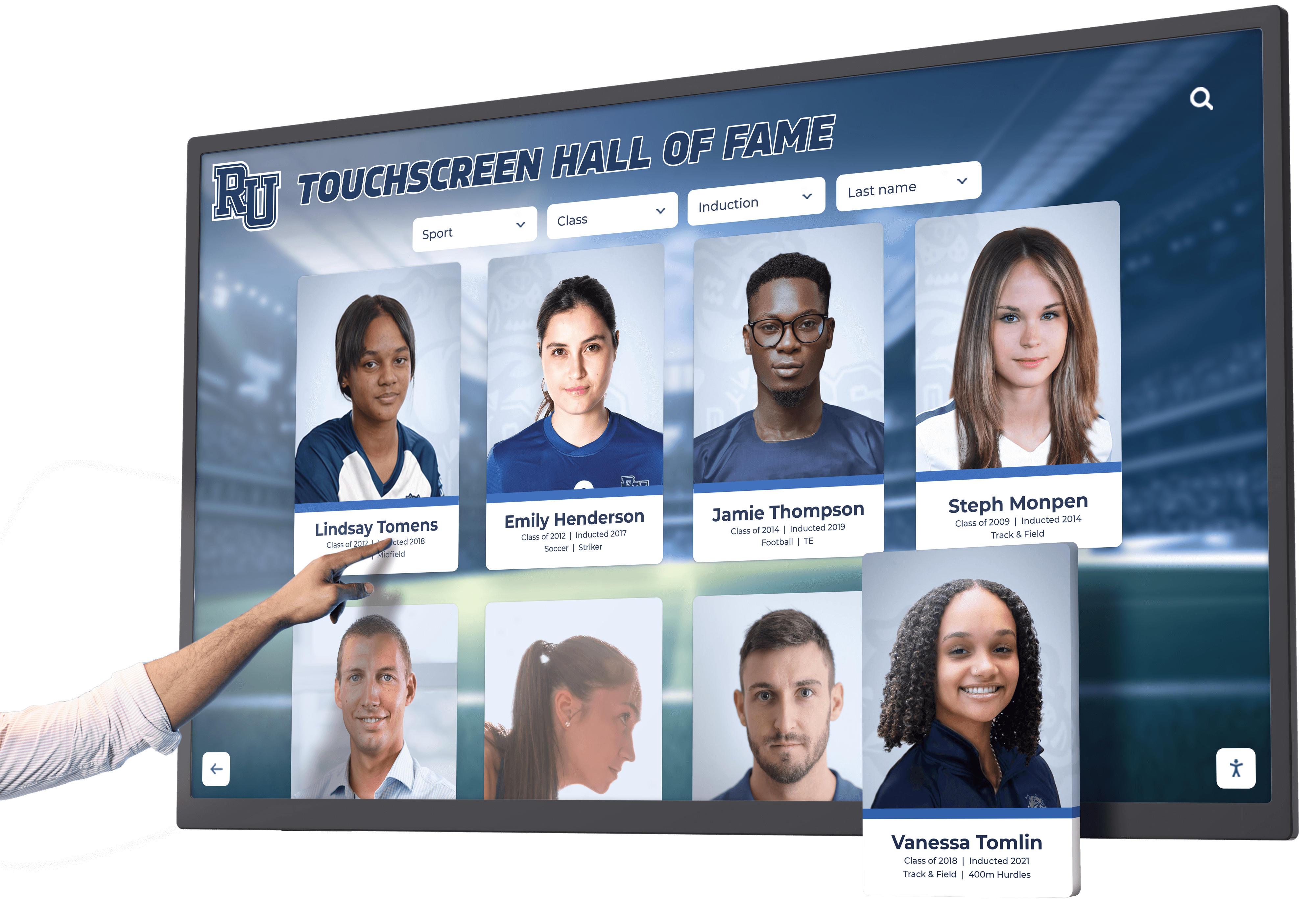
Modern digital recognition platforms transform static plaques into engaging interactive experiences accessible both on-site and online
Ideal Organizations
Educational institutions, athletic programs, corporations, nonprofit organizations, and associations seeking recognition solutions without requiring custom development or technical teams. These platforms work particularly well when organizations prioritize rapid implementation, ease of ongoing content management, and proven feature sets optimized for celebrating achievements.
Leading Solutions
Platforms like Rocket Alumni Solutions specialize exclusively in recognition displays, providing comprehensive turnkey systems that include hardware, software, implementation support, and ongoing content management capabilities designed specifically for schools, universities, athletic programs, and organizations celebrating institutional achievements and heritage.
Website-Based Recognition Systems
Organizations with existing websites can implement virtual halls of fame as integrated website sections using content management systems and web development.
Implementation Approaches
WordPress or Drupal-based solutions leverage plugins and custom post types creating searchable recognition databases within existing websites. Custom web development using modern frameworks like React, Next.js, or Vue.js provides complete design control and integration with existing systems. Headless CMS platforms like Contentful, Sanity, or Strapi enable flexible content management with custom frontend implementations.
Advantages and Limitations
Website-based approaches integrate seamlessly with existing web presence, leverage familiar content management tools, require no additional platforms or separate logins, and enable complete customization matching organizational branding. However, they typically lack features specific to recognition like profile templates, don’t include physical touchscreen display capabilities, require ongoing web development expertise for enhancements, and may struggle with complex search and filtering requirements without specialized development.
Best Applications
Organizations with capable web development teams, institutions wanting recognition integrated directly into main websites, programs with limited budgets avoiding specialized platform costs, and scenarios where online-only access (without physical displays) meets requirements.
Interactive Touchscreen Kiosk Platforms
Organizations prioritizing physical on-site displays can implement touchscreen kiosks using interactive kiosk software platforms.
Platform Categories
General interactive kiosk software like Intuiface, PandaSuite, or ScreenCloud provides visual development environments creating custom touchscreen applications without coding. Digital signage platforms with interactive features including BrightSign, Rise Vision, and OptiSigns support basic touch interaction. Game engines like Unity or Unreal Engine enable sophisticated 3D experiences for museums and experiential installations.
Considerations
These platforms excel at creating engaging physical displays but typically require separate solutions for web accessibility, demand more technical expertise for implementation compared to turnkey recognition systems, and necessitate content management through platform-specific tools rather than recognition-optimized interfaces.
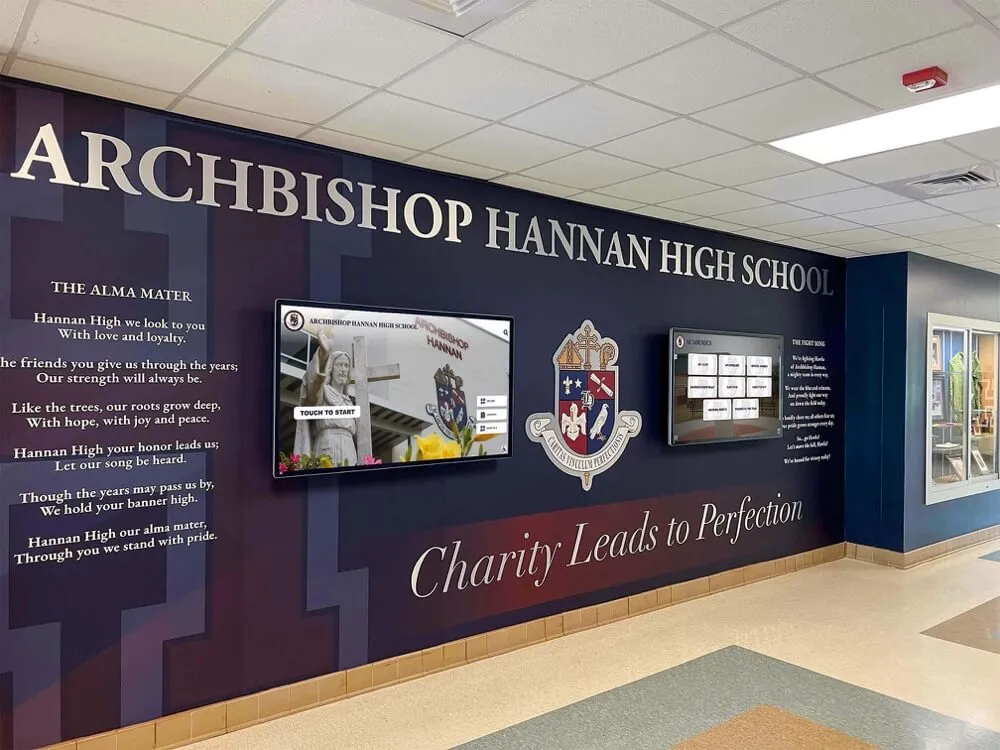
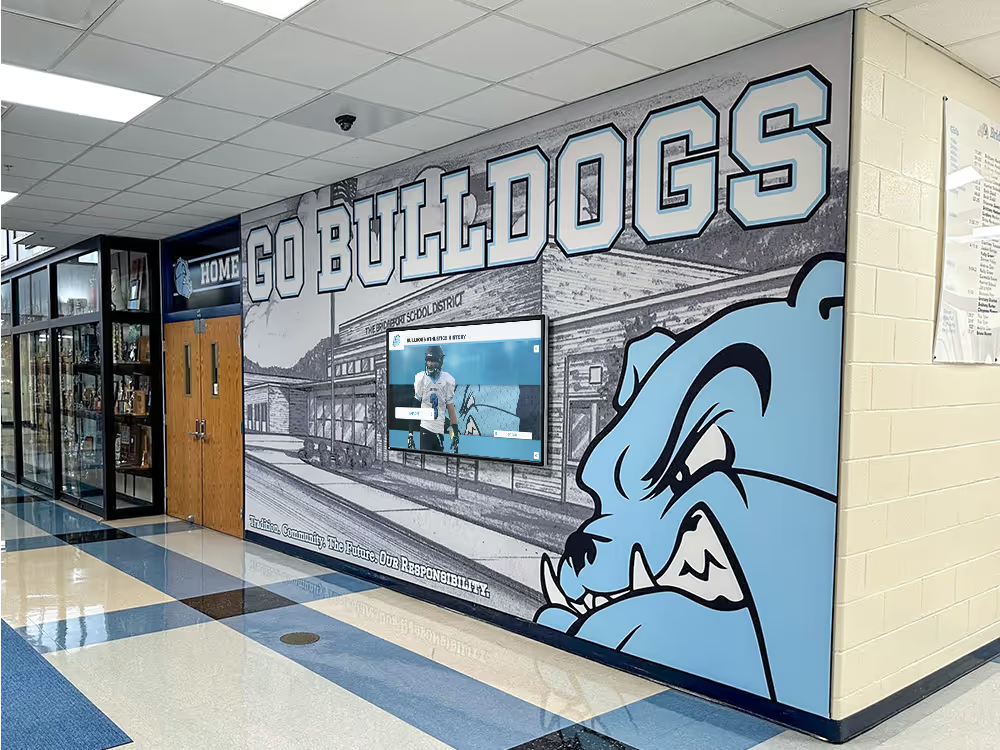
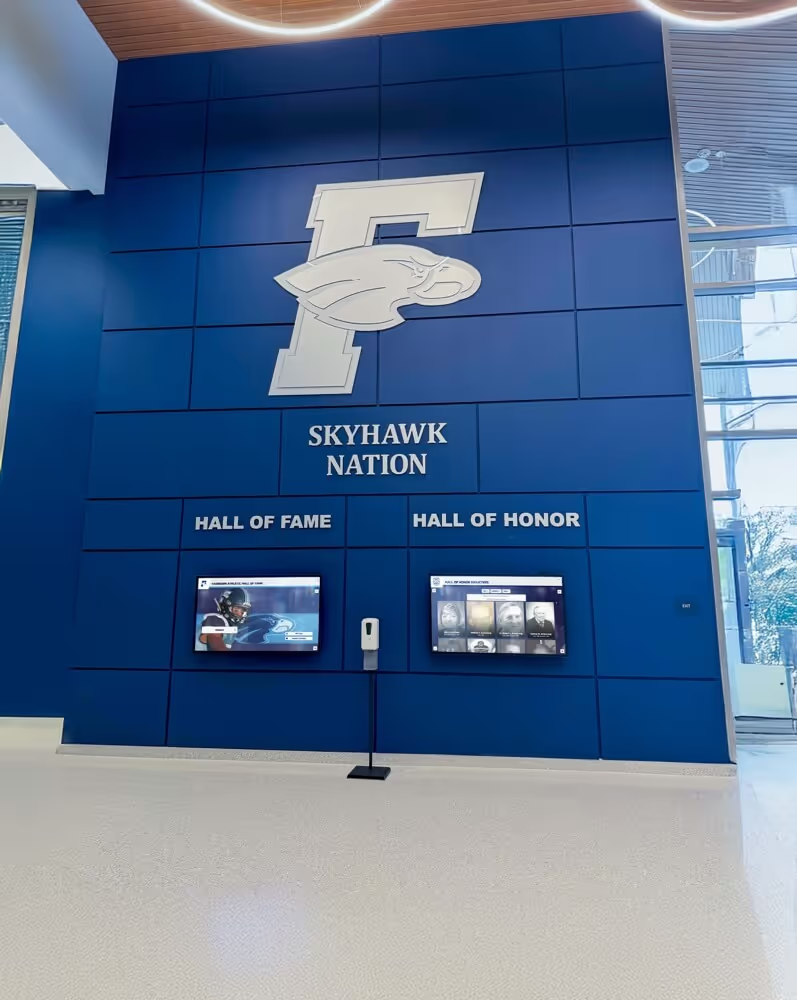
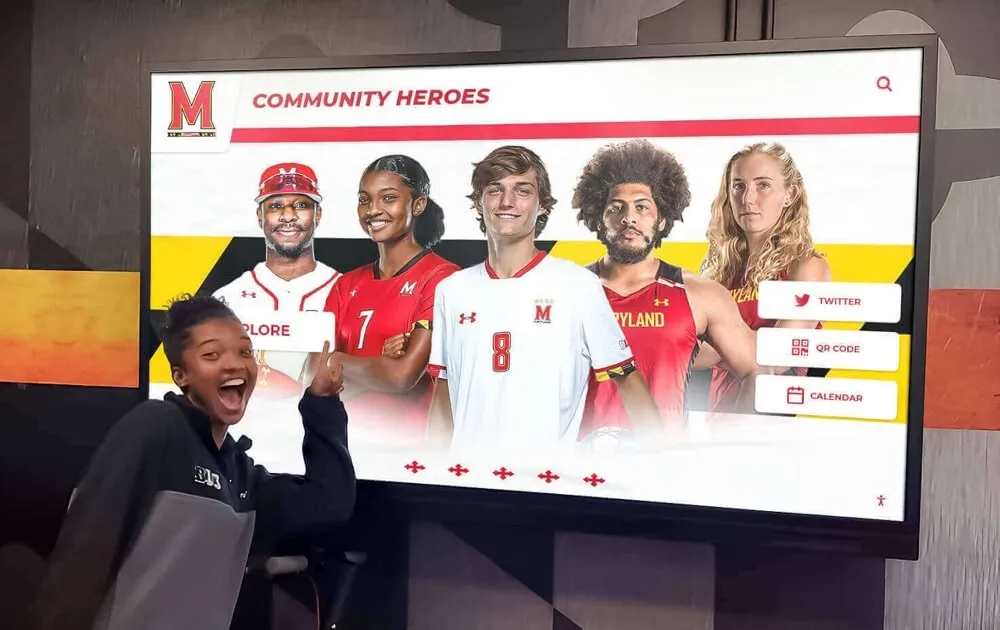
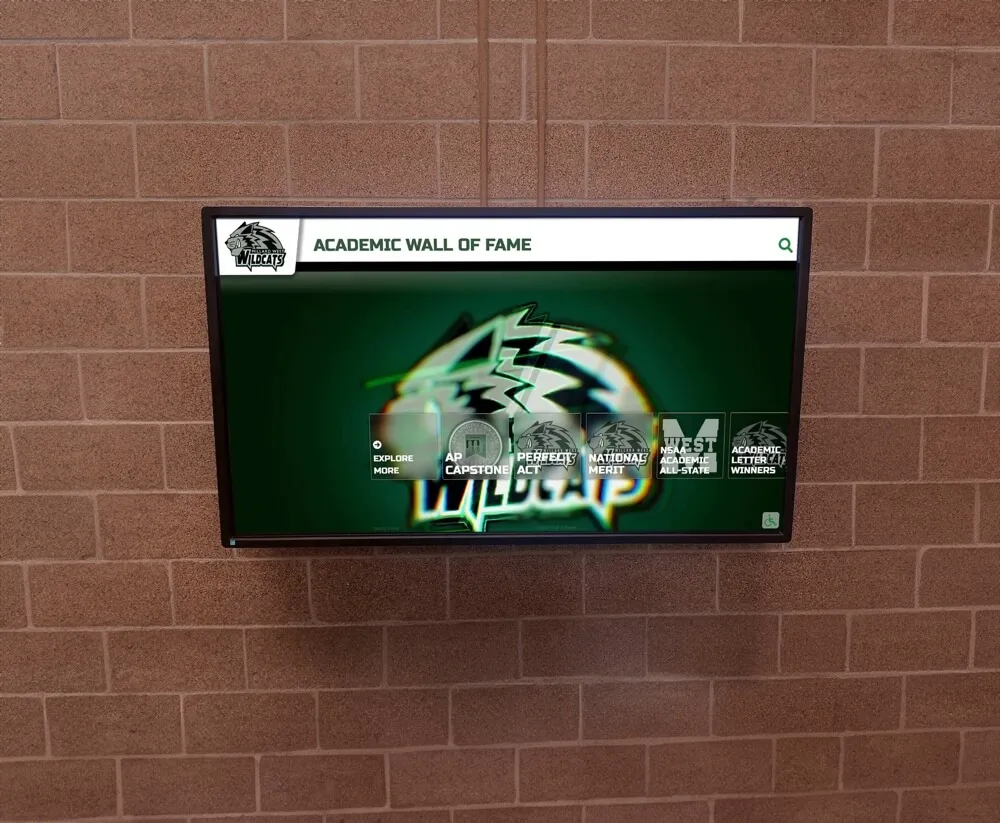
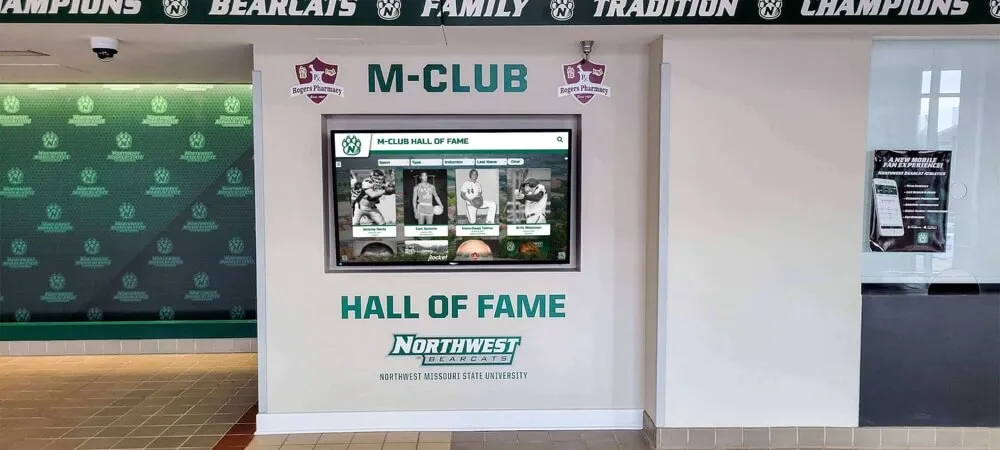
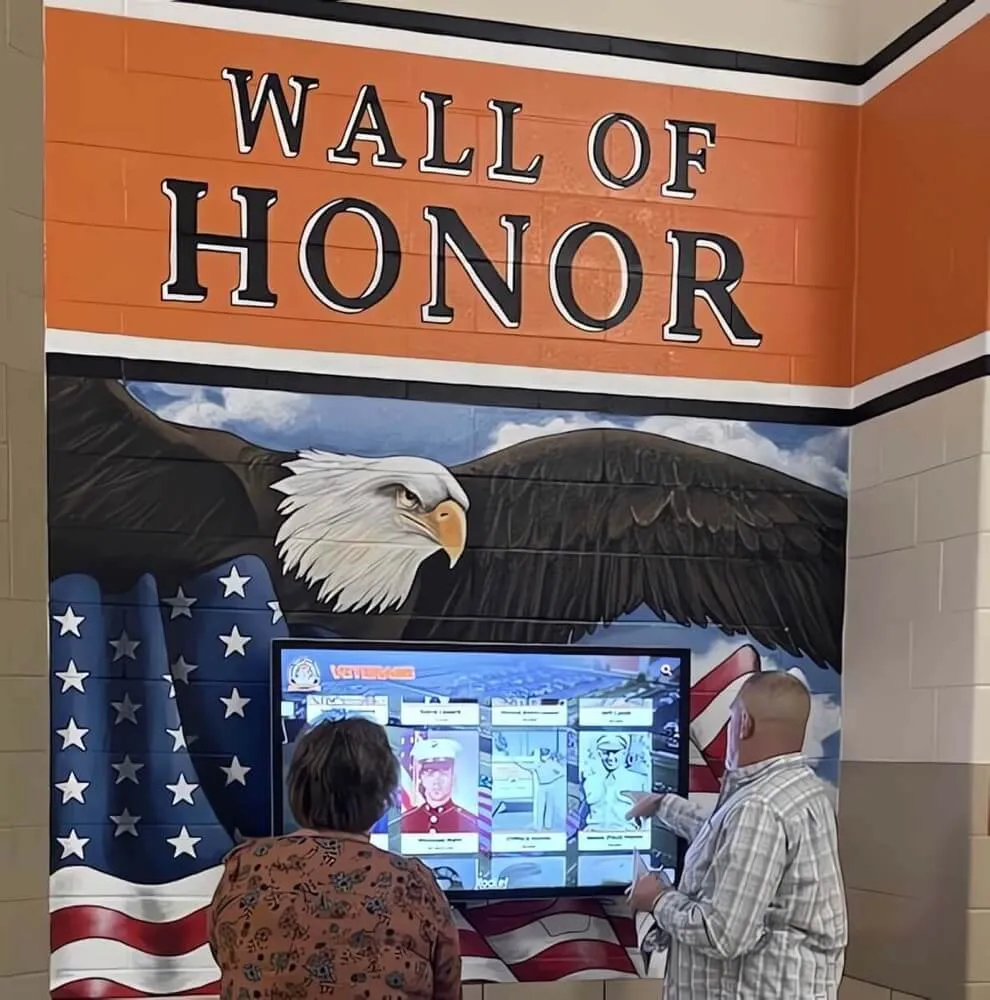
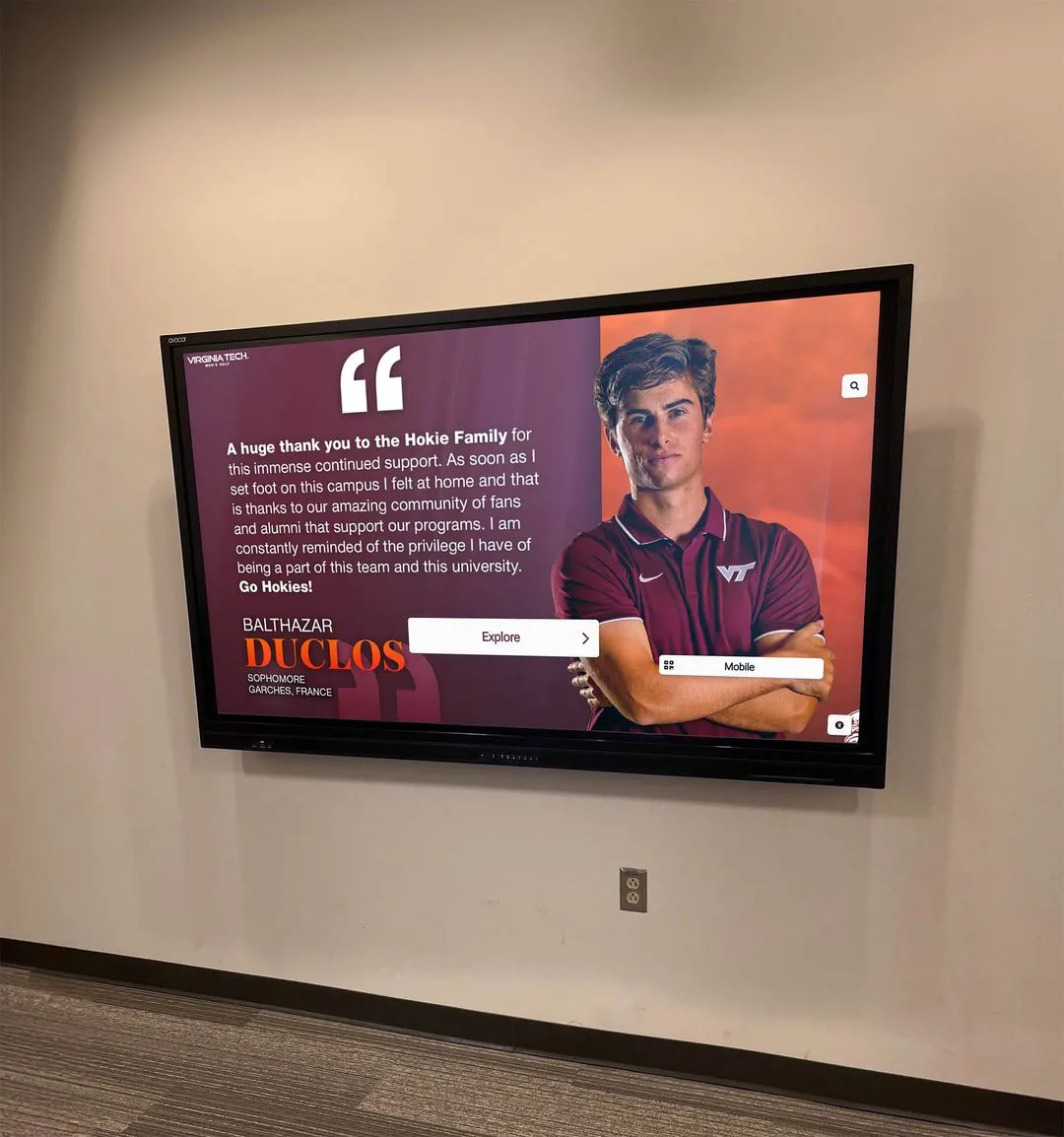
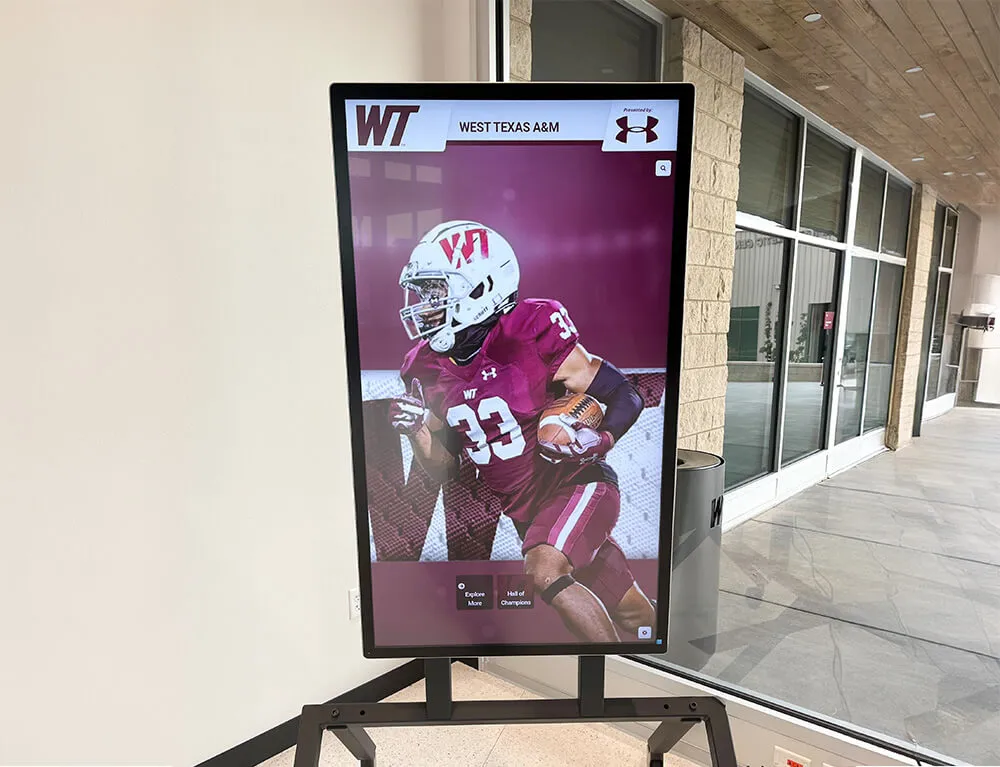
Physical touchscreen displays create powerful recognition moments throughout daily campus life
Organizations implementing comprehensive digital hall of fame systems typically prioritize platforms offering both physical displays and web accessibility in integrated solutions.
Custom Development Solutions
Organizations with unique requirements and dedicated technical resources can commission completely custom virtual hall of fame platforms.
Development Approaches
Custom solutions range from web applications built using modern JavaScript frameworks to native mobile applications, bespoke touchscreen software, or sophisticated database-driven systems integrating with existing institutional infrastructure.
When Custom Development Makes Sense
Situations justifying custom development include highly specialized requirements impossible with existing platforms, complex integration needs with legacy systems, desire for complete intellectual property ownership, sufficient budget (typically $50,000-200,000+ for comprehensive systems), and in-house technical teams capable of ongoing maintenance and enhancements.
Trade-offs
Custom development provides unlimited flexibility and complete control but demands substantial upfront investment, ongoing technical resources for maintenance and updates, longer implementation timelines compared to turnkey solutions, and risks of becoming outdated without continuous enhancement investments.
Essential Features for Virtual Hall of Fame Platforms
Evaluating platforms requires assessing capabilities across key functional dimensions determining long-term success and user satisfaction.
Content Management Capabilities
The ease of adding inductees, updating information, and managing content determines whether your virtual hall of fame remains current or becomes a stagnant digital museum.
Intuitive Administrative Interfaces
Quality platforms provide visual content editors showing real-time previews, drag-and-drop media uploads requiring no technical knowledge, template-based profile creation ensuring consistency, bulk import tools efficiently adding historical inductees, and role-based permissions enabling distributed content management with appropriate oversight.
Test content management during platform evaluation by actually creating sample profiles. If the process feels complicated or requires technical assistance, staff won’t maintain content consistently after launch.
Flexible Profile Structures
Different recognition types require different information—athletic profiles need statistics and records, academic honorees require degree and career information, donor walls demand gift-level flexibility, and alumni spotlights benefit from career update fields. Platforms should support customizable profile templates accommodating diverse recognition categories within unified systems.
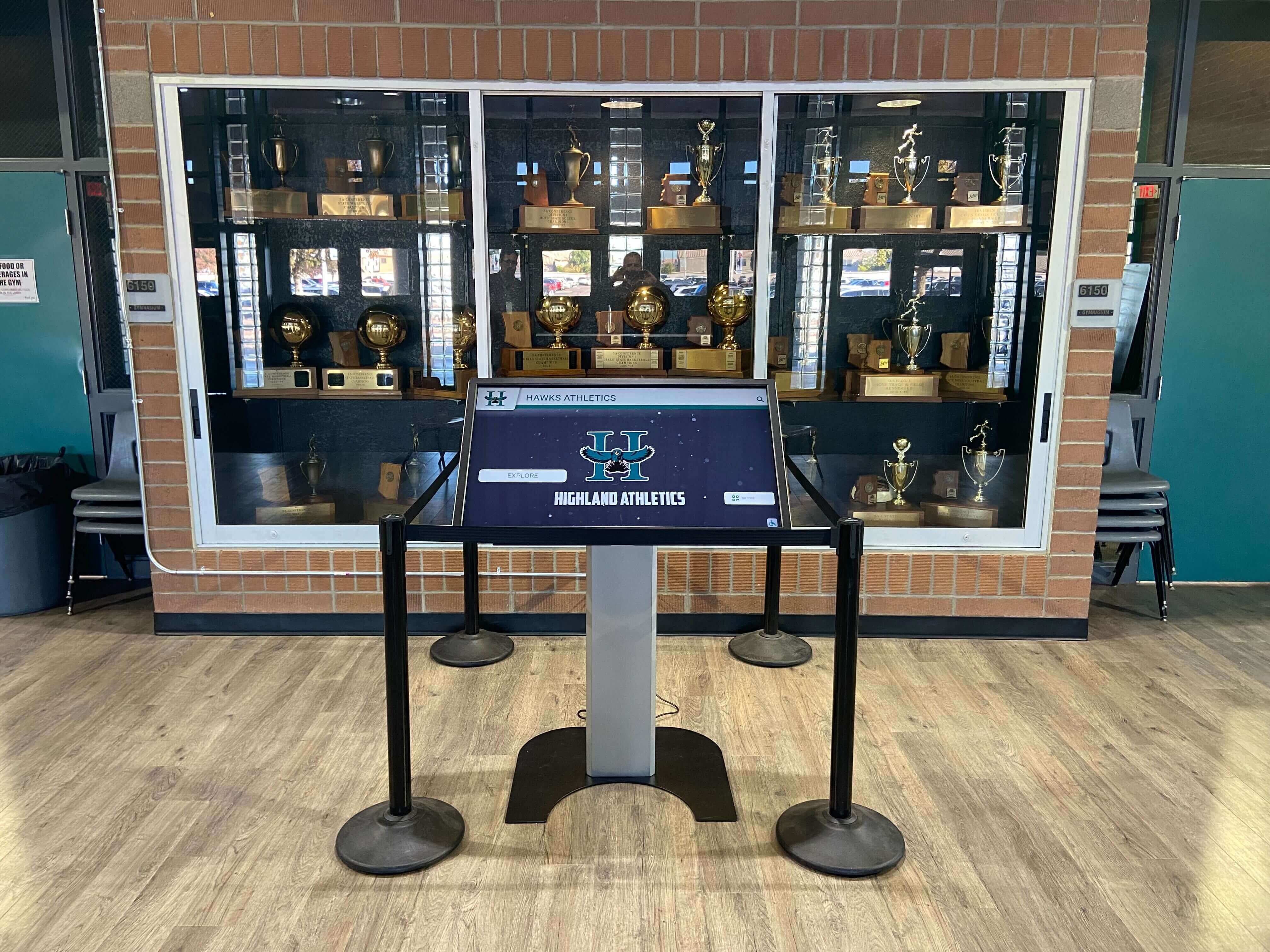
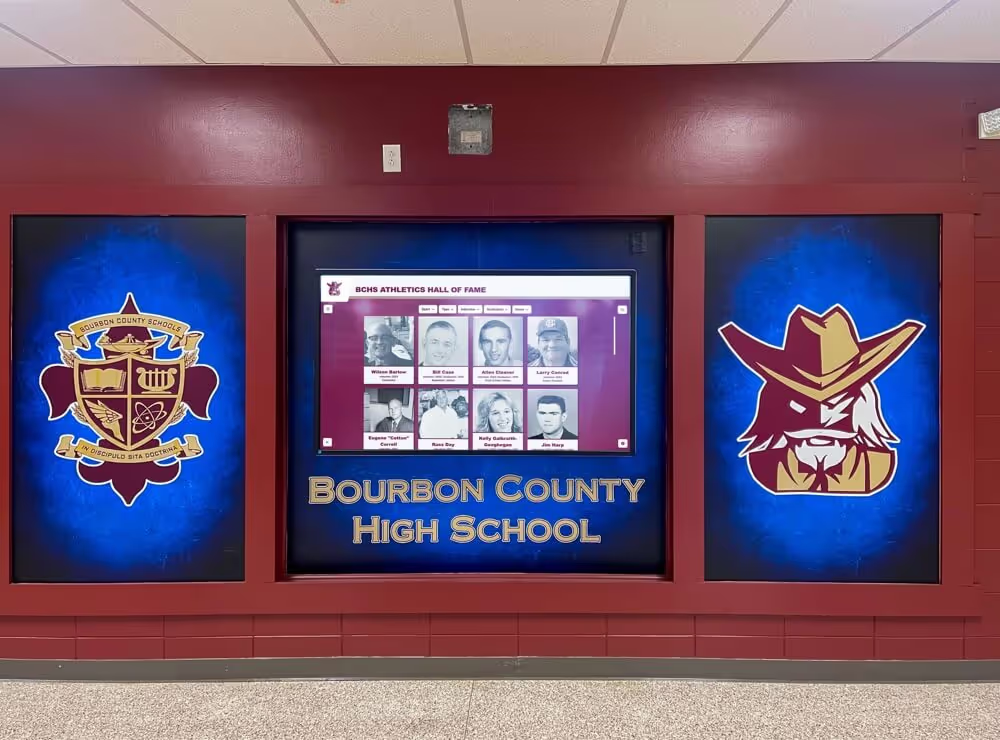
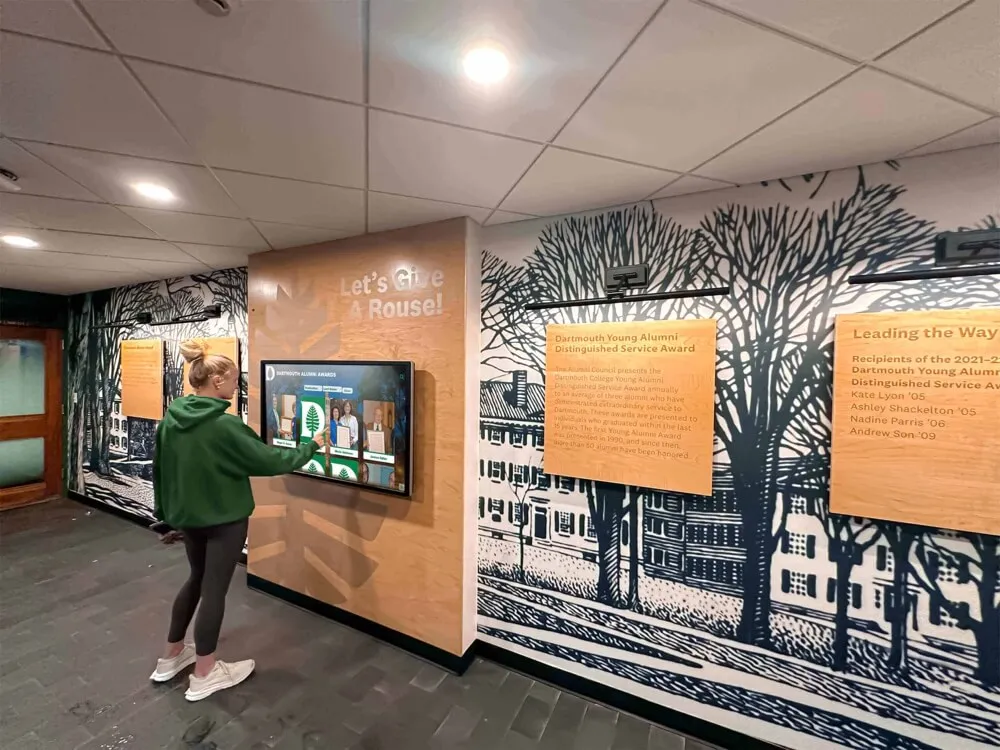
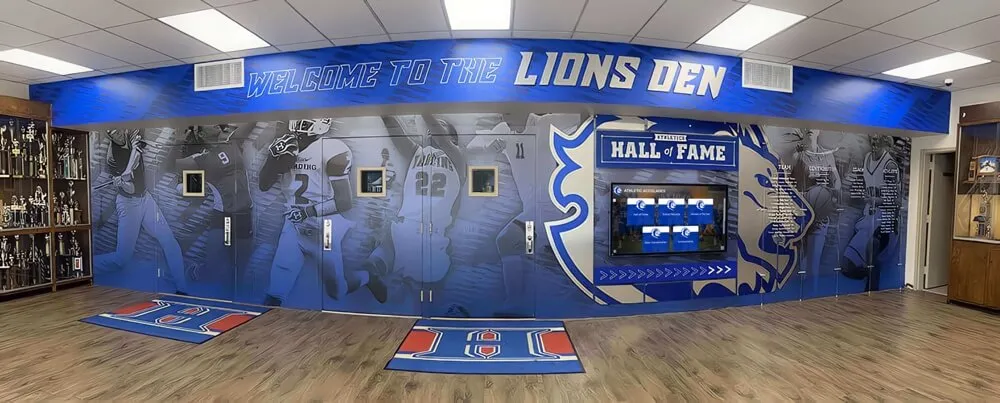
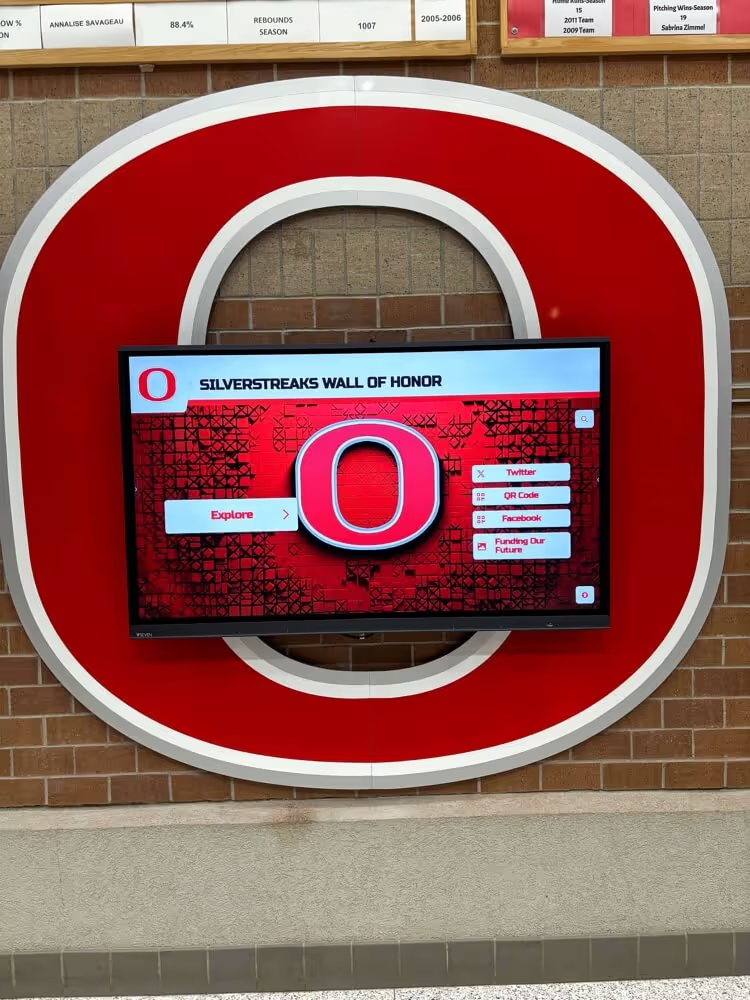
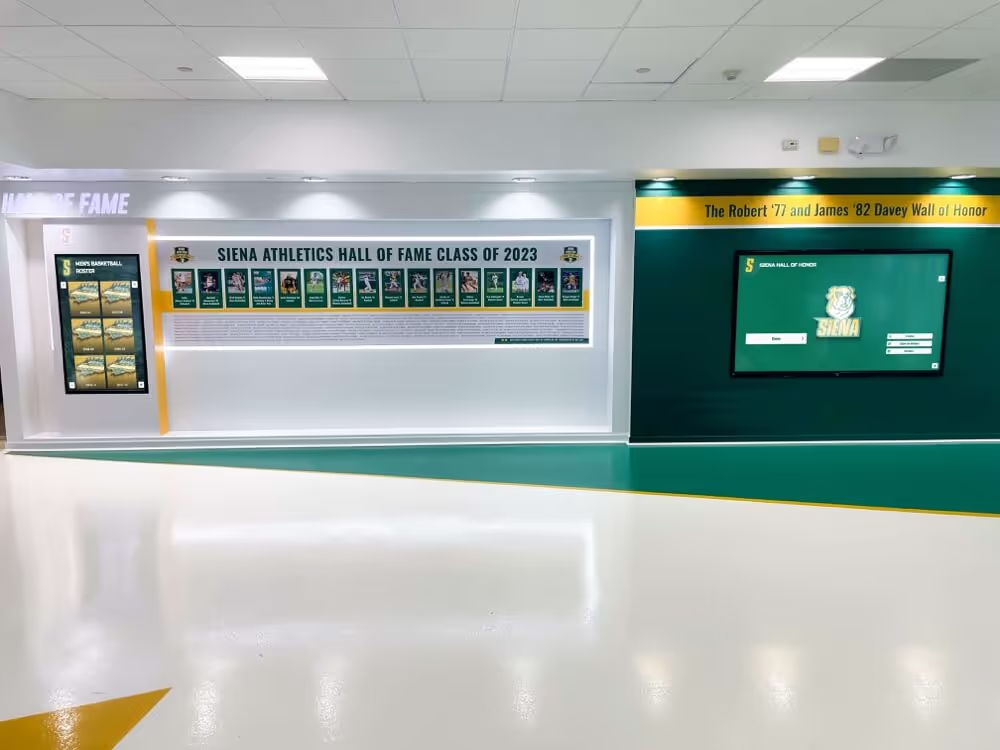
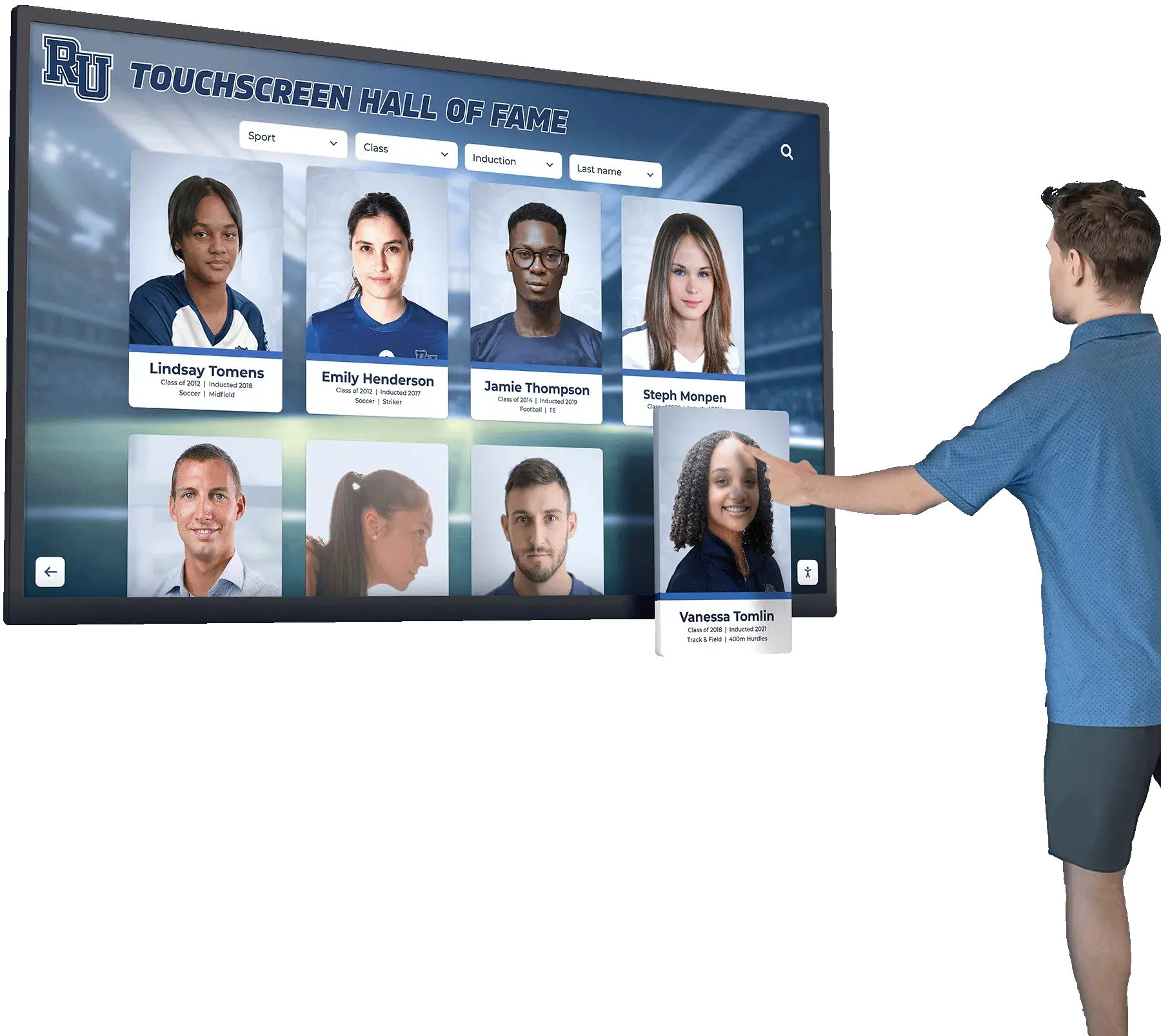
Modern platforms complement traditional recognition, expanding capacity while preserving institutional heritage
Multimedia Integration
Effective storytelling requires combining multiple media types. Evaluate platforms on photo galleries with unlimited images per profile, video hosting and streaming capabilities, PDF document embedding for news articles or certificates, audio integration for oral histories, and sufficient storage capacity (ideally unlimited or very high limits without additional costs).
Schools implementing academic recognition programs benefit from platforms supporting diverse media types showcasing multifaceted achievements.
Search and Discovery Features
Visitors approach virtual halls of fame with different goals—finding themselves, searching for classmates, exploring particular eras, or browsing achievements chronologically. Support these diverse needs through powerful search and filtering.
Essential Search Capabilities
Full-text search across all content, advanced filtering by sport/category, year, achievement type, or custom criteria, alphabetical browsing for systematic exploration, timeline visualizations showing chronological institutional development, featured content highlighting notable inductees, and related content suggestions connecting similar achievements or teammates.
Poor search frustrates users and limits engagement. The difference between finding yourself in three seconds versus three minutes dramatically impacts satisfaction and sharing likelihood.
Mobile-Optimized Navigation
With most web traffic coming from smartphones, mobile experience is non-negotiable. Quality platforms provide responsive designs adapting to any screen size, touch-optimized interfaces for smartphones, fast loading times even on cellular networks, and intuitive navigation working equally well on phones, tablets, and desktop computers.
Physical Display Integration
Organizations implementing on-site touchscreen displays alongside web platforms need unified systems managing both experiences from single content management interfaces.
Touchscreen Hardware Compatibility
Evaluate whether platforms work with standard commercial displays or require proprietary hardware creating vendor lock-in. Quality solutions support various screen sizes (43"-75" typical), accommodate both portrait and landscape orientations, work with leading commercial touchscreen brands, and enable hardware upgrades without software dependencies.
Organizations exploring touchscreen software solutions should prioritize platforms offering hardware flexibility and broad compatibility.
Display Management Features
Multi-location installations require centralized management updating all displays simultaneously, scheduled content enabling seasonal recognition rotation, analytics tracking usage at different locations, remote monitoring alerting to offline displays or technical issues, and content preview capabilities ensuring quality before publication.
Offline Operation
Not all installation locations have reliable internet connectivity. Quality platforms support offline operation with local content caching, automatic synchronization when connectivity available, and graceful degradation displaying cached content when real-time updates unavailable.
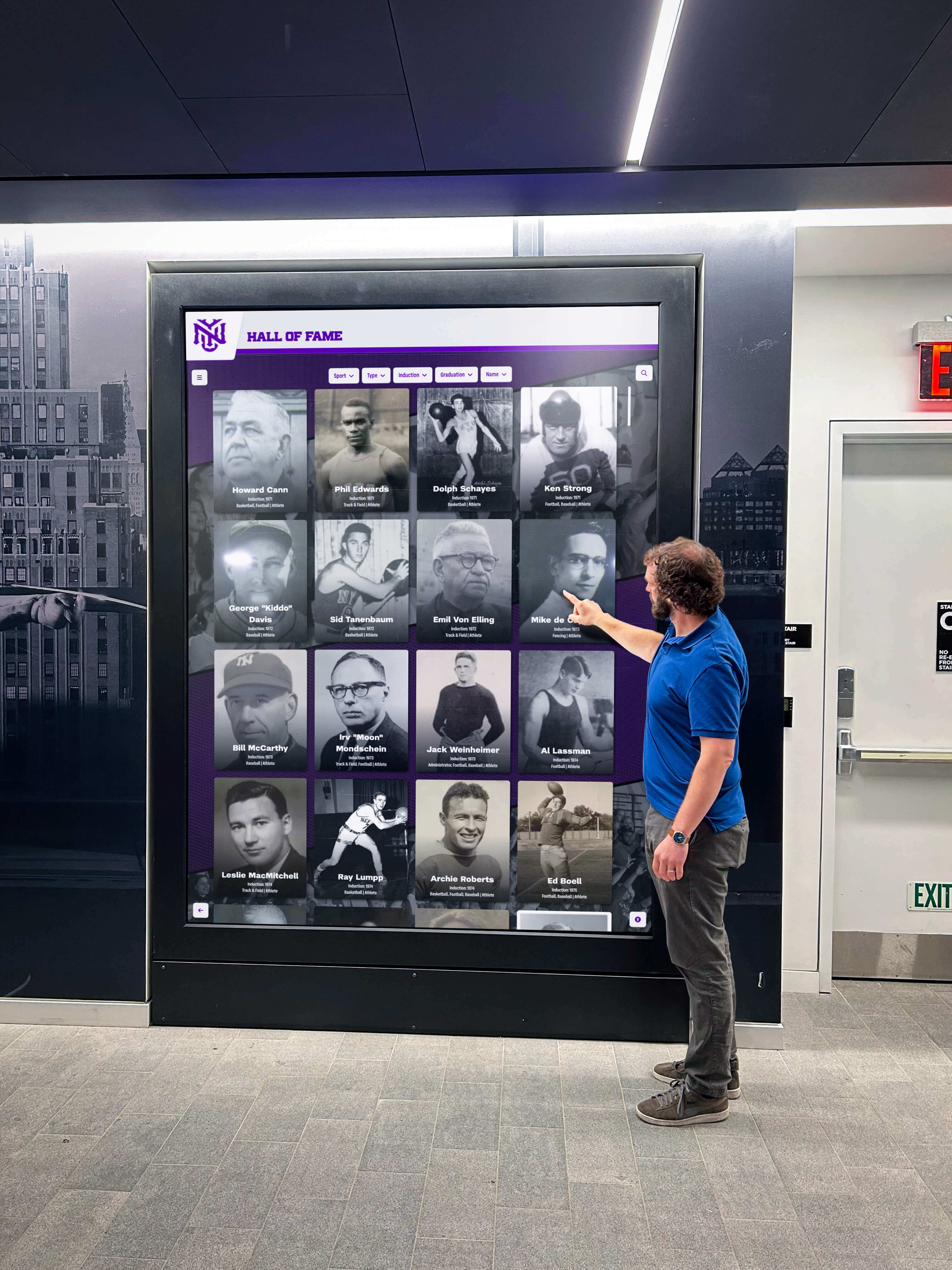
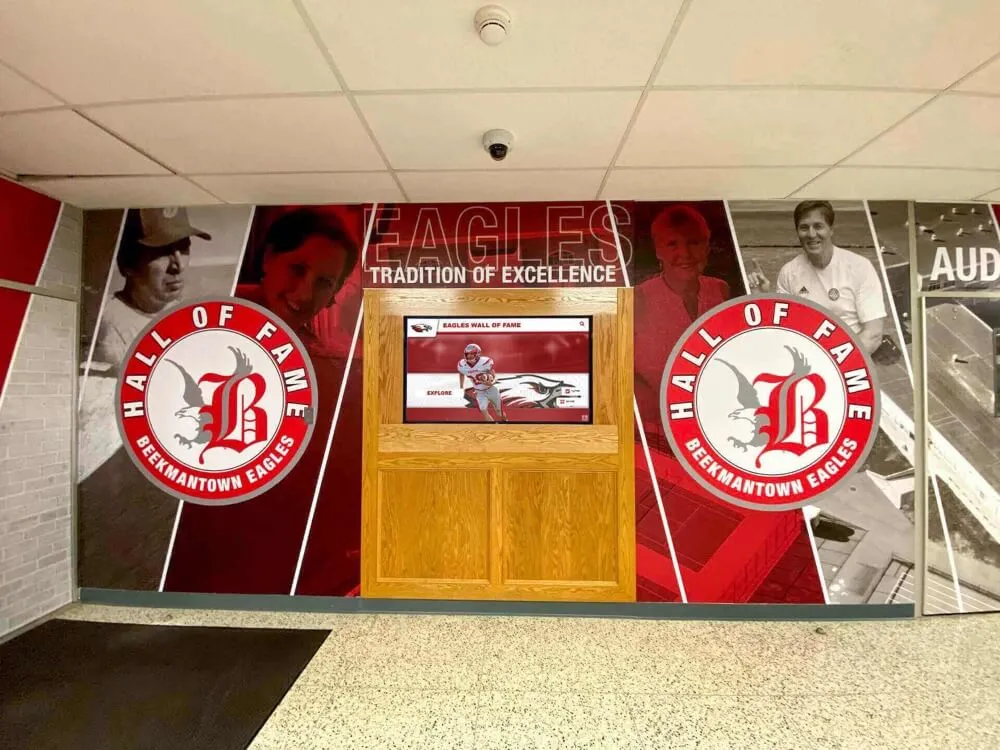
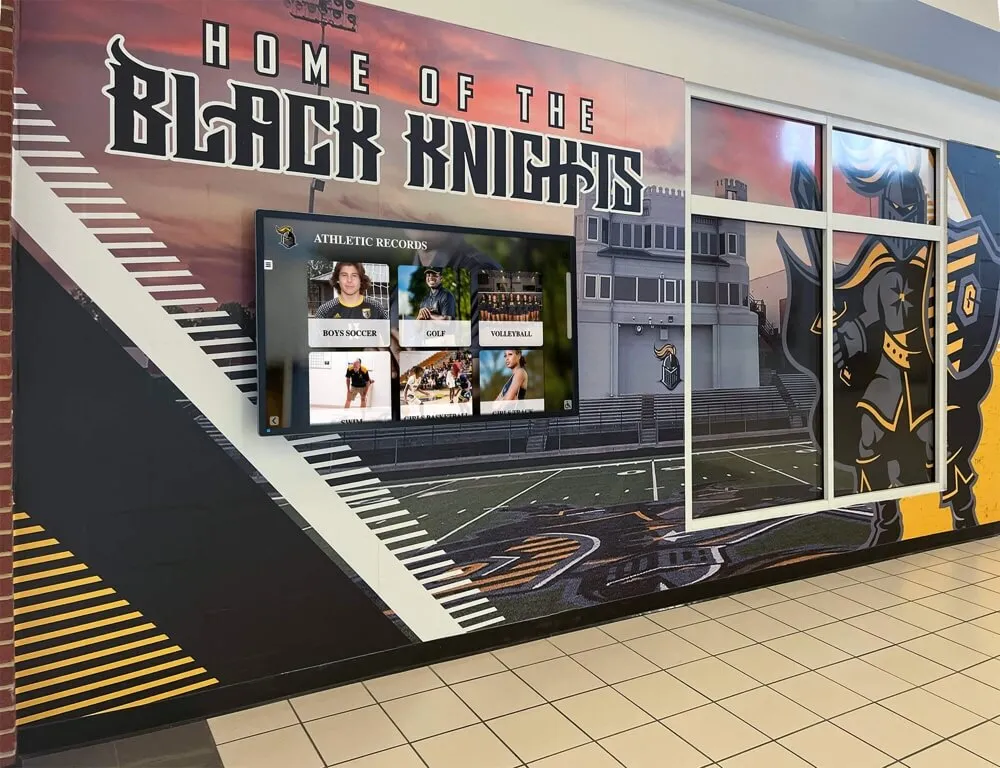
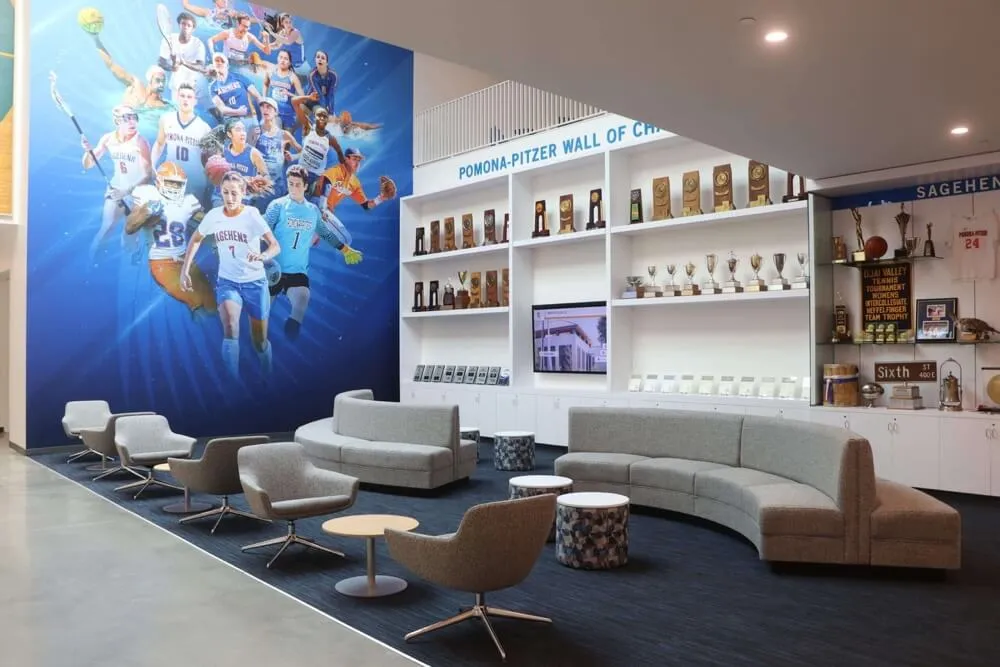
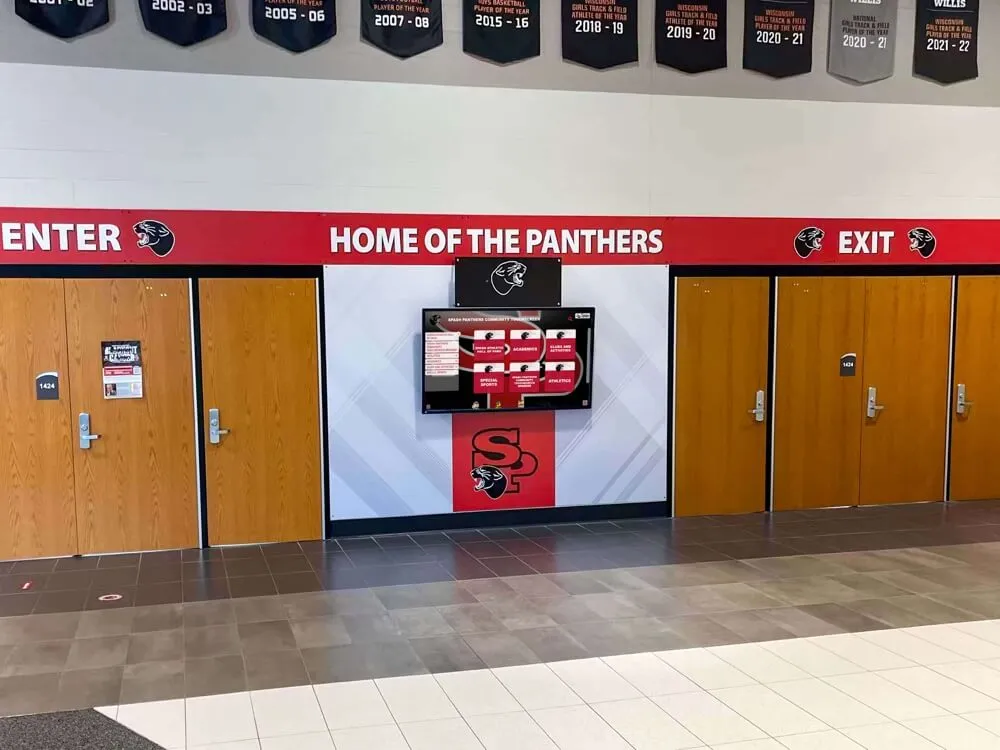
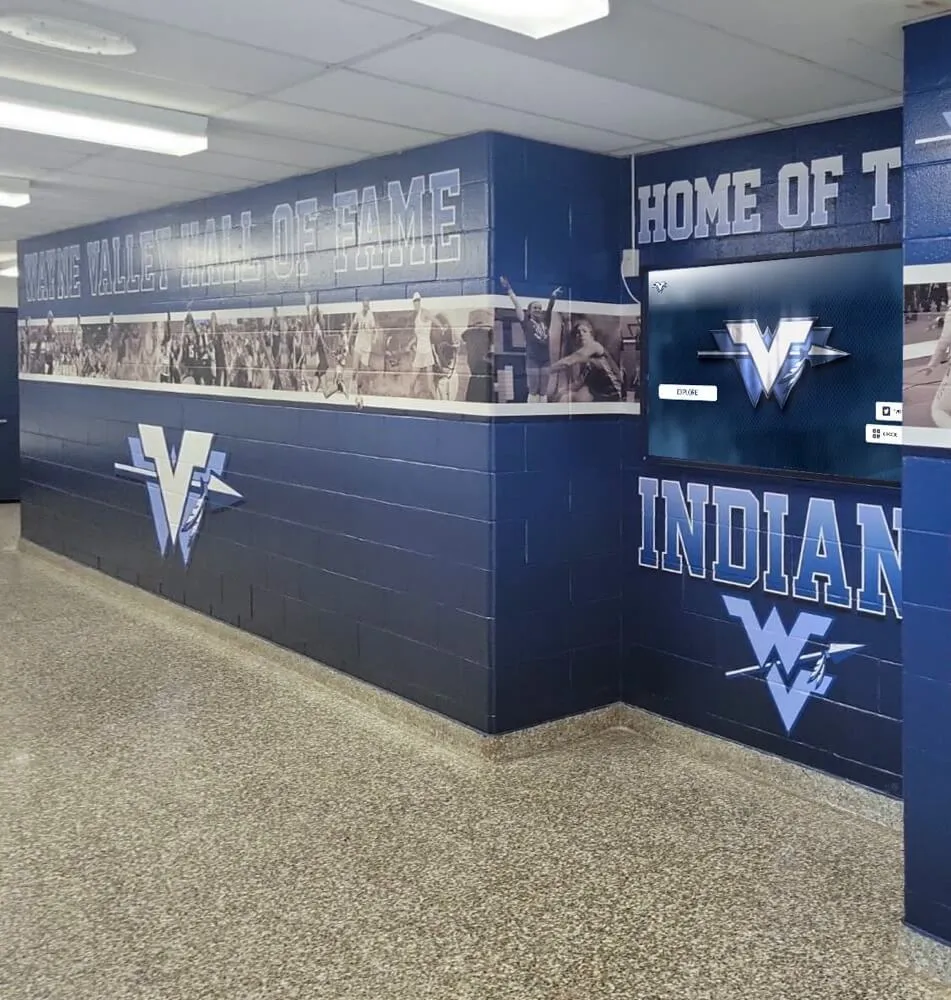
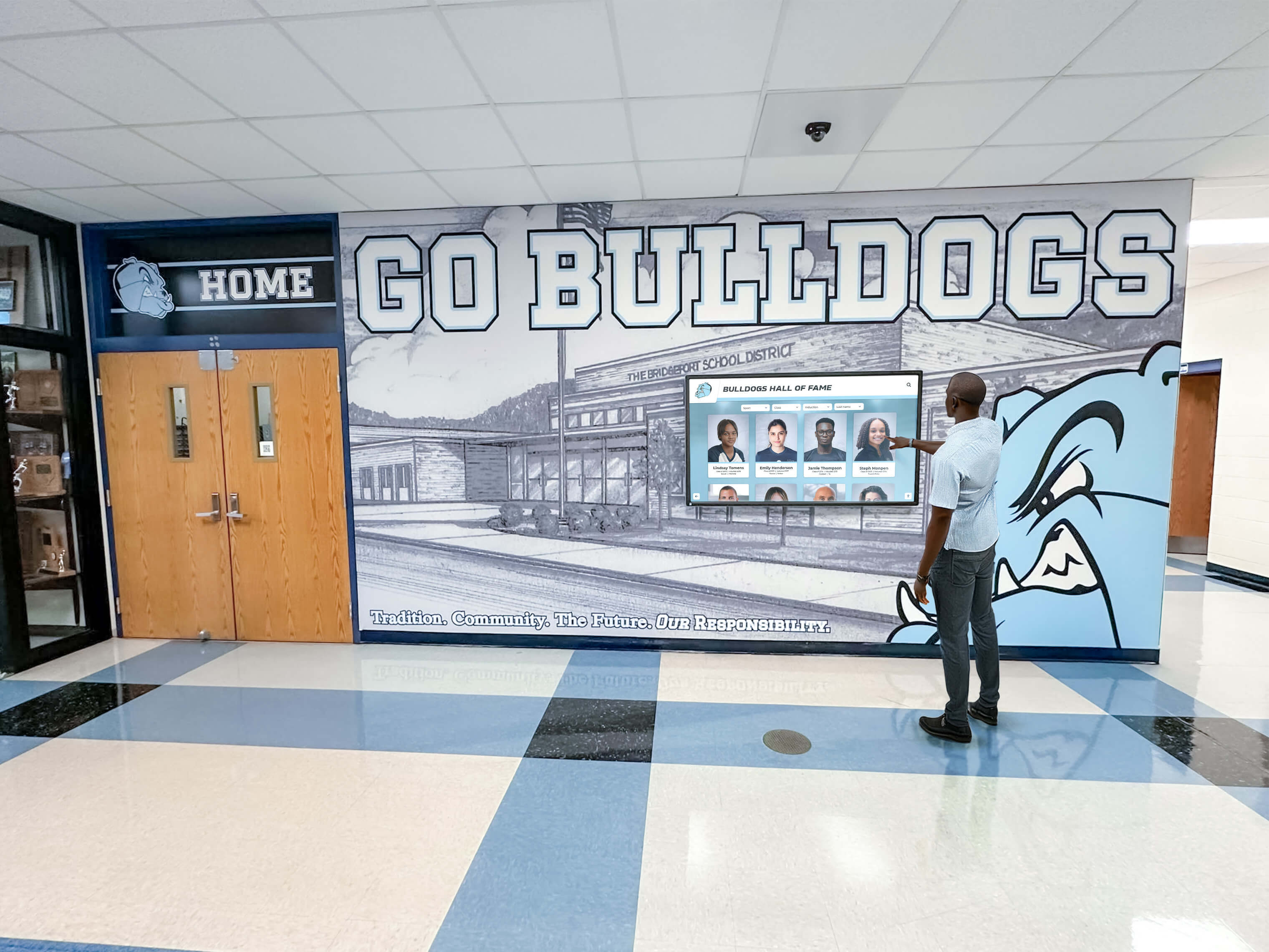
Strategic placement in high-traffic areas ensures recognition reaches broad audiences throughout daily facility usage
Web Platform Quality and Accessibility
Online accessibility extends recognition beyond campus boundaries, enabling alumni, families, and community members to explore achievements from anywhere.
Responsive Web Design
Web platforms must provide excellent experiences across all devices. Evaluate mobile optimization on actual smartphones, loading speed on cellular networks, intuitive navigation without desktop mouse dependencies, and consistent branding across touchscreen and web experiences.
Accessibility Compliance
Quality platforms ensure ADA compliance through screen reader compatibility, keyboard navigation support, high-contrast color schemes, text size flexibility, and alternative text for images. Educational institutions must particularly prioritize accessibility meeting legal requirements while serving diverse communities inclusively.
Social Sharing and Engagement
Enable inductees to share recognition with personal networks through social media integration, direct link sharing to individual profiles, embed capabilities for organizational websites, QR code generation linking physical materials to digital profiles, and email sharing with professional formatting.
Alumni sharing their recognition extends visibility exponentially, creating organic promotion impossible with physical-only displays.
Analytics and Reporting Capabilities
Understanding how people engage with your virtual hall of fame informs content strategy, demonstrates value to stakeholders, and guides optimization efforts.
Essential Metrics
Platforms should track visitor interactions and session counts, average engagement duration, most-viewed profiles and popular content, search queries revealing what visitors seek, geographic distribution of web access, device types and platform usage (touchscreen versus web versus mobile), and peak usage times informing content scheduling and promotional timing.
Reporting and Visualization
Dashboard views presenting key metrics at-a-glance, historical trend analysis showing engagement evolution, comparative reporting across locations or time periods, exportable data for presentations and stakeholder reports, and automated report delivery to administrators via email.
Organizations implementing interactive touchscreen displays use engagement analytics demonstrating program value and justifying continued investment.
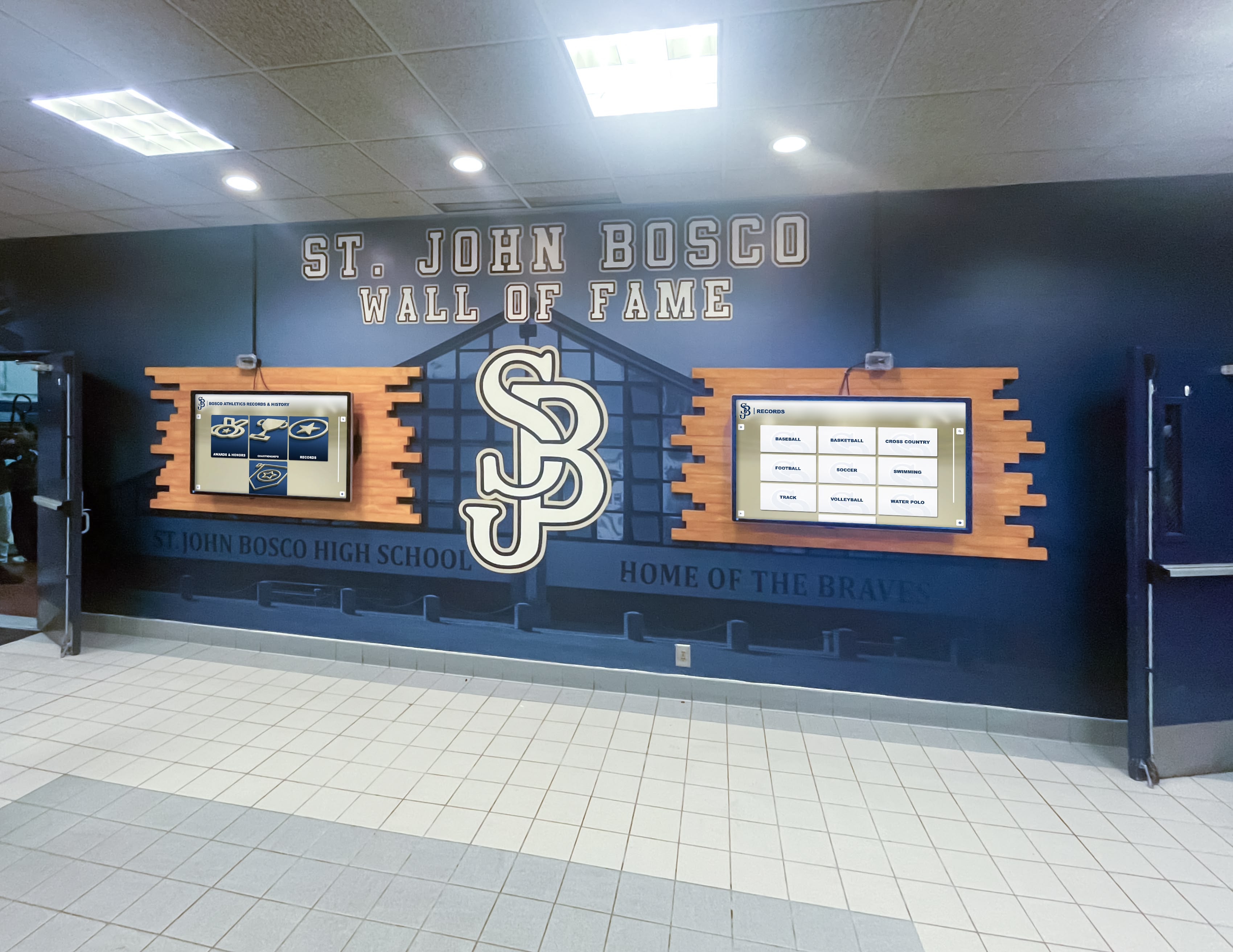
Analytics from multiple displays reveal usage patterns informing content strategy and display placement optimization
Leading Virtual Hall of Fame Platforms for 2025
Several providers offer specialized solutions optimized for recognition programs with varying features, pricing models, and ideal applications.
Rocket Alumni Solutions: Comprehensive Recognition Platform
Rocket Alumni Solutions provides the most comprehensive purpose-built platform specifically designed for digital halls of fame, athletic record boards, academic recognition, and institutional heritage preservation.
Platform Strengths
Complete turnkey solution including hardware, software, installation, and ongoing support. Pre-built templates for athletic records, academic honors, donor recognition, and alumni spotlights. Unlimited inductee capacity eliminating space constraints. Searchable databases with advanced filtering. Automatic record ranking and updating when new achievements occur. Rich multimedia integration supporting photos, videos, and detailed narratives. Dual deployment as physical touchscreen displays and web platforms from unified content management. Mobile-responsive web access extending recognition worldwide. Cloud-based administration requiring no technical expertise. Proven platform with over 1,000 installations across educational and corporate environments.
Content Management
Intuitive administrative dashboards with visual editing and real-time preview. Bulk import tools for historical data from spreadsheets and databases. Role-based permissions enabling distributed content management. Approval workflows ensuring appropriate oversight. Scheduled publishing for seasonal updates. Comprehensive analytics tracking engagement and popular content. Media asset management with unlimited storage included.
Implementation and Support
White-glove onboarding with content creation assistance, template customization matching institutional branding, comprehensive staff training, hardware installation coordination or turnkey service, and ongoing technical support ensuring successful long-term operation. Implementation timelines typically span 6-12 weeks from contract to launch depending on historical content volume.
Pricing Structure
Subscription-based model including software platform ($2,000-4,000 annually depending on features and scale), optional hardware packages (touchscreen displays, mounting, installation typically $8,000-15,000 per location), and implementation services (content creation assistance, training, and setup support). Total first-year investment typically ranges $10,000-20,000 with ongoing annual software costs of $2,000-4,000.
Ideal Organizations
High schools and universities implementing high school walls of fame, athletic programs managing multiple sports recognition, corporations celebrating employee achievements and company history, nonprofit organizations acknowledging donors and volunteers, and institutions prioritizing turnkey solutions with proven recognition-specific capabilities.
Website-Based Recognition Using Modern CMS Platforms
Organizations preferring website-integrated solutions can implement virtual halls of fame using content management systems and web development.
WordPress-Based Solutions
WordPress, powering over 40% of websites globally, offers extensive customization through plugins and themes enabling recognition implementations.
Implementation Approach
Custom post types create “Inductee” content with appropriate fields (name, year, achievements, photos, videos, biography). Advanced Custom Fields or similar plugins enable flexible profile structures. Search and filtering plugins like FacetWP or SearchWP provide sophisticated discovery. Gallery plugins showcase photos and media. Custom theme development creates recognition-specific designs matching institutional branding.
Advantages
Integration with existing WordPress websites, familiar content management for staff already using WordPress, extensive plugin ecosystem, lower costs than specialized platforms (primarily development time), and complete design control.
Limitations
Requires capable web development resources for initial implementation and ongoing enhancements. No built-in recognition-specific features requiring custom development. Typically lacks physical touchscreen display integration. Search and filtering capabilities limited compared to specialized recognition databases. Performance challenges with thousands of inductees without optimization. Security and maintenance requiring ongoing WordPress and plugin updates.
Cost Considerations
Professional WordPress development ranges $5,000-20,000 for comprehensive hall of fame implementations depending on feature complexity and design requirements. Ongoing hosting costs $10-100/month for quality managed WordPress hosting. Annual maintenance and security updates require ongoing developer engagement.
Schools implementing digital archives often use WordPress-based solutions when technical capabilities support web development approaches.
Headless CMS Alternatives
Modern headless CMS platforms like Contentful, Sanity, or Strapi separate content management from presentation, enabling greater flexibility.
These systems provide structured content APIs, flexible content modeling, multi-channel publishing to web, mobile apps, and digital displays, powerful content relationships, and modern developer experiences. However, they require capable development teams building custom frontends and managing infrastructure.
Interactive Kiosk Software Platforms
Organizations prioritizing physical touchscreen experiences can use interactive kiosk platforms creating custom applications.
Intuiface: Comprehensive Interactive Platform
Intuiface provides sophisticated no-code tools for creating interactive touchscreen experiences across museums, corporate environments, retail, and educational institutions.
Capabilities
Visual interface builder with pixel-perfect design control. Extensive gesture support including multi-touch, swipe, and pinch. Multimedia integration supporting video, 3D models, and real-time data. Sensor integration for RFID, computer vision, and IoT devices. Analytics tracking user interactions. Cross-platform deployment to Windows, Android, and web browsers. Cloud-based content management.
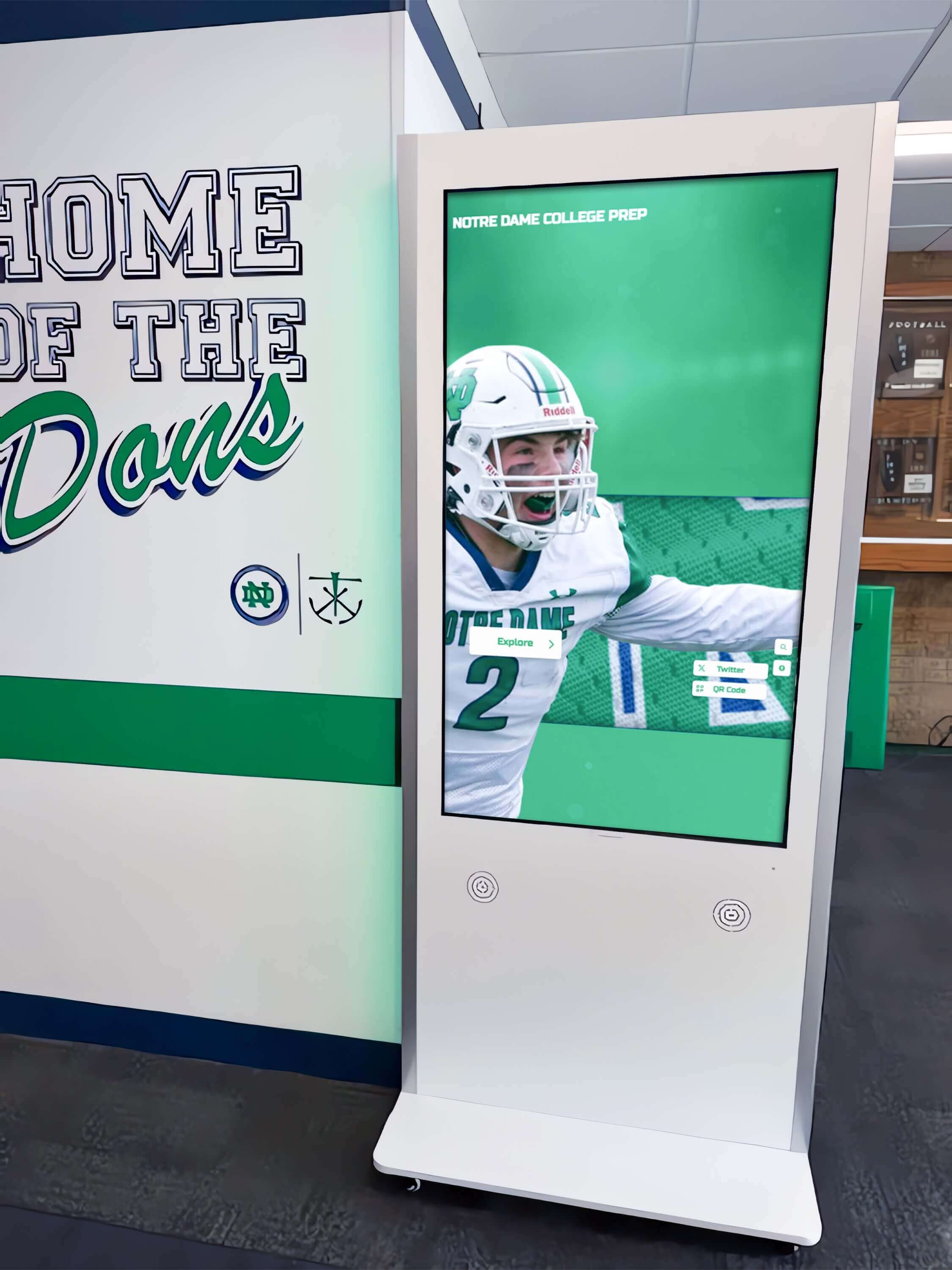
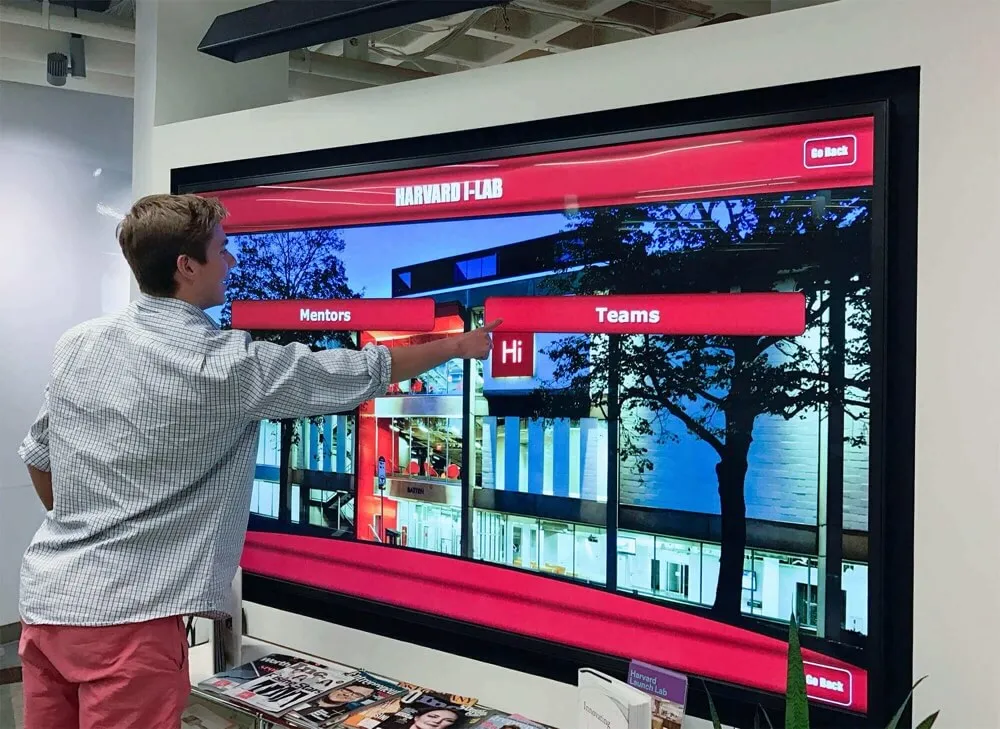
Professional kiosk platforms enable sophisticated interactive experiences beyond basic recognition displays
Recognition Applications
Organizations can build custom hall of fame interfaces using Intuiface’s tools, creating unique designs and interaction patterns. However, implementations require designing recognition workflows from scratch without pre-built templates, manually developing search and filtering interfaces, and managing separate solutions for web accessibility.
Pricing
Subscription-based licensing starting around $99/month for basic deployments, with enterprise pricing scaling based on deployment complexity. Free trials enable evaluation before commitment.
Ideal Use Cases
Museums and cultural institutions with sophisticated exhibit requirements, organizations with design teams creating unique branded experiences, installations requiring sensor integration or specialized peripherals, and scenarios where touchscreen interactivity is primary need without necessarily requiring web-accessible recognition.
Alternative Kiosk Platforms
PandaSuite focuses on multi-platform interactive content deployable to kiosks, tablets, and web. ScreenCloud and Rise Vision provide digital signage platforms with basic interactive capabilities suitable for simple touch-based navigation. Custom development using web technologies (React, Vue.js, Angular) with kiosk lockdown browsers enables complete control for organizations with development resources.
Custom Development for Unique Requirements
Organizations with specialized needs and adequate budgets can commission fully custom virtual hall of fame platforms.
Development Approaches
Modern web applications using React, Next.js, or Vue.js with Node.js or .NET backends provide full-stack solutions with database-driven content, API integrations, and responsive interfaces. Native mobile applications for iOS and Android extend recognition to mobile platforms with app-specific features. Touchscreen kiosk software using Unity, Unreal Engine, or native Windows/Android development creates sophisticated physical displays. Hybrid approaches combining web platforms for administration with custom touchscreen applications for physical installations.
Advantages
Complete customization matching exact requirements and preferences. Integration with existing institutional systems (student information, donor management, alumni databases). Intellectual property ownership and source code access. Unlimited enhancement possibilities. No ongoing platform subscription fees (though maintenance costs persist).
Disadvantages
Substantial upfront investment typically $50,000-200,000+ depending on scope. Longer implementation timelines (6-18 months for comprehensive systems). Ongoing maintenance requiring dedicated technical resources. Risk of becoming outdated without continuous enhancement investment. No proven track record requiring more thorough testing and validation.
When Custom Makes Sense
Large institutions with dedicated technical teams, highly specialized requirements impossible with existing platforms, complex integration needs with proprietary systems, sufficient budget justifying custom investment, and long-term commitment to platform maintenance and evolution.
Organizations should thoroughly evaluate specialized platforms like Rocket Alumni Solutions before pursuing custom development—many requirements perceived as unique are actually common recognition needs addressed by purpose-built platforms at substantially lower total cost.
Evaluation Criteria: Selecting Your Optimal Platform
Systematic assessment across key dimensions ensures platform selection matching organizational capabilities, requirements, and constraints.
Technical Capabilities and Organizational Fit
Internal Technical Resources
Organizations with dedicated IT staff and developers can consider platforms requiring more technical implementation and ongoing management. Schools and nonprofits with limited technical capabilities should prioritize turnkey solutions with vendor-provided support and intuitive content management requiring no programming knowledge.
Honest assessment of technical capabilities prevents selecting platforms that become dependent on expensive consultants or stagnate because staff cannot independently manage content updates.
Integration Requirements
Identify necessary integrations with existing systems—student information systems, alumni databases, donor management platforms, website content management, digital signage networks, or authentication systems. Evaluate whether platforms provide necessary APIs, database connectors, or integration capabilities.
Custom integrations add complexity and cost. When possible, select platforms offering pre-built integrations with commonly used institutional systems.
Scalability and Future Growth
Consider long-term growth potential beyond initial implementation. Can platforms accommodate expanding from single sport to comprehensive athletic recognition? Do pricing models support growth or impose restrictive limits? Will platforms support additional physical displays or expanded web features as programs mature?
Selecting scalable platforms prevents costly migrations when recognition programs outgrow initial implementations.
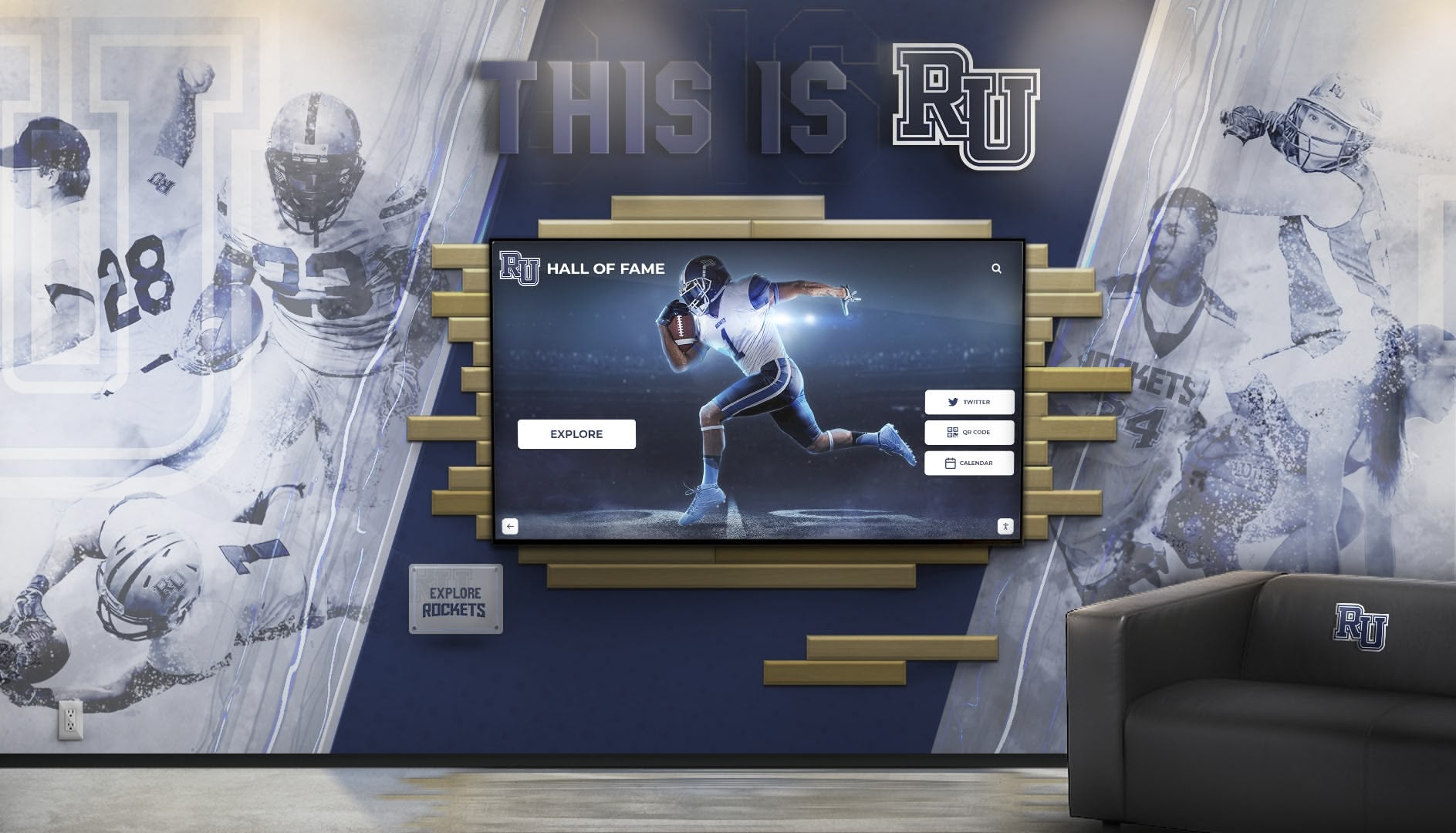
Scalable platforms grow with recognition programs, supporting expansion from initial installations to comprehensive multi-location deployments
User Experience and Engagement Quality
Content Discovery and Navigation
Evaluate navigation intuitiveness through hands-on testing. Can users find specific individuals quickly? Does browsing feel natural and engaging? Do search results match expectations? Is mobile navigation equally effective as desktop?
Request demonstration environments or trial access, then test with diverse users representing your actual audience—students, alumni of various ages, staff, and visitors unfamiliar with your institution.
Visual Design and Customization
Assess whether platform aesthetics match your institutional brand and quality expectations. Evaluate customization flexibility for colors, logos, layouts, and typography. Review example implementations from similar organizations understanding achievable results.
Generic-looking recognition undermines prestige. Quality platforms provide professional designs with sufficient customization matching institutional branding without requiring extensive graphic design work.
Multimedia Integration Quality
Test platforms with realistic content—multiple high-resolution photos, videos, and rich text. Evaluate loading speed, media playback quality, zoom and pan responsiveness for photos, and overall performance with content volume matching your expected scale.
Implementation Support and Training
Onboarding Process
Understand what support providers offer during implementation. Does pricing include content creation assistance, or must you independently populate hundreds of historical profiles? Is template customization included, or are additional fees required for design matching your brand? What training is provided for content administrators?
Comprehensive onboarding dramatically accelerates successful launches and prevents abandonment when initial setup proves more complex than anticipated.
Ongoing Technical Support
Identify support availability—business hours only or 24/7? Phone, email, chat, or ticketed support? Average response times for issues? Proactive monitoring alerting to problems before you notice them? Regular platform updates adding features and improvements?
Quality ongoing support ensures recognition programs remain operational and content stays current through inevitable questions, technical challenges, and enhancement needs.
Organizations implementing digital donor recognition displays benefit from vendors providing comprehensive support addressing both technical and content strategy questions.
User Community and Resources
Evaluate available documentation, video tutorials, best practice guides, and user communities. Platforms with extensive resources enable self-service problem-solving and continuous learning, reducing support dependencies and empowering staff to maximize platform capabilities.
Cost Structure and Total Ownership
Understanding complete costs beyond initial licensing prevents budget surprises and enables accurate return-on-investment analysis.
Initial Implementation Costs
Platform licensing or purchase (one-time or first-year subscription), hardware for physical displays if applicable, implementation services (content creation, training, customization), network infrastructure if locations lack adequate connectivity, and contingency budget for unexpected requirements (typically 10-15% of estimated costs).
Ongoing Annual Costs
Annual software subscriptions or maintenance fees, content management time (staff hours or outsourced services), hardware maintenance and warranty extensions for physical displays, hosting and bandwidth if separately charged, and periodic hardware upgrades (touchscreen displays typically last 7-10 years).
Hidden Cost Considerations
Some platforms charge per-user fees limiting content management access, impose storage limits requiring expensive upgrades as media libraries grow, restrict inductee counts requiring higher tiers as programs grow, charge separately for analytics or advanced features, or require consulting services for any customization or integration needs.
Thoroughly understand pricing structures ensuring all anticipated usage fits within proposed budgets without unexpected fees limiting growth or requiring unplanned upgrades.
Total Cost of Ownership Analysis
Compare platforms over realistic timeframes (5-10 years) including all implementation, ongoing subscription, support, content management, and hardware costs. Identify break-even points between different pricing models (subscription versus perpetual, turnkey versus DIY implementation).
Lower initial costs often hide higher long-term expenses. Conversely, substantial upfront investments in turnkey solutions may provide better value over extended periods compared to platforms requiring ongoing technical consulting and content management services.
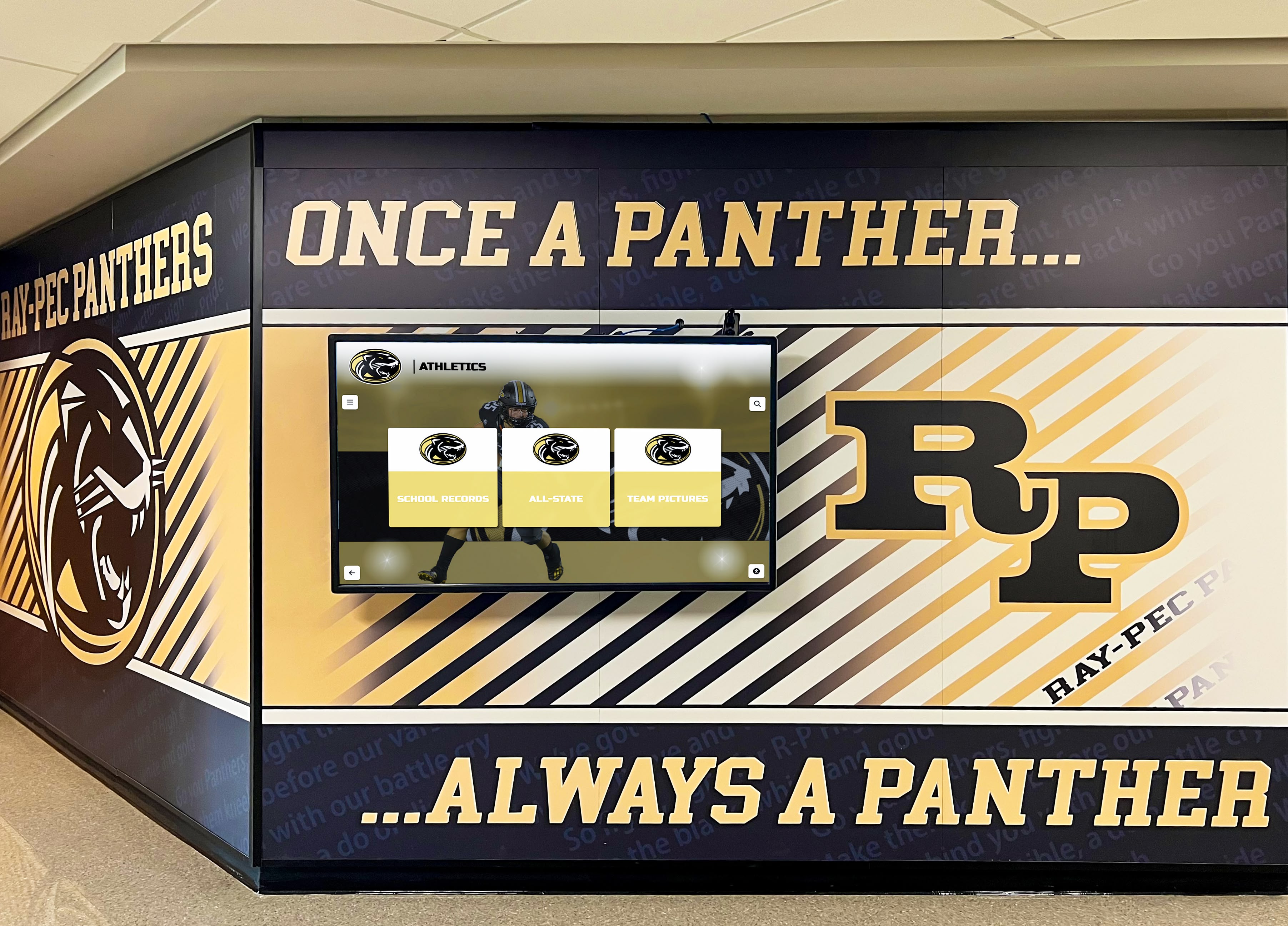
Total cost analysis includes hardware, software, implementation, and ongoing content management over full platform lifecycle
Implementation Best Practices for Virtual Halls of Fame
Successful launches require systematic planning addressing content, technical infrastructure, user experience, and promotional strategies.
Content Strategy and Profile Development
Historical Content Collection
Gather existing materials from yearbook archives, athletic department records, alumni office files, school newspapers, and personal collections from inductees and families. Create standardized questionnaires collecting biographical information consistently. Organize content by category, year, and individual before beginning platform population.
Organizations implementing historical archiving programs often use virtual hall of fame launches as catalysts for comprehensive historical preservation efforts benefiting multiple purposes.
Profile Structure and Consistency
Establish clear content standards for profile length and structure, photo specifications and formatting, capitalization and style conventions, achievement description terminology, and handling incomplete information or missing data. Document standards in style guides ensuring consistency across hundreds or thousands of profiles managed by multiple contributors over years.
Multimedia Optimization
Optimize photos for web delivery balancing quality and file size. Compress videos maintaining acceptable quality while ensuring reasonable download times on cellular networks. Consider accessibility through alternative text for images and closed captions for videos. Test content across devices ensuring excellent experiences on smartphones, tablets, and large touchscreen displays.
Technical Infrastructure and Installation
Network Connectivity Planning
Physical touchscreen installations require reliable networking—wired Ethernet provides most reliable connectivity, enterprise WiFi with guaranteed bandwidth supports wireless installations, and cellular backup prevents complete outages during network issues. Plan infrastructure upgrades if locations lack adequate existing connectivity.
Physical Display Installation
Select high-traffic locations maximizing visibility—building lobbies, cafeteria areas, athletic facility entrances, and main hallways where students, staff, visitors, and alumni naturally congregate. Ensure appropriate power availability, ADA-compliant mounting heights, comfortable viewing distances, and ambient lighting conditions enabling comfortable display viewing.
Professional installation ensures secure mounting, clean cable management, proper display calibration, and testing all interactive features before public launch.
Security and Protection
Implement appropriate physical security—secure mounting preventing theft or unauthorized removal, protective screen films preventing damage while maintaining touch sensitivity, tamper-evident enclosures for floor-standing kiosks, and peripheral lockdown preventing external device connections. Consider locations with natural surveillance or security camera coverage.
Launch Promotion and Ongoing Engagement
Multi-Channel Launch Campaigns
Announce virtual hall of fame launches through email communications to alumni and community members, social media campaigns with teaser content before launch, press releases to local media, featured content in school newsletters and publications, signage throughout campus directing visitors to displays, and launch events with inductees, families, and community leaders.

Strategic launch promotion ensures broad awareness and initial engagement establishing recognition programs as valued institutional resources
Ongoing Content Marketing
Maintain engagement through regular social media features highlighting inductees, email campaigns during reunion seasons encouraging alumni to explore recognition, integration with admissions tours and prospective family visits, student research projects incorporating hall of fame content, and annual induction ceremonies generating renewed interest and media coverage.
Analytics-Informed Optimization
Review engagement data identifying most popular content, search patterns revealing what visitors seek, usage timing informing promotional scheduling, geographic access patterns suggesting outreach opportunities, and low-engagement content indicating improvement needs. Use insights optimizing content strategy, enhancing underutilized features, and demonstrating program value to stakeholders.
Organizations implementing digital athletic displays benefit from analytics revealing which recognition types and content formats generate strongest engagement.
Platform Selection Decision Framework
Systematic evaluation frameworks guide platform selection matching organizational priorities and constraints.
Decision Matrix Approach
Create scoring rubrics weighting decision criteria based on organizational priorities. For example, schools with limited technical staff should heavily weight ease of content management and vendor support quality. Institutions prioritizing rapid implementation should emphasize turnkey solutions and implementation timelines. Budget-constrained organizations should focus on total cost of ownership over 5-10 years rather than initial costs alone.
Sample Weighted Criteria
Content management ease (20%), user experience quality (15%), technical support and training (15%), total cost of ownership (15%), recognition-specific features (10%), analytics capabilities (10%), physical display integration if applicable (10%), customization flexibility (5%).
Assign scores to evaluated platforms across criteria, multiply by weights, and sum for composite scores guiding objective comparisons across subjective factors.
Platform Shortlisting Process
Phase 1: Requirement Definition (Week 1-2)
Document must-have versus nice-to-have features, identify technical capabilities and constraints, establish budget ranges for both implementation and ongoing costs, define success metrics and decision criteria, and assemble evaluation team representing diverse stakeholders (IT, communications, athletics, alumni relations, administration).
Phase 2: Initial Research and Screening (Week 3-4)
Research available platforms through web searches, industry resources, and peer recommendations. Screen platforms against must-have requirements eliminating options lacking essential capabilities. Develop shortlist of 3-5 platforms warranting detailed evaluation. Request detailed information, pricing, and demonstration access from shortlisted vendors.
Phase 3: Detailed Evaluation (Week 5-8)
Attend platform demonstrations and request customized walk-throughs addressing your specific use cases. Request trial access or sandbox environments enabling hands-on evaluation. Test content management workflows with representative content. Evaluate user experience with diverse stakeholders. Contact reference customers asking about satisfaction, implementation experience, and ongoing support quality. Analyze total cost of ownership over realistic timeframes.
Phase 4: Final Selection and Negotiation (Week 9-10)
Compare platforms using weighted decision matrices. Negotiate pricing, implementation scope, and support terms with top choices. Validate contractual commitments including implementation timelines, included services, support availability, and upgrade paths. Make final selection and initiate contracting and implementation planning.
Common Selection Mistakes to Avoid
Underestimating Content Management Complexity
Platforms may appear simple during sales demonstrations but prove frustrating during daily content management. Prioritize actually trying content management workflows during evaluation—not just watching vendor demonstrations.
Focusing Excessively on Initial Costs
Lowest initial costs often hide expensive ongoing subscriptions, limited included features requiring expensive add-ons, minimal support necessitating consulting expenses, or poor usability demanding excessive staff time. Evaluate total cost of ownership over realistic timeframes rather than first-year costs alone.
Selecting Platforms Exceeding Organizational Capabilities
Sophisticated flexible platforms requiring technical expertise frustrate organizations lacking development resources. Honestly assess technical capabilities and select platforms matching actual (not aspirational) organizational capacity for implementation and ongoing management.
Ignoring Reference Customers and Reviews
Vendor demonstrations showcase ideal scenarios. Reference customers reveal real-world experiences including implementation challenges, ongoing support quality, hidden costs, and long-term satisfaction. Always contact multiple references and research independent reviews before final selections.
Overlooking Vendor Stability and Roadmap
Platform selection represents multi-year commitments. Evaluate vendor financial stability, customer base size, development roadmap, and commitment to ongoing product evolution. Small vendors may provide excellent service but face business continuity risks. Large vendors may prioritize major customers over smaller institutions.
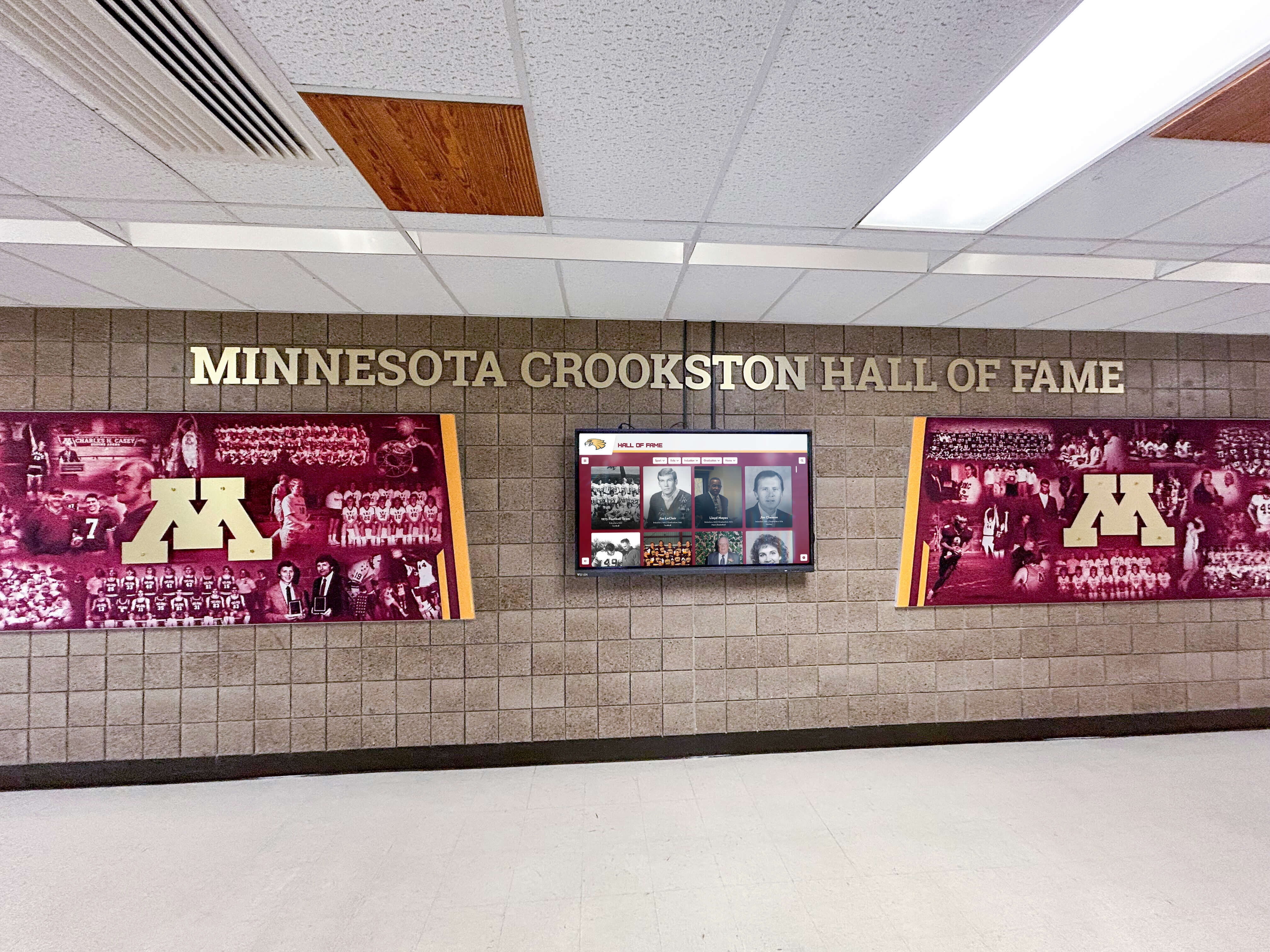
Successful platform selection balances features, usability, cost, and vendor stability ensuring long-term recognition program sustainability
Future Trends in Virtual Hall of Fame Technology
Understanding emerging capabilities informs platform selection ensuring chosen solutions remain current as technology evolves.
Artificial Intelligence and Personalization
Content Discovery Enhancement
AI-powered recommendation engines suggest related profiles and achievements based on viewing patterns. Natural language search understands conversational queries like “show me basketball players from the 1980s who played professionally.” Automatic content tagging and categorization reduces manual content management burden. Facial recognition organizes historical photos identifying individuals automatically.
Automated Content Generation
AI tools assist generating biographical narratives from structured data and source materials. Automatic video highlight generation extracts key moments from game footage. Voice narration synthesis creates audio descriptions from text content. Language translation enables multilingual recognition supporting diverse communities.
Platforms incorporating AI capabilities streamline content creation and enhance discovery—reducing staff time while improving user experiences.
Enhanced Multimedia and Immersive Experiences
3D and Virtual Reality Integration
Virtual reality tours enable remote visitors experiencing recognition displays as if physically present. 3D artifact digitization preserves trophies, jerseys, and memorabilia in explorable virtual formats. Augmented reality overlays digital content onto physical spaces through smartphone apps. Spatial audio creates immersive soundscapes enhancing storytelling.
Schools implementing virtual tour programs increasingly integrate recognition displays into immersive campus experiences.
Interactive Video and Dynamic Content
Branching video narratives let viewers choose which stories to explore. Interactive timelines combine historical footage with modern commentary. Live data integration updates records and achievements automatically. Social media feed integration celebrates current achievements alongside historical recognition.
Expanded Accessibility and Inclusion
Universal Design Principles
Platforms increasingly prioritize accessibility from initial design rather than retrofitting accommodation. Voice control enables hands-free navigation for mobility-impaired users. Screen reader optimization ensures vision-impaired access. Cognitive accessibility features support neurodivergent users. Multilingual support serves diverse communities without requiring separate implementations.
Inclusive Recognition Categories
Future platforms will support broader achievement celebration beyond traditional athletic and academic focus—recognizing character development, community service, creative accomplishments, personal growth milestones, and collaborative achievements. Flexible category structures enable institutions defining recognition matching their unique values and community characteristics.
Advanced Analytics and Impact Measurement
Sophisticated Engagement Insights
Machine learning identifies content patterns driving engagement. Cohort analysis compares different visitor segments. Predictive analytics forecast content performance. Attribution modeling connects recognition program engagement to broader institutional outcomes like alumni giving or admissions yield. Sentiment analysis evaluates community response to recognition decisions.
Return on Investment Demonstration
Platforms increasingly quantify recognition program value through alumni engagement metrics, donor cultivation tracking, admissions impact measurement, brand sentiment analysis, and community connection indicators. Robust impact data justifies recognition investments and supports program expansion requests.
Organizations should select platforms with active development roadmaps incorporating emerging technologies—ensuring recognition programs remain current rather than becoming dated as capabilities evolve.
Taking the Next Step: Implementing Your Virtual Hall of Fame
Selecting the optimal platform represents the crucial first step toward transforming how your organization celebrates achievements and preserves heritage. Whether modernizing traditional recognition that has outgrown physical space limitations or launching new programs from scratch, the right platform balances features, usability, cost, and long-term sustainability ensuring success both at launch and years into the future.
Ready to Launch Your Virtual Hall of Fame?
Discover how Rocket Alumni Solutions can help you create a comprehensive digital recognition platform combining physical touchscreen displays with web accessibility in a turnkey solution designed specifically for celebrating achievements and preserving institutional heritage.
Schedule Your Recognition Platform ConsultationComprehensive platform evaluation requires moving beyond feature lists to hands-on testing of content management workflows, user experience validation with diverse stakeholders, thorough cost analysis over realistic timeframes, reference customer conversations revealing real-world experiences, and honest assessment of organizational capabilities and resources for implementation and ongoing management.
Organizations successfully implementing virtual halls of fame share common approaches: clear recognition goals and selection criteria established before evaluating platforms, realistic timelines allowing thorough evaluation and systematic implementation, adequate budgets covering not just licensing but also content creation and ongoing management, executive sponsorship ensuring organizational commitment, and celebration of implementation milestones maintaining momentum and demonstrating value to broader communities.
Virtual halls of fame transform recognition from space-constrained retrospectives into living, growing celebrations of institutional excellence accessible to entire communities regardless of location or time. By honoring heritage through modern digital platforms, schools, universities, athletic programs, corporations, and organizations create powerful connections between past achievements and future aspirations—strengthening the institutional pride and community engagement that define thriving organizations.
The platform landscape offers solutions for every organizational context, from comprehensive turnkey systems like Rocket Alumni Solutions providing specialized recognition capabilities to flexible website-based approaches, interactive kiosk platforms, and fully custom development for unique requirements. Your optimal choice depends on technical capabilities, budget, timeline, and engagement priorities—but the fundamental opportunity remains constant: unlimited recognition capacity, worldwide accessibility, rich storytelling, and sustainable long-term operation celebrating achievements while building community connections that endure.
Ready to explore how virtual halls of fame can transform your institution’s approach to celebrating achievements? Learn more about implementing digital recognition displays or discover comprehensive hall of fame solutions designed specifically for educational institutions, athletic programs, and organizations committed to honoring excellence and preserving institutional heritage for generations to come.