Wrestling programs face a recognition challenge unlike most other sports. While football and basketball might honor a dozen standouts per season, successful wrestling programs accumulate hundreds of individual achievements across fourteen weight classes—state qualifiers, district champions, All State selections, All American honors, weekly awards, career milestones, and Hall of Fame inductees spanning decades. Traditional trophy cases and wall plaques quickly reach capacity, forcing difficult decisions about which achievements deserve permanent display space.
Awards touchscreen systems solve this fundamental constraint by replacing space-limited physical displays with interactive digital platforms that can showcase unlimited wrestling achievements. A single touchscreen display provides recognition capacity equivalent to fifty or more wall plaques while adding rich multimedia content, instant updates, searchable databases, schedule integration, and real-time announcements—transforming static recognition into dynamic celebration of wrestling excellence.
Wrestling coaches implementing touchscreen awards systems gain powerful tools for team motivation, recruit engagement, community connection, and program tradition building. This comprehensive guide explores how wrestling programs use awards touchscreens to honor Hall of Fame inductees, celebrate All State and All American wrestlers, recognize weekly award winners, display schedules and brackets, share announcements, and build lasting connections between current athletes and wrestling program heritage.
Wrestling programs generate recognition needs that overwhelm traditional display approaches. State tournament qualifiers across multiple weight classes, career win milestones (100, 150, 200+ victories), district and regional championships, individual tournament successes, All Conference and All State selections, All American honors from national competitions, team accomplishments and dual meet records, coach milestones and achievements, plus ongoing weekly awards and seasonal recognition all compete for limited wall space and trophy case capacity.

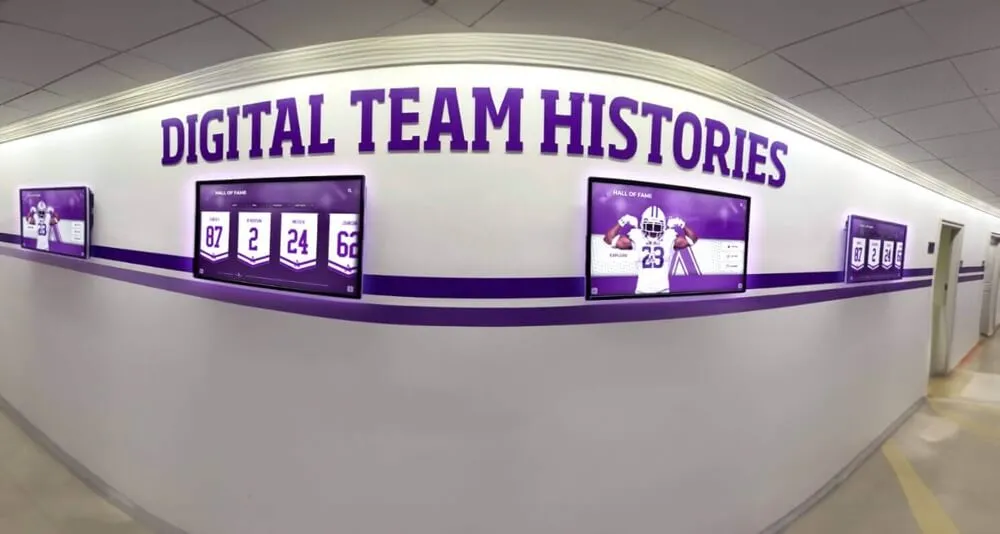
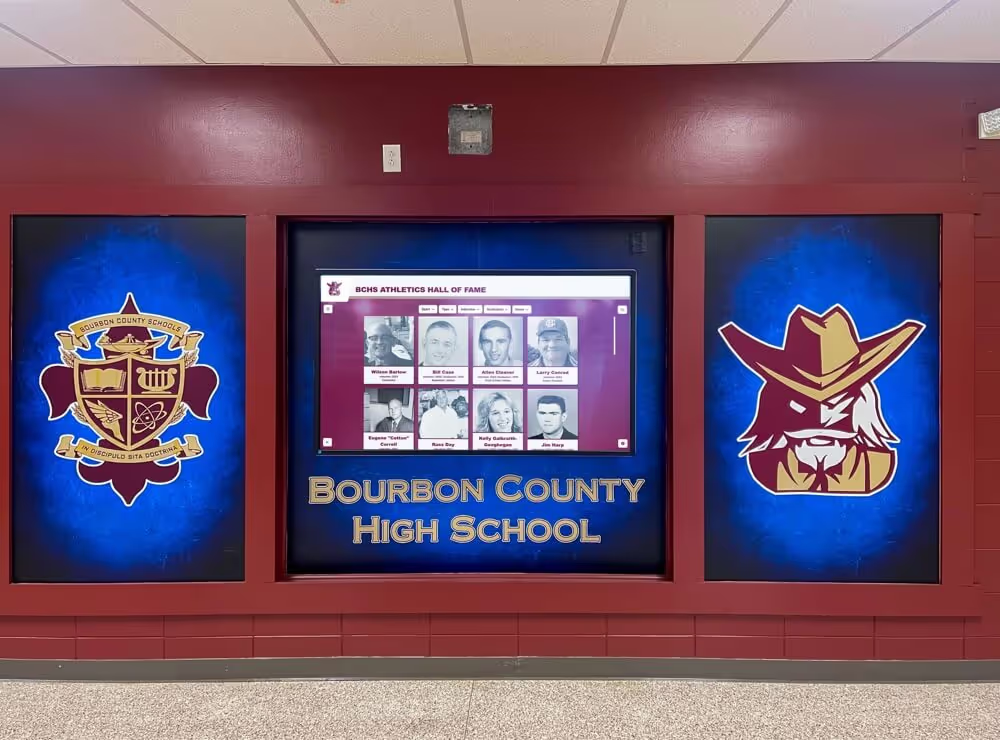
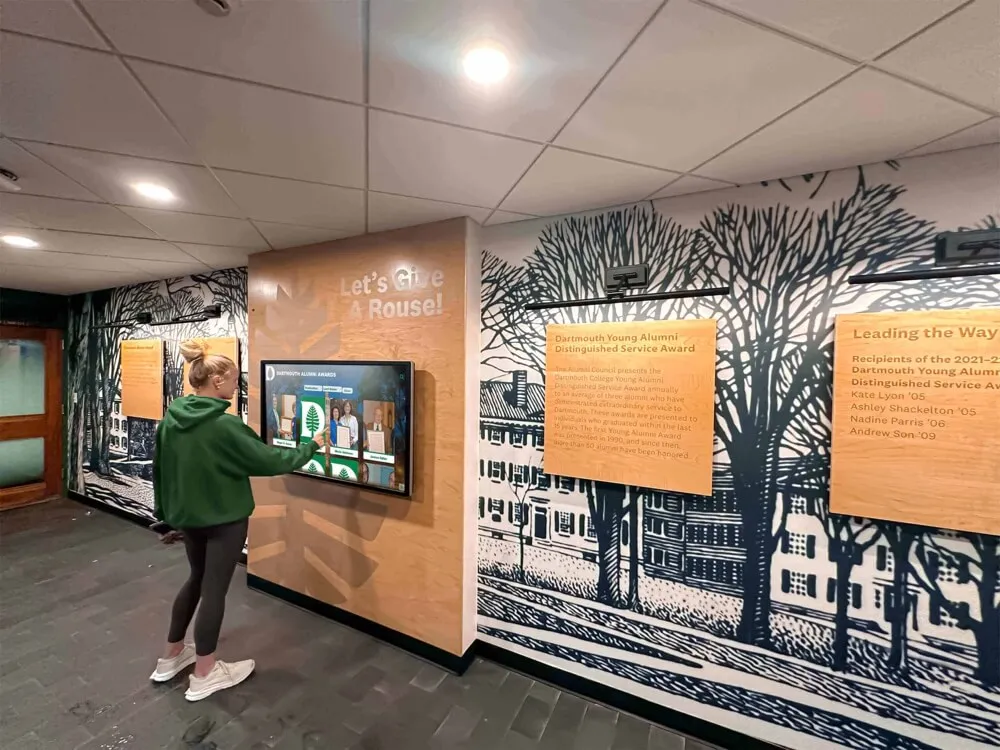
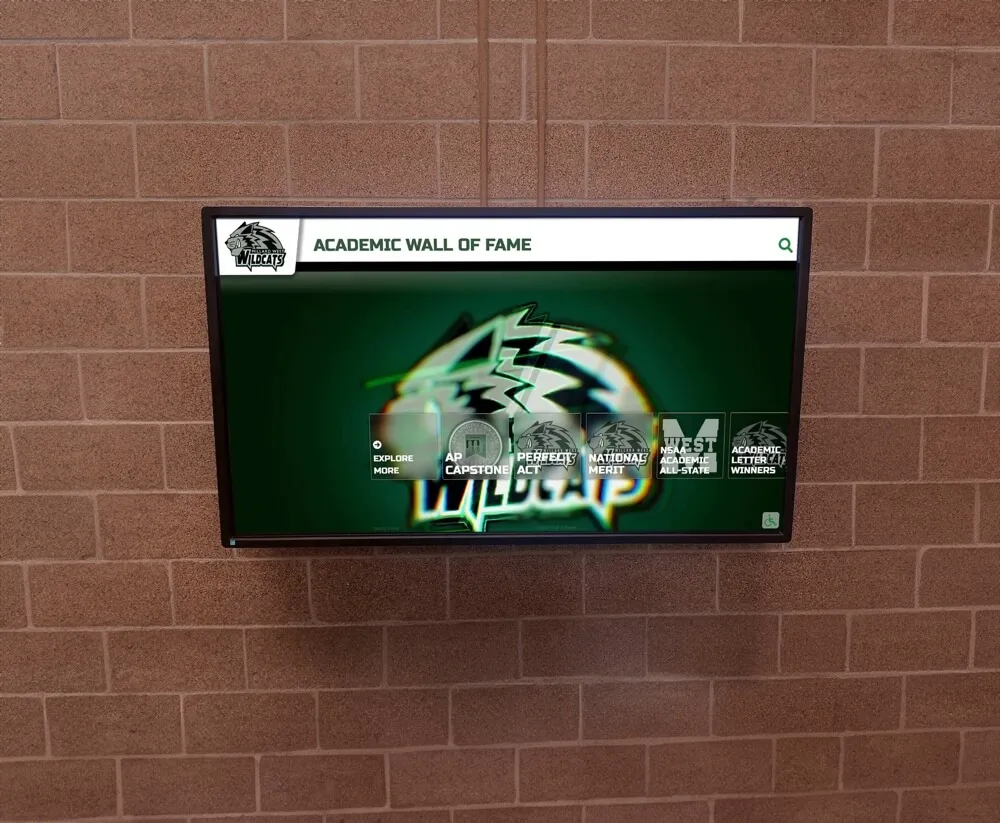
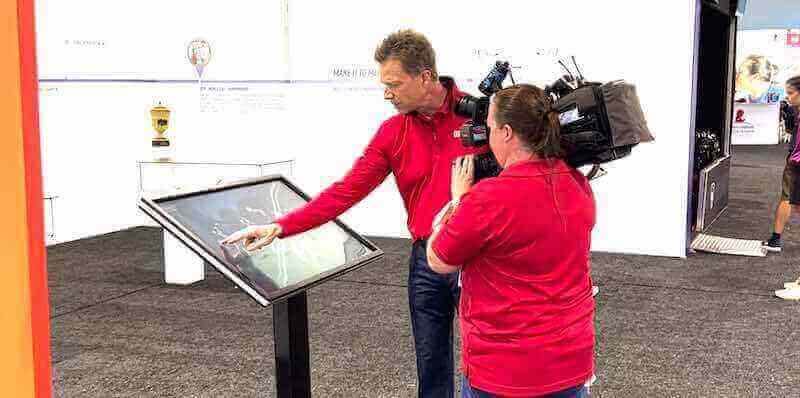
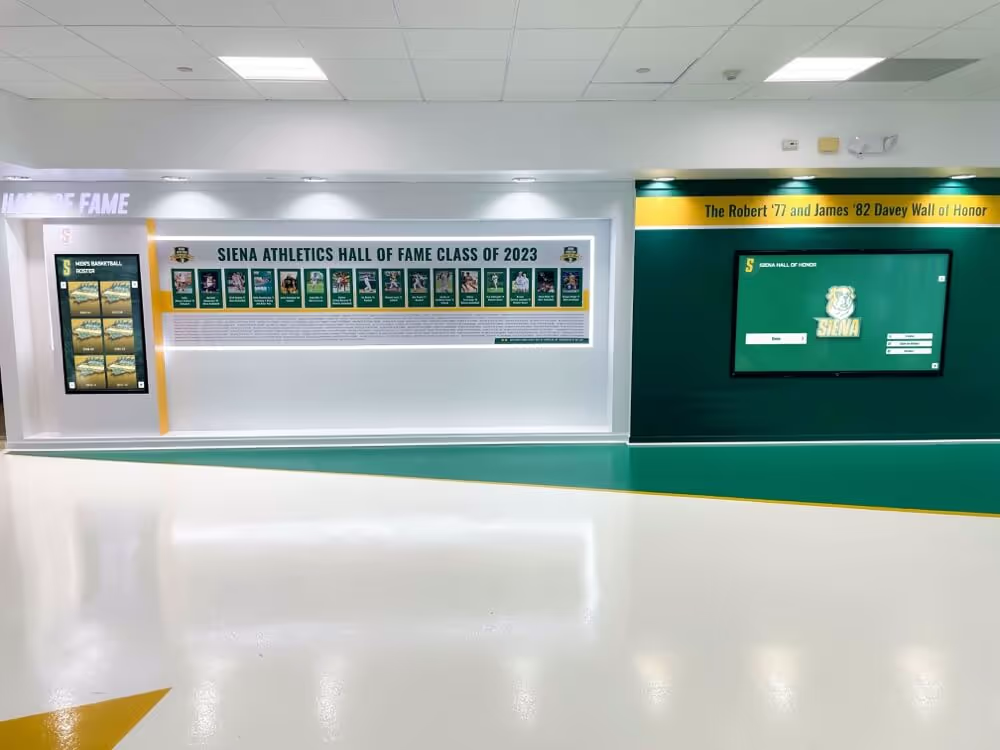
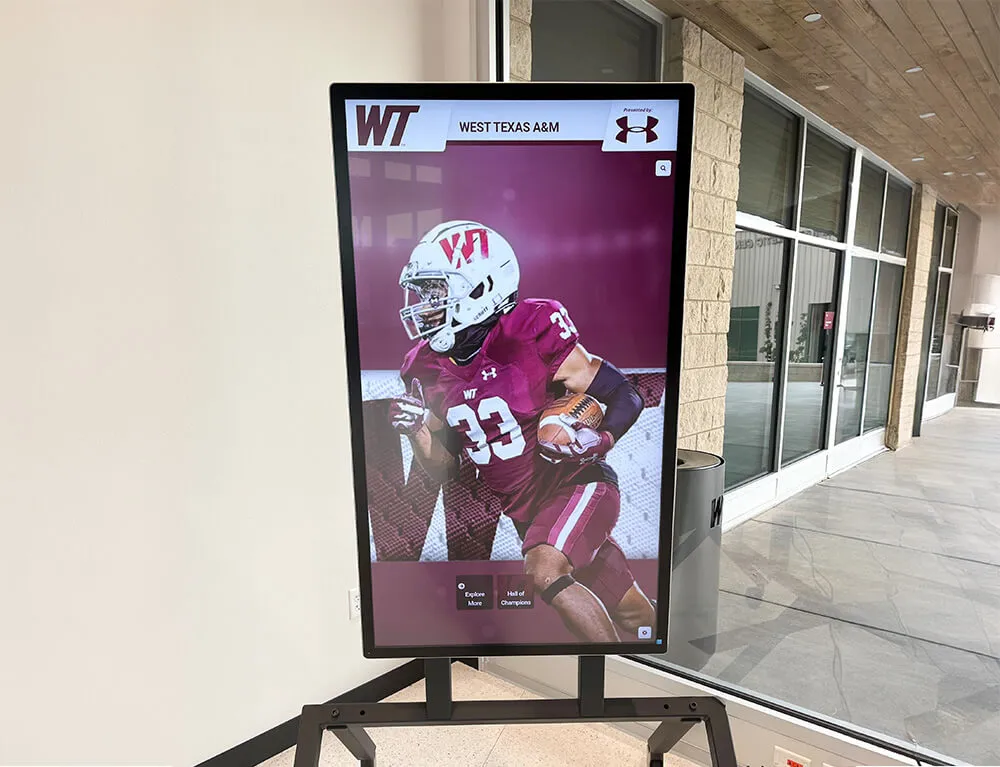
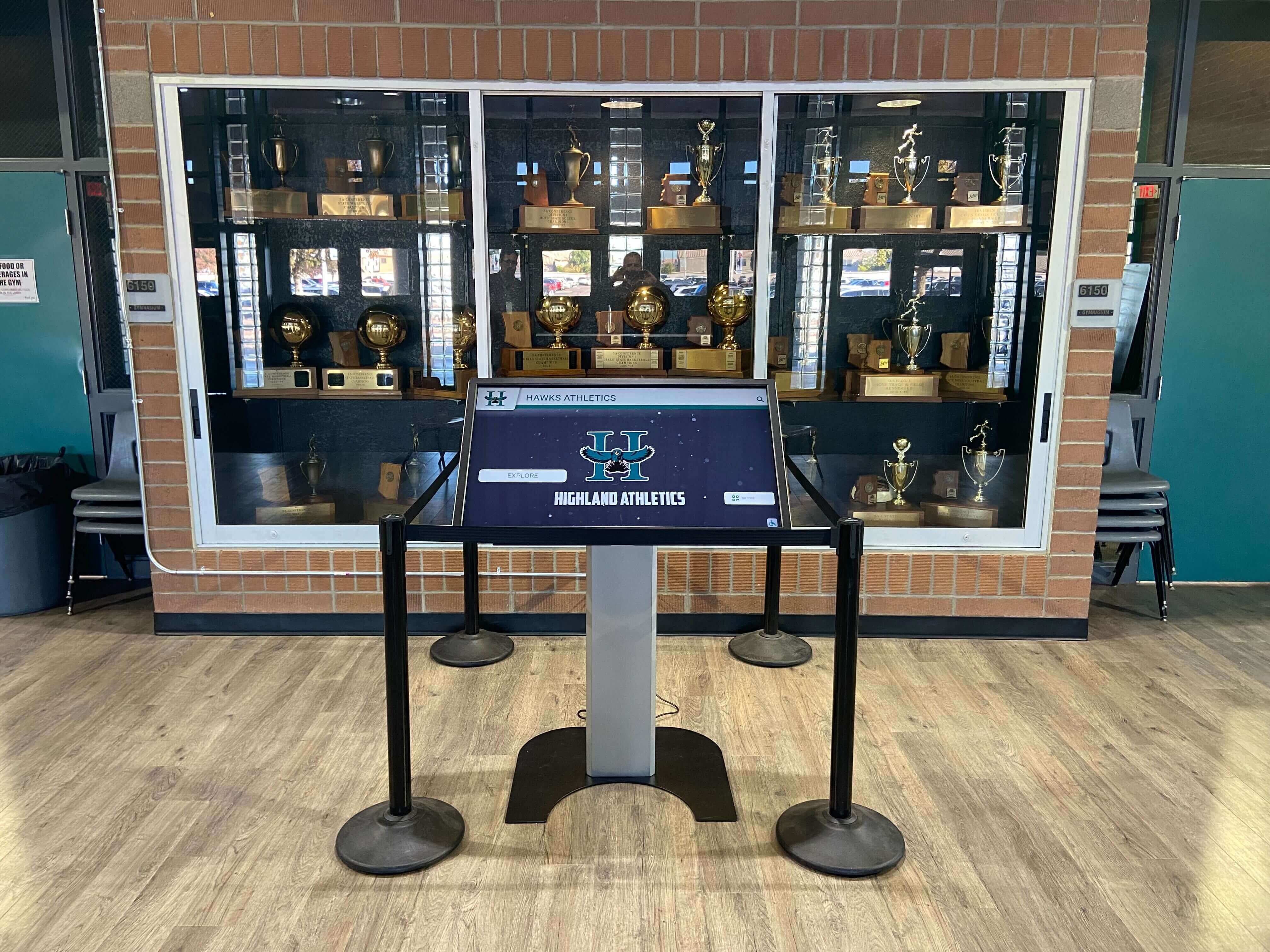
Wrestling programs implement touchscreen awards systems that integrate seamlessly with existing trophy cases while providing unlimited recognition capacity
Why Wrestling Programs Need Touchscreen Awards Systems
Understanding the specific challenges wrestling coaches and athletic directors face helps explain why touchscreen recognition delivers particular value for wrestling programs compared to other sports.
Wrestling’s Unique Recognition Complexity
Wrestling creates recognition challenges distinct from team sports:
Fourteen Weight Classes Generate Exponential Achievements
While basketball might crown one conference champion per season, wrestling programs potentially produce fourteen—one at each weight class. This multiplication effect extends across every achievement category. State qualifiers, district champions, tournament winners, and statistical milestones all multiply by weight class, creating recognition volumes that would require entire hallways if displayed through traditional plaques.
Programs with fifty-year histories might have legitimately earned recognition for 500+ state tournament qualifiers, 200+ district champions, 100+ career win milestones, 75+ All State selections, and dozens of All American honors—totaling nearly 1,000 individual recognition-worthy achievements before considering team accomplishments, coaches, or special awards.
Individual Sport Recognition Psychology
Wrestling functions as individual sport within team structure. Unlike football where linemen might never score touchdowns, every wrestler competes in individual matches where personal achievement receives direct credit. This individual recognition model creates expectation that achievements will be documented and celebrated permanently—expectations that traditional space-limited displays cannot fulfill for comprehensive wrestling programs.
Research on athlete motivation shows that wrestlers who see systematic recognition of achievements across all weight classes demonstrate higher persistence rates and season-to-season retention compared to programs where only state champions or extreme outliers receive permanent visibility.
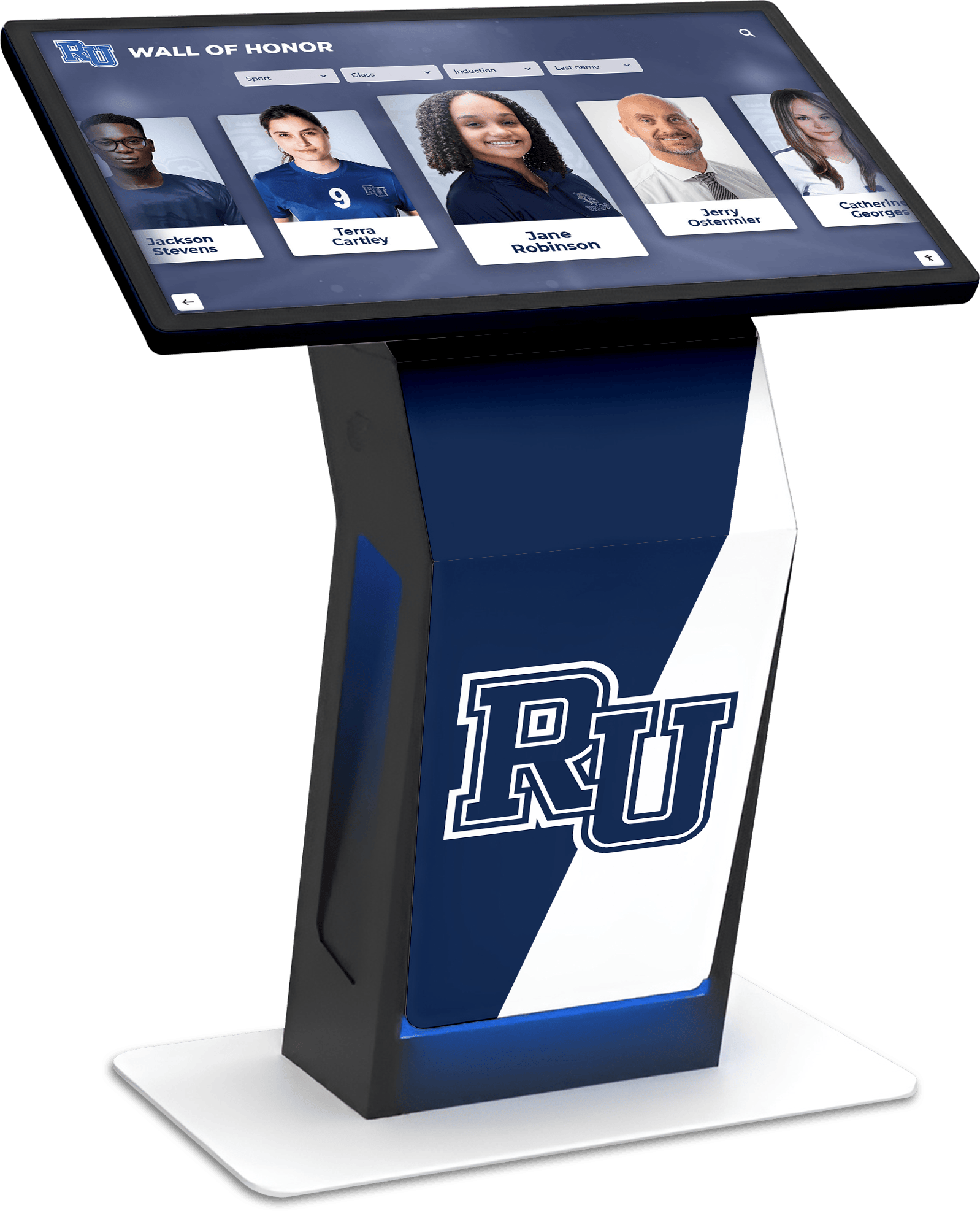
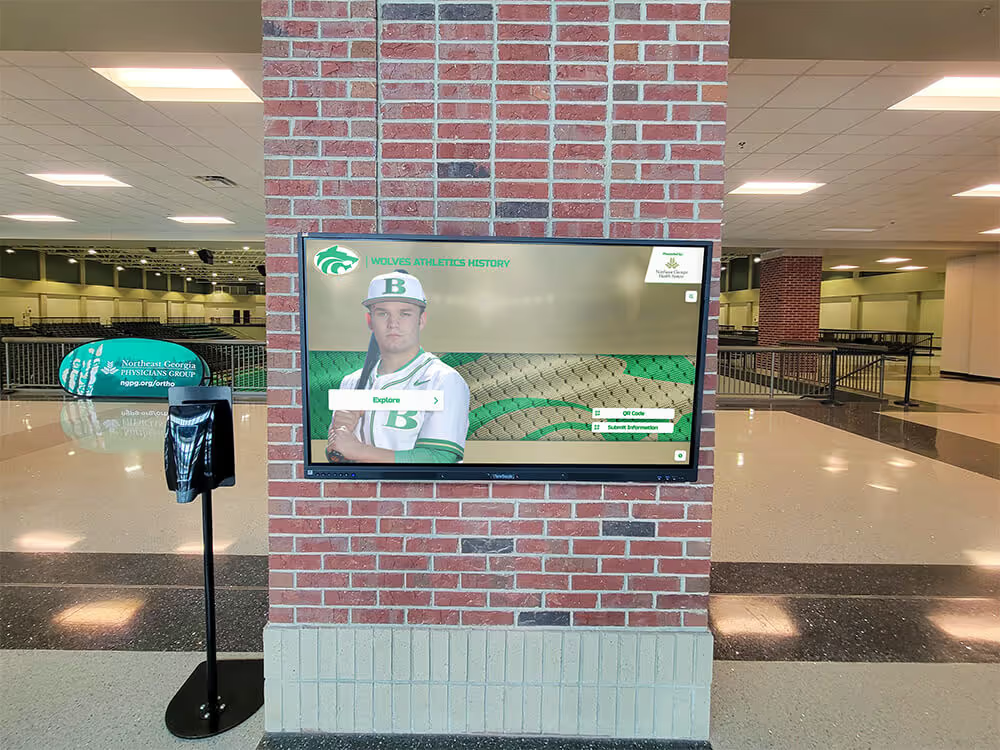
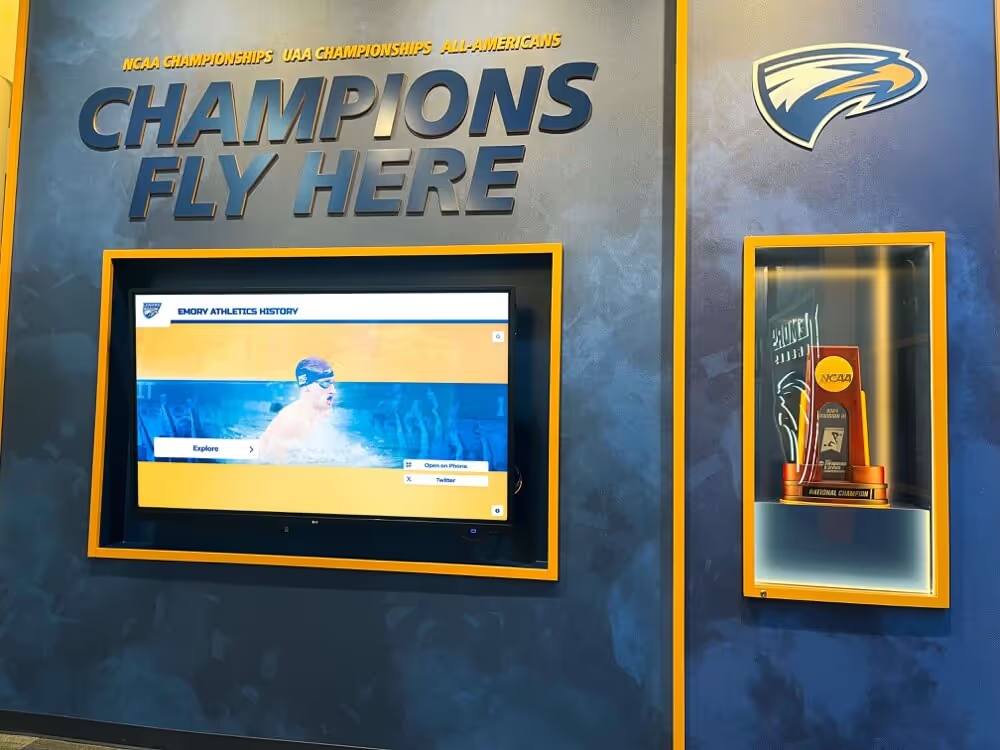
Modern touchscreen systems enable wrestling programs to recognize achievements across all weight classes and competition levels
Season-Long Achievement Accumulation
Wrestling seasons span four to five months of intensive competition including dual meets, weekend tournaments, holiday invitationals, conference championships, district competitions, sectionals, regionals, and state tournaments. Each competition level generates recognition-worthy performances—creating continuous recognition needs throughout extended seasons.
Traditional static displays become outdated within days, unable to reflect current season progression, bracket advancement, or weekly achievement updates. Touchscreen awards systems enable real-time recognition keeping current with season dynamics while maintaining historical achievement records.
Functional Advantages of Touchscreen Recognition
Beyond capacity benefits, touchscreen systems deliver specific functionality wrestling programs need:
Dynamic Schedule and Bracket Integration
Wrestling programs manage complex schedules with dual meets, tournament brackets, state qualification tracking, and championship progression. Touchscreen displays integrate schedule information, tournament brackets showing advancement paths, upcoming competition previews, results updates, and season calendars—providing centralized information access beyond pure recognition.
Parents checking brackets before weekend tournaments, wrestlers tracking qualification progress, and alumni following state tournament results all benefit from integrated schedule displays combining recognition with functional program information.
Weekly Awards and Rotating Recognition
Most wrestling programs recognize weekly achievements—Wrestler of the Week, Most Pins, Comeback Performance, Practice Excellence, and weight class highlights. Traditional poster board displays look amateurish and require weekly updating hassle. Touchscreen systems showcase weekly awards professionally while rotating featured content ensuring different athletes receive spotlight visibility throughout seasons.
Programs implementing touchscreen weekly award displays report that systematic rotation of recognition—ensuring every wrestler gains featured visibility during seasons—measurably increases team morale and practice engagement compared to static systems highlighting only top performers.
Real-Time Announcements and Team Communication
Wrestling programs need communication channels for:
- Practice schedule changes due to facility conflicts
- Weigh-in times and requirements
- Tournament travel logistics and departure times
- Team meeting announcements
- Fundraiser and team activity information
- Off-season conditioning schedule details
Touchscreen displays function as dynamic bulletin boards combining recognition with practical team communication—providing information access extending beyond posted paper notices that wrestlers walk past without seeing.

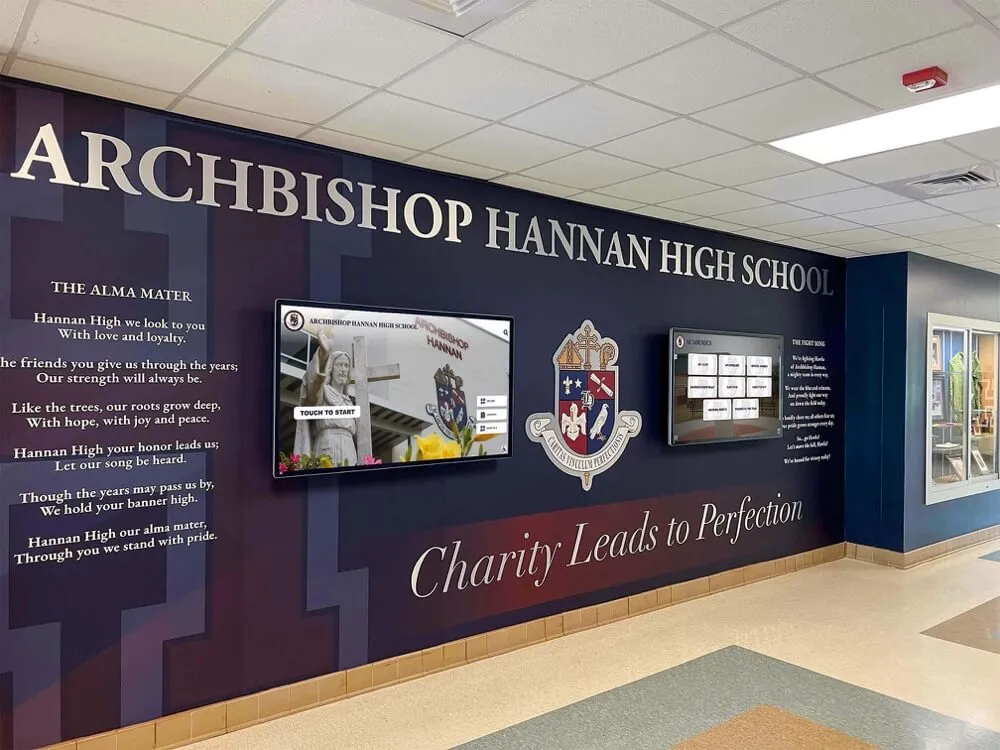
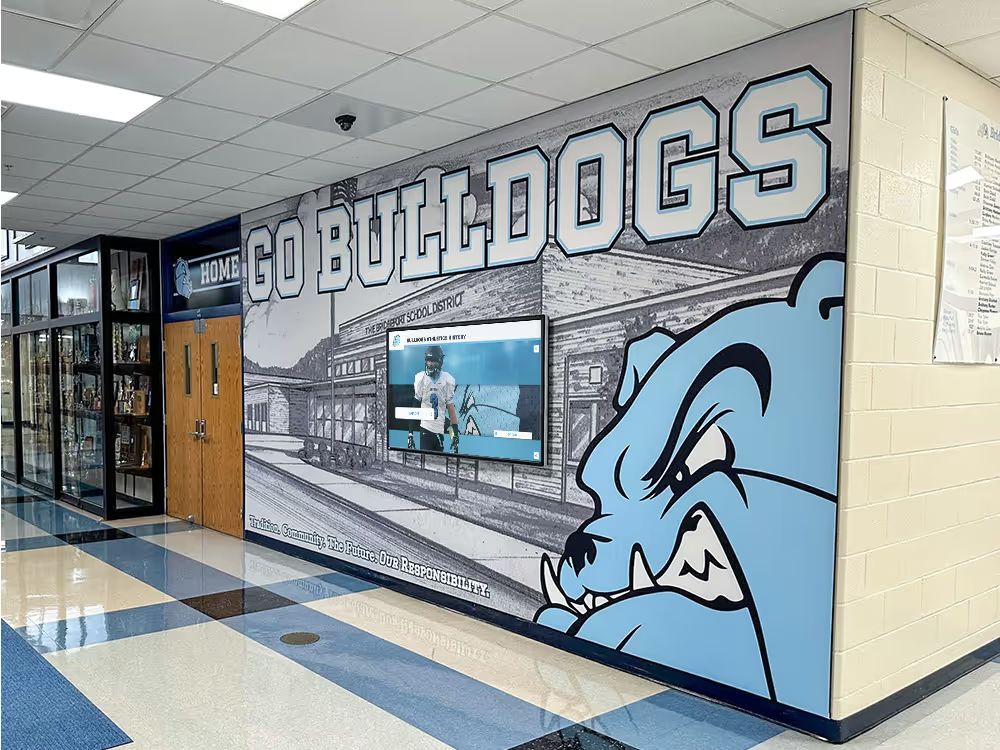
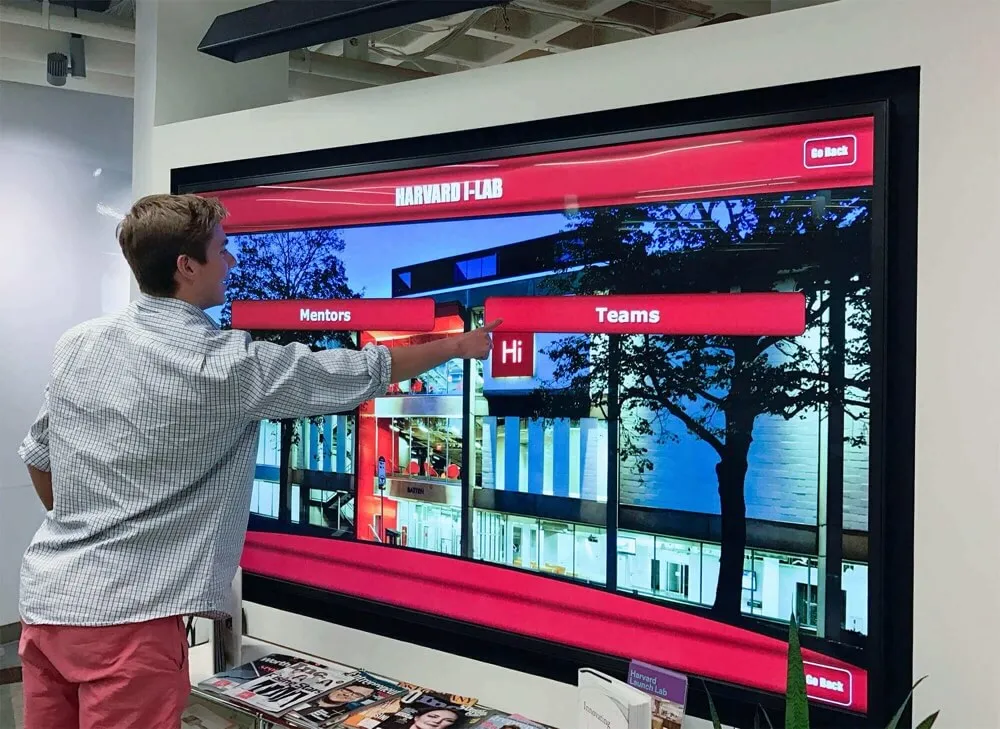
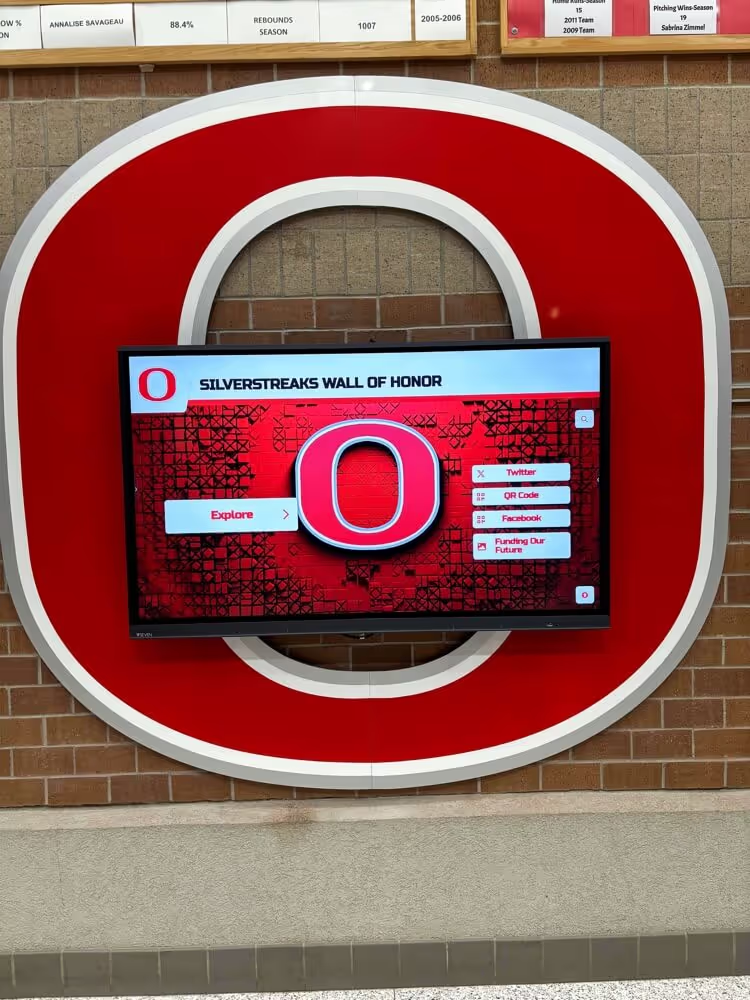
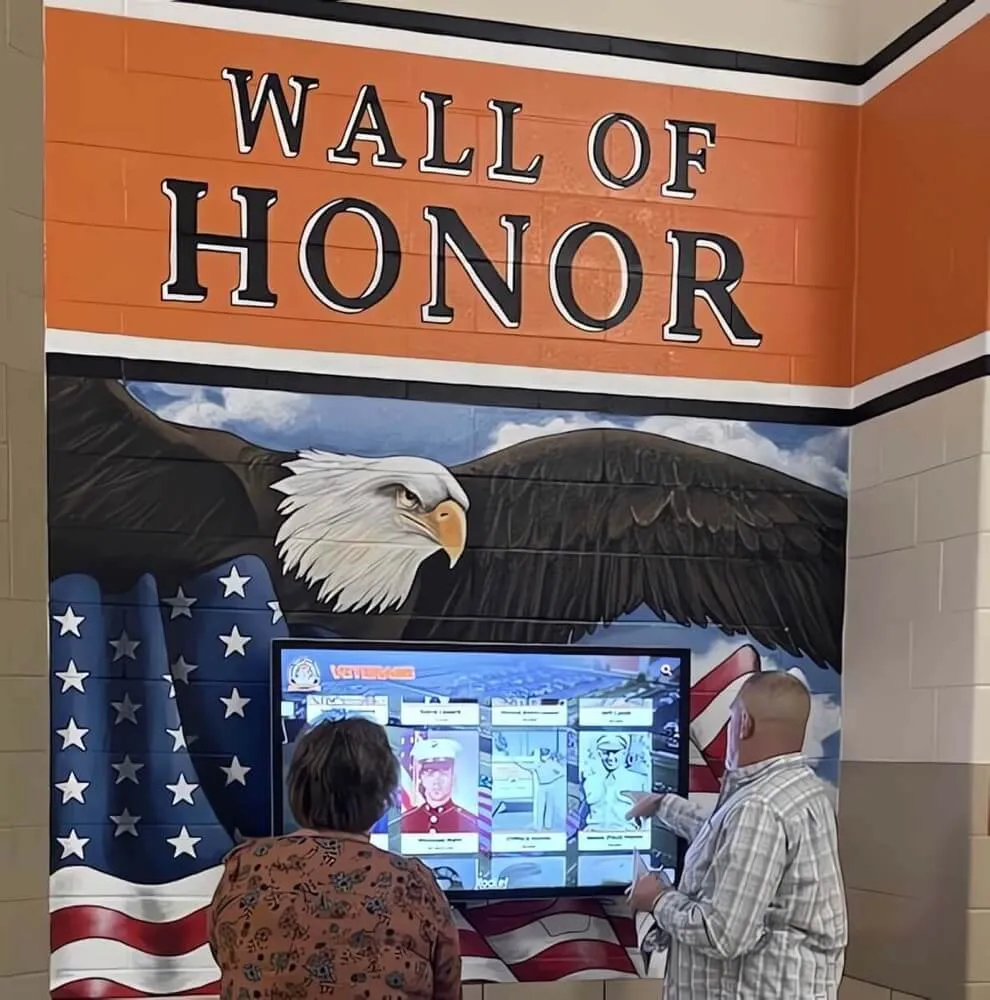
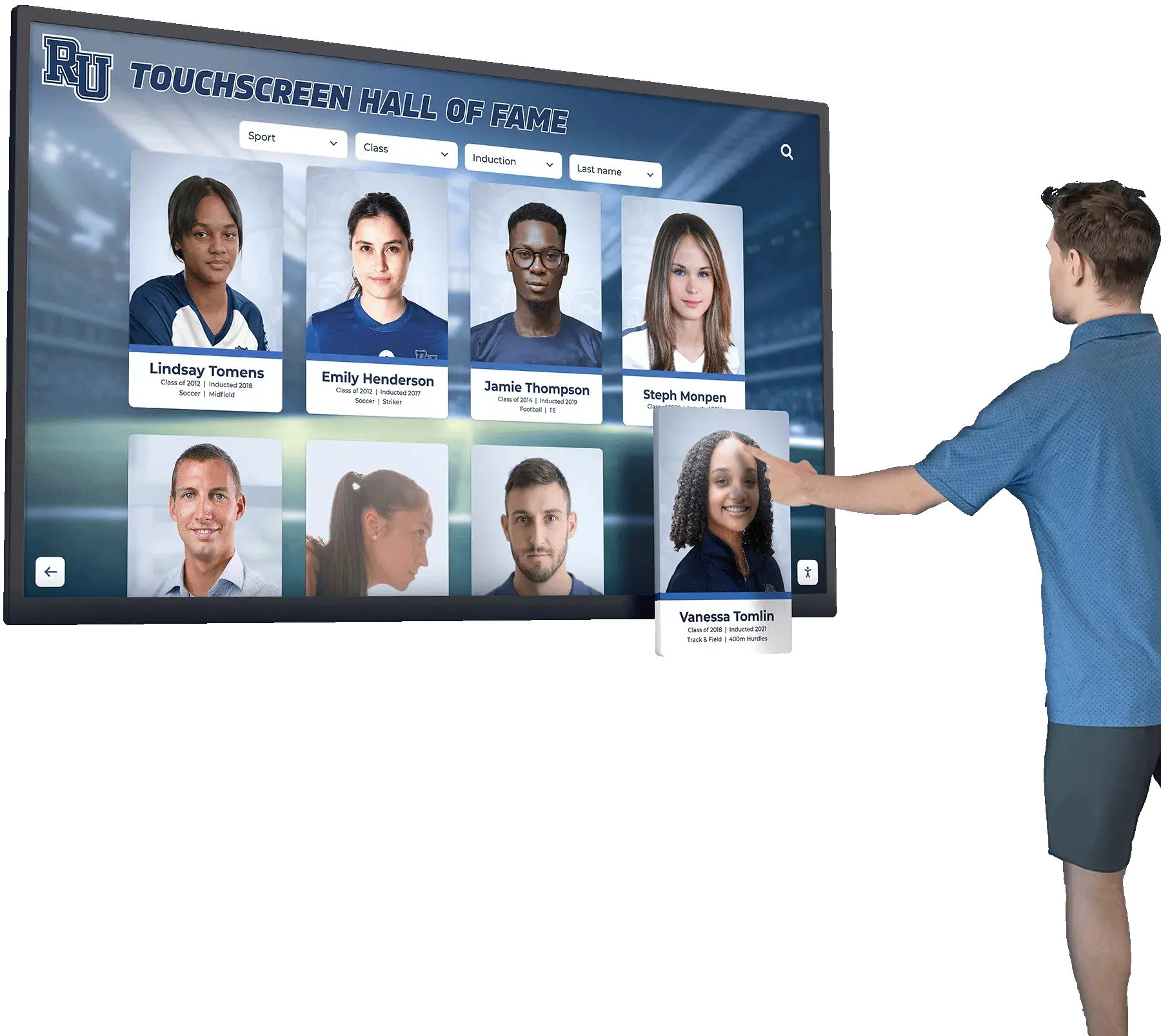
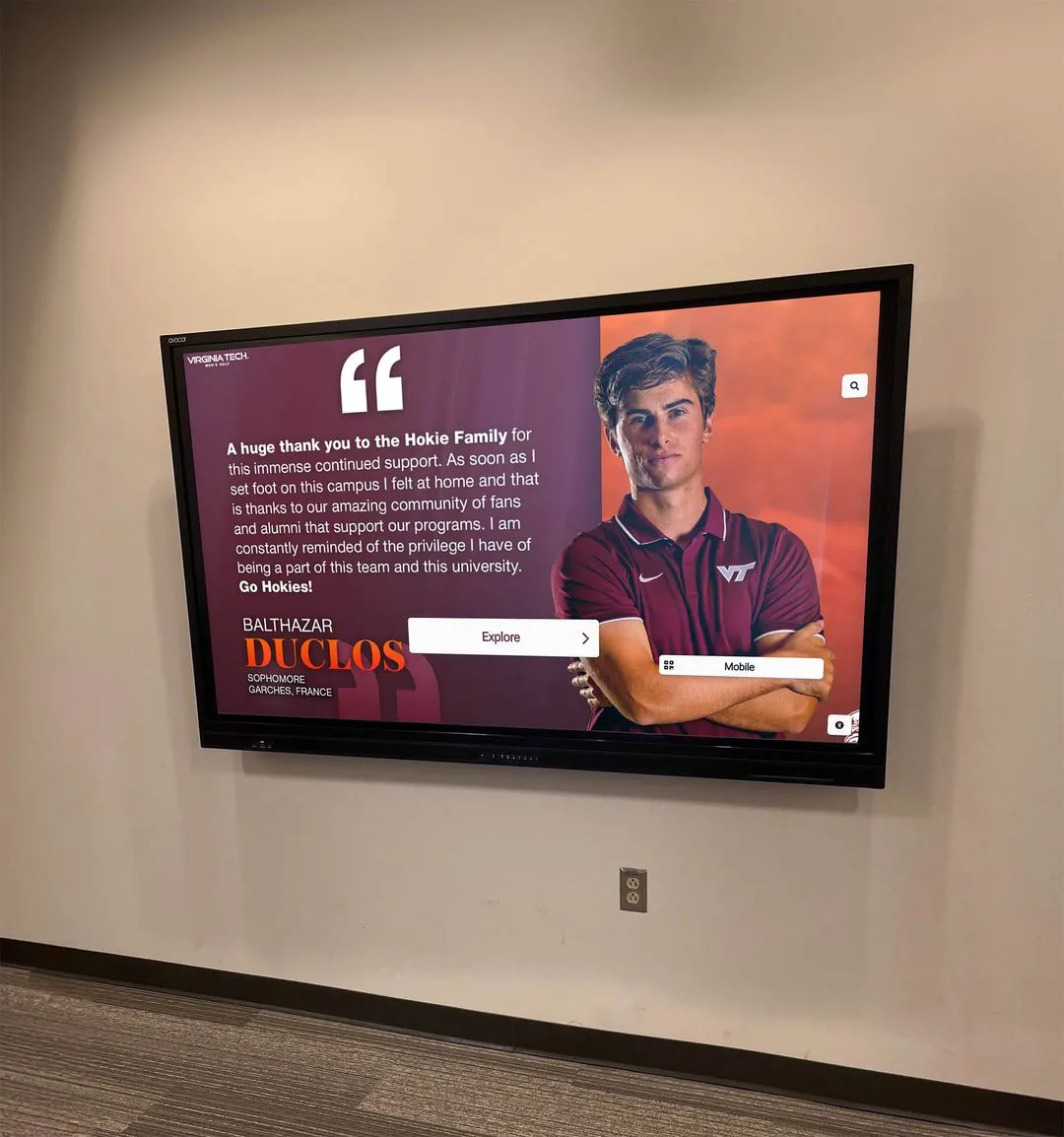
Intuitive touchscreen interfaces enable wrestlers, families, and visitors to explore achievements, view statistics, and discover program history
Recruiting and Program Prestige Building
Wrestling recruiting requires demonstrating program quality to prospective athletes and families. Comprehensive touchscreen displays showcasing decades of All State selections, All American honors, state qualifiers, career milestone achievers, and championship teams provide tangible evidence of program excellence that influences recruiting decisions.
High school coaches report that during recruiting visits, touchscreen recognition displays frequently become extended conversation focal points as prospects explore achievements, compare statistics, and visualize themselves joining displayed tradition—creating aspirational connections that basic trophy cases cannot deliver.
Learn about comprehensive approaches to wrestling awards and recognition that motivate teams while building program tradition.
Essential Features for Wrestling Awards Touchscreens
Not all touchscreen systems deliver equivalent functionality for wrestling-specific needs. Evaluating solutions requires assessing features particularly valuable for wrestling program recognition.
Wrestling-Specific Content Organization
Effective wrestling recognition requires organizational structures reflecting the sport’s unique characteristics:
Weight Class-Based Navigation
Wrestling touchscreens should enable browsing and filtering by weight class—allowing visitors to explore All State wrestlers at 157 pounds, see all state qualifiers at heavyweight, or compare career win leaders across different divisions. This weight class organization mirrors how wrestling community thinks about achievements and facilitates meaningful comparisons within competitive divisions.
Achievement Category Organization
Wrestling recognition naturally organizes into achievement types:
- Wrestling Hall of Fame inductees
- All American selections and national qualifiers
- All State wrestlers by year and weight class
- State tournament qualifiers and place winners
- District and regional champions
- Career milestone achievers (100, 150, 200+ wins)
- Tournament championship performances
- Team records and championship seasons
- Coach milestones and achievements
- Weekly and seasonal special awards
Quality systems support custom category creation reflecting unique program awards, tournaments, or recognition structures specific to individual wrestling programs.
Chronological and Historical Navigation
Wrestling fans explore achievements both chronologically (who were the 1985 state qualifiers?) and by achievement type (all-time career win leaders). Touchscreen systems should support timeline-based browsing showing program evolution across decades, era-based filtering for different coaching periods or facility generations, season-by-season achievement records, and comparative views showing achievement progression over time.
This flexible navigation accommodates diverse user intentions—from alumni searching specific graduation years to current wrestlers studying program record holders.
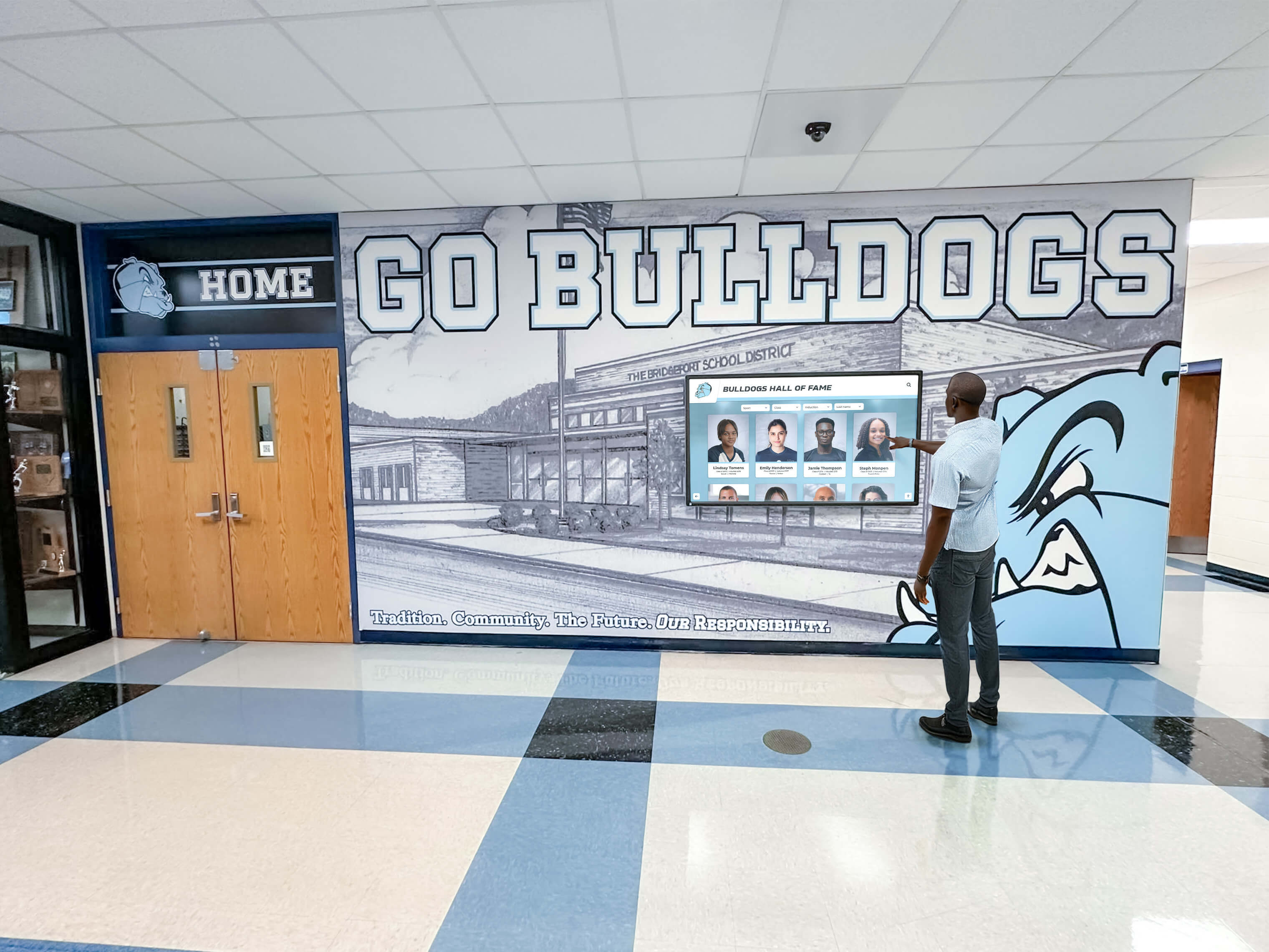
Wrestling touchscreen displays engage athletes who explore program history, discover role models, and connect with wrestling tradition
Rich Multimedia Wrestling Content
Static plaques display names and dates. Effective wrestling recognition tells complete achievement stories through diverse media:
Photo Galleries and Action Photography
Wrestling creates dramatic action photography—pins in progress, celebration moments, podium presentations, team huddles, and championship matches. Quality touchscreen systems support unlimited photo galleries per wrestler including action shots from competition, award ceremony photos, team pictures, weight class group photos, and historical images connecting past and present.
Programs implementing comprehensive photo galleries report that wrestlers spend significantly more time exploring touchscreen displays when rich visual content accompanies achievement listings—creating emotional engagement that text-only recognition cannot deliver.
Video Highlights and Match Footage
Wrestling generates highlight-worthy video content:
- Match highlights showing winning moments
- Pin sequences and decisive takedowns
- Championship match footage
- Interview segments with wrestlers and coaches
- Season recap compilations
- Historical footage from program archives
Video integration transforms recognition from passive reading into immersive experience where visitors watch achievements rather than just reading about them. This multimedia depth particularly engages younger wrestlers who grew up consuming video content and expect dynamic digital experiences.
Statistics and Career Records
Wrestling produces comprehensive statistics—season and career win-loss records, pin totals, technical fall achievements, major decision percentages, takedown statistics, tournament performance summaries, and head-to-head records against rivals. Touchscreen displays showcase these statistics through sortable tables comparing wrestlers across eras, visualizations showing career progression, record comparisons across weight classes, and achievement thresholds documenting milestone accomplishments.
Statistical depth appeals particularly to wrestling community’s analytical culture where fans debate greatest wrestlers, compare achievements across eras, and track progression toward program records.
Schedule, Bracket, and Season Information Integration
Wrestling touchscreens deliver maximum value when they combine recognition with functional program information:
Season Schedule Display
Real-time schedule information accessible on wrestling room touchscreens includes dual meet schedule with dates, opponents, and locations, tournament calendar showing weekend competitions, important dates for weigh-ins and team events, practice schedule and facility access times, off-season conditioning calendar, and links to driving directions for away competitions.
Schedule integration transforms recognition displays into functional program hubs athletes check regularly—increasing engagement frequency while providing practical value beyond recognition alone.
Tournament Brackets and State Progression
During championship seasons, touchscreen displays showcase:
- Current tournament brackets showing wrestler advancement
- State tournament qualification tracking by weight class
- Historical bracket progression from past years
- Championship match results and placing summaries
- Comparison of current year performance to historical benchmarks
Bracket integration creates ongoing engagement throughout championship seasons as wrestlers, families, and fans check progression and anticipate upcoming matches.
Real-Time Results and Updates
Modern touchscreen systems enable immediate updates posting:
- Dual meet results as matches conclude
- Tournament performance updates throughout competition days
- Weekly award announcements appearing Monday mornings
- State tournament results updating in real-time
- Breaking news about All State or All American selections
This real-time capability keeps recognition current with program dynamics—celebrating achievements while momentum remains high rather than delayed recognition appearing weeks or months after accomplishments.
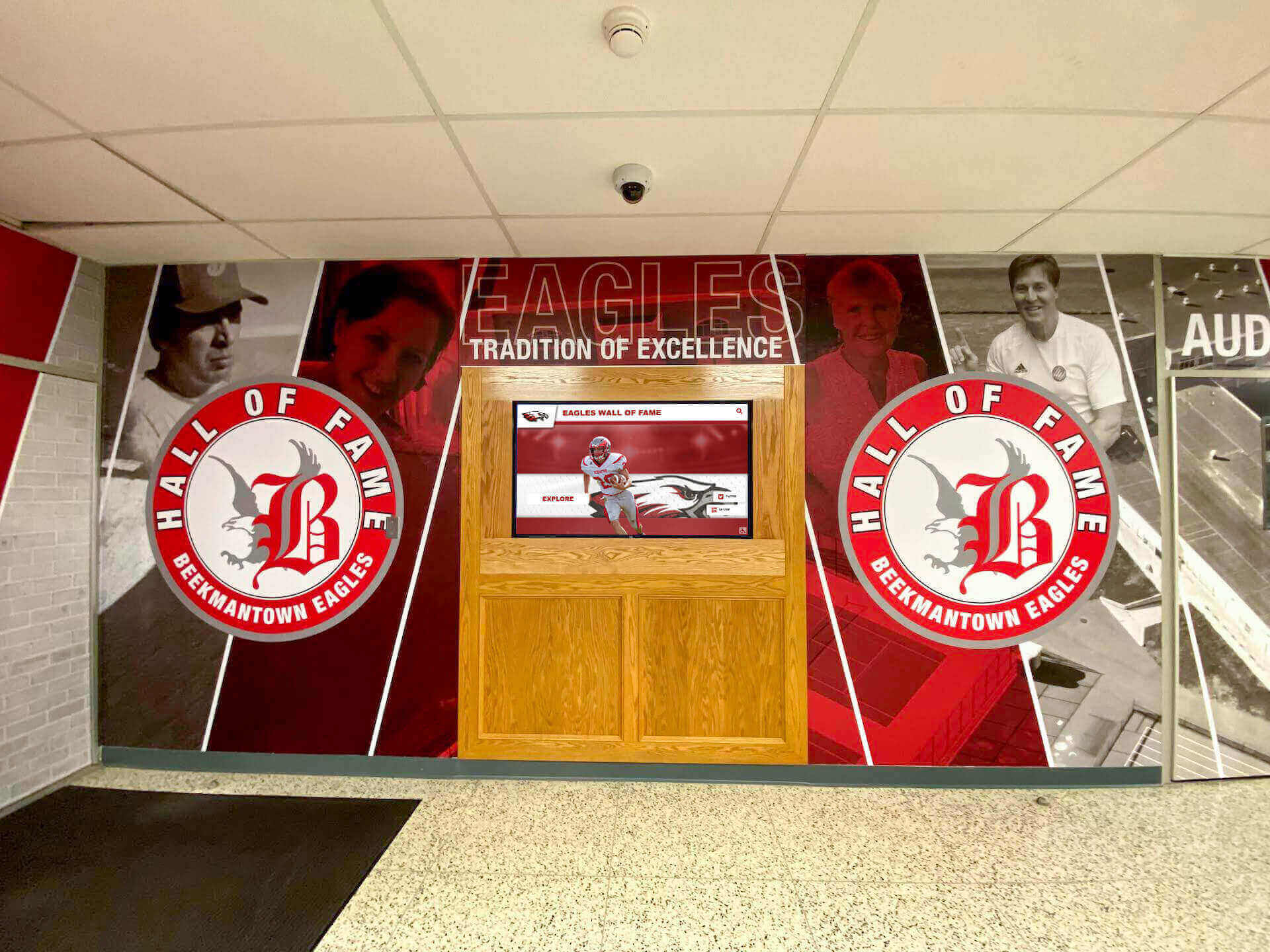
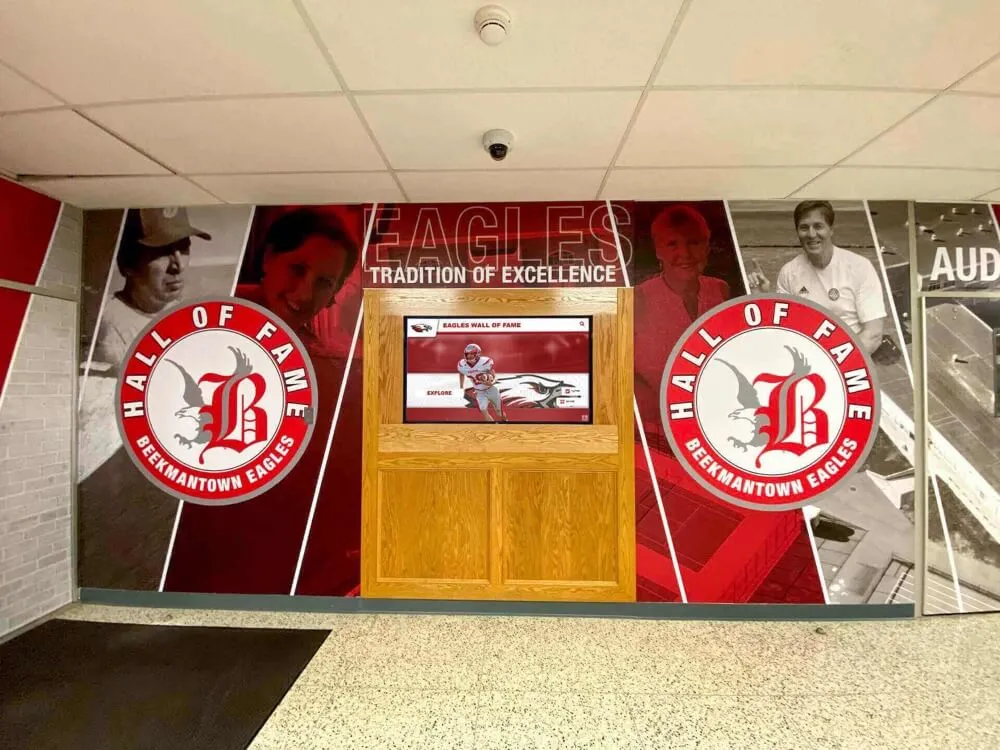
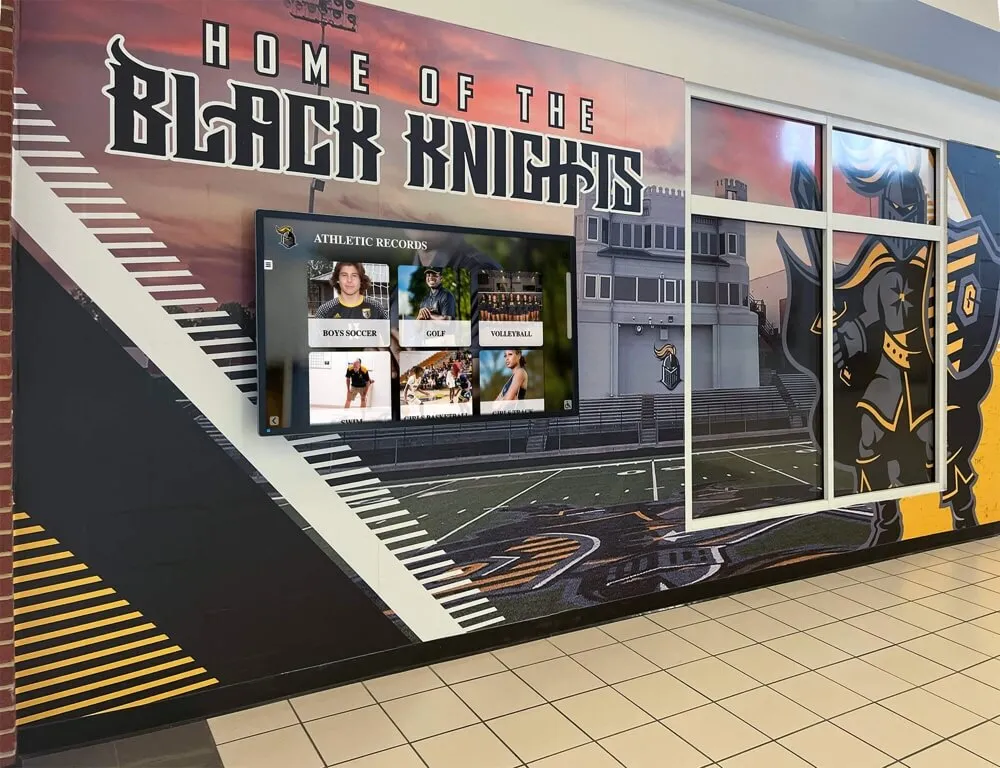
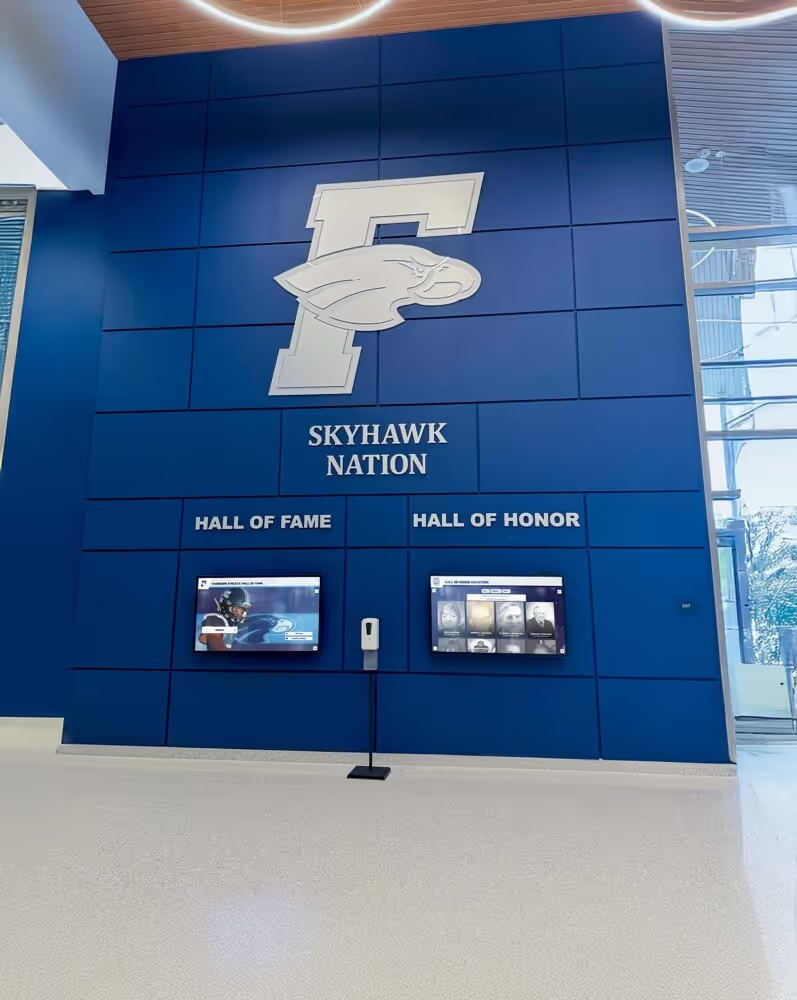
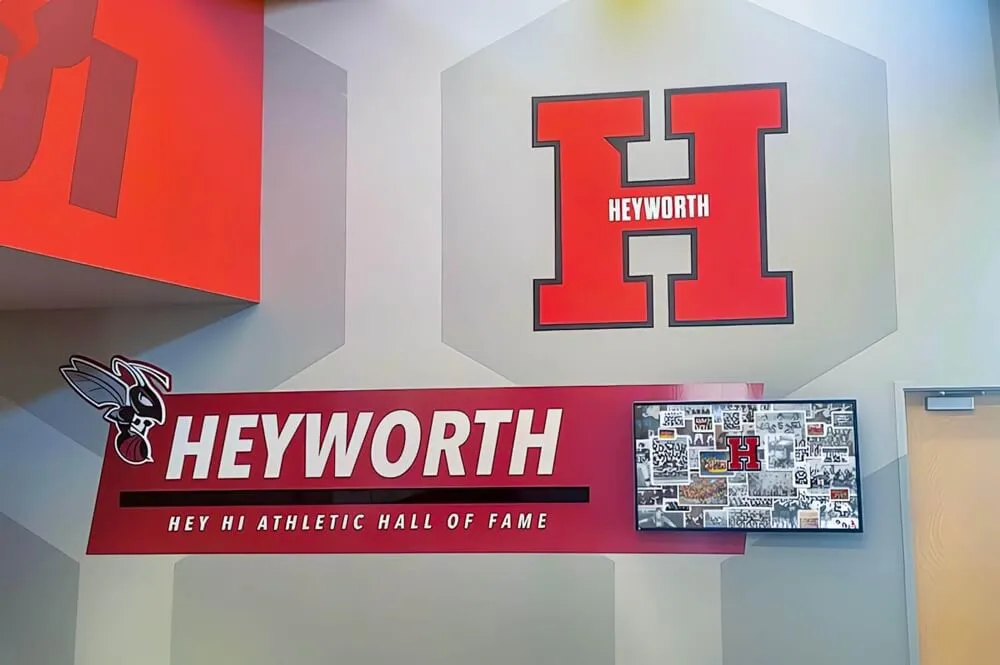
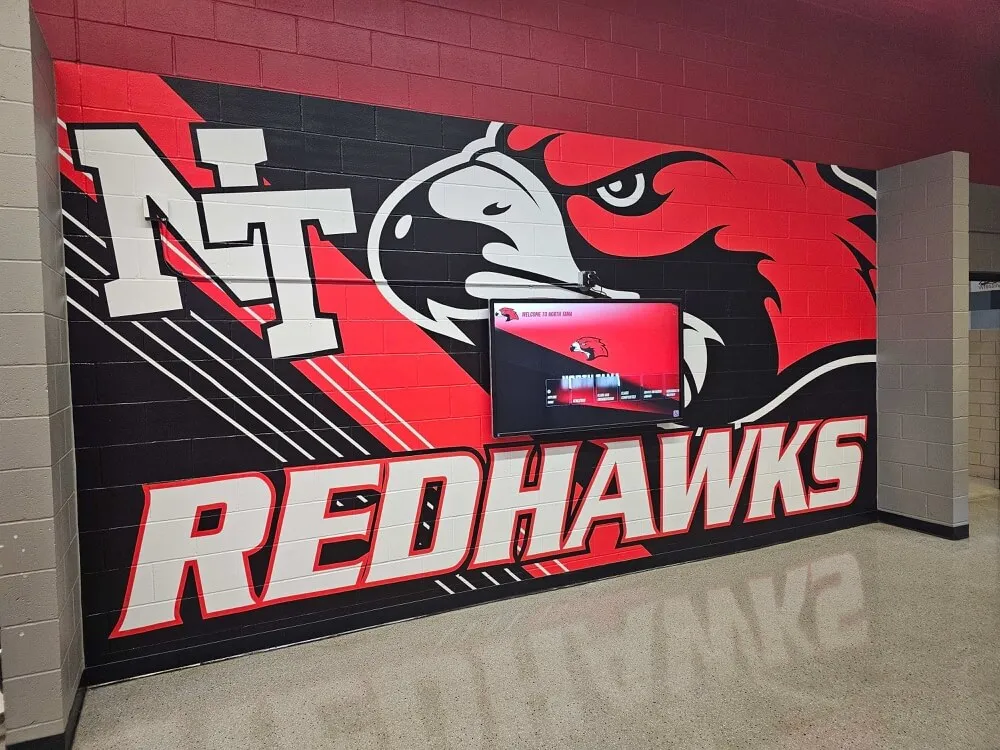
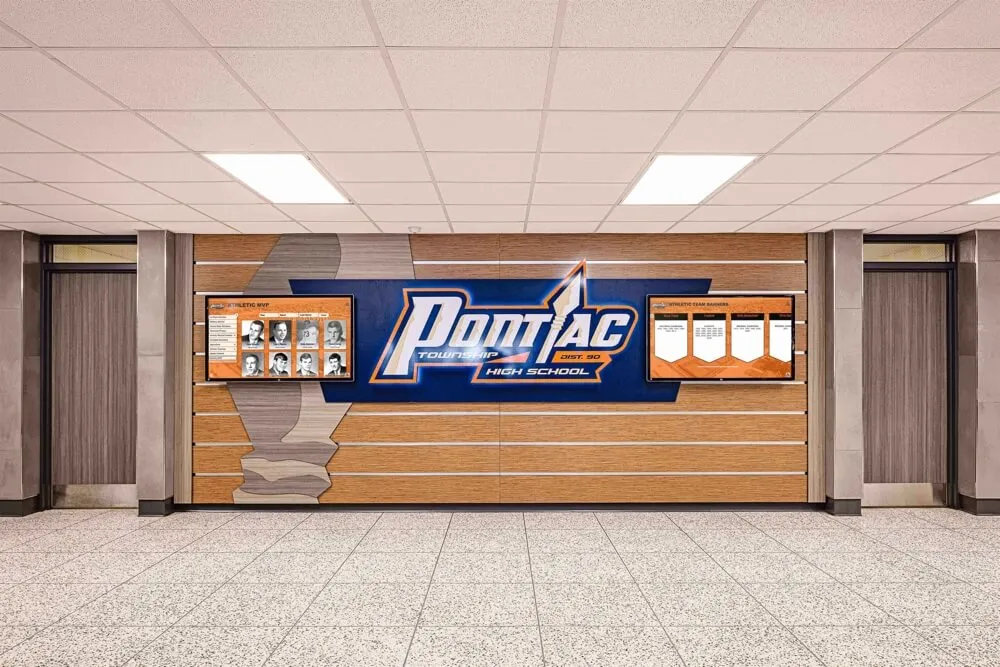
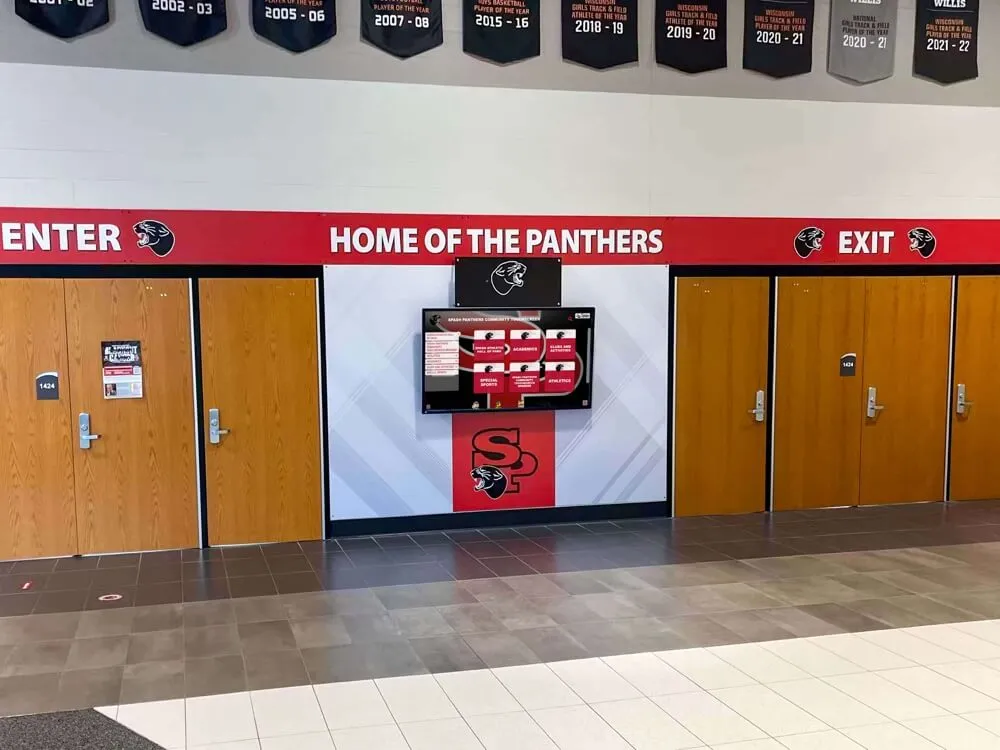
Strategic placement of wrestling recognition displays in main lobbies ensures visibility across entire school community
Announcement and Communication Features
Wrestling programs benefit when touchscreen displays function as team communication channels:
Practice and Schedule Announcements
Wrestling coaches use touchscreen announcement features for:
- Practice time changes due to facility conflicts
- Weather-related schedule modifications
- Tournament logistics and departure times
- Weigh-in requirements and timing
- Team meeting notices
- Fundraising activity reminders
Announcement integration ensures wrestlers encountering recognition displays also receive current team information—improving communication effectiveness while maximizing display utility.
Achievement Celebration Announcements
Immediate celebration of recent achievements maintains recognition relevance:
- Weekend tournament performance highlights
- New career milestone announcements (wrestler X just reached 100 wins!)
- All State and All American selection celebrations
- State tournament advancement updates
- Team accomplishment recognition
This celebration function provides recognition immediacy physical plaques cannot deliver—honoring achievements within days rather than waiting months or years for permanent recognition installation.
Analytics and Engagement Tracking
Understanding how wrestlers, families, and community engage with touchscreen displays provides valuable insights:
Interaction Data and Popular Content
Quality systems track:
- Most-viewed wrestler profiles indicating community favorites
- Popular content categories (Hall of Fame vs. current season)
- Peak usage times showing optimal scheduling for content updates
- Search queries revealing what visitors seek
- Session duration indicating engagement depth
- Weight class viewing patterns showing balanced interest
This data informs content strategy, identifies recognition gaps, and demonstrates value to administrators and stakeholders considering recognition investments.
Explore approaches to building athletic program identity through systematic recognition and tradition celebration.
Planning Your Wrestling Touchscreen Implementation
Successful touchscreen recognition requires systematic planning addressing content strategy, hardware decisions, installation logistics, and ongoing management.
Defining Recognition Scope and Content Categories
Begin by determining which wrestling achievements your touchscreen system will recognize:
Wrestling Hall of Fame Inductees
Most wrestling programs maintain formal Halls of Fame honoring the highest achieving wrestlers, coaches, and contributors. Touchscreen systems provide ideal Hall of Fame platforms offering:
- Comprehensive biographical profiles with career summaries
- Achievement documentation showing state placements, records, and honors
- Photo galleries spanning high school careers and post-graduation lives
- Video interviews with Hall of Fame inductees when available
- Induction ceremony documentation and speeches
- Historical context placing achievements within era-specific competitive environments
Hall of Fame sections typically receive the most detailed content development since inductees represent program pinnacles deserving thorough documentation.
All American and National Qualifiers
Wrestlers earning All American status at national tournaments like NHSCA Nationals, FloNationals, or other prestigious events deserve special recognition. Touchscreen profiles should document:
- National tournament placement and year
- Tournament competition level and field size
- Path to All American status (bracket progression)
- Season record and significant victories
- College recruitment resulting from national performance
- Career trajectory following high school success
These profiles demonstrate program ability to develop nationally competitive wrestlers—powerful recruiting tools showing serious athletes that program provides pathways to elite competition.
All State Selections
State-level recognition represents significant achievement for most wrestlers. Comprehensive touchscreen systems document:
- All State selections by year and weight class
- State tournament placement (1st through 6th typically earn All State)
- Season statistics and notable victories
- Photo gallery from state competition
- Progression to state finals (bracket summary)
- Multiple-year All State selections showing sustained excellence
Organizing All State recognition by decade, weight class, and alphabetically enables easy browsing supporting diverse user intentions.
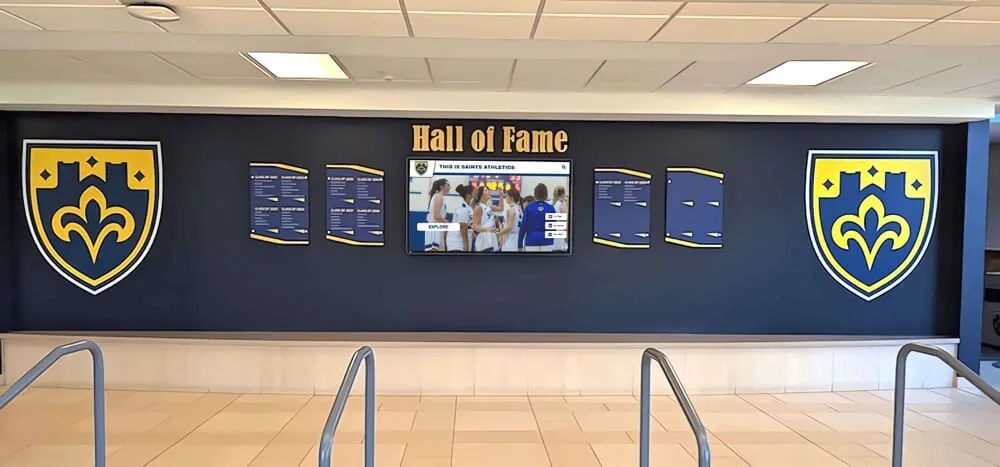
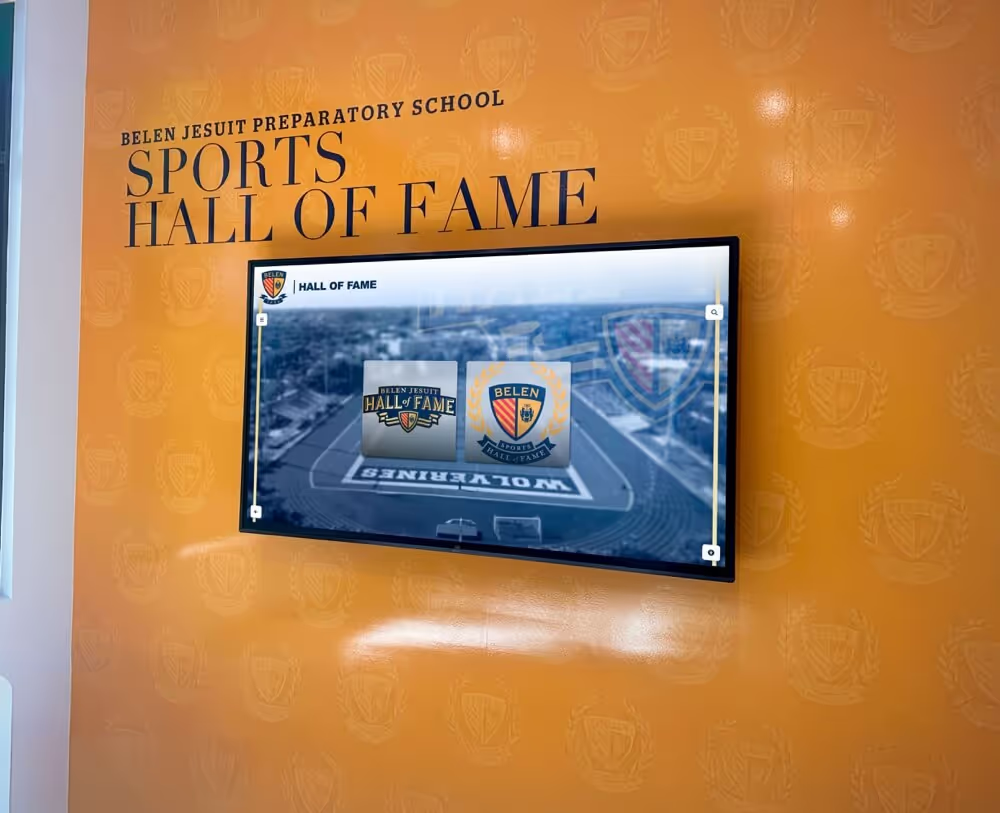
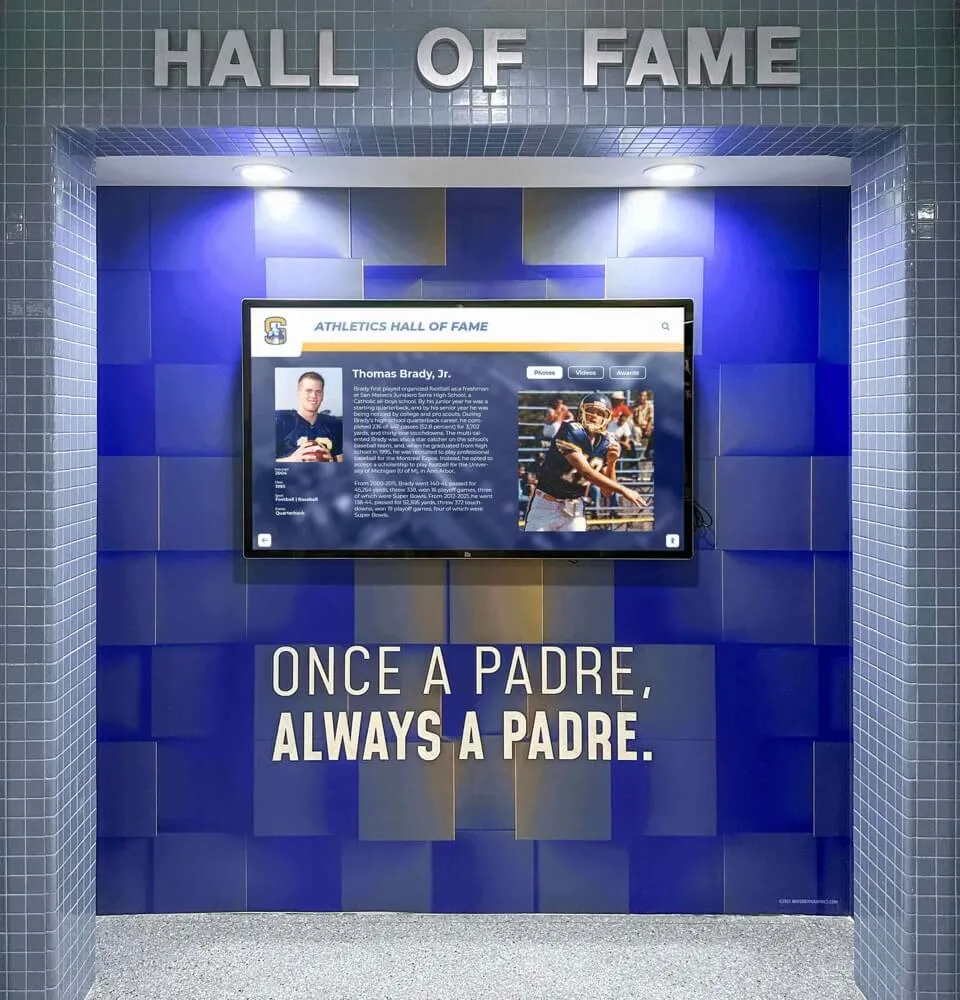
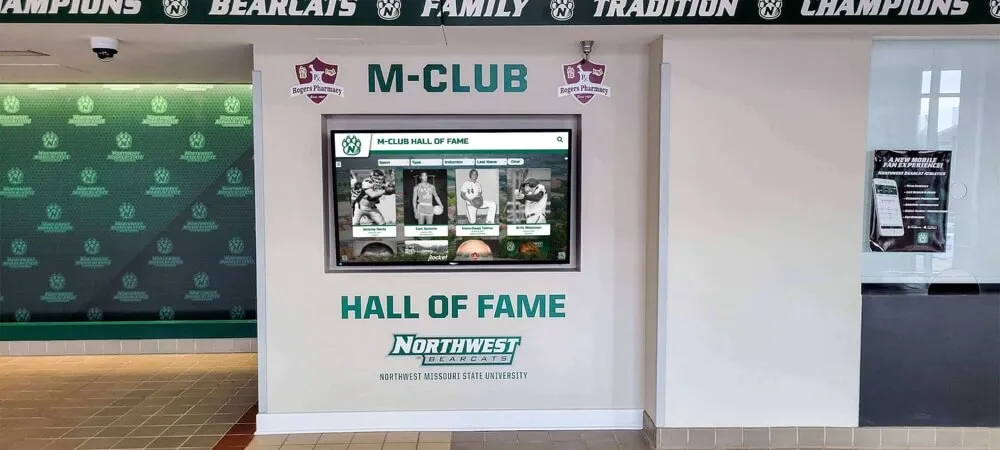
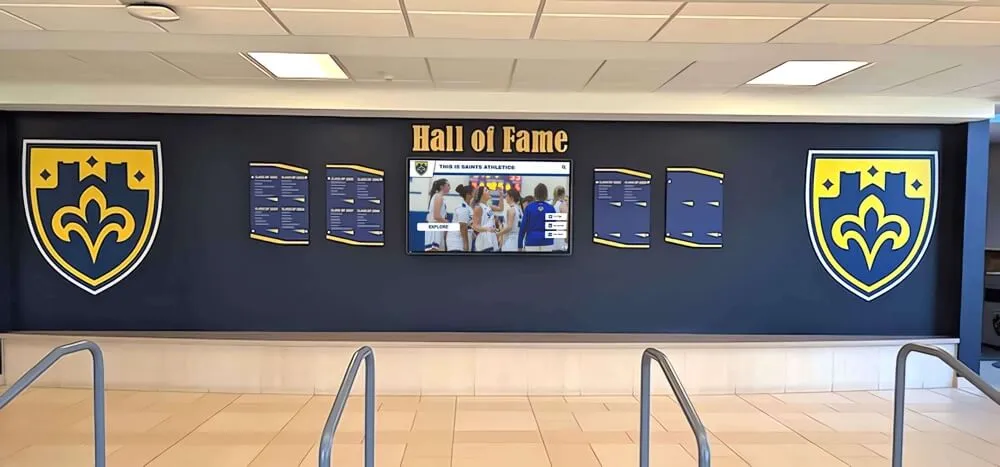
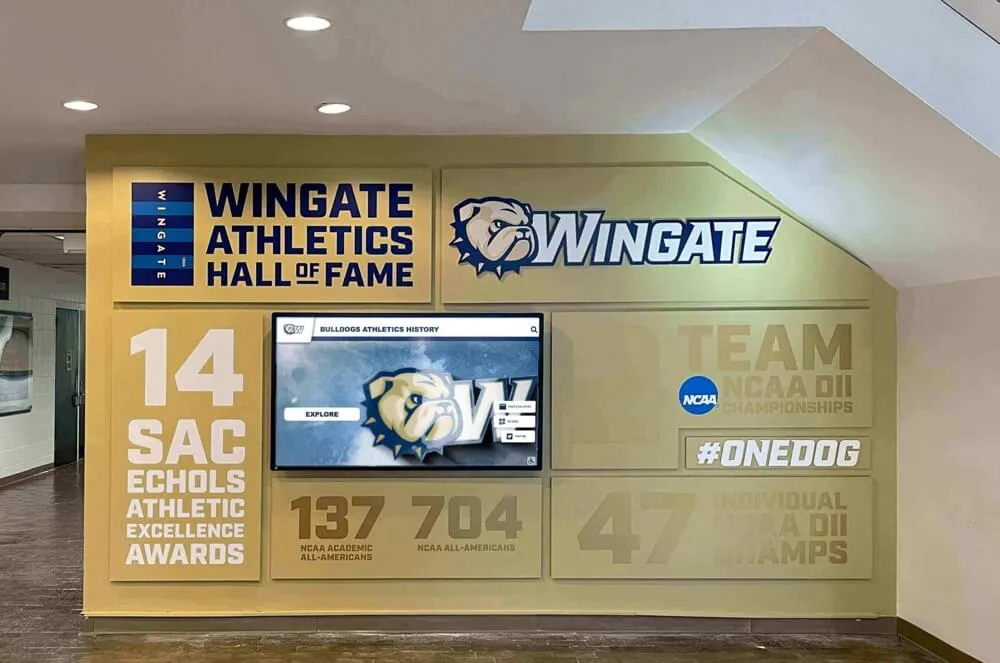
Combined physical and digital recognition preserves tradition while adding modern capabilities
State Tournament Qualifiers
Wrestling programs with rich state tournament histories might document all qualifiers across decades. Qualifier profiles include:
- Qualification year and weight class
- District and regional performance leading to qualification
- State tournament results and bracket placement
- Season record and key victories
- Photos from competition when available
- Context about qualification competitiveness in specific eras
This comprehensive documentation demonstrates program consistency in developing state-caliber wrestlers—showing current athletes the tradition they’re joining.
Career Milestone Achievers
Wrestling celebrates specific career accomplishments:
- 100+ career wins (entry to elite company)
- 150+ career wins (exceptional achievement)
- 200+ career wins (rare excellence)
- Career pin milestones (50+, 75+, 100+ pins)
- Undefeated or near-undefeated seasons
- Multiple-year varsity athletes showing sustained commitment
Touchscreen systems showcase these milestone achievers through sortable career records lists, achievement comparison tables, season-by-season performance breakdowns, and profiles documenting paths to milestones.
Learn about effective approaches to athletic recognition programs that celebrate accomplishments across all achievement levels.
Wrestler of the Week and Seasonal Awards
Current season recognition maintains engagement:
- Weekly award winners with performance summaries
- End-of-season team awards (Most Pins, Most Improved, Practice Excellence)
- Captain selections and leadership recognition
- Academic All-Conference and scholar-athlete honors
- Tournament championship performances
- Team record participation and contributions
Weekly recognition rotates featured content ensuring every wrestler receives spotlight visibility during seasons—building team culture where diverse contributions gain acknowledgment.
Team Accomplishments and Championships
Wrestling functions as individual sport within team context. Document team achievements including:
- Conference championship seasons
- Tournament team championship victories
- Dual meet records and winning streaks
- Team state tournament performance and placements
- Rivalry records and key victories
- Season records and historical team statistics
Team recognition provides context for individual achievements while celebrating collective program success.
Coaching Milestones and Recognition
Wrestling success requires exceptional coaching. Honor coaches through:
- Career win milestone documentation
- Championship coaching achievements
- Coach of the Year honors and recognition
- Wrestler development success (state qualifiers produced)
- Program building and facility improvements
- Biographical profiles of long-serving coaches
Coaching recognition demonstrates respect for leadership while providing motivation for current coaching staff.
Content Collection and Historical Research
Comprehensive wrestling recognition requires substantial content gathering:
Historical Content Sources
Wrestling programs should mine diverse archives:
- School yearbooks providing photos and team rosters
- Athletic department records documenting achievements and statistics
- Newspaper archives from local coverage of tournaments and state competition
- State association records for tournament results and all-state selections
- Alumni files and biographical information
- Personal collections from wrestlers, coaches, and families
- Video archives from state broadcasts or local television coverage
Historical content collection represents the most time-intensive implementation phase—typically requiring 60-120 hours depending on program history depth and organization of existing records.
Current Season Content Collection
Establish systematic processes capturing ongoing achievements:
- Season photography at dual meets and tournaments
- Video recording of significant matches and championship competitions
- Wrestler questionnaires collecting biographical details and statistics
- Coach input documenting weekly awards and special achievements
- Statistical tracking through wrestling management software
- Media monitoring collecting press coverage and articles
Wrestling programs implementing touchscreen systems typically assign student managers, parent volunteers, or athletic department staff to ongoing content collection ensuring continuous recognition currency.

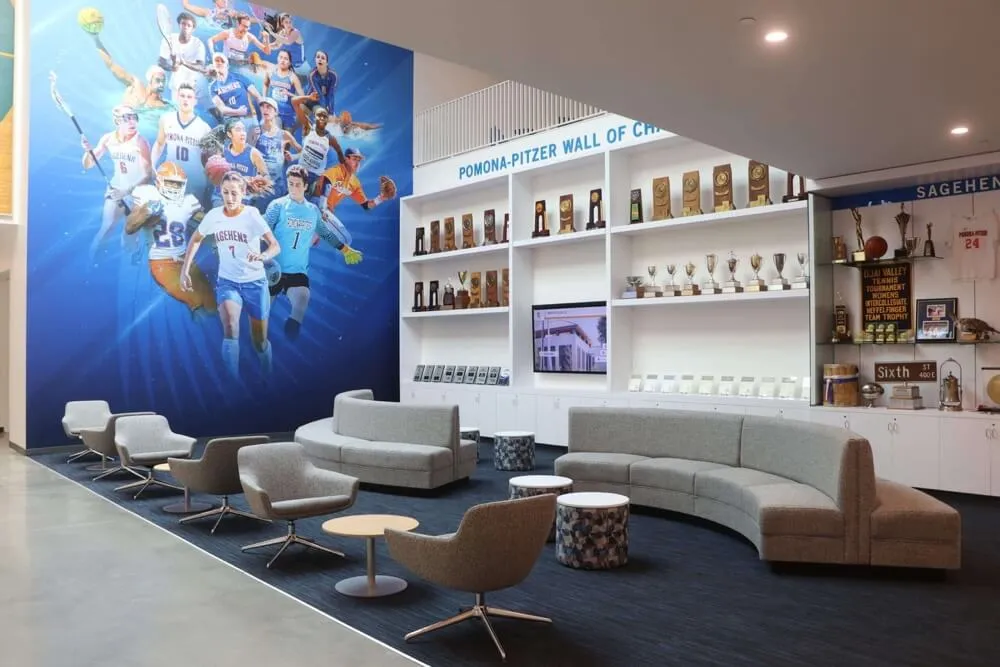
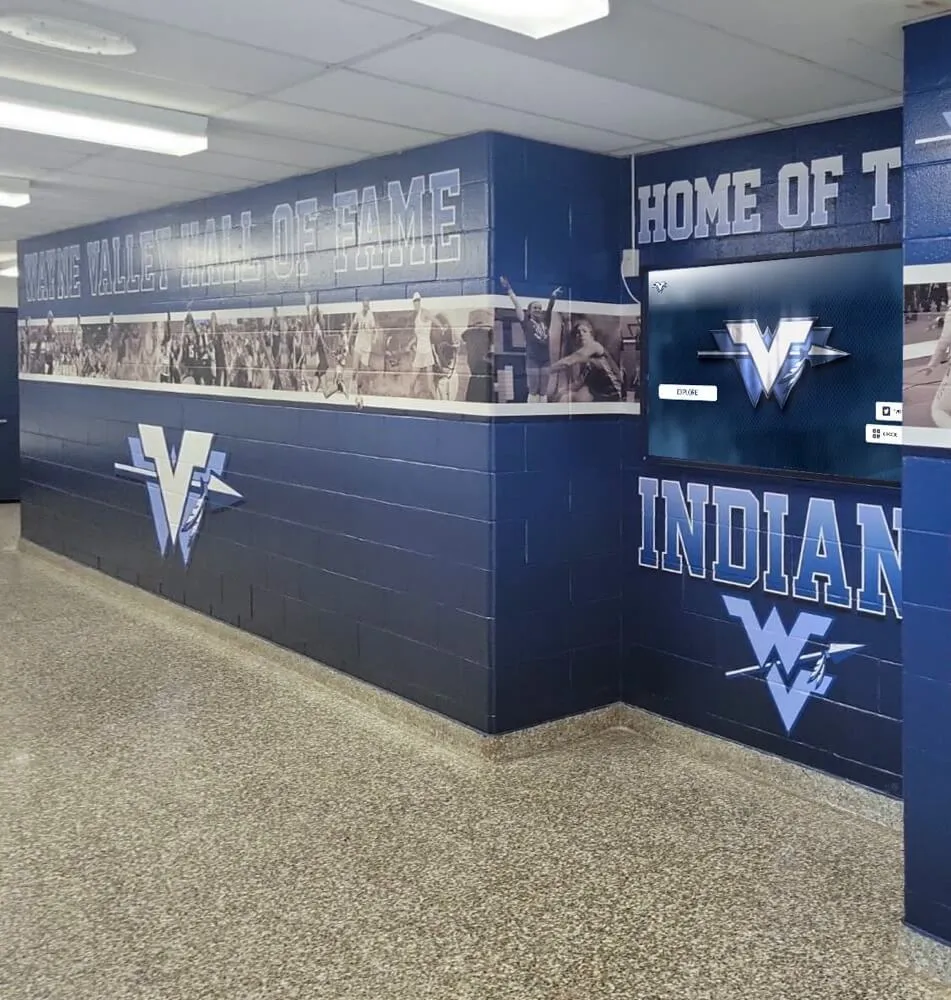
Wrestling team lounges integrate touchscreen recognition creating gathering spaces celebrating program tradition
Hardware Selection and Installation Planning
Wrestling touchscreen implementations require appropriate equipment and thoughtful placement:
Touchscreen Hardware Options
Wrestling programs typically choose between:
Freestanding Kiosk Systems ($8,000-$12,000)
- Heavy-duty floor-standing enclosures with integrated touchscreens
- 43-55 inch commercial-grade displays
- Protective enclosures preventing damage in high-traffic areas
- Professional appearance suitable for main lobbies
- Self-contained power and networking
Wall-Mounted Displays ($3,000-$6,000)
- Lower-profile installations integrating with existing walls
- 43-55 inch touchscreen displays
- Protective acrylic panels or anti-vandalism glass
- Space-efficient for hallway installations
- Requires wall mounting and in-wall wiring
Trophy Case Integrated Systems ($4,000-$8,000)
- Displays installed within or adjacent to existing trophy cases
- 32-43 inch screens typically
- Combines traditional trophy display with digital recognition
- Preserves existing recognition while adding digital capacity
Hardware selection should consider available space and budget, traffic patterns and installation durability requirements, wrestling room vs. main lobby placement, integration with existing recognition displays, and long-term expansion plans.
Strategic Placement Locations
Wrestling touchscreen displays deliver maximum value when positioned in:
Wrestling Room or Practice Facility Primary location where wrestlers spend daily time. Placement near entrance ensures visibility as athletes arrive and depart. Dual purpose combining recognition with schedule and announcement functions. Creates culture of excellence as wrestlers encounter achievement history daily.
School Main Lobby or Athletic Wing Entrance High-visibility location reaching broad school community. Demonstrates wrestling program significance to non-wrestlers. Provides impressive focal point for campus tours and recruiting visits. Shares wrestling excellence with entire school population.
Gymnasium or Athletic Facility Commons Area Gathering space where wrestlers and families congregate before and after competitions. Provides entertainment and engagement during wait times. Creates conversation starters connecting wrestling families. Natural location for bracket and schedule information during tournaments.
Multiple Distributed Locations Larger programs benefit from multiple touchscreens serving different purposes—primary recognition display in wrestling room, schedule and bracket display in gymnasium, Hall of Fame showcase in main building lobby.
Budget Development and Funding Sources
Comprehensive wrestling touchscreen implementations typically require:
Initial Implementation Costs
- Hardware (touchscreen, mounting, enclosure): $3,000-$12,000
- Software platform subscription (annual): $1,200-$3,600
- Professional installation: $500-$2,000
- Initial content development: $1,500-$5,000 (if outsourced)
- Network infrastructure upgrades (if needed): $500-$2,000
Total initial investment: $6,700-$24,600 depending on system scope, hardware choices, and implementation assistance level.
Ongoing Annual Costs
- Software subscription and updates: $1,200-$3,600
- Content management staff time: 20-40 hours annually
- Hardware maintenance and cleaning: $200-$500
- Minor content updates and additions: 10-20 hours annually
Wrestling programs fund touchscreen recognition through diverse sources:
Wrestling Booster Clubs Most active funding source for wrestling-specific recognition. Booster organizations support tangible recognition investments benefiting program prestige. Frame touchscreen systems as permanent recognition honoring decades of wrestling achievement. Many booster clubs fund initial implementation through one-time fundraising campaigns while supporting annual software costs through operational budgets.
School Athletic Department Budgets Wrestling programs with strong institutional support request touchscreen funding through annual athletic budgets or capital equipment allocations. Position touchscreen systems as technology investments serving multiple purposes—recognition, communication, schedule display, and recruiting tools.
Alumni Campaigns and Class Gifts Wrestling alumni respond positively to campaigns ensuring their achievements receive permanent modern recognition. Milestone reunion classes (10, 25, 50-year anniversaries) provide natural fundraising opportunities. Notable wrestling alumni sometimes sponsor systems individually as program giving.
Sponsorship and Corporate Support Local businesses support wrestling programs through sponsorship arrangements. Touchscreen displays offer sponsor visibility through welcome screens, rotating sponsor recognition, or “brought to you by” acknowledgments. Corporate sponsors appreciate brand exposure reaching wrestling families and school communities.
Discover additional approaches to wrestling team awards and motivation that can be featured on touchscreen displays.
Implementation Best Practices for Wrestling Touchscreens
Learning from successful wrestling program implementations accelerates effectiveness and avoids common pitfalls.
Content Organization and User Experience
Prioritize Wrestler Discoverability
Wrestling touchscreens should enable quick location of specific wrestlers through multiple pathways:
- Prominent search functionality accepting name entry
- Alphabetical browsing through comprehensive rosters
- Weight class filtering narrowing to specific divisions
- Year/era selection for class-based browsing
- Achievement category filtering (All State, career wins, etc.)
Test usability with actual wrestlers. If finding yourself takes more than 30 seconds, reorganize navigation structures.
Balance Historical Depth with Current Season Emphasis
Wrestling programs must honor legacy while maintaining current relevance. Effective balance includes:
- Featured content rotation highlighting different eras and achievement types
- Current season section prominently positioned showing this year’s team
- Historical archives accessible but not dominating home screens
- Weekly award features ensuring present-day wrestlers receive spotlight attention
- Championship season special emphasis during state tournament periods
This balance prevents touchscreens from becoming purely historical museums disconnected from current team experiences.
Create Achievement Aspiration Paths
Young wrestlers benefit from understanding achievement pathways. Touchscreen content should show:
- Progression from freshman wrestlers to All State selections
- Multiple paths to recognition (statistics, championships, milestones)
- Weight class diversity in achievement (excellence possible at all divisions)
- Timeline from participation to Hall of Fame induction
- Examples of overcoming setbacks to reach success
This aspirational content motivates current wrestlers by demonstrating accessible paths to recognition rather than presenting achievement as accessible only to rare natural talents.
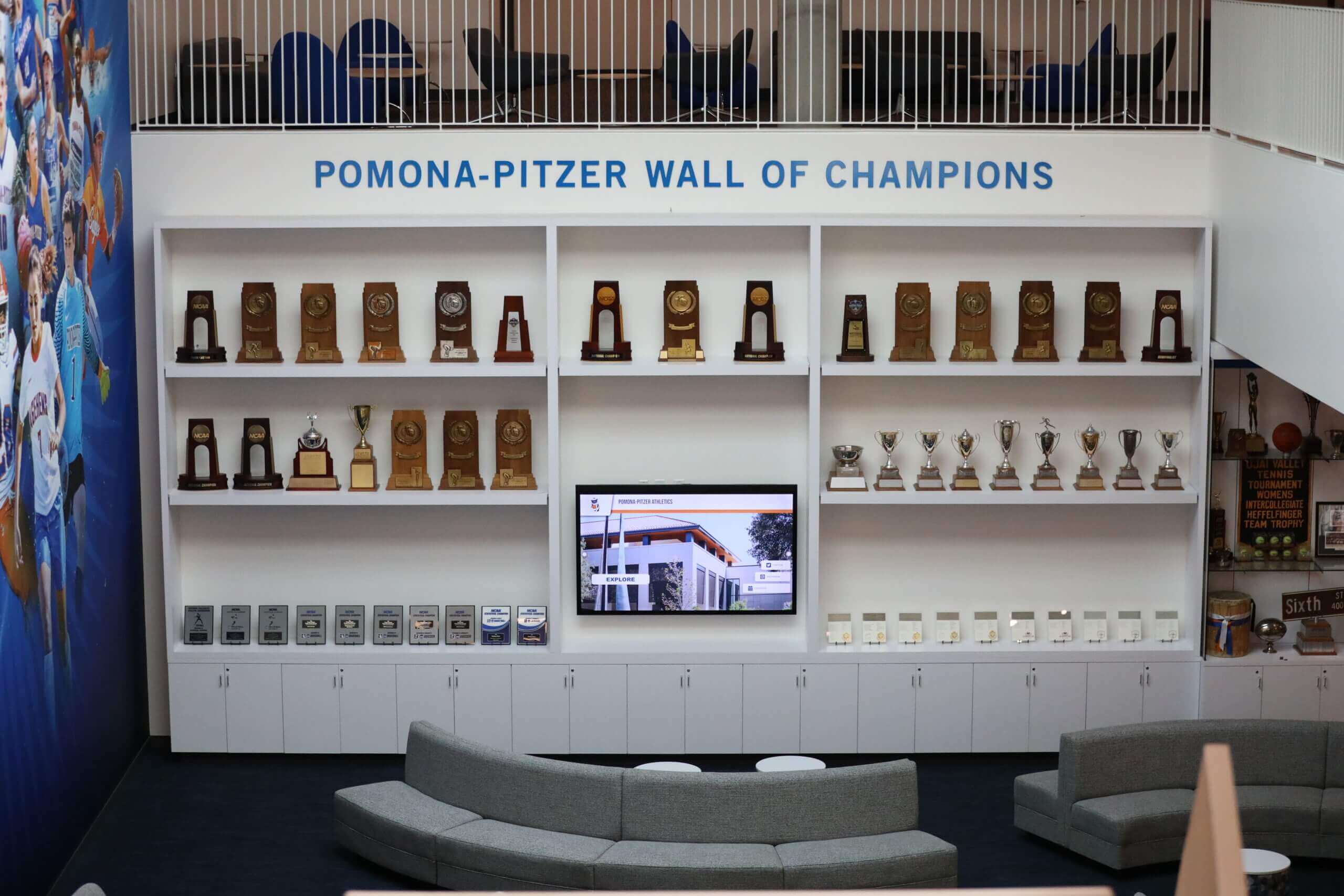
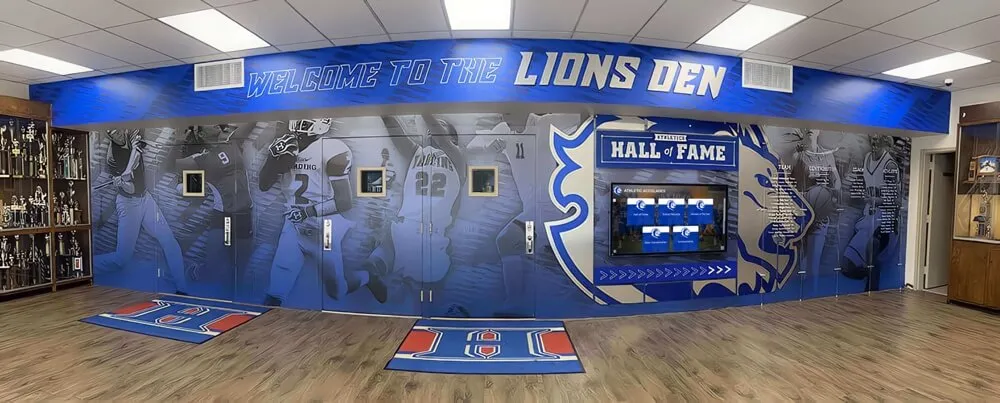
Wrestling recognition spaces combine physical trophies with digital displays creating comprehensive celebration of program excellence
Maintaining Content Currency and Accuracy
Establish Clear Content Management Responsibilities
Wrestling touchscreen success requires defining ongoing management:
- Head coach oversight of achievement recognition decisions
- Assistant coach or team manager handling weekly award updates
- Athletic secretary or administrator managing software platform
- Student assistant conducting historical research and entry
- Parent volunteer coordinator organizing photo collection
Clear responsibility assignment prevents touchscreens from becoming outdated due to ambiguous ownership of content management duties.
Create Standard Operating Procedures
Document processes for:
- Adding new season wrestlers at year start
- Weekly award announcement workflow and timing
- Post-tournament update procedures
- End-of-season recognition additions
- Hall of Fame induction content development
- Historical research and archive additions
Standard procedures ensure consistent quality regardless of staff changes or volunteer turnover.
Schedule Regular Content Audits
Wrestling programs should conduct periodic reviews:
- Quarterly accuracy checks for statistics and records
- Annual comprehensiveness review identifying recognition gaps
- Photo quality assessment and improvement opportunities
- Obsolete content removal (outdated schedules, old announcements)
- Technical functionality testing ensuring touchscreen responsiveness
Regular audits maintain professional quality preventing gradual degradation as systems age.
Integrating Touchscreen Recognition with Program Culture
Ceremonialize Content Additions
Major recognition additions deserve celebration:
- Team gatherings when Hall of Fame inductees are added
- Weekly award winner features announced at practice
- State qualifier additions celebrated as seasons conclude
- Career milestone achievement recognition ceremonies
- End-of-season team review of updated content
Ceremonial additions create moments connecting athletes to recognition while reinforcing that touchscreen systems represent meaningful honor rather than just technology.
Incorporate Touchscreen Exploration into Program Traditions
Establish practices integrating touchscreen engagement:
- New wrestler orientation includes exploring program history
- Pre-season team meeting reviewing previous year’s achievements
- State tournament prep session showing past qualifier and champion profiles
- Alumni returning to practice encouraged to find themselves
- Senior night featuring departing wrestlers viewing their profiles
These traditions embed touchscreen engagement into program culture rather than treating displays as passive background elements.
Use Recognition as Recruiting Tool
Wrestling coaches conducting recruiting visits should:
- Plan facility tours including extended touchscreen demonstration
- Encourage prospects to explore wrestlers in their weight classes
- Show college recruitment success of program alumni
- Demonstrate achievement diversity across all weight divisions
- Share tablet or mobile versions with prospects unable to visit
Touchscreen displays communicate program quality tangibly—prospects see concrete evidence of development tradition rather than just hearing coach assurances.
Explore approaches to building wrestling room environments that incorporate recognition and motivation.
Measuring Wrestling Touchscreen Success
Demonstrating touchscreen value justifies investment while supporting future enhancements and expansion.
Quantitative Success Metrics
Wrestling programs should track:
Usage and Engagement Data
- Daily touchscreen interactions measuring consistent use
- Average session duration showing engagement depth
- Most-viewed content identifying popular wrestlers and achievements
- Search terms revealing what visitors seek
- Peak usage times informing optimal update scheduling
- Seasonal patterns showing championship period engagement spikes
Team Performance and Motivation Indicators
- Practice attendance and punctuality improvements
- Season-to-season wrestler retention rates
- Multi-year participation increases
- Team goal achievement (state qualifiers, win records)
- Academic eligibility maintenance among wrestlers
While touchscreen recognition cannot be solely credited for performance improvements, coaches implementing systems frequently note cultural shifts toward excellence as recognition becomes more visible and systematic.
Recruiting and Program Growth Metrics
- Incoming wrestler numbers and program participation
- Recruiting visit feedback mentioning recognition displays
- Social media engagement with touchscreen content
- Alumni interaction and engagement increases
- Community awareness of program excellence
Operational Efficiency Improvements
- Time savings compared to physical plaque management
- Cost per recognition addition versus traditional plaques
- Communication effectiveness (announcement reach and response)
- Staff satisfaction with content management simplicity
Qualitative Feedback Collection
Numbers provide partial stories. Complement quantitative data with stakeholder perspectives:
Wrestler and Family Testimonials
Collect feedback through:
- End-of-season surveys asking about touchscreen impact
- Parent feedback during team banquets and ceremonies
- Wrestler interviews about motivation and program pride
- Alumni comments during returns to campus
- Prospective wrestler family impressions during visits
Document compelling quotes for presentations to administrators, boards, and potential funders.
Coaching Staff Perspectives
Wrestling coaches provide insights about:
- Cultural shifts in team attitude and motivation
- Recruiting conversation impacts and prospect engagement
- Communication effectiveness for schedules and announcements
- Time efficiency compared to previous recognition management
- Long-term vision for expanding recognition content
School Administrator Feedback
Athletic directors and principals observe:
- Wrestling program visibility improvements across school
- Community engagement and parent involvement increases
- Fundraising and booster support momentum
- Professional image enhancement for school athletics
- Return on investment relative to other recognition approaches
Continuous Improvement and Enhancement
Use data and feedback to optimize wrestling touchscreen systems:
Content Strategy Refinement
Analytics reveal opportunities:
- Expand popular content categories receiving high engagement
- Add missing weight classes or eras showing gaps in viewing
- Develop video content when photos show higher engagement
- Create comparison features users seek through searches
- Enhance statistics presentation based on interaction patterns
Technical and User Experience Improvements
Ongoing enhancement includes:
- Navigation simplification based on user frustration observations
- Search functionality improvements when queries fail to find expected content
- Hardware upgrades as screens age or new technology emerges
- Software platform updates adding new features and capabilities
- Interface customization reflecting wrestling-specific user patterns
Recognition Program Expansion
Successful initial implementations create foundation for expansion:
- Additional touchscreen locations in other facilities
- Mobile app development extending access to smartphones
- Web platform integration for unlimited geographic access
- Additional content categories beyond initial scope
- Enhanced multimedia through video interviews and documentaries
Wrestling programs should plan touchscreen recognition as ongoing evolution rather than one-time implementation—growing systems as budgets allow and content libraries expand.

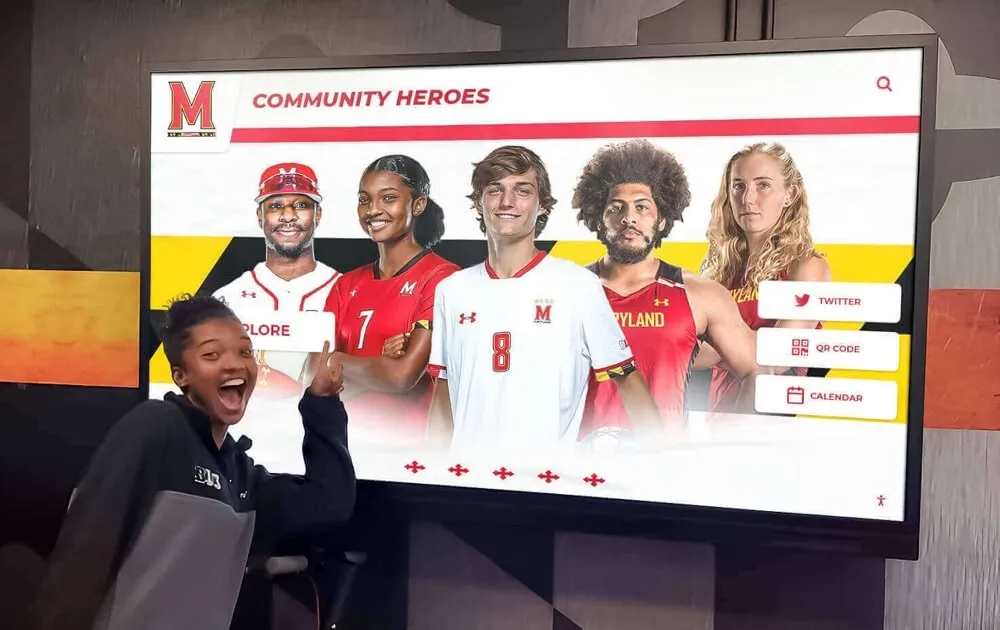
College wrestling programs implement comprehensive digital recognition showcasing program tradition and achievement depth
Technology Provider Selection for Wrestling Programs
Wrestling coaches evaluating touchscreen recognition providers should assess specific capabilities and support levels.
Key Evaluation Criteria
Wrestling-Specific Features and Templates
Quality providers offer wrestling recognition features including:
- Weight class organization and filtering
- Wrestling-specific achievement categories (career wins, pins, etc.)
- Tournament bracket integration capabilities
- Dual meet schedule display templates
- Wrestler profile templates designed for wrestling statistics
- Season record tracking and display formats
Generic digital signage platforms lack wrestling-specific features requiring substantial customization creating professional recognition experiences.
Content Management Ease for Non-Technical Users
Wrestling coaches rarely possess technical expertise. Systems should offer:
- Visual editors with real-time preview
- Drag-and-drop photo and video uploads
- Pre-built templates minimizing design decisions
- Bulk upload for adding multiple wrestlers efficiently
- No-code interfaces requiring only basic computer skills
Test content management during evaluation by actually creating sample wrestler profiles. If process feels complicated, coaches won’t maintain content consistently after implementation.
Hardware Flexibility and Durability
Wrestling facilities present harsh environments—temperature fluctuations, high humidity from practices, and physical contact risks. Evaluate:
- Commercial-grade hardware suitable for athletic environments
- Protective enclosures preventing damage from errant wrestling equipment
- Flexible hardware allowing school choice of vendors
- Durability ratings for continuous-operation public installations
- Touchscreen responsiveness and reliability
Consumer-grade televisions fail quickly in wrestling facility contexts. Specify commercial equipment despite higher initial costs.
Implementation Support and Training
Wrestling programs benefit from comprehensive support:
- Initial content creation assistance or templates
- Staff training ensuring coaches can manage systems
- Ongoing technical support with responsive problem resolution
- Hardware installation guidance or direct service
- Regular check-ins during first year ensuring success
Compare provider support offerings carefully. Inadequate support transforms affordable platforms into expensive frustrations when implementation struggles arise.
Pricing Structure and Long-Term Value
Understand total cost of ownership including:
- Hardware costs (bundled or separate)
- Software licensing (one-time or subscription)
- Implementation and training fees
- Ongoing support and maintenance costs
- Future expansion capabilities and costs
Annual subscription models typically include ongoing support and updates but accumulate costs over time. One-time purchase options save money long-term but may not include continued support or feature updates.
Leading Recognition Platform Options
Several providers specialize in athletic recognition displays suitable for wrestling programs. Solutions like those from Rocket Alumni Solutions offer comprehensive platforms specifically designed for sports recognition combining touchscreen displays, cloud-based content management, wrestling-specific templates, unlimited recognition capacity, web accessibility extending recognition online, and extensive implementation support—delivering integrated systems rather than requiring schools to assemble multiple components from different vendors.
Wrestling programs implementing digital recognition should prioritize providers with proven experience in scholastic athletics, robust support resources, flexible customization accommodating unique program needs, and growth pathways supporting long-term program evolution.
Learn about best practices for high school recognition displays applicable to wrestling program implementations.
Building Wrestling Program Legacy Through Touchscreen Recognition
Wrestling touchscreen awards systems represent more than technology investments—they embody commitment to honoring achievement comprehensively, building program tradition systematically, motivating current wrestlers through visible excellence pathways, connecting alumni to program heritage permanently, and creating recruiting advantages through professional recognition presentations.
The most successful wrestling touchscreen implementations share common characteristics: comprehensive recognition scope celebrating achievements across all weight classes and competitive levels, systematic content organization enabling intuitive exploration and wrestler discovery, rich multimedia content telling achievement stories beyond basic statistics, functional integration combining recognition with schedules and team communication, sustainable management processes ensuring long-term content currency, and genuine coaching commitment to recognition as motivational and cultural tool.
Transform Your Wrestling Program Recognition
Discover how modern touchscreen awards systems can help your wrestling program celebrate Hall of Fame inductees, All State and All American wrestlers, weekly awards, schedules, and achievements while building traditions that inspire current athletes and engage your wrestling community.
Book a DemoModern touchscreen technology has eliminated barriers that once made comprehensive wrestling recognition administratively burdensome and space-constrained. Digital systems provide unlimited capacity recognizing achievements across all weight classes, engaging interactive experiences connecting wrestlers with program tradition, simple content management enabling coaches to maintain recognition without technical expertise, real-time updates keeping recognition current with season dynamics, and long-term cost-effectiveness compared to continuously expanding physical plaque installations.
Wrestling programs deserve recognition systems matching the sport’s unique character—individual achievement within team context, weight class diversity creating multiple pathways to excellence, season-long competition generating continuous recognition needs, and statistical richness documenting career accomplishments comprehensively. Touchscreen awards platforms deliver capabilities traditional recognition cannot provide while creating engaging experiences that motivate wrestlers, engage families, and build program prestige.
Your wrestling program’s achievements deserve recognition equal to the dedication, sacrifice, and toughness they represent. State qualifiers who dedicated countless hours perfecting technique, All State wrestlers who achieved excellence in competitive state environments, All Americans who competed successfully at national levels, career milestone achievers who demonstrated sustained commitment across multiple seasons, and Hall of Fame inductees who built program tradition all deserve acknowledgment honoring their contributions while inspiring future wrestlers.
Start planning your wrestling touchscreen awards implementation today. Explore recognition platforms designed specifically for wrestling programs, develop content strategies documenting your program’s rich history, establish sustainable management processes ensuring long-term success, and create traditions connecting current wrestlers to decades of wrestling excellence.
Ready to begin? Discover how comprehensive digital recognition platforms transform wrestling program recognition while building traditions that strengthen team culture and community engagement for generations.
The wrestlers who built your program tradition deserve recognition equal to their achievement. With thoughtful planning, appropriate technology, and sustained coaching commitment, you can create touchscreen awards systems that honor every accomplishment, motivate current athletes, and preserve the wrestling legacy your program and community deserve.