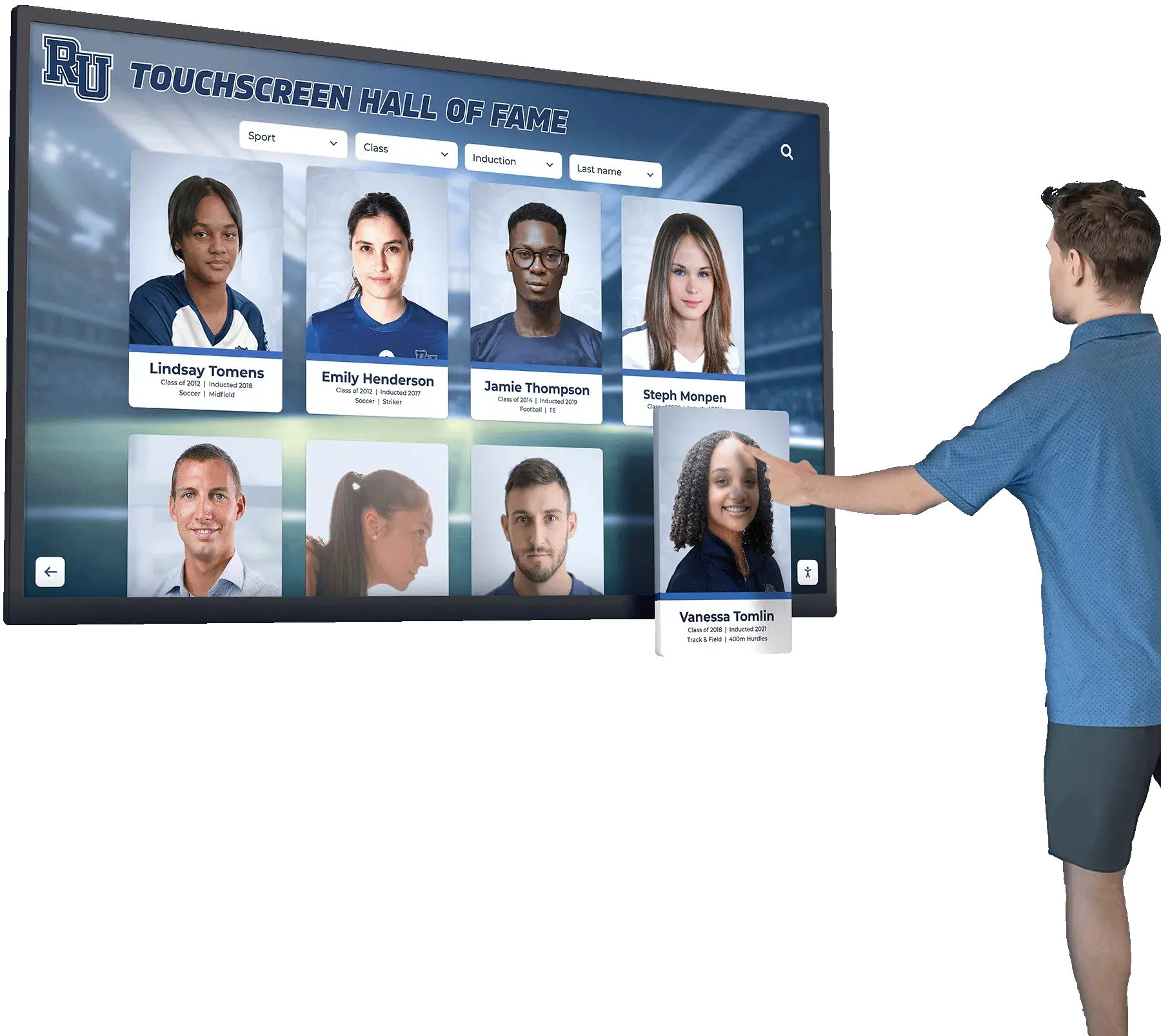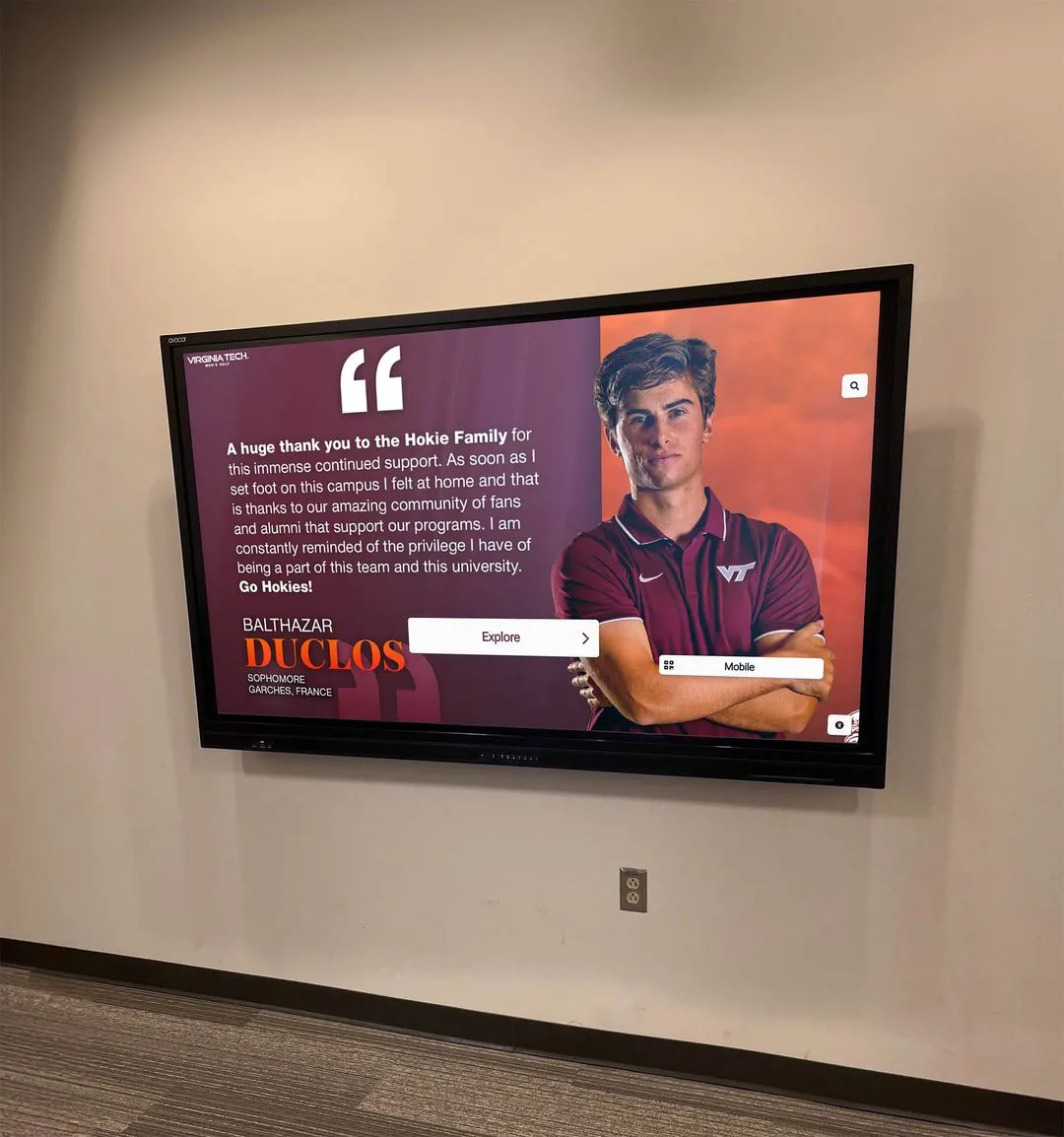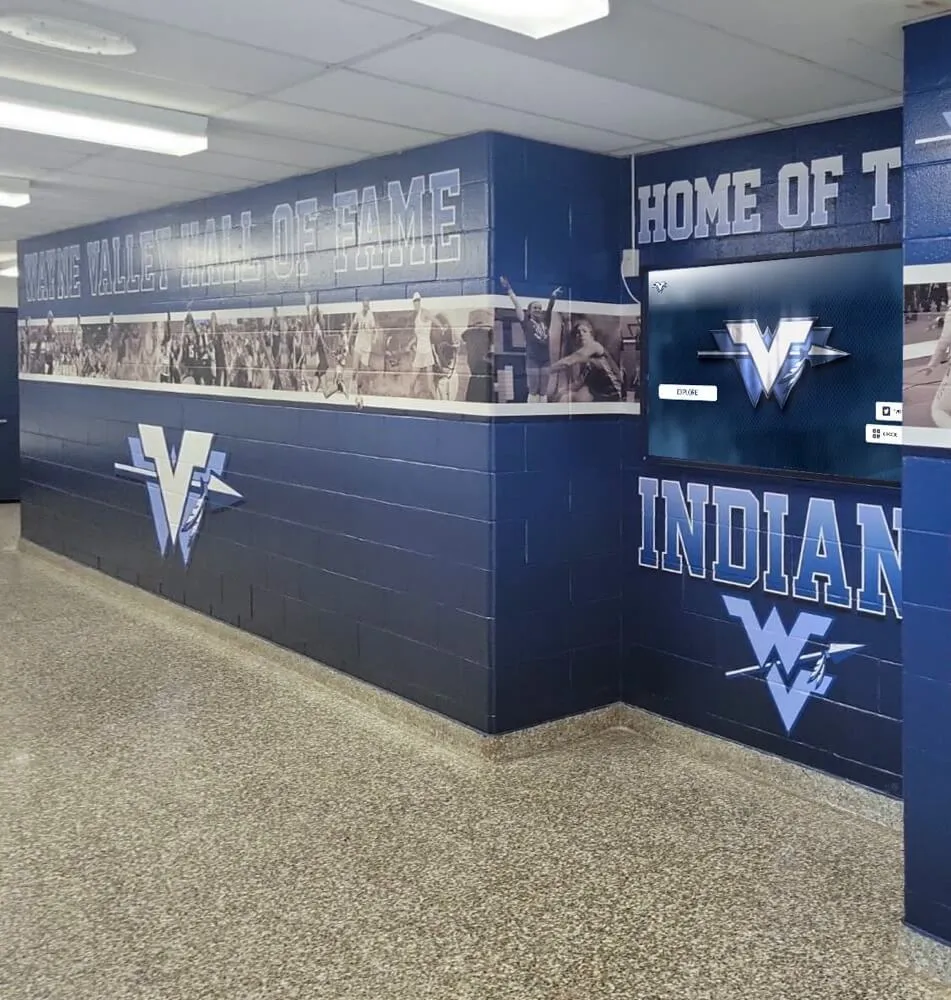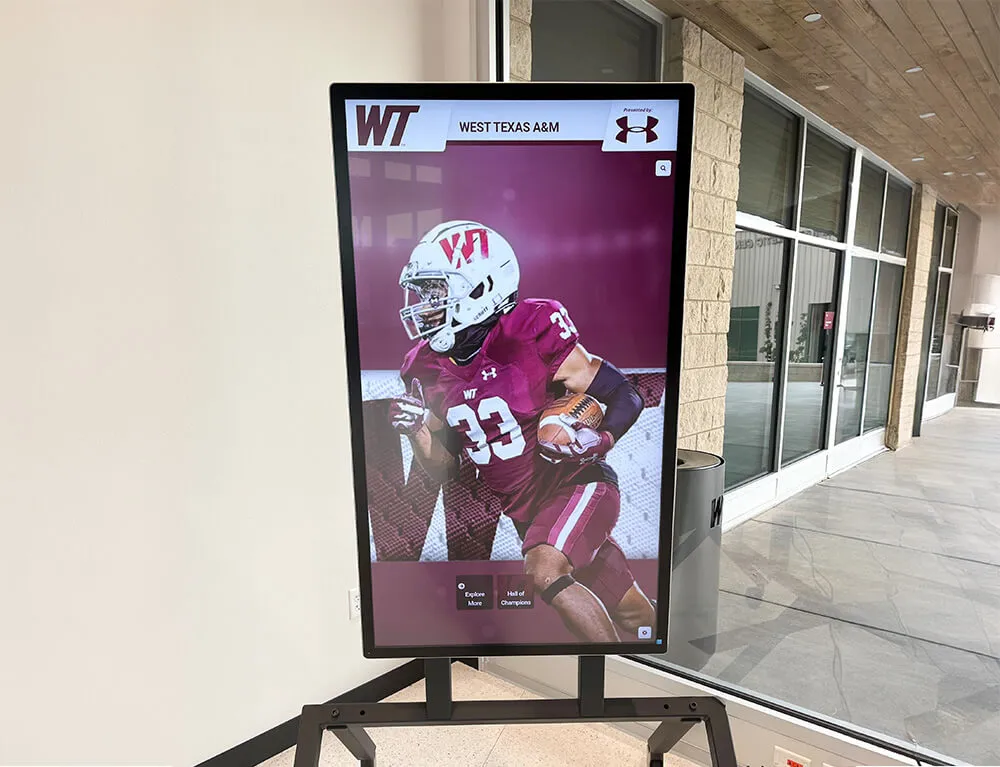
Every athletic photo sitting on a school server, a coach’s hard drive, or a yearbook archive is one missing signature away from being unusable for public recognition. When the hall of fame committee wants to feature a 2009 state champion on the lobby display, or the advancement office needs action shots for the new fieldhouse donor wall, the question always comes down to the same thing: do you have a release on file?
An athletic photo release form documents exactly which images a school may use, where it may use them, for how long, and under what attribution. Done well, it eliminates guesswork for every downstream workflow—yearbook publication, digital recognition displays, digital archives, alumni engagement campaigns, and sponsor stewardship programs—before a single photo is published.
This guide walks through every consent field your athletic photo release form should include, explains how each field connects to downstream recognition and archiving workflows, and provides a complete checklist your team can adapt for current athletes, alumni photo submissions, and historical collections alike.
Not legal advice. This guide addresses common content-governance practices and form design considerations. Photo release requirements vary by jurisdiction, institutional policy, and individual circumstances. Review any release form language with your school’s legal counsel and privacy officer before deploying it.
A well-designed athletic photo release form does more than satisfy a compliance checkbox. It creates a content-governance pipeline: clearly defined permissions flow into your digital asset management system, which feeds recognition displays, digital yearbooks, and archived collections that your community will reference for decades. Without that pipeline, every new project that touches athlete imagery starts from scratch—hunting down contacts, waiting on replies, and delaying recognition that athletes deserve.

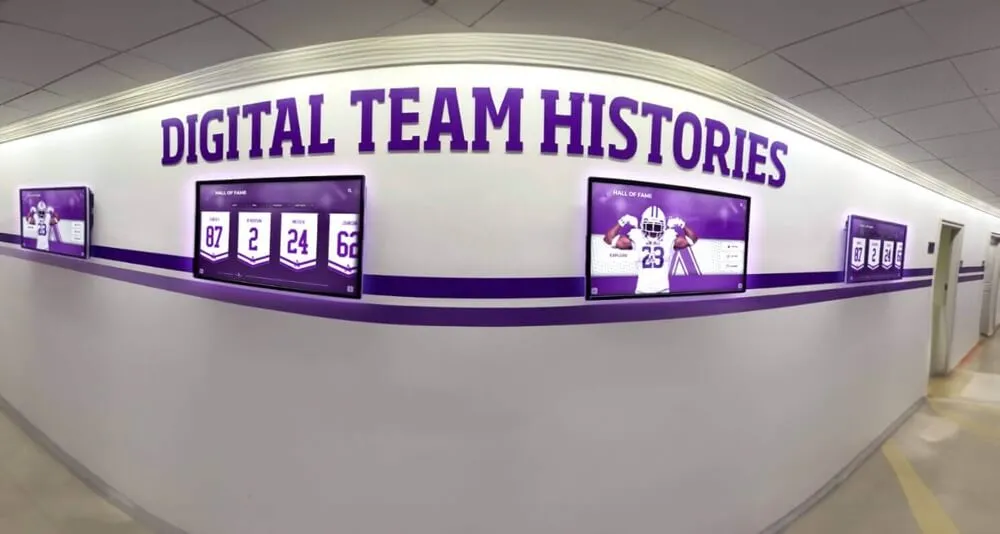
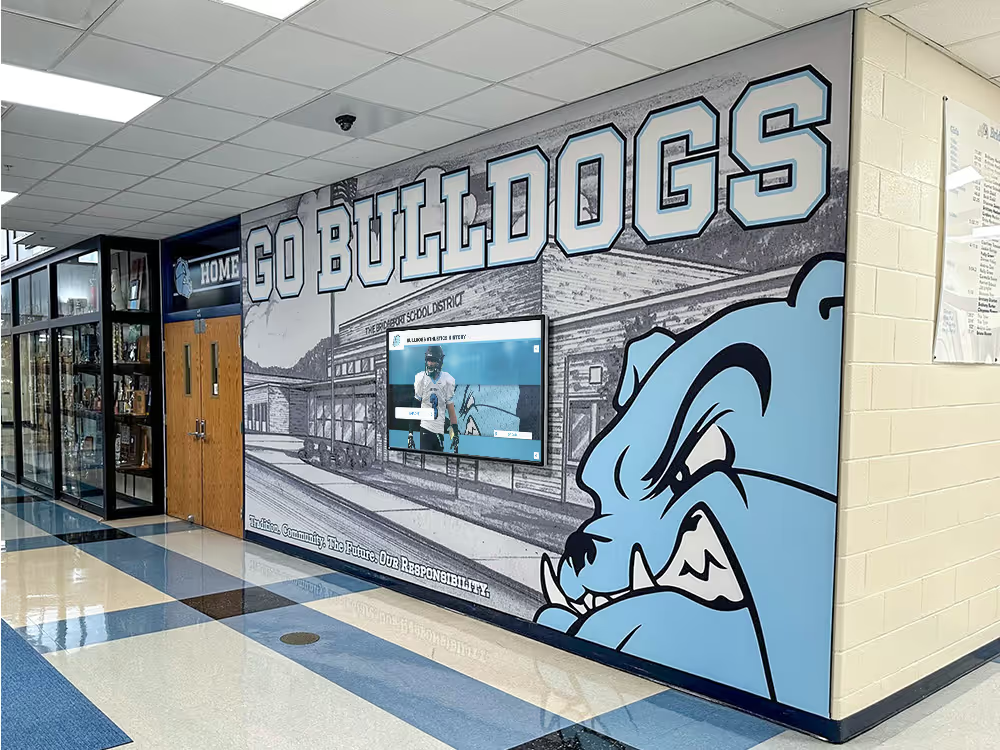
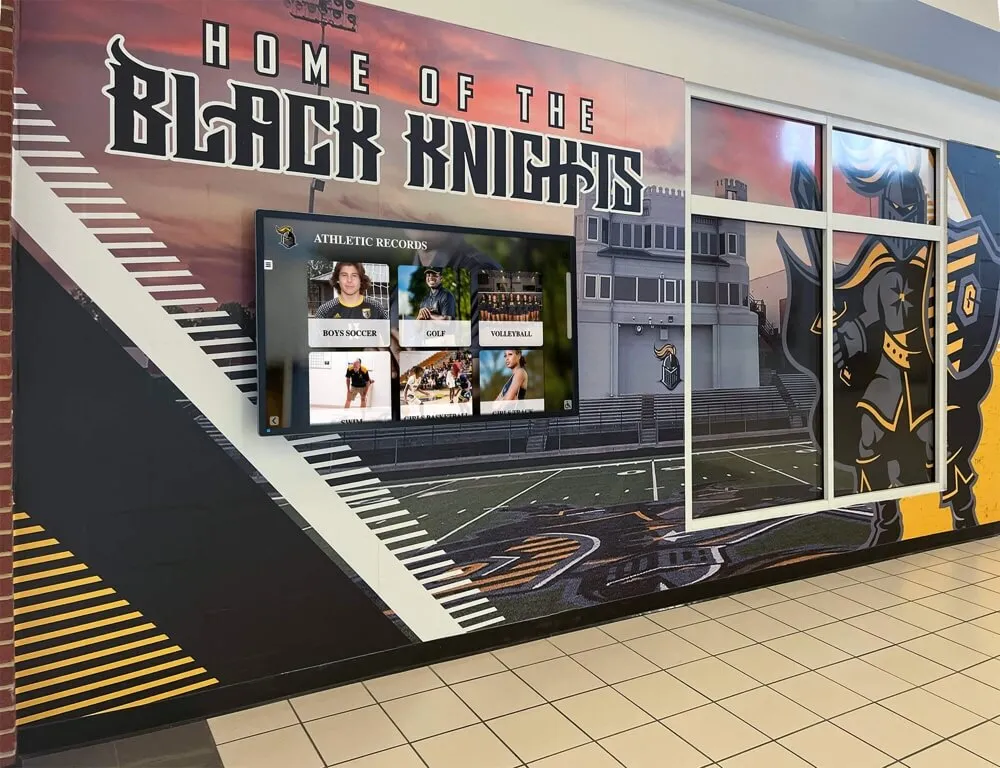
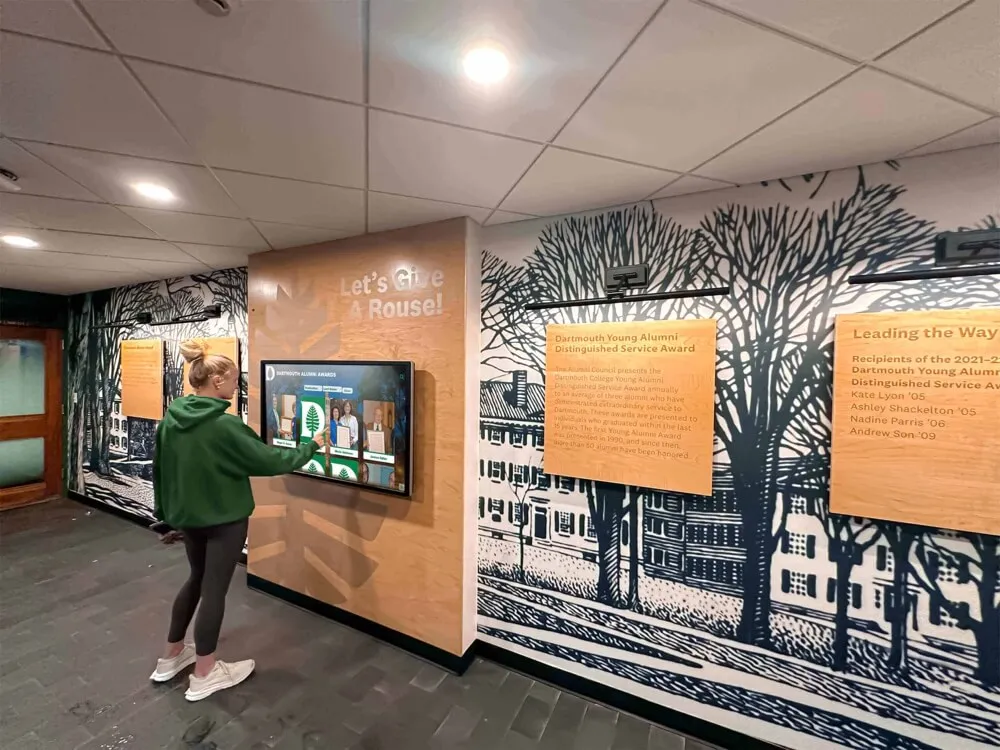
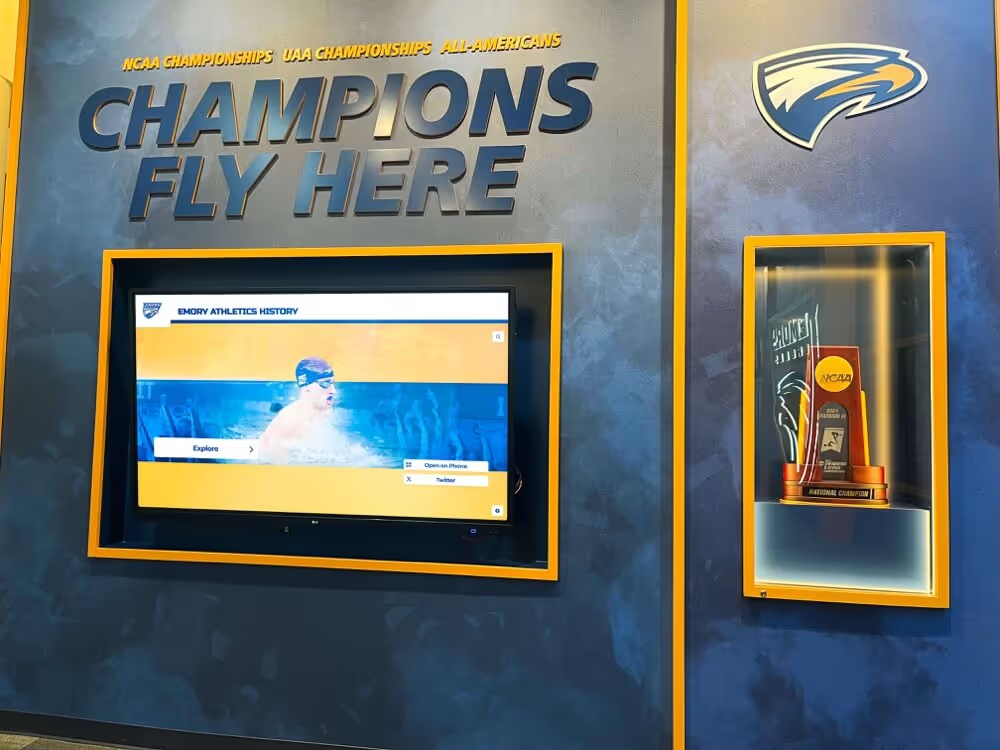
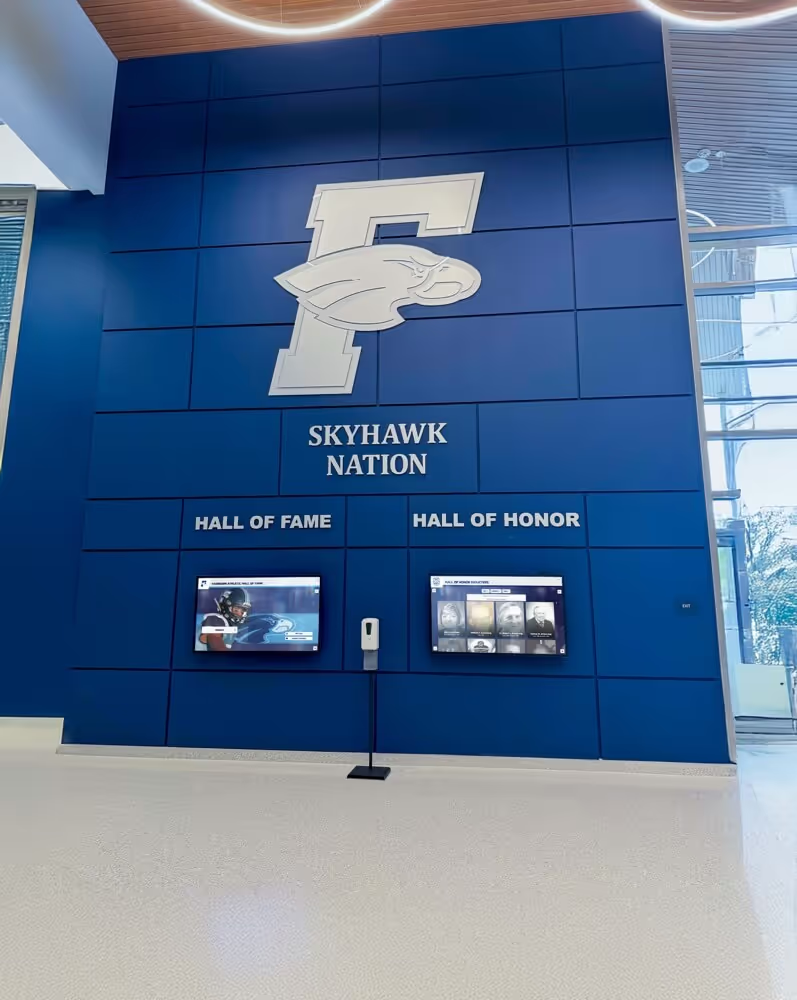
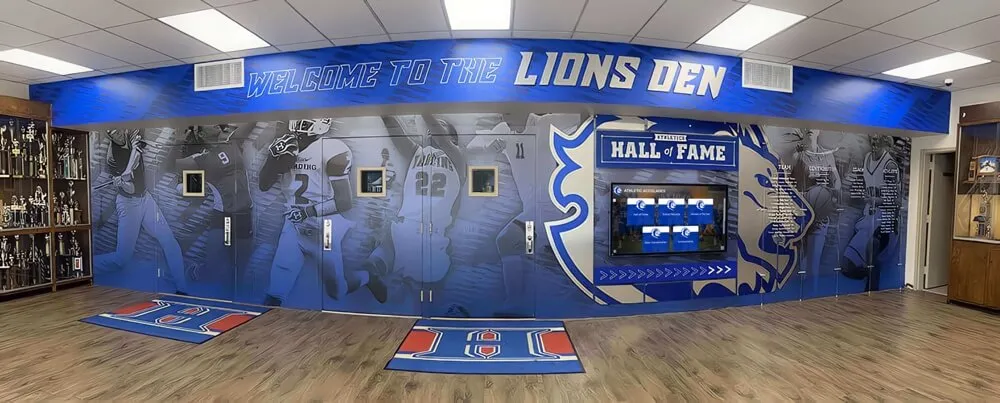
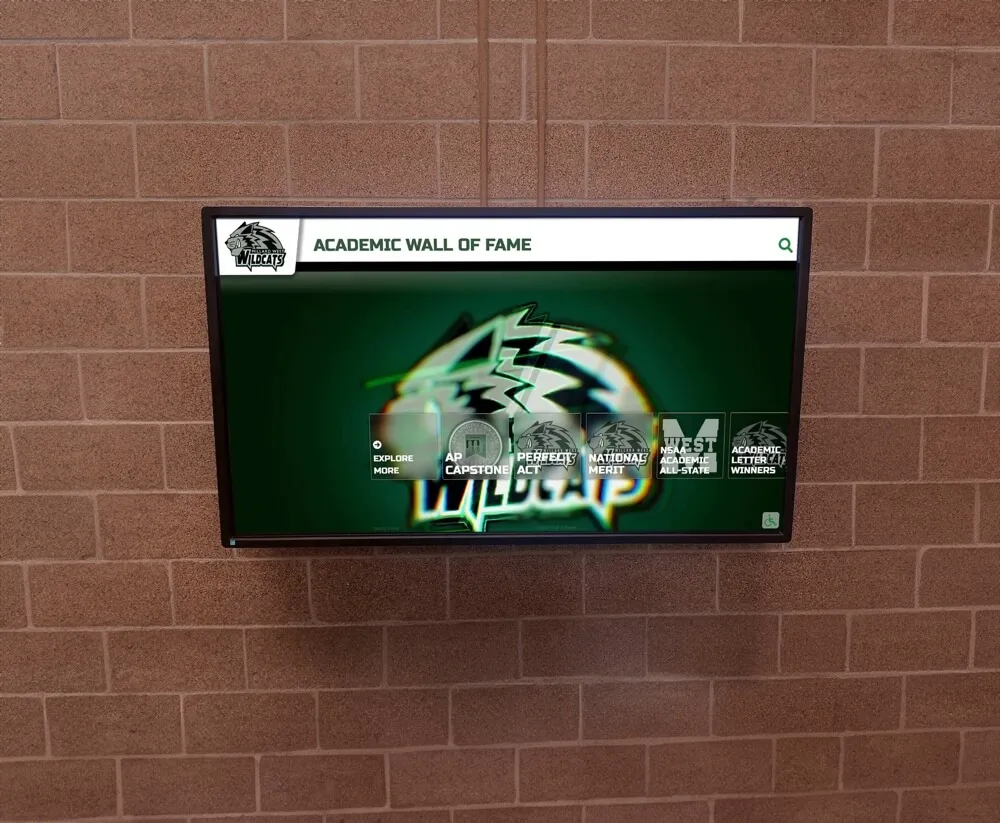
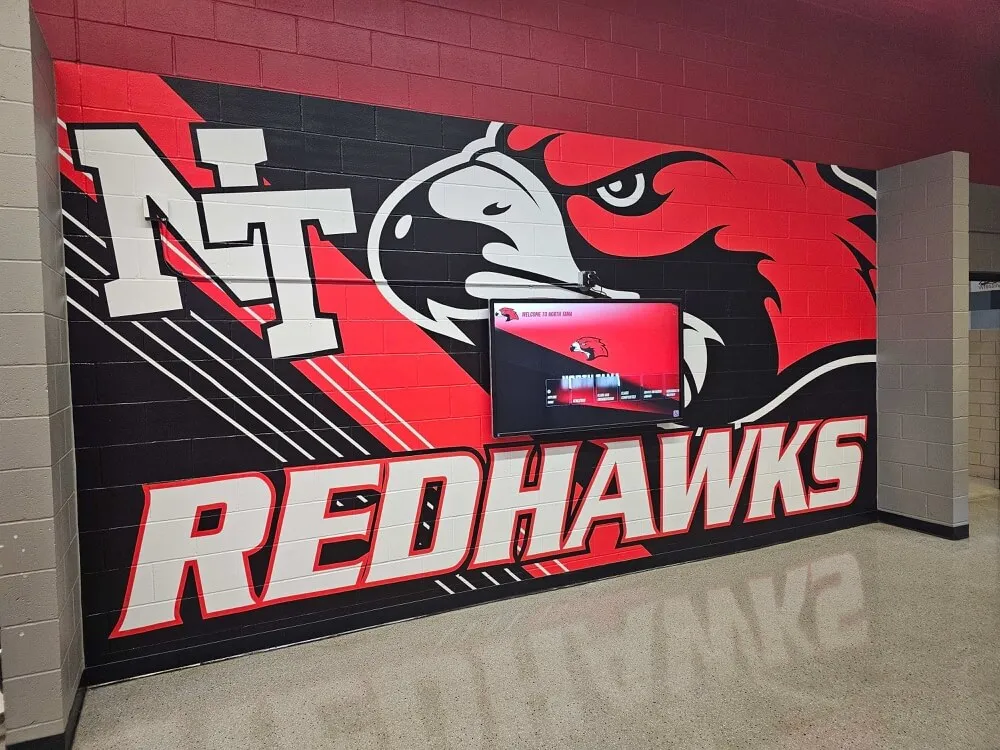
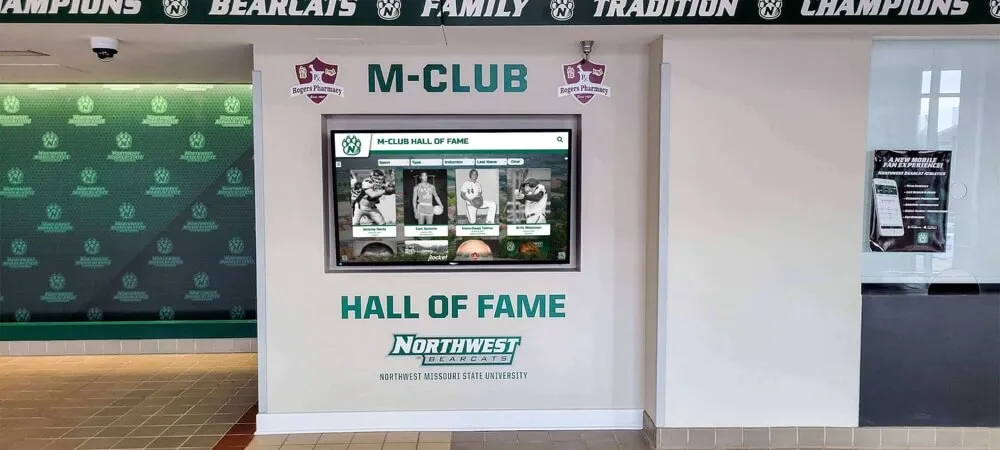
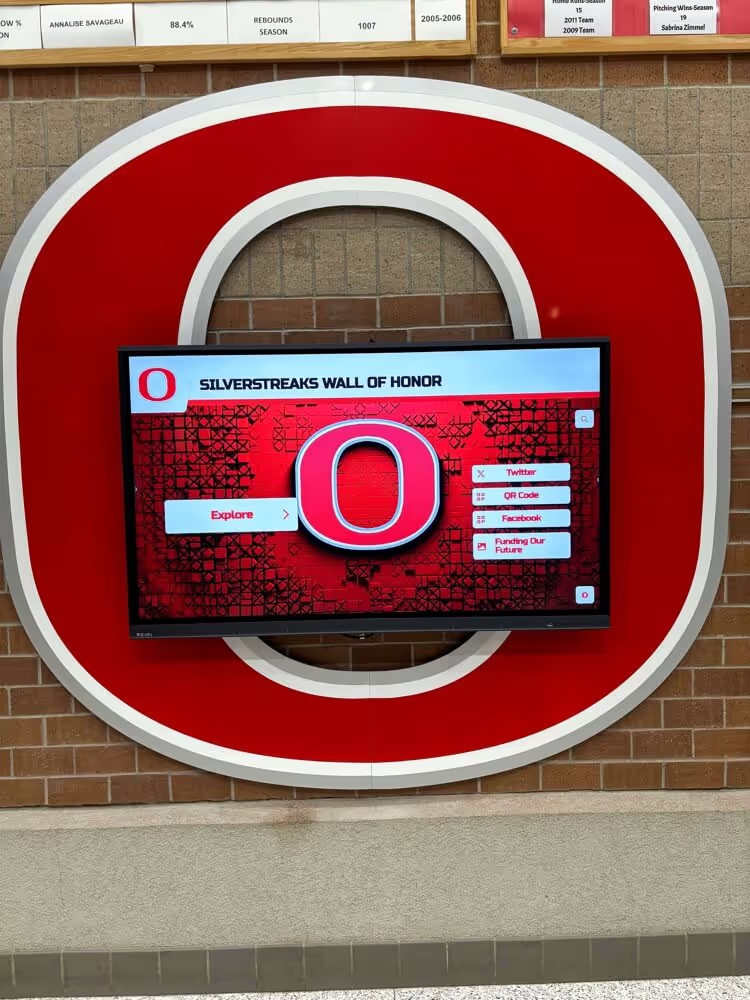
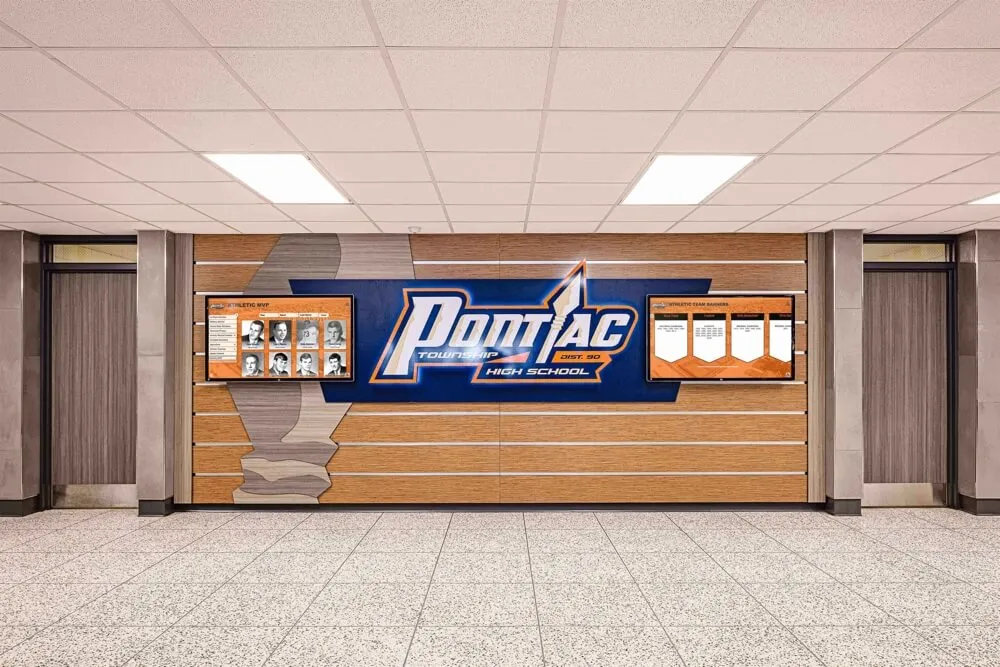
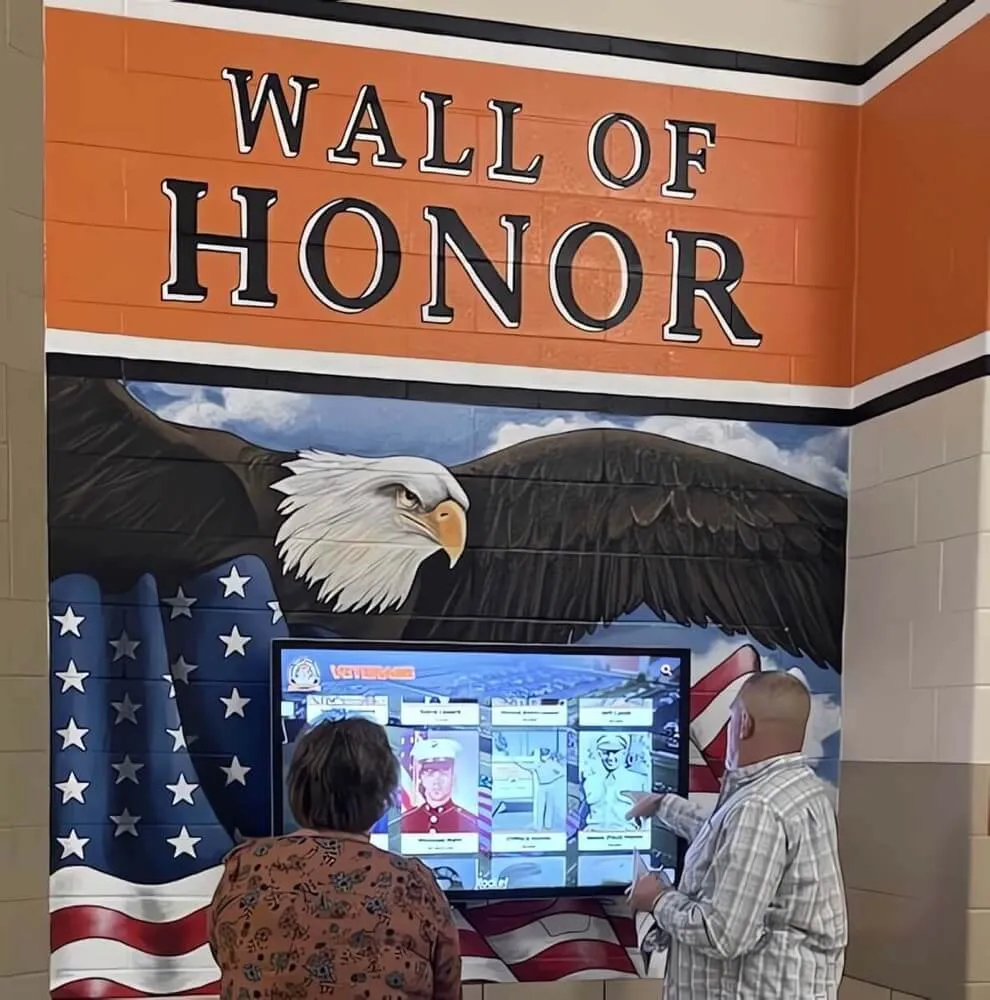
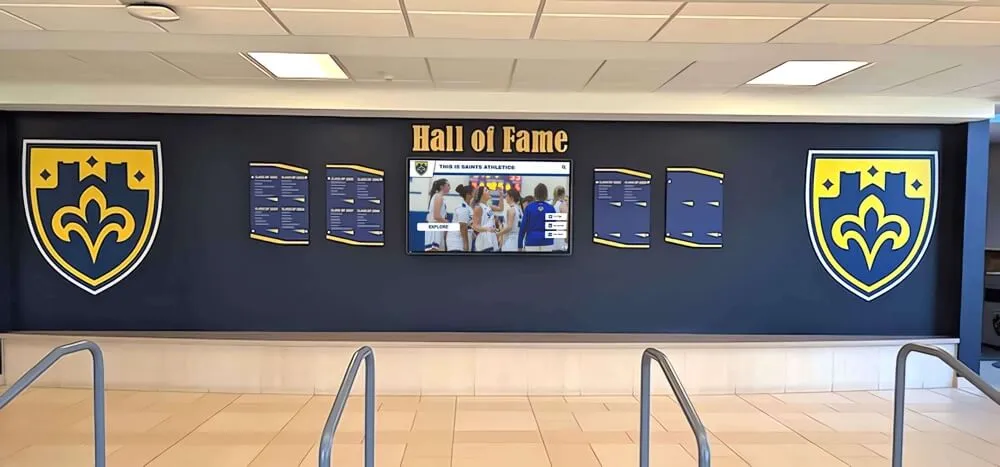
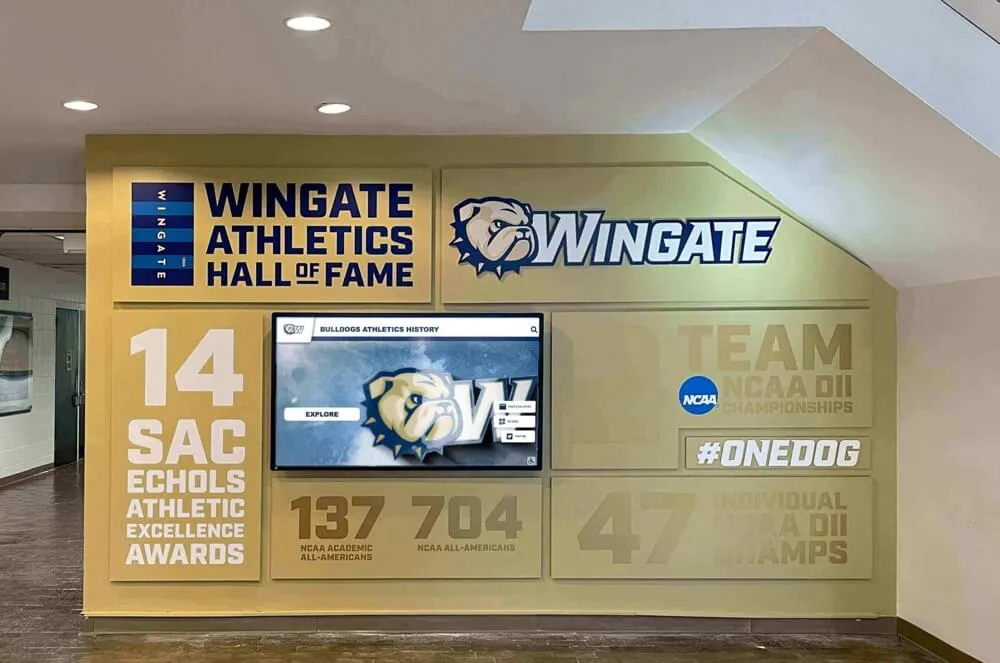
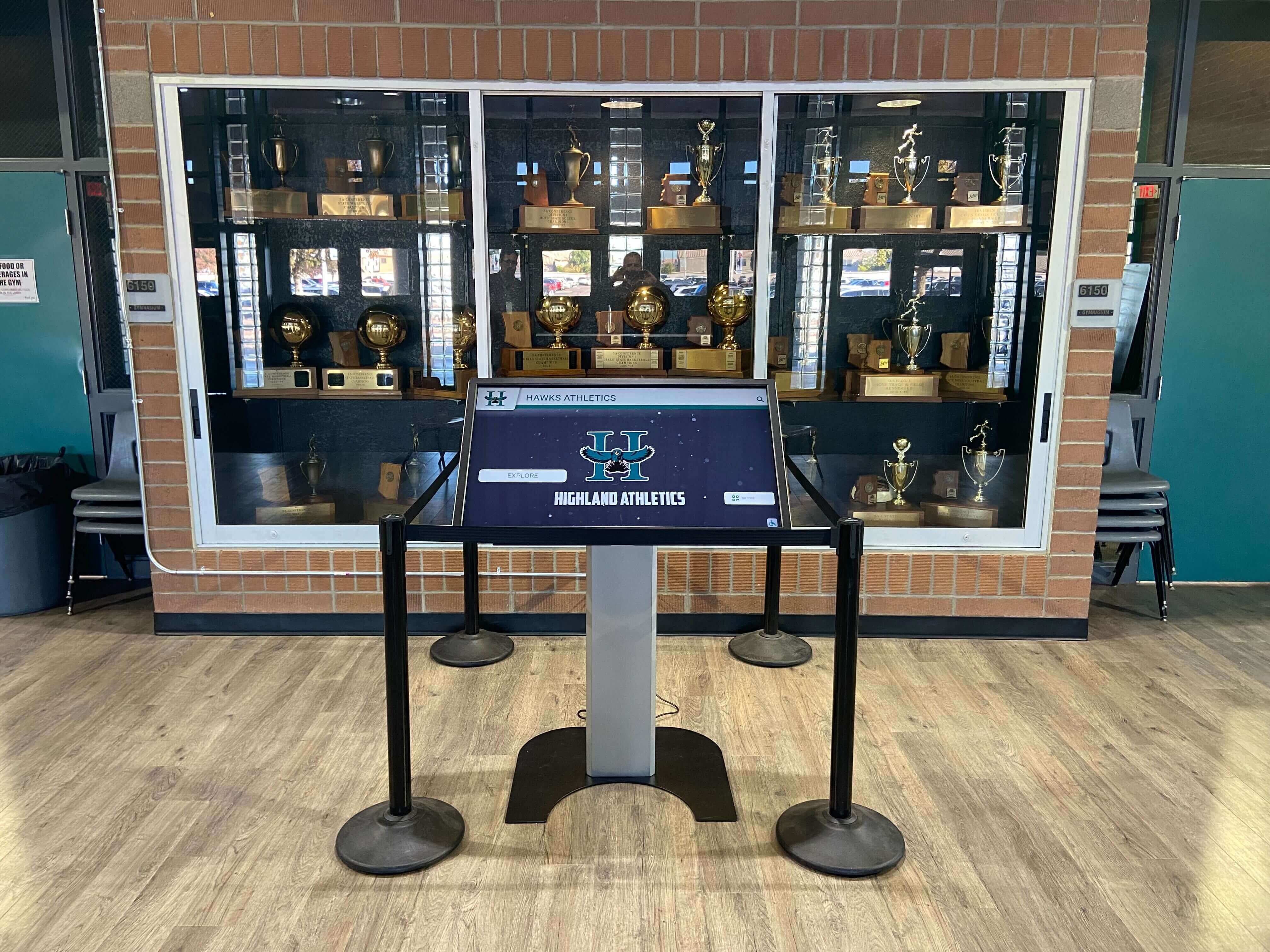
Recognition displays powered by properly released athlete photos create lasting tributes that connect current students to program history
Core Consent Fields: The Direct Answer
Before diving into each section, here is the complete list of consent fields an athletic photo release form should cover. The detailed guide below explains how each field works in practice.
| Field Category | Key Fields to Include |
|---|---|
| Subject identification | Full name, graduation year, sport(s), jersey number, student/alumni status |
| Release scope | Specific usage types, named publications, platforms, and display locations |
| Duration | Term of release, renewal trigger, expiration or perpetual grant |
| Digital and online usage | Website, social media, digital displays, streaming, web archives |
| Print and physical usage | Yearbook, programs, posters, donor materials, facility signage |
| Commercial and sponsorship usage | Sponsor recognition, fundraising campaigns, advertising materials |
| Caption and attribution | Preferred name on displays, approved caption language, restrictions |
| Retention and archiving | Long-term archival permission, format migration consent, access tiers |
| Alumni and historical submissions | Submitter ownership attestation, original source documentation |
| Minor consent | Parent or guardian signature if subject is under 18 at time of signing |
| Revocation rights | Process for withdrawing consent and scope of that withdrawal |
| Signature block | Subject or guardian name, date, relationship, contact for follow-up |
Section 1: Subject Identification Fields
These fields tie each release to a specific individual and playing record. Without them, a signed form provides consent but no way to match it to the images your team actually holds.
Required Identity Fields
Full legal name — Used to match the release to existing records. Capture this even if the athlete competed under a different name.
Preferred display name — The name that appears on recognition walls, digital yearbooks, and hall-of-fame pages. Many athletes have nicknames or legal name changes that differ from enrollment records.
Graduation year — A critical indexing field for athletic archives. All downstream queries—“show all released photos from the 2005 football season”—depend on this.
Primary sport(s) — List each sport the athlete competed in at your institution. Some athletes compete in two or three; the form should capture all of them.
Jersey number(s) and position(s) — Useful for matching photos to individuals, especially in team settings where faces may be partially obscured by equipment.
Student or alumni status at time of signing — Determines whether a parent or guardian signature is required and which FERPA considerations apply.
Date of birth — Establishes minor status if the athlete is under 18 at the time of signing. Some schools also use this field to calculate when alumni consent periods lapse.
Linking Releases to Images
Your form should include a field for the athlete or family to identify specific photos they are releasing—by event, season, photographer, or filename—versus granting a blanket release for all images you hold. Both approaches are valid; what matters is documenting which one applies.
A blanket release is simpler to administer and is appropriate when photos were taken by school-employed photographers in normal athletic settings. A specific-photo release is appropriate when the athlete or family wants to review individual images before consenting—a reasonable request for photos involving injury, personal moments, or images submitted by a third party.
Section 2: Usage Scope and Permissions
This section is where most release forms are too vague—and where schools later discover they can’t use a photo for a new purpose without going back to the subject. Define usage scope with enough specificity that your team can make clear yes/no decisions years from now without contacting the athlete again.
Usage Type Checkboxes
Structure this section as a checklist. The athlete or guardian checks every usage type they are authorizing. Unchecked boxes equal no permission for that use.
Usage scope checklist — recommended items:
- School yearbook (print and digital editions)
- Athletic program guides, game-day programs, schedules
- School website and athletics department pages
- Official school social media accounts
- Internal digital displays (lobby screens, hallway kiosks, trophy cases)
- Hall-of-fame recognition walls and nomination materials
- Donor recognition programs and stewardship materials
- Fundraising campaigns and grant applications
- Facility signage (banners, murals, permanent installations)
- News releases and media kit materials
- Alumni communications (newsletters, reunion materials)
- Educational or historical archives accessible to researchers
- Sponsor recognition and partnership materials
- Video productions and highlight reels
The reason specificity matters here: a school that has permission for “yearbook” may not have permission for “donor recognition wall,” even if both feel like similar internal uses. Schools building donor recognition programs that incorporate athlete photography need explicit consent for that usage type, separate from athletic recognition.
Named Platforms and Locations
For digital usages, name the specific platforms: “the school’s official Instagram account,” “the athletics department website at [school domain],” “the lobby touchscreen kiosk in the fieldhouse.” This specificity protects athletes who are comfortable with internal school use but prefer not to appear on, for example, third-party streaming platforms.
Third-Party and Licensee Use
Specify whether the school may share released photos with external vendors—display installation companies, yearbook publishers, digital archive platforms—under the same consent, or whether third-party distribution requires a separate release. Most schools include a standard clause permitting sharing with contractors and vendors operating on the school’s behalf.
Section 3: Duration and Retention Terms
Duration fields answer the question that comes up most often in athletic archives: “This release was signed in 2011—does it still apply today?”
Term Options
Specific term with renewal — The release applies for a defined period (three years, five years) and requires renewal. This approach gives athletes ongoing control but creates administrative burden for the school.
Perpetual release — The release applies indefinitely unless revoked. This is the standard for recognition purposes: a hall-of-fame inductee’s profile photo should remain on display for decades.
Event-specific release — The release applies only to a named event (state championship 2024, senior night 2025). Appropriate for high-visibility one-time events where athletes or families want to review usage separately.
For the vast majority of athletic recognition uses—recognition walls, digital yearbooks, historical archives—a perpetual release with a defined revocation process is both practical and appropriate. For guidance on managing a digital archive that will hold these assets long-term, the digital asset management guide for schools covers retention structures, format migration, and access-tier planning in depth.
Retention After Relationship Ends
Include explicit language addressing what happens to images after an athlete graduates, a coach leaves, or the school’s relationship with a vendor ends. Key retention fields:
- Archival permission: May the school retain the image in a long-term archive after all active display uses have ended?
- Format migration consent: As file formats change, may the school migrate images to new formats without additional consent?
- Access restrictions on archived images: Are archived images available to researchers, alumni, and the public, or restricted to internal use only?
Section 4: Caption and Attribution Preferences
Photos displayed without context create recognition gaps—or worse, attribution errors that damage trust with the athletes your program is trying to honor.
Caption Consent Fields
Approved caption language — Give athletes and families the option to provide or approve captions that will appear alongside their images on recognition displays. This is especially valuable for hall-of-fame profiles and historical archive entries.
Statistics and records — May the school include performance data (career scoring records, championship titles, all-state selections) in captions without separately seeking approval for each update?
Career and post-graduation information — If the school updates a profile to reflect an athlete’s professional career or community achievements, is that permitted under the original release? Many schools build this into the consent so that college sports recruitment profiles and professional career milestones can be added to recognition displays over time.
Name restrictions — Some athletes have legal name changes, religious considerations, or privacy preferences affecting which name appears on public displays. A free-text field here prevents errors.
Attribution on Digital Displays
For schools connecting photo archives to school trophy cases and athletic achievement displays, the release form should address whether the original photographer must be credited on the display itself, or only in the underlying records. Most display contexts make individual photo credits impractical; language in the release acknowledging this avoids friction later.
Section 5: Alumni and Historical Photo Submissions
Current athletes and parents sign releases as part of standard enrollment and activity participation forms. Historical collections—photos from the 1980s and 1990s, film-era team portraits, donated collections from retired coaches—present a different challenge entirely.
Submission Attestation Fields
When alumni, family members, boosters, or community members submit historical photos for school archives, your form needs to establish who owns what.
Alumni photo submission fields:
| Field | Purpose |
|---|---|
| Submitter full name | Identifies who is providing consent |
| Submitter relationship to subject(s) | Athlete, family member, former coach, team photographer |
| Original photographer (if known) | Copyright holder information for images not created by school staff |
| Date or season photo was taken | Enables period indexing and copyright duration analysis |
| Source of submission | Personal collection, yearbook scan, team photo, newspaper clipping |
| Ownership attestation | Statement that submitter has authority to grant the usage rights described |
| Known restrictions | Any existing agreements, prior licenses, or subjects who have requested removal |
| Subject identification in photo | Names of identifiable individuals pictured |
Alumni photo submissions are a rich source of content for school rivalry history timelines and program history displays—but only if the consent chain is documented. An undated photo submitted by a booster with no ownership documentation is difficult to use in public-facing displays regardless of its historical value.
For schools actively seeking alumni submissions to build out athletic archives, the section on showcasing NFL alumni and professional athletes on recognition displays explains how professional athletes’ post-graduation imagery introduces additional rights considerations beyond a standard school photo release.
Section 6: Minor Consent and Dual Signatures
Any athlete who is under 18 at the time of signing requires a parent or guardian signature alongside their own. Several practical fields apply here.
Guardian full name and relationship — Specifies who is signing on the minor’s behalf and their legal relationship.
Contact information for guardian — Enables follow-up if consent questions arise later.
Subject’s own acknowledgment — Even for minors, including a signature or initials line for the athlete themselves creates stronger documentation of awareness, though the legally operative consent is the guardian’s.
Aging-out clause — If an athlete turns 18 before a particular usage is triggered, does the prior guardian consent remain operative, or does the school need to obtain new consent from the now-adult athlete? Address this explicitly to avoid revisiting cases.
Section 7: Revocation Rights and Process
A release form that offers no revocation pathway creates resistance at signing. Clearly explain how athletes or families can withdraw consent, what that withdrawal covers, and what it does not.
Revocation coverage — Consent may typically be withdrawn for future uses. Images already published in a printed yearbook cannot be recalled; content already installed in a permanent display may be impractical to remove immediately. Language acknowledging this reality—while committing to timely removal from digital and updatable platforms—reflects good faith.
Revocation process — Name a specific contact (athletic director, registrar, communications office) and delivery method (written request, specific email address). Vague language here creates confusion.
Timeline for processing — Commit to a reasonable removal timeline for digital assets (30–60 days is common in school policies) while acknowledging that physical or printed materials follow a separate schedule.
Complete Athletic Photo Release Form Checklist
Use this checklist when building or auditing your form. Each item should have a clear answer in your current form template.
Subject identification
- Full legal name field
- Preferred display name field
- Graduation year
- Sport(s) and jersey number(s)
- Student or alumni status at signing
- Date of birth (for minor determination)
Photo identification
- Blanket release option
- Specific photo identification option
- Original photographer field (for alumni submissions)
Usage scope
- Yearbook (print and digital)
- Athletic program materials
- School website
- School social media
- Internal digital displays
- Hall-of-fame and recognition walls
- Donor recognition materials
- Fundraising and grant materials
- Facility signage and permanent installations
- Media kit and press materials
- Alumni communications
- Historical archives
- Sponsor recognition
Duration and retention
- Term (perpetual or defined period)
- Archival retention permission
- Format migration consent
- Archive access tier
Caption and attribution
- Caption approval process or blanket approval
- Performance data inclusion
- Post-graduation achievement updates
- Name restriction field
Minor consent
- Guardian name and relationship
- Guardian contact information
- Subject acknowledgment line
- Aging-out clause
Revocation
- Coverage statement (future use vs. existing publications)
- Revocation contact and method
- Processing timeline commitment
Signature block
- Subject signature and date
- Guardian signature and date (if minor)
- Witness or school representative line (if required by policy)
How Released Photos Power Recognition Displays
The business case for thorough photo release documentation is visible every time a recognition project moves forward without delays. Schools that maintain complete release files turn photos into recognition assets rather than compliance liabilities.
Digital Yearbooks and Historical Archives
A digital yearbook with a complete consent record can surface historical athlete profiles, layered with stats and career updates, that would otherwise require individual outreach for each use. The result is a living archive that grows more valuable over time rather than a static document produced once and forgotten.
Hall-of-Fame Displays and Lobby Installations
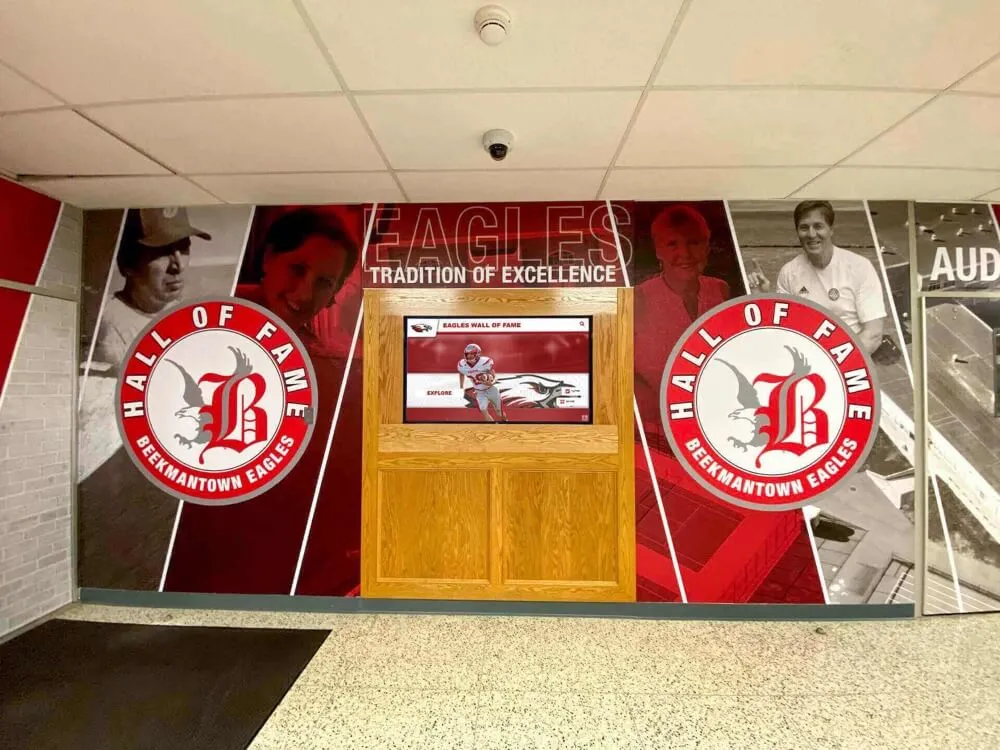
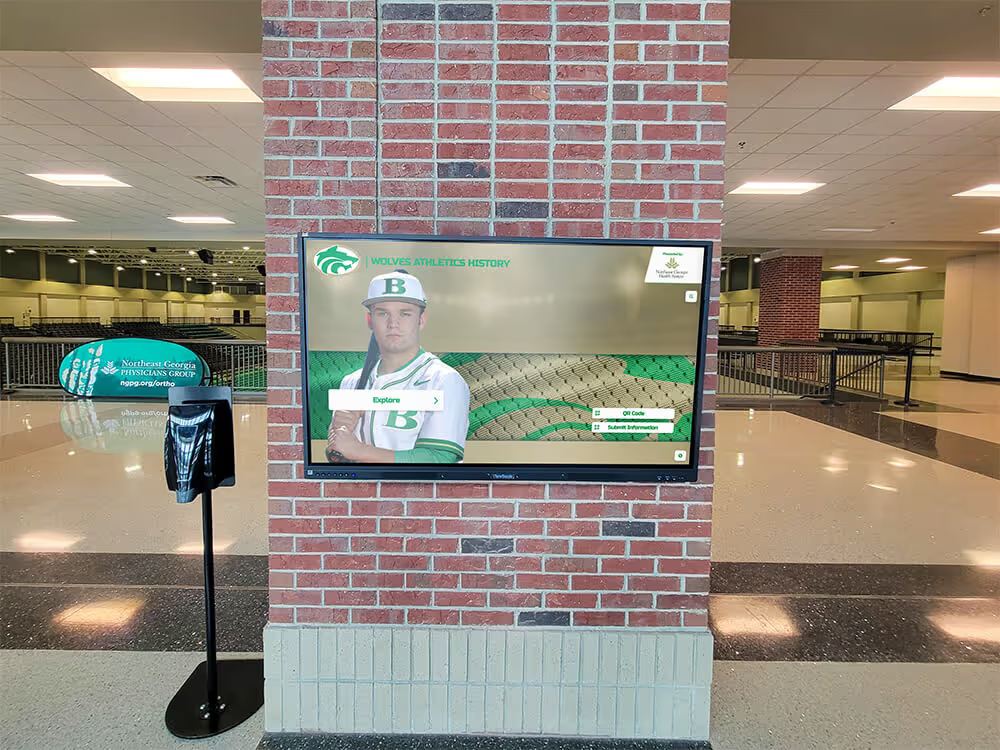
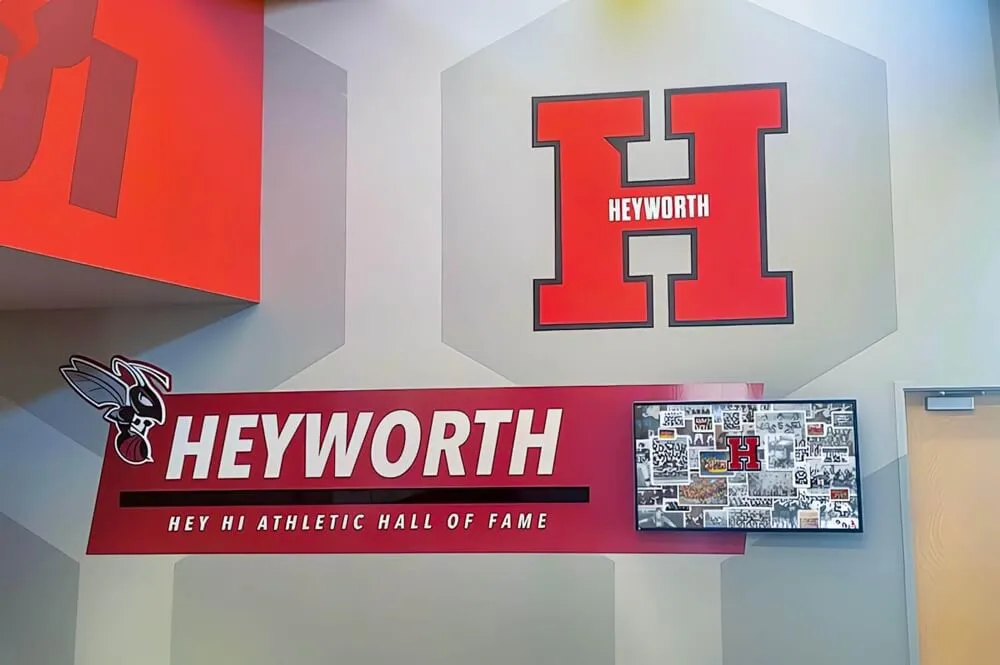
When a school installs or updates an athletics hall-of-fame display, the installation team needs a rapid decision on every image: is it released for this use? Schools that have structured their release process around specific usage types—including display installations—can answer that question from a database query rather than a round of phone calls. Recognition programs built around employee and achievement recognition boards face the same content-governance challenge; the same release structure applies.
Donor Stewardship and Sponsor Recognition
Advancement offices increasingly incorporate athlete imagery into donor and sponsor recognition materials—naming-rights announcements, campaign progress updates, fundraising events. Photos from recent championship seasons are especially compelling for these contexts. Including “donor recognition programs and stewardship materials” as an explicit usage checkbox in your release form prevents the awkward last-minute consent chase that delays a major gift announcement.
Schools building integrated recognition programs—where national signing day celebrations and athletic commitments feed directly into recognition displays—benefit from having signing-day photo releases in place before the event rather than retroactively.
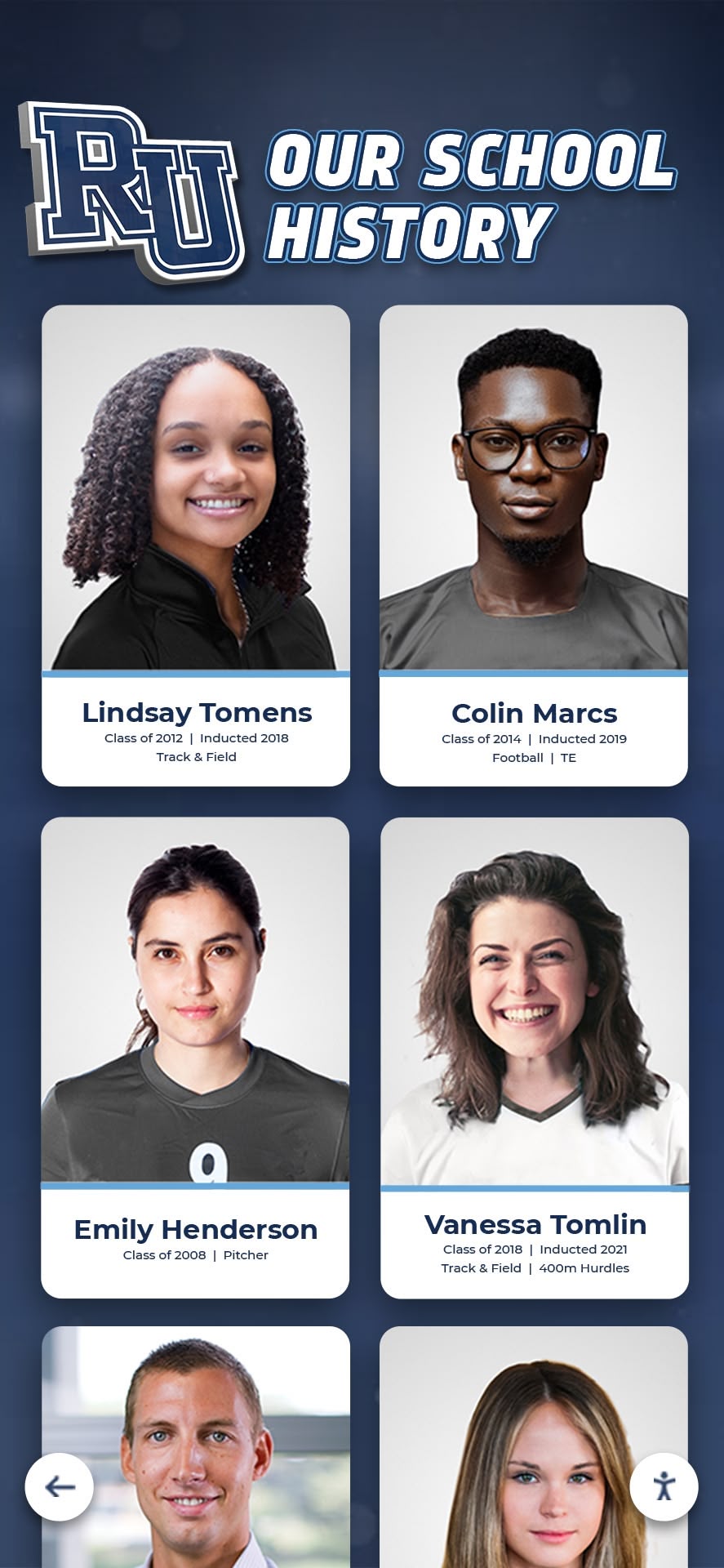
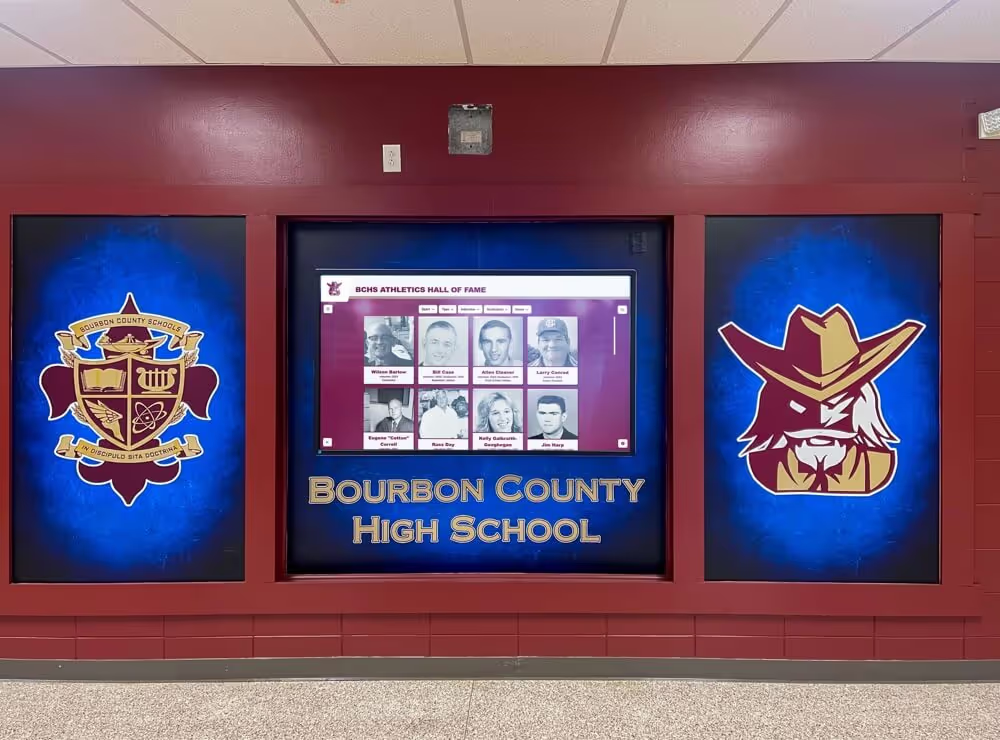
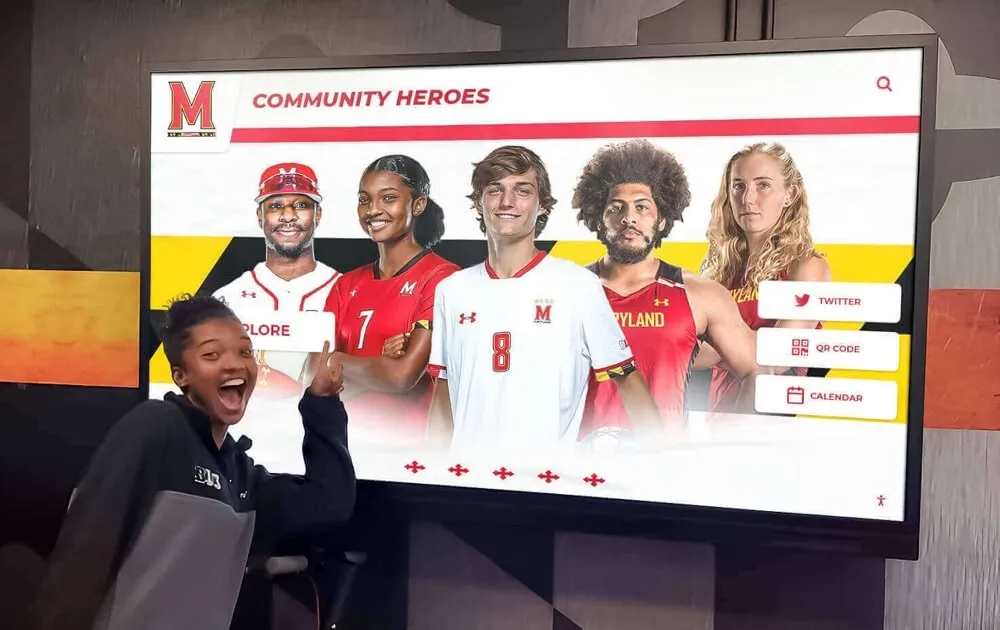
Comprehensive photo release documentation ensures historical athlete portrait archives can be displayed publicly for years without content-governance gaps
Frequently Asked Questions
Q: Can we use a general activity photo release for athletic photos, or do we need a separate form?
A general activity release typically authorizes photography of students during school events. It may not cover the specific downstream uses most relevant to athletic recognition—hall-of-fame displays, long-term digital archives, donor stewardship materials. Review your current form against the usage checklist above to identify gaps. Many schools supplement a general release with a shorter athletic-specific addendum that covers these additional uses.
Q: Do we need a new release every year, or does a one-time release cover an athlete’s full career?
A one-time perpetual release is standard for athletic recognition purposes. Requiring annual re-consent creates unnecessary administrative burden and can leave gaps if a renewal is missed. If you use a defined-term release, build an automated renewal reminder into your records management workflow before any release expires.
Q: What happens if a photo was taken before our release program existed?
Historical photos without releases should be evaluated case by case. Photos taken by school-employed photographers in official athletic settings may be covered under work-for-hire doctrine (consult your legal counsel). Photos from other sources require individual outreach to establish consent. Many schools accept historical photos into internal archives while limiting their use in public-facing displays until consent is documented. The digital asset management guide for schools covers tagging and access-tier strategies for managing mixed-consent collections.
Q: Can a student revoke consent for photos already published in the yearbook?
Printed publications cannot practically be recalled once distributed. For digital assets—website pages, touchscreen displays, online archives—schools can and should honor revocation requests with timely removal. Your revocation policy should acknowledge this distinction clearly so athletes and families understand what withdrawal of consent can and cannot accomplish.
Q: Do we need FERPA authorization to include an athlete’s name and stats alongside their photo?
FERPA’s directory information provisions govern what identifying information schools may disclose. Many schools designate athlete name, sport, and general performance information as directory information, making it available for recognition purposes without individual authorization. Whether your school has made this designation—and whether an athlete has opted out of directory information disclosure—affects what context you can include with released photos. Consult your registrar and privacy officer to confirm your institution’s current FERPA directory information configuration. For programs that incorporate post-graduation achievements into recognition displays, the college sports recruitment guide discusses how athlete information flows from school records into public recognition contexts.
Q: How should we handle photos submitted by third parties—parents, community photographers, local media?
Third-party submissions require the submitter to attest that they have authority to grant usage rights. This does not resolve underlying copyright questions—a local newspaper photographer who took a championship game photo retains copyright regardless of who submits the image. Include an ownership attestation field in your submission form and document the submitter’s stated basis for authority. For images of uncertain copyright status, limit use to internal archives until legal counsel advises otherwise.
Q: We’re planning a new digital hall-of-fame display. Can we use photos of alumni who are no longer reachable?
For alumni you cannot reach, document your outreach attempts and consult legal counsel about applicable good-faith standards in your jurisdiction. Many school attorneys recommend a combination of documented outreach, a reasonable waiting period, and limiting initial display to clearly school-owned imagery (staff-photographer team portraits from official seasons) while continuing to seek consent for other images. A removal process clearly communicated in any public materials gives unreachable alumni a way to respond if they eventually see the display.
Q: Should the same form cover both minors and adult athletes, or use separate forms?
A single form with a conditional guardian section is simpler to administer and reduces the risk of using the wrong version by mistake. Design the form so that the guardian section appears only when “student is under 18 at time of signing” is checked. Include clear language explaining that the form version in effect at signing governs, even if the athlete turns 18 later—unless your policy requires re-consent from the now-adult athlete.
Connect Your Photo Release Process to a Recognition System That Uses It
Collecting signed release forms is the first half of the workflow. The second half is connecting that consent data to a digital recognition platform that can surface the right photos, in the right contexts, without staff manually verifying permissions on every request.
Rocket Alumni Solutions gives schools an integrated platform for athletic photo archives, digital yearbooks, hall-of-fame displays, and alumni recognition—built to work with structured consent workflows so your team spends time on recognition, not on paperwork.
Schedule a demo with Rocket Alumni Solutions to see how your athletic photo release process can connect directly to the recognition displays, digital yearbooks, and alumni engagement tools your program deserves.
Conclusion: Build the Pipeline Before You Need It
The schools that execute athletic recognition programs most effectively are the ones that resolved content-governance questions before a specific project forced the issue. An athletic photo release form designed around real downstream uses—yearbooks, digital displays, hall-of-fame installations, donor materials, long-term archives—transforms consent from a one-time signature into a durable asset that powers recognition for decades.
Start with the checklist in this guide. Audit your current form against it, identify the gaps, and work with legal counsel to close them before your next athletic season begins. Every athlete who signs a complete release during their playing years becomes a story your school can tell—on lobby screens, in digital yearbooks, at alumni events, and in the fundraising campaigns that sustain your program—without having to start the consent conversation from scratch.