



Athletic hall of fame programs represent more than ceremonial recognition—they serve as strategic tools that celebrate student achievement, preserve institutional history, strengthen alumni relationships, and build competitive advantages that benefit athletic programs for decades. School administrators face increasing pressure to demonstrate value beyond test scores while creating school cultures that motivate excellence. A well-designed athletic hall of fame delivers measurable results across each priority area.
Yet many schools struggle with hall of fame implementation. Traditional plaques consume limited wall space, forcing difficult decisions about whose achievements receive visibility. Static displays become outdated quickly, maintenance burdens administrative staff, and recognition systems lack the engagement that modern students and alumni expect. Meanwhile, schools without systematic athletic recognition watch outstanding achievements fade from institutional memory as graduation classes move on and community connections weaken.
This comprehensive guide equips school administrators with frameworks for planning, implementing, and sustaining athletic hall of fame programs that honor achievement effectively while remaining administratively manageable and financially sustainable. Whether establishing a new recognition program or modernizing existing systems, these strategies ensure your athletic excellence receives the celebration it deserves.
Athletic recognition extends throughout school operations—affecting student motivation, college recruiting success, community engagement, fundraising capacity, and institutional identity. School administrators who implement systematic athletic recognition discover benefits reaching far beyond trophy cases into areas directly impacting educational mission fulfillment and organizational effectiveness.

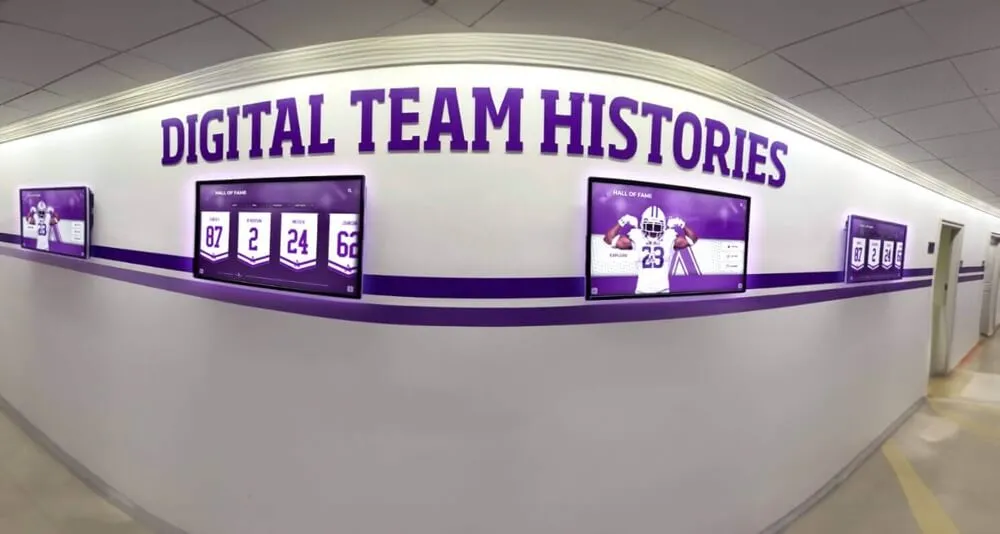
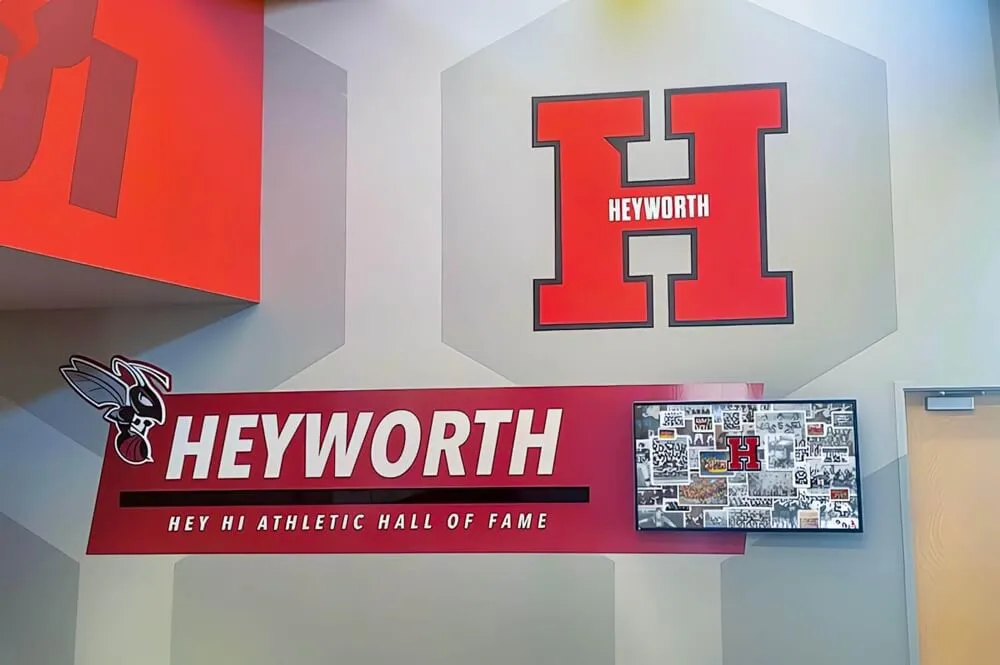
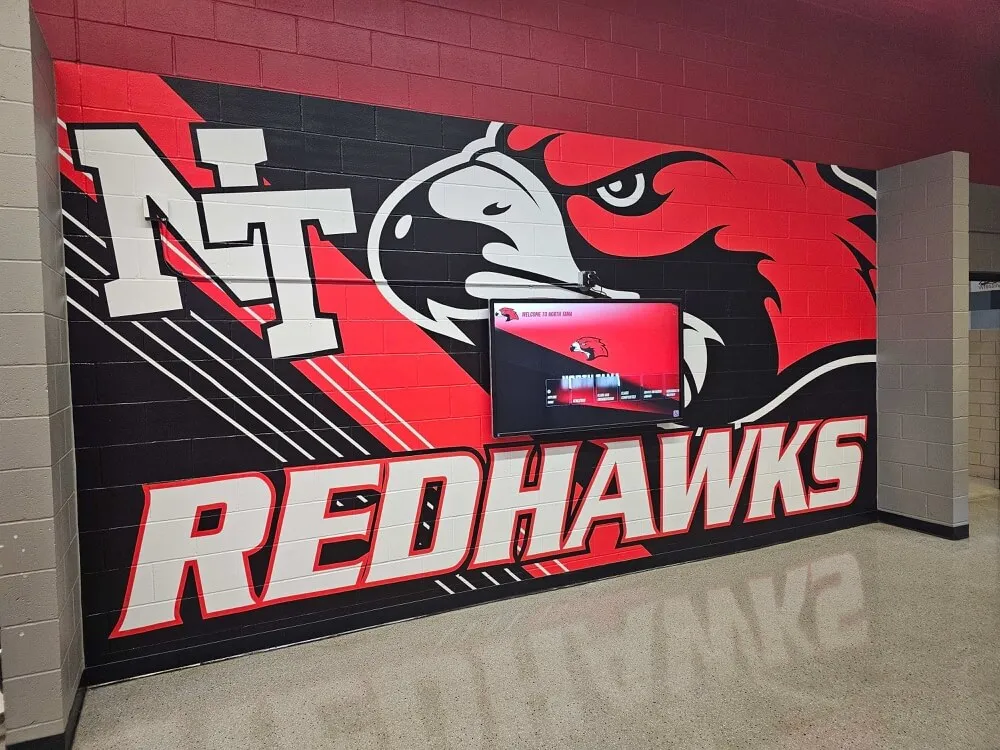
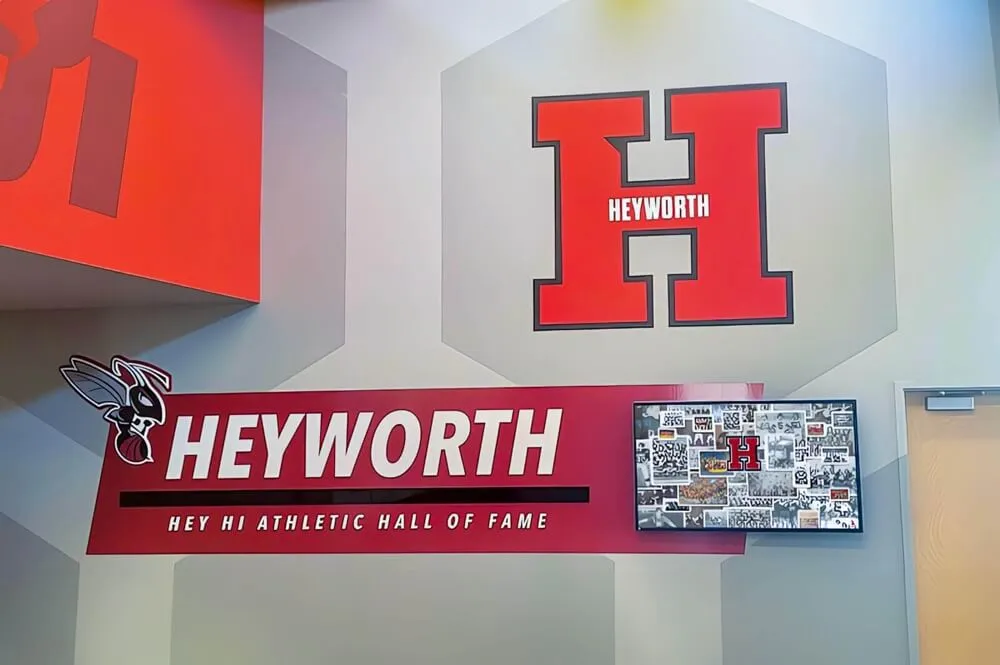
Athletic hall of fame programs create lasting recognition that strengthens institutional identity and student motivation
Why Athletic Halls of Fame Matter for School Administration
Understanding the strategic value of athletic recognition helps administrators prioritize investment and secure stakeholder support for hall of fame initiatives.
Student Development and Achievement Impact
Athletic recognition creates measurable effects on student performance and engagement:
Academic-Athletic Balance Reinforcement Hall of fame programs that incorporate academic requirements send powerful messages about educational priorities. Schools requiring minimum GPA standards for athletic recognition demonstrate that academic performance matters equally to athletic achievement. This integration helps administrators address concerns about athletics overshadowing academics while motivating student-athletes to maintain classroom performance.
Research shows that student-athletes who receive systematic recognition for both academic and athletic achievement maintain higher GPAs and graduation rates than peers receiving athletic recognition alone. The visible connection between academics and athletic honor creates incentive structures supporting administrators’ educational mission.
Character Development and Leadership Athletic hall of fame criteria extending beyond statistics to include sportsmanship, leadership, and community contribution emphasize character development as institutional priority. Recognition honoring well-rounded excellence rather than just performance metrics reinforces values administrators aim to instill across student populations.
Schools implementing comprehensive student recognition approaches discover that systematic celebration of character alongside achievement creates cultural shifts affecting behavior school-wide.
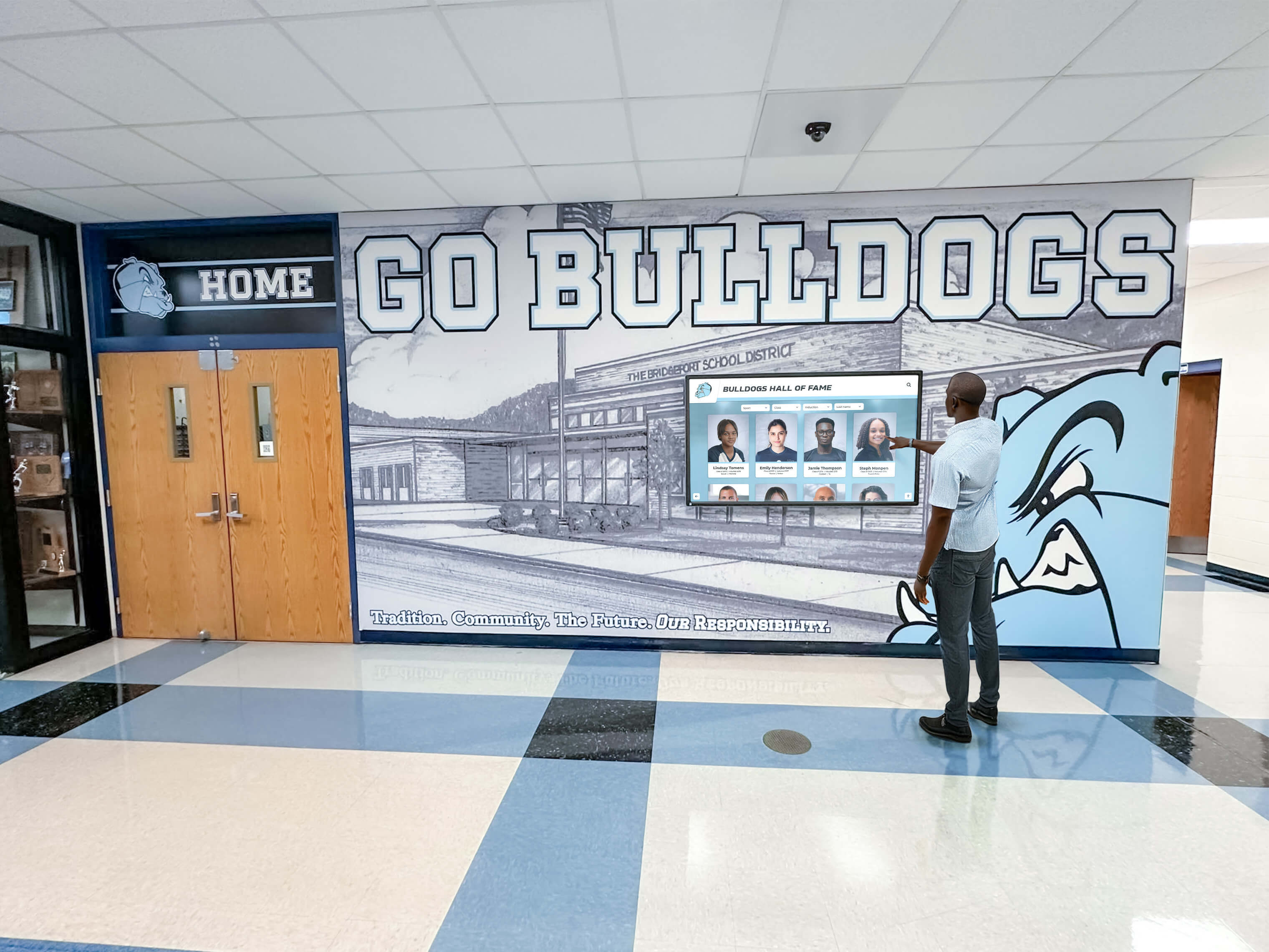
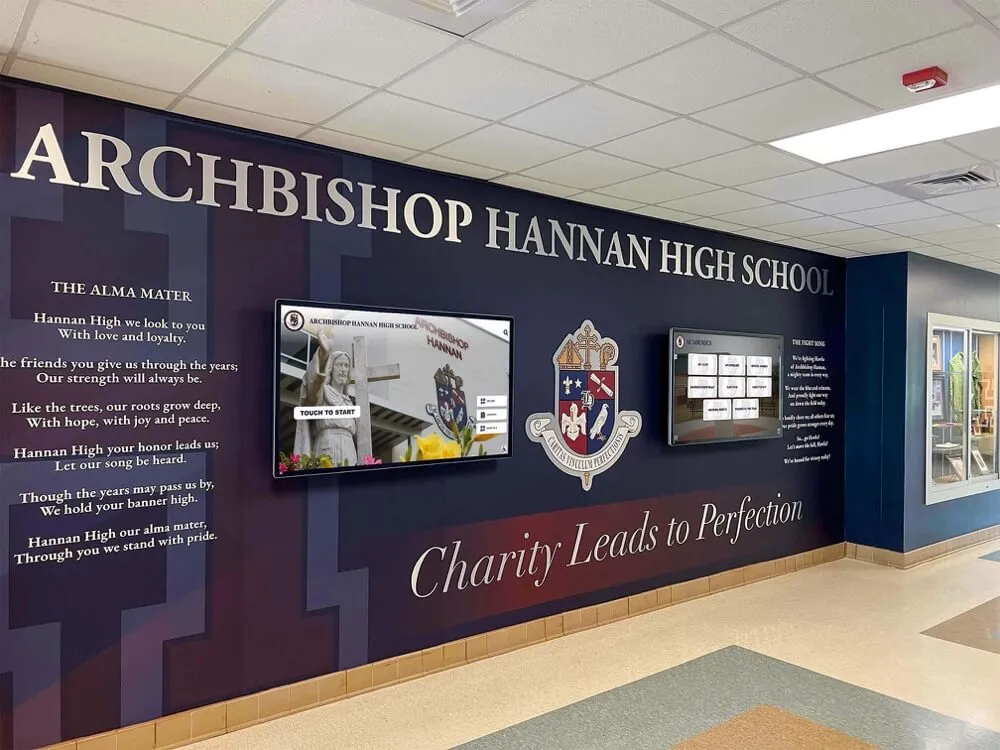
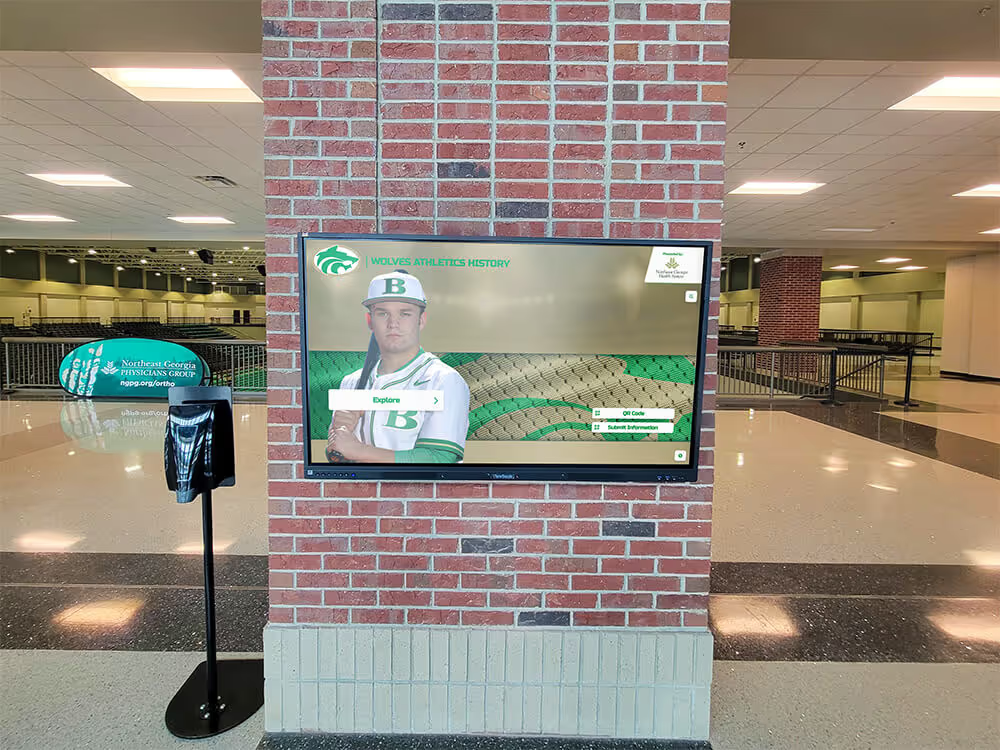
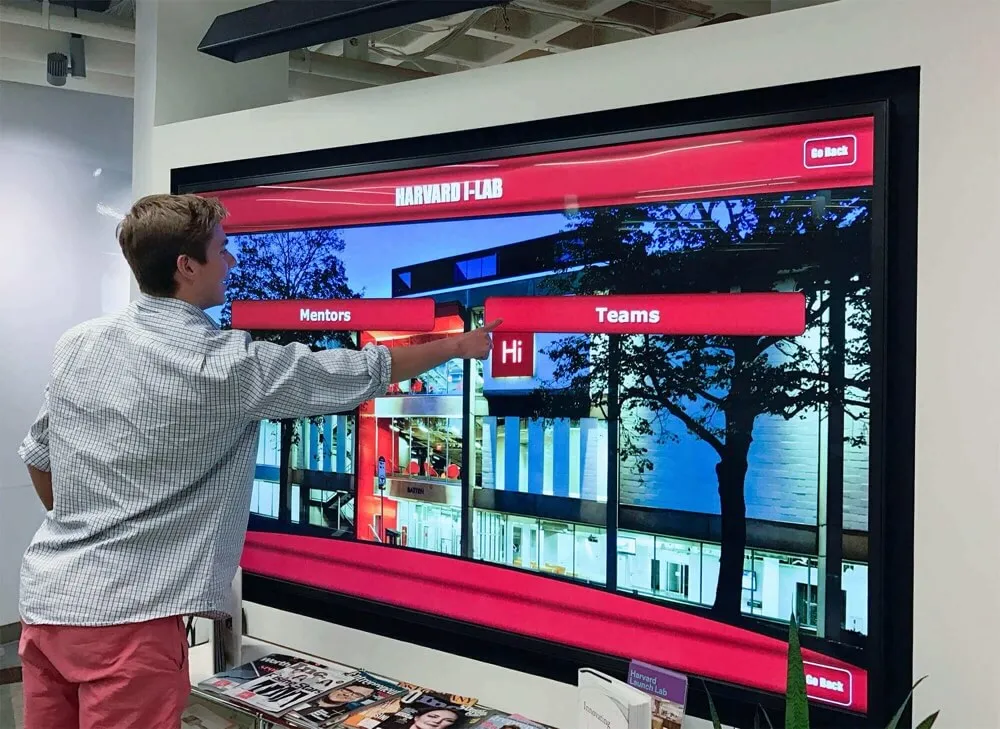
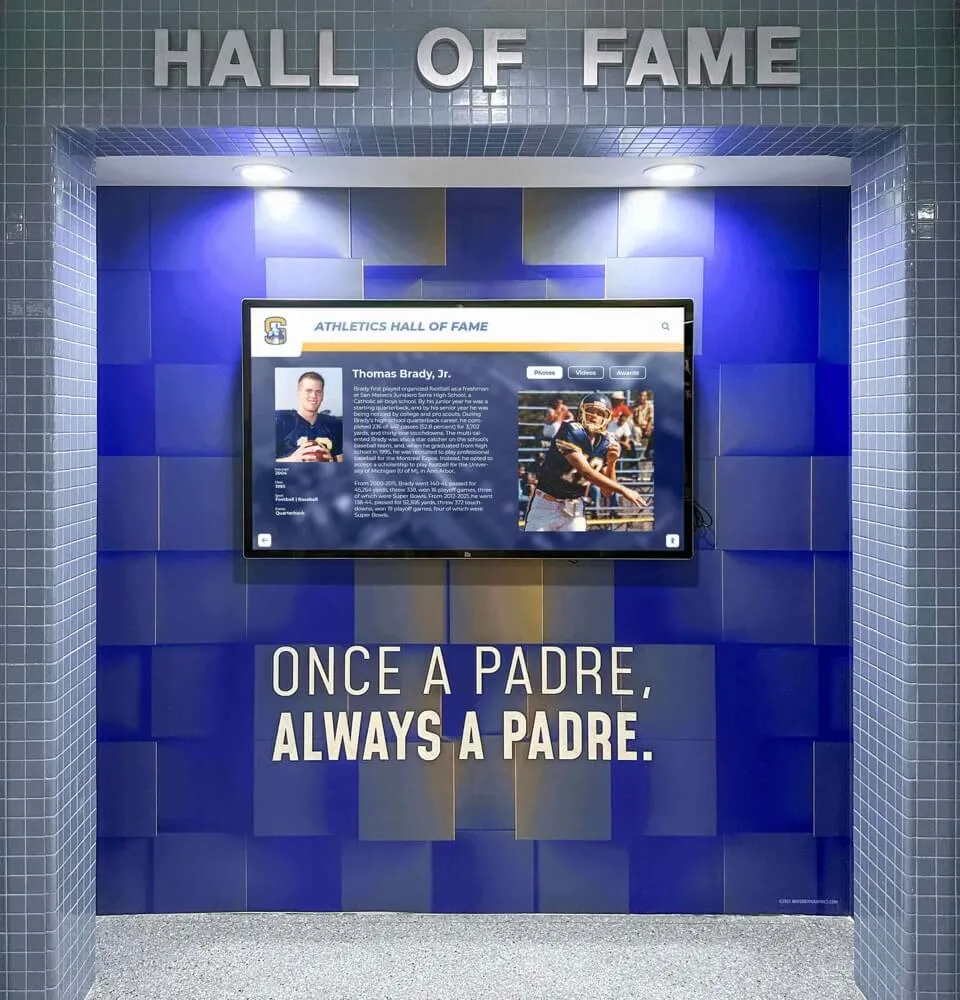
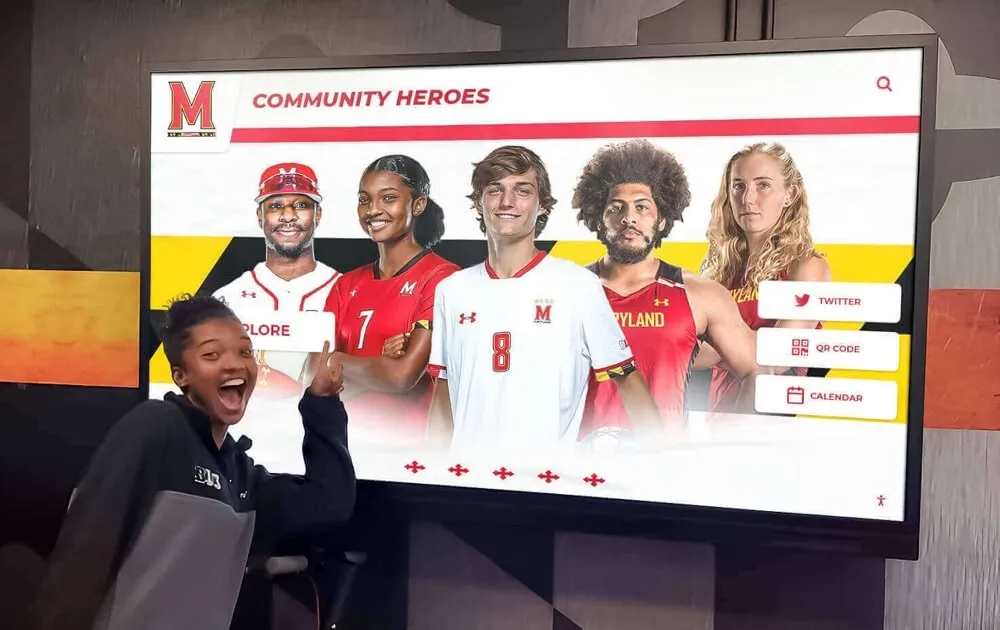
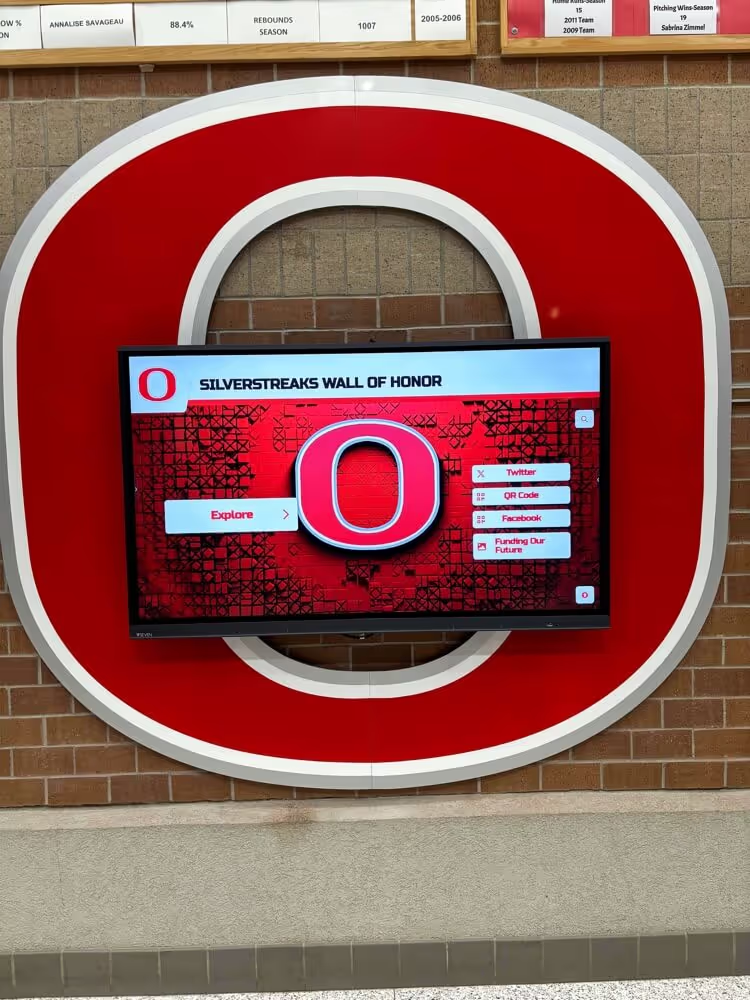
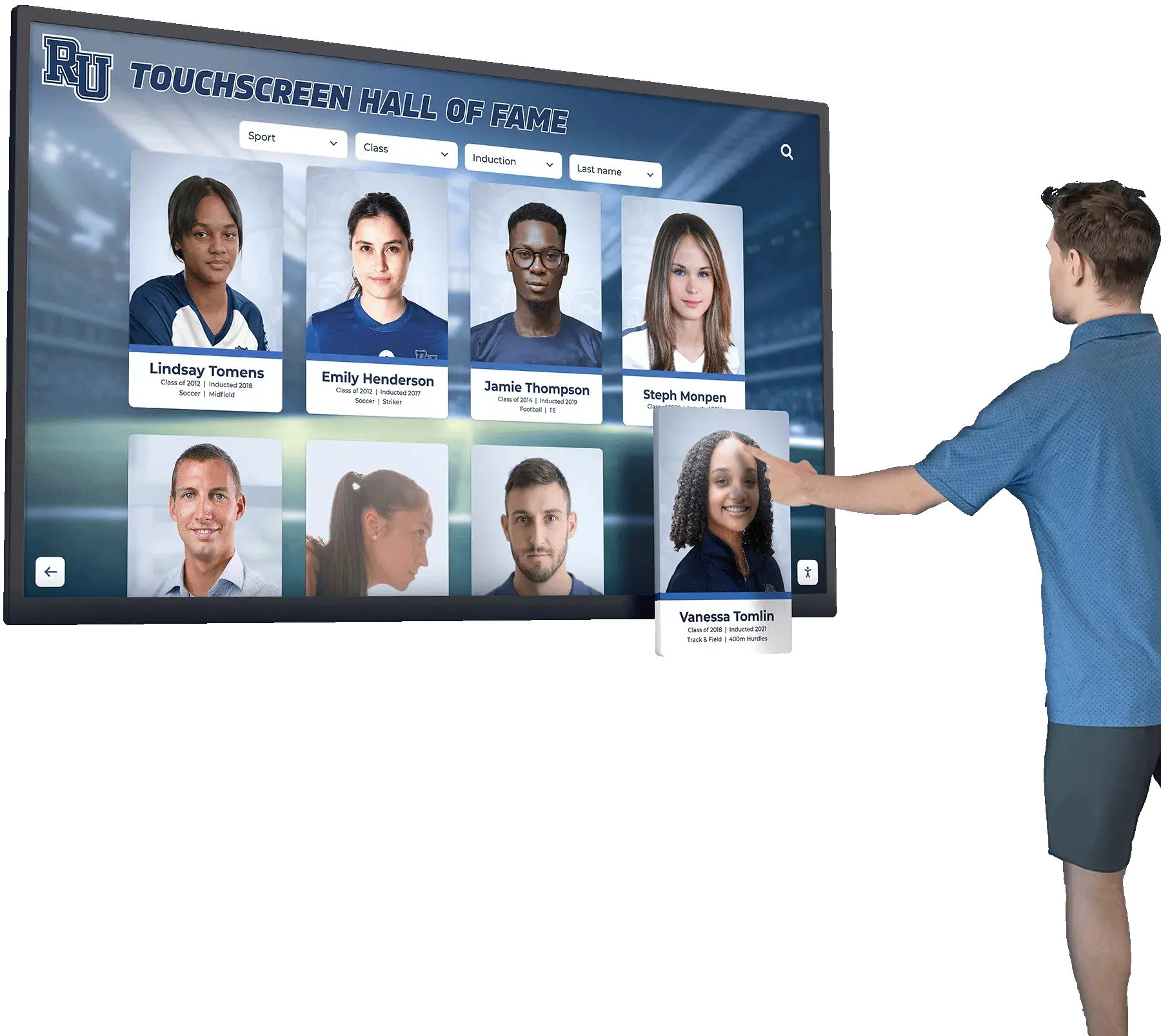
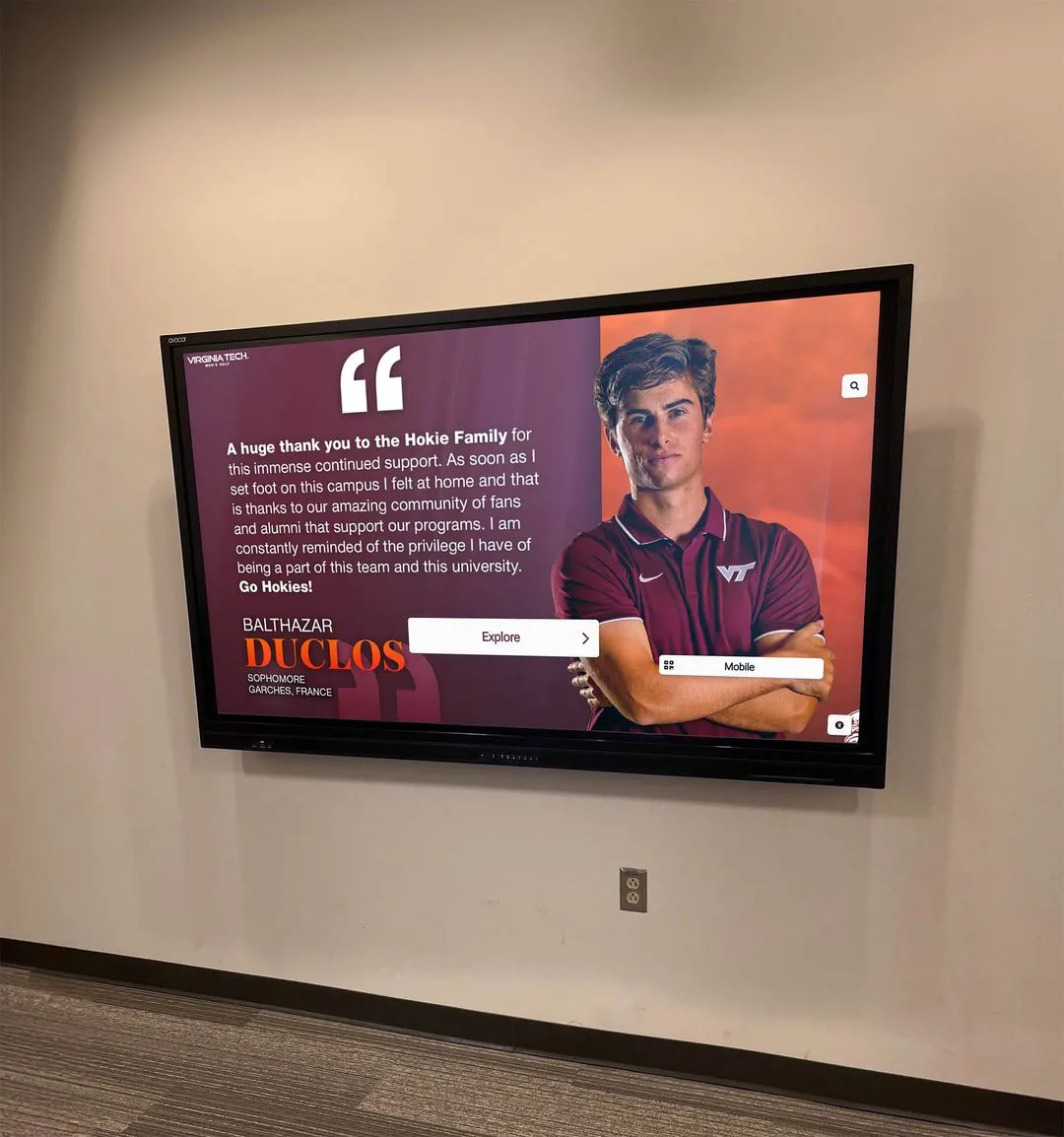
Modern digital recognition systems create engaging experiences where students can explore achievements and connect with school tradition
Post-Secondary Success Preparation Athletic recognition appearing on college applications demonstrates achievement beyond classroom performance. Hall of fame induction, combined with the leadership and persistence athletic excellence requires, strengthens student positioning in competitive college admissions processes. This tangible benefit helps administrators demonstrate how athletic programs contribute to students’ long-term success—a valuable talking point when defending athletic budgets.
Alumni Relations and Fundraising Benefits
Athletic recognition creates powerful alumni engagement tools that support institutional advancement:
Systematic Alumni Engagement Hall of fame programs provide natural contact points with former students who might otherwise drift from school relationships. Annual induction ceremonies create reunion opportunities, recognition displays give alumni reasons to visit campus, and digital recognition platforms extend engagement to graduates who’ve relocated. These touchpoints matter significantly for administrators managing alumni networks and seeking community support.
Schools implementing digital recognition systems with web accessibility report 300-400% increases in alumni interaction compared to physical-only displays—creating substantially more engagement opportunities for development offices.
Fundraising Enhancement Athletic recognition directly supports fundraising in multiple ways. Hall of fame inductees demonstrate higher lifetime giving rates than non-recognized alumni—recognition creates gratitude and continued connection that translates to financial support. Recognition displays themselves create naming opportunities where donors fund recognition technology or facility upgrades in exchange for acknowledgment. And hall of fame events provide cultivation opportunities where development staff can deepen donor relationships in positive, celebratory contexts.
Administrators report that athletic recognition programs can generate 5-10 times their initial investment through enhanced giving over program lifetimes—making hall of fame initiatives financially self-sustaining while delivering cultural and motivational benefits.
Competitive Advantages in Athletics
Athletic recognition delivers practical competitive benefits:
Recruiting Impact Student-athletes and families evaluating schools consistently consider program tradition and prestige. Comprehensive hall of fame displays demonstrate program quality, showcase player development pathways, and create aspirational goals that attract competitive athletes. Administrators managing schools where athletic success matters strategically—whether for community support, student enrollment, or institutional identity—recognize that recognition systems represent recruiting tools competing directly with opposing schools.
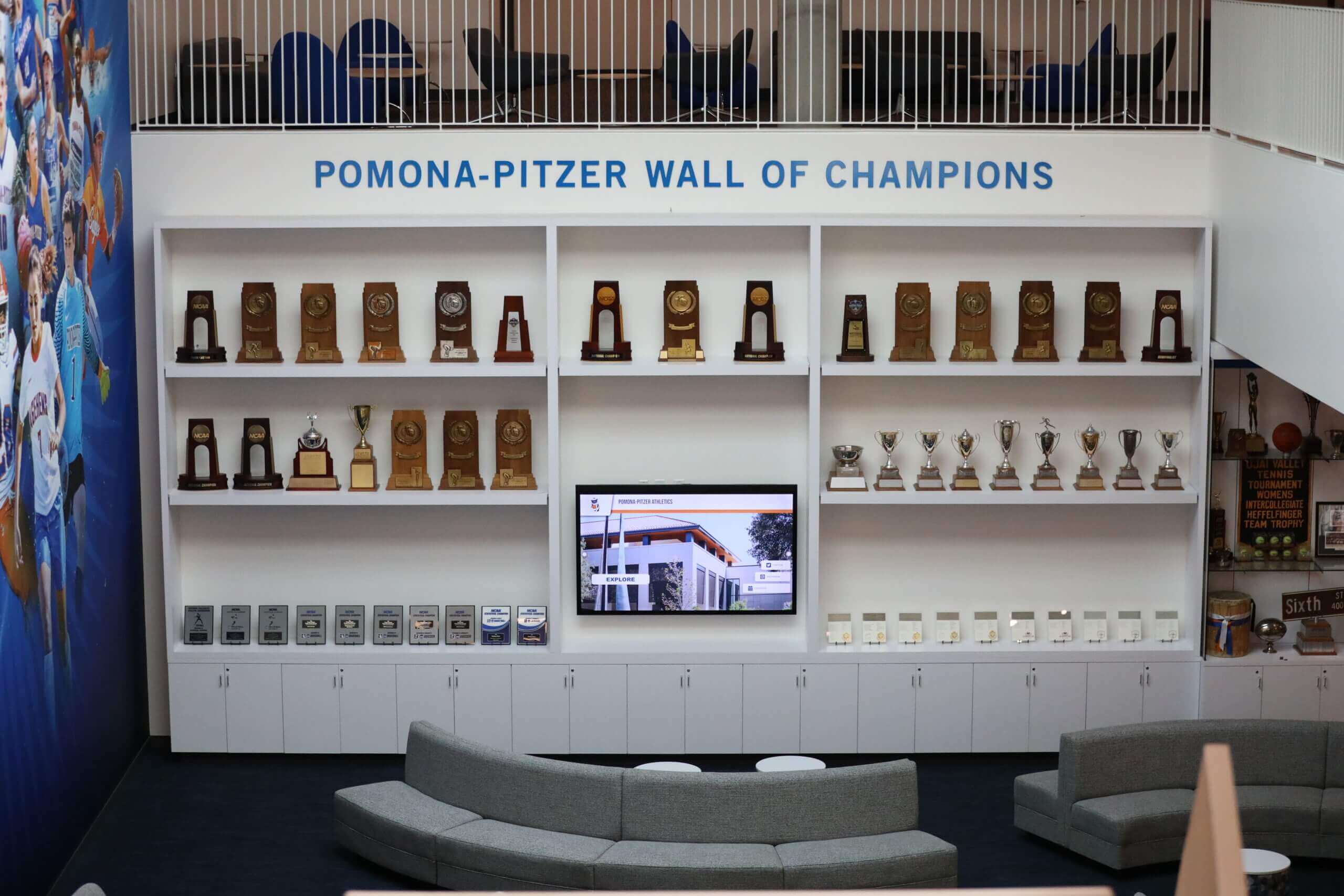
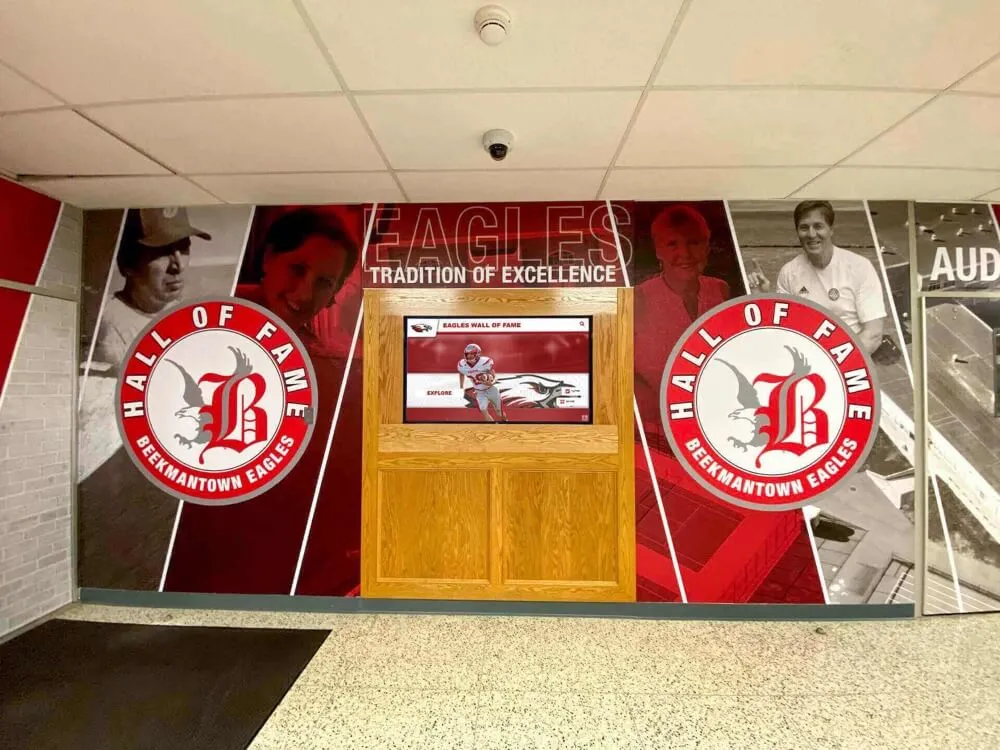
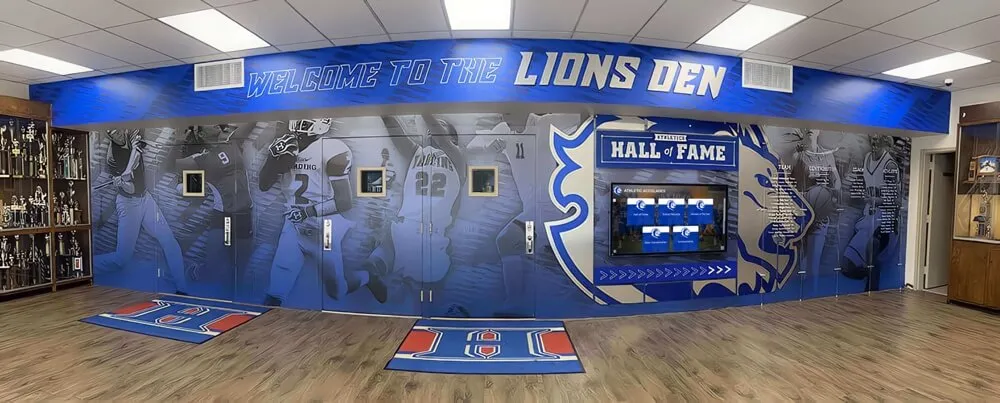
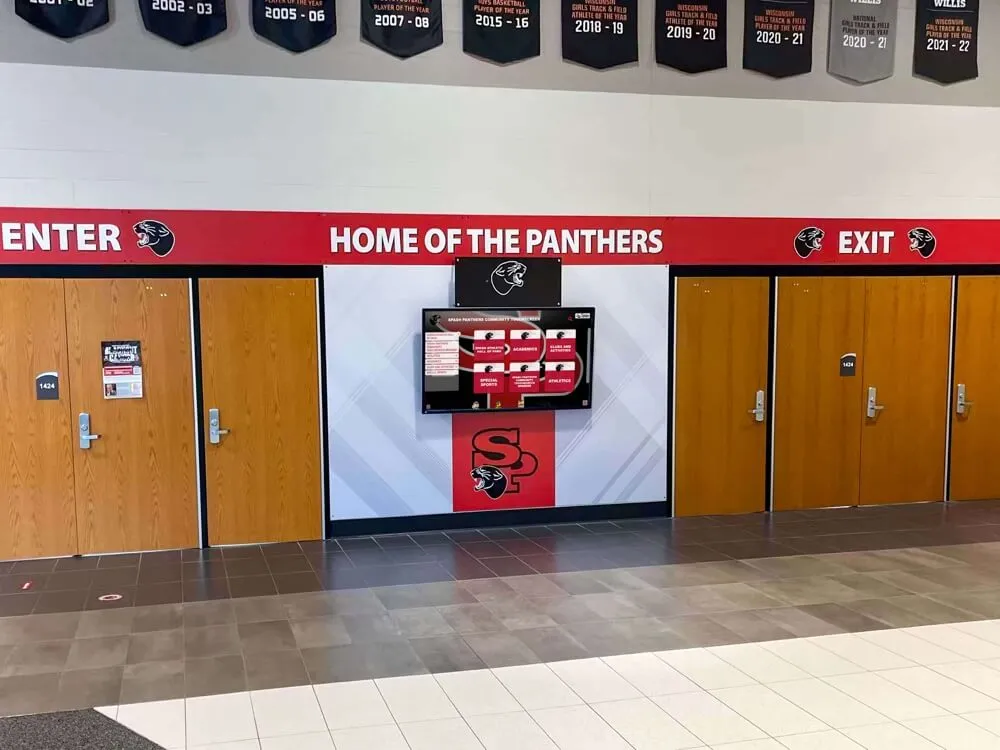
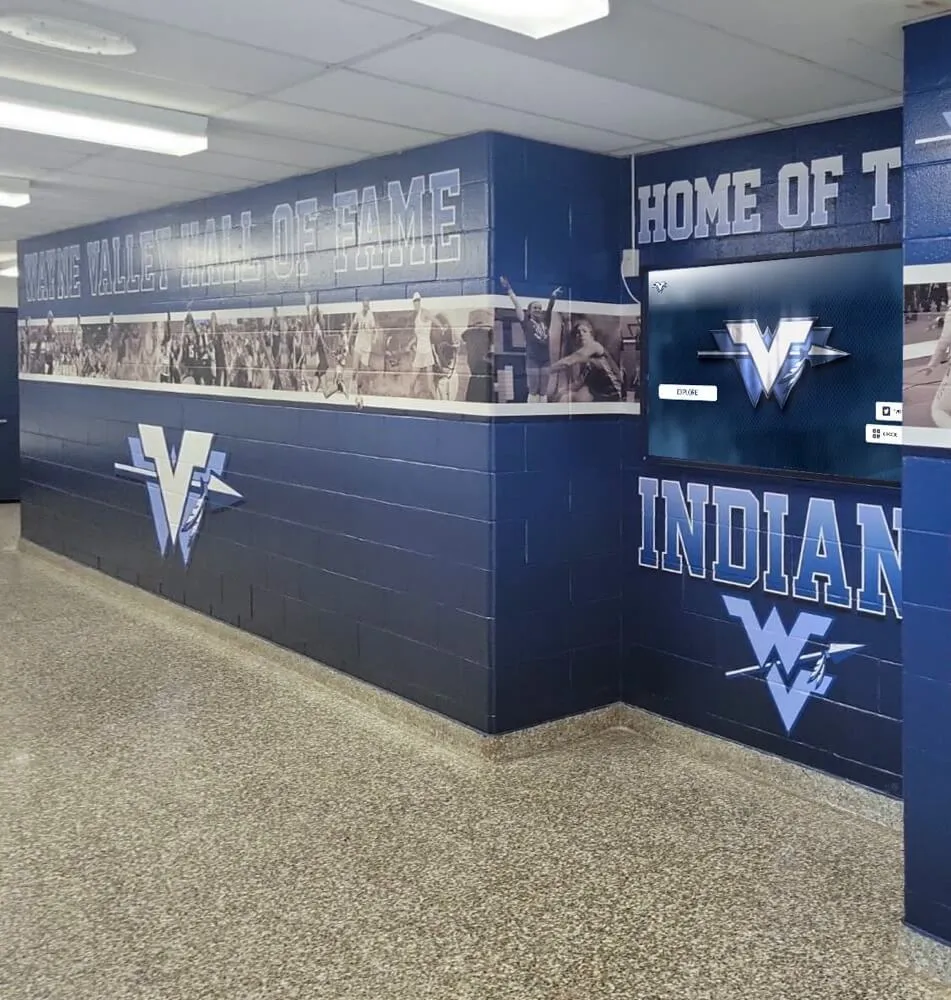
Recognition spaces create gathering areas celebrating athletic tradition and excellence
High school administrators in competitive athletic conferences report that recognition displays frequently become focal points during recruiting visits, with prospective athletes and parents specifically commenting on visible program tradition as decision factors.
Coaching Recruitment and Retention Quality coaches value working in programs that celebrate achievement and maintain strong traditions. Hall of fame programs signal institutional commitment to athletic excellence while providing tools coaches use for motivation and recruiting. This matters significantly for administrators facing coaching searches—strong recognition programs help attract and retain quality coaching talent.
Planning Your Athletic Hall of Fame Program
Successful implementation requires systematic planning addressing governance, criteria, logistics, and sustainability before launching recognition initiatives.
Establishing Governance Structures
Clear governance prevents future conflicts while ensuring credibility:
Selection Committee Composition Balanced committees typically include:
- Current athletic director serving as committee chair
- School principal or assistant principal representing administration
- Retired coaches with institutional history knowledge
- Alumni representatives providing community perspective
- Booster organization representatives when appropriate
- Faculty athletic representative ensuring academic integration
Committee size should range from 7-12 members—large enough for diverse perspectives while remaining manageable for deliberation and voting. Administrators should establish term limits (typically 3-5 years) with staggered rotation ensuring continuity while preventing entrenchment.
Role Definition and Authority Committee charter documents should specify:
- Selection authority and decision-making processes
- Reporting relationships with administration
- Budget authority and spending limits
- Meeting frequency and documentation requirements
- Conflict of interest policies
Clear authority definitions prevent misunderstandings where committees might assume greater autonomy than administrators intend, or conversely, where committees hesitate to act without explicit approval for routine decisions.
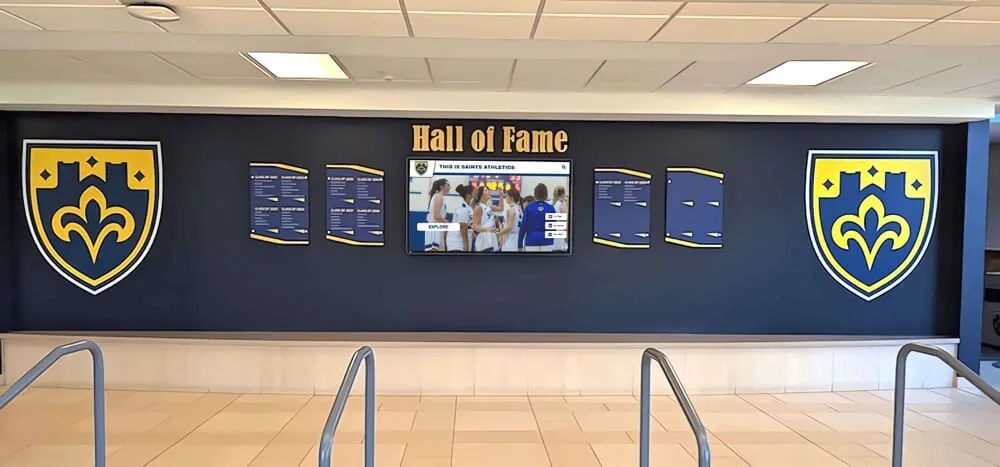
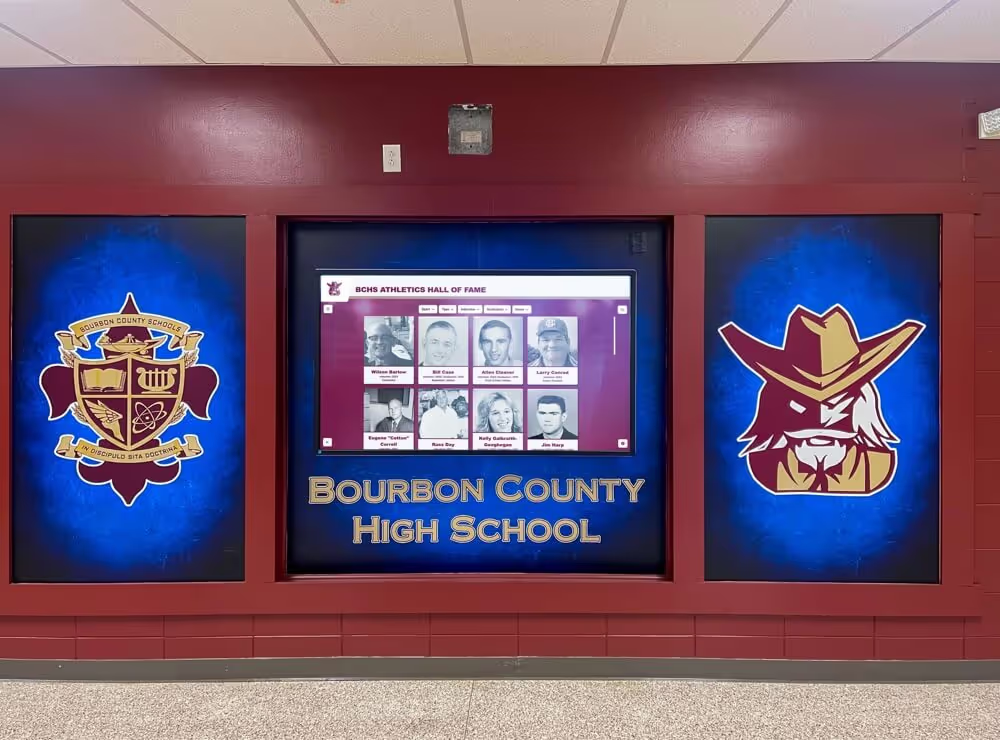
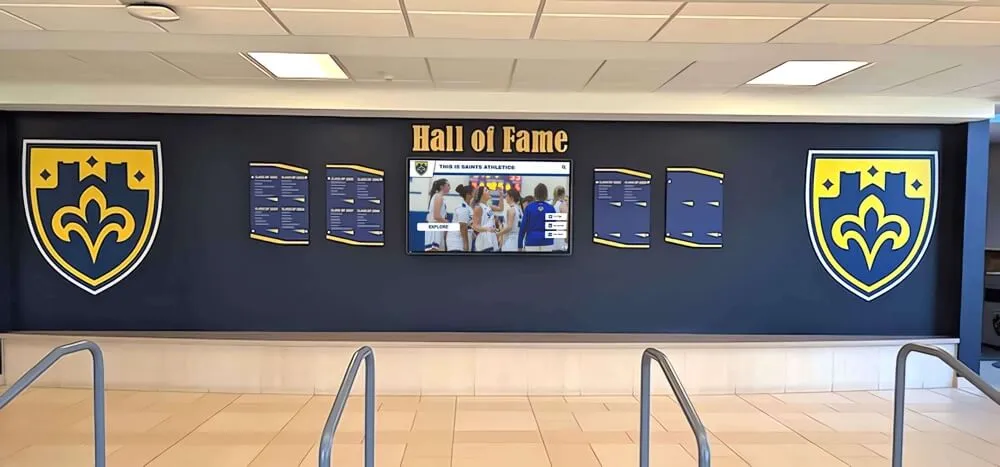
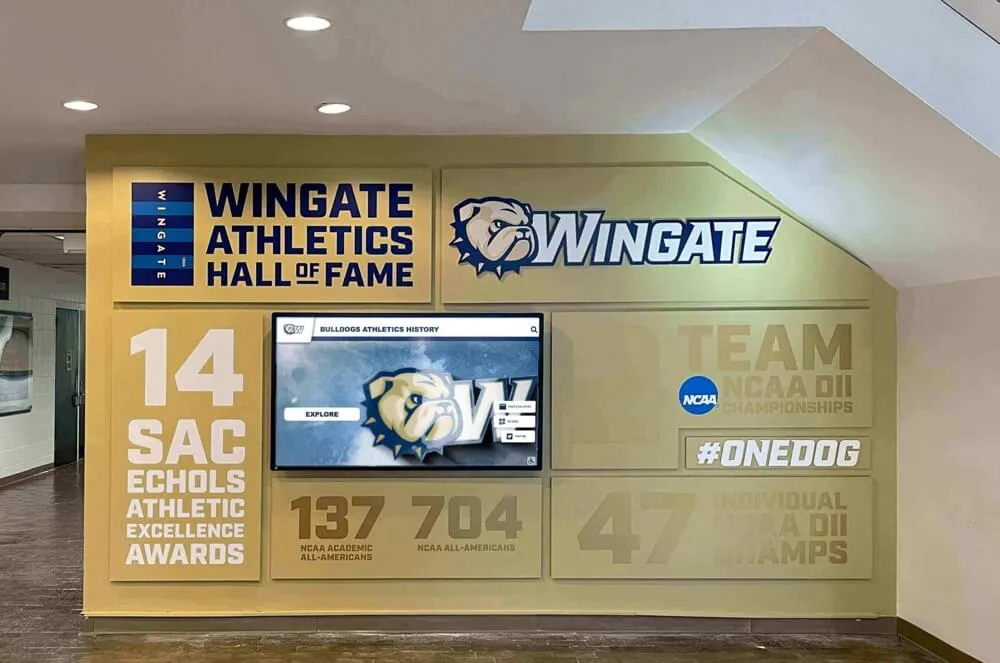
Effective recognition combines traditional design elements with modern digital capabilities
Administrative Oversight and Support Athletic directors or administrators responsible for hall of fame programs should clarify support roles including:
- Budget management and financial reporting
- Facility coordination for displays and ceremonies
- Staff time allocation for committee support
- Technology management and content updates
- Communication and promotion coordination
This administrative framework ensures programs receive resources needed for success while maintaining accountability to school leadership.
Defining Selection Criteria and Standards
Clear criteria ensure fairness while maintaining recognition significance:
Multi-Sport Consideration Comprehensive programs should recognize excellence across all athletic offerings—not just high-profile sports. Administrators managing athletic programs with multiple teams must ensure recognition criteria provide equitable opportunities. This matters particularly in educational settings where Title IX compliance requires gender equity.
Selection standards might include:
- Sport-specific statistical achievements appropriate to each activity
- All-conference, all-state, and all-American honors at relevant levels
- Championship contributions and team success
- Post-high school athletic achievement (college participation, professional careers)
- Character, sportsmanship, and leadership qualities
- Academic achievement minimums ensuring educational mission alignment
Learn about comprehensive approaches in end-of-year athletic awards that can inform hall of fame criteria.
Waiting Period Requirements Most programs require 5-10 years post-graduation before eligibility—allowing achievement perspective while ensuring selections reflect sustained excellence rather than recent emotions. This waiting period also enables evaluation of post-high school athletic continuation, which many programs weight as selection factor demonstrating sustained commitment to sport.
Annual Induction Limits Restricting induction class sizes (typically 2-5 individuals annually) maintains recognition prestige while ensuring ceremonies remain manageable. Administrators should resist pressure to recognize many individuals annually just because numerous qualified candidates exist—recognition value depends partly on selectivity.
Technology and Display Decisions
Recognition effectiveness depends on thoughtful display planning:
Physical Display Options Traditional approaches include:
- Individual plaques mounted on dedicated hall of fame walls
- Trophy case displays showcasing awards and memorabilia
- Championship banners in gymnasiums
- Hallway recognition displays in high-traffic areas
These physical displays create tangible recognition but face significant limitations—particularly space constraints as inductee numbers grow over time.
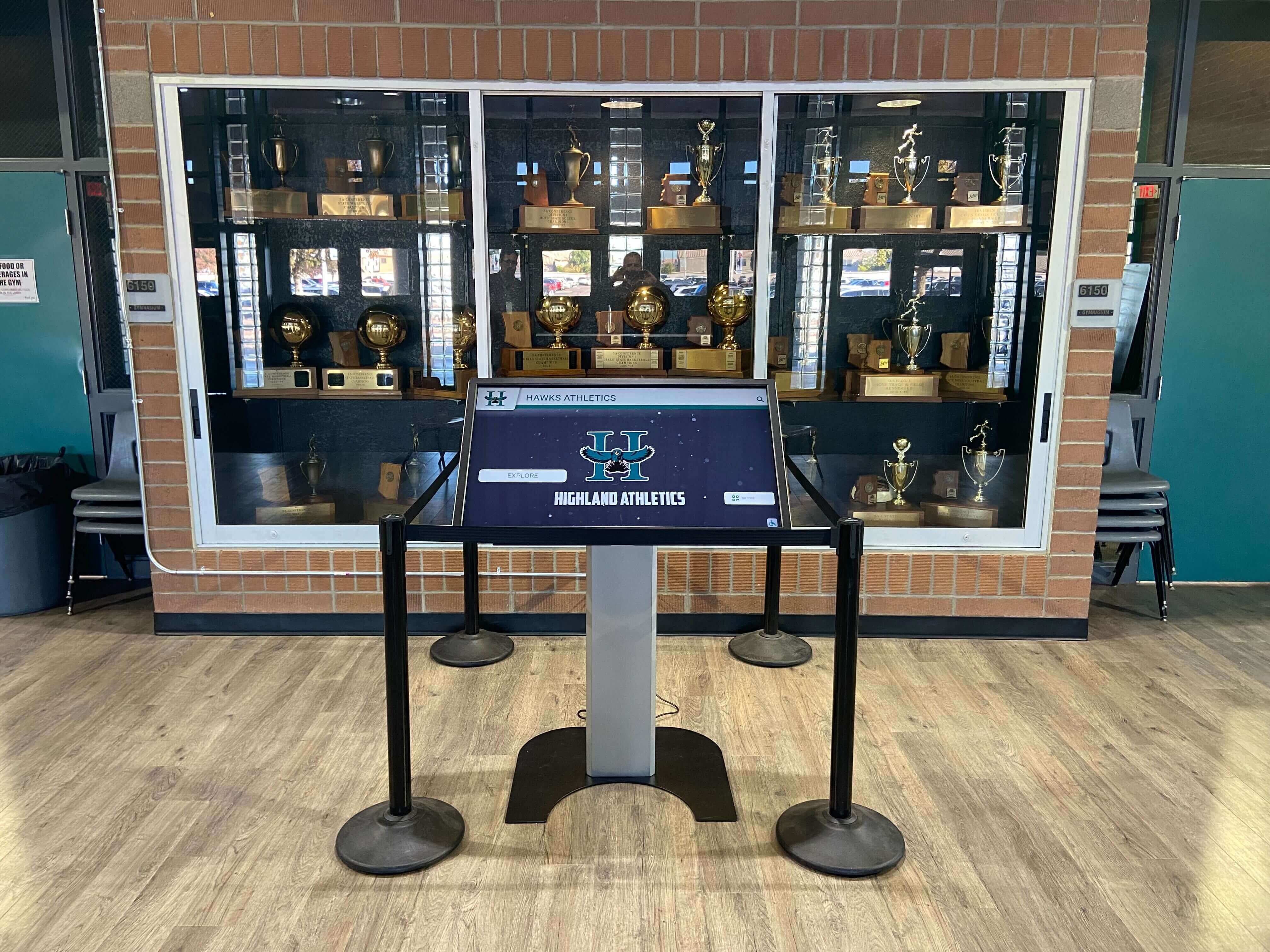
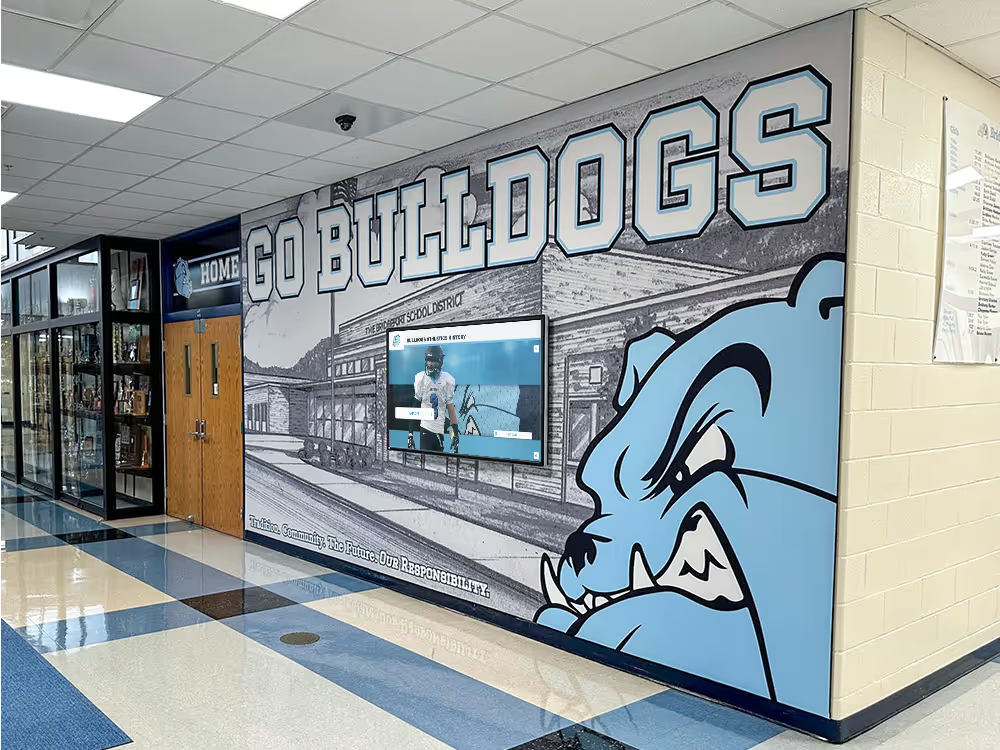
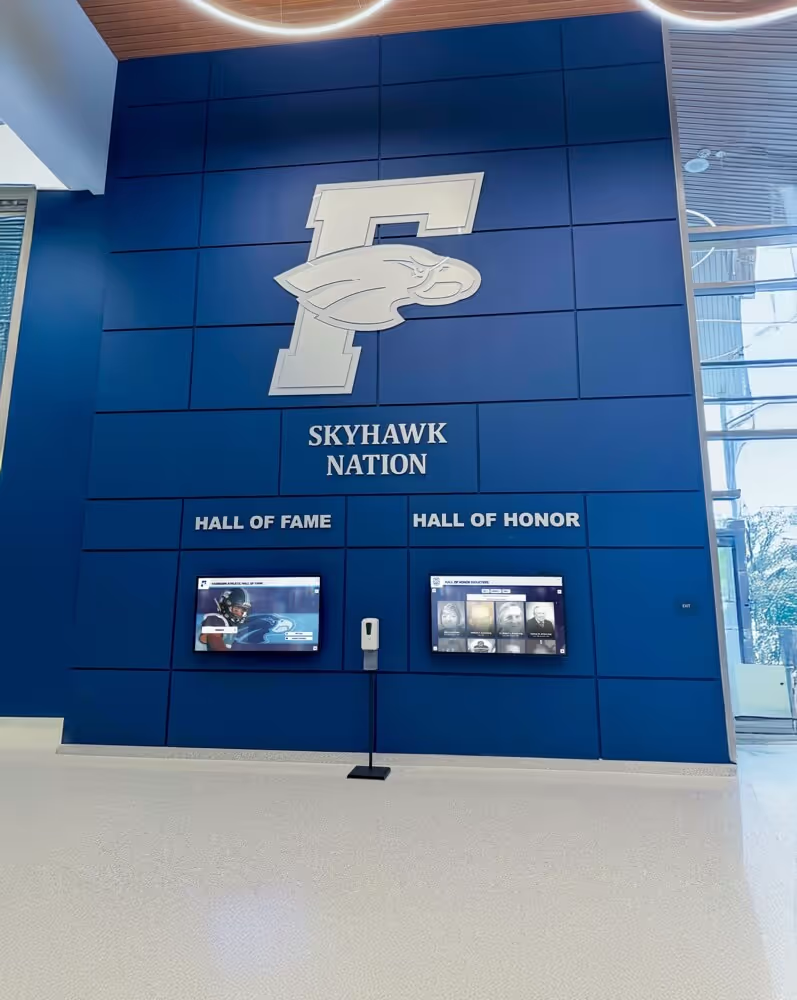
Digital kiosks integrate with existing trophy cases providing unlimited recognition capacity
Digital Recognition Systems Modern solutions like Rocket Alumni Solutions overcome traditional limitations through:
- Unlimited recognition capacity eliminating space constraints
- Rich multimedia content including photos, videos, and achievement documentation
- Interactive exploration enabling searching, filtering, and detailed profile viewing
- Web accessibility extending recognition beyond physical campus
- Simple content management allowing updates without technical expertise
- Cost-effectiveness compared to physical plaque expansion over time
Schools implementing interactive digital recognition report that single digital displays provide recognition capacity equivalent to 50-100+ physical plaques while delivering substantially greater engagement.
Hybrid Approaches Many administrators implement combination strategies:
- Primary interactive digital display in main athletic facility
- Maintained existing physical plaques honoring historical recognition value
- Additional digital displays in multiple school locations
- Web-accessible online recognition extending reach to alumni and community
This hybrid model respects tradition while embracing modern capabilities—often the most politically sustainable approach in schools where stakeholders value existing physical displays.
Implementation Process and Timeline
Systematic implementation ensures successful launch while managing workload:
Phase 1: Planning and Design (Months 1-3)
Committee Formation and Orientation
- Recruit committee members representing diverse stakeholders
- Develop and approve committee charter and bylaws
- Establish selection criteria and procedures
- Create timeline for launch and ongoing operations
- Assign responsibilities for various program elements
Display Planning and Budgeting
- Assess available display locations evaluating traffic, visibility, and feasibility
- Research technology options and vendor capabilities
- Develop budget including initial implementation and ongoing costs
- Identify funding sources (general budget, booster support, fundraising)
- Secure administrative approval for planned investment
Initial Content Development Strategy
- Identify historical inductees or establish process for inaugural class
- Determine information to collect for recognition profiles
- Develop biographical data collection procedures
- Plan for photograph and document gathering
- Establish content standards and formatting guidelines
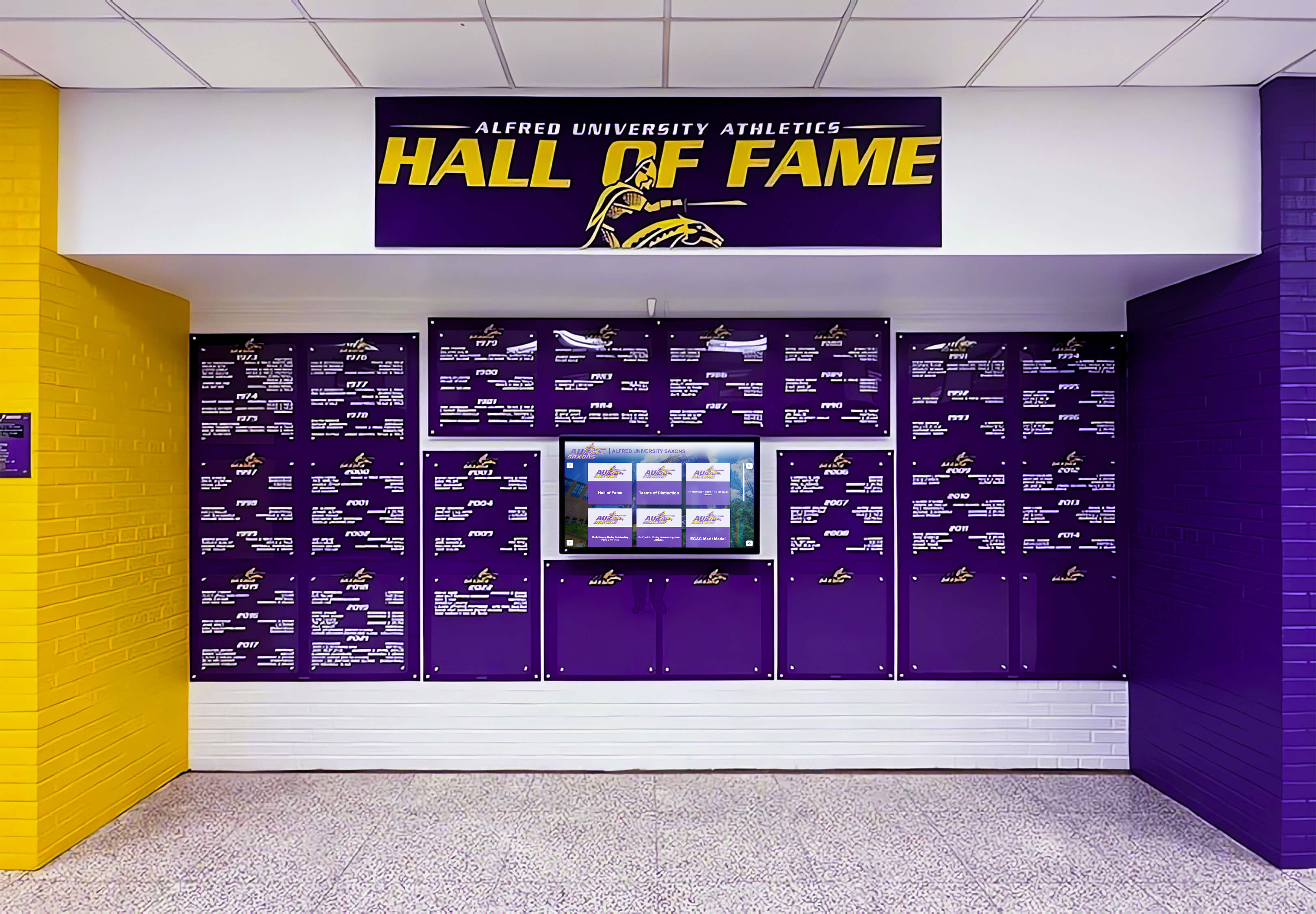
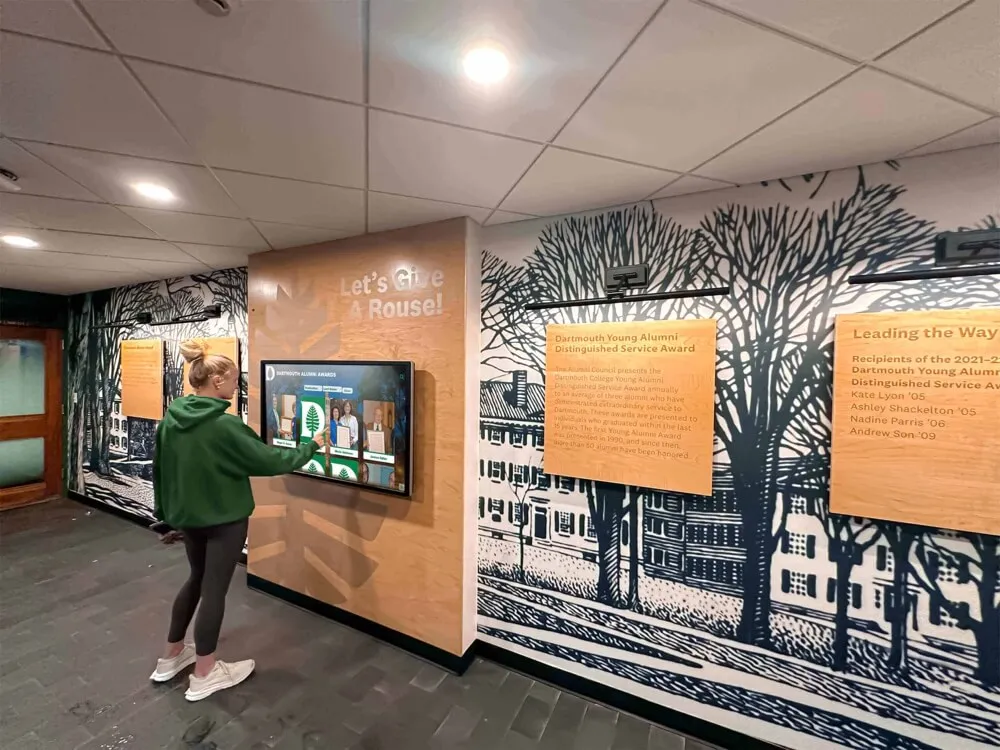
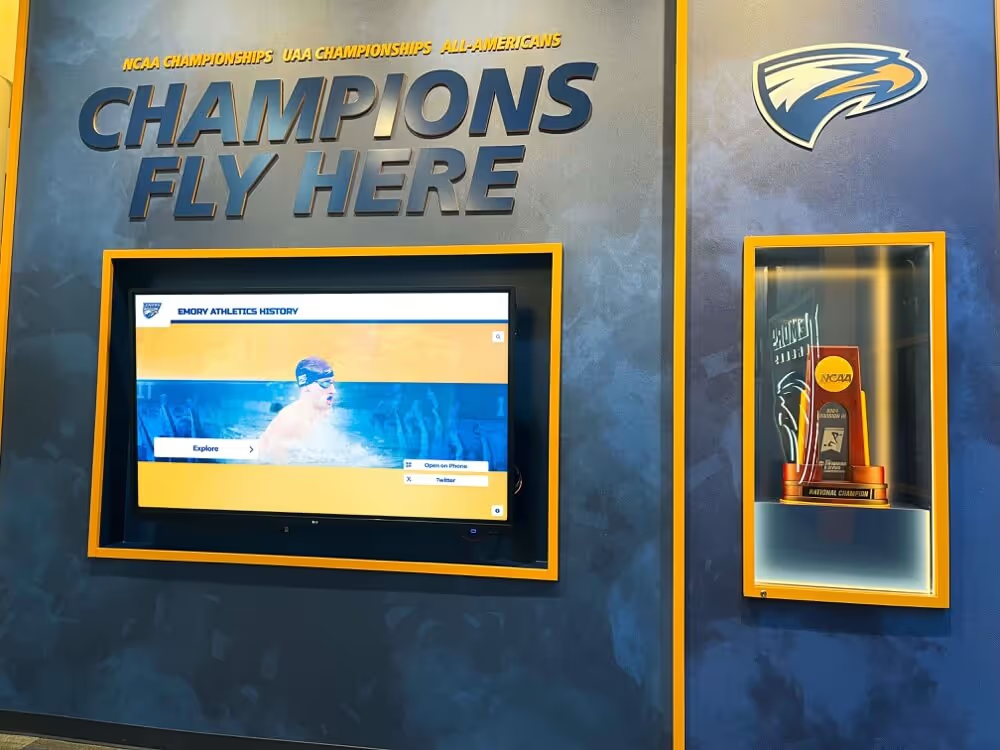
University hall of fame installations integrate institutional branding while celebrating athletic excellence
Phase 2: Selection and Content Development (Months 4-6)
Inaugural Selection Process
- Launch nomination process accepting community submissions
- Committee reviews nominations evaluating criteria alignment
- Deliberation and voting sessions selecting inaugural inductees
- Notification of inductees and families
- Public announcement generating community excitement
Recognition Content Creation
- Collect detailed biographical information from inductees
- Gather photographs from playing careers and post-high school life
- Document achievements, statistics, and honors comprehensively
- Record video interviews when possible
- Compile content into recognition platform or display format
Schools implementing recognition systems discover that initial content development represents the most time-intensive phase—typically requiring 60-100 hours depending on inaugural class size and historical depth. Administrators should realistically plan for this workload, often engaging student workers, parent volunteers, or professional content services.
Phase 3: Installation and Launch (Months 7-9)
Technology Implementation
- Install physical display hardware in planned locations
- Configure software platforms and content management systems
- Load initial recognition content and profiles
- Test functionality and user experience
- Train administrators and staff on content management
Induction Ceremony Planning
- Schedule ceremony date coordinating with athletic calendar
- Develop ceremony program and format
- Invite inductees, families, and community
- Arrange facility logistics and technical requirements
- Prepare recognition certificates, plaques, or physical mementos
- Coordinate media coverage and documentation
Communication and Promotion
- Announce inaugural inductee class through multiple channels
- Promote induction ceremony to maximize attendance
- Engage media for coverage building community awareness
- Create social media content celebrating new recognition program
- Update school website featuring hall of fame information
Explore school community engagement approaches that can inform promotion strategies.
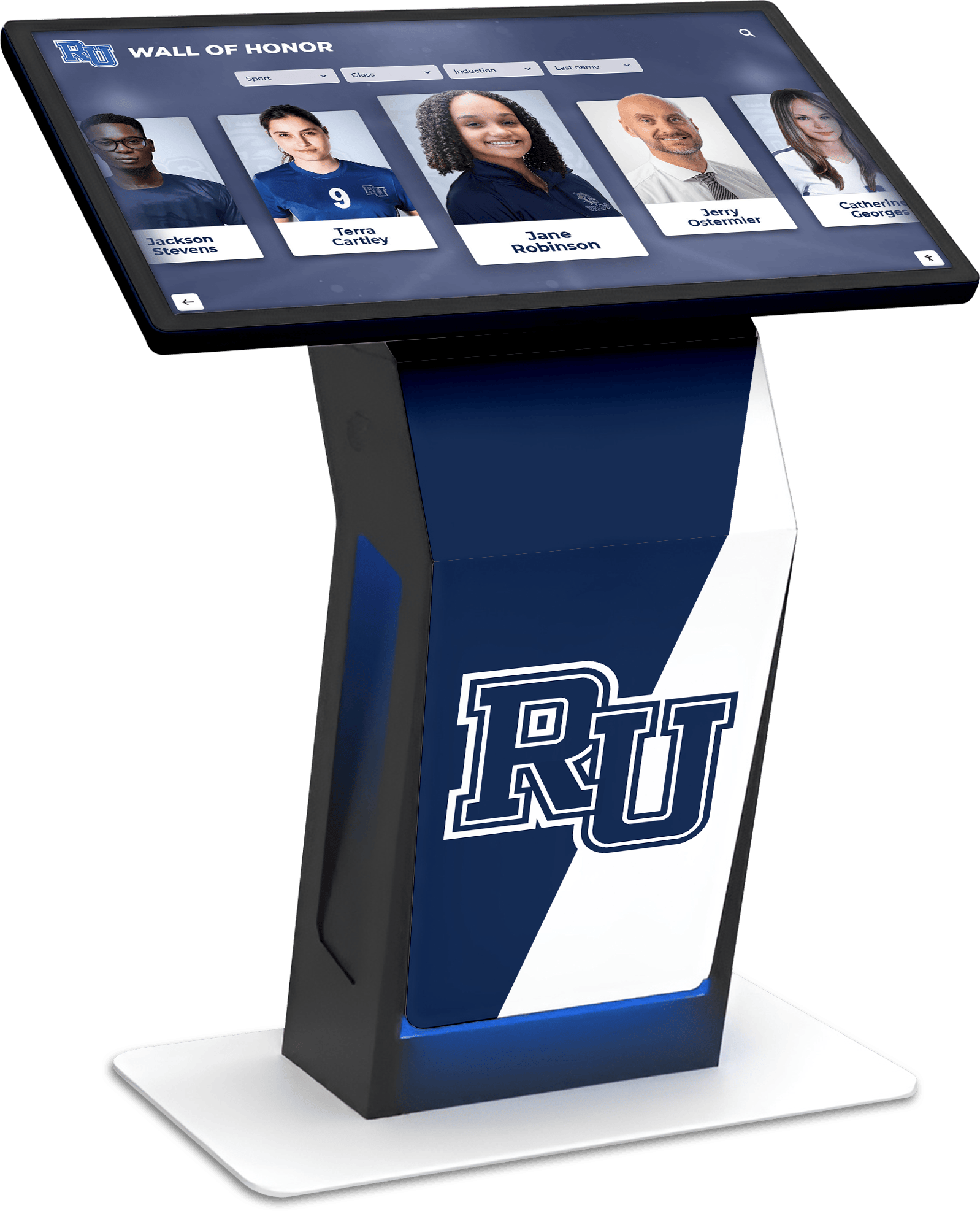
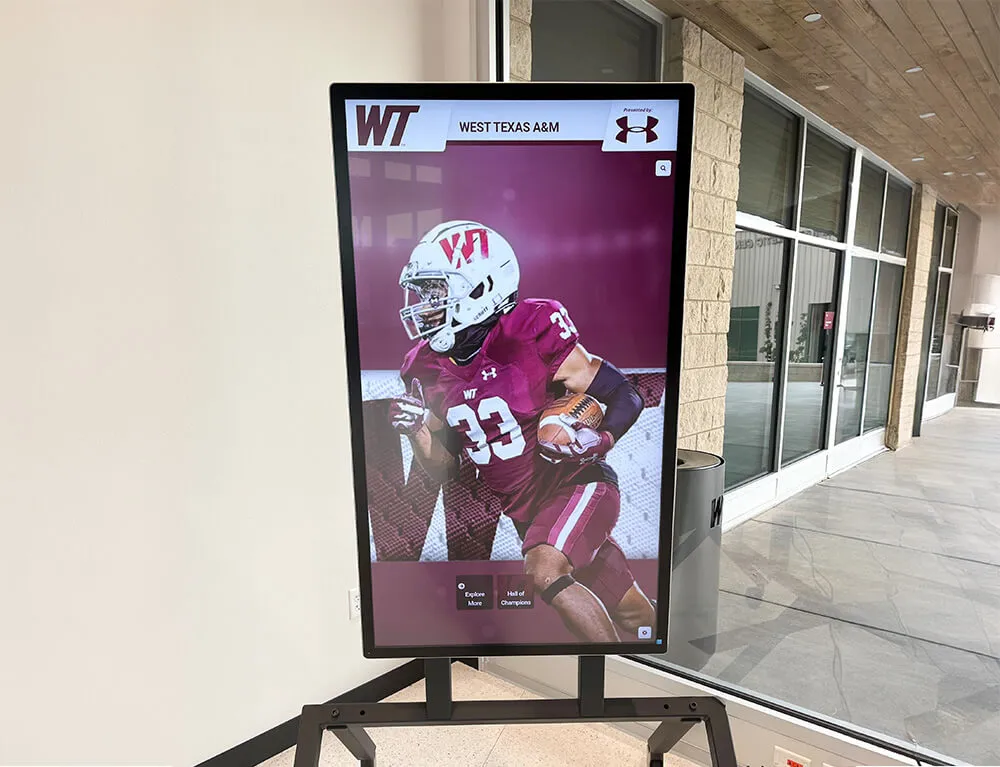
Modern recognition kiosks create engaging touchscreen experiences celebrating athletic achievement
Phase 4: Ongoing Operations (Year 2+)
Annual Induction Cycles
- Establish consistent nomination period each year
- Committee review and selection process
- Inductee notification and preparation
- Annual induction ceremony planning and execution
- Content addition to recognition displays
Program Maintenance and Enhancement
- Regular content updates and accuracy verification
- Technology maintenance and software updates
- Assessment of program effectiveness and impact
- Continuous improvement based on stakeholder feedback
- Budget planning for ongoing program needs
Long-term Sustainability
- Committee membership rotation maintaining fresh perspectives
- Criteria review ensuring continued relevance and fairness
- Financial planning for technology refresh cycles
- Integration with broader school recognition initiatives
- Documentation of program history and procedures
Managing Common Administrative Challenges
Proactive planning addresses predictable issues:
Budget and Financial Sustainability
Athletic recognition requires initial investment and ongoing resources:
Initial Implementation Costs Typical ranges include:
- Digital touchscreen system: $10,000-18,000 (hardware, software, installation)
- Non-interactive digital display: $2,500-6,000
- Traditional plaque expansion: $150-300 per plaque
- Induction ceremony: $500-3,000 annually
- Content development: $1,000-5,000 (if outsourced)
These costs vary significantly based on technology choices, facility requirements, and implementation scale. Administrators should develop realistic budgets accounting for full implementation scope.
Ongoing Operational Costs Annual expenses typically include:
- Software subscriptions: $1,200-3,600/year
- Ceremony costs: $500-3,000/year
- Physical mementos for inductees: $300-1,000/year
- Content updates and management: $500-2,000/year
- Technology maintenance: $200-800/year
Schools often fund ongoing operations through booster organizations, athletic fundraising, or general athletic budgets—reducing general fund impact.
Funding Strategies Administrators successfully finance recognition through:
- Capital campaign inclusion for major implementations
- Booster organization support as primary funding source
- Corporate sponsorship of recognition displays
- Donor naming opportunities for recognition technology
- Annual fund allocation from athletic budgets
- Fundraising events specifically supporting hall of fame
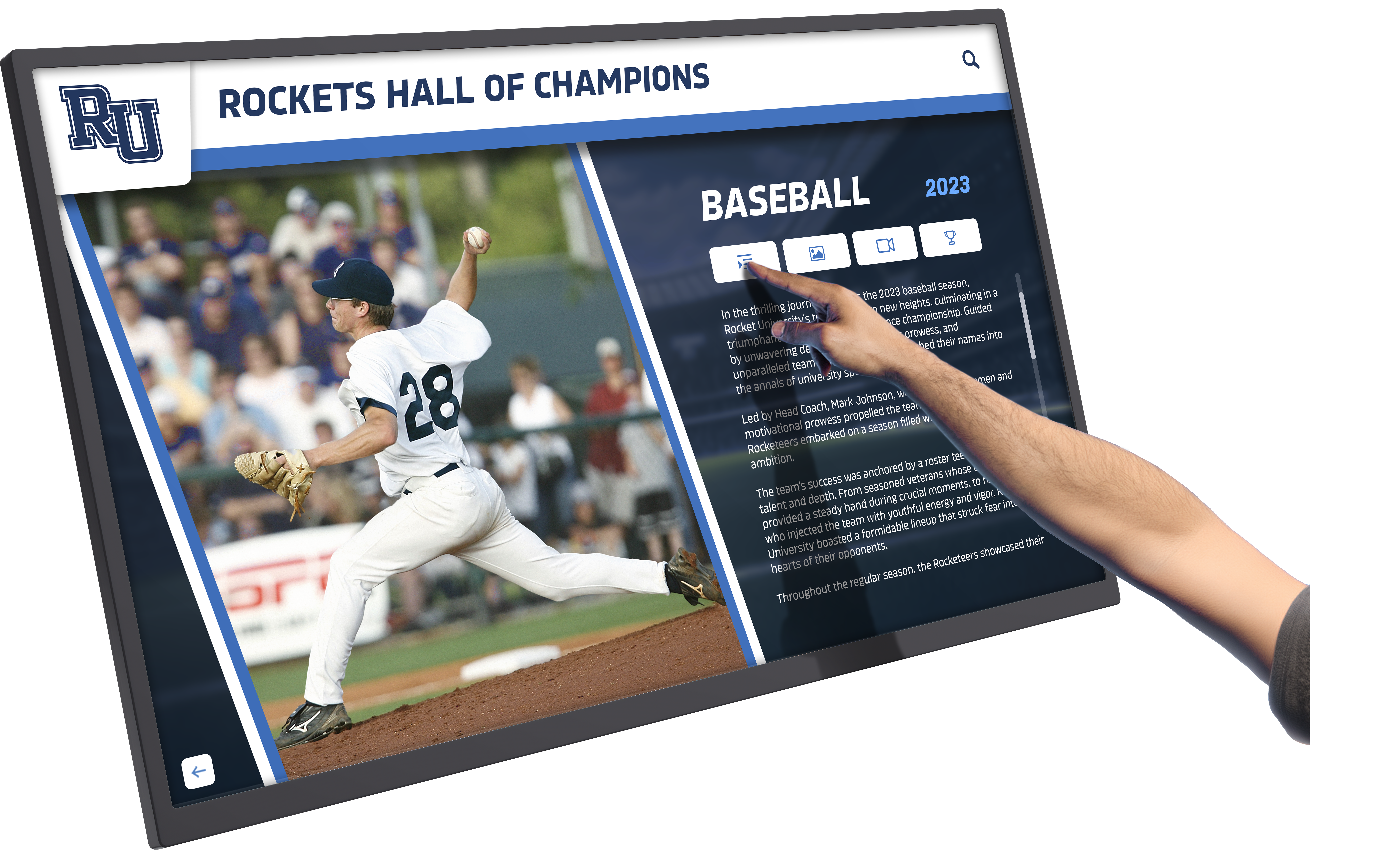
Touchscreen interfaces enable detailed profile exploration with photos, statistics, and achievements
Many administrators discover that hall of fame programs become self-sustaining through enhanced alumni giving—recognition programs frequently generate multiples of their cost through increased donor engagement and contributions.
Space and Facility Limitations
Physical constraints challenge traditional recognition:
Strategic Location Selection Optimal placement provides visibility while remaining feasible:
- Athletic facility main lobbies receiving highest traffic
- School main entrances for programs where athletics represents institutional identity
- Hallway corridors connecting gymnasiums to academic buildings
- Community gathering spaces in multi-purpose facilities
- Multiple locations for distributed recognition across campus
Administrators facing severe space constraints should prioritize digital recognition systems—single touchscreen displays provide recognition capacity that would require entire walls using traditional plaques.
Learn about high school wall of fame approaches addressing space challenges through modern technology.
Renovation and Facility Planning Administrators planning athletic facility renovations should integrate recognition planning:
- Dedicated hall of fame spaces in architectural plans
- Infrastructure for digital displays (power, networking, mounting)
- Display positioning for optimal visibility and engagement
- Protective measures for technology in public spaces
- Future expansion capacity as programs grow
This proactive integration delivers better long-term outcomes than retrofitting recognition into facilities designed without consideration for display needs.
Title IX and Equity Considerations
Federal compliance requires equitable recognition:
Gender Equity in Recognition Schools offering both boys and girls athletics must ensure parallel recognition:
- Equivalent selection criteria across programs
- Balanced representation in induction classes
- Equal display space and prominence
- Comparable ceremony recognition and celebration
- Statistical standards adjusted for any competitive differences
Administrators responsible for Title IX compliance should audit hall of fame programs ensuring no disparate treatment between genders. Digital recognition systems help maintain equity—unlimited capacity eliminates zero-sum competition for limited display space that can disadvantage lower-profile programs.
Multi-Sport Equity Recognition should honor excellence across all sports, not just high-visibility programs:
- Clear criteria applicable to all athletic offerings
- Selection committee representation across multiple sports
- Rotating recognition highlighting various programs
- Equal profile quality regardless of sport prestige
- Intentional outreach ensuring participation opportunities across sports
This comprehensive equity approach ensures compliance while strengthening overall athletic program culture.
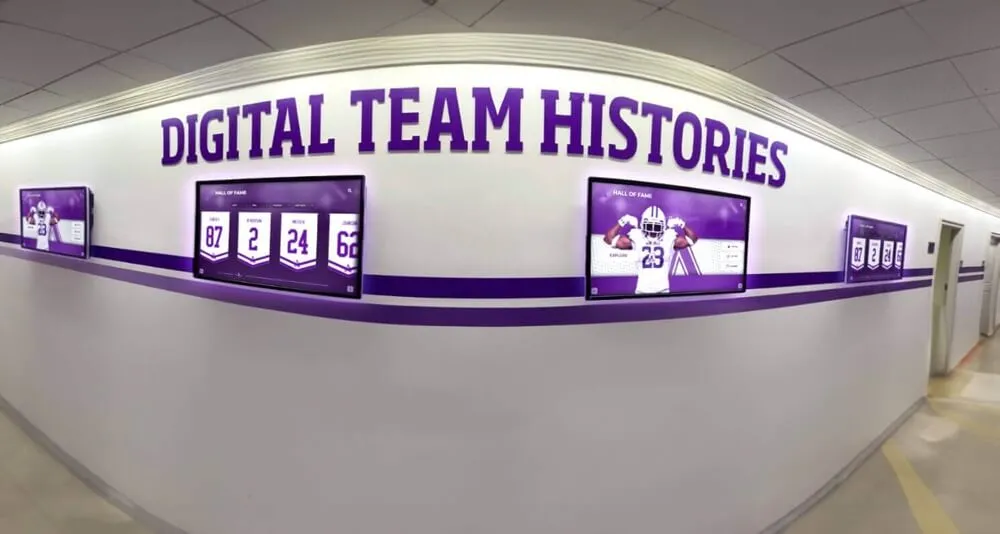
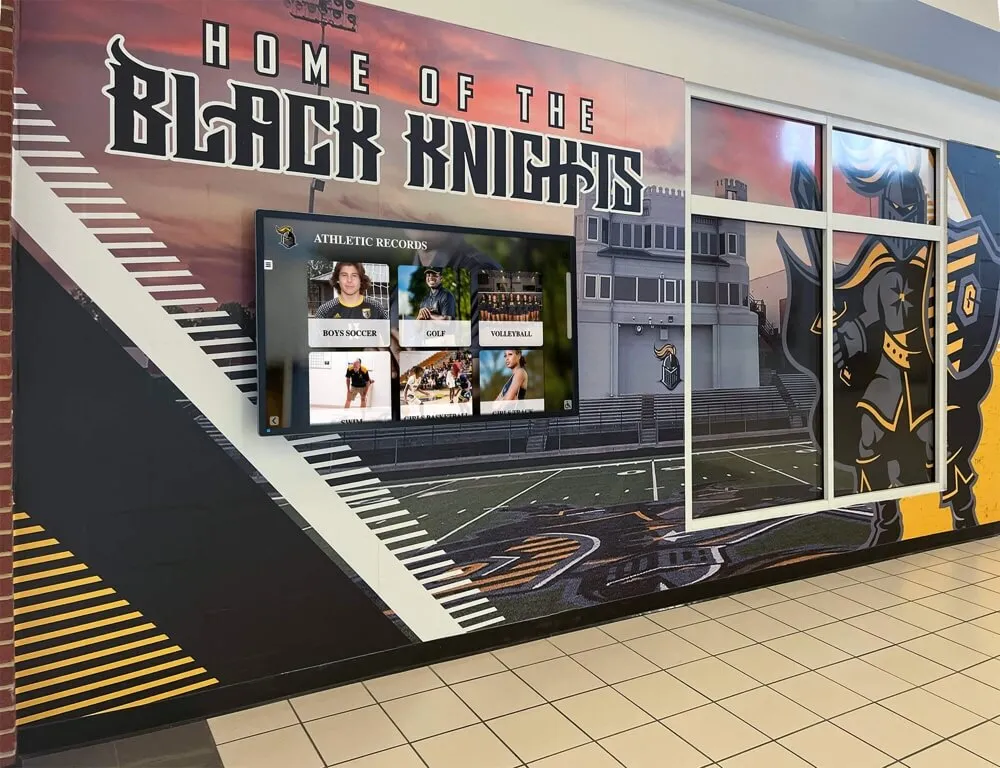
Distributed digital displays enable comprehensive recognition across multiple sports and programs
Community Politics and Selection Controversies
Recognition decisions sometimes create tensions:
Managing Selection Disputes Disagreements about inductee selections are predictable challenges requiring:
- Transparent criteria published and consistently applied
- Documented selection processes demonstrating fairness
- Clear communication about committee independence
- Professional handling of disappointed nominees or advocates
- Appeals processes for alleged criteria violations
Administrators should establish that selection committees operate independently within established guidelines—protecting committee members from political pressure while maintaining accountability to published standards.
Balancing Historical and Recent Achievement Programs often face tension between recognizing historical excellence and celebrating recent achievement. Clear policies help:
- Waiting periods ensuring selection perspective
- Annual induction limits preventing recent bias
- Historical recognition initiatives honoring earlier eras systematically
- Committee guidance about balancing era representation
- Community education about long-term recognition approach
These frameworks help committees resist recency bias while ensuring historical excellence receives appropriate acknowledgment over time.
Best Practices for Maximum Impact
Learning from successful programs accelerates effectiveness:
Creating Engaging Recognition Experiences
Static displays provide minimal engagement—modern approaches create memorable experiences:
Interactive Digital Features Effective systems enable:
- Searching by name, sport, or achievement type
- Filtering inductees by era, sport, or honor received
- Detailed profile pages with biographical information
- Photo galleries showing athletic careers and post-high school life
- Video highlights from games and competitions
- Statistical career records and achievement documentation
This interactivity transforms recognition from passive viewing into active exploration—significantly increasing engagement time and emotional connection.
Schools implementing touchscreen recognition systems report that visitors spend 5-10 minutes exploring displays compared to 30-60 seconds viewing static plaques—dramatically greater engagement delivering more substantial impact.
Storytelling and Context Recognition becomes meaningful when displays communicate stories beyond statistics:
- Career narratives describing achievement journeys
- Personal reflections from inductees about their experiences
- Coach and teammate testimonials providing context
- Historical background about competitive conditions
- Post-athletic life updates showing continued accomplishment
This storytelling depth creates emotional connections while educating younger generations about program tradition in ways simple name listings cannot achieve.
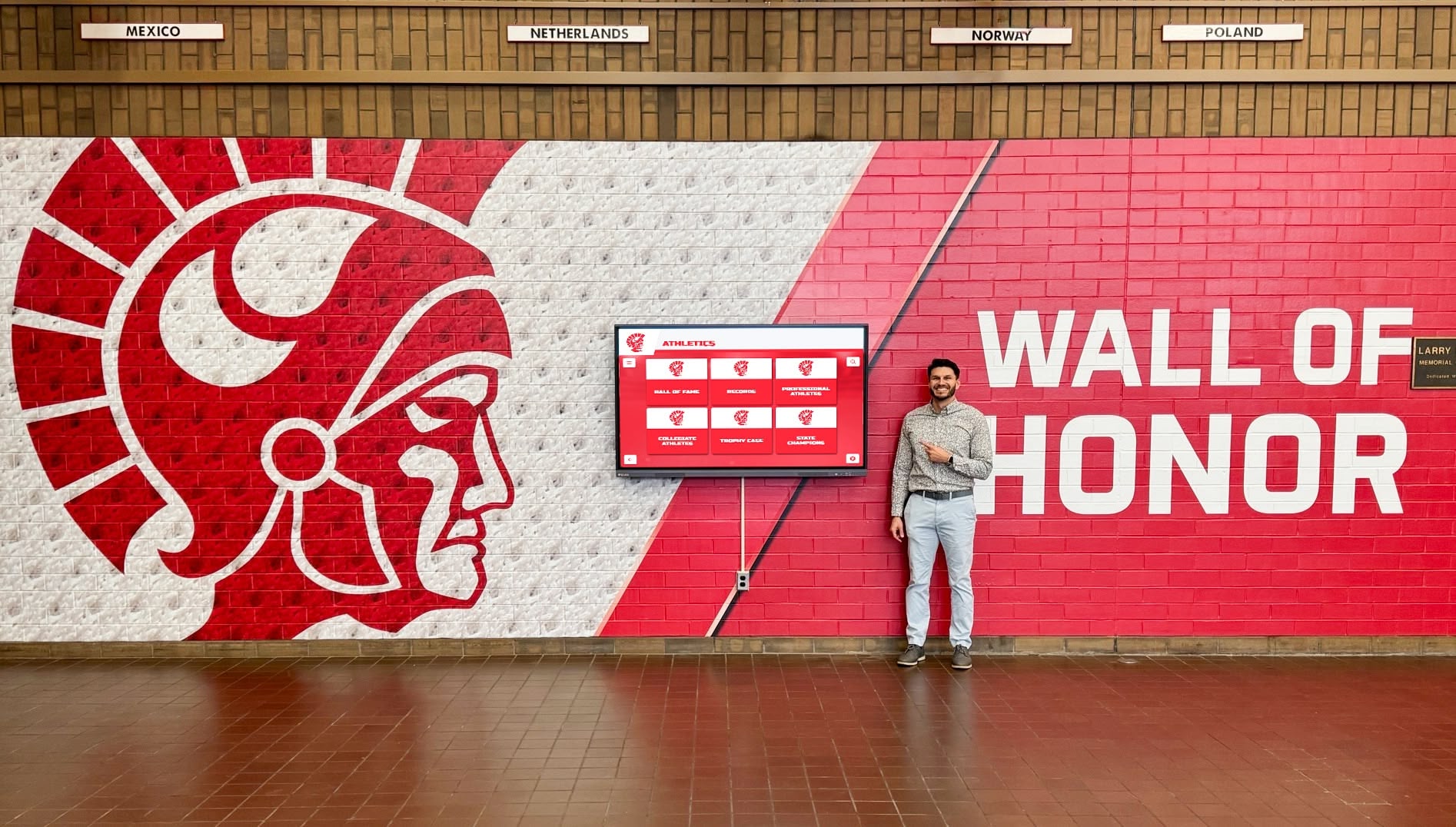
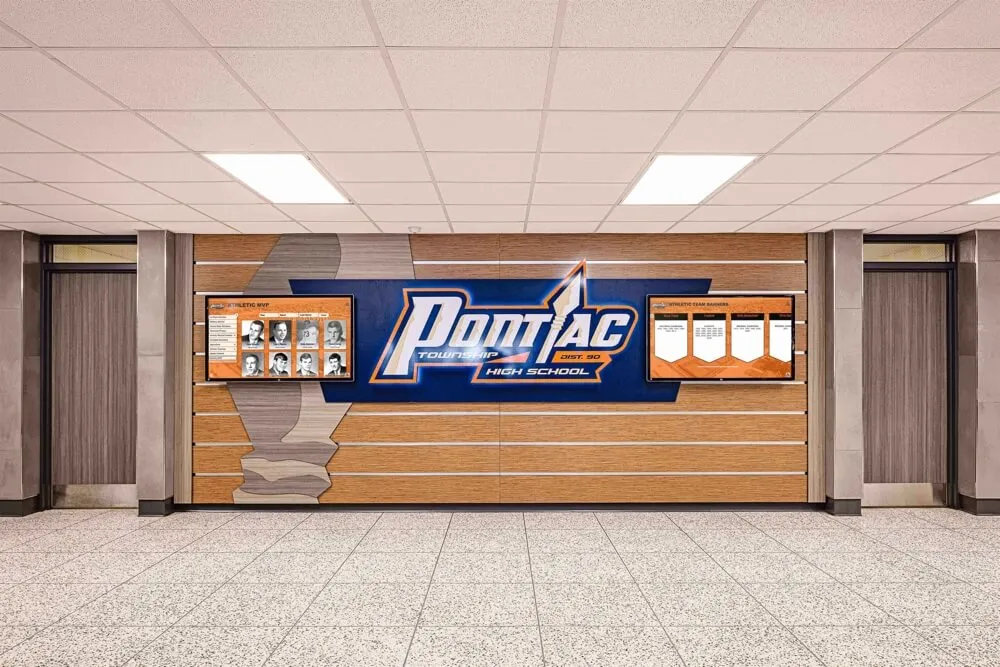
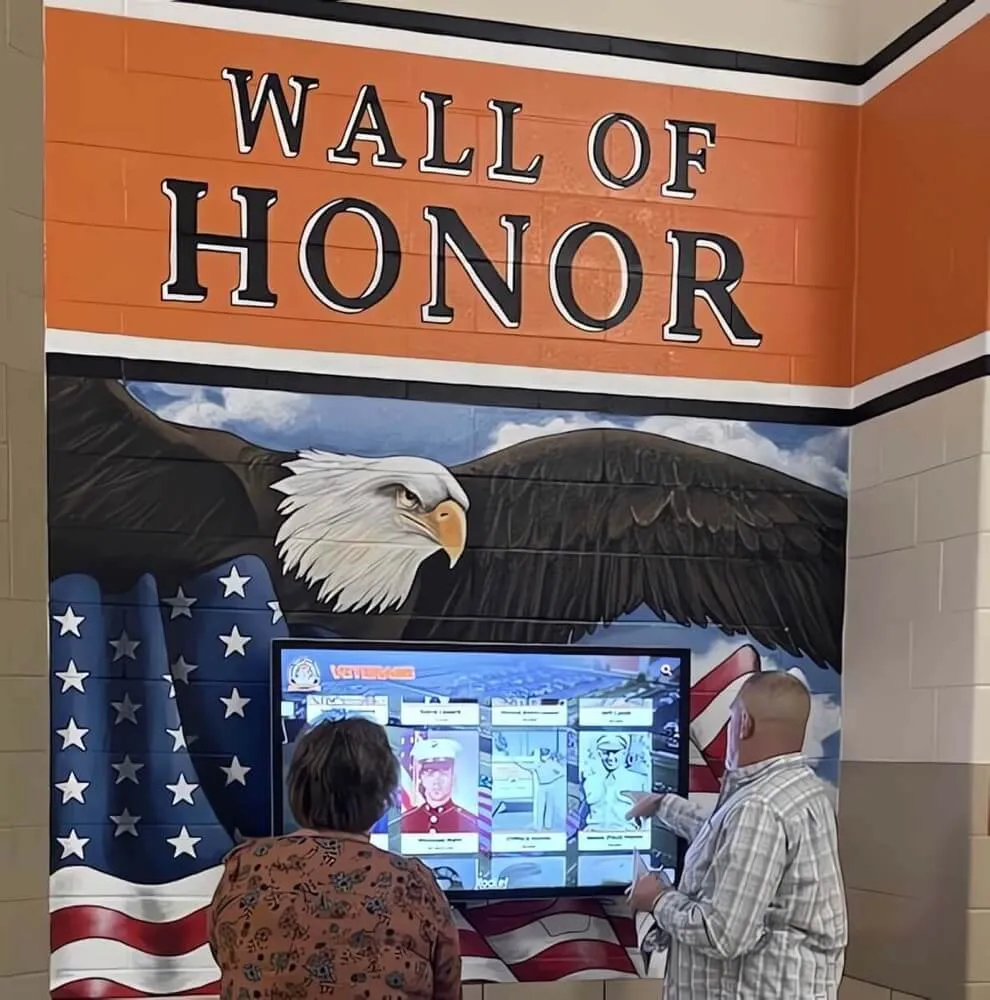
Traditional wall of honor designs create strong visual presence celebrating athletic achievement
Integrating Recognition Throughout School Culture
Maximum impact requires extending recognition beyond dedicated displays:
Strategic Placement Throughout Campus Recognition should appear in multiple locations:
- Primary interactive display in main athletic facility
- Supplementary displays in school main lobby
- Hallway recognition in high-traffic circulation areas
- Gymnasium banners celebrating inductees
- Website integration providing online access
- Social media features celebrating achievement
This multi-location approach ensures recognition receives visibility across school community rather than remaining isolated in single display location.
Curriculum Integration Athletic recognition creates educational opportunities:
- History classes studying school and community evolution through athletics
- Math classes analyzing statistical achievement and records
- Writing assignments interviewing inductees about experiences
- Physical education lessons featuring local athletic excellence
- Research projects documenting program history
This integration strengthens educational value while increasing recognition visibility and student engagement with hall of fame content.
Event Integration Recognition should feature prominently in school events:
- Inductee attendance at relevant athletic competitions
- Hall of fame profiles in game programs
- Recognition during homecoming and alumni events
- Ceremony scheduling during high-visibility games
- Community event promotion of hall of fame programs
Schools implementing homecoming recognition strategies discover that integrating hall of fame celebration with major events significantly increases program visibility and community engagement.
Measuring and Communicating Program Success
Regular assessment demonstrates value while identifying improvements:
Quantitative Success Metrics Administrators should track:
- Digital display interaction rates and session duration
- Web-based recognition platform usage statistics
- Induction ceremony attendance trends
- Alumni engagement rates among recognized athletes
- Athletic program giving rates over time
- Social media engagement with hall of fame content
These metrics demonstrate program impact while providing accountability for resource investment.
Qualitative Assessment Stakeholder perspectives complement quantitative data:
- Inductee satisfaction with recognition experience
- Student feedback about motivation and inspiration
- Alumni perception of recognition program quality
- Community member awareness and appreciation
- College coach feedback during recruiting conversations
Regular assessment through surveys and stakeholder conversations ensures programs remain effective and valued across constituencies.

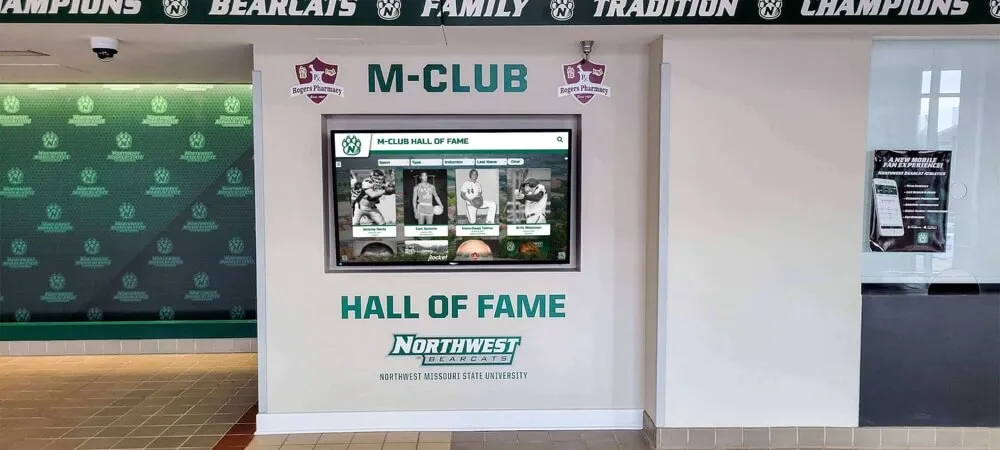
University letter club recognition combines athletic tradition with modern display technology
Technology Selection for Administrators
Understanding technical options helps administrators make informed decisions:
Hardware Considerations
Commercial-Grade Displays Educational installations require durable equipment:
- Commercial displays rated for continuous operation (not consumer TVs)
- Touch-screen technology designed for public installation
- Protective enclosures preventing damage in high-traffic areas
- Professional mounting systems ensuring secure installation
- Appropriate screen sizes for viewing distances (typically 43-65 inches)
Consumer-grade televisions fail quickly in public installation contexts—administrators should specify commercial equipment despite higher initial costs.
Installation Requirements Professional installations need:
- Electrical service at display locations
- Network connectivity for content management
- Secure mounting preventing theft or vandalism
- ADA-compliant positioning for accessibility
- Environmental considerations (lighting, temperature, traffic flow)
Administrators should budget for professional installation—proper mounting and configuration ensures reliability while preventing premature failures from improper setup.
Software Platform Options
Purpose-Built Recognition Systems Specialized platforms like Rocket Alumni Solutions offer:
- Templates designed specifically for athletic recognition
- Intuitive content management requiring minimal training
- Cloud-based systems enabling remote updates
- Responsive web interfaces extending recognition online
- Multimedia support for photos, videos, and documents
- Educational sector pricing and support
These purpose-built solutions typically cost more than generic alternatives but deliver significantly superior functionality and user experience—particularly important for administrators seeking simple management without extensive technical expertise.
Generic Digital Signage Software Standard platforms provide basic capabilities:
- Lower cost than specialized solutions
- Flexibility for various display purposes beyond hall of fame
- More complex content management
- Limited recognition-specific features
- Generally less intuitive user interfaces
Administrators with tight budgets might start with generic solutions, though most schools eventually migrate to specialized platforms as recognition programs mature.
Learn about digital signage options comparing capabilities across solutions.
Content Management Requirements
Administrative Workload Realistic planning accounts for time requirements:
- Initial content development: 60-100 hours
- Annual updates: 10-20 hours
- Ongoing maintenance: 5-10 hours/year
- Technology management: 5-10 hours/year
Schools typically assign hall of fame management to athletic directors, though some delegate to athletic secretaries, technology coordinators, or shared responsibilities.

Intuitive interfaces enable easy navigation through inductee profiles and achievements
Technical Skill Requirements Cloud-based platforms require minimal technical expertise:
- Basic computer skills and web browser familiarity
- Photo editing for image formatting (often optional)
- Word processing for content entry
- No programming or advanced technical knowledge needed
This accessibility ensures hall of fame management doesn’t require dedicated IT staff—administrators with basic computer skills can maintain recognition systems effectively.
Advanced Recognition Strategies
Mature programs can expand recognition approaches:
Multi-Sport Championship Recognition
Beyond individual achievement, team success deserves systematic celebration:
Championship Team Displays Comprehensive systems showcase:
- Conference championship teams by sport and year
- State tournament qualifiers and champions
- Special achievement teams (undefeated seasons, record-setting performances)
- Tournament brackets and playoff progression
- Team photos and roster listings
This team recognition complements individual hall of fame programs while celebrating collective achievement deserving acknowledgment.
Schools implementing championship recognition displays discover that team celebration engages broader student populations than individual recognition alone.
Special Achievement Recognition
Comprehensive programs honor diverse excellence:
Statistical Achievement Milestones Systematic recognition of record achievements:
- 1,000-point scorers in basketball
- 100-win wrestlers
- All-time rushing leaders in football
- Career strikeout leaders in baseball/softball
- Record holders across all sports
This milestone recognition celebrates achievement requiring sustained excellence over multiple seasons.
Academic-Athletic Excellence Combined recognition reinforces educational priorities:
- Scholar-athlete awards meeting GPA and athletic standards
- Academic All-Conference and All-State recognition
- National Honor Society athletes
- Perfect attendance athletes
- College scholarship recipients
Administrators should integrate academic recognition programs with athletic celebration demonstrating commitment to whole-student development.

Athletic lounges integrate recognition displays with gathering spaces creating destinations celebrating tradition
Coach and Contributor Recognition
Complete programs honor diverse contributions:
Coaching Excellence Systematic coach recognition acknowledges:
- Career win milestones and longevity
- Championship coaching achievements
- Coach of the year honors received
- Player development success (college placements)
- Program building and facility improvements
Coaching recognition demonstrates institutional appreciation while providing motivation for current coaching staff.
Support Personnel and Contributors Comprehensive recognition extends to:
- Long-serving athletic directors
- Athletic trainers and support staff
- Booster organization leaders
- Officials and administrators
- Community supporters enabling program success
This expanded recognition acknowledges that athletic excellence requires contributions beyond athletes and coaches—strengthening support networks critical to program sustainability.
Conclusion: Building Athletic Legacy Through Systematic Recognition
Athletic hall of fame programs represent strategic investments delivering measurable returns across student development, alumni engagement, competitive positioning, and institutional culture. School administrators implementing systematic athletic recognition create environments where achievement receives celebration equal to its importance while building traditions that strengthen schools for generations.
The most effective programs share essential characteristics: clear governance structures preventing conflicts while ensuring accountability, published selection criteria maintaining fairness and prestige, engaging recognition displays creating meaningful experiences, systematic celebration extending recognition throughout school culture, and sustainable administrative structures ensuring long-term viability without excessive workload.
Transform Your Athletic Recognition Program
Discover how modern digital recognition solutions can help your school celebrate athletic excellence while building traditions that inspire students, engage alumni, and strengthen community connections for decades.
Book a DemoModern recognition technology has eliminated traditional barriers that once made comprehensive athletic hall of fame programs administratively burdensome and space-constrained. Digital recognition systems provide unlimited capacity, engaging interactive experiences, simple content management, web accessibility, and long-term cost-effectiveness—enabling administrators to implement recognition programs that would have been impossible or impractical with traditional approaches.
Solutions like Rocket Alumni Solutions offer purpose-built platforms designed specifically for educational athletic recognition, combining intuitive content management with sophisticated display capabilities that engage modern students and alumni. These systems enable administrators without technical expertise to maintain professional recognition programs while focusing attention on educational leadership rather than technology management.
Yet technology alone doesn’t create meaningful recognition. The most successful programs balance sophisticated displays with thoughtful governance, fair selection processes, engaging ceremonies, and genuine commitment to honoring athletic excellence comprehensively. Recognition succeeds when administrators invest not just in equipment but in systematic approaches that celebrate achievement while building traditions connecting past excellence with future aspirations.
Your school’s athletic achievements deserve recognition equal to the dedication, sacrifice, and excellence they represent. Outstanding student-athletes who committed countless hours developing skills, coaches who mentored young people and built programs, championship teams creating unforgettable memories, and community supporters making athletic success possible all deserve acknowledgment honoring their contributions while inspiring future generations.
Start planning your athletic hall of fame program today. Establish governance structures ensuring fair, credible selection processes. Explore modern recognition technology eliminating space constraints while creating engaging experiences. Develop sustainable funding models ensuring long-term program viability. And create traditions celebrating athletic excellence systematically while strengthening your school’s competitive position and community connections.
Ready to begin? Explore how comprehensive recognition systems can transform athletic celebration, learn about high school recognition strategies, or discover approaches for engaging alumni through recognition that can inform your athletic hall of fame planning.
The athletes who built your school’s athletic tradition deserve recognition equal to their achievement. With thoughtful planning, appropriate technology, and sustained administrative commitment, you can create hall of fame programs that honor every accomplishment while building the proud athletic legacy your students, community, and institution deserve.